EP1477802A1 - Method for selecting and producing vaccine components and vaccines based thereon - Google Patents
Method for selecting and producing vaccine components and vaccines based thereon Download PDFInfo
- Publication number
- EP1477802A1 EP1477802A1 EP03076492A EP03076492A EP1477802A1 EP 1477802 A1 EP1477802 A1 EP 1477802A1 EP 03076492 A EP03076492 A EP 03076492A EP 03076492 A EP03076492 A EP 03076492A EP 1477802 A1 EP1477802 A1 EP 1477802A1
- Authority
- EP
- European Patent Office
- Prior art keywords
- protein
- microorganism
- vaccine
- streptococcus pneumoniae
- vaccine component
- Prior art date
- Legal status (The legal status is an assumption and is not a legal conclusion. Google has not performed a legal analysis and makes no representation as to the accuracy of the status listed.)
- Withdrawn
Links
Images


Classifications
-
- A—HUMAN NECESSITIES
- A61—MEDICAL OR VETERINARY SCIENCE; HYGIENE
- A61K—PREPARATIONS FOR MEDICAL, DENTAL OR TOILETRY PURPOSES
- A61K39/00—Medicinal preparations containing antigens or antibodies
- A61K39/02—Bacterial antigens
- A61K39/09—Lactobacillales, e.g. aerococcus, enterococcus, lactobacillus, lactococcus, streptococcus
- A61K39/092—Streptococcus
-
- A—HUMAN NECESSITIES
- A61—MEDICAL OR VETERINARY SCIENCE; HYGIENE
- A61P—SPECIFIC THERAPEUTIC ACTIVITY OF CHEMICAL COMPOUNDS OR MEDICINAL PREPARATIONS
- A61P31/00—Antiinfectives, i.e. antibiotics, antiseptics, chemotherapeutics
- A61P31/04—Antibacterial agents
-
- A—HUMAN NECESSITIES
- A61—MEDICAL OR VETERINARY SCIENCE; HYGIENE
- A61P—SPECIFIC THERAPEUTIC ACTIVITY OF CHEMICAL COMPOUNDS OR MEDICINAL PREPARATIONS
- A61P37/00—Drugs for immunological or allergic disorders
- A61P37/02—Immunomodulators
- A61P37/04—Immunostimulants
-
- C—CHEMISTRY; METALLURGY
- C07—ORGANIC CHEMISTRY
- C07K—PEPTIDES
- C07K16/00—Immunoglobulins [IG], e.g. monoclonal or polyclonal antibodies
- C07K16/12—Immunoglobulins [IG], e.g. monoclonal or polyclonal antibodies against material from bacteria
- C07K16/1267—Gram-positive bacteria
- C07K16/1275—Streptococcus (G)
-
- G—PHYSICS
- G01—MEASURING; TESTING
- G01N—INVESTIGATING OR ANALYSING MATERIALS BY DETERMINING THEIR CHEMICAL OR PHYSICAL PROPERTIES
- G01N33/00—Investigating or analysing materials by specific methods not covered by groups G01N1/00 - G01N31/00
- G01N33/48—Biological material, e.g. blood, urine; Haemocytometers
- G01N33/50—Chemical analysis of biological material, e.g. blood, urine; Testing involving biospecific ligand binding methods; Immunological testing
- G01N33/53—Immunoassay; Biospecific binding assay; Materials therefor
- G01N33/569—Immunoassay; Biospecific binding assay; Materials therefor for microorganisms, e.g. protozoa, bacteria, viruses
- G01N33/56911—Bacteria
-
- A—HUMAN NECESSITIES
- A61—MEDICAL OR VETERINARY SCIENCE; HYGIENE
- A61K—PREPARATIONS FOR MEDICAL, DENTAL OR TOILETRY PURPOSES
- A61K39/00—Medicinal preparations containing antigens or antibodies
- A61K2039/505—Medicinal preparations containing antigens or antibodies comprising antibodies
-
- Y—GENERAL TAGGING OF NEW TECHNOLOGICAL DEVELOPMENTS; GENERAL TAGGING OF CROSS-SECTIONAL TECHNOLOGIES SPANNING OVER SEVERAL SECTIONS OF THE IPC; TECHNICAL SUBJECTS COVERED BY FORMER USPC CROSS-REFERENCE ART COLLECTIONS [XRACs] AND DIGESTS
- Y02—TECHNOLOGIES OR APPLICATIONS FOR MITIGATION OR ADAPTATION AGAINST CLIMATE CHANGE
- Y02A—TECHNOLOGIES FOR ADAPTATION TO CLIMATE CHANGE
- Y02A50/00—TECHNOLOGIES FOR ADAPTATION TO CLIMATE CHANGE in human health protection, e.g. against extreme weather
- Y02A50/30—Against vector-borne diseases, e.g. mosquito-borne, fly-borne, tick-borne or waterborne diseases whose impact is exacerbated by climate change
Definitions
- the invention relates to the field of biology, more specifically to the field of immunology and microbiology.
- the invention further relates to the field of vaccines against microbial infections and more in particular bacterial vaccines such as pneumococcal vaccines. More in particular, the invention relates to means and methods to identify, select and isolate a vaccine component to produce a vaccine for passive and/or active immunization against a microorganism that can be recognized and preferably taken up and more preferably killed by opsonophagocytic cells.
- Streptococcus pneumoniae is the leading etiological agent of severe infections such as pneumonia, septicemia, meningitis and otitis media, and causes over three million deaths per year worldwide, of which a million of these are children.
- the problem of antimicrobial resistance in Streptococcus pneumoniae has been enhanced by the successful spread of a limited number of internationally recognized multi-resistant strains. These strains have complicated the treatment of pneumococcal disease, and this has further emphasized the need for vaccination as an alternative means of preventing the large-scale morbidity and mortality associated with pneumococcal infection.
- this vaccine covers only 7 out of 90 of the known pneumococcal capsule serotypes, and clinical data from phase three trials conducted in the USA, Israel, and South Africa have shown that the use of this vaccine causes a shift in colonization by non-vaccine serotypes in place of vaccine serotypes (1, 2, 3, 4, 5).
- This apparent weakness associated with narrow spectrum polysaccharide based antigens attention has been focused on the non-polysaccharide capsule related pneumococcal proteins, many of which are involved in the pathogenesis of infections. These proteins are considered to be interesting components for future vaccines, since they cover all serotypes of pneumococci.
- the protein loci are less variable than those encoding the genes for capsular polysaccharide production, and they are more likely to be able to elicit an immune response in children (6, 7, 8, 9).
- Opsonization is the process of making a microorganism more susceptible for the uptake by a phagocyte. In said process, opsonizing antibodies and/or proteins bind to said microorganism, thereby facilitating the uptake of said microorganism by said phagocyte.
- Opsonophagocytosis is measured in living phagocytic cells and comprises measuring the uptake by phagocytic cells of microorganisms pretreated with opsonizing antibodies.
- surface antigens i.e. antigens naturally or artificially associated with the surface of a microorganism that specifically induce opsonophagocytosis.
- surface antigens with opsonophagocytosis inducing ability can be selected from a collection of surface proteins. This typically implies that said surface proteins are isolated from microorganisms and subsequently are purified and tested.
- mice active and passive immunization procedures with said recombinant protein or with antibodies against said protein are performed to test the opsonizing potential of said recombinant protein.
- Protective ability of the selected protein or part thereof may be measured in a vaccination challenge experiment.
- IgA1 proteinase pneumococcal IgAl protease
- SIrA streptococcal lipoprotein rotamase A
- PsaA pneumococcal surface adhesion protein A
- PpmA protein has been classified as an isomerase enzyme.
- SlrA protein with a peptidyl prolyl isomerase activity
- SlrA although belonging to another family of proteins than PpmA also appeared to be an opsonophagocytosis-inducing antigen.
- abovementioned proteins have not been identified by any other method as being opsonophagocytosis enhancing proteins.
- a method to identify an opsonophagocytosis inducing antigen as a vaccine component for Immunization against a microorganism comprising selecting ( in silico) via a molecule associated with the surface of a microorganism such as a membrane anchoring motif and/or a cell wall binding domain, a nucleotide sequence encoding at least part of a bacterial protein, and producing at least part of said protein, and contacting a collection of antibodies to said protein and testing for binding between at least one antibody and at least one antigen, and measuring the opsonizing ability of said binding antibody for a microorganism having such an antigen.
- said collection of antibodies can be produced by raising antibodies in an animal, by immunizing for example a rabbit or a mouse or a rat or another animal with at least part of said selected protein of said microorganism. Therefore, this application also teaches a method to identify an opsonophagocytosis inducing antigen as a vaccine component for immunisation against a microorganism as described above wherein said collection of antibodies is raised by immunizing an animal with at least one antigen of said microorganism.
- Antibodies against said proteins may also be selected from pre-existing collections of antibodies or functional part, derivatives or analogues thereof. This method can be applied to any microorganism for which the defence by the immune system depends on opsonophagocytosis.
- the application teaches a method to identify an opsonophagocytosis inducing antigen as a vaccine component for immunisation against a microorganism as described, wherein said microorganism is for example a member of the genus Streptococcus, for example a member of the species of Streptococcus pneumoniae , or Streptococcus viridans , or Streptococcus canis , or Streptococcus suis , or a member of the genus Staphylococcus, for example a member of the species Staphylococcus aureus , or Staphylococcus epidermidis , or a coagulase negative Staphylococcus , or a member of the species Moraxella catarrhalis , or Neisseria meningitidis , or Neisseria ghonorrhoeae , or Helicobacter pylori, or Haemophilus influenzae or
- said partially homologous protein or a part thereof is recombinantly produced and tested for its capability to induce opsonophagocytosis. Therefore, this application also teaches a nucleotide sequence at least encoding for a functional part of a protein, said protein inducing opsonophagocytosis of a microorganism having such a protein, wherein said protein is partially homologous with a protein selected by the method as described above. Said nucleotide sequence can be incorporated into a recombinant vector and herewith, recombinant cells can be provided.
- Said recombinant cell produces protein based on said nucleotide sequence
- this application teaches a recombinant vector comprising a nucleotide sequence at least encoding for a functional part of a protein, said protein inducing opsonophagocytosis of a microorganism having such a protein, wherein said protein is partially homologous with a protein selected by the method as described above.
- the application also teaches a recombinant cell expressing at least part of a nucleotide, and a purified protein, produced by said recombinant cell.
- Said antigen or protein or a part thereof can be used as a vaccine component for immunisation against a microorganism, therefore this application teaches a vaccine component for immunisation against a micro organism which can be killed by opsonophagocytic cells, said vaccine component comprising said protein, and/or an antigenic part thereof.
- said vaccine component may comprise at least a functional part of streptococcal lipoprotein rotamase A (SlrA) of Streptococcus pneumoniae . Therefore, this patent application discloses said vaccine component, comprising at least a functional part of streptococcal lipoprotein rotamase A (SIrA) of Streptococcus pneumoniae .
- said vaccine component may comprise at least a functional part of pneumococcal IgAl protease (IgAl) of Streptococcus pneumoniae . Therefore, this patent application discloses said vaccine component, comprising at least a functional part of pneumococcal IgA1 protease (IgAl) of Streptococcus pneumoniae .
- said vaccine component may comprise at least a functional part of pneumococcal surface adhesion protein A (PsaA) of Streptococcus pneumoniae . Therefore, this patent application discloses said vaccine component, comprising at least a functional part of pneumococcal surface adhesion protein A (PsaA) of Streptococcus pneumoniae .
- said vaccine component may also comprise at least an antigenic part of pneumococcal maturation protein A (PpmA) of Streptococcus pneumoniae or another protein.
- PpmA pneumococcal maturation protein A
- a vaccine may be produced for the treatment of an infection by a microorganism, which can be killed by opsonophagocytic cells.
- this application teaches a vaccine comprising at least one of said vaccine components and/or a homologous and/or functionally homologous protein or protein fragment thereof for the treatment of an infection by a microorganism that can be killed by opsonophagocytic cells.
- a vaccine comprising at least one of said vaccine components and/or a homologous and/or functionally homologous protein or protein fragment thereof for the treatment of an infection by a microorganism that can be killed by opsonophagocytic cells.
- a pharmaceutically acceptable carrier and/or adjuvant may be formulated with a pharmaceutically acceptable carrier and/or adjuvant.
- antibodies may be raised, by contacting an immune cell with at least one of said vaccine components; said antibody or a functional part of analogue thereof, may be isolated and used for the manufacture of a pharmaceutical preparation.
- a functional part of an antibody is defined as a part that has the same kind of biological properties in kind, not necessarily in amount. By biological properties is meant the capability to bind to an antigen.
- a functional derivative of an antibody is defined as a protein that has been altered such that the biological properties of said molecule are essentially the same in kind, not necessarily in amount.
- a derivative can be provided in many ways, for instance through conservative amino acid substitution.
- a person skilled in the art is well able to generate analogous compounds of a protein. This can for instance be done through screening of a peptide library. Such an analogue has essentially the same biological properties of said protein in kind, not necessarily in amount.
- Said pharmaceutical preparation may be used for the treatment of an infection by a microorganism which can be killed by opsonophagocytic cells. Therefore, this application provides a method to produce an antibody comprising contacting an immune cell with at least one said vaccine component .
- This application also teaches an isolated antibody or a functional part or derivative thereof, obtainable by said method.
- This application teaches the use of said antibody for the manufacture of a pharmaceutical preparation. Therefore, this application also teaches a pharmaceutical preparation comprising an antibody against said vaccine components.
- This application also teaches the use of a said vaccine and/or said pharmaceutical for the treatment of an infection by a microorganism that can be killed by opsonophagocytic cells.
- Opsonophagocytosis inducing proteins as vaccine components can also be combined with other opsonophagocytosis inducing proteins and/or other proteins to result in a better vaccine.
- This patent application discloses the use of SIrA, IgA1 proteinase and PsaA and the combination of PpmA and/or other proteins with said proteins.
- the IgG titers against PpmA, SlrA, and IgA1 proteinase are all lower than the titers against alpha-enolase of Streptococcus pneumoniae . Because of the absence of this correlation of antibody titer and protection, SIrA and IgAl proteinase were considered to have no added value for protective immunity, and hence would not be selected for use as a vaccine component.
- mice were barrier reared and specified pathogen free.
- the active immunisation protocol started with 6 week old mice (25-30g) and passive immunisation with 9 week old mice (30-35g).
- Streptococcus pneumoniae D39, serotype 2 has been obtained from the National Collection of Type Cultures (NCTC 7466; Central Public Health Laboratory, London). Streptococcus pneumoniae TIGR4, serotype 4, has been obtained from The Institute for Genome Research. Bacteria are grown on Blood Agar Base Number 2 (Oxoid, Basingstoke, UK) plus 5% (vol/vol) defibrinated horse blood (BAB). Stock cultures are prepared by inoculating a sweep of 4-5 colonies into 25ml Brain-Heart Infusion broth (BHI, Oxoid). Cultures are grown statically at 37°C overnight before lml aliquots containing 15% sterile glycerol are frozen at -70°C until use.
- BHI Brain-Heart Infusion broth
- Strain validation is carried out by confirming sensitivity to the antibiotic Optochin (Difco, Detroit, USA). Serotype verification is performed by checking for the presence of type specific polysaccharide capsule using anti-type 2 or 4 capsule antiserum (Statens Seruminstitut, Copenhagen, Denmark).
- mice 100 ⁇ l of sterile PBS containing approximately 10 5 CFU Streptococcus pneumoniae were injected into the peritoneal cavity of mice with an insulin syringe (F. Baker Scientific, Runcorn, UK). On development of lethargy, mice were killed by cervical dislocation, the chest cavity carefully opened up and a section of ribcage removed in order to provide access to the heart. A 23 gauge needle was inserted into the right ventricle and blood slowly collected into the attached syringe. 50 ⁇ l of infected blood was used to grow passaged bacteria in 10ml BHI statically overnight at 37°C.
- Bacteria were harvested by centrifugation at 3,000 rpm for 10min (Heraeus medifuge), resuspended in fresh BHI containing 20% v/v FCS and then incubated at 37°C until they reached mid-log phase (as judged by optical density). 1ml aliquots of the suspension were stored at -70°C, until required. After 24h at -70°C viability of the suspension was measured by viable counting and optochin sensitivity was confirmed. Viability was unaffected by storage at -70°C for at least 3 months.
- mice were held with the nose held upright, and pneumococci were introduced intranasally by adding a series of small droplets of the 50 ⁇ L inoculum in to the nostril for the mice to involuntarily inhale. After inoculation the mice were laid on their backs until recovery and the viable count of the inoculum was re-determined. Mice were monitored frequently (at least 3 times a day) during the following 14 days for signs of infection. On reaching the pre-determined endpoint (moribund) mice were killed by cervical dislocation and the survival time noted.
- Serum was complement inactivated by incubation at 56°C for 30 min and was used at a pre-determined dilution. 24h and 1h prior to infection, mice were vaccinated by intraperitoneal injection of 200 ⁇ l serum. Mice were then infected as previously described. Bacteria were opsonized by incubation in the diluted serum at 37°C for lhr prior to infection. Mice were monitored frequently (at least 3 times a day) during the following 14 days for signs of infection. On reaching the pre-determined endpoint (moribund) mice were sacrificed by cervical dislocation and the survival time noted.
- mice were randomly arranged in groups of 6 and a blood sample was removed from the tail vein prior 24h prior to initial vaccination.
- Vaccines were prepared in a 1:1 ratio in either Freunds complete adjuvant or incomplete adjuvant (Sigma) or Hunter's TiterMax (CytRx Corp., Norcross, GA) or Quill A (Accurate Chemical Scientific Corporation, Westbury, NY 11590) as per manufacturers instructions. Normally 50 ⁇ g of protein was administered per mouse. 100 ⁇ l of vaccine was injected subcutaneously per mouse. Nine days later a blood sample was removed from half of the mice from a tail vein.
- mice By staggering this bleed and the next we could bleed all mice prior to vaccination and prior to infection but still monitor immune response during vaccination protocol: this kept us in line with the restrictions on the total number of bleeds/ mouse (3) and the minimum time interval between bleeds (14 days).
- 24h after sampling blood vaccination was repeated as previously but if using Freunds, FIA (Freunds incomplete adjuvant) was used. 9 days after boost, a blood sample was removed from those mice not bled before last boost. 24h later vaccination was repeated as previously. 28 days later a blood sample was removed from the tail vein of all mice. 24h later mice were infected as previously described with approximately 10 6 CFU Streptococcus pneumoniae D39 or TIGR4. Mice were monitored at least 3 times daily for signs of infection. On reaching the pre-determined endpoint (moribund) mice were sacrificed by cervical dislocation.
- mice were used for the production of mouse virulent inocula.
- the number of times that inocula must be prepared/passaged depended on the virulence and viability of the organisms after prolonged freezing at -80°C.
- mice per group; challenged with wild virulent strain of Streptococcus pneumoniae and with a strain D39 deleted for PpmA.
- Vaccinating with two antigenic proteins resulted in a better survival time in mice after challenge with virulent Streptococcus pneumoniae D39 as is shown in table 6, and in fig. 9. Survival time in hours after active immunization with PpmA and SlrA.
- N 12 PpmA SlrA PpmA+SlrA 53 53.16 56.25 50.34 53.16 56.25 43.67 60.33 50.58 56.17 >200 56.25 56.47 58.83 56.75 53.5 146.33 56.75 >200 53.42 72.17 57.58 >200 >200 53.58 50.17 54.67 58.58 47.83 72.17 47.58 57.67 54.75 47.58 47.58 56.67
- mice were vaccinated (2x200 ⁇ l) with rabbit-pre immune serum (PIS)
- the nucleotide sequence of PpmA was determined to search databases for partial homology.
- the gene for PpmA was amplified by PCR from Streptococcus pneumoniae D39 with the primers 5'CCATGGCTAGCCACCATCACCATCACCATTCGAAAGGGTCAGAAGGTGC 3' and 5'TCATGGATCCGGACTATTCGTTTGATGTAC3' which incorporate flanking Nhe I and Bam HI restriction sites, and a N-terminal His 6 tag.
- the amplified DNA was cloned into a pETlla expression vector (Stratagene, LaJolla, CA) and electrotransformed into E. coli BL21(DE3).
- the recombinant protein was purified by Ni + affinity chromatography with the HisTrap Kit (Amersham Pharmacia) according to the manufacturers recommendations.
- the purified recombinant protein was dialysed against 10mM HEPES buffer, pH7.5, freeze dried, and stored at -20°C.
- the gene for the active peptide of SlrA was amplified by PCR from Streptococcus pneumoniae D39 with the primers 5'TTTACTGCATATGCACCATCACCATCACCATAGCAGCGTCCAACGCAGT3 ' and 5'CATTAGGATCCAATCGCTGGGGAAGTG3'which incorporate flanking Nde I and Bam HI restriction sites, and a N-terminal His 6 tag.
- the amplified DNA was cloned into a pET11a expression vector (Stratagene, LaJolla, CA) and electrotransformed into E. coli BL21(DE3).
- the recombinant protein was purified by Ni + affinity chromatography with the HisTrap Kit (Amersham Pharmacia) according to the manufacturers recommendations.
- the purified recombinant protein was dialysed against 10mM HEPES buffer, pH7.5, freeze dried, and stored at -20°C.
- a 3948bp gene fragment which encodes amino acids 671-1987 of the IgAl proteinase was amplified by PCR from Streptococcus pneumoniae TIGR4 with the primers 5'CAACATCACATATGGGACAAACAGAACCAGAG3'and 5'ACTTAGATCTTAATGATGGTGGTGATGATGGGCTTTAAAGATTGCTC3 ' which incorporate flanking Nde I and Bgl II restriction sites, and a C-terminal His 6 tag.
- the amplified DNA was cloned into a pET11a expression vector (Stratagene, LaJolla, CA) and electrotransformed into E. coli BL21(DE3).
- Redisolve protein pellet (5ml/litre culture) in start buffer (20mM sodium phosphate buffer pH7.4, 0.5M NaCl ,10mM imidazole 8M urea). Filter through a .45 ⁇ m filter. Load 1ml column with Ni + and equilibrate it with start buffer with urea. Pump the supernatant (15ml) through a Ni + loaded 1ml HisTrap column (Amersham Pharmacia). Wash with 10ml wash buffer (20mM sodium phosphate buffer pH7.4, 0.5M NaCl ,20mM imidazole 8M urea).
- Immunoglobulin A1 protease ( iga ) nucleotide sequence [ Streptococcus pneumoniae TIGR4]
- the gene for PsaA was amplified by PCR from Streptococcus pneumoniae D39 with the primers 5'CCATGGCTAGCCACCATCACCATCACCATgctacaaactcaatcatcgc 3' and 5'TTTCGGATCCTTATTTTGCCAATCCTTCAGC 3' which incorporate flanking NheI and BamHI restriction sites, and a N-terminal His6 tag.
- the amplified DNA was cloned into a pETlla expression vector (Stratagene, LaJolla, CA) and electrotransformed into E. coli BL21(DE3).
- the recombinant protein was purified by Ni + affinity chromatography with the HisTrap Kit (Amersham Pharmacia) according to the manufacturers recommendations. To prevent the formation of inclusion bodies, 8M urea was added to all buffers throughout the purification process. The purified recombinant protein was dialysed against 10mM HEPES buffer, pH7.5, free dried, and stored at -20
Landscapes
- Health & Medical Sciences (AREA)
- Life Sciences & Earth Sciences (AREA)
- Chemical & Material Sciences (AREA)
- Immunology (AREA)
- Medicinal Chemistry (AREA)
- General Health & Medical Sciences (AREA)
- Engineering & Computer Science (AREA)
- Molecular Biology (AREA)
- Organic Chemistry (AREA)
- Biomedical Technology (AREA)
- Hematology (AREA)
- Biochemistry (AREA)
- Urology & Nephrology (AREA)
- Microbiology (AREA)
- Animal Behavior & Ethology (AREA)
- Pharmacology & Pharmacy (AREA)
- Public Health (AREA)
- Veterinary Medicine (AREA)
- General Physics & Mathematics (AREA)
- Epidemiology (AREA)
- Proteomics, Peptides & Aminoacids (AREA)
- Biotechnology (AREA)
- Cell Biology (AREA)
- Tropical Medicine & Parasitology (AREA)
- Genetics & Genomics (AREA)
- Biophysics (AREA)
- Virology (AREA)
- Food Science & Technology (AREA)
- Physics & Mathematics (AREA)
- Analytical Chemistry (AREA)
- Mycology (AREA)
- Pathology (AREA)
- Nuclear Medicine, Radiotherapy & Molecular Imaging (AREA)
- General Chemical & Material Sciences (AREA)
- Chemical Kinetics & Catalysis (AREA)
- Communicable Diseases (AREA)
- Bioinformatics & Cheminformatics (AREA)
- Oncology (AREA)
- Medicines Containing Antibodies Or Antigens For Use As Internal Diagnostic Agents (AREA)
- Peptides Or Proteins (AREA)
Abstract
The invention relates to the field of biology, more specifically to the field of immunology and microbiology. The invention further relates to the field of vaccines against microbial infections and especially bacterial vaccines, in particular to pneumococcal vaccines. More in particular, the invention relates to means and methods to identify, select and isolate a vaccine component for passive and/or active immunisation against a microorganism that can be killed by opsonophagocytic cells. <??>The invention relates to a method to identify an opsonophagocytosis inducing antigen as a vaccine component for immunisation against a microorganism. The invention describes three pneumococcal proteins SlrA, IgA1 proteinase, and PsaA, and their use as a vaccine component with or without PpmA. <??>The invention also discloses the use of antibodies against said proteins for passive immunisation.
Description
The invention relates to the field of biology, more specifically to the field
of immunology and microbiology. The invention further relates to the field of
vaccines against microbial infections and more in particular bacterial vaccines
such as pneumococcal vaccines. More in particular, the invention relates to
means and methods to identify, select and isolate a vaccine component to
produce a vaccine for passive and/or active immunization against a
microorganism that can be recognized and preferably taken up and more
preferably killed by opsonophagocytic cells.
Streptococcus pneumoniae is the leading etiological agent of severe
infections such as pneumonia, septicemia, meningitis and otitis media, and
causes over three million deaths per year worldwide, of which a million of
these are children. The problem of antimicrobial resistance in Streptococcus
pneumoniae has been enhanced by the successful spread of a limited number of
internationally recognized multi-resistant strains. These strains have
complicated the treatment of pneumococcal disease, and this has further
emphasized the need for vaccination as an alternative means of preventing the
large-scale morbidity and mortality associated with pneumococcal infection.
The initial attempt to develop an anti-pneumococcal vaccine that consisted of
23 out of 90 of the most prevalent capsular polysaccharides (Pneumovax 23©)
was unsuccessful, since the vaccine polysaccharides were unable to elicit an
immune response in people at most risk of pneumococcal infection: young
children, immuno-compromised patients, and the elderly. Technical advances
have allowed the linkage of capsular polysaccharides to highly immunogenic
carrier proteins. The implementation of this technology using a vaccine
consisting of tetanus toxoid linked to Haerrcophilus influenzae type B-polysaccharide
has led to undetectable levels of carriage of Haemophilus
influenzae type B, and an elimination of disease caused by this organism in
vaccinated populations. Recently, a polysaccharide conjugate pneumococcal
vaccine (Prevnar©) has been licensed in the USA by Wyeth Lederle Vaccines.
Prevnar© has been released in The Netherlands in 2001. The vaccine
formulation is immunogenic in children, and consists of 7 of the most prevalent
capsule polysaccharides conjugated to a highly immunogenic (non-pneumococcal)
carrier protein. However, unlike the Haemophilus influenzae
vaccine, this vaccine covers only 7 out of 90 of the known pneumococcal capsule
serotypes, and clinical data from phase three trials conducted in the USA,
Israel, and South Africa have shown that the use of this vaccine causes a shift
in colonization by non-vaccine serotypes in place of vaccine serotypes (1, 2, 3, 4,
5). As a result of this apparent weakness associated with narrow spectrum
polysaccharide based antigens, attention has been focused on the non-polysaccharide
capsule related pneumococcal proteins, many of which are
involved in the pathogenesis of infections. These proteins are considered to be
interesting components for future vaccines, since they cover all serotypes of
pneumococci. The protein loci are less variable than those encoding the genes
for capsular polysaccharide production, and they are more likely to be able to
elicit an immune response in children (6, 7, 8, 9).
In our ongoing studies on the molecular epidemiology and pathogenesis
of Streptococcus pneumoniae, we have developed a method for the extraction of
surface associated pneumococcal proteins and the subsequent testing of said
proteins for binding to antibodies. The antibody-antigen complex is identified,
said antigen is isolated and characterized and antibodies, produced against
said antigen, are subsequently tested for their opsonizing ability for the
microorganism. The antigen, which is binding to an antibody with opsonizing
ability for the microorganism having such an antigen on its surface, is
identified by for example high-resolution two dimensional PAGE and mass
spectrometric identification of the gel spots. This method has provided a means
by which we isolated and identified a pneumococcal maturation protein
(PpmA) with vaccine potential (10, 11).
The techniques used in the identification of surface-associated
pneumococcal proteins, the sequence of ppmA and its protein product (PpmA)
and its therapeutic potential are filed under European Patent application nr.
99202640.1.
Many microorganisms are characterized in that they are killed by a
phagocytic cell after phagocytosis. Many microorganisms need to be opsonized
by opsonins to enhance their phagocytosis. Opsonization is the process of
making a microorganism more susceptible for the uptake by a phagocyte. In
said process, opsonizing antibodies and/or proteins bind to said microorganism,
thereby facilitating the uptake of said microorganism by said phagocyte.
Opsonophagocytosis is measured in living phagocytic cells and comprises
measuring the uptake by phagocytic cells of microorganisms pretreated with
opsonizing antibodies. With this method a selection can be made for surface
antigens i.e. antigens naturally or artificially associated with the surface of a
microorganism that specifically induce opsonophagocytosis. Of course, surface
antigens with opsonophagocytosis inducing ability can be selected from a
collection of surface proteins. This typically implies that said surface proteins
are isolated from microorganisms and subsequently are purified and tested.
In the present application we disclose a method for identifying surface
proteins with opsonophagocytosis inducing ability that does not require the
above described mixture of surface antigens as used in the patent application
99202640.1. We hereby disclose a method to combine selection, especially in
silico selection with a functional test for opsonophagocytosis. By searching in
silico for sequence motifs coding for a membrane anchor, or more preferably for
a cell wall binding domain, a protein with opsonophagocytic potential is
identified. Said in silico selection is followed by recombinant production of at
least part of said selected protein. Said recombinant protein is subsequently
used to immunize animals, and/or to contact a collection of antibodies. In mice,
active and passive immunization procedures with said recombinant protein or
with antibodies against said protein are performed to test the opsonizing
potential of said recombinant protein. Protective ability of the selected protein
or part thereof may be measured in a vaccination challenge experiment.
With this method, three proteins have been identified as possible
phagocytosis inducing vaccine components and are disclosed herein. One of
said proteins is a protein called pneumococcal IgAl protease (IgA1 proteinase),
a protease that can convert human dimer IgA molecules into monomers.
Another protein is a peptidyl prolyl isomerase, which we named streptococcal
lipoprotein rotamase A (SIrA). Yet another protein is pneumococcal surface
adhesion protein A (PsaA)
PpmA protein has been classified as an isomerase enzyme. In our search
for other proteins with a homologous function on the surface of the
microorganism, we found a protein with a peptidyl prolyl isomerase activity,
SlrA. In this application, homologous is defined as sequential homology and/or
functional homology.
SlrA, although belonging to another family of proteins than PpmA also
appeared to be an opsonophagocytosis-inducing antigen. Surprisingly,
abovementioned proteins have not been identified by any other method as
being opsonophagocytosis enhancing proteins. For example, there was no
correlation between antibody titers against SIrA, or IgAlproteinase and the
first episode of acute otitis media (middle ear infection) in children in a large
serological survey in Finland as is described in example one. In the absence of
such a correlation, these proteins were not considered to be important for the
defense against streptococcal infection.
Since the opsonophagocytic activity correlates with in vivo protection,
these data show that SlrA, IgAl proteinase and PsaA have potential to elicit
immune protection. Loss of virulence of microorganisms is often tested in vitro
by investigating the replication of a microorganism missing said protein. The
absence of SIrA, IgAlproteinase, or PsaA in recombinant strains of
Streptococcus pneumoniae did not influence the in vitro characteristics of said
microorganism. Therefore, said proteins would not have been selected as
vaccine components by methods that are state of the art.
We disclose, in one embodiment, a method to identify an
opsonophagocytosis inducing antigen as a vaccine component for
Immunization against a microorganism, comprising selecting (in silico) via a
molecule associated with the surface of a microorganism such as a membrane
anchoring motif and/or a cell wall binding domain, a nucleotide sequence
encoding at least part of a bacterial protein, and producing at least part of said
protein, and contacting a collection of antibodies to said protein and testing for
binding between at least one antibody and at least one antigen, and measuring
the opsonizing ability of said binding antibody for a microorganism having
such an antigen. Of course, said collection of antibodies can be produced by
raising antibodies in an animal, by immunizing for example a rabbit or a
mouse or a rat or another animal with at least part of said selected protein of
said microorganism. Therefore, this application also teaches a method to
identify an opsonophagocytosis inducing antigen as a vaccine component for
immunisation against a microorganism as described above wherein said
collection of antibodies is raised by immunizing an animal with at least one
antigen of said microorganism. Antibodies against said proteins may also be
selected from pre-existing collections of antibodies or functional part,
derivatives or analogues thereof. This method can be applied to any
microorganism for which the defence by the immune system depends on
opsonophagocytosis. Therefore, the application teaches a method to identify
an opsonophagocytosis inducing antigen as a vaccine component for
immunisation against a microorganism as described, wherein said
microorganism is for example a member of the genus Streptococcus, for
example a member of the species of Streptococcus pneumoniae, or
Streptococcus viridans, or Streptococcus canis, or Streptococcus suis, or a
member of the genus Staphylococcus, for example a member of the species
Staphylococcus aureus, or Staphylococcus epidermidis, or a coagulase negative
Staphylococcus, or a member of the species Moraxella catarrhalis, or Neisseria
meningitidis, or Neisseria ghonorrhoeae, or Helicobacter pylori, or
Haemophilus influenzae or Campylobacter jejuni, or a member of the genus
Pseudomonas, or the genus Bacillus.
Once identified, said partially homologous protein or a part thereof is
recombinantly produced and tested for its capability to induce
opsonophagocytosis. Therefore, this application also teaches a nucleotide
sequence at least encoding for a functional part of a protein, said protein
inducing opsonophagocytosis of a microorganism having such a protein,
wherein said protein is partially homologous with a protein selected by the
method as described above. Said nucleotide sequence can be incorporated into
a recombinant vector and herewith, recombinant cells can be provided. Said
recombinant cell produces protein based on said nucleotide sequence,
therefore, this application teaches a recombinant vector comprising a
nucleotide sequence at least encoding for a functional part of a protein, said
protein inducing opsonophagocytosis of a microorganism having such a
protein, wherein said protein is partially homologous with a protein selected
by the method as described above. The application also teaches a recombinant
cell expressing at least part of a nucleotide, and a purified protein, produced by
said recombinant cell. Said antigen or protein or a part thereof can be used as
a vaccine component for immunisation against a microorganism, therefore this
application teaches a vaccine component for immunisation against a micro
organism which can be killed by opsonophagocytic cells, said vaccine
component comprising said protein, and/or an antigenic part thereof. In one
embodiment, said vaccine component may comprise at least a functional part
of streptococcal lipoprotein rotamase A (SlrA) of Streptococcus pneumoniae.
Therefore, this patent application discloses said vaccine component,
comprising at least a functional part of streptococcal lipoprotein rotamase A
(SIrA) of Streptococcus pneumoniae. In another embodiment, said vaccine
component may comprise at least a functional part of pneumococcal IgAl
protease (IgAl) of Streptococcus pneumoniae. Therefore, this patent
application discloses said vaccine component, comprising at least a functional
part of pneumococcal IgA1 protease (IgAl) of Streptococcus pneumoniae.
In yet another embodiment, said vaccine component may comprise at
least a functional part of pneumococcal surface adhesion protein A (PsaA) of
Streptococcus pneumoniae. Therefore, this patent application discloses said
vaccine component, comprising at least a functional part of pneumococcal
surface adhesion protein A (PsaA) of Streptococcus pneumoniae.
We disclose in this patent application the protective ability of said
proteins by active and passive immunization in a mouse model.
It may be advantageous to combine more than one surface protein or a
part thereof in a vaccine, and also to combine at least one surface protein or
antigenic part thereof with PpmA or with another protein to induce an even
better immunity. Therefore, in another embodiment, said vaccine component
may also comprise at least an antigenic part of pneumococcal maturation
protein A (PpmA) of Streptococcus pneumoniae or another protein. With said
vaccine components, a vaccine may be produced for the treatment of an
infection by a microorganism, which can be killed by opsonophagocytic cells.
Therefore, this application teaches a vaccine comprising at least one of
said vaccine components and/or a homologous and/or functionally homologous
protein or protein fragment thereof for the treatment of an infection by a
microorganism that can be killed by opsonophagocytic cells. Of course, one may
formulate said vaccine with a pharmaceutically acceptable carrier and/or
adjuvant. Therefore, this application also teaches said vaccine, also
comprising a pharmaceutically acceptable carrier and/or adjuvant.
For passive immunization, specific antibodies against each of said
proteins were administered to mice and the protection of said passive
immunity against a challenge infection with virulent Streptococcus
pneumoniae was measured. Of course, this method can now be applied to all
microorganisms for which the immune response by the host is based on killing
of said microorganism by phagocytes, for example but not restricted to for
example a member of the genus Streptococcus, for example a member of the
species of Streptococcus pneumoniae, or Streptococcus viridans, or
Streptococcus canis, or Streptococcus suis, or a member of the genus
Staphylococcus, for example a member of the species Staphylococcus aureus, or
Staphylococcus epidermidis, or a coagulase negative Staphylococcus, or a
member of the species Moraxella catarrhalis, or Neisseria meningitidis, or
Neisseria ghonorrhoeae, or Helicobacter pylori, or Haemophilus influenzae or
Campylobacter jejuni, or a member of the genus Pseudomonas, or the genus
Bacillus.
With said vaccine components, antibodies may be raised, by contacting
an immune cell with at least one of said vaccine components; said antibody or
a functional part of analogue thereof, may be isolated and used for the
manufacture of a pharmaceutical preparation. A functional part of an antibody
is defined as a part that has the same kind of biological properties in kind, not
necessarily in amount. By biological properties is meant the capability to bind
to an antigen. A functional derivative of an antibody is defined as a protein
that has been altered such that the biological properties of said molecule are
essentially the same in kind, not necessarily in amount. A derivative can be
provided in many ways, for instance through conservative amino acid
substitution.
A person skilled in the art is well able to generate analogous compounds
of a protein. This can for instance be done through screening of a peptide
library. Such an analogue has essentially the same biological properties of said
protein in kind, not necessarily in amount.
Said pharmaceutical preparation may be used for the treatment of an
infection by a microorganism which can be killed by opsonophagocytic cells.
Therefore, this application provides a method to produce an antibody
comprising contacting an immune cell with at least one said vaccine
component . This application also teaches an isolated antibody or a functional
part or derivative thereof, obtainable by said method. This application teaches
the use of said antibody for the manufacture of a pharmaceutical preparation.
Therefore, this application also teaches a pharmaceutical preparation
comprising an antibody against said vaccine components. This application also
teaches the use of a said vaccine and/or said pharmaceutical for the treatment
of an infection by a microorganism that can be killed by opsonophagocytic cells.
Opsonophagocytosis inducing proteins as vaccine components can also
be combined with other opsonophagocytosis inducing proteins and/or other
proteins to result in a better vaccine. This patent application discloses the use
of SIrA, IgA1 proteinase and PsaA and the combination of PpmA and/or other
proteins with said proteins.
The invention is further explained in the examples.
As is shown in figures 1-5 in people with first occurrence of otitis media, the
IgG titers against PpmA, SlrA, and IgA1 proteinase, are all lower than the
titers against alpha-enolase of Streptococcus pneumoniae. Because of the
absence of this correlation of antibody titer and protection, SIrA and IgAl
proteinase were considered to have no added value for protective immunity,
and hence would not be selected for use as a vaccine component.
To determine the protective potential of Streptococcus pneumoniae surface
proteins, both active and passive immunization/challenge experiments were
performed.
Immunisation was carried out on MF1 outbred female mice, purchased from
Harlan Olac, Bicester, UK All mice were barrier reared and specified pathogen
free. The active immunisation protocol started with 6 week old mice (25-30g)
and passive immunisation with 9 week old mice (30-35g).
Streptococcus pneumoniae D39, serotype 2, has been obtained from the
National Collection of Type Cultures (NCTC 7466; Central Public Health
Laboratory, London). Streptococcus pneumoniae TIGR4, serotype 4, has been
obtained from The Institute for Genome Research. Bacteria are grown on
Blood Agar Base Number 2 (Oxoid, Basingstoke, UK) plus 5% (vol/vol)
defibrinated horse blood (BAB). Stock cultures are prepared by inoculating a
sweep of 4-5 colonies into 25ml Brain-Heart Infusion broth (BHI, Oxoid).
Cultures are grown statically at 37°C overnight before lml aliquots containing
15% sterile glycerol are frozen at -70°C until use. Strain validation is carried
out by confirming sensitivity to the antibiotic Optochin (Difco, Detroit, USA).
Serotype verification is performed by checking for the presence of type specific
polysaccharide capsule using anti-type 2 or 4 capsule antiserum (Statens
Seruminstitut, Copenhagen, Denmark).
For counting of CFU, serial dilutions of samples are prepared by the
addition of 20µl to 180µl sterile PBS in sterile round-bottomed 96 well
microtitre plates (Life Technologies, Paisley, UK). 20µl volumes of each
dilution are spotted in triplicate on 2 separate BAB plates. The following
equation is used to calculate the number of colony forming units per ml of
sample:
CFU per ml = Mean number of colonies per sector x 50 x Dilution Factor.
100µl of sterile PBS containing approximately 105 CFU Streptococcus
pneumoniae were injected into the peritoneal cavity of mice with an insulin
syringe (F. Baker Scientific, Runcorn, UK). On development of lethargy, mice
were killed by cervical dislocation, the chest cavity carefully opened up and a
section of ribcage removed in order to provide access to the heart. A 23 gauge
needle was inserted into the right ventricle and blood slowly collected into the
attached syringe. 50µl of infected blood was used to grow passaged bacteria in
10ml BHI statically overnight at 37°C. Bacteria were harvested by
centrifugation at 3,000 rpm for 10min (Heraeus medifuge), resuspended in
fresh BHI containing 20% v/v FCS and then incubated at 37°C until they
reached mid-log phase (as judged by optical density). 1ml aliquots of the
suspension were stored at -70°C, until required. After 24h at -70°C viability of
the suspension was measured by viable counting and optochin sensitivity was
confirmed. Viability was unaffected by storage at -70°C for at least 3 months.
Aliquots of standard inoculum were rapidly thawed. A 900µl sample was
pelleted by centrifugation at 13,000rpm (Eppendorf centrifuge 5417C) and
resuspended in 900µl sterile PBS. Bacteria were diluted in sterile PBS to give
1 x 10⁶ CFU/50µl and this confirmed by viable counting (as described
previously). Mice to be infected were lightly anaesthetized with 2.5% v/v
isoflourane over oxygen (1.5 L/min) with NO2 (1L/min), administered using a
calibrated vaporizer and anaesthesia confirmed by observing no pinch reflex
reaction. Once anaesthetized the animals were held with the nose held
upright, and pneumococci were introduced intranasally by adding a series of
small droplets of the 50µL inoculum in to the nostril for the mice to
involuntarily inhale. After inoculation the mice were laid on their backs until
recovery and the viable count of the inoculum was re-determined. Mice were
monitored frequently (at least 3 times a day) during the following 14 days for
signs of infection. On reaching the pre-determined endpoint (moribund) mice
were killed by cervical dislocation and the survival time noted.
Serum was complement inactivated by incubation at 56°C for 30 min
and was used at a pre-determined dilution. 24h and 1h prior to infection, mice
were vaccinated by intraperitoneal injection of 200µl serum. Mice were then
infected as previously described. Bacteria were opsonized by incubation in the
diluted serum at 37°C for lhr prior to infection. Mice were monitored
frequently (at least 3 times a day) during the following 14 days for signs of
infection. On reaching the pre-determined endpoint (moribund) mice were
sacrificed by cervical dislocation and the survival time noted.
Mice were randomly arranged in groups of 6 and a blood sample was
removed from the tail vein prior 24h prior to initial vaccination. Vaccines were
prepared in a 1:1 ratio in either Freunds complete adjuvant or incomplete
adjuvant (Sigma) or Hunter's TiterMax (CytRx Corp., Norcross, GA) or Quill A
(Accurate Chemical Scientific Corporation, Westbury, NY 11590) as per
manufacturers instructions. Normally 50µg of protein was administered per
mouse. 100µl of vaccine was injected subcutaneously per mouse. Nine days
later a blood sample was removed from half of the mice from a tail vein. By
staggering this bleed and the next we could bleed all mice prior to vaccination
and prior to infection but still monitor immune response during vaccination
protocol: this kept us in line with the restrictions on the total number of
bleeds/ mouse (3) and the minimum time interval between bleeds (14 days).
24h after sampling blood, vaccination was repeated as previously but if using
Freunds, FIA (Freunds incomplete adjuvant) was used. 9 days after boost, a
blood sample was removed from those mice not bled before last boost. 24h later
vaccination was repeated as previously. 28 days later a blood sample was
removed from the tail vein of all mice. 24h later mice were infected as
previously described with approximately 106 CFU Streptococcus pneumoniae
D39 or TIGR4. Mice were monitored at least 3 times daily for signs of
infection. On reaching the pre-determined endpoint (moribund) mice were
sacrificed by cervical dislocation.
During the course of these experiments, a maximum of 25 mice were
used for the production of mouse virulent inocula. The number of times that
inocula must be prepared/passaged depended on the virulence and viability of
the organisms after prolonged freezing at -80°C.
In order to optimize the pneumonia infection model in our laboratory,
i.e. to establish the optimal number of organisms that will produce consistent
pneumonia with the longest incubation period, we infected groups of 4 mice
with 5 different dilutions of organisms from 103, to 107 cfu). We optimized the
infection dose required for two heterogeneous strains of Streptococcus
pneumoniae (D39 and TIGR4). These strains differ in their virulence and
antigen characteristics. (4 x 5 x 2 = 40 mice).
For passive immunization with rabbit polyclonal anti-sera, the following
sera were tested.
6 mice per group; challenged with wild virulent strain of Streptococcus
pneumoniae and with a strain D39 deleted for PpmA.


Active immunization of CD-1 mice with Streptococcus
pneumoniae surface protein and infection with a wild type virulent
strain of Streptococcus pneumoniae.
SlrA elicited a good protective immune response in the mice, as is shown
in table 4 and fig. 6
| Survival time in hours after active immunization with SlrA n=12 | |
| Control | SlrA |
| 49.67 | 53.16 |
| 52.25 | 53.16 |
| 47.34 | 60.33 |
| 44.67 | 200 |
| 47 | 58.83 |
| 43.17 | 146.33 |
| 200 | 53.42 |
| 45.66 | 200 |
| 200 | 50.17 |
| 52.5 | 47.83 |
| 52.5 | 57.67 |
| 49.83 | 47.58 |
Statistically, a significant difference was found between the vaccinated
and the control group concerning the survival time of mice after challenge with
virulent Streptococcus pneumoniae D39.
IgAl proteinase elicited a good protective immune response in the mice,
as is shown in table 5 and fig. 7
| Survival time in hours after active immunization with IgA1 proteinase n=10 | |
| Control | IgAl |
| >250 | 47.5 |
| >250 | 49.75 |
| 42.13 | 169.5 |
| 58.33 | 70.75 |
| 47.25 | 168.5 |
| 43.13 | >250 |
| 50.33 | 164.5 |
| 48.33 | >250 |
| 53.33 | 58.42 |
| >250 |
Statistically, a significant difference was found between the vaccinated
and the control group concerning the survival time of mice after challenge with
virulent Streptococcus pneumoniae D39.
PsaA elicited a good protective immune response in the mice, as is
shown in fig. 8.
Statistically, a significant difference was found between the vaccinated
and the control group concerning the survival time after challenge with
virulent Streptococcus pneumoniae D39.
Vaccinating with two antigenic proteins resulted in a better survival
time in mice after challenge with virulent Streptococcus pneumoniae D39
as is shown in table 6, and in fig. 9.
| Survival time in hours after active immunization with PpmA and SlrA. N=12 | ||
| PpmA | SlrA | PpmA+SlrA |
| 53 | 53.16 | 56.25 |
| 50.34 | 53.16 | 56.25 |
| 43.67 | 60.33 | 50.58 |
| 56.17 | >200 | 56.25 |
| 56.47 | 58.83 | 56.75 |
| 53.5 | 146.33 | 56.75 |
| >200 | 53.42 | 72.17 |
| 57.58 | >200 | >200 |
| 53.58 | 50.17 | 54.67 |
| 58.58 | 47.83 | 72.17 |
| 47.58 | 57.67 | 54.75 |
| 47.58 | 47.58 | 56.67 |
- SlrA vs PpmA+SlrA Mann Whitney test
- P value 0.3325
- Gaussian Approximation of P value.
- P value summary ns
- Medians are not significantly different. (P < 0.05)
- One-tailed P value
- Sum of ranks in column B,C 142 , 158
- Mann-Whitney U 64.00
Statistically, there was a significant difference between the PpmA and
SIrA combined group and the PpmA alone. This shows that protective
immunity as a result of vaccination with more than one protein or part thereof
is superior to the immunity based on vaccination with only one antigen.
Control - mice were vaccinated (2x200µl) with rabbit-pre immune serum
(PIS)
Experiment- mice vaccinated with (2x200µl) with polyclonal rabbit
hyperimmune anti-rPpmA serum (APS).
| Survival time in hours after passive immunization with PpmA-antibodies (APS) or with normal pre-immune serum (PIS) | |||
| PIS D39+ | APS D39+ | PIS PpmA- | APS PpmA- |
| 59.00 | 113.67 | 47.17 | 118.33 |
| 59.00 | 40.67 | 51.67 | 118.33 |
| 65.00 | 63.17 | 59.67 | 65.82 |
| 65.00 | 59.17 | 48.67 | 65.82 |
| 59.00 | 90.17 | 90.67 | 59.82 |
| 46.25 | 59.17 | 38.17 | 72.82 |
| 59.00 | 59.17 | >200 | 46.82 |
| 46.50 | 63.17 | 38.5 | 51.82 |
| 46.25 | >200 | >200 | 65.82 |
| 46.75 | 48.17 | 61 | 46.82 |
The results in table 7 and in Fig 10 clearly show the protective effect of
passive immunization with anti PpmA antibodies against a challenge infection
with virulent streptococcal strain D39. They also show that the protection is
much less against a streptococcal strain that is deleted for PpmA. The ppmA-ve
D39 strain has been previously shown to be less virulent than D39.
| Survival time in hours after passive immunization with PpmA in MF-1 mice | |
| Treatment | Survival times (h) |
| Normal rabbit serum (NRS) | 41, 48, 48, 65, 72 |
| Bacteria opsonised in | 48, 48, 65, 72, 89 |
| Anti-PpmA anti-serum | 71, 71, 113.5, 113.5, 137, 336, 336, 336, 336, 336 |
| Bacteria opsonised in | 89, 143, 336, 336, 336 |
The results in table 8 and in Fig 11 clearly show the protection against
challenge infection after a passive immunization.
The nucleotide sequence of PpmA was determined to search databases
for partial homology.
The gene for PpmA was amplified by PCR from Streptococcus
pneumoniae D39 with the primers
5'CCATGGCTAGCCACCATCACCATCACCATTCGAAAGGGTCAGAAGGTGC
3' and 5'TCATGGATCCGGACTATTCGTTTGATGTAC3' which incorporate
flanking NheI and BamHI restriction sites, and a N-terminal His6 tag. The
amplified DNA was cloned into a pETlla expression vector (Stratagene,
LaJolla, CA) and electrotransformed into E. coli BL21(DE3). The recombinant
protein was purified by Ni+ affinity chromatography with the HisTrap Kit
(Amersham Pharmacia) according to the manufacturers recommendations.
The purified recombinant protein was dialysed against 10mM HEPES buffer,
pH7.5, freeze dried, and stored at -20°C.
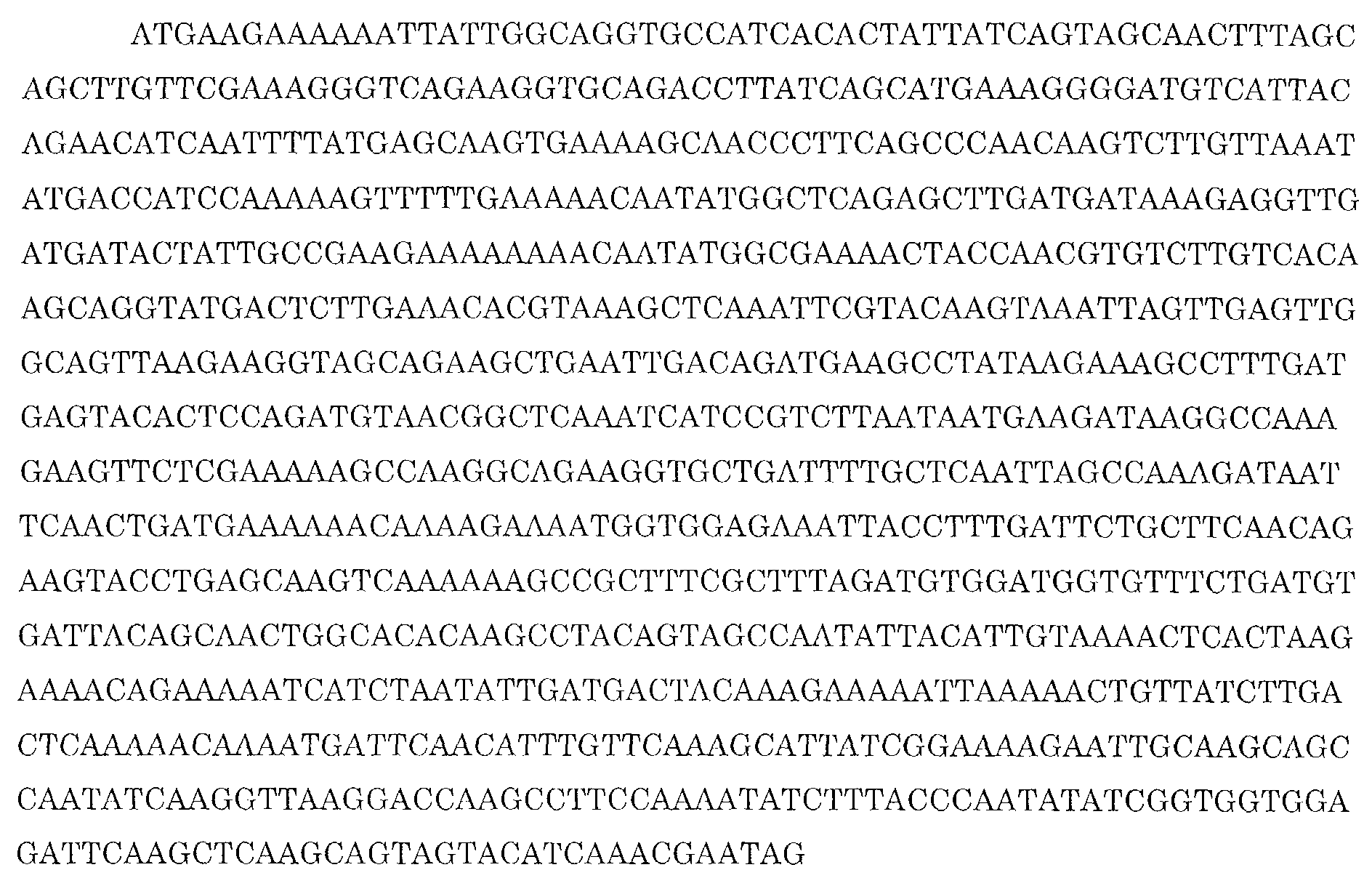
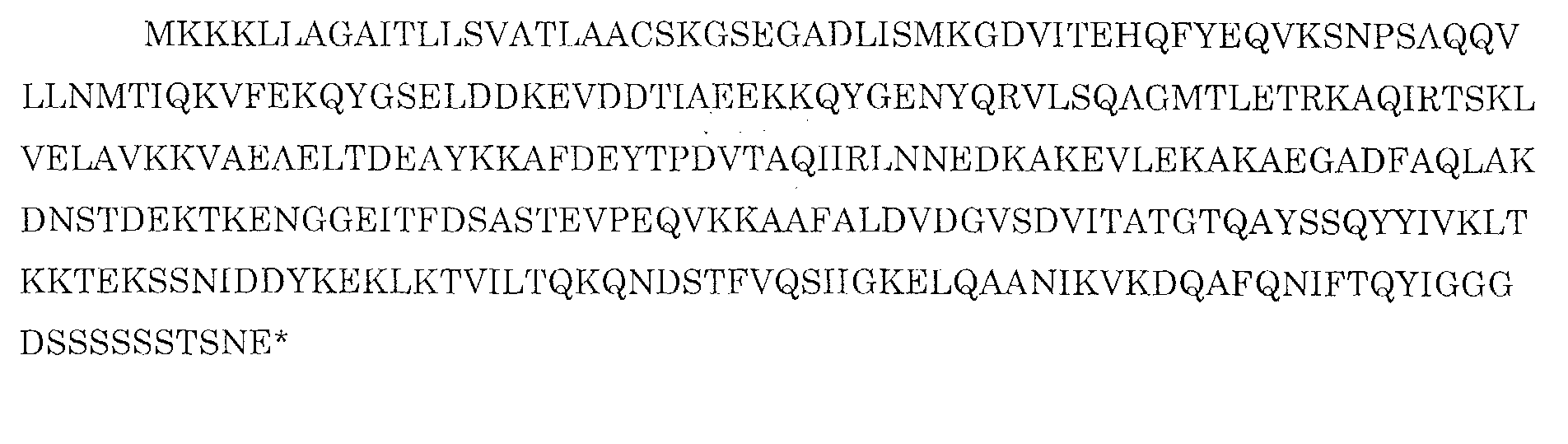

The gene for the active peptide of SlrA was amplified by PCR from
Streptococcus pneumoniae D39 with the primers
5'TTTACTGCATATGCACCATCACCATCACCATAGCAGCGTCCAACGCAGT3 ' and 5'CATTAGGATCCAATCGCTGGGGAAGTG3'which incorporate flanking NdeI and BamHI restriction sites, and a N-terminal His6 tag. The amplified DNA was cloned into a pET11a expression vector (Stratagene, LaJolla, CA) and electrotransformed into E. coli BL21(DE3). The recombinant protein was purified by Ni+ affinity chromatography with the HisTrap Kit (Amersham Pharmacia) according to the manufacturers recommendations. The purified recombinant protein was dialysed against 10mM HEPES buffer, pH7.5, freeze dried, and stored at -20°C.
5'TTTACTGCATATGCACCATCACCATCACCATAGCAGCGTCCAACGCAGT3 ' and 5'CATTAGGATCCAATCGCTGGGGAAGTG3'which incorporate flanking NdeI and BamHI restriction sites, and a N-terminal His6 tag. The amplified DNA was cloned into a pET11a expression vector (Stratagene, LaJolla, CA) and electrotransformed into E. coli BL21(DE3). The recombinant protein was purified by Ni+ affinity chromatography with the HisTrap Kit (Amersham Pharmacia) according to the manufacturers recommendations. The purified recombinant protein was dialysed against 10mM HEPES buffer, pH7.5, freeze dried, and stored at -20°C.

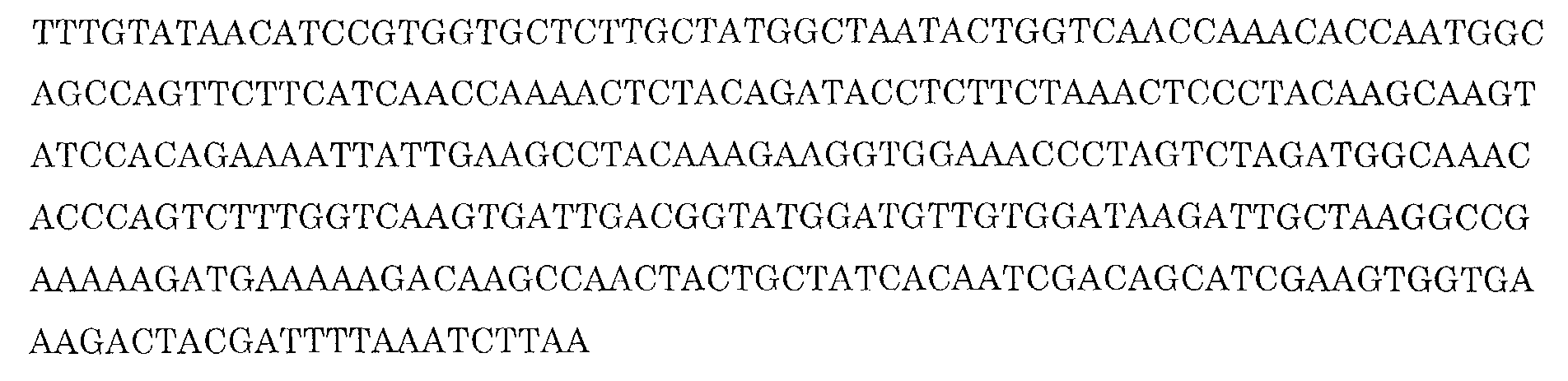
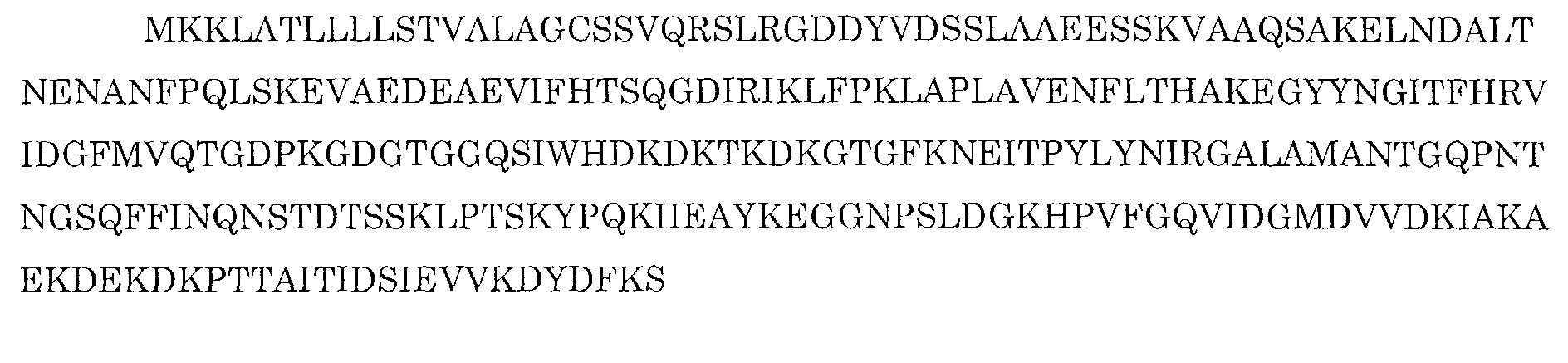
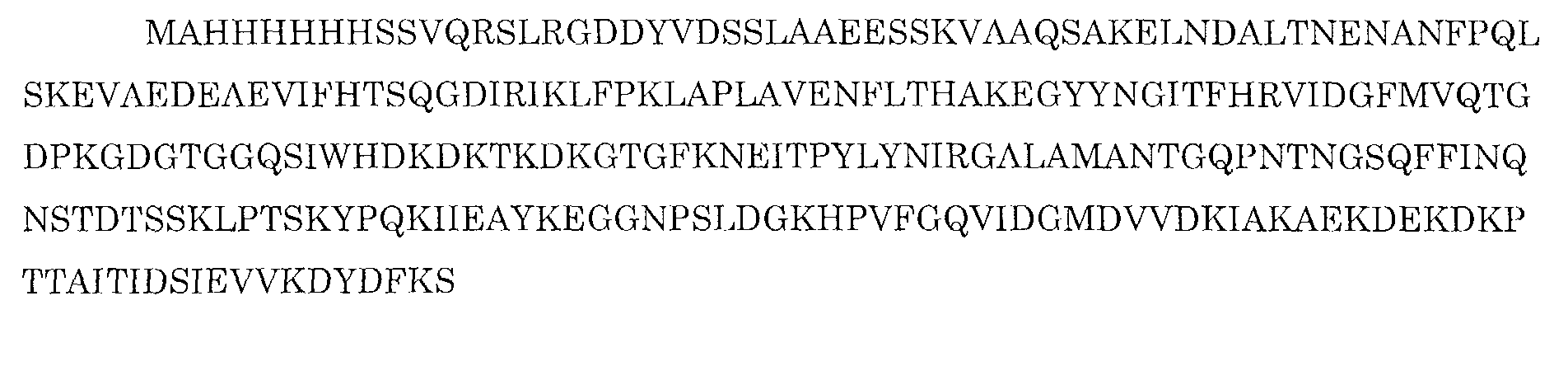
A 3948bp gene fragment which encodes amino acids 671-1987 of the IgAl
proteinase was amplified by PCR from Streptococcus pneumoniae TIGR4 with
the primers 5'CAACATCACATATGGGACAAACAGAACCAGAG3'and
5'ACTTAGATCTTAATGATGGTGGTGATGATGGGCTTTAAAGATTGCTCTC3
' which incorporate flanking NdeI and BglII restriction sites, and a C-terminal
His6 tag. The amplified DNA was cloned into a pET11a expression vector
(Stratagene, LaJolla, CA) and electrotransformed into E. coli BL21(DE3).
Inoculate 200ml LB broth with 50µl/ml ampicillin and grow at 37°C overnight.
Transfer 20-30ml per liter of the overnight culture to prewarmed LB with
50µl/ml ampicillin and grow to an OD600 between 0.6 and 1.0 (2-3 hours).
Expression is induced by the addition of 1mM IPTG (10ml of a 100mM stock
/liter), and the cells were grown for a further 2-3hours.
Cells were harvested (10min @ 3000rpm) and resuspended in ice cold 20mM sodium phosphate buffer pH7.4 with 8M urea (15ml of buffer/ liter of culture). The cells are lysed by sonnication 3x 30seconds on ice (1 min intervals to allow cooling).
Place lysate on a rotating shaker at 4°C for 20min (to dissolve inclusion bodies).
The crude lysate is cleared by centrifugation (15,000rpm for 30min in a JA20 rotor).
Place the cleared supernatant in a pre-boiled dialysis bag, and dialyze overnight against 2L ice cold 20mM sodium phosphate buffer pH7.4 with ImM DTT.
Add ammonium sulfate to the dialyses supernatant to 20% saturation (0.123g/ml), and stir at 4°C for 20min.
Spin precipitate at 10,000rpm for 15min in a JA20 rotor at 4°C. (IgA1 proteinase will be recovered from the protein pellet).
Cells were harvested (10min @ 3000rpm) and resuspended in ice cold 20mM sodium phosphate buffer pH7.4 with 8M urea (15ml of buffer/ liter of culture). The cells are lysed by sonnication 3x 30seconds on ice (1 min intervals to allow cooling).
Place lysate on a rotating shaker at 4°C for 20min (to dissolve inclusion bodies).
The crude lysate is cleared by centrifugation (15,000rpm for 30min in a JA20 rotor).
Place the cleared supernatant in a pre-boiled dialysis bag, and dialyze overnight against 2L ice cold 20mM sodium phosphate buffer pH7.4 with ImM DTT.
Add ammonium sulfate to the dialyses supernatant to 20% saturation (0.123g/ml), and stir at 4°C for 20min.
Spin precipitate at 10,000rpm for 15min in a JA20 rotor at 4°C. (IgA1 proteinase will be recovered from the protein pellet).
Redisolve protein pellet (5ml/litre culture) in start buffer (20mM sodium
phosphate buffer pH7.4, 0.5M NaCl ,10mM imidazole 8M urea).
Filter through a .45µm filter.
Load 1ml column with Ni+ and equilibrate it with start buffer with urea.
Pump the supernatant (15ml) through a Ni+ loaded 1ml HisTrap column (Amersham Pharmacia).
Wash with 10ml wash buffer (20mM sodium phosphate buffer pH7.4, 0.5M NaCl ,20mM imidazole 8M urea).
Elute in lml fractions with elution (20mM sodium phosphate buffer pH7.4; 0.5M NaCl; 400mM imidazole; 8M urea).
The second fraction should contain the IgAl proteinase.
The 2nd fraction is then dialyzed overnight against 2L 10mM Hepes buffer pH7.4.
Without the Urea, the protein will re-precipitate. Recover the protein by centrifugation, Freeze dry and store at -20°C.
Protein can be resolubilized in 8M urea and then diluted in PBS etc. It will remain soluble at high concentrations in 4M urea.
Filter through a .45µm filter.
Load 1ml column with Ni+ and equilibrate it with start buffer with urea.
Pump the supernatant (15ml) through a Ni+ loaded 1ml HisTrap column (Amersham Pharmacia).
Wash with 10ml wash buffer (20mM sodium phosphate buffer pH7.4, 0.5M NaCl ,20mM imidazole 8M urea).
Elute in lml fractions with elution (20mM sodium phosphate buffer pH7.4; 0.5M NaCl; 400mM imidazole; 8M urea).
The second fraction should contain the IgAl proteinase.
The 2nd fraction is then dialyzed overnight against 2L 10mM Hepes buffer pH7.4.
Without the Urea, the protein will re-precipitate. Recover the protein by centrifugation, Freeze dry and store at -20°C.
Protein can be resolubilized in 8M urea and then diluted in PBS etc. It will remain soluble at high concentrations in 4M urea.

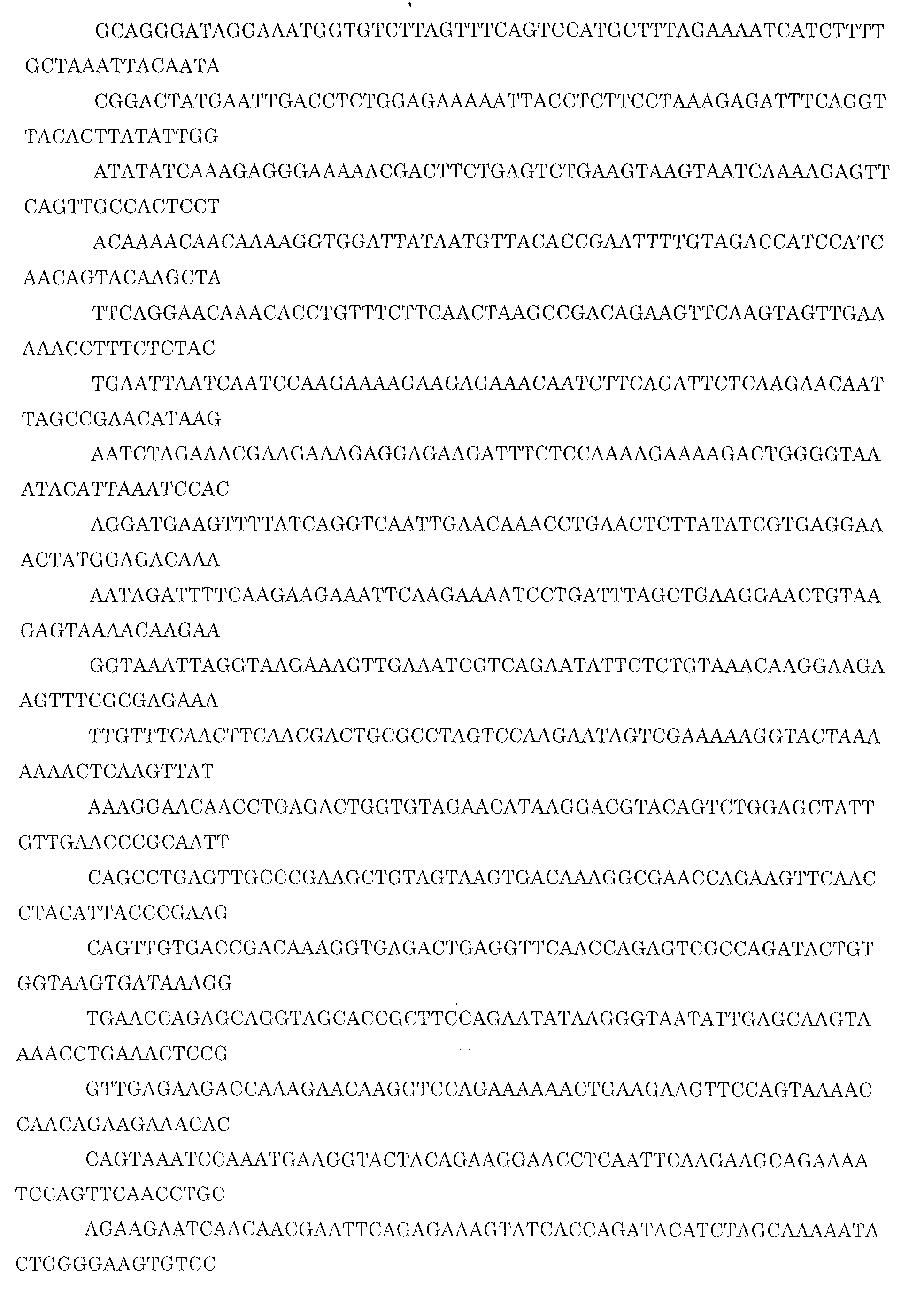

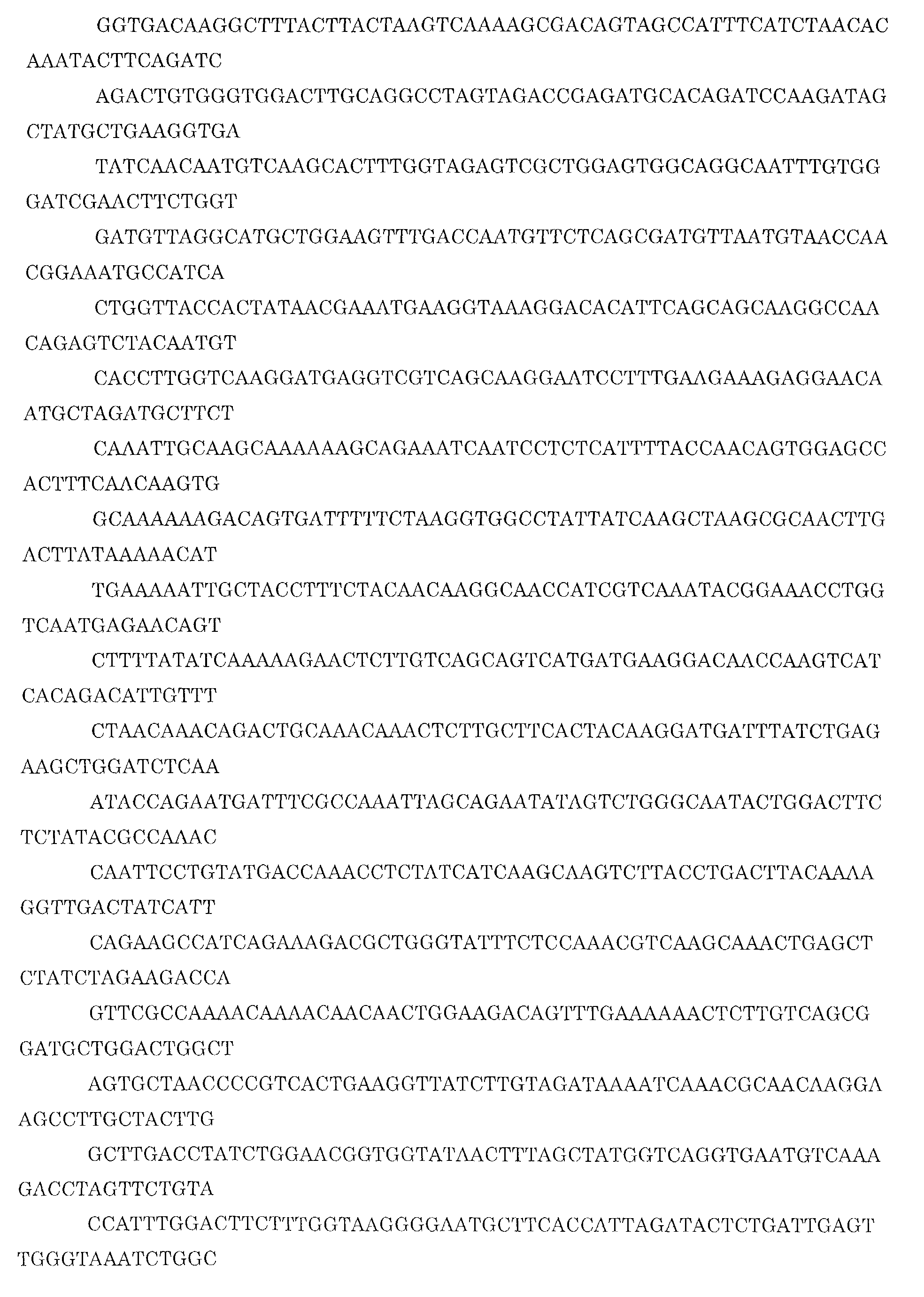
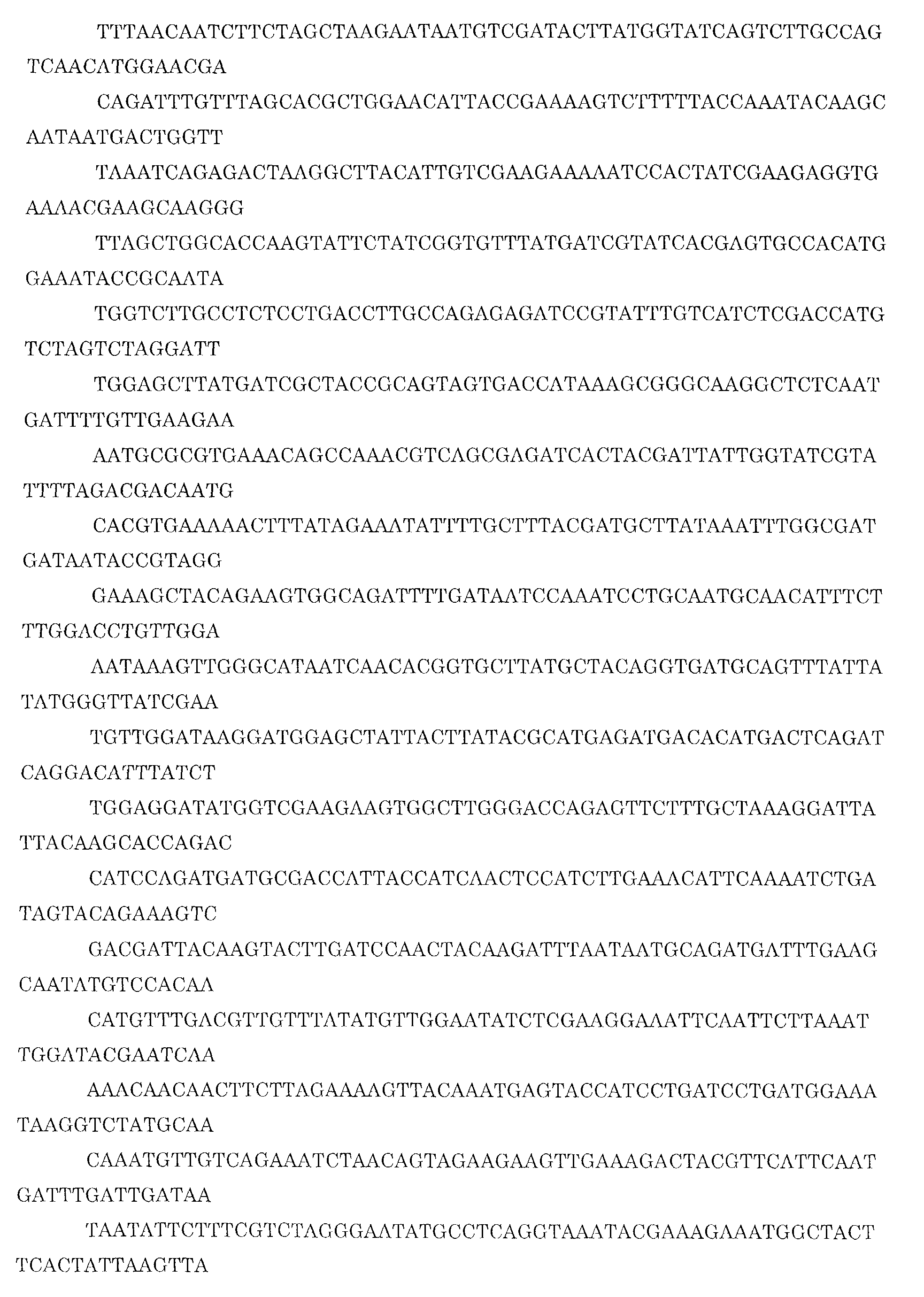
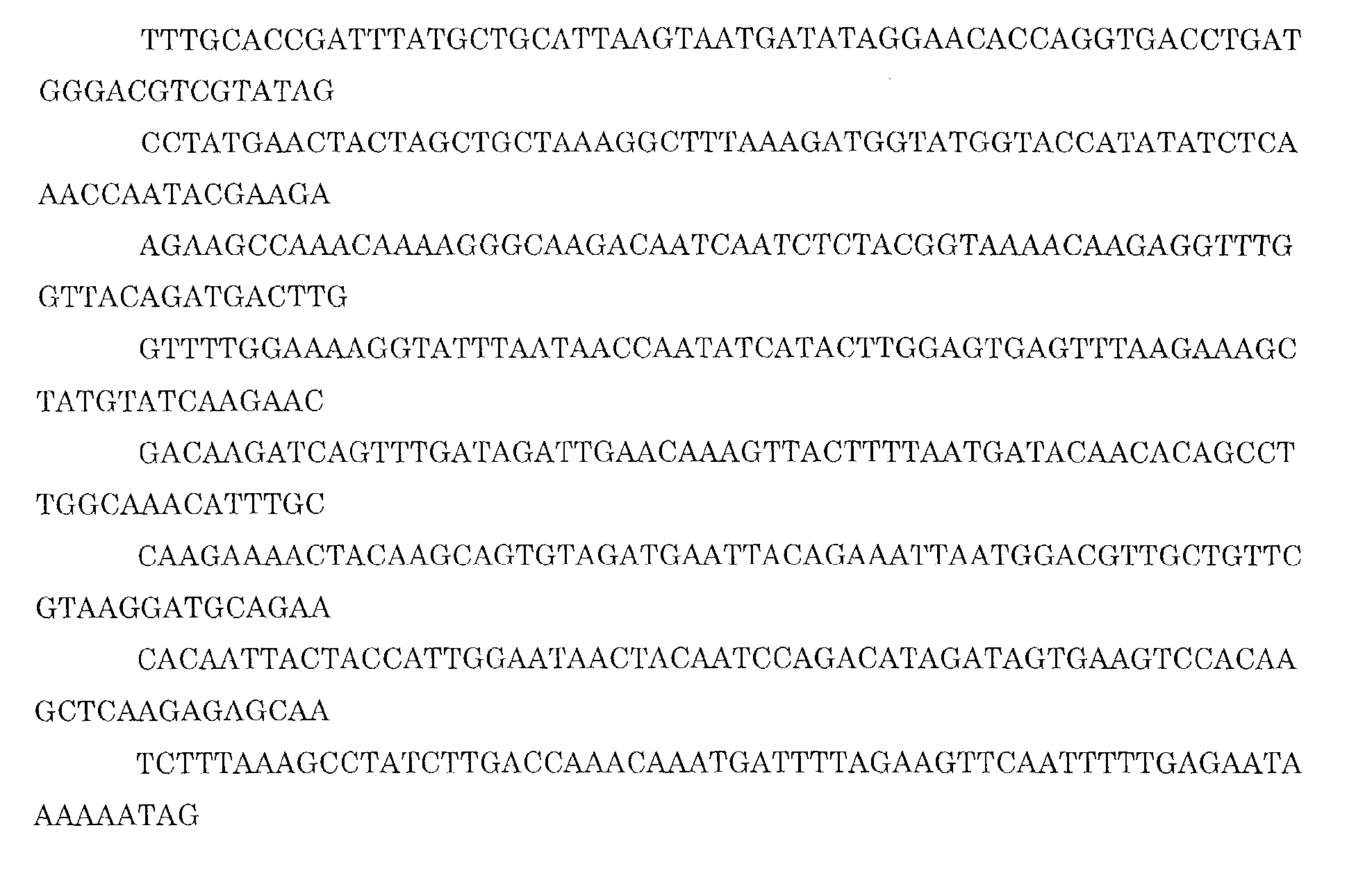


The gene for PsaA was amplified by PCR from Streptococcus pneumoniae D39
with the primers
5'CCATGGCTAGCCACCATCACCATCACCATgctacaaactcaatcatcgc 3' and
5'TTTCGGATCCTTATTTTGCCAATCCTTCAGC 3' which incorporate flanking
NheI and BamHI restriction sites, and a N-terminal His6 tag. The amplified
DNA was cloned into a pETlla expression vector (Stratagene, LaJolla, CA)
and electrotransformed into E. coli BL21(DE3). The recombinant protein was
purified by Ni+ affinity chromatography with the HisTrap Kit (Amersham
Pharmacia) according to the manufacturers recommendations. To prevent the
formation of inclusion bodies, 8M urea was added to all buffers throughout the
purification process. The purified recombinant protein was dialysed against
10mM HEPES buffer, pH7.5, free dried, and stored at -20°C.
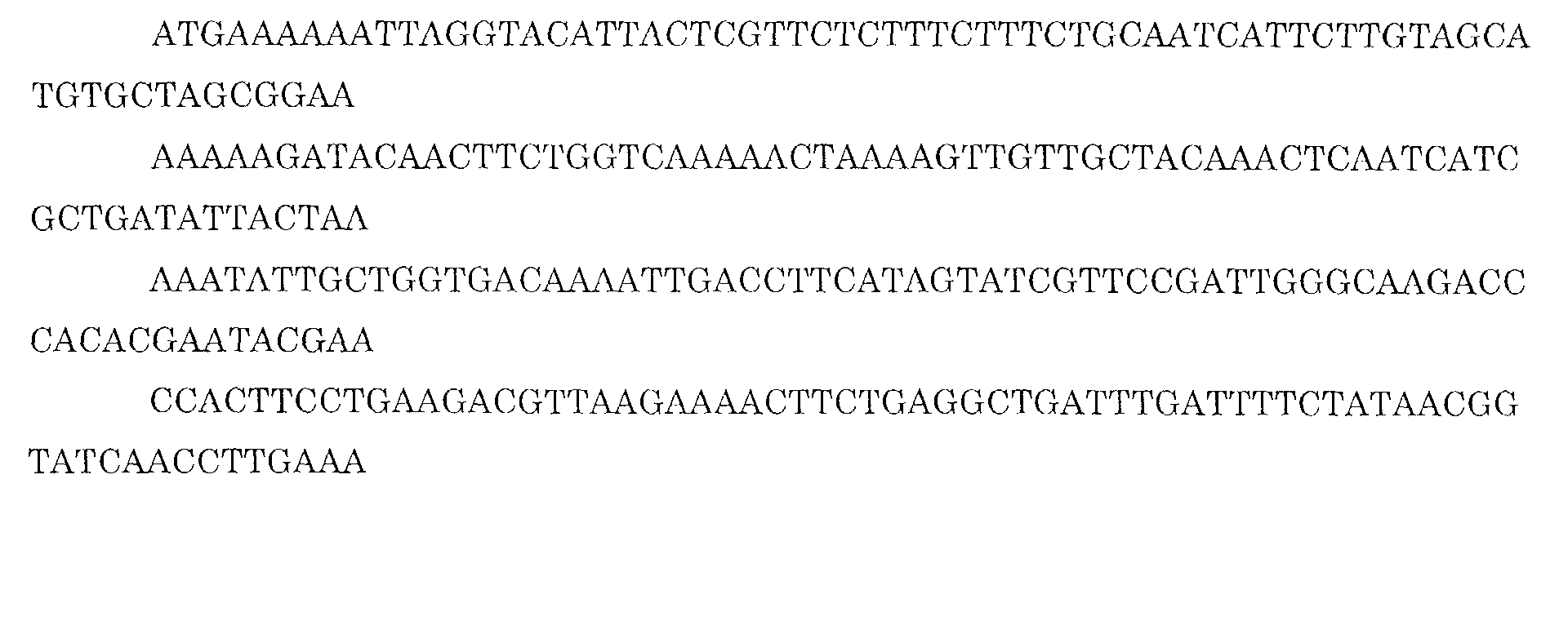


Claims (22)
- A method to identify an opsonophagocytosis inducing antigen as a vaccine component for immunisation against a microorganism, comprising:a. Selecting in silico via a membrane anchoring motif and/or a cell wall binding domain a nucleotide sequence encoding at least part of a bacterial protein, andb. Producing at least part of said protein, andc. contacting a collection of antibodies to said protein and testing for binding between at least one antibody and at least one antigen, andd. measuring the opsonizing ability in vitro and/or in vivo of said binding antibody for a microorganism having such an antigen.
- A method according to claim 1 wherein said collection of antibodies is raised by immunizing an animal with at least part of said protein of said microorganism.
- A method according to claim 1 or 2 wherein said microorganism is a member of the species of Streptococcus pneumoniae.
- A method according to claim 1 or 2 wherein said microorganism is a member of the species Moraxella catarrhalis.
- A method according to claim 1 or 2 wherein said microorganism is a member of the genus Streptococcus, or a member of the genus Staphylococcus, or a member of the species Moraxella catarrhalis, and/or Neisseria meningitidis, and/or Neisseria ghonorrhoeae, and/or Helicobacter pylori, and/or Haemophilus influenzae and/or Campylobacter jejuni, and/or a member of the genus Pseudomonas, and/or a member of the genus Bacillus.
- A nucleotide sequence at least encoding for an antigenic part of a protein, said protein inducing opsonophagocytosis of a microorganism having such a protein.
- A nucleotide sequence according to claim 6, wherein said protein is partially homologous with a protein selected by the method according to claim 1 or 2
- A recombinant vector comprising a nucleotide sequence according to claim 6 or 7.
- A recombinant cell expressing at least part of a nucleotide sequence according to claim 7 or 8.
- A purified protein, produced by a recombinant cell according to claim 9.
- A vaccine component for immunisation against a micro organism which can be killed by opsonophagocytic cells, said vaccine component comprising a protein according to claim 10, and/or an antigen obtainable by a method according to claim 1 or 2
- A vaccine component according to claim 11, comprising at least a functional part of streptococcal lipoprotein rotamase A (SlrA) of Streptococcus pneumoniae.
- A vaccine component according to claim 11, comprising at least a functional part of pneumococcal IgAl protease (IgAl) of Streptococcus pneumoniae.
- A vaccine component according to claim 11, comprising at least a functional part of pneumococcal surface adhesion protein A (PsaA) of Streptococcus pneumoniae.
- A vaccine component according to any of claims 11-14, also comprising at least a functional part of pneumococcal maturation protein A (PpmA) of Streptococcus pneumoniae.
- A vaccine comprising at least one vaccine component according to any of claims 11 to 15, and/or a homologous and/or functionally homologous protein or protein fragment thereof for the treatment of an infection by a microorganism which can be killed by opsonophagocytic cells.
- A vaccine according to claim 16, also comprising a pharmaceutically acceptable carrier and/or adjuvant.
- A method to produce an antibody comprising contacting an immune cell with at least one vaccine component according to any of claims 11-16.
- An isolated antibody or a functional part or derivative thereof, obtainable by the method according to claim 18.
- Use of an antibody according to claim 19 for the manufacture of a medical preparation.
- A pharmaceutical preparation comprising an antibody against vaccine components according to claim 19.
- Use of a vaccine according to claim 16 or 17 and/or a medical preparation according to claim 21 for the treatment of an infection by a microorganism which can be killed by opsonophagocytic cells.
Priority Applications (12)
| Application Number | Priority Date | Filing Date | Title |
|---|---|---|---|
| EP03076492A EP1477802A1 (en) | 2003-05-16 | 2003-05-16 | Method for selecting and producing vaccine components and vaccines based thereon |
| AT04733500T ATE484744T1 (en) | 2003-05-16 | 2004-05-17 | VACCINES THAT PROTECT AGAINST STREPTOCOCCUS PNEUMONIA INFECTIONS. |
| CNB2004800168399A CN100523809C (en) | 2003-05-16 | 2004-05-17 | vaccine for preventing pneumococcal infection |
| DE602004029565T DE602004029565D1 (en) | 2003-05-16 | 2004-05-17 | Vaccines that protect against Streptococcus pneumonia infections. |
| NZ543662A NZ543662A (en) | 2003-05-16 | 2004-05-17 | Streptococcus pneumoniae vaccine comprising pneumococcal maturation protein A (PpmA) |
| EP04733500A EP1625393B1 (en) | 2003-05-16 | 2004-05-17 | Vaccines conferring protection to infection by Streptococcus pneumonia. |
| PCT/NL2004/000338 WO2004102199A2 (en) | 2003-05-16 | 2004-05-17 | Method for selecting and producing vaccine components and vaccines based thereon |
| US10/556,733 US8142789B2 (en) | 2003-05-16 | 2004-05-17 | Method for selecting and producing vaccine components and vaccines based thereon |
| AU2004239596A AU2004239596B2 (en) | 2003-05-16 | 2004-05-17 | Method for selecting and producing vaccine components and vaccines based thereon |
| CA2525766A CA2525766C (en) | 2003-05-16 | 2004-05-17 | Method for selecting and producing vaccine components and vaccines based thereon |
| DK04733500.5T DK1625393T3 (en) | 2003-05-16 | 2004-05-17 | Vaccines that provide protection against infection of Streptococcus pneumonia |
| US13/397,354 US9549974B2 (en) | 2003-05-16 | 2012-02-15 | Method for selecting and producing vaccine components and vaccines based thereon |
Applications Claiming Priority (1)
| Application Number | Priority Date | Filing Date | Title |
|---|---|---|---|
| EP03076492A EP1477802A1 (en) | 2003-05-16 | 2003-05-16 | Method for selecting and producing vaccine components and vaccines based thereon |
Publications (1)
| Publication Number | Publication Date |
|---|---|
| EP1477802A1 true EP1477802A1 (en) | 2004-11-17 |
Family
ID=33016944
Family Applications (2)
| Application Number | Title | Priority Date | Filing Date |
|---|---|---|---|
| EP03076492A Withdrawn EP1477802A1 (en) | 2003-05-16 | 2003-05-16 | Method for selecting and producing vaccine components and vaccines based thereon |
| EP04733500A Expired - Lifetime EP1625393B1 (en) | 2003-05-16 | 2004-05-17 | Vaccines conferring protection to infection by Streptococcus pneumonia. |
Family Applications After (1)
| Application Number | Title | Priority Date | Filing Date |
|---|---|---|---|
| EP04733500A Expired - Lifetime EP1625393B1 (en) | 2003-05-16 | 2004-05-17 | Vaccines conferring protection to infection by Streptococcus pneumonia. |
Country Status (10)
| Country | Link |
|---|---|
| US (2) | US8142789B2 (en) |
| EP (2) | EP1477802A1 (en) |
| CN (1) | CN100523809C (en) |
| AT (1) | ATE484744T1 (en) |
| AU (1) | AU2004239596B2 (en) |
| CA (1) | CA2525766C (en) |
| DE (1) | DE602004029565D1 (en) |
| DK (1) | DK1625393T3 (en) |
| NZ (1) | NZ543662A (en) |
| WO (1) | WO2004102199A2 (en) |
Cited By (4)
| Publication number | Priority date | Publication date | Assignee | Title |
|---|---|---|---|---|
| EP2343319A1 (en) * | 2010-01-07 | 2011-07-13 | University of Ljubljana | Genetically modified food grade microorganism for treatment of inflammatory bowel disease |
| EP2371843A1 (en) * | 2005-05-19 | 2011-10-05 | THE GOVERNMENT OF THE UNITED STATES OF AMERICA, as represented by the Secretary, Department of Health and Human Services | Functional epitopes of streptococcus pneumoniae psaA antigen and uses thereof |
| AU2012201107B2 (en) * | 2005-05-19 | 2012-11-29 | The Government Of The United States Of America, As Represented By The Secretary, Department Of Health And Human Services, Centers For Disease Control And Prevention | Functional epitopes of Streptococcus pneumoniae PsaA antigen and uses thereof |
| EP3415160A1 (en) * | 2014-03-04 | 2018-12-19 | Albert-Ludwigs-Universität Freiburg | Polypeptides derived from enterococcus and their use for vaccination and the generation of therapeutic antibodies |
Families Citing this family (9)
| Publication number | Priority date | Publication date | Assignee | Title |
|---|---|---|---|---|
| EP1746103A1 (en) * | 2005-07-20 | 2007-01-24 | Applied NanoSystems B.V. | Bifunctional protein anchors |
| EP1923069A1 (en) * | 2006-11-20 | 2008-05-21 | Intercell AG | Peptides protective against S. pneumoniae and compositions, methods and uses relating thereto |
| RU2510281C2 (en) | 2012-06-22 | 2014-03-27 | Общество с ограниченной ответственностью "Эпитоп" (ООО "Эпитоп") | HYBRID PROTEIN VACCINE AGAINST PNEUMONIA CAUSED BY Streptococcus pneumoniae |
| CN105101456B (en) * | 2014-04-24 | 2019-05-07 | 阿尔卡特朗讯 | A kind of method, equipment and system for internet of things equipment triggering |
| CN105968213A (en) * | 2016-06-14 | 2016-09-28 | 长春百克生物科技股份公司 | Streptococcus pneumonia fusion protein and vaccine thereof |
| US12616745B2 (en) * | 2019-06-07 | 2026-05-05 | Flugen, Inc. | Influenza virus backbone |
| CN110551703A (en) * | 2019-09-10 | 2019-12-10 | 天津大学 | Preparation and application methods of novel material BEM |
| WO2024108137A2 (en) | 2022-11-18 | 2024-05-23 | Seismic Therapeutic, Inc. | Fc fusion molecules and uses thereof |
| JP2026501731A (en) | 2023-01-06 | 2026-01-16 | サイズミック セラピューティク インコーポレイテッド | Protease variants and uses thereof |
Citations (3)
| Publication number | Priority date | Publication date | Assignee | Title |
|---|---|---|---|---|
| US5976542A (en) * | 1996-09-23 | 1999-11-02 | New England Medical Center | Compositions and methods for treatment of streptococcus pneumoniae infection |
| EP1075841A1 (en) * | 1999-08-13 | 2001-02-14 | Erasmus Universiteit Rotterdam | Pneumococcal vaccines |
| WO2002077021A2 (en) * | 2001-03-27 | 2002-10-03 | Chiron Srl. | Streptococcus pneumoniae proteins and nucleic acids |
Family Cites Families (3)
| Publication number | Priority date | Publication date | Assignee | Title |
|---|---|---|---|---|
| JP2003519089A (en) * | 1999-06-10 | 2003-06-17 | ユーエイビー リサーチ ファウンデーション | Pneumococcal surface protein-containing vaccine |
| GB0022742D0 (en) * | 2000-09-15 | 2000-11-01 | Smithkline Beecham Biolog | Vaccine |
| DK1395648T3 (en) * | 2001-06-11 | 2009-08-03 | Applied Nanosystems Bv | Methods for binding AcmA-type protein anchor fusions to cell wall material of microorganisms |
-
2003
- 2003-05-16 EP EP03076492A patent/EP1477802A1/en not_active Withdrawn
-
2004
- 2004-05-17 NZ NZ543662A patent/NZ543662A/en not_active IP Right Cessation
- 2004-05-17 US US10/556,733 patent/US8142789B2/en not_active Expired - Fee Related
- 2004-05-17 DE DE602004029565T patent/DE602004029565D1/en not_active Expired - Lifetime
- 2004-05-17 EP EP04733500A patent/EP1625393B1/en not_active Expired - Lifetime
- 2004-05-17 AT AT04733500T patent/ATE484744T1/en active
- 2004-05-17 CA CA2525766A patent/CA2525766C/en not_active Expired - Fee Related
- 2004-05-17 CN CNB2004800168399A patent/CN100523809C/en not_active Expired - Fee Related
- 2004-05-17 WO PCT/NL2004/000338 patent/WO2004102199A2/en not_active Ceased
- 2004-05-17 DK DK04733500.5T patent/DK1625393T3/en active
- 2004-05-17 AU AU2004239596A patent/AU2004239596B2/en not_active Ceased
-
2012
- 2012-02-15 US US13/397,354 patent/US9549974B2/en not_active Expired - Fee Related
Patent Citations (3)
| Publication number | Priority date | Publication date | Assignee | Title |
|---|---|---|---|---|
| US5976542A (en) * | 1996-09-23 | 1999-11-02 | New England Medical Center | Compositions and methods for treatment of streptococcus pneumoniae infection |
| EP1075841A1 (en) * | 1999-08-13 | 2001-02-14 | Erasmus Universiteit Rotterdam | Pneumococcal vaccines |
| WO2002077021A2 (en) * | 2001-03-27 | 2002-10-03 | Chiron Srl. | Streptococcus pneumoniae proteins and nucleic acids |
Non-Patent Citations (6)
| Title |
|---|
| DE B K ET AL: "Purification and characterization of Streptococcus pneumoniae palmitoylated pneumococcal surface adhesin A expressed in Escherichia coli.", VACCINE. ENGLAND 6 MAR 2000, vol. 18, no. 17, 6 March 2000 (2000-03-06), pages 1811 - 1821, XP002263814, ISSN: 0264-410X * |
| HOSKINS J ET AL: "Genome of the bacterium Streptococcus pneumoniae strain R6.", JOURNAL OF BACTERIOLOGY. UNITED STATES OCT 2001, vol. 183, no. 19, October 2001 (2001-10-01), pages 5709 - 5717, XP002231307, ISSN: 0021-9193 * |
| TETTELIN H ET AL: "Complete genome sequence of a virulent isolate of Streptococcus pneumoniae.", SCIENCE. UNITED STATES 20 JUL 2001, vol. 293, no. 5529, 20 July 2001 (2001-07-20), pages 498 - 506, XP002263816, ISSN: 0036-8075 * |
| WIZEMANN T M ET AL: "Use of a whole genome approach to identify vaccine molecules affording protection against Streptococcus pneumoniae infection.", INFECTION AND IMMUNITY. UNITED STATES MAR 2001, vol. 69, no. 3, March 2001 (2001-03-01), pages 1593 - 1598, XP002263818, ISSN: 0019-9567 * |
| ZHANG QIBO ET AL: "Immune responses to novel pneumococcal proteins pneumolysin, PspA, PsaA, and CbpA in adenoidal B cells from children.", INFECTION AND IMMUNITY. UNITED STATES OCT 2002, vol. 70, no. 10, October 2002 (2002-10-01), pages 5363 - 5369, XP002263813, ISSN: 0019-9567 * |
| ZYSK G ET AL: "Detection of 23 immunogenic pneumococcal proteins using convalescent-phase serum.", INFECTION AND IMMUNITY. UNITED STATES JUN 2000, vol. 68, no. 6, June 2000 (2000-06-01), pages 3740 - 3743, XP002263817, ISSN: 0019-9567 * |
Cited By (7)
| Publication number | Priority date | Publication date | Assignee | Title |
|---|---|---|---|---|
| EP2371843A1 (en) * | 2005-05-19 | 2011-10-05 | THE GOVERNMENT OF THE UNITED STATES OF AMERICA, as represented by the Secretary, Department of Health and Human Services | Functional epitopes of streptococcus pneumoniae psaA antigen and uses thereof |
| AU2012201107B2 (en) * | 2005-05-19 | 2012-11-29 | The Government Of The United States Of America, As Represented By The Secretary, Department Of Health And Human Services, Centers For Disease Control And Prevention | Functional epitopes of Streptococcus pneumoniae PsaA antigen and uses thereof |
| EP2343319A1 (en) * | 2010-01-07 | 2011-07-13 | University of Ljubljana | Genetically modified food grade microorganism for treatment of inflammatory bowel disease |
| WO2011083080A1 (en) | 2010-01-07 | 2011-07-14 | University Of Ljubljana | Modified food grade microorganism for treatment of inflammatory bowel disease |
| US8754198B2 (en) | 2010-01-07 | 2014-06-17 | University Of Ljubljana | Modified food grade microorganism for treatment of inflammatory bowel disease |
| EP3415160A1 (en) * | 2014-03-04 | 2018-12-19 | Albert-Ludwigs-Universität Freiburg | Polypeptides derived from enterococcus and their use for vaccination and the generation of therapeutic antibodies |
| US11278609B2 (en) | 2014-03-04 | 2022-03-22 | Klinikum Der Universität München | Polypeptides derived from Enterococcus and their use for vaccination and the generation of therapeutic antibodies |
Also Published As
| Publication number | Publication date |
|---|---|
| AU2004239596A1 (en) | 2004-11-25 |
| US9549974B2 (en) | 2017-01-24 |
| WO2004102199A2 (en) | 2004-11-25 |
| CN100523809C (en) | 2009-08-05 |
| CA2525766A1 (en) | 2004-11-25 |
| ATE484744T1 (en) | 2010-10-15 |
| AU2004239596B2 (en) | 2011-03-03 |
| DE602004029565D1 (en) | 2010-11-25 |
| EP1625393A2 (en) | 2006-02-15 |
| DK1625393T3 (en) | 2011-01-31 |
| US20070082003A1 (en) | 2007-04-12 |
| NZ543662A (en) | 2009-03-31 |
| US8142789B2 (en) | 2012-03-27 |
| EP1625393B1 (en) | 2010-10-13 |
| US20120301501A1 (en) | 2012-11-29 |
| CA2525766C (en) | 2016-06-28 |
| WO2004102199A3 (en) | 2005-02-24 |
| CN1806172A (en) | 2006-07-19 |
Similar Documents
| Publication | Publication Date | Title |
|---|---|---|
| Briles et al. | The potential for using protein vaccines to protect against otitis media caused by Streptococcus pneumoniae | |
| Alexander et al. | Immunization of mice with pneumolysin toxoid confers a significant degree of protection against at least nine serotypes of Streptococcus pneumoniae | |
| Larsson et al. | Experimental vaccination against group B streptococcus, an encapsulated bacterium, with highly purified preparations of cell surface proteins Rib and alpha | |
| Overweg et al. | The putative proteinase maturation protein A of Streptococcus pneumoniae is a conserved surface protein with potential to elicit protective immune responses | |
| US9549974B2 (en) | Method for selecting and producing vaccine components and vaccines based thereon | |
| US20100074923A1 (en) | Purification of bacterial antigens | |
| US8642048B2 (en) | Multiple antigenic peptides immunogenic against Streptococcus pneumonia | |
| US20100143415A1 (en) | Streptococcus Pneumoniae Antigens | |
| EP0866133A2 (en) | A group b streptococcus vaccine | |
| Cole et al. | Human pathogenic streptococcal proteomics and vaccine development | |
| Theilacker et al. | Rationale for the development of immunotherapy regimens against enterococcal infections | |
| CN107050442B (en) | Multicomponent immunogenic composition for the prevention of beta-hemolytic streptococcal (BHS) disease | |
| White et al. | Effects of active immunization with a pneumococcal surface protein (PspA) and of locally applied antibodies in experimental otitis media | |
| AU2001271935B2 (en) | Multiple antigenic peptides immunogenic against streptococcus pneumoniae | |
| Briles et al. | Pneumococcal vaccines | |
| Lee et al. | Immunologic epitope, gene, and immunity involved in pneumococcal glycoconjugate | |
| Paton et al. | Protein vaccines | |
| Madoff et al. | Surface structures of group B streptococci important in human immunity | |
| Bruner et al. | Evaluation of synthetic, M type-specific peptides as antigens in a multivalent group A streptococcal vaccine | |
| Telford et al. | Vaccines against pathogenic streptococci | |
| Kim et al. | Evaluation of antibody responses to pneumococcal vaccines with ELISA and opsonophagocytic assay | |
| Lai et al. | Conserved molecular chaperone PrsA stimulates protective immunity against | |
| Anderson et al. | Protection against Pneumococcal | |
| US20110305688A1 (en) | New virulence factors of streptococcus pneumoniae |
Legal Events
| Date | Code | Title | Description |
|---|---|---|---|
| PUAI | Public reference made under article 153(3) epc to a published international application that has entered the european phase |
Free format text: ORIGINAL CODE: 0009012 |
|
| AK | Designated contracting states |
Kind code of ref document: A1 Designated state(s): AT BE BG CH CY CZ DE DK EE ES FI FR GB GR HU IE IT LI LU MC NL PT RO SE SI SK TR |
|
| AX | Request for extension of the european patent |
Extension state: AL LT LV MK |
|
| AKX | Designation fees paid | ||
| REG | Reference to a national code |
Ref country code: DE Ref legal event code: 8566 |
|
| STAA | Information on the status of an ep patent application or granted ep patent |
Free format text: STATUS: THE APPLICATION IS DEEMED TO BE WITHDRAWN |
|
| 18D | Application deemed to be withdrawn |
Effective date: 20050518 |