EP1477559A1 - Novel polypeptide - Google Patents
Novel polypeptide Download PDFInfo
- Publication number
- EP1477559A1 EP1477559A1 EP03705326A EP03705326A EP1477559A1 EP 1477559 A1 EP1477559 A1 EP 1477559A1 EP 03705326 A EP03705326 A EP 03705326A EP 03705326 A EP03705326 A EP 03705326A EP 1477559 A1 EP1477559 A1 EP 1477559A1
- Authority
- EP
- European Patent Office
- Prior art keywords
- seq
- polypeptide
- base sequence
- polynucleotide
- diabetes
- Prior art date
- Legal status (The legal status is an assumption and is not a legal conclusion. Google has not performed a legal analysis and makes no representation as to the accuracy of the status listed.)
- Withdrawn
Links
Images


Classifications
-
- G—PHYSICS
- G01—MEASURING; TESTING
- G01N—INVESTIGATING OR ANALYSING MATERIALS BY DETERMINING THEIR CHEMICAL OR PHYSICAL PROPERTIES
- G01N33/00—Investigating or analysing materials by specific methods not covered by groups G01N1/00 - G01N31/00
- G01N33/48—Biological material, e.g. blood, urine; Haemocytometers
- G01N33/50—Chemical analysis of biological material, e.g. blood, urine; Testing involving biospecific ligand binding methods; Immunological testing
- G01N33/74—Chemical analysis of biological material, e.g. blood, urine; Testing involving biospecific ligand binding methods; Immunological testing involving hormones or other non-cytokine intercellular protein regulatory factors such as growth factors, including receptors to hormones and growth factors
-
- A—HUMAN NECESSITIES
- A61—MEDICAL OR VETERINARY SCIENCE; HYGIENE
- A61P—SPECIFIC THERAPEUTIC ACTIVITY OF CHEMICAL COMPOUNDS OR MEDICINAL PREPARATIONS
- A61P3/00—Drugs for disorders of the metabolism
- A61P3/08—Drugs for disorders of the metabolism for glucose homeostasis
- A61P3/10—Drugs for disorders of the metabolism for glucose homeostasis for hyperglycaemia, e.g. antidiabetics
-
- C—CHEMISTRY; METALLURGY
- C07—ORGANIC CHEMISTRY
- C07K—PEPTIDES
- C07K14/00—Peptides having more than 20 amino acids; Gastrins; Somatostatins; Melanotropins; Derivatives thereof
- C07K14/435—Peptides having more than 20 amino acids; Gastrins; Somatostatins; Melanotropins; Derivatives thereof from animals; from humans
- C07K14/46—Peptides having more than 20 amino acids; Gastrins; Somatostatins; Melanotropins; Derivatives thereof from animals; from humans from vertebrates
- C07K14/47—Peptides having more than 20 amino acids; Gastrins; Somatostatins; Melanotropins; Derivatives thereof from animals; from humans from vertebrates from mammals
-
- G—PHYSICS
- G01—MEASURING; TESTING
- G01N—INVESTIGATING OR ANALYSING MATERIALS BY DETERMINING THEIR CHEMICAL OR PHYSICAL PROPERTIES
- G01N33/00—Investigating or analysing materials by specific methods not covered by groups G01N1/00 - G01N31/00
- G01N33/48—Biological material, e.g. blood, urine; Haemocytometers
- G01N33/50—Chemical analysis of biological material, e.g. blood, urine; Testing involving biospecific ligand binding methods; Immunological testing
- G01N33/68—Chemical analysis of biological material, e.g. blood, urine; Testing involving biospecific ligand binding methods; Immunological testing involving proteins, peptides or amino acids
- G01N33/6893—Chemical analysis of biological material, e.g. blood, urine; Testing involving biospecific ligand binding methods; Immunological testing involving proteins, peptides or amino acids related to diseases not provided for elsewhere
-
- G—PHYSICS
- G03—PHOTOGRAPHY; CINEMATOGRAPHY; ANALOGOUS TECHNIQUES USING WAVES OTHER THAN OPTICAL WAVES; ELECTROGRAPHY; HOLOGRAPHY
- G03G—ELECTROGRAPHY; ELECTROPHOTOGRAPHY; MAGNETOGRAPHY
- G03G15/00—Apparatus for electrographic processes using a charge pattern
- G03G15/06—Apparatus for electrographic processes using a charge pattern for developing
- G03G15/08—Apparatus for electrographic processes using a charge pattern for developing using a solid developer, e.g. powder developer
- G03G15/0822—Arrangements for preparing, mixing, supplying or dispensing developer
- G03G15/0877—Arrangements for metering and dispensing developer from a developer cartridge into the development unit
- G03G15/0881—Sealing of developer cartridges
- G03G15/0882—Sealing of developer cartridges by a peelable sealing film
-
- G—PHYSICS
- G01—MEASURING; TESTING
- G01N—INVESTIGATING OR ANALYSING MATERIALS BY DETERMINING THEIR CHEMICAL OR PHYSICAL PROPERTIES
- G01N2500/00—Screening for compounds of potential therapeutic value
-
- G—PHYSICS
- G01—MEASURING; TESTING
- G01N—INVESTIGATING OR ANALYSING MATERIALS BY DETERMINING THEIR CHEMICAL OR PHYSICAL PROPERTIES
- G01N2800/00—Detection or diagnosis of diseases
- G01N2800/04—Endocrine or metabolic disorders
- G01N2800/042—Disorders of carbohydrate metabolism, e.g. diabetes, glucose metabolism
Definitions
- This invention relates to a novel polypeptide useful when screening a therapeutic agent for type II diabetes, particularly an agent for alleviating insulin resistance, and to a screening tool and a screening method for a therapeutic agent for type II diabetes, particularly an agent for alleviating insulin resistance.
- the number of people diagnosed as diabetic is increasing, due to insufficient exercise or a westernization of life style, such as a habit of eating a high fat diet.
- Diabetes which more than 90% of patients are suffering from are type II diabetes, characterized by a deficiency of insulin action caused by an increase of insulin resistance or a decrease of insulin secretion.
- diabetes After the developing of diabetes, the diabetes progresses without subjective symptoms for a long time. Because complications, such as diabetic retinopathy, diabetic nephropathy, or neuropathy, supervene in severe diabetes, it is very important to prevent or treat diabetes at an early stage.
- Insulin and insulin-like growth factor I are peptide hormones belonging to the same family, and are highly similar in structure and functions. Further, the insulin receptor and IGF-I receptor are homologous molecules belonging to a tyrosine kinase-type receptor family, and each native ligand thereof exhibits a cross-reactivity for the other receptor (non-patent reference 3). It is known that a signal transduction is promoted by binding insulin or IGF-1 with the receptor thereof, and that a glucose uptake from extracellular fluid causes an action of decreasing blood glucose (non-patent reference 4).
- IGF-I alone is not stable in blood, and more than 90% thereof forms complexes with insulin-like growth factor binding protein (IGFBP), to maintain stability, and thus it is considered that the existence of IGFBP is important from the viewpoint of tissue delivery or control of the action (non-patent reference 5).
- IGFBP insulin-like growth factor binding protein
- IGFBP-3 and IGFBP-5 are decreased in the blood of patients suffering from type I/II diabetes (non-patent reference 6), that an N-terminus undigested product (18 kDa) of IGFBP-3 is increased in the urine of patients suffering from type I diabetes (non-patent reference 7), that when streptozotocin, which specifically destroys pancreatic ⁇ cells and can cause diabetes by experimentally administering it to an animal, is administered to rat to induce diabetes, IGFBP-3 is expressed together with IGFBP-5 in renal glomeruli (non-patent reference 8), that a positive correlation between an activity of digesting IGFBP-3 in the urine of patients suffering from type II diabetes with diabetic nephropathy and an amount of albumin leaked into the urine of patients suffering from diabetic nephropathy is observed (non-patent reference 9), that a polymorphism of causes of type I diabetes exists near the IGFBP-2 and
- an effective method for treating diabetes can be also provided by inhibiting IGFBP digestion.
- the present inventors conducted intensive studies into the provision of a screening system for obtaining a novel agent for alleviating insulin resistance and, as a result, found a gene of which the expression was increased in a diabetes model mouse and obtained the gene (mouse MD8 gene), a human ortholog gene (human MD8 gene), and a promoter of the human MD8 gene. Further, the present inventors found that an overexpression of the mouse MD8 or human MD8 in adipocytes inhibits glucose uptake by an insulin stimulation, and that human MD8 is a novel protease having an activity of digesting IGFBP. In this connection, it is considered that insulin resistance is increased by digesting IGFBP.
- the present inventors clarified that MD8 and the promoter thereof can be used as a tool useful when screening a novel therapeutic agent for diabetes (particularly an agent for alleviating insulin resistance), and provided a novel screening tool and screening method for a novel therapeutic agent for diabetes (particularly an agent for alleviating insulin resistance) and a novel method for manufacturing a novel pharmaceutical composition for treating diabetes (particularly an agent for alleviating insulin resistance), and thus the present invention was completed.
- the present invention relates to:
- the present invention includes use of the polypeptide of [1] or [2], the cell of [3], [4], [7], or [8], and the polynucleotide of [5] or [6] for screening a therapeutic agent for diabetes.
- a therapeutic agent for diabetes an agent for alleviating insulin resistance is preferable.
- the "therapeutic agent for diabetes” or “pharmaceutical composition for treating diabetes” includes both an agent or pharmaceutical composition used for treating a patient suffering from diabetes and that preventively used for a subject exhibiting signs of diabetes.
- the screening tool of the present invention for a therapeutic agent for diabetes includes a polypeptide-type screening tool, cell-type screening tool, and promoter-type screening tool.
- polypeptide which may be used as the polypeptide-type screening tool of the present invention, there may be mentioned, for example,
- polypeptides which may be used as the polypeptide-type screening tool of the present invention are collectively referred to as polypeptides for a screening tool.
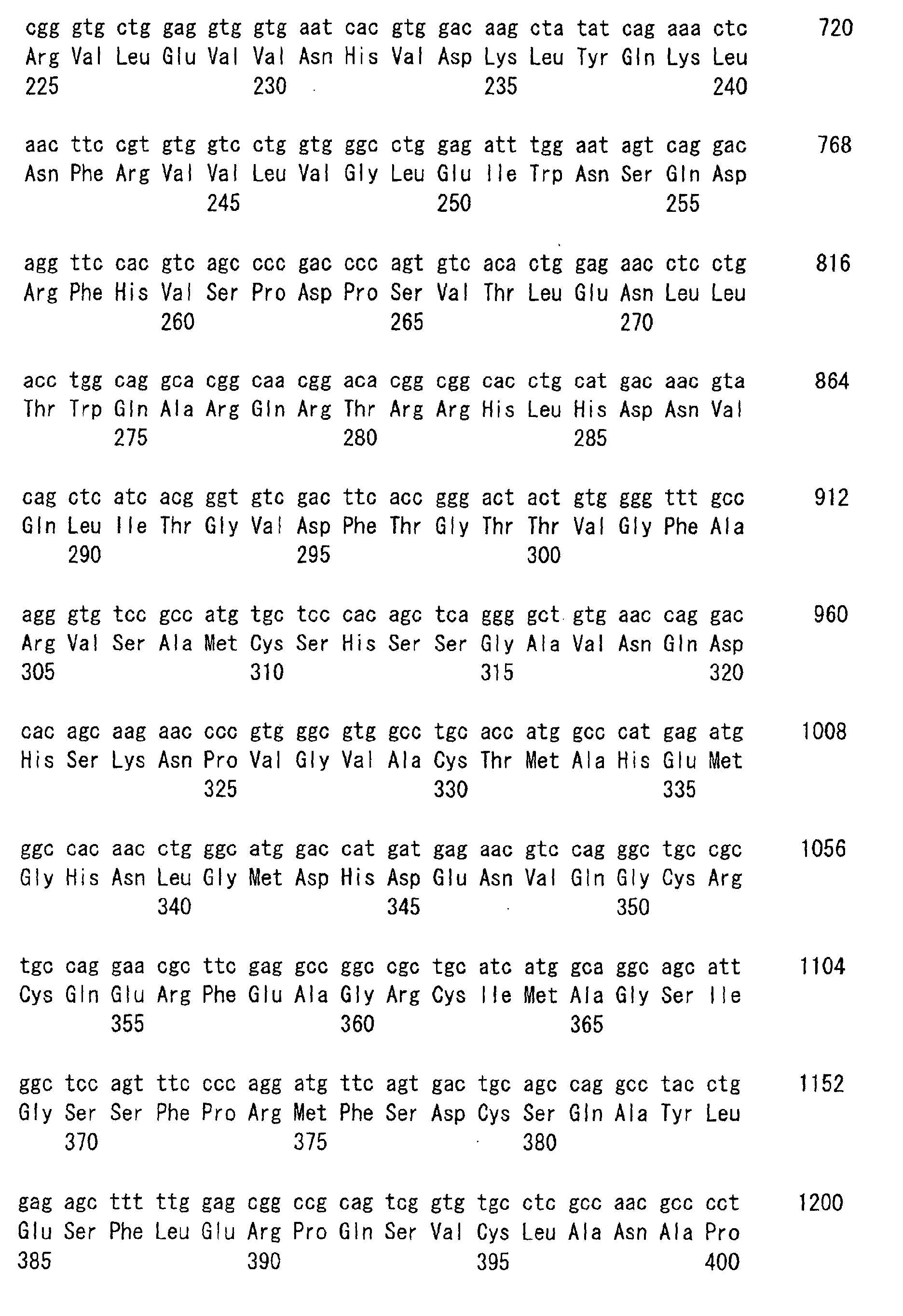
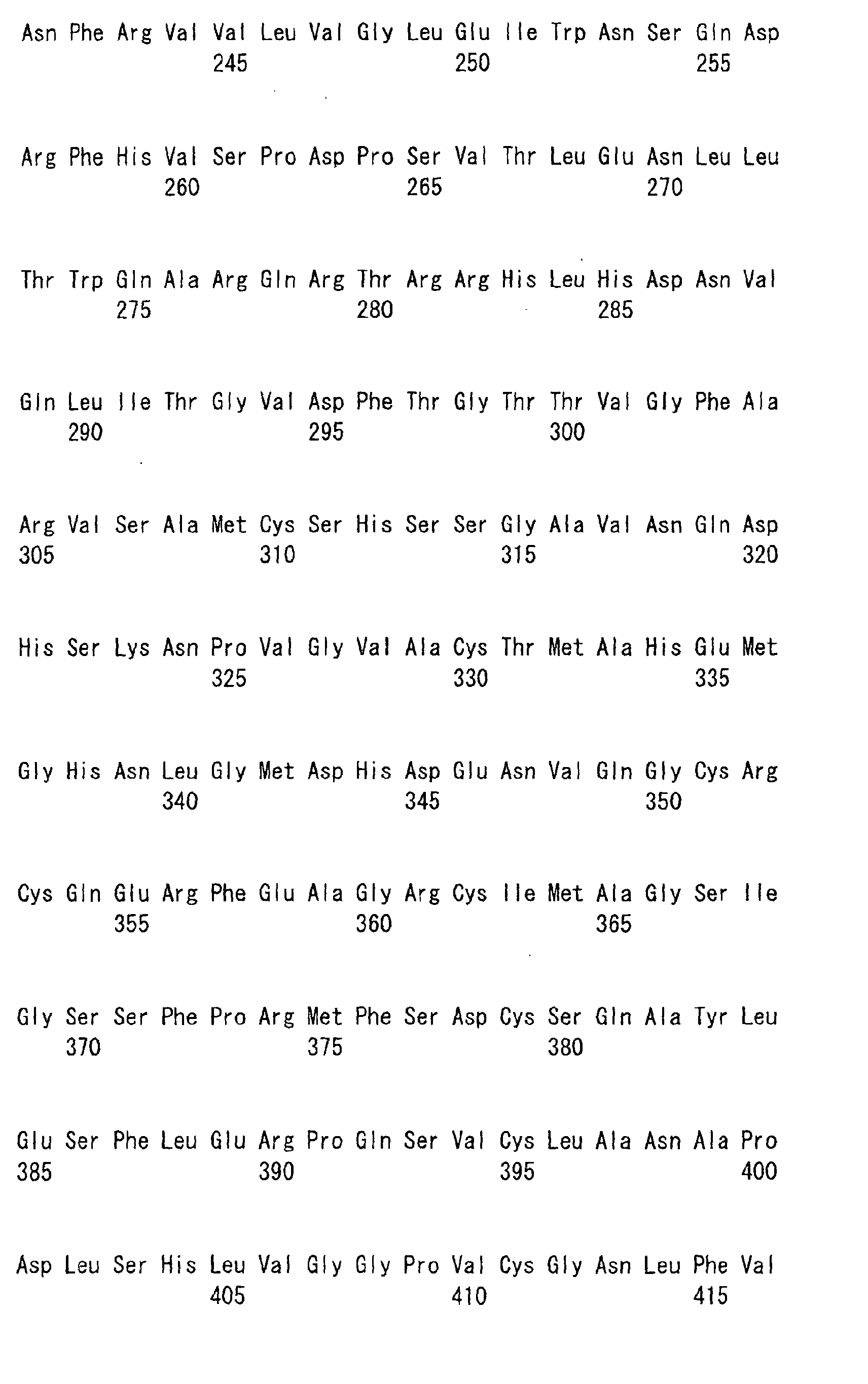
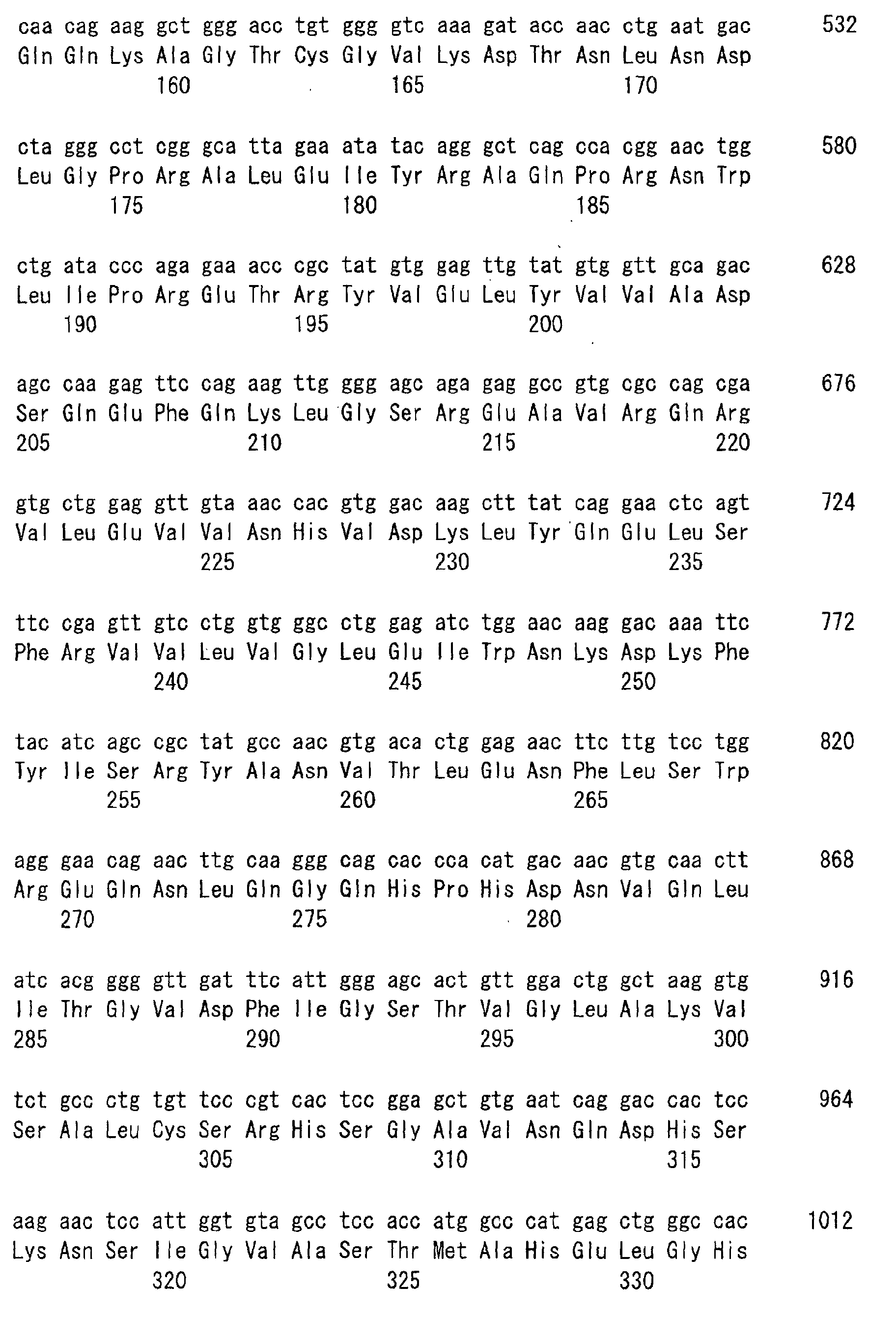
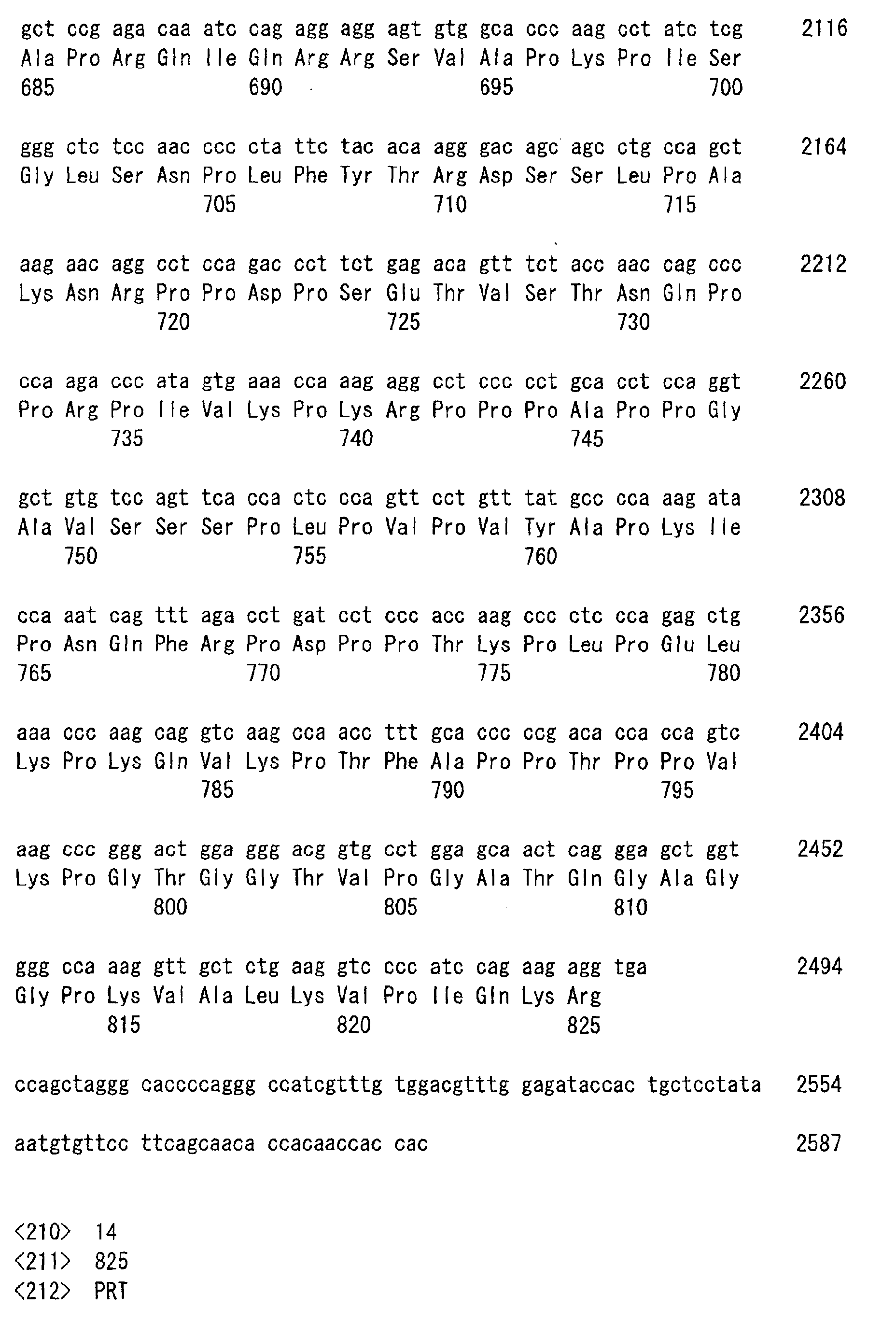
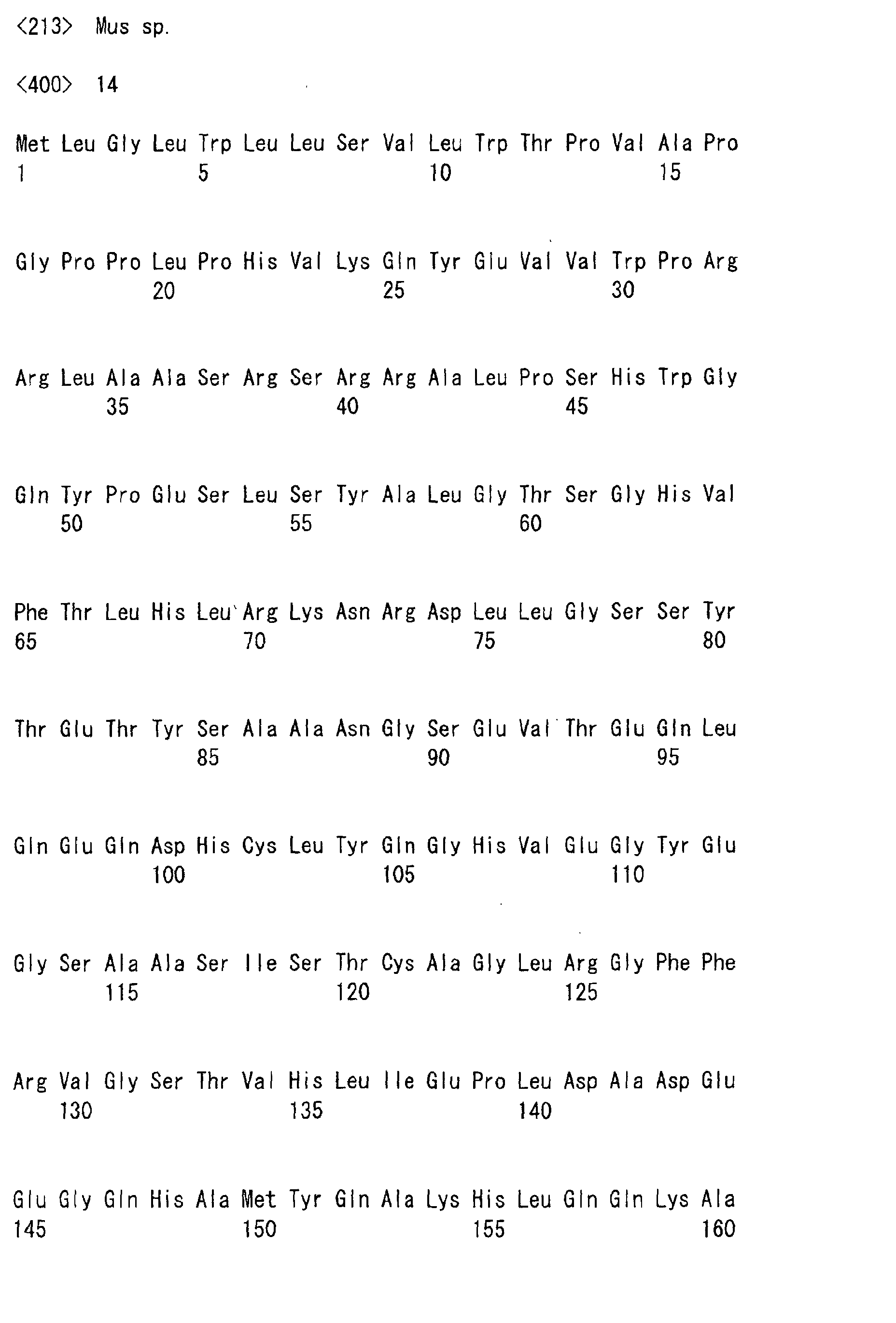
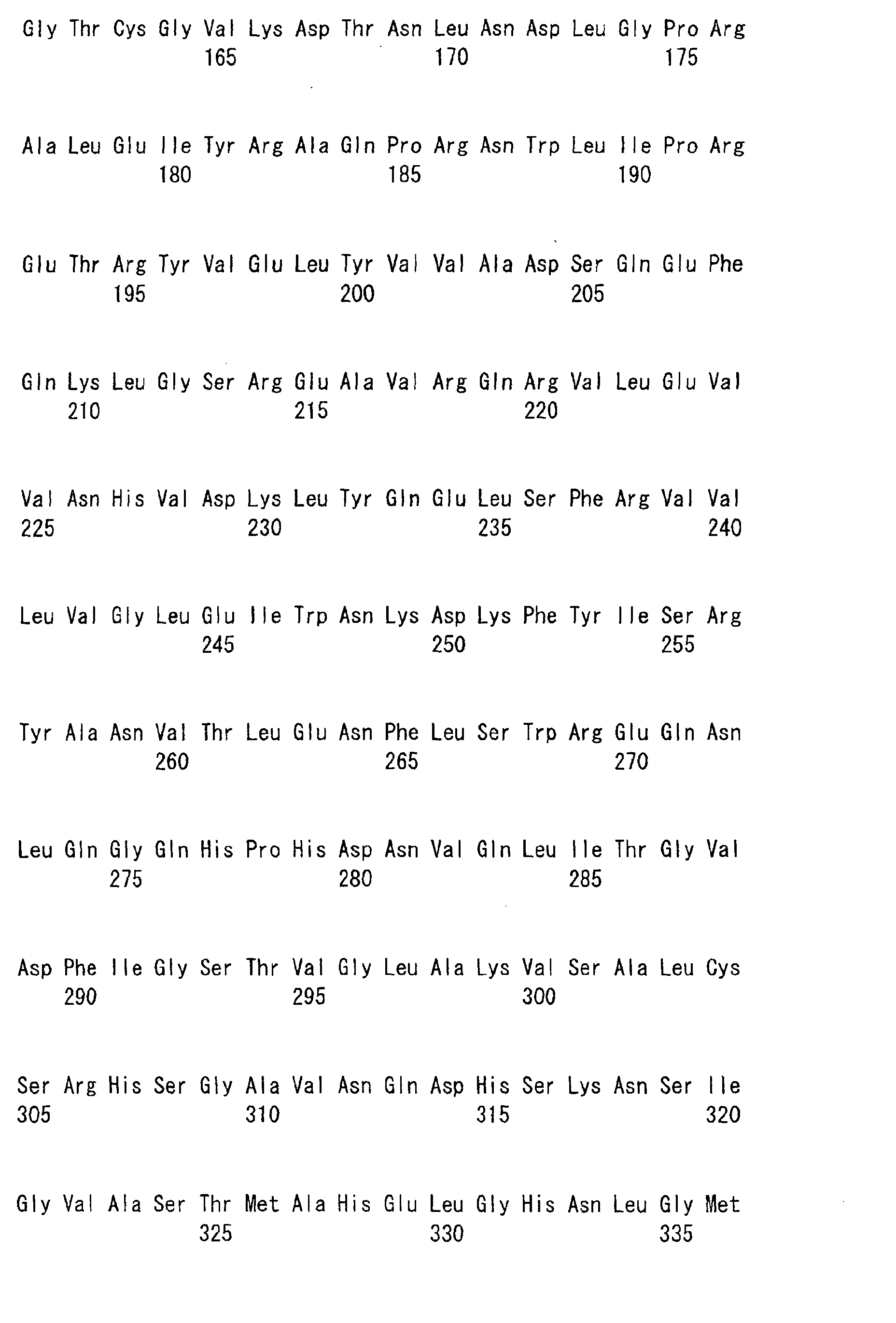
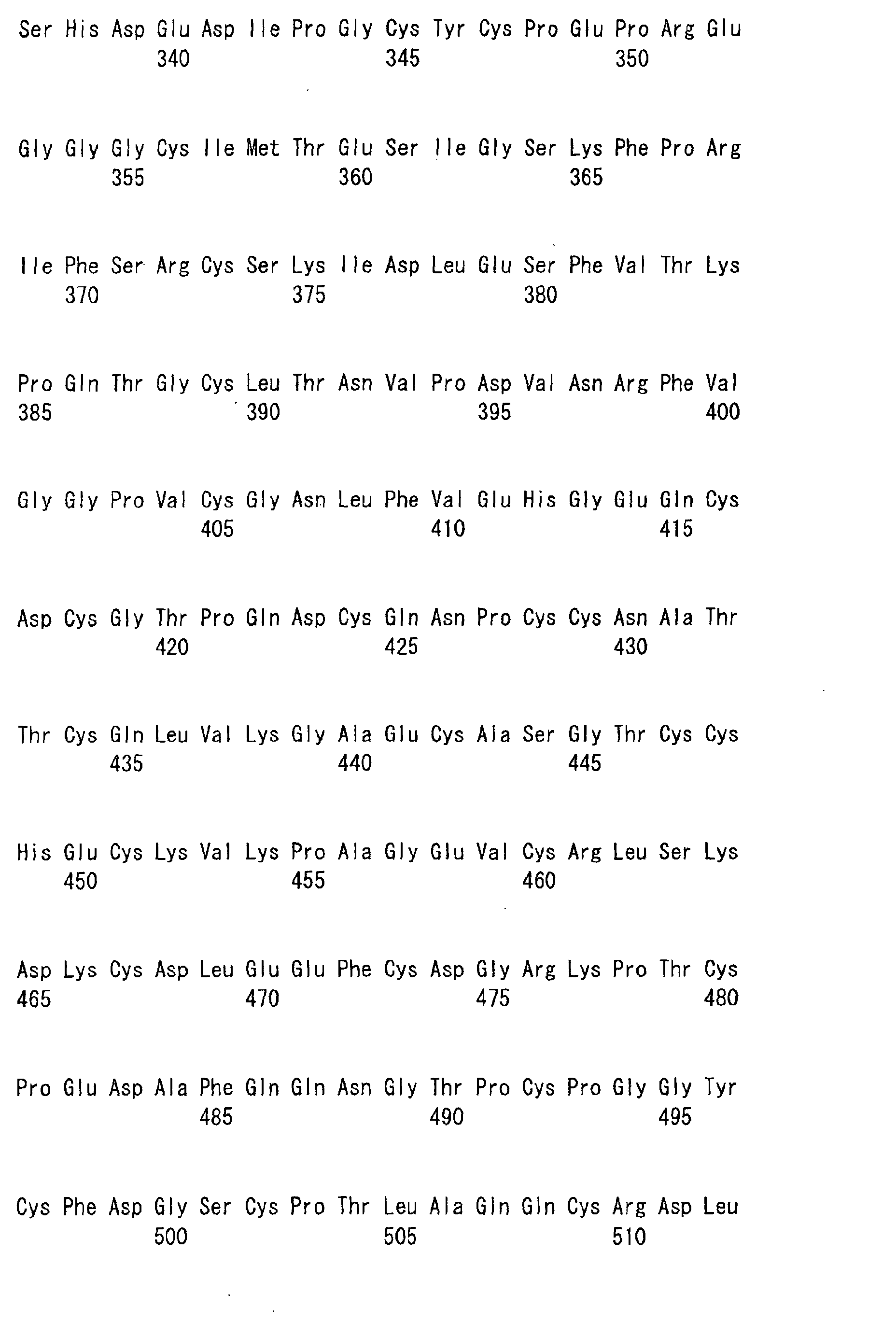
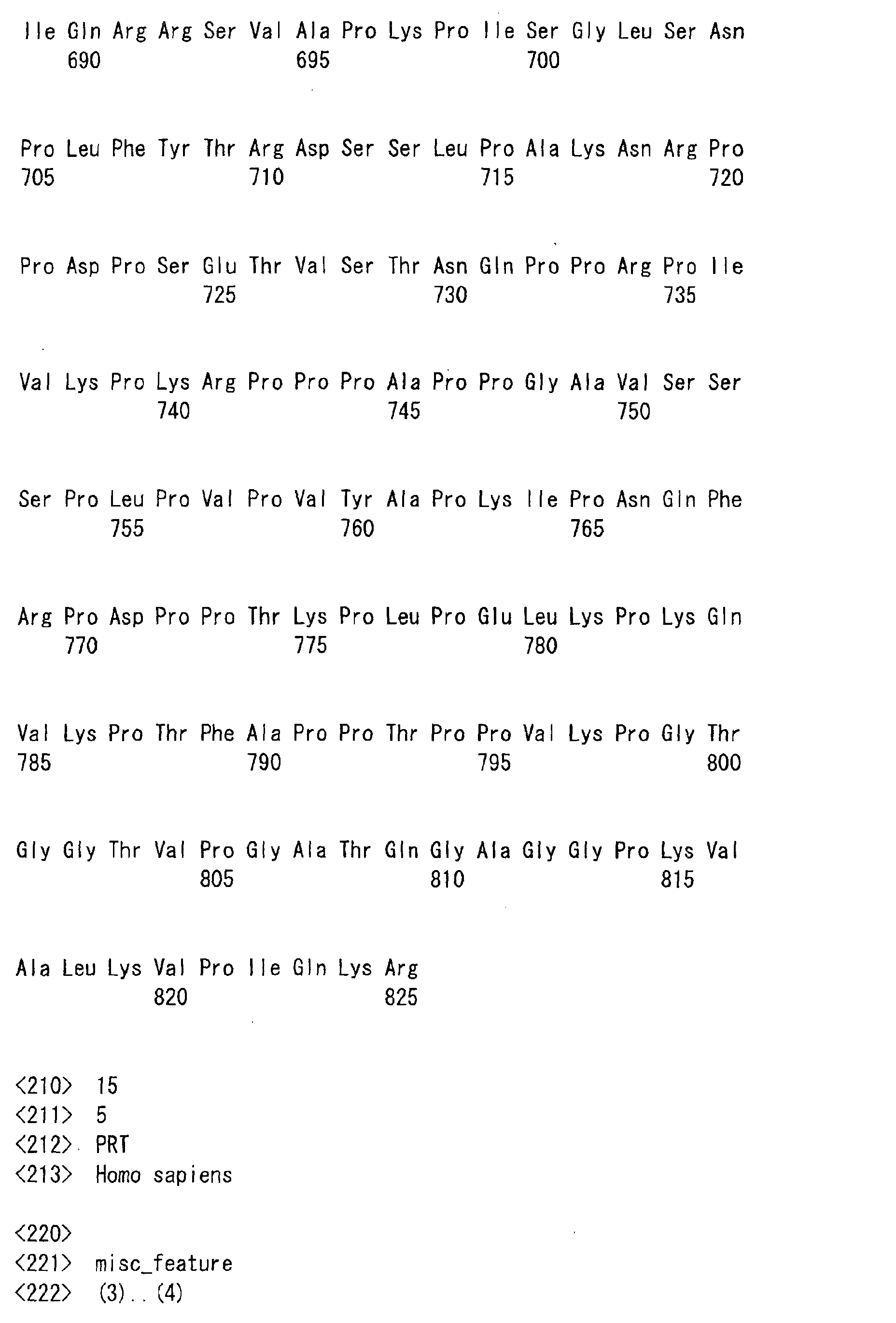
- the "polypeptide consisting of the amino acid sequence of SEQ ID NO: 2" (hereinafter sometimes referred to as MD8 protein) and the "polypeptide consisting of the amino acid sequence of SEQ ID NO: 14" (hereinafter sometimes referred to as mMD8 protein), which are polypeptides of the present invention for a screening tool, are a novel human polypeptide consisting of 824 amino acid residues and a mouse polypeptide consisting of 825 amino acid residues, respectively.
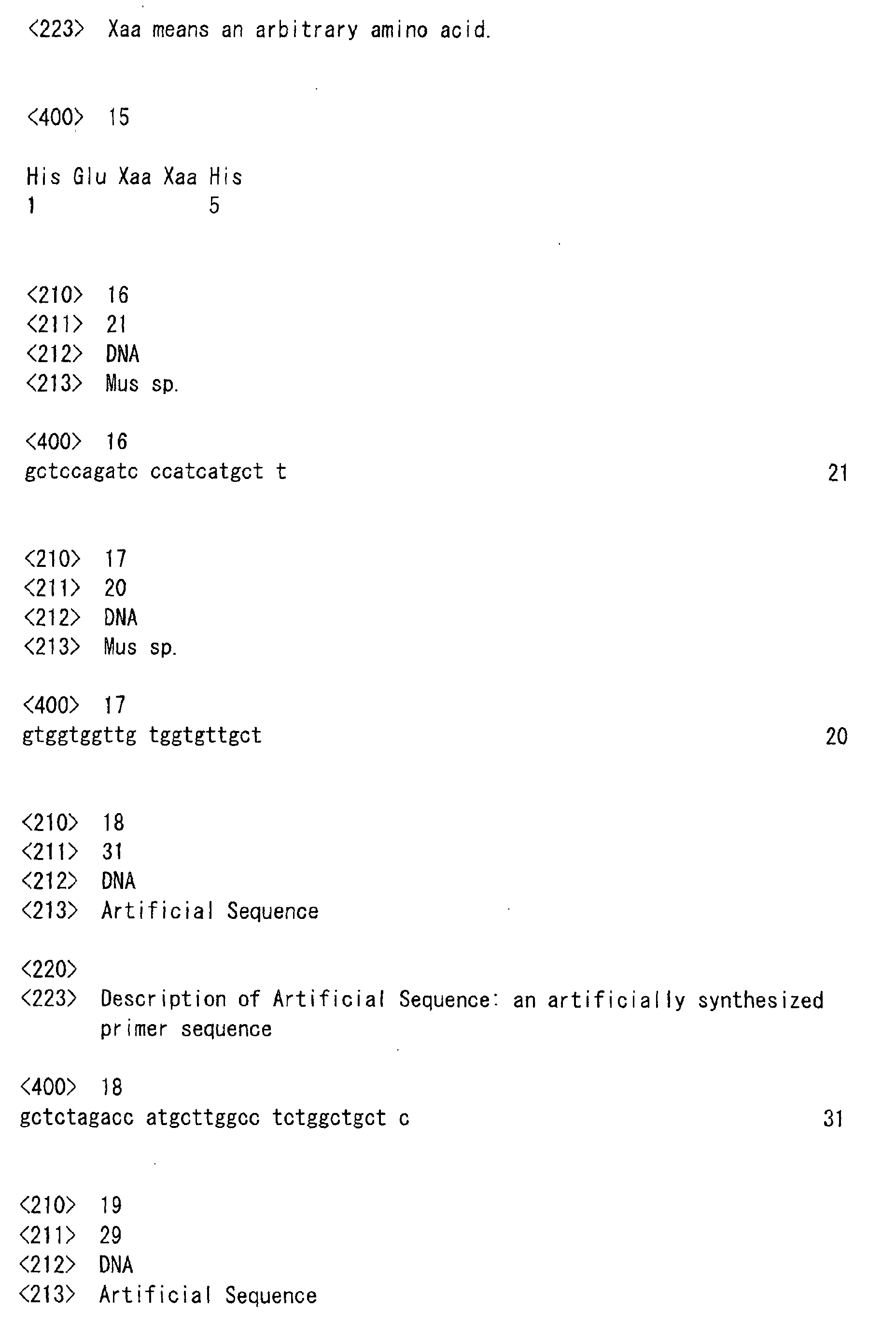
- the MD8 protein and mMD8 protein are metalloproteases having a zinc-coordinated consensus sequence (HExxH: SEQ ID NO: 15).
- the polypeptide consisting of the amino acid sequence of SEQ ID NO: 2 or 14 exhibits an activity of inhibiting glucose uptake into an adipocyte by an insulin stimulation.
- To exhibit an activity of inhibiting glucose uptake into an adipocyte by an insulin stimulation means, when an adipocyte expressing a polypeptide as a target and an adipocyte without expressing the polypeptide are independently stimulated by insulin and then amounts of glucose uptake in the adipocytes are compared, to decrease the amount of glucose uptake in the adipocyte expressing the polypeptide. Comparison of the amounts of glucose uptake by an insulin stimulation can be performed, for example, in accordance with methods described in Examples 4-7. As the degree of the decrease of glucose uptake, 20% or more is preferable, 50% or more is more preferable, and 80% or more is most preferable.
- polypeptides exhibiting an activity of inhibiting glucose uptake into an adipocyte by an insulin stimulation and comprising the amino acid sequence of SEQ ID NO: 2 or SEQ ID NO: 14 include, for example, a polypeptide in which an appropriate marker sequence or the like is added to the N-terminus and/or the C-terminus of the polypeptide consisting of the amino acid sequence of SEQ ID NO: 2 or SEQ ID NO: 14 (i.e., a fusion polypeptide), so long as the fusion polypeptide exhibits an activity of inhibiting glucose uptake into an adipocyte by an insulin stimulation.
- a polypeptide in which an appropriate marker sequence or the like is added to the N-terminus and/or the C-terminus of the polypeptide consisting of the amino acid sequence of SEQ ID NO: 2 or SEQ ID NO: 14 (i.e., a fusion polypeptide), so long as the fusion polypeptide exhibits an activity of inhibiting glucose uptake into an adipocyte by an insulin stimulation.
- the marker sequence for example, a sequence for easily carrying out a confirmation of polypeptide expression, confirmation of intracellular localization thereof, purification thereof, or the like may be used.
- the sequence there may be mentioned, for example, the FLAG epitope, the hexa-histidine tag, the hemagglutinin tag, the myc epitope, or the like.
- the homologous polypeptide which may be used as the polypeptide-type screening tool of the present invention may consist of an amino acid sequence having preferably a 90% or more homology, more preferably a 95% or more homology, still further preferably a 98% or more homology, most preferably a 99% or more homology, with respect to the amino acid sequence of SEQ ID NO: 2 or SEQ ID NO: 14.
- the term "homology" as used herein means a value obtained by a BLAST (Basic local alignment search tool; Altschul, S. F. et al., J. Mol. Biol., 215, 403-410, 1990).
- the homology in the amino acid sequence may be calculated by a BLAST search algorithm. More particularly, it may be calculated using a bl2seq program (Tatiana A. Tatusova and Thomas L. Madden, FEMS Microbiol. Lett., 174, 247-250, 1999) in a BLAST package (sgi32bit edition, version 2.0.12; obtained from NCBI) in accordance with a default parameter.
- a program "blastp" is used as a pairwise alignment parameter.
- "0" as a Gap insertion cost value "0” as a Gap elongation cost value
- SEG as a filter for a Query sequence
- BLOSUM62 as a Matrix
- the present invention includes "a polypeptide exhibiting an activity of inhibiting glucose uptake into an adipocyte by an insulin stimulation, and consisting of a partial fragment of the polypeptide consisting of the amino acid sequence of SEQ ID NO: 2 or SEQ ID NO: 14".
- the cell which may be used as the cell-type screening tool of the present invention (hereinafter referred to as a cell for a screening tool) is not particularly limited, so long as it expresses the polypeptide for a screening tool when using as the cell-type screening tool.
- the cell for a screening tool may be a transformant in which the polypeptide for a screening tool is artificially expressed, or a naturally occurring cell which is known to express the polypeptide for a screening tool, or a cell strain thereof.
- a transformant obtained by transformation with the polypeptide for a screening tool is preferable.
- As a most preferred cell-type screening tool there may be mentioned, for example,
- the polypeptide which may be used as the promoter-type screening tool of the present invention (hereinafter referred to as a promoter of the present invention) is not particularly limited, so long as it is
- stringent conditions means conditions in which non-specific hybridization does not occur, more particularly, conditions in which a 0.1 ⁇ SSC (Saline-sodium citrate buffer) solution containing 0.1% sodium dodecyl sulfate (SDS) is used and the temperature is 65°C.
- SSC Seline-sodium citrate buffer
- SDS sodium dodecyl sulfate
- the cell which may be used as the promoter-type screening tool of the present invention (hereinafter referred to as a cell expressing a promoter of the present invention) is not particularly limited, so long as it is a cell expressing a promoter activity.
- a cell transformed with the promoter of the present invention is preferable.
- promoter activity means an activity of regulating an amount of an mRNA transcribed from a gene located downstream of the promoter. "To exhibit a promoter activity of the polypeptide for a screening tool (or polypeptide of the present invention)" as used herein means to be able to confirm a promoter activity of the polypeptide for a screening tool (or polypeptide of the present invention) by the method described in Example 12.
- a substance which inhibits an expression of the polypeptide for a screening tool of the present invention or the polypeptide of the present invention can be screened, by using the promoter of the present invention and analyzing whether or not a substance to be tested inhibit an activity of the promoter of the present invention.
- the polypeptide for a screening tool of the present invention or the polypeptide of the present invention inhibits glucose uptake by insulin. Therefore, a substance which inhibits the promoter activity, i.e., a substance which inhibits the polypeptide expression, alleviates the inhibition of glucose uptake by insulin (i.e., insulin resistance), and is useful as an active ingredient of a therapeutic agent for treating diabetes (particularly an agent for alleviating insulin resistance).
- the promoter-type screening tool of the present invention may be used as a screening tool for a therapeutic agent for treating diabetes (particularly an agent for alleviating insulin resistance).
- the polypeptide of the present invention includes the polypeptide consisting of the amino acid sequence of SEQ ID NO: 2, or the polypeptide exhibiting an activity of inhibiting glucose uptake into an adipocyte by an insulin stimulation, and comprising the amino acid sequence of SEQ ID NO: 2.
- the polynucleotide of the present invention is not particularly limited, so long as it encodes the polypeptide of the present invention.
- a polynucleotide which encodes "the polypeptide consisting of the amino acid sequence of SEQ ID NO: 2", more particularly a polynucleotide consisting of the base sequence consisting of the 1st to 2472nd bases in the base sequence of SEQ ID NO: 1, is preferable.
- the term "polynucleotide” as used herein includes both DNA and RNA.
- the method for producing the polynucleotide of the present invention and the polynucleotide which encodes the polypeptide for a screening tool is not particularly limited.
- a method utilizing a polymerase chain reaction (PCR) a method utilizing conventional genetic engineering techniques (i.e., a method for selecting a transformant containing the desired cDNA from strains transformed with a cDNA library),
- a chemical synthesis method or the like.
- the polynucleotide of the present invention or the polynucleotide for a screening tool may be produced, for example, by the following procedure.
- mRNA is extracted from cells (for example, human or mouse cells) or tissue capable of producing the polypeptide of the present invention or the polypeptide for a screening tool.
- a primer set consisting of a pair of primers, between which full-length mRNA corresponding to the polypeptide or a partial region of the mRNA is located, is synthesized on the basis of the base sequence of a polynucleotide encoding the polynucleotide.
- Full-length cDNA encoding the polypeptide of the present invention or the polypeptide for a screening tool, or a part of the full-length cDNA may be obtained, by adjusting reaction conditions (for example, denaturation temperature, conditions for adding a denaturing agent, or the like) and performing a reverse transcriptase-polymerase chain reaction (RT-PCR).
- reaction conditions for example, denaturation temperature, conditions for adding a denaturing agent, or the like
- RT-PCR reverse transcriptase-polymerase chain reaction
- full-length cDNA encoding the polypeptide or a part of the cDNA may be obtained, by performing PCR using, as a template, cDNA prepared using reverse transcriptase and mRNA derived from cells (for example, human or mouse cells) or tissue capable of producing the polypeptide, or commercially available cDNA derived from human or mouse cells or tissue.
- the polypeptide may be manufactured by inserting the resulting full-length cDNA or a part thereof into an appropriate expression vector and expressing it in host cells.
- the polynucleotide of the present invention or the polynucleotide for a screening tool may be produced, for example, by the following procedure.
- single-stranded cDNA is synthesized by using reverse transcriptase from mRNA prepared by the above-mentioned PCR method as a template, and then double-stranded cDNA is synthesized from the single-stranded cDNA.
- a recombinant plasmid comprising the double-stranded cDNA is prepared and introduced into Escherichia coli, such as a DH5 ⁇ strain, HB101 strain, or JM109 strain, thereby transforming the strain.
- a transformant is selected using a drug resistance against, for example, tetracycline, ampicillin, or kanamycin as a marker.
- a method for selecting a transformant containing the desired cDNA from the resulting transformants for example, (1) a screening method utilizing hybridization with a synthetic oligonucleotide probe, or (2) a screening method utilizing hybridization with a probe prepared by PCR, may be used.
- the polynucleotide of the present invention or the polynucleotide for a screening tool may be obtained from the resulting transformant of interest in accordance with known methods, for example, by separating a fraction corresponding to plasmid DNA from the cells and cutting out the cDNA region from the plasmid DNA.
- the polynucleotide of the present invention or the polynucleotide for a screening tool may be produced, for example, by binding DNA fragments produced by a chemical synthesis method.
- Each DNA can be synthesized using a DNA synthesizer [for example, Oligo 1000M DNA Synthesizer (Beckman) or 394 DNA/RNA Synthesizer (Applied Biosystems)].
- a polynucleotide encoding a polypeptide having an activity similar to a naturally-occurring activity inhibiting glucose uptake into an adipocyte by an insulin stimulation by performing modifications, such as substitution, deletion, and/or addition, in a part of a naturally-occurring base sequence.
- a polynucleotide encoding the variation functionally equivalent or homologous polypeptide having an inhibitory activity the same as that of a naturally-occurring polypeptide may be prepared by, for example, an introduction of deletion by a restriction enzyme and/or DNA exonuclease, an introduction of variations by site-specific mutagenesis [Nucleic Acid Res. 10, 6487 (1982)], a direct introduction of a synthetic mutant DNA [Maniatis, T. et al. (1989) : "Molecular Cloning - A Laboratory Manual 2 nd Edt.” Cold Spring Harbor Laboratory, NY], or the like.
- Determination of the DNA sequences obtained by the above-mentioned methods can be carried out by, for example, a Maxam-Gilbert chemical modification method (Maxam, A. M. and Gilbert, W., "Methods in Enzymology", 65, 499-559, 1980) or a dideoxynucleotide chain termination method (Messing, J. and Vieira, J., Gene, 19, 269-276, 1982).
- An isolated polynucleotide of the present invention or polynucleotide for a screening tool is re-integrated into an appropriate vector DNA and a host cell (including a eucaryotic host cell and a procaryotic host cell) may be transformed by the resulting expression vector. Further, it is possible to express the polynucleotide in a desired host cell, by introducing an appropriate promoter and a sequence related to the gene expression into the vector.
- eucaryotic host cells for example, cells of vertebrates, insects, and yeast are included.
- the vertebral cell there may be mentioned, for example, a simian COS cell (Gluzman, Y., Cell, 23, 175-182, 1981), a dihydrofolate reductase defective strain of a Chinese hamster ovary cell (CHO) (Urlaub, G. and Chasin, L. A., Proc. Natl. Acad. Sci.
- a human fetal kidney derived HEK293 cell or a 293-EBNA cell (Invitrogen) obtained by introducing an EBNA-1 gene of Epstein Barr Virus into HEK293 cell.
- a vector containing a promoter positioned upstream of the polynucleotide to be expressed, an RNA splicing site, a polyadenylation site, a transcription termination sequence, and the like may be generally used.
- the vector may further contain a replication origin, if necessary.
- the expression vector there may be mentioned, for example, pSV2dhfr containing an SV40 early promoter (Subramani, S. et al., Mol. Cell. Biol., 1, 854-864, 1981), pEF-BOS containing a human elongation factor promoter (Mizushima, S. and Nagata, S., Nucleic Acids Res., 18,5322, 1990), or pCEP4 containing a cytomegalovirus promoter (Invitrogen).
- a vector which has an SV40 replication origin can perform an autonomous replication in the COS cell, and has a transcription promoter, a transcription termination signal, and an RNA splicing site, may be used as the expression vector.
- the vector there may be mentioned, for example, pME18S (Maruyama, K. and Takebe, Y., Med. Immunol., 20, 27-32, 1990), pEF-BOS (Mizushima, S. and Nagata, S., Nucleic Acids Res., 18, 5322, 1990), or pCDM8 (Seed, B., Nature, 329, 840-842, 1987).
- the expression vector may be incorporated into COS cells by, for example, a method using a commercially available transfection reagent (for example, FuGENETM6 Transfection Reagent; Roche Diagnostics).
- a commercially available transfection reagent for example, FuGENETM6 Transfection Reagent; Roche Diagnostics.
- a transformant capable of stably producing the polypeptide of the present invention or the polynucleotide for a screening tool can be obtained by carrying out a co-transfection of an expression vector comprising the polynucleotide of the present invention or the polynucleotide for a screening tool, together with a vector capable of expressing a neo gene which functions as a G418 resistance marker, such as pRSVneo (Sambrook, J. et al., "Molecular Cloning-A Laboratory Manual", Cold Spring Harbor Laboratory, NY, 1989) or pSV2-neo (Southern, P. J. and Berg, P., J. Mol. Appl. Genet., 1, 327-341,1982), and selecting a G418 resistant colony.
- pRSVneo Standardbrook, J. et al., "Molecular Cloning-A Laboratory Manual", Cold Spring Harbor Laboratory, NY, 1989
- pSV2-neo Southern, P. J.
- pCEP4 Invitrogen
- pCEP4 containing a replication origin of Epstein Barr Virus and capable of performing an autonomous replication in the 293-EBNA cell
- the transformant may be cultured in accordance with the conventional method, and the polypeptide of the present invention or the polynucleotide for a screening tool is transmembranously produced.
- a medium to be used in the culturing a medium commonly used in a desired host cell may be appropriately selected.
- a medium such as an RPMI-1640 medium or a Dulbecco's modified Eagle's minimum essential medium (DMEM) may be used, by supplementing it with a serum component such as fetal bovine serum (FBS) if necessary.
- a medium such as a Dulbecco's modified Eagle's minimum essential medium (DMEM) with a serum component such as fetal bovine serum (FBS) and G418 may be used.
- the polypeptide of the present invention or the polynucleotide for a screening tool produced by culturing the transformants of the present invention may be separated and purified therefrom by various known separation techniques making use of the physical properties, chemical properties and the like of the polypeptide. More particularly, the above polypeptide may be purified by treating the cells or cell membrane fraction containing the polypeptide with a commonly used treatment, for example, a treatment with a protein precipitant, ultrafiltration, various liquid chromatography techniques such as molecular sieve chromatography (gel filtration), adsorption chromatography, ion exchange chromatography, affinity chromatography, or high performance liquid chromatography (HPLC), or dialysis, or a combination thereof.
- a commonly used treatment for example, a treatment with a protein precipitant, ultrafiltration, various liquid chromatography techniques such as molecular sieve chromatography (gel filtration), adsorption chromatography, ion exchange chromatography, affinity chromatography, or high performance liquid chromatography (HPLC
- the polypeptide of the present invention or the polynucleotide for a screening tool is expressed as a fusion protein with a marker sequence in frame, identification of the expression of the polypeptide, purification thereof, or the like may be easily carried out.
- the marker sequence there may be mentioned, for example, a FLAG epitope, a hexa-histidine tag, a hemagglutinin tag, or a myc epitope.
- a protease such as enterokinase, factor Xa, or thrombin
- the promoter of the present invention may be prepared by the following methods, as well as by the method described in Example 11.
- PCR is carried out using primers and human genomic DNA to prepare a DNA comprising the base sequence consisting of the 34th to 2014th bases in the base sequence of SEQ ID NO: 20.
- allele variations are well-known.
- a polynucleotide exhibiting the promoter activity of the polypeptide for a screening tool of the present invention and comprising a base sequence in which one or more bases are substituted, deleted, and/or inserted at any position in the base sequence consisting of the 34th to 2014th bases in the base sequence of SEQ ID NO: 20, may be sometimes obtained.
- Such a polynucleotide is also included in the promoter of the present invention as described above.
- the polynucleotide may be prepared by chemically synthesizing and binding DNA fragments which are divided from the base sequence consisting of the 34th to 2014th bases in the base sequence of SEQ ID NO: 20 and the chain complementary thereto.
- the DNA fragments can be synthesized by a DNA synthesizer.
- a polynucleotide having a promoter activity similar to that of a naturally-occurring promoter by performing modifications, such as substitution, deletion, and/or addition, in a part of the base sequence of a naturally-occurring promoter sequence.
- a polynucleotide having a base sequence in which one or more bases are substituted, deleted, and/or added in a naturally-occurring base sequence and having a promoter activity similar to that of a naturally-occurring promoter, is included in the promoter of the present invention as described above.
- the base modifications may be carried out by, for example, an introduction of deletion by a restriction enzyme and/or DNA exonuclease, an introduction of variations by site-specific mutagenesis, a modification of a promoter sequence by the PCR method using mutant primers, a direct introduction of a synthetic mutant DNA, or the like.
- the cell expressing the promoter of the present invention may be prepared by incorporating the promoter of the present invention into a host cell appropriately selected in accordance with the object. It is preferable to prepare the cell by incorporating the promoter of the present invention into a vector appropriately selected in accordance with the object. For example, when a system for analyzing the inhibition of a promoter activity is constructed, it is preferable to prepare the cell by incorporating the promoter of the present invention into a vector having a reporter gene such as luciferase, as described in Examples 11 and 12.
- a cell derived from a mammal such as human, mouse, rat, or the like, more preferably a cell derived from a human, may be used.
- An analysis whether or not a substance to be tested inhibits the activity of the polypeptide for a screening tool and a screening of an inhibitor therefor may be carried out, by utilizing the activity of inhibiting glucose uptake into an adipocyte by an insulin stimulation.
- the inhibitor for the polypeptide is useful as an active ingredient of an agent for treating or preventing diabetes (preferably type II diabetes, particularly insulin resistance), and thus it is possible to screen a therapeutic agent for diabetes (preferably type II diabetes, particularly insulin resistance).
- the method of the present invention for analyzing whether or not a substance to be tested is an inhibitor of the polypeptide for a screening tool comprises the steps of: bringing a cell expressing the polypeptide for a screening tool into contact with the substance to be tested, and analyzing an amount of glucose uptake by an insulin stimulation.
- the method for screening an inhibitor of the polypeptide for a screening tool or a therapeutic agent for diabetes comprises the steps of:
- adipocytes or cells (such as 3T3-L1 cells) obtained by differentiating cells other than the adipocyte into adipocytes may be used as the cells expressing the polypeptide for a screening tool. It is preferable to use the cells which are differentiated from the 3T3-L1 cells into adipocytes and express the polypeptide of SEQ ID NO: 2 or SEQ'ID NO: 14, used in Example 7 (Ezaki et al., "IGAKU NO AYUMI (Journal of Clinical and Experimental Medicine", 503-506, 1998).
- An amount of glucose uptake can be analyzed (detected or measured) in accordance with a conventional method.
- the method described in Example 7 is preferable as the analysis method. More particularly, an amount of glucose uptake when bringing the test substance into contact with the cells expressing the polypeptide, and an amount of glucose uptake without the contact are measured, respectively. It can be judged that a test substance in which the amount of glucose uptake when the test substance is brought into contact with the cells is increased in comparison with that without the contact is the inhibitor of the polypeptide, and thus is useful as an active ingredient of an agent for treating or preventing diabetes (preferably type II'diabetes, particularly insulin resistance).
- diabetes preferably type II'diabetes, particularly insulin resistance
- a degree of increase in the amount of glucose uptake is preferably 20% or more, more preferably 50% or more, most preferably 80% or more.
- the analysis method of the present invention includes the method for analyzing whether or not a substance to be tested inhibits an activity of the promoter of the present invention, comprising the steps of:
- the reporter gene is a gene encoding a protein which can be quantified by a conventional method (known quantifying methods such as measurement of an enzyme activity or the like).
- a conventional method known quantifying methods such as measurement of an enzyme activity or the like.
- each gene of chloramphenicol acetyl transferase, luciferase, ⁇ -galactosidase, or alkaline phosphatase is often used, but is not limited.
- the original vector for constructing the reporter gene plasmid' is not limited, but commercially available plasmid vectors, such as pGV-B2 (Toyo Ink MFG) or pSEAP2-Basic (Clontech), may be used.
- the existence and/or strength of the promoter activity of the sequence can be determined by constructing the reporter'gene plasmid in which the sequence is incorporated in the forward direction upstream of the reporter gene in the vector, and then measuring an amount of the reporter protein expressed in the cells transformed with the plasmid in accordance with an appropriate method. Further, an action of a test substance with respect to the promoter activity can be analyzed by adding the test substance to culture medium of the transformant.
- the present invention includes a method for screening a substance which inhibits an expression of the polypeptide for a screening tool of the present invention (preferably the polypeptide of the present invention), or a method for screening a therapeutic agent for diabetes (particularly an agent for alleviating insulin resistance), comprising the steps of:
- a substance which inhibits it by 20% or more in accordance with the method described in Example 12 is preferable, a substance which inhibits it by 50% or more is more preferable, and a substance which inhibits it by 80% or more is most preferable.
- Compounds to be tested which may be applied to the screening method of the present invention are not particularly limited, but there may be mentioned, for example, various known compounds (including peptides, or antibodies or fragments thereof) registered in chemical files, commercially available compounds, compounds obtained by combinatorial chemistry techniques (Terrett, N. K. et al., Tetrahedron, 51, 8135-8137, 1995) or conventional synthesis techniques, random peptides prepared by employing a phage display method (Felici, F. et al., J. Mol. Biol., 222, 301-310, 1991), culture supernatants of microorganisms, natural components derived from plants or marine organisms, animal tissue extracts, or the like. Further, compounds (including peptides, or antibodies or fragments thereof) obtained by chemically or biologically modifying compounds (including peptides) selected by the screening method of the present invention may be used.
- the pharmaceutical composition for treating diabetes comprises the steps of:
- the process for manufacturing a pharmaceutical composition for treating diabetes of the present invention includes a process for manufacturing a pharmaceutical composition for treating diabetes comprising the steps of:
- the present invention includes a pharmaceutical composition for treating diabetes comprising as an active ingredient a substance which inhibits the activity of inhibiting glucose uptake by an insulin stimulation or the promoter activity, selected by the screening method of the present invention.
- the process of the present invention for manufacturing a pharmaceutical composition for treating diabetes includes a process for manufacturing a pharmaceutical composition for treating diabetes comprising the step of preparing a medicament containing the substance selected by the screening method of the present invention comprising the above-described analysis step of the present invention.
- a DNA comprising at least a part of the base sequence of SEQ ID NO: 20 can competitively inhibit the binding between the promoter of the present invention and a protein (for example, a transcription factor) capable of binding thereto, independently of having the promoter activity. Therefore, when the above DNA corresponds to the binding site of a protein capable of promoting the activity of the promoter of the present invention, the promoter activity can be inhibited by administering the DNA.
- the DNA used for the competitive inhibition has generally a length of at least of 6 bases or more, preferably 10 bases or more.
- the pharmaceutical composition of the present invention may be prepared using carriers, fillers, and/or other additives generally used in the preparation of medicaments, in accordance with the active ingredient.
- administration examples include oral administration by tablets, pills, capsules, granules, fine granules, powders, oral solutions and the like, and parenteral administration by injections (e.g., intravenous, intramuscular, or the like), suppositories, transdermal preparations, transmucosal absorption preparations and the like.
- parenteral administration such as an intravenous injection or the like, or preparation techniques in which the polypeptide is not digested, such as a preparation technique disclosed in the WO95/28963 pamphlet, is preferable.
- one or more active substances may be mixed with at least one inert diluent such as lactose, mannitol, glucose, microcrystalline cellulose, hydroxypropylcellulose, starch, polyvinyl pyrrolidone, or aluminum magnesium silicate.
- the composition may contain additives other than the inert diluent, such as a lubricant, a disintegrating agent, a stabilizing agent, or a solubilizing or solubilization assisting agent.
- tablets or pills may be coated with a sugar coating or a film of a gastric or enteric substance.
- the liquid composition for oral administration may include, for example, emulsions, solutions, suspensions, syrups, and elixirs, and may contain a generally used inert diluent such as purified water or ethyl alcohol.
- the composition may contain additives other than the inert diluent, such as moistening agents, suspending agents, sweeteners, flavors, or antiseptics.
- the injections for parenteral administration may include aseptic aqueous or non-aqueous solutions, suspensions, and emulsions.
- examples of the diluent for use in the aqueous solutions and suspensions include distilled water for injection use and physiological saline.
- examples of the diluent for use in the non-aqueous solutions and suspensions include propylene glycol, polyethylene glycol, plant oil (e.g., olive oil), alcohols (e.g., ethanol), polysorbate 80 and the like.
- Such a composition may further contain a moistening agent, an emulsifying agent, a dispersing agent, a stabilizing agent, a solubilizing or solubilization assisting agent, an antiseptic or the like.
- compositions may be sterilized, for example, by filtration through a bacteria retaining filter, blending of a germicide, or irradiation. Alternatively, they may be used by first making them into sterile solid compositions and dissolving them in sterile water or other sterile solvent for injection use prior to their use.
- the dose is optionally decided by taking into consideration the strength of each active ingredient selected by the aforementioned screening method, or symptoms, age, sex, or the like of each patient to be administered.
- the usual dosage for an adult is about 0.01 to 1000 mg, preferably 0.01 to 100 mg per day.
- the usual dosage is about 0.01 to 1000 mg, preferably 0.01 to 100 mg per day in the form of an injection.
- the present invention includes a probe which hybridizes to the polynucleotide of the present invention under stringent conditions.
- stringent conditions means the conditions as described above.
- the probe of the present invention may be used for examining an amount of expression of the polynucleotide encoding the polypeptide of the present invention (particularly the polypeptide consisting of the amino acid sequence of SEQ ID NO: 2). Diabetes can be diagnosed by the increased amount of the expression (preferably expression in adipocytes) as an indicator.
- the present invention includes a method for detecting diabetes using the probe of the present invention.
- diabetes can be detected by bringing the probe of the present invention into contact with a sample to be tested, and then analyzing a complex of the polynucleotide (such as mRNA, or cDNA derived therefrom) encoding the polypeptide (particularly the polypeptide consisting of the amino acid sequence of SEQ ID NO: 2) of the present invention and the probe by a known analysis method (such as northern blotting).
- the probe of the present invention can be applied to a gene chip to analyze an amount of expression.
- PCR polymerase chain reaction
- human placenta cDNA Marathon-ReadyTM cDNA; Clontech
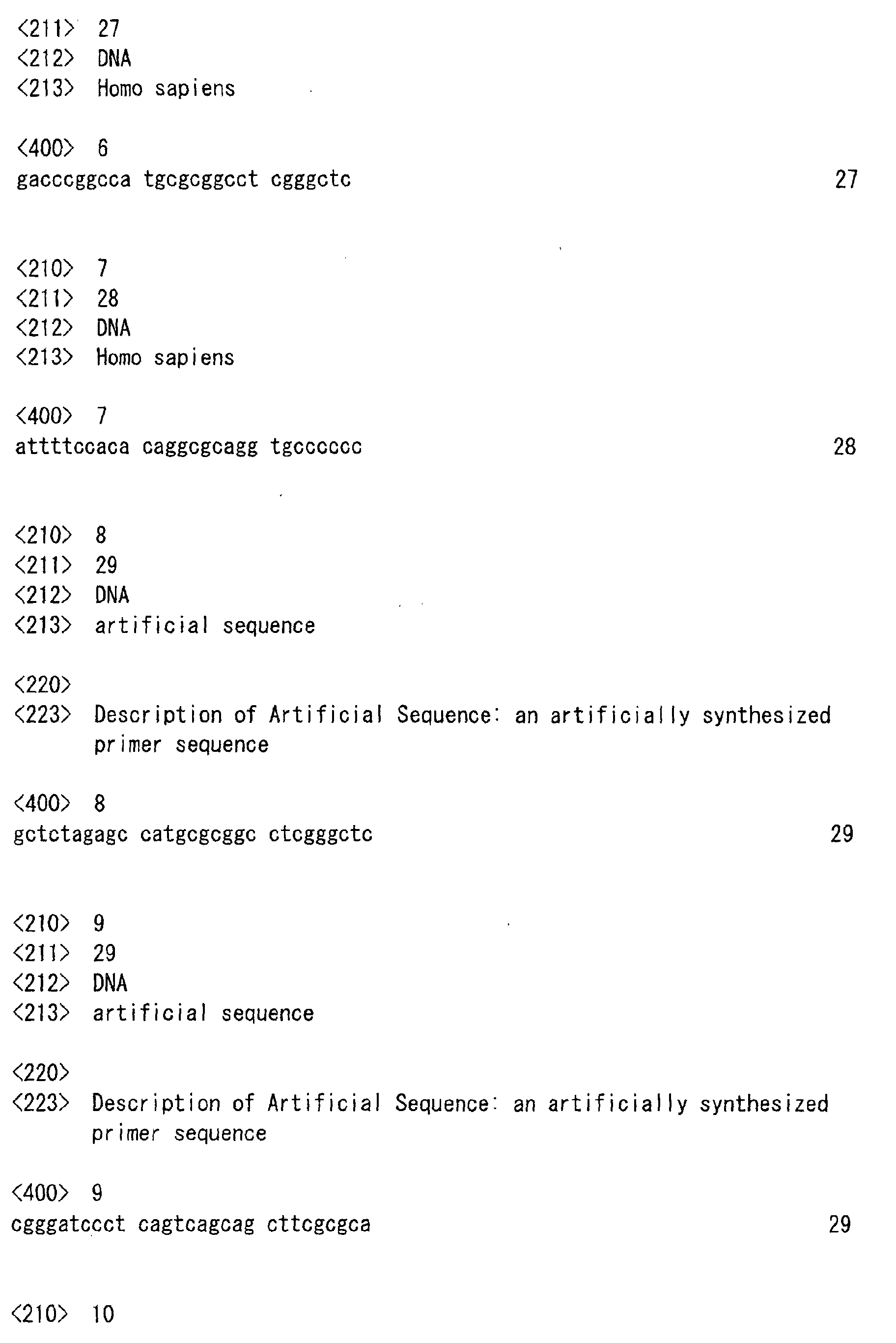
- oligo DNA consisting of the base sequence of SEQ ID NO: 6
- oligo DNA consisting of the base sequence of SEQ ID NO: 7
- LAtaqDNA polymerase Takara Shuzo
- the PCR was carried out by performing a reaction at 94°C for 2 minutes and then repeating a cycle consisting of reactions at 98°C for 20 seconds and at 68°C for 2 minutes and 30 seconds 40 times.
- a DNA fragment of approximately 2.5 kbp was separated and extracted as a template solution A by an agarose electrophoresis.
- PCR was performed by using the resulting template solution A as a template to obtain a DNA fragment A of approximately 2.0 kbp.
- oligo DNA consisting of the base sequence of SEQ ID NO: 8 having the restriction enzyme XbaI recognition sequence added to the base sequence consisting of the 1st to 18th bases in the base sequence of SEQ ID NO: 1
- oligo DNA consisting of the base sequence of SEQ ID NO: 9 having the restriction enzyme BamHI recognition sequence added to the base sequence complementary to that consisting of the 1918th to 1938th bases in the base sequence of SEQ ID NO: 1 were used as primers, and DNA polymerase (Pyrobest DNA polymerase; Takara Shuzo) was used.
- the PCR was carried out by performing a reaction at 94°C for 2 minutes, repeating a cycle consisting of reactions at 98°C for 20 seconds, at 60°C for 30 seconds, and at 72°C for 2 minutes and 30 seconds 15 times, and performing a reaction at 72°C for 7 minutes.
- PCR was performed by using the template solution A as a template to obtain a DNA fragment B of approximately 0.7 kbp.
- oligo DNA consisting of the base sequence of SEQ ID NO: 10 base sequence consisting of the 1795th to 1824th bases in the base sequence of SEQ ID NO: 1
- oligo DNA consisting of the base sequence of SEQ ID NO: 11 having the restriction enzyme BamHI recognition sequence added to the base sequence complementary to that consisting of the 2443rd to 2472nd bases in the base sequence of SEQ ID NO: 1 were used as primers, and DNA polymerase (Pyrobest DNA polymerase; Takara Shuzo) was used.
- the PCR was carried out by performing a reaction at 94°C for 2 minutes, repeating a cycle consisting of reactions at 98°C for 20 seconds, at 60°C for 30 seconds, and at 72°C for 1 minute 15 times, and performing a reaction at 72°C for 7 minutes.
- the resulting DNA fragments A and B were independently subcloned at the EcoRV site of plasmid pZErO2.1 (Invitrogen).
- the base sequences of the resulting plasmids (designated pZErO-MD8A and pZErO-MD8B, respectively) was analyzed using a DNA sequencer (ABI3700 DNA Sequencer; Applied Biosystems) by a dideoxy terminator method to obtain an ORF consisting of the base sequence of SEQ ID NO: 1.
- the protein encoded by the ORF i.e., polypeptide consisting of the amino acid sequence consisting of the 1st to 824th amino acids in the amino acid sequence of SEQ ID NO: 2
- human MD8 the protein encoded by the ORF
- a DNA fragment of approximately 1.8 kbp generated by digesting the plasmid pZErO-MD8A obtained in Example 1(1) with restriction enzymes XbaI and BstYI, and a DNA fragment of approximately 0.6 kbp generated by digesting the plasmid pZErO-MD8A obtained in Example 1(1) with restriction enzymes BstYI and BamHI were inserted between the XbaI site and BamHI site of plasmid pCEPdE2-FLAG (Example 7-1 in WO01/34785) to construct a plasmid pCEPdE2-MD8-FLAG for expressing a protein MD8-FLAG in which a FLAG tag of SEQ ID NO: 12 was added to the C-terminus of the MD8 protein.
- MD8 extracellular protein (MD8s)
- Example 2 Expression of MD8S protein and MD8 protein in animal cell strain
- the expression plasmid pCEPdE2-MD8S-FLAG prepared in Example 1(3) was introduced into HEK293-EBNA cells (Invitrogen) with a transfection reagent (FuGENETM6 Transfection Reagent; Boeringer Mannheim) in accordance with a manual attached to the reagent to express the MD8S protein. After the introduction of the plasmid, it was confirmed by western blotting using an antibody against the FLAG tag added to the C-terminus (mouse anti-FLAG monoclonal antibody M2; Sigma) that the protein of interest (i.e., MD8S-FLAG protein) was contained in a culture supernatant obtained by culturing for 2 days.
- a transfection reagent FuGENETM6 Transfection Reagent; Boeringer Mannheim
- the culture supernatant was electrophoresed using an SDS/4%-20% acrylamide gel (Daiichi Pure Chemicals) and transferred onto a polyvinylidene difluoride (PVDF) membrane using a blotting apparatus. After the transfer, the PVDF membrane was blocked by adding a blocking reagent (Block Ace; Dainippon pharmaceutical), and reacted with the mouse anti-FLAG monoclonal antibody M2, followed by a horseradish peroxidase-labeled rabbit anti-mouse IgG polyclonal antibody (Zymed or TAGO).
- a blocking reagent Block Ace; Dainippon pharmaceutical
- M2 horseradish peroxidase-labeled rabbit anti-mouse IgG polyclonal antibody
- the membrane was reacted with a biotinylated M2 antibody (Sigma), followed by a horseradish peroxidase-labeled streptavidin (Amersham). After the reaction, the expression of the protein of interest was confirmed using an ECL western blotting detection system (Amersham Pharmacia). The expressed proteins were detected as two bands. One molecular weight was approximately 90 kDa, which was identical to the value calculated from the amino acid sequence thereof, and the other was approximately 67 kDa, which was approximately 23 kDa smaller.
- the MD8 protein was expressed by using the expression plasmid pCEPdE2-MD8-FLAG prepared in Example 1(2).
- the expression was confirmed by western blotting a cell fraction after 2 days from the plasmid introduction and detecting a 100 kDa band.
- PCR was performed to obtain a gene of which the expression was increased in a diabetes model as shown in Referential Example described below, by using mouse 11-day embryo cDNA and mouse 17-day embryo cDNA (Marathon-Ready cDNA; Clontech) as a template, DNA consisting of the base sequence of SEQ ID NO: 16 as a 5' primer, DNA consisting of the base sequence of SEQ ID NO: 17 as a 3' primer, and LAtaqDNA polymerase (Takara Shuzo). The PCR was carried out by performing a reaction at 94°C for 2 minutes and then repeating a cycle consisting of reactions at 98°C for 10 seconds, at 60°C for 30 seconds, and at 68°C for 2 minutes and 30 seconds 40 times.
- the resulting DNA fragments of approximately 3.6 kbp and approximately 2.5 kbp were separated and extracted by an agarose electrophoresis.
- the base sequences of the fragments were analyzed using a DNA sequencer (ABI3700 DNA Sequencer; Applied Biosystems) by a dideoxy terminator method to determine an ORF consisting of the base sequence of SEQ ID NO: 13.
- the base sequence of the DNA fragment (approximately 3.6 kbp) generated from the 11-day embryo accorded with that of the DNA fragment (approximately 2.5 kbp) generated from the 17-day embryo, except that the approximately 3.6 kbp fragment from the 11-day embryo contained an insertion of approximately 1.0 kbp which did not exist in the approximately 2.5 kbp fragment from the 17-day embryo and the X13335 gene. Further, it was found that the base sequence of the approximately 2.5 kbp fragment was different at three positions (two positions with respect to the deduced amino acid sequence) from that of X13335. The approximately 2.5 kbp DNA fragment generated from the 17-day embryo was subcloned into pCR2.1 (Invitrogen) to obtain pCR-mMD8L.
- Example 4 Construction of adenovirus vector for expressing MD8 and preparation of adenovirus solution
- PCR was performed by using pCR-mMD8L as a template, DNA consisting of the base sequence of SEQ ID NO: 18 as a 5' primer, DNA consisting of the base sequence of SEQ ID NO: 19 as a 3' primer, and DNA polymerase (Pyrobest DNA polymerase; Takara Shuzo).
- the PCR was carried out by performing a reaction at 94°C for 2 minutes, repeating a cycle consisting of reactions at 98°C for 20 seconds, at 55°C for 30 seconds, and at 72°C for 3 minutes 15 times, and performing a reaction at 72°C for 7 minutes.
- the resulting DNA fragment of approximately 2.5 kbp was inserted at the EcoRV site of plasmid pZErO2.1 (Invitrogen) to construct pZErO-mMD8L.
- the plasmid was digested with a restriction enzyme XbaI, and then the resulting DNA fragment of approximately 2.5 kbp was inserted into and ligated with a pAdTrack-CMV vector (He T. C. et al., Proc. Natl. Acad. Sci. USA., 95, 2509-2514, 1998), which had been previously digested with a restriction enzyme XbaI and dephosphorylated with alkaline phosphatase (BAPC75; Takara Shuzo).
- a clone in which the ORF of mMD8 was located in the direction similar to the CMV promoter was selected to designated pAdTrack-CMV-mMD8.
- an adenovirus solution having a high titer and expressing mMD8 (hereinafter referred to as an mMD8 virus) was prepared in accordance with a known protocol ["A Practical Guide for using the AdEasy System” (HYPERLINK "http://www.coloncancer.org/adeasy.htm” http://www.coloncancer.org/adeasy/protocol2.htm)].
- a control adnovirus solution (hereinafter referred to as a control virus) was prepared using pAdTrack-CMV instead of pAdTrack-CMV-mMD8.
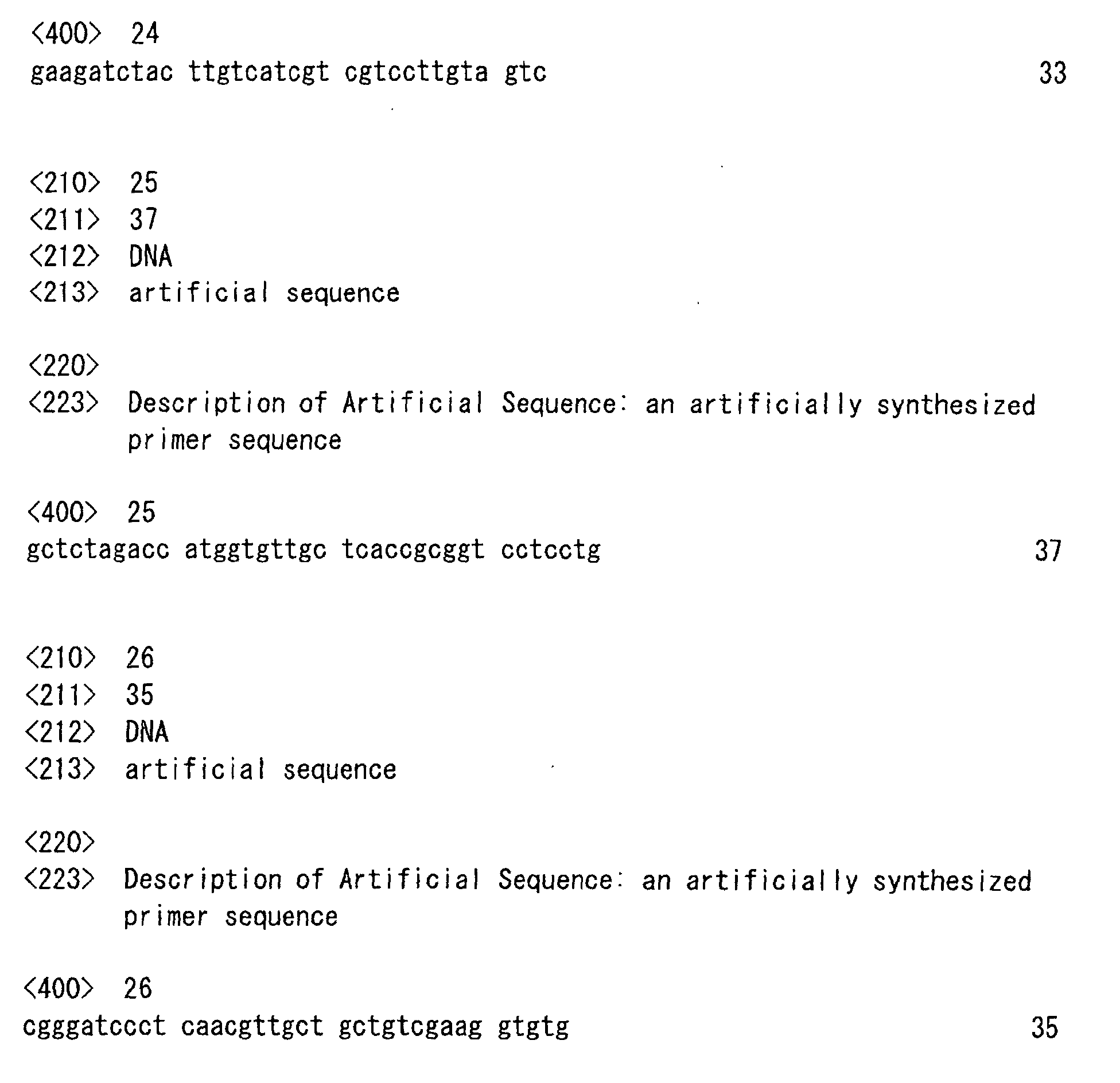
- PCR was performed by using pCEPdE2-MD8-FLAG prepared in Example 1(2) as a template, DNA consisting of the base sequence of SEQ ID NO: 23 as a 5' primer, DNA consisting of the base sequence of SEQ ID NO: 24 as a 3' primer, and DNA polymerase (Pyrobest DNA polymerase; Takara Shuzo).
- the PCR was carried out by performing a reaction at 95°C for 2 minutes, repeating a cycle consisting of reactions at 98°C for 20 seconds, at 55°C for 30 seconds, and at 72°C for 3 minutes 15 times, and performing a reaction at 72°C for 7 minutes.
- the resulting DNA fragment of approximately 2.5 kbp was inserted at the EcoRV site of plasmid pZErO2.1 (Invitrogen) to construct pZErO-MD8-FLAG.
- the plasmid was digested with a restriction enzyme BglII, and then the resulting DNA fragment of approximately 2.5 kbp was inserted into and ligated with a pAdTrack-CMV vector (He T. C. et al., Proc. Natl. Acad. Sci. USA., 95, 2509-2514, 1998), which had been previously digested with a restriction enzyme BglII and dephosphorylated with alkaline phosphatase (BAPC75; Takara Shuzo).
- an adenovirus solution having a high titer and expressing human MD8 (hereinafter referred to as an MD8 virus) was prepared in a manner similar to that in Example 4(1).
- a method for differentiation of a mouse 3T3-L1 cell (ATCC No.: CL-173) to an adipocyte was basically carried out in accordance with a known method (Ezaki et al., "IGAKU NO AYUMI (Journal of Clinical and Experimental Medicine", 503-506, 1998).
- the 3T3-L1 cell is a mouse-derived cultured cell strain which is widely used as a model cell of a white adipocyte.
- the 3T3-L1 cells were plated on a 24-well collagen-coated plate (ASAHI TECHNO GLASS) to become 50000 cells per well.
- the medium was changed to a Dulbecco's modified Eagle's medium (DMEM) supplemented with 0.5 mmol/L 3-isobutyl-1-methylxanthine, 0.25 ⁇ mol/L dexamethasone, and 10 ⁇ g/mL insulin and containing 10% fetal bovine serum to start the differentiation to adipocytes.
- DMEM Dulbecco's modified Eagle's medium
- the medium was changed to DMEM supplemented with only 1 ⁇ g/mL insulin and containing 10% fetal bovine serum, and then the medium change was repeated every three days to start an induction of differentiation.
- Example 6 Infection of adenovirus vector
- the mMD8 virus solution prepared in Example 4(1) was diluted with the medium to 100 ⁇ L (2.2 ⁇ 10 9 viruses per well of a 24-well plate). The dilution was added to 3T3-L1 cells after 4 days from the induction of differentiation, without the cultured medium, to start infection. The plate was shaken every 20 minutes, and after shaking at 60 minutes, 400 ⁇ L of the medium was added and the culture was continued. A multiplicity of infection was calculated by visually observing fluorescence generated from green fluorescent protein (GFP) integrated into the prepared adenovirus by a fluorescent microscope, as a percentage of cells with fluorescence to all cells. To perform an experiment in glucose uptake shown in the following Examples, the 3T3-L1 cells cultured on the 24-well plate were divided into two groups, and infected with the mMD8 virus or control virus prepared in Example 4(1).
- GFP green fluorescent protein
- Example 4(2) The MD8 virus solution prepared in Example 4(2) was treated in a manner similar to that in Example 6(1), except for diluting the solution to 2.9 ⁇ 10 9 viruses per well of a 24-well plate, to prepare groups of 3T3-L1 cells infected with the MD8 virus or control virus prepared in Example 4(2).
- Example 7 Measurement of amount of glucose uptake into adipocyte
- the 3T3-L1 cells infected with adenovirus in Example 6 were cultured for 2 days, to progress infection and differentiation to adipocytes simultaneously. At the night after 7 days from the induction of differentiation, each well was washed twice with DMEM without serum, 500 ⁇ L of DMEM without serum was added to each well, and the plate was allowed to stand for a day.
- each well was washed twice with a KRP buffer (136 mmol/L NaCl, 4.7 mmol/L KCl, 1.25 mmol/L CaCl 2 , 1.25mmol/L MgSO 4 , and 5 mmol/L Na 2 HPO 4 ), and the KRP buffer containing 1 ⁇ mol/L of insulin was added and incubated for 20 minutes.
- the similar procedure was performed except for using the KRP buffer without insulin, as a control.
- the expression plasmid pCEPdE2-MD8S-FLAG prepared in Example 1(3) was introduced into HEK293-EBNA cells (Invitrogen) with a transfection reagent (FuGENETM6 Transfection Reagent; Boeringer Mannheim) in accordance with a manual attached to the reagent. After 16 hours from the introduction of the expression plasmid, the medium was changed to a serum-free medium. The culture was continued for 2 days to collect the culture supernatant.
- the MD8S protein from the culture supernatant was purified by affinity utilizing the FLAG tag added to the C-terminus. More particularly, the culture supernatant was applied to an M2-agarose (Sigma) column, the column was washed with 20 mmol/L tris-HCl(pH7.4)/150 mmol/L NaCl (hereinafter referred to as TBS), and elution and fractionation were performed with 100 ⁇ g/mL FLAG peptide (Sigma) in TBS to obtain an MD8S enzyme solution.
- the MD8S enzyme solution obtained in Example 8(1) was reacted with commercially available IGFBP-3 or IGFBP-5 (upstate biotechnology) in a 50 mmol/L tris-HCl(pH7.4) buffer containing 50 mmol/L NaCl, 2 mmol/L CaCl 2 , 20 ⁇ g/mL bovine serum albumin (BSA), and 0.1% CHAPS at 37°C overnight.
- concentrations of the MD8S protein and IGFBP-3 (or IGFBP-5) in the reaction solution were 1.5 ⁇ g/mL and 10 ⁇ g/mL, respectively.
- IGFBP-3 was detected using an anti-IGFBP-3 polyclonal antibody (R&D System) as the first antibody and a peroxidase-labeled rabbit anti-goat IgG polyclonal antibody (ZYMED) as the second antibody.
- IGFBP-5 was detected using an anti-IGFBP-5 polyclonal antibody (upstate biotechnology) as the first antibody and a peroxidase-labeled goat anti-rabbit IgG polyclonal antibody (MBL) as the second antibody.
- IGFBP-3 and IGFBP-5 were detected at approximately 45 kDa and 30 kDa, respectively.
- the MD8S enzyme solution was added to each, a new band of 25 kDa was detected in the case of IGFBP-3, and new plural bands within the range of 12 to 25 kDa were detected in the case of IGFBP-5. It was found from the results that the MD8S protein exhibits an activity of digesting IGFBP-3 and IGFBP-5.
- PCR was performed by using human placenta cDNA (Marathon-ReadyTM cDNA; Clontech) as a template, oligo DNA consisting of the base sequence of SEQ ID NO: 25 (having the restriction enzyme XbaI recognition sequence added to the 5' terminus of the base sequence of the IGFBP-5 ORF of GenBank Accession No. M62782) and oligo DNA consisting of the base sequence of SEQ ID NO: 26 (having the restriction enzyme BamHI recognition sequence added to the 3' terminus of the base sequence of the IGFBP-5 ORF of GenBank Accession No. M62782) as primers, and LAtaqDNA polymerase (Takara Shuzo).
- the PCR was carried out by performing a reaction at 94°C for 2 minutes, repeating a cycle consisting of reactions at 98°C for 10 seconds, at 60°C for 20 seconds, and at 72°C for 1 minute 40 times, and performing a reaction at 72°C for 7 minutes.
- the resulting DNA fragment of approximately 0.8 kbp was subcloned into plasmid pCRII (Invitrogen).
- the base sequence was analyzed using a DNA sequencer (ABI3700 DNA Sequencer; Applied Biosystems) by a dideoxy terminator method to designate plasmid pCRII-IGFBP5.
- the plasmid pCRII-IGFBP5 was digested with restriction enzymes XbaI and BamHI, and the resulting DNA fragment of approximately 0.8 kbp was inserted between the XbaI site and BamHI site of the plasmid pCEPdE2-FLAG to construct plasmid pCEPdE2-IGFBP5-FLAG to express a IGFBP-5-FLAG protein having the FLAG tag of SEQ ID NO: 12 added to the C-terminus of the full-length IGFBP-5 protein (272 amino acids: SWISS PROT Accession No. P24593).
- Example 8(1) The procedure described in Example 8(1) was repeated, except for using the plasmid pCEPdE2-IGFBP5-FLAG instead of the expression plasmid pCEPdE2-MD8S-FLAG, to prepare recombinant IGFBP-5.
- the MD8S enzyme solution obtained in Example 8(1) was reacted with recombinant IGFBP-5 obtained in Example 9(1) in a 50 mmol/L tris-HCl (pH7.4) buffer containing 50 mmol/L NaCl, 2 mmol/L CaCl 2 , 20 ⁇ g/mL bovine serum albumin (BSA), and 0.1% CHAPS at 37°C overnight.
- concentrations of the MD8S protein and recombinant IGFBP-5 in the reaction solution were 1.5 ⁇ g/mL and 10 ⁇ g/mL, respectively.
- Recombinant IGFBP-5 was detected by reacting a biotinylated M2 antibody (Sigma) as the first antibody, followed by a horseradish peroxidase-labeled streptavidin (Amersham) as the second antibody, and by using an ECL Western Blotting Detecting System (Amersham Pharmacia).
- Substances inhibiting the activity of digesting IGFBP-5 by the MD8S protein can be screened by the reaction system utilizing western blotting performed in Example 9(2).
- the procedure described in Example 9(2) was repeated, except that various compounds having a hydroxamic acid scaffold as a compound to be tested were added to the reaction system containing the MD8S enzyme solution and recombinant IGFBP-5, to measure an inhibitory intensity of the activity of digesting IGFBP-5.
- the degree of the inhibition activity in each concentration of the compounds to be tested was examined by performing image processing of the image on the film obtained by western blotting, using a scanner (ES-2200; Epson).
- the criterion for screening substances inhibiting the activity of digesting IGFBP-5 was 10 ⁇ mol/L or less in the intensity of the inhibition activity (IC 50 ).
- N ⁇ -[(3-carboxy-4-methylthio-2-propoxymethyl)butyryl]-N,O-dimethylthyrosineamide (WO93/09090; hereinafter referred to as compound A) was selected by this screening system.
- the intensity of the inhibition activity (IC 50 ) of the compound A was 3.3 ⁇ mol/L.
- the compound A can be synthesized by the method described in Example 5 of W093/09090.
- lane 1 shows the result when incubating only recombinant IGFBP-5
- lane 2 shows the result when incubating recombinant IGFBP-5 and the MD8S enzyme solution.
- Lanes 3 to 7 show the results when incubating recombinant IGFBP-5 and the MD8S enzyme solution in the presence of the compound A. Concentrations of the compound A in lanes 3 to 7 are 10 ⁇ mol/L, 1 ⁇ mol/L, 100 nmol/L, 10 nmol/L, and 1 nmol/L, respectively.
- the arrow indicates the position of IGFBP-5.
- PCR was performed by using human genome (Genomic DNA; Clontech) as a template, oligo DNAs consisting of the base sequence of SEQ ID NO: 21 or SEQ ID NO: 22 as primers, and DNA polymerase (Pyrobest DNA polymeraseTM; Takara Shuzo).
- the PCR was carried out by performing a reaction at 97°C for 3 minutes, repeating a cycle consisting of reactions at 97°C for 30 seconds, at 60°C for 30 seconds, and at 72°C for 2 minutes 40 times, and performing a reaction at 72°C for 7 minutes.
- the resulting fragment of approximately 2 kbp consisting of the base sequence of SEQ ID NO: 20 was subcloned into a cloning vector (pCR4Blunt-TOPO;Invitrogen).
- the resulting subclone was treated with BamHI and HindIII, and the obtained fragment consisting of the base sequence of the 34th to 2014th bases in the base sequence of SEQ ID NO: 20 was cloned into a vector for a luciferase assay system (PicaGene Vector 2 basic vector; Toyo Ink MFG) which had been previously treated with BglII and HindIII, to obtain pGV-B2-ADAM8pro2k.
- a luciferase assay system PicaGene Vector 2 basic vector; Toyo Ink MFG
- the plasmid pGV-B2-ADAM8pro2k obtained in Example 11 was introduced into HEK293-EBNA cells (Invitrogen) cultured in a Dulbecco's modified Eagle's medium (DMEM) containing 10% fetal bovine serum, 100 ⁇ g/mL penicillin, 100 ⁇ g/mL streptomycin, and 250 ⁇ g/mL G418 (Nakarai Tesque) using a transfection reagent (FuGene-6; Nippon Roche).
- DMEM Dulbecco's modified Eagle's medium
- FuGene-6 FuGene-6; Nippon Roche
- a luciferase activity after culturing for 36 or 48 hours under conventional culture conditions was measured with a commercially available measuring kit (PicaGene coloring kit; Toyo Ink MFG).
- mice Male C57BL/6J, KKAy/Ta, C57BL/KsJ-+m/+m, and C57BL/KsJ-db/db mice (eight mice per each) were purchased from CLEA JAPAN.
- C57BL/6J mice were bred collectively with normal diet until 12 weeks old.
- KKAy/Ta mice were bred separately with a high calorie diet (CMF; Oriental Yeast Co., Ltd.) until 12 weeks old.
- C57BL/KsJ-+m/+m mice and C57BL/KsJ-db/db mice were bred collectively with normal diet until 12 weeks old.
- mice were anesthetized with diethyl ether to extirpate epididymal fat. Each epididymal fat was quickly frozen with liquid nitrogen and kept at -80°C.
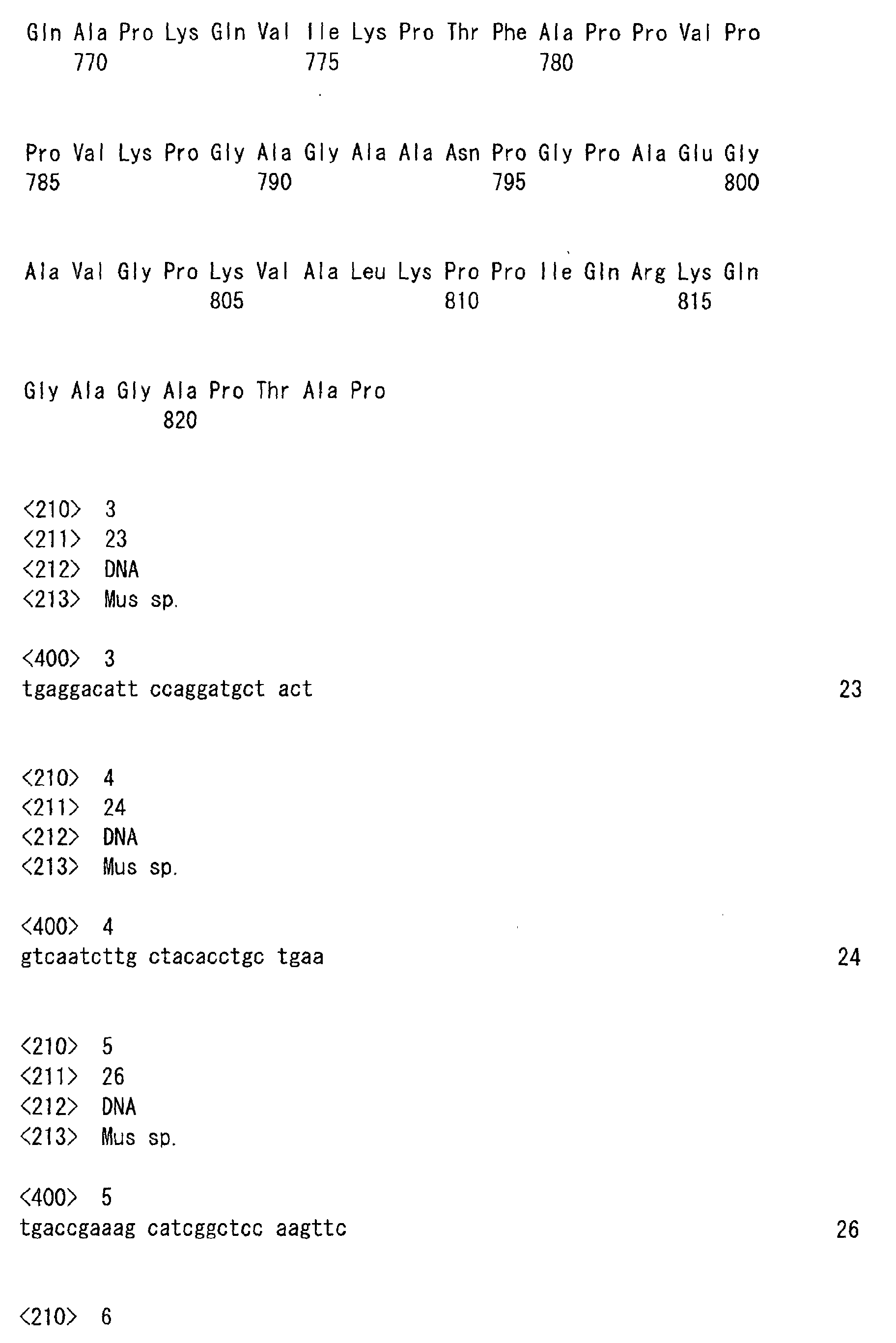
- a TaqManTM probe, a 5'-primer, and a 3'-primer used in a reverse transcriptase-polymerase chain reaction (RT-PCR) were designed by searching appropriate sites using an analysis software (Primer Express; Applied Biosystems) on the basis of the sequence of the gene registered as Accession No. X13335 in the GenBank database. More particularly, the DNA consisting of the base sequence of SEQ ID NO: 3 and the DNA consisting of the base sequence of SEQ ID NO: 4 were used as the 5'-primer and 3'-primer, respectively, and the DNA consisting of the base sequence of SEQ ID NO: 5 was used as the TaqManTM probe.
- the 5'-primer and 3'-primer were synthesized by GENSET.
- the TaqManTM probe wherein the 5' terminus was labeled with a fluorescent dye FAM (6-carboxy-fluorescein) and the 3' terminus was labeled with a fluorescent dye TAMRA (6-carboxy-tetramethyl-rhodamine) was prepared by Applied Biosystems.
- RNA derived from epididymal fat and amplified by the primers was determined by a sequence detector (ABI PRISMTM 7700 Sequence Detector; Applied Biosystems). According to this detection system, the time course of amounts of DNA strands amplified in each step of RT-PCR can be monitored by detecting a fluorescent signal, and the amount of mRNA expression can be quantified on the basis of the cycle number of PCR over a certain fluorescent strength.
- a RT-PCR solution was prepared using a commercially available kit (TaqMan EZ RT-PCR Core Reagents; Applied Biosystems) in accordance with a protocol thereof.
- the RT-PCR was carried out by performing an RT reaction consisting of reactions at 55°C for 50 minutes, at 60°C for 10 minutes, and at 95°C for 2 minutes and then repeating a PCR reaction consisting of reactions at 95°C for 15 seconds and at 58°C for 1.5 minutes 40 times. Aliquots (4 ng, 20 ng, 100 ng, and 500 ng per tube) of the total RNA prepared from epididymal fat of the KKAy/Ta mouse were added to tubes, and then RT-PCR was carried out together with samples to determine a standard line. The amounts of gene expression were compensated with those of 18S rRNA contained in the samples.
- the amount of expression in the diabetes model KKAy/Ta mice was increased by approximately 10-fold in comparison with that in the normal C57BL/6J mice, and the amount of expression in the diabetes model C57BL/KsJ-db/db mice was increased by approximately 110-fold in comparison with that in the normal C57BL/KsJ-m+/m+ mice as a control.
- a therapeutic agent for diabetes particularly an agent for alleviating insulin resistance, can be screened.
- novel polypeptide of the present invention exhibits an activity of inhibiting glucose uptake into an adipocyte by an insulin stimulation, and thus can be used for the screening tool or screening method of the present invention.
- the polynucleotide, vector, and transformant of the present invention are useful in manufacturing the polypeptide of the present invention.
- the promoter of the present invention can also be used for the screening tool or screening method of the present invention.
- the transformant of the present invention comprising the polynucleotide or promoter of the present invention can be used for the screening tool or screening method of the present invention.
- the probe of the present invention can be used for analyzing an amount of a polynucleotide encoding the polypeptide of the present invention. Diabetes can be diagnosed by an increase in the amount of the polynucleotide expressed as an indicator.
- each of the base sequences of SEQ ID NOS: 8, 9, 11, 18, 19, and 22-26 is an artificially synthesized primer sequence.
- the amino acid sequence of SEQ ID NO: 12 is a FLAG tag amino acid sequence.
- Xaa in the amino acid sequence of SEQ ID NO: 15 means an arbitrary amino acid.
- the amino acid sequence of SEQ ID NO: 20 is a sequence containing a promoter sequence of human MD8 gene.
Landscapes
- Health & Medical Sciences (AREA)
- Life Sciences & Earth Sciences (AREA)
- Chemical & Material Sciences (AREA)
- Engineering & Computer Science (AREA)
- Molecular Biology (AREA)
- Hematology (AREA)
- Urology & Nephrology (AREA)
- Immunology (AREA)
- Biomedical Technology (AREA)
- Medicinal Chemistry (AREA)
- General Health & Medical Sciences (AREA)
- General Physics & Mathematics (AREA)
- Physics & Mathematics (AREA)
- Biochemistry (AREA)
- Organic Chemistry (AREA)
- Pathology (AREA)
- Analytical Chemistry (AREA)
- Microbiology (AREA)
- Cell Biology (AREA)
- Biotechnology (AREA)
- Proteomics, Peptides & Aminoacids (AREA)
- Food Science & Technology (AREA)
- Diabetes (AREA)
- Endocrinology (AREA)
- Toxicology (AREA)
- Genetics & Genomics (AREA)
- Biophysics (AREA)
- Gastroenterology & Hepatology (AREA)
- Zoology (AREA)
- Veterinary Medicine (AREA)
- Public Health (AREA)
- Animal Behavior & Ethology (AREA)
- Pharmacology & Pharmacy (AREA)
- Nuclear Medicine, Radiotherapy & Molecular Imaging (AREA)
- General Chemical & Material Sciences (AREA)
- Chemical Kinetics & Catalysis (AREA)
- Obesity (AREA)
- Bioinformatics & Cheminformatics (AREA)
- Emergency Medicine (AREA)
- Micro-Organisms Or Cultivation Processes Thereof (AREA)
Abstract
Description
http://www.ncbi.nlm.nih.gov/entrez/query.fcgi?cmd=Retrieve&d b=nucleotide&list_uids=1864004&dopt=GenBank
- (patent reference 1) WO01/09189
- (patent reference 2) WO01/53486













Claims (26)
- A screening tool for a therapeutic agent for diabetes, wherein the tool is(1) a polypeptide consisting of the amino acid sequence of SEQ ID NO: 2 or SEQ ID NO: 14,(2) a polypeptide exhibiting an activity of inhibiting glucose uptake into an adipocyte by an insulin stimulation, and comprising an amino acid sequence in which 1 to 10 amino acids are deleted, substituted, and/or inserted in the amino acid sequence of SEQ ID NO: 2 or SEQ ID NO: 14,(3) a polypeptide exhibiting an activity of inhibiting glucose uptake into an adipocyte by an insulin stimulation, and comprising the amino acid sequence of SEQ ID NO: 2 or SEQ ID NO: 14, or(4) a polypeptide exhibiting an activity of inhibiting glucose uptake into an adipocyte by an insulin stimulation, and consisting of an amino acid sequence having an 80% or more homology with that of SEQ ID NO: 2 or SEQ ID NO: 14.
- The screening tool for a therapeutic agent for diabetes according to claim 1, wherein the tool is (1) a polypeptide consisting of the amino acid sequence of SEQ ID NO: 2 or SEQ ID NO: 14.
- A screening tool for a therapeutic agent for diabetes, wherein the tool is a cell expressing the polypeptide according to claim 1 or 2.
- The screening tool for a therapeutic agent for diabetes according to claim 3, wherein the cell is a transformant.
- A screening tool for a therapeutic agent for diabetes, wherein the tool is(1) a polynucleotide consisting of the base sequence consisting of the 34th to 2014th bases in the base sequence of SEQ ID NO: 20,(2) a polynucleotide exhibiting a promoter activity of the polypeptide according to claim 1 or 2, and comprising a base sequence in which one or more bases are substituted, deleted, and/or inserted at 1 to 10 positions in the base sequence consisting of the 34th to 2014th bases in the base sequence of SEQ ID NO: 20,(3) a polynucleotide exhibiting a promoter activity of the polypeptide according to claim 1 or 2, and comprising at least a part of the base sequence consisting of the 34th to 2014th bases in the base sequence of SEQ ID NO: 20, or(4) a polynucleotide exhibiting a promoter activity of the polypeptide according to claim 1 or 2, and hybridizing under stringent conditions to a polynucleotide consisting of the base sequence consisting of the 34th to 2014th bases in the base sequence of SEQ ID NO: 20.
- The screening tool for a therapeutic agent for diabetes according to claim 5, wherein the polypeptide exhibits a promoter activity of the polypeptide according to claim 1 or 2, and comprises the base sequence consisting of the 34th to 2014th bases in the base sequence of SEQ ID NO: 20.
- A screening tool for a therapeutic agent for diabetes, wherein the tool is a cell comprising the polynucleotide according to claim 5 or 6.
- The screening tool for a therapeutic agent for diabetes according to claim 7, wherein the cell is a transformant.
- The screening tool according to any one of claims 1 to 8, wherein the therapeutic agent for diabetes is an agent for alleviating insulin resistance.
- A method for analyzing whether or not a substance to be tested is an inhibitor of the polypeptide according to claim 1 or 2, comprising the steps of:bringing a cell expressing the polypeptide according to claim 1 or 2 into contact with the substance to be tested, andanalyzing an amount of glucose uptake by an insulin stimulation.
- A method for screening an inhibitor of the polypeptide according to claim 1 or 2, comprising the steps of:analyzing a substance to be tested by the method according to claim 10, andselecting an inhibitor.
- A method for screening a therapeutic agent for diabetes, comprising the steps of:analyzing a substance to be tested by the method according to claim 10, andselecting an inhibitor.
- A method for analyzing whether or not a substance to be tested inhibits a promoter activity of the polynucleotide according to claim 5 or 6, comprising the steps of:(1) bringing the cell according to claim 7 or 8 into contact with the substance to be tested, and(2) analyzing the promoter activity.
- A method for screening a substance which inhibits an expression of the polypeptide according to claim 1 or 2, comprising the steps of:analyzing a substance to be tested by the method according to claim 13, andselecting a substance which inhibits the promoter activity.
- A method for screening a therapeutic agent for diabetes, comprising the steps of:analyzing a substance to be tested by the method according to claim 13, andselecting a substance which inhibits the promoter activity.
- A process for manufacturing a pharmaceutical composition for treating diabetes, comprising the steps of:analyzing a substance to be tested by the method according to claim 10 or 13, andpreparing a medicament containing the substance.
- A polypeptide exhibiting an activity of inhibiting glucose uptake into an adipocyte by an insulin stimulation, and comprising the amino acid sequence of SEQ ID NO: 2.
- A polypeptide consisting of the amino acid sequence of SEQ ID NO: 2.
- A polynucleotide encoding the polypeptide according to claim 17 or 18.
- A vector expressibly comprising the polynucleotide according to claim 19.
- A transformant comprising the polynucleotide according to claim 19.
- (1) A polynucleotide consisting of the base sequence consisting of the 34th to 2014th bases in the base sequence of SEQ ID NO: 20,(2) a polynucleotide exhibiting a promoter activity of the polypeptide according to claim 1 or 2, and comprising a base sequence in which one or more bases are substituted, deleted, and/or inserted at 1 to 10 positions in the base sequence consisting of the 34th to 2014th bases in the base sequence of SEQ ID NO: 20,(3) a polynucleotide exhibiting a promoter activity of the polypeptide according to claim 1 or 2, and comprising at least a part of the base sequence consisting of the 34th to 2014th bases in the base sequence of SEQ ID NO: 20, or(4) a polynucleotide exhibiting a promoter activity of the polypeptide according to claim 1 or 2, and hybridizing under stringent conditions to a polynucleotide consisting of the base sequence consisting of the 34th to 2014th bases in the base sequence of SEQ ID NO: 20.
- The polynucleotide according to claim 22, exhibiting a promoter activity of the polypeptide according to claim 1 or 2, and comprising the base sequence consisting of the 34th to 2014th bases in the base sequence of SEQ ID NO: 20.
- A transformant comprising the polynucleotide according to claim 22 or 23.
- A method for producing the polypeptide according to claim 17 or 18, comprising the step of:culturing the transformant according to claim 21.
- A probe which hybridizes to the polynucleotide according to claim 19 under stringent conditions.
Applications Claiming Priority (5)
| Application Number | Priority Date | Filing Date | Title |
|---|---|---|---|
| JP2002043533 | 2002-02-20 | ||
| JP2002043533 | 2002-02-20 | ||
| JP2002273603 | 2002-09-19 | ||
| JP2002273603 | 2002-09-19 | ||
| PCT/JP2003/001788 WO2003070936A1 (en) | 2002-02-20 | 2003-02-19 | Novel polypeptide |
Publications (2)
| Publication Number | Publication Date |
|---|---|
| EP1477559A1 true EP1477559A1 (en) | 2004-11-17 |
| EP1477559A4 EP1477559A4 (en) | 2005-12-07 |
Family
ID=27759649
Family Applications (1)
| Application Number | Title | Priority Date | Filing Date |
|---|---|---|---|
| EP03705326A Withdrawn EP1477559A4 (en) | 2002-02-20 | 2003-02-19 | NEW POLYPEPTIDE |
Country Status (6)
| Country | Link |
|---|---|
| US (2) | US7157567B2 (en) |
| EP (1) | EP1477559A4 (en) |
| JP (1) | JPWO2003070936A1 (en) |
| AU (1) | AU2003211532A1 (en) |
| CA (1) | CA2462133A1 (en) |
| WO (1) | WO2003070936A1 (en) |
Families Citing this family (1)
| Publication number | Priority date | Publication date | Assignee | Title |
|---|---|---|---|---|
| EP1560025A3 (en) * | 2003-10-03 | 2011-09-07 | F. Hoffmann-La Roche AG | Specific markers for diabetes |
Family Cites Families (11)
| Publication number | Priority date | Publication date | Assignee | Title |
|---|---|---|---|---|
| PT1623990E (en) * | 1999-03-08 | 2008-03-18 | Genentech Inc | COMPOSITIONS AND METHODS FOR THE TREATMENT OF TUMORS |
| US6683165B1 (en) * | 1999-04-13 | 2004-01-27 | Genome Therapeutics Corporation | Human gene relating to respiratory diseases and obesity |
| JP2003508028A (en) * | 1999-07-28 | 2003-03-04 | ジェネンテック・インコーポレーテッド | Compositions and methods for treating tumors |
| KR20050004240A (en) * | 1999-08-31 | 2005-01-12 | 제넨테크, 인크. | Compositions and Methods for the Treatment of Tumor |
| US20020132237A1 (en) * | 2000-05-26 | 2002-09-19 | Corixa Corporation | Compositions and methods for the therapy and diagnosis of ovarian cancer |
| US6458552B1 (en) * | 2000-06-06 | 2002-10-01 | Ortho-Mcneil Pharmaceutical, Inc. | Metalloprotease peptide substrates and methods |
| US6900016B1 (en) * | 2000-09-08 | 2005-05-31 | Applera Corporation | Polymorphisms in known genes associated with inflammatory autoimmune disease, methods of detection and uses thereof |
| AU2002313559A1 (en) * | 2001-08-23 | 2003-03-10 | Oxford Biomedica (Uk) Limited | Genes |
| CA2842429A1 (en) * | 2001-10-19 | 2003-05-01 | Genentech, Inc. | Compositions and methods for the diagnosis and treatment of inflammatory bowel disorders |
| US20050003390A1 (en) * | 2002-05-17 | 2005-01-06 | Axenovich Sergey A. | Targets for controlling cellular growth and for diagnostic methods |
| US20060024692A1 (en) * | 2002-09-30 | 2006-02-02 | Oncotherapy Science, Inc. | Method for diagnosing non-small cell lung cancers |
-
2003
- 2003-02-19 CA CA002462133A patent/CA2462133A1/en not_active Abandoned
- 2003-02-19 JP JP2003569829A patent/JPWO2003070936A1/en active Pending
- 2003-02-19 WO PCT/JP2003/001788 patent/WO2003070936A1/en not_active Ceased
- 2003-02-19 US US10/491,277 patent/US7157567B2/en not_active Expired - Fee Related
- 2003-02-19 EP EP03705326A patent/EP1477559A4/en not_active Withdrawn
- 2003-02-19 AU AU2003211532A patent/AU2003211532A1/en not_active Abandoned
-
2006
- 2006-11-07 US US11/593,512 patent/US7374923B2/en not_active Expired - Fee Related
Also Published As
| Publication number | Publication date |
|---|---|
| US7157567B2 (en) | 2007-01-02 |
| AU2003211532A1 (en) | 2003-09-09 |
| US20040241778A1 (en) | 2004-12-02 |
| US20070077591A1 (en) | 2007-04-05 |
| CA2462133A1 (en) | 2003-08-28 |
| US7374923B2 (en) | 2008-05-20 |
| WO2003070936A1 (en) | 2003-08-28 |
| JPWO2003070936A1 (en) | 2005-06-09 |
| EP1477559A4 (en) | 2005-12-07 |
Similar Documents
| Publication | Publication Date | Title |
|---|---|---|
| US7662775B2 (en) | Method for screening agents for the treatment of diabetes | |
| EP1354200B1 (en) | Method of screening for gpr40 ligands | |
| US20020106739A1 (en) | Modified G-protein coupled receptors | |
| EP0790305A1 (en) | Mutant human growth hormones and their uses | |
| EP1538217A1 (en) | Method of screening insulin content enhancer | |
| JP2008515387A (en) | Thyroid-stimulating hormone receptor sample, binding site of the thyroid-stimulating hormone receptor, antibody and hormone interaction with the binding site, and use thereof | |
| US7374923B2 (en) | Polypeptide | |
| JP2005229804A (en) | A novel melanin concentrating hormone receptor | |
| MX2008015670A (en) | G protein coupled receptor 39 (gpr39). | |
| JP2005237382A (en) | Novel polypeptide | |
| CA2514179A1 (en) | Modified trafficking patterns for arrestin and g-protein-coupled receptors via arrestin-ubiquitin chimera | |
| US20030113814A1 (en) | Identification of modulators of gpr55 activity | |
| JP2007267601A (en) | New screening method | |
| US20050159355A1 (en) | Novel leukotriene, B4 receptor | |
| US7285392B2 (en) | Methods for identifying active compounds | |
| US7476508B2 (en) | Method of screening agent for improving memory and learning ability | |
| JP2005312364A (en) | Diabetes therapeutic screening method | |
| JP2003259870A (en) | Novel polynucleotides and polypeptides | |
| EP1507006A1 (en) | Method of screening remedy for renal failure | |
| JP2012093351A (en) | Novel marker for nephropathy | |
| GB2372503A (en) | Voltage-gated potassium channel polypeptides | |
| WO2005033700A1 (en) | Method of screening insulin resistance-improving agent | |
| WO2004039979A1 (en) | Means and methods for diagnosing and treating idiopathic generalized epilepsy (ige) | |
| Möller | Role of the Transient Receptor Potential Canonical 6 ion channel in genetic and acquired forms of proteinuric kidney disease | |
| CN101147066A (en) | Use of mgc4504 |
Legal Events
| Date | Code | Title | Description |
|---|---|---|---|
| PUAI | Public reference made under article 153(3) epc to a published international application that has entered the european phase |
Free format text: ORIGINAL CODE: 0009012 |
|
| 17P | Request for examination filed |
Effective date: 20040324 |
|
| AK | Designated contracting states |
Kind code of ref document: A1 Designated state(s): AT BE BG CH CY CZ DE DK EE ES FI FR GB GR HU IE IT LI LU MC NL PT SE SI SK TR |
|
| AX | Request for extension of the european patent |
Extension state: AL LT LV MK RO |
|
| RAP1 | Party data changed (applicant data changed or rights of an application transferred) |
Owner name: ASTELLAS PHARMA INC. |
|
| A4 | Supplementary search report drawn up and despatched |
Effective date: 20051021 |
|
| RAP1 | Party data changed (applicant data changed or rights of an application transferred) |
Owner name: ASTELLAS PHARMA INC. |
|
| STAA | Information on the status of an ep patent application or granted ep patent |
Free format text: STATUS: THE APPLICATION IS DEEMED TO BE WITHDRAWN |
|
| 18D | Application deemed to be withdrawn |
Effective date: 20090901 |