EP1476190B1 - Amino-substituted hypocrellins for use as sonosensitizers - Google Patents
Amino-substituted hypocrellins for use as sonosensitizers Download PDFInfo
- Publication number
- EP1476190B1 EP1476190B1 EP02701467A EP02701467A EP1476190B1 EP 1476190 B1 EP1476190 B1 EP 1476190B1 EP 02701467 A EP02701467 A EP 02701467A EP 02701467 A EP02701467 A EP 02701467A EP 1476190 B1 EP1476190 B1 EP 1476190B1
- Authority
- EP
- European Patent Office
- Prior art keywords
- diseases
- compound
- hypocrellin
- amino
- use according
- Prior art date
- Legal status (The legal status is an assumption and is not a legal conclusion. Google has not performed a legal analysis and makes no representation as to the accuracy of the status listed.)
- Expired - Lifetime
Links
- KGHNSNSWRMJVND-UHFFFAOYSA-N Hypocrellin Natural products COC1=CC(=O)C2=C3C4C(C(C(=O)C)C(C)(O)Cc5c(OC)c(O)c6C(=O)C=C(OC)C(=C13)c6c45)C(=C2O)OC KGHNSNSWRMJVND-UHFFFAOYSA-N 0.000 title claims description 28
- 125000003277 amino group Chemical group 0.000 title description 5
- 239000000203 mixture Substances 0.000 claims description 41
- 150000001875 compounds Chemical class 0.000 claims description 39
- 206010028980 Neoplasm Diseases 0.000 claims description 34
- APTUSGMALOMQQL-UHFFFAOYSA-N chembl2029624 Chemical class O=C1C(OC)=C2C(C(C)=O)=C(C)CC3=C(OC)C(=O)C4=C(O)C=C(OC)C5=C4C3=C2C2=C1C(O)=CC(OC)=C25 APTUSGMALOMQQL-UHFFFAOYSA-N 0.000 claims description 31
- 230000004913 activation Effects 0.000 claims description 19
- 208000037265 diseases, disorders, signs and symptoms Diseases 0.000 claims description 19
- 238000009214 sonodynamic therapy Methods 0.000 claims description 18
- -1 amino-substituted hypocrellin compound Chemical class 0.000 claims description 17
- 201000010099 disease Diseases 0.000 claims description 17
- 238000011282 treatment Methods 0.000 claims description 17
- BQJKVFXDDMQLBE-UHFFFAOYSA-N shiraiachrome A Natural products COC1=C2C3=C(OC)C=C(O)C4=C3C3=C5C(CC(C)(O)C(C(C)=O)C3=C(OC)C4=O)=C(OC)C(=O)C(C(O)=C1)=C25 BQJKVFXDDMQLBE-UHFFFAOYSA-N 0.000 claims description 12
- 239000003814 drug Substances 0.000 claims description 11
- 239000000872 buffer Substances 0.000 claims description 9
- 201000011510 cancer Diseases 0.000 claims description 9
- FAPWRFPIFSIZLT-UHFFFAOYSA-M Sodium chloride Chemical compound [Na+].[Cl-] FAPWRFPIFSIZLT-UHFFFAOYSA-M 0.000 claims description 5
- 239000002253 acid Substances 0.000 claims description 5
- 208000035143 Bacterial infection Diseases 0.000 claims description 4
- 208000031888 Mycoses Diseases 0.000 claims description 4
- 239000011780 sodium chloride Substances 0.000 claims description 3
- 239000002671 adjuvant Substances 0.000 claims description 2
- 239000003607 modifier Substances 0.000 claims description 2
- 150000003839 salts Chemical class 0.000 claims description 2
- 208000023275 Autoimmune disease Diseases 0.000 claims 3
- 230000001177 retroviral effect Effects 0.000 claims 3
- 230000003612 virological effect Effects 0.000 claims 3
- 239000008194 pharmaceutical composition Substances 0.000 claims 2
- 210000004027 cell Anatomy 0.000 description 37
- 238000002604 ultrasonography Methods 0.000 description 26
- IAZDPXIOMUYVGZ-UHFFFAOYSA-N Dimethylsulphoxide Chemical compound CS(C)=O IAZDPXIOMUYVGZ-UHFFFAOYSA-N 0.000 description 23
- 239000003795 chemical substances by application Substances 0.000 description 22
- 210000001519 tissue Anatomy 0.000 description 21
- 230000000694 effects Effects 0.000 description 18
- 238000000034 method Methods 0.000 description 15
- 238000002428 photodynamic therapy Methods 0.000 description 13
- DNIAPMSPPWPWGF-UHFFFAOYSA-N Propylene glycol Chemical compound CC(O)CO DNIAPMSPPWPWGF-UHFFFAOYSA-N 0.000 description 12
- 238000000338 in vitro Methods 0.000 description 12
- 238000001727 in vivo Methods 0.000 description 12
- SBMXTMAIKRQSQE-UHFFFAOYSA-N Hypocrellin C Natural products O=C1C=C(OC)C2=C(C3=C45)C(OC)=CC(=O)C3=C(O)C(OC)=C4C(C(C)=O)=C(C)CC3=C5C2=C1C(O)=C3OC SBMXTMAIKRQSQE-UHFFFAOYSA-N 0.000 description 11
- 239000003504 photosensitizing agent Substances 0.000 description 11
- HEDRZPFGACZZDS-UHFFFAOYSA-N Chloroform Chemical compound ClC(Cl)Cl HEDRZPFGACZZDS-UHFFFAOYSA-N 0.000 description 10
- 239000002904 solvent Substances 0.000 description 10
- LFQSCWFLJHTTHZ-UHFFFAOYSA-N Ethanol Chemical compound CCO LFQSCWFLJHTTHZ-UHFFFAOYSA-N 0.000 description 9
- 239000000499 gel Substances 0.000 description 9
- VANSZAOQCMTTPB-SETSBSEESA-N hypocrellin Chemical compound C1[C@@](C)(O)[C@@H](C(C)=O)C2=C(OC)C(O)=C3C(=O)C=C(OC)C4=C3C2=C2C3=C4C(OC)=CC(=O)C3=C(O)C(OC)=C21 VANSZAOQCMTTPB-SETSBSEESA-N 0.000 description 9
- ZMXDDKWLCZADIW-UHFFFAOYSA-N N,N-Dimethylformamide Chemical compound CN(C)C=O ZMXDDKWLCZADIW-UHFFFAOYSA-N 0.000 description 8
- 230000003213 activating effect Effects 0.000 description 8
- 229940079593 drug Drugs 0.000 description 7
- 239000003349 gelling agent Substances 0.000 description 7
- 230000001225 therapeutic effect Effects 0.000 description 7
- 230000006378 damage Effects 0.000 description 6
- 125000000956 methoxy group Chemical group [H]C([H])([H])O* 0.000 description 6
- 239000000047 product Substances 0.000 description 6
- 239000000243 solution Substances 0.000 description 6
- 238000004809 thin layer chromatography Methods 0.000 description 6
- XLYOFNOQVPJJNP-UHFFFAOYSA-N water Substances O XLYOFNOQVPJJNP-UHFFFAOYSA-N 0.000 description 6
- 101000573199 Homo sapiens Protein PML Proteins 0.000 description 5
- 239000000654 additive Substances 0.000 description 5
- 239000012530 fluid Substances 0.000 description 5
- 238000009472 formulation Methods 0.000 description 5
- 102000054896 human PML Human genes 0.000 description 5
- YDLBDQPPRTYAIG-UHFFFAOYSA-N hypocrellin A Natural products COC1C2CC(C)(O)C(C(=O)C)C3=C(OC)C(=O)c4c(O)cc(OC)c5c6c(OC)cc(O)c(C1=O)c6c2c3c45 YDLBDQPPRTYAIG-UHFFFAOYSA-N 0.000 description 5
- 231100000252 nontoxic Toxicity 0.000 description 5
- 230000003000 nontoxic effect Effects 0.000 description 5
- IYYMDGDZPDXTGT-UHFFFAOYSA-N perylene-1,2-dione Chemical group C1=CC(C2=C3C(=CC(C2=O)=O)C=CC=C32)=C3C2=CC=CC3=C1 IYYMDGDZPDXTGT-UHFFFAOYSA-N 0.000 description 5
- 150000004032 porphyrins Chemical class 0.000 description 5
- 230000004083 survival effect Effects 0.000 description 5
- 230000008685 targeting Effects 0.000 description 5
- 231100000419 toxicity Toxicity 0.000 description 5
- 230000001988 toxicity Effects 0.000 description 5
- RTZKZFJDLAIYFH-UHFFFAOYSA-N Diethyl ether Chemical compound CCOCC RTZKZFJDLAIYFH-UHFFFAOYSA-N 0.000 description 4
- MYMOFIZGZYHOMD-UHFFFAOYSA-N Dioxygen Chemical compound O=O MYMOFIZGZYHOMD-UHFFFAOYSA-N 0.000 description 4
- PEDCQBHIVMGVHV-UHFFFAOYSA-N Glycerine Chemical compound OCC(O)CO PEDCQBHIVMGVHV-UHFFFAOYSA-N 0.000 description 4
- 241000699670 Mus sp. Species 0.000 description 4
- 239000013543 active substance Substances 0.000 description 4
- 125000000217 alkyl group Chemical group 0.000 description 4
- 230000006907 apoptotic process Effects 0.000 description 4
- 210000004369 blood Anatomy 0.000 description 4
- 239000008280 blood Substances 0.000 description 4
- 231100000135 cytotoxicity Toxicity 0.000 description 4
- 230000003013 cytotoxicity Effects 0.000 description 4
- 238000011161 development Methods 0.000 description 4
- 230000000149 penetrating effect Effects 0.000 description 4
- 125000001997 phenyl group Chemical group [H]C1=C([H])C([H])=C(*)C([H])=C1[H] 0.000 description 4
- 230000002165 photosensitisation Effects 0.000 description 4
- 238000000554 physical therapy Methods 0.000 description 4
- 230000003389 potentiating effect Effects 0.000 description 4
- 210000002966 serum Anatomy 0.000 description 4
- MEJYDZQQVZJMPP-ULAWRXDQSA-N (3s,3ar,6r,6ar)-3,6-dimethoxy-2,3,3a,5,6,6a-hexahydrofuro[3,2-b]furan Chemical compound CO[C@H]1CO[C@@H]2[C@H](OC)CO[C@@H]21 MEJYDZQQVZJMPP-ULAWRXDQSA-N 0.000 description 3
- CSCPPACGZOOCGX-UHFFFAOYSA-N Acetone Chemical compound CC(C)=O CSCPPACGZOOCGX-UHFFFAOYSA-N 0.000 description 3
- UHOVQNZJYSORNB-UHFFFAOYSA-N Benzene Chemical compound C1=CC=CC=C1 UHOVQNZJYSORNB-UHFFFAOYSA-N 0.000 description 3
- WVDDGKGOMKODPV-UHFFFAOYSA-N Benzyl alcohol Chemical compound OCC1=CC=CC=C1 WVDDGKGOMKODPV-UHFFFAOYSA-N 0.000 description 3
- UJKPHYRXOLRVJJ-MLSVHJFASA-N CC(O)C1=C(C)/C2=C/C3=N/C(=C\C4=C(CCC(O)=O)C(C)=C(N4)/C=C4\N=C(\C=C\1/N\2)C(C)=C4C(C)O)/C(CCC(O)=O)=C3C Chemical class CC(O)C1=C(C)/C2=C/C3=N/C(=C\C4=C(CCC(O)=O)C(C)=C(N4)/C=C4\N=C(\C=C\1/N\2)C(C)=C4C(C)O)/C(CCC(O)=O)=C3C UJKPHYRXOLRVJJ-MLSVHJFASA-N 0.000 description 3
- XEKOWRVHYACXOJ-UHFFFAOYSA-N Ethyl acetate Chemical compound CCOC(C)=O XEKOWRVHYACXOJ-UHFFFAOYSA-N 0.000 description 3
- 206010021143 Hypoxia Diseases 0.000 description 3
- 206010027476 Metastases Diseases 0.000 description 3
- 206010034972 Photosensitivity reaction Diseases 0.000 description 3
- KWYUFKZDYYNOTN-UHFFFAOYSA-M Potassium hydroxide Chemical compound [OH-].[K+] KWYUFKZDYYNOTN-UHFFFAOYSA-M 0.000 description 3
- 238000010521 absorption reaction Methods 0.000 description 3
- 230000008901 benefit Effects 0.000 description 3
- KRKNYBCHXYNGOX-UHFFFAOYSA-N citric acid Chemical compound OC(=O)CC(O)(C(O)=O)CC(O)=O KRKNYBCHXYNGOX-UHFFFAOYSA-N 0.000 description 3
- 230000007812 deficiency Effects 0.000 description 3
- 230000001146 hypoxic effect Effects 0.000 description 3
- 230000003902 lesion Effects 0.000 description 3
- 230000004048 modification Effects 0.000 description 3
- 238000012986 modification Methods 0.000 description 3
- 230000017074 necrotic cell death Effects 0.000 description 3
- 229920000642 polymer Polymers 0.000 description 3
- 150000003254 radicals Chemical class 0.000 description 3
- 238000001959 radiotherapy Methods 0.000 description 3
- 230000000717 retained effect Effects 0.000 description 3
- 239000000126 substance Substances 0.000 description 3
- 238000012360 testing method Methods 0.000 description 3
- 238000002560 therapeutic procedure Methods 0.000 description 3
- 231100000331 toxic Toxicity 0.000 description 3
- 230000002588 toxic effect Effects 0.000 description 3
- 210000004881 tumor cell Anatomy 0.000 description 3
- 230000004614 tumor growth Effects 0.000 description 3
- AXTGDCSMTYGJND-UHFFFAOYSA-N 1-dodecylazepan-2-one Chemical compound CCCCCCCCCCCCN1CCCCCC1=O AXTGDCSMTYGJND-UHFFFAOYSA-N 0.000 description 2
- CIWBSHSKHKDKBQ-JLAZNSOCSA-N Ascorbic acid Chemical compound OC[C@H](O)[C@H]1OC(=O)C(O)=C1O CIWBSHSKHKDKBQ-JLAZNSOCSA-N 0.000 description 2
- 206010006187 Breast cancer Diseases 0.000 description 2
- 208000026310 Breast neoplasm Diseases 0.000 description 2
- 229920002134 Carboxymethyl cellulose Polymers 0.000 description 2
- 108020004414 DNA Proteins 0.000 description 2
- AOJJSUZBOXZQNB-TZSSRYMLSA-N Doxorubicin Chemical compound O([C@H]1C[C@@](O)(CC=2C(O)=C3C(=O)C=4C=CC=C(C=4C(=O)C3=C(O)C=21)OC)C(=O)CO)[C@H]1C[C@H](N)[C@H](O)[C@H](C)O1 AOJJSUZBOXZQNB-TZSSRYMLSA-N 0.000 description 2
- KCXVZYZYPLLWCC-UHFFFAOYSA-N EDTA Chemical compound OC(=O)CN(CC(O)=O)CCN(CC(O)=O)CC(O)=O KCXVZYZYPLLWCC-UHFFFAOYSA-N 0.000 description 2
- DHMQDGOQFOQNFH-UHFFFAOYSA-N Glycine Chemical compound NCC(O)=O DHMQDGOQFOQNFH-UHFFFAOYSA-N 0.000 description 2
- 241000725303 Human immunodeficiency virus Species 0.000 description 2
- OAKJQQAXSVQMHS-UHFFFAOYSA-N Hydrazine Chemical compound NN OAKJQQAXSVQMHS-UHFFFAOYSA-N 0.000 description 2
- 241001529936 Murinae Species 0.000 description 2
- NWIBSHFKIJFRCO-WUDYKRTCSA-N Mytomycin Chemical compound C1N2C(C(C(C)=C(N)C3=O)=O)=C3[C@@H](COC(N)=O)[C@@]2(OC)[C@@H]2[C@H]1N2 NWIBSHFKIJFRCO-WUDYKRTCSA-N 0.000 description 2
- FXHOOIRPVKKKFG-UHFFFAOYSA-N N,N-Dimethylacetamide Chemical compound CN(C)C(C)=O FXHOOIRPVKKKFG-UHFFFAOYSA-N 0.000 description 2
- ISWSIDIOOBJBQZ-UHFFFAOYSA-N Phenol Chemical compound OC1=CC=CC=C1 ISWSIDIOOBJBQZ-UHFFFAOYSA-N 0.000 description 2
- ZTHYODDOHIVTJV-UHFFFAOYSA-N Propyl gallate Chemical compound CCCOC(=O)C1=CC(O)=C(O)C(O)=C1 ZTHYODDOHIVTJV-UHFFFAOYSA-N 0.000 description 2
- 102000003923 Protein Kinase C Human genes 0.000 description 2
- 108090000315 Protein Kinase C Proteins 0.000 description 2
- 201000004681 Psoriasis Diseases 0.000 description 2
- JUJWROOIHBZHMG-UHFFFAOYSA-N Pyridine Chemical compound C1=CC=NC=C1 JUJWROOIHBZHMG-UHFFFAOYSA-N 0.000 description 2
- 239000012980 RPMI-1640 medium Substances 0.000 description 2
- UIIMBOGNXHQVGW-UHFFFAOYSA-M Sodium bicarbonate Chemical compound [Na+].OC([O-])=O UIIMBOGNXHQVGW-UHFFFAOYSA-M 0.000 description 2
- 241000700605 Viruses Species 0.000 description 2
- 230000009471 action Effects 0.000 description 2
- 125000002723 alicyclic group Chemical group 0.000 description 2
- 235000001014 amino acid Nutrition 0.000 description 2
- 239000002246 antineoplastic agent Substances 0.000 description 2
- 239000003963 antioxidant agent Substances 0.000 description 2
- 235000006708 antioxidants Nutrition 0.000 description 2
- 238000013459 approach Methods 0.000 description 2
- 238000003556 assay Methods 0.000 description 2
- 239000011230 binding agent Substances 0.000 description 2
- 239000000227 bioadhesive Substances 0.000 description 2
- 230000004071 biological effect Effects 0.000 description 2
- 230000015572 biosynthetic process Effects 0.000 description 2
- 239000001768 carboxy methyl cellulose Substances 0.000 description 2
- 235000010948 carboxy methyl cellulose Nutrition 0.000 description 2
- 239000008112 carboxymethyl-cellulose Substances 0.000 description 2
- 239000006285 cell suspension Substances 0.000 description 2
- 230000001413 cellular effect Effects 0.000 description 2
- 239000002738 chelating agent Substances 0.000 description 2
- 238000001218 confocal laser scanning microscopy Methods 0.000 description 2
- 239000006184 cosolvent Substances 0.000 description 2
- 230000003247 decreasing effect Effects 0.000 description 2
- 230000001419 dependent effect Effects 0.000 description 2
- 239000003085 diluting agent Substances 0.000 description 2
- 229940113088 dimethylacetamide Drugs 0.000 description 2
- 208000035475 disorder Diseases 0.000 description 2
- 239000003480 eluent Substances 0.000 description 2
- 239000003623 enhancer Substances 0.000 description 2
- 210000003238 esophagus Anatomy 0.000 description 2
- 238000000605 extraction Methods 0.000 description 2
- 230000001605 fetal effect Effects 0.000 description 2
- 235000011187 glycerol Nutrition 0.000 description 2
- 238000010438 heat treatment Methods 0.000 description 2
- 125000000623 heterocyclic group Chemical group 0.000 description 2
- 238000003384 imaging method Methods 0.000 description 2
- 239000003112 inhibitor Substances 0.000 description 2
- 231100000518 lethal Toxicity 0.000 description 2
- 230000001665 lethal effect Effects 0.000 description 2
- 239000002502 liposome Substances 0.000 description 2
- 239000007788 liquid Substances 0.000 description 2
- 238000004519 manufacturing process Methods 0.000 description 2
- 238000001819 mass spectrum Methods 0.000 description 2
- 201000006512 mast cell neoplasm Diseases 0.000 description 2
- 208000006971 mastocytoma Diseases 0.000 description 2
- 230000007246 mechanism Effects 0.000 description 2
- 239000002609 medium Substances 0.000 description 2
- 125000001624 naphthyl group Chemical group 0.000 description 2
- IDBIFFKSXLYUOT-UHFFFAOYSA-N netropsin Chemical compound C1=C(C(=O)NCCC(N)=N)N(C)C=C1NC(=O)C1=CC(NC(=O)CN=C(N)N)=CN1C IDBIFFKSXLYUOT-UHFFFAOYSA-N 0.000 description 2
- 238000006386 neutralization reaction Methods 0.000 description 2
- 230000035515 penetration Effects 0.000 description 2
- 239000003208 petroleum Substances 0.000 description 2
- 230000036211 photosensitivity Effects 0.000 description 2
- 208000017983 photosensitivity disease Diseases 0.000 description 2
- 231100000434 photosensitization Toxicity 0.000 description 2
- 239000000049 pigment Substances 0.000 description 2
- 229920001223 polyethylene glycol Polymers 0.000 description 2
- 125000004076 pyridyl group Chemical group 0.000 description 2
- 230000005855 radiation Effects 0.000 description 2
- 238000007423 screening assay Methods 0.000 description 2
- 230000011664 signaling Effects 0.000 description 2
- GEHJYWRUCIMESM-UHFFFAOYSA-L sodium sulfite Chemical compound [Na+].[Na+].[O-]S([O-])=O GEHJYWRUCIMESM-UHFFFAOYSA-L 0.000 description 2
- 239000004094 surface-active agent Substances 0.000 description 2
- 238000001356 surgical procedure Methods 0.000 description 2
- 239000000725 suspension Substances 0.000 description 2
- RWRDLPDLKQPQOW-UHFFFAOYSA-N tetrahydropyrrole Substances C1CCNC1 RWRDLPDLKQPQOW-UHFFFAOYSA-N 0.000 description 2
- 238000009210 therapy by ultrasound Methods 0.000 description 2
- 230000000699 topical effect Effects 0.000 description 2
- 239000012049 topical pharmaceutical composition Substances 0.000 description 2
- 238000011269 treatment regimen Methods 0.000 description 2
- MJRJDGKISPWEMD-OEAKJJBVSA-N (2E)-3-(3,5-dibromo-4-hydroxyphenyl)-N-[2-(3,5-dibromo-4-hydroxyphenyl)ethyl]-2-hydroxyiminopropanamide Chemical compound BrC=1C=C(C=C(C=1O)Br)CCNC(/C(/CC1=CC(=C(C(=C1)Br)O)Br)=N/O)=O MJRJDGKISPWEMD-OEAKJJBVSA-N 0.000 description 1
- IXPNQXFRVYWDDI-UHFFFAOYSA-N 1-methyl-2,4-dioxo-1,3-diazinane-5-carboximidamide Chemical compound CN1CC(C(N)=N)C(=O)NC1=O IXPNQXFRVYWDDI-UHFFFAOYSA-N 0.000 description 1
- 238000005160 1H NMR spectroscopy Methods 0.000 description 1
- QTWJRLJHJPIABL-UHFFFAOYSA-N 2-methylphenol;3-methylphenol;4-methylphenol Chemical compound CC1=CC=C(O)C=C1.CC1=CC=CC(O)=C1.CC1=CC=CC=C1O QTWJRLJHJPIABL-UHFFFAOYSA-N 0.000 description 1
- HBTAOSGHCXUEKI-UHFFFAOYSA-N 4-chloro-n,n-dimethyl-3-nitrobenzenesulfonamide Chemical compound CN(C)S(=O)(=O)C1=CC=C(Cl)C([N+]([O-])=O)=C1 HBTAOSGHCXUEKI-UHFFFAOYSA-N 0.000 description 1
- FJKROLUGYXJWQN-UHFFFAOYSA-M 4-hydroxybenzoate Chemical compound OC1=CC=C(C([O-])=O)C=C1 FJKROLUGYXJWQN-UHFFFAOYSA-M 0.000 description 1
- 208000002874 Acne Vulgaris Diseases 0.000 description 1
- 208000036762 Acute promyelocytic leukaemia Diseases 0.000 description 1
- 108010088751 Albumins Proteins 0.000 description 1
- 102000009027 Albumins Human genes 0.000 description 1
- 241000894006 Bacteria Species 0.000 description 1
- 108091003079 Bovine Serum Albumin Proteins 0.000 description 1
- CPELXLSAUQHCOX-UHFFFAOYSA-M Bromide Chemical compound [Br-] CPELXLSAUQHCOX-UHFFFAOYSA-M 0.000 description 1
- OYPRJOBELJOOCE-UHFFFAOYSA-N Calcium Chemical compound [Ca] OYPRJOBELJOOCE-UHFFFAOYSA-N 0.000 description 1
- 201000009030 Carcinoma Diseases 0.000 description 1
- 229920001661 Chitosan Polymers 0.000 description 1
- 208000035473 Communicable disease Diseases 0.000 description 1
- 206010011659 Cutaneous amyloidosis Diseases 0.000 description 1
- FBPFZTCFMRRESA-FSIIMWSLSA-N D-Glucitol Natural products OC[C@H](O)[C@H](O)[C@@H](O)[C@H](O)CO FBPFZTCFMRRESA-FSIIMWSLSA-N 0.000 description 1
- FBPFZTCFMRRESA-JGWLITMVSA-N D-glucitol Chemical compound OC[C@H](O)[C@@H](O)[C@H](O)[C@H](O)CO FBPFZTCFMRRESA-JGWLITMVSA-N 0.000 description 1
- SHWNNYZBHZIQQV-UHFFFAOYSA-J EDTA monocalcium diisodium salt Chemical compound [Na+].[Na+].[Ca+2].[O-]C(=O)CN(CC([O-])=O)CCN(CC([O-])=O)CC([O-])=O SHWNNYZBHZIQQV-UHFFFAOYSA-J 0.000 description 1
- 201000009273 Endometriosis Diseases 0.000 description 1
- 102000004190 Enzymes Human genes 0.000 description 1
- 108090000790 Enzymes Proteins 0.000 description 1
- 241000233866 Fungi Species 0.000 description 1
- WHUUTDBJXJRKMK-UHFFFAOYSA-N Glutamic acid Natural products OC(=O)C(N)CCC(O)=O WHUUTDBJXJRKMK-UHFFFAOYSA-N 0.000 description 1
- 239000004471 Glycine Substances 0.000 description 1
- 241000282412 Homo Species 0.000 description 1
- 229920002153 Hydroxypropyl cellulose Polymers 0.000 description 1
- 206010020843 Hyperthermia Diseases 0.000 description 1
- DGAQECJNVWCQMB-PUAWFVPOSA-M Ilexoside XXIX Chemical compound C[C@@H]1CC[C@@]2(CC[C@@]3(C(=CC[C@H]4[C@]3(CC[C@@H]5[C@@]4(CC[C@@H](C5(C)C)OS(=O)(=O)[O-])C)C)[C@@H]2[C@]1(C)O)C)C(=O)O[C@H]6[C@@H]([C@H]([C@@H]([C@H](O6)CO)O)O)O.[Na+] DGAQECJNVWCQMB-PUAWFVPOSA-M 0.000 description 1
- 208000002260 Keloid Diseases 0.000 description 1
- 206010023330 Keloid scar Diseases 0.000 description 1
- XUJNEKJLAYXESH-REOHCLBHSA-N L-Cysteine Chemical compound SC[C@H](N)C(O)=O XUJNEKJLAYXESH-REOHCLBHSA-N 0.000 description 1
- CKLJMWTZIZZHCS-REOHCLBHSA-N L-aspartic acid Chemical compound OC(=O)[C@@H](N)CC(O)=O CKLJMWTZIZZHCS-REOHCLBHSA-N 0.000 description 1
- WHUUTDBJXJRKMK-VKHMYHEASA-N L-glutamic acid Chemical compound OC(=O)[C@@H](N)CCC(O)=O WHUUTDBJXJRKMK-VKHMYHEASA-N 0.000 description 1
- ZDXPYRJPNDTMRX-VKHMYHEASA-N L-glutamine Chemical compound OC(=O)[C@@H](N)CCC(N)=O ZDXPYRJPNDTMRX-VKHMYHEASA-N 0.000 description 1
- 229930182816 L-glutamine Natural products 0.000 description 1
- KDXKERNSBIXSRK-YFKPBYRVSA-N L-lysine Chemical compound NCCCC[C@H](N)C(O)=O KDXKERNSBIXSRK-YFKPBYRVSA-N 0.000 description 1
- KDXKERNSBIXSRK-UHFFFAOYSA-N Lysine Natural products NCCCCC(N)C(O)=O KDXKERNSBIXSRK-UHFFFAOYSA-N 0.000 description 1
- 239000004472 Lysine Substances 0.000 description 1
- FYYHWMGAXLPEAU-UHFFFAOYSA-N Magnesium Chemical compound [Mg] FYYHWMGAXLPEAU-UHFFFAOYSA-N 0.000 description 1
- 241001465754 Metazoa Species 0.000 description 1
- 239000004368 Modified starch Substances 0.000 description 1
- 229920000881 Modified starch Polymers 0.000 description 1
- 241000699666 Mus <mouse, genus> Species 0.000 description 1
- MMOXZBCLCQITDF-UHFFFAOYSA-N N,N-diethyl-m-toluamide Chemical compound CCN(CC)C(=O)C1=CC=CC(C)=C1 MMOXZBCLCQITDF-UHFFFAOYSA-N 0.000 description 1
- SECXISVLQFMRJM-UHFFFAOYSA-N N-Methylpyrrolidone Chemical compound CN1CCCC1=O SECXISVLQFMRJM-UHFFFAOYSA-N 0.000 description 1
- 238000005481 NMR spectroscopy Methods 0.000 description 1
- 208000003788 Neoplasm Micrometastasis Diseases 0.000 description 1
- 108010042309 Netropsin Proteins 0.000 description 1
- DFPAKSUCGFBDDF-UHFFFAOYSA-N Nicotinamide Chemical compound NC(=O)C1=CC=CN=C1 DFPAKSUCGFBDDF-UHFFFAOYSA-N 0.000 description 1
- 239000004952 Polyamide Substances 0.000 description 1
- 239000002202 Polyethylene glycol Substances 0.000 description 1
- 229920001214 Polysorbate 60 Polymers 0.000 description 1
- ZLMJMSJWJFRBEC-UHFFFAOYSA-N Potassium Chemical compound [K] ZLMJMSJWJFRBEC-UHFFFAOYSA-N 0.000 description 1
- 208000033826 Promyelocytic Acute Leukemia Diseases 0.000 description 1
- KCLANYCVBBTKTO-UHFFFAOYSA-N Proparacaine Chemical compound CCCOC1=CC=C(C(=O)OCCN(CC)CC)C=C1N KCLANYCVBBTKTO-UHFFFAOYSA-N 0.000 description 1
- 102000001253 Protein Kinase Human genes 0.000 description 1
- 206010039491 Sarcoma Diseases 0.000 description 1
- 206010039801 Second primary malignancy Diseases 0.000 description 1
- VYPSYNLAJGMNEJ-UHFFFAOYSA-N Silicium dioxide Chemical compound O=[Si]=O VYPSYNLAJGMNEJ-UHFFFAOYSA-N 0.000 description 1
- 208000000453 Skin Neoplasms Diseases 0.000 description 1
- DWAQJAXMDSEUJJ-UHFFFAOYSA-M Sodium bisulfite Chemical compound [Na+].OS([O-])=O DWAQJAXMDSEUJJ-UHFFFAOYSA-M 0.000 description 1
- 229920002385 Sodium hyaluronate Polymers 0.000 description 1
- 229920002125 Sokalan® Polymers 0.000 description 1
- IYFATESGLOUGBX-YVNJGZBMSA-N Sorbitan monopalmitate Chemical compound CCCCCCCCCCCCCCCC(=O)OC[C@@H](O)[C@H]1OC[C@H](O)[C@H]1O IYFATESGLOUGBX-YVNJGZBMSA-N 0.000 description 1
- 239000004809 Teflon Substances 0.000 description 1
- 229920006362 Teflon® Polymers 0.000 description 1
- 206010043866 Tinea capitis Diseases 0.000 description 1
- 208000013222 Toxemia Diseases 0.000 description 1
- 206010047642 Vitiligo Diseases 0.000 description 1
- 239000001089 [(2R)-oxolan-2-yl]methanol Substances 0.000 description 1
- 229940022682 acetone Drugs 0.000 description 1
- 229940045942 acetone sodium bisulfite Drugs 0.000 description 1
- 150000007513 acids Chemical class 0.000 description 1
- 206010000496 acne Diseases 0.000 description 1
- 230000000996 additive effect Effects 0.000 description 1
- 239000000443 aerosol Substances 0.000 description 1
- 239000011543 agarose gel Substances 0.000 description 1
- 150000001335 aliphatic alkanes Chemical class 0.000 description 1
- 150000003862 amino acid derivatives Chemical class 0.000 description 1
- 150000001413 amino acids Chemical class 0.000 description 1
- 238000010171 animal model Methods 0.000 description 1
- 239000003242 anti bacterial agent Substances 0.000 description 1
- 230000036436 anti-hiv Effects 0.000 description 1
- 239000000427 antigen Substances 0.000 description 1
- 102000036639 antigens Human genes 0.000 description 1
- 108091007433 antigens Proteins 0.000 description 1
- 239000004599 antimicrobial Substances 0.000 description 1
- 229940034982 antineoplastic agent Drugs 0.000 description 1
- 229940041181 antineoplastic drug Drugs 0.000 description 1
- 235000010323 ascorbic acid Nutrition 0.000 description 1
- 229960005070 ascorbic acid Drugs 0.000 description 1
- 239000011668 ascorbic acid Substances 0.000 description 1
- 235000003704 aspartic acid Nutrition 0.000 description 1
- 239000012298 atmosphere Substances 0.000 description 1
- QVGXLLKOCUKJST-UHFFFAOYSA-N atomic oxygen Chemical compound [O] QVGXLLKOCUKJST-UHFFFAOYSA-N 0.000 description 1
- 230000003416 augmentation Effects 0.000 description 1
- 230000001363 autoimmune Effects 0.000 description 1
- 230000003385 bacteriostatic effect Effects 0.000 description 1
- 230000009286 beneficial effect Effects 0.000 description 1
- 229960000686 benzalkonium chloride Drugs 0.000 description 1
- 229960001950 benzethonium chloride Drugs 0.000 description 1
- UREZNYTWGJKWBI-UHFFFAOYSA-M benzethonium chloride Chemical compound [Cl-].C1=CC(C(C)(C)CC(C)(C)C)=CC=C1OCCOCC[N+](C)(C)CC1=CC=CC=C1 UREZNYTWGJKWBI-UHFFFAOYSA-M 0.000 description 1
- WPYMKLBDIGXBTP-UHFFFAOYSA-N benzoic acid group Chemical group C(C1=CC=CC=C1)(=O)O WPYMKLBDIGXBTP-UHFFFAOYSA-N 0.000 description 1
- 235000019445 benzyl alcohol Nutrition 0.000 description 1
- CADWTSSKOVRVJC-UHFFFAOYSA-N benzyl(dimethyl)azanium;chloride Chemical compound [Cl-].C[NH+](C)CC1=CC=CC=C1 CADWTSSKOVRVJC-UHFFFAOYSA-N 0.000 description 1
- OQFSQFPPLPISGP-UHFFFAOYSA-N beta-carboxyaspartic acid Natural products OC(=O)C(N)C(C(O)=O)C(O)=O OQFSQFPPLPISGP-UHFFFAOYSA-N 0.000 description 1
- 238000004166 bioassay Methods 0.000 description 1
- 238000005842 biochemical reaction Methods 0.000 description 1
- 210000000988 bone and bone Anatomy 0.000 description 1
- 210000000621 bronchi Anatomy 0.000 description 1
- 239000006172 buffering agent Substances 0.000 description 1
- HQABUPZFAYXKJW-UHFFFAOYSA-N butan-1-amine Chemical compound CCCCN HQABUPZFAYXKJW-UHFFFAOYSA-N 0.000 description 1
- 239000006227 byproduct Substances 0.000 description 1
- 239000011575 calcium Substances 0.000 description 1
- 229910052791 calcium Inorganic materials 0.000 description 1
- 231100000457 cardiotoxic Toxicity 0.000 description 1
- 230000001451 cardiotoxic effect Effects 0.000 description 1
- 239000000969 carrier Substances 0.000 description 1
- 238000004113 cell culture Methods 0.000 description 1
- 239000006143 cell culture medium Substances 0.000 description 1
- 230000030833 cell death Effects 0.000 description 1
- 210000000170 cell membrane Anatomy 0.000 description 1
- 210000003855 cell nucleus Anatomy 0.000 description 1
- 230000008859 change Effects 0.000 description 1
- 238000002144 chemical decomposition reaction Methods 0.000 description 1
- 230000002925 chemical effect Effects 0.000 description 1
- 239000003153 chemical reaction reagent Substances 0.000 description 1
- 238000002512 chemotherapy Methods 0.000 description 1
- OSASVXMJTNOKOY-UHFFFAOYSA-N chlorobutanol Chemical compound CC(C)(O)C(Cl)(Cl)Cl OSASVXMJTNOKOY-UHFFFAOYSA-N 0.000 description 1
- 229960004926 chlorobutanol Drugs 0.000 description 1
- 230000003021 clonogenic effect Effects 0.000 description 1
- 239000008139 complexing agent Substances 0.000 description 1
- 238000007906 compression Methods 0.000 description 1
- 230000006835 compression Effects 0.000 description 1
- 230000021615 conjugation Effects 0.000 description 1
- 239000006071 cream Substances 0.000 description 1
- 229930003836 cresol Natural products 0.000 description 1
- 125000000753 cycloalkyl group Chemical group 0.000 description 1
- NISGSNTVMOOSJQ-UHFFFAOYSA-N cyclopentanamine Chemical compound NC1CCCC1 NISGSNTVMOOSJQ-UHFFFAOYSA-N 0.000 description 1
- XUJNEKJLAYXESH-UHFFFAOYSA-N cysteine Natural products SCC(N)C(O)=O XUJNEKJLAYXESH-UHFFFAOYSA-N 0.000 description 1
- 235000018417 cysteine Nutrition 0.000 description 1
- 230000034994 death Effects 0.000 description 1
- 230000018044 dehydration Effects 0.000 description 1
- 238000006297 dehydration reaction Methods 0.000 description 1
- 238000003745 diagnosis Methods 0.000 description 1
- 238000010586 diagram Methods 0.000 description 1
- 235000014113 dietary fatty acids Nutrition 0.000 description 1
- ZBCBWPMODOFKDW-UHFFFAOYSA-N diethanolamine Chemical class OCCNCCO ZBCBWPMODOFKDW-UHFFFAOYSA-N 0.000 description 1
- 229960001673 diethyltoluamide Drugs 0.000 description 1
- 229940031578 diisopropyl adipate Drugs 0.000 description 1
- 229960001760 dimethyl sulfoxide Drugs 0.000 description 1
- LOKCTEFSRHRXRJ-UHFFFAOYSA-I dipotassium trisodium dihydrogen phosphate hydrogen phosphate dichloride Chemical compound P(=O)(O)(O)[O-].[K+].P(=O)(O)([O-])[O-].[Na+].[Na+].[Cl-].[K+].[Cl-].[Na+] LOKCTEFSRHRXRJ-UHFFFAOYSA-I 0.000 description 1
- 239000002270 dispersing agent Substances 0.000 description 1
- 231100000673 dose–response relationship Toxicity 0.000 description 1
- 229960004679 doxorubicin Drugs 0.000 description 1
- 239000003937 drug carrier Substances 0.000 description 1
- 238000009510 drug design Methods 0.000 description 1
- 239000003684 drug solvent Substances 0.000 description 1
- 230000009977 dual effect Effects 0.000 description 1
- 229940095629 edetate calcium disodium Drugs 0.000 description 1
- 229960001484 edetic acid Drugs 0.000 description 1
- 238000000921 elemental analysis Methods 0.000 description 1
- LBOVMDOAMWYGHK-UHFFFAOYSA-N ethanol;methylsulfinylmethane Chemical compound CCO.CS(C)=O LBOVMDOAMWYGHK-UHFFFAOYSA-N 0.000 description 1
- 230000005284 excitation Effects 0.000 description 1
- 238000002474 experimental method Methods 0.000 description 1
- 239000000194 fatty acid Substances 0.000 description 1
- 229930195729 fatty acid Natural products 0.000 description 1
- 230000002349 favourable effect Effects 0.000 description 1
- 239000012091 fetal bovine serum Substances 0.000 description 1
- 229910021485 fumed silica Inorganic materials 0.000 description 1
- 230000001408 fungistatic effect Effects 0.000 description 1
- 231100000024 genotoxic Toxicity 0.000 description 1
- 230000001738 genotoxic effect Effects 0.000 description 1
- 238000009650 gentamicin protection assay Methods 0.000 description 1
- 229940116922 gentisic acid ethanolamide Drugs 0.000 description 1
- 235000013922 glutamic acid Nutrition 0.000 description 1
- 239000004220 glutamic acid Substances 0.000 description 1
- 230000012010 growth Effects 0.000 description 1
- 150000004820 halides Chemical class 0.000 description 1
- 229960003569 hematoporphyrin Drugs 0.000 description 1
- 231100000334 hepatotoxic Toxicity 0.000 description 1
- 230000003082 hepatotoxic effect Effects 0.000 description 1
- IPCSVZSSVZVIGE-UHFFFAOYSA-M hexadecanoate Chemical compound CCCCCCCCCCCCCCCC([O-])=O IPCSVZSSVZVIGE-UHFFFAOYSA-M 0.000 description 1
- 238000004128 high performance liquid chromatography Methods 0.000 description 1
- 210000005260 human cell Anatomy 0.000 description 1
- 239000000017 hydrogel Substances 0.000 description 1
- 125000002887 hydroxy group Chemical group [H]O* 0.000 description 1
- 239000001863 hydroxypropyl cellulose Substances 0.000 description 1
- 235000010977 hydroxypropyl cellulose Nutrition 0.000 description 1
- 230000003463 hyperproliferative effect Effects 0.000 description 1
- 230000036031 hyperthermia Effects 0.000 description 1
- 229940127121 immunoconjugate Drugs 0.000 description 1
- 230000001024 immunotherapeutic effect Effects 0.000 description 1
- 230000006872 improvement Effects 0.000 description 1
- 230000006698 induction Effects 0.000 description 1
- 239000011261 inert gas Substances 0.000 description 1
- 230000028709 inflammatory response Effects 0.000 description 1
- 238000002329 infrared spectrum Methods 0.000 description 1
- 230000005764 inhibitory process Effects 0.000 description 1
- 238000002347 injection Methods 0.000 description 1
- 239000007924 injection Substances 0.000 description 1
- 230000003834 intracellular effect Effects 0.000 description 1
- 238000007918 intramuscular administration Methods 0.000 description 1
- 238000007912 intraperitoneal administration Methods 0.000 description 1
- 238000007913 intrathecal administration Methods 0.000 description 1
- 238000001990 intravenous administration Methods 0.000 description 1
- 238000011835 investigation Methods 0.000 description 1
- 210000001117 keloid Anatomy 0.000 description 1
- 231100000225 lethality Toxicity 0.000 description 1
- 150000002617 leukotrienes Chemical class 0.000 description 1
- 208000015413 lichen amyloidosis Diseases 0.000 description 1
- 230000031700 light absorption Effects 0.000 description 1
- 230000004807 localization Effects 0.000 description 1
- 239000006210 lotion Substances 0.000 description 1
- 231100000053 low toxicity Toxicity 0.000 description 1
- 210000004072 lung Anatomy 0.000 description 1
- 235000018977 lysine Nutrition 0.000 description 1
- 239000011777 magnesium Substances 0.000 description 1
- 229910052749 magnesium Inorganic materials 0.000 description 1
- 230000003211 malignant effect Effects 0.000 description 1
- 238000007726 management method Methods 0.000 description 1
- 238000005259 measurement Methods 0.000 description 1
- 230000001404 mediated effect Effects 0.000 description 1
- 230000002503 metabolic effect Effects 0.000 description 1
- 230000009401 metastasis Effects 0.000 description 1
- 235000010270 methyl p-hydroxybenzoate Nutrition 0.000 description 1
- 239000004292 methyl p-hydroxybenzoate Substances 0.000 description 1
- LXCFILQKKLGQFO-UHFFFAOYSA-N methylparaben Chemical compound COC(=O)C1=CC=C(O)C=C1 LXCFILQKKLGQFO-UHFFFAOYSA-N 0.000 description 1
- 239000000693 micelle Substances 0.000 description 1
- 244000005700 microbiome Species 0.000 description 1
- 239000004005 microsphere Substances 0.000 description 1
- 239000002480 mineral oil Substances 0.000 description 1
- 235000010446 mineral oil Nutrition 0.000 description 1
- 229960004857 mitomycin Drugs 0.000 description 1
- 238000002156 mixing Methods 0.000 description 1
- 235000019426 modified starch Nutrition 0.000 description 1
- 230000009456 molecular mechanism Effects 0.000 description 1
- PJUIMOJAAPLTRJ-UHFFFAOYSA-N monothioglycerol Chemical compound OCC(O)CS PJUIMOJAAPLTRJ-UHFFFAOYSA-N 0.000 description 1
- 239000002324 mouth wash Substances 0.000 description 1
- 229940051866 mouthwash Drugs 0.000 description 1
- RTGDFNSFWBGLEC-SYZQJQIISA-N mycophenolate mofetil Chemical compound COC1=C(C)C=2COC(=O)C=2C(O)=C1C\C=C(/C)CCC(=O)OCCN1CCOCC1 RTGDFNSFWBGLEC-SYZQJQIISA-N 0.000 description 1
- 229960004927 neomycin Drugs 0.000 description 1
- 230000001613 neoplastic effect Effects 0.000 description 1
- 239000002547 new drug Substances 0.000 description 1
- 229960003966 nicotinamide Drugs 0.000 description 1
- 235000005152 nicotinamide Nutrition 0.000 description 1
- 239000011570 nicotinamide Substances 0.000 description 1
- 231100001084 no genetic toxicology Toxicity 0.000 description 1
- 108020004707 nucleic acids Proteins 0.000 description 1
- 102000039446 nucleic acids Human genes 0.000 description 1
- 150000007523 nucleic acids Chemical class 0.000 description 1
- QIQXTHQIDYTFRH-UHFFFAOYSA-N octadecanoic acid Chemical compound CCCCCCCCCCCCCCCCCC(O)=O QIQXTHQIDYTFRH-UHFFFAOYSA-N 0.000 description 1
- 239000002674 ointment Substances 0.000 description 1
- 229940049964 oleate Drugs 0.000 description 1
- ZQPPMHVWECSIRJ-KTKRTIGZSA-N oleic acid Chemical compound CCCCCCCC\C=C/CCCCCCCC(O)=O ZQPPMHVWECSIRJ-KTKRTIGZSA-N 0.000 description 1
- 238000011275 oncology therapy Methods 0.000 description 1
- 230000003647 oxidation Effects 0.000 description 1
- 238000007254 oxidation reaction Methods 0.000 description 1
- 150000002926 oxygen Chemical class 0.000 description 1
- 239000001301 oxygen Substances 0.000 description 1
- 229910052760 oxygen Inorganic materials 0.000 description 1
- 229940094443 oxytocics prostaglandins Drugs 0.000 description 1
- 239000002245 particle Substances 0.000 description 1
- 239000013618 particulate matter Substances 0.000 description 1
- 238000005192 partition Methods 0.000 description 1
- 230000001991 pathophysiological effect Effects 0.000 description 1
- 231100000435 percutaneous penetration Toxicity 0.000 description 1
- 239000002953 phosphate buffered saline Substances 0.000 description 1
- 208000007578 phototoxic dermatitis Diseases 0.000 description 1
- 231100000018 phototoxicity Toxicity 0.000 description 1
- 230000000704 physical effect Effects 0.000 description 1
- 229920002647 polyamide Polymers 0.000 description 1
- 229940068886 polyethylene glycol 300 Drugs 0.000 description 1
- 229940068918 polyethylene glycol 400 Drugs 0.000 description 1
- 229940068917 polyethylene glycols Drugs 0.000 description 1
- 235000010482 polyoxyethylene sorbitan monooleate Nutrition 0.000 description 1
- 229920000053 polysorbate 80 Polymers 0.000 description 1
- 239000013641 positive control Substances 0.000 description 1
- 239000011591 potassium Substances 0.000 description 1
- 229910052700 potassium Inorganic materials 0.000 description 1
- RWPGFSMJFRPDDP-UHFFFAOYSA-L potassium metabisulfite Chemical compound [K+].[K+].[O-]S(=O)S([O-])(=O)=O RWPGFSMJFRPDDP-UHFFFAOYSA-L 0.000 description 1
- 229940043349 potassium metabisulfite Drugs 0.000 description 1
- 235000010263 potassium metabisulphite Nutrition 0.000 description 1
- 239000003755 preservative agent Substances 0.000 description 1
- 230000002335 preservative effect Effects 0.000 description 1
- 150000003141 primary amines Chemical class 0.000 description 1
- 230000002062 proliferating effect Effects 0.000 description 1
- 230000001902 propagating effect Effects 0.000 description 1
- 229960003981 proparacaine Drugs 0.000 description 1
- 239000000473 propyl gallate Substances 0.000 description 1
- 235000010388 propyl gallate Nutrition 0.000 description 1
- 229940075579 propyl gallate Drugs 0.000 description 1
- 125000001436 propyl group Chemical group [H]C([*])([H])C([H])([H])C([H])([H])[H] 0.000 description 1
- 150000003180 prostaglandins Chemical class 0.000 description 1
- 108060006633 protein kinase Proteins 0.000 description 1
- 235000018102 proteins Nutrition 0.000 description 1
- 102000004169 proteins and genes Human genes 0.000 description 1
- 108090000623 proteins and genes Proteins 0.000 description 1
- 238000000746 purification Methods 0.000 description 1
- UMJSCPRVCHMLSP-UHFFFAOYSA-N pyridine Natural products COC1=CC=CN=C1 UMJSCPRVCHMLSP-UHFFFAOYSA-N 0.000 description 1
- HNJBEVLQSNELDL-UHFFFAOYSA-N pyrrolidin-2-one Chemical compound O=C1CCCN1 HNJBEVLQSNELDL-UHFFFAOYSA-N 0.000 description 1
- 238000001953 recrystallisation Methods 0.000 description 1
- 230000009467 reduction Effects 0.000 description 1
- 238000010992 reflux Methods 0.000 description 1
- 230000022983 regulation of cell cycle Effects 0.000 description 1
- 230000001105 regulatory effect Effects 0.000 description 1
- 230000008439 repair process Effects 0.000 description 1
- 230000001850 reproductive effect Effects 0.000 description 1
- 230000004044 response Effects 0.000 description 1
- XWGJFPHUCFXLBL-UHFFFAOYSA-M rongalite Chemical compound [Na+].OCS([O-])=O XWGJFPHUCFXLBL-UHFFFAOYSA-M 0.000 description 1
- 230000035945 sensitivity Effects 0.000 description 1
- 239000000741 silica gel Substances 0.000 description 1
- 229910002027 silica gel Inorganic materials 0.000 description 1
- 201000000849 skin cancer Diseases 0.000 description 1
- 239000011734 sodium Substances 0.000 description 1
- 229910052708 sodium Inorganic materials 0.000 description 1
- 235000010413 sodium alginate Nutrition 0.000 description 1
- 239000000661 sodium alginate Substances 0.000 description 1
- 229940005550 sodium alginate Drugs 0.000 description 1
- 229910000030 sodium bicarbonate Inorganic materials 0.000 description 1
- 239000001509 sodium citrate Substances 0.000 description 1
- NLJMYIDDQXHKNR-UHFFFAOYSA-K sodium citrate Chemical compound O.O.[Na+].[Na+].[Na+].[O-]C(=O)CC(O)(CC([O-])=O)C([O-])=O NLJMYIDDQXHKNR-UHFFFAOYSA-K 0.000 description 1
- HRZFUMHJMZEROT-UHFFFAOYSA-L sodium disulfite Chemical compound [Na+].[Na+].[O-]S(=O)S([O-])(=O)=O HRZFUMHJMZEROT-UHFFFAOYSA-L 0.000 description 1
- 229940010747 sodium hyaluronate Drugs 0.000 description 1
- 235000010267 sodium hydrogen sulphite Nutrition 0.000 description 1
- 229940001584 sodium metabisulfite Drugs 0.000 description 1
- 235000010262 sodium metabisulphite Nutrition 0.000 description 1
- 235000010265 sodium sulphite Nutrition 0.000 description 1
- GNBVPFITFYNRCN-UHFFFAOYSA-M sodium thioglycolate Chemical compound [Na+].[O-]C(=O)CS GNBVPFITFYNRCN-UHFFFAOYSA-M 0.000 description 1
- 229940046307 sodium thioglycolate Drugs 0.000 description 1
- YWIVKILSMZOHHF-QJZPQSOGSA-N sodium;(2s,3s,4s,5r,6r)-6-[(2s,3r,4r,5s,6r)-3-acetamido-2-[(2s,3s,4r,5r,6r)-6-[(2r,3r,4r,5s,6r)-3-acetamido-2,5-dihydroxy-6-(hydroxymethyl)oxan-4-yl]oxy-2-carboxy-4,5-dihydroxyoxan-3-yl]oxy-5-hydroxy-6-(hydroxymethyl)oxan-4-yl]oxy-3,4,5-trihydroxyoxane-2- Chemical compound [Na+].CC(=O)N[C@H]1[C@H](O)O[C@H](CO)[C@@H](O)[C@@H]1O[C@H]1[C@H](O)[C@@H](O)[C@H](O[C@H]2[C@@H]([C@@H](O[C@H]3[C@@H]([C@@H](O)[C@H](O)[C@H](O3)C(O)=O)O)[C@H](O)[C@@H](CO)O2)NC(C)=O)[C@@H](C(O)=O)O1 YWIVKILSMZOHHF-QJZPQSOGSA-N 0.000 description 1
- YNJORDSKPXMABC-UHFFFAOYSA-M sodium;2-hydroxypropane-2-sulfonate Chemical compound [Na+].CC(C)(O)S([O-])(=O)=O YNJORDSKPXMABC-UHFFFAOYSA-M 0.000 description 1
- 235000011071 sorbitan monopalmitate Nutrition 0.000 description 1
- 239000001570 sorbitan monopalmitate Substances 0.000 description 1
- 229940031953 sorbitan monopalmitate Drugs 0.000 description 1
- 239000000600 sorbitol Substances 0.000 description 1
- 230000003595 spectral effect Effects 0.000 description 1
- 239000008223 sterile water Substances 0.000 description 1
- 230000001954 sterilising effect Effects 0.000 description 1
- 238000004659 sterilization and disinfection Methods 0.000 description 1
- 238000007920 subcutaneous administration Methods 0.000 description 1
- 235000000346 sugar Nutrition 0.000 description 1
- 150000008163 sugars Chemical class 0.000 description 1
- 238000004114 suspension culture Methods 0.000 description 1
- 238000007910 systemic administration Methods 0.000 description 1
- 230000009885 systemic effect Effects 0.000 description 1
- 239000003826 tablet Substances 0.000 description 1
- 238000002626 targeted therapy Methods 0.000 description 1
- 150000003512 tertiary amines Chemical class 0.000 description 1
- BSYVTEYKTMYBMK-UHFFFAOYSA-N tetrahydrofurfuryl alcohol Chemical compound OCC1CCCO1 BSYVTEYKTMYBMK-UHFFFAOYSA-N 0.000 description 1
- UEUXEKPTXMALOB-UHFFFAOYSA-J tetrasodium;2-[2-[bis(carboxylatomethyl)amino]ethyl-(carboxylatomethyl)amino]acetate Chemical compound [Na+].[Na+].[Na+].[Na+].[O-]C(=O)CN(CC([O-])=O)CCN(CC([O-])=O)CC([O-])=O UEUXEKPTXMALOB-UHFFFAOYSA-J 0.000 description 1
- 231100001274 therapeutic index Toxicity 0.000 description 1
- RTKIYNMVFMVABJ-UHFFFAOYSA-L thimerosal Chemical compound [Na+].CC[Hg]SC1=CC=CC=C1C([O-])=O RTKIYNMVFMVABJ-UHFFFAOYSA-L 0.000 description 1
- 229940033663 thimerosal Drugs 0.000 description 1
- 150000003573 thiols Chemical class 0.000 description 1
- 150000003595 thromboxanes Chemical class 0.000 description 1
- 230000000451 tissue damage Effects 0.000 description 1
- 231100000827 tissue damage Toxicity 0.000 description 1
- 238000011200 topical administration Methods 0.000 description 1
- 239000003440 toxic substance Substances 0.000 description 1
- 238000012546 transfer Methods 0.000 description 1
- 238000002371 ultraviolet--visible spectrum Methods 0.000 description 1
- 241001430294 unidentified retrovirus Species 0.000 description 1
- 210000005166 vasculature Anatomy 0.000 description 1
- 235000015112 vegetable and seed oil Nutrition 0.000 description 1
- 239000008158 vegetable oil Substances 0.000 description 1
- 239000003981 vehicle Substances 0.000 description 1
- 210000003905 vulva Anatomy 0.000 description 1
- 238000005406 washing Methods 0.000 description 1
Images
Classifications
-
- A—HUMAN NECESSITIES
- A61—MEDICAL OR VETERINARY SCIENCE; HYGIENE
- A61K—PREPARATIONS FOR MEDICAL, DENTAL OR TOILETRY PURPOSES
- A61K41/00—Medicinal preparations obtained by treating materials with wave energy or particle radiation ; Therapies using these preparations
- A61K41/0028—Disruption, e.g. by heat or ultrasounds, sonophysical or sonochemical activation, e.g. thermosensitive or heat-sensitive liposomes, disruption of calculi with a medicinal preparation and ultrasounds
- A61K41/0033—Sonodynamic cancer therapy with sonochemically active agents or sonosensitizers, having their cytotoxic effects enhanced through application of ultrasounds
-
- A—HUMAN NECESSITIES
- A61—MEDICAL OR VETERINARY SCIENCE; HYGIENE
- A61P—SPECIFIC THERAPEUTIC ACTIVITY OF CHEMICAL COMPOUNDS OR MEDICINAL PREPARATIONS
- A61P31/00—Antiinfectives, i.e. antibiotics, antiseptics, chemotherapeutics
- A61P31/12—Antivirals
- A61P31/14—Antivirals for RNA viruses
- A61P31/18—Antivirals for RNA viruses for HIV
-
- A—HUMAN NECESSITIES
- A61—MEDICAL OR VETERINARY SCIENCE; HYGIENE
- A61P—SPECIFIC THERAPEUTIC ACTIVITY OF CHEMICAL COMPOUNDS OR MEDICINAL PREPARATIONS
- A61P35/00—Antineoplastic agents
Definitions
- compositions that are sonosensitizers for treating diseases.
- the compositions comprise amino-substituted hypocrellins, preferably demethoxylated hypocrellin B.
- PDT photodynamic therapy
- SDT sonodynamic therapy
- These therapies involve systemic or topical administration of a sensitizer, followed by its activation by light of a specific wavelength (PDT), or activation by sound of a specific frequency (SDT).
- PDT photodynamic therapy
- SDT sonodynamic therapy
- the activation of the sensitizer leads to the production of activated oxygen and radical species that initiate a cascade of biochemical reactions, resulting in direct cell destruction, damage to the tumor vasculature and immune inflammatory responses.
- Lipson, et al. were the first to use photodynamic therapy, in 1966 at the Mayo Clinic [ Proc. IX Internat. Cancer Congress, page 393 (1966)].
- PQPs perylenequinonoid pigments
- SDT sonodynamic therapy
- Imaging Sonodynamic activation of sensitizers has been found to be useful since ultrasound has the appropriate tissue attenuation coefficient for penetrating intervening tissues to reach desired treatment volumes, while retaining the ability to focus energy on reasonably small volumes. Diagnostic ultrasound is a well accepted, non-invasive procedure widely used in the developed world, and is considered safe even for fetal imaging. The frequency range of diagnostic ultrasound lies between 100 kHz -12 MHz, while 50 kHz sound provides enough energy to effect cellular destruction through microregional cavitation.
- Sonodynamic therapy provides treatment strategies unavailable in standard photodynamic therapy, due to the limited tissue penetration of visible light.
- One example would be the treatment of newly diagnosed breast cancer, where local and regional spread of micrometastatic disease remains clinically undetectable.
- immunoconjugates anti-breast cancer Mab - sonosensitizer hybrids
- ultrasound exhibits unique properties when propagating through water. Above a certain threshold intensity, propagation of ultrasound waves through water elicits an effect termed 'cavitation' (Rayleigh, 1917; Connolly and Fox, 1954). Cavitation involves the formation of small bubbles or 'cavities' in the water during the rarefaction half of the wave cycle, followed by the collapse of these bubbles during the compression half of the cycle (Putterman, 1995). Cavities focus the energy of the incident ultrasonic radiation by many orders of magnitude (Hiller et al., 1992). The consequence is that regions of cavitation in water are sites of extremely high temperature and pressure. Estimates of the temperatures generated in a collapsing cavity range from 5000K to 10 6 K (Suslick et al. 1986; Flint and Suslick, 1991; Misik and Riesz, 1995; Kaiser, 1995).
- Ultrasound has also been used in combination with radiation therapy to improve treatment response in vivo compared to radiotherapy alone (Clarke et al., 1970; Repacholi et al., 1971; Mitsumori et al., 1996).
- a principal danger in the use of ultrasound for therapeutic purposes is the formation of 'hotspots' due to regions of constructive interference and preferential absorption of ultrasonic energy by bone regions with low curvature radii + (Lehmann et al., 1967; Linke et al., 1973). These hotspots can cause serious damage to nearby tissues (Hill, 1968; Bruno et al., 1998).
- natural PQPs do not themselves exhibit absorptivity longer than 600 nm, a characteristic that inherently predicts a decreased capability of activation as tissue depth increases beyond 3-5mm. This means that the natural PQPs are not sufficiently strong for photodynamic therapy, and this limits their photodynamic therapy applications.
- photosensitizing compounds also confer cytotoxicity when they are activated by ultrasound.
- Sonodynamic activation of photosensitizers (as used hereinafter, “sonosensitizers") is clinically relevant, since ultrasound has the appropriate tissue attenuation coefficient for penetrating intervening tissues to reach desired treatment volumes, while retaining the ability to focus energy on reasonably small volumes.
- Diagnostic ultrasound is a well accepted, non-invasive procedure widely used in the developed world, and is considered safe, even for fetal imaging. The frequency range of diagnostic ultrasound lies between 100 kHz -12 MHz, while 50 kHz sound will provide enough energy to effect cellular destruction through microregional cavitation.
- the ultrasound generator is clinically licensed in Europe and North America for physiotherapy use. It is readily adapted to in vitro studies, and is used in its "off-the-shelf" configuration in cancer therapy.
- a wide variety of neoplastic diseases, as well as infectious diseases, autoimmune and hyperproliferative diseases, or any disease where targeted therapy is appropriate, could benefit from the sonodynamic approach.
- hypocrellin derivatives such as amino-substituted hypocrellins, including but not limited to demethoxylated hypocrellin B (DMHB)
- DMHB demethoxylated hypocrellin B
- the HB derivatives of the present invention may be conjugated to a delivery moiety to enhance the ability of the PQP derivative to target pre determined cells or structures in vitro or in vivo.
- compositions of the present invention activated by sound, exhibit substantial absorption in the therapeutic frequencies of ultrasound; produce high singlet oxygen yield; can be produced in pure, monomeric form; may be derivatized to optimize properties of ultrasound activation, tissue biodistribution, and toxicity; and are rapidly excreted. They afford nuclear targeting by covalent attachment to DNA minor-groove binding agents, such as stapled lexotropins, to enhance sonotoxicity. They are not genotoxic. This trait is important in the context of treatment-related secondary malignancies.
- the sonosensitizing compounds of the present invention when administered systemically, distribute throughout the body. Over a short period, ranging from hours to days, the compounds clear from normal tissues, but are selectively retained by rapidly proliferating cells (e.g., cancer cells or psoriasis lesions) for up to several days.
- the amino-substituted hypocrellins (e.g., DMHBs) of the present invention are inactive and non-toxic until activated, e.g., exposed to light in a specific wavelength range or to sound in a specific frequency range.
- the compounds of the present invention are also beneficial therapeutically due to their dual selectivity.
- the compounds of the present invention are selective in their ability to preferentially localize the drug at the site of a predetermined target, such as a cancer cell, and they are selective in that precise delivery of light and/or sound can be confined to a specific area.
- compositions of the present invention when administered in vivo, such as intravenously, distribute throughout the body.
- the compositions containing at least one perylenequinone derivative begin to clear from normal tissues, but are selectively retained for up to several days by hyperproliferating cells, such as cancer cells.
- the HB remains inactive and non-toxic until it is activated.
- the HB may be activated by sound.
- the hyperproliferating cells, now containing or contacted with a HB compound may be exposed to an activation source, e.g., sound of an appropriate frequency.
- Exposing the site containing the hyperproliferating cells with the activation source permits selective activation of the retained perylenequinone derivative, which in turn initiates local necrosis or apoptosis in the hyperproliferating cell tissue leading to cell death.
- compositions and methods of the present invention permit increased selectivity by preferential localization of the perylenequinone derivative at the site of the targeted cells, and permit increased selectivity by confining the activation source to a specific area, e.g., sound confined to a discrete area.
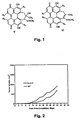
- the present invention comprises the use of amino-substituted hypocrellins, e.g., the demethoxylated hypocrellin compounds of Figure 1, as sonodynamic agents, and the use of these compounds according to the invention as therapeutics.
- amino-substituted hypocrellins e.g., the demethoxylated hypocrellin compounds of Figure 1, as sonodynamic agents, and the use of these compounds according to the invention as therapeutics.
- the present invention includes a composition and method for manufacturing a composition for treating a pre-determined disease or condition comprising administering a therapeutic amount of a composition comprising a compound of the structure shown in Figure 1, allowing the compound to distribute to a portion of the body, preferably throughout the body, and activating the compound in an area containing hyperproliferating cells.
- the activating step includes activating the DMHB compound with sound.
- the present invention also includes compositions for use in a method that involves the topical application of a composition according to the invention, and activating the active agent in the composition.
- the active agent is suitable for treating dermatological conditions, including but not limited to acne and hair removal.
- the present invention also includes compositions for use in a method that involves the use of a composition according to the invention as an anti-bacterial agent in dental applications.
- the active agent is formulated into a liquid composition, such as a mouthwash, contacting a tooth or teeth with the composition, and activating the active agent in the composition.
- the composition is useful in treating cariotosis and the like.
- the conjugate may be activated by sonoactivation.
- the invention also comprises a composition for treating a disease by administering a therapeutically sufficient amount of at least one DMHB according to the invention, and activating the derivative(s) using sonoactivation.
- the DMHB compound may be activated by exposing the compound to a pre-determined sound frequency.
- the invention also includes sonosensitive compounds that further comprise a cleavable linker, said linker being cleavable in vivo.
- the cleavable linker may be chosen to alter one or more properties of the compound, including but not limited to solubility, stability, absorption, and the like.
- Cleavable linkers include, but are not limited to, polyamides and sugars.
- the HB is an amino-sustituted derivative of hypocrellin B.
- 2-BA-2-DMHB is where R 1 , R 2 , R 3 are OCH 3 , and R 4 is NH(CH 2 ) 3 CH 3 .
- R 1 , R 2 , R 3 , R 4 may be OCH 3 or NHCH 2 (CH 2 ) n Ar, wherein Ar is a phenyl, naphthyl, polycyclic aromatic or a heterocyclic moiety, and n is 0-12.
- the compounds of the present invention may be produced by any method that results in a purified or substantially purified compound, or in a compound that is useful as a photodynamic or sonodynamic agent.
- the compounds of the present invention may also form a composition comprising a cocktail of compounds, e.g., more than one compound.
- a cocktail of compounds e.g., more than one compound.
- the amino-substituted HB compounds of the present invention are particularly suited for therapeutic use because they exhibit excellent sonodynamic activity in a frequency range from about 1MHz to about 3 MHz; are low molecular weight, typically from about 550 daltons to about 880 daltons); are available in pure monomeric form; exhibit rapid serum and skin clearance; have negligible cytotoxicity in vitro and in vivo; have excellent sonopotentiation (e.g., two orders of magnitude), so the safety margin in use is excellent; potent inhibitors of protein kinases; confer apoptotic cell death in vitro and in vivo; exhibit no genotoxicity; exhibit excellent tumor control; may be molecularly configured for targeted delivery; may be targeted to nuclear regions to further augment sonotoxicity; and the parent hypocrellins are amenable to site-specific modification, so that many derivatives may be formed, derivatives with varying degrees of sonosensitizing characteristics.
- disease refers to the management, diagnosis, and/or palliation of any mammalian (including human) disease, disorder, malady, or condition that can be treated by photodynamic therapy.
- Disease includes but is not limited to cancer and its metastases, such as skin cancer, growths or tumors, and their metastases; tumors and tumor cells, such as sarcomas and carcinomas, including solid tumors, blood-bome tumors, and tumors found in nasal passages, the bladder, the esophagus, or lung, including the bronchi ; viruses, including retroviruses; bacterial diseases; fungal diseases; and dermatological conditions or disorders, such as lesions of the vulva, keloid, vitiligo, psoriasis, benign tumors, endometriosis, Barett's esophagus, Tinea capitis, and lichen amyloidosis.
- administering refers to any action that results in exposing or contacting one or more DMHB derivatives with a predetermined cell, cells, or tissue, typically mammalian.
- administering or delivering may be conducted in vivo, in vitro, or ex vivo.
- a composition may be administered by injection or through an endoscope.
- Administering also includes the direct application to cells of a composition according to the present invention.
- tumor cells may be exposed.
- these exposed cells may be exposed directly to a composition of the present invention, e.g., by washing or irrigating the surgical site and/or the cells.
- activation, activating, or similar terms refers to the use of sound frequency to make a compound or portion of a compound more reactive.
- Any method for applying a sound source to a perylenequinone derivative may be used in accordance with the present invention, e.g., direct application, an ultrasound machine, focused ultrasound, high-intensity focused ultrasound, to name a few.
- the sensitizers can chemically (e.g., through oxidation, reduction and the like) change into a form that is toxic to the surrounding tissue.
- a sonosensitizer to a long-lived excited triplet state, a targeted tumor is destroyed either by the highly reactive singlet oxygen species (a Type II mechanism) and/or by free radical products (a Type I mechanism) generated by quantum energy transfer.
- Major biological target molecules of the singlet oxygen species and/or free radical products include nucleic acids, enzymes and cell membranes.
- a secondary therapeutic effect of the present methods involves the release of pathophysiologic products, such as prostaglandins, thromboxanes and leukotrienes, by tissue exposed to the effects of activated photosensitizers.
- pathophysiologic products such as prostaglandins, thromboxanes and leukotrienes
- the activation factor may be calculated as the ratio of the LD 50 of cells treated without activation to the LD 50 of the cells treated with an activated compound (drug LD 50 divided by activated drug LD 50 ).
- drug LD 50 has been used above
- IC 50 may be substituted, to address the bioassays that concern metabolic activity rather than the endpoint of lethality, loss of reproductive capability, or clonogenic death.
- a desirable compound of the present invention is one that is non-toxic (or of low toxicity) at high drug concentrations without activation, i.e., without sound, and is toxic at low concentrations when sound of the appropriate frequency, is applied.
- the most desirable compounds are those that provide a wide range of non-toxic doses in an unactivated state, as this characteristic provides an increased safety factor for the patient.
- physiologically acceptable fluid refers to any fluid or additive suitable for combination with a composition containing a PQP derivative. Typically these fluids are used as a diluent or carrier. Exemplary physiologically acceptable fluids include but are not limited to preservative solutions, saline solution, an isotonic (about 0.9%) saline solution, or about a 5% albumin solution or suspension. It is intended that the present invention is not to be limited by the type of physiologically acceptable fluid used.
- the composition may also include pharmaceutically acceptable carriers. Pharmaceutically accepted carriers include but are not limited to saline, sterile water, phosphate buffered saline, and the like.
- compositions of the present invention may be solutions, suspensions or any appropriate formulation suitable for administration, and are typically sterile and free of undesirable particulate matter.
- the compositions may be sterilized by conventional sterilization techniques.
- composition containing a sonosensitizer of the present invention may be administered to the patient by any biologically suitable route.
- the sonosensitizer may be introduced into the patient by intravenous, subcutaneous, intraperitoneal, intrathecal, intravesical, intradermal, intramuscular, or intralymphatic routes.
- the composition may be in solution, tablet, aerosol, or multi-phase formulation forms. Liposomes, long-circulating liposomes, immunoliposomes, biodegradable microspheres, micelles, or the like may also be used as a carrier, vehicle, or delivery system.
- blood or serum from the patient may be removed from the patient; optionally, it may be desirable to purify the antigen in the patient's blood; the blood or serum may then be mixed with a composition that includes a sonosensitizer according to the invention; and the treated blood or serum is returned to the patient.
- the invention should not be limited to any particular method of introducing the sonosensitizer into the patient.
- the amino-substituted HB derivatives of the present invention may also be used in conjunction with and conjugated to a number of other compounds, signaling agents, enhancers, and/or targeting agents.
- a hypocrellin derivative of the present invention may be conjugated to an antibody, preferably a monoclonal antibody.
- the binding agent includes any DNA minor-groove targeting agent, such as lexotropsin or netropsin, preferably to enhance the toxicity through targeting the cell nucleus.
- Suitable enhancers include but are not limited to pKa modifiers, hypoxic cell radiosensitizers, and bioreductively activated anti-neoplastic agents, such as mitomycin C (preferably to effect or potentiate the toxicity of the compound in hypoxic cells or microorganisms).
- Suitable signaling agents include but are not limited to markers of apoptotic cell death or necrotic cell death, or regulatory molecules endogenous to cell cycle control or delay, preferably to potentiate the phototoxicity or sonotoxicity of the compound(s) by induction of apoptotic or necrotic cell death, or by inhibition of the repair of any form of lethal or potentially lethal damage (PLD).
- the PQP derivatives may be functionalized, e.g., include reactive groups including but not limited to an acid, hydroxyl, an acid halide (preferably bromide), a hydrazine, a thiol, or a primary amine.
- the binding reagent may include reactive groups including but not limited to amino acids, such as cysteine, lysine, aspartic acid, glutamic acid and other dicarboxylic acid amino acids, and other tri- or poly-functional amino acid derivatives.
- a composition of the present invention may be administered alone, or in combination (sequentially or in batch) with other immunotherapeutic compositions.
- the sonosensitizers of the present invention may be further combined with agents for other activation modalities, e.g., photosensitizers and/or radiation sensitive agents.
- a SDT method comprises administering a first sonodynamic agent, preferably having a slow uptake, and administering a second sonodynamic agent, preferably having a more rapid uptake than that of the first agent. Both first and second sonodynamic agents may then be activated by exposing the patient and/or the agent to sound of suitable frequency, as described above.
- the excellent fluorescence properties of the hypocrellins and derivatives provide a valuable tool to monitor intracellular uptake and distribution kinetics by confocal laser scanning microscopy (CLSM).
- CLSM confocal laser scanning microscopy
- Each drug has unique properties of uptake and distribution (Miller et al 1995 a,b).
- the rate cells take up drug in humans in vitro and in vivo can be determined using similar protocols as Liu et al 1995 and Miller et al., 1995 a or b).
- Some of the embodiments of the present invention also have the added benefit of functioning with or without the presence of oxygen. Therefore, some embodiments of the present invention are effective in the treatment of solid tumors which are either well oxygenated or either partially or fully hypoxic.
- the sono-activating agents may be formulated for topical application in penetrating solvents or in the form of a lotion, cream, ointment or gel containing a sufficient amount of the sonosensitizing agent compound to be effective for SDT therapy.
- Such topical formulations may be prepared in gel form by combining the photosensitizing agent with a solvent and adding a gelling agent thereto.
- Suitable gelling agents include carboxymethyl cellulose (Carbopol.TM. 934P from B. F. Goodrich of Brecksville, Ohio U.S.A.) and fumed silica (CAB-O-SIL.RTM., Cabot Corp., Tuscola, III.).
- the gelling agent is generally used in amounts of about 5-10 wt % to obtain a gel with the desired viscosity. Obviously, gels containing more or less gelling agent will have slightly higher or lower viscosity. One skilled in the art can readily obtain the desired gel viscosity by adjusting the concentration of gelling agent.
- Additives such as cosolvents, surfactants and/or bioadhesives frequently improve the gel properties and may be added as desired.
- Suitable cosolvents/surfactants include propylene glycol and glycerine.
- Suitable bioadhesives include carboxymethylcellulose, polyacrylic polymers, chitosan and sodium alginate, modified starch with polyacrylic polymers, eudispert hv hydrogels or xerogels, sodium hyaluronate, and polymers of polyethylene glycol, hydroxypropylcellulose, or carboxyvinyl.
- the additives may be incorporated into the gel by mechanically mixing the additives into a mixture of solvent and gelling agent.
- antioxidants examples include antioxidants, chelating agents, inert gases, buffers and isotonicifiers.
- antioxidants and typical concentration ranges include acetone sodium bisulfite (0.1-0.8%), ascorbic acid (0.05-1.0%), monothioglycerol (0.1-1.0%), potassium metabisulfite (0.05-0.1%), propyl gallate (0.02%), sodium bisulfite (0.01-1.0%), sodium formaldehyde sulfoxylate (0.03-0.1%), sodium metabisulfite (0.02-0.25%), sodium sulfite (0.01-0.1%), sodium thioglycolate (0.05-0.1%).
- chelating/complexing agents examples include edetate sodium (0.005-0.1%), edetate calcium disodium (0.005%-0.01%), gentisic acid ethanolamide (1.0%-2.0%), niacinamide (1.0%-2.5%), sodium citrate (0.01%-2.5%), citric acid (0.001%-1.0%).
- Buffers are used primarily to stabilize a formulation against the chemical degradation that might occur if the pH changed appreciably.
- Buffer systems employed normally have as low a buffer capacity as feasible in order to not disturb significantly the body buffer systems when injected.
- the buffer range and effect of the buffer on activity must be evaluated. Appropriate adjustment is useful to provide the optimum conditions for pH dependent partition into the target malignant tissues or lesion area.
- buffer systems include the following acids: acetic, adipic, ascorbic, benzoic, citric, glycine, lactic, tartaric, hydrochloric, phosphoric, sulfuric, carbonic and bicarbonic; and their corresponding salts such as: potassium, sodium, magnesium, calcium and diethanolamine salts.
- antimicrobial agents in bacteriostatic or fungistatic concentrations are added in amounts effective to provide protection from bacteria or fungi.
- phenylmercuric acid 0.002-0.01%)
- thimerosal 0.01%
- benzethonium chloride 0.01%
- benzalkonium chloride 0.01%
- phenol or cresol 0.5%)
- chlorbutanol 0.5%)
- benzyl alcohol 2.0%
- methyl p-hydroxybenzoate 0.18%
- EDTA ethylenediaminetetraacetic acid
- Suitable penetrating solvents are solvents for the porphycene compound which will enhance percutaneous penetration of the porphycene compound.
- Solvents which have this property include proparacaine, dimethyl sulfoxide, dimethyl acetamide, dimethylformamide, 1-methyl-2-pyrrolidone, diisopropyladipate, diethyltoluamide and to a lesser extent propylene glycol.
- Additional solvents include substituted azacycloalkan-2-ones having from 5 to 7 carbons in the cycloalkyl group such as 1-dodecylazacycloheptan-2-one (AZONE) and other azacycloalkan-2-ones such as described in U.S. Pat. No.
- sonosensitizing agents can be used with solvents and adjuvants appropriate to the sonosensitizing agent chemistry to adjust the viscosity of the formulation.
- solvents in this group are ethanol, polyethylene - glycols of the liquid series and propylene glycol.
- a more comprehensive listing includes acetone, dimethyl acetamide, dimethyl formamide, dimethyl sulfoxide ethanol, glycerin, polyethylene glycol 300, and 400, propylene glycol, sorbitol, polyoxyethylene sorbitan fatty acid esters such as laureate, palmitate, stearate, and oleate, polyoxyethylated vegetable oil, sorbitan monopalmitate, 2-pyrrolidone; n-methyl-2-pyrrolidine; n-ethyl- 1 -pyrrolidine; tetrahydrofurfuryl alcohol, tween 80 and dimethyl isosorbide.
- Dimethyl isosorbide ARLASOLVE®.
- DMI DMI, ICI Specialty Chemicals
- dimethyl isosorbide may be readily gelled with a gelling agent to produce gel formulations with, for example, 4% KLUCEL.® (Hercules).
- Example 1 Screening Assay for Efficiency of Sonosensitizers in Vitro:
- This screening assay makes use of human promyelocytic leukemia cells growing in suspension culture.
- the transducer of an UltraMax ultrasound generator for physiotherapy was adapted for in vitro studies by fitting a tissue culture-compatible Teflon cuff such that cell suspensions could be conveniently insonated.
- the following diagrams represent the equipment employed.
- Human acute promyelocytic leukemia HL-60 cells (ATCC No CCL-240) were maintained in RPMI 1640 cell culture medium supplemented with 7g/L of L-glutamine (Gibco, Grand Island NY), 10% fetal bovine serum (Cansera), and 1% penicillin-streptomycin-neomycin (Gibco), buffered with NaHCO 3 to pH 7.4. They were incubated at 37°C in a humidified atmosphere of 95% air, 5% CO 2 , and maintained at cell densities between 2.0 x 10 5 to 1.0 x 10 6 cells/mL.
- Hp a porphyrin positive control
- hypocrellin test compounds For insonations in the presence of Hp (a porphyrin positive control) or hypocrellin test compounds, cells were brought to approximately 1.0 x 10 6 cells/mL, incubated with the putative sensitizer at 37°C for 2 hours in T-flasks, equilibrated for 30 minutes at room temperature, resuspended and insonated. All procedures took place in low - light conditions to avoid spurious photosensitization. Cells were gently resuspended for 10 seconds before insonation. The test sonosensitizer was dissolved in dimethylsulfoxide (DMSO) such that the final concentration of DMSO in the insonation medium did not exceed 1% (v/v). Stock sensitizer was prepared by slowly adding RPMI-1640 medium to the appropriate volume at final sensitizer concentrations between 0.3mM and 1mM.
- DMSO dimethylsulfoxide
- DMHB demethoxy hypocrellin B
- mice were inoculated subcutaneously with 1.0 x 10 5 EMT6 tumor cells in sterile injectable saline. Within 7 days, detectable tumors are evident. Mice were randomized into a control group and a SDT treatment group, which differed only in that the sonosensitizer was not present in the drug solvent (see below). Fresh DMHB was dissolved in mineral oil, and injected intraperitoneally into each mouse to achieve a total body concentration of 50 ⁇ M.
- mice were tightly anesthetized with Metafane, and placed on a 2% agarose gel, with the tumor lying in a depression of the gel which was juxtaposed to the transducer of an UltraMax physiotherapy ultrasound generator.
- Ultrasound was applied at a frequency of 1MHz, at a power density of 0.2W/cm 2 , for a 10-minute period.
- the maximum energy applied to the tumor volume was approximately 500J.
- Tumor growth was monitored daily by caliper measurements in three mutually orthogonal planes.
- the endpoint for the assay was the proportion of tumors reaching 4 times treatment volume, which was plotted as a function of time. Animals were euthanized at this point.
- Figure 2 is a plot of tumor growth vs. time.
- HL-60 cells were treated with perylenequinone sensitizers and insonated as described above. The surviving fractions were plotted against sensitizer concentration. At a concentration of approximately 30 ⁇ M, CPMg(Ac 2 ) showed sonotoxicity exceeding that of the 1000 ⁇ M Hp control, with the decrease in survival occurring steeply over the preceding two decades of sensitizer concentration. DBHB and DMHB showed negligible sonotoxicity up to 100 ⁇ M; the bulk of the observed sonotoxic effect occurred over the decade from 100 ⁇ M to 1000 ⁇ M, and the maximum effect was comparable to that of the Hp control. HBMg(Ac 2 ) showed no sonotoxic effect until 10 ⁇ M. Cell survival decreased steeply over the next two decades of sensitizer concentration.
- Hypocrellin B (0.28 mmol) is dissolved in 100 mL fresh distilled benzene containing excessive cyclopentylamine and the resulting solution is stirred for 18 hours. The solvent is removed under reduced pressure. Chloroform is used to wash the residue for 3-4 times, and the chloroform layer is washed with water for 3-4 times. Chloroform is evaporated, then thin-layer chromatography (TLC) is used to purify the residue using 3:1:0.5 (V:V:V) cyclohexane-ethyl acetate-95% ethanol as eluent. TLC is repeated twice for further purification, the amino-substituted demethoxylated hypocrellin B is obtained. Characteristic of the product:
- hypocrellin B was prepared by quantitative potassium hydroxide dehydration of hypocrellin A (HA) followed by neutralization with Ha, chloroform extraction, and recrystallization with benzene-petroleum ether, 2-butylamino-2-demethoxy-hypocrellin B (2-BA-2-DMHB) was prepared by reflux with n-butylamine in pyridine, neutralization, and chloroform extraction of HB.
- the product was subjected to 1 % citric acid-silica gel thin-layer chromatography (TLC), using a 6:1:1 mixture of petroleum ether/ethyl acetate/ethanol (95%) as eluent, and three compounds were obtained.
Landscapes
- Health & Medical Sciences (AREA)
- Life Sciences & Earth Sciences (AREA)
- Medicinal Chemistry (AREA)
- Veterinary Medicine (AREA)
- Public Health (AREA)
- General Health & Medical Sciences (AREA)
- Animal Behavior & Ethology (AREA)
- Chemical & Material Sciences (AREA)
- Pharmacology & Pharmacy (AREA)
- Nuclear Medicine, Radiotherapy & Molecular Imaging (AREA)
- Oncology (AREA)
- Virology (AREA)
- General Chemical & Material Sciences (AREA)
- Organic Chemistry (AREA)
- Chemical Kinetics & Catalysis (AREA)
- Epidemiology (AREA)
- Communicable Diseases (AREA)
- Molecular Biology (AREA)
- Tropical Medicine & Parasitology (AREA)
- AIDS & HIV (AREA)
- Pharmaceuticals Containing Other Organic And Inorganic Compounds (AREA)
- Acyclic And Carbocyclic Compounds In Medicinal Compositions (AREA)
Description
- The invention involves compositions that are sonosensitizers for treating diseases. The compositions comprise amino-substituted hypocrellins, preferably demethoxylated hypocrellin B.
- Treatment for cancer has traditionally encompassed three main strategies: surgery, chemotherapy, and radiotherapy. Although considerable progress in these areas has been attained, the search for more effective and safe alternative treatments continues. In this regard, photodynamic therapy (PDT) and sonodynamic therapy (SDT) represent a promising new approach(es) for the treatment of cancer. These therapies involve systemic or topical administration of a sensitizer, followed by its activation by light of a specific wavelength (PDT), or activation by sound of a specific frequency (SDT). The activation of the sensitizer leads to the production of activated oxygen and radical species that initiate a cascade of biochemical reactions, resulting in direct cell destruction, damage to the tumor vasculature and immune inflammatory responses. Lipson, et al. were the first to use photodynamic therapy, in 1966 at the Mayo Clinic [Proc. IX Internat. Cancer Congress, page 393 (1966)].
- The photosensitizing and therapeutic properties of perylenequinonoid pigments (PQPs), such as hypocrellins, in biological systems have been recognized during the past two decades. See Diwu, et al., J. Photochem. Photobiol. A: Chem., 64:273 (1992); Zhang et al., (1989); and Wan, et al., "Hypocrellin A, a new drug for photochemotherapy," Kexue Tongbao (English edition) 26:1040 (1981). Because of the difficulty of collecting sufficient activated photosensitizer at the site of action, none of the previously known photosensitizers have gained widespread use as therapeutics.
- The importance of sonodynamic therapy (SDT) lies ultimately in its similarity to PDT, an elegant and effective tumor treatment whose success is due to the use of light and drug in combination, i.e., two treatment elements, neither of which has toxic effects by itself (Marcus, 1992). The principal impetus for the development of SDT has been improvement upon PDT's dosimetric shortcomings. PDT is currently restricted to use with superficial tumors. Its use on tumors deep within the body requires interstitial irradiation that increases the complexity of the treatment and compromises its noninvasive nature. SDT provides a means to reach such tumors, since ultrasound propagates easily through several centimeters of tissue, and like light, can be focused principally on the tumor mass where it activates the sonosensitizing compound. Targeted SDT offers the possibility of improving the tolerance of this therapy by further restricting its effects to the target tissue.
- While these discoveries represent significant advances, two serious deficiencies remain in the development of experimental SDT. A substantial problem is the lack of sonodynamic agents with favorable clinical properties. Porphyrins are known to cause significant cutaneous photosensitivity (Estey et al., 1996), doxorubicin is cardiotoxic (Myers et al., 1976), and DMSO, DMF and MMF are hepatotoxic (Misik and Riesz, 1996). New sensitizers with better sonodynamic properties, which have milder side effects and which are rapidly cleared, would greatly improve the clinical application of SDT. A further problem is the lack of standardization in the conditions used for evaluating sonodynamic agents.
- Potential sonodynamic agents have been tested following exposure to ultrasound intensities ranging from 0.25W/cm2 to 40W/cm2, and frequencies from 500MHz to 1MHz (Harrison et al., 1991; Sasaki et al., 1998). Though in vivo use would seem to require greater energies due to roughly isotropic dissipation of the ultrasonic energy, little effort has been made to compare experimental conditions in vitro with those in vivo. Where one group will find evidence of sonodynamic effect, different investigators do not under apparently similar conditions. Development of standard insonation and assay systems compatible with clinical use will permit a more rigorous assessment of the sonodynamic effects of current and future sonosensitizers.
- Sonodynamic activation of sensitizers has been found to be useful since ultrasound has the appropriate tissue attenuation coefficient for penetrating intervening tissues to reach desired treatment volumes, while retaining the ability to focus energy on reasonably small volumes. Diagnostic ultrasound is a well accepted, non-invasive procedure widely used in the developed world, and is considered safe even for fetal imaging. The frequency range of diagnostic ultrasound lies between 100 kHz -12 MHz, while 50 kHz sound provides enough energy to effect cellular destruction through microregional cavitation.
- Sonodynamic therapy provides treatment strategies unavailable in standard photodynamic therapy, due to the limited tissue penetration of visible light. One example would be the treatment of newly diagnosed breast cancer, where local and regional spread of micrometastatic disease remains clinically undetectable. Using immunoconjugates (anti-breast cancer Mab - sonosensitizer hybrids), it would be theoretically possible to selectively eradicate micrometastases in the absence of normal tissue damage.
- Beyond these basic properties shared with other waves, ultrasound exhibits unique properties when propagating through water. Above a certain threshold intensity, propagation of ultrasound waves through water elicits an effect termed 'cavitation' (Rayleigh, 1917; Connolly and Fox, 1954). Cavitation involves the formation of small bubbles or 'cavities' in the water during the rarefaction half of the wave cycle, followed by the collapse of these bubbles during the compression half of the cycle (Putterman, 1995). Cavities focus the energy of the incident ultrasonic radiation by many orders of magnitude (Hiller et al., 1992). The consequence is that regions of cavitation in water are sites of extremely high temperature and pressure. Estimates of the temperatures generated in a collapsing cavity range from 5000K to 106K (Suslick et al. 1986; Flint and Suslick, 1991; Misik and Riesz, 1995; Kaiser, 1995).
- The biological effects of exposure to ultrasound are the result of its physical and chemical effects. The most obvious biological effects of ultrasound treatment stem from heating of the medium through which it passes. Such heating is exploited during physiotherapy to help heal injured tissues. (Lehmann et al., 1967; Patrick, 1966), and has been investigated as a possible modality for tumor treatment. This is due to the sensitivity of many tumours to hyperthermia, a state in which tissue temperatures are elevated above 42°C (Doss and McCabe, 1976; Marmor et al., 1979; Sculier and Klastersky, 1981; Bleehen, 1982; Hynynen and Lulu, 1990). Ultrasound has also been used in combination with radiation therapy to improve treatment response in vivo compared to radiotherapy alone (Clarke et al., 1970; Repacholi et al., 1971; Mitsumori et al., 1996). A principal danger in the use of ultrasound for therapeutic purposes is the formation of 'hotspots' due to regions of constructive interference and preferential absorption of ultrasonic energy by bone regions with low curvature radii+ (Lehmann et al., 1967; Linke et al., 1973). These hotspots can cause serious damage to nearby tissues (Hill, 1968; Bruno et al., 1998).
- As is the case of hematoporphyrin derivatives, natural PQPs do not themselves exhibit absorptivity longer than 600 nm, a characteristic that inherently predicts a decreased capability of activation as tissue depth increases beyond 3-5mm. This means that the natural PQPs are not sufficiently strong for photodynamic therapy, and this limits their photodynamic therapy applications.
- Deficiencies of current porphyrin and PQP photosensitizers for photodynamic therapy have stimulated the development of a series of second generation compounds which have improved properties with respect to light absorption in the red spectral range, purity, pharmacokinetics, and reduced cutaneous photosensitivity. These deficiencies also lead to investigating other forms of activating the sensitizer, e.g., activation using sound waves.
- It has been noted that some photosensitizing compounds also confer cytotoxicity when they are activated by ultrasound. Sonodynamic activation of photosensitizers (as used hereinafter, "sonosensitizers") is clinically relevant, since ultrasound has the appropriate tissue attenuation coefficient for penetrating intervening tissues to reach desired treatment volumes, while retaining the ability to focus energy on reasonably small volumes. Diagnostic ultrasound is a well accepted, non-invasive procedure widely used in the developed world, and is considered safe, even for fetal imaging. The frequency range of diagnostic ultrasound lies between 100 kHz -12 MHz, while 50 kHz sound will provide enough energy to effect cellular destruction through microregional cavitation. The molecular mechanisms of sonodynamic cytotoxicity are currently not well understood, however a role for singlet oxygen has been postulated. Sonodynamic effects of porphyrins and porphyrin analogs in cell culture and experimental animal tumors have been reported. Sonodynamic therapy provides treatment strategies unavailable in standard photodynamic therapy, due to the limited tissue penetration of red, visible light. The sensitizers under investigation include proprietary molecules for which this use has never been reported. Proof-of-concept has been shown for 7 perylenequinones, used to sonosensitize human promyelocytic leukemia (HL-60) cells in vitro.
- The ultrasound generator is clinically licensed in Europe and North America for physiotherapy use. It is readily adapted to in vitro studies, and is used in its "off-the-shelf" configuration in cancer therapy. A wide variety of neoplastic diseases, as well as infectious diseases, autoimmune and hyperproliferative diseases, or any disease where targeted therapy is appropriate, could benefit from the sonodynamic approach.
- In accordance with the present invention, hypocrellin derivatives, such as amino-substituted hypocrellins, including but not limited to demethoxylated hypocrellin B (DMHB), have sonosensitizing properties and may be used to treat diseases and other conditions. Moreover, the HB derivatives of the present invention may be conjugated to a delivery moiety to enhance the ability of the PQP derivative to target pre determined cells or structures in vitro or in vivo.
- The compositions of the present invention, activated by sound, exhibit substantial absorption in the therapeutic frequencies of ultrasound; produce high singlet oxygen yield; can be produced in pure, monomeric form; may be derivatized to optimize properties of ultrasound activation, tissue biodistribution, and toxicity; and are rapidly excreted. They afford nuclear targeting by covalent attachment to DNA minor-groove binding agents, such as stapled lexotropins, to enhance sonotoxicity. They are not genotoxic. This trait is important in the context of treatment-related secondary malignancies.
- Many PQP properties are summarized in Diwu, et al., J. Photochem. Photobiol. A: Chem., 64:273 (1992). Some perylenequinones are also potent inhibitors of certain viruses, particularly human immunodeficiency virus (HIV), and also the enzyme protein kinase C (PKC). Both anti-HIV and anti-PKC activities of certain PQPs are light-dependent, a phenomenon implicated in the photodynamic therapy of cancers [Diwu, et al., Biochem. Pharmacol., 47:373-389 (1994)]. The Diwu et al paper also discloses the successful conjugation of HB to a protein.
- The sonosensitizing compounds of the present invention, when administered systemically, distribute throughout the body. Over a short period, ranging from hours to days, the compounds clear from normal tissues, but are selectively retained by rapidly proliferating cells (e.g., cancer cells or psoriasis lesions) for up to several days. The amino-substituted hypocrellins (e.g., DMHBs) of the present invention are inactive and non-toxic until activated, e.g., exposed to light in a specific wavelength range or to sound in a specific frequency range.
- The compounds of the present invention are also beneficial therapeutically due to their dual selectivity. The compounds of the present invention are selective in their ability to preferentially localize the drug at the site of a predetermined target, such as a cancer cell, and they are selective in that precise delivery of light and/or sound can be confined to a specific area.
- The compositions of the present invention, when administered in vivo, such as intravenously, distribute throughout the body. In subsequent hours, and sometimes days, the compositions containing at least one perylenequinone derivative begin to clear from normal tissues, but are selectively retained for up to several days by hyperproliferating cells, such as cancer cells. The HB remains inactive and non-toxic until it is activated. In accordance with the present invention, the HB may be activated by sound. The hyperproliferating cells, now containing or contacted with a HB compound, may be exposed to an activation source, e.g., sound of an appropriate frequency. Exposing the site containing the hyperproliferating cells with the activation source permits selective activation of the retained perylenequinone derivative, which in turn initiates local necrosis or apoptosis in the hyperproliferating cell tissue leading to cell death.
- In combination with the delivery system according to the present invention, the compositions and methods of the present invention permit increased selectivity by preferential localization of the perylenequinone derivative at the site of the targeted cells, and permit increased selectivity by confining the activation source to a specific area, e.g., sound confined to a discrete area.
-
- Figure 1 shows several structures for the demethoxylated HB compounds of the present invention, where R1, R2, R3, R4 are OCH3 or NHCH2Ar (Ar are phenyl or pyridyl group), NHCH(CH2)n (where -CH(CH2)n are alicyclic group and n=3,4,5,6). 2-BA-2-DMHB is where R1, R2 , R3 are OCH3 , and R4 is NH(CH2)3CH3. Alternatively, R1, R2, R3, R4 may be OCH3 or NHCH2(CH2)nAr, wherein Ar is a phenyl, naphthyl, polycyclic aromatic or a heterocyclic moiety, and n is 0-12.
- Figure 2 shows that tumor growth is inhibited by SDT with DMHB.
- The present invention comprises the use of amino-substituted hypocrellins, e.g., the demethoxylated hypocrellin compounds of Figure 1, as sonodynamic agents, and the use of these compounds according to the invention as therapeutics.
- The present invention includes a composition and method for manufacturing a composition for treating a pre-determined disease or condition comprising administering a therapeutic amount of a composition comprising a compound of the structure shown in Figure 1, allowing the compound to distribute to a portion of the body, preferably throughout the body, and activating the compound in an area containing hyperproliferating cells. In preferred embodiments of the invention, the activating step includes activating the DMHB compound with sound.
- The present invention also includes compositions for use in a method that involves the topical application of a composition according to the invention, and activating the active agent in the composition. In preferred embodiments of the invention, the active agent is suitable for treating dermatological conditions, including but not limited to acne and hair removal.
- The present invention also includes compositions for use in a method that involves the use of a composition according to the invention as an anti-bacterial agent in dental applications. In these embodiments of the invention, the active agent is formulated into a liquid composition, such as a mouthwash, contacting a tooth or teeth with the composition, and activating the active agent in the composition. In this embodiment of the invention, the composition is useful in treating cariotosis and the like. In preferred embodiments of the invention, the conjugate may be activated by sonoactivation.
- The invention also comprises a composition for treating a disease by administering a therapeutically sufficient amount of at least one DMHB according to the invention, and activating the derivative(s) using sonoactivation. Typically, the DMHB compound may be activated by exposing the compound to a pre-determined sound frequency.
- The invention also includes sonosensitive compounds that further comprise a cleavable linker, said linker being cleavable in vivo. In accordance with the present invention, the cleavable linker may be chosen to alter one or more properties of the compound, including but not limited to solubility, stability, absorption, and the like. Cleavable linkers include, but are not limited to, polyamides and sugars.
- In a preferred embodiment of the invention, the HB is an amino-sustituted derivative of hypocrellin B. In the most preferred embodiments of the invention, the HB derivatives are demethoxylated hypocrellins (see Figure 1), where R1, R2, R3, R4 are OCH3 or NHCH2Ar (Ar are phenyl or pyridyl group), NHCH(CH2)n (where -CH(CH2)n are alicyclic group and n=3,4,5,6). 2-BA-2-DMHB is where R1, R2, R3 are OCH3, and R4 is NH(CH2)3CH3. Altematively, R1, R2, R3, R4 may be OCH3 or NHCH2(CH2)nAr, wherein Ar is a phenyl, naphthyl, polycyclic aromatic or a heterocyclic moiety, and n is 0-12.
- The compounds of the present invention may be produced by any method that results in a purified or substantially purified compound, or in a compound that is useful as a photodynamic or sonodynamic agent. The compounds of the present invention may also form a composition comprising a cocktail of compounds, e.g., more than one compound. These methods are well known in the art, e.g., Liu, et al., "Synthetic studies in novel hypocrellin B derivatives," Tetrahedron, 49:10785 (1993); and Diwu, et al., Anti-Cancer Drug Design, 8:129-143 (1993).
- The amino-substituted HB compounds of the present invention are particularly suited for therapeutic use because they exhibit excellent sonodynamic activity in a frequency range from about 1MHz to about 3 MHz; are low molecular weight, typically from about 550 daltons to about 880 daltons); are available in pure monomeric form; exhibit rapid serum and skin clearance; have negligible cytotoxicity in vitro and in vivo; have excellent sonopotentiation (e.g., two orders of magnitude), so the safety margin in use is excellent; potent inhibitors of protein kinases; confer apoptotic cell death in vitro and in vivo; exhibit no genotoxicity; exhibit excellent tumor control; may be molecularly configured for targeted delivery; may be targeted to nuclear regions to further augment sonotoxicity; and the parent hypocrellins are amenable to site-specific modification, so that many derivatives may be formed, derivatives with varying degrees of sonosensitizing characteristics.
- As used herein, "disease" refers to the management, diagnosis, and/or palliation of any mammalian (including human) disease, disorder, malady, or condition that can be treated by photodynamic therapy. "Disease" includes but is not limited to cancer and its metastases, such as skin cancer, growths or tumors, and their metastases; tumors and tumor cells, such as sarcomas and carcinomas, including solid tumors, blood-bome tumors, and tumors found in nasal passages, the bladder, the esophagus, or lung, including the bronchi ; viruses, including retroviruses; bacterial diseases; fungal diseases; and dermatological conditions or disorders, such as lesions of the vulva, keloid, vitiligo, psoriasis, benign tumors, endometriosis, Barett's esophagus, Tinea capitis, and lichen amyloidosis.
- As used herein, "administering" and "delivering" refers to any action that results in exposing or contacting one or more DMHB derivatives with a predetermined cell, cells, or tissue, typically mammalian. As used herein, administering or delivering may be conducted in vivo, in vitro, or ex vivo. For example, a composition may be administered by injection or through an endoscope. Administering also includes the direct application to cells of a composition according to the present invention. For example, during the course of surgery, tumor cells may be exposed. In accordance with an embodiment of the invention, these exposed cells (or tumors) may be exposed directly to a composition of the present invention, e.g., by washing or irrigating the surgical site and/or the cells.
- As used herein, activation, activating, or similar terms refers to the use of sound frequency to make a compound or portion of a compound more reactive. Any method for applying a sound source to a perylenequinone derivative may be used in accordance with the present invention, e.g., direct application, an ultrasound machine, focused ultrasound, high-intensity focused ultrasound, to name a few.
- Upon application of the appropriate sound, the sensitizers can chemically (e.g., through oxidation, reduction and the like) change into a form that is toxic to the surrounding tissue. For example, following excitation of a sonosensitizer to a long-lived excited triplet state, a targeted tumor is destroyed either by the highly reactive singlet oxygen species (a Type II mechanism) and/or by free radical products (a Type I mechanism) generated by quantum energy transfer. Major biological target molecules of the singlet oxygen species and/or free radical products include nucleic acids, enzymes and cell membranes. A secondary therapeutic effect of the present methods involves the release of pathophysiologic products, such as prostaglandins, thromboxanes and leukotrienes, by tissue exposed to the effects of activated photosensitizers. Thus, it will be apparent to one skilled in the art that careful targeting of the sonoactive agents is of paramount importance to achieve therapeutic effects without eliciting toxemias.
- As used herein, "sonosensitizing potential" refers to the property of the compound(s) to exert sound-mediated toxicity in excess of its (their) inherent unactivated toxicity. In a preferred embodiment of the invention, the activation factor may be calculated as the ratio of the LD50 of cells treated without activation to the LD50 of the cells treated with an activated compound (drug LD50 divided by activated drug LD50). Where the term "LD50" has been used above, the term "IC50" may be substituted, to address the bioassays that concern metabolic activity rather than the endpoint of lethality, loss of reproductive capability, or clonogenic death.
- In accordance with the present invention, a desirable compound of the present invention is one that is non-toxic (or of low toxicity) at high drug concentrations without activation, i.e., without sound, and is toxic at low concentrations when sound of the appropriate frequency, is applied. As is recognized by those skilled in the art, the most desirable compounds are those that provide a wide range of non-toxic doses in an unactivated state, as this characteristic provides an increased safety factor for the patient.
- As used herein, physiologically acceptable fluid refers to any fluid or additive suitable for combination with a composition containing a PQP derivative. Typically these fluids are used as a diluent or carrier. Exemplary physiologically acceptable fluids include but are not limited to preservative solutions, saline solution, an isotonic (about 0.9%) saline solution, or about a 5% albumin solution or suspension. It is intended that the present invention is not to be limited by the type of physiologically acceptable fluid used. The composition may also include pharmaceutically acceptable carriers. Pharmaceutically accepted carriers include but are not limited to saline, sterile water, phosphate buffered saline, and the like. Other buffering agents, dispersing agents, and inert non-toxic substances suitable for delivery to a patient may be included in the compositions of the present invention. The compositions may be solutions, suspensions or any appropriate formulation suitable for administration, and are typically sterile and free of undesirable particulate matter. The compositions may be sterilized by conventional sterilization techniques.
- The composition containing a sonosensitizer of the present invention may be administered to the patient by any biologically suitable route. For example, the sonosensitizer may be introduced into the patient by intravenous, subcutaneous, intraperitoneal, intrathecal, intravesical, intradermal, intramuscular, or intralymphatic routes. The composition may be in solution, tablet, aerosol, or multi-phase formulation forms. Liposomes, long-circulating liposomes, immunoliposomes, biodegradable microspheres, micelles, or the like may also be used as a carrier, vehicle, or delivery system. Furthermore, using ex vivo procedures well known in the art, blood or serum from the patient may be removed from the patient; optionally, it may be desirable to purify the antigen in the patient's blood; the blood or serum may then be mixed with a composition that includes a sonosensitizer according to the invention; and the treated blood or serum is returned to the patient. The invention should not be limited to any particular method of introducing the sonosensitizer into the patient.
- The amino-substituted HB derivatives of the present invention may also be used in conjunction with and conjugated to a number of other compounds, signaling agents, enhancers, and/or targeting agents. For example, a hypocrellin derivative of the present invention may be conjugated to an antibody, preferably a monoclonal antibody. In accordance with the present invention, the binding agent includes any DNA minor-groove targeting agent, such as lexotropsin or netropsin, preferably to enhance the toxicity through targeting the cell nucleus. Suitable enhancers include but are not limited to pKa modifiers, hypoxic cell radiosensitizers, and bioreductively activated anti-neoplastic agents, such as mitomycin C (preferably to effect or potentiate the toxicity of the compound in hypoxic cells or microorganisms). Suitable signaling agents include but are not limited to markers of apoptotic cell death or necrotic cell death, or regulatory molecules endogenous to cell cycle control or delay, preferably to potentiate the phototoxicity or sonotoxicity of the compound(s) by induction of apoptotic or necrotic cell death, or by inhibition of the repair of any form of lethal or potentially lethal damage (PLD).
- In accordance with the present invention, the PQP derivatives may be functionalized, e.g., include reactive groups including but not limited to an acid, hydroxyl, an acid halide (preferably bromide), a hydrazine, a thiol, or a primary amine. The binding reagent may include reactive groups including but not limited to amino acids, such as cysteine, lysine, aspartic acid, glutamic acid and other dicarboxylic acid amino acids, and other tri- or poly-functional amino acid derivatives.
- In accordance with another embodiment of the invention, a composition of the present invention may be administered alone, or in combination (sequentially or in batch) with other immunotherapeutic compositions. The sonosensitizers of the present invention may be further combined with agents for other activation modalities, e.g., photosensitizers and/or radiation sensitive agents. These features afford potential augmentation of the sonodynamic therapeutic ratio through sequential sensitizer administration (followed by sound activation). Under these conditions, a distant metastasis may be targeted.
- In this embodiment of the invention, a SDT method comprises administering a first sonodynamic agent, preferably having a slow uptake, and administering a second sonodynamic agent, preferably having a more rapid uptake than that of the first agent. Both first and second sonodynamic agents may then be activated by exposing the patient and/or the agent to sound of suitable frequency, as described above.
- The excellent fluorescence properties of the hypocrellins and derivatives provide a valuable tool to monitor intracellular uptake and distribution kinetics by confocal laser scanning microscopy (CLSM). Each drug has unique properties of uptake and distribution (Miller et al 1995 a,b). The rate cells take up drug in humans in vitro and in vivo can be determined using similar protocols as Liu et al 1995 and Miller et al., 1995 a or b).
- Some of the embodiments of the present invention also have the added benefit of functioning with or without the presence of oxygen. Therefore, some embodiments of the present invention are effective in the treatment of solid tumors which are either well oxygenated or either partially or fully hypoxic.
- The sono-activating agents may be formulated for topical application in penetrating solvents or in the form of a lotion, cream, ointment or gel containing a sufficient amount of the sonosensitizing agent compound to be effective for SDT therapy. Such topical formulations may be prepared in gel form by combining the photosensitizing agent with a solvent and adding a gelling agent thereto. Suitable gelling agents include carboxymethyl cellulose (Carbopol.TM. 934P from B. F. Goodrich of Brecksville, Ohio U.S.A.) and fumed silica (CAB-O-SIL.RTM., Cabot Corp., Tuscola, III.). The gelling agent is generally used in amounts of about 5-10 wt % to obtain a gel with the desired viscosity. Obviously, gels containing more or less gelling agent will have slightly higher or lower viscosity. One skilled in the art can readily obtain the desired gel viscosity by adjusting the concentration of gelling agent.
- Additives, such as cosolvents, surfactants and/or bioadhesives frequently improve the gel properties and may be added as desired. Suitable cosolvents/surfactants include propylene glycol and glycerine. Suitable bioadhesives include carboxymethylcellulose, polyacrylic polymers, chitosan and sodium alginate, modified starch with polyacrylic polymers, eudispert hv hydrogels or xerogels, sodium hyaluronate, and polymers of polyethylene glycol, hydroxypropylcellulose, or carboxyvinyl. The additives may be incorporated into the gel by mechanically mixing the additives into a mixture of solvent and gelling agent.
- Other additives may be used to enhance or maintain chemical stability and physiological suitability. Examples are antioxidants, chelating agents, inert gases, buffers and isotonicifiers. Examples of antioxidants and typical concentration ranges include acetone sodium bisulfite (0.1-0.8%), ascorbic acid (0.05-1.0%), monothioglycerol (0.1-1.0%), potassium metabisulfite (0.05-0.1%), propyl gallate (0.02%), sodium bisulfite (0.01-1.0%), sodium formaldehyde sulfoxylate (0.03-0.1%), sodium metabisulfite (0.02-0.25%), sodium sulfite (0.01-0.1%), sodium thioglycolate (0.05-0.1%).
- Examples of chelating/complexing agents and typical concentration ranges include edetate sodium (0.005-0.1%), edetate calcium disodium (0.005%-0.01%), gentisic acid ethanolamide (1.0%-2.0%), niacinamide (1.0%-2.5%), sodium citrate (0.01%-2.5%), citric acid (0.001%-1.0%).
- Buffers are used primarily to stabilize a formulation against the chemical degradation that might occur if the pH changed appreciably. Buffer systems employed normally have as low a buffer capacity as feasible in order to not disturb significantly the body buffer systems when injected. The buffer range and effect of the buffer on activity must be evaluated. Appropriate adjustment is useful to provide the optimum conditions for pH dependent partition into the target malignant tissues or lesion area. Examples of such buffer systems include the following acids: acetic, adipic, ascorbic, benzoic, citric, glycine, lactic, tartaric, hydrochloric, phosphoric, sulfuric, carbonic and bicarbonic; and their corresponding salts such as: potassium, sodium, magnesium, calcium and diethanolamine salts.
- When the solution will be dispensed from multiple dose containers, antimicrobial agents in bacteriostatic or fungistatic concentrations are added in amounts effective to provide protection from bacteria or fungi. Among the compounds and concentrations most frequently employed are phenylmercuric acid (0.002-0.01%), thimerosal (0.01%), benzethonium chloride (0.01%), benzalkonium chloride (0.01%), phenol or cresol (0.5%), chlorbutanol (0.5%), benzyl alcohol (2.0%), methyl p-hydroxybenzoate (0.18%), propyl, p-hydroxybenzoate (0.02%), and ethylenediaminetetraacetic acid (EDTA).
- Suitable penetrating solvents are solvents for the porphycene compound which will enhance percutaneous penetration of the porphycene compound. Solvents which have this property include proparacaine, dimethyl sulfoxide, dimethyl acetamide, dimethylformamide, 1-methyl-2-pyrrolidone, diisopropyladipate, diethyltoluamide and to a lesser extent propylene glycol. Additional solvents include substituted azacycloalkan-2-ones having from 5 to 7 carbons in the cycloalkyl group such as 1-dodecylazacycloheptan-2-one (AZONE) and other azacycloalkan-2-ones such as described in U.S. Pat. No. 3,989,816 incorporated herein by reference. Also included are N-bis-azocyclopentan-2-onyl alkanes described in U.S. Pat. No. 3,989,815, 1-substituted azacyclopentan-2-ones described in U.S. Pat. No. 3,991,203 (hereby incorporated by reference) and water-soluble tertiary amine oxides described in U.S. Pat. No. 4,411,893.
- The sonosensitizing agents can be used with solvents and adjuvants appropriate to the sonosensitizing agent chemistry to adjust the viscosity of the formulation. The most important solvents in this group are ethanol, polyethylene - glycols of the liquid series and propylene glycol. A more comprehensive listing includes acetone, dimethyl acetamide, dimethyl formamide, dimethyl sulfoxide ethanol, glycerin, polyethylene glycol 300, and 400, propylene glycol, sorbitol, polyoxyethylene sorbitan fatty acid esters such as laureate, palmitate, stearate, and oleate, polyoxyethylated vegetable oil, sorbitan monopalmitate, 2-pyrrolidone; n-methyl-2-pyrrolidine; n-ethyl- 1 -pyrrolidine; tetrahydrofurfuryl alcohol, tween 80 and dimethyl isosorbide. Dimethyl isosorbide (ARLASOLVE®. DMI, ICI Specialty Chemicals) has the advantage of being both water- and oil-soluble. Additionally, dimethyl isosorbide may be readily gelled with a gelling agent to produce gel formulations with, for example, 4% KLUCEL.® (Hercules).
- Additional topical formulations which may be used for the chosen sonosensitizing agent are disclosed in U.S. Pat. Nos. 3,592,930 and 4,017,615.
- This screening assay makes use of human promyelocytic leukemia cells growing in suspension culture. The transducer of an UltraMax ultrasound generator for physiotherapy was adapted for in vitro studies by fitting a tissue culture-compatible Teflon cuff such that cell suspensions could be conveniently insonated. The following diagrams represent the equipment employed.
- Human acute promyelocytic leukemia HL-60 cells (ATCC No CCL-240) were maintained in RPMI 1640 cell culture medium supplemented with 7g/L of L-glutamine (Gibco, Grand Island NY), 10% fetal bovine serum (Cansera), and 1% penicillin-streptomycin-neomycin (Gibco), buffered with NaHCO3 to pH 7.4. They were incubated at 37°C in a humidified atmosphere of 95% air, 5% CO2, and maintained at cell densities between 2.0 x 10⁵ to 1.0 x 10⁶ cells/mL. For insonations in the presence of Hp (a porphyrin positive control) or hypocrellin test compounds, cells were brought to approximately 1.0 x 10⁶ cells/mL, incubated with the putative sensitizer at 37°C for 2 hours in T-flasks, equilibrated for 30 minutes at room temperature, resuspended and insonated. All procedures took place in low - light conditions to avoid spurious photosensitization. Cells were gently resuspended for 10 seconds before insonation. The test sonosensitizer was dissolved in dimethylsulfoxide (DMSO) such that the final concentration of DMSO in the insonation medium did not exceed 1% (v/v). Stock sensitizer was prepared by slowly adding RPMI-1640 medium to the appropriate volume at final sensitizer concentrations between 0.3mM and 1mM.
- Aliquots of cells were withdrawn prior to insonation to serve as the original value for cell survival. Cells were suspended in Isoton diluent and counted in a Coulter electronic particle counter. Insonation proceeded at a power density of 2W, at times varying between 3- and 10 seconds to effect cytotoxicity by sonosensitization. Control cultures were subjected to the appropriate dose of ultrasound, in the presence of DMSO, and the absence of the test sonosensitizer. Following ultrasound treatment, aliquots of the cell suspension were withdrawn for counting as above, and the survival fraction, S, was calculated as the fraction:

- We are currently interested in demethoxy hypocrellin B (DMHB) as a sonosensitizer, based on its excellent properties of photosensitization. Standard dose-response curves, with a fixed dose and energy of ultrasound demonstrate proof-of-concept that DMHB is an extremely efficient sonosensitizer of human cells in vitro. The LD50 of the positive hematoporphyrin (Hp) control is 1.0mM, whereas the LD50 for DMHB is approximately 100µM, a 10-fold difference. Conclusion: DMHB has high potential as an effective sonosensitizer in vivo.
DMSO Only DMSO + 1µM DMHB DMSO + 10µM DMHB DMSO + 100µM DMHB Survival, % Mean 55.8 41.8 37.3 30.7 53.0 48.2 43.3 39.4 40.0 33.5 24.9 23.7 49.6 41.1 35.2 31.3 s.d. 8.4 7.3 9.4 7.9 Mean - DMSO Bg 100.0 83.0 71.1 63.2 - We explored the use of DMHB in Balb/c mice engrafted in the flank with the syngeneic murine mastocytoma, EMT6. The mice were inoculated subcutaneously with 1.0 x 10⁵ EMT6 tumor cells in sterile injectable saline. Within 7 days, detectable tumors are evident. Mice were randomized into a control group and a SDT treatment group, which differed only in that the sonosensitizer was not present in the drug solvent (see below). Fresh DMHB was dissolved in mineral oil, and injected intraperitoneally into each mouse to achieve a total body concentration of 50µM. Following a an interval of 48h for biodistribution of the sensitizer, the mice were tightly anesthetized with Metafane, and placed on a 2% agarose gel, with the tumor lying in a depression of the gel which was juxtaposed to the transducer of an UltraMax physiotherapy ultrasound generator. Ultrasound was applied at a frequency of 1MHz, at a power density of 0.2W/cm2, for a 10-minute period. The maximum energy applied to the tumor volume was approximately 500J. Tumor growth was monitored daily by caliper measurements in three mutually orthogonal planes. Tumor volume was calculated from the expression,

where V = volume (mm3), and d1,2, and 3 are the three mutually orthogonal diameters. The endpoint for the assay was the proportion of tumors reaching 4 times treatment volume, which was plotted as a function of time. Animals were euthanized at this point. Figure 2 is a plot of tumor growth vs. time. - HL-60 cells were treated with perylenequinone sensitizers and insonated as described above. The surviving fractions were plotted against sensitizer concentration. At a concentration of approximately 30µM, CPMg(Ac2) showed sonotoxicity exceeding that of the 1000µM Hp control, with the decrease in survival occurring steeply over the preceding two decades of sensitizer concentration. DBHB and DMHB showed negligible sonotoxicity up to 100µM; the bulk of the observed sonotoxic effect occurred over the decade from 100µM to 1000µM, and the maximum effect was comparable to that of the Hp control. HBMg(Ac2) showed no sonotoxic effect until 10µM. Cell survival decreased steeply over the next two decades of sensitizer concentration.
-
Compound Photosensitizing Potential* Sonosensitizing Potential* DMHBa Demethylated-HB 3.0µM 1.0mM DMHBb 2-butylamino-2-demethoxy-Hypocrellin B 0.1µM 0.1mM HA Hypocrellin A 4.0µM None HBAC-R1 Cystamine-HB isomer 1 1.0µM None HBAC-R2 Cystamine-HB isomer 1 5.0µM None HBAM-R1 2-morpholino-ethylaminated HB 4.0µM None HBDD-R1 2-(N,N-dimethyl-amino) propylamine-Hypocrellin B 1.0mM HBEA-R1 Ethanolamine-Hypocrellin B isomer 1 0.15µM 1.0mM HBEA-R2 Ethanolamine- Hypocrellin B isomer 27.50µM None HBED-R2 Ethylenediamne-Hypocrellin B 4.0µM None HBMA-IV Methylamine-Hypocrellin B 1.0µM None *Molar Concentration which exerts LD50 in EMT6 murine mastocytoma in vitro, for a fixed dose of light or ultrasound - 150 mg Hypocrellin B (0.28 mmol) is dissolved in 100 mL fresh distilled benzene containing excessive cyclopentylamine and the resulting solution is stirred for 18 hours. The solvent is removed under reduced pressure. Chloroform is used to wash the residue for 3-4 times, and the chloroform layer is washed with water for 3-4 times. Chloroform is evaporated, then thin-layer chromatography (TLC) is used to purify the residue using 3:1:0.5 (V:V:V) cyclohexane-ethyl acetate-95% ethanol as eluent. TLC is repeated twice for further purification, the amino-substituted demethoxylated hypocrellin B is obtained.
Characteristic of the product: - UV-vis spectra (λmax): 466 nm, 577 nm, 641 nm;
- IR spectra (Vmax): 3419 cm-1, 2922 cm-1, 1680 cm-1, 1608 cm-1;
- 1HNMR (δ): 6.32 (s), 6.80 (s), 3.08 (s), 2.55 (s), 1.79 (s), 1.91 (s), 4.01 (s), 4.08 (s), 4.24 (s), 1.86 (m), 1.68 (m), 1.49 (m), 1.00 (m), 16.07, 15.78 ppm;
- Mass spectra (m/z): 583 (M+)
- Hypocrellin B (HB) was prepared by quantitative potassium hydroxide dehydration of hypocrellin A (HA) followed by neutralization with Ha, chloroform extraction, and recrystallization with benzene-petroleum ether, 2-butylamino-2-demethoxy-hypocrellin B (2-BA-2-DMHB) was prepared by reflux with n-butylamine in pyridine, neutralization, and chloroform extraction of HB. The product was subjected to 1 % citric acid-silica gel thin-layer chromatography (TLC), using a 6:1:1 mixture of petroleum ether/ethyl acetate/ethanol (95%) as eluent, and three compounds were obtained. They were the target compound (rate of flow (Rr) =0.64) and two by-products (Rr= 0.74 and 0:40. respectively), which were identified by satisfactory NMR, mass spectra and elemental analysis [12]. The target compound was further purified with TLC and the desired product, 2-BA-2-DMHB, was obtained in 54% yield. The purity or HB and 2-BA-2-DMHB was assessed by high-performance liquid chromatography and found to be higher than 95%. The chemical structure of 2-BA-2-DMHB is shown in Figure 1. The sonosensitizers were kept in lyophilized form until the day of experiments, at which time they were dissolved in DMSO.
- While the invention has been described in some detail by way of illustration and example, it should be understood that the invention is susceptible to various modifications and alternative forms, and is not restricted to the specific embodiments set forth. It should be understood that these specific embodiments are not intended to limit the invention but, on the contrary, the intention is to cover all modifications, equivalents, and alternatives falling within the spirit and scope of the invention.
Claims (11)
- Use of an amino-substituted hypocrellin compound as a sonosensitizer for the preparation of a medicament for sonodynamic therapy.
- Use of an amino-substituted hypocrellin compound as a sonosensitizer for the preparation of a medicament for the treatment by sound of skin conditions, cancer, viral diseases, retroviral diseases, bacterial diseases, autoimmune diseases or fungal diseases.
- Use according to claim 1 or 2 wherein said amino-substituted hypocrellin compound is activatable by sound.
- Use according to claim 3, wherein the activation is performed by a frequency of between about 50 kHz and about 12 MHz.
- Use according to claim 4, wherein the frequency is between about 1 MHz and about 3 MHz.
- Use according to any of the claims 1 to 5, wherein said amino-substituted hypocrellin compound is further activatable by light of a pre-determined wavelength.
- Use according to any of the previous claims 1 to 6, wherein said compound is a demethoxylated hypocrellin B.
- Use according to claim 7, wherein said demethoxylated hypocrellin B is 2-butylamino-2-demethoxy-hypocrellin B.
- Use according to any of claims 1 to 8, of a composition comprising said sonosensitizer, and at least one of a pKa modifier, a buffer, a salt, a base, an acid, saline, and an adjuvant.
- Use according to any of claims 1 to 9, of an amino-substituted hypocrellin compound for the preparation of a pharmaceutical composition for the sonodynamic treatment of skin conditions, cancer, viral diseases, retroviral diseases, bacterial diseases, autoimmune diseases or fungal diseases.
- Use of an amino-substituted hypocrellin compound for the preparation of a sono-activatable pharmaceutical composition for treatment by sound of skin conditions, cancer, viral diseases, retroviral diseases, bacterial diseases, autoimmune diseases and fungal diseases.
Priority Applications (1)
| Application Number | Priority Date | Filing Date | Title |
|---|---|---|---|
| AT02701467T ATE321571T1 (en) | 2002-01-29 | 2002-01-29 | AMINO-SUBSTITUTED HYPOCRELLINS FOR USE AS SONOSENSITIZERS |
Applications Claiming Priority (1)
| Application Number | Priority Date | Filing Date | Title |
|---|---|---|---|
| PCT/IB2002/000268 WO2003063901A1 (en) | 2002-01-29 | 2002-01-29 | Amino-substituted hypocrellins for use as sonosensitizers |
Publications (2)
| Publication Number | Publication Date |
|---|---|
| EP1476190A1 EP1476190A1 (en) | 2004-11-17 |
| EP1476190B1 true EP1476190B1 (en) | 2006-03-29 |
Family
ID=27637598
Family Applications (1)
| Application Number | Title | Priority Date | Filing Date |
|---|---|---|---|
| EP02701467A Expired - Lifetime EP1476190B1 (en) | 2002-01-29 | 2002-01-29 | Amino-substituted hypocrellins for use as sonosensitizers |
Country Status (4)
| Country | Link |
|---|---|
| US (1) | US20050143406A1 (en) |
| EP (1) | EP1476190B1 (en) |
| DE (1) | DE60210254D1 (en) |
| WO (1) | WO2003063901A1 (en) |
Families Citing this family (8)
| Publication number | Priority date | Publication date | Assignee | Title |
|---|---|---|---|---|
| CN1349965A (en) * | 2000-10-25 | 2002-05-22 | 中国科学院感光化学研究所 | Fatty amido substituted desmethoxy hypocrellin with fatty ring or aromatic ring and its synthesis and application |
| US7816563B1 (en) * | 2009-12-08 | 2010-10-19 | Alberta Innovates-Technology Futures | Method for preparing hypocrellin |
| WO2017067497A2 (en) * | 2015-10-21 | 2017-04-27 | 中国科学院理化技术研究所 | Monosubstituted or polysubstituted amphiphilic hypocrellin derivative, preparation method therefor, and uses thereof |
| CN105541647A (en) * | 2015-10-21 | 2016-05-04 | 中国科学院理化技术研究所 | Hypocretin derivatives containing long-chain quaternary ammonium salts, preparation methods and applications thereof |
| CN107935943B (en) * | 2016-10-13 | 2021-06-29 | 中国科学院理化技术研究所 | Ester-water amphiphilic oleocanthal derivative, preparation method and application thereof |
| EP3366669B1 (en) | 2015-10-21 | 2025-05-21 | Technical Institute of Physics and Chemistry of the Chinese Academy of Sciences | Monosubstituted or polysubstituted amphiphilic hypocrellin derivative, preparation method therefor, and uses thereof |
| CN109422640A (en) * | 2017-08-25 | 2019-03-05 | 中国科学院化学研究所 | Bamboo Rhododendron derivative and its preparation method and application |
| CN119263972B (en) * | 2021-11-18 | 2026-06-16 | 中国科学院理化技术研究所 | A 2-Polyethylene Glycol-Substituted Water-Soluble Derivative of Bambusin and Its Application in Tumor Treatment |
Family Cites Families (5)
| Publication number | Priority date | Publication date | Assignee | Title |
|---|---|---|---|---|
| GB9710049D0 (en) * | 1997-05-19 | 1997-07-09 | Nycomed Imaging As | Method |
| IL120891A0 (en) * | 1997-05-22 | 1997-09-30 | Technion Res & Dev Foundation | Photodynamic and sonodynamic therapy and agents for use therefor |
| AU4859699A (en) * | 1998-07-06 | 2000-01-24 | Pharmacyclics, Inc. | Intracellular sensitizers for sonodynamic therapy |
| CN1349965A (en) * | 2000-10-25 | 2002-05-22 | 中国科学院感光化学研究所 | Fatty amido substituted desmethoxy hypocrellin with fatty ring or aromatic ring and its synthesis and application |
| CA2450370A1 (en) * | 2001-06-11 | 2002-12-19 | Jody Mesaros | Accelerators for increasing the rate of formation of free radicals and reactive oxygen species |
-
2002
- 2002-01-29 EP EP02701467A patent/EP1476190B1/en not_active Expired - Lifetime
- 2002-01-29 US US10/503,333 patent/US20050143406A1/en not_active Abandoned
- 2002-01-29 WO PCT/IB2002/000268 patent/WO2003063901A1/en not_active Ceased
- 2002-01-29 DE DE60210254T patent/DE60210254D1/en not_active Expired - Lifetime
Also Published As
| Publication number | Publication date |
|---|---|
| US20050143406A1 (en) | 2005-06-30 |
| DE60210254D1 (en) | 2006-05-18 |
| WO2003063901A1 (en) | 2003-08-07 |
| EP1476190A1 (en) | 2004-11-17 |
Similar Documents
| Publication | Publication Date | Title |
|---|---|---|
| Pass | Photodynamic therapy in oncology: mechanisms and clinical use | |
| Kaye et al. | Photoradiation therapy and its potential in the management of neurological tumors | |
| US6750212B2 (en) | Photochemotherapeutic compositions | |
| CN101400658A (en) | Photoactive compounds and compositions and uses thereof | |
| EP1399188B1 (en) | Perylenequinones for use as sonosensitizers | |
| JP2009505968A (en) | Perylenequinone derivatives and uses thereof | |
| CN107624114A (en) | Low-molecular-weight derivatives of formamide-halogenated porphyrins, namely chlorins and bacteriochloroins, and applications thereof | |
| US5244671A (en) | Derivatives of porphycene for photodynamic therapy of cancer | |
| Abels et al. | Targeting of the tumor microcirculation by photodynamic therapy with a synthetic porphycene | |
| AU2002234811A1 (en) | Perylenequinones for use as photosensitizers and sonosensitizers | |
| US20050143406A1 (en) | Amino-substituted hypocrellins for use as sonosensitizers | |
| Schieweck et al. | CGP 55 847, liposome-delivered zinc (II)-phthalocyanine as a phototherapeutic agent for tumors | |
| EP1357944B1 (en) | Perylenequinones for use with immunotherapy agents | |
| US4913907A (en) | Porphycene anti-cancer agents and treatment methods | |
| JP2005524692A (en) | Antimicrobial composition comprising a metal phthalocyanine analog | |
| AU2002234809A1 (en) | Perylenequinones for use with immunotherapy agents | |
| US9371275B2 (en) | 5-aminolevulinic acid prodrugs for use in photodynamic therapy and photodynamic diagnosis | |
| Stylli et al. | Aluminium phthalocyanine mediated photodynamic therapy in experimental malignant glioma | |
| JP2007500227A (en) | Use of nitroxides in connection with photosensitizers and sound sensitizers | |
| US20240390499A1 (en) | Method | |
| CA2217213A1 (en) | 9-substituted porphycenes | |
| Kaye et al. | A review of photoradiation therapy in the management of central nervous system tumours | |
| HK1065709A (en) | Perylenequinones for use as photosensitizers and sonosensitizers | |
| KR20250153354A (en) | A sonosensitizer composition comprising a paramagnetic ion-bound phthalocyanine compound and its use | |
| Jori | Department of Biology CNR Center for Hemocyanins University of Padova, Italy |
Legal Events
| Date | Code | Title | Description |
|---|---|---|---|
| PUAI | Public reference made under article 153(3) epc to a published international application that has entered the european phase |
Free format text: ORIGINAL CODE: 0009012 |
|
| 17P | Request for examination filed |
Effective date: 20040813 |
|
| AK | Designated contracting states |
Kind code of ref document: A1 Designated state(s): AT BE CH CY DE DK ES FI FR GB GR IE IT LI LU MC NL PT SE TR |
|
| AX | Request for extension of the european patent |
Extension state: AL LT LV MK RO SI |
|
| 17Q | First examination report despatched |
Effective date: 20041213 |
|
| RIC1 | Information provided on ipc code assigned before grant |
Ipc: 7A 61P 35/00 B Ipc: 7A 61K 41/00 A Ipc: 7A 61P 31/18 B Ipc: 7A 61K 31/22 B |
|
| GRAP | Despatch of communication of intention to grant a patent |
Free format text: ORIGINAL CODE: EPIDOSNIGR1 |
|
| RIN1 | Information on inventor provided before grant (corrected) |
Inventor name: MILLER, GERALD, G. |
|
| GRAS | Grant fee paid |
Free format text: ORIGINAL CODE: EPIDOSNIGR3 |
|
| GRAA | (expected) grant |
Free format text: ORIGINAL CODE: 0009210 |
|
| AK | Designated contracting states |
Kind code of ref document: B1 Designated state(s): AT BE CH CY DE DK ES FI FR GB GR IE IT LI LU MC NL PT SE TR |
|
| PG25 | Lapsed in a contracting state [announced via postgrant information from national office to epo] |
Ref country code: IT Free format text: LAPSE BECAUSE OF FAILURE TO SUBMIT A TRANSLATION OF THE DESCRIPTION OR TO PAY THE FEE WITHIN THE PRESCRIBED TIME-LIMIT;WARNING: LAPSES OF ITALIAN PATENTS WITH EFFECTIVE DATE BEFORE 2007 MAY HAVE OCCURRED AT ANY TIME BEFORE 2007. THE CORRECT EFFECTIVE DATE MAY BE DIFFERENT FROM THE ONE RECORDED. Effective date: 20060329 Ref country code: BE Free format text: LAPSE BECAUSE OF FAILURE TO SUBMIT A TRANSLATION OF THE DESCRIPTION OR TO PAY THE FEE WITHIN THE PRESCRIBED TIME-LIMIT Effective date: 20060329 Ref country code: NL Free format text: LAPSE BECAUSE OF FAILURE TO SUBMIT A TRANSLATION OF THE DESCRIPTION OR TO PAY THE FEE WITHIN THE PRESCRIBED TIME-LIMIT Effective date: 20060329 Ref country code: AT Free format text: LAPSE BECAUSE OF FAILURE TO SUBMIT A TRANSLATION OF THE DESCRIPTION OR TO PAY THE FEE WITHIN THE PRESCRIBED TIME-LIMIT Effective date: 20060329 Ref country code: CH Free format text: LAPSE BECAUSE OF FAILURE TO SUBMIT A TRANSLATION OF THE DESCRIPTION OR TO PAY THE FEE WITHIN THE PRESCRIBED TIME-LIMIT Effective date: 20060329 Ref country code: LI Free format text: LAPSE BECAUSE OF FAILURE TO SUBMIT A TRANSLATION OF THE DESCRIPTION OR TO PAY THE FEE WITHIN THE PRESCRIBED TIME-LIMIT Effective date: 20060329 |
|
| REG | Reference to a national code |
Ref country code: GB Ref legal event code: FG4D |
|
| REG | Reference to a national code |
Ref country code: CH Ref legal event code: EP |
|
| REG | Reference to a national code |
Ref country code: IE Ref legal event code: FG4D |
|
| REF | Corresponds to: |
Ref document number: 60210254 Country of ref document: DE Date of ref document: 20060518 Kind code of ref document: P |
|
| PG25 | Lapsed in a contracting state [announced via postgrant information from national office to epo] |
Ref country code: SE Free format text: LAPSE BECAUSE OF FAILURE TO SUBMIT A TRANSLATION OF THE DESCRIPTION OR TO PAY THE FEE WITHIN THE PRESCRIBED TIME-LIMIT Effective date: 20060629 Ref country code: DK Free format text: LAPSE BECAUSE OF FAILURE TO SUBMIT A TRANSLATION OF THE DESCRIPTION OR TO PAY THE FEE WITHIN THE PRESCRIBED TIME-LIMIT Effective date: 20060629 |
|
| PG25 | Lapsed in a contracting state [announced via postgrant information from national office to epo] |
Ref country code: DE Free format text: LAPSE BECAUSE OF FAILURE TO SUBMIT A TRANSLATION OF THE DESCRIPTION OR TO PAY THE FEE WITHIN THE PRESCRIBED TIME-LIMIT Effective date: 20060630 |
|
| PG25 | Lapsed in a contracting state [announced via postgrant information from national office to epo] |
Ref country code: ES Free format text: LAPSE BECAUSE OF FAILURE TO SUBMIT A TRANSLATION OF THE DESCRIPTION OR TO PAY THE FEE WITHIN THE PRESCRIBED TIME-LIMIT Effective date: 20060710 |
|
| PG25 | Lapsed in a contracting state [announced via postgrant information from national office to epo] |
Ref country code: PT Free format text: LAPSE BECAUSE OF FAILURE TO SUBMIT A TRANSLATION OF THE DESCRIPTION OR TO PAY THE FEE WITHIN THE PRESCRIBED TIME-LIMIT Effective date: 20060829 |
|
| REG | Reference to a national code |
Ref country code: CH Ref legal event code: PL |
|
| NLV1 | Nl: lapsed or annulled due to failure to fulfill the requirements of art. 29p and 29m of the patents act | ||
| PGFP | Annual fee paid to national office [announced via postgrant information from national office to epo] |
Ref country code: IE Payment date: 20070129 Year of fee payment: 6 |
|
| PG25 | Lapsed in a contracting state [announced via postgrant information from national office to epo] |
Ref country code: MC Free format text: LAPSE BECAUSE OF NON-PAYMENT OF DUE FEES Effective date: 20070131 |
|
| PLBE | No opposition filed within time limit |
Free format text: ORIGINAL CODE: 0009261 |
|
| STAA | Information on the status of an ep patent application or granted ep patent |
Free format text: STATUS: NO OPPOSITION FILED WITHIN TIME LIMIT |
|
| 26N | No opposition filed |
Effective date: 20070102 |
|
| EN | Fr: translation not filed | ||
| PG25 | Lapsed in a contracting state [announced via postgrant information from national office to epo] |
Ref country code: GR Free format text: LAPSE BECAUSE OF FAILURE TO SUBMIT A TRANSLATION OF THE DESCRIPTION OR TO PAY THE FEE WITHIN THE PRESCRIBED TIME-LIMIT Effective date: 20060630 Ref country code: FR Free format text: LAPSE BECAUSE OF FAILURE TO SUBMIT A TRANSLATION OF THE DESCRIPTION OR TO PAY THE FEE WITHIN THE PRESCRIBED TIME-LIMIT Effective date: 20070309 |
|
| PG25 | Lapsed in a contracting state [announced via postgrant information from national office to epo] |
Ref country code: FI Free format text: LAPSE BECAUSE OF FAILURE TO SUBMIT A TRANSLATION OF THE DESCRIPTION OR TO PAY THE FEE WITHIN THE PRESCRIBED TIME-LIMIT Effective date: 20060329 |
|
| PG25 | Lapsed in a contracting state [announced via postgrant information from national office to epo] |
Ref country code: FR Free format text: LAPSE BECAUSE OF FAILURE TO SUBMIT A TRANSLATION OF THE DESCRIPTION OR TO PAY THE FEE WITHIN THE PRESCRIBED TIME-LIMIT Effective date: 20060329 |
|
| PG25 | Lapsed in a contracting state [announced via postgrant information from national office to epo] |
Ref country code: IE Free format text: LAPSE BECAUSE OF NON-PAYMENT OF DUE FEES Effective date: 20080129 |
|
| PG25 | Lapsed in a contracting state [announced via postgrant information from national office to epo] |
Ref country code: CY Free format text: LAPSE BECAUSE OF FAILURE TO SUBMIT A TRANSLATION OF THE DESCRIPTION OR TO PAY THE FEE WITHIN THE PRESCRIBED TIME-LIMIT Effective date: 20060329 Ref country code: LU Free format text: LAPSE BECAUSE OF NON-PAYMENT OF DUE FEES Effective date: 20070129 |
|
| PG25 | Lapsed in a contracting state [announced via postgrant information from national office to epo] |
Ref country code: TR Free format text: LAPSE BECAUSE OF FAILURE TO SUBMIT A TRANSLATION OF THE DESCRIPTION OR TO PAY THE FEE WITHIN THE PRESCRIBED TIME-LIMIT Effective date: 20060329 |
|
| PGFP | Annual fee paid to national office [announced via postgrant information from national office to epo] |
Ref country code: GB Payment date: 20170125 Year of fee payment: 16 |
|
| GBPC | Gb: european patent ceased through non-payment of renewal fee |
Effective date: 20180129 |
|
| PG25 | Lapsed in a contracting state [announced via postgrant information from national office to epo] |
Ref country code: GB Free format text: LAPSE BECAUSE OF NON-PAYMENT OF DUE FEES Effective date: 20180129 |