EP1475102A1 - Remedy for hypertension - Google Patents
Remedy for hypertension Download PDFInfo
- Publication number
- EP1475102A1 EP1475102A1 EP03705219A EP03705219A EP1475102A1 EP 1475102 A1 EP1475102 A1 EP 1475102A1 EP 03705219 A EP03705219 A EP 03705219A EP 03705219 A EP03705219 A EP 03705219A EP 1475102 A1 EP1475102 A1 EP 1475102A1
- Authority
- EP
- European Patent Office
- Prior art keywords
- group
- hypertension
- ncx1
- inhibiting
- exchanger
- Prior art date
- Legal status (The legal status is an assumption and is not a legal conclusion. Google has not performed a legal analysis and makes no representation as to the accuracy of the status listed.)
- Withdrawn
Links
- NNNBQXCNWCBRKG-UHFFFAOYSA-N [O-][N+](c1cccnc1[U]c(cc1)ccc1OCc(cc1)ccc1F)=O Chemical compound [O-][N+](c1cccnc1[U]c(cc1)ccc1OCc(cc1)ccc1F)=O NNNBQXCNWCBRKG-UHFFFAOYSA-N 0.000 description 1
Classifications
-
- A—HUMAN NECESSITIES
- A61—MEDICAL OR VETERINARY SCIENCE; HYGIENE
- A61K—PREPARATIONS FOR MEDICAL, DENTAL OR TOILETRY PURPOSES
- A61K31/00—Medicinal preparations containing organic active ingredients
- A61K31/13—Amines
- A61K31/135—Amines having aromatic rings, e.g. ketamine, nortriptyline
- A61K31/136—Amines having aromatic rings, e.g. ketamine, nortriptyline having the amino group directly attached to the aromatic ring, e.g. benzeneamine
-
- A—HUMAN NECESSITIES
- A61—MEDICAL OR VETERINARY SCIENCE; HYGIENE
- A61P—SPECIFIC THERAPEUTIC ACTIVITY OF CHEMICAL COMPOUNDS OR MEDICINAL PREPARATIONS
- A61P43/00—Drugs for specific purposes, not provided for in groups A61P1/00-A61P41/00
-
- A—HUMAN NECESSITIES
- A61—MEDICAL OR VETERINARY SCIENCE; HYGIENE
- A61P—SPECIFIC THERAPEUTIC ACTIVITY OF CHEMICAL COMPOUNDS OR MEDICINAL PREPARATIONS
- A61P9/00—Drugs for disorders of the cardiovascular system
- A61P9/12—Antihypertensives
Definitions
- the present invention relates to novel therapeutic agents for hypertension.
- Intracellular free Ca 2+ is an important ion for controlling the contraction of cardiac muscle and various smooth muscles, the release of neurotransmitters, and the expression of genes.
- concentration of such Ca 2+ ion is regulated by Ca 2+ pumps, Ca 2+ channels and/or Na + /Ca 2+ exchangers (NCX) present in the plasma membrane and the sarcoplasmic reticulum membrane.
- NCX Na + /Ca 2+ exchangers
- Na + /Ca 2+ exchangers play particularly important role in the contraction and relaxation of cardiac muscle and vascular smooth muscle (Ann. Rev. Physiol., vol. 52, p. 467 (1990)).
- three NCX genes have been isolated and identified from mammals.
- NCX1 protein is expressed at high levels in the brain, heart and kidney
- NCX2 protein is expressed primarily in the brain and also expressed, but slightly, in visceral smooth muscle
- NCX3 protein is expressed primarily in the brain and also expressed, but slightly, in skeletal muscle (Jpn. J. Circ. Res, vol. 24, no. 3, p. 101 (2001); Am. J. Physiol., 272, C1250-C1261 (1997)).
- NCX inhibitors isothiourea derivatives such as 2-[2-[4-[nitrobenzyloxy] phenyl] ethyl] isothio - ureamethanesulfonate (K-BR7943) and phenoxyaniline derivatives such as 2-[4-[(2,5-difluorophenyl)methoxy] phenoxy]-5-ethoxyaniline (SEA0400) have been reported, and K-BR7943 has been confirmed to have efficacy in acute mycardial infarction models as well as brain and kidney ischemia/reperfusion models (J. Pharmacol. Exp. Ther., vol. 296, p. 412 (2001)).
- NCX inhibitors there is no report about the application of NCX inhibitors as therapeutic agents for hypertension.
- the inventors of the present invention investigated the NCX-inhibiting activity of K-BR7943, SEA0400 and other compounds by using Na + / Ca 2+ exchangers (NCX) prepared from brain, heart and kidney.
- NCX Na + / Ca 2+ exchangers
- the present invention is directed to a therapeutic agent for hypertension, which comprises as an active ingredient a compound capable of inhibiting Na + /Ca 2+ exchanger 1.
- the present invention is directed to a therapeutic agent for hypertension, which comprises as an active ingredient a 2-phenoxyaniline derivative of Formula (1): [wherein R 1 represents a hydrogen atom or a C 1 -C 6 alkoxy group, R 2 represents a halogen atom or a nitro group, and R 3 represents a hydrogen atom or a halogen atom] or a pharmaceutically acceptable salt thereof.
- a 2-phenoxyaniline derivative of Formula (1) [wherein R 1 represents a hydrogen atom or a C 1 -C 6 alkoxy group, R 2 represents a halogen atom or a nitro group, and R 3 represents a hydrogen atom or a halogen atom] or a pharmaceutically acceptable salt thereof.
- NCX1 inhibiting compounds are not limited as long as they inhibit kidney-derived NCX1, preferred are those which produce greater than 50% inhibition at a concentration of 3 ⁇ M when assayed by the test described later (Reference Example 3). In terms of avoiding side effects, more preferred are compounds capable of specifically inhibiting NCX1.
- the compound capable of specifically inhibiting NCX1 means a compound that does not substantially inhibit other receptors, channels and transporters at a concentration sufficient to inhibit NCX1. More specifically, for example, when used at a concentration of 3 ⁇ M, such a compound preferably does not cause greater than 50% inhibition of Ca 2+ channels, Na + channels, K + channels, Na + /H + transporters, norepinephrine transporters, Na + ,K + -ATPase, Ca 2+ -ATPase, phospholipase A 2 , phospholipase C, 5-lipoxygenase, inducible nitric-oxide synthetase, constitutive nitric-oxide synthetase, Adenosine receptors, Adrenergic receptors, Glutamate receptors, Bradykinin receptors, LTB4 receptors or PAF receptors. It should be noted that procedures for measurement using these individual ion channels, enzymes and receptors are disclosed in J. Pharmacol. Exp. The
- Examples of the compound capable of specifically inhibiting NCX1 include phenoxyaniline derivatives and phenoxypyridine derivatives.
- R 4 , R 5 and R 6 which may be identical or different, each represent a hydrogen atom or a halogen atom
- X represents:
- R 7 represents a hydrogen atom, a substituted or unsubstituted C 1 -C 6 alkyl group or a substituted or unsubstituted C 1 -C 6 alkoxy group
- Z represents a nitro group, an amino group or a NHC(O)CH 2 R 8 group
- R 8 represents a hydrogen atom, a substituted or unsubstituted C 1 -C 6 alkyl group, a substituted or unsubstituted C 1 -C 6 alkoxy group, a halogen atom, a hydroxy group, a C 2 -C 7 acyloxy group
- NR 9 R 10 or R 9 and R 10 which may be identical or different, each represent a hydrogen atom, a substituted or unsubstituted C 1 -C 6 alky
- 2-phenoxyaniline derivatives of Formula (1) [wherein R 1 represents a hydrogen atom or a C 1 -C 6 alkoxy group, R 2 represents a halogen atom or a nitro group, and R 3 represents a hydrogen atom or a halogen atom] or a pharmaceutically acceptable salt thereof.
- a C 1 -C 6 alkoxy group means a linear or branched alkoxy group containing 1 to 6 carbon atoms. Examples include a methoxy group, an ethoxy group, a propoxy group, an isopropoxy group, a butoxy group, an isobutoxy group, a sec-butoxy group, a tert-butoxy group, a pentyloxy group, an isopentyloxy group, a neopentyloxy group, a tert-pentyloxy group, a 1-methylbutoxy group, a 2-methylbutoxy group, a 1,2-dimethylpropoxy group, a hexyloxy group and an isohexyloxy group.
- Examples of a substituent for the substituted C 1 -C 6 alkoxy group include a chloro group, a fluoro group, a nitro group, an amino group, a dimethylamino group, a carboxyl group, a methoxycarbonyl group, an ethoxycarbonyl group, a phenyl group, a hydroxy group, a cyano group and a carbamoyl group.
- a halogen atom refers to a fluorine atom, a chlorine atom, a bromine atom or an iodine atom.
- a C 1 -C 6 alkyl group means a linear or branched alkyl group containing 1 to 6 carbon atoms. Examples include a methyl group, an ethyl group, a propyl group, an isopropyl group, a butyl group, an isobutyl group, a sec-butyl group, a tert-butyl group, a pentyl group, an isopentyl group, a neopentyl group, a tert-pentyl group, a 1-methylbutyl group, a 2-methylbutyl group, a 1,2-dimethylpropyl group, a hexyl group and an isohexyl group.
- Examples of a substituent for the substituted C 1 -C 6 alkyl group include a chloro group, a fluoro group, a nitro group, an amino group, a dimethylamino group, a carboxyl group, a methoxycarbonyl group, an ethoxycarbonyl group, a phenyl group, a methoxy group, an ethoxy group, a hydroxy group, a cyano group and a carbamoyl group.
- a C 2 -C 7 acyloxy group means a linear or branched acyloxy group containing 2 to 7 carbon atoms, whose acyl moiety may be cyclic or may contain an aromatic group. Examples include an acetoxy group, a propionyloxy group, an isopropionyloxy group, a cyclohexyloxy group and a benzoyloxy group.
- a C 2 -C 7 alkoxycarbonyl group means a linear or branched alkoxycarbonyl group containing 2 to 7 carbon atoms, whose alkoxyl moiety may be cyclic or may contain an aromatic group. Examples include a methoxycarbonyl group, an ethoxycarbonyl group, a propoxycarbonyl group, an isopropoxycarbonyl group, a butoxycarbonyl group, an isobutoxycarbonyl group, a sec-butoxycarbonyl group, a tert-butoxycarbonyl group, a pentyloxycarbonyl group, an isopentyloxycarbonyl group, a neopentyloxycarbonyl group, a tert-pentyloxycarbonyl group, a 1-methylbutoxycarbonyl group, a 2-methylbutoxycarbonyl group, a 1,2-dimethylpropoxycarbonyl group, a hexyloxycarbonyl group and an isohexyl
- Examples of a substituent for the substituted phenyl group include a chloro group, a fluoro group, a nitro group, an amino group, a dimethylamino group, a carboxyl group, a methoxycarbonyl group, an ethoxycarbonyl group, a methyl group, an ethyl group, a methoxy group, an ethoxy group, a hydroxy group, a cyano group and a carbamoyl group.
- Examples of compounds having an excellent activity for hypertension are the compound shown below (SEA0400) and the compound shown below (SEA0064).
- such compounds preferably produce stronger inhibition on NCX1 than on NCX2 and NCX3.
- the compounds that have smaller values of IC 50 (renal cortex-derived) /IC 50 (brain-derived), and IC 50 (renal cortex-derived) /IC 50 (cardiac sarcolemma-derived) when measured as described later, than SEA 0400 are preferred.
- the compounds of Formulae (1) and (2) can be synthesized according to the procedures as described in WO98/43943, WO99/20598, Japanese Laid-Open Patent Hei 10-265460, Japanese Laid-Open Patent Hei 10-218844, Japanese Laid-Open Patent Hei 11-49752 and Japanese Laid-Open Patent Hei 11-92454.
- the therapeutic agent for a hypertension is intended to means a therapeutic agent for salt-sensitive hypertension, renal hypertension, essential hypertension, gestational hypertension or primary aldosteronism.
- the therapeutic agent of the present invention can be prepared as a pharmaceutical composition in any desired dosage form for oral or parenteral use (e.g., tablets, pills, capsules, granules, dry syrups, injectable preparations), in combination with known carriers, diluents and so on, as appropriate.
- a pharmaceutical composition in any desired dosage form for oral or parenteral use (e.g., tablets, pills, capsules, granules, dry syrups, injectable preparations), in combination with known carriers, diluents and so on, as appropriate.
- Solid preparations can be prepared by stirring granulation, fluidized-bed granulation or milling granulation using various additives such as excipients, disintegrating agents, binders, lubricants and coating bases.
- additives such as antioxidants, coating agents, coloring agents, flavoring agents, surfactants and plasticizers.
- the dose of the active ingredient in the pharmaceutical preparation of the present invention will vary depending on age, body weight, dosage form, and so on, but the usual dose to an adult is 0.1 to 1000 mg/day, which can be administrated once or several times a day.
- Formulation Example 1 SEA0400 50 mg Lactose 40 mg Corn starch 49.75 mg Crystalline cellulose 17 mg Carmellose calcium 17 mg Hydroxypropylcellulose 5.25 mg Magnesium stearate 1 mg Total 180 mg
- SEA0400 lactose, corn starch, crystalline cellulose and carmellose calcium were mixed uniformly, followed by addition of a 10% aqueous hydroxypropylcellulose solution. After kneading and drying, the resulting granules were passed through a 30M sieve to give uniform granules, which were then supplemented with magnesium stearate and tabletted into tablets.
- Formulation Example 2 SEA0064 50 mg Lactose 40 mg Corn starch 49.75 mg Crystalline cellulose 17 mg Carmellose calcium 17 mg Hydroxypropylcellulose 5.25 mg Magnesium stearate 1 mg Total 180 mg
- SEA0064 lactose, corn starch, crystalline cellulose and carmellose calcium were mixed uniformly, followed by addition of a 10% aqueous hydroxypropylcellulose solution. After kneading and drying, the resulting granules were passed through a 30M sieve to give uniform granules, which were then supplemented with magnesium stearate and tabletted into tablets.
- Brain microsomes (1.5 mg/ml) obtained from 8-week-old rats were pre-treated with 160 mM NaCl-containing buffer to cause Na loading into membrane vesicles. This suspension was diluted 50-fold with 20 ⁇ M 45 CaCl 2 -containing buffer to induce 45 Ca uptake, followed by dilution with the buffer (0°C) to stop the reaction. The membrane vesicles were immediately collected on a nitrocellulose filter. Subsequently, 45 Ca trapped inside the membrane vesicles was determined by liquid scintillation counting. The above assay for Na + /Ca 2+ exchange activity in brain microsomes was performed according to the procedures described in J. Biol. Chem., vol. 257, p. 5111 (1982).
- Canine cardiac sarcolemmal vesicles (0.5 mg/ml) were prepared by centrifugal fractionation as described in Methods enzymology, vol. 157, p. 85 (1988) and suspended in Solution A (20 mM MOPS-Tris (pH 7.4), 160 mM NaCl or KCl), followed by incubation at room temperature for about one hour to cause Na or K loading into the vesicles.
- This suspension was diluted 50-fold with 20 ⁇ M 45 CaCl 2 -containing buffer to induce 45 Ca uptake, followed by dilution with the buffer (0°C) to stop the reaction.
- the membrane vesicles were immediately collected on a nitrocellulose filter.
- BLMVs were prepared from rat renal cortex and assayed for Na + /Ca 2+ exchange activity according to the procedures described in Am. J. Physiol., vol. 266, p. F785 (1994).
- the kidneys After being excised from rats, the kidneys were placed in ice-cold sucrose buffer (0.25 mM sucrose, 0.1 mM PMSF, 10 mM Tris-HCl (pH 7.6)) and decapsulated.
- the isolated cortex was then finely minced in the sucrose buffer and homogenized sequentially with a Dounce-type homogenizer and a Polytron-type homogenizer, followed by centrifugation at 2500 g for 15 minutes to collect the supernatant. Centrifugation was repeated at 24000 g for 20 minutes to collect the white fluffy portion of the pellet.
- sucrose buffer After further addition of the sucrose buffer, the collected fraction was homogenized with a Dounce-type homogenizer, supplemented with Percoll and then centrifuged at 30000 g for 35 minutes to collect the middle layer. After addition of buffer (100 mM KCl, 100 mM mannitol, 5 mM HEPES-Tris (pH 7.4)), centrifugation was carried out at 34000 g for 30 minutes to collect the loose white pellet (BLMVs). The pellet was further suspended in the KCl-mannitol buffer and then centrifuged at 34000 g for 30 minutes to collect the precipitate, which was used for activity assay.
- buffer 100 mM KCl, 100 mM mannitol, 5 mM HEPES-Tris (pH 7.4)
- centrifugation was carried out at 34000 g for 30 minutes to collect the loose white pellet (BLMVs).
- the pellet was further suspended in the KCl-mannitol buffer and then centrifuged
- the BLMVs thus prepared were equilibrated at 37°C for 10 minutes in pre-equilibration buffer (100 mM NaCl, 40 mM KCl, 1 mM MgSO 4 , 10 mM glucose, 5 mM HEPES-Tris (pH 7.4)) and then centrifuged at 20000 g for 5 minutes to collect the precipitate, which was then resuspended in the pre-equilibration buffer. Centrifugation was repeated to collect the precipitate, followed by resuspension in the pre-equilibration buffer.
- pre-equilibration buffer 100 mM NaCl, 40 mM KCl, 1 mM MgSO 4 , 10 mM glucose, 5 mM HEPES-Tris (pH 7.4)
- the resulting BLMV suspension was diluted 20-fold with external medium (100 mM choline chloride, 40 mM KCl, 1 mM MgSO 4 , 10 mM glucose, 5 mM HEPES-Tris (pH 7.4), 25 ⁇ M valinomycin, 10 ⁇ M CaCl 2 , 1 mCi/l 45 CaCl 2 ) to start uptake.
- external medium 100 mM choline chloride, 40 mM KCl, 1 mM MgSO 4 , 10 mM glucose, 5 mM HEPES-Tris (pH 7.4), 25 ⁇ M valinomycin, 10 ⁇ M CaCl 2 , 1 mCi/l 45 CaCl 2
- 2 ml stop solution ice-cold 150 mM KCl
- SEA0064 was also confirmed to show an inhibitory activity of about 0.07-fold of SEA0400, by measuring for renal cortex-derived Na + /Ca 2+ exchange activity.
- Dahl salt-sensitive hypertension rats (7 weeks old) were used in the experiment. They were fed a 4% NaCl high-salt chow (0.6% for normal chow), but were allowed to drink water without any restriction. At two weeks after high-salt loading, the animals confirmed to develop hypertension were divided into the following 4 groups for use in the experiment.
- Group I solvent (20%fat emulsion)
- the level of systolic blood pressure before administration was 140 ⁇ 3, 148 ⁇ 4, 143 ⁇ 3 and 142 ⁇ 4 mmHg in Group I, II, III and IV, respectively.
- the % change in blood pressure at one hour after administration was -3.8 ⁇ 1.0% in the solvent group, -9.5 ⁇ 1.8 % in the SEA0400 3 mg/kg group, -12.0 ⁇ 0.9% in the SEA0400 10 mg/kg group and -12.7 ⁇ 3.4% in the SEA0400 30 mg/kg group.
- the 10mg/kg and 30mg/kg SEA 0400 group both showed a significant reduction in blood pressure.
- the present invention enables to provide therapeutic agents for hypertension that are based on a novel mechanism of action. They are useful for treating and preventing hypertension with fewer side effects.
Landscapes
- Health & Medical Sciences (AREA)
- Veterinary Medicine (AREA)
- Chemical & Material Sciences (AREA)
- Medicinal Chemistry (AREA)
- Pharmacology & Pharmacy (AREA)
- Life Sciences & Earth Sciences (AREA)
- Animal Behavior & Ethology (AREA)
- General Health & Medical Sciences (AREA)
- Public Health (AREA)
- Engineering & Computer Science (AREA)
- Epidemiology (AREA)
- Bioinformatics & Cheminformatics (AREA)
- Chemical Kinetics & Catalysis (AREA)
- General Chemical & Material Sciences (AREA)
- Nuclear Medicine, Radiotherapy & Molecular Imaging (AREA)
- Organic Chemistry (AREA)
- Cardiology (AREA)
- Heart & Thoracic Surgery (AREA)
- Acyclic And Carbocyclic Compounds In Medicinal Compositions (AREA)
- Pharmaceuticals Containing Other Organic And Inorganic Compounds (AREA)
Abstract
A therapeutic agent for hypertension, which comprises as an active ingredient a
compound capable of inhibiting Na+/Ca2+ exchanger 1.
Description
The present invention relates to novel therapeutic agents for hypertension.
Intracellular free Ca2+ is an important ion for controlling the contraction of cardiac muscle
and various smooth muscles, the release of neurotransmitters, and the expression of genes. The
concentration of such Ca2+ ion is regulated by Ca2+ pumps, Ca2+ channels and/or Na+/Ca2+
exchangers (NCX) present in the plasma membrane and the sarcoplasmic reticulum membrane.
Among them, Na+/Ca2+ exchangers play particularly important role in the contraction and
relaxation of cardiac muscle and vascular smooth muscle (Ann. Rev. Physiol., vol. 52, p. 467
(1990)). At present, three NCX genes have been isolated and identified from mammals.
Moreover, it is known that NCX1 protein is expressed at high levels in the brain, heart and
kidney, NCX2 protein is expressed primarily in the brain and also expressed, but slightly, in
visceral smooth muscle, and NCX3 protein is expressed primarily in the brain and also expressed,
but slightly, in skeletal muscle (Jpn. J. Circ. Res, vol. 24, no. 3, p. 101 (2001); Am. J. Physiol.,
272, C1250-C1261 (1997)).
As for NCX inhibitors, isothiourea derivatives such as 2-[2-[4-[nitrobenzyloxy] phenyl]
ethyl] isothio - ureamethanesulfonate (K-BR7943) and phenoxyaniline derivatives such as 2-[4-[(2,5-difluorophenyl)methoxy]
phenoxy]-5-ethoxyaniline (SEA0400) have been reported, and K-BR7943
has been confirmed to have efficacy in acute mycardial infarction models as well as
brain and kidney ischemia/reperfusion models (J. Pharmacol. Exp. Ther., vol. 296, p. 412 (2001)).
However, there is no report about the application of NCX inhibitors as therapeutic agents for
hypertension.
The inventors of the present invention investigated the NCX-inhibiting activity of K-BR7943,
SEA0400 and other compounds by using Na+/ Ca2+ exchangers (NCX) prepared from
brain, heart and kidney. As a result, it has been found that phenoxyaniline derivatives (including
SEA0400) and phenoxypyridine derivatives selectively inhibit NCX derived from the heart and
kidney, as compared with NCX derived from brain tissue.
In addition, previous studies have reported that the above-mentioned compounds had little
effect on other receptors, channels and transporters, at a concentration sufficient to inhibit NCX
(J. Pharmacol. Exp. Ther., vol. 298, p. 249 (2001)).
In view of the foregoing, phenoxyaniline derivatives and the like are found to have high
selectivity for NCX 1.
With the aim of elucidating the relationship between NCX1 and diseases or their
treatment, the inventors of the present invention made further investigation in various disease
models (e.g., diabetic rats, salt-sensitive hypertension models) using the above NCX1-selective
inhibitors. As a result, it has been found that inhibition of NCX1 is effective in reducing the
blood pressure in salt-sensitive hypertension models. These findings led to the completion of the
present invention.
Namely, the present invention is directed to a therapeutic agent for hypertension, which
comprises as an active ingredient a compound capable of inhibiting Na+/Ca2+ exchanger 1.
Further, the present invention is directed to a therapeutic agent for hypertension, which
comprises as an active ingredient a 2-phenoxyaniline derivative of Formula (1):
 [wherein R1 represents a hydrogen atom or a C1-C6 alkoxy group, R2 represents a halogen atom
or a nitro group, and R3 represents a hydrogen atom or a halogen atom] or a pharmaceutically
acceptable salt thereof.
[wherein R1 represents a hydrogen atom or a C1-C6 alkoxy group, R2 represents a halogen atom
or a nitro group, and R3 represents a hydrogen atom or a halogen atom] or a pharmaceutically
acceptable salt thereof.
In the present invention, NCX1 inhibiting compounds are not limited as long as they
inhibit kidney-derived NCX1, preferred are those which produce greater than 50% inhibition at a
concentration of 3 µM when assayed by the test described later (Reference Example 3). In
terms of avoiding side effects, more preferred are compounds capable of specifically inhibiting
NCX1.
The compound capable of specifically inhibiting NCX1 means a compound that does not
substantially inhibit other receptors, channels and transporters at a concentration sufficient to
inhibit NCX1. More specifically, for example, when used at a concentration of 3 µM, such a
compound preferably does not cause greater than 50% inhibition of Ca2+ channels, Na+ channels,
K+ channels, Na+/H+ transporters, norepinephrine transporters, Na+,K+-ATPase, Ca2+-ATPase,
phospholipase A2, phospholipase C, 5-lipoxygenase, inducible nitric-oxide synthetase,
constitutive nitric-oxide synthetase, Adenosine receptors, Adrenergic receptors, Glutamate
receptors, Bradykinin receptors, LTB4 receptors or PAF receptors. It should be noted that
procedures for measurement using these individual ion channels, enzymes and receptors are
disclosed in J. Pharmacol. Exp. Ther., vol. 298, p. 249 (2001) and references cited therein.
Examples of the compound capable of specifically inhibiting NCX1 include
phenoxyaniline derivatives and phenoxypyridine derivatives.
Preferred are compounds of Formula (2):
 [wherein R4, R5 and R6, which may be identical or different, each represent a hydrogen atom or a
halogen atom, X represents:
[wherein R4, R5 and R6, which may be identical or different, each represent a hydrogen atom or a
halogen atom, X represents:
 R7 represents a hydrogen atom, a substituted or unsubstituted C1-C6 alkyl group or a substituted
or unsubstituted C1-C6 alkoxy group, Z represents a nitro group, an amino group or a
NHC(O)CH2R8 group, R8 represents a hydrogen atom, a substituted or unsubstituted C1-C6 alkyl
group, a substituted or unsubstituted C1-C6 alkoxy group, a halogen atom, a hydroxy group, a C2-C7
acyloxy group, NR9R10 or
R7 represents a hydrogen atom, a substituted or unsubstituted C1-C6 alkyl group or a substituted
or unsubstituted C1-C6 alkoxy group, Z represents a nitro group, an amino group or a
NHC(O)CH2R8 group, R8 represents a hydrogen atom, a substituted or unsubstituted C1-C6 alkyl
group, a substituted or unsubstituted C1-C6 alkoxy group, a halogen atom, a hydroxy group, a C2-C7
acyloxy group, NR9R10 or
 R9 and R10, which may be identical or different, each represent a hydrogen atom, a substituted or
unsubstituted C1-C6 alkyl group or an N-methyl-4-piperidinyl group, R11 represents a hydrogen
atom, a hydroxy group or a C2-C7 alkoxycarbonyl group, Y represents a methylene group, an
epoxy group, a thio group or a NR12 group, n represents an integer of 1 to 4, and R12 represents a
hydrogen atom, a substituted or unsubstituted C1-C6 alkyl group or a substituted or unsubstituted
phenyl group] or a pharmaceutically acceptable salt thereof.
R9 and R10, which may be identical or different, each represent a hydrogen atom, a substituted or
unsubstituted C1-C6 alkyl group or an N-methyl-4-piperidinyl group, R11 represents a hydrogen
atom, a hydroxy group or a C2-C7 alkoxycarbonyl group, Y represents a methylene group, an
epoxy group, a thio group or a NR12 group, n represents an integer of 1 to 4, and R12 represents a
hydrogen atom, a substituted or unsubstituted C1-C6 alkyl group or a substituted or unsubstituted
phenyl group] or a pharmaceutically acceptable salt thereof.
In terms of NCX1-inhibiting activity, more preferred are 2-phenoxyaniline derivatives of
Formula (1):
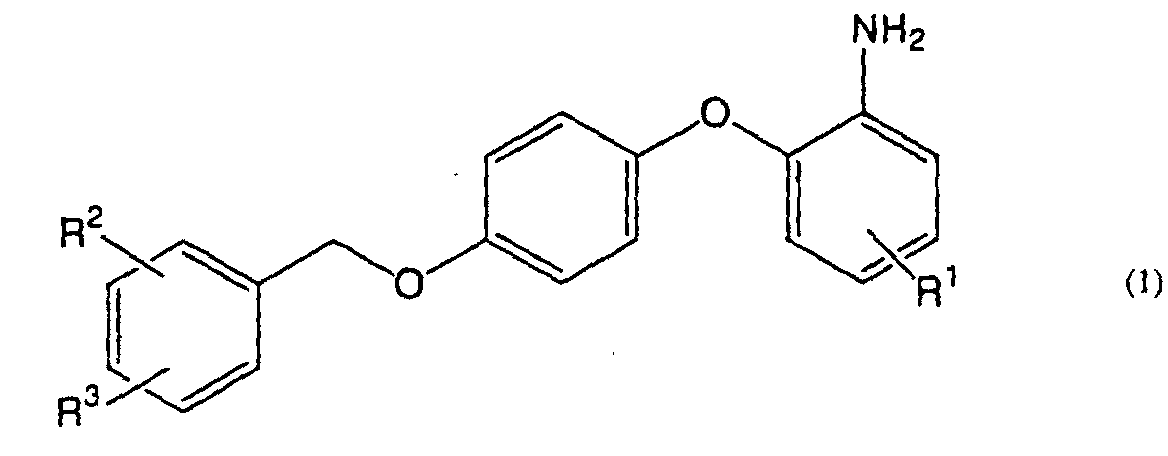 [wherein R1 represents a hydrogen atom or a C1-C6 alkoxy group, R2 represents a halogen atom
or a nitro group, and R3 represents a hydrogen atom or a halogen atom] or a pharmaceutically
acceptable salt thereof.
[wherein R1 represents a hydrogen atom or a C1-C6 alkoxy group, R2 represents a halogen atom
or a nitro group, and R3 represents a hydrogen atom or a halogen atom] or a pharmaceutically
acceptable salt thereof.
In Formulae (1) and (2), a C1-C6 alkoxy group means a linear or branched alkoxy group
containing 1 to 6 carbon atoms. Examples include a methoxy group, an ethoxy group, a propoxy
group, an isopropoxy group, a butoxy group, an isobutoxy group, a sec-butoxy group, a tert-butoxy
group, a pentyloxy group, an isopentyloxy group, a neopentyloxy group, a tert-pentyloxy
group, a 1-methylbutoxy group, a 2-methylbutoxy group, a 1,2-dimethylpropoxy group, a
hexyloxy group and an isohexyloxy group.
Examples of a substituent for the substituted C1-C6 alkoxy group include a chloro group, a
fluoro group, a nitro group, an amino group, a dimethylamino group, a carboxyl group, a
methoxycarbonyl group, an ethoxycarbonyl group, a phenyl group, a hydroxy group, a cyano
group and a carbamoyl group.
A halogen atom refers to a fluorine atom, a chlorine atom, a bromine atom or an iodine
atom.
A C1-C6 alkyl group means a linear or branched alkyl group containing 1 to 6 carbon
atoms. Examples include a methyl group, an ethyl group, a propyl group, an isopropyl group, a
butyl group, an isobutyl group, a sec-butyl group, a tert-butyl group, a pentyl group, an isopentyl
group, a neopentyl group, a tert-pentyl group, a 1-methylbutyl group, a 2-methylbutyl group, a
1,2-dimethylpropyl group, a hexyl group and an isohexyl group.
Examples of a substituent for the substituted C1-C6 alkyl group include a chloro group, a
fluoro group, a nitro group, an amino group, a dimethylamino group, a carboxyl group, a
methoxycarbonyl group, an ethoxycarbonyl group, a phenyl group, a methoxy group, an ethoxy
group, a hydroxy group, a cyano group and a carbamoyl group.
A C2-C7 acyloxy group means a linear or branched acyloxy group containing 2 to 7
carbon atoms, whose acyl moiety may be cyclic or may contain an aromatic group. Examples
include an acetoxy group, a propionyloxy group, an isopropionyloxy group, a cyclohexyloxy
group and a benzoyloxy group.
A C2-C7 alkoxycarbonyl group means a linear or branched alkoxycarbonyl group
containing 2 to 7 carbon atoms, whose alkoxyl moiety may be cyclic or may contain an aromatic
group. Examples include a methoxycarbonyl group, an ethoxycarbonyl group, a
propoxycarbonyl group, an isopropoxycarbonyl group, a butoxycarbonyl group, an
isobutoxycarbonyl group, a sec-butoxycarbonyl group, a tert-butoxycarbonyl group, a
pentyloxycarbonyl group, an isopentyloxycarbonyl group, a neopentyloxycarbonyl group, a tert-pentyloxycarbonyl
group, a 1-methylbutoxycarbonyl group, a 2-methylbutoxycarbonyl group, a
1,2-dimethylpropoxycarbonyl group, a hexyloxycarbonyl group and an isohexyloxycarbonyl
group.
Examples of a substituent for the substituted phenyl group include a chloro group, a
fluoro group, a nitro group, an amino group, a dimethylamino group, a carboxyl group, a
methoxycarbonyl group, an ethoxycarbonyl group, a methyl group, an ethyl group, a methoxy
group, an ethoxy group, a hydroxy group, a cyano group and a carbamoyl group.
Examples of compounds having an excellent activity for hypertension are the compound
shown below (SEA0400)
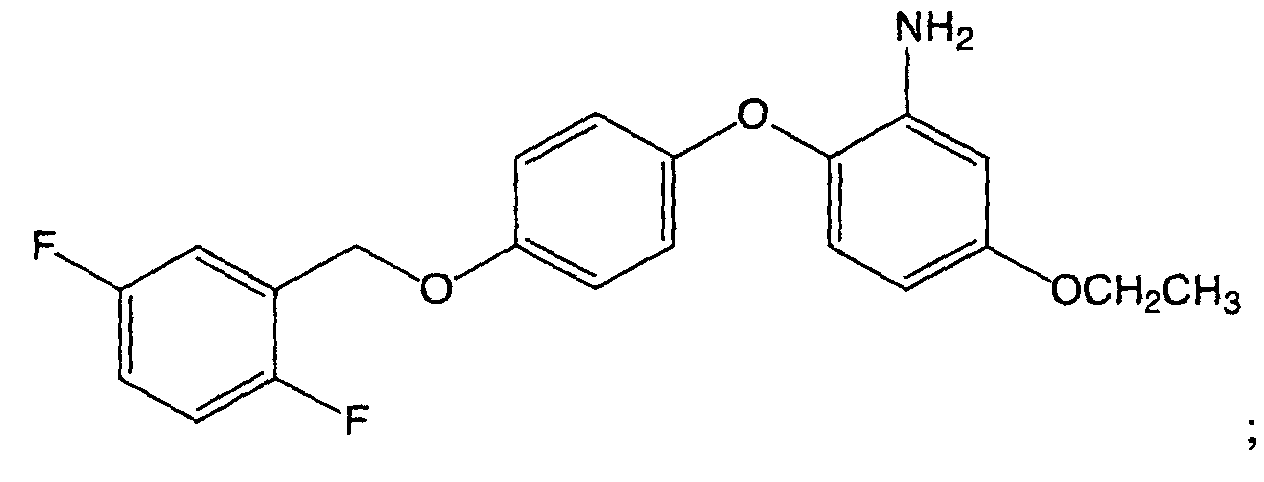 and
and
the compound shown below (SEA0064).
the compound shown below (SEA0064).
Moreover, to avoid side effects, such compounds preferably produce stronger inhibition
on NCX1 than on NCX2 and NCX3. For example, the compounds that have smaller values of
IC50 (renal cortex-derived) /IC50 (brain-derived), and
IC50 (renal cortex-derived) /IC50 (cardiac sarcolemma-derived) , when measured as described later, than SEA 0400 are preferred.
IC50 (renal cortex-derived) /IC50 (brain-derived), and
IC50 (renal cortex-derived) /IC50 (cardiac sarcolemma-derived) , when measured as described later, than SEA 0400 are preferred.
It should be noted that the compounds of Formulae (1) and (2) can be synthesized
according to the procedures as described in WO98/43943, WO99/20598, Japanese Laid-Open
Patent Hei 10-265460, Japanese Laid-Open Patent Hei 10-218844, Japanese Laid-Open Patent
Hei 11-49752 and Japanese Laid-Open Patent Hei 11-92454.
As used herein, the therapeutic agent for a hypertension is intended to means a therapeutic
agent for salt-sensitive hypertension, renal hypertension, essential hypertension, gestational
hypertension or primary aldosteronism.
The therapeutic agent of the present invention can be prepared as a pharmaceutical
composition in any desired dosage form for oral or parenteral use (e.g., tablets, pills, capsules,
granules, dry syrups, injectable preparations), in combination with known carriers, diluents and
so on, as appropriate.
Solid preparations can be prepared by stirring granulation, fluidized-bed granulation or
milling granulation using various additives such as excipients, disintegrating agents, binders,
lubricants and coating bases.
If necessary, it is also possible to add other additives such as antioxidants, coating agents,
coloring agents, flavoring agents, surfactants and plasticizers.
The dose of the active ingredient in the pharmaceutical preparation of the present
invention will vary depending on age, body weight, dosage form, and so on, but the usual dose to
an adult is 0.1 to 1000 mg/day, which can be administrated once or several times a day.
The present invention will now be described with reference to the following Formulation
Examples and Test Examples, which are not intended to limit the scope of the invention.
| Formulation Example 1 | |
| SEA0400 | 50 mg |
| Lactose | 40 mg |
| Corn starch | 49.75 mg |
| Crystalline cellulose | 17 mg |
| Carmellose calcium | 17 mg |
| Hydroxypropylcellulose | 5.25 mg |
| Magnesium stearate | 1 mg |
| Total | 180 mg |
SEA0400, lactose, corn starch, crystalline cellulose and carmellose calcium were mixed
uniformly, followed by addition of a 10% aqueous hydroxypropylcellulose solution. After
kneading and drying, the resulting granules were passed through a 30M sieve to give uniform
granules, which were then supplemented with magnesium stearate and tabletted into tablets.
| Formulation Example 2 | |
| SEA0064 | 50 mg |
| Lactose | 40 mg |
| Corn starch | 49.75 mg |
| Crystalline cellulose | 17 mg |
| Carmellose calcium | 17 mg |
| Hydroxypropylcellulose | 5.25 mg |
| Magnesium stearate | 1 mg |
| Total | 180 mg |
SEA0064, lactose, corn starch, crystalline cellulose and carmellose calcium were mixed
uniformly, followed by addition of a 10% aqueous hydroxypropylcellulose solution. After
kneading and drying, the resulting granules were passed through a 30M sieve to give uniform
granules, which were then supplemented with magnesium stearate and tabletted into tablets.
Brain microsomes (1.5 mg/ml) obtained from 8-week-old rats were pre-treated with 160
mM NaCl-containing buffer to cause Na loading into membrane vesicles. This suspension was
diluted 50-fold with 20 µM 45CaCl2-containing buffer to induce 45Ca uptake, followed by
dilution with the buffer (0°C) to stop the reaction. The membrane vesicles were immediately
collected on a nitrocellulose filter. Subsequently, 45Ca trapped inside the membrane vesicles was
determined by liquid scintillation counting. The above assay for Na+/Ca2+ exchange activity in
brain microsomes was performed according to the procedures described in J. Biol. Chem., vol.
257, p. 5111 (1982).
Canine cardiac sarcolemmal vesicles (0.5 mg/ml) were prepared by centrifugal
fractionation as described in Methods enzymology, vol. 157, p. 85 (1988) and suspended in
Solution A (20 mM MOPS-Tris (pH 7.4), 160 mM NaCl or KCl), followed by incubation at room
temperature for about one hour to cause Na or K loading into the vesicles. This suspension was
diluted 50-fold with 20 µM 45CaCl2-containing buffer to induce 45Ca uptake, followed by
dilution with the buffer (0°C) to stop the reaction. The membrane vesicles were immediately
collected on a nitrocellulose filter. Subsequently, 45Ca trapped inside the membrane vesicles was
determined by liquid scintillation counting. The Na+/Ca2+ exchange activity was evaluated by
subtracting the value obtained for K loading from the value obtained for Na loading. The above
assay for Na+/Ca2+ exchange activity in canine cardiac sarcolemmal vesicles was performed
according to the procedures described in J. Biol. Chem., vol. 257, p. 5111 (1982).
BLMVs were prepared from rat renal cortex and assayed for Na+/Ca2+ exchange activity
according to the procedures described in Am. J. Physiol., vol. 266, p. F785 (1994).
After being excised from rats, the kidneys were placed in ice-cold sucrose buffer (0.25
mM sucrose, 0.1 mM PMSF, 10 mM Tris-HCl (pH 7.6)) and decapsulated. The isolated cortex
was then finely minced in the sucrose buffer and homogenized sequentially with a Dounce-type
homogenizer and a Polytron-type homogenizer, followed by centrifugation at 2500 g for 15
minutes to collect the supernatant. Centrifugation was repeated at 24000 g for 20 minutes to
collect the white fluffy portion of the pellet. After further addition of the sucrose buffer, the
collected fraction was homogenized with a Dounce-type homogenizer, supplemented with Percoll
and then centrifuged at 30000 g for 35 minutes to collect the middle layer. After addition of
buffer (100 mM KCl, 100 mM mannitol, 5 mM HEPES-Tris (pH 7.4)), centrifugation was carried
out at 34000 g for 30 minutes to collect the loose white pellet (BLMVs). The pellet was further
suspended in the KCl-mannitol buffer and then centrifuged at 34000 g for 30 minutes to collect
the precipitate, which was used for activity assay.
The BLMVs thus prepared were equilibrated at 37°C for 10 minutes in pre-equilibration
buffer (100 mM NaCl, 40 mM KCl, 1 mM MgSO4, 10 mM glucose, 5 mM HEPES-Tris (pH 7.4))
and then centrifuged at 20000 g for 5 minutes to collect the precipitate, which was then
resuspended in the pre-equilibration buffer. Centrifugation was repeated to collect the precipitate,
followed by resuspension in the pre-equilibration buffer. The resulting BLMV suspension was
diluted 20-fold with external medium (100 mM choline chloride, 40 mM KCl, 1 mM MgSO4, 10
mM glucose, 5 mM HEPES-Tris (pH 7.4), 25 µM valinomycin, 10 µM CaCl2, 1 mCi/l45CaCl2)
to start uptake. After reaction at 25°C for a given period of time, 2 ml stop solution (ice-cold 150
mM KCl) was added to stop the reaction, and the reaction mixture was immediately filtered
through an ultrafiltration membrane (0.45 µ m nitrocellulose filter) to collect BLMVs on the
filter. Subsequently, the filter was washed twice with 2 ml stop solution and then the amount of
45Ca trapped inside the BLMVs was determined by using liquid scintillation method.
| Inhibitory activity against Na+/Ca2+ exchange (Na-dependent 45Ca uptake) | |||
| (IC50 value: µM) | |||
| Brain | Cardiac sarcolemma | Renal cortex | |
| K-BR7943 | 11.0 | 7.0 | 6.8 |
| SEA0400 | 0.2 | 0.09 | 0.02 |
Likewise, SEA0064 was also confirmed to show an inhibitory activity of about 0.07-fold
of SEA0400, by measuring for renal cortex-derived Na+/Ca2+ exchange activity.
Dahl salt-sensitive hypertension rats (7 weeks old) were used in the experiment. They
were fed a 4% NaCl high-salt chow (0.6% for normal chow), but were allowed to drink water
without any restriction. At two weeks after high-salt loading, the animals confirmed to develop
hypertension were divided into the following 4 groups for use in the experiment.
| Group I | solvent (20%fat emulsion) | |
| Group II | SEA0400 | 3mg/kg |
| Group III | SEA0400 | 10mg/kg |
| Group IV | SEA0400 | 30mg/kg |
After loading the high-salt chow for two weeks as described above, an acute experiment
was performed. On the day of the experiment, the systolic blood pressure (before administration)
was measured for each animal under non-anesthesia conditions using a noninvasive
sphygmomanometer. The animals were then administered orally with the solvent or SEA0400(3,
10, or 30 mg/kg) and monitored over time for their systolic blood pressure.
The level of systolic blood pressure before administration was 140 ± 3, 148 ±4, 143 ± 3
and 142 ± 4 mmHg in Group I, II, III and IV, respectively. The % change in blood pressure at
one hour after administration was -3.8 ± 1.0% in the solvent group, -9.5 ± 1.8 % in the SEA0400
3 mg/kg group, -12.0±0.9% in the SEA0400 10 mg/kg group and -12.7±3.4% in the SEA0400
30 mg/kg group. When compared with the solvent group, the 10mg/kg and 30mg/kg SEA 0400
group both showed a significant reduction in blood pressure.
The present invention enables to provide therapeutic agents for hypertension that are based
on a novel mechanism of action. They are useful for treating and preventing hypertension with
fewer side effects.
Claims (5)
- A therapeutic agent for hypertension, which comprises as an active ingredient a compound capable of inhibiting Na+/Ca2+ exchanger 1 (NCX1).
- A therapeutic agent for hypertension, which comprises as an active ingredient a compound capable of specifically inhibiting Na+/Ca2+ exchanger 1 (NCX1).
- A therapeutic agent for hypertension, which comprises as an active ingredient a 2-phenoxyaniline derivative of Formula (1):[wherein R1 represents a hydrogen atom or a C1-C6 alkoxy group, R2 represents a halogen atom or a nitro group, and R3 represents a hydrogen atom or a halogen atom] or a pharmaceutically acceptable salt thereof.

- A method for treating or preventing hypertension characterized in inhibiting Na+/Ca2+ exchanger 1 (NCX1).
- Use of a compound capable of inhibiting Na+/Ca2+ exchanger 1 (NCX1) for the treatment of hypertension.
Applications Claiming Priority (3)
| Application Number | Priority Date | Filing Date | Title |
|---|---|---|---|
| JP2002039008 | 2002-02-15 | ||
| JP2002039008 | 2002-02-15 | ||
| PCT/JP2003/001625 WO2003068263A1 (en) | 2002-02-15 | 2003-02-17 | Remedy for hypertension |
Publications (2)
| Publication Number | Publication Date |
|---|---|
| EP1475102A1 true EP1475102A1 (en) | 2004-11-10 |
| EP1475102A4 EP1475102A4 (en) | 2007-01-24 |
Family
ID=27678214
Family Applications (1)
| Application Number | Title | Priority Date | Filing Date |
|---|---|---|---|
| EP03705219A Withdrawn EP1475102A4 (en) | 2002-02-15 | 2003-02-17 | REMEDY AGAINST HYPERTENSION |
Country Status (6)
| Country | Link |
|---|---|
| US (1) | US7183322B2 (en) |
| EP (1) | EP1475102A4 (en) |
| JP (1) | JPWO2003068263A1 (en) |
| CN (1) | CN1290581C (en) |
| AU (1) | AU2003211254A1 (en) |
| WO (1) | WO2003068263A1 (en) |
Families Citing this family (2)
| Publication number | Priority date | Publication date | Assignee | Title |
|---|---|---|---|---|
| US20060153934A1 (en) * | 2005-01-13 | 2006-07-13 | Navitas Pharma | Combination therapies of cicletanine and magnesium |
| CN108939075A (en) * | 2018-07-26 | 2018-12-07 | 陕西师范大学 | Application of the NCX1 gene as the pharmaceutical intervention target spot for the treatment of apnea syndrome |
Family Cites Families (7)
| Publication number | Priority date | Publication date | Assignee | Title |
|---|---|---|---|---|
| JPH10218844A (en) * | 1997-02-13 | 1998-08-18 | Taisho Pharmaceut Co Ltd | 2-phenoxyaniline derivative |
| CA2285553A1 (en) * | 1997-03-27 | 1998-10-08 | Taisho Pharmaceutical Co., Ltd. | 2-phenoxyaniline derivatives |
| CA2305734A1 (en) * | 1997-10-20 | 1999-04-29 | Taisho Pharmaceutical Co., Ltd. | 2-phenoxyaniline derivatives |
| JP2000355537A (en) * | 1999-04-16 | 2000-12-26 | Taisho Pharmaceut Co Ltd | Sodium ion/calcium ion exchange system inhibitor |
| EP1322314A2 (en) * | 2000-09-20 | 2003-07-02 | Mitokor | Treatment of diabetes mellitus by inhibition of mitochondrial calcium/sodium antiporter |
| US6423705B1 (en) * | 2001-01-25 | 2002-07-23 | Pfizer Inc. | Combination therapy |
| JP2002233376A (en) * | 2001-02-07 | 2002-08-20 | Takeda Chem Ind Ltd | New protein and its dna |
-
2003
- 2003-02-17 JP JP2003567443A patent/JPWO2003068263A1/en active Pending
- 2003-02-17 EP EP03705219A patent/EP1475102A4/en not_active Withdrawn
- 2003-02-17 AU AU2003211254A patent/AU2003211254A1/en not_active Abandoned
- 2003-02-17 CN CNB038037289A patent/CN1290581C/en not_active Expired - Fee Related
- 2003-02-17 US US10/504,585 patent/US7183322B2/en not_active Expired - Fee Related
- 2003-02-17 WO PCT/JP2003/001625 patent/WO2003068263A1/en not_active Ceased
Also Published As
| Publication number | Publication date |
|---|---|
| HK1074775A1 (en) | 2005-11-25 |
| JPWO2003068263A1 (en) | 2005-06-02 |
| US20050222268A1 (en) | 2005-10-06 |
| US7183322B2 (en) | 2007-02-27 |
| WO2003068263A1 (en) | 2003-08-21 |
| CN1290581C (en) | 2006-12-20 |
| EP1475102A4 (en) | 2007-01-24 |
| AU2003211254A1 (en) | 2003-09-04 |
| CN1630533A (en) | 2005-06-22 |
Similar Documents
| Publication | Publication Date | Title |
|---|---|---|
| US6075031A (en) | Use of creatine analogues and creatine kinase modulators for the prevention and treatment of glucose metabolic disorders | |
| EP2786750B2 (en) | Agent for reducing adverse side effects of kinase inhibitor | |
| KR20010043563A (en) | Agent for alleviating side effects | |
| EP1638569A1 (en) | Use of brimonidine for preventing and reducing the severity of stress-associated conditions | |
| JPH04230220A (en) | Pharmaceutical composition | |
| KR20050115895A (en) | Use of adenosine receptor agonists in therapy | |
| KR20100132503A (en) | Anti Wound Agent Using 4'-thio-2 'Deoxynucleoside | |
| JP3622985B2 (en) | How to increase magnesium absorption and prevent atherosclerosis | |
| US7183322B2 (en) | Remedy for hypertension | |
| CA3125417A1 (en) | Anticancer compositions comprising immune checkpoint inhibitors | |
| ES2267943T3 (en) | METHODS OF USE OF PIRROLIC DERIVATIVES AGAINST COMPULSIVE OBSESSIVE DISORDER. | |
| US20050203189A1 (en) | Remedies for chronic kidney diseases | |
| NL194430C (en) | Non-injectable pharmaceutical preparation with anti-cancer effect. | |
| EP1362593B1 (en) | Cytidine-phosphocholine for the treatment of diabetic neuropathy | |
| RU2432948C2 (en) | Application of soluble guanilate-cyclase activators for treatment | |
| JPH0680009B2 (en) | Antihypertensive combination drug | |
| US20040138207A1 (en) | Antitumor agents | |
| JP2013014549A (en) | Agent for alleviating side effect of anticancer agent | |
| US4983582A (en) | Preventive and therapeutic method for hypertension | |
| JPH09502188A (en) | Methods of treating liver disease and similar conditions with vasodilators | |
| JP2006518722A (en) | 1- (2- for treatment of pancreatic cancer, soft tissue sarcoma, testicular tumor, lymphoma, thymoma, Wilms tumor, kidney cancer, melanoma, lung tumor, intracerebral metastasis, head and neck tumor, and breast cancer Method for using chloroethyl) -1-nitroso-3- (2-hydroxyethyl) urea | |
| JP2007056003A (en) | New preventive or therapeutic agent for heart failure | |
| JP2003267871A (en) | Radiation damage prevention agent | |
| JPS6337767B2 (en) | ||
| HK1074775B (en) | Remedy for hypertension |
Legal Events
| Date | Code | Title | Description |
|---|---|---|---|
| PUAI | Public reference made under article 153(3) epc to a published international application that has entered the european phase |
Free format text: ORIGINAL CODE: 0009012 |
|
| 17P | Request for examination filed |
Effective date: 20040813 |
|
| AK | Designated contracting states |
Kind code of ref document: A1 Designated state(s): AT BE BG CH CY CZ DE DK EE ES FI FR GB GR HU IE IT LI LU MC NL PT SE SI SK TR |
|
| AX | Request for extension of the european patent |
Extension state: AL LT LV MK RO |
|
| A4 | Supplementary search report drawn up and despatched |
Effective date: 20061229 |
|
| 17Q | First examination report despatched |
Effective date: 20080506 |
|
| STAA | Information on the status of an ep patent application or granted ep patent |
Free format text: STATUS: THE APPLICATION IS DEEMED TO BE WITHDRAWN |
|
| 18D | Application deemed to be withdrawn |
Effective date: 20090901 |