EP1473668A2 - Apparatus, method and program for video data processing and tamper detection - Google Patents
Apparatus, method and program for video data processing and tamper detection Download PDFInfo
- Publication number
- EP1473668A2 EP1473668A2 EP04251942.1A EP04251942A EP1473668A2 EP 1473668 A2 EP1473668 A2 EP 1473668A2 EP 04251942 A EP04251942 A EP 04251942A EP 1473668 A2 EP1473668 A2 EP 1473668A2
- Authority
- EP
- European Patent Office
- Prior art keywords
- integer
- remainders
- video data
- data
- digital video
- Prior art date
- Legal status (The legal status is an assumption and is not a legal conclusion. Google has not performed a legal analysis and makes no representation as to the accuracy of the status listed.)
- Granted
Links
- 238000000034 method Methods 0.000 title claims abstract description 121
- 238000001514 detection method Methods 0.000 title description 64
- 230000006870 function Effects 0.000 description 37
- 238000007906 compression Methods 0.000 description 8
- 238000010586 diagram Methods 0.000 description 8
- 230000006835 compression Effects 0.000 description 7
- 230000002427 irreversible effect Effects 0.000 description 5
- 238000005496 tempering Methods 0.000 description 4
- 238000004364 calculation method Methods 0.000 description 3
- 239000002131 composite material Substances 0.000 description 3
- 230000007423 decrease Effects 0.000 description 3
- 238000003672 processing method Methods 0.000 description 3
- 238000013144 data compression Methods 0.000 description 2
- 230000000694 effects Effects 0.000 description 2
- 238000013139 quantization Methods 0.000 description 2
- 230000004044 response Effects 0.000 description 2
- 230000002457 bidirectional effect Effects 0.000 description 1
- 238000013075 data extraction Methods 0.000 description 1
- 230000003247 decreasing effect Effects 0.000 description 1
- 239000000284 extract Substances 0.000 description 1
- 238000000926 separation method Methods 0.000 description 1
- 238000004904 shortening Methods 0.000 description 1
Images




Classifications
-
- H—ELECTRICITY
- H04—ELECTRIC COMMUNICATION TECHNIQUE
- H04N—PICTORIAL COMMUNICATION, e.g. TELEVISION
- H04N19/00—Methods or arrangements for coding, decoding, compressing or decompressing digital video signals
- H04N19/46—Embedding additional information in the video signal during the compression process
- H04N19/467—Embedding additional information in the video signal during the compression process characterised by the embedded information being invisible, e.g. watermarking
-
- H—ELECTRICITY
- H04—ELECTRIC COMMUNICATION TECHNIQUE
- H04N—PICTORIAL COMMUNICATION, e.g. TELEVISION
- H04N7/00—Television systems
- H04N7/16—Analogue secrecy systems; Analogue subscription systems
- H04N7/167—Systems rendering the television signal unintelligible and subsequently intelligible
- H04N7/1675—Providing digital key or authorisation information for generation or regeneration of the scrambling sequence
Definitions
- the present invention relates to a data processing apparatus, a tamper detection apparatus, a data processing method, a tamper detection method, a data processing program and a tamper detection program. Particularly, this invention relates to an apparatus, a method and a program for accurately determining whether digital video data has been tampered with even after it had been encrypted but before subjected to coding processing including orthogonal transform.
- One popular digital authentication technique for detecting tampering uses a hash function which is disclosed, for example, in Japanese Unexamined patent Publication Nos. 11 (1999) -196392, 2000 -122861 and 2002 - 016596.
- x is data (having any length)
- y is a hash value (having a fixed length)
- h-K is changeable by a private key "K” known by only persons who transfer the data "x" and receive it.
- data "X” is transferred with a hash value. Both data "X" and a hash value may be encrypted for higher security.
- a person who receives the data "x” calculates a hash value and determines that the data "x" has not been tampered with if the calculated value is equal to the transferred hash value "y" whereas it has been tampered with if the former value is not equal to the latter.
- Video data usually contain a huge amount of data, so that they are mostly subjected to irreversible compression with orthogonal transform, such as JPEG (Joint Photographic Experts Group) or MPEG (Moving picture Experts Group) before distribution.
- orthogonal transform such as JPEG (Joint Photographic Experts Group) or MPEG (Moving picture Experts Group) before distribution.
- Irreversible compression achieving high compression rate is often used in distribution of video data through a communications network for shortening a transfer time.
- the digital authentication technique using a hash function determines that data has been tampered with even if one digit of the data has been modified.
- this digital authentication technique requires information for finding tempering to be added to video data after data compression.
- addition of such information before compression of the video data causes change in a lot of bits, which makes finding tempering impossible.
- video data cannot be reprocessed.
- the known digital authentication technique causes many problems to video-data distributors in data handling and distribution.
- a purpose of the present invention is to provide a data processing apparatus, a tamper detection apparatus, a data processing method, a tamper detection method, a data processing program and a tamper detection program which can determine whether data has been tampered with even though information for finding tempering had been added to video data before data compression.
- the present invention provides an apparatus for encryptically processing digital video data, followed by an encoding procedure to the processed digital video data with orthogonal transform to produce a coded video signal, the apparatus comprising: a representative-value calculator to obtain a representative value of luminance data of a plurality of pixels of the digital video data for each of pixel blocks having a predetermined number of pixels, each pixel block corresponding to a unit of data subjected to the encoding procedure, as a quantized integer for each pixel block by using a specific function with the stored luminance data as a parameter; a data rewriter to determine whether the quantized integer of the representative value for each pixel block is a multiple of a preset integer N of two or larger, and, if not, rewrite the stored luminance data with a specific requirement giving the least range of change in gradation so that the quantized integer becomes a multiple of the integer N, whereas the stored luminance data remain unchanged if the quantized integer is a multiple of the integer N, thus encryptically processing the
- the present invention provides an apparatus for determining whether digital video data has been tampered with, the apparatus comprising: a decoder to decode a coded video signal produced by obtaining a first representative value of luminance data of a plurality of pixels of digital video data for each of pixel blocks, as a quantized integer for each pixel block by using a specific function with the luminance data as a parameter, rewriting the luminance data with a specific requirement giving the least range of change in gradation so that the quantized integer of the first representative value becomes a multiple of an integer N of two or larger, whereas the luminance data remain unchanged if the quantized integer of the first representative value is a multiple of the integer N, thus encryptically processing the digital video data, and encoding the encryptically processed digital video data with orthogonal transform for each pixel block to produce the coded signal; a representative-value calculator to obtain a second representative value of the luminance data of the decoded video signal as a quantized integer for each pixel block by using the specific
- the present invention provides an apparatus for determining whether digital video data has been tampered with, the apparatus comprising: a decoder to decode a coded video signal produced by obtaining a first representative value of luminance data of a plurality of pixels of digital video data for each of pixel blocks, as a quantized integer for each pixel block by using a specific function with the luminance data as a parameter, rewriting the luminance data with a specific requirement giving the least range of change in gradation so that the quantized integer of the first representative value becomes a multiple of an integer N of two or larger, whereas the luminance data remain unchanged if the quantized integer of the first representative value is a multiple of the integer N, thus encryptically processing the digital video data, and encoding the encryptically processed digital video data with orthogonal transform for each pixel block to produce the coded signal; a representative-value calculator to obtain a second representative value of the luminance data of the decoded video signal as a quantized integer for each pixel block by using the specific function
- the present invention provides an apparatus for determining whether digital video data has been tampered with, the apparatus comprising: a decoder to decode a coded video signal produced by obtaining a first representative value of luminance data of a plurality of pixels of digital video data for each of pixel blocks, as a quantized integer per pixel block by using a specific function with the luminance data as a parameter, rewriting the luminance data with a specific requirement giving the least range of change in gradation so that the quantized integer of the first representative value becomes a multiple of an integer N of two or larger, whereas the luminance data remain unchanged if the quantized integer of the first representative value is a multiple of the integer N, thus encryptically processing the digital video data, and encoding the encryptically processed digital video data with orthogonal transform to produce the coded signal; a representative-value calculator to obtain a second representative value of the luminance data of the decoded video signal as a quantized integer for each pixel block by using the specific function with the lumina
- the present invention provides an apparatus for determining whether digital video data has been tampered with, the apparatus comprising: a decoder to decode a coded video signal produced by obtaining a first representative value of luminance data of a plurality of pixels of digital video data for each of pixel blocks, as a quantized integer per pixel block by using a specific function with the luminance data as a parameter, rewriting the luminance data with a specific requirement giving the least range of change in gradation so that the quantized integer of the first representative value becomes a multiple of an integer N of four or larger, whereas the luminance data remain unchanged if the quantized integer of the first representative value is a multiple of the integer N, thus encryptically processing the digital video data, and encoding the encryptically processed digital video data with orthogonal transform for each pixel block to produce the coded signal; a representative-value calculator to obtain a second representative value of the luminance data of the decoded signal as a quantized integer for each pixel block by using the specific function with the
- the present invention provides a method of encryptically processing digital video data, followed by an encoding procedure to the processed digital video data with orthogonal transform to produce a coded video signal, the method comprising the steps of: obtaining a representative value of luminance of a plurality of pixels of the digital video data for each of pixel blocks having a predetermined number of pixels, each pixel block corresponding to a unit of data subjected to the encoding procedure, as a quantized integer for each pixel block by using a specific function with the stored luminance data as a parameter; determining whether the quantized integer of the representative value for each pixel block is a multiple of a preset integer N of two or larger, and, if not, rewriting the stored luminance data with a specific requirement giving the least range of change in gradation so that the quantized integer becomes a multiple of the integer N, whereas the stored luminance data remain unchanged if the quantized integer is a multiple of the integer N, thus encryptically processing the digital video data; and
- the present invention provides a method of determining whether digital video data has been tampered with, the method comprising the steps of: decoding a coded video signal produced by obtaining a first representative value of luminance data of a plurality of pixels of digital video data for each of pixel blocks, as a quantized integer for each pixel block by using a specific function with the luminance data as a parameter, rewriting the luminance data with a specific requirement giving the least range of change in gradation so that the quantized integer of the first representative value becomes a multiple of an integer N of two or larger, whereas the luminance data remain unchanged if the quantized integer of the first representative value is a multiple of the integer N, thus encryptically processing the digital video data, and encoding the encryptically processed digital video data with orthogonal transform for each pixel block to produce the coded signal; obtaining a second representative value of the luminance data of the decoded video signal as a quantized integer for each pixel block by using the specific function with the luminance data as the
- the present invention provides a method of determining whether digital video data has been tampered with, the method comprising the steps of: decoding a coded video signal produced by obtaining a first representative value of luminance data of a plurality of pixels of digital video data for each of pixel blocks, as a quantized integer for each pixel block by using a specific function with the luminance data as a parameter, rewriting the luminance data with a specific requirement giving the least range of change in gradation so that the quantized integer of the first representative value becomes a multiple of an integer N of two or larger, whereas the luminance data remain unchanged if the quantized integer of the first representative value is a multiple of the integer N, thus encryptically processing the digital video data, and encoding the encryptically processed digital video data with orthogonal transform for each pixel block to produce the coded signal; obtaining a second representative value of the luminance data of the decoded video signal as a quantized integer for each pixel block by using the specific function with the luminance data as the parameter
- the present invention provides a method of determining whether digital video data has been tampered with, the method comprising the steps of: decoding a coded video signal produced by obtaining a first representative value of luminance data of a plurality of pixels of digital video data for each of pixel blocks, as a quantized integer per pixel block by using a specific function with the luminance data as a parameter, rewriting the luminance data with a specific requirement giving the least range of change in gradation so that the quantized integer of the first representative value becomes a multiple of an integer N of two or larger, whereas the luminance data remain unchanged if the quantized integer of the first representative value is a multiple of the integer N, thus encryptically processing the digital video data, and encoding the encryptically processed digital video data with orthogonal transform to produce the coded signal; obtaining a second representative value of the luminance data of the decoded video signal as a quantized integer for each pixel block by using the specific function with the luminance data as the parameter; dividing
- the present invention provides a method of determining whether digital video data has been tampered with, the method comprising the steps of: decoding a coded video signal produced by obtaining a first representative value of luminance data of a plurality of pixels of digital video data for each of pixel blocks, as a quantized integer per pixel block by using a specific function with the luminance data as a parameter, rewriting the luminance data with a specific requirement giving the least range of change in gradation so that the quantized integer of the first representative value becomes a multiple of an integer N of four or larger, whereas the luminance data remain unchanged if the quantized integer of the first representative value is a multiple of the integer N, thus encryptically processing the digital video data, and encoding the encryptically processed digital video data with orthogonal transform for each pixel block to produce the coded signal; obtaining a second representative value of the luminance data of the decoded video signal as a quantized integer for each pixel block by using the specific function with the luminance data as the parameter
- the present invention provides a computer-implemented method of for encryptically processing digital video data, followed by an encoding procedure to the processed digital video data with orthogonal transform to produce a coded video signal, the method comprising the steps of: obtaining a representative value of luminance of a plurality of pixels of the digital video data for each of pixel blocks having a predetermined number of pixels, each pixel block corresponding to a unit of data subjected to the encoding procedure, as a quantized integer for each pixel block by using a specific function with the stored luminance data as a parameter; determining whether the quantized integer of the representative value for each pixel block is a multiple of a preset integer N of two or larger, and, if not, rewriting the stored luminance data with a specific requirement giving the least range of change in gradation so that the quantized integer becomes a multiple of the integer N, whereas the stored luminance data remain unchanged if the quantized integer is a multiple of the integer N, thus encryptically processing the digital video
- the present invention provides a computer-implemented method of determining whether digital video data has been tampered with, the method comprising the steps of: decoding a coded video signal produced by obtaining a first representative value of luminance data of a plurality of pixels of digital video data for each of pixel blocks, as a quantized integer for each pixel block by using a specific function with the luminance data as a parameter, rewriting the luminance data with a specific requirement giving the least range of change in gradation so that the quantized integer of the first representative value becomes a multiple of an integer N of two or larger, whereas the luminance data remain unchanged if the quantized integer of the first representative value is a multiple of the integer N, thus encryptically processing the digital video data, and encoding the encryptically processed digital video data with orthogonal transform for each pixel block to produce the coded signal; obtaining a second representative value of the luminance data of the decoded video signal as a quantized integer for each pixel block by using the specific function
- the present invention provides a computer-implemented method of determining whether digital video data has been tampered with, the method comprising the steps of: decoding a coded video signal produced by obtaining a first representative value of luminance data of a plurality of pixels of digital video data for each of pixel blocks, as a quantized integer for each pixel block by using a specific function with the luminance data as a parameter, rewriting the luminance data with a specific requirement giving the least range of change in gradation so that the quantized integer of the first representative value becomes a multiple of an integer N of two or larger, whereas the luminance data remain unchanged if the quantized integer of the first representative value is a multiple of the integer N, thus encryptically processing the digital video data, and encoding the encryptically processed digital video data with orthogonal transform for each pixel block to produce the coded signal; obtaining a second representative value of the luminance data of the decoded video signal as a quantized integer for each pixel block by using the specific function with the
- the present invention provides a computer-implemented method of determining whether digital video data has been tampered with, the method comprising the steps of: decoding a coded video signal produced by obtaining a first representative value of luminance data of a plurality of pixels of digital video data for each of pixel blocks, as a quantized integer per pixel block by using a specific function with the luminance data as a parameter, rewriting the luminance data with a specific requirement giving the least range of change in gradation so that the quantized integer of the first representative value becomes a multiple of an integer N of two or larger, whereas the luminance data remain unchanged if the quantized integer of the first representative value is a multiple of the integer N, thus encryptically processing the digital video data, and encoding the encryptically processed digital video data with orthogonal transform to produce the coded signal; obtaining a second representative value of the luminance data of the decoded video signal as a quantized integer for each pixel block by using the specific function with the luminance data as the parameter;
- the present invention provides a computer-implemented method of determining whether digital video data has been tampered with, the method comprising the steps of: decoding a coded video signal produced by obtaining a first representative value of luminance data of a plurality of pixels of digital video data for each of pixel blocks, as a quantized integer per pixel block by using a specific function with the luminance data as a parameter, rewriting the luminance data with a specific requirement giving the least range of change in gradation so that the quantized integer of the first representative value becomes a multiple of an integer N of four or larger, whereas the luminance data remain unchanged if the quantized integer of the first representative value is a multiple of the integer N, thus encryptically processing the digital video data, and encoding the encryptically processed digital video data with orthogonal transform for each pixel block to produce the coded signal; obtaining a second representative value of the luminance data of the decoded video signal as a quantized integer for each pixel block by using the specific function with
- FIG. 1 shows a block diagram of an embodiment of a data processing apparatus according to the present invention.
- the data processing apparatus is equipped with: a data separator 1 to separate input digital video data of still pictures into luminance data and color-difference data; a video memory 2 to store the separated luminance data per pixel block of 8 x 8 pixels; an average calculator 3 to calculate an average of the luminance of the stored pixels to give a quantized integer, a pixel-luminance rewriter 4 to rewrite the luminance data of the stored pixels based on the quantized integer of the averaged luminance calculated by the average calculator 3; a R/W controller 5 to control reading/writing luminance data from/to the video memory 2; a data combiner 6 to combine the color-difference data separated by the data separator 1 and the luminance data processed at the video memory 2; and an encoder 7 to compress the digital video data combined at the data combiner 6 by JPEG irreversible compression.
- a data separator 1 to separate input digital video data of still pictures into luminance data and color-difference data
- a video memory 2 to store the separated luminance data per pixel
- the data processing apparatus encryptically encodes digital video data according to the following procedures:
- Input digital video data is separated by the data separator 1 into luminance data and color-difference data.
- the luminance data is stored in the video memory 2 per pixel block of 8 x 8 pixels under control by the R/W controller 5.
- the quantized integer Lav' is sent to the pixel-luminance rewriter 4 which determines whether Lav' is an even or an odd number.
- the pixel-luminance rewriter 4 sends a read command signal to the R/W controller 5.
- the controller 5 accesses the video memory 2 to read the luminance data.
- the pixel-luminance rewriter 4 sends a rewrite command signal to the R/W controller 5.
- the R/W controller 5 rewrites the luminance value L(i) of each stored pixel, as follows:
- the R/W controller 5 increases or decreases the luminance value L(i) so that an average of the luminance becomes an even number (Lav' + 1) or (Lav' - 1) after rewriting.
- the amount of increase or decrease (+ ⁇ p or - ⁇ m) gives the least range of change in gradation.
- the luminance value L(i) of each stored pixel is written so that the original video data is not modified as much as possible.
- the pixel-luminance rewriter 4 sends the read command signal to the R/W controller 5 to read the luminance data from the video memory 2.
- the luminance data read from the video memory 2 per pixel block are sent to the data combiner 6 and combined with the color-difference data separated at the data separator 1 per pixel block, thus a composite video data being produced.
- the composite video data is sent to the encoder 7 and compressed with the following JPEG irreversible-compression algorism.
- the compressed video data are once stored in memory and distributed as recorded on storage media or through a communications network.
- the JPEG irreversible compression disclosed above the AC components of the video data are varied whereas the DC components are not almost varied and maintaining the rule in that the average luminance ⁇ Le(i) / 64 is an even number per pixel block.
- the JPEG irreversible compression gives almost no effects to the average luminance per pixel block because the majority of the luminance data exist in the low spatial frequency while the redundancy of high-frequency components of the luminance data is eliminated in the DCT transform.
- the compressed video data may be tampered with before or during distribution through storage media or a communications network.
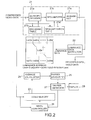
- FIG. 2 Disclosed next with reference to FIG. 2 is a first embodiment of a tamper detection apparatus according to the present invention, for determining whether or not compressed video data has been tampered with, which is compatible with the data processing apparatus shown in FIG. 1.
- the tamper detection apparatus is equipped with: a decoder 21 to decode input compressed video data; a luminance-data extractor 22 to extract luminance data from the decoded video data; a video memory 23 to store the extracted luminance data per pixel block of 8 x 8 pixels; an average calculator 24 to calculate an average of the luminance of the stored pixels to give a quantized integer; a divider 25 to divide the average luminance (integer) by a divisor "2"; a write controller 26 to update the luminance data in the video memory 23 per pixel block; a tamper detector 27 to determine whether or not the video data has been tampered with, based on the results at the divider 25; and a display 28 to display the results of tamper detection.
- the tamper detection apparatus decodes the input compressed video data with the following decoding algorism before determining whether it has been tampered with, which is the reverse algorism of that installed in the encoder 7 of the data processing apparatus shown in FIG. 1.
- the decoded video data is sent to the luminance-data extractor 22 that extracts luminance data from the decoded video data.
- the extracted luminance data is equal to that read from the video memory 2 of the data processing apparatus (FIG. 1) if the video data has not been tampered with before or during distribution through storage media or a communications network, or maintains the rule in that the average luminance ⁇ Le(i) / 64 is an even number per pixel block. On the contrary, it has lost the rule if the video data has been tampered with.
- the luminance data is stored in the video memory 23 per pixel block of 8 x 8 pixels under control by the write controller 26.
- the quantized integer Lavx' is sent to the divider 25 and divided by the divisor "2".
- the remainder is "0" if the video data has not been tampered with because it maintains the rule in that the average luminance ⁇ Le(i) / 64 is an even number per pixel block.
- the remainder is "1" if the video data has been tampered with and the present pixel block is involved in the tampered zone.
- the remainders of division are saved in a built-in memory (not shown) of the tamper detector 27 one by one for successive pixel blocks. For each save, the tamper detector 27 sends a command signal to the write controller 26 so that the controller 26 overwrites the luminance data of the present pixel block with that of the next pixel block.
- the average calculator 24 and the divider 25 repeat the procedures disclosed above.
- the tamper detector 27 checks the saved remainders and determines that the video data has been tampered with if at least one remainder is "1" whereas it has not been tampered with if there is no remainder "1".
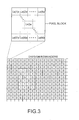
- the reminders of division for multiple pixel blocks saved in the built-in memory of the tamper detector 27 are such as those illustrated in FIG. 3, it is determined that the video data has been tampered with because several remainders "1" are involved.
- Each remainder shown in FIG. 3 is the result of division for one pixel block.
- the tampered zones of the video data can be indicated on the display 28 while the video data decoded by the decoder 21 is displayed thereon.
- the tamper detector 27 may not necessarily save the reminders if it is only required to determine whether or not the video data has been tampered with. It determines that the video data has been tampered with when one reminder "1" is given.
- the first embodiment uses the rule in that the average luminance ⁇ Le(i) /64 is an even number per pixel block. Not only an even number, but any multiple of an integer of "2" or more can be used for determination of tempering in which the divider 25 uses that multiple for division.
- Disclosed in the first embodiment are feasible ways of encryptically encoding digital video data and determining whether the video data has been tampered with, but having one fundamental requirement that the rule in that the average luminance ⁇ Le(i) / 64 is an even number per pixel block is never lost through the encoding procedure at the data processing apparatus side and also decoding procedure at the temper detection apparatus side.
- the second embodiment disclosed below can accurately determine whether video data has been tampered with even if the rule is lost thorough the encoding and decoding procedures.
- the difference in the data processing apparatus between the first and the second embodiment is that the former rewrites luminance data of each pixel so that the quantized integer Lav'of the average luminance Lav' per pixel block becomes a multiple of 2 whereas the latter rewrites it so that the quantized integer Lav' becomes a multiple of "4".
- the second embodiment of the data processing apparatus will not be disclosed for brevity.
- FIG. 4 Disclosed next with reference to FIG. 4 is a second embodiment of a tamper detection apparatus according to the present invention, for determining whether or not compressed video data has been tampered with, which is compatible with the second embodiment of the data processing apparatus.
- a difference in the tamper detection apparatus between the first and the second embodiment is that the divider 25 (FIG. 2) in the former uses the divisor "2" whereas the counterpart (the divider) 25a (FIG. 4) in the latter uses a divisor "4" for dividing the average luminance.
- a remainder memory 31 to store remainders given at the divider 25a through a division procedure
- a counter 32 to count the number of remainders "0" and also the number of remainders " 1 ", "2" and "3” among the remainders stored in the remainder memory 31
- an area appointer 33 via which a user appoints a memory area in which remainders are stored (corresponding to a video zone to be determined whether it has been tampered with) to the remainder memory 31 and the counter 32
- a tamper detector 34 to determine whether video data has been tampered with by statically processing the counted numbers of the remainders.
- FIG. 4 The elements shown in FIG. 4 that are the same as or analogous to those shown in FIG. 2 are given the same reference numerals and not disclosed for brevity.
- the tamper detection apparatus in the second embodiment performs the following tamper detecting procedures:
- Remainders given at the divider 25a are stored in the remainder memory 31 for one-frame video data.
- the user appoints the memory area, or remainders on a specific video zone in one frame via the areas appointer 33, the appointing information being sent to the counter 32 and the tamper detector 34.
- the counter 32 counts the number of remainders "0” and also the number of remainders "1", “2” and "3" among those stored in the remainder memory 31.
- the area appointments can be performed for each of several areas for remainder groups on one-frame vide data or any zone of video data decoded at the decoder 21 and displayed on the display 28.
- the tamper detector 34 calculates A / (A + B) where A and B are the number of the remainders "0" and that of other remainders, respectively, and compares the result and a threshold value Z1 to determine that the video data has been tampered with if A / (A + B) ⁇ Z1 whereas it has not been tampered with if A /(A + B) > z1.
- the threshold value Z1 is set at a value larger than 1 / 4 (Z1 being larger than 1 / N, N being the divisor equal to the integer used in the data processing apparatus) that is roughly equal to a value obtained by A / (A + B) for video data that has not given any rule discussed above, or the number of remainders is almost equal over the remainders "0" "1", “2” and "3" at the divider 25a, which means almost the entire video data is tampered with.
- This determination is made based on what remainders are given at the divider 25a when video data, that has been processed by the data processing apparatus in the second embodiment but has not been tampered with, is input to the tamper detection apparatus shown in FIG. 4.
- the value is about 4 / 5 for A / (A + B) depending on the content of video data if the encoder 7 and the decoder 21 are a JPEG encoder and also a JPEG decoder, respectively.
- the value is 0. 79 for A / (A + B), as illustrated in FIG. 5 in which the remainders "0", “1” and “3" are given at the divider 25a and stored in the remainder memory 31.
- the illustration indicates that the rule given to each pixel block before encoding at the data processing apparatus has been lost by 20% of the entire video data through the encoding and decoding procedures.
- No remainder "2" is given in FIG. 5 which means that the encoding and decoding procedures have given small effects to the luminance data so that the luminance data has not changed so much to give the remainder "2".
- pixel blocks for which the rule has been lost are about 20% on any zone of the video data, the percentage depending on the characteristics of the encoder 7 and the decoder 21.
- the tamper detection apparatus in this embodiment statistically determines how much the rule has been lost for video data. This causes variation in A / (A + B) in accordance with the relative relationship between a predicted size of tampered data zone and a size of appointed data zone to be subjected to tamper detection.
- the threshold value Z1 is required to be selected in accordance with the relative relationship.
- the threshold value Z1 is determined with parameters of, at least, the characteristics of the encoder 7 of the data processing apparatus and the decoder 21 of the tamper detection apparatus, and the relative relationship between a predicted size of tapered data zone and a size of appointed zone.
- the characteristics of the encoder 7 and the decoder 21 can be experimentally given as illustrated in FIG. 5.
- the data zone to be subjected to tamper detection is appointed by a user under consideration of the predicted size of tampered data zone, for the relative relationship.
- the threshold value Z1 can be set at the temper detector 34 in accordance with the characteristics and the size of appointed data zone.
- the third embodiment disclosed below can accurately determine whether video data has been tampered with even if the rule is lost thorough the encoding and decoding procedures, like the second embodiment.
- the counter 32 counts the number of remainders "0" and that of remainders "2" corresponding to the data zone to be subjected to tamper detection.
- the tamper detector 34 calculates A / (A + C) where A and C are the number of the remainders "0" and that of the remainders "2", respectively, and compares the result and a threshold value Z2 to determine that video data has been tampered with if A / (A + C) ⁇ Z2 whereas it has not been tampered with if A / (A + C)>z2.
- the second embodiment employs the tamper criteria A / (A + B) ⁇ Z1 where A and B are the number of the remainders 0 and that of other remainders, respectively.
- the third embodiment employs tamper criteria A / (A + C) ⁇ Z2 where A is the number of the remainders "0" and C is that of the remainders "2", the median among the integers between "0" to "4", with the threshold value Z2 larger than the threshold value Z1.
- the remainders given when the rule for video data is lost through encoding and decoding procedures are mostly "0" and "3". In other words, the remainders "2" are rarely given.
- the third embodiment uses the threshold value Z2 (larger than 1/N, N being divisor equal to the integer used in the data processing apparatus) larger than Z1 (the second embodiment), such as, 0. 9 to 0. 995 for further accurate tamper detection.
- the third embodiment offers further accurate tamper detection than the second embodiment.
- the third embodiment gives the rule to video data at the data processing apparatus so that the quantized integer Lavx' becomes a multiple of "4" and uses the divisor "4" at the divider 25a of the tamper detection apparatus, with the remainder "2", the median among the integers between "0" to "4", for tamper detection.
- the divisor for tamper detection may, however, be any multiple larger than "4", such as "5", with remainders "2" and “3", two median integers among the integers between “0” to "5", both remainders being used for giving the counted number C when an odd number such as "5" is used.
- the probability of giving the remainders "2" and “3” is very low when the divisor is set at "5" unless video data has not been tampered with. This probability becomes lower as the divisor is set at any odd number larger than "5".
- Disclosed in the fourth embodiment are data-processing and tamper-detection software corresponding to the first to third embodiments.
- FIG. 7 shows a block diagram of a microcomputer 40 in which data-processing software is installed.
- the microcomputer 40 is equipped with a CPU 41, a ROM 42, a RAM 43 and an I / O port 44.
- Installed in the ROM 42 are a system-control program and also program modules that correspond to the functional procedures performed by the data separator 1, the average calculator 3, the pixel-luminance rewriter 4, the R/W controller 5, the data combiner 6, and the encoder 7, shown in FIG. 1 (the first or the second embodiment).
- the CPU 41 executes the program modules while using the RAM 43 as a video memory and a working area.
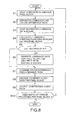
- Step S1 to S3 Digital video data is input through the I / O port 44 per 8 x 8 pixel block.
- the video data is once saved in the RAM 43.
- a luminance /color-difference data separation module installed in the ROM 42 is executed to separate luminance and color-difference data from the video data.
- the separated luminance data is saved again in the RAM 43.
- Step S5 A luminance-data rewrite module installed in the ROM 42 is executed to determine whether the quantized integer Lav' is a multiple of an integer N (N being 2 or 4). If YES in step S5, the sequence jumps to step S7 whereas, if NO, moves to step S6.
- Step S6 The luminance data of each pixel in one pixel block is rewritten with the amount (+ ⁇ p or - ⁇ m) that gives the least range of change in gradation so that the quantized integer Lav' becomes a multiple of N.
- the pixel block is thus given the rule in that the average luminance is a multiple of N.
- Step S7 to S9 On completion of luminance-data processing, a luminance /color-difference data combining module stored in the ROM 42 is executed to combine the luminance data and the color-difference data, and then a JPEG encoding module stored in the ROM 42 is executed to encode the combined video data per pixel block, the compressed video data being output via the I / O port 44.
- Step S10 It is determined whether video data of one frame has been processed per pixel block. If YES, the sequence ends whereas, if NO, goes back to steps S1 to repeat the procedures through step S1 to S9 until video data of one frame is processed and output.
- the output encoded and compressed video data is once stored in memory and distributed through storage media or a communications network.
- FIG. 9 shows a block diagram of a microcomputer 50 in which tamper-detection software is installed.
- the microcomputer 50 is equipped with a CPU 51, a ROM 52, a RAM 53 and an I / O port 54.
- Connected to the I / O port 54 are a display 55 via an interface I / F 56 and also a zone appointer 57 for appointing a video zone to be subjected to tamper detection.
- Installed in the ROM 52 are a system-control program and also program modules that correspond to the functional procedures performed by the decoder 21, the luminance-data extractor 22, the average calculator 24, the divider 25, the write controller 26, the taper detector 27, shown in FIG. 2 (the first embodiment), and further the counter 32 and the taper detector 34, shown in FIG. 4 (the second embodiment).
- the CPU 51 executes the program modules while using the RAM 53 as a video memory and a working area.
- Step S21, S22 Digital video data is input through the I / O port 54 per pixel block.
- the video data is once saved in the RAM 53.
- a JPEG decoding module installed in the ROM 52 is executed to decode the video data.
- the decoded video data is saved again in the RAM 53.
- Step S23, S24 A luminance-data extraction module installed in the ROM 52 is executed to extract luminance data from the decoded video data. The separated luminance data is saved again in the RAM 53.
- Step S26, S27 A division module installed in the ROM 52 is executed to divide the quantized integer Lavx' by a divisor that is an integer N (N being 2 or 4 used in Step S5 of the data-processing procedures), a remainder of division being stored in the RAM 53.
- Step S28 It is determined whether video data of one frame has been processed per pixel block. If YES, the sequence goes to step S29 whereas, if NO, goes back to steps S21 to repeat the procedures through steps S21 to S27 until the remainders of division for video data of one frame are given and stored in the RAM 53.
- Step S29 One of the following three types of tamper-detection procedures is executed in accordance with N (divisor) and tamper-criteria settings as disclosed in the first to third embodiments.
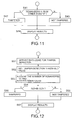
- the procedure shown in FIG. 11 corresponds to the first embodiment with the fundamental requirement that the rule given to each pixel block is never lost through the encoding procedure and decoding procedure in the data processing and the tamper-detection processing, respectively.
- Step S41 A tamper-detection module stored in the ROM 52 is executed so that the CPU 51 searches for remainders stored in the RAM 53 other than the remainders "0".
- Step S42 If YES in step S41, or if there is at least one remainder other than the remainders "0", it is determined that the video data has been tampered with.
- Step S43 If NO in step S41, or if all the remainders stored in the RAM 52 are the remainders "0", it is determined that the video data has not been tampered with.
- Step S44 The results of tamper detection is sent from the I / O port 54 to the display 55 via the interface 56.
- the procedure II shown in FIG. 12 corresponds to the second embodiment in which the rule given to each pixel block might have been lost through the encoding procedure and decoding procedure in the data processing and the tamper-detection prcessing, respectively.
- Step S51, S52 A data zone to be subjected to tamper detection is set by a user at the zone appointer 57.
- a tamper-detection threshold-value setting module stored in the ROM 52 is executed to set the threshold value Z1 at an optimum value, such as 0. 85, in accordance with the relative relationship between a predicted size of tapered data zone and a size of the data zone appointed at the zone appointer 57.
- the tamper-detection threshold-value setting module reads an optimum value from an installed look-up table having threshold values Z1 with the above relative relationship as the parameter based on the zone-appointing information from the zone appointer 57.
- Step S53 A remainder-counting module stored in the ROM 52 is executed to count the number A of the remainders "0" and also the number B of the other remainders stored in the RAM 53.
- Step S54 On completion of the procedure of counting the number of remainders, a tamper-detection module stored in the ROM 52 is executed to calculate A / (A + B) and compare this with the threshold value Z1, thus determining whether or not the video data has been tampered, using the tamper criteria A / (A + B) ⁇ Z1.
- Step S55 If YES in step S54, or A / (A + B) is equal to or smaller than Z1 (the tamper criteria is met), it is determined that the video data has been tampered with.
- Step S56 If NO in step S54, or A / (A + B) is larger than Z1 (the tamper criteria is not met), it is determined that the video data has not been tampered with.
- Step S57 The results of tamper detection is sent from the I / O port 54 to the display 55 via the interface 56.
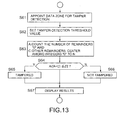
- the procedure III shown in FIG. 13 corresponds to the third embodiment in which the rule given to each pixel block might have been lost through the encoding procedure and decoding procedure in the data processing and the tamper-detection processing, respectively, like the procedure II.
- Step S61, S62 A data zone to be subjected to tamper detection is set by a user at the zone appointer 57.
- a tamper-detection threshold-value setting module stored in the ROM 52 is executed to set the threshold value Z2 at an optimum value, such as 0. 95, in accordance with the relative relationship between a predicted size of tapered data zone and a size of the data zone appointed at the zone appointer 57, like the procedure II.
- the threshold value Z2 is, however, set at a value larger than the threshold value Z1 due to the difference in remainder-counting module between the procedures II and III.
- Step S63 A remainder-counting module stored in the ROM 52 is executed to count the number A of the remainders "0" and also the number C of the remainders, each being the median among the integers between 0 to N. If the set integer N is "4", the number of the remainders "2" is counted as C.
- Step S64 On completion of the procedure of counting the number of remainders, a tamper-detection module stored in the ROM 52 is executed to calculate A / (A + C) and compare this with the threshold value Z2, thus determining whether or not the video data has been tampered, using the tamper criteria A / (A + C) ⁇ Z2.
- Step S65 If YES in step S64, or A / (A + C) is equal to or smaller than Z2 (the tamper criteria is met), it is determined that the video data has been tampered with.
- Step S66 If NO in step S64, or A / (A + C) is larger than Z2 (the tamper criteria is not met), it is determined that the video data has not been tampered with.
- Step S67 The results of tamper detection is sent from the I / O port 54 to the display 55 via the interface 56.
- step S30 shown in FIG. 10 to display the results of the tamper-detection procedure I, II or III on the display 55.
- input video data is decoded by the JPEG decoding module; a tampered data zone can be appointed in the tamper-detection procedure I (as disclosed in the first embodiment); and the zone-appointing information is given in the tamper-detection procedures II and III.
- a tampered data zone and/or whether or not an appointed data zone has been tampered with can be displayed on the display 55 while decoded video data is being displayed thereon.
- a tamper-detection criteria selection mode can be installed in the microcomputer 50 (FIG. 9) so that the tamper-detection procedures I to III can be selectively executed.
- the data-processing and tamper-detection software in the fourth embodiment can be installed in the computers 40 and 50 (FIGS. 7 and 9), respectively, via a storage medium or a communications network, such as the Internet.
- Video data is processed per 8 x 8 pixel block in the foregoing embodiments. However, it can be processed per any unit of pixel block, such as, 16 x 16 pixel block.
- video data processed in the foregoing embodiments is subjected to JPEG encoding and decoding procedures.
- the present invention is applicable to moving-picture video data subjected to MPEG encoding and decoding procedures.
- the rule discussed in the foregoing embodiments can be given to the intraframes (1-frames) only. This is because the rule is almost not lost from the 1-frames by intraframe coding whereas it is lost very much from predicted frames (P-frames) and bidirectional frames (B-frames) by interframe coding.
- the temper detection apparatus in the foregoing embodiments are equipped with the video memory 23 (FIGS. 2 and 4) for storing luminance data of pixels per pixel block.
- video memory 23 for storing luminance data of pixels per pixel block.
- luminance values of pixels can be sequentially detected from the luminance data for calculation of an average luminance value, thus the video memory being not required.
Landscapes
- Engineering & Computer Science (AREA)
- Multimedia (AREA)
- Signal Processing (AREA)
- Compression Or Coding Systems Of Tv Signals (AREA)
- Television Signal Processing For Recording (AREA)
- Editing Of Facsimile Originals (AREA)
- Image Processing (AREA)
- Television Systems (AREA)
- Facsimile Image Signal Circuits (AREA)
- Compression Of Band Width Or Redundancy In Fax (AREA)
- Compression, Expansion, Code Conversion, And Decoders (AREA)
Abstract
Description
Claims (24)
- An apparatus for encryptically processing digital video data, followed by an encoding procedure to the processed digital video data with orthogonal transform to produce a coded video signal, the apparatus comprising:a representative-value calculator to obtain a representative value of luminance data of a plurality of pixels of the digital video data for each of pixel blocks having a predetermined number of pixels, each pixel block corresponding to a unit of data subjected to the encoding procedure, as a quantized integer for each pixel block by using a specific function with the stored luminance data as a parameter;a data rewriter to determine whether the quantized integer of the representative value for each pixel block is a multiple of a preset integer N of two or larger, and, if not, rewrite the stored luminance data with a specific requirement giving the least range of change in gradation so that the quantized integer becomes a multiple of the integer N, whereas the stored luminance data remain unchanged if the quantized integer is a multiple of the integer N, thus encryptically processing the digital video data; andan encoder to encode the encryptically processed digital video data with orthogonal transform to produce a coded video signal.
- An apparatus for determining whether digital video data has been tampered with, the apparatus comprising:a decoder to decode a coded video signal produced by obtaining a first representative value of luminance data of a plurality of pixels of digital video data for each of pixel blocks, as a quantized integer for each pixel block by using a specific function with the luminance data as a parameter, rewriting the luminance data with a specific requirement giving the least range of change in gradation so that the quantized integer of the first representative value becomes a multiple of an integer N of two or larger, whereas the luminance data remain unchanged if the quantized integer of the first representative value is a multiple of the integer N, thus encryptically processing the digital video data, and encoding the encryptically processed digital video data with orthogonal transform for each pixel block to produce the coded signal;a representative-value calculator to obtain a second representative value of the luminance data of the decoded video signal as a quantized integer for each pixel block by using the specific function with the luminance data as the parameter;a divider to divide the quantized integer of the second representative value by the integer N; anda tamper detector to determine that the video data has been tampered with when remainders of division meet predetermined tamer criteria.
- The apparatus for determining whether digital video data has been tampered with according to claim 2, wherein the division is performed for all the pixel blocks to obtain remainders, the tamper detector determining that the video data has been tampered with when at least one remainder other than zero is found among the remainders for one pixel block of the video data.
- The apparatus for determining whether digital video data has been tampered with according to claim 2 further comprising a calculator to count the number of remainders given by the divider, the remainders corresponding to a video zone of a specific size, the tamper detector determining that the video data has been tampered with in the video zone of the specific size when tamper criteria A / (A + B) ≤ Z1 is met, where A and B are the number of remainders zeros and other remainders, respectively, among the remainders given by the divider, and Z1 is a preset value larger than 1 / N.
- The apparatus for determining whether digital video data has been tampered with according to claim 2, wherein the integer N is four or larger, the apparatus further comprising a calculator to count the number of remainders given by the divider, the remainders corresponding to a video zone of a specific size, the tamper detector determining that the video data has been tampered with in the video zone of the specific size when tamper criteria A / (A + C) ≤ Z2 is met, where A is the number of remainders zeros among the remainders given by the divider and C is the number of remainders among the remainders given by the divider but each being a median from among zero to the integer N, and Z2 is a preset value larger than 1/N, the remainders to be counted as the number C being two integers most close to the integer N when the integer N is an odd number.
- An apparatus for determining whether digital video data has been tampered with, the apparatus comprising:a decoder to decode a coded video signal produced by obtaining a first representative value of luminance data of a plurality of pixels of digital video data for each of pixel blocks, as a quantized integer for each pixel block by using a specific function with the luminance data as a parameter, rewriting the luminance data with a specific requirement giving the least range of change in gradation so that the quantized integer of the first representative value becomes a multiple of an integer N of two or larger, whereas the luminance data remain unchanged if the quantized integer of the first representative value is a multiple of the integer N, thus encryptically processing the digital video data, and encoding the encryptically processed digital video data with orthogonal transform for each pixel block to produce the coded signal;a representative-value calculator to obtain a second representative value of the luminance data of the decoded video signal as a quantized integer for each pixel block by using the specific function with the luminance data as the parameter;a divider to divide the quantized integer of the second representative value by the integer N, the division being performed for all the pixel blocks to obtain remainders; anda tamper detector to determine that the video data has been tampered with when at least one remainder other than zero is found among the remainders for one pixel block of the video data.
- An apparatus for determining whether digital video data has been tampered with, the apparatus comprising:a decoder to decode a coded video signal produced by obtaining a first representative value of luminance data of a plurality of pixels of digital video data for each of pixel blocks, as a quantized integer per pixel block by using a specific function with the luminance data as a parameter, rewriting the luminance data with a specific requirement giving the least range of change in gradation so that the quantized integer of the first representative value becomes a multiple of an integer N of two or larger, whereas the luminance data remain unchanged if the quantized integer of the first representative value is a multiple of the integer N, thus encryptically processing the digital video data, and encoding the encryptically processed digital video data with orthogonal transform to produce the coded signal;a representative-value calculator to obtain a second representative value of the luminance data of the decoded video signal as a quantized integer for each pixel block by using the specific function with the luminance data as the parameter;a divider to divide the quantized integer of the second representative value by the integer N;a calculator to count the number of remainders given by the divider, the remainders corresponding to a video zone of a specific size; anda tamper detector to determine that the video data has been tampered with in the video zone of the specific size when tamper criteria A / (A + B) ≤ Z1 is met, where A and B are the number of remainders zeros and other remainders, respectively, among the remainders given by the divider, and Z1 is a preset value larger than 1 / N.
- An apparatus for determining whether digital video data has been tampered with, the apparatus comprising:a decoder to decode a coded video signal produced by obtaining a first representative value of luminance data of a plurality of pixels of digital video data for each of pixel blocks, as a quantized integer per pixel block by using a specific function with the luminance data as a parameter, rewriting the luminance data with a specific requirement giving the least range of change in gradation so that the quantized integer of the first representative value becomes a multiple of an integer N of four or larger, whereas the luminance data remain unchanged if the quantized integer of the first representative value is a multiple of the integer N, thus encryptically processing the digital video data, and encoding the encryptically processed digital video data with orthogonal transform for each pixel block to produce the coded signal;a representative-value calculator to obtain a second representative value of the luminance data of the decoded signal as a quantized integer for each pixel block by using the specific function with the luminance data as the parameter;a divider to divide the quantized integer of the second representative value by the integer N;a calculator to count the number of remainders given by the divider, the remainders corresponding to a video zone of a specific size; anda tamper detector to determine that the video data has been tampered with in the video zone of the specific size when tamper criteria A / (A + C) ≤ Z2 is met, where A is the number of remainders zeros among the remainders given by the divider and C is the number of remainders among the remainders given by the divider but each being a median from among zero to the integer N, and Z2 is a preset value equal to or larger than 1/N, the remainders to be counted as the number C being two integers most close to the integer N when the integer N is an odd number.
- A method of encryptically processing digital video data, followed by an encoding procedure to the processed digital video data with orthogonal transform to produce a coded video signal, the method comprising the steps of:obtaining a representative value of luminance of a plurality of pixels of the digital video data for each of pixel blocks having a predetermined number of pixels, each pixel block corresponding to a unit of data subjected to the encoding procedure, as a quantized integer for each pixel block by using a specific function with the stored luminance data as a parameter,determining whether the quantized integer of the representative value for each pixel block is a multiple of a preset integer N of two or larger, and, if not, rewriting the stored luminance data with a specific requirement giving the least range of change in gradation so that the quantized integer becomes a multiple of the integer N, whereas the stored luminance data remain unchanged if the quantized integer is a multiple of the integer N, thus encryptically processing the digital video data; andencoding the encryptically processed digital video data with orthogonal transform to produce a coded video signal.
- A method of determining whether digital video data has been tampered with, the method comprising the steps of:decoding a coded video signal produced by obtaining a first representative value of luminance data of a plurality of pixels of digital video data for each of pixel blocks, as a quantized integer for each pixel block by using a specific function with the luminance data as a parameter, rewriting the luminance data with a specific requirement giving the least range of change in gradation so that the quantized integer of the first representative value becomes a multiple of an integer N of two or larger, whereas the luminance data remain unchanged if the quantized integer of the first representative value is a multiple of the integer N, thus encryptically processing the digital video data, and encoding the encryptically processed digital video data with orthogonal transform for each pixel block to produce the coded signal;obtaining a second representative value of the luminance data of the decoded video signal as a quantized integer for each pixel block by using the specific function with the luminance data as the parameter,dividing the quantized integer of the second representative value by the integer N; anddetermining that the video data has been tampered with when remainders of division meet predetermined tamer criteria.
- The method of determining whether digital video data has been tampered with according to claim 10, wherein the dividing step is performed for all the pixel blocks to obtain remainders, the determination step including the step of determining that the video data has been tampered with when at least one remainder other than zero is found among the remainders for one pixel block of the video data.
- The method of determining whether digital video data has been tampered with according to claim 10 further comprising the step of counting the number of remainders given in the dividing step, the remainders corresponding to a video zone of a specific size, the determining step including the step of determining that the video data has been tampered with in the video zone of the specific size when tamper criteria A / (A + B) ≤ Z1 is met, where A and B are the number of remainders zeros and other remainders, respectively, among the remainders given in the dividing step, and Z1 is a preset value larger than 1 / N.
- The method of determining whether digital video data has been tampered with according to claim 10, wherein the integer N is four or larger, the method further comprising the step of counting the number of remainders given in the dividing step, the remainders corresponding to a video zone of a specific size, the determining step including the step of determining that the video data has been tampered with in the video zone of the specific size when tamper criteria A / (A + C) ≤ Z2 is met, where A is the number of remainders zeros among the remainders given in the dividing step and C is the number of remainders among the remainders given in the dividing step but each being a median from among zero to the integer N, and Z2 is a preset value larger than 1/N, the remainders to be counted as the number C being two integers most close to the integer N when the integer N is an odd number.
- A method of determining whether digital video data has been tampered with, the method comprising the steps of:decoding a coded video signal produced by obtaining a first representative value of luminance data of a plurality of pixels of digital video data for each of pixel blocks, as a quantized integer for each pixel block by using a specific function with the luminance data as a parameter, rewriting the luminance data with a specific requirement giving the least range of change in gradation so that the quantized integer of the first representative value becomes a multiple of an integer N of two or larger, whereas the luminance data remain unchanged if the quantized integer of the first representative value is a multiple of the integer N, thus encryptically processing the digital video data, and encoding the encryptically processed digital video data with orthogonal transform for each pixel block to produce the coded signal;obtaining a second representative value of the luminance data of the decoded video signal as a quantized integer for each pixel block by using the specific function with the luminance data as the parameter;dividing the quantized integer of the second representative value by the integer N, the division being performed for all the pixel blocks to obtain remainders; anddetermining that the video data has been tampered with when at least one remainder other than zero is found among the remainders for one pixel block of the video data.
- A method of determining whether digital video data has been tampered with, the method comprising the steps of:decoding a coded video signal produced by obtaining a first representative value of luminance data of a plurality of pixels of digital video data for each of pixel blocks, as a quantized integer per pixel block by using a specific function with the luminance data as a parameter, rewriting the luminance data with a specific requirement giving the least range of change in gradation so that the quantized integer of the first representative value becomes a multiple of an integer N of two or larger, whereas the luminance data remain unchanged if the quantized integer of the first representative value is a multiple of the integer N, thus encryptically processing the digital video data, and encoding the encryptically processed digital video data with orthogonal transform to produce the coded signal;obtaining a second representative value of the luminance data of the decoded video signal as a quantized integer for each pixel block by using the specific function with the luminance data as the parameter,dividing the quantized integer of the second representative value by the integer N;counting the number of remainders given in the dividing step, the remainders corresponding to a video zone of a specific size; anddetermining that the video data has been tampered with in the video zone of the specific size when tamper criteria A / (A + B) ≤ Z1 is met, where A and B are the number of remainders zeros and other remainders, respectively, among the remainders given in the dividing step, and Z1 is a preset value larger than 1 / N.
- A method of determining whether digital video data has been tampered with, the method comprising the steps of:decoding a coded video signal produced by obtaining a first representative value of luminance data of a plurality of pixels of digital video data for each of pixel blocks, as a quantized integer per pixel block by using a specific function with the luminance data as a parameter, rewriting the luminance data with a specific requirement giving the least range of change in gradation so that the quantized integer of the first representative value becomes a multiple of an integer N of four or larger, whereas the luminance data remain unchanged if the quantized integer of the first representative value is a multiple of the integer N, thus encryptically processing the digital video data, and encoding the encryptically processed digital video data with orthogonal transform for each pixel block to produce the coded signal;obtaining a second representative value of the luminance data of the decoded video signal as a quantized integer for each pixel block by using the specific function with the luminance data as the parameter;dividing the quantized integer of the second representative value by the integer N;counting the number of remainders given in the dividing step, the remainders corresponding to a video zone of a specific size; anddetermining that the video data has been tampered with in the video zone of the specific size when tamper criteria A / (A + C) ≤ Z2 is met, where A is the number of remainders zeros among the remainders given in the dividing step and C is the number of remainders among the remainders given in the dividing step but each being a median from among zero to the integer N, and Z2 is a preset value larger than 1/N, the remainders to be counted as the number C being two integers most close to the integer N when the integer N is an odd number.
- A computer-implemented method of for encryptically processing digital video data, followed by an encoding procedure to the processed digital video data with orthogonal transform to produce a coded video signal, the method comprising the steps of:obtaining a representative value of luminance of a plurality of pixels of the digital video data for each of pixel blocks having a predetermined number of pixels, each pixel block corresponding to a unit of data subjected to the encoding procedure, as a quantized integer for each pixel block by using a specific function with the stored luminance data as a parameter;determining whether the quantized integer of the representative value for each pixel block is a multiple of a preset integer N of two or larger, and, if not, rewriting the stored luminance data with a specific requirement giving the least range of change in gradation so that the quantized integer becomes a multiple of the integer N, whereas the stored luminance data remain unchanged if the quantized integer is a multiple of the integer N, thus encryptically processing the digital video data; andencoding the encryptically processed digital video data with orthogonal transform to produce a coded video signal.
- A computer-implemented method of determining whether digital video data has been tampered with, the method comprising the steps of:decoding a coded video signal produced by obtaining a first representative value of luminance data of a plurality of pixels of digital video data for each of pixel blocks, as a quantized integer for each pixel block by using a specific function with the luminance data as a parameter, rewriting the luminance data with a specific requirement giving the least range of change in gradation so that the quantized integer of the first representative value becomes a multiple of an integer N of two or larger, whereas the luminance data remain unchanged if the quantized integer of the first representative value is a multiple of the integer N, thus encryptically processing the digital video data, and encoding the encryptically processed digital video data with orthogonal transform for each pixel block to produce the coded signal;obtaining a second representative value of the luminance data of the decoded video signal as a quantized integer for each pixel block by using the specific function with the luminance data as the parameter;dividing the quantized integer of the second representative value by the integer N; anddetermining that the video data has been tampered with when remainders of division meet predetermined tamer criteria.
- The computer-implemented method of determining whether digital video data has been tampered with according to claim 18, wherein the dividing step is performed for all the pixel blocks to obtain remainders, the determination step including the step of determining that the video data has been tampered with when at least one remainder other than zero is found among the remainders for one pixel block of the video data.
- The computer-implemented method of determining whether digital video data has been tampered with according to claim 18 further comprising the step of counting the number of remainders given in the dividing step, the remainders corresponding to a video zone of a specific size, the determining step including the step of determining that the video data has been tampered with in the video zone of the specific size when tamper criteria A / (A + B) ≤ Z1 is met, where A and B are the number of remainders zeros and other remainders, respectively, among the remainders given in the dividing step, and Z1 is a preset value larger than 1 / N.
- The computer-implemented method of determining whether digital video data has been tampered with according to claim 18, wherein the integer N is four or larger, the method further comprising the step of counting the number of remainders given in the dividing step, the remainders corresponding to a video zone of a specific size, the determining step including the step of determining that the video data has been tampered with in the video zone of the specific size when tamper criteria A / (A + C) ≤ Z2 is met, where A is the number of remainders zeros among the remainders given in the dividing step and C is the number of remainders among the remainders given in the dividing step but each being a median from among zero to the integer N, and Z2 is a preset value larger than 1/N, the remainders to be counted as the number C being two integers most close to the integer N when the integer N is an odd number.
- A computer-implemented method of determining whether digital video data has been tampered with, the method comprising the steps of:decoding a coded video signal produced by obtaining a first representative value of luminance data of a plurality of pixels of digital video data for each of pixel blocks, as a quantized integer for each pixel block by using a specific function with the luminance data as a parameter, rewriting the luminance data with a specific requirement giving the least range of change in gradation so that the quantized integer of the first representative value becomes a multiple of an integer N of two or larger, whereas the luminance data remain unchanged if the quantized integer of the first representative value is a multiple of the integer N, thus encryptically processing the digital video data, and encoding the encryptically processed digital video data with orthogonal transform for each pixel block to produce the coded signal;obtaining a second representative value of the luminance data of the decoded video signal as a quantized integer for each pixel block by using the specific function with the luminance data as the parameter;dividing the quantized integer of the second representative value by the integer N, the division being performed for all the pixel blocks to obtain remainders; anddetermining that the video data has been tampered with when at least one remainder other than zero is found among the remainders for one pixel block of the video data.
- A computer-implemented method of determining whether digital video data has been tampered with, the method comprising the steps of:decoding a coded video signal produced by obtaining a first representative value of luminance data of a plurality of pixels of digital video data for each of pixel blocks, as a quantized integer per pixel block by using a specific function with the luminance data as a parameter, rewriting the luminance data with a specific requirement giving the least range of change in gradation so that the quantized integer of the first representative value becomes a multiple of an integer N of two or larger, whereas the luminance data remain unchanged if the quantized integer of the first representative value is a multiple of the integer N, thus encryptically processing the digital video data, and encoding the encryptically processed digital video data with orthogonal transform to produce the coded signal;obtaining a second representative value of the luminance data of the decoded video signal as a quantized integer for each pixel block by using the specific function with the luminance data as the parameter;dividing the quantized integer of the second representative value by the integer N;counting the number of remainders given in the dividing step, the remainders corresponding to a video zone of a specific size; anddetermining that the video data has been tampered with in the video zone of the specific size when tamper criteria A / (A + B) ≤ Z1 is met, where A and B are the number of remainders zeros and other remainders, respectively, among the remainders given in the dividing step, and Z1 is a preset value larger than 1 / N.
- A computer-implemented method of determining whether digital video data has been tampered with, the method comprising the steps of:decoding a coded video signal produced by obtaining a first representative value of luminance data of a plurality of pixels of digital video data for each of pixel blocks, as a quantized integer per pixel block by using a specific function with the luminance data as a parameter, rewriting the luminance data with a specific requirement giving the least range of change in gradation so that the quantized integer of the first representative value becomes a multiple of an integer N of four or larger, whereas the luminance data remain unchanged if the quantized integer of the first representative value is a multiple of the integer N, thus encryptically processing the digital video data, and encoding the encryptically processed digital video data with orthogonal transform for each pixel block to produce the coded signal;obtaining a second representative value of the luminance data of the decoded video signal as a quantized integer for each pixel block by using the specific function with the luminance data as the parameter;dividing the quantized integer of the second representative value by the integer N;counting the number of remainders given in the dividing step, the remainders corresponding to a video zone of a specific size; anddetermining that the video data has been tampered with in the video zone of the specific size when tamper criteria A / (A + C) ≤ Z2 is met, where A is the number of remainders zeros among the remainders given in the dividing step and C is the number of remainders among the remainders given in the dividing step but each being a median from among zero to the integer N, and Z2 is a preset value larger than 1/N, the remainders to be counted as the number C being two integers most close to the integer N when the integer N is an odd number.
Applications Claiming Priority (4)
| Application Number | Priority Date | Filing Date | Title |
|---|---|---|---|
| JP2003093383 | 2003-03-31 | ||
| JP2003093383 | 2003-03-31 | ||
| JP2003353791 | 2003-10-16 | ||
| JP2003356791A JP2004320711A (en) | 2003-03-31 | 2003-10-16 | Data processing apparatus, falsification discrimination apparatus, data processing program, and falsification discrimination program |
Publications (3)
| Publication Number | Publication Date |
|---|---|
| EP1473668A2 true EP1473668A2 (en) | 2004-11-03 |
| EP1473668A3 EP1473668A3 (en) | 2005-11-30 |
| EP1473668B1 EP1473668B1 (en) | 2018-01-17 |
Family
ID=32993074
Family Applications (1)
| Application Number | Title | Priority Date | Filing Date |
|---|---|---|---|
| EP04251942.1A Expired - Lifetime EP1473668B1 (en) | 2003-03-31 | 2004-03-31 | Apparatus, method and program for video data processing and tamper detection |
Country Status (3)
| Country | Link |
|---|---|
| US (1) | US7293180B2 (en) |
| EP (1) | EP1473668B1 (en) |
| JP (1) | JP2004320711A (en) |
Cited By (4)
| Publication number | Priority date | Publication date | Assignee | Title |
|---|---|---|---|---|
| US7664292B2 (en) | 2003-12-03 | 2010-02-16 | Safehouse International, Inc. | Monitoring an output from a camera |
| US8948245B2 (en) | 2003-12-03 | 2015-02-03 | Lighthaus Logic Inc. | Displaying graphical output representing the activity of a plurality of monitoring detection devices |
| US8953674B2 (en) | 2003-12-03 | 2015-02-10 | Lighthaus Logic Inc. | Recording a sequence of images using two recording procedures |
| CN110220912A (en) * | 2019-05-28 | 2019-09-10 | 太原理工大学 | A kind of sapphire growth defective vision detection method based on deep learning |
Families Citing this family (2)
| Publication number | Priority date | Publication date | Assignee | Title |
|---|---|---|---|---|
| US8689016B2 (en) * | 2005-12-02 | 2014-04-01 | Google Inc. | Tamper prevention and detection for video provided over a network to a client |
| AU2011201336B2 (en) | 2011-03-23 | 2013-09-05 | Canon Kabushiki Kaisha | Modulo embedding of video parameters |
Family Cites Families (5)
| Publication number | Priority date | Publication date | Assignee | Title |
|---|---|---|---|---|
| US2040145A (en) * | 1932-08-12 | 1936-05-12 | Merck & Co Inc | Beta-methylcholine derivatives and salts and processes for their production |
| JPH11196392A (en) | 1998-01-06 | 1999-07-21 | Ntt Data Corp | Electronic image alteration detection method and alteration detection system |
| JP3481470B2 (en) | 1998-10-19 | 2003-12-22 | 日本電気株式会社 | System for preventing unauthorized alteration of data and the like and encryption device used together therewith |
| GB2351405B (en) * | 1999-06-21 | 2003-09-24 | Motorola Ltd | Watermarked digital images |
| JP2002016596A (en) | 2000-06-29 | 2002-01-18 | Oki Electric Ind Co Ltd | Image transmitter and image receiver |
-
2003
- 2003-10-16 JP JP2003356791A patent/JP2004320711A/en active Pending
-
2004
- 2004-03-31 US US10/814,533 patent/US7293180B2/en active Active
- 2004-03-31 EP EP04251942.1A patent/EP1473668B1/en not_active Expired - Lifetime
Cited By (4)
| Publication number | Priority date | Publication date | Assignee | Title |
|---|---|---|---|---|
| US7664292B2 (en) | 2003-12-03 | 2010-02-16 | Safehouse International, Inc. | Monitoring an output from a camera |
| US8948245B2 (en) | 2003-12-03 | 2015-02-03 | Lighthaus Logic Inc. | Displaying graphical output representing the activity of a plurality of monitoring detection devices |
| US8953674B2 (en) | 2003-12-03 | 2015-02-10 | Lighthaus Logic Inc. | Recording a sequence of images using two recording procedures |
| CN110220912A (en) * | 2019-05-28 | 2019-09-10 | 太原理工大学 | A kind of sapphire growth defective vision detection method based on deep learning |
Also Published As
| Publication number | Publication date |
|---|---|
| US7293180B2 (en) | 2007-11-06 |
| EP1473668B1 (en) | 2018-01-17 |
| JP2004320711A (en) | 2004-11-11 |
| US20040190717A1 (en) | 2004-09-30 |
| EP1473668A3 (en) | 2005-11-30 |
Similar Documents
| Publication | Publication Date | Title |
|---|---|---|
| US6725372B1 (en) | Digital watermarking | |
| US9258568B2 (en) | Quantization method and apparatus in encoding/decoding | |
| US8406287B2 (en) | Encoding device, encoding method, and program | |
| US6606393B1 (en) | Message authentication code using image histograms | |
| US8031769B2 (en) | Method and device for controlling quantization scales of a video encoding bit stream | |
| US11134250B2 (en) | System and method for controlling video coding within image frame | |
| US6516318B2 (en) | Management system and terminal apparatus to manage and control distribution and use of software and the like | |
| US20040234150A1 (en) | Quantization matrix adjusting method for avoiding underflow of data | |
| CN112218092A (en) | Encoding method, apparatus and storage medium for string encoding technique | |
| EP0755156B1 (en) | Code amount controlling method for coded pictures | |
| US6580755B1 (en) | Apparatus and method for encoding | |
| US6665420B1 (en) | Message authentication code with improved error tolerance | |
| EP1473668B1 (en) | Apparatus, method and program for video data processing and tamper detection | |
| JP2004241869A (en) | Watermark embedding and image compression unit | |
| US20100027621A1 (en) | Apparatus, method and computer program product for moving image generation | |
| US6362753B1 (en) | Video data encoder and method of encoding video data | |
| JP3619612B2 (en) | Method and apparatus for encoding and decoding a video data stream for all pixels of the video data stream | |
| KR100665213B1 (en) | Image encoding method and decoding method | |
| KR100720003B1 (en) | Image Decoding Method | |
| JPH1023432A (en) | Image compression encoding device | |
| CN112672167B (en) | Video processing method, computer device, and storage medium | |
| KR20150096353A (en) | Image encoding system, image decoding system and providing method thereof | |
| US20090279607A1 (en) | Method and apparatus for video coding | |
| US7623720B2 (en) | Image processing apparatus and method | |
| KR101583870B1 (en) | Image encoding system, image decoding system and providing method thereof |
Legal Events
| Date | Code | Title | Description |
|---|---|---|---|
| PUAI | Public reference made under article 153(3) epc to a published international application that has entered the european phase |
Free format text: ORIGINAL CODE: 0009012 |
|
| AK | Designated contracting states |
Kind code of ref document: A2 Designated state(s): AT BE BG CH CY CZ DE DK EE ES FI FR GB GR HU IE IT LI LU MC NL PL PT RO SE SI SK TR |
|
| AX | Request for extension of the european patent |
Extension state: AL HR LT LV MK |
|
| PUAL | Search report despatched |
Free format text: ORIGINAL CODE: 0009013 |
|
| AK | Designated contracting states |
Kind code of ref document: A3 Designated state(s): AT BE BG CH CY CZ DE DK EE ES FI FR GB GR HU IE IT LI LU MC NL PL PT RO SE SI SK TR |
|
| AX | Request for extension of the european patent |
Extension state: AL LT LV MK |
|
| 17P | Request for examination filed |
Effective date: 20051216 |
|
| AKX | Designation fees paid |
Designated state(s): DE FR GB |
|
| 17Q | First examination report despatched |
Effective date: 20060201 |
|
| RAP1 | Party data changed (applicant data changed or rights of an application transferred) |
Owner name: JVC KENWOOD CORPORATION |
|
| GRAP | Despatch of communication of intention to grant a patent |
Free format text: ORIGINAL CODE: EPIDOSNIGR1 |
|
| STAA | Information on the status of an ep patent application or granted ep patent |
Free format text: STATUS: GRANT OF PATENT IS INTENDED |
|
| INTG | Intention to grant announced |
Effective date: 20170728 |
|
| GRAS | Grant fee paid |
Free format text: ORIGINAL CODE: EPIDOSNIGR3 |
|
| GRAA | (expected) grant |
Free format text: ORIGINAL CODE: 0009210 |
|
| STAA | Information on the status of an ep patent application or granted ep patent |
Free format text: STATUS: THE PATENT HAS BEEN GRANTED |
|
| AK | Designated contracting states |
Kind code of ref document: B1 Designated state(s): DE FR GB |
|
| REG | Reference to a national code |
Ref country code: GB Ref legal event code: FG4D |
|
| REG | Reference to a national code |
Ref country code: DE Ref legal event code: R096 Ref document number: 602004052296 Country of ref document: DE |
|
| REG | Reference to a national code |
Ref country code: DE Ref legal event code: R097 Ref document number: 602004052296 Country of ref document: DE |
|
| PLBE | No opposition filed within time limit |
Free format text: ORIGINAL CODE: 0009261 |
|
| STAA | Information on the status of an ep patent application or granted ep patent |
Free format text: STATUS: NO OPPOSITION FILED WITHIN TIME LIMIT |
|
| 26N | No opposition filed |
Effective date: 20181018 |
|
| GBPC | Gb: european patent ceased through non-payment of renewal fee |
Effective date: 20180417 |
|
| PG25 | Lapsed in a contracting state [announced via postgrant information from national office to epo] |
Ref country code: GB Free format text: LAPSE BECAUSE OF NON-PAYMENT OF DUE FEES Effective date: 20180417 |
|
| PG25 | Lapsed in a contracting state [announced via postgrant information from national office to epo] |
Ref country code: FR Free format text: LAPSE BECAUSE OF NON-PAYMENT OF DUE FEES Effective date: 20180331 |
|
| PGFP | Annual fee paid to national office [announced via postgrant information from national office to epo] |
Ref country code: DE Payment date: 20210316 Year of fee payment: 18 |
|
| REG | Reference to a national code |
Ref country code: DE Ref legal event code: R119 Ref document number: 602004052296 Country of ref document: DE |
|
| PG25 | Lapsed in a contracting state [announced via postgrant information from national office to epo] |
Ref country code: DE Free format text: LAPSE BECAUSE OF NON-PAYMENT OF DUE FEES Effective date: 20221001 |