EP1471063A1 - Compounds and methods of treating cell proliferative diseases, retinopathies and arthritis - Google Patents
Compounds and methods of treating cell proliferative diseases, retinopathies and arthritis Download PDFInfo
- Publication number
- EP1471063A1 EP1471063A1 EP20030290490 EP03290490A EP1471063A1 EP 1471063 A1 EP1471063 A1 EP 1471063A1 EP 20030290490 EP20030290490 EP 20030290490 EP 03290490 A EP03290490 A EP 03290490A EP 1471063 A1 EP1471063 A1 EP 1471063A1
- Authority
- EP
- European Patent Office
- Prior art keywords
- group
- pyran
- eht
- pentyloxy
- quinolin
- Prior art date
- Legal status (The legal status is an assumption and is not a legal conclusion. Google has not performed a legal analysis and makes no representation as to the accuracy of the status listed.)
- Withdrawn
Links
- 150000001875 compounds Chemical class 0.000 title claims abstract description 171
- 201000010099 disease Diseases 0.000 title claims abstract description 21
- 208000037265 diseases, disorders, signs and symptoms Diseases 0.000 title claims abstract description 21
- 206010003246 arthritis Diseases 0.000 title claims abstract description 17
- 206010038923 Retinopathy Diseases 0.000 title claims abstract description 11
- 238000000034 method Methods 0.000 title abstract description 42
- 230000002062 proliferating effect Effects 0.000 title description 3
- 206010028980 Neoplasm Diseases 0.000 claims abstract description 47
- 201000011510 cancer Diseases 0.000 claims abstract description 20
- 230000033115 angiogenesis Effects 0.000 claims abstract description 14
- 208000022873 Ocular disease Diseases 0.000 claims abstract description 13
- 230000004663 cell proliferation Effects 0.000 claims abstract description 13
- 239000008194 pharmaceutical composition Substances 0.000 claims abstract description 10
- 230000002159 abnormal effect Effects 0.000 claims abstract description 9
- 125000000217 alkyl group Chemical group 0.000 claims description 25
- 239000000460 chlorine Substances 0.000 claims description 25
- 239000000203 mixture Substances 0.000 claims description 25
- 238000011282 treatment Methods 0.000 claims description 23
- -1 alkyl radical Chemical class 0.000 claims description 16
- 125000004435 hydrogen atom Chemical group [H]* 0.000 claims description 16
- 125000003118 aryl group Chemical group 0.000 claims description 15
- 150000003839 salts Chemical class 0.000 claims description 15
- 125000004432 carbon atom Chemical group C* 0.000 claims description 14
- 229910052801 chlorine Inorganic materials 0.000 claims description 12
- OSFIAXLQIDGEBY-UHFFFAOYSA-N 2-(hydroxymethyl)-5-[5-[7-(trifluoromethyl)quinolin-4-yl]sulfanylpentoxy]pyran-4-one Chemical compound O1C(CO)=CC(=O)C(OCCCCCSC=2C3=CC=C(C=C3N=CC=2)C(F)(F)F)=C1 OSFIAXLQIDGEBY-UHFFFAOYSA-N 0.000 claims description 11
- 229910052739 hydrogen Inorganic materials 0.000 claims description 11
- 125000002496 methyl group Chemical group [H]C([H])([H])* 0.000 claims description 11
- 125000004169 (C1-C6) alkyl group Chemical group 0.000 claims description 10
- 206010064930 age-related macular degeneration Diseases 0.000 claims description 10
- 208000002780 macular degeneration Diseases 0.000 claims description 10
- 125000001424 substituent group Chemical group 0.000 claims description 10
- 229910052717 sulfur Inorganic materials 0.000 claims description 10
- 125000005843 halogen group Chemical group 0.000 claims description 9
- ZAMOUSCENKQFHK-UHFFFAOYSA-N Chlorine atom Chemical compound [Cl] ZAMOUSCENKQFHK-UHFFFAOYSA-N 0.000 claims description 8
- 125000003710 aryl alkyl group Chemical group 0.000 claims description 8
- 229910052760 oxygen Inorganic materials 0.000 claims description 8
- 125000003342 alkenyl group Chemical group 0.000 claims description 7
- 125000005647 linker group Chemical group 0.000 claims description 7
- 125000002950 monocyclic group Chemical group 0.000 claims description 7
- 125000003367 polycyclic group Polymers 0.000 claims description 7
- QVGXLLKOCUKJST-UHFFFAOYSA-N atomic oxygen Chemical compound [O] QVGXLLKOCUKJST-UHFFFAOYSA-N 0.000 claims description 6
- 229910052731 fluorine Inorganic materials 0.000 claims description 6
- 239000001301 oxygen Substances 0.000 claims description 6
- 125000004430 oxygen atom Chemical group O* 0.000 claims description 6
- 125000004434 sulfur atom Chemical group 0.000 claims description 6
- MIDUFIRTIFUTQA-UHFFFAOYSA-N 2-(morpholin-4-ylmethyl)-5-[5-[7-(trifluoromethyl)quinolin-4-yl]sulfanylpentoxy]pyran-4-one Chemical compound C=1C=NC2=CC(C(F)(F)F)=CC=C2C=1SCCCCCOC(C(C=1)=O)=COC=1CN1CCOCC1 MIDUFIRTIFUTQA-UHFFFAOYSA-N 0.000 claims description 5
- 206010012689 Diabetic retinopathy Diseases 0.000 claims description 5
- KCSACUQBUSXWGM-UHFFFAOYSA-N ethyl 6,8-dichloro-4-[5-[6-(oxan-2-yloxymethyl)-4-oxopyran-3-yl]oxypentoxy]naphthalene-2-carboxylate Chemical compound C=12C=C(Cl)C=C(Cl)C2=CC(C(=O)OCC)=CC=1OCCCCCOC(C(C=1)=O)=COC=1COC1CCCCO1 KCSACUQBUSXWGM-UHFFFAOYSA-N 0.000 claims description 5
- 125000002887 hydroxy group Chemical group [H]O* 0.000 claims description 5
- 208000015122 neurodegenerative disease Diseases 0.000 claims description 5
- 230000002207 retinal effect Effects 0.000 claims description 5
- LRCWOIICLMPXJB-UHFFFAOYSA-N 2-(chloromethyl)-5-[5-[7-(trifluoromethyl)quinolin-4-yl]sulfanylpentoxy]pyran-4-one Chemical compound C=1C=NC2=CC(C(F)(F)F)=CC=C2C=1SCCCCCOC1=COC(CCl)=CC1=O LRCWOIICLMPXJB-UHFFFAOYSA-N 0.000 claims description 4
- KBKOSDCZEURNRZ-UHFFFAOYSA-N 2-(hydroxymethyl)-5-[5-[7-(trifluoromethyl)quinolin-4-yl]sulfanylpentoxy]pyran-4-one;hydrochloride Chemical compound Cl.O1C(CO)=CC(=O)C(OCCCCCSC=2C3=CC=C(C=C3N=CC=2)C(F)(F)F)=C1 KBKOSDCZEURNRZ-UHFFFAOYSA-N 0.000 claims description 4
- UVEAGYCYXCJIJL-UHFFFAOYSA-N 2-(methoxymethoxymethyl)-5-[5-[7-(trifluoromethyl)quinolin-4-yl]sulfanylpentoxy]pyran-4-one Chemical compound O1C(COCOC)=CC(=O)C(OCCCCCSC=2C3=CC=C(C=C3N=CC=2)C(F)(F)F)=C1 UVEAGYCYXCJIJL-UHFFFAOYSA-N 0.000 claims description 4
- ASHPPZBWKMAAGJ-UHFFFAOYSA-N 2-(oxan-2-yloxymethyl)-5-[4-[7-(trifluoromethyl)quinolin-4-yl]sulfanylbutoxy]pyran-4-one Chemical compound C=1C=NC2=CC(C(F)(F)F)=CC=C2C=1SCCCCOC(C(C=1)=O)=COC=1COC1CCCCO1 ASHPPZBWKMAAGJ-UHFFFAOYSA-N 0.000 claims description 4
- RUTHWEVIEHAHNG-UHFFFAOYSA-N 2-(oxan-2-yloxymethyl)-5-[5-(7-propylquinolin-8-yl)oxypentoxy]pyran-4-one Chemical compound CCCC1=CC=C2C=CC=NC2=C1OCCCCCOC(C(C=1)=O)=COC=1COC1CCCCO1 RUTHWEVIEHAHNG-UHFFFAOYSA-N 0.000 claims description 4
- YQNKZXNFELHBMM-UHFFFAOYSA-N 2-(oxan-2-yloxymethyl)-5-[5-[7-(trifluoromethyl)quinolin-4-yl]oxypentoxy]pyran-4-one Chemical compound C=1C=NC2=CC(C(F)(F)F)=CC=C2C=1OCCCCCOC(C(C=1)=O)=COC=1COC1CCCCO1 YQNKZXNFELHBMM-UHFFFAOYSA-N 0.000 claims description 4
- QFIKMXPCDVTHOO-UHFFFAOYSA-N 2-(oxan-2-yloxymethyl)-5-[5-[7-(trifluoromethyl)quinolin-4-yl]sulfanylpentoxy]pyran-4-one Chemical compound C=1C=NC2=CC(C(F)(F)F)=CC=C2C=1SCCCCCOC(C(C=1)=O)=COC=1COC1CCCCO1 QFIKMXPCDVTHOO-UHFFFAOYSA-N 0.000 claims description 4
- OOWPIBDZNCCMGM-UHFFFAOYSA-N 2-(oxan-2-yloxymethyl)-5-[6-[7-(trifluoromethyl)quinolin-4-yl]sulfanylhexoxy]pyran-4-one Chemical compound C=1C=NC2=CC(C(F)(F)F)=CC=C2C=1SCCCCCCOC(C(C=1)=O)=COC=1COC1CCCCO1 OOWPIBDZNCCMGM-UHFFFAOYSA-N 0.000 claims description 4
- NYTBLBAGFOSANE-UHFFFAOYSA-N 2-[(4-methylpiperazin-1-yl)methyl]-5-[5-[7-(trifluoromethyl)quinolin-4-yl]sulfanylpentoxy]pyran-4-one Chemical compound C1CN(C)CCN1CC1=CC(=O)C(OCCCCCSC=2C3=CC=C(C=C3N=CC=2)C(F)(F)F)=CO1 NYTBLBAGFOSANE-UHFFFAOYSA-N 0.000 claims description 4
- AEOZGIBDUXSHGF-UHFFFAOYSA-N 5-[5-(1-benzothiophen-7-yloxy)pentoxy]-2-(oxan-2-yloxymethyl)pyran-4-one Chemical compound O1C=C(OCCCCCOC=2C=3SC=CC=3C=CC=2)C(=O)C=C1COC1CCCCO1 AEOZGIBDUXSHGF-UHFFFAOYSA-N 0.000 claims description 4
- WAHKFFHTMIXRNZ-UHFFFAOYSA-N 5-[5-(6-fluoro-2-methylquinolin-4-yl)oxypentoxy]-2-(oxan-2-yloxymethyl)pyran-4-one Chemical compound C=12C=C(F)C=CC2=NC(C)=CC=1OCCCCCOC(C(C=1)=O)=COC=1COC1CCCCO1 WAHKFFHTMIXRNZ-UHFFFAOYSA-N 0.000 claims description 4
- JJOPYCMLQMKMAG-UHFFFAOYSA-N 5-[5-[6-fluoro-2-(trifluoromethyl)quinolin-4-yl]oxypentoxy]-2-(oxan-2-yloxymethyl)pyran-4-one Chemical compound C12=CC(F)=CC=C2N=C(C(F)(F)F)C=C1OCCCCCOC(C(C=1)=O)=COC=1COC1CCCCO1 JJOPYCMLQMKMAG-UHFFFAOYSA-N 0.000 claims description 4
- PXGOKWXKJXAPGV-UHFFFAOYSA-N Fluorine Chemical compound FF PXGOKWXKJXAPGV-UHFFFAOYSA-N 0.000 claims description 4
- 206010058467 Lung neoplasm malignant Diseases 0.000 claims description 4
- 206010012601 diabetes mellitus Diseases 0.000 claims description 4
- 239000011737 fluorine Substances 0.000 claims description 4
- 208000037819 metastatic cancer Diseases 0.000 claims description 4
- 208000011575 metastatic malignant neoplasm Diseases 0.000 claims description 4
- 150000003254 radicals Chemical class 0.000 claims description 4
- 125000002256 xylenyl group Chemical group C1(C(C=CC=C1)C)(C)* 0.000 claims description 4
- 206010006187 Breast cancer Diseases 0.000 claims description 3
- 208000026310 Breast neoplasm Diseases 0.000 claims description 3
- 208000015914 Non-Hodgkin lymphomas Diseases 0.000 claims description 3
- 206010060862 Prostate cancer Diseases 0.000 claims description 3
- 208000000236 Prostatic Neoplasms Diseases 0.000 claims description 3
- 125000002252 acyl group Chemical group 0.000 claims description 3
- 125000004453 alkoxycarbonyl group Chemical group 0.000 claims description 3
- 125000005129 aryl carbonyl group Chemical group 0.000 claims description 3
- 230000009702 cancer cell proliferation Effects 0.000 claims description 3
- 208000029742 colonic neoplasm Diseases 0.000 claims description 3
- 201000005202 lung cancer Diseases 0.000 claims description 3
- 208000020816 lung neoplasm Diseases 0.000 claims description 3
- 201000001441 melanoma Diseases 0.000 claims description 3
- 125000000449 nitro group Chemical group [O-][N+](*)=O 0.000 claims description 3
- 230000003287 optical effect Effects 0.000 claims description 3
- 125000001436 propyl group Chemical group [H]C([*])([H])C([H])([H])C([H])([H])[H] 0.000 claims description 3
- 125000000027 (C1-C10) alkoxy group Chemical group 0.000 claims description 2
- 125000000008 (C1-C10) alkyl group Chemical group 0.000 claims description 2
- 206010005003 Bladder cancer Diseases 0.000 claims description 2
- 206010009944 Colon cancer Diseases 0.000 claims description 2
- UFWIBTONFRDIAS-UHFFFAOYSA-N Naphthalene Chemical group C1=CC=CC2=CC=CC=C21 UFWIBTONFRDIAS-UHFFFAOYSA-N 0.000 claims description 2
- 206010033128 Ovarian cancer Diseases 0.000 claims description 2
- 206010061535 Ovarian neoplasm Diseases 0.000 claims description 2
- 206010061902 Pancreatic neoplasm Diseases 0.000 claims description 2
- NINIDFKCEFEMDL-UHFFFAOYSA-N Sulfur Chemical group [S] NINIDFKCEFEMDL-UHFFFAOYSA-N 0.000 claims description 2
- 208000007097 Urinary Bladder Neoplasms Diseases 0.000 claims description 2
- 125000001301 ethoxy group Chemical group [H]C([H])([H])C([H])([H])O* 0.000 claims description 2
- 229910052736 halogen Inorganic materials 0.000 claims description 2
- 150000002367 halogens Chemical class 0.000 claims description 2
- 201000010536 head and neck cancer Diseases 0.000 claims description 2
- 208000014829 head and neck neoplasm Diseases 0.000 claims description 2
- 150000004677 hydrates Chemical class 0.000 claims description 2
- 239000001257 hydrogen Substances 0.000 claims description 2
- 201000007270 liver cancer Diseases 0.000 claims description 2
- 208000014018 liver neoplasm Diseases 0.000 claims description 2
- 208000019420 lymphoid neoplasm Diseases 0.000 claims description 2
- 208000015486 malignant pancreatic neoplasm Diseases 0.000 claims description 2
- WCYWZMWISLQXQU-UHFFFAOYSA-N methyl Chemical compound [CH3] WCYWZMWISLQXQU-UHFFFAOYSA-N 0.000 claims description 2
- 208000008443 pancreatic carcinoma Diseases 0.000 claims description 2
- 208000037803 restenosis Diseases 0.000 claims description 2
- 239000011593 sulfur Substances 0.000 claims description 2
- 201000005112 urinary bladder cancer Diseases 0.000 claims description 2
- 230000012010 growth Effects 0.000 abstract description 16
- 206010027476 Metastases Diseases 0.000 abstract description 8
- 230000001772 anti-angiogenic effect Effects 0.000 abstract description 8
- 230000009401 metastasis Effects 0.000 abstract description 7
- 230000001028 anti-proliverative effect Effects 0.000 abstract description 6
- YMWUJEATGCHHMB-UHFFFAOYSA-N Dichloromethane Chemical compound ClCCl YMWUJEATGCHHMB-UHFFFAOYSA-N 0.000 description 69
- 210000004027 cell Anatomy 0.000 description 62
- OKKJLVBELUTLKV-UHFFFAOYSA-N Methanol Chemical compound OC OKKJLVBELUTLKV-UHFFFAOYSA-N 0.000 description 60
- ZMXDDKWLCZADIW-UHFFFAOYSA-N N,N-Dimethylformamide Chemical compound CN(C)C=O ZMXDDKWLCZADIW-UHFFFAOYSA-N 0.000 description 32
- VYPSYNLAJGMNEJ-UHFFFAOYSA-N Silicium dioxide Chemical compound O=[Si]=O VYPSYNLAJGMNEJ-UHFFFAOYSA-N 0.000 description 32
- 239000007787 solid Substances 0.000 description 32
- WSFSSNUMVMOOMR-UHFFFAOYSA-N Formaldehyde Chemical compound O=C WSFSSNUMVMOOMR-UHFFFAOYSA-N 0.000 description 31
- WYURNTSHIVDZCO-UHFFFAOYSA-N Tetrahydrofuran Chemical compound C1CCOC1 WYURNTSHIVDZCO-UHFFFAOYSA-N 0.000 description 30
- IAZDPXIOMUYVGZ-UHFFFAOYSA-N Dimethylsulphoxide Chemical compound CS(C)=O IAZDPXIOMUYVGZ-UHFFFAOYSA-N 0.000 description 29
- WNRZHQBJSXRYJK-UHFFFAOYSA-N carboxyamidotriazole Chemical compound NC1=C(C(=O)N)N=NN1CC(C=C1Cl)=CC(Cl)=C1C(=O)C1=CC=C(Cl)C=C1 WNRZHQBJSXRYJK-UHFFFAOYSA-N 0.000 description 25
- XEKOWRVHYACXOJ-UHFFFAOYSA-N Ethyl acetate Chemical compound CCOC(C)=O XEKOWRVHYACXOJ-UHFFFAOYSA-N 0.000 description 23
- 239000011541 reaction mixture Substances 0.000 description 22
- 238000005160 1H NMR spectroscopy Methods 0.000 description 21
- HEDRZPFGACZZDS-MICDWDOJSA-N Trichloro(2H)methane Chemical compound [2H]C(Cl)(Cl)Cl HEDRZPFGACZZDS-MICDWDOJSA-N 0.000 description 18
- 239000000243 solution Substances 0.000 description 17
- RTZKZFJDLAIYFH-UHFFFAOYSA-N Diethyl ether Chemical compound CCOCC RTZKZFJDLAIYFH-UHFFFAOYSA-N 0.000 description 16
- CSNNHWWHGAXBCP-UHFFFAOYSA-L Magnesium sulfate Chemical compound [Mg+2].[O-][S+2]([O-])([O-])[O-] CSNNHWWHGAXBCP-UHFFFAOYSA-L 0.000 description 16
- 239000003921 oil Substances 0.000 description 16
- 239000000377 silicon dioxide Substances 0.000 description 16
- 239000002609 medium Substances 0.000 description 15
- 235000002639 sodium chloride Nutrition 0.000 description 15
- 238000001514 detection method Methods 0.000 description 14
- 230000000694 effects Effects 0.000 description 14
- 230000015572 biosynthetic process Effects 0.000 description 13
- 229910000104 sodium hydride Inorganic materials 0.000 description 13
- 238000003556 assay Methods 0.000 description 12
- 238000004587 chromatography analysis Methods 0.000 description 12
- 239000003480 eluent Substances 0.000 description 12
- 238000004128 high performance liquid chromatography Methods 0.000 description 12
- 229920001817 Agar Polymers 0.000 description 10
- DBTDEFJAFBUGPP-UHFFFAOYSA-N Methanethial Chemical compound S=C DBTDEFJAFBUGPP-UHFFFAOYSA-N 0.000 description 10
- ZMANZCXQSJIPKH-UHFFFAOYSA-N Triethylamine Chemical compound CCN(CC)CC ZMANZCXQSJIPKH-UHFFFAOYSA-N 0.000 description 10
- 239000008272 agar Substances 0.000 description 10
- 210000002889 endothelial cell Anatomy 0.000 description 10
- 125000006237 oxymethylenoxy group Chemical group [H]C([H])([*:1])[*:2] 0.000 description 10
- 210000005239 tubule Anatomy 0.000 description 10
- YNAVUWVOSKDBBP-UHFFFAOYSA-N Morpholine Chemical compound C1COCCN1 YNAVUWVOSKDBBP-UHFFFAOYSA-N 0.000 description 9
- HEMHJVSKTPXQMS-UHFFFAOYSA-M Sodium hydroxide Chemical compound [OH-].[Na+] HEMHJVSKTPXQMS-UHFFFAOYSA-M 0.000 description 9
- 235000010419 agar Nutrition 0.000 description 9
- FJDQFPXHSGXQBY-UHFFFAOYSA-L caesium carbonate Chemical compound [Cs+].[Cs+].[O-]C([O-])=O FJDQFPXHSGXQBY-UHFFFAOYSA-L 0.000 description 9
- 229910000024 caesium carbonate Inorganic materials 0.000 description 9
- 239000002904 solvent Substances 0.000 description 9
- XLYOFNOQVPJJNP-UHFFFAOYSA-N water Chemical compound O XLYOFNOQVPJJNP-UHFFFAOYSA-N 0.000 description 9
- AQKLGILTWAYNAY-UHFFFAOYSA-N 5-(5-bromopentoxy)-2-(2-tert-butylsilyloxypropan-2-yl)pyran-4-one Chemical compound BrCCCCCOC=1C(C=C(OC1)C(O[SiH2]C(C)(C)C)(C)C)=O AQKLGILTWAYNAY-UHFFFAOYSA-N 0.000 description 8
- 108091003079 Bovine Serum Albumin Proteins 0.000 description 8
- 239000012298 atmosphere Substances 0.000 description 8
- 238000001704 evaporation Methods 0.000 description 8
- 230000008020 evaporation Effects 0.000 description 8
- 239000012091 fetal bovine serum Substances 0.000 description 8
- 229910052943 magnesium sulfate Inorganic materials 0.000 description 8
- 230000005012 migration Effects 0.000 description 8
- 238000013508 migration Methods 0.000 description 8
- 238000000746 purification Methods 0.000 description 8
- 210000004881 tumor cell Anatomy 0.000 description 8
- LFQSCWFLJHTTHZ-UHFFFAOYSA-N Ethanol Chemical compound CCO LFQSCWFLJHTTHZ-UHFFFAOYSA-N 0.000 description 7
- 239000000824 cytostatic agent Substances 0.000 description 7
- 230000001085 cytostatic effect Effects 0.000 description 7
- 239000003814 drug Substances 0.000 description 7
- 238000002474 experimental method Methods 0.000 description 7
- 230000005764 inhibitory process Effects 0.000 description 7
- 108010082117 matrigel Proteins 0.000 description 7
- 230000001173 tumoral effect Effects 0.000 description 7
- DBWDEWRMEKXOFI-UHFFFAOYSA-N 7-(trifluoromethyl)-1h-quinoline-4-thione Chemical compound SC1=CC=NC2=CC(C(F)(F)F)=CC=C21 DBWDEWRMEKXOFI-UHFFFAOYSA-N 0.000 description 6
- UIIMBOGNXHQVGW-UHFFFAOYSA-M Sodium bicarbonate Chemical compound [Na+].OC([O-])=O UIIMBOGNXHQVGW-UHFFFAOYSA-M 0.000 description 6
- XXTBHPJNUQOKJH-UHFFFAOYSA-N [4-oxo-5-[6-[7-(trifluoromethyl)quinolin-4-yl]sulfanylhexoxy]pyran-2-yl]methyl methanesulfonate Chemical compound O1C(COS(=O)(=O)C)=CC(=O)C(OCCCCCCSC=2C3=CC=C(C=C3N=CC=2)C(F)(F)F)=C1 XXTBHPJNUQOKJH-UHFFFAOYSA-N 0.000 description 6
- 239000002253 acid Substances 0.000 description 6
- 231100000673 dose–response relationship Toxicity 0.000 description 6
- 229940079593 drug Drugs 0.000 description 6
- 238000002347 injection Methods 0.000 description 6
- 239000007924 injection Substances 0.000 description 6
- 239000012044 organic layer Substances 0.000 description 6
- 238000002360 preparation method Methods 0.000 description 6
- 238000002560 therapeutic procedure Methods 0.000 description 6
- PVOAHINGSUIXLS-UHFFFAOYSA-N 1-Methylpiperazine Chemical class CN1CCNCC1 PVOAHINGSUIXLS-UHFFFAOYSA-N 0.000 description 5
- HMPZWQRPKVQNRM-UHFFFAOYSA-N 2-(2-tert-butylsilyloxypropan-2-yl)-5-[5-[7-(trifluoromethyl)quinolin-4-yl]sulfanylpentoxy]pyran-4-one Chemical compound C(C)(C)(C)[SiH2]OC(C=1OC=C(C(C1)=O)OCCCCCSC1=CC=NC2=CC(=CC=C12)C(F)(F)F)(C)C HMPZWQRPKVQNRM-UHFFFAOYSA-N 0.000 description 5
- AFVFQIVMOAPDHO-UHFFFAOYSA-N Methanesulfonic acid Chemical compound CS(O)(=O)=O AFVFQIVMOAPDHO-UHFFFAOYSA-N 0.000 description 5
- 230000015916 branching morphogenesis of a tube Effects 0.000 description 5
- 239000012267 brine Substances 0.000 description 5
- 229910052799 carbon Inorganic materials 0.000 description 5
- 239000012043 crude product Substances 0.000 description 5
- 230000003247 decreasing effect Effects 0.000 description 5
- 239000001963 growth medium Substances 0.000 description 5
- 230000008569 process Effects 0.000 description 5
- 230000035755 proliferation Effects 0.000 description 5
- HPALAKNZSZLMCH-UHFFFAOYSA-M sodium;chloride;hydrate Chemical compound O.[Na+].[Cl-] HPALAKNZSZLMCH-UHFFFAOYSA-M 0.000 description 5
- 239000000725 suspension Substances 0.000 description 5
- PFVIAFHDMWVUPA-UHFFFAOYSA-N 5-(6-bromohexoxy)-2-(oxan-2-yloxymethyl)pyran-4-one Chemical compound O=C1C(OCCCCCCBr)=COC(COC2OCCCC2)=C1 PFVIAFHDMWVUPA-UHFFFAOYSA-N 0.000 description 4
- XDTMQSROBMDMFD-UHFFFAOYSA-N Cyclohexane Chemical compound C1CCCCC1 XDTMQSROBMDMFD-UHFFFAOYSA-N 0.000 description 4
- OKKJLVBELUTLKV-MZCSYVLQSA-N Deuterated methanol Chemical compound [2H]OC([2H])([2H])[2H] OKKJLVBELUTLKV-MZCSYVLQSA-N 0.000 description 4
- ZRALSGWEFCBTJO-UHFFFAOYSA-N Guanidine Chemical compound NC(N)=N ZRALSGWEFCBTJO-UHFFFAOYSA-N 0.000 description 4
- VEXZGXHMUGYJMC-UHFFFAOYSA-N Hydrochloric acid Chemical compound Cl VEXZGXHMUGYJMC-UHFFFAOYSA-N 0.000 description 4
- 230000009471 action Effects 0.000 description 4
- 125000003545 alkoxy group Chemical group 0.000 description 4
- OSGAYBCDTDRGGQ-UHFFFAOYSA-L calcium sulfate Chemical compound [Ca+2].[O-]S([O-])(=O)=O OSGAYBCDTDRGGQ-UHFFFAOYSA-L 0.000 description 4
- 238000004113 cell culture Methods 0.000 description 4
- 238000006243 chemical reaction Methods 0.000 description 4
- 239000006185 dispersion Substances 0.000 description 4
- 238000011534 incubation Methods 0.000 description 4
- 239000003112 inhibitor Substances 0.000 description 4
- 239000000126 substance Substances 0.000 description 4
- 231100000419 toxicity Toxicity 0.000 description 4
- 230000001988 toxicity Effects 0.000 description 4
- 230000035899 viability Effects 0.000 description 4
- RYHBNJHYFVUHQT-UHFFFAOYSA-N 1,4-Dioxane Chemical compound C1COCCO1 RYHBNJHYFVUHQT-UHFFFAOYSA-N 0.000 description 3
- IBODDUNKEPPBKW-UHFFFAOYSA-N 1,5-dibromopentane Chemical compound BrCCCCCBr IBODDUNKEPPBKW-UHFFFAOYSA-N 0.000 description 3
- 238000001644 13C nuclear magnetic resonance spectroscopy Methods 0.000 description 3
- ZDRGENNPEUFQKH-UHFFFAOYSA-N 5-(4-bromobutoxy)-2-(oxan-2-yloxymethyl)pyran-4-one Chemical compound O=C1C(OCCCCBr)=COC(COC2OCCCC2)=C1 ZDRGENNPEUFQKH-UHFFFAOYSA-N 0.000 description 3
- DJFYTZFALRGCIU-UHFFFAOYSA-N 5-(5-bromopentoxy)-2-(oxan-2-yloxymethyl)pyran-4-one Chemical compound O=C1C(OCCCCCBr)=COC(COC2OCCCC2)=C1 DJFYTZFALRGCIU-UHFFFAOYSA-N 0.000 description 3
- RAXXDUFDJJNHTI-UHFFFAOYSA-N 5-hydroxy-2-(oxan-2-yloxymethyl)pyran-4-one Chemical compound O=C1C(O)=COC(COC2OCCCC2)=C1 RAXXDUFDJJNHTI-UHFFFAOYSA-N 0.000 description 3
- QTBSBXVTEAMEQO-UHFFFAOYSA-N Acetic acid Chemical compound CC(O)=O QTBSBXVTEAMEQO-UHFFFAOYSA-N 0.000 description 3
- CSCPPACGZOOCGX-UHFFFAOYSA-N Acetone Chemical compound CC(C)=O CSCPPACGZOOCGX-UHFFFAOYSA-N 0.000 description 3
- GUBGYTABKSRVRQ-XLOQQCSPSA-N Alpha-Lactose Chemical compound O[C@@H]1[C@@H](O)[C@@H](O)[C@@H](CO)O[C@H]1O[C@@H]1[C@@H](CO)O[C@H](O)[C@H](O)[C@H]1O GUBGYTABKSRVRQ-XLOQQCSPSA-N 0.000 description 3
- QGZKDVFQNNGYKY-UHFFFAOYSA-O Ammonium Chemical compound [NH4+] QGZKDVFQNNGYKY-UHFFFAOYSA-O 0.000 description 3
- GUBGYTABKSRVRQ-QKKXKWKRSA-N Lactose Natural products OC[C@H]1O[C@@H](O[C@H]2[C@H](O)[C@@H](O)C(O)O[C@@H]2CO)[C@H](O)[C@@H](O)[C@H]1O GUBGYTABKSRVRQ-QKKXKWKRSA-N 0.000 description 3
- 239000012359 Methanesulfonyl chloride Substances 0.000 description 3
- DNIAPMSPPWPWGF-UHFFFAOYSA-N Propylene glycol Chemical compound CC(O)CO DNIAPMSPPWPWGF-UHFFFAOYSA-N 0.000 description 3
- RWRDLPDLKQPQOW-UHFFFAOYSA-N Pyrrolidine Chemical compound C1CCNC1 RWRDLPDLKQPQOW-UHFFFAOYSA-N 0.000 description 3
- KEAYESYHFKHZAL-UHFFFAOYSA-N Sodium Chemical compound [Na] KEAYESYHFKHZAL-UHFFFAOYSA-N 0.000 description 3
- 229920002472 Starch Polymers 0.000 description 3
- 239000013543 active substance Substances 0.000 description 3
- 239000004037 angiogenesis inhibitor Substances 0.000 description 3
- WPYMKLBDIGXBTP-UHFFFAOYSA-N benzoic acid group Chemical group C(C1=CC=CC=C1)(=O)O WPYMKLBDIGXBTP-UHFFFAOYSA-N 0.000 description 3
- 230000003833 cell viability Effects 0.000 description 3
- 230000005754 cellular signaling Effects 0.000 description 3
- KRKNYBCHXYNGOX-UHFFFAOYSA-N citric acid Chemical compound OC(=O)CC(O)(C(O)=O)CC(O)=O KRKNYBCHXYNGOX-UHFFFAOYSA-N 0.000 description 3
- 238000001816 cooling Methods 0.000 description 3
- 231100000433 cytotoxic Toxicity 0.000 description 3
- 230000001472 cytotoxic effect Effects 0.000 description 3
- 230000034994 death Effects 0.000 description 3
- 231100000517 death Toxicity 0.000 description 3
- 235000019439 ethyl acetate Nutrition 0.000 description 3
- 238000000338 in vitro Methods 0.000 description 3
- 230000002401 inhibitory effect Effects 0.000 description 3
- 239000008101 lactose Substances 0.000 description 3
- 239000010410 layer Substances 0.000 description 3
- 210000004072 lung Anatomy 0.000 description 3
- 239000000463 material Substances 0.000 description 3
- QARBMVPHQWIHKH-UHFFFAOYSA-N methanesulfonyl chloride Chemical compound CS(Cl)(=O)=O QARBMVPHQWIHKH-UHFFFAOYSA-N 0.000 description 3
- 238000010232 migration assay Methods 0.000 description 3
- 150000007522 mineralic acids Chemical class 0.000 description 3
- 239000012299 nitrogen atmosphere Substances 0.000 description 3
- 150000007524 organic acids Chemical class 0.000 description 3
- IPCSVZSSVZVIGE-UHFFFAOYSA-N palmitic acid group Chemical group C(CCCCCCCCCCCCCCC)(=O)O IPCSVZSSVZVIGE-UHFFFAOYSA-N 0.000 description 3
- 230000037361 pathway Effects 0.000 description 3
- 230000002265 prevention Effects 0.000 description 3
- 230000009467 reduction Effects 0.000 description 3
- 238000010992 reflux Methods 0.000 description 3
- 229910000030 sodium bicarbonate Inorganic materials 0.000 description 3
- 239000012312 sodium hydride Substances 0.000 description 3
- 239000008107 starch Substances 0.000 description 3
- 235000019698 starch Nutrition 0.000 description 3
- 238000012360 testing method Methods 0.000 description 3
- FPGGTKZVZWFYPV-UHFFFAOYSA-M tetrabutylammonium fluoride Chemical compound [F-].CCCC[N+](CCCC)(CCCC)CCCC FPGGTKZVZWFYPV-UHFFFAOYSA-M 0.000 description 3
- YLQBMQCUIZJEEH-UHFFFAOYSA-N tetrahydrofuran Natural products C=1C=COC=1 YLQBMQCUIZJEEH-UHFFFAOYSA-N 0.000 description 3
- 230000001225 therapeutic effect Effects 0.000 description 3
- RMVRSNDYEFQCLF-UHFFFAOYSA-N thiophenol Chemical compound SC1=CC=CC=C1 RMVRSNDYEFQCLF-UHFFFAOYSA-N 0.000 description 3
- 210000001519 tissue Anatomy 0.000 description 3
- UPHOPMSGKZNELG-UHFFFAOYSA-N 2-hydroxynaphthalene-1-carboxylic acid Chemical class C1=CC=C2C(C(=O)O)=C(O)C=CC2=C1 UPHOPMSGKZNELG-UHFFFAOYSA-N 0.000 description 2
- 239000004475 Arginine Substances 0.000 description 2
- CIWBSHSKHKDKBQ-JLAZNSOCSA-N Ascorbic acid Chemical compound OC[C@H](O)[C@H]1OC(=O)C(O)=C1O CIWBSHSKHKDKBQ-JLAZNSOCSA-N 0.000 description 2
- 201000004569 Blindness Diseases 0.000 description 2
- XJUZRXYOEPSWMB-UHFFFAOYSA-N Chloromethyl methyl ether Chemical compound COCCl XJUZRXYOEPSWMB-UHFFFAOYSA-N 0.000 description 2
- 235000019739 Dicalciumphosphate Nutrition 0.000 description 2
- ROSDSFDQCJNGOL-UHFFFAOYSA-N Dimethylamine Chemical compound CNC ROSDSFDQCJNGOL-UHFFFAOYSA-N 0.000 description 2
- LYCAIKOWRPUZTN-UHFFFAOYSA-N Ethylene glycol Chemical compound OCCO LYCAIKOWRPUZTN-UHFFFAOYSA-N 0.000 description 2
- 108010010803 Gelatin Proteins 0.000 description 2
- WQZGKKKJIJFFOK-GASJEMHNSA-N Glucose Natural products OC[C@H]1OC(O)[C@H](O)[C@@H](O)[C@@H]1O WQZGKKKJIJFFOK-GASJEMHNSA-N 0.000 description 2
- 239000012981 Hank's balanced salt solution Substances 0.000 description 2
- KFZMGEQAYNKOFK-UHFFFAOYSA-N Isopropanol Chemical compound CC(C)O KFZMGEQAYNKOFK-UHFFFAOYSA-N 0.000 description 2
- ODKSFYDXXFIFQN-BYPYZUCNSA-P L-argininium(2+) Chemical compound NC(=[NH2+])NCCC[C@H]([NH3+])C(O)=O ODKSFYDXXFIFQN-BYPYZUCNSA-P 0.000 description 2
- KDXKERNSBIXSRK-YFKPBYRVSA-N L-lysine Chemical compound NCCCC[C@H](N)C(O)=O KDXKERNSBIXSRK-YFKPBYRVSA-N 0.000 description 2
- KDXKERNSBIXSRK-UHFFFAOYSA-N Lysine Natural products NCCCCC(N)C(O)=O KDXKERNSBIXSRK-UHFFFAOYSA-N 0.000 description 2
- 239000004472 Lysine Substances 0.000 description 2
- 238000000134 MTT assay Methods 0.000 description 2
- 231100000002 MTT assay Toxicity 0.000 description 2
- IMNFDUFMRHMDMM-UHFFFAOYSA-N N-Heptane Chemical compound CCCCCCC IMNFDUFMRHMDMM-UHFFFAOYSA-N 0.000 description 2
- CHJJGSNFBQVOTG-UHFFFAOYSA-N N-methyl-guanidine Natural products CNC(N)=N CHJJGSNFBQVOTG-UHFFFAOYSA-N 0.000 description 2
- GRYLNZFGIOXLOG-UHFFFAOYSA-N Nitric acid Chemical class O[N+]([O-])=O GRYLNZFGIOXLOG-UHFFFAOYSA-N 0.000 description 2
- 229930012538 Paclitaxel Natural products 0.000 description 2
- NBIIXXVUZAFLBC-UHFFFAOYSA-N Phosphoric acid Chemical compound OP(O)(O)=O NBIIXXVUZAFLBC-UHFFFAOYSA-N 0.000 description 2
- NQRYJNQNLNOLGT-UHFFFAOYSA-N Piperidine Chemical compound C1CCNCC1 NQRYJNQNLNOLGT-UHFFFAOYSA-N 0.000 description 2
- FAPWRFPIFSIZLT-UHFFFAOYSA-M Sodium chloride Chemical compound [Na+].[Cl-] FAPWRFPIFSIZLT-UHFFFAOYSA-M 0.000 description 2
- WQDUMFSSJAZKTM-UHFFFAOYSA-N Sodium methoxide Chemical compound [Na+].[O-]C WQDUMFSSJAZKTM-UHFFFAOYSA-N 0.000 description 2
- CZMRCDWAGMRECN-UGDNZRGBSA-N Sucrose Chemical compound O[C@H]1[C@H](O)[C@@H](CO)O[C@@]1(CO)O[C@@H]1[C@H](O)[C@@H](O)[C@H](O)[C@@H](CO)O1 CZMRCDWAGMRECN-UGDNZRGBSA-N 0.000 description 2
- 229930006000 Sucrose Natural products 0.000 description 2
- QAOWNCQODCNURD-UHFFFAOYSA-N Sulfuric acid Chemical compound OS(O)(=O)=O QAOWNCQODCNURD-UHFFFAOYSA-N 0.000 description 2
- DKGAVHZHDRPRBM-UHFFFAOYSA-N Tert-Butanol Chemical compound CC(C)(C)O DKGAVHZHDRPRBM-UHFFFAOYSA-N 0.000 description 2
- 239000000443 aerosol Substances 0.000 description 2
- 150000003863 ammonium salts Chemical class 0.000 description 2
- 229940121369 angiogenesis inhibitor Drugs 0.000 description 2
- 230000001093 anti-cancer Effects 0.000 description 2
- 230000002095 anti-migrative effect Effects 0.000 description 2
- 230000000259 anti-tumor effect Effects 0.000 description 2
- ODKSFYDXXFIFQN-UHFFFAOYSA-N arginine Natural products OC(=O)C(N)CCCNC(N)=N ODKSFYDXXFIFQN-UHFFFAOYSA-N 0.000 description 2
- 210000002469 basement membrane Anatomy 0.000 description 2
- WQZGKKKJIJFFOK-VFUOTHLCSA-N beta-D-glucose Chemical compound OC[C@H]1O[C@@H](O)[C@H](O)[C@@H](O)[C@@H]1O WQZGKKKJIJFFOK-VFUOTHLCSA-N 0.000 description 2
- 239000011230 binding agent Substances 0.000 description 2
- 230000004071 biological effect Effects 0.000 description 2
- 210000004204 blood vessel Anatomy 0.000 description 2
- 230000037396 body weight Effects 0.000 description 2
- 210000000481 breast Anatomy 0.000 description 2
- BQRGNLJZBFXNCZ-UHFFFAOYSA-N calcein am Chemical compound O1C(=O)C2=CC=CC=C2C21C1=CC(CN(CC(=O)OCOC(C)=O)CC(=O)OCOC(C)=O)=C(OC(C)=O)C=C1OC1=C2C=C(CN(CC(=O)OCOC(C)=O)CC(=O)OCOC(=O)C)C(OC(C)=O)=C1 BQRGNLJZBFXNCZ-UHFFFAOYSA-N 0.000 description 2
- 239000001506 calcium phosphate Substances 0.000 description 2
- 235000011132 calcium sulphate Nutrition 0.000 description 2
- 125000002915 carbonyl group Chemical group [*:2]C([*:1])=O 0.000 description 2
- 230000012292 cell migration Effects 0.000 description 2
- 239000003795 chemical substances by application Substances 0.000 description 2
- 231100000196 chemotoxic Toxicity 0.000 description 2
- 230000002604 chemotoxic effect Effects 0.000 description 2
- OEYIOHPDSNJKLS-UHFFFAOYSA-N choline Chemical compound C[N+](C)(C)CCO OEYIOHPDSNJKLS-UHFFFAOYSA-N 0.000 description 2
- 229960001231 choline Drugs 0.000 description 2
- 229910052681 coesite Inorganic materials 0.000 description 2
- 238000004440 column chromatography Methods 0.000 description 2
- 229940125904 compound 1 Drugs 0.000 description 2
- 229910052906 cristobalite Inorganic materials 0.000 description 2
- 125000004093 cyano group Chemical group *C#N 0.000 description 2
- 238000011161 development Methods 0.000 description 2
- 230000018109 developmental process Effects 0.000 description 2
- NEFBYIFKOOEVPA-UHFFFAOYSA-K dicalcium phosphate Chemical compound [Ca+2].[Ca+2].[O-]P([O-])([O-])=O NEFBYIFKOOEVPA-UHFFFAOYSA-K 0.000 description 2
- 229910000390 dicalcium phosphate Inorganic materials 0.000 description 2
- 229940038472 dicalcium phosphate Drugs 0.000 description 2
- ZBCBWPMODOFKDW-UHFFFAOYSA-N diethanolamine Chemical compound OCCNCCO ZBCBWPMODOFKDW-UHFFFAOYSA-N 0.000 description 2
- 239000003085 diluting agent Substances 0.000 description 2
- SWSQBOPZIKWTGO-UHFFFAOYSA-N dimethylaminoamidine Natural products CN(C)C(N)=N SWSQBOPZIKWTGO-UHFFFAOYSA-N 0.000 description 2
- 208000030533 eye disease Diseases 0.000 description 2
- 239000000945 filler Substances 0.000 description 2
- 238000001914 filtration Methods 0.000 description 2
- 239000000499 gel Substances 0.000 description 2
- 239000008273 gelatin Substances 0.000 description 2
- 229920000159 gelatin Polymers 0.000 description 2
- 235000019322 gelatine Nutrition 0.000 description 2
- 235000011852 gelatine desserts Nutrition 0.000 description 2
- 229940093915 gynecological organic acid Drugs 0.000 description 2
- 125000005842 heteroatom Chemical group 0.000 description 2
- JYGXADMDTFJGBT-VWUMJDOOSA-N hydrocortisone Chemical compound O=C1CC[C@]2(C)[C@H]3[C@@H](O)C[C@](C)([C@@](CC4)(O)C(=O)CO)[C@@H]4[C@@H]3CCC2=C1 JYGXADMDTFJGBT-VWUMJDOOSA-N 0.000 description 2
- CBOIHMRHGLHBPB-UHFFFAOYSA-N hydroxymethyl Chemical compound O[CH2] CBOIHMRHGLHBPB-UHFFFAOYSA-N 0.000 description 2
- 229920003088 hydroxypropyl methyl cellulose Polymers 0.000 description 2
- 238000007918 intramuscular administration Methods 0.000 description 2
- 238000001990 intravenous administration Methods 0.000 description 2
- HQKMJHAJHXVSDF-UHFFFAOYSA-L magnesium stearate Chemical compound [Mg+2].CCCCCCCCCCCCCCCCCC([O-])=O.CCCCCCCCCCCCCCCCCC([O-])=O HQKMJHAJHXVSDF-UHFFFAOYSA-L 0.000 description 2
- 230000003211 malignant effect Effects 0.000 description 2
- 229910052751 metal Inorganic materials 0.000 description 2
- 239000002184 metal Substances 0.000 description 2
- 239000002480 mineral oil Substances 0.000 description 2
- 235000010446 mineral oil Nutrition 0.000 description 2
- 239000000178 monomer Substances 0.000 description 2
- 239000012038 nucleophile Substances 0.000 description 2
- 235000005985 organic acids Nutrition 0.000 description 2
- 150000007530 organic bases Chemical class 0.000 description 2
- 229960001592 paclitaxel Drugs 0.000 description 2
- 239000000546 pharmaceutical excipient Substances 0.000 description 2
- 125000001997 phenyl group Chemical group [H]C1=C([H])C([H])=C(*)C([H])=C1[H] 0.000 description 2
- 239000002953 phosphate buffered saline Substances 0.000 description 2
- 229910052698 phosphorus Inorganic materials 0.000 description 2
- 229920001467 poly(styrenesulfonates) Polymers 0.000 description 2
- 239000000843 powder Substances 0.000 description 2
- 238000011160 research Methods 0.000 description 2
- 239000011347 resin Substances 0.000 description 2
- 229920005989 resin Polymers 0.000 description 2
- YGSDEFSMJLZEOE-UHFFFAOYSA-N salicylic acid Chemical compound OC(=O)C1=CC=CC=C1O YGSDEFSMJLZEOE-UHFFFAOYSA-N 0.000 description 2
- 239000003381 stabilizer Substances 0.000 description 2
- 229910052682 stishovite Inorganic materials 0.000 description 2
- 238000006467 substitution reaction Methods 0.000 description 2
- 239000005720 sucrose Substances 0.000 description 2
- 238000003786 synthesis reaction Methods 0.000 description 2
- 239000006188 syrup Substances 0.000 description 2
- 235000020357 syrup Nutrition 0.000 description 2
- 239000003826 tablet Substances 0.000 description 2
- RCINICONZNJXQF-MZXODVADSA-N taxol Chemical compound O([C@@H]1[C@@]2(C[C@@H](C(C)=C(C2(C)C)[C@H](C([C@]2(C)[C@@H](O)C[C@H]3OC[C@]3([C@H]21)OC(C)=O)=O)OC(=O)C)OC(=O)[C@H](O)[C@@H](NC(=O)C=1C=CC=CC=1)C=1C=CC=CC=1)O)C(=O)C1=CC=CC=C1 RCINICONZNJXQF-MZXODVADSA-N 0.000 description 2
- 229910052905 tridymite Inorganic materials 0.000 description 2
- 125000002023 trifluoromethyl group Chemical group FC(F)(F)* 0.000 description 2
- 230000037314 wound repair Effects 0.000 description 2
- VEEGZPWAAPPXRB-BJMVGYQFSA-N (3e)-3-(1h-imidazol-5-ylmethylidene)-1h-indol-2-one Chemical compound O=C1NC2=CC=CC=C2\C1=C/C1=CN=CN1 VEEGZPWAAPPXRB-BJMVGYQFSA-N 0.000 description 1
- ULTHEAFYOOPTTB-UHFFFAOYSA-N 1,4-dibromobutane Chemical compound BrCCCCBr ULTHEAFYOOPTTB-UHFFFAOYSA-N 0.000 description 1
- SGRHVVLXEBNBDV-UHFFFAOYSA-N 1,6-dibromohexane Chemical compound BrCCCCCCBr SGRHVVLXEBNBDV-UHFFFAOYSA-N 0.000 description 1
- GCMUDSUJOMUXKE-UHFFFAOYSA-N 1-benzothiophen-7-ol Chemical compound OC1=CC=CC2=C1SC=C2 GCMUDSUJOMUXKE-UHFFFAOYSA-N 0.000 description 1
- 125000004973 1-butenyl group Chemical group C(=CCC)* 0.000 description 1
- OBQPKGCVMCIETH-UHFFFAOYSA-N 1-chloro-1-(1-chloroethoxy)ethane Chemical compound CC(Cl)OC(C)Cl OBQPKGCVMCIETH-UHFFFAOYSA-N 0.000 description 1
- 125000006039 1-hexenyl group Chemical group 0.000 description 1
- IXPNQXFRVYWDDI-UHFFFAOYSA-N 1-methyl-2,4-dioxo-1,3-diazinane-5-carboximidamide Chemical compound CN1CC(C(N)=N)C(=O)NC1=O IXPNQXFRVYWDDI-UHFFFAOYSA-N 0.000 description 1
- UUFQTNFCRMXOAE-UHFFFAOYSA-N 1-methylmethylene Chemical compound C[CH] UUFQTNFCRMXOAE-UHFFFAOYSA-N 0.000 description 1
- 125000006023 1-pentenyl group Chemical group 0.000 description 1
- 125000006017 1-propenyl group Chemical group 0.000 description 1
- ROYCCMJSURLMLI-UHFFFAOYSA-N 1h-quinoline-4-thione Chemical compound C1=CC=C2C(S)=CC=NC2=C1 ROYCCMJSURLMLI-UHFFFAOYSA-N 0.000 description 1
- ONHFZHGGCJUHJT-UHFFFAOYSA-N 2-(2-tert-butylsilyloxypropan-2-yl)-5-hydroxypyran-4-one Chemical compound C(C)(C)(C)[SiH2]OC(C=1OC=C(C(C1)=O)O)(C)C ONHFZHGGCJUHJT-UHFFFAOYSA-N 0.000 description 1
- HZAXFHJVJLSVMW-UHFFFAOYSA-N 2-Aminoethan-1-ol Chemical compound NCCO HZAXFHJVJLSVMW-UHFFFAOYSA-N 0.000 description 1
- 125000004974 2-butenyl group Chemical group C(C=CC)* 0.000 description 1
- 125000006040 2-hexenyl group Chemical group 0.000 description 1
- 125000004493 2-methylbut-1-yl group Chemical group CC(C*)CC 0.000 description 1
- 125000005916 2-methylpentyl group Chemical group 0.000 description 1
- KPGXRSRHYNQIFN-UHFFFAOYSA-N 2-oxoglutaric acid Chemical class OC(=O)CCC(=O)C(O)=O KPGXRSRHYNQIFN-UHFFFAOYSA-N 0.000 description 1
- 125000006024 2-pentenyl group Chemical group 0.000 description 1
- 125000000094 2-phenylethyl group Chemical group [H]C1=C([H])C([H])=C(C([H])=C1[H])C([H])([H])C([H])([H])* 0.000 description 1
- 125000003903 2-propenyl group Chemical group [H]C([*])([H])C([H])=C([H])[H] 0.000 description 1
- MGADZUXDNSDTHW-UHFFFAOYSA-N 2H-pyran Chemical compound C1OC=CC=C1 MGADZUXDNSDTHW-UHFFFAOYSA-N 0.000 description 1
- NTIGNJOEVBTPJJ-UHFFFAOYSA-N 3,3-dibromopentane Chemical compound CCC(Br)(Br)CC NTIGNJOEVBTPJJ-UHFFFAOYSA-N 0.000 description 1
- BMYNFMYTOJXKLE-UHFFFAOYSA-N 3-azaniumyl-2-hydroxypropanoate Chemical compound NCC(O)C(O)=O BMYNFMYTOJXKLE-UHFFFAOYSA-N 0.000 description 1
- 125000004975 3-butenyl group Chemical group C(CC=C)* 0.000 description 1
- 125000006041 3-hexenyl group Chemical group 0.000 description 1
- 125000006042 4-hexenyl group Chemical group 0.000 description 1
- KDKJKNDKXCCBIQ-UHFFFAOYSA-N 5-(5-bromohexoxy)-2-(oxan-2-yloxymethyl)pyran-4-one Chemical compound O=C1C(OCCCCC(Br)C)=COC(COC2OCCCC2)=C1 KDKJKNDKXCCBIQ-UHFFFAOYSA-N 0.000 description 1
- 125000006043 5-hexenyl group Chemical group 0.000 description 1
- FNDABQIPEQHTNR-UHFFFAOYSA-N 6-fluoro-2-(trifluoromethyl)-1h-quinolin-4-one Chemical compound N1C(C(F)(F)F)=CC(=O)C2=CC(F)=CC=C21 FNDABQIPEQHTNR-UHFFFAOYSA-N 0.000 description 1
- BKXCHVFCJZJATJ-UHFFFAOYSA-N 6-fluoro-2-methyl-1h-quinolin-4-one Chemical compound C1=C(F)C=CC2=NC(C)=CC(O)=C21 BKXCHVFCJZJATJ-UHFFFAOYSA-N 0.000 description 1
- OWPLFJSQLPTCHS-UHFFFAOYSA-N 7-(trifluoromethyl)-1H-quinolin-4-one Chemical compound FC(F)(F)C1=CC=C2C(O)=CC=NC2=C1 OWPLFJSQLPTCHS-UHFFFAOYSA-N 0.000 description 1
- OKPSVYHYNXVYED-UHFFFAOYSA-N 7-propylquinolin-8-ol Chemical compound C1=CC=NC2=C(O)C(CCC)=CC=C21 OKPSVYHYNXVYED-UHFFFAOYSA-N 0.000 description 1
- NIXOWILDQLNWCW-UHFFFAOYSA-N Acrylic acid Chemical compound OC(=O)C=C NIXOWILDQLNWCW-UHFFFAOYSA-N 0.000 description 1
- 239000005995 Aluminium silicate Substances 0.000 description 1
- 241000416162 Astragalus gummifer Species 0.000 description 1
- 239000005711 Benzoic acid Substances 0.000 description 1
- COVZYZSDYWQREU-UHFFFAOYSA-N Busulfan Chemical compound CS(=O)(=O)OCCCCOS(C)(=O)=O COVZYZSDYWQREU-UHFFFAOYSA-N 0.000 description 1
- PVVNBDXOMQRRDD-ZDGSODASSA-N C/C(/CO)=C\C(/C(/OCCCCCSc1c(ccc(C(F)(F)F)c2)c2ncc1)=C\O)=O Chemical compound C/C(/CO)=C\C(/C(/OCCCCCSc1c(ccc(C(F)(F)F)c2)c2ncc1)=C\O)=O PVVNBDXOMQRRDD-ZDGSODASSA-N 0.000 description 1
- OYPRJOBELJOOCE-UHFFFAOYSA-N Calcium Chemical compound [Ca] OYPRJOBELJOOCE-UHFFFAOYSA-N 0.000 description 1
- OKTJSMMVPCPJKN-UHFFFAOYSA-N Carbon Chemical compound [C] OKTJSMMVPCPJKN-UHFFFAOYSA-N 0.000 description 1
- 239000004215 Carbon black (E152) Substances 0.000 description 1
- 229920002134 Carboxymethyl cellulose Polymers 0.000 description 1
- JWEOEZZCZCCPJL-UHFFFAOYSA-N Cc1ncnc2ccccc12 Chemical compound Cc1ncnc2ccccc12 JWEOEZZCZCCPJL-UHFFFAOYSA-N 0.000 description 1
- 229920002101 Chitin Polymers 0.000 description 1
- 208000035473 Communicable disease Diseases 0.000 description 1
- FBPFZTCFMRRESA-KVTDHHQDSA-N D-Mannitol Chemical compound OC[C@@H](O)[C@@H](O)[C@H](O)[C@H](O)CO FBPFZTCFMRRESA-KVTDHHQDSA-N 0.000 description 1
- FEWJPZIEWOKRBE-JCYAYHJZSA-N Dextrotartaric acid Chemical compound OC(=O)[C@H](O)[C@@H](O)C(O)=O FEWJPZIEWOKRBE-JCYAYHJZSA-N 0.000 description 1
- KCXVZYZYPLLWCC-UHFFFAOYSA-N EDTA Chemical compound OC(=O)CN(CC(O)=O)CCN(CC(O)=O)CC(O)=O KCXVZYZYPLLWCC-UHFFFAOYSA-N 0.000 description 1
- 102000004190 Enzymes Human genes 0.000 description 1
- 108090000790 Enzymes Proteins 0.000 description 1
- 108010037362 Extracellular Matrix Proteins Proteins 0.000 description 1
- 102000010834 Extracellular Matrix Proteins Human genes 0.000 description 1
- 241000287828 Gallus gallus Species 0.000 description 1
- 206010053759 Growth retardation Diseases 0.000 description 1
- 229920002907 Guar gum Polymers 0.000 description 1
- 241000282412 Homo Species 0.000 description 1
- 101500025419 Homo sapiens Epidermal growth factor Proteins 0.000 description 1
- DGAQECJNVWCQMB-PUAWFVPOSA-M Ilexoside XXIX Chemical compound C[C@@H]1CC[C@@]2(CC[C@@]3(C(=CC[C@H]4[C@]3(CC[C@@H]5[C@@]4(CC[C@@H](C5(C)C)OS(=O)(=O)[O-])C)C)[C@@H]2[C@]1(C)O)C)C(=O)O[C@H]6[C@@H]([C@H]([C@@H]([C@H](O6)CO)O)O)O.[Na+] DGAQECJNVWCQMB-PUAWFVPOSA-M 0.000 description 1
- 206010061218 Inflammation Diseases 0.000 description 1
- 102000014150 Interferons Human genes 0.000 description 1
- 108010050904 Interferons Proteins 0.000 description 1
- 240000007472 Leucaena leucocephala Species 0.000 description 1
- 235000010643 Leucaena leucocephala Nutrition 0.000 description 1
- WHXSMMKQMYFTQS-UHFFFAOYSA-N Lithium Chemical compound [Li] WHXSMMKQMYFTQS-UHFFFAOYSA-N 0.000 description 1
- 229930195725 Mannitol Natural products 0.000 description 1
- BAVYZALUXZFZLV-UHFFFAOYSA-O Methylammonium ion Chemical compound [NH3+]C BAVYZALUXZFZLV-UHFFFAOYSA-O 0.000 description 1
- 229920000168 Microcrystalline cellulose Polymers 0.000 description 1
- 206010061309 Neoplasm progression Diseases 0.000 description 1
- 206010029113 Neovascularisation Diseases 0.000 description 1
- 229910019142 PO4 Inorganic materials 0.000 description 1
- 235000021314 Palmitic acid Nutrition 0.000 description 1
- ZLMJMSJWJFRBEC-UHFFFAOYSA-N Potassium Chemical compound [K] ZLMJMSJWJFRBEC-UHFFFAOYSA-N 0.000 description 1
- OFOBLEOULBTSOW-UHFFFAOYSA-N Propanedioic acid Natural products OC(=O)CC(O)=O OFOBLEOULBTSOW-UHFFFAOYSA-N 0.000 description 1
- 208000017442 Retinal disease Diseases 0.000 description 1
- 229920002125 Sokalan® Polymers 0.000 description 1
- KDYFGRWQOYBRFD-UHFFFAOYSA-N Succinic acid Natural products OC(=O)CCC(O)=O KDYFGRWQOYBRFD-UHFFFAOYSA-N 0.000 description 1
- FEWJPZIEWOKRBE-UHFFFAOYSA-N Tartaric acid Natural products [H+].[H+].[O-]C(=O)C(O)C(O)C([O-])=O FEWJPZIEWOKRBE-UHFFFAOYSA-N 0.000 description 1
- 229920001615 Tragacanth Polymers 0.000 description 1
- TVRZSZWIQDLJCN-UHFFFAOYSA-N [4-oxo-5-[5-[7-(trifluoromethyl)quinolin-4-yl]sulfanylpentoxy]pyran-2-yl]methyl methanesulfonate Chemical compound O1C(COS(=O)(=O)C)=CC(=O)C(OCCCCCSC=2C3=CC=C(C=C3N=CC=2)C(F)(F)F)=C1 TVRZSZWIQDLJCN-UHFFFAOYSA-N 0.000 description 1
- 238000002835 absorbance Methods 0.000 description 1
- 150000001242 acetic acid derivatives Chemical class 0.000 description 1
- 150000007513 acids Chemical class 0.000 description 1
- 125000003670 adamantan-2-yl group Chemical group [H]C1([H])C(C2([H])[H])([H])C([H])([H])C3([H])C([*])([H])C1([H])C([H])([H])C2([H])C3([H])[H] 0.000 description 1
- 229940023476 agar Drugs 0.000 description 1
- 150000001298 alcohols Chemical class 0.000 description 1
- 235000010443 alginic acid Nutrition 0.000 description 1
- 239000000783 alginic acid Substances 0.000 description 1
- 229920000615 alginic acid Polymers 0.000 description 1
- 229960001126 alginic acid Drugs 0.000 description 1
- 150000004781 alginic acids Chemical class 0.000 description 1
- 230000029936 alkylation Effects 0.000 description 1
- 238000005804 alkylation reaction Methods 0.000 description 1
- 229910000147 aluminium phosphate Inorganic materials 0.000 description 1
- 235000012211 aluminium silicate Nutrition 0.000 description 1
- 150000001408 amides Chemical class 0.000 description 1
- 230000019552 anatomical structure morphogenesis Effects 0.000 description 1
- 230000002491 angiogenic effect Effects 0.000 description 1
- 239000000420 anogeissus latifolia wall. gum Substances 0.000 description 1
- 229940046836 anti-estrogen Drugs 0.000 description 1
- 230000001833 anti-estrogenic effect Effects 0.000 description 1
- 239000002246 antineoplastic agent Substances 0.000 description 1
- 210000000709 aorta Anatomy 0.000 description 1
- 229960005070 ascorbic acid Drugs 0.000 description 1
- 235000010323 ascorbic acid Nutrition 0.000 description 1
- 239000011668 ascorbic acid Substances 0.000 description 1
- 239000003855 balanced salt solution Substances 0.000 description 1
- 230000008901 benefit Effects 0.000 description 1
- SRSXLGNVWSONIS-UHFFFAOYSA-N benzenesulfonic acid Chemical compound OS(=O)(=O)C1=CC=CC=C1 SRSXLGNVWSONIS-UHFFFAOYSA-N 0.000 description 1
- 229940092714 benzenesulfonic acid Drugs 0.000 description 1
- 235000010233 benzoic acid Nutrition 0.000 description 1
- 150000001558 benzoic acid derivatives Chemical class 0.000 description 1
- 125000001797 benzyl group Chemical group [H]C1=C([H])C([H])=C(C([H])=C1[H])C([H])([H])* 0.000 description 1
- 230000008238 biochemical pathway Effects 0.000 description 1
- 230000036770 blood supply Effects 0.000 description 1
- 210000000988 bone and bone Anatomy 0.000 description 1
- 150000001642 boronic acid derivatives Chemical class 0.000 description 1
- 201000008275 breast carcinoma Diseases 0.000 description 1
- AOJDZKCUAATBGE-UHFFFAOYSA-N bromomethane Chemical compound Br[CH2] AOJDZKCUAATBGE-UHFFFAOYSA-N 0.000 description 1
- 239000007975 buffered saline Substances 0.000 description 1
- KDYFGRWQOYBRFD-NUQCWPJISA-N butanedioic acid Chemical compound O[14C](=O)CC[14C](O)=O KDYFGRWQOYBRFD-NUQCWPJISA-N 0.000 description 1
- HQABUPZFAYXKJW-UHFFFAOYSA-O butylazanium Chemical compound CCCC[NH3+] HQABUPZFAYXKJW-UHFFFAOYSA-O 0.000 description 1
- DEGAKNSWVGKMLS-UHFFFAOYSA-N calcein Chemical group O1C(=O)C2=CC=CC=C2C21C1=CC(CN(CC(O)=O)CC(O)=O)=C(O)C=C1OC1=C2C=C(CN(CC(O)=O)CC(=O)O)C(O)=C1 DEGAKNSWVGKMLS-UHFFFAOYSA-N 0.000 description 1
- 239000011575 calcium Substances 0.000 description 1
- 229910052791 calcium Inorganic materials 0.000 description 1
- AXCZMVOFGPJBDE-UHFFFAOYSA-L calcium dihydroxide Chemical compound [OH-].[OH-].[Ca+2] AXCZMVOFGPJBDE-UHFFFAOYSA-L 0.000 description 1
- 239000000920 calcium hydroxide Substances 0.000 description 1
- 229910001861 calcium hydroxide Inorganic materials 0.000 description 1
- 239000001175 calcium sulphate Substances 0.000 description 1
- 238000004364 calculation method Methods 0.000 description 1
- 229960001631 carbomer Drugs 0.000 description 1
- 239000001768 carboxy methyl cellulose Substances 0.000 description 1
- 235000010948 carboxy methyl cellulose Nutrition 0.000 description 1
- 125000002057 carboxymethyl group Chemical group [H]OC(=O)C([H])([H])[*] 0.000 description 1
- 239000008112 carboxymethyl-cellulose Substances 0.000 description 1
- 210000000845 cartilage Anatomy 0.000 description 1
- 230000030833 cell death Effects 0.000 description 1
- 230000010261 cell growth Effects 0.000 description 1
- 238000002701 cell growth assay Methods 0.000 description 1
- 230000009087 cell motility Effects 0.000 description 1
- 230000036978 cell physiology Effects 0.000 description 1
- 238000001516 cell proliferation assay Methods 0.000 description 1
- 238000003570 cell viability assay Methods 0.000 description 1
- 229920002678 cellulose Polymers 0.000 description 1
- 239000001913 cellulose Substances 0.000 description 1
- 235000010980 cellulose Nutrition 0.000 description 1
- 229920003086 cellulose ether Polymers 0.000 description 1
- 238000012512 characterization method Methods 0.000 description 1
- 239000002975 chemoattractant Substances 0.000 description 1
- 125000001309 chloro group Chemical group Cl* 0.000 description 1
- 210000003711 chorioallantoic membrane Anatomy 0.000 description 1
- 238000009643 clonogenic assay Methods 0.000 description 1
- 231100000096 clonogenic assay Toxicity 0.000 description 1
- 239000003224 coccidiostatic agent Substances 0.000 description 1
- 201000010897 colon adenocarcinoma Diseases 0.000 description 1
- 230000002508 compound effect Effects 0.000 description 1
- 239000010779 crude oil Substances 0.000 description 1
- 239000013078 crystal Substances 0.000 description 1
- WZHCOOQXZCIUNC-UHFFFAOYSA-N cyclandelate Chemical compound C1C(C)(C)CC(C)CC1OC(=O)C(O)C1=CC=CC=C1 WZHCOOQXZCIUNC-UHFFFAOYSA-N 0.000 description 1
- 125000000582 cycloheptyl group Chemical group [H]C1([H])C([H])([H])C([H])([H])C([H])([H])C([H])(*)C([H])([H])C1([H])[H] 0.000 description 1
- 125000000113 cyclohexyl group Chemical group [H]C1([H])C([H])([H])C([H])([H])C([H])(*)C([H])([H])C1([H])[H] 0.000 description 1
- 125000001511 cyclopentyl group Chemical group [H]C1([H])C([H])([H])C([H])([H])C([H])(*)C1([H])[H] 0.000 description 1
- 239000002254 cytotoxic agent Substances 0.000 description 1
- 229940127089 cytotoxic agent Drugs 0.000 description 1
- 231100000599 cytotoxic agent Toxicity 0.000 description 1
- 230000006378 damage Effects 0.000 description 1
- 125000002704 decyl group Chemical group [H]C([H])([H])C([H])([H])C([H])([H])C([H])([H])C([H])([H])C([H])([H])C([H])([H])C([H])([H])C([H])([H])C([H])([H])* 0.000 description 1
- 230000001419 dependent effect Effects 0.000 description 1
- 238000010511 deprotection reaction Methods 0.000 description 1
- 238000013461 design Methods 0.000 description 1
- 239000008121 dextrose Substances 0.000 description 1
- HPNMFZURTQLUMO-UHFFFAOYSA-O diethylammonium Chemical compound CC[NH2+]CC HPNMFZURTQLUMO-UHFFFAOYSA-O 0.000 description 1
- 230000004069 differentiation Effects 0.000 description 1
- LOKCTEFSRHRXRJ-UHFFFAOYSA-I dipotassium trisodium dihydrogen phosphate hydrogen phosphate dichloride Chemical compound P(=O)(O)(O)[O-].[K+].P(=O)(O)([O-])[O-].[Na+].[Na+].[Cl-].[K+].[Cl-].[Na+] LOKCTEFSRHRXRJ-UHFFFAOYSA-I 0.000 description 1
- 239000012153 distilled water Substances 0.000 description 1
- 239000002552 dosage form Substances 0.000 description 1
- 239000008298 dragée Substances 0.000 description 1
- 238000012377 drug delivery Methods 0.000 description 1
- 238000001035 drying Methods 0.000 description 1
- 230000002900 effect on cell Effects 0.000 description 1
- 239000012636 effector Substances 0.000 description 1
- 239000000839 emulsion Substances 0.000 description 1
- 150000002148 esters Chemical class 0.000 description 1
- 239000000328 estrogen antagonist Substances 0.000 description 1
- IQRUDKBAPOADFE-UHFFFAOYSA-N ethyl 6,8-dichloro-4-hydroxynaphthalene-2-carboxylate Chemical compound C1=C(Cl)C=C(Cl)C2=CC(C(=O)OCC)=CC(O)=C21 IQRUDKBAPOADFE-UHFFFAOYSA-N 0.000 description 1
- 125000001495 ethyl group Chemical group [H]C([H])([H])C([H])([H])* 0.000 description 1
- QUSNBJAOOMFDIB-UHFFFAOYSA-O ethylaminium Chemical compound CC[NH3+] QUSNBJAOOMFDIB-UHFFFAOYSA-O 0.000 description 1
- 230000005284 excitation Effects 0.000 description 1
- 210000002744 extracellular matrix Anatomy 0.000 description 1
- 210000002950 fibroblast Anatomy 0.000 description 1
- 239000012530 fluid Substances 0.000 description 1
- 125000003983 fluorenyl group Chemical group C1(=CC=CC=2C3=CC=CC=C3CC12)* 0.000 description 1
- 238000001506 fluorescence spectroscopy Methods 0.000 description 1
- 238000009472 formulation Methods 0.000 description 1
- 239000007789 gas Substances 0.000 description 1
- 239000008103 glucose Substances 0.000 description 1
- 150000002315 glycerophosphates Chemical class 0.000 description 1
- 239000008187 granular material Substances 0.000 description 1
- 239000000665 guar gum Substances 0.000 description 1
- 235000010417 guar gum Nutrition 0.000 description 1
- 229960002154 guar gum Drugs 0.000 description 1
- 235000019314 gum ghatti Nutrition 0.000 description 1
- 125000003187 heptyl group Chemical group [H]C([*])([H])C([H])([H])C([H])([H])C([H])([H])C([H])([H])C([H])([H])C([H])([H])[H] 0.000 description 1
- 125000004051 hexyl group Chemical group [H]C([H])([H])C([H])([H])C([H])([H])C([H])([H])C([H])([H])C([H])([H])* 0.000 description 1
- 229940116978 human epidermal growth factor Drugs 0.000 description 1
- 229930195733 hydrocarbon Natural products 0.000 description 1
- 150000003840 hydrochlorides Chemical class 0.000 description 1
- 229960000890 hydrocortisone Drugs 0.000 description 1
- WGCNASOHLSPBMP-UHFFFAOYSA-N hydroxyacetaldehyde Natural products OCC=O WGCNASOHLSPBMP-UHFFFAOYSA-N 0.000 description 1
- 235000010979 hydroxypropyl methyl cellulose Nutrition 0.000 description 1
- 230000006872 improvement Effects 0.000 description 1
- 239000012535 impurity Substances 0.000 description 1
- 238000000099 in vitro assay Methods 0.000 description 1
- 238000001727 in vivo Methods 0.000 description 1
- 230000001939 inductive effect Effects 0.000 description 1
- 230000004054 inflammatory process Effects 0.000 description 1
- 230000003993 interaction Effects 0.000 description 1
- 229940047124 interferons Drugs 0.000 description 1
- 230000002601 intratumoral effect Effects 0.000 description 1
- 125000001449 isopropyl group Chemical group [H]C([H])([H])C([H])(*)C([H])([H])[H] 0.000 description 1
- NLYAJNPCOHFWQQ-UHFFFAOYSA-N kaolin Chemical compound O.O.O=[Al]O[Si](=O)O[Si](=O)O[Al]=O NLYAJNPCOHFWQQ-UHFFFAOYSA-N 0.000 description 1
- BEJNERDRQOWKJM-UHFFFAOYSA-N kojic acid Chemical group OCC1=CC(=O)C(O)=CO1 BEJNERDRQOWKJM-UHFFFAOYSA-N 0.000 description 1
- 238000002372 labelling Methods 0.000 description 1
- 231100001231 less toxic Toxicity 0.000 description 1
- 230000000670 limiting effect Effects 0.000 description 1
- 239000007788 liquid Substances 0.000 description 1
- 229910052744 lithium Inorganic materials 0.000 description 1
- 210000004185 liver Anatomy 0.000 description 1
- 239000000314 lubricant Substances 0.000 description 1
- 201000005296 lung carcinoma Diseases 0.000 description 1
- VTHJTEIRLNZDEV-UHFFFAOYSA-L magnesium dihydroxide Chemical compound [OH-].[OH-].[Mg+2] VTHJTEIRLNZDEV-UHFFFAOYSA-L 0.000 description 1
- 239000000347 magnesium hydroxide Substances 0.000 description 1
- 229910001862 magnesium hydroxide Inorganic materials 0.000 description 1
- 159000000003 magnesium salts Chemical class 0.000 description 1
- 235000019359 magnesium stearate Nutrition 0.000 description 1
- VZCYOOQTPOCHFL-UPHRSURJSA-N maleic acid Chemical compound OC(=O)\C=C/C(O)=O VZCYOOQTPOCHFL-UPHRSURJSA-N 0.000 description 1
- 239000011976 maleic acid Substances 0.000 description 1
- 239000000594 mannitol Substances 0.000 description 1
- 235000010355 mannitol Nutrition 0.000 description 1
- 238000004519 manufacturing process Methods 0.000 description 1
- 239000011159 matrix material Substances 0.000 description 1
- 210000004379 membrane Anatomy 0.000 description 1
- 239000012528 membrane Substances 0.000 description 1
- 230000002503 metabolic effect Effects 0.000 description 1
- 230000001394 metastastic effect Effects 0.000 description 1
- 206010061289 metastatic neoplasm Diseases 0.000 description 1
- 229940098779 methanesulfonic acid Drugs 0.000 description 1
- 229920000609 methyl cellulose Polymers 0.000 description 1
- 239000001923 methylcellulose Substances 0.000 description 1
- 235000010981 methylcellulose Nutrition 0.000 description 1
- 229940016286 microcrystalline cellulose Drugs 0.000 description 1
- 235000019813 microcrystalline cellulose Nutrition 0.000 description 1
- 239000008108 microcrystalline cellulose Substances 0.000 description 1
- 210000004088 microvessel Anatomy 0.000 description 1
- 230000004048 modification Effects 0.000 description 1
- 238000012986 modification Methods 0.000 description 1
- 238000012544 monitoring process Methods 0.000 description 1
- 125000004573 morpholin-4-yl group Chemical group N1(CCOCC1)* 0.000 description 1
- VMGAPWLDMVPYIA-HIDZBRGKSA-N n'-amino-n-iminomethanimidamide Chemical compound N\N=C\N=N VMGAPWLDMVPYIA-HIDZBRGKSA-N 0.000 description 1
- WQEPLUUGTLDZJY-UHFFFAOYSA-N n-Pentadecanoic acid Natural products CCCCCCCCCCCCCCC(O)=O WQEPLUUGTLDZJY-UHFFFAOYSA-N 0.000 description 1
- 125000004108 n-butyl group Chemical group [H]C([H])([H])C([H])([H])C([H])([H])C([H])([H])* 0.000 description 1
- 230000014399 negative regulation of angiogenesis Effects 0.000 description 1
- GVUGOAYIVIDWIO-UFWWTJHBSA-N nepidermin Chemical compound C([C@@H](C(=O)N[C@@H]([C@@H](C)CC)C(=O)NCC(=O)N[C@@H](CCC(O)=O)C(=O)N[C@@H](CCCNC(N)=N)C(=O)N[C@@H](CS)C(=O)N[C@@H](CCC(N)=O)C(=O)N[C@@H](CC=1C=CC(O)=CC=1)C(=O)N[C@@H](CCCNC(N)=N)C(=O)N[C@@H](CC(O)=O)C(=O)N[C@@H](CC(C)C)C(=O)N[C@@H](CCCCN)C(=O)N[C@@H](CC=1C2=CC=CC=C2NC=1)C(=O)N[C@@H](CC=1C2=CC=CC=C2NC=1)C(=O)N[C@@H](CCC(O)=O)C(=O)N[C@@H](CC(C)C)C(=O)N[C@@H](CCCNC(N)=N)C(O)=O)NC(=O)CNC(=O)[C@@H](NC(=O)[C@@H](NC(=O)[C@H](CS)NC(=O)[C@H](CC(N)=O)NC(=O)[C@H](CS)NC(=O)[C@H](C)NC(=O)[C@H](CC=1C=CC(O)=CC=1)NC(=O)[C@H](CCCCN)NC(=O)[C@H](CC(O)=O)NC(=O)[C@H](CC(C)C)NC(=O)[C@H](C)NC(=O)[C@H](CCC(O)=O)NC(=O)[C@@H](NC(=O)[C@H](CC=1C=CC(O)=CC=1)NC(=O)[C@H](CCSC)NC(=O)[C@H](CS)NC(=O)[C@@H](NC(=O)CNC(=O)[C@H](CC(O)=O)NC(=O)[C@H](CC=1NC=NC=1)NC(=O)[C@H](CC(C)C)NC(=O)[C@H](CS)NC(=O)[C@H](CC=1C=CC(O)=CC=1)NC(=O)CNC(=O)[C@H](CC(O)=O)NC(=O)[C@H](CC=1NC=NC=1)NC(=O)[C@H](CO)NC(=O)[C@H](CC(C)C)NC(=O)[C@H]1N(CCC1)C(=O)[C@H](CS)NC(=O)[C@H](CCC(O)=O)NC(=O)[C@H](CO)NC(=O)[C@H](CC(O)=O)NC(=O)[C@H](CO)NC(=O)[C@@H](N)CC(N)=O)C(C)C)[C@@H](C)CC)C(C)C)C(C)C)C1=CC=C(O)C=C1 GVUGOAYIVIDWIO-UFWWTJHBSA-N 0.000 description 1
- 150000002823 nitrates Chemical class 0.000 description 1
- 229910017604 nitric acid Inorganic materials 0.000 description 1
- 231100001221 nontumorigenic Toxicity 0.000 description 1
- 125000001400 nonyl group Chemical group [H]C([*])([H])C([H])([H])C([H])([H])C([H])([H])C([H])([H])C([H])([H])C([H])([H])C([H])([H])C([H])([H])[H] 0.000 description 1
- 125000002347 octyl group Chemical group [H]C([*])([H])C([H])([H])C([H])([H])C([H])([H])C([H])([H])C([H])([H])C([H])([H])C([H])([H])[H] 0.000 description 1
- 229960002378 oftasceine Drugs 0.000 description 1
- 125000005489 p-toluenesulfonic acid group Chemical class 0.000 description 1
- FJKROLUGYXJWQN-UHFFFAOYSA-N papa-hydroxy-benzoic acid Natural products OC(=O)C1=CC=C(O)C=C1 FJKROLUGYXJWQN-UHFFFAOYSA-N 0.000 description 1
- 230000001575 pathological effect Effects 0.000 description 1
- 125000001147 pentyl group Chemical group C(CCCC)* 0.000 description 1
- VLTRZXGMWDSKGL-UHFFFAOYSA-N perchloric acid Chemical class OCl(=O)(=O)=O VLTRZXGMWDSKGL-UHFFFAOYSA-N 0.000 description 1
- 230000010412 perfusion Effects 0.000 description 1
- 230000002085 persistent effect Effects 0.000 description 1
- 230000000144 pharmacologic effect Effects 0.000 description 1
- 235000021317 phosphate Nutrition 0.000 description 1
- 150000003013 phosphoric acid derivatives Chemical class 0.000 description 1
- 230000037081 physical activity Effects 0.000 description 1
- 230000001766 physiological effect Effects 0.000 description 1
- 239000006187 pill Substances 0.000 description 1
- 229920001282 polysaccharide Polymers 0.000 description 1
- 239000005017 polysaccharide Substances 0.000 description 1
- 150000004804 polysaccharides Chemical class 0.000 description 1
- 239000001267 polyvinylpyrrolidone Substances 0.000 description 1
- 229920000036 polyvinylpyrrolidone Polymers 0.000 description 1
- 235000013855 polyvinylpyrrolidone Nutrition 0.000 description 1
- 239000013641 positive control Substances 0.000 description 1
- 239000011591 potassium Substances 0.000 description 1
- 229910052700 potassium Inorganic materials 0.000 description 1
- LPNYRYFBWFDTMA-UHFFFAOYSA-N potassium tert-butoxide Chemical compound [K+].CC(C)(C)[O-] LPNYRYFBWFDTMA-UHFFFAOYSA-N 0.000 description 1
- 230000003389 potentiating effect Effects 0.000 description 1
- 239000002244 precipitate Substances 0.000 description 1
- 238000002953 preparative HPLC Methods 0.000 description 1
- 238000012545 processing Methods 0.000 description 1
- 239000000047 product Substances 0.000 description 1
- 230000002035 prolonged effect Effects 0.000 description 1
- 238000011321 prophylaxis Methods 0.000 description 1
- 210000002307 prostate Anatomy 0.000 description 1
- 238000011002 quantification Methods 0.000 description 1
- LISFMEBWQUVKPJ-UHFFFAOYSA-N quinolin-2-ol Chemical compound C1=CC=C2NC(=O)C=CC2=C1 LISFMEBWQUVKPJ-UHFFFAOYSA-N 0.000 description 1
- PMZDQRJGMBOQBF-UHFFFAOYSA-N quinolin-4-ol Chemical compound C1=CC=C2C(O)=CC=NC2=C1 PMZDQRJGMBOQBF-UHFFFAOYSA-N 0.000 description 1
- 238000001953 recrystallisation Methods 0.000 description 1
- 230000001105 regulatory effect Effects 0.000 description 1
- BOLDJAUMGUJJKM-LSDHHAIUSA-N renifolin D Natural products CC(=C)[C@@H]1Cc2c(O)c(O)ccc2[C@H]1CC(=O)c3ccc(O)cc3O BOLDJAUMGUJJKM-LSDHHAIUSA-N 0.000 description 1
- 230000033458 reproduction Effects 0.000 description 1
- 210000001525 retina Anatomy 0.000 description 1
- 230000002441 reversible effect Effects 0.000 description 1
- 229960004889 salicylic acid Drugs 0.000 description 1
- 229920006395 saturated elastomer Polymers 0.000 description 1
- 238000012216 screening Methods 0.000 description 1
- 239000002356 single layer Substances 0.000 description 1
- 239000011734 sodium Substances 0.000 description 1
- 229910052708 sodium Inorganic materials 0.000 description 1
- 235000010413 sodium alginate Nutrition 0.000 description 1
- 239000000661 sodium alginate Substances 0.000 description 1
- 229940005550 sodium alginate Drugs 0.000 description 1
- 239000011780 sodium chloride Substances 0.000 description 1
- 230000007928 solubilization Effects 0.000 description 1
- 238000005063 solubilization Methods 0.000 description 1
- 230000002269 spontaneous effect Effects 0.000 description 1
- 238000007920 subcutaneous administration Methods 0.000 description 1
- 150000003467 sulfuric acid derivatives Chemical class 0.000 description 1
- FIAFUQMPZJWCLV-UHFFFAOYSA-N suramin Chemical compound OS(=O)(=O)C1=CC(S(O)(=O)=O)=C2C(NC(=O)C3=CC=C(C(=C3)NC(=O)C=3C=C(NC(=O)NC=4C=C(C=CC=4)C(=O)NC=4C(=CC=C(C=4)C(=O)NC=4C5=C(C=C(C=C5C(=CC=4)S(O)(=O)=O)S(O)(=O)=O)S(O)(=O)=O)C)C=CC=3)C)=CC=C(S(O)(=O)=O)C2=C1 FIAFUQMPZJWCLV-UHFFFAOYSA-N 0.000 description 1
- 229960005314 suramin Drugs 0.000 description 1
- 239000012622 synthetic inhibitor Substances 0.000 description 1
- 229920001059 synthetic polymer Polymers 0.000 description 1
- 230000009885 systemic effect Effects 0.000 description 1
- 231100000057 systemic toxicity Toxicity 0.000 description 1
- 235000002906 tartaric acid Nutrition 0.000 description 1
- 239000011975 tartaric acid Substances 0.000 description 1
- 125000000999 tert-butyl group Chemical group [H]C([H])([H])C(*)(C([H])([H])[H])C([H])([H])[H] 0.000 description 1
- RAOIDOHSFRTOEL-UHFFFAOYSA-N tetrahydrothiophene Chemical compound C1CCSC1 RAOIDOHSFRTOEL-UHFFFAOYSA-N 0.000 description 1
- QEMXHQIAXOOASZ-UHFFFAOYSA-N tetramethylammonium Chemical class C[N+](C)(C)C QEMXHQIAXOOASZ-UHFFFAOYSA-N 0.000 description 1
- 125000003831 tetrazolyl group Chemical group 0.000 description 1
- JOXIMZWYDAKGHI-UHFFFAOYSA-N toluene-4-sulfonic acid Chemical compound CC1=CC=C(S(O)(=O)=O)C=C1 JOXIMZWYDAKGHI-UHFFFAOYSA-N 0.000 description 1
- 231100000331 toxic Toxicity 0.000 description 1
- 230000002588 toxic effect Effects 0.000 description 1
- 235000010487 tragacanth Nutrition 0.000 description 1
- 239000000196 tragacanth Substances 0.000 description 1
- 229940116362 tragacanth Drugs 0.000 description 1
- VZCYOOQTPOCHFL-UHFFFAOYSA-N trans-butenedioic acid Natural products OC(=O)C=CC(O)=O VZCYOOQTPOCHFL-UHFFFAOYSA-N 0.000 description 1
- ILWRPSCZWQJDMK-UHFFFAOYSA-N triethylazanium;chloride Chemical compound Cl.CCN(CC)CC ILWRPSCZWQJDMK-UHFFFAOYSA-N 0.000 description 1
- GETQZCLCWQTVFV-UHFFFAOYSA-N trimethylamine Chemical compound CN(C)C GETQZCLCWQTVFV-UHFFFAOYSA-N 0.000 description 1
- 230000010304 tumor cell viability Effects 0.000 description 1
- 230000004614 tumor growth Effects 0.000 description 1
- 230000005751 tumor progression Effects 0.000 description 1
- 230000005760 tumorsuppression Effects 0.000 description 1
- 230000007306 turnover Effects 0.000 description 1
- 230000002792 vascular Effects 0.000 description 1
- 231100000747 viability assay Toxicity 0.000 description 1
- 238000003026 viability measurement method Methods 0.000 description 1
Images


Classifications
-
- C—CHEMISTRY; METALLURGY
- C07—ORGANIC CHEMISTRY
- C07D—HETEROCYCLIC COMPOUNDS
- C07D405/00—Heterocyclic compounds containing both one or more hetero rings having oxygen atoms as the only ring hetero atoms, and one or more rings having nitrogen as the only ring hetero atom
- C07D405/02—Heterocyclic compounds containing both one or more hetero rings having oxygen atoms as the only ring hetero atoms, and one or more rings having nitrogen as the only ring hetero atom containing two hetero rings
- C07D405/12—Heterocyclic compounds containing both one or more hetero rings having oxygen atoms as the only ring hetero atoms, and one or more rings having nitrogen as the only ring hetero atom containing two hetero rings linked by a chain containing hetero atoms as chain links
-
- A—HUMAN NECESSITIES
- A61—MEDICAL OR VETERINARY SCIENCE; HYGIENE
- A61P—SPECIFIC THERAPEUTIC ACTIVITY OF CHEMICAL COMPOUNDS OR MEDICINAL PREPARATIONS
- A61P19/00—Drugs for skeletal disorders
- A61P19/02—Drugs for skeletal disorders for joint disorders, e.g. arthritis, arthrosis
-
- A—HUMAN NECESSITIES
- A61—MEDICAL OR VETERINARY SCIENCE; HYGIENE
- A61P—SPECIFIC THERAPEUTIC ACTIVITY OF CHEMICAL COMPOUNDS OR MEDICINAL PREPARATIONS
- A61P27/00—Drugs for disorders of the senses
- A61P27/02—Ophthalmic agents
-
- A—HUMAN NECESSITIES
- A61—MEDICAL OR VETERINARY SCIENCE; HYGIENE
- A61P—SPECIFIC THERAPEUTIC ACTIVITY OF CHEMICAL COMPOUNDS OR MEDICINAL PREPARATIONS
- A61P3/00—Drugs for disorders of the metabolism
- A61P3/08—Drugs for disorders of the metabolism for glucose homeostasis
- A61P3/10—Drugs for disorders of the metabolism for glucose homeostasis for hyperglycaemia, e.g. antidiabetics
-
- A—HUMAN NECESSITIES
- A61—MEDICAL OR VETERINARY SCIENCE; HYGIENE
- A61P—SPECIFIC THERAPEUTIC ACTIVITY OF CHEMICAL COMPOUNDS OR MEDICINAL PREPARATIONS
- A61P35/00—Antineoplastic agents
-
- A—HUMAN NECESSITIES
- A61—MEDICAL OR VETERINARY SCIENCE; HYGIENE
- A61P—SPECIFIC THERAPEUTIC ACTIVITY OF CHEMICAL COMPOUNDS OR MEDICINAL PREPARATIONS
- A61P35/00—Antineoplastic agents
- A61P35/02—Antineoplastic agents specific for leukemia
-
- A—HUMAN NECESSITIES
- A61—MEDICAL OR VETERINARY SCIENCE; HYGIENE
- A61P—SPECIFIC THERAPEUTIC ACTIVITY OF CHEMICAL COMPOUNDS OR MEDICINAL PREPARATIONS
- A61P9/00—Drugs for disorders of the cardiovascular system
- A61P9/10—Drugs for disorders of the cardiovascular system for treating ischaemic or atherosclerotic diseases, e.g. antianginal drugs, coronary vasodilators, drugs for myocardial infarction, retinopathy, cerebrovascula insufficiency, renal arteriosclerosis
-
- C—CHEMISTRY; METALLURGY
- C07—ORGANIC CHEMISTRY
- C07D—HETEROCYCLIC COMPOUNDS
- C07D411/00—Heterocyclic compounds containing two or more hetero rings, at least one ring having oxygen and sulfur atoms as the only ring hetero atoms
- C07D411/02—Heterocyclic compounds containing two or more hetero rings, at least one ring having oxygen and sulfur atoms as the only ring hetero atoms containing two hetero rings
- C07D411/12—Heterocyclic compounds containing two or more hetero rings, at least one ring having oxygen and sulfur atoms as the only ring hetero atoms containing two hetero rings linked by a chain containing hetero atoms as chain links
Definitions
- the invention relates to compounds and their uses, particularly in the pharmaceutical industry.
- the invention discloses compounds having anti-proliferative and antiangiogenic activities, as well as methods for treating various diseases associated with abnormal cell proliferation, including cancer, or associated with unregulated angiogenesis including growth and metastasis of solid tumors, ocular diseases and especially retinopathies, or arthritis, by administering said compounds. It further deals with pharmaceutical compositions comprising said compounds, more particularly useful to treat cancers, ocular diseases and arthritis.
- Cancer is still one of the leading causes of death in developed countries, as cancer affects all ages, sexes, racial and ethnic groups. According to the American Association for Cancer Research, one out of five deaths in the US is caused by cancer. Worldwide, the most predominant cancer sites are lung (14%), prostate (13%), breast (11%) and colorectal (11%) (data obtained from the Cancer Statistic Branch, NCl). Cancer rate is increasing in developed countries in spite of falling incidence of several cancers such as prostate cancer (due to detection programs) or lung cancer in men (due to prevention programs). Among the fastest increasing cancer rates are non-Hodgkin 's lymphoma cancer and melanoma (3% annual rise) in the US (The Annual Report to the National on the Status of Cancer, 1973-1997). Unlike cancer incidence, cancer deaths have declined in developed countries. This is due in part to better therapy designs but also to prevention programs and better detection of some cancers at an earlier stage.
- Inhibitors of cell signaling pathways could represent such a new alternative therapy by addressing the first three issues, when used alone or in combination with standard chemotoxic drugs. However as cell signaling pathways are ubiquitous, the toxicity of these inhibitors could be compared to the toxicity of standard chemotoxic drugs. To reduce their toxicity and enhance their tissue specificity, these inhibitors could be coupled to appropriate drug delivery systems.
- U.S. Patent No. 4,590,201 discloses compound L651582, a cell signaling inhibitor. This compound inhibits proliferation and inflammation by affecting the biochemical pathways necessary for signal processing in the cell. It is an indirect blocker of the effector enzymes which produce the second messengers necessary to induce growth.
- Angiogenesis is a fundamental process by which new blood vessels are formed and is essential to a variety of normal body activities (such as reproduction, development and wound repair). Although the process is not completely understood, it is believed to involve a complex interplay of molecules which both stimulate and inhibit the growth of endothelial cells, the primary cells of the capillary blood vessels. Under normal conditions, these molecules appear to maintain the microvascularity in a quiescent state for prolonged periods which may last for as long as weeks or, in some cases, decades. When necessary however (such as during wound repair), these same cells can undergo rapid proliferation and turnover within a 5 day period. Although angiogenesis is a highly regulated process under normal conditions, many diseases are driven by persistent unregulated angiogenesis.
- unregulated angiogenesis may either cause a particular disease directly or exacerbate an existing pathological condition.
- ocular neovascularization has been implicated as the most common cause of blindness and dominates approximately 20 eye diseases.
- ocular neovascularization has been implicated as the most common cause of blindness and dominates approximately 20 eye diseases.
- new capillary blood vessels invade the joints and destroy cartilage.
- new capillaries formed in the retina invade the vitreous, bleed, and cause blindness.
- Growth and metastasis of solid tumors are also angiogenesis-dependent. It has been shown for example that tumors which enlarge to greater than 2 mm, must obtain their own blood supply and do so by inducing the growth of new capillary blood vessels.
- angiogenesis inhibitors are currently under development for use in treating angiogenesis diseases, there are disadvantages associated with several of these compounds.
- suramin is a potent angiogenesis inhibitor, but causes severe systemic toxicity in humans.
- Other compounds, such as retinoids, interferons and antiestrogens are safe for human use but have only a weak anti-angiogenic effect. Still other compounds may be difficult or costly to make.
- the present invention now relates to the identification and characterization of a new class of compounds which present an anti-cell proliferation effect, more particularly on tumor cells and also an antiangiogenic effect.
- these compounds will inhibit or reverse malignant cell phenotypes in a wide array of human tissues, have little or no effect on normal cell physiology, will be highly active so that a limited number of treatments will be needed for each patient, and will have excellent bio availability and pharmacokinetic properties.
- one aspect of the invention is to provide a compound having a general formula (I) : wherein:
- the compounds of the present invention may have one or more asymmetric centers and it is intended that stereoisomers (optical isomers), as separated, pure or partially purified stereoisomers or racemic mixtures thereof are included in the scope of the invention.
- the present invention also relates to pharmaceutical compositions comprising at least one compound as defined above in a pharmaceutically acceptable support, optionally in association with another active agent.
- the pharmaceutical composition is more particularly intended to treat diseases of diseases associated with abnormal cell proliferation, such as cancers, or diseases associated with unregulated angiogenesis including growth and metastasis of solid tumors, ocular diseases and especially retinopathies (including diabetic retinopathies, retinal degenerative diseases, Age-Related Macular Degeneration (ARMD)), or arthritis.
- diseases of diseases associated with abnormal cell proliferation such as cancers, or diseases associated with unregulated angiogenesis including growth and metastasis of solid tumors, ocular diseases and especially retinopathies (including diabetic retinopathies, retinal degenerative diseases, Age-Related Macular Degeneration (ARMD)), or arthritis.
- diseases of diseases associated with abnormal cell proliferation such as cancers, or diseases associated with unregulated angiogenesis including growth and metastasis of solid tumors, ocular diseases and especially retinopathies (including diabetic retinopathies, retinal degenerative diseases, Age-Related Macular Degeneration (ARMD)), or arthritis.
- the present invention also relates to the use of a compound as defined above, for the manufacture of a medicament for the treatment of diseases associated with abnormal cell proliferation, such as cancers or associated with unregulated angiogenesis, including growth and metastasis of solid tumors, ocular diseases and especially retinopathies (including diabetic retinopathies, retinal degenerative diseases, Age-Related Macular Degeneration (ARMD)), or arthritis.
- diseases associated with abnormal cell proliferation such as cancers or associated with unregulated angiogenesis
- diseases associated with abnormal cell proliferation such as cancers or associated with unregulated angiogenesis
- diseases associated with abnormal cell proliferation such as cancers or associated with unregulated angiogenesis
- diseases associated with abnormal cell proliferation such as cancers or associated with unregulated angiogenesis
- retinopathies including diabetic retinopathies, retinal degenerative diseases, Age-Related Macular Degeneration (ARMD)
- arthritis including diabetic retinopathies, retinal degenerative diseases, Age-Related Macular Degeneration (ARMD)
- the present invention also includes methods of treating diseases associated with unregulated angiogenesis including growth and metastasis of solid tumors, ocular diseases and especially retinopathies and arthritis and diseases associated with abnormal cell proliferation, such as cancers, comprising the administration to a subject in need thereof of an effective amount of a compound as defined above.
- the compounds according to this invention have strong cell proliferation inhibitory activity and are effective at reducing or arresting growth of proliferating cells such as tumor cells.
- alkyl and alkoxy denote linear or branched saturated groups containing from 1 to 10 carbon atoms.
- An alkoxy group denotes an -O-alkyl group.
- the alkyl groups may be linear or branched.
- Examples of alkyl groups having from 1 to 10 carbon atoms inclusive are methyl, ethyl, propyl, isopropyl, t-butyl, n-butyl, pentyl, hexyl, heptyl, octyl, nonyl, decyl, 2-ethylhexyl, 2-methylbutyl, 2-methylpentyl, 1-methylhexyl, 3-methylheptyl and the other isomeric forms thereof.
- the alkyl groups have from 1 to 6 carbon atoms.
- the alkenyl groups may be linear or branched.
- alkenyl containing from 3 to 6 carbon atoms are 1-propenyl, 2-propenyl, 1-butenyl, 2-butenyl, 3-butenyl, 1-pentenyl, 2-pentenyl, 3-pentenyl, 4-pentenyl, 1-hexenyl, 2-hexenyl, 3-hexenyl, 4-hexenyl, 5-hexenyl and the isomeric forms thereof.
- aryl includes any aromatic group comprising preferably from 5 to 14 carbon atoms, preferably from 6 to 14 carbon atoms, optionally interrupted by one or several heteroatoms selected from N, O, S or P. Most preferred aryl groups are mono- or bi-cyclic and comprises from 6 to 14 carbon atoms, such as phenyl, ⁇ -naphtyl, ⁇ -naphtyl, antracenyl, or fluorenyl group.
- aralkyl group generally stands for an aryl group attached to an alkyl group as defined above, such as benzyl or phenethyl.
- A is substituted with at least one substituent, which may be selected from the group consisting in : a hydrogen atom, a halogen atom (preferably F, Cl, or Br), a hydroxyl group, a (C 1 -C 10 )alkyl group, an alkenyl group, an (C 1 -C 10 )alkanoyl group, a (C 1 -C 10 )alkoxy group, a (C 1 -C 10 )alkoxycarbonyl group, an aryl group, an aralkyl group, an arylcarbonyl group, a mono- or poly-cyclic hydrocarbon group, a -NHCO(C 1 -C 6 )alkyl group,-NO 2 , -CN, a -NR 5 R 6 group or a trifluoro(C 1 -C 6 )alkyl group, R 5 and R 6 , independently from each other, are selected from the group consisting of a hydrogen atom,
- An alkanoyl group is a -CO-alkyl group, the alkyl group being as defined above.
- arylcarbonyl group generally stands for an aryl group attached to a carbonyl group, the aryl group being as defined above.
- alkoxycarbonyl group generally stands for an alkoxy group attached to a carbonyl group, the alkoxy group being as defined above.
- mono- or poly-cyclic hydrocarbon group is understood to refer to hydrocarbon cyclic group having from 1 to 20 carbon atoms, optionally interrupted with one or more heteroatoms selected in the group N, O , S and P.
- mono- or poly-cyclic hydrocarbon groups cyclopentyl, cyclohexyl, cycloheptyl, 1- or 2-adamantyl groups, pyran, piperidine, pyrrolidine, morpholine, dioxan, tetrahydrothiophene, and tetrahydrofuran can be cited.
- the mono- or poly-cyclic hydrocarbon group may form with the phenyl group it is attached an aryl group, such as a ⁇ -naphtyl, ⁇ -naphtyl, or antracenyl group.
- the groups identified above may be optionally substituted.
- the trifluoro(C 1 -C 6 )alkyl group is preferably the trifluoromethyl group.
- the compounds according to the invention correspond to general formula (I) wherein :
- At least one of the substituents is an halogen atom, more preferably chlorine or fluorine.
- a particular preferred group of compounds according to the present invention are the compounds of formula (I) wherein at least two substituents simultaneously represent Cl, in particular when A is a naphtalene group.
- Another particular preferred group of compounds according to the present invention are the compounds of formula (I) wherein at least one of the substituents, and more preferably all the substituents, of A represents a hydrogen atom, a methyl group, a propyl group, an ethoxy group, an halogen atom, preferably chlorine or fluorine, or the CF 3 group.
- salts include pharmaceutically acceptable acid addition salts, pharmaceutically acceptable base addition salts, pharmaceutically acceptable metal salts, ammonium and alkylated ammonium salts.
- Acid addition salts include salts of inorganic acids as well as organic acids. Representative examples of suitable inorganic acids include hydrochloric, hydrobromic, hydroiodic, phosphoric, sulfuric, nitric acids and the like.
- suitable organic acids include formic, acetic, trichloroacetic, trifluoroacetic, propionic, benzoic, cinnamic, citric, fumaric, glycolic, lactic, maleic, malic, malonic, mandelic, oxalic, picric, pyruvic, salicylic, succinic, methanesulfonic, ethanesulfonic, tartaric, ascorbic, pamoic, bismethylene salicylic, ethanedisulfonic, gluconic, citraconic, aspartic, stearic, palmitic, EDTA, glycolic, p-aminobenzoic, glutamic, benzenesulfonic, p-toluenesulfonic acids, sulphates, nitrates, phosphates, perchlorates, borates, acetates, benzoates, hydroxynaphthoates, glycerophosphate
- compositions include the pharmaceutically acceptable salts listed in J. Pharm. Sci. 1977, 66, 2, which is incorporated herein by reference.
- metal salts include lithium, sodium, potassium, magnesium salts and the like.
- ammonium and alkylated ammonium salts include ammonium, methylammonium, dimethylammonium, trimethylammonium, ethylammonium, hydroxyethylammonium, diethylammonium, butylammonium, tetramethylammonium salts and the like.
- organic bases include lysine, arginine, guanidine, diethanolamine, choline and the like.
- the pharmaceutically acceptable salts are prepared by reacting the compound of formula I with 1 to 4 equivalents of a base such as sodium hydroxide, sodium methoxide, sodium hydride, potassium t-butoxide, calcium hydroxide, magnesium hydroxide and the like, in solvents like ether, THF, methanol, t-butanol, dioxane, isopropanol, ethanol, etc. Mixture of solvents may be used. Organic bases like lysine, arginine, diethanolamine, choline, guanidine and their derivatives etc. may also be used.
- a base such as sodium hydroxide, sodium methoxide, sodium hydride, potassium t-butoxide, calcium hydroxide, magnesium hydroxide and the like
- solvents like ether, THF, methanol, t-butanol, dioxane, isopropanol, ethanol, etc. Mixture of solvents may be used.
- Organic bases like lysine,
- acid addition salts wherever applicable are prepared by treatment with acids such as hydrochloric acid, hydrobromic acid, nitric acid, sulfuric acid, phosphoric acid, p-toluenesulphonic acid, methanesulfonic acid, fonic acid, acetic acid, citric acid, maleic acid, salicylic acid, hydroxynaphthoic acid, ascorbic acid, palmitic acid, succinic acid, benzoic acid, benzenesulfonic acid, tartaric acid and the like in solvents like ethyl acetate, ether, alcohols, acetone, THF, dioxane, etc. Mixture of solvents may also be used.
- acids such as hydrochloric acid, hydrobromic acid, nitric acid, sulfuric acid, phosphoric acid, p-toluenesulphonic acid, methanesulfonic acid, fonic acid, acetic acid, citric acid, maleic acid, salicylic acid,
- Particularly preferred compounds are EHT9376 and EHT3788.
- the compounds according to the present invention may be prepared by various methods known to those skilled in the art. More preferably, three chemical routes have been carried out.
- the first one (Scheme 1) relates to compounds included in the structures 3 which can be obtained in two steps starting from compound 1 (described by Miyano, M.; Deason, J. R.; Nakao, A.; Stealey, M. A.; Villamil, C. I.; et al. J. Med. Chem . 1988; 31, 1052-1061).
- Compound 1 can be treated under alkylation conditions preferably conducted in a solvent, such as DMF or THF, at a temperature between 5°C and 70°C, typically around 80°C using a base such as cesium carbonate (Cs 2 CO 3 ) or NaH and a dihalogenoalkane or dihalogenoarylalkane (step a) (table 1).
- a solvent such as DMF or THF
- Cs 2 CO 3 cesium carbonate
- NaH a dihalogenoalkane or dihalogenoarylalkane
- the resulting alkylated product 2 can be substituted in a reaction (step b) involving a base such as NaH or cesium carbonate and a nucleophile such 4-quinolinol, 4-quinoline-thiol, 2-quinolinol, 7-benzo[b]thiophenol, naphtalen-7-ol non substituted or substituted derivatives or a nucleophile as described in table 2.
- a base such as NaH or cesium carbonate
- a nucleophile such 4-quinolinol, 4-quinoline-thiol, 2-quinolinol, 7-benzo[b]thiophenol, naphtalen-7-ol non substituted or substituted derivatives or a nucleophile as described in table 2.
- the preferred solvents are DMF, THF or DMSO and the reaction is conducted at a temperature between 25°C and 100°C.
- the second preferred chemical route uses the EHT 9376 compound which can be deprotected to the corresponding alcohol EHT 1302 in methanol with an acid source (MeOH, HCl) such as Dowex resin 50WX8-200 at a temperature comprised between 5°C and 30°C, typically around 25°C.
- an acid source such as Dowex resin 50WX8-200 at a temperature comprised between 5°C and 30°C, typically around 25°C.
- Intermediate 5 can be prepared from the silylated ether 4 (Sefkow, M.; Kaatz, H. Tetrahedron Lett , 1999, 40 , 6561-6562) with a base such as cesium carbonate and 1,5-dibromopentane in dimethylformamide at 50°C (Scheme 3).
- Derivative 6 can be prepared from intermediate 4 using sodium hydride, 7-trifluoromethyl-4-quinoline-thiol in dimethylformamide at room temperature. Subsequent deprotection of silylated ether 6 using n -tetrabutylammonium fluoride in tetrahydrofuran at room temperature led to alcohol 7 (scheme 3).
- MOM derivative 8 can be obtained from alcohol 7 with sodium hydride, and methylchloromethyl ether in tetrahydrofuran at room temperature.
- Chloro and mesylate derivatives 9 and 10 can be prepared from alcohol 7 using methanesulfonyl chloride and triethylamine in dichloromethane at room temperature.
- morpholino and N -methylpiperazine derivative 11 and 12 can be obtained from mesylate 10 using respectively morpholine or N -methylpiperazine in dichloromethane at reflux (scheme 3).
- yields are generally comprised between 55 and 90% by weight, more specifically between 55 and 75% by weight.
- a further object of this invention relates to a pharmaceutical composition
- a pharmaceutical composition comprising at least one compound of formula (I), as defined above, and a pharmaceutically acceptable vehicle or support.
- the compounds may be formulated in various forms, including solid and liquid forms, such as tablets, gel, syrup, powder, aerosol, etc.
- compositions of this invention may contain physiologically acceptable diluents, fillers, lubricants, excipients, solvents, binders, stabilizers, and the like.
- Diluents that may be used in the compositions include but are not limited to dicalcium phosphate, calcium sulphate, lactose, cellulose, kaolin, mannitol, sodium chloride, dry starch, powdered sugar and for prolonged release tablet-hydroxy propyl methyl cellulose (HPMC).
- the binders that may be used in the compositions include but are not limited to starch, gelatin and fillers such as sucrose, glucose, dextrose and lactose.
- Natural and synthetic gums that may be used in the compositions include but are not limited to sodium alginate, ghatti gum, carboxymethyl cellulose, methyl cellulose, polyvinyl pyrrolidone and veegum.
- Excipients that may be used in the compositions include but are not limited to microcrystalline cellulose, calcium sulfate, dicalcium phosphate, starch, magnesium stearate, lactose, and sucrose.
- Stabilizers that may be used include but are not limited to polysaccharides such as acacia, agar, alginic acid, guar gum and tragacanth, amphotsics such as gelatin and synthetic and semi-synthetic polymers such as carbomer resins, cellulose ethers and carboxymethyl chitin.
- Solvents that may be used include but are not limited to Ringers solution, water, distilled water, dimethyl sulfoxide to 50% in water, propylene glycol (neat or in water), phosphate buffered saline, balanced salt solution, glycol and other conventional fluids.
- the dosages and dosage regimen in which the compounds of formula (I) are administered will vary according to the dosage form, mode of administration, the condition being treated and particulars of the patient being treated. Accordingly, optimal therapeutic concentrations will be best determined at the time and place through routine experimentation.
- the compounds according to the invention can also be used enterally.
- the compounds according to the invention are suitable administered at the rate of 100 ⁇ g to 100 mg per day per kg of body weight.
- the required dose can be administered in one or more portions.
- suitable forms are, for example, tablets, gel, aerosols, pills, dragees, syrups, suspensions, emulsions, solutions, powders and granules; a preferred method of administration consists in using a suitable form containing from 1 mg to about 500 mg of active substance.
- the compounds according to the invention can also be administered parenterally in the form of solutions or suspensions for intravenous or intramuscular perfusions or injections.
- the compounds according to the invention are generally administered at the rate of about 10 ⁇ g to 10 mg per day per kg of body weight; a preferred method of administration consists of using solutions or suspensions containing approximately from 0.01 mg to 1 mg of active substance per ml.
- the compounds of formula (I) can be used in a substantially similar manner to other known anti-tumor agents for treating (both chemopreventively and therapeutically) various tumors or to other known agents for treating ocular diseases and especially anti-retinopathic or anti-arthritis agents.
- the dose to be administered will of course vary with the particular compound employed because of the varying potency of the compound, the chosen route of administration, the size of the recipient, the type of disease (cancer, and in such a case the type of tumor, arthritis, ocular-diseases and especially retinopathies, and in such a case the type of retinopathy, especially diabetic retinopathy, retinal degenerative diseases, Age-Related Macular Degeneration (ARMD)) and the nature of the patient's condition.
- the dosage to be administered is not subject to definite bounds, but it will usually be an effective amount, or the equivalent on a molar basis of the pharmacologically active free form produced from a dosage formulation upon the metabolic release of the active drug to achieve its desired pharmacological and physiological effects.
- An oncologist skilled in the art of cancer treatment or a doctor skilled in the art for ocular-diseases, diabetes or arthritis treatment will be able to ascertain, without undue experimentation, appropriate protocols for the effective administration of the compounds of this present invention, such as by referring to the earlier published studies on compounds found to have anti-tumor, anti-angiogenic and especially anti-retinopathic or anti-arthritis properties.
- the present invention relates to a method for the treatment of a disease associated with abnormal cell proliferation, comprising administering to a patient in need of such treatment an effective amount of at least one compound of general formula (I) as described above.
- Preferred compounds for use according to the invention include any sub-group as defined above, and, as specific examples, the following compounds:
- a further object of this invention is the use of an effective amount of at least one compound of formula (I) as defined above for the preparation of pharmaceutical composition for the treatment of a disease associated with abnormal cell proliferation and of a disease associated with unregulated angiogenesis.
- the compounds of this invention are suitable for treating a variety of diseases in a variety of conditions.
- “treatment” or “treating” include both therapeutic and prophylactic treatments. Accordingly, the compounds may be used at very early stages of a disease, or before early onset, or after significant progression, including metastasis.
- the term “treatment” or “treating” designates in particular a reduction of the burden in a patient, such as a reduction in cell proliferation rate, a destruction of diseased proliferative cells, an inhibition of the formation of vessel or vessel-like structure, a reduction of tumor mass or tumor size, a delaying of tumor progression, as well as a complete tumor suppression.
- Typical examples of diseases associated with abnormal cell proliferation and/or with unregulated angiogenesis include cancers and restenosis, arthritis, diabetes, ocular-diseases and especially retinopathies, for instance.
- the compounds of this invention are particularly suited for the treatment of cancers, such as solid tumors or lymphoid tumors.
- cancers such as solid tumors or lymphoid tumors.
- Specific examples include prostate cancer, ovarian cancer, pancreas cancer, lung cancer, breast cancer, liver cancer, head and neck cancer, colon cancer, bladder cancer, non-Hodgkin 's lymphoma cancer and melanoma.
- the compounds may be administered according to various routes, typically by injection, such as local or systemic injection(s). Intratumoral injections are preferred for treating existing cancers. However, other administration routes may be used as well, such as intramuscular, intravenous, intradermic, subcutaneous, etc. Furthermore, repeated injections may be performed, if needed, although it is believed that limited injections will be needed in view of the efficacy of the compounds.
- routes typically by injection, such as local or systemic injection(s).
- Intratumoral injections are preferred for treating existing cancers.
- other administration routes may be used as well, such as intramuscular, intravenous, intradermic, subcutaneous, etc.
- repeated injections may be performed, if needed, although it is believed that limited injections will be needed in view of the efficacy of the compounds.
- a further object of this invention is a composition for reducing cancer cell proliferation by administering in a subject having cancer an effective amount of compound of formula (I) as defined above.
- a further object of this invention is a composition for treating metastatic cancers by administering in a subject in need of such treatment an effective amount of compound of formula (I) as defined above.
- a further object of this invention is a composition for treating a eye-disease by administering in a subject in need of such treatment an effective amount of compound of formula (I) as defined above.
- a further object of this invention is a composition for treating arthritis by administering in a subject in need of such treatment an effective amount of compound of formula (I) as defined above.
- a further object of this invention is the use of a compound as defined above for the preparation of a pharmaceutical composition for treating metastatic cancers or for reducing cancer cell proliferation.
- a further object of this invention is the use of a compound as defined above for the preparation of a pharmaceutical composition for treating an ocular-disease, especially retinopathies (including diabetic retinopathies, retinal degenerative diseases and Age-Related Macular Degeneration (ARMD)).
- retinopathies including diabetic retinopathies, retinal degenerative diseases and Age-Related Macular Degeneration (ARMD)
- a further object of this invention is the use of a compound as defined above for the preparation of a pharmaceutical composition for treating arthritis.
- Examples 1 to 20 disclose the synthesis and physico-chemical properties of compounds according to this invention.
- Example 21 discloses the biological activity of the compounds.
- Example 1 5-(5-Bromo-pentyloxy)-2-(tetrahydro-pyran-2-yloxymethyl)-4 H -pyran-4-one 1.
- the compound was prepared according to the above general procedure using 5-hydroxy-2-(tetrahydro-pyran-2-yloxymethyl)-4 H -pyran-4-one (3.5 g, 15.5 mmol) in 20 mL of DMF, Cs 2 CO 3 (5.04 g, 15.5 mmol) and 1,5-dibromopentane (8.8 g, 36.7 mmol).
- the sealed tube was heated at 90-95 °C for 1 h 40.
- a white solid 1 was obtained (5.30 g, 91 % yield).
- Example 2a 2-(Tetrahydro-pyran-2-yloxymethyl)-5-[5-(7-trifluoromethyl-quinolin-4-yloxy)-pentyloxy]-pyran-4-one (EHT 3788).
- Exemple 3 5-[5-(6-Fluoro-2-trifluoromethyl-quinolin-4-yloxy)-pentyloxy]-2-(tetrahydro-pyran-2-yloxymethyl)-4 H -pyran-4-one (EHT 1074).
- Exemple 4 5-[5-(7-Propyl-quinolin-8-yloxy)-pentyloxy]-2-(tetrahydro-pyran-2-yloxymethyl)-4 H -pyran-4-one (EHT 5810).
- Exemple 7 2-(Tetrahydro-pyran-2-yloxymethyl)-5-[5-(7-trifluoromethyl-quinolin-4-ylsulfanyl)-pentyloxy]-4 H -pyran-4-one (EHT 9376).
- the compound was prepared according to the above general procedure using 5-hydroxy-2-(tetrahydro-pyran-2-yloxymethyl)-4H-pyran-4-one (1.00 g, 4.42 mmol), Cs 2 CO 3 (1.58 g, 4.86 mmol) and 1,4-dibromobutane (2.00 mL, 16.7 mmol).
- the sealed tube was heated at 80°C for 2 h 30.
- a white solid 2 was obtained (1.14 g, 71 % yield).
- Exemple 16 2-Methoxymethoxymethyl-5-[5-(7-trifluoromethyl-quinolin-4-ylsulfanyl)-pentyloxy]-4 H -pyran-4-one (EHT 2168).
- Exemple 18 2-Chloromethyl-5-[5-(7-trifluoromethyl-quinolin-4-ylsulfanyl)-pentyloxy]-4 H -pyran-4-one (EHT 1494).
- the compound was prepared according the above procedure from EHT 5909 instead that after the reaction, the mixture was evaporated to dryness and let 18 h at room temperature (a spontaneous reaction between the mesylate and triethylamine hydrochloride occurred). Purification by preparative HPLC (CH 3 CH:H 2 O:TFA 1/1000 gradient) yielded to EHT 1494 (43%) as a yellow solid.
- Exemple 19 2-(4-Methyl-piperazin-1-ylmethyl)-5-[5-(7-trifluoromethyl-quinolin-4-ylsulfanyl)-pentyloxy]-4 H -pyran-4-one (EHT 7365).
- Methanesulfonic acid 4-oxo-5-[6-(7-trifluoromethyl-quinolin-4-ylsulfanyl)-hexyloxy]-4H-pyran-2-ylmethyl ester 6 (82 mg, 0.16 mmol) in 1.5 mL of dichloromethane was charged in a 10 mL round-bottomed flask equipped with a magnetic stirrer and under N 2 atmosphere.
- 1-Methylpiperazine (35.1 ⁇ l, 0.32 mmol) was added via syringe and the reaction mixture was heated at 45 °C for 2 h 40. The reaction mixture was evaporated to dryness, recrystallized in AcOEt, washed by Et 2 O.
- Methanesulfonic acid 4-oxo-5-[6-(7-trifluoromethyl-quinolin-4-ylsulfanyl)-hexyloxy]-4H-pyran-2-ylmethyl ester 6 (96 mg, 0.184 mmol) in 1.8 mL of dichloromethane was charged in a 10 mL round-bottomed flask equipped with a magnetic stirrer and under N 2 atmosphere. Morpholine (41 ⁇ l, 0.46 mmol) was added via syringe and the reaction mixture was heated at 45 °C for 3 h 30. The reaction mixture was evaporated to dryness, recrystallized in AcOEt, washed by Et 2 O.
- This example discloses the various assay conditions used to illustrate the biological activity of the compounds.
- L651582 (Merck Institute for Therapeutic Research, Rahway, NJ) is a carboxyamide-amino-imidazole compound originally developed as a coccidiostat (U.S. patent No. 4,590,201). L651582 has been shown later by the NCl to be a synthetic inhibitor of both nonvoltage- and voltage-gated calcium pathways. It demonstrated inhibition of tumor cell motility, adhesion, metastatic potential, and growth in vitro in a number of human tumor cell lines at concentrations from 1 to 10 ⁇ M. L651582 was also demonstrated to inhibit proliferation, migration and adhesion of several human endothelial cells.
- microculture tetrazolium assay was performed as described by Carmichael et al . (1996) with modifications.
- human tumoral cell lines namely HCT116 colon adenocarcinoma, H460 lung carcinoma, MCF-7 and MDA-MB-231 breast carcinoma cell lines, and 3 immortalized but non tumorigenic cell lines, namely NIH3T3 mouse fibroblasts, human breast-derived MCF10-A, human lung-derived MRC-5 were purchased at the American Type Culture Collection (ATCC), Manassas, USA and cultured according to their recommendations.
- ATCC American Type Culture Collection
- Manassas USA and cultured according to their recommendations.
- HMEC1 Human Microvasculature Endothelial Cell line HMEC1 was obtained from the National Center for Infectious Diseases, Atlanta, USA. Briefly, 2.5 10 3 to 2 10 4 cells per well were seeded in 48-well plates 24 hours before drug addition. Cells were treated with 0 to 200 ⁇ M (11 concentrations) of compound solubilized in DMSO, adjusting the final concentration of DMSO to 1% in the well. Six days after treatment, the medium was replaced by PBS containing 0.5 mg/ml MTT (Sigma) and cells were incubated for 1-3 hours at 37°C before solubilization of formazan crystals in 100% DMSO. Absorbance was measured using a spectrophotometer at a wavelength of 550nm. Data was analyzed using the GraphPad Prism software (GraphPad Software, Inc., San Diego, USA), and IC50 (dose leading to 50% cell death) was calculated from the dose-response curves.
- HCT116 cells were seeded in soft agar.
- clonogenic assays offer the possibility of distinguishing cytotoxic agents (i.e., decreased colony number) from cytostatic agents (i.e., decreased colony size without decreased colony number; Murphy M.J. et al ., 1996).
- 5 10 3 HCT116 cells were resuspended in 300 ⁇ l of complete medium containing 0.3% soft-agar (Difco) and different concentrations of compound (8 concentrations ranging from 0 to 30 ⁇ M).
- MDA-MB-231 An essential characteristic of malignant cells is their ability to migrate, invade host tissues and to produce metastases.
- migration assays were performed using highly invasive tumoral cells MDA-MB-231. This assay was performed using Falcon HTS Fluoroblock inserts. Culture medium containing Fetal Bovine Serum (FBS; which is used as a chemoattractant) was added to the plate wells and 2 10 4 MDA-MB-231 cells resuspended in medium without FBS and with 0.1% BSA were added to each insert well. The compound of interest was added to the medium in both the upper and the lower chambers. Plates were incubated for 16 hours at 37°C.
- FBS Fetal Bovine Serum
- the endothelial cell tube formation assay is an in vitro assay that is widely accepted to accurately reflect number of terminal stages of the angiogenic process such as attachment, migration and differentiation into tubular structures.
- endothelial cells are cultured on a monolayer of reconstituted basement membrane components (Matrigel) and form, in a few hours, capillary-like structure. Therefore, this system is a useful and powerful tool for rapidly screening anti-angiogenic agents by monitoring inhibition of endothelial cells morphogenesis on extracellular matrix.
- HMEC-1 cell line is cultured in MCDB-131 medium (Sigma) supplemented with 15% FBS, 10 ng/ml recombinant human epidermal growth factor (Invitrogen) and 1 ⁇ g/ml hydrocortisone. Cells are cultured to 70-80% confluence. A 96-well plate was coated with Matrigel® Basement Membrane Matrix (Becton Dickinson). 2 10 4 HMEC-1 cells were seeded into each well. The test of control compounds were diluted in DMSO and added to the coated plate. The plate was subsequently incubated for 6 to 8 hours at 37°C, 5% CO 2 atmosphere to allow tubule formation.
- the cells were then incubated with 1.25 ⁇ g/ml Calcein AM for 15 minutes at 37°C, 5% CO 2 .
- Pictures of each well were taken using a fluorescent microscope and a digital camera (Nikon Coolpix 990). Images were analysed using AngioSys software (TCS Cellworks, Buckingham, UK) that allows quantification of the total tubule length and of the number of junctions, two parameters representative of tubule formation/disruption. Data was analyzed using the GraphPad Prism software, and IC50s was calculated. Results were expressed as the ratio "IC50 L651582/IC50 compound".
- MTT assays using a tumoral cell line (HCT116) and an endothelial cell line (HMEC1) were performed as described in the material and methods. IC50s were calculated and the results are shown on Figure 2.
- EHT 9376 0.8 ⁇ 0.2 ⁇ M
- EHT 4745 (4 carbons), EHT 9376 (5 carbons) and EHT 6271 (6 carbons).
- EHT 4745 and EHT 6271 have an IC50 of 9 ⁇ M against 7 ⁇ M for EHT 9376.
- EHT 9376 S
- EHT 3788 O
- IC50 0.8 ⁇ 0.2 ⁇ M and 2.3 ⁇ M, respectively.
- EHT 9376 and EHT 3788 have very similar activities (IC50s of 7 ⁇ M).
- the compounds of the present invention had an activity 2 to 9-fold higher in HCT116 cells as compared to HMEC1 cells, showing that compounds are more toxic for tumoral cells (rapidly dividing cells) than for endothelial cells (slowly dividing cells).
- EHT 9376, EHT 9014, EHT 3788 and EHT 1593 all affect the ability of HCT116 to grow independently from anchorage in the micromolar range.
- the compound showing the highest effect was EHT 9376.
- the compound showing the lowest effect was EHT 1593.
- IC50 for EHT 9376 is very similar to IC50 calculated for reference compound L651582 (5.4 ⁇ 1.2 ⁇ M against 5.8 ⁇ 1.0 ⁇ M respectively) ( Figure 3).
- L651582 was shown to preferentially affect clone size as compared to clone number ( Figure 4). This is in accordance with the literature where L651582 is described as a cytostatic compound (Wasilenko et al, 1996). Similarly, the best compounds of the invention that were tested preferentially affect clone size. In conclusion, the compounds described in this invention have a cytostatic mode of action.
- EHT 9376 was shown to similarly affect MDA-MB-231 cells migration: 10 ⁇ M EHT 9376 inhibits the cell migration of about 60%, and 50 ⁇ M almost completely inhibits cell migration. EHT 9376 is shown here to be an efficient anti-migratory compound.
- L651582 has very close anticancer characteristics (cell proliferation, migration, anchorage independent cell growth).
- L651582 is described in the literature as being both an anticancer and an anti-angiogenic compound (Bauer KS et al, 2000; Krüger EA & Figg WD, 2001).
- a tubulogenesis assay on HMEC1 cells was performed using EHT 4745, EHT 6271, EHT 7365, EHT 7168, EHT 1593, EHT 9376 and EHT 3788.
- HMEC1 cells When plated on Matrigel, HMEC1 cells form vessel-like structures in the presence of medium plus solvent DMSO alone. In contrast, the addition of compounds in culture medium caused a dose-dependent inhibition of Matrigel-induced network formation.
- IC50 for both total tubule length and number of junctions were calculated for all the tested compounds using GraphPad Prism, and these IC50s were normalized against the IC50 of L651582 ( Figure 7).
- EHT 3788 is the compound inhibiting the formation of tubule in the greater extent (IC50s being 6 and 7-fold lower as compared to IC50s calculated for L651582). All the other compounds were shown to have an equivalent effect on tubulogenesis (IC50s being 3 to 5-fold Lower for our compounds as compared to L651582).
Landscapes
- Health & Medical Sciences (AREA)
- Organic Chemistry (AREA)
- Chemical & Material Sciences (AREA)
- Life Sciences & Earth Sciences (AREA)
- General Health & Medical Sciences (AREA)
- Nuclear Medicine, Radiotherapy & Molecular Imaging (AREA)
- General Chemical & Material Sciences (AREA)
- Pharmacology & Pharmacy (AREA)
- Chemical Kinetics & Catalysis (AREA)
- Animal Behavior & Ethology (AREA)
- Medicinal Chemistry (AREA)
- Public Health (AREA)
- Veterinary Medicine (AREA)
- Engineering & Computer Science (AREA)
- Bioinformatics & Cheminformatics (AREA)
- Diabetes (AREA)
- Hematology (AREA)
- Vascular Medicine (AREA)
- Heart & Thoracic Surgery (AREA)
- Cardiology (AREA)
- Emergency Medicine (AREA)
- Endocrinology (AREA)
- Urology & Nephrology (AREA)
- Obesity (AREA)
- Oncology (AREA)
- Ophthalmology & Optometry (AREA)
- Immunology (AREA)
- Orthopedic Medicine & Surgery (AREA)
- Rheumatology (AREA)
- Physical Education & Sports Medicine (AREA)
- Pharmaceuticals Containing Other Organic And Inorganic Compounds (AREA)
- Plural Heterocyclic Compounds (AREA)
Abstract
The present invention relates to compounds having a general formula (1)
and their uses, particularly in the pharmaceutical industry. The invention discloses compounds having
antiproliferative and antiangiogenic activities, as well as methods for treating various
diseases associated with abnormal cell proliferation, including cancer,
or associated with unregulated angiogenesis including growth and metastasis
of solid tumors, ocular diseases and especially retinopathies, or
arthritis, by administering said compounds. It further deals with pharmaceutical
compositions comprising said compounds, more particularly useful to treat cancers,
ocular diseases and arthritis.
Description
- The invention relates to compounds and their uses, particularly in the pharmaceutical industry. The invention discloses compounds having anti-proliferative and antiangiogenic activities, as well as methods for treating various diseases associated with abnormal cell proliferation, including cancer, or associated with unregulated angiogenesis including growth and metastasis of solid tumors, ocular diseases and especially retinopathies, or arthritis, by administering said compounds. It further deals with pharmaceutical compositions comprising said compounds, more particularly useful to treat cancers, ocular diseases and arthritis.
- Cancer is still one of the leading causes of death in developed countries, as cancer affects all ages, sexes, racial and ethnic groups. According to the American Association for Cancer Research, one out of five deaths in the US is caused by cancer. Worldwide, the most predominant cancer sites are lung (14%), prostate (13%), breast (11%) and colorectal (11%) (data obtained from the Cancer Statistic Branch, NCl).
Cancer rate is increasing in developed countries in spite of falling incidence of several cancers such as prostate cancer (due to detection programs) or lung cancer in men (due to prevention programs). Among the fastest increasing cancer rates are non-Hodgkin 's lymphoma cancer and melanoma (3% annual rise) in the US (The Annual Report to the Nation on the Status of Cancer, 1973-1997).
Unlike cancer incidence, cancer deaths have declined in developed countries. This is due in part to better therapy designs but also to prevention programs and better detection of some cancers at an earlier stage. - However, in spite of higher achievements in treatment and prevention of cancers, several improvements are awaited for:
- effective therapies for early stage cancer to reduce relapses,
- alternative therapies for curing tumors refractory to standards therapies,
- alternative therapies for curing metastatic cancers
- less toxic drugs, and
- better delivery systems.
- Inhibitors of cell signaling pathways could represent such a new alternative therapy by addressing the first three issues, when used alone or in combination with standard chemotoxic drugs. However as cell signaling pathways are ubiquitous, the toxicity of these inhibitors could be compared to the toxicity of standard chemotoxic drugs. To reduce their toxicity and enhance their tissue specificity, these inhibitors could be coupled to appropriate drug delivery systems.
- U.S. Patent No. 4,590,201 discloses compound L651582, a cell signaling inhibitor. This compound inhibits proliferation and inflammation by affecting the biochemical pathways necessary for signal processing in the cell. It is an indirect blocker of the effector enzymes which produce the second messengers necessary to induce growth.
- Angiogenesis is a fundamental process by which new blood vessels are formed and is essential to a variety of normal body activities (such as reproduction, development and wound repair). Although the process is not completely understood, it is believed to involve a complex interplay of molecules which both stimulate and inhibit the growth of endothelial cells, the primary cells of the capillary blood vessels. Under normal conditions, these molecules appear to maintain the microvascularity in a quiescent state for prolonged periods which may last for as long as weeks or, in some cases, decades. When necessary however (such as during wound repair), these same cells can undergo rapid proliferation and turnover within a 5 day period.
Although angiogenesis is a highly regulated process under normal conditions, many diseases are driven by persistent unregulated angiogenesis. Otherwise stated, unregulated angiogenesis may either cause a particular disease directly or exacerbate an existing pathological condition. For example, ocular neovascularization has been implicated as the most common cause of blindness and dominates approximately 20 eye diseases. In certain existing conditions such as arthritis, newly formed capillary blood vessels invade the joints and destroy cartilage. In diabetes, new capillaries formed in the retina invade the vitreous, bleed, and cause blindness. Growth and metastasis of solid tumors are also angiogenesis-dependent. It has been shown for example that tumors which enlarge to greater than 2 mm, must obtain their own blood supply and do so by inducing the growth of new capillary blood vessels. Once these new blood vessels become embedded in the tumor, they provide a means for tumor cells to enter the circulation and metastasize to distant sites, such as liver, lung or bone.
Although several angiogenesis inhibitors are currently under development for use in treating angiogenesis diseases, there are disadvantages associated with several of these compounds. For example, suramin is a potent angiogenesis inhibitor, but causes severe systemic toxicity in humans. Other compounds, such as retinoids, interferons and antiestrogens are safe for human use but have only a weak anti-angiogenic effect. Still other compounds may be difficult or costly to make. - The present invention now relates to the identification and characterization of a new class of compounds which present an anti-cell proliferation effect, more particularly on tumor cells and also an antiangiogenic effect. Advantageously, these compounds will inhibit or reverse malignant cell phenotypes in a wide array of human tissues, have little or no effect on normal cell physiology, will be highly active so that a limited number of treatments will be needed for each patient, and will have excellent bio availability and pharmacokinetic properties.
- Accordingly, one aspect of the invention is to provide a compound having a general formula (I) :wherein:

- R1 is selected from the group consisting of :
and


- R2 represents a hydrogen atom, an alkyl or alkenyl group containing from 3 to 6 carbon atoms;
- B represents an halogen atom, preferably chlorine, a hydroxyl group, a -O-CH2-O-CH3 (MOM) group, a -O-CH2-O-CH2-CH2-O-CH3 (MEM) group, a -OSO2-alkyl group or a -OSi(CH3)2tBu;
- D represents an oxygen atom, NR3, CR'R" or a sulfur atom;
- X represents an oxygen atom, a sulfur atom or a radical -NR4-;
- Y represents an oxygen atom, a sulfur atom or a radical -NR4- ;
- R3 represents a hydrogen, an alkyl group or a SO2-alkyl group;
- R' and R", identical or different, represent an hydrogen atom or an alkyl radical;
- R4, identical or different, is selected from a group consisting of a hydrogen atom, an alkyl group having from 1 to 10 carbon atoms, an aryl and an aralkyl ;
- "linker" represents (CH2)n, wherein n represents an integer between 1 and 10 inclusive or a aryldialkyl (preferably xylenyl) group;
- A represents a group selected from :
 and
and
-
- The compounds of the present invention may have one or more asymmetric centers and it is intended that stereoisomers (optical isomers), as separated, pure or partially purified stereoisomers or racemic mixtures thereof are included in the scope of the invention.
- The present invention also relates to pharmaceutical compositions comprising at least one compound as defined above in a pharmaceutically acceptable support, optionally in association with another active agent.
- The pharmaceutical composition is more particularly intended to treat diseases of diseases associated with abnormal cell proliferation, such as cancers, or diseases associated with unregulated angiogenesis including growth and metastasis of solid tumors, ocular diseases and especially retinopathies (including diabetic retinopathies, retinal degenerative diseases, Age-Related Macular Degeneration (ARMD)), or arthritis.
- The present invention also relates to the use of a compound as defined above, for the manufacture of a medicament for the treatment of diseases associated with abnormal cell proliferation, such as cancers or associated with unregulated angiogenesis, including growth and metastasis of solid tumors, ocular diseases and especially retinopathies (including diabetic retinopathies, retinal degenerative diseases, Age-Related Macular Degeneration (ARMD)), or arthritis.
- The present invention also includes methods of treating diseases associated with unregulated angiogenesis including growth and metastasis of solid tumors, ocular diseases and especially retinopathies and arthritis and diseases associated with abnormal cell proliferation, such as cancers, comprising the administration to a subject in need thereof of an effective amount of a compound as defined above.
- As will be further disclosed in this application, the compounds according to this invention have strong cell proliferation inhibitory activity and are effective at reducing or arresting growth of proliferating cells such as tumor cells.
- Within the context of the present application, the terms alkyl and alkoxy denote linear or branched saturated groups containing from 1 to 10 carbon atoms. An alkoxy group denotes an -O-alkyl group.
- The alkyl groups may be linear or branched. Examples of alkyl groups having from 1 to 10 carbon atoms inclusive are methyl, ethyl, propyl, isopropyl, t-butyl, n-butyl, pentyl, hexyl, heptyl, octyl, nonyl, decyl, 2-ethylhexyl, 2-methylbutyl, 2-methylpentyl, 1-methylhexyl, 3-methylheptyl and the other isomeric forms thereof. Preferably, the alkyl groups have from 1 to 6 carbon atoms.
- The alkenyl groups may be linear or branched. Examples of alkenyl containing from 3 to 6 carbon atoms are 1-propenyl, 2-propenyl, 1-butenyl, 2-butenyl, 3-butenyl, 1-pentenyl, 2-pentenyl, 3-pentenyl, 4-pentenyl, 1-hexenyl, 2-hexenyl, 3-hexenyl, 4-hexenyl, 5-hexenyl and the isomeric forms thereof.
- The term aryl includes any aromatic group comprising preferably from 5 to 14 carbon atoms, preferably from 6 to 14 carbon atoms, optionally interrupted by one or several heteroatoms selected from N, O, S or P. Most preferred aryl groups are mono- or bi-cyclic and comprises from 6 to 14 carbon atoms, such as phenyl, α-naphtyl, β-naphtyl, antracenyl, or fluorenyl group.
- The term aralkyl group generally stands for an aryl group attached to an alkyl group as defined above, such as benzyl or phenethyl.
- According to a particular embodiment, A is substituted with at least one substituent, which may be selected from the group consisting in : a hydrogen atom, a halogen atom (preferably F, Cl, or Br), a hydroxyl group, a (C1-C10)alkyl group, an alkenyl group, an (C1-C10)alkanoyl group, a (C1-C10)alkoxy group, a (C1-C10)alkoxycarbonyl group, an aryl group, an aralkyl group, an arylcarbonyl group, a mono- or poly-cyclic hydrocarbon group, a -NHCO(C1-C6)alkyl group,-NO2, -CN, a -NR5R6 group or a trifluoro(C1-C6)alkyl group, R5 and R6, independently from each other, are selected from the group consisting of a hydrogen atom, an alkyl group having from 1 to 10 carbon atoms, an aryl and an aralkyl.
- An alkanoyl group is a -CO-alkyl group, the alkyl group being as defined above.
- The term arylcarbonyl group generally stands for an aryl group attached to a carbonyl group, the aryl group being as defined above.
- The term alkoxycarbonyl group generally stands for an alkoxy group attached to a carbonyl group, the alkoxy group being as defined above.
- The term mono- or poly-cyclic hydrocarbon group is understood to refer to hydrocarbon cyclic group having from 1 to 20 carbon atoms, optionally interrupted with one or more heteroatoms selected in the group N, O , S and P. Among such mono- or poly-cyclic hydrocarbon groups, cyclopentyl, cyclohexyl, cycloheptyl, 1- or 2-adamantyl groups, pyran, piperidine, pyrrolidine, morpholine, dioxan, tetrahydrothiophene, and tetrahydrofuran can be cited. The mono- or poly-cyclic hydrocarbon group may form with the phenyl group it is attached an aryl group, such as a α-naphtyl, β-naphtyl, or antracenyl group.
- The groups identified above may be optionally substituted. In particular, the alkyl, alkenyl, aryl, aralkyl, and the mono- or poly-cyclic hydrocarbon group may be optionally substituted with one or more groups selected from hydroxyl group, halogen atom, cyano group, nitro group, ester (-COO(C1-C6)alkyl group),-OCO(C1-C6)alkyl group, amide (-NHCO(C1-C6)alkyl or -CONH(C1-C6)alkyl group), (C1-C10)alkyl radical, (C1-C10)alkoxy radical, mono- or poly-cyclic hydrocarbon group, C=O group, a -NR5R6 group or a trifluoro(C1-C6)alkyl group, R5 and R6 being as defined above.
- The trifluoro(C1-C6)alkyl group is preferably the trifluoromethyl group.
- According to preferred embodiments, the compounds according to the invention correspond to general formula (I) wherein :
- X is sulfur or preferably oxygen ; and/or
- Y is oxygen ; and/or
- "linker" represents (CH2)n, wherein n is from 4 to 7 inclusive, or the xylenyl group ; and/or
- R1 is
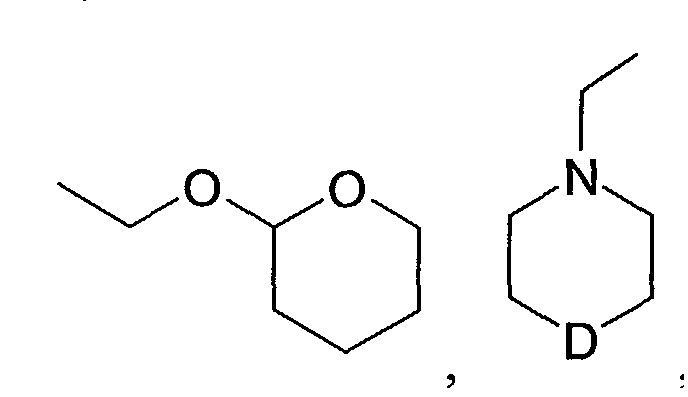
- R2 is a hydrogen atom; and/or
- A is a substituted group as defined above.
- In a particular embodiment, when A is a substituted group as defined above, at least one of the substituents is an halogen atom, more preferably chlorine or fluorine.
- A particular preferred group of compounds according to the present invention, are the compounds of formula (I) wherein at least two substituents simultaneously represent Cl, in particular when A is a naphtalene group.
- Another particular preferred group of compounds according to the present invention, are the compounds of formula (I) wherein at least one of the substituents, and more preferably all the substituents, of A represents a hydrogen atom, a methyl group, a propyl group, an ethoxy group, an halogen atom, preferably chlorine or fluorine, or the CF3 group.
- When the compounds according to the invention are in the forms of salts, they are preferably pharmaceutically acceptable salts. Such salts include pharmaceutically acceptable acid addition salts, pharmaceutically acceptable base addition salts, pharmaceutically acceptable metal salts, ammonium and alkylated ammonium salts. Acid addition salts include salts of inorganic acids as well as organic acids. Representative examples of suitable inorganic acids include hydrochloric, hydrobromic, hydroiodic, phosphoric, sulfuric, nitric acids and the like. Representative examples of suitable organic acids include formic, acetic, trichloroacetic, trifluoroacetic, propionic, benzoic, cinnamic, citric, fumaric, glycolic, lactic, maleic, malic, malonic, mandelic, oxalic, picric, pyruvic, salicylic, succinic, methanesulfonic, ethanesulfonic, tartaric, ascorbic, pamoic, bismethylene salicylic, ethanedisulfonic, gluconic, citraconic, aspartic, stearic, palmitic, EDTA, glycolic, p-aminobenzoic, glutamic, benzenesulfonic, p-toluenesulfonic acids, sulphates, nitrates, phosphates, perchlorates, borates, acetates, benzoates, hydroxynaphthoates, glycerophosphates, ketoglutarates and the like. Further examples of pharmaceutically acceptable inorganic or organic acid addition salts include the pharmaceutically acceptable salts listed in J. Pharm. Sci. 1977, 66, 2, which is incorporated herein by reference. Examples of metal salts include lithium, sodium, potassium, magnesium salts and the like. Examples of ammonium and alkylated ammonium salts include ammonium, methylammonium, dimethylammonium, trimethylammonium, ethylammonium, hydroxyethylammonium, diethylammonium, butylammonium, tetramethylammonium salts and the like. Examples of organic bases include lysine, arginine, guanidine, diethanolamine, choline and the like.
- The pharmaceutically acceptable salts are prepared by reacting the compound of formula I with 1 to 4 equivalents of a base such as sodium hydroxide, sodium methoxide, sodium hydride, potassium t-butoxide, calcium hydroxide, magnesium hydroxide and the like, in solvents like ether, THF, methanol, t-butanol, dioxane, isopropanol, ethanol, etc. Mixture of solvents may be used. Organic bases like lysine, arginine, diethanolamine, choline, guanidine and their derivatives etc. may also be used. Alternatively, acid addition salts wherever applicable are prepared by treatment with acids such as hydrochloric acid, hydrobromic acid, nitric acid, sulfuric acid, phosphoric acid, p-toluenesulphonic acid, methanesulfonic acid, fonic acid, acetic acid, citric acid, maleic acid, salicylic acid, hydroxynaphthoic acid, ascorbic acid, palmitic acid, succinic acid, benzoic acid, benzenesulfonic acid, tartaric acid and the like in solvents like ethyl acetate, ether, alcohols, acetone, THF, dioxane, etc. Mixture of solvents may also be used.
- Specific examples of compounds of formula (I) which fall within the scope of the present invention include the following compounds:
- 2-(Tetrahydro-pyran-2-yloxymethyl)-5-[5-(7-trifluoromethyl-quinolin-4-yloxy)-pentyloxy]-pyran-4-one (EHT 3788)
- 5-[5-(6-Fluoro-2-methyl-quinolin-4-yloxy)-pentyloxy]-2-(tetrahydro-pyran-2-yloxymethyl)-4H-pyran-4-one (EHT 1593)
- 5-[5-(6-Fluoro-2-trifluoromethyl-quinolin-4-yloxy)-pentyloxy]-2-(tetrahydro-pyran-2-yloxymethyl)-4H-pyran-4-one (EHT 1074)
- 5-[5-(7-Propyl-quinolin-8-yloxy)-pentyloxy]-2-(tetrahydro-pyran-2-yloxymethyl)-4H-pyran-4-one (EHT 5810)
- 6,8-Dichloro-4-{5-[4-oxo-6-(tetrahydro-pyran-2-yloxymethyl)-4H-pyran-3-yloxy]-pentyloxy}-naphthalene-2-carboxylic acid ethyl ester (EHT 0470)
- 5-[5-(Benzo[b]thiophen-7-yloxy)-pentyloxy]-2-(tetrahydro-pyran-2-yloxymethyl)-4H-pyran-4-one (EHT 6060)
- 2-(Tetrahydro-pyran-2-yloxymethyl)-5-[5-(7-trifluoromethyl-quinolin-4-ylsulfanyl)-pentyloxy]-4H-pyran-4-one (EHT 9376)
- 2-(Tetrahydro-pyran-2-yloxymethyl)-5-[4-(7-trifluoromethyl-quinolin-4-ylsulfanyl)-butoxy]-4H-pyran-4-one (EHT 4745)
- 2-(Tetrahydro-pyran-2-yloxymethyl)-5-[6-(7-trifluoromethyl-quinolin-4-ylsulfanyl)-hexyloxy]-4H-pyran-4-one (EHT 6271 )
- 2-Hydroxymethyl-5-[5-(7-trifluoromethyl-quinolin-4-ylsulfanyl)-pentyloxy]-4H-pyran-4-one hydrochloride salt (EHT 1302)
- 2-Hydroxymethyl-5-[5-(7-trifluoromethyl-quinolin-4-ylsulfanyl)-pentyloxy]-4H-pyran-4-one (EHT 5909)
- 2-Methoxymethoxymethyl-5-[5-(7-trifluoromethyl-quinolin-4-ylsulfanyl)-pentyloxy]-4H-pyran-4-one (EHT 2168)
- 2-Chloromethyl-5-[5-(7-trifluoromethyl-quinolin-4-ylsulfanyl)-pentyloxy]-4H-pyran-4-one (EHT 1494)
- 2-(4-Methyl-piperazin-1-ylmethyl)-5-[5-(7-trifluoromethyl-quinolin-4-ylsulfanyl)-pentyloxy]-4H-pyran-4-one (EHT 7365)
- 2-Morpholin-4-ylmethyl-5-[5-(7-trifluoromethyl-quinolin-4-ylsulfanyl)-pentyloxy]-4H-pyran-4-one (EHT 7168)
-
- Particularly preferred compounds are EHT9376 and EHT3788.
- The compounds according to the present invention may be prepared by various methods known to those skilled in the art. More preferably, three chemical routes have been carried out. The first one (Scheme 1) relates to compounds included in the
structures 3 which can be obtained in two steps starting from compound 1 (described by Miyano, M.; Deason, J. R.; Nakao, A.; Stealey, M. A.; Villamil, C. I.; et al. J. Med. Chem. 1988; 31, 1052-1061).
-
Compound 1 can be treated under alkylation conditions preferably conducted in a solvent, such as DMF or THF, at a temperature between 5°C and 70°C, typically around 80°C using a base such as cesium carbonate (Cs2CO3) or NaH and a dihalogenoalkane or dihalogenoarylalkane (step a) (table 1). The resultingalkylated product 2 can be substituted in a reaction (step b) involving a base such as NaH or cesium carbonate and a nucleophile such 4-quinolinol, 4-quinoline-thiol, 2-quinolinol, 7-benzo[b]thiophenol, naphtalen-7-ol non substituted or substituted derivatives or a nucleophile as described in table 2. The preferred solvents are DMF, THF or DMSO and the reaction is conducted at a temperature between 25°C and 100°C.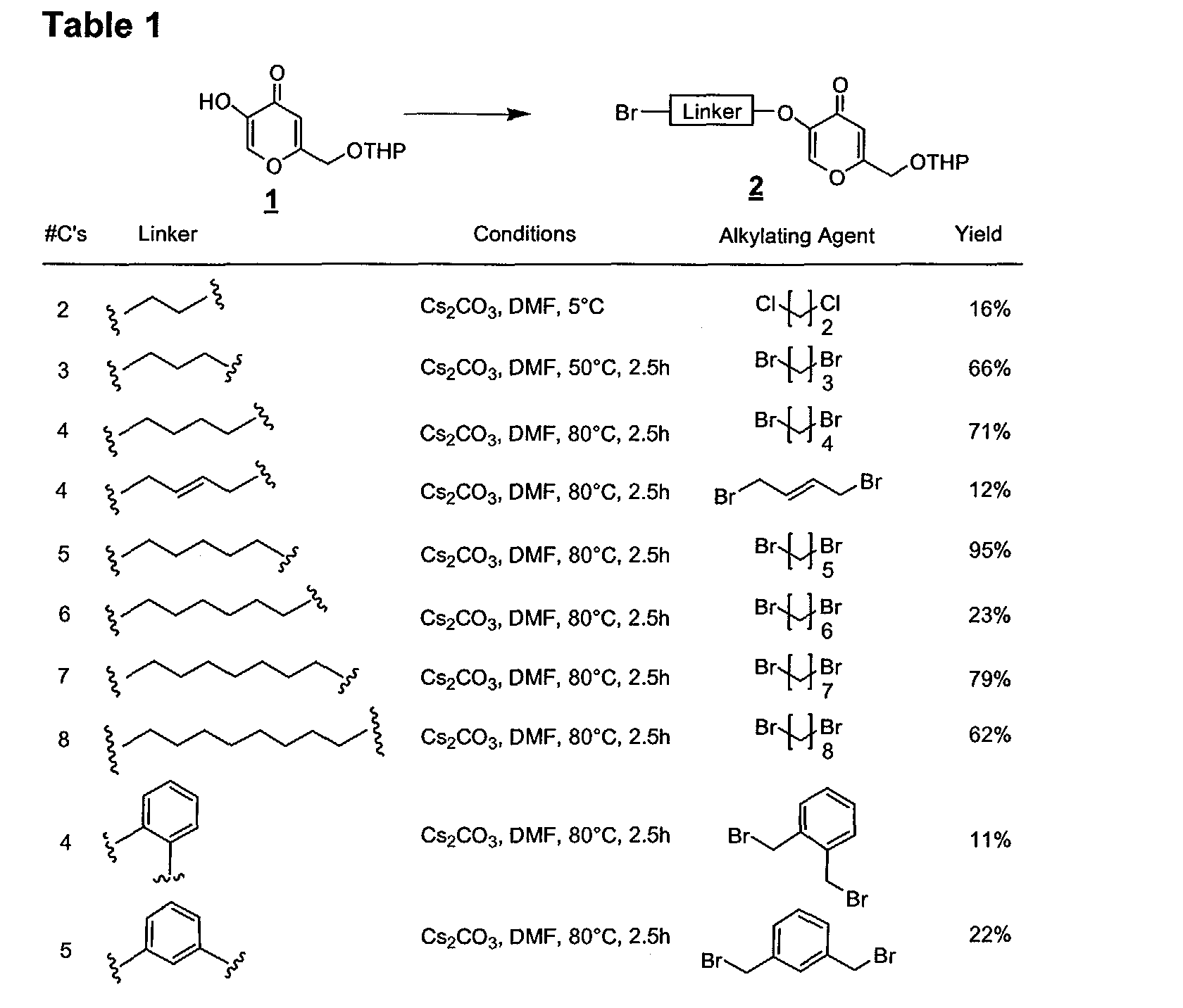

- The second preferred chemical route (Scheme 2) uses the
EHT 9376 compound which can be deprotected to the corresponding alcohol EHT 1302 in methanol with an acid source (MeOH, HCl) such as Dowex resin 50WX8-200 at a temperature comprised between 5°C and 30°C, typically around 25°C.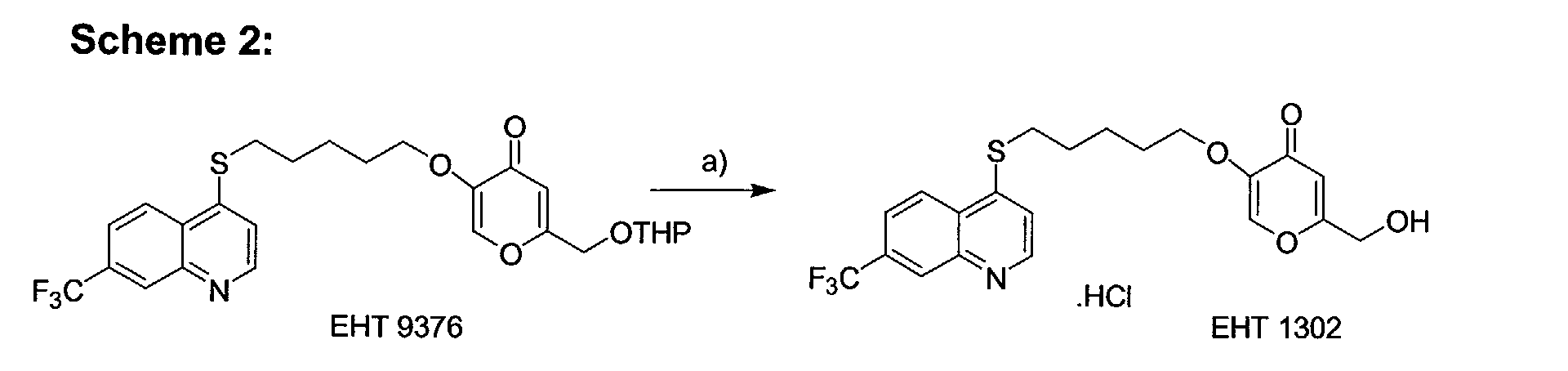
- In the third preferred chemical route (Scheme 3) Intermediate 5 can be prepared from the silylated ether 4 (Sefkow, M.; Kaatz, H. Tetrahedron Lett, 1999, 40, 6561-6562) with a base such as cesium carbonate and 1,5-dibromopentane in dimethylformamide at 50°C (Scheme 3).
Derivative 6 can be prepared from intermediate 4 using sodium hydride, 7-trifluoromethyl-4-quinoline-thiol in dimethylformamide at room temperature. Subsequent deprotection ofsilylated ether 6 using n-tetrabutylammonium fluoride in tetrahydrofuran at room temperature led to alcohol 7 (scheme 3).MOM derivative 8 can be obtained fromalcohol 7 with sodium hydride, and methylchloromethyl ether in tetrahydrofuran at room temperature.
Chloro andmesylate derivatives alcohol 7 using methanesulfonyl chloride and triethylamine in dichloromethane at room temperature.
Finally morpholino and N-methylpiperazine derivative 11 and 12 can be obtained frommesylate 10 using respectively morpholine or N-methylpiperazine in dichloromethane at reflux (scheme 3).
- a) TBDMSCI, CH2Cl2, TEA, RT. b) Cs2CO3, DMF, dibromopentane, 50°C c) 7-trifluoromethyl-4-quinoline-thiol, NaH, DMF, RT. d) TBAF, THF, RT e) MOMCl, NaH, THF, RT. f) CH3SO2Cl, TEA, CH2Cl2, RT. g) N-methylpiperazine, CH2Cl2, reflux. h) Morpholine, CH2Cl2, reflux.
- For the above described series, yields are generally comprised between 55 and 90% by weight, more specifically between 55 and 75% by weight. These methods for preparing compounds of formula (I) represent further objects of the present application.
It should be understood that other ways of producing these compounds may be designed by the skilled person, based on common general knowledge and following guidance contained in this application. - As indicated above, a further object of this invention relates to a pharmaceutical composition comprising at least one compound of formula (I), as defined above, and a pharmaceutically acceptable vehicle or support.
- The compounds may be formulated in various forms, including solid and liquid forms, such as tablets, gel, syrup, powder, aerosol, etc.
- The compositions of this invention may contain physiologically acceptable diluents, fillers, lubricants, excipients, solvents, binders, stabilizers, and the like. Diluents that may be used in the compositions include but are not limited to dicalcium phosphate, calcium sulphate, lactose, cellulose, kaolin, mannitol, sodium chloride, dry starch, powdered sugar and for prolonged release tablet-hydroxy propyl methyl cellulose (HPMC). The binders that may be used in the compositions include but are not limited to starch, gelatin and fillers such as sucrose, glucose, dextrose and lactose.
Natural and synthetic gums that may be used in the compositions include but are not limited to sodium alginate, ghatti gum, carboxymethyl cellulose, methyl cellulose, polyvinyl pyrrolidone and veegum. Excipients that may be used in the compositions include but are not limited to microcrystalline cellulose, calcium sulfate, dicalcium phosphate, starch, magnesium stearate, lactose, and sucrose. Stabilizers that may be used include but are not limited to polysaccharides such as acacia, agar, alginic acid, guar gum and tragacanth, amphotsics such as gelatin and synthetic and semi-synthetic polymers such as carbomer resins, cellulose ethers and carboxymethyl chitin.
Solvents that may be used include but are not limited to Ringers solution, water, distilled water, dimethyl sulfoxide to 50% in water, propylene glycol (neat or in water), phosphate buffered saline, balanced salt solution, glycol and other conventional fluids. - The dosages and dosage regimen in which the compounds of formula (I) are administered will vary according to the dosage form, mode of administration, the condition being treated and particulars of the patient being treated. Accordingly, optimal therapeutic concentrations will be best determined at the time and place through routine experimentation.
- The compounds according to the invention can also be used enterally. Orally, the compounds according to the invention are suitable administered at the rate of 100 µg to 100 mg per day per kg of body weight. The required dose can be administered in one or more portions. For oral administration, suitable forms are, for example, tablets, gel, aerosols, pills, dragees, syrups, suspensions, emulsions, solutions, powders and granules; a preferred method of administration consists in using a suitable form containing from 1 mg to about 500 mg of active substance.
The compounds according to the invention can also be administered parenterally in the form of solutions or suspensions for intravenous or intramuscular perfusions or injections. In that case, the compounds according to the invention are generally administered at the rate of about 10 µg to 10 mg per day per kg of body weight; a preferred method of administration consists of using solutions or suspensions containing approximately from 0.01 mg to 1 mg of active substance per ml.
The compounds of formula (I) can be used in a substantially similar manner to other known anti-tumor agents for treating (both chemopreventively and therapeutically) various tumors or to other known agents for treating ocular diseases and especially anti-retinopathic or anti-arthritis agents. For the compounds of this invention, the dose to be administered, whether a single dose, multiple dose, or a daily dose, will of course vary with the particular compound employed because of the varying potency of the compound, the chosen route of administration, the size of the recipient, the type of disease (cancer, and in such a case the type of tumor, arthritis, ocular-diseases and especially retinopathies, and in such a case the type of retinopathy, especially diabetic retinopathy, retinal degenerative diseases, Age-Related Macular Degeneration (ARMD)) and the nature of the patient's condition. The dosage to be administered is not subject to definite bounds, but it will usually be an effective amount, or the equivalent on a molar basis of the pharmacologically active free form produced from a dosage formulation upon the metabolic release of the active drug to achieve its desired pharmacological and physiological effects. An oncologist skilled in the art of cancer treatment or a doctor skilled in the art for ocular-diseases, diabetes or arthritis treatment will be able to ascertain, without undue experimentation, appropriate protocols for the effective administration of the compounds of this present invention, such as by referring to the earlier published studies on compounds found to have anti-tumor, anti-angiogenic and especially anti-retinopathic or anti-arthritis properties. - According to another aspect, the present invention relates to a method for the treatment of a disease associated with abnormal cell proliferation, comprising administering to a patient in need of such treatment an effective amount of at least one compound of general formula (I) as described above.
- Preferred compounds for use according to the invention include any sub-group as defined above, and, as specific examples, the following compounds:
- 2-(Tetrahydro-pyran-2-yloxymethyl)-5-[5-(7-trifluoromethyl-quinolin-4-yloxy)-pentyloxy]-pyran-4-one (EHT 3788)
- 5-[5-(6-Fluoro-2-methyl-quinolin-4-yloxy)-pentyloxy]-2-(tetrahydro-pyran-2-yloxymethyl)-4H-pyran-4-one (EHT 1593)
- 5-[5-(6-Fluoro-2-trifluoromethyl-quinolin-4-yloxy)-pentyloxy]-2-(tetrahydro-pyran-2-yloxymethyl)-4H-pyran-4-one (EHT 1074)
- 5-[5-(7-Propyl-quinolin-8-yloxy)-pentyloxy]-2-(tetrahydro-pyran-2-yloxymethyl)-4H-pyran-4-one (EHT 5810)
- 6,8-Dichloro-4-{5-[4-oxo-6-(tetrahydro-pyran-2-yloxymethyl)-4H-pyran-3-yloxy]-pentyloxy}-naphthalene-2-carboxylic acid ethyl ester (EHT 0470)
- 5-[5-(Benzo[b]thiophen-7-yloxy)-pentyloxy]-2-(tetrahydro-pyran-2-yloxymethyl)-4H-pyran-4-one (EHT 6060)
- 2-(Tetrahydro-pyran-2-yloxymethyl)-5-[5-(7-trifluoromethyl-quinolin-4-ylsulfanyl)-pentyloxy]-4H-pyran-4-one (EHT 9376)
- 2-(Tetrahydro-pyran-2-yloxymethyl)-5-[4-(7-trifluoromethyl-quinolin-4-ylsulfanyl)-butoxy]-4H-pyran-4-one (EHT 4745)
- 2-(Tetrahydro-pyran-2-yloxymethyl)-5-[6-(7-trifluoromethyl-quinolin-4-ylsulfanyl)-hexyloxy]-4H-pyran-4-one (EHT 6271)
- 2-Hydroxymethyl-5-[5-(7-trifluoromethyl-quinolin-4-ylsulfanyl)-pentyloxy]-4H-pyran-4-one hydrochloride salt (EHT 1302)
- 2-Hydroxymethyl-5-[5-(7-trifluoromethyl-quinolin-4-ylsulfanyl)-pentyloxy]-4H-pyran-4-one (EHT 5909)
- 2-Methoxymethoxymethyl-5-[5-(7-trifluoromethyl-quinolin-4-ylsulfanyl)-pentyloxy]-4H-pyran-4-one (EHT 2168)
- 2-Chloromethyl-5-[5-(7-trifluoromethyl-quinolin-4-ylsulfanyl)-pentyloxy]-4H-pyran-4-one (EHT 1494)
- 2-(4-Methyl-piperazin-1-ylmethyl)-5-[5-(7-trifluoromethyl-quinolin-4-ylsulfanyl)-pentyloxy]-4H-pyran-4-one (EHT 7365)
- 2-Morpholin-4-ylmethyl-5-[5-(7-trifluoromethyl-quinolin-4-ylsulfanyl)-pentyloxy]-4H-pyran-4-one (EHT 7168)
-
- A further object of this invention is the use of an effective amount of at least one compound of formula (I) as defined above for the preparation of pharmaceutical composition for the treatment of a disease associated with abnormal cell proliferation and of a disease associated with unregulated angiogenesis.
- Because of their cell proliferation inhibitory activity, the compounds of this invention are suitable for treating a variety of diseases in a variety of conditions. In this regard, "treatment" or "treating" include both therapeutic and prophylactic treatments. Accordingly, the compounds may be used at very early stages of a disease, or before early onset, or after significant progression, including metastasis. The term "treatment" or "treating" designates in particular a reduction of the burden in a patient, such as a reduction in cell proliferation rate, a destruction of diseased proliferative cells, an inhibition of the formation of vessel or vessel-like structure, a reduction of tumor mass or tumor size, a delaying of tumor progression, as well as a complete tumor suppression.
- Typical examples of diseases associated with abnormal cell proliferation and/or with unregulated angiogenesis include cancers and restenosis, arthritis, diabetes, ocular-diseases and especially retinopathies, for instance. The compounds of this invention are particularly suited for the treatment of cancers, such as solid tumors or lymphoid tumors. Specific examples include prostate cancer, ovarian cancer, pancreas cancer, lung cancer, breast cancer, liver cancer, head and neck cancer, colon cancer, bladder cancer, non-Hodgkin 's lymphoma cancer and melanoma.
- The compounds may be administered according to various routes, typically by injection, such as local or systemic injection(s). Intratumoral injections are preferred for treating existing cancers. However, other administration routes may be used as well, such as intramuscular, intravenous, intradermic, subcutaneous, etc. Furthermore, repeated injections may be performed, if needed, although it is believed that limited injections will be needed in view of the efficacy of the compounds.
- A further object of this invention is a composition for reducing cancer cell proliferation by administering in a subject having cancer an effective amount of compound of formula (I) as defined above.
- A further object of this invention is a composition for treating metastatic cancers by administering in a subject in need of such treatment an effective amount of compound of formula (I) as defined above.
- A further object of this invention is a composition for treating a eye-disease by administering in a subject in need of such treatment an effective amount of compound of formula (I) as defined above.
- A further object of this invention is a composition for treating arthritis by administering in a subject in need of such treatment an effective amount of compound of formula (I) as defined above.
- A further object of this invention is the use of a compound as defined above for the preparation of a pharmaceutical composition for treating metastatic cancers or for reducing cancer cell proliferation.
- A further object of this invention is the use of a compound as defined above for the preparation of a pharmaceutical composition for treating an ocular-disease, especially retinopathies (including diabetic retinopathies, retinal degenerative diseases and Age-Related Macular Degeneration (ARMD)).
- A further object of this invention is the use of a compound as defined above for the preparation of a pharmaceutical composition for treating arthritis.
- Further aspects and advantages of this invention will be disclosed in the following examples, which should be regarded as illustrative and not limiting the scope of this application.
-
- Figure 1: Examples of dose-response curves for anchorage-independent growth
assays in soft agar.Example of a cystostatic compound (L651582, left) and of a
cytotoxic compound (
EHT 8617, right). - Figure 2: Antiproliferative effect of compounds on HCT116 (top) and HMEC1
(bottom) cell lines measured by MTT viability assay.
2.5 103 (HCT116) or 5 104 (HMEC1) cells were seeded in 48-well plates in growth medium containing 10% FBS, with or without various concentrations of test compounds. Cell cultures were fed every 3 days with the appropriate media. Cell viability was determined onday 6. Data were analyzed and IC50s were calculated from the dose-response curves using GraphPad Prism. Results displayed on the graph are mean ± SEM of 1 to 3 experiments - Figure 3: Effect of the treatment of HCT116 cells with the compounds on the
size of the clones grown in soft agar.
5 103 cells were seeded in 24-well plates in 0.3% agar-containing medium supplemented with the designated amount of compounds. After 7 days of incubation at 37°C, pictures were taken of each well and were analyzed using the ImageJ image analysis software. In particular, clone size and number were calculated. The data were analyzed using GraphPad Prism, and IC50 was calculated. Results displayed on the graph are mean ± SEM of 1 to 3 experiments. - Figure 4: Dose response curves for HCT116 cells grown in soft agar (clone number/clone size).
- Figure 5: Anti-proliferative effect of
EHT 9376 and its reversibility on HCT116 cells measured by MTT.
Cells were grown with medium with or without 1 µM L651582 (left) or EHT 9376 (right). After 3 days of treatment, the compound medium in one set of cells was removed and replaced with regular growth medium. On the designated days, the number of viable cells was determined by the MTT cell proliferation assay. Results were normalized against the untreated control. highest line: untreated, medium line: compound removal atday 3, lowest line: 7-day treatment. Values are the mean ± SEM of duplicate experiments. - Figure 6: Migration of MDA-MB-231 cells in the presence of various
concentrations of L651582, and
EHT 9376.
5 104 MDA-MB-231 cells, resuspended in culture medium with or without Fetal Bovine Serum (FBS), were seeded in the upper Boyden blind well on top of 8 µm pore-sized filters. The ability of cells to migrate through the filter was assayed in the absence or presence of FBS in the lower Boyden well. After incubation at 37°C for 16 hours, the medium was removed and replaced with calcein containing medium. After labelling, cells were washed and resuspended in HBSS and fluorescence was read in a fluoroskan. Fluorescence values were normalized against the fluorescence obtained for the 1% DMSO control. The data plotted are the means ± SEM for 2 wells under the different conditions. - Figure 7: Influence of various compounds on in vitro tubule formation.
HMEC1 cells were plated on Matrigel-coated wells as described in the material and methods. Cultures were photographed after 7 hours of incubation. The "total tubule length" and "number of junction" parameters were quantitated using the AngioSys software and data were analyzed using GraphPad Prism for IC50 calculation. The ratios IC50 L651582/IC50 compound were calculated and plotted in the above bar graphs. Values represent the mean ± SEM of 2 to 8 experiments performed in duplicate. -
- Examples 1 to 20 disclose the synthesis and physico-chemical properties of compounds according to this invention.
- Example 21 discloses the biological activity of the compounds.
- The compound was prepared according to the above general procedure using 5-hydroxy-2-(tetrahydro-pyran-2-yloxymethyl)-4H-pyran-4-one (3.5 g, 15.5 mmol) in 20 mL of DMF, Cs2CO3 (5.04 g, 15.5 mmol) and 1,5-dibromopentane (8.8 g, 36.7 mmol). The sealed tube was heated at 90-95 °C for 1
h 40. A white solid 1 was obtained (5.30 g, 91 % yield). - The structure of
compound ex 1 is presented below:MW: 375.25; Yield: 91 %; Yellow solid; Mp: 140.3 °C.
Rf : 0.36 (CH2Cl2:ethyl acetate = 8:2).
1H-NMR (CDCl3, δ): 1.53-1.84 (m, 12H, 6xCH2), 3.52-3.57 (m, 1H, OCH2), 3.77-3.84 (m, 1H, O-CH2), 4.30 (d, JBA = 14.5 Hz, 1H, OCH2), 4.48 (s, 2H, OCH2), 4.50 (d, JAB = 14.5 Hz, 1H, OCH2), 4.70 (t, J = 3.1 Hz, 1H, OCHO), 5.07 (s, 2H, BrCH2), 6.51 (s, 1H, --C=CH-), 7.36-7.42 (m, 4H, Ar-H), 7.53 (s, 1H, --C=CH-).
MS-ESI m/z (rel. int.): 374.9-376.9 ([MH]+, 100).
HPLC: Method A, Detection UV 254 nm, RT= 5.73 min. - In a 25 mL round-bottom flask equipped with a magnetic stirrer and under an inert atmosphere were charged successively one equivalent of NaH (60 % in mineral oil), anhydrous THF (10 mL) and the monomer to be deprotonated (250 mg). The reaction mixture was abandoned until no evolution of gas was observed (between 3 and 5 hours). A solution 1 M of 5-(5-bromo-pentyloxy)-2-(tetrahydro-pyran-2-yloxymethyl)-4H-pyran-4-
one 1 in THF (1 eq) was added and the reaction mixture was stirred 12 h at room temperature. The reaction mixture is evaporated in vacuo, the crude product is purified by a wash with a solution of aqueous NaOH 2N and/or by flaschromatography on silica. - In a 50 mL round-bottom flask equipped with a magnetic stirrer and under an inert atmosphere were charged successively one equivalent of NaH (60 % in mineral oil), DMSO (5 mL) and the monomer to be deprotonated (250 mg). The reaction mixture was heated at 60 °C for 3 hours. After cooling to room temperature, the 5-(5-bromo-pentyloxy)-2-(tetrahydro-pyran-2-yloxymethyl)-4H-pyran-4-one 1 (1 eq) was added (in one time) and the reaction mixture was heated at 60 °C for 12 h. After cooling, 50 mL of dichloromethane was added, the organic layer is washed with H2O (4 x 10 mL), dried over MgSO4, filtered and evaporated in vacuo. The crude product is purified by a wash with a solution of aqueous NaOH 2N and/or by flaschromatography on silica.
- The compound was prepared according to method A with 7-trifluoromethyl-quinolin-4-ol (0.25 g, 0.12 mmol). After purification by chromatography on silica using as eluent CH2Cl2:MeOH = 95:5 a beige solid EHT 3788 (0.11 g, 18 % yield) was obtained.
- The structure of compound ex 2a is presented below:MW: 507.50; Yield 18 %; beige solid.
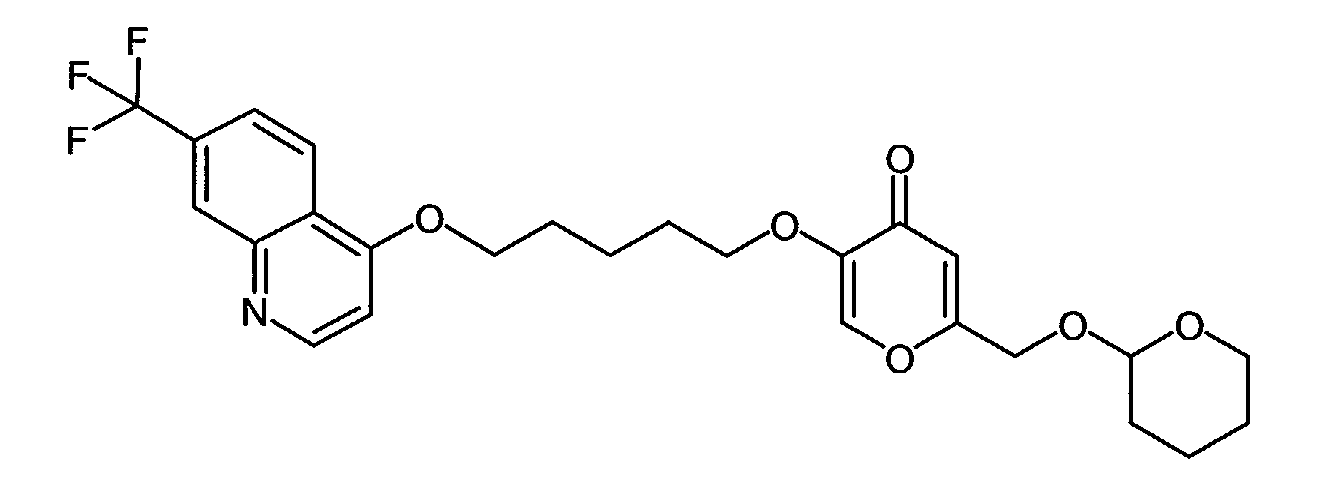
1H-NMR (CDCl3, δ): 1.50-2.12 (m, 12H, 6xCH2), 3.50-3.58 (m, 1H, CH2CH 2O), 3.75-3.85 (m, 1H, CH2CH 2O), 3.96 (t, J = 7.0 Hz, 2H, OCH2), 4.27 (t, J = 7.0 Hz, 2H, OCH2), 4.34 (dd, J BA = 14.4 Hz, J = 0.6 Hz, 1H, CH2O), 4.52 (dd, J AB = 14.4 Hz, J = 0.6 Hz, 1H, CH2O), 4.73 (m, 1H, OCHO), 6.52 (d, J = 0.6 Hz, 1H, -C=CH-), 6.83 (d, J = 5.7 Hz, 1H, Ar-H), 7.59 (s, 1H, -C=CH-), 7.68 (d, J = 9.6 Hz, 1H, Ar-H), 8.34 (m, 1H, Ar-H), 8.83 (dd, J = 6.3 Hz, J = 5.6 Hz, 1H, Ar-H). - The compound was prepared according to method A with 6-fluoro-2-methylquinolin-4-ol (0.25 g, 1.41 mmol). After purification by chromatography on silica using as eluent heptane:AcOEt = 9:1 a brown oil EHT 1593 (0.13 g, 19.5 % yield) was obtained.
- The structure of compound ex 2b is presented below:MW: 471.52; Yield 19.5 %; Brown oil.

1H-NMR (CDCl3, δ): 1.50-2.02 (m, 12H, 6xCH2), 2.69 (s, 3H, CH3), 3.50-3.58 (m, 1H, CH2CH 2O), 3.75-3.85 (m, 1H, CH2CH 2O), 3.68 (t, J = 6.3 Hz, 2H, OCH2), 4.21 (t, J = 6.3 Hz, 2H, OCH2), 4.34 (dd, J BA = 14.4 Hz, J = 0.6 Hz, 1H, CH2O), 4.53 (dd, J AB = 14.4 Hz, J = 0.6 Hz, 1H, CH2O), 5.32 (m, 1H, OCHO), 6.52 (s, 1H, -C=CH-), 6.63 (s, 1H, Ar-H), 7.38-7.46 (m, 1H, Ar-H), 7.60 (s, 1H, -C=CH-), 7.74 (dd, J = 6.3 Hz, J = 2.7 Hz, 1H, Ar-H), 7.93 (dd, J = 6.3 Hz, J = 5.1 Hz, 1H, Ar-H).
MS-ESI m/z (rel. int.): 472.1 ([MH]+, 90), 388.0 (15), 295.1 (100), 227.0 (15), 211.1 (10),178.0 (45).
HPLC: Method A, detection UV 254 nm,EHT 1593 RT = 4.62 min, peak area 95.7% - The compound was prepared according to method B with 6-fluoro-2-trifluoromethyl-quinolin-4-ol (0.25 g, 1.08 mmol). After purification by chromatography on silica using as eluent CH2Cl2:MeOH = 98:2 a grey solid EHT 1074 (0.07 g, 12 % yield) was obtained.
- The structure of
compound ex 3 is presented below:MW: 525.49; Yield: 12 %; grey solid.
1H-NMR (CD3Cl, δ): 1.50-1.92 (m, 8H, 4xCH2), 1.92-2.12 (m, 4H, 2xCH2), 3.52-3.59 (m, 1H, CH2O), 3.83-3.90 (m, 1H, CH2O), 3.97 (t, J = 6.3 Hz, 2H, OCH2O), 4.32 (t, J = 5.7 Hz, 2H, OCH2O), 4.34 (dd, J BA = 14.4 Hz, J = 0.6 Hz, 1H, =CCH2O), 4.53 (dd, J AB = 14.4 Hz, J = 0.6 Hz, 1H, =CCH2O), 4.72 (t, J = 3.0 Hz, 1H, OCH2O), 6.52 (d, J = 0.6 Hz, 1H, -CH=), 7.06 (s, 1H, Ar-H), 7.56 (m, 1H, Ar-H), 7.61 (s, 1H, -CH=), 7.85 (dd, J = 9.3 Hz, J = 3.0 Hz, 1H, Ar-H), 8.16 (dd, J = 9.3 Hz, J = 5.1 Hz, 1H, Ar-H). - The compound was prepared according to method B with 7-propyl-quinolin-8-ol (0.25 g, 1.33 mmol). After purification by chromatography on silica using as eluent CH2Cl2:MeOH = 98:2 a green oil EHT 5810 (0.16 g, 25 % yield) was obtained.
- The structure of
compound ex 4 is presented below:MW: 481.58; Yield: 25 %; Green oil.
1H-NMR (CD3Cl, δ): 1.00 (t, J = 7.2 Hz, 3H, Me), 1.50-1.92 (m, 10H, 5xCH2), 1.92-2.10 (m, 4H, 2xCH2), 2.84 (t, J = 7.2 Hz, 2H, =C-CH2 CH2CH3), 3.52-3.59 (m, 1H, CH2O), 3.83-3.90 (m, 1H, CH2O), 3.94 (t, J = 6.6 Hz, 2H, OCH2O), 4.32 (t, J = 6.6 Hz, 2H, OCH2O), 4.34 (dd, J BA = 14.4 Hz, J = 0.6 Hz, 1H, =CCH2O), 4.52 (dd, J AB = 14.4 Hz, J = 0.6 Hz, 1H, =CCH2O), 4.73 (t, J = 3.0 Hz, 1H, OCH2O), 6.52 (d, J = 0.6 Hz, 1H, -C=CH-), 7.33 (dd, J = 8.1 Hz, J = 4.2 Hz, 1H, Ar-H), 7.38 (d, J BA = 8.4 Hz, 1H, Ar-H), 7.50 (d, J BA = 8.4 Hz, 1H, Ar-H), 7.59 (s, 1 H, -C=CH-), 8.09 (d, J = 1.8 Hz, 1H, Ar-H), 8.16 (dd, J = 4.2 Hz, J = 1.8 Hz, 1H, Ar-H). - The compound was prepared according to method A with 6,8-dichloro-4-hydroxy-naphthalene-2-carboxylic acid ethyl ester (0.25 g, 0.88 mmol). After purification by chromatography on silica using as eluent CH2Cl2:MeOH = 98:2 an amber oil EHT 0470 (0.085 g, 17 % yield) was obtained.
- The structure of
compound ex 5 is presented below:MW: 579.47; Yield: 17 %; Amber oil.
1H-NMR (CD3Cl, δ): 1.47 (t, J = 7.2 Hz, 3H, Me), 1.50-1.92 (m, 8H, 4xCH2), 1.92-2.10 (m, 4H, 2xCH2), 3.52-3.59 (m, 1H, CH2O), 3.83-3.90 (m, 1H, CH2O), 3.96 (t, J = 6.3 Hz, 2H, OCH2O), 4.23 (t, J = 6.3 Hz, 2H, OCH2O), 4.34 (dd, J BA = 14.4 Hz, J = 0.6 Hz, 1H, =CCH2O), 4.47 (q, J = 7.2 Hz, 2H, OCH2CH3), 4.53 (dd, J AB = 14.4 Hz, J = 0.6 Hz, 1H, =CCH2O), 4.73 (t, J = 3.0 Hz, 1H, OCH2O), 6.52 (d, J = 0.6 Hz, 1H, -C=CH-), 7.46 (d, J = 1.2 Hz, 1H, Ar-H), 7.60 (s, 1H, -C=CH-), 7.62 (d, J = 2.1 Hz, 1H, Ar-H), 8.19 (dd, J = 2.1 Hz, J = 0.6 Hz, 1H, Ar-H), 8.54 (d, J = 1.2 Hz, 1H, Ar-H). - The compound was prepared according to method A with benzo[b]thiophen-7-ol (0.25 g, 1.66 mmol). After purification by chromatography on silica using as eluent CH2Cl2:MeOH = 95:5 a yellow oil EHT 6060 (0.02 g, 3 % yield) was obtained.
- The structure of
compound ex 6 is presented below:MW: 444.54; Yield: 3 %; Yellow oil.
1H-NMR (CDCl3, δ): 1.50-2.00 (m, 12H, 6xCH2), 3.52-3.60 (m, 1H, CH2CH 2O), 3.82-3.90 (m, 1H, CH2CH 2O), 3.94 (t, 2H, J = 6.6 Hz, OCH2), 4.27 (t, J = 6.3 Hz, 2H, OCH2), 4.34 (dd, J BA = 14.4 Hz, J = 0.6 Hz, 1H, CH2O), 4.64 (dd, J AB = 14.4 Hz, J = 0.6 Hz, 1H, CH2O), 4.72-4.77 (m, 1H, OCHO), 6.52 (d, J = 0.6 Hz, 1H, C=CH-), 6.70 (d, J = 5.4 Hz, 1 H, Ar-H), 7.53 (d, J = 5.4 Hz, 1 H, Ar-H), 7.59 (s, 1 H, -C=CH-), 7.68 (d, J = 5.4 Hz, 1 H, Ar-H), 8.57 (d, J = 5.4 Hz, 1H, Ar-H). - The compound was prepared according to method A with 7-trifluoromethylquinoline-4-thiol (0.25 g, 1.09 mmol). After purification by chromatography on silica using as eluent CH2Cl2:MeOH = 99:1 a yellow solid EHT 9376 (0.27 g, 47 % yield) was obtained.
- The structure of
compound ex 7 is presented below:MW: 523.57, Yield: 47 %; Yellow solid; Mp = 86.4 °C.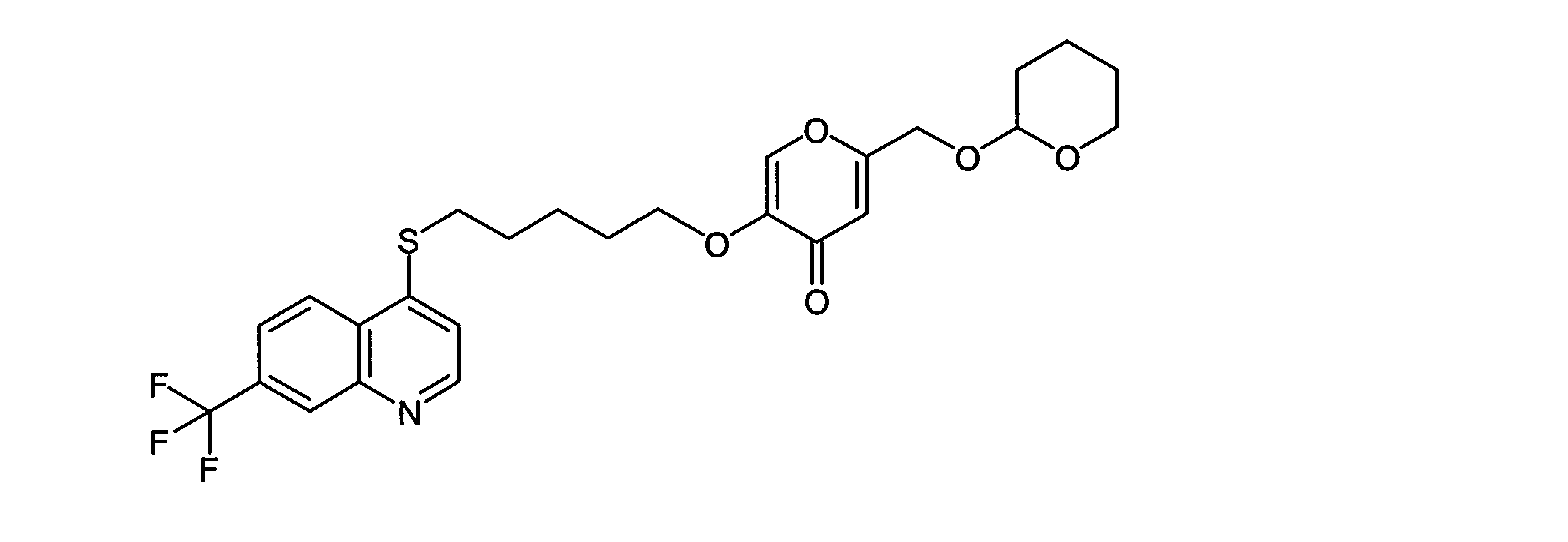
1H-NMR (CD3Cl, δ): 1.49-1.90 (m, 12H, 6xCH2), 3.16 (t, J = 7.2 Hz, 2H, CH2S), 3.50-3.58 (m, 1H, CH2O), 3.83-3.91 (m, 1H, CH2O), 3.91 (t, J = 6.3 Hz, 2H, CH2O), 4.33 (dd, J BA = 14.4 Hz, J = 0.6 Hz, 1H, CH2O), 4.52 (dd, J BA = 14.4 Hz, J = 0.6 Hz, 1H, CH2O), 4.73 (m, 1H, OCHO), 6.52 (s, 1H, -C=CH-), 7.28 (d, J = 4.8 Hz, 1H, Ar-H), 7.58 (s, 1H, -C=CH-), 7.72 (dd, J = 8.7 Hz, J = 1.8 Hz, 1H, Ar-H), 8.25 (d, J = 8.7 Hz, 1H, Ar-H), 8.37 (s, 1H, Ar-H), 8.80 (d, J = 4.8 Hz, 1H, Ar-H). - The compound was prepared according to the above general procedure using 5-hydroxy-2-(tetrahydro-pyran-2-yloxymethyl)-4H-pyran-4-one (1.00 g, 4.42 mmol), Cs2CO3 (1.58 g, 4.86 mmol) and 1,4-dibromobutane (2.00 mL, 16.7 mmol). The sealed tube was heated at 80°C for 2 h 30. A white solid 2 was obtained (1.14 g, 71 % yield).
- The structure of
compound ex 8 is presented below:MW: 361.23; Yield: 71 %, White solid, Mp = 71.5 °C.
1H-NMR (CDCl3, δ): 1.49-1.91 (m, 6H, 3xCH2), 1.91-2.10 (m, 4H, 2xCH2), 3.48 (t, J = 6.5 Hz, 2H, BrCH2), 3.50-3.59 (m, 1H, OCH2), 3.76-3.88 (m, 1H, OCH2), 3.92 (t, J = 6.1 Hz, 2H, OCH2), 4.32 (d, J BA = 14.4 Hz, 1H, =CCH2 O), 4.51 (d, J AB = 14.4 Hz, 1H, =CCH2 O), 4.70-4.75 (m, 1H, OCHO), 6.50 (s, 1H, -C=CH-), 7.58 (s, 1H, -C=CH-). - 7-Trifluoromethyl-4-quinoline-thiol (0.19 g, 0.87 mmol) was charged in a 25 mL round-bottomed flask equipped with a magnetic stirrer and under inert atmosphere. Anhydrous DMF (10 mL) and NaH 60% dispersion in oil (35 mg, 0.87 mmol) were successively added. After 30 min a solution of 5-(4-bromobutoxy)-2-(tetrahydro-pyran-2-yloxymethyl)-4H-pyran-4-one 2 (0.30 g, 0.83 mmol) was added at room temperature. The reaction mixture was stirred for 2 h at room temperature. The reaction mixture was poured in 200 mL of H2O, extracted with AcOEt (3 x 75 mL). The organic layer was washed with brine (4 x 250 mL), dried over MgSO4, filtered and evaporated to dryness. The crude compound was recrystallized in diethyl ether to give after filtration EHT 4745 (271 mg, 64 % yield) as a yellow solid.
- The structure of
compound ex 9 is presented below:MW: 508.55; Yield: 64 %; Yellow pale solid; Mp: 97.3 °C (dec.).
R f : 0.12 (AcOEt).
1H-NMR (CD3Cl, δ): 1.45-1.92 (m, 6H, 3xCH2), 1.98-2.12 (m, 4H, 2xCH2), 3.19-3.28 (t, J = 6.8 Hz, 2H, CH2S), 3.52-3.59 (m, 1H, CH2O), 3.92-4.01 (m, 1H, CH2O), 4.32 (dd, J BA = 14.4 Hz, J = 0.5 Hz, 1H, =CCH2O), 4.52 (dd, J AB = 14.4 Hz, J = 0.5 Hz, 1H, =CCH2O), 4.72 (t, J = 3.1 Hz, 2H, OCH2O), 6.52 (s, 1H,-C=CH-), 7.32 (d, J = 4.8 Hz ,1H, Ar-H), 7.59 (s, 1H, -C=CH-), 7.71 (dd, J = 8.8 Hz, J = 1.7 Hz, 1H, Ar-H), 8.24 (d, J = 8.8 Hz, 1H, Ar-H), 8.36 (s, 1H, Ar-H), 8.80 (d, J = 4.8 Hz, 1H, Ar-H).
MS-ESI m/z (rel. int.): 510 ([MH]+, 30), 426 (100).
HPLC: Method A, detection UV 254 nm,EHT 4745 RT = 5.33 min, peak area 99.9 %. - 5-Hydroxy-2-(tetrahydro-pyran-2-yloxymethyl)-4H-pyran-4-one (1.50 g, 6.60 mmol) was charged in a 30 mL sealed tube equipped with a magnetic stirrer and under inert atmosphere. Anhydrous DMF (10 mL), Cs2CO3 (2.30 g, 7.00 mmol) and 1,6-dibromo-hexane (3.20 g, 13.30 mmol) were successively added. The reaction mixture was stirred 2 h at 60°C. After evaporation of DMF, the crude compound was purified by column chromatography (SiO2, CH2Cl2:AcOEt = 8:2) to give after evaporation 5-(6-bromo-hexyloxy)-2-(tetrahydro-pyran-2-yloxymethyl)-4H-pyran-4-
one 3 as an oil (190 mg, 52 % yield). - The structure of
compound ex 10 is presented below:MW: 389.28; Yield: 52%; Oil.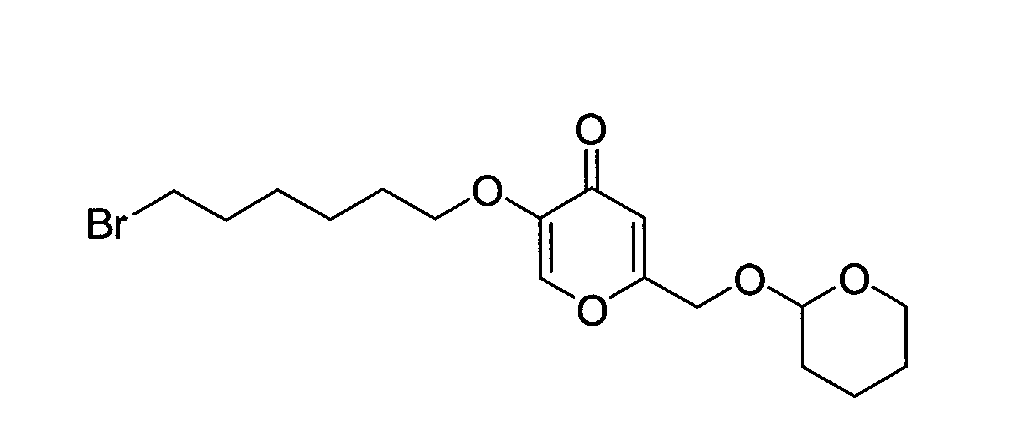
1H-NMR (CDCl3, δ): 1.40-1.95 (m, 14H, 7xCH2), 3.45 (t, J = 6.7 Hz, 2H, BrCH2), 3.52-3.64 (m, 1H, OCH2), 3.82-3.92 (m, 1H, OCH2), 3.90 (t, J = 6.5 Hz, 2H, OCH2), 4.36 (d, J BA = 14.4 Hz, 1H, =CCH 2O), 4.56 (d, J AB = 14.4 Hz, 1H, =CCH2 O), 4.74-4.79 (m, 1H, OCHO), 6.54 (s, 1H, -C=CH-), 7.60 (s, 1H, -C=CH-).
MS-ESI m/z (rel. int.): 389-391 ([MH]+, 97-100). - 7-Trifluoromethyl-4-quinoline-thiol (0.62 g, 2.70 mmol) was charged in a 50 mL round-bottomed flask equipped with a magnetic stirrer and under inert atmosphere. Anhydrous DMF (20 mL) and NaH 60% dispersion in oil (110 mg, 2.70 mmol) were successively added. After 30 min a solution of 5-(6-bromohexyloxy)-2-(tetrahydro-pyran-2-yloxymethyl)-4H-pyran-4-one 3 (1.00 g, 2.57 mmol) was added at room temperature. The reaction mixture was stirred for 2 h at room temperature. The reaction mixture was poured in 200 mL of H2O, extracted with AcOEt (3 x 80 mL). The organic layer was washed with brine (2 x 20 mL), dried over MgSO4, filtered and evaporated to dryness. The crude compound was purified by column chromatography (SiO2, CH2Cl2:MeOH = 98:2 to 9:1) to give after recrystallisation in diethyl ether EHT 6271 (370 mg, 33 % yield) as a white solid.
- The structure of compound ex 11 is presented below:MW: 537.59; Yield: 33 %; White solid; Mp: 67.8 °C.

Rf : 0.20 (EtOAc).
1H-NMR (CDCl3, δ): 1.56-1.90 (m, 14H, 7xCH2), 3.13 (t, J = 7.3 Hz, 2H, CH2S), 3.53-3.57 (m, 1H, O-CH2), 3.79-3.84 (m, 1H, O-CH2), 3.88 (t, J = 6.4 Hz, 2H, CH2O), 4.32 (d, JBA = 14.4 Hz, 1H, O-CH2), 4.52 (d, JAB = 14.4 Hz, 1H, O-CH2), 4.37 (s, 2H, CH2O), 4.72 (t, J = 3.0 Hz, 1H, CH), 6.51 (s, 1H, -C=CH), 7.26 (d, J = 4.8 Hz, 1H, Ar-H), 7.56 (s, 1H, -C=CH), 7.71 (dd, J = 8.8 Hz, J = 1.7 Hz, 1H, Ar-H), 8.24 (d, J = 8.7 Hz, 1H, Ar-H); 8.36 (s, 1H, Ar-H), 8.79 (d, J = 4.8 Hz, 1H, Ar-H).
MS-ESI m/z (rel. int.): 538.0 ([MH]+, 100).
HPLC: Method A, detection UV 254 nm,EHT 6271, RT = 5.80 min, peak area 99.8%. - EHT 9376 (40.6 mg, 0.0077 mmol) was charged in a 5 mL vial equipped with a magnetic stirrer. 2 mL of MeOH and activated DOWEX (50WX8) (50 mg) were added. The reaction mixture was stirred 2 h at room temperature. The suspension was filtered and the precipitate was washed with a solution of MeOH:HCl 1M = 9:1. After evaporation a viscuous yellow pale oil EHT 1302 (7 mg, 19 % yield) was obtained.
- The structure of compound ex 12 is presented below:MW: 475.91 (HCl salt); Yield: 19 %; Yellow pale oil.
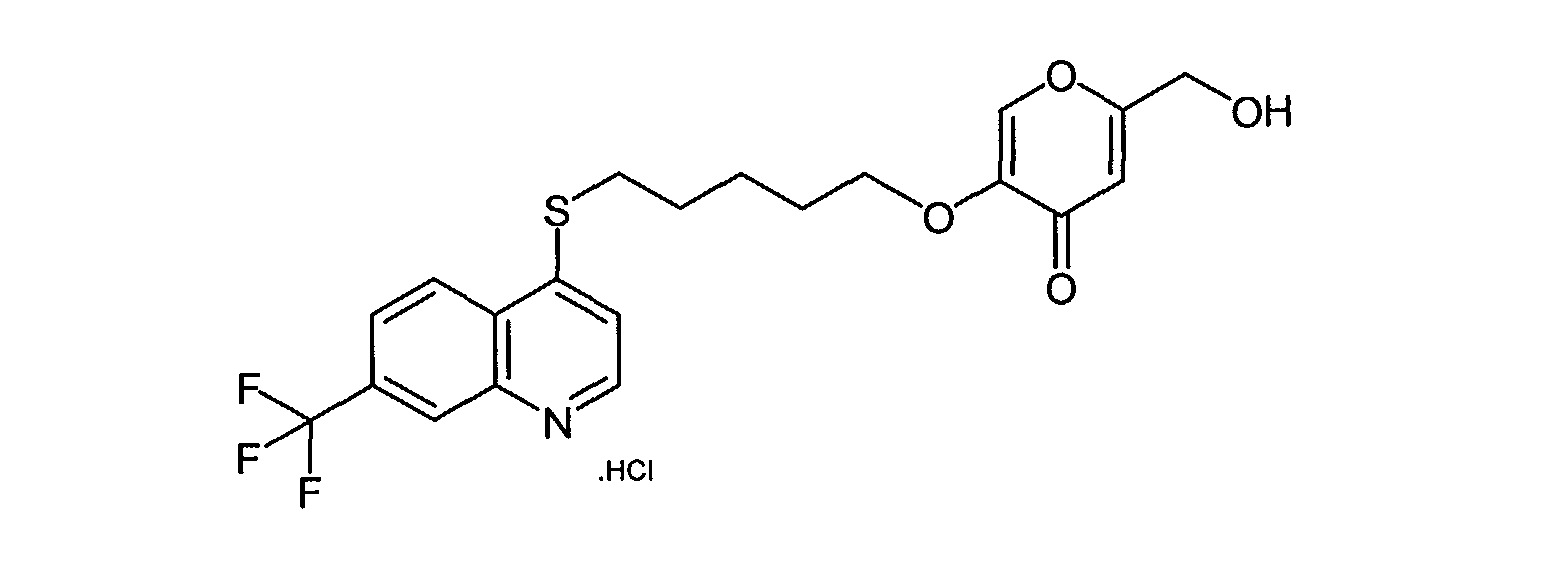
1H-NMR (CD3OD, δ): δ 1.60-2.00 (m, 6H, 3xCH2), 3.42 (t, J = 7.1 Hz, 2H, CH2S), 3.83 (t, J = 5.8 Hz, 2H, CH2O), 4.31 (s, 2H, CH2 OH), 6.38 (s, 1H, -C=CH-), 7.92 (s, 2H, -C=CH- and Ar-H), 8.05 (d, J = 8.8 Hz, 1H, Ar-H), 8.33 (s, 1H, Ar-H), 8.57 (d, J = 8.8 Hz, 1H, Ar-H), 8.88 (d, J = 6.0 Hz, 1H, Ar-H).
13C-NMR (CD3OD): 176.79, 170.72, 166.95, 148.95, 144.63, 144.54, 136.75, 136.68, 136.30, 128.86, 127.64, 126.15, 122.52, 120.24, 120.18, 118.24, 111.70, 70.40, 61.06, 32.84, 29.44, 28.34, 26.42.
MS-ESI m/z (rel. int.): 439.95 ([MH]+, 100), 306.08 (10).
HPLC: Method A, detection UV 254 nm, EHT 1302 RT = 4.63 min, peak area 99.0 %. - 2-(tert-Butyl-dimethyl-silanyloxymethyl)-5-hydroxy-4H-pyran-4-one x (1.50 g, 5.85 mmol) was charged in a 100 mL round-bottomed flask equipped with a magnetic stirrer and under inert atmosphere. Anhydrous DMF (25 mL) and Cs2CO3 (2.10 g, 6.44 mmol) were successively added. After 5 min, 1,5-dibromopentane (2.39 mL, 17.55 mmol) was added via syringe at room temperature. The reaction mixture was heated at 50°C for 3 h. After cooling and filtration DMF was removed in vacuo. The crude oil was purified by chromatography on silica using as eluent AcOEt:cyclohexane = 20:80 then 30:70. After evaporation, 5-(5-bromo-pentyloxy)-2-(tert-butyl-dimethylsilanyloxymethyl)-4H-pyran-4-
one 4 was obtained (1.25 g, 53% yield) as a white solid. - The structure of compound ex 13 is presented below:MW: 405.40; Yield: 53 %; White solid; Mp = 65.3 °C.

R f : 0.65 (AcOEt:Cyclohexane = 50:50).
1H-NMR (CD3Cl, δ): 0.11 (s, 6H, 2xCH3), 0.93 (s, 9H, 3xCH3), 1.52-1.68 (m, 2H, CH2), 1.79-1.97 (m, 4H, 2xCH2), 3.43 (t, J = 6.7 Hz, 2H, CH2Br), 3.88 (t, J = 6.4 Hz, 2H, CH2O), 4.46 (s, 2H, CH2OSi), 6.50 (d, J = 0.5 Hz, 1H, -C=CH-), 7.54 (s,
1H, -C=CH).
13C-NMR (CD3Cl): 174.58, 166.84, 147.81, 139.00, 111.71, 69.38, 61.21, 33.53, 32.36, 28.21, 25.73, 24.58, 18.26, -5.48. - 7-Trifluoromethyl-4-quinoline-thiol (0.77 g, 3.37 mmol) was charged in a 100 mL round-bottomed flask equipped with a magnetic stirrer and under inert atmosphere. Anhydrous DMF (20 mL) and NaH 60% dispersion in oil (135 mg, 3.37 mmol) were successively added. After 40 min a solution of 5-(5-bromopentyloxy)-2-(tert-butyl-dimethyl-silanyloxymethyl)-4H-pyran-4-one 4 (1.24 g, 3.06 mmol) in 10 mL DMF was added via syringe at room temperature. The reaction mixture was stirred for 2 h at room temperature. The reaction mixture was poured in 500 mL of H2O, extracted with AcOEt (3 x 150 mL). The organic layer was washed with brine (4 x 250 mL), dried over MgSO4, filtered and evaporated in vacuo. The crude yellow solid was purified by chromatography on silica using as eluent AcOEt:cyclohexane = 50:50 then 60:40. After evaporation, 2-(tert-butyl-dimethyl-silanyloxymethyl)-5-[5-(7-trifluoromethyl-quinolin-4-ylsulfanyl)-pentyloxy]-4H-pyran-4-
one 5 was obtained (1.27 g, 75 % yield) as a yellow solid. - The structure of compound ex 14 is presented below:MW: 553.71; Yield: 75 %; Yellow solid.
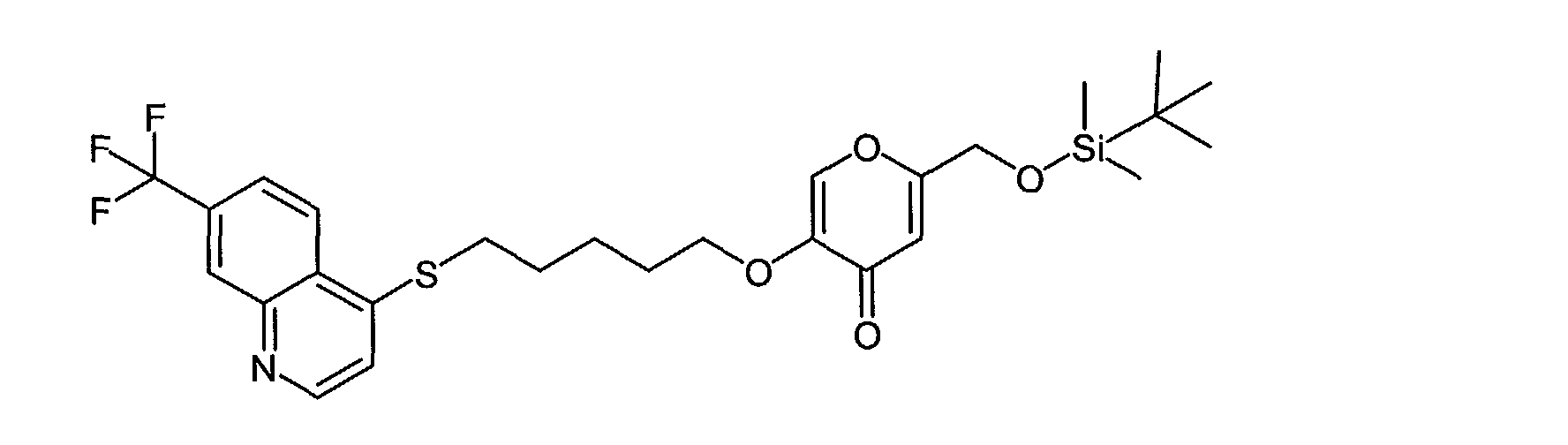
Rf : 0.31 (AcOEt:cyclohexane = 60:40).
1H-NMR (CD3Cl, δ): 0.11 (s, 6H, 2xCH3), 0.93 (s, 9H, 3xCH3), 1.60-1.78 (m, 2H, CH2), 1.80-1.95 (m, 4H, 2xCH2), 3.15 (t, J = 7.2 Hz, 2H, CH2S), 3.89 (t, J = 6.2 Hz, 2H, CH2O), 4.46 (s, 2H, CH2OSi), 6.51 (d, J = 0.8 Hz, 1H, -C=CH-), 7.26 (d, J = 4.8 Hz, 1H, Ar-H), 7.53 (s, 1H, -C=CH), 7.71 (dd, J = 8.8 Hz, J = 1.4 Hz, 1H, Ar-H), 8.23 (d, J = 8.8 Hz, 1H, Ar-H), 8.36 (s, 1H, Ar-H), 8.79 (d, J = 4.8 Hz, 1H, Ar-H).
MS-ESI m/z (rel. int.): 554.0 ([MH]+, 100).
HPLC: Method A, detection UV 254 nm, RT =6.57. - In a 50 mL round-bottomed flask 2-(tert-butyl-dimethyl-silanyloxymethyl)-5-[5-(7-trifluoromethyl-quinolin-4-ylsulfanyl)-pentyloxy]-4H-pyran-4-one 5 (1.20 g, 2.17 mmol) was dissolved in 25 mL of THF. A solution of n-tetrabutylammonium fluoride in THF (2.38 mL, 2.38 mmol) was added via syringe. The raction mixture was stirred 1 h at RT. The reaction mixture was evaporated in vacuo and the crude product was purified by chromatography on silica using as eluent CH2Cl2:MeOH = 95:5. After evaporation a yellow light solid EHT 5909 (0.73 g, 77 % yield) was obtained.
- The structure of
compound ex 15 is presented below:MW: 439.11; Yield: 77 %; Yellow pale solid; Mp = 133.2 °C (dec., AcOEt).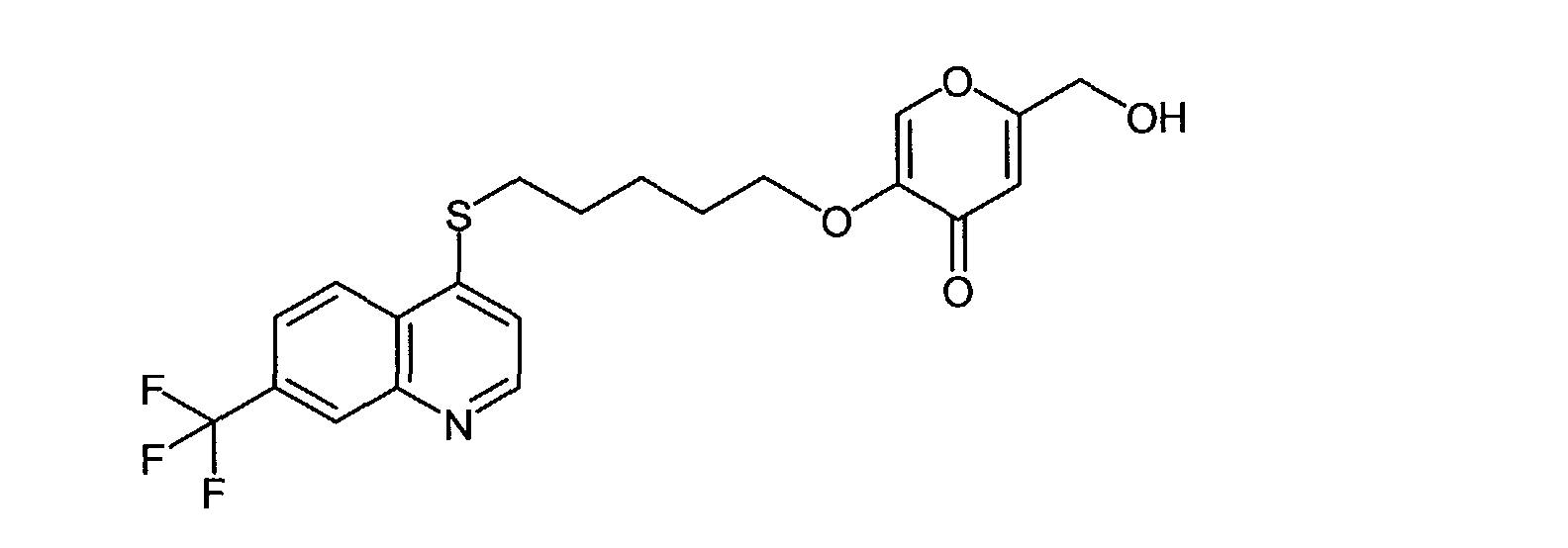
R f : 0.23 (CH2Cl2:MeOH = 95:5).
1H-NMR (CD3Cl, δ): 1.65-1.76 (m, 2H, CH2), 1.77-1.95 (m, 4H, 2xCH2), 3.14 (t, J = 7.2 Hz, 2H, CH2S), 3.86 (t, J = 8.2 Hz, 2H, CH2O), 4.12 (s broad, 1H, OH), 4.49 (s, 2H, CH2OH), 6.52 (s, 1H, -C=CH-), 7.26 (d, J = 4.8 Hz ,1H, Ar-H), 7.54 (s, 1H, -C=CH-), 7.70 (dd, J = 8.8 Hz, J = 1.7 Hz, 1H, Ar-H), 8.22 (d, J = 8.8 Hz, 1H, Ar-H), 8.33 (s, 1H, Ar-H), 8.74 (d, J = 4.8 Hz, 1H, Ar-H).
13C-NMR (CD3Cl): 174.70, 167.23, 150.42, 148.56, 147.79, 146.39, 139.29, 128.14, 127.50, 125.00, 121.89, 117.26, 111.98, 69.29, 60.81, 30.99, 28.55, 27.76, 25.40.
MS-ESI m/z (rel. int.): 439.9 (([MH]+, 100), 298.08 (5), 211 (10), 142.9 (5).
HPLC: Method A, detection UV 254 nm, EHT 5909 RT = 4.60 min, peak area 99.9%. - 2-Hydroxymethyl-5-[5-(7-trifluoromethyl-quinolin-4-ylsulfanyl)-pentyloxy]-4H-pyran-4-one EHT 5909 (0.10 g, 0.227 mmol) was charged in a 25 mL three necked round bottom flask equipped with a magnetic stirrer and under a nitrogen atmosphere. THF (6 mL) and NaH (60% dispersion in oil, 10 mg, 0.25 mmol) were added at room temperature. After the reaction mixture was stirred for 5 min, methyl choromethyl ether (18.1 µl, 0.24 mmol, 1.05 eq.) was added via syringe and the reaction mixture was stirred for 2 h 30 at room temperature. The raction mixture was poured in H2O (60 mL) and extracted with AcOEt (3 x 20 mL). The organic layer was dried over MgSO4, filtered and evaporated in vacuo. The crude product was purified by chromatography on silica using as eluent MeOH:CH2Cl2 = 2:98. After evaporation and drying to the vacuum pump a white pale yellow
solid EHT 2168 was obtained (74 mg, 67 % yield). - The structure of compound ex 16 is presented below:MW: 483.50; Yield: 67 %; Yellow pale solid; Mp: 88.1 °C.

Rf : 0.42 (CH2Cl2:MeOH = 95:5).
1H-NMR (CD3Cl, δ): 1.73-1.80 (m, 2H, CH2-CH2 -CH2), 1.82-1.98 (m, 4H, CH2 -CH2-CH2 ), 3.15 (t, J = 7.2 Hz, 2H, CH2S), 3.40 (s, 3H, MeO), 3.89 (t, J = 6.2 Hz, 2H, CH2O), 4.37 (s, 2H, CH2O), 4.70 (s, 2H, CH2O), 6.48 (s, 1H, -C=CH-), 7.26 (d, J = 4.8 Hz, 1H, Ar-H), 7.56 (s, 1H, -C=CH-), 7.71 (dd, J = 8.8 Hz, J = 1.7 Hz, 1H, Ar-H), 8.23 (d, J = 8.8 Hz, 1H, Ar-H), 8.35 (s, 1H, Ar-H), 8.79 (d, J = 4.8 Hz, 1H, Ar-H).
MS-ESI m/z (rel. int.): 484.1 ([MH]+, 100), 255 (5).
HPLC: Method A, detection UV 254 nm,EHT 2168 RT = 5.19 min, peak area 99.9 %. - To a suspension of 2-hydroxymethyl-5-[5-(7-trifluoromethyl-quinolin-4-ylsulfanyl)-pentyloxy]-4H-pyran-4-one EHT 5909 (0.10 g, 0.23 mmol) in 4 mL of dichloromethane at 5°C were added triethylamine (35 µl, 0.25 mmol) and methanesulfonyl chloride (19.4 µl, 0.25 mmol). The reaction mixture was stirred 18 h at room temperature. Dichloromethane (20 mL) was added and the solution was washed with
aqueous NaHCO 3 10% (2x 30 mL). The organic layer was dried over MgSO4, filtered and evaporated in vacuo. The crude product was purified by chromatography on silica using as eluent CH2Cl2:MeOH = 98:2. After evaporation methanesulfonic acid 4-oxo-5-[6-(7-trifluoromethyl-quinolin-4-ylsulfanyl)-hexyloxy]-4H-pyran-2-ylmethyl ester 6 (83 mg, 69 %) was obtained as a white solid. - The structure of compound ex 17 is presented below:MW: 517.54; Yield: 69 %; White solid; Mp = 122.1 °C (dec.).

R f : 0.44 (CH2Cl2:MeOH = 95:5).
1H-NMR (CD3Cl, δ): 1.63-1.78 (m, 2H, CH2), 1.80-1.95 (m, 4H, 2xCH2), 3.11 (s, 3H, MeS); 3.15 (t, J = 7.2 Hz, 2H, CH2S), 3.90 (t, J = 6.2 Hz, 2H, CH2O), 4.98 (s, 2H, CH2OH), 6.52 (s, 1H, -C=CH-), 7.26 (d, J = 4.8 Hz ,1H, Ar-H), 7.60 (s, 1H, -C=CH-), 7.71 (dd, J = 8.8 Hz, J = 1.8 Hz, 1H, Ar-H), 8.23 (d, J = 8.8 Hz, 1H, Ar-H), 8.35 (s, 1H, Ar-H), 8.79 (d, J = 4.8 Hz, 1H, Ar-H).
MS-ESI m/z (rel. int.): 517.81 ([MH]+, 100).
HPLC: Method A, detection UV 254 nm, RT = 5.04 min, peak area 97.0 %. - The compound was prepared according the above procedure from EHT 5909 instead that after the reaction, the mixture was evaporated to dryness and let 18 h at room temperature (a spontaneous reaction between the mesylate and triethylamine hydrochloride occurred). Purification by preparative HPLC (CH3CH:H2O:
TFA 1/1000 gradient) yielded to EHT 1494 (43%) as a yellow solid. - The structure of compound ex 18 is presented below:MW: 457.89; Yield: 43 %; Yellow solid; Mp: 38.2 °C.

R f : 0.35 (CH2Cl2:MeOH = 9:1).
1H-NMR (CDCl3, δ): 1.70-2.00 (m, 6H, CH2), 3.26 (t, J = 6.9 Hz, 2H, CH2S), 3.92 (t, J = 5.8 Hz, 2H, CH2O), 4.33 (s, 2H, Cl-CH2), 6.50 (s, 1H, --C=CH), 7.50 (m, 1H, Ar-H), 7.61 (s, 1H, -C=CH), 7.83 (d, J = 8.8 Hz, 1H, Ar-H), 8.33 (d, J = 8.8 Hz, 1H, Ar-H), 8.59 (s, 1H, Ar-H), 8.92 (m, 1H, Ar-H).
MS-ESI m/z (rel. int.): 457.9-459.8 ([MH]+, 100).
HPLC: Method A, Detection UV 254 nm, EHT 1494, RT = 5.39 min, purity 94.7%. - Methanesulfonic acid 4-oxo-5-[6-(7-trifluoromethyl-quinolin-4-ylsulfanyl)-hexyloxy]-4H-pyran-2-ylmethyl ester 6 (82 mg, 0.16 mmol) in 1.5 mL of dichloromethane was charged in a 10 mL round-bottomed flask equipped with a magnetic stirrer and under N2 atmosphere. 1-Methylpiperazine (35.1 µl, 0.32 mmol) was added via syringe and the reaction mixture was heated at 45 °C for 2
h 40. The reaction mixture was evaporated to dryness, recrystallized in AcOEt, washed by Et2O. 40 mL of dichloromethane were added and the solution was washed with successively NaHCO3 at 5% (40 mL) and brine (40 mL). The solution was dried over MgSO4, filtered and evaporated to give a pale yellow solid EHT 7365 (59 mg, 72 % yield). - The structure of compound ex 19 is presented below:MW: 521.59; Yield: 72 %; Yellow pale solid; Mp: 112.6 °C (dec.).

Rf : 0.26 (CH2Cl2:MeOH = 90:10).
1H-NMR (CD3Cl, δ): 1.61-1.79 (m, 2H, CH2-CH2 -CH2), 1.82-1.98 (m, 4H, CH2 -CH2-CH2 ), 2.31 (s, 3H, CH3N), 2.20-2.75 (m, 8H, CH2 -N-CH2 and CH2 -N(CH3)-CH2 ), 3.15 (t, J = 7.2 Hz, 2H, CH2S), 3.37 (s, 2H, =CCH2N), 3.89 (t, J = 6.2 Hz, 2H, CH2O), 6.45 (s, 1H, -C=CH-), 7.26 (d, J = 4.8 Hz ,1H, Ar-H), 7.56 (s, 1H,-C=CH-), 7.71 (dd, J = 8.8 Hz J = 1.7 Hz, 1 H, Ar-H), 8.23 (d, J = 8.8 Hz, 1 H, Ar-H), 8.35 (s, 1 H, Ar-H), 8.79 (d, J = 4.8 Hz, 1 H, Ar-H).
MS-ESI m/z (rel. int.): 521.9 ([MH]+, 100); 297.9 (20), 282.1 (20), 229.9 (30).
HPLC: Method A, detection UV 254 nm,EHT 7365 RT = 4.12 min, peak area 98.4 %, impurity RT= 5.24, 1.6 %. - Methanesulfonic acid 4-oxo-5-[6-(7-trifluoromethyl-quinolin-4-ylsulfanyl)-hexyloxy]-4H-pyran-2-ylmethyl ester 6 (96 mg, 0.184 mmol) in 1.8 mL of dichloromethane was charged in a 10 mL round-bottomed flask equipped with a magnetic stirrer and under N2 atmosphere. Morpholine (41 µl, 0.46 mmol) was added via syringe and the reaction mixture was heated at 45 °C for 3 h 30. The reaction mixture was evaporated to dryness, recrystallized in AcOEt, washed by Et2O. 40 mL of dichloromethane were added and the solution was washed with successively NaHCO3 at 5% (40 mL) and brine (40 mL). The solution was dried over MgSO4, filtered and evaporated to give a pale yellow solid EHT 7365 (60 mg, 64 % yield).
- The structure of
compound ex 20 is presented below:MW: 508.55; Yield: 64%; Yellow light solid; Mp= 93.3 °C.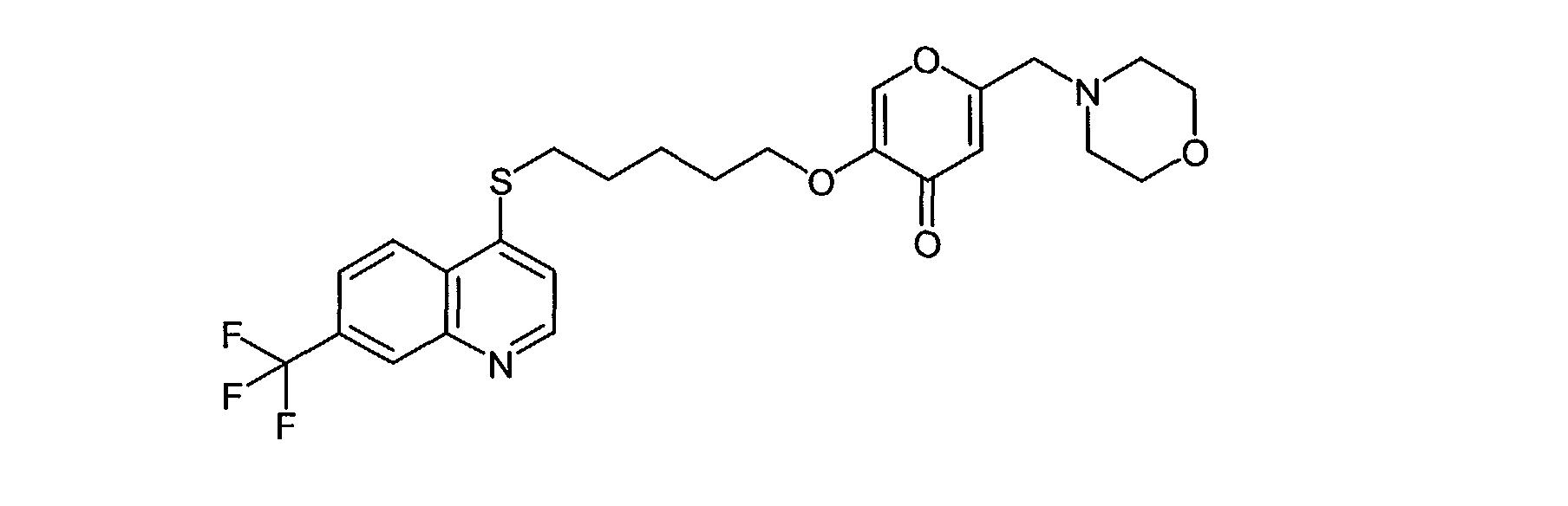
R f : 0.33 (AcOEt)
1H-NMR (CDCl3, δ): 1.72-1.74 (m, 2H, CH2), 1.88-1.92 (m, 4H, 2xCH2), 2.51-2.52 (m, 4H, CH2-N-CH2), 3.13-3.18 (t, J = 7.0 Hz, 2H, -SCH2), 3.36 (s, 2H, -NCH2), 3.72-3.73 (m, 4H, CH2-O-CH2), 3.87-3.91 (t, J = 6.0 Hz, 2H, O-CH2), 6.47 (s, 1H, - CH=C), 7.26 (m, 1 H, Ar-H), 7.56 (s, 1 H, -CH=C), 7.69-7.72 (d, J = 8.8 Hz, 1 H, Ar-H), 8.23-8.25 (d, J = 8.7 Hz, 1H, Ar-H), 8.36 (s, 1 H, Ar-H), 8.78-8.80 (d, J = 4.7 Hz, 1H, Ar-H).
MS-ESI m/z (rel. Int.): 509.1 ([MH]+, 100).
HPLC: Method A, detection UV 254 nm,EHT 7168 RT = 4.37 min, peak area 99.9 %. - This example discloses the various assay conditions used to illustrate the biological activity of the compounds.
- A series of in vitro tests was designed to screen the various compounds and evaluate their anti-proliferative, anti-tumoral and anti-angiogenic potential. L651582 (carboxyamidotriazole; CAI, Merck) and Paclitaxel (taxol, Bristol Myers Squibb) were included as positive controls.
- Reference L651582 (Merck Institute for Therapeutic Research, Rahway, NJ) is a carboxyamide-amino-imidazole compound originally developed as a coccidiostat (U.S. patent No. 4,590,201). L651582 has been shown later by the NCl to be a synthetic inhibitor of both nonvoltage- and voltage-gated calcium pathways. It demonstrated inhibition of tumor cell motility, adhesion, metastatic potential, and growth in vitro in a number of human tumor cell lines at concentrations from 1 to 10 µM. L651582 was also demonstrated to inhibit proliferation, migration and adhesion of several human endothelial cells. Moreover, inhibition of both HUVEC vascular tube formation on matrigel and retardation of microvessel outgrowth in the rat aorta ring were shown. Finally, in vivo inhibition of angiogenesis in the chicken chorioallantoic membrane assay at concentrations from 10 to 20 µM was also demonstrated.
- In order to determine one compound effect on cell viability, microculture tetrazolium assay (MTT) was performed as described by Carmichael et al. (1996) with modifications. Four human tumoral cell lines, namely HCT116 colon adenocarcinoma, H460 lung carcinoma, MCF-7 and MDA-MB-231 breast carcinoma cell lines, and 3 immortalized but non tumorigenic cell lines, namely NIH3T3 mouse fibroblasts, human breast-derived MCF10-A, human lung-derived MRC-5 were purchased at the American Type Culture Collection (ATCC), Manassas, USA and cultured according to their recommendations. Human Microvasculature Endothelial Cell line HMEC1 was obtained from the National Center for Infectious Diseases, Atlanta, USA. Briefly, 2.5 103 to 2 104 cells per well were seeded in 48-well plates 24 hours before drug addition. Cells were treated with 0 to 200 µM (11 concentrations) of compound solubilized in DMSO, adjusting the final concentration of DMSO to 1% in the well. Six days after treatment, the medium was replaced by PBS containing 0.5 mg/ml MTT (Sigma) and cells were incubated for 1-3 hours at 37°C before solubilization of formazan crystals in 100% DMSO. Absorbance was measured using a spectrophotometer at a wavelength of 550nm. Data was analyzed using the GraphPad Prism software (GraphPad Software, Inc., San Diego, USA), and IC50 (dose leading to 50% cell death) was calculated from the dose-response curves.
- In order to evaluate the effect of one compound on the capacity of tumour cells to grow without anchorage, HCT116 cells were seeded in soft agar. In contrast to microplate assays which average the drug's effects over an entire cell population, clonogenic assays offer the possibility of distinguishing cytotoxic agents (i.e., decreased colony number) from cytostatic agents (i.e., decreased colony size without decreased colony number; Murphy M.J. et al., 1996).
Briefly, 5 103 HCT116 cells were resuspended in 300 µl of complete medium containing 0.3% soft-agar (Difco) and different concentrations of compound (8 concentrations ranging from 0 to 30 µM). Cells were then poured on a solidified layer of medium containing 0.5% of soft agar plus the compound at the same concentration as in the upper layer. Cells were incubated for 7 days at 37°C before pictures of each well were taken using a phase contrast microscope (Nikon) and a digital camera (Nikon Coolpix 990). Pictures were subsequently analyzed using a free image analysis software from the NIH (ImageJ) allowing to determine clones size and number.
Data was analyzed using the GraphPad Prism software, and IC50 (dose leading to a 50% decrease of clone size or number) was calculated from dose-response curves. The ratio IC50 clone size/IC50 clone number was then calculated. When this ratio is equal to 1 (IC50 size=IC50 number), the compound is referred to as "cytotoxic". When the ratio is close to 0 (IC50 size<<IC50 number), the compound is referred to as "cytostatic" (Figure 1). - An essential characteristic of malignant cells is their ability to migrate, invade host tissues and to produce metastases. In order to evaluate the capacity of one compound to affect the ability of tumoral cells to migrate, migration assays were performed using highly invasive tumoral cells MDA-MB-231. This assay was performed using Falcon HTS Fluoroblock inserts. Culture medium containing Fetal Bovine Serum (FBS; which is used as a chemoattractant) was added to the plate wells and 2 104 MDA-MB-231 cells resuspended in medium without FBS and with 0.1% BSA were added to each insert well. The compound of interest was added to the medium in both the upper and the lower chambers. Plates were incubated for 16 hours at 37°C. Following incubation, the medium was removed from the upper chamber and the entire insert plate was transferred to a second 24-well plate containing 4 µg/ml Calcein-AM in medium containing 0.1% BSA. The plates were incubated for one hour at 37°C, rinsed with Hanks Buffered Saline (HBSS). Fluorescence data were collected using Fluoroskan Ascent FL fluorescence plate reader at an excitation wavelength (Ex) of 485 nm and emission wavelength (Em) of 517 nm. Only those labelled cells that passed through the Matrigel layer and the membrane were detected. Data were analyzed using the GraphPad Prism software.
- The endothelial cell tube formation assay, or tubulogenesis assay, is an in vitro assay that is widely accepted to accurately reflect number of terminal stages of the angiogenic process such as attachment, migration and differentiation into tubular structures. In this model, endothelial cells are cultured on a monolayer of reconstituted basement membrane components (Matrigel) and form, in a few hours, capillary-like structure. Therefore, this system is a useful and powerful tool for rapidly screening anti-angiogenic agents by monitoring inhibition of endothelial cells morphogenesis on extracellular matrix.
- HMEC-1 cell line is cultured in MCDB-131 medium (Sigma) supplemented with 15% FBS, 10 ng/ml recombinant human epidermal growth factor (Invitrogen) and 1 µg/ml hydrocortisone. Cells are cultured to 70-80% confluence. A 96-well plate was coated with Matrigel® Basement Membrane Matrix (Becton Dickinson). 2 104 HMEC-1 cells were seeded into each well. The test of control compounds were diluted in DMSO and added to the coated plate. The plate was subsequently incubated for 6 to 8 hours at 37°C, 5% CO2 atmosphere to allow tubule formation. The cells were then incubated with 1.25 µg/ml Calcein AM for 15 minutes at 37°C, 5% CO2. Pictures of each well were taken using a fluorescent microscope and a digital camera (Nikon Coolpix 990). Images were analysed using AngioSys software (TCS Cellworks, Buckingham, UK) that allows quantification of the total tubule length and of the number of junctions, two parameters representative of tubule formation/disruption. Data was analyzed using the GraphPad Prism software, and IC50s was calculated. Results were expressed as the ratio "IC50 L651582/IC50 compound".
- In order to determine the capacity of the compounds to affect cell viability, MTT assays using a tumoral cell line (HCT116) and an endothelial cell line (HMEC1) were performed as described in the material and methods. IC50s were calculated and the results are shown on Figure 2.
- Compounds with various substitutions on the aromatic moiety (
EHT 9376,EHT 9014, EHT 5810): In HCT116 cell line, it was shown that best compound is EHT 9376 (IC50 = 0.8±0.2 µM), followed by EHT 1593 (IC50 = 2.4+0.1 µM), EHT 9014 (IC50 = 5.9 µM), and EHT 5810 (IC50 = 7.7 µM). - Compounds with variations around the linker moiety: Three compounds were tested: EHT 4745 (4 carbons), EHT 9376 (5 carbons) and EHT 6271 (6 carbons). In HCT116, the optimal linker structure is the 5 carbon linker (IC50 = 0.8±0.2 µM), followed by the 6 carbon linker (IC50 = 1 µM). The compound showing the lowest activity is the 4 carbon linker compound (IC50 = 3.8±0.2 µM). In HMEC1, it was also shown that increasing or decreasing the linker length of one carbon does not help increase the efficiency of compounds in affecting the cells viability.
EHT 4745 andEHT 6271 have an IC50 of 9 µM against 7 µM forEHT 9376. - Compounds with a 5 carbon linker and bearing a 7-trifluoromethylquinolin-4-ylsulfanyl moiety with various substitutions at
position 6 of the kojic acid moiety: In HCT116, the compound showing the highest effect on cell viability is EHT 9376 (O-THP group ; IC50 = 0.8±0.2 µM), followed by EHT 7168 (morpholine group; IC50 = 2 µM), EHT 7365 (N-methylpiperazine group; IC50 = 3.6±0.4 µM) and finally EHT 2168 (MOM; IC50 = 4.4±0.4 µM). In HMEC1 cells, EHT 9376 (IC50 = 7±1 µM) has a higher activity as compared to EHT 7365 (IC50 = 8 µM) and EHT 7168 (IC50 = 20 µM). - Comparison between EHT 9376 (X = S) and EHT 3788 (X = O): In HCT116,
EHT 9376 is 3-fold more effective at decreasing the cells viability (IC50 = 0.8±0.2 µM and 2.3 µM, respectively). In HMEC1 cells,EHT 9376 andEHT 3788 have very similar activities (IC50s of 7 µM). - Interestingly, the compounds of the present invention had an
activity 2 to 9-fold higher in HCT116 cells as compared to HMEC1 cells, showing that compounds are more toxic for tumoral cells (rapidly dividing cells) than for endothelial cells (slowly dividing cells). - In order to study the compounds' effects on the ability of HCT116 cells to grow independently from anchorage, cells were grown in soft agar in the presence of various concentrations of the compounds. These experiments allowed 1) to rank the compounds according to their potential in affecting the clone size and 2) to evaluate their mode of action (cytotoxic vs cytostatic).
-
EHT 9376,EHT 9014,EHT 3788 andEHT 1593 all affect the ability of HCT116 to grow independently from anchorage in the micromolar range. The compound showing the highest effect wasEHT 9376. The compound showing the lowest effect wasEHT 1593. IC50 forEHT 9376 is very similar to IC50 calculated for reference compound L651582 (5.4±1.2 µM against 5.8±1.0 µM respectively) (Figure 3). - In our experiments, L651582 was shown to preferentially affect clone size as compared to clone number (Figure 4). This is in accordance with the literature where L651582 is described as a cytostatic compound (Wasilenko et al, 1996). Similarly, the best compounds of the invention that were tested preferentially affect clone size. In conclusion, the compounds described in this invention have a cytostatic mode of action.
- The above data suggest that
EHT 9376 causes cytostatic growth suppression. To examine this possibility, the ability of HCT116 cells to resume growth after compound withdrawal from growth inhibited cell cultures was evaluated (Fig. 5). Proliferation of HCT116 cells began following the removal ofEHT 9376 and L651582 from the cell cultures afterday 3, in a very similar way. These experiments allowed to confirme thatEHT 9376 has a mode of action very similar to the mode of action of L651582, which is described as cytostatic in the literature. -
Compound EHT 9376 was tested through migration assay, in parallel with reference compound L651582, which is described in the literature as an anti-migratory compound (Kohn EC et al, 1990; Rust WL et al, 2000). The results are presented in Figure 6. - In our system, 10 µM L651582 was shown to decrease the migration of MDA-MB-231 cells of about 40%. Complete inhibition was obtained with 50 µM of compound.
EHT 9376 was shown to similarly affect MDA-MB-231 cells migration: 10µM EHT 9376 inhibits the cell migration of about 60%, and 50 µM almost completely inhibits cell migration.EHT 9376 is shown here to be an efficient anti-migratory compound. - As seen above, the compounds of the present invention and L651582 have very close anticancer characteristics (cell proliferation, migration, anchorage independent cell growth). Interestingly, L651582 is described in the literature as being both an anticancer and an anti-angiogenic compound (Bauer KS et al, 2000; Krüger EA & Figg WD, 2001). In order to see if our compounds also share anti-angiogenic characteristics with L651582, a tubulogenesis assay on HMEC1 cells was performed using
EHT 4745,EHT 6271,EHT 7365,EHT 7168,EHT 1593,EHT 9376 andEHT 3788. - When plated on Matrigel, HMEC1 cells form vessel-like structures in the presence of medium plus solvent DMSO alone. In contrast, the addition of compounds in culture medium caused a dose-dependent inhibition of Matrigel-induced network formation. IC50 for both total tubule length and number of junctions (two parameters which are representative of the tubulogenesis process) were calculated for all the tested compounds using GraphPad Prism, and these IC50s were normalized against the IC50 of L651582 (Figure 7).
- It was shown that
EHT 3788 is the compound inhibiting the formation of tubule in the greater extent (IC50s being 6 and 7-fold lower as compared to IC50s calculated for L651582). All the other compounds were shown to have an equivalent effect on tubulogenesis (IC50s being 3 to 5-fold Lower for our compounds as compared to L651582). - The inhibition of the tubule formation cannot be attributed to compound toxicity since the endothelial cells are treated for only a few hours and the compounds were shown to have only a moderate effect on HMEC1 cells viability after a 6-day treatment (see MTT results).
These results thus illustrate the ability of the compounds of this invention (and the particular efficacy of compounds) especially ofEHT 9376 to affect tumor cell viability, inhibit growth of tumor cells, to affect specific characteristics of tumor cells such as anchorage-independent growth, migration and, especiallyEHT 3788, to inhibit the formation of tubule (vessel-like structures). -
- Bauer KS, Cude KJ, Dixon SC, Kruger EA, Figg WD. Carboxyamido-triazole inhibits angiogenesis by blocking the calcium-mediated nitric-oxide synthase-vascular endothelial growth factor pathway. J Pharmacol Exp Ther. 2000 Jan;292(1 ):31-7.
- Carmichael J, DeGraff WG, Gazdar AF, Minna JD, Mitchell JB. Evaluation of a
tetrazolium-based semiautomated colorimetric assay: assessment of
radiosensitivity. Cancer Res. 1987
Feb 15;47(4):943-6. - Kohn EC, Liotta LA. L651582: a novel antiproliferative and antimetastasis
agent.
J Natl Cancer Inst. 1990Jan 3;82(1):54-60. - Kruger EA, Figg WD. Protein binding alters the activity of suramin, carboxyamidotriazole, and UCN-01 in an ex vivo rat aortic ring angiogenesis assay.
- Clin Cancer Res. 2001 Jul;7(7):1867-72.
- Murphy MJ Jr, Fushimi F, Parchment RE, Barbera-Guillem E. Automated imaging and quantitation of tumor cells and CFU-GM colonies in microcapillary cultures: toward therapeutic index-based drug screening. Invest New Drugs. 1996;13(4):303-14.
- Rust WL, Huff JL, Plopper GE. Screening assay for promigratory/antimigratory
compounds.
Anal Biochem. 2000 Apr 10:280(1):11-9. - Wasilenko WJ, Palad AJ, Somers KD, Blackmore PF, Kohn EC, Rhim JS,
Wright GL Jr, Schellhammer PF. Effects of the calcium influx inhibitor
carboxyamidotriazole on the proliferation and invasiveness of human prostate
tumor cell lines. Int J Cancer. 1996
Oct 9;68(2):259-64.
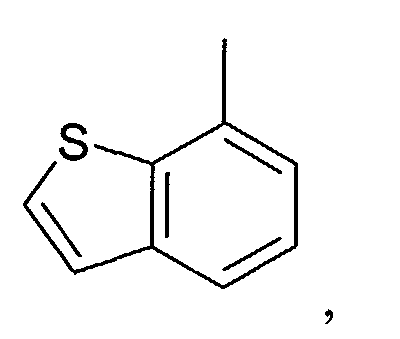
its tautomers, optical and geometrical isomers, racemates, salts, hydrates and mixtures thereof.
Claims (16)
- A compound having a general formula (I) :wherein:
 andR1 is selected from the group consisting of :and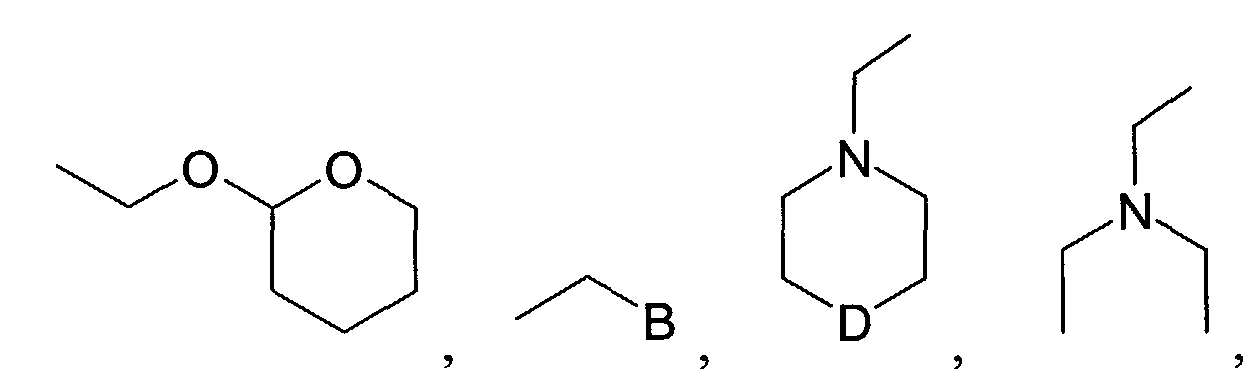
 R2 represents a hydrogen atom, an alkyl or alkenyl group containing from 3 to 6 carbon atoms;B represents an halogen atom, preferably chlorine, a hydroxyl group, a -O-CH2-O-CH3 (MOM) group, a -O-CH2-O-CH2-CH2-O-CH3 (MEM) group, a -OSO2-alkyl group or a -OSi(CH3)2tBu;D represents an oxygen atom, NR3, CR'R" or a sulfur atom;X represents an oxygen atom, a sulfur atom or a radical -NR4-;Y represents an oxygen atom, a sulfur atom or a radical -NR4- ;R3 represents a hydrogen, an alkyl group or a SO2-alkyl group;R' and R", identical or different, represent an hydrogen atom or an alkyl radical;R4, identical or different, is selected from a group consisting of a hydrogen atom, an alkyl group having from 1 to 10 carbon atoms, an aryl and an aralkyl ;"linker" represents (CH2)n, wherein n represents an integer between 1 and 10 inclusive or a aryldialkyl (preferably xylenyl) group;A represents a group selected from :
 optionnally A is substituted,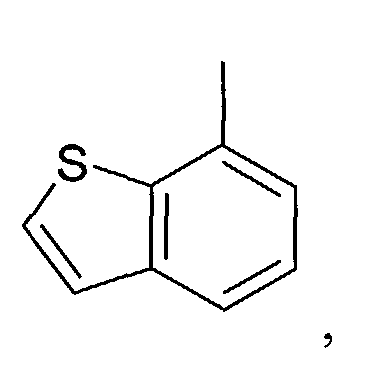
its tautomers, optical and geometrical isomers, racemates, salts, hydrates and mixtures thereof. - A compound according to claim 1, wherein :wherein D is oxygen, -CH2- or NR3, wherein R3 preferably represents an alkyl group (said alkyl is more specifically a methyl radical), and-CH2-B, wherein B is a -O-CH2-O-CH3 group or -OSO2-alkyl group (wherein alkyl is preferably methyl) or halogen (preferably chlorine); and/orX is sulfur or preferably oxygen ; and/orY is oxygen ; and/or"linker" represents (CH2)n, wherein n is from 4 to 7 inclusive, or the xylenyl group ; and/orR1 is
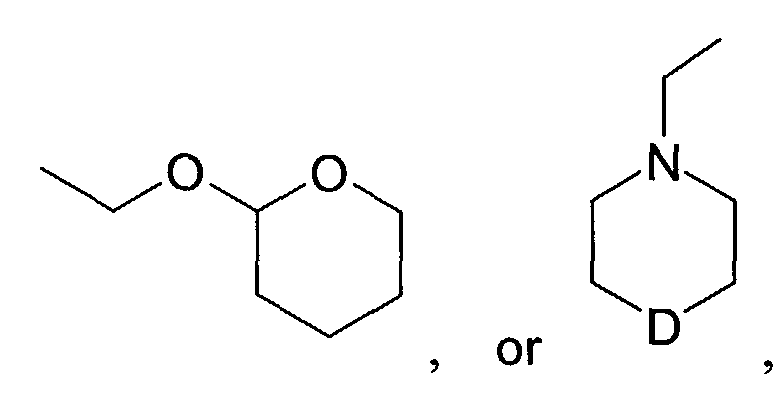 R2 is a hydrogen atom; and/orA is a substituted group.
 - A compound according to claim 1 or 2, wherein A is substituted with at least one substituent, which may be selected from the group consisting in : a hydrogen atom, a halogen atom (preferably F, Cl, or Br), a hydroxyl group, a (C1-C10)alkyl group, an alkenyl group, an (C1-C10)alkanoyl group, a (C1-C10)alkoxy group, a (C1-C10)alkoxycarbonyl group, an aryl group, an aralkyl group, an arylcarbonyl group, a mono- or poly-cyclic hydrocarbon group, a -NHCO(C1-C6)alkyl group,-NO2, -CN, a -NR5R6 group or a trifluoro(C1-C6)alkyl group, R5 and R6, independently from each other, are selected from the group consisting of a hydrogen atom, an alkyl group having from 1 to 10 carbon atoms, an aryl and an aralkyl.
- A compound according to claim 3, wherein A is a substituted group and at least one of the substituents is an halogen atom, more preferably chlorine or fluorine.
- A compound according to claim 4, wherein at least two substituents simultaneously represent Cl, in particular when A is a naphtalene group.
- A compound according to one of the preceding claims, wherein at least one of the substituents, and more preferably all the substituents, of A represents a hydrogen atom, a methyl group, a propyl group, an ethoxy group, an halogen atom, preferably chlorine or fluorine, or the CF3 group.
- A compound according to claim 1, which is selected from the group consisting of :2-(Tetrahydro-pyran-2-yloxymethyl)-5-[5-(7-trifluoromethyl-quinolin-4-yloxy)-pentyloxy]-pyran-4-one (EHT 3788)5-[5-(6-Fluoro-2-methyl-quinolin-4-yloxy)-pentyloxy]-2-(tetrahydro-pyran-2-yloxymethyl)-4H-pyran-4-one (EHT 1593)5-[5-(6-Fluoro-2-trifluoromethyl-quinolin-4-yloxy)-pentyloxy]-2-(tetrahydro-pyran-2-yloxymethyl)-4H-pyran-4-one (EHT 1074)5-[5-(7-Propyl-quinolin-8-yloxy)-pentyloxy]-2-(tetrahydro-pyran-2-yloxymethyl)-4H-pyran-4-one (EHT 5810)6,8-Dichloro-4-{5-[4-oxo-6-(tetrahydro-pyran-2-yloxymethyl)-4H-pyran-3-yloxy]-pentyloxy}-naphthalene-2-carboxylic acid ethyl ester (EHT 0470)5-[5-(Benzo[b]thiophen-7-yloxy)-pentyloxy]-2-(tetrahydro-pyran-2-yloxymethyl)-4H-pyran-4-one (EHT 6060)2-(Tetrahydro-pyran-2-yloxymethyl)-5-[5-(7-trifluoromethyl-quinolin-4-ylsulfanyl)-pentyloxy]-4H-pyran-4-one (EHT 9376)2-(Tetrahydro-pyran-2-yloxymethyl)-5-[4-(7-trifluoromethyl-quinolin-4-ylsulfanyl)-butoxy]-4H-pyran-4-one (EHT 4745)2-(Tetrahydro-pyran-2-yloxymethyl)-5-[6-(7-trifluoromethyl-quinolin-4-ylsulfanyl)-hexyloxy]-4H-pyran-4-one (EHT 6271 )2-Hydroxymethyl-5-[5-(7-trifluoromethyl-quinolin-4-ylsulfanyl)-pentyloxy]-4H-pyran-4-one hydrochloride salt (EHT 1302)2-Hydroxymethyl-5-[5-(7-trifluoromethyl-quinolin-4-ylsulfanyl)-pentyloxy]-4H-pyran-4-one (EHT 5909)2-Methoxymethoxymethyl-5-[5-(7-trifluoromethyl-quinolin-4-ylsulfanyl)-pentyloxy]-4H-pyran-4-one (EHT 2168)2-Chloromethyl-5-[5-(7-trifluoromethyl-quinolin-4-ylsulfanyl)-pentyloxy]-4H-pyran-4-one (EHT 1494)2-(4-Methyl-piperazin-1-ylmethyl)-5-[5-(7-trifluoromethyl-quinolin-4-ylsulfanyl)-pentyloxy]-4H-pyran-4-one (EHT 7365)2-Morpholin-4-ylmethyl-5-[5-(7-trifluoromethyl-quinolin-4-ylsulfanyl)-pentyloxy]-4H-pyran-4-one (EHT 7168).
- A compound according to claim 7, which is EHT9376 or EHT3788.
- A pharmaceutical composition comprising at least one compound according to any one of the preceding claims and a pharmaceutically acceptable vehicle or support.
- A composition according to the preceding claim, for the treatment of a disease associated with abnormal cell proliferation or of a disease associated with unregulated angiogenesis.
- A composition according to the preceding claim, for the treatment of cancers, restenosis, arthritis, diabetes, ocular-diseases or especially retinopathies.
- A composition according to one of the preceding claims, for the treatment of solid tumors or lymphoid tumors.
- A composition according to claim 11, wherein the cancer is selected from prostate cancer, ovarian cancer, pancreas cancer, lung cancer, breast cancer, liver cancer, head and neck cancer, colon cancer, bladder cancer, non-Hodgkin 's lymphoma cancer and melanoma.
- A composition according to claim 9, for reducing cancer cell proliferation.
- A composition according to claim 9, for treating metastatic cancers in a subject.
- A composition according to claim 11, for treating diabetic retinopathies, retinal degenerative diseases, or Age-Related Macular Degeneration (ARMD).
Priority Applications (12)
| Application Number | Priority Date | Filing Date | Title |
|---|---|---|---|
| EP20030290490 EP1471063A1 (en) | 2003-02-28 | 2003-02-28 | Compounds and methods of treating cell proliferative diseases, retinopathies and arthritis |
| AT04715422T ATE335734T1 (en) | 2003-02-28 | 2004-02-27 | COMPOUNDS AND METHODS FOR TREATING PROLIFERATIVE DISEASES, RETINOPATHY AND ARTHRITIS |
| DE602004001864T DE602004001864T2 (en) | 2003-02-28 | 2004-02-27 | COMPOUNDS AND METHODS FOR THE TREATMENT OF PROLIFERATIVE DISEASES, RETINOPATHY AND ARTHRITIS |
| JP2006502497A JP4648894B2 (en) | 2003-02-28 | 2004-02-27 | Compounds and methods of treating cell proliferative diseases, retinopathy and arthritis |
| EA200501382A EA200501382A1 (en) | 2003-02-28 | 2004-02-27 | CONNECTIONS AND METHODS FOR THE TREATMENT OF CELLULAR PROLIFERATIVE DISEASES, RETINOPATHY AND ARTHRITIS |
| CA002516239A CA2516239A1 (en) | 2003-02-28 | 2004-02-27 | Compounds and methods of treating cell proliferative diseases, retinopathies and arthritis |
| US10/541,328 US7514432B2 (en) | 2003-02-28 | 2004-02-27 | Compounds and methods of treating cell proliferative diseases, retinopathies and arthritis |
| PCT/IB2004/000926 WO2004076445A2 (en) | 2003-02-28 | 2004-02-27 | Compounds and methods of treating cell proliferative diseases, retinopathies and arthritis |
| EP04715422A EP1597253B1 (en) | 2003-02-28 | 2004-02-27 | Compounds and methods of treating cell proliferative diseases, retinopathies and arthritis |
| CNA2004800038200A CN1747952A (en) | 2003-02-28 | 2004-02-27 | Compounds and methods of treating cell proliferative diseases, retinopathies and arthritis |
| AU2004215577A AU2004215577A1 (en) | 2003-02-28 | 2004-02-27 | Compounds and methods of treating cell proliferative diseases, retinopathies and arthritis |
| US12/388,828 US20090216014A1 (en) | 2003-02-28 | 2009-02-19 | Novel compounds and methods of treating cell proliferative diseases, retinopathies and arthritis |
Applications Claiming Priority (1)
| Application Number | Priority Date | Filing Date | Title |
|---|---|---|---|
| EP20030290490 EP1471063A1 (en) | 2003-02-28 | 2003-02-28 | Compounds and methods of treating cell proliferative diseases, retinopathies and arthritis |
Publications (1)
| Publication Number | Publication Date |
|---|---|
| EP1471063A1 true EP1471063A1 (en) | 2004-10-27 |
Family
ID=32921633
Family Applications (2)
| Application Number | Title | Priority Date | Filing Date |
|---|---|---|---|
| EP20030290490 Withdrawn EP1471063A1 (en) | 2003-02-28 | 2003-02-28 | Compounds and methods of treating cell proliferative diseases, retinopathies and arthritis |
| EP04715422A Expired - Lifetime EP1597253B1 (en) | 2003-02-28 | 2004-02-27 | Compounds and methods of treating cell proliferative diseases, retinopathies and arthritis |
Family Applications After (1)
| Application Number | Title | Priority Date | Filing Date |
|---|---|---|---|
| EP04715422A Expired - Lifetime EP1597253B1 (en) | 2003-02-28 | 2004-02-27 | Compounds and methods of treating cell proliferative diseases, retinopathies and arthritis |
Country Status (10)
| Country | Link |
|---|---|
| US (2) | US7514432B2 (en) |
| EP (2) | EP1471063A1 (en) |
| JP (1) | JP4648894B2 (en) |
| CN (1) | CN1747952A (en) |
| AT (1) | ATE335734T1 (en) |
| AU (1) | AU2004215577A1 (en) |
| CA (1) | CA2516239A1 (en) |
| DE (1) | DE602004001864T2 (en) |
| EA (1) | EA200501382A1 (en) |
| WO (1) | WO2004076445A2 (en) |
Families Citing this family (21)
| Publication number | Priority date | Publication date | Assignee | Title |
|---|---|---|---|---|
| EP1471063A1 (en) * | 2003-02-28 | 2004-10-27 | Exonhit Therapeutics S.A. | Compounds and methods of treating cell proliferative diseases, retinopathies and arthritis |
| JP4691041B2 (en) | 2003-11-20 | 2011-06-01 | チルドレンズ ホスピタル メディカル センター | GTPase inhibitors and methods of use |
| EP1814553A4 (en) | 2004-11-19 | 2009-10-28 | Childrens Hosp Medical Center | GTPASE INHIBITORS AND THEIR USE FOR REGULATING THROMBOCYTE HYPERACTIVITY |
| US20070027146A1 (en) * | 2005-07-27 | 2007-02-01 | Exonhit Therapeutics Sa | Methods of treating nervous disorders |
| AU2006275528B2 (en) | 2005-07-29 | 2012-03-08 | Children's Hospital Medical Center | GTPase inhibitors and methods of use and crystal structure of Rac-1 GTPase |
| US7801502B2 (en) * | 2006-12-18 | 2010-09-21 | Aai Corporation | Method for implementing continuous radio frequency (RF) alignment in advanced electronic warfare (EW) signal stimulation systems |
| NZ585529A (en) * | 2007-11-26 | 2012-05-25 | Toyama Chemical Co Ltd | Novel naphthyridine derivative monohydrate and method for producing the same |
| EP2334188A4 (en) * | 2008-08-15 | 2012-08-08 | Burnham Inst Medical Research | COMPOSITION AND METHODS FOR THE DESIGN AND DEVELOPMENT OF METALLOENZYME INHIBITORS |
| TWI518084B (en) * | 2009-03-26 | 2016-01-21 | 鹽野義製藥股份有限公司 | Process for pyrone and pyridone derivatives |
| US8409628B2 (en) | 2010-02-04 | 2013-04-02 | Penguin IP Holdings, Inc. | Methods and compositions for oxygenation of skin to treat skin disorders |
| US8900601B2 (en) | 2010-03-31 | 2014-12-02 | Jennifer Bartels | Permeable mixtures, methods and compositions for the skin |
| US8771682B2 (en) | 2011-04-26 | 2014-07-08 | Technische Universtität Dresden | Methods and compositions for reducing interleukin-4 or interleukin-13 signaling |
| WO2014170712A1 (en) | 2013-04-15 | 2014-10-23 | INSERM (Institut National de la Santé et de la Recherche Médicale) | Rac-1 inhibitors or pi3k inhibitors for preventing intestinal barrier dysfunction |
| US10155001B2 (en) | 2013-06-14 | 2018-12-18 | Inserm (Institut National De La Sante Et De La Recherche Medicale) | RAC1 inhibitors for inducing bronchodilation |
| US10028503B2 (en) | 2014-06-18 | 2018-07-24 | Children's Hospital Medical Center | Platelet storage methods and compositions for same |
| CN105424666B (en) * | 2015-12-11 | 2018-06-29 | 山东省科学院生物研究所 | A kind of quick, quantitative assessment compound is to the method for zebra fish angiogenesis facilitation |
| AR110412A1 (en) * | 2016-12-22 | 2019-03-27 | Orion Corp | CYP11A1 INHIBITORS |
| WO2019023315A2 (en) | 2017-07-25 | 2019-01-31 | Geneyus LLC | RAC INHIBITORS |
| CA3178067A1 (en) * | 2020-05-14 | 2021-11-18 | David Din Belle | Cyp11a1 inhibitors |
| JP7645296B2 (en) * | 2022-02-08 | 2025-03-13 | ディーエヌエフ カンパニー リミテッド | Iodine-containing metal compound and composition for thin film deposition containing the same |
| WO2024230825A1 (en) * | 2023-05-11 | 2024-11-14 | Shenzhen Ionova Life Science Co., Ltd. | Novel compounds as cyp11a1 inhibitors and methods of use thereof |
Citations (1)
| Publication number | Priority date | Publication date | Assignee | Title |
|---|---|---|---|---|
| US4644071A (en) * | 1984-07-11 | 1987-02-17 | G. D. Searle & Co. | Aralkoxy and aryloxyalkoxy kojic acid derivatives |
Family Cites Families (4)
| Publication number | Priority date | Publication date | Assignee | Title |
|---|---|---|---|---|
| US4812584A (en) * | 1984-07-11 | 1989-03-14 | G. D. Searle & Co. | Aralkoxy and aryloxyalkoxy kojic acid derivatives |
| ZA858493B (en) * | 1984-11-12 | 1986-07-30 | Yamanouchi Pharma Co Ltd | Heterocyclic compounds and process of producing them |
| US6552073B1 (en) * | 2002-03-01 | 2003-04-22 | Exonhit Therapeutics Sa | Compounds and methods of treating cell proliferative diseases |
| EP1471063A1 (en) * | 2003-02-28 | 2004-10-27 | Exonhit Therapeutics S.A. | Compounds and methods of treating cell proliferative diseases, retinopathies and arthritis |
-
2003
- 2003-02-28 EP EP20030290490 patent/EP1471063A1/en not_active Withdrawn
-
2004
- 2004-02-27 CA CA002516239A patent/CA2516239A1/en not_active Abandoned
- 2004-02-27 EP EP04715422A patent/EP1597253B1/en not_active Expired - Lifetime
- 2004-02-27 JP JP2006502497A patent/JP4648894B2/en not_active Expired - Fee Related
- 2004-02-27 CN CNA2004800038200A patent/CN1747952A/en active Pending
- 2004-02-27 WO PCT/IB2004/000926 patent/WO2004076445A2/en not_active Ceased
- 2004-02-27 AU AU2004215577A patent/AU2004215577A1/en not_active Abandoned
- 2004-02-27 US US10/541,328 patent/US7514432B2/en not_active Expired - Fee Related
- 2004-02-27 EA EA200501382A patent/EA200501382A1/en unknown
- 2004-02-27 DE DE602004001864T patent/DE602004001864T2/en not_active Expired - Lifetime
- 2004-02-27 AT AT04715422T patent/ATE335734T1/en active
-
2009
- 2009-02-19 US US12/388,828 patent/US20090216014A1/en not_active Abandoned
Patent Citations (1)
| Publication number | Priority date | Publication date | Assignee | Title |
|---|---|---|---|---|
| US4644071A (en) * | 1984-07-11 | 1987-02-17 | G. D. Searle & Co. | Aralkoxy and aryloxyalkoxy kojic acid derivatives |
Non-Patent Citations (2)
| Title |
|---|
| DATABASE CROSSFIRE BEILSTEIN BEILSTEIN INSTITUT ZUR FOERDERUNG DER WISSENSCHAFTEN, FRANKFUT; DE; XP002249416 * |
| VEVERKA M. ET AL: "Synthesis of some biologically active derivatives of 2-ydroxymethyl-5-hydroxy-4H-pyran-4-one", COLLECT. CZECH. CHEM. COMMUN., vol. 55, no. 3, 1990, pages 833 - 840 * |
Also Published As
| Publication number | Publication date |
|---|---|
| EA200501382A1 (en) | 2006-02-24 |
| WO2004076445A2 (en) | 2004-09-10 |
| CA2516239A1 (en) | 2004-09-10 |
| JP4648894B2 (en) | 2011-03-09 |
| AU2004215577A1 (en) | 2004-09-10 |
| EP1597253A2 (en) | 2005-11-23 |
| JP2006519221A (en) | 2006-08-24 |
| ATE335734T1 (en) | 2006-09-15 |
| CN1747952A (en) | 2006-03-15 |
| DE602004001864T2 (en) | 2007-09-06 |
| WO2004076445A3 (en) | 2005-01-06 |
| DE602004001864D1 (en) | 2006-09-21 |
| US20090216014A1 (en) | 2009-08-27 |
| US20060183749A1 (en) | 2006-08-17 |
| US7514432B2 (en) | 2009-04-07 |
| EP1597253B1 (en) | 2006-08-09 |
Similar Documents
| Publication | Publication Date | Title |
|---|---|---|
| EP1597253B1 (en) | Compounds and methods of treating cell proliferative diseases, retinopathies and arthritis | |
| JP7787063B2 (en) | Aurora kinase inhibitors and uses thereof | |
| DE68915900T2 (en) | Angiogenesis inhibitor. | |
| KR100563514B1 (en) | Heterocyclic compounds and antitumor agents using the same | |
| AU2009254656B2 (en) | Novel uracil compound or salt thereof having human deoxyuridine triphosphatase inhibitory activity | |
| JP4493503B2 (en) | Heterocyclic compounds and antitumor agents containing the same as active ingredients | |
| CA2353635A1 (en) | Anilide derivative, production and use thereof | |
| CN107382966B (en) | A kind of longinamide-ligustrazine hybrid compound, preparation method and medicinal use | |
| KR20250023339A (en) | Phenyl triazole MLL1-WDR5 protein-protein interaction inhibitor | |
| JP4733021B2 (en) | Heterocyclic compounds and antineoplastic agents containing the same as active ingredients | |
| US4868303A (en) | Bis-dioxopiperazine derivatives | |
| DK166540B1 (en) | Dibenz[b,e]oxapine derivatives, processes for preparing them, pharmaceutical preparations which comprise the compounds, and the use of the compounds | |
| EP0492178B1 (en) | Naphthoic acid derivative | |
| KR20180006167A (en) | Benzo[d]thiazole derivative or its salt and pharmaceutical composition comprising the same | |
| US4801603A (en) | Guanidinobenzoic ester derivative | |
| CZ33196A3 (en) | Derivatives of benzopyran per se, for the use as medicinal preparations and for treating diseases, process and intermediates for their preparation, pharmaceutical compositions based thereon and process of their preparation | |
| US6552073B1 (en) | Compounds and methods of treating cell proliferative diseases | |
| JP5330377B2 (en) | 3,4-dihydroquinazoline derivatives | |
| IE912491A1 (en) | 1,4-disubstituted piperazines | |
| JPH06256331A (en) | Neovascularization inhibitor | |
| US8772297B2 (en) | TGF-β signal transduction inhibitor | |
| HK1105202B (en) | Heterocyclic compound and anti-malignant-tumor agent containing the same as active ingredient | |
| JPWO2000068203A1 (en) | Cyclic compounds and their uses |
Legal Events
| Date | Code | Title | Description |
|---|---|---|---|
| PUAI | Public reference made under article 153(3) epc to a published international application that has entered the european phase |
Free format text: ORIGINAL CODE: 0009012 |
|
| AK | Designated contracting states |
Kind code of ref document: A1 Designated state(s): AT BE BG CH CY CZ DE DK EE ES FI FR GB GR HU IE IT LI LU MC NL PT SE SI SK TR |
|
| AX | Request for extension of the european patent |
Extension state: AL LT LV MK RO |
|
| AKX | Designation fees paid | ||
| REG | Reference to a national code |
Ref country code: DE Ref legal event code: 8566 |
|
| STAA | Information on the status of an ep patent application or granted ep patent |
Free format text: STATUS: THE APPLICATION IS DEEMED TO BE WITHDRAWN |
|
| 18D | Application deemed to be withdrawn |
Effective date: 20050428 |