EP1469077A1 - Cell-specific expression/replication vector - Google Patents
Cell-specific expression/replication vector Download PDFInfo
- Publication number
- EP1469077A1 EP1469077A1 EP02790914A EP02790914A EP1469077A1 EP 1469077 A1 EP1469077 A1 EP 1469077A1 EP 02790914 A EP02790914 A EP 02790914A EP 02790914 A EP02790914 A EP 02790914A EP 1469077 A1 EP1469077 A1 EP 1469077A1
- Authority
- EP
- European Patent Office
- Prior art keywords
- cell
- vector
- replication
- specific expression
- gene
- Prior art date
- Legal status (The legal status is an assumption and is not a legal conclusion. Google has not performed a legal analysis and makes no representation as to the accuracy of the status listed.)
- Granted
Links
Images



Classifications
-
- C—CHEMISTRY; METALLURGY
- C12—BIOCHEMISTRY; BEER; SPIRITS; WINE; VINEGAR; MICROBIOLOGY; ENZYMOLOGY; MUTATION OR GENETIC ENGINEERING
- C12N—MICROORGANISMS OR ENZYMES; COMPOSITIONS THEREOF; PROPAGATING, PRESERVING, OR MAINTAINING MICROORGANISMS; MUTATION OR GENETIC ENGINEERING; CULTURE MEDIA
- C12N15/00—Mutation or genetic engineering; DNA or RNA concerning genetic engineering, vectors, e.g. plasmids, or their isolation, preparation or purification; Use of hosts therefor
- C12N15/09—Recombinant DNA-technology
- C12N15/63—Introduction of foreign genetic material using vectors; Vectors; Use of hosts therefor; Regulation of expression
- C12N15/79—Vectors or expression systems specially adapted for eukaryotic hosts
- C12N15/85—Vectors or expression systems specially adapted for eukaryotic hosts for animal cells
- C12N15/86—Viral vectors
-
- A—HUMAN NECESSITIES
- A61—MEDICAL OR VETERINARY SCIENCE; HYGIENE
- A61K—PREPARATIONS FOR MEDICAL, DENTAL OR TOILETRY PURPOSES
- A61K38/00—Medicinal preparations containing peptides
- A61K38/16—Peptides having more than 20 amino acids; Gastrins; Somatostatins; Melanotropins; Derivatives thereof
- A61K38/43—Enzymes; Proenzymes; Derivatives thereof
- A61K38/45—Transferases (2)
-
- A—HUMAN NECESSITIES
- A61—MEDICAL OR VETERINARY SCIENCE; HYGIENE
- A61K—PREPARATIONS FOR MEDICAL, DENTAL OR TOILETRY PURPOSES
- A61K48/00—Medicinal preparations containing genetic material which is inserted into cells of the living body to treat genetic diseases; Gene therapy
- A61K48/005—Medicinal preparations containing genetic material which is inserted into cells of the living body to treat genetic diseases; Gene therapy characterised by an aspect of the 'active' part of the composition delivered, i.e. the nucleic acid delivered
- A61K48/0058—Nucleic acids adapted for tissue specific expression, e.g. having tissue specific promoters as part of a contruct
-
- A—HUMAN NECESSITIES
- A61—MEDICAL OR VETERINARY SCIENCE; HYGIENE
- A61P—SPECIFIC THERAPEUTIC ACTIVITY OF CHEMICAL COMPOUNDS OR MEDICINAL PREPARATIONS
- A61P1/00—Drugs for disorders of the alimentary tract or the digestive system
- A61P1/16—Drugs for disorders of the alimentary tract or the digestive system for liver or gallbladder disorders, e.g. hepatoprotective agents, cholagogues, litholytics
-
- A—HUMAN NECESSITIES
- A61—MEDICAL OR VETERINARY SCIENCE; HYGIENE
- A61P—SPECIFIC THERAPEUTIC ACTIVITY OF CHEMICAL COMPOUNDS OR MEDICINAL PREPARATIONS
- A61P11/00—Drugs for disorders of the respiratory system
-
- A—HUMAN NECESSITIES
- A61—MEDICAL OR VETERINARY SCIENCE; HYGIENE
- A61P—SPECIFIC THERAPEUTIC ACTIVITY OF CHEMICAL COMPOUNDS OR MEDICINAL PREPARATIONS
- A61P13/00—Drugs for disorders of the urinary system
- A61P13/12—Drugs for disorders of the urinary system of the kidneys
-
- A—HUMAN NECESSITIES
- A61—MEDICAL OR VETERINARY SCIENCE; HYGIENE
- A61P—SPECIFIC THERAPEUTIC ACTIVITY OF CHEMICAL COMPOUNDS OR MEDICINAL PREPARATIONS
- A61P15/00—Drugs for genital or sexual disorders; Contraceptives
-
- A—HUMAN NECESSITIES
- A61—MEDICAL OR VETERINARY SCIENCE; HYGIENE
- A61P—SPECIFIC THERAPEUTIC ACTIVITY OF CHEMICAL COMPOUNDS OR MEDICINAL PREPARATIONS
- A61P27/00—Drugs for disorders of the senses
- A61P27/02—Ophthalmic agents
-
- A—HUMAN NECESSITIES
- A61—MEDICAL OR VETERINARY SCIENCE; HYGIENE
- A61P—SPECIFIC THERAPEUTIC ACTIVITY OF CHEMICAL COMPOUNDS OR MEDICINAL PREPARATIONS
- A61P35/00—Antineoplastic agents
-
- A—HUMAN NECESSITIES
- A61—MEDICAL OR VETERINARY SCIENCE; HYGIENE
- A61P—SPECIFIC THERAPEUTIC ACTIVITY OF CHEMICAL COMPOUNDS OR MEDICINAL PREPARATIONS
- A61P35/00—Antineoplastic agents
- A61P35/04—Antineoplastic agents specific for metastasis
-
- A—HUMAN NECESSITIES
- A61—MEDICAL OR VETERINARY SCIENCE; HYGIENE
- A61P—SPECIFIC THERAPEUTIC ACTIVITY OF CHEMICAL COMPOUNDS OR MEDICINAL PREPARATIONS
- A61P43/00—Drugs for specific purposes, not provided for in groups A61P1/00-A61P41/00
-
- A—HUMAN NECESSITIES
- A61—MEDICAL OR VETERINARY SCIENCE; HYGIENE
- A61P—SPECIFIC THERAPEUTIC ACTIVITY OF CHEMICAL COMPOUNDS OR MEDICINAL PREPARATIONS
- A61P9/00—Drugs for disorders of the cardiovascular system
-
- A—HUMAN NECESSITIES
- A61—MEDICAL OR VETERINARY SCIENCE; HYGIENE
- A61P—SPECIFIC THERAPEUTIC ACTIVITY OF CHEMICAL COMPOUNDS OR MEDICINAL PREPARATIONS
- A61P9/00—Drugs for disorders of the cardiovascular system
- A61P9/10—Drugs for disorders of the cardiovascular system for treating ischaemic or atherosclerotic diseases, e.g. antianginal drugs, coronary vasodilators, drugs for myocardial infarction, retinopathy, cerebrovascula insufficiency, renal arteriosclerosis
-
- C—CHEMISTRY; METALLURGY
- C12—BIOCHEMISTRY; BEER; SPIRITS; WINE; VINEGAR; MICROBIOLOGY; ENZYMOLOGY; MUTATION OR GENETIC ENGINEERING
- C12N—MICROORGANISMS OR ENZYMES; COMPOSITIONS THEREOF; PROPAGATING, PRESERVING, OR MAINTAINING MICROORGANISMS; MUTATION OR GENETIC ENGINEERING; CULTURE MEDIA
- C12N15/00—Mutation or genetic engineering; DNA or RNA concerning genetic engineering, vectors, e.g. plasmids, or their isolation, preparation or purification; Use of hosts therefor
- C12N15/09—Recombinant DNA-technology
- C12N15/63—Introduction of foreign genetic material using vectors; Vectors; Use of hosts therefor; Regulation of expression
- C12N15/79—Vectors or expression systems specially adapted for eukaryotic hosts
- C12N15/85—Vectors or expression systems specially adapted for eukaryotic hosts for animal cells
-
- A—HUMAN NECESSITIES
- A61—MEDICAL OR VETERINARY SCIENCE; HYGIENE
- A61K—PREPARATIONS FOR MEDICAL, DENTAL OR TOILETRY PURPOSES
- A61K48/00—Medicinal preparations containing genetic material which is inserted into cells of the living body to treat genetic diseases; Gene therapy
-
- C—CHEMISTRY; METALLURGY
- C12—BIOCHEMISTRY; BEER; SPIRITS; WINE; VINEGAR; MICROBIOLOGY; ENZYMOLOGY; MUTATION OR GENETIC ENGINEERING
- C12N—MICROORGANISMS OR ENZYMES; COMPOSITIONS THEREOF; PROPAGATING, PRESERVING, OR MAINTAINING MICROORGANISMS; MUTATION OR GENETIC ENGINEERING; CULTURE MEDIA
- C12N2710/00—MICROORGANISMS OR ENZYMES; COMPOSITIONS THEREOF; PROPAGATING, PRESERVING, OR MAINTAINING MICROORGANISMS; MUTATION OR GENETIC ENGINEERING; CULTURE MEDIA dsDNA viruses
- C12N2710/00011—Details
- C12N2710/10011—Adenoviridae
- C12N2710/10311—Mastadenovirus, e.g. human or simian adenoviruses
- C12N2710/10341—Use of virus, viral particle or viral elements as a vector
- C12N2710/10343—Use of virus, viral particle or viral elements as a vector viral genome or elements thereof as genetic vector
-
- C—CHEMISTRY; METALLURGY
- C12—BIOCHEMISTRY; BEER; SPIRITS; WINE; VINEGAR; MICROBIOLOGY; ENZYMOLOGY; MUTATION OR GENETIC ENGINEERING
- C12N—MICROORGANISMS OR ENZYMES; COMPOSITIONS THEREOF; PROPAGATING, PRESERVING, OR MAINTAINING MICROORGANISMS; MUTATION OR GENETIC ENGINEERING; CULTURE MEDIA
- C12N2710/00—MICROORGANISMS OR ENZYMES; COMPOSITIONS THEREOF; PROPAGATING, PRESERVING, OR MAINTAINING MICROORGANISMS; MUTATION OR GENETIC ENGINEERING; CULTURE MEDIA dsDNA viruses
- C12N2710/00011—Details
- C12N2710/16011—Herpesviridae
- C12N2710/16611—Simplexvirus, e.g. human herpesvirus 1, 2
- C12N2710/16641—Use of virus, viral particle or viral elements as a vector
- C12N2710/16643—Use of virus, viral particle or viral elements as a vector viral genome or elements thereof as genetic vector
-
- C—CHEMISTRY; METALLURGY
- C12—BIOCHEMISTRY; BEER; SPIRITS; WINE; VINEGAR; MICROBIOLOGY; ENZYMOLOGY; MUTATION OR GENETIC ENGINEERING
- C12N—MICROORGANISMS OR ENZYMES; COMPOSITIONS THEREOF; PROPAGATING, PRESERVING, OR MAINTAINING MICROORGANISMS; MUTATION OR GENETIC ENGINEERING; CULTURE MEDIA
- C12N2830/00—Vector systems having a special element relevant for transcription
-
- C—CHEMISTRY; METALLURGY
- C12—BIOCHEMISTRY; BEER; SPIRITS; WINE; VINEGAR; MICROBIOLOGY; ENZYMOLOGY; MUTATION OR GENETIC ENGINEERING
- C12N—MICROORGANISMS OR ENZYMES; COMPOSITIONS THEREOF; PROPAGATING, PRESERVING, OR MAINTAINING MICROORGANISMS; MUTATION OR GENETIC ENGINEERING; CULTURE MEDIA
- C12N2830/00—Vector systems having a special element relevant for transcription
- C12N2830/008—Vector systems having a special element relevant for transcription cell type or tissue specific enhancer/promoter combination
-
- C—CHEMISTRY; METALLURGY
- C12—BIOCHEMISTRY; BEER; SPIRITS; WINE; VINEGAR; MICROBIOLOGY; ENZYMOLOGY; MUTATION OR GENETIC ENGINEERING
- C12N—MICROORGANISMS OR ENZYMES; COMPOSITIONS THEREOF; PROPAGATING, PRESERVING, OR MAINTAINING MICROORGANISMS; MUTATION OR GENETIC ENGINEERING; CULTURE MEDIA
- C12N2830/00—Vector systems having a special element relevant for transcription
- C12N2830/80—Vector systems having a special element relevant for transcription from vertebrates
- C12N2830/85—Vector systems having a special element relevant for transcription from vertebrates mammalian
-
- C—CHEMISTRY; METALLURGY
- C12—BIOCHEMISTRY; BEER; SPIRITS; WINE; VINEGAR; MICROBIOLOGY; ENZYMOLOGY; MUTATION OR GENETIC ENGINEERING
- C12N—MICROORGANISMS OR ENZYMES; COMPOSITIONS THEREOF; PROPAGATING, PRESERVING, OR MAINTAINING MICROORGANISMS; MUTATION OR GENETIC ENGINEERING; CULTURE MEDIA
- C12N2840/00—Vectors comprising a special translation-regulating system
- C12N2840/20—Vectors comprising a special translation-regulating system translation of more than one cistron
- C12N2840/203—Vectors comprising a special translation-regulating system translation of more than one cistron having an IRES
Definitions
- the present invention relates to a cell-specific expression/replication vector that is capable of specifically expressing a gene in a specific cell and does not act on adult normal cells that self-replicate, particularly, to a cell-specific expression/replication vector that is capable of suppressing expression/replication at a desired period after its expression/replication, further to a method for expressing a gene in a specific cell in a living organism by using the vector, or a method for disrupting a specific cell by using the vector, etc.
- the invention relates to: (1) construction of a cell-specific expression/replication vector with high safety in the field of gene therapy for cancer, wherein an expression/replication vector that can express genes cell-specifically to specifically disrupt a particular cancer cell itself or a proliferating smooth muscle cell in the new tumor blood vessel is generated, which allows treatment without injuring normal cells and can completely eliminate the vector-infected cells after the therapy is finished, (2) construction of cell-specific expression/replication vector with high safety in the field of gene therapy against fibrosis such as pulmonary fibrosis and hepatic fibrosis, wherein an expression/replication vector that can express genes cell-specifically to specifically disrupt proliferating myofibroblasts is generated, which allows treatment without injuring normal cells and can completely remove the vector-infected cells after the therapy is finished, (3) construction of cell-specific expression/replication vector with high safety in the field of gene therapy for such as vessel constriction, restenosis, diabetic retinopathy and the like after stent placement or organ
- Gene therapy can be given as one example, and said therapy is capable of increasing the selectivity of the cancer cell at various levels, such as the cell selectivity and expression promoter activity of a gene to be introduced into the cancer cell, or infection and induction method of a viral vector, and has drawn attention as a promising therapy in the future.
- the therapeutic gene cannot be introduced to all cancer cells.
- the immunotherapy for cancer since expression of a tissue-specific differentiation antigen is observed slightly also in normal cells, the side effects to the normal cells have been a problem.
- cancer antigen based on mutation has a defect in that the mutation is limited to the individual cancers, it is not suitable to generalize it as an immunotherapy for cancer that is molecule-targeted.
- HSV herpes simplex virus
- RR Ribonucleotide reductase
- TK Thymidine kinase
- this HSV vector when infected to a cell that proliferates strongly, regardless of a normal cell or a tumor cell, it replicates with cell-derived RR or TK and shows a cytolytic activity.
- Japan in an animal experiment, an anti-tumor effect of replicative HSV vectors against prostate cancer and pancreatic cancer has been reported (J. Surg. Oncol. 72, 136-141, 1999), however, these do not have cell selectivity either, and their safety is low. Therefore, it could be used in therapy for human in a brain wherein the vector does not diffuse in the circulating blood due to the presence of a blood brain barrier, however there was a problem in that it was not suitable for treatment in organs aside from the brain.
- Tumor- or cell-specific herpes simplex virus replication states the possibility of application to mesothelioma, however, it does not state the possibility of application to therapies for human sarcoma in general, such as leiomyosarcoma, osteosarcoma, gastrointestinal stromal tumor (GIST), tumor vessel, proliferating vascular lesion, proliferating glomerulonephritis, fibrosis of lung, liver and the like, or myofibroblast that proliferate at the stroma of malignant tumors.
- therapies for human sarcoma in general such as leiomyosarcoma, osteosarcoma, gastrointestinal stromal tumor (GIST), tumor vessel, proliferating vascular lesion, proliferating glomerulonephritis, fibrosis of lung, liver and the like, or myofibroblast that proliferate at the stroma of malignant tumors.
- a replicative HSV vector was used to infect rat carotid artery after balloon injury (Stroke 30, 2431-2439, 1999), the replication of virus is observed mainly in the proliferating smooth muscles of the initima, and the efficacy of using a replicative viral vector is speculated.
- this virus is not cell-selective and side effects such as the cell disruption of intima cells and adventitial fibroblasts are predicted.
- Other methods such as directly introducing oligonucleotide such as decoy and antisense DNA into the vessel have also been presented, however, the efficiency of introduction is low and sufficient suppressive effect of vessel smooth muscle proliferation cannot be expected.
- adenoviral vector deficient in replication ability is bound to a microsphere of polystyrene and administered to a rat aorta, in order to selectively introduce a gene into a renal glomerulus (Kidney Int. 58, 1500-1510, 2000).
- mesangial cells which are a cause for proliferating glomerulonephritis
- expression of introduced genes is observed also in vascular endothelial cells, and targeting of the therapy remains uncompleted.
- the immunogenicity of adenovirus is strong, and the high risk for it to evoke the immune response that leads to glomerulonephritis is indicated (Kidney Int. 61, S85-S88, 1997).
- calponin gene which is thought to be a differentiation marker of smooth muscles, is expressed in the tumor cells of human-derived sarcoma, and reported this fact for the first time (Int. J. Cancer 79, 245-250, 1998; Sarcoma 3, 107-113, 1999; Intern. J. Cancer 82, 678-686, 1999). Thereafter, there have been continuous domestic and foreign reports that calponin genes express abnormally in almost 20 types of human malignant tumor derived from mesenchymal cells such as bone sarcoma and soft tissue sarcoma as well as in gastrointestinal stromal tumor (GIST) and salivary gland sarcoma, fibrosarcoma, malignant neurinoma.
- GIST gastrointestinal stromal tumor
- the calponin mentioned above (h1 or basic) binds to the C-terminal region of actin molecules and suppresses the sliding motility of actin and myosin (Biochem. Biophys. Res. Commun. 279, 150-157, 2000; J. Physiol. 529, 811-824, 2000).
- the calponin gene selectively expresses in the smooth muscle cell and is regarded as a differentiation marker of the vessels and gastrointestinal tract (Physiol. Rev. 75, 487-517, 1995).
- a replication-competent HSV-1, G207 wherein both two copies of the gamma 34.5 gene that are involved in the replication in the neuronal cells are deficient, and the LacZ gene is inserted in the ribonucleotide reductase (ICP6)-locus (Nature Med. 1, 938-943, 1995), and a replication-competent HSV-1 vector HSV1yCD wherein an autofluorescent protein and a cytosine deaminase that are expressed by a CMV promoter/enhancer are inserted in the ICP6-locus by homologous recombination (Cancer Res.
- the object of the present invention is to construct a cell-specific expression/replication vector for use in the therapy for malignant tumors and the like, wherein genes are specifically expressed in a specific cell such as malignant tumor and the like and then replicated, and normal cells are not injured, which can especially suppress the expression and replication at a desired period after the expression and replication. Further, the object of the present invention is to provide a treatment method wherein said vector is introduced into the cells of specific organisms such as malignant tumor and the like and then expressed.
- the present inventors have made a keen study to elucidate the object mentioned above, and constructed a cell-specific expression/replication vector that does not act in adult normal cells and can induce viral replication by the following steps: obtaining a transcriptional initiation regulatory region in the cells of a human calponin gene that specifically express in specific tumor cells and smooth muscle cells; said region is integrated to the upstream of the gene that encodes the transcription factor necessary to initiate the expression of the viral replication-related gene, thus viral replication; said gene is expressed in specific cells such as malignant tumor cells or proliferating smooth muscle cells of new vessels in the tumors and in the lesions of vascular constriction by substituting this with a TK gene that is an essential enzyme for the replication of viral DNA.
- the HSV-1 vector that is cell-specifically replicative that have been presented so far are the replication-competent HSV-1 vector having a calponin promoter, which the present inventors have reported (Cancer Res. 61, 3969-3977, 2001; Japanese Patent Application No. 2001-143999) and the replication-competent HSV-1 vector that is liver tumor-selective using an albumin prompter according to Martuza et al. of the United States as mentioned previously (J. Virol. 71, 5124-5132, 1997; U.S. Patent No. 5,728,379).
- the replication-competent HSV-1 vector wherein the DNA that encodes said thymidine kinase is deficient does not have sensitivity against aciclovir and ganciclovir, which are anti-herpes virus agents. Therefore, the method for purifying the vector to a single clone had been conducted by repeating cycles for plaque purification as follows: a virus mixed solution after homologous recombination was infected to a Vero E5 cell wherein ICP4 cDNA was introduced; multiple, preferably a few plaques were isolated by blue staining which indicates the expression of LacZ genes in a 5-bromo-4-chloro-3-indolyl- ⁇ -D-galactopyranoside (X-gal) agarose overlay assay; wherein Vero E5 cells are infected again in the presence of ganciclovir, was repeated.
- the method for elimination of the virus, wherein recombination at the TK-locus has not occurred, by the anti-herpes virus drug can not be used, that is, the methods for purification used in the virus lacking a TK gene, cannot be applied in the purification of a cell-specific expression/replication vector having a TK gene.
- the optional gene mentioned above is expressed under the control of a cell-specific transcriptional initiation regulatory region.
- a vector wherein the objective recombination in that ICP4 is expressed under the control of a cell-specific promoter is occurred can be selected and concentrated by the following method: in the first screening after the homologous recombination, a virus mixed solution after homologous recombination including a cell-specific expression/replication vector is infected to an ICP4 non-expressing cell wherein the promoter of the gene that express cell-specifically, that is, the transcriptional initiation regulatory region, can be activated or is infected to an ICP4 non-expressing cell that expresses said gene wherein the aforementioned virus is replicated and proliferated; then the expression of the gene which is integrated in the vector is made to be an index to purify until a single clone is obtained by limiting dilution.
- a cell-specific expression/replication vector wherein thymidine kinase is preserved can be inactivated and extinguished with its infected cells by the treatment with aciclovir and the ganciclovir, and the present inventors found out that there is an excellent property in the safety measures of preventing the unexpected expansion of infection of the virus.
- the examples of the invention of the U.S. No. 5,728,379 which is a cell-specific replicative HSV-1 vector wherein thymidine kinase is deficient, and of the invention of the previously filed Japanese Patent Application No. 2001-143999 can be considered as not applicable to the therapies for human.
- the present inventors confirmed by in vitro cell culture system or animal experiment system that the cell-specific expression/replication vector has a therapeutic effect against malignant fibrous histiocytoma (MFH) which actually appears most frequently among the human soft tissue sarcoma, gastrointestinal stromal tumor (GIST) which appears most frequently among the human gastrointestinal sarcoma, and uterine myoma which appears most frequently among the field of gynecology.
- MMH malignant fibrous histiocytoma
- GIST gastrointestinal stromal tumor
- uterine myoma which appears most frequently among the field of gynecology
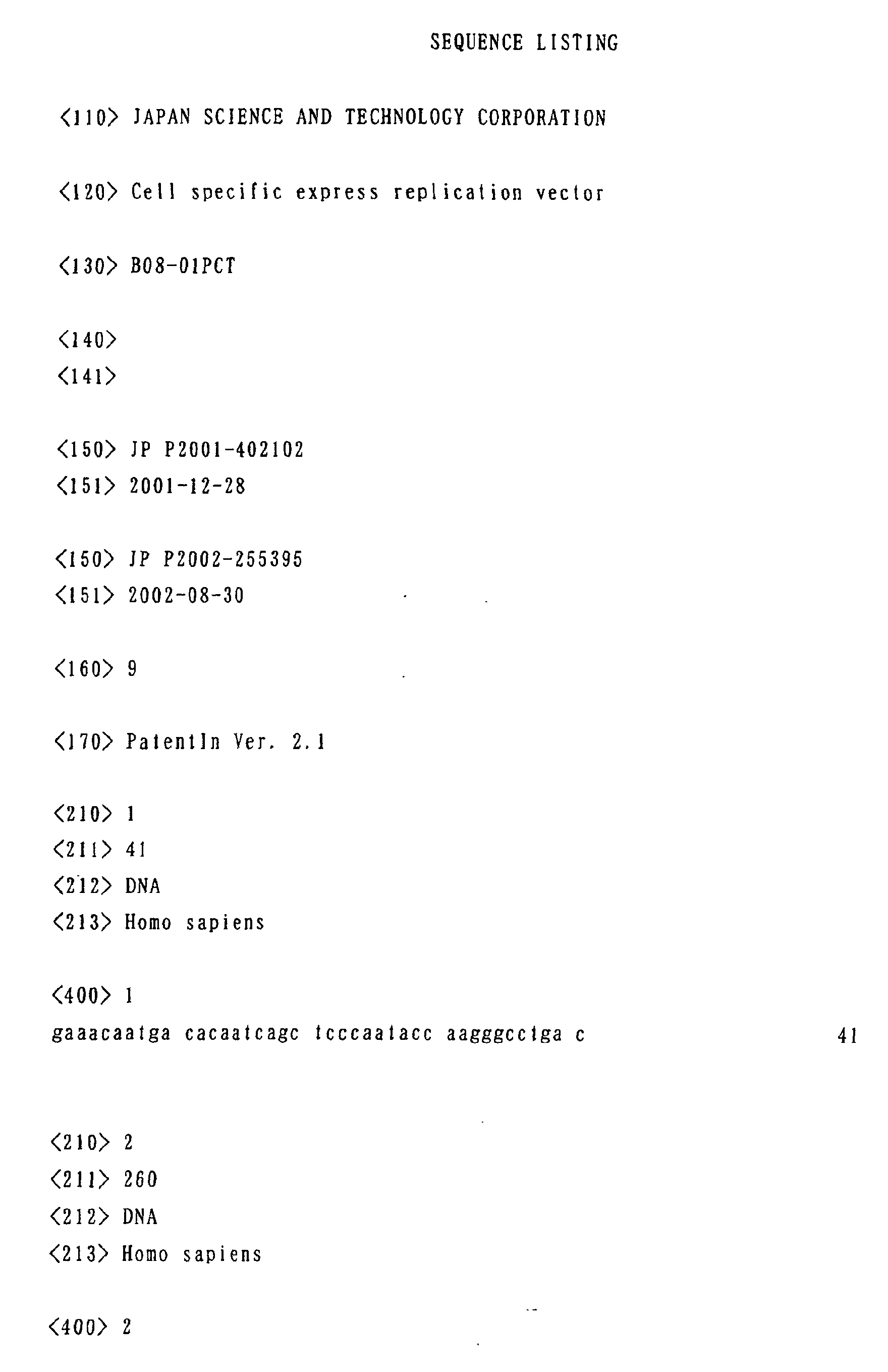
- the present invention relates to: a cell-specific expression/replication vector that does not act to adult normal cells, wherein a transcriptional initiation regulatory region of a gene that expresses cell-specifically is integrated upstream of a predetermined gene, and a thymidine kinase gene that exists in said cell-specific expression/replication vector is used to suppress the replication at a desired period ("1"); the cell-specific expression/replication vector that does not act to adult normal cells according "1", wherein the transcriptional initiation regulatory region of the gene that expresses cell-specifically is a region including the base sequence shown in Seq. ID No.
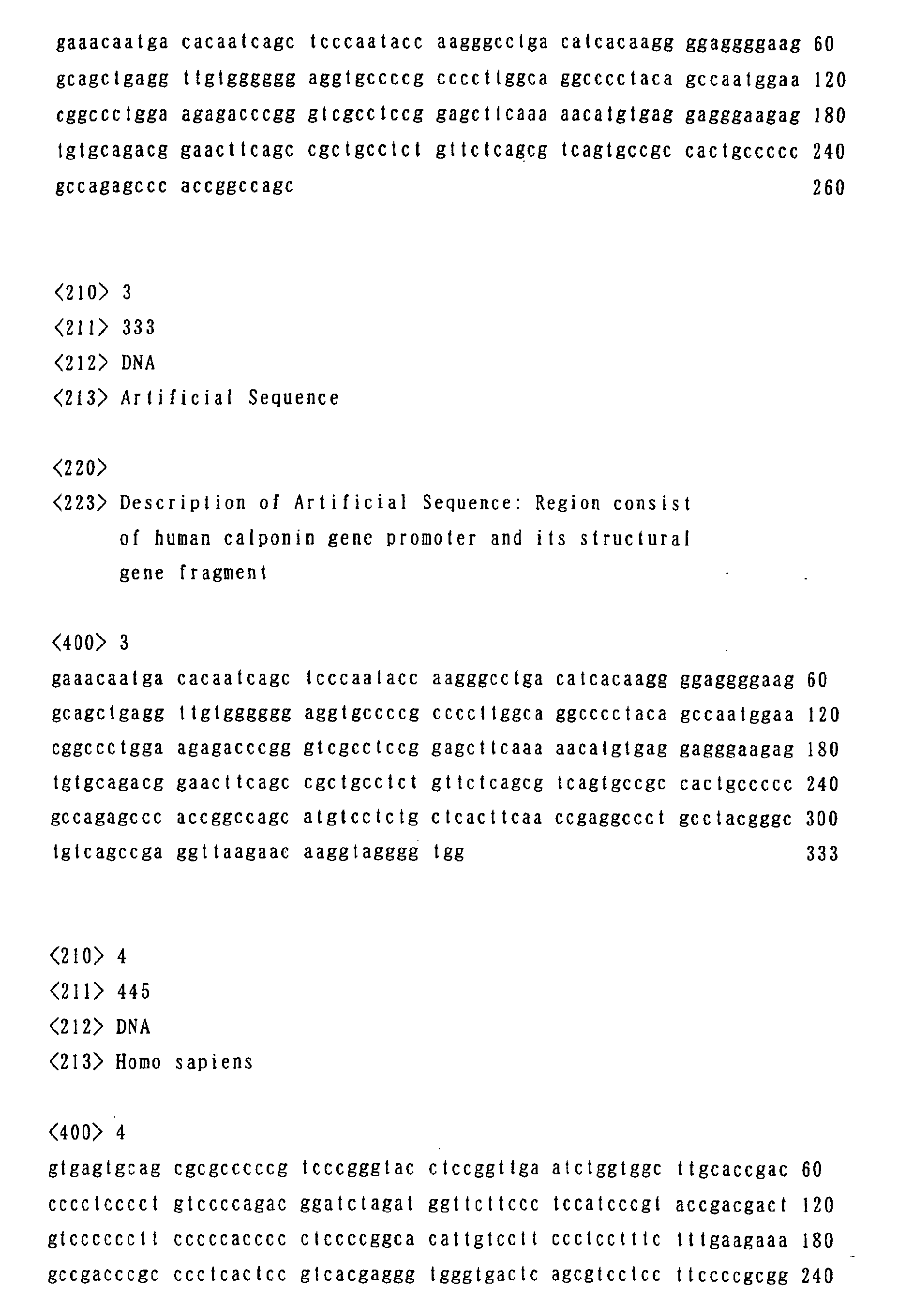
- the cell-specific expression/replication vector that does not act to adult normal cells according to "2" wherein the region including the base sequence shown in Seq. ID No. 1 is a region including a human calponin gene promoter comprising a base sequence shown in Seq. ID No. 2 ("3") ; the cell-specific expression/replication vector that does not act to adult normal cells according to "3", wherein the region including a base sequence shown in Seq. ID No. 2 is a region including a base sequence shown in Seq. ID No.
- the cell-specific expression/replication vector that does not act to adult normal cells according to "1", wherein the transcriptional initiation regulatory region of the gene that expresses cell-specifically comprises a base sequence wherein one or a few base is deleted, substituted or added in a base sequence shown in Seq. ID No. 1, Seq. ID No. 2 or Seq. ID No.
- the present invention relates to: a method for expression/replication of a gene, protein or a peptide of a cell-specific expression/replication vector that does not act to adult normal cells, wherein the cell-specific expression/replication vector that does not act to adult normal cells according to any one of "1" to "19” is introduced into the cells and tissues of an organism, then expressed and replicated ("20"); a method for suppressing the expression/replication of a gene, protein or a peptide of a cell-specific expression/replication vector that does not act to adult normal cells, wherein the cell-specific expression/replication vector that does not act to adult normal cells according to any one of "1” to "19” is introduced into the cells and tissues of an organism, then expressed and replicated, and the expression/replication of the cell-specific expression/replication vector is suppressed at a later desired period ("21"); the method for suppressing the expression/replication of a gene, protein or a peptide of a cell-specific expression/replication vector that does
- the present invention relates to the method according to any one of "20” to "24", wherein the cells and tissues in the organism are tumor tissues, vascular or lymphatic vessel constriction tissues, nephritic tissues or fibrotic tissues ("25”); a therapeutic drug comprising the cell-specific expression/replication vector that does not act to adult normal cells according to any one of "1” to “19” ("26”); the therapeutic drug according to "26” , wherein the therapeutic drug is against malignant tumor, fibrosis, proliferating vascular lesion or proliferating glomerulonephritis ("27”); the therapeutic drug according to "27” , wherein the therapeutic drug is against malignant fibrous histiocytoma, gastrointestinal stromal tumor or uterine myoma ("28”); a therapeutic method for fibrosis and malignant tumor, wherein the cell-specific expression/replication vector that does not act to adult normal cells according to any one of "1” to "19” is introduced into fibrotic tissues including lung
- the cell-specific expression/replication vector which does not act to adult normal cells of the present invention there is no particular limitation as long as it is a vector which does not act to adult normal cells in which a transcriptional initiation regulatory region of a gene specifically expressed in cells is integrated upstream of a predetermined gene, wherein the thymidine kinase gene present in the cell-specific expression/replication vector is used to suppress its replication at a desired period.
- a promoter region of a gene specifically expressed in cells or a partial region of said promoter can be exemplified, and more specifically, the examples include: a region including a base sequence from -260 to -219 of a calponin gene promoter shown in Seq.
- a human calponin gene promoter comprising a base sequence shown in Seq. ID No.2; more preferably a human calponin gene promoter comprising a base sequence shown in Seq. ID No.3 and a region including a part of its structural gene.
- a transcriptional initiation regulatory region of a gene specifically expressed in cells a base sequence wherein one or a few bases are deleted, substituted or added in the above-mentioned base sequence shown in Seq. ID No.1 Seq. ID No.2 or Seq. ID No.3, having a regulating activity of transcriptional initiation, for example, a region including a homologous region to a calponin promoter derived from mouse, rat and pig can be exemplified.
- the promoter region of SM22a gene (the sequence from -480 to -26 for human SM22a gene; its homologous region for SM22a gene derived from GenBank accession# D84342-D84344, mouse, rat or other mammals) can be used, and when endothelial cells are targeted for attack, a promoter region of Flk-1 or a promoter region of endothelial cell-specific genes such as Flt-1 gene can be used. In these cases, a region including a part of a structural gene can also be made to be the transcriptional initiation regulatory region.
- an enhancer which significantly activates the transcription at the upstream of a transcriptional initiation regulatory region of a gene specifically expressed in cells mentioned above.
- an enhancer such as an enhancer of an adenovirus early gene, an enhancer of Moloney murine leukemia virus long terminal repeat, an enhancer of histone H2A gene, an enhancer of immunoglobulin, an enhancer of insulin gene, an enhancer of c-fos gene, an enhancer of T-cell antigen receptor gene, an enhancer of myopathic creatine kinase gene, a transcriptional enhancer of human 4F2 heavy-chain and the like.
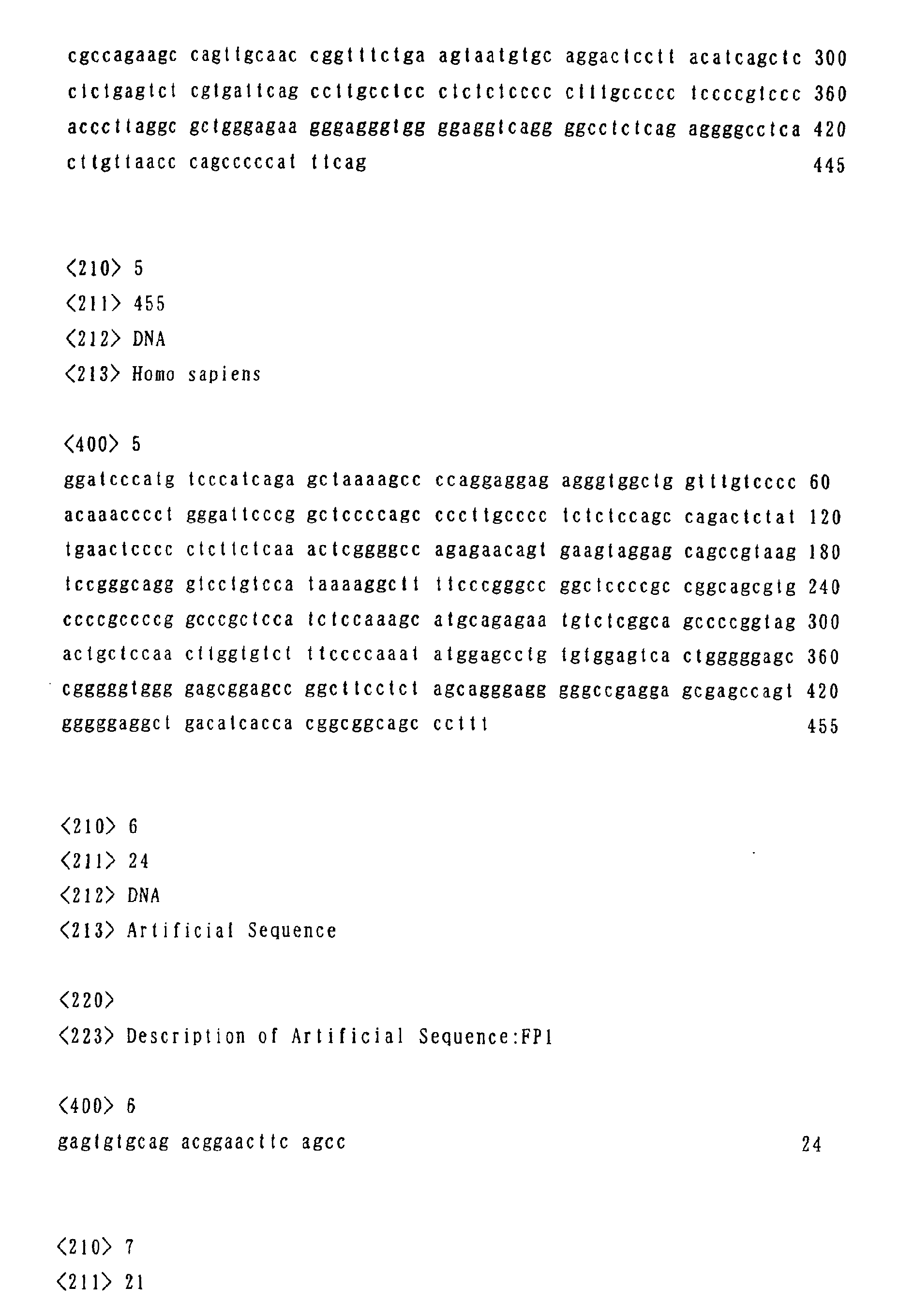
- a 4F2 enhancer such as human 4F2 heavy-chain transcriptional enhancer (Seq. ID No.4) which is an enhancer of a 4F2 heavy-chain gene which is a membrane type-II glycoprotein which carry only once the transmenbrane structure which is believed to be an activating factor of an amino acid transporter, is preferable from the point of view that it significantly enhances the transcription efficiency.
- the predetermined gene to be used for the construction of the cell-specific expression/replication vector that does not act to adult normal cells of the present invention there is no particular limitation as long as it is a gene necessary to initiate or maintain viral replication.
- viral replication-associated gene such as E1A gene of adenovirus, ICP6 (ribonucleotide reductase) gene and the like can be exemplified, and among them, a gene (ICP 4) that encodes a transcription factor necessary to initiate the replication of herpes virus can be preferably exemplified.
- genes it may be a gene wherein a part or whole of the original structural gene located in the downstream of the transcriptional initiation regulatory region is bound with the predetermined gene mentioned above in frame, and a DNA that encodes a fusion protein of a part of the N-terminal side of calponin protein with ICP4 protein can be specifically exemplified.
- a cell-specific expression/replication vector which does not act to adult normal cells of the present invention
- a cell-specific expression/replication vector wherein a DNA that encodes a desired protein that is different from the predetermined gene is linked further in the downstream of the predetermined gene, and can express the desired protein under control of said transcriptional initiation regulatory region
- IRES internal ribosomal entry site
- a promoter of SM22a gene, a homologue of calponin, can also be linked to said IRES site.
- the present inventors are the first to clone a human SM22a promoter sequence and to report it (J. Biochem. (Tokyo) 122, 157-167, 1997), and the base sequence of the portion important for promoter activity (BamH I-DraI fragment 445 bp of human SM22apromoter region) is indicated as Seq. ID No. 5.
- CMV promoter and CAG promoter enhancer are used instead of IRES, a gene that goes out of control of calponin promoter and encodes the desired protein can also be expressed in a cell type-nonselective manner.
- a gene related to the promotion of apoptosis a DNA that encodes a protein having an action to suppress neoangiogenesis, a DNA that encodes a protein having an action to suppress cancer metastasis, a DNA that encodes a protein having an action to suppress cancer and the like, can be given as specific examples, and more than two among these DNAs may be linked.
- apoptosis-promoting gene such as Bcl-xs, Bok/Mtd, Bcl-Gs/Bra, Bcl-GL, Bcl-Rambo, Hrk/DP5, Bik/Nbk/Blk, Bad, Bid, BimL, S, EL/BodL, M, S, Noxa/APR, Puma and the like
- specific examples of the DNA that encodes a protein having an action to suppress neoangiogenesis include: DNA that encodes dominant negative receptor proteins such as angiostatin, endostatin, soluble Flk-1, soluble Flt-1, soluble FLT4, Tiel, Tie2 and the like
- specific examples for the DNA that encodes a protein having an action to suppress cancer metastasis include: a DNA that encodes a protein such as matrix metalloprotease (MMP) inhibitor, bovine lactoferrin (bLF) and the like;
- MMP matrix metalloprotease
- bLF bovine lac
- a gene that encodes a marker protein such as EGFP cDNA and luciferase gene are exemplified, and a cell-specific expression/replication vector that can express these marker proteins is significantly useful in screening, detection of the expression/replication vector and the like.
- the backbone of the viral vector used for the construction of the cell-specific expression/replication vector which does not act to normal cells in adult body of the present invention
- it is preferable for it to be a vector that can be expressed by being infected or introducing the gene to such as osteosarcoma or soft tissue sarcoma, including leiomyosarcoma, gastrointestinal stromal tumor (GIST), malignant mesothelioma, malignant fibrous histiocytoma (MFH), fibrosarcoma, malignant meningioma, uterine myoma, neurinoma and the like, or proliferating smooth muscle cells or perivascular cells of tumor neovasculature.
- GIST gastrointestinal stromal tumor
- MMH malignant mesothelioma
- MMH malignant fibrous histiocytoma
- fibrosarcoma malignant meningioma
- uterine myoma uterine myoma
- an expression vector derived from chromosome, episome, liposome and virus can be exemplified.
- viral vector including papovavirus such as SV40, vaccinia virus, adenovirus, adeno-associated viral vector, fowl pox virus, pseudorabies virus, vector derived from retrovirus, herpes simplex virus vector (HSV vector) and the like are preferable, and among these, HSV vector and adenovirus vector, especially a conditionally replication-competent HSV vector or a conditionally replication-competent adenoviral vector is preferable from the viewpoint of the high efficiency of gene expression, the cytotoxic activity specific to proliferating cells, or the like.
- papovavirus such as SV40, vaccinia virus, adenovirus, adeno-associated viral vector, fowl pox virus, pseudorabies virus, vector derived from retrovirus, herpes simplex virus vector (HSV vector) and the like
- the cell-specific expression/replication vector which does not act to adult normal cells and can control the replication of the vector and expression of the gene of the present invention can be preferably constructed.
- the method for expression/replication of the cell-specific expression/replication vector that does not act to adult normal cells of the present invention there is no particular limitation as long as it is a method for expression/replication wherein the cell-specific expression/replication vector that does not act to adult normal cells mentioned above is directly introduced into cells and tissues of an organism, preferably a tissue wherein tumors such as bone/soft part sarcoma, leiomyosarcoma, gastrointestinal stromal tumor, malignant mesothelioma, malignant fibrous histiocytoma, fibrosarcoma, malignant meningioma, neurinoma and the like are developed, or vessel constriction or arterial constriction after stent placement or organ transplantation, nephritic tissue, fibrosis tissue, or an organ including these tissues, or injected from the vascular system that nourishes the tumor, or directly injected using a stent or the like into the vessel.
- tumors such as bone/soft part sar
- a direct introduction or injection from the vascular system that nourishes the tumor, whatever the type of malignant solid tumor, can be exemplified.
- a method for expression/replication or suppression of a gene a protein or a peptide of the cell-specific expression/replication vector that does not act to adult normal cells of the present invention, there is no particular limitation as long as it is a method for suppressing the expression/replication of the cell-specific expression/replication vector, wherein the cell-specific expression/replication vector that does not act to adult normal cells mentioned above is expressed/replicated by introduction into the cells and tissues of an organism mentioned above, and an antiviral drug such as aciclovir, ganciclovir and the like, for example, are used later at a desired period.
- any kind of agent may be used as long as it comprises the cell-specific expression/replication vector that does not act to adult normal cells of the present invention mentioned above as an active ingredient.
- said therapeutic drug include a therapeutic agent against cells and tissues of an organism, preferably the malignant tumors mentioned above, fibrosis, proliferating vascular lesion, proliferating glomerulonephritis, and the like.
- the therapeutic method for fibrosis and malignant tumor of the present invention there is no particular limitation as long as it is a method wherein the cell-specific expression/replication vector that does not act to adult normal cells of the present invention is introduced into fibrotic tissues including pulmonary fibrosis and hepatic fibrosis and malignant tumor tissues including breast cancer, gastric cancer and pancreatic cancer, then a gene, a protein or a peptide is expressed.
- a method wherein only the proliferating myofibroblast is selectively disrupted, or a method wherein only the proliferating smooth muscle cells of tumor neovasculature or perivascular cells are selectively disrupted is preferable.
- a method for directly injecting the cell-specific expression/replication vector mentioned above into the malignant tumor, or a method for injecting the cell-specific expression/replication vector into the tumor via perfusing vascular system, such as arterial or venous administration and the like can be preferably exemplified.
- the therapeutic method for the proliferating vascular lesion of the present invention there is no particular limitation as long as it is a method wherein the cell-specific expression/replication vector that does not act to adult normal cells of the present invention mentioned above, is introduced into a lesion of vessel constriction or arteriosclerotic tissues and diabetic retinopathy tissues, then a gene, protein or peptide is expressed.
- a method wherein only the proliferating smooth muscle cells or perivascular cells are selectively disrupted can be preferably exemplified.
- the method for treating proliferating glomerulonephritis of the present invention there is no particular limitation as long as it is a method wherein the cell-specific expression/replication vector that does not act to adult normal cells of the present invention mentioned above is introduced into a lesion of glomerulonephritis, then a gene, a protein or a peptide is expressed, and among them, a method wherein only the proliferating mesangial cells are selectively disrupted can be preferably exemplified.
- the therapeutic methods mentioned above of the present invention they are most importantly characterized in that the expression/replication of the cell-specific expression/replication vector is suppressed at a desired period, such as after the completion of the therapy.
- the method for detecting the in vivo distribution of the cell-specific expression/replication vector that does not act to adult normal cells of the present invention is characterized in that the cell-specific expression/replication vector that does not act to adult normal cells of the present invention mentioned above is introduced into the cells and tissues of an organism, then expressed/replicated to detect/determine the thymidine kinase activity by said cell-specific expression/replication vector.
- the in vivo distribution of the cell-specific expression/replication vector can be detected by administering an uracil derivative FIAU labeled with 124 I into the organism, and detecting/determining the 124 I by Positron Emission Tomography (Nature Med. 7, 859-863, 2001).
- the method for producing the cell-specific expression/replication vector of the present invention there is no particular limitation as long as it is a screening method wherein a virus mixed solution after homologous recombination including the cell-specific expression/replication vector that does not act to adult normal cells of the present invention mentioned above is infected to a cell of which the transcriptional initiation regulatory region of a gene that expresses cell-specifically can be activated or a cell that expresses said gene, preferably an ICP4 non-expressing cell, and the expression of a gene integrated in the vector is used as an index to purify to a single clone by limiting dilution.
- the method for producing the cell-specific expression/replication vector of the present invention conducted by screening, the cell-specific expression/replication vector that does not act to adult normal cells of the present invention mentioned above can be obtained for the first time.
- A-1 Cells, culture methods, antibodies and viruses
- Human uterine leiomyosarcoma cell line SK-LMS-1 (HTB-88) and Vero cells (CCL-81) were purchased from American Type Culture Collection.
- Human osteosarcoma cell line OST (RCB0454) was purchased from RIKEN GENE BANK.
- Vero E5 cells the Vero cells wherein the ICP4 gene is transfected, those provided by N. Deluca (University of Pittsburgh School of Medicine, Pittsburgh) were used.
- human malignant fibrous histiocytoma cell line (MFH-AI) those provided by Dr. Yanoma of Kanagawa Prefectural Cancer Center were used.
- GIST human gastrointestinal stromal tumor
- human uterine myoma cells tumor foci were aseptically prepared from the surgery specimen wherein the expression of calponin protein was confirmed by immunohistochemistry, treated with collagenase (1 mg/ml; Sigma Cat. # C-9722) solution, and the primary culture cells were separated.
- Those for vector infection experiment wherein 3 to 4 generations of subculture was conducted in an RPMI1640 medium were used.
- SK-LMS-1 was cultured in Eagle's MEM supplemented with 1 mM sodium pyruvate.
- OST Vero cells and Vero E5 cells were cultured in DMEM.
- MFH-AI was cultured in RPMI1640 medium.
- All the media contain the following, respectively: heat-inactivated fetal bovine serum (Upstate Biotechnologies) at a final concentration of 10%; 2 mM L-glutamine; 100 units/mL penicillin; and 100 ⁇ g/mL streptomycin. Furthermore, all the cells mentioned above were cultured at 37° C in a humidified atmosphere containing 5% CO 2 .
- the MFH-AI cells mentioned above were subcutaneously injected into the franks of six-week old female athymic nude mice (BALB/c Slc-nu/nu) (Japan SLC), and the tumors were fixed.
- the mice were dissected after two months, the tumor section that was aseptically excised from the metastasized foci in the lung, then treated with collagenase (1 mg/ml; Sigma Cat. # C-9722) and the cells were separated.
- the 1 ⁇ 10 6 cells were injected into the tail vein of the six-week old female athymic nude mice.
- the individual tumor cells were separated from the tumor foci that metastasized again to the lung, in the same manner as described previously. This operation was repeated one more time, and the MFH-AI-LM cell line with high metastatic activity to lung was established.
- HSV-1 or HSV-2 ICP4 protein (clone No. 1.101) was purchased from Goodwin Institute for Cancer Research. Immunoblot analysis was carried out in the same manner as described previously (Int. J. Cancer 79, 245-250, 1998). Chemiluminescence (ECL; Amersham Pharmacia Biotech) was used to visualize the bound antibodies, according to the manufacturer's protocol. Moreover, ICP4 deficient mutant HSV-1 d120 (J.
- a cycle of denaturation at 94° C for 40 seconds, annealing at 60° C for 30 seconds and extension reaction at 72°C for 90 seconds was repeated 30 times.
- As a human calponin primer 5'-gagtgtgcagacggaacttcagcc-3' [forward primer 1 (FP1); nt# 10-33 GenBank D17408; Seq. ID No.
- Genomic clones containing the 5' upstream region of the human calponin gene were isolated by screening a human genomic ⁇ EMBL3 phage library according to the method as described previously (J. Biochem. 120, 18-21, 1996).
- the 5'-deleted fragments, p-1159Luc, p-385Luc, p-343Luc, p-310Luc, p-299Luc, p-288Luc, p-260Luc, p-239Luc, p-219Luc, p-201Luc, p-176Luc, p-153Luc were generated by PCR amplification, with the genomic clone as a template.
- Cells cultured beforehand were divided and were plated onto a plate 24 hours before transfection.
- Cells (5 ⁇ 10 4 ) were transfected by injecting 1.2 ⁇ g of the promoter plasmid, 0.3 ⁇ g of the pCAGGS/ ⁇ -gal-containing plasmid and 3.75 ⁇ l of FuGENETM6 transfection reagent (Roche) in each well of a 6-well dish, according to the manufacturer's protocol. Twenty-four hours after transfection, the cells were harvested in 100 ⁇ l/well of the cell lysis buffer (PicaGeneTM Luciferase Assay System, Toyo Ink).
- luciferase assay After centrifugation at 4°C at 12000 g for 5 minutes, the supernatants (20 ⁇ l or 30 ⁇ l) were used for luciferase assay and ⁇ -galactosidase assay, respectively. Luciferase activity was measured by using a BLR-201 luminescence reader (Aloka). ⁇ -galactosidase assay was carried out by using ⁇ -galactosidase enzyme assay system (Promega) following the method as described previously (J. Biochem. (Tokyo) 122, 157-167, 1997). All experiments were repeated at least three times to confirm the reproducibility.
- the transfection efficiency was determined, and luciferase activities (light units) were corrected according to the value.
- luciferase activities light units
- a 4.1 kb blunt-ended SalI-MseI fragment (provided by Dr. Hayward, Johns Hopkins School of Medicine) derived from pGH108 (J. Virol. 56, 558-570, 1985) containing ICP4 coding region, was inserted into the blunt-ended BamHI site downstream of the 333 bp human calponin promoter (-260 to +73) cloned to the pAMP1 plasmid, and a 444 bp NotI fragment of the human 4F2 heavy-chain transcriptional enhancer (Mol. Cell Biol. 9, 2588-2597, 1989) (provided by Dr. Leiden, Harvard Medical School) was subcloned to the SmaI site of said plasmid.
- the plasmid pKX2 ⁇ G3/CALP-ICP4-IRES2-EGFP was linearized at XhoI site (one wherein the XbaI site at the 5' side of the ICP6 sequence of pKX2 ⁇ G3 and the HindIII site at the 3' side of the ICP6 sequence are both substituted by XhoI site), and the pRR ⁇ -CALP-ICP4-IRES2-EGFP wherein the pUC19 sequence is eliminated and the d120 virus DNA were co-transfected to a subconfluent monolayer culture of ICP4 cDNA-transfected Vero E5 cells (2.5 ⁇ 10 5 /well) in a 6-well tissue culture plate, by using LipofectamineTM (GIBCO/BRL), according to the manufacturer's protocol.
- XhoI site one wherein the XbaI site at the 5' side of the ICP6 sequence of pKX2 ⁇ G3 and the HindIII site at the 3' side
- Freezing and thawing treatment with the combination of sonication (30 seconds for 3 times) were conducted three times, and the suspended cells in the solution mentioned above were lysed.
- the suspended cell solution was diluted stepwisely and infected to the subconfluent monolayer culture of SK-LMS-1 cells in a 96-well tissue culture plate. After the infection, culture was conducted for 96 hours in 100 ⁇ l/well of 1% FBS/DMEM containing 11.3 ⁇ g/ml of human IgG (Jackson ImmunoResearch Lab.).
- the wells wherein plaque formation was confirmed were screened with the expression of EGFP under a fluorescence microscope as an index.
- the SK-LMS-1 monolayer culture cells of the well containing EGFP positive-plaques were suspended in 100 ⁇ l of said culture solution, and 6 ⁇ l among them were used to determine the ⁇ -galactosidase enzyme activity with 5-bromo-4-chloro-3- indolyl- ⁇ -D-galactopyranoside (X-gal) as a substrate, by using a ⁇ -galactosidase enzyme assay system (Promega).
- the SK-LMS-1 cells suspended solution of a well that is positive for ⁇ -galactosidase enzyme activity was centrifuged for 5 minutes at 5000 rpm, and the pellet was re-suspended in 100 ⁇ l/well of cold virus buffer.
- Viruses were prepared by infecting to Vero E5 cells in 10 to 20 bottles of 150cm 2 /tissue culture flasks (IWAKI CLASS) and retrieving cells that were detached after 48 hours. Cells were collected by centrifugation at 4° C for 5 minutes at 400 ⁇ g, then suspended in 10 ml cold virus buffer (20 mM Tris-HCl containing 150 mM NaCl; pH 7.5). Freezing and thawing treatment with the combination of sonication (30 seconds for 3 times) were conducted three times, and the cells mentioned above were lysed. After centrifugation at 4°C for 5 minutes at 1500 ⁇ g, the supernatant was further centrifuged at 4° C for 45 minutes at 15000 ⁇ g. The resulting pellet was re-suspended in the cold virus buffer, and titers of the purified d12 ⁇ CALP ⁇ RR viral vector were determined by the plaque assay in Vero E5 cells.
- A-6 In vitro cytolysis assay and single step growth assay
- the d12 ⁇ CALP ⁇ RR viral vector was infected to subconfluent monolayer culture of cells in a 6-well tissue culture plate at a multiplicity of infection (MOI) of 0.1 to 0.001 (pfu/cell) in 1% heat inactivated FBS/PBS. Said infected cells were incubated at 37° C for 1 hour, and then cultured in said medium containing 1% FBS and 11.3 ⁇ g/ml of human IgG (Jackson ImmunoResearch Lab.). Forty-eight hours after the infection, numbers of plaques/well were counted.
- MOI multiplicity of infection
- SK-LMS-1 cells or OST cells were infected with d12 ⁇ CALP ⁇ RR viral vector to a multiplicity of infection (MOI) of 0.1 in 1% FBS/PBS.
- MOI multiplicity of infection
- the virus inoculum was removed after 1 hour, and the above-mentioned cells were incubated in said medium.
- the infected cells were harvested from the wells at the predetermined period (12 hours, 24 hours and 48 hours) with the use of 100 ⁇ l of the virus buffer.
- the cell suspension (1 ⁇ l) were diluted to 10 -3 , 10 -4 and 10 -5 , and then plaque forming activity of viruses on Vero E5 cells were determined.
- the d12 ⁇ CALP ⁇ RR viral vector was infected to subconfluent monolayer culture of MFH-AI-LM cells (cell lines with high metastatic activity to lung from human malignant fibrious histiocytoma MFH-AI cells) in a 6-well tissue culture plate at a multiplicity of infection (MOI) of 0.01/cell in 1% heat inactivated FBS/PBS.
- MOI multiplicity of infection
- the d12 ⁇ CALP ⁇ RR viral vector was infected to subconfluent monolayer culture of human GIST cells and cultured human uterine myoma cells in a 6-well tissue culture plate at a multiplicity of infection (MOI) of 0.1 or 0.01 (pfu/cell), respectively.
- infected cells were incubated at 37° C for 1 hour, and then cultured in said medium containing 1% FBS and 11.3 ⁇ g/ml of human IgG (Jackson ImmunoResearch Lab.). Seventy-two hours after the infection, X-Gal staining was conducted and the numbers of plaques/well were counted.
- A-7 Analysis of sensitivity against ganciclovir, an anti-herpes virus agent of viral replication in vitro
- Virus was infected to the subconfluent monolayer culture of SK-LMS-1 cells in a 24-well tissue culture plate (5 ⁇ 10 4 /well) or a 6-well tissue culture plate (2.5 ⁇ 10 5 /well) at a multiplicity of infection (MOI) of 0. 01 (pfu/cell) in 1% heat inactivated FBS/PBS. Said infected cells were incubated at 37°C for 1 hour, and then cultured in said medium containing 1% FBS and 11.3 ⁇ g/ml of human IgG (Jackson ImmunoResearch Lab.), and various concentrations (0 to 1 ⁇ g/ml) of ganciclovir (Wako Pure Chemical Industries, Ltd.). Forty-eight hours after the infection, numbers of plaques/well were counted.
- MOI multiplicity of infection
- d12.CALP ⁇ RR viral vector or virus buffer alone was infected to the SK-LMS-1 cells and OST cells, respectively, to a multiplicity of infection (MOI) of 0.01 (pfu/cell), and was isolated after culture for 22 hours.
- MOI multiplicity of infection
- the same amount of protein was subjected to 9% SDS-PAGE gel electrophoresis, and transferred to a nitrocellulose membrane (Bio-Rad).
- 5% skim milk (DIFCO Laboratories) was used to block the membrane at room temperature for two hours, and incubation was conducted overnight at 4°C by using a said anti-ICP4 antibody (dilution rate 1:10000)
- MFH-AI-LM cell line with high metastatic activity to lung isolated from human malignant fibrous histiocytoma MFH-AI cells were injected once into the tail vein of six-week old female athymic nude mice (BALB/c Slc-nu/nu) (Japan SLC), and a lung metastatic tumor model was constructed.
- the tumors were placed in a substrate solution, containing X-gal (1mg/ml), 5 mM K 3 Fe (CN 6 ), 5 mM K 4 Fe (CN 6 ) and 1 mM MgCl 2 in PBS for 4 hours at 37° C, and then washed with PBS containing 3% DMSO.
- the specimens of the whole lung metastasized tissues were fixed in Bouin's solution [15% (v/v) saturated picric acid solution, 1.65% (v/v) formalin, and 1% (v/v) acetic acid/PBS] and embedded in paraffin.
- Sections of 4 ⁇ m thickness were mounted on a poly-L-lysine coated microslide, treated in xylene, and dehydrated through graded concentrations of alcohol solution. Then, hematoxylin-eosin staining was conducted, and the disruption by d12.CALP. ⁇ RR viral vector in the tumor tissues was observed by using an inverted microscope (Olympus BX-50).
- a lung metastatic tumor model was constructed by injecting 1 ⁇ 10 6 or 5 ⁇ 10 5 MFH-AI-LM cells into the tail vein of six-week old female athymic nude mice (BALB/c Slc-nu/nu) (Japan SLC). Seventeen days, 27 days and 34 days after intravenous injection of MFH-AI-LM cells, 50 ⁇ l of virus suspension containing 1 ⁇ 10 7 pfu/mouse of d12.CALP. ⁇ RR viral vector was intravenously injected for three times by using a 30 gauge needle, and the mice were sacrificed after 13 days.
- the whole lung metastasized tissues were removed, then fixed with 2% paraformaldehyde, 0.5% glutaraldehyde, in PBS containing 1mM MgCl 2 overnight at 4°C. Then, the therapeutic effect by intravenous administration of the d12.CALP. ⁇ RR viral vector against human lung metastatic tumor was examined.
- a DNA fragment containing the 4F2 enhancer/-260 calponin promoter/ICP4/IRES-EGFP was inserted into the RR (ICP6) locus (U L 36) of the ICP4-deficient HSV mutant d120 (J. Virol. 56, 558-570, 1985) by homologous recombination, and a d12.CALP. ⁇ RR viral vector was constructed.
- the d12.CALP. ⁇ RR viral vector expresses ⁇ -galactosidase under the control of an ICP6 promoter, and can express ICP4 protein and EGFP protein under the control of calponin promoter ( Figure 1).
- SK-LMS-1 human leiomyosarcoma cell line
- OST calponin non-expressing human osteosarcoma cell line
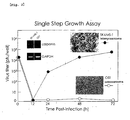
- Viral titers were assessed by single step growth assays of a multiplicity of infection (MOI) of 0.1 (pfu/cell) (2 ⁇ 10 5 cells/well).
- MOI multiplicity of infection
- the d12.CALP. ⁇ RR viral vector was replicated in calponin-positive SK-LMS-1 cells but the titers of d12.CALP. ⁇ RR viral vector decreased in calponin-negative OST cells 72 hours after infection to approximately 1/100000 compared to those of the SK-LMS-1 cells ( Figure 2).
- the rate of proliferation of both cells was at the same level.
- ICP4 protein was expressed in SK-LMS-1 cells but not in OST cells. This was consistent with the result of viral replication assay.
- d120 viral vector which is the parental virus of homologous recombination, did not show generation of viral progenies at all in cultures of SK-LMS-1 and OST.
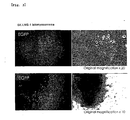
- the d12.CALP. ⁇ RR viral vector was infected to the SK-LMS-1 cells in a 6-well dish, and after 96 hours from the infection, the ⁇ -galactosidase expressing cells were stained blue with X-gal agarose overlay, and the expression of EGFP was also examined at the same time with an inverted fluorescence microscope. It was confirmed that ⁇ -galactosidase was expressed in the tumor cells that are disrupted and almost abolished, and that EGFP was expressed in the living cells around them ( Figure 3). There were a number of observations that both expressions occurred in one cell at the same time.
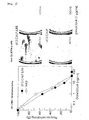
- the d12.CALP. ⁇ RR viral vector was infected to SK-LMS-1 cells in a 24-well (5 ⁇ 10 4 /well) dish, in the presence of ganciclovir of various concentrations (0 to 100 ng/ml), at a multiplicity of infection (MOI) of 0. 01 (pfu/cell). Forty-eight hours after the infection, the cells were stained with X-gal as a substrate, and the number of ⁇ -glactosidase-positive plaques per well was counted.
- MOI multiplicity of infection
- the d12.CALP. ⁇ RR viral vector was infected to Vero E5 cells (2.5 ⁇ 10 5 /well) in a 6-well dish in the presence and absence of 1 ⁇ g/ml ganciclovir, and 48 hours after the infection, the cells were stained with X-gal as a substrate ( Figure 4).
- the replication of d12.CALP. ⁇ RR viral vector was suppressed in the presence of ganciclovir, for SK-LMS-1 cells and Vero E5 cells introduced with ICP4 cDNA. In SK-LMS-1 cells, the replication was completely suppressed in the presence of 40 ng/ml ganciclovir.
- the d12.CALP. ⁇ RR viral vector showed sensitivity to ganciclovir, which is equal to replicative HSV-1 mutant hrR3 that is reported to have stronger sensitivity to said drug agent than wild-type virus (Cancer Res. 54, 3963-3966, 2001). This result indicates that the d12.CALP. ⁇ RR viral vector has a safe measure in which viral infected cells can be eliminated by ganciclovir or acyclovir after therapy.
- RT-PCR analysis for total RNA of MFH-AI-LM cell lines was conducted in order to examine whether MFH-AI-LM cell lines express the calponin mRNA, and it was confirmed that MFH-AI-LM cell lines express calponin mRNA (Figure 5a). Further, the MFH-AI-LM cell lines mentioned above were infected with d12.CALP. ⁇ RR viral vector for 72 hours at a multiplicity of infection (MOI) of 0. 01 (pfu/cell). The replication of the vector was stained with X-gal and evaluated with the plaque formation as an index (Figure 5b).
- MOI multiplicity of infection
- the d12.CALP. ⁇ RR viral vector was replicated within the MFH-AI-LM cells, and that it shows cytolytic activity against MFH-AI-LM cells. Further, the d12.CALP. ⁇ RR viral vector was infected to cultured GIST cells and uterine myoma cells for 72 hours, respectively, at a multiplicity of infection (MOI) of 0.01 or 0.1 (pfu/cell). The replication of the vector was stained with X-gal and evaluated with the plaque formation as an index ( Figure 6).
- MOI multiplicity of infection
- the d12.CALP. ⁇ RR viral vector is replicated within the cultured GIST cells ( Figures 6a, 6b) and uterine myoma Cells ( Figures 6c, 6d), and from the results of 0.01 MOI ( Figures 6a, 6c) and 0.1 MOI ( Figures 6b, 6d), it was conf irmed that the d12.CALP. ⁇ RR viral vector shows cytolytic activity in a dose-dependent manner. Particularly, in administration at 0.1 MOI ( Figures 6b, 6d), the infection of d12.CALP. ⁇ RR viral vector to all the tumor cells was observed.
- the in vivo anti-tumor effect of the d12.CALP. ⁇ RR viral vector against subdermally transplanted tumor xenografts that are isolated from MFH-AI cells was examined.
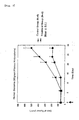
- the therapeutic effect by one intravenous injection of d12.CALP. ⁇ RR viral vector against subdermal transplanted tumors of MFH-AI-LM cell lines is expressed as a chronological change ( Figure 7).
- the d12.CALP. ⁇ RR viral vector of 1 ⁇ 10 7 pfu/mouse was infected into the tail vein.
- the treated group showed significant anti-tumor effect compared to the non-treated group.
- d12.CALP. ⁇ RR viral vector against human lung metastatic tumor by intravenous injection in vivo was examined ( Figure 8).
- the d12.CALP. ⁇ RR viral vector of 1 ⁇ 10 7 pfu/mouse was injected into the tail vein of a lung metastatic tumor model mouse wherein MFH-AI-LM cells with high metastatic activity to lung isolated from human malignant fibrous histiocytoma MFH-AI cells are used, and metastases tumor in the lung at day 13 ( Figures 8a, 8b) and the normal tissues, that is, the brain (Figure 8c), heart (Figure 8d), liver ( Figure 8e) excised at the same day were subjected to X-Gal staining.
- the therapeutic effect of human lung metastatic tumor wherein the number of MFH-AI-LM cells to be administered are set to 1 ⁇ 10 6 or 5 ⁇ 10 5 , and the d12.CALP. ⁇ RR viral vector of 1 ⁇ 10 7 pfu/mouse was intravenously injected for a total of three times on day 17, day 27 and day 34 after administration of MFH-AI-LM cells was examined (Figure 9).
- Figure 9 For all the lung metastatic tumor models constructed by injecting 1 ⁇ 10 6 or 5 ⁇ 10 5 of MFH-AI-LM tumor cells into the tail vein, the lung metastatic tumor-suppressing effect of the groups administered with d12.CALP ⁇ RR vector was apparent.
- the metastasis-suppressing effect of the treated group was also confirmed by the histological analysis by hematoxylin-eosin staining.
- a malignant tumor derived from mesenchymal cells that is a sarcoma, is resistant to chemotherapy or radiotherapy and continues to relapse even after surgical resection, and by eventually metastasizing to the lung, liver, peritoneum and the like, the prognosis is quite poor.
- GIST gastrointestinal stromal tumor
- bone or soft tissue sarcoma in the field of orthopedic surgery
- leimyosarcoma in the field of gynecology
- malignant mesothelioma in the field of chest/digestive surgery
- fibrosarcoma malignant meningioma
- malignant neurinoma in the field of neurosurgery and the like.
- it represents only about 1 to 2% of all cancers, as it generates frequently also to young people, and as there is no effective treatment modality except for some cases that have sensitivity to chemotherapy, the development of a new treatment modality is strongly required socially.
- the gene therapy can increase the cancer cell selectivity at various levels, such as the cell-selective action of genes that are introduced to cancer cells, activity of expression promoters, and infection/introduction of viral vectors, and is focused as a promising therapeutic method also for sarcoma. Indeed, it is reported that osteosarcoma-selective expression of HSV-tk in a non-replicative adenoviral vector by using an osteocalcin promoter can significantly suppress the lung metastatic focus also by intravenous administration (Cancer Gene Ther. 5, 274-280, 1998). However, since osteocalcin is also expressed in normal osteoblasts in the differentiation stage, it is not sufficient to increase the cancer cell-selectivity only by regulating the expression of transgene.
- the present invention can respond to such requirements, and the present invention can provide a cell-specific expression/replication vector that does not act to normal cells, which replicates in particular cells such as malignant tumor cells and the like, not limited to sarcoma, and expresses specifically therapeutic genes while disrupting tumor cells.
- a gene therapy using a cell-specific expression/replication vector for human can be possible for the first time in the world.
- Calponin gene is expressed mainly in smooth muscle cells in adult body, and particularly, since the proliferation of vascular smooth muscle cells is the cause of proliferating vascular lesion such as tumor neoangiogenesis and blood vessel constriction after stent placement and diabetic retinopathy, therapies with these diseases becomes possible by selectively disrupting the proliferating smooth muscle cells with the use of the smooth muscle cell-specific expression/replication vector having a calponin promoter provided from the present invention.
- the therapeutic method which selectively disrupts the tumor vascular smooth muscles which becomes possible for the first time by the present invention, has a possibility to present an innovative effect as a therapeutic method for cancer that is effective to all solid cancers.
- glomerulonephritis which is caused by the proliferation of mesangial cells that express calponin, or fibrosis such as pulmonary fibrosis and hepatic fibrosis which is caused by the proliferation of myofibroblast that express calponin.
Landscapes
- Health & Medical Sciences (AREA)
- Life Sciences & Earth Sciences (AREA)
- Engineering & Computer Science (AREA)
- Chemical & Material Sciences (AREA)
- Bioinformatics & Cheminformatics (AREA)
- Organic Chemistry (AREA)
- Genetics & Genomics (AREA)
- General Health & Medical Sciences (AREA)
- Pharmacology & Pharmacy (AREA)
- Medicinal Chemistry (AREA)
- Animal Behavior & Ethology (AREA)
- Public Health (AREA)
- Veterinary Medicine (AREA)
- Biomedical Technology (AREA)
- General Chemical & Material Sciences (AREA)
- Chemical Kinetics & Catalysis (AREA)
- Nuclear Medicine, Radiotherapy & Molecular Imaging (AREA)
- Biotechnology (AREA)
- Wood Science & Technology (AREA)
- General Engineering & Computer Science (AREA)
- Zoology (AREA)
- Biochemistry (AREA)
- Molecular Biology (AREA)
- Biophysics (AREA)
- Physics & Mathematics (AREA)
- Epidemiology (AREA)
- Plant Pathology (AREA)
- Microbiology (AREA)
- Gastroenterology & Hepatology (AREA)
- Virology (AREA)
- Urology & Nephrology (AREA)
- Immunology (AREA)
- Proteomics, Peptides & Aminoacids (AREA)
- Cardiology (AREA)
- Heart & Thoracic Surgery (AREA)
- Reproductive Health (AREA)
- Vascular Medicine (AREA)
- Ophthalmology & Optometry (AREA)
- Endocrinology (AREA)
- Pulmonology (AREA)
Abstract
Description

Claims (36)
- A cell-specific expression/replication vector that does not act to adult normal cells, wherein a transcriptional initiation regulatory region of a gene that expresses cell-specifically is integrated upstream of a predetermined gene, and a thymidine kinase gene that exists in said cell-specific expression/replication vector is used to suppress the replication at a desired period.
- The cell-specific expression/replication vector that does not act to adult normal cells according to claim 1, wherein the transcriptional initiation regulatory region of the gene that expresses cell-specifically is a region including the base sequence shown in Seq. ID No. 1.
- The cell-specific expression/replication vector that does not act to adult normal cells according to claim 2, wherein the region including the base sequence shown in Seq. ID No. 1 is a region including a human calponin gene promoter comprising a base sequence shown in Seq. ID No. 2.
- The cell-specific expression/replication vector that does not act to adult normal cells according to claim 3, wherein the region including a base sequence shown in Seq. ID No. 2 is a region including a base sequence shown in Seq. ID No. 3.
- The cell-specific expression/replication vector that does not act to adult normal cells according to claim 1, wherein the transcriptional initiation regulatory region of the gene that expresses cell-specifically comprises a base sequence wherein one or a few base is deleted, substituted or added in a base sequence shown in Seq. ID No. 1, Seq. ID No. 2 or Seq. ID No. 3, and is a region including a base sequence having a transcription initiation control activity.
- The cell-specific expression/replication vector that does not act to adult normal cells according to any one of claims 1 to 5, wherein an enhancer is integrated upstream of the transcriptional initiation regulatory region.
- The cell-specific expression/replication vector that does not act to adult normal cells according to claim 6, wherein the enhancer is a 4F2 enhancer.
- The cell-specific expression/replication vector that does not act to adult normal cells according to any one of claims 1 to 7, wherein a DNA that encodes a desired protein different from the predetermined gene is linked further downstream on the predetermined gene, and expresses the desired protein under the control of said transcriptional initiation regulatory region.
- The cell-specific expression/replication vector that does not act to adult normal cells according to claim 8, wherein the DNA that encodes the desired protein is linked to the predetermined gene via an IRES (internal ribosomal entry site).
- The cell-specific expression/replication vector that does not act to adult normal cells according to any one of claims 1 to 9, wherein the DNA that encodes the desired protein is an apoptosis promotion-related gene.
- The cell-specific expression/replication vector that does not act to adult normal cells according to any one of claims 1 to 9, wherein the DNA that encodes the desired protein is a DNA that encodes a protein having a suppressive action of angiogenesis.
- The cell-specific expression/replication vector that does not act to adult normal cells according to any one of claims 1 to 9, wherein the DNA that encodes the desired protein is a DNA that encodes a protein having a suppressive action against cancer metastasis.
- The cell-specific expression/replication vector that does not act to adult normal cells according to any one of claims 1 to 9, wherein the DNA that encodes the desired protein is a DNA that encodes a protein having a suppressive action against cancer growth.
- The cell-specific expression/replication vector that does not act to adult normal cells according to any one of claims 1 to 13, wherein the predetermined gene is a viral replication-related gene.
- The cell-specific expression/replication vector that does not act to adult normal cells according to claim 14, wherein the viral replication-related gene is ICP4 or E1A.
- The cell-specific expression/replication vector that does not act to adult normal cells according to any one of claims 1 to 15, wherein the expression/replication vector is a viral vector.
- The cell-specific expression/replication vector that does not act to adult normal cells according to claim 16, wherein the viral vector is a herpes simplex virus vector (HSV vector) or an adenoviral vector.
- The cell-specific expression/replication vector that does not act to adult normal cells according to any one of claims 1 to 17, wherein the vector is tumor cell-specific, proliferating smooth muscle-specific in tumor neovasculature, proliferating smooth muscle-specific in proliferating vascular lesion, proliferating mesangial cell-specific in glomerulonephritis, or proliferating myofibroblast-specific in fibrosis.
- The cell-specific expression/replication vector that does not act to adult normal cells according to any one of claims 1 to 18, wherein a DNA that encodes ribonucleotide reductase is deleted.
- A method for expression/replication of a gene, protein or a peptide of a cell-specific expression/replication vector that does not act to adult normal cells, wherein the cell-specific expression/replication vector that does not act to adult normal cells according to any one of claims 1 to 19 is introduced into the cells and tissues of an organism, then expressed and replicated.
- A method for suppressing the expression/replication of a gene, protein or a peptide of a cell-specific expression/replication vector that does not act to adult normal cells, wherein the cell-specific expression/replication vector that does not act to adult normal cells according to any one of claims 1 to 19 is introduced into the cells and tissues of an organism, then expressed and replicated, and the expression/replication of the cell-specific expression/replication vector is suppressed at a later desired period.
- The method for suppressing the expression/replication of a gene, protein or a peptide of a cell-specific expression/replication vector that does not act to adult normal cells according to claim 21, wherein the suppression of the expression/replication of the cell-specific expression/replication vector is a suppression by using antiviral drugs including aciclovir and ganciclovir.
- A method for detecting the in vivo distribution of a cell-specific expression/replication vector that does not act to adult normal cells, wherein the cell-specific expression/replication vector that does not act to adult normal cells according to any one of claims 1 to 19 is introduced into the cells and tissues of an organism, then expressed and replicated, and the thymidine kinase activity by said cell-specific expression/replication vector is determined.
- The method for detecting the in vivo distribution of a cell-specific expression/replication vector that does not act to adult normal cells according to claim 23, wherein the determination of the thymidine kinase activity is a determination by positron emission tomography using an uracil derivative FIAU labeled with 124I.
- The method according to any one of claims 20 to 24, wherein the cells and tissues in the organism are tumor tissues, vascular or lymphatic vessel constriction tissues, nephritic tissues or fibrotic tissues.
- A therapeutic drug comprising the cell-specific expression/replication vector that does not act to adult normal cells according to any one of claims 1 to 19.
- The therapeutic drug according to claim 26, wherein the therapeutic drug is against malignant tumor, fibrosis, proliferating vascular lesion or proliferating glomerulonephritis.
- The therapeutic drug according to claim 27, wherein the therapeutic drug is against malignant fibrous histiocytoma, gastrointestinal stromal tumor or uterine myoma.
- A therapeutic method for fibrosis and malignant tumor, wherein the cell-specific expression/replication vector that does not act to adult normal cells according to any one of claims 1 to 19 is introduced into fibrotic tissues including lung and liver, or malignant tumor tissues including breast cancer, gastric cancer and pancreatic cancer, then a proliferating myofibroblast is selectively disrupted as a result of replication of a vector, and expression of a gene, protein and a peptide.
- The therapeutic method for fibrosis and malignant tumor according to claim 29, wherein its subject is leiomyosarcoma, malignant fibrous histiocytoma, gastrointestinal stromal tumor or uterine myoma.
- A therapeutic method for proliferating vascular lesion, wherein the cell-specific expression/replication vector that does not act to adult normal cells according to any one of claims 1 to 19 is introduced into blood vessel or lymphatic vessel constriction tissues or arteriosclerotic tissues and tissues with diabetic retinopathy, then a proliferating smooth muscle cell or a perivascular cell is selectively disrupted as a result of replication of a vector, and expression of a gene, protein or a peptide.
- A therapeutic method for proliferating glomerulonephritis, wherein the cell-specific expression/replication vector that does not act to adult normal cells according to any one of claims 1 to 19 is introduced into a nephritic tissue, then a proliferating mesangial cell is selectively disrupted as a result of replication of a vector, and expression of a gene, protein or a peptide.
- The therapeutic method according to any of claims 29 to 32, wherein the cell-specific expression/replication vector is administered to a vein or artery.
- The therapeutic method according to any one of claims 29 to 33, wherein the expression/replication of the cell-specific expression/replication vector is suppressed at a desired period.
- A method for producing a cell-specific expression/replication vector, wherein a virus mixed solution after homologous recombination including the cell-specific expression/replication vector according to any one of claims 1 to 19 is infected to a cell wherein the transcriptional initiation regulatory region of a gene that expresses cell-specifically can be activated or a cell that expresses said gene, and the expression of a gene integrated in the vector is used as an index to purify to a single clone by limiting dilution without using agarose overlay assay.
- The method for producing the cell-specific expression/replication vector according to claim 35, wherein the cell is an ICP4 non-expressing cell.
Applications Claiming Priority (5)
| Application Number | Priority Date | Filing Date | Title |
|---|---|---|---|
| JP2001402102 | 2001-12-28 | ||
| JP2001402102 | 2001-12-28 | ||
| JP2002255395A JP4107919B2 (en) | 2001-12-28 | 2002-08-30 | Cell-specific expression replication vector |
| JP2002255395 | 2002-08-30 | ||
| PCT/JP2002/013683 WO2003057888A1 (en) | 2001-12-28 | 2002-12-26 | Cell-specific expression/replication vector |
Publications (3)
| Publication Number | Publication Date |
|---|---|
| EP1469077A1 true EP1469077A1 (en) | 2004-10-20 |
| EP1469077A4 EP1469077A4 (en) | 2006-08-23 |
| EP1469077B1 EP1469077B1 (en) | 2011-02-16 |
Family
ID=26625423
Family Applications (1)
| Application Number | Title | Priority Date | Filing Date |
|---|---|---|---|
| EP02790914A Expired - Lifetime EP1469077B1 (en) | 2001-12-28 | 2002-12-26 | Cell-specific expression/replication vector |
Country Status (7)
| Country | Link |
|---|---|
| US (1) | US7785870B2 (en) |
| EP (1) | EP1469077B1 (en) |
| JP (1) | JP4107919B2 (en) |
| AT (1) | ATE498687T1 (en) |
| CA (1) | CA2471822C (en) |
| DE (1) | DE60239228D1 (en) |
| WO (1) | WO2003057888A1 (en) |
Families Citing this family (3)
| Publication number | Priority date | Publication date | Assignee | Title |
|---|---|---|---|---|
| JP5038309B2 (en) * | 2006-07-27 | 2012-10-03 | 独立行政法人科学技術振興機構 | Malignant mesothelioma treatment |
| US20110286972A1 (en) * | 2008-01-16 | 2011-11-24 | Katsuhito Takahashi | Virus growing in hypoxic cell or virus vector expressing gene therein |
| US9730996B2 (en) | 2012-10-24 | 2017-08-15 | Texas Biomedical Research Institute | Involucrin-driven retroviral expression cassettes encoding human immunodeficiency virus envelope glycoproteins |
Family Cites Families (4)
| Publication number | Priority date | Publication date | Assignee | Title |
|---|---|---|---|---|
| US5728379A (en) * | 1994-06-23 | 1998-03-17 | Georgetown University | Tumor- or cell-specific herpes simplex virus replication |
| US6649158B1 (en) * | 1998-10-15 | 2003-11-18 | Canji, Inc. | Methods and compositions to induce antitumor response |
| US7285414B2 (en) * | 2000-09-26 | 2007-10-23 | Emory University | Viruses targeted to hypoxic cells and tissues |
| JP2002335965A (en) * | 2001-05-14 | 2002-11-26 | Japan Science & Technology Corp | Cell-specific expression replication vector |
-
2002
- 2002-08-30 JP JP2002255395A patent/JP4107919B2/en not_active Expired - Fee Related
- 2002-12-26 AT AT02790914T patent/ATE498687T1/en not_active IP Right Cessation
- 2002-12-26 US US10/500,173 patent/US7785870B2/en not_active Expired - Fee Related
- 2002-12-26 EP EP02790914A patent/EP1469077B1/en not_active Expired - Lifetime
- 2002-12-26 WO PCT/JP2002/013683 patent/WO2003057888A1/en not_active Ceased
- 2002-12-26 DE DE60239228T patent/DE60239228D1/en not_active Expired - Lifetime
- 2002-12-26 CA CA2471822A patent/CA2471822C/en not_active Expired - Fee Related
Also Published As
| Publication number | Publication date |
|---|---|
| WO2003057888A1 (en) | 2003-07-17 |
| JP4107919B2 (en) | 2008-06-25 |
| ATE498687T1 (en) | 2011-03-15 |
| EP1469077A4 (en) | 2006-08-23 |
| US20050032214A1 (en) | 2005-02-10 |
| DE60239228D1 (en) | 2011-03-31 |
| US7785870B2 (en) | 2010-08-31 |
| CA2471822A1 (en) | 2003-07-17 |
| JP2003250579A (en) | 2003-09-09 |
| EP1469077B1 (en) | 2011-02-16 |
| CA2471822C (en) | 2012-07-24 |
Similar Documents
| Publication | Publication Date | Title |
|---|---|---|
| US6979677B1 (en) | Inhibition of vascular smooth muscle cell proliferation | |
| JP2003277272A (en) | Composition containing DNA damaging agent and р53 | |
| NZ275956A (en) | A recombinant adenovirus expression vector useful against tumours | |
| JP2002507382A (en) | Vectors for tissue-specific replication and gene expression | |
| Yamamura et al. | Identification of the transcriptional regulatory sequences of human calponin promoter and their use in targeting a conditionally replicating herpes vector to malignant human soft tissue and bone tumors | |
| Zender et al. | Gene therapy by intrahepatic and intratumoral trafficking of p53-VP22 induces regression of liver tumors | |
| JP4361708B2 (en) | Replication-competent anti-cancer vector | |
| Da Costa et al. | Converting cancer genes into killer genes. | |
| US7696332B2 (en) | Replication vector showing cell-specific expression | |
| Smith-Arica et al. | Switching on and off transgene expression within lactotrophic cells in the anterior pituitary gland in vivo | |
| JP4327844B2 (en) | Modified telomeric reverse transcriptase promoter with improved cancer cell specificity and activity and recombinant vector comprising the same | |
| EP1469077B1 (en) | Cell-specific expression/replication vector | |
| US6200799B1 (en) | Somatic gene therapy to suppress secondary cataract formation following eye surgery | |
| US20120213742A1 (en) | Virus growing in hypoxic cell or virus vector expressing gene therein | |
| US7285414B2 (en) | Viruses targeted to hypoxic cells and tissues | |
| US20040171159A1 (en) | Cell-specific adenovirus vector comprising EBV-specific promoter | |
| US20230390320A1 (en) | Cancer-specific trans-splicing ribozyme expressing immune checkpoint inhibitor, and use thereor | |
| CN115038455B (en) | Replication-enhanced oncolytic adenoviruses | |
| ES2358188T3 (en) | SPECIFIC EXPRESSION / REPLICATION VECTOR FOR CELLS. | |
| JP2005530495A (en) | Nucleic acid molecules that are alternatively spliced | |
| CN101538556B (en) | Method for replicating adenovirus by way of selection and mutual compensation | |
| Braun et al. | Absence of germline infection in male mice following intraventricular injection of adenovirus | |
| CN121443731A (en) | Modified viruses targeting tumors associated with abnormalities in ETS family transcription factors | |
| JPWO2003083122A1 (en) | Treatment and prevention of vascular stenosis | |
| WO2003047634A2 (en) | Nucleic acids and methods for treating ebv-positive cancers |
Legal Events
| Date | Code | Title | Description |
|---|---|---|---|
| PUAI | Public reference made under article 153(3) epc to a published international application that has entered the european phase |
Free format text: ORIGINAL CODE: 0009012 |
|
| 17P | Request for examination filed |
Effective date: 20040722 |
|
| AK | Designated contracting states |
Kind code of ref document: A1 Designated state(s): AT BE BG CH CY CZ DE DK EE ES FI FR GB GR IE IT LI LU MC NL PT SE SI SK TR |
|
| A4 | Supplementary search report drawn up and despatched |
Effective date: 20060724 |
|
| 17Q | First examination report despatched |
Effective date: 20080206 |
|
| GRAP | Despatch of communication of intention to grant a patent |
Free format text: ORIGINAL CODE: EPIDOSNIGR1 |
|
| GRAS | Grant fee paid |
Free format text: ORIGINAL CODE: EPIDOSNIGR3 |
|
| GRAA | (expected) grant |
Free format text: ORIGINAL CODE: 0009210 |
|
| AK | Designated contracting states |
Kind code of ref document: B1 Designated state(s): AT BE BG CH CY CZ DE DK EE ES FI FR GB GR IE IT LI LU MC NL PT SE SI SK TR |
|
| REG | Reference to a national code |
Ref country code: GB Ref legal event code: FG4D |
|
| REG | Reference to a national code |
Ref country code: CH Ref legal event code: NV Representative=s name: MICHELI & CIE SA Ref country code: CH Ref legal event code: EP |
|
| REG | Reference to a national code |
Ref country code: IE Ref legal event code: FG4D |
|
| REF | Corresponds to: |
Ref document number: 60239228 Country of ref document: DE Date of ref document: 20110331 Kind code of ref document: P |
|
| REG | Reference to a national code |
Ref country code: DE Ref legal event code: R096 Ref document number: 60239228 Country of ref document: DE Effective date: 20110331 |
|
| REG | Reference to a national code |
Ref country code: ES Ref legal event code: FG2A Ref document number: 2358188 Country of ref document: ES Kind code of ref document: T3 Effective date: 20110425 |
|
| REG | Reference to a national code |
Ref country code: NL Ref legal event code: T3 |
|
| PG25 | Lapsed in a contracting state [announced via postgrant information from national office to epo] |
Ref country code: PT Free format text: LAPSE BECAUSE OF FAILURE TO SUBMIT A TRANSLATION OF THE DESCRIPTION OR TO PAY THE FEE WITHIN THE PRESCRIBED TIME-LIMIT Effective date: 20110616 Ref country code: GR Free format text: LAPSE BECAUSE OF FAILURE TO SUBMIT A TRANSLATION OF THE DESCRIPTION OR TO PAY THE FEE WITHIN THE PRESCRIBED TIME-LIMIT Effective date: 20110517 Ref country code: SE Free format text: LAPSE BECAUSE OF FAILURE TO SUBMIT A TRANSLATION OF THE DESCRIPTION OR TO PAY THE FEE WITHIN THE PRESCRIBED TIME-LIMIT Effective date: 20110216 |
|
| PG25 | Lapsed in a contracting state [announced via postgrant information from national office to epo] |
Ref country code: BG Free format text: LAPSE BECAUSE OF FAILURE TO SUBMIT A TRANSLATION OF THE DESCRIPTION OR TO PAY THE FEE WITHIN THE PRESCRIBED TIME-LIMIT Effective date: 20110516 Ref country code: SI Free format text: LAPSE BECAUSE OF FAILURE TO SUBMIT A TRANSLATION OF THE DESCRIPTION OR TO PAY THE FEE WITHIN THE PRESCRIBED TIME-LIMIT Effective date: 20110216 Ref country code: CY Free format text: LAPSE BECAUSE OF FAILURE TO SUBMIT A TRANSLATION OF THE DESCRIPTION OR TO PAY THE FEE WITHIN THE PRESCRIBED TIME-LIMIT Effective date: 20110216 Ref country code: FI Free format text: LAPSE BECAUSE OF FAILURE TO SUBMIT A TRANSLATION OF THE DESCRIPTION OR TO PAY THE FEE WITHIN THE PRESCRIBED TIME-LIMIT Effective date: 20110216 Ref country code: AT Free format text: LAPSE BECAUSE OF FAILURE TO SUBMIT A TRANSLATION OF THE DESCRIPTION OR TO PAY THE FEE WITHIN THE PRESCRIBED TIME-LIMIT Effective date: 20110216 Ref country code: BE Free format text: LAPSE BECAUSE OF FAILURE TO SUBMIT A TRANSLATION OF THE DESCRIPTION OR TO PAY THE FEE WITHIN THE PRESCRIBED TIME-LIMIT Effective date: 20110216 |
|
| PG25 | Lapsed in a contracting state [announced via postgrant information from national office to epo] |
Ref country code: EE Free format text: LAPSE BECAUSE OF FAILURE TO SUBMIT A TRANSLATION OF THE DESCRIPTION OR TO PAY THE FEE WITHIN THE PRESCRIBED TIME-LIMIT Effective date: 20110216 Ref country code: DK Free format text: LAPSE BECAUSE OF FAILURE TO SUBMIT A TRANSLATION OF THE DESCRIPTION OR TO PAY THE FEE WITHIN THE PRESCRIBED TIME-LIMIT Effective date: 20110216 |
|
| PG25 | Lapsed in a contracting state [announced via postgrant information from national office to epo] |
Ref country code: SK Free format text: LAPSE BECAUSE OF FAILURE TO SUBMIT A TRANSLATION OF THE DESCRIPTION OR TO PAY THE FEE WITHIN THE PRESCRIBED TIME-LIMIT Effective date: 20110216 Ref country code: CZ Free format text: LAPSE BECAUSE OF FAILURE TO SUBMIT A TRANSLATION OF THE DESCRIPTION OR TO PAY THE FEE WITHIN THE PRESCRIBED TIME-LIMIT Effective date: 20110216 |
|
| PLBE | No opposition filed within time limit |
Free format text: ORIGINAL CODE: 0009261 |
|
| STAA | Information on the status of an ep patent application or granted ep patent |
Free format text: STATUS: NO OPPOSITION FILED WITHIN TIME LIMIT |
|
| 26N | No opposition filed |
Effective date: 20111117 |
|
| REG | Reference to a national code |
Ref country code: DE Ref legal event code: R097 Ref document number: 60239228 Country of ref document: DE Effective date: 20111117 |
|
| PG25 | Lapsed in a contracting state [announced via postgrant information from national office to epo] |
Ref country code: MC Free format text: LAPSE BECAUSE OF NON-PAYMENT OF DUE FEES Effective date: 20111231 |
|
| REG | Reference to a national code |
Ref country code: IE Ref legal event code: MM4A |
|
| PG25 | Lapsed in a contracting state [announced via postgrant information from national office to epo] |
Ref country code: IE Free format text: LAPSE BECAUSE OF NON-PAYMENT OF DUE FEES Effective date: 20111226 |
|
| PG25 | Lapsed in a contracting state [announced via postgrant information from national office to epo] |
Ref country code: LU Free format text: LAPSE BECAUSE OF NON-PAYMENT OF DUE FEES Effective date: 20111226 |
|
| PG25 | Lapsed in a contracting state [announced via postgrant information from national office to epo] |
Ref country code: TR Free format text: LAPSE BECAUSE OF FAILURE TO SUBMIT A TRANSLATION OF THE DESCRIPTION OR TO PAY THE FEE WITHIN THE PRESCRIBED TIME-LIMIT Effective date: 20110216 |
|
| PGFP | Annual fee paid to national office [announced via postgrant information from national office to epo] |
Ref country code: CH Payment date: 20141111 Year of fee payment: 13 Ref country code: ES Payment date: 20141117 Year of fee payment: 13 Ref country code: DE Payment date: 20141111 Year of fee payment: 13 Ref country code: GB Payment date: 20141111 Year of fee payment: 13 Ref country code: FR Payment date: 20141111 Year of fee payment: 13 |
|
| PGFP | Annual fee paid to national office [announced via postgrant information from national office to epo] |
Ref country code: NL Payment date: 20141111 Year of fee payment: 13 |
|
| PGFP | Annual fee paid to national office [announced via postgrant information from national office to epo] |
Ref country code: IT Payment date: 20141111 Year of fee payment: 13 |
|
| REG | Reference to a national code |
Ref country code: DE Ref legal event code: R119 Ref document number: 60239228 Country of ref document: DE |
|
| REG | Reference to a national code |
Ref country code: CH Ref legal event code: PL |
|
| GBPC | Gb: european patent ceased through non-payment of renewal fee |
Effective date: 20151226 |
|
| REG | Reference to a national code |
Ref country code: NL Ref legal event code: MM Effective date: 20160101 |
|
| REG | Reference to a national code |
Ref country code: FR Ref legal event code: ST Effective date: 20160831 |
|
| PG25 | Lapsed in a contracting state [announced via postgrant information from national office to epo] |
Ref country code: LI Free format text: LAPSE BECAUSE OF NON-PAYMENT OF DUE FEES Effective date: 20151231 Ref country code: CH Free format text: LAPSE BECAUSE OF NON-PAYMENT OF DUE FEES Effective date: 20151231 Ref country code: NL Free format text: LAPSE BECAUSE OF NON-PAYMENT OF DUE FEES Effective date: 20160101 Ref country code: DE Free format text: LAPSE BECAUSE OF NON-PAYMENT OF DUE FEES Effective date: 20160701 Ref country code: GB Free format text: LAPSE BECAUSE OF NON-PAYMENT OF DUE FEES Effective date: 20151226 |
|
| PG25 | Lapsed in a contracting state [announced via postgrant information from national office to epo] |
Ref country code: FR Free format text: LAPSE BECAUSE OF NON-PAYMENT OF DUE FEES Effective date: 20151231 |
|
| PG25 | Lapsed in a contracting state [announced via postgrant information from national office to epo] |
Ref country code: IT Free format text: LAPSE BECAUSE OF NON-PAYMENT OF DUE FEES Effective date: 20151226 |
|
| REG | Reference to a national code |
Ref country code: ES Ref legal event code: FD2A Effective date: 20170203 |
|
| PG25 | Lapsed in a contracting state [announced via postgrant information from national office to epo] |
Ref country code: ES Free format text: LAPSE BECAUSE OF NON-PAYMENT OF DUE FEES Effective date: 20151227 |