EP1468983A1 - Process for producing 2,5-bis(trifluoromethyl)nitrobenzene - Google Patents
Process for producing 2,5-bis(trifluoromethyl)nitrobenzene Download PDFInfo
- Publication number
- EP1468983A1 EP1468983A1 EP03701866A EP03701866A EP1468983A1 EP 1468983 A1 EP1468983 A1 EP 1468983A1 EP 03701866 A EP03701866 A EP 03701866A EP 03701866 A EP03701866 A EP 03701866A EP 1468983 A1 EP1468983 A1 EP 1468983A1
- Authority
- EP
- European Patent Office
- Prior art keywords
- mass
- trifluoromethyl
- bis
- sulfuric acid
- nitric acid
- Prior art date
- Legal status (The legal status is an assumption and is not a legal conclusion. Google has not performed a legal analysis and makes no representation as to the accuracy of the status listed.)
- Granted
Links
Classifications
-
- C—CHEMISTRY; METALLURGY
- C07—ORGANIC CHEMISTRY
- C07J—STEROIDS
- C07J75/00—Processes for the preparation of steroids in general
-
- C—CHEMISTRY; METALLURGY
- C07—ORGANIC CHEMISTRY
- C07C—ACYCLIC OR CARBOCYCLIC COMPOUNDS
- C07C201/00—Preparation of esters of nitric or nitrous acid or of compounds containing nitro or nitroso groups bound to a carbon skeleton
- C07C201/06—Preparation of nitro compounds
- C07C201/08—Preparation of nitro compounds by substitution of hydrogen atoms by nitro groups
-
- C—CHEMISTRY; METALLURGY
- C07—ORGANIC CHEMISTRY
- C07J—STEROIDS
- C07J73/00—Steroids in which the cyclopenta[a]hydrophenanthrene skeleton has been modified by substitution of one or two carbon atoms by hetero atoms
Definitions
- the present invention relates to a novel process for producing 2,5-bis(trifluoromethyl)nitrobenzene.
- 2,5-bis(trifluoromethyl)nitrobenzene is a compound useful as an intermediate of e.g. pharmaceutical preparations and agricultural chemicals and as an intermediate for production of various functional materials.
- nitric acid is dropwise added to a mixed solution formed by dropwise adding 24% sulfuric acid to 1,4-bis(trifluoromethyl)benzene.
- heat is generated when the mixed acid of sulfuric acid and nitric acid is formed, and fuming sulfuric acid having a high concentration is used at a high temperature.
- a side reaction such as sulfonation is likely to take place, and the yield tends to be low.
- the process (3) CF 2 Br 2 which is expensive is used. Further, the amount of copper used is 6 times the molar quantity of 1,4-bis(trifluoromethyl)benzene, such being problematic in view of waste water disposal. Further, the process (3) is an uneconomical process, such being disadvantageous for industrial production.
- the present invention has been made to overcome the above problems, and it provides a process for producing 2,5-bis(trifluoromethyl)nitrobenzene which is useful as a synthesis intermediate of e.g. pharmaceutical preparations and agricultural chemicals and as an intermediate for production of various functional materials in a high yield, from a starting material which is industrially easily available, by using a substance with which the reaction operation is simple and handling is easy, with a small number of steps under moderate reaction conditions.
- the present invention provides a process for producing 2,5-bis(trifluoromethyl) nitrobenzene, which comprises nitrating 1,4-bis(trifluoromethyl)benzene by means of nitric acid in a solvent comprising as an essential component an acid selected from sulfuric acid having a sulfuric acid concentration of from 91 to 100 mass% and fuming sulfuric acid having a sulfur trioxide concentration of higher than 0 mass% and at most 20 mass%.
- 1,4-bis(trifluoromethyl)benzene as the starting material in the present invention may be available as a commercially available product or by a conventional synthesis method. 1,4-bis(trifluoromethyl)benzene having a purity which is conventionally available may be used as it is without e.g. purification.
- 1,4-bis(trifluoromethyl)benzene is nitrated in a solvent comprising as an essential component an acid selected from sulfuric acid having a sulfuric acid concentration of from 91 to 100 mass% and fuming sulfuric acid having a sulfur trioxide concentration of higher than 0 mass% and at most 20 mass%.
- sulfuric acid having a sulfuric acid concentration of from 91 to 100 mass% sulfuric acid having a sulfuric acid concentration of at least 96 mass% is preferred, and concentrated sulfuric acid having a sulfuric acid concentration of from 96 to 97 mass%, which is commercially available and easily available, is particularly preferred.
- sulfuric acid having a sulfuric acid concentration of at least 91 mass% reactivity of the nitration tends to be remarkably high, and an aimed compound can be obtained in a high yield.
- the concentration of sulfur trioxide in the fuming sulfuric acid is higher than 0 mass% and at most 20 mass%.
- the concentration of sulfur trioxide is preferably at most 10 mass% in view of e.g. yield.
- the concentration of sulfur trioxide in the fuming sulfuric acid is at most 20 mass%, the amount of by-products such as a sulfonate tends to be reduced, and an aimed compound can be obtained in a high yield.
- the amount of each of sulfuric acid and fuming sulfuric acid is preferably from 1 to 50 times, particularly preferably from 3 to 30 times, the mass of 1,4-bis(trifluoromethyl)benzene (Formula 1).
- the nitration of the present invention is carried out in a solvent comprising as an essential component an acid selected from sulfuric acid having a sulfuric acid concentration of from 91 to 100 mass% and fuming sulfuric acid having a sulfur trioxide concentration of higher than 0 mass% and at most 20 mass% (hereinafter these acids may sometimes be referred to as specific sulfuric acid).
- the specific sulfuric acid is the above sulfuric acid or the above fuming sulfuric acid in a usual case.
- the solvent of the present invention may comprise the specific sulfuric acid alone or may contain another solvent in addition to the specific sulfuric acid.
- an organic solvent is preferred, and a halogen type solvent such as carbon tetrachloride, chloroform, dichloromethane or 1,2-dichloroethane is particularly preferred.
- the amount of another solvent is preferably from 1 to 50 times the mass of 1,4-bis(trifluoromethyl)benzene.
- 1,4-bis(trifluoromethyl)benzene is nitrated by means of nitric acid in a solvent comprising the above specific sulfuric acid as an essential component.
- nitric acid in view of availability and high reactivity, fuming nitric acid having a nitric acid concentration of at least 90 mass% is preferred, and fuming nitric acid having a nitric acid concentration of 94 mass% or 97 mass% is particularly preferred. Further, as nitric acid, nitric acid containing a larger amount of water may be used. When the nitric acid containing a larger amount of water is used, there is such advantages that the nitric acid is easily transported.
- the water content in the nitric acid is preferably at most 35 mass%, particularly preferably higher than 6 mass% and at most 35 mass%, especially preferably higher than 6 mass% and at most 30 mass%. It is one of advantages of the present invention that the reaction of the present invention smoothly proceeds even when nitric acid having a higher water content is used. In a case where nitric acid having a high water content is used as nitric acid, it is preferred to increase the amount of sulfur trioxide or fuming sulfuric acid used.
- the amount of nitric acid is preferably from 0.2 to 15 times, particularly preferably from 1 to 10 times, the molar quantity of 1,4-bis(trifluoromethyl)benzene.
- the reaction temperature of the nitration is usually preferably from 50 to 100°C, particularly preferably from 60 to 95°C, in view of a balance between selectivity of the aimed product and the degree of conversion of the starting material.
- the reaction time is not particularly limited, preferably, it is suitably determined while analyzing the progress of the reaction usually by e.g. gas chromatography (hereinafter referred to as GC), and it is particularly preferably from about 1 to about 25 hours.
- GC gas chromatography
- the nitration of the present invention is an exothermic reaction. Further, heat is generated also when the solvent comprising the specific sulfuric acid as an essential component and nitric acid are mixed to form a mixed acid. Thus, it is particularly preferred to carry out the reaction in such a manner that these times when heat is generated are separated, so that operation property when the reaction is controlled tends to be high, and selectivity of the aimed product tends to be high. Specifically, it is preferred to carry out the reaction by the following method in which the method of charge at the time of reaction is contrived.
- a mixed acid consisting of a solvent comprising the specific sulfuric acid as an essential component and nitric acid, and dropwise add or dividedly add 1,4-bis(trifluoromethyl)benzene in the mixed acid.
- Dividedly add means that the required amount is added dividedly in several times with time difference. Heat can be effectively removed by contriving the method of charge.
- the time to dropwise add 1,4-bis(trifluoromethyl)benzene, or the number of addition when it is dividedly added is not particularly limited and is suitably changed depending upon the reaction scale or the reaction apparatus.
- the product after completion of the reaction (hereinafter referred to as crude product) may be used for the intended application as it is, however, in a usual case, it is preferably subjected to post-treatment to obtain one having a higher purity depending upon the purpose. For example, in a case where the crude product is separated into two layers, it is preferred to remove the mixed acid layer and to use the rest as it is for succeeding reaction. Further, the crude product may be subjected to a conventional operation such as extraction to take out 2,5-bis(trifluoromethyl)nitrobenzene, which is further subjected to known purification such as distillation or column chromatography, as the case requires.
- 2,5-bis(trifluoromethyl)nitrobenzene produced by the process of the present invention is a compound useful as an intermediate of e.g. pharmaceutical preparations and agricultural chemicals and as an intermediate for production of various functional materials.
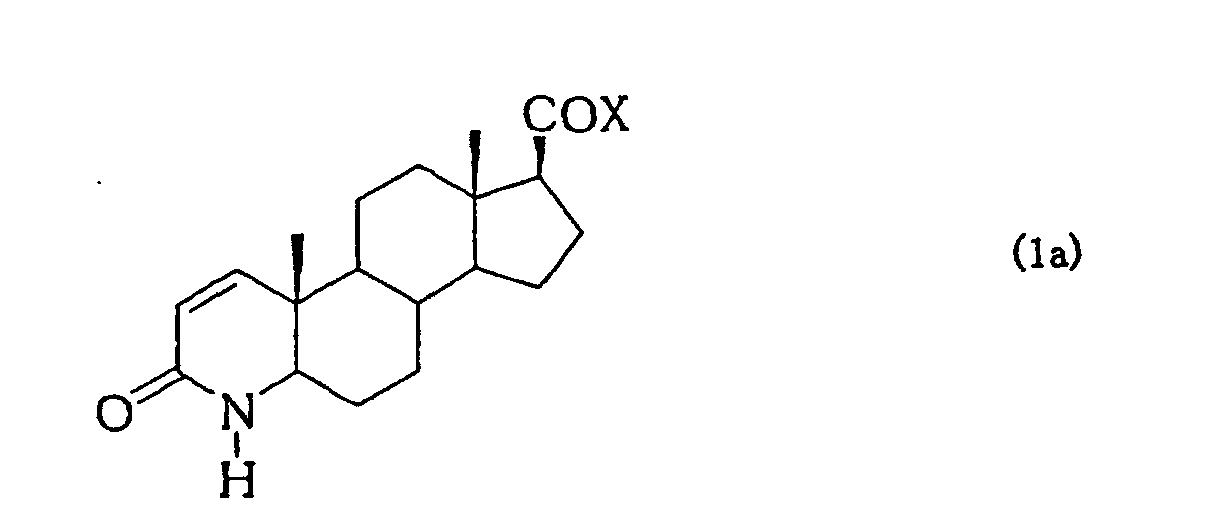
- X in the following formula is a halogen atom or a hydroxyl group
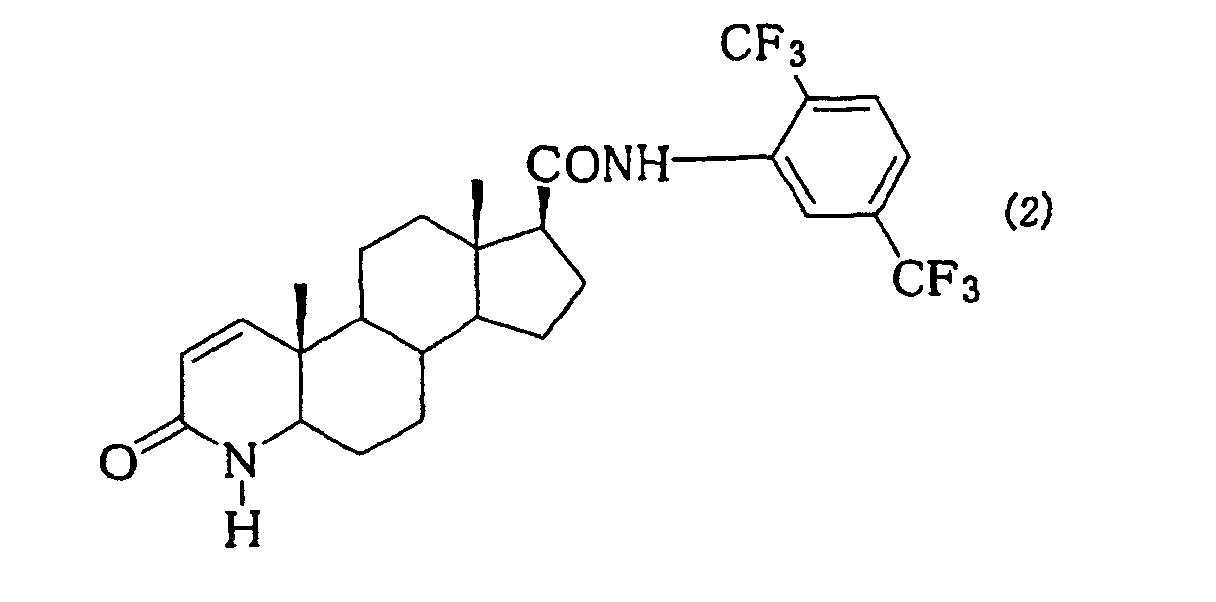
- a compound of the following formula (2) can be produced by reducing 2,5-bis(trifluoromethyl)nitrobenzene produced by the above process to form 2,5-bis(trifluoromethyl)aniline, which is reacted with a compound of the following formula (1a).
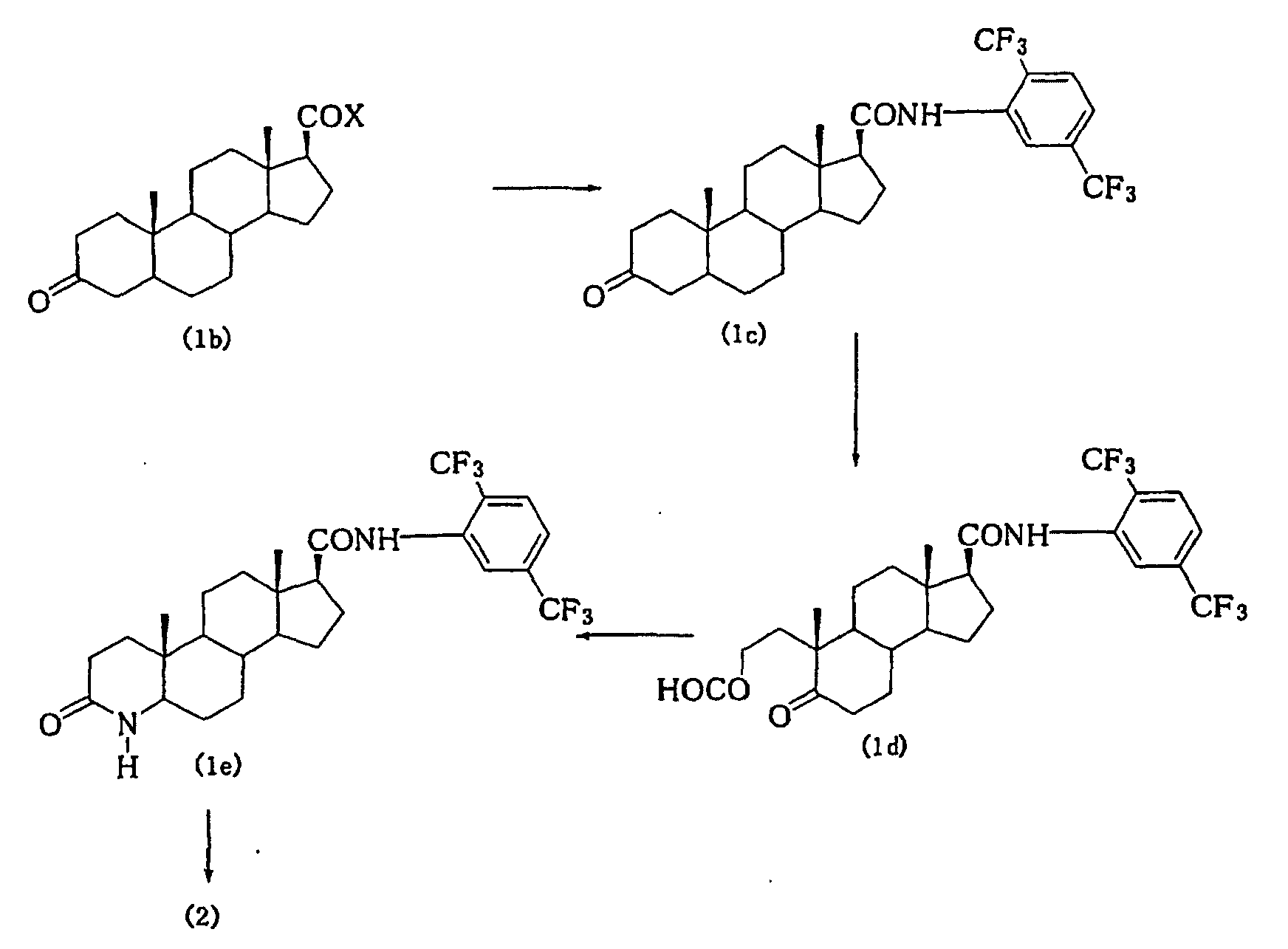
- a compound of the formula (2) can be produced by reducing 2,5-bis(trifluoromethyl)nitrobenzene produced by the above process to form 2,5-bis(trifluoromethyl)aniline, reacting the formed 2,5-bis(trifluoromethyl)aniline with a compound of the following formula (1b) to form a compound of the following formula (1c), oxidizing the compound of the formula (1c) to form a_compound of the following formula (1d), subjecting the compound of the formula (1d) to ammonia treatment and then to hydrogenation to form a compound of the following formula (1e), and subjecting the compound of the formula (1e) to dehydrogenation:
- the method of reducing 2,5-bis(trifluoromethyl)nitrobenzene to convert it into 2,5-bis(trifluoromethyl)aniline is a known method (Can. J. Chem., 50(4), 581 (1972). Further, the method for producing the compound of the formula (2) by using 2,5-bis(trifluoromethyl)aniline is also a known method (JP-A-9-502731).
- the yield is a value obtained by analyzing a dichloromethane solution before distillation of the product by an internal standard analysis method by means of GC, and it is a yield based on 1,4-bis(trifluoromethyl)benzene.
- the temperature was recovered to room temperature, and then the mixed acid layer and the organic layer were separated.
- the mixed acid layer was extracted with dichloromethane.
- the dichloromethane solution and the above separated organic layer were mixed, and the mixture was washed with a 10 mass% NaOH aqueous solution and then washed with water, dried over anhydrous magnesium sulfate and subjected to filtration.
- the dichloromethane solution was distilled off under reduced pressure to obtain 2,5-bis(trifluoromethyl)nitrobenzene (281 g, yield 58.0%) having a purity of 99.6% (GC analysis) as a fraction of boiling point 70-73°C/1200 Pa.
- the reaction was carried out in the same manner as in Example 1 except that 96 mass% sulfuric acid was changed to fuming sulfuric acid having a sulfur trioxide concentration of 10 mass%, the stirring time was 8 hours, and the temperature at the time of stirring was 80°C, to obtain 2,5-bis(trifluoromethyl)nitrobenzene.
- the yield was 68.7%.
- the reaction was carried out in the same manner as in Example 1 except that 96 mass% sulfuric acid was changed to 100 mass% sulfuric acid, the stirring time was 12 hours, and the temperature at the time of stirring was 80°C, to obtain 2,5-bis(trifluoromethyl)nitrobenzene.
- the yield was 72.7%.
- the reaction was carried out in the same manner as in Example 1 except that 96 mass% sulfuric acid was changed to fuming sulfuric acid having a sulfur trioxide concentration of 10 mass%, 97 mass% fuming nitric acid was changed to 98 mass% concentrated nitric acid, stirring time was 10 hours, and the temperature at the time of stirring was 80°C, to obtain 2,5-bis(trifluoromethyl)nitrobenzene.
- the yield was 65.3%.
- the reaction was carried out in the same manner as in Example 1 except that 96 mass% sulfuric acid was changed to fuming sulfuric acid having a sulfur trioxide concentration of 24 mass% to obtain 2,5-bis(trifluoromethyl)nitrobenzene.
- the yield was 32.5%.
- 2,5-bis(trifluoromethyl)nitrobenzene which is useful as a synthesis intermediate of e.g. pharmaceutical preparations and agricultural chemicals and as an intermediate for production of e.g. various functional materials, can be produced in a high yield, from 1,4-bis(trifluoromethyl)benzene which is industrially easily available, by using a solvent comprising as an essential component a specific sulfuric acid with which the reaction operation is simple and handling is easy, and nitric acid, with a small number of steps under moderate reaction conditions.
Landscapes
- Chemical & Material Sciences (AREA)
- Organic Chemistry (AREA)
- Health & Medical Sciences (AREA)
- General Health & Medical Sciences (AREA)
- Organic Low-Molecular-Weight Compounds And Preparation Thereof (AREA)
Abstract
Description
Claims (15)
- A process for producing 2,5-bis(trifluoromethyl) nitrobenzene, which comprises nitrating 1,4-bis(trifluoromethyl)benzene by means of nitric acid in a solvent comprising as an essential component an acid selected from sulfuric acid having a sulfuric acid concentration of from 91 to 100 mass% and fuming sulfuric acid having a sulfur trioxide concentration of higher than 0 mass% and at most 20 mass%.
- The production process according to Claim 1, wherein 1,4-bis(trifluoromethyl)benzene is dropwise added or 1,4-bis(trifluoromethyl)benzene is dividedly added to the mixed solution of the solvent and nitric acid.
- The production process according to Claim 1 or 2, wherein the solvent comprises an acid selected from sulfuric acid having a sulfuric acid concentration of from 91 to 100 mass% and fuming sulfuric acid having a sulfur trioxide concentration of higher than 0 mass% and at most 20 mass%.
- The production process according to any one of Claims 1 to 3, wherein the solvent comprises sulfuric acid having a sulfuric acid concentration of from 96 to 97 mass%.
- The production process according to any one of Claims 1 to 4, wherein the solvent comprises fuming sulfuric acid having a sulfur trioxide concentration of higher than 0 mass% and at most 10 mass%.
- The production process according to any one of Claims 1 to 5, wherein the amount of each of sulfuric acid and fuming sulfuric acid is from 1 to 50 times the mass of 1,4-bis(trifluoromethyl)benzene.
- The production process according to any one of Claims 1 to 6, wherein nitric acid is fuming nitric acid having a nitric acid concentration of at least 90 mass%.
- The production process according to any one of Claims 1 to 7, wherein nitric acid is fuming nitric acid having a nitric acid concentration of 94 mass% or fuming nitric acid having a nitric acid concentration of 97 mass%.
- The production process according to any one of Claims 1 to 8, wherein the water content in nitric acid is at most 35 mass%.
- The production process according to any one of Claims 1 to 9, wherein the water content in nitric acid is higher than 6 mass% and at most 35 mass%.
- The production process according to any one of Claims 1 to 10, wherein the water content in nitric acid is higher than 6 mass% and at most 30 mass%.
- The production process according to any one of Claims 1 to 11, wherein the reaction temperature of the nitration is from 50 to 100°C.
- The production process according to any one of Claims 1 to 12, wherein the reaction temperature of the nitration is from 60 to 95°C.
- A process for producing a compound of the following formula (2), which comprises reducing 2,5-bis(trifluoromethyl)nitrobenzene produced by the production process as defined in any one of Claims 1 to 13 to form 2,5-bis(trifluoromethyl)aniline, and reacting the formed 2,5-bis(trifluoromethyl)aniline with a compound of the following formula (1a):
 wherein X is a hydroxyl group or a halogen atom.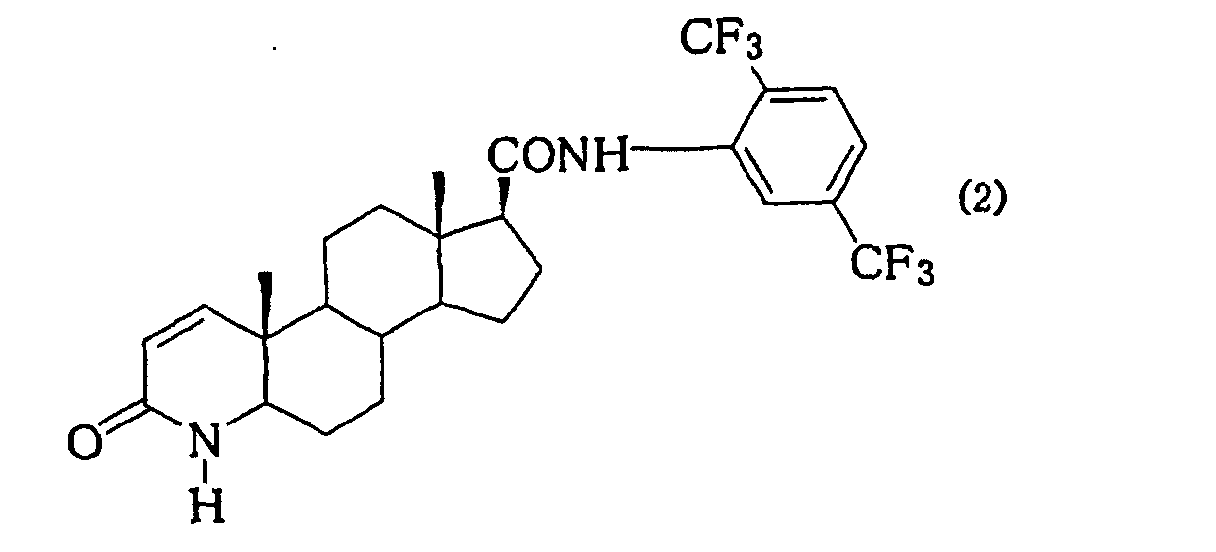
- A process for producing a compound of the following formula (2), which comprises reducing 2,5-bis(trifluoromethyl)nitrobenzene produced by the production process as defined in any one of Claims 1 to 13 to form 2,5-bis(trifluoromethyl)aniline, reacting the formed 2,5-bis(trifluoromethyl)aniline with a compound of the following formula (1b) to form a compound of the following formula (1c), oxidizing the compound of the formula (1c) to form a compound of the following formula (1d), subjecting the compound of the formula (1d) to ammonia treatment and then to hydrogenation to form a compound of the following formula (1e), and subjecting the compound of the formula (1e) to dehydrogenation:
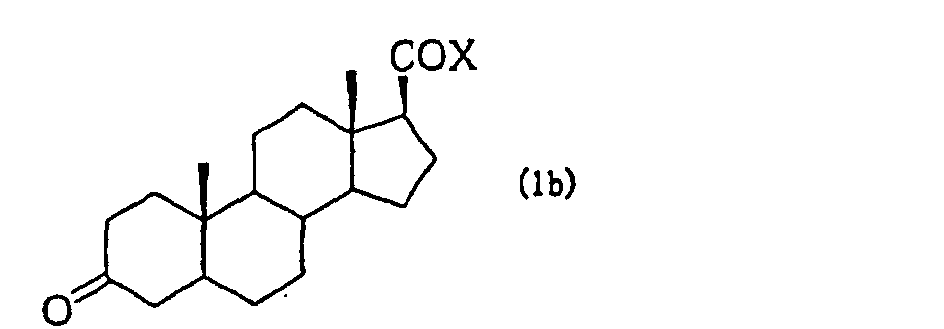 wherein X is a hydroxyl group or a halogen atom.
Applications Claiming Priority (3)
| Application Number | Priority Date | Filing Date | Title |
|---|---|---|---|
| JP2002017229 | 2002-01-25 | ||
| JP2002017229 | 2002-01-25 | ||
| PCT/JP2003/000660 WO2003062187A1 (en) | 2002-01-25 | 2003-01-24 | Process for producing 2,5-bis(trifluoromethyl)nitrobenzene |
Publications (3)
| Publication Number | Publication Date |
|---|---|
| EP1468983A1 true EP1468983A1 (en) | 2004-10-20 |
| EP1468983A4 EP1468983A4 (en) | 2005-02-09 |
| EP1468983B1 EP1468983B1 (en) | 2007-11-21 |
Family
ID=27606160
Family Applications (1)
| Application Number | Title | Priority Date | Filing Date |
|---|---|---|---|
| EP03701866A Expired - Lifetime EP1468983B1 (en) | 2002-01-25 | 2003-01-24 | Process for producing 2,5-bis(trifluoromethyl)nitrobenzene |
Country Status (7)
| Country | Link |
|---|---|
| US (1) | US6930214B2 (en) |
| EP (1) | EP1468983B1 (en) |
| JP (1) | JP4474921B2 (en) |
| DE (1) | DE60317626T2 (en) |
| DK (1) | DK1468983T3 (en) |
| ES (1) | ES2297123T3 (en) |
| WO (1) | WO2003062187A1 (en) |
Cited By (2)
| Publication number | Priority date | Publication date | Assignee | Title |
|---|---|---|---|---|
| EP2143618A1 (en) | 2008-07-10 | 2010-01-13 | Valeo Schalter und Sensoren GmbH | Method for controlling a parking assistance system for vehicles |
| CN103601642A (en) * | 2013-12-05 | 2014-02-26 | 上海市计量测试技术研究院 | Synthetic method of musk tibetene |
Families Citing this family (2)
| Publication number | Priority date | Publication date | Assignee | Title |
|---|---|---|---|---|
| CN102417534B (en) * | 2011-08-31 | 2013-04-10 | 重庆万利康制药有限公司 | Synthesis technology of dutasteride |
| CN108051513B (en) * | 2017-11-27 | 2020-09-29 | 重庆华邦制药有限公司 | Separation and determination of dutasteride starting material SM by HPLC method2And related impurities |
Family Cites Families (3)
| Publication number | Priority date | Publication date | Assignee | Title |
|---|---|---|---|---|
| JPH0768183B2 (en) * | 1986-12-23 | 1995-07-26 | セントラル硝子株式会社 | 5-Trichloromethyl-2-trifluoromethylnitrobenzene and process for producing the same |
| TW369521B (en) * | 1993-09-17 | 1999-09-11 | Smithkline Beecham Corp | Androstenone derivative |
| JP4022929B2 (en) * | 1995-07-24 | 2007-12-19 | 日産化学工業株式会社 | Method for producing 3,5-bis (trifluoromethyl) nitrobenzene |
-
2003
- 2003-01-24 EP EP03701866A patent/EP1468983B1/en not_active Expired - Lifetime
- 2003-01-24 DK DK03701866T patent/DK1468983T3/en active
- 2003-01-24 WO PCT/JP2003/000660 patent/WO2003062187A1/en not_active Ceased
- 2003-01-24 JP JP2003562071A patent/JP4474921B2/en not_active Expired - Fee Related
- 2003-01-24 ES ES03701866T patent/ES2297123T3/en not_active Expired - Lifetime
- 2003-01-24 DE DE60317626T patent/DE60317626T2/en not_active Expired - Lifetime
-
2004
- 2004-07-06 US US10/883,820 patent/US6930214B2/en not_active Expired - Lifetime
Cited By (2)
| Publication number | Priority date | Publication date | Assignee | Title |
|---|---|---|---|---|
| EP2143618A1 (en) | 2008-07-10 | 2010-01-13 | Valeo Schalter und Sensoren GmbH | Method for controlling a parking assistance system for vehicles |
| CN103601642A (en) * | 2013-12-05 | 2014-02-26 | 上海市计量测试技术研究院 | Synthetic method of musk tibetene |
Also Published As
| Publication number | Publication date |
|---|---|
| WO2003062187A1 (en) | 2003-07-31 |
| JPWO2003062187A1 (en) | 2005-05-19 |
| US20040242942A1 (en) | 2004-12-02 |
| DE60317626D1 (en) | 2008-01-03 |
| DK1468983T3 (en) | 2008-01-07 |
| EP1468983B1 (en) | 2007-11-21 |
| ES2297123T3 (en) | 2008-05-01 |
| JP4474921B2 (en) | 2010-06-09 |
| EP1468983A4 (en) | 2005-02-09 |
| US6930214B2 (en) | 2005-08-16 |
| DE60317626T2 (en) | 2008-10-23 |
Similar Documents
| Publication | Publication Date | Title |
|---|---|---|
| EP2700630A2 (en) | Method for producing substituted biphenyls | |
| US4387246A (en) | Method of preparing orthotrifluoromethyl aniline | |
| JPH05112506A (en) | Process for manufacturing 2,6-difluoroaniline from 1,2,3-trichlorobenzene | |
| EP1468983B1 (en) | Process for producing 2,5-bis(trifluoromethyl)nitrobenzene | |
| CN1030073A (en) | A new synthesis method of 3-amino-2-methyltrifluorotoluene | |
| EP0456799B1 (en) | Improved method of preparing an intermediate for the manufacture of bambuterol | |
| EP0143769B1 (en) | Preparation of ortho-aminobenzotrifluoride | |
| JPS63145262A (en) | Production of trifluoromethylbenzonitrile | |
| JP4270524B2 (en) | Improved process for the preparation of cycloalkyl and haloalkyl o-aminophenyl ketones | |
| JP5133270B2 (en) | Process for producing 1-bromo-3-trifluoromethoxybenzene | |
| JP4022929B2 (en) | Method for producing 3,5-bis (trifluoromethyl) nitrobenzene | |
| JP2000212104A (en) | Method for producing bis (trifluoromethyl) monobromobenzene | |
| EP1070038B1 (en) | New processes for the preparation of 3-bromoanisole and 3-bromonitrobenzene | |
| EP0870755A1 (en) | Process for the preparation of 4-substituted nitroanilines | |
| EP0477853A1 (en) | Process and novel intermediate for the preparation of 3,4'-diaminodiphenyl ether | |
| WO1999062859A1 (en) | Process for producing fluoroalkylcarboxylic acid | |
| KR20260003040A (en) | Method for producing halodifluorobenzene | |
| JP4024919B2 (en) | Process for producing 1-amino-1-methyl-3 (4) -aminomethylcyclohexane | |
| CN118638011A (en) | A kind of synthetic method of chloramphenicol intermediate | |
| JPS6259247A (en) | Production of aminophenyl ether compound | |
| JPS6160056B2 (en) | ||
| JPH01175948A (en) | Production of 3,5-dichlorophenol | |
| JPH06135856A (en) | New process for producing fluorinated aromatic compound | |
| JPH0149338B2 (en) | ||
| FR2761685A1 (en) | Preparation of 4-substituted di:nitroaniline derivatives used as cell division inhibitors in herbicides |
Legal Events
| Date | Code | Title | Description |
|---|---|---|---|
| PUAI | Public reference made under article 153(3) epc to a published international application that has entered the european phase |
Free format text: ORIGINAL CODE: 0009012 |
|
| 17P | Request for examination filed |
Effective date: 20040609 |
|
| AK | Designated contracting states |
Kind code of ref document: A1 Designated state(s): AT BE BG CH CY CZ DE DK EE ES FI FR GB GR HU IE IT LI LU MC NL PT SE SI SK TR |
|
| AX | Request for extension of the european patent |
Extension state: AL LT LV MK RO |
|
| A4 | Supplementary search report drawn up and despatched |
Effective date: 20041227 |
|
| 17Q | First examination report despatched |
Effective date: 20060224 |
|
| GRAC | Information related to communication of intention to grant a patent modified |
Free format text: ORIGINAL CODE: EPIDOSCIGR1 |
|
| GRAP | Despatch of communication of intention to grant a patent |
Free format text: ORIGINAL CODE: EPIDOSNIGR1 |
|
| GRAS | Grant fee paid |
Free format text: ORIGINAL CODE: EPIDOSNIGR3 |
|
| GRAA | (expected) grant |
Free format text: ORIGINAL CODE: 0009210 |
|
| AK | Designated contracting states |
Kind code of ref document: B1 Designated state(s): AT BE BG CH CY CZ DE DK EE ES FI FR GB GR HU IE IT LI LU MC NL PT SE SI SK TR |
|
| REG | Reference to a national code |
Ref country code: GB Ref legal event code: FG4D |
|
| REG | Reference to a national code |
Ref country code: IE Ref legal event code: FG4D |
|
| REG | Reference to a national code |
Ref country code: CH Ref legal event code: EP |
|
| REF | Corresponds to: |
Ref document number: 60317626 Country of ref document: DE Date of ref document: 20080103 Kind code of ref document: P |
|
| REG | Reference to a national code |
Ref country code: DK Ref legal event code: T3 |
|
| REG | Reference to a national code |
Ref country code: CH Ref legal event code: NV Representative=s name: PATENTANWAELTE SCHAAD, BALASS, MENZL & PARTNER AG |
|
| PG25 | Lapsed in a contracting state [announced via postgrant information from national office to epo] |
Ref country code: SE Free format text: LAPSE BECAUSE OF FAILURE TO SUBMIT A TRANSLATION OF THE DESCRIPTION OR TO PAY THE FEE WITHIN THE PRESCRIBED TIME-LIMIT Effective date: 20080221 Ref country code: NL Free format text: LAPSE BECAUSE OF FAILURE TO SUBMIT A TRANSLATION OF THE DESCRIPTION OR TO PAY THE FEE WITHIN THE PRESCRIBED TIME-LIMIT Effective date: 20071121 |
|
| NLV1 | Nl: lapsed or annulled due to failure to fulfill the requirements of art. 29p and 29m of the patents act | ||
| REG | Reference to a national code |
Ref country code: ES Ref legal event code: FG2A Ref document number: 2297123 Country of ref document: ES Kind code of ref document: T3 |
|
| PG25 | Lapsed in a contracting state [announced via postgrant information from national office to epo] |
Ref country code: SI Free format text: LAPSE BECAUSE OF FAILURE TO SUBMIT A TRANSLATION OF THE DESCRIPTION OR TO PAY THE FEE WITHIN THE PRESCRIBED TIME-LIMIT Effective date: 20071121 Ref country code: FI Free format text: LAPSE BECAUSE OF FAILURE TO SUBMIT A TRANSLATION OF THE DESCRIPTION OR TO PAY THE FEE WITHIN THE PRESCRIBED TIME-LIMIT Effective date: 20071121 Ref country code: BG Free format text: LAPSE BECAUSE OF FAILURE TO SUBMIT A TRANSLATION OF THE DESCRIPTION OR TO PAY THE FEE WITHIN THE PRESCRIBED TIME-LIMIT Effective date: 20080221 |
|
| ET | Fr: translation filed | ||
| PG25 | Lapsed in a contracting state [announced via postgrant information from national office to epo] |
Ref country code: CZ Free format text: LAPSE BECAUSE OF FAILURE TO SUBMIT A TRANSLATION OF THE DESCRIPTION OR TO PAY THE FEE WITHIN THE PRESCRIBED TIME-LIMIT Effective date: 20071121 |
|
| PG25 | Lapsed in a contracting state [announced via postgrant information from national office to epo] |
Ref country code: BE Free format text: LAPSE BECAUSE OF FAILURE TO SUBMIT A TRANSLATION OF THE DESCRIPTION OR TO PAY THE FEE WITHIN THE PRESCRIBED TIME-LIMIT Effective date: 20071121 Ref country code: SK Free format text: LAPSE BECAUSE OF FAILURE TO SUBMIT A TRANSLATION OF THE DESCRIPTION OR TO PAY THE FEE WITHIN THE PRESCRIBED TIME-LIMIT Effective date: 20071121 Ref country code: MC Free format text: LAPSE BECAUSE OF NON-PAYMENT OF DUE FEES Effective date: 20080131 |
|
| PLBE | No opposition filed within time limit |
Free format text: ORIGINAL CODE: 0009261 |
|
| STAA | Information on the status of an ep patent application or granted ep patent |
Free format text: STATUS: NO OPPOSITION FILED WITHIN TIME LIMIT |
|
| PG25 | Lapsed in a contracting state [announced via postgrant information from national office to epo] |
Ref country code: PT Free format text: LAPSE BECAUSE OF FAILURE TO SUBMIT A TRANSLATION OF THE DESCRIPTION OR TO PAY THE FEE WITHIN THE PRESCRIBED TIME-LIMIT Effective date: 20080421 |
|
| 26N | No opposition filed |
Effective date: 20080822 |
|
| PG25 | Lapsed in a contracting state [announced via postgrant information from national office to epo] |
Ref country code: GR Free format text: LAPSE BECAUSE OF FAILURE TO SUBMIT A TRANSLATION OF THE DESCRIPTION OR TO PAY THE FEE WITHIN THE PRESCRIBED TIME-LIMIT Effective date: 20080222 Ref country code: EE Free format text: LAPSE BECAUSE OF FAILURE TO SUBMIT A TRANSLATION OF THE DESCRIPTION OR TO PAY THE FEE WITHIN THE PRESCRIBED TIME-LIMIT Effective date: 20071121 |
|
| PG25 | Lapsed in a contracting state [announced via postgrant information from national office to epo] |
Ref country code: CY Free format text: LAPSE BECAUSE OF FAILURE TO SUBMIT A TRANSLATION OF THE DESCRIPTION OR TO PAY THE FEE WITHIN THE PRESCRIBED TIME-LIMIT Effective date: 20071121 |
|
| PG25 | Lapsed in a contracting state [announced via postgrant information from national office to epo] |
Ref country code: LU Free format text: LAPSE BECAUSE OF NON-PAYMENT OF DUE FEES Effective date: 20080124 Ref country code: HU Free format text: LAPSE BECAUSE OF FAILURE TO SUBMIT A TRANSLATION OF THE DESCRIPTION OR TO PAY THE FEE WITHIN THE PRESCRIBED TIME-LIMIT Effective date: 20080522 |
|
| PG25 | Lapsed in a contracting state [announced via postgrant information from national office to epo] |
Ref country code: TR Free format text: LAPSE BECAUSE OF FAILURE TO SUBMIT A TRANSLATION OF THE DESCRIPTION OR TO PAY THE FEE WITHIN THE PRESCRIBED TIME-LIMIT Effective date: 20071121 |
|
| PGFP | Annual fee paid to national office [announced via postgrant information from national office to epo] |
Ref country code: DK Payment date: 20120111 Year of fee payment: 10 |
|
| REG | Reference to a national code |
Ref country code: DK Ref legal event code: EBP |
|
| PG25 | Lapsed in a contracting state [announced via postgrant information from national office to epo] |
Ref country code: DK Free format text: LAPSE BECAUSE OF NON-PAYMENT OF DUE FEES Effective date: 20130131 |
|
| REG | Reference to a national code |
Ref country code: FR Ref legal event code: PLFP Year of fee payment: 14 |
|
| REG | Reference to a national code |
Ref country code: FR Ref legal event code: PLFP Year of fee payment: 15 |
|
| REG | Reference to a national code |
Ref country code: FR Ref legal event code: PLFP Year of fee payment: 16 |
|
| REG | Reference to a national code |
Ref country code: ES Ref legal event code: PC2A Owner name: AGC INC. Effective date: 20180828 Ref country code: ES Ref legal event code: PC2A Effective date: 20180828 |
|
| REG | Reference to a national code |
Ref country code: CH Ref legal event code: PFA Owner name: AGC INC., JP Free format text: FORMER OWNER: ASAHI GLASS COMPANY LTD., JP |
|
| REG | Reference to a national code |
Ref country code: DE Ref legal event code: R082 Ref document number: 60317626 Country of ref document: DE Representative=s name: MUELLER-BORE & PARTNER PATENTANWAELTE PARTG MB, DE Ref country code: DE Ref legal event code: R081 Ref document number: 60317626 Country of ref document: DE Owner name: AGC INC., JP Free format text: FORMER OWNER: ASAHI GLASS CO., LTD., TOKIO/TOKYO, JP |
|
| REG | Reference to a national code |
Ref country code: AT Ref legal event code: HC Ref document number: 379004 Country of ref document: AT Kind code of ref document: T Owner name: AGC INC., JP Effective date: 20190312 |
|
| PGFP | Annual fee paid to national office [announced via postgrant information from national office to epo] |
Ref country code: IT Payment date: 20210121 Year of fee payment: 19 Ref country code: CH Payment date: 20210120 Year of fee payment: 19 Ref country code: FR Payment date: 20210121 Year of fee payment: 19 |
|
| PGFP | Annual fee paid to national office [announced via postgrant information from national office to epo] |
Ref country code: ES Payment date: 20210326 Year of fee payment: 19 Ref country code: AT Payment date: 20210121 Year of fee payment: 19 Ref country code: DE Payment date: 20210120 Year of fee payment: 19 |
|
| PGFP | Annual fee paid to national office [announced via postgrant information from national office to epo] |
Ref country code: IE Payment date: 20220119 Year of fee payment: 20 Ref country code: GB Payment date: 20220119 Year of fee payment: 20 |
|
| REG | Reference to a national code |
Ref country code: DE Ref legal event code: R119 Ref document number: 60317626 Country of ref document: DE |
|
| REG | Reference to a national code |
Ref country code: CH Ref legal event code: PL |
|
| REG | Reference to a national code |
Ref country code: AT Ref legal event code: MM01 Ref document number: 379004 Country of ref document: AT Kind code of ref document: T Effective date: 20220124 |
|
| PG25 | Lapsed in a contracting state [announced via postgrant information from national office to epo] |
Ref country code: DE Free format text: LAPSE BECAUSE OF NON-PAYMENT OF DUE FEES Effective date: 20220802 Ref country code: AT Free format text: LAPSE BECAUSE OF NON-PAYMENT OF DUE FEES Effective date: 20220124 |
|
| PG25 | Lapsed in a contracting state [announced via postgrant information from national office to epo] |
Ref country code: FR Free format text: LAPSE BECAUSE OF NON-PAYMENT OF DUE FEES Effective date: 20220131 |
|
| PG25 | Lapsed in a contracting state [announced via postgrant information from national office to epo] |
Ref country code: LI Free format text: LAPSE BECAUSE OF NON-PAYMENT OF DUE FEES Effective date: 20220131 Ref country code: CH Free format text: LAPSE BECAUSE OF NON-PAYMENT OF DUE FEES Effective date: 20220131 |
|
| PG25 | Lapsed in a contracting state [announced via postgrant information from national office to epo] |
Ref country code: IT Free format text: LAPSE BECAUSE OF NON-PAYMENT OF DUE FEES Effective date: 20220124 |
|
| REG | Reference to a national code |
Ref country code: GB Ref legal event code: PE20 Expiry date: 20230123 |
|
| REG | Reference to a national code |
Ref country code: ES Ref legal event code: FD2A Effective date: 20230301 |
|
| PG25 | Lapsed in a contracting state [announced via postgrant information from national office to epo] |
Ref country code: IE Free format text: LAPSE BECAUSE OF EXPIRATION OF PROTECTION Effective date: 20230124 Ref country code: ES Free format text: LAPSE BECAUSE OF NON-PAYMENT OF DUE FEES Effective date: 20220125 |
|
| PG25 | Lapsed in a contracting state [announced via postgrant information from national office to epo] |
Ref country code: GB Free format text: LAPSE BECAUSE OF EXPIRATION OF PROTECTION Effective date: 20230123 |