TECHNICAL FIELD
-
The present invention relates generally to a cytotoxic synergistic composition
comprising one or more benzoazine-mono-N-oxides, and an effective amount of one
or more benzoazine 1,4 dioxides for use as anticancer drugs and as radiosensitizers
for cancer therapy in combination with radiation and/or other anticancer drugs.
-
The present invention also relates to the provision of a range of novel 1,2,4-benzoazine-mono-N-oxides
and related analogues, and to their use as potentiators
of the cytotoxicity of anticancer drugs and as radiosensitizers for cancer therapy in
combination with radiation and/or with other anticancer agents, or to at least provide
the public with a useful choice.
-
The term benzoazine used throughout this specification is to be understood as a term
used to encompass the mono and di N- oxide derivatives of benzotriazines and
quinoxalines.
BACKGROUND TO THE INVENTION
-
Hypoxic cells in tumours are resistant to ionising radiation, and are a major cause of
treatment failure in radiation therapy (Movsas et al.,
Cancer, 2000, 89, 2018; Rudat
et al.,
Radiother. Oncol., 2000, 57, 31). Hypoxic cells are also considered to
compromise response of solid tumours to cytotoxic chemotherapy (Brown and
Giaccia,
Cancer Res., 1998, 58, 1408). The benzotriazine di-N-oxide tirapazamine
(TPZ) is selectively toxic to hypoxic cells because of its metabolic activation to a
cytotoxic species by one-electron reduction (Baker et al.,
Cancer Res., 1988, 48,
5947; Laderoute et al.,
Biochem. Pharmacol., 1988, 37, 1487; Brown, Br.
J. Cancer
1993, 67, 1163). As shown below, the initial one-electron reduction product TPZ
* is
reoxidised to the starting compound by dioxygen, thereby preventing cytotoxicity in
oxic cells.
-
TPZ is therefore of interest for killing hypoxic cells in tumours, thereby improving
overall response during radiation therapy. TPZ also has potential for combination
with standard cytotoxic chemotherapy (Dorie and Brown, Cancer Res., 1993, 53,
4633; Langmuir et al., Cancer Res., 1994, 54, 2845; Dorie and Brown, Cancer
Chemother. Pharmacol., 1997, 39, 361), with (at least) two mechanisms of
therapeutic synergy. The first mechanism is the killing of resistant hypoxic cells
(analogous to the mechanism of interaction with radiotherapy), and the second is the
interference with repair of chemotherapy-induced DNA damage in hypoxic cells as
has been demonstrated for cisplatin (Kovacs et al., Br. J. Cancer 1999, 80, 1245;
Peters et al., Cancer Res., 2001, 61: 5425.
-
TPZ has already demonstrated significant antitumour activity in early phase human
clinical trials in combination with ionising radiation and/or cisplatin chemotherapy (for
a review, see Denny and Wilson, Exp. Opin. Invest. Drugs, 2000, 9, 2889), and a
multicentre phase III trial of TPZ in combination with cisplatin and radiation for
treatment of head and neck tumours is in progress. While TPZ shows promising
indications of clinical activity, it also displays considerable toxicity, such as
neutropenia, thrombocytopenia, nausea, vomiting, diarrhoea and muscle cramping.
These toxicity limitations preclude administration of doses high enough to exploit
hypoxia fully during cancer treatment. Although the mechanisms of TPZ toxicity to
normal tissues are not fully understood, it is considered that the toxicity arises at
least in part because of redox cycling. (Elwell et al., Biochem. Pharmacol., 1997, 54,
249; Wouters et al., Cancer Res., 2001, 61, 145) The mechanisms of TPZ toxicity
are therefore considered to be distinct from the mechanism of hypoxic cell killing.
There would be value in identifying agents capable of enhancing the hypoxic
cytotoxic potency of TPZ, without increasing its toxicity to oxic cells, in order to
improve its therapeutic selectivity for hypoxic tumour cells.
-
Recent studies indicate that the cytotoxic species arising from reduction of TPZ
under hypoxia is an oxidising radical derived from the initial benzotriazine radical
(TPZ*); the ultimate cytotoxin has been variously suggested to be the hydroxyl radical
OH* (Daniels and Gates, J. Am. Chem. Soc, 1996, 118, 3380; Patterson and Taiwo,
Biochem. Pharmacol., 2000, 60, 1933) or the benzotriazinyl radical TPZ* shown in
Figure 1 below. (Anderson et al., J. Am. Chem. Soc, 2003, 125, 748). Whatever its
identity, the oxidising radical generates DNA radicals which give rise to complex DNA
lesions responsible for cytotoxicity in hypoxic cells (Wang et al., Cancer Res., 1992,
52, 4473; Siim et al., Br. J. Cancer 1996, 73, 952; Kotandeniya et al., Bioorg. Med.
Chem. Lett., 2002, 12, 2325; Peters and Brown, Cancer Res., 2002, 62, 5248).
-
Published studies (Jones and Weinfeld,
Cancer Res., 1996, 56, 1584; Daniels and
Gates,
Chem. Res. Toxicol.,
1998, 11, 1254) have suggested that TPZ has a dual
mechanism of action, with the parent drug being involved in two distinct steps in the
generation of DNA damage as represented below in Scheme A.
-
In the first step, the DNA-damaging species, TPZ* or OH*, is considered to generate
DNA radicals by hydrogen abstraction. In the second step, TPZ itself can further
oxidise the initial DNA radicals to generate a more cytotoxic lesion (DNA break).
Certain other agents, such as the 1-N-oxide metabolite derived from TPZ (SR 4317,
as illustrated in Fig 1), have also been shown to be capable of oxidising DNA radicals
of the kind formed by TPZ* (Hwang et al., Biochemistry, 1999, 38, 14248).
-
It is an object of the present invention to provide a cytotoxic synergistic composition
comprising one or more benzoazine-mono-N-oxides, and an effective amount of one
or more benzoazine 1,4 dioxides for use as anticancer drugs and as radiosensitizers
for cancer therapy in combination with radiation and/or other anticancer drugs, or to
at least provide the public with a useful choice.
-
It is also an object of the present invention to provide a range of novel 1,2,4-benzoazine-mono-N-oxides
and related analogues, and to their use as potentiators
of the cytotoxicity of anticancer drugs and as radiosensitizers for cancer therapy in
combination with radiation and/or with other anticancer agents, or to at least provide
the public with a useful choice.
SUMMARY OF THE INVENTION
-
In a first aspect, the present invention provides a cytotoxic synergistic composition,
comprising an effective amount of a benzoazine N-mono oxide compound of Formula
A or a pharmacologically acceptable salt thereof and an effective amount of a
benzoazine 1,4 dioxide compound of Formula B or a pharmacologically acceptable
salt thereof
wherein in Formulae A or B
Z is selected from N or C-CN, and
wherein in Formula A when Z represents N, the N-oxide moiety occupies one of the
1-, 2-, or 4-positions; and when Z represents C-CN, the N-oxide moiety occupies one
of the 1-, or 4-positions;
wherein J in Formulae A or B represents at one or more of the available carbons 5-8 on
the benzo ring the following groups:
halo, H, R, OH, OR, NO
2, NH
2, NHR, NR
2, SH, SR, SO
2R, CF
3, CN, CO
2H, CO
2R,
CHO, COR, CONH
2, CONHR or CONRR, cyclic alkylamino, imidazolyl, alkylpiperazinyl,
morpholino;
wherein each R is independently selected from an optionally substituted
C
1-6 aliphatic or an optionally substituted C
3-6 cyclic alkyl group, and wherein the said
optional substituents are each independently selected from; halo, OH, OR
1, NO
2, NH
2,
NHR
1, NR
1R
1, SH, SR
1, imidazolyl, R
1-piperazinyl, morpholino, SO
2R
1, CF
3, CN, CO
2H,
CO
2R
1, CHO, COR
1, CONH
2, CONHR
1, CONR
1R
1;
R can also represent an optionally substituted aryl or an optionally substituted
heteroaryl group having up to 12 carbon atoms, and wherein the optional substituents
are each independently selected from; halo, OH, OR
1, NH
2, NHR
1, NR
1R
1, SH, SR
1,
imidazolyl, R
1-piperazinyl, morpholino, SO
2R
1, CF
3, CN, CO
2H, CO
2R
1, CHO, COR
1,
CONH
2, CONHR
1, CONR
1R
1, and each heteroaryl group contains one or more
heteroatoms in its ring system which are each independently selected from O, N or S;
wherein each R
1 is independently selected from an optionally substituted
C
1-4 alkyl or an optionally substituted C
2-4 alkenyl group and wherein the optional
substituents are each independently selected from OH, OR, NH
2, NHR
2, NR
2 2 or
N(OH)R
2 wherein each R
2 is independently selected from C
1-4 alkyl, C
2-4 alkenyl, OH,
NO
2 NH
2, CF
3, CN, CO
2H or SH, and
wherein W in Formulae A or B represents -X-A, wherein -X-A together may represent
H, or halogen; or
X can represent O, S, NH, NMe, CH
2, SO, SO
2, CONH, NHCO, CO or CO
2, and
A represents H, an optionally substituted C
1-12 alkyl group wherein the optional
substituents are each independently selected from OH, OR
3, NH
2, NHR
3, NR
3 2, or
N(OH)R
3 wherein each R
3 is independently selected from C
1-4 alkyl, C
2-4 alkenyl, OH,
NO
2, NH
2, CF
3, CN, CO
2H or SH; and wherein the optionally substituted C
1-12 alkyl chain
can be optionally interrupted or extended by one or more heteroatom containing linkage
moieties selected from O, NH, NR
4, CONH, CONR
4, NHCO, NR
4CO, where each R
4 is
independently selected from an optionally substituted C
1-4 alkyl or an optionally
substituted C
2-4 alkenyl group and wherein the optional R
4 substituents are each
independently selected from OH, OR, NH
2, NHR
5, NR
5 2 or N(OH)R
5 wherein each R
5 is
independently selected from C
1-4 alkyl, C
2-4 alkenyl, OH, NO
2 NH
2, CF
3, CN, CO
2H or
SH, or a pharmacologically acceptable salt thereof, or
W represents a group of Formula C
wherein in a group of Formula C
n represents either 1 or 2,
Z' is selected from N or C-CN, and when Z' represents N, and n represents 1 the N-oxide
moiety may occupy one of the 1'-, 2'-, or 4'-positions and when Z' represents
C-CN, the N-oxide moiety may occupy one of the 1'-, or 4'-positions; and when Z'
represents N or C-CN, and n represents 2 the N-oxide moieties occupy the 1'and 4'-positions
Y
3 and Y
4 may each represent at one or more of the available carbons 5'-8' on the
benzo ring the following groups:
halo, H, R, OH, OR, NO
2, NH
2, NHR, NR
2, SH, SR, SO
2R, CF
3, CN, CO
2H, CO
2R,
CHO, COR, CONH
2, CONHR or CONRR, cyclic alkylamino, imidazolyl, alkylpiperazinyl,
morpholino;
wherein each R is independently selected from an optionally substituted
C
1-6 aliphatic or an optionally substituted C
3-6 cyclic alkyl group, and wherein the said
optional substituents are each independently selected from; halo, OH, OR
1, NO
2, NH
2,
NHR
1, NR
1R
1, SH, SR
1, imidazolyl, R
1-piperazinyl, morpholino, SO
2R
1, CF
3, CN, CO
2H,
CO
2R
1, CHO, COR
1, CONH
2, CONHR
1, CONR
1R
1;
R may also represent an optionally substituted aryl or an optionally substituted
heteroaryl group having up to 12 carbon atoms, and wherein the optional substituents
are each independently selected from; halo, OH, OR
1, NH
2, NHR
1, NR
1R
1, SH, SR
1,
imidazolyl, R
1-piperazinyl, morpholino, SO
2R
1, CF
3, CN, CO
2H, CO
2R
1, CHO, COR
1,
CONH
2, CONHR
1, CONR
1R
1, and each heteroaryl group contains one or more
heteroatoms in its ring system which are each independently selected from O, N or S;
wherein each R
1 is independently selected from an optionally substituted
C
1-4 alkyl or an optionally substituted C
2-4 alkenyl group and wherein the optional
substituents are each independently selected from OH, OR, NH
2, NHR
2, NR
2 2 or
N(OH)R
2 wherein each R
2 is independently selected from C
1-4 alkyl, C
2-4 alkenyl, OH,
NO
2, NH
2, CF
3, CN, CO
2H or SH, and
X' may represent O, NH, NMe, or CH
2,
-
A may represent an optionally substituted C
1-12alkyl group wherein the optional
substituents are each independently selected from OH, OR
3, NH
2, NHR
3, NR
3 2, or
N(OH)R
3 wherein each R
3 is independently selected from C
1-
4 alkyl, C
2-4 alkenyl, OH,
NO
2, NH
2, CF
3, CN, CO
2H or SH; and wherein the optionally substituted C
1-12 alkyl
chain is optionally interrupted or extended by one or more heteroatom containing
linkage moieties selected from O, NH, NR
4, CONH, CONR
4, NHCO, NR
4CO, where
each R
4 is independently selected from an optionally substituted C
1-4 alkyl or an
optionally substituted C
2-4 alkenyl group and wherein the optional R
4 substituents are
each independently selected from OH, OR, NH
2, NHR
5, NR
5 2 or N(OH)R
5 wherein
each R
5 is independently selected from C
1-4 alkyl, C
2-4 alkenyl, OH, NO
2, NH
2, CF
3,
CN, CO
2H or SH, or
W may represent a group of Formula D
wherein X may represent NH, NMe, CH
2, or O;
A may represent an optionally substituted C
1-12 alkyl group wherein the optional
substituents are each independently selected from OH, OR, NH
2, NHR
3, NR
3 2 , or
N(OH)R
3 wherein each R
3 is independently selected from C
1-4 alkyl, C
2-4 alkenyl, OH,
NO
2, NH
2, CF
3, CN, CO
2H or SH; and wherein the optionally substituted C
1-12 alkyl
chain is optionally interrupted or extended by one or more heteroatom containing
linkage moieties selected from O, NH, NR
4, CONH, CONR
4, NHCO, NR
4CO, where
each R
4 is independently selected from an optionally substituted C
1-4 alkyl or an
optionally substituted C
2-4 alkenyl group and wherein the optional R
4 substituents are
each independently selected from OH, OR, NH
2, NHR
5, NR
5 2 or N(OH)R
5 wherein
each R
5 is independently selected from C
1-4 alkyl, C
2-4 alkenyl, OH, NO
2, NH
2, CF
3,
CN, CO
2H or SH, and
wherein the DNA-targeting unit is any moiety of a molecular weight below 700 Daltons
that has an association constant (K) for binding to double-stranded random sequence
DNA of >10
3 M
-1 at an ionic strength of 0.01 M at 20 °C,.
wherein T in Formulae A or B, may represent at one of carbons 5-8 on the benzo ring
the following groups:
halo, H, R, OH, OR, NO
2, NH
2, NHR, NR
2, SH, SR, SO
2R, CF
3, CN, CO
2H, CO
2R,
CHO, COR, CONH
2, CONHR or CONRR, cyclic alkylamino, imidazolyl, alkylpiperazinyl,
morpholino;
wherein each R is independently selected from an optionally substituted
C
1-6 aliphatic or an optionally substituted C
3-6 cyclic alkyl group, and wherein the said
optional substituents are each independently selected from; halo, OH, OR
1, NO
2, NH
2,
NHR
1, NR
1R
1 SH, SR
1, imidazolyl, R
1-piperazinyl, morpholino, SO
2R
1, CF
3, CN, CO
2H,
CO
2R
1, CHO, COR
1, CONH
2, CONHR
1, CONR
1R
1;
R may also represent an optionally substituted aryl or an optionally substituted
heteroaryl group having up to 12 carbon atoms, and wherein the optional substituents
are each independently selected from; halo, OH, OR
1, NH
2, NHR
1, NR
1R
1, SH, SR
1,
imidazolyl, R
1-piperazinyl, morpholino, SO
2R
1, CF
3, CN, CO
2H, CO
2R
1, CHO, COR
1,
CONH
2, CONHR
1, CONR
1R
1, and each heteroaryl group contains one or more
heteroatoms in its ring system which are each independently selected from O, N or S;
wherein each R
1 is independently selected from an optionally substituted
C
1-4 alkyl or an optionally substituted C
2-4 alkenyl group and wherein the optional
substituents are each independently selected from OH, OR, NH
2, NHR
2, NR
2 2 or
N(OH)R
2 wherein each R
2 is independently selected from C
1-4 alkyl, C
2-4 alkenyl, OH,
NO
2, NH
2, CF
3, CN, CO
2H or SH, or
T may represent a group of Formula E
wherein X may represent O, S, NH, NMe, CH
2, SO, SO
2, CONH, NHCO, CO, CO
2, or O
and
A may represent an optionally substituted C
1-12 alkyl group wherein the optional
substituents are each independently selected from OH, OR, NH
2, NHR
3, NR
3 2 , or
N(OH)R
3 wherein each R
3 is independently selected from C
1-4 alkyl, C
2-4 alkenyl, OH,
NO
2, NH
2, CF
3, CN, CO
2H or SH; and wherein the optionally substituted C
1-12 alkyl
chain is optionally interrupted or extended by one or more heteroatom containing
linkage moieties selected from O, NH, NR
4, CONH, CONR
4, NHCO, NR
4CO, where
each R
4 is independently selected from an optionally substituted C
1-4 alkyl or an
optionally substituted C
2-4 alkenyl group and wherein the optional R
4 substituents are
each independently selected from OH, OR, NH
2, NHR
5, NR
5 2 or N(OH)R
5 wherein
each R
5 is independently selected from C
1-4 alkyl, C
2-4 alkenyl, OH, NO
2, NH
2, CF
3,
CN, CO
2H or SH, and
wherein the DNA-targeting unit is any moiety of a molecular weight below 700 Daltons
that has an association constant (K) for binding to double-stranded random-sequence
DNA of >10
3 M
-1 at an ionic strength of 0.01 M at 20 °C.
-
Preferably, the DNA targeting agent defined above for a group of Formula D or Formula
E is independently selected from any one of the following wherein the DNA-targeting
unit is selected from one of formulae
III- XVII,
wherein in structures
XII-XVII R
6 is independently selected from an optionally substituted
C
1-6 aliphatic or an optionally substituted C
3-6 cyclic alkyl group, and wherein the optional
substituents are each independently selected from; halo, OH, OR
7 NO
2, NH
2, NHR
7,
NR
7R
7, SR
7, imidazolyl, R
7-piperazinyl, morpholino, SO
2R
7, CF
3, CN, CO
2H, CO
2R
7,
CHO, COR
7, CONH
2, CONHR
7, CONR
7R
7;
R
6 may also be represent an optionally substituted aryl or an optionally
substituted heteroaryl group having up to 12 carbon atoms, and wherein the optional
substituents are each independently selected from; halo, OH, OR
7, NH
2, NHR
7, NR
7R
7,
SH, SR
7, imidazolyl, R
7-piperazinyl, morpholino, SO
2R
7, CF
3, CN, CO
2H, CO
2R
7, CHO,
COR
7, CONH
2, CONHR
7, CONR
7R
7, and each heteroaryl group contains one or more
heteroatoms in its ring system which are each independently selected from O, N or S;
wherein each R
7 is independently selected from an optionally substituted
C
1-4 alkyl or an optionally substituted C
2-4 alkenyl group and wherein the optional
substituents are each independently selected from OH, OR
8, NH
2, NHR
8, NR
8 2or
N(OH)R
8 wherein each R
8 is independently selected from C
1-4 alkyl, C
2-4 alkenyl, OH,
NO
2 NH
2, CF
3, CN, CO
2H or SH;
D may represent up to four of the following groups as substituents at any available ring
carbon position; H, R
9, hydroxy, alkoxy, halogen, NO
2, NH
2, NHR
9, NR
9 2, SH, SR
9,
SO
2R
9, CF
3, CN, CO
2H, CO
2R
9, CHO, COR
9, CONH
2, CONHR
9 or CONR
9R
9, cyclic
alkylamino, imidazolyl, alkylpiperazinyl, morpholino, wherein each R
9 is independently
selected from an optionally substituted C
1-4 alkyl or an optionally substituted C
2-4 alkenyl
group and wherein the optional substituents are each independently selected from OH,
OR
10, NH
2, NHR
10, NR
10 2 or N(OH)R
10 wherein each R
10 is independently selected from
C
1-4 alkyl, C
2-4 alkenyl, OH, NO
2, NH
2, CF
3, CN, CO
2H or SH;
and wherein any available ring carbon position of formulae
III -
XVII may also be
optionally replaced by -N- when the valency and configuration of the formula allows, the
point of attachment of formulae
III- XVII to the A group defined above is represented by
◆; and
wherein in formulae
XII, XIII, , m is selected from 2, 3 or 4, and
wherein in formulae
XII, XIII, XVI and
XVII, J is selected from CH or N;
and wherein in formulae
XIV and
XV n is selected from 0, 1 or 2;
and wherein in formulae
XVI and
XVII o is selected from 1 and 2.
-
More preferably the DNA targeting unit is selected from one of formulae V, VI, VII, VIII,
IX or X. Most preferably, D of the DNA targeting unit of Formulae III - XI is H or Me.
-
Preferably W in Formula A represents NH(C1-C12) optionally substituted alkyl or a O(C1-C12)
optionally substituted alkyl.
-
Preferably W in the compound of Formula A represents NH2, NHCH2CH2NHCH3,
NHCH2CH2N(CH3)2 or OCH3.
-
Preferably, the composition includes a pharmaceutically acceptable excipient, adjuvant,
carrier, buffer or stabiliser. The pharmaceutically acceptable excipient, adjuvant, carrier,
buffer or stabiliser should be non-toxic and should not interfere with the efficacy of the
active composition. The precise nature of the carrier or other material will depend on
the intended route of administration, which may be oral, or by injection such as
cutaneous, subcutaneous or by intravenous injection. Pharmaceutical compositions for
oral administration may be in tablet, capsule, powder or liquid form. A tablet may
comprise a solid carrier or an adjuvant. Liquid pharmaceutical compositions generally
comprise a liquid such as water, petroleum, animal or vegetable oils, mineral oil or
synthetic oil. Physiological saline solution, dextrose or other saccharide solution or
glycols such as ethylene glycol, propylene glycol may be included. A capsule may
comprise a solid carrier such as a gelatine. For intravenous, cutaneous or
subcutaneous injection, the active composition will be in the form of a parenterally
acceptable aqueous solution that is pyrogen-free and has a suitable pH, isotonicity and
stability. Those of skill in the art would be able to prepare suitable solutions using for
example, isotonic vehicles such as sodium chloride injection, Ringer's injection, lactated
Ringer's injection. Preservatives, stabilisers, buffers, antioxidants and/or other additives
may be included as required.
-
It is to be appreciated that the compounds of Formula B are to be taken as including all
the DNA-targeted benzotriazine 1,4-dioxides and the methods disclosed for making
these compounds as specified in co-pending PCT application PCT/NZ03/00210 to
Auckland Uniservices and the Board of Trustees of the Leland Stanford Junior
University. The disclosure of PCT/NZ03/00210 is hereby incorporated in its entirety.
-
In a second aspect, there is provided a method of treating a subject in need of cancer
therapy, said method comprising the steps of administering to said subject a cytotoxic
effective amount of a composition including an effective amount of one or more
compounds of Formula A and one or more compounds of formula B as defined above
to the tumour cells in said subject.
-
Preferably, the steps of administration of a compound of Formula A and B may be
simultaneous or sequential.
-
Preferably the tumour cells are in a hypoxic environment.
-
Preferably, the method includes the further step of administering said composition
defined above in combination with one or more other chemotherapeutic agents or
treatments, including radiotherapy, either simultaneously, or sequentially, depending on
the cancerous condition to be treated.
-
More preferably the method includes the step of administering radiotherapy to the
tumour cells before, during or after the administration of the composition as defined
above.
-
Preferably, the chemotherapeutic agents are selected from Cisplatin or other platinum-based
derivatives, Temozolomide or other DNA methylating agents, cyclophosphamide
or other DNA alkylating agents, doxorubicin, mitoxandrone, camptothecin or other
topoisomerase inhibitors, methotrexate, gemcitabine or other antimetabolites.
-
While the compositions of the invention will typically be used in cancer therapy of
human subjects, they may be used to target tumour cells in other warm blooded animal
subjects such as other primates, farm animals such as cattle, and sports animals and
pets such as horses, dogs, and cats.
-
A "cytotoxic effective amount", is to be understood as an amount of the composition
including one or more compounds of Formula A and one or more compounds of
Formula B as defined above that is sufficient to show benefit to a patient. The actual
amount, rate and time-course of administration, will depend on the nature and severity
of the disease being treated. Prescription of treatment is within the responsibility of
general practitioners and other medical doctors.
-
A hypoxic environment is to be understood as tissue environments at an oxygen
concentration of < 10 µM.
-
In a third aspect there is provided, the use in the manufacture of a medicament of an
effective amount of a composition including an effective amount of one or more
compounds of Formula A or one or more compounds of formula B as defined above for
the treatment of a subject in need of cancer therapy.
-
In a fourth aspect, the present invention provides a compound of Formula I,
wherein
Z may be selected from N or C-CN, and when Z represents N, the N-oxide moiety
occupies one of the 1-, 2-, or 4-positions; and when Z represents C-CN, the N-oxide
moiety occupies one of the 1-, or 4-positions;
Y
1 and Y
2 may each represent at one or more of the available carbons 5-8 on the benzo
ring the following groups:
halo, H, R, OH, OR, NO
2, NH
2, NHR, NR
2, SH, SR, SO
2R, CF
3, CN, CO
2H, CO
2R,
CHO, COR, CONH
2, CONHR or CONRR, cyclic alkylamino, imidazolyl, alkylpiperazinyl,
morpholino;
wherein each R may be independently selected from an optionally substituted
C
1-6 aliphatic or an optionally substituted C
3-6 cyclic alkyl group, and wherein the said
optional substituents are each independently selected from; halo, OH, OR
1, NO
2, NH
2,
NHR
1, NR
1R
1, SH, SR
1, imidazolyl, R
1-piperazinyl, morpholino, SO
2R
1, CF
3, CN, CO
2H,
CO
2R
1, CHO, COR
1, CONH
2, CONHR
1, CONR
1R
1;
R may also represent an optionally substituted aryl or an optionally substituted
heteroaryl group having up to 12 carbon atoms, and wherein the optional substituents
are each independently selected from; halo, OH, OR
1, NH
2, NHR
1, NR
1R
1, SH, SR
1,
imidazolyl, R
1-piperazinyl, morpholino, SO
2R
1, CF
3, CN, CO
2H, CO
2R
1, CHO, COR
1,
CONH
2, CONHR
1, CONR
1R
1, and each heteroaryl group contains one or more
heteroatoms in its ring system which are each independently selected from O, N or S;
wherein each R
1 is independently selected from an optionally substituted
C
1-4 alkyl or an optionally substituted C
2-4 alkenyl group and wherein the optional
substituents are each independently selected from OH, OR, NH
2, NHR
2, NR
2 2 or
N(OH)R
2 wherein each R
2 is independently selected from C
1-4 alkyl, C
2-4 alkenyl, OH,
NO
2 NH
2, CF
3, CN, CO
2H or SH, and
wherein A and X together may represent H, or halogen; or
X may represent O, S, NH, NMe or CH
2 and
A may represent H, an optionally substituted C
1-12 alkyl group wherein the optional
substituents are each independently selected from OH, OR
3, NH
2, NHR
3, NR
3 2, or
N(OH)R
3 wherein each R
3 is independently selected from C
1-4 alkyl, C
2-4 alkenyl, OH,
NO
2, NH
2, CF
3, CN, CO
2H or SH; and wherein the optionally substituted C
1-12 alkyl chain
is optionally interrupted or extended by one or more heteroatom containing linkage
moieties selected from O, NH, NR
4, CONH, CONR
4, NHCO, NR
4CO, where each R
4 is
independently selected from an optionally substituted C
1-4 alkyl or an optionally
substituted C
2-4 alkenyl group and wherein the optional R
4 substituents are each
independently selected from OH, OR, NH
2, NHR
5, NR
5 2 or N(OH)R
5 wherein each R
5 is
independently selected from C
1-4 alkyl, C
2-4 alkenyl, OH, NO
2, NH
2, CF
3, CN, CO
2H or
SH, or a pharmacologically acceptable salt thereof,
with the proviso that the following compounds are excluded
3-Amino-1,2,4-benzotriazine-1-oxide,
3-Amino-7-trifluoromethyl-1,2,4-benzotriazine-1-oxide,
3-Amino-7-carbamyl-1,2,4-benzotriazine-1-oxide,
3-Amino-7-chloro-1,2,4-benzotriazine-1-oxide,
3-Amino-7-nitro-1,2,4-benzotriazine-1-oxide
3-Chloro-1,2,4-benzotriazine-1-oxide,
3-(3-N,N-Diethylaminopropylamino)- 3-amino-1,2,4-benzotriazine-1-oxide,
3-Chloro-7-nitro-1,2,4-benzotriazine-1-oxide,
7-Nitro-(3-(2-N,N-diethylamino-ethylamino)-1,2,4-benzotriazine-1-oxide,
8-Methoxy-1,2,4-benzotriazin-3-amine 1-oxide,
8-Methyl-1,2,4-benzotriazin-3-amine 1-oxide,
8-Fluoro-1,2,4-benzotriazin-3-amine 1-oxide,
8-Chloro-1,2,4-benzotriazin-3-amine 1-oxide,
8-Trifluoromethyl-1,2,4-benzotriazin-3-amine 1-oxide,
8-(Methylsulfanyl)-1,2,4-benzotriazin-3-amine 1-oxide,
8-(Butylsulfanyl)-1,2,4-benzotriazin-3-amine 1-oxide,
3-Amino-1,2,4-benzotriazin-7-ol 1-oxide,
3-Amino-1,2,4-benzotriazin-7-ol 1-oxide,
7-Methyl-1,2,4-benzotriazin-3-amine 1-oxide,
7-Fluoro-1,2,4-benzotriazin-3-amine 1-oxide,
7-Chloro-1,2,4-benzotrazin-3-amine 1-oxide,
7-Trifluoromethyl-1,2,4-benzotriazin-3-amine 1-oxide,
7-(Methylsulfanyl)-1,2,4-benzotriazin-3-amine 1-oxide,
7-(Butylsulfanyl)-1,2,4-benzotriazin-3-amine 1-oxide,
7-Nitro-1,2,4-benzotriazin-3-amine 1-oxide,
6-Methoxy-1,2,4-benzotriazin-3-amine 1-oxide,
6-Methyl-1,2,4-benzotriazin-3-amine 1-oxide,
6-Phenyl-1,2,4-benzotriazin-3-amine 1-oxide,
6-Fluoro-1,2,4-benzotriazin-3-amine 1-oxide,
6-Chloro-1,2,4-benzotrazin-3-amine 1-oxide,
6-Trifluoromethyl-1,2,4-benzotriazin-3-amine 1-oxide,
6-(Methylsulfanyl)-1,2,4-benzotriazin-3-amine 1-oxide,
6-(Butylsulfanyl)-1,2,4-benzotriazin-3-amine 1-oxide,
5-Methoxy-1,2,4-benzotriazin-3-amine 1-oxide,
5-Methyl-1,2,4-benzotriazin-3-amine 1-oxide,
5-Chloro-1,2,4-benzotriazin-3-amine 1-oxide,
5-Fluoro-1,2,4-benzotriazin-3-amine 1-oxide,
N7,N7 -Dimethyl-1,2,4-benzotriazine-3,7-diamine 1-oxide,
3-Chloro-1,2,4-benzotriazine 1-oxide,
3-Methyl-1,2,4-benzotriazine 1-oxide,
3-Ethyl-1,2,4-benzotriazine 1-oxide,
3-Phenyl-1,2,4-benzotriazine 1-oxide,
3-(4-Methoxyphenyl)-1,2,4-benzotriazine 1-oxide,
3-Vinyl-1,2,4-benzotriazine 1-oxide,
3-Allyl-1,2,4-benzotriazine 1-oxide,
3-(2-Hydroxyethyl)-1,2,4-benzotriazine 1-oxide,
3-(2-Methoxyethyl)-1,2,4-benzotriazine 1-oxide,
N-Phenyl-1,2,4-benzotriazin-3-amine 1-oxide,
3-Methoxy-1,2,4-benzotriazine 1-oxide,
3-Chloro-7-methyl-1,2,4-benzotriazine 1-oxide,
3-Chloro-7-methoxy-1,2,4-benzotriazine 1-oxide,
1,2,4-benzotriazine 1-oxide,
1,2,4-benzotriazin-3-amine 2-oxide, and
1,2,4-benzotriazin-3-amine 4-oxide.
-
Preferably, Z is N.
-
A preferred compound of Formula I is one in which X is NH or CH2.
-
A more preferred compound of Formula I is one in which -X-A represents a NH(C1-C12)
optionally substituted alkyl or an O(C1-C12) optionally substituted alkyl, such as
NHCH2CH2NHCH3, NHCH2CH2N(CH3)2 or OCH3.
-
A further preferred compound of Formula I is one in which Y1 and Y2 each represent H.
-
A further preferred compound of Formula I' is one in which the N-oxide moiety occupies
the 1-position.
-
In a fifth aspect, there is provided a method of treating a subject in need of cancer
therapy, said method comprising the steps of administering to said subject a cytotoxic
effective amount of a compound of Formula I
wherein
Z is selected from N or C-CN, and when Z represents N, the N-oxide moiety occupies
one of the 1-, 2-, or 4-positions; and when Z represents C-CN, the N-oxide moiety
occupies one of the 1-, or 4-positions;
Y
1 and Y
2 may each represent at one or more of the available carbons 5-8 on the benzo
ring the following groups:
halo, H, R, OH, OR, NO
2, NH
2, NHR, NR
2, SH, SR, SO
2R, CF
3, CN, CO
2H, CO
2R,
CHO, COR, CONH
2, CONHR or CONRR, cyclic alkylamino, imidazolyl, alkylpiperazinyl,
morpholino;
wherein each R is independently selected from an optionally substituted
C
1-6 aliphatic or an optionally substituted C
3-6 cyclic alkyl group, and wherein the said
optional substituents are each independently selected from; halo, OH, OR
1, NO
2, NH
2,
NHR
1, NR
1R
1, SH, SR
1, imidazolyl, R
1-piperazinyl, morpholino, SO
2R
1, CF
3, CN, CO
2H,
CO
2R
1, CHO, COR
1, CONH
2, CONHR
1, CONR
1R
1;
R may also represent an optionally substituted aryl or an optionally substituted
heteroaryl group having up to 12 carbon atoms, and wherein the optional substituents
are each independently selected from; halo, OH, OR
1, NH
2, NHR
1, NR
1R
1, SH, SR
1,
imidazolyl, R
1-piperazinyl, morpholino, SO
2R
1, CF
3, CN, CO
2H, CO
2R
1, CHO, COR
1,
CONH
2, CONHR
1, CONR
1R
1, and each heteroaryl group contains one or more
heteroatoms in its ring system which are each independently selected from O, N or S;
wherein each R' is independently selected from an optionally substituted
C
1-4 alkyl or an optionally substituted C
2-4 alkenyl group and wherein the optional
substituents are each independently selected from OH, OR, NH
2, NHR
2, NR
2 2 or
N(OH)R
2 wherein each R
2 is independently selected from C
1-4 alkyl, C
2-4 alkenyl, OH,
NO
2, NH
2, CF
3, CN, CO
2H or SH, and
wherein A and X together may represent H, or halogen; or
X may represent O, S, NH, NMe or CH
2 and
A may represent H, an optionally substituted C
1-12 alkyl group wherein the optional
substituents are each independently selected from OH, OR, NH
2, NHR
3, NR
3 2 , or
N(OH)R
3 wherein each R
3 is independently selected from C
1-4 alkyl, C
2-4 alkenyl, OH,
NO
2, NH
2, CF
3, CN, CO
2H or SH; and wherein the optionally substituted C
1-12 alkyl chain
is optionally interrupted or extended by one or more heteroatom containing linkage
moieties selected from O, NH, NR
4, CONH, CONR
4, NHCO, NR
4CO, where each R
4 is
independently selected from an optionally substituted C
1-4 alkyl or an optionally
substituted C
2-4 alkenyl group and wherein the optional R
4 substituents are each
independently selected from OH, OR, NH
2, NHR
5, NR
5 2 or N(OH)R
5 wherein each R
5 is
independently selected from C
1-4 alkyl, C
2-4 alkenyl, OH, NO
2, NH
2, CF
3, CN, CO
2H or
SH, or a pharmacologically acceptable salt thereof
to the tumour cells in said subject.
-
Preferably the tumour cells are in a hypoxic environment.
-
Preferably, the method includes the further step of administering the compound of
Formula I in combination with one or more other chemotherapeutic agents or
treatments, including radiotherapy, either simultaneously, or sequentially, depending on
the cancerous condition to be treated.
-
More preferably the method includes the step of administering radiotherapy to the
tumour cells before, during or after the administration of the composition as defined
above.
-
Preferably, the chemotherapeutic agents are selected from Cisplatin or other platinum-based
derivatives, Temozolomide or other DNA methylating agents, cyclophosphamide
or other DNA alkylating agents, doxorubicin, mitoxandrone, camptothecin or other
topoisomerase inhibitors, methotrexate, gemcitabine or other antimetabolites.
-
While the method of the invention will typically be used in cancer therapy of human
subjects, they may be used to target tumour cells in other warm blooded animal
subjects such as other primates, farm animals such as cattle, and sports animals and
pets such as horses, dogs, and cats.
-
Preferably, the compound of Formula I is administered with a pharmaceutically
acceptable excipient, adjuvant, carrier, buffer or stabiliser. The pharmaceutically
acceptable excipient, adjuvant, carrier, buffer or stabiliser should be non-toxic and
should not interfere with the efficacy of the active composition. The precise nature of
the carrier or other material will depend on the intended route of administration, which
may be oral, or by injection such as cutaneous, subcutaneous or by intravenous
injection. Pharmaceutical compositions of Formula I for oral administration may be in
tablet, capsule, powder or liquid form. A tablet may comprise a solid carrier or an
adjuvant. Liquid pharmaceutical compositions generally comprise a liquid such as
water, petroleum, animal or vegetable oils, mineral oil or synthetic oil. Physiological
saline solution, dextrose or other saccharide solution or glycols such as ethylene glycol,
propylene glycol may be included. A capsule may comprise a solid carrier such as a
gelatine. For intravenous, cutaneous or subcutaneous injection, the active composition
will be in the form of a parenterally acceptable aqueous solution that is pyrogen-free
and has a suitable pH, isotonicity and stability. Those of skill in the art would be able to
prepare suitable solutions using for example, isotonic vehicles such as sodium chloride
injection, Ringer's injection, lactated Ringer's injection. Preservatives, stabilisers,
buffers, antioxidants and/or other additives may be included as required.
-
A "cytotoxic effective amount", is to be understood as an amount of a compound of
Formula defined above that is sufficient to show benefit to a patient. The actual
amount, rate and time-course of administration, will depend on the nature and severity
of the disease being treated. Prescription of treatment is within the responsibility of
general practitioners and other medical doctors.
-
A hypoxic environment is to be understood as tissue environments at an oxygen
concentration of < 10 mM.
-
In a sixth aspect there is provided, the use in the manufacture of a medicament of an
effective amount of a compound of Formula I as defined above for the treatment of a
subject in need of cancer therapy.
-
In a seventh aspect the present invention provides a compound of
Formula I',
wherein
n may represent either 1 or 2,
Z or Z' is selected from N or C-CN, and when Z or Z' represents N, and n represents
1 each N-oxide moiety may occupy one of the 1-, 2-, or 4-positions or 1'-, 2'-, or 4'-positions
respectively and when Z or Z' represents C-CN, each N-oxide moiety may
occupy one of the 1-, or 4-positions or 1'-, or 4'-positions respectively; and when Z'
represents N, and n represents 2, the N'-oxide moieties occupy the 1'- and 4'-positions
and when Z' represents C-CN, and n represents 2 the N'-oxide moieties
occupy the 1'-, and 4'-positions;
Y
1, Y
2, Y
3 and Y
4 may each represent at one or more of the available carbons 5-8 or
one or more of the available carbons 5'-8' on the respective benzo ring the following
groups:
halo, H, R, OH, OR, NO
2, NH
2, NHR, NR
2, SH, SR, SO
2R, CF
3, CN, CO
2H, CO
2R,
CHO, COR, CONH
2, CONHR or CONRR, cyclic alkylamino, imidazolyl, alkylpiperazinyl,
morpholino;
wherein each R is independently selected from an optionally substituted
C
1-6 aliphatic or an optionally substituted C
3-6 cyclic alkyl group, and wherein the said
optional substituents are each independently selected from; halo, OH, OR
1, NO
2, NH
2,
NHR
1, NR
1R
1, SH, SR
1, imidazolyl, R
1-piperazinyl, morpholino, SO
2R
1, CF
3, CN, CO
2H,
CO
2R
1, CHO, COR
1, CONH
2, CONHR
1, CONR
1R
1;
R may also represent an optionally substituted aryl or an optionally substituted
heteroaryl group having up to 12 carbon atoms, and wherein the optional substituents
are each independently selected from; halo, OH, OR
1, NH
2, NHR
1, NR
1R
1, SH, SR
1,
imidazolyl, R
1-piperazinyl, morpholino, SO
2R
1, CF
3, CN, CO
2H, CO
2R
1, CHO, COR
1,
CONH
2, CONHR
1, CONR
1R
1, and each heteroaryl group contains one or more
heteroatoms in its ring system which are each independently selected from O, N or S;
wherein each R
1 is independently selected from an optionally substituted
C
1-4 alkyl or an optionally substituted C
2-4 alkenyl group and wherein the optional
substituents are each independently selected from OH, OR, NH
2, NHR
2, NR
2 2 or
N(OH)R
2 wherein each R
2 is independently selected from C
1-4 alkyl, C
2-4 alkenyl, OH,
NO
2, NH
2, CF
3, CN, CO
2H or SH, and
wherein X may represent NH, NMe, CH
2, or O;
-
A may represent an optionally substituted C1-12 alkyl group wherein the optional
substituents are each independently selected from OH, OR3, NH2, NHR3, NR3 2, or
N(OH)R3 wherein each R3 is independently selected from C1-4 alkyl, C2-4 alkenyl, OH,
NO2, NH2, CF3, CN, CO2H or SH; and wherein the optionally substituted C1-12 alkyl chain
is optionally interrupted or extended by one or more heteroatom containing linkage
moieties selected from O, NH, NR4, CONH, CONR4, NHCO, NR4CO, where each R4 is
independently selected from an optionally substituted C1-4 alkyl or an optionally
substituted C2-4 alkenyl group and wherein the optional R4 substituents are each
independently selected from OH, OR, NH2, NHR5, NR5 2 or N(OH)R5 wherein each R5 is
independently selected from C1-4 alkyl, C2-4 alkenyl, OH, NO2, NH2, CF3, CN, CO2H or
SH, or a pharmacologically acceptable salt thereof.
-
A preferred compound of Formula I' is one in which X is NH or CH2.
-
A further preferred compound of Formula I' is one in which Y1 and Y2 each represent H.
-
A further preferred compound of Formula I' is one in which A is -(CH2)2NMe(CH2)2-
-
A further preferred compound of Formula I' is one in which the N-oxides are positioned
at the 1-position.
-
In an eighth aspect, there is provided a method of treating a subject in need of cancer
therapy, said method comprising the steps of administering to said subject a cytotoxic
effective amount of a compound of Formula I' as defined above to the tumour cells in
said subject.
-
Preferably the tumour cells are in a hypoxic environment.
-
Preferably, the method includes the further step of administering the compound of
Formula I' in combination with one or more other chemotherapeutic agents or
treatments, including radiotherapy, either simultaneously, or sequentially, depending on
the cancerous condition to be treated.
-
More preferably the method includes the step of administering radiotherapy to the
tumour cells before, during or after the administration of the composition as defined
above.
-
Preferably, the chemotherapeutic agents are selected from Cisplatin or other platinum-based
derivatives, Temozolomide or other DNA methylating agents, cyclophosphamide
or other DNA alkylating agents, doxorubicin, mitoxandrone, camptothecin or other
topoisomerase inhibitors, methotrexate, gemcitabine or other antimetabolites.
-
While the method of the invention will typically be used in cancer therapy of human
subjects, they may be used to target tumour cells in other warm blooded animal
subjects such as other primates, farm animals such as cattle, and sports animals and
pets such as horses, dogs, and cats.
-
Preferably, the compound of Formula I' is administered with a pharmaceutically
acceptable excipient, adjuvant, carrier, buffer or stabiliser. The pharmaceutically
acceptable excipient, adjuvant, carrier, buffer or stabiliser should be non-toxic and
should not interfere with the efficacy of the active composition. The precise nature of
the carrier or other material will depend on the intended route of administration, which
may be oral, or by injection such as cutaneous, subcutaneous or by intravenous
injection. Pharmaceutical compositions of Formula I' for oral administration may be in
tablet, capsule, powder or liquid form. A tablet may comprise a solid carrier or an
adjuvant. Liquid pharmaceutical compositions generally comprise a liquid such as
water, petroleum, animal or vegetable oils, mineral oil or synthetic oil. Physiological
saline solution, dextrose or other saccharide solution or glycols such as ethylene glycol,
propylene glycol may be included. A capsule may comprise a solid carrier such as a
gelatine. For intravenous, cutaneous or subcutaneous injection, the active composition
will be in the form of a parenterally acceptable aqueous solution that is pyrogen-free
and has a suitable pH, isotonicity and stability. Those of skill in the art would be able to
prepare suitable solutions using for example, isotonic vehicles such as sodium chloride
injection, Ringer's injection, lactated Ringer's injection. Preservatives, stabilisers,
buffers, antioxidants and/or other additives may be included as required.
-
A "cytotoxic effective amount", is to be understood as an amount of a compound of
Formula I' defined above that is sufficient to show benefit to a patient. The actual
amount, rate and time-course of administration, will depend on the nature and severity
of the disease being treated. Prescription of treatment is within the responsibility of
general practitioners and other medical doctors.
-
A hypoxic environment is to be understood as tissue environments at an oxygen
concentration of < 10 mM.
-
In a ninth aspect there is provided, the use in the manufacture of a medicament of an
effective amount of a compound of Formula I' as defined above for the treatment of a
subject in need of cancer therapy.
-
In a tenth aspect, the present invention provides a compound of Formula II,
wherein
Z is selected from N or C-CN, and when Z represents N, the N-oxide moiety occupies
one of the 1-, 2-, or 4-positions; and when Z represents C-CN, the N-oxide moiety
occupies one of the 1-, or 4-positions;
Y
1 and Y
2 may each represent at one or more of the available carbons 5-8 on the
benzo ring the following groups:
halo, H, R, OH, OR, NO
2, NH
2, NHR, NR
2, SH, SR, SO
2R, CF
3, CN, CO
2H, CO
2R,
CHO, COR, CONH
2, CONHR or CONRR, cyclic alkylamino, imidazolyl, alkylpiperazinyl,
morpholino;
wherein each R is independently selected from an optionally substituted
C
1-6 aliphatic or an optionally substituted C
3-6 cyclic alkyl group, and wherein the said
optional substituents are each independently selected from; halo, OH, OR
1, NO
2, NH
2,
NHR
1, NR
1R
1, SH, SR
1, imidazolyl, R
1-piperazinyl, morpholino, SO
2R
1, CF
3, CN, CO
2H,
CO
2R
1, CHO, COR
1, CONH
2, CONHR
1, CONR
1R
1;
R may also represent an optionally substituted aryl or an optionally substituted
heteroaryl group having up to 12 carbon atoms, and wherein the optional substituents
are each independently selected from; halo, OH, OR
1, NH
2, NHR
1, NR
1R
1, SH, SR
1,
imidazolyl, R
1-piperazinyl, morpholino, SO
2R
1, CF
3, CN, CO
2H, CO
2R
1, CHO, COR
1
CONH
2, CONHR
1, CONR
1R
1, and each heteroaryl group contains one or more
heteroatoms in its ring system which are each independently selected from O, N or S;
wherein each R
1 is independently selected from an optionally substituted
C
1-4 alkyl or an optionally substituted C
2-4 alkenyl group and wherein the optional
substituents are each independently selected from OH, OR, NH
2, NHR
2, NR
2 2 or
N(OH)R
2 wherein each R
2 is independently selected from C
1-4 alkyl, C
2-4 alkenyl, OH,
NO
2, NH
2, CF
3, CN, CO
2H or SH, and
wherein X may represent NH, NMe, CH
2, or O;
-
A may represent an optionally substituted C1-12 alkyl group wherein the optional
substituents are each independently selected from OH, OR3, NH2, NHR3, NR3 2 , or
N(OH)R3 wherein each R3 is independently selected from C1-4 alkyl, C2-4 alkenyl, OH,
NO2, NH2, CF3, CN, CO2H or SH; and wherein the optionally substituted C1-12 alkyl chain
is optionally interrupted or extended by one or more heteroatom containing linkage
moieties selected from O, NH, NR4, CONH, CONR4, NHCO, NR4CO, where each R4 is
independently selected from an optionally substituted C1-4 alkyl or an optionally
substituted C2-4 alkenyl group and wherein the optional R4 substituents are each
independently selected from OH, OR, NH2, NHR5, NR5 2 or N(OH)R5 wherein each R5 is
independently selected from C1-4 alkyl, C2-4 alkenyl, OH, NO2, NH2, CF3, CN, CO2H or
SH, and
wherein the DNA-targeting unit is any moiety of a molecular weight below 700 Daltons
that has an association constant (K) for binding to double-stranded random-sequence
DNA of >103 M-1 at an ionic strength of 0.01 M at 20 °C,
or a pharmacologically acceptable salt thereof.
-
The definition of the DNA targeting unit above refers to double-stranded random-sequence
DNA. An example of such double-stranded random-sequence DNA is
DNA extracted from calf thymus.
-
Preferably, Z is N.
-
A preferred compound of Formula II is one in which X is NH or CH2.
-
A further preferred compound of Formula II is one in which the N-oxide is at the 1-position
-
A further preferred compound of Formula II is one in which Y1 and Y2 each represent H.
-
A further preferred compound of Formula II is one in which Y1 represents Me
-
A preferred embodiment of Formula II are compounds wherein A is selected from
-(CH2)6NH-, -(CH2)3NH(CH2)3NHCO-, -(CH2)3NMe(CH2)3NHCO-, -(CH2)3NH-,
- (CH2)2NH(CH2)2NHCO- or -(CH2)2NMe(CH2)2NHCO-.
-
A further preferred embodiment of Formula II are compounds wherein the DNA-targeting
unit is selected from one of formulae
III- XVII,
wherein in structures
XII-XVII R
6 is independently selected from an optionally substituted
C
1-6 aliphatic or an optionally substituted C
3-6 cyclic alkyl group, and wherein the optional
substituents are each independently selected from; halo, OH, OR
7 NO
2, NH
2, NHR
7,
NR
7R
7, SR
7, imidazolyl, R
7-piperazinyl, morpholino, SO
2R
7, CF
3, CN, CO
2H, CO
2R
7,
CHO, COR
7, CONH
2, CONHR
7, CONR
7R
7;
R
6 may also be represent an optionally substituted aryl or an optionally
substituted heteroaryl group having up to 12 carbon atoms, and wherein the optional
substituents are each independently selected from; halo, OH, OR
7, NH
2, NHR
7, NR
7R
7,
SH, SR
7, imidazolyl, R
7-piperazinyl, morpholino, SO
2R
7, CF
3, CN, CO
2ZH, CO
2R
7, CHO,
COR
7, CONH
2, CONHR
7, CONR
7R
7, and each heteroaryl group contains one or more
heteroatoms in its ring system which are each independently selected from O, N or S;
wherein each R
7 is independently selected from an optionally substituted
C
1-4 alkyl or an optionally substituted C
2-4 alkenyl group and wherein the optional
substituents are each independently selected from OH, OR
8, NH
2, NHR
8, NR
8 2 or
N(OH)R
8 wherein each R
8 is independently selected from C
1-4 alkyl, C
2-4 alkenyl, OH,
NO
2, NH
2, CF
3, CN, CO
2H or SH;
D may represent up to four of the following groups as substituents at any available ring
carbon position; H, R
9, hydroxy, alkoxy, halogen, NO
2, NH
2, NHR
9, NR
9 2, SH, SR
9,
SO
2R
9, CF
3, CN, CO
2H, CO
2R
9, CHO, COR
9, CONH
2, CONHR
9 or CONR
9R
9, cyclic
alkylamino, imidazolyl, alkylpiperazinyl, morpholino, wherein each R
9 is independently
selected from an optionally substituted C
1-4 alkyl or an optionally substituted C
2-4 alkenyl
group and wherein the optional substituents are each independently selected from OH,
OR
10, NH
2, NHR
10, NR
10 2 or N(OH)R
10 wherein each R
10 is independently selected from
C
1-4 alkyl, C
2-4 alkenyl, OH, NO
2, NH
2, CF
3, CN, CO
2H or SH;
and wherein any available ring carbon position of formulae
III - XVII may also be
optionally replaced by -N- when the valency and configuration of the formula allows, the
point of attachment of formulae
III- XVII to the A group defined above is represented by
◆; and
wherein in formulae
XII, XIII, m is selected from 2, 3 or 4, and
wherein in formulae
XII, XIII, XVI and
XVII, J is selected from CH or N;
and wherein in formulae
XIV and
XV n is selected from 0, 1 or 2;
and wherein in formulae
XVI and
XVII o is selected from 1 and 2.
-
A preferred embodiment of formula II is one in which the DNA targeting unit is selected
from one of formulae V, VI, VII, VIII, IX or X.
-
A preferred embodiment of formula II is one in which D of the DNA targeting unit of
Formulae III - XI is H or Me.
-
Further preferred compounds of formula II include the following
wherein X is NH-, Y is H, Z is N, position 1-oxide, A is -(CH2)2NH(CH2)2NHCO-, the
DNA targeting unit represents formula IX and D is H;
wherein X is NH-, Y is H, Z is N, position 1-oxide, A is -(CH2)3NH(CH2)3NHCO-, the
DNA targeting unit represents formula IX and D is H;
wherein X is NH-, Y is H, Z is N, position 1-oxide, A is -(CH2)2NMe(CH2)2NHCO-, the
DNA targeting unit represents formula IX and D is H;
wherein X is NH-, Y is 6-Me, Z is N, position 1-oxide, A is -(CH2)2NMe(CH2)2NHCO-.
the DNA targeting unit represents formula IX and D is H;
wherein X is NH-, Y is H, Z is N, position 1-oxide, A is -(CH2)3NMe(CH2)3NHCO-, the
DNA targeting unit represents formula IX and D is H;
wherein X is NH-, Y is 6-Me, Z is N, position 1-oxide, A is -(CH2)3NMe(CH2)3NHCO-,
the DNA targeting unit represents formula IX and D is H;
wherein X is NH-, Y is H, Z is N, position 1-oxide, A is -(CH2)2NMe(CH2)2NHCO-, the
DNA targeting unit represents formula IX and D is Me;
wherein X is NH-, Y is H, Z is N, position 1-oxide, A is -(CH2)3NMe(CH2)3NHCO-, the
DNA targeting unit represents formula IX and D is Me.
-
In an eleventh aspect, there is provided a method of treating a subject in need of cancer
therapy, said method comprising the steps of administering to said subject a cytotoxic
effective amount of a compound of Formula II as defined above to the tumour cells in
said subject.
-
Preferably the tumour cells are in a hypoxic environment.
-
Preferably, the method includes the further step of administering the compound of
Formula II in combination with one or more other chemotherapeutic agents or
treatments, including radiotherapy, either simultaneously, or sequentially, depending on
the cancerous condition to be treated.
-
More preferably the method includes the step of administering radiotherapy to the
tumour cells before, during or after the administration of the composition as defined
above.
-
Preferably, the chemotherapeutic agents are selected from Cisplatin or other platinum-based
derivatives, Temozolomide or other DNA methylating agents, cyclophosphamide
or other DNA alkylating agents, doxorubicin, mitoxandrone, camptothecin or other
topoisomerase inhibitors, methotrexate, gemcitabine or other antimetabolites.
-
While the method of the invention will typically be used in cancer therapy of human
subjects, they may be used to target tumour cells in other warm blooded animal
subjects such as other primates, farm animals such as cattle, and sports animals and
pets such as horses, dogs, and cats.
-
Preferably, the compound of Formula II is administered with a pharmaceutically
acceptable excipient, adjuvant, carrier, buffer or stabiliser. The pharmaceutically
acceptable excipient, adjuvant, carrier, buffer or stabiliser should be non-toxic and
should not interfere with the efficacy of the active composition. The precise nature of
the carrier or other material will depend on the intended route of administration, which
may be oral, or by injection such as cutaneous, subcutaneous or by intravenous
injection. Pharmaceutical compositions of Formula II for oral administration may be in
tablet, capsule, powder or liquid form. A tablet may comprise a solid carrier or an
adjuvant Liquid pharmaceutical compositions generally comprise a liquid such as
water, petroleum, animal or vegetable oils, mineral oil or synthetic oil. Physiological
saline solution, dextrose or other saccharide solution or glycols such as ethylene glycol,
propylene glycol may be included. A capsule may comprise a solid carrier such as a
gelatine. For intravenous, cutaneous or subcutaneous injection, the active composition
will be in the form of a parenterally acceptable aqueous solution that is pyrogen-free
and has a suitable pH, isotonicity and stability. Those of skill in the art would be able to
prepare suitable solutions using for example, isotonic vehicles such as sodium chloride
injection, Ringer's injection, lactated Ringer's injection. Preservatives, stabilisers,
buffers, antioxidants and/or other additives may be included as required.
-
A "cytotoxic effective amount", is to be understood as an amount of a compound of
Formula II defined above that is sufficient to show benefit to a patient. The actual
amount, rate and time-course of administration, will depend on the nature and severity
of the disease being treated. Prescription of treatment is within the responsibility of
general practitioners and other medical doctors.
-
A hypoxic environment is to be understood as tissue environments at an oxygen
concentration of < 10 mM.
-
In a twelth aspect there is provided, the use in the manufacture of a medicament of an
effective amount of a compound of Formula II as defined above for the treatment of a
subject in need of cancer therapy.
-
In a thirteenth aspect, the present invention provides a compound of Formula
II',
wherein
Z is selected from N or C-CN, and when Z represents N, the N-oxide moiety occupies
one of the 1-, 2-, or 4-positions; and when Z represents C-CN, the N-oxide moiety
occupies one of the 1-, or 4-positions;
Y
1 may represent at one or more of the available carbons 5-8 on the benzo ring the
following groups:
halo, H, R, OH, OR, NO
2, NH
2, NHR, NR
2, SH, SR, SO
2R, CF
3, CN, CO
2H, CO
2R,
CHO, COR, CONH
2, CONHR or CONRR, cyclic alkylamino, imidazolyl, alkylpiperazinyl,
morpholino;
Y
5 is selected from the following groups halo, H, R, OR, NH
2, NHR, NR
2, SO
2R, CF
3,
CN, CO
2H, CO
2R, CHO, COR, CONH
2, CONHR or CONRR, cyclic alkylamino,
imidazolyl, alkylpiperazinyl, morpholino;
wherein each R of groups Y
1 and Y
5 is independently selected from an optionally
substituted C
1-6 aliphatic or an optionally substituted C
3-6 cyclic alkyl group, and wherein
the optional substituents are each independently selected from; halo, OH, OR', NO
2,
NH
2, NHR
1, NR
1R
1, SH, SR
1, imidazolyl, R
1-piperazinyl, morpholino, SO
2R
1 CF
3, CN,
CO
2H, CO
2R
1, CHO, COR', CONH
2, CONHR
1, CONR
1R
1;
R may also be represent an optionally substituted aryl or an optionally substituted
heteroaryl group having up to 12 carbon atoms, and wherein the optional substituents
are each independently selected from; halo, OH, OR
1, NH
2, NHR
1, NR
1R
1, SH, SR
1,
imidazolyl, R'-piperazinyl, morpholino, SO
2R
1, CF
3, CN, CO
2H, CO
2R
1, CHO, COR
1,
CONH
2, CONHR
1, CONR
1R
1, and each heteroaryl group contains one or more
heteroatoms in its ring system which are each independently selected from O, N or S;
wherein each R
1 is independently selected from an optionally substituted
C
1-4 alkyl or an optionally substituted C
2-4 alkenyl group and wherein the optional
substituents are each independently selected from OH, OR, NH
2, NHR
2, NR
2 2 or
N(OH)R
2 wherein each R
2 is independently selected from C
1-4 alkyl, C
2-4 alkenyl, OH,
NO
2, NH
2, CF
3, CN, CO
2H or SH, and
wherein X may represent NH, NMe, CH
2, S, SO, SO
2, CONH, NHCO, CO, CO
2, or O;
-
A may represent an optionally substituted C1-12 alkyl group wherein the optional
substituents are each independently selected from OH, OR3, NH2, NHR3, NR3 2 or
N(OH)R3 wherein each R3 is independently selected from C1-4 alkyl, C2-4 alkenyl, OH,
NO2, NH2, CF3, CN, CO2H or SH; and wherein the optionally substituted C2-12 alkyl chain
is optionally interrupted by one or more heteroatom containing linkage moieties selected
from O, NH, NR4, CONH, CONR4, NHCO, NR4CO, where each R4 is independently
selected from an optionally substituted C1-4 alkyl or an optionally substituted C2-4 alkenyl
group and wherein the optional R4 substituents are each independently selected from
OH, OR, NH2, NHR5, NR5 2 or N(OH)R5 wherein each R5 is independently selected from
C1-4 alkyl, C2-4 alkenyl, OH, NO2, NH2, CF3, CN, CO2H or SH; and
wherein the DNA-targeting unit is any moiety of a molecular weight below 700 Daltons
that has an association constant (K) for binding to double-stranded random-sequence
DNA of >103 M-1 at an ionic strength of 0.01 M at 20 °C,
or a pharmacologically acceptable salt thereof.
-
The definition of the DNA targeting unit above refers to double-stranded random-sequence
DNA. An example of such double-stranded random-sequence DNA is
DNA extracted from calf thymus.
-
Preferably, Z is N.
-
A preferred compound of Formula II' is one in which X is O or CH2
-
A further preferred compound of Formula II' is one in which the N-oxide is at the 1-position
-
A further preferred compound of Formula II' is one in which Y1 represents H
-
A further preferred compound of Formula II' is one in which Y5 represents NHR
-
A preferred embodiment of Formula II are compounds wherein A is selected from
-(CH2)6NH-, -(CH2)3NH(CH2)3NHCO-, -(CH2)3NMe(CH2)3NHCO-, -(CH2)3NH-,
-(CH2)2NH(CH2)2NHCO- or -(CH2)2NMe(CH2)2NHCO-.
-
A further preferred embodiment of Formula II are compounds wherein the DNA-targeting
unit is selected from one of formulae
III-
XVII,
wherein in structures
XII - XVII R
6 is independently selected from an optionally
substituted C
1-6 aliphatic or an optionally substituted C
3-6 cyclic alkyl group, and wherein
the optional substituents are each independently selected from; halo, OH, OR
7 NO
2,
NH
2, NHR
7, NR
7R
7, SR
7, imidazolyl, R
7-piperazinyl, morpholino, SO
2R
7, CF
3, CN,
CO
2H, CO
2R
7, CHO, COR
7, CONH
2, CONHR
7, CONR
7R
7;
R
6 may also be represent an optionally substituted aryl or an optionally
substituted heteroaryl group having up to 12 carbon atoms, and wherein the optional
substituents are each independently selected from; halo, OH, OR
7, NH
2, NHR
7, NR
7R
7,
SH, SR
7, imidazolyl, R
7-piperazinyl, morpholino, SO
2R
7, CF
3, CN, CO
2H, CO
2R
7, CHO,
COR
7, CONH
2, CONHR
7, CONR
7R
7, and each heteroaryl group contains one or more
heteroatoms in its ring system which are each independently selected from O, N or S;
wherein each R
7 is independently selected from an optionally substituted C
1-4
alkyl or an optionally substituted C
2-4 alkenyl group and wherein the optional
substituents are each independently selected from OH, OR
8, NH
2, NHR
8, NR
8 2 or
N(OH)R
98 wherein each R
8 is independently selected from C
1-4 alkyl, C
2-4 alkenyl, OH,
NO
2, NH
2, CF
3, CN, CO
2H or SH;
D may represent up to four of the following groups as substituents at any available ring
carbon position; H, R
9, hydroxy, alkoxy, halogen, NO
2, NH
2, NHR
9, NR
9 2, SH, SR
9,
SO
2R
9, CF
3, CN, CO
2H, CO
2R
9, CHO, COR
9, CONH
2, CONHR
9 or CONR
9R
9, cyclic
alkylamino, imidazolyl, alkylpiperazinyl, morpholino, wherein each R
9 independently
selected from an optionally substituted C
1-4 alkyl or an optionally substituted C
2-4 alkenyl
group and wherein the optional substituents are each independently selected from OH,
OR
10, NH
2, NHR
10, N °R
10 2 or N(OH)R
10 wherein each R
10 is independently selected from
C
1-4 alkyl, C
2-4 alkenyl, OH, NO
2, NH
2, CF
3, CN, CO
2H or SH;
and wherein any available ring carbon position of formulae
III- XVII may also be
optionally replaced by -N- when the valency and configuration of the formula allows, the
point of attachment of formulae
III- XVII to the A group defined above is represented by
◆; and
wherein in formulae
XII and
XIII, m is selected from 2, 3 or 4,
and wherein in formulae
XII, XIII, XVI or
XVII J is selected from CH or N; and
wherein in formulae
XIV and
XV n is selected from 0, 1 or 2, and
wherein in formulae
XVI and
XVII o is selected from 1 or 2.
-
A preferred embodiment of formula II' is one in which the DNA targeting unit is selected
from one of formulae IV - X.
-
A preferred embodiment of formula II' is one in which D of the DNA targeting unit of
Formulae III - XI is H or Me.
-
Preferred compounds of formula II' include the following
wherein X is CH2-, Y1 is H, Y5 is NHCH2CH2OMe, Z is -N-, A is
-(CH2)NMe(CH2)2NHCO-, the DNA targeting unit represents formula IX and D is H;
wherein X is CH2-, Y1 is H, Y5 is NHCH2CH2OMe, Z is -N-, A is
-(CH2)2NH(CH2)3NHCO-, the DNA targeting unit represents formula IX and D is H;
wherein X is CH2-, Y1 is H, Y5 is NHCH2CH2OMe, Z is -N-, A is
-(CH2)NMe(CH2)2NHCO-, the DNA targeting unit represents formula IX and D is Me;
wherein X is CH2-, Y1 is H, Y5 is NHCH2CH2OMe, Z is -N-, A is
-(CH2)2NMe(CH2)3NHCO-, the DNA targeting unit represents formula IX and D is Me;
wherein X is CH2-, Y1 is H, Y5 is NHCH2CH2OMe, Z is -N-, A is-(CH2)NMe(CH2)2NHCO-,
the DNA targeting unit represents formula X and D is Me;
wherein X is CH2-, Y1 is H, Y5 is NHCH2CH2OMe, Z is -N-, A is-(CH2)2NH(CH2)3NHCO-,
the DNA targeting unit represents formula X and D is Me;
-
In a fourteenth aspect, there is provided a method of treating a subject in need of
cancer therapy, said method comprising the steps of administering to said subject a
cytotoxic effective amount of a compound of Formula II' as defined above to the tumour
cells in said subject.
-
Preferably the tumour cells are in a hypoxic environment.
-
Preferably, the method includes the further step of administering the compound of
Formula II' in combination with one or more other chemotherapeutic agents or
treatments, including radiotherapy, either simultaneously, or sequentially, depending on
the cancerous condition to be treated.
-
More preferably the method includes the step of administering radiotherapy to the
tumour cells before, during or after the administration of the composition as defined
above.
-
Preferably, the chemotherapeutic agents are selected from Cisplatin or other platinum-based
derivatives, Temozolomide or other DNA methylating agents, cyclophosphamide
or other DNA alkylating agents, doxorubicin, mitoxandrone, camptothecin or other
topoisomerase inhibitors, methotrexate, gemcitabine or other antimetabolites.
-
While the method of the invention will typically be used in cancer therapy of human
subjects, they may be used to target tumour cells in other warm blooded animal
subjects such as other primates, farm animals such as cattle, and sports animals and
pets such as horses, dogs, and cats.
-
Preferably, the compound of Formula II' is administered with a pharmaceutically
acceptable excipient, adjuvant, carrier, buffer or stabiliser. The pharmaceutically
acceptable excipient, adjuvant, carrier, buffer or stabiliser should be non-toxic and
should not interfere with the efficacy of the active composition. The precise nature of
the carrier or other material will depend on the intended route of administration, which
may be oral, or by injection such as cutaneous, subcutaneous or by intravenous
injection. Pharmaceutical compositions of Formula II' for oral administration may be in
tablet, capsule, powder or liquid form. A tablet may comprise a solid carrier or an
adjuvant Liquid pharmaceutical compositions generally comprise a liquid such as
water, petroleum, animal or vegetable oils, mineral oil or synthetic oil. Physiological
saline solution, dextrose or other saccharide solution or glycols such as ethylene glycol,
propylene glycol may be included. A capsule may comprise a solid carrier such as a
gelatine. For intravenous, cutaneous or subcutaneous injection, the active composition
will be in the form of a parenterally acceptable aqueous solution that is pyrogen-free
and has a suitable pH, isotonicity and stability. Those of skill in the art would be able to
prepare suitable solutions using for example, isotonic vehicles such as sodium chloride
injection, Ringer's injection, lactated Ringer's injection. Preservatives, stabilisers,
buffers, antioxidants and/or other additives may be included as required.
-
A "cytotoxic effective amount", is to be understood as an amount of a compound of
Formula II' defined above that is sufficient to show benefit to a patient. The actual
amount, rate and time-course of administration, will depend on the nature and severity
of the disease being treated. Prescription of treatment is within the responsibility of
general practitioners and other medical doctors.
-
A hypoxic environment is to be understood as tissue environments at an oxygen
concentration of < 10 mM.
-
In a fifteenth aspect there is provided, the use in the manufacture of a medicament of an
effective amount of a compound of Formula II' as defined above for the treatment of a
subject in need of cancer therapy.
-
In a sixteenth aspect of the invention, there is provided a method of potentiating the
cytotoxicity of an amount of a compound of Formula B or a composition including
Formula B as defined above, which has been administered to a subject in need of
cancer therapy, by administering to said subject a compound of Formula A or a
composition including Formula A as defined above.
-
Preferably the method potentiates the hypoxic cytotoxicity of an amount of a
compound of Formula B.
-
Preferably, the method includes the further step of administering to said subject the
compound of Formula A or a composition including Formula A in combination with
one or other chemotherapeutic agents or treatments defined above, including
radiotherapy, either simultaneously, or sequentially depending on the cancerous
condition to be treated.
-
More preferably, the method includes the step of administering radiotherapy to the
subject, before, during or after the administration of said compound of Formula A or
said composition including Formula A.
-
In a seventeenth aspect of the invention, there is provided a method of potentiating
the cytotoxicity of one or more chemotherapeutic agents as defined above,
administered to a subject, by further administering to said subject a compound of
Formula A or a composition including Formula A as defined above.
-
Preferably the method potentiates the hypoxic cytotoxicity of the one or more
chemotherapeutic agents.
-
Preferably, the method includes the further step of administering radiotherapy to said
subject, either simultaneously, or sequentially depending on the cancerous condition
to be treated.
-
More preferably, the method includes the step of administering radiotherapy to the
subject, before, during or after the administration of said compound of Formula A or
said composition including Formula A.
-
It is to be recognised that certain compounds of the present invention may exist in
one of more different enantiomeric or diastereomeric forms. It is to be understood
that the enantiomeric or diasteriomeric forms are included in the above aspects of the
invention.
-
The term halo or halogen group used throughout the specification is to be taken as
meaning a fluoro, chloro, bromo or iodo group.
-
Further aspects of the present invention will become apparent from the following
description given by way of example only and with reference to the accompanying
Figures and synthetic schemes, in which:
- Figure 1 shows the potentiation of the anoxic cytotoxicity of the benzotriazine di-N-oxide
tirapazamine (TPZ; 30 µM) by the corresponding 1-oxide SR4317 in stirred
single cell suspensions of HT29 human colon carcinoma cells at 5×10⁵ cells/ml.
Cultures were maintained at <10 ppm O2 under a continuously-flowing stream of
5%CO2 in nitrogen and were sampled at intervals to determine plating efficiency.
SR4317 alone was non-toxic up to its solubility limit (ca 1 mM).
- Figure 2 shows lack of potentiation of the cytotoxicity of TPZ by SR4317 under
aerobic conditions. Experimental conditions were as for Figure 2, except that the gas
phase was 5% CO2 in air. Values are means and error bars are ranges for duplicate
cultures.
- Figure 3 shows potentiation of the cytotoxicity of TPZ (30 µM) against anoxic HT29
cells (5×10⁵/ml) by SR 4317, misonidazole and metronidazole. Drug exposure time
was 1 hr. Error bars represent the range for duplicate determinations.
- Figure 4 shows radiosensitisation of anoxic HT29 cells (5×10⁵/ml) by 0.6 mM SR
4317 (squares), 0.6 mM misonidazole (triangles), and 0.6 mM metronidazole
(diamonds). Anoxic cell suspensions were irradiated 5 min after addition of pre-equilibrated
anoxic drug solutions. Data are shown for duplicate determinations, and
are fitted using a linear-quadratic model
- Figure 5A shows histology of an HT29 MCL, stained with haematoxylin and eosin,
and apparatus (diffusion chamber) for measurement of transport through MCLs.
Compounds are added to the donor compartment, along with 14C-urea as an internal
standard, and diffusion into the receiver compartment is monitored by HPLC and
scintillation counting.
- Figure 5B shows transport of SR 4317 (200 µM) and TPZ (50 µM) through oxic and
hypoxic HT-29 MCLs (ca 160 µm in thickness). The concentrations in the Receiver
compartment (normalised against the initial concentration in the Donor compartment)
are plotted against those of the flux marker 14C-urea to account for small differences
in thickness of the MCLs. The fitted diffusion coefficients for TPZ (n=12) and SR
4317 (n=2) are: 3.97 and 32 7×10⁻⁷ cm2sec-1, respectively.
- Figure 6 shows plasma pharmacokinetics of TPZ (left panel) and SR 4317 (right
panel) after intraperitoneal administration of TPZ (270 µmol/kg; circles), SR 4317
(750 µmol/kg; squares), or co-administration of TPZ + SR 4317 (triangles) at these
doses to CD-1 mice bearing HT29 human tumour xenografts.
- Figure 7 shows potentiation of the cytotoxicity of TPZ (133 µmol/kg) against hypoxic
(radioresistant) cells in HT29 tumours. Animals with subcutaneous tumours (ca 300
mg) received whole body radiation (RAD; 20 Gy) to sterilise oxygenated tumour cells.
Activity of drugs against the hypoxic survivors was determined by intraperitoneal
administration of solutions in 5% DMSO/saline 5 min after radiation, using TPZ alone
(133 µmol/kg) or in combination with SR 4317 (1000 µmol/kg). Tumours were
excised 18 hr after treatment, dissociated enzymatically, and plated to determine the
number of clonogenic survivors. Values are geometric means and error bars are
standard errors of the mean. Horizontal lines show historical values for untreated
controls and radiation only (solid lines are means, dashed lines are 95% confidence
limits. p values were determined by one-way ANOVA using only data within this
experiment.
-
DETAILED DESCRIPTION OF THE INVENTION
-
The inventors have demonstrated that the cytotoxicity of tirapazamine (TPZ) to
hypoxic tumour cells can surprisingly be increased quite markedly by simultaneous
exposure to SR 4317, as illustrated for HT29 tumour cells in culture in Fig.1.
Advantageously, SR 4317 does not potentiate the aerobic toxicity of TPZ (Fig 2), and
therefore can be used to increase the hypoxic selectivity of the latter.
-
This observation provides evidence that the second (DNA radical oxidation) step in
the dual action of TPZ as illustrated in Scheme A in the background of the invention
is a limiting factor for its hypoxic cytotoxicity. It also demonstrates that the
therapeutic utility of TPZ and related analogues could, in principle, be improved by
simultaneous exposure to SR 4317 or an analogous DNA radical oxidant.
-
The inventors have also shown that DNA radical oxidising agents other than TPZ
(illustrated by the nitroimidazoles metronidazole and misonidazole) are able to
potentiate the hypoxic cytotoxicity of TPZ, although with lower dose potency than SR
4317 (Fig 4). Unexpectedly, comparison of the ability of these agents to
radiosensitize hypoxic HT29 cells (Fig 5), under the same conditions as for the TPZ
potentiation experiments, shows that the structure-activity relationship for TPZ
potentiation (potency SR 4317 > metronidazole = misonidazole) is different from that
for radiosensitization (misonidazole > metronidazole = SR4317). The inventors
therefore consider that there is a special feature of the benzoazine N-oxide system
for potentiation of the hypoxic cytotoxicity of TPZ and its related analogues.
-
The inventors have also investigated the extravascular transport properties (tissue
diffusion characteristics) of SR 4317 to assess whether it can diffuse well enough to
reach hypoxic cells in tumours efficiently. This study used the multicellular layer
(MCL) assay (Hicks et al., Int. J. Radiat. Oncol., Biol., Phys., 1998, 42, 641; Hicks et
al., J. Pharmacol. Exper. Ther., 2001, 297, 1088), developed in this laboratory.
Transport of SR 4317 through hypoxic MCLs grown from HT29 cells was faster than
for TPZ Fig 5, which indicates its ability to reach hypoxic cells in tumours.
-
The plasma pharrmacokinetics of SR 4317 and TPZ were determined in C3H mice,
alone and in combination (Fig 6), to assess whether therapeutic concentrations of SR
4317 can be achieved in mice. The maximum SR 4317 concentration in plasma, after
co-administration of the two compounds, was ca 200 µM with a slow clearance over
the first two hours. Based on the in vitro results in Fig 3 (showing significant
potentiation of TPZ cytotoxicity with SR 4317 at 100 µM for 1 hr), and the efficient
tissue penetration of SR 4317 (Fig 4), the plasma concentration profile would appear
to be high enough to cause potentiation of TPZ hypoxic cytotoxicity in tumours.
-
The utility of SR 4317 as a potentiator of the hypoxic cytotoxicity of TPZ was
assessed in an in vivo model (HT29 tumour xenografts) as illustrated in Fig 7. In this
experiment tumour response was determined by excising tumours 18 hr after
treatment and quantifying the number of clonogenic survivors by plating in vitro. TPZ
was administered at a sub-efficacious dose (0.133 mmol/kg), 5 minutes after whole
body radiation (20 Gy). As anticipated from earlier experiments, this dose of TPZ did
not result in statistically significant killing of the (hypoxic) cells surviving radiation.
Adding SR 4317 (1 mmol/kg) to this combination provided activity that was now
greater than radiation alone (p <0.01 by one way ANOVA), and the difference
between radiation + TPZ vs radiation + TPZ + SR 4317 was also significant (p
<0.05). No significant cytotoxicity was observed when the two compounds were
administered in the absence of irradiation, indicating lack of activity against aerobic
cells in tumours (Fig 7). This experiment demonstrates selective potentiation of the
hypoxic cytotoxicity of TPZ in tumours.
-
It is envisaged that further potentiation over and above that seen with SR 4317 could
be readibly achieved. This is because SR4317 has only modest aqueous solubility
(ca 800 µM) and provides relatively low plasma concentrations in mice.
-
The following table shows potentiation of anoxic cytotoxicity results using TPZ and
benzotriazine-1-oxides.
Methods for preparinq compounds of Formulas I, I', II, and II' of the invention.
-
Reaction of the appropriately substituted 2-
nitroanilines 1 with cyanamide,
followed by cyclization of the intermediate guanidine with NaOH (Method A) gave
corresponding 1-
oxides 3. In several instances (7-CF
3, 7-NO
2, 5-Cl, 8-F), it was
necessary to use an alternative method (Method B) involving reaction of 2-halonitrobenzenes
(
2) with guanidine, followed by cyclization under basic conditions.
This gave 1-
oxides 3 in modest yield (Scheme 1).
Method A Reagents:
-
- a) NH2CN, HCl;
- b) NaOH;
-
Method B Reagents:
-
- a) Guanidine.HCl, tBuOK.
-
-
The sulfides
1f and
1g were prepared by substitution of 3-chloro-2-nitroaniline
1d
(Scheme 2).
Reagents:
-
- a) MeSLi, DMF;
- b) BuSLi, DMF.
-
-
The sulfide 1 n and 1o were prepared using the Newman-Kwart rearrangement
(Newman & Karnes,
J. Org. Chem. 1966,
31, 3980-3984) and vicarious nucleophilic
substitution (V
NS) (Seko, et al., J.
Chem. Soc. Perkin Trans. 1 1999, 1437-1444;
Makosza & Bialecki,
J.
Org. Chem. 1998, 63, 4878-4888) (Scheme 3). Thus,
isomerisation of O-
thiocarbamate 4 gave S-
thiocarbamate 5, which was hydrolysed,
and the intermediate thiol alkylated with Mel to give sulfide
6. V
NS Reaction of
6 with
NH
2OMe.HCl gave nitroanilines
1n and
1ad. A similar sequence from
5 gave
butylsulfanylnitroaniline
1o as well as the isomeric
8 and
9.
Reagents:
-
- a) neat, 220 °C;
- b) KOH, MeOH;
- c) Me2SO4, KOH, MeOH;
- d) NH2OMe.HCl, KOtBu, CuCl, DMF;
- e) nBuBr, K2CO3, DMF.
-
-
Nitroaniline
1q was prepared by Curtius rearrangement of 5-methoxy-2-nitrobenzoic
acid (
10) (Scheme 4). Nitroaniline
1x was prepared by nucleophilic displacement of
1u
(Scheme 4).
Reagents:
-
- a) Diphenylphosphorylazide, Et3N, tBuOH;
- b) HCl, MeOH;
- c) NBuSLi, DMF.
-
-
Displacement of the fluoride
3k with dimethylamine gave 1-oxide
11 (Scheme 5) and
similarly reaction of fluoride
3t with either dimethylamine or diethylamine gave
12 and
13, respectively.
Reagents:
-
- a) NMe2, MeCN;
- b) NEt2, MeCN.
-
-
Alkylation of the 7-hydroxy-1-oxide
3h with bromides gave compounds
14-17
(Scheme 6).
Reagents:
-
- For 14: BrCH2CH2OMe K2CO3, DMF;
- For 15: BrCH2CH2Br, K2CO3, DMF;
- For 16: BrCH2CH2NHCOCF3, K2CO3, DMF;
- For 17: BrCH2CH2morpholide, K2CO3, DMF.
-
-
1,2,4-Benzotriazin-3-amine 1-oxide (
3) (Scheme 1: R
1 =R
2 =H) was synthesized from.
nitroaniline using Method A. Diazotisation gave the phenol
18 which was chlorinated
to give chloride
19 (Scheme 7). Reaction of chloride
19 with glycine ethyl ester gave
the
ester 20. Base catalysed hydrolysis of the ester gave the acid
21.
Reagents
-
- a) NaNO2, HCl;
- b) POCl3, PhNMe2;
- c) NH2CH2CO2Et, Et3N, DME;
- d) NaOH, MeOH.
-
-
Reaction of chloride
19 with various alkylamines in refluxing DME gave 1-oxides
22-29
and
32 in good yields (Scheme 8)
| Compound | Reagent | R = |
| 22 | NH2(CH2)2OH | -(CH2)2OH |
| 23 | NH2(CH2)2OMe | -(CH2)2OMe |
| 24 | NH2(CH2)3OH | -(CH2)3OH |
| 25 | NH2CH2CN | -CH2CN |
| 26 | NH2(CH2)2CN | -(CH2)2CN |
| 27 | NH2(CH2)3CN | -(CH2)3CN |
| 28 | NH2(CH2)3N3 | -(CH2)3N3 |
| 29 | NH2(CH2)3NHCO2tBu | -(CH2)3NHCO2tBu |
| 32 | NH2(CH2)3N(Et)CO2tBu | -(CH2)3N(Et)CO2tBu |
-
Reaction of chloride
19 with 2-(aminoethoxy)ethanol gave 1-oxide
33 (Scheme 9)
which was converted to the azide
34 by reaction with methanesulfonyl chloride and
displacement with azide. Reduction with propanedithiol gave selective reduction of
the azide
34 to an amine which was protected as carbamate
35. Deprotection of
carbamate
35 under acidic conditions gave amine
36.
Reagents:
-
- a) NH2(CH2)2O(CH2)2OH, Et3N, DCM;
- b) MsCl, Et3N, DCM;
- c) HS(CH2)3SH, Et3N, MeOH; then di-t-butyldicarbonate, THF;
- d) HCl, MeOH.
-
-
Reaction of chloride
19 with a variety of amines gave 1-oxides
37, 38, 40-45
(Scheme 10). Reaction of alcohol
22 with methanesulfonyl chloride and displacement
with di-n-propylamine gave 1-oxide
39.
| Compound | Reagents | R = |
| 37 | NH2(CH2)2NMe2, DME | -NH(CH2)2NMe2 |
| 38 | NHMe(CH2)2NMe2, DME | -NMe(CH2)2NMe2 |
| 39 | MsCl, Et3N, DCM; then HNPr2 | -NH(CH2)2 NPr 2 |
| 40 | NH2(CH2)2N-Pyrrolidine, DME | -NH2(CH2)2N-Pyrrolidine |
| 41 | NH2(CH2)2N-Morpholine, DME | -NH(CH2)2N-Morpholine |
| 42 | NH2(CH2)2N-piperidine, DME | -NH(CH2)2N-piperidine |
| 43 | NH2(CH2)2N-2,6-dimethylpiperidine, DME | -NH(CH2)2N-2,6-dimethylpiperidine |
| 44 | NH2(CH2)3NMe2, DME | -NH(CH2)3NMe2 |
| 45 | Aniline, HCl, DME | -NHPhenyl |
-
Aniline
48 was prepared by methylation of 3-nitrophenethyl alcohol
46 (Scheme 11)
and reduction of the ether
47. Aniline
48 was coupled to chloride
19 to give 1-oxide
49
Reagents:
-
- a) NaH, Mel, THF;
- b) H2, Pd/C, EtOH;
- c) 19 + 48, DMSO.
-
-
Reaction of chloride
19 and
aniline 50 gave ester
51 (Scheme 12). Hydrolysis of the
ester
51 gave acid
52 which was condensed with methoxyethylamine and CDI to give
amide
53 Condensation of
52 with N,N-dimethylethanediamine gave
54
Reagents:
-
- a) 19 + 50, DMSO;
- b) aqueous NaOH, MeOH;
- c) CDI, Methoxyethylamine, DMF;
- d) CDI, NH2CH2CH2NMe2, DMF.
-
-
Stille reaction of chloride
19 with tetramethyltin and Pd(PPh)
3 in refluxing DME gave
the 3-methyl 1-oxide
55 (Scheme 13). Similarly, reaction of
19 with tetraethyltin gave
3-ethyl 1-oxide
56, reaction with vinyltributyltin gave 3-vinyl 1-oxide
59, and reaction
with allyltributyltin gave 3-allyl 1-
oxide 60. Suzuki reaction of chloride
19 with
phenylboronic acid and 4-methoxyphenylboronic acid gave 3-aryl derivatives
57 and
58, respectively.
Reagents:
-
- a) R4Sn, Pd(PPh3)4, DME;
- b) NBu3SnR, Pd(PPh3)4, DME;
- c) RB(OH)2, Pd(PPH3)4, DME.
-
-
Oxidation of
alkene 60 with MCPBA gave epoxide
62 (Scheme
14). Ozonolysis of
60,
followed by a reductive workup gave
61. Treatment of alcohol
61 with TMS-diazomethane
and HBF
4 gave the ether
63. Treatment of alcohol
61 with
methanesulfonyl chloride followed by either dimethylamine or morpholine gave 1-oxides
64 and
65, respectively.
Reagents:
-
- a) MCPBA, DCM;
- b) O3, DCM, MeOH; then NaBH4;
- c) TMSCH2N2, HBF4, DCM;
- d) MsCl, Et3N, DCM; then HNMe2.HCl, Et3N, THF;
- e) MsCl, Et3N, DCM; then morpholine, THF.
-
-
Hydroboration and oxidation of
alkene 60 gave alcohol
66 which was methylated with
TMS-diazomethane and HBF
4 to give ether
67 (Scheme 15). Treatment of alcohol
66
with methanesulfonyl chloride and displacement with secondary amines gave 1-oxides
68-70.
Reagents.
-
- a) 9-BBN, THF; then 30% H2O2, NaOH;
- b) TMSCH2N2, HBF4, DCM;
- c) MsCl, Et3N, DCM; then HNMe2, DMF;
- d) MsCl, Et3N, DCM; then piperidine, DMF;
- e) MsCl, Et3N, DCM; then morpholine, DMF.
-
-
Reaction of chloride
19 with sodium methoxide gave ether
71 (Scheme 16) and
similarly reaction of
19 with sodium 2-methoxyethoxide gave ether
72.
Reagents:
-
- a) Na, MeOH;
- b) Na, MeOCH2CH2OH;
-
-
Diazotisation of amine
3r in trifluoroacetic acid and chlorination of the intermediate
phenol gave chloride
73 (Scheme 17). Nucleophilic displacement of chloride
73 with
a variety of amines gave the 1-oxides
74-78.
Reagents:
-
- a) NaNO2, TFA; then POCl3, DMF;
- b) NH2CH2CH2OH, DME;
- c) NH2CH2CH2OMe, DME;
- d) NH2CH2CH2NMe2, DME;
- e) NH2CH2CH2N-piperidine, DME;
- f) NH2CH2CH2N-2,6-dimethylpiperidine, DME.
-
-
Stille reaction of chloride
73 with tetraethyltin and Pd(PP
3)
4 gave 1-oxide
79, while
reaction with allyltributyltin under similar conditions gave 1-oxide
80 (Scheme 18).
Ozonolysis of
80 with a reductive workup gave alcohol
81 which was methylated with
TMS-diazomethane and HBF
4 to give ether
82.
Reagents:
-
- a) Et4Sn, Pd(PPh3)4, DME;
- b) nBu3Snallyl, Pd(PPh3)4, DME;
- c) O3, DCM, MeOH, NaBH4;
- d) TMSCH2N2, HBF4, DCM.
-
-
Diazotisation of amine
3q in trifluoroacetic acid and chlorination of the intermediate
phenol gave chloride
83 (Scheme 19). Nucleophilic displacement of chloride
83 with
a variety of amines gave the 1-oxides
84-86.
Reagents:
-
- a) NaNO2, TFA, then POCl3, DMF;
- b) NH2CH2CH2NMe2, DME;
- c) NH2CH2CH2N-piperidine, DME;
- d) NH2CH2CH2N-morpholine, DME.
-
-
Diazotisation of amine
3j and chlorination of the intermediate phenol gave chloride
87
(Scheme 20). Nucleophilic displacement of chloride
87 with a variety of amines gave
the 1-oxides
88-90.
Reagents:
-
- a) NaNO2, aq. HCl; then POCl3, DMF;
- b) NH2CH2CH2NMe2, DME;
- c) NH2CH2CH2N-piperidine, DME;
- d) NH2CH2CH2N-morpholine, DME.
-
-
Diazotisation of amine
3i and chlorination of the intermediate phenol gave chloride
91
(Scheme 21). Nucleophilic displacement of chloride
91 with a variety of amines gave
the 1-oxides
92-94.
Reagents:
-
- a) NaNO2, aq. HCl; then POCl3, DMF;
- b) NH2CH2CH2NMe2, DME;
- c) NH2CH2CH2N-piperidine, DME;
- d) NH2CH2CH2N-morpholine, DME.
-
-
Diazotisation of amine
14 and chlorination of the intermediate phenol gave chloride
96 (Scheme 22). Stille reaction of chloride
96 with tetraethyltin and Pd(PPh
3)
4 in DMF
gave the 1-oxide
97
Reagents:
-
- a) NaNO2, aq. HCl; then POCl3, DMF;
- b) Et4Sn, Pd(PPh3)4, DMF.
-
-
Similarly, diazotisation of amine
17 and chlorination of the intermediate phenol gave
chloride
98 (Scheme 23). Stille reaction of chloride
98 with tetraethyltin and
Pd(PPh
3)
4 in DMF gave the 1-oxide
99.
Reagents:
-
- c) NaNO2, aq HCl; then POCl3, DMF;
- d) Et4Sn, Pd(PPh3)4, DMF
-
-
Diazotisation of amine
3b and chlorination of the intermediate phenol gave chloride
100 (Scheme 24). Nucleophilic displacement with amines gave 1-oxides
101 and
102.
Reagents:
-
- a) NaNO2, TFA; then POCl3, DMF;
- b) NHMe(CH2)2NMe2, DME;
- c) NH2(CH2)2N-piperidine, DME.
-
-
Reaction of
nitroaniline 103 with cyanamide and condensation of the intermediate
guanidine under basic conditions, followed by diazotisation and chlorination gave
chloride
104 (Scheme 25). Displacement of
104 with amines gave 1-
oxides 105 and
106.
Reagents:
-
- a) NH2CN, HCl; then NaOH;
- b) NaNO2, TFA; then POCl3, DMF;
- c) NH2CH2CH2N(Et)CO2tBu, DME;
- d) NHMe(CH2)2NMe2, DME.
-
-
Reaction of
nitroaniline 107 with cyanamide and condensation of the intermediate
guanidine under basic conditions, followed by diazotisation and chlorination gave
chloride
108 (Scheme 26). Displacement of
108 with amines gave 1-oxides
109 and
110.
Reagents:
-
- a) NH2CN, HCl; then NaOH;
- b) NaNO2, TFA; then POCl3, DMF;
- c) NH2CH2CH2NMe2, DME;
- d) NHMe(CH2)2Npiperidine, DME.
-
-
Reaction of nitroaniline
111 with cyanamide and condensation of the intermediate
guanidine under basic conditions gave amine
112 (Scheme 27). Diazotisation and
chlorination of
112 gave chloride
113. Displacement of
113 with
N,
N-dimethylethylenediamine
gave 1-oxide
114.
Reagents:
-
- a) NH2CN, HCl; then NaOH;
- b) NaNO2, TFA; then POCl3, DMF;
- c) NH2CH2CH2NMe2, DME.
-
-
Reaction of nitroaniline
115 with cyanamide and condensation of the intermediate
guanidine under basic conditions gave amine 116 (Scheme 28). Diazotisation and
chlorination of
116 gave chloride
117 Displacement of
117 with
dimethylethylenediamine gave 1-oxide
118, while reaction of
117 with 2-(1-piperidinyl)ethylamine
gave 1-oxide
119.
Reagents:
-
- a) NH2CN, HCl; then NaOH;
- b) NaNO2, TFA; then POCl3, DMF;
- c) NH2CH2CH2NMe2, DME;
- d) NH2CH2CH2Npiperidine, DME.
-
-
The imidazolide of
120 was formed using CDI in DMF and was coupled to amine
36
to give 1-oxide
121 (Scheme 29).
Reagents.
-
- a) 120, CDI, DMF; then 36.
-
-
Reaction of the chloride
122 with methoxyethylamine gave 1-oxide
123 (Scheme 30).
Reagents:
-
- a) MeOCH2CH2NH2, DME.
-
-
Amine 3 was deaminated with isoamyl nitrite in DMF to give 1-oxide
124 (Scheme
31) Reduction of
amine 3 with sodium dithionite in aqueous ethanol gave
benzotriazine
125 which was oxidised with MCPBA to 1-
oxide 3, 2-oxide
126, and 4-oxide
127.
Reagents
-
- a) Isoamylnitrite, DMF;
- b) Na2S2O4, 70% EtOH;
- c) MCPBA, DCM
-
-
Reaction of chloride
19 with diamine
128 gave bis-1-oxide
129 (Scheme 32).
Reagents:
-
- a) 19 + 128, Et3N, DCM.
-
-
Reaction of chloride
19 with
N-methylethylenediamine gave 1-oxide
130 (Scheme
33)
Reagents:
-
- a) NH2CH2CH2NHMe, Et3N, DCM
-
-
Treatment of 1-oxide
3t with NaNO
2 in trifluoroacetic acid, followed by chlorination in
POCl
3 gave the chloride
131 (Scheme 34). Nucleophilic displacement of chloride
131
with
N,
N-dipropylethylenediamine gave the 1-oxide
132.
Reagents:
-
- a) NaNO2, TFA;
- b) POCl3, DMF;
- c) NH2CH2CH2NPr2, DME.
-
-
Similarly, amine
3u was treated with NaNO
2 in trifluoroacetic acid and the
intermediate chlorinated with POCl
3 to give chloride
133 (Scheme 35). Reaction of
133 with a range of amines gave 1-oxides
134-136.
Reagents:
-
- a) NaNO2, TFA;
- b) POCl3, DMF;
- c) NH2CH2CH2NEt2, DME,
- d) NH2CH2CH2Npipendine, DME;
- e) NH2CH2CH2NPr2, DME.
-
-
Reaction of chloride
73 with a range of amines gave 1-oxides
137-140 (Scheme 36).
Reagents:
-
- a) NH2CH2CH2NEt2, DME;
- b) NH2CH2CH2NMorpholine, DME;
- c) NH2CH2CH2CH2NMorpholine, DME;
- d) NH2CH2CH2NPr2, DME.
-
-
Reaction of the chloride
83 with the amine gave 1-oxide
141 (Scheme 37).
Reagents
-
- a) NH2CH2CH2N-2,6-Me2-piperidine, DME.
-
-
Treatment of 1-oxide
3v with NaNO
2 in trifluoroacetic acid, followed by chlorination in
POCl
3 gave the chloride
142 (Scheme 38). Nucleophilic displacement of chloride
142
with N,N-dipropylethylenediamine gave the 1-oxide
143.
Reagents:
-
- a) NaNO2, TFA;
- b) POCl3, DMF;
- c) NH2CH2CH2NMe2, DME.
-
-
Treatment of nitroaniline
144 with cyanamide under acidic conditions followed by
cyclisation under basic conditions gave 1-oxide
145 (Scheme 39). Diazotization and
chlorination of
145 gave chloride
146 Displacement of
146 with a range of amines
gave 1-oxides
147-151.
Reagents
-
- a) NH2CN, HCl; then NaOH;
- b) NaNO2, TFA;
- c) POCl3, DMF;
- d) NH2CH2CH2NMe2, DME;
- e) NH2CH2CH2NEt2, DME;
- f) NH2CH2CH2Nmorpholine, DME;
- g) NH2CH2CH2Npiperidine, DME;
- h) NH2CH2CH2NPr2, DME.
-
-
Treatment of nitroaniline
152 with cyanamide under acidic conditions followed by
cyclisation under basic conditions gave 1-oxide
153 (Scheme 40). Diazotization and
chlorination of
153 gave chloride
154. Displacement of
154 with a range of amines
gave 1-oxides
155-159.
Reagents:
-
- a) NH2CN, HCl; then NaOH;
- b) NaNO2, TFA;
- c) POCl3, DMF;
- d) NH2CH2CH2NMe2, DME;
- e) NH2CH2CH2NEt2, DME;
- f) NH2CH2CH2Nmorpholine, DME;
- g) NH2CH2CH2Npiperidine, DME,
- h) NH2CH2CH2NPr2, DME.
-
-
Reaction of chloride
131 under Stille conditions gave 1-oxide
160 which underwent
nucleophilic displacement to give 1-oxide
161 (Scheme 41).
Reagents:
-
- a) Et4Sn, Pd(PPh3)4, DME;
- b) NaOMe, MeOH.
-
-
Reaction of the
chloride 100 with a range of amines gave 1-oxides
162-165 (Scheme
42)
Reagents:
-
- a) NH2CH2CH2NEt2, DME;
- b) NH2CH2CH2Nmorpholine, DME;
- c) NH2CH2CH2N(2,6-Me2-piperidine), DME;
- d) NH2CH2CH2NPr2, DME.
-
-
Reaction of the
chloride 104 with a range of amines gave 1-oxides
166-172 (Scheme
43)
Reagents:
-
- a) NH2CH2CH2NEt2, DME;
- b) NH2CH2CH2Nmorpholine, DME;
- c) NH2CH2CH2CH2Nmorpholine, DME;
- d) NH2CH2CH2CH2Npiperidine, DME;
- e) NH2CH2CH2N(2,6-Me2-piperidine), DME;
- f) NH2CH2CH2CH2Nazepane, DME;
- g) NH2CH2CH2NPr2, DME.
-
-
Reaction of the
chloride 108 with
N',
N'-dipropyl-1,2-ethanediamine gave 1-oxide
173
(Scheme 44).
Reagents:
-
- a) NH2CH2CH2NPr2, DME.
-
Examples of the compounds of the invention
-
The following examples are representative of the invention and the detailed methods for
preparing them, however, the scope of the invention is not to be taken as being limited
to these examples.
-
Analyses were carried out in the Microchemical Laboratory, University of Otago,
Dunedin, NZ. Melting points were determined on an Electrothermal 2300 Melting Point
Apparatus. NMR spectra were obtained on a Bruker AM-400 spectrometer at 400 MHz
for 1H and 100 MHz for 13C spectra Spectra were obtained in CDCl3 unless otherwise
specified, and are referenced to Me4Si. Chemical shifts and coupling constants were
recorded in units of ppm and Hz, respectively. Assignments were determined using
COSY, HSQC, and HMBC two-dimensional experiments. Mass spectra were
determined on a VG-70SE mass spectrometer using an ionizing potential of 70 eV at a
nominal resolution of 1000. High-resolution spectra were obtained at nominal
resolutions of 3000, 5000, or 10000 as appropriate. All spectra were obtained as
electron impact (EI) using PFK as the reference unless otherwise stated. Solutions in
organic solvents were dried with anhydrous Na2SO4. Solvents were evaporated under
reduced pressure on a rotary evaporator. Thin-layer chromatography was carried out on
aluminum-backed silica gel plates (Merck 60 F254) with visualization of components by
UV light (254 nm) or exposure to I2. Column chromatography was carried out on silica
gel, (Merck 230-400 mesh). All compounds designated for biological testing were
analysed at >99% purity by reverse phase HPLC using a Philips PU41 00 liquid
chromatograph, a Phenomenex BondClone 10-C18 stainless steel column (300mm x
3.9 mm i.d.) and a Philips PU4120 diode array detector. Chromatograms were run using
various gradients of aqueous (1 M NaH2PO4, 0.75 M heptanesulfonic acid, 0.5 M
dibutylammonium phosphate, and MilliQ water in a 1:1:1:97 ratio) and organic (80%
MeOH/MilliQ water) phases. DCM refers to dichloromethane; DME refers to
dimethoxyethane, DMF refers to dry dimethylformamide; ether refers to diethyl ether;
EtOAc refers to ethyl acetate; EtOH refers to ethanol; MeOH refers to methanol; pet.
ether refers to petroleum ether, boiling range 40-60 °C; THF refers to tetrahydrofuran
dried over sodium benzophenone ketyl. All solvents were freshly distilled.
Example 1
-
Method A: Condensation of 2-nitroanilines (1) with cyanamide. 2-Nitroaniline (1)
(4.3 mmol) and cyanamide (22 mmol) were melted together at 100 °C, cooled to ca. 50
°C, and cHCl (5 mL) added carefully. The mixture was stirred until the exotherm
subsided then stirred at 100 °C for 2 h. If necessary, more cyanamide (22 mmol) was
added and the mixture stirred at 100 °C for 4 h. The mixture was cooled to 20 °C, made
strongly basic with 7.5 M NaOH solution (ca. 50 mL) and the mixture heated at 100 °C
for 1 h then cooled to 20 °C and diluted with water (100 mL). The precipitate was
filtered, washed with water (2 × 10 mL), ether (2 × 10 mL) and dried. If necessary, the
solid was chromatographed, eluting with a gradient (2-5%) of MeOH/CHCl3, to give the
corresponding 1,2,4-benzotriazin-3-amine 1-oxide (3).
Example 2
-
Method B: Condensation of 2-nitrohalobenzenes (2) with guanidine. Guanidine
hydrochloride (104 mmol) was added to a stirred solution of KOtBu (104 mmol) in
abs. EtOH (80 mL) and the mixture stirred at 20 °C for 1 h. The mixture was filtered,
and the filtrate added slowly to a stirred solution of 2-nitrohalobenzene (2) (26 mmol)
in absolute EtOH (50 mL). The mixture was heated at reflux temperature for 72 h
then cooled, acidified with cHCl and the solvent evaporated. The residue was
suspended in 0.5 M HCl and the precipitate was filtered. The aqueous fraction was
washed with CHCl3, basified with aqueous NH3, and extracted into EtOAc. The
organic fraction was dried and the solvent evaporated. The residue was suspended
in 10% aq. NaOH and heated at 100 °C for 2 h. The precipitate was filtered, washed
with water (2 × 10 mL), ether (2 × 10 mL) and dried. If necessary, the solid was
chromatographed, eluting with a gradient (2-5%) of MeOH/CHCl3, to give the
corresponding 1,2,4-benzotriazin-3-amine 1-oxide (3).
Example 3
-
8-Methoxy-1,2,4-benzotriazin-3-amine 1-oxide (3a). Method A using 3-methoxy-2-nitroaniline
(1a) (Shigyo et. al., Chem. Pharm. Bull. 1993, 41, 1573) gave 3a (51%)
as a yellow powder, mp (H2O) 235-239 °C; 1H NMR [(CD3)2SO] δ 7.62 (dd, J = 8.3,
8.0 Hz, 1 H, H-6), 7.15 (br s, 2 H, NH2), 7.02 (d, J = 8.3 Hz, 1 H, H-7), 6 80 (d, J = 8.0
Hz, 1 H, H-5), 3.83 (s, 3 H, OCH3); 13 C NMR [(CD3)2SO] δ 160.0, 153.3, 151.4, 135.4,
122.6, 117.0, 105.1, 56.4; Anal. calc. for C8H8N4O2: C, 50.0; H, 4.2; N, 29.2; found C,
50.3, H, 4.1, N, 29.2%.
Example 4
-
8-Methyl-1,2,4-benzotriazin-3-amine 1-oxide (3b). Method A using 3-methyl-2-nitroaniline
(1b) gave 3b (100%) as a yellow powder, mp (DMF) 265 °C (dec.); 1H
NMR [(CD3)ZSO] δ 7.59 (dd, J = 8 3, 7.3 Hz, 1 H, H-6), 7.35 (d, J = 8.0 Hz, 1 H, H-5),
7.18 (s, 2 H, NH2), 7.10 (dd, J = 7.2, 0.8 Hz, 1 H, H-7), 2.79 (s, 3 H, CH3); Anal. calc.
for C8H8N4O: C, 54 5; H, 4.6; N, 31 8; found C, 54.6; H, 4.7; N, 31.9%.
Example 5
-
8-Fluoro-1,2,4-benzotriazin-3-amine 1-oxide (3c). Method B using 2,6-difluoroaniline
(2c) gave 3c (49%) as a yellow powder, mp (DCM/pet. ether) 270-278
°C (dec) [lit. (Suzuki & Kawakami, Synthesis 1977, 855) mp 271 °C (dec.)]; 1H NMR
[(CD3)2SO] δ 7.69 (ddd, J = 10.9, 8.3, 5.2 Hz, 1 H, H-6), 7.45 (br s, 2 H, NH2), 7.31
(dd, J = 9.6, 1.0 Hz, 1 H, H-5), 7.09 (ddd, J = 12.0, 8.0, 1.0 Hz, 1 H, H-7); 13C NMR
[(CD3)2SO]δ 160 2 (d, J = 5.3 Hz), 153 5 (d, J = 264.3 Hz), 151.1 (d, J = 3 2 Hz),
135.2 (d, J = 4.4 Hz), 121.7 (d, J = 4.5 Hz), 121.1, 110.0 (d, J = 20.8 Hz); HRMS (EI+)
calc. for C7H5FN4O (M+) m/z 180.0360, found 180.0441.
Example 6
-
8-Chloro-1,2,4-benzotriazin-3-amine 1-oxide (3d). Method A using 3-chloro-2-nitroaniline
(1d) gave 3d (30%) as a yellow powder, mp (DMF) 280-290 °C (dec.); 1H
NMR [(CD3)2SO] δ 7.63 (dd, J = 8.4, 7.8 Hz, 1 H, H-6), 7.45 (dd, J = 8.6, 1.0 Hz, 1 H,
H-7), 7.42 (br s, 2 H, NH2), 7.36 (dd, J = 7.6, 1.1 Hz, 1 H, H-5); HRMS (EI) calc. for
C7H5N4O35Cl (M+) m/z 196.0152, found 196.0152; calc for C7H5N4O37Cl (M+) m/z
198.0122, found 198.0124.
Example 7
-
8-Trifluoromethyl-1,2,4-benzotriazin-3-amine 1-oxide (3e). Method A using 3-trifluoromethyl-2-nitroaniline
(1e) gave 3e (14%) as a yellow powder, mp (DCM/pet.
ether) 280-286 °C (dec.); 1H NMR [(CD3)2SO] δ 7.78-7 87 (m, 3 H, H-5, H-6, H-7),
7 55 (br s, 2 H, NH2); Anal. calc. for C8H5F3N4O: C, 41.8; H, 2 2; N, 24.3; F, 24.8;
found C, 41.6; H, 2.1; N, 24.3; F, 24.9%.
Example 8
-
8-(Methylsulfanyl)-1,2,4-benzotriazin-3-amine 1-oxide (3f).
3-(Methylsulfanyl)-2-nitroaniline (1f). A solution of LiSMe (1.19 g, 22.0 mmol) in
DMF (20 mL) was added dropwise to a stirred solution of 3-chloro-2-nitroaniline (1d)
(3.17 g, 18.4 mmol) in DMF (80 mL) at 20 °C and the mixture stirred for 2 h. The
mixture was poured into water (300 mL) and extracted with EtOAc (2 × 150 mL). The
combined organic fraction was washed with water (2 × 100 mL), brine (50 mL), dried,
and the solvent evaporated. The residue was chromatographed, eluting with 20%
EtOAc/pet ether, to give (i) starting material (0.51 g, 16%) and (ii) sulfide (1f) (2.36 g,
70%) as red crystals, mp (EtOAc/pet. ether) 70-72 °C; 1H NMR δ 7.21 (t, J = 8.2 Hz,
1 H, H-5), 6.55 (d, J = 8 2 Hz, 2 H, H-4, H-6), 5.92 (br s, 2 H, NH2), 2.42 (s, 3 H,
SCH3); 13C NMR δ 146.0, 141.6, 133.3, 131.0, 113.9 (2), 17.0; Anal. calc. for
C7H8N2O2S: C, 45.6; H, 4 4; N, 15.2; found C, 45.8; H, 4.4; N, 15.1 %.
-
8-(Methylsulfanyl)-1,2,4-benzotriazin-3-amine 1-oxide (3f). Method A using 1f
gave 3f (68%) as a yellow powder, mp (H2O) 271-275 °C; 1H NMR [(CD3)2SO] δ 7.63
(dd, J = 8.3, 8.0 Hz, 1 H, H-6), 7.28 (s, 2 H, NH2), 7.17 (d, J = 8.3 Hz, 1 H, H-5), 6.98
(d, J = 8.0 Hz, 1 H, H-7), 2.39 (s, 3 H, SCH3); 13C NMR [(CD3)2SO] δ 159.9, 151.1,
137.1, 134.7, 127.9, 120.1, 118.7, 15.7; Anal. calc. for C8H8N4OS: C, 46.1; H, 3.9; N,
26 9; found C, 45.9; H, 3.9; N, 26.7%.
Example 9
-
8-(Butylsulfanyl)-1,2,4-benzotriazin-3-amine 1-oxide (3g).
3-(Butylsulfanyl)-2-nitroaniline (1g). A solution of LiSBu (1.39 g, 14.5 mmol) in
DMF (10 mL) was added dropwise to a stirred solution of 3-chloro-2-nitroaniline (1d)
(2.08 g, 12.05 mmol) in DMF (50 mL) at 20 °C and the mixture stirred for 2 h. The
mixture was poured into water (300 mL) and extracted with EtOAc (2 x 150 mL). The
combined organic fraction was washed with water (2 × 100 mL), brine (50 mL), dried,
and the solvent evaporated. The residue was chromatographed, eluting with 20%
EtOAc/pet. ether, to give sulfide 1g (2.47 g, 91%) as a red oil, 1H NMR δ 7.17 (dd, J
= 8.2, 8.0 Hz, 1 H, H-5), 6 62 (d, J = 8.0 Hz, 1 H, H-4), 6.54 (dd, J = 8.2, 1.0 Hz, 1 H,
H-6), 5.74 (br s, 2 H, NH2), 2.87 (t, J = 7.4 Hz, 2 H, CH2S), 1.64-1.72 (m, 2 H, CH2),
1 45-1.53 (m, 2 H, CH2), 0.95 (s, 3 H, CH3);13C NMR δ 145.3, 140.1, 133.0, 132.4,
115.0, 113 9, 33.0, 29.8, 22.2, 13.6; MS (EI) m/z 226 (M+, 35%), 106 (100); HRMS
(EI) calc. for C10H14N2O2S (M+) m/z 226.0776, found 226 0773.
-
8-(Butylsulfanyl)-1,2,4-benzotriazin-3-amine 1-oxide (3g). Method A using 1g
gave 4i (26%) as a red/brown solid, mp (MeOH/CHCl3) 233-236 °C; 1H NMR
[(CD3)2SO] δ 7.61 (dd, J = 8.2, 7.4 Hz, 1 H, H-6), 7.27 (s, 2 H, NH2), 7.16 (dd, J = 8.2,
0 8 Hz, 1 H, H-5), 7.04 (dd, J = 7.4, 0 8 Hz, 1 H, H-7), 2.86 (t, J = 7.3 Hz, 2 H, CH2S),
1 62-1.70 (m, 2 H, CH2), 1.44-1.52 (m, 2 H, CH2), 0.93 (s, 3 H, CH3); 13C NMR
[(CD3)2SO] δ 159.8, 151.1, 136.4, 134.7, 128.0, 120.1, 119 1, 31.0, 28.8, 21.7, 13.5;
Anal calc for C11H14N4OS: C, 52.8; H, 5.6; N, 22.4; found C, 52.7; H, 5.6; N, 22.6%.
Example 10
-
3-Amino-1,2,4-benzotriazin-7-ol 1-oxide (3h). Method A using 4-amino-3-nitrophenol
(1h) gave 3h (97%) as a yellow powder, mp > 300°C [lit. (Friebe et. al.,
US Patent 5,856,325, Jan 5, 1999) mp (HOAc) >270 °C]; 1H NMR [(CD3)2SO] δ
10.37 (br s, 1 H, OH), 7 48 (dd, J = 7.7, 2.6 Hz, 1 H, H-6), 7.40-7 37 (m, 2 H, H-5, H-8),
6.96 (br s, 2 H, NH2).
Example 11
-
3-Amino-1,2,4-benzotriazin-7-ol 1-oxide (3h). Method A using 4-hydroxy-2-nitroaniline
(1i) gave 3i (93%) as a yellow powder, mp (HOAc) 269-271 °C [lit.
(Mason & Tennant, J. Chem. Soc. (B) 1970, 911) mp (HOAc) 271°C]; 1H NMR
[(CD3)2SO] δ 7.48-7.53 (m, 3 H, H-5, H-6, H-8), 7.10 (br s, 2 H, NH2), 3.88 (s, 3 H,
OCH3); 13C NMR [(CD3)2SO] δ 159.3, 156.3, 144.9, 129.7, 128.3, 127.3, 97.9, 55.8.
Example 12
-
7-Methyl-1,2,4-benzotriazin-3-amine 1-oxide (3j). Method A using 4-methyl-2-nitroaniline
(1j) gave 3j (74%) as a yellow powder, mp (DMF) 270 °C (dec.) [lit.
(Pazdera & Potacek, Chem. Papers 1988, 42, 527) mp (Methylcellosolve) 282°C]; 1H
NMR [(CD3)2SO] δ 7 94 (s, 1 H, H-8); 7.64 (dd, J = 8.7, 1.9 Hz, 1 H, H-6), 7.46 (d, J =
8.6 Hz, 1 H, H-5), 7.21 (s, 2 H, NH2), 2.42 (s, 3 H, CH3); Anal. calc. for C8H8N4O: C,
54.5; H, 4.6; N, 31.8; found C, 54.8; H, 4.5; N, 31.9%.
Example 13
-
7-Fluoro-1,2,4-benzotriazin-3-amine 1-oxide (3k). Method A using 4-fluoro-2-nitroaniline
(1k) gave 3k (78%) as a yellow powder, mp (DMF) 280-290 °C (dec.) [lit.
(Suzuki & Kawakami, Synthesis 1977, 855) mp 290 °C (dec )]; 1H NMR [(CD3)2SO] δ
7.89 (dd, J = 8.6, 2 9 Hz, 1 H, H-8), 7.76 (ddd, J = 9.3, 8.8, 2.9 Hz, 1 H, H-6), 7.62
(dd, J = 9.3, 5.2 Hz, 1 H, H-5), 7.35 (br s, 2 H, NH2); Anal. calc. for C7H5FN4O: C,
46.7, H, 2 8; N, 31.1, F, 10.6; found C, 46.7; H, 2.7; N, 31.1; F, 10.7%.
Example 14
-
7-Chloro-1,2,4-benzotriazin-3-amine 1-oxide (31). Method A using 4-chloro-2-nitroaniline
(1l) gave 3l (39%) as a yellow powder, mp (DCM/pet. ether) 309 °C (dec.)
[lit (Pazdera & Potacek, Chem. Papers 1988, 42, 527) mp (HOAc) 306-308 °C]; 1H
NMR [(CD3)2SO] δ 8.14 (d, J = 1.7 Hz, 1 H, H-8), 7.80 (dd, J = 8.8, 1.9 Hz, 1 H, H-6),
7.56 (d, J = 9.0 Hz, 1 H, H-5), 7.48 (br s, 2 H, NH2).
Example 15
-
7-Trifluoromethyl-1,2,4-benzotriazin-3-amine 1-oxide (3m). Method B using 1-chloro-2-nitro-4-(trifluoromethyl)benzene
(2m) gave 3m (30%) as a yellow powder,
mp (DCM/pet. ether) 290 °C (dec.) [lit. (Suzuki & Kawakami, Synthesis 1977, 855)
mp (acetone/toluene) 301-302 °C]; 1H NMR [(CD3)2SO] δ 8.38 (br s, 1 H, H-8), 8.01
(dd, J = 8 9, 2.0 Hz, 1 H, H-6), 7.72 (br s, 2 H, NH2), 7.68 (d, J = 8.9 Hz, 1 H, H-5);
13C NMR [(CD3)2SO] δ 161.1, 150.6, 130.7 (J = 2.9 Hz), 129.3, 127.5, 123.4 (q, J =
272.0 Hz), 123.6 (q, J = 32.1 Hz), 118.0 (q, J = 10.9 Hz).
Example 16
-
7-(Methylsulfanyl)-1,2,4-benzotriazin-3-amine 1-oxide (3n).
4-(Methylsulfanyl)-2-nitroaniline (1n) and 6-(methylsulfanyl)-2-nitroaniline (1ad). O-(3-Nitrophenyl)dimethylthiocarbamate (Newman & Karnes, J. Org. Chem. 1966, 31, 3980) (4) (14.05 g, 62.1 mmol) was heated at 235-240 °C for 3 h under N2,
cooled to 20 °C to give crude S-(3-nitrophenyl)dimethylthiocarbamate (5) which was
heated at reflux temperature with KOH solution (7.5 M, 410 mL, 3.1 mol) and MeOH
(200 mL) for 2 h. The mixture was cooled to 20 °C and Me2SO4 (59 mL, 0.62 mol)
added dropwise and the mixture stirred at 20 °C for 16 h. The mixture was partitioned
between EtOAc (300 mL) and water (300 mL), the organic fraction washed with water
(3 × 100 mL), brine (100 mL), dried, and the solvent evaporated. The residue was
chromatographed, eluting with 10% EtOAc/pet. ether, to give 1-(methylsulfanyl)-3-nitrobenzene
(6) (9.6 g, 91 %) as a soft solid, 1H NMR δ 8 05 (dd, J = 2.0, 1.9 Hz, 1 H,
H-2), 7.96 (dd, J = 8.2, 2.0, 0.9 Hz, 1 H, H-4), 7.53 (ddd, J = 7.9, 1.9, 1.0 Hz, 1 H, H-6),
7 43 (dd, J = 8.2, 7.9 Hz, 1 H, H-5), 2.56 (s, 3 H, SCH3); 13C NMR δ 148.6, 141.6,
131.9, 129.4, 120.3, 119.6, 15.4
A solution of NH2OMe HCl (2.83 g, 34.0 mmol) and nitrobenzene 6 (4.79 g, 28.3
mmol) in DMF (100 mL) was added dropwise to a stirred mixture of KOtBu (13.0 g,
116 6 mmol) and CuCl (0.28 g, 2.83 mmol) in DMF (50 mL) at 5 °C. The mixture was
stirred at 20 °C for 3 h, quenched with saturated aqueous NH4Cl solution (100 mL).
The mixture was extracted with EtOAc (3 × 100 mL), the combined organic fraction
dried, and the solvent evaporated. The residue was chromatographed, eluting with
10% EtOAc/pet. ether, to give (i) 6-(methylsulfanyl)-2-nitroaniline (1ad) (2.11 g, 40%)
as a red oil, 1H NMR δ 8 11 (dd, J = 8.7, 1.5 Hz, 1 H, H-3), 7.66 (dd, J = 7.4, 1.5 Hz,
1 H, H-5), 6.92 (br s, 2 H, NH2), 6.66 (dd, J = 8.7, 7.4 Hz, 1 H, H-4), 2.38 (s, 3 H,
SCH3); 13C NMR δ 145.0, 140.7, 132.5, 126.6, 124.5, 115.9, 18.2; MS (El) m/z 184
(100, M+), 169 (10), 150 (30); HRMS calc. for C7H8N2O2S (M+) m/z 184.0307, found
184.0304; (ii) 4-(methylsulfanyl)-2-nitroaniline (1n) (0.8 g, 15%) as a red oil, 1H NMR
δ 8.05 (d, J = 2.3 Hz, 1 H, H-3), 7.34 (dd, J = 8.7, 2.3 Hz, 1 H, H-5), 6.76 (d, J = 8.7
Hz, 1 H, H-6), 6 05 (br s, 2 H, NH2), 2.46 (s, 3 H, SCH3); 13C NMR δ 143.1, 136.8,
132 2, 125.8, 125.1, 119 5, 18 0.
-
7-(Methylsulfanyl)-1,2,4-benzotriazin-3-amine 1-oxide (3n). Method A using 1n
gave 3n (56%) as a red solid, mp (MeOH/CHCl3) 245-247 °C; 1H NMR [(CD3)2SO] δ
7 79 (d, J = 2.1 Hz, 1 H, H-8), 7.67 (dd, J = 8.9, 2.1 Hz, 1 H, H-6), 7.47 (d, J = 8.9 Hz,
1 H, H-5), 7.28 (s, 2 H, NH2), 2.58 (s, 3 H, SCH3); 13C NMR [(CD3)2SO] δ 159.9,
147.0, 135.7, 134.6, 130.1, 126.5, 113.4, 14.6; Anal. calc. for C8H8N4OS: C, 46.1; H,
3 9; N, 26.9; found C, 46.1; H, 3.8; N, 26.6%.
Example 17
-
7-(Butylsulfanyl)-1,2,4-benzotriazin-3-amine 1-oxide (3o).
4-(Butylsulfanyl)-2-nitroaniline (1o) and 6-(butylsulfanyl)-2-nitroaniline (9). A
mixture of crude 5 (7.0 g, 31 mmol) and KOH (7.5 M, 41 mL, 310 mmol) in MeOH
(200 mL) was heated at reflux temperature for 2 h. The mixture was cooled to 5 °C
and the pH adjusted to 2 with cHCl. The precipitate was collected, washed with water
(20 mL), dissolved in EtOAc (200 mL), dried, and the solvent evaporated. The
residue was dissolved in DMF (100 mL) and K2CO3 (5.15 g, 37.3 mmol) added and
the mixture stirred at 20 °C for 30 min. n-Butylbromide (4.0 mL, 37.3 mmol) was
added and the mixture stirred at 80 °C for 16 h. The mixture was cooled and the
solvent evaporated. The residue was partitioned between EtOAc (300 mL) and water
(300 mL), the organic fraction washed with water (2 × 100 mL), brine (100 mL), dried,
and the solvent evaporated. The residue was chromatographed, eluting with 10%
EtOAc/pet. ether, to give 3-(butylsulfanyl)nitrobenzene (7) (5.53 g, 84%) as a yellow
oil, 1H NMR δ 8.10 (dd, J = 2.0, 2.0 Hz, 1 H, H-2), 7.97 (ddd, J = 8.1, 2.0, 0.9 Hz, 1 H,
H-4), 7.57 (ddd, J = 8.1, 2.0, 0.9 Hz, 1 H, H-6), 7.42 (dd, J = 8.1, 8.1 Hz, 1 H, H-5),
3.01 (dd, J = 7.4, 7.3 Hz, 2 H, CH2S), 1.64-1.71 (m, 2 H, CH2), 1.43-1.53 (m, 2 H,
CH2), 0.95 (t, J = 7.3 Hz, 3 H, CH3); 13 C NMR δ 148.6, 140.5, 133.5, 129.4, 121.9,
120.1, 32.6, 30.7, 21.9, 13.6; MS (EI) m/z 211 (M+, 60%), 155 (100); HRMS (EI) calc.
for C10H13NO2S (M+) m/z 211 0667, found 211.0661.
A solution of NH2OMe HCl (2 61 g, 31.2 mmol) and 7 (5.5 g, 26.0 mmol) in DMF (40
mL) was added dropwise to a stirred mixture of KOtBu (12.0 g, 106.7 mmol) and
CuCl (0.26 g, 2.6 mmol) in DMF (50 mL) at 5 °C. The mixture was stirred at 20 °C for
6 h, quenched with saturated aqueous NH4Cl solution (300 mL). The mixture was
extracted with EtOAc (3 × 100 mL), the combined organic fraction dried, and the
solvent evaporated The residue was chromatographed, eluting with 5% EtOAc/pet
ether, to give (i) 6-(butylsulfanyl)-2-nitroaniline (9) (2.34 g, 40%) as a red oil, 1H NMR
δ 8.12 (dd, J = 8.7, 1.5 Hz, 1 H, H-3), 7.66 (dd, J = 7.3, 1.5 Hz, 1 H, H-5), 7.00 (br s,
2 H, NH2), 6.64 (dd, J = 8.7, 7.3 Hz, 1 H, H-4), 2.75 (dd, J = 7.5, 7.2 Hz, 2 H, CH2S),
1.51-1.58 (m, 2 H, CH2), 1.37-1.46 (m, 2 H, CH2), 0.90 (dd, 7.4, 7.2 Hz, 3 H, CH3);
13C NMR δ 145.8, 142.5, 132.5, 127.0, 122.7, 115.6, 35.0, 31.6, 21.7, 13.6; MS (EI)
m/z 226 (M+, 100%), 209 (15), 192 (25); HRMS (EI) calc. for C10H14N2O2S (M+) m/z
226.0776, found 226.0770; (ii) 4-(butylsulfanyl)-2-nitroaniline (1o) (1.12 g, 19%) as a
red oil, 1H NMR δ 8.16 (d, J = 2.2 Hz, 1 H, H-3), 7.39 (dd, J = 8.7, 2.2 Hz, 1 H, H-5),
6.76 (d, J = 8.7 Hz, 1 H, H-6), 6.06 (br s, 2 H, NH2), 2.83 (dd, J = 7.3, 7.2 Hz, 2 H,
CH2S), 1 56-1.62 (m, 2 H, CH2), 1.38-1.48 (m, 2 H, CH2), 0.91 (dd, J = 7.4, 7.3 Hz, 3
H, CH3); 13C NMR δ 143.5, 139.1, 132.2, 128.3, 123.9, 119.3, 35.3, 31.2, 21.8, 13.6;
MS (EI) m/z 226 (M+, 100%), 170 (80); HRMS (EI) calc. for C10H14N2O2S (M+) m/z
226.0776, found 226.0772; and (iii) 2-(butylsulfanyl)-4-nitroaniline (8) (0.76 g, 13%)
as a red oil, 1H NMR δ 8.16 (d, J = 2.6 Hz, 1 H, H-3), 8.00 (dd, J = 9.1, 2.6 Hz, 1 H,
H-5), 6 68 (d, J = 9.1 Hz, 1 H, H-6), 5.07 (br s, 2 H, NH2), 2.79 (dd, J = 7.2, 6.6 Hz, 2
H, CH2S), 1.52-1.60 (m, 2 H, CH2), 1.38-1.47 (m, 2 H CH2), 0.91 (t, J = 7.3 Hz, 3 H,
CH3); 13C NMR δ 153.5, 138.7, 131.4, 125.7, 118.1, 113.0, 34.7, 31.5, 21.7, 13.6. 7-(Butylsulfanyl)-1,2,4-benzotriazin-3-amine 1-oxide (3o). Method A using 1o
gave 3o (68%) as a red solid, mp (MeOH/CHCl3) 215-217 °C; 1H NMR [(CD3)2SO] δ
7.87 (d, J = 2.1 Hz, 1 H, H-8), 7.68 (dd, J = 8.9, 2.1 Hz, 1 H, H-6), 7.46 (d, J = 8.9 Hz,
1 H, H-5), 7.07 (br s, 2 H, NH2), 3.04 (dd, J = 7.3, 7.2 Hz, 2 H, CH2S), 1.55-1.63 (m, 2
H, CH2), 1.37-1.45 (m, 2 H, CH2), 0.88 (t, J = 7.3 Hz, 3 H, CH3); 13C NMR [(CD3)2SO]
δ 160.0, 147.3, 135 9, 133.9, 130.0, 126.4, 115.8, 31.6, 30.1, 21.2, 13.4; Anal. calc.
for C11H14N4OS: C, 52 8; H, 5.6; N, 22.4; found C, 52.9; H, 5.8; N, 22.2%.
Example 18
-
7-Nitro-1,2,4-berizotriazin-3-amine 1-oxide (3p). Method B using 1-chloro-2,4-dimtrobenzene
(2p) gave 3p (15%) as a yellow powder, mp (DMF) 269-272 °C [lit.(
Pazdera & Potacek, Chem. Papers 1988, 42, 527-537) mp (pyridine/EtOH) 290 °C];
1H NMR [(CD3)2SO] δ 8.82 (d, J = 2.6 Hz, 1 H, H-8), 8.44 (dd, J = 9 4, 2.6 Hz, 1 H,
H-6), 8.03 (br s, 2 H, NH2), 7.64 (d, J = 9.3 Hz, 1 H, H-5).
Example 19
-
6-Methoxy-1,2,4-benzotriazin-3-amine 1-oxide (3q).
5-Methoxy-2-nitroaniline (1q). A mixture of 5-methoxy-2-nitrobenzoic acid (10) (10
g, 50 7 mmol) diphenylphosphorylazide (DPPA) (11.5 mL, 53.3 mmol) and Et3N (7.4
mL, 53.3 mmol) in t-BuOH (200 mL) was heated at reflux temperature for 16 h. The
solution was cooled to 20 °C and the solvent evaporated. The residue was dissolved
in DCM (300 mL) and washed with water (2 × 100 mL), saturated aqueous KHCO3
(100 mL), brine (50 mL), dried, and the solvent evaporated. The residue was
suspended in MeOH (250 mL), cHCl (50 mL) added, and the mixture stirred at 20 °C
for 96 h. The solvent was evaporated and the residue suspended in saturated
aqueous KHCO3 (400 mL) and stirred for 30 min. The suspension was filtered, the
solid washed with water (20 mL) and dried at 80 °C under reduced pressure. The
solid was chromatographed, eluting with a gradient (20-30%) of EtOAc/pet. ether, to
give 1q (8.26 g, 98%); as a yellow solid, mp 128-130 °C [lit. (Seko et. al., J. Chem.
Soc. Perkin Trans. 1 1999, 1437) mp 130-132 °C], 1H NMR δ 8.07 (d, J = 9.5 Hz, 1 H,
H-3), 6.28 (dd, J = 9.5, 2.6 Hz, 1 H, H-4), 6.21 (br s, 2 H, NH2), 6.15 (d, J = 2.6 Hz, 1
H, H-6), 3.83 (s, 3 H, OCH3); 13C NMR δ 165.4, 147.1, 128.5, 126.9, 106.7, 99.4,
55.7.
-
6-Methoxy-1,2,4-benzotriazin-3-amine 1-oxide (3q). Method A using 5-methoxy-2-nitroaniline
(1q) gave 3q (63%) as a yellow powder, mp (CHCl3) 265-270 °C; 1H NMR
[(CD3)2SO] δ 8 04 (d, J = 9 5 Hz, 1 H, H-8), 7.24 (br s, 2 H, NH2), 6.95 (dd, J = 9.5,
2.6 Hz, 1 H, H-7), 6 86 (d, J = 2.6 Hz, 1 H, H-5), 3.91 (s, 3 H, OCH3); 13C NMR
[(CD3)2SO] δ 164.7, 160.7, 151.3, 125 0, 121.5, 117.0, 103.8, 56.0; MS (El+) m/z 192
(M+, 100%), 176 (5); HRMS (EI) calc. for C8H8N4O2 (M+) m/z 192.0647, found
192.0653, Anal calc. for C8H8N4O2: C, 50.0; H, 4 2; N, 29.2, found C, 50.0; H, 4.0; N,
290%
Example 20
-
6-Methyl-1,2,4-benzotriazin-3-amine 1-oxide (3r). Method A using 5-methyl-2-nitroaniline
(1r) gave 3r (87%) as a yellow powder, mp (DMF) 263 °C (dec) [lit.
(Friebe et al , US Patent 5,856,325, Jan 1999) mp (HOAc) 284-286 °C]; 1H NMR
[(CD3)2SO] δ 8 02 (d, J = 8 8 Hz, 1 H, H-8), 7 33 (s, 1 H, H-5), 7.27 (br s, 2 H, NHz),
7.18 (dd, J = 8.8, 1.7 Hz, 1 H, H-7), 2.42 (s, 3 H, CH3); Anal. calc. for C8H8N4O: C,
54 5; H, 4 6; N, 31.8; found C, 54 9; H, 4 6; N, 31.9%.
Example 21
-
6-Phenyl-1,2,4-benzotriazin-3-amine 1-oxide (3s). Method A using 4-nitro[1,1'-biphenyl]-3-amine
(1s) gave 3s (50%) as a yellow powder, mp (MeOH/DCM) 256-258
°C; 1H NMR [(CD3)2SO] δ 8.11 (d, J = 8.9 Hz, 1 H, H-8), 7.82 (br d, J = 7.2 Hz, 2
H, H-2', H-6'), 7.75 (d, J = 1.9 Hz, 1 H, H-5), 7.67 (dd, J = 8.9, 1.8 Hz, 1 H, H-7),
7.47-7.50 (m, 2 H H-3', H-5'), 7.47-7 50 (m, 1 H, H-4'), 7.38 (br s, 2 H, NH2); 13C
NMR [(CD3)2SO] δ 160.5, 149.1, 146.9, 138.0, 129.1 (2), 129.0, 128.9, 127.2 (2),
123.7, 122.5, 120.5; Anal. calc for C13H10N4O: C, 65.5; H, 4.2; N, 23.5; found C,
65.4; H, 4.2; N, 23.7%.
Example 22
-
6-Fluoro-1,2,4-benzotriazin-3-amine 1-oxide (3t). Method A using 5-fluoro-2-nitroaniline
(1t) gave 3t (61 %) as a yellow powder, mp (DCM/pet. ether) 276-280 °C
[lit. (Suzuki & Kawakami, Synthesis 1977, 855) mp 268 °C]; 1H NMR [(CD3)2SO] δ
8.21 (dd, J = 9.5, 5 9 Hz, 1 H, H-8), 7.50 (br s, 2 H, NH2), 7.30 (dd, J = 10.0, 2.6 Hz,
1 H, H-5), 7.21 (ddd, J = 8.8, 7 5, 2.6 Hz, 1 H, H-7); 13C NMR [(CD3)2SO] δ 164.5 (d,
J = 254.6 Hz), 160.8, 150.6 (d, J = 16.1 Hz), 127.4, 123.4 (d, J = 11.1 Hz), 114.1 (d, J
= 26.2 Hz), 109.5 (d, J = 23.1 Hz); Anal. calc. for C7H5FN4O: C, 46.7; H, 2.8; N, 31.1;
F, 10.6; found C, 46.5; H, 2.7; N, 31.3; F, 10.8%.
Example 23
-
6-Chloro-1,2,4-benzotrazin-3-amine 1-oxide (3u). Method A using 5-fluoro-2-nitroaniline
(1u) gave 3u (53%) as a yellow solid, mp (DCM/pet. ether) >320 °C [lit.
(Fnebe et al., US Patent 5,856,325, Jan 1999) mp (HOAc) >300 °C], 1H NMR
[(CD3)2SO] δ 8.13 (d, J = 9.2 Hz, 1 H, H-8), 7.60 (d, J = 2.11 Hz, 1 H, H-5), 7.53 ( br
s, 2 H, NH2), 7.33 (dd, J = 9.2, 2.1 Hz, 1 H, H-7).
Example 24
-
6-Trifluoromethyl-1,2,4-benzotriazin-3-amine 1-oxide (3v). Method A using 5-trifluoromethyl-2-nitroaniline
(1v) gave 3v (29%) as a yellow solid, mp (DCM/pet.
ether) 280-284 °C (dec ); 1H NMR [(CD3)2SO] δ 8.31 (d, J = 8 9 Hz, 1 H, H-8), 7.85
(br s, 1 H, H-5), 7.65 (br s, 2 H, NH2), 7.56 dd, J = 8.9, 1.6 Hz, 1 H, H-7); 13C NMR
[(CD3)2SO] δ 160.8, 148.4, 134.8 (q, J = 32.7 Hz), 131.5, 123.5 (q, J = 4.0 Hz), 123.1
(q, J = 273.1 Hz), 122.0, 119.3; Anal. calc. for C8H5F3N4O: C, 41.8; H, 2.2; N, 24.3; F,
24 8; found C, 41.1; H, 2.1; N, 24.3; F, 24.6%.
Example 25
-
6-(Methylsulfanyl)-1,2,4-benzotriazin-3-amine 1-oxide (3w). Method A using 5-methylsulfanyl-2-nitroaniline
(1w) (Seko et. al., J. Chem. Soc. Perkin Trans. 1 1999,
1437) gave 3w (55%) as a yellow powder, mp (MeOH/CHCl3) 248-250 °C; 1H NMR
[(CD3)2SO] δ 7.99 (d, J = 8.3 Hz, 1 H, H-8), 7.30 (br s, 2 H, NH2), 7.16-7.19 (m, 2 H,
H-5, H-7), 2.59 (s, 3 H, SCH3); 13 C NMR [(CD3)2SO] δ 160.7, 149.2, 149.1, 127.3,
122.9, 119 8, 118.0, 14.0; Anal. calc. for C8H8N4OS: C, 46.1; H, 3.9; N, 26.9; found
C, 46.0; H, 3.8; N, 27.0%.
Example 26
-
6-(Butylsulfanyl)-1,2,4-benzotriazin-3-amine 1-oxide (3x).
5-(Butylsulfanyl)-2-nitroaniline (1x). A solution of LiSnBu (3.34 g, 34.8 mmol) in
DMF (30 mL) was added dropwise to a stirred solution of 5-chloro-2-nitroaniline (1u)
(5 0 g, 30.0 mmol) in DMF (50 mL) at 20 °C and the mixture stirred for 2 h. The
mixture was poured into water (300 mL) and extracted with EtOAc (2 × 150 mL). The
combined organic fraction was washed with water (2 × 100 mL), brine (50 mL), dried,
and the solvent evaporated. The residue was chromatographed, eluting with 20%
EtOAc/pet. ether, to give 1x (6.12 g, 90%) as a red solid, mp (EtOAc/pet. ether) 91-93°C;
1H NMR δ 8.00 (d, J = 7.5 Hz, 1 H, H-3), 6.52-6.56 (m, 2 H, H-4, H-6), 6.11 (br
s, 2 H, NH2), 2.96 (dd, J = 7.4, 7.3 Hz, 2 H, CH2S), 1.66-1.73 (m, 2 H, CH2), 1.44-1
53 (m, 2 H, CH2), 0.96 (s, 3 H, CH3); 13C NMR δ 149.0, 144.8, 129.6, 126.4, 115.2,
113.4, 31.3, 30.6, 22.0, 13.6; Anal. calc. for C10H14N2O2S: C, 53.1; H, 6.2; N, 12.4;
found C, 53.2; H, 6.3; N, 12.4%.
-
6-(Butylsulfanyl)-1,2,4-benzotriazin-3-amine 1-oxide (3x). Method A using 1x
gave (i) starting material (1x) (60%) and (ii) 3x (30%) as a red solid, mp
(MeOH/CHCl3) 180-182 °C; 1H NMR [(CD3)2SO) δ 7.99 (d, J = 9.1 Hz, 1 H, H-8), 7.31
(br s, 2 H, NH2), 7 21 (d, J = 2.0 Hz, 1 H, H-5), 7.17 (dd, J = 9.1, 2.0 Hz, 1 H, H-7),
3.12 (dd, J = 7.3, 7.2 Hz, 2 H, CH2S), 1.61-1.68 (m, 2 H, CH2), 1.41-1.49 (m, 2 H,
CH2), 0 92 (s, 3 H, CH3); 13C NMR [(CD3)2SO) δ 160.6, 149.1, 147.9, 127.3, 123.4,
119.9, 118 8, 30.1, 29.9, 21.3, 13.4; Anal. calc. for C11H14N4OS: C, 52.8; H, 5.6; N,
22.4; found C, 52.5; H, 5.6; N, 22 5%.
Example 27
-
5-Methoxy-1,2,4-benzotriazin-3-amine 1-oxide (3y). Method A using 6-methoxy-2-nitroaniline
(1y) (Seko et. al., J. Chem. Soc. Perkin Trans. 1 1999, 1437) gave 3y
(66%) as a yellow powder, mp (HOAc) 267 °C (dec.) [lit. (Friebe et. al., US Patent
5,856,325, Jan 1999) mp (HOAc) >270 °C]; 1H NMR [(CD3)2SO] δ 7.65-7 69 (m, 1 H,
H-7), 7 39 (br s, 2 H, NH2), 7.23-7.27 (m, 2 H, H-6, H-8), 3.92 (s, 3 H, OCH3); 13C
NMR [(CD3)2SO] δ 159.7, 153 3, 141.5, 130.0,123.9, 113.4, 110.7, 55.9; Anal. calc.
for C8H8N4O2: C, 50.0; H, 4.2; N, 29.2; found C, 50.2; H, 4.1; N, 29.1 %.
Example 28
-
5-Methyl-1,2,4-benzotriazin-3-amine 1-oxide (3z). Method A using 6-methyl-2-nitroaniline
(1z) gave 3z (89%) as a yellow solid, mp (DCM/pet. ether) 253-255 °C; 1H
NMR [(CD3)2SO] δ 7.98 (d, J = 8.6 Hz, 1 H, H-8), 7.64 (d, J = 7.1 Hz, 1 H, H-6), 7.33
(br s, 2 H, NH2), 7 23 (dd, J = 8 6, 7.1 Hz, 1 H, H-7), 2.49 (s, 3 H, CH3); 13C NMR
[(CD3)2SO] δ 156.7, 148.0, 135.1, 134.3, 129.8, 124.0, 117.4, 16.8; Anal. calc. for
C8H8N4O: C, 54.5; H, 4.6; N, 31.8; found C, 54.7; H, 4.7; N, 32.1 %.
Example 29
-
5-Chloro-1 ,2,4-benzotriazin-3-amine 1-oxide (3aa). Method B using 1,2-dichloro-3-nitrobenzene
(2aa) gave 3aa (45%) as a yellow solid, mp (HOAc) 251-254 °C; 1H
NMR [(CD3)2SO] δ 8.11 (dd, J = 8.7, 1.0 Hz, 1 H, H-8), 7.95 (dd, J = 7.6, 1.0 Hz, 1 H,
H-6), 7.67 (br s, 2 H, NH2), 7.29 (dd, J = 8.7, 7.6 Hz, 1 H, H-7); 13C NMR [(CD3)2SO]
δ 160.1, 145.7, 135.1, 131.1, 128.6, 123.6, 119.1; Anal. calc. for C7H5ClN4O: C, 42.8;
H, 2.6; N, 28.5; Cl, 18.0; found C, 43.0; H, 2.5; N, 28.3; Cl, 17.0%.
Example 30
-
5-Fluoro-1,2,4-benzotriazin-3-amine 1-oxide (3ab). Method A using 6-fluoro-2-nitroaniline
(1ab) gave 3ab (43%) as a yellow powder, mp (DMF) 252-256 °C [lit.
(Suzuki & Kawakami, Synthesis 1977, 855-857) mp 278 °C] 1H NMR [(CD3)2SO] δ
7.96 (dd, J = 8 7, 1.0 Hz, 1 H, H-8), 7.66 (ddd, J = 10.3, 7.9, 1.2 Hz, 1 H, H-6), 7.61
(br s, 2 H, NH2), 7.28 (ddd, J = 8.6, 8.0, 5.1 Hz, 1 H, H-7); 13C NMR [(CD3)zSO] δ
160 1 (d, J = 5.6 Hz), 154 9 (d, J = 253 1 Hz), 139.7 (d, J = 16 1 Hz), 131.1 (d, J =
4 2 Hz), 122.8 (d, J = 7.6 Hz), 119.4 (d, J = 17.7 Hz), 115.8 (d, J = 4.4 Hz); Anal.
calc. for C7H5FN4O: C, 46 7; H, 2.8; N, 31.1; F, 10.6; found C, 46.6; H, 2.7; N, 31.2;
F, 10 3%.
Example 31
-
5-Nitro-1,2,4-benzotriazin-3-amine-1-oxide (3ac). Method B using 2,6-dinitrofluorobenene
(2ac) gave 1-oxide 3ac (27%) as a yellow powder, mp (DCM/pet.
ether) 269-272 °C; 1H NMR [(CD3)2SO] δ 8.38 (dd, J = 8.5, 1.1 Hz, 1 H, H-6), 8.32
(dd, J = 7.7, 1.2 Hz, 1 H, H-8), 7.88 (br s, 2 H, NH2),7.39 (dd, J = 8.5, 7 7 Hz, 1 H, H-7);
13C NMR [(CD3)2SO] δ 160.5, 144 2, 141.5, 130 9, 129.7, 124.2, 122.0; HRMS (EI)
calc for C7H5N5O3 (M+) m/z 207.0392, found 207.0393.
Example 32
-
5-Methylsulfanyl-1,2,4-benzotriazin-3-amine 1-oxide (3ad). Method A using 6-methylsulfanyl-2-nitroaniline
(1ad) gave 3ad (7%) as a yellow solid, mp
(MeOH/DCM) 248-252 °C; 1H NMR [(CD3)2SO] δ 7.85 (dd, J = 8.7, 1.4 Hz, 1 H, H-8),
7.45-7.48 (m, 3 H, H-6, NH2), 7.28 (dd, J = 8.7, 7.7 Hz, 1 H, H-7), 2.49 (s, 3 H,
SCH3), 13C NMR [(CD3)2SO] δ 159 4, 145.9, 136.8, 129.4, 127.6, 124.3, 114.6, 13.5;
Anal. calc. for C8H8N4OS: C, 46.1; H, 3.9; N, 26.9; found C, 46.4; H, 3.8; N, 26.8%.
Example 33
-
N7,N7-Dimethyl-1,2,4-benzotriazine-3,7-diamine 1-oxide (11). A solution of 7-fluoro-1,2,4-benzotriazine-3-amine
1-oxide (3k) (114 mg, 0.63 mmol) and 40%
aqueous dimethylamine (5 mL) in CH3CN (15 mL) was stirred at 90 °C for 4 days.
The solvent was evaporated and the residue was partitioned between dilute aqueous
NH3 (10 mL) and DCM (10 mL). The aqueous fraction was extracted with DCM (3 ×
15 mL), the combined organic fraction dried, and the solvent evaporated. The residue
was chromatographed, eluting with a gradient (0-2%) of MeOH/DCM, to give 11 (30
mg, 61%) as an orange powder, mp (DCM/hexane) 231-233 °C; 1H NMR [(CD3)2SO]
δ 7.58 (dd, J = 9.4, 2.9 Hz, 1 H, H-6), 7.45 (d, J = 9 4 Hz, 1 H, H-5), 7.02 (d, J = 2.9
Hz, 1 H, H-8), 6.97 (br s, 2 H, NH2), 3.05 [s, 6 H, N(CH3)2]; 13C NMR [(CD3)2SO] δ
158.3, 147.6, 130.3, 126 5, 125.6, 95.3, 40.0; Anal. calc. for C9H11N5O: C, 52.7; H,
5.4, N, 34.2; found, C, 52.4; H, 5.3; N, 34.2%.
Example 34
-
N 6,N 6-Dimethyl-1,2,4-benzotriazine-3,6-diamine 1-oxide (12). A solution of 6-fluoro-1,2,4-benzotriazine-3-amine
1-oxide (3t) (0.1 g, 0.55 mmol) and 40% aqueous
solution of dimethylamine (5 mL) in CH3CN (15 mL) was stirred at 20 °C for 5 days.
The solvent was evaporated and the residue was partitioned between dilute aqueous
NH3 (10 mL) and DCM (10 mL). The aqueous layer was extracted with DCM (3 × 15
mL), the combined organic extract dried, and the solvent evaporated. The residue
was chromatographed, eluting with a gradient (0-3%) of MeOH/DCM, to give 12 (93
mg, 82%) as an orange powder, mp (DCM/hexane) 264-267 °C; 1H NMR [(CD3)2SO]
δ 7 92 (d, J = 9.7 Hz, 1 H, H-8), 6.97 (dd, J = 9.7, 2.7 Hz, 1 H, H-7), 6.88 (s, 2 H,
NH2), 6.33 (d, J = 2.7 Hz, 1 H, H-5), 3 09 [s, 6 H, N(CH3)2]; Anal. calc. for C9H11N5O:
C, 52.7; H, 5.4; N, 34.1; found C, 52.5; H, 5.40; N, 34.2%.
Example 35
-
N 6,N 6-Diethyl-1,2,4-benzotriazine-3,6-diamine 1-oxide (13). 6-Fluoro-1,2,4-benzotriazine-3-amine
1-oxide (3t) (0.1 g, 0.55 mmol) and diethylamine (3 mL) in
CH3CN (15 mL) was heated at 90 °C for 2 days.The solvent was evaporated and the
residue was stirred in dilute ammonia (10 mL) and the resulting precipitate was
filtered and chromatographed eluting with a gradient of 0-2% MeOH/DCM, to give 13
(83 mg, 65%) as an orange powder, mp (DCM/Hexane) 247-251 °C; 1H NMR
[(CD3)2SO) δ 7.91 (d, J = 9.8 Hz, 1 H, H-8), 6.93 (dd, J = 9.7, 2.8 Hz, 1 H, H-7), 6.83
(s, 2 H, NH2), 6.31 (d, J = 2.6 Hz, 1 H, H-5), 3.47 (q, J = 7.0 Hz, 4 H, 2 x CH2) 1.14 (t,
J= 7.0 Hz, 6 H, 2 × CH3); 13C NMR [(CD3)2SO] δ 160.6, 152.1, 150.9, 121.8, 121.2,
113.9, 99.0, 44.2, 12.3; Anal. calc. for C11H15N5O: C, 56.6; H, 6.5; N, 30.0; found C,
56.6; H, 6.6; N, 30.1%.
Example 36
-
7-(2-Methoxyethoxy)-1,2,4-benzotriazin-3-amine 1-oxide (14). A mixture of 7-hydroxy-1-oxide
3h (1.00 g, 5.8 mmol), dry K2CO3 (2.40 g, 17.4 mmol) and 2-bromoethylmethylether
(2.42 g, 17 4 mmol) in DMF (20 mL) was heated at 80 °C for
2 h. The solvent was evaporated and the residue chromatographed, eluting with a
gradient (0-3%) MeOH/DCM, to give compound 14 (1.06 g, 77 %) as a yellow
powder, mp (DCM/pet ether) 201-203 °C; 1H NMR [(CD3)2SO] δ 8.07 (d, J = 9.5 Hz,
1 H, H-5), 7 82 (br s, 2 H, NH2), 7.76 (dd, J = 9.5, 2.6 Hz, 1 H, H-6), 7.50 (d, J = 2.6
Hz, 1 H, H-8), 4.26, (t, J = 4.3 Hz, 2 H, CH2), 3.72 (t, J = 4.3 Hz, 2 H, CH2), 3.33 (s, 3
H, OCH3); Anal. calc. for C10H12N4O5: C, 50.8; H, 5.1; N, 23.7; found C, 51.1; H, 5.0;
N, 23.7%.
Example 37
-
7-(2-Bromoethoxy)-1,2,4-benzotriazin-3-amine 1-oxide (15). A mixture of 7-hydroxy-1-oxide
3h (1 23 g, 7 15 mmol), K2CO3 (1.97 g, 14.3 mmol) and 1,2-dibromoethane
(4 0 ml) in DMF (20 ml) was heated at 80 °C for 20 h. The solvent
was evaporated, and the residue stirred in water (100 mL). The resulting precipitate
was filtered, washed with water (3 × 50 mL) and dried to give a yellow solid, which
was chromatographed, eluting with 0-3% MeOH/DCM, to give 1-oxide 15 (1.0 g,
49%) as a yellow powder, mp (DCM/pet. ether) 228-230 °C; 1H NMR δ 7.52-7.50 (m,
3 H, H-5, H-6, H-8), 7.12 (br s, 2 H, NH2), 4.45 (t, J = 5.2 Hz, 2 H, CH2), 3.85 (t, J =
5.2 Hz, 2 H, CH2), HRMS (EI) calc. for C9H9 79BrN4O2 (M+) mlz 283.9909, found
283.9902; calc. for C9H9 81BrN4O2 (M+) m/z 285.9888, found 285.9881.
Example 38
-
N-{2-[(3-Amino-1 -oxido-1,2,4-benzotriazin-7-yl)oxy]ethyl)-2,2,2-trifluoroacetamide
(16). A mixture of 7-hydroxy-1-oxide 3h (520 mg, 3.02 mmol),
K2CO3 (883 mg, 6.04 mmol) and N-(2-bromoethyl)-2,2,2-trifluoroacetamide (1.25 g,
6.03 mmol) in DMF (20 ml) was heated at 80 °C for 3 h. The solvent was evaporated
and residue stirred in water (100 mL) the resulted precipitate was filtered, washed
with water (3 x 50 mL), and dried to give a yellow solid, which was chromatographed,
eluting with a gradient (0-3%) of MeOH/DCM, to give 1-oxide 16 (639 mg, 66%) as a
yellow powder, mp (DCM/pet. ether) 234-246 °C; 1H NMR [(CD3)2SO] δ 9.66 (br s, 1
H, CONH), 7.52 (d, J = 9.2 Hz, 1 H, H-5), 7.51 (d, J = 2.3 Hz, 1 H, H-8), 7.42 (dd, J =
9.1, 2.9 Hz, 1 H, H-6) 7.12 (br s, 2 H, NH2), 4.23 (t, J = 5.5 Hz, 2 H, CH2), 3.63 (t, J =
5.4 Hz, 2 H, CH2); 13C NMR [(CD3)2SO] δ 159.5, 156.7 (q, J = 36.3 Hz), 155.1, 144.9,
129 7, 128.4, 127.4, 119.8, 115.8 (q, J = 287.8 Hz), 99.0, 65.9; Anal. calc. for
C11H10F3N5O3: C, 41.7; H, 3.2; N, 22.2; F, 18.0; found C, 42.0; H, 3.0; N, 21.9; F,
17.5%.
Example 39
-
7-(2-(4-Morpholinyl)ethoxy]-1,2,4-benzotriazin-3-amine 1-oxide (17). A mixture of
7-hydroxy-1-oxide 3h (1.15 g, 6 7 mmol), K2CO3 (3.77 g, 20.0 mmol) and 4-(2-chloroethyl)morpholine
hydrochloride (2.49 g, 13.4 mmol) in DMF (25 ml) was heated
at 80 °C for 2 h The solvent was evaporated, the residue stirred in water (100 mL),
the resulting precipitate filtered, washed with water (3 × 50 mL), and dried to give 1-oxide
17 (1.53 g, 79%) as a yellow solid, mp (DCM/pet. ether) 175-181 °C; 1H NMR
[(CD3)2SO] δ 7.52-7.46 (m, 3 H, H-5, H-6, H-8), 7 09 (br s, 2 H, NH2), 4.20 (t, J = 5.6
Hz, 2 H, CH2), 3.58 (t, J = 4.7 Hz, 4 H, 2 × CH2), 2.73 (t, J = 5.6 Hz, 2 H, CH2), 2.49
(t, J = 4.6Hz, 4H, 2 × CH2), 13C NMR [(CD3)2SO] δ 159.5, 155.5, 144.8, 129.7,
128.5, 127.3, 98.8, 66.1 (2), 56 7, 53.5 (2); Anal calc. for C13H17N5O3: C, 53.6; H,
5 9; N, 24 0; found C, 53.5; H, 6.0; N, 23.8%.
Example 40
-
1,2,4-Benzotriazin-3-amine 1-oxide (3). A mixture of 2-nitroaniline (1) (10.0 g, 72.4
mmol) and cyanamide (15.2 g, 0.36 mmol) was melted at 100 °C, cooled to ca. 40
°C, cHCl (20 mL) added carefully. The exotherm was allowed to subside and the
mixture was heated at 100 °C for 1 h. The mixture was cooled to ca. 40 °C and 30%
NaOH solution (30 mL) added carefully The mixture was stirred at 100 °C for 2 h,
cooled to 25 °C, diluted with water (50 mL) and stirred for 30 min. The suspension
was filtered, washed with water (2 × 10 mL), ether (2 × 5 mL) and dried under
vacuum to give 1-oxide 3 (10.3 g, 88%) as a yellow powder, mp (MeOH/EtOAc) 267-269
°C [lit. (Arndt, Ber. 1913, 46, 3522) mp (EtOH) 269°C]; 1H NMR δ 8.13 (d, J =
8.7 Hz, 1 H, H-8), 7.79 (dd, J = 8.6, 7.0 Hz, 1 H, H-6), 7.54 (d, J = 8.6 Hz, 1 H, H-5),
7.32-7.38 (m, 3 H, H-7, NH2).
Example 41
-
3-Chloro-1,2,4-benzotriazine 1-oxide (19). A solution of NaNO2 (10 g, 0.145 mol) in
water (100 mL) added dropwise to a suspension of 1-oxide 3 (11.7 g, 72.2 mmol) in 2
M HCl (300 mL) at 5 °C and the mixture stirred vigorously until the foaming subsided
(2 h). The resulting precipitate was filtered, dissolved in dilute aqueous NH3, filtered,
and acidified with cHCl. The precipitate was filtered, washed with water and dried to
give 3-hydroxy-1,2,4-benzotriazine 1-oxide (18) (5.77 g, 49%) as a yellow powder,
mp 209-212 °C; [lit. (Robbins et al., J. Chem. Soc. 1957, 3186) mp (H2O) 219 °C);1H
NMR δ 8.14 (d, J = 8.4 Hz, 1 H, H-8), 7.77-7.81 (m, 1 H, H-6), 7.54 (d, J = 8.4 Hz, 1
H, H-5), 7.90 (m, 3 H, H-7, NH2); 13C NMR δ 160 2, 148.7, 135.6, 129.8, 125.8,
124.6, 119.8.
A mixture of alcohol 18 (5.7 g, 34.9 mmol), N,N-dimethylaniline (11 mL, 87.3 mmol),
and POCl3 (23 mL, 244 mmol) was heated at reflux temperature for 1 h then poured
on to ice. The resulting solid was filtered and recrystallized to give chloride 19 (3.77
g, 59%) as a pale yellow powder, mp (MeOH) 119-119.5 °C [lit. (Robbins et al., J.
Chem. Soc., 1957, 3186) mp (MeOH) 117-118 °C]; 1H NMR δ 8.38 (dd, J = 8.7, 1.0
Hz, 1 H, H-8), 8.16 (ddd, J = 8.3, 7.0, 1.3 Hz, 1 H, H-6), 8 06 (dd, J = 8.2, 1.0 Hz, 1
H, H-5), 7.90 (ddd, J = 8 7, 6 9, 1 3 Hz, 1 H, H-7); 13C NMR δ 155.3, 146 9, 137.2,
133.9, 131 5, 128.0, 119 9.
Example 42
-
Ethyl [(1-oxido-1,2,4-benzotriazin-3-yl)amino]acetate (20). A mixture of chloride
19 (2 02 g, 11 1 mmol), glycine ethyl ester hydrochloride (2.33 g, 16.7 mmol) and
Et3N (4 2 mL, 30 mmol) in DME (100 mL) was heated at reflux temperature for 6 h.
The solvent was evaporated and the residue partitioned between DCM (100 mL) and
water (100 mL), the aqueous fraction extracted with DCM (2 x 50 mL), the combined
organic fraction dried , and the solvent evaporated. The residue was
chromatographed, eluting with 10%EtOAc/DCM, to give ester 20 (2.75 g, 99%) as a
yellow solid, mp (EtOAc/DCM) 136-138 °C; 1H NMR δ 8.27 (dd, J = 8.6, 1.0 Hz, 1 H,
H-8), 7 72 (ddd, J = 8.5, 7.0, 1 4 Hz, 1 H, H-6), 7.62 (dd, J = 8.5, 1.0 Hz, 1 H, H-5),
7.34 (ddd, J = 8.6, 7.0, 1.0 Hz, 1 H, H-7), 5.87 (br s, 1 H, NH), 4.30 (d, J = 5.7 Hz, 2
H, CH2N), 4.26 (q, J = 7.2 Hz, 2 H, CH2O), 1.31 (t, J = 7.2 Hz, 3 H, CH3); 13C NMR δ
169.9 (CO2), 158 4 (C-3), 148.5 (C-4a), 135.6 (C-6), 131.2 (C-8a), 126.7 (C-5), 125.5
(C-7), 120.4 (C-8), 61.6 (CH2O), 43.2 (CH2N), 14.2 (CH3); Anal. calc. for C11H12N4O3:
C, 53.2; H, 4.9; N, 22 6; found C, 53.4; H, 5.0; N, 22.6%.
Example 43
-
[(1-Oxido-1,2,4-benzotriazin-3-yl)amino]acetic acid (21). A solution of ester 20
(0.75 g, 3.0 mmol) and 1 M NaOH (15 mL, 15.0 mmol) in MeOH (50 mL) was stirred
at 20 °C for 2 h. The solution was washed with ether (2 × 50 mL), the volume
reduced to 20 mL, and the pH adjusted to 3 with 5 M HCl. The precipitate was filtered
and recrystallized to give acid 21 (576 mg, 86%) as a pale yellow solid, mp (water)
217-219 °C; 1H NMR [(CD3)2SO] δ 8.14 (d, J = 8.6 Hz, 1 H, H-8), 8.08 (br. s, 1 H,
NH), 7.80 (ddd, J = 8.6, 7.1, 1.1 Hz, 1 H, H-6), 7.59 (d, J = 8.6 Hz, 1 H, H-5), 7.37
(ddd, J = 8.6, 7 1, 1.1 Hz, 1 H, H-7), 4.01 (br s, 2 H, CH2N), CO2H not observed; 13C
NMR [(CD3)2SO] δ 171.3 (CO2), 158.8 (C-3), 148.0 (C-4a), 135.8 (C-6), 130.2 (C-8a),
126.1 (C-5), 125.0 (C-7), 119.8 (C-8), 42.6 (CH2N); Anal. calc. for C9H8N4O3¼H2O:
C, 48 1; H, 3.8; N, 24.9; found C, 48 2; H, 3.8; N, 24.2%.
Example 44
-
2-[(1-Oxido-1,2,4-benzotriazin-3-yl)amino]ethanol (22). A solution of chloride 19
(536 mg, 3.0 mmol) and ethanolamine (0.53 mL, 8.9 mmol) was heated at reflux
temperature in DME (50 mL) for 1 h The mixture was cooled to 20 °C, the solvent
evaporated, and the residue partitioned between dilute aqueous NH3 (50 mL) and
DCM (100 mL) The organic fraction was dried , and the solvent evaporated The
residue was chromatographed, eluting with 5% MeOH/DCM, to give alcohol 22 (533
mg, 88%) as a yellow solid, mp (MeOH/DCM) 214-218 °C; 1H NMR [(CD3)2SO] δ
8.13 (dd, J = 8.5, 1.0 Hz, 1 H, H-8'), 7.82 (br s, 1 H, NH), 7.78 (ddd, J = 8.4, 7.0, 1.0
Hz, 1 H, H-6'), 7.57 (d, J = 8.4, Hz, 1 H, H-5'), 7.34 (ddd, J = 8.5, 7.0, 1 0 Hz, 1 H, H-7'),
4.74 (t, J = 5.6 Hz, 1 H, OH), 3.56-3.61 (m, 2 H, CH2), 3.40-3.45 (m, 2 H, CH2N);
13C NMR [(CD3)2SO] δ 159 0 (C-3'), 148.2 (C-4a'), 135.7 (C-6'), 130.0 (C-8a'), 125.9
(C-5'), 124.4 (C-7'), 119.8 (C-8'), 59 2 (CH2O), 43.2 (CH2N); Anal. calc. for
C9H10N4O2: C, 52 4; H, 4.9, N, 27.2; found C, 52 3; H, 4.8; N, 26.6%.
Example 45
-
N-(2-Methoxyethyl)-1,2,4-benzotriazin-3-amine 1-oxide (23). A solution of chloride
19 (783 mg, 4.3 mmol) and 2-methoxyethylamine (0.82 mL, 9.5 mmol) in DME (70
mL) was heated at reflux temperature for 5 h. The cooled solution was partitioned
betwen EtOAc (100 mL) and water (100 mL). The aqueous fraction was extracted
with EtOAc (50 mL), the combined organic fractioned dried, and the solvent
evaporated. The residue was chromatographed, eluting with a gradient (10-30%)
EtOAc/DCM, to give 1-oxide 23 (915 mg, 96%) as a yellow powder, mp
(EtOAc/DCM) 154-156 °C; 1H NMR δ 8.26 (dd, J = 8.6, 1.3 Hz, 1 H, H-8), 7.71 (ddd,
J = 8.4, 7.1, 1.3 Hz, 1 H, H-6), 7.60 (br d, J = 8.4 Hz, 1 H, H-5), 7.30 (ddd, J = 8.6,
7.1, 1.4 Hz, 1 H, H-7), 5.71 (br s, 1 H, NH), 3.72 (dt, J = 5.5, 5.3 Hz, 2 H, CH2N), 3.61
(dd, J = 5.3, 5 0 Hz, 2 H, CH2O), 3.40 (s, 3 H, CH3O); 13C NMR δ 158.8 (C-3), 148.5
(C-4a), 135.6 (C-6), 131 0 (C-8a), 126.3 (C-5), 125.78 (C-7), 120.5 (C-8), 70.8
(CH2O), 58.9 (OCH3), 41.1 (CH2N); Anal. calc. for C10H12N4O2: C, 54.5; H, 5.5; N,
25.4; found C, 54.8; H, 5.3; N, 25.3%.
Example 46
-
3-[(1-Oxido-1,2,4-benzotriazin-3-yl)amino]propanol (24). A solution of chloride 19
(710 mg, 3.9 mmol) and 3-amino-1-propanol (0.75 mL, 9.8 mmol) was heated at
reflux temperature in DME (50 mL) for 1 h. The mixture was cooled to 20 °C, the
solvent evaporated, and the residue partitioned between dilute aqueous NH3 (50 mL)
and DCM (100 mL). The organic fraction was dried , and the solvent evaporated. The
residue was chromatographed, eluting with 5% EtOAc/DCM, to give alcohol 24 (828
mg, 96%) as a yellow solid, mp (MeOH/DCM) 155-156 °C; 1H NMR [(CD3)2SO] δ
8.13 (dd, J = 8.6, 1.1 Hz, 1 H, H-8'), 7.87 (br s, 1 H, NH), 7.78 (ddd, J = 8.4, 7.1, 1.1
Hz, 1 H, H-6'), 7.57 (d, J = 8.4, Hz, 1 H, H-5'), 7.34 (ddd, J = 8.6, 7.1, 1.1 Hz, 1 H, H-7'),
4.51 (t, J = 5 1 Hz, 1 H, OH), 3.50-3.55 (m, 2 H, CH2), 3.40-3.45 (m, 2 H, CH2N),
1.72-1 79 (m, 2 H, CH2); 13C NMR [(CD3)2SO] δ 158.9 (C-3'), 148.3 (C-4a'), 135.6 (C-6'),
129.9 (C-8a'), 125.9 (C-5'), 124.3 (C-7'), 119.8 (C-8'), 58.4 (CH2O), 37.9 (CH2N),
31.7 (CH2); Anal. calc. for C10H12N4O2; C, 54.5; H, 5 5; N, 25.5; found C, 54.9; H, 5.6;
N, 25.6%.
Example 47
-
2-[(1-Oxido-1,2,4-benzotriazin-3-yl)amino]acetonitrile (25). A solution of chloride
19 (790 mg, 4.4 mmol), 2-aminoacetonitrile hydrochloride (0.81 g, 8.7 mmol) and
Et3N (1.2 mL, 8.7 mmol) in DME (80 mL) was stirred at reflux temperature for 6 h.
The solution was partitioned between DCM (100 mL) and water (100 mL), the
aqueous fraction washed with DCM (2 × 50 mL), the combined organic fraction dried
and the solvent evaporated. The residue was chromatographed, eluting with a
gradient (5-20%) of EtOAc/DCM, to give nitrile 25 (383 mg, 44%) as yellow needles,
mp (EtOAc/DCM) 233-237 °C; 1H NMR δ 8.33 (dd, J = 8.5, 1.2 Hz, 1 H, H-8'), 7.83
(ddd, J = 8.4, 7.1, 1.2 Hz, 1 H, H-6'), 7.76 (d, J = 8.4 Hz, 1 H, H-5'), 7.45 (ddd, J =
8.5, 7.1, 1.2 Hz, 1 H, H-7'), 5.68 (br s, 1 H, NH), 4.49 (d, J = 6.3 Hz, 2 H, CH2); Anal.
calc for C9H7N5O: C, 53.7; H, 3.5; N, 34.8; found C, 54.0; H, 3.2; N, 34.9%.
Example 48
-
3-[(1-Oxido-1,2,4-benzotriazin-3-yl)amino]propanenitrile (26). A solution of
chloride 19 (776 mg, 4.3 mmol), 3-aminopropanenitrile fumarate (2.74 g, 21.4 mmol)
and Et3N (3.6 mmol, 25.6 mmol) in DME (50 mL) was stirred at reflux temperature for
6 h. The solution was partitioned between DCM (100 mL) and water (100 mL), the
aqueous fraction washed with DCM (2 × 50 mL), the combined organic fraction dried
and the solvent evaporated. The residue was chromatographed, eluting with 10%
EtOAc/DCM, to give nitrile 26 (771 mg, 84%) as yellow needles, mp (EtOAc/DCM)
191-193 °C; 1H NMR δ 8.29 (dd, J = 8.7, 1.1 Hz, 1 H, H-8'), 7.76 (ddd, J = 8.5, 7.0,
1 1 Hz, 1 H, H-6'), 7.64 (dd, J = 8 5, 1.0 Hz, 1 H, H-5') 7.37 (ddd, J = 8.7, 7.0, 1.0 Hz,
1 H, H-7'), 6.00 (br s, 1 H, NH), 3 87 (q, J = 6.5 Hz, 2 H, H-3), 2.85 (t, J = 6.5 Hz, 2 H,
H-2); 13C NMR δ 158 (C-3'), 148.4 (C-4a'), 135.9 (C-6'), 131.3 (C-8a'), 126.7 (C-5'),
120.4 (C-8'), 117.9 (C-1), 37.6 (C-3), 18.1 (C-2); Anal. calc. for C10H9N5O: C, 55.8; H,
4 2; N, 32 6; found, C, 55.9; H, 4.3; N, 32 6%.
Example 49
-
4-[(1-Oxido-1,2,4-benzotriazin-3-yl)amino]butanenitrile (27). A solution of chloride
19 (1.82 g, 10.0 mmol) and 4-aminobutanenitrile (2.11 g, 25.0 mmol) in DME (100
mL) was heated at reflux temperature for 4 h. The cooled solution was partitioned
betwen EtOAc (200 mL) and water (200 mL). The aqueous fraction was extracted
with EtOAc (100 mL), the combined organic fractioned dried, and the solvent
evaporated. The residue was chromatographed, eluting with a gradient (5-10%)
EtOAc/DCM, to give 1-oxide 27 (1.80 g, 79%) as a yellow powder, mp (EtOAc/DCM)
184-187 °C, 1H NMR δ 8.26 (dd, J = 8.7, 1.3 Hz, 1 H, H-8'), 7.73 (ddd, J = 8.4, 7.0,
1.5 Hz, 1 H, H-6'), 7.63 (d, J = 8.4 Hz, 1 H, H-5'), 7.33 (ddd, J = 8.7, 7.0, 1.3 Hz, 1 H,
H-7'), 6 00 (br s, 1 H, NH), 3.72 (dd, J = 6.6, 6.4 Hz, 2 H, H-4), 2.51 (t, J = 7.2 Hz, 2
H, H-2), 2.07-2.14 (m, 2 H, H-3); 13C NMR δ 158.7 (C-3'), 148.2 (C-4a'),135.8 (C-6'),
131.0 (C-8a'), 126.4 (C-5'), 125.4 (C-7'), 120.4 (C-8'), 119.2 (C-1), 40.0 (C-4), 25.4
(C-2), 14.8 (C-3); Anal. calc. for C11H11N5O: C, 57.6; H, 4.8; N, 30.6; found C, 57.8;
H, 5.1; N, 30.8%.
Example 50
-
N-(3-Azidopropyl)-1,2,4-benzotriazin-3-amine 1-oxide (28). A solution of chloride
19 (2.18 g, 12.0 mmol) and 3-azido-1-propanamine hydrochloride (2.46 g, 18.0
mmol) and Et3N (5.0 mL, 36.0 mmol) in DCM (100 mL) was heated at reflux
temperature for 16 h. The solvent was evaporated and the residue chromatographed,
eluting with a gradient (5-10%) of EtOAc/DCM, to give 1-oxide 28 (2.49 g, 85%) as a
yellow powder, mp (EtOAc/DCM) 128-130 °C; 1H NMR δ 8.26 (dd, J = 8.7, 1.4 Hz, 1
H, H-8'), 7.71 (ddd, J = 8.3, 7.1, 1.4 Hz, 1 H, H-6'), 7.61 (d, J = 8.3 Hz, 1 H, H-5'),
7.30 (ddd, J = 8.7, 7.1, 1.1 Hz, 1 H, H-7'), 5.73 (br s, 1 H, NH), 3.67 (dd, J = 6.6, 6.4
Hz, 2 H, CH2N), 3.47 (t, J = 6.5 Hz, 2 H, CH2N3), 1.95-2.03 (m, 2 H, CH2); 13C NMR δ
158 9 (C-3'), 148.8 (C-4a'), 135.6 (C-6'), 130.9 (C-8a'), 126.6 (C-5'), 125.0 (C-7'),
120.4 (C-8'), 49 2 (CH2N3), 38.8 (CH2N), 28.6 (CH2); Anal. calc. for C10H11O7: C,
50.0; H, 4.5; N, 40.0; found C, 49.1; H, 4.6; N, 40.3%.
Example 51
-
tert-Butyl 3-[(1-oxido-1,2,4-benzotriazin-3-yl)amino]propylcarbamate (29). A
solution of chloride 19 (4.0 g, 22.0 mmol), tert-butyl 3-aminopropylcarbamate (5.76 g,
33 0 mmol) and Et3N (4.6 mL, 33.0 mmol) in DCM (150 mL) was stirred at 20 °C for 5
days. The solvent was evaporated and the residue chromatographed, eluting with
20% EtOAc/DCM, to give 1-oxide 29 (5.21 g, 74%) as a yellow powder, mp
(EtOAc/DCM) 145-147 °C; 1H NMR [(CD3)2SO] δ 8.13 (dd, J = 8.6, 1.1 Hz, 1 H, H-8'),
7.84 (s, 1 H, NH), 7.78 (ddd, J = 8.4, 7.1, 1.1 Hz, 1 H, H-6'), 7.56 (d, J = 8.4 Hz, 1 H,
H-5'), 7 32 (ddd, J = 8.6, 7.1, 1.1 Hz, 1 H, H-7'), 6.83 (t, J = 5.3 Hz, 1 H, NHCO2),
3.32-3.36 (m, 2 H, H-1), 2.99-3.04 (m, 2 H, H-3), 1.66-1.73 (m, 2 H, H-2), 1.37 [s, 9
H, C(CH3)3]; 13C NMR [(CD3)2SO] δ 158.9, 155.6, 148.2, 135.7, 130.0, 125.9, 124.4,
119.9, 77.4, 38.2, 37.5, 28.9, 28.2 (3); Anal. calc. for C15H21N5O3: C, 56.4; H, 6.6; N,
21 9; found: C, 56.4; H, 6.6; N, 22.1%.
Example 52
-
btert-Butyl 3-[(1-oxido-1,2,4-benzotriazin-3-yl)amino]propyl(ethyl)carbamate (32).
tert-Butyl 2-cyanoethyl(ethyl)carbamate (30). A solution of ethylamine (6.1 mL, 76
mmol) was added dropwise to stirred acrylonitrile (10 mL) at 5 °C and the mixture
allowed to warm to 20 °C over 1 h. The excess acrylonitrile was evaporated and the
residue dissolved in DCM (100 mL). A solution of di-tert-butyldicarbonate (18.3 g, 84
mmol) in DCM (50 mL) added dropwise at 5 °C and then stirred at 20 °C for 16 h.
The solution was diluted with DCM (100 mL), washed with dilute Na2CO3 solution
(100 mL), 0.1 M HCl (100 mL), water (2 × 100 mL), and brine (50 mL). The organic
fraction was dried and the solvent evaporated. The residue was chromatographed,
eluting with 20% EtOAc/pet. ether, to give nitrile 30 (15.0 g, 99%) as an oil, 1H NMR
δ 3.47 (t, J = 6 7 Hz, 2 H, CH2N), 3.20 (q, J = 7.1 Hz, 2 H, CH2), 2.61 (br s, 2 H, CH2),
1.48 [s, 9 H, C(CH3)3], 1.14 (t, J = 7.1 Hz, 3 H, CH3); MS (EI) m/z 198 (M+, 1%), 158
(2), 143 (5), 125 (20), 57 (100); HRMS (El) calc. for C10H18N2O2 (M+) m/z 198.1368,
found 198.1367.
-
tert-Butyl 3-[(1-oxido-1,2,4-benzotriazin-3-yl)amino]propyl(ethyl)carbamate (32).
A mixture of nitrile 30 (4.60 g, 23.2 mmol) and freshly prepared Raney Nickel (3 mL)
in EtOH saturated with NH3 was stirred under H2 (60 psi) for 16 h. The mixture was
filtered through celite, washed with EtOH (4 × 10 mL), and the solvent evaporated to
give tert-butyl 3-aminopropyl(ethyl)carbamate (31) (4.65 g, 99%) as an oil which was
used without further characterization. Amine 31 (2.5 g, 12.3 mmol) was added to a
stirred solution of chloride 19 (0 89 g, 4.9 mmol) in DME (50 mL) and the solution
heated at 100 °C for 6 h. The solvent was evaporated and the residue partitioned
between DCM (150 mL) and water (100 mL). The organic fraction was dried and the
solvent evaporated. The residue was chromatographed, eluting with a gradient (20-50%)
of EtOAc/pet. ether, to give 1-oxide 32 (1.43 g, 84%) as a yellow solid, mp
(EtOAc/pet ether) 64-66 °C; 1H NMR δ 8.24 (d, J = 8.6 Hz, 1 H, H-8), 7.65-7.70 (m, 1
H, H-6), 7.57 (d, J = 8.4 Hz, 1 H, H-5), 7.24-7.28 (m, 1 H, H-7), 6.32 (br s, 1 H, NH),
3 50-3 55 (m, 2 H, CH2N), 3.32-3.35 (m, 2 H, CH2N), 3.19-3 25 (m, 2 H, CH2N), 1.82-1
86 (m, 2H, CH2), 1.48 [s, 9 H, C(CH3)3], 1.12 (t, J = 7.0 Hz, 3 H, CH3); 13C NMR δ
159.0 (NCO2), 156.2 (C-3), 148.9 (C-4a), 135.4 (C-6), 130.8 (C-8a), 126.4 (C-5),
124 6 (C-7), 120.4 (C-8), 79.6 [C(CH3)3], 43.5 (CH2N), 42.0 (CH2N), 37.9 (CH2N),
27.9 [C(CH3)3], 27.4 (CH2), 13.8 (CH3); Anal. calc. for C17H25N5O3: C, 58.8; H, 7.3; N,
20.2; found C, 59.0; H, 7.3, N, 20.4%.
Example 53
-
3-{[2-(2-Hydroxyethoxy)ethyl]amino}-1,2,4-benzotriazine 1-oxide (33). A solution
of chloride 19 (3.0 g, 16.5 mmol) in DCM (50 mL) was added to a stirred solution of 2-(aminoethoxy)ethanol
(2.49 mL, 24.8 mmol) and Et3N (3.45 mL, 24.8 mmol) in DCM
(80 mL) and the solution stirred at 20 °C for 16 h. The solvent was evaporated and
the residue chromatographed, eluting with 40% EtOAc/DCM, to give 1-oxide 33 (2.62
g, 63%) as a yellow powder, mp (DCM/EtOAc) 131-131.5 °C; 1H NMR δ 8.25 (dd, J =
8.7, 1 2 Hz, 1 H, H-8), 7.68 (ddd, J = 8.4, 7.2, 1.5 Hz, 1 H, H-6), 7.57 (d, J = 8.4 Hz, 1
H, H-5), 7 28 (ddd, J = 8.7, 7.2, 1.3 Hz, 1 H, H-7), 6.02 (br s, 1 H, NH), 3.74-3.80 (m,
6 H, 3 × CH2O), 3.64-3.67 (m, 2 H, CH2N), 2.71 (t, J = 5.9 Hz, 1 H, OH); 13C NMR δ
158.9, 149.7, 135.5, 130.9, 126.4, 124.9, 120.4, 72.4, 69.5, 61.7, 41.9; Anal. calc. for
C11H14N4O3: C, 52.8; H, 5.6; N, 22.4; found C, 52.9; H, 5.7; N, 22.6%.
Example 54
-
3-{[2-(2-Azidoethoxy)ethyl]amino}-1,2,4-benzotriazine 1-oxide (34).
Methanesulfonyl chloride (0.82 mL, 10.6 mmol) was added dropwise to a stirred
solution of alcohol 33 (2.41 g, 9.63 mmol) and Et3N (1.74 mL, 12.5 mmol) in DCM
(100 mL) at 5 °C and the solution stirred at 20 °C for 1 h. The solution was diluted
with DCM (100 mL) and washed with water (3 × 50 mL), brine (50 mL), dried and the
solvent evaporated. The residue was dissolved in DMF (50 mL) and NaN3 (0.69 g,
10.6 mmol) added. The mixture was heated at 100 °C for 2 h, cooled to 30 °C and the
solvent evaporated. The residue was partitioned between EtOAc (100 mL) and water
(100 mL). The organic fraction was washed with brine (50 mL), dried, and the solvent
evaporated. The residue was chromatographed, eluting with 50% EtOAc/pet. ether, to
give azide 34 (2.35 g, 89%) as yellow crystals, mp (EtOAc/pet. ether) 102-104 °C; 1H
NMR δ 8 27 (dd, J = 8.7, 1.4 Hz, 1 H, H-8), 7.70 (ddd, J = 8.6, 7.1, 1.5 Hz, 1 H, H-6),
7.59 (d, J = 8.6 Hz, 1 H, H-5), 7.29 (ddd, J = 8.6, 7.1, 1.4 Hz, 1 H, H-7), 5.70 (br s, 1
H, NH), 3 71-3.78 (m, 4 H, 2 × CH2O), 3.69 (dd, J = 5.3, 4.8 Hz, 2 H, CH2N3), 3.41
(dd, J = 5.1, 4 9 Hz, 2H, CH2N); 13C NMR δ 158 9, 148 7, 135.5, 131.1, 126.5, 125.0,
120.4, 70.0, 69.6, 50.7, 41.1; Anal. calc. for C11H13N7O2; C, 48 0; H, 4.8; N, 35.6;
found C, 48.3; H, 4.6, N, 35.7%.
Example 55
-
3-{[2-(2-tert-Butyloxycarbamoylethoxy)ethyl]amino}-1,2,4-benzotriazine 1-oxide
(35). Propane-1,3-dithiol (5.7 mL, 57.0 mmol) was added dropwise to a stirred
solution of azide 34 (1.57 g, 5.70 mmol) and Et3N (7 95 mL, 57 mmol) in MeOH (100
mL) under N2 and the solution heated at reflux temperature for 8 h. The solution was
cooled to 30 °C and partitioned between 1 M HCl (100 mL) and Et2O (100 mL). The
aqueous fraction was adjusted to pH 12 with 7 M NaOH solution and extracted with
DCM (3 × 50 mL). The organic fraction was dried and the solvent evaporated. The
residue was dissolved in THF (100 mL) and a solution of di-tert-butyldicarbonate
(1 87 g, 8.55 mmol) in THF (50 mL) added dropwise. The solution was stirred at 20
°C for 16 h, the solvent evaporated and the residue chromatographed, eluting with
40% EtOAc/pet. ether, to give carbamate 35 (1.85 g, 93%) as a yellow solid, mp
(EtOAc/pet. ether) 134-137 °C; 1H NMR δ 8.26 (dd, J = 8.4, 0.9 Hz, 1 H, H-8), 7.71
(ddd, J = 8.3, 7.1, 1.4 Hz, 1 H, H-6), 7 59 (d, J = 8.3 Hz, 1 H, H-5), 7.29 (ddd, J = 8.4,
7.1, 1.3 Hz, 1 H, H-7), 5 74 (br s, 1 H, NH), 4.93 (br s, 1 H, NH), 3.67-3.73 (m, 4 H, 2
× CH2O), 3.56 (t, J = 5.2 Hz, 2 H, CH2N), 3.29-3.36 (m, 2 H, CH2N), 1.45 [s, 9 H,
C(CH3)3]; 13C NMR δ 159.9, 155.9, 148.7, 135.5, 131.0, 126.5, 125.0, 120.4, 79.4,
70 2, 69.2, 41.1, 40.4, 28.4 (3); Anal. calc. for C16H23N5O4: C, 55.0; H, 6.6; N, 20.1;
found C, 55.3; H, 6.8; N, 20.1 %.
Example 56
-
N-[2-(2-Aminoethoxy)ethyl]-1,2,4-benzotriazin-3-amine 1-oxide (36).
A solution of carbamate 35 (0.99 g, 2.8 mmol) in MeOH (30 mL) was treated with HCl
gas and stirred at 20 °C for 2 h. The solvent was evaporated and the residue
partioned between dilute NH4OH (50 mL) and CHCl3 (50 mL). The organic fraction
was dried and the solvent evaporated to give amine 36 (618 mg, 88%) as a red solid,
mp 116-118 °C; 1H NMR δ 8.25 (dd, J = 8.7, 1.1 Hz, 1 H, H-8), 7.70 (ddd, J = 8.4,
7.1, 1.1 Hz, 1 H, H-6), 7.58 (d, J = 8.4 Hz, 1 H, H-5), 7.28 (ddd, J = 8.7, 7.1, 1.1 Hz, 1
H, H-7), 6.04 (br s, 1 H, NH), 3.68-3.76 (m, 4 H, 2 x CH2O), 3.54 (t, J = 5.1 Hz, 2 H,
CH2N), 2.90 (t, J = 5 1 Hz, 2 H, CH2N), 1 82 (br s, 2 H, NH2); 13C NMR δ 158 9 (C-3),
148.8 (C-4a), 135.5 (C-6), 130.9 (C-8a), 126.4 (C-5), 124.9 (C-7), 120.4 (C-8), 73.1
(CH2O), 69.2 (CH2O), 41.7 (CH2N), 41.2 (CH2N); Anal. calc. for C25H22N6O3.½H2O: C,
51.15; H, 6.2, N, 27.1; found C, 51.6; H, 6.1, N, 26.8%.
Example 57
-
N 1,N 1-Dimethyl-N 2-(1-oxido-1,2,4-benzotriazin-3-yl)-1,2-ethanediamine (37). N,N-Dimethylethanediamine
(0.66 mL, 6.0 mmol) was added to a stirred solution of
chloride 19 (438 mg, 2.4 mmol) in DME (50 mL) and the solution stirred at reflux
temperature for 2 h. The solution was cooled, the solvent evaporated and the residue
partitioned between dilute aqueous NH3 (100 mL) and DCM (100 mL). The organic
fraction was dried and the solvent evaporated. The residue was chromatographed,
eluting with a gradient (0-10%) of MeOH/DCM, to give 1-oxide 37 (514 mg, 91%) as
a yellow solid, mp (MeOH/EtOAc) 121-123 °C; 1H NMR [(CD3)2SO] δ 8.13 (dd, J =
8.6, 1.1 Hz, 1 H, H-8'), 7.78 (ddd, J = 8.5, 7.0, 1.1 Hz, 1 H, H-6'), 7.72 (br s, 1 H, NH),
7.57 (br d, J = 8.5 Hz, 1 H, H-5'), 7.33 (ddd, J = 8.6, 7.0, 1.3 Hz, 1 H, H-7'), 3.41-3.45
(m, 2 H, CH2N), 2.45-2.50 (m, 2 H, CH2N), 2.20 [s, 6 H, N(CH3)2]; 13C NMR
[(CD3)2SO] δ 158.8 (C-3'), 148 3 (C-4a'), 135.6 (C-6'), 129.9 (C-8a'), 125.9 (C-5'),
124.4 (C-7'), 119.8 (C-8'), 57.6 (CH2N), 45.1 [N(CH3)2], 38.6 (CH2N); Anal. calc. for
C11H15N5O; C, 56.6; H, 6.5; N, 30.0; found C, 56 8: H, 6.6; N, 30.4%.
Example 58
-
N1,N1,N 2-Trimethyl-N2-(1-oxido-1,2,4-benzotriazin-3-yl)-1,2-ethanediamine (38).
N1,N1,N2-Trimethyl-1,2-ethanediamine (0.45 mL, 3.5 mmol) was added to a stirred
solution of chloride 19 (210 mg, 1.2 mmol) in DME (50 mL) and the solution stirred at
reflux temperature for 16 h. The solution was cooled, the solvent evaporated and the
residue partitioned between dilute aqueous NH3 (100 mL) and DCM (100 mL). The
organic fraction was dried and the solvent evaporated. The residue was
chromatographed, eluting with a gradient (0-10%) of MeOH/DCM, to give 1-oxide 38
(277 mg, 96%) as a yellow solid which was recrystallized as the hydrochloride salt,
mp (MeOH/EtOAc) 220-223 °C; 1H NMR [(CD3)2SO] δ 10.64 (br s, 1 H, NH+Cl-), 8.16
(dd, J = 8.7, 1 3 Hz, 1 H, H-8'), 7.84 (ddd, J = 8.6, 7.1, 1.3 Hz, 1 H, H-6'), 7.64 (d, J =
8.6 Hz, 1 H, H-5'), 7.40 (ddd, J = 8.7, 7.1, 1.2 Hz, 1 H, H-7'), 4.04 (t, J = 6.3 Hz, 2 H,
CH2N), 3.37-3.42 (m, 2 H, CH2N), 3.21 (s, 3 H, NCH3), 2.85 [d, J = 4.5 Hz, 6 H,
N(CH3)2]; 13C NMR [(CD3)2SO] δ 158.2 (C-3'), 148.1 (C-4a'), 136.0 (C-6'), 129.4 (C-8a'),
126.2 (C-5'), 125.3 (C-7'), 119.8 (C-8'), 53.5 (CH2N), 43.7 (NCH3), 42.5
[N(CH3)2], 35.0 (CH2N); Anal calc. for C12H18ClN5O: C, 50.8; H, 6.4; N, 24.7; Cl, 12.5;
found C, 51.3: H, 6.7; N, 24.8; Cl, 12.7%.
Example 59
-
N 1-(1-Oxido-1,2,4-benzotriazin-3-yl)-N2,N2-dipropyl-1,2-ethanediamine
hydrochloride (39). MsCl (125 µL, 1.6 mmol) was added to a stirred solution of
alcohol 22 (277 mg, 1 3 mmol) and Et3N (280 µL, 2.0 mmol) in dry DCM (50 mL) at 5
°C and the solution stirred for 2 h at 20 °C. The solution was diluted with DCM (30
mL), washed with water (2 × 20 mL), the organic fraction dried and the solvent
evaporated. The residue was dissolved in DMF (5 mL) and di-n-propylamine (9.2 mL,
67 mmol) added and the solution heated at 50 °C for 2 h. The solvent was
evaporated and the residue partitioned between EtOAc (50 mL) and water (50 mL).
The organic fraction was extracted with water (2 × 25 mL), dried and the solvent
evaporated. The residue was chromatographed, eluting with a gradient (2-5%) of
MeOH/DCM, to give the amine 39 (152 mg, 39 %) which was dissolved in HCl
saturated MeOH, the solvent evaporated and the residue crystallized as a tan solid,
mp (MeOH/EtOAc) 159-161 °C; 1H NMR [(CD3)2SO] δ 10.70 (br s, 1 H, NH+Cl-), 8.17
(dd, J = 8.6, 1.0 Hz, 1 H, H-8), 8 14 (br s, 1 H, NH), 7.84 (ddd, J = 8.4, 7.0, 1.3 Hz, 1
H, H-6'), 7.59 (d, J = 8.4 Hz, 1 H, H-5'), 7.40 (ddd, J = 8.6, 7.0, 1.3 Hz, 1 H, H-7'),
3.74-3.81 (m, 2 H, CH2N), 3.29-3.33 (m, 2 H, CH2N), 3.03-3.13 (m, 4 H, 2 × CH2N),
1.70-1.79 (m, 4 H, 2 × CH2), 0.93 (t, J = 7.3 Hz, 6 H, 2 × CH3); 13C NMR [(CD3)2SO] δ
158.5 (C-3'), 147.8 (C-4a'), 135.9 (C-6'), 130.3 (C-8a'), 126.0 (C-5'), 125.1 (C-7'),
119.8 (C-8'), 53.6 (2 × CH2N), 50.1 (CH2N), 35.3 (CH2N), 16.3 (2 × CH2), 10.8 (2 ×
CH3); Anal. calc. for C15H23N5O.2HCl; C, 49.7; H, 7.0; N, 19.3; Cl, 19.6; found C,
50.1; H, 7.0; N, 19.4; Cl, 19.4%.
Example 60
-
N-[2-(1-Pyrrolidinyl)ethyl]-1,2,4-benzotriazin-3-amine 1-oxide (40). 2-(1-Pyrrolidinyl)ethylamine
(1 25 mL, 9.9 mmol) was added to a stirred solution of
chloride 19 (599 mg, 3.3 mmol) in DME (50 mL) and the solution stirred at reflux
temperature for 4 h The solution was cooled, the solvent evaporated and the residue
partitioned between dilute aqueous NH3 (100 mL) and DCM (100 mL). The organic
fraction was dried and the solvent evaporated. The residue was chromatographed,
eluting with a gradient (0-10%) of MeOH/DCM, to give 1-oxide 40 (806 mg, 94%) as
a yellow solid, mp (DCM) 141-143 °C; 1H NMR [(CD3)2SO] δ 8.13 (dd, J = 8.6, 1.0 Hz,
1 H, H-8), 7.81 (br s, 1 H, NH), 7.78 (ddd, J = 8.4, 7.0, 1.0 Hz, 1 H, H-6), 7.57 (d, J =
8.4 Hz, 1 H, H-5), 7.33 (ddd, J = 8.6, 7.0, 1.0 Hz, 1 H, H-7), 3.42-3.48 (m, 2 H,
CH2N), 2.63 (t, J = 6.8 Hz, 2 H, CH2N), 2.47-2.53 (m, 4 H, 2 × CH2N), 1.64-1.71 (m, 4
H, 2 × CH2); 13C NMR [(CD3)2SO] δ 158.8 (C-3), 148.3 (C-4a), 135.6 (C-6), 128.0 (C-8a),
126.0 (C-5), 124.4 (C-7), 119.8 (C-8), 54.2 (CH2N), 53.5 (2 × CH2N), 39.8
(CH2N), 23 0 (2 × CH2); Anal calc. for C13H17N5O; C, 60.2; H, 6.6; N, 27.0; found C,
60.2: H, 6.9; N, 27.3%.
Example 61
-
N-[2-(4-Morpholinyl)ethyl]-1,2,4-benzotriazin-3-amine 1-oxide (41). 2-(4-Morpholinyl)ethylamine
(1.2 mL, 8.9 mmol) was added to a stirred solution of chloride
19 (541 mg, 3.0 mmol) in DME (50 mL) and the solution stirred at reflux temperature
for 4 h. The solution was cooled, the solvent evaporated and the residue partitioned
between dilute aqueous NH3 (100 mL) and DCM (100 mL). The organic fraction was
dried and the solvent evaporated. The residue was chromatographed, eluting with a
gradient (0-10%) of MeOH/DCM, to give 1-oxide 41 (802 mg, 98%) as a yellow solid,
mp (DCM) 170-172 °C; 1H NMR [(CD3)2SO] δ 8.13 (dd, J = 8.6,1.2 Hz, 1 H, H-8),
7.79 (ddd, J = 8.4, 7.0, 1.2 Hz, 1 H, H-6), 7.76 (br s, 1 H, NH), 7.57 (d, J = 8.4 Hz, 1
H, H-5), 7.34 (ddd, J = 8 6, 7.0, 1.2 Hz, 1 H, H-7), 3.55-3.58 (m, 4 H, 2 × CH2O),
3.45-3 50 (m, 2 H, CH2N), 2.51-2.56 (m, 2 H, CH2N), 2.41-2.45 (m, 4 H, 2 × CH2N);
13C NMR [(CD3)2SO] δ 158.9 (C-3), 148.3 (C-4a), 135.7 (C-6), 130.0 (C-8a), 126.0
(C-5), 124.5 (C-7), 119.8 (C-8), 66.1 (2 × CH2O), 56.8 (CH2N), 53.2 (2 × CH2N), 37.7
(CH2N); Anal. calc. for C13H17N5O2. C, 56.7; H, 6.2; N, 25.4; found C, 56.5; H, 6.3; N,
25.1%.
Example 62
-
N-[2-(1- Piperidinyl)ethyl]-1 ,2,4-benzotriazin-3-amine 1-oxide (42). 2-(1-Piperidinyl)ethylamine
(1.2 mL, 8.2 mmol) was added to a stirred solution of chloride
19 (499 mg, 2.7 mmol) in DME (50 mL) and the solution stirred at reflux temperature
for 1 h The solution was cooled, the solvent evaporated and the residue partitioned
between dilute aqueous NH3 (100 mL) and DCM (100 mL). The organic fraction was
dried and the solvent evaporated. The residue was chromatographed, eluting with a
gradient (0-4%) of MeOH/DCM, to give 1-oxide 42 (644 mg, 86%) as a yellow solid,
mp (DCM) 141-144 °C; 1H NMR δ 8.24 (d, J = 8.6, Hz, 1 H, H-8), 7.69 (ddd, J = 8.4,
7.0, 1.4 Hz, 1 H, H-6), 7.58 (d, J = 8.4 Hz, 1 H, H-5), 7.27 (ddd, J = 8.6, 7.0, 1.3 Hz, 1
H, H-7), 5 30 (br s, 1 H, NH), 3.57-3.64 (m, 2 H, CH2N), 2.63-2.69 (m, 2 H, CH2N),
2.47-2 54 (m, 4 H, 2 × CH2N), 1.60-1 68 (m, 4 H, 2 × CH2), 1.44-1.50 (m, 2 H, CH2);
13C NMR δ 158.8 (C-3), 148.9 (C-4a), 135.5 (C-6), 130.8 (C-8a), 126.4 (C-5), 124.7
(C-7), 120 5 (C-8), 56.8 (CH2N), 54.3 (2 × CH2N), 37.8 (CH2N), 25.7 (2 × CH2), 24.2
(CH2); Anal. calc. for C14H19N5O: C, 61.5; H, 7.0; N, 25.6; found C, 61.4: H, 7.1; N,
25.6%.
Example 63
-
N-[2-(2,6-Dimethyl-1-piperidinyl)ethy)]-1,2,4-benzotriazin-3-amine 1-oxide (43).
2-(2,6-Dimethyl-1-piperidinyl)ethylamine (636 mg, 4.1 mmol) was added to a stirred
solution of chloride 19 (493 mg, 2.7 mmol) and Et3N (0.57 mL, 4.1 mmol) in DME (50
mL) and the solution stirred at reflux temperature for 2 h. The solution was cooled,
the solvent evaporated and the residue partitioned between dilute aqueous NH3 (100
mL) and DCM (100 mL). The organic fraction was dried and the solvent evaporated.
The residue was chromatographed, eluting with a gradient (0-10%) of MeOH/DCM,
to give 1-oxide 43 (484 mg, 59%) as a yellow solid, mp (MeOH/DCM) 160-163 °C; 1H
NMR δ 8 25 (dd, J = 8 6, 1.4 Hz, 1 H, H-8), 7.68 (ddd, J = 8.5, 7.0, 1.4 Hz, 1 H, H-6),
7 57 (dd, J = 8.5, 1.3 Hz, 1 H, H-5), 7.27 (ddd, J = 8.6, 7.0, 1.3 Hz, 1 H, H-7), 5.68 (br
s, 1 H, NH), 3.53-3.58 (m, 2 H, CH2N), 2.91 (dd, J = 7.4, 7.1 Hz, 2 H, CH2N), 2.50-2.59
(m, 2 H, 2 × CH), 1.65-1.70 (m, 1 H, CH2), 1.54-1.59 (m, 2 H, CH2), 1.35-1.40
(m, 1 H, CH2), 1.25-1.33 (m, 2H, CH2), 1.20 (d, J = 6.3 Hz, 6 H, 2 x CH3); 13C NMR δ
159.0 (C-3), 148.9 (C-4a), 135.4 (C-6), 130.9 (C-8a), 126.5 (C-5), 124.7 (C-7), 120.5
(C-8), 57.3 (2 × CH), 47.4 (CH2N), 39.5 (CH2N), 34.2 (CH2), 24.4 (2 × CH2), 21.6 (2 ×
CH3); Anal. calc. for C16H23N5O: C, 63.8; H, 7.7; N, 23.2; found C, 63.6; H, 7.6; N,
23.3%.
Example 64
-
N 1-(1-Oxido-1,2,4-benzotriazin-3-yl)-N 3,N 3-dimethyl-1,3-propanediamine (44).
N,N-dimethylpropylenediamine (0.9 mL, 6.9 mmol) was added dropwise to a stirred
solution of chloride 19 (500 mg, 2.75 mmol) in DME (50 mL) and the solution stirred
at reflux temperature for 8 h. The solution was cooled to 20 °C, the solvent
evaporated and the residue partitioned between aqueous NH4OH solution (100 mL)
and EtOAc (100 mL) The organic fraction was dried, and the solvent evaporated.
The residue was chromatographed, eluting with a gradient (0-10%) of MeOH/DCM,
to give 1-oxide 44 (629 mg, 92%) as a yellow solid, mp 137-138 °C; 1H NMR
[(CD3)2SO] δ 8.13 (dd, J = 8 6, 1 1 Hz, 1 H, H-8'), 7 92 (br s, 1 H, NH), 7.77 (ddd, J =
8.4, 7.1, 1.1 Hz, 1 H, H-6'), 7.56 (d, J = 8.4 Hz, 1 H, H-5'), 7 32 (ddd, J = 8.6, 7.1, 1.1
Hz, 1 H, H-7'), 3.37 (br s, 2 H, H-1), 2.30 (t, J = 7.0 Hz, 2 H, H-3), 2.15 [s, 6 H,
N(CH3)2], 1.70-1.76 (m, 2 H, H-2); 13C NMR [(CD3)2SO] δ 158.8 (C-3'), 148.3 (C-4a'),
135.6 (C-6'), 129.9 (C-8a'), 125.9 (C-5'), 124.3 (C-7'), 119.8 (C-8'), 56.6 (CH2N), 45.1
[N(CH3)2], 39.0 (CH2N), 26.3 (CH2); Anal. calc. for C12H17N5O: C, 58.3; H, 6.9; N,
28 3; found C, 58.3; H, 7.0; N, 28 5%.
Example 65
-
N-Phenyl-1,2,4-benzotriazin-3-amine 1-oxide (45) Two drops of cHCl were added
to a solution of chloride 19 (0.52 g, 2.86 mmol) and aniline (0.78 mL, 8.59 mmol) in
DME (10 mL) and the solution stirred at reflux temperature for 16 h The solvent was
evaporated and the residue chromatographed, eluting with 10% EtOAc/pet. ether, to
give 1-oxide 45 (334 mg, 49%) as a yellow powder, mp 197-198.5 °C [lit. (Pazdera &
Potacek, Chem. Papers, 1989, 43, 107) mp 199-201 °C]; 1H NMR δ 8.32 (d, J = 9.0
Hz, 1 H, H-8), 7.70-7.77 (m, 4 H, H-5, H-6, H-2', H-6'), 7.37-7.42 (m, 3 H, H-7, H-3',
H-5'), 7.22 (br s, 1 H, NH), 7.13 (dt, J = 7.5, 0.9 Hz, 1 H, H-4'); 13C NMR δ 156.3 (C-3),
148.1 (C-4a), 138.1 (C-1'), 135.8 (C-6), 131.6 (C-8a), 129.1 (C-3', C-5'), 127.1 (C-5),
126.1 (C-4'), 123.8 (C-7), 120.4 (C-8), 119.7 (C-2', C-6').
Example 66
-
N-[3-(2-Methoxyethyl)phenyl]-1,2,4-benzotriazin-3-amine 1-oxide (49).
1-(2-Methoxyethyl)-3-nitrobenzene (47). A solution of 3-nitrophenethyl alcohol (46)
(1.05 g, 6.3 mmol) in THF (10 mL) was addded dropwise to a stirred suspension of
NaH (325 mg, 8.1 mmol) in THF (30 mL) at 5 °C and the mixture warmed to 20 °C
and stirred 30 min. lodomethane (3.9 mL, 62.5 mmol) was added and the mixture
stirred at 20 °C for 16 h. The solvent was evaporated and the residue partitioned
between EtOAc (100 mL) and water (100 mL). The organic fraction was washed with
water (2 × 30 mL), brine (30 mL), dried, and the solvent evaporated. The residue was
chromatographed, eluting with 20% EtOAc/pet. ether, to give ether 47 (981 mg, 87%)
as a clear oil, (Norman & Radda, J. Chem. Soc. 1961, 3030) 1H NMR δ 8.06-8 11 (m,
2 H, H-2, H-4), 7.57 (d, J = 7 6 Hz, 1 H, H-6), 7.47 (dd, J = 7.9, 7.6 Hz, 1 H, H-5),
3.65 (t, J = 6.5 Hz, 2 H, CH2O), 3.36 (s, 3 H, OCH3), 2.98 (t, J = 6.5 Hz, 2 H, CH2);
13C NMR δ 148.3 (C-3), 141 3 (C-1), 135.2 (C-6), 129.2 (C-5), 123.7 (C-2), 121.4 (C-4),
72 5 (CH2O), 58.8 (OCH3), 35.8 (CH2).
-
3-(2-Methoxyethyl)aniline (48) A solution of ether 47 (928 mg, 5.1 mmol) in EtOH
(50 mL) with Pd/C (100 mg) was stirred under H2 (60 psi) for 2 h. The mixture was
filtered through celite, washed with EtOH (2 × 10 mL) and the solvent evaporated to
give aniline 48 (718 mg, 93%) as a pale pink oil, 1H NMR δ 7.08 (dd, J = 7.7, 7.3 Hz,
1 H, H-5), 6.62 (br d, J = 7.3 Hz, 1 H, H-4), 6.51-6.55 (m, 2 H, H-2, H-6), 3.50 (br s, 2
H, NH2), 3.58 (t, J = 7.2 Hz, 2 H, CH2O), 3.35 (s, 3 H, OCH3), 2.80 (t, J = 7.2 Hz, 2 H,
CH2); 13C NMR δ 146.4 (C-1), 140.1 (C-3), 129.3 (C-5), 119.1 (C-4), 115.7 (C-2),
113.1 (C-6), 73.6 (CH2O), 58.6 (OCH3), 36.2 (CH2); MS (EI+) m/z 151 (M+, 90%), 136
(20), 106 (100); HRMS (EI+) calc. for C9H13NO (M+) m/z 151.0997, found 151.0995.
-
N-[3-(2-Methoxyethyl)phenyl]-1,2,4-benzotriazin-3-amine 1-oxide (49). A solution
of chloride 19 (376 mg, 2.07 mmol) and aniline 48 (688 mg, 4.55 mmol) in DMSO (20
mL) was heated at 100 °C for 16 h The solution was partitioned between EtOAc (100
mL) and water (100 mL), the organic fraction washed with water (2 × 50 mL), brine
(50 mL), dried , and the solvent evaporated. The residue was chromatographed,
eluting with a gradient (20-50%) of EtOAc/pet. ether, to give 1-oxide 49 (590 mg,
96%) as an orange powder, mp (EtOAc/Et2O) 122-124 °C; 1H NMR [(CD3)2SO] δ
10.18 (s, 1 H, NH), 8.22 (dd, J = 8.6, 1.0 Hz, 1 H, H-8), 7.87 (ddd, J = 8.5, 7.1, 1.3
Hz, 1 H, H-6), 7.70-7.76 (m, 3 H, H-5, H-2', H-6'), 7.47 (ddd, J = 8.6, 7.1, 1.3 Hz, 1 H,
H-7), 7.27 (dd, J = 7.9, 7.8 Hz, 1 H, H-5'), 6.94 (d, J = 7.8 Hz, 1 H, H-4'), 3.58 (t, J =
6.8 Hz, 2 H, CH2O), 3.27 (s, 3 H, OCH3), 2.82 (t, J = 6.8 Hz, 2 H, CH2); 13C NMR
[(CD3)2SO] δ 156.3 (C-3'), 147.5 (C-3), 139.5 (C-1'), 139.1 (C-4a), 135.9 (C-6), 130.9
(C-8a), 128.4 (C-5'), 126.6 (C-5), 125.8 (C-4'), 123.2 (C-7), 119.8 (C-8), 119.7 (C-2'),
117.3 (C-6'), 72.6 (CH2O), 57.8 (OCH3), 35.5 (CH2); Anal. calc. for C16H16N4O2: C,
64.9; H, 5.4; N, 18.9; found C, 65.0; H, 5.5; N, 19.2%.
Example 67
-
Methyl {4-[(1-oxido-1,2,4-benzotriazin-3-yl)amino)phenyl}acetate (51). A solution
of chloride 19 (992 mg, 5 5 mmol) and aniline 50 (1.99 g, 12.0 mmol) in DMSO (30
mL) was heated at 100 °C for 6 h and then 20 °C for 16 h. The solution was
partitioned between EtOAc (200 mL) and water (200 mL), the organic fraction
washed with water (2 x 100 mL), dried, and the solvent evaporated. The residue was
chromatographed, eluting with 10% EtOAc/DCM, to give the 1-oxide 51 (1.05 g,
61%) as a yellow solid, mp (EtOAc/DCM) 216-218 °C; 1H NMR [(CD3)2SO] δ 10.00
(s, 1 H, NH), 8.24 (d, J = 8 3 Hz, 1 H, H-8"), 7.82 (d, J = 8.4 Hz, 2 H, H-2', H-6'), 7.79
(dd, J = 8.2, 7.3 Hz, 1 H, H-6"), 7.70 (d, J = 8 2 Hz, 1 H, H-5"), 7.40 (dd, J = 8.3, 7.3
Hz, 1 H, H-7"), 7.22 (d, J = 8 4 Hz, 2 H, H-3', H-5'), 3.67 (s, 3 H, OCH3), 3.60 (s, 2 H,
H-2), 13C NMR [(CD3)2SO] δ 171.7 (C-1), 156.3 (C-3"), 147.9 (C-4a"), 138.1 (C-4'),
135.6 (C-6"), 131.9 (C-8a"), 129.4 (C-2', C-6'), 128.3 (C-1'), 126.7 (C-5"), 125.5 (C-7"),
119.9 (C-8"), 119.7 (C-3', C-5'), 51.7 (OCH3), 40.1 (C-2); Anal. calc. for
C16H14N4O3: C, 61 9; H, 4.6; N, 18.1; found C, 62 3; H, 4.8; N, 18.1 %.
Example 68
-
{4-[(1-Oxido-1,2,4-benzotriazin-3-yl)amino)phenyl}acetic acid (52). A solution of
NaOH (1 M, 5.2 mL, 5.2 mmol) was added to a stirred suspension of ester 51 (323
mg, 1.0 mmol) in MeOH (30 mL) and the mixture stirred at 20 °C for 2 h. The volume
was reduced to ca. 10 mL and the remaining solution washed with Et2O (2 × 10 mL).
The solution was adjusted to pH 1 with 2 M HCl and the suspension extracted with
EtOAc (3 x 50 mL), the combined organic fraction dried, and the solvent evaporated.
Recrystallization gave the acid 52 (306 mg, 99%) as a yellow powder, mp (EtOAc)
243-245 °C; 1H NMR [(CD3)2SO) δ 12.27 (s, 1 H, CO2H), 10.21 (s, 1 H, NH), 8.22 (dd,
J = 8.6, 0 8 Hz, 1 H, H-8"), 7.88 (ddd, J = 8.4, 7.1, 1.0 Hz, 1 H, H-6"), 7.79 (d, J = 8.5
Hz, 2 H, H-2', H-6'), 7.75 (d, J = 8.4 Hz, 1 H, H-5"), 7.46 (ddd, J= 8.6, 7.1, 1.0 Hz, 1
H, H-7"), 7.25 (d, J = 8.5 Hz, 2 H, H-3', H-5'), 3.54 (s, 2 H, H-2); 13C NMR [(CD3)2SO]
δ 172.7 (C-1), 156.3 (C-3"), 147.6 (C-4a"), 137.7 (C-4'), 135.9 (C-6"), 130.9 (C-8a"),
129.5 (C-2', C-6'), 129.2 (C-1'), 126.5 (C-5"), 125.8 (C-7"), 119.8 (C-8"), 119.3 (C-3',
C-5'), 40.0 (C-2); Anal. calc. for C15H12N4O3: C, 60.8; H, 4.1; N, 18.9; found C, 61.0;
H, 4.0; N, 19.1%.
Example 69
-
2-{4-[(1-Oxido-1,2,4-benzotriazin-3-yl)amino]phenyl}-N-(2-methoxyethyl)acetamide
(53). A solution of acid 52 (259 mg, 0.87 mmol) and CDI
(213 mg, 1.3 mmol) in DMF (10 mL) was stirred at 50 °C for 10 min. 2-Methoxyethylamine
(152 µL, 1.75 mmol) was added dropwise and the solution stirred
at 20 °C for 16 h. The solvent was evaporated and the residue suspended in water
(100 mL). The precipitate was filtered, dried, and recrystallized from MeOH to give
amide 53 (239 mg, 78%) as a yellow powder, mp (MeOH) 216-218 °C; 1H NMR
[(CD3)2SO] δ 10.19 (s, 1 H, NH), 8.21 (dd, J = 8.6, 1.0 Hz, 1 H, H-8"), 8.09 (dd, J =
5.6, 5.3 Hz, 1 H, CONH), 7.88 (ddd, J = 8 3, 7.1, 1.0 Hz, 1 H, H-6"), 7.73-7.78 (m, 3
H, H-2', H-6', H-5"), 7.47 (ddd, J = 8.6, 7.1, 1.0 Hz, 1 H, H-7"), 7.25 (d, J = 8.5 Hz, 2
H, H-3', H-5'), 3.40 (br s, 2 H, H-2), 3 32-3.37 (m, 2 H, CH2O), 3.25 (s, 3 H, OCH3),
3 23 (q, J = 5.7 Hz, 2 H, CH2N); 13C NMR [(CD3)2SO] δ 170.3 (C-1), 156.4 (C-3"),
147 6 (C-4a"), 137 5 (C-4'), 135.9 (C-6"), 130 9 (C-8a"), 130.7 (C-1'), 129.1 (C-2', C-6'),
128.5 (C-5"), 125.8 (C-7"), 119.8 (C-8"), 119.4 (C-3', C-5'), 70.6 (CH2O), 57.8
(OCH3), 41.6 (CH2N), 38.4 (C-2); Anal. calc. for C18H19N5O3: C, 61.2; H, 5.4; N, 19.8;
found C, 61.6; H, 5.3; N, 19.9%.
Example 70
-
N-[2-(Dimethylamino)ethyl]-2-{4-[(1-oxido-1,2,4-benzotriazin-3-yl)amino]phenyl}acetamide
(54). A solution of acid 52 (476 mg, 1.6 mmol) and CDI
(391 mg, 2 4 mmol) in DMF (10 mL) was stirred at 50 °C for 10 min. N,N-Dimethylaminoethylamine
(353 µL, 3.2 mmol) was added dropwise and the solution
stirred at 20 °C for 16 h. The solvent was evaporated and the residue suspended in
EtOAc (200 mL). The precipitate was filtered and dried. The mother liquor was
evaporated and the residue suspended in water (50 mL), the precipitate filtered, and
combined with the previous crop to give amide 54 (562 mg, 95%) as a yellow
powder, mp (EtOAc) 225-226 °C; 1H NMR [(CD3)2SO] δ 10.18 (s, 1 H, NH), 8.22 (dd,
J = 8.6, 1 0 Hz, 1 H, H-8"), 7.92 (t, J = 5.4 Hz, 1 H, CONH), 7.87 (ddd, J = 8.4, 7.1,
1.0 Hz, 1 H, H-6"), 7.72-7 78 (m, 3 H, H-2', H-6', H-5"), 7.46 (ddd, J = 8.6, 7.1, 1.0
Hz, 1 H, H-7"), 7.24 (d, J = 8.5 Hz, 2 H, H-3', H-5'), 3.16 (dt, J = 6.7, 5.4 Hz, 2 H,
CH2N), 2.28 (t, J = 6.7 Hz, 2 H, CH2N), 2.15 [s, 6 H, N(CH3)2]; 13C NMR [(CD3)2SO) δ
170.1 (C-1), 156.4 (C-3"), 147.6 (C-4a"), 137.5 (C-4'), 135.7 (C-6"), 130.9 (C-8a"),
130.8 (C-1'), 129.1 (C-2', C-6'), 128.5 (C-5"), 125.8 (C-7"), 119.8 (C-8"), 119.4 (C-3',
C-5'), 58.2 (CH2N), 45.1 [N(CH3)2], 41.7 (CH2N), 36.8 (C-2); Anal. calc. for
C19H22N6O2: C, 62.3; H, 6.1; N, 22.9; found C, 62.6; H, 6.2; N, 22.7%.
Example 71
-
3-Methyl-1,2,4-benzotriazine 1-oxide (55). Pd(PPh3)4 (82 mg, 71 µmol) was added
to a stirred, degassed solution of chloride 19 (258 mg, 1.42 mmol) and Me4Sn (0.39
mL, 2.8 mmol) in DME (20 mL) and the solution stirred under N2 at reflux temperature
for 48 h. The solvent was evaporated and the residue chromatographed, eluting with
20% EtOAc/pet. ether, to give an oil which was chromatographed, eluting with 5%
EtOAc/DCM, to give (i) starting material 19 (164 mg, 64%) and (ii) 1-oxide 55 (55 mg,
24%) as a white solid, mp (EtOAc/pet. ether) 99-101 °C [lit. (Atallah & Nazar,
Tetrahedron Lett., 1982, 38, 1793) mp (benzene/pet ether) 101-102 °C]; 1H NMR δ
8.44 (d, J = 8.6 Hz, 1 H, H-8), 7.90-7.97 (m, 2 H, H-5, H-6), 7.70 (ddd, J = 8.6, 6.8,
1.8 Hz, 1 H, H-7), 2.80 (s, 3 H, CH3).
Example 72
-
3-Ethyl-1,2,4-benzotriazine 1-oxide (56). Pd(PPh3)4 (340 mg, 0.30 mmol) was
added to a stirred, degassed solution of chloride 19 (539 mg, 2.97 mmol) and Et4Sn
(0.54 mL, 2.7 mmol) in DME (20 mL) and the solution stirred under N2 at reflux
temperature for 4 h The solvent was evaporated and the residue chromatographed,
eluting with 20% EtOAc/pet. Ether, to give an oil which was chromatographed, eluting
with 5% EtOAc/DCM, to give 1-oxide 56 (448 mg, 86%) as a white solid, mp
(EtOAc/pet. ether) 78-80 °C; 1H NMR δ 8.45 (dd, J = 8.7, 1.1 Hz, 1 H, H-8), 7.99 (dd,
J = 8.5, 1.1 Hz, 1 H, H-5), 7.93 (ddd, J = 8.5, 7.1, 1.3 Hz, 1 H, H-6), 7.69 (ddd, J =
8.7, 7.1, 1.2 Hz, 1 H, H-7), 3.06 (q, J = 7.6 Hz, 2H, CH2), 1.45 (t, J = 7.6 Hz, 3 H,
CH3); 13C NMR δ 168.1 (C-3), 147.6 (C-4a), 135.5 (C-6), 133.2 (C-8a), 129.8 (C-5),
128.7 (C-7), 120.1 (C-8), 30.7 (CH2), 12.2 (CH3); Anal. calc. for C9H9N3O3: C, 61.7; H,
5.2, N, 24.0; found C, 62.0; H, 5.0; N, 24.6%.
Example 73
-
3-Phenyl-1,2,4-benzotriazine 1-oxide (57). Pd(PPh3)4 (314 mg, 0.27 mmol) was
added to a stirred, degassed solution of chloride 19 (986 mg, 5.43 mmol) and
phenylboronic acid (0.73 g, 5.97 mmol) in DME (50 mL) and Cs2CO3 (5.3 g, 16.3
mmol) in water (10 mL) and the mixture stirred under N2 at reflux temperature for 2 h.
The mixture was partitioned between EtOAc (100 mL) and water (100 mL), the
organic fraction washed with water (2 × 50 mL), dried, and the solvent was
evaporated. The residue was chromatographed, eluting with a gradient (20-50%) of
EtOAc/pet. ether, to give an oil which was chromatographed, eluting with 5%
EtOAc/DCM, to give 1-oxide 57 (743 mg, 61%) as a white solid, mp (EtOAc/pet.
ether) 125-127 °C; 1H NMR δ 8.49-8.54 (m, 3 H, H-8, H-2', H-6'), 8.09 (d, J = 8.6 Hz,
1 H, H-5), 7.94 (ddd, J = 8.6, 7.1, 1.4 Hz, 1 H, H-6), 7.70 (ddd, J = 8.7, 7.1, 1.4 Hz, 1
H, H-7), 7.51-7.57 (m, 3 H, H-3', H-4', H-5'); 13C NMR δ 160.7 (C-3), 147.7 (C-4a),
135.6 (C-6), 134.1 (C-1'), 133.5 (C-8a), 131.9 (C-5), 130.5 (C-7), 129.4 (C-4'), 128.8
(C-2', C-6'), 128.5 (C-3', C-5'), 120.3 (C-8); Anal. calc. for C13H9N3O: C, 69.9; H, 4.1;
N, 18 8; found C, 69.9; H, 4.0; N, 18.7%.
Example 74
-
3-(4-Methoxyphenyl)-1,2,4-benzotriazine 1-oxide (58). Pd(PPh3)4 (162 mg, 0.14
mmol) was added to a stirred, degassed solution of chloride 19 (510 mg, 2.8 mmol)
and 4-methoxyphenylboronic acid (0.47 g, 3.1 mmol) in DME (50 mL) and CS2CO3
(3.0 g, 8.4 mmol) in water (8 mL) and the mixture stirred under N2 at reflux
temperature for 2 h. The mixture was partitioned between EtOAc (100 mL) and water
(100 mL), the organic fraction washed with water (2 × 50 mL), dried, and the solvent
was evaporated. The residue was chromatographed, eluting with a gradient (20-50%)
of EtOAc/pet. ether, to give an oil which was chromatographed, eluting with 5%
EtOAc/DCM, to give 1-oxide 58 (408 mg, 57%) as a white solid, mp (EtOAc/pet.
ether) 168-170 °C; 1H NMR δ 8 44-8.49 (m, 3 H, H-8, H-2', H-6'), 8.02 (d, J = 8.7 Hz,
1 H, H-5), 7.90 (ddd, J = 8.7, 7.2, 1.4 Hz, 1 H, H-6), 7.64 (ddd, J = 8.5, 7.2, 1.4 Hz, 1
H, H-7), 7.02 (ddd, J = 9.0, 2.9, 2 1 Hz, 2 H, H-3', H-5'), 3.90 (s, 3 H, OCH3); 13C
NMR δ 162.8 (C-4'), 160.5 (C-3), 147.8 (C-4a), 135.5 (C-6), 133.2 (C-8a), 130.3 (C-3',
C5'), 129.5 (C-5), 129.1 (C-7), 126.5 (C-1'), 120.3 (C-8), 114.3 (C-2', C-6'), 55.4
(OCH3); Anal. calc. for C14H11N3O2: C, 66.4; H, 4.4; N, 16.6; found C, 66.5; H, 4.4; N,
16.7%.
Example 75
-
3-Vinyl-1,2,4-benzotriazine 1-oxide (59). Pd(PPh3)4 (204 mg, 0.18 mmol) was
added to a stirred solution of chloride 19 (320 mg, 1 8 mmol) and vinyltributyltin (0.77
mL, 2 6 mmol) in DME (20 mL), the solution degassed and stirred under N2 at reflux
temperature for 6 h. The solvent was evaporated and the residue chromatographed,
eluting with 20% EtOAc/pet. ether to give an oil which was chromatographed, eluting
with 5% EtOAc/DCM, to give 1-oxide 59 (177 mg, 58%) as a white solid, mp
(EtOAc/pet. ether) 85-86 °C; 1H NMR δ 8.46 (dd, J = 8.9, 1.4 Hz, 1 H, H-8), 8.10 (d, J
= 8.5 Hz, 1 H, H-5), 7.92 (ddd, J = 8.5, 7.1, 1.4 Hz, 1 H, H-6), 7.69 (ddd, J = 8.9, 7.1,
1 4 Hz, 1 H, H-7), 6.86 (dd, J = 17.4, 9.4 Hz, 2 H, H-1'), 6.79 (dd. J= 17.4, 2.2 Hz, 1
H, H-2'), 5.92 (dd, J = 9 4, 2 2 Hz, 1 H, H-2'); 13C NMR δ 160.2 (C-3), 147.4 (C-4a),
135.6 (C-6), 133.6 (C-8a), 133.0 (C-2'), 130.2 (C-5), 129.1 (C-7), 126.6 (C-1'), 120.2
(C-8); Anal. calc. for C9H7N3O: C, 62 4; H, 4.1; N, 24.3; found C, 61.8; H, 4.0; N,
24.4%.
Example 76
-
3-Allyl-1,2,4-benzotriazine 1-oxide (60). Pd(PPh3)4 (340 mg, 0.29 mmol) was added
to a stirred solution of chloride 19 (1.1 g, 5 9 mmol) and allyltributyltin (2.0 mL, 6.5
mmol) in DME (60 mL), the solution degassed and stirred under N2 at reflux
temperature for 6 h. The solvent was evaporated and the residue chromatographed,
eluting with 20% EtOAc/pet. ether, to give an oil which was chromatographed, eluting
with 5% EtOAc/DCM, to give 1-oxide 60 (1.00 g, 90%) as a white solid, mp
(EtOAc/pet. ether) 57-58 °C; 1H NMR δ 8 45 (dd, J = 8.6, 1.4 Hz, 1 H, H-8), 8.10 (dd,
J = 8.4, 1.4 Hz, 1 H, H-5), 7.94 (ddd, J = 8.4, 7.1, 1.4 Hz, 1 H, H-6), 7.70 (ddd, J =
8.6, 7.1, 1.4 Hz, 1 H, H-7), 6 15-6.24 (m, 1 H, H-2'), 5.31 (dq, J = 17.0, 1.5 Hz, 1 H,
H-3'), 5 24 (dq, J = 10.1, 1.5 Hz, 1 H, H-3'), 3.80 (dq, J = 6.8, 1.5 Hz, 2 H, H-1'); 13C
NMR δ 165.2 (C-3), 147.5 (C-4a), 135 6 (C-6), 133.3 (C-8a), 132.7 (C-2'), 130.1 (C-5),
128.8 (C-7), 120.8 (C-8), 118 5 (C-3'), 41.8 (C-1'); Anal. calc. for C100H9N3O: C,
64.2; H, 4.9; N, 22.5; found C, 63.9; H, 4 9; N, 22.7%.
Example 77
-
3-(2-Hydroxyethyl)-1,2,4-benzotriazine 1-oxide (61). Ozone was bubbled into a
solution of 60 (548 mg, 2.9 mmol) in DCM/MeOH (1:1, 50 mL) at -78 °C until a blue
colour persisted. The solution was purged with N2 to remove excess ozone and a
solution of NaBH4 (111 mg, 2.9 mmol) in EtOH (10 mL) added dropwise and the
solution allowed to warm to 20 °C over 1 h. HOAc (1 mL) was added and the solution
stirred at 20 °C for 30 min. The solvent was evaporated and the residue partitioned
between DCM (50 mL) and water (3 × 50 mL). The organic fraction was dried and the
solvent evaporated. The residue was chromatographed, eluting with 50% EtOAc/pet.
ether, to give alcohol 61 (392 mg, 70%) as pale yellow needles, mp 105-107 °C; 1H
NMR δ 8.45 (dd, J = 8.6, 1.3 Hz, 1 H, H-8), 7.99 (dd, J = 8.5, 1.6 Hz, 1 H, H-5), 7.96
(ddd, J = 8.5, 6.7, 1.3 Hz, 1 H, H-6), 7.72 (ddd, J = 8.5, 6.7, 1.6 Hz, 1 H, H-7), 4.18-4.20
(m, 2 H, CH2O), 3.29 (t, J = 5.6 Hz, 2 H, CH2), 3.11 (t, J = 5.5 Hz, 1 H, OH); 13C
NMR δ 165.4 (C-3), 147.0 (C-4a), 135.8 (C-6), 133.6 (C-8a), 130.2 (C-5), 128.6 (C-7),
120.1 (C-8), 60.0 (CH2O), 39.0 (CH2); Anal. calc. for C9H9N3O2: C, 56.5; H, 4.7; N,
22.0; found C, 56.8; H, 4.7; N, 21.8%.
Example 78
-
3-(2-Oxiranylmethyl)-1,2,4-benzotriazine 1-oxide (62). MCPBA (0.96 g, 3.9 mmol)
was added to a stirred solution of alkene 60 (484 mg, 2.6 mmol) in DCM (50 mL) at
20 °C and the mixture stirred for 16 h The solution was diluted with DCM (100 mL),
washed with dilute aqeous NH3 (3 × 50 mL). The organic fraction was dried and the
solvent evaporated. The residue was chromatographed, eluting with 50% EtOAc/pet.
ether, to give (i) starting material 60 (173 mg, 36%) and (ii) epoxide 62 (251 mg,
48%) as white crystals, mp (EtOAc/pet. ether) 105-107 °C; 1H NMR δ 8.46 (dd, J =
8.7, 1.2 Hz, 1 H, H-8), 8 03 (dd, J = 8 5, 1.1 Hz, 1 H, H-5), 7.95 (ddd, J = 8.5, 7.1, 1.2
Hz, 1 H, H-6), 7.73 (ddd, J = 8.7, 7.1, 1.1 Hz, 1 H, H-7), 3.55-3.60 (m, 1 H, H-2'), 3.27
(dd, J = 5.8, 1.9 Hz, 2 H, H-1'), 2.93 (dd, J = 4.7, 4.1 Hz, 1 H, H-3'), 2.76 (dd, J = 4.7,
2.6 Hz, 1 H, H-3'); 13C NMR δ 163.4 (C-3), 147.4 (C-4a), 135.7 (C-6), 133.6 (C-8a),
130.4 (C-5), 128.9 (C-7), 120.1 (C-8), 50.0 (C-2'), 47.1 (C-3'), 40.5 (C-1'); Anal calc.
for C10H9N3O2: C, 59.1; H, 4.5; N, 20.7, found C, 59.2; H, 4.6; N, 20.4%.
Example 79
-
3-(2-Methoxyethyl)-1,2,4-benzotriazine 1-oxide (63). Five aliquots of TMSCH2N2 (3
mL, 6.0 mmol) were added to a stirred solution of alcohol 61 (1.14 g, 6.0 mmol) and
HBF4 (1.5 mL, 12 mmol) in DCM (50 mL) over 3 h The solution was stirred at 20 °C
for 16 h, the solvent evaporated and the residue chromatographed, eluting with 30%
EtOAc/pet. ether, to give (i) methyl ether 63 (375 mg, 30%) as a yellow powder, mp
(EtOAC/pet. ether) 56-58°C; 1H NMR δ 8.45 (dd, J = 8.7, 1.2, 1 H, H-8), 8.03 (d, J =
8.4 Hz, 1 H, H-5), 7.92 (ddd, J = 8.4, 7.0, 1.2 Hz, 1 H, H-6), 7.71 (ddd, J = 8.7, 7.0,
1.1 Hz, 1 H, H-7), 3.97 (dd, J = 6.5, 6.3 Hz, 2 H, CH2O), 3.38 (s, 3 H, OCH3), 3.31
(dd, J = 6.5, 6.3 Hz, 2 H, CH2); 13C NMR δ 164.7 (C-3), 147.3 (C-4a), 135.6 (C-6),
130.3 (C-8a), 130.1 (C-5), 128.7 (C-7), 120.1 (C-8), 70.0 (CH2O), 58.8 (OCH3), 37.6
(CH2); Anal. calc. for C10H11N3O2: C, 58.5; H, 5.4; N, 20.5; found: C, 58.8; H, 5.4; N,
20.6%; and (ii) starting material 61 (334 mg, 24%), spectroscopically identical to
sample prepared above.
Example 80
-
2-(1-Oxido-1,2,4-benzotriazin-3-yl)-N,N-dimethylethanamine (64). MsCl (246 µL,
3.1 mmol) was added to a stirred solution of alcohol 61 (496 mg, 2.6 mmol) and Et3N
(470 µL, 3.4 mmol) in dry DCM (50 mL) at 20 °C and the solution stirred for 2 h. The
solution was diluted with DCM (50 mL), washed with water (2 × 10 mL), brine (20
mL), the organic fraction dried and the solvent evaporated. The residue was
dissolved in THF (50 mL) and Et3N (9.0 mL, 64.9 mmol) and dimethylamine
hydrochloride (5.3 g, 64.9 mmol) added and the solution heated at reflux temperature
for 3 h, then stirred at 20 °C for 16 h. The solvent was evaporated and the residue
partitioned between EtOAc (100 mL) and water (100 mL). The organic fraction was
extracted with water (2 x 25 mL), dried and the solvent evaporated. The residue was
chromatographed, eluting with a gradient (0-20%) of MeOH/EtOAc then 1%
Et3N/20% MeOH/EtOAc, to give amine 64 (528 mg, 93%) as a yellow/orange solid,
mp (MeOH/EtOAc) 47-49 °C, 1H NMR [(CD3)2SO] δ 8.36 (d, J = 8.5 Hz, 1 H, H-8'),
8 02-8.10 (m, 2 H, H-5', H-6'), 7.83 (ddd, J = 8.5, 6.7, 1.6 Hz, 1 H, H-7'), 3.09 (dd, J =
7.5, 7.2 Hz, 2 H, H-1), 2.81 (d, J = 7 5, 7.2 Hz, 2 H, H-2), 2.22 [s, 6 H, N(CH3)2]; 13C
NMR [(CD3)2SO] δ 165 1 (C-3'), 146.8 (C-4a'), 136.1 (C-6'), 132.7 (C-8a'), 130.5 (C-5'),
128.3 (C-7'), 119.5 (C-8'), 56.9 (C-1), 44.7 [N(CH3)2], 34.6 (C-1); Anal. calc. for
C11H14N4O: C, 60.5; H, 6.5; N, 25 7; found C, 60.7; H, 6.7; N, 25.6%.
Example 81
-
3-[2-(4-Morpholinyl)ethyl]-1,2,4-benzotriazine 1-oxide hydrochloride (65). MsCl
(381 µL, 4.8 mmol) was added to a stirred solution of alcohol 61 (769 mg, 4.0 mmol)
and Et3N (729 µL, 5.2 mmol) in dry DCM (50 mL) at 20 °C and the solution stirred for
2 h. The solution was diluted with DCM (50 mL), washed with water (2 × 30 mL),
brine (50 mL), the organic fraction dried and the solvent evaporated. The residue
was dissolved in THF (50 mL) and morpholine (8.8 mL, 100 mmol) added and the
solution heated at reflux temperature for 3 h, then stirred at 20 °C for 16 h. The
solvent was evaporated and the residue partitioned between EtOAc (100 mL) and
water (100 mL). The aqueous fraction was extracted with EtOAc (3 × 50 mL), the
combined organic fraction dried and the solvent evaporated The residue was
chromatographed, eluting with a gradient (0-10%) of MeOH/EtOAc, to give the
morpholide 65 (840 mg, 80 %) which was dissolved in HCl saturated MeOH, the
solvent evaporated and the residue crystallized as an yellow/orange solid, mp
(MeOH/EtOAc) 213-215 °C; 1H NMR [(CD3)2SO] δ 11.37 (br s, 1 H, NH+Cl-), 8.40 (d,
J = 8.7 Hz, 1 H, H-8), 8.13 (ddd, J = 8.5, 6.9, 1.2 Hz, 1 H, H-6), 8.06 (dd, J = 8.5, 1.2
Hz, 1 H, H-5), 7.87 (ddd, J = 8.7, 6.9, 1.2 Hz, 1 H, H-7), 3.96-4.01 (m, 2 H, CH2O),
3.80-3.86 (m, 2 H, CH2O), 3.63-3.68 (m, 2 H, CH2N), 3.52-3.58 (m, 4 H, 2 × CH2N),
3.15-3.25 (m, 2 H, CH2); Anal. calc. for C13H17ClN4O2: C, 52.6; H, 5.8; N, 18.9; Cl,
12.0; found C, 52.6; H, 5.5; N, 18.9; Cl, 12.0%.
Example 82
-
3-(3-Hydroxypropyl)-1 ,2,4-benzotriazine 1-oxide (66). A solution of 9-BBN in THF
(13 7 mL, 6.8 mmol) was added to a stirred solution of alkene 60 (1.07 g, 5.7 mmol)
in THF (50 mL) and the solution stirred at 20 °C for 1 h. A solution of NaOH (3 M; 2.9
ml, 8.5 mmol), followed by 35% H2O2 (2.6 mL, 25.6 mmol) were carefully added and
the mixture stirred at 20 °C for 1 h. The mixture was diluted with brine (100 mL),
extracted with EtOAc (3 × 100 mL), the combined organic fraction dried, and the
solvent evaporated. The residue was chromatographed, eluting with a gradient (10-50%)
of EtOAc/DCM, to give alcohol 66 (1.02 g, 87%) as a white solid, mp
(EtOAc/pet. ether) 99-100 °C; 1H NMR δ 8.46 (dd, J = 8.7, 1.0 Hz, 1 H, H-8), 7.99
(dd, J = 8.5, 1.2 Hz, 1 H, H-5), 7.93 (ddd, J = 8.5, 7.0, 1.0 Hz, 1 H, H-6), 7.70 (ddd, J
= 8 7, 7.0, 1.2 Hz, 1 H, H-7), 3.80 (t, J = 6.1 Hz, 2 H, CH2O), 3.18 (t, J = 7.3 Hz, 2 H,
CH2), 2.15-2 22 (m, 2 H, CH2), (OH not observed); 13C NMR δ 166.9, 147.3, 135.7,
133.3, 130 1, 128.6, 120.1, 62.1, 34.1, 30.5; Anal. calc. for C10H11N3O2: C, 58.5; H,
5.4 ;N, 20.5; found C, 58.6; H, 5.5; N, 20.5%.
Example 83
-
3-[3-Methoxypropyl]-1,2,4-benzotriazine 1-oxide (67). TMSCH2N2 (1 1 mL, 2.1
mmol) was added to a stirred solution of alcohol 66 (437 mg, 2.1 mmol) and HBF4
(0.53 mL, 4.3 mmol) in DCM (20 mL) at 20 °C and the solution stirred for 2 h at 20
°C. More TMSCH2N2 (5 × 1.1 mL) was added at hourly intervals and the solution
stirred vigorously for 16 h. The solvent was evaporated and the residue
chromatographed, eluting with a gradient (20-35%) of EtOAc/DCM, to give methyl
ether 67 (310 mg, 66%) as a tan oil, 1H NMR δ 8.45 (dd, J = 8.7, 1.1 Hz, 1 H, H-8),
8.03 (d, J = 8.5 Hz, 1 H, H-5), 7.94 (ddd, J = 8.5, 7.0, 1.1 Hz, 1 H, H-6), 7.70 (ddd, J
= 8.7, 7.0, 1.1 Hz, 1 H, H-7), 3.52 (t, J = 6.3 Hz, 2 H, CH2O), 3.33 (s, 3 H, OCH3),
3.10-3.14 (m, 2 H, CH2N), 2.16-2.23 (m, 2 H, CH2); 13C NMR δ 166.8 (C-3), 147.0
(C-4a), 135 7 (C-6), 133.3 (C-8a), 130.0 (C-5), 128.4 (C-7), 120.1 (C-8), 71.7 (CH2O),
58.5 (OCH3), 34 0 (CH2), 32.5 (CH2); MS (EI) m/z 219 (M+, 25%), 202 (90), 101
(100); HRMS (EI) calc. for C11H13N3O2(M+) m/z 219.1008, found 219.1006.
Example 84
-
N,N-Dimethyl-3-(1-oxido-1,2,4-benzotriazin-3-yl)-1-propanamine hydrochloride
(68). Methanesulfonyl chloride (175 µL, 2.3 mmol) was added to a stirred solution of
alcohol 66 (386 mg, 1.9 mmol) and Et3N (393 µL, 2.8 mmol) in dry DCM (30 mL) at 5
°C and the solution stirred for 2 h at 20 °C. The solution was diluted with DCM (30
mL), washed with water (2 × 20 mL), the organic fraction dried and the solvent
evaporated. The residue was dissolved in DMF (5 mL) and 40% aqueous
dimethylamine (12 mL, 94 mmol) added and the solution heated at 50 °C for 2 h. The
solvent was evaporated and the residue partitioned between EtOAc (50 mL) and
water (50 mL). The organic fraction was extracted with water (2 × 25 mL), dried and
the solvent evaporated. The residue was chromatographed, eluting with a gradient of
(0-1%) Et3N/(0-5%) MeOH/DCM, to give amine 68 (348 mg, 80%) which was
dissolved in HCl saturated MeOH, the solvent evaporated and the residue
crystallized as a tan solid, mp (MeOH/EtOAc) 228-230 °C; 1H NMR [(CD3)2SO] δ
10.72 (br s, 1 H, NH+Cl-), 8 39 (d, J = 8.6 Hz, 1 H, H-8), 8 10 (ddd, J = 8.4, 7.0, 1.4
Hz, 1 H, H-6), 8.06 (dd, J = 8.4, 1.5 Hz, 1 H, H-5), 7.86 (ddd, J = 8.6, 7.0, 1.5 Hz, 1
H, H-7), 3 04-3.09 (m, 2 H, CH2N), 3.04 (t, J = 7.4 Hz, 2 H, CH2), 2.74 [s, 6 H,
N(CH3)2], 2.19-2.27 (m, 2 H, CH2); 13C NMR ((CD3)2SO] δ 164.7 (C-3), 146.8 (C-4a),
136 1 (C-6), 133.0 (C-8a), 130.7 (C-5), 128.4 (C-7), 119.5 (C-8), 55.5 (CH2N), 41.8
[N(CH3)2], 33.2 (CH2), 21.6 (CH2); Anal. calc. for C12H17ClN4O; C, 53.6; H, 6.4; N,
20.9; found C, 53.9; H, 6.3; N, 21.0%.
Example 85
-
3-[3-(1-Piperidinyl)propyl)-1,2,4-benzotriazine 1-oxide hydrochloride (69). MsCl
(133 µL, 1 7 mmol) was added to a stirred solution of alcohol 66 (293 mg, 1.4 mmol)
and Et3N (300 µL, 2.1 mmol) in dry DCM (20 mL) at 5 °C and the solution stirred for 1
h at 20 °C The solution was diluted with DCM (30 mL), washed with water (2 × 20
mL), the organic fraction dried and the solvent evaporated. The residue was
dissolved in DMF (10 mL) and piperidine (7 mL, 70 mmol) added and the solution
heated at 50 °C for 2 h. The solvent was evaporated and the residue partitioned
between EtOAc (50 mL) and water (50 mL). The organic fraction was extracted with
water (2 x 25 mL), dried and the solvent evaporated. The residue was
chromatographed, eluting with a gradient (0-5%) of MeOH/DCM, to give amine 69
(291 mg, 75%) which was dissolved in HCl saturated MeOH, the solvent evaporated
and the residue crystallized as a white solid, mp (MeOH/EtOAc) 151-153 °C; 1H NMR
[(CD3)2SO] δ 10.71 (br s, 1 H, NH+Cl-), 8.39 (d, J = 8.7 Hz, 1 H, H-8), 8.10 (ddd, J =
8.5, 6.9, 1.2 Hz, 1 H, H-6), 8.05 (dd, J = 8.5, 1.3 Hz, 1 H, H-5), 7.86 (ddd, J = 8.7,
69, 1.3 Hz, 1 H, H-7), 3.37-3.43 (m, 2 H, CH2N), 3.10-3.17 (m, 2 H, CH2N), 3.03 (t, J
= 7.4 Hz, 2 H, CH2), 2.80-2.89 (m, 2 H, CH2N), 2.25-2.33 (m, 2 H, CH2), 1.67-1.83
(m, 6 H, 3 × CH2); 13C NMR [(CD3)2SO] δ 164.8 (C-3), 146.8 (C-4a), 136.1 (C-6),
133.0 (C-8a), 130.7 (C-5), 128.4 (C-7), 119.5 (C-8), 54.8 (CH2N), 51.8 (2 × CH2N),
33.42 (CH2), 22.1 (2 x CH2), 21.3 (CH2), 21.0 (CH2); Anal. calc. for C15H20N4O.2HCl;
C, 52.2; H, 6.4; N, 16.3; found C, 52.2; H, 6.4; N, 16.4%.
Example 86
-
3-[3-(4-Morpholinyl)propyl]-1 ,2,4-benzotriazine 1-oxide hydrochloride (70). MsCl
(137 µL, 1.8 mmol) was added to a stirred solution of alcohol 66 (303 mg, 1.5 mmol)
and Et3N (309 µL, 2.2 mmol) in dry DCM (20 mL) at 5 °C and the solution stirred for 2
h at 20 °C. The solution was diluted with DCM (30 mL), washed with water (2 × 20
mL), the organic fraction dried and the solvent evaporated. The residue was
dissolved in DMF (5 mL) and morpholine (6.4 mL, 74 mmol) added and the solution
heated at 50 °C for 2 h. The solvent was evaporated and the residue partitioned
between EtOAc (50 mL) and water (50 mL). The organic fraction was extracted with
water (2 x 25 mL), dried and the solvent evaporated The residue was
chromatographed, eluting with a gradient (0-5%) of MeOH/30% EtOAc/DCM, to give
the morpholide 70 (330 mg, 81%) which was dissolved in HCl saturated MeOH, the
solvent evaporated and the residue crystallized as a tan solid, mp (MeOH) 175-177
°C; 1H NMR [(CD3)2SO] δ 11 54 (br s, 1 H, NH+Cl-), 8 39 (dd, J = 8.7, 1.0 Hz, 1 H, H-8),
8.10 (ddd, J = 8.4, 6.9, 1.0 Hz, 1 H, H-6), 8.06 (dd, J = 8.4, 1.0 Hz, 1 H, H-5), 7.86
(ddd, J = 8.7, 6 9, 1 0 Hz, 1 H, H-7), 3.82-3.96 (m, 4 H, 2 × CH2O), 3.38-3.43 (m, 2 H,
CH2), 3.18-3.23 (m, 2 H, CH2N), 2.98-3.08 (m, 4 H, 2 × CH2N), 2.26-2.33 (m, 2 H,
CH2); 13C NMR [(CD3)2SO] δ 164.7 (C-3), 146.8 (C-4a), 136.2 (C-6), 133.0 (C-8a),
130.7 (C-5), 128.4 (C-7), 119.5 (C-8), 63.0 (2 x CH2O), 55.0 (CH2N), 50.8 (2 ×
CH2N), 33.4 (CH2), 20.7 (CH2).
Example 87
-
3-Methoxy-1,2,4-benzotriazine 1-oxide (71). A solution of NaOMe [prepared from
the dissolution of Na (57 mg, 2.5 mmol) in dry MeOH (10 mL)] and chloride 19 (298
mg, 1.6 mmol) was stirred at 20 °C for 3 h. The solvent was evaporated and the
residue partitioned between DCM (100 mL) and water (100 mL). The organic fraction
was dried and the solvent evaporated. The residue was chromatographed, eluting
with 5% EtOAc/DCM, to give 1-oxide 71 (257 mg, 88%) as pale yellow needles, mp
(EtOAc/pet. ether) 123-124 °C [lit (Ergener, Istanbul Univ. Fen. Fak. Mecm. Seri. A,
1950, 15, 91) mp (MeOH) 121-122 °C]; 1H NMR δ 8.38 (dd, J = 8.4, 0.7 Hz, 1 H, H-8),
7.83-7.88 (m, 2 H, H-5, H-6), 7.54 (ddd, J = 8.4, 6.2, 2.2 Hz, 1 H, H-7), 4.16 (s, 3
H, OCH3); 13C NMR δ 162.6 (C-3), 147.4 (C-4a), 135.9 (C-6), 132.4 (C-8a), 127.6 (C-5),
127.5 (C-7), 120.5 (C-8), 55.6 (OCH3).
Example 88
-
3-(2-Methoxyethoxy)-1,2,4-benzotriazine 1-oxide (72). Na (123 mg, 5.3 mmol) was
added to a solution of chloride 19 (645 mg, 3.6 mmol) in 2-methoxyethanol (20 mL)
at 5 °C. The mixture was stirred at 20 °C for 2 h, diluted with water (80 mL), extracted
with EtOAc (3 × 80 mL), the organic fraction dried , and the solvent evaporated. The
residue was chromatographed, eluting with 10%EtOAc/DCM, to give 1-oxide 72 (618
mg, 79%) as white needles, mp (EtOAc/pet ether) 74-76 °C; 1H NMR δ 8.37 (dd, J =
8.7,1.3 Hz, 1 H, H-8), 7.81-7.88 (m, 2 H, H-5, H-6), 7.53 (ddd, J = 8.7, 6.7, 1.8 Hz, 1
H, H-7), 4.65-4.68 (m, 2 H, CH2O), 3.81-3.84 (m, 2 H, CH2O), 3.46 (s, 3 H, OCH3);
13C NMR δ 162 1 (C-3), 147.4 (C-4a), 135.9 (C-6), 132.5 (C-8a), 127.6 (C-5), 127.5
(C-7), 120.4 (C-8), 70 2 (CH2O), 67.6 (CH2O), 59.2 (OCH3); Anal. calc. for
C10H11N3O3: C, 54.3; H, 5.0; N, 19.0; found C, 54.4; H, 4.9; N, 19.0%.
Example 89
-
3-Chloro-6-methyl-1,2,4-benzotriazine 1-oxide (73). Sodium nitrite (7.09 g, 103
mmol) was added in small portions to a stirred solution of 6-methyl-1,2,4-benzotriazin-3-amine
1-oxide (3r) (9.05 g, 51.4 mmol) in trifluoroacetic acid (80 mL)
at 5 °C and the solution stirred at 20 °C for 3 h. The solution was poured into
ice/water, stirred 30 minutes, filtered, washed with water (3 × 30 mL) and dried. The
solid was suspended in POCl3 (100 mL) and DMF (0.5 mL) and stirred at 100 °C for 1
h. The solution was cooled, poured into ice/water, stirred for 30 minutes, filtered,
washed with water (3 × 30 mL) and dried. The solid was suspended in DCM (150
mL), dried and the solvent evaporated. The residue was chromatographed, eluting
with 5% EtOAc/DCM, to give chloride 73 (7.86 g, 78%) as a pale yellow solid, mp
(EtOAc/DCM) 156-158 °C; 1H NMR δ 8.29 (d, J = 8.8 Hz, 1 H, H-8), 7.74 (d, J = 1.7
Hz, 1 H, H-5), 7.56 (dd, J = 8.8, 1.7 Hz, 1 H, H-7), 2.61 (s, 3 H, CH3); Anal. calc. for
C8H6ClN3O: C, 49.1; H, 3 1; N, 21.5; found C, 49.2; H, 3.4; N, 21.5%.
Example 90
-
2-[(6-Methyl-1-oxido-1,2,4-benzotriazin-3-yl)amino]ethanol (74). 2-Aminoethanol
(0.61 mL, 10.1 mmol) was added to a stirred solution of chloride 73 (657 mg, 3.4
mmol) in DME (50 mL) and the solution stirred at reflux temperature for 16 h. The
solvent was evaporated and the residue partitioned between DCM (100 mL) and
dilute aqueous NH3 (50 mL). The organic fraction was dried and the solvent
evaporated. The residue was chromatographed, eluting with a gradient (5-10%) of
MeOH/DCM, to give 1-oxide 74 (700 mg, 95%) as a yellow powder, mp (MeOH) 198-202
°C; 1H NMR δ 8.00 (d, J = 8 8 Hz, 1 H, H-8), 7.70 (br s, 1 H, NH), 7.35 (d, J =
1.7 Hz, 1 H, H-5), 7 15 (dd, J = 8.8, 1.7 Hz, 1 H, H-7), 4.70 (t, J = 5.6 Hz, 1 H, OH),
3.54-3.60 (m, 2 H, CH2O), 3.38-3.43 (m, 2 H, CH2N), 2.47 (s, 3 H, CH3); 13C NMR δ
159.1 (C-3), 148.4 (C-4a), 146.6 (C-6), 128.2 (C-8a), 126.4 (C-5), 125.7 (C-7), 119.5
(C-8), 59.2 (CH2O), 43.2 (CH2N), 21.3 (CH3); Anal. calc. for C10H12N4O2: C, 54.5; H,
5.5, N, 25.4; found C, 54.7; H, 5.4; N, 25.7%.
Example 91
-
N-(2-Methoxyethyl)-6-methyl-1,2,4-benzotriazin-3-amine 1-oxide (75). 2-Methoxyethylamine
(0 44 mL, 5 0 mmol) was added to a stirred solution of chloride
73 (329 mg, 1 7 mmol) in DME (50 mL) and the solution stirred at reflux temperature
for 2 h. The solvent was evaporated and the residue partitioned between DCM (100
mL) and dilute aqueous NH3 (50 mL) The organic fraction was dried and the solvent
evaporated. The residue was chromatographed, eluting with a gradient (5-40%) of
EtOAc/DCM, to give 1-oxide 75 (368 mg, 93%) as a yellow powder, mp (MeOH) 157-158
°C; 1H NMR δ 8.14 (d, J = 8.8 Hz, 1 H, H-8), 7.36 (d, J = 1.7 Hz, 1 H, H-5), 7.10
(dd, J = 8.8, 1.7 Hz, 1 H, H-7), 5.58 (br s, 1 H, NH), 3.68-3.72 (m, 2 H, CH2N), 3.59-3.62
(m, 2 H, CH2O), 3.39 (s, 3 H, OCH3), 2.47 (s, 3 H, CH3); 13C NMR δ 159.1 (C-3),
149.1 (C-4a), 147.0 (C-6), 129.3 (C-8a), 127.2 (C-5), 125.4 (C-7), 120.1 (C-8), 70.9
(CH2O), 58.8 (OCH3), 41.1 (CH2N), 22.0 (CH3); Anal. calc. for C11H14N4O2: C, 56.4; H,
6 0; N, 23.9; found C, 56.4, H, 5.9; N, 23.8%.
Example 92
-
N1,N1-Dimethyl-N 2-(6-methyl-1-oxido-1,2,4-benzotriazin-3-yl)-1,2-ethanediamine
(76). N,N-Dimethylethanediamine (705 µL, 6.6 mmol) was added to a stirred solution
of chloride 73 (518 mg, 2.7 mmol) in DME (50 mL) and the solution stirred at reflux
temperature for 2 h. The solution was cooled, the solvent evaporated and the residue
partitioned between dilute aqueous NH3 (100 mL) and DCM (100 mL). The organic
fraction was dried and the solvent evaporated. The residue was chromatographed,
eluting with a gradient (0-10%) of MeOH/DCM, to give 1-oxide 76 (603 mg, 92%) as
a yellow solid, mp (MeOH/EtOAc) 143-145 °C; 1H NMR δ 8.11 (d, J = 8.8 Hz, 1 H, H-8),
7.35 (d, J = 1.7 Hz, 1 H, H-5), 7.07 (dd, J = 8.8, 1.7 Hz, 1 H, H-7), 5.89 (br s, 1 H,
NH), 3.50-3 56 (m, 2 H, CH2N), 2.52-2.56 (m, 2 H, CH2N), 2.45 (s, 3 H, CH3), 2.26 [s,
6 H, N(CH3)2]; 13C NMR δ 159.2 (C-3), 149.1 (C-4a), 146.9 (C-6), 129.2 (C-8a), 126.9
(C-5), 125.3 (C-7), 120.1 (C-8), 57.5 (CH2N), 45.1 [N(CH3)2], 38.7 (CH2N), 22.0
(CH3); Anal. calc. for C12Hl7N5O: C, 58.3; H, 6.9; N, 28.3; found C, 58.5: H, 7.1; N,
28.6%.
Example 93
-
6-Methyl-N-[2-(1-piperidinyl)ethyl]-1,2,4-benzotriazin-3-amine 1-oxide (77). 2-(1-Piperidinyl)ethylamine
(0.87 mL, 6.1 mmol) was added to a stirred solution of chloride
73 (476 mg, 2.4 mmol) in DME (50 mL) and the solution stirred at reflux temperature
for 2 h. The solvent was evaporated and the residue partitioned between DCM (100
mL) and dilute aqueous NH3 (50 mL). The organic fraction was dried and the solvent
evaporated. The residue was chromatographed, eluting with a gradient (0-10%) of
MeOH/DCM, to give 1-oxide 77 (656 mg, 94%) as a yellow powder, mp
(MeOH/EtOAc) 156-158 °C; 1H NMR δ 8.13 (d, J = 8.7 Hz, 1 H, H-8), 7.36 (d, J = 1.7
Hz, 1 H, H-5), 7.08 (dd, J = 8.7, 1.7 Hz, 1 H, H-7), 5.98 (br s, 1 H, NH), 3.51-3.56 (m,
2 H, CH2N), 2.54-2.58 (m, 2 H, CH2N), 2.47 (s, 3 H, CH3), 2.39-2.45 (m, 4 H, 2 ×
CH2N), 1.55-1 61 (m, 4 H, 2 × CH2), 1 42-1.48 (m, 2 H, CH2); 13C NMR δ 159.1 (C-3),
149.1 (C-4a), 146.9 (C-6), 129.1 (C-8a), 126.9 (C-7), 125.3 (C-5), 120.1 (C-8), 56.9
(CH2N), 54.3 (2 × CH2N), 37.9 (CH2N), 26.0 (2 × CH2), 24.4 (CH2), 22.0 (CH3); Anal.
calc for C15H21N5O: C, 62.7; H, 7.4; N, 24.4, found C, 62.8; H, 7.7; N, 24.5%.
Example 94
-
N-[2-(2,6-Dimethyl-1-piperidinyl)ethyl]-6-methyl-1,2,4-benzotriazin-3-amine 1-oxide
(78). 2-(2,6-Dimethyl-1-piperidinyl)ethylamine (834 mg, 5.3 mmol) was added
to a stirred solution of chloride 73 (418 mg, 2.1 mmol) in DME (50 mL) and the
solution stirred at reflux temperature for 2 h. The solution was cooled, the solvent
evaporated and the residue partitioned between dilute aqueous NH3 (100 mL) and
DCM (100 mL). The organic fraction was dried and the solvent evaporated. The
residue was chromatographed, eluting with a gradient (0-10%) of MeOH/DCM, to
give 1-oxide 78 (597 mg, 93%) as a yellow solid, mp (MeOH/EtOAc) 162-165 °C; 1H
NMR δ 8.12 (d, J = 8.9 Hz, 1 H, H-8), 7.35 (d, J = 1.7 Hz, 1 H, H-5), 7.09 (dd, J = 8.9,
1.7 Hz, 1 H, H-7), 5.57 (br s, 1 H, NH), 3.50-3.56 (m, 2 H, CH2N), 2.87-2.91 (m, 2 H,
CH2N), 2.49-2.57 (m, 2 H, 2 × CH), 2.47 (s, 3 H, CH3), 1.65-1.69 (m, 1 H, CH2), 1.53-1.58
(m, 2 H, CH2), 1.25-1.41 (m, 3 H, CH2), 1.19 (d, J = 6.3 Hz, 6 H, 2 × CH3); 13C
NMR δ 159.2 (C-3), 149.1 (C-4a), 146.9 (C-6), 129.2 (C-8a), 127.0 (C-5), 125.4 (C-7),
120.8 (C-8), 57.3 (2 x CH), 47.4 (CH2N), 39.5 (CH2N), 34.2 (CH2), 24.4 (2 × CH2),
22.0 (2 × CH3), 21.6 (CH3); Anal. calc. for C17H25N5O: C, 64.7; H, 8.0; N, 22.2; found
C, 64.3: H, 7.3; N, 22.0%.
Example 95
-
3-Ethyl-6-methyl-1,2,4-benzotriazine 1-oxide (79). Pd(PPh3)4 (410 mg, 0.35 mmol)
was added to a stirred solution of chloride 73 (728 mg, 3.6 mmol) and tetraethyltin
(1.4 mL, 7.1 mmol), the solution degassed, and stirred under N2 at reflux temperature
for 16 h. The solvent was evaporated and the residue chromatographed, eluting with
20% EtOAc/pet ether to give an oil which was chromatographed, eluting with 5%
EtOAc/DCM, to give (i) starting material 73 (412 mg, 56%) and (ii) 1-oxide 79 (250
mg, 37%) as a white solid, mp (EtOAc/DCM) 68-70 °C; 1H NMR δ 8.33 (d, J = 8.8 Hz,
1 H, H-8), 7 74 (br s, 1 H, H-5), 7.49 (dd, J = 8.8, 1.7 Hz, 1 H, H-7), 3.02 (q, J = 7.6
Hz, 2 H, CH2), 2.59 (s, 3 H, CH3), 1.44 (t, J = 7.6 Hz, 3 H, CH3); 13C NMR δ 168.2 (C-3),
147.8 (C-4a), 147.1 (C-6), 132.0 (C-5), 131.6 (C-8a), 127.5 (C-7), 119.8 (C-8),
30.7 (CH2), 22.1 (CH3), 12 2 (CH3); Anal. calc. for C10H11N3O: C, 63.5; H, 5.9; N,
22.2; found C, 63.5, H, 6 0; N, 22.3%.
Example 96
-
3-Allyl-6-methyl-1,2,4-benzotriazine 1-oxide (80). Pd(PPh3)4 (370 mg, 0.32 mmol)
was added to a stirred solution of chloride 73 (1.24 g, 6.3 mmol) and allyltributyltin
(2.2 mL, 7.0 mmol), the solution degassed, and stirred under N2 at reflux temperature
for 6 h The solvent was evaporated and the residue chromatographed, eluting with
20% EtOAc/pet ether, to give an oil which was chromatographed, eluting with 5%
EtOAc/DCM, to give alkene 80 (0.97 g, 74%) as a white solid, mp (EtOAc/pet. ether)
65-67 °C, 1 NMR δ 8.32 (d, J = 8.8 Hz, 1 H, H-8), 7.76 (d, J = 1.7 Hz, 1 H, H-5),
7.50 (dd, J = 8.8, 1.7 Hz, 1 H, H-7), 6.13-6.21 (m, 1 H, H-2'), 5.30 (dq, J = 17.0, 1.5
Hz, 1 H, H-3'), 5.22 (dq, J = 10.1, 1.5 Hz, 1 H, H-3'), 3.76 (dq, J = 6.9, 1.5 Hz, 2 H, H-1'),
2.58 (s, 3 H, CH3); 13C NMR δ 165.3 (C-3), 147.8 (C-4a), 147.3 (C-6), 132.8 (C-2'),
132.5 (C-5), 131.6 (C-8a), 127.6 (C-7), 119.7 (C-8), 118.4 (C-3'), 41.8 (C-1'), 22.1
(CH3); Anal. calc. for C11H11N3O: C, 65.7; H, 5.5; N, 20.9; found C, 65.8; H, 5.5; N,
21.0%.
Example 97
-
2-(6-Methyl-1-oxido-1,2,4-benzotriazin-3-yl)ethanol (81). Ozone was bubbled into
a solution of alkene 80 (1.12 g, 5.6 mmol) in DCM/MeOH (1:1, 80 mL) at -78 °C until
a blue colour persisted. The solution was purged with N2 to remove excess ozone,
then a solution of NaBH4 (210 mg, 5.6 mmol) in EtOH (10 mL) added dropwise and
the solution allowed to warm to 20 °C over 1 h. HOAc (2 mL) was added and the
solution stirred at 20 °C for 30 min. The solvent was evaporated and the residue
partitioned between DCM (50 mL) and water (3 × 50 mL). The organic fraction was
dried and the solvent evaporated. The residue was chromatographed, eluting with a
gradient (50-100%) of EtOAc/pet. ether, to give alcohol 81 (780 mg, 68%) as pale
yellow prisms, mp (EtOAc/pet. ether) 121-123 °C; 1H NMR δ 8.32 (d, J = 8.8 Hz, 1 H,
H-8), 7.74 (d, J = 1.7 Hz, 1 H, H-5), 7.50 (dd, J = 8.8, 1.7 Hz, 1 H, H-7), 4.04-4.10 (m,
2 H, CH2O), 3 27 (t, J = 5.6 Hz, 2 H, CH2), 3.17 (t, J = 6.3 Hz, 1 H, OH), 2.60 (s, 3 H,
CH3), 13C NMR δ 165.5 (C-3), 147.6 (C-4a), 147.3 (C-6), 132.4 (C-5), 131.9 (C-8a),
127.4 (C-7), 119.8 (C-8), 60.1 (CH2O), 39.0 (CH2), 22.1 (CH3); Anal. calc for
C10H11N3O2, C, 58.5; H, 5.4; N, 20.5; found C, 58.8; H, 5.5; N, 20.5%.
Example 98
-
3-(2-Methoxyethyl)-6-methyl-1,2,4-benzotriazine 1-oxide (82). Three aliquots of
TMSCH2N2 (1.1 mL, 2.1 mmol) were added to a stirred solution of alcohol 81 (433
mg, 2.1 mmol) and HBF4 (0 26 mL, 2 1 mmol) in DCM (30 mL) over 3 h. The solution
was stirred at 20 °C for 16 h, the solvent evaporated and the residue
chromatographed, eluting with 50% EtOAc/pet. ether, to give (i) methyl ether 82 (119
mg, 19%) as a yellow powder, mp (EtOAC/pet. ether) 77-79 °C; 1H NMR δ 8.32 (d, J
= 8 8 Hz, 1 H, H-8), 7.56 (d, J = 1.7 Hz, 1 H, H-5), 7.50 (dd, J = 8.8, 1.7 Hz, 1 H, H-6),
3.95 (t, J = 6.5 Hz, 2 H, CH2O), 3.37 (s, 3 H, OCH3), 3.27 (t, J = 6.5 Hz, 2 H, CH2),
2 58 (s, 3 H, CH3); 13C NMR δ 164.7 (C-3), 147.7 (C-4a), 147.2 (C-6), 132.2 (C-5),
131.8 (C-8a), 127.6 (C-7), 119.7 (C-8), 70.1 (CH2O), 58.7 (OCH3), 37.6 (CH2), 22.1
(CH3); and (ii) starting material 81 (360 mg, 62%), spectroscopically identical to
sample prepared above.
Example 99
-
3-Chloro-6-methoxy-1,2,4-benzotriazine 1-oxide (83). Sodium nitrite (7.14 g,
103.4 mmol) was added in portions to a stirred solution of 6-methoxy-1,2,4-benzotriazin-3-amine
1-oxide 3q (9.94 g, 51.7 mmol) in trifluoroacetic acid (50 mL) at
5 °C and the solution stirred at 20 °C for 1 h. The solution was poured into ice/water,
filtered, washed with water (2 × 50 mL) and dried. The solid was suspended in POCl3
(80 mL), DMF (2 drops) added, and the mixture stirred at 100 °C for 3 h. The solution
was poured into ice/water, stirred for 20 minutes and filtered. The solid was dissolved
in DCM (150 mL), dried, and the solvent evaporated. The residue was
chromatographed, eluting with 5% EtOAc/DCM, to give chloride 83 (7.42 g, 68%) as
a pale yellow solid, mp (EtOAc/DCM) 196-199 °C; 1H NMR δ 8.30 (d, J = 9.6 Hz, 1 H,
H-8), 7.32 (dd, J = 9.6, 2.7 Hz, 1 H, H-7), 7 19 (d, J = 2.7 Hz, 1 H, H-5), 4.01 (s, 3 H,
OCH3); 13C NMR δ 166.3 (C-6), 157.8 (C-3), 150.2 (C-4a), 128.9 (C-8a), 123.9 (C-5),
121.9 (C-7), 105.7 (C-8), 56.5 (OCH3); Anal. calc. for C8H6ClN3O2: C, 45.4; H, 2.9; N,
19.9; Cl, 16.8; found C, 45.2; H, 2 6; N, 19.9; Cl, 16.9%.
Example 100
-
N 1-(6-Methoxy-1-oxido-1,2,4-benzotriazin-3-yl)-N 2 , N 2-dimethyl-1,2-ethanediamine
(84). N,N-Dimethyl-1,2-ethanediamine (1.33 mL, 12.1 mmol) was
added to a stirred solution of chloride 83 (0.85 g, 4.04 mmol) in DME (50 mL) and the
solution stirred at reflux temperature for 16 h. The solvent was evaporated and the
residue partitioned between DCM (100 mL) and dilute aqueous NH3 (50 mL). The
organic fraction was dried and the solvent evaporated. The residue was
chromatographed, eluting with a gradient (0-5%) of MeOH/DCM, to give amine 84
(0.72 g, 68%) which was dissolved in HCl saturated MeOH, the solvent evaporated
and the residue crystallized as a tan solid, mp (MeOH/EtOAc) 236-239 °C; 1H NMR
[(CD3)2SO] δ 10 68 (br s, 1 H, NH+Cl-), 8.07 (d, J = 9.3 Hz, 1 H, H-8), 8.03 (br s, 1 H,
NH), 6 95-6 99 (m, 2 H, H-5, H-7), 3.92 (s, 3 H, OCH3), 3.70-3.76 (m, 2 H, CH2N),
3.30-3.35 (m, 2 H, CH2N), 2.81 [d, J = 4.9 Hz, 6 H, N(CH3)2]; 13C NMR [(CD3)2SO] δ
164.9 (C-6), 159.0 (C-3), 150.4 (C-4a), 125.4 (C-8a), 121.6 (C-8), 117.3 (C-5), 104.3
(C-7), 55 2 (OCH3), 55.2 (CH2N), 42.3 [N(CH3)2], 35.8 (CH2N); Anal. calc. for
C12H18ClN5O2: C, 48.1; H, 6.1; N, 23.4; Cl, 11.8; found C, 48.3; H, 6.1; N, 23.6; Cl,
11.9%.
Example 101
-
6-Methoxy-N-[2-(1-piperidinyl)ethyl]-1,2,4-benzotriazin-3-amine 1-oxide (85). 2-(1-Piperidinyl)ethylamine
(0.9 mL, 6.0 mmol) was added to a stirred solution of
chloride 83 (509 mg, 2.4 mmol) in DME (50 mL) and the solution stirred at reflux
temperature for 2 h. The solvent was evaporated and the residue partitioned between
DCM (100 mL) and dilute aqueous NH3 (50 mL). The organic fraction was dried and
the solvent evaporated. The residue was chromatographed, eluting with a gradient
(0-10%) of MeOH/DCM, to give 1-oxide 85 (736 mg, 100%) as a yellow powder, mp
(MeOH) 133-135 °C; 1H NMR δ 8.15 (d, J = 9.8 Hz, 1 H, H-8), 6.85-6.88 (m, 2 H, H-5,
H-7), 6.00 (br s, 1 H, NH), 3.92 (s, 3 H, OCH3), 3.52-3.56 (m, 2 H, CH2N), 2.56-2.60
(m, 2 H, CH2N), 2.38-2.44 (m, 4 H, 2 × CH2N), 1.56-1.62 (m, 4 H, 2 × CH2), 1.42-1.48
(m, 2 H, CH2); 13C NMR δ 165.4 (C-7), 159.5 (C-3), 151.5 (C-4a), 126.0 (C-8a),
122 0 (C-7), 117.6 (C-8), 104.5 (C-5), 56.8 (CH2N), 56.0 (OCH3), 54.3 (2 × CH2N),
37 9 (CH2N), 26.0 (2 x CH2), 24.4 (CH2); Anal. calc. for C15H21N5O2.H2O: C, 56.1; H,
7.2; N, 21.8; found C, 55.9; H, 7.0, N, 21.7%.
Example 102
-
6-Methoxy-N-[2-(4-morpholinyl)ethyl]-1 ,2,4-benzotriazin-3-amine 1-oxide (86). 2-(4-Morpholinyl)ethylamine
(1.92 mL, 14 6 mmol) was added to a stirred solution of
chloride 83 (1.03 g, 4.9 mmol) in DME (50 mL) and the solution stirred at reflux
temperature for 16 h. The solvent was evaporated and the residue partitioned
between DCM (100 mL) and dilute aqueous NH3 (50 mL). The organic fraction was
dried and the solvent evaporated. The residue was chromatographed, eluting with a
gradient (0-5%) of MeOH/DCM, to give amine 86 (0.89 g, 60%) as a yellow powder,
mp (MeOH/EtOAc) 186-188 °C, 1H NMR [(CD3)2SO] δ 8.03 (d, J = 9.5 Hz, 1 H, H-8),
7.63 (br s, 1 H, NH), 6.90-6.95 (m, 2 H, H-5, H-7), 3.91 (s, 3 H, OCH3), 3.55-3.58 (m,
4 H, 2 × CH2O), 3 45-3.49 (m, 2 H, CH2N), 2.50-2 55 (m, 2 H, CH2N), 2.41-2.44 (m,
4 H, 2 × CH2N), 13C NMR [(CD3)2SO) δ 164.8 (C-6), 159.4 (C-3), 150.9 (C-4a), 125.0
(C-8a), 121.5 (C-8), 116.8 (C-7), 104.2 (C-5), 66.1 (2 × CH2O), 56.8 (CH2N), 56.1
(OCH3), 53 2 (2 × CH2N), 37.7 (CH2N); Anal. calc for C14H19N5O3.¼H2O: C, 54 3; H,
6.3; N, 22 6; found C, 54 5; H, 6.2; N, 22.8%.
Example 103
-
3-Chloro-7-methyl-1,2,4-benzotriazine 1-oxide (87). A solution of NaNO2 (3.9 g,
56.3 mmol) in water (15 mL) was added dropwise to a stirred suspension of amine 3j
(4.95 g, 28.1 mmol) in 2 M HCl (200 mL) at 5 °C and the mixture stirred vigorously
for 2 h at 20 °C. The suspension was filtered, the solid dissolved in dilute aqueous
NH3 (150 mL), filtered and the filtrate acidified with cHCl. The suspension was
cooled, filtered and the solid washed with water (2 × 10 mL) and dried. The solid
(3.76 g, 21.2 mmol) was suspended in dimethylaniline (6.7 mL, 53 mmol) and POCl3
(14 mL, 149 mmol). The mixture was stirred at relux temperature for 1 h, the resulting
solution poured on to ice (300 mL) The suspension was filtered, washed with water
(2 x 20 mL), dissolved in EtOAc (200 mL), dried and the solvent evaporated. The
residue was chromatographed, eluting with 5% EtOAc/DCM, to give chloride 87 (2.99
g, 72 %) as a yellow solid, mp 176.5-177 °C [lit (Foye et. al., J Het Chem. 1982, 19,
497) mp (toluene) 177-179 °C]; 1H NMR δ 8.21 (d, J = 2.0 Hz, 1 H, H-8), 7.89 (d, J =
8.6 Hz, 1 H, H-5), 7.81 (dd, J = 8.6, 2.0 Hz, 1 H, H-6), 2.61 (s, 3 H, CH3).
Example 104
-
7-Methyl-N-(2-(dimethylamino)ethyl]-1,2,4-benzotriazin-3-amine 1-oxide (88).
2-(Dimethylamino)ethylamine (1.0 mL, 9.0 mmol) was added to a stirred solution of
chloride 87 (700 mg, 3.6 mmol) in DME (50 mL) and the solution stirred at reflux
temperature for 8 h The solution was cooled, the solvent evaporated and the residue
partitioned between dilute aqueous NH3 (100 mL) and DCM (100 mL). The organic
fraction was dried and the solvent evaporated. The residue was chromatographed,
eluting with a gradient (0-10%) MeOH/DCM, to give 1-oxide 88 (781 mg, 88%) as a
yellow solid, mp (DCM) 143-144 °C; 1H NMR [(CD3)2SO] δ 7.93 (br s, 1 H, H-8), 7.60-7.64
(m, 2 H, NH, H-6), 7 48 (d, J = 8.6 Hz, 1 H, H-5), 3.37-3.45 (m, 2 H, CH2N),
2.46-2 52 (m, 2 H, CH2N), 2 41 (s, 3 H, CH3), 2.21 [m, 6 H, N(CH3)2]; 13C NMR
[(CD3)2SO] δ 158.6 (C-3), 146.8 (C-4a), 137.6 (C-6), 134.6 (C-7), 129.6 (C-8a), 125.8
(C-5), 118.4 (C-8), 57.6 (CH2N), 45.1 [N(CH3)2], 39.0 (CH2N), 20.6 (CH3); Anal. calc.
for C12Hl7N5O: C, 58.3; H, 6.9; N, 28.3; found C, 58.5: H, 7.2; N, 28.6%
Example 105
-
7-Methyl-N-[2-(1-piperidinyl)ethyl]-1,2,4-benzotriazin-3-amine 1-oxide (89). 2-(1-Piperidinyl)ethylamine
(0.83 mL, 5.8 mmol) was added to a stirred solution of chloride
87 (453 mg, 2.3 mmol) in DME (50 mL) and the solution stirred at reflux temperature
for 2 h The solvent was evaporated and the residue partitioned between DCM (100
mL) and dilute aqueous NH3 (50 mL). The organic fraction was dried and the solvent
evaporated. The residue was chromatographed, eluting with a gradient (0-10%) of
MeOH/DCM, to give 1-oxide 89 (635 mg, 95%) as a yellow powder, mp (MeOH) 166-168
°C; 1H NMR δ 8.04-8.06 (m, 1 H, H-8), 7.52 (dd, J = 8.7, 1.8 Hz,1 H, H-6), 7.49
(d, J = 8.7 Hz, 1 H, H-5), 5.95 (br s, 1 H, NH), 3.52-3.56 (m, 2 H, CH2N), 2.56-2.59
(m, 2 H, CH2N), 2.45 (s, 3 H, CH3), 2.40-2.44 (m, 4 H, 2 × CH2N), 1.55-1.61 (m, 4 H,
2 × CH2), 1.42-1.47 (m, 2 H, CH2); 13C NMR δ 158.7 (C-3), 147.7 (C-4a), 137.6 (C-6),
135 3 (C-7), 130.4 (C-8a), 126.1 (C-5), 119.2 (C-8), 56.9 (CH2N), 54 3 (2 × CH2N),
37 9 (CH2N), 26.0 (2 × CH2), 24.4 (CH2), 21.3 (CH3); Anal. calc for C15H21N5O: C,
62.7; H, 7.4; N, 24.4; found C, 62.8; H, 7.1; N, 24.7%.
Example 106
-
7-Methyl-N-[3-(4-morpholinyl)propyl]-1,2,4-benzotriazin-3-amine 1-oxide (90). 3-(4-Morpholinyl)propylamine
(1.4 mL, 9.4 mmol) was added to a stirred solution of
chloride 87 (738 mg, 3.8 mmol) in DME (50 mL) and the solution stirred at reflux
temperature for 8 h. The solution was cooled, the solvent evaporated and the residue
partitioned between dilute aqueous NH3 (100 mL) and DCM (100 mL). The organic
fraction was dried and the solvent evaporated. The residue was chromatographed,
eluting with a gradient (0-10%) of MeOH/DCM, to give 1-oxide 90 (1.12 g, 98%) as a
yellow powder, mp 158-160 °C; 1H NMR [(CD3)2SO] δ 7.94 (d, J = 1 7 Hz, 1 H, H-8),
7.80 (br s, 1 H, NH), 7.63 (dd, J = 8.6, 1.7 Hz, 1 H, H-6), 7.47 (d, J = 8.6 Hz, 1 H, H-5),
3.53-3.57 (m, 4 H, 2 × CH2O), 3.36-3.39 (m, 2 H, CH2N), 2.41 (s, 3 H, CH3), 2.31-2.38
(m, 6 H, 3 × CH2N), 1.71-1.77 (m, 2 H, CH2); 13C NMR [(CD3)2SO] δ 158.6 (C-3),
146.8 (C-4a), 137 6 (C-6), 134.5 (C-7), 129.6 (C-8a), 125.7 (C-5), 118.4 (C-8), 66.1
(2 × CH2O), 55.8 (CH2N), 53 2 (2 × CH2N), 38 9 (CH2N), 25.3 (CH2), 20 6 (CH3);
Anal. calc. for C15H21H5O2: C, 59.4; H, 7.0, N, 23.1; found C, 59.7: H, 7.2; N, 23.2%
Example 107
-
3-Chloro-7-methoxy-1 ,2,4-benzotriazine 1-oxide (91). A solution of NaNO2 (6.45 g,
93.6 mmol) in water (25 mL) was added dropwise to a stirred suspension of amine 3i
(9 0 g, 46.8 mmol) in 2 M HCl (500 mL) at 5 °C and the foaming suspension stirred
vigourously for 2 h The solid was filtered, dissolved in dilute aqueous NH3, filtered,
the filtrate acidified with conc. HCl, and cooled. The resulting precipitate was filtered,
washed with water and dried. The solid was dissolved in POCl3 (100 mL) and DMF
(0 5 mL) and heated at 100 °C for 1 h. The solution was cooled, poured into
ice/water, stirred for 30 minutes, filtered, washed with water (3 x 30 mL) and dried.
The solid was suspended in DCM (150 mL), dried and the solvent evaporated. The
residue was chromatographed, eluting with 5% EtOAc/DCM, to give chloride 87 (7.10
g, 71%) as a pale yellow solid, mp (EtOAc/DCM) 177-179 °C [lit (Sasse et. al, Ger.
Offen. 2,740,887, 1979) mp (benzene) 164-165 °C]; 1H NMR δ 7.91 (d, J = 9.2 Hz, 1
H, H-5), 7.69 (d, J = 2.9 Hz, 1 H, H-8), 7.64 (dd, J = 9.2, 2.9 Hz, 1 H, H-6), 4.03 (s, 3
H, OCH3); 13C NMR δ 161.7 (C-7), 154.7 (C-3), 143.6 (C-4a), 130.0 (C-8, C-8a),
129.6 (C-6), 97.8 (C-5), 56.6 (OCH3).
Example 108
-
N 1-(7-Methoxy-1-oxido-1,2,4-benzotriazin-3-yl)-N 2,N 2-dimethyl-1,2-
ethanediamine (92). N,N-dimethylethylenediamine (1.0 mL, 9.3 mmol) was added to
a stirred solution of chloride 91 (659 mg, 3.1 mmol) in DME (50 mL) and the solution
stirred at reflux temperature for 16 h. The solvent was evaporated and the residue
partitioned between DCM (100 mL) and dilute aqueous NH3 (50 mL). The organic
fraction was dried and the solvent evaporated. The residue was chromatographed,
eluting with a gradient (0-10%) of MeOH/DCM, to give the amine 92 (820 mg, 90%)
as a yellow powder, which was recrystallized as the hydrochloride salt, mp
(MeOH/EtOAc) 231-235 °C; 1H NMR [(CD3)2SO] δ 10 61 (br s, 1 H, NH+Cl-), 7.89 (br
s, 1 H, NH), 7.59 (d, J = 8.9 Hz, 1 H, H-5), 7.49-7.53 (m, 2 H, H-6, H-8), 3.88 (s, 3 H,
OCH3), 3.69-3.73 (m, 2 H, CH2N), 3.28-3.32 (m, 2 H, CH2N), 2.82 [d, J = 4.9 Hz, 6 H,
N(CH3)2], 13 C NMR [(CD3)2SO] δ 157.8 (C-7), 156.7 (C-3), 144.0 (C-4a), 130.3 (C-8a),
128.3 (C-5), 127.6 (C-6), 98.1 (C-8), 55.9 (OCH3), 55.3 (CH2N), 42.3 [N(CH3)2],
35.8 (CH2N); Anal. calc. for C12H18ClN5O2: C, 48.1; H, 6.1; N, 23.4; Cl, 11.8; found C,
48.1; H, 6.2; N, 23.5; Cl, 12.0%.
Example 109
-
7-Methoxy-N-[2-(1-piperidinyl)ethyl)-1,2,4-benzotriazin-3-amine 1-oxide (93). 2-(1-Piperidinyl)ethylamine
(0.8 mL, 5.4 mmol) was added to a stirred solution of
chloride 91 (453 mg, 2.1 mmol) in DME (50 mL) and the solution stirred at reflux
temperature for 16 h. The solvent was evaporated and the residue partitioned
between DCM (100 mL) and dilute aqueous NH3 (50 mL). The organic fraction was
dried and the solvent evaporated The residue was chromatographed, eluting with a
gradient (0-10%) of MeOH/DCM, to give 1-oxide 93 (625 mg, 96%) as a yellow
powder, mp (MeOH) 162-165 °C; 1H NMR δ 7.58 (d, J = 2.8 Hz, 1 H, H-8), 7.53 (d, J
= 9.2 Hz, 1 H, H-5), 7.38 (dd, J = 9.2, 2.8 Hz, 1 H, H-6), 5.90 (br s, 1 H, NH), 3.91 (s,
3 H, OCH3), 3.52-3.56 (m, 2 H, CH2N), 2.56-2.60 (m, 2 H, CH2N), 2.46-2.56 (m, 4 H,
2 × CH2N), 1.56-1.62 (m, 4 H, 2 × CH2), 1 43-1.48 (m, 2 H, CH2); 13C NMR 8 158.4
(C-7), 157.2 (C-3), 145.3 (C-4a), 130.7 (C-8a), 128.8 (C-5), 127.7 (C-6), 98.2 (C-8),
56.9 (CH2N), 56.0 (OCH3), 54.3 (2 x CH2N), 38.2 (CH2N), 26.0 (2 × CH2), 24.4 (CH2);
Anal. calc. for C15H21N5O2: C, 59.4; H, 7.0; N, 23.1; found C, 59.1; H, 6.7; N, 23.2%.
Example 110
-
7-Methoxy-N-[2-(4-morpholinyl)ethyl]-1,2,4-benzotriazin-3-amine 1 -oxide (94). 2-(4-Morpholinyl)ethylamine
(1 2 mL, 9.0 mmol) was added to a stirred solution of
chloride 91 (633 mg, 3.0 mmol) in DME (50 mL) and the solution stirred at reflux
temperature for 16 h. The solvent was evaporated and the residue partitioned
between DCM (100 mL) and dilute aqueous NH3 (50 mL). The organic fraction was
dried and the solvent evaporated. The residue was chromatographed, eluting with a
gradient (0-5%) of MeOH/DCM, to give 1-oxide 94 (820 mg, 90%) as a yellow
powder, mp (MeOH) 208-212 °C; 1H NMR δ 7.58 (d, J = 2.7 Hz, 1 H, H-8), 7.53 (d, J
= 9.3 Hz, 1 H, H-5), 7.38 (dd, J = 9.3, 2.7 Hz, 1 H, H-6), 5.77 (br s, 1 H, NH), 3.91 (s,
3 H, OCH3), 3.70-3 73 (m, 4 H, 2 × CH2O), 3.55-3.59 (m, 2 H, CH2N), 2.63-2.67 (m,
2 H, CH2N), 2.48-2.52 (m, 4 H, 2 × CH2N); 13C NMR δ 158.3 (C-7), 157.3 (C-3), 145.2
(C-4a), 130 8 (C-8a), 128 9 (C-5), 127.7 (C-6), 98.2 (C-8), 66.9 (2 × CH2O), 56.8
(CH2N), 56.0 (OCH3), 53.3 (2 × CH2N), 37.5 (CH2N); Anal. calc. for
C14H19N5O3 ¼H2O: C, 54.3; H, 6 3; N, 22.6; found C, 54.1; H, 6.2; N, 22.8%.
Example 111
-
3-Chloro-7-(2-methoxyethoxy)-1,2,4-benzotriazine 1-oxide (96).
3-Hydroxy-7-(2-methoxyethoxy)-1,2,4-benzotriazine 1-oxide (95). A suspension
of amine 14 (1.00 g, 4.2 mmol) in 2 N HCl (32 mL) was cooled to 5 °C and a solution
of NaNO2 (0.58 g, 8 5 mmol) in water (1.5 mL) was added over 1 h. More NaNO2
(0.58 g, 8.5 mmol) in water (1 5 mL) was added and the suspension stirred 72 h at
room temperature. The precipitate was filtered and washed with water. The solid was
dissolved in 5% aqueous NH3 and filtered. The filtrate was acidified with conc. HCl to
give a precipitate which was filtered, dried and chromatographed, eluting with a
gradient (0-5%) of MeOH/DCM, to give compound 95 (0.68 g, 68%) as a yellow solid,
mp (DCM/pet.ether) 190-192 °C; 1H NMR [(CD3)2SO] δ 12.52 (br, 1 H, OH), 7.69 (br
s, 1 H, H-8), 7.53 (dd, J = 8 8, 2 8 Hz, 1 H, H-6), 7.33 (d, J = 8.8 Hz, 1 H, H-5), 4.19
(t, J = 4.4 Hz, 2 H, CH2), 3.68 (t, J = 4.4 Hz, 2 H, CH2), 3.33 (s, 3 H, OCH3); 13C NMR
[(CD3)2SO] δ 154 6, 152.9, 131 8, 129.5, 127.4, 117.8, 101.8, 70.0, 67.9, 58.1; Anal.
calc for C10H11N3O4. C, 50.6; H, 4 2; N, 17.7; found: C, 50.5; H, 4.7; N, 17.7%.
-
3-Chloro-7-(2-methoxyethoxy)-1,2,4-benzotriazine 1-oxide (96). A mixture of 95
(1.00 g, 4 3 mmol) in POCl3 (8 mL) was refluxed for 2 h. Excess reagent was
evaporated under vacuum, and ice cold water (50 mL) was added to the residue,
then solid Na2CO3 (1.0 g) was added portionwise. The resulting precipitate was
filtered and chromatographed, eluting with a gradient (50-100%) of DCM/pet. ether,
to give chloride 96 (0.90 g, 83%) as a pale yellow solid, mp (DCM/pet. ether) 121-125
°C; 1H NMR [(CD3)2SO] δ 8.00 (d, J = 9.2 Hz, 1 H, H-5), 7.81 (dd, J = 9.2, 2.9 Hz, 1
H, H-6), 7.68 (d, J = 2.8 Hz, 1 H, H-8), 4.35 (t, J = 4.4 Hz, 2 H, CH2), 3.74 (t, J = 4.4
Hz, 2 H, CH2), 3 33 (s, 3 H, OCH3); Anal. calc. for C10H10ClN3O3: C, 47.0; H, 3.9;
N,16.4, Cl, 13.9; found C, 46.9; H, 4.3; N, 16.4; Cl, 13.7%.
Example 112
-
3-Ethyl-7-(2-methoxyethoxy)-1,2,4-benzotriazine 1-oxide (97).
Pd(PPh3)4 (92 mg, 0.08 mmol) was added to a N2 purged solution of chloride 96 (260
mg, 1.0 mmol) and tetraethyltin (0.4 mL, 2.0 mmol) in DMF (15 mL). The purged
reaction mixture was heated at reflux temperature for 20 h under N2. The solvent was
evaporated and the residue chromatographed, eluting with 50% DCM/pet. ether, to
give 1-oxide 97 (142 mg, 56%) as a white powder, mp (DCM/pet. ether) 95-97 °C; 1H
NMR [(CD3)2SO] δ 7.97 (d, J = 9.2 Hz, 1 H, H-5), 7.74 (dd, J = 9.2, 2 9 Hz, 1 H, H-6),
7 68 (d, J = 2 8 Hz, 1 H, H-8), 4 33 (t, J = 4.4 Hz, 2 H, CH2), 3.74 (t, J = 4.4 Hz, 2 H,
CH2), 3.32 (s, 3 H, OCH3), 2.75 (q, J = 7.5 Hz, 2 H, CH2), 1.33 (t, J = 7.6 Hz, 3 H,
CH3); 13C NMR [(CD3)2SO] δ 164.9, 159.6, 143.1, 133.3, 129.8, 128.7, 98.1, 69.8,
68 2, 58.1, 29.5, 11 9; Anal. calc. for C12H15N3O3 C, 57.8; H, 6.1; N, 16.9; found C,
57.7; H, 6.1; N, 16.6%.
Example 113
-
3-Chloro-7-[2-(4-morpholinyl)ethoxy]-1,2,4-benzotriazine 1-oxide (98). A solution
of NaNO2 (286 mg, 4.1 mmol) in water (2 mL) was added slowly to a solution of
amine 17 (610 mg, 2.09 mmol) in 1 N HCl (16 mL) at 5°C. The reaction mixture was
stirred at 5 °C for a further 2 h, neutralized with NaHCO3 and solvent was
evaporated. The residue was filtered through a short column of silica, eluting with
MeOH. The filtrate was evaporated and the residue heated at reflux temperature in
POCl3 (2 mL) and dimethylaniline (0.6 mL, 2.5 eq) for 2 h The reaction mixture was
cooled and poured into ice/water (50 mL). The cold slurry was neutralized with solid
NaHCO3 (2 g), extracted with EtOAc (3 x 50 mL), dried and the solvent evaporated.
The residue was chromatographed, eluting with a gradient (0-20%) of EtOAc/DCM,
to give chloride 98 (346 mg, 53%) as a white crystals, mp (DCM/pet. ether) 144-146
°C; 1H NMR [(CD3)2SO] δ 7.99 (d, J = 9.2 Hz, 1 H, H-5), 7.80 (dd, J = 9.1, 2.8 Hz, 1
H, H-6), 7.70 (d, J = 2 8 Hz, 1 H, H-8), 4.34 (t, J = 5.8 Hz, 2 H, CH2), 3.58 (t, J = 4.6
Hz, 4 H, 2 × CH2), 2.77 (t, J = 5.5 Hz, 2 H, CH2), 2.52-2.58 (m, 4 H, 2 × CH2); 13C
NMR [(CD3)2SO] δ 160.3, 153.1, 143.1, 134.6, 129.7, 129.4, 98.7, 66.8, 66.1 (2),
56.5, 53.4 (2); Anal. calc. for C13H15ClN4O3: C, 50.3; H, 4.9; N,18.0; found C, 50.7; H,
5.0; N, 18.1%.
Example 114
-
3-Ethyl-7-[2-(4-morpholinyl)ethoxy]-1,2,4-benzotriazine 1-oxide (99). Pd(PPh3)4
(92 mg, 0.08 mmol) was added to a N2 purged solution of chloride 96 (315 mg, 1.0
mmol) and tetraethyltin (0.4 mL, 2.0 mmol) in DMF (15 mL). The purged reaction
mixture was heated at reflux temperature for 20 h under N2. The solvent was
evaporated and the residue chromatographed, eluting with a gradient (0-1%) of
MeOH/DCM, to give 1-oxide 99 (204 mg, 67%) as a white powder, mp (DCM/pet.
ether) 99-101 °C; 1H NMR [(CD3)2SO] δ 7.96 (d, J = 9.0 Hz, 1 H, H-5), 7.72 (dd, J =
9.0, 2.8 Hz, 1 H, H-6), 7.70 (d, J = 2.6 Hz, 1 H, H-8), 4.36 (t, J = 5.8 Hz, 2 H, CH2),
3.59 (t, J = 4.6 Hz, 4 H, 2 × CH2), 2 94 (q, J = 7.6 Hz, 2 H, CH2), 2.77 (t, J = 5.5 Hz, 2
H, CH2), 2.50 (t, J = 4.2 Hz, 4 H, 2 × CH2), 1.34 (t, J = 7.6 Hz, 3 H, CH3), 13C NMR
[(CD3)2SO] δ 164.8, 159.5, 143.0, 133.3, 129.8, 128 8, 98.3, 66.6, 66.1 (2), 55.6, 53.5
(2), 29.5, 11.9; Anal. calc. for C15H20N4O3: C, 59.2; H, 6.6; N, 18.4; found C, 59.3; H,
6.5; N, 18.4%.
Example 115
-
3-Chloro-8-methyl-1,2,4-benzotriazine 1-oxide (100). Sodium nitrite (6.15 g, 89.1
mmol) was added in small portions to a stirred solution of 8-methyl-1,2,4-benzotriazin-3-amine
1-oxide (3b) (7.85 g, 44.6 mmol) in trifluoroacetic acid (80 mL)
at 5 °C and the solution stirred at 20 °C for 3 h. The solution was poured into
ice/water, stirred 30 minutes, filtered, washed with water (3 x 30 mL) and dried. The
solid was suspended in POCl3 (100 mL) and DMF (0.5 mL) and stirred at 100 °C for 1
h. The solution was cooled, poured into ice/water, stirred for 30 minutes, filtered,
washed with water (3 x 30 mL) and dried. The solid was dissolved in DCM (150 mL),
dried and the solvent evaporated The residue was chromatographed, eluting with
5% EtOAc/DCM, to give chloride 100 (4.25 g, 49%) as a pale yellow solid, mp
(EtOAc/DCM) 170-173 °C; 1H NMR δ 7.78-7.82 (m, 2 H, H-5, H-7), 7.47-7.51 (m, 1 H,
H-6), 2.98 (s, 3 H, CH3); 13C NMR δ 156.4 (C-3), 149.1 (C-4a), 135.7 (C-6), 134.5 (C-8),
133.9 (C-8a), 133.1 (C-5), 126.7 (C-7), 23.6 (CH3); Anal. calc. for C8H6ClN30: C,
49.1; H, 3.1; N, 21.5; found: C, 49.4; H, 2.9; N, 21.6%.
Example 116
-
N1,N1-Dimethyl-N 2-(8-methyl-1-oxido-1,2,4-benzotriazin-3-yl)-1,2-ethanediamine
(101). N,N-Dimethylethanediamine (530 µL, 4.9 mmol) was added to a stirred
solution of chloride 100 (316 mg, 1.6 mmol) in DME (50 mL) and the solution stirred
at reflux temperature for 2 h. The solution was cooled, the solvent evaporated and
the residue partitioned between dilute aqueous NH3 (100 mL) and DCM (100 mL).
The organic fraction was dried and the solvent evaporated. The residue was
chromatographed, eluting with a gradient (0-10%) of MeOH/DCM, to give 1-oxide
101 (341 mg, 85%) as a yellow solid, mp (MeOH/EtOAc) 121-123 °C; 1H NMR δ 7.48
(dd, J = 8.1, 7.1 Hz, 1 H, H-6), 7.41 (d, J = 8.1 Hz, 1 H, H-5), 7.00 (d, J = 7.1 Hz, 1 H,
H-7), 5.86 (br s, 1 H, NH), 3.51-3.57 (m, 2 H, CH2N), 2.88 (s, 3 H, CH3), 2.56-2.60
(m, 2 H, CH2N), 2.29 [s, 6 H, N(CH3)2]; 13C NMR δ 158.5 (C-3), 150.7 (C-4a), 134.4
(C-6), 134.2 (C-8), 131.1 (C-8a), 127.5 (C-5), 124.7 (C-7), 57.6 (CH2N), 45.0
[N(CH3)2], 38.6 (CH2N), 24.0 (CH3); Anal. calc. for C12H17N5O; C, 58.3; H, 6 9; N,
28.3; found C, 58.0: H, 7.2; N, 28.1%.
Example 117
-
8-Methyl-N-[2-(1-piperidinyl)ethyl]-1,2,4-benzotriazin-3-amine 1-oxide (102). 2-(1-Piperidinyl)ethylamine
(1.26 mL, 8.9 mmol) was added to a stirred solution of
chloride 100 (578 mg, 3.0 mmol) in DME (50 mL) and the solution stirred at reflux
temperature for 2 h. The solvent was evaporated and the residue partitioned between
DCM (100 mL) and dilute aqueous NH3 (50 mL). The organic fraction was dried and
the solvent evaporated. The residue was chromatographed, eluting with a gradient
(0-10%) of MeOH/DCM, to give 1-oxide 102 (764 mg, 90%) as a yellow powder, mp
(MeOH/EtOAc) 137-140 °C; 1H NMR δ 7.48 (dd, J = 7.8, 7 8 Hz, 1 H, H-6), 7.41 (br d,
J = 7.8 Hz, 1 H, H-5), 7.00 (d, J = 7.1 Hz, 1 H, H-7), 5.90 (br s, 1 H, NH), 3.52-3.56
(m, 2 H, CH2N), 2.90 (s, 3 H, CH3), 2.55-2.59 (m, 2 H, CH2N), 2.40-2.45 (m, 4 H, 2 ×
CH2N), 1.55-1.61 (m, 4 H, 2 × CH2), 1.41-1.48 (m, 2 H, CH2); 13C NMR δ 158.4 (C-3),
150.7 (C-4a), 134.5 (C-6), 134.2 (C-8), 131.1 (C-8a), 127.4 (C-5), 124.7 (C-7), 57.0
(CH2N), 54.3 (2 x CH2N), 37.9 (CH2N), 26.0 (2 x CH2), 24.4 (CH2), 24.0 (CH3).
Example 118
-
3-Chloro-6,7-dimethyl-1 -oxido-1,2,4-benzotriazine (104). A mixture of 4,5-dimethyl-2-nitroaniline
103 (5.0 g, 30.1 mmol) and cyanamide (5.06 g, 120 mmol)
were mixed together at 100 °C. The mixture was cooled to ca. 50 °C and cHCl (15
mL) added (CAUTION: exotherm) and the resulting solution heated at 100 °C for 1 h.
The solution was cooled to ca. 50 °C and 7.5 M NaOH solution (50 mL) added
carefully. The suspension was stirred at 100 °C for 2 h, cooled to 20 °C and diluted
with water (100 mL). The suspension was filtered, washed with water (2 × 10 mL),
washed with ether (2 × 10 mL) and dried. The yellow solid (4.50 g, 23.7 mmol) was
suspended in 2 M HCl (250 mL), cooled to 5 °C, and a solution of NaNO2 (3.27 g,
47.3 mmol) in water (20 mL) added dropwise. The mixture was stirred vigorously for
2 h at 20 °C. The suspension was filtered, the solid suspended in dilute aqueous NH3
(200 mL) and filtered. The filtrate was acidified with cHCl, cooled at 5 °C for 16 h and
the precipitate collected. The solid was washed with water (2 × 15 mL) and dried to
give the 3-hydroxy-6,7-dimethyl-1,2,4-benzotriazine 1-oxide (1.21 g, 21%) which was
used without further characterization. A mixture of the 3-hydroxide (1.21 g, 6.3
mmol), dimethylaniline (2.0 mL, 15.8 mmol) and POCl3 (4.1 mL, 44.3 mmol) was
heated at reflux temperature for 1 h. The solution was poured onto ice, stirred and
filtered. The solid was dissolved in EtOAc (200 mL), dried, and the solvent
evaporated. The residue was chromatographed, eluting with 5% EtOAc/DCM, to give
the chloride 104 (1.07 g, 81 %) as colourless plates, mp 148-149 °C; 1H NMR δ 8.16
(s, 1 H, H-8), 7.72 (s, 1 H, H-5), 2 51 (s, 3 H, CH3), 2.50 (s, 3 H, CH3); 13C NMR δ
156.1 (C-3), 148.9 (C-6), 146.3 (C-4a), 142.5 (C-7), 132.0 (C-8a), 127.4 (C-5), 119.8
(C-8), 20.8 (CH3), 20 5 (CH3); Anal. calc. for C9H8ClN3O: C, 51.6; H, 3.85; N, 20.0;
found C, 51 8; H, 3.7; N, 20.2%
Example 119
-
tert-Butyl 2-[(6,7-dimethyl-1-oxido-1,2,4-benzotriazin-3-yl)amino]ethylcarbamate
(105) A solution of chloride 104 (842 mg, 4.0 mmol) and tert-butyl 2-aminoethylcarbamate
(1.4 g, 8.8 mmol) in DME (50 mL) was heated at reflux
temperature for 3 h. The solvent was evaporated and the residue partitioned between
EtOAc (100 mL) and water (100 mL). The organic fraction was dried and the solvent
evaporated The residue was chromatographed, eluting with a gradient (20-50%) of
EtOAc/DCM, to give 1-oxide 105 (1.04 g, 78%) as a yellow solid, mp (EtOAc/DCM)
226-228 °C; 1H NMR [(CD3)2SO] δ 7.90 (s, 1 H, H-8'), 7.66 (br s, 1 H, NH), 7.39 (s, 1
H, H-5'), 6.88 (t, J = 5 3 Hz, 1 H, NH), 3.33-3.38 (m, 2 H, CH2N), 3.14-3.18 (m, 2 H,
CH2N), 2 36 (s, 3 H, CH3), 2.33 (s, 3 H, CH3), 1.37 [C(CH3)3]; 13C NMR [(CD3)2SO] δ
155 8 (NHCO2), 155.6 (C-3'), 147.1 (C-4a'), 147.8 (C-7'), 134.8 (C-6'), 128.2 (C-8a'),
125.2 (C-5'), 118.5 (C-8'), 77.6 [C(CH3)3], 40.9 (CH2N), 39.0 (CH2N), 28.1 [C(CH3)3],
19.9 (CH3), 19.2 (CH3); Anal. calc. for C16H23N5O3: C, 57.6; H, 7.0; N, 21.0; found C,
57.9; H, 7.0; N, 20.8%.
Example 120
-
N 1-(6,7-Dimethyl-1-oxido-1,2,4-benzotriazin-3-yl)-N 2,N 2-dimethyl-1,2-ethanediamine
(106). N,N-Dimethyl-1,2-ethanediamine (0.3 mL, 2.7 mmol) was
added to a stirred solution of chloride 104 (190 mg, 0.9 mmol) in DME (30 mL) and
the solution stirred at reflux temperature for 16 h. The solvent was evaporated and
the residue partitioned between DCM (100 mL) and dilute aqueous NH3 (50 mL). The
organic fraction was dried and the solvent evaporated. The residue was
chromatographed, eluting with a gradient (0-10%) of MeOH/DCM, to give amine 106
(181 mg, 76%), mp (MeOH) 175-178 °C; 1H NMR δ 8.00 (s, 1 H, H-8), 7.36 (s, 1 H,
H-5), 5 82 (br s, 1 H, NH), 3.52-3.56 (m, 2 H, CH2N), 2.55-2.59 (m, 2 H, CH2N), 2.38
(s, 3 H, CH3), 2.36 (s, 3 H, CH3), 2 27 [s, 6 H, N(CH3)2]; 13C NMR [(CD3)2SO] δ 158.9
(C-3), 147.8 (C-4a), 146.9 (C-6), 135.4 (C-7), 129.1 (C-8a), 125.7 (C-5), 119.4 (C-8),
57.6 (CH2N), 45.1 [N(CH3)2], 38.7 (CH2N), 20.5 (CH3), 19.8 (CH3); MS (EI) m/z 261
(M+, 5%), 224 (3), 217 (1), 58 (100); HRMS calc. for C13H19N5O (M+) m/z 261.1590,
found 261.1587.
Example 121
-
3-Chloro-6,8-dimethyl-1,2,4-benzotriazine 1-oxide (108). A mixture 3,5-dimethyl-2-nitroaniline
(107) (Andrews et al., Aust. J. Chem. 1972, 25, 639) (6.61 g, 39.8 mmol)
and cyanamide (6.7 g, 159 mmol) were mixed together at 100 °C, cooled to 50 °C,
cHCl (30 mL) added carefully and the mixture heated at 100 °C for 4 h The mixture
was cooled to 50 °C, 7.5 M NaOH solution added until the mixture was strongly basic
and the mixture stirred at 100 °C for 3 h. The mixture was cooled, diluted with water
(100 mL), filtered, washed with water (3 × 30 mL), washed with ether (3 × 20 mL) and
dried to give crude 1-oxide (2.62 g, 35%) as a yellow powder. Sodium nitrite (1.55 g,
22.5 mmol) was added in small portions to a stirred solution of 1-oxide (2.14 g, 11.3
mmol) in trifluoroacetic acid (20 mL) at 5 °C and the solution stirred at 20 °C for 3 h.
The solution was poured into ice/water, stirred 30 minutes, filtered, washed with
water (3 × 30 mL) and dried. The solid was suspended in POCl3 (50 mL) and DMF
(0.2 mL) stirred at 100 °C for 1 h. The solution was cooled, poured into ice/water,
stirred for 30 minutes, filtered, washed with water (3 × 30 mL) and dried. The solid
was suspended in DCM (150 mL), dried and the solvent evaporated. The residue
was chromatographed, eluting with 5% EtOAc/DCM, to give chloride 108 (1.58 g,
67%) as a pale yellow solid, mp (EtOAc/DCM) 120-122 °C; 1H NMR δ 7.55 (s, 1 H,
H-5), 7.30 (s, 1 H, 1 H, H-7), 2.93 (s, 3 H, CH3), 2.52 (s, 3 H, CH3); 13C NMR δ 156.4
(C-3), 149.4 (C-4a), 147.7 (C-6), 135.1 (C-5), 133.9 (C-8), 132.2 (C-8a), 125.5 (C-7),
23.4 (CH3), 21 9 (CH3); Anal. calc. for C9H8CIN3O: C, 51.6; H, 3.9; N, 20.0; Cl, 16.9;
found C, 51.8; H, 3.6; N, 20 2; Cl, 16.6%.
Example 122
-
N 1-(6,8-Dimethyl-1-oxido-1,2,4-benzotriazin-3-yl)-N 2 ,N 2 -dimethyl-1,2-ethanediamine
(109). N,N-Dimethylethanediamine (0.64 mL, 5.9 mmol) was added
to a stirred solution of chloride 108 (494 mg, 2.4 mmol) in DME (80 mL) and the
solution stirred at reflux temperature for 2 h. The solution was cooled, the solvent
evaporated and the residue partitioned between dilute aqueous NH3 (100 mL) and
DCM (100 mL). The organic fraction was dried and the solvent evaporated. The
residue was chromatographed, eluting with a gradient (0-10%) of MeOH/DCM, to
give 1-oxide 109 (561 mg, 91%) as a yellow solid, mp (MeOH) 176-179 °C; 1H NMR
δ 7.20 (br s, 1 H, H-5), 6.84 (br s, 1 H, H-7), 5.76 (br s, 1 H, NH), 3.50-3 54 (m, 2 H,
CH2N), 2.85 (s, 3 H, CH3), 2.52-2.56 (m, 2 H, CH2N), 2.38 (s, 3 H, CH3), 2.26 [s, 6 H,
N(CH3)2], 13C NMR δ 158.7 (C-3), 150.9 (C-4a), 145.6 (C-6), 133.7 (C-8), 129.6 (C-5),
129.4 (C-8a), 123.7 (C-7), 57.6 (CH2N), 45.1 [N(CH3)2], 38.7 (CH2N), 23.8 (CH3), 21.6
(CH3); Anal. calc. for C13H19N5O; C, 59.8; H, 7.3; N, 26.8; found C, 60.0: H, 7.6; N,
27.0%.
Example 123
-
6,8-Dimethyl-N-[2-(1-piperidinyl)ethyl]-1,2,4-benzotriazin-3-amine 1-oxide (110).
2-(1-Piperidinyl)ethylamine (0.67 mL, 4 7 mmol) was added to a stirred solution of
chloride 108 (395 mg, 1 9 mmol) in DME (50 mL) and the solution stirred at reflux
temperature for 2 h. The solvent was evaporated and the residue partitioned between
DCM (100 mL) and dilute aqueous NH3 (50 mL). The organic fraction was dried and
the solvent evaporated. The residue was chromatographed, eluting with a gradient
(0-5%) of MeOH/DCM, to give 1-oxide 110 (517 mg, 91%) as a yellow powder, mp
(MeOH) 177-178 °C; 1H NMR δ 7.20 (s, 1 H, H-5), 6.84 (s, 1 H, H-7), 5.84 (br s, 1 H,
NH), 3.49-3.55 (m, 2 H, CH2N), 2.85 (s, 3 H, CH3), 2.54-2.57 (m, 2 H, CH2N), 2.39-2.44
(m, 4 H, 2 × CH2N), 2.37 (s, 3 H, CH3), 1.55-1.61 (m, 4 H, 2 × CH2), 1.41-1.47
(m, 2 H, CH2); 13C NMR δ 158.6 (C-3), 150.9 (C-4a), 145.6 (C-6), 133.7 (C-8), 129.5
(C-5), 129.4 (C-8a), 123.7 (C-7), 57 0 (CH2N), 54 3 (2 × CH2N), 37.9 (CH2N), 26.0 (2
× CH2), 24.4 (CH2), 23.8 (CH3), 21.7 (CH3); Anal. calc. for C16H23N5O: C, 63.8; H, 7.7;
N, 23.2; found C, 63.9; H, 8.0; N, 23.5%.
Example 124
-
6-Methoxy-7-methyl-1,2,4-benzotriazin-3-amine 1-oxide (112). A mixture of 5-methoxy-4-methyl-2-nitroaniline
(111) (James & Felix, U.S. Patent 5,360,986) (8.9 g,
49 mmol) and cyanamide (8.2 g, 196 mmol) were mixed together at 100 °C, cooled to
50 °C, cHCl (50 mL) added carefully and the mixture heated at 100 °C for 4 h. The
mixture was cooled to 50°C, 7.5 M NaOH solution added until the mixture was
strongly basic and the mixture stirred at 100 °C for 3 h. The mixture was cooled,
diluted with water (200 mL), filtered, washed with water (3 × 50 mL), washed with
ether (3 x 30 mL) and dried. The solid was recrystallized from MeOH to give 1-oxide
112 (6.0 g, 59%) as a yellow powder, mp (MeOH) 289-292 °C; 1H NMR [(CD3)2SO] δ
7.91 (d, J = 1.1 Hz, 1 H, H-8), 7.10 (br s, 2 H, NH2), 6.84 (s, 1 H, H-5), 3.94 (s, 3 H,
OCH3), 2.23 (s, 3 H, CH3); 13 C NMR [(CD3)2SO] δ 163.7 (C-6), 160.4 (C-3), 150.3 (C-4a),
127.3 (C-7), 124.4 (C-8a), 120.0 (C-8), 102.7 (C-5), 56.3 (OCH3), 16.1 (CH3);
Anal. calc. for C9H10N4O2.¼MeOH: C, 51.9; H, 5 2; N, 26.2; found C, 52.1; H, 4.8; N,
264%.
Example 125
-
3-Chloro-6-methoxy-7-methyl-1,2,4-benzotriazine 1-oxide (113). Sodium nitrite
(3.38 g, 49.0 mmol) was added in small portions to a stirred solution of 1-oxide 112
(5 05 g, 24.5 mmol) in trifluoroacetic acid (30 mL) at 5 °C and the solution stirred at
20 °C for 3 h. The solution was poured into ice/water, stirred 30 minutes, filtered,
washed with water (3 × 30 mL) and dried. The solid was suspended in POCl3 (50 mL)
and DMF (0.2 mL) stirred at 100 °C for 1 h. The solution was cooled, poured into
ice/water, stirred for 30 minutes, filtered, washed with water (3 × 30 mL) and dried.
The solid was suspended in DCM (150 mL), dried and the solvent evaporated. The
residue was chromatographed, eluting with 5% EtOAc/DCM, to give chloride 113
(2 72 g, 49%) as a pale yellow solid, mp (EtOAc) 180-182 °C; 1H NMR δ 8.44 (d, J =
0 9 Hz, 1 H, H-8), 7.14 (s, 1 H, 1 H, H-5), 4.03 (s, 3 H, OCH3), 2.40 (d, J = 0.9 Hz, 3
H, CH3); 13C NMR δ 165.4 (C-6), 156.8 (C-3), 149.2 (C-4a), 135.5 (C-7), 128.4 (C-8a),
120.4 (C-8), 104.3 (C-5), 56.6 (OCH3), 17.2 (CH3); Anal. calc. for C9H8ClN3O2: C,
47.9; H, 3 6; N, 18.6; Cl, 15.7; found C, 48.0; H, 3.5; N, 18.6; Cl, 15.7%.
Example 126
-
N 1-(6-Methoxy-7-methyl-1-oxido-1,2,4-benzotriazin-3-yl)-N 2,N 2-dimethyl-1,2-
ethanediamine (114). N,N-Dimethylethanediamine (0.70 mL, 6.3 mmol) was added
to a stirred solution of chloride 113 (474 mg, 2.1 mmol) in DME (50 mL) and the
solution stirred at reflux temperature for 2 h. The solution was cooled, the solvent
evaporated and the residue partitioned between dilute aqueous NH3 (100 mL) and
DCM (100 mL). The organic fraction was dried and the solvent evaporated. The
residue was chromatographed, eluting with a gradient (0-15%) of MeOH/DCM, to
give 1-oxide 114 (529 mg, 90%) as a yellow solid, mp (MeOH) 167-169 °C; 1H NMR
δ 7.99 (d, J = 1.0 Hz, 1 H, H-8'), 6.79 (s, 1 H, H-5'), 5.84 (br s, 1 H, NH), 3.94 (s, 3 H,
OCH3), 3.49-3.54 (m, 2 H, CH2N), 2.52-2.56 (m, 2 H, CH2N), 2.27 (d, J = 1.0 Hz, 3 H,
CH3), 2.26 [s, 6 H, N(CH3)2]; 13C NMR δ 164.5 (C-6'), 159.3 (C-3'), 150.5 (C-4a'),
128.5 (C-7'), 125.4 (C-8a'), 120 7 (C-8'), 120.7 (C-5'), 57.5 (CH2N), 56.1 (OCH3),
45.1 [N(CH3)2], 38.7 (CH2N), 16.5 (CH3); Anal. calc. for C13H19N5O2: C, 56.3; H, 6.9;
N, 25 3; found C, 56.5: H, 7.2; N, 25.7%.
Example 127
-
7-Methoxy-6-methyl-1,2,4-benzotriazin-3-amine 1-oxide (116). A mixture of 4-methoxy-5-methyl-2-nitroaniline
(115) (Arnold & McCool, J. Am. Chem. Soc. 1942,
64, 1315) (2.3 g, 12.6 mmol) and cyanamide (2.0 g, 50 mmol) were mixed together at
100 °C, cooled to 50 °C, cHCl (20 mL) added carefully and the mixture heated at 100
°C for 4 h. The mixture was cooled to 50 °C, 7.5 M NaOH solution added until the
mixture was strongly basic and the mixture stirred at 100 °C for 3 h. The mixture was
cooled, diluted with water (100 mL), filtered, washed with water (3 × 30 mL), washed
with ether (3 × 20 mL) and dried to give crude 1-oxide 116 (2.52 g, 97%) as a yellow
powder, mp (MeOH) >320 °C; 1H NMR [(CD3)2SO] δ 7.42 (s, 1 H, H-8), 7.39 (d, J =
1.0 Hz, 1 H, H-5), 6.99 (br s, 2 H, NH2), 3.90 (s, 3 H, OCH3), 2.30 (s, 3 H, CH3); 13C
NMR [(CD3)2SO) δ 159.7 (C-7), 155.4 (C-3), 144.8 (C-4a), 139.3 (C-6), 128.4 (C-8a),
126 2 (C-5), 96.6 (C-8), 56.0 (OCH3), 16.7 (CH3).
Example 128
-
3-Chloro-7-methoxy-6-methyl-1,2,4-benzotriazine 1-oxide (117). Sodium nitrite
(1.7 g, 24.4 mmol) was added in small portions to a stirred solution of 1-oxide 116
(2.50 g, 12 2 mmol) in trifluoroacetic acid (20 mL) at 5 °C and the solution stirred at
20 °C for 3 h. The solution was poured into ice/water, stirred 30 minutes, filtered,
washed with water (3 × 30 mL) and dried. The solid was suspended in POCl3 (50 mL)
and DMF (0.2 mL) stirred at 100 °C for 1 h. The solution was cooled, poured into
ice/water, stirred for 30 minutes, filtered, washed with water (3 × 30 mL) and dried.
The solid was suspended in DCM (150 mL), dried and the solvent evaporated. The
residue was chromatographed, eluting with 5% EtOAc/DCM, to give chloride 117
(1.38 g, 50%) as a pale yellow solid, mp (EtOAc/DCM) 200-202 °C; 1H NMR δ 7.70
(d, J = 0.9 Hz, 1 H, H-5), 7.59 (s, 1 H, 1 H, H-8), 4.03 (s, 3 H, OCH3), 2.44 (d, J = 0.9
Hz, 3 H, CH3); 13C NMR δ 160.7 (C-7), 154.7 (C-3), 143.5 (C-4a), 142.0 (C-6), 133.1
(C-8a), 128.4 (C-5), 96.4 (C-8), 56.6 (OCH3), 17.4 (CH3); Anal. calc. for C9H8CIN3O2:
C, 47.9; H, 3.6, N, 18.6; found C, 48.1; H, 3.4; N, 18.7%.
Example 129
-
N 1,N 1-Dimethyl-N 2-(7-methoxy-6-methyl-1-oxido-1,2,4-benzotriazin-3-yl)-1,2-ethanediamine
(118). N,N-Dimethylethanediamine (0.48 mL, 4.3 mmol) was added
to a stirred solution of chloride 117 (391 mg, 1.7 mmol) in DME (50 mL) and the
solution stirred at reflux temperature for 2 h The solution was cooled, the solvent
evaporated and the residue partitioned between dilute aqueous NH3 (100 mL) and
DCM (100 mL). The organic fraction was dried and the solvent evaporated. The
residue was chromatographed, eluting with a gradient (0-10%) of MeOH/DCM, to
give 1-oxide 118 (432 mg, 90%) as a yellow solid, mp (MeOH/EtOAc) 182-184 °C; 1H
NMR δ 7.49 (s, 1 H, H-8'), 7.36 (s, 1 H, H-5'), 5.72 (br s, 1 H, NH), 3.92 (s, 3 H,
OCH3), 3.49-3.54 (m, 2 H, CH2N), 2 53-2.56 (m, 2 H, CH2N), 2.34 (s, 3 H, CH3), 2.26
[s, 6 H, N(CH3)2], 13C NMR δ 158.6 (C-7'), 156.4 (C-3'), 145.2 (C-4a'), 140.2 (C-6'),
129.4 (C-8a'), 124.9 (C-5'), 96.9 (C-8'), 57.6 (CH2N), 56.0 (OCH3), 45.1 [N(CH3)2],
38.8 (CH2N), 17.2 (CH3); Anal. calc. for C13H19N5O2: C, 56.3; H, 6.9; N, 25.3; found C,
56.5: H, 6.7; N, 25.5%.
Example 130
-
7-Methoxy-6-methyl-N-[2-(1-piperidinyl)ethyl]-1,2,4-benzotriazin-3-amine 1-oxide
(119). 2-(1-Piperidinyl)ethylamine (0.74 mL, 5.2 mmol) was added to a stirred
solution of chloride 117 (467 mg, 2.1 mmol) in DME (50 mL) and the solution stirred
at reflux temperature for 4 h. The solvent was evaporated and the residue partitioned
between DCM (100 mL) and dilute aqueous NH3 (50 mL). The organic fraction was
dried and the solvent evaporated. The residue was chromatographed, eluting with a
gradient (0-5%) of MeOH/DCM, to give 1-oxide 119 (574 mg, 87%) as a yellow
powder, mp (MeOH/EtOAc) 195-197 °C; 1H NMR δ 7.50 (s, 1 H, H-8), 7.36 (d, J = 0.8
Hz, 1 H, H-5), 5.83 (br s, 1 H, NH), 3 92 (s, 3 H, OCH3), 3.49-3.54 (m, 2 H, CH2N),
2.54-2 59 (m, 2 H, CH2N), 2.39-2.43 (m, 4 H, 2 × CH2N), 2.33 (s, 3 H, CH3), 1.54-1.60
(m, 4 H, 2 × CH2), 1.41-1.47 (m, 2 H, CH2); 13C NMR δ 158.6 (C-7), 156.3 (C-3),
145.2 (C-4a), 140.2 (C-6), 129.4 (C-8a), 126.8 (C-5), 96.9 (C-8), 57.0 (CH2N), 56.0
(OCH3), 54.3 (2 x CH2N), 38.0 (CH2N), 26.0 (2 × CH2), 24.4 (CH2), 17.2 (CH3); Anal.
calc. for C16H23N5O2: C, 60.6; H, 7.3; N, 22.1; found C, 60.6; H, 7.1; N, 22.3%.
Example 131
-
N-(2-{2-[(1-Oxido-1,2,4-benzotriazin-3-yl)amino]ethoxy}ethyl)-4-acridinecarboxamide
(121). A solution of amine 36 (0.53 g, 2.1 mmol) in DCM (10
mL) was added dropwise to a stirred solution of imidazolide of acridine-4-carboxylic
acid 120 (0.58 g, 2.1 mmol) in THF (25 mL) and the solution stirred at 20 °C for 72 h.
The solvent was evaporated and the residue chromatographed, eluting with a
gradiant (0-4%) of MeOH/DCM, to give 121 (642 mg, 66%) as a yellow powder, mp
178-182 °C; 1H NMR [(CD3)2SO] δ 11.75 (t, J = 5.0 Hz, 1 H, NH), 9.27 (s, 1 H, H-9),
8.74 (dd, J= 8.4, 1.5 Hz, 1 H, H-3), 8.36 (dd, J= 8.4,1.4 Hz, 1 H, H-1), 8.18 (m, 2 H,
H-5, H-8), 8.02 (dd, J = 8.6, 1.2 Hz, 1 H, H-8'), 7.90 (br s, 1 H, NH), 7.83 (t, J = 7.5
Hz, 1 H, H-6), 7.75 (dd, J = 8.6, 7.2 Hz, 1 H, H-2), 7.70 (ddd, J = 8.6, 7.1, 1.2 Hz, 1
H, H-6'), 7.61 (ddd, J = 8.9, 7.1, 0.7 Hz, 1 H, H-7), 7.42 (br d, J = 8.6 Hz, 1 H, H-5'),
7.28 (ddd, J = 8.4, 7.1, 1.4 Hz, 1 H, H-7'), 3.80-3.84 (m, 4 H, 2 × CH2O), 3.73-3.77
(m, 2 H, CH2N), 3.60-3.65 (m, 2 H, CH2N); 13C NMR [(CD3)2SO] δ 164.6 (CONH),
158.8 (C-3'), 148.0 (C-4a'), 146.8 (C-4b), 145.3 (C-4a), 138.5 (C-9), 135.5 (C-6'),
134.5 (C-3), 132 8 (C-1), 131.7 (C-6), 129.9 (C-9a, C-8a'), 128.3 (C-8), 128.2 (C-5),
127 9 (C-7), 126.3 (C-5'), 125.8 (C-4), 125.5 (C-8a), 125.1 (C-7'), 124.4 (C-2), 119.7
(C-8'), 69 0 (CH2O), 68.4 (CH2O), 40 5 (CH2N), 39.1 (CH2N); Anal. calc. for
C25H22N6O3.½H2O: C, 64 8; H, 5.0; N, 18.1; found C, 65.2; H, 4.8; N, 18.4%.
Example 132
-
3-[(2-Methoxyethyl)amino]-2-quinoxalinecarbonitrile 1-oxide (123). 2-Methoxyethylamine
(0.32 mL, 3.0 mmol) was added to a stirred solution of 3-chloro-2-quinoxalinecarbonitrile
1-oxide 122 (Yoshida & Otomasu, Chem. Pharm. Bull. 1984, 32, 3361) (203 mg, 1.0 mmol) in DME (50 mL) and the solution stirred at reflux
temperature for 2 h. The solvent was evaporated and the residue partitioned between
DCM (100 mL) and dilute aqueous NH3 (50 mL). The organic fraction was dried and
the solvent evaporated. The residue was chromatographed, eluting with 5%
EtOAc/DCM, to give 1-oxide 123 (209 mg, 86%) as a yellow powder, mp (MeOH)
124-126 °C; 1H NMR δ 8 28 (br d, J = 8.5 Hz, 1 H, H-8), 7.66-7.71 (m, 2 H, H-5, H-6),
7.36-7.42 (m, 1 H, H-7), 5.60 (br s, 1 H, NH), 3.78-3.84 (m, 2 H, CH2N), 3.63-3.66 (m,
2 H, CH2O), 3.42 (s, 3 H, OCH3); 13C NMR δ 154.2 (C-3), 144.6 (C-4a), 134.1 (C-6),
132 6 (C-8a), 127.6 (C-5), 125.7 (C-7), 118.9 (C-8), 111.9 (C-2), 108.2 (CN), 70.4
(CH2O), 59.0 (OCH3), 41.2 (CH2N); Anal. calc. for C12H12N4O2: C, 59.0; H, 5.0; N,
22.9; found C, 59.2; H, 5.2; N, 22.6%.
Example 133
-
1,2,4-Benzotriazine 1-oxide (124). Isoamyl nitrite (1.05 mL, 7.8 mmol) was added to
a stirred solution of 1-oxide 3 (254 mg, 1.6 mmol) in DMF (10 mL) and the solution
stirred at 60 °C for 2 h. The solvent was evaporated and the residue partitioned
between EtOAc (50 mL) and water (50 mL). The organic fraction was washed with
water (2 × 25 mL), brine (20 mL), dried, and the solvent evaporated. The residue was
chromatographed, eluting with a gradient (0-10%) of EtOAc/DCM, to give 124 (120
mg, 52%) as a pale yellow solid, mp (EtOAc/DCM) 138-139 °C [lit. (Robbins &
Schofield, J. Chem. Soc. 1957, 3186) mp (MeOH) 138-140 °C]; 1H NMR δ 9.19 (s, 1
H, H-3), 8.41 (d, J = 8.6 Hz, 1 H, H-8), 8.10-8.13 (m, 2 H, H-5, H-6), 7.90-7.94 (m, 1
H, H-7).
Examples 134 and 135
-
1,2,4-Benzotriazin-3-amine 2-oxide (126) and 1,2,4-benzotriazin-3-amine 4-oxide
(127).
1,2,4-Benzotriazin-3-amine (125). A solution of 1-oxide 3 (1.98 g, 14.3 mmol) and
Na2S2O4 (4.99 g, 28.7 mmol) in 70% aqueous EtOH (100 mL) was heated at reflux
temperature for 3 h. The hot suspension was filtered and the filtrate extracted with
CHCl3 (3 × 50 mL). The combined organic fraction was dried and the solvent
evaporated The combined solid and extracts were chromatographed, eluting with a
gradient (0-2%) of MeOH/CHCl3, to give benzotriazine 125 (1.58 g, 67%) as a yellow
solid, mp (CHCl3/MeOH) 200-203 °C [lit. (Mason & Tennant, J. Chem. Soc. (B) 1970,
911) mp 207 °C]; 1H NMR δ 8.19 (dd, J= 8.3, 0.9 Hz, 1 H, H-8), 7.78-7.83 (m, 1 H, H-6),
7.62 (br s, 2 H, NH2), 7.54 (d, J = 8.4 Hz, 1 H, H-5), 7.43-7.48 (m, 1 H, H-7).
-
1,2,4-Benzotriazin-3-amine 2-oxide (126) and 1,2,4-benzotriazin-3-amine 4-oxide
(127). A solution of MCPBA (0 89 g, 3.6 mmol) in DCM (5 mL) was added dropwise
to a stirred solution of 125 (0.50 g, 3.4 mmol) in 10% MeOH/DCM (50 mL) at 20 °C
and the solution stirred at 20 °C for 3 h. The solution was washed with dilute aqueous
NH3 solution (50 mL), dried, and the solvent evaporated. The residue was
chromatographed, eluting with a gradient (0-5%) of MeOH/CHCl3, to give (i) 1,2,4-benzotriazin-3-amine
2-oxide (126) (405 mg, 70%) as a yellow powder, mp
(MeOH/DCM) 175-180 °C [lit. (Mason & Tennant, J. Chem. Soc. (B) 1970, 911) mp
(HOAc) 200 °C]; 1H NMR δ 8.20 (br s, 2 H, NH2), 7.68 (d, J = 8.2 Hz, 1 H, H-8), 7.60-7.65
(m, 1 H, H-6), 7.53 (d, J = 7.6 Hz, 1 H, H-5), 7.45-7.59 (m, 1 H, H-7); followed by
(ii) 1,2,4-benzotriazin-3-amine 1-oxide (3) (65 mg, 11%) as a yellow powder, mp 266-268
°C [lit (Arndt, Ber. 1913, 46, 3522) mp (EtOH) 269 °C]; spectroscopically
identical with the sample prepared above; and (iii) 1,2,4-benzotriazin-3-amine 4-oxide
(127) (51 mg, 9%) as pale yellow solid, [lit (Fuchs, et. al., J. Org. Chem. 2001, 66,
107)]; 1H NMR δ 8.29 (d, J = 8.6 Hz, 1 H, H-8), 8.20 (br s, 2 H, NH2), 8.16 (d, J = 8.6
Hz, 1 H, H-5), 7.91 (ddd, J = 8.6, 7.0, 1.2 Hz, 1 H, H-6), 7.65 (ddd, J = 8.6, 7.0, 1.1
Hz, 1 H, H-7); MS (EI) 162 (M+, 100%), 146 (10); HRMS (EI) calc. for C7H6N4O (M+)
m/z 162.0542, found 162.0540.
Example 136
-
tert-Butyl bis{3-[(1-oxido-1,2,4-benzotriazin-3-yl)amino]propyL}carbamate (129).
A solution of chloride 19 (0.86 g, 4.8 mmol), Et3N (1.0 mL, 7.1 mmol) and tert-butyl
bis(3-aminopropyl)carbamate (1.1 g, 4.8 mmol) in DCM was stirred at 20 °C for 3
days. The solvent was evaporated and the residue chromatographed, eluting with
20% EtOAc/DCM, to give bis-1-oxide 129 (457 mg, 18%) as a yellow oil, 1H NMR δ
8.24 (d, J = 8 4 Hz, 2 H, 2 × H-8'), 7.65-7.69 (m, 2 H, 2 × H-6'), 7.56 (br d, J = 8.5 Hz,
2 H, 2 × H-5'), 7.23-7.28 (m, 2 H, 2 × H-7'), 6.26 (br s, 2 H, 2 × NH), 3.54-3.57 (m, 4
H, 2 × CH2N), 2.32-2.39 (m, 4 H, 2 × CH2N), 1.85-1.93 (m, 4 H, 2 × 2 × CH2), 1.49 [s,
9 H, C(CH3)3]; 13C NMR δ 158 9 (2 × C-3'), 156.1 (NCO2), 148.9 (2 × C-4a'), 135.4 (2
× C-6'), 130 9 (2 × C-8a'), 126.4 (2 × C-5'), 124.9 (2 × C-7'), 120.4 (2 × C-8'), 80.2
[OC(CH3)3], 60.4 (2 × CH2N), 46.0 (2 x NCH2), 28.5 (2 × CH2), 28.4 [OC(CH3)3]; Anal.
calc for C25H31N9O4: C, 57.6; H, 6.0; found C, 57.1; H, 6.1%.
Example 137
-
N 1-Methyl-N 2-(1 -oxido-1,2,4-benzotriazin-3-yl)-1,2-ethanediamine (130). N-Methylethanediamine
(0.73 mL, 8.3 mmol) was added to a stirred solution of chloride
19 (1.0 g, 5.5 mmol) and Et3N (1.2 mL, 8.3 mmol) in DCM (50 mL) and the solution
stirred at 20 °C for 2 days. The solution was cooled, the solvent evaporated and the
residue partitioned between dilute aqueous NH3 (100 mL) and DCM (100 mL). The
organic fraction was dried and the solvent evaporated. The residue was
chromatographed, eluting with a gradient (0-10%) of MeOH/DCM, to give 1-oxide
130 (600 mg, 50%) as a yellow solid, mp (MeOH/EtOAc) 226-228 °C; 1H NMR
[(CD3)2SO] δ 8.40 (br s, 1 H, NH), 8.17 (dd, J = 8.6, 1.0 Hz, 1 H, H-8'), 7.84 (ddd, J =
8.4, 7.0, 1.0 Hz, 1 H, H-6'), 7.64 (br d, J = 8.4 Hz, 1 H, H-5'), 7.40 (ddd, J = 8.6, 7.0,
1.0 Hz, 1 H, H-7'), 3.93-3.97 (m, 2 H, CH2N), 3.53 [br s, 1 H, NH), 3.21 (s, 3 H,
NCH3), 3.13-3.17 (m, 2 H, CH2N), 13C NMR [(CD3)2SO) δ 158.3 (C-3'), 148.2 (C-4a'),
135.9 (C-6'), 129.3 (C-8a'), 126 2 (C-5'), 125.2 (C-7'), 119.8 (C-8'), 45.5 (CH2N), 36.7
(CH2N), 35.6 (NCH3).
Example 138
-
3-Chloro-6-fluoro-1,2,4-benzotriazine 1-Oxide (131). NaNO2 (4.26 g, 61.7 mmol)
was added in small portions to a stirred solution of amine 3t (5.56 g, 30.9 mmol) in
trifluoroacetic acid (60 mL) at 5 °C and the solution stirred at 20 °C for 3 h. The
solution was poured into ice/water, stirred 30 minutes, filtered, washed with water (3
× 30 mL) and dried. The solid was suspended in POCl3 (80 mL) and DMF (0.5 mL)
and stirred at 100 °C for 1 h. The solution was cooled, poured into ice/water, stirred
for 30 minutes, filtered, washed with water (3 × 30 mL) and dried. The solid was
suspended in DCM (150 mL), dried and the solvent evaporated. The residue was
chromatographed, eluting with 5% EtOAc/DCM, to give chloride 131 (2.78 g, 45%) as
a pale yellow solid, mp (EtOAc/DCM) 166-168 °C; 1H NMR δ 8.45 (dd, J = 9.5, 5.3
Hz, 1 H, H-8), 7.61 (dd, J = 8.3, 2.6 Hz, 1 H, H-5), 7.45-7.52 (m, 1 H, H-7); 13C NMR
δ 167.1 (q, J = 264 Hz), 158.4, 149.2, 131.0, 123.4 (d, J = 11 Hz), 120.1 (d, J = 26
Hz), 112.9 (d, J = 23 Hz). Anal. calcd for C7H3ClFN3O: C, 42.1; H, 1.5; N, 21.1; Cl,
17 8; found C, 42.4; H, 1.6; N, 21.2; Cl, 17.8%.
Example 139
-
N 1-(6-Fluoro-1-oxido-1,2,4-benzotriazin-3-yl)-N 2,N 2-dipropyl-1,2-ethanediamine
(132). N,N-Dipropylethanediamine (0.76 g, 5.3 mmol) was added to a stirred solution
of chloride 131 (455 mg, 2.1 mmol) in DME (50 mL) and the solution stirred at reflux
temperature for 2 h. The solution was cooled, the solvent evaporated and the residue
partitioned between dilute aqueous NH3 (100 mL) and DCM (100 mL). The organic
fraction was dried and the solvent evaporated. The residue was chromatographed,
eluting with a gradient (0―10%) of MeOH/DCM, to give 1-oxide 132 (645 mg, 96%)
as a yellow solid, mp (MeOH) 77-79 °C; 1H NMR δ 8.18 (d, J = 9.1 Hz, 1 H, H-8),
7.58 (d, J = 2 1 Hz, 1 H, H-5), 7 19 (dd, J = 9.1, 2.1 Hz, 1 H, H-7), 6.04 (br s, 1 H,
NH), 3.47-3.52 (m, 2 H, CH2N), 2.69 (dd, J = 6.0, 5.8 Hz, 2 H, CH2N), 2.38-2.44 (m,
4 H, 2 × CH2N), 1.42-1.51 (m, 4 H, 2 × CH2), 0.89 (t, J = 7.3 Hz, 6 H, 2 × CH3); 13C
NMR δ 159.4, 149 6, 141.9, 129.4, 124.5 (2), 121.9, 55 8 (2), 52.4, 38.9, 20.3 (2),
11.9 (2). Anal. calcd for C15H22CIN5O: C, 55.6; H, 6.9; N, 21.6; found C, 55.8; H, 7.0;
N, 21.7%.
Example 140
-
3,6-Dich)oro-1,2,4-benzotriazine 1-Oxide (133). ). NaNO2 (2.78 g, 40.3 mmol) was
added in small portions to a stirred solution of amine 3u (3.96 g, 20.1 mmol) in
trifluoroacetic acid (70 mL) at 5 °C and the solution stirred at 20 °C for 3 h. The
solution was poured into ice/water, stirred 30 minutes, filtered, washed with water (3
× 30 mL) and dried. The solid was suspended in POCl3 (60 mL) and DMF (0.5 mL)
and stirred at 100 °C for 1 h. The solution was cooled, poured into ice/water, stirred
for 30 minutes, filtered, washed with water (3 × 30 mL) and dried. The solid was
suspended in DCM (150 mL), dried and the solvent evaporated. The residue was
chromatographed, eluting with 5% EtOAc/DCM, to give dichloride 133 (3.59 g, 83%)
as a pale yellow solid, mp (DCM) 149-151 °C; 1H NMR δ 8.36 (d, J = 9.2 Hz, 1 H, H-8),
7.98 (d, J = 2.1 Hz, 1 H, H-5), 7.69 (dd, J = 9.2, 2.1 Hz, 1 H, H-7); 13C NMR δ
158.3, 147.8, 143.7, 132.4, 131.9, 127.5, 121.7. Anal calcd for C7H3Cl2N3O: C, 38.9;
H, 1 4; N, 19.5; Cl, 32.8, found C, 39.1; H, 1.2; N, 19.6; Cl, 32.9%.
Example 141
-
N 1-(6-Chloro-1-oxido-1,2,4-benzotriazin-3-yl)-N 2,N 2-diethyl-1,2-ethanediamine
(134). N,N-Diethylethanediamine (0.55 mL, 3 9 mmol) was added to a stirred solution
of chloride 133 (425 mg, 2.0 mmol) in DME (50 mL) and the solution stirred at reflux
temperature for 2 h. The solution was cooled, the solvent evaporated and the residue
partitioned between dilute aqueous NH3 (100 mL) and DCM (100 mL). The organic
fraction was dried and the solvent evaporated. The residue was chromatographed,
eluting with a gradient (0-10%) of MeOH/DCM, to give 1-oxide 134 (566 mg, 97%)
as a yellow solid, mp (MeOH) 128-130 °C; 1H NMR δ 8.18 (d, J = 9.1 Hz, 1 H, H-8),
7.58 (br s, 1 H, H-5), 7.19 (dd, J = 9.1, 2.1 Hz, 1 H, H-7), 6.09 (br s, 1 H, NH), 3.48-3
53 (m, 2 H, CH2N), 2.68 (dd, J = 6.1, 5.9 Hz, 2 H, CH2N), 2.56 (q, J = 7.1 Hz, 4 H, 2
× CH2N), 1 03 (t, J = 7 1 Hz, 6 H, 2 × CH3); 13C NMR δ 158.9, 149 0, 141.4, 128.9,
124.8(2), 121 4, 50.5, 46.0 (2), 38.2, 11.3 (2). Anal. calcd for C13H18ClN5O: C, 52.8;
H, 6.1; N, 23.7; found C, 53.1; H, 6.3; N, 23.9%.
Example 142
-
6-Chloro-N-[2-(1-piperidinyl)ethyl]-1,2,4-benzotriazin-3-amine 1-Oxide (135). N,N-2-(1-Piperidinyl)ethanamine (0.62 mL, 4.4 mmol) was added to a stirred solution
of chloride 133 (382 mg, 1 8 mmol) in DME (50 mL) and the solution stirred at reflux
temperature for 2 h. The solution was cooled, the solvent evaporated and the residue
partitioned between dilute aqueous NH3 (100 mL) and DCM (100 mL). The organic
fraction was dried and the solvent evaporated. The residue was chromatographed,
eluting with a gradient (0-10%) of MeOH/DCM, to give 1-oxide 135 (518 mg, 95%)
as a yellow solid, mp (MeOH) 178-181 °C; 1H NMR δ 8.17 (d, J = 9.1 Hz, 1 H, H-8),
7 57 (br s, 1 H, H-5), 7.18 (dd, J = 9.1, 2.1 Hz, 1 H, H-7), 6.15 (br s, 1 H, NH), 3.51-3.58
(m, 2 H, CH2N), 2 57 (dd, J = 6.0, 5.9 Hz, 2 H, CH2N), 2.39-2.45 (m, 4 H, 2 x
CH2N), 1.55-1.61 (m, 4 H, 2 × CH2), 1.42-1.48 (m, 2 H, CH2); 13C NMR δ 159.4,
149.6, 141.9, 129.4, 125.4 (2), 121.9, 56.7, 54.3 (2), 37.9, 26.0 (2), 24.4. Anal. calcd
for C14H18ClN5O: C, 54.6; H, 5.9; N, 22.7; found C, 54.6; H, 5.9; N, 22.7%.
Example 143
-
N 1-(6-Chloro-1-oxido-1,2,4-benzotriazin-3-yl)-N 2,N 2-dipropyl-1,2-ethanediamine
(136). N,N-Dipropylethanediamine (0.76 g, 5.3 mmol) was added to a stirred solution
of chloride 133 (455 mg, 2.1 mmol) in DME (50 mL) and the solution stirred at reflux
temperature for 2 h. The solution was cooled, the solvent evaporated and the residue
partitioned between dilute aqueous NH3 (100 mL) and DCM (100 mL). The organic
fraction was dried and the solvent evaporated. The residue was chromatographed,
eluting with a gradient (0-10%) of MeOH/DCM, to give 1-oxide 136 (645 mg, 96%)
as a yellow solid, mp (MeOH) 77-79 °C; 1H NMR δ 8.18 (d, J = 9.1 Hz, 1 H, H-8),
7 58 (d, J = 2.1 Hz, 1 H, H-5), 7.19 (dd, J = 9.1, 2.1 Hz, 1 H, H-7), 6.04 (br s, 1 H,
NH), 3.47-3.52 (m, 2 H, CH2N), 2 69 (dd, J = 6.0, 5 8 Hz, 2 H, CH2N), 2.38-2.44 (m,
4 H, 2 × CH2N), 1.42-1.51 (m, 4 H, 2 × CH2), 0.89 (t, J = 7.3 Hz, 6 H, 2 × CH3); 13C
NMR δ 159.4, 149.6, 141.9, 129.4, 124 5 (2), 121.9, 55.8 (2), 52.4, 38.9, 20.3 (2),
11.9 (2). Anal. calcd for C15H22CIN5O: C, 55.6; H, 6.9; N, 21.6; found C, 55.8; H, 7.0;
N, 21.7%.
Example 144
-
N 1,N 1-Diethyl-N 2-(6-methyl-1-oxido-1,2,4-benzotriazin-3-yl)-1,2-ethanediamine
(137). N,N-Diethylethanediamine (0.68 mL, 4.9 mmol) was added to a stirred solution
of chloride 73 (380 mg, 1 9 mmol) in DME (50 mL) and the solution stirred at reflux
temperature for 2 h. The solution was cooled, the solvent evaporated and the residue
partitioned between dilute aqueous NH3 (100 mL) and DCM (100 mL). The organic
fraction was dried and the solvent evaporated. The residue was chromatographed,
eluting with a gradient (0-10%) MeOH/DCM, to give 1-oxide 137 (502 mg, 94%) as a
yellow solid, mp (MeOH/EtOAc) 78-80 °C; 1H NMR δ 8.13 (d, J = 8.7 Hz, 1 H, H-8),
7 36 (br s, 1 H, H-5), 7.08 (dd, J = 8.7, 1.6 Hz, 1 H, H-7), 5.98 (br s, 1 H, NH), 3.50-3.55
(m, 2 H, CH2N), 2.60-2.73 (m, 2 H, CH2N), 2.59 (q, J = 7.1 Hz, 4 H, 2 × CH2N),
2 46 (s, 3 H, CH3), 1.05 (t, J = 7.1 Hz, 6 H, 2 × CH3); 13C NMR δ 159.1, 149.1, 146.9,
129.1, 126.9, 125.3, 120.1, 51.2, 46.7 (2), 38.7, 22.0, 11.7 (2). Anal. calcd for
C14H21N5O: C, 61 1; H, 7.7; N, 25.4; found C, 60.8 H, 8.0; N, 25.2%.
Example 145
-
6-Methyl-N-[2-(4-morpholinyl)ethyl]-1,2,4-benzotriazin-3-amine 1-Oxide (138). 2-(1-Morpholinyl)ethylamine
(1.57 mL, 12.0 mmol) was added to a stirred solution of
chloride 73 (781 mg, 4.0 mmol) in DME (80 mL) and the solution stirred at reflux
temperature for 2 h. The solvent was evaporated and the residue partitioned between
DCM (100 mL) and dilute aqueous NH3 (50 mL). The organic fraction was dried and
the solvent evaporated. The residue was chromatographed, eluting with a gradient
(0-10%) of MeOH/DCM, to give 1-oxide 138 (1.01 g, 87%) as a yellow powder, mp
(EtOAc) 182-184 °C; 1H NMR δ 8.13 (d, J = 88 Hz, 1 H, H-8), 7.36 (br s, 1 H, H-5),
7.10 (dd, J = 8.8, 1.6 Hz, 1 H, H-7), 5 85 (br s, 1 H, NH), 3.70-3.74 (m, 4 H, 2 ×
CH2O), 3.54-3.59 (m, 2 H, CH2N), 2.60-2.64 (m, 2 H, CH2N), 2.48-2.52 (m, 4 H, 2 ×
CH2N), 2 46 (s, 3 H, CH3); 13C NMR δ 159.1, 149 1, 147.2, 129.2, 127.1, 125.3,
120.2, 67.0 (2), 56.7, 53.3 (2), 37.5, 22.0 Anal. calcd for C14H19N5O2: C, 58.1; H, 6.6;
N, 24 2; found C, 58.1; H, 6.7; N, 24 2%.
Example 146
-
6-Methyl-N-[3-(4-morpholinyl)propyl]-1,2,4-benzotriazin-3-amine 1-Oxide (139).
3-(1-Morpholinyl)propylamine (0.73 mL, 5.0 mmol) was added to a stirred solution of
chloride 73 (327 mg, 1.7 mmol) in DME (50 mL) and the solution stirred at reflux
temperature for 4 h. The solvent was evaporated and the residue partitioned between
DCM (100 mL) and dilute aqueous NH3 (50 mL). The organic fraction was dried and
the solvent evaporated. The residue was chromatographed, eluting with a gradient
(0-10%) of MeOH/DCM, to give 1-oxide 139 (347 mg, 68%) as a yellow powder, mp
(EtOAc) 131-132 °C; 1H NMR δ 8.13 (d, J = 8.8 Hz, 1 H, H-8), 7.36 (br s, 1 H, H-5),
7.09 (dd, J = 8.8, 1 6 Hz, 1 H, H-7), 6.25 (br s, 1 H, NH), 3.75-3.77 (m, 4 H, 2 ×
CH2O), 3.57-3.62 (m, 2 H, CH2N), 2.46-2.53 (m, 9 H, 3 × CH2N, CH3), 1.81-1.87 (m,
2 H, CH2N); 13C NMR δ 159.2, 146.9, 147.0, 129.5, 126.9, 125.4, 120.2, 67.0 (2),
57.3, 53.8 (2), 40.9, 25.2, 22.0. Anal. calcd for C15H21N5O2: C, 59.4; H, 7.0; N, 23.1;
found C, 59.5; H, 7.0; N, 22.8%.
Example 147
-
N 1-(6-Methyl-1-oxido-1,2,4-benzotriazin-3-yl)-N 2,N 2-dipropyl-1,2-ethanediamine
(140). N,N-dipropylethylenediamine (0.83 mL, 5.7 mmol) was added to a stirred
solution of chloride 73 (448 mg, 2.3 mmol) in DME (50 mL) and the solution stirred at
reflux temperature for 3 h. The solvent was evaporated and the residue partitioned
between DCM (100 mL) and dilute aqueous NH3 (50 mL). The organic fraction was
dried and the solvent evaporated. The residue was chromatographed, eluting with a
gradient (0-6%) of MeOH/DCM, to give 1-oxide 140 (697 mg, 100%) as a yellow
powder, mp (EtOAc/pet ether) 88-90 °C; 1H NMR δ 8.13 (d, J = 8.8 Hz, 1 H, H-8),
7.36 (br s, 1 H, H-5), 7.08 (dd, J = 8.8, 1.8 Hz, 1 H, H-7), 5.89 (br s, 1 H, NH), 3.48-3.52
(m, 2 H, CH2N), 2.66-2.69 (m, 2 H, CH2N), 2.46 (s, 3 H, CH3), 2.39-2.43 (m, 4
H,2×CH2N), 1.41-1.50 (m, 4 H, 2 × CH2), 0.88 (t, J = 7.3 Hz, 6 H, 2 × CH3); 13C
NMR δ 159.2, 149.1, 146.8, 129.1, 126.9, 125.3, 120.2, 55.9 (2), 52.5, 38.9, 22.0,
20.3 (2), 11.9 (2). Anal. calcd for C16H25N5O: C, 63.3; H, 8.3; N, 23.0; found C, 63.3;
H, 8.6; N, 23.3%.
Example 148
-
N-[2-(2,6-Dimethyl-1-piperidinyl)ethyl]- 6-methoxy-1,2,4-benzotriazin-3-amine 1-oxide
(141). 2-(2,6-Dimethyl-1-piperidinyl)ethylamine (580 mg, 3.7 mmol) was added
to a stirred solution of chloride 83 (314 mg, 1.5 mmol) in DME (40 mL) and the
solution stirred at reflux temperature for 4 h The solution was cooled, the solvent
evaporated and the residue partitioned between dilute aqueous NH3 (100 mL) and
DCM (100 mL). The organic fraction was dried and the solvent evaporated. The
residue was chromatographed, eluting with a gradient (0-10%) MeOH/DCM, to give
1-oxide 141 (416mg, 85%) as a yellow solid, mp (MeOH) 170-171 °C; 1H NMR δ
8.15 (d, J = 9.4 Hz, 1 H, H-8), 6.87 (dd, J = 9.4, 2.6 Hz, 1 H, H-7), 6.83 (d, J = 2.6 Hz,
1 H, H-5), 5.60 (br s, 1 H, NH), 3.93 (s, 3 H, OCH3), 3.51-3.56 (m, 2 H, CH2N), 2.87-2
91 (m, 2 H, CH2N), 2.49-2 57 (m, 2 H, 2 × CHN), 1.65-1.70 (m, 1 H, CH2), 1.53-1.59
(m, 2 H, CH2), 1.23-1.38 (m, 3 H, CH2), 1.19 (d, J = 6.3 Hz, 6 H, 2 x CH3); 13C
NMR δ 165.4, 159.3, 151.5, 126.0, 122.0, 117.7, 104.0, 57.2, 56.0 (2), 47.4, 39.4,
34.2 (2), 24.4, 22.0 (2). Anal. calcd for C17H25N5O2: C, 61.6; H, 7.6; N, 21.1; found C,
61.6: H, 7.6; N, 21.1%.
Example 149
-
3-Chloro-6-trifluoromethyl-1,2,4-benzotriazine 1-Oxide (142). Sodium nitrite (690
mg, 10.0 mmol) was added in portions to a stirred solution of 1-oxide 3v (1.15 g, 6.6
mmol) in trifluoroacetic acid (50 mL) at 5 °C and the solution stirred at 20 °C for 1 h.
The solution was poured into ice/water, filtered, washed with water (2 x 50 mL) and
dried. The solid was suspended in POCl3 (20 mL), DMF (2 drops) added, and the
mixture stirred at 100 °C for 3 h. The solution was poured into ice/water, stirred for 20
minutes and filtered. The solid was dissolved in DCM (150 mL), dried, and the
solvent evaporated. The residue was purified by chromatography, eluting with 5%
EtOAc/DCM, to give chloride 142 (375 mg, 33%) as a pale yellow solid, mp
(DCM/pet. ether) 118-120 °C; 1H NMR [(CD3)2SO] δ 8.52-8.57 (m, 2 H, H-5, H-8),
8.15 (dd, J = 9.0, 1.8 Hz, 1 H, H-7); 13 C NMR [(CD3)2SO] δ 156.6, 146.6, 135.8, 135.5
(q, J = 33 Hz), 126.6 (q, J = 3 Hz), 126.1 (q, J = 4 Hz), 126.6 (q, J = 274 Hz), 122.0.
Anal. calcd for C8H3ClF3N3O: C, 38.5; H, 1.2; N, 16.8; F, 22.8; found C, 38.5; H, 1.1;
N, 16.7; F, 14.4%.
Example 150
-
N 1-(6-Trifluoromethyl-1-oxido-1,2,4-benzotriazin-3-yl)-N 2,N 2-dimethyl-1,2-ethanediamine
(143). N,N-Dimethyl-1,2-ethanediamine (0.5 mL, 4.6 mmol) was
added to a stirred solution of chloride 142 (305 mg, 1.2 mmol) in DME (20 mL) and
the solution stirred at reflux temperature for 3 h. The solvent was evaporated and the
residue partitioned between DCM (100 mL) and dilute aqueous NH3 (50 mL). The
organic fraction was dried and the solvent evaporated. The residue was purified by
chromatography, eluting with a gradient (0-5%) of MeOH/DCM, to give the amine
143 (367 mg, 100%) as a yellow solid, mp (MeOH/DCM) 159-161 °C; 1H NMR δ 8.33
(d, J = 8 9 Hz, 1 H, H-8), 7 87 (br s, 1 H, H-5), 7.40 (dd, J = 8.9, 1.5 Hz, 1 H, H-7),
6.24 (br s, 1 H, NH), 3.53-3.58 (m, 2 H, CH2N), 2.57-2.60 (m, 2 H, CH2N), 2.28 [s, 6
H, N(CH3)2]; 13C NMR δ 159.4, 148.5, 136.8 (q, J = 33 Hz), 132.0, 127.1, 124.3 (q, J
= 4 Hz), 121.9, 120.0 (q, J = 3 Hz), 57.3, 45.0 (2), 38.7. Anal. calcd for C12H14F3N5O:
C, 47.8; H, 4.7; N, 23.3; found C, 48.0; H, 4.4; N, 23.1%.
Example 151
-
6-Isopropyl-1,2,4-benzotriazin-3-amine 1-oxide (145). A mixture of 5-isopropyl-2-nitroaniline
(144) (Prasad, J. V. N. V. Org. Lett. 2000, 2, 1069) (4.53 g, 25.1 mmol)
and cyanamide (4.23 g, 100 mmol) were mixed together at 100 °C, cooled to 50 °C,
cHCl (15 mL) added carefully and the mixture heated at 100 °C for 4 h. The mixture
was cooled to 50 °C, 7.5 M NaOH solution added until the mixture was strongly basic
and the mixture stirred at 100 °C for 3 h. The mixture was cooled, diluted with water
(200 mL), filtered, washed with water (3 × 50 mL), washed with ether (3 x 30 mL) and
dried. The residue was chromatographed, eluting with a gradient (0-10%) of
MeOH/DCM, to give 1-oxide 145 (2.64 g, 52%) as a yellow powder, mp (CHCl3) 220-222
°C; 1H NMR [(CD3)2SO] δ 8.04 (d, J = 8.9 Hz, 1 H, H-8), 7.32 (d, J = 1.8 Hz, 1 H,
H-5), 7.27 (dd, J = 8.9, 1.8 Hz, 1 H, H-7), 7.24 (br s, 2 H, NH2), 3.01 (sept, J = 6.9 Hz,
1 H, CH), 1.24 (d, J = 6.9 Hz, 6 H, 2 × CH3); 13C NMR [(CD3)2SO] δ 160.3, 156.7,
149.0, 128.3, 124.2, 121.9, 119.7, 33.5, 22.9 (2).
Example 152
-
3-Chloro-6-isopropyf-1,2,4-benzotriazine 1-oxide (146). Sodium nitrite (1.71 g,
12.4 mmol) was added in small portions to a stirred solution of amine 145 (2.53 g,
12.4 mmol) in trifluoroacetic acid (80 mL) at 5 °C and the solution stirred at 20 °C for
3 h. The solution was poured into ice/water, stirred 30 minutes, filtered, washed with
water (3 × 30 mL) and dried. The solid was suspended in POCl3 (70 mL) and DMF
(0.5 mL) and stirred at 100 °C for 1 h The solution was cooled, poured into ice/water,
stirred for 30 minutes, filtered, washed with water (3 × 30 mL) and dried. The solid
was suspended in DCM (150 mL), dried and the solvent evaporated. The residue
was chromatographed, eluting with 5% EtOAc/DCM, to give chloride 146 (1.74 g,
63%) as a pale yellow solid, mp (EtOAc/DCM) 81-83 °C; 1H NMR δ 8.32 (d, J = 8.9
Hz, 1 H, H-8), 7.78 (d, J = 1.8 Hz, 1 H, H-5), 7.63 (dd, J = 8.9, 1.8 Hz, 1 H, H-7), 3.15
(sept, J = 6 9 Hz, 1 H, CH), 1 35 (d, J = 6.9 Hz, 6 H, 2 × CH3); 13C NMR δ 159.4,
157.0, 147.8, 132.2, 131.0, 124.6, 120.1, 34.6, 23.2(2). Anal. calcd for C10H10ClN3O:
C, 53.7; H, 4.5; N, 18.8; found C, 53.7; H, 4.4; N, 19.0%.
Example 153
-
N 1-(6-Isopropyl-1-oxido-1,2,4-benzotriazin-3-yl)-N 2,N 2-dimethyl-1,2-ethanediamine
(147). N,N-Dimethylethanediamine (0.37 mL, 3.4 mmol) was added
to a stirred solution of chloride 146 (300 mg, 1.3 mmol) in DME (50 mL) and the
solution stirred at reflux temperature for 2 h. The solution was cooled, the solvent
evaporated and the residue partitioned between dilute aqueous NH3 (100 mL) and
DCM (100 mL). The organic fraction was dried and the solvent evaporated. The
residue was chromatographed, eluting with a gradient (0-10%) of MeOH/DCM, to
give 1-oxide 147 (348 mg, 94%) as a yellow solid, mp (MeOH/EtOAc) 87-89 °C; 1H
NMR δ 8.16 (d, J = 8.9Hz, 1 H, H-8), 7.40 (br s, 1 H, H-5), 7.16 (dd, J = 8.9, 1.7 Hz,
1 H, H-7), 5.91 (br s, 1 H, NH), 3.52-3.56 (m, 2 H, CH2N), 3.00 (sept, J = 6.9 Hz, 1 H,
CH), 2.54-2 58 (m, 2 H, CH2N), 2.27 [s, 6 H, N(CH3)2], 1.29 (d, J = 6.9 Hz, 6 H, 2 ×
CH3); 13C NMR δ 159.2, 157.5, 149.3, 129.3, 124.8, 122.6, 120.3, 57.5, 45.1 (2),
38.7, 34.5, 22.3 (2). Anal calcd for C14H21N5O·¼CH3OH: C, 60.4; H, 7.8; N, 24.7;
found C, 60.5: H, 7.9; N, 25.0%.
Example 154
-
N 1-(6-Isopropyl-1-oxido-1,2,4-benzotriazin-3-yl)-N 2,N 2-diethyl-1,2-ethanediamine
(148). N,N-Diethylethanediamine (0.47 mL, 3.4 mmol) was added to a stirred solution
of chloride 146 (308 mg, 1.4 mmol) in DME (50 mL) and the solution stirred at reflux
temperature for 2 h. The solution was cooled, the solvent evaporated and the residue
partitioned between dilute aqueous NH3 (100 mL) and DCM (100 mL). The organic
fraction was dried and the solvent evaporated. The residue was chromatographed,
eluting with a gradient (0-10%) of MeOH/DCM, to give 1-oxide 148 (390 mg, 93%)
as a yellow solid, mp (MeOH/EtOAc) 60-62 °C; 1H NMR δ 8.16 (d, J = 8.9 Hz, 1 H,
H-8), 7.40 (br s, 1 H, H-5), 7.16 (dd, J = 8.9, 1.8 Hz, 1 H, H-7), 5.98 (br s, 1 H, NH),
3.50-3.55 (m, 2 H, CH2N), 3 00 (sept, J = 6.9 Hz, 1 H, CH), 2.71 (dd, J = 6.0, 5.9 Hz,
2 H, CH2N), 2.58 (q, J = 7.1 Hz, 4 H, 2 × CH2), 1.30 (d, J = 6.9 Hz, 6 H, 2 × CH3),
1 04 (t, J = 7.1 Hz, 6 H, 2 x CH3); 13C NMR δ 159.1, 157.5, 149.3, 129 3, 124.8,
122.6, 120.3, 51.2, 46.6 (2), 38.7, 34.5, 23.3 (2), 11.7 (2). Anal. calcd for
C16H25N5O.½H2O: C, 62.4; H, 8.4; N, 22.7; found C, 62.5: H, 8.5; N, 22.9%.
Example 155
-
6-Isopropyl-N-[2-(4-morpholinyl)ethyl]-1,2,4-benzotriazin-3-amine 1 -Oxide (149).
2-(4-Morpholinyl)ethylamine (0.45 mL, 3.4 mmol) was added to a stirred solution of
chloride 146 (306 mg, 1.4 mmol) in DME (50 mL) and the solution stirred at reflux
temperature for 2 h. The solution was cooled, the solvent evaporated and the residue
partitioned between dilute aqueous NH3 (100 mL) and DCM (100 mL). The organic
fraction was dried and the solvent evaporated. The residue was chromatographed,
eluting with a gradient (0-10%) of MeOH/DCM, to give 1-oxide 149 (429 mg, 99%)
as a yellow solid, mp (MeOH) 145-147 °C; 1H NMR δ 8.17 (d, J = 8.9 Hz, 1 H, H-8),
7.40 (br s, 1 H, H-5), 7.17 (dd, J = 8.9, 1 8 Hz, 1 H, H-7), 5.86 (br s, 1 H, NH), 3.69-3
74 (m, 4 H, 2 × CH2O), 3.56-3.60 (m, 2 H, CH2N), 3.01 (sept, J = 6.9 Hz, 1 H, CH),
2.63 (dd, J = 6.0, 5.8 Hz, 2 H, CH2N), 2.48-2.53 (m, 4 H, 2 × CH2N), 1.30 (d, J = 6.9
Hz, 6 H, 2 × CH3); 13C NMR δ 159.0, 157.6, 149.2, 129.3, 125.0, 122.6, 120.3, 67.0
(2), 56.7, 53.3 (2), 37.5, 34.5, 23 3 (2). Anal. calcd for C16H23N5O2·¼H2O: C, 59.7; H,
7.4; N, 21.8; found C, 59.7: H, 7.5; N, 21.8%.
Example 156
-
6-isopropyl-N-[2-(1-piperidinyl)ethyl]-1,2,4-benzotriazin-3-amine 1-Oxide (150).
2-(1-Piperidinyl)ethylamine (0.47 mL, 3.4 mmol) was added to a stirred solution of
chloride 146 (297 mg, 1.3 mmol) in DME (50 mL) and the solution stirred at reflux
temperature for 2 h. The solution was cooled, the solvent evaporated and the residue
partitioned between dilute aqueous NH3 (100 mL) and DCM (100 mL). The organic
fraction was dried and the solvent evaporated. The residue was chromatographed,
eluting with a gradient (0-10%) of MeOH/DCM, to give 1-oxide 150 (394 mg, 94%)
as a yellow solid, mp (MeOH/EtOAc) 124-127 °C; 1H NMR δ 8.16 (d, J = 8.9 Hz, 1 H,
H-8), 7.41 (br s, 1 H, H-5), 7.15 (dd, J = 8.9, 1.8 Hz, 1 H, H-7), 5.79 (br s, 1 H, NH),
3.51-3.55 (m, 2 H, CH2N), 3.00 (sept, J = 6.9 Hz, 1 H, CH), 2.56 (dd, J = 6.1, 5.9 Hz,
2 H, CH2N), 2.39-2.44 (m, 4 H, 2 × CH2), 1.54-1.60 (m, 4 H, 2 × CH2), 1.41-1.47 (m,
2H, CH2), 1.30 (d, J = 6.9 Hz, 6 H, 2 × CH3); 13C NMR δ 159.1, 157.5, 149.3, 129.3,
124.8, 122.6, 120.3, 56.8, 54.3 (2), 37.9, 34.5, 26 0 (2), 24.4, 23.3 (2). Anal. calcd for
C17H25N5O: C, 64.7; H, 8.0; N, 22.2; found C, 64.5: H, 8.3; N, 22.4%.
Example 157
-
N 1-(6-Isopropyl-1-oxido-1,2,4-benzotriazin-3-yl)-N2N 2-dipropyl-1,2-ethanediamine
(151). N 1,N 1-Dipropyl-1,2-ethanediamine (0.49 mL, 3.4 mmol) was
added to a stirred solution of chloride 146 (305 mg, 1.4 mmol) in DME (50 mL) and
the solution stirred at reflux temperature for 2 h. The solution was cooled, the solvent
evaporated and the residue partitioned between dilute aqueous NH3 (100 mL) and
DCM (100 mL). The organic fraction was dried and the solvent evaporated. The
residue was chromatographed, eluting with a gradient (0-5%) of MeOH/DCM, to give
1-oxide 151 (434 mg, 96%) as a yellow solid, mp (MeOH) 79-81 °C; 1H NMR δ 8.17
(d, J = 8.9 Hz, 1 H, H-8), 7.41 (br s, 1 H, H-5), 7.16 (dd, J = 8.9, 1.8 Hz, 1 H, H-7),
5.89 (br s, 1 H, NH), 3.48-3.53 (m, 2 H, CH2N), 3.00 (sept, J = 6.9 Hz, 1 H, CH), 2.67
(dd, J = 6.0, 5.8 Hz, 2 H, CH2N), 2.39-2.45 (m, 4 H, 2 × CH2N), 1.41-1.50 (m, 4 H, 2
× CH2), 1.30 (d, J = 6.9 Hz, 6 H, 2 × CH3), 0.88 (t, J = 7.3 Hz, 6 H, 2 × CH3); 13C NMR
δ 159.2, 157.5, 149.3, 129.3, 124 8, 122.6, 120.3, 55.9 (2), 52.5, 38.9, 34.5, 23.3 (2),
20.4 (2), 11.9 (2). Anal. calcd for C18H29N5O·¼H2O: C, 64.4; H, 8.9; N, 20.9; found C,
64.6; H, 8.9; N, 21.3%.
Example 158
-
6-tert-Butyl-1,2,4-benzotriazin-3-amine 1-Oxide (153). A mixture of 4-tert-butyl-2-nitroaniline
(152) (Seko, S.; et. al. J. Chem. Soc. Perkin Trans. 1 1999, 1437.) (4.11
g, 21.2 mmol) and cyanamide (3.56 g, 84.6 mmol) were mixed together at 100 °C,
cooled to 50 °C, cHCl (15 mL) added carefully and the mixture heated at 100 °C for 4
h. The mixture was cooled to 50 °C, 7.5 M NaOH solution added until the mixture
was strongly basic and the mixture stirred at 100 °C for 3 h. The mixture was cooled,
diluted with water (200 mL), filtered, washed with water (3 x 50 mL), washed with
ether (3 x 30 mL) and dried. The residue was chromatographed, eluting with a
gradient (0-10%) of MeOH/DCM, to give 1-oxide 153 (2.56 g, 62%) as a yellow
powder, mp (MeOH/EtOAc) 209-212 °C; 1H NMR [(CD3)2SO] δ 8.04 (d, J = 9.0 Hz, 1
H, H-8), 7.45 (dd, J = 9.0, 2.0 Hz, 1 H, H-7), 7.22 (br s, 2 H, NH2), 7.39 (d, J = 2.0 Hz,
1 H, H-5), 1.32 [s, 9 H, C(CH3)3]; 13C NMR [(CD3)2SO] δ 160.4, 158.9, 148.8, 127.9,
123.4, 120.8, 119.4, 35.0, 30.2 (3). Anal. calcd for C11H14N4O: C, 60.5; H, 6.5; N,
25.7; found C, 60.8; H, 6.6; N, 25.8%.
Example 159
-
6-tert-Butyl-3-chloro-1,2,4-benzotriazine 1-oxide (154). Sodium nitrite (285 mg,
4 1 mmol) was added in small portions to a stirred solution of amine 153 (0.45 g, 2.1
mmol) in trifluoroacetic acid (20 mL) at 5 °C and the solution stirred at 20 °C for 3 h.
The solution was poured into ice/water, stirred 30 minutes, filtered, washed with
water (3 × 30 mL) and dried. The solid was suspended in POCl3 (50 mL) and DMF
(0 5 mL) and stirred at 100 °C for 1 h. The solution was cooled, poured into ice/water,
stirred for 30 minutes, filtered, washed with water (3 × 30 mL) and dried. The solid
was suspended in DCM (150 mL), dried and the solvent evaporated. The residue
was chromatographed, eluting with 5% EtOAc/DCM, to give chloride 154 (382 mg,
78%) as a pale yellow solid, mp (EtOAc/DCM) 91-94 °C; 1H NMR δ 8.33 (d, J = 9.1
Hz, 1 H, H-8), 7.93 (d, J = 2.0 Hz, 1 H, H-5), 7.83 (dd, J = 9.1, 2.0 Hz, 1 H, H-7), 1.46
[s, 9H, C(CH3)3]; 13C NMR δ 161.2, 156.5, 147.1, 131.3, 129.4, 123.3, 119.2, 35.4,
30.1 (3). Anal. calcd for C11H12ClN3O: C, 55.6; H, 5 1; N, 17.7, Cl, 14.9; found C,
55.3; H, 4.9; N, 17 5; Cl, 15.0%.
Example 160
-
N 1-(6-tert-Butyl-1-oxido-1,2,4-benzotriazin-3-yl)-N 2,N 2-dimethyl-1,2-ethanediamine
(155). N,N-Dimethylethanediamine (0.66 mL, 6.0 mmol) was added
to a stirred solution of chloride 154 (476 mg, 2.0 mmol) in DME (50 mL) and the
solution stirred at reflux temperature for 2 h. The solution was cooled, the solvent
evaporated and the residue partitioned between dilute aqueous NH3 (100 mL) and
DCM (100 mL). The organic fraction was dried and the solvent evaporated. The
residue was chromatographed, eluting with a gradient (0-10%) of MeOH/DCM, to
give 1-oxide 155 (536 mg, 93%) as a yellow solid, mp (MeOH/EtOAc) 140-144 °C; 1H
NMR δ 8.16 (d, J = 9.0 Hz, 1 H, H-8), 7.53 (d, J = 2.0 Hz, 1 H, H-5), 7.35 (dd, J = 9.0,
2.0 Hz, 1 H, H-7), 6 01 (br s, 1 H, NH), 3.56-3.61 (m, 2 H, CH2N), 2.62-2.65 (m, 2 H,
CH2N), 2.33 [s, 6 H, N(CH3)2], 1.38 [s, 9 H, C(CH3)3]; 13C NMR δ 159.8, 159.2,149.0,
129.0, 123.8, 121 8, 119.9, 57.5, 45.0 (2), 38.5, 35.5, 30.7 (3). Anal. calcd for
C15H23N5O·¼H2O: C, 61.3; H, 8.1; N, 23.8; found C, 61.1: H, 8.1; N, 23.8%.
Example 161
-
N 1-(6-tert-Butyl-1-oxido-1,2,4-benzotriazin-3-yl)-N 2 N 2 -diethyl-1,2-ethanediamine
(156). N1,N1-Diethyl-1,2-ethanediamine (0.52 mL, 3.7 mmol) was added to a stirred
solution of chloride 154 (350 mg, 1.5 mmol) in DME (50 mL) and the solution stirred
at reflux temperature for 2 h. The solution was cooled, the solvent evaporated and
the residue partitioned between dilute aqueous NH3 (100 mL) and DCM (100 mL).
The organic fraction was dried and the solvent evaporated. The residue was
chromatographed, eluting with a gradient (0-5%) of MeOH/DCM, to give 1-oxide 156
(412 mg, 88%) as a yellow gum, 1H NMR δ 8.16 (d, J = 9.1 Hz, 1 H, H-8), 7.53 (d, J =
2.0 Hz, 1 H, H-5), 7.34 (dd, J = 9.1, 2.0 Hz, 1 H, H-7), 5.97 (br s, 1 H, NH), 3.50-3.55
(m, 2 H, CH2N), 2.68-2.72 (m, 2 H, CH2N), 2.55-2.60 (m, 4 H, 2 × CH2N), 1.37 [s, 9
H, C(CH3)3], 1.04 (t, J = 7.1 Hz, 6 H, 2 × CH3); 13C NMR δ 159.8, 159.2, 149.1, 128.9,
123.7, 121.8, 119.9, 51.2, 46.6 (2), 38.7, 35.5, 30.7 (3), 11.8 (2); MS (El+) m/z 317
(M+, 1%), 300 (10), 86 (100); HRMS (El+) calcd for C17H27N5O (M+) m/z 317 2216,
found 317.2215.
Example 162
-
6-tert-Butyl-N-[2-(4-morpholinyl)ethyl]-1,2,4-benzotriazin-3-amine 1-Oxide (157).
2-(4-Morpholinyl)ethylamine (0.66 mL, 5.0 mmol) was added to a stirred solution of
chloride 154 (476 mg, 2.0 mmol) in DME (50 mL) and the solution stirred at reflux
temperature for 2 h. The solution was cooled, the solvent evaporated and the residue
partitioned between dilute aqueous NH3 (100 mL) and DCM (100 mL). The organic
fraction was dried and the solvent evaporated. The residue was chromatographed,
eluting with a gradient (0-5%) of MeOH/DCM, to give 1-oxide 157 (642 mg, 97%) as
a yellow powder, mp (MeOH/EtOAc) 132-134 °C; 1H NMR δ 8.18 (d, J = 9.1 Hz, 1 H,
H-8), 7.55 (d, J = 2.0 Hz, 1 H, H-5), 7.37 (dd, J = 9.1, 2.0 Hz, 1 H, H-7), 5.86 (br s, 1
H, NH), 3.69-3.75 (m, 4 H, 2 × CH2O) 3.56-3.61 (m, 2 H, CH2N), 2.60-2.64 (m, 2 H,
CH2N), 2.48-2.53 (m, 4 H, 2 × CH2N), 1.38 [s, 9 H, C(CH3)3]; 13C NMR δ 159.9,
159.1, 149.0, 129.0, 123.9, 121.8, 120.0, 67.0 (2), 56.7, 53.3 (2), 37.4, 35.6, 30.7 (3).
Anal. calcd for C17H25N5O2: C, 61.1; H, 7.6; N, 21.1; found C, 61.2; H, 7.8; N, 21.2%.
Example 163
-
6-tert-Butyl-N-[2-(1-piperidinyl)ethyl]-1,2,4-benzotriazin-3-amine 1-Oxide (158).
2-(1-Piperidinyl)ethylamine (0.57 mL, 4.0 mmol) was added to a stirred solution of
chloride 154 (379 mg, 1.6 mmol) in DME (50 mL) and the solution stirred at reflux
temperature for 2 h. The solution was cooled, the solvent evaporated and the residue
partitioned between dilute aqueous NH3 (100 mL) and DCM (100 mL). The organic
fraction was dried and the solvent evaporated. The residue was chromatographed,
eluting with a gradient (0-5%) of MeOH/DCM, to give 1-oxide 158 (500 mg, 95%) as
a yellow powder, mp (MeOH/EtOAc) 145-148 °C; 1H NMR δ 8.16 (d, J = 9.1 Hz, 1 H,
H-8), 7.53 (d, J = 2.0 Hz, 1 H, H-5), 7.34 (dd, J = 9.1, 2.0 Hz, 1 H, H-7), 5.99 (br s, 1
H, NH), 3.52-3.57 (m, 2 H, CH2N), 2.56-2.60 (m, 2 H, CH2N), 2.38-2.45 (m, 4 H, 2 ×
CH2N), 1.55-1.61 (m, 4 H, 2 × CH2), 1.41-1.47 (m, 2 H, CH2), 1.37 [s, 9 H, C(CH3)3];
13C NMR δ 159.8, 159.1, 149.1, 128.9, 123.7, 121.8, 119.9, 56.8, 54.3 (2), 37.9, 35.5,
30.7 (3), 26.0 (2), 24.4. Anal. calcd for C18H27N5O.¼H2O: C, 64.7; H, 8.3; N, 21.0;
found C, 64.5; H, 8.5; N, 21.0%.
Example 164
-
N 1-(6-tert-Butyl-1-oxido-1,2,4-benzotriazin-3-yl)-N 2,N 2-dipropyl-1,2-ethanediamine
(159). N 1 ,N 1-Dipropyl-1,2-ethanediamine (0.43 mL, 3.0 mmol) was
added to a stirred solution of chloride 154 (283 mg, 1 2 mmol) in DME (50 mL) and
the solution stirred at reflux temperature for 2 h. The solution was cooled, the solvent
evaporated and the residue partitioned between dilute aqueous NH3 (100 mL) and
DCM (100 mL). The organic fraction was dried and the solvent evaporated. The
residue was chromatographed, eluting with a gradient (0-5%) of MeOH/DCM, to give
1-oxide 159 (393 mg, 96%) as a pale yellow oil, 1H NMR δ 8.17 (d, J = 9.1 Hz, 1 H,
H-8), 7.54 (d, J = 1.8 Hz, 1 H, H-5), 7.35 (dd, J = 9.1, 1.8 Hz, 1 H, H-7), 5.90 (br s, 1
H, NH), 3.49-3.55 (m, 2 H, CH2N), 2.67-2.71 (m, 2 H, CH2N), 2.38-2.45 (m, 4 H, 2 ×
CH2N), 1.43-1.52 (m, 4 H, 2 × CH2), 1.37 [s, 9 H, C(CH3)3], 0.88 (t, J = 7.3 Hz, 6 H, 2
x CH3); 13C NMR δ 159 2, 158.7, 148.6, 128.4, 123.1, 121.3, 119.4, 55.3 (2), 52.0,
38.4, 35.0, 30.7 (3), 19.8 (2), 11.4 (2); MS (El+) m/z 345 (M+, 1%), 328 (10), 114
(100), HRMS (El+) calcd for C19H31N5O (M+) m/z 345.2529, found 345.2528.
Example 165
-
3-Ethyl-6-fluoro-1,2,4-benzotriazine 1-oxide (160). Pd(PPh3)4 (196 mg, 0.17 mmol)
was added to a stirred solution of chloride 131 (329 mg, 1.7 mmol) and tetraethyltin
(0.7 mL, 3.3 mmol) in DME (20 mL), the solution degassed, and stirred under N2 at
reflux temperature for 16 h. The solvent was evaporated and the residue purified by
chromatography, eluting with 20% EtOAc/pet. ether to give an oil which was further
purified by chromatography, eluting with 5% EtOAc/DCM, to give 1-oxide 160 (295
mg, 93%) as a white solid, mp (EtOAc/pet. ether) 122―124 °C; 1H NMR δ 8.48 (dd, J
= 9.5, 5.5 Hz, 1 H, H-8), 7.60 (dd, J = 8.7, 2.6 Hz, 1 H, H-5), 7.38 (m, 1 H, H-7), 3.04
(q, J = 7.6 Hz, 2 H, CH2), 1.43 (t, J = 7.6 Hz, 3 H, CH3); 13C NMR δ 168.6 (q, J = 175
Hz), 165.1, 149.5 (d, J = 15 Hz), 130.5, 123.2 (d, J = 11 Hz), 120.0 (d, J = 26 Hz),
112.7 (d, J = 22 Hz), 30.7, 12.2. Anal. calcd for C9H8FN3O: C, 56.0; H, 4.2; N, 21.8;
found C, 56.0; H, 4.2; N, 21.8%.
Example 166
-
3-Ethyl-6-methoxy-1,2,4-benzotriazine 1-oxide (161). Sodium (55 mg, 2 4 mmol)
was added to a stirred solution of fluoride (310 mg, 1 6 mmol) in MeOH (10 mL) and
the solution was stirred at 20 °C for 4 h under N2. The solvent was evaporated and
the residue partitioned between DCM (20 mL) and water (20 mL). The organic
fraction was dried, and the solvent evaporated. The residue was purified by
chromatography, eluting with 5% EtOAc/pet. ether, to give 1-oxide 161 (156 mg,
56%) as a white solid, mp (EtOAc/ pet. ether) 109-111 °C; 1H NMR δ 8.32 (d, J = 9.5
Hz, 1 H, H-8), 7.24 (dd, J = 9.5, 2.6 Hz, 1 H, H-7), 7.19 (d, J = 2.6 Hz, 1 H, H-5), 3.98
(s, 3 H, OCH3), 3 00 (q, J = 7.6 Hz, 2 H, CH2), 1.43 (t, J = 7.6 Hz, 3 H, CH3); 13C
NMR δ 168.8, 165.3, 150.3, 128.5, 122.9, 121.7, 105.8, 56.2, 30.7, 12.2. Anal. calcd
for C10H11N3O2: C, 58.5; H, 5.4; N, 20.5, found C, 58.6; H, 5.4; N, 20.5%.
Example 167
-
N 1,N 1-Diethyl-N 2-(8-methyl-1-oxido-1,2,4-benzotriazin-3-yl)-1,2-ethanediamine
(162). N,N-Diethylethanediamine (0.38 mL, 2.7 mmol) was added to a stirred solution
of chloride 100 (214 mg, 1.1 mmol) in DME (50 mL) and the solution stirred at reflux
temperature for 2 h The solution was cooled, the solvent evaporated and the residue
partitioned between dilute aqueous NH3 (100 mL) and DCM (100 mL). The organic
fraction was dried and the solvent evaporated. The residue was chromatographed,
eluting with a gradient (0-10%) MeOH/DCM, to give 1-oxide 162 (297 mg, 99%) as a
yellow solid, mp (MeOH/EtOAc) 89-91 °C; 1H NMR δ 7.49 (dd, J = 8.4, 7.1 Hz, 1 H,
H-6), 7 42 (d, J = 8 4 Hz, 1 H, H-5), 7.01 (d, J = 7.1 Hz, 1 H, H-7), 5.86 (br s, 1 H,
NH), 3.49-3.53 (m, 2 H, CH2N), 2.90 (s, 3 H, CH3), 2.69 (dd, J = 6.1, 5.9 Hz, 2 H,
CH2N), 2.57 (q, J = 7.1 Hz, 4 H, 2 × CH2N), 1.04 (t, J = 7.1 Hz, 6 H, 2 × CH3); 13C
NMR δ 158.4, 150.7, 134 5, 134.2, 131.1, 127.4, 124.7, 51.3, 46.6 (2), 38.7, 24.0
11.8 (2). Anal. calcd for C14H21N5O: C, 61.1; H, 7.7; N, 25.4; found C, 61.4; H, 7.8; N,
25.3%.
Example 168
-
8-Methyl-N-[2-(4-morpholinyl)ethyl]-1,2,4-benzotriazin-3-amine 1-Oxide (163).
N,N-2-(4-Morpholinyl)ethylamine (0.94 mL, 7.1 mmol) was added to a stirred solution
of chloride 100 (465 mg, 2.4 mmol) in DME (50 mL) and the solution stirred at reflux
temperature for 2 h. The solution was cooled, the solvent evaporated and the residue
partitioned between dilute aqueous NH3 (100 mL) and DCM (100 mL). The organic
fraction was dried and the solvent evaporated. The residue was chromatographed,
eluting with a gradient (0-10%) MeOH/DCM, to give 1-oxide 163 (545 mg, 79%) as a
yellow solid, mp (MeOH/EtOAc) 168-170 °C; 1H NMR δ 7.50 (dd, J = 8.3, 7.1 Hz, 1
H, H-6), 7.42 (d, J = 8.3 Hz, 1 H, H-5), 7.02 (d, J = 7.1 Hz, 1 H, H-7), 5.76 (br s, 1 H,
NH), 3.69-3.73 (m, 4 H, 2 × CH2O), 3.55-3.59 (m, 2 H, CH2N), 2.89 (s, 3 H, CH3),
2 60-2.63 (m, 2 H, CH2N), 2.47-2.51 (m, 4 H, 2 × CH2N); 13C NMR δ 158.4, 150.7,
134 6, 134.3, 131 2, 127.6, 124.7, 66.9 (2), 56.8, 55.3 (2), 37.4, 24.0. Anal. calcd for
C14H19N5O2: C, 58.1; H, 6.6; N, 24.2; found C, 58.3; H, 6.7; N, 24.4%.
Example 169
-
N-[2-(2,6-Dimethyl-1-piperidinyl)ethyl]-8-methyl-1,2,4-benzotriazin-3-amine 1-Oxide
(164). 2-(2,6-Dimethyl-1-piperidinyl)ethylamine (0.70 mL, 4.5 mmol) was
added to a stirred solution of chloride 100 (352 mg, 1.8 mmol) in DME (50 mL) and
the solution stirred at reflux temperature for 2 h. The solution was cooled, the solvent
evaporated and the residue partitioned between dilute aqueous NH3 (100 mL) and
DCM (100 mL). The organic fraction was dried and the solvent evaporated. The
residue was chromatographed, eluting with a gradient (0-10%) of MeOH/DCM, to
give 1-oxide 164 (489 mg, 82%) as a yellow solid, mp (MeOH/EtOAc) 169-171 °C;
1H NMR δ 7.48 (dd, J = 8.4, 7.1 Hz, 1 H, H-6), 7.37 (d, J = 8.4 Hz, 1 H, H-5), 7.00 (d,
J = 7.1 Hz, 1 H, H-7), 5 56 (br s, 1 H, NH), 3.50-3.55 (m, 2 H, CH2N), 2.86-2.90 (m,
5 H, CH2N, CH3), 2.48-2.56 (m, 2 H, CH2N), 1.63-1.68 (m, 1 H, CH), 1.52-1.58 (m, 2
H, CH2), 1.32-1 38 (m, 1 H, CH), 1.23-1.30 (m, 2 H, CH2), 1.20 (d, J = 6.3 Hz, 6 H, 2
× CH3); 13C NMR δ 158.5, 150.7, 134.5, 134.2, 131.1, 127.5, 124.8, 57.2 (2), 47.5,
39.3, 34.3 (2), 24.4, 24 0 (2), 21.6. Anal. calcd for C17H25N5O: C, 64.7; H, 8.0; N,
22.2; found C, 64.7; H, 8.2; N, 22.3%.
Example 170
-
N1 -(8-Methyl-1-oxido-1,2,4-benzotriazin-3-yl)-N2,N2 -dipropyl-1,2-ethanediamine
(165) N1,N1 -Dipropyl-1,2-ethanediamine (0.77 mL, 5.3 mmol) was added to a stirred
solution of chloride 100 (415 mg, 2.1 mmol) in DME (50 mL) and the solution stirred
at reflux temperature for 2 h. The solution was cooled, the solvent evaporated and
the residue partitioned between dilute aqueous NH3 (100 mL) and DCM (100 mL).
The organic fraction was dried and the solvent evaporated. The residue was
chromatographed, eluting with a gradient (0-10%) MeOH/DCM, to give 1-oxide 165
(597 mg, 93%) as a yellow solid, mp (MeOH/EtOAc) 91-93 °C; 1H NMR δ 7.48 (dd, J
= 8.4, 7.1 Hz, 1 H, H-6), 7.41 (d, J = 8.4 Hz, 1 H, H-5), 7.00 (d, J = 7.1 Hz, 1 H, H-7),
5.80 (br s, 1 H, NH), 3.47-3.52 (m, 2 H, CH2N), 2.89 (s, 3 H, CH3), 2.65-2.69 (m, 2
H, CH2N), 2.39-2.43 (m, 4 H, 2 × CH2N), 1.42-1.51 (m, 4 H, 2 × CH2), 0.89 (t, J = 7.3
Hz, 6 H, 2 × CH3); 13C NMR δ 158.5, 150.7, 134.4, 134.2, 131.1, 127.4, 124.7, 55.9
(2), 52.6, 38.8, 24.0, 20.3 (2), 11.9 (2). Anal. calcd for C16H25N5O: C, 63.3; H, 8.3; N,
23.1; found C, 63.4; H, 8 3; N, 22.7%.
Example 171
-
N 1 -(6,7-Dimethyl-1-oxido-1,2,4-benzotriazin-3-yl)-N2,N2 -diethyl-1,2-ethanediamine
(166). N,N-Diethyl-1,2-ethanediamine (0.54 mL, 3.8 mmol) was
added to a stirred solution of chloride 104 (322 mg, 1.5 mmol) in DME (30 mL) and
the solution stirred at reflux temperature for 16 h. The solvent was evaporated and
the residue partitioned between DCM (100 mL) and dilute aqueous NH3 (50 mL). The
organic fraction was dried and the solvent evaporated. The residue was
chromatographed, eluting with a gradient (0-10%) of MeOH/DCM, to give 1-oxide
166 (438 mg, 98%), mp (MeOH/EtOAc) 130-132 °C; 1H NMR δ 8.01 (s, 1 H, H-8),
7 36 (s, 1 H, H-5), 5.87 (br s, 1 H, NH), 3.47-3.52 (m, 2 H, CH2N), 2.68 (dd, J = 6.1,
5.9 Hz, 2 H, CH2N), 2.57 (g, J = 7 1 Hz, 4 H, 2 × CH2N), 2.39 (s, 3 H, CH3), 2.35 (s, 3
H, CH3), 1.03 (t, J = 7.1 Hz, 6 H, 2 x CH3); 13C NMR δ 158.9, 147.8, 146.9, 135.3,
129.1, 125.7, 119.4, 51.2, 46.6 (2), 38.7, 20.5, 19.8, 11.8(2). Anal. calcd for
C15H23N5O: C, 62 3, H, 8.0; N, 24.2; found C, 62.4; H, 8.1; N, 24.5%.
Example 172
-
6,7-Dimethyl-N-[2-(4-morpholinyl)ethyl)-1,2,4-benzotriazin-3-amine 1-Oxide
(167). 2-(4-Morpholinyl)ethylamine (0.76 mL, 5.8 mmol) was added to a stirred
solution of chloride 104 (406 mg, 1.9 mmol) in DME (50 mL) and the solution stirred
at reflux temperature for 6 h. The solvent was evaporated and the residue partitioned
between DCM (100 mL) and dilute aqueous NH3 (50 mL). The organic fraction was
dried and the solvent evaporated. The residue was chromatographed, eluting with a
gradient (0-10%) of MeOH/DCM, to give 1-oxide 167 (552 mg, 94%), mp
(MeOH/EtOAc) 211-213 °C; 1H NMR δ 8.01 (s, 1 H, H-8), 7.36 (s, 1 H, H-5), 5.79 (br
s, 1 H, NH), 3.69-3.73 (m, 4 H, 2 × CH2O), 3.54-3.58 (m, 2 H, CH2), 2.62 (dd, J =
6.0, 5.9 Hz, 2 H, CH2N), 2.48-2.52 (m, 4 H, 2 × CH2N), 2.38 (s, 3 H, CH3), 2.36 (s, 3
H, CH3); 13C NMR δ 158.8, 147.8, 147.9, 135.3, 129.2, 125.7, 119.4, 66.9 (2), 56.8,
53.3 (2), 37.5, 20.5, 19.8. Anal. calcd for C15H21N5O2: C, 59.4; H, 7.0; N, 23.1; found
C, 59.3; H, 6.9; N, 23.1%.
Example 173
-
6,7-Dimethyl-N-[3-(4-morpholinyl)propyl]-1,2,4-benzotriazin-3-amine 1-Oxide
(168). 3-(4-Morpholinyl)propylamine (1.16 mL, 7.9 mmol) was added to a stirred
solution of chloride 104 (555 mg, 2.7 mmol) in DME (50 mL) and the solution stirred
at reflux temperature for 6 h. The solvent was evaporated and the residue partitioned
between DCM (100 mL) and dilute aqueous NH3 (50 mL). The organic fraction was
dried and the solvent evaporated. The residue was chromatographed, eluting with a
gradient (0-10%) of MeOH/DCM, to give 1-oxide 168 (788 mg, 94%), mp
(MeOH/EtOAc) 145-147 °C; 1H NMR δ 8.00 (s, 1 H, H-8), 7.34 (s, 1 H, H-5), 6.16 (br
s, 1 H, NH), 3.72-3.76 (m, 4 H, 2 × CH2O), 3.55-3.60 (m, 2 H, CH2), 2.44-2.52 (m, 6
H, 3 × CH2N), 2.47 (s, 3H, CH3), 2.35 (s, 3H, CH3), 1.79-1.87 (m, 2 H, CH2N); 13C
NMR δ 159.0, 147 8, 146.9, 135.3, 129.2, 125.7, 119.4, 67.0 (2), 57.3, 53.8 (2), 40.8,
25.2, 20.5, 19.8. Anal. calcd for C16H23N5O2: C, 60.6; H, 7.3; N, 22.0; found C, 60.6;
H, 7.2; N, 22.2%.
-
Wherein the foregoing description reference has been made to reagents or integers
having known equivalents thereof, then those equivalents are herein incorporated as
if individually set forth.
-
While this invention has been described with reference to certain embodiments and
examples, it is to be appreciated that further modifications and variations may be
made thereto without departing from the spirit or scope of the invention.
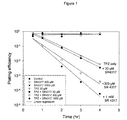

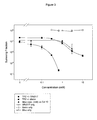

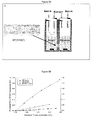
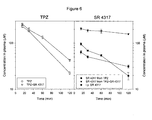


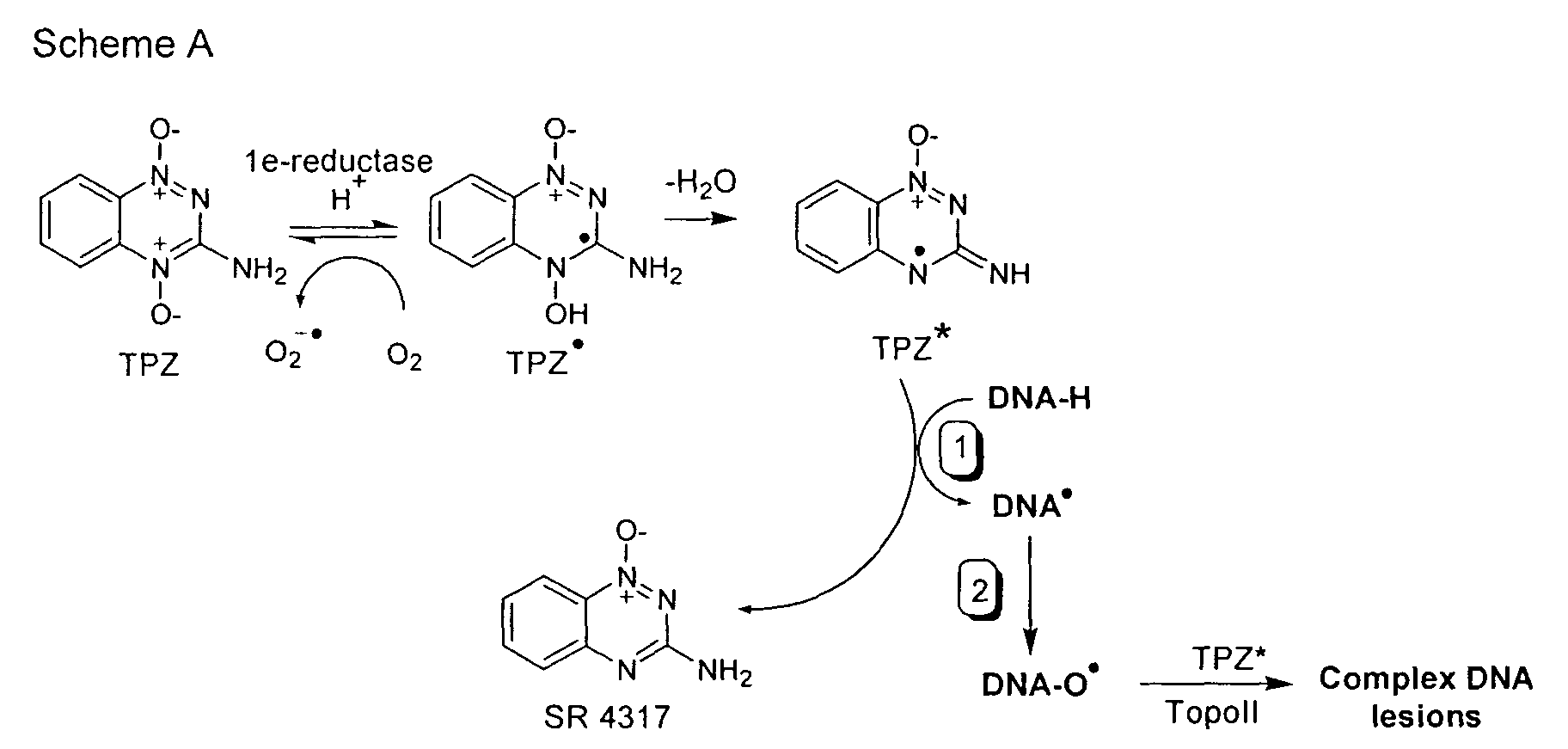
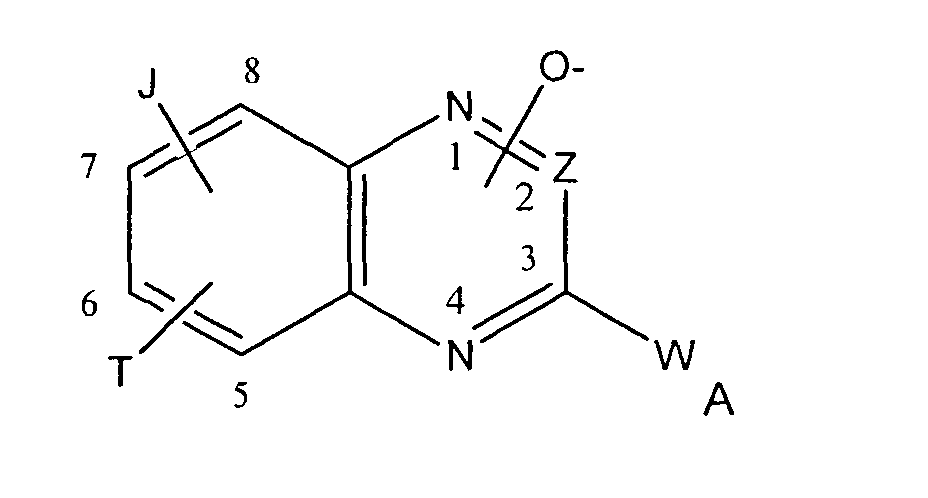 wherein in Formulae A or B






 wherein in structures XII-XVII R6 is independently selected from an optionally substituted C1-6 aliphatic or an optionally substituted C3-6 cyclic alkyl group, and wherein the optional substituents are each independently selected from; halo, OH, OR7 NO2, NH2, NHR7, NR7R7, SR7, imidazolyl, R7-piperazinyl, morpholino, SO2R7, CF3, CN, CO2H, CO2R7, CHO, COR7, CONH2, CONHR7, CONR7R7;
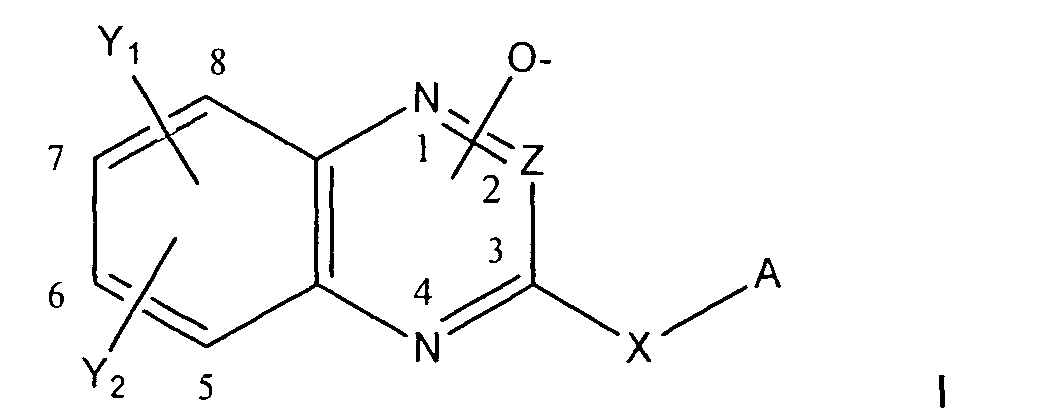


 wherein in structures XII-XVII R6 is independently selected from an optionally substituted C1-6 aliphatic or an optionally substituted C3-6 cyclic alkyl group, and wherein the optional substituents are each independently selected from; halo, OH, OR7 NO2, NH2, NHR7, NR7R7, SR7, imidazolyl, R7-piperazinyl, morpholino, SO2R7, CF3, CN, CO2H, CO2R7, CHO, COR7, CONH2, CONHR7, CONR7R7;
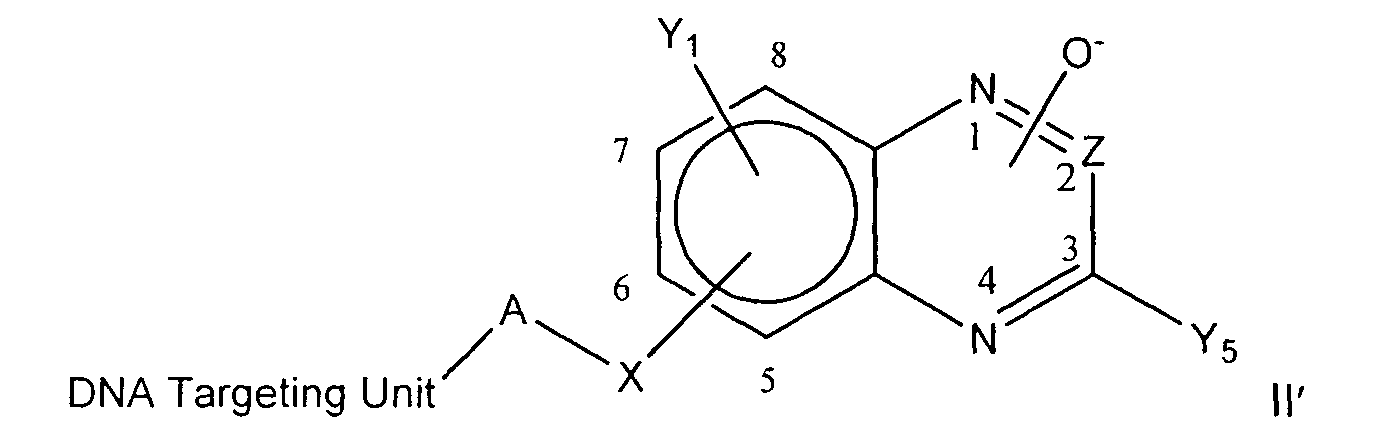



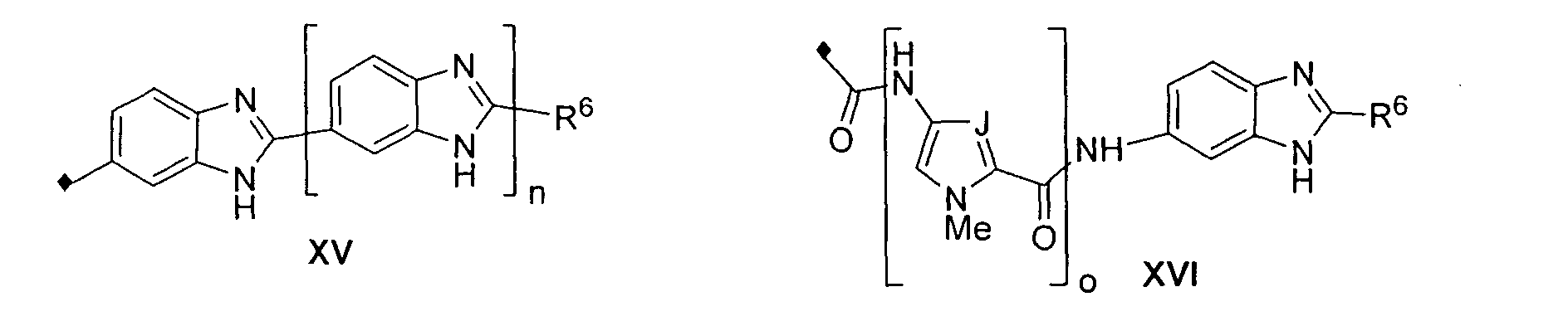 wherein in structures XII - XVII R6 is independently selected from an optionally substituted C1-6 aliphatic or an optionally substituted C3-6 cyclic alkyl group, and wherein the optional substituents are each independently selected from; halo, OH, OR7 NO2, NH2, NHR7, NR7R7, SR7, imidazolyl, R7-piperazinyl, morpholino, SO2R7, CF3, CN, CO2H, CO2R7, CHO, COR7, CONH2, CONHR7, CONR7R7;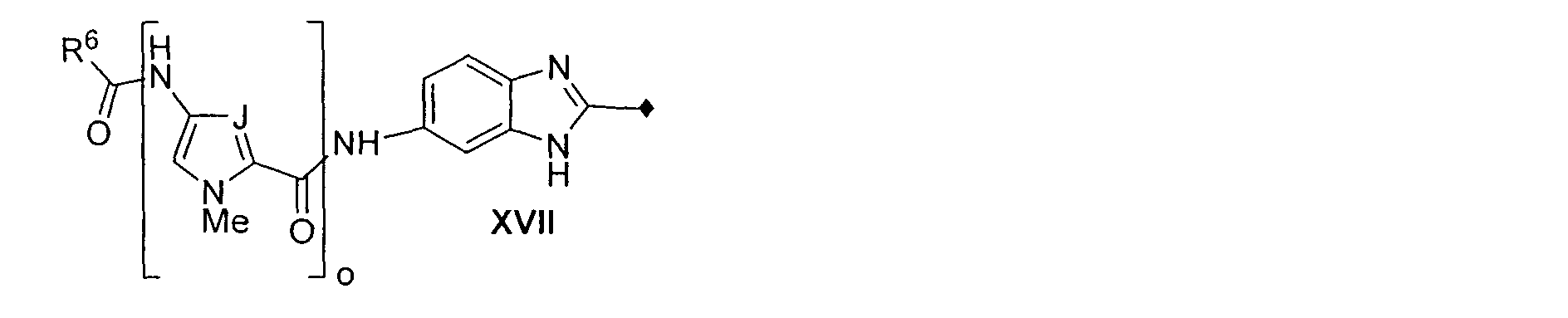


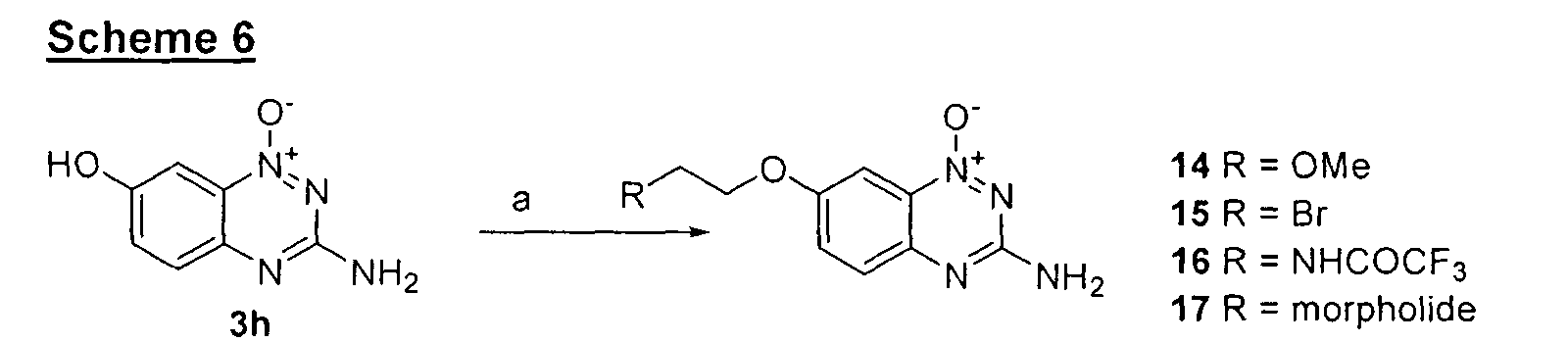

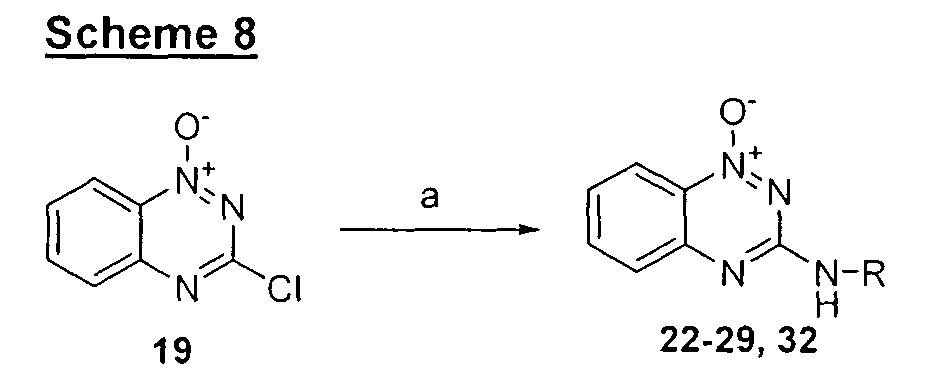
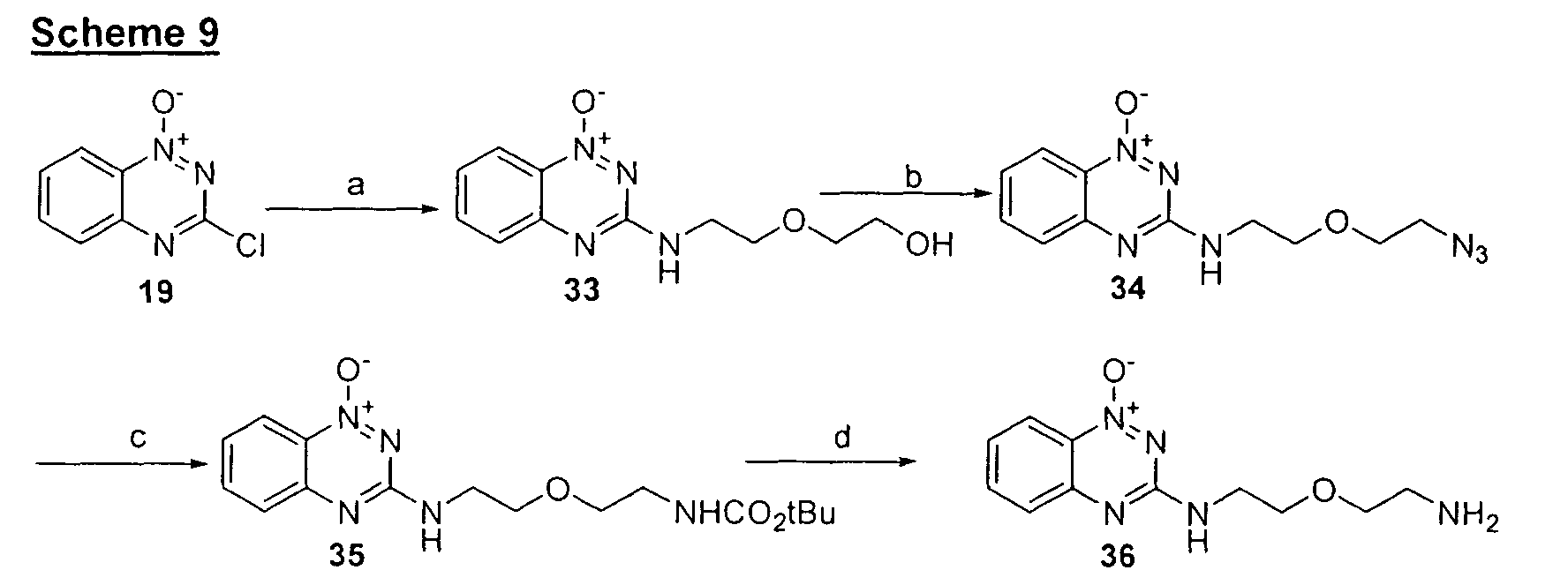



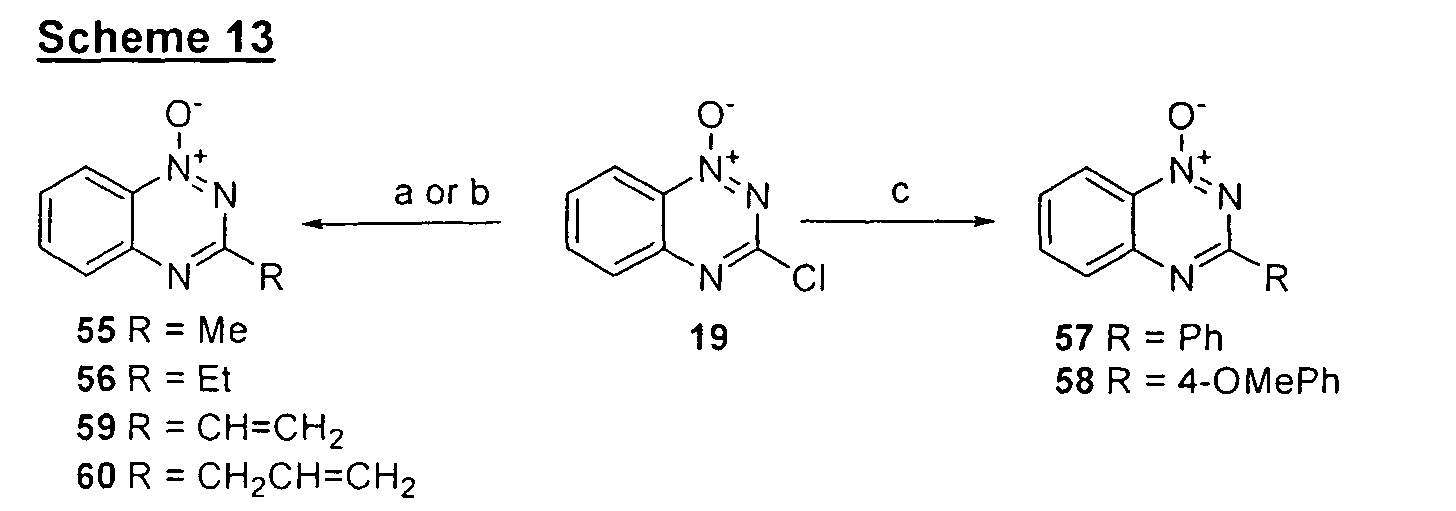
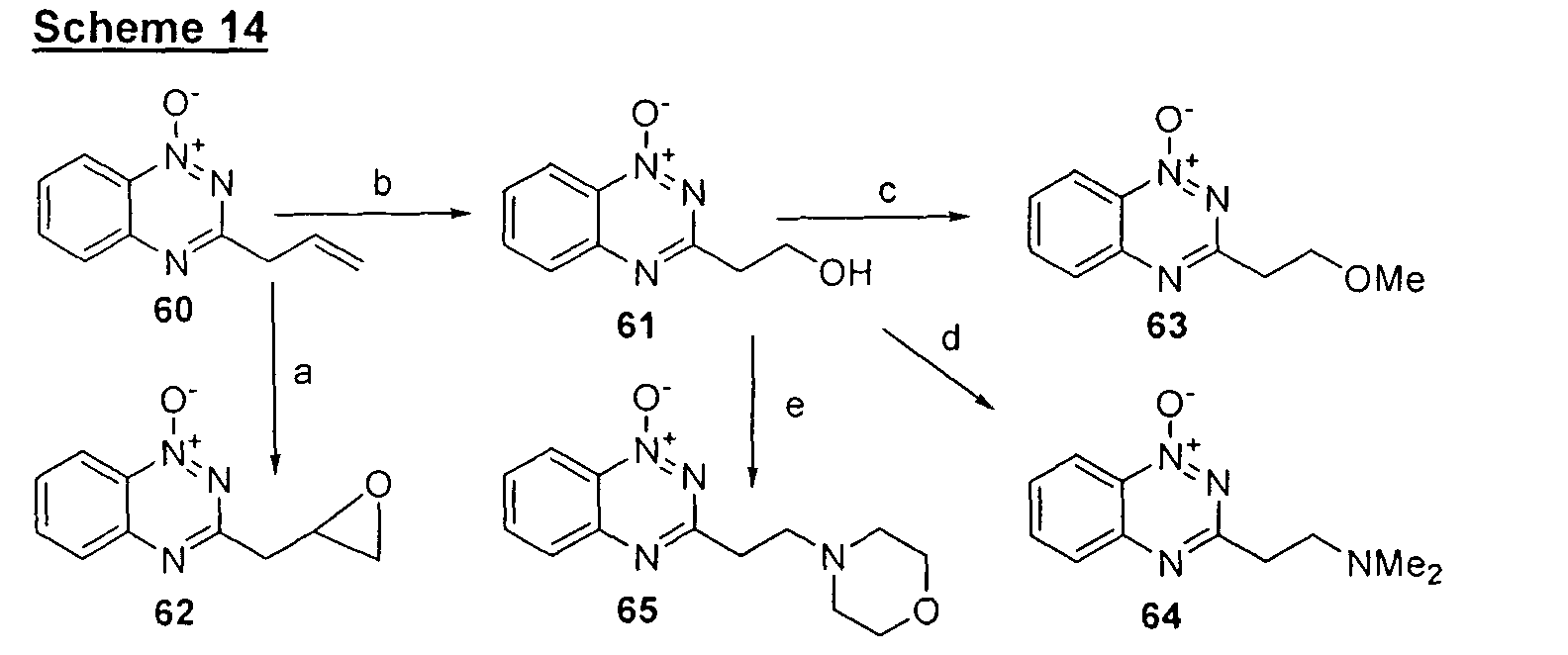

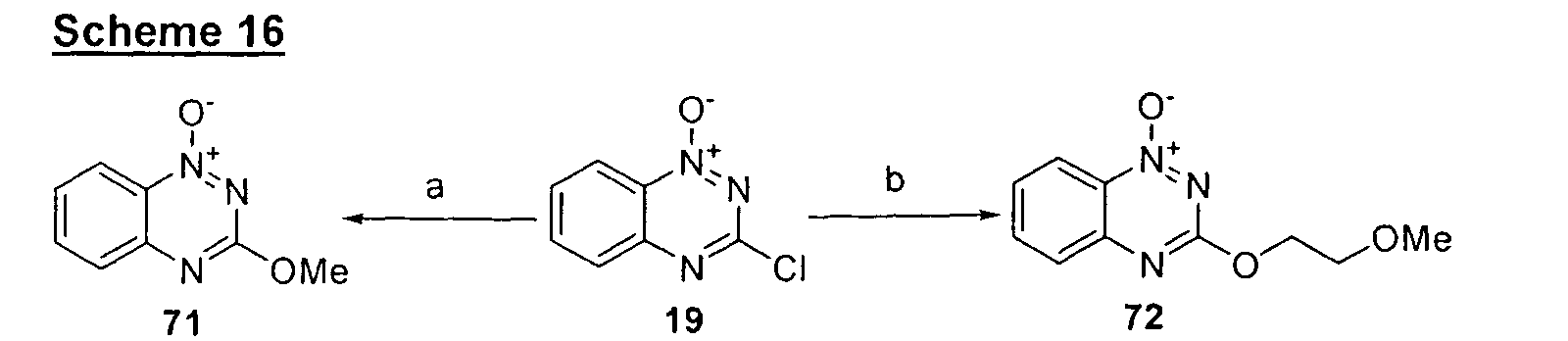

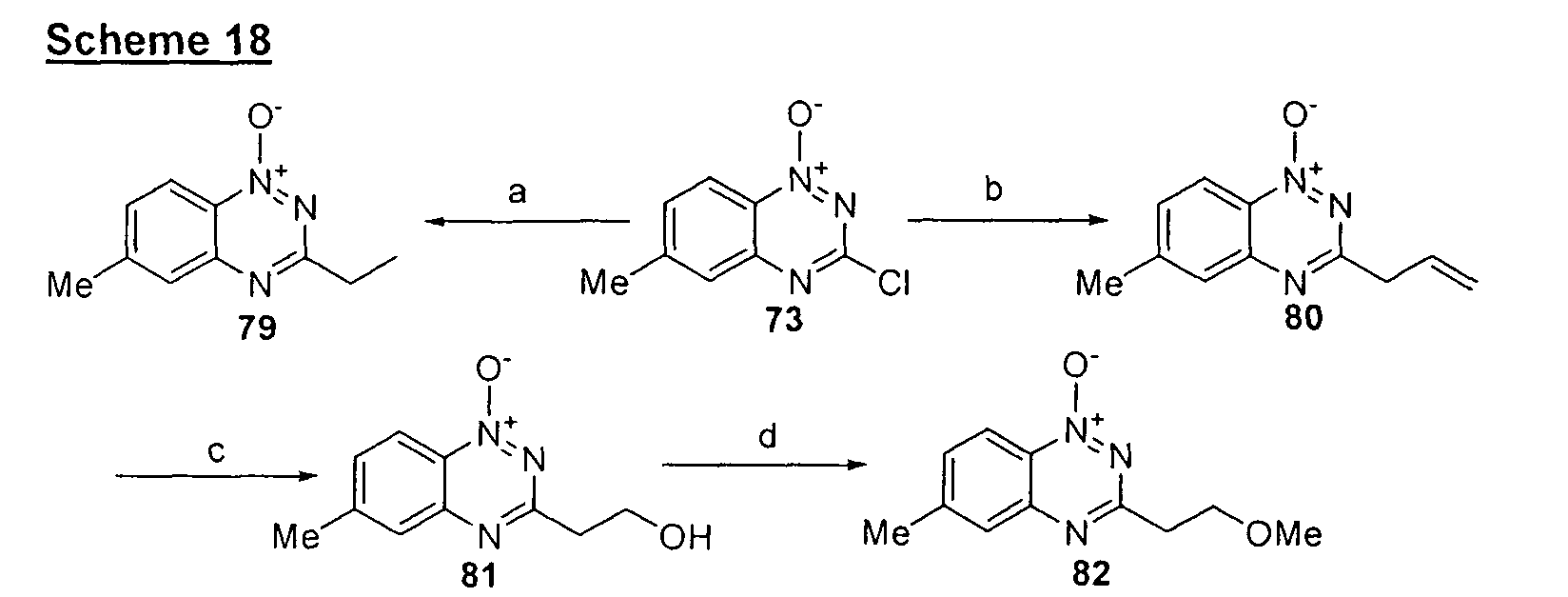
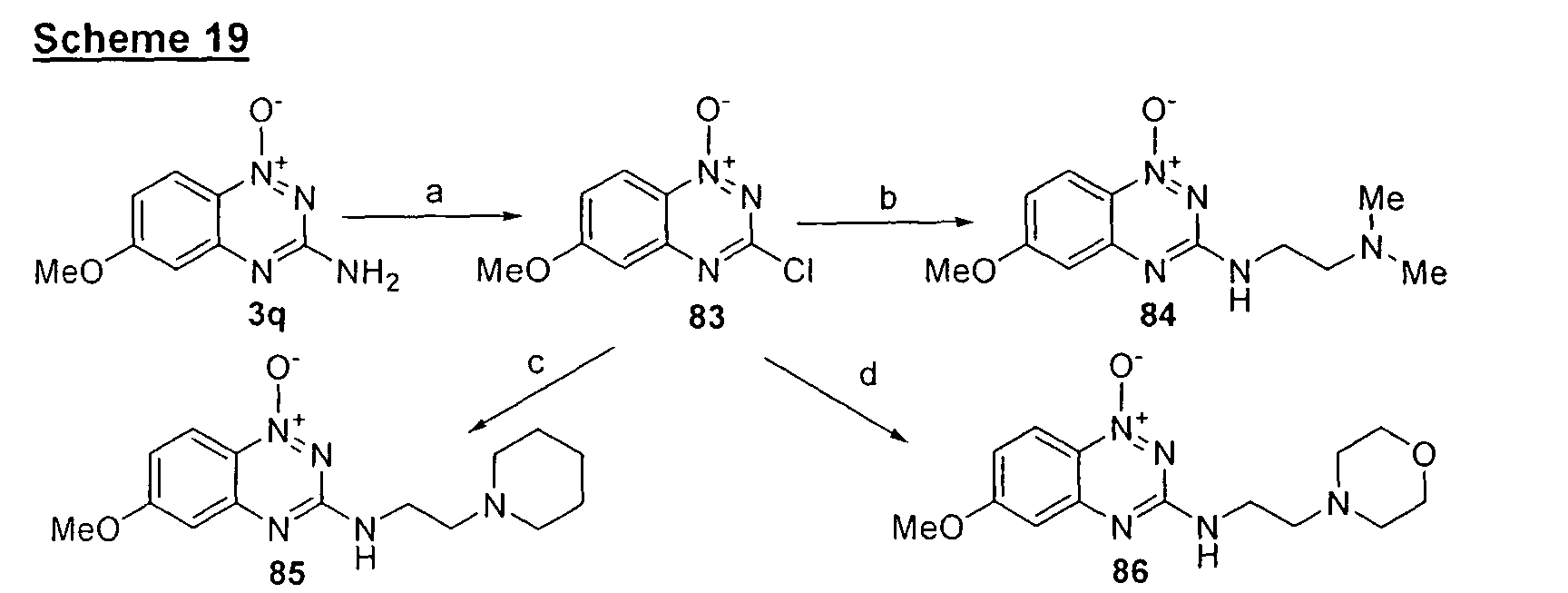
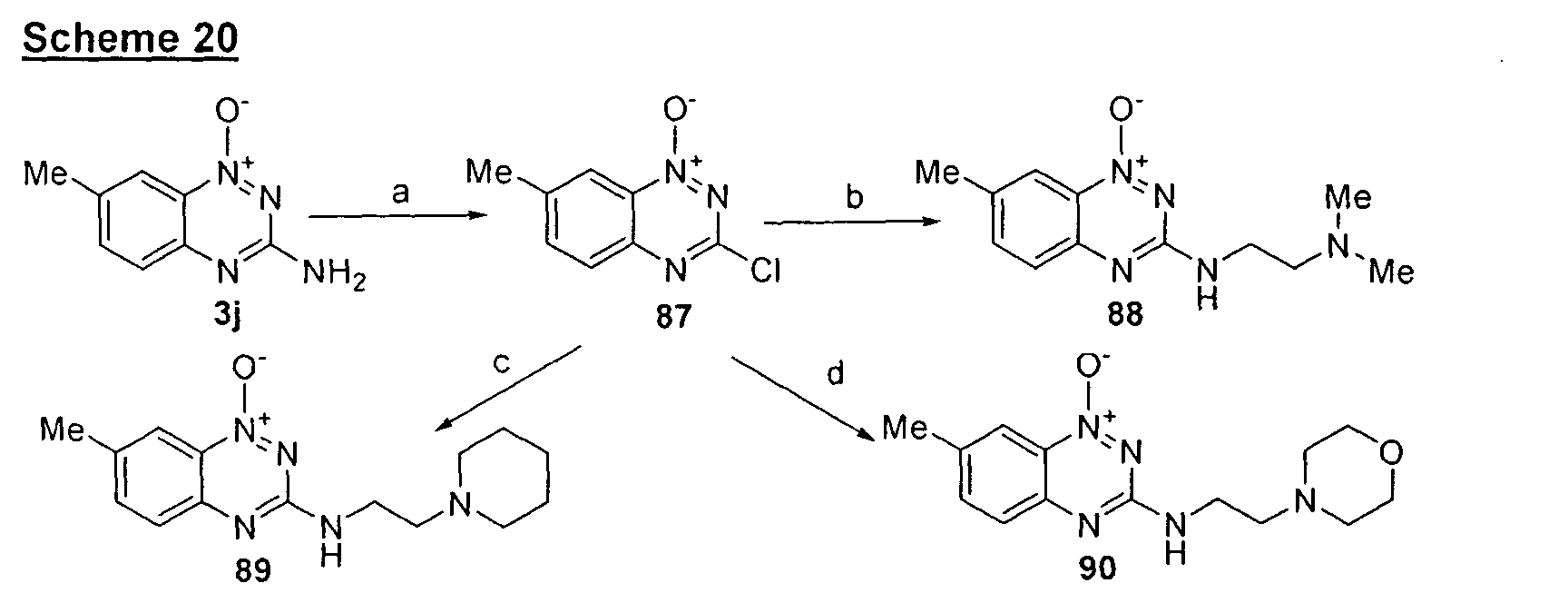


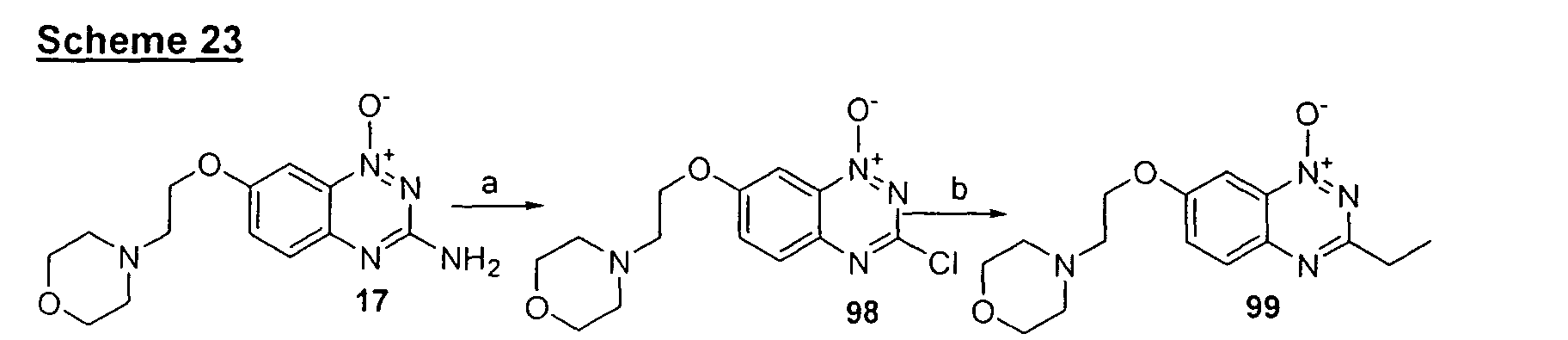


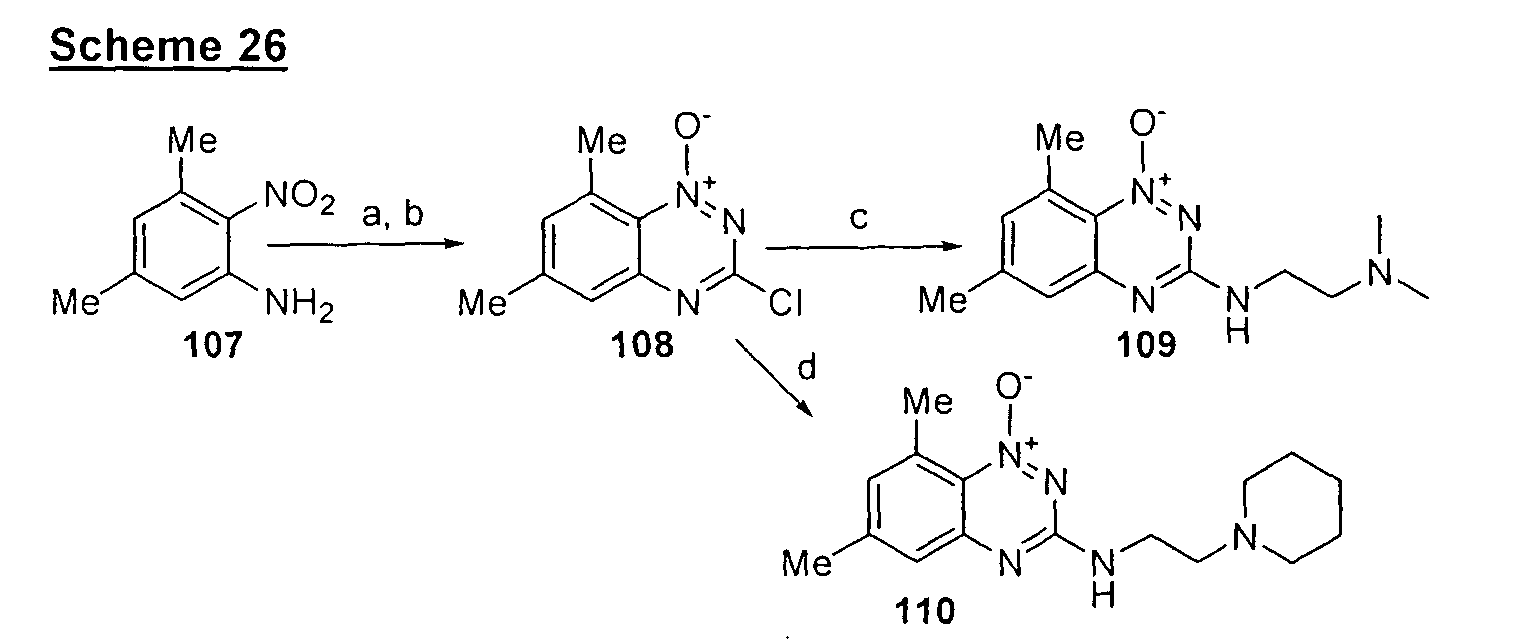
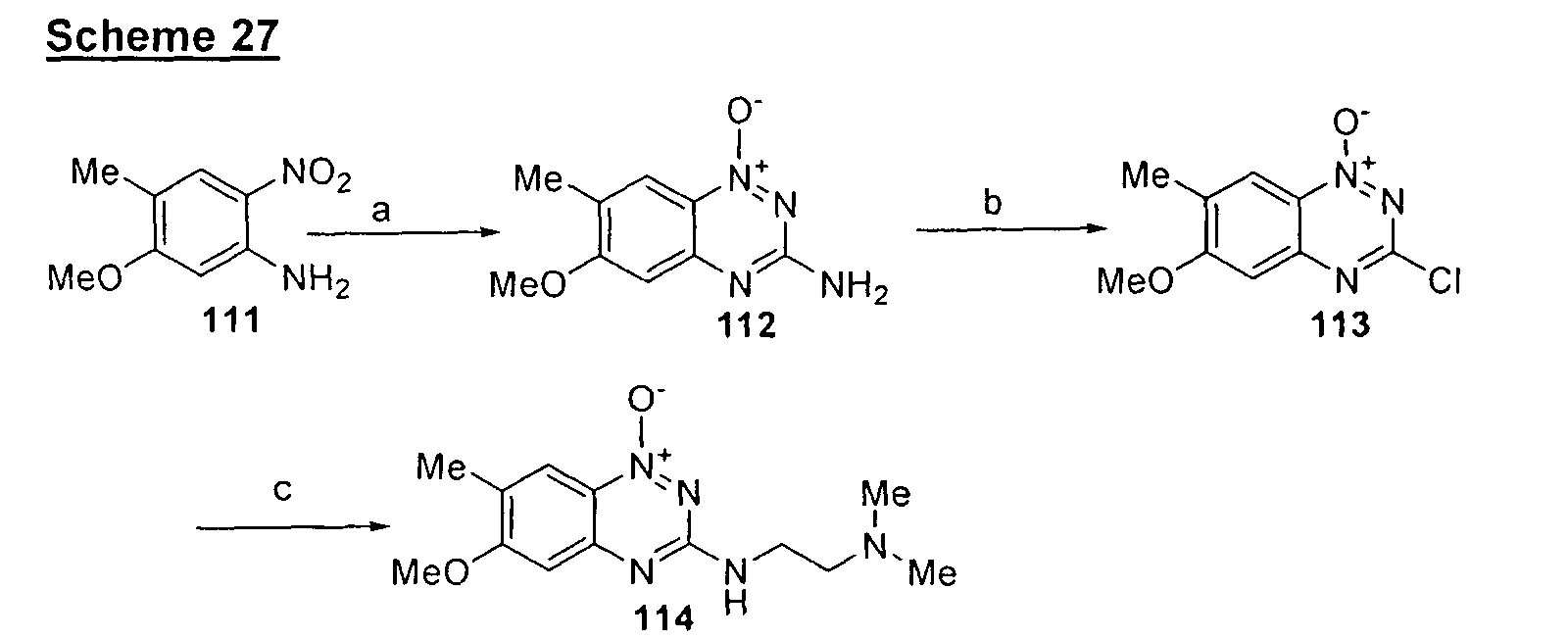
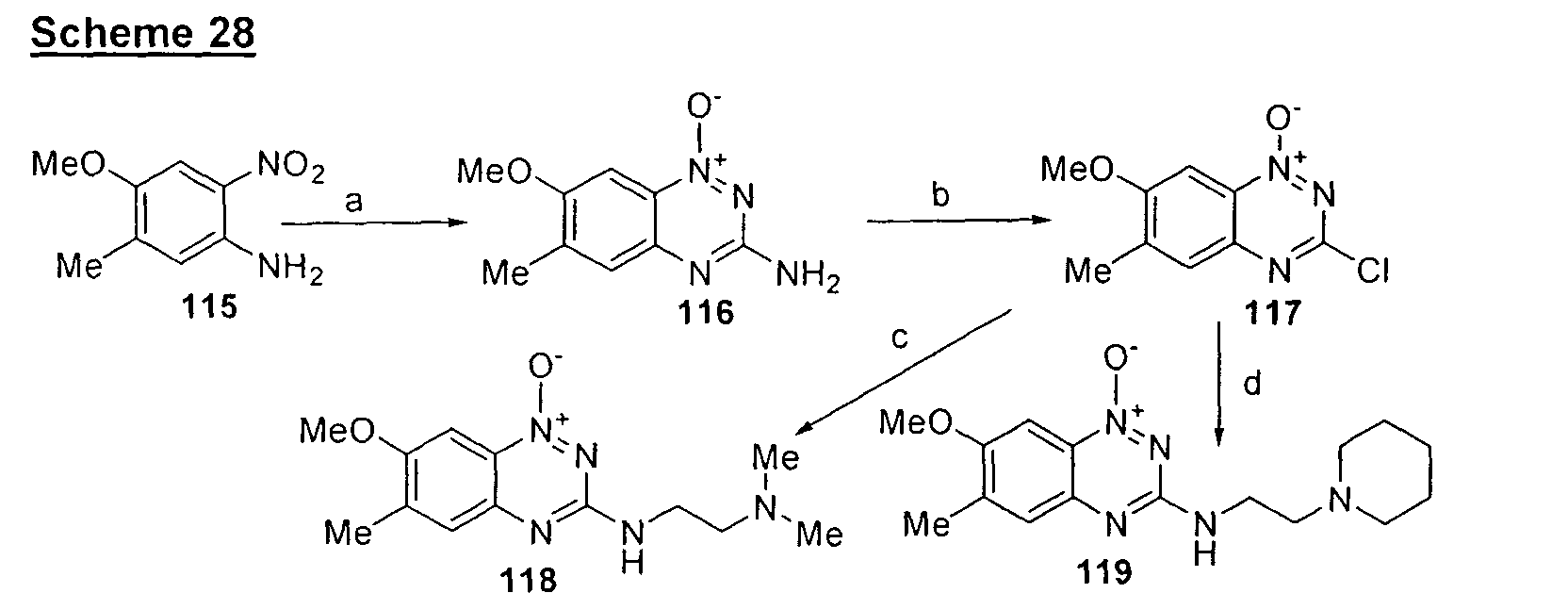


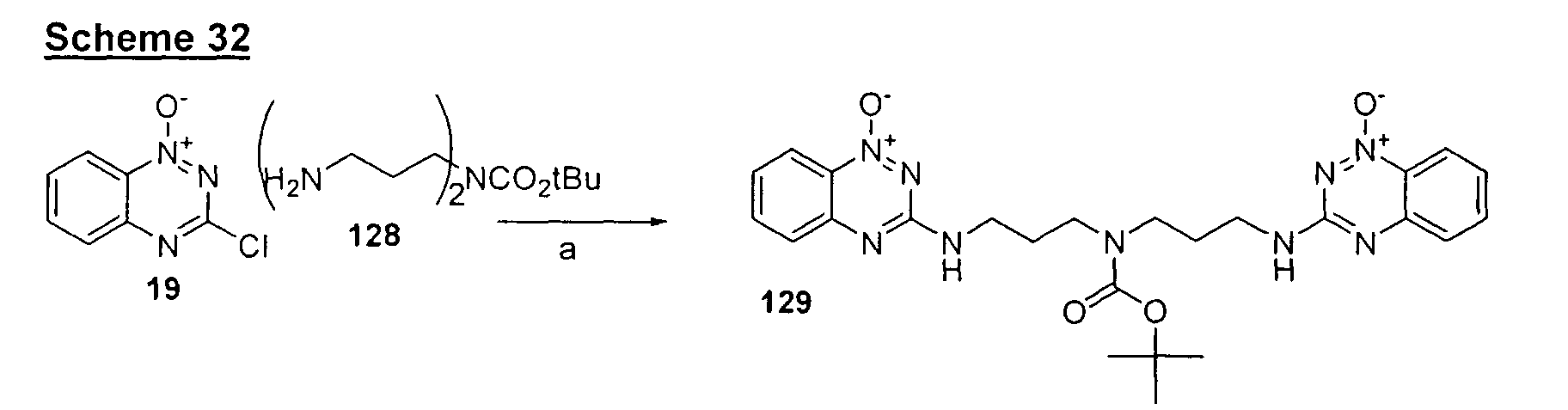


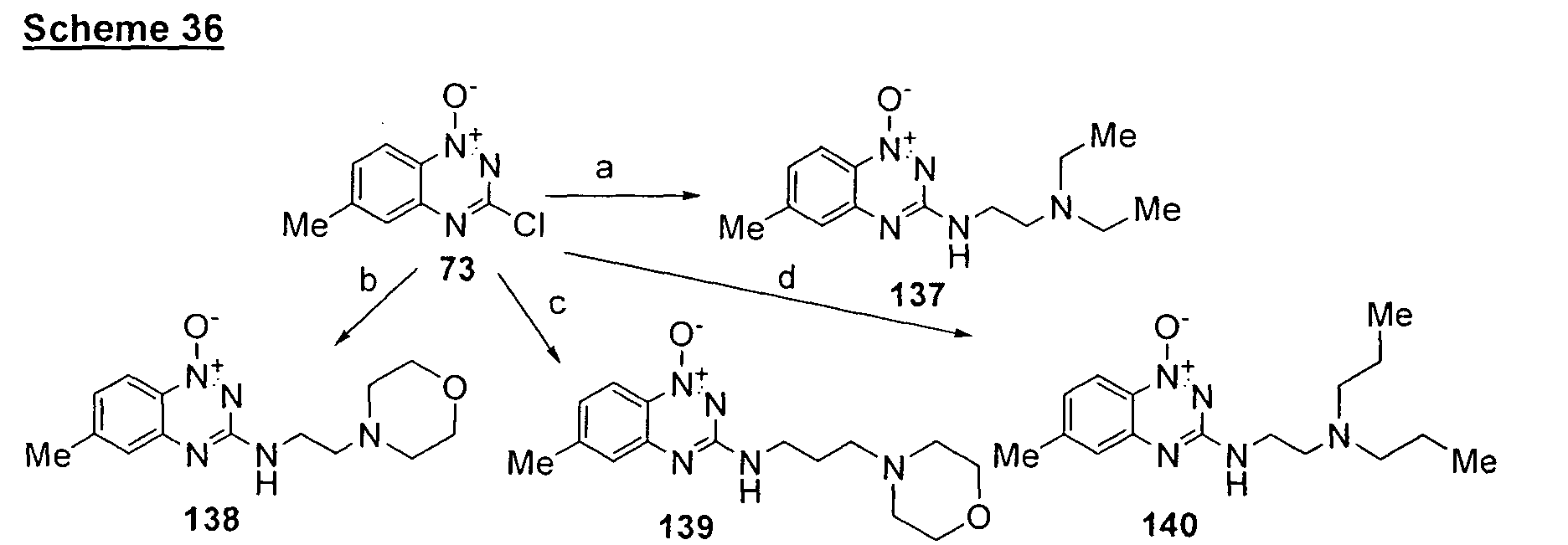
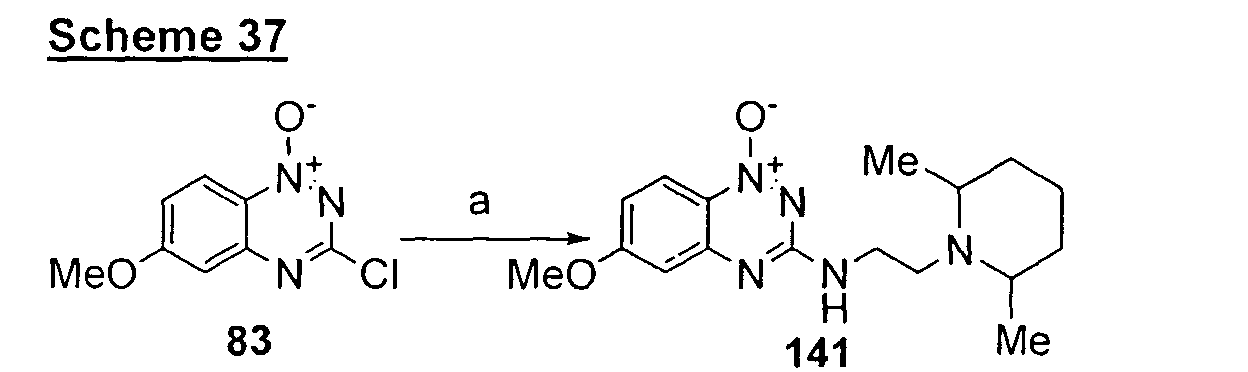
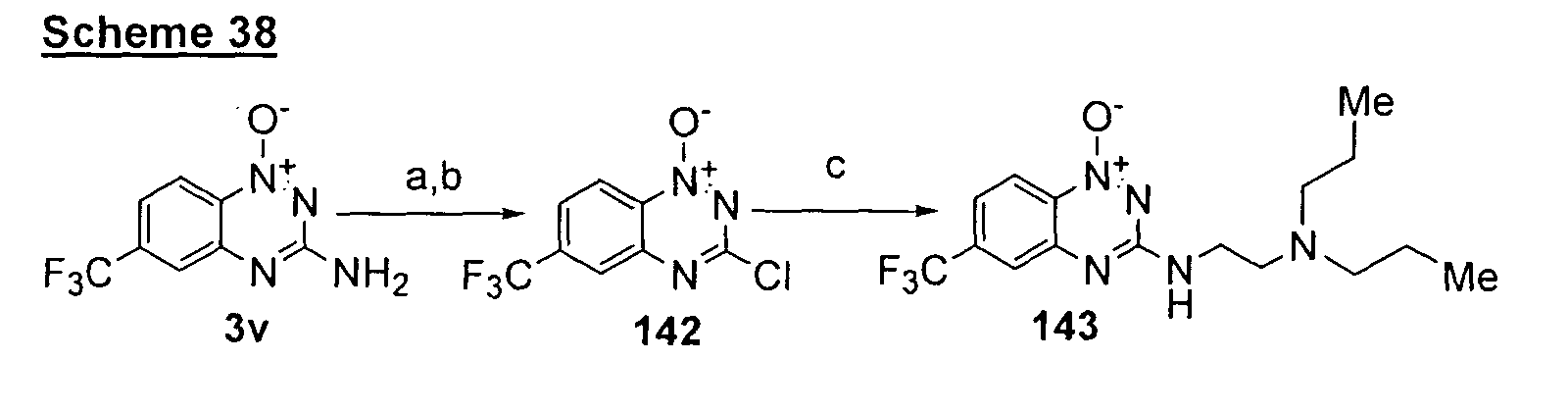


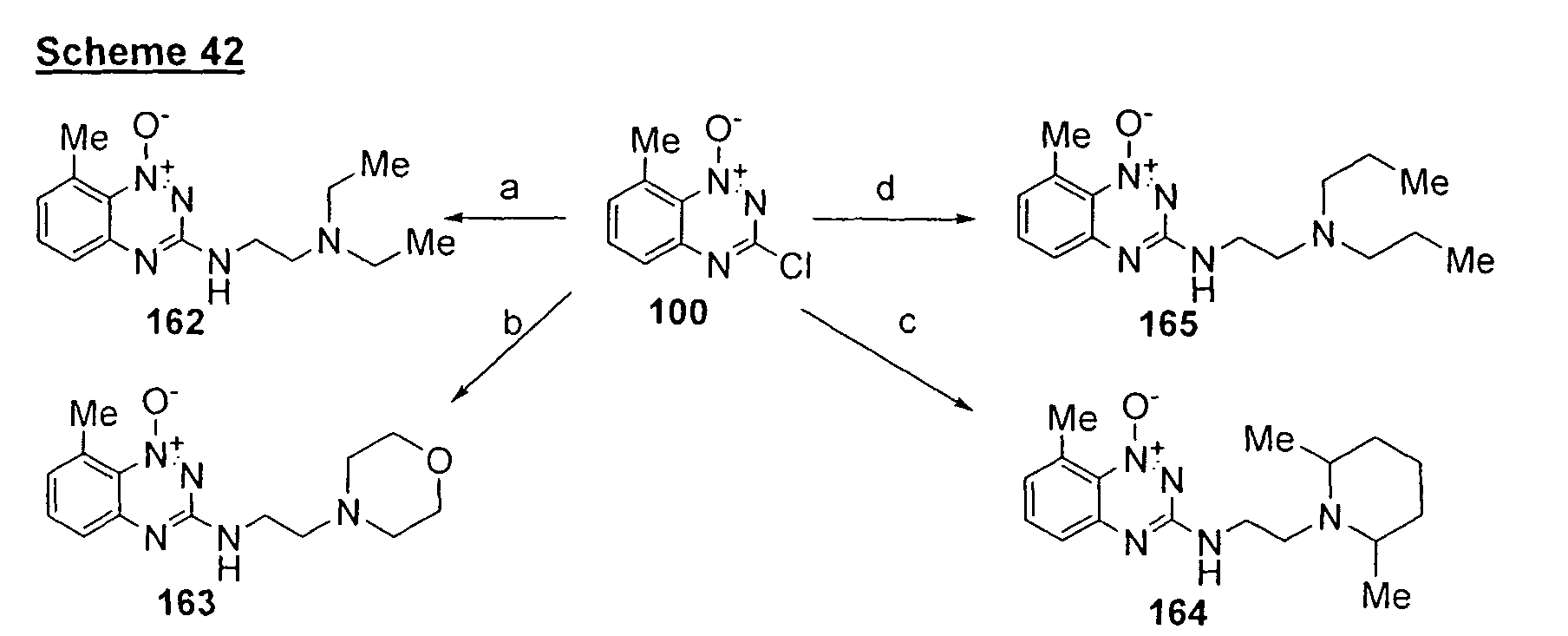

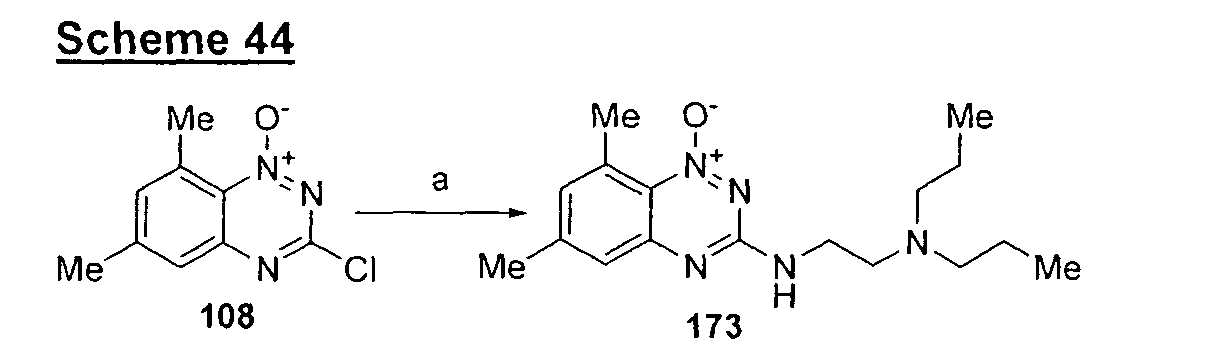
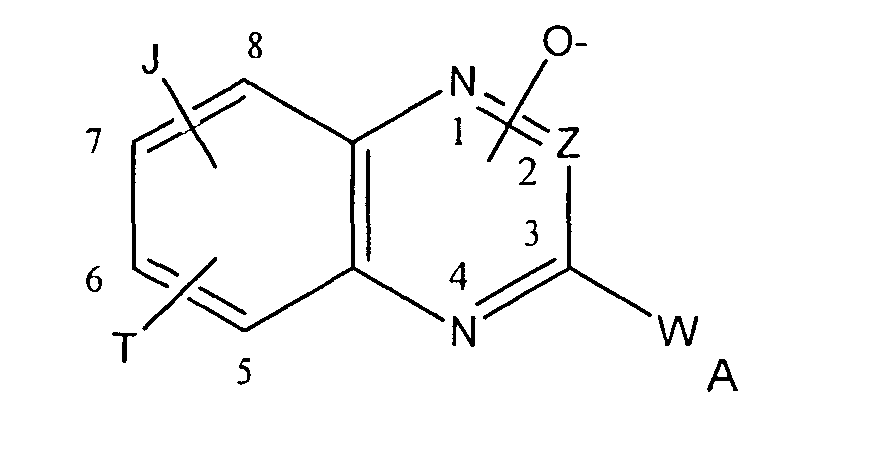 wherein in Formulae A or B
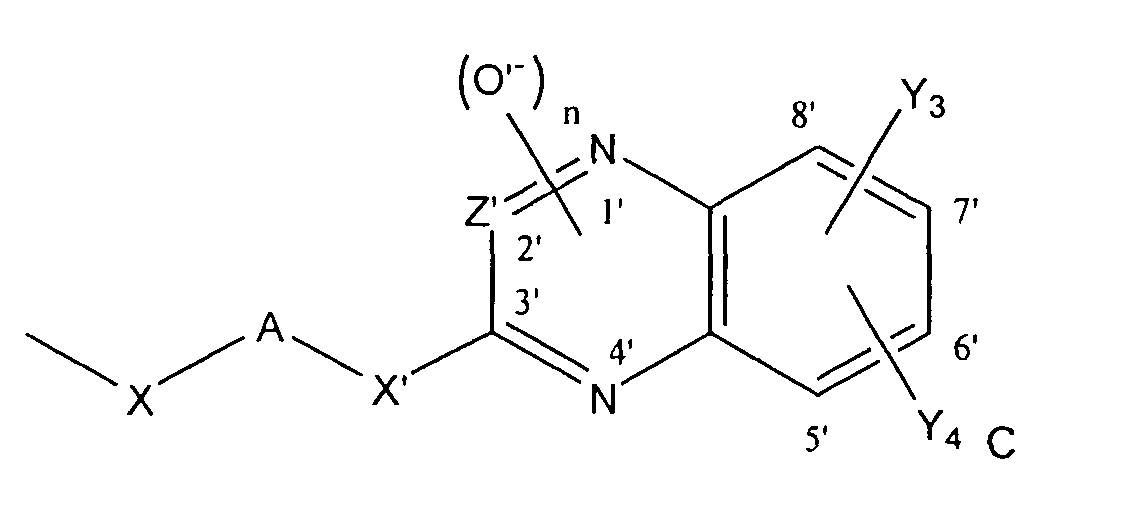
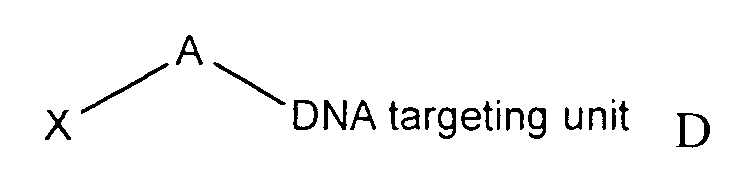



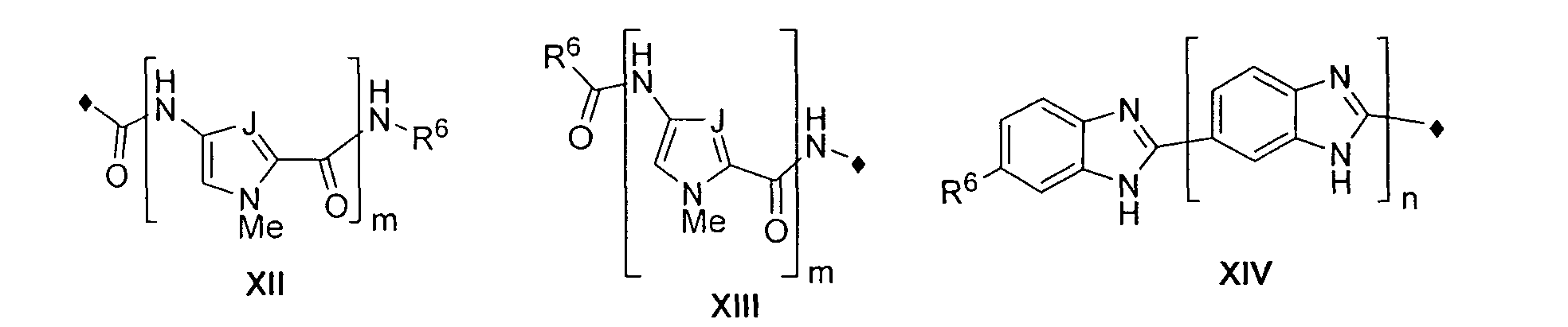
 wherein in structures XII-XVII R6 is independently selected from an optionally substituted C1-6 aliphatic or an optionally substituted C3-6 cyclic alkyl group, and wherein the optional substituents are each independently selected from; halo, OH, OR7 NO2, NH2, NHR7, NR7R7, SR7, imidazolyl, R7-piperazinyl, morpholino, SO2R7, CF3, CN, CO2H, CO2R7, CHO, COR7, CONH2, CONHR7, CONR7R7;
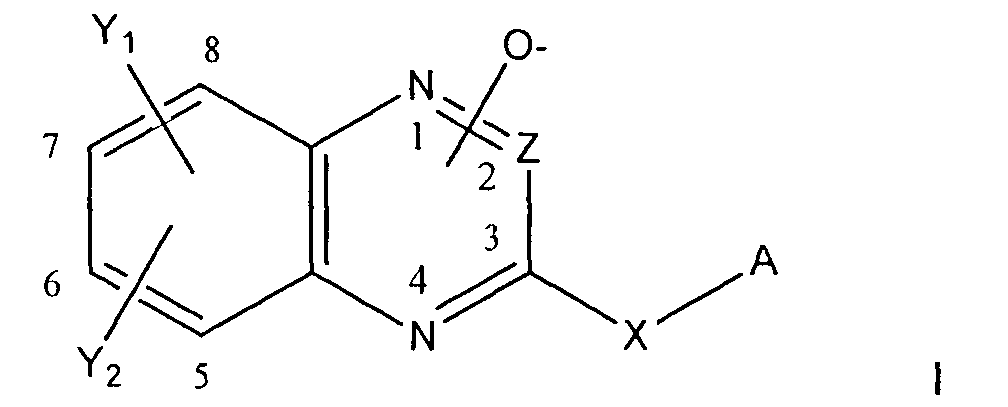
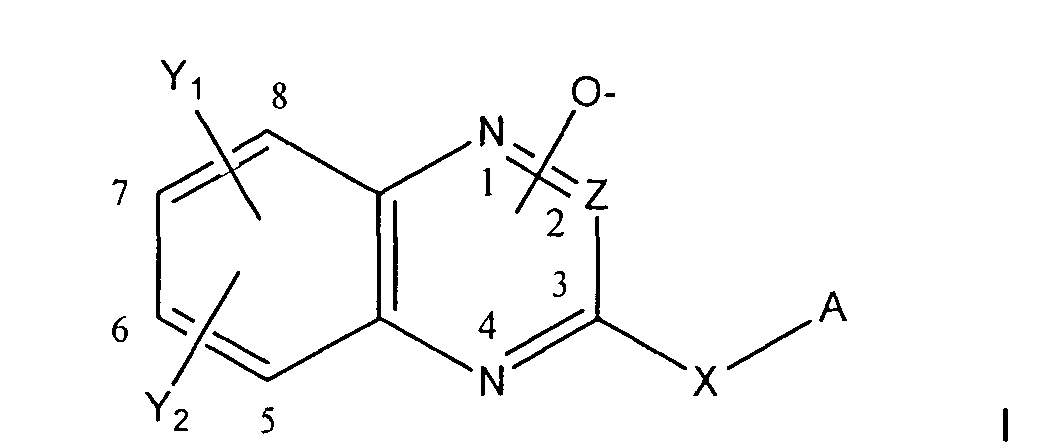
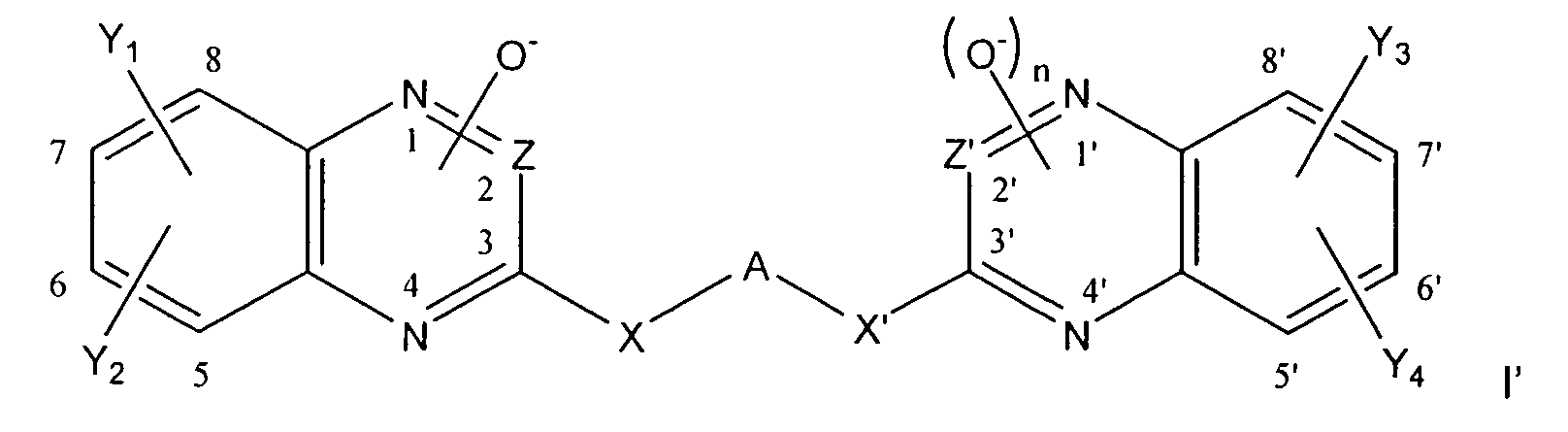
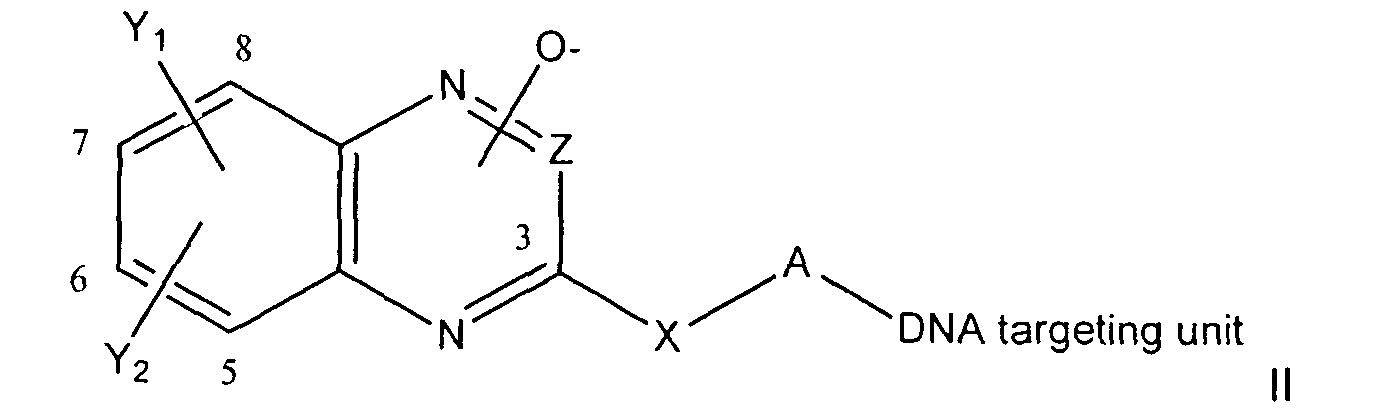



 wherein in structures XII-XVII R6 is independently selected from an optionally substituted C1-6 aliphatic or an optionally substituted C3-6 cyclic alkyl group, and wherein the optional substituents are each independently selected from; halo, OH, OR7 NO2, NH2, NHR7, NR7R7, SR7, imidazolyl, R7-piperazinyl, morpholino, SO2R7, CF3, CN, CO2H, CO2R7, CHO, COR7, CONH2, CONHR7, CONR7R7;
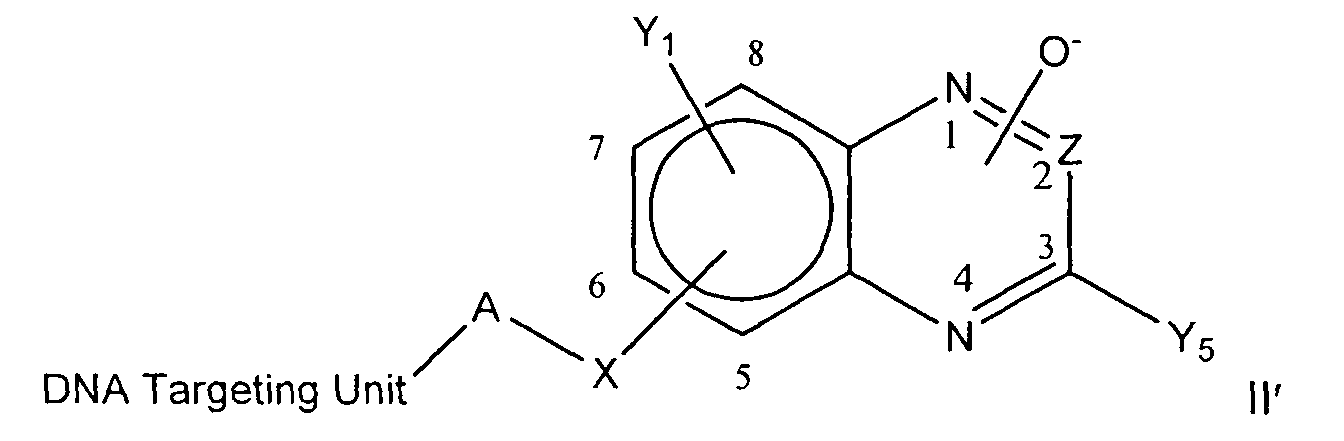


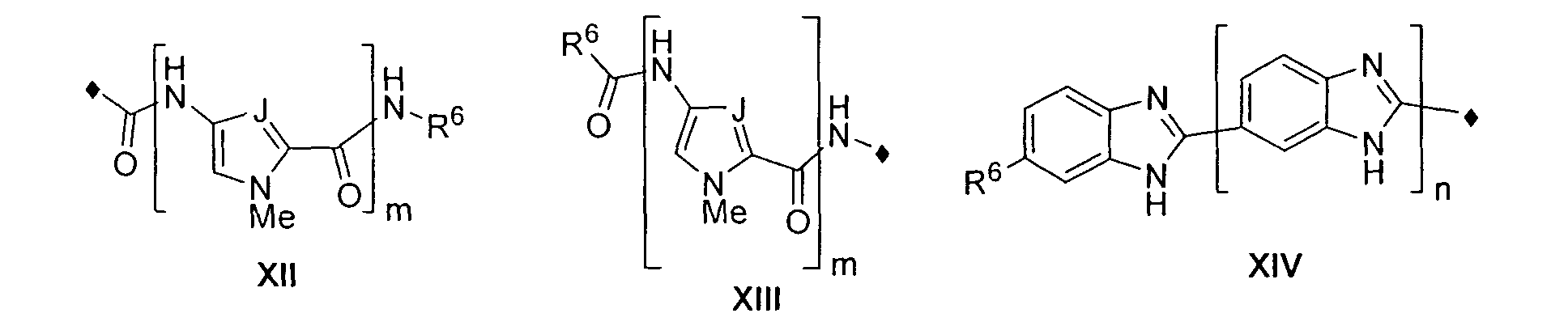
 wherein in structures XII - XVII R6 is independently selected from an optionally substituted C1-6 aliphatic or an optionally substituted C3-6 cyclic alkyl group, and wherein the optional substituents are each independently selected from; halo, OH, OR7 NO2, NH2, NHR7, NR7R7, SR7, imidazolyl, R7-piperazinyl, morpholino, SO2R7, CF3, CN, CO2H, CO2R7, CHO, COR7, CONH2, CONHR7, CONR7R7;