EP1466898A1 - Beta-amyloid protein production/secretion inhibitors - Google Patents
Beta-amyloid protein production/secretion inhibitors Download PDFInfo
- Publication number
- EP1466898A1 EP1466898A1 EP20020790937 EP02790937A EP1466898A1 EP 1466898 A1 EP1466898 A1 EP 1466898A1 EP 20020790937 EP20020790937 EP 20020790937 EP 02790937 A EP02790937 A EP 02790937A EP 1466898 A1 EP1466898 A1 EP 1466898A1
- Authority
- EP
- European Patent Office
- Prior art keywords
- group
- alkyl
- groups
- substituent
- heterocyclic
- Prior art date
- Legal status (The legal status is an assumption and is not a legal conclusion. Google has not performed a legal analysis and makes no representation as to the accuracy of the status listed.)
- Withdrawn
Links
- 0 CC*C(C)(*CC)N*CC Chemical compound CC*C(C)(*CC)N*CC 0.000 description 14
- QTKGLTNYAJYRKG-UHFFFAOYSA-N CC(C(CCC1=CC=CCC1)C(c1cc(F)ccc1F)S(c(cc1)ccc1Cl)(=O)=O)=C Chemical compound CC(C(CCC1=CC=CCC1)C(c1cc(F)ccc1F)S(c(cc1)ccc1Cl)(=O)=O)=C QTKGLTNYAJYRKG-UHFFFAOYSA-N 0.000 description 1
- JXHHTYDOUBONOJ-UHFFFAOYSA-N CC(C)(C)OC(OC(c1nc(cccc2)c2[n]1C)c1cc(F)ccc1F)=O Chemical compound CC(C)(C)OC(OC(c1nc(cccc2)c2[n]1C)c1cc(F)ccc1F)=O JXHHTYDOUBONOJ-UHFFFAOYSA-N 0.000 description 1
- MDQSNRMTFWTCLY-RUDMXATFSA-O CC(C)(Cc(cccc1)c1-c1ccccc1)[SH+]OCC/C=C/CO Chemical compound CC(C)(Cc(cccc1)c1-c1ccccc1)[SH+]OCC/C=C/CO MDQSNRMTFWTCLY-RUDMXATFSA-O 0.000 description 1
- HLUHXRDSVJCVKA-UHFFFAOYSA-N CC(CCC(c1cc(F)ccc1F)S(c(cc1)ccc1Cl)(=O)=O)O Chemical compound CC(CCC(c1cc(F)ccc1F)S(c(cc1)ccc1Cl)(=O)=O)O HLUHXRDSVJCVKA-UHFFFAOYSA-N 0.000 description 1
- UVFIJTYAZWJSFV-UHFFFAOYSA-N CC(CCO)C(c1cc(F)ccc1F)S(c(cc1)ccc1Cl)(=O)=O Chemical compound CC(CCO)C(c1cc(F)ccc1F)S(c(cc1)ccc1Cl)(=O)=O UVFIJTYAZWJSFV-UHFFFAOYSA-N 0.000 description 1
- ZDHJDRXGRZNODQ-UHFFFAOYSA-N CCCCC(CCCCO)(c1cc(F)ccc1F)S(c1ccc(C)cc1)(=O)=O Chemical compound CCCCC(CCCCO)(c1cc(F)ccc1F)S(c1ccc(C)cc1)(=O)=O ZDHJDRXGRZNODQ-UHFFFAOYSA-N 0.000 description 1
- BQGGOQVAYLIESW-UHFFFAOYSA-N CCCCC(c1cc(F)ccc1F)Sc(cc1)ccc1Cl Chemical compound CCCCC(c1cc(F)ccc1F)Sc(cc1)ccc1Cl BQGGOQVAYLIESW-UHFFFAOYSA-N 0.000 description 1
- UBNWTAPHRCTUMO-UHFFFAOYSA-N CCCOC(NCCCC(c1cc(F)ccc1F)S(c1ccc(C)cc1)(=O)=O)=O Chemical compound CCCOC(NCCCC(c1cc(F)ccc1F)S(c1ccc(C)cc1)(=O)=O)=O UBNWTAPHRCTUMO-UHFFFAOYSA-N 0.000 description 1
- FKJBJHAECKGWCS-UHFFFAOYSA-N CCCOSC(C(C)(C)C)(c1ccccc1)c1ccccc1 Chemical compound CCCOSC(C(C)(C)C)(c1ccccc1)c1ccccc1 FKJBJHAECKGWCS-UHFFFAOYSA-N 0.000 description 1
- BJFZOYQURZFMQU-UHFFFAOYSA-N CCc1ccc(C(c2cc(F)ccc2F)O)cc1 Chemical compound CCc1ccc(C(c2cc(F)ccc2F)O)cc1 BJFZOYQURZFMQU-UHFFFAOYSA-N 0.000 description 1
- HSLQFKIUIJWTAP-UHFFFAOYSA-N CS(CCCCC(c1cc(Cl)ccc1F)S(c(cc1)ccc1Cl)(=O)=O)(=O)=O Chemical compound CS(CCCCC(c1cc(Cl)ccc1F)S(c(cc1)ccc1Cl)(=O)=O)(=O)=O HSLQFKIUIJWTAP-UHFFFAOYSA-N 0.000 description 1
- MGPBIPGTMVWPFY-UHFFFAOYSA-N CSCCCCC(c1cc(F)ccc1F)S(c(cc1)ccc1Cl)(=O)=O Chemical compound CSCCCCC(c1cc(F)ccc1F)S(c(cc1)ccc1Cl)(=O)=O MGPBIPGTMVWPFY-UHFFFAOYSA-N 0.000 description 1
- TUVMLZAPIJHCEA-ICCFGIFFSA-N C[C@H](C=C)c(c(C(C1=CC=CC=C(C)C=C1)S(c(cc1)ccc1Cl)(=O)=O)c1)ccc1F Chemical compound C[C@H](C=C)c(c(C(C1=CC=CC=C(C)C=C1)S(c(cc1)ccc1Cl)(=O)=O)c1)ccc1F TUVMLZAPIJHCEA-ICCFGIFFSA-N 0.000 description 1
- VEIKBRFBNZTVDK-CRIUFTBBSA-N C[C@H]1C=NC=C(C(c2cc(F)ccc2F)Sc(cc2)ccc2Cl)C=C1 Chemical compound C[C@H]1C=NC=C(C(c2cc(F)ccc2F)Sc(cc2)ccc2Cl)C=C1 VEIKBRFBNZTVDK-CRIUFTBBSA-N 0.000 description 1
- HEWTZQPTSOFOKZ-UHFFFAOYSA-N Cc(cc1)ccc1S(C(CCCC[SH2+2]C)c1ccccc1C(N(C)C)=O)(=O)=O Chemical compound Cc(cc1)ccc1S(C(CCCC[SH2+2]C)c1ccccc1C(N(C)C)=O)(=O)=O HEWTZQPTSOFOKZ-UHFFFAOYSA-N 0.000 description 1
- ASCILNPFCXVJQD-UHFFFAOYSA-N Cc1ccc(CCC(c2cc(F)ccc2F)S(c(cc2)ccc2Cl)(=O)=O)cc1 Chemical compound Cc1ccc(CCC(c2cc(F)ccc2F)S(c(cc2)ccc2Cl)(=O)=O)cc1 ASCILNPFCXVJQD-UHFFFAOYSA-N 0.000 description 1
- RMEGYKAOPJFQAA-UHFFFAOYSA-N Fc(cc1C(c(cc(NCCN2CCOCC2)nc2)c2Cl)Sc(cc2)ccc2Cl)ccc1F Chemical compound Fc(cc1C(c(cc(NCCN2CCOCC2)nc2)c2Cl)Sc(cc2)ccc2Cl)ccc1F RMEGYKAOPJFQAA-UHFFFAOYSA-N 0.000 description 1
- FLPQSCFTTCQXCJ-UHFFFAOYSA-N Fc(cc1C(c(cc(nc2)Cl)c2Cl)Sc(cc2)ccc2Cl)ccc1F Chemical compound Fc(cc1C(c(cc(nc2)Cl)c2Cl)Sc(cc2)ccc2Cl)ccc1F FLPQSCFTTCQXCJ-UHFFFAOYSA-N 0.000 description 1
- PBXIUPUKJPNZCL-YVMONPNESA-N N/C=C(/CS(c(cc1)ccc1Cl)(=O)=O)\S Chemical compound N/C=C(/CS(c(cc1)ccc1Cl)(=O)=O)\S PBXIUPUKJPNZCL-YVMONPNESA-N 0.000 description 1
- YELJSSSGTMIDMS-UHFFFAOYSA-N O=C(NC(c1cc(F)ccc1F)S(c(cc1)ccc1Cl)(=O)=O)OCc1ccccc1 Chemical compound O=C(NC(c1cc(F)ccc1F)S(c(cc1)ccc1Cl)(=O)=O)OCc1ccccc1 YELJSSSGTMIDMS-UHFFFAOYSA-N 0.000 description 1
- IKYFTAXSKQKAAF-UHFFFAOYSA-N O=S(C(C1CCCCC1)c1cc(F)ccc1F)(c(cc1)ccc1Cl)=O Chemical compound O=S(C(C1CCCCC1)c1cc(F)ccc1F)(c(cc1)ccc1Cl)=O IKYFTAXSKQKAAF-UHFFFAOYSA-N 0.000 description 1
- REFISJFERIGADD-UHFFFAOYSA-N O=S(C(CCCCN1CCCC1)c1cc(F)ccc1F)(c(cc1)ccc1Cl)=O Chemical compound O=S(C(CCCCN1CCCC1)c1cc(F)ccc1F)(c(cc1)ccc1Cl)=O REFISJFERIGADD-UHFFFAOYSA-N 0.000 description 1
- BJQZDQUQTGVWSL-UHFFFAOYSA-N O=S(C(Cc1ccccc1)c1cc(F)ccc1F)(c(cc1)ccc1Cl)=O Chemical compound O=S(C(Cc1ccccc1)c1cc(F)ccc1F)(c(cc1)ccc1Cl)=O BJQZDQUQTGVWSL-UHFFFAOYSA-N 0.000 description 1
- NPVUKQYGGHOETA-UHFFFAOYSA-N O=S(C(c1cc(F)ccc1F)c1ccc(C2OCCO2)cn1)c(cc1)ccc1Cl Chemical compound O=S(C(c1cc(F)ccc1F)c1ccc(C2OCCO2)cn1)c(cc1)ccc1Cl NPVUKQYGGHOETA-UHFFFAOYSA-N 0.000 description 1
- LYTCHQKLWQXRAQ-UHFFFAOYSA-N O=S(C1(CCNCC1)c1cc(F)ccc1F)(C(C=C1)=CCC1Cl)=O Chemical compound O=S(C1(CCNCC1)c1cc(F)ccc1F)(C(C=C1)=CCC1Cl)=O LYTCHQKLWQXRAQ-UHFFFAOYSA-N 0.000 description 1
- MXTBRANNCLVRBF-UHFFFAOYSA-N O=S(C1C=CC(Cl)=CC1)(C1(CCCCC1)c1cnccc1Cl)=O Chemical compound O=S(C1C=CC(Cl)=CC1)(C1(CCCCC1)c1cnccc1Cl)=O MXTBRANNCLVRBF-UHFFFAOYSA-N 0.000 description 1
- CIKQBACCLSIFNH-UHFFFAOYSA-N O=S(Cc1cccnc1F)(c(cc1)ccc1Cl)=O Chemical compound O=S(Cc1cccnc1F)(c(cc1)ccc1Cl)=O CIKQBACCLSIFNH-UHFFFAOYSA-N 0.000 description 1
- AMAPXBFJLIYDOO-UHFFFAOYSA-O OC(CCc1ccc(C(c2cc(F)ccc2F)S(c(cc2)ccc2Cl)([OH2+])=O)nc1)=O Chemical compound OC(CCc1ccc(C(c2cc(F)ccc2F)S(c(cc2)ccc2Cl)([OH2+])=O)nc1)=O AMAPXBFJLIYDOO-UHFFFAOYSA-O 0.000 description 1
- RVBKIYIATGTFAE-UHFFFAOYSA-N OC(c1ccccc1O1)=C(C(c2cc(F)ccc2F)Sc(cc2)ccc2Cl)C1=O Chemical compound OC(c1ccccc1O1)=C(C(c2cc(F)ccc2F)Sc(cc2)ccc2Cl)C1=O RVBKIYIATGTFAE-UHFFFAOYSA-N 0.000 description 1
- YKBRPVBFDPKBLS-UHFFFAOYSA-N OCCCCCC(c1cc(F)ccc1F)S(c(cc1)ncc1Cl)(=O)=O Chemical compound OCCCCCC(c1cc(F)ccc1F)S(c(cc1)ncc1Cl)(=O)=O YKBRPVBFDPKBLS-UHFFFAOYSA-N 0.000 description 1
Classifications
-
- C—CHEMISTRY; METALLURGY
- C07—ORGANIC CHEMISTRY
- C07D—HETEROCYCLIC COMPOUNDS
- C07D213/00—Heterocyclic compounds containing six-membered rings, not condensed with other rings, with one nitrogen atom as the only ring hetero atom and three or more double bonds between ring members or between ring members and non-ring members
- C07D213/02—Heterocyclic compounds containing six-membered rings, not condensed with other rings, with one nitrogen atom as the only ring hetero atom and three or more double bonds between ring members or between ring members and non-ring members having three double bonds between ring members or between ring members and non-ring members
- C07D213/04—Heterocyclic compounds containing six-membered rings, not condensed with other rings, with one nitrogen atom as the only ring hetero atom and three or more double bonds between ring members or between ring members and non-ring members having three double bonds between ring members or between ring members and non-ring members having no bond between the ring nitrogen atom and a non-ring member or having only hydrogen or carbon atoms directly attached to the ring nitrogen atom
- C07D213/24—Heterocyclic compounds containing six-membered rings, not condensed with other rings, with one nitrogen atom as the only ring hetero atom and three or more double bonds between ring members or between ring members and non-ring members having three double bonds between ring members or between ring members and non-ring members having no bond between the ring nitrogen atom and a non-ring member or having only hydrogen or carbon atoms directly attached to the ring nitrogen atom with substituted hydrocarbon radicals attached to ring carbon atoms
- C07D213/28—Radicals substituted by singly-bound oxygen or sulphur atoms
- C07D213/32—Sulfur atoms
- C07D213/34—Sulfur atoms to which a second hetero atom is attached
-
- C—CHEMISTRY; METALLURGY
- C07—ORGANIC CHEMISTRY
- C07C—ACYCLIC OR CARBOCYCLIC COMPOUNDS
- C07C317/00—Sulfones; Sulfoxides
- C07C317/14—Sulfones; Sulfoxides having sulfone or sulfoxide groups bound to carbon atoms of six-membered aromatic rings
-
- A—HUMAN NECESSITIES
- A61—MEDICAL OR VETERINARY SCIENCE; HYGIENE
- A61K—PREPARATIONS FOR MEDICAL, DENTAL OR TOILETRY PURPOSES
- A61K31/00—Medicinal preparations containing organic active ingredients
- A61K31/21—Esters, e.g. nitroglycerine, selenocyanates
- A61K31/27—Esters, e.g. nitroglycerine, selenocyanates of carbamic or thiocarbamic acids, meprobamate, carbachol, neostigmine
-
- A—HUMAN NECESSITIES
- A61—MEDICAL OR VETERINARY SCIENCE; HYGIENE
- A61P—SPECIFIC THERAPEUTIC ACTIVITY OF CHEMICAL COMPOUNDS OR MEDICINAL PREPARATIONS
- A61P25/00—Drugs for disorders of the nervous system
-
- A—HUMAN NECESSITIES
- A61—MEDICAL OR VETERINARY SCIENCE; HYGIENE
- A61P—SPECIFIC THERAPEUTIC ACTIVITY OF CHEMICAL COMPOUNDS OR MEDICINAL PREPARATIONS
- A61P25/00—Drugs for disorders of the nervous system
- A61P25/28—Drugs for disorders of the nervous system for treating neurodegenerative disorders of the central nervous system, e.g. nootropic agents, cognition enhancers, drugs for treating Alzheimer's disease or other forms of dementia
-
- C—CHEMISTRY; METALLURGY
- C07—ORGANIC CHEMISTRY
- C07C—ACYCLIC OR CARBOCYCLIC COMPOUNDS
- C07C323/00—Thiols, sulfides, hydropolysulfides or polysulfides substituted by halogen, oxygen or nitrogen atoms, or by sulfur atoms not being part of thio groups
- C07C323/64—Thiols, sulfides, hydropolysulfides or polysulfides substituted by halogen, oxygen or nitrogen atoms, or by sulfur atoms not being part of thio groups containing thio groups and sulfur atoms, not being part of thio groups, bound to the same carbon skeleton
- C07C323/65—Thiols, sulfides, hydropolysulfides or polysulfides substituted by halogen, oxygen or nitrogen atoms, or by sulfur atoms not being part of thio groups containing thio groups and sulfur atoms, not being part of thio groups, bound to the same carbon skeleton containing sulfur atoms of sulfone or sulfoxide groups bound to the carbon skeleton
-
- C—CHEMISTRY; METALLURGY
- C07—ORGANIC CHEMISTRY
- C07D—HETEROCYCLIC COMPOUNDS
- C07D207/00—Heterocyclic compounds containing five-membered rings not condensed with other rings, with one nitrogen atom as the only ring hetero atom
- C07D207/02—Heterocyclic compounds containing five-membered rings not condensed with other rings, with one nitrogen atom as the only ring hetero atom with only hydrogen or carbon atoms directly attached to the ring nitrogen atom
- C07D207/30—Heterocyclic compounds containing five-membered rings not condensed with other rings, with one nitrogen atom as the only ring hetero atom with only hydrogen or carbon atoms directly attached to the ring nitrogen atom having two double bonds between ring members or between ring members and non-ring members
- C07D207/32—Heterocyclic compounds containing five-membered rings not condensed with other rings, with one nitrogen atom as the only ring hetero atom with only hydrogen or carbon atoms directly attached to the ring nitrogen atom having two double bonds between ring members or between ring members and non-ring members with only hydrogen atoms, hydrocarbon or substituted hydrocarbon radicals, directly attached to ring carbon atoms
- C07D207/325—Heterocyclic compounds containing five-membered rings not condensed with other rings, with one nitrogen atom as the only ring hetero atom with only hydrogen or carbon atoms directly attached to the ring nitrogen atom having two double bonds between ring members or between ring members and non-ring members with only hydrogen atoms, hydrocarbon or substituted hydrocarbon radicals, directly attached to ring carbon atoms with substituted hydrocarbon radicals directly attached to the ring nitrogen atom
-
- C—CHEMISTRY; METALLURGY
- C07—ORGANIC CHEMISTRY
- C07D—HETEROCYCLIC COMPOUNDS
- C07D211/00—Heterocyclic compounds containing hydrogenated pyridine rings, not condensed with other rings
- C07D211/04—Heterocyclic compounds containing hydrogenated pyridine rings, not condensed with other rings with only hydrogen or carbon atoms directly attached to the ring nitrogen atom
- C07D211/06—Heterocyclic compounds containing hydrogenated pyridine rings, not condensed with other rings with only hydrogen or carbon atoms directly attached to the ring nitrogen atom having no double bonds between ring members or between ring members and non-ring members
- C07D211/08—Heterocyclic compounds containing hydrogenated pyridine rings, not condensed with other rings with only hydrogen or carbon atoms directly attached to the ring nitrogen atom having no double bonds between ring members or between ring members and non-ring members with hydrocarbon or substituted hydrocarbon radicals directly attached to ring carbon atoms
- C07D211/18—Heterocyclic compounds containing hydrogenated pyridine rings, not condensed with other rings with only hydrogen or carbon atoms directly attached to the ring nitrogen atom having no double bonds between ring members or between ring members and non-ring members with hydrocarbon or substituted hydrocarbon radicals directly attached to ring carbon atoms with substituted hydrocarbon radicals attached to ring carbon atoms
- C07D211/20—Heterocyclic compounds containing hydrogenated pyridine rings, not condensed with other rings with only hydrogen or carbon atoms directly attached to the ring nitrogen atom having no double bonds between ring members or between ring members and non-ring members with hydrocarbon or substituted hydrocarbon radicals directly attached to ring carbon atoms with substituted hydrocarbon radicals attached to ring carbon atoms with hydrocarbon radicals, substituted by singly bound oxygen or sulphur atoms
- C07D211/24—Heterocyclic compounds containing hydrogenated pyridine rings, not condensed with other rings with only hydrogen or carbon atoms directly attached to the ring nitrogen atom having no double bonds between ring members or between ring members and non-ring members with hydrocarbon or substituted hydrocarbon radicals directly attached to ring carbon atoms with substituted hydrocarbon radicals attached to ring carbon atoms with hydrocarbon radicals, substituted by singly bound oxygen or sulphur atoms by sulfur atoms to which a second hetero atom is attached
-
- C—CHEMISTRY; METALLURGY
- C07—ORGANIC CHEMISTRY
- C07D—HETEROCYCLIC COMPOUNDS
- C07D211/00—Heterocyclic compounds containing hydrogenated pyridine rings, not condensed with other rings
- C07D211/04—Heterocyclic compounds containing hydrogenated pyridine rings, not condensed with other rings with only hydrogen or carbon atoms directly attached to the ring nitrogen atom
- C07D211/06—Heterocyclic compounds containing hydrogenated pyridine rings, not condensed with other rings with only hydrogen or carbon atoms directly attached to the ring nitrogen atom having no double bonds between ring members or between ring members and non-ring members
- C07D211/36—Heterocyclic compounds containing hydrogenated pyridine rings, not condensed with other rings with only hydrogen or carbon atoms directly attached to the ring nitrogen atom having no double bonds between ring members or between ring members and non-ring members with hetero atoms or with carbon atoms having three bonds to hetero atoms with at the most one bond to halogen, e.g. ester or nitrile radicals, directly attached to ring carbon atoms
- C07D211/54—Sulfur atoms
-
- C—CHEMISTRY; METALLURGY
- C07—ORGANIC CHEMISTRY
- C07D—HETEROCYCLIC COMPOUNDS
- C07D213/00—Heterocyclic compounds containing six-membered rings, not condensed with other rings, with one nitrogen atom as the only ring hetero atom and three or more double bonds between ring members or between ring members and non-ring members
- C07D213/02—Heterocyclic compounds containing six-membered rings, not condensed with other rings, with one nitrogen atom as the only ring hetero atom and three or more double bonds between ring members or between ring members and non-ring members having three double bonds between ring members or between ring members and non-ring members
- C07D213/04—Heterocyclic compounds containing six-membered rings, not condensed with other rings, with one nitrogen atom as the only ring hetero atom and three or more double bonds between ring members or between ring members and non-ring members having three double bonds between ring members or between ring members and non-ring members having no bond between the ring nitrogen atom and a non-ring member or having only hydrogen or carbon atoms directly attached to the ring nitrogen atom
- C07D213/60—Heterocyclic compounds containing six-membered rings, not condensed with other rings, with one nitrogen atom as the only ring hetero atom and three or more double bonds between ring members or between ring members and non-ring members having three double bonds between ring members or between ring members and non-ring members having no bond between the ring nitrogen atom and a non-ring member or having only hydrogen or carbon atoms directly attached to the ring nitrogen atom with hetero atoms or with carbon atoms having three bonds to hetero atoms with at the most one bond to halogen, e.g. ester or nitrile radicals, directly attached to ring carbon atoms
- C07D213/61—Halogen atoms or nitro radicals
-
- C—CHEMISTRY; METALLURGY
- C07—ORGANIC CHEMISTRY
- C07D—HETEROCYCLIC COMPOUNDS
- C07D213/00—Heterocyclic compounds containing six-membered rings, not condensed with other rings, with one nitrogen atom as the only ring hetero atom and three or more double bonds between ring members or between ring members and non-ring members
- C07D213/02—Heterocyclic compounds containing six-membered rings, not condensed with other rings, with one nitrogen atom as the only ring hetero atom and three or more double bonds between ring members or between ring members and non-ring members having three double bonds between ring members or between ring members and non-ring members
- C07D213/04—Heterocyclic compounds containing six-membered rings, not condensed with other rings, with one nitrogen atom as the only ring hetero atom and three or more double bonds between ring members or between ring members and non-ring members having three double bonds between ring members or between ring members and non-ring members having no bond between the ring nitrogen atom and a non-ring member or having only hydrogen or carbon atoms directly attached to the ring nitrogen atom
- C07D213/60—Heterocyclic compounds containing six-membered rings, not condensed with other rings, with one nitrogen atom as the only ring hetero atom and three or more double bonds between ring members or between ring members and non-ring members having three double bonds between ring members or between ring members and non-ring members having no bond between the ring nitrogen atom and a non-ring member or having only hydrogen or carbon atoms directly attached to the ring nitrogen atom with hetero atoms or with carbon atoms having three bonds to hetero atoms with at the most one bond to halogen, e.g. ester or nitrile radicals, directly attached to ring carbon atoms
- C07D213/62—Oxygen or sulfur atoms
- C07D213/63—One oxygen atom
- C07D213/65—One oxygen atom attached in position 3 or 5
-
- C—CHEMISTRY; METALLURGY
- C07—ORGANIC CHEMISTRY
- C07D—HETEROCYCLIC COMPOUNDS
- C07D213/00—Heterocyclic compounds containing six-membered rings, not condensed with other rings, with one nitrogen atom as the only ring hetero atom and three or more double bonds between ring members or between ring members and non-ring members
- C07D213/02—Heterocyclic compounds containing six-membered rings, not condensed with other rings, with one nitrogen atom as the only ring hetero atom and three or more double bonds between ring members or between ring members and non-ring members having three double bonds between ring members or between ring members and non-ring members
- C07D213/04—Heterocyclic compounds containing six-membered rings, not condensed with other rings, with one nitrogen atom as the only ring hetero atom and three or more double bonds between ring members or between ring members and non-ring members having three double bonds between ring members or between ring members and non-ring members having no bond between the ring nitrogen atom and a non-ring member or having only hydrogen or carbon atoms directly attached to the ring nitrogen atom
- C07D213/60—Heterocyclic compounds containing six-membered rings, not condensed with other rings, with one nitrogen atom as the only ring hetero atom and three or more double bonds between ring members or between ring members and non-ring members having three double bonds between ring members or between ring members and non-ring members having no bond between the ring nitrogen atom and a non-ring member or having only hydrogen or carbon atoms directly attached to the ring nitrogen atom with hetero atoms or with carbon atoms having three bonds to hetero atoms with at the most one bond to halogen, e.g. ester or nitrile radicals, directly attached to ring carbon atoms
- C07D213/62—Oxygen or sulfur atoms
- C07D213/70—Sulfur atoms
- C07D213/71—Sulfur atoms to which a second hetero atom is attached
-
- C—CHEMISTRY; METALLURGY
- C07—ORGANIC CHEMISTRY
- C07D—HETEROCYCLIC COMPOUNDS
- C07D213/00—Heterocyclic compounds containing six-membered rings, not condensed with other rings, with one nitrogen atom as the only ring hetero atom and three or more double bonds between ring members or between ring members and non-ring members
- C07D213/02—Heterocyclic compounds containing six-membered rings, not condensed with other rings, with one nitrogen atom as the only ring hetero atom and three or more double bonds between ring members or between ring members and non-ring members having three double bonds between ring members or between ring members and non-ring members
- C07D213/04—Heterocyclic compounds containing six-membered rings, not condensed with other rings, with one nitrogen atom as the only ring hetero atom and three or more double bonds between ring members or between ring members and non-ring members having three double bonds between ring members or between ring members and non-ring members having no bond between the ring nitrogen atom and a non-ring member or having only hydrogen or carbon atoms directly attached to the ring nitrogen atom
- C07D213/60—Heterocyclic compounds containing six-membered rings, not condensed with other rings, with one nitrogen atom as the only ring hetero atom and three or more double bonds between ring members or between ring members and non-ring members having three double bonds between ring members or between ring members and non-ring members having no bond between the ring nitrogen atom and a non-ring member or having only hydrogen or carbon atoms directly attached to the ring nitrogen atom with hetero atoms or with carbon atoms having three bonds to hetero atoms with at the most one bond to halogen, e.g. ester or nitrile radicals, directly attached to ring carbon atoms
- C07D213/72—Nitrogen atoms
- C07D213/74—Amino or imino radicals substituted by hydrocarbon or substituted hydrocarbon radicals
-
- C—CHEMISTRY; METALLURGY
- C07—ORGANIC CHEMISTRY
- C07D—HETEROCYCLIC COMPOUNDS
- C07D213/00—Heterocyclic compounds containing six-membered rings, not condensed with other rings, with one nitrogen atom as the only ring hetero atom and three or more double bonds between ring members or between ring members and non-ring members
- C07D213/02—Heterocyclic compounds containing six-membered rings, not condensed with other rings, with one nitrogen atom as the only ring hetero atom and three or more double bonds between ring members or between ring members and non-ring members having three double bonds between ring members or between ring members and non-ring members
- C07D213/04—Heterocyclic compounds containing six-membered rings, not condensed with other rings, with one nitrogen atom as the only ring hetero atom and three or more double bonds between ring members or between ring members and non-ring members having three double bonds between ring members or between ring members and non-ring members having no bond between the ring nitrogen atom and a non-ring member or having only hydrogen or carbon atoms directly attached to the ring nitrogen atom
- C07D213/60—Heterocyclic compounds containing six-membered rings, not condensed with other rings, with one nitrogen atom as the only ring hetero atom and three or more double bonds between ring members or between ring members and non-ring members having three double bonds between ring members or between ring members and non-ring members having no bond between the ring nitrogen atom and a non-ring member or having only hydrogen or carbon atoms directly attached to the ring nitrogen atom with hetero atoms or with carbon atoms having three bonds to hetero atoms with at the most one bond to halogen, e.g. ester or nitrile radicals, directly attached to ring carbon atoms
- C07D213/78—Carbon atoms having three bonds to hetero atoms, with at the most one bond to halogen, e.g. ester or nitrile radicals
- C07D213/81—Amides; Imides
- C07D213/82—Amides; Imides in position 3
-
- C—CHEMISTRY; METALLURGY
- C07—ORGANIC CHEMISTRY
- C07D—HETEROCYCLIC COMPOUNDS
- C07D215/00—Heterocyclic compounds containing quinoline or hydrogenated quinoline ring systems
- C07D215/02—Heterocyclic compounds containing quinoline or hydrogenated quinoline ring systems having no bond between the ring nitrogen atom and a non-ring member or having only hydrogen atoms or carbon atoms directly attached to the ring nitrogen atom
- C07D215/12—Heterocyclic compounds containing quinoline or hydrogenated quinoline ring systems having no bond between the ring nitrogen atom and a non-ring member or having only hydrogen atoms or carbon atoms directly attached to the ring nitrogen atom with substituted hydrocarbon radicals attached to ring carbon atoms
-
- C—CHEMISTRY; METALLURGY
- C07—ORGANIC CHEMISTRY
- C07D—HETEROCYCLIC COMPOUNDS
- C07D215/00—Heterocyclic compounds containing quinoline or hydrogenated quinoline ring systems
- C07D215/02—Heterocyclic compounds containing quinoline or hydrogenated quinoline ring systems having no bond between the ring nitrogen atom and a non-ring member or having only hydrogen atoms or carbon atoms directly attached to the ring nitrogen atom
- C07D215/16—Heterocyclic compounds containing quinoline or hydrogenated quinoline ring systems having no bond between the ring nitrogen atom and a non-ring member or having only hydrogen atoms or carbon atoms directly attached to the ring nitrogen atom with hetero atoms or with carbon atoms having three bonds to hetero atoms with at the most one bond to halogen, e.g. ester or nitrile radicals, directly attached to ring carbon atoms
- C07D215/36—Sulfur atoms
-
- C—CHEMISTRY; METALLURGY
- C07—ORGANIC CHEMISTRY
- C07D—HETEROCYCLIC COMPOUNDS
- C07D233/00—Heterocyclic compounds containing 1,3-diazole or hydrogenated 1,3-diazole rings, not condensed with other rings
- C07D233/54—Heterocyclic compounds containing 1,3-diazole or hydrogenated 1,3-diazole rings, not condensed with other rings having two double bonds between ring members or between ring members and non-ring members
- C07D233/64—Heterocyclic compounds containing 1,3-diazole or hydrogenated 1,3-diazole rings, not condensed with other rings having two double bonds between ring members or between ring members and non-ring members with substituted hydrocarbon radicals attached to ring carbon atoms, e.g. histidine
-
- C—CHEMISTRY; METALLURGY
- C07—ORGANIC CHEMISTRY
- C07D—HETEROCYCLIC COMPOUNDS
- C07D233/00—Heterocyclic compounds containing 1,3-diazole or hydrogenated 1,3-diazole rings, not condensed with other rings
- C07D233/54—Heterocyclic compounds containing 1,3-diazole or hydrogenated 1,3-diazole rings, not condensed with other rings having two double bonds between ring members or between ring members and non-ring members
- C07D233/66—Heterocyclic compounds containing 1,3-diazole or hydrogenated 1,3-diazole rings, not condensed with other rings having two double bonds between ring members or between ring members and non-ring members with hetero atoms or with carbon atoms having three bonds to hetero atoms with at the most one bond to halogen, e.g. ester or nitrile radicals, directly attached to ring carbon atoms
- C07D233/68—Halogen atoms
-
- C—CHEMISTRY; METALLURGY
- C07—ORGANIC CHEMISTRY
- C07D—HETEROCYCLIC COMPOUNDS
- C07D233/00—Heterocyclic compounds containing 1,3-diazole or hydrogenated 1,3-diazole rings, not condensed with other rings
- C07D233/54—Heterocyclic compounds containing 1,3-diazole or hydrogenated 1,3-diazole rings, not condensed with other rings having two double bonds between ring members or between ring members and non-ring members
- C07D233/66—Heterocyclic compounds containing 1,3-diazole or hydrogenated 1,3-diazole rings, not condensed with other rings having two double bonds between ring members or between ring members and non-ring members with hetero atoms or with carbon atoms having three bonds to hetero atoms with at the most one bond to halogen, e.g. ester or nitrile radicals, directly attached to ring carbon atoms
- C07D233/84—Sulfur atoms
-
- C—CHEMISTRY; METALLURGY
- C07—ORGANIC CHEMISTRY
- C07D—HETEROCYCLIC COMPOUNDS
- C07D235/00—Heterocyclic compounds containing 1,3-diazole or hydrogenated 1,3-diazole rings, condensed with other rings
- C07D235/02—Heterocyclic compounds containing 1,3-diazole or hydrogenated 1,3-diazole rings, condensed with other rings condensed with carbocyclic rings or ring systems
- C07D235/04—Benzimidazoles; Hydrogenated benzimidazoles
- C07D235/06—Benzimidazoles; Hydrogenated benzimidazoles with only hydrogen atoms, hydrocarbon or substituted hydrocarbon radicals, directly attached in position 2
-
- C—CHEMISTRY; METALLURGY
- C07—ORGANIC CHEMISTRY
- C07D—HETEROCYCLIC COMPOUNDS
- C07D235/00—Heterocyclic compounds containing 1,3-diazole or hydrogenated 1,3-diazole rings, condensed with other rings
- C07D235/02—Heterocyclic compounds containing 1,3-diazole or hydrogenated 1,3-diazole rings, condensed with other rings condensed with carbocyclic rings or ring systems
- C07D235/04—Benzimidazoles; Hydrogenated benzimidazoles
- C07D235/24—Benzimidazoles; Hydrogenated benzimidazoles with hetero atoms or with carbon atoms having three bonds to hetero atoms with at the most one bond to halogen, e.g. ester or nitrile radicals, directly attached in position 2
- C07D235/28—Sulfur atoms
-
- C—CHEMISTRY; METALLURGY
- C07—ORGANIC CHEMISTRY
- C07D—HETEROCYCLIC COMPOUNDS
- C07D239/00—Heterocyclic compounds containing 1,3-diazine or hydrogenated 1,3-diazine rings
- C07D239/02—Heterocyclic compounds containing 1,3-diazine or hydrogenated 1,3-diazine rings not condensed with other rings
- C07D239/24—Heterocyclic compounds containing 1,3-diazine or hydrogenated 1,3-diazine rings not condensed with other rings having three or more double bonds between ring members or between ring members and non-ring members
- C07D239/26—Heterocyclic compounds containing 1,3-diazine or hydrogenated 1,3-diazine rings not condensed with other rings having three or more double bonds between ring members or between ring members and non-ring members with only hydrogen atoms, hydrocarbon or substituted hydrocarbon radicals, directly attached to ring carbon atoms
-
- C—CHEMISTRY; METALLURGY
- C07—ORGANIC CHEMISTRY
- C07D—HETEROCYCLIC COMPOUNDS
- C07D239/00—Heterocyclic compounds containing 1,3-diazine or hydrogenated 1,3-diazine rings
- C07D239/02—Heterocyclic compounds containing 1,3-diazine or hydrogenated 1,3-diazine rings not condensed with other rings
- C07D239/24—Heterocyclic compounds containing 1,3-diazine or hydrogenated 1,3-diazine rings not condensed with other rings having three or more double bonds between ring members or between ring members and non-ring members
- C07D239/28—Heterocyclic compounds containing 1,3-diazine or hydrogenated 1,3-diazine rings not condensed with other rings having three or more double bonds between ring members or between ring members and non-ring members with hetero atoms or with carbon atoms having three bonds to hetero atoms with at the most one bond to halogen, directly attached to ring carbon atoms
- C07D239/32—One oxygen, sulfur or nitrogen atom
- C07D239/38—One sulfur atom
-
- C—CHEMISTRY; METALLURGY
- C07—ORGANIC CHEMISTRY
- C07D—HETEROCYCLIC COMPOUNDS
- C07D257/00—Heterocyclic compounds containing rings having four nitrogen atoms as the only ring hetero atoms
- C07D257/02—Heterocyclic compounds containing rings having four nitrogen atoms as the only ring hetero atoms not condensed with other rings
- C07D257/04—Five-membered rings
-
- C—CHEMISTRY; METALLURGY
- C07—ORGANIC CHEMISTRY
- C07D—HETEROCYCLIC COMPOUNDS
- C07D263/00—Heterocyclic compounds containing 1,3-oxazole or hydrogenated 1,3-oxazole rings
- C07D263/02—Heterocyclic compounds containing 1,3-oxazole or hydrogenated 1,3-oxazole rings not condensed with other rings
- C07D263/08—Heterocyclic compounds containing 1,3-oxazole or hydrogenated 1,3-oxazole rings not condensed with other rings having one double bond between ring members or between a ring member and a non-ring member
- C07D263/16—Heterocyclic compounds containing 1,3-oxazole or hydrogenated 1,3-oxazole rings not condensed with other rings having one double bond between ring members or between a ring member and a non-ring member with hetero atoms or with carbon atoms having three bonds to hetero atoms with at the most one bond to halogen, e.g. ester or nitrile radicals, directly attached to ring carbon atoms
- C07D263/18—Oxygen atoms
- C07D263/20—Oxygen atoms attached in position 2
- C07D263/22—Oxygen atoms attached in position 2 with only hydrogen atoms or radicals containing only hydrogen and carbon atoms, directly attached to other ring carbon atoms
-
- C—CHEMISTRY; METALLURGY
- C07—ORGANIC CHEMISTRY
- C07D—HETEROCYCLIC COMPOUNDS
- C07D263/00—Heterocyclic compounds containing 1,3-oxazole or hydrogenated 1,3-oxazole rings
- C07D263/02—Heterocyclic compounds containing 1,3-oxazole or hydrogenated 1,3-oxazole rings not condensed with other rings
- C07D263/30—Heterocyclic compounds containing 1,3-oxazole or hydrogenated 1,3-oxazole rings not condensed with other rings having two or three double bonds between ring members or between ring members and non-ring members
- C07D263/32—Heterocyclic compounds containing 1,3-oxazole or hydrogenated 1,3-oxazole rings not condensed with other rings having two or three double bonds between ring members or between ring members and non-ring members with only hydrogen atoms, hydrocarbon or substituted hydrocarbon radicals, directly attached to ring carbon atoms
-
- C—CHEMISTRY; METALLURGY
- C07—ORGANIC CHEMISTRY
- C07D—HETEROCYCLIC COMPOUNDS
- C07D277/00—Heterocyclic compounds containing 1,3-thiazole or hydrogenated 1,3-thiazole rings
- C07D277/02—Heterocyclic compounds containing 1,3-thiazole or hydrogenated 1,3-thiazole rings not condensed with other rings
- C07D277/20—Heterocyclic compounds containing 1,3-thiazole or hydrogenated 1,3-thiazole rings not condensed with other rings having two or three double bonds between ring members or between ring members and non-ring members
- C07D277/22—Heterocyclic compounds containing 1,3-thiazole or hydrogenated 1,3-thiazole rings not condensed with other rings having two or three double bonds between ring members or between ring members and non-ring members with only hydrogen atoms, hydrocarbon or substituted hydrocarbon radicals, directly attached to ring carbon atoms
- C07D277/26—Radicals substituted by sulfur atoms
-
- C—CHEMISTRY; METALLURGY
- C07—ORGANIC CHEMISTRY
- C07D—HETEROCYCLIC COMPOUNDS
- C07D277/00—Heterocyclic compounds containing 1,3-thiazole or hydrogenated 1,3-thiazole rings
- C07D277/02—Heterocyclic compounds containing 1,3-thiazole or hydrogenated 1,3-thiazole rings not condensed with other rings
- C07D277/20—Heterocyclic compounds containing 1,3-thiazole or hydrogenated 1,3-thiazole rings not condensed with other rings having two or three double bonds between ring members or between ring members and non-ring members
- C07D277/32—Heterocyclic compounds containing 1,3-thiazole or hydrogenated 1,3-thiazole rings not condensed with other rings having two or three double bonds between ring members or between ring members and non-ring members with hetero atoms or with carbon atoms having three bonds to hetero atoms with at the most one bond to halogen, e.g. ester or nitrile radicals, directly attached to ring carbon atoms
- C07D277/36—Sulfur atoms
-
- C—CHEMISTRY; METALLURGY
- C07—ORGANIC CHEMISTRY
- C07D—HETEROCYCLIC COMPOUNDS
- C07D277/00—Heterocyclic compounds containing 1,3-thiazole or hydrogenated 1,3-thiazole rings
- C07D277/60—Heterocyclic compounds containing 1,3-thiazole or hydrogenated 1,3-thiazole rings condensed with carbocyclic rings or ring systems
- C07D277/62—Benzothiazoles
- C07D277/68—Benzothiazoles with hetero atoms or with carbon atoms having three bonds to hetero atoms with at the most one bond to halogen, e.g. ester or nitrile radicals, directly attached in position 2
- C07D277/70—Sulfur atoms
- C07D277/76—Sulfur atoms attached to a second hetero atom
-
- C—CHEMISTRY; METALLURGY
- C07—ORGANIC CHEMISTRY
- C07D—HETEROCYCLIC COMPOUNDS
- C07D295/00—Heterocyclic compounds containing polymethylene-imine rings with at least five ring members, 3-azabicyclo [3.2.2] nonane, piperazine, morpholine or thiomorpholine rings, having only hydrogen atoms directly attached to the ring carbon atoms
- C07D295/04—Heterocyclic compounds containing polymethylene-imine rings with at least five ring members, 3-azabicyclo [3.2.2] nonane, piperazine, morpholine or thiomorpholine rings, having only hydrogen atoms directly attached to the ring carbon atoms with substituted hydrocarbon radicals attached to ring nitrogen atoms
- C07D295/08—Heterocyclic compounds containing polymethylene-imine rings with at least five ring members, 3-azabicyclo [3.2.2] nonane, piperazine, morpholine or thiomorpholine rings, having only hydrogen atoms directly attached to the ring carbon atoms with substituted hydrocarbon radicals attached to ring nitrogen atoms substituted by singly bound oxygen or sulfur atoms
- C07D295/096—Heterocyclic compounds containing polymethylene-imine rings with at least five ring members, 3-azabicyclo [3.2.2] nonane, piperazine, morpholine or thiomorpholine rings, having only hydrogen atoms directly attached to the ring carbon atoms with substituted hydrocarbon radicals attached to ring nitrogen atoms substituted by singly bound oxygen or sulfur atoms with the ring nitrogen atoms and the oxygen or sulfur atoms separated by carbocyclic rings or by carbon chains interrupted by carbocyclic rings
-
- C—CHEMISTRY; METALLURGY
- C07—ORGANIC CHEMISTRY
- C07D—HETEROCYCLIC COMPOUNDS
- C07D307/00—Heterocyclic compounds containing five-membered rings having one oxygen atom as the only ring hetero atom
- C07D307/02—Heterocyclic compounds containing five-membered rings having one oxygen atom as the only ring hetero atom not condensed with other rings
- C07D307/04—Heterocyclic compounds containing five-membered rings having one oxygen atom as the only ring hetero atom not condensed with other rings having no double bonds between ring members or between ring members and non-ring members
- C07D307/10—Heterocyclic compounds containing five-membered rings having one oxygen atom as the only ring hetero atom not condensed with other rings having no double bonds between ring members or between ring members and non-ring members with substituted hydrocarbon radicals attached to ring carbon atoms
-
- C—CHEMISTRY; METALLURGY
- C07—ORGANIC CHEMISTRY
- C07D—HETEROCYCLIC COMPOUNDS
- C07D307/00—Heterocyclic compounds containing five-membered rings having one oxygen atom as the only ring hetero atom
- C07D307/02—Heterocyclic compounds containing five-membered rings having one oxygen atom as the only ring hetero atom not condensed with other rings
- C07D307/34—Heterocyclic compounds containing five-membered rings having one oxygen atom as the only ring hetero atom not condensed with other rings having two or three double bonds between ring members or between ring members and non-ring members
- C07D307/38—Heterocyclic compounds containing five-membered rings having one oxygen atom as the only ring hetero atom not condensed with other rings having two or three double bonds between ring members or between ring members and non-ring members with substituted hydrocarbon radicals attached to ring carbon atoms
-
- C—CHEMISTRY; METALLURGY
- C07—ORGANIC CHEMISTRY
- C07D—HETEROCYCLIC COMPOUNDS
- C07D309/00—Heterocyclic compounds containing six-membered rings having one oxygen atom as the only ring hetero atom, not condensed with other rings
- C07D309/02—Heterocyclic compounds containing six-membered rings having one oxygen atom as the only ring hetero atom, not condensed with other rings having no double bonds between ring members or between ring members and non-ring members
- C07D309/08—Heterocyclic compounds containing six-membered rings having one oxygen atom as the only ring hetero atom, not condensed with other rings having no double bonds between ring members or between ring members and non-ring members with hetero atoms or with carbon atoms having three bonds to hetero atoms with at the most one bond to halogen, e.g. ester or nitrile radicals, directly attached to ring carbon atoms
-
- C—CHEMISTRY; METALLURGY
- C07—ORGANIC CHEMISTRY
- C07D—HETEROCYCLIC COMPOUNDS
- C07D311/00—Heterocyclic compounds containing six-membered rings having one oxygen atom as the only hetero atom, condensed with other rings
- C07D311/02—Heterocyclic compounds containing six-membered rings having one oxygen atom as the only hetero atom, condensed with other rings ortho- or peri-condensed with carbocyclic rings or ring systems
- C07D311/04—Benzo[b]pyrans, not hydrogenated in the carbocyclic ring
- C07D311/42—Benzo[b]pyrans, not hydrogenated in the carbocyclic ring with oxygen or sulfur atoms in positions 2 and 4
- C07D311/56—Benzo[b]pyrans, not hydrogenated in the carbocyclic ring with oxygen or sulfur atoms in positions 2 and 4 without hydrogen atoms in position 3
-
- C—CHEMISTRY; METALLURGY
- C07—ORGANIC CHEMISTRY
- C07D—HETEROCYCLIC COMPOUNDS
- C07D333/00—Heterocyclic compounds containing five-membered rings having one sulfur atom as the only ring hetero atom
- C07D333/02—Heterocyclic compounds containing five-membered rings having one sulfur atom as the only ring hetero atom not condensed with other rings
- C07D333/04—Heterocyclic compounds containing five-membered rings having one sulfur atom as the only ring hetero atom not condensed with other rings not substituted on the ring sulphur atom
- C07D333/06—Heterocyclic compounds containing five-membered rings having one sulfur atom as the only ring hetero atom not condensed with other rings not substituted on the ring sulphur atom with only hydrogen atoms, hydrocarbon or substituted hydrocarbon radicals, directly attached to the ring carbon atoms
- C07D333/14—Radicals substituted by singly bound hetero atoms other than halogen
- C07D333/18—Radicals substituted by singly bound hetero atoms other than halogen by sulfur atoms
-
- C—CHEMISTRY; METALLURGY
- C07—ORGANIC CHEMISTRY
- C07D—HETEROCYCLIC COMPOUNDS
- C07D335/00—Heterocyclic compounds containing six-membered rings having one sulfur atom as the only ring hetero atom
- C07D335/02—Heterocyclic compounds containing six-membered rings having one sulfur atom as the only ring hetero atom not condensed with other rings
-
- C—CHEMISTRY; METALLURGY
- C07—ORGANIC CHEMISTRY
- C07D—HETEROCYCLIC COMPOUNDS
- C07D401/00—Heterocyclic compounds containing two or more hetero rings, having nitrogen atoms as the only ring hetero atoms, at least one ring being a six-membered ring with only one nitrogen atom
- C07D401/02—Heterocyclic compounds containing two or more hetero rings, having nitrogen atoms as the only ring hetero atoms, at least one ring being a six-membered ring with only one nitrogen atom containing two hetero rings
- C07D401/04—Heterocyclic compounds containing two or more hetero rings, having nitrogen atoms as the only ring hetero atoms, at least one ring being a six-membered ring with only one nitrogen atom containing two hetero rings directly linked by a ring-member-to-ring-member bond
-
- C—CHEMISTRY; METALLURGY
- C07—ORGANIC CHEMISTRY
- C07D—HETEROCYCLIC COMPOUNDS
- C07D401/00—Heterocyclic compounds containing two or more hetero rings, having nitrogen atoms as the only ring hetero atoms, at least one ring being a six-membered ring with only one nitrogen atom
- C07D401/02—Heterocyclic compounds containing two or more hetero rings, having nitrogen atoms as the only ring hetero atoms, at least one ring being a six-membered ring with only one nitrogen atom containing two hetero rings
- C07D401/06—Heterocyclic compounds containing two or more hetero rings, having nitrogen atoms as the only ring hetero atoms, at least one ring being a six-membered ring with only one nitrogen atom containing two hetero rings linked by a carbon chain containing only aliphatic carbon atoms
-
- C—CHEMISTRY; METALLURGY
- C07—ORGANIC CHEMISTRY
- C07D—HETEROCYCLIC COMPOUNDS
- C07D401/00—Heterocyclic compounds containing two or more hetero rings, having nitrogen atoms as the only ring hetero atoms, at least one ring being a six-membered ring with only one nitrogen atom
- C07D401/02—Heterocyclic compounds containing two or more hetero rings, having nitrogen atoms as the only ring hetero atoms, at least one ring being a six-membered ring with only one nitrogen atom containing two hetero rings
- C07D401/12—Heterocyclic compounds containing two or more hetero rings, having nitrogen atoms as the only ring hetero atoms, at least one ring being a six-membered ring with only one nitrogen atom containing two hetero rings linked by a chain containing hetero atoms as chain links
-
- C—CHEMISTRY; METALLURGY
- C07—ORGANIC CHEMISTRY
- C07D—HETEROCYCLIC COMPOUNDS
- C07D405/00—Heterocyclic compounds containing both one or more hetero rings having oxygen atoms as the only ring hetero atoms, and one or more rings having nitrogen as the only ring hetero atom
- C07D405/02—Heterocyclic compounds containing both one or more hetero rings having oxygen atoms as the only ring hetero atoms, and one or more rings having nitrogen as the only ring hetero atom containing two hetero rings
- C07D405/04—Heterocyclic compounds containing both one or more hetero rings having oxygen atoms as the only ring hetero atoms, and one or more rings having nitrogen as the only ring hetero atom containing two hetero rings directly linked by a ring-member-to-ring-member bond
-
- C—CHEMISTRY; METALLURGY
- C07—ORGANIC CHEMISTRY
- C07D—HETEROCYCLIC COMPOUNDS
- C07D405/00—Heterocyclic compounds containing both one or more hetero rings having oxygen atoms as the only ring hetero atoms, and one or more rings having nitrogen as the only ring hetero atom
- C07D405/02—Heterocyclic compounds containing both one or more hetero rings having oxygen atoms as the only ring hetero atoms, and one or more rings having nitrogen as the only ring hetero atom containing two hetero rings
- C07D405/06—Heterocyclic compounds containing both one or more hetero rings having oxygen atoms as the only ring hetero atoms, and one or more rings having nitrogen as the only ring hetero atom containing two hetero rings linked by a carbon chain containing only aliphatic carbon atoms
Definitions
- the present invention relates to novel compounds having an inhibitory activity against production or secretion of ⁇ -amyloid protein; and a medicament to treat for various diseases caused by abnormal production or secretion of ⁇ -amyloid protein such as Alzheimer disease, Down syndrome and the other diseases associated with amyloid deposition.
- Alzheimer disease is a neurodegenerative disease having pathological features such as degeneration or loss of nerve cells, formation of senile plaques and neurofibrillary tangles. Alzheimer disease causes symptoms of dementia such as gradual loss of memory, recognition, thinking, judgment or the like, and it eventually leads to death. No effective method for treating or preventing this disease has hitherto been known.
- the main protein constituting a senile plaque deposited in the brain is ⁇ -amyloid protein which is composed of from 39 to 43 amino acids.
- ⁇ -Amyloid protein exhibits cytotoxicity, which is presumed to induce Alzheimer disease (Science, 259 , 514(1993)).
- ⁇ -Amyloid protein secreted from cells is a polypeptide composed mainly of 40 or 42 amino acids and particularly, that composed of 42 amino acids is known to deposit in the brain quickly because of strong aggregation property and in addition, have strong cytotoxicity (Journal of Biological Chemistry, 270 , 7013(1995)).
- ⁇ -Amyloid protein is produced ubiquitously in vivo, but its function remains unknown.
- ⁇ -Amyloid protein is produced by processing of a ⁇ -amyloid precursor protein (APP) which is a membrane protein. Mutation of an APP gene is observed from patients suffering from familial Alzheimer disease. An increase in the production or secretion amount of ⁇ -amyloid protein is known to occur in the cells having this mutated gene introduced therein. This suggests that a medicament inhibiting the production or secretion of ⁇ -amyloid protein is effective for the prevention or treatment of Alzheimer disease.
- APP ⁇ -amyloid precursor protein
- An object of the present invention is to provide compounds having a structure different from that of the above-described known compounds, having excellent inhibitory action against production or secretion of ⁇ -amyloid protein and having desirable properties as pharmaceuticals.
- thiomethane, sulfinylmethane or sulfonylmethane compounds represented by the below-described formula (1) have excellent inhibitory action against production or secretion of ⁇ -amyloid protein and are therefore useful as a medicament for treatment of various diseases resulting from the abnormal production or secretion of ⁇ -amyloid protein, leading to the completion of the present invention.
- a medicament containing, as an effective ingredient, the compound represented by the formula (1), N-oxide or S-oxide thereof, or salt thereof, or solvate of thereof.
- a pharmaceutical composition containing the compound represented by the formula (1), N-oxide or S-oxide thereof, or salt thereof, or solvate of thereof; and a pharmaceutically acceptable carrier.
- a method of treating a disease resulting from abnormal production or secretion of ⁇ -amyloid protein which comprises administering an effective amount of the compound represented by the formula (1), N-oxide or S-oxide thereof, or salt thereof, or solvate of thereof.
- hydrocarbon group means a group composed only of carbon and hydrogen atoms.
- the group may be any one of linear, branched and cyclic, or a combination of any two or three of them and it may be either one of saturated and unsaturated groups.
- linear or branched hydrocarbon group examples include alkyl, alkenyl and alkynyl groups, and combinations thereof. These linear or branched hydrocarbon groups embrace those having a plurality of double bonds or triple bonds, or those having both a double bond and triple bond.
- alkyl group linear or branched alkyl groups having from 1 to 18 carbon atoms, especially linear or branched alkyl groups having from 1 to 12 carbon atoms are preferred.
- Specific examples of such an alkyl group include methyl, ethyl, n-propyl, isopropyl, n-butyl, isobutyl, sec-butyl, tert-butyl, n-pentyl, 2-methylpentyl, 2-ethylpentyl, n-hexyl, n-heptyl, n-octyl, n-nonyl, n-decyl, n-undecyl and n-decyl groups.
- alkenyl group linear or branched alkenyl groups having from 2 to 18 carbon atoms, especially linear or branched alkenyl groups having from 2 to 12 carbon atoms are preferred.
- alkenyl group include vinyl, allyl, propenyl, butenyl and pentenyl groups.
- alkynyl group linear or branched alkynyl groups having from 2 to 18 carbon atoms, especially linear or branched alkynyl groups having from 2 to 12 carbon atoms are preferred.
- Specific examples of such an alkynyl group include ethynyl, 2-butynyl and 3-pentynyl groups.
- Typical cyclic hydrocarbon groups include cycloalkyl, cycloalkenyl, cycloalkynyl, aryl, spiro-hydrocarbon, crosslinked cyclic hydrocarbon, and condensed polycyclic hydrocarbon groups. A combination thereof is also usable.
- the cyclic hydrocarbons groups embrace those having a plurality of double bonds or triple bonds and those having both a double bond and a triple bond.
- cycloalkyl group examples include cycloalkyl groups having from 3 to 7 carbon atoms such as cyclopropyl, cyclobutyl, cyclopentyl, cyclohexyl and cycloheptyl.
- Examples of the cycloalkenyl group include cycloalkenyl groups having from 4 to 7 carbon atoms such as cyclopentenyl and cyclohexenyl.
- Examples of the cycloalkynyl group include cycloalkynyl groups having from 4 to 7 carbon atoms.
- aryl group examples include monocyclic or polycyclic aromatic hydrocarbon groups having from 6 to 14 carbon atoms. Specific examples include phenyl, indenyl, naphthyl, anthracenyl and biphenyl.
- spiro-hydrocarbon group examples include spiro-hydrocarbon groups having from 7 to 11 carbon atoms such as spiro[3.4]octanyl and spiro[4.5]deca-1,6-dienyl groups.
- crosslinked cyclic hydrocarbon group examples include crosslinked cyclic hydrocarbon groups having from 7 to 10 carbon atoms such as bicyclo[2.2.1]heptanyl, adamantyl, bicyclo[3.2.1]octanyl, bicyclo[2.2.1]hept-2-enyl, tricyclo[2.2.1.0 2.6 ]heptanyl and bicyclo[4.3.1]decanyl groups.
- condensed polycyclic hydrocarbon group examples include condensed polycyclic hydrocarbon groups having from 8 to 14 carbon atoms such as indanyl, tetrahydronaphthalenyl, hexahydroindanyl and octahydronaphthalenyl groups.
- heterocyclic group means a cyclic group having one or more hetero atoms (N, O, S, etc.) as a component of its cyclic structure and it may be any one of a saturated ring, an unsaturated ring or aromatic ring, or may be either one of a monocylic or polycyclic group. It also embraces a group introduced from a heterocyclic spiro compound or a heterocyclic compound having a crosslinked cyclic structure.
- saturated monocyclic heterocyclic group examples include from 3- to 7-membered groups each having from 1 to 4 atoms selected from nitrogen, oxygen and sulfur atoms.
- Specific examples include pyrrolidinyl, tetrahydrofuranyl, oxetanyl, tetrahydrothienyl, piperidinyl, piperazinyl, morpholinyl, thiomorpholinyl, oxiranyl, thioranyl, dioxanyl, aziridinyl, imidazolidinyl, pyrazolidinyl, tetrahydropyranyl, tetrahydrothiopyranyl, tetrahydroxazolyl, tetrahydrothiazolyl, tetrahydroisoxazolyl, tetrahydroisothiazolyl, dioxolanyl and oxathioranyl groups.
- Examples of the unsaturated monocyclic heterocyclic group include from 4- to 7-membered groups having 1 to 4 atoms selected from nitrogen, oxygen and sulfur atoms.
- Specific examples include pyrrolyl, furyl, thienyl, pyrazolyl, imidazolyl, triazolyl, oxazolyl, thiazolyl, isoxazolyl, isothiazolyl, dihydrooxazolyl, dihydrothiazolyl, dihydroisoxazolyl, dihydroisothiazolyl, pyridyl, pyrimidinyl, triazinyl, tetrazolyl, pyrrolinyl, imidazolinyl, pyrazolinyl, thiadiazolyl, oxadiazolyl, dihydroxazolyl, dihydrothiazolyl, dihydroisoxazolyl, dihydroisothiazolyl, pyrazinyl, pyri
- polycyclic heterocyclic group examples include from 7- to 14-membered groups having 1 to 4 atoms selected from nitrogen, oxygen and sulfur atoms.
- Specific examples include benzofuranyl, benzothiazolyl, indolyl, quinolyl, isoquinolyl, benzopyranyl, benzoxazolyl, benzothiazolyl, benzimidazolyl, benzodioxanyl, benzothiophenyl, benzisothiazolyl, benzisoxazolyl, chromenyl, chromanyl, isochromenyl, isochromanyl, indolinyl, indazolyl, indolizinyl, isoindolyl, isoindolinyl, quinolizinyl, quinoxalinyl, quinazolyl, cinnolinyl, phthalazinyl, naphthyridinyl, purinyl, carbazolyl, xantheny
- cycloalkyl and alkyl groups examples include cycloalkyl-alkyl groups, with (C 3-7 cycloalkyl)-(C 1-12 alkyl) groups being especially preferred.
- (C 6-10 aryl)-(C 1-12 alkyl) groups are preferred.
- alkyl group having from 1 to 6 carbon atoms, alkenyl group having from 2 to 6 carbon atoms, cycloalkyl group, cycloalkenyl group, heterocyclic group, heterocyclic-oxy group, aromatic hydrocarbon group or aromatic hydrocarbon-oxy group may be substituted with 1 to 3 substituents selected from halogen atoms, C 1-6 alkyl groups, C 1-6 alkoxy groups, C 2-6 alkenyl groups, carboxyamino(C 1-6 alkyl) groups, (C 1-6 alkoxy) carbonylamino (C 1-6 alkyl) groups, formyl group, C 2-6 alkanoyl groups, oxo group, nitro group, cyano group, azide group, amidino group, C 2-6 alkenyloxy groups, hydroxy group, carboxyl group, C 7-16 aralkyl groups, thioxo group, C 2-7 alkanoyl groups, C 2-7 thioalkanoyl groups, thioform
- aromatic hydrocarbon groups examples include C 6-14 aromatic hydrocarbon groups, for example, phenyl, naphthyl, indenyl, anthracenyl and biphenyl groups. Of these, phenyl and naphthyl groups are especially preferred.
- the heterocyclic groups include the above-described saturated or unsaturated, monocyclic or polycyclic heterocyclic groups, for example, pyrrolidinyl, tetrahydrofuranyl, oxetanyl, tetrahydrothienyl, piperidinyl, piperazinyl, morpholinyl, thiomorpholinyl, oxiranyl, thiolanyl, dioxanyl, pyrrolyl, aziridinyl, imidazolidinyl, pyrazolidinyl, tetrahydropyranyl, tetrahydrothiopyranyl, tetrahydrooxazolyl, tetrahydrothiazolyl, tetrahydroisoxazolyl, tetrahydroisothiazolyl, dioxolanyl, oxathiolanyl, furyl, thienyl, pyrazolyl, imidazolyl, triazo
- pyrrolidinyl tetrahydrofuranyl, oxetanyl, tetrahydrothienyl, piperidinyl, dihydrooxazolyl, dihydrothiazolyl, dihydroisoxazolyl, dihydroisothiazolyl, piperazinyl, morpholinyl, thiomorpholinyl, oxiranyl, dioxanyl, pyrrolyl, furyl, thienyl, pyrazolyl, imidazolyl, triazolyl, oxazolyl, thiazolyl, isoxazolyl, isothiazolyl, pyridyl, pyrimidinyl, triazinyl, tetrazolyl, benzofuranyl, benzothiophenyl, indolyl, quinolyl, isoquinolyl, benzopyranyl, benzoxazolyl, benzothiazolyl, benzimi
- X represents any one of -S-, -SO- and -SO 2 -.
- -SO- are -SO 2 - are preferred, with -SO 2 - being especially preferred.
- R 1 represents any one of -C(R 5 ) (R 6 ) (R 7 ), -N(R 8 )(R 9 ), -X 1 R 10 , and -X 2 R 11 .
- R 1 representing -C(R 5 )(R 6 )(R 7 ) is preferred.
- R 1 representing -C(R 5 )(R 6 )(R 7 ) in which R 5 and R 6 may be coupled together to form a cyclic hydrocarbon group which may have a substituent or a heterocyclic group which may have a substituent is preferred.
- R 2 represents -Q 21 -Q 22 -Q 23 -Q 24 , with R 2 representing -Q 21 -Q 22 -Q 23 -Q 24 in which Q 21 , Q 22 , and Q 23 each represents a single bond and Q 24 represents A 23 in which A 23 represents a hydrogen atom or an alkyl group being preferred.
- R 3 represents -Q 31 -Q 32 -Q 33 -Q 34 , with R 3 representing -A 33 , -CO-A 33 or -COOA 33 in which A 33 represents a hydrogen atom, a hydrocarbon group which may have a substituent or a heterocyclic group which may have a substituent being preferred.
- R 4 represents -Q 41 -Q 42 -Q 43 -Q 44 -, with R 4 representing - A 43 in which A 43 represents a cyclic hydrocarbon group which may have a substituent or a heterocyclic group which may have a substituent being preferred.
- R 1 represents a heterocyclic group which may have a substituent
- R 2 represents a hydrogen atom or a C 1-6 alkyl group
- R 3 represents a cyclic hydrocarbon group which may have a substituent or a heterocyclic group which may have a substituent
- R 4 represents a cyclic hydrocarbon group which may have a substituent or a heterocyclic group which may have a substituent
- R 15 represents a heterocyclic group which may have a substituent
- R 16 represents a cyclic hydrocarbon group which may have a substituent or a heterocyclic group which may have a substituent
- R 17 represents a cyclic hydrocarbon group which may have a substituent or a heterocyclic group which may have a substituent
- R 18 represents a hydrogen atom or a C 1-6 alkyl group
- X represents -S-, -SO- or -SO 2 -).
- heterocyclic group represented by R 15 , R 16 or R 17 the above-described heterocyclic groups can be given as examples.
- cyclic hydrocarbon group represented by R 16 or R 17 the above-described cyclic hydrocarbon groups can be given as examples.
- substituents on these groups the above-described ones can be given as examples.
- X, -SO- or -SO 2 - is preferred, with -SO 2 - being especially preferred.
- heterocyclic group represented by R 15 , R 16 or R 17 from 3- to 7-membered saturated or from 4- to 7-membered unsaturated monocylic heterocyclic groups having from 1 to 4 atoms selected from nitrogen atom, oxygen atom and sulfur atom, and from 7- to 14-membered polycyclic heterocyclic groups having from 1 to 4 atoms selected from nitrogen atom, oxygen atom and sulfur atom are preferred.
- cyclic hydrocarbon group represented by R 16 or R 17 cycloalkyl groups having from 3 to 7 carbon atoms, cycloalkenyl groups having from 4 to 7 carbon atoms, monocylic or polycyclic aromatic hydrocarbon groups having from 6 to 14 carbon atoms, spirohydrocarbon groups having from 7 to 11 carbon atoms, crosslinked cyclic hydrocarbon groups having from 7 to 10 carbon atoms and condensed polycyclic hydrocarbon groups having from 8 to 14 carbon atoms are preferred.
- groups represented by the above-described -Q 201 -Q 202 -Q 203 -Q 204 -Q 205 -Q 206 -Q 207 can be given as examples.
- cyclic hydrocarbon group represented by R 16 or R 17 monocylic or polycyclic aromatic hydrocarbon groups having from 6 to 14 carbon atoms are preferred, with phenyl, naphthyl, indenyl and anthracenyl groups being more preferred, and a phenyl group being especially preferred.
- hydrocarbon groups may have 1 to 3 substituents selected from halogen atoms, C 1-6 alkyl groups, C 1-6 alkoxy groups, C 2-6 alkenyl groups, formyl group, C 2-6 alkanoyl groups, carboxyl group, carboxyamino C 1-6 alkyl groups, C 1-6 alkoxycarbonylamino C 1-6 alkyl groups, oxo group, nitro group, cyano group, amidino group, C 2-7 alkenyloxy groups, hydroxy group, thioxo group, amino group, C 1-6 alkylamino groups, di(C 1-6 alkyl) amino groups, C 1-6 alkoxycarbonyl groups, carbamoyl group, C 1-6 alkylcarbamoyl groups, di(C 1-6 alkyl)carbamoyl groups, thiocarbamoyl group, C 1-6 alkylthiocarbamoyl groups, di(C 1-6 alkyl)thiocarbamo
- heterocyclic group represented by R 16 or R 17 examples include pyrrolidinyl, tetrahydrofuranyl, oxetanyl, tetrahydrothienyl, piperidinyl, piperazinyl, morpholinyl, thiomorpholinyl, oxiranyl, thiolanyl, dioxanyl, pyrrolyl, aziridinyl, imidazolidinyl, pyrazolidinyl, tetrahydropyranyl, tetrahydrothiopyranyl, tetrahydrooxazolyl, tetrahydrothiazolyl, tetrahydroisoxazolyl, tetrahydroisothiazolyl, dioxolanyl, oxathiolanyl, furyl, thienyl, pyrazolyl, imidazolyl, triazolyl, oxazolyl, thiazolyl, iso
- pyrrolidinyl tetrahydrofuranyl, oxetanyl, tetrahydrothienyl, piperidinyl, dihydrooxazolyl, dihydrothiazolyl, dihydroisoxazolyl, dihydroisothiazolyl, piperazinyl, morpholinyl, thiomorpholinyl, oxiranyl, dioxanyl, pyrrolyl, furyl, thienyl, pyrazolyl, imidazolyl, triazolyl, oxazolyl, thiazolyl, isoxazolyl, isothiazolyl, pyridyl, pyrimidinyl, triazinyl, tetrazolyl, benzofuranyl, benzothiophenyl, indolyl, quinolyl, isoquinolyl, benzopyranyl, benzoxazolyl, benzothiazolyl, benzimi
- heterocyclic groups may have 1 to 3 substituents selected from halogen atoms, C 1-6 alkyl groups, C 1-6 alkoxy groups, C 2-6 alkenyl groups, formyl group, C 2-6 alkanoyl groups, carboxyl group, carboxyamino C 1-6 alkyl groups, C 1-6 alkoxycarbonylamino C 1-6 alkyl groups, oxo group, nitro group, cyano group, amidino group, C 2-7 alkenyloxy groups, hydroxy group, thioxo group, amino group, C 1-6 alkylamino groups, di(C 1-6 alkyl) amino groups, C 1-6 alkoxycarbonyl groups, carbamoyl groups, C 1-6 alkylcarbamoyl groups, di(C 1-6 alkyl)carbamoyl groups, thiocarbamoyl group, C 1-6 alkylthiocarbamoyl groups, di(C 1-6 alkyl)thiocarbam
- heterocyclic group represented by R 15 examples include pyrrolidinyl, tetrahydrofuranyl, oxetanyl, tetrahydrothienyl, piperidinyl, piperazinyl, morpholinyl, thiomorpholinyl, oxiranyl, thiolanyl, dioxanyl, pyrrolyl, aziridinyl, imidazolidinyl, pyrazolidinyl, tetrahydropyranyl, tetrahydrothiopyranyl, tetrahydrooxazolyl, tetrahydrothiazolyl, tetrahydroisoxazolyl, tetrahydroisothiazolyl, dioxolanyl, oxathiolanyl, furyl, thienyl, pyrazolyl, imidazolyl, triazolyl, oxazolyl, thiazolyl, isoxazolyl
- the heterocyclic group may be substituted with a halogen atom, C 1-6 alkyl group, C 1-6 alkoxy group, C 2-6 alkenyl group, C 2-6 alkenyloxy group, hydroxy group, carboxyl group, carboxy C 1-6 alkyl group, C 1-6 alkoxycarbonyl C 1-6 alkyl group, C 1-6 alkoxycarbonyl-C 2-6 alkenyl group, hydroxyl C 1-6 alkyl group, (C 6-14 aromatic hydrocarbon)-sulfonyl C 1-6 alkyl group, heterocyclic-C 1-6 alkylamino group, heterocyclic group, heterocyclic-C 1-6 alkyl group, C 6-14 aromatic hydrocarbon group, (C 6-14 aromatic hydrocarbon) (C 1-6 alkyl) group, (C 6-14 aromatic hydrocarbon) thio C 1-6 alkyl group, azido-C 1-6 alkyl group, amino C 1-6 alkyl group, C 1-6 alkylamino C 1-6 alkyl group
- the compounds of the present invention represented by the formula (1) may have a stereoisomer or an enantiomer derived from an asymmetric hydrocarbon. Any one of the stereoisomer and enantiomer, and mixture thereof are all embraced in the present invention.
- the S-oxide of the invention compound exists when the heterocyclic group contains a sulfur atom. Either one of a monoxide or dioxide is embraced in the S-oxide.
- Specific examples of the salt include mineral acid salts such as hydrochloride, hydrobromide, hydroiodide, phosphate, nitrate and sulfate, benzoates, organic sulfonates such as methanesulfonate, 2-hydroxyethanesulfonate and p-toluenesulfonate, and organic carboxylates such as acetate, propanoate, oxalate, malonate, succinate, glutarate, adipate, tartrate, maleate, malate and mandelate.
- the salt may be a salt of an alkali metal ion or alkaline earth metal ion.
- the solvate insofar as it is pharmaceutically acceptable. Specific examples of it include hydrates and ethanol solvates.
- the compounds of the present invention represented by the formula (1) or salts thereof, or solvates thereof can be prepared using generally known chemical preparation processes in combination. Typical synthesis processes will next be described.
- each invention compound Upon synthesis of each invention compound, a substituent such as nitrogen atom, hydroxyl group or carboxyl group which needs protection may be protected by a generally known protecting group which can be removed as needed.
- the protecting group can be eliminated by the general organic chemical method if necessary.
- the sulfide compound (1) having S as X can be prepared by the substitution of a thiol compound with carbon or addition of carbon to the thiol compound (below-descried formulas 2, 4 and 5).
- the sulfinyl compound (1) having SO as X can be prepared by oxidizing a sulfide compound (below-described formula 2).
- the substituent portion of the compound (1) thus prepared can be converted and have another structure. Described specifically, R 1 and/or R 2 and/or R 3 and/or R 4 can be substituted with another substituent in a known manner.
- the compound (1) having, as R 1 and/or R 2 and/or R 3 and/or R 4 , an alkyl group having a hydroxyl group protected with a vinyl or silyl group can be converted into the corresponding hydroxyalkyl group by deprotection in a conventional manner.
- the hydroxyl group portion can be introduced into a functional group such as ester, carbonate, carbamate, halogen or sulfonate in a known manner. Or, some of them can be introduced into a substituent such as hydrocarbon, alkoxy, amine, amide or sulfide or into a functional group in a conventional manner.
- a cyclic portion can be formed with the other R 1 , R 2 , R 3 or R 4 .
- various compounds (1) different in R 1 can be prepared by reacting a compound (1) having a hydrogen atom as R 1 and SO 2 as X, which compound is known or can be prepared in a known manner, with an electrophilic reagent in the presence of a base in an inert solvent.
- R 1 can be introduced as an independent substituent by utilizing an intramolecular reaction with the electrophilic reagent, but alternatively, a cyclic structure can be formed together with R 2 by an intermolecular reaction with R 2 having an electrophilic functional group on its side chain.
- the reaction temperature is usually from -78°C to 200°C.
- the reaction time is usually from 0.5 hour to 1 day.
- inert solvent examples include ether solvents, halogen solvents, aromatic solvents, nitrile solvents and amide solvents. They may be used either singly or in combination of two or more. Of these, tetrahydrofuran, dimethoxyethane, diethyl ether, dimethylformamide and toluene and so on are preferred.
- electrophilic reagent usable in the above reaction examples include R 1 -Y [in which, Y represents an eliminating group], carbonyl compounds (such as aldehyde, ketone, ester and amide), and epoxy compounds.
- R 2 containing Y, carbonyl group or epoxy group may be used as the electrophilic functional group.
- Examples of the eliminating group represented by Y include halogen atoms (such as chlorine, bromine and iodine), alkylsulfonyloxy groups having from 1 to 6 carbon atoms, which groups may be halogenated (such as methanesulfonyloxy, ethanesulfonyloxy and trifluoromethanesulfonyloxy), and arylsulfonyloxy groups which have from 6 to 10 carbon atoms and may have a substituent.
- halogen atoms such as chlorine, bromine and iodine
- alkylsulfonyloxy groups having from 1 to 6 carbon atoms which groups may be halogenated (such as methanesulfonyloxy, ethanesulfonyloxy and trifluoromethanesulfonyloxy)
- arylsulfonyloxy groups which have from 6 to 10 carbon atoms and may have a substituent.
- Substituents for the arylsulfonyloxy group include 1 to 3 halogen atoms, alkyl groups which have from 1 to 6 carbon atoms and may be halogenated, and alkoxy groups having from 1 to 6 carbon atoms.
- the eliminating group examples include benzenesulfonyloxy, p-toluenesulfonyloxy, 1-naphthalenesulfonyloxy and 2-naphthalensulfonyloxy groups.
- Examples of the base which can be used for the above reaction include alkyl lithiums (such as n-butyl lithium, sec-butyl lithium and t-butyl lithium), hydrides of an alkali metal or alkaline earth metal (such as lithium hydride, sodium hydride, potassium hydride and calcium hydride), amides of an alkali metal or alkaline earth metal (such as lithium amide, sodium amide, lithium diisopropylamide, lithium dicyclohexylamide, lithium hexamethyldisilazide, sodium hexamethyldisilazide, and potassium hexamethyldisilazide), lower alkoxides of an alkali metal or alkaline earth metal (such as sodium methoxide, sodium ethoxide, and potassium t-butoxide), hydroxides of an alkali metal, alkaline earth metal or silver (such as silver hydroxide, sodium hydroxide, potassium hydroxide, lithium hydroxide and barium hydrox
- the reaction temperature is usually from -20°C to 200°C, preferably from 0°C to 150°C.
- the reaction time is usually from 0.5 hour to 3 days.
- inert solvent examples include ether solvents, halogen solvents and aromatic solvents. They may be used either singly or in combination of two or more. Of these, tetrahydrofuran and toluene are preferred.
- Examples of the condensing agent which can be used in the above reaction include any one of cyanomethylene trialkylphosphoranes (such as cyanomethylene trimethylphosphorane and cyanomethylene tri-n-butylphosphorane), triarylphosphines (such as triphenylphosphine) and trialkylphosphines (such as tributylphosphine), and azodicarboxylic acid compounds (such as diethyl azodicarboxylate, diisopropyl azodicarboxylate, dipiperizineamide azodicarboxylate and bisdimethylamide azodicarboxylate).
- cyanomethylene trialkylphosphoranes such as cyanomethylene trimethylphosphorane and cyanomethylene tri-n-butylphosphorane
- triarylphosphines such as triphenylphosphine
- trialkylphosphines such as tributylphosphine
- a base such as sodium hydride
- the reaction temperature is usually from -20°C to 150°C.
- the reaction time is usually from 0.5 hour to 1 day.
- inert solvent examples include ether solvents, halogen solvents, aromatic solvents, and amide solvents. They may be used either singly or in combination of two or more. Of these, dimethylformamide is preferred.
- the compound which has a hydrogen atom as R 1 , SO 2 as X and -CYR 12 R 13 as R 2 [Y has the same meaning as described above] and is known or available in a conventional manner is treated with at least an equivalent amount of a base in an inert solvent.
- the reaction temperature is usually from -78°C to 150°C, preferably from -78°C to 50°C.
- the reaction time is usually from 0.5 hour to 1 day.
- inert solvent examples include alcohol solvents, ether solvents, halogen solvents, aromatic solvents, nitrile solvents, amide solvents, ketone solvents, sulfoxide solvents and water. They may be used either singly or in combination of two or more. Of these, methylene chloride, tetrahydrofuran and diethyl ether and so on are preferred.
- Examples of the base which can be used for the above reaction include hydrides of an alkali metal or alkaline earth metal (such as lithium hydride, sodium hydride, potassium hydride and calcium hydride); amides of an alkali metal or alkaline earth metal (such as lithium amide, sodium amide, lithium diisopropylamide, lithium dicyclohexylamide, lithium hexamethyldisilazide, sodium hexamethyldisilazide, and potassium hexamethyldisilazide); lower alkoxides of an alkali metal or alkaline earth metal (such as sodium methoxide, sodium ethoxide, and potassium t-butoxide); hydroxides of an alkali metal, alkaline earth metal or silver (such as silver hydroxide, sodium hydroxide, potassium hydroxide, lithium hydroxide and barium hydroxide); carbonates of an alkali metal, alkaline earth metal or silver (sodium carbonate, potassium carbonate, cesium
- the compound (1) having S as X is available by reacting the compound (2) with a thiol compound in the presence of a base in an inert solvent.
- the compound (2) having a hydroxyl group can be prepared in a known manner. Various processes are known and one example will next be described.
- organometal reagent as a metal, lithium or magnesium representative of a Grignard reagent is usually employed
- the organometal reagent represented by R 3 -M can be prepared, for example when R 3 represents an aromatic ring or aromatic heterocycle, by adding an alkyl lithium reagent or alkyl Grignard reagent to an aryl halide to cause metal exchange, as reported in the paper of H. Gilman, et. al., J. Org. Chem. 1951, 16, 1788-1791, or in the paper of F. Trecourt, et al., Tetrahedron 2000, 56, 1349-1460.
- the compound (2) having an eliminating group Y can be prepared by converting the hydroxyl group of the hydroxyl-containing compound (2) to an eliminating group in a known manner.
- the compound (1) having S as X is also obtainable by reacting the compound (2) with an alkali metal or alkaline earth metal salt (such as lithium, sodium or potassium) of a thiol compound in an inert solvent.
- an alkali metal or alkaline earth metal salt such as lithium, sodium or potassium
- the reaction temperature is usually from -20°C to 200°C, preferably from room temperature to 100°C.
- reaction at a temperature higher than the above one or reaction in a sealed tube is sometimes preferred.
- the reaction time usually ranges from 0.5 hour to 1 hour.
- Examples of the base which can be used in the above-described reaction include hydrides of an alkali metal or alkaline earth metal (such as lithium hydride, sodium hydride, potassium hydride and calcium hydride), amides of an alkali metal or alkaline earth metal (such as lithium amide, sodium amide, lithium diisopropylamide, lithium dicyclohexylamide, lithium hexamethyldisilazide, sodium hexamethyldisilazide, and potassium hexamethyldisilazide), lower alkoxides of an alkali metal or alkaline earth metal (such as sodium methoxide, sodium ethoxide, and potassium t-butoxide), hydroxides of an alkali metal, alkaline earth metal or silver (such as silver hydroxide, sodium hydroxide, potassium hydroxide, lithium hydroxide and barium hydroxide), carbonates of an alkali metal, alkaline earth metal or silver (sodium carbonate, potassium carbonate
- inert solvent examples include alcohol solvents, ether solvents, halogen solvents, aromatic solvents, nitrile solvents, amide solvents, ketone solvents, sulfoxide solvents and water. They may be used either singly or in combination of two or more. Of these, methylene chloride, tetrahydrofuran and diethyl ether are preferred.
- the compound (2) has a hydroxyl group instead of the eliminating group Y, a condensate can be prepared by the Mitsunobu reaction.
- the compound (1) can be prepared by reacting the hydroxyl-containing compound (2) which is known or can be prepared in a known manner with 1 to 3 equivalents of a thiophenol compound in the presence of both 1 to 3 equivalents of a triarylphosphine (such as triphenylphosphine) or trialkylphosphine (such as tributylphosphine) and 1 to 2 equivalents of an azodicarboxylic acid compound (such as diethyl azodicarboxylate, diisopropyl azodicarboxylate, dipiperidineamide dicarboxylate or bisdimethylamide azodicarboxylate) in an inert solvent.
- a triarylphosphine such as triphenylphosphine
- trialkylphosphine such as tributylphosphine
- an azodicarboxylic acid compound such as diethyl azodicarboxylate, diisopropyl azodicarboxylate,
- the reaction temperature is usually from -20°C to 150°C, preferably from room temperature to 80°C.
- R substituent of the compound is a bulky one, reaction at a high temperature or reaction in a sealed tube is sometimes preferred.
- the reaction time usually ranges from 0.5 hour to 1 day.
- inert solvent examples include ether solvents, halogen solvents, and aromatic solvents. Two or more of these solvents may be used as a mixture. Of these, tetrahydrofuran is preferred.
- the reaction temperature usually ranges from -20°C to 200°C, preferably from 0°C to 100°C.
- inert solvent examples include alcohol solvents, ether solvents, halogen solvents, aromatic solvents, nitrile solvents, amide solvents, ketone solvents, sulfoxide compounds and water. Two or more of these solvents may be used in combination. Of these, methylene chloride, chloroform, methanol and ethanol are preferred.
- oxidizing agent examples include hydrogen peroxide, organic peracid compounds (such as peracetic acid and meta-chloroperbenzoic acid), metaperiodates (such as sodium metaperiodate), acyl nitrate, dinitrogen tetroxide, halogen, N-halogen compounds (such as N-chlorosuccinimide and N-bromosuccinimide), hydroperoxides (such as t-butylhydroperoxide), iodobenzene diacetate, iodobenzene dichloride, t-butyl hypochlorite, sulfuryl chloride, singlet oxygen, ozone, selenium oxide, and seleninic acid.
- organic peracid compounds such as peracetic acid and meta-chloroperbenzoic acid
- metaperiodates such as sodium metaperiodate
- acyl nitrate such as dinitrogen tetroxide
- halogen such as N-chlorosuccinimi
- an oxidizing agent such as meta-chloroperbenzoic acid, sodium periodate or hydrogen peroxide
- the reaction temperature usually ranges from -20°C to 150°C, preferably from 0°C to 80°C.
- inert solvent examples include alcohol solvents, ether solvents, halogen solvents, aromatic solvents, carboxylic acid solvents, nitrile solvents, amide solvents, ketone solvents, sulfoxide solvents and water. Two or more of these solvents may be used as a mixture. Of these, methylene chloride, chloroform, methanol, ethanol and acetic acid are preferred.
- Examples of the oxidizing agent which can be used in the above reaction include hydrogen peroxide, hydrogen peroxide - transition metal catalyst (such as ammonium molybdate or iron (III) chloride), organic peracid compounds (such as peracetic acid and meta-chloroperbenzoic acid), metaperiodates (such as sodium metaperiodate), potassium peroxysulfate, permanganates (such as potassium permanganate), sodium perborate, halogen, N-halogen compounds (such as N-chlorosuccinimide and N-bromosuccinimide), hydroperoxides (such as t-butylhydroperoxide), iodobenzene diacetate, iodobenzene dichloride, hypochlorites (such as sodium hypochlorite, or t-butyl hypochlorite), singlet oxygen, ozone, selenium oxide, and seleninic acid.
- hydrogen peroxide hydrogen peroxide - transition metal catalyst (such as ammoni
- an oxidizing agent such as meta-chloroperbenzoic acid, sodium periodate, hydrogen peroxide or hydrogen peroxide-ammonium molybdate
- the compound (2) is reacted with from an equivalent to excess amount of sulfinic acid or salt thereof in an inert solvent.
- the reaction temperature usually ranges from -20°C to 200°C, preferably from room temperature to 100°C.
- R substituent of the compound is a bulky one, reaction at higher reaction temperature than that described above or reaction in a sealed tube is sometimes preferred.
- the reaction time usually ranges from 0.5 hour to 1 day.
- inert solvent examples include alcohol solvents, ether solvents, halogen solvents, aromatic solvents, nitrile solvents, amide solvents, ketone solvents, sulfoxide solvents and water. Two or more of these solvents may be used as a mixture. Of these, butanol and dimethoxyethane are preferred.
- the compound (1) can be prepared by subjecting the compound (4) which is known or is available in a known manner to the Michael reaction, more specifically, by reacting the compound (4) with a thiol (R 4 SH) in the presence of a base.
- the compound (4) is reacted with from an equivalent to excess amount of a thiol in an inert solvent in the presence of from a catalytic amount to equivalent amount of a base.
- the reaction temperature usually ranges from -20°C to 100°C, preferably at room temperature.
- the reaction time usually ranges from 0.5 hour to 1 day.
- Examples of the electron attractive group include carbonyl groups (such as acyl, ester, carboxylic acid, and amide), cyano group, nitro group, sulfinyl group and sulfonyl group.
- Examples of the inert solvent which can be used in the above-described reaction include alcohol solvents, ether solvents, halogen solvents, aromatic solvents, nitrile solvents, amide solvents, ketone solvents, sulfoxide solvents and water. Two or more of these solvents may be used as a mixture. Of these, methanol, methylene chloride, and tetrahydrofuran and so on are preferred.
- R 2 represents an alkoxy group or a sulfide group
- the compound (1) can be prepared by treating the compound (4), which is known or can be prepared in a known manner, in the presence of an acid catalyst, more specifically, by reacting the compound (4) with a thiol in the presence of an acid.
- the compound (4) is reacted with from an equivalent to excess amount of a thiol in an inert solvent in the presence of from a catalytic amount to equivalent amount of an acid catalyst.
- the reaction temperature usually ranges from -20°C to 100°C, preferably at room temperature.
- the reaction time usually ranges from 0.5 hour to 1 day.
- Examples of the acid which can be used in the above reaction include water-free acid such as para-toluenesulfonic acid, camphor-sulfonic acid, hydrogen chloride and acid ion exchange resin; and Lewis acid catalysts such as trimethylsilyl trifluoromethanesulfonate and boron trifluoride.
- inert solvent examples include ether solvents, halogen solvents, aromatic solvents, nitrile solvents, and amide solvents. Two or more of thee solvents may be used as a mixture. Of these, methylene chloride is preferred.
- the compound (1) can be prepared by subjecting an imine to the nucleophilic substitution reaction, more specifically, reacting an imine or iminium salt, which is the compound (5), with from an equivalent to an excess amount of a thiol in the presence of from a catalytic amount to excess amount of a base or an acid.
- the compound (5) can be prepared by mixing a carbonyl compound (R 2 COR 3 ) with a primary or secondary amine or amide in a proper solvent.
- the reaction temperature usually ranges from 0 to 100°C, preferably at room temperature.
- the reaction time usually ranges from 0.5 hour to 1 day.
- Examples of the base which can be used in the above reaction include hydrides of an alkali metal or alkaline earth metal (such as lithium hydride, sodium hydride, potassium hydride and calcium hydride); amides of an alkali metal or alkaline earth metal (such as lithium amide, sodium amide, lithium diisopropylamide, lithium dicyclohexylamide, lithium hexamethyldisilazide, sodium hexamethyldisilazide, and potassium hexamethyldisilazide); lower alkoxides of an alkali metal or alkaline earth metal (such as sodium methoxide, sodium ethoxide, and potassium t-butoxide); hydroxides of an alkali metal, alkaline earth metal or silver (such as silver hydroxide, sodium hydroxide, potassium hydroxide, lithium hydroxide and barium hydroxide); carbonates of an alkali metal, alkaline earth metal or silver (sodium carbonate, potassium carbonate, cesium
- Examples of the acid which can be used in the above reaction include formic acid, acetic acid, benzoic acid, para-toluenesulfonic acid and hydrochloric acid.
- inert solvent examples include alcohol solvents, ether solvents, nitrile solvents, amide solvents, ketone solvents, sulfoxide solvents and water. Two or more of thee solvents may be used as a mixture. Of these, a mixed solvent of water and tetrahydrofuran is preferred.
- the compound (1) can be prepared by subjecting an imine to the nucleophilic substitution reaction, more specifically, by reacting the imine or iminium salt, which is the compound (5), with from an equivalent amount to an excess amount of a sulfinic acid in the presence of from a catalytic amount to excess amount of an acid.
- the reaction temperature usually ranges from 0 to 100°C, preferably at room temperature.
- the reaction time usually ranges from 0.5 hour to 1 day.
- Examples of the acid which can be used in the above reaction include formic acid, acetic acid, benzoic acid, para-toluenesulfonic acid and hydrochloric acid.
- the compound (5) can be prepared by mixing a carbonyl compound (R 2 COR 3 ) with a primary or secondary amine or amide in a proper solvent.
- the compound (1) is also available without isolation of the compound (5).
- it is available only by reacting an aldehyde with an equivalent amount of amide or sulfinic acid in the presence of an excess amount of an acid in an inert solvent.
- the reaction time usually ranges from 0 to 100°C, preferably at room temperature.
- the reaction time ranges from 1 hour to 1 day.
- inert solvent examples include alcohol solvents, ether solvents, nitrile solvents, amide solvents, ketone solvents, sulfoxide solvents and water. Two or more of these solvents may be used as a mixture. Of these, a mixed solvent of water and tetrahydrofuran is preferred.
- the compounds (1) of the present invention particularly the compounds of the formula (3) strongly inhibit production or secretion of ⁇ -amyloid protein so that they are useful as a medicament for prevention or treatment for diseases resulting from abnormal production or secretion of ⁇ -amyloid protein, such as Alzheimer disease and Down syndrome or diseases associated with amyloid deposition.
- the dose ranges from 1 mg to 1 g daily for adult, preferably from 10 mg to 300 mg.
- the dose varies, depending on the purpose of administration (treatment or prevention), kind or size of the animal to be treated, the kind or degree of bacteria with which the animal has been infected, but daily dose usually ranges from 0.1 mg to 200 mg, preferably from 0.5 mg to 100 mg per kg of the weight of the animal.
- the daily dose is administered once a day or from two to four portions a day. The daily dose may exceed the above-described amount, if necessary.
- the pharmaceutical composition containing the compound of the present invention can be formulated into a desired form selected in accordance with the administration route by using various ordinarily employed preparation processes.
- Examples of the form of the pharmaceutical composition having the invention compound as a main ingredient include oral administrable preparations such as tablets, powders, granules, capsules, liquids, syrups, elixirs, oily or aqueous suspensions.
- Injections may contain therein a stabilizer, antiseptic, solubilizing agent or the like. It is also possible to reconstitute a solid preparation, which has been obtained by filling a vessel with a solution which may contain such an agent and then lyophilizing it, upon use. An amount to be administered once may be filled in one vessel or an amount to be administered plural times may be filled in one container.
- preparation for external use examples include liquids, suspensions, emulsions, ointments, gels, creams, lotions, sprays and plasters.
- the solid preparation contains, together with the invention compound, pharmaceutically acceptable additives. It can be prepared by mixing the invention compound with additives selected from fillers, extenders, binders, disintegrants, solubilizing promoters, humetants and lubricants as needed.
- liquid preparations examples include solutions, suspensions and emulsions. They may contain a suspending agent or emulsifier as an additive.
- n-butyl lithium (a 1.52M hexane solution, 14.5 ml, 22.0 mmol) was added dropwise to a solution of 1,4-difluorobenzaldehyde (2.84 g, 20.0 mmol) in tetrahydrofuran (40 ml). While stirring, the temperature of the reaction mixture was raised to -20°C over 2 hours. To the reaction mixture was added a saturated aqueous ammonium chloride solution, followed by extraction with ethyl acetate. The extracts were combined, washed successively with water and brine, dried over MgSO 4 , and then concentrated.
- the reaction mixture was added with a saturated aqueous solution of ammonium chloride, followed by extraction with ethyl acetate.
- the extracts were combined, washed successively with water and brine, dried over MgSO 4 , and concentrated.
- the residue thus obtained was purified by medium-pressure chromatography on a silica gel column (10% ethyl acetate-hexane), whereby the title compound (220 mg, 56%) was obtained as a colorless solid.
- the solid was recrystallized from methanol to yield a colorless solid (111 mg, 28%).
- NOE Nuclear Overhauser Effect
- n-butyl lithium (a 1.57M hexane solution, 1.27 ml, 2.00 mmol) was added to a tetrahydrofuran (10 ml) solution of the 2-[(4-chlorophenyl)sulfonylmethyl]-1,4-difluorobenzene (606 mg, 2.00 mmol) obtained in Example 5.
- the temperature of the resulting mixture was then raised to room temperature. After cooling to -78°C, butyryl chloride (0.218 ml, 2.10 mmol) was added dropwise to the reaction mixture.
- the reaction mixture was stirred at -78°C for 1.5 hours, and added with 1N hydrochloric acid (2.0 ml). The temperature of the mixture was then raised to room temperature. The reaction mixture was extracted with diethyl ether. The extracts were combined, washed successively with water and brine, dried over MgSO 4 , and concentrated. The residue thus obtained was purified by medium-pressure chromatography on a silica gel column (10% ethyl acetate-hexane). The solid thus obtained was recrystallized from hexane, whereby the title compound (330 mg, 44%) was obtained as colorless needle crystals. Melting point: 85.5-86.0°C.
- n-butyl lithium (a 1.57M hexane solution, 0.701 ml, 1.10 mmol) was added to a tetrahydrofuran (5 ml) solution of the 2-[(4-chlorophenyl)sulfonylmethyl]-1,4-difluorobenzene (303 mg, 1.00 mmol) obtained in Example 5.
- the temperature of the resulting mixture was raised to room temperature and then stirred for 10 minutes. After cooling the reaction mixture to -78°C, benzoyl chloride (0.140 ml, 1.20 mmol) was added thereto dropwise. The reaction mixture was stirred at -78°C for 30 minutes.
- n-butyl lithium (a 1.57M hexane solution, 0.701 ml, 1.10 mmol) was added to a dimethoxyethane (5 ml) solution of the 2-[(4-chlorophenyl)sulfonylmethyl]-1,4-difluorobenzene (303 mg, 1.00 mmol) obtained in Example 5.
- the temperature of the mixture was then raised to room temperature, followed by stirring for 10 minutes.
- benzoyl chloride (0.140 ml, 1.20 mmol) was added dropwise to the reaction mixture. The reaction mixture was stirred at -78°C for 30 minutes.
- n-butyl lithium (a 1.60M hexane solution, 0.688 ml, 1.10mmol) was added to a tetrahydrofuran (5 ml) solution of the 2-[(4-chlorophenyl)sulfonylmethyl]-1,4-difluorobenzene (303 mg, 1.00 mmol) obtained in Example 5.
- the mixture was stirred at -78°C for 1 hour.
- butanal (0.108 ml, 1.20 mmol
- the mixture was stirred at -78°C for 2 hours.
- a saturated aqueous ammonium chloride solution was added to the reaction mixture, followed by extraction with ethyl acetate.
- n-butyl lithium (a 1.57M hexane solution, 7.01 ml, 11.0 mmol) was added to a tetrahydrofuran (50 ml) solution of the 2-[(4-chlorophenyl)sulfonylmethyl]-1,4-difluorobenzene (3.03 g, 10.0mmol) obtained in Example 5 and the mixture was stirred at -78°C for 1 hour.
- Butanal (1.08 ml, 12.0 mmol) was added dropwise to the reaction mixture. The mixture was stirred for 15 hours while elevating its temperature to room temperature.
- n-butyl lithium (a 1.57M hexane solution, 0.701 ml, 1.10 mmol) was added to a dimethoxyethane (5 ml) solution of the 2-[(4-chlorophenyl)sulfonylmethyl]-1,4-difluorobenzene (303 mg, 1.00 mmol) obtained in Example 5.
- the mixture was stirred at -78°C for 1 hour and then, at room temperature for 30 minutes.
- the reaction mixture was cooled to -78°C, followed by the dropwise addition of 4-(t-butyldimethylsilyloxy)-1-iodobutane (0.260 ml, 1.00 mmol). While elevating the temperature of the reaction mixture to room temperature, stirring was conducted for 15 hours. Water was added to the reaction mixture, followed by extraction with diethyl ether. The extracts were combined, washed successively with water and brine, dried over MgSO 4 , and concentrated. The residue thus obtained was purified by medium-pressure chromatography on a silica gel column (8% ethyl acetate-hexane), whereby the title compound (401 mg, 82%) was obtained as a colorless solid.
- n-butyl lithium (a 1.57M hexane solution, 0.294 ml, 0.461 mmol) was added to a solution of 2-[5-(t-butyldimethylsilyloxy)-1-[(4-chlorophenyl)sulfonyl]pentyl]-1,4-difluorobenzene (205 mg, 0.419 mmol) in tetrahydrofuran (4 ml). The mixture was stirred at room temperature for 1 hour.
- n-butyl lithium (a 1.57M hexane solution, 0.358 ml, 0.562 mmol) was added to a tetrahydrofuran (4 ml) solution of the 2-[5-(t-butyldimethylsilyloxy)-1-[(4-chlorophenyl)sulfonyl]pentyl]-1,4-difluorobenzene (250 mg, 0.511 mmol) obtained in Example 15. The temperature of the resulting mixture was raised to room temperature.
- n-butyl lithium (a 1.57M hexane solution, 0.287 ml, 0.450 mmol) was added to a tetrahydrofuran (4 ml) solution of the 2-[5-(t-butyldimethylsilyloxy)-1-[(4-chlorophenyl)sulfonyl]pentyl]-1,4-difluorobenzene (200 mg, 0.409 mmol) obtained in Example 15. The temperature of the resulting mixture was raised to room temperature.
- Example 22 1-[(4-Chlorophenyl)sulfonyl]-1-(2,5-difluorophenyl)-3-octanol (Isomer 22-A and Isomer 22-B)
- n-butyl lithium (a 1.57M hexane solution, 0.701 ml, 1.10 mmol) was added to a tetrahydrofuran (5 ml) solution of the 2-[(4-chlorophenyl)sulfonylmethyl)-1,4-difluorobenzene (303 mg, 1.00 mmol) obtained in Example 5.
- the temperature of the resulting mixture was raised to room temperature.
- a trifluoroborane-ether complex (0.133 ml, 1.05 mmol) and 1,2-epoxyheptane (0.163 ml, 1.20 mmol) were added dropwise to the reaction mixture.
- the low-polarity isomer and high-polarity isomer were recrystallized from hexane to yield the title Isomer 22-A (low-polarity) (98.0 mg, 24%), and the title Isomer 22-B (high-polarity) (199 mg, 48%), each as colorless needle crystals.
- Isomer 22-A Melting point: 84.0-84.5°C.
- n-butyl lithium (a 1.57M hexane solution, 3.52 ml) was added to a dimethoxyethane solution (30 ml) of the 2-[(4-chlorophenyl)sulfonylmethyl]-1,4-difluorobenzene (1.52 g, 5.02 mmol) obtained in Example 5.
- the temperature of the reaction mixture was elevated to room temperature, at which stirring was conducted for 15 minutes.
- 4-chloro-1-iodobutane (672 ⁇ l, 5.52 mmol) was added thereto and the mixture was stirred at room temperature for 24 hours.
- n-butyl lithium (a 1.57M hexane solution, 7.01 ml) was added to a dimethoxyethane solution (50 ml) of the 2-[(4-chlorophenyl)sulfonylmethyl]-1,4-difluorobenzene (3.03 g, 10.0 mmol) obtained in Example 5.
- the temperature of the reaction mixture was raised to room temperature, at which stirring was conducted for 15 minutes.
- bromoethyl acetate (1.33 ml, 12.0 mmol
- Example 27 2-[1-[(4-Chlorophenyl)sulfonyl]-5-(methylsulfonyl)pentyl]-1,4-difluorobenzene (Compound A) and 2-[1-[(4-chlorophenyl)sulfonyl]-5-(methylsulfinyl)pentyl]-1,4-difluorobenzene (Compound B)
- Example 38 2-[5-(t-Butyldiphenylsilyloxy)-1-[(4-chlorophenyl)sulfonyl)-2-methylpentyl]-1,4-difluorobenzene (Isomer 38-A and Isomer 38-B)
- Example 56 In a similar manner to that employed in Example 56 except for the use of phenyl phenylthiosulfonate, the title compound was synthesized. Melting point: 84-85°C. IR (ATR) ⁇ : 1492, 1319, 1149, 1086, 825 cm -1 .
- dicyclohexyl carbodiimide (206 mg, 1.0 mmol) was added to a methylene chloride solution (10 ml) of 2,5-difluorophenylacrylic acid (184 mg, 1 mmol), benzyl alcohol (104 ml, 1 mmol), and N,N-dimethylaminopyridine (36 mg, 0.3 mmol) at room temperature and the resulting mixture was stirred for 17 hours. After concentration of the reaction mixture under reduced pressure, 10 ml of hexane-diethyl ether (4:1) was added to the residue. The precipitate thus formed was filtered. The filtrate was concentrated under reduced pressure.
- n-butyl lithium (a 1.57M hexane solution, 7.01 ml) was added dropwise to a dimethoxyethane solution (50 ml) of the 2-[(4-chlorophenyl)sulfonylmethyl)-1,4-difluorobenzene (3.03 g, 10.0 mmol) obtained in Example 5.
- the temperature of the reaction mixture was raised to room temperature.
- the reaction mixture was cooled to -78°C.
- t-butyl bromoacetate (1.48 ml, 10.0 mmol
- the reaction mixture was added with a saturated aqueous ammonium chloride solution, followed by extraction with diethyl ether.
- the extracts were combined, washed successively with water and brine, dried over MgSO 4 , and then distilled to remove the solvent.
- the residue thus obtained was subjected to chromatography on a short silica gel column (hexane-ethyl acetate 3:1).
- the solid thus obtained was recrystallized from hexane, whereby the title compound (3.30 g, 79%) was obtained as a colorless solid. Melting point: 140.5-142.0°C.
- the reaction mixture was cooled to room temperature and then, concentrated under reduced pressure.
- the resulting solid was washed with hexane-ether and collected by filtration, whereby the title compound was obtained as a white powder. Melting point: 131-132°C.
- butyl lithium (a 1.57M hexane solution; 0.55 ml, 0.864 mmol) was added dropwise to a dimethoxyethane (10 ml) solution of 2-(4-chlorophenylsulfonylmethyl)-1,3-difluorobenzene (218 mg, 0.720 mmol).
- a dimethoxyethane (5 ml) solution of the 1-iodo-4-(methylsulfonyl)butane (226 mg, 0.864 mmol) obtained in Referential Example 7 was added dropwise.
- the temperature of the reaction mixture was elevated gradually to room temperature and at room temperature, the mixture was stirred for 15 hours.
- Water was added to the reaction mixture and the mixture was extracted with ethyl acetate.
- the organic layer was washed with brine, dried over anhydrous sodium sulfate. After filtration, the filtrate was concentrated under reduced pressure.
- the residue thus obtained was subjected to flash chromatography on a silica gel column and the fraction obtained from the 55% ethyl acetate/hexane eluate was concentrated under reduced pressure to give the title compound (53 mg, 17%) as a white solid.
- the resulting solid was washed with hexane and collected by filtration, whereby the title compound was obtained as a white powder.
- a dimethoxyethane (15 ml) suspension of sodium 4-chlorobenzenesulfinate (270 mg, 1.36 mmol) and 3-bromomethylbenzonitrile (222 mg, 1.13 mmol) was stirred at 70°C for 3 days. After cooling the reaction mixture to room temperature, the solvent was concentrated under reduced pressure. Ethyl acetate was added to the residue. The mixture was washed successively with water and brine and then, dried over anhydrous sodium sulfate. After filtration, the filtrate was concentrated under reduced pressure.
- butyl lithium (a 1.57M hexane solution; 0.60 ml, 0.937 mmol) was added dropwise to a dimethoxyethane (3 ml) solution of 1-chloro-4-(cyclohexylmethylsulfonyl)benzene (213 mg, 0.781 mmol).
- a dimethoxyethane (5 ml) solution of the 1-iodo-4-(methylsulfonyl) butane (246 mg, 0.937 mmol) obtained in Referential Example 7 was added dropwise. The temperature of the reaction mixture was raised gradually to room temperature, at which stirring was conducted for 3 hours.
- butyl lithium (a 1.57M hexane solution; 0.57 ml, 0.902 mmol) was added dropwise to a dimethoxyethane (3 ml) solution of 1-chloro-4-(2-phenylethylsulfonyl)benzene (211 mg, 0.752 mmol).
- a dimethoxyethane (6 ml) solution of the 1-iodo-4-(methylsulfonyl)butane (236 mg, 0.902 mmol) obtained in Referential Example 7 was added dropwise. The temperature of the reaction mixture was gradually elevated to room temperature, at which stirring was conducted for 3 hours.
- diisobutylaluminum hydride (a 1.0M toluene solution; 4.68 ml) was added dropwise to a methylene chloride (10 ml) solution of ethyl 2-chloronicotinate (347 mg, 1.87 mmol).
- a methylene chloride (10 ml) solution of ethyl 2-chloronicotinate (347 mg, 1.87 mmol).
- brine was added to the reaction mixture and the temperature of the resulting mixture was allowed to rise back to room temperature.
- the reaction mixture was filtered through Celite. The filtrate was dried over anhydrous sodium sulfate. After filtration, the filtrate was concentrated under reduced pressure.
- diisobutylaluminum hydride (a 1.0M toluene solution; 1.60 ml) was added dropwise to a methylene chloride (10 ml) solution of the residue (95 mg, 0.612 mmol). Fifteen minutes later, the reaction mixture was ice cooled and stirred for 15 minutes. After completion of the reaction was confirmed, brine was added and the temperature of the reaction mixture was allowed to rise back gradually to room temperature. The reaction mixture was filtered through Celite. The filtrate was dried over anhydrous sodium sulfate. After filtration, the filtrate was concentrated under reduced pressure.
- diisobutylaluminum hydride (a 1M hexane solution; 1.92 ml) was added dropwise to a methylene chloride (10 ml) solution of methyl 2,5-dichloronicotinate (188 mg, 0.912 mmol). The resulting mixture was stirred at 0°C for 30 minutes. The reaction mixture was added with brine, and the mixture was filtered through Celite. The filtrate was dried over anhydrous sodium sulfate. After filtration, the filtrate was concentrated under reduced pressure.
- Example 104 4-Chloro-3-(4-chlorophenylsulfonylmethyl) pyridine
- Example 105 4-Chloro-3-[1-[(4-chlorophenyl)sulfonyl]-5-(methylsulfonyl)pentyl]pyridine
- tetrabutylammonium fluoride (a 1 mol/l tetrahydrofuran solution; 0.70 ml) was added to a tetrahydrofuran (10 ml) solution of 3-[6-(tert-butyldimethylsilyloxy)-1-[(4-chlorophenyl)sulfonyl]hexyl]-2-chloropyridine (294 mg, 0.585 mmol).
- the resulting mixture was stirred at room temperature for 24 hours.
- the reaction mixture was concentrated under reduced pressure. Ethyl acetate was added to the residue, and the mixture was washed successively with water and brine, and dried over anhydrous sodium sulfate.
- butyl lithium (a 1.57M hexane solution; 0.62 ml, 0.966 mmol) was added dropwise to a dimethoxyethane (5 ml) solution of the 2-chloro-3-(4-chlorophenylsulfonylmethyl)pyridine (146 mg, 0.483 mmol) obtained in Example 98.
- the resulting mixture was stirred for 20 minutes, followed by the addition of 1,6-diiodohexane (0.095 ml, 0.580 mmol). The temperature of the reaction mixture was gradually raised to room temperature, at which stirring was performed for 4 hours.
- butyl lithium (a 1.57M hexane solution; 0.66 ml, 1.03 mmol) was added dropwise to a dimethoxyethane (5 ml) solution of the 2-chloro-3-(4-chlorophenylsulfonylmethyl)pyridine (156 mg, 0.516 mmol) obtained in Example 98.
- the resulting mixture was stirred for 20 minutes, followed by the addition of 1,5-diiodopentane (0.092 ml, 0.619 mmol). The temperature of the reaction mixture was gradually elevated to room temperature, at which stirring was performed for 15 hours. Water was added to the reaction mixture, followed by extraction with ethyl acetate.
- Example 110 4-Chloro-3-[1-(4-chlorophenylsulfonyl) cyclohexyl]pyridine
- butyl lithium (a 1.57M hexane solution; 0.58 ml, 0.913 mmol) was added dropwise to a dimethoxyethane (5 ml) solution of the 4-chloro-3-(4-chlorophenylsulfonylmethyl)pyridine (138 mg, 0.457 mmol) obtained in Example 104.
- the resulting mixture was stirred for 20 minutes and then 1,5-diiodopentane (0.068 ml, 0.457 mmol) was added thereto.
- the temperature of the reaction mixture was gradually raised to room temperature, at which stirring was performed for 17 hours. Water was added to the reaction mixture, followed by extraction with ethyl acetate.
- 1 H-NMR (400MHz, CDCl 3 ) ⁇ : 4.64(2H,s), 7.40-7.50(3H,m), 7.62(2H,d,J 8.8Hz), 8.66(1H,s).
- butyl lithium (a 1.57M hexane solution; 0.29 ml, 0.448 mmol) was added dropwise to a tetrahydrofuran (5 ml) solution of 4-(4-chlorophenylsulfonylmethyl)pyridine (100 mg, 0.374 mmol).
- a tetrahydrofuran 5 ml
- 4-(4-chlorophenylsulfonylmethyl)pyridine 100 mg, 0.374 mmol.
- Iodobutane (51 ⁇ l, 0.448 mmol) was then added thereto.
- the temperature of the reaction mixture was gradually elevated to room temperature, at which stirring was performed for 16 hours. Water was added to the reaction mixture, followed by extraction with ethyl acetate.
- Example 124 4-[(4-Chlorophenylsulfonyl)(1 methylpiperidin-4-yl)methyl]pyridine
- n-butyl lithium (3.92 ml, 6 mmol) was added dropwise to a tetrahydrofuran (10 ml) solution of 2-bromopyridine (572 ⁇ l, 6 mmol) at -78°C and the mixture was stirred for 30 minutes.
- 2-bromopyridine 572 ⁇ l, 6 mmol
- 2,5-difluorobenzaldehyde (655 ⁇ l, 6 mmol) was added dropwise and the temperature of the mixture was gradually raised to room temperature. Water was added to the reaction mixture, followed by extraction with ethyl acetate.
- the reaction mixture was concentrated under reduced pressure. To the residue was added dioxane and the mixture was concentrated further. The residue was dissolved in dimethylformamide (5 ml), followed by the addition of 4-chlorobenzenethiol (79 mg, 0.55 mmol) and potassium carbonate (226 mg, 1.64 mmol) under a nitrogen atmosphere. The resulting mixture was stirred at 50°C for 1 hour. After cooling to room temperature, diethyl ether (50 ml) was added to the reaction mixture. The mixture was washed with water and brine. The organic layer was dried over magnesium sulfate and concentrated under reduced pressure.
- dimethylformamide 5 ml
- 4-chlorobenzenethiol 79 mg, 0.55 mmol
- potassium carbonate 226 mg, 1.64 mmol
Landscapes
- Chemical & Material Sciences (AREA)
- Organic Chemistry (AREA)
- Health & Medical Sciences (AREA)
- Neurosurgery (AREA)
- Life Sciences & Earth Sciences (AREA)
- Biomedical Technology (AREA)
- Veterinary Medicine (AREA)
- Neurology (AREA)
- Public Health (AREA)
- Engineering & Computer Science (AREA)
- Bioinformatics & Cheminformatics (AREA)
- General Health & Medical Sciences (AREA)
- Medicinal Chemistry (AREA)
- Animal Behavior & Ethology (AREA)
- Pharmacology & Pharmacy (AREA)
- Chemical Kinetics & Catalysis (AREA)
- Nuclear Medicine, Radiotherapy & Molecular Imaging (AREA)
- General Chemical & Material Sciences (AREA)
- Psychiatry (AREA)
- Hospice & Palliative Care (AREA)
- Emergency Medicine (AREA)
- Epidemiology (AREA)
- Pharmaceuticals Containing Other Organic And Inorganic Compounds (AREA)
- Plural Heterocyclic Compounds (AREA)
- Pyrrole Compounds (AREA)
- Thiazole And Isothizaole Compounds (AREA)
- Pyridine Compounds (AREA)
- Heterocyclic Carbon Compounds Containing A Hetero Ring Having Nitrogen And Oxygen As The Only Ring Hetero Atoms (AREA)
- Acyclic And Carbocyclic Compounds In Medicinal Compositions (AREA)
- Heterocyclic Compounds That Contain Two Or More Ring Oxygen Atoms (AREA)
- Heterocyclic Compounds Containing Sulfur Atoms (AREA)
- Quinoline Compounds (AREA)
- Hydrogenated Pyridines (AREA)
- Organic Low-Molecular-Weight Compounds And Preparation Thereof (AREA)
- Furan Compounds (AREA)
- Pyrane Compounds (AREA)
Abstract
Description

[in which, R5, R6 and R7 each independently represents a halogen atom, cyano group, nitro group or -Q51-Q52-Q53-Q54
[in which, Q51 represents a single bond, -CO-, -CS-, -SO-, -SO2-, -CO-CO-, -CO-CS-, -CS-CO- or -CS-CS-,
Q52 represents a single bond, -O-, -O-N(A51)-, -O-N(COA51)-, -N(A51)-, -N(COA51)-, -N(COOA51)-, -N(CON(A51)(A52)-, -N(OA51)-, -N(NA51A52)-, -N(A51)-N(A52)-, -N(COA51)-N(A52)-, -N(A51)-O-, -N(COA51)-O-, -S-, -N=N-, -C(A51)=N-, -C(A51)=N-O-, -C(A51)=N-N(A52)-, -N=C(A51)-, -O-N=C(A51)-, -(NA51)-N=C(A52)- or -C(=NA51)-N(A52)-
(in which, A51 and A52 each independently represents a hydrogen atom, a hydrocarbon group which may have a substituent or a heterocyclic group which may have a substituent),
Q53 represents a single bond, -CO-, -CS-, -SO-, -SO2-, -CO-CO-, -CO-CS-, -CS-CO- or -CS-CS-,
Q54 represents -A53, -OA53, -N(A53)(A54), -SA53, -NA54-OA53, -NA55-N(A53)(A54) or -O-N(A53)(A54)
(in which, A53, A54 and A55 each independently represents a hydrogen atom, a hydrocarbon group which may have a substituent or a heterocyclic group which may have a substituent)], or
R5 and R6 may be coupled together to form a cyclic hydrocarbon group which may have a substituent or a heterocyclic group which may have a substituent (when the cyclic hydrocarbon group or heterocyclic group formed by coupling of R5 and R6 is unsaturated, R7 may represent the corresponding unsaturated bond)], -N(R8)(R9)
[in which, R8 and R9 each independently represents -Q81-Q82-Q83-Q84
[in which, Q81 represents a single bond, -CO-, -CS-, -SO-, -SO2-, -CO-CO-, -CO-CS-, -CS-CO- or -CS-CS-,
Q82 represents a single bond, -O-, -O-N(A81)-, -O-N(COA81)-, -N(A81)-, -N(COA81) -, -N(COOA81)-, -N(CON(A81)(A82))-, -N(OA81)-, -N(NA81A82)-, -N(A81)-N(A82)-, -N(COA81)-N(A82)-, -N(A81)-O-, -N(COA81)-O-, -S-, -N=N-, -C(A81)=N-, -C(A81)=N-O-, -C(A81)=N-N(A82)-, -N=C(A81)-, -O-N=C(A81)-, -(NA81)-N=C(A82)- or -C(=NA81)-N(A82)-
(in which, A81 and A82 each independently represents a hydrogen atom, a hydrocarbon group which may have a substituent or a heterocyclic group which may have a substituent),
Q83 represents a single bond, -CO-, -CS-, -SO-, -SO2-, -CO-CO-, -CO-CS-, -CS-CO- or -CS-CS-,
Q84 represents -A83, -OA83, -N(A83)(A84), -SA83, -NA84-OA83, -NA85-N(A83)(A84) or -O-N(A83)(A84)
(in which, A83, A84 and A85 each independently represents a hydrogen atom, a hydrocarbon group which may have a substituent or a heterocyclic group which may have a substituent)]], -X1R10
[in which, X1 represents -O- or -S- and R10 represents -Q101-Q102-Q103-Q104,
[in which, Q101 represents a single bond, -CO-, -CS-, -SO-, -SO2-, -CO-CO-, -CO-CS-, -CS-CO- or -CS-CS-,
Q102 represents a single bond, -O-, -O-N(A101)-, -O-N(COA101)-, -N(A101)-, -N(COA101) -, -N(COOA101)-, -N(CON(A101) (A102))-, -N(OA101)-, -N(NA101A102)-, -N(A101)-N(A102)-, -N(COA101)-N(A102)-, -N(A101)-O-, -N(COA101)-O-, -S-, -N=N-, -C(A101)=N-, -C(A101)=N-O-, -C(A101)=N-N(A102)-, -N=C(A101)-, -O-N=C(A101)-, -(NA101)-N=C(A102)- or -C(=NA101)-N(A102)-
(in which, A101 and A102 each independently represents a hydrogen atom, a hydrocarbon group which may have a substituent or a heterocyclic group which may have a substituent),
Q103 represents a single bond, -CO-, -CS-, -SO-, -SO2-, -CO-CO-, -CO-CS-, -CS-CO- or -CS-CS-,
Q104 represents -A103, -OA103, -N(A103)(A104), -SA103, -NA104-OA103, -NA105-N(A103)(A104) or -O-N(A103)(A104)
(in which, A103, A104 and A105 each independently represents a hydrogen atom, a hydrocarbon group which may have a substituent or a heterocyclic group which may have a substituent)]], or
[in which, X2 represents -SO- or -SO2- and R11 represents -Q111-Q112-Q113-Q114,
[in which, Q111 represents a single bond, -CO-, -CS-, -SO-, -SO2-, -CO-CO-, -CO-CS-, -CS-CO- or -CS-CS-,
Q112 represents a single bond, -O-, -O-N(A111)-, -O-N(COA111)-, -N(A111)-, -N(COA111)-, -N(COOA111)-, -N(CON(A111)(A112))-, -N(OA111)-, -N(NA111A112)-, -N(A111)-N(A112)-, -N(COA111)-N(A112)-, -N(A111)-O-, -N(COA111)-O-, -S-, -N=N-, -C(A111)=N-, -C(A111)=N-O-, -C(A111)=N-N(A112)-, -N=C(A111)-, -O-N=C(A111)-, -(NA111)-N=C(A112)- or -C(=NA111)-N(A112)-
(in which, A111 and A112 each independently represents a hydrogen atom, a hydrocarbon group which may have a substituent or a heterocyclic group which may have a substituent),
Q113 represents a single bond, -CO-, -CS-, -SO-, -SO2-, -CO-CO-, -CO-CS-, -CS-CO- or -CS-CS-,
Q114 represents -A113, -OA113, -N(A113)(A114), -SA113, -NA114-OA113, -NA115-N(A113)(A114) or -O-N(A113)(A114)
(in which, A113, A114 and A115 each independently represents a hydrogen atom, a hydrocarbon group which may have a substituent or a heterocyclic group which may have a substituent)]];
[in which, Q21 represents a single bond, -CO-, -CS-, -SO-, - SO2-, -CO-CO-, -CO-CS-, -CS-CO- or -CS-CS-,
Q22 represents a single bond, -O-, -O-N(A21)-, -O-N(COA21)-, -N (A21)-, -N (COA21)-, -N(COOA21)-, -N(CON(A21)(A22))-, -N(OA21)-, -N (NA21A22)-, -N(A21)-N(A22)-, -N(COA21)-N(A22)-, -N(A21)-O-, -N(COA21)-O-, -S-, -N=N-, -C(A21)=N-, -C(A21)=N-O-, -C(A21)=N-N(A22)-, -N=C(A21)-, -O-N=C(A21)-, -(NA21)-N=C(A22)- or -C(=NA21)-N(A22)-
(in which, A21 and A22 each independently represents a hydrogen atom, a hydrocarbon group which may have a substituent or a heterocyclic group which may have a substituent),
Q23 represents a single bond, -CO-, -CS-, -SO-, -SO2-, -CO-CO-, -CO-CS-, -CS-CO- or -CS-CS-,
Q24 represents -A23, -OA23, -N(A23)(A24), -SA23, -NA24-OA23, -NA25-N(A23)(A24) or -NA25-N(A23)(A24)
(in which, A23, A24 and A25 each independently represents a hydrogen atom, a hydrocarbon group which may have a substituent or a heterocyclic group which may have a substituent)]; or
[in which, R12 and R13 each independently represents a halogen atom, cyano group, nitro group or -Q121-Q122-Q123-Q124,
[in which, Q121 represents a single bond, -CO-, -CS-, -SO-, -SO2-, -CO-CO-, -CO-CS-, -CS-CO- or -CS-CS-,
Q122 represents a single bond, -O-, -O-N(A121)-, -O-N(COA121)-, -N(A121)-, -N(COA121)-, -N(COOA121)-, -N(CON(A121) (A122))-, -N(OA121)-, -N(NA121A122)-, -N(A121)-N(A122)-, -N(COA121)-N(A122)-, -N(A121)-O-, -N(COA121)-O-, -S-, -N=N-, -C(A121)=N-, -C(A121)=N-O-, -C(A121)=N-N(A122)-, -N=C(A121)-, -O-N=C(A121)-, -(NA121)-N=C(A122)- or -C(=NA121)-N(A122)-
(in which, A121 and A122 each independently represents a hydrogen atom, a hydrocarbon group which may have a substituent or a heterocyclic group which may have a substituent),
Q123 represents a single bond, -CO-, -CS-, -SO-, -SO2-, -CO-CO-, -CO-CS-, -CS-CO- or -CS-CS-,
Q124 represents -A123, -OA123, -N(A123)(A124), -SA123, -NA124-OA123, -NA125-N(A123)(A124) or -O-N(A123)(A124)
(in which, A123, A124 and A125 each independently represents a hydrogen atom, a hydrocarbon group which may have a substituent or a heterocyclic group which may have a substituent)]];
[in which, Q31 represents a single bond, -CO-, -CS-, -SO-, -SO2-, -CO-CO-, -CO-CS-, -CS-CO- or -CS-CS-,
Q32 represents a single bond, -O-, -O-N(A31)-, -O-N(COA31)-, -N(A31)-, -N(COA31)-, -N(COOA31)-, -N(CON(A31)(A32))-, -N(OA31)-, -N(NA31A32)-, -N(A31)-N(A32)-, -N(COA31)-N(A32)-, -N(A31)-O-, -N(COA31)-O-, -S-, -N=N-, -C(A31)=N-, -C(A31)=N-O-, -C(A31)=N-N(A32)-, -N=C(A31)-, -O-N=C(A31)-, -(NA31)-N=C(A32)- or -C(=NA31)-N(A32)-
(in which, A31 and A32 each independently represents a hydrogen atom, a hydrocarbon group which may have a substituent or a heterocyclic group which may have a substituent),
Q33 represents a single bond, -CO-, -CS-, -SO-, -SO2-, -CO-CO-, -CO-CS-, -CS-CO- or -CS-CS-,
Q34 represents -A33, -OA33, -N(A33)(A34), -SA33, -NA34-OA33, -NA35-N(A33)(A34) or -O-N(A33)(A34)
(in which, A33, A34 and A35 each independently represents a hydrogen atom, a hydrocarbon group which may have a substituent or a heterocyclic group which may have a substituent)];
[in which, Q41 represents a single bond, -CO-, -CS-, -SO-, -SO2-, -CO-CO-, -CO-CS-, -CS-CO- or -CS-CS-,
Q42 represents a single bond, -O-, -O-N(A41)-, -O-N(COA41)-, -N(A41)-, -N(COA41)-, -N(COOA41)-, -N(CON(A41)(A42))-, -N(OA41)-, -N(NA41A42)-, -N(A41)-N(A42)-, -N(COA41)-N(A42)-, -N(A41)-O-, -N(COA41)-O-, -S-, -N=N-, -C(A41)=N-, -C(A41)=N-O-, -C(A41)=N-N(A42)-, -N=C(A41)-, -O-N=C(A41)-, -(NA41)-N=C(A42)- or -C(=NA41)-N(A42)-
(in which, A41 and A42 each independently represents a hydrogen atom, a hydrocarbon group which may have a substituent or a heterocyclic group which may have a substituent),
Q43 represents a single bond, -CO-, -CS-, -SO-, -SO2-, -CO-CO-, -CO-CS-, -CS-CO- or -CS-CS-,
Q44 represents -A43, -OA43, -N(A43)(A44), -SA43, -NA44-OA43, -NA45-N(A43)(A44) or -O-N(A43)(A44)
(in which, A43, A44 and A45 each independently represents a hydrogen atom, a hydrocarbon group which may have a substituent or a heterocyclic group which may have a substituent)]; or


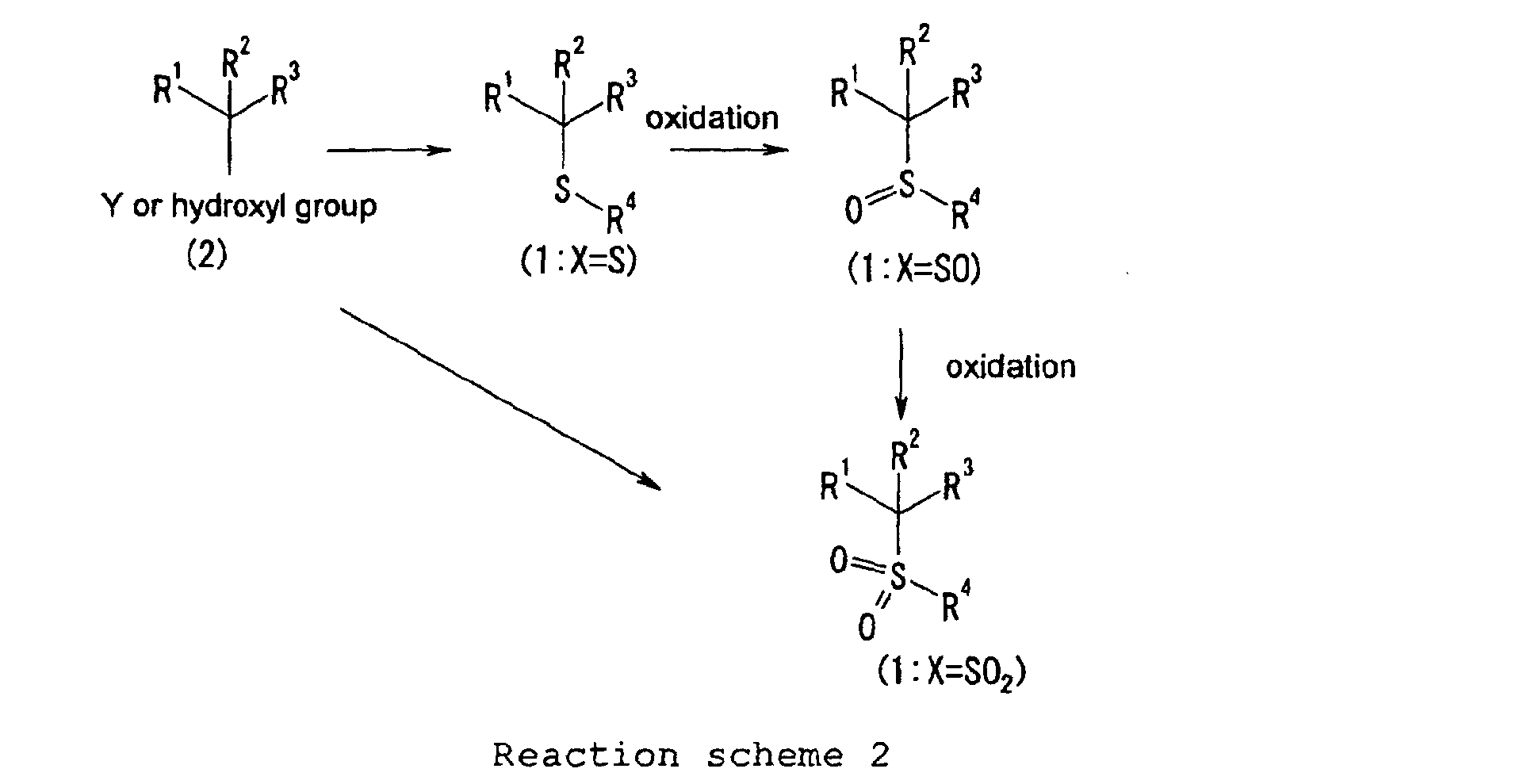
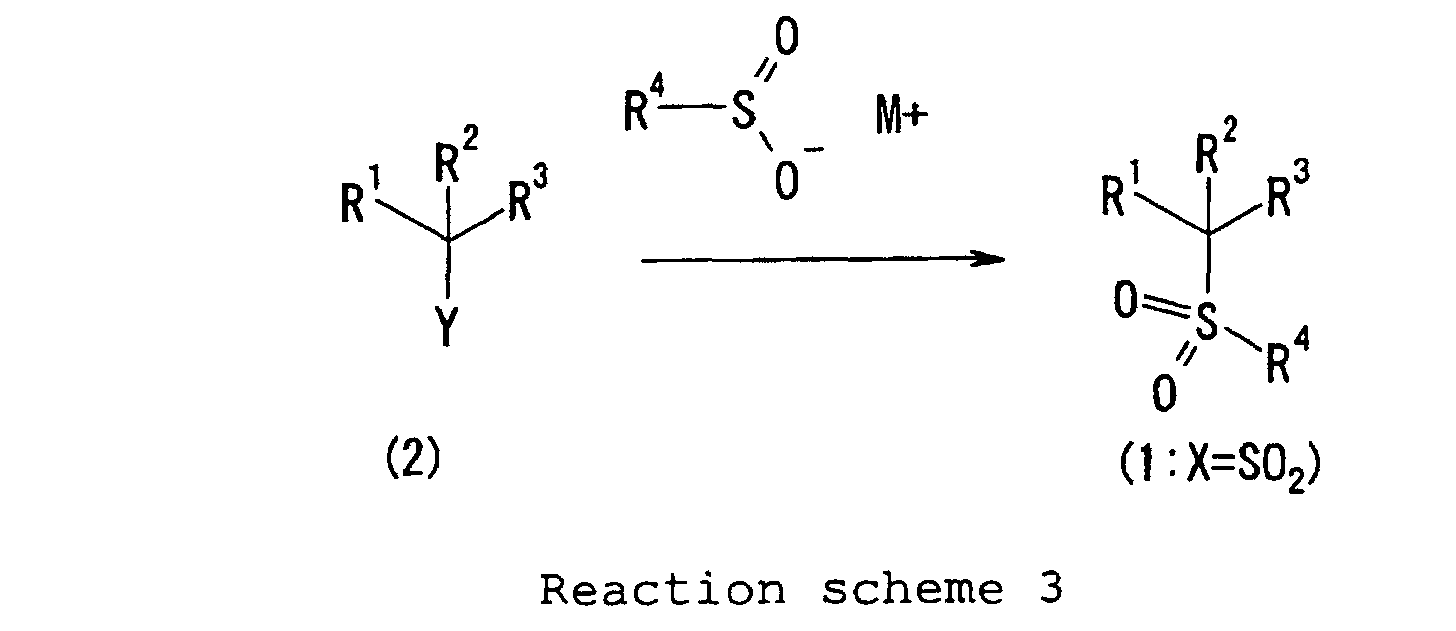
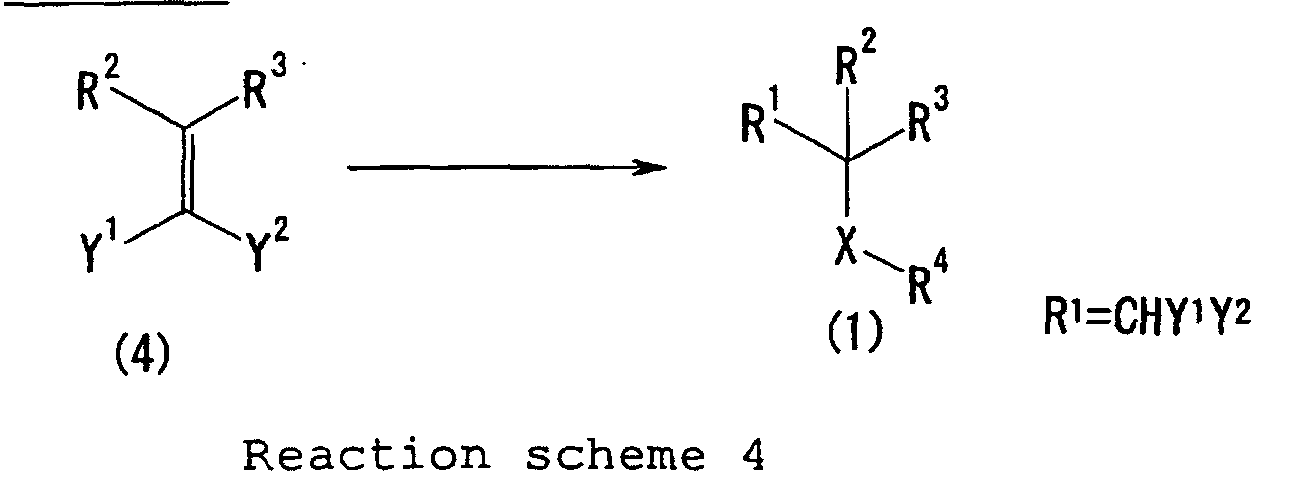


1H-NMR (400 MHz, CDCl3) δ: 0.90(3H,t,J=7.3Hz), 1.28-1.50(4H,m), 1.70-1.82(2H,m), 1.91-1.95(1H,br m), 4.98(1H,dd,J=11.7,5.9Hz), 6.88-7.00(2H,m), 7.18(1H,ddd,J=8.8,5.6,3.2Hz).

IR (ATR) ν: 2958, 2931, 1624, 1595, 1574, 1493, 1475, 1425, 1389, 1234, 1215, 1171, 1095, 1012, 874, 814 cm-1.
1H-NMR (400MHz, CDCl3) δ: 0.86(3H,t,J=7.3Hz), 1.22-1.41(4H,m), 1.78-1.88(1H,m), 1.89-1.99(1H,m), 4.48(1H,ddd,J=8.6,6.6,1.7Hz), 6.81-6.86(1H,m), 6.90(1H,td,J=9.0,4.6Hz), 7.06(1H,ddd,J=9.0,5.8,3.2Hz), 7.17(4H,s).
MS (m/z): 326 (M+).
HRMS (EI) : as C17H17ClF2S (M+)
Calculated: 326.0708
Found: 326.0696
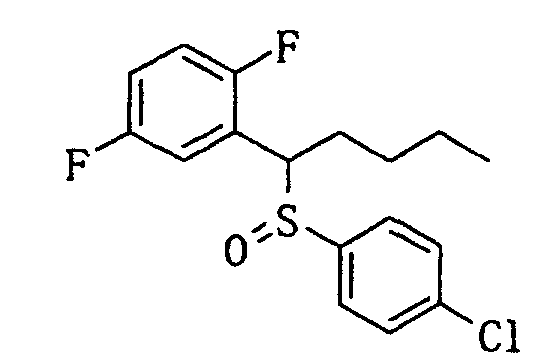
Isomer 2-A
Melting point: 108.5-109.0°C.
IR (ATR) ν: 2929, 2854, 1493, 1275, 1132, 1174, 1086, 1043, 1011, 962, 862, 823, 735, 503 cm-1.
1H-NMR (400MHz,CDCl3) δ: 0.90(3H,t,J=7.1Hz), 1.30-1.50(4H,m), 1.96-2.06(1H,m), 2.27-2.36(1H,m), 4.03(1H,ddd,J=9.6,6.1,1.2Hz), 6.71(1H,td,J=9.1,4.4Hz), 6.85-6.92(1H,m), 7.07-7.12(1H,m), 7.10(2H,d,J=8.6Hz), 7.28(2H,d,J=8.6Hz).
MS (m/z) 343 (M++H).
Elemental Analysis for C17H17ClF2OS
Calculated: C 59.56%; H 5.00%; Cl 10.34%; F 11.08%; S 9.35%.
Found: C 59.27%; H 4.91%;Cl 10.42%; F 11.05%; S 9.45%. Isomer 2-B
IR (ATR) ν: 3078, 2958, 2931, 2862, 1574, 1495, 1425, 1390, 1213, 1090, 1051, 1012, 818, 741 cm-1.
1H-NMR (400MHz,CDCl3) δ: 0.83(3H,t,J=7.1Hz), 1.17-1.40(4H,m), 1.94-2.05(1H,m), 2.24-2.34(1H,m), 4.03(1H,dd,J=12.0,3.2Hz), 6.87-6.99(3H,m), 7.26(2H,d,J=8.3Hz), 7.35(2H,d,J=8.3Hz).
MS (m/z): 343(M++H).
HRMS (FAB) for C17H18OClF2S (M++H)
Calculated: 343.0735
Found: 343.0750

IR (ATR) ν: 3089, 2958, 2933, 2873, 1583, 1496, 1475, 1427, 1394, 1321, 1279, 1219, 1176, 1149, 1086, 1014, 829, 754 cm-1.
1H-NMR (400MHz, CDCl3) δ: 0.85(3H,t,J=7.3Hz), 1.15-1.40(4H,m), 2.03-2.19(1H,m), 2.38-2.47(1H,m), 4.51(1H,dd,J=10.5,3.7Hz), 6.83(1H,td,J=9.0,4.6Hz), 6.94-7.01(1H,m), 7.25(1H,ddd,J=8.8,5.4,3.2Hz), 7.38(2H,d,J=8.5Hz), 7.53(2H,d,J=8.5Hz).
MS (m/z): 359 (M++H).
HRMS (FAB) for C17H18ClF2O2S (M++H)
Calculated: 359.0684
Found: 359.0688


1H-NMR (400MHz, CDCl3) δ: 4.36(2H,s), 6.91(1H,td,J=9.0,4.4Hz), 6.99-7.06(1H,m), 7.11(1H,ddd,J=8.3,5.6,3.2Hz), 7.45(2H,d,J=8.8Hz), 7.62(2H,d,J=8.8Hz).
MS (m/z) : 303 (M++H).

Melting point: 144.5-145.0°C.
IR (KBr) ν: 3068, 1637, 1581, 1489, 1450, 1419, 1315, 1246, 1155, 1086, 887, 814, 752, 725, 690, 648, 627, 613, 534, 467 cm-1.
1H-NMR (400MHz, CDCl3) δ: 6.88(1H,td,J=9.1,4.4Hz), 7.06-7.18(4H,m), 7.22-7.28(2H,m), 7.30-7.36(1H,m), 7.39(2H,d,J=8.8Hz), 7.60(2H,d,J=8.8Hz), 8.09(1H,s).
MS (m/z) : 391 (M++H).
Elemental Analysis for C20H13ClF2O2S
Calculated: C 61.46%; H 3.35%; Cl 9.07%; F 9.72%; S 8.20%.
Found: C 61.39%; H 3.28%; Cl 8.95%; F 9.82%; S 8.30%.
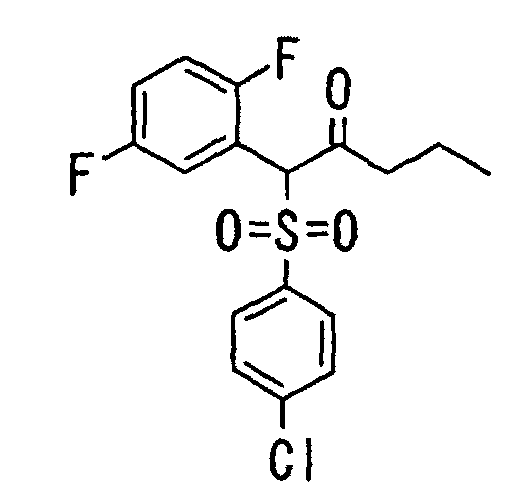
Melting point: 85.5-86.0°C.
IR (ATR) ν: 2968, 1724, 1581, 1491, 1394, 1335, 1323, 1155, 1088, 1034, 1011, 906, 829, 816, 758, 725, 615, 546, 469 cm-1.
1H-NMR (400MHz, CDCl3) δ: 0.90(3H,t,J=7.6Hz), 1.52-1.68(2H,m), 2.62(1H,ddd,J=18.1,7.6,6.8Hz), 2.84(1H,ddd,J=18.1,7.6,6.8Hz), 5.66(1H,s), 6.95(1H,td,J=9.0,4.4Hz), 7.02-7.08(1H,m), 7.39-7.43(1H,m), 7.43(2H,d,J=8.5Hz), 7.56(2H,d,J=8.5Hz).
MS (m/z) 372 (M+).
Elemental Analysis for C17H15ClF2O3S
Calculated: C 54.77%; H 4.06%; Cl 9.51%; F 10.19%; S 8.60%.
Found: C 54.47%; H 3.92%; Cl 9.68%; F 10.26%; S 8.76%.

Melting point: 179.5-180.0°C.
IR (ATR) ν: 1682, 1595, 1579, 1495, 1475, 1315, 1284, 1240, 1209, 1153, 1082, 991, 874, 766, 708, 687, 607, 547, 509, 453 cm-1.
1H-NMR (400MHz, CDCl3) δ: 6.54(1H,s), 7.01-7.10(2H,m), 7.34-7.38(1H,m), 7.44-7.50(4H,m), 7.58-7.65(1H,m), 7.67(2H,d,J=8.8Hz), 7.88-7.93(2H,m).
MS (m/z): 406 (M+).
HRMS (EI): as C20H13ClF2O3S (M+)
Calculated: 406.0242
Found: 406.0230
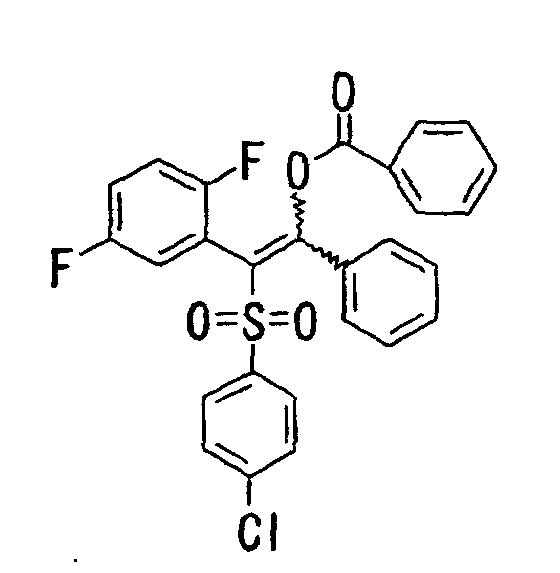
Melting point: 224.5-227.0°C.
IR (ATR) ν: 1756, 1610, 1491, 1450, 1325, 1228, 1155, 1092, 1072, 1011, 808, 756, 694, 606, 553, 462 cm-1.
1H-NMR (400MHz, CDCl3) δ: 6.97(1H,ddd,J=8.8,4.4Hz), 7.02-7.09(1H,m), 7.15-7.21(3H,m), 7.23-7.30(3H,m), 7.34(2H,d,J=8.5Hz), 7.51-7.57(2H,m), 7.77(2H,d,J=8.5Hz), 8.02-8.06(2H,m).
MS (m/z): 528 (M++NH4).
Elemental Analysis for C27H17ClF2O4S
Calculated: C 63.47%; H 3.35%; Cl 6.94%; F 7.44%; S 6.28%.
Analyzed: C 63.04%; H 3.24%; Cl 6.92%; F 7.39%; S 6.44%.
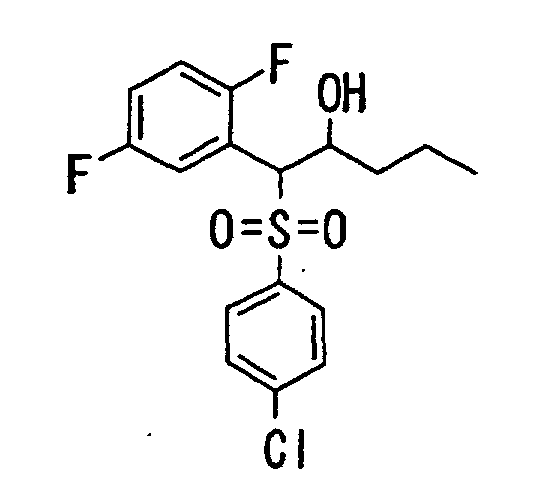
Melting point: 134.5-135.0°C.
IR (ATR) ν: 3502, 2966, 2931, 2873, 1585, 1491, 1309, 1277, 1227, 1173, 1147, 1084, 1083, 1014, 810, 756, 721, 613, 542, 445 cm-1.
1H-NMR (400MHz, CDCl3) δ: 0.87(3H,t,J=7.1Hz), 1.20-1.65(4H,m), 3.06(1H,d,J=2.2Hz), 4.48(1H,s), 4.85-4.90(1H,m), 6.84(1H,td,J=9.1,4.7Hz), 6.96-7.02(1H,m), 7.40(2H,d,J=8.6Hz), 7.58(2H,d,J=8.6Hz), 7.85(1H,ddd,J=9.1,5.4,3.4Hz).
MS (m/z): 374 (M+).
HRMS (EI) m/z as C17H17O3ClF2S (M+):
Calculated: 374.0555
Found: 374.0540

Melting point: 76.5-78.0°C.
IR (ATR) ν: 3533, 2960, 1581, 1498, 1394, 1329, 1306, 1242, 1178, 1146, 1082, 987, 887, 754, 712, 644, 594, 515 cm-1.
1H-NMR (400MHz, CDCl3) δ: 0.82(3H,t,J=7.3Hz), 1.22-1.53(4H,m), 3.78(1H,br s), 4.55-4.80(2H,br m), 6.84(1H,td,J=9.0,4.4Hz), 6.96-7.04(1H,m), 7.15-7.26(1H,br s), 7.39(2H,d,J=8.3Hz), 7.52(2H,d,J=8.3Hz).
MS (m/z): 374 (M+).
Elemental Analysis for C17H17ClF2O3S
Calculated: C 54.47%; H 4.57%; Cl 9.46%; F 10.14%; S 8.55%.
Found: C 54.27%; H 4.51%; Cl 9.44%; F 10.20%; S 8.70%.
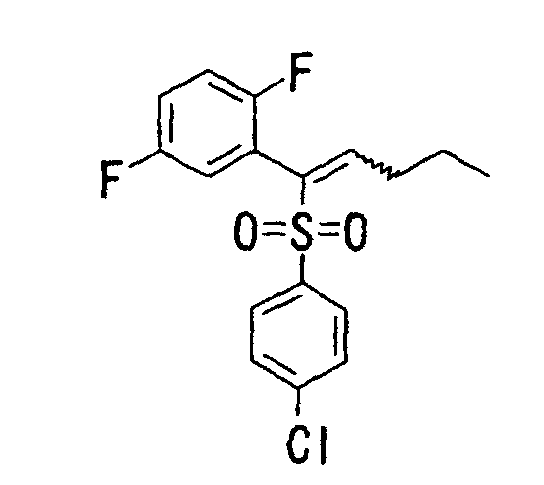
Melting point: 95.5-97.0°C.
IR (ATR) ν: 2960, 1645, 1579, 1489, 1421, 1311, 1252, 1198, 1165, 1140, 1086, 1012, 818, 769, 752, 640, 606, 552, 467 cm-1.
1H-NMR (400MHz, CDCl3) δ: 0.89 (3H,t,J=7.3Hz), 1.45-1.56(2H,m), 2.00(2H,br s), 6.89(1H,td,J=8.3,4.4Hz), 7.01-7.08(2H,m), 7.31(1H,t,J=8.3Hz), 7.38(2H,d,J=8.5Hz), 7.55(2H,d,J=8.5Hz).
MS (m/z): 356 (M+).
HRMS (EI) : as C17H15ClF2O2S (M+)
Calculated: 356.0449
Found: 356.0450
Elemental Analysis for C17H15ClF2O2S
Calculated: C 57.22%; H 4.24%; Cl 9.94%; F 10.65%; S 8.99%.
Found: C 56.80%; H 4.21%; Cl 10.04%; F 10.65%; S 9.11%.
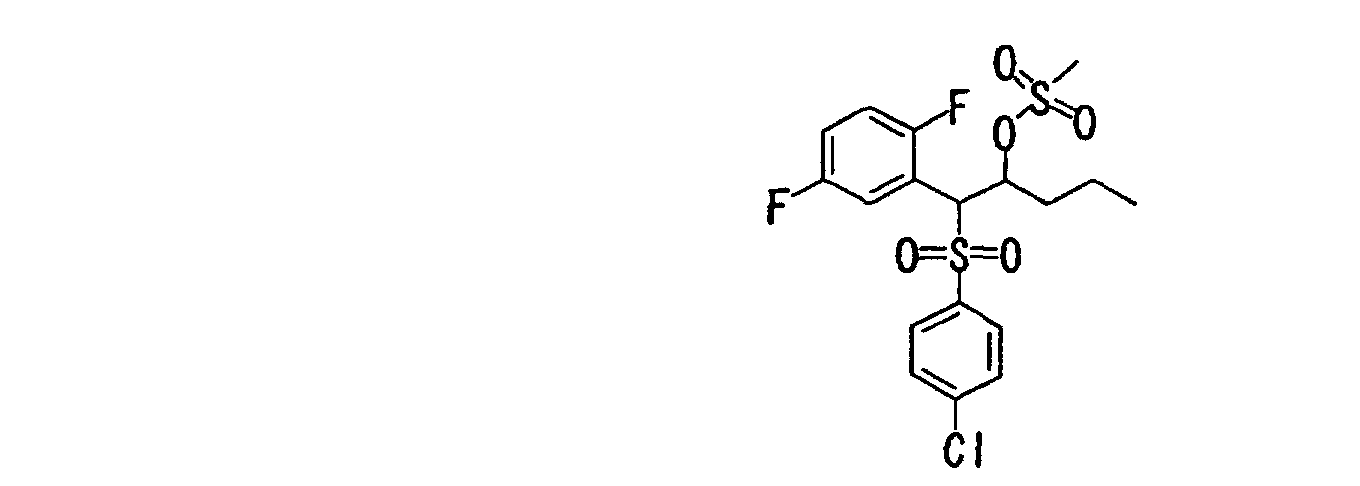
IR (ATR) ν: 2966, 1498, 1350, 1176, 1149, 1086, 928, 879, 789, 752, 636, 592, 550, 525, 455 cm-1.
1H-NMR (400MHz, CDCl3) δ: 0.86(3H,t,J=7.1Hz), 1.33-1.61(3H,m), 1.88-1.96(1H,m), 3.21(3H,d,J=0.7Hz), 5.03(1H,d,J=7.7Hz), 5.58-5.66(1H,m), 6.83(1H,td,J=9.0,4.4Hz), 6.97-7.05(1H,m), 7.33-7.40(1H,m,including 2H,d,J=8.3Hz at 7.35ppm), 7.54(2H,d,J=8.3Hz).

Melting point: 99.0-100.0°C.
IR (ATR) ν: 1581, 1496, 1392, 1309, 1279, 1232, 1173, 1149, 1084, 978, 837, 816, 806, 758, 731, 710, 644, 598, 561, 521 cm-1.
1H-NMR (400MHz, CDCl3) δ: 0.99(3H,t,J=7.3Hz), 2.12(2H,m), 5.06(2H,d,J=7.3Hz), 5.74-5.85(2H,m), 6.92(1H,td,J=9.0,4.4Hz), 6.97-7.04(1H,m), 7.32(1H,ddd,J=8.5,5.4,3.2Hz), 7.43(2H,d,J=8.5Hz), 7.64(2H,d,J=8.5Hz).
MS (m/z): 374 (M++NH4).
Elemental Analysis for C17H15ClF2O2S
Calculated: C 57.22%; H 4.24%; Cl 9.94%; F 10.65%; S 8.99%.
Analyzed: C 57.15%; H 4.18%; Cl 9.90%; F 10.74%; S 9.09%.

IR (ATR) ν: 2945, 2927, 2854, 1583, 1496, 1427, 1392, 1321, 1248, 1144, 1082, 1038, 1012, 941, 822, 775, 748, 708, 623, 542, 467 cm-1.
1H-NMR (400MHz, CDCl3) δ: -0.02(3H,s), -0.02(3H,s), 0.82(9H,s), 1.23-1.33(2H,m), 1.42-1.58(2H,m), 2.06-2.18(1H,m), 2.39-2.48(1H,m), 3.53(2H,t,J=6.3Hz), 4.52(1H,dd,J=11.6,2.6Hz), 6.83(1H,td,J=9.0,4.4Hz), 6.94-7.00(1H,m), 7.22-7.26(1H,m), 7.38(2H,d,J=8.5Hz), 7.53(2H,d,J=8.5Hz).
MS (m/z) : 489 (M++H).
Elemental Analysis for C23H31ClF2O3SSi
Calculated: C 56.48%; H 6.39%; Cl 7.25%; F 7.77%; S 6.56%.
Analyzed: C 56.29%; H 6.28%; Cl 7.29%; F 7.75%; S 6.70%.

MS (m/z): 503 (M+).
HRMS (FAB) for C24H34ClF2O3SSi (M++H)
Calculated: 503.1655
Analyzed: 503.1704
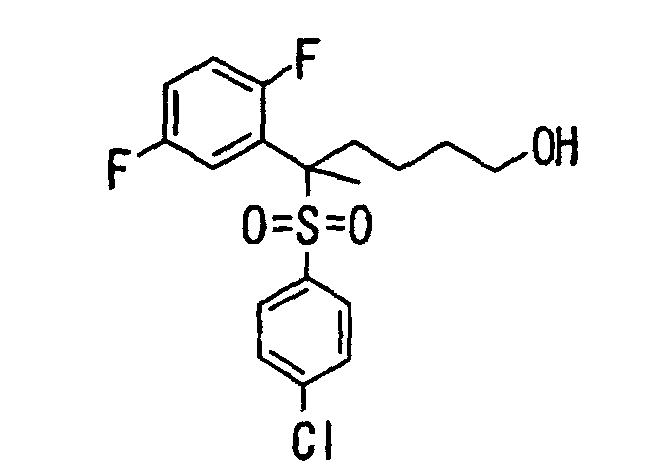
IR (ATR) ν: 3516, 3089, 2939, 2870, 1583, 1495, 1475, 1412, 1394, 1306, 1279, 1188, 1146, 1088, 1070, 1012, 823, 758, 710, 679, 649, 602, 546, 474 cm-1.
1H-NMR (400MHz, CDCl3) δ: 2.09-2.20(1H,m), 1.23(1H,br s), 1.34-1.46(1H,m), 1.63(1H,quint,J=7.1Hz), 1.82(3H,d,J=2.7Hz), 1.98-2.07(1H,m), 2.71(1H,td,J=13.0,3.4Hz), 3.63(2H,t,J=6.4Hz), 6.83-6.90(1H,m), 6.99-7.06(2H,m), 7.38(4H,s).
MS (m/z): 389 (M++H).
HRMS (FAB) for C18H20ClF2O3S (M++H)
Calculated: 389.0790
Analyzed: 389.0795

IR (ATR) ν: 3082, 2927, 2856, 1583, 1495, 1462, 1308, 1250, 1146, 1080, 1012, 833, 758, 675, 646, 607, 579, 544, 455 cm-1.
1H-NMR (400MHz, CDCl3) δ: 0.03(12H,s), 0.87(18H,s), 1.25-1.70(8H,m), 2.23-2.34(2H,m), 2.40-2.48(2H,m), 3.58-3.68(4H,m), 6.74-6.82(1H,m), 6.97-7.06(2H,m), 7.30(2H,d,J=8.8Hz), 7.34(2H,d,J=8.8Hz).
MS (m/z): 675 (M++H).
HRMS (FAB) for C33H54ClF2O4SSi2 (M++H)
Calculated: 675.2938
Analyzed: 675.2900
Elemental Analysis for C33H53ClF2O4SSi2
Calculated: C 58.68%; H 7.91%; Cl 5.25%; F 5.63%.
Analyzed: C 58.63%; H 7.91%; Cl 5.32%; F 5.69%.
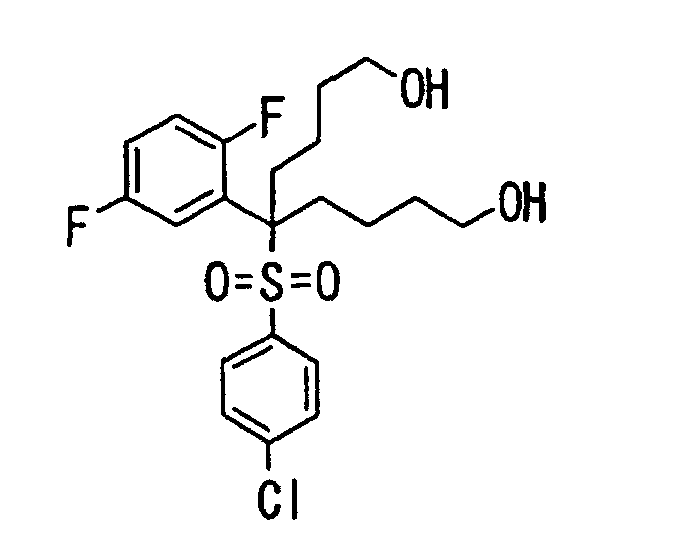
Melting point: 107.0-108.5°C.
IR (ATR) ν: 3275, 2939, 1572, 1495, 1414, 1306, 1261, 1140, 1078, 1066, 847, 812, 754, 710, 679, 644, 606, 544, 474, 449 cm-1.
1H-NMR (400MHz, CDCl3) δ: 1.36-1.82(10H,m), 2.24-2.35(2H,m), 2.47-2.57(2H,m), 3.70(4H,t,J=5.9Hz), 6.79(1H,ddd,J=12.4,8.3,4.6Hz), 6.97-7.08(2H,m), 7.29 (2H, d, J=8.8Hz), 7.34 (2H, d, J=8.8Hz).
MS (m/z): 447 (M++H).
HRMS (FAB) for C21H26ClF2O4S (M++H)
Calculated: 447.1208
Found: 447.1227
Elemental Analysis for C21H25ClF2O4S·0.25H2O
Calculated: C 55.87%; H 5.69%; Cl 7.85%; F 8.42%; S 7.10%.
Analyzed: C 55.62%; H 5.40%; Cl 7.89%; F 8.58%; S 7.26%.
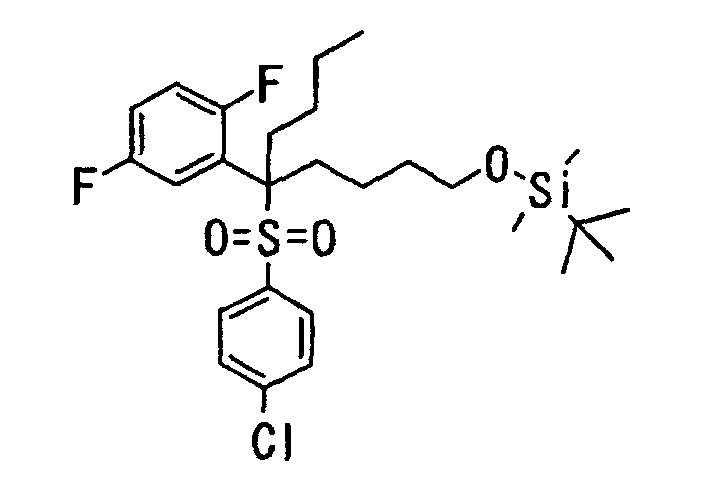
IR (ATR) ν: 2954, 2929, 2858, 1583, 1495, 1473, 1412, 1394, 1311, 1255, 1192, 1147, 1090, 1014, 833, 756, 710, 677, 606 cm-1.
1H-NMR (400MHz, CDCl3) δ: 0.03(6H,s), 0.87(9H,s), 0.95(3H,t,J=7.4Hz), 1.20-1.45(5H,m), 1.52-1.70(3H,m), 2.21-2.32(2H,m), 2.40-2.49(2H,m), 3.64(2H,t,J=6.1Hz), 6.74-6.82(1H,m), 6.97-7.07(2H,m), 7.29(2H,d,J=8.8Hz), 7.34(2H,d,J=8.8Hz).
MS (m/z): 545 (M+).
HRMS (FAB) for C27H40ClF2O3SSi (M++H)
Calculated: 545.2124
Analyzed: 545.2087

IR (ATR) ν: 3539, 2958, 2873, 1583, 1495, 1412, 1308, 1277, 1192, 1146, 1090, 1014, 829, 758, 710, 675, 606, 548, 463 cm-1.
1H-NMR (400 MHz, CDCl3) δ: 0.95(3H,t,J=7.3Hz), 1.19-1.77(9H,m), 2.21-2.34(2H,m), 2.38-2.53(2H,m), 3.70(2H,br s), 6.75-6.83(1H,m), 6.98-7.08(2H,m), 7.29(2H,d,J=8.8Hz), 7.34(2H,d,J=8.8Hz).
MS (m/z): 431 (M++H).
HRMS (EI): as C21H26ClF2O3S (M++H)
Calculated: 431.1259
Found: 431.1237

Isomer 22-A
Melting point: 84.0-84.5°C.
IR (ATR) ν: 3533, 2933, 2860, 1574, 1495, 1429, 1278, 1240, 1182, 1142, 1092, 1080, 1014, 962, 885, 829, 766, 737, 710, 681, 619, 526, 476 cm-1.
1H-NMR (400MHz, CDCl3) δ: 0.88(3H,t,J=6.8Hz), 1.20-1.50(8H,m), 1.57(1H,d,J=5.1Hz), 2.07(1H,ddd,J=14.7,8.1,6.8Hz), 2.70(1H,ddd,J=14.7,6.8,4.6Hz), 3.93-4.01(1H,m), 4.85(1H,t,J=6.8Hz), 6.77(1H,td,J=9.0,4.4Hz), 6.91-6.98(1H,m), 7.24-7.30(1H,m), 7.36(2H,d,J=8.5Hz), 7.51(2H,d,J=8.5Hz).
MS (m/z): 417 (M++H).
HRMS (FAB) for C20H24ClF2O3S (M++H)
Calculated: 417.1103
Analyzed: 417.1102
Elemental Analysis for C20H23ClF2O3S·0.25H2O
Calculated: C 57.00%; H 5.62%; Cl 8.41%; F 9.02%; S 7.61%.
Analyzed: C 57.18%; H 5.38%; Cl 8.57%; F 9.22%; S 7.79%.
Isomer 22-B
Melting point: 123.0-123.5°C.
IR (ATR) ν: 3502, 2925, 2858, 1583, 1496, 1410, 1304, 1275, 1213, 1184, 1149, 1086, 1045, 1014, 958, 910, 829, 796, 752, 725, 710, 627, 552, 503, 467 cm-1.
1H-NMR (400MHz, CDCl3) δ: 0.87 (3H,t,J=7.1Hz), 1.20-1.60(9H,m), 2.21-2.30(1H,m), 2.41(1H,ddd,
J=13.9,10.5,3.4Hz), 3.23-3.32(1H,m), 4.94(1H,dd,J=11.7,2.9Hz), 6.85(1H,td,J=9.0,4.4Hz), 6.96-7.03(1H,m), 7.23-7.29(1H,m), 7.39(2H,d,J=8.5Hz), 7.55(2H,d,J=8.5Hz).
MS (m/z) 417 (M++H).
HRMS (FAB) for C20H24ClF2O3S (M++H)
Calculated: 417.1103
Analyzed: 417.1122
Elemental Analysis for C20H23ClF2O3S·0.25H2O
Calculated: C 57.00%; H 5.62%; Cl 8.41%; F 9.02%; S 7.61%.
Analyzed: C 57.16%; H 5.34%; Cl 8.55%; F 9.18%; S 7.82%.

IR (ATR) ν: 2945, 1583, 1495, 1475, 1311, 1277, 1230, 1149, 1142, 1082, 1014, 872, 822, 793, 752, 708, 629, 557, 532, 465 cm-1.
1H-NMR (400MHz, CDCl3) δ: 1.33-1.48(2H,m), 1.72-1.87(2H,m), 2.08-2.18(1H,m), 2.43-2.52(1H,m), 3.44-3.53(2H,m), 4.52(1H,ddd,J=11.5,3.9,1.2Hz), 6.84(1H,td,J=9.0,4.4Hz), 6.96-7.02(1H,m), 7.23-7.28(1H,m), 7.39(2H,d,J=8.8Hz), 7.53(2H,d,J=8.8Hz).
MS (m/z) : 393 (M++H).
Elemental Analysis for C17H16Cl2F2O2S
Calculated: C 51.92%; H 4.10%; Cl 18.03%; F 9.66%; S 8.15%.
Found: C 51.33%; H 4.07%; Cl 17.64%; F 9.72%; S 8.25%.

Melting point: 167.0-170.5°C.
IR (ATR) ν: 2960, 2565, 2453, 1583, 1495, 1321, 1277, 1211, 1173, 1145, 1084, 1011, 879, 820, 787, 754, 721, 708, 627, 557, 540, 467 cm-1.
1H-NMR (400MHz, CDCl3) δ: 1.31-1.47(2H,m), 1.93-2.30(6H,m), 2.42-2.51(1H,m), 2.66-2.78(2H,m), 2.87-3.03(2H,m), 3.76(2H,br s), 4.51(1H,dd,J=10.7,4.4Hz), 6.85(1H,td,J=8.8,4.4Hz), 6.96-7.03(1H,m), 7.22(1H,ddd,J=8.8,5.4,3.2Hz), 7.40(2H,d,J=8.3Hz), 7.54(2H,d,J=8.3Hz), 12.54(1H,br s).
MS (m/z): 428 (M++H).
Elemental Analysis for C21H24ClF2NO2S·HCl
Calculated: C 54.31%; H 5.43%; Cl 15.27%; F 8.18%; N 3.02%; S 6.90%.
Analyzed: C 54.19%; H 5.37%; Cl 15.07%; F 8.10%;N 3.21%; S 6.98%.

Melting point: 99.5-100.5°C.
IR (ATR) ν: 3078, 2952, 1734, 1587, 1493, 1419, 1377, 1327, 1279, 1213, 1149, 1047, 1014, 829, 779, 754, 727, 611, 542, 453 cm-1.
1H-NMR (CDCl3) δ: 1.15(3H,t,J=7.1Hz), 3.08(1H,dd,J=16.6,10.3Hz), 3.46(1H,dd,J=16.6,4.6Hz), 3.99-4.12(2H,m), 5.06(1H,dd,J=10.3,4.6Hz), 6.85(1H,td,J=9.0,4.4Hz), 6.96-7.02(1H,m), 7.19(1H,ddd,J=8.6,5.4,3.2Hz), 7.42(2H,d,J=8.8Hz), 7.56 (2H, d, J=8.8Hz).
MS (m/z): 389 (M++H).
Elemental Analysis for C17H15ClF2O4S
Calculated: C 52.51%; H 3.89%; Cl 9.12%; F 9.77%; S 8.25%.
Found: C 52.33%; H 3.86%; Cl 9.10%; F 9.88%; S 8.37%.
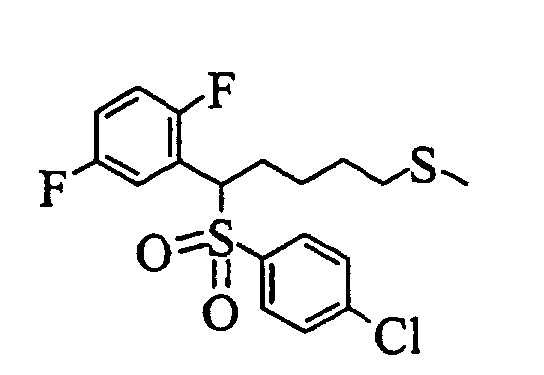
Melting point: 103-106°C.
IR (ATR) ν: 3066, 2960, 2935, 1583, 1493, 1147, 1082, 1012, 893, 829, 752, 625, 542, 465 cm-1.
1H-NMR (400MHz, CDCl3) δ: 1.23-1.45(2H,m), 1.50-1.75(2H,m), 2.04(3H,s), 2.04-2.20(1H,m), 2.35-2.60(3H,m), 4.52(1H,dd,J=11.5,2.4Hz), 6.78-6.88(1H,m), 6.95-7.01(1H,m), 7.20-7.30(1H,m), 7.38(2H,dm,J=8.4Hz), 7.53(2H,dm,J=8.4Hz).
MS (m/z): 405, 407 (M++H).
HRMS (FAB) for C18H20ClF2O2S2 (M++H)
Calculated: 405.0561
Found: 405.0581
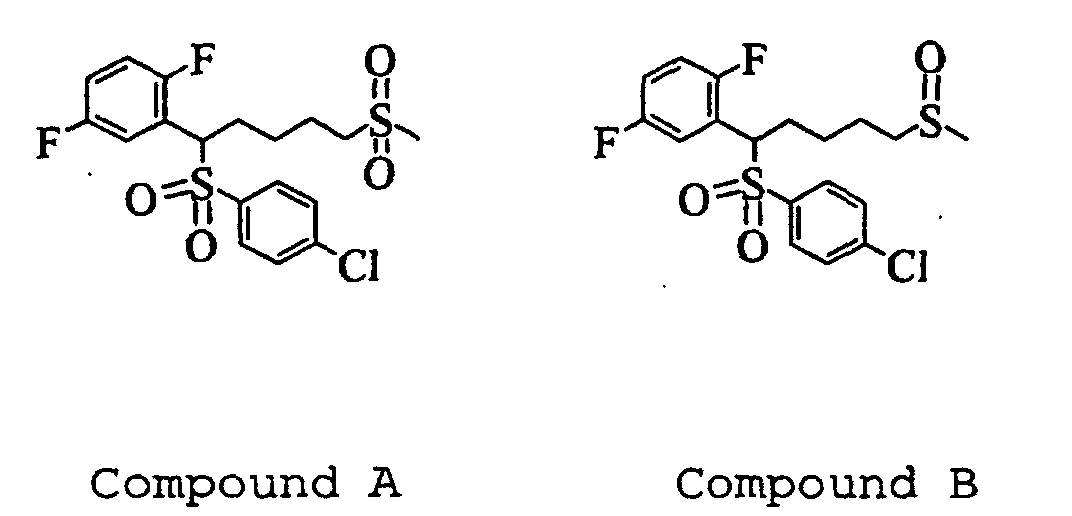
Compound A
Melting point: 145-148°C.
IR (ATR) ν: 1496, 1317, 1292, 1273, 1149, 1124, 1086, 829, 756, 631, 544, 523, 499, 478, 465 cm-1.
1H-NMR (400MHz, CDCl3) δ: 1.38-1.70(2H,m), 1.80-2.00(2H,m), 2.05-2.22(1H,m), 2.45-2.60(1H,m), 2.88(3H,s), 2.96(2H,tm,J=7.0Hz), 4.51(1H,dm,J=7.6Hz), 6.80-6.90(1H,m), 6.95-7.05(1H,m), 7.20-7.35(1H,m), 7.39(2H,d,J=8.7Hz), 7. 53 (2H, d, J=8.7Hz).
MS (m/z): 437, 439(M++H).
Elemental Analysis for C18H19ClF2O4S2
Calculated: C 49.48%; H 4.38%; Cl 8.11%;F 8.70%; S 14.68%. Found: C 49.50%; H 4.28%; Cl 8.05%; F 8.77%; S 14.70%.
Compound B
Melting point: 126-129°C.
IR (ATR) ν: 1495, 1475, 1277, 1147, 1086, 1012, 833, 752, 625, 540, 465 cm-1.
1H-NMR (400MHz, CDCl3) δ: 1.32-1.70(2H,m), 1.75-1.93(2H,m), 2.08-2.22(1H,m), 2.46-2.75(3H,m), 2.54(3H,S), 4.52(1H,dd,J=11.4,2.4Hz), 6.80-6.90(1H,m), 6.94-7.04(1H,m), 7.20-7.30(1H,m), 7.39(2H,dd,J=8.5,1.8Hz), 7.53(2H,dd,J=8.5,2.7Hz).
MS (m/z): 421, 423 (M++H).
Elemental Analysis for C18H19ClF2O3S2
Calculated: C 51.36%; H 4.55%; Cl 8.42%; F 9.03%; S 15.24%. Found: C 51.36%; H 4.49%; Cl 8.35%; F 9.00%; S 15.24%.

Melting point: 54-56°C.
IR (ATR) ν: 2943, 1618, 1495, 1475, 1308, 1198, 1147, 1080, 1012, 962, 899, 829, 750, 623, 559, 544, 467 cm-1.
1H-NMR (400MHz, CDCl3) δ: 1.25-1.45(2H,m), 1.55-1.80(2H,m), 2.05-2.22(1H,m), 2.40-2.55(1H,m), 3.62(2H,t,J=6.2Hz), 3.96(1H,dd,J=6.8,2.1Hz), 4.12(1H,dd,J=14.4,2.1Hz), 4.53(1H,dd,J=11.5,2.7Hz), 6.39(1H,dd,J=14.4,6.8Hz), 6.80-6.90(1H,m), 6.95-7.04(1H,m), 7.20-7.30(1H,m), 7.39(2H,d,J=8.6Hz), 7.54(2H,d,J=8.6Hz).
MS (m/z): 418, 420 (M++NH4).
Elemental Analysis for C19H19ClF2O3S
Calculated: C 56.93%; H 4.78%; Cl 8.84%; F 9.48%; S 8.00%.
Found: C 56.98%; H 4.83%; Cl 8.78%; F 9.51%; S 8.13%.

Melting point: 84-86°C.
IR (ATR) ν: 3325, 2941, 2866, 1583, 1496, 1313, 1151, 1084, 825, 752, 629, 534 cm-1.
1H-NMR (400MHz, CDCl3) δ: 1.18-1.29(1H,m), 1.29-1.40(2H,m), 1.40-1.70(2H,m), 2.08-2.22(1H,m), 2.42-2.55(1H,m), 3.55-3.67(2H,m), 4.53(1H,dd,J=11.4,3.8Hz), 6.78-6.88(1H,m), 6.93-7.03(1H,m), 7.20-7.30(1H,m), 7.39(2H,d,J=8.5Hz), 7.53(2H,d,J=8.5Hz).
MS (m/z): 375, 377 (M++H).
Elemental Analysis for C17H17ClF2O3S·0.25H2O
Calculated: C 53.83%; H 4.65%; Cl 9.35%; F 10.02%; S 8.45%.
Found: C 53.73%; H 4.63%; Cl 9.35%; F 10.03%; S 8.55%.
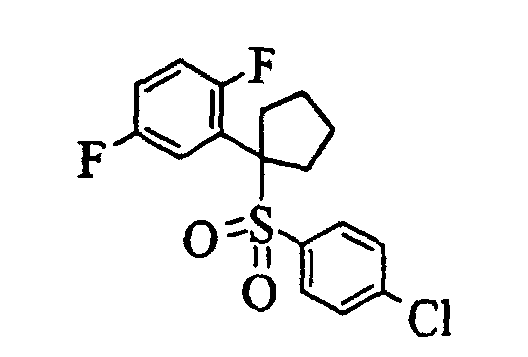
Melting point: 153-155°C.
IR (ATR) ν: 2968, 1581, 1489, 1304, 1277, 1138, 1082, 827, 752, 606, 569, 519, 467 cm-1.
1H-NMR (400MHz, CDCl3) δ: 1.70-1.85 (2H,m), 2.05-2.20 (2H,m), 2.22-2.35(2H,m), 2.88-3.00(2H,m), 6.75-6.83(1H,m), 6.95-7.05(2H,m), 7.35(4H,s).
MS (m/z): 374, 376(M++NH4).
Elemental Analysis for C17H15ClF2O2S
Calculated: C 57.22%; H 4.24%; Cl 9.94%; F 10.65%; S 8.99%.
Found: C 56.87%; H 4.14%; Cl 10.28%; F 10.44%; S 9.05%.
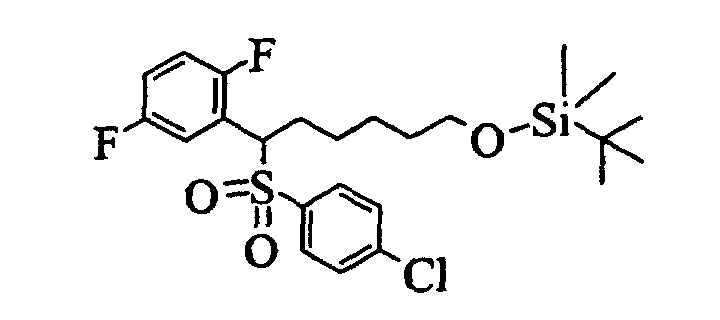
IR (ATR) ν: 2929, 2856, 1583, 1496, 1325, 1151, 1088, 835, 775, 754, 629 cm-1.
1H-NMR (400MHz, CDCl3) δ: 0.01(6H,s), 0.86(9H,s), 1.18-1.60(6H,m), 2.04-2.17(1H,m), 2.38-2.50(1H,m), 3.54(2H,t,J=6.1Hz), 4.53(1H,dd,J=11.5,2.7Hz), 6.78-6.88(1H,m), 6.93-7.03(1H,m), 7.20-7.30(1H,m), 7.38(2H,d,J=8.5Hz), 7.53(2H,d,J=8.5Hz).
MS (m/z): 503, 505 (M++H).
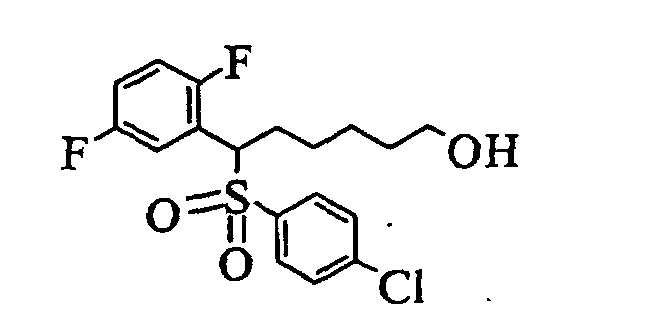
Melting point: 98-99°C.
IR (ATR) ν: 3575, 2929, 1495, 1279, 1146, 1082, 1014, 833, 752, 627, 541, 467 cm-1.
1H-NMR (400MHz, CDCl3) δ: 1.18-1.62(7H,m), 2.04-2.18(1H,m), 2.40-2.53(1H,m), 3.59(2H,dd,J=11.5,6.4Hz), 4.52(1H,dd,J=11.5,2.7Hz), 6.78-6.88(1H,m), 6.94-7.04(1H,m), 7.20-7.30(1H,m), 7.38(2H,d,J=8.4Hz), 7.53(2H,d,J=8.4Hz).
MS (m/z): 389, 391 (M++H).
Elemental Analysis for C18H19ClF2O3S
Calculated: C 55.60%; H 4.92%; Cl 9.12%; F 9.77%; S 8.25%.
Found: C 55.38%; H 4.75%; Cl 9.09%; F 9.81%; S 8.34%.

Melting point: 137-139°C.
IR (ATR) ν: cm-1. 2933, 2862, 1495, 1309, 1144, 1082, 885, 814, 750, 619, 559, 464 cm-1.
1H-NMR (400MHz, CDCl3) δ: 1.10-1.45(3H,m), 1.61(1H,dm,J=12.0Hz), 1.81(2H,br d,J=13.4Hz), 2.09(2H,br t,J=13.0Hz), 2.55-2.95(2H,m), 6.84(1H,ddd,J=12.2,9.0,4.9Hz), 7.00-7.11(2H,m), 7.36(2H,s), 7.36(2H,s).
MS (m/z): 388, 390 (M++NH4).
Elemental Analysis for C18H17ClF2O3S
Calculated: C 58.30%; H 4.62%; Cl 9.56%; F 10.25%; S 8.65%.
Found: C 58.01%; H 4.49%; Cl 9.58%; F 10.35%; S 8.82%.

IR (ATR) ν: 2927, 2877, 1621, 1496, 1323, 1198, 1144, 1084, 1012, 829, 752, 633, 542, 469 cm-1.
1H-NMR (400MHz, CDCl3) δ: 2.20-2.35(1H,m), 2.70-2.85 (1H,m), 3.28(1H,td,J=9.5,4.6Hz), 3.40-3.50(1H,m), 3.54-3.68(2H,m), 3.71(2H,t,J=4.6Hz), 3.99(1H,dd,J=6.7,2.1Hz), 4.14(1H,dd,J=14.3,2.1Hz), 4.81(1H,dd,J=10.9,4.0Hz), 6.41(1H,dd,J=14.3,6.7Hz), 6.84(1H,td,J=9.0,4.4Hz), 6.94-7.04(1H,m), 7.18-7.30(1H,m), 7.39(2H,dm,J=8.3Hz), 7.56(2H,dm,J=8.3Hz).
MS (m/z): 417, 419 (M++H).
Elemental Analysis for C19H19ClF2O4S
Calculated: C 54.74%; H 4.59%; Cl 8.50%; F 9.11%; S 7.69%.
Found: C 54.54%; H 4.46%; Cl 8.46%; F 9.02%; S 7.81%.

IR (ATR) ν: 3467, 2943, 1495, 1315, 1149, 1086, 1061, 829, 762, 521 cm-1.
1H-NMR (400MHz, CDCl3) δ: 1.78-1.80(1H,m), 2.22-2.36(1H,m), 2.75-2.88(1H,m), 3.20-3.40(2H,m), 3.42-3.52(1H,m), 3.57-3.73(3H,m), 4.81(1H,dd,J=10.9,3.8Hz), 6.84(1H,td,J=9.0,4.4Hz), 6.94-7.04(1H,m), 7.22-7.30(1H,m), 7.39(2H,dm,J=8.4Hz), 7.55(2H,dm,J=8.4Hz).
MS (m/z): 391, 393 (M++H).
Elemental Analysis for C17H17ClF2O4S
Calculated: C 52.24%; H 4.38%; Cl 9.07%; F 9.72%; S 8.20%.
Found: C 52.12%; H 4.36%; Cl 9.11%; F 9.86%; S 8.32%.

Melting point: 107-109°C.
IR (ATR) ν: 2927, 2858, 1495, 1240, 1138, 1080, 874, 831, 796, 750, 708, 615, 548, 507, 469, 444 cm-1.
1H-NMR (400MHz, CDCl3) δ: 0.92-1.08(1H,m), 1.08-1.22(1H,m), 1.22-1.50(3H,m), 1.60-1.75(3H,m), 1.75-1.88(1H,m), 2.37(1H,br d,J=12.5Hz), 2.48-2.62(1H,m), 4.44(1H,d,J=7.6Hz), 6.68-6.80(1H,m), 6.86-6.95(1H,m), 7.30(2H,dm,J=8.6Hz), 7.38-7.52(1H,m), 7.49(2H,dm,J=8.6Hz).
MS (m/z): 402, 404 (M++NH4).
Elemental Analysis for C19H19ClF2O2S
Calculated: C 59.29%; H 4.98%; Cl 9.21%; F 9.87%; S 8.33%. Found: C 59.11%; H 4.93%; Cl 9.18%; F 9.82%; S 8.49%.

IR (ATR) ν: 2937, 1495, 1147, 1084, 1014, 893, 833, 795, 752, 708, 627, 559, 536, 465 cm-1.
1H-NMR (400MHz, CDCl3) δ: 1.20-1.35(2H,m), 1.37-1.55(2H,m), 1.74-1.88(2H,m), 2.05-2.20(1H,m), 2.40-2.53(1H,m), 3.34(2H,td,J=6.6,1.3Hz), 4.51(1H,dd,J=11.5,2.7Hz), 6.83(1H,td,J=9.0,4.6Hz), 6.94-7.04(1H,m), 7.20-7.30(1H,m), 7.38(2H,d,J=8.7Hz), 7.53(2H,d,J=8.7Hz).
MS (m/z): 468, 470 (M++NH4).
Elemental Analysis for C18H18BrClF2O2S
Calculated: C 47.86%; H 4.02%; Br 17.69%; Cl 7.85%; F 8.41%; S 7.10%.
Found: C 47.80%; H 3.83%; Br 17.67%; Cl 7.86%; F 8.65%; S 7.25%.

IR (ATR) ν: 3350, 2929, 2856, 1427, 1105, 822, 739, 698, 609, 501 cm-1.
1H-NMR (400MHz, CDCl3) δ: 1.05(9H,S), 1.19(3H,d,J=6.3Hz), 1.46-1.72(4H,m), 2.02-2.08(1H,m), 3.69(2H,t,J=6.0Hz), 3.78-3.90(1H,m), 7.30-7.50(6H,m), 7.62-7.88(4H,m).
MS (m/z): 343 (M++H).

Isomer 38-A
IR (ATR) ν: 2931, 2858, 1495, 1322, 1149, 1109, 1088, 1012, 822, 752, 700, 613, 503, 488, 469 cm-1.
1H-NMR (400MHz, CDCl3) δ: 1.02(9H,s), 1.09(3H,d,J=6.8Hz), 1.26-1.42(1H,m), 1.50-1.80(3H,m), 2.74-2.86(1H,m), 3.64(2H,t,J=5.7Hz), 4.51(1H,d,J=5.6Hz), 6.78(1H,td,J=9.1,4.6Hz), 6.90-7.00(1H,m), 7.30-7.48(8H,m), 7.50-7.58(3H,m), 7.60-7.70(4H,m).
MS (m/z): 627 (M++H).
Isomer 38-B
IR (ATR) ν: 2931, 2858, 1495, 1147, 1107, 1088, 822, 752, 729, 700, 613, 559, 503, 471 cm-1.
1H-NMR (400MHz, CDCl3) δ: 0.94(9H,s), 1.00-1.20(1H,m), 1.37(3H,d,J=6.8Hz), 1.40-1.64(3H,m), 2.60-2.74(1H,m), 3.48-3.60(2H,m), 4.43(1H,br d,J=9.3Hz), 6.69(1H,td,J=9.0,4.4Hz), 6.84-6.93(1H,m), 7.24-7.45(9H,m), 7.48(2H,d,J=8.6Hz), 7.52-7.62(4H,m).
MS (m/z): 627 (M++H).

Melting point: 84-86°C.
IR (ATR) ν: 3367, 2937, 1496, 1138, 1084, 1051, 1012, 829, 754, 729, 708, 621, 561, 532, 471 cm-1.
1H-NMR (400MHz, CDCl3) δ: 1.07(3H,d,J=6.8Hz), 1.40-1.85(5H,m), 2.75-2.90(1H,m), 3.64-3.75(2H,m), 4.54(1H,d,J=6.6Hz), 6.77(1H,td,J=9.0,4.4Hz), 6.90-7.00(1H,m), 7.33(2H,d,J=8.4Hz), 7.43-7.60(1H,m), 7.51(2H,d,J=8.4Hz).
MS (m/z): 389, 391 (M++H).
Elemental Analysis for C18H19ClF2O3S
Calculated: C 55.60%; H 4.92%; Cl 9.12%; F 9.77%; S 8.25%.
Found: C 55.42%; H 4.83%; Cl 9.10%; F 9.85%; S 8.30%.
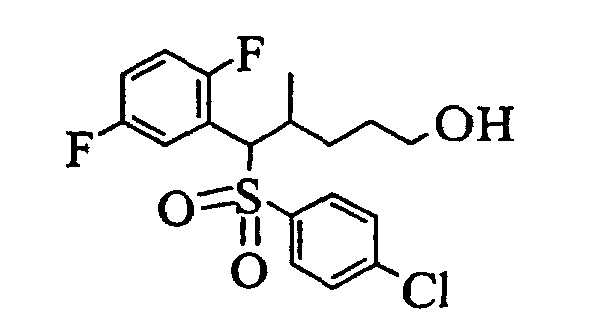
Melting point: 67-69°C.
IR (ATR) ν: 3537, 2933, 2868, 1481, 1308, 1279, 1240, 1144, 1078, 822, 802, 754, 712, 665, 613, 544, 469 cm-1.
1H-NMR (400MHz, CDCl3) δ: 1.08-1.22(1H,m), 1.23(1H,t,J=5.2Hz), 1.36(3H,d,J=6.8Hz), 1.45-1.70(3H,m), 2.67-2.80(1H,m), 3.50-3.65(2H,m), 4.45(1H,d,J=8.3Hz), 6.73(1H,td,J=9.0,4.6Hz), 6.88-6.97(1H,m), 7.31(2H,d,J=8.8Hz), 7.34-7.48(1H,m), 7.49(2H,d,J=8.8Hz).
MS (m/z): 389, 391 (M++H).
Elemental Analysis for C18H19ClF2O3S
Calculated: C 55.60%; H 4.92%; Cl 9.12%; F 9.77%; S 8.25%.
Found: C 55.48%; H 4.84%; Cl 9.01%; F 9.76%; S 8.32%.
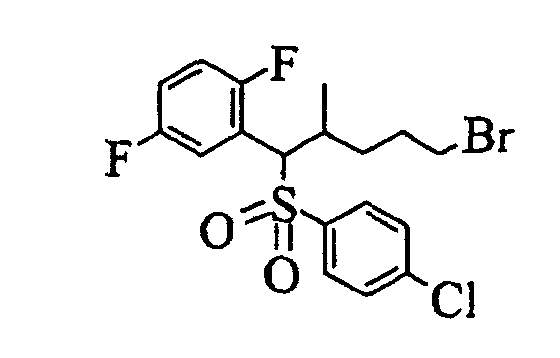
IR (ATR) ν: 2966, 1495, 1321, 1238, 1147, 1088, 1012, 789, 752, 729, 712, 613, 559, 536, 471 cm-1.
1H-NMR (400MHz, CDCl3) δ: 1.07(3H,d,J=6.8Hz), 1.46-1.60(1H,m), 1.77-2.11(3H,m), 2.74-2.90(1H,m), 3.41(2H,t,J=6.7Hz), 4.49(1H,d,J=6.6Hz), 6.78(1H,td,J=9.1,4.6Hz), 6.90-7.00(1H,m), 7.33(2H,d,J=8.7Hz), 7.45-7.60(1H,m), 7.52(2H,d,J=8.7Hz).
MS(m/z): 451, 453 (M++H).

IR (ATR) ν: 3091, 2966, 1496, 1296, 1246, 1142, 1080, 889, 839, 754, 710, 627, 553, 513, 471 cm-1.
1H-NMR (400MHz, CDCl3) δ: 1.18-1.31(1H,m), 1.37(3H,d,J=6.8Hz), 1.50-1.70(1H,m), 1.78-1.92(2H,m), 2.62-2.80(1H,m), 3.20-3.40(2H,m), 4.44(1H,d,J=8.5Hz), 6.73(1H,td,J=9.0,4.5Hz), 6.88-6.98(1H,m), 7.30(2H,d,J=8.6Hz), 7.30-7.50(1H,m), 7.49(2H,d,J=8.6Hz).
MS (m/z): 451, 453 (M++H).
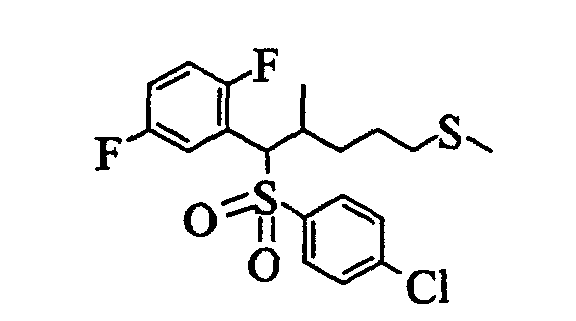
Isomer 43-A
IR (ATR) ν: 2916, 1493, 1321, 1238, 1146, 1088, 1012, 789, 752, 712, 613, 559, 536, 469 cm-1.
1H-NMR (400MHz, CDCl3) δ: 1.08(3H,d,J=6.9Hz), 1.40-1.54(1H,m), 1.55-1.85(3H,m), 2.10(3H,s), 2.50(2H,t,J=7.2Hz), 2.75-2.90(1H,m), 4.51(1H,d,J=6.1Hz), 6.78(1H,td,J=9.1,4.4Hz), 6.90-7.00(1H,m), 7.33(2H,d,J=8.6Hz), 7.45-7.60(1H,m), 7.52(2H,d,J=8.6Hz).
MS (m/z): 419, 421(M++H).
HRMS (FAB) for C19H22ClF2O2S2 (M++H)
Calculated: 419.0718
Found: 419.0733
Isomer 43-B
IR (ATR) ν: 2952, 2920, 1493, 1308, 1232, 1176, 1149, 1090, 827, 750, 629, 590, 557, 532, 472 cm-1.
1H-NMR (400MHz, CDCl3) δ: 1.10-1.30(1H,m), 1.37(3H,d,J=6.6Hz), 1.50-1.65(3H,m), 2.03(3H,s), 2.30-2.50(2H,m), 2.64-2.78(1H,m), 4.44(1H,d,J=8.6Hz), 6.73(1H,td,J=9.0,4.5Hz), 6.86-6.98(1H,m), 7.30(2H,d,J=8.6Hz), 7.34-7.46(1H,m), 7.48(2H,d,J=8.6Hz).
MS (m/z): 419, 421(M++H).
HRMS (FAB) for C19H22ClF2O2S2 (M++H)
Calculated: 419.0718
Found: 419.0715

IR (ATR) ν: 2920, 1495, 1317, 1279, 1238, 1146, 1086, 1036, 829, 789, 752, 712, 615, 559, 471 cm-1.
1H-NMR (400MHz, CDCl3) δ: 1.00-1.10(3H,m), 1.50-1.75(1H,m), 1.78-2.10(3H,m), 2.60(1.5H,s), 2.60(1.5H,s), 2.65-2.90(3H,m), 4.50(1H,d,J=7.6Hz), 6.77(1H,td,J=9.2,4.4Hz), 6.90-7.00(1H,m), 7.32(2H,d,J=8.5Hz), 7.40-7.60(1H,m), 7.50(2H, d, J=8.5Hz).
MS (m/z): 435, 437 (M++H).
HRMS (FAB) for C19H22ClF2O3S2 (M++H)
Calculated: 435.0667
Found: 435.0655
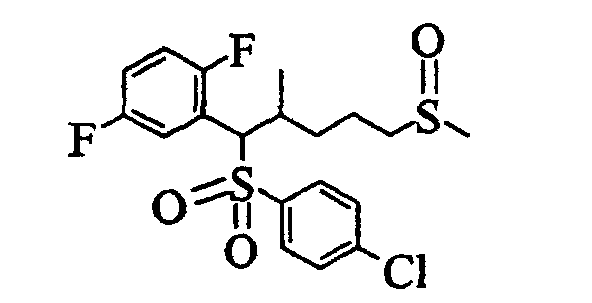
Melting point: 107-112°C.
IR (ATR) ν: 3087, 2943, 1496, 1315, 1242, 1178, 1149, 1088, 1028, 829, 731, 623, 584, 538, 457 cm-1.
1H-NMR (400MHz, CDCl3) δ: 1.15-1.40(4H,m), 1.45-2.00(3H,m), 2.50-2.85(3H,m), 2.54(3H,s), 4.46(1H,d,J=8.1Hz), 6.78(1H,td,J=9.0,4.7Hz), 6.90-7.00(1H,m), 7.32(2H,d,J=8.4Hz), 7.35-7.50(1H,m), 7.49(2H,d,J=8.4Hz). MS (m/z): 435, 437 (M++H).
Elemental Analysis for C19H21ClF2O3S2
Calculated: C 52.47%; H 4.87%; Cl 8.15%; F 8.74%; S 14.74%.
Found: C 52.44%; H 4.85%; Cl 8.17%; F 8.79%; S 14.63%.

Melting point: 115-117°C.
IR (ATR) ν: 3078, 2937, 1493, 1311, 1286, 1230, 1151, 1136, 1086, 831, 754, 729, 712, 623, 542, 519, 471, 459 cm-1.
1H-NMR (400MHz, CDCl3) δ: 1.03(3H,d,J=7.1Hz), 1.60-1.80(1H,m), 1.85-2.20(3H,m), 2.70-2.90(1H,m), 2.94(3H,s), 3.07(2H,t,J=7.8Hz), 4.49(1H,d,J=7.8Hz), 6.76(1H,td,J=9.1,4.5Hz), 6.90-7.00(1H,m), 7.32(2H,d,J=8.5Hz), 7.35-7.60(1H,m), 7.49(2H,d,J=8.5Hz).
MS (m/z): 451, 453 (M++H).
Elemental Analysis for C19H21ClF2O4S2
Calculated: C 50.61%; H 4.96%; Cl 7.86%; F 8.43%; S 14.22%. Found: C 50.57%; H 4.74%; Cl 7.85%; F 8.58%; S 14.25%.

Melting point: 142-144°C.
IR (ATR) ν: 3082, 2937, 1495, 1317, 1290, 1234, 1151, 1130, 1092, 831, 769, 754, 731, 712, 625, 544, 525, 503, 472, 449, 417 cm-1.
1H-NMR (400MHz, CDCl3) δ: 1.15-1.40(1H,m), 1.32(3H,d,J=6.6Hz), 1.40-2.05(3H,m), 2.65-3.10(3H,m), 2.88(3H,s), 4.46(1H,d,J=7.1Hz), 6.77(1H,td,J=9.1,4.6Hz), 6.90-7.00(1H,m), 7.32(2H,d,J=8.4Hz), 7.35-7.50(1H,m), 7.49(2H,d,J=8.4Hz).
MS (m/z): 451, 453 (M++H).
Elemental Analysis for C19H21ClF2O4S2
Calculated: C 50.61%; H 4.69%; Cl 7.86%; F 8.43%; S 14.22%. Found: C 50.48%; H 4.59%; Cl 7.93%; F 8.57%; S 14.09%.
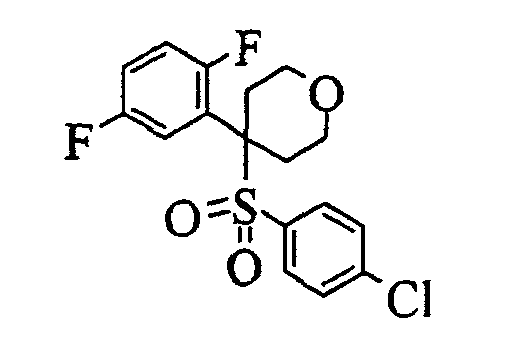
Melting point: 157-160°C.
IR (ATR) ν: 2966, 2862, 1496, 1309, 1188, 1149, 1086, 1012, 899, 841, 808. 750, 710, 629, 592, 569, 536, 515, 471 cm-1.
1H-NMR (400MHz, CDCl3) δ: 2.40-2.80(4H,m), 3.32(2H,t,J=12.5Hz), 4.02(2H,dt,J=11.8,3.3Hz), 6.82-6.95(1H,m), 7.05-7.17(2H,m), 7.38(2H,s), 7.39(2H,s).
MS (m/z): 373, 375 (M++H).
Elemental Analysis for C17H15ClF2O3S
Calculated: C 54.77%; H 4.06%; Cl 9.51%; F 10.19%; S 8.60%. Found: C 54.55%; H 4.00%; Cl 9.69%; F 10.33%; S 8.64%.

IR (ATR) ν: 3086, 2954, 2875, 1689, 1583, 1496, 1423, 1321, 1176, 1147, 1084, 1012, 874, 752, 536, 467 cm-1.
1H-NMR (400MHz, CDCl3) δ: 1.26-1.38(2H,m), 1.54-1.73(2H,m), 1.78-1.90(4H,m), 2.09-2.20(1H,m), 2.42-2.52(1H,m), 3.19-3.40(4H,m), 3.96-4.05(2H,m), 4.52(1H,dd,J=11.5,2.7Hz), 6.83(1H,td,J=9.1,4.4Hz), 6.94-7.01(1H,m), 7.21-7.28(1H,m), 7.38(2H,d,J=8.6Hz), 7.52(2H,d,J=8.6Hz).
MS (m/z) 472 (M++H).
HRMS (FAB) for C22H24ClF2NO4S (M++H)
Calculated: 472.1161
Analyzed: 472.1124

1H-NMR (400MHz, CDCl3) δ: 1.55-1.91(3H,m), 1.91-2.11(2H,m), 2.92(3H,s), 3.09(2H,t,J=7.9Hz), 3.72(2H,t,J=6.1Hz).
MS (m/z): 153 (M++H).
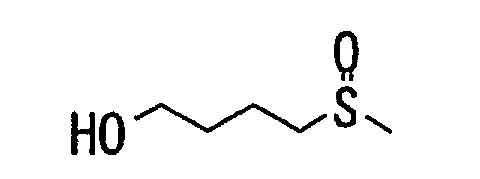
IR (ATR) ν: 3369, 2937, 2867, 1658, 1452, 1411, 1054, 1006, 941, 694 cm-1.
1H-NMR (400MHz, CDCl3) δ: 1.40-1.55(1H,br), 1.68-1.83(2H,m), 1.93-2.08(2H,m), 2.92(3H,s), 3.09(2H,t,J=7.9Hz), 3.72 (2H,t,J=5.5Hz).
MS (m/z): 137 (M++H).
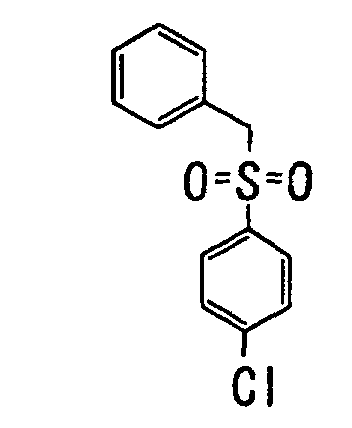
Melting point: 147.5-148.5°C.
IR (ATR) ν: 3060, 3029, 2994, 2942, 1583, 1571, 1492, 1475, 1454, 1396, 1311, 1294, 1274, 1147, 1087, 1014, 977, 917, 831, 773, 757, 696, 642, 532, 462 cm-1.
1H-NMR (400MHz, CDCl3) δ: 4.31(2H,s), 7.23-7.38(4H,m), 7.38-7.46(2H,m), 7.49-7.58(2H,m).
MS (m/z): 267 (M++H).

Melting point: 151-152°C.
IR (ATR) ν: 2937, 2867, 1577, 1467, 1396, 1319, 1270, 1203, 1147, 1087, 1058, 1014, 962, 842, 802, 755, 696, 632, 565, 530, 474, 420 cm-1.
1H-NMR (400MHz, CDCl3) δ: 1.34-1.52(2H,m), 1.79-1.97(2H,m), 2.13-2.28(2H,m), 2.45-2.58(1H,m), 2.86(3H,s), 2.89-3.00(2H,m), 4.01(1H,dd,J=11.2,3.9Hz), 7.08(1H,d,J=8.1Hz), 7.22-7.47(8H,m).
MS (m/z): 401 (M++H).
Elemental Analysis for C18H21ClO4S2
Calculated: C 53.92%; H 5.28%; Cl 8.84%; S 16.00%.
Found: C 53.92%; H 5.21%; Cl 9.05%; S 15.88%.

Melting point: 98.5-99.5°C.
IR (ATR) ν: 2935, 2856, 1575, 1473, 1455, 1392, 1309, 1276, 1143, 1081, 1016, 946, 829, 794, 755, 694, 624, 563, 520, 464 cm-1.
1H-NMR (400MHz, CDCl3) δ: 32-1.50(2H,m), 1.70-1.90(2H,m), 2.15-2.28(1H,m), 2.45-2.70(2H,m), 2.52(3H,s), 4.02(1H,dd,J=11.4,3.8Hz), 7.05-7.12(1H,m), 7.20-7.47(8H,m).
MS (m/z): 385 (M++H).
Elemental Analysis for C18H21ClO3S2
Calculated: C 56.16%; H 5.50%; Cl 9.21%; S 16.66%.
Found: C 56.03%; H 5.37%; Cl 9.29%; S 16.69%.

Melting point: 167-168°C.
IR (ATR) ν: 2948, 2867, 1614, 1579, 1488, 1455, 1396, 1319, 1290, 1268, 1230, 1199, 1149, 1126, 1085, 1014, 962, 829, 792, 767, 752, 713, 628, 572, 532, 495, 458, 430 cm-1.
1H-NMR (400MHz, CDCl3) δ: 1.38-1.52(2H,m), 1.80-1.98(2H,m), 2.16-2.29(1H,m), 2.48-2.60(1H,m), 2.87(3H,s), 2.96(2H,t,J=7.9Hz), 4.55(1H,dd,J=11.0,4.2Hz), 6.85(1H,td,J=9.1,1.1Hz), 7.17-7.39(4H,m), 7.43-7.58(3H,m).
MS (m/z): 419 (M++H).
Elemental Analysis for C18H20ClFO4S2
Calculated: C 51.61%; H 4.81%; Cl 8.46%; F 4.53%; S 15.31%.
Found: C 51.65%; H 4.74%; Cl 8.33%; F 4.50%; S 15.20%.

Melting point: 116-117°C.
IR (ATR) ν: 2942, 2875, 1590, 1469, 1394, 1317, 1295, 1270, 1241, 1201, 1145, 1083, 1012, 964, 875, 840, 798, 769, 752, 705, 686, 634, 592, 541, 530, 512, 491, 464 cm-1.
1H-NMR (400MHz, CDCl3) δ: 1.34-1.52(2H,m), 1.78-1.99(2H,m), 2.09-2.22(1H,m), 2.41-2.56(1H,m), 2.81-3.03(2H,m), 2.88(3H,s), 4.01(1H,dd,J=11.2,3.9Hz), 6.83(1H,d,J=7.6Hz), 6.90(1H,d,J=9.3Hz), 7.03(1H,td,J=8.1,2.2Hz), 7.23(1H,td,J=7.9,6.0Hz), 7.32-7.50(4H,m).
MS (m/z): 419 (M++H).
Elemental Analysis for C18H20ClFO4S2
Calculated: C 51.61%; H 4.81%; Cl 8.31%; F 4.53%; S 15.31%.
Found: C 51.68%; H 4.72%; Cl 8.31%; F 4.52%; S 15.30%.

Melting point: 141-142.5°C.
IR (ATR) ν: 2937, 2865, 1606, 1577, 1508, 1467, 1394, 1317, 1292, 1270, 1236, 1147, 1126, 1085, 1014, 962, 838, 825, 755, 721, 626, 574, 553, 514, 482, 455 cm-1.
1H-NMR (400MHz, CDCl3) δ: 1.35-1.50(2H,m), 1.80-1.97(2H,m), 2.09-2.21(1H,m), 2.43-2.56(1H,m), 2.88(3H,s), 2.90-3.00(2H,m), 4.01(1H,dd,J=11.2,3.9Hz), 6.97(2H,t,J=8.5Hz), 7.03-7.11(2H,m), 7.36-7.48(4H,m).
MS (m/z) : 419 (M++H).
Elemental Analysis for C18H20ClFO4S2
Calculated: C 51.61%; H 4.74%; Cl 8.46%; F 4.53%; S 15.31%.
Found: C 51.74%; H 4.74%; Cl 8.28%; F 4.53%; S 15.36%.

Melting point: 128-129°C.
IR (ATR) ν: 1489, 1315, 1234, 1147, 1078, 829 cm-1.
1H-NMR (400MHz,CDCl3) δ: 2.47(3H,s), 5.22(1H,s), 6.88(1H,m), 6.97(1H,m), 7.13(1H,m), 7.41(2H,m), 7.60(2H,m).
MS (m/z): 173 (M+-SO2Ar).
Elemental Analysis for C14H11ClF2O2S2
Calculated: C 48.21%; H 3.18%; S 18.39%; Cl 10.16%; F 10.89%.
Found: C 48.41%; H 3.28%; S 17.88%; Cl 10.41%; F 10.57%.

Melting point: 84-85°C.
IR (ATR) ν: 1492, 1319, 1149, 1086, 825 cm-1.
1H-NMR (400MHz, CDCl3) δ: 5.53(1H,s), 6.91(1H,m), 7.01(1H,m), 7.23-7.31(4H,m), 7.35-7.40(4H,m), 7.65(2H,m), 7.65(2H,m), 7.40-7.35(4H,m), 7.31-7.23(4H,m), 7.01(1H,m), 6.91(1H,m), 5.53(1H,s).
MS (m/z): 235 (M+-SO2Ar).
Elemental Analysis for C19H13ClF2O2S2
Calculated: C 55.54%; H 3.19%; S 15.61%; Cl 8.63%; F 9.25%.
Found: C 55.50%; H 3.18%; S 15.51%; Cl 8.40%; F 9.03%.
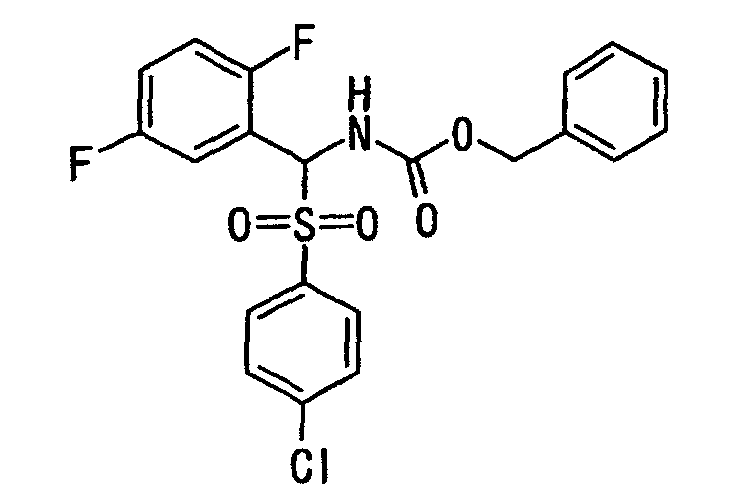
Melting point: 183-184°C.
IR (ATR) ν: 1726, 1518, 1495, 1319, 1230, 1147, 831 cm-1.
1H-NMR (400MHz, DMSO-d6) δ: 4.91(1H,d,J=12.4Hz), 4.97(1H,d,J=12.4Hz), 6.25(1H,d,J=10.4Hz), 7.2-7.45(7H,m), 7.70(2H,d,J=8.4Hz), 7.71(1H,m), 7.78(2H,d,J=8.4Hz), 9.33(1H,d,J=10.4Hz).
MS (m/z): 275 (M+-SO2Ar).
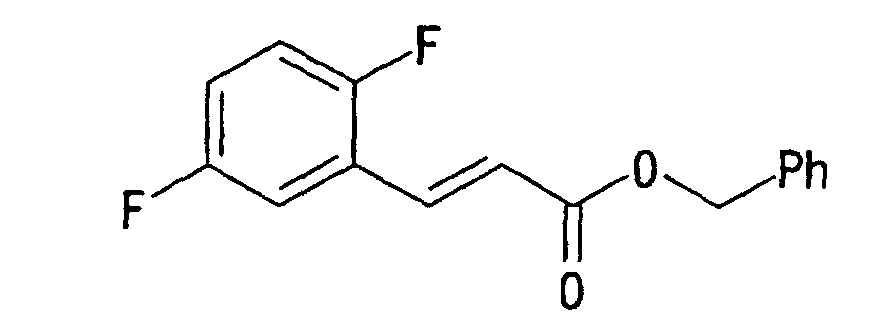
Melting point: 45-46°C.
IR (ATR) ν: 1712, 1641, 1305, 1167, 692 cm-1.
1H-NMR (400MHz, CDCl3) δ: 5.24(S,2H), 6.54(d,1H,J=16.4Hz), 7.03(m,2H), 7.18(m,1H), 7.37(m,5H), 7.77(d,1H,J=16.4Hz).
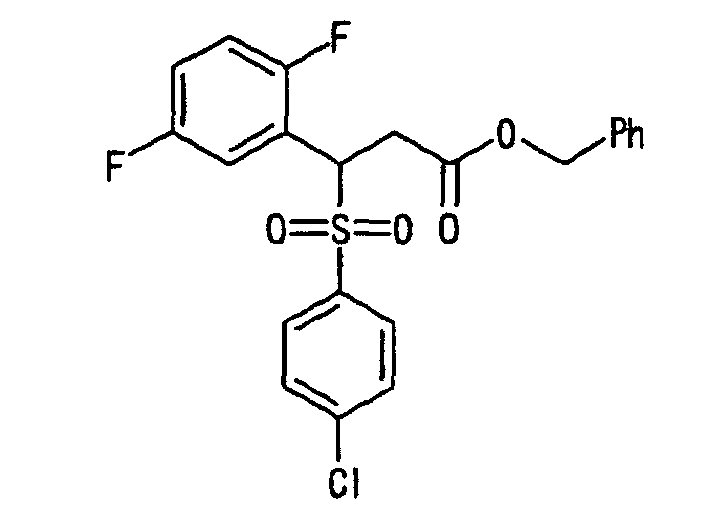
Melting point: 127-128°C.
IR (ATR) ν: 1734, 1498, 1317, 1211, 1170, 1149, 748 cm-1.
1H-NMR (400MHz, CDCl3) δ: 3.12(dd,1H,J=10.4,16.8Hz), 3.48(dd,1H,J=4.4,16.8Hz), 4.98(d,1H,J=12.0Hz), 5.02(m,1H), 5.03(d,1H,J=12.0Hz), 6.79(m,1H), 6.81(m,1H), 7.1-7.2(m,3H), 7.23(m,3H), 7.38(d,2H,J=8.4Hz), 7.52(d,2H,J=8.4Hz). Elemental Analysis for C22H17ClF2O4S·0.5H2O
Calculated: C 57.46%; H 3.91% ;S 6.97%; Cl 7.70%; F 8.26%.
Found C 57.60%; H 3.89%; S 7.02%; Cl 7.83%; F 8.31%.
MS (m/z): 450 (M+).
HRMS (EI): as C22H17ClF2O4S (M+)
Calculated: 450.0504
Found: 450.0496
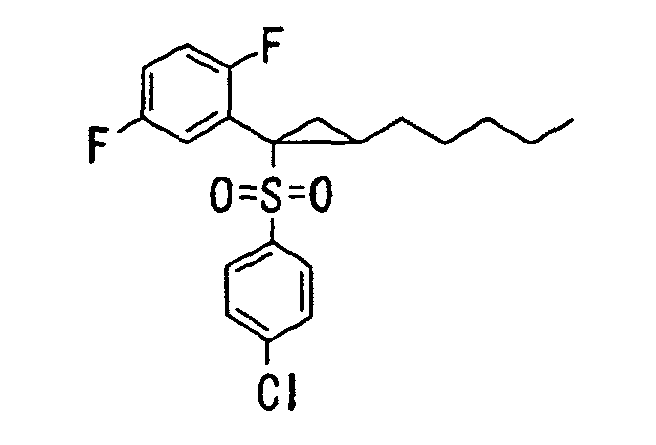
IR (ATR) ν: 2929, 2925, 2858, 1585, 1496, 1317, 1250, 1176, 1146, 1090, 1014, 889, 827, 796, 760, 715, 602, 565, 478 cm-1.
1H-NMR (400MHz, CDCl3) δ: 0.43-0.62(1H,m), 0.83-0.95(3H,m), 1.13-1.70(7.66H,m), 1.82-1.93(0.33H,m), 1.99(0.33H,dd,J=9.8,5.4Hz), 2.07(0.66H,dd,J=9.8,5.9Hz), 2.26-2.40(1H,m), 6.74-6.84(1H,m), 6.91(0.33H,td,J=9.0,4.4Hz), 6.98-7.05(1H,m), 7.13(0.66H,ddd,J=8.6,5.6,3.2Hz), 7.35-7.50(4H,m).
MS (m/z) 399 (M++H).
HRMS (FAB) for C20H22ClF2O2S (M++H)
Calculated: 399.0997
Found: 399.1006

IR (ATR) ν: 3074, 2983, 1722, 1585, 1496, 1427, 1396, 1369, 1275, 1257, 1215, 1142, 1086, 955, 835, 781, 750, 712, 665, 606, 559, 467 cm-1.
1H-NMR (400MHz, CDCl3) δ: 1.28(9H,s), 3.00(1H,dd,J=16.4,10.7Hz), 3.37(1H,dd,J=16.4,4.4Hz), 5.00(1H,dd,J=10.7,4.4Hz), 6.85(1H,td,J=9.0,4.6Hz), 6.96-7.03(1H,m), 7.19(1H,ddd,J=8.8,5.6,3.2Hz), 7.41(2H,d,J=8.3Hz), 7.50(2H,d,J=8.3Hz).
MS (m/z) : 417 (M++H).
HRMS (FAB) for C19H19ClF2O4S (M++H)
Calculated: 416.0661
Found: 416.0690
Elemental Analysis for C19H19ClF2O4S
Calculated: C 54.74%; H 4.59%; Cl 8.50%; F 9.11%; S 7.69%.
Found: C 54.67%; H 4.55%; Cl 8.54%; F 9.17%; S 7.80%.

Melting point: 152.0-153.0°C.
IR (ATR) ν: 2956, 1707, 1576, 1496, 1427, 1396, 1321, 1255, 1217, 1115, 1086, 1012, 914, 893, 829, 795, 756, 708, 619, 536, 459 cm-1.
1H-NMR (400MHz, CDCl3) δ: 3.13(1H,dd,J=17.1,10.4Hz), 3.53(1H,dd,J=17.1,4.6Hz), 5.02(1H,dd,J=10.4,4.6Hz), 6.85(1H,td,J=9.0,4.6Hz), 6.96-7.03(1H,m), 7.18(1H,ddd,J=8.5,5.4,3.2Hz), 7.41(2H,d,J=8.8Hz), 7.55(2H,d,J=8.8Hz).
MS (m/z): 360 (M+).
HRMS (EI): as C15H11ClF2O4S (M+)
Calculated: 360.0035
Found: 360.0026
Elemental Analysis for C15H11ClF2O4S
Calculated: C 49.94%; H 3.07%; Cl 9.83%; F 10.53%; S 8.89%.
Found: C 49.74%; H 2.99%; Cl 9.88%; F 10.63%; S 8.98%.
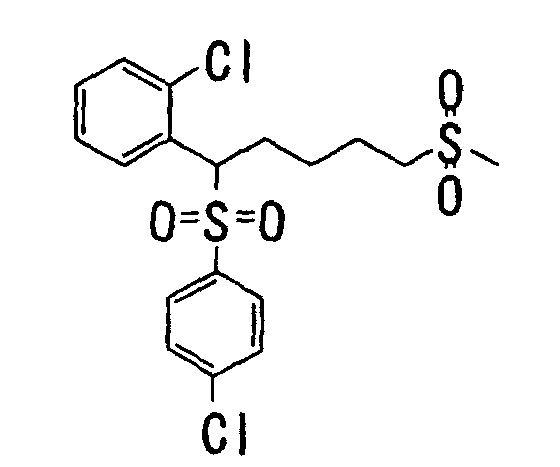
IR (ATR) ν: 2931, 2873, 1573, 1475, 1442, 1394, 1313, 1276, 1133, 1083, 1033, 1012, 962, 908, 829, 794, 748, 713, 684, 626, 568, 518, 464 cm-1.
1H-NMR (400MHz, CDCl3) δ: 1.33-1.52(2H,m), 1.79-1.98(2H,m), 2.15-2.30(1H,m), 2.50-2.60(1H,m), 2.86(3H,s), 2.94(2H,t,J=7.9Hz), 4.86(1H,dd,J=11.0,3.9Hz), 7.17-7.29(3H,m), 7.29-7.38(2H,m), 7.41-7.50(2H,m), 7.67(1H,d,J=7.8Hz).
MS (m/z) : 435(M++H).
HRMS (FAB) for C18H21O4Cl2S2 (M++H)
Calculated: 435.0258
Found: 435.0264

IR (ATR) ν: 3089, 3023, 1573, 1475, 1394, 1278, 1195, 1139, 1081, 1012, 962, 885, 829, 804, 750, 694, 626, 578, 530, 462 cm-1.
1H-NMR (400MHz, CDCl3) δ: 1.32-1.50(2H,m), 1.79-1.97(2H,m), 2.09-2.22(1H,m), 2.40-2.52(1H,m), 2.88(3H,s), 2.90-3.00(2H,m), 3.98(1H,dd,J=11.2,3.9Hz), 6.96(1H,d,J=7.6Hz), 7.10(1H,s), 7.20(1H,t,J=7.6Hz), 7.28-7.32(1H,m), 7.35-7.47(4H,m).
MS (m/z): 435 (M++H).
HRMS (FAB) : as C18H21O4Cl2S2 (M++H)
Calculated: 435.0258
Found: 435.0240

IR (ATR) ν: 2931, 2871, 1581, 1492, 1475, 1411, 1394, 1276, 1139, 1085, 1012, 962, 908, 827, 752, 713, 661, 620, 566, 518, 470 cm-1.
1H-NMR (400MHz, CDCl3) δ: 1.35-1.51(2H,m), 1.75-1.98(2H,m), 2.05-2.25(1H,m), 2.42-2.55(1H,m), 2.84-3.10(2H,m), 2.87(3H,s), 3.99(1H,dd,J=11.0,3.9Hz), 6.99-7.10(2H,m), 7.20-7.35(2H,m), 7.35-7.55(4H,m).
MS (m/z): 435(M++H).
HRMS (FAB) for C18H21O4Cl2S2 (M++H)
Calculated: 435.0258
Found: 435.0240

IR (ATR) ν: 2929, 2869, 1577, 1511, 1475, 1394, 1301, 1276, 1137, 1083, 1012, 962, 906, 863, 808, 763, 709, 640, 622, 574, 532, 457 cm-1.
1H-NMR (400MHz, CDCl3) δ: 1.35-1.55(2H,m), 1.77-1.95(2H,m), 2.29-2.46(1H,m), 2.62-2.77(1H,m), 2.80(3H,s), 2.83-3.00(2H,m), 5.07(1H,dd,J=10.9,4.0Hz), 7.10(2H,d,J=8.3Hz), 7.22-7.48(4H,m), 7.51(1H,t,J=7.7Hz), 7.59(1H,d,J=8.6Hz), 7.67(1H,d,J=7.3Hz), 7.78(1H,d,J=8.1Hz), 7.83(1H,d,J=8.3Hz). MS (m/z) : 451(M++H).
HRMS (FAB) for C22H24O4ClS2 (M++H)
Calculated: 451.0805
Found: 451.0816
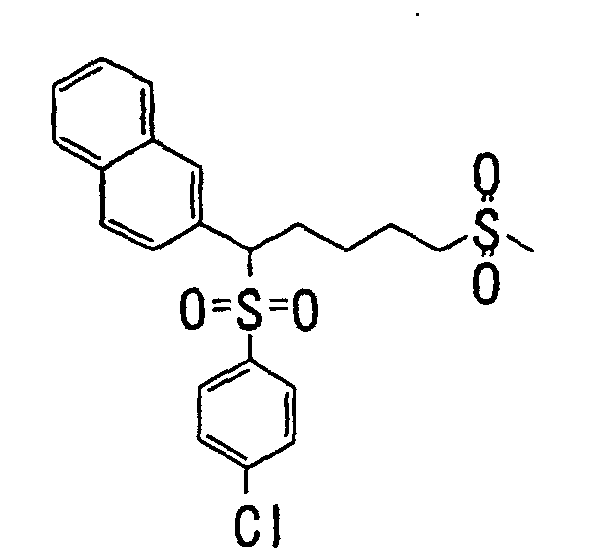
Melting point: 146.0-147.0°C.
IR (ATR) ν: 2931, 2861, 1581, 1508, 1473, 1457, 1392, 1359, 1309, 1274, 1191, 1147, 1126, 1081, 1010, 968, 902, 869, 819, 752, 734, 703, 646, 624, 566, 522, 472, 453 cm-1.
1H-NMR (400MHz, CDCl3) δ: 1.34-1.51(2H,m), 1.78-1.99(2H,m), 2.25-2.40(1H,m), 2.50-2.62(1H,m), 2.84(3H,s), 2.89-3.03(2H,m), 4.19(1H,dd,J=11.2,3.9Hz), 7.18-7.36(4H,m), 7.39-7.61(4H,m), 7.69-7.90(3H,m).
MS (m/z): 451 (M++H).
Elemental Analysis for C22H23ClO4S2
Calculated: C 58.59%; H 5.14%; Cl 7.86%; S 14.22%.
Found: C 58.46%; H 5.03%; Cl 7.94%; S 14.33%.
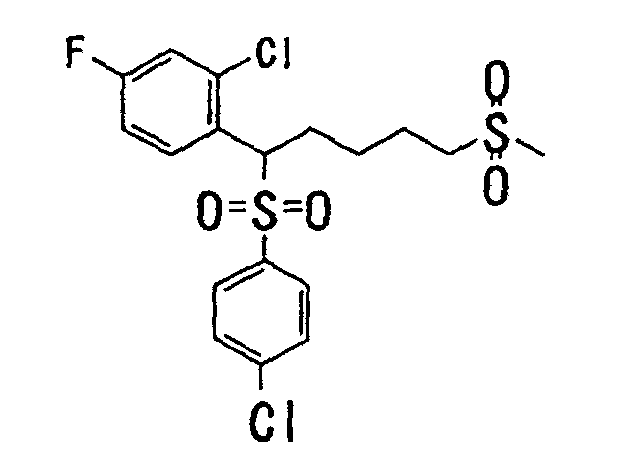
Melting point: 124.0-125.0°C.
IR (ATR) ν: 2969, 2933, 1604, 1575, 1492, 1475, 1461, 1396, 1315, 1276, 1230, 1130, 1085, 1049, 1014, 973, 902, 850, 823, 782, 748, 659, 630, 588, 549, 501, 457 cm-1.
1H-NMR (400MHz, CDCl3) δ: 1.30-1.50(2H,m), 1.79-1.98(2H,m), 2.10-2.25(1H,m), 2.48-2.60(1H,m), 2.87(3H,s), 2.95(2H,t,J=7.7Hz), 4.79(1H,dd,J=11.1,4.0Hz), 6.98(1H,dd,J=8.3,2.7Hz), 7.05-7.15(1H,m), 7.38(2H,d,J=8.3Hz), 7.48(2H,d,J=8.5Hz), 7.60-7.70(1H,m). MS (m/z): 453 (M++H).
Elemental Analysis for C18H19Cl2FO4S2
Calculated: C 47.69%; H 4.22%; Cl 15.64%; F 4.19%; S 14.55%.
Found: C 47.44%; H 4.20%; Cl 15.37%; F 4.07%; S 14.33%.
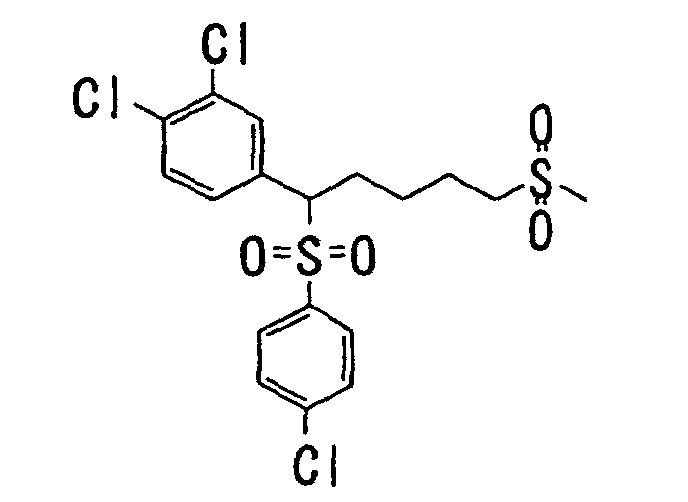
Melting point: 143.0-144.0°C.
IR (ATR) ν: 2929, 2865, 1573, 1459, 1392, 1365, 1317, 1299, 1276, 1186, 1145, 1079, 1031, 1010, 975, 900, 823, 748, 709, 655, 626, 588, 563, 518, 474, 439 cm-1.
1H-NMR (400MHz, CDCl3) δ: 1.32-1.49(2H,m), 1.79-1.96(2H,m), 2.05-2.19(1H,m), 2.39-2.50(1H,m), 2.88(3H,s), 2.90-3.00(2H,m), 3.97(1H,dd,J=11.2,3.9Hz), 6.94(1H,dd,J=8.3,2.2Hz), 7.21(1H,d,J=2.0Hz), 7.36(1H,d,J=8.3Hz), 7.43(2H,d,J=8.3Hz), 7.49(2H,d,J=8.6Hz). MS (m/z): 469 (M++H).
Elemental Analysis for C18H19Cl3O4S2
Calculated: C 46.02%; H 4.08%; Cl 22.64%; S 13.65%.
Found: C 45.92%; H 4.06%; Cl 22.35%; S 13.59%.

Melting point: 140.0-141.0°C.
IR (ATR) ν: 3012, 2948, 1587, 1471, 1436, 1392, 1321, 1290, 1263, 1197, 1149, 1089, 1006, 960, 825, 750, 703, 624, 565, 528, 499, 474, 410 cm-1.
1H-NMR (400MHz, CDCl3) δ: 1.30-1.52(2H,m), 1.79-1.99(2H,m), 2.29-2.49(2H,m), 2.86(3H,s), 2.93(2H,t,J=6.8Hz), 4.33(1H,dd,J=11.0,4.2Hz), 7.20-7.30(1H,m), 7.32-7.52(5H,m), 7.67-7.78(1H,m), 8.40(1H,d,J=4.9Hz).
MS (m/z): 402 (M++H).
Elemental Analysis for C17H20NClO4S2
Calculated: C 50.80%; H 5.02%; N 3.48%; Cl 8.82%; S 15.96%.
Found: C 50.67%; H 4.94%; N 3.53%; Cl 8.72%; S 15.90%.

IR (ATR) ν: 2933, 2869, 1581, 1465, 1394, 1313, 1278, 1191, 1133, 1083, 1039, 1012, 962, 887, 821, 752, 713, 630, 588, 532, 464 cm-1.
1H-NMR (400MHz, CDCl3) δ: 1.33-1.50(2H,m), 1.80-1.96(2H,m), 2.09-2.21(1H,m), 2.48-2.59(1H,m), 2.88(3H,s), 2.90-2.99(2H,t,J=11.0,4.2Hz), 4.79(1H,dd,J=11.0,4.2 Hz), 7.15(1H,d,J=8.6Hz), 7.20-7.29(1H,m), 7.34-7.40(2H,m), 7.46-7.52(2H,m), 7.63(1H,d,J=2.5Hz).
MS (m/z): 469, 471 (M++H).
HRMS (FAB) for C18H20O4Cl3S2 (M++H)
Calculated: 468.9869
Found: 468.9907

IR (ATR) ν: 2940, 1623, 1596, 1463, 1392, 1344, 1319, 1270, 1243, 1203, 1145, 1118, 1081, 1010, 987, 952, 863, 823, 752, 707, 680, 624, 539, 501, 478, 449 cm-1.
1H-NMR (400MHz, CDCl3) δ: 1.35-1.62(2H,m), 1.78-1.99(2H,m), 2.05-2.19(1H,m), 2.39-2.51(1H,m), 2.88(3H,s), 2.90-3.05(2H,m), 3.98(1H,dd,J=10.9,4.0Hz), 6.62-6.75(2H,m), 6.75-6.85(1H,m), 7.38-7.58(4H,m).
MS (m/z): 436 (M++H).
Elemental Analysis for C18H19F2O4S2
Calculated: C 49.48%; H 4.38%; Cl 8.11%; F 8.70%; S 14.68%.
Found: C 49.45%; H 4.33%; Cl 8.10%; F 8.88%; S 14.69%.

IR (ATR) ν: 2929, 2873, 1575, 1477, 1425, 1394, 1276, 1178, 1132, 1083, 1012, 964, 908, 823, 757, 711, 651, 622, 563, 518, 458 cm-1.
1H-NMR (400MHz, CDCl3) δ: 1.35-1.52(2H,m), 1.80-1.99(2H,m), 2.13-2.26(1H,m), 2.49-2.59(1H,m), 2.88(3H,s), 2.90-2.99(2H,m), 4.05(1H,dd,J=11.1,4.0Hz), 7.30(1H,dd,J=7.8,4.9Hz), 7.38-7.48(4H,m), 7.64(1H,dt,J=8.1,2.0Hz), 8.16(1H,d,J=2.0Hz), 8.57(1H,dd,J=4.8,1.6Hz).
MS (m/z): 402 (M++H).
HRMS (FAB) for C17H21O4NClS2 (M++H)
Calculated: 402.0601
Found: 402.0596

Melting point: 181.0-182.0°C.
IR (ATR) ν: 2942, 2863, 1590, 1467, 1415, 1311, 1272, 1241, 1201, 1147, 1085, 1002, 960, 908, 831, 755, 703, 632, 568, 530, 476, 453 cm-1.
1H-NMR (400MHz, CDCl3) δ: 1.30-1.53(2H,m), 1.76-1.99(2H,m), 2.10-2.25(1H,m), 2.40-2.57(1H,m), 2.88(3H,s), 2.90-3.02(2H,m), 4.00(1H,dd,J=11.1,4.0Hz), 6.95-7.09(2H,m), 7.32-7.55(4H,m), 8.43-8.60(2H,m).
MS (m/z): 402 (M++H).
Elemental Analysis for C17H20NClO4S2
Calculated: C 50.80%; H 5.02%; N 3.48%; Cl 8.82%; S 15.96%.
Found: C 50.70%; H 4.93%; N 3.55%; Cl 8.10%; S 15.83%.

IR (ATR) ν: 2931, 2869, 1596, 1581, 1504, 1463, 1428, 1394, 1297, 1278, 1133, 1083, 1012, 960, 875, 829, 755, 705, 663, 624, 568, 516, 457 cm-1.
1H-NMR (400MHz, CDCl3) δ: 1.30-1.60(2H,m), 1.79-1.95(2H,m), 2.40-2.50(2H,m), 2.83(3H,s), 2.91(2H,t,J=7.2Hz), 4.52(1H,dd,J=9.9,5.3Hz), 7.28-7.32(2H,m), 7.39-7.46(2H,m), 7.55-7.61(2H,m), 7.67-7.73(1H,m), 7.77-7.87(2H,m), 8.19(1H,d,J=8.6Hz).
MS (m/z): 452 (M++H).
HRMS (FAB) for C21H23O4NClS2 (M++H)
Calculated: 452.0757
Found: 452.0744

Melting point: 122-124°C.
IR (ATR) ν: 2940, 2873, 1610, 1575, 1519, 1467, 1434, 1394, 1317, 1280, 1268, 1205, 1145, 1126, 1083, 1012, 962, 877, 819, 765, 754, 707, 632, 592, 549, 526, 514, 507, 484, 451, 404 cm-1.
1H-NMR (400MHz, CDCl3) δ: 1.32-1.50(2H,m), 1.79-1.97(2H,m), 2.03-2.18(1H,m), 2.40-2.50(1H,m), 2.88(3H,s), 2.90-3.00(2H,m), 3.98(1H,dd,J=11.0,3.9Hz), 6.77-6.81(1H,m), 6.99-7.10(2H,m), 7.38-7.53(4H,m).
MS (m/z) : 437 (M++H).
HRMS (FAB) for C18H20O4ClF2S2 (M++H)
Calculated: 437.0460
Found: 437.0494

Melting point: 141-143°C.
IR (ATR) ν: 2948, 2867, 1625, 1575, 1484, 1396, 1317, 1272, 1230, 1199, 1149, 1124, 1085, 1012, 966, 935, 894, 808, 761, 717, 659, 628, 584, 547, 518, 472, 443 cm-1.
1H-NMR (400MHz, CDCl3) δ: 1.37-1.60(2H,m), 1.81-1.96(2H,m), 2.11-2.25(1H,m), 2.45-2.57(1H,m), 2.88(3H,s), 2.96(2H,t,J=7.9Hz), 4.53(1H,dd,J=11.1,4.0Hz), 7.10-7.19(2H,m), 7.22-7.33(1H,m), 7.39-7.44(2H,m), 7.49-7.54 (2H,m) .
MS (m/z): 437(M++H).
Element Analysis for C18H19ClF2O4S2
Calculated: C 49.48%; H 4.38%; Cl 8.11%; F 8.70%; S 14.68%.
Found: C 49.38%; H 4.34%; Cl 8.13%; F 8.60%; S 14.56%.

Melting point: 131-132°C.
IR (ATR) ν: 3038, 2938, 1579, 1459, 1392, 1313, 1286, 1234, 1151, 1120, 1085, 1010, 966, 914, 811, 750, 719, 671, 620, 584, 522, 458 cm-1.
1H-NMR (400MHz, CDCl3) δ: 1.33-1.60(2H,m), 1.80-1.98(2H,m), 2.11-2.25(1H,m), 2.42-2.56(1H,m), 2.88(3H,s), 2.96(2H,t,J=7.9Hz), 4.53(1H,dd,J=11.1,4.3Hz), 7.11-7.20(1H,m), 7.33-7.46(4H,m), 7.46-7.56(2H,m).
MS (m/z): 453 (M++H).
Elemental Analysis for C18H19Cl2FO4S2
Calculated: C 47.69%; H 4.22%; Cl 15.64%; F 4.19%; S 14.15%.
Found: C 47.40%; H 4.18%; Cl 15.42%; F 4.16%; S 14.08%.

Melting point: 116-117°C.
IR (ATR) ν: 3097, 2946, 1577, 1490, 1407, 1317, 1278, 1240, 1174, 1147, 1083, 1047, 1012, 956, 916, 881, 823, 754, 711, 649, 626, 566, 538, 474, 433 cm-1.
1H-NMR (400MHz, CDCl3) δ: 1.38-1.52(2H,m), 1.81-1.99(2H,m), 2.09-2.21(1H,m), 2.45-2.57(1H,m), 2.89(3H,s), 2.91-3.02(2H,m), 4.48-4.53(1H,m), 6.83(1H,t,J=8.9Hz), 7.23-7.30(1H,m), 7.38-7.45(2H,m), 7.46-7.59(3H,m).
MS (m/z): 453(M++H).
Elemental Analysis for C18H19Cl2FO4S2
Calculated: C 47.69%; H 4.22%; Cl 15.64%; F 4.19%; S 14.15%.
Found: C 47.52%; H 4.19%; Cl 15.47%; F 4.24%; S 14.08%.

1H-NMR (400MHz, CDCl3) δ: 1.92-2.08(4H,m), 2.93(3H,s), 3.00-3.10(2H,m), 3.18-3.28(2H,m).
MS (m/z): 263 (M++H).
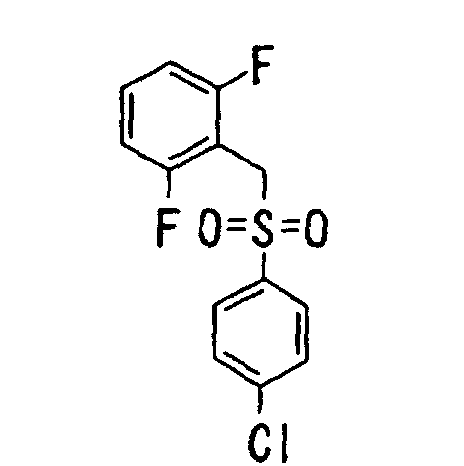
IR (ATR) ν: 3097, 2989, 1625, 1575, 1509, 1473, 1407, 1392, 1319, 1272, 1245, 1197, 1182, 1132, 1083, 998, 889, 854, 831, 802, 777, 742, 719, 686, 626, 566, 512, 478, 449, 418 cm-1.
1H-NMR (400MHz, CDCl3) δ: 4.48(2H,s), 6.88(2H,t,J=7.9Hz), 7.29-7.39(1H,m), 7.47(2H,d,J=8.6Hz), 7.68(2H,d,J=8.6Hz).
MS (m/z): 303 (M++H).

Melting point: 118-119°C.
IR (ATR) ν: 2946, 1621, 1585, 1471, 1459, 1396, 1355, 1322, 1301, 1274, 1226, 1151, 1132, 1087, 1012, 989, 958, 925, 829, 773, 761, 752, 717, 624, 572, 522, 485, 458, 406 cm-1.
1H-NMR (400MHz, CDCl3) δ: 1.35-1.55(2H,m), 1.81-1.95(2H,m), 2.48-2.58(2H,m), 2.88(3H,s), 2.91-3.10(2H,m), 2.97(1H,dd,J=15.8,6.7Hz), 6.75-7.00(2H,m), 7.25-7.35(1H,m), 7.42(2H,d,J=8.6Hz), 8.30(2H,d,J=8.3Hz).
MS (m/z): 437 (M++H).
Elemental Analysis for C18H19ClF2O4S2
Calculated: C 49.48%; H 4.38%; Cl 8.11%; F 8.70%; S 14.68%.
Found: C 49.25%; H 4.32%; Cl 8.02%; F 8.50%; S 14.70%.
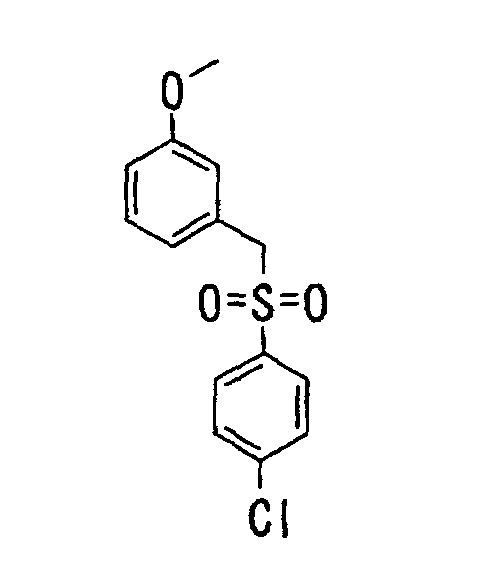
IR (ATR) ν: 3064, 2979, 2842, 1598, 1488, 1469, 1434, 1392, 1313, 1268, 1176, 1130, 1085, 1033, 1012, 941, 879, 823, 792, 765, 742, 692, 620, 574, 528, 455 cm-1.
1H-NMR (400MHz, CDCl3) δ: 3.74(3H,s), 4.27(2H,s), 6.59-6.68(2H,m), 6.82-6.90(1H,m), 7.17(1H,t,J=7.8Hz), 7.42(2H,d,J=8.6Hz), 7.56(2H,d,J=8.6Hz).
MS (m/z) : 297 (M++H).
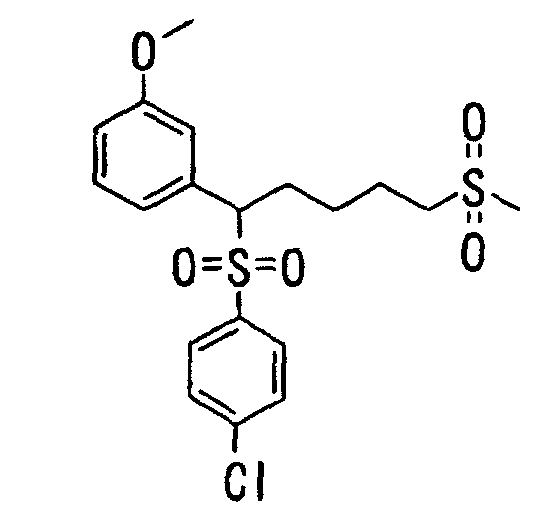
Melting point: 91-93°C.
IR (ATR) ν: 2967, 2929, 1594, 1494, 1469, 1455, 1394, 1315, 1272, 1255, 1222, 1189, 1145, 1132, 1085, 1037, 1012, 970, 879, 850, 804, 759, 705, 688, 632, 603, 532, 493, 464 cm-1.
1H-NMR (400MHz, CDCl3) δ: 1.37-1.50(2H,m), 1.79-1.93(2H,m), 2.10-2.23(1H,m), 2.40-2.52(1H,m), 2.86(3H,s), 2.89-2.98(2H,m), 3.73(3H,s), 3.97(1H,dd,J=11.1,3.8Hz), 6.59-6.67(2H,m), 6.80-6.89(1H,m), 7.15(1H,d,J=8.0Hz), 7.35(2H,d,J=8.6Hz), 7.44(2H,d,J=8.6Hz).
MS (m/z): 431 (M++H).
Elemental Analysis for C19H23ClO5S2
Calculated: C 52.95%; H 5.38%; Cl 8.23%; S 14.88%.
Found: C 52.89%; H 5.25%; Cl 8.33%; S 14.87%.
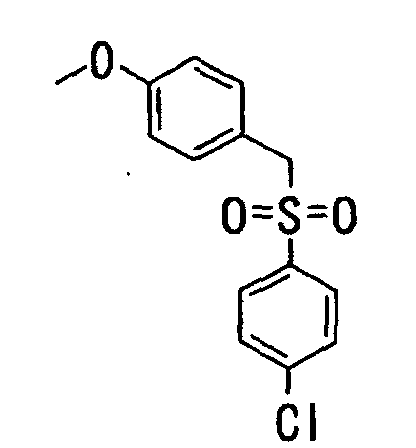
IR (ATR) ν: 3072, 2996, 2942, 2836, 1608, 1583, 1509, 1467, 1396, 1309, 1292, 1240, 1176, 1147, 1089, 1031, 1016, 977, 956, 887, 829, 767, 715, 630, 532, 474, 431 cm-1.
1H-NMR (400MHz, CDCl3) δ: 3.80(3H,s), 4.25(2H,s), 6.80(2H,d,J=8.8Hz), 7.00(2H,d,J=8.6Hz), 7.42(2H,d,J=8.3Hz), 7.54(2H,d,J=8.6Hz).

Melting point: 136-138°C.
IR (ATR) ν: 3012, 2937, 1608, 1583, 1511, 1471, 1392, 1319, 1292, 1268, 1253, 1178, 1145, 1130, 1085, 1029, 1012, 964, 833, 823, 771, 754, 723, 628, 574, 551, 530, 497, 472, 439 cm-1.
1H-NMR (400MHz, CDCl3) δ: 1.37-1.50(2H,m), 1.79-1.93(2H,m), 2.10-2.23(1H,m), 2.40-2.52(1H,m), 2.86(3H,s), 2.89-2.98(2H,m), 3.73(3H,s), 3.97(1H,dd,J=11.1,3.8Hz), 6.59-6.67(2H,m), 6.80-6.89(1H,m), 7.15(1H,d,J=8.0Hz), 7.35(2H,d,J=8.6Hz), 7.44(2H,d,J=8.6Hz).
MS (m/z): 431 (M++H).
Elemental Analysis for C19H23ClO5S2
Calculated: C 52.95%; H 5.38%; Cl 8.23%; S 14.88%.
Found: C 52.99%; H 5.29%; Cl 8.29%; S 14.82%.

IR (ATR) ν: 1720, 1633, 1583, 1500, 1436, 1392, 1286, 1255, 1205, 1112, 1076, 979, 933, 823, 773, 730, 696, 669, 638, 580, 489, 439 cm-1.
1H-NMR (400MHz, CDCl3) δ: 2.99(3H,s), 3.13(3H,s), 3.93(3H,s), 7.49(1H,t,J=8.2Hz), 7.63(1H,t,J=7.6Hz), 8.05-8.15(2H,m).
MS (m/z): 208 (M++H).

IR (ATR) ν: 3367, 2929, 2869, 1600, 1583, 1508, 1479, 1452, 1394, 1267, 1236, 1170, 1097, 1079, 1049, 898, 800, 746, 719, 694, 642, 431 cm-1.
1H-NMR (400MHz, CDCl3) δ: 2.46(1H,br s), 2.97(3H,s), 3.11(3H,s), 4.67(2H,br d,J=2.9Hz), 7.23-7.48(4H,m).
MS (m/z) : 180 (M++H).

1H-NMR (400MHz, CDCl3) δ: 2.89(3H,s), 3.09(3H,s), 4.32(2H,s), 7.10-7.50(6H,m), 7.59(2H,d,J=8.6Hz).
MS (m/z): 338 (M++H).
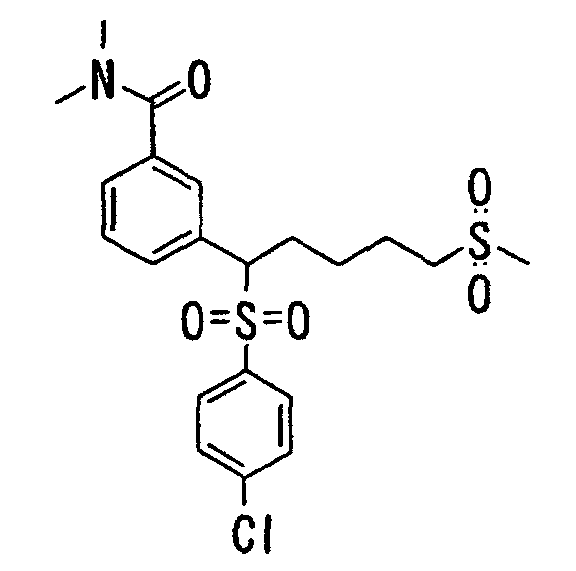
IR (ATR) ν: 2927, 1625, 1581, 1504, 1475, 1394, 1276, 1172, 1141, 1083, 1012, 964, 908, 819, 754, 705, 626, 551, 516, 468 cm-1.
1H-NMR (400MHz, CDCl3) δ: 1.32-1.49(2H,m), 1.78-1.92(2H,m), 2.12-2.28(1H,m), 2.40-2.50(1H,m), 2.83(3H,br s), 2.87(3H,s), 2.90-2.98(2H,m), 3.08(3H,br s), 4.05(1H,dd,J=11.1,3.8Hz), 7.12(1H,br s), 7.19-7.25(1H,m), 7.32-7.40(4H,m), 7.48(2H,d,J=8.6Hz).
MS (m/z) : 472 (M++H).
HRMS (FAB) for C21H27O5NClS2 (M++H)
Calculated: 472.1019
Found: 472.1010
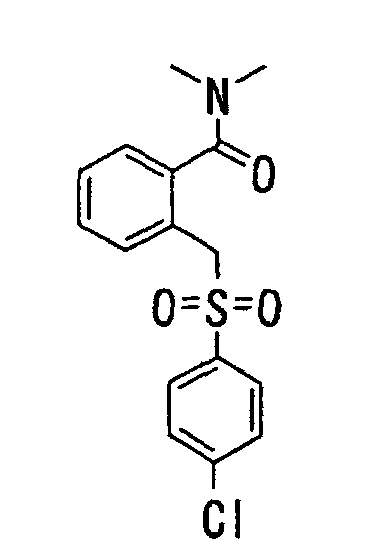
1H-NMR (400MHz, CDCl3) δ: 2.97(3H,s), 3.13(3H,s), 7.50 (2H, d, J=8.8Hz), 7.73 (2H, d, J=8.6Hz).
IR (ATR) ν: 2931, 1621, 1598, 1581, 1504, 1475, 1444, 1392, 1317, 1278, 1191, 1151, 1083, 1068, 1012, 879, 827, 777, 757, 740, 705, 636, 607, 566, 536, 466, 447 cm-1.
MS (m/z): 338 (M++H).
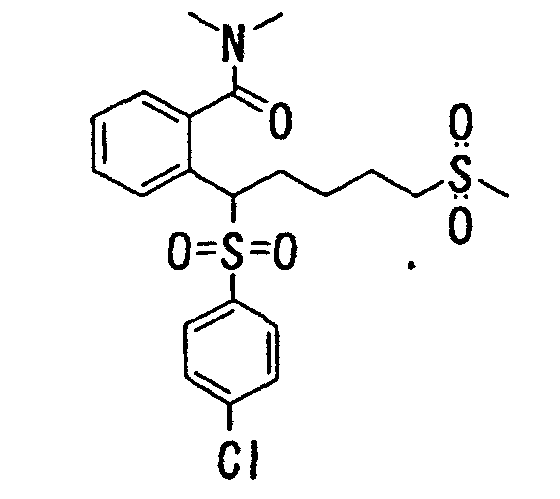
1H-NMR (400MHz, CDCl3) δ: 1.25-1.49(2H,m), 1.63-1.80(1H,m), 1.80-1.93(1H,m), 2.00-2.20(2H,m), 2.76-2.95 (2H,m), 2.82(3H,s), 2.84(3H,s), 3.11(3H,s), 4.70-4.82(1H,m), 7.22(1H,d,J=7.3Hz), 7.32-7.46(3H,m), 7.49(2H,d,J=8.6Hz), 7.63(2H,d,J=8.6Hz).
IR (ATR) ν: 2931, 2873, 1621, 1581, 1506, 1475, 1448, 1394, 1278, 1222, 1182, 1137, 1083, 1012, 962, 823, 755, 707, 630, 561, 518, 460 cm-1.
MS: 472 (M++H).
HRMS (FAB) for C21H27O5NClS2 (M++H)
Calculated: 472.1019
Found: 472.1023

IR (ATR) ν: 3087, 2985, 2229, 1581, 1581, 1475, 1432, 1394, 1317, 1282, 1265, 1228, 1145, 1081, 1012, 929, 904, 885, 844, 811, 798, 763, 723, 686, 651, 626, 578, 545, 522, 484, 462 cm-1.
1H-NMR (400MHz, CDCl3) δ: 4.32(2H,s), 7.38-7.52(5H,m), 7.60(2H,d,J=8.8Hz), 7.66(1H,d,J=7.6Hz).
MS (m/z): 292 (M++H).
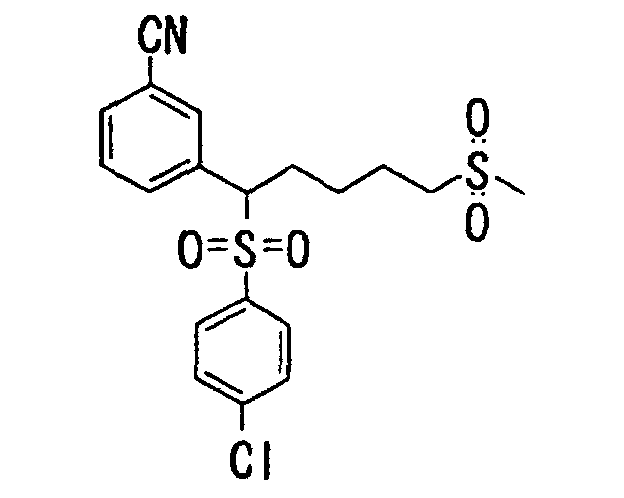
IR (ATR) ν: 2931, 2229, 1579, 1475, 1432, 1394, 1278, 1137, 1083, 1051, 1012, 964, 914, 813, 752, 688, 649, 613, 549, 516, 466 cm-1.
1H-NMR (400MHz, CDCl3) δ: 1.30-1.50(2H,m), 1.79-1.97 (2H,m), 2.10-2.22(1H,m), 2.40-2.51(1H,m), 2.89(3H,s), 2.90-3.00(2H,m), 4.06(1H,dd,J=11.1,4.0Hz), 7.35-7.50(7H,m), 7.64(1H,d,J=7.3Hz).
MS (m/z): 426 (M++H).
Elemental Analysis for C19H20ClNO4S2·0.25H2O
Calculated: C 53.02%; H 4.80%; Cl 8.24%; N 3.25%; S 14.90%.
Found: C 52.94%; H 4.85%; Cl 8.54%; N 3.25%; S 14.93%.

IR (ATR) ν: 3079, 2979, 2227, 1573, 1488, 1473, 1450, 1425, 1392, 1321, 1299, 1280, 1253, 1209, 1174, 1143, 1081, 1010, 946, 904, 879, 829, 781, 759, 711, 682, 632, 593, 532, 480, 451 cm-1.
1H-NMR (400MHz, CDCl3) δ: 4.58(2H,s), 7.43-7.51(3H,m), 7.56-7.68(5H,m).

IR (ATR) ν: 3089, 2931, 2225, 1575, 1475, 1448, 1394, 1315, 1295, 1278, 1214, 1176, 1139, 1124, 1083, 1012, 962, 908, 827, 794, 754, 711, 628, 553, 516, 470 cm-1.
1H-NMR (400MHz, CDCl3) δ: 1.30-1.54(2H,m), 1.81-1.98(2H,m), 2.20-2.31(1H,m), 2.47-2.59(1H,m), 2.88(3H,s), 2.90-3.00(2H,m), 4.63(1H,dd,J=11.0,4.2Hz), 7.38-7.60(6H,m), 7.67-7.73(1H,m), 7.79(1H,d,J=8.1Hz).
MS (m/z): 426 (M++H).
HRMS (FAB) for C19H21O4NClS2 (M++H)
Calculated: 426.0601
Found: 426.0636
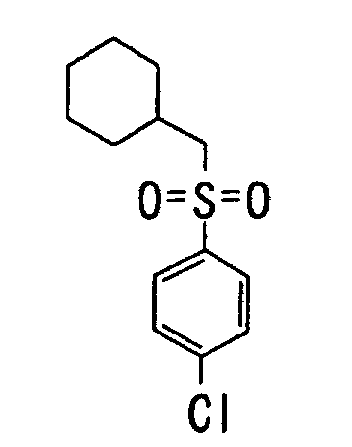
IR (ATR) ν: 2921, 2850, 1583, 1475, 1446, 1394, 1305, 1274, 1172, 1143, 1083, 1014, 964, 892, 846, 831, 782, 761, 744, 703, 669, 632, 559, 528, 478, 426 cm-1.
1H-NMR (400MHz, CDCl3) δ: 1.00-1.35(5H,m), 1.60-1.76(3H,m), 1.80-2.08(3H,m), 2.97(2H,d,J=6.1Hz), 7.54(2H,d,J=8.6Hz), 7.85(2H,d,J=8.6Hz).
MS (m/z): 273 (M++H).

Melting point: 104-106°C.
IR (ATR) ν: 2925, 2854, 1583, 1475, 1444, 1423, 1392, 1309, 1288, 1268, 1209, 1176, 1145, 1133, 1128, 1083, 1012, 960, 892, 825, 763, 727, 636, 609, 561, 528, 495, 478, 453, 430 cm-1.
1H-NMR (400MHz, CDCl3) δ: 1.02-1.32(5H,m), 1.44-2.00(12H,m), 2.76-2.83(1H,m), 2.89(3H,s), 2.97(2H,t,J=7.0Hz), 7.56(2H,d,J=8.3Hz), 7.82(2H,d,J=8.3Hz).
MS (m/z) : 407 (M++H).
Elemental Analysis for C18H27ClO4S2
Calculated: C 53.12%; H 6.69%; Cl 8.71%; S 15.76%.
Found: C 53.11%; H 6.49%; Cl 8.83%; S 15.73%.
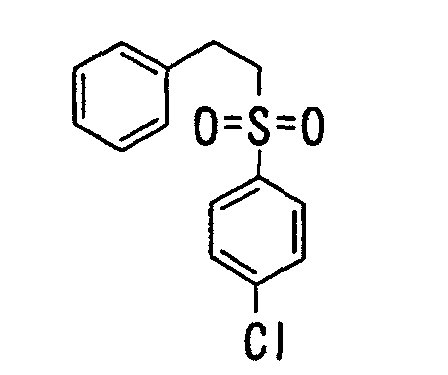
IR (ATR) ν: 3023, 2923, 1600, 1581, 1496, 1473, 1454, 1394, 1299, 1276, 1240, 1145, 1083, 1012, 971, 908, 823, 777, 755, 732, 694, 636, 593, 570, 526, 455 cm-1.
1H-NMR (400MHz, CDCl3) δ: 2.98-3.10(2H,m), 3.29-3.42(2H,m), 7.02-7.32(5H,m), 7.55(2H,d,J=8.6Hz), 7.86(2H,d,J=8.5Hz).
MS (m/z): 281 (M++H).

Melting point: 68-70°C.
IR (ATR) ν: 3029, 2937, 2867, 1581, 1496, 1421, 1394, 1303, 1280, 1253, 1187, 1133, 1083, 1041, 1012, 964, 848, 825, 759, 690, 649, 588, 553, 522, 493, 455 cm-1.
1H-NMR (400MHz, CDCl3) δ: 1.40-1.77(5H,m), 1.82-1.96(1H,m), 2.60-2.70(1H,m), 2.75-2.91(2H,m), 2.83(3H,s), 3.18-3.29(2H,m), 7.04(2H,d,J=8.3Hz), 7.19-7.31(3H,m), 7.56(2H,d,J=8.6Hz), 7.84(2H,d,J=8.6Hz).
MS (m/z): 415 (M++H).
Elemental Analysis for C19H23ClO4S2
Calculated: C 54.99%; H 5.59%; Cl 8.54%; S 15.45%.
Found: C 55.10%; H 5.62%; Cl 8.50%; S 15.56%.

IR (ATR) ν: 3245, 2827, 1587, 1571, 1452, 1407, 1324, 1251, 1193, 1118, 1087, 1041, 796, 732, 713, 655, 593, 511, 466, 414 cm-1.
1H-NMR (400MHz, CDCl3) δ: 2.21(1H,t,J=5.6Hz), 4.80(2H,d,J=5.1Hz), 7.25-7.36(1H,m), 7.85-7.98(1H,m), 8.32(1H,dd,J=4.6,1.5Hz).
MS (m/z): 144 (M++H).

IR (ATR) ν: 3093, 2992, 2931, 1579, 1562, 1473, 1450, 1407, 1321, 1278, 1249, 1195, 1153, 1133, 1116, 1083, 1060, 1010, 962, 887, 840, 813, 759, 719, 686, 636, 566, 541, 501, 466, 441 cm-1.
1H-NMR (400MHz, CDCl3) δ: 4.54(2H,s), 7.33(1H,dd,J=8.8,4.8Hz), 7.46(2H,d,J=8.6Hz), 7.58(2H,d,J=8.3Hz), 7.92(1H,dd,J=7.7,1.8Hz), 8.39(1H,dd,J=4.8,1.8Hz).
MS (m/z): 302 (M++H).

IR (ATR) ν: 3085, 2931, 1579, 1562, 1475, 1407, 1278, 1184, 1139, 1083, 1012, 962, 908, 821, 752, 732, 690, 626, 574, 520, 466 cm-1.
1H-NMR (400MHz, CDCl3) δ: 1.32-1.55(2H,m), 1.80-1.99(2H,m), 2.10-2.25(1H,m), 2.40-2.63(1H,m), 2.88(3H,s), 2.96(2H,t,J=7.8Hz), 4.79(1H,dd,J=11.0,4.2Hz), 7.32-7.42(3H,m), 7.48(2H,d,J=8.3Hz), 8.04(1H,dd,J=7.8,1.7Hz), 8.36(1H,dd,J=4.8,1.8Hz).
MS (m/z): 436 (M++H).
HRMS (FAB) for C17H20O4NCl2S2 (M++H)
Calculated: 436.0211
Found: 436.0195

1H-NMR (400MHz, CDCl3) δ: 4.78(2H,s), 7.18-7.25(1H,m), 7.85-7.97(1H,m), 8.14(1H,d,J=4.9Hz).
MS (m/z): 128 (M++H).

1H-NMR (400MHz, CDCl3) δ: 4.38(2H,s), 7.21-7.30(1H,m), 7.47(2H,d,J=8.8Hz), 7.61(2H,d,J=8.8Hz), 7.87-7.94(1H,m), 8.19-8.25(1H,m).
MS (m/z): 286 (M++H).

IR (ATR) ν: 3089, 2950, 2865, 1604, 1573, 1467, 1434, 1394, 1313, 1290, 1270, 1249, 1199, 1147, 1126, 1083, 1012, 960, 906, 854, 815, 757, 738, 703, 628, 576, 536, 464, 437 cm-1. 1H-NMR (400MHz, CDCl3) δ: 1.38-1.55(2H,m), 1.85-1.99(2H,m), 2.14-2.28(1H,m), 2.45-2.60(1H,m), 2.88(3H,s), 2.96(2H,t,J=7.8Hz), 4.46(1H,dd,J=11.2,4.2Hz), 7.25-7.32(1H,m), 7.41(2H,d,J=8.6Hz), 7.50(2H,d,J=8.3Hz), 7.98-8.04(1H,m), 8.20(1H,d,J=4.9Hz).
MS (m/z): 420 (M++H).
HRMS (FAB) for C17H20O4NClFS2 (M++H)
Calculated: 420.0506
Found: 420.0509

IR (ATR) ν: 3091, 3064, 2998, 2933, 1581, 1550, 1473, 1419, 1392, 1317, 1280, 1255, 1234, 1170, 1135, 1085, 1068, 1010, 910, 833, 821, 767, 727, 709, 646, 582, 539, 507, 464, 430 cm-1.
1H-NMR (400MHz, CDCl3) δ: 4.49(2H,s), 7.49(2H,d,J=8.6Hz), 7.62(2H,d,J=8.8Hz), 7.90(1H,d,J=2.5Hz), 8.35(1H,d,J=2.5Hz). MS (m/z): 336 (M++H).

IR (ATR) ν: 3091, 3060, 2931, 1581, 1546, 1475, 1413, 1313, 1278, 1209, 1124, 1083, 1049, 1012, 964, 906, 871, 831, 754, 705, 628, 588, 532, 468 cm-1.
1H-NMR (400MHz, CDCl3) δ: 1.38-1.52(2H,m), 1.83-1.98(2H,m), 2.08-2.20(1H,m), 2.49-2.60(1H,m), 2.88(3H,s), 2.97(2H,t,J=7.8Hz), 4.72(1H,dd,J=10.9,4.0Hz), 7.43(2H, d.J=8.6Hz), 7.53(2H,d,J=8.6Hz), 8.00(1H,d,J=2.5Hz), 8.31(1H,d,J=2.5Hz).
MS (m/z): 470 (M++H).
Elemental Analysis for C17H18Cl3NO4S2·0.25H2O
Calculated: C 42.96%; H 3.92%; Cl 22.38%; N 2.95%; S 13.49%.
Found: C 43.02%; H 3.81%; Cl 22.54%; N 3.01%; S 13.50%.

IR (ATR) ν: 3060, 2917, 1708, 1573, 1556, 1475, 1413, 1403, 1311, 1280, 1232, 1189, 1155, 1120, 1079, 1012, 933, 890, 854, 833, 817, 777, 744, 721, 694, 632, 574, 557, 514, 460 cm-1.
1H-NMR (400MHz, CDCl3) δ: 4.56(2H,s), 7.28(1H,d,J=5.4Hz), 7.48(2H,d,J=8.3Hz), 7.63(2H,d,J=8.5Hz), 8.49(1H,d,J=5.4Hz), 8.54(1H,s).
MS (m/z): 302 (M++H).
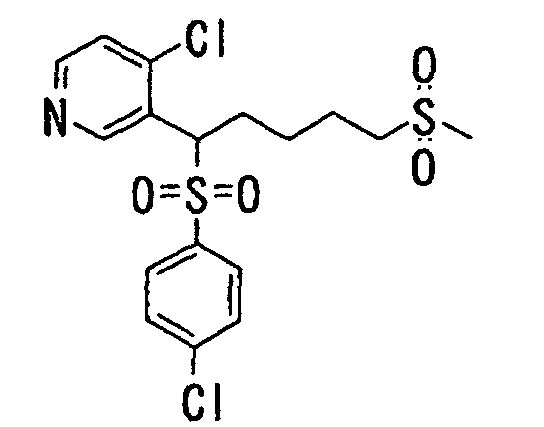
Melting point: 156-157°C.
IR (ATR) ν: 3087, 3064, 3018, 2933, 1571, 1473, 1409, 1311, 1270, 1207, 1149, 1076, 1014, 968, 906, 831, 794, 752, 700, 617, 576, 536, 497, 466 cm-1.
1H-NMR (400MHz, CDCl3) δ: 1.35-1.60(2H,m), 1.80-1.99(2H,m), 2.20-2.33(1H,m), 2.51-2.65(1H,m), 2.88(3H,s), 2.90-3.00(2H,m), 4.80(1H,dd,J=10.9,3.8Hz), 7.20(1H,d,J=5.4Hz), 7.40(2H,d,J=8.5Hz), 7.52(2H,d,J=8.6Hz), 8.46(1H,d,J=5.4Hz), 8.80(1H,s).
MS (m/z) : 436 (M++H).
Elemental Analysis for C17H19Cl2NO4S2
Calculated: C 46.79%; H 4.39%; Cl 16.25%; N 3.21%; S 14.70%.
Found: C 46.88%; H 4.40%; Cl 16.14%; N 3.30%; S 14.52%.
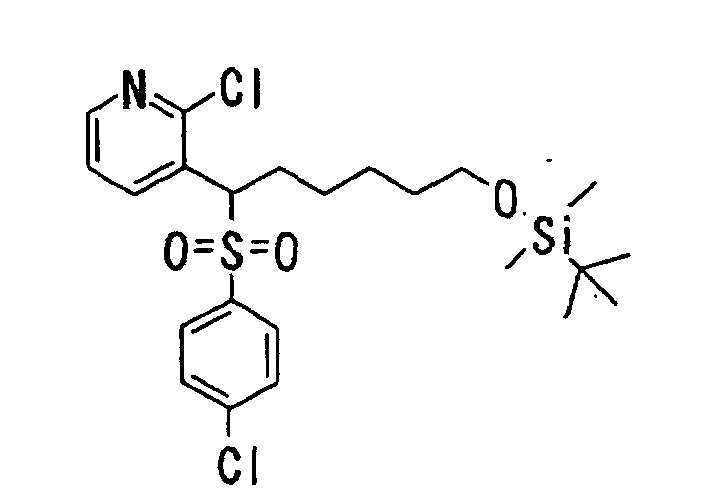
IR (ATR) ν: 2929, 2856, 1581, 1562, 1473, 1409, 1394, 1359, 1321, 1278, 1253, 1184, 1149, 1083, 1058, 1012, 985, 921, 833, 775, 752, 734, 690, 626, 570, 534, 466 cm-1.
1H-NMR (400MHz, CDCl3) δ: 0.01(6H,s), 0.86(9H,s), 1.12-1.50(6H,m), 2.07-2.20(1H,m), 2.45-2.57(1H,m), 3.53(2H,t,J=6.1Hz), 4.78(1H,dd,J=11.4,3.8Hz), 7.31-7.40(3H,m), 8.79(2H,d,J=7.5Hz), 8.03(1H,dd,J=7.8,2.0Hz), 8.34(1H,dd,J=4.6,2.0Hz).
MS (m/z): 502 (M++H).

IR (ATR) ν: 3400, 2933, 2859, 1579, 1562, 1475, 1407, 1394, 1315, 1278, 1184, 1145, 1083, 1058, 1012, 821, 752, 734, 690, 626, 605, 570, 534, 466, 412 cm-1.
1H-NMR (400MHz, CDCl3) δ: 1.15-1.65(8H,m), 2.07-2.20(1H,m), 2.47-2.58(1H,m), 3.59(2H,t,J=6.4Hz), 4.79(1H,dd,J=11.4,3.8Hz), 7.30-7.42(3H,m), 7.48(2H,d,J=8.8Hz), 8.03(1H,dd,J=7.8,2.0Hz), 8.34(1H,dd,J=4.1,1.7Hz).
MS (m/z): 388 (M++H).
HRMS (FAB) for C17H20O3NCl2S (M++H)
Calculated: 388.0541
Found: 388.0561

IR (ATR) ν: 2929, 2861, 1573, 1558, 1473, 1454, 1394, 1303, 1276, 1139, 1083, 1066, 1008, 840, 800, 748, 711, 646, 613, 574, 522, 470, 412 cm-1.
1H-NMR (400MHz, CDCl3) δ: 1.30-1.50(4H,m), 1.50-1.66(2H,m), 1.85-1.98(2H,m), 2.33-2.48(2H,m), 2.94-3.10(2H,m), 7.28-7.37(3H,m), 7.40(2H,d,J=8.8Hz), 7.93(1H,dd,J=8.1,1.7Hz), 8.38(1H,dd,J=4.5,1.8Hz).
MS (m/z): 384 (M++H).
Elemental Analysis for C18H19Cl2NO2S
Calculated: C 56.25%; H 4.98%; Cl 18.45%; N 3.64%; S 8.34%.
Found: C 56.20%; H 4.85%; Cl 18.50%; N 3.73%; S 8.46%.

IR (ATR) ν: 2929, 2861, 1575, 1558, 1475, 1446, 1392, 1303, 1278, 1143, 1130, 1083, 1054, 1010, 910, 875, 833, 809, 754, 742, 742, 732, 703, 646, 617, 580, 495, 458 cm-1.
1H-NMR (400MHz, CDCl3) δ: 1.05-1.30(2H,m), 1.33-1.50(1H,m), 1.52-1.70(1H,m), 1.75-1.90(2H,m), 2.02-2.30(2H,m), 2.65-3.60(2H,m), 7.29-7.39(3H,m), 7.41(2H,d,J=8.8Hz), 8.05(1H,dd,J=8.1,1.7Hz), 8.39(1H,dd,J=4.5,1.8Hz).
MS (m/z): 370 (M++H).
Elemental Analysis for C17H17Cl2NO2S
Calculated: C 55.14%; H 4.63%; Cl 19.15%; N 3.78%; S 8.66%.
Found: C 55.06%; H 4.55%; Cl 19.15%; N 3.87%; S 8.76%.
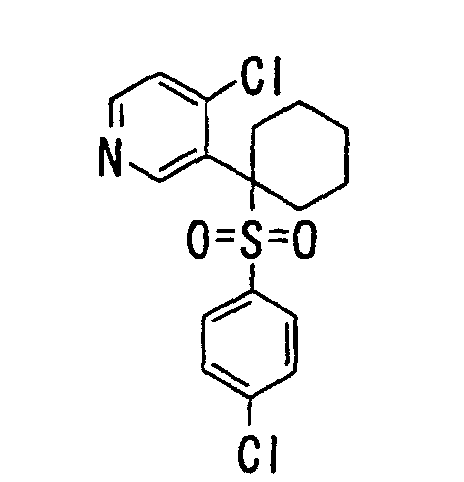
Melting point: 145-147°C.
IR (ATR) ν: 2929, 2863, 1579, 1469, 1452, 1392, 1346, 1305, 1280, 1270, 1211, 1143, 1081, 1012, 975, 937, 910, 871, 823, 794, 754, 725, 680, 617, 582, 563, 547, 507, 468 cm-1.
1H-NMR (400MHz, CDCl3) δ: 1.10-1.30(2H,m), 1.32-1.50(1H,m), 1.60-1.69(1H,m), 1.78-1.89(2H,m), 2.01-2.22(2H,m), 2.70-3.00(1H,m), 3.30-3.70(1H,m), 7.23(1H,d,J=5.4Hz), 7.35(2H,d,J=8.8Hz), 7.40(2H,d,J=8.8Hz), 8.41(1H,d,J=5.1Hz), 8.57(1H,s).
MS (m/z): 370 (M++H).
Elemental Analysis for C17H17Cl2NO2S
Calculated: C 55.14%; H 4.63%; Cl 19.15%; N 3.78%; S 8.66%.
Found: C 54.99%; H 4.61%; Cl 19.06%; N 3.89%; S 8.72%.

IR (ATR) ν: 3102, 2969, 2917, 1575, 1504, 1473, 1413, 1396, 1334, 1309, 1257, 1220, 1159, 1122, 1081, 1012, 948, 898, 875, 831, 821, 784, 723, 657, 593, 561, 541, 478, 451, 418 cm-1.
1H-NMR (400MHz, CDCl3) δ: 4.64(2H,s), 7.40-7.50(3H,m), 7.62(2H,d,J=8.8Hz), 8.66(1H,s).
MS (m/z) : 274 (M++H).
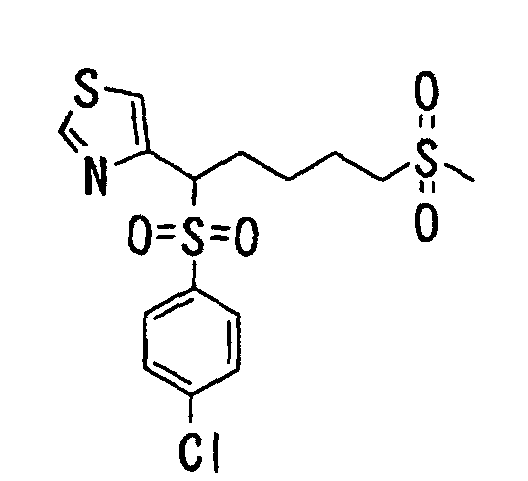
Melting point: 123-125°C.
IR (ATR) ν: 3102, 2937, 1581, 1508, 1475, 1421, 1392, 1311, 1295, 1274, 1234, 1197, 1145, 1130, 1085, 1014, 964, 931, 877, 850, 821, 767, 750, 709, 665, 557, 530, 487, 455, 420 cm-1.
1H-NMR (400MHz, CDCl3) δ: 1.35-1.55 (2H,m), 1.80-1.98(2H,m), 2.24-2.39(1H,m), 2.39-2.50(1H,m), 2.87(3H,s), 2.91-3.01(2H,m), 4.48(1H,dd,J=11.2,3.9Hz), 7.38-7.45(3H,m), 7. 47 (2H, d, J=8. 6Hz), 8.65(1H,s).
MS (m/z): 408 (M++H).
Elemental Analysis for C15H18ClNO4S3
Calculated: C 44.16%; H 4.45%; Cl 8.69%; N 3.43%; S 23.58%.
Found: C 44.25%; H 4.34%; Cl 8.58%; N 3.54%; S 23.82%.
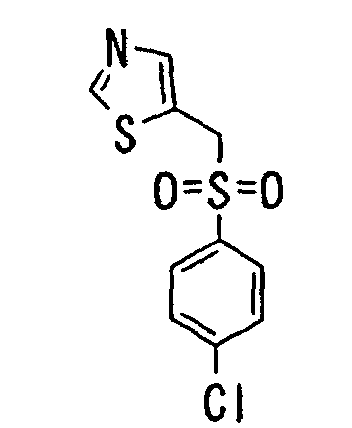
IR (ATR) ν: 3085, 2975, 2915, 1671, 1577, 1521, 1473, 1392, 1313, 1253, 1193, 1143, 1081, 1012, 968, 894, 873, 836, 773, 728, 705, 651, 620, 605, 565, 543, 476, 443 cm-1.
1H-NMR (400MHz, CDCl3) δ: 4.57(2H,s), 7.49(2H,d,J=8.8Hz), 7.57(1H,s), 7.65(2H,d,J=8.6Hz), 8.81(1H,s).
MS (m/z): 274 (M++H).
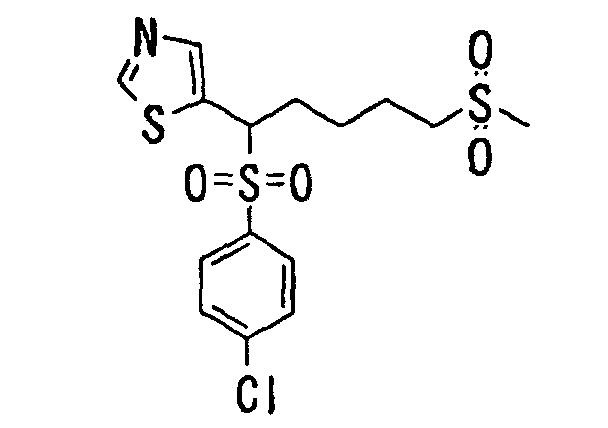
Melting point: 95-96°C.
IR (ATR) ν: 3099, 3021, 2942, 1575, 1513, 1473, 1392, 1351, 1299, 1272, 1240, 1201, 1174, 1137, 1085, 1012, 966, 914, 873, 827, 777, 746, 703, 634, 613, 566, 528, 470 cm-1.
1H-NMR (400MHz, CDCl3) δ: 1.445-1.60(2H,m), 1.81-1.99(2H,m), 2.00-2.12(1H,m), 2.50-2.61(1H,m), 2.89(3H,s), 2.92-3.01(2H,m), 4.41(1H,dd,J=11.1,3.5Hz), 7.43(2H,d,J=8.5Hz), 7.47(1H,s), 7.52(2H,d,J=8.5Hz), 8.82(1H,s).
MS (m/z) : 408 (M++H).
Elemental Analysis for C15H18ClNO4S3
Calculated: C 44.16%; H 4.45%; Cl 8.69%; N 3.43%; S 23.58%.
Found: C 44.44%; H 4.38%; Cl 8.75%; N 3.53%; S 23.41%.
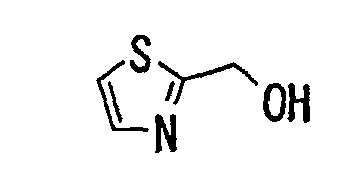
1H-NMR (400MHz, CDCl3) δ: 3.30-3.70(1H,m), 5.14(2H,s), 7.32(1H,d,J=3.4Hz), 7.74(1H,d,J=3.2Hz).
MS (m/z): 116 (M++H).
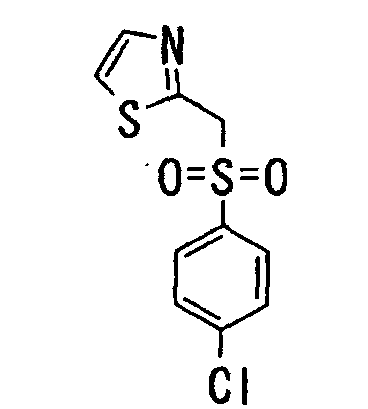
IR (ATR) ν: 2967, 2913, 1573, 1498, 1475, 1394, 1317, 1280, 1218, 1184, 1147, 1081, 1062, 1012, 966, 887, 825, 775, 763, 730, 700, 630, 599, 563, 549, 478, 447 cm-1.
1H-NMR (400MHz, CDCl3) δ: 4.79(2H,s), 7.42(1H,d,J=3.2Hz), 7.47(2H,d,J=8.6Hz), 7.64(2H,d,J=8.8Hz), 7.72(1H,d,J=3.4Hz). MS (m/z): 274 (M++H).
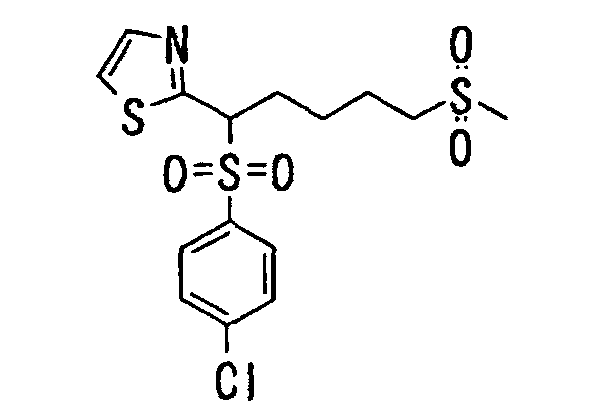
Melting point: 118-119°C.
IR (ATR) ν: 3137, 3006, 2913, 1583, 1496, 1471, 1388, 1357, 1315, 1284, 1238, 1203, 1135, 1083, 1043, 1010, 975, 877, 842, 804, 765, 736, 705, 642, 601, 572, 526, 468, 439 cm-1. 1H-NMR (400MHz, CDCl3) δ: 1.40-1.62(2H,m), 1.80-1.99(2H,m), 2.22-2.35(1H,m), 2.48-2.58(1H,m), 2.88(3H,s), 2.92-3.00(2H,m), 4.61(1H,dd,J=11.2,3.7Hz), 7.39-7.47(3H,m), 7.51(2H,d,J=8.5Hz), 7.68(1H,d,J=3.4Hz).
MS (m/z) : 408 (M++H).
Elemental Analysis for C15H18ClNO4S3
Calculated: C 44.16%; H 4.45%; Cl 8.69%; N 3.43%; S 23.58%.
Found: C 44.32%; H 4.40%; Cl 8.74%; N 3.54%; S 24.04%.
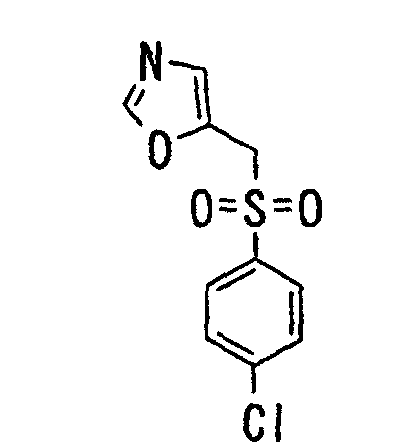
IR (ATR) ν: 3141, 3085, 2983, 2921, 1475, 1506, 1490, 1475, 1396, 1319, 1284, 1263, 1213, 1178, 1151, 1110, 968, 923, 869, 823, 769, 746, 700, 644, 559, 541, 482, 455, 422 cm-1.
1H-NMR (400MHz, CDCl3) δ: 4.47(2H,s), 7.02(1H,s), 7.52(2H,d,J=8.8Hz), 7.70(2H,d,J=8.8Hz), 7.82(1H,s).
MS (m/z) : 258 (M++H).

Melting point: 164-166°C.
IR (ATR) ν: 3139, 2937, 1583, 1504, 1475, 1394, 1311, 1276, 1193, 1147, 1128, 1108, 1085, 1054, 1012, 968, 946, 919, 871, 854, 831, 771, 754, 707, 649, 622, 553, 532, 491, 462 cm-1.
1H-NMR (400MHz, CDCl3) δ: 1.43-1.60(2H,m), 1.80-1.99(2H,m), 2.06-2.20(1H,m), 2.39-2.49(1H,m), 2.89(3H,s), 2.94-3.01(2H,m), 4.29(1H,dd,J=11.1,4.0Hz), 6.96(1H,s), 7.48(2H,d,J=8.3Hz), 7.57(2H,d,J=8.6Hz), 7.79(1H,s).
MS (m/z): 392 (M++H).
Elemental Analysis for C15H18ClNO5S2
Calculated: C 45.97%; H 4.63%; Cl 9.05%; N 3.57%; S 16.36%.
Found: C 45.98%; H 4.79%; Cl 8.96%; N 3.66%; S 16.29%.

1H-NMR (400MHz, CDCl3) δ: 4.29(2H,s), 7.06(2H,d,J=6.1Hz), 7.47(2H,d,J=8.8Hz), 7.59(2H,d,J=8.5Hz), 8.57(2H,d,J=6.1Hz). MS (m/z): 268 (M++H).

Melting point: 109-111°C.
IR (ATR) ν: 2933, 2859, 1596, 1575, 1558, 1473, 1415, 1392, 1322, 1280, 1238, 1209, 1172, 1145, 1083, 1010, 991, 970, 885, 844, 821, 767, 754, 730, 703, 667, 630, 599, 565, 520, 466, 410 cm-1.
1H-NMR (400MHz, CDCl3) δ: 0.84(3H,t,J=7.3Hz), 1.09-1.40(4H,m), 2.07-2.10(1H,m), 2.37-2.49(1H,m), 3.98(1H,dd,J=11.6,3.5Hz), 7.06(1H,d,J=6.1Hz), 7.39(2H,d,J=8.8Hz), 7.48(2H,d,J=8.6Hz), 8.53(2H,d,J=6.1Hz). MS (m/z): 324 (M++H).
Elemental Analysis for C16H18ClNO2S
Calculated: C 59.34%; H 5.60%; Cl 10.95%; N 4.33%; S 9.90%.
Found: C 59.41%; H 5.54%; Cl 11.18%; N 4.47%; S 10.09%.
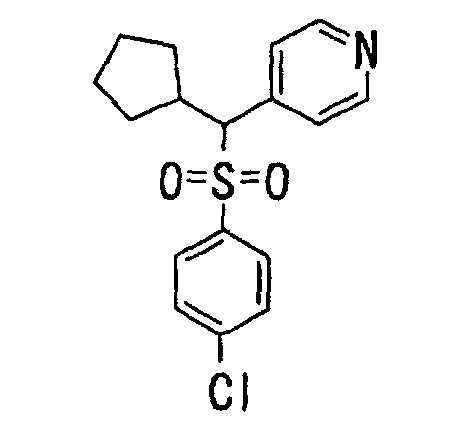
Melting point: 133-135°C.
IR (ATR) ν: 2960, 2867, 1594, 1577, 1558, 1473, 1415, 1392, 1342, 1319, 1278, 1224, 1143, 1083, 1010, 993, 954, 902, 840, 821, 767, 750, 705, 642, 592, 551, 507, 464 cm-1.
1H-NMR (400MHz, CDCl3) δ: 0.92-1.08(1H,m), 1.44-1.83(6H,m), 2.33-2.45(1H,m), 2.78-2.90(1H,m), 3.88(1H,d,J=10.3Hz), 7.03(2H,d,J=5.1Hz), 7.32(2H,d,J=8.6Hz), 7.43(2H,d,J=8.6Hz), 8.46(2H,d,J=5.6Hz).
MS (m/z) : 336 (M++H).
Elemental Analysis for C17H18ClNO2S
Calculated: C 60.80%; H 5.40%; Cl 10.56%; N 4.17%; S 9.55%.
Found: C 60.76%; H 5.44%; Cl 10.68%; N 4.20%; S 9.61%.

Melting point: 208-209°C.
IR (ATR) ν: 2846, 1594, 1573, 1560, 1475, 1440, 1417, 1394, 1371, 1315, 1278, 1245, 1211, 1180, 1143, 1083, 989, 877, 835, 773, 752, 703, 630, 603, 565, 524, 478, 451 cm-1.
1H-NMR (400MHz, CDCl3) δ: 1.22-1.42(2H,m), 1.60-1.75(1H,m), 2.30-2.40(1H,m), 2.78-3.01(1H,m), 3.41(1H,td,J=11.7,2.4Hz), 3.51(1H,td,J=11.9,2.0Hz), 3.80-3.93(1H,m), 3.87(1H,d,J=8.6Hz), 3.98-4.06(1H,m), 7.00-7.12(2H,m), 7.30(2H,d,J=8.8Hz), 7.43(2H,d,J=8.6Hz), 8.47(2H,d,J=5.4Hz). MS (m/z): 352 (M++H).

IR (ATR) ν: 2938, 2803, 2763, 1594, 1560, 1475, 1452, 1415, 1367, 1317, 1280, 1218, 1176, 1143, 1085, 1012, 975, 825, 750, 742, 698, 617, 566, 536, 464 cm-1.
1H-NMR (400MHz, CDCl3) δ: 1.21-1.37(2H,m), 1.49-1.70(1H,m), 1.92-2.01(1H,m), 2.03-2.14(1H,m), 2.25-2.35(1H,m), 2.52-2.65(1H,m), 2.79-2.85(1H,m), 2.90-3.00(1H,m), 3.47(2H,s), 3.86(1H,d,J=8.1Hz), 7.02-7.12(2H,m), 7.20-7.38(7H,m), 7.43(2H,d,J=8.5Hz), 8.45(2H,d,J=5.4Hz).
MS (m/z): 441 (M++H).
HRMS (FAB) : as C24H26O2N2ClS (M++H)
Calculated: 441.1404
Found: 441.1387
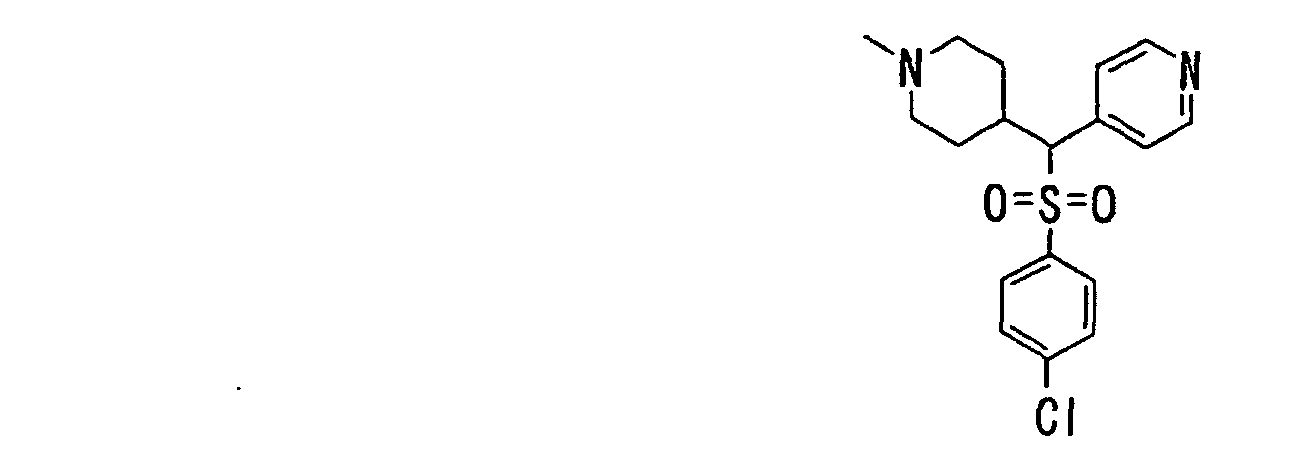
Melting point: 176-177°C.
IR (ATR) ν: 3077, 2935, 2856, 2786, 2740, 1594, 1556, 1465, 1450, 1413, 1380, 1346, 1315, 1280, 1241, 1145, 1085, 1008, 973, 850, 835, 798, 750, 705, 617, 561, 528, 476, 464, 424 cm-1.
1H-NMR (400MHz, CDCl3) δ: 1.22-1.38(2H,m), 1.50-1.68(1H,m), 1.88-1.99(1H,m), 2.00-2.10(1H,m), 2.25(3H,s), 2.30-2.40(1H,m), 2.50-2.63(1H,m), 2.74-2.83(1H,m), 2.89-2.95(1H,m), 3.86(1H,d,J=8.3Hz), 7.08(2H,d,J=4.6Hz), 7.30(2H,d,J=8.6Hz), 7.44(2H,d,J=8.6Hz), 8.46(2H,d,J=5.6Hz). MS (m/z): 365 (M++H).
Elemental Analysis for C18H21ClN2O2S
Calculated: C 59.25%; H 5.80%; Cl 9.72%; N 7.68%; S 8.79%.
Found: C 59.00%; H 5.76%; Cl 9.75%; N 7.61%; S 8.77%.
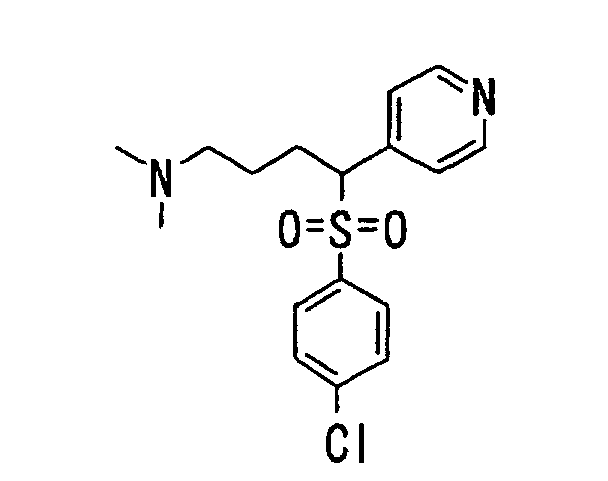
IR (ATR) ν: 3089, 2985, 2937, 2809, 2757, 2596, 1587, 1455, 1413, 1392, 1322, 1278, 1203, 1145, 1083, 1041, 1010, 991, 962, 846, 821, 767, 754, 703, 628, 578, 539, 514, 472 cm-1.
1H-NMR (400MHz, CDCl3) δ: 1.38-1.43(2H,m), 2.05-2.29(3H,m), 2.11(6H,s), 2.39-2.50(1H,m), 4.05-4.13(1H,m), 7.07(2H,d,J=6.1Hz), 7.40(2H,d,J=8.5Hz), 7.48(2H,d,J=8.6Hz), 8.53(2H,d,J=6.1Hz).
MS (m/z): 353 (M++H).
Elemental Analysis for C17H21ClN2O2S
Calculated: C 57.86%; H 6.00%; Cl 10.05%; N 7.94%; S 9.09%.
Found: C 57.62%; H 5.92%; Cl 9.89%; N 7.91%; S 9.12%.
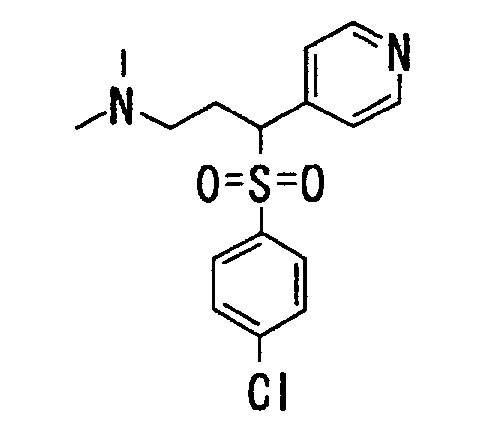
Melting point: 91-92°C.
IR (ATR) ν: 3031, 2975, 2940, 2857, 2821, 2790, 1587, 1575, 1554, 1459, 1413, 1384, 1313, 1280, 1249, 1143, 1083, 1045, 1008, 991, 842, 821, 759, 723, 703, 630, 570, 526, 468 cm-1. 1H-NMR (400MHz, CDCl3) δ: 2.05-2.20(2H,m), 2.11(6H,s), 2,59-2.70(1H,m), 4.35(1H,dd,J=10.5,3.2Hz), 7.11(2H,d,J=6.1Hz), 7.39(2H,d,J=8.6Hz), 7.59(2H,d,J=8.6Hz), 8.53(2H,d,J=6.1Hz).
MS (m/z): 339 (M++H).
Elemental Analysis for C15H19ClN2O2S
Calculated: C 56.71%; H 5.65%; Cl 10.46%; N 8.27%; S 9.46%.
Found: C 56.64%; H 5.61%; Cl 10.51%; N 8.26%; S 9.57%.
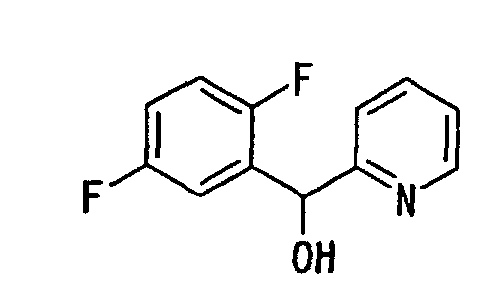
1H-NMR (400MHz, CDCl3) δ: 5.45(1H,br), 6.08 (1H,s), 6.87-7.15(3H,m), 7.2-7.3(2H,m), 7.65(1H,m), 8.56(1H,m).
mp: 65-66 °C.

1H-NMR (400MHz, CDCl3) δ: 2.37(3H,s), 6.95-7.10(2H,m), 7.28 (1H,s), 7.7-7.8(2H,m), 8.11(1H,d,J=6.3Hz), 8.72(1H,d,J=4.9Hz).
mp: 118-119°C.
MS m/z: 254 (M++H).
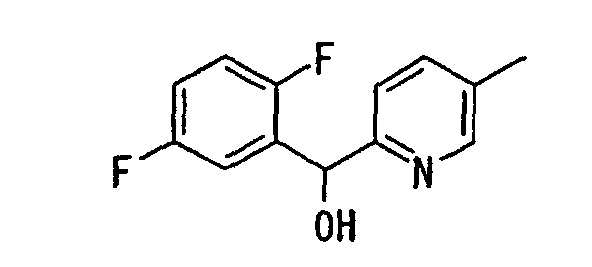
1H-NMR (400MHz, CDCl3) δ: 2.31(3H,s), 5.38(1H,br), 6.04(1H,s), 6.83-7.18(4H,m), 7.44(1H,dd,J=2.0,8.0Hz), 8.37(1H,m).
IR (ATR) cm-1: 1485, 1178, 1132, 814.
MS m/z: 236 (M++H).
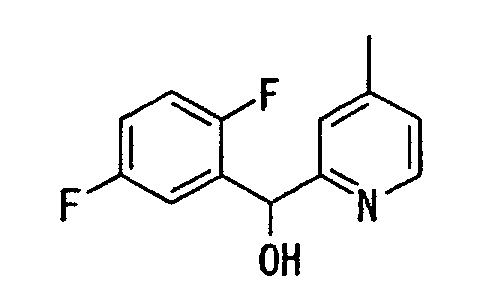
1H-NMR (400MHz, CDCl3) δ: 2.30(3H,s), 5.48(1H,br-s), 6.02(1H,s), 6.83-7.13(5H,m), 8.38(1H,m).
IR (ATR) cm-1: 3162, 1610, 1481, 1054, 825.
mp: 105-106°C.
MS m/z: 236 (M++H).

1H-NMR (400MHz, CDCl3) δ: 3.90(3H,s), 7.12(1H,m), 7.21(1H,dd,J=4.8,8.0Hz), 7.97(1H,m).
IR (ATR) cm-1: 1556, 1410, 1076, 1049, 788.
mp: 34°C.
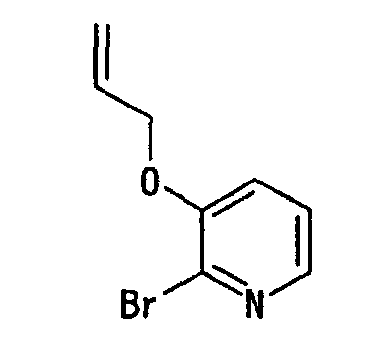
1H-NMR (400MHz, CDCl3) δ: 4.62(2H,m), 5.33(1H,dd,J=1.2,10.4Hz), 5.47(1H,dd,J=1.2,17.6Hz), 6.06(1H,m), 7.11(1H,dd,J=1.2Hz,8.0Hz), 7.18(1H,dd,J=4.8,8.0Hz), 7.98(1H,m).
IR (ATR) cm-1: 1562, 1408, 1282, 1052, 790.
MS m/z: 215 (M++H).
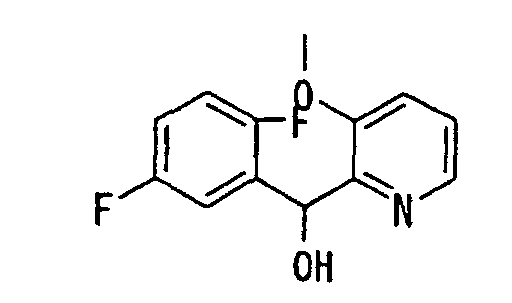
1H-NMR (400MHz, CDCl3) δ: 3.71(3H,s), 5.56(1H,br,J=6.0Hz), 6.16(1H,d,J=6.0Hz), 6.75-7.00(3H,m), 7.14(1H,m), 7.26(1H,m), 8.18(1H,m).
IR (ATR) cm-1: 3384, 1577, 1488, 1284, 810.
mp: 94-95°C.
MS m/z: 252 (M++H).
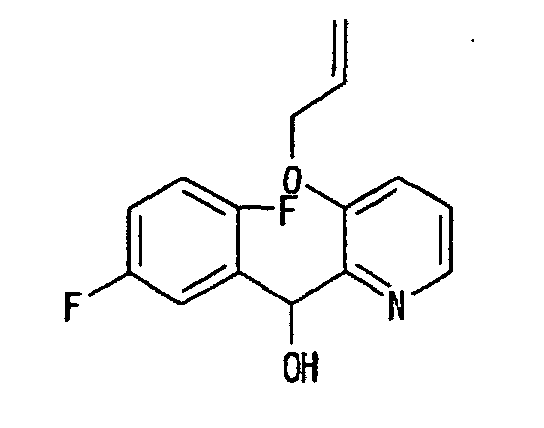
1H-NMR (400MHz, CDCl3) δ: 4.38(1H,m), 4.44(1H,m), 5.16(1H,m), 5.18(1H,m), 5.61(1H,br,J=6.4Hz), 5.78(1H,m), 6.17(1H,d,J=6.0Hz), 6.73-6.96(3H,m), 7.10(1H,m), 7.22(1H,m), 8.19(1H,m).
IR (ATR) cm-1: 3367, 1575, 1490, 1276, 1180, 795.
MS m/z: 278 (M++H).

1H-NMR (400MHz, CDCl3) δ: 3.76(1H,br), 6.10(1H,s), 6.88-6.98(2H,m), 7.20-7.30(2H,m), 7.70(1H,m), 8.42(1H,d,J=4.8Hz), 8.53(1H,m).
IR (ATR) cm-1: 1486, 1429, 1178, 1130, 739, 707.
mp: 79-80°C.

1H-NMR (400MHz, CDCl3) δ: 6.08(1H,s), 6.90-7.00(2H,m), 7.15(1H,m), 7.32(1H,dd,J=1.6,8.4Hz), 8.48(1H,dd,J=1.6,8.4Hz).
IR (ATR) cm-1: 1602, 1489, 1415, 1174, 1049, 711.
mp: 120-121°C.
MS m/z: 221 (M+)
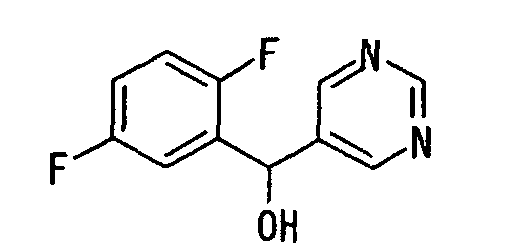
1H-NMR (400MHz, CDCl3) δ: 6.12(1H,s), 6.90-7.02(2H,m), 7.26(1H,m), 8.70(2H,s), 9.04(1H,s).
IR (ATR) cm-1: 3219, 1566, 1489, 1408, 1180, 715.
MS m/z: 205 (M+-OH)
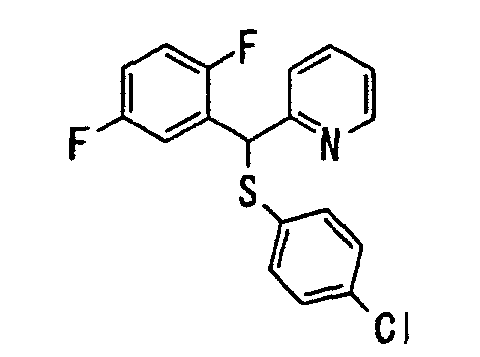
1H-NMR (400MHz, CDCl3) δ: 5.89(1H,s), 6.80-7.27(7H,m), 7.38(1H,d,J=7.6Hz), 7.48(1H,m), 7.65(1H,m), 8.63(1H,m).
IR (ATR) cm-1: 1585, 1488, 1432, 1093, 810.
MS m/z: 348 (M++H).

1H-NMR (400MHz, CDCl3) δ: 2.21(3H,s), 5.87(1H,s), 6.77(1H,m), 7.00-7.19(5H,m), 7.36(1H,m), 7.45(1H,m), 8.45(1H, dd, J=1.2, 4.8Hz).
IR (ATR) cm-1: 1572, 1489, 1093, 810.
MS m/z: 362 (M++H).

1H-NMR (400MHz, CDCl3) δ: 2.29 (3H,s), 5.83(1H,s), 6.80-6.93(2H,m), 7.16(2H,m), 7.20(2H,m), 7.28(1H,m), 7.43(1H,m), 8.41(1H,d,J=0.8Hz).
IR (ATR) cm-1: 1475, 1095, 814.
MS m/z: 362 (M++H).

1H-NMR (400MHz, CDCl3) δ: 2.31(3H,s), 5.82(1H,s), 6.80-7.0(3H,m), 7.15(2H,d,J=8.8Hz), 7.16(1H,m), 7.21(2H,d,J=8.8Hz), 7.45(1H,m), 8.45(1H,d,J=5.6Hz).
IR (ATR) cm-1: 1600, 1489, 1475, 1093, 812.
MS m/z: 362 (M++H).

1H-NMR (400MHz, CDCl3) δ: 3.77(3H,s), 6.25(1H,s), 6.82 (2H,m), 7.15(2H,d,J=8.4Hz), 7.10-7.20(2H,m), 7.25(2H,d,J=8.8Hz), 7.52(1H,m), 8.24(1H,m).
IR (ATR) cm-1: 1489, 1423, 1273, 1091, 831.
MS m/z: 378 (M++H).

1H-NMR (400MHz, CDCl3) δ: 4.46(2H,m), 5.24(1H,d,J=10.6Hz), 5.28(1H,d,J=17.2Hz), 5.90(1H,m), 6.29(1H,d,J=1.2Hz), 6.82(2H,m), 7.15(2H,d,J=8.4Hz), 7.06-7.20(2H,m), 7.24(2H,d,J=8.4Hz), 7.50(1H,m), 8.24(1H,m).
IR (ATR) cm-1: 1572, 1489, 1438, 1276, 1093, 814.
MS m/z: 404 (M++H).
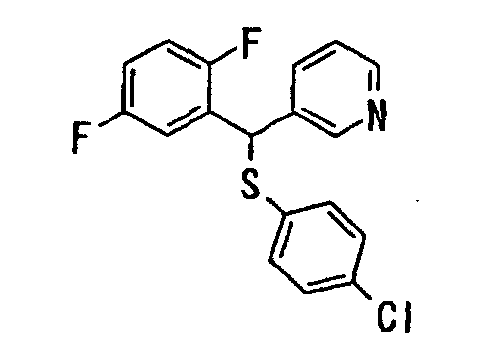
1H-NMR (400MHz, CDCl3) δ: 5.73(1H,s), 6.84-6.96(2H,m), 7.18(2H,m), 7.19(2H,m), 7.15-7.22(2H,m), 7.71(1H,m), 8.49(1H,dd,J=1.6,4.8Hz), 8.58(1H,d,J=2.0Hz).
IR (ATR) cm-1: 1489, 1093, 814, 710.
MS m/z: 348 (M++H).

1H-NMR (400MHz, CDCl3) δ: 5.66(1H,s), 6.96(2H,m), 7.17-7.34(5H,d), 8.70(2H,s), 9.09(1H,s).
MS m/z: 349 (M++H).
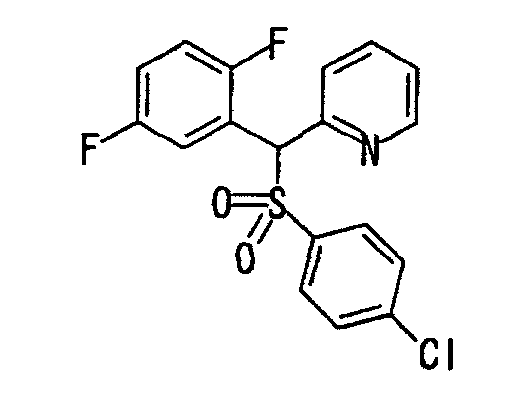
1H-NMR (400MHz, CDCl3) δ: 5.93(1H,s), 6.87-7.00(2H,m), 7.28(1H,m), 7.37(2H,d,J=8.8 Hz), 7.53(2H,d,J=8.8Hz), 7.60(1H,d,J=8.0Hz), 7.71(1H,m), 8.00(1H,m), 8.59(1H,m).
IR (ATR) cm-1: 1585, 1484, 1434, 1321, 1147, 817.
mp: 171-172°C.
MS m/z: 380 (M++H).
Anal. calcd for C18H12ClF2NO2S: C 56.92%; H 3.18%; N 3.69%; S 8.44%; Cl 9.33%; F 10.00%. Found: C 56.76%; H 3.19%; N 3.77%; S 8.55%; Cl 9.27%; F 10.02%.
Fab-MS: 380.0309 (Calcd for C18H13ClF2NO2S: 380.0324).
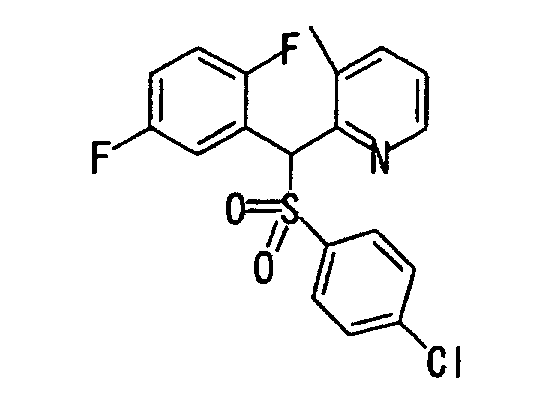
1H-NMR (400MHz, CDCl3) δ: 2.36(3H,s), 6.18(1H,s), 6.89-7.02(2H,m), 7.17(1H,m), 7.37(2H,d,J=8.4Hz), 7.46(1H,d,J=7.2Hz), 7.53(2H,d,J=8.4Hz), 8.06(1H,m), 8.53(1H,d,J=4.0Hz).
IR (ATR) cm-1: 1571, 1477, 1321, 1151, 1080, 816.
mp: 142-143°C.
MS m/z: 394(M++H).
Anal. calcd for C19H14ClF2NO2S: C 57.94%; H 3.58%; N 3.56%; S 8.12%; Cl 9.00%; F 9.65%. Found: C 58.03%; H 3.66%; N 3.78%; S 8.12%; Cl 9.13%; F 9.59%.

1H-NMR (400MHz, CDCl3) δ: 2.33(3H,s), 5.89(1H,s), 6.88-7.01(2H,m), 7.37(2H,d,J=8.8Hz), 7.48-7.56(2H,m), 7.53(2H,d,J=8.8Hz), 7.99(1H,m), 8.42(1H,s).
IR (ATR) cm-1: 1574, 1477, 1319, 1147, 1093, 822.
mp: 159-160°C.
MS m/z: 394(M++H).
Anal. calcd for C19H14ClF2NO2S: C 57.94%; H 3.58%; N 3.56%; S 8.12%; Cl 9.00%; F 9.56%. Found: C 57.88%; H 3.61%; N 3.68%; S 8.27%; Cl 9.11%; F 9.70%.
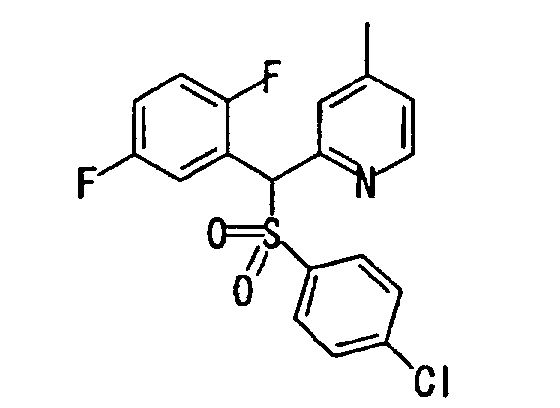
1H-NMR (400MHz, CDCl3) δ: 2.36(3H,s), 5.88(1H,s), 6.88-7.02(2H,m), 7.09(1H,d,J=5.2Hz), 7.37(2H,d,J=8.8Hz), 7.41(1H,m), 7.52(2H,d,J=8.8Hz), 7.97(1H,m), 8.43(1H,d,J=5.2Hz).
IR (ATR) cm-1: 1600, 1484, 1322, 1149, 1080, 827.
mp: 116-117°C.
MS m/z: 394(M++H).
Anal. calcd for C19H14ClF2NO2S: C 57.94%; H 3.58%; N 3.56%; S 8.12%; Cl 9.00%; F 9.65%. Found: C 57.80%; H 3.66%; N 3.72%; S 8.29%; Cl 9.05%; F 9.71%.
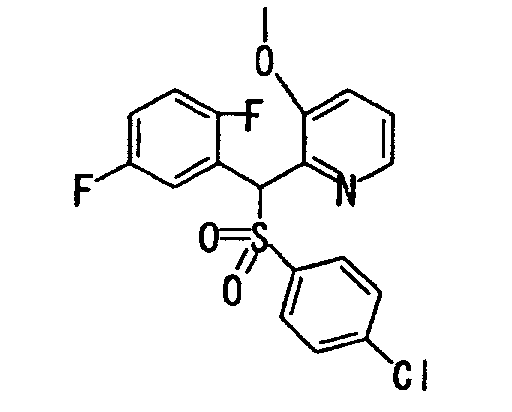
1H-NMR (400MHz, CDCl3) δ: 3.72(3H,s), 6.62(1H,s), 6.90-7.04(2H,m), 7.09(1H,m), 7.24(1H,m), 7.35(2H,d,J=8.8Hz), 7.53(2H,d,J=8.8Hz), 8.18(1H,m), 8.30(1H,m).
IR (ATR) cm-1: 1576, 1491, 1429, 1323, 1281, 1147, 796.
mp: 184-185°C.
MS m/z: 410 (M++H).
Anal. calcd for C19H14ClF2NO3S: C 55.68%; H 3.44%; N 3.42%; S 7.82%; Cl 8.65%; F 9.27%. Found: C 55.68%; H 3.45%; N 3.60%; S 7.98%; Cl 8.74%; F 9.23%.
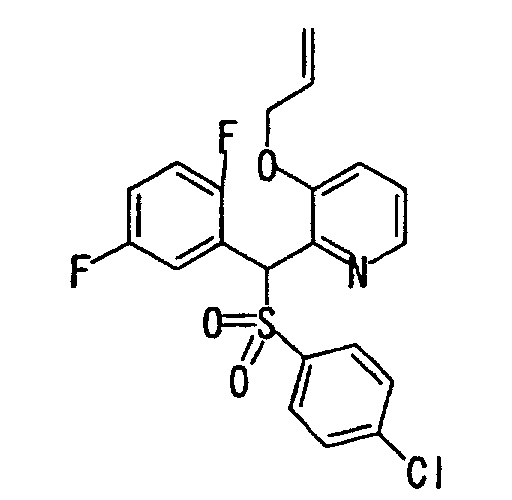
1H-NMR (400MHz, CDCl3) δ: 4.38(1H,m), 4.46(1H,m), 5.29(1H,dd,J=1.2,10.4Hz), 5.35(1H,dd,J=1.2,17.2Hz), 5.93(1H,m), 6.68(1H,s), 6.91-7.04(2H,m), 7.08(1H,m), 7.22(1H,dd,J=4.8,8.4Hz), 7.34(2H,d,J=8.8Hz), 7.53(2H,d,J=8.8Hz), 8.17(1H,m), 8.31(1H,m).
IR (ATR) cm-1: 1577, 1493, 1319, 1151, 822.
mp: 119-120°C.
MS m/z: 436(M++H).
Anal. calcd for C21H16ClF2NO3S: C 57.87%; H 3.70%; N 3.21%; S 7.36%; Cl 8.13%; F 8.72%. Found: C 57.90%; H 3.75%; N 3.37%; S 7.51%; Cl 8.20%; F 8.73%.

1H-NMR (400MHz, CDCl3) δ: 5.68(1H,s), 6.91-7.07(2H,m), 7.34(1H,m), 7.40(2H,d,J=8.4Hz), 7.57(2H,d,J=8.4Hz), 7.76(1H,m), 8.04(1H,m), 8.53(1H,d,J=2.0Hz), 8.59(1H,m).
IR (ATR) cm-1: 1574, 1491, 1421, 1327, 1144, 816.
mp: 130-131°C.
MS m/z: 380(M++H).
Anal. calcd for C18H12ClF2NO2S: C 56.92%; H 3.18%; N 3.69%; S 8.44%; Cl 9.33%; F 10.00%. Found: C 56.87%; H 3.16%; N 3.74%; S 8.51%; Cl 9.34%; F 10.00%.
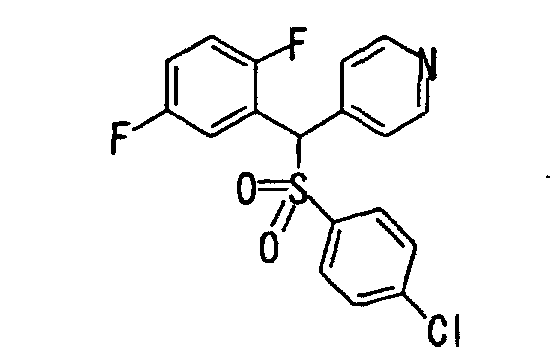
1H-NMR (400MHz, CDCl3) δ: 5.64(1H,s), 6.91-7.06(2H,m), 7.40(2H,d,J=8.0Hz), 7.45(2H,d,J=4.8Hz), 7.58(2H,d,J=8.0Hz), 7.70(1H,s), 8.61(2H,d,J=4.8 Hz).
IR (ATR) cm-1: 1595, 1493, 1315, 1147, 1082, 823.
mp: 126-127°C.
MS m/z: 380 (M++H).
Anal. calcd for C18H12ClF2NO2S: C 56.92%; H 3.18%; N 3.69%; S 8.44%; Cl 9.33%; F 10.00%. Found: C 56.66%; H 3.16%; N 3.83%; S 8.58%; Cl 9.32%; F 9.99%.

1H-NMR (400MHz, CDCl3) δ: 5.65(1H,s), 6.93-7.10(2H,m), 7.43(2H,d,J=8.8Hz), 7.61(2H,d,J=8.8Hz), 7.73(1H,m), 8.90(2H,s), 9.21(1H,s).
IR (ATR) cm-1: 1560, 1490, 1141, 1080, 825.
mp: 136-137°C.
MS m/z: 381 (M++H).
Anal. calcd for C17H11ClF2N2O2S: C 53.62%; H 2.91%; N 7.36%; S 8.42%; Cl 9.31%; F 9.98%. Found: C 53.64%; H 2.83%; N 7.44%; S 8.61%; Cl 9.34%; F 9.96%.
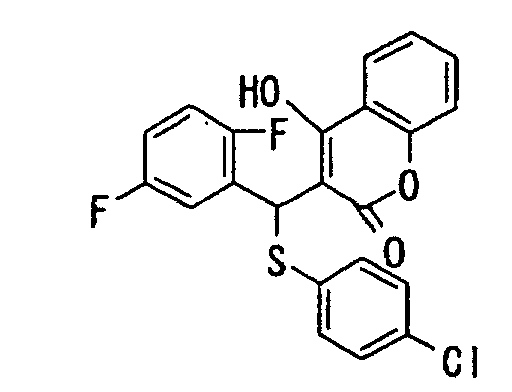
1H-NMR (400MHz, CDCl3) δ: 6.16(1H,s), 6.95-7.12(3H,m), 7.24-7.27(1H,m), 7.27(2H,d,J=8.8Hz), 7.32(1H,t,J=7.6Hz), 7.43(2H, d,J=8.8Hz), 7.56(1H,m), 7.94(1H,dd,J=1.6,7.6 Hz). IR (ATR) cm-1: 1668, 1620, 1481, 1194, 818.
mp: 146-147°C.
MS m/z: 431 (M++H).
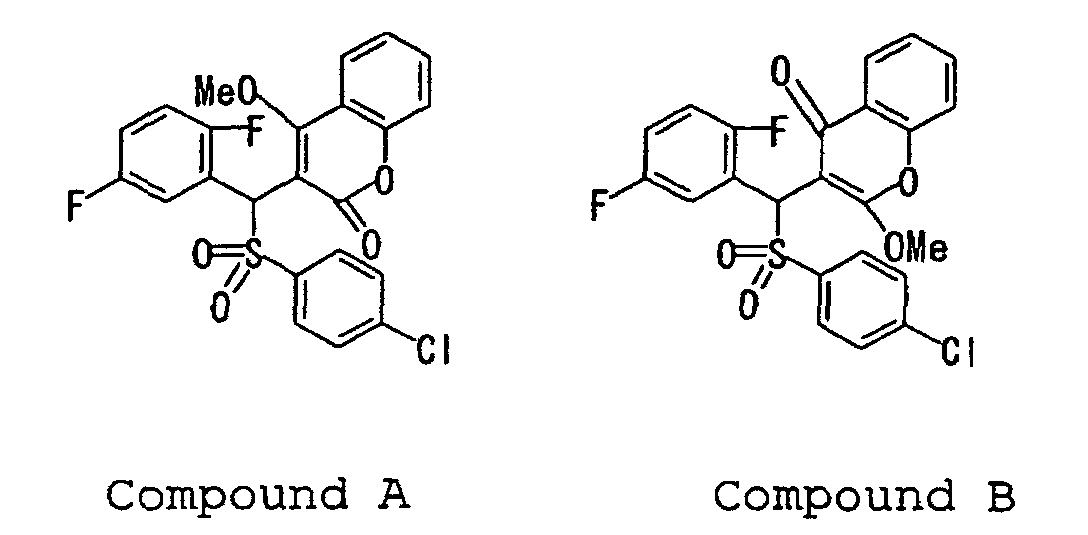
Compound A
1H-NMR (400MHz, CDCl3) δ: 4.13(3H,s), 6.39(1H,s), 6.88(1H,m), 6.98(1H,m), 7.3-7.4(2H,m), 7.43(2H,d,J=8.8Hz), 7.58(1H,m), 7.70(2H,d,J=8.8Hz), 7.73(1H,m), 8.09(1H,m).
IR (ATR) cm-1: 1726, 1606, 1493, 1360, 1184, 1085, 768.
mp: 178-179°C.
MS m/z: 477 (M++H).
Anal. calcd for C23H15ClF2O3S: C 57.93%; H 3.17%; S 6.72%; Cl 7.43%; F 7.97%. Found: C 57.59%; H 3.14%; S 6.85%; Cl 7.52%; F 8.01%.
FAB-MS: 477.0393 (Calcd for C23H16ClF2O5S: 477.0375).
Compound B
1H-NMR (400MHz, CDCl3) δ: 4.23(3H,s), 6.54(1H,s), 6.89(1H,m), 6.96(1H,m), 7.41(2H,d,J=8.4Hz), 7.4-7.46(2H,m), 7.63(1H,m), 7.73(2H,d,J=8.4Hz), 8.02(1H,m), 8.14(1H,dd,J=1.6,8.0Hz).
IR (ATR) cm-1: 1621, 1565, 1461, 1384, 1141, 980.
mp: 162-163°C.
MS m/z: 477 (M++H).
FAB-MS: 477.0366 (Calcd for C23H16ClF2O5S: 477.0375).

1H-NMR (400MHz, CDCl3) δ: 1.45(9H,s), 3.86(3H,s), 6.9-7.0(2H,m), 7.12(1H,s), 7.22-7.35(3H,m), 7.45(1H,m), 7.77(1H, d,J=8.0Hz).
IR (ATR) cm-1: 1733, 1492, 1270, 1257, 1137, 852.
mp: 163-164°C.
MS m/z: 375 (M++H).

1H-NMR (400MHz, CDCl3) δ: 1.48(9H,s), 3.67(3H,s), 6.88-7.1(4H,m), 7.39(1H,m)
IR (ATR) cm-1: 1739, 1496, 1257, 1149, 1080, 858.
mp: 125-126°C.
MS m/z: 359 (M++H).

1H-NMR (400MHz, CDCl3) δ: 3.77(1H,d,J=4.0Hz), 6.33(1H,d,J=4.0Hz), 6.95-7.10(2H,m), 7.24(1H,m), 7.34(1H,d, J=3.6Hz), 7.75(1H,d,J=3.6Hz).
IR (ATR) cm-1: 3224, 1489, 1238, 1172, 1128, 818.
MS m/z: 228 (M++H).

1H-NMR (400MHz, CDCl3) δ: 1.40(9H,s), 3.86(3H,s), 6.76(1H,s), 6.90-7.00(4H,m), 7.02(1H,s), 7.11(1H,s), 7.26(2H,m), 7.33(1H,m).
IR (ATR) · cm-1: 1741, 1513, 1494, 1243, 1155, 858, 835.
MS m/z: 417 (M++H).

1H-NMR (400MHz, CDCl3) δ: 3.67(3H,s), 5.91(1H,s), 6.87-6.93 (2H,m), 7.19(2H,d,J=8.8Hz), 7.27(2H,d,J=8.8Hz), 7.25-7.33(3H,m), 7.60(1H,m), 7.85(1H,m).
IR (ATR) cm-1: 1492, 1388, 1238, 193, 820.
MS m/z: 401 (M++H).
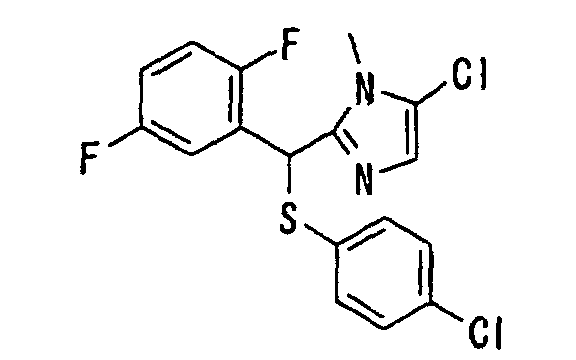
1H-NMR (400MHz, CDCl3) δ: 3.57(3H,s), 5.67(1H,s), 6.89-6.95(2H,m), 6.97(1H,s), 7.20(2H,d,J=8.4Hz), 7.21(2H,d, J=8.4Hz), 7.54(1H,m).
IR (ATR) cm-1: 1490, 1473, 1162, 1012, 821, 806.
MS m/z: 386 (M++H).

1H-NMR (400MHz, CDCl3) δ: 6.04(1H,s), 6.90-7.06(2H,m), 7.22(2H,d,J=8.4Hz), 7.30(2H,d,J=8.4Hz), 7.15-7.35(2H,m), 7.76(1H,d,J=3.2Hz).
IR (ATR) cm-1: 1489, 1475, 1093, 1012, 817, 725.
MS m/z: 354 (M++H).

1H-NMR (400MHz, CDCl3) δ: 3.86(3H,s), 5.57(1H,s), 6.8-6.9(3H,m), 6.91(2H,d,J=8.4Hz), 7.00(2H,d,J=8.4Hz), 7.06(2H, d,J=6.8Hz), 7.11(2H,d,J=6.8Hz), 7.16(1H,s), 7.81(1H,m).
IR (ATR) cm-1: 1513, 1475, 1240, 1037, 821.
MS m/z: 443 (M++H).
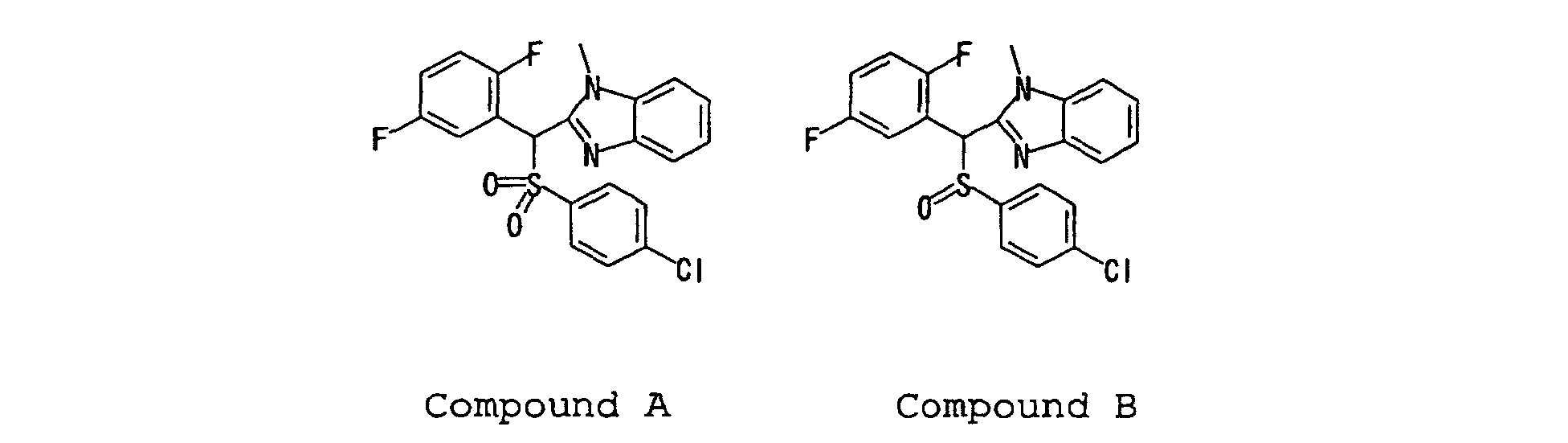
Compound A
1H-NMR (400MHz, CDCl3) δ: 3.90(3H,s), 6.14(1H,s), 6.9-7.1(2H,m), 7.26-7.42(3H,m), 7.39(2H,d,J=8.8Hz), 7.46(2H,d,J=8.8Hz), 7.81(1H,d,J=8.0Hz), 8.16(1H,m).
IR (ATR) cm-1: 1726, 1606, 1493, 1360, 1184, 1085, 768.
mp: 213-214°C.
MS m/z: 433 (M++H).
Anal. calcd for C21H15ClF2N2OS: C 58.27%; H 3.49%; N 6.47%; S 7.41%; Cl 8.19%; F 8.78%. Found: C 58.08%; H 3.62%; N 6.53%; S 7.35%; Cl 8.10%; F 8.74%.
Compound B
1H-NMR (400MHz, CDCl3) δ: 3.35(1/2*3H,s), 3.78(1/2*3H,s), 5.52(1/2*1H,s), 5.57(1/2*1H,s), 6.78-7.1(2H,m), 7.2-7.4(7H,m), 7.76-7.95(2H,m).
IR (ATR) cm-1: 1490, 1238, 1054, 820, 731.
mp: 130-131°C.
MS m/z: 417 (M++H).
FAB-MS: 477.0646 (Calcd for C21H16ClF2N2OS: 477.0640).
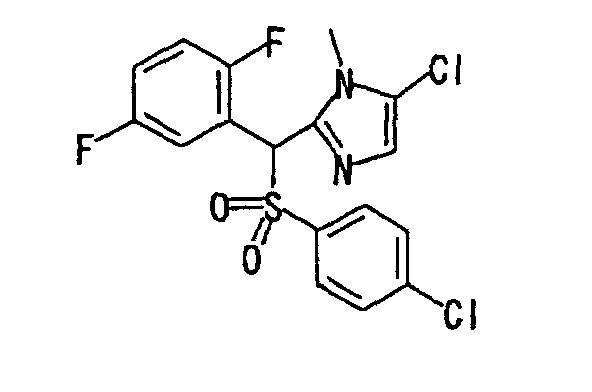
1H-NMR (400MHz, CDCl3) δ: 3.71(3H,s), 5.88(1H,s), 6.93-7.08(2H,m), 7.03(1H,s), 7.43(4H,s), 7.98(1H,m).
IR (ATR) cm-1: 1490, 1467, 1313, 1149, 1079, 818, 729.
mp: 179-180°C.
MS m/z: 417 (M++H).
Anal. calcd for C17H12Cl2F2N2O2S: C 48.90%; H 2.93%; N 6.71%;
S 7.68%; Cl 16.99%; F 9.11%. Found: C 48.90%; H 2.93%; N 6.77%; S 7.80%; Cl 17.02%; F 9.19%.

1H-NMR (400MHz, CDCl3) δ: 6.21(1H,s), 6.92-7.08(2H,m), 7.41(2H,d,J=8.8Hz), 7.45(1H,d,J=3.6Hz), 7.56(2H,d,J=8.8Hz), 7.86(1H,d,J=3.6Hz), 7.94(1H,m).
IR (ATR) cm-1: 1488, 1319, 1149, 1076, 817, 727.
mp: 163-164°C.
MS m/z: 386 (M++H).
Anal. calcd for C16H10ClF2NO2S2: C 49.81%; H 2.61%; N 3.63%;
S 16.62%; Cl 9.19%; F 9.85%. Found: C 49.98%; H 2.61%; N 3.77%; S 16.60%; Cl 9.25%; F 9.87%.

1H-NMR (400MHz, CDCl3) δ: 3.89(3H,s), 5.83(1H,s), 6.93-7.05(4H,m), 6.97(2H,d,J=8.8Hz), 7.01(2H,d,J=8.8Hz), 7.38(2H,d,J=8.8Hz), 7.41(2H,d,J=8.8Hz), 8.15(1H,m).
IR (ATR) cm-1: 1513, 1492, 1332, 1155, 836.
mp: 150-151°C.
MS m/z: 475 (M++H).
Anal. calcd for C23H17ClF2N2O3S: C 58.13%; H 3.61%; N 5.90%; S 6.75%; Cl 7.47%; F 8.00%. Found: C 58.09%; H 3.51%; N 5.99%; S 6.88%; Cl 7.48%; F 8.06%.
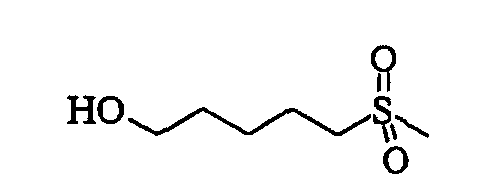
1H-NMR (400MHz, CDCl3) δ: 1.50-1.67(4H,m), 1.84-1.94(2H,m), 2.90(3H,s), 3.03(2H,t,J=8.0Hz), 3.68(2H,t,J=6.1Hz).

1H-NMR (400MHz, CDCl3) δ: 1.76-1.97(4H,m), 2.55(2H,t,J=7.1Hz), 2.91(3H,s), 3.04(2H,t,J=7.8Hz), 9.79(1H,s).

1H-NMR (400MHz, CDCl3) δ: 1.49-1.69(2H,m), 1.71-1.97(4H,m), 2.89(3H,s), 3.01(2H,t,J=8.1Hz), 5.02(1H,t,J=6.2Hz), 6.88-7.01(2H,m), 7.16-7.22(1H,m).
MS m/z: 296 (M++NH4).
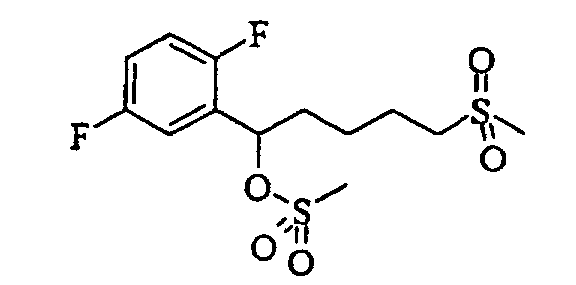
1H-NMR (400MHz, CDCl3) δ: 1.48-1.71(2H,m), 1.85-1.98(3H,m), 2.03-2.13(1H,m), 2.90(3H,s), 2.90(3H,s), 3.02(2H,t,J=7.8Hz), 5.82(1H,dd,J=8.6,5.1Hz), 7.01-7.19(3H,m).
MS m/z: 374 (M++NH4).

1H-NMR (400MHz, CDCl3) δ: 1.34-1.52(2H,m), 1.79-1.95(2H,m), 2.05-2.16(1H,m), 2.42-2.52(1H,m), 2.87(3H,s), 2.92-2.99(2H,m), 3.85(3H,s), 4.48(1H,dd,J=11.0,2.9Hz), 6.80-6.89(1H,m), 6.87(2H,d,J=8.8Hz), 6.94-7.00(1H,m), 7.19-7.25(1H,m), 7.51(2H,d,J=8.8Hz).
IR (ATR) cm-1: 2951, 1595, 1496, 1271, 1132, 1084, 1022, 970.
Anal. Calcd for C19H22F2O5S2: C, 52.76; H, 5.13; F, 8.79.
Found: C, 52.57; H, 5.13; F, 8.71.
MS m/z: 433 (M++H).

1H-NMR (400MHz, CDCl3) δ: 1.34-1.52(2H,m), 1.79-1.97(2H,m), 2.07-2.20(1H,m), 2.44-2.55(1H,m), 2.87(3H,s), 2.90-3.01(2H,m), 4.51(1H,dd,J=10.9,3.6Hz), 6.75-6.84(1H,m), 6.92-7.00(1H,m), 7.19-7.27(1H,m), 7.38-7.46(2H,m), 7.55-7.65(3H,m).
MS m/z: 420 (M++NH4).

1H-NMR (400MHz, CDCl3) δ: 1.33-1.51(2H,m), 1.77-1.96(2H,m), 2.03-2.16(1H,m), 2.37-2.51(1H,m), 2.40(3H,s), 2.87(3H,s), 2.90-3.00(2H,m), 4.49(1H,dd,J=11.1,3.8Hz), 6.79-6.88(1H,m), 6.94-7.02(1H,m), 7.19-7.26(1H,m), 7.21(2H,d,J=7.8Hz), 7.48(2H,d,J=7.8Hz).
IR (ATR) cm-1: 2943, 1597, 1498, 1269, 1142, 1084, 957, 868. Anal. Calcd for C19H22F2O4S2: C, 54.79; H, 5.32; F, 9.12. Found: C, 54.67; H, 5.30; F, 9.10.
MS m/z: 417 (M++H).

1H-NMR (400MHz, CDCl3) δ: 1.34-1.54(2H,m), 1.79-1.97(2H,m), 2.08-2.21(1H,m), 2.41-2.56(1H,m), 2.88(3H,s), 2.90-3.03(2H,m), 4.51(1H,dd,J=10.6,3.4 Hz), 6.78-6.90(1H,m), 6.95-7.06(1H,m), 7.19-7.29(1H,m), 7.36(1H,t,J=7.8Hz), 7.49(1H,d,J=7.8Hz), 7.55(1H,d,J=7.8Hz), 7.56(1H,s).
MS m/z: 437 (M++H).

1H-NMR (400MHz, CDCl3) δ: 1.33-1.52(2H,m), 1.78-1.96(2H,m), 2.03-2.19(1H,m), 2.34(3H,s), 2.39-2.51(1H,m), 2.87(3H,s), 2.91-2.99(2H,m), 4.50(1H,dd,J=11.0,3.4Hz), 6.78-6.86(1H,m), 6.93-7.02(1H,m), 7.19-7.33(2H,m), 7.36-7.44(3H,m).
MS m/z: 417 (M+.+H).

1H-NMR (400MHz, CDCl3) δ: 1.34-1.51(2H,m), 1.79-1.95(2H,m), 2.06-2.18(1H,m), 2.42-2.52(1H,m), 2.87(3H,s), 2.90-3.00(2H,m), 3.75(3H,s), 4.52(1H,dd,J=11.5,4.6Hz), 6.80-6.87(1H,m), 6.94-7.01(1H,m), 7.05(1H,s), 7.10(1H,d,J=8.1Hz), 7.21(1H,d,J=8.1Hz), 7.21-7.29(1H,m), 7.32(1H,t,J=8.1Hz).
MS m/z: 433 (M++H).
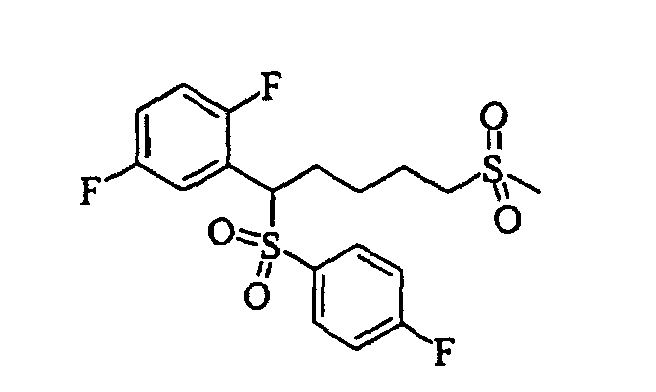
1H-NMR (400MHz, CDCl3) δ: 1.38-1.53(2H,m), 1.82-1.97(2H,m), 2.08-2.20(1H,m), 2.47-2.57(1H,m), 2.88(3H,s), 2.92-3.02(2H,m), 4.50(1H,dd,J=11.0,4.4Hz), 6.78-6.88(1H,m), 6.95-7.02(1H,m), 7.05-7.13(2H,m), 7.22-7.32(1H,m), 7.57-7.64(2H,m).
MS m/z: 438 (M++NH4).

1H-NMR (400MHz, CDCl3) δ: 1.34-1.52(2H,m), 1.80-1.93(2H,m), 2.03-2.18(1H,m), 2.42-2.52(1H,m), 2.88(3H,s), 2.90-3.00(2H,m), 4.47(1H,dd,J=10.8,3.2Hz), 5.44(1H,s), 6.78-6.87(1H,m), 6.81(2H,d,J=8.8Hz), 6.94-7.01(1H,m), 7.19-7.28(1H,m), 7.48(2H,d,J=8.8Hz).
MS m/z: 419 (M++H).

1H-NMR (400MHz, CDCl3) δ: 1.29-1.46(2H,m), 1.72-1.90(2H,m), 2.13-2.26(1H,m), 2.29-2.40(1H,m), 2.83(3H,s), 2.82-2.93(2H,m), 4.79(1H,dd,J=11.3,3.9Hz), 6.66-6.75(1H,m), 6.87-6.94(1H,m), 7.24-7.31(1H,m), 7.45(1H,t,J=7.6Hz), 7.58-7.62(2H,m), 7.94(1H,d,J=8.1Hz), 8.01(1H,d,J=7.6Hz), 8.08(1H,d,J=8.1Hz), 8.73(1H,d,J=8.6Hz).
MS m/z: 453 (M++H).
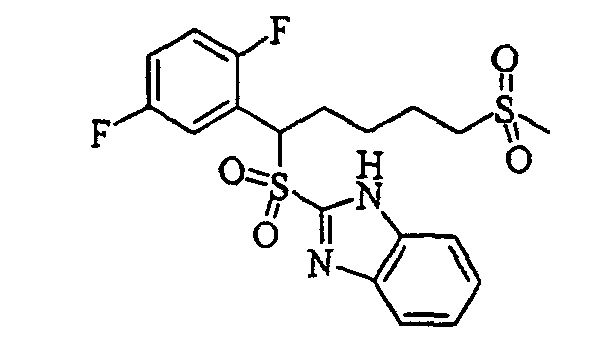
1H-NMR (400MHz, CDCl3) δ: 1.28-1.53(2H,m), 1.78-1.96(2H,m), 2.17-2.30(1H,m), 2.42-2.53(1H,m), 2.86(3H,s), 2.88-3.02(2H,m), 5.03(1H,dd,J=11.3,3.9Hz), 6.90-7.04(2H,m), 7.13-7.20(1H,m), 7.39-7.47(2H,m), 7.50(1H,br s), 7.90(1H,br s), 10.08(1H,br s).
MS m/z: 443 (M++H).
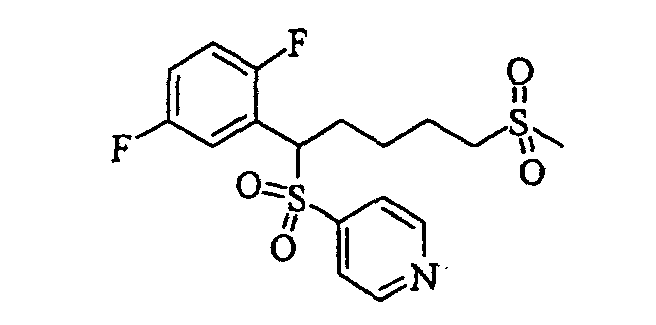
1H-NMR (400MHz, CDCl3) δ: 1.27-1.60(2H,m), 1.70-1.90(2H,m), 2.00-2.13(1H,m), 2.35-2.48(1H,m), 2.88(3H,s), 2.90-3.04(2H,m), 4.56(1H,dd,J=10.6,4.3Hz), 6.78-6.85(1H,m), 6.95-7.03(1H,m), 7.22-7.30(1H,m), 7.45(2H,d,J=5.2Hz), 8.75(2H,d,J=5.2Hz).
MS m/z: 404 (M++H).

1H-NMR (400MHz, CDCl3) δ: 1.36-1.52(2H,m), 1.78-1.96(2H,m), 2.10-2.21(1H,m), 2.35-2.46(1H,m), 2.87(3H,s), 2.90-3.03(2H,m), 5.11(1H,dd,J=10.9,3.8Hz), 6.82-6.91(1H,m), 6.92-6.98(1H,m), 7.24-7.31(1H,m), 7.48-7.54(1H,m), 7.79-7.87(2H,m), 8.75(1H,d,J=4.6Hz).
MS m/z: 404 (M++H).

1H-NMR (400MHz, CDCl3) δ: 1.39-1.59(2H,m), 1.80-1.99(2H,m), 2.13-2.26(1H,m), 2.42-2.53(1H,m), 2.86(3H,s), 2.91-3.02(2H,m), 5.33(1H,dd,J=11.1,3.1Hz), 6.74-6.82(1H,m), 6.88-6.96(1H,m), 7.31-7.36(1H,m), 7.72(1H,t,J=7.1Hz), 7.86-7.92(3H,m), 8.24(1H,d,J=8.5Hz), 8.29(1H,d,J=8.8Hz).
MS m/z: 454 (M++H).
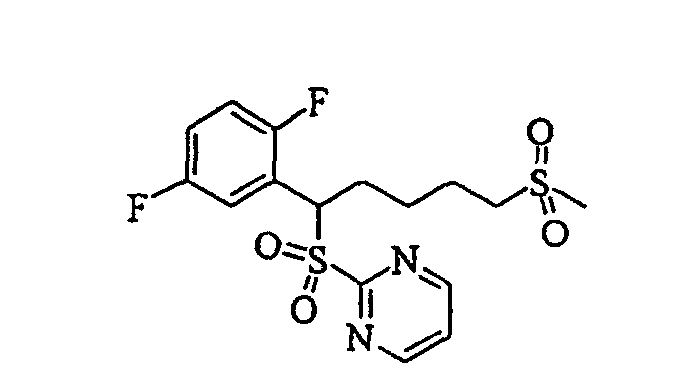
1H-NMR (400MHz, CDCl3) δ: 1.38-1.60(2H,m), 1.79-1.98(2H,m), 2.11-2.25(1H,m), 2.37-2.47(1H,m), 2.88(3H,s), 2.90-3.02(2H,m), 5.31(1H,dd,J=10.5,3.4Hz), 6.89-7.02(2H,m), 7.33-7.39(1H,m), 7.52(1H,t,J=4.9Hz), 8.91(2H,d,J=4.9Hz). MS m/z: 405 (M++H).

1H-NMR (400MHz, CDCl3) δ: 1.43-1.65(2H,m), 1.82-2.01(2H,m), 2.18-2.31(1H,m), 2.49-2.60(1H,m), 2.90(3H,s), 2.92-3.06(2H,m), 4.10(3H,s), 5.12(1H,dd,J=11.0,3.7Hz), 7.03-7.22(3H,m).
MS m/z: 409 (M++H).

Compound A
1H-NMR (400MHz, CDCl3) δ: 1.45-1.67(2H,m), 1.82-2.02(2H,m), 2.09-2.21(1H,m), 2.41-2.52(1H,m), 2.89(3H,s), 2.92-3.08(2H,m), 3.66(3H,s), 4.91(1H,dd,J=11.1,4.5Hz), 6.78-6.84(1H,m), 6.90(1H,s), 6.93-7.01(2H,m), 7.12(1H,s).
MS m/z: 391 (M++H).
Compound B
1H-NMR (400MHz, CDCl3) δ: 1.37-1.66(2H,m), 1.81-1.96(2H,m), 2.12-2.23(1H,m), 2.45-2.56(1H,m), 2.88(3H,s), 2.91-3.03(2H,m), 3.59(3H,s), 4.89(1H,dd,J=10.9,4.0Hz), 6.93(1H,d, J=0.7Hz), 6.97-7.08(3H,m), 7.19(1H,d,J=0.7Hz).
MS m/z: 407 (M++H).

1H-NMR (400MHz, CDCl3) δ: 1.37-1.48(2H,m), 1.72-1.91(2H,m), 2.09-2.29(2H,m), 2.83(3H,s), 2.85-2.95(2H,m), 4.66(1H,dd,J= 10.5,4.1Hz), 7.01-7.08(3H,m), 7.48-7.50(2H,m), 7.87-8.08(2H,m).
MS m/z: 444 (M++H).
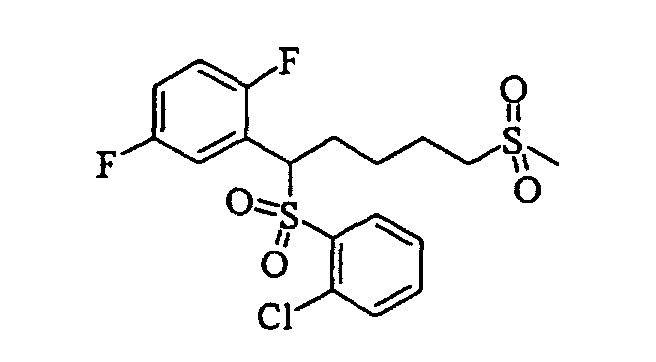
1H-NMR (400MHz, CDCl3) δ: 1.39-1.60(2H,m), 1.82-1.97(2H,m), 2.10-2.22(1H,m), 2.37-2.48(1H,m), 2.87(3H,s), 2.91-3.02(2H,m), 5.13(1H,dd,J=10.7,3.7Hz), 6.79-6.87(1H,m), 6.90-6.97(1H,m), 7.23-7.33(2H,m), 7.46-7.55(2H,m), 8.75 (1H, dd, J=7.9, 1.6 Hz).
MS m/z: 437 (M++H).
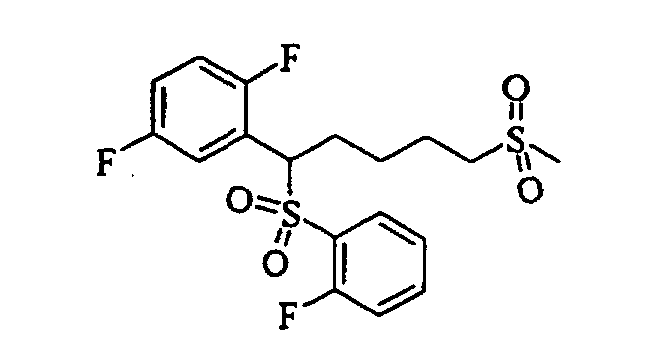
1H-NMR (400MHz, CDCl3) δ: 1.39-1.60(2H,m), 1.80-1.98(2H,m), 2.10-2.22(1H,m), 2.44-2.54(1H,m), 2.88(3H,s), 2.96(2H,t,J=7.4Hz), 4.84(1H,dd,J=10.7,4.4Hz), 6.78-6.85(1H,m), 6.90-6.96(1H,m), 7.10-7.21(2H,m), 7.22-7.29(1H,m), 7.52-7.60(2H,m).
MS m/z: 421 (M++H).
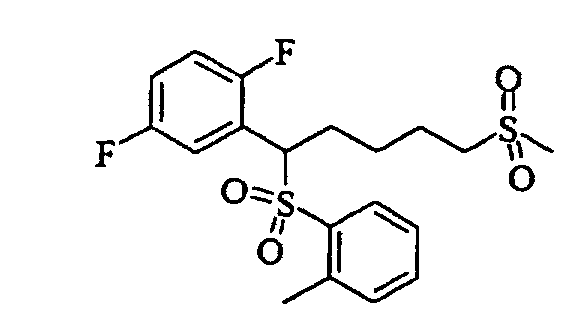
1H-NMR (400MHz, CDCl3) δ: 1.33-1.55(2H,m), 1.79-1.95(2H,m), 2.09-2.21(1H,m), 2.37-2.47(1H,m), 2.63(3H,s), 2.87(3H,s), 2.92-2.98(2H,m), 4.61(1H,dd,J=11.2,3.4Hz), 6.75-6.82(1H,m), 6.89-6.97(1H,m), 7.16(1H,t,J=7.6Hz), 7.22-7.31(2H,m), 7.43 (1H, t, J=7.6Hz), 7.43(1H, t, J=8.0Hz).
MS m/z: 417 (M++H).
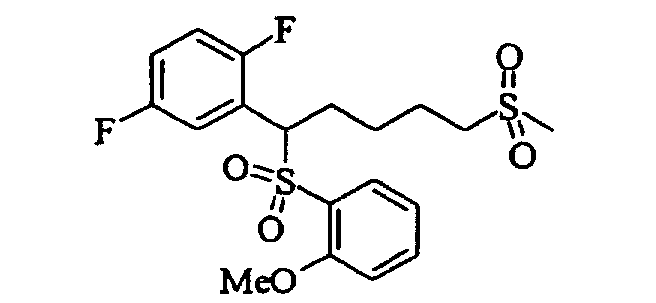
1H-NMR (400MHz, CDCl3) δ: 1.33-1.55(2H,m), 1.78-1.96(2H,m), 2.06-2.17(1H,m), 2.36-2.47(1H,m), 2.87(3H,s), 2.90-3.00(2H,m), 4.00(3H,s), 5.13(1H,dd,J=11.2,3.2Hz), 6.78-6.95(3H,m), 6.98(1H,d,J=7.8Hz), 7.27-7.33(1H,m), 7.46-7.53(1H,m), 7.63 (1H,dd,J=8.0,1.7Hz).
MS m/z: 433 (M++H).
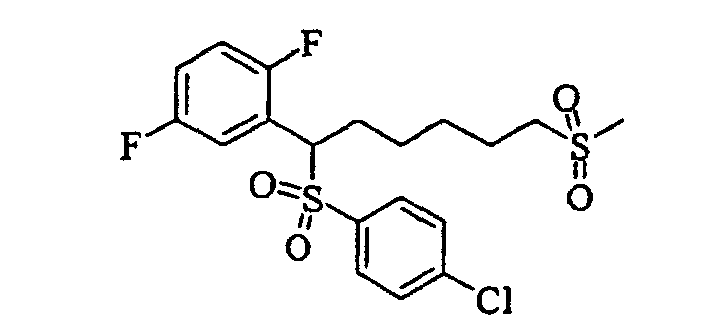
1H-NMR (400MHz, CDCl3) δ: 1.22-1.38(2H,m), 1.39-1.56(2H,m), 1.73-1.86(2H,m), 2.03-2.16(1H,m), 2.41-2.52(1H,m), 2.88(3H,s), 2.95(2H,t,J=7.9Hz), 4.50(1H,dd,J=11.5,3.2Hz), 6.80-6.89(1H,m), 6.95-7.04(1H,m), 7.22-7.28(1H,m), 7.38(2H, d, J=8.5Hz), 7.52(2H,d,J=8.5Hz).
IR (ATR) cm-1: 2949, 1500, 1475, 1317, 1294, 1275, 1136, 1084, 964, 752.
Anal. Calcd for C19H21ClF2O4S2: C, 50.61; H, 4.69; Cl, 7.86; F, 8.43; S, 14.22. Found: C, 50.59; H, 4.67; Cl, 8.04; F, 8.39; S, 14.15.

1H-NMR (400MHz, CDCl3) δ: 7.35(1H,dd,J=9.3,2.4Hz), 7.46(1H,d,J=9.3Hz), 7.64(1H,d,J=2.4Hz).
MS m/z: 146 (M++H).
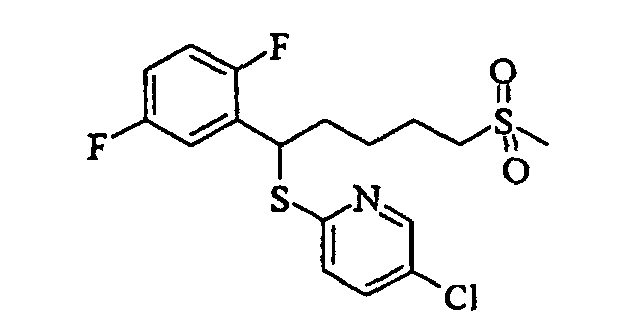
1H-NMR (400MHz, CDCl3) δ: 1.39-1.64(2H,m), 1.83-2.17(4H,m), 2.88(3H,s), 2.92-3.06(2H,m), 5.20(1H,t,J=7.6Hz), 6.84-6.92(1H,m), 6.96-7.02(1H,m), 7.05(1H,dd,J=8.6,0.7Hz), 7.11-7.18(1H,m), 7.43(1H,dd,J=8.6,2.5Hz), 8.37(1H,dd,J=2.5,0.7Hz).
MS m/z: 406 (M++H).
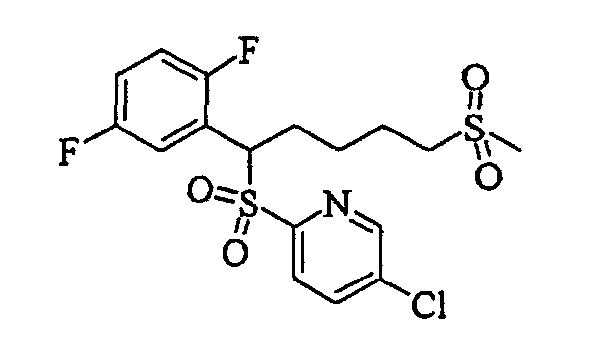
1H-NMR (400MHz, CDCl3) δ: 1.37-1.53(2H,m), 1.80-1.97(2H,m), 2.09-2.20(1H,m), 2.36-2.48(1H,m), 2.88(3H,s), 2.96(2H,t,J=7.5Hz), 5.07(1H,dd,J=11.1,3.8Hz), 6.86-7.02(2H,m), 7.23-7.31(1H,m), 7.74(1H,d,J=8.3Hz), 7.79(1H,dd,J=8.3,2.2Hz), 8.67(1H,d,J=2.2Hz).
Anal. Calcd for C17H18ClF2NO4S2·0.25H2O: C, 46.15; H, 4.21; F, 8.59; N, 3.17; S, 14.50. Found: C, 46.38; H, 4.11; F, 8.40; N, 3.20; S, 14.22.
MS m/z: 438 (M++H).
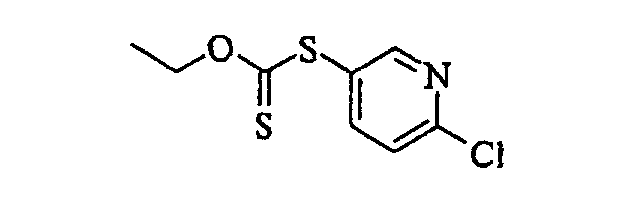
1H-NMR (400MHz, CDCl3) δ: 1.37(3H,t,J=7.1Hz), 4.63(2H,t,J=7.1Hz), 7.41(1H,d,J=8.3Hz), 7.76(1H,dd,J=8.3, 2.4Hz), 8.45(1H,d,J=2.4Hz).
MS m/z: 234 (M++H).
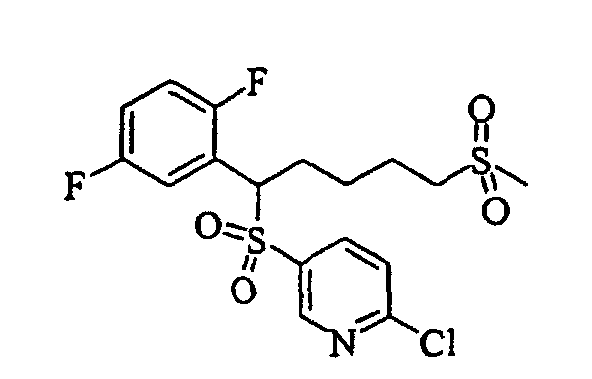
1H-NMR (400MHz, CDCl3) δ: 1.40-1.57(2H,m), 1.84-1.98(2H,m), 2.11-2.22(1H,m), 2.50-2.60(1H,m), 2.89(3H,s), 2.93-3.02(2H,m), 4.48(1H,dd,J=10.4,3.8Hz), 6.82-6.91(1H,m), 7.00-7.07(1H,m), 7.24-7.29(1H,m), 7.38(1H,d,J=8.3Hz), 7.79(1H,dd,J=8.3,2.4Hz), 8.48(1H,d,J=2.4Hz).
IR (ATR) cm-1: 3059, 1566, 1495, 1446, 1279, 1161, 1107, 829.
Anal. Calcd for C17H18ClF2NO4S2: C, 46.63; H, 4.14; Cl, 8.10; F, 8.68; N, 3.20; S, 14.64. Found: C, 46.36; H, 4.29; Cl, 8.08; F, 8.65; N, 3.25; S, 14.57.
MS m/z: 438 (M++H).

1H-NMR (400MHz, CDCl3) δ: 1.03-1.27(3H,m), 1.30-1.70(5H,m), 1.78-2.10(7H,m), 2.40-2.60(2H,m), 2.88(3H,s), 2.90-3.02(2H,m), 4.54(1H,dd,J=11.1,2.6Hz), 7.04-7.15(2H,m), 7.36-7.42(1H,m).
IR (ATR) cm-1: 2931, 1495, 1273, 1126, 1117, 976.
Anal. Calcd for C18H26F2O4S2: C, 52.92; H, 6.41; F, 9.30; S, 15.70. Found: C, 52.85; H, 6.31; F, 9.34; S, 15.53.
MS m/z: 409 (M++H).

1H-NMR (400MHz, CDCl3) δ: 1.31-1.51(2H,m), 1.77-1.94(2H,m), 2.02-2.14(1H,m), 2.38-2.50(1H,m), 2.88(3H,s), 2.90-3.00(2H,m), 3.28(4H,t,J=4.9Hz), 3.85(4H,t,J=4.9Hz), 4.47(1H,dd,J=10.6,3.5 Hz), 6.78(2H,d,J=9.0Hz), 6.83-6.90(1H,m), 6.94-7.01(1H,m), 7.19-7.24(1H,m), 7.44(2H,d,J=9.0Hz).
IR (ATR) cm-1: 2962, 1591, 1498, 1271, 1131, 1090, 976, 926. Anal. Calcd for C22H27F2NO5S2: C, 54.19; H, 5.58; F, 7.79; N, 2.87; S, 13.15. Found: C, 53.93; H, 5.53; F, 7.90; N, 2.87; S, 13.17.
MS m/z: 488 (M++H).

1H-NMR (400MHz, CDCl3) δ: 1.30-1.51(2H,m), 1.56-1.72(6H,m), 1.76-1.93(2H,m), 2.01-2.13(1H,m), 2.36-2.48(1H,m), 2.87(3H,s), 2.88-3.00 (2H,m), 3.34(4H,br s), 4.45(1H,dd,J=11.5,3.4Hz), 6.75(2H,d,J=9.0Hz), 6.82-6.90(1H,m), 6.92-7.00(1H,m), 7.16-7.23(1H,m), 7.38(2H,d,J=9.0Hz).
IR (ATR) cm-1: 2935, 1591, 1495, 1282, 1122, 1090.
Anal. Calcd for C23H29F2NO4S2: C, 56.89; H, 6.02; F, 7.82; N, 2.88; S, 13.21. Found: C, 56.73; H, 5.99; F, 7.88; N, 2.93; S, 13.22.
MS m/z: 486 (M++H).
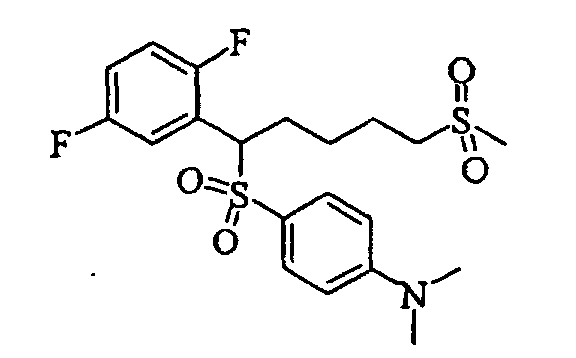
1H-NMR (400MHz, CDCl3) δ: 1.30-1.50(2H,m), 1.76-1.93(2H,m), 2.01-2.12(1H,m), 2.36-2.48(1H,m), 2.87(3H,s), 2.88-3.00(2H,m), 3.03(6H,s), 4.45(1H,dd,J=11.2,2.9Hz), 6.55(2H, d,J=9.0Hz), 6.82-6.91(1H,m), 6.93-7.01(1H,m), 7.18-7.24(1H,m), 7.38(2H,d,J=9.0Hz).
IR (ATR) cm-1: 2941, 1603, 1496, 1284, 1269, 1230, 1138, 1088.
Anal. Calcd for C20H25F2NO4S2: C, 53.91; H, 5.66; F, 8.53; N, 3.14; S, 14.39. Found: C, 53.61; H, 5.61; F, 8.51; N, 3.06; S, 14.35.
MS m/z: 446 (M++H).
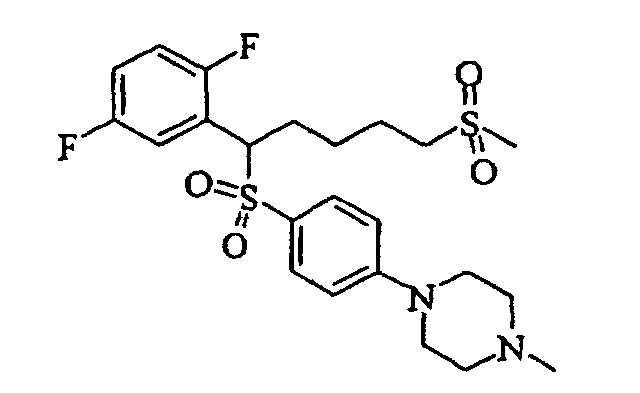
1H-NMR (400MHz, CDCl3) δ: 1.31-1.51(2H,m), 1.77-1.94(2H,m), 2.02-2.13(1H,m), 2.35(3H,s), 2.36-2.48(1H,m), 2.53(4H,t,J=5.1Hz), 2.87(3H,s), 2.88-3.00(2H,m), 3.34(4H,t, J=5.1Hz), 4.46(1H,dd,J=11.0,3.7Hz), 6.77(2H,d,J=9.0Hz), 6.82-6.90(1H,m), 6.92-7.01(1H,m), 7.18-7.23(1H,m), 7.41(2H,d,J=9.0Hz).
IR (ATR) cm-1: 1595, 1495, 1292, 1134, 1090, 1003, 968.
Anal. Calcd for C23H30F2N2O4S2: C, 55.18; H, 6.04; F, 7.59; N, 5.60; S, 12.81. Found: C, 54.92; H, 5.92; F, 7.66; N, 5.60; S, 12.80.
MS m/z: 501 (M++H).
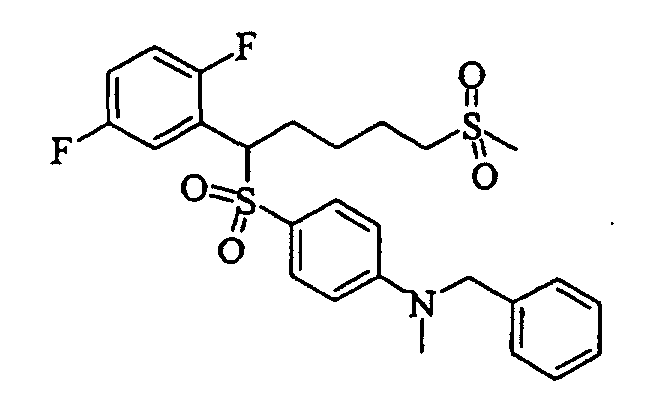
1H-NMR (400MHz, CDCl3) δ: 1.30-1.50(2H,m), 1.76-1.93(2H,m), 2.01-2.13(1H,m), 2.36-2.48(1H,m), 2.87(3H,s), 2.88-3.00(2H,m), 3.11(3H,s), 4.46(1H,dd,J=11.4,3.5Hz), 4.58(1H,d, J=17.5Hz), 4.63(1H,d,J=17.5Hz), 6.60(2H,d,J=9.0Hz), 6.78-6.86(1H,m), 6.89-6.98(1H,m), 7.12(2H,d,J=7.1Hz), 7.13-7.20(1H,m), 7.24-7.35(3H,m), 7.35(2H,d,J=9.0Hz).
IR (ATR) cm-1: 1593, 1493, 1390, 1281, 1124, 1088.
Anal. Calcd for C26H29F2NO4S2: C, 59.86; H, 5.60; F, 7.28; N, 2.69; S, 12.29. Found: C, 59.74; H, 5.52; F, 7.35; N, 2.76; S, 12.44.
MS m/z: 522 (M++H).
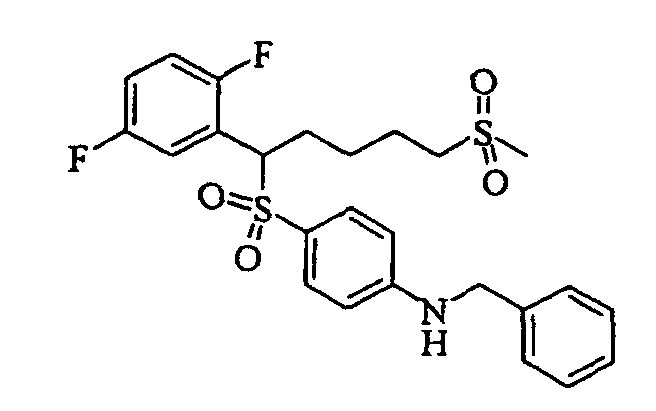
1H-NMR (400MHz, CDCl3) δ: 1.31-1.50(2H,m), 1.78-1.93(2H,m), 2.01-2.13(1H,m), 2.37-2.48(1H,m), 2.87(3H,s), 2.89-3.00(2H,m), 4.36(2H,br d,J=3.7Hz), 4.46(1H,dd,J=11.2,3.2Hz), 4.61(1H,br s), 6.51(2H,d,J=9.0Hz), 6.80-6.87(1H,m), 6.90-6.98(1H,m), 7.15-7.22(1H,m), 7.29-7.40(5H,m), 7.34(2H,d,J=9.0Hz).
IR (ATR) cm-1: 3411, 1597, 1495, 1282, 1142, 1086, 870. Anal. Calcd for C25H27F2NO4S2·0.25H2O: C, 58.63; H, 5.41; F, 7.42; N, 2.74; S, 12.52. Found: C, 58.59; H, 5.27; F, 7.49; N, 2.78; S, 12.61.
MS m/z: 508 (M++H).
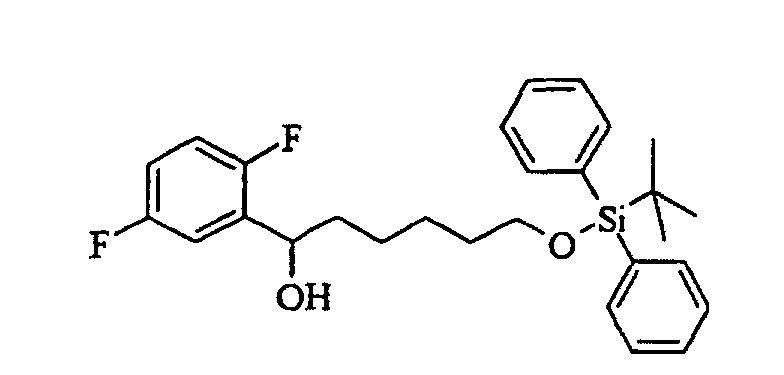
1H-NMR (400MHz, CDCl3) δ: 1.04(9H,m), 1.21-1.90(8H,m), 3.64(2H,t,J=6.3Hz), 4.96(1H,t,J=6.5Hz), 6.86-7.01(2H,m), 7.13-7.20(1H,m), 7.32-7.45(6H,m), 7.62-7.70(4H,m).
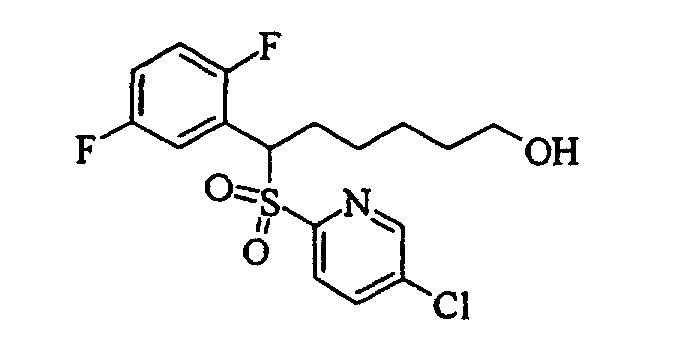
1H-NMR (400MHz, CDCl3) δ: 1.17-1.59(6H,m), 2.04-2.17(1H,m), 2.30-2.42(1H,m), 3.59(2H,t,J=6.3Hz), 5.07(1H,dd,J=11.6,2.8Hz), 6.84-6.92(1H,m), 6.93-7.01(1H,m), 7.26-7.32(1H,m), 7.74(1H,dd,J=8.3,0.7Hz), 7.78(1H,dd,J=8.3, 2.2Hz), 8.67(1H,dd,J=2.2,0.7Hz).
MS m/z: 390 (M++H).

1H-NMR (400MHz, CDCl3) δ: 1.12-1.42(3H,m), 1.58-1.66(1H,m), 1.77-1.86(2H,m), 2.11-2.25 (2H,m), 2.91(2H,br s), 6.79-6.89(1H,m), 6.97-7.04(1H,m), 7.06-7.13(1H,m), 7.50(1H,d,J= 8.3Hz), 7.72(1H,dd,J=8.3,2.4Hz), 8.65(1H,dd,J=2.4Hz).
IR (ATR) cm-1: 2933, 2862, 1493, 1302, 1190, 1153, 1107, 1012.
Anal. Calcd for C17H16ClF2NO2S: C, 54.91; H, 4.34; Cl, 9.53; F, 10.22; N, 3.77; S, 8.62. Found: C, 54.88; H, 4.50; Cl, 9.65; F, 10.35; N, 3.80; S, 8.76.
MS m/z: 372 (M++H).
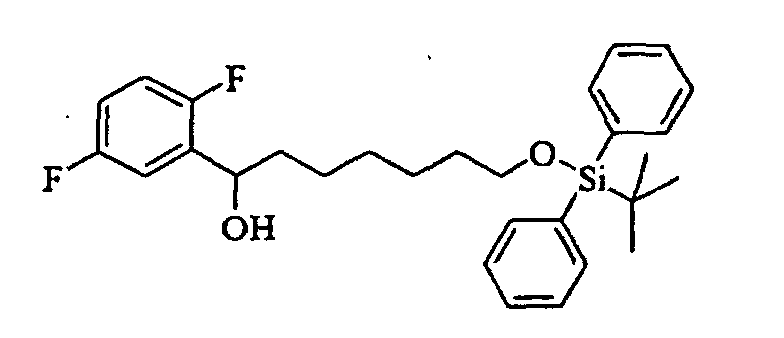
1H-NMR (400MHz, CDCl3) δ: 1.04(9H,m), 1.21-1.92(10H,m), 3.64(2H,t,J=6.5Hz), 4.97(1H,t,J=6.5Hz), 6.86-7.00(2H,m), 7.13-7.20(1H,m), 7.33-7.44(6H,m), 7.62-7.70(4H,m).

1H-NMR (400MHz, CDCl3) δ: 1.14-1.66(8H,m), 2.03-2.17(1H,m), 2.29-2.40(1H,m), 3.60(2H,t,J=6.6Hz),
5.06(1H,dd,J=11.6,3.1Hz), 6.84-6.91(1H,m), 6.92-7.00(1H,m), 7.25-7.31(1H,m), 7.74(1H,dd,J=8.3Hz), 7.78(1H,dd,J=8.3,2.2Hz), 8.67(1H,dd,J=2.2Hz).
MS m/z: 404 (M++H).

1H-NMR (400MHz, CDCl3) δ: 1.32-1.63(6H,m), 1.82-1.94(2H,m), 2.42-2.52(2H,m), 2.79-2.90(2H,m), 6.81-6.90(1H,m), 6.97-7.07(2H,m), 7.48(1H,d,J=8.6Hz), 7.71(1H,dd,J=8.6,2.5Hz), 8.65(1H,dd,J=2.5Hz).
IR (ATR) cm-1: 2933, 2864, 1493, 1308, 1188, 1159, 1107, 1011.
Anal. Calcd for C18H18ClF2NO2S: C, 56.03; H, 4.70; Cl, 9.19; F, 9.85; N, 3.63; S, 8.31. Found: C, 55.92; H, 4.77; Cl, 9.23; F, 9.90; N, 3.67; S, 8.41.
MS m/z: 386 (M++H).

1H-NMR (400MHz, CDCl3) δ: 4.25(1H,br s), 6.09(1H,s), 6.89-7.05(2H,m), 7.14-7.23(1H,m), 7.34(2H,d,J=5.4Hz), 8.44(2H,d,J=5.4Hz).
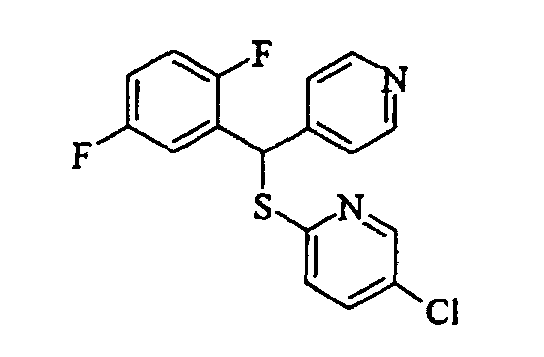
1H-NMR (400MHz, CDCl3) δ: 6.52(1H,s), 6.92-6.98(1H,m), 6.99-7.06(1H,m), 7.48(1H,dd,J=8.5,0.7Hz), 7.17-7.23(1H,m), 7.34(2H,d,J=6.1Hz), 7.47(1H,dd,J=8.5,2.4Hz), 8.33(1H,dd,J=2.4,0.7Hz), 8.54(2H,d,J=6.1Hz).
MS m/z: 349 (M++H).

1H-NMR (400MHz, CDCl3) δ: 6.44(1H,s), 6.96-7.08(2H,m), 7.48(2H,d,J=6.3Hz), 7.70-7.77(1H,m), 7.79(1H,dd,J=8.3,2.2Hz), 7.84(1H,dd,J=8.3,0.7Hz), 8.61(2H, d,J=6.3Hz), 8.67(1H,dd,J=2.2,0.7Hz).
IR (ATR) cm-1: 1591, 1493, 1329, 1161, 1107, 1014.
Anal. Calcd for C17H11ClF2N2O2S: C, 53.62; H, 2.91; F, 9.98; N, 7.36; S, 8.42. Found: C, 53.55; H, 2.87; F, 10.10; N, 7.40; S, 8.55.
MS m/z: 381 (M++H).

1H-NMR (400MHz, CD3OD) δ: 5.02(2H,s), 7.62(1H,d,J=8.6Hz), 7.73(2H,d,J=8.6Hz).
MS m/z: 300 (M++H+CH3CN).

Isomer 193-A
1H-NMR (400MHz, CDCl3) δ: 4.46(2H,s), 5.88(2H,s), 7.22-7.43(5H,m), 7.51(2H,d,J=8.7Hz), 7.57(2H,d,J=8.7Hz).
MS m/z: 349 (M++H).
Isomer 193-B
1H-NMR (400MHz, CDCl3) δ: 4.68(2H,s), 5.72(2H,s), 7.22-7.45(5H,m), 7.33(2H,d,J=8.6Hz), 7.55(2H,d,J=8.6Hz).
MS m/z: 349 (M++H).

1H-NMR (400MHz, CDCl3) δ: 0.54-0.67(1H,m), 0.79-1.02(3H,m), 1.08(1H,t,J=5.9Hz), 1.19-1.32(2H,m), 1.94-2.05(1H,m), 2.06-2.16(1H,m), 3.43(2H,q,J=5.9Hz), 4.21(1H,dd,J=11.5,3.4Hz), 5.72(1H,d,J=15.5Hz), 6.04(1H,d,J=15.5Hz), 7.21-7.28(2H,m), 7.37-7.44(3H,m), 7.42(2H,d,J=8.5Hz), 7.50(2H,d,J=8.5Hz).
IR (ATR) cm-1: 3402, 2935, 1581, 1456, 1321, 1151, 1084, 1012, 725.
MS m/z: 435 (M++H).
FAB-MS: 435.1240 (Calcd for C20H24ClN4O3S: 435.1258).

1H-NMR (400MHz, CDCl3) δ: 0.45-0.93(2H,m), 1.07-1.21(1H,m), 1.31-1.50(3H,m), 2.07-2.20(2H,m), 2.58-2.68(2H,m), 6.13(2H,s), 7.21(2H,d,J=8.8Hz), 7.28-7.39(5H,m), 7.41(2H,d,J=8.8Hz).
IR (ATR) cm-1: 2941, 1574, 1460, 1392, 1302, 1282, 1142, 1080, 1011, 831.
MP: 154-155°C.
Anal. Calcd for C20H21ClN4O2S: C, 57.62; H, 5.08; Cl, 8.50; N, 13.44. Found: C, 57.47; H, 5.07; Cl, 8.53; N, 13.45.
MS m/z: 417 (M++H).

1H-NMR (400MHz, CDCl3) δ: 1.12-1.64(7H,m), 2.22-2.34(1H,m), 2.36-2.48(1H,m), 3.56(2H,br s), 4.21(1H,dd,J=11.4,3.8Hz), 5.69(1H,d,J=14.4Hz), 5.73(1H,d,J=14.4Hz), 7.20(2H,d,J=8.3Hz), 7.28-7.48(5H,m), 7.37(2H,d,J=8.3Hz). IR (ATR) cm-1: 3543, 2933, 1581, 1475, 1394, 1321, 1149, 1088, 1012, 723.
MS m/z: 435 (M++H).
FAB-MS: 435.1252 (Calcd for C20H24ClN4O3S: 435.1258).

1H-NMR (400MHz, CDCl3) δ: 0.99-1.14(2H,m), 1.21-1.36(1H,m), 1.52-1.62(1H,m), 1.75-1.82(2H,m), 2.15-2.25(2H,m), 2.69-2.76(2H,m), 5.72(2H,s), 7.07(2H,d,J=8.8Hz), 7.11(2H,d,J=8.8 Hz), 7.34-7.47 (5H,m).
IR (ATR) cm-1: 2939, 1579, 1477, 1396, 1317, 1144, 1084, 1012, 756.
MP: 133-134°C.
Anal. Calcd for C20H21ClN4O2S: C, 57.62; H, 5.08; Cl, 8.50; N, 13.44. Found: C, 57.74; H, 5.14; Cl, 8.51; N, 13.37.
MS m/z: 417 (M++H).

1H-NMR (CDCl3) δ: 1.80-1.90(2H,m), 1.96-2.03(2H,m), 3.06(1H,dd,J=16.4,9.8Hz), 3.28-3.57(5H,m), 5.25(1H,dd,J=9.8,3.7Hz), 6.81(1H,td,J=9.1,4.4Hz), 6.91-6.98(1H,m), 7.18(1H,ddd,J=8.6,5.4,3.2Hz), 7.38 (2H, d, J=8.6Hz), 7. 53 (2H, d, J=8.6Hz).
IR (ATR) cm-1: 2949, 1633, 1583, 1495, 1442, 1396, 1346, 1308, 1277, 1211, 1147, 1014, 822, 769, 708, 615, 536, 472. mp: 122-125°C.
MS m/z: 414 (M++H).
FAB-MS: 414.0769 (Calcd for C19H19ClF2NO3S: 414.0742)
Anal. calcd for C19H18ClF2NO3S: C, 55.14; H, 4.38; Cl, 8.57; F, 9.18; N, 3.38; S, 7.75. Found: C, 55.22; H, 4.50; Cl, 8.44; F, 9.00; N, 3.39; S, 7.78.
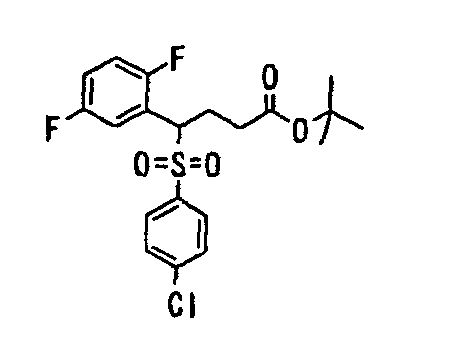
1H-NMR (400 MHz, CDCl3) δ: 1.40(9H,s), 2.10-2.20(1H,m), 2.23-2.35(2H,m), 2.65-2.76(1H,m), 4.67(1H,dd,J=10.3,4.4Hz), 6.85(1H,td,J=10.3,4.4Hz), 6.96-7.03(1H,m), 7.24(1H,ddd,J=8.6,5.4,3.2Hz), 7.40(2H,d,J=8.3Hz), 7.56(2H,d,J=8.3Hz).
IR (ATR) cm-1: 2978, 1724, 1583, 1496, 1367, 1321, 1232, 1146, 1084, 1014, 829, 756, 710, 642, 629, 555, 471.
MS m/z: 431 (M++H).
FAB-MS: 431.0904 (Calcd for C20H22ClF2O4S: 431.0895)
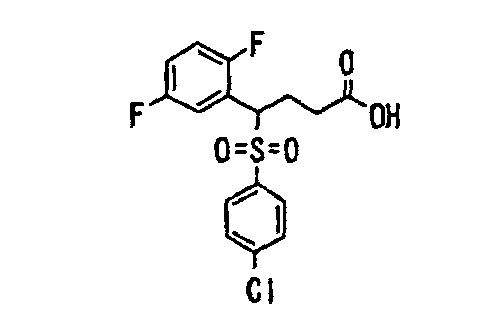
1H-NMR (400 MHz, CDCl3) δ: 2.32-2.50(3H,m), 2.71-2.81(1H,m), 4.68(1H,dd,J=9.3,4.9Hz), 6.86(1H,td,J=9.3,4.4Hz), 6.97-7.04(1H,m), 7.21-7.27(1H,m), 7.40(2H,d,J=8.6Hz), 7.56(2H,d, J=8.6Hz).
IR (ATR) cm-1: 2942, 1710, 1571, 1495, 1427, 1327, 1240, 1151, 1084, 1012, 916, 831, 789, 752, 710, 636, 555, 528, 463, 417.
mp: 157-158°C.
MS m/z: 375 (M++H).
Anal. calcd for C16H13ClF2O4S: C, 51.27; H, 3.50; Cl, 9.46; F, 10.14; S, 8.56. Found: C, 51.18; H, 3.47; Cl, 9.45; F, 10.32; S, 8.60.
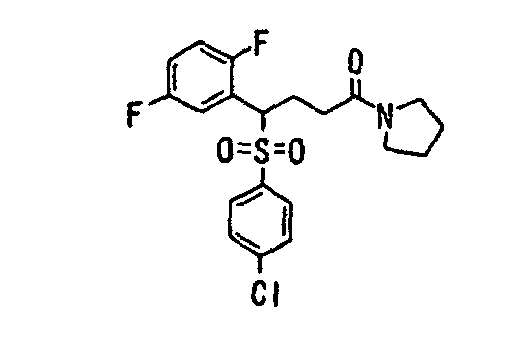
1H-NMR (400 MHz, CDCl3) δ: 1.78-1.93(4H,m), 2.20-2.43(3H,m), 2.69-2.78(1H,m), 3.15-3.21(1H,m), 3.25-3.30(1H,m), 3.41(2H,t,J=6.8Hz), 4.84(1H,dd,J=8.5,5.6Hz), 6.86(1H,td,J=9.0,4.6Hz), 6.95-7.02(1H,m), 7.24(1H,ddd,J=8.8,5.6,3.4Hz), 7.40(2H,d,J=8.5Hz), 7.59(2H,d,J=8.5Hz).
IR (ATR) cm-1: 3072, 2973, 2875, 1635, 1496, 1444, 1421, 1317, 1234, 1173, 1146, 1082, 1011, 877, 760, 737, 619, 559, 509, 469.
mp: 134-135°C.
MS m/z: 428 (M++H).
Anal. calcd for C20H20ClF2NO3S: C, 56.14; H, 4.71; Cl, 8.29; F, 8.88; N, 3.27; S, 7.49. Found: C, 56.01; H, 4.68; Cl, 8.03; F, 8.64; N, 3.35; S, 7.63.

1H-NMR (400 MHz, CDCl3) δ: 1.53-1.55(2H,m), 2.12-2.23(1H,m), 2.32-2.54(3H,m), 4.52(1H,dd,J=11.5,3.7Hz), 6.84(1H,td,J=9.0,4.4Hz), 6.96-7.02(1H,m), 7.23-7.28(1H,m), 7.38(2H,d,J=8.3Hz), 7.53(2H,d,J=8.3Hz).
IR (ATR) cm-1: 2945, 1693, 1585, 1495, 1427, 1323, 1296, 1238, 1211, 1153, 1086, 1012, 949, 829, 750, 708, 628, 542, 463.
mp: 151-152°C.
MS m/z: 389 (M++H).
Anal. calcd for C17H15ClF2O4S: C, 52.51; H, 3.89; Cl, 9.12; F, 9.77; S, 8.25. Found: C, 52.36; H, 3.88; Cl, 9.14; F, 9.75; S, 8.37.
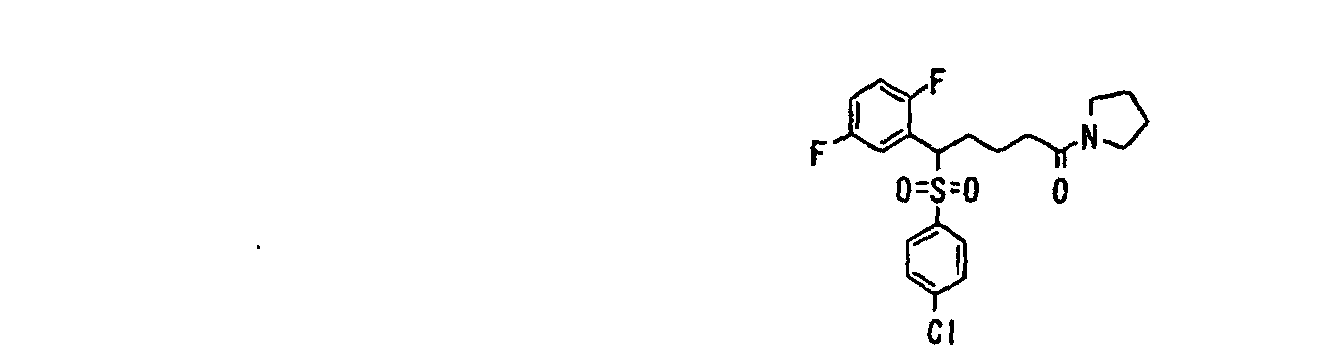
1H-NMR (400 MHz, CDCl3) δ: 1.52-1.66(2H,m), 1.80-1.88(2H,m), 1.91-1.98(2H,m), 2.15-2.34(3H,m), 2.41-2.50(1H,m), 3.34(2H,td,J=6.8,2.4Hz), 3.41(2H,t,J=6.8Hz), 4.55(1H,dd,J=11.7,2.9Hz), 6.81(1H,td,J=9.0,4.4Hz), 6.93-7.00(1H,m), 7.22-7.2.8(1H,m), 7.38(2H,d,J=8.5Hz), 7.52(2H,d,J=8.5Hz).
IR (ATR) cm-1: 2941, 2883, 1635, 1583, 1496, 1441, 1315, 1277, 1244, 1215, 1180, 1146, 1082, 1038, 1014, 829, 787, 752, 710, 631, 548, 519, 480, 440.
mp: 125-126°C.
MS m/z: 442(M++H).
Anal. calcd for C21H22ClF2NO3S: C, 57.07; H, 5.02; Cl, 8.02; F, 8.60; N, 3.17; S, 7.26. Found: C, 57.04; H, 5.13; Cl, 8.03; F, 8.64; N, 3.29; S, 7.39.

1H-NMR (400 MHz, CDCl3) δ: 1.77-2.00(8H,m), 2.29(2H,t,J=7.3Hz), 3.39-3.48(6H,m).
MS m/z: 234 (M++H).

1H-NMR (400 MHz, CDCl3) δ: 1.25-1.37(2H,m), 1.58-1.75(2H,m), 1.80-1.88(2H,m), 1.91-1.97(2H,m), 2.07-2.16(1H,m), 2.20(2H,td,J=7.6,3.2Hz), 2.41-2.50(1H,m), 3.35(2H,t,J=6.8Hz), 3.43(2H,t,J=6.8Hz), 4.50-4.56(1H,m), 6.83(1H,td,J=9.0,4.4Hz), 6.94-7.01(1H,m), 7.24(1H,ddd,J=8.8, 5.4,3.2Hz), 7.38(2H,d,J=8.8Hz), 7.53(2H,d,J=8.8Hz).
IR (ATR) cm-1: 2952, 1626, 1493, 1441, 1321, 1232, 1149, 1086, 1014, 820, 768, 631, 528, 469.
mp: 135-136°C.
MS m/z: 456 (M++H).
Anal. calcd for C22H24ClF2NO3S: C, 57.95; H, 5.31; Cl, 7.78; F, 8.33; N, 3.07; S, 7.03. Found: C, 57.73; H, 5.20; Cl, 7.76; F, 8.31; N, 3.13; S, 7.14.

1H-NMR (400 MHz, CDCl3) δ: 1.22-1.90(7H,m), 2.30(2H,t,J=7.3Hz), 2.40-2.48(1H,m), 4.51(1H,dd,J=11.7,2.9Hz), 6.83(1H,td,J=9.0,4.4Hz), 6.94-7.01(1H,m), 7.22-7.26(1H,m), 7.38(2H,d,J=8.5Hz), 7. 53 (2H, d, J=8.5Hz).
IR (ATR) cm-1: 3487, 2941, 2860, 1728, 1496, 1414, 1321, 1217, 1176, 1149, 1086, 1014, 818, 787, 756, 633, 536, 478. mp: 72-76°C
MS m/z: 417 (M++H).
Anal. calcd for C19H19ClF2O4S·0.5H2O: C, 53.59; H, 4.73; Cl, 8.32; F, 8.92; S, 7.53. Found: C, 53.83; H, 4.67; Cl, 8.39; F, 8.94; S, 7.72.
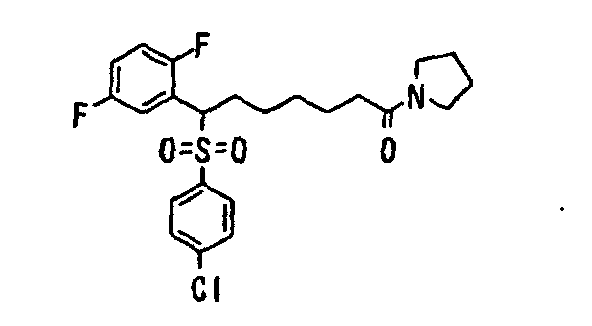
1H-NMR (400 MHz, CDCl3) δ: 1.21-1.43(4H,m), 1.54-1.67(2H,m), 1.80-1.98(4H,m), 2.03-2.15(1H,m), 2.19(2H,t,J=7.6Hz), 2.38-2.46(1H,m), 3.36(2H,t,J=6.8Hz), 3.44(2H,t,J=6.8Hz), 4.51(1H,dd,J=11.5,2.9Hz), 6.83(1H,td,J=9.0,4.4Hz), 6.94-7.01(1H,m), 7.23(1H,ddd,J=8.8,5.4,3.2Hz), 7.38(2H,d,J=6.8Hz), 7.53(2H,d,J=8.8Hz).
IR (ATR) cm-1: 2960, 1630, 1583, 1496, 1442, 1315, 1228, 1196, 1149, 1086, 1011, 872, 841, 822, 787, 756, 633, 536, 467.
mp: 106-106°C
MS m/z: 470 (M++H).
Anal. calcd for C23H26ClF2NO3S: C, 58.78; H, 5.58; Cl, 7.54; F, 8.08; N, 2.98; S, 6.82. Found: C, 58.53; H, 5.49; Cl, 7.66; F, 8.19; N, 3.06; S, 8.82.

IR (ATR) cm-1: 3519, 3043, 2964, 2922, 2875, 1576, 1495, 1427, 1396, 1308, 1186, 1147, 1084, 1036, 957, 895, 818, 786, 752, 708, 625, 521, 467.
mp: 147-149°C.
MS m/z: 347(M++H).
Anal. calcd for C15H13ClF2O3S: C, 51.95; H, 3.78; Cl, 10.22; F, 10.96; S, 9.25. Found: C, 51.89; H, 3.75; Cl, 10.15; F, 10.90; S, 9.36.
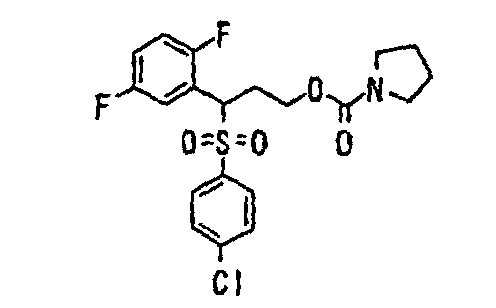
1H-NMR (400 MHz, CDCl3) δ: 1.77-1.88(4H,m), 2.37-2.47(1H,m), 2.75-3.84(1H,m), 3.09-3.20(2H,m), 3.28-3.34(2H,m), 3.89(1H,ddd,J=11.3,8.3,4.4Hz), 4.22(1H,dt,J=11.3,5.6Hz), 4.70(1H,dd,J=11.3,3.6Hz), 6.83(1H,td,J=9.1,4.4Hz), 6.95-7.02(1H,m), 7.20-7.26(1H,m), 7.39(2H,d,J=8.6Hz), 7.54(2H,d,J=8.6Hz).
IR (ATR) cm-1: 2974, 2879, 1685, 1585, 1496, 1427, 1373, 1306, 1178, 1149, 1091, 816, 766, 754, 710, 631, 553, 523, 467, 444.
mp: 109-110°C.
MS m/z: 444 (M++H).
Anal. calcd for C20H20ClF2NO4S: C, 54.12; H, 4.54; Cl, 7.99; F, 8.56; N, 3.16; S, 7.37. Found: C, 53.93; H, 4.49; Cl, 8.00; F, 8.50; N, 3.22; S, 7.37.

1H-NMR (400 MHz, CDCl3) δ: 2.35-2.45(1H,br m), 2.56-2.72(2H,br m), 2.79-2.88(1H,m), 3.28-3.40(2H,m), 3.63-4.28(8H,m), 4.60(1H,dd,J=10.8,3.9Hz), 6.82(1H,td,J=9.1,4.4Hz), 6.96-7.02(1H,m), 7.18-7.26(1H,br m), 7.39(2H,d,J=8.6Hz), 7.45-7.53(5H,m), 7.58-7.64(2H, br).
IR (ATR) cm-1: 2958, 2708, 2675, 1701, 1583, 1495, 1423, 1321, 1255, 1217, 1153, 1142, 1092, 951, 827, 752, 700, 627, 555, 525, 468.
mp: 184-189°C.
MS m/z: 549 (M++H).
Anal. calcd for C27H27ClF2N2O4S·HCl: C, 55.39; H, 4.82; Cl, 12.11; F, 6.49; N, 4.78; S, 5.48. Found: C, 55.11; H, 4.80; Cl, 11.92; F, 6.36; N, 4.85; S, 5.54.

1H-NMR (400 MHz, CDCl3) δ: 2.33-2.48(1H,br m), 2.77-2.97(4H,m), 3.27-3.43(2H,br m), 3.68-3.78(2H,br s), 3.87-3.98(1H,br m), 4.19-4.30(1H,br m), 4.65-4.77(1H,br m), 6.84(1H,td,J=9.1,4.4Hz), 6.95-7.02(1H,m), 7.21-7.26(1H,m), 7.39 (2H, d, J=8.8Hz), 7.54 (2H, d, J=8.8Hz).
IR (ATR) cm-1: 3423, 2943, 1685, 1583, 1495, 1317, 1279, 1215, 1147, 1080, 1012, 827, 754, 708, 627, 555, 467.
MS m/z: 448 (M++H).
EI-MS: 447.0699(Calcd for C19H20ClF2NO5S: 447.0719)

1H-NMR (400 MHz, CDCl3) δ: 2.39-2.48(1H,m), 2.79-2.88(1H,m), 3.19-3.47(4H,br), 3.52-3.70(4H,br s), 3.97(1H,ddd,J=11.2,8.3,5.1Hz), 4.23(1H,dt,J=11.2,5.6Hz), 4.65(1H,dd,J=11.2,3.4Hz), 6.84(1H,td,J=9.0,4.6Hz), 6.97-7.03(1H,m), 7.22-7.26(1H,m), 7.40(2H,d,J=8.5Hz), 7.53(2H,d,J=8.5Hz).
IR (ATR) cm-1: 3086, 2864, 1684, 1576, 1498, 1469, 1427, 1311, 1281, 1240, 1221, 1178, 1142, 1080, 837, 773, 752, 710, 633, 557, 528, 471.
mp: 140-141°C.
MS m/z: 460 (M++H).
Anal. calcd for C20H20ClF2NO5S: C, 52.23; H, 4.38; Cl, 7.71; F, 8.26; N, 3.05; S, 6.97. Found: C, 51.95; H, 4.29; Cl, 7.80; F, 8.32; N, 3.12; S, 7.12.
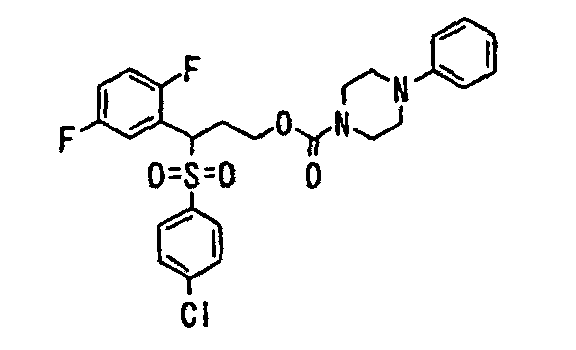
1H-NMR (400 MHz, CDCl3) δ: 2.40-2.50(1H,m), 2.80-2.89(1H,m), 3.00-3.15(4H,br s), 3.37-3.65(4H,m), 3.98(1H,ddd,J=11.2,8.3,5.1Hz), 4.24(1H,dt,J=11.2,5.6Hz), 4.67(1H,dd,J=11.2,3.9Hz), 6.84(1H,td,J=9.0,4.6Hz), 6.89-6.93(3H,m), 6.95-7.03(1H,m), 7.23-7.32(3H,m), 7.39(2H,d,J=8.3Hz), 7.54(2H,d,J=8.3Hz).
IR (ATR) cm-1: 2829, 1687, 1599, 1581, 1495, 1437, 1321, 1223, 1151, 1130, 1084, 1001, 930, 814, 758, 692, 634, 552, 469.
mp: 127-129°C.
MS m/z: 535 (M++H).
Anal. calcd for C26H25ClF2N2O4S: C, 58.37; H, 4.71; Cl, 6.63; F, 7.10; N, 5.24; S, 5.99. Found: C, 58.28; H, 4.86; Cl, 6.56; F, 7.17; N, 5.30; S, 6.13.

1H-NMR (400 MHz, CDCl3) δ: 2.37-2.47(1H,m), 2.60-2.92(8H,m), 3.20-4.30(6H,m), 4.62(1H,dd,J=10.0,3.4Hz), 6.85(1H,td,J=9.0,4.4Hz), 6.98-7.05(1H,m), 7.19-7.28(1H,m), 7.39(2H,d,J=8.8Hz), 7.51(2H,d,J=8.8Hz).
IR (ATR) cm-1: 2387, 1699, 1583, 1496, 1473, 1425, 1317, 1255, 1232, 1176, 1149, 1084, 978, 829, 758, 710, 629, 555, 467.
MS m/z: 473 (M++H).
Anal. calcd for C21H23ClF2N2O4S·HCl·0.25H2O: C, 49.08; H, 4.81; Cl, 13.80; F, 7.39; N, 5.45; S, 6.24. Found: C, 49.03; H, 5.01; Cl, 13.31; F, 7.31; N, 5.54; S, 6.28.

1H-NMR (400 MHz, CDCl3) δ: 2.34-2.44(1H,m), 2.77-2.86(1H,m), 3.89(1H,ddd,J=11.0,9.0,5.1Hz), 4.19(1H,dt,J=11.0,5.6Hz), 4.53(2H,br s), 4.69(1H,dd,J=11.0,3.9Hz), 6.84(1H,td,J=9.0,4.4Hz), 6.97-7.03(1H,m), 7.24(1H,ddd,J=8.8,5.4,3.2Hz), 7.40(2H,d,J=8.5Hz), 7.54(2H,d,J=8.5Hz).
IR (ATR) cm-1: 3452, 3263, 1734, 1606, 1493, 1396, 1313, 1230, 1144, 1080, 1051, 957, 829, 795, 752, 623, 553, 465.
mp: 139-140°C.
MS m/z: 390 (M++H).
Anal. calcd for C16H14ClF2NO4S: C, 49.30; H, 3.62; Cl, 9.10; F, 9.75; N, 3.59; S, 8.23. Found: C, 49.13; H, 3.53; Cl, 9.19; F, 9.86; N, 3.68; S, 8.35.

1H-NMR (400 MHz, CDCl3) δ: 2.32-2.45(1H,m), 2.60-2.85(4H,m), 3.83-3.90(1H,m), 4.19(1H,dt,J=11.0,5.4Hz), 4.49(1H,br s), 4.68(1H,m), 6.84(1H,td,J=9.0,4.4Hz), 6.96-7.02(1H,m), 7.20-7.26(1H,m), 7.39(2H,d,J=8.5Hz), 7.54(2H,d,J=8.5Hz).
IR (ATR) cm-1: 3403, 1709, 1527, 1496, 1477, 1317, 1248, 1147, 1086, 1012, 827, 754, 629, 555, 467.
MS m/z: 404 (M++H).
FAB-MS: 404.0551 (calcd for C17H17ClF2NO4S: 404.0535)

1H-NMR (400 MHz, CDCl3) δ: 2.38-2.46(1H,m), 2.70-2.88(7H,m), 3.89(1H,ddd,J=11.2,8.3,4.9Hz), 4.21(1H,dt,J=11.2,5.6Hz), 4.69(1H,dd,J=11.2,3.9Hz), 6.83(1H,td,J=9.0,4.4Hz), 6.95-7.02(1H,m), 7.23(1H,ddd,J=8.8,5.4,3.4Hz), 7.39(2H,d,J=8.5Hz), 7.54(2H,d,J=8.5Hz).
IR (ATR) cm-1: 2943, 1697, 1583, 1495, 1402, 1319, 1279, 1223, 1180, 1147, 1082, 1012, 829, 754, 710, 623, 555, 525, 467.
MS m/z: 418 (M++H).
FAB-MS: 418.0692 (calcd for C18H19ClF2NO4S: 418.0691)

1H-NMR (400 MHz, CDCl3) δ: 3.32(1H,dd,J=13.9,11.7Hz), 3.84(1H,dd,J=13.9,3.4Hz), 4.81(1H,dd,J=11.7,3.4Hz), 6.69(1H,td,J=9.3,4.4Hz), 6.87-6.94(1H,m), 7.00-7.05(2H,m), 7.12-7.20(3H,m), 7.38-7.43(3H,m), 7.57(2H,d,J=8.5Hz).
IR (ATR) cm-1: 1574, 1493, 1303, 1279, 1219, 1144, 1083, 1011, 879, 825, 785, 742, 698, 633, 555, 526, 467.
mp: 160-161°C.
MS m/z: 393 (M++H).
Anal. calcd for C20H15ClF2NO2S: C, 61.15; H, 3.85; Cl, 9.02; F, 9.67; S, 8.16. Found: C, 61.07; H, 3.87; Cl, 8.95; F, 9.95; S, 8.30.
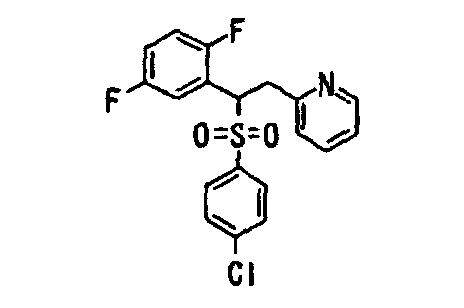
1H-NMR (400 MHz, CDCl3) δ: 3.49(1H,dd,J=14.7,10.7Hz), 3.95(1H,dd,J=14.7,4.6Hz), 5.37(1H,dd,J=11.0,4.2Hz), 6.73(1H,td,J=9.0,4.4Hz), 6.86-6.94(1H,m), 7.03-7.07(2H,m), 7.33(1H,ddd,J=8.8,5.4,3.2Hz), 7.39(2H,d,J=8.5Hz), 7.49(1H,td,J=7.8,1.7Hz), 7.60(2H,d,J=8.5Hz), 8.41 (1H,d,J=4.4Hz).
IR (ATR) cm-1: 3041, 1585, 1496, 1433, 1321, 1277, 1149, 1086, 910, 825, 779, 746, 644, 536, 461, 436.
mp: 105-107°C.
MS m/z: 394 (M++H).
Anal. calcd for C19H14ClF2NO2S: C, 57.94; H, 3.58; Cl, 9.00; F, 9.65; N, 3.56; S, 8.14. Found: C, 57.85; H, 3.59; Cl, 8.97; F, 9.52; N, 3.69; S, 8.28.
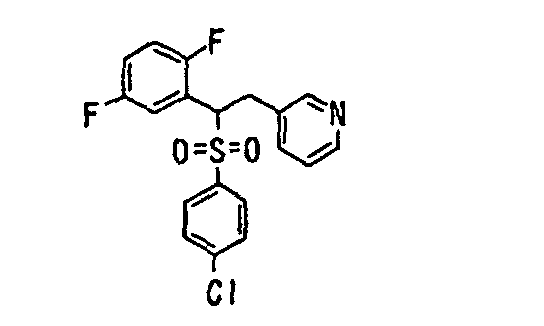
1H-NMR (400 MHz, CDCl3) δ: 3.35(1H,dd,J=14.4,11.7Hz), 3.85(1H,dd,J=14.4,3.9Hz), 4.77(1H,dd,J=11.7,3.2Hz), 6.71(1H,td,J=9.0,4.4Hz), 6.90-6.97(1H,m), 7.13(1H,dd,J=8.1,4.9Hz), 7.37-7.45(4H,m), 7.57(2H,d,J=8.8Hz), 8.30(1H,d,J=2.0Hz), 8.41(1H,dd, J=4.9,1.5Hz).
IR (ATR) cm-1: 3078, 1577, 1495, 1427, 1313, 1279, 1217, 1144, 1082, 1012, 823, 775, 752, 706, 646, 557, 532, 464.
mp: 162-163°C.
MS m/z: 394 (M++H).
Anal. calcd for C19H14ClF2NO2S: C, 57.94; H, 3.58; Cl, 9.00; F, 9.65; N, 3.56; S, 8.14. Found: C, 57.80; H, 3.51; Cl, 9.06; F, 9.53; N, 3.71; S, 8.22.

1H-NMR (400 MHz, CDCl3) δ: 3.34(1H,dd,J=14.2,12.0Hz), 3.84(1H,dd,J=14.2, 3.4Hz), 4.81(1H,dd,J=12.0,3.4Hz), 6.72(1H,td,J=9.0,4.6Hz), 6.91-6.96(1H,m), 6.97(2H,d,J=6.1Hz), 7.34-7.39(1H,m), 7.40(2H,d,J=8.5Hz), 7.56(2H,d,J=8.5Hz), 8.42(2H,dd,J=4.4,1.5Hz).
IR (ATR) cm-1: 1597, 1493, 1417, 1301, 1277, 1219, 1174, 1144, 1082, 1012, 985, 883, 850, 808, 754, 706, 631, 606, 557, 524, 469.
mp: 129°C.
MS m/z: 394 (M++H).
Anal. calcd for C19H14ClF2NO2S: C, 57.94; H, 3.58; Cl, 9.00; F, 9.65; N, 3.56; S, 8.14. Found: C, 57.67; H, 3.45; Cl, 9.00; F, 9.78; N, 3.64; S, 8.31.

1H-NMR (400 MHz, CDCl3) δ: 2.42-2.52(1H,m), 2.68-2.83(2H,m), 2.85-2.92(1H,m), 4.54(1H,dd,J=11.2,2.4Hz), 6.70(1H,d,J=2.7Hz), 6.86(1H,td,J=9.0,4.4Hz), 6.90(1H,dd,J=5.1,3.4Hz), 6.97-7.05(1H,m), 7.14(1H,dd,J=5.1,1.2Hz), 7.24-7.29(1H,m), 7.38(2H,d,J=8.5Hz), 7.51(2H,d,J=8.5Hz).
IR (ATR) cm-1: 3086, 1583, 1495, 1425, 1394, 1317, 1277, 1147, 1084, 1012, 827, 754, 694, 627, 555, 465.
MS m/z: 413 (M++H).
FAB-MS: 413.0251 (Calcd for C19H16ClF2O2S: 413.0248).
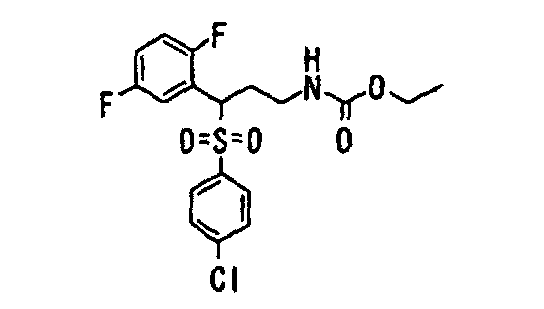
1H-NMR (400 MHz, CDCl3) δ: 1.21(3H,t,J=7.1Hz), 2.24-2.36(1H,m), 2.60-2.70(1H,m), 3.10-3.33(2H,m), 4.06(2H,q,J=7.1Hz), 4.60(1H,dd,J=11.0,4.6Hz), 4.70(1H,br s), 6.83(1H,td,J=9.0,4.4Hz), 6.95-7.02(1H,m), 7.21-7.26(1H,m), 7.38(2H,d,J=8.3Hz), 7.52(2H,d,J=8.3Hz).
IR (ATR) cm-1: 3394, 1691, 1576, 1525, 1496, 1396, 1304, 1281, 1250, 1225, 1149, 1086, 1028, 1012, 974, 885, 829, 791, 766, 752, 629, 553, 465.
mp: 121-122°C.
MS m/z: 418 (M++H).
Anal. calcd for C18H18ClF2NO4S: C, 51.74; H, 4.34; Cl, 8.48; F, 9.09; N, 3.35; S, 7.67. Found: C, 51.49; H, 4.43; Cl, 8.55; F, 9.13; N, 3.61; S, 7.75.

1H-NMR (400 MHz, CDCl3) δ: 1.11-1.27(3H,br m), 2.20-2.35(1H,br m), 2.68-2.90(4H,m), 3.18-3.35(2H,m), 3.93-4.12(2H,br m), 4.51(1H,br s), 6.82(1H,td,J=9.0,4.6Hz), 6.96-7.04(1H,br m), 7.21-7.27(1H,br m), 7.38(2H,d,J=8.5Hz), 7.51(2H,d,J=8.5Hz).
IR (ATR) cm-1: 2983, 1693, 1583, 1495, 1319, 1182, 1147, 1084, 1012, 883, 827, 754, 710, 629, 555, 467. MS m/z: 432 (M++H).
FAB-MS: 432.0838 (calcd for C19H21ClF2NO4S: 432.0848)

1H-NMR (400 MHz, CDCl3) δ: 1.44-1.60(2H,m), 2.05-2.17(1H,m), 2.44-2.55(1H,m), 3.19(2H,q,J=6.4Hz), 3.28(2H,t,J=6.8Hz), 4.29(2H,t,J=6.8Hz), 4.57(1H,br m), 4.76(1H,br s), 6.84(1H,td,J=9.0,4.4Hz), 6.95-7.02(1H,m), 7.23-7.28(1H,m), 7.39(2H,d,J=8.5Hz), 7.53(2H,d,J=8.5Hz).
IR (ATR) cm-1: 3406, 1722, 1585, 1516, 1493, 1306, 1238, 1147, 1009, 872, 822, 781, 752, 708, 627, 546, 525, 463.
mp: 100-101°C
MS m/z: 558 (M++H).
Anal. calcd for C19H19ClF2INO4S: C, 40.91; H, 3.43; Cl, 6.36; F, 6.81; N, 2.51; S, 5.75. Found: C, 40.79; H, 3.40; Cl, 6.41; F, 6.96; N, 2.61; S, 5.85.

1H-NMR (400 MHz, CDCl3) δ: 1.52-1.63(2H,m), 2.05-2.16(1H,m), 2.42-2.51(1H,m), 3.18-3.35(2H,m), 3.50(2H,t,J=8.3Hz), 4.31(2H,dd,J=8.8,7.1Hz), 4.60(1H,dd,J=10.3,4.9Hz), 6.85(1H,td,J=9.0,4.4Hz), 6.96-7.02(1H,m), 7.22-7.28(1H,m), 7.39(2H,d,J=8.5Hz), 7.54(2H,d,J=8.5Hz).
IR (ATR) cm-1: 2918, 1734, 1583, 1487, 1425, 1308, 1265, 1182, 1130, 1086, 1012, 895, 804, 758, 708, 594, 577, 538, 478, 444.
mp: 156-159°C
MS m/z: 430 (M++H).
Anal. calcd for C19H18ClF2NO4S: C, 53.09; H, 4.22; Cl, 8.25; F, 8.84; N, 3.26; S, 7.46. Found: C, 52.84; H, 4.15; Cl, 8.40; F, 8.96; N, 3.33; S, 7.58.

1H-NMR (400 MHz, CDCl3) δ: 1.40-1.49(11H,s), 2.05-2.14(1H,m), 2.43-2.52(1H,m), 3.07-3.17(2H,m), 4.48-4.60(2H,m), 6.83(1H,td,J=9.0,4.4Hz), 6.94-7.01(1H,m), 7.24(1H,ddd,J=8.8,5.4,3.2Hz), 7.38(2H,d,J=8.5Hz), 7.53(2H,d,J=8.5Hz).
IR (ATR) cm-1: 3392, 2960, 1695, 1583, 1514, 1493, 1365, 1313, 1248, 1174, 1147, 1084, 999, 827, 752, 644, 548, 528, 451.
mp: 119-120°C.
MS m/z: 460(M++H).
Anal. calcd for C21H24ClF2NO4S: C, 54.84; H, 5.26; Cl, 7.71; F, 8.26; N, 3.05; S, 6.97. Found: C, 54.84; H, 5.31; Cl, 7.06; F, 8.36; N, 3.16; S, 7.14.
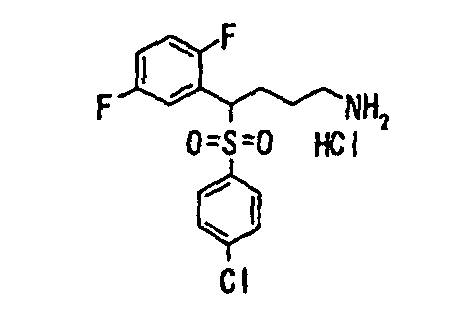
1H-NMR (400 MHz, CDCl3) δ: 1.51-1.60(1H,m), 1.63-1.75(1H,m), 2.18-2.28(1H,m), 2.45-2.54(1H,m), 2.95(2H,ddd,J=8.5,6.8,3.2Hz), 4.76(1H,dd,J=11.0,4.6Hz), 6.98(1H,td,J=9.3,4.4Hz), 7.09-7.17(1H,m), 7.32(1H,ddd,J=9.0,5.6,3.4Hz), 7.52(2H,d,J=8.8Hz), 7.60 (2H, d, J=8.8Hz).
IR (ATR) cm-1: 2951, 2871, 1583, 1496, 1427, 1396, 1311, 1279, 1219, 1147, 1081, 1011, 870, 825, 742, 706, 629, 536, 463.
mp: 232-233°C.
MS m/z: 360 (M++H).
Anal. calcd for C16H16ClF2NO2S·HCl: C, 48.49; H, 4.32; Cl, 17.89; F, 9.59; N, 3.53; S, 8.09. Found: C, 48.20; H, 4.27; Cl, 17.84; F, 9.61; N, 3.63; S, 8.15.

1H-NMR (400 MHz, CD3OD) δ: 1.58-1.67(2H,m), 2.18-2.28(1H,m), 2.42-2.52(1H,m), 3.40(1H,dt,J=13.7,6.6Hz), 3.51(1H,dt,J=13.7,6.8Hz), 4.81(1H,m), 6.98(1H,td,J=9.3,4.4Hz), 7.08-7.15(1H,m), 7.30(1H,ddd,J=9.0,5.6,3.4Hz), 7.50(2H,d,J=8.8Hz), 7.62(2H,d,J=8.8Hz), 8.18(1H,dd,J=8.1,5.9Hz), 8.92(1H,dd,J=8.1,1.5Hz), 8.99(1H,d,J=5.9Hz), 9.22(1H,d,J=1.2Hz).
IR (ATR) cm-1: 3282, 2457, 2096, 1977, 1666, 1547, 1493, 1302, 1234, 1173, 1147, 1092, 1016, 883, 829, 760, 733, 673, 623, 528.
mp: 154-157°C
MS m/z: 465 (M++H).
Anal. calcd for C22H19ClF2N2O3S·HCl: C, 52.70; H, 4.02; Cl, 14.14; F, 7.58; N, 5.59; S, 6.40. Found: C, 52.59; H, 4.01; Cl, 14.19; F, 7.72; N, 5.73; S, 6.56.

1H-NMR (400 MHz, CDCl3) δ: 1.43-1.65(2H,m), 1.97-2.12(3H,m), 2.32-2.43(3H,m), 3.16(1H,dt,J=13.7,6.8Hz), 3.28-3.42(3H,m), 4.67(1H,dd,J=10.9,3.4Hz), 6.84(1H,td,J=9.0,4.4Hz), 6.95-7.02(1H,m), 7.22-7.28(1H,m), 7.39(2H,d,J=8.5Hz), 7.56(2H,d,J=8.5Hz).
IR (ATR) cm-1: 2941, 1676, 1583, 1495, 1425, 1394, 1319, 1279, 1147, 1084, 1012, 827, 754, 707, 625, 555, 467.
MS m/z: 428 (M++H).
FAB-MS: 428.0885 (Calcd for C20H21ClF2NO3S: 428.0899).
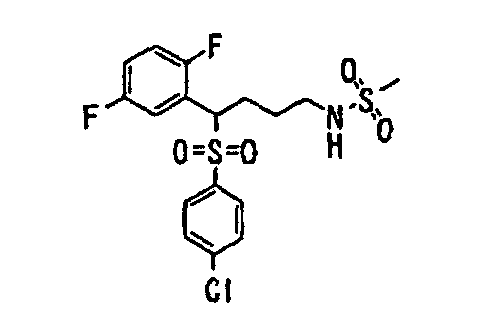
1H-NMR (400 MHz, CDCl3) δ: 1.50-1.67(2H,m), 2.09-2.20(1H,m), 2.50-2.59(1H,m), 2.95(3H,s), 3.12-3.21(2H,m), 4.30(1H,t,J=6.3Hz), 4.56(1H,dd,J=10.7,4.4Hz), 6.84(1H,td,J=9.0,4.6Hz), 6.96-7.03(1H,m), 7.23-7.28(1H,m), 7.39(2H,d,J=8.0Hz), 7.53(2H,d,J=8.0Hz).
IR (ATR) cm-1: 3269, 1585, 1498, 1308, 1252, 1217, 1140, 1090, 1082, 976, 870, 787, 750, 627, 517, 467.
mp: 128°C.
MS m/z: 438 (M++H).
Anal. calcd for C17H18ClF2NO4S2: C, 46.63; H, 4.14; Cl, 8.10; F, 8.68; N, 3.20; S, 14.64. Found: C, 46.62; H, 4.08; Cl, 8.15; F, 8.69; N, 3.27; S, 14.71.
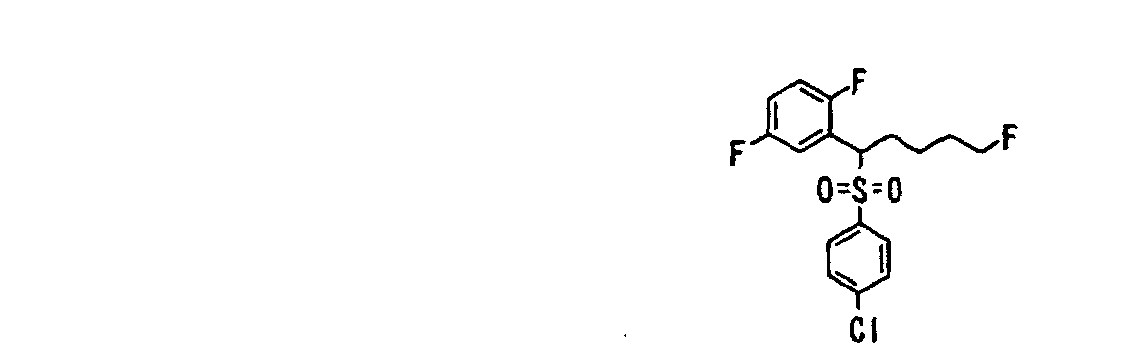
1H-NMR (400 MHz, CDCl3) δ: 1.34-1.42(2H,m), 1.64-1.80(2H,m), 2.09-2.20(1H,m), 2.45-2.53(1H,m), 4.39(2H,dt,J=47.1,5.9Hz), 4.52(1H,dd,J=11.2,2.9Hz), 6.84(1H,td,J=9.0,4.4Hz), 6.96-7.02(1H,m), 7.23-7.28(1H,m), 7.38(2H,d,J=8.5Hz), 7.53(2H,d,J=8.5Hz).
mp: 77-78°C.
IR (ATR) cm-1: 2941, 1585, 1495, 1429, 1396, 1321, 1279, 1242, 1186, 1149, 1092, 1084, 962, 874, 829, 777, 752, 710, 633, 557, 536, 474.
MS m/z: 377 (M++H).
Anal. calcd for C17H16ClF3O2S: C, 54.19; H, 4.28; Cl, 9.41; F, 15.13; S, 8.51. Found: C, 54.27; H, 4.22; Cl, 9.44; F, 14.90; S, 8.68.

1H-NMR (400 MHz, CDCl3) δ: 1.87(3H,s), 1.88(3H,s), 6.86(1H,ddd,J=11.9,9.0,4.9Hz), 6.98-7.05(1H,m), 7.10(1H,ddd,J=9.8,6.6,3.4Hz), 7.39(2H,d,J=8.5Hz), 7.44(2H,d,J=8.5Hz).
IR (ATR) cm-1: 1574, 1489, 1475, 1412, 1304, 1219, 1184, 1155, 1124, 1068, 1011, 887, 867, 827, 756, 712, 660, 623, 600, 571, 532, 511, 474, 432.
mp: 147-148°C
MS m/z: 331(M++H).
Anal. calcd for C15H13ClF2O2S: C, 54.47; H, 3.96; Cl, 10.72; F, 11.49; S, 9.69. Found: C, 54.39; H, 3.92; Cl, 10.68; F, 11.51; S, 9.78.
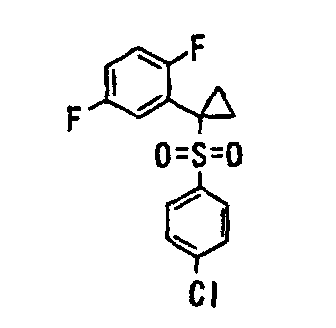
1H-NMR (400 MHz, CDCl3) δ: 1.31(2H,dd,J=7.6,5.1Hz), 2.02(2H,dd,J=7.6,5.1Hz), 6.83(1H,td,J=9.0,4.4Hz), 6.97-7.03(1H,m), 7.06(1H,ddd,J=8.3,5.4,3.2Hz), 7.41(2H,d,J=8.6Hz), 7.49(2H,d,J=8.6Hz).
IR (ATR) cm-1: 3089, 1583, 1496, 1477, 1429, 1308, 1279, 1252, 1211, 1184, 1142, 1086, 1012, 893, 827, 769, 758, 737, 663, 625, 596, 559, 546, 492, 476, 451, 411.
mp: 177-179°C
MS m/z: 329(M++H).
Anal. calcd for C15H11ClF2O2S: C, 54.80; H, 3.37; Cl, 10.78; F, 11.56; S, 9.75. Found: C, 54.72; H, 3.31; Cl, 10.71; F, 11.58; S, 9.87.

1H-NMR (400 MHz, CDCl3) δ: 0.05(3H,s), 0.05(3H,s), 0.89(9H,s), 1.50-1.60 (2H,m), 1.65-1.75 (2H,m), 2.46(2H,t,J=6.8Hz), 3.63(2H,t,J=6.3Hz), 9.77(1H,s).
MS m/z: 217(M++H).

Isomer 234-A
1H-NMR (400 MHz, CDCl3) δ: 0.00(3H,s), 0.00(3H,s), 0.85(9H,s), 1.25-1.70(6H,m), 3.12(1H,d,J=3.2Hz), 3.55(2H,t,J=5.9Hz), 4.48(1H,s), 4.83-4.88(1H,m), 6.83(1H,td,J=9.0,4.6Hz), 6.95-7.02(1H,m), 7.39(2H,d,J=8.5Hz), 7.57(2H,d,J=8.5Hz), 7.84(1H,ddd,J=9.0,5.9,3.4Hz).
MS m/z: 519(M++H).
Isomer 234-B
1H-NMR (400 MHz, CDCl3) δ: -0.04(3H,s), -0.01(3H,s), 0.85(9H,s), 1.30-1.54(6H,m), 3.50-3.57(2H,m), 3.81(1H,br s), 4.58-4.80(2H,m), 6.84(1H,td,J=9.0,4.6Hz), 6.96-7.06(1H,m), 7.15-7.27(1H,m), 7.39(2H,d,J=8.5Hz), 7.52(2H,d,J=8.5Hz).
MS m/z: 519 (M++H).

1H-NMR (400 MHz, CDCl3) δ: 1.25-1.70(7H,m), 3.15(1H,s), 3.55-3.65(2H,m), 4.49(1H,s), 4.86-4.90(1H,m), 6.85(1H,td,J=9.0,4.4Hz), 6.97-7.03(1H,m), 7.40(2H,d,J=8.8Hz), 7.58(2H,d,J=8.8Hz), 7.85(1H,ddd,J=9.0,5.9,3.4Hz).
IR (ATR) cm-1: 3232, 1576, 1491, 1396, 1306, 1236, 1217, 1147, 1093, 1012, 891, 814, 756, 719, 615, 548, 467.
mp: 108-109°C
MS m/z: 405 (M++H).
FAB-MS: 405.0756 (Calcd for C18H14ClF2O4S: 405.0739).
Anal. calcd for C18H19ClF2O4S·0.5H2O: C, 52.24; H, 4.87; S, 7.75. Found: C, 52.33; H, 4.84; S, 7.83.
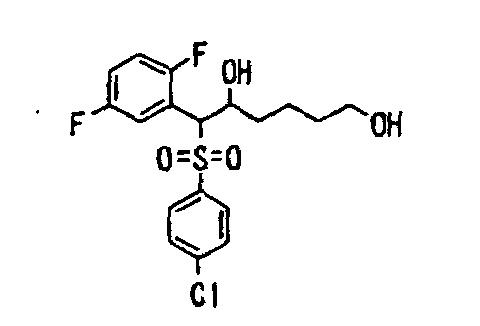
1H-NMR (400 MHz, CDCl3) δ: 1.25-1.67(7H,m), 3.53-3.63(2H,m), 3.91(1H,br s), 4.59-4.78(2H,m), 6.85(1H,td,J=9.0,4.4Hz), 6.96-7.03(1H,m), 7.16-7.27(1H,br m), 7.39(2H,d,J=8.5Hz), 7.52(2H,d,J=8.5Hz).
IR (ATR) cm-1: 3496, 2956, 1579, 1496, 1425, 1392, 1305, 1275, 1180, 1144, 1080, 1011, 966, 922, 833, 810, 756, 737, 650, 536, 521, 461.
mp: 105-107°C
MS m/z: 405 (M++H).
Anal. calcd for C18H19ClF2O4S: C, 53.40; H, 4.73; Cl, 8.76; F, 9.39; S, 7.92. Found: C, 53.20; H, 4.61; Cl, 8.77; F, 9.20; S, 8.03.
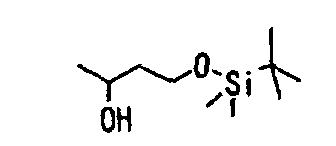
1H-NMR (400 MHz, CDCl3) δ: 0.08(6H,s), 0.90(9H,d,J=1.0Hz), 1.19(3H,d,J=6.4Hz), 1.59-1.73(2H,m), 3.78-3.93(2H,m), 3.98-4.07(1H,br m).
MS m/z: 205 (M++H).
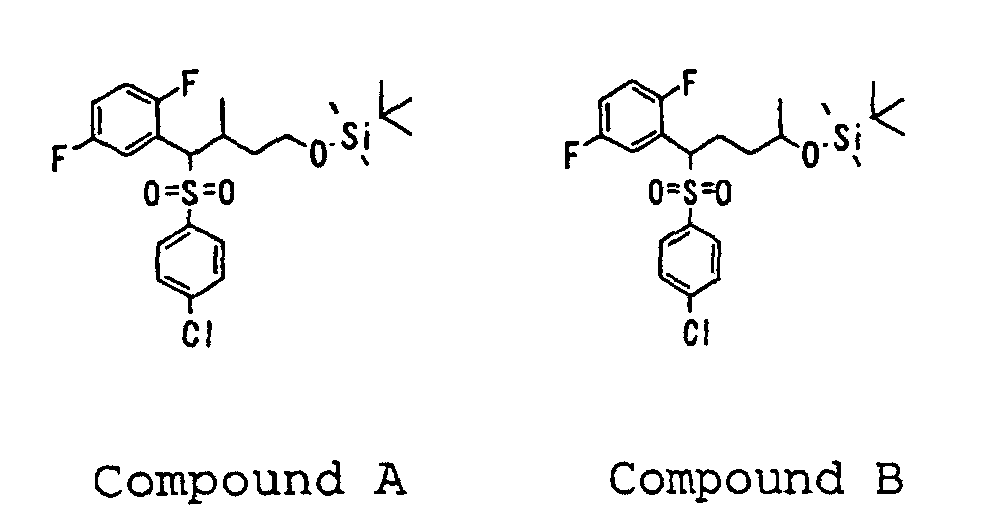
Compound A (Isomer A)
1H-NMR (400 MHz, CDCl3) δ: 0.05(3H,s), 0.05(3H,s), 0.89(9H,s), 1.14(3H,d,J=6.8Hz), 1.38-1.47(1H,m), 1.79-1.89(1H,m), 2.91-3.02(1H,m), 3.63-3.73(2H,m), 4.56(1H,d,J=5.9Hz), 6.81(1H,td,J=9.0,4.6Hz), 6.92-6.98(1H,m), 7.34(2H,d,J=8.3Hz), 7.51-7.57(1H,m), 7. 55 (2H, d, J=8.3Hz).
MS m/z: 489 (M++H).
Compound A (Isomer B)
1H-NMR (400 MHz, CDCl3) δ: -0.01(3H,s), 0.00(3H,s), 0.85-0.93(9H,m), 1.19-1.28(1H,m), 1.38(3H,d,J=6.6Hz), 1.64-1.73(1H,m), 2.78-2.88(1H,m), 3.61(2H,dd,J=7.6,4.9Hz), 4.46(1H,d,J=9.0Hz), 6.72(1H,td,J=9.0,4.4Hz), 6.87-6.93(1H,m), 7.30(2H,d,J=8.3Hz), 7.34-7.41(1H,m), 7.49(2H,d,J=8.3Hz).
MS m/z: 489 (M++H).
Compound B
1H-NMR (400 MHz, CDCl3) δ: -0.01(1.5H,s), 0.01(1.5H,s), 0.02(1.5H,s), 0.04(1.5H,s), 0.84(4.5H,m), 0.86(4.5H,m), 1.04-1.10(3H,m), 1.15-1.40(2H,m), 1.99-2.11(0.5H,m), 2.11-2.22(0.5H,m), 2.35-2.53(1H,m), 3.72-3.82(1H,m), 4.44-4.52(1H,m), 6.82-6.88(1H,m), 6.93-7.02(1H,m), 7.16-7.26(1H,m), 7.37-7.42(2H,m), 7.51-7.58(2H,m).
MS m/z: 489 (M++H).

1H-NMR (400 MHz, CDCl3) δ: 1.08(3H,d,J=7.1Hz), 1.59-1.62(1H,m), 1.74-1.84(1H,m), 1.96-2.05(1H,m), 2.93-3.05(1H,m), 3.75-3.89(2H,m), 4.68(1H,d,J=6.8Hz), 6.77(1H,td,J=9.0,4.6Hz), 6.91-6.97(1H,m), 7.33(2H,d,J=8.3Hz), 7.45-7.51(1H,m), 7.51(2H,d,J=8.3Hz).
IR (ATR) cm-1: 3527, 2935, 2897, 1583, 1487, 1315, 1267, 1232, 1188, 1144, 1086, 1068, 1049, 1012, 889, 864, 829, 789, 750, 715, 654, 611, 551, 490, 467.
mp: 111-112°C.
MS m/z: 375 (M++H).
Anal. calcd for C17H17ClF2O3S: C, 54.47; H, 4.57; Cl, 9.46; F, 10.14; S, 8.55. Found: C, 54.44; H, 4.55; Cl, 9.44; F, 10.08; S, 8.75.
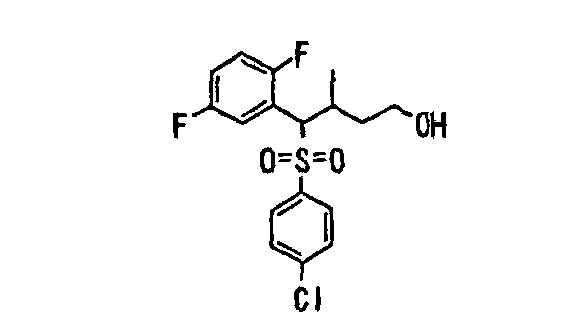
1H-NMR (400 MHz, CDCl3) δ: 1.23-1.40(2H,m), 1.35(3H,d,J=6.6Hz), 1.81-1.90(1H,m), 2.84-2.93(1H,m), 3.63-3.78(2H,m), 4.51(1H,d,J=8.1Hz), 6.75(1H,td,J=9.0,4.6Hz), 6.89-6.96(1H,m), 7.31(2H,d,J=8.5Hz), 7.40-7.47(1H,m), 7.51(2H,d,J=8.5Hz).
IR (ATR) cm-1: 3525, 2954, 1655, 1493, 1477, 1427, 1394, 1306, 1279, 1240, 1180, 1144, 1080, 1055, 1014, 943, 887, 822, 754, 712, 665, 609, 559, 542, 453.
mp: 65-67°C.
MS m/z: 375 (M++H).
Anal. calcd for C17H17ClF2O3S·0.5H2O: C, 53.20; H, 4.73; Cl, 9.24; F, 9.90; S, 8.35. Found: C, 53.17; H, 4.86; Cl, 9.29; F, 10.00; S, 8.50.
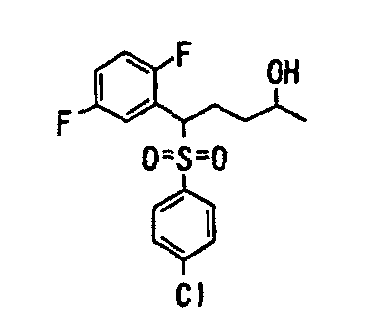
Isomer 240-A
1H-NMR (400 MHz, CDCl3) δ: 1.17(3H,d,J=6.1Hz), 1.28-1.48(3H,m), 2.18-2.29(1H,m), 2.47-2.56(1H,m), 3.77-3.85(1H,m), 4.53-4.58(1H,m), 6.83(1H,td,J=9.0,4.4Hz), 6.95-7.01(1H,m), 7.22-7.28(1H,m), 7.38(2H,d,J=8.5Hz), 7.53(2H,d,J=8.5Hz).
IR (ATR) cm-1: 3370, 3087, 2925, 1587, 1574, 1496, 1475, 1423, 1396, 1311, 1279, 1234, 1178, 1149, 1128, 1086, 1014, 949, 874, 827, 789, 760, 735, 710, 679, 631, 584, 559, 525, 469.
mp: 97-98°C.
MS m/z: 375 (M++H).
Anal. calcd for C17H17ClF2NO3S: C, 54.47; H, 4.57; Cl, 9.46; F, 10.14; S, 8.55. Found: C, 54.35; H, 4.69; Cl, 9.64; F, 10.31; S, 8.80.
Isomer 240-B
1H-NMR (400 MHz, CDCl3) δ: 1.17(3H,d,J=6.1Hz), 1.29-1.45(3H,m), 2.07-2.18(1H,m), 2.58-2.67(1H,m), 3.77-3.85(1H,m), 4.59(1H,dd,J=11.2,2.9Hz), 6.84(1H,td,J=9.0,4.4Hz), 6.95-7.02(1H,m), 7.23-7.27(1H,m), 7.38(2H,d,J=8.5Hz), 0.54(2H,d,J=8.5Hz).
IR (ATR) cm-1: 3504, 3390, 2960, 2925, 1585, 1493, 1475, 1427, 1396, 1302, 1275, 1227, 1174, 1146, 1082, 1036, 1014, 823, 752, 723, 708, 625, 555, 530, 463.
mp: 89°C.
MS m/z: 375 (M++H).
Anal. calcd for C17H17ClF2NO3S: C, 54.47; H, 4.57; Cl, 9.46; F, 10.14; S, 8.55. Found: C, 54.25; H, 4.46; Cl, 9.51; F, 10.41; S, 8.66.
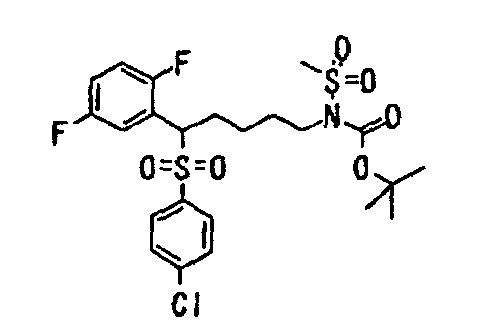
IR (ATR) cm-1: 1722, 1583, 1496, 1350, 1321, 1281, 1149, 1087, 1012, 966, 831, 754, 710, 629, 517.
MS m/z: 452 (M+-Boc), 496 (M+-t-Bu), 574 (M++Na).
FAB-MS: 574.0932 (Calcd for C23H28ClF2NO6S2Na: 574.0912).
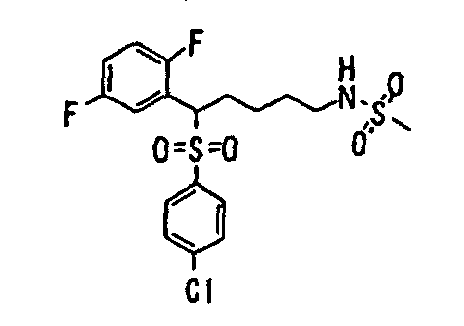
1H-NMR (400 MHz, CDCl3) δ: 1.28-1.38(2H,m), 1.55-1.68(2H,m), 2.06-2.18(1H,m), 2.43-2.52(1H,m), 2.92(3H,s), 3.09(2H,dd,J=13.4,6.8Hz), 4.15-4.24(1H,m), 4.51(1H,dd,J=11.5,3.4Hz), 6.84(1H,td,J=9.0,4.4Hz), 6.96-7.03(1H,m), 7.22-7.28(1H,m), 7.39(2H,d,J=8.5Hz), 7.52(2H,d,J=8.5Hz).
IR (ATR) cm-1: 3219, 2871, 1583, 1495, 1425, 1300, 1248, 1167, 1144, 1084, 1068, 978, 893, 835, 752, 725, 706, 629, 545, 525, 471.
mp: 106-107°C.
MS m/z: 452 (M++H).
Anal. calcd for C18H20ClF2NO4S2: C, 47.84; H, 4.46; Cl, 7.84; F, 8.41; N, 3.10; S, 14.19. Found: C, 47.75; H, 4.47; Cl, 7.94; F, 8.54; N, 3.14; S, 14.25.
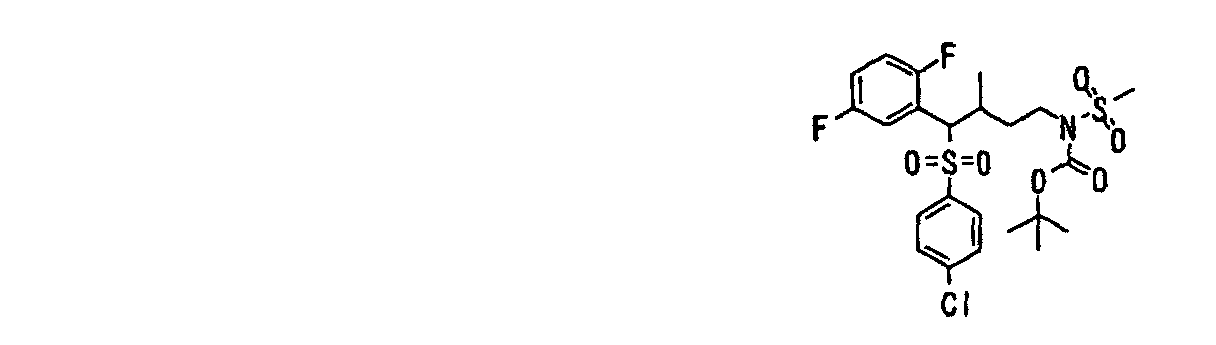
1H-NMR (400 MHz, CDCl3) δ: 1.33(3H,d,J=6.8Hz), 1.35-1.45(1H,m), 1.52(9H,s), 1.99-2.08(1H,m), 2.70-2.78(1H,m), 3.27(3H,s), 3.65-3.76(2H,m), 4.45(1H,d,J=7.6Hz), 6.77(1H,td,J=9.0,4.6Hz), 6.91-6.97(1H,m), 7.32(2H,d,J=8.5Hz), 7.38-7.45(1H,m), 7.50(2H,d,J=8.5Hz). MS m/z: 552 (M++H), 574 (M++Na).
FAB-MS: 552.1070 (Calcd for C23H29ClF2NO6S2: 552.1093), 574.0875 (Calcd for C23H28ClF2NO6S2Na: 574.0912).
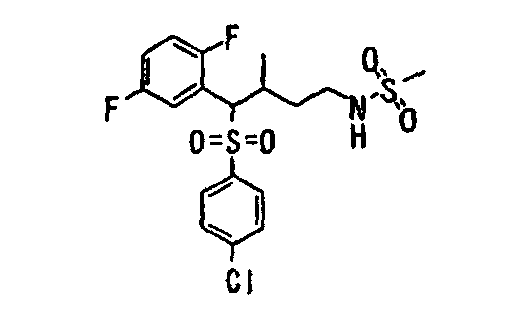
1H-NMR (400 MHz, CDCl3) δ: 1.27(3H,d,J=6.8Hz), 1.35-1.44(1H,m), 1.95-2.05(1H,m), 2.82-2.88(1H,m), 2.95(3H,s), 3.10-3.19(1H,m), 3.22-3.30(1H,m), 4.21-4.28(1H,br m), 4.49(1H,t,J=6.6Hz), 6.81(1H,td,J=9.0,4.4Hz), 6.93-7.00(1H,m), 7.34(2H,d,J=8.5Hz), 7.42-7.48(1H,m), 7.52(2H,d,J=8.5Hz).
IR (ATR) cm-1: 3251, 3076, 1581, 1495, 1473, 1317, 1244, 1140, 881, 837, 781, 750, 729, 710, 665, 617, 553, 521, 465. mp: 163°C.
MS m/z: 452 (M++H).
Anal. calcd for C18H20ClF2NO4S2: C, 47.84; H, 4.46; Cl, 7.84; F, 8.41; N, 3.10; S, 14.19. Found: C, 47.88; H, 4.45; Cl, 7.91; F, 8.51; N, 3.16; S, 14.23.
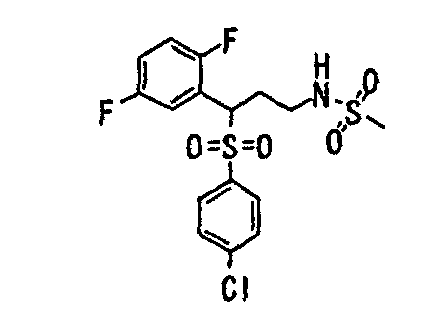
1H-NMR (400 MHz, CDCl3) δ: 2.29-2.39(1H,m), 2.69-2.78(1H,m), 2.93(3H,s), 3.10-3.20(1H,m), 3.35-3.44(1H,m), 4.44-4.50(1H,br m), 4.74(1H,dd,J=9.0,6.1Hz), 6.84(1H,td,J=9.0,4.6Hz), 6.97-7.04(1H,m), 7.23(1H,ddd,J=8.5, 5.4,3.2Hz), 7.39(2H,d,J=8.5Hz), 7.52(2H,d,J=8.5Hz).
IR (ATR) cm-1: 3257, 3087, 2947, 1587, 1496, 1475, 1308, 1090, 1279, 1147, 1086, 1014, 962, 879, 827, 760, 737, 679, 621, 523, 463, 413.
mp: 131-134°C.
MS m/z: 424 (M++H).
Anal. calcd for C16H16ClF2NO4S2: C, 45.34; H, 3.80; Cl, 8.36; F, 8.96; N, 3.30; S, 15.13. Found: C, 45.22; H, 3.67; Cl, 8.34; F, 8.98; N, 3.38; S, 15.16.
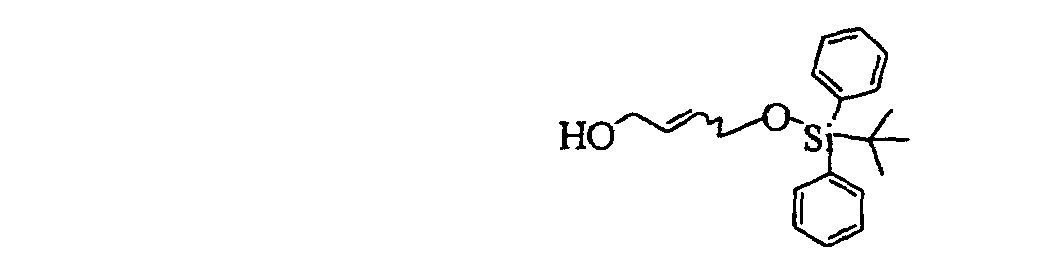
1H-NMR (400 MHz, CDCl3) δ: 1.06(9H,s), 4.01(0.5H,br d,J=6.1Hz), 4.15(1.5H,br d,J=4.9Hz), 4.18-4.26(1.5H,m), 4.26(0.5H,dm,J=5.9Hz), 5.60-5.75(1H,m), 5.78(3H,dm,J=15.4Hz), 7.34-7.52(5H,m), 7.64-7.76(4H,m).
MS m/z : 327 (M++H).
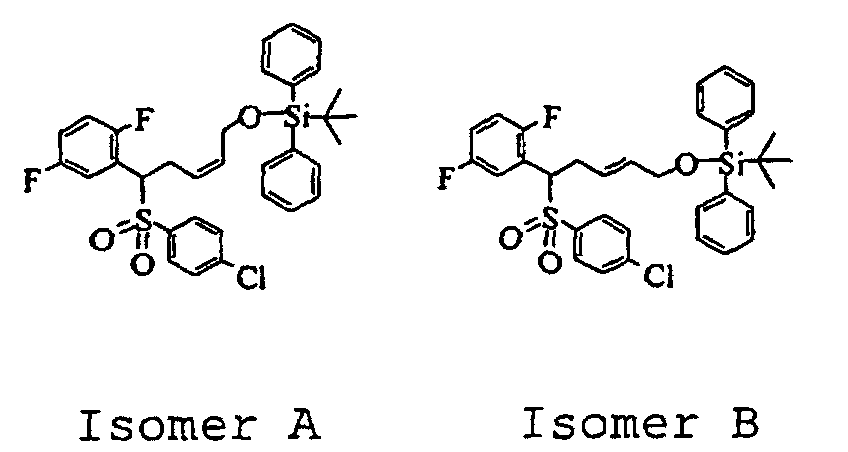
Isomer 246-A
1H-NMR (400 MHz, CDCl3) δ: 1.04(9H,s), 2.64-2.78(1H,m), 2.95-3.08(1H,m), 4.09(1H,ddm,J=13.5,5.6Hz), 4.15(1H,ddm,J=13.5,6.3Hz), 4.45(1H,ddm,J=11.0,3.4Hz), 5.12(1H,dtm,J=11.0,7.3Hz), 5.62(1H,dtm,J=11.0,6.3Hz), 6.80-6.88(1H,m), 6.90-7.00(1H,m), 7.02-7.21(1H,m), 7.30-7.60(10 H,m), 7.60-7.72(4H,m).
IR (ATR) cm-1: 2931, 2856, 1583, 1496, 1473, 1427, 1327, 1151, 1111, 1088, 823, 754, 702, 615, 505.
MS m/z : 611(M++H), 633(M++Na).
Isomer 246-B
1H-NMR (400 MHz, CDCl3) δ: 0.93(9H,s), 2.80-2.92(1H,m), 3.14-3.26(1H,m), 3.98-4.05(2H,m), 4.01(1H,dd,J=11.5,3.7Hz), 5.43(1H,dtm,J=15.0,7.3Hz), 5.59(1H,dtm,J=15.0,4.4Hz), 6.75-6.88(1H,m), 6.92-7.01(1H,m), 7.22-7.50(9H,m), 7.50-7.65(6H,m).
IR (ATR) cm-1: 2931, 2856, 1583, 1496, 1427, 1321, 1149, 1111, 1084, 1012, 822, 754, 700, 503.
MS m/z : 611 (M++H), 633 (M++Na).
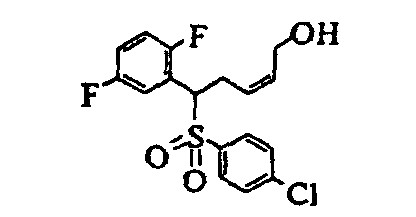
1H-NMR (400 MHz, CDCl3) δ: 1.35(1H,br s), 2.82-2.95(1H,m), 3.22-3.32(1H,m), 4.08-4.18(1H,m), 4.18-4.28(1H,m), 4.56(1H,ddm,J=10.6,4.5Hz), 5.29(1H,dtm,J=11.0,7.5Hz), 5.67(1H,dtm,J=11.0,6.6Hz), 6.77-6.88(1H,m), 6.92-7.02(1H,m), 7.22-7.32(1H,m), 7.39(2H,d,J=8.7Hz), 7.54(2H,d,J=8.7Hz).
IR (ATR) cm-1: 3560, 3016, 1585, 1495, 1475, 1427, 1396, 1308, 1277, 1218, 879, 827, 789, 752, 708, 679, 627, 467, 420.
mp: 60-63°C.
MS m/z : 390 (M++NH4).
Anal. Calcd for C17H15ClF2O3S: C, 54.77; H, 4.06; Cl, 9.51; F, 10.19; S, 8.60. Found: C, 54.57; H, 4.08; Cl, 9.41; F, 10.27; S, 8.74.
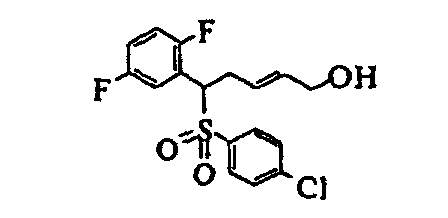
1H-NMR (400 MHz, CDCl3) δ: 1.21(1H,br t,J=5.5Hz), 2.80-2.92(1H,m), 3.18-3.28(1H,m), 3.96-4.06(2H,m), 4.57(1H,ddm,J=11.2,3.9Hz), 5.44(1H,dtm,J=15.2,7.3Hz), 5.70(1H,dtm,J=15.2,5.4Hz), 6.78-6.88(1H,m), 6.95-7.03(1H,m). 7.22-7.30(1H,m), 7.39(2H,d,J=8.7Hz), 7.54(2H,d,J=8.7Hz).
IR (ATR) cm-1: 3552, 3087, 1583, 1495, 1427, 1396, 1309, 1281, 1219, 1186, 1142, 1082, 1016, 984, 874, 831, 775, 756, 710, 619, 553, 534, 467.
mp: 108-109°C.
MS m/z : 395 (M++Na).
Anal. Calcd for C17H15ClF2O3S: C, 54.77; H, 4.06; Cl, 9.51; F, 10.19; S, 8.60. Found: C, 54.59; H, 4.03; Cl, 9.53; F, 10.17; S, 8.71.
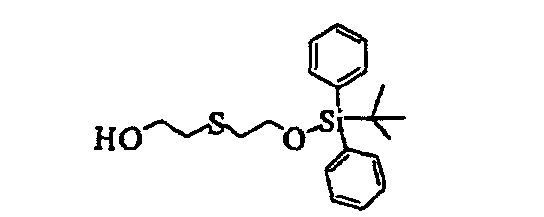
1H-NMR (400 MHz, CDCl3) δ: 1.06(9H,s), 2.19(1H,br s), 2.62-2.72(4H,m), 3.63(2H,br t,J=5.5Hz), 3.80(2H,t,J=6.8Hz), 7.32-7.52(6H,m), 7.66-7.75(4H,m).
IR (ATR) cm-1: 3400, 2929, 2856, 1427, 1105, 822, 735, 700, 611, 503.
MS m/z : 383 (M++Na).
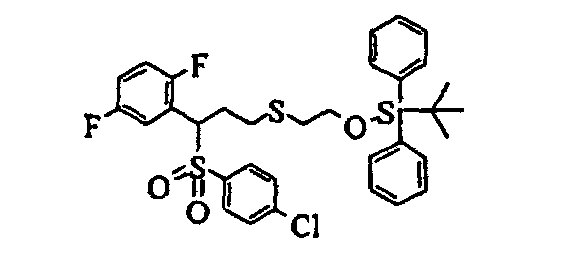
1H-NMR (400 MHz, CDCl3) δ: 1.02(9H,s), 2.20-2.35(2H,m), 2.50-2.74(4H,m), 3.65-3.80(2H,m), 4.72-4.80(1H,m), 6.77-6.85(1H,m), 6.92-7.00(1H,m), 7.15-7.23(1H,m), 7.35-7.48(8H,m), 7.52(2H,d,J=8.8Hz), 7.64(4H,d,J=8.1Hz).
IR (ATR) cm-1: 2931, 2858, 1583, 1496, 1323, 1149, 1105, 1084, 754, 700, 503.
MS m/z: 667 (M++Na).
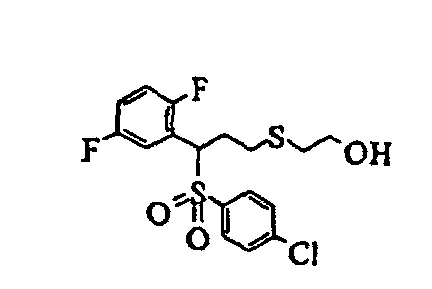
1H-NMR (400 MHz, CDCl3) δ: 1.97(1H,t,J=6.1Hz), 2.30-2.45(2H,m), 2.60-2.80(4H,m), 3.60-3.78(2H,m), 4.81(1H,dd,J=9.6,3.5Hz), 6.80-6.90(1H,m), 6.96-7.05(1H,m), 7.20-7.30(1H,m), 7.39(2H,d,J=8.8Hz), 7.54(2H,d,J=8.8Hz).
IR (ATR) cm-1: 3564, 3072, 1583, 1496, 1275, 1144, 1082, 835, 810, 762, 627, 534, 480.
mp: 108-110°C.
MS m/z: 424 (M++NH4).
Anal. Calcd for C17H17ClF2O3S2: C, 50.18; H, 4.21; Cl, 8.71; F, 9.34; S, 15.76. Found: C, 49.94; H, 4.20; Cl, 8.84; F, 9.41; S, 15.70.
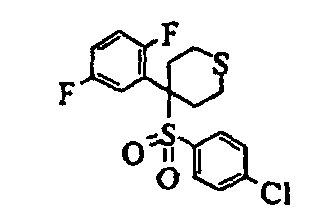
1H-NMR (400 MHz, CDCl3) δ: 2.46(2H,br t, J=13.4Hz), 2.57-2.78(4H,m), 3.09(2H,br s), 6.85-6.95(1H,m), 7.02-7.15(2H,m), 7.37(2H,d,J=8.7Hz), 7.40(2H,d,J=8.7Hz).
IR (ATR) cm-1: 2927, 1574, 1495, 1306, 1267, 1147, 1080, 877, 825, 750, 710, 619, 561, 472.
mp: 188-190°C.
MS m/z: 389 (M++H).
Anal. Calcd for C17H15ClF2O2S2·0.25H2O: C, 51.90; H, 3.97; Cl, 9.01; F, 9.66; S, 16.30. Found: C, 52.20; H, 3.91; Cl, 9.20; F, 9.85; S, 16.36.
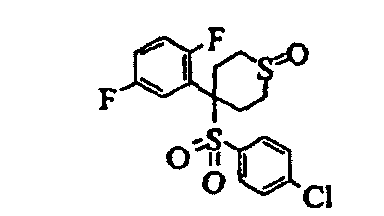
1H-NMR (400 MHz, CDCl3) δ: 2.30-3.55(8H,m), 6.85-7.04(1H,m), 7.05-7.20(2H,m), 7.33(0.8H,d,J=8.3Hz), 7.40(0.8H,d,J=8.3Hz), 7.44(1.2H,d,J=8.8Hz), 7.47(1.2H,d,J=8.8Hz).
IR (ATR) cm-1: 3095, 1576, 1491, 1308, 1279, 1146, 1082, 879, 818, 800, 752, 712, 621, 565, 474.
mp: 173-182°C.
MS m/z: 405 (M++H).
Anal. Calcd for C17H15ClF2O3S2: C, 50.43; H, 3.73; Cl, 8.76; F, 9.38; S, 15.85. Found: C, 50.60; H, 3.76; Cl, 8.81; F, 9.48; S, 15.92.

1H-NMR (400 MHz, CDCl3) δ: 2.80-3.02 (4H,m), 3.02-3.24(4H,m), 6.91-7.01(1H,m), 7.06-7.13(1H,m), 7.14-7.22(1H,m), 7.39(2H,d,J=8.7Hz), 7.44(2H,d,J=8.7Hz).
IR (ATR) cm-1: 1577, 1496, 1473, 1415, 1311, 1201, 1149, 1122, 1080, 874, 854, 822, 754, 708, 623, 567, 474.
mp: 204-206°C.
MS m/z: 421 (M++H).
Anal. Calcd for C17H15ClF2O4S2: C, 48.51; H, 3.59; Cl, 8.42; F, 9.03; S, 15.24. Found: C, 48.61; H, 3.60; Cl, 8.44; F, 9.05; S, 15.21.
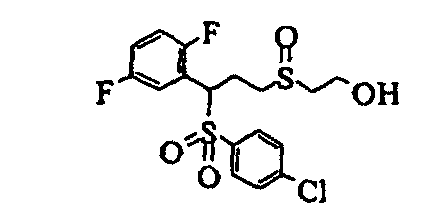
1H-NMR (400 MHz, CDCl3) δ: 2.52-2.65(2H,m), 2.80-3.02(5H,m), 4.11-4.22(2H,m), 4.68-4.78(1H,m), 6.80-6.90(1H,m), 6.97-7.04(1H,m), 7.21-7.30(1H,m), 7.38-7.44(2H,m), 7.50-7.58 (2H,m) .
IR (ATR) cm-1: 3421, 3259, 1585, 1496, 1319, 1147, 1086, 1028, 989, 833, 756, 555, 534, 480, 463.
mp: 124-132°C.
MS m/z: 423 (M++H).
Anal. Calcd for C17H17ClF2O4S2: C, 48.28; H, 4.05; Cl, 8.42; F, 9.03; S, 15.24. Found: C, 48.03; H, 4.01; Cl, 8.33; F, 8.93; S, 15.06.
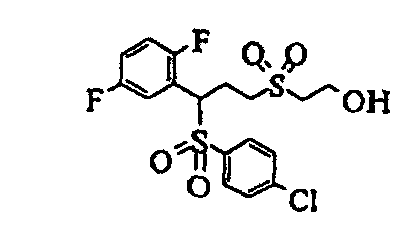
1H-NMR (400 MHz, CDCl3) δ: 2.19(1H,t,J=5.1Hz), 2.56-2.70(1H,m), 2.97-3.10(1H,m), 3.12-3.28(4H,m), 4.12(2H,q, J=5.1Hz), 4.77(1H,dd,J=9.4,5.7Hz), 6.82-6.92(1H,m), 6.98-7.07(1H,m), 7.20-7.30(1H,m), 7.41(2H,d,J=8.7Hz), 7.54(2H,d,J=8.7Hz).
IR (ATR) cm-1: 3525, 3076, 1576, 1496, 1315, 1279, 1146, 1128, 1082, 1034, 1011, 997, 835, 758, 631, 559, 542, 523, 488, 467, 430.
mp: 111-113°C.
MS m/z: 439 (M++H).
Anal. Calcd for C17H17ClF2O5S2: C, 46.52; H, 3.90; Cl, 8.08; F, 8.66; S, 14.61. Found: C, 46.46; H, 3.82; Cl, 8.15; F, 8.66; S, 14.55.

1H-NMR (400 MHz, CDCl3) δ: 1.05(9H,s), 1.30-1.60(9H,m), 3.30-3.52(4H,m), 3.68-3.90(4H,m), 7.34-7.50(6H,m), 7.60-7.72(4H,m).
IR (ATR) cm-1: 2931, 2858, 1693, 1670, 1408, 1365, 1171, 1144, 1105, 1051, 933, 822, 737, 700, 613, 501.
MS m/z: 444 (M++H).

1H-NMR (400 MHz, CDCl3) δ: 0.97(9H,s), 1.20-1.50(9H,m), 2.29(1H,br s), 2.62-2.78(1H,m), 3.05-3.50(4H,m), 3.66(2H,br s), 4.40-4.60(1H,m), 6.81(1H,br s), 6.98(1H,br s), 7.18-7.70(15H,m).
IR (ATR) cm-1: 2931, 1689, 1585, 1496, 1473, 1323, 1149, 1086, 737, 700, 613, 467, 426.
MS m/z: 726 (M++H).
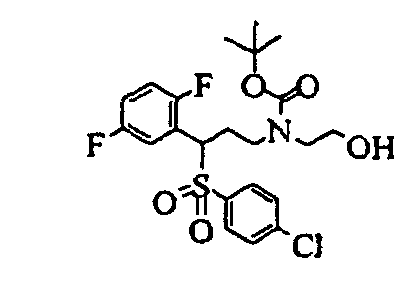
1H-NMR (400 MHz, CDCl3) δ: 1.39(9H,s), 2.28-2.42(1H,m), 2.70-2.80(1H,m), 3.15-3.32(3H,m), 3.40(1H,br s), 3.68-3.80(2H,m), 4.54(1H,br s), 6.78-6.88(1H,m), 6.95-7.03(1H,m), 7.20-7.31(1H,m), 7.39(2H,d,J=8.7Hz), 7.52(2H,d,J=8.7Hz).
IR (ATR) cm-1: 3438, 2976, 2933, 1685, 1583, 1496, 1475, 1319, 1279, 1147, 1084, 1012, 827, 756, 710, 629, 555, 525, 467.
MS m/z: 490 (M++H), 512 (M++Na).
Anal. Calcd for C22H26ClF2NO5S·0.25H2O: C, 53.44; H, 5.40; Cl, 7.17; F, 7.68; N, 2.83; S, 6.48. Found: C, 53.39; H, 5.45; Cl, 7.21; F, 7.48; N, 2.95; S, 6.51.
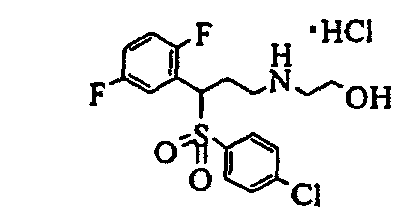
1H-NMR (400 MHz, CD3OD) δ: 2.42-2.58(1H,m), 2.77-2.90(1H,m), 2.96(1H,td,J=11.8,4.8Hz), 3.06-3.15(2H,m), 3.22(1H,td,J=11.8,5.1Hz), 3.75(2H,dd,J=5.7,4.5Hz), 4.89(1H,dd,J=9.6,5.3Hz), 6.98(1H,td,J=9.3,4.4Hz), 7.10-7.20(1H,m), 7.26-7.34(1H,m), 7.54(2H,d,J=8.8Hz), 7.61(2H,d,J=8.8Hz).
IR (ATR) cm-1: 3535, 2956, 2902, 2677, 1576, 1496, 1306, 1232, 1192, 1146, 1084, 1016, 822, 754, 710, 633, 548, 521, 472, 442.
mp: 216-220°C.
MS m/z: 390 (M++H).
Anal. Calcd for C17H18ClF2NO3S·HCl·0.25H2O: C, 47.40; H, 4.56; Cl, 16.46; F, 8.82; N, 3.25; S, 7.44. Found: C, 47.52; H, 4.47; Cl, 16.47; F, 9.06; N, 3.36; S, 7.58.

1H-NMR (400 MHz, CDCl3) δ: 1.43(9H,s), 2.27(2H,br t,J=14.2Hz), 2.67(4H,br s), 4.18(2H,br s), 6.82-6.92(1H,m), 7.03-7.16(2H,m), 7.36(2H,d,J=8.7Hz), 7.40(2H,d,J=8.7Hz).
IR (ATR) cm-1: 2979, 1682, 1583, 1410, 1315, 1244, 1188, 1144, 1088, 831, 754, 623, 563, 534, 474.
mp: 101-106°C.
MS m/z: 472 (M++H).
Anal. Calcd for C22H24ClF2NO4S: C, 55.99; H, 5.13; Cl, 7.51; F, 8.05; N, 2.97; S, 6.79. Found: C, 55.89; H, 5.19; Cl, 7.35; F, 7.97; N, 3.02; S, 6.80.

1H-NMR (400 MHz, CD3OD) δ: 2.57(2H,tm,J=14.1Hz), 2.85(2H,tm,J=12.6Hz), 2.98(2H,br s), 3.54(2H,dm,J=13.7Hz), 7.02-7.12(1H,m), 7.22-7.31(2H,m), 7.43(2H,d,J=8.8Hz), 7.55(2H,d,J=8.8Hz).
IR (ATR) cm-1: 3338, 2943, 2713, 1579, 1495, 1469, 1311, 1196, 1144, 1082, 1012, 893, 818, 750, 623, 567.
mp: 239-246°C (decomp.).
MS m/z: 372 (M++H).
Anal. Calcd for C17H16ClF2NO2S·HCl·0.75H2O: C, 48.41; H, 4.42; Cl, 16.81; F, 9.01; N, 3.32; S, 7.60. Found: C, 48.60; H, 4.31; Cl, 16.33; F, 9.16; N, 3.46; S, 7.80.
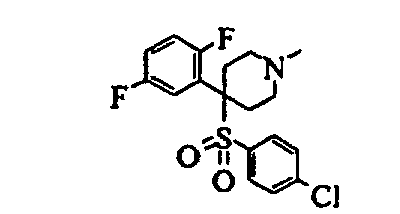
1H-NMR (400 MHz, CDCl3) δ: 1.90(2H,tm,J=12.5Hz), 2.17(3H,s), 2.42(2H,tm,J=11.8Hz), 2.50-2.90(2H,m), 2.89(2H,dt,J=12.0,2.9Hz), 6.82-6.92(1H,m), 7.03-7.16(2H,m), 7.38(2H,d,J=9.0Hz), 7.42(2H,d,J=9.0Hz).
IR (ATR) cm-1: 3084, 3006, 2943, 2850, 2796, 1577, 1496, 1462, 1313, 1281, 1184, 1147, 1086, 814, 752, 712, 631, 571, 534, 474, 440.
mp: 172-175°C.
MS m/z: 386 (M++H).
Anal. Calcd for C18H18ClF2NO2S: C, 56.03; H, 4.70; Cl, 9.19; F, 9.85; N, 3.63; S, 8.31. Found: C, 55.92; H, 4.72; Cl, 9.10; F, 9.91; N, 3.67; S, 8.39.
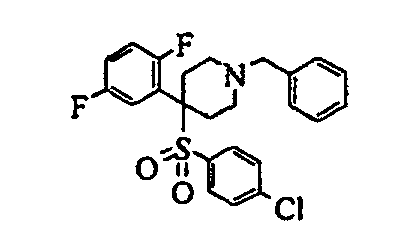
1H-NMR (400 MHz, CDCl3) δ: 1.93(2H,br t, J=12.5Hz), 2.46(2H, br t,J=11.6Hz), 2.65(2H,br s), 2.93(2H,dm,J=12.5Hz), 3.36(2H,s), 6.81-6.94(1H,m), 7.00-7.15(2H,m), 7.20-7.34(5H,m), 7.37(4H,s).
IR (ATR) cm-1: 2812, 2769, 1583, 1495, 1313, 1259, 1188, 1144, 1088, 810, 752, 698, 629, 571, 542, 469.
MS m/z: 462 (M++H).
Anal. Calcd for C24H22ClF2NO2S: C, 62.40; H, 4.80; Cl, 7.67; F, 8.23; N, 3.03; S, 6.94. Found: C, 62.50; H, 4.98; Cl, 7.50; F, 8.05; N, 3.04; S, 6.90.
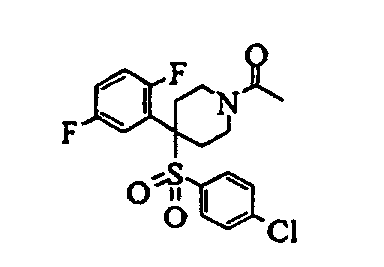
1H-NMR (400 MHz, CDCl3) δ: 2.08(3H,s), 2.20-2.42(2H,m), 2.49(1H,br t,J=13.0Hz), 2.60-2.75(1H,m), 2.75-2.90(1H,m), 3.01(1H,br t,J=13.2Hz), 3.92(1H,dm,J=13.4Hz), 4.70(1H,dm,J=13.9Hz), 6.85-6.94(1H,m), 7.50-7.60(2H,m), 7.36(2H,d,J=8.8Hz), 7.40(2H,d,J=8.8Hz).
IR (ATR) cm-1: 3084, 1653, 1496, 1427, 1309, 1279, 1244, 1144, 1088, 993, 754, 627, 563, 474.
mp: 159-160°C.
MS m/z: 414 (M++H).
Anal. Calcd for C19H18ClF2NO3S: C, 55.14; H, 4.38; Cl, 8.57; F, 9.18; N, 3.38; S, 7.75. Found: C, 55.07; H, 4.49; Cl, 8.69; F, 9.30; N, 3.41; S, 7.77.
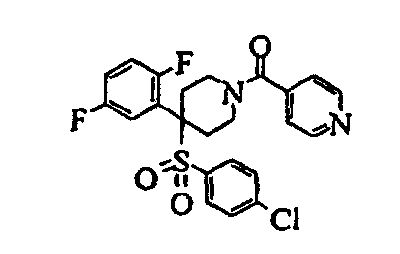
1H-NMR (400 MHz, CDCl3) δ: 2.24-2.55(2H,m), 2.60-2.90(3H,m), 2.90-3.10(1H,m), 3.70-3.82(1H,m), 4.74-4.90(1H,m), 6.84-6.92(1H,m), 7.04-7.14(2H,m), 7.18-7.25(2H,m), 7.34(2H,d,J=8.5Hz), 7.39(2H,d,J=8.5Hz), 8.70(2H,d,J=5.9Hz). IR (ATR) cm-1: 3032, 1630, 1496, 1439, 1311, 1279, 1146, 1086, 1013, 810, 752, 625, 561, 505.
mp: 245-248°C.
MS m/z: 477 (M++H).
FAB-MS: 477.0839 (Calcd for C23H20ClF2N2O3S: 477.0851).

1H-NMR (400 MHz, CDCl3) δ: 2.20-4.90(8H,m), 6.85-6.95(1H,m), 7.08-7.18(2H,m), 7.32-7.43(1H,m), 7.35(2H,d,J=8.9Hz), 7.40(2H,d,J=8.9Hz), 7.73(1H,dt,J=7.8,2.0Hz), 8.62(1H,dd,J=2.0,1.0Hz), 8.68(1H,dd,J=4.9,2.0Hz).
IR (ATR) cm-1: 1631, 1585, 1493, 1444, 1315, 1144, 1088, 831, 756, 625, 557, 505, 474.
mp: 119-124°C.
MS m/z: 477 (M++H).
Anal. Calcd for C23H19ClF2N2O3S: C, 57.92; H, 4.02; Cl, 7.43; F, 7.97; N, 5.87; S, 6.72. Found: C, 57.69; H, 4.08; Cl, 7.33; F, 7.97; N, 5.94; S, 6.78.
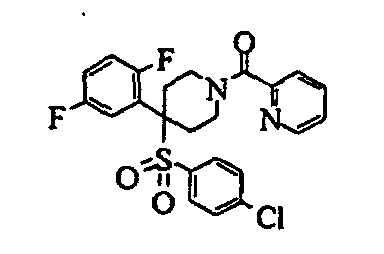
1H-NMR (400 MHz, CDCl3) δ: 2.35-2.52(2H,m), 2.60-2.90(3H,m), 3.09(1H,br t,J=13.1Hz), 4.21(1H,dm,J=13.5Hz), 4.83(1H,dm,J=14.0Hz), 6.82-6.95(1H,m), 7.04-7.18(2H,m), 7.30-7.45(5H,m), 7.65(1H,dm,J=7.8Hz), 7.80(1H,td,J=7.8,1.7Hz), 8.55(1H,dm,J=4.9Hz).
IR (ATR) cm-1: 3084, 1635, 1496, 1311, 1146, 1086, 1007, 843, 804, 752, 629, 555, 467.
mp: 193-196°C.
MS m/z: 477 (M++H).
Anal. Calcd for C23H19ClF2N2O3S: C, 57.92; H, 4.02; Cl, 7.43; F, 7.97; N, 5.87; S, 6.72. Found: C, 57.94; H, 4.08; Cl, 7.48; F, 7.99; N, 5.92; S, 6.81.

1H-NMR (400 MHz, CDCl3) δ: 2.29(2H,tm,J=12.1Hz), 2.55-2.85(4H,m), 3.68(3H,s), 4.22(2H,br s), 6.82-6.92(1H,m), 7.05-7.15(2H,m), 7.36(2H,d,J=8.8Hz), 7.40(2H,d,J=8.8Hz). IR (ATR) cm-1: 1695, 1493, 1450, 1400, 1248, 1188, 1142, 1090, 901, 825, 623, 565, 534, 474.
mp: 123-126°C.
MS m/z: 430 (M++H).
Anal. Calcd for C19H18ClF2NO4S: C, 53.09; H, 4.22; Cl, 8.25; F, 8.84; N, 3.26; S, 7.46. Found: C, 52.89; H, 4.20; Cl, 8.27; F, 8.90; N, 3.35; S, 7.58.
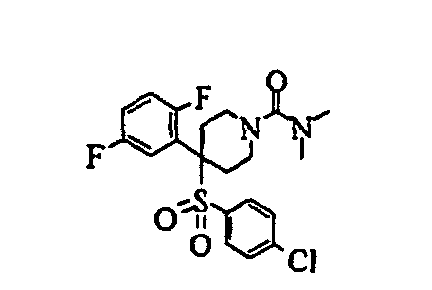
1H-NMR (400 MHz, CDCl3) δ: 2.40(2H,br t,J=12.1Hz), 2.60-2.80(4H,m), 2.81(6H,s), 3.72(2H,dm,J=13.7Hz), 6.82-6.92(1H,m), 7.04-7.14(2H,m), 7.35(2H,d,J=9.0Hz), 7.39(2H,d,J=9.0Hz).
IR (ATR) cm-1: 1651, 1576, 1496, 1469, 1365, 1308, 1190, 1146, 1074, 1034, 914, 814, 758, 752, 617, 561, 474.
mp: 143-146°C.
MS m/z: 443 (M++H).
Anal. Calcd for C20H21ClF2N2O3S: C, 54.24; H, 4.78; Cl, 8.00; F, 8.58; N, 6.32; S, 7.24. Found: C, 53.96; H, 4.73; Cl, 8.14; F, 8.64; N, 6.34; S, 7.32.
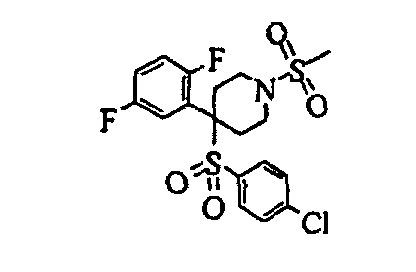
1H-NMR (400 MHz, CDCl3) δ: 2.48(2H,br t,J=12.1Hz), 2.60-2.90(4H,m), 2.72(3H,s), 3.88(2H,dm,J=12.9Hz), 6.88-6.96(1H,m), 7.04-7.14(2H,m), 7.37(2H,d,J=8.9Hz), 7.42(2H,d,J=8.9Hz).
IR (ATR) cm-1: 1579, 1495, 1308, 1257, 1138, 966, 814, 752, 623, 565, 513.
mp: 176-178°C.
MS m/z: 450 (M++H).
Anal. Calcd for C18H18ClF2NO3S: C, 48.05; H, 4.03; Cl, 7.88; F, 8.45; N, 3.11; S, 14.25. Found: C, 48.02; H, 4.00; Cl, 7.91; F, 8.52; N, 3.22; S, 14.28.
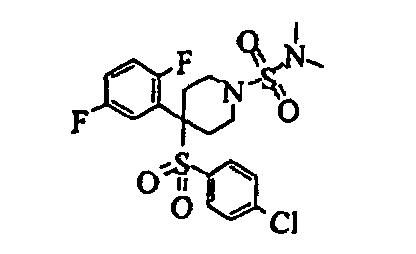
1H-NMR (400 MHz, CDCl3) δ: 2.45(2H,br t,J=12.5Hz), 2.68-2.90(4H,m), 2.79(6H,s), 3.73(2H,dm,J=13.4Hz), 6.80-6.92(1H,m), 7.05-7.14(2H,m), 7.34(2H,d,J=8.8Hz), 7.40 (2H, d, J=8.8Hz).
IR (ATR) cm-1: 1576, 1493, 1469, 1315, 1144, 984, 904, 808, 742, 621, 553, 519, 472.
mp: 125-129°C.
MS m/z: 479 (M++H).
Anal. Calcd for C19H21ClF2N2O4S2: C, 47.65; H, 4.42; Cl, 7.40; F, 7.93; N, 5.85; S, 13.39. Found: C, 47.62; H, 4.40; Cl, 7.42; F, 8.03; N, 5.95; S, 13.43.
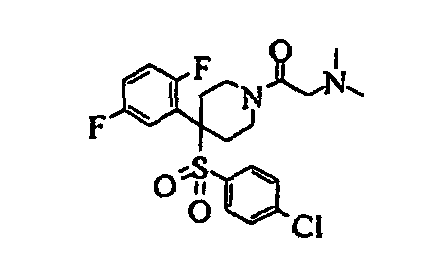
1H-NMR (400 MHz, CDCl3) δ: 2.15-2.40(2H,m), 2.25(6H,s), 2.50(1H,br t, J=12.9Hz), 2.60-2.85(2H,m), 2.93(1H,br t,J=12.0Hz), 3.03(1H,d,J=13.2Hz), 3.13(1H,d,J=13.2Hz), 4.32(1H,br d,J=14.4Hz), 4.67(1H,br d,J=13.7Hz), 6.83-6.93(1H,m), 7.02-7.16(2H,m), 7.36(2H,d,J=8.8Hz), 7.40(2H,d,J=8.8Hz).
IR (ATR) cm-1: 2829, 2773, 1635, 1460, 1313, 1142, 1090, 827, 806, 754, 625, 561, 523, 474.
mp: 88-92°C.
MS m/z: 457 (M++H).
Anal. Calcd for C21H23ClF2N2O3S: C, 55.20; H, 5.07; Cl, 7.76; F, 8.32; N, 6.13; S, 7.02. Found: C, 55.15; H, 5.18; Cl, 7.76; F, 8.40; N, 6.13; S, 7.13.
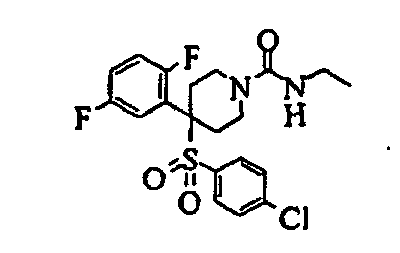
1H-NMR (400 MHz, CDCl3) δ: 1.12(3H,t,J=7.2Hz), 2.33(2H,br t,J=11.8Hz), 2.72(4H,br t,J=12.0Hz), 3.18-3.30(2H,m), 3.99(2H,dm,J=13.4Hz), 4.30-4.40(1H,m), 6.84-6.95(1H,m), 7.0,5-7.15(2H,m), 7.37(2H,d,J=8.8Hz), 7.40(2H,d,J=8.8Hz).
IR (ATR) cm-1: 3286, 1622, 1496, 1309, 1265, 1144, 1090, 889, 825, 752, 629, 567, 542, 474.
mp: 172-174°C.
MS m/z: 443(M++H).
Anal. Calcd for C20H21ClF2N2O3S: C, 54.24; H, 4.78; Cl, 8.00; F, 8.58; N, 6.32; S, 7.24. Found: C, 54.18; H, 4.76; Cl, 8.15; F, 8.70; N, 6.41; S, 7.39.
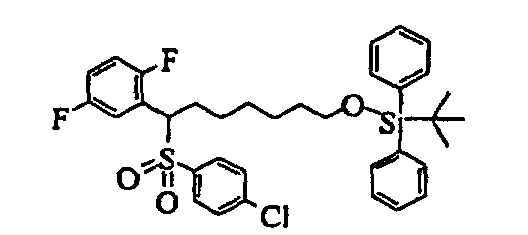
1H-NMR (400 MHz, CDCl3) δ: 1.02(9H,s), 1.10-1.40(6H,m), 1.42-1.55(2H,m), 2.00-2.14(1H,m), 2.35-2.48(1H,m), 3.60(2H,t,J=6.5Hz), 4.49(1H,dd,J=11.6,2.6Hz), 6.76-6.89(1H,m), 6.94-7.03(1H,m), 7.20-7.30(1H,m), 7.34-7.50(8H,m), 7.53(2H,d,J=8.6Hz), 7.64(4H,dm,J=8.1Hz).
IR (ATR) cm-1: 2931, 2856, 1583, 1496, 1427, 1323, 1149, 1105, 1084, 822, 700, 627, 613, 503, 486, 467.
MS m/z: 641 (M++H).

1H-NMR (400 MHz, CDCl3) δ: 1.10-1.75(9H,m), 2.02-2.20(1H,m), 2.38-2.52(1H,m), 3.60(2H,t,J=6.4Hz), 4.50(1H,dd,J=11.7, 3.2Hz), 6.78-6.90(1H,m), 6.92-7.05(1H,m), 7.20-7.35(1H,m), 7.38(2H,d,J=8.4Hz), 7.53(2H,d,J=8.4Hz).
IR (ATR) cm-1: 3338, 2935, 2860, 1583, 1495, 1325, 1149, 1082, 1012, 752, 631, 542, 467.
mp: 77-79°C.
MS m/z: 403 (M++H), 420 (M++NH4).
Anal. Calcd for C19H21ClF2O3S: C, 56.64; H, 5.25; Cl, 8.80; F, 9.43; S, 7.96. Found: C, 56.16; H, 5.18; Cl, 8.80; F, 9.36; S, 8.00.
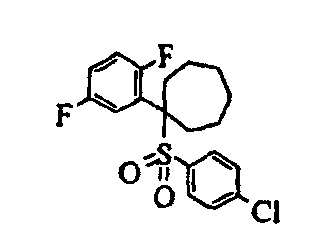
1H-NMR (400 MHz, CDCl3) δ: 1.34-1.50(4H,m), 1.50-1.68(2H,m), 1.82-1.98(2H,m), 2.36(2H,tm,J=12.5Hz), 2.65-2.78(2H,m), 6.84-6.94(1H,m), 6.97-7.08(2H,m), 7.34(2H,d,J=9.0Hz), 7.37(2H,d,J=9.0Hz).
IR (ATR) cm-1: 2931, 2856, 1577, 1493, 1473, 1308, 1277, 1186, 1140, 1086, 1012, 881, 818, 748, 710, 615, 559, 467. mp: 101-103°C.
MS m/z: 402 (M++NH4).
Anal. Calcd for C19H19ClF2O2S: C, 59.29; H, 4.98; Cl, 9.21; F, 9.87; S, 8.33. Found: C, 59.21; H, 4.86; Cl, 9.25; F, 9.96; S, 8.48.
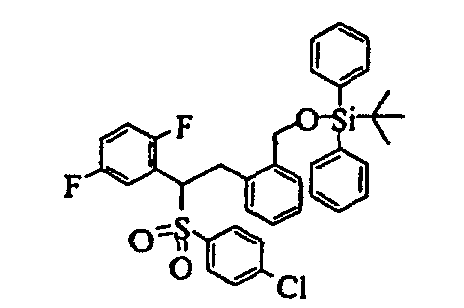
1H-NMR (400 MHz, CDCl3) δ: 1.09(9H,s), 3.30(1H,dd,J=14.7,11.2Hz), 3.80(1H,dd,J=14.7,3.4Hz), 4.65(1H,d,J=12.9Hz), 4.70-4.85(2H,m), 6.64-6.74(1H,m), 6.82(1H,d,J=6.8Hz), 6.85-6.94(1H,m), 7.03(1H,td,J=7.5,1.4Hz), 7.15(1H,td,J=7.5,1.2Hz), 7.20-7.55(12H,m), 7.65-7.76(4H,m).
IR (ATR) cm-1: 2931, 2856, 1583, 1496, 1473, 1427, 1319, 1149, 1111, 1082, 822, 740, 700, 634, 501.
MS m/z: 661(M++H), 683(M++Na).
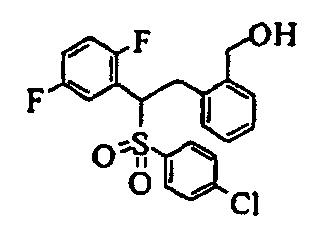
1H-NMR (400 MHz, CDCl3) δ: 1.92(1H,dd,J=6.1,4.9Hz), 3.35(1H,dd,J=14.1,10.0Hz), 4.00(1H,dd,J=14.1,3.4Hz), 4.66(1H,dd,J=12.3,4.9Hz), 4.81(1H,dd,J=12.3,6.1Hz), 5.10(1H,dm,J=10.0Hz), 6.66-6.75(1H,m), 6.82(1H,d,J=7.5Hz), 6.89-6.98(1H,m), 7.06(1H,td,J=7.5,1.5Hz), 7.17(1H,td,J=7.5,1.2Hz), 7.29(1H,dd,J=7.5,1.2Hz), 7.38(2H,d,J=8.7Hz), 7.50(1H,br s), 7.58(2H,d,J=8.7Hz).
IR (ATR) cm-1: 3506, 1576, 1493, 1313, 1279, 1213, 1144, 1080, 1014, 829, 750, 708, 634, 536, 471.
mp: 107-108°C.
MS m/z: 422(M+).
Anal. Calcd for C21H17ClF2O3S: C, 59.65; H, 4.05; Cl, 8.38; F, 8.99; S, 7.58. Found: C, 59.46; H, 3.97; Cl, 8.41; F, 9.05; S, 7.67.

1H-NMR (400 MHz, CDCl3) δ: 3.72(2H,dm,J=17.6Hz), 4.18(2H,dd,J=17.6,2.9Hz), 6.95-7.04(1H,m), 7.04-7.12(4H,m), 7.12-7.21(1H,m), 7.21-7.30(1H,m), 7.23(2H,d,J=8.7Hz), 7.45(2H,d,J=8.7Hz).
IR (ATR) cm-1: 1572, 1495, 1306, 1138, 1078, 821, 754, 656, 598, 571, 525, 478, 451.
mp: 209-210°C (dec.).
MS m/z: 422 (M++NH4).

1H-NMR (400 MHz, CDCl3) δ: 0.85(1H,d,J=6.8Hz), 1.50-1.80(1.67H,m), 1.72(2H,d,J=7.1Hz), 1.84-2.50(3H,m), 2.62-3.05(2H,m), 3.30-3.45(0.33H,m), 6.72-6.92(1.33H,m), 6.92-7.06(1H,m), 7.12-7.22(0.67H,m), 7.27-7.40(4H,m).
IR (ATR) cm-1: 1579, 1493, 1300, 1263, 1190, 1136, 1092, 1080, 1012, 839, 823, 756, 746, 712, 638, 600, 579, 546, 517, 472.
mp: 105-109°C.
MS m/z: 393 (M++Na).
Anal. Calcd for C18H17ClF2O2S: C, 58.30; H, 4.57; Cl, 9.71; F, 10.15; S, 8.79. Found: C, 58.27; H, 4.57; Cl, 9.71; F, 10.15; S, 8.79.
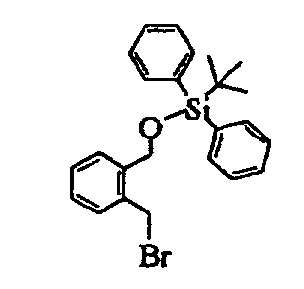
1H-NMR (400 MHz, CDCl3) δ: 1.05(9H,s), 4.51(2H,s), 4.88(2H,s), 7.20-7.51(10H,m), 7.68(4H,dd,J=7.6,1.2Hz).
IR (ATR) cm-1: 2929, 2856, 1427, 1105, 1068, 822, 739, 698, 607, 501.

1H-NMR (400 MHz, CDCl3) δ: 1.03(9H,s), 4.43(2H,s), 4.47(2H,s), 7.20-7.28(1H,m), 7.28-7.37(4H,m), 7.37-7.52(9H,m), 7.60(4H,dd,J=7.8,1.5Hz).
MS m/z : 535 (M++H).
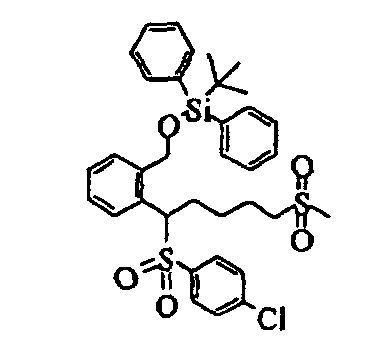
1H-NMR (400 MHz, CDCl3) δ: 1.05(9H,s), 1.18-1.30(1H,m), 1.30-1.44(1H,m), 1.70-1.84(2H,m), 2.08-2.24(1H,m), 2.35-2.48(1H,m), 2.74-2.85(2H,m), 2.80(3H,s), 4.13(1H,d,J=12.7Hz), 4.35(1H,d,J=12.7Hz), 4.51(1H,dd,J=10.8,4.4Hz), 7.18-7.25(3H,m), 7.25-7.45(8H,m), 7.45-7.53(3H,m), 7.55-7.68(4H,m).
IR (ATR) cm-1: 2929, 2856, 1583, 1473, 1321, 1147, 1105, 1088, 833, 775, 741, 702, 623, 569, 503.
MS m/z: 669 (M++H), 691 (M++Na).
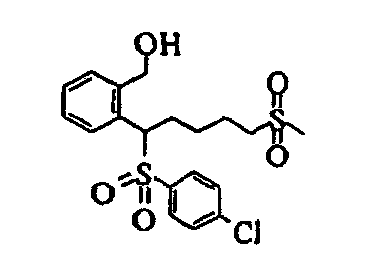
1H-NMR (400 MHz, CDCl3) δ: 1.20-1.60(2H,m), 1.65-1.95(2H,m), 2.10-2.40(3H,m), 2.70-3.00(2H,m), 2.82(3H,s), 4.43(2H,d,J=4.9Hz), 4.81(1H,dd,J=11.1,4.0Hz), 7.15-7.30(1H,m), 7.30-7.50(5H,m), 7.56(2H,d,J=8.6Hz).
IR (ATR) cm-1: 3506, 2931, 1579, 1475, 1394, 1277, 1138, 1084, 1012, 964, 829, 798, 756, 712, 629, 563, 519, 463.
MS m/z: 448 (M++NH4), 453 (M++Na).
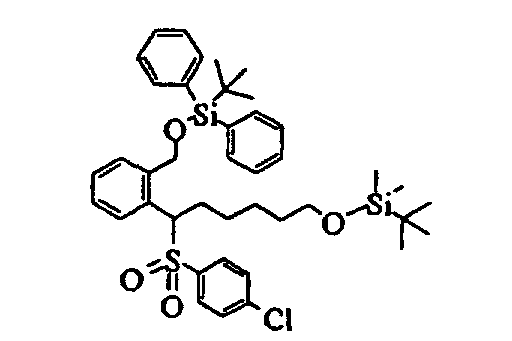
1H-NMR (400 MHz, CDCl3) δ: 0.00(6H,s), 0.80-1.60(6H,m), 0.86(9H,s), 1.04(9H,s), 2.04-2.20(1H,m), 2.28-2.40(1H,m), 3.48(2H,t,J=6.3Hz), 4.10(1H,d,J=12.9Hz), 4.35-4.48(2H,m), 7.16-7.23(2H,m), 7.23-7.55(12H,m), 7.55-7.70(4H,m).
IR (ATR) cm-1: 2929, 2856, 1583, 1473, 1321, 1147, 1103, 1088, 1014, 831, 775, 741, 700, 623, 567, 503.
MS m/z: 735 (M++H), 757 (M++Na).

1H-NMR (400 MHz, CDCl3) δ: 1.04(9H,s), 1.10-1.50(7H,m), 2.08-2.20(1H,m), 2.30-2.42(1H,m), 3.45-3.56(2H,m), 4.11(1H,d,J=12.7Hz), 4.40(1H,d,J=12.7Hz), 4.44(1H,dd,J=11.0,4.2Hz), 7.15-7.22(2H,m), 7.22-7.36(5H,m), 7.36-7.51(7H,m), 7.58(2H,dd,J=8.1,1.5Hz), 7.63(2H,dd,J=8.1,1.5Hz).
MS m/z: 621 (M++H), 638 (M++Na).

1H-NMR (400 MHz, CDCl3) δ: 1.10-1.60(7H,m), 2.08-2.30(2H,m), 2.37(1H,br s), 3.45-3.60(2H,m), 4.44-4.60(2H,m), 4.78(1H,dd,J=11.0,4.2Hz), 7.28-7.50(4H,m), 7.43(2H,d,J=8.8Hz), 7.60(2H,d,J=8.8Hz).
IR (ATR) cm-1: 3367, 2935, 2862, 1579, 1475, 1392, 1308, 1277, 1142, 1082, 1012, 756, 631, 565, 461.
MS m/z: 735 (M++H), 757 (M++Na).
FAB-MS: 383.1098 (Calcd for C19H24ClO4S: 383.1084).

1H-NMR (400 MHz, CDCl3) δ: 1.15-1.45(3H,m), 1.45-1.80(2H,m), 1.80-1.98(1H,m), 2.00-2.25(2H,m), 2.40-2.60(1H,m), 3.05-3.25(2H,m), 4.70-4.90(1H,m), 5.03-5.20(1H,m), 6.85(1H,dm,J=7.6Hz), 7.09(1H,tm,J=7.7Hz), 7.24-7.40(5H,m), 7.62(1H,dd,J=7.7,1.6Hz).
IR (ATR) cm-1: 3575, 2925, 1574, 1471, 1448, 1389, 1296, 1275, 1136, 1082, 1011, 989, 835, 785, 706, 615, 577, 467.
mp: 148-150°C (dec.).
MS m/z: 382 (M++ NH4).
Anal. Calcd for C19H21ClO3S: C, 62.54; H, 5.80; Cl, 9.72; S, 8.79. Found: C, 62.54; H, 5.73; Cl, 9.70; S, 8.93.

1H-NMR (400 MHz, CDCl3) δ: 1.28-1.48(2H,m), 1.71(1H,ddd,J=25.3,11.7,4.3Hz), 2.37(1H,br d,J=12.7Hz), 2.70-2.88(1H,m), 3.40(1H,td,J=11.7,2.5Hz), 3.50(1H,td,J=12.0,2.2Hz), 3.91(1H,dm,J=11.2Hz), 4.02(1H,dm,J=11.7Hz), 4.46(1H,d,J=8.8Hz), 6.68-6.80(1H,m), 6.88-6.98(1H,m), 7.31(2H,d,J=8.5Hz), 7.36-7.45(1H,m), 7.49(2H, d, J=8.5Hz).
IR (ATR) cm-1: 2952, 2833, 1576, 1495, 1308, 1275, 1236, 1144, 1082, 879, 829, 788, 752, 733, 710, 615, 602, 559, 519, 465, 447.
mp: 150-152°C.
MS m/z: 387 (M++H).
Anal. Calcd for C18H17ClF2O3S: C, 55.89; H, 4.43; Cl, 9.16; F, 9.82; S, 8.29. Found: C, 55.64; H, 4.27; Cl, 9.41; F, 9.89; S, 8.28.
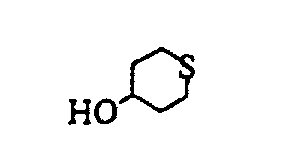
1H-NMR (400 MHz, CDCl3) δ: 1.47(1H,br s), 1.64-1.80(2H,m), 2.10-2.24(2H,m), 2.55-2.70(2H,m), 2.73-2.88(2H,m), 3.60-3.75(1H,m).
MS m/z: 119 (M++H).
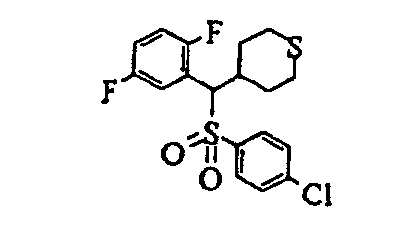
1H-NMR (400 MHz, CDCl3) δ: 1.47(1H,ddd,J=23.4,10.0,3.3Hz), 1.68(1H,ddd,J=25.0,11.4,3.3Hz), 2.13(1H,dm,J=11.4Hz), 2.50-2.78(5H,m), 2.82(1H,td,J=12.8,2.6Hz), 4.47(1H,d,J=7.3Hz), 6.72-6.82(1H,m), 6.90-7.40(1H,m), 7.31(2H,d,J=8.8Hz), 7.40-7.60(1H,m), 7.49(2H,d,J=8.8Hz).
IR (ATR) cm-1: 2939, 2887, 1576, 1493, 1425, 1317, 1281, 1240, 1142, 1084, 1012, 866, 831, 781, 750, 731, 710, 631, 615, 548, 467.
mp: 150-152°C.
MS m/z : 403 (M++H).
Anal. Calcd for C18H17ClF2O2S2: C, 53.66; H, 4.25; Cl, 8.80; F, 9.43; S, 15.92. Found: C, 53.52; H, 4.21; Cl, 9.00; F, 9.54; S, 15.88.
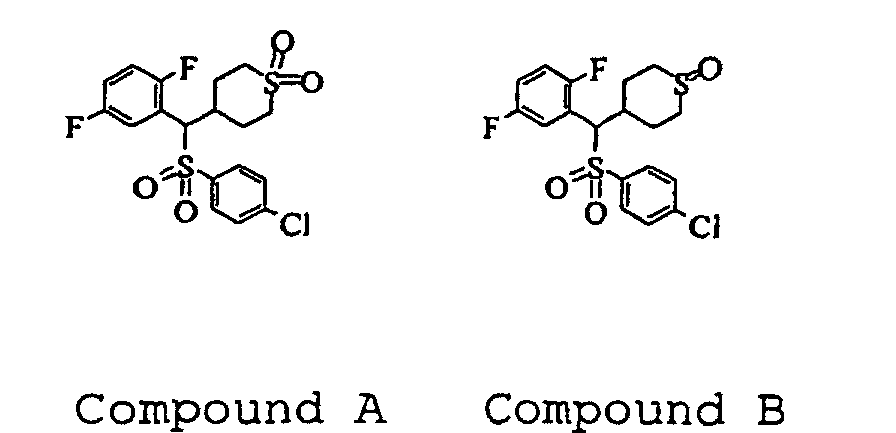
Compound A
1H-NMR (400 MHz, CDCl3) δ: 1.85-2.00(1H,m), 2.18-2.35(2H,m), 2.68-2.91(2H,m), 2.98-3.10(2H,m), 3.10-3.28(2H,m), 4.54(1H,br d,J=7.1Hz), 6.74-6.90(1H,m), 6.94-7.06(1H,m), 7.33(2H,d,J=8.7Hz), 7.35-7.55(1H,m), 7.49(2H,d,J=8.7Hz).
IR (ATR) cm-1: 1576, 1493, 1290, 1146, 1120, 1080, 874, 829, 752, 735, 710, 631, 623, 592, 552, 530, 498, 471, 424.
mp: 245-248°C.
MS m/z: 435 (M++H).
Anal. Calcd for C18H17ClF2O4S2: C, 49.71; H, 3.94; Cl, 8.15; F, 8.74; S, 14.75. Found: C, 49.38; H, 3.87; Cl, 8.50; F, 8.86; S, 14.62.
Compound B (Isomer A)
1H-NMR (400 MHz, CDCl3) δ: 1.76(1H,br d,J=13.4Hz), 2.18(1H,ddm,J=25.4,12.5Hz), 2.32-2.70(4H,m), 2.74-2.90(1H,m), 2.98(1H,dm,J=14.0Hz), 3.09(1H,dm,J=14.4Hz), 4.53(1H,d,J=7.3Hz), 6.72-6.86(1H,m), 6.90-7.02(1H,m), 7.32(2H,d,J=8.5Hz), 7.40-7.60(1H,m), 7.49(2H,d,J=8.5Hz).
IR (ATR) cm-1: 1585, 1495, 1315, 1300, 1242, 1220, 1147, 1086, 1049, 997, 874, 831, 752, 733, 625, 596, 553, 525, 482.
mp: 255-256°C.
MS m/z: 419 (M++H).
Anal. Calcd for C18H17ClF2O3S2: C, 51.61; H, 4.09; Cl, 8.46; F, 9.07; S, 15.31. Found: C, 51.51; H, 4.04; Cl, 8.69; F, 9.15; S, 15.20.
Compound B (Isomer B)
1H-NMR (400 MHz, CDCl3) δ: 1.42(1H,ddm,J=22.3,11.7Hz), 1.92(1H,ddm, J=11.7,11.0Hz), 2.14-2.27(1H,m), 2.66(1H,td,J=12.2,2.7Hz), 2.70-2.90(3H,m), 3.10-3.24(1H,m), 3.32-3.44(1H,m), 4.49(1H,d,J=8.1Hz), 6.72-6.85(1H,m), 6.90-7.02(1H,m), 7.32(2H,d,J=8.5Hz), 7.34-7.50(1H,m), 7.48(2H,d,J=8.5Hz).
IR (ATR) cm-1: 2912, 1574, 1496, 1298, 1246, 1144, 1080, 1001, 800, 752, 735, 714, 619, 561, 552, 517, 469.
mp: 184-187°C.
MS m/z: 419 (M++H).
Anal. Calcd for C18H17ClF2O3S2: C, 51.61; H, 4.09; Cl, 8.46; F, 9.07; S, 15.31. Found: C, 51.82; H, 4.23; Cl, 8.42; F, 9.12; S, 15.07.

1H-NMR (400 MHz, CDCl3) δ: 1.10-1.25(1H,m), 1.40-1.70(2H,m), 1.44(9H,s), 2.30-2.50(1H,m), 2.60-2.95(3H,m), 4.00-4.25(2H,m), 4.45(1H,d,J=7.8Hz), 6.69-6.80(1H,m), 6.88-6.98(1H,m), 7.31(2H,d,J=8.6Hz), 7.35-7.50(1H,m), 7.49(2H,d,J=8.6Hz).
IR (ATR) cm-1: 2979, 2935, 1682, 1583, 1493, 1421, 1319, 1281, 1240, 1165, 1122, 1078, 881, 835, 793, 752, 634, 534, 472.
mp: 193-196°C.
MS m/z: 486 (M++H), 508 (M++Na).
Anal. Calcd for C23H26ClF2NO4S: C, 56.84; H, 5.39; Cl, 7.30; F, 7.82; N, 2.88; S, 6.60. Found: C, 56.41; H, 5.43; Cl, 7.77; F, 7.61; N, 2.99; S, 6.58.
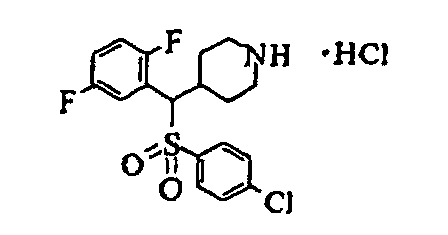
1H-NMR (400 MHz, CD3OD) δ: 1.38-1.52(1H,m), 1.70-1.92(2H,m), 2.73(1H,br d,J=14.2Hz), 2.86-3.00(1H,m), 3.05(1H,td,J=12.9,3.1Hz), 3.13(1H,td,J=13.1,3.1Hz), 3.30-3.40(1H,m), 3.48(1H,dm,J=13.0Hz), 4.72(1H,d,J=8.6Hz), 6.82-6.98(1H,m), 7.04-7.12(1H,m), 7.40-7.55(1H,m), 7.44(2H,d,J=8.6Hz), 7.57(2H,d,J=8.6Hz).
IR (ATR) cm-1: 2950, 2719, 1583, 1491, 1317, 1146, 1084, 831, 752, 617, 596, 552, 470.
mp: 184-190°C.
MS m/z: 386 (M++H).
Anal. Calcd for C18H18ClF2NO2S·HCl·0.75H2O: C, 49.61; H, 4.74; Cl, 16.27; F, 8.72; N, 3.21; S, 7.36. Found: C, 49.57; H, 4.75; Cl, 15.79; F, 9.16; N, 3.34; S, 7.25.

Isomer 292-A
1H-NMR (400 MHz, CDCl3) δ: 0.91(3H,t,J=7.1Hz), 1.08(3H,d,J=6.9Hz), 1.20-1.52 (3H,m), 1.52-1.68(1H,m), 2.72-2.90(1H,m), 4.51(1H,d,J=5.9Hz), 6.73-6.85(1H,m), 6.88-6.99(1H,m), 7.32(2H,d,J=8.6Hz), 7.46-7.60(1H,m), 7.52(2H,d,J=8.6Hz).
IR (ATR) cm-1: 2970, 2866, 1583, 1496, 1475, 1394, 1303, 1277, 1234, 1176, 1140, 1078, 1014, 883, 831, 790, 752, 727, 708, 621, 598, 561, 534, 472.
mp: 85-87°C.
MS m/z: 373 (M++H), 395 (M++Na).
Anal. Calcd for C18H19ClF2O2S: C, 57.89; H, 5.14; Cl, 9.51; F, 10.19; S, 8.61. Found: C, 57.96; H, 5.14; Cl, 9.44; F, 10.19; S, 8.75.
Isomer 292-B
1H-NMR (400 MHz, CDCl3) δ: 0.81(3H,t,J=7.2Hz), 1.00-1.12(1H,m), 1.15-1.45(3H,m), 1.34(3H,d,J=6.6Hz), 2.60-2.72(1H,m), 4.43(1H,d,J=8.8Hz), 6.67-6.78(1H,m), 6.88-6.95(1H,m), 7.29(2H,d,J=8.6Hz), 7.36-7.45(1H,m), 7.48(2H,d,J=8.6Hz).
IR (ATR) cm-1: 2976, 2933, 1585, 1495, 1394, 1323, 1238, 1178, 1149, 1086, 1014, 868, 829, 783, 754, 729, 710, 625, 559, 528, 472.
mp: 47-50°C.
MS m/z: 373 (M++H), 395 (M++Na).
Anal. Calcd for C18H19ClF2O2S: C, 57.89; H, 5.14; Cl, 9.51; F, 10.19; S, 8.61. Found: C, 57.97; H, 5.11; Cl, 9.45; F, 10.21; S, 8.69.
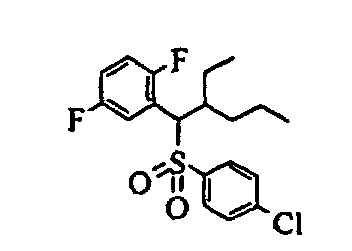
Isomer 293-A
1H-NMR (400 MHz, CDCl3) δ: 0.84(3H,t,J=7.5Hz), 0.95(3H,t,J=7.3Hz), 1.00-1.16(1H,m), 1.30-1.50(2H,m), 1.55-1.90(3H,m), 2.50-2.63(1H,m), 4.59(1H,d,J=7.6Hz), 6.69-6.80(1H,m), 6.88-6.95(1H,m), 7.31(2H,d,J=8.4Hz), 7.40-7.50(1H,m), 7.50(2H,d,J=8.4Hz).
IR (ATR) cm-1: 2966, 1583, 1496, 1475, 1306, 1277, 1242, 1176, 1140, 1086, 881, 831, 802, 752, 725, 710, 621, 561, 538, 478, 462, 451.
mp: 85-89°C.
MS m/z: 387 (M++H), 409 (M++Na).
Anal. Calcd for C19H21ClF2O2S: C, 58.98; H, 5.47; Cl, 9.16; F, 9.82; S, 8.29. Found: C, 59.18; H, 5.65; Cl, 9.16; F, 9.83; S, 8.38.
Isomer mixture
1H-NMR (400 MHz, CDCl3) δ: 0.84(3H,t,J=7.5Hz), 0.90-1.00(3H,m), 1.00-1.16(1H,m), 1.20-1.50(2H,m), 1.55-1.90(3H,m), 2.50-2.63(1H,m), 4.55-4.65(1H,m), 6.69-6.80(1H,m), 6.88-6.95(1H,m), 7.31(2H,d,J=8.4Hz), 7.40-7.50(1H,m), 7.50(2H,d,J=8.4Hz).
IR (ATR) cm-1: 2956, 1583, 1572, 1495, 1479, 1319, 1298, 1279, 1230, 1142, 1090, 1016, 887, 812, 752, 715, 660, 615, 563, 534, 469.
mp: 95-99°C.
MS m/z: 387 (M++H), 409 (M++Na).
Anal. Calcd for C19H21ClF2O2S: C, 58.98; H, 5.47; Cl, 9.16; F, 9.82; S, 8.29. Found: C, 58.99; H, 5.37; Cl, 9.19; F, 9.88; S, 8.43.
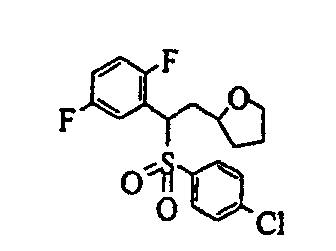
Isomer 294-A
1H-NMR (400 MHz, CDCl3) δ: 1.50-1.65(1H,m), 1.75-2.05(3H,m), 2.26(1H,tm,J=12.9Hz), 2.48(1H,tm,J=10.4Hz), 3.50-3.60(1H,m), 3.60-3.70(1H,m), 3.76-3.88(1H,m), 4.86(1H,dm,J=12.2Hz), 6.78-6.90(1H,m), 6.92-7.01(1H,m), 7.20-7.30(1H,m), 7.38 (2H, d, J=8.6Hz), 7.54 (2H, d, J=8.6Hz).
IR (ATR) cm-1: 2960, 2852, 1576, 1493, 1309, 1281, 1194, 1132, 1084, 1065, 1012, 903, 831, 810, 775, 746, 727, 708, 596, 575, 536, 471, 436.
mp: 99-105°C.
MS m/z: 387 (M++H).
Anal. Calcd for C18H17ClF2O3S: C, 55.89; H, 4.43; Cl, 9.16; F, 9.82; S, 8.29. Found: C, 56.28; H, 4.80; Cl, 8.94; F, 9.63; S, 8.19.
Isomer 294-B
1H-NMR (400 MHz, CDCl3) δ: 1.42-1.58(1H,m), 1.76-1.04(3H,m), 2.22-2.33(1H,m), 2.58-2.70(1H,m), 3.60-3.70(1H,m), 3.70-3.80(1H,m), 3.88-3.99(1H,m), 4.64-4.73(1H,m), 6.75-6.88(1H,m), 6.92-7.01(1H,m), 7.20-7.30(1H,m), 7.38(2H,d,J=8.7Hz), 7.52(2H,d,J=8.7Hz).
IR (ATR) cm-1: 2976, 1585, 1496, 1311, 1277, 1221, 1153, 1088, 1061, 922, 879, 829, 779, 752, 712, 629, 607, 561, 532, 472.
mp: 98-105°C.
MS m/z: 387 (M++H).
Anal. Calcd for C18H17ClF2O3S: C, 55.89; H, 4.43; Cl, 9.16; F, 9.82; S, 8.29. Found: C, 55.88; H, 4.54; Cl, 9.22; F, 9.96; S, 8.42.
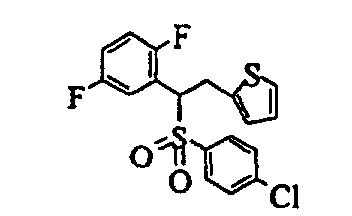
1H-NMR (400 MHz, CDCl3) δ: 3.60(1H,dd,J=15.1,11.9Hz), 4.02(1H,dm,J=15.1Hz), 4.80(1H,dd,J=11.9,2.5Hz), 6.69(1H,dd,J=3.5,1.1Hz), 6.70-6.84(2H,m), 6.92-7.00(1H,m), 7.04(1H,dd,J=5.3,1.1Hz), 7.32-7.44(1H,m), 7.39(2H,d,J=8.8Hz), 7.57(2H,d,J=8.8Hz).
IR (ATR) cm-1: 1496, 1319, 1244, 1219, 1149, 1084, 1014, 881, 825, 775, 758, 694, 629, 532, 467.
mp: 127-130°C.
MS m/z: 399 (M++H).
Anal. Calcd for C18H13ClF2O2S2: C, 54.20; H, 3.29; Cl, 8.89; F, 9.53; S, 16.08. Found: C, 54.19; H, 3.31; Cl, 9.20; F, 9.51; S, 16.24.
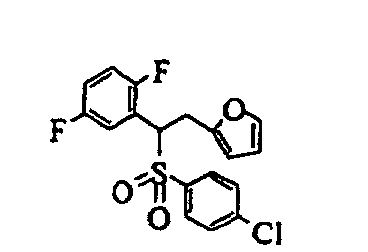
1H-NMR (400 MHz, CDCl3) δ: 3.43(1H,dd,J=15.4,11.6Hz), 3.78(1H,dd,J=15.4,3.7Hz), 4.93(1H,dd,J=11.6,3.7Hz), 5.89-5.91(1H,m), 6.14(1H,dd,J=3.2,1.7Hz), 6.73-6.82(1H,m), 6.90-6.99(1H,m), 7.19(1H,dd,J=1.7,0.7Hz), 7.25-7.34(1H,m), 7.40(2H,d,J=8.8Hz), 7.58(2H,d,J=8.8Hz).
IR (ATR) cm-1: 1585, 1495, 1319, 1151, 1086, 1014, 926, 831, 762, 613, 594, 573, 552, 532, 472.
mp: 90-93°C.
MS m/z: 383 (M++H).
Anal. Calcd for C18H13ClF2O3S: C, 56.48; H, 3.42; Cl, 9.26; F, 9.93; S, 8.38. Found: C, 56.53; H, 3.39; Cl, 9.17; F, 9.92; S, 8.55.
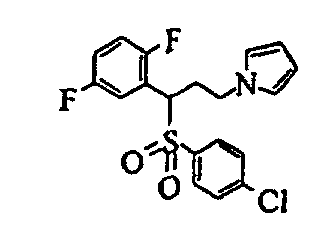
1H-NMR (400 MHz, CDCl3) δ: 2.42-2.57(1H,m), 2.88-3.00(1H,m), 3.79(1H,ddd,J=14.3,8.5,5.9Hz), 4.06(1H,dtm,J=14.3,7.1Hz), 4.34(1H,dd,J=10.0,3.9Hz), 6.11(2H,t,J=2.2Hz), 6.49(2H,t,J=2.2Hz), 6.80-6.88(1H,m), 6.98-7.06(1H,m), 7.18-7.24(1H,m), 7.36(2H,d,J=8.8Hz), 7.47(2H,d,J=8.8Hz).
IR (ATR) cm-1: 1576, 1493, 1325, 1306, 1271, 1236, 1176, 1146, 1082, 877, 827, 764, 737, 714, 677, 621, 588, 553, 519, 463, 428.
mp: 108-113°C.
MS m/z: 396 (M++H).
Anal. Calcd for C19H16ClF2NO2S: C, 57.65; H, 4.07; Cl, 8.96; F, 9.60; N, 3.54; S, 8.10. Found: C, 57.82; H, 4.05; Cl, 9.05; F, 9.69; N, 3.69; S, 8.23.

1H-NMR (400 MHz, CDCl3) δ: 2.08-2.28(4H,m), 2.30-2.48(3H,m), 2.62-2.77(1H,m), 3.61(4H,t,J=4.6Hz), 4.80(1H,dm,J=9.8Hz), 6.78-6.87(1H,m), 6.94-7.03(1H,m), 7.21-7.30(1H,m), 7.39(2H,d,J=8.7Hz), 7.54(2H,d,J=8.7Hz).
IR (ATR) cm-1: 2827, 2792, 1585, 1495, 1477, 1313, 1279, 1238, 1151, 1117, 1084, 1014, 868, 839, 752, 636, 559, 536, 468.
mp: 149-151°C.
MS m/z: 416 (M++H).
FAB-MS: 416.0903 (Calcd for C19H21ClF2O3S: 416.0899).

1H-NMR (400 MHz, CDCl3) δ: 1.80(3H,d,J=6.6Hz), 3.83-3.94(1H,m), 4.81-4.92(1H,m), 6.40-6.51(1H,m), 6.63-6.72(1H,m), 7.02-7.26(6H,m), 7.28(2H,d,J=8.6Hz), 7.50(2H,d,J=8.6Hz).
IR (ATR) cm-1: 3087, 2931, 1575, 1492, 1452, 1427, 1394, 1315, 1282, 1243, 1195, 1174, 1137, 1089, 1012.
mp: 160-161°C.
MS m/z: 407 (M++H).
Anal. calcd for C21H17ClF2O2S: C, 61.99; H, 4.21; Cl, 8.71; F, 9.34; S, 7.88. Found: C, 61.77; H, 4.23; Cl, 8.83; F, 9.24; S, 7.98.
Isomer 299-B
1H-NMR (400 MHz, CDCl3) δ: 1.25(3H,d,J=7.1Hz), 3.87(1H,q, J=7.3Hz), 4.89(1H,d,J=8.1Hz), 6.89(1H,td,J=8.9,4.6Hz), 6.99-7.05(1H,m), 7.11-7.23(6H,m), 7.20(2H,d,J=8.8Hz), 7.36(2H, d, J=8.8Hz).
IR (ATR) cm-1: 3062, 2929, 1583, 1496, 1475, 1454, 1394, 1321, 1276, 1243, 1176, 1143, 1085, 1012.
mp: 145-146°C.
MS m/z: 407 (M++H).
FAB-MS: 407.0690 (Calcd for C21H18ClF2O2S: 407.0684).
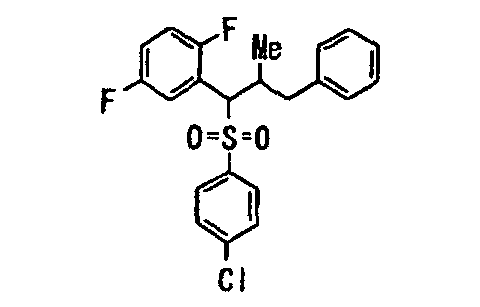
Isomer 300-A
1H-NMR (400 MHz, CDCl3) δ: 1.01(3H,d,J=6.9Hz), 2.46(1H,dd,J=13.3,8.6Hz), 2.10-3.13(2H,m), 4.56(1H,dd,J=8.9,4.6Hz), 6.82(1H,td,J=8.9,4.6Hz), 6.94-6.99(1H,m), 7.14-7.28(6H,m), 7.32(2H,d,J=8.6Hz), 7.50(2H,d,J=8.6Hz).
IR (ATR) cm-1: 3079, 2977, 1583, 1492, 1452, 1423, 1394, 1321, 1278, 1232, 1172, 1147, 1085, 1012.
mp: 81-83°C.
MS m/z: 421 (M++H).
Anal. calcd for C22H19ClF2O2S: C, 62.78; H, 4.55; Cl, 8.42; F, 9.03; S, 7.62. Found: C, 62.72; H, 4.59; Cl, 8.53; F, 9.21; S, 7.82.
Isomer 300-B
1H-NMR (400 MHz, CDCl3) δ: 1.24(3H,d,J=6.6Hz), 2.22(1H,dd,J=13.1,10.4Hz), 2.90-2.98(2H,m), 4.51(1H,d,J=7.8Hz), 6.77(1H,td,J=9.1,4.4Hz), 6.92-6.97(1H,m), 7.06-7.28(6H,m), 7.32(2H,d,J=8.6Hz), 7.52(2H,d,J=8.6Hz).
IR (ATR) cm-1: 2962, 1585, 1492, 1454, 1425, 1384, 1309, 1278, 1240, 1143, 1093.
mp: 116-117°C.
MS m/z: 421 (M++H).
Anal. calcd for C22H19ClF2O2S: C, 62.78; H, 4.55; Cl, 8.42; F, 9.03; S, 7.62. Found: C, 62.74; H, 4.70; Cl, 8.55; F, 9.23; S, 7.77.

Isomer 301-A
1H-NMR (400 MHz, CDCl3) δ: 1.24(3H,d,J=6.4Hz), 2.31-2.40(1H,m), 2.62-2.73(2H,m), 4.59-4.67(1H,m), 6.74(1H,td,J=9.1,4.5Hz), 6.89-6.95(1H,m), 7.06-7.25(6H,m), 7.35(2H,d,J=8.6Hz), 7.48(2H,d,J=8.6Hz).
IR (ATR) cm-1: 3085, 2964, 1581, 1490, 1427, 1394, 1309, 1276, 1228, 1174, 1143, 1083, 1010.
mp: 89-90°C.
MS m/z: 421 (M++H).
Anal. calcd for C22H19ClF2O2S: C, 62.78; H, 4.55; Cl, 8.42; F, 9.03; S, 7.62. Found: C, 62.56; H, 4.59; Cl, 8.53; F, 9.28; S, 7.80.
Isomer 301-B
1H-NMR (400 MHz, CDCl3) δ: 1.28(3H,d,J=6.6Hz), 2.37-2.64(3H,m), 4.13(1H,d,J=12.0Hz), 6.81(1H,td,J=8.9,4.4Hz), 6.91(2H,d,J=6.6Hz), 6.97-7.03(1H,m), 7.19-7.27(4H,m), 7.32 (2H,d,J=8.6Hz), 7.41 (2H,d,J=8.6Hz).
IR (ATR) cm-1: 3070, 2960, 1583, 1490, 1455, 1427, 1392, 1319, 1309, 1276, 1224, 1143, 1087, 1012.
mp: 127-129°C.
MS m/z : 421 (M++H).
Anal. calcd for C22H19ClF2O2S: C, 62.78; H, 4.55; Cl, 8.42; F, 9.03; S, 7.62. Found: C, 62.52; H, 4.53; Cl, 8.51; F, 9.31; S, 7.81.

Isomer 302-A
1H-NMR (400 MHz, CDCl3) δ: 1.21(3H,d,J=7.1Hz), 1.38-1.58(2H,m), 1.99-2.09(1H,m), 2.24-2.33(1H,m), 2.61-2.71(1H,m), 4.41(1H,dd,J=11.5,3.0Hz), 6.83(1H,td,J=9.1,4.5Hz), 6.94-7.00(1H,m), 7.03-7.28(6H,m), 7.35(2H,d,J=8.8Hz), 7.47(2H,d,J=8.8Hz).
IR (ATR) cm-1: 2933, 2867, 1583, 1494, 1475, 1461, 1427, 1394, 1344, 1315, 1278, 1228, 1141, 1085, 1012.
mp: 133-135°C.
MS m/z: 435 (M++H).
FAB-MS: 435.1101 (Calcd for C23H22ClF2O2S: 435.0997).
Anal. calcd for C23H21ClF2O2S: C, 63.52; H, 4.87; Cl, 8.15; F, 8.74; S, 7.37. Found: C, 63.98; H, 4.88; Cl, 8.14; F, 8.82; S, 7.58.
Isomer 302-B
1H-NMR (400 MHz, CDCl3) δ: 1.19(3H,d,J=6.8Hz), 1.38-1.59(2H,m), 1.83-1.93(1H,m), 2.26-2.35(1H,m), 2.61-2.68(1H,m), 4.47(1H,dd,J=11.2,3.2Hz), 6. 84 (1H, td, J=8.9,4.6Hz), 6.95-7.28 (7H,m), 7.35(2H,d,J=8.5Hz), 7.48(2H,d,J=8.5Hz).
IR (ATR) cm-1: 3082, 2965, 2931, 2869, 1583, 1494, 1475, 1425, 1394, 1315, 1278, 1224, 1182, 1151, 1081, 1012.
mp: 112-114°C.
MS m/z: 435 (M++H).
Anal. calcd for C23H21ClF2O2S: C, 63.52; H, 4.87; Cl, 8.15; F, 8.74; S, 7.37. Found: C, 63.34; H, 4.85; Cl, 8.41; F, 8.75; S, 7.53.

Isomer 303-A
1H-NMR (400 MHz, CDCl3) δ: 1.21(3H,d,J=6.7Hz), 1.38-1.61(2H,m), 2.03-2.09(1H,m), 2.24-2.33(1H,m), 2.64-2.69(1H,m), 4.40(1H,dd,J=11.3, 3.9Hz), 6.83(1H,td,J=9.1,4.4Hz), 6.94-7.28(7H,m), 7.35(2H,d,J=8.6Hz), 7.47(2H,d,J=8.6Hz).
IR (ATR) cm-1: 2933, 1494, 1475, 1427, 1394, 1315, 1276, 1228, 1141, 1085, 1012.
mp: 135-137°C.
MS m/z: 435 (M++H).
Anal. calcd for C23H21ClF2O2S: C, 63.52; H, 4.87; Cl, 8.15; F, 8.74; S, 7.37. Found: C, 63.37; H, 4.79; Cl, 8.18; F, 8.82; S, 7.61.
Isomer 303-B
1H-NMR (400 MHz, CDCl3) δ: 1.19(3H,d,J=6.8Hz), 1.37-1.59(2H,m), 1.83-1.93(1H,m), 2.26-2.34(1H,m), 2.61-2.68(1H,m), 4.47(1H,dd,J=11.8,2.7Hz), 6.83(1H,td,J=8.9,4.3Hz), 6.93-7.28(7H,m), 7.34(2H,d,J=8.6Hz), 7.47(2H,d,J=8.6Hz).
IR (ATR) cm-1: 3083, 2933, 1494, 1475, 1425, 1394, 1315, 1278, 1224, 1182, 1151, 1012.
mp: 111-113°C.
MS m/z: 435 (M++H).
Anal. calcd for C23H21ClF2O2S: C, 63.52; H, 4.87; Cl, 8.15; F, 8.74; S, 7.37. Found: C, 63.39; H, 4.84; Cl, 8.50; F, 8.82; S, 7.51.
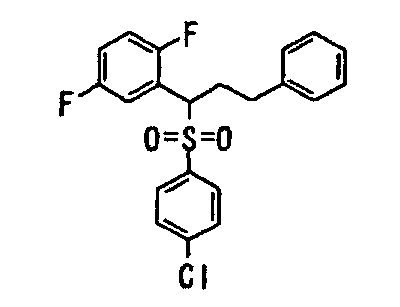
1H-NMR (400 MHz, CDCl3) δ: 2.37-2.52(2H,m), 2.60-2.78(2H,m), 4.44-4.49(1H,m), 6.85(1H,td,J=9.0,4.5Hz), 6.77-7.29(7H,m), 7.36(2H,d,J=8.6Hz), 7.49(2H,d,J=8.6Hz).
IR (ATR) cm-1: 3068, 1583, 1496, 1477, 1457, 1423, 1394, 1315, 1278, 1214, 1176, 1147, 1081, 1012.
mp: 111-113°C.
MS m/z: 407 (M++H).
Anal. calcd for C21H17ClF2O2S: C, 61.99; H, 4.21; Cl, 8.71; F, 9.34; S, 7.88. Found: C, 61.76; H, 4.16; Cl, 8.88; F, 9.37; S, 8.02.

1H-NMR (400 MHz, CDCl3) δ: 2.18(3H,s), 2.29-2.39(1H,m), 2.46-2.62(2H,m), 2.67-2.75(1H,m), 4.53(1H,dd,J=11.1,2.6Hz), 6.86(1H,td,J=9.0,4.4Hz), 6.96-7.12(5H,m), 7.28(1H,ddd,J=8.7, 5.4,3.2Hz), 7.37(2H,d,J=8.6Hz), 7.51(2H,d,J=8.6Hz).
IR (ATR) cm-1: 3091, 2946, 1583, 1573, 1496, 1425, 1392, 1311, 1276, 1213, 1151, 1143, 1083, 1010.
mp: 105-106°C.
MS m/z: 421 (M++H).
Anal. calcd for C22H19ClF2O2S: C, 62.78; H, 4.55; Cl, 8.42; F, 9.03; S, 7.62. Found: C, 62.48; H, 4.63; Cl, 8.52; F, 9.16; S, 7.75.

1H-NMR (400 MHz, CDCl3) δ: 2.29(3H,s), 2.35-2.48(2H,m), 2.56-2.64(1H,m), 2.68-2.77(1H,m), 4.46-4.49(1H,m), 6.83-6.88(3H,m), 6.97-7.03(2H,m), 7.14(1H,t,J=7.8Hz), 7.26(1H,ddd,J=8.7,5.4,3.3Hz), 7.36(2H,d,J=8.6Hz), 7.49(2H,d,J=8.6Hz).
IR (ATR) cm-1: 3072, 2969, 1581, 1496, 1475, 1423, 1394, 1319, 1276, 1211, 1147, 1081, 1012.
mp: 87-88°C.
MS m/z: 421 (M++H).
Anal. calcd for C22H19ClF2O2S: C, 62.78; H, 4.55; Cl, 8.42; F, 9.03; S, 7.62. Found: C, 62.58; H, 4.60; Cl, 8.49; F, 9.21; S, 7.77.
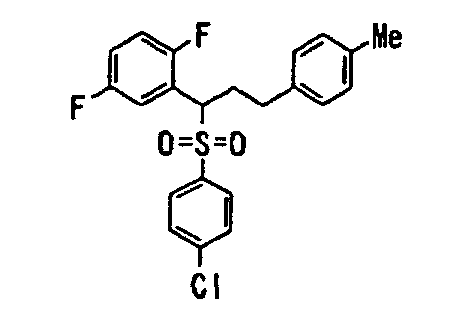
1H-NMR (400 MHz, CDCl3) δ: 2.31(3H,s), 2.34-2.46(2H,m), 2.57-2.65(1H,m), 2.67-2.72(1H,m), 4.46-4.48(1H,m), 6.85(1H,td,J=9.0,4.5Hz), 6.92(2H,d,J=8.1Hz), 6.97-7.03(1H,m), 7.06(2H,d,J=8.1Hz), 7.25(1H,ddd,J=8.7,5.3,3.3Hz), 7.35(2H,d,J=8.6Hz), 7.45 (2H, d, J=8.6Hz).
IR (ATR) cm-1: 3070, 2935, 1585, 1496, 1486, 1423, 1394, 1321, 1292, 1278, 1216, 1182, 1147, 1083, 1014.
mp: 82-84°C.
MS m/z: 421 (M++H).
Anal. calcd for C22H19ClF2O2S: C, 62.78; H, 4.55; Cl, 8.42; F, 9.03; S, 7.62. Found: C, 62.67; H, 4.60; Cl, 8.31; F, 8.95; S, 7.79.

1H-NMR (400 MHz, CDCl3) δ: 2.36-2.44(2H,m), 2.57-2.75(2H,m), 3.79(3H,s), 4.36-4.47(1H,m), 6.78(2H,d,J=8.3Hz), 6.84(1H,td,J=8.8,4.3Hz), 6.93(2H,d,J=8.3Hz), 6.97-7.03(1H,m), 7.24-7.28(1H,m), 7.35(2H,d,J=8.1Hz), 7.47(2H,d,J=8.1Hz).
IR (ATR) cm-1: 3089, 2954, 2836, 1612, 1583, 1513, 1494, 1459, 1427, 1394, 1322, 1270, 1245, 1222, 1180, 1153, 1083, 1031, 1012.
mp: 118-120 °C.
MS m/z: 436 (M+).
FAB-MS: 436.0717 (Calcd for C22H19ClF2O3S: 436.0712).
Anal. calcd for C22H19ClF2O3S: C, 60.48; H, 4.38; Cl, 8.11; F, 8.70; S, 7.34. Found: C, 60.00; H, 4.34; Cl, 8.39; F, 8.99; S, 7.60.

1H-NMR (400 MHz, CDCl3) δ: 2.34-2.50(2H,m), 2.61-2.76(2H,m), 4.43(1H,dd,J=11.2,2.9Hz), 6.83(1H,td,J=8.9,4.4Hz), 6.92-7.03(5H,m), 7.24-7.28(1H,m), 7.35(2H,d,J=8.6Hz), 7.47(2H, d, J=8.6Hz).
IR (ATR) cm-1: 3079, 1583, 1509, 1492, 1477, 1423, 1394, 1317, 1276, 1251, 1216, 1176, 1145, 1081, 1012.
mp: 131-132°C.
MS m/z: 425 (M+).
Anal. calcd for C21H16ClF3O2S: C, 59.37; H, 3.80; Cl, 8.34; F, 13.41; S, 7.55. Found: C, 59.41; H, 3.85; Cl, 8.64; F, 13.33; S, 7.67.
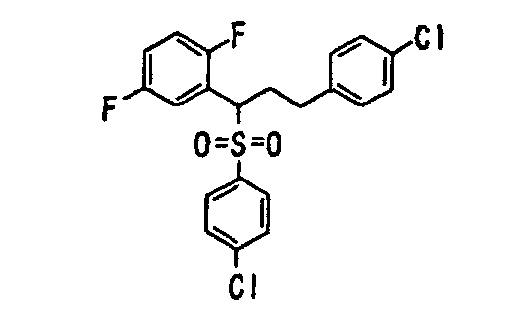
1H-NMR (400 MHz, CDCl3) δ: 2.35-2.50(2H,m), 2.62-2.77(2H,m), 4.42-4.43(1H,m), 6.84(1H,td,J=9.0,4.4Hz), 6.97(2H,d,J=8.6Hz), 6.96-7.04(1H,m), 7.22(2H,d,J=8.6Hz), 7.23-7.28(1H,m), 7.36(2H,d,J=8.6Hz), 7.48(2H,d,J=8.6Hz).
IR (ATR) cm-1: 3079, 2931, 1581, 1492, 1475, 1461, 1425, 1394, 1317, 1274, 1214, 1178, 1139, 1083, 1012.
mp: 124-126°C.
MS m/z: 441 (M++H).
Anal. calcd for C21H16Cl2F2O2S: C, 57.15; H, 3.65; Cl, 16.07; F, 8.61; S, 7.27. Found: C, 56.96; H, 3.68; Cl, 16.28; F, 8.78; S, 7.44.
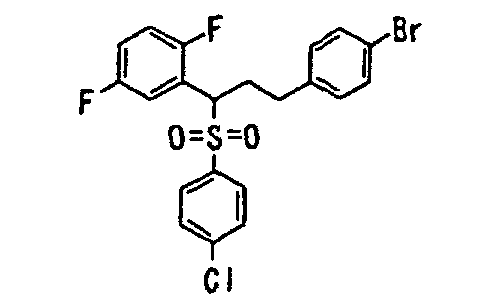
1H-NMR (400 MHz, CDCl3) δ: 2.34-2.49(2H,m), 2.58-2.76(2H,m), 4.42-4.45(1H,m), 6.84(1H,td,J=9.0,4.3Hz), 6.92(2H,d,J=8.1Hz), 6.98-7.04(1H,m), 7.26(1H,ddd,J=8.3,5.5,3.4Hz), 7.36(2H,d,J=8.3Hz), 7.38 (2H, d, J=8.1Hz), 7.48(2H, d, J=8.3Hz).
IR (ATR) cm-1: 3081, 2927, 1573, 1486, 1459, 1425, 1396, 1317, 1272, 1247, 1216, 1178, 1139, 1083, 1010.
mp: 122-124°C.
MS m/z: 486 (M++H).
FAB-MS: 485.9728 (Calcd for C21H16ClBrF2O2S: 485.9690).

1H-NMR (400 MHz, CDCl3) δ: 1.50-1.65(2H,m), 2.06-2.16(1H,m), 2.40-2.49(1H,m), 2.53-2.69(2H,m), 4.52(1H,dd,J=11.4,3.1Hz), 6.83(1H,td,J=9.0,4.5Hz), 6.94-7.00(1H,m), 7.05-7.26(6H,m), 7.37(2H,d,J=8.6Hz), 7.52(2H,d,J=8.6Hz).
IR (ATR) cm-1: 3070, 2956, 2861, 1914, 1583, 1488, 1461, 1423, 1392, 1319, 1278, 1249, 1207, 1174, 1143, 1081, 1012. mp: 107-108°C.
MS m/z: 421 (M++H).
FAB-MS: 421.0834 (Calcd for C22H20ClF2O2S: 421.0841).

1H-NMR (400 MHz, CDCl3) δ: 1.26(2H,q,J=7.6Hz), 1.57-1.67(2H,m), 2.06-2.16(1H,m), 2.40-2.62(3H,m), 4.49(1H,dd,J=12.0,3.3Hz), 6.81(1H,td,J=9.0,4.5Hz), 6.94-7.00(1H,m), 7.08-7.26(6H,m), 7.37(2H,d,J=8.3Hz), 7.52(2H,d,J=8.3Hz).
IR (ATR) cm-1: 2942, 2856, 1583, 1494, 1475, 1463, 1427, 1394, 1324, 1276, 1240, 1211, 1182, 1151, 1083, 1049, 1014.
mp: 88-90°C.
MS m/z: 435 (M++H).
Anal. calcd for C23H21ClF2O2S: C, 63.52; H, 4.87; Cl, 8.15; F, 8.74; S, 7.37. Found: C, 63.32; H, 4.74; Cl, 8.19; F, 8.93; S, 7.65.
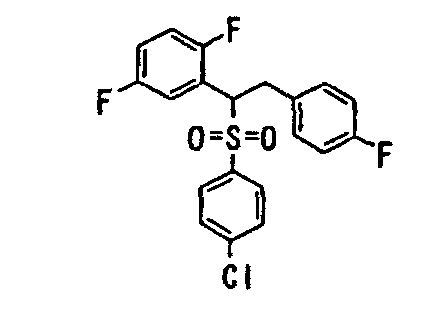
1H-NMR (400 MHz, CDCl3) δ: 3.29(1H,dd,J=14.0,12.0Hz), 3.81(1H,dd,J=14.0,3.7Hz), 4.75(1H,dd,J=12.0,3.7Hz), 6.70(1H,td,J=9.0,4.5Hz), 6.84-7.00(6H,m), 7.38(2H,d,J=8.6Hz), 7.56(2H,d,J=8.6Hz).
IR (ATR) cm-1: 3079, 2964, 1600, 1573, 1511, 1492, 1427, 1392, 1307, 1278, 1220, 1172, 1143, 1081, 1010.
mp: 151-153°C.
MS m/z: 411 (M++H).
Anal. calcd for C20H14ClF3O2S: C, 58.47; H, 3.43; Cl, 8.63; F, 13.87; S, 7.80. Found: C, 58.27; H, 3.39; Cl, 8.80; F, 13.80; S, 8.00.

1H-NMR (400 MHz, CDCl3) δ: 0.94-1.07(4H,m), 1.09-1.18(1H,m), 1.23-1.33(1H,m), 1.45-1.59(3H,m), 1.67-1.79(2H,m), 2.03-2.14(1H,m), 2.41-2.50(1H,m), 4.49(1H,dd,J=12.2,2.9Hz), 6.82(1H,td,J=9.0,4.4Hz), 6.94-7.00(1H,m), 7.22-7.26(1H,m), 7.37 (2H, d, J=8.8Hz), 7.52(2H,d, J=8.8Hz).
IR (ATR) cm-1: 2952, 2852, 1583, 1494, 1475, 1427, 1396, 1313, 1278, 1214, 1176, 1147, 1081, 1014.
mp: 93-94°C.
MS m/z: 399 (M++H).
FAB-MS: 399.1004 (Calcd for C20H22ClF2O2S: 399.0997).

1H-NMR (400 MHz, CDCl3) δ: 0.75-0.89(2H,m), 0.97-1.25(6H,m), 1.61-1.68(5H,m), 2.01-2.12(1H,m), 2.42-2.50(1H,m), 4.46(1H,dd,J=11.5,2.9Hz), 6.82(1H,td,J=9.3,4.4Hz), 6.94-7.00(1H,m), 7.20-7.26(1H,m), 7.37(2H,d,J=8.1Hz), 7.52(2H,d,J=8.1Hz).
IR (ATR) cm-1: 2925, 2842, 1581, 1496, 1450, 1423, 1392, 1315, 1276, 1238, 1176, 1149, 1085, 1010.
mp: 82-83°C.
MS m/z: 413 (M++H).
Anal. calcd for C21H23ClF2O2S: C, 61.08; H, 5.61; Cl, 8.59; F, 9.20; S, 7.77. Found: C, 60.80; H, 5.58; Cl, 8.79; F, 9.45; S, 7.92.

1H-NMR (400 MHz, CDCl3) δ: 0.72-1.73(15H,m), 2.01-2.12(1H,m), 2.33-2.41(1H,m), 4.51(1H,d,J=9.0Hz), 6.80-6.86(1H,m), 6.94-7.00(1H,m), 7.22-7.26(1H,m), 7.38(2H,d,J=7.8Hz), 7.53(2H,d,J=7.8Hz).
IR (ATR) cm-1: 2919, 2852, 1583, 1496, 1488, 1475, 1425, 1394, 1317, 1274, 1236, 1207, 1149, 1081, 1012.
mp: 47-49°C.
MS m/z: 427 (M++H).
FAB-MS: 427.1342 (Calcd for C22H26ClF2O2S: 427.1310).
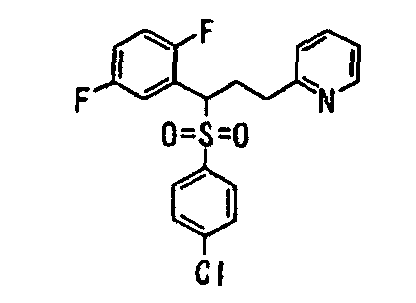
1H-NMR (400 MHz, CDCl3) δ: 2.49-2.58(1H,m), 2.68-2.93(3H,m), 4.60(1H,dd,J=10.9,3.3Hz), 6.84(1H,td,J=8.9,4.5Hz), 6.95-7.00(1H,m), 7.03(1H,d,J=7.6Hz), 7.11(1H,dd,J=6.9,5.1Hz), 7.29-7.38(1H,m), 7.39(2H,d,J=8.6Hz), 7.54(2H,d,J=8.6Hz) 7.51-7.58(1H,m), 8.48(1H,d,J=3.9Hz).
IR (ATR) cm-1: 3075, 1585, 1569, 1496, 1473, 1425, 1394, 1311, 1278, 1205, 1145, 1081, 1012.
mp: 129-131°C.
MS m/z: 408 (M++H).
FAB-MS: 408.0649 (Calcd for C20H17ClF2NO2S: 408.0637).
Anal. calcd for C20H16ClF2NO2S: C, 58.90; H, 3.95; Cl, 8.69; F, 9.32; N, 3.42; S, 7.86. Found: C, 58.57; H, 3.87; Cl, 8.90; F, 9.34; N, 3.53; S, 7.96.
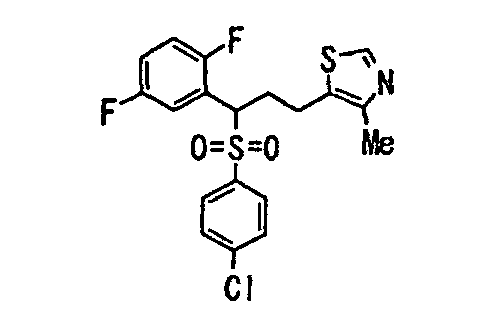
1H-NMR (400 MHz, CDCl3) δ: 2.21(3H,s), 2.36-2.47(1H,m), 2.70-2.87(3H,m), 4.49(1H,dd,J=10.9,2.6Hz), 6.86(1H,td,J=9.1,4.4Hz), 6.99-7.05(1H,m), 7.24-7.28(1H,m), 7.39(2H,d,J=8.8Hz), 7.51(2H,d,J=8.8Hz) 8.57(1H,s).
IR (ATR) cm-1: 3085, 2933, 1583, 1571, 1494, 1477, 1405, 1315, 1278, 1220, 1147, 1083, 1012.
mp: 183-184°C.
MS m/z: 428 (M++H).
FAB-MS: 428.0355 (Calcd for C19H17ClF2NO2S2: 428.0357).

1H-NMR (400 MHz, CDCl3) δ: 1.34-1.40(2H,m), 1.44-1.49(4H,m), 2.09-2.34(7H,m), 2.59-2.67(1H,m), 4.76-4.79(1H,m), 6.83(1H,td,J=9.0,4.3Hz), 6.94-7.00(1H,m), 7.23(1H,ddd,J=8.9,5.8,3.7Hz), 7.39(2H,d,J=8.8Hz), 7.55(2H,d,J=8.8Hz).
IR (ATR) cm-1: 2942, 2800, 2761, 1579, 1492, 1427, 1396, 1355, 1309, 1284, 1243, 1189, 1118, 1085, 1014.
mp: 106-107°C.
MS m/z: 414 (M++H).
FAB-MS: 414.1118 (Calcd for C20H23ClF2NO2S: 414.1106).
Anal. calcd for C20H22ClF2NO2S: C, 58.04; H, 5.36; Cl, 8.57; F, 9.18; N, 3.38; S, 7.75. Found: C, 57.76; H, 5.34; Cl, 8.79; F, 9.44; N, 3.39; S, 7.89.
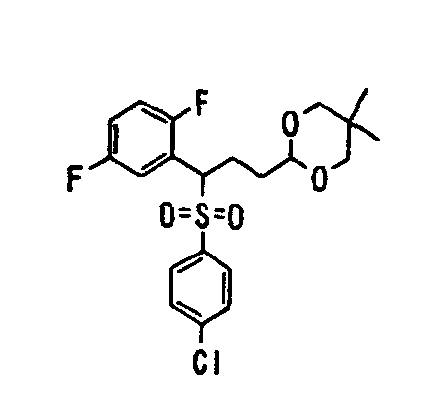
1H-NMR (400 MHz, CDCl3) δ: 0.70(3H,s), 1.12(3H,s), 1.53-1.58(2H,m), 2.15-2.25(1H,m), 2.55-2.65(1H,m), 3.35(2H,d,J=10.7Hz), 3.55(2H,d,J=10.7Hz), 4.39(1H,t,J=4.4Hz), 4.64(1H,dd,J=11.2,3.4Hz), 6.83(1H,td,J=8.9,4.6Hz), 6.94-7.00(1H,m), 7.21-7.26(1H,m), 7.38(2H,d,J=8.6Hz), 7.55(2H,d,J=8.6Hz).
IR (ATR) cm-1: 2958, 2842, 1583, 1498, 1467, 1396, 1317, 1278, 1214, 1147, 1130, 1081, 1041, 1012.
mp: 69-71°C.
MS m/z: 445 (M++H).
FAB-MS: 445.1031 (Calcd for C21H24ClF2O4S: 445.1052).
Anal. calcd for C21H23ClF2O4S: C, 56.69; H, 5.21; Cl, 7.97; F, 8.54; S, 7.21. Found: C, 56.29; H, 5.16; Cl, 8.09; F, 8.73; S, 7.43.

1H-NMR (400 MHz, CDCl3) δ: 0.83-0.45(2H,m), 1.18-1.31(7H,m), 2.03-2.12(1H,m), 2.37-2.46(1H,m), 4.50(1H,dd,J=11.4,3.3Hz), 6.82(1H,td,J=9.0,4.5Hz), 6.95-7.00(1H,m), 7.22-7.26(1H,m), 7.37(2H,d,J=8.6Hz), 7.52(2H,d,J=8.6Hz).
IR (ATR) cm-1: 2946, 2923, 2867, 1585, 1494, 1477, 1425, 1396, 1317, 1278, 1247, 1211, 1176, 1149, 1081, 1014.
mp: 68-69°C.
MS m/z: 373 (M++H).
Anal. calcd for C18H19ClF2O2S: C, 57.98; H, 5.14; Cl, 9.51; F, 10.19; S, 8.60. Found: C, 57.71; H, 5.14; Cl, 9.65; F, 10.31; S, 8.73.
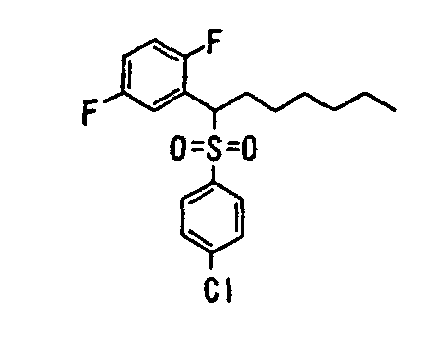
1H-NMR (400 MHz, CDCl3) δ: 0.84(3H,t,J=7.0Hz), 1.17-1.31(8H,m), 2.03-2.13(1H,m), 2.38-2.46(1H,m), 4.50(1H,dd,J=11.1,3.0Hz), 6.81(1H,td,J=9.0,4.5Hz), 6.94-7.00(1H,m), 7.23(1H,ddd,J=8.6,5.3,3.1Hz), 7.37(2H,d,J=8.6Hz), 7.52(2H,d,J=8.6Hz).
IR (ATR) cm-1: 2962, 2925, 2856, 1583, 1492, 1477, 1425, 1394, 1315, 1276, 1243, 1214, 1174, 1149, 1081, 1012.
mp: 77-78°C.
MS m/z: 387 (M++H).
Anal. calcd for C19H21ClF2O2S: C, 58.98; H, 5.47; Cl, 9.16; F, 9.82; S, 8.29. Found: C, 58.82; H, 5.54; Cl, 9.31; F, 9.86; S, 8.44.
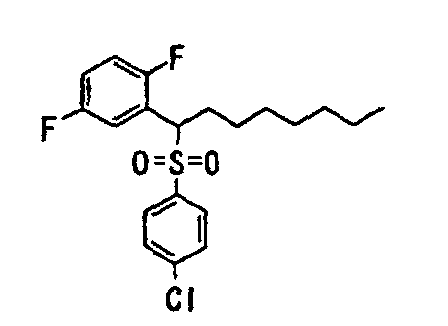
1H-NMR (400 MHz, CDCl3) δ: 0.85(3H,t,J=7.0Hz), 1.15-1.27(10H,m), 2.03-2.12(1H,m), 2.38-2.46(1H,m), 4.50(1H,dd,J=11.5,2.7Hz), 6.82(1H,td,J=9.0,4.6Hz), 6.94-7.00(1H,m), 7.24(1H,ddd,J=8.7,5.3,3.1Hz), 7.38(2H,d,J=8.6Hz), 7.53(2H,d,J=8.6Hz).
IR (ATR) cm-1: 2925, 2859, 1583, 1496, 1475, 1469, 1425, 1394, 1322, 1274, 1241, 1205, 1147, 1081, 1012.
mp: 47-48°C.
MS m/z : 401 (M++H).
Anal. calcd for C20H23ClF2O2S: C, 59.92; H, 5.78; Cl, 8.84; F, 9.48; S, 8.00. Found: C, 59.63; H, 5.61; Cl, 8.96; F, 9.59; S, 8.17.
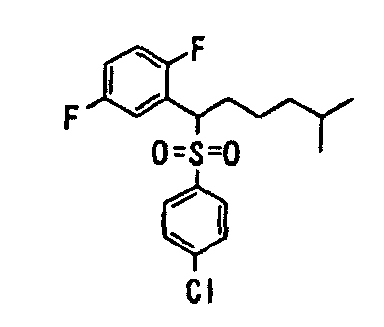
1H-NMR (400 MHz, CDCl3) δ: 0.78(3H,d,J=6.6Hz), 0.81(3H,d,J=6.6Hz), 1.14-1.25(4H,m), 1.41-1.52(1H,m), 2.02-2.12(1H,m), 2.35-2.41(1H,m), 4.51(1H,dd,J=11.6,2.6Hz), 6.83(1H,td,J=9.0,4.4Hz), 6.95-7.00(1H,m), 7.24(1H,ddd,J=8.9,5.6,3.2Hz), 7.38(2H,d,J=8.6Hz), 7.53(2H,d,J=8.6Hz).
IR (ATR) cm-1: 2962, 2925, 2898, 2861, 1583, 1492, 1465, 1427, 1394, 1315, 1278, 1247, 1211, 1176, 1147, 1081, 1014. mp: 79-80°C.
MS m/z: 387 (M++H).
Anal. calcd for C19H21ClF2O2S: C, 58.98; H, 5.47; Cl, 9.16; F, 9.82; S, 8.29. Found: C, 58.92; H, 5.42; Cl, 9.28; F, 10.00; S, 8.45.

1H-NMR (400 MHz, CDCl3) δ: 0.77-0.85(6H,m), 1.07-1.15(2H,m), 1.21-1.33(3H,m), 1.98-2.15(1H,m), 2.39-2.52(1H,m), 4.44-4.49(1H,m), 6.82(1H,td,J=8.9,4.1Hz), 6.94-7.00(1H,m), 7.23-7.26(1H,m), 7.38(2H,d,J=8.3Hz), 7.53(2H,d,J=8.3Hz).
IR (ATR) cm-1: 2960, 2919, 2873, 1583, 1496, 1473, 1461, 1425, 1394, 1319, 1278, 1216, 1153, 1083, 1012.
mp: 56-58°C.
MS m/z: 387 (M++H).
Anal. calcd for C19H21ClF2O2S: C, 58.98; H, 5.47; Cl, 9.16; F, 9.82; S, 8.29. Found: C, 58.87; H, 5.55; Cl, 9.12; F, 9.93; S, 8.42.
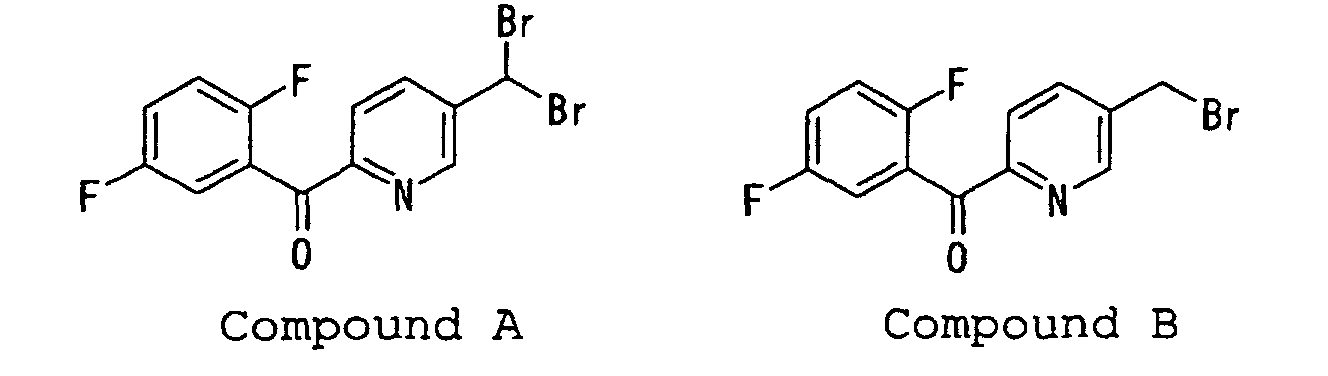
Compound A
1H-NMR (400 MHz, CDCl3) δ: 6.70 (1H, s), 7.12 (1H, m), 7.24 (1H, m), 7.39 (1H, m), 8.12 (1H, d, J=8.4Hz), 8.19 (1H, dd, J=2.0, 8.4Hz), 8.77 (1H, d, J=2.0Hz).
IR (ATR) cm-1: 1676, 1487, 1421, 1311, 1193, 827.
MS m/z: 392 (M++H).
Compound B
1H-NMR (400 MHz, CDCl3) δ: 4.52 (2H, s), 7.12 (1H, m), 7.21 (1H, m), 7.39 (1H, m), 7.94 (1H, dd, J=2.0, 8.0Hz), 8.08 (1H, d, J=8.0Hz), 8.67 (1H, d, J=2.0Hz).
MS m/z: 313 (M++H).
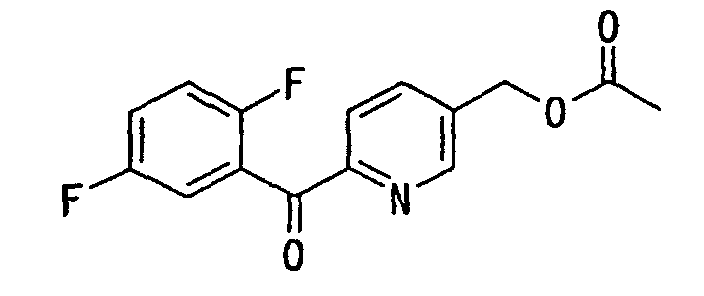
1H-NMR (400 MHz, CDCl3) δ: 2.12 (3H, s), 5.19 (2H, s), 7.10 (1H, m), 7.19 (1H, m), 7.37 (1H, s), 7.88 (1H, dd, J=2.4, 8.0Hz), 8.07 (1H, d, J=8.0Hz), 8.62 (1H, d, J=2.4Hz).
IR (ATR) cm-1: 1739, 1678, 1489, 1222, 821.
MS m/z: 292 (M++H).
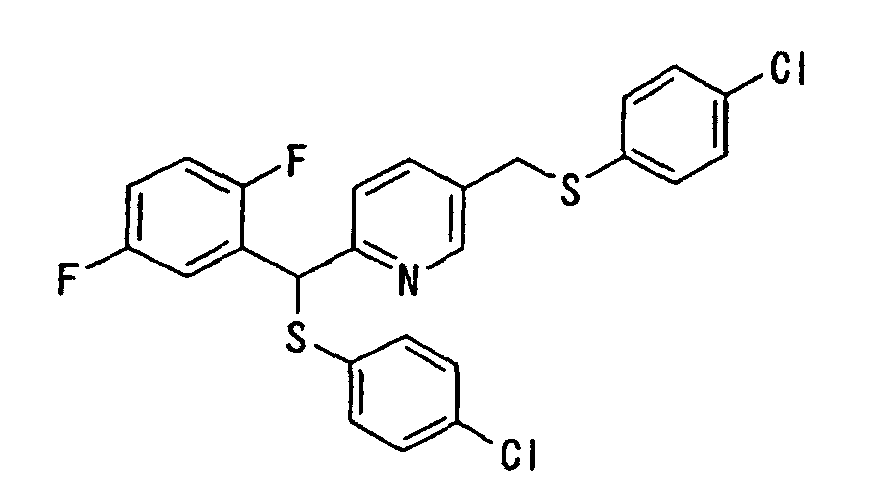
1H-NMR (400 MHz, CDCl3) δ: 3.99 (2H, s), 5.81 (1H, s), 6.90 (2H, m), 7.15 (2H, d, J=8.8Hz), 7.16 (2H, d, J=8.8Hz), 7.19 (4H, d, J=8.8Hz), 7.20 (1H, d, J=7.6Hz), 7.38(1H, m), 7.49 (1H, dd, J=2.0, 7.6Hz), 8.38 (1H, br).
IR (ATR) cm-1: 1473, 1385, 1092, 1010, 814.
mp: 87-88°C.

1H-NMR (400 MHz, CDCl3) δ: 4.29 (2H, s), 5.91 (1H, s), 6.90-7.08 (2H, m), 7.39 (2H, dd, J=1.6, 6.8 Hz), 7.45 (2H, dd, J=1.6, 6.8 Hz), 7.51 (2H, d, J=8.8 Hz), 7.55 (2H, d, J=8.8 Hz), 7.60 (1H, d, J=8.0 Hz), 7.65 (1H, dd, J=2.4, 8.0 Hz), 7.91 (1H, m), 8.23 (1H, s).
IR (ATR) cm-1: 1495, 1322, 1149, 1087, 615.
mp: 186-187°C .
MS m/z: 568 (M++H).
Anal. calcd for C25H17Cl2F2NO4S2: C, 52.82%; H, 3.01%; N, 2.46%; S, 11.28%; Cl, 12.47%; F, 6.68%. Found: C, 52.88%; H, 3.10%; N, 2.63%; S, 11.38%; Cl, 12.40%; F, 6.83%.
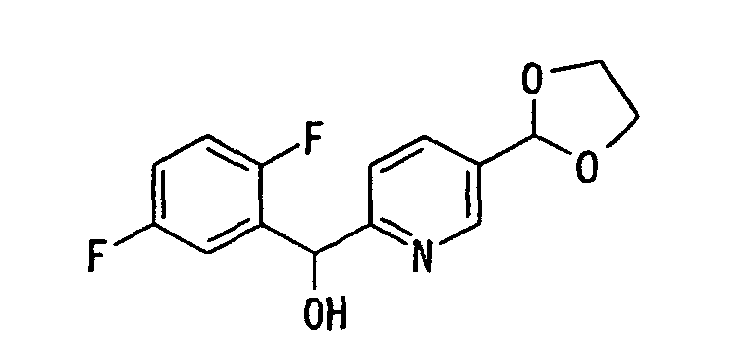
1H-NMR (400 MHz, CDCl3) δ: 4.0-4.2 (4H, m), 5.84 (1H, s), 6.10 (1H, s), 6.91 (1H, m), 6.99 (1H, m), 7.09 (1H, m), 7.26 (1H, d, J=8.0Hz), 7.76 (1H, dd, J=2.0, 8.0Hz), 8.64 (1H, d, J=2.0Hz).
IR (ATR) cm-1: 1489, 1086, 1026, 818, 715.
MS m/z: 294 (M++H).

1H-NMR (400 MHz, CDCl3) δ: 4.0-4.15 (4H, m), 5.84 (1H, s), 5.92 (1H, s), 6.85-6.96 (2H, m), 7.19 (2H, d, J=8.8Hz), 7.25 (2H, d, J=8.8Hz), 7.43 (1H, d, J=8.0Hz), 7.43 (1H, m), 7.77 (1H, dd, J=2.0, 8.0Hz), 8.70 (1H, d, J=2.0Hz).
IR (ATR) cm-1: 1489, 1475, 1091, 814.
mp: 70-73°C.
MS m/z: 420 (M++H).
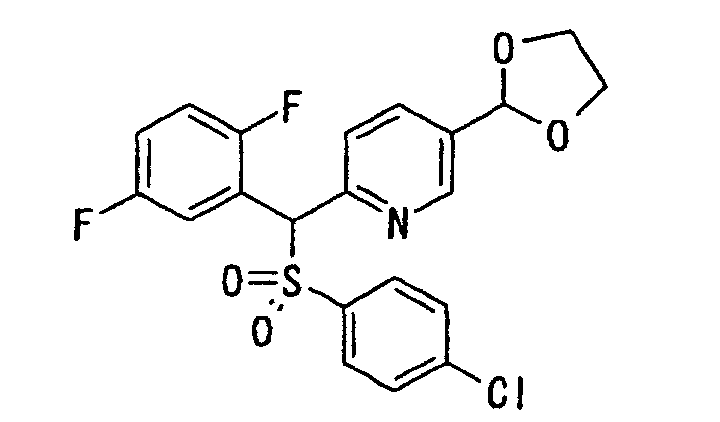
1H-NMR (400 MHz, CDCl3) δ: 4.02-4.10 (4H, m), 5.85 (1H, s), 5.97 (1H, s), 6.91 (1H, m), 6.96 (1H, m), 7.38 (2H, d, J=8.4Hz), 7.53 (2H, d, J=8.4Hz), 7.63 (1H, d, J=7.6Hz), 7.82 (1H, d, J=8.0Hz), 7.94 (1H, m), 8.67 (1H, br-s).
IR (ATR) cm-1: 1488, 1319, 1232, 1149, 823.
mp: 167-168°C
MS m/z: 452 (M++H).
FAB-MS: 452.0544 (Calcd for C21H17ClF2NO4S: 452.0535).
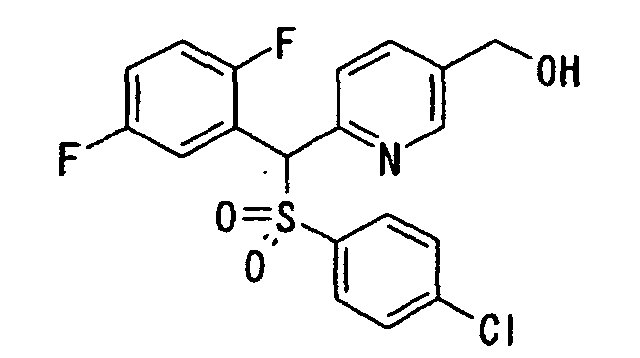
1H-NMR (400 MHz, CDCl3) δ: 4.74 (2H, s), 5.94 (1H, s), 6.91 (1H, m), 6.99 (1H, m), 7.38 (2H, d, J=8.4Hz), 7.53 (2H, d, J=8.4Hz), 7.62 (1H, d, J=8.0Hz), 7.76 (1H, dd, J=2.0, 8.0Hz), 7.98 (1H, m), 8.58 (1H, d, J=2.0Hz).
IR (ATR) cm-1: 3410, 1489, 1321, 1240, 1147, 1012, 818.
mp: 151-152°C.
MS m/z: 410 (M++H).
FAB-MS: 410.0444 (Calcd for C19H15ClF2NO3S: 410.0429).
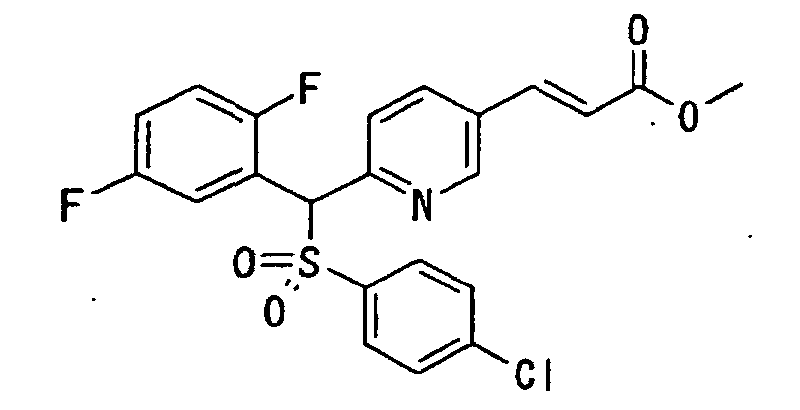
1H-NMR (400 MHz, CDCl3) δ: 3.80 (3H, s), 5.94 (1H, s), 6.50 (1H, d, J=16.0Hz), 6.91 (1H, m), 6.99 (1H, m), 7.38 (2H, d, J=8.8Hz), 7.53 (2H, d, J=8.8Hz), 7.63 (1H, d, J=8.0Hz), 7.63 (1H, d, J=16.0Hz), 7.84 (1H, dd, J=2.0, 8.0Hz), 7.98 (1H, m), 8.70 (1H, d, J=2.0Hz).
IR (ATR) cm-1: 1710, 1496, 1389, 1327, 1149, 1084, 816, 760. mp: 145-146°C .
MS m/z : 4 64 (M++H).
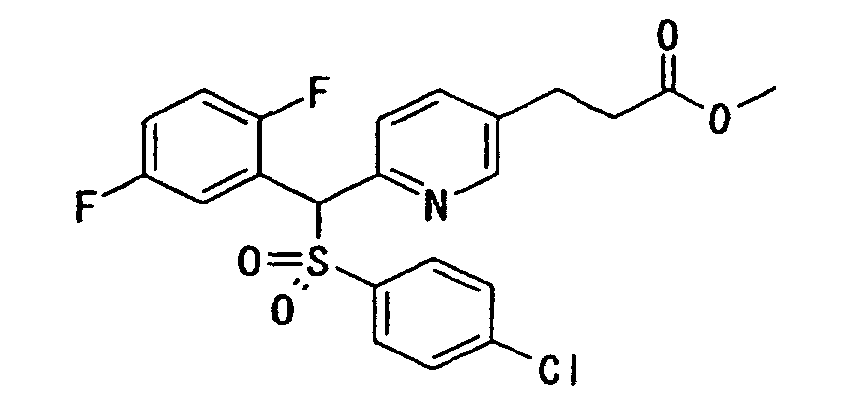
1H-NMR (400 MHz, CDCl3) δ: 2.63 (2H, t, J=7.6Hz), 2.95 (2H, t, J=7.6Hz), 3.65 (3H, s), 5.89 (1H, s), 6.90 (1H, m), 6.97 (1H, m), 7.36 (2H, d, J=8.4Hz), 7.53 (2H, d, J=8.4Hz), 7.55 (2H, m), 8.00 (1H, m), 8.45 (1H, d, J=1.6Hz).
IR (ATR) cm-1: 1731, 1489, 1319, 1225, 1147, 821.
mp: 121-123°C.
MS m/z: 466 (M++H).
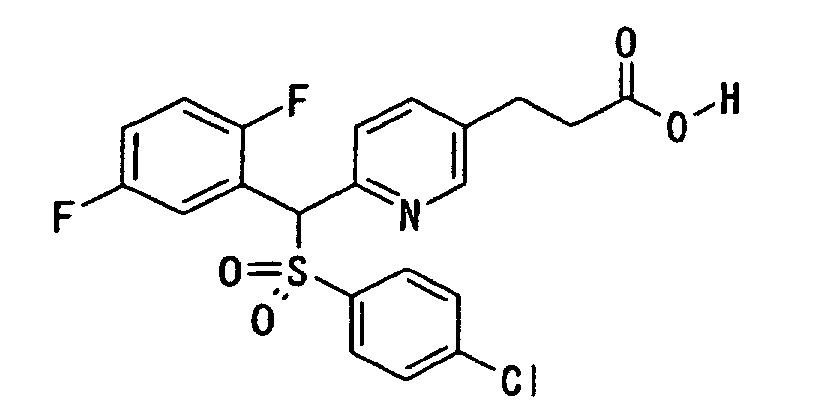
1H-NMR (400 MHz, CDCl3) δ: 2.69 (2H, t, J=7.6Hz), 2.96 (2H, t, J=7.6Hz), 5.92 (1H, s), 6.90 (1H, m), 6.98 (1H, m), 7.36 (2H, d, J=8.4Hz), 7.52 (2H, d, J=8.4Hz), 7.56 (2H, m), 7.99 (1H, m), 8.47 (1H, d, J=2.4Hz).
IR (ATR) cm-1: 1704, 1489, 1309, 1216, 1149, 1081, 827.
mp: 158-160°C.
MS m/z: 452 (M++H).
Anal. calcd for C21H16ClF2NO4S: C, 55.82%; H, 3.57%; N, 3.10%; S, 7.10%; Cl, 7.85%; F, 8.41%. Found: C, 55.70%; H, 3.75%; N, 3.19%; S, 7.12%; Cl, 8.64%; F, 8.11%.

1H-NMR (400 MHz, CDCl3) δ: 6.01 (1H, s), 6.94 (1H, m), 7.01 (1H, m), 7.40 (2H, d, J=8.4Hz), 7.54 (2H, d, J=8.4Hz), 7.81 (1H, d, J=8.4Hz), 7.97 (1H, m), 8.20 (1H, dd, J=2.0, 8.4Hz), 9.05 (1H, d, J=2.0Hz), 10.12 (1H, s).
IR (ATR) cm-1: 1708, 1489, 1376, 1322, 1151, 1117, 756.
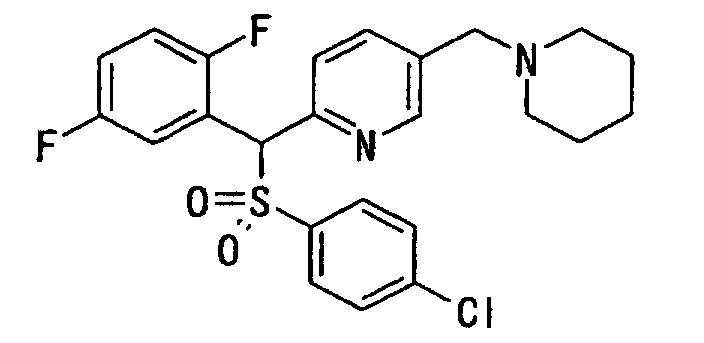
1H-NMR (400 MHz, CDCl3) δ: 1.5-1.6 (6H, m), 2.3-2.4 (4H, m), 3.45 (2H, s), 5.91 (1H, s), 6.90 (1H, m), 6.98 (1H, m), 7.35 (2H, d, J=8.4Hz), 7.52 (2H, d, J=8.4Hz), 7.53 (1H, m), 7.7 (1H, br), 8.02 (1H, m), 8.49 (1H, d, J=2.4Hz).
IR (ATR) cm-1: 1583, 1487, 1321, 1149, 827, 725.
mp: 113-114°C.
MS m/z: 477 (M++H).
Anal. calcd for C24H23ClF2N2O2S: C, 60.44%; H, 4.86%; N, 5.87%; S, 6.72%; Cl, 7.43%; F, 7.97%. Found: C, 59.87%; H, 4.81%; N, 5.83%; S, 6.87%; Cl, 7.55%; F, 8.02%.
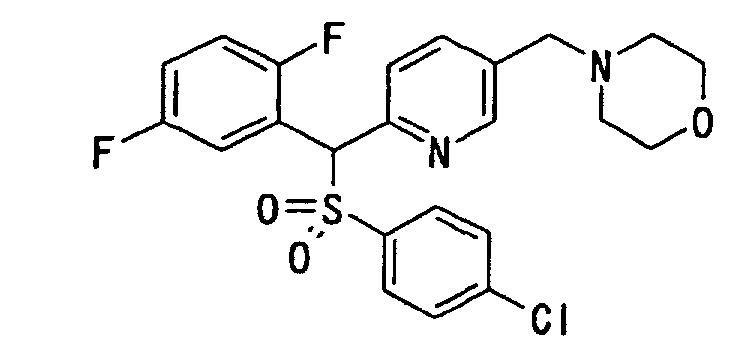
1H-NMR (400 MHz, CDCl3) δ: 2.4 (4H, m), 3.49 (2H, s), 3.6 (4H, m), 5.92 (1H, s), 6.90 (1H, m), 6.98 (1H, m), 7.36 (2H, d, J=8.4Hz), 7.53 (2H, d, J=8.4Hz), 7.57 (1H, d, J=8.0Hz), 7.71 (1H, br-d, J=8.0Hz), 8.02 (1H, m), 8.53 (1H, d, J=2.0Hz).
IR (ATR) cm-1: 1583, 1484, 1321, 1149, 1116, 827, 725.
mp: 120-121°C.
MS m/z: 479 (M++H).
Anal. calcd for C22H21ClF2N2O3S: C, 57.68%; H, 4.42%; N, 5.85%; S, 6.70%; Cl, 7.40%; F, 7.93%. Found: C, 57.41%; H, 4.43%; N, 5.90%; S, 6.82%; Cl, 7.52%; F, 7.91%.

1H-NMR (400 MHz, CDCl3) δ: 6.03 (1H, s), 6.96 (1H, m), 7.03 (1H, m), 7.42 (2H, d, J=8.4Hz), 7.56 (2H, d, J=8.4Hz), 7.73 (1H, d, J=8.4Hz), 7.97 (1H, m), 8.35 (1H, dd, J=2.0, 8.4 Hz), 9.20 (1H, d, J=2.0Hz).
IR (ATR) cm-1: 1685, 1596, 1498, 1322, 1153, 1085, 754.
mp: >230°C .
MS m/z: 424(M++H).
Anal. calcd for C19H12ClF2NO4S: C, 53.84%; H, 2.85%; N, 3.30%; S, 7.57%; Cl, 8.37%; F, 8.97%. Found: C, 53.47%; H, 2.81%; N, 3.46%; S, 7.65%; Cl, 8.49%; F, 9.00%.

1H-NMR (400 MHz, CDCl3) δ: 5.58 (1H, s), 6.95 (1H, m), 7.03 (1H, m), 7.29 (1H, dd, J=6.6, 8.0Hz), 7.42 (2H, d, J=8.6Hz), 7.57 (1H, d, J=8.0Hz), 7.62 (2H, d, J=8.4Hz), 7.66 (1H, m), 8.10 (1H, d, J=6.6Hz), 8.29 (1H, s).
IR (ATR) cm-1: 1573, 1492, 1438, 1329, 1248, 1151, 1081, 820.
mp: 183-184°C .
MS m/z: 396(M++H).
Anal. calcd for C18H12ClF2NO3S: C, 54.62%; H, 3.06%; N, 3.54%; S, 8.10%; Cl, 8.96%; F, 9.60%. Found: C, 54.19%; H, 2.99%; N, 3.67%; S, 8.27%; Cl, 8.92%; F, 9.53%.

1H-NMR (400 MHz, CDCl3) δ: 5.62 (1H, s), 6.97 (1H, m), 7.06 (1H, m), 7.42 (2H, d, J=7.2Hz), 7.44 (2H, d, J=8.8Hz), 7.60 (2H, d, J=8.8Hz), 7.68 (1H, m), 8.17 (2H, d, J=7.2Hz).
IR (ATR) cm-1: 1479, 1322, 1263, 1149, 1081, 813.
mp: 211-212°C.
MS m/z: 396(M++H).
Anal. calcd for C18H12ClF2NO3S: C, 54.62%; H, 3.06%; N, 3.54%; S, 8.10%; Cl, 8.96%; F, 9.60%. Found: C, 54.19%; H, 2.92%; N, 3.65%; S, 8.26%; Cl, 8.99%; F, 9.61%.

1H-NMR (400 MHz, CDCl3) δ: 4.87 (1H, br), 6.26 (1H, s), 6.90-7.02 (3H, m), 7.58 (1H, d, J=4.8 Hz), 8.47 (1H, s), 8.48 (1H, d, J=4.8 Hz).
IR (ATR) cm-1: 3178, 1592, 1490, 1174, 1039.
mp: 169-170°C .
MS m/z: 255(M+).

1H-NMR (400 MHz, CDCl3) δ: 2.64 (1H, d, J=4.0 Hz), 6.28 (1H, d, J=4.0 Hz), 6.89 (1H, m), 7.02 (2H, m), 7.64 (1H, s), 8.30 (1H, s).
IR (ATR) cm-1: 3226, 1579, 1492, 1243, 1110, 1062.
mp: 160-161°C .
MS m/z: 289(M+).
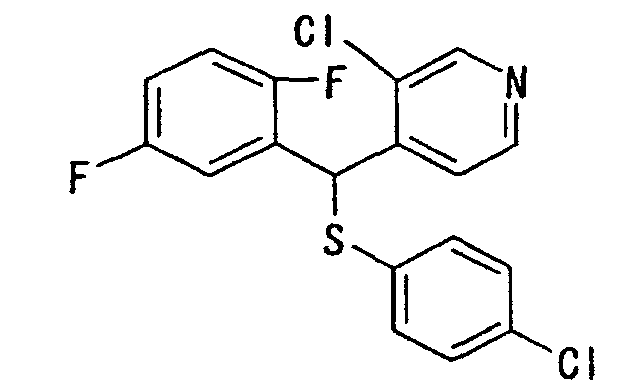
1H-NMR (400 MHz, CDCl3) δ: 6.07 (1H, s), 6.95-7.08 (2H, m), 7.18 (1H, m), 7.23 (2H, d, J=8.8 Hz), 7.26 (2H, d, J=8.8 Hz), 7.58 (1H, d, J=5.2 Hz), 8.51 (1H, d, J=5.2 Hz), 8.58 (1H, s).
IR (ATR) cm-1: 1577, 1473, 1211, 1089, 1012, 817.
mp: 70-72°C.
MS m/z: 382(M++1).
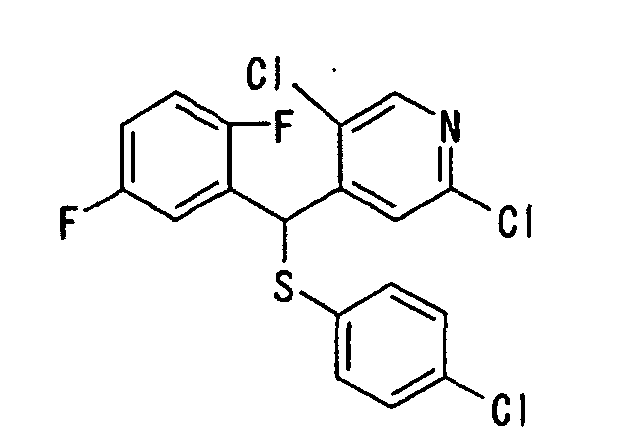
1H-NMR (400 MHz, CDCl3) δ: 5.96 (1H, s), 6.95-7.04 (2H, m), 7.01 (1H, m), 7.23 (2H, d, J=8.8 Hz), 7.26 (2H, d, J=8.8 Hz), 7.54 (1H, s), 8.33 (1H, s).
IR (ATR) cm-1: 1570, 1495, 1473, 1326, 1207, 1090, 1012, 816.
mp: 128-129°C.
MS m/z: 416 (M++1).

1H-NMR (400 MHz, CDCl3) δ: 6.23 (1H, s), 6.94 (1H, m), 7.06 (1H, m), 7.41 (2H, d, J=8.0 Hz), 7.53 (1H, m), 7.59 (2H, d, J=8.0 Hz), 8.11 (1H, d, J=5.2 Hz), 8.55 (1H, s), 8.60 (1H, d, J=5.2 Hz).
IR (ATR) cm-1: 1577, 1490, 1321, 1311, 1151, 1083, 821.
mp: 160-161°C .
MS m/z: 414(M++H).
Anal. calcd for C18H11Cl2F2NO2S: C, 52.19%; H, 2.68%; N, 3.38%; S, 7.74%; Cl, 17.12%; F, 9.17%. Found: C, 52.17%; H, 2.69%; N, 3.44%; S, 7.96%; Cl, 17.12%; F, 9.00%.

IR (ATR) cm-1: 1577, 1490, 1396, 1168, 1049, 1033, 817.
MS m/z: 398 (M++H).
FAB-MS: 397.9992 (Calcd for C18H12Cl2F2NOS: 397.9985).
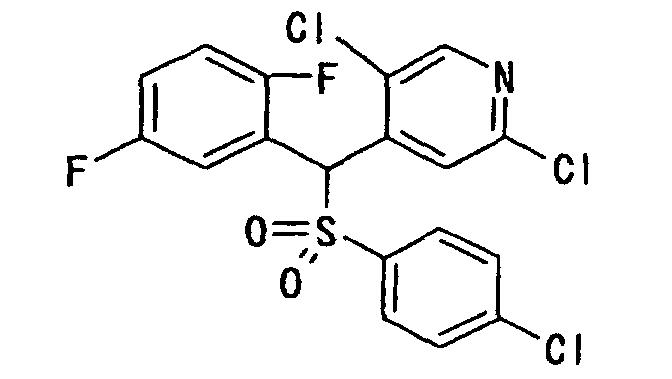
1H-NMR (400 MHz, CDCl3) δ: 6.15 (1H, s), 6.93 (1H, m), 7.05 (1H, m), 7.44 (2H, d, J=8.8 Hz), 7.50 (1H, m), 7.59 (2H, d, J=8.8 Hz), 8.13 (1H, s), 8.55 (1H, s), 8.33 (1H, s).
IR (ATR) cm-1: 1569, 1492, 1321, 1147, 1118, 1083, 821.
mp: 147-148°C
MS m/z: 448(M++H).
Anal. calcd for C18H10Cl3F2NO2S, 0.5H2O: C, 47.23%; H, 2.42%; N, 3.06%; S, 7.01%; Cl, 23.24%; F, 8.30%. Found: C, 47.25%; H, 2.24%; N, 3.21%; S, 7.19%; Cl, 23.25%; F, 8.32%.
FAB-MS: 447.9572 (Calcd for C18H11Cl3F2NO2S: 447.9544).
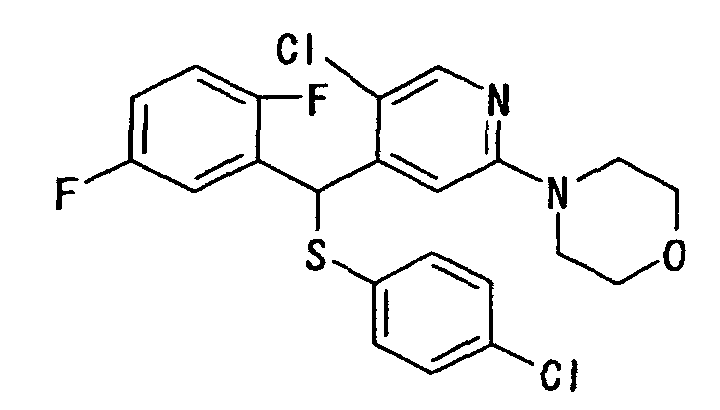
1H-NMR (400 MHz, CDCl3) δ: 3.48 (4H, m), 3.82 (4H, m), 6.00 (1H, s), 6.94 (1H, s), 6.94-7.04 (2H, m), 7.09 (1H, m), 7.23 (2H, d, J=8.4 Hz), 7.24 (2H, d, J=8.4 Hz), 8.12 (1H, s).
MS m/z: 467 (M++H).
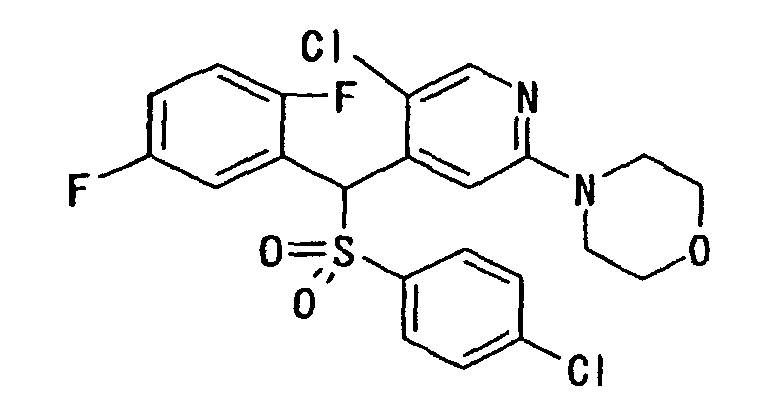
1H-NMR (400 MHz, CDCl3) δ: 3.54 (4H, m), 3.84 (4H, m), 6.12 (1H, s), 6.90 (1H, m), 7.02 (1H, m), 7.42 (2H, d, J=8.4 Hz), 7.45 (1H, s), 7.46(1H, m), 7.58 (2H, d, J=8.4 Hz), 8.06 (1H, s).
IR (ATR) cm-1: 1585, 1494, 1475, 1317, 1240, 1145, 1091, 831.
mp: 180-181°C .
MS m/z: 499(M++H).
Anal. calcd for C22H18Cl2F2N2O3S: C, 52.92%; H, 3.63%; N, 5.61%; S, 6.42%; Cl, 14.20%; F, 7.61%. Found: C, 52.68%; H, 3.56%; N, 5.69%; S, 6.70%; Cl, 14.32%; F, 7.97%
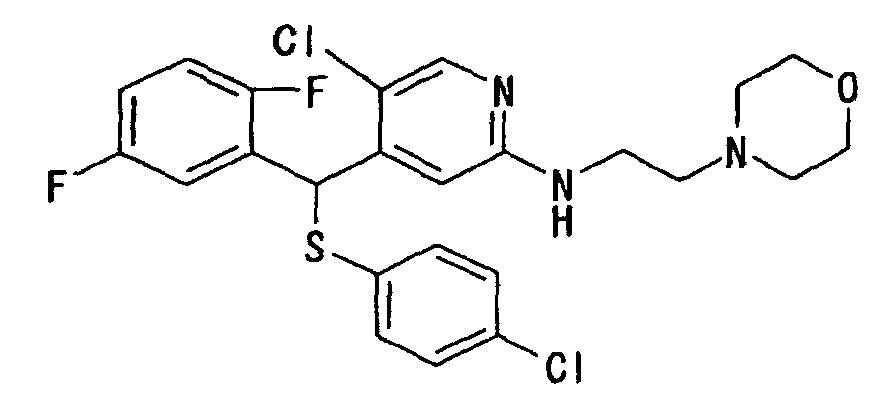
1H-NMR (400 MHz, CDCl3) δ: 2.42 (4H, m), 2.54 (2H, d, J=6.0 Hz), 3.27 (2H, q, J=6.0 Hz), 3.67 (4H, m), 5.12 (br, 1H), 5.90 (1H, s), 6.61 (1H, s), 6.86-7.0 (2H, m), 7.06 (1H, m), 7.15 (2H, d, J=8.4 Hz), 7.16 (2H, d, J=8.4 Hz), 7.95 (1H, s).
MS m/z: 510 (M++H).
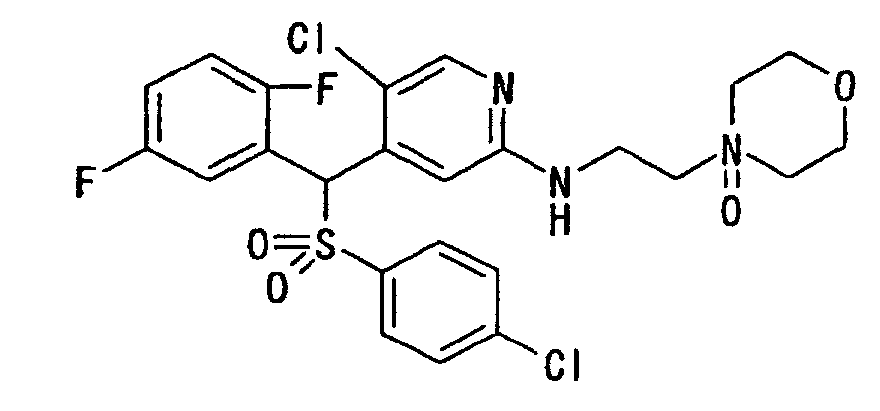
1H-NMR (400 MHz, CDCl3) δ: 3.2-3.4 (4H, m), 3.54 (2H, m), 3.81 (2H, m), 3.91 (2H, m), 4.44 (2H, m), 6.09 (1H, s), 6.88 (1H, m), 6.98 (1H, m), 7.22 (1H, s), 7.40 (2H, d, J=8.4 Hz), 7.51 (1H, m), 7.60 (2H, d, J=8.4 Hz), 7.94 (1H, s).
IR (ATR) cm-1: 1600, 1494, 1324, 1151, 1085, 754.
MS m/z: 558(M++H).
FAB-MS: 558.0837 (Calcd for C24H24Cl2F2N3O4S: 558.0833).

1H-NMR (400 MHz, CDCl3) δ: 4.42 (2H, s), 5.96 (1H, s), 6.94 (1H, m), 6.99-7.05 (1H, m), 7.40 (2H, d, J = 8.8 Hz), 7.55 (2H, d, J = 8.8 Hz), 7.60 (1H, d, J = 8.1 Hz), 7.72 (1H, dd, J = 8.1, 2.0 Hz), 8.02 (1H, m), 8.57 (1H, d, J = 2.0 Hz).
MS m/z: 435 (M++H).

1H-NMR (400 MHz, CDCl3) δ: 1.84 (2H, brs), 3.92 (2H, s), 5.94 (1H, s), 6.92 (1H, m), 7.03-6.98 (1H, m), 7.39 (2H, d, J = 8.3 Hz), 7.56 (2H, d, J = 8.3 Hz), 7.60 (1H, d, J = 8.1 Hz), 7.74 (1H, d, J = 8.1 Hz), 8.01 (1H, m), 8.57 (1H, s).
MS m/z: 409 (M++H).

1H-NMR (400 MHz, CDCl3) δ: 1.45 (9H, s), 4.34 (2H, d, J = 5.6 Hz), 4.91 (1H, brs), 5.93 (1H, s), 6.91 (1H, m), 6.98-7.04 (1H, m), 7.39 (2H, d, J = 8.8 Hz), 7.54 (2H, d, J = 8.8 Hz), 7.59 (1H, d, J = 7.8 Hz), 7.67 (1H, dd, J = 7.8, 2.2 Hz), 7.99 (1H, m), 8.53 (1H, d, J = 2.2 Hz).
IR (ATR) cm-1: 1700, 1573, 1492, 1394, 1365, 1322, 1276, 1241, 1149, 1087, 1047, 1014.
MS m/z: 509 (M++H).

IR (ATR) cm-1: 2979, 1795, 1727, 1695, 1492, 1392, 1367, 1328, 1255, 1224, 1132, 1087, 1033.
MS m/z: 609 (M++H).

1H-NMR (400 MHz, CD3OD) δ: 4.18 (2H, s), 6.22 (1H, s), 7.03 (1H, td, J = 9.3, 4.4 Hz), 7.11-7.17 (1H, m), 7.52 (2H, d, J = 8.8 Hz), 7.64 (2H, d, J = 8.8 Hz), 7.79 (1H, d, J = 8.3 Hz), 7.92 (1H, dd, J = 8.3, 2.2 Hz), 8.05-8.09 (1H, m), 8.71 (1H, d, J = 2.2 Hz).
IR (ATR) cm-1: 1600, 1571, 1492, 1394, 1349, 1313, 1278, 1232, 1170, 1147, 1079, 1037, 1012.
MS (m/z): 409 (M++H).
Anal. calcd for C20H15ClF2N2O2S·HCl: C, 51.25; H, 3.62; Cl, 15.92; F, 8.53; N, 6.29. Found: C, 51.11; H, 3.57; Cl, 15.50; F, 8.39; N, 5.83.
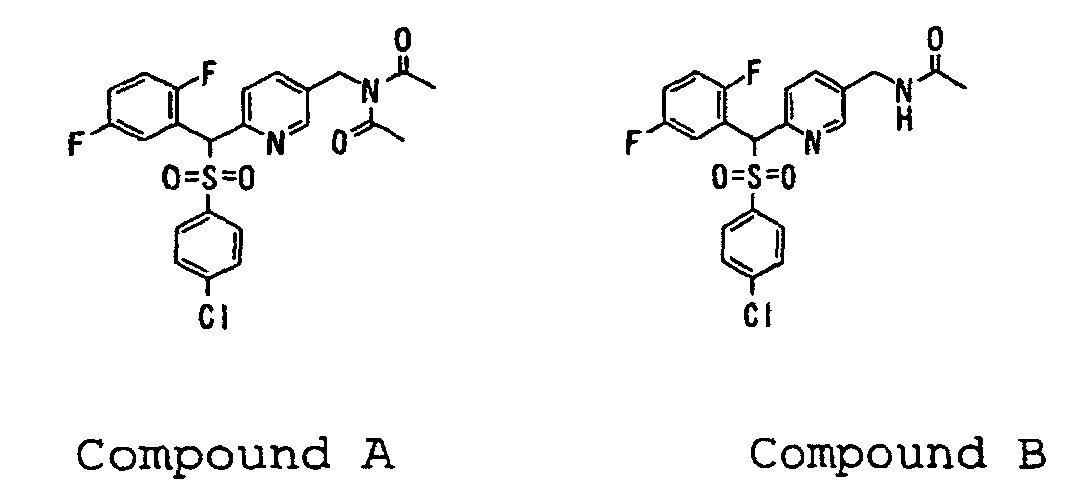
Compound A
1H-NMR (400 MHz, CDCl3) δ: 2.43 (6H, s), 4.96 (2H, s), 5.93 (1H, s), 6.91 (1H, m), 6.98-7.03 (1H, m), 7.39 (2H, d, J = 8.5 Hz), 7.54-7.61 (2H, m), 7.55 (2H, d, J = 8.5 Hz), 8.02 (1H, m), 8.51 (1H, d, J = 1.7 Hz).
IR (ATR) cm-1: 1712, 1689, 1573, 1492, 1423, 1369, 1319, 1267, 1201, 1149, 1079, 1029.
mp: 60-64°C.
MS m/z: 493 (M++H).
Compound B
1H-NMR (400 MHz, CDCl3) δ: 2.03 and 2.04 (3H, rotamers), 4.42-4.50 (2H, m), 5.89 (1H, brs), 5.93 (1H, s), 6.92 (1H, td, J = 9.1, 4.4 Hz), 6.97-7.02 (1H, m), 7.41 (2H, d, J = 8.1 Hz), 7.57 (2H, d, J = 8.1 Hz), 7.61 (1H, d, J = 8.1 Hz), 7.71 (1H, d, J = 8.1 Hz), 7.98-8.03 (1H, m), 8.54 (1H, s). IR (ATR) cm-1: 1650, 1673, 1525, 1486, 1430, 1396, 1355, 1319, 1280, 1230, 1147, 1085, 1016.
mp: 177-178°C.
MS m/z: 451 (M++H).

1H-NMR (400 MHz, CDCl3) δ: 2.76 (6H, s), 4.29 (2H, d, J = 6.4 Hz), 4.43 (1H, t, J = 6.4 Hz), 5.94 (1H, s), 6.92 (1H, m), 6.98-7.04 (1H, m), 7.41 (2H, d, J = 8.6 Hz), 7.58 (2H, d, J = 8.6 Hz), 7.66 (1H, d, J = 8.1 Hz), 7.79 (1H, dd, J = 8.1, 2.5 Hz), 8.02 (1H, m), 8.61 (1H, d, J = 2.5 Hz).
mp: 177-178°C.
MS m/z: 516 (M++H).

1H-NMR (400 MHz, CDCl3) δ: 1.39 (3H, t, J = 7.1 Hz), 4.37 (2H, q, J = 7.1 Hz), 4.55 (2H, d, J = 5.9 Hz), 5.94 (1H, s), 6.89-6.94 (1H, m), 6.98-7.05 (1H, m), 7.40 (2H, d, J = 8.3 Hz), 7.56 (2H, d, J = 8.3 Hz), 7.53 (1H, brs), 7.62 (1H, d, J = 8.1 Hz), 7.72 (1H, d, J = 8.1 Hz), 7.97-8.03 (1H, m), 8.58 (1H, s).
mp: 193-194°C.
MS m/z: 509 (M++H).

1H-NMR (400 MHz, CDCl3) δ: 2.44 (3H, s), 3.59 (2H, d, J = 6. 4 Hz), 4. 44 (2H, dd, J = 6.1, 2. 8 Hz), 5.42 (1H, t, J = 6.1 Hz), 5.95 (1H, s), 6.91 (1H, m), 6.96-7.03 (2H, m), 7.33 (2H, d, J = 8.3 Hz), 7.41 (2H, d, J = 8.6 Hz), 7.57 (2H, d, J = 8.6 Hz), 7.58 (1H, d, J = 8.1 Hz), 7.66 (1H, dd, J = 8.1, 2.4 Hz), 7.74 (2H, d, J = 8.3 Hz), 8.01 (1H, m), 8.49 (1H, d, J = 2.4 Hz).
mp: 217-218°C.
MS m/z: 620 (M++H).

1H-NMR (400 MHz, CDCl3) δ: 2.30 (6H, s), 3.01 (2H, s), 4.50 (2H, d, J = 6.1 Hz), 5.93 (1H, s), 6.91 (1H, m), 6.98-7.04 (1H, m), 7.40 (2H, d, J = 8.6 Hz), 7.55 (2H, d, J = 8.6 Hz), 7.60 (1H, d, J = 8.1 Hz), 7.62 (1H, brs), 7.69 (1H, dd, J = 8. 1, 2.4 Hz), 8.02 (1H, m), 8.56 (1H, d, J = 2.4 Hz).
mp: 177-179°C.
MS m/z: 494 (M++H).

1H-NMR (400 MHz, CDCl3) δ: 3.35 (3H, s), 4.67-4.71 (2H, m), 5.94 (1H, s), 6.53 (1H, brs), 6.90 (1H, m), 6.97-7.03 (1H, m), 7.25 (2H, d, J = 8.6 Hz), 7.40 (2H, d, J = 8.6 Hz), 7.56 (2H, d, J = 8.6 Hz), 7.63 (1H, d, J = 8.1 Hz), 7.78 (1H, dd, J = 8.1, 2.2 Hz), 7.86 (2H, d, J = 8.6 Hz), 8.03 (1H, m), 8.61 (1H, s), 8.64 (1H, d, J = 2.2 Hz).
MS m/z: 570 (M++H).
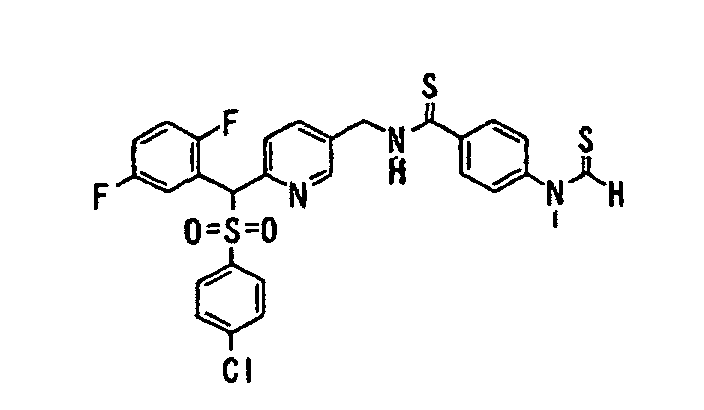
1H-NMR (400 MHz, CDCl3) δ: 3.72 (3H, s), 5.08 (2H, d, J = 4.4 Hz), 5.92 (1H, s), 6.89 (1H, td, J = 9.0, 4.4 Hz), 6.98-7.05 (1H, m), 7.25 (2H, d, J = 8.6 Hz), 7.40 (2H, d, J = 8.6 Hz), 7.55 (2H, d, J = 8.6 Hz), 7.60 (1H, d, J = 8.1 Hz), 7.81 (1H, d, J = 8.1 Hz), 7.87 (2H, d, J = 8.6 Hz), 8.02-8.06 (1H, m), 8.20 (1H, brs), 8.62 (1H, s), 9.70 (1H, s) .
MS m/z: 602 (M++H).

1H-NMR (400 MHz, CDCl3) δ: 3.59 (2H, s), 4.45 (2H, dd, J = 5.9, 1.5 Hz), 5.92 (1H, s), 5.96-6.10 (1H, m), 6.86-6.98 (1H, m), 6.99-7.05 (1H, m), 7.24-7.35 (1H, m), 7.39 (2H, d, J = 8.8 Hz), 7.55-7.60 (3H, m), 7.60-7.71 (2H, m), 7.96-8.06 (1H, m), 8.50 (2H, d, J = 1.6 Hz), 8.55 (1H, d, J = 4.8, 1.6 Hz).
MS m/z: 528 (M++H).

1H-NMR (400 MHz, CDCl3) δ: 2.94 (6H, s), 5.14 (2H, s), 5.94 (1H, s), 6.87-7.07 (2H, m), 7.39 (2H, d, J = 8.5 Hz), 7.55 (2H, d, J = 8.5 Hz), 7. 62 (1H, d, J = 7.8 Hz), 7.75 (1H, dd, J = 7.8, 2.0 Hz), 7.99-8.07 (1H, m), 8.63 (1H, d, J = 2.0 Hz).
MS m/z: 481 (M++H).
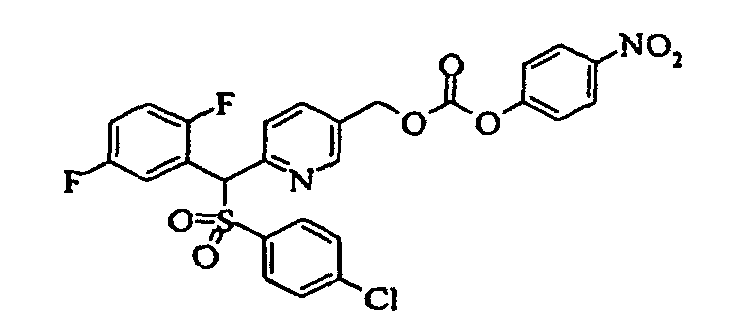
1H-NMR (400 MHz, CDCl3) δ: 5.33 (2H, s), 5.97 (1H, s), 6.87-6.95 (1H, m), 6.98-7.06 (1H, m), 7.39 (2H, d, J = 9.0 Hz), 7.40 (2H, d, J = 8.5 Hz), 7.57 (2H, d, J = 8.5 Hz), 7.71 (1H, d, J = 7. 6 Hz), 7.85 (1H, dd, J = 7. 6, 2. 0 Hz), 7.97-8.05 (1H, m), 8.29 (2H, d, J = 9.0 Hz), 8.72 (1H, d, J = 2.0 Hz).
MS m/z: 575 (M++H).

1H-NMR (400 MHz, CDCl3) δ: 4.38 (2H, brd, J = 5.4 Hz), 5.06 (1H, brs), 5.16 (2H, s), 5.94 (1H, s), 6.87-7.04 (2H, m), 7.22-7.38 (5H, m), 7.39 (2H, d, J = 8.3 Hz), 7.54 (2H, d, J = 8.3 Hz), 7.62 (1H, d, J = 8.3 Hz), 7.74 (1H, d, J = 8.3 Hz), 7.96-8.03 (1H, m), 8.61 (1H, s).
MS m/z: 543 (M++H).

1H-NMR (400 MHz, CDCl3) δ: 4.26 (2H, d, J = 6.4 Hz), 5.08 (1H, t, J = 6.4 Hz), 5.91 (1H, s), 6.86-7.06 (2H, m), 7.40 (2H, d, J = 8.1 Hz), 7.55 (2H, d, J = 8.1 Hz), 7.57-7.70 (3H, m), 7.81 (1H, d, J = 7.4 Hz), 7.94-8.05 (2H, m), 8.11 (1H, s), 8.46 (1H, s).
MS m/z: 574 (M++H).
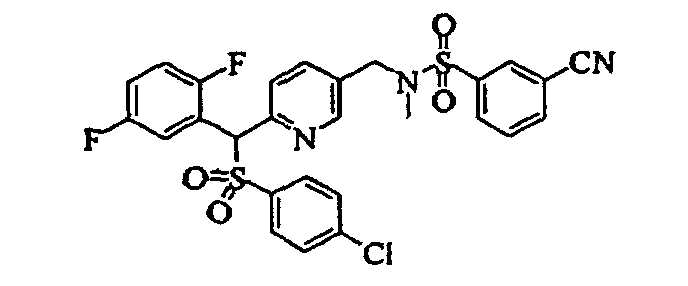
1H-NMR (400 MHz, CDCl3) δ: 2.70 (3H, s), 4.25 (2H, d, J = 6.4 Hz), 5.95 (1H, s), 6.87-7.05 (2H, m), 7.40 (2H, d, J = 8.5 Hz), 7.56 (2H, d, J = 8.5 Hz), 7.66 (1H, d, J = 8.1 Hz), 7.73 (1H, t, J = 7.8 Hz), 7.81 (1H, dd, J = 8.1, 2.2 Hz), 7.91 (1H, d, J = 7.8 Hz), 7.99-8.09 (2H, m), 8.12 (1H, s), 8.53 (1H, t, J = 2.2 Hz).
MS m/z: 588 (M++H).
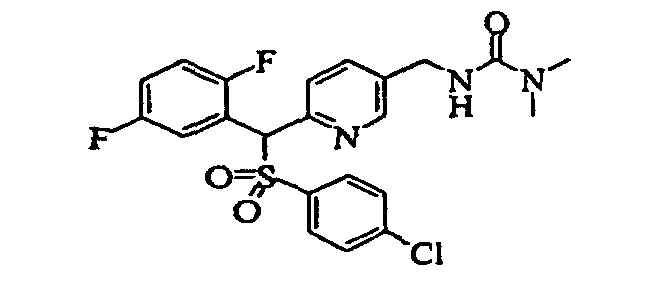
1H-NMR (400 MHz, CDCl3) δ: 2.93 (6H, s), 4.44 (2H, d, J = 4.2 Hz), 4.76 (1H, t, J = 4.2 Hz), 5.93 (1H, s), 6.85-7.04 (2H, m), 7.39 (2H, d, J = 8.3 Hz), 7.56 (2H, d, J = 8.3 Hz), 7.58 (1H, d, J = 8.5 Hz), 7.74 (1H, dd, J = 8.5, 2.0 Hz), 7.98-8.06 (1H, m), 8.57 (1H, d, J = 2.0 Hz).
MS m/z: 480 (M++H).

1H-NMR (400 MHz, CDCl3) δ: 3.71 (3H, s), 4.40 (2H, d, J = 6.1 Hz), 5.07 (1H, brs), 5.93 (1H, s), 6.87-7.04 (2H, m), 7.39 (2H, d, J = 8.5 Hz), 7.55 (2H, d, J = 8.5 Hz), 7.60 (1H, d, J = 7.8 Hz), 7.70 (1H, d, J = 7.8 Hz), 7.97-8.04 (1H, m), 8.55 (1H, s).
MS m/z: 467 (M++H).

1H-NMR (400 MHz, CDCl3) δ: 2.97 (3H, s), 4.37 (2H, d, J = 6.1 Hz), 4.70 (1H, brs), 5.95 (1H, s), 6.88-7.07 (2H, m), 7.40 (2H, d, J = 8.3 Hz), 7.56 (2H, d, J = 8.3 Hz), 7.65 (1H, d, J = 8.1 Hz), 7.80 (1H, d, J = 8.1 Hz), 7.97-8.07 (1H, m), 8.61 (1H, s).
MS m/z: 487 (M++H).

1H-NMR (400 MHz, CDCl3) δ: 1.58-1.79 (2H, m), 1.82-1.95 (2H, m), 2.09 (3H, s), 2.30-2.41 (1H, m), 2.59-2.70 (1H, m), 3.03-3.13 (1H, m), 3.82-3.92 (1H, m), 4.41-4.53 (2H, m), 4.55-4.63 (1H, m), 5.90-5.98 (2H, m), 6.85-6.94 (1H, m), 6.97-7.04 (1H, m), 7.40 (2H, d, J = 8.5 Hz), 7.55 (2H, d, J = 8.5 Hz), 7.60 (1H, d, J = 8.1 Hz), 7.66 (1H, d, J = 8.1 Hz), 7.98-8.05 (1H, m), 8.53 (1H, s).
MS m/z: 562 (M++H).

1H-NMR (400 MHz, CDCl3) δ: 3.81 (3H, s), 5.18 (2H, s), 5.95 (1H, s), 6.89-7.04 (2H, m), 7.40 (2H, d, J = 8.5 Hz), 7.55 (2H, d, J = 8.5 Hz), 7.65 (1H, d, J = 8.1 Hz), 7.78 (1H, dd, J = 8.1, 2.2 Hz), 7.97-8.03 (1H, m), 8.64 (1H, d, J = 2.2 Hz) .
MS m/z: 468 (M++H).

Isomer 373-A
1H-NMR (400 MHz, CDCl3) δ: 5.97 (1H, s), 6.91-6.96 (1H, m), 6.99-7.05 (1H, m), 7.40 (2H, d, J = 8.6 Hz), 7.56 (2H, d, J = 8.6 Hz), 7.66 (1H, d, J = 8.1 Hz), 7.78 (1H, s), 7.96-8.02 (2H, m), 8.14 (1H, s), 8.75 (1H, d, J = 1.7 Hz).
IR (ATR) cm-1: 3237, 1589, 1594, 1475, 1428, 1394, 1322, 1280, 1236, 1151, 1083, 1014.
mp: 187-188°C.
MS m/z: 423 (M++H).
Isomer 373-B
1H-NMR (400 MHz, CDCl3) δ: 5.98 (1H, s), 6.91-6.97 (1H, m), 7.00-7.06 (1H, m), 7.40 (1H, s), 7.41 (2H, d, J = 8.6 Hz), 7.57 (2H, d, J = 8.6 Hz), 7.71 (1H, d, J = 8.3 Hz), 7.90-8.02 (2H, m), 8.41 (1H, dd, J = 8. 3, 2.1 Hz), 9. 00 (1H, s). IR (ATR) cm-1: 3037, 1569, 1492, 1430, 1394, 1324, 1276, 1236, 1153, 1081, 1012.
mp: 194-196°C.
MS m/z: 423 (M++H).

1H-NMR (400 MHz, CDCl3) δ: 0.95-1.80 (11H, m), 3.32 (2H, d, J = 6.4 Hz), 5.98 (1H, s), 6.13-6.16 (1H, m), 6.90-6.96 (1H, m), 7.00-706 (1H, m), 7.40 (2H, d, J = 8.6 Hz), 7.55 (2H, d, J = 8.6 Hz), 7.69 (1H, d, J = 8.3 Hz), 7.97-8.02 (1H, m), 8.13 (1H, dd, J = 8.3, 2.2 Hz), 8.94 (1H, d, J = 2.2 Hz).
MS m/z: 519 (M++H).

1H-NMR (400 MHz, CDCl3) δ: 6.04 (1H, s), 6.92-6.97 (1H, m), 7.01-707 (1H, m), 7.42 (2H, d, J = 8.6 Hz), 7.57 (2H, d, J = 8.6 Hz), 7.75 (1H, dd, J = 9.1, 2.4 Hz), 7.80 (1H, d, J = 8.1 Hz), 7.97-8.01 (1H, m), 8.26 (1H, dd, J = 8.1, 2.2 Hz), 8.28 (1H, d, J = 2.4 Hz) 8.33 (1H, d, J = 9.1 Hz), 8.51 (1H, s), 9.12 (1H, d, J = 2.2 Hz).
MS m/z: 534 (M++H).

1H-NMR (400 MHz, CDCl3) δ: 2.57 (0.9H, s), 2.72 (5.1H, s), 5.98 (1H, s), 6.48 (0.15H, s), 6.90-7.06 (2.85H, m), 7.41 (2H, d, J = 8.6 Hz), 7.56 (2H, d, J = 8.6 Hz), 7.68 (1H, d, J = 8.1 Hz), 7.97-8.04 (1H, m), 8.13-8.17 (1H, m), 8.94 (0.85H, s), 9.07 (0.15H, s).
MS m/z: 466 (M++H).
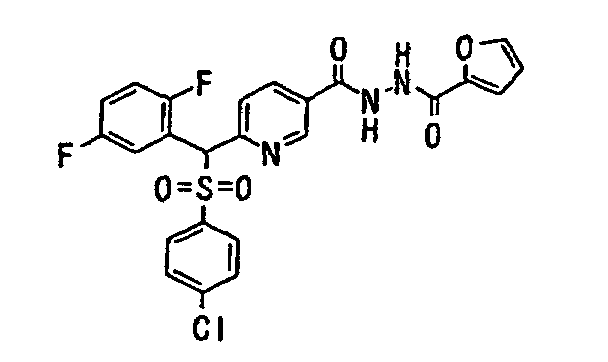
1H-NMR (400 MHz, CDCl3) δ: 6.01 (0.7H, s), 6.02 (0.3H, s), 6.55 (0.7H, dd, J = 3.4, 1.7 Hz), 6.91-6.96 (1H, m), 6.99-7.04 (1H, m), 7.21 (0.7H, d, J = 3.4 Hz), 7.41 (2H, d, J = 8.6 Hz), 7.53 (0.3H, dd, J = 1.7, 0.7 Hz), 7.56-7.60 (3H, m), 7.74 (1H, d, J = 8.3 Hz), 7.77 (0.3H, d, J = 8.8 Hz), 7.95-7.99 (1H, m), 8.15-8.19 (1H, m), 8.99 (0.3H, s), 9.03 (1H, d, J = 2.2 Hz), 9.14 (0.7H, brs), 9.67 (0.7H, brs), 9.98 (0.3H, brs).
MS m/z: 532 (M++H).
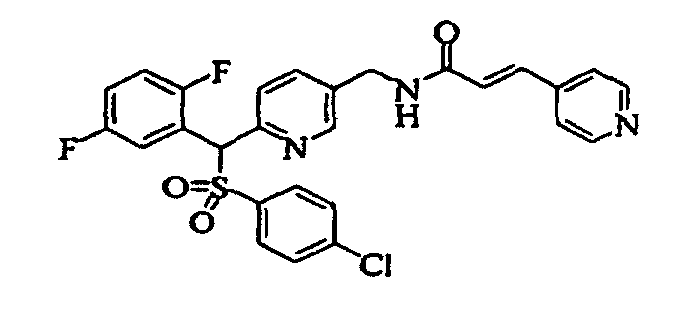
1H-NMR (400 MHz, CDCl3) δ: 4.53-4.66 (2H, m), 5.93 (1H, s), 6.09-6.17 (1H, m), 6.57 (1H, d, J = 15.6 Hz), 6.86-6.93 (1H, m), 6.96-7.04 (1H, m), 7.34 (2H, d, J = 5.9 Hz), 7.40 (2H, d, J = 8.5 Hz), 7.56 (2H, d, J = 8.5 Hz), 7.60 (1H, d, J = 15.6 Hz), 7.61 (1H, d, J = 8.1 Hz), 7.74 (1H, dd, J = 8.1, 2.2 Hz), 7.99-8.06 (1H, m), 8.59 (1H, d, J = 2.2 Hz), 8.64 (2H, d, J = 5.9 Hz).
MS m/z: 540 (M++H).

1H-NMR (400 MHz, CDCl3) δ: 2.61 (2H, br s), 2.74 (2H, br s), 3.69 (2H, br s), 4.04 (2H, br s), 5.97 (1H, s), 6.88-6.95 (1H, m), 6.98-7.06 (1H, m), 7.41 (2H, d, J = 8.5 Hz), 7.57 (2H, d, J = 8.5 Hz), 7.73 (1H, d, J = 8.1 Hz), 7.79 (1H, dd, J = 8.1, 2.2 Hz), 7.95-8.02 (1H, m), 8.64 (1H, d, J = 2.2 Hz).
MS m/z: 509 (M++H).

Compound A
1H-NMR (400 MHz, CDCl3) δ: 3.10 (4H, brs), 4.13 (4H, brs), 5.99 (1H, s), 6.88-6.93 (1H, m), 7.00-7.06 (1H, m), 7.42 (2H, d, J = 8.5 Hz), 7.58 (2H, d, J = 8.5 Hz), 7.79 (1H, d, J = 8.1 Hz), 7.86 (1H, dd, J = 8.1, 1. 7 Hz), 7.97-8.02 (1H, m), 8.71 (1H, d, J = 1.7 Hz).
MS m/z: 541 (M++H).
Compound B
1H-NMR (400 MHz, CDCl3) δ: 2.70-3.00 (4H, m), 3.74 (1H, brs), 4.10 (2H, brs), 4.63 (1H, brs), 5.98 (1H, s), 6.88-6.94 (1H, m), 7.00-7.06 (1H, m), 7.42 (2H, d, J = 8.6 Hz), 7.58 (2H, d, J = 8.6 Hz), 7.77 (1H, d, J = 8.1 Hz), 7.84 (1H, dd, J = 8.1, 2.2 Hz), 7.98-8.02 (1H, m), 8.70 (1H, d, J = 2.2 Hz).
MS m/z: 525 (M++H).
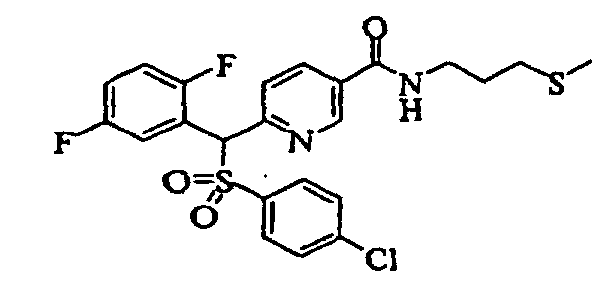
1H-NMR (400 MHz, CDCl3) δ: 1.92-2.01 (2H, m), 2.14 (3H, s), 2.63 (2H, t, J = 6.8 Hz), 3.58-3.64 (2H, m), 5.99 (1H, s), 6.57-6.64 (1H, m), 6.90-6.97 (1H, m), 6.99-7.06 (1H, m), 7.41 (2H, d, J = 8.5 Hz), 7.56 (2H, d, J = 8.5 Hz), 7.71 (1H, d, J = 8.1 Hz), 7.96-8.03 (1H, m), 8.16 (1H, dd, J = 8.1, 2.2 Hz), 8.96 (1H, d, J = 2.2 Hz).
MS m/ z : 511 (M++H).
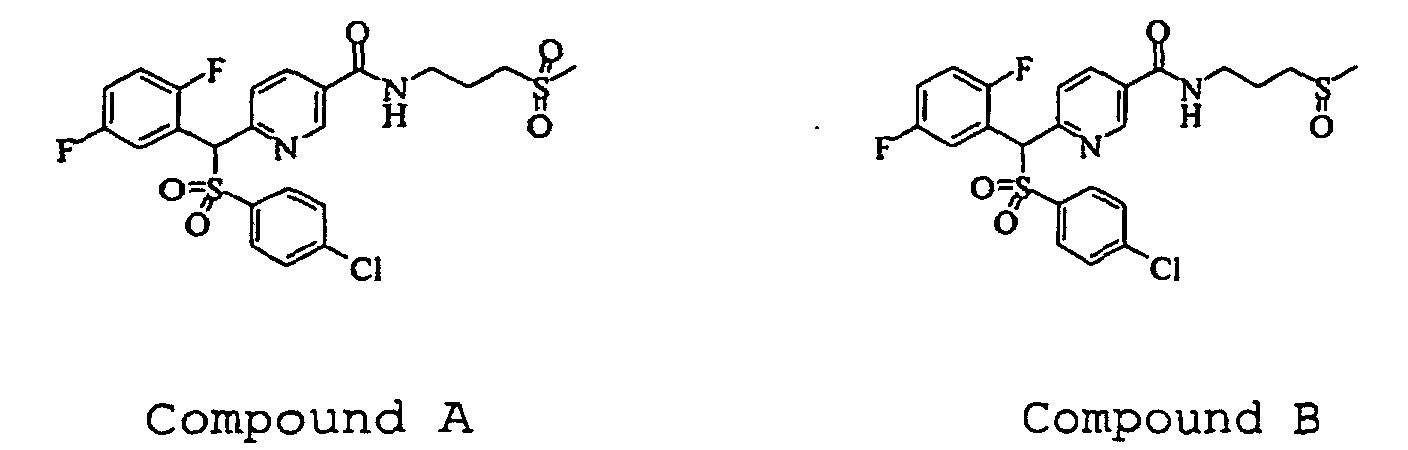
Compound A
1H-NMR (400 MHz, CDCl3) δ: 2.20-2.30 (2H, m), 2.98 (3H, s), 3.17 (2H, t, J = 6.8 Hz), 3.65-3.72 (2H, m), 5.99 (1H, s), 6.82-6.88 (1H, m), 6.90-6.97 (1H, m), 6.99-7.06 (1H, m), 7.41 (2H, d, J = 8.5 Hz), 7.56 (2H, d, J = 8.5 Hz), 7.72 (1H, d, J = 8.1 Hz), 7.96-8.02 (1H, m), 8.16 (1H, dd, J = 8. 1, 2.2 Hz), 9.00 (1H, d, J = 2.2 Hz).
MS m/z: 543 (M++H).
Compound B
1H-NMR (400 MHz, CDCl3) δ: 2.11-2.23 (1H, m), 2.26-2.37 (1H, m), 2.63 (3H, s), 2.78-2.86 (1H, m), 2.92-3.00 (1H, m), 3.51-3.61 (1H, m), 3.66-3.75 (1H, m), 5.99 (1H, s), 6.90-6.98 (1H, m), 6.99-7.06 (1H, m), 7.40 (2H, d, J = 8.5 Hz), 7.55 (2H, d, J = 8.5 Hz), 7.69 (1H, d, J = 8.1 Hz), 7.88-8.01 (2H, m), 8.22 (1H, dd, J = 8.1, 2.2 Hz), 9.08 (1H, d, J = 2.2 Hz).
MS m/z: 527 (M++H).
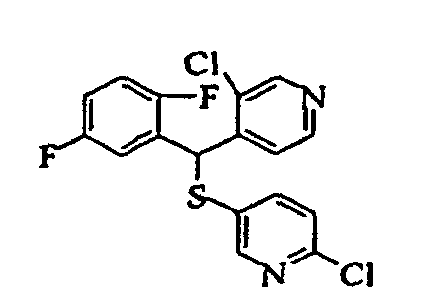
1H-NMR (400 MHz, CDCl3) δ: 6.04 (1H, s), 6.95-7.05 (2H, m), 7.10-7.20 (1H, m), 7.25 (1H, d, J = 8.1 Hz), 7.57 (1H, d, J = 5.1 Hz), 7.60 (1H, dd, J = 8.1, 2.5 Hz), 8.31 (1H, d, J = 2.5 Hz), 8.54 (1H, d, J = 5.1 Hz), 8.59 (1H, s).
MS m/z: 383 (M++H).

1H-NMR (400 MHz, CDCl3) δ: 6.26 (1H, s), 6.94-7.03 (1H, m), 7.06-7.15 (1H, m), 7.44 (1H, d, J = 8.3 Hz), 7.50-7.56 (1H, m), 7.89 (1H, dd, J = 8.3, 2.7 Hz), 8.12 (1H, d, J = 5.1 Hz), 8.59 (1H, d, J = 2.7 Hz), 8.61 (1H, s), 8.66 (1H, d, J = 5.1 Hz).
MS m/z: 415 (M++H).
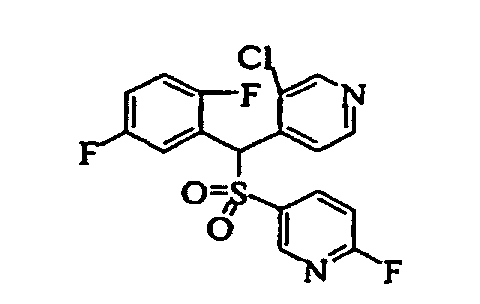
1H-NMR (400 MHz, CDCl3) δ: 6.26 (1H, s), 6.93-7.13 (3H, m), 7.50-7.56 (1H, m), 8.01-8.08 (1H, m), 8.13 (1H, d, J = 5.1 Hz), 8.48 (1H, d, J = 2.2 Hz), 8.60 (1H, s), 8.66 (1H, d, J = 5.1 Hz).
MS m/z: 440 (M++H+MeCN).
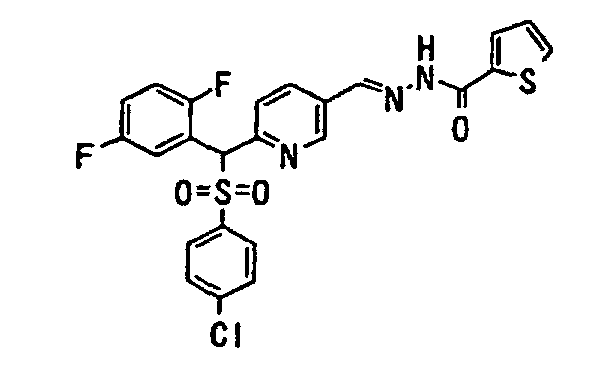
1H-NMR (400 MHz, CDCl3 / DMSO-d6) δ: 5.98 (1H, s), 6.93-7.01 (1H, m), 7.02-7.09 (1H, m), 7.14-7.20 (1H, br m), 7.42 (2H, d, J = 8.5 Hz), 7.57 (2H, d, J = 8.5 Hz), 7.62-7.73 (2H, br m), 8.02-8.20 (3H, m), 8.95 (1H, s), 11.5 (1H, s).
IR (ATR) cm-1: 3302, 1655, 1597, 1541, 1489, 1419, 1394, 1321, 1279, 1149, 1078, 1016, 966, 889, 831, 822, 762, 725, 710, 611, 552, 509, 465.
MS m/z: 532 (M++H).

1H-NMR (400 MHz, CDCl3 / DMSO-d6) δ: 6.00 (1H, s), 6.38 (1H, br s), 6.94-6.99 (1H, m), 7.02-7.08 (1H, m), 7.43 (2H, d, J = 8.5 Hz), 7.56 (2H, d, J = 8.5 Hz), 7.67 (1H, d, J = 7.6 Hz), 7.65-7.75 (1H, br m), 7.99-8.04 (1H, m), 8.26 (1H, dd, J = 8.1, 2:4 Hz), 9.12 (1H, d, J = 1.7 Hz).
IR (ATR) cm-1: 3442, 3165, 2954, 1670, 1624, 1595, 1496, 1410, 1373, 1313, 1279, 1232, 1176, 1147, 1086, 1012, 831, 816, 754, 710, 667, 606, 552, 499, 465.
MS m/z: 423 (M++H).

1H-NMR (400 MHz, CDCl3) δ:0.92 (1.8H, d, J = 6.6 Hz), 0.96 (1.2H, d, J = 6.4 Hz), 1.05-1.30 (3H, m), 1.32-1.43 (0.6H, m), 1.55-1.83 (4.4H, m), 2.03-2.12 (1H, m), 3.86-3.97 (0.6H, m), 4.20-4.28 (0.4H, m), 5.88 (0.6H, d, J = 7.1Hz), 5.98 (1H, s), 6.18 (0.4H, d, J = 7.3 Hz), 6.90-6.96 (1H, m), 6.98-7.06 (1H, m), 7.41 (1.2H, d, J = 8.1 Hz), 7.41 (0.8H, d, J = 8.1 Hz), 7.56 (1.2H, d, J = 8.1 Hz), 7.57 (0.8H, d, J = 8.1 Hz), 7.67-7.72 (1H, m), 7.97-8.05 (1H, m), 8.10-8.18 (1H, m), 8.93 (0.6H, d, J = 2.2 Hz), 8.96 (0.4H, d, J = 2.2 Hz).
IR (ATR) cm-1: 3381, 2935, 1643, 1595, 1525, 1489, 1394, 1317, 1281, 1234, 1171, 1147, 1078, 1016, 966, 897, 831, 823, 764, 729, 609, 548, 469, 413.
MS m/z: 519 (M++H).

1H-NMR (400 MHz, CDCl3) δ: 3.90 (2.4H, s), 3.97 (0.6H, s), 5.97 (0.2H, s), 5.98 (0.8H, s), 6.90-7.07 (2H, m), 7.39-7.46 (2H, m), 7.54-7.59 (2H, m), 7.63 (0.2H, d, J = 8.3 Hz), 7.73 (0.8H, d, J = 8.1Hz), 7.94-8.00 (1H, m), 8.10-8.15 (1H, m), 8.76 (1H, br s), 8.92 (0.8H, d, J = 1.7 Hz), 9.01 (0.2H, d, J = 1.5 Hz).
MS m/z: 453 (M++H).

1H-NMR (400 MHz, CDCl3) δ: 2.23 (6H, s), 3.43 (2H, s), 5.94 (1H, s), 6.88-6.98 (1H, m), 6.98-7.06 (1H, m), 7.38 (2H, d, J = 8.6 Hz), 7.52-7.62 (3H, m), 7.71 (1H, dd, J = 8.1, 2.1 Hz), 7.98-8.08 (1H, m), 8.51 (1H, d, J = 2.1 Hz).
MS m/z: 437 (M++H).
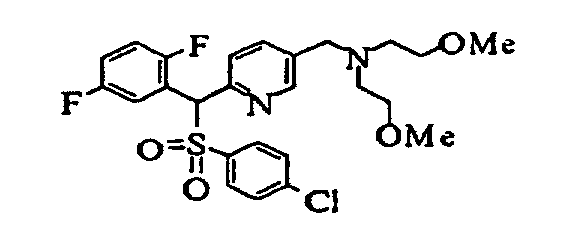
1H-NMR (400 MHz, CDCl3) δ: 2.73 (4H, t, J = 5.8 Hz), 3.31 (6H, s), 3.47 (4H, d, J = 5.8 Hz), 3.75 (2H, s), 5.93 (1H, s), 6.88-6.97 (1H, m), 6.97-7.07 (1H, m), 7.38 (2H, d, J = 8.8 Hz), 7.50-7.60 (3H, m), 7.76 (1H, dd, J = 8.1, 2.0 Hz), 7.98-8.08 (1H, m), 8.54 (1H, d, J = 2.0 Hz).
MS m/z: 525 (M++H).

1H-NMR (400 MHz, CDCl3) δ: 3.01 (3H, s), 3.14 (3H, s), 5.97 (1H, s), 6.88-6.99 (1H, m), 6.99-7.08 (1H, m), 7.40 (2H, d, J = 8.7 Hz), 7. 57 (2H, d, J = 8.7 Hz), 7.70 (1H, dd, J = 8.0, 0.7 Hz), 7.82 (1H, dd, J = 8.0, 2.2 Hz), 7.93-8.04 (1H, m), 8.68 (1H, dd, J = 2.2, 0.7 Hz).
MS m/z: 451 (M++H).

1H-NMR (400 MHz, CDCl3) δ: 2.33 (3H, s), 2.38 (2H, br s), 2.50 (2H, br s), 3.44 (2H, br s), 3.81 (2H, br s), 5.97 (1H, s), 6.87-6.98 (1H, m), 6.98-7.08 (1H, m), 7.40 (2H, d, J = 8.8 Hz), 7.57 (2H, d, J = 8.8 Hz), 7.71 (1H, dd, J = 8.1, 0.7 Hz), 7.81 (1H, dd, J = 8.1, 2.2 Hz), 7.94-8.04 (1H, m), 8.66 (1H, dd, J = 2.2, 0.7 Hz).
MS m/z: 506 (M++H).
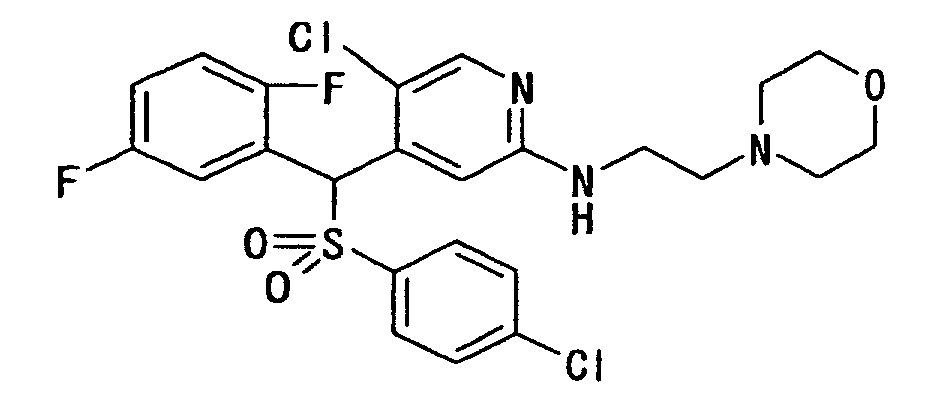
1H-NMR (400 MHz, CDCl3) δ: 2.5-2.8 (6H, m), 3.59 (2H, br), 3.81 (4H, br), 5.45 (1H, br), 6.10 (1H, s), 6.88 (1H, m), 7.01 (1H, m), 7.25 (1H, s), 7.42 (2H, d, J=8.8 Hz), 7.49 (1H, m), 7.60 (2H, d, J=8.4 Hz), 7.97 (1H, s).
MS m/z: 542(M++H).

1H-NMR (400 MHz, CDCl3) δ: 1.26 and 1.32 (9H, br-s, rotamer), 2.75 and 2.78 (3H, br-s, rotamer), 2.95 (3H, br-s), 3.30 (2H, m), 3.65 (2H, m), 5.92 (1H, s), 6.6-6.8 (1H, m), 6.84-6.97 (2H, m), 7.05 (1H, m), 7.14 (2H, d, J=8.8 Hz), 7.17 (2H, d, J=8.4 Hz), 7.98 (1H, s).
MS m/z: 568(M++H).
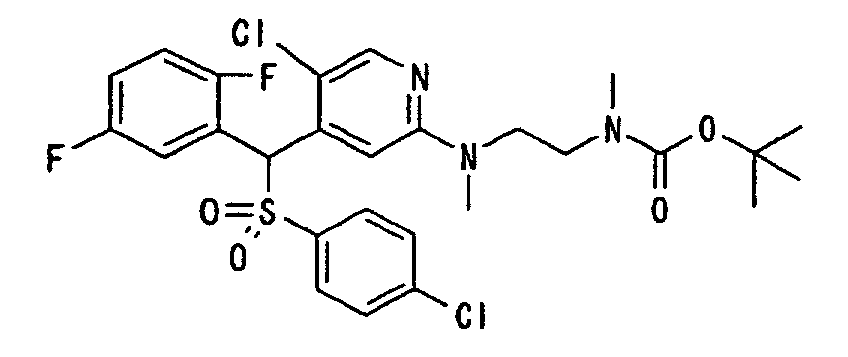
1H-NMR (400 MHz, CDCl3) δ: 1.33 and 1.38 (9H, br-s, rotamer), 2.87 and 2.89 (3H, br-s, rotamer), 3.11 (3H, br-s), 3.3-3.4 (2H, m), 3.6-3.9 (2H, m), 6.12 (1H, s), 6.89 (1H, m), 7.00 (1H, m), 7.26 (1H, m), 7.41 (2H, d, J=8.4 Hz), 7.53 (1H, m), 7.59 (2H, d, J=8.4 Hz), 8.00 (1H, s).
MS m/z: 600 (M++H).
EI-MS: 599.1204 (Calcd for C27H29Cl2F2N3O4S: 599.1224).

1H-NMR (400 MHz, CDCl3) δ: 2.51 (3H, s), 2.90 (2H, d, J=6.0 Hz), 3.14 (3H, s), 3.72 (2H, m), 6.13 (1H, s), 6.89 (1H, m), 7.00 (1H, m), 7.36 (1H, m), 7.41 (2H, d, J=8.4 Hz), 7.52 (1H, m), 7.60 (2H, d, J=8.4 Hz), 8.00 (1H, s).
MS m/z: 500 (M++H).
FAB-MS: 500.0770 (Calcd for C22H22Cl2F2N3O2S: 500.0778).

1H-NMR (400 MHz, CDCl3) δ: 1.78 (1H, m), 2.06 (3H, m), 3.29 (1H, m), 3.50 (1H, m), 3.66 (1H, m), 3.72 (1H, m), 4.33 (1H, m), 5.97 and 5.98 (1H, s, rotamer), 6.73 and 6.77 (1H, s, rotamer), 6.92-7.15 (3H, m), 7.25 (4H, m), 7.98 (1H, s).
MS m/z: 481 (M++H).

1H-NMR (400 MHz, CDCl3) δ: 1.75 (1H, m), 2.02 (3H, m), 3.3-3.5 (1H, m), 3.52-3.75 (3H, m), 4.2-4.35 (1H, m), 6.05 (1H, br-s), 6.84 (1H, m), 6.96 (1H, m), 7.36 (1H, s), 7.36 and 7.37 (2H, d, J=8.8 Hz, rotamer), 7.43 (1H, m), 7.53 and 7.54 (2H, d, J=8.8 Hz, rotamer), 7.89 and 7.90 (1H, s, rotamer).
MS m/z: 513 (M++H).
FAB-MS: 513.0627 (Calcd for C23H21Cl2F2N2O3S:513.0618).

1H-NMR (400 MHz, CDCl3) δ: 1.46 (9H, s), 2.72 (1H, m), 3.00 (1H, m), 3.22 (1H, m), 3.44 (1H, m), 3.6-3.75 (2H, m), 3.9-4.1 (3H, m), 4.95 (1H, br), 5.99 and 6.00 (1H, s, rotamer), 6.96 and 6.97 (1H, s, rotamer), 6.9-7.1 (3H, m), 7.24 (4H, s), 8.11 (1H, s).
MS m/ z : 596(M++H).

1H-NMR (400 MHz, CDCl3) δ: 1.40 (9H, s), 2.69 (1H, m), 3.02 (1H, m), 3.18 (1H, m), 3.41 (1H, br), 3.6-3.75 (2H, m), 3.92 (1H, m), 4.02 (1H, m), 4.13 (1H, m), 4.91 (1H, br), 6.07 (1H, s), 6.85 (1H, m), 6.99 (1H, m), 7.37 (2H, d, J=8.4 Hz), 7.35-7.45 (2H, m), 7.53 (2H, d, J=8.4 Hz), 8.17 (1H, s).
MS m/z: 628(M++H).
FAB-MS: 628.1255 (Calcd for C28H30Cl2F2N3O5S: 628.1251).

1H-NMR (400 MHz, CDCl3) δ: 2.77 (1H, m), 2.9-3.3 (2H, m), 3.5-3.85 (3H, m), 3.97 (1H, m), 4.04-4.25 (2H, m), 6.12 (1H, s), 6.90 (1H, m), 7.02 (1H, m), 7.42 (2H, d, J=8.4 Hz), 7.4-7.55 (2H, m), 7.58 (2H, d, J=8.4 Hz), 8.05 (1H, s).
MS m/z: 528(M++H).
FAB-MS: 528.0695 (Calcd for C23H22Cl2F2N3O3S: 528.0727).

1H-NMR (400 MHz, CDCl3) δ: 1.62 (2H, m), 2.05 (2H, m), 3.30 (2H, m), 3.98 (3H, m), 5.97 (1H, s), 6.96-7.12 (3H, m), 7.23 (4H, m), 7.26 (1H, s), 8.10 (1H, s).
MS m/z: 481(M++H).
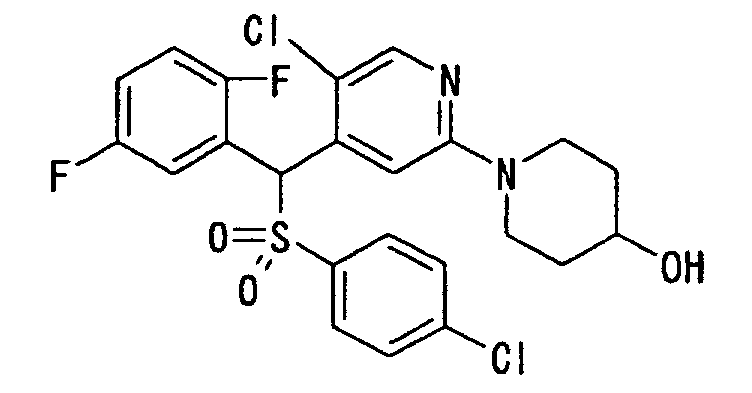
1H-NMR (400 MHz, CDCl3) δ: 1.64 (2H, m), 2.02 (2H, m), 3.33 (2H, m), 3.98 (1H, m), 4.08 (2H, m), 6.11 (1H, s), 6.92 (1H, m), 7.02 (1H, m), 7.42 (2H, d, J=8.8 Hz), 7.45 (1H, m), 7.53 (1H, s), 7.58 (2H, d, J=8.8 Hz), 8.05 (1H, s).
MS m/z: 513 (M++H).
IR (ATR) cm-1: 3359, 1589, 1495, 1317, 1234, 1081, 829.
mp: 146-148°C.
FAB-MS: 513.0588 (Calcd for C23H21Cl2F2N2O3S:513.0618).

1H-NMR (400 MHz, CDCl3) δ: 4.64 (1H, br d, J =6.3 Hz), 6.00 (1H, br d, J = 6.3 Hz), 7.27 (1H, d, J = 8.6 Hz), 7.31 (2H, d, J = 5.8 Hz), 7.67 (1H, d, J= 8.6 Hz), 8.57 (2H, d, J = 5.8 Hz).
MS (m/z) : 254 (M+).
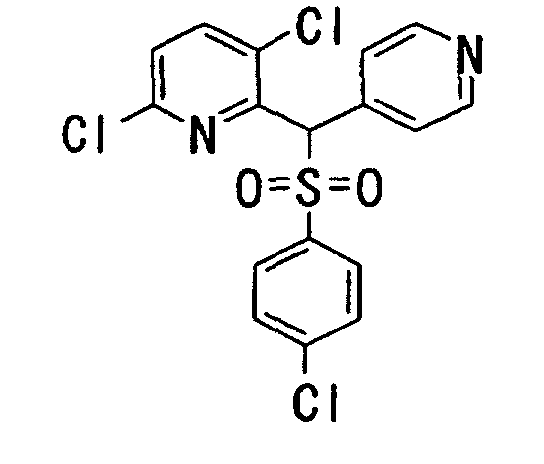
1H-NMR (400 MHz, CDCl3) δ: 6.08 (1H, s), 7.31 (1H, d, J = 8.3 Hz), 7.41 (2H, d, J = 8.8 Hz), 7.45 (2H, d, J = 6.0 Hz), 7.51 (2H, d, J = 8.8 Hz), 7.69 (1H, d, J = 8.3 Hz), 8.58 (2H, d, J = 6.0 Hz).
IR (ATR) ν cm-1: 3068, 2923, 1594, 1562, 1475, 1415, 1394, 1313, 1280, 1213, 1184, 1132, 1089, 1035, 1012, 993, 838, 813, 784, 744, 703, 595, 572, 536, 485, 458.
MS (m/z): 413, 415 (M++H).

1H-NMR (400 MHz, CDCl3) δ: 2.14 (3H, s), 2.33 (3H, s), 6.80-7.10 (2H, m), 7.23-7.34 (4H, m), 7.39-7.51 (2H, m), 7.88-8.00 (1H, m), 8.15 (1H, s).
MS (m/z): 408 (M++H).

1H-NMR (400 MHz, CDCl3) δ: 5.69 (1H, s), 7.20 (1H, d, J = 8.3 Hz), 7.24 (1H, d, J = 8.3 Hz), 7.35 (2H, d, J = 6.1 Hz), 7.52 (1H, dd, J = 8.3, 2.4 Hz), 7.62 (1H, d, J = 8.3 Hz), 8.32 (1H, d, J = 2.4 Hz), 8.55 (2H, d, J = 6.1 Hz).
MS m/z: 382 (M++H).

1H-NMR (400 MHz, CDCl3) δ: 6.11 (1H, s), 7.35 (1H, d, J = 8.3 Hz), 7.36 (2H, d, J = 6.1 Hz), 7.40 (1H, d, J = 8.3 Hz), 7.73 (1H, d, J = 8.3 Hz), 7.78 (1H, dd, J = 8.3, 2.4 Hz), 8.48 (1H, d, J = 2.4 Hz), 8.61 (2H, d, J = 6.1 Hz).
MS m/ z : 414 (M++H).
Compound B (Isomer A)
1H-NMR (400 MHz, CDCl3) δ: 5.54 (1H, s), 6.99 (2H, d, J = 6.1 Hz), 7.27 (1H, d, J = 8.3 Hz), 7.37 (1H, d, J = 8.3 Hz), 7.55 (1H, dd, J = 8.3, 2.2 Hz), 7.73 (1H, d, J = 8.3 Hz), 8.47 (1H, d, J = 2.2 Hz), 8.51 (2H, d, J = 6.1 Hz).
MS m/z: 398 (M++H).
Compound B (Isomer B)
1H-NMR (400 MHz, CDCl3) δ: 5.40 (1H, s), 7.26 (1H, d, J = 8.5 Hz), 7.42 (1H, d, J = 8.3 Hz), 7.53 (2H, d, J = 6.1 Hz), 7.57 (1H, d, J = 8.5 Hz), 7.96 (1H, dd, J = 8.3, 2.4 Hz), 8.34(1H, d, J = 2.4 Hz), 8.68 (2H, d, J = 6.1 Hz).
MS m/z: 398 (M++H).

1H-NMR (400 MHz, CDCl3) δ: 6.26 (1H, s), 6.93-7.13 (3H, m), 7.50-7.56 (1H, m), 8.01-8.08 (1H, m), 8.13 (1H, d, J = 5.1 Hz), 8.48 (1H, d, J = 2.2 Hz), 8.60 (1H, s), 8.66 (1H, d, J = 5.1 Hz).
MS m/z: 382 (M++H).
| Compound | Activity |
| Example 2 (Isomer 2-B) | + |
| Example 3 | ++ |
| Example 10 | ++ |
| Example 12 | + |
| Example 14 | + |
| Example 17 | + |
| Example 27 (Compound A) | ++ |
| Example 29 | ++ |
| Example 32 | ++ |
| Example 33 | +++ |
| Example 35 | + |
| Example 36 | ++ |
| Example 43 (Isomer 43-A) | ++ |
| Example 43 (Isomer 43-B) | ++ |
| Example 45 | +++ |
| Example 46 | ++ |
| Example 47 | +++ |
| Example 48 | +++ |
| Example 136 | +++ |
| Example 141 | ++ |
| Example 142 | ++ |
| Example 145 | +++ |
| Example 287 | ++ |
| Example 288 | ++ |
| Example 330 | ++ |
| Example 331 | ++ |
| Example 334 | ++ |
| Example 343 | +++ |
| Example 344 | +++ |
| Example 345 | +++ |
| Example 347 | +++ |
| Example 349 | +++ |
| Example 370 | ++ |
| Example 372 | ++ |
| Example 397 | +++ |
| Example 399 | +++ |
| Example 402 | +++ |
| Example 404 | +++ |
Claims (17)
- A compound represented by the following formula (1) :{wherein:
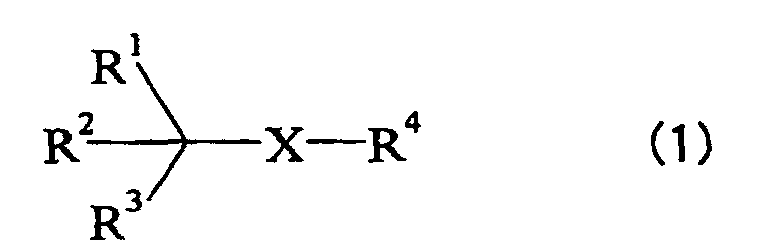 X represents -S-, -SO- or -SO2-;R1 represents:-C(R5)(R6)(R7)
[in which, R5, R6 and R7 each independently represents a halogen atom, cyano group, nitro group or -Q51-Q52-Q53-Q54 [in which, Q51 represents a single bond, -CO-, -CS-, -SO-, -SO2-, -CO-CO-, -CO-CS-, -CS-CO- or -CS-CS-,
Q52 represents a single bond, -O-, -O-N(A51)-, -O-N(COA51)-, -N(A51)-, -N(COA51)-, -N(COOA51)-, -N(CON(A51)(A52)-, -N(OA51)-, -N(NA51A52)-, -N(A51)-N(A52)-, -N(COA51)-N(A52)-, -N(A51)-O-, -N(COA51)-O-, -S-, -N=N-, -C(A51)=N-, -C(A51)=N-O-, -C(A51)=N-N(A52)-, -N=C(A51)-, -O-N=C(A51)-, -(NA51)-N=C(A52)- or -C(=NA51)-N(A52)-
(in which, A51 and A52 each independently represents a hydrogen atom, a hydrocarbon group which may have a substituent or a heterocyclic group which may have a substituent),
Q53 represents a single bond, -CO-, -CS-, -SO-, -SO2-, -CO-CO-, -CO-CS-, -CS-CO- or -CS-CS-,
Q54 represents -A53, -OA53, -N(A53)(A54), -SA53, -NA54-OA53, -NA55-N(A53)(A54) or -O-N(A53)(A54)
(in which, A53, A54 and A55 each independently represents a hydrogen atom, a hydrocarbon group which may have a substituent or a heterocyclic group which may have a substituent)], or
R5 and R6 may be coupled together to form a cyclic hydrocarbon group which may have a substituent or a heterocyclic group which may have a substituent (when the cyclic hydrocarbon group or heterocyclic group formed by coupling of R5 and R6 is unsaturated, R7 represents the corresponding unsaturated bond)], -N(R8)(R9)
[in which, R8 and R9 each independently represents -Q81-Q82-Q83-Q84
[in which, Q81 represents a single bond, -CO-, -CS-, -SO-, -SO2-, -CO-CO-, -CO-CS-, -CS-CO- or -CS-CS-,
Q82 represents a single bond, -O-, -O-N(A81)-, -O-N(COA81)-, -N(A81)-, -N(COA81) -, -N(COOA81)-, -N(CON(A81)(A82))-, -N(OA81)-, -N(NA81A82)-, -N(A81)-N(A82)-, -N(COA81)-N(A82)-, -N(A81)-O-, -N(COA81)-O-, -S-, -N=N-, -C(A81)=N-, -C(A81)=N-O-, -C(A81)=N-N(A82)-, -N=C(A81)-, -O-N=C(A81)-, -(NA81)-N=C(A82)- or -C(=NA81)-N(A82)-
(in which, A81 and A82 each independently represents a hydrogen atom, a hydrocarbon group which may have a substituent or a heterocyclic group which may have a substituent),
Q83 represents a single bond, -CO-, -CS-, -SO-, -SO2-, -CO-CO-, -CO-CS-, -CS-CO- or -CS-CS-,
Q84 represents -A83, -OA83, -N(A83)(A84), -SA83, -NA84-OA83, -NA85-N(A83)(A84) or -O-N(A83)(A84)
(in which, A83, A84 and A85 each independently represents a hydrogen atom, a hydrocarbon group which may have a substituent or a heterocyclic group which may have a substituent)]],-X1R10
[in which, X1 represents -O- or -S- and R10 represents -Q101-Q102-Q103-Q104,
[in which, Q101 represents a single bond, -CO-, -CS-, -SO-, -SO2-, -CO-CO-, -CO-CS-, -CS-CO- or -CS-CS-,
Q102 represents a single bond, -O-, -O-N(A101)-, -O-N(COA101)-, -N(A101)-, -N(COA101)-, -N(COOA101)-, -N(CON(A101)(A102))-, -N(OA101)-, -N(NA101A102)-, -N(A101)-N(A102)-, -N(COA101)-N(A102)-, -N(A101)-O-, -N(COA101)-O-, -S-, -N=N-, -C(A101)=N-, -C(A101)=N-O-, -C(A101)=N-N(A102)-, -N=C(A101)-, -O-N=C(A101)-, -(NA101)-N=C(A102)- or -C(=NA101)-N(A102)-
(in which, A101 and A102 each independently represents a hydrogen atom, a hydrocarbon group which may have a substituent or a heterocyclic group which may have a substituent),
Q103 represents a single bond, -CO-, -CS-, -SO-, -SO2-, -CO-CO-, -CO-CS-, -CS-CO- or -CS-CS-,
Q104 represents -A103, -OA103, -N(A103)(A104), -SA103, -NA104-OA103, -NA105-N(A103)(A104) or -O-N(A103) (A104)
(in which, A103, A104 and A105 each independently represents a hydrogen atom, a hydrocarbon group which may have a substituent or a heterocyclic group which may have a substituent)]], or-X2R11
[in which, X2 represents -SO- or -SO2- and R11 represents -Q111-Q112-Q113-Q114,
[in which, Q111 represents a single bond, -CO-, -CS-, -SO-, -SO2-, -CO-CO-, -CO-CS-, -CS-CO- or -CS-CS-,
Q112 represents a single bond, -O-, -O-N(A111)-, -O-N(COA111)-, -N(A111)-, -N(COA111) -, -N(COOA111)-, -N(CON(A111)(A112))-, -N(OA111)-, -N(NA111A112)-, -N(A111)-N(A112)-, -N(COA111)-N(A112)-, -N(A111)-O-, -N(COA111)-O-, -S-, -N=N-, -C(A111)=N-, -C(A111)=N-O-, -C(A111)=N-N(A112)-, -N=C(A111)-, -O-N=C(A111)-, -(NA111)-N=C(A112)- or -C(=NA111)-N(A112)-
(in which, A111 and A112 each independently represents a hydrogen atom, a hydrocarbon group which may have a substituent or a heterocyclic group which may have a substituent),
Q113 represents a single bond, -CO-, -CS-, -SO-, -SO2-, -CO-CO-, -CO-CS-, -CS-CO- or -CS-CS-,
Q114 represents -A113, -OA113, -N(A113)(A114), -SA113, -NA114-OA113, -NA115-N(A113)(A114) or -O-N(A113)(A114)
(in which, A113, A114 and A115 each independently represents a hydrogen atom, a hydrocarbon group which may have a substituent or a heterocyclic group which may have a substituent)]];R2 represents -Q21-Q22-Q23-Q24
[in which, Q21 represents a single bond, -CO-, -CS-, -SO-, -SO2-, -CO-CO-, -CO-CS-, -CS-CO- or -CS-CS-,
Q22 represents a single bond, -O-, -O-N(A21)-, -O-N(COA21)-, -N(A21)-, -N(COA21) -, -N(COOA21)-, -N(CON(A21)(A22))-, -N(OA21)-, -N(NA21A22)-, -N(A21)-N(A22)-, -N(COA21)-N(A22)-, -N(A21)-O-, -N(COA21)-O-, -S-, -N=N-, -C(A21)=N-, -C(A21)=N-O-, -C(A21)=N-N(A22)-, -N=C(A21)-, -O-N=C(A21)-, -(NA21)-N=C(A22)- or -C(=NA21)-N(A22)-
(in which, A21 and A22 each independently represents a hydrogen atom, a hydrocarbon group which may have a substituent or a heterocyclic group which may have a substituent),
Q23 represents a single bond, -CO-, -CS-, -SO-, -SO2-, -CO-CO-, -CO-CS-, -CS-CO- or -CS-CS-,
Q24 represents -A23, -OA23, -N(A23)(A24), -SA23, -NA24-OA23, -NA25-N(A23)(A24) or -NA25-N(A23)(A24)
(in which, A23, A24 and A25 each independently represents a hydrogen atom, a hydrocarbon group which may have a substituent or a heterocyclic group which may have a substituent)]; orR1 and R2 may be coupled together to form a cyclic hydrocarbon group which may have a substituent or a heterocyclic group which may have a substituent, or may be coupled together to form =CR12R13
[in which, R12 and R13 each independently represents a halogen atom, cyano group, nitro group or -Q121-Q122-Q123-Q124,
[in which, Q121 represents a single bond, -CO-, -CS-, -SO-, -SO2-, -CO-CO-, -CO-CS-, -CS-CO- or -CS-CS-,
Q122 represents a single bond, -O-, -O-N(A121)-, -O-N(COA121)-, -N(A121)-, -N(COA121)-, -N(COOA121)-, -N(CON(A121)(A122))-, -N(OA121)-, -N(NA121A122)-, -N(A121)-N(A122)-, -N(COA121)-N(A122)-, -N(A121)-O-, -N(COA121)-O-, -S-, -N=N-, -C(A121)=N-, -C(A121)=N-O-, -C(A121)=N-N(A122)-, -N=C(A121)-, -O-N=C(A121)-, -(NA121)-N=C(A122)- or -C(=NA121)-N(A122)-
(in which, A121 and A122 each independently represents a hydrogen atom, a hydrocarbon group which may have a substituent or a heterocyclic group which may have a substituent),
Q123 represents a single bond, -CO-, -CS-, -SO-, -SO2-, -CO-CO-, -CO-CS-, -CS-CO- or -CS-CS-,
Q124 represents -A123, -OA123, -N(A123)(A124), -SA123, -NA124-OA123, -NA125-N(A123)(A124) or -O-N(A123)(A124)
(in which, A123, A124 and A125 each independently represents a hydrogen atom, a hydrocarbon group which may have a substituent or a heterocyclic group which may have a substituent)]];R3 represents -Q31-Q32-Q33-Q34,
[in which, Q31 represents a single bond, -CO-, -CS-, -SO-, -SO2-, -CO-CO-, -CO-CS-, -CS-CO- or -CS-CS-,
Q32 represents a single bond, -O-, -O-N(A31)-, -O-N(COA31)-, -N(A31)-, -N(COA31)-, -N(COOA31)-, -N(CON(A31)(A32))-, -N(OA31)-, -N(NA31A32)-, -N(A31)-N(A32)-, -N(COA31)-N(A32)-, -N(A31)-O-, -N(COA31)-O-, -S-, -N=N-, -C(A31)=N-, -C(A31)=N-O-, -C(A31)=N-N(A32)-, -N=C(A31)-, -O-N=C(A31)-, -(NA31)-N=C(A32)- or -C(=NA31)-N(A32)-
(in which, A31 and A32 each independently represents a hydrogen atom, a hydrocarbon group which may have a substituent or a heterocyclic group which may have a substituent),
Q33 represents a single bond, -CO-, -CS-, -SO-, -SO2-, -CO-CO-, -CO-CS-, -CS-CO- or -CS-CS-,
Q34 represents -A33, -OA33, -N(A33)(A34), -SA33, -NA34-OA33, -NA35-N(A33)(A34) or -O-N(A33)(A34)
(in which, A33, A34 and A35 each independently represents a hydrogen atom, a hydrocarbon group which may have a substituent or a heterocyclic group which may have a substituent)];R4 represents -Q41-Q42-Q43-Q44,
[in which, Q41 represents a single bond, -CO-, -CS-, -SO-, -SO2-, -CO-CO-, -CO-CS-, -CS-CO- or -CS-CS-,
Q42 represents a single bond, -O-, -O-N(A41)-, -O-N(COA41)-, -N(A41)-, -N(COA41)-, -N(COOA41)-, -N(CON(A41)(A42))-, -N(OA41)-, -N(NA41A42)-, -N(A41)-N(A42)-, -N(COA41)-N(A42)-, -N(A41)-O-, -N(COA41)-O-, -S-, -N=N-, -C(A41)=N-, -C(A41)=N-O-, -C(A41)=N-N(A42)-, -N=C(A41)-, -O-N=C(A41)-, -(NA41)-N=C(A42)- or -C(=NA41)-N(A42)-
(in which, A41 and A42 each independently represents a hydrogen atom, a hydrocarbon group which may have a substituent or a heterocyclic group which may have a substituent),
Q43 represents a single bond, -CO-, -CS-, -SO-, -SO2-, -CO-CO-, -CO-CS-, -CS-CO- or -CS-CS-,
Q44 represents -A43, -OA43, -N(A43)(A44), -SA43, -NA44-OA43, -NA45-N(A43) (A44) or -O-N(A43) (A44)
(in which, A43, A44 and A45 each independently represents a hydrogen atom, a hydrocarbon group which may have a substituent or a heterocyclic group which may have a substituent)]; orR3 and R4 may be coupled together to form a cyclic hydrocarbon group which may have a substituent or a heterocyclic group which may have a substituent}, N-oxide or S-oxide of the compound, salt thereof, or solvate of the above-described compound. - A compound represented by the following formula (3) :(wherein, R15 represents a heterocyclic group which may have a substituent, R16 represents a cyclic hydrocarbon group which may have a substituent or a heterocyclic group which may have a substituent, R17 represents a cyclic hydrocarbon group which may have a substituent or a heterocyclic group which may have a substituent, R18 represents a hydrogen atom or a C1-6 alkyl group and X represents -S-, -SO- or -SO2-); or N-oxide or S-oxide of the compound; salt thereof; or solvate of the above-described compound.
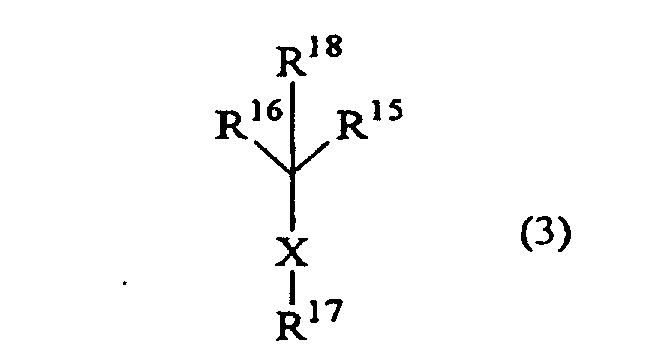
- A compound of Claim 2, wherein X represents -SO- or -SO2-; or N-oxide or S-oxide of the compound; salt thereof; or solvate of the above-described compound.
- A compound of Claim 2, wherein X represents -SO2-; or N-oxide or S-oxide of the compound; salt thereof; or solvate of the above-described compound.
- A compound of any one of Claims 2 to 4, wherein the heterocyclic group represented by R15, R16 or R17 is a 3-to 7-membered saturated or 4- to 7-membered unsaturated monocylic heterocyclic group having from 1 to 4 atoms selected from nitrogen atom, oxygen atom and sulfur atom, or a 7- to 14-membered polycyclic heterocyclic group having from 1 to 4 atoms selected from nitrogen atom, oxygen atom and sulfur atom; or N-oxide or S-oxide of the compound; salt thereof; or solvate of the above-described compound.
- A compound of any one of Claims 2 to 5, wherein the cyclic hydrocarbon group represented by R16 or R17 is a cycloalkyl group having from 3 to 7 carbon atoms, cycloalkenyl group having from 4 to 7 carbon atoms, monocylic or polycyclic aromatic hydrocarbon group having from 6 to 14 carbon atoms, spirohydrocarbon group having from 7 to 11 carbon atoms, crosslinked cyclic hydrocarbon group having from 7 to 10 carbon atoms or condensed polycyclic hydrocarbon group having from 8 to 14 carbon atoms; or N-oxide or S-oxide of the compound; salt thereof; or solvate of the above-described compound.
- A compound of any one of Claims 2 to 6, wherein the substituent for the cyclic hydrocarbon group or heterocyclic group represented by R15, R16, or R17 is a group -Q201-Q202-Q203-Q204-Q205-Q206-Q207, in which Q201 represents a single bond, an alkyl group having from 1 to 6 carbon atoms, an alkenyl group having from 2 to 6 carbon atoms or a heterocyclic group; Q202 represents a single bond, -O-, -NH-, -CH=-N-, -C(alkyl)=N-, -N(alkyl)- or -S-; Q203 represents a single bond, -CO-, -CS-, -SO-, -SO2- or -CONH-; Q204 represents a single bond, an alkyl group from 1 to 6 carbon atoms, an alkenyl group having from 2 to 6 carbon atoms, a cycloalkyl group, a cycloalkenyl group, an aromatic hydrocarbon group or a heterocyclic group; Q205 represents a single bond, -NH- or -N(alkyl)-; Q206 represents a single bond, -O-, -CO-, -CS-, -SO2-, -SO- or -S-; and Q207 represents a hydrogen atom, a halogen atom, a hydroxy group, an oxo group, a C1-6 alkyl group, a C2-6 alkenyl group, a C3-8 cycloalkyl group, a C1-6 alkoxy group, a C2-6 alkenyloxy group, an azide group, a cyano group, an amino group, a C1-6 alkylamino group, a di(C1-6 alkyl) amino group, a C2-6 alkanoylamino group, a di(C2-6 alkanoy)amino group, a carboxyamino group, a C1-6 alkoxycarbonylamino group, a di(C1-6 alkoxy)carbonylamino group, a heterocyclic group, an aromatic hydrocarbon group, a cycloalkenyl group, a heterocyclic oxy group, or an aromatic hydrocarbon-oxy group (wherein, the alkyl group having from 1 to 6 carbon atoms, alkenyl group having from 2 to 6 carbon atoms, cycloalkyl group, cycloalkenyl group, heterocyclic group, heterocyclic-oxy group, aromatic hydrocarbon group or aromatic hydrocarbon-oxy group may be substituted with 1 to 3 substituents selected from halogen atoms, C1-6 alkyl groups, C1-6 alkoxy groups, C2-6 alkenyl groups, carboxyamino C1-6 alkyl groups, C1-6 alkoxycarbonylamino C1-6 alkyl groups, formyl group, C2-6 alkanoyl groups, oxo group, nitro group, cyano group, azide group, amidino group, C2-6 alkenyloxy groups, hydroxy group, carboxyl group, C7-16 aralkyl groups, thioxo group, C2-7 alkanoyl groups, C2-7 thioalkanoyl groups, thioformyl group, amino group, C1-6 alkylamino groups, di(C1-6 alkyl) amino groups, C1-6 alkoxycarbonyl groups, carbamoyl group, C1-6 alkylcarbamoyl groups, di(C1-6 alkyl)carbamoyl groups, thiocarbamoyl group, C1-6 alkylthiocarbamoyl groups, di(C1-6 alkyl) thiocarbamoyl groups, C1-6 alkoxycarbamoylamino groups, C1-6 alkoxycarbamoyl(C1-6 alkyl) amino groups, C2-7 alkanoylamino groups, C2-7 alkanoyl (C1-6 alkyl) amino groups, thio C2-7 alkanoylamino groups, thio C2-7 alkanoyl (C1-6 alkyl) amino groups, formylamino group, formyl(C1-6 alkyl)amino groups, thioformylamino group, thioformyl(C1-6 alkyl)amino groups, C2-7 alkanoyloxy groups, formyloxy group, C1-6 alkoxycarbonyloxy groups, carbamoyloxy group, C1-6 alkylcarbamoyloxy groups, di(C1-6 alkyl)carbamoyloxy groups, aminocarbonylamino group, (C1-6 alkyl)aminocarbonylamino groups, di(C1-6 alkyl) aminocarbonylamino groups, aminocarbonyl (C1-6 alkyl) amino groups, (C1-6 alkyl) aminocarbonyl (C1-6 alkyl) amino groups, di (C1-6 alkyl)aminocarbonyl(C1-6 alkyl)amino groups, mercapto group, C1-6alkylthio groups, C1-6 alkylsulfinyl groups, C1-6 alkylsulfonyl groups, aminosulfonyl group, C1-6 alkylaminosulfonyl groups, di(C1-6 alkyl) aminosulfonyl groups, C1-6 alkylsulfonylamino groups, C1-6 alkylsulfonyl(C1-6 alkyl)amino groups, aminosulfonylamino group, C1-6 alkylaminosulfonylamino groups, di(C1-6 alkyl)aminosulfonylamino groups, aminosulfonyl(C1-6 alkyl) amino groups, C1-6 alkylaminosulfonyl(C1-6 alkyl) amino groups, and di(C1-6 alkyl) aminosulfonyl (C1-6 alkyl) amino groups; or N-oxide or S-oxide of the compound; salt thereof; or solvate of the above-described compound.
- A compound of any one of Claims 2 to 7, wherein R16 and R17 each represents a monocylic or polycyclic aromatic hydrocarbon group having from 6 to 14 carbon atoms, or a heterocyclic group (in which, the hydrocarbon group or heterocyclic group may have 1 to 3 substituents selected from halogen atoms, C1-6 alkyl groups, C1-6 alkoxy groups, C2-6 alkenyl groups, formyl group, C2-6 alkanoyl groups, carboxyl group, carboxyamino C1-6 alkyl groups, C1-6 alkoxycarbonylamino C1-6 alkyl groups, oxo group, nitro group, cyano group, amidino group, C2-7 alkenyloxy groups, hydroxy group, thioxo group, amino group, C1-6 alkylamino groups, di C1-6 alkylamino groups, C1-6 alkoxycarbonyl groups, carbamoyl group, C1-6 alkylcarbamoyl groups, di C1-6 alkylcarbamoyl groups, thiocarbamoyl group, C1-6 alkylthiocarbamoyl groups, di C1-6 alkylthiocarbamoyl groups, mercapto group, C1-6 alkylthio groups, C1-6 alkylsulfinyl groups and C1-6 alkylsulfonyl groups); and
R15 represents a heterocyclic group (in which, the heterocyclic group may be substituted with a halogen atom, C1-6 alkyl group, C1-6 alkoxy group, C2-6 alkenyl group, C2-6 alkenyloxy group, hydroxy group, carboxyl group, carboxy C1-6 alkyl group, C1-6 alkoxycarbonyl C1-6 alkyl group, C1-6 alkoxycarbonyl-C2-6 alkenyl group, hydroxyl C1-6 alkyl group, C6-14 aromatic hydrocarbon-sulfonyl C1-6 alkyl group, heterocyclic-C1-6 alkylamino group, heterocyclic group, heterocyclic-C1-6 alkyl group, C6-14 aromatic hydrocarbon group, C6-14 aromatic hydrocarbon C1-6 alkyl group, C6-14 aromatic hydrocarbon thio C1-6 alkyl group, azido-(C1-6 alkyl) group, amino C1-6 alkyl group, C1-6 alkylamino C1-6 alkyl group, di C1-6 alkylamino C1-6 alkyl group, hydroxyl C1-6 alkylamino C1-8 alkyl group, C1-6 alkoxy C1-6 alkylamino C1-6 alkyl group, (hydroxy C1-6 alkyl) (C1-6 alkoxy C1-6 alkyl)amino C1-6 alkyl group, C2-6 alkanoylamino C1-6 alkyl group, C6-14 aromatic hydrocarbon sulfonylamino C1-6 alkyl group, C1-6 alkoxycarbonylamino C1-6 alkyl group, carbamoylamino C1-6 alkyl group, N-alkylcarbamoylamino C1-6 alkyl group, N, N-dialkylcarbamoylamino C1-6 alkyl group, aminosulfonylamino C1-6 alkyl group, N-alkylsulfonylamino C1-6 alkyl group, N,N-dialkylsulfonylamino C1-6 alkyl group, C6-14 aromatic hydrocarbon C1-6 alkylamino group, heterocyclic C1-6 alkylamino group, carbamoyloxy C1-6 alkyl group, N-alkylcarbamoyloxy C1-6 alkyl group, N,N-dialkylcarbamoyloxy C1-6 alkyl group, C6-14 aromatic hydrocarbon-C1-6 alkylcarbamoyloxy C1-6 alkyl group, C1-6 alkoxycarbonyloxy-C1-6 alkyl group, C6-14 aromatic hydrocarbonoxycarbonyloxy C1-6 alkyl group, C6-14 aromatic hydrocarbonsulfonylamino-C1-6 alkanoylamino C1-6 alkyl group, C1-6 alkoxycarbonylamino C1-6 alkylamino group, amino C1-6 alkylamino group, C1-6 alkylamino C1-6 alkylamino group, di(C1-6 alkyl) amino C1-6 alkylamino group, carboxyamino C1-6 alkyl group, C1-6 alkoxycarbonylamino C1-6 alkyl group, C1-6 alkylsulfonylamino C1-6 alkyl group, amino C1-6 alkylcarbonylamino C1-6 alkyl group, N-C1-6 alkylamino C1-6 alkylcarbonylamino C1-6 alkyl group, N,N-di C1-6 alkylamino C1-6 alkylcarbonylamino C1-6 alkyl group, heterocyclic carbonyl group, heterocyclic carbonylamino group, C6-14 aromatic hydrocarboncarbonyl group, C6-14 aromatic carbonylamino group, heterocyclic C1-6 alkylcarbonylamino C1-6 alkyl group, heterocyclic C2-6 alkenylcarbonylamino C1-6 alkyl group, C6-14 aromatic hydrocarbonalkenylcarbonylamino C1-6 alkyl group, C6-14 aromatic hydrocarboncarbonylamino C1-6 alkyl group, heterocyclic carbonylamino C1-6 alkyl group, C1-6 alkoxyoxalylamino C1-6 alkyl group, carbamoyl group, N-C1-6 alkylcarbamoyl group, N,N-di C1-6 alkylcarbamoyl group, C1-6 alkyl-C3-8 cycloalkylcarbamoyl group, C3-8 cycloalkyl-C1-6 alkylcarbamoyl group, heterocyclic carbamoyl group, C1-6 aromatic carbamoyl group, heterocyclic carbonylhydrazonomethyl group, C6-14 aromatic hydrocarboncarbonylhydrazonomethyl group, C1-6 alkylthio C1-6 alkylcarbamoyl group, C1-6 alkylsulfinyl C1-6 alkylcarbamoyl group, C1-6 alkylsulfonyl C1-6 alkylcarbamoyl group, hydroxyaminocarbonyl group, hydrazinocarbonyl group or N-C1-6 alkylhydrazinocarbonyl group, thioformylamino-C6-14 aromatic hydrocarbon-thiocarbonylamino C1-6 alkyl group, thioformyl-(C1-6 alkylamino-C6-14 aromatic hydrocarbon-thiocarbonylamino C1-6 alkyl group, formylamino-C6-14 aromatic hydrocarbon-carbonylamino C1-6 alkyl group, formyl-C1-6 alkylamino-C6-14 aromatic hydrocarbon-carbonylamino C1-6 alkyl group, C1-6 alkanoyl-heterocycle-carbonylamino C1-6 alkyl group, di(C2-6 alkanoyl)amino(C1-6 alkyl) group, di(C1-6 alkoxycarbonyl)amino C1-6 alkyl group, C1-6 alkyl-heterocycle-carbonyl group, C3-7 cycloalkyl C1-6 alkylaminocarbonyl group, C1-6 alkoxyaminocarbonyl group, (hydroxy) (C1-6 alkyl) aminocarbonyl group, (C1-6 alkoxy) (C1-6 alkyl)aminocarbonyl group,. N'-C1-6 alkylhydrazinocarbonyl group, N',N'-di C1-6 alkylhydrazinocarbonyl group, N,N'-di C1-6 alkylhydrazinocarbonyl group, N,N',N'-tri C1-6 alkylhydrazinocarbonyl group, N'-(heterocycle-carbonyl)-hydrazinocarbonyl group, formyl group, hydroxyimino group, C1-6 alkoxyimino group, bis(C1-6 alkoxy C1-6 alky)amino C1-6 alkyl group, hydroxy-C1-6 alkyl-heterocyclic group, C1-6 alkoxy-C1-6 alkyl-heterocyclic group, C1-6 alkoxycarbonylamino C1-6 alkyl-heterocyclic group, amino C1-6 alkyl-heterocyclic group, N-C1-6 alkylamino C1-6 alkyl-heterocyclic group, N, N-di C1-6 alkylamino C1-6 alkyl-heterocyclic group, hydroxy-heterocyclic group, C1-6 alkoxy-heterocyclic group, carboxy-C2-5 alkenyl group, or oxo group (wherein, the above-described C6-14 aromatic hydrocarbon group or heterocyclic group may be substituted with a halogen atom, C1-6 alkyl group, C1-6 alkoxy group, C2-6 alkenyl group, formyl group, C2-6 alkanoyl group, carboxyl group, carboxyamino C1-6 alkyl group, C1-6 alkoxycarbonylamino C1-6 alkyl group, oxo group, nitro group, cyano group, amidino group, C2-6 alkenyloxy group, hydroxy group, thioxo group, amino group, C1-6 alkylamino group, di C1-6 alkylamino group, amino C1-6 alkyl group, C1-6 alkoxycarbonyl group, carbamoyl group, C1-6 alkylcarbamoyl group, di C1-6 alkylcarbamoyl group, thiocarbamoyl group, C1-6 alkylthiocarbamoyl group, di(C1-6 alkyl) thiocarbamoyl group, C2-7 alkanoylamino group, C2-7 alkanoyl(C1-6 alkyl) amino group, thio(C2-7 alkanoyl)amino group, thio(C2-7 alkanoyl) (C1-6 alkyl) amino group, formylamino group, formyl(C1-6 alkyl)amino group, thioformylamino group, thioformyl(C1-6 alkyl) amino group, C2-7 alkanoyloxy group, formyloxy group, mercapto group, C1-6 alkylthio group, C1-6 alkylsulfinyl group, C1-6 alkylsulfonyl group, aminosulfonyl group, C1-6 alkylaminosulfonyl group, di(C1-6 alkyl) aminosulfonyl group, C1-6 alkylsulfonylamino group or C1-6 alkylsulfonyl(C1-6 alkyl) amino group); or N-oxide or S-oxide of the compound; salt thereof; or solvate of the above-described compound. - A medicament comprising, as an active ingredient, a compound of any one of Claims 1 to 8, or N-oxide or S-oxide of the compound, salt thereof, or solvate of the above-described compound.
- A medicament of Claim 9, which is used for prevention or treatment of a disease resulting from abnormal production or secretion of β-amyloid.
- A medicament of Claim 9, which is used for prevention or treatment of Alzheimer disease or Down syndrome.
- A pharmaceutical composition comprising a compound of any one of Claims 1 to 8, or N-oxide or S-oxide of the compound, salt thereof, or solvate of the above-described compound; and a pharmaceutically acceptable carrier.
- Use of a compound of any one of Claims 1 to 8, or N-oxide or S-oxide of the compound, salt thereof, or solvate of the above-described compound for the preparation of a medicament.
- Use of Claim 13, wherein the medicament is used for prevention or treatment of a disease resulting from abnormal production or secretion of β-amyloid protein.
- Use of Claim 13, wherein the medicament is used for prevention or treatment of Alzheimer disease or Down syndrome.
- A method to treat a disease resulting from abnormal production or secretion of β-amyloid, which comprises administering an effective amount of a compound of any one of Claims 1 to 8, or N-oxide or S-oxide of the compound, salt thereof, or solvate of the above-described compound.
- A method of Claim 16, wherein the disease resulting from abnormal production or secretion of β-amyloid protein is Alzheimer disease or Down syndrome.
Applications Claiming Priority (3)
| Application Number | Priority Date | Filing Date | Title |
|---|---|---|---|
| JP2001395701 | 2001-12-27 | ||
| JP2001395701 | 2001-12-27 | ||
| PCT/JP2002/013792 WO2003055850A1 (en) | 2001-12-27 | 2002-12-27 | β-AMYLOID PROTEIN PRODUCTION/SECRETION INHIBITORS |
Publications (2)
| Publication Number | Publication Date |
|---|---|
| EP1466898A1 true EP1466898A1 (en) | 2004-10-13 |
| EP1466898A4 EP1466898A4 (en) | 2005-12-07 |
Family
ID=19189019
Family Applications (1)
| Application Number | Title | Priority Date | Filing Date |
|---|---|---|---|
| EP02790937A Withdrawn EP1466898A4 (en) | 2001-12-27 | 2002-12-27 | Beta-amyloid protein production/secretion inhibitors |
Country Status (10)
| Country | Link |
|---|---|
| US (2) | US7399775B2 (en) |
| EP (1) | EP1466898A4 (en) |
| JP (1) | JP4329905B2 (en) |
| KR (1) | KR100927304B1 (en) |
| CN (1) | CN100562516C (en) |
| AU (1) | AU2002367147A1 (en) |
| CA (1) | CA2471943C (en) |
| RU (1) | RU2304140C2 (en) |
| TW (1) | TWI330176B (en) |
| WO (1) | WO2003055850A1 (en) |
Cited By (10)
| Publication number | Priority date | Publication date | Assignee | Title |
|---|---|---|---|---|
| US7101895B2 (en) | 2002-10-04 | 2006-09-05 | Merck Sharp & Dohme Limited | Cyclohexyl sulphone derivatives as gamma-secretase inhibitors |
| US7304094B2 (en) | 2001-08-21 | 2007-12-04 | Merck Sharp + Dohme | Cyclohexyl sulphones |
| US7595344B2 (en) | 2001-04-05 | 2009-09-29 | Merck Sharp & Dohme Limited | Sulphones which modulate the action of gamma secretase |
| US7772411B2 (en) | 2003-12-23 | 2010-08-10 | Tibotec Pharmaceuticals Ltd. | Process for the preparation of (3R,3aS,6aR)-hexahydrofuro [2,3-b] furan-3-yl (1S,2R)-3[[(4-aminophenyl) sulfonyl] (isobutyl) amino]-1-benzyl-2-hydroxypropylcarbamate |
| RU2404968C2 (en) * | 2005-04-08 | 2010-11-27 | Дайити Санкио Компани, Лимитед | Pyridyl dimethylsulphonic derivative |
| EP2390248A1 (en) * | 2010-05-24 | 2011-11-30 | Faes Farma, S.A. | Flufenoxine derivatives for the treatment and prevention of amiloyd pathologies |
| WO2011147780A1 (en) * | 2010-05-24 | 2011-12-01 | Faes Farma, S.A. | Flufenoxine derivatives for the treatment and prevention of amiloyd pathologies |
| EP2204365A4 (en) * | 2007-09-11 | 2012-02-22 | Daiichi Sankyo Co Ltd | ALKYLSULFONE DERIVATIVE |
| WO2014036897A1 (en) | 2012-09-04 | 2014-03-13 | 上海恒瑞医药有限公司 | Imidazoline derivatives, preparation methods thereof, and their applications in medicine |
| WO2015103510A1 (en) * | 2014-01-06 | 2015-07-09 | Bristol-Myers Squibb Company | Heterocyclic sulfone as ror-gamma modulators |
Families Citing this family (17)
| Publication number | Priority date | Publication date | Assignee | Title |
|---|---|---|---|---|
| GB0108592D0 (en) | 2001-04-05 | 2001-05-23 | Merck Sharp & Dohme | Therapeutic agents |
| KR100927304B1 (en) * | 2001-12-27 | 2009-11-18 | 다이이찌 세이야꾸 가부시기가이샤 | β-amyloid protein production/secretion inhibitors |
| GB0223038D0 (en) | 2002-10-04 | 2002-11-13 | Merck Sharp & Dohme | Therapeutic compounds |
| MXPA05012323A (en) | 2003-05-16 | 2006-01-30 | Merck Sharp & Dohme | Cyclic sulfonamides for inhibition of gamma-secretase. |
| PL379466A1 (en) | 2003-06-30 | 2006-09-18 | Daiichi Sankyo Company , Limited | Heterocyclic methyl sulfone derivative |
| ZA200708531B (en) * | 2005-04-08 | 2009-02-25 | Daiichi Sankyo Co Ltd | Pyridylmethylsulfone derivative |
| JP2008115166A (en) * | 2006-10-10 | 2008-05-22 | Daiichi Sankyo Co Ltd | Pyridylphenyl methyl sulfone derivative |
| EP2273877B1 (en) * | 2008-04-23 | 2014-04-16 | Merck Sharp & Dohme Corp. | Cyclobutyl sulfones as notch sparing gamma secretase inhibitors |
| JP2013531687A (en) | 2010-07-16 | 2013-08-08 | パーデュー、ファーマ、リミテッド、パートナーシップ | Pyridine compounds as sodium channel blockers |
| WO2012141228A1 (en) * | 2011-04-11 | 2012-10-18 | 株式会社ファルマエイト | Novel pyrazole derivative |
| WO2013136170A1 (en) | 2012-03-16 | 2013-09-19 | Purdue Pharma L.P. | Substituted pyridines as sodium channel blockers |
| CN102850246B (en) * | 2012-07-10 | 2015-04-22 | 江西理工大学 | Method for introducing mercapto group into aniline derivative |
| EP2935257B1 (en) | 2012-12-20 | 2018-02-07 | Purdue Pharma LP | Cyclic sulfonamides as sodium channel blockers |
| WO2015103508A1 (en) * | 2014-01-06 | 2015-07-09 | Bristol-Myers Squibb Company | CARBOCYCLIC SULFONE RORγ MODULATORS |
| US10730866B2 (en) | 2014-04-07 | 2020-08-04 | Purdue Pharma L.P. | Indole derivatives and use thereof |
| JP7595854B2 (en) * | 2020-05-25 | 2024-12-09 | 地方独立行政法人大阪産業技術研究所 | Method for producing [6,6] methanofullerene derivative |
| CN114249754B (en) * | 2021-12-15 | 2022-11-25 | 大连理工大学 | Molecular oxygen delivery agent based on internal peroxide structure and application |
Family Cites Families (54)
| Publication number | Priority date | Publication date | Assignee | Title |
|---|---|---|---|---|
| US3849423A (en) * | 1971-03-22 | 1974-11-19 | Lilly Co Eli | 3-benzylpyridines |
| US4055652A (en) * | 1975-07-07 | 1977-10-25 | Syntex (U.S.A.) Inc. | 1-[β(R-thio)phenethyl]imidazoles and derivatives thereof |
| ZA765075B (en) * | 1975-09-25 | 1977-08-31 | American Cyanamid Co | Hypolipemic compounds and method of treatment |
| US4116665A (en) * | 1976-04-02 | 1978-09-26 | Eli Lilly And Company | Method of regulating the growth of aquatic weeds with pyridine derivatives |
| FR2375228A1 (en) * | 1976-12-23 | 1978-07-21 | Parcor | NEW BENZOTHIOPHENS, THEIR METHODS OF PREPARATION AND THEIR APPLICATION, ESPECIALLY AS HYPOLIPEMIANTS AND HYPOCHOLESTEROLEMIANTS |
| DE2724684A1 (en) * | 1977-06-01 | 1978-12-14 | Basf Ag | TRIAZOLE-SUBSTITUTED SULFUR COMPOUNDS |
| DE2735314A1 (en) * | 1977-08-05 | 1979-02-22 | Basf Ag | ALPHA-AZOLYL SULPHIDES AND THEIR DERIVATIVES |
| US4675316A (en) * | 1978-03-10 | 1987-06-23 | Rohm And Haas Company | Substituted azoylmethylarylsulfides and derivatives and pesticidal use thereof |
| DE2821829A1 (en) * | 1978-05-19 | 1979-11-22 | Basf Ag | MEANS OF REGULATING PLANT GROWTH |
| US4257954A (en) | 1978-08-08 | 1981-03-24 | Sterling Drug Inc. | Novel compounds, processes and marking systems |
| ZA794030B (en) * | 1978-08-08 | 1980-07-30 | Sterling Drug Inc | Aryl sulfinic acid derivatives of aliphatic,aromatic or heterocyclic compounds |
| DE2855661A1 (en) * | 1978-12-22 | 1980-07-03 | Bayer Ag | Aryl-substd. methylene-bis-imidazoline cpds. and analogues - useful as antimicrobial agents effective against Gram negative and positive bacteria |
| US4379921A (en) * | 1980-08-21 | 1983-04-12 | Sumitomo Chemical Company, Limited | Production of triazolylvinyl ketones |
| FR2509725A1 (en) * | 1981-07-15 | 1983-01-21 | Choay Sa | 3-Phenyl:thio-1-propanol normolipaemic cpds. - e.g. 3-4-chloro-phenyl-thio 1-methyl 1-ethyl or propyl-propanol, used to treat atherosclerosis etc. |
| EP0117485A3 (en) * | 1983-02-28 | 1985-01-23 | F. HOFFMANN-LA ROCHE & CO. Aktiengesellschaft | Pyridine, pyrazine and pyrimidine derivatives and their use as fungicides |
| DE3406908A1 (en) * | 1984-02-25 | 1985-09-05 | Hoechst Ag, 6230 Frankfurt | NEW TRIAZOLYL ALKYL DERIVATIVES, METHOD FOR THE PRODUCTION THEREOF AND THEIR USE AS A PLANT TREATMENT AGENT |
| JPS6239563A (en) | 1985-08-13 | 1987-02-20 | Hokko Chem Ind Co Ltd | Beta-nitrophenethyl derivative and agricultural and horticultural germicide |
| US5104882A (en) * | 1987-11-25 | 1992-04-14 | Merck Frosst Canada, Inc. | Diarylstrylquinoline diacids and pharmaceutical compositions thereof |
| US5359078A (en) | 1989-05-19 | 1994-10-25 | The United States Of America As Represented By The Department Of Health And Human Services | Signal transduction inhibitor compounds |
| DE4215437A1 (en) * | 1992-05-11 | 1993-11-18 | Paul Prof Dr Messinger | Prepd. of antimicrobial alkyl-acylate cpds. - by reacting sulphide cpd. with fuming nitric acid |
| JPH0625168A (en) * | 1992-07-10 | 1994-02-01 | Nippon Bayeragrochem Kk | Fungicidal benzylpyridines |
| JPH0656780A (en) * | 1992-08-01 | 1994-03-01 | Nippon Bayeragrochem Kk | Fungicidal alpha-substituted benzylpyridines |
| DE19521355A1 (en) | 1995-06-12 | 1996-12-19 | Hoechst Schering Agrevo Gmbh | Sulfonamides, processes for their preparation and their use as herbicides and plant growth regulators |
| JPH0995444A (en) * | 1995-10-02 | 1997-04-08 | Teijin Ltd | Amyloid protein aggregation inhibitor |
| ES2300119T3 (en) | 1997-02-27 | 2008-06-01 | Takeda Pharmaceutical Company Limited | AMINA COMPOUNDS, ITS PRODUCTION AND ITS USE AS INHIBITORS OF THE PRODUCTION OF BETA-AMILOID. |
| US6586475B1 (en) * | 1998-11-20 | 2003-07-01 | Takeda Chemical Industries, Ltd. | β-amyloid protein production/secretion inhibitors |
| NZ514453A (en) | 1999-02-26 | 2003-04-29 | Merck & Co Inc | Novel sulfonamide compounds and uses thereof |
| CA2381581A1 (en) * | 1999-09-04 | 2001-03-15 | Astrazeneca Ab | Substituted n-phenyl 2-hydroxy-2-methyl-3,3,3-trifluoropropanamide derivatives which elevate pyruvate dehydrogenase activity |
| CA2377221A1 (en) * | 1999-09-13 | 2001-03-22 | Bristol-Myers Squibb Pharma Company | Hydroxyalkanoyl aminolactams and related structures as inhibitors of a.beta. protein production |
| CA2395862A1 (en) * | 2000-02-17 | 2001-08-23 | Hong Liu | Succinoylamino carbocycles and heterocycles as inhibitors of a.beta. protein production |
| WO2001070677A1 (en) | 2000-03-20 | 2001-09-27 | Merck Sharp & Dohme Limited | Sulphonamido-substituted bridged bicycloalkyl derivatives |
| WO2001082967A1 (en) * | 2000-04-28 | 2001-11-08 | Yamanouchi Pharmaceutical Co., Ltd. | MEDICINAL COMPOSITIONS FOR SUPPRESSING β-AMYLOID PRODUCTION |
| GB0108591D0 (en) * | 2001-04-05 | 2001-05-23 | Merck Sharp & Dohme | Therapeutic agents |
| GB0108592D0 (en) | 2001-04-05 | 2001-05-23 | Merck Sharp & Dohme | Therapeutic agents |
| US7122675B2 (en) | 2001-08-03 | 2006-10-17 | Schering Corporation | Gamma secretase inhibitors |
| AR034390A1 (en) | 2001-08-03 | 2004-02-25 | Schering Corp | DERIVATIVES OF 1-SULFONIL-TETRAHIDRO REPLACED KINOLINES, PHARMACEUTICAL COMPOSITIONS AND THE USE OF THE SAME FOR THE PREPARATION OF MEDICINES AS INHIBITORS OF THE SECRET RANGE |
| JP3711131B2 (en) * | 2001-08-21 | 2005-10-26 | メルク シャープ エンド ドーム リミテッド | New cyclohexylsulfone |
| CA2471099C (en) | 2001-12-20 | 2011-04-12 | Bristol-Myers Squibb Company | .alpha.-(n-sulphonamido)acetamide derivatives as .beta.-amyloid inhibitors |
| KR100927304B1 (en) | 2001-12-27 | 2009-11-18 | 다이이찌 세이야꾸 가부시기가이샤 | β-amyloid protein production/secretion inhibitors |
| DE10201392A1 (en) | 2002-01-16 | 2003-07-31 | Bayer Ag | Phenyl sulfoxides and sulfones |
| TW200302717A (en) | 2002-02-06 | 2003-08-16 | Schering Corp | Novel gamma secretase inhibitors |
| GB0209991D0 (en) | 2002-05-01 | 2002-06-12 | Merck Sharp & Dohme | Therapeutic agents |
| GB0209997D0 (en) | 2002-05-01 | 2002-06-12 | Merck Sharp & Dohme | Therapeutic agents |
| GB0209995D0 (en) | 2002-05-01 | 2002-06-12 | Merck Sharp & Dohme | Therapeutic agents |
| EP1503998B1 (en) | 2002-05-01 | 2009-07-01 | MERCK SHARP & DOHME LTD. | Heteroaryl substituted spirocyclic sufamides for inhibition of gamma secretase |
| KR20050010882A (en) | 2002-06-11 | 2005-01-28 | 와이어쓰 | Substituted phenylsulfonamide inhibitors of beta amyloid production |
| WO2004017977A2 (en) | 2002-08-23 | 2004-03-04 | Eli Lilly And Company | 2- (phenoxymethyl)- and 2- (phenylthiomethyl)-morpholine derivatives for use as selective norepinephrine reuptake inhibitors |
| GB0223040D0 (en) | 2002-10-04 | 2002-11-13 | Merck Sharp & Dohme | Therapeutic compounds |
| GB0223038D0 (en) | 2002-10-04 | 2002-11-13 | Merck Sharp & Dohme | Therapeutic compounds |
| GB0223039D0 (en) | 2002-10-04 | 2002-11-13 | Merck Sharp & Dohme | Therapeutic compounds |
| GB0225474D0 (en) | 2002-11-01 | 2002-12-11 | Merck Sharp & Dohme | Therapeutic agents |
| GB0225475D0 (en) | 2002-11-01 | 2002-12-11 | Merck Sharp & Dohme | Therapeutic agents |
| PL379466A1 (en) * | 2003-06-30 | 2006-09-18 | Daiichi Sankyo Company , Limited | Heterocyclic methyl sulfone derivative |
| AU2006234441B2 (en) * | 2005-04-08 | 2011-07-07 | Daiichi Sankyo Company, Limited | Pyridylmethylsulfone derivative |
-
2002
- 2002-12-27 KR KR1020047009960A patent/KR100927304B1/en not_active Expired - Fee Related
- 2002-12-27 JP JP2003556382A patent/JP4329905B2/en not_active Expired - Fee Related
- 2002-12-27 RU RU2004122915/04A patent/RU2304140C2/en not_active IP Right Cessation
- 2002-12-27 TW TW091137662A patent/TWI330176B/en not_active IP Right Cessation
- 2002-12-27 AU AU2002367147A patent/AU2002367147A1/en not_active Abandoned
- 2002-12-27 WO PCT/JP2002/013792 patent/WO2003055850A1/en not_active Ceased
- 2002-12-27 CN CNB028277902A patent/CN100562516C/en not_active Expired - Fee Related
- 2002-12-27 EP EP02790937A patent/EP1466898A4/en not_active Withdrawn
- 2002-12-27 US US10/500,156 patent/US7399775B2/en not_active Expired - Fee Related
- 2002-12-27 CA CA2471943A patent/CA2471943C/en not_active Expired - Fee Related
-
2007
- 2007-07-27 US US11/829,533 patent/US20070293495A1/en not_active Abandoned
Cited By (15)
| Publication number | Priority date | Publication date | Assignee | Title |
|---|---|---|---|---|
| US7595344B2 (en) | 2001-04-05 | 2009-09-29 | Merck Sharp & Dohme Limited | Sulphones which modulate the action of gamma secretase |
| US7598386B2 (en) | 2001-04-05 | 2009-10-06 | Merck Sharp & Dohme Limited | Sulphones which modulate the action of gamma-secretase |
| US7304094B2 (en) | 2001-08-21 | 2007-12-04 | Merck Sharp + Dohme | Cyclohexyl sulphones |
| US7101895B2 (en) | 2002-10-04 | 2006-09-05 | Merck Sharp & Dohme Limited | Cyclohexyl sulphone derivatives as gamma-secretase inhibitors |
| US7772411B2 (en) | 2003-12-23 | 2010-08-10 | Tibotec Pharmaceuticals Ltd. | Process for the preparation of (3R,3aS,6aR)-hexahydrofuro [2,3-b] furan-3-yl (1S,2R)-3[[(4-aminophenyl) sulfonyl] (isobutyl) amino]-1-benzyl-2-hydroxypropylcarbamate |
| AU2006234441B2 (en) * | 2005-04-08 | 2011-07-07 | Daiichi Sankyo Company, Limited | Pyridylmethylsulfone derivative |
| RU2404968C2 (en) * | 2005-04-08 | 2010-11-27 | Дайити Санкио Компани, Лимитед | Pyridyl dimethylsulphonic derivative |
| EP2204365A4 (en) * | 2007-09-11 | 2012-02-22 | Daiichi Sankyo Co Ltd | ALKYLSULFONE DERIVATIVE |
| EP2390248A1 (en) * | 2010-05-24 | 2011-11-30 | Faes Farma, S.A. | Flufenoxine derivatives for the treatment and prevention of amiloyd pathologies |
| WO2011147780A1 (en) * | 2010-05-24 | 2011-12-01 | Faes Farma, S.A. | Flufenoxine derivatives for the treatment and prevention of amiloyd pathologies |
| WO2014036897A1 (en) | 2012-09-04 | 2014-03-13 | 上海恒瑞医药有限公司 | Imidazoline derivatives, preparation methods thereof, and their applications in medicine |
| US9586947B2 (en) | 2012-09-04 | 2017-03-07 | Shanghai Hengrui Pharmaceutical Co., Ltd. | Imidazoline derivatives, preparation methods thereof, and their applications in medicine |
| US9895355B2 (en) | 2012-09-04 | 2018-02-20 | Shanghai Hengru Pharmaceutical Co., Ltd. | Methods of treating androgen receptor-mediated disorders with imidazoline derivatives |
| WO2015103510A1 (en) * | 2014-01-06 | 2015-07-09 | Bristol-Myers Squibb Company | Heterocyclic sulfone as ror-gamma modulators |
| US9637455B2 (en) | 2014-01-06 | 2017-05-02 | Bristol-Myers Squibb Company | Heterocyclic sulfone RORγ modulators |
Also Published As
| Publication number | Publication date |
|---|---|
| JP4329905B2 (en) | 2009-09-09 |
| US7399775B2 (en) | 2008-07-15 |
| KR100927304B1 (en) | 2009-11-18 |
| WO2003055850A1 (en) | 2003-07-10 |
| CN100562516C (en) | 2009-11-25 |
| EP1466898A4 (en) | 2005-12-07 |
| TWI330176B (en) | 2010-09-11 |
| CA2471943A1 (en) | 2003-07-10 |
| US20070293495A1 (en) | 2007-12-20 |
| CA2471943C (en) | 2011-09-20 |
| AU2002367147A1 (en) | 2003-07-15 |
| JPWO2003055850A1 (en) | 2005-05-12 |
| CN1585746A (en) | 2005-02-23 |
| KR20040068978A (en) | 2004-08-02 |
| HK1071354A1 (en) | 2005-07-15 |
| TW200306810A (en) | 2003-12-01 |
| RU2304140C2 (en) | 2007-08-10 |
| US20050234109A1 (en) | 2005-10-20 |
| RU2004122915A (en) | 2005-04-10 |
Similar Documents
| Publication | Publication Date | Title |
|---|---|---|
| US7399775B2 (en) | β-amyloid protein production/secretion inhibitor | |
| AU687558B2 (en) | Substituted sulfonamides as selective beta 3 agonists for the treatment of diabetes and obesity | |
| RU2336270C2 (en) | Heterocyclic methylsulfonic derivatives | |
| US5932586A (en) | Prostaglandin synthase inhibitors | |
| US20040122050A1 (en) | Cyclohexyl sulphone derivatives as gamma-secretase inhibitors | |
| RU2096404C1 (en) | Substituted sulfoneamides, substituted cyclic amines as intermediate compounds for the synthesis of the substituted sulfoneamides and pharmaceutical composition showing antagonistic activity with respect to thromboxane a2 receptors | |
| EA003528B1 (en) | Nicotinamide derivatives, use thereof, pharmaceutical composition, method of treatment and method for selective inhibition of pde4 d isoenzymes | |
| KR20000075946A (en) | Sulfonyl divalent aryl or heteroaryl hydroxamic acid compounds | |
| KR20000048639A (en) | Beta-sulfonyl hydroxamic acids as matrix metalloproteinases inhibitors | |
| JP2002544257A (en) | Hydroxamic acid derivatives as matrix metalloprotease inhibitors | |
| US6812237B2 (en) | N-substituted peptidyl nitriles as cysteine cathepsin inhibitors | |
| US6204293B1 (en) | Inhibitors of protein isoprenyl transferases | |
| CA2407463C (en) | N-substituted peptidyl nitriles as cysteine cathepsin inhibitors | |
| CN100378072C (en) | Heterocyclic methyl sulfone derivatives | |
| HK1071354B (en) | β-AMYLOID PROTEIN PRODUCTION/SECRETION INHIBITORS | |
| HK1090362B (en) | Heterocyclic methyl sulfone derivative |
Legal Events
| Date | Code | Title | Description |
|---|---|---|---|
| PUAI | Public reference made under article 153(3) epc to a published international application that has entered the european phase |
Free format text: ORIGINAL CODE: 0009012 |
|
| 17P | Request for examination filed |
Effective date: 20040618 |
|
| AK | Designated contracting states |
Kind code of ref document: A1 Designated state(s): AT BE BG CH CY CZ DE DK EE ES FI FR GB GR IE IT LI LU MC NL PT SE SI SK TR |
|
| AX | Request for extension of the european patent |
Extension state: AL LT LV MK RO |
|
| RIN1 | Information on inventor provided before grant (corrected) |
Inventor name: SAITO, MASANORI,DAIICHI PHARMACEUTICAL CO. LTD. Inventor name: MIYAUCHI, SATORU,DAIICHI PHARMACEUTICAL CO. LTD. Inventor name: KUBOTA, HIDEKI,DAIICHI PHARMACEUTICAL CO. LTD. Inventor name: ITO, MASAYUKI,DAIICHI PHARMACEUTICAL CO. LTD. Inventor name: YASUKOUCHI,T.,DAIICHI PHARMACEUTICAL CO. LTD. |
|
| A4 | Supplementary search report drawn up and despatched |
Effective date: 20051026 |
|
| 17Q | First examination report despatched |
Effective date: 20070913 |
|
| STAA | Information on the status of an ep patent application or granted ep patent |
Free format text: STATUS: THE APPLICATION IS DEEMED TO BE WITHDRAWN |
|
| 18D | Application deemed to be withdrawn |
Effective date: 20130129 |