EP1466755B1 - Corner reinforcing watermarks on sheets - Google Patents
Corner reinforcing watermarks on sheets Download PDFInfo
- Publication number
- EP1466755B1 EP1466755B1 EP04251937A EP04251937A EP1466755B1 EP 1466755 B1 EP1466755 B1 EP 1466755B1 EP 04251937 A EP04251937 A EP 04251937A EP 04251937 A EP04251937 A EP 04251937A EP 1466755 B1 EP1466755 B1 EP 1466755B1
- Authority
- EP
- European Patent Office
- Prior art keywords
- sheet
- watermarks
- embossings
- stripes
- reinforcing watermarks
- Prior art date
- Legal status (The legal status is an assumption and is not a legal conclusion. Google has not performed a legal analysis and makes no representation as to the accuracy of the status listed.)
- Expired - Lifetime
Links
- 230000003014 reinforcing effect Effects 0.000 title claims abstract description 47
- 238000004049 embossing Methods 0.000 claims abstract description 28
- 230000000295 complement effect Effects 0.000 claims abstract description 7
- 238000000034 method Methods 0.000 claims description 9
- 238000005728 strengthening Methods 0.000 abstract 1
- 238000012360 testing method Methods 0.000 description 13
- 239000000976 ink Substances 0.000 description 5
- 230000000694 effects Effects 0.000 description 4
- 238000011084 recovery Methods 0.000 description 4
- 238000007689 inspection Methods 0.000 description 3
- 238000004519 manufacturing process Methods 0.000 description 3
- 238000007639 printing Methods 0.000 description 3
- 238000013461 design Methods 0.000 description 2
- 239000000835 fiber Substances 0.000 description 2
- 239000000203 mixture Substances 0.000 description 2
- 238000005096 rolling process Methods 0.000 description 2
- 239000000758 substrate Substances 0.000 description 2
- 239000004372 Polyvinyl alcohol Substances 0.000 description 1
- 239000000090 biomarker Substances 0.000 description 1
- 238000005516 engineering process Methods 0.000 description 1
- 238000002474 experimental method Methods 0.000 description 1
- 239000004744 fabric Substances 0.000 description 1
- 239000011888 foil Substances 0.000 description 1
- 239000000463 material Substances 0.000 description 1
- 238000005259 measurement Methods 0.000 description 1
- 229920002451 polyvinyl alcohol Polymers 0.000 description 1
- 238000002360 preparation method Methods 0.000 description 1
- 238000003860 storage Methods 0.000 description 1
- 239000000126 substance Substances 0.000 description 1
- 238000011282 treatment Methods 0.000 description 1
- 239000002966 varnish Substances 0.000 description 1
- 238000012795 verification Methods 0.000 description 1
- 230000000007 visual effect Effects 0.000 description 1
Images




Classifications
-
- B—PERFORMING OPERATIONS; TRANSPORTING
- B42—BOOKBINDING; ALBUMS; FILES; SPECIAL PRINTED MATTER
- B42D—BOOKS; BOOK COVERS; LOOSE LEAVES; PRINTED MATTER CHARACTERISED BY IDENTIFICATION OR SECURITY FEATURES; PRINTED MATTER OF SPECIAL FORMAT OR STYLE NOT OTHERWISE PROVIDED FOR; DEVICES FOR USE THEREWITH AND NOT OTHERWISE PROVIDED FOR; MOVABLE-STRIP WRITING OR READING APPARATUS
- B42D25/00—Information-bearing cards or sheet-like structures characterised by identification or security features; Manufacture thereof
- B42D25/20—Information-bearing cards or sheet-like structures characterised by identification or security features; Manufacture thereof characterised by a particular use or purpose
- B42D25/29—Securities; Bank notes
-
- B—PERFORMING OPERATIONS; TRANSPORTING
- B42—BOOKBINDING; ALBUMS; FILES; SPECIAL PRINTED MATTER
- B42D—BOOKS; BOOK COVERS; LOOSE LEAVES; PRINTED MATTER CHARACTERISED BY IDENTIFICATION OR SECURITY FEATURES; PRINTED MATTER OF SPECIAL FORMAT OR STYLE NOT OTHERWISE PROVIDED FOR; DEVICES FOR USE THEREWITH AND NOT OTHERWISE PROVIDED FOR; MOVABLE-STRIP WRITING OR READING APPARATUS
- B42D25/00—Information-bearing cards or sheet-like structures characterised by identification or security features; Manufacture thereof
- B42D25/30—Identification or security features, e.g. for preventing forgery
- B42D25/333—Watermarks
Definitions
- the invention relates to improvements in sheets, and in particular to the use of a security feature which can be verified by rubbing together two parts of the sheet and documents made therefrom.
- bank notes and other bank notes and other security require security features that can be easily recognised and verified by the public without the need for additional verification devices.
- Security devices of the type described herein are intended for use on documents of value including but not limited to banknotes, fiscal cheques, travellers cheques, fiscal stamps, postal stamps, certificates of authenticity, brand protection articles, bonds, certificates, vouchers and the like.
- Inspection of documents at a public level requires the feature to be overt or not to require additional aids to verify.
- public features include windowed and embedded threads, cylinder mould watermarks, holographic foils and stripes, intaglio print, colourshifting or optically variable inks, thermochromic features, embossed or printed latent features. All these features will be familiar to those skilled in the art and they are also widely discussed within the patent prior art. It is important to note that several of the above features are not apparent until viewed or handled in the correct manner, e.g. latent images. Such features though not overt can still be authenticated using the human senses and handling alone and do not require the use of a secondary device or piece of equipment.
- Teller assist features require the use of an additional device or piece of equipment to verify the feature. It is usual that the additional device is hand held and low cost but this is not always the case.
- teller assist features include luminescent inks, microprint, magnetic inks (where only presence is determined), barcodes, RFID devices and the like. Again those skilled in the art will be aware of such features and examples are widely reported within the prior art.
- Covert features are usually highly secure and only detected using specialised equipment. Examples of covert features include coded magnetic threads, phosphorescent materials and specialist taggants that may be based on biological markers or specific chemical properties.
- GB-A-2309039 describes a method of manufacturing paper with watermarks using an embossed wire mesh to create light and dark areas.
- the paper is strengthened by adding soluble polyvinyl alcohol fibres to the paper furnish.
- WO-A-03/046282 describes the use of watermarks to increase the stiffness and therefore reinforce the corners and/or edges of sheets to prevent corner folds and damage to the edges as a result of rolling and folding.
- the invention therefore provides a sheet having corners and sides joined at said corners, wherein corner reinforcing watermarks are provided at at least two corners of the sheet, said reinforcing watermarks being formed by varying the grammage of paper fibres to form positive watermarks which increase the stiffness of the sheet in said corners, and at least one of which reinforcing watermarks has a border, characterized in that at least a section of said border has a complementary shape with respect to and is located in close registration with at least a section of a border of a further watermark.
- the invention also provides a sheet having corners and sides joined at said corners, wherein edge reinforcing watermarks are provided at or covering the middle of at least two sides of the sheet, said reinforcing watermarks being formed by varying the grammage of the paper fibres to form positive watermarks which increase the stiffness of the sheet along said sides, at least one of which reinforcing watermarks has a border, characterized in that at least a section of which border has a complementary shape with respect to and is located in close registration with at least a section of a border of a further watermark.
- the enhancement of the visible close juxtaposition of two watermarks provides an additional visual security feature.
- the invention also provides a benefit in that the corner reinforcing watermarks help to even out the undulations normally present in a ream of paper containing security elements or other security features which, when stacked, create addition bulk.
- a sheet of paper 10 made by hand or using a known papermaking machine, such as a cylinder mould or Fourdrinier machine.
- a range of fibre types can be used in the making of such paper, including synthetic or natural fibres or a mixture of both.
- the actual preparation of the fibres is unrestricted by the invention, and will depend on what effect it is wished to produce in the finished paper.
- security paper used for security documents such as banknotes, passports, identification cards and so on, these need to be hard wearing, resilient and self-supporting and so an appropriate fibre mix must be selected.
- a sheet can refer to a large sheet of paper which is cut into smaller sheets from which documents, such as banknotes, are made; or are such smaller sheets.
- sides means the elongate edges joined at the corners of the sheet, rather than the flat planar surfaces (or faces) of the sheet.
- watermarks 11 are provided in at least two, preferably adjacent, of the corners of the sheet 10 during the manufacture of the paper.
- a watermark is created by well known techniques of varying the grammage of paper fibres so that in some areas the fibres are of higher grammage than the average grammage of the base paper layer, and in others they are of lower grammage. When viewed in transmitted light the areas of lower grammage are lighter and the areas of higher grammage are darker than the base paper, and the contrast between the light and dark areas can be very clearly seen.
- Watermarks have been widely used as security features, as true watermarks are very hard to counterfeit particularly by photocopying techniques. They are also used as aesthetic features, e.g. in stationery, as complex patterns can be produced by watermark techniques. Traditionally watermarks have always tended to be located in the main body of the sheet or document in which they are produced so that they can clearly be seen. In the present invention, on the other hand, the watermarks are specifically located in the corners of the sheet. This has resulted in the surprising increase in stiffness of the corners which leads to a significant and unexpected reduction in corner folds'(dog-ears).
- Another particularly effective watermark pattern is one that results in lines of higher grammage areas approaching the edges of the paper at between 55° an 35° to the edge perpendicular, and more preferably at 45°.
- Figure 4 shows the results for a test developed for this study.
- the test gives an angle to which a fold relaxes after it has been bent over with a known force. In this case, whether other factors are constant, the watermark increases the fold recovery angle because of the stiffness imparted by the watermark pattern.
- the results of the specific patterns of Figure 2 are shown in Figure 4 .
- the stiffness of the paper increased where the watermark was made from a positive pattern having the effect of adding bulk to selected areas as compared to the thickness of the base paper layer, as opposed to a negative pattern where the main portion was thinner than that of the base paper layer.
- the corner reinforcing watermarks 11 are combined with another watermark to enhance the security and aesthetic effect of the sheet.
- at least one of the corner reinforcing watermark 1 has a shaped border 15 (which is not necessarily a contiguous border), at least a section of which is complementary to a portion of a border of a further visible watermark 16, such as a portrait watermark.
- the aforementioned shaped section of border 15 allows the close juxtaposition of the two watermarks 11,16 to provide an aesthetic combination and space saving. This results in an improvement in security by using close registration and cooperation of the two watermark features 11,16, which makes it hard to counterfeit.
- the gap between the two watermarks 11,16 is preferably no less than 3mm and more preferably in the range of 3 to 5mm.
- the border 15 can include an internal border; and the further visible watermark 16 may be wholly surrounded by the corner reinforcing watermarks, as shown in Figure 10a .
- watermarks 12 are created either at, or covering, the middle of each edge of the sheet 10, i.e. at North, South, East and West positions of the note when viewed face on.
- the problems identified previously relating to damage at the middle of each of the edges of banknotes have been found to be significantly reduced by providing such reinforcing watermarks at the middle of each edge, as shown in Fig. 11 , because of the increased stiffness and improved fold recovery in these regions.
- the watermarks 12 are positive and the preferred form include corrugations and/or elements of the design perpendicular to the likely direction of folding or rolling, i.e. parallel to the edges of the sheet 10.
- edge reinforcing watermarks are also enhanced by providing one of its borders with at least a section which complements at least a section of a border of a wide watermark indicia 16, to which it is closely positioned.
- the individual reinforcing watermarks 11, 12 may be discrete, as illustrated in Figs. 1 and 11 , or they may be joined together so that the watermark appears as a continuous frame around the whole sheet 10. Alternatively just some of the reinforcing watermarks 11, 12 may be joined, to provide an aesthetic pattern.
- machine made paper is produced in continuous webs, which is subsequently cut to form individual smaller sheets.
- the pattern of reinforcing watermarks 11, 12 produced on the web will need to be carefully designed to ensure that when the sheet 10 are cut, the watermarks 11, 12 are located at the corners and/or edges of the sheet 10.
- the effective thickness of the paper in the document corners and/or at the edges can also be increased by providing embossings, preferably in the form of corrugations, at the corners or the edges having the reinforcing watermarks 11,12 in patterns similar to those of the reinforcing watermarks 11,12.
- embossing can preferably be achieved by the intaglio printing process commonly used for printing security documents.
- embossings can be used in addition to, or instead of the combination of the complementary combination of watermarks described above, to provide an improved security feature.
- the embossings may be produced by an intaglio process, either with or without (blind) ink.
- the embossings preferably fill an area bounded by at least a length of 10mm on each of the adjacent sides of each corner. More preferably the whole of each corner area is filled.
- the embossings preferably consist of a plurality of stripes, each having a width between 0.5 and 3mm wide which are separated by gaps having a width lying in the range 0.5 to 3mm.
- the stripes may be straight, wavy or curved and are preferably parallel.
- the stripes of the embossings are preferably at an angle of between 70° and 111°,relative to the line of a corner fold set at 45° to one of the edges, and more preferably at an angle of 90°.
- embossings may be provided by uninked die stamping.
- the document may be varnished on one or both surfaces to improve durability of the embossings. Additionally the substrate may be coated on one or both surfaces to improve the durability of the substrate.
- the embossed regions may be reinforced using a varnish layer on the front, or back of the embossing or on both the front and back of the embossing.
- the forming cloth may be embossed with the reinforcing watermarks overlapping ( Figure 16 ) or adjacent ( Figure 17 ) or at any desired position between.
Landscapes
- Business, Economics & Management (AREA)
- Accounting & Taxation (AREA)
- Finance (AREA)
- Credit Cards Or The Like (AREA)
- Materials For Medical Uses (AREA)
- Buffer Packaging (AREA)
- Rod-Shaped Construction Members (AREA)
Abstract
Description
- The invention relates to improvements in sheets, and in particular to the use of a security feature which can be verified by rubbing together two parts of the sheet and documents made therefrom.
- Folded or bent corners (dog-ears) on banknotes present a significant problem for many banks, as they can cause problems in cash handling machines and can result in an artificially short note life. Many machines will reject such notes from circulation. One major European central bank has indicated that 80% of the rejections from their machines are due to such corner folds. Notes with folded corners can also be problematic in ATMS and cash dispensers and other note handling equipment. This is becoming a more significant problem as the use of such machines is becoming more and more widespread.
- Efforts have been made to resolve this problem by providing note handling equipment with apparatus for flattening banknotes to enable a dog-eared or curled document to be fed without jamming. Such a system is described in
US-A-5,265,856 . - Another problem which occurs with banknotes in particular results from the tendency of users to roll and fold notes for storage or keeping in wallets and purses. This gives rise to damage at the middle of the edges of the notes and similar problems arise in ATMs and other note handling equipment as occurs with dog-ears and corners.
- In addition to dealing with the aforementioned problems, bank notes and other bank notes and other security require security features that can be easily recognised and verified by the public without the need for additional verification devices. Security devices of the type described herein are intended for use on documents of value including but not limited to banknotes, fiscal cheques, travellers cheques, fiscal stamps, postal stamps, certificates of authenticity, brand protection articles, bonds, certificates, vouchers and the like.
- It is widely accepted that when producing security documents a range of security features is required. This is both to overcome the efforts of counterfeiters and to enable inspection of the documents at a number of different levels. It is usual to consider the inspection of security documents to fall into one of three categories, public, teller assist and covert.
- Inspection of documents at a public level requires the feature to be overt or not to require additional aids to verify. Examples of public features include windowed and embedded threads, cylinder mould watermarks, holographic foils and stripes, intaglio print, colourshifting or optically variable inks, thermochromic features, embossed or printed latent features. All these features will be familiar to those skilled in the art and they are also widely discussed within the patent prior art. It is important to note that several of the above features are not apparent until viewed or handled in the correct manner, e.g. latent images. Such features though not overt can still be authenticated using the human senses and handling alone and do not require the use of a secondary device or piece of equipment.
- Teller assist features require the use of an additional device or piece of equipment to verify the feature. It is usual that the additional device is hand held and low cost but this is not always the case.
- Examples of teller assist features include luminescent inks, microprint, magnetic inks (where only presence is determined), barcodes, RFID devices and the like. Again those skilled in the art will be aware of such features and examples are widely reported within the prior art.
- Covert features are usually highly secure and only detected using specialised equipment. Examples of covert features include coded magnetic threads, phosphorescent materials and specialist taggants that may be based on biological markers or specific chemical properties.
-
GB-A-2309039 -
WO-A-03/046282 - It is therefore an object of the present invention to provide a simple and effective security feature which can be verified without the need for additional apparatus.
- The invention therefore provides a sheet having corners and sides joined at said corners, wherein corner reinforcing watermarks are provided at at least two corners of the sheet, said reinforcing watermarks being formed by varying the grammage of paper fibres to form positive watermarks which increase the stiffness of the sheet in said corners, and at least one of which reinforcing watermarks has a border, characterized in that at least a section of said border has a complementary shape with respect to and is located in close registration with at least a section of a border of a further watermark.
- The invention also provides a sheet having corners and sides joined at said corners, wherein edge reinforcing watermarks are provided at or covering the middle of at least two sides of the sheet, said reinforcing watermarks being formed by varying the grammage of the paper fibres to form positive watermarks which increase the stiffness of the sheet along said sides, at least one of which reinforcing watermarks has a border, characterized in that at least a section of which border has a complementary shape with respect to and is located in close registration with at least a section of a border of a further watermark.
- In addition to the resistance to corner and edge folds provided by the reinforcing watermarks, the enhancement of the visible close juxtaposition of two watermarks provides an additional visual security feature.
- The invention also provides a benefit in that the corner reinforcing watermarks help to even out the undulations normally present in a ream of paper containing security elements or other security features which, when stacked, create addition bulk.
- The invention will now be described, by way of example only, with reference to the accompanying drawings in which:-
-
Fig. 1 is a representation of a small sheet of paper, such as a banknote, having corner reinforcing watermarks; -
Fig. 2 shows different watermarks used for tests; -
Figs. 3, 4 and5 show test results for various tests showing the improvement provided by the invention; -
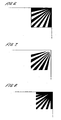
Figs. 6 to 8 show further alternative patterns for corner reinforcing watermarks; -
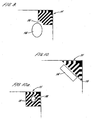
Figs. 9, 10 and 10a show one of the corner reinforcing watermarks cooperating with another watermark; -
Fig. 11 is a representation of a small sheet, such as a banknote, having edge reinforcing watermarks; -
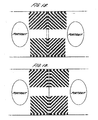
Figs. 12 to 17 are further alternative patterns for edge reinforcing watermarks; and -
Figs. 18 and 19 are representations of sections of cylinder mould covers used in the manufacture of a sheet of paper having corner reinforcing watermarks according to the invention. - Referring to
Fig. 1 there is illustrated a sheet ofpaper 10 made by hand or using a known papermaking machine, such as a cylinder mould or Fourdrinier machine. A range of fibre types can be used in the making of such paper, including synthetic or natural fibres or a mixture of both. The actual preparation of the fibres is unrestricted by the invention, and will depend on what effect it is wished to produce in the finished paper. For security paper used for security documents such as banknotes, passports, identification cards and so on, these need to be hard wearing, resilient and self-supporting and so an appropriate fibre mix must be selected. - It should be noted that, in this specification, "a sheet" can refer to a large sheet of paper which is cut into smaller sheets from which documents, such as banknotes, are made; or are such smaller sheets.
- For clarity, the reference to "sides" means the elongate edges joined at the corners of the sheet, rather than the flat planar surfaces (or faces) of the sheet.
- According to the
invention watermarks 11 are provided in at least two, preferably adjacent, of the corners of thesheet 10 during the manufacture of the paper. A watermark is created by well known techniques of varying the grammage of paper fibres so that in some areas the fibres are of higher grammage than the average grammage of the base paper layer, and in others they are of lower grammage. When viewed in transmitted light the areas of lower grammage are lighter and the areas of higher grammage are darker than the base paper, and the contrast between the light and dark areas can be very clearly seen. - Watermarks have been widely used as security features, as true watermarks are very hard to counterfeit particularly by photocopying techniques. They are also used as aesthetic features, e.g. in stationery, as complex patterns can be produced by watermark techniques. Traditionally watermarks have always tended to be located in the main body of the sheet or document in which they are produced so that they can clearly be seen. In the present invention, on the other hand, the watermarks are specifically located in the corners of the sheet. This has resulted in the surprising increase in stiffness of the corners which leads to a significant and unexpected reduction in corner folds'(dog-ears).
- In particular it has been found that watermarks that locally increase the grammage of the paper in the corner of the document significantly reduces its propensity to form dog-ears by increasing the stiffness in this area. One reason for this increase is because of the increase in the stiffness of the paper. It is well known, according to classical beam theory, that the stiffness of an object is proportional to the cube of its thickness, as described in "Pulp and Paper Technology and Treatments of Paper", 1978, page 74 by J d'A Clark, Freeman Publications Inc, San Francisco. Small increases in thickness do thus result in a significantly largely benefit in terms of stiffness. A typical stiffness measurement would be the L&W test as specified in ISO 2493.
- Another particularly effective watermark pattern is one that results in lines of higher grammage areas approaching the edges of the paper at between 55° an 35° to the edge perpendicular, and more preferably at 45°.
- In tests carried out using handmade paper made using a specially prepared hand sheet mould, which was embossed with seven different patterns, it was found that corner reinforcing watermarks could increase the stiffness of the paper by over 50% in the corners. The patterns tested are shown in
Fig. 2 . These are marked for convenience as patterns A, B, C, D, E, F, G and a blank control as H. The L&W stiffness was measured at 45° to the vertical on the finished note and the results for each of the patterns as shown inFigure 3 . -
Figure 4 shows the results for a test developed for this study. The test gives an angle to which a fold relaxes after it has been bent over with a known force. In this case, whether other factors are constant, the watermark increases the fold recovery angle because of the stiffness imparted by the watermark pattern. The results of the specific patterns ofFigure 2 are shown inFigure 4 . - A further experiment was carried out to determine the probability of forming corner folds (dog-ears) and the results of this test are shown in
Figure 5 . Again these results show the severity of the fold, shown as "dog-ear index" is least for the six stripe pattern F. It was found that the pattern F was the most effective. This was where the watermark comprised a wide stripe pattern with the stripes at substantially 45° to the machine direction (the edges of the sheet 10). The preferred width of the stripes used in the tests was in the range of 1 to 2mm wide and most preferably 1.5mm wide. The second most effective pattern was A which had wavy lines of 2mm width. - The tests showed that the orientation of the elements making up the watermark design is important to give the optimum strength in the direction in which corner folds are likely to form, i.e. 45° to the machine direction.
- It was found that the stiffness of the paper increased where the watermark was made from a positive pattern having the effect of adding bulk to selected areas as compared to the thickness of the base paper layer, as opposed to a negative pattern where the main portion was thinner than that of the base paper layer.
- Not only was the stiffness of the paper found to be increased in the paper made according to the invention, but in tests to measure fold recovery angle, it was found that the improvement in fold recovery was as much as 50% over paper without corner reinforcing watermarks.
- Additional patterns which have proved to be effective in trials are illustrated in
Figs. 6 to 8 . - According to the present invention, the
corner reinforcing watermarks 11 are combined with another watermark to enhance the security and aesthetic effect of the sheet. As shown inFigures 9 and 10 at least one of the corner reinforcing watermark 1 has a shaped border 15 (which is not necessarily a contiguous border), at least a section of which is complementary to a portion of a border of a furthervisible watermark 16, such as a portrait watermark. - The aforementioned shaped section of
border 15 allows the close juxtaposition of the twowatermarks watermarks - It should be noted that the
border 15 can include an internal border; and the furthervisible watermark 16 may be wholly surrounded by the corner reinforcing watermarks, as shown inFigure 10a . - In a further embodiment of the present invention, watermarks 12 are created either at, or covering, the middle of each edge of the
sheet 10, i.e. at North, South, East and West positions of the note when viewed face on. The problems identified previously relating to damage at the middle of each of the edges of banknotes have been found to be significantly reduced by providing such reinforcing watermarks at the middle of each edge, as shown inFig. 11 , because of the increased stiffness and improved fold recovery in these regions. Again, thewatermarks 12 are positive and the preferred form include corrugations and/or elements of the design perpendicular to the likely direction of folding or rolling, i.e. parallel to the edges of thesheet 10. - These edge reinforcing watermarks are also enhanced by providing one of its borders with at least a section which complements at least a section of a border of a
wide watermark indicia 16, to which it is closely positioned. - Notes which have both corner and centre edge reinforcing, for example a combination of the pattern shown in
Figs. 1 and11 are preferred, and one of each can be arranged with an adjacentvisible watermark 15. - The
individual reinforcing watermarks Figs. 1 and11 , or they may be joined together so that the watermark appears as a continuous frame around thewhole sheet 10. Alternatively just some of the reinforcingwatermarks - It should be noted that machine made paper is produced in continuous webs, which is subsequently cut to form individual smaller sheets. Obviously the pattern of reinforcing
watermarks sheet 10 are cut, thewatermarks sheet 10. - Further, it has been discovered that the effective thickness of the paper in the document corners and/or at the edges can also be increased by providing embossings, preferably in the form of corrugations, at the corners or the edges having the reinforcing
watermarks watermarks - When this combination of techniques was applied in tests to banknotes, corner stiffness increases of up to 250% were achieved, as measured by the L&W stiffness tester. The embossing also provide a useful tactile security check.
- It is well known that security documents in general, and banknotes in particular, can be embossed using the intaglio printing process. Embossing without the application of ink is sometimes used with a view to producing tactile security features as found on the Dutch 10 Guilder notes issues in 1997. These notes have a series of chevron patterns down the short edges of the notes. Testing carried out on these notes have shown that no improvement in corner fold stiffness was achieved by these embossings. The reason for this is that they are not positioned correctly to achieve such an effect being too far from the paper edge and the lines being too narrow.
- The embossings may be produced by an intaglio process, either with or without (blind) ink. The embossings preferably fill an area bounded by at least a length of 10mm on each of the adjacent sides of each corner. More preferably the whole of each corner area is filled. The embossings preferably consist of a plurality of stripes, each having a width between 0.5 and 3mm wide which are separated by gaps having a width lying in the range 0.5 to 3mm. The stripes may be straight, wavy or curved and are preferably parallel.
- The stripes of the embossings are preferably at an angle of between 70° and 111°,relative to the line of a corner fold set at 45° to one of the edges, and more preferably at an angle of 90°.
- Alternatively the embossings may be provided by uninked die stamping.
- The document may be varnished on one or both surfaces to improve durability of the embossings. Additionally the substrate may be coated on one or both surfaces to improve the durability of the substrate. The embossed regions may be reinforced using a varnish layer on the front, or back of the embossing or on both the front and back of the embossing.
- It is known that cross directional shrinkage of the paper during the papermaking process is greater at the edges of the paper web than in the centre. To allow for this shrinkage profile, while maintaining the dimensions of the document, the forming cloth may be embossed with the reinforcing watermarks overlapping (
Figure 16 ) or adjacent (Figure 17 ) or at any desired position between.
Claims (25)
- A sheet (10) having corners and sides joined at said corners, wherein corner reinforcing watermarks (12) are provided at at least two corners of the sheet (10), said reinforcing watermarks (12) being formed by varying the grammage of paper fibres to form positive watermarks which increase the stiffness of the sheet (10) in said corners, and at least one of which reinforcing watermarks (12) has a border (15), characterized in that at least a section of said border (15) has a complementary shape with respect to and is located in close registration with at least a section of a border of a further watermark (16).
- A sheet (10) having corners and sides joined at said corners, wherein edge reinforcing watermarks (12) are provided at or covering the middle of at least two sides of the sheet (10), said reinforcing watermarks (12) being formed by varying the grammage of the paper fibres to form positive watermarks which increase the stiffness of the sheet (10) along said sides, at least one of which reinforcing watermarks (12) has a border, characterized in that at least a section of which border (15) has a complementary shape with respect to and is located in close registration with at least a section of a border of a further watermark (16).
- A sheet (10) as claimed in claim 1 or claim 2 in which the reinforcing watermarks (11, 12) comprise a plurality of stripes.
- A sheet (10) as claimed in claim 3 in which the stripes are straight.
- A sheet (10) as claimed in claim 3 in which the stripes are wavy.
- A sheet (10) as claimed in any one of claims 3 to 5 in which the stripes of the corner reinforcing watermarks substantially extend at an angle of 45° to the sides of the sheet (10).
- A sheet (10) as claimed in any one of claims 3 to 5 in which the stripes of the edge reinforcing watermarks (12) are substantially parallel to the sides of the sheet (10).
- A sheet (10) as claimed in any one of claims 3 to 7 in which the width of the stripes lie in the range of 1 to 2.5 mm.
- A sheet (10) as claimed in claim 8 in which the width of the stripes lies in the range of 1.5mm to 2mm.
- A sheet (10) as claimed in claim 1 and claim 2 having corner and edge reinforcing watermarks (11, 12).
- A sheet (10) as claimed in any one of the preceding claims in which the reinforcing watermarks (11, 12) are joined by watermark patterns.
- A sheet (10) as claimed in claim 1 or claim 2 in which embossings are provided overlying the reinforcing watermarks (11, 12) in a similar pattern to the reinforcing watermarks (11, 12).
- A sheet (10) as claimed in claim 1 or claim 2 in which embossings are provided overlying the reinforcing watermarks (11, 12) in a dissimilar pattern to the reinforcing watermarks.
- A sheet (10) as claimed in claim 13 in which the embossings are provided by an intaglio process.
- A sheet (10) as claimed in claim 14 in which the intaglio embossings are uninked.
- A sheet (10) as claimed in any one of claims 13 to 15 in which the embossings are provided by die stamping.
- A sheet (10) as claimed in any one of claims 13 to 16 in which the embossings fill an area bounded by at least a length of 10mm on each of the adjoining sides of each corner.
- A sheet (10) as claimed in any one of claims 13 to 17 in which the whole of each corner area of the sheet are filled with embossings.
- A sheet (10) as claimed in any one of claims 13 to 18 in which the embossings comprise a plurality of the stripes, each stripe having a width lying in the range of 0.5 to 3mm wide and the stripes being separated by gaps having a width lying in the range of 0.5 to 3mm.
- A sheet (10) as claimed in claim 19 in which the stripes of the embossings are substantially parallel to each other.
- A sheet (10) as claimed in claim 19 or claim 20 in which the stripes of the embossings are substantially straight.
- A sheet (10) as claimed in any one of claims 19 to 21 in which the stripes of the embossings are at an angle lying in the range of 70° to 110° relative to the line of corner fold set at 45° to one of the edges.
- A sheet (10) was claimed in claim 22 in which the stripes of the embossings are at an angle of substantially 90° relative to the line of corner fold set at 45° to one of the edges.
- A security document made from a sheet according to any one of the preceding claims 1-23.
- A banknote made from a sheet according to any one of the preceding claims 1-23.
Priority Applications (2)
| Application Number | Priority Date | Filing Date | Title |
|---|---|---|---|
| SI200431648T SI1466755T1 (en) | 2003-04-03 | 2004-03-31 | Corner reinforcing watermarks on sheets |
| PL04251937T PL1466755T3 (en) | 2003-04-03 | 2004-03-31 | Corner reinforcing watermarks on sheets |
Applications Claiming Priority (4)
| Application Number | Priority Date | Filing Date | Title |
|---|---|---|---|
| GB0307754 | 2003-04-03 | ||
| GB0307754A GB0307754D0 (en) | 2003-04-03 | 2003-04-03 | Improvements in sheets |
| GB0307753A GB0307753D0 (en) | 2003-04-03 | 2003-04-03 | Improvements in sheets |
| GB0307753 | 2003-04-03 |
Publications (3)
| Publication Number | Publication Date |
|---|---|
| EP1466755A2 EP1466755A2 (en) | 2004-10-13 |
| EP1466755A3 EP1466755A3 (en) | 2007-01-24 |
| EP1466755B1 true EP1466755B1 (en) | 2011-01-19 |
Family
ID=32299723
Family Applications (1)
| Application Number | Title | Priority Date | Filing Date |
|---|---|---|---|
| EP04251937A Expired - Lifetime EP1466755B1 (en) | 2003-04-03 | 2004-03-31 | Corner reinforcing watermarks on sheets |
Country Status (6)
| Country | Link |
|---|---|
| EP (1) | EP1466755B1 (en) |
| AT (1) | ATE495884T1 (en) |
| DE (1) | DE602004031066D1 (en) |
| GB (1) | GB2400075B (en) |
| PL (1) | PL1466755T3 (en) |
| SI (1) | SI1466755T1 (en) |
Cited By (1)
| Publication number | Priority date | Publication date | Assignee | Title |
|---|---|---|---|---|
| EP3228744A1 (en) | 2016-04-06 | 2017-10-11 | European Central Bank | Use of nano cellulose on a paper product |
Families Citing this family (11)
| Publication number | Priority date | Publication date | Assignee | Title |
|---|---|---|---|---|
| EP1800891A1 (en) * | 2005-12-23 | 2007-06-27 | European Central Bank | Security document |
| GB2437939B (en) * | 2006-05-08 | 2008-03-26 | Rue De Int Ltd | Improvements in security substrates |
| DE102006039306A1 (en) * | 2006-08-22 | 2008-02-28 | Giesecke & Devrient Gmbh | Security paper sheet with intaglio print |
| GB2458485B (en) * | 2008-03-19 | 2010-07-14 | Rue De Int Ltd | Improvements in making sheets |
| DE102009036615A1 (en) * | 2009-08-07 | 2011-02-10 | Giesecke & Devrient Gmbh | Security paper with watermark |
| DE102012024774A1 (en) * | 2012-12-18 | 2014-06-18 | Giesecke & Devrient Gmbh | Drainage screen for papermaking |
| DE102014001064A1 (en) * | 2014-01-28 | 2015-07-30 | Giesecke & Devrient Gmbh | Drainage screen for the production of paper with stiffening watermarks |
| DE102014010697A1 (en) * | 2014-07-18 | 2016-01-21 | Giesecke & Devrient Gmbh | Value document with watermark |
| DE102018004995A1 (en) * | 2018-06-22 | 2019-12-24 | Giesecke+Devrient Currency Technology Gmbh | Security paper web with watermark and drainage screen for the production of watermark paper |
| FR3133201B1 (en) * | 2022-03-02 | 2024-03-22 | Oberthur Fiduciaire Sas | Watermarked strip or sheet of paper, and method of manufacturing |
| CN120908100A (en) * | 2025-09-15 | 2025-11-07 | 山东泰宝防伪制品有限公司 | Anti-counterfeiting ink printing defect detection device |
Family Cites Families (5)
| Publication number | Priority date | Publication date | Assignee | Title |
|---|---|---|---|---|
| EP0070172B1 (en) * | 1981-07-13 | 1985-08-14 | Portals Limited | Paper incorporating a partially embedded strip, methods for making paper and security documents |
| PT77050B (en) * | 1982-07-22 | 1986-01-24 | Wiggins Teape Group Ltd | Process for drying and consolidating a paper making web |
| SE470400B (en) * | 1992-07-07 | 1994-02-14 | Eric Rothfjell | Banknote and method for making a banknote, which is provided with a fiber-thinned and reinforced reinforcement area in the form of an optical window |
| GB2309039B (en) * | 1996-01-12 | 1999-07-07 | Portals Ltd | Security paper |
| GB2382325B8 (en) * | 2001-11-26 | 2008-06-05 | Rue De Int Ltd | Improvements in paper |
-
2004
- 2004-03-30 GB GB0407156A patent/GB2400075B/en not_active Expired - Lifetime
- 2004-03-31 DE DE602004031066T patent/DE602004031066D1/en not_active Expired - Lifetime
- 2004-03-31 EP EP04251937A patent/EP1466755B1/en not_active Expired - Lifetime
- 2004-03-31 PL PL04251937T patent/PL1466755T3/en unknown
- 2004-03-31 AT AT04251937T patent/ATE495884T1/en not_active IP Right Cessation
- 2004-03-31 SI SI200431648T patent/SI1466755T1/en unknown
Cited By (1)
| Publication number | Priority date | Publication date | Assignee | Title |
|---|---|---|---|---|
| EP3228744A1 (en) | 2016-04-06 | 2017-10-11 | European Central Bank | Use of nano cellulose on a paper product |
Also Published As
| Publication number | Publication date |
|---|---|
| GB2400075B (en) | 2005-03-02 |
| EP1466755A3 (en) | 2007-01-24 |
| GB0407156D0 (en) | 2004-05-05 |
| SI1466755T1 (en) | 2011-05-31 |
| PL1466755T3 (en) | 2011-06-30 |
| DE602004031066D1 (en) | 2011-03-03 |
| ATE495884T1 (en) | 2011-02-15 |
| GB2400075A (en) | 2004-10-06 |
| EP1466755A2 (en) | 2004-10-13 |
Similar Documents
| Publication | Publication Date | Title |
|---|---|---|
| US7704585B2 (en) | Paper including watermarks and/or embossings | |
| EP2260143B1 (en) | Method of making sheets for security documents | |
| US5582103A (en) | Method for making an anti-counterfeit latent image formation object for bills, credit cards, etc. | |
| CN106605022B (en) | Security paper and method of manufacture | |
| EP1466755A2 (en) | Corner reinforcing watermarks on sheets | |
| EP2342085A1 (en) | Security fibres | |
| GB2400074A (en) | Security feature for banknote and other security documents | |
| RU2450938C2 (en) | Paper with intaglio print pattern for making covered instruments | |
| EP1466756A2 (en) | Improvement of the strength of paper sheets | |
| JP2006514895A (en) | Anti-counterfeiting element for documents | |
| RU2557565C1 (en) | Multilayer counterfeit-proof article (versions) and valuable document based on it | |
| KR100781740B1 (en) | How to prevent counterfeiting of securities | |
| ES2358016T3 (en) | WATER REINFORCEMENT BRANDS FOR CORNER SHEETS. | |
| KR20170077442A (en) | Thickness variation reduced security paper and Manufacturing method thereof |
Legal Events
| Date | Code | Title | Description |
|---|---|---|---|
| PUAI | Public reference made under article 153(3) epc to a published international application that has entered the european phase |
Free format text: ORIGINAL CODE: 0009012 |
|
| AK | Designated contracting states |
Kind code of ref document: A2 Designated state(s): AT BE BG CH CY CZ DE DK EE ES FI FR GB GR HU IE IT LI LU MC NL PL PT RO SE SI SK TR |
|
| AX | Request for extension of the european patent |
Extension state: AL LT LV MK |
|
| PUAL | Search report despatched |
Free format text: ORIGINAL CODE: 0009013 |
|
| AK | Designated contracting states |
Kind code of ref document: A3 Designated state(s): AT BE BG CH CY CZ DE DK EE ES FI FR GB GR HU IE IT LI LU MC NL PL PT RO SE SI SK TR |
|
| AX | Request for extension of the european patent |
Extension state: AL LT LV MK |
|
| RIC1 | Information provided on ipc code assigned before grant |
Ipc: B42D 15/00 20060101ALI20061219BHEP Ipc: B31F 1/07 20060101AFI20061219BHEP |
|
| 17P | Request for examination filed |
Effective date: 20070220 |
|
| AKX | Designation fees paid |
Designated state(s): AT BE BG CH CY CZ DE DK EE ES FI FR GB GR HU IE IT LI LU MC NL PL PT RO SE SI SK TR |
|
| 17Q | First examination report despatched |
Effective date: 20071106 |
|
| GRAP | Despatch of communication of intention to grant a patent |
Free format text: ORIGINAL CODE: EPIDOSNIGR1 |
|
| GRAC | Information related to communication of intention to grant a patent modified |
Free format text: ORIGINAL CODE: EPIDOSCIGR1 |
|
| GRAS | Grant fee paid |
Free format text: ORIGINAL CODE: EPIDOSNIGR3 |
|
| GRAA | (expected) grant |
Free format text: ORIGINAL CODE: 0009210 |
|
| AK | Designated contracting states |
Kind code of ref document: B1 Designated state(s): AT BE BG CH CY CZ DE DK EE ES FI FR GB GR HU IE IT LI LU MC NL PL PT RO SE SI SK TR |
|
| REG | Reference to a national code |
Ref country code: GB Ref legal event code: FG4D |
|
| REG | Reference to a national code |
Ref country code: CH Ref legal event code: EP Ref country code: CH Ref legal event code: NV Representative=s name: KIRKER & CIE S.A. |
|
| REG | Reference to a national code |
Ref country code: IE Ref legal event code: FG4D |
|
| REF | Corresponds to: |
Ref document number: 602004031066 Country of ref document: DE Date of ref document: 20110303 Kind code of ref document: P |
|
| REG | Reference to a national code |
Ref country code: DE Ref legal event code: R096 Ref document number: 602004031066 Country of ref document: DE Effective date: 20110303 |
|
| REG | Reference to a national code |
Ref country code: NL Ref legal event code: T3 |
|
| REG | Reference to a national code |
Ref country code: SE Ref legal event code: TRGR |
|
| REG | Reference to a national code |
Ref country code: ES Ref legal event code: FG2A Ref document number: 2358016 Country of ref document: ES Kind code of ref document: T3 Effective date: 20110504 |
|
| REG | Reference to a national code |
Ref country code: PL Ref legal event code: T3 |
|
| PG25 | Lapsed in a contracting state [announced via postgrant information from national office to epo] |
Ref country code: PT Free format text: LAPSE BECAUSE OF FAILURE TO SUBMIT A TRANSLATION OF THE DESCRIPTION OR TO PAY THE FEE WITHIN THE PRESCRIBED TIME-LIMIT Effective date: 20110519 Ref country code: GR Free format text: LAPSE BECAUSE OF FAILURE TO SUBMIT A TRANSLATION OF THE DESCRIPTION OR TO PAY THE FEE WITHIN THE PRESCRIBED TIME-LIMIT Effective date: 20110420 |
|
| PG25 | Lapsed in a contracting state [announced via postgrant information from national office to epo] |
Ref country code: CY Free format text: LAPSE BECAUSE OF FAILURE TO SUBMIT A TRANSLATION OF THE DESCRIPTION OR TO PAY THE FEE WITHIN THE PRESCRIBED TIME-LIMIT Effective date: 20110119 Ref country code: AT Free format text: LAPSE BECAUSE OF FAILURE TO SUBMIT A TRANSLATION OF THE DESCRIPTION OR TO PAY THE FEE WITHIN THE PRESCRIBED TIME-LIMIT Effective date: 20110119 Ref country code: BG Free format text: LAPSE BECAUSE OF FAILURE TO SUBMIT A TRANSLATION OF THE DESCRIPTION OR TO PAY THE FEE WITHIN THE PRESCRIBED TIME-LIMIT Effective date: 20110419 Ref country code: BE Free format text: LAPSE BECAUSE OF FAILURE TO SUBMIT A TRANSLATION OF THE DESCRIPTION OR TO PAY THE FEE WITHIN THE PRESCRIBED TIME-LIMIT Effective date: 20110119 Ref country code: FI Free format text: LAPSE BECAUSE OF FAILURE TO SUBMIT A TRANSLATION OF THE DESCRIPTION OR TO PAY THE FEE WITHIN THE PRESCRIBED TIME-LIMIT Effective date: 20110119 |
|
| REG | Reference to a national code |
Ref country code: HU Ref legal event code: AG4A Ref document number: E010905 Country of ref document: HU |
|
| PG25 | Lapsed in a contracting state [announced via postgrant information from national office to epo] |
Ref country code: EE Free format text: LAPSE BECAUSE OF FAILURE TO SUBMIT A TRANSLATION OF THE DESCRIPTION OR TO PAY THE FEE WITHIN THE PRESCRIBED TIME-LIMIT Effective date: 20110119 Ref country code: DK Free format text: LAPSE BECAUSE OF FAILURE TO SUBMIT A TRANSLATION OF THE DESCRIPTION OR TO PAY THE FEE WITHIN THE PRESCRIBED TIME-LIMIT Effective date: 20110119 Ref country code: MC Free format text: LAPSE BECAUSE OF NON-PAYMENT OF DUE FEES Effective date: 20110331 |
|
| PLBE | No opposition filed within time limit |
Free format text: ORIGINAL CODE: 0009261 |
|
| STAA | Information on the status of an ep patent application or granted ep patent |
Free format text: STATUS: NO OPPOSITION FILED WITHIN TIME LIMIT |
|
| PG25 | Lapsed in a contracting state [announced via postgrant information from national office to epo] |
Ref country code: SK Free format text: LAPSE BECAUSE OF FAILURE TO SUBMIT A TRANSLATION OF THE DESCRIPTION OR TO PAY THE FEE WITHIN THE PRESCRIBED TIME-LIMIT Effective date: 20110119 Ref country code: RO Free format text: LAPSE BECAUSE OF FAILURE TO SUBMIT A TRANSLATION OF THE DESCRIPTION OR TO PAY THE FEE WITHIN THE PRESCRIBED TIME-LIMIT Effective date: 20110119 Ref country code: CZ Free format text: LAPSE BECAUSE OF FAILURE TO SUBMIT A TRANSLATION OF THE DESCRIPTION OR TO PAY THE FEE WITHIN THE PRESCRIBED TIME-LIMIT Effective date: 20110119 |
|
| 26N | No opposition filed |
Effective date: 20111020 |
|
| REG | Reference to a national code |
Ref country code: IE Ref legal event code: MM4A |
|
| PG25 | Lapsed in a contracting state [announced via postgrant information from national office to epo] |
Ref country code: IE Free format text: LAPSE BECAUSE OF NON-PAYMENT OF DUE FEES Effective date: 20110331 |
|
| REG | Reference to a national code |
Ref country code: DE Ref legal event code: R097 Ref document number: 602004031066 Country of ref document: DE Effective date: 20111020 |
|
| REG | Reference to a national code |
Ref country code: AT Ref legal event code: MK05 Ref document number: 495884 Country of ref document: AT Kind code of ref document: T Effective date: 20110119 |
|
| PG25 | Lapsed in a contracting state [announced via postgrant information from national office to epo] |
Ref country code: LU Free format text: LAPSE BECAUSE OF NON-PAYMENT OF DUE FEES Effective date: 20110331 |
|
| PG25 | Lapsed in a contracting state [announced via postgrant information from national office to epo] |
Ref country code: TR Free format text: LAPSE BECAUSE OF FAILURE TO SUBMIT A TRANSLATION OF THE DESCRIPTION OR TO PAY THE FEE WITHIN THE PRESCRIBED TIME-LIMIT Effective date: 20110119 |
|
| REG | Reference to a national code |
Ref country code: FR Ref legal event code: PLFP Year of fee payment: 13 |
|
| REG | Reference to a national code |
Ref country code: FR Ref legal event code: PLFP Year of fee payment: 14 |
|
| REG | Reference to a national code |
Ref country code: FR Ref legal event code: PLFP Year of fee payment: 15 |
|
| REG | Reference to a national code |
Ref country code: GB Ref legal event code: 732E Free format text: REGISTERED BETWEEN 20180426 AND 20180502 |
|
| REG | Reference to a national code |
Ref country code: CH Ref legal event code: PUE Owner name: PORTALS DE LA RUE LIMITED, GB Free format text: FORMER OWNER: DE LA RUE INTERNATIONAL LIMITED, GB |
|
| REG | Reference to a national code |
Ref country code: FR Ref legal event code: TP Owner name: PORTALS DE LA RUE LIMITED, GB Effective date: 20180718 |
|
| REG | Reference to a national code |
Ref country code: ES Ref legal event code: PC2A Effective date: 20180821 Ref country code: ES Ref legal event code: PC2A Owner name: PORTALS DE LA RUE LIMITED Effective date: 20180821 |
|
| REG | Reference to a national code |
Ref country code: DE Ref legal event code: R081 Ref document number: 602004031066 Country of ref document: DE Owner name: PORTALS PAPER LIMITED, OVERTON, GB Free format text: FORMER OWNER: DE LA RUE INTERNATIONAL LTD., BASINGSTOKE, HAMPSHIRE, GB Ref country code: DE Ref legal event code: R081 Ref document number: 602004031066 Country of ref document: DE Owner name: PORTALS DE LA RUE LIMITED, OVERTON, GB Free format text: FORMER OWNER: DE LA RUE INTERNATIONAL LTD., BASINGSTOKE, HAMPSHIRE, GB |
|
| REG | Reference to a national code |
Ref country code: HU Ref legal event code: FH1C Free format text: FORMER REPRESENTATIVE(S): MESZAROSNE DONUSZ KATALIN, SBGK SZABADALMI UEGYVIVOEI IRODA, HU Representative=s name: SBGK SZABADALMI UEGYVIVOEI IRODA, HU Ref country code: HU Ref legal event code: GB9C Owner name: PORTALS DE LA RUE LIMITED, GB Free format text: FORMER OWNER(S): DE LA RUE INTERNATIONAL LIMITED, GB |
|
| REG | Reference to a national code |
Ref country code: SI Ref legal event code: SP73 Owner name: PORTALS DE LA RUE LIMITED; GB Effective date: 20180905 |
|
| REG | Reference to a national code |
Ref country code: NL Ref legal event code: PD Owner name: PORTALS DE LA RUE LIMITED; GB Free format text: DETAILS ASSIGNMENT: CHANGE OF OWNER(S), ASSIGNMENT; FORMER OWNER NAME: DE LA RUE INTERNATIONAL LIMITED Effective date: 20180903 |
|
| REG | Reference to a national code |
Ref country code: DE Ref legal event code: R081 Ref document number: 602004031066 Country of ref document: DE Owner name: PORTALS PAPER LIMITED, OVERTON, GB Free format text: FORMER OWNER: PORTALS DE LA RUE LIMITED, OVERTON, HAMPSHIRE, GB |
|
| REG | Reference to a national code |
Ref country code: CH Ref legal event code: PFA Owner name: PORTALS PAPER LIMITED, GB Free format text: FORMER OWNER: PORTALS DE LA RUE LIMITED, GB |
|
| REG | Reference to a national code |
Ref country code: HU Ref legal event code: HC9C Owner name: PORTALS PAPER LIMITED, GB Free format text: FORMER OWNER(S): DE LA RUE INTERNATIONAL LIMITED, GB; PORTALS DE LA RUE LIMITED, GB |
|
| REG | Reference to a national code |
Ref country code: NL Ref legal event code: HC Owner name: PORTALS PAPER LIMITED; GB Free format text: DETAILS ASSIGNMENT: CHANGE OF OWNER(S), CHANGE OF OWNER(S) NAME; FORMER OWNER NAME: PORTALS DE LA RUE LIMITED Effective date: 20210319 |
|
| REG | Reference to a national code |
Ref country code: ES Ref legal event code: PC2A Owner name: PORTALS PAPER LIMITED Effective date: 20210806 |
|
| PGFP | Annual fee paid to national office [announced via postgrant information from national office to epo] |
Ref country code: FR Payment date: 20230314 Year of fee payment: 20 |
|
| PGFP | Annual fee paid to national office [announced via postgrant information from national office to epo] |
Ref country code: SI Payment date: 20230307 Year of fee payment: 20 Ref country code: SE Payment date: 20230314 Year of fee payment: 20 Ref country code: PL Payment date: 20230303 Year of fee payment: 20 Ref country code: IT Payment date: 20230320 Year of fee payment: 20 Ref country code: HU Payment date: 20230310 Year of fee payment: 20 Ref country code: GB Payment date: 20230320 Year of fee payment: 20 Ref country code: DE Payment date: 20230323 Year of fee payment: 20 |
|
| PGFP | Annual fee paid to national office [announced via postgrant information from national office to epo] |
Ref country code: NL Payment date: 20230316 Year of fee payment: 20 |
|
| PGFP | Annual fee paid to national office [announced via postgrant information from national office to epo] |
Ref country code: ES Payment date: 20230412 Year of fee payment: 20 Ref country code: CH Payment date: 20230402 Year of fee payment: 20 |
|
| REG | Reference to a national code |
Ref country code: DE Ref legal event code: R071 Ref document number: 602004031066 Country of ref document: DE |
|
| REG | Reference to a national code |
Ref country code: NL Ref legal event code: MK Effective date: 20240330 |
|
| REG | Reference to a national code |
Ref country code: CH Ref legal event code: PL |
|
| REG | Reference to a national code |
Ref country code: GB Ref legal event code: PE20 Expiry date: 20240330 |
|
| PG25 | Lapsed in a contracting state [announced via postgrant information from national office to epo] |
Ref country code: ES Free format text: LAPSE BECAUSE OF EXPIRATION OF PROTECTION Effective date: 20240401 |
|
| REG | Reference to a national code |
Ref country code: ES Ref legal event code: FD2A Effective date: 20240426 |
|
| PG25 | Lapsed in a contracting state [announced via postgrant information from national office to epo] |
Ref country code: ES Free format text: LAPSE BECAUSE OF EXPIRATION OF PROTECTION Effective date: 20240401 Ref country code: GB Free format text: LAPSE BECAUSE OF EXPIRATION OF PROTECTION Effective date: 20240330 |
|
| REG | Reference to a national code |
Ref country code: SE Ref legal event code: EUG |
|
| PG25 | Lapsed in a contracting state [announced via postgrant information from national office to epo] |
Ref country code: SI Free format text: LAPSE BECAUSE OF EXPIRATION OF PROTECTION Effective date: 20240401 |
|
| PG25 | Lapsed in a contracting state [announced via postgrant information from national office to epo] |
Ref country code: SI Free format text: LAPSE BECAUSE OF EXPIRATION OF PROTECTION Effective date: 20240401 |