EP1463267A2 - Minimizing message processing latency in a communication network - Google Patents
Minimizing message processing latency in a communication network Download PDFInfo
- Publication number
- EP1463267A2 EP1463267A2 EP04396009A EP04396009A EP1463267A2 EP 1463267 A2 EP1463267 A2 EP 1463267A2 EP 04396009 A EP04396009 A EP 04396009A EP 04396009 A EP04396009 A EP 04396009A EP 1463267 A2 EP1463267 A2 EP 1463267A2
- Authority
- EP
- European Patent Office
- Prior art keywords
- message
- node
- functionalities
- mobile
- acknowledgement
- Prior art date
- Legal status (The legal status is an assumption and is not a legal conclusion. Google has not performed a legal analysis and makes no representation as to the accuracy of the status listed.)
- Granted
Links
Images


Classifications
-
- H—ELECTRICITY
- H04—ELECTRIC COMMUNICATION TECHNIQUE
- H04W—WIRELESS COMMUNICATION NETWORKS
- H04W8/00—Network data management
- H04W8/02—Processing of mobility data, e.g. registration information at HLR [Home Location Register] or VLR [Visitor Location Register]; Transfer of mobility data, e.g. between HLR, VLR or external networks
-
- H—ELECTRICITY
- H04—ELECTRIC COMMUNICATION TECHNIQUE
- H04L—TRANSMISSION OF DIGITAL INFORMATION, e.g. TELEGRAPHIC COMMUNICATION
- H04L69/00—Network arrangements, protocols or services independent of the application payload and not provided for in the other groups of this subclass
- H04L69/12—Protocol engines
-
- H—ELECTRICITY
- H04—ELECTRIC COMMUNICATION TECHNIQUE
- H04L—TRANSMISSION OF DIGITAL INFORMATION, e.g. TELEGRAPHIC COMMUNICATION
- H04L69/00—Network arrangements, protocols or services independent of the application payload and not provided for in the other groups of this subclass
- H04L69/30—Definitions, standards or architectural aspects of layered protocol stacks
- H04L69/32—Architecture of open systems interconnection [OSI] 7-layer type protocol stacks, e.g. the interfaces between the data link level and the physical level
-
- H—ELECTRICITY
- H04—ELECTRIC COMMUNICATION TECHNIQUE
- H04W—WIRELESS COMMUNICATION NETWORKS
- H04W36/00—Hand-off or reselection arrangements
- H04W36/0005—Control or signalling for completing the hand-off
- H04W36/0011—Control or signalling for completing the hand-off for data sessions of end-to-end connection
- H04W36/0019—Control or signalling for completing the hand-off for data sessions of end-to-end connection adapted for mobile IP [MIP]
-
- H—ELECTRICITY
- H04—ELECTRIC COMMUNICATION TECHNIQUE
- H04W—WIRELESS COMMUNICATION NETWORKS
- H04W8/00—Network data management
- H04W8/02—Processing of mobility data, e.g. registration information at HLR [Home Location Register] or VLR [Visitor Location Register]; Transfer of mobility data, e.g. between HLR, VLR or external networks
- H04W8/04—Registration at HLR or HSS [Home Subscriber Server]
-
- H—ELECTRICITY
- H04—ELECTRIC COMMUNICATION TECHNIQUE
- H04W—WIRELESS COMMUNICATION NETWORKS
- H04W80/00—Wireless network protocols or protocol adaptations to wireless operation
- H04W80/04—Network layer protocols, e.g. mobile IP [Internet Protocol]
Definitions
- the present invention relates to telecommunications.
- the present invention relates to a novel and improved method and system for minimizing message processing latency in a communication network.
- IP Internet Protocol
- IPv4 Version 4
- IPv6 Version 6
- IPv6 includes the capabilities of IPv4 but provides also additional features.
- IP addresses are lengthened from 32 bits to 128 bits, thus providing for significantly larger amount of network addresses.
- IP will be used to refer to IPv6 unless otherwise specified.
- Mobile IP is an extension to IP aimed to provide mobility support for IP. Using Mobile IP it is possible for a terminal device to move from one link to another without changing its IP address (as seen by the layers above IP) and yet be reachable. Mobile IP is being developed by IETF (Internet Engineering Task Force) and full specifications may be obtained e.g. from http://www.ietf.org. In the following Mobile IP will be used to refer to Mobile IP support for IPv6 (Mobile IPv6) unless otherwise specified and the term "Mobile IP network" will be used to refer to an IP network that supports Mobile IP.
- a node refers to a device that implements IP.
- a router refers to a node that forwards IP packets not explicitly addressed to itself.
- a link refers to a communication facility or medium over which nodes can communicate at the OSI link layer.
- An interface refers to a node's attachment to a link.
- a subnet prefix refers to a bit string consisting of a number of initial bits of an IP address.
- a packet refers to an IP packet comprising one or more headers and payload.
- a header comprises one or more fields.
- a flag refers to a field of one bit length. Thus a flag may have one of two values, either 1 or 0.
- a unit of data used to deliver information related to the protocols used is referred to as a message.
- a Mobile IP message may be transmitted in one IP packet or it may be divided in parts and the parts may be transmitted in separate IP packets.
- a Home Address refers to an IP address assigned to a Mobile Node and used as the permanent or semi-permanent address of the Mobile Node.
- a Home Subnet Prefix refers to the IP subnet prefix corresponding to a Mobile Node's Home Address.
- a Home Link refers to the link on which a Mobile Node's Home Subnet Prefix is defined. Any link other than a Mobile Node's Home Link is referred to as a Foreign Link. Any IP subnet prefix other than a Mobile Node's Home Subnet Prefix is referred to as a Foreign Subnet Prefix.
- a Mobile Node refers to a node that can change its point of attachment from one link to another, while still being reachable via its Home Address.
- Movement refers to a change in a Mobile Node's point of attachment to an IP network such that it is no longer connected to the same link as it was previously. If a Mobile Node is not currently attached to its Home Link, the Mobile Node is said to be "away from home”.
- a Correspondent Node refers to a peer node with which a Mobile Node is communicating.
- the Correspondent Node may itself be either mobile or stationary.
- a Care-of Address refers to an IP address associated with a Mobile Node while visiting a Foreign Link. The subnet prefix of this IP address is thus a Foreign Subnet Prefix.
- a Mobile Node may have multiple Care-Of Addresses at any given time but only one may be registered at the Home Agent.
- a Home Agent refers to a router on a Mobile Node's Home Link with which the Mobile Node has registered its current Care-Of Address.
- Binding refers to the association of the Home Address of a Mobile Node with a Care-of Address for that Mobile Node.
- a Binding Update message is used by a Mobile Node to notify Home Agent and possibly also other nodes of a new Care-of Address for itself.
- a Binding Acknowledgement message is used to acknowledge receipt of a Binding Update message.
- Total processing latency comprises handling time of input, data processing time and handling time of output.
- the handling time of input refers to the time it takes to parse an incoming message, i.e. to perform syntax checks, semantic checks and validity checks.
- the handling time of output refers to the time it takes to generate a corresponding outgoing acknowledgement message.
- the data processing time refers to the time it takes to perform the actual data processing the message requires.
- the data processing time would comprise the time it takes to perform Binding Update authentication, Binding Cache look up, Binding Cache update, Binding Acknowledgement generation, Duplicate Address Detection, Neighbor Discovery and Binding Refresh Request generation.
- Figure 1 illustrates a typical prior art method for processing messages in a Mobile IP network.
- a message is received in phase 11 after which all the functionalities required for processing said message are executed at once, phase 12. Since the execution of some of these functionalities, especially those involving database transactions, takes a significant amount of time, processing latency results. After finishing the execution of the functionalities an acknowledgement message is transmitted, phase 13.
- the present invention concerns a method and a system for minimizing message processing latency in a communication network.
- the communication network is a Mobile IP network.
- the communication network comprises nodes.
- a message from a first node is received at a second node which message requires an acknowledgement message, preferably of Boolean type.
- Functionalities required for processing the message are partitioned into at least a first part and a second part.
- the first part comprises at least a minimum set of functionalities required to generate the acknowledgement message.
- the functionalities of the first part are executed.
- the acknowledgement message is generated and transmitted to the first node in response to finishing the functionalities of the first part. If the functionalities of the first part are finished successfully, the acknowledgement message will be positive. Correspondingly, if the functionalities of the first part are finished unsuccessfully, the acknowledgement message will be negative.
- the second part comprises functionalities required for processing the message which were not comprised in the first part.
- the functionalities comprised in the second part may be further partitioned into sub-parts.
- the functionalities of these sub-parts may be executed consecutively, in parallel or in a combination thereof.
- an invalidate message is generated and transmitted to the first node to indicate to said first node to ignore the transmitted acknowledgement message if said acknowledgement message was positive and an error occurs while performing the functionalities of the second part.
- an update message is generated and transmitted to the first node to indicate to said first node to update the transmitted acknowledgement message with the update message, if execution result of the second part so requires.
- the functionalities are repartitioned into at least the first and second parts.
- the repartitioning is executed if frequency of invalidate message occurrence exceeds a given limit.
- the repartitioning is executed according to current load. Further, since increasing load typically results in an increased amount of functionalities in the first part, response time from the point of view of the first node typically also increases. Thus this increase in response time may be used to indicate an increase in load to the first node.
- the message is a Mobile IP Binding Update -message and the acknowledgement message is a Mobile IP Binding Acknowledgement -message.
- the first node is a Mobile IP Mobile Node and the second node is a corresponding Mobile IP Home Agent.
- the first node is a Mobile IP Mobile Node and the second node is a Mobile IP Correspondent Node.
- the present invention makes it possible to effectively minimize the perceived message processing latency. Further, the present invention makes it possible to dynamically optimize the latency according to available resources. Further, the present invention improves scalability of Mobile IP network elements related to message processing, since only database reads of the first part are affected by the increased latencies of larger databases.
- Figure 2a illustrates a method for minimizing message processing latency in a Mobile IP network.
- a message from a first node is received at a second node, phase 21.
- the message requires an acknowledgement message, preferably of Boolean type.
- Functionalities required for processing the message are partitioned into at least a first part and a second part, phase 22.
- the first part comprises at least a minimum set of functionalities required to generate the acknowledgement message.
- the functionalities of the first part are executed, phase 23.
- the acknowledgement message is generated and transmitted to the first node after finishing the functionalities of the first part, phase 24. If the functionalities of the first part are finished successfully, the acknowledgement message will be positive. Correspondingly, if the functionalities of the first part are finished unsuccessfully, the acknowledgement message will be negative.
- phase 25 functionalities of the second part are executed.
- the second part comprises the functionalities required for processing the message which were not comprised in the first part. If an error occurs while performing the functionalities of the second part and the transmitted acknowledgement message was positive, phase 26, an invalidate message is generated and transmitted to the first node to indicate to said first node to ignore the transmitted acknowledgement message, phase 27. Next, if an error occurred, already successfully executed functionalities are cancelled, phase 28. Preferably said canceling applies both to executed first part functionalities and executed second part functionalities, thus resulting in that the second node will revert back to the state it was in before receiving the message from the first node. If an error did not occur, a need for an update message is checked in phase 29.
- the update message is generated and transmitted to the first node, phase 30, to indicate to said first node to replace the transmitted acknowledgement message with the update message.
- Functionalities of the first and second part may be executed at least partly concurrently (not illustrated in Figure 2a), or the execution of the functionalities of the second part may be started after the execution of the functionalities of the first part has been finished, as illustrated in Figure 2a.
- the first part preferably comprises a minimum set of data retrieving and processing functionalities required to generate the positive and negative acknowledgement messages, whereas the second part preferably comprises all such time consuming data processing functionalities which have a low probability of failing or causing negative acknowledgement.
- the second part preferably comprises functionalities with the probability of successful processing more than 99%.
- the probability of successfully processing the functionalities of the second part is very high, and correspondingly the probability of having to transmit the invalidate message is very low.
- a failed function of the second part is related to a local resource exhaustion or a system wide stability problem. What is essential is that the acknowledgement message is transmitted as soon as possible after finishing the functionalities of the first part without waiting to finish the typically time-consuming functionalities of the second part.
- Figure 2b illustrates repartitioning message processing functionalities according to one embodiment of the present invention.
- Figure 2b relates to Figure 2a in that the steps of Figure 2b illustrate implementation of repartitioning process in more detail according to one embodiment of the present invention.
- the output of this repartitioning process serves as an input for phase 22 in Figure 2a.
- the output of the repartitioning process is stored e.g. in an internal storage.
- Phase 22 in Figure 2a then reads this internal storage to get the required input.
- an initial partitioning of the functionalities required for processing the message is first executed, phase 30. Next current load is measured, phase 31. If it is determined that load has changed significantly enough, the functionalities required for processing the message are repartitioned accordingly, phase 32.
- the repartitioning may be executed if frequency of invalidate message occurrence exceeds a given limit.
- state information for a message being processed is being stored for each message.
- repartitioning only affects messages received after the repartitioning has been executed. In other words, repartitioning has no effect on executing the first and second part functionalities of a message received before the repartitioning was launched even if said first and second part functionalities were not finished before launching the repartitioning.
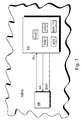
- Figure 3 illustrates a system for minimizing message processing latency in a Mobile IP network MIPv6 comprising nodes.
- the system comprises a first node for transmitting a message requiring a Boolean type acknowledgement message.
- the first node is a Mobile Node MN
- the message is a Binding Update message BU
- the acknowledgement message is a Binding Acknowledgement message BA in the embodiment of the present invention illustrated in Figure 3.
- the system further comprises a second node for receiving the message BU.
- the second node is a corresponding Home Agent HA in the embodiment of the present invention illustrated in Figure 3.
- the second node is a Correspondent Node CN (not illustrated in Figure 3).
- the Home Agent HA comprises a partitioner PART for partitioning the functionalities required for processing the message BU into at least a first part and a second part.
- the first part comprises at least a minimum set of functionalities required to generate the acknowledgement message BA.
- the partitioner is arranged to repartition the functionalities into the first and second parts in a preferred embodiment of the present invention. In an embodiment of the present invention the repartitioning will be performed if frequency of invalidate message occurrence exceeds a given limit. In another embodiment of the present invention the repartitioning will be performed according to current load.
- the Home Agent HA further comprises a first function executor EXE1 for executing the functionalities of the first part.
- the Home Agent HA further comprises an acknowledgement transmitter ACK for generating and transmitting the acknowledgement message BA to the first node MN in response to finishing the functionalities of the first part. Additionally, the acknowledgement message BA may be transmitted to a second function executor EXE2.
- the Home Agent HA further comprises a second function executor EXE2 for executing functionalities of the second part, the second part comprising the functionalities not comprised in the first part. Functionalities of the first and second part may be executed at least partly concurrently, or the execution of the functionalities of the second part may be started after the execution of the functionalities of the first part has been finished.
- the Home Agent HA further comprises an invalidation transmitter BRR_TX for generating and transmitting an invalidate message BRR to the first node MN to indicate to the first node MN to ignore the transmitted acknowledgement message BA, if the acknowledgement message BA was positive and an error occurs while performing the functionalities of the second part.
- BRR Binding Refresh Request -message
- the Home Agent may also be a distributed network element as is known in the art.
- Message processing typically comprises database reads and transactions in a case of the second node being a Home Agent.
- Database transaction is a well known term referring to a managed operation involving the database.
- Database transactions involving database updates typically require significantly more time and local resources than database reads alone. Therefore transactions updating the database are preferably executed in the second part whereas database reads are preferably executed in the first part.
- the message is a Binding Update message received from a Mobile Node and the second node is a Home Agent
- the first part typically comprises Binding Update authentication, Binding Cache look up and Binding Acknowledgement generation.
- the second part typically comprises Duplicate Address Detection, Binding Cache update and ND proxy. If second part fails a Binding Refresh Request is generated to invalidate the earlier BA.
Landscapes
- Engineering & Computer Science (AREA)
- Computer Networks & Wireless Communication (AREA)
- Signal Processing (AREA)
- Computer Security & Cryptography (AREA)
- Databases & Information Systems (AREA)
- Mobile Radio Communication Systems (AREA)
- Data Exchanges In Wide-Area Networks (AREA)
Abstract
Description
Claims (20)
- A method for minimizing message processing latency in a communication network comprising nodes, wherein the method comprises the steps of:receiving at a second node a message from a first node, the message requiring an acknowledgement message,partitioning functionalities required for processing the message into at least a first part and a second part, the first part comprising at least a minimum set of functionalities required to generate the acknowledgement message,executing the functionalities of the first part, andgenerating and transmitting the acknowledgement message to the first node in response to finishing the functionalities of the first part.
- The method according to claim 1, wherein the method further comprises the step of:executing functionalities of the second part, the second part comprising functionalities not comprised in the first part.
- The method according to claim 2, wherein the method further comprises the step of:generating and transmitting an invalidate message to the first node to indicate to said first node to ignore the transmitted acknowledgement message, if said acknowledgement message was positive and an error occurs while performing the functionalities of the second part.
- The method according to claim 2, wherein the method further comprises the step of:generating and transmitting an update message to the first node to indicate to said first node to replace the transmitted acknowledgement message with the update message, if execution result of the second part so requires.
- The method according to claim 1, wherein the method further comprises the steps of:repartitioning the functionalities into the first and second parts.
- The method according to claim 5, wherein the repartitioning is executed if frequency of invalidate message occurrence exceeds a given limit.
- The method according to claim 5, wherein the repartitioning is executed repeatedly according to current load.
- The method according to claim 1, wherein the message is a Mobile IP Binding Update -message and the acknowledgement message is a Mobile IP Binding Acknowledgement -message.
- The method according to claim 1, wherein the first node is a Mobile IP Mobile Node and the second node is a corresponding Mobile IP Home Agent.
- The method according to claim 1, wherein the first node is a Mobile IP Mobile Node and the second node is a Mobile IP Correspondent Node.
- A system for minimizing message processing latency in a communication network comprising nodes, wherein the system comprises:a first node for transmitting a message, the message requiring an acknowledgement message,a second node for receiving the message, and wherein the second node comprises:a partitioner for partitioning functionalities required for processing the message into at least a first part and a second part, the first part comprising at least a minimum set of functionalities required to generate the acknowledgement message,a first function executor for executing the functionalities of the first part, andan acknowledgement transmitter for generating and transmitting the acknowledgement message to the first node in response to finishing the functionalities of the first part.
- The system according to claim 11, wherein the second node further comprises:a second function executor for executing functionalities of the second part, the second part comprising functionalities not comprised in the first part.
- The system according to claim 12, wherein the second node further comprises:an invalidation transmitter for generating and transmitting an invalidate message to the first node to indicate to said first node to ignore the transmitted acknowledgement message, if said acknowledgement message was positive and an error occurs while performing the functionalities of the second part.
- The system according to claim 12, wherein the second node further comprises:an update transmitter for generating and transmitting an update message to the first node to indicate to said first node to replace the transmitted acknowledgement message with the update message, if execution result of the second part so requires.
- The system according to claim 11, wherein the partitioner is arranged to repartition the functionalities into at least the first and second parts.
- The system according to claim 15, wherein the partitioner is further arranged to execute said repartitioning if frequency of invalidate message occurrence exceeds a given limit.
- The system according to claim 15, wherein the partitioner is further arranged to execute said repartitioning repeatedly according to current load.
- The system according to claim 11, wherein the message is a Mobile IP Binding Update -message and the acknowledgement message is a Mobile IP Binding Acknowledgement -message.
- The system according to claim 11, wherein the first node is a Mobile IP Mobile Node and the second node is a corresponding Mobile IP Home Agent.
- The system according to claim 11, wherein the first node is a Mobile IP Mobile Node and the second node is a Mobile IP Correspondent Node.
Applications Claiming Priority (2)
| Application Number | Priority Date | Filing Date | Title |
|---|---|---|---|
| US45758403P | 2003-03-27 | 2003-03-27 | |
| US457584P | 2003-03-27 |
Publications (3)
| Publication Number | Publication Date |
|---|---|
| EP1463267A2 true EP1463267A2 (en) | 2004-09-29 |
| EP1463267A3 EP1463267A3 (en) | 2006-05-24 |
| EP1463267B1 EP1463267B1 (en) | 2008-06-25 |
Family
ID=32825473
Family Applications (1)
| Application Number | Title | Priority Date | Filing Date |
|---|---|---|---|
| EP04396009A Expired - Lifetime EP1463267B1 (en) | 2003-03-27 | 2004-02-09 | Minimizing message processing latency in a communication network |
Country Status (4)
| Country | Link |
|---|---|
| US (1) | US7747731B2 (en) |
| EP (1) | EP1463267B1 (en) |
| CN (1) | CN1264323C (en) |
| DE (1) | DE602004014552D1 (en) |
Families Citing this family (9)
| Publication number | Priority date | Publication date | Assignee | Title |
|---|---|---|---|---|
| US8090880B2 (en) | 2006-11-09 | 2012-01-03 | Microsoft Corporation | Data consistency within a federation infrastructure |
| US8014321B2 (en) | 2004-10-22 | 2011-09-06 | Microsoft Corporation | Rendezvousing resource requests with corresponding resources |
| US7958262B2 (en) * | 2004-10-22 | 2011-06-07 | Microsoft Corporation | Allocating and reclaiming resources within a rendezvous federation |
| US8095601B2 (en) * | 2004-10-22 | 2012-01-10 | Microsoft Corporation | Inter-proximity communication within a rendezvous federation |
| US8549180B2 (en) | 2004-10-22 | 2013-10-01 | Microsoft Corporation | Optimizing access to federation infrastructure-based resources |
| US8095600B2 (en) * | 2004-10-22 | 2012-01-10 | Microsoft Corporation | Inter-proximity communication within a rendezvous federation |
| US8392515B2 (en) | 2004-10-22 | 2013-03-05 | Microsoft Corporation | Subfederation creation and maintenance in a federation infrastructure |
| US20060090003A1 (en) * | 2004-10-22 | 2006-04-27 | Microsoft Corporation | Rendezvousing resource requests with corresponding resources |
| US20110082928A1 (en) * | 2004-10-22 | 2011-04-07 | Microsoft Corporation | Maintaining consistency within a federation infrastructure |
Family Cites Families (27)
| Publication number | Priority date | Publication date | Assignee | Title |
|---|---|---|---|---|
| US5574919A (en) | 1991-08-29 | 1996-11-12 | Lucent Technologies Inc. | Method for thinning a protocol |
| GB9223890D0 (en) * | 1992-11-13 | 1993-01-06 | Ncr Int Inc | Wireless local area network system |
| US5553280A (en) * | 1994-08-17 | 1996-09-03 | The United States Of America As Represented By The Secretary Of The Navy | Method for providing critical time reactive management of database transactions for systems process |
| US6161207A (en) * | 1996-11-15 | 2000-12-12 | Motorola, Inc. | Communications unit and method of communicating having efficient packet acknowledgement |
| US5974028A (en) * | 1997-02-24 | 1999-10-26 | At&T Corp. | System and method for improving transport protocol performance in communication networks having lossy links |
| US6148201A (en) * | 1997-08-06 | 2000-11-14 | Nortel Networks Corporation | Scalable wireless network architecture based on subscriber distribution |
| JPH1168873A (en) * | 1997-08-08 | 1999-03-09 | Nec Corp | Data communication method and data communication system |
| WO1999014900A2 (en) * | 1997-09-17 | 1999-03-25 | British Telecommunications Public Limited Company | Communications network |
| US6101168A (en) * | 1997-11-13 | 2000-08-08 | Qualcomm Inc. | Method and apparatus for time efficient retransmission using symbol accumulation |
| KR20000020249A (en) * | 1998-09-18 | 2000-04-15 | 서평원 | Migratory processing method using v5.2 protocol |
| US6160804A (en) * | 1998-11-13 | 2000-12-12 | Lucent Technologies Inc. | Mobility management for a multimedia mobile network |
| US6640325B1 (en) * | 1999-06-04 | 2003-10-28 | Advanced Micro Devices, Inc. | Immediate negative acknowledgement for a communication network |
| JP3643507B2 (en) | 1999-09-20 | 2005-04-27 | 株式会社東芝 | Packet processing apparatus and packet processing method |
| US6661794B1 (en) * | 1999-12-29 | 2003-12-09 | Intel Corporation | Method and apparatus for gigabit packet assignment for multithreaded packet processing |
| US7280984B2 (en) * | 2000-05-08 | 2007-10-09 | Phelan Iii Frank | Money card system, method and apparatus |
| US20020165993A1 (en) * | 2001-05-04 | 2002-11-07 | Andre Kramer | System and method of partitioning software components of a monolithic component-based application program to separate graphical user interface elements for local execution at a client system in conjunction with remote execution of the application program at a server system |
| JP3489573B2 (en) * | 2001-07-11 | 2004-01-19 | 日本電気株式会社 | Packet processing device |
| US6934264B2 (en) * | 2001-08-30 | 2005-08-23 | Qualcomm, Incorporated | Method and apparatus for acknowledging a reception of a data packet in a CDMA communication system |
| US7372837B2 (en) * | 2001-10-26 | 2008-05-13 | Texas Instrument Incorporated | Incremental redundancy using two stage rate matching for automatic repeat request to obtain high speed transmission |
| EP1317099B1 (en) * | 2001-11-29 | 2008-12-24 | Panasonic Corporation | Appliance control system and method using mobile communications terminal, and home gateway |
| US7072309B2 (en) * | 2001-12-17 | 2006-07-04 | Motorola, Inc. | Method and apparatus for data transmission |
| KR100787294B1 (en) * | 2001-12-26 | 2007-12-20 | 엘지노텔 주식회사 | TPC performance improving device of mobile communication base station |
| US7055085B2 (en) * | 2002-03-07 | 2006-05-30 | Broadcom Corporation | System and method for protecting header information using dedicated CRC |
| US7103881B2 (en) * | 2002-12-10 | 2006-09-05 | Intel Corporation | Virtual machine to provide compiled code to processing elements embodied on a processor device |
| US7107493B2 (en) | 2003-01-21 | 2006-09-12 | Hewlett-Packard Development Company, L.P. | System and method for testing for memory errors in a computer system |
| TW595227B (en) * | 2003-03-05 | 2004-06-21 | Newsoft Technology Corp | One to many transmission method and system to transmit real-time video and audio data on wireless local area network |
| US7356672B2 (en) * | 2004-05-28 | 2008-04-08 | The Regents Of The University Of California | Warp processor for dynamic hardware/software partitioning |
-
2003
- 2003-05-22 US US10/443,147 patent/US7747731B2/en not_active Expired - Fee Related
-
2004
- 2004-02-09 DE DE602004014552T patent/DE602004014552D1/en not_active Expired - Lifetime
- 2004-02-09 EP EP04396009A patent/EP1463267B1/en not_active Expired - Lifetime
- 2004-03-19 CN CNB2004100301556A patent/CN1264323C/en not_active Expired - Fee Related
Also Published As
| Publication number | Publication date |
|---|---|
| US20040215795A1 (en) | 2004-10-28 |
| CN1536910A (en) | 2004-10-13 |
| EP1463267A3 (en) | 2006-05-24 |
| CN1264323C (en) | 2006-07-12 |
| US7747731B2 (en) | 2010-06-29 |
| EP1463267B1 (en) | 2008-06-25 |
| DE602004014552D1 (en) | 2008-08-07 |
Similar Documents
| Publication | Publication Date | Title |
|---|---|---|
| Johnson | Scalable and robust internetwork routing for mobile hosts | |
| EP1560397B1 (en) | Endpoint address change in a packet network | |
| US7623499B2 (en) | Mobile terminal management system, mobile terminal, agent, and program | |
| US7966018B2 (en) | Transport efficiency optimization for mobile IPV6 | |
| US20080096562A1 (en) | Method for performing handovers in a communication system | |
| EP2082329B1 (en) | System and method for redirecting requests | |
| US7012913B2 (en) | Apparatus, and associated method, for facilitating communication of unfragmented packet-formatted data in a radio communication system | |
| US20050007962A1 (en) | Method and system for dynamically updating ARP cache tables in an ad hoc network | |
| CN1706152A (en) | Routing optimization proxy in IP networks | |
| US9294548B2 (en) | Mobility handling in a communication network | |
| US6895007B1 (en) | Data transmission method | |
| JP2009529267A (en) | High-speed configuration of default router for mobile node in mobile communication system | |
| US8160066B2 (en) | Method for mobile IPv6 data traversing state firewall | |
| US20230261984A1 (en) | Network Layer Support For 5G Edge Computing Sticky Services | |
| KR20000062144A (en) | Mobile-TCP and method of establishing and maintaining a mobile-TCP connection | |
| EP1463267B1 (en) | Minimizing message processing latency in a communication network | |
| US7764949B2 (en) | Method of preventing replay attack in mobile IPv6 | |
| EP1421746B1 (en) | Device, method and system for enhanced routing in mobile ip networking | |
| JP2008510440A (en) | Method for performing communication between a mobile IPv6 node and an IPv4 communication partner | |
| EP3081021A1 (en) | System and method for distributed and integrated mobility support for mobile networks and mobile hosts | |
| US20120188945A1 (en) | Route optimization method and access router | |
| CN101160927B (en) | Method for communicating between the IPv6 communication partner and the mobile IPv6 node as well as the communication partner agent gateway | |
| JP6435002B2 (en) | COMMUNICATION DEVICE, ITS CONTROL METHOD, PROGRAM | |
| KR100416236B1 (en) | Method and system for providing communication | |
| Wang et al. | An improved network layer protocol based on mobile IPv6 |
Legal Events
| Date | Code | Title | Description |
|---|---|---|---|
| PUAI | Public reference made under article 153(3) epc to a published international application that has entered the european phase |
Free format text: ORIGINAL CODE: 0009012 |
|
| AK | Designated contracting states |
Kind code of ref document: A2 Designated state(s): AT BE BG CH CY CZ DE DK EE ES FI FR GB GR HU IE IT LI LU MC NL PT RO SE SI SK TR |
|
| AX | Request for extension of the european patent |
Extension state: AL LT LV MK |
|
| PUAL | Search report despatched |
Free format text: ORIGINAL CODE: 0009013 |
|
| AK | Designated contracting states |
Kind code of ref document: A3 Designated state(s): AT BE BG CH CY CZ DE DK EE ES FI FR GB GR HU IE IT LI LU MC NL PT RO SE SI SK TR |
|
| AX | Request for extension of the european patent |
Extension state: AL LT LV MK |
|
| 17P | Request for examination filed |
Effective date: 20061124 |
|
| AKX | Designation fees paid |
Designated state(s): DE FR GB IT SE |
|
| 17Q | First examination report despatched |
Effective date: 20070309 |
|
| GRAP | Despatch of communication of intention to grant a patent |
Free format text: ORIGINAL CODE: EPIDOSNIGR1 |
|
| GRAS | Grant fee paid |
Free format text: ORIGINAL CODE: EPIDOSNIGR3 |
|
| GRAA | (expected) grant |
Free format text: ORIGINAL CODE: 0009210 |
|
| AK | Designated contracting states |
Kind code of ref document: B1 Designated state(s): DE FR GB IT SE |
|
| REG | Reference to a national code |
Ref country code: GB Ref legal event code: FG4D |
|
| REF | Corresponds to: |
Ref document number: 602004014552 Country of ref document: DE Date of ref document: 20080807 Kind code of ref document: P |
|
| PG25 | Lapsed in a contracting state [announced via postgrant information from national office to epo] |
Ref country code: SE Free format text: LAPSE BECAUSE OF FAILURE TO SUBMIT A TRANSLATION OF THE DESCRIPTION OR TO PAY THE FEE WITHIN THE PRESCRIBED TIME-LIMIT Effective date: 20080925 |
|
| PLBE | No opposition filed within time limit |
Free format text: ORIGINAL CODE: 0009261 |
|
| STAA | Information on the status of an ep patent application or granted ep patent |
Free format text: STATUS: NO OPPOSITION FILED WITHIN TIME LIMIT |
|
| 26N | No opposition filed |
Effective date: 20090326 |
|
| PGFP | Annual fee paid to national office [announced via postgrant information from national office to epo] |
Ref country code: GB Payment date: 20090204 Year of fee payment: 6 |
|
| PG25 | Lapsed in a contracting state [announced via postgrant information from national office to epo] |
Ref country code: IT Free format text: LAPSE BECAUSE OF FAILURE TO SUBMIT A TRANSLATION OF THE DESCRIPTION OR TO PAY THE FEE WITHIN THE PRESCRIBED TIME-LIMIT Effective date: 20080625 |
|
| PGFP | Annual fee paid to national office [announced via postgrant information from national office to epo] |
Ref country code: FR Payment date: 20090213 Year of fee payment: 6 |
|
| GBPC | Gb: european patent ceased through non-payment of renewal fee |
Effective date: 20100209 |
|
| REG | Reference to a national code |
Ref country code: FR Ref legal event code: ST Effective date: 20101029 |
|
| PG25 | Lapsed in a contracting state [announced via postgrant information from national office to epo] |
Ref country code: FR Free format text: LAPSE BECAUSE OF NON-PAYMENT OF DUE FEES Effective date: 20100301 |
|
| PG25 | Lapsed in a contracting state [announced via postgrant information from national office to epo] |
Ref country code: GB Free format text: LAPSE BECAUSE OF NON-PAYMENT OF DUE FEES Effective date: 20100209 |
|
| REG | Reference to a national code |
Ref country code: DE Ref legal event code: R082 Ref document number: 602004014552 Country of ref document: DE Representative=s name: SAMSON & PARTNER PATENTANWAELTE MBB, DE Ref country code: DE Ref legal event code: R081 Ref document number: 602004014552 Country of ref document: DE Owner name: NOKIA TECHNOLOGIES OY, FI Free format text: FORMER OWNER: NOKIA CORPORATION, ESPOO, FI |
|
| PGFP | Annual fee paid to national office [announced via postgrant information from national office to epo] |
Ref country code: DE Payment date: 20190129 Year of fee payment: 16 |
|
| REG | Reference to a national code |
Ref country code: DE Ref legal event code: R119 Ref document number: 602004014552 Country of ref document: DE |
|
| PG25 | Lapsed in a contracting state [announced via postgrant information from national office to epo] |
Ref country code: DE Free format text: LAPSE BECAUSE OF NON-PAYMENT OF DUE FEES Effective date: 20200901 |