EP1460425A1 - Deglycosylated enzymes for conjugates - Google Patents
Deglycosylated enzymes for conjugates Download PDFInfo
- Publication number
- EP1460425A1 EP1460425A1 EP03005930A EP03005930A EP1460425A1 EP 1460425 A1 EP1460425 A1 EP 1460425A1 EP 03005930 A EP03005930 A EP 03005930A EP 03005930 A EP03005930 A EP 03005930A EP 1460425 A1 EP1460425 A1 EP 1460425A1
- Authority
- EP
- European Patent Office
- Prior art keywords
- enzyme
- binding
- alkaline phosphatase
- conjugate
- molecule
- Prior art date
- Legal status (The legal status is an assumption and is not a legal conclusion. Google has not performed a legal analysis and makes no representation as to the accuracy of the status listed.)
- Withdrawn
Links
Images


Classifications
-
- G—PHYSICS
- G01—MEASURING; TESTING
- G01N—INVESTIGATING OR ANALYSING MATERIALS BY DETERMINING THEIR CHEMICAL OR PHYSICAL PROPERTIES
- G01N33/00—Investigating or analysing materials by specific methods not covered by groups G01N1/00 - G01N31/00
- G01N33/48—Biological material, e.g. blood, urine; Haemocytometers
- G01N33/50—Chemical analysis of biological material, e.g. blood, urine; Testing involving biospecific ligand binding methods; Immunological testing
- G01N33/58—Chemical analysis of biological material, e.g. blood, urine; Testing involving biospecific ligand binding methods; Immunological testing involving labelled substances
- G01N33/581—Chemical analysis of biological material, e.g. blood, urine; Testing involving biospecific ligand binding methods; Immunological testing involving labelled substances with enzyme label (including co-enzymes, co-factors, enzyme inhibitors or substrates)
-
- G—PHYSICS
- G01—MEASURING; TESTING
- G01N—INVESTIGATING OR ANALYSING MATERIALS BY DETERMINING THEIR CHEMICAL OR PHYSICAL PROPERTIES
- G01N33/00—Investigating or analysing materials by specific methods not covered by groups G01N1/00 - G01N31/00
- G01N33/48—Biological material, e.g. blood, urine; Haemocytometers
- G01N33/50—Chemical analysis of biological material, e.g. blood, urine; Testing involving biospecific ligand binding methods; Immunological testing
- G01N33/53—Immunoassay; Biospecific binding assay; Materials therefor
- G01N33/531—Production of immunochemical test materials
- G01N33/532—Production of labelled immunochemicals
- G01N33/535—Production of labelled immunochemicals with enzyme label or co-enzymes, co-factors, enzyme inhibitors or enzyme substrates
Definitions
- N-linked refers to the attachment of the carbohydrate moiety to the side chain of an asparagine residue.
- the tripeptide sequences asparagine-X- serine and asparagine-X-threonine, where X is any amino acid except proline, are the recognition sequences for enzymatic attachment of the carbohydrate moiety to the asparagine side chain.
- O-linked glycosylation refers to the attachment of sugars, e.g.
- N-acetylgalactosamine, galactose, or xylose to a hydroxylamino acid most commonly serine or threonine, although 5-hydroxyproline or 5-hydroxylysine may also be used.
- the N-linked oligosaccharides are further differentiated into 3 subgroups these being the high mannose type, the complex type and the hybrid type.
- N-linked oligosaccharides are frequently branched where branching commonly occurs either at a mannose residue or at an N-acetylglucosamine residue. These branched structures are called biantennary, if there are two branches, and triantennary if there are three branches.
- Removal of carbohydrate moieties from a purified glycosylated protein may be accomplished chemically or enzymatically. For instance, chemical deglycosylation by exposing the polypeptide to the compound trifluoromethanesulfonic acid or an equivalent compound can result in the cleavage of most or all sugars except the linking sugar (N-acetylglucosamine or N-acetylgalactosamine), while leaving the polypeptide intact. Chemical deglycosylation is described by Sojar, H.T., and Bahl, O.P., Arch. Biochem. Biophys. 259 (1987) 52-57, and by Edge, A.S., et al., Anal. Biochem. 118 (1981) 131-137.
- Enzymatic cleavage of carbohydrate moieties on polypeptides can be achieved by the use of a variety of endo- and exo-glycosidases as described by Thotakura, N.R., and Bahl, O.P., Meth. Enzymol. 138 (1987) 350-359.
- N-Glycosidase F also known as N-Glycosidase F (EC 3.2.218; 3.5.1.52) cleaves all types of asparagine-bound N-glycans, provided that the amino-group as well as the carboxylgroup are present in a peptide linkage and that the oligosaccharide has the minimum length of the chitobiose core unit (Tarentino, A.L., et al., Biochemistry 24 (1985) 4665-4671; Chu, F.K., J. Biol. Chem. 261 (1986) 172-177).
- the reaction products are ammonia, aspartic acid (in the peptide chain) and the complete oligosaccharide.
- the reaction mechanism differs from that of endoglycosidases D, H and F. These enzymes cleave the glycosidic linkage between the two N-acetyl-glucosamine residues. They also show a more limited substrate specificity than N-glycosidase F. (Hahneck, A., and Hoesel, W., Topics in Biochemistry (1988), Nr. 8, Boehringer Mannheim GmbH). Thus, N-Glycosidase F is not a glycosidase but an amidase as it converts asparagine to aspartic acid.
- Endo- ⁇ -N-acetylglucosaminidase H also known as endoglycosidase H or endo H (EC 3.2.1.96) preferentially hydrolyzes N-glycanes of the high mannose type (Kobata, A., Anal. Biochem. 100 (1979) 1-14; Trimble, R.B., and Maley, F., Anal. Biochem. 141 (1984) 515-522). Figure).
- Endoglycosidase H cleaves between the two N-acetylglucosamine residues in the diacetylchitobiose core of the oligo-saccharide, generating a truncated sugar molecule with one N-acetylglucosamine residue remaining on the asparagine.
- Peptide N-glycosidase F removes the oligo-saccharide intact.
- Endo- ⁇ -N-acetylglucosaminidase F also known as endoglycosidase F or endo F cleaves within the diacetylchitobiose core of N-linked oligosaccharides leaving an N-acetyl-glucosamine residue attached to the asparagine.
- Endoglycosidase F preferentially acts on high-mannose-type N-glycanes.
- glycosylated enzymes known to the art where the carbohydrate moiety is required for maintaining enzymatic activity.
- An example therefor has been described by Barbaric, S., et al., Arch. Biochem. Biophys. 234 (1984) 567-575.
- Acid phosphatase purified from the yeast Saccharomyces cerevisiae, was deglycosylated by endo- ⁇ -N-acetylglucosaminidase H or by HF treatment.
- the 90% deglycosylated enzyme showed a pronounced loss of enzyme activity, accompanied by the disruption of the three-dimensional structure.
- alpha-galactosidase from the plant Cyamopsis tetragonoloba (guar) which was produced as a heterologous protein in the methylotrophic yeast Hansenula polymorpha (Fellinger, A.J., et al., Yeast 7 (1991) 463-473).
- guar Cyamopsis tetragonoloba
- C. tetragonoloba the alpha-galactosidase is a glycoprotein.
- polymorpha was also glycosylated and had a sugar content of 9.5%.
- the specific activity of the alpha-galactosidase produced by H. polymorpha was 38 U/mg compared to 100 U/mg for the native guar alpha-galactosidase. Notably, deglycosylation of the alpha-galactosidase restored the specific activity completely.
- EP 1 176 205 discloses highly active eucaryotic alkaline phosphatase expressed as a heterologous protein in Pichia pastoris which is also glycosylated by the yeast when targeted to the secretory pathway.
- the properties of the yeast-derived enzyme are similar to those of the native glycosylated enzyme purified from bovine intestine. Accordingly, the specific activity of the alkaline phosphatase expressed as a heterologous protein in Pichia pastoris is reported to have a specific activity of 7,000 U/mg. Thus, the yeast-specific carbohydrate moiety does not interfere with the enzymatic activity of the free enzyme.
- Alkaline phosphatase is an example for an enzyme that is used frequently as a label in analytical methods for the detection of chemical or biological substances. Most of these methods rely on what are known as “specific binding” reactions in which a substance to be detected, referred to as a "target molecule” or “analyte", reacts specifically and preferentially with a corresponding "molecule capable of binding to a target molecule” or “receptor”. Most well-known specific binding reactions occur between immunoreactants, e.g. antibodies, and antigens or haptens.
- hapten is meant any molecule which can act as an antigen but which is incapable by itself of eliciting an immune response. In order to elicit an appropriate antibody response, a hapten can be bound, typically via covalent attachment, to an immunogenic carrier to produce an immunogenic conjugate capable of eliciting antibodies specific for the hapten.
- specific binding reactions such as avidin or streptavidin with biotin, a carbohydrate with a lectin, or a hormone with a hormone receptor.
- specific binding also includes the interaction of complementary nucleic acids or analogues thereof in a hybridisation reaction.
- specific binding is known to occur between a protein and a nucleic acid or a nucleic acid analogue.
- An example for a nucleic acid analogue is a phosphorothioate or a peptide nucleic acid (“PNA").
- samples to be analysed contain the target molecules often in very small amounts, methods based on immunoassays are preferably used for their detection with which the target molecules can be determined very specifically and exactly.
- the various immunological methods of determination may be classified into homogeneous and heterogeneous methods.
- a solid phase reaction always forms part of the "heterogeneous” method in order to immobilize complexes which contain the substance to be detected and a labelled component, and thus to separate them from unbound labelled components.
- the "homogeneous" method variant there is no separation of bound label and unbound label so that bound and unbound label have to be differentiated by other methods.
- the “label” is any molecule that produces or can be induced to produce a signal.
- labelled components known for immunoassays.
- One part of a labelled component, the label is an enzyme that needs one or several additional components to produce a signal, and the signal producing system would then include all the components required to produce a measurable signal.
- the signal is detected and/or measured by detecting the activity of the enzyme.
- the additional components may include substrates, coenzymes, enhancers, additional enzymes, substances that react with products that are generated by enzymatic activity, catalysts, activators, cofactors, inhibitors, scavengers, metal ions, and a specific binding substance required for binding of signal generating substances.
- enzymes and substrates include, for example: (a) Horseradish peroxidase with hydrogen peroxide as a substrate, wherein the hydrogen peroxide oxidises a dye precursor, e.g. orthophenylene diamine or 3,3',5,5'-tetramethyl benzidine hydrochloride; (b) alkaline phosphatase with para-nitrophenyl phosphate as chromogenic substrate; (c) ⁇ -D-galactosidase with a chromogenic substrate, e.g.
- a labelled component is a molecule capable of binding to a target molecule, exemplified by an antibody or a functional fragment of an antibody.
- Single chain antibodies and chimeric, humanized or primatized (CDR-grafted) antibodies, as well as chimeric or CDR-grafted single chain antibodies, and the like, comprising portions derived from different species, are also encompassed by the term "antibody” as used herein.
- the various portions of these antibodies can be joined together chemically by conventional techniques, or can be prepared as a contiguous protein using genetic engineering techniques.
- functional fragments of antibodies including fragments of chimeric, humanized, primatized or single chain antibodies, can also be produced.
- Functional fragments of the foregoing antibodies retain at least one binding function of the full-length antibody from which they are derived.
- Preferred functional fragments retain an antigen-binding function of a corresponding full-length antibody.
- Other examples for a molecule capable of binding to a target molecule in a labelled component are avidin, streptavidin, lectins, nucleic acids or analogues thereof.
- a labelled component that comprises two portions can be obtained by forming a "conjugate", i.e. by conjugating the two portions.
- a conjugate is a molecule comprised of two or more molecules attached to one another, optionally through a linking group, to form a single structure. The binding can be made either by a direct connection between the molecules or by means of a linking group.
- the function that is to say the activity of the enzyme which is comprised therein as a label can be impaired due to several reasons.
- the enzyme may have an altered and suboptimal conformation.
- Another example is an interaction of the enzyme with a molecule with which it forms the conjugate, e.g. an antibody.
- impaired enzyme activity in the conjugate could result from steric effects that reduce, e.g., the access of a substrate to the catalytic center of the enzyme. Consequently, an assay for detecting the presence or determining the quantity of a target molecule such as an immunoassay (a detection assay) has a reduced sensitivity in case the labelled component is a conjugate comprising an enzyme with an impaired activity.
- the sensitivity of a detection assay such as an immunoassay can be increased by removing any obstacles that impair the activity of the enzyme in the conjugate that is used in the assay as the labelled component.
- the inventors have surprisingly found that if an enzyme derived from a eucaryotic organism is deglycosylated prior to forming the conjugate, i.e. prior to attaching the enzyme to a molecule capable of binding to a target molecule, the sensitivity of the assay for detecting the presence or determining the quantity of a target molecule, in which the conjugate is used as a labelled component, is increased.
- a first aspect of the invention is a method to produce a conjugate of a molecule capable of binding to a target molecule and an enzyme, comprising the steps of (a) providing a glycosylated enzyme, (b) deglycosylating the enzyme of step (a), (c) isolating the deglycosylated enzyme, (d) attaching the deglycosylated enzyme of step (c) to the molecule capable of binding to a target molecule.
- the enzyme is of eucaryotic origin.
- the enzyme is obtained by expressing in a eucaryotic host organism a genetic construct which codes for the enzyme.
- the term "expressing" implies post-translational modification and particularly glycosylation of the enzyme.
- the enzyme is of eucaryotic or procaryotic origin and obtained by expressing in a eucaryotic host organism a genetic construct which codes for the enzyme.
- the eucaryotic host organism is a yeast strain. Expression of proteins in yeast is described in US 5,618,676, US 5,854,018, US 5,856,123, and US 5,919,651.
- the eucaryotic host organism is a methylotrophic yeast strain. In yet another preferred embodiment, the eucaryotic host organism is a methylotrophic yeast strain of the genus selected from the group consisting of Pichia, Hansenula, Candida and Torulopsis. In yet another preferred embodiment, the eucaryotic host organism is a methylotrophic yeast strain of the species Pichia pastoris.
- the enzyme is an alkaline phosphatase.
- alkaline phosphatase denotes a member of the family of alkaline phosphatases.
- Alkaline phosphatases are dimeric, zinc-containing, non-specific phosphomonoesterases which occur in prokaryotic as well as in eukaryotic organisms, e.g. in E. coli and mammals (McComb et al., Alkaline Phosphatases Plenum Press, New York, 1979).
- Comparison of the primary structures of various members of the family of alkaline phosphatases showed a high degree of homology (25-30 % homology between E. coli and mammalian alkaline phosphatases; Millan, J.L., Anticancer Res.
- alkaline phosphatases In humans and higher animals the family of alkaline phosphatases comprises four members that are located in different gene loci (Millan, J.L., Anticancer Res. 8 (1988) 995-1004; Harris, H., Clin. Chim. Acta 186 (1990) 133-150).
- the alkaline phosphatase family in humans and higher animals includes the tissue-specific alkaline phosphatases (placental alkaline phosphatase, germ cell alkaline phosphatase and intestinal alkaline phosphatase) and the non-tissue specific alkaline phosphatases which are primarily located in the liver, kidney and bones.
- the alkaline phosphatase is of eucaryotic origin. In yet another preferred embodiment of the invention, the alkaline phosphatase is of human or bovine origin.
- alkaline phosphatase further includes variants of alkaline phosphatases.
- a variant of an alkaline phosphatase that is to say a variant of a wildtype alkaline phosphatase, denotes a protein that is an allelic form of a wildtype alkaline phosphatase, generated by way of amino acid exchange, amino acid insertion, amino acid deletion, or terminal addition of one or more amino acids.
- up to 10% of the amino acids in the amino acid sequence of the variant of the alkaline phosphatase are different compared to the amino acid sequence of the wildtype alkaline phosphatase from which the variant is derived.
- variants of an alkaline phosphatase whereby the variant is capable of being glycosylated, that is to say the variant contains glycosylation sites.
- genetic engineering methods of fusion protein expression in eucaryotic host organisms characterised in that there is an additional sequence of amino acids fused to the amino acid sequence of a desired protein.
- additional sequence of amino acids are biotinylation peptides (e.g. WO 95/04069) and Histidine-tags (Janknecht, R., et al., Proc. Natl. Acad. Sci. USA 88 (1991) 8972-8976).
- the alkaline phosphatase is an alkaline phosphatase comprising of the amino acid sequence of SEQ ID NO.: 1.
- the alkaline phosphatase is an alkaline phosphatase consisting of the amino acid sequence of SEQ ID NO.: 1.
- the enzyme is deglycosylated by a chemical reagent, an amidase, an exoglycosidase, or an endoglycosidase.
- a preferred chemical reagent is anhydrous trifluoromethanesulfonic acid.
- the enzyme is deglycosylated by endo- ⁇ -N-acetylglucosaminidase H, endo- ⁇ -N-acetylglucosaminidase F, or peptide-N-glycosidase F, or a combination thereof.
- the enzyme is deglycosylated by an enzyme selected from the group consisting of endo- ⁇ -N-acetylglucosaminidase H, endo- ⁇ -N-acetylglucosaminidase F, and peptide-N-glycosidase F, or by a combination thereof.
- the molecule capable of binding to a target molecule is selected from the group consisting of (a) an antibody, or a functional fragment thereof, (b) avidin, or a polymer of avidin molecules, or a fragment of avidin capable of binding biotin, or a polymer of avidin fragments capable of binding biotin, (c) streptavidin, or a polymer of streptavidin molecules, or a fragment of streptavidin capable of binding biotin, or a polymer of streptavidin fragments capable of binding biotin, (d) a lectin, or a fragment thereof capable of binding carbohydrate, (e) a hapten, (f) a nucleic acid or an analogue thereof.
- the molecule capable of binding to a target molecule is attached to the enzyme by means of a linking group.
- a further aspect of the invention is a conjugate of a molecule capable of binding to a target molecule and an enzyme, obtainable by the method according to the invention.
- a further aspect of the invention is the use of a conjugate according to the invention in an assay for detecting the presence or determining the quantity of a target molecule.
- the assay is an enzyme immunoassay.
- the enzyme immunoassay is a heterogeneous or homogeneous enzyme immunoassay.
- a further aspect of the invention is a kit of parts, comprising a molecule capable of binding to a target molecule attached to a solid phase, a conjugate according to the invention, an incubation buffer, and a substrate capable of being converted by the enzyme portion of the conjugate.
- recombinantly produced alkaline phosphatase (also referred to in the figures as "recAP") isolated from Pichia pastoris were incubated with 200 milliunits of endoglycosidase H (Roche cat. No.1643053) in 1 ml of sodium acetate buffer 30 mM, pH 5.5, containing 1 mM MgCl 2 and 1.5 M NaCl for 2 h.
- FIG. 1 illustrates the elution times on a TSK 3000 column of the recombinantly produced alkaline phosphatase before and after the endo H treatment.
- Enzyme activity of alkaline phosphatase was determined using 4-nitrophenyl-phosphate as substrate according to the test protocol described (Z. Klin. Chem. Klin. Biochem. 8 (1970) 658-660; and Z. Klin. Chem. Klin. Biochem. 10 (1972) 182).
- Recombinantly produced alkaline phosphatase from Pichia pastoris revealed a specific activity of about 7,000 U/mg which was not altered by the endoglycosidase H treatment.
- Figure 2 displays the results of the conjugations after 2 h for recombinantly produced alkaline phosphatase/anti-hCG-IgG (part A) and recombinantly produced alkaline phosphatase(endo H-treated)/anti-hCG-IgG (part B) in form of a separation of the reaction mixtures on a TSK 4000 column.
- conjugate peak in part A (maximum at 8.08 min elution time) is not as well separated from the not conjugated recombinantly produced alkaline phosphatase peak (elution at 9.63 min) as it is the case in part B, were the bulk of the conjugate (elution maximum at 8.52 min) is much better separated from the not derivatized recombinantly produced alkaline phosphatase/endo H-treated (elution maximum at 10.13 min), resulting in a much better yield of this conjugate compared to that in part A.
- the conjugates were pooled as indicated in the figure and used for further analysis.
- the hCG ELISA was performed as a sandwich assay by using streptavidin-coated microtiterplates.
- Biotinylated Mab anti-hCG-M-1F79-Fab derivative was used as the immobilized binding partner (150 ⁇ l of a 5 ⁇ g/ml solution in incubation buffer per well were incubated for 30 min at RT). After 3 times washing 120 ⁇ l of hCG samples in concentrations of 0, 14.84, 254.8, 2103 and 7801 mU/ml, respectively, dissolved in incubation buffer, were added per well and incubated for 1 h at RT.
- Incubation buffer Potassium phosphate 50 mM, sodium chloride 150 mM, 1% bovine serum albumin, 0.05% Tween 20, pH 7.5.
Landscapes
- Health & Medical Sciences (AREA)
- Life Sciences & Earth Sciences (AREA)
- Immunology (AREA)
- Engineering & Computer Science (AREA)
- Molecular Biology (AREA)
- Biomedical Technology (AREA)
- Chemical & Material Sciences (AREA)
- Hematology (AREA)
- Urology & Nephrology (AREA)
- Food Science & Technology (AREA)
- Biochemistry (AREA)
- Cell Biology (AREA)
- Biotechnology (AREA)
- Medicinal Chemistry (AREA)
- Physics & Mathematics (AREA)
- Analytical Chemistry (AREA)
- Microbiology (AREA)
- General Health & Medical Sciences (AREA)
- General Physics & Mathematics (AREA)
- Pathology (AREA)
- Peptides Or Proteins (AREA)
- Enzymes And Modification Thereof (AREA)
- Measuring Or Testing Involving Enzymes Or Micro-Organisms (AREA)
- Polysaccharides And Polysaccharide Derivatives (AREA)
Abstract
If an enzyme derived from a eucaryotic organism is deglycosylated prior to forming a conjugate, i.e. prior to attaching the enzyme to a molecule capable of binding to a target molecule, the sensitivity of an assay for detecting the presence or determining the quantity of a target molecule, in which the conjugate is used as a labelled component, can be increased. The present invention provides conjugates, methods for providing the same, use of such conjugates as well as kits containing the conjugates.
Description
- Glycosylation of polypeptides is typically either N-linked or O-linked. N-linked refers to the attachment of the carbohydrate moiety to the side chain of an asparagine residue. The tripeptide sequences asparagine-X- serine and asparagine-X-threonine, where X is any amino acid except proline, are the recognition sequences for enzymatic attachment of the carbohydrate moiety to the asparagine side chain. Thus, the presence of either of these tripeptide sequences in a polypeptide creates a potential glycosylation site. O-linked glycosylation refers to the attachment of sugars, e.g. N-acetylgalactosamine, galactose, or xylose to a hydroxylamino acid, most commonly serine or threonine, although 5-hydroxyproline or 5-hydroxylysine may also be used. The N-linked oligosaccharides are further differentiated into 3 subgroups these being the high mannose type, the complex type and the hybrid type. N-linked oligosaccharides are frequently branched where branching commonly occurs either at a mannose residue or at an N-acetylglucosamine residue. These branched structures are called biantennary, if there are two branches, and triantennary if there are three branches.
- Existing methods for analyzing carbohydrate structure rely on complex multi-step procedures. These procedures involve techniques such as mass spectrometry, NMR, fast atom bombardment, complex chromatography techniques (high pressure liquid chromatography, gas phase chromatography, ion-exchange and reverse-phase chromatography) and complex series of chemical reactions (methylation analysis, periodate oxidation and various hydrolysis reactions) and have all been used in various combinations to determine the sequence of oligosaccharides and the features of their glycosidic linkage. Each method can provide certain pieces of information about carbohydrate structure but each has disadvantages. For example, fast atom bombardment (Dell, A., Adv. Carbohydr. Chem. Biochem. 45 (1987) 19-72) can provide some size and sequence data but does not provide information on linkage positions or anomeric configuration. NMR is the most powerful tool for analyzing carbohydrates (Vliegenthart et al., Adv. Carbohydr. Chem. 41 (1983) 209-375) but is relatively insensitive and requires large quantities of analyte. These methods have been reviewed by Spellman, M.W., Anal. Chem. 62 (1990) 1714-1722; Lee, K.B., et al., Appl. Biochem. Biotechnol. 23 (1990) 53-80; and Geisow, M.J., Bio/technology 10 (1992) 277-280.
- Removal of carbohydrate moieties from a purified glycosylated protein may be accomplished chemically or enzymatically. For instance, chemical deglycosylation by exposing the polypeptide to the compound trifluoromethanesulfonic acid or an equivalent compound can result in the cleavage of most or all sugars except the linking sugar (N-acetylglucosamine or N-acetylgalactosamine), while leaving the polypeptide intact. Chemical deglycosylation is described by Sojar, H.T., and Bahl, O.P., Arch. Biochem. Biophys. 259 (1987) 52-57, and by Edge, A.S., et al., Anal. Biochem. 118 (1981) 131-137. Enzymatic cleavage of carbohydrate moieties on polypeptides can be achieved by the use of a variety of endo- and exo-glycosidases as described by Thotakura, N.R., and Bahl, O.P., Meth. Enzymol. 138 (1987) 350-359.
- Peptide N-glycosidase F, also known as N-Glycosidase F (EC 3.2.218; 3.5.1.52) cleaves all types of asparagine-bound N-glycans, provided that the amino-group as well as the carboxylgroup are present in a peptide linkage and that the oligosaccharide has the minimum length of the chitobiose core unit (Tarentino, A.L., et al., Biochemistry 24 (1985) 4665-4671; Chu, F.K., J. Biol. Chem. 261 (1986) 172-177). The reaction products are ammonia, aspartic acid (in the peptide chain) and the complete oligosaccharide. The reaction mechanism differs from that of endoglycosidases D, H and F. These enzymes cleave the glycosidic linkage between the two N-acetyl-glucosamine residues. They also show a more limited substrate specificity than N-glycosidase F. (Haselbeck, A., and Hoesel, W., Topics in Biochemistry (1988), Nr. 8, Boehringer Mannheim GmbH). Thus, N-Glycosidase F is not a glycosidase but an amidase as it converts asparagine to aspartic acid.
- Endo-β-N-acetylglucosaminidase H, also known as endoglycosidase H or endo H (EC 3.2.1.96) preferentially hydrolyzes N-glycanes of the high mannose type (Kobata, A., Anal. Biochem. 100 (1979) 1-14; Trimble, R.B., and Maley, F., Anal. Biochem. 141 (1984) 515-522). Figure). Endoglycosidase H cleaves between the two N-acetylglucosamine residues in the diacetylchitobiose core of the oligo-saccharide, generating a truncated sugar molecule with one N-acetylglucosamine residue remaining on the asparagine. In contrast, Peptide N-glycosidase F removes the oligo-saccharide intact. Endo-β-N-acetylglucosaminidase F, also known as endoglycosidase F or endo F cleaves within the diacetylchitobiose core of N-linked oligosaccharides leaving an N-acetyl-glucosamine residue attached to the asparagine. Endoglycosidase F preferentially acts on high-mannose-type N-glycanes.
- There are glycosylated enzymes known to the art where the carbohydrate moiety is required for maintaining enzymatic activity. An example therefor has been described by Barbaric, S., et al., Arch. Biochem. Biophys. 234 (1984) 567-575. Acid phosphatase, purified from the yeast Saccharomyces cerevisiae, was deglycosylated by endo-β-N-acetylglucosaminidase H or by HF treatment. The 90% deglycosylated enzyme showed a pronounced loss of enzyme activity, accompanied by the disruption of the three-dimensional structure.
- Expression of heterologous proteins in yeast often results in heavily glycosylated proteins with a high mannose content (Tanner, W., and Lehle, L., Biochim Biophys Acta 906 (1987) 81-99). One example therefor is alpha-galactosidase from the plant Cyamopsis tetragonoloba (guar) which was produced as a heterologous protein in the methylotrophic yeast Hansenula polymorpha (Fellinger, A.J., et al., Yeast 7 (1991) 463-473). In C. tetragonoloba the alpha-galactosidase is a glycoprotein. The alpha-galactosidase secreted by H. polymorpha was also glycosylated and had a sugar content of 9.5%. The specific activity of the alpha-galactosidase produced by H. polymorpha was 38 U/mg compared to 100 U/mg for the native guar alpha-galactosidase. Notably, deglycosylation of the alpha-galactosidase restored the specific activity completely.
-
EP 1 176 205 discloses highly active eucaryotic alkaline phosphatase expressed as a heterologous protein in Pichia pastoris which is also glycosylated by the yeast when targeted to the secretory pathway. Notably, the properties of the yeast-derived enzyme are similar to those of the native glycosylated enzyme purified from bovine intestine. Accordingly, the specific activity of the alkaline phosphatase expressed as a heterologous protein in Pichia pastoris is reported to have a specific activity of 7,000 U/mg. Thus, the yeast-specific carbohydrate moiety does not interfere with the enzymatic activity of the free enzyme. - Alkaline phosphatase is an example for an enzyme that is used frequently as a label in analytical methods for the detection of chemical or biological substances. Most of these methods rely on what are known as "specific binding" reactions in which a substance to be detected, referred to as a "target molecule" or "analyte", reacts specifically and preferentially with a corresponding "molecule capable of binding to a target molecule" or "receptor". Most well-known specific binding reactions occur between immunoreactants, e.g. antibodies, and antigens or haptens. By "hapten" is meant any molecule which can act as an antigen but which is incapable by itself of eliciting an immune response. In order to elicit an appropriate antibody response, a hapten can be bound, typically via covalent attachment, to an immunogenic carrier to produce an immunogenic conjugate capable of eliciting antibodies specific for the hapten.
- Also known are other specific binding reactions, such as avidin or streptavidin with biotin, a carbohydrate with a lectin, or a hormone with a hormone receptor. In addition, the term specific binding also includes the interaction of complementary nucleic acids or analogues thereof in a hybridisation reaction. Moreover, the term specific binding is known to occur between a protein and a nucleic acid or a nucleic acid analogue. An example for a nucleic acid analogue is a phosphorothioate or a peptide nucleic acid ("PNA").
- Since samples to be analysed contain the target molecules often in very small amounts, methods based on immunoassays are preferably used for their detection with which the target molecules can be determined very specifically and exactly. There are many variants of these methods. The various immunological methods of determination may be classified into homogeneous and heterogeneous methods. A solid phase reaction always forms part of the "heterogeneous" method in order to immobilize complexes which contain the substance to be detected and a labelled component, and thus to separate them from unbound labelled components. In the "homogeneous" method variant there is no separation of bound label and unbound label so that bound and unbound label have to be differentiated by other methods.
- The "label" is any molecule that produces or can be induced to produce a signal. There are many different "labelled components" known for immunoassays. One part of a labelled component, the label, is an enzyme that needs one or several additional components to produce a signal, and the signal producing system would then include all the components required to produce a measurable signal. Thus, the signal is detected and/or measured by detecting the activity of the enzyme. The additional components may include substrates, coenzymes, enhancers, additional enzymes, substances that react with products that are generated by enzymatic activity, catalysts, activators, cofactors, inhibitors, scavengers, metal ions, and a specific binding substance required for binding of signal generating substances. A detailed discussion of suitable signal producing systems can be found in US 4,275,149 and US 5,185,243. Examples of enzymes and substrates include, for example: (a) Horseradish peroxidase with hydrogen peroxide as a substrate, wherein the hydrogen peroxide oxidises a dye precursor, e.g. orthophenylene diamine or 3,3',5,5'-tetramethyl benzidine hydrochloride; (b) alkaline phosphatase with para-nitrophenyl phosphate as chromogenic substrate; (c) β-D-galactosidase with a chromogenic substrate, e.g. o-nitrophenyl-β-D-galactopyranoside or with a fluorogenic substrate 4-methylumbelliferyl-β-D-galactopyranoside. However, numerous other enzyme-substrate combinations are known to a person skilled in the art.
- Another part of a labelled component is a molecule capable of binding to a target molecule, exemplified by an antibody or a functional fragment of an antibody. Single chain antibodies and chimeric, humanized or primatized (CDR-grafted) antibodies, as well as chimeric or CDR-grafted single chain antibodies, and the like, comprising portions derived from different species, are also encompassed by the term "antibody" as used herein. The various portions of these antibodies can be joined together chemically by conventional techniques, or can be prepared as a contiguous protein using genetic engineering techniques. In addition, functional fragments of antibodies, including fragments of chimeric, humanized, primatized or single chain antibodies, can also be produced. Functional fragments of the foregoing antibodies retain at least one binding function of the full-length antibody from which they are derived. Preferred functional fragments retain an antigen-binding function of a corresponding full-length antibody. Other examples for a molecule capable of binding to a target molecule in a labelled component are avidin, streptavidin, lectins, nucleic acids or analogues thereof.
- A labelled component that comprises two portions, that is to say an enzyme and a molecule capable of binding to a target molecule, can be obtained by forming a "conjugate", i.e. by conjugating the two portions. A conjugate is a molecule comprised of two or more molecules attached to one another, optionally through a linking group, to form a single structure. The binding can be made either by a direct connection between the molecules or by means of a linking group. An overview on the formation of conjugates, particularly the conjugation of enzymes can be found in Hermanson, G.T., In: Bioconjugate Techniques, Ch. 16, Academic Press, 1996, pp. 630-638. Techniques for conjugating enzymes to proteins are described in O'Sullivan, M.J., and Marks, V., Methods Enzymol. 73 (1981) 147-166.
- In a conjugate, the function, that is to say the activity of the enzyme which is comprised therein as a label can be impaired due to several reasons. For example, in the conjugate the enzyme may have an altered and suboptimal conformation. Another example is an interaction of the enzyme with a molecule with which it forms the conjugate, e.g. an antibody. In such a case impaired enzyme activity in the conjugate could result from steric effects that reduce, e.g., the access of a substrate to the catalytic center of the enzyme. Consequently, an assay for detecting the presence or determining the quantity of a target molecule such as an immunoassay (a detection assay) has a reduced sensitivity in case the labelled component is a conjugate comprising an enzyme with an impaired activity. Conversely, the sensitivity of a detection assay such as an immunoassay can be increased by removing any obstacles that impair the activity of the enzyme in the conjugate that is used in the assay as the labelled component.
- It is therefore an object of the invention to provide an enzyme for preparing a conjugate as a labelled component that increases the sensitivity of an assay for detecting the presence or determining the quantity of a target molecule, whereby the enzyme is derived from a eucaryotic organism, i.e. has been expressed in and/or purified from a eucaryotic organism. It is a further object of the invention to provide an enzyme for preparing a conjugate as a labelled component that increases the sensitivity of an immunoassay, whereby the enzyme has been produced recombinantly in yeast, more particularly in methylotrophic yeast.
- The inventors have surprisingly found that if an enzyme derived from a eucaryotic organism is deglycosylated prior to forming the conjugate, i.e. prior to attaching the enzyme to a molecule capable of binding to a target molecule, the sensitivity of the assay for detecting the presence or determining the quantity of a target molecule, in which the conjugate is used as a labelled component, is increased.
- Therefore, a first aspect of the invention is a method to produce a conjugate of a molecule capable of binding to a target molecule and an enzyme, comprising the steps of (a) providing a glycosylated enzyme, (b) deglycosylating the enzyme of step (a), (c) isolating the deglycosylated enzyme, (d) attaching the deglycosylated enzyme of step (c) to the molecule capable of binding to a target molecule.
- In a preferred embodiment of the invention, the enzyme is of eucaryotic origin. In another preferred embodiment, the enzyme is obtained by expressing in a eucaryotic host organism a genetic construct which codes for the enzyme. The term "expressing" implies post-translational modification and particularly glycosylation of the enzyme. In yet another preferred embodiment, the enzyme is of eucaryotic or procaryotic origin and obtained by expressing in a eucaryotic host organism a genetic construct which codes for the enzyme. In yet another preferred embodiment, the eucaryotic host organism is a yeast strain. Expression of proteins in yeast is described in US 5,618,676, US 5,854,018, US 5,856,123, and US 5,919,651. In yet another preferred embodiment, the eucaryotic host organism is a methylotrophic yeast strain. In yet another preferred embodiment, the eucaryotic host organism is a methylotrophic yeast strain of the genus selected from the group consisting of Pichia, Hansenula, Candida and Torulopsis. In yet another preferred embodiment, the eucaryotic host organism is a methylotrophic yeast strain of the species Pichia pastoris. Well-established methods for expression of proteins in the methylotrophic yeast Pichia pastoris are described in US 4,683,293, US 4,808,537, US 4,812,405, US 4,818,700, US 4,837,148, US 4,855,231, US 4,857,467, US 4,879,231, US 4,882,279, US 4,885,242, US 4,895,800, US 4,929,555, US 5,002,876, US 5,004,688, US 5,032,516, US 5,122,465, US 5,135,868, US 5,166,329, and WO 00/56903.
- In another preferred embodiment of the invention, the enzyme is an alkaline phosphatase.
- The term "alkaline phosphatase" denotes a member of the family of alkaline phosphatases. Alkaline phosphatases are dimeric, zinc-containing, non-specific phosphomonoesterases which occur in prokaryotic as well as in eukaryotic organisms, e.g. in E. coli and mammals (McComb et al., Alkaline Phosphatases Plenum Press, New York, 1979). Comparison of the primary structures of various members of the family of alkaline phosphatases showed a high degree of homology (25-30 % homology between E. coli and mammalian alkaline phosphatases; Millan, J.L., Anticancer Res. 8 (1988) 995-1004; Harris, H., Clin. Chim. Acta 186 (1990) 133-150). In humans and higher animals the family of alkaline phosphatases comprises four members that are located in different gene loci (Millan, J.L., Anticancer Res. 8 (1988) 995-1004; Harris, H., Clin. Chim. Acta 186 (1990) 133-150). The alkaline phosphatase family in humans and higher animals includes the tissue-specific alkaline phosphatases (placental alkaline phosphatase, germ cell alkaline phosphatase and intestinal alkaline phosphatase) and the non-tissue specific alkaline phosphatases which are primarily located in the liver, kidney and bones.
- In yet another preferred embodiment of the invention, the alkaline phosphatase is of eucaryotic origin. In yet another preferred embodiment of the invention, the alkaline phosphatase is of human or bovine origin.
- The term "alkaline phosphatase" further includes variants of alkaline phosphatases. A variant of an alkaline phosphatase, that is to say a variant of a wildtype alkaline phosphatase, denotes a protein that is an allelic form of a wildtype alkaline phosphatase, generated by way of amino acid exchange, amino acid insertion, amino acid deletion, or terminal addition of one or more amino acids. In a preferred variant of an alkaline phosphatase up to 10% of the amino acids in the amino acid sequence of the variant of the alkaline phosphatase are different compared to the amino acid sequence of the wildtype alkaline phosphatase from which the variant is derived.
- Even more preferred is a variant of an alkaline phosphatase, whereby the variant is capable of being glycosylated, that is to say the variant contains glycosylation sites. There are also genetic engineering methods of fusion protein expression in eucaryotic host organisms, characterised in that there is an additional sequence of amino acids fused to the amino acid sequence of a desired protein. Examples for an additional sequence of amino acids are biotinylation peptides (e.g. WO 95/04069) and Histidine-tags (Janknecht, R., et al., Proc. Natl. Acad. Sci. USA 88 (1991) 8972-8976).
- It is also known to the art that certain amino acids at specific positions in the alkaline phosphatase amino acid sequence have a specific influence on the activity of an enzyme.
EP 0 955 369 describes a highly active alkaline phosphatase. Therefore, in yet another preferred embodiment of the invention, the alkaline phosphatase is an alkaline phosphatase comprising of the amino acid sequence of SEQ ID NO.: 1. In yet another preferred embodiment of the invention, the alkaline phosphatase is an alkaline phosphatase consisting of the amino acid sequence of SEQ ID NO.: 1. - In yet another preferred embodiment of the invention, the enzyme is deglycosylated by a chemical reagent, an amidase, an exoglycosidase, or an endoglycosidase. A preferred chemical reagent is anhydrous trifluoromethanesulfonic acid. In yet another preferred embodiment of the invention, the enzyme is deglycosylated by endo-β-N-acetylglucosaminidase H, endo-β-N-acetylglucosaminidase F, or peptide-N-glycosidase F, or a combination thereof. Thus, the enzyme is deglycosylated by an enzyme selected from the group consisting of endo-β-N-acetylglucosaminidase H, endo-β-N-acetylglucosaminidase F, and peptide-N-glycosidase F, or by a combination thereof.
- In yet another preferred embodiment of the invention, the molecule capable of binding to a target molecule is selected from the group consisting of (a) an antibody, or a functional fragment thereof, (b) avidin, or a polymer of avidin molecules, or a fragment of avidin capable of binding biotin, or a polymer of avidin fragments capable of binding biotin, (c) streptavidin, or a polymer of streptavidin molecules, or a fragment of streptavidin capable of binding biotin, or a polymer of streptavidin fragments capable of binding biotin, (d) a lectin, or a fragment thereof capable of binding carbohydrate, (e) a hapten, (f) a nucleic acid or an analogue thereof.
- In yet another preferred embodiment of the invention, the molecule capable of binding to a target molecule is attached to the enzyme by means of a linking group.
- A further aspect of the invention is a conjugate of a molecule capable of binding to a target molecule and an enzyme, obtainable by the method according to the invention.
- A further aspect of the invention is the use of a conjugate according to the invention in an assay for detecting the presence or determining the quantity of a target molecule. In a preferred embodiment of the invention, the assay is an enzyme immunoassay. In another preferred embodiment of the invention, the enzyme immunoassay is a heterogeneous or homogeneous enzyme immunoassay.
- A further aspect of the invention is a kit of parts, comprising a molecule capable of binding to a target molecule attached to a solid phase, a conjugate according to the invention, an incubation buffer, and a substrate capable of being converted by the enzyme portion of the conjugate.
- The following examples, references, sequence listing and figures are provided to aid the understanding of the present invention, the true scope of which is set forth in the appended claims. It is understood that modifications can be made in the procedures set forth without departing from the spirit of the invention.
-
- Figure 1
- Elution on a TSK 3000 column of the recombinantly produced alkaline phosphatase (recAP) before (A) and after (B) the endo H treatment. The solid line demonstrates the protein absorption at 280 nm.
- Figure 2
- Profiles of recombinantly produced alkaline phosphatase/anti-hCG-IgG (part A) and recombinantly produced alkaline phosphatase (Endo H treated)/anti-hCG-IgG (part B) conjugates after 2 hs of reaction time, separated on a
TSK 4000 chromatography column. The solid line demonstrates the protein absorption at 280 nm. - Figure 3
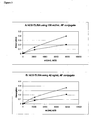
- Measurements of hCG in a MTP ELISA using the recombinantly produced alkaline phosphatase/anti-hCG-IgG conjugate (triangles) and the recombinantly produced alkaline phosphatase (Endo H treated)/anti-hCG-IgG (squares). In part A 100mU/ml, and in part B 42 ng/ml of either conjugate were employed.
- 10 mg recombinantly produced alkaline phosphatase (also referred to in the figures as "recAP") isolated from Pichia pastoris were incubated with 200 milliunits of endoglycosidase H (Roche cat. No.1643053) in 1 ml of sodium acetate buffer 30 mM, pH 5.5, containing 1 mM MgCl2 and 1.5 M NaCl for 2 h. After this time the solution was exhaustively dialysed in a filtration chamber with a YM 30 membrane using a triethanolamin/HCl buffer, pH 7.6, containing 150 mM NaCl, 1 mM MgCl2 and 0.1 mM ZnCl2, resulting in an end volume of 1 ml. Figure 1 illustrates the elution times on a TSK 3000 column of the recombinantly produced alkaline phosphatase before and after the endo H treatment. It can be seen that the peak eluting at 6.88 min before treatment has completely disappeared and a new peak eluting at 7.61 min has shown up, indicating that the recombinantly produced alkaline phosphatase has lost glycan chains resulting in a smaller molecular weight and a later elution time compared to the unchanged molecule.
- Enzyme activity of alkaline phosphatase was determined using 4-nitrophenyl-phosphate as substrate according to the test protocol described (Z. Klin. Chem. Klin. Biochem. 8 (1970) 658-660; and Z. Klin. Chem. Klin. Biochem. 10 (1972) 182). Recombinantly produced alkaline phosphatase from Pichia pastoris revealed a specific activity of about 7,000 U/mg which was not altered by the endoglycosidase H treatment.
- 5 mg of the respective alkaline phosphatase preparation (recombinantly produced alkaline phosphatase; recombinantly produced alkaline phosphatase/endo H-treated) dissolved in 0.5 ml sodium phosphate buffer 30 mM, pH 7.1, were mixed with 0.059 mg of N-succinimidyl-S-acetylthiopropionat (SATP) dissolved in 12 µl DMSO and stirred for 1 h at room temperature (RT). The reaction was stopped by the addition of 5 µl 1 M lysine-HCl and stirred for another 30 min at room temperature (RT). The reaction mixture was then exhaustively dialysed overnight at 4°C against 1.51 of 10 mM potassium phosphate buffer , pH 6.1, containing 50 mM NaCl.
- 20 mg of monoclonal antibody anti-hCG-M-INN22-IgG dissolved in 1 ml of 30 mM sodium phosphate buffer pH 7.1 were mixed with 0.205 mg maleimidohexanoyl-N-hydroxysuccinimid ester (MHS) dissolved in 21 µl DMSO and stirred for 1 h at RT. The reaction was stopped by the addition of 5 µl 1 M lysine-HCl and stirred for another 30 min at RT. The reaction mixture was then exhaustively dialysed overnight at 4°C against 51 of 10 mM potassium phosphate buffer, pH 6.1, containing 50 mM NaCl.
- 3 mg of the respective SATP-activated AP preparations (recombinantly produced alkaline phosphatase; recombinantly produced alkaline phosphatase/endo H-treated) dissolved in 324 µl of 10 mM potassium phosphate buffer, pH 7.5, containing 50 mM NaCl, were mixed with 8 µl of 1 M hydroxylamine solution and stirred for 1 h at RT. After that time 1.74 mg of MHS-activated anti-hCG-M-INN22- IgG dissolved in 262 µl of 10 mM potassium phosphate buffer, pH 7.5, containing 50 mM NaCl, were added and the reaction mixture stirred for 2 h at RT. Then 7 µl of 0.2 M cystein-HCl solution (adjusted to pH 6.7 by addition of 1 M phosphoric acid) were added and stirred for 30 min at RT. After that 7 µl of 0.5 M N-methylmaleimid solution in water were added and stirred for another 30 min at RT. The reaction mixture was then exhaustively dialysed overnight at 4°C against 1.51 of 50 mM triethanolamine-HCl buffer, pH 7.6, containing 150 mM NaCl, 1 mM MgCl2 and 0.1 mM ZnCl2. After dialysis the solution was brought to a NaCl concentration of 3 M and stored at +4°C until use.
- Figure 2 displays the results of the conjugations after 2 h for recombinantly produced alkaline phosphatase/anti-hCG-IgG (part A) and recombinantly produced alkaline phosphatase(endo H-treated)/anti-hCG-IgG (part B) in form of a separation of the reaction mixtures on a
TSK 4000 column. It can be seen that the conjugate peak in part A (maximum at 8.08 min elution time) is not as well separated from the not conjugated recombinantly produced alkaline phosphatase peak (elution at 9.63 min) as it is the case in part B, were the bulk of the conjugate (elution maximum at 8.52 min) is much better separated from the not derivatized recombinantly produced alkaline phosphatase/endo H-treated (elution maximum at 10.13 min), resulting in a much better yield of this conjugate compared to that in part A. The conjugates were pooled as indicated in the figure and used for further analysis. - The hCG ELISA was performed as a sandwich assay by using streptavidin-coated microtiterplates. Biotinylated Mab anti-hCG-M-1F79-Fab derivative was used as the immobilized binding partner (150 µl of a 5 µg/ml solution in incubation buffer per well were incubated for 30 min at RT). After 3 times washing 120 µl of hCG samples in concentrations of 0, 14.84, 254.8, 2103 and 7801 mU/ml, respectively, dissolved in incubation buffer, were added per well and incubated for 1 h at RT. After 3 times washing 100 µl of the respective alkaline phosphatase/Mab anti-hCG-M-INN22-IgG conjugates described above were added and incubated for 1 h at RT. After 3 times washing 100 µl per well of a 100 mM 4-nitrophenyl-phosphate substrate solution were added and after 20 min incubation at RT the absorption was measured with an ELISA reader at 405 nm using 490 nm as a correction wavelength.
- Incubation buffer: Potassium phosphate 50 mM, sodium chloride 150 mM, 1% bovine serum albumin, 0.05
% Tween 20, pH 7.5. - For comparison of the conjugates two analytical series were performed. In the first series the conjugates were added at a concentration of 100 mU/ml each, and in the second 42 ng/ml of the respective conjugates were used, and Figure 3 illustrates the results obtained. It can be seen that the conjugate with recombinantly produced alkaline phosphatase (endo H-treated) as label performs better in either case compared to recombinantly produced alkaline phosphatase from Pichia pastoris with the N-glycan chains still present (part A using 100 mU/ml of each conjugate; part B using 42 ng/ml).
- Barbaric, S., et al., Arch. Biochem. Biophys. 234 (1984) 567-575
Chu, F.K., J. Biol. Chem. 261 (1986) 172-177
Dell, A., Adv. Carbohydr. Chem. Biochem. 45 (1987) 19-72
Edge, A.S., et al., Anal. Biochem. 118 (1981) 131-137
EP 0 955 369
EP 1 176 205
Fellinger, A.J., et al., Yeast 7 (1991) 463-473
Geisow, M.J., Bio/technology 10 (1992) 277-280
Harris, H., Clin. Chim. Acta 186 (1990) 133-150
Haselbeck, A., and Hoesel, W., Topics in Biochemistry (1988), Nr. 8, Boehringer Mannheim GmbH
Hermanson, G.T., In: Bioconjugate Techniques, Ch. 16, Academic Press, 1996, pp. 630-638
Janknecht, R., et al., Proc. Natl. Acad. Sci. USA 88 (1991) 8972-8976
Kobata, A., Anal. Biochem. 100 (1979) 1-14
Lee, K.B., et al., Appl. Biochem. Biotechnol. 23 (1990) 53-80
McComb et al., Alkaline Phosphatases Plenum Press, New York, 1979
Millan, J.L., Anticancer Res. 8 (1988) 995-1004
O'Sullivan, M.J., and Marks, V., Methods Enzymol. 73 (1981) 147-166
Sojar, H.T., and Bahl, O.P., Arch. Biochem. Biophys. 259 (1987) 52-57
Spellman, M.W., Anal. Chem. 62 (1990) 1714-1722
Tanner, W., and Lehle, L., Biochim Biophys Acta 906 (1987) 81-99
Tarentino, A.L., et al., Biochemistry 24 (1985) 4665-4671
Thotakura, N.R., and Bahl, O.P., Meth. Enzymol. 138 (1987) 350-359
Trimble, R.B., and Maley, F., Anal. Biochem. 141 (1984) 515-522
US 4,275,149
US 4,683,293
US 4,808,537
US 4,812,405
US 4,818,700
US 4,837,148
US 4,855,231
US 4,857,467
US 4,879,231
US 4,882,279
US 4,885,242
US 4,895,800
US 4,929,555
US 5,002,876
US 5,004,688
US 5,032,516
US 5,122,465
US 5,135,868
US 5,166,329
US 5,618,676
US 5,854,018
US 5,856,123
US 5,919,651
US 5,185,243
Vliegenthart et al., Adv. Carbohydr. Chem. 41 (1983) 209-375
WO 00/56903
WO 95/04069
Z. Klin. Chem. Klin. Biochem. 10 (1972) 182
Z. Klin. Chem. Klin. Biochem. 8 (1970) 658-660


Claims (13)
- A method to produce a conjugate of a molecule capable of binding to a target molecule and an enzyme, comprising the steps of(a) providing a glycosylated enzyme,(b) deglycosylating the enzyme of step (a),(c) isolating the deglycosylated enzyme,(d) attaching the deglycosylated enzyme of step (c) to the molecule capable of binding to a target molecule.
- The method according to claim 1, characterised in that the enzyme is an alkaline phosphatase.
- The method according to claim 2, characterised in that the alkaline phosphatase is of eucaryotic origin.
- The method according to claim 3, characterised in that the alkaline phosphatase is an alkaline phosphatase comprising the amino acid sequence of SEQ ID NO.: 1.
- The method according to any of the claims 1 to 4, characterised in that the enzyme is deglycosylated by a chemical reagent, an amidase, an exoglycosidase, or an endoglycosidase.
- The method according to claim 5, characterised in that the enzyme is deglycosylated by endo-β-N-acetylglucosaminidase H, endo-β-N-acetylglucosaminidase F, or peptide-N-glycosidase F, or a combination thereof.
- The method according to any of the claims 1 to 6, characterised in that the molecule capable of binding to a target molecule is selected from the group consisting of(a) an antibody, or a functional fragment thereof,(b) avidin, or a polymer of avidin molecules, or a fragment of avidin capable of binding biotin, or a polymer of avidin fragments capable of binding biotin,(c) streptavidin, or a polymer of streptavidin molecules, or a fragment of streptavidin capable of binding biotin, or a polymer of streptavidin fragments capable of binding biotin,(d) a lectin, or a fragment thereof capable of binding carbohydrate,(e) a hapten,(f) a nucleic acid or an analogue thereof.
- The method according to any of the claims 1 to 7, characterised in that the molecule capable of binding to a target molecule is attached to the enzyme by means of a linking group.
- A conjugate of a molecule capable of binding to a target molecule and an enzyme, obtainable by the method according to any of the claims 1 to 8.
- Use of a conjugate as claimed in claim 9 in an assay for detecting the presence or determining the quantity of a target molecule.
- The use as claimed in claim 10, characterised in that the assay is an enzyme immunoassay.
- The use as claimed in claim 11, wherein the enzyme immunoassay is a heterogeneous or homogeneous enzyme immunoassay.
- A kit of parts, comprising a molecule capable of binding to a target molecule attached to a solid phase, a conjugate according to claim 9, an incubation buffer, and a substrate capable of being converted by the enzyme portion of the conjugate.
Priority Applications (8)
| Application Number | Priority Date | Filing Date | Title |
|---|---|---|---|
| EP03005930A EP1460425A1 (en) | 2003-03-17 | 2003-03-17 | Deglycosylated enzymes for conjugates |
| JP2006500062A JP4303283B2 (en) | 2003-03-17 | 2004-03-17 | Deglycosylated enzyme for conjugation |
| AT04721136T ATE368222T1 (en) | 2003-03-17 | 2004-03-17 | DEGLYCOSILATED ENZYMES FOR CONJUGATES |
| CA2515686A CA2515686C (en) | 2003-03-17 | 2004-03-17 | Deglycosylated enzymes for conjugates |
| EP04721136A EP1606619B1 (en) | 2003-03-17 | 2004-03-17 | Deglycosylated enzymes for conjugates |
| PCT/EP2004/002707 WO2004083862A1 (en) | 2003-03-17 | 2004-03-17 | Deglycosylated enzymes for conjugates |
| DE602004007779T DE602004007779T2 (en) | 2003-03-17 | 2004-03-17 | ENTGLYCOSILIZED ENZYMES FOR CONJUGATES |
| US11/227,881 US7482145B2 (en) | 2003-03-17 | 2005-09-15 | Deglycosylated enzymes for conjugates |
Applications Claiming Priority (1)
| Application Number | Priority Date | Filing Date | Title |
|---|---|---|---|
| EP03005930A EP1460425A1 (en) | 2003-03-17 | 2003-03-17 | Deglycosylated enzymes for conjugates |
Publications (1)
| Publication Number | Publication Date |
|---|---|
| EP1460425A1 true EP1460425A1 (en) | 2004-09-22 |
Family
ID=32798816
Family Applications (2)
| Application Number | Title | Priority Date | Filing Date |
|---|---|---|---|
| EP03005930A Withdrawn EP1460425A1 (en) | 2003-03-17 | 2003-03-17 | Deglycosylated enzymes for conjugates |
| EP04721136A Expired - Lifetime EP1606619B1 (en) | 2003-03-17 | 2004-03-17 | Deglycosylated enzymes for conjugates |
Family Applications After (1)
| Application Number | Title | Priority Date | Filing Date |
|---|---|---|---|
| EP04721136A Expired - Lifetime EP1606619B1 (en) | 2003-03-17 | 2004-03-17 | Deglycosylated enzymes for conjugates |
Country Status (7)
| Country | Link |
|---|---|
| US (1) | US7482145B2 (en) |
| EP (2) | EP1460425A1 (en) |
| JP (1) | JP4303283B2 (en) |
| AT (1) | ATE368222T1 (en) |
| CA (1) | CA2515686C (en) |
| DE (1) | DE602004007779T2 (en) |
| WO (1) | WO2004083862A1 (en) |
Cited By (1)
| Publication number | Priority date | Publication date | Assignee | Title |
|---|---|---|---|---|
| EP2037274A1 (en) * | 2007-09-11 | 2009-03-18 | GALAB Technologies GmbH | Lectin based glycane assay |
Families Citing this family (8)
| Publication number | Priority date | Publication date | Assignee | Title |
|---|---|---|---|---|
| EP1460425A1 (en) | 2003-03-17 | 2004-09-22 | Boehringer Mannheim Gmbh | Deglycosylated enzymes for conjugates |
| WO2011007764A1 (en) | 2009-07-14 | 2011-01-20 | 独立行政法人産業技術総合研究所 | Sugar chain marker as measure of disease conditions of hepatic diseases |
| CN102625915B (en) * | 2009-07-14 | 2014-12-31 | 独立行政法人产业技术综合研究所 | Glycoprotein assay method, reagent and sugar chain marker |
| CN105648502B (en) * | 2016-03-28 | 2018-04-10 | 桂林理工大学 | A kind of Mg alloy surface hydrophobic composite membrane layer and preparation method thereof |
| EP3559249A1 (en) | 2016-12-21 | 2019-10-30 | H. Hoffnabb-La Roche Ag | Method for in vitro glycoengineering of antibodies |
| EP3559248B2 (en) * | 2016-12-21 | 2024-11-20 | F. Hoffmann-La Roche AG | In vitro glycoengineering of antibodies |
| MX2019007411A (en) | 2016-12-21 | 2019-08-29 | Hoffmann La Roche | Re-use of enzymes in in vitro glycoengineering of antibodies. |
| US11932860B2 (en) | 2017-10-03 | 2024-03-19 | Kikkoman Corporation | Method for producing alkaline phosphatase, alkaline phosphatase obtained using said method, and vector and transformant for production thereof |
Citations (1)
| Publication number | Priority date | Publication date | Assignee | Title |
|---|---|---|---|---|
| EP1176205A2 (en) * | 2000-07-25 | 2002-01-30 | Roche Diagnostics GmbH | Expression of alkaline phosphatase in yeast |
Family Cites Families (28)
| Publication number | Priority date | Publication date | Assignee | Title |
|---|---|---|---|---|
| US500688A (en) * | 1893-07-04 | Ernest r | ||
| US4275149A (en) | 1978-11-24 | 1981-06-23 | Syva Company | Macromolecular environment control in specific receptor assays |
| NZ199722A (en) | 1981-02-25 | 1985-12-13 | Genentech Inc | Dna transfer vector for expression of exogenous polypeptide in yeast;transformed yeast strain |
| US4885242A (en) | 1984-10-30 | 1989-12-05 | Phillips Petroleum Company | Genes from pichia histidine pathway and uses thereof |
| US4837148A (en) | 1984-10-30 | 1989-06-06 | Phillips Petroleum Company | Autonomous replication sequences for yeast strains of the genus pichia |
| US4879231A (en) | 1984-10-30 | 1989-11-07 | Phillips Petroleum Company | Transformation of yeasts of the genus pichia |
| US4808537A (en) | 1984-10-30 | 1989-02-28 | Phillips Petroleum Company | Methanol inducible genes obtained from pichia and methods of use |
| US4855231A (en) | 1984-10-30 | 1989-08-08 | Phillips Petroleum Company | Regulatory region for heterologous gene expression in yeast |
| US5135868A (en) | 1985-10-25 | 1992-08-04 | Phillips Petroleum Company | Cultures of yeast of the genus Pichia altered by site selective genomic modification |
| US4818700A (en) | 1985-10-25 | 1989-04-04 | Phillips Petroleum Company | Pichia pastoris argininosuccinate lyase gene and uses thereof |
| US5032516A (en) | 1985-10-25 | 1991-07-16 | Phillips Petroleum Company | Pichia pastoris alcohol oxidase II regulatory region |
| US4882279A (en) | 1985-10-25 | 1989-11-21 | Phillips Petroleum Company | Site selective genomic modification of yeast of the genus pichia |
| US5166329A (en) | 1985-10-25 | 1992-11-24 | Phillips Petroleum Company | DNA encoding the alcohol oxidase 2 gene of yeast of the genus Pichia |
| US4895800A (en) | 1985-11-26 | 1990-01-23 | Phillips Petroleum Company | Yeast production of hepatitis B surface antigen |
| US4812405A (en) | 1986-02-18 | 1989-03-14 | Phillips Petroleum Company | Double auxotrophic mutants of Pichia pastoris and methods for preparation |
| US4857467A (en) | 1986-07-23 | 1989-08-15 | Phillips Petroleum Company | Carbon and energy source markers for transformation of strains of the genes Pichia |
| US5002876A (en) | 1986-09-22 | 1991-03-26 | Phillips Petroleum Company | Yeast production of human tumor necrosis factor |
| US4683293A (en) | 1986-10-20 | 1987-07-28 | Phillips Petroleum Company | Purification of pichia produced lipophilic proteins |
| US4929555A (en) | 1987-10-19 | 1990-05-29 | Phillips Petroleum Company | Pichia transformation |
| US5866322A (en) * | 1988-01-29 | 1999-02-02 | Abbott Laboratories | Method for performing Rubella assay |
| US5004688A (en) | 1988-04-15 | 1991-04-02 | Phillips Petroleum Company | Purification of hepatitis proteins |
| US5185243A (en) | 1988-08-25 | 1993-02-09 | Syntex (U.S.A.) Inc. | Method for detection of specific nucleic acid sequences |
| US5122465A (en) | 1989-06-12 | 1992-06-16 | Phillips Petroleum Company | Strains of pichia pastoris created by interlocus recombination |
| WO1995004069A1 (en) | 1993-07-30 | 1995-02-09 | Affymax Technologies N.V. | Biotinylation of proteins |
| US5770567A (en) | 1994-11-14 | 1998-06-23 | Genentech, Inc. | Sensory and motor neuron derived factor (SMDF) |
| DE19819962A1 (en) | 1998-05-05 | 1999-11-11 | Roche Diagnostics Gmbh | Highly active alkaline phosphatase |
| AU3910000A (en) | 1999-03-22 | 2000-10-09 | Zymogenetics Inc. | Improved methods for producing proteins in transformed (pichia) |
| EP1460425A1 (en) | 2003-03-17 | 2004-09-22 | Boehringer Mannheim Gmbh | Deglycosylated enzymes for conjugates |
-
2003
- 2003-03-17 EP EP03005930A patent/EP1460425A1/en not_active Withdrawn
-
2004
- 2004-03-17 WO PCT/EP2004/002707 patent/WO2004083862A1/en not_active Ceased
- 2004-03-17 AT AT04721136T patent/ATE368222T1/en not_active IP Right Cessation
- 2004-03-17 JP JP2006500062A patent/JP4303283B2/en not_active Expired - Lifetime
- 2004-03-17 CA CA2515686A patent/CA2515686C/en not_active Expired - Fee Related
- 2004-03-17 EP EP04721136A patent/EP1606619B1/en not_active Expired - Lifetime
- 2004-03-17 DE DE602004007779T patent/DE602004007779T2/en not_active Expired - Lifetime
-
2005
- 2005-09-15 US US11/227,881 patent/US7482145B2/en not_active Expired - Lifetime
Patent Citations (1)
| Publication number | Priority date | Publication date | Assignee | Title |
|---|---|---|---|---|
| EP1176205A2 (en) * | 2000-07-25 | 2002-01-30 | Roche Diagnostics GmbH | Expression of alkaline phosphatase in yeast |
Non-Patent Citations (5)
| Title |
|---|
| ARCHIVES OF BIOCHEMISTRY AND BIOPHYSICS, vol. 234, no. 2, 1984, pages 567 - 575, ISSN: 0003-9861 * |
| DATABASE BIOSIS [online] BIOSCIENCES INFORMATION SERVICE, PHILADELPHIA, PA, US; 1984, BARBARIC S ET AL: "ROLE OF THE CARBOHYDRATE PART OF YEAST SACCHAROMYCES-CEREVISIAE ACID PHOSPHATASE", XP002251233, Database accession no. PREV198579034901 * |
| DATABASE BIOSIS [online] BIOSCIENCES INFORMATION SERVICE, PHILADELPHIA, PA, US; 1991, FELLINGER A J ET AL: "EXPRESSION OF THE ALPHA GALACTOSIDASE FROM CYAMOPSIS-TETRAGONOLOBA GUAR BY HANSENULA-POLYMORPHA", XP002251234, Database accession no. PREV199192075958 * |
| HOUBA P H J ET AL: "IMPROVED CHARACTERISTICS OF A HUMAN BETA-GLUCURONIDASE ANTIBODY CONJUGATE AFTER DEGLYCOSYLATION FOR USE IN ANTIBODY-DIRECTED ENZYME PRODRUG THERAPY", BIOCONJUGATE CHEMISTRY, AMERICAN CHEMICAL SOCIETY, WASHINGTON, US, vol. 7, 1996, pages 606 - 611, XP000749296, ISSN: 1043-1802 * |
| YEAST, vol. 7, no. 5, 1991, pages 463 - 474, ISSN: 0749-503X * |
Cited By (3)
| Publication number | Priority date | Publication date | Assignee | Title |
|---|---|---|---|---|
| EP2037274A1 (en) * | 2007-09-11 | 2009-03-18 | GALAB Technologies GmbH | Lectin based glycane assay |
| WO2009033753A1 (en) * | 2007-09-11 | 2009-03-19 | Galab Technologies Gmbh | Lectin-based glycan assay |
| US8409811B2 (en) | 2007-09-11 | 2013-04-02 | Galab Technologies Gmbh | Lectin-based glycan assay |
Also Published As
| Publication number | Publication date |
|---|---|
| WO2004083862A1 (en) | 2004-09-30 |
| DE602004007779T2 (en) | 2008-04-30 |
| DE602004007779D1 (en) | 2007-09-06 |
| JP4303283B2 (en) | 2009-07-29 |
| EP1606619A1 (en) | 2005-12-21 |
| US7482145B2 (en) | 2009-01-27 |
| EP1606619B1 (en) | 2007-07-25 |
| CA2515686C (en) | 2011-03-29 |
| CA2515686A1 (en) | 2004-09-30 |
| US20060040345A1 (en) | 2006-02-23 |
| JP2006520187A (en) | 2006-09-07 |
| ATE368222T1 (en) | 2007-08-15 |
Similar Documents
| Publication | Publication Date | Title |
|---|---|---|
| Mechref et al. | Mass spectrometric mapping and sequencing of N-linked oligosaccharides derived from submicrogram amounts of glycoproteins | |
| Sparbier et al. | Selective isolation of glycoproteins and glycopeptides for MALDI-TOF MS detection supported by magnetic particles | |
| US6905689B2 (en) | Conjugate of a tissue non-specific alkaline phosphatase and dextran, process for its production and use thereof | |
| Halleen et al. | Tartrate‐resistant acid phosphatase from human bone: Purification and development of an immunoassay | |
| Adachi et al. | The heparin binding site of human extracellular-superoxide dismutase | |
| EP0185870A2 (en) | Immunoassays for denatured protein analytes, particularly HB Alc, and monoclonal antibodies thereto | |
| EP1606619B1 (en) | Deglycosylated enzymes for conjugates | |
| JP4911408B2 (en) | Biotin-labeled Cypridina luciferase / streptavidin complex production method and its stabilization method | |
| KR20190126052A (en) | Method for forming a complex of a sugar chain with a lectin | |
| JP7320492B2 (en) | Immunoassay method for hepatitis B virus antigen | |
| EP1677112A1 (en) | Immunoassay | |
| CN1993618B (en) | Probe complex | |
| Haselbeck et al. | Immunological detection of glycoproteins on blots based on labeling with digoxigenin | |
| WO1981000725A1 (en) | Method of determining a substrate in a sample | |
| US5674677A (en) | Immunoassay technique using histidine tags, metals, and chelating agents | |
| EP0096463A1 (en) | Immunoglobulin half-molecules and process for producing hybrid antibodies | |
| Srikrishna et al. | An IgG monoclonal antibody against Dictyostelium discoideum glycoproteins specifically recognizes Fucα1, 6GlcNAcβ in the core of N-linked glycans: localized expression of core-fucosylated glycoconjugates in human tissues | |
| WO2017131022A1 (en) | Method for detecting glycoprotein | |
| JP7843250B2 (en) | Processing method for soluble GPC3-containing samples in immunoassays of soluble GPC3 | |
| JP2892879B2 (en) | Methods for measuring high molecular weight analytes | |
| Fenaille et al. | Mass spectrometric characterization of N-and O-glycans of plasma-derived coagulation factor VII | |
| Hokari et al. | Expression of α-amylase isozymes in rat tissues | |
| Feasley et al. | Glycopeptidome of a heavily N-glycosylated cell surface glycoprotein of Dictyostelium implicated in cell adhesion | |
| EP1853924B1 (en) | A method for measuring proinsulin and c-peptide and a kit therefor | |
| JPWO2017131021A1 (en) | Glycoprotein measurement method |
Legal Events
| Date | Code | Title | Description |
|---|---|---|---|
| PUAI | Public reference made under article 153(3) epc to a published international application that has entered the european phase |
Free format text: ORIGINAL CODE: 0009012 |
|
| AK | Designated contracting states |
Kind code of ref document: A1 Designated state(s): AT BE BG CH CY CZ DE DK EE ES FI FR GB GR HU IE IT LI LU MC NL PT RO SE SI SK TR |
|
| AX | Request for extension of the european patent |
Extension state: AL LT LV MK |
|
| STAA | Information on the status of an ep patent application or granted ep patent |
Free format text: STATUS: THE APPLICATION IS DEEMED TO BE WITHDRAWN |
|
| 18D | Application deemed to be withdrawn |
Effective date: 20040720 |