EP1459151B1 - Method of pre-authorizing handovers among access routers in communication networks - Google Patents
Method of pre-authorizing handovers among access routers in communication networks Download PDFInfo
- Publication number
- EP1459151B1 EP1459151B1 EP02781480A EP02781480A EP1459151B1 EP 1459151 B1 EP1459151 B1 EP 1459151B1 EP 02781480 A EP02781480 A EP 02781480A EP 02781480 A EP02781480 A EP 02781480A EP 1459151 B1 EP1459151 B1 EP 1459151B1
- Authority
- EP
- European Patent Office
- Prior art keywords
- mobile terminal
- access
- access router
- access device
- authorized
- Prior art date
- Legal status (The legal status is an assumption and is not a legal conclusion. Google has not performed a legal analysis and makes no representation as to the accuracy of the status listed.)
- Expired - Lifetime
Links
- 238000000034 method Methods 0.000 title claims abstract description 34
- 238000004891 communication Methods 0.000 title description 8
- 230000004044 response Effects 0.000 claims abstract description 8
- 238000013475 authorization Methods 0.000 claims description 51
- 238000005516 engineering process Methods 0.000 claims description 9
- 230000000977 initiatory effect Effects 0.000 claims description 6
- 230000001419 dependent effect Effects 0.000 claims 3
- 230000002401 inhibitory effect Effects 0.000 claims 3
- 239000003795 chemical substances by application Substances 0.000 description 8
- 230000005540 biological transmission Effects 0.000 description 6
- 238000012546 transfer Methods 0.000 description 5
- 230000006870 function Effects 0.000 description 4
- 230000008569 process Effects 0.000 description 4
- 230000001413 cellular effect Effects 0.000 description 3
- 230000007246 mechanism Effects 0.000 description 3
- 230000008859 change Effects 0.000 description 2
- 238000001514 detection method Methods 0.000 description 2
- 230000003068 static effect Effects 0.000 description 2
- 238000013459 approach Methods 0.000 description 1
- 239000000969 carrier Substances 0.000 description 1
- 230000000694 effects Effects 0.000 description 1
- 230000002349 favourable effect Effects 0.000 description 1
- 229910052737 gold Inorganic materials 0.000 description 1
- 239000010931 gold Substances 0.000 description 1
- 238000012545 processing Methods 0.000 description 1
- 229910052709 silver Inorganic materials 0.000 description 1
- 239000004332 silver Substances 0.000 description 1
- 238000001228 spectrum Methods 0.000 description 1
Images


Classifications
-
- H—ELECTRICITY
- H04—ELECTRIC COMMUNICATION TECHNIQUE
- H04W—WIRELESS COMMUNICATION NETWORKS
- H04W12/00—Security arrangements; Authentication; Protecting privacy or anonymity
- H04W12/08—Access security
-
- H—ELECTRICITY
- H04—ELECTRIC COMMUNICATION TECHNIQUE
- H04W—WIRELESS COMMUNICATION NETWORKS
- H04W36/00—Hand-off or reselection arrangements
- H04W36/0005—Control or signalling for completing the hand-off
- H04W36/0011—Control or signalling for completing the hand-off for data sessions of end-to-end connection
- H04W36/0016—Hand-off preparation specially adapted for end-to-end data sessions
-
- H—ELECTRICITY
- H04—ELECTRIC COMMUNICATION TECHNIQUE
- H04W—WIRELESS COMMUNICATION NETWORKS
- H04W88/00—Devices specially adapted for wireless communication networks, e.g. terminals, base stations or access point devices
- H04W88/005—Data network PoA devices
Definitions
- the invention relates generally to telecommunications networks. More particularly, the invention provides a method and apparatus for pre-authorizing handovers of mobile terminals among access routers in communication networks, such as wireless networks.
- Mobile devices can provide both voice-based connections and packet-based data connections using different base stations and infrastructures.
- a Web-enabled cell phone might maintain a voice connection using a first transmission channel and maintain a mobile IP connection using a second (and independent) transmission channel, such that handoffs occur independently for the two channels.
- voice services can be combined with packet services, such that a single connection is maintained for both services.
- Voice connections can also be provided over IP in a combined service.
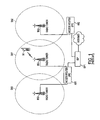
- FIG. 1 shows a network with mobility features that covers three service areas SA1, SA2, and SA3.
- a mobile terminal MT is within service area SA1 served by base station BS1 (also called an access point or AP).
- a service area generally refers to the radio coverage associated with a radio tower/base station.
- Base station BS1 is connected to an access router AR1, which provides access to the Internet.
- Other base stations such as BS3 may also be connected to access router AR1, such that a common IP address is used for mobile terminals even though the terminals may pass through different service areas.
- access router AR1 such that a common IP address is used for mobile terminals even though the terminals may pass through different service areas.
- a second service area SA2 is served by a separate base station BS2, which is in turn connected to a different access router AR2. Due to the network topology, access routers AR1 and AR2 use different blocks of IP addresses for communicating with mobile terminals roaming within their associated service areas. If mobile terminal MT moves from service area SA1 to service area SA2, some mechanism is needed to hand off the Internet connection from access router AR1 to access router AR2. Similarly, if service areas SA1 and SA2 are separated by a large logical distance (e.g., AR1 and AR2 are connected to different ISPs), some coordination mechanism is needed to permit data transmitted to a terminal previously operating in service area SA1 to be forwarded to service area SA2 if that terminal moves into area SA2.
- a large logical distance e.g., AR1 and AR2 are connected to different ISPs
- Service area SA1 is served by access router AR1, which is designated the "home agent" for communicating with a particular mobile terminal MT. While mobile terminal MT moves within service area SA1, correspondence nodes communicate with the mobile terminal using an IP address that is assigned by the access router AR1 to the mobile node. IP packets (e.g., e-mail, Web pages, and the like) are transmitted over the Internet to the home network and are forwarded to the mobile terminal through the home agent.
- IP packets e.g., e-mail, Web pages, and the like
- One conventional approach for handing off mobile nodes is to advertise (e.g., broadcast) the existence of access router AR2 in service area SA2, such that when mobile terminal MT moves into service area SA2, it is notified of the existence of access router AR2, and it receives a new IP address for communicating within service area SA2.
- the mobile terminal MT then sends a binding update to home agent AR1 (e.g., through a land line LL or over the Internet), so that home agent AR1 knows the IP address that will allow packets to reach the mobile terminal in service area SA2.
- the home agent treats this address as a "care of' address, and all further packets to the mobile terminal's home address are forwarded to the new IP address.
- two separate IP addresses are used to communicate with the mobile terminal: a home agent address and a care of address that changes when the MT moves into a new service area.
- the context transfer protocol entities may, in the process of establishing and supporting context transfer, acquire information that would be useful to the handover process in determining the new forwarding path; for example, the outcome of an admission control decision at a receiving access router.
- a mobile terminal may move into an area that is served by two or more access routers. As with cellular telephone roaming, however, the mobile terminal may not be authorized to be handed off to certain access routers. Conventional handovers of mobile terminals from an originating access router to a target access router occur before determining whether the target access router is in fact authorized to service the mobile terminal. After the target access router accepts a handoff of a mobile terminal, it may perform a check to determine whether the mobile terminal is authorized to be serviced. If it is not, the service connection is dropped.
- the handover decision from one AR to another AR is conventionally handled independently of whether the mobile terminal is authorized to roam into the network of the new AR.
- the mobile terminal is handed over to the new AR, then an authorization process ensues to determine whether the mobile terminal is authorized to roam into the new network.
- dropping the service connection with an unauthorized mobile terminal unnecessarily wastes resources, such as maintaining a connection with the mobile terminal for a period of time before the unauthorized service is discovered. It also wastes radio frequency spectrum, since radio resources are allocated to the mobile node prior to authorization. If the mobile node is determined not to be authorized, then radio resources must be revoked upon such determination of lack of authorization.
- a mobile node may not be authorized to roam into the network of certain service providers. Consequently, the conventional scheme for performing handoffs to access routers wastes resources and can delay handover processing.
- WO 00/44148, 27 July 2000 discloses a conventional handoff of mobile terminals from an originating access router occurring before determining whether the target access router is in fact authorized to be serviced.
- Cellular IP 18 November 1998 (18-11-1998)discloses a protocol intended to provide local mobility and handoff support and which can interact Mobile IP to provide wide area mobility support. The document is silent on how to assess the authorization of a mobile node's handover from one access router to another prior to the actual handover.
- the invention provides a system and method to facilitate handoffs among access routers in networks such as wireless networks.
- an originating access router inquires as to whether a target access router is authorized to accept a handoff of a mobile terminal and, if such authorization exists, initiates the handoff to the target access router.
- the target access router queries a home network to determine whether the mobile terminal is authorized to be handed off to the target access router and does not initiate the handoff operation until such authorization has been obtained.
- Authorization may be provided on the basis of static information, such as administrative approval, or on the basis of dynamic information, such as loading conditions.
- authorization of a mobile node's handover from one access router to another takes place prior to the actual handover.
- the inventive mechanism also allows for authorization for mobile nodes before a handover takes place even between heterogeneous networks. If there are several candidate access routers to which handover could result, then obtaining authorization information could help in determining the most favorable access router to which the handover should be made. Where more than one service provider permits roaming for a given mobile node, knowledge of relevant authorization information from the different service providers can allow for an optimal handover decision. Radio resources associated with the target access router are not used until a decision to hand over the mobile terminal has been made.
- FIG. 1 shows a conventional network covering three service areas SA1, SA2, and SA3.
- FIG. 2 shows a conventional scheme for handing off a mobile terminal between access routers, wherein the mobile terminal registers with a home agent AR1 but also communicates using a second IP address through a "care of agent AR2.
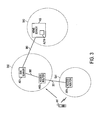
- FIG. 3 shows a system according to one aspect of the invention, wherein the handoff of a mobile terminal from an originating access router to a target access router does not occur until after a determination is made as to whether the target access router is authorized to service the mobile terminal.
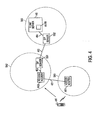
- FIG. 4 shows a second embodiment of a system according to the invention using session initiation protocol (SIP) to traverse one network boundary and AAA protocol to traverse another network boundary.
- SIP session initiation protocol
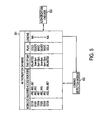
- FIG. 5 shows one possible configuration for an authorization database 501, authorization checker 503, and loading detection module 502.
- FIG. 6 shows a flow chart illustrating steps of a method for handing off a mobile terminal to a target access router only after verifying that the target access router is authorized to accept a hand-off of the mobile terminal.
- FIG. 3 shows a system employing various principles of the invention.
- a first access router AR1 serves a first service area SA1 in which a mobile terminal MT may be located.
- SA1 first service area
- each access router transmits and receives data packets through one or more base stations that cover corresponding geographic areas.
- each access router provides Internet-compatible services (e.g., IP protocol compatibility) such that data packets received at each router can be forwarded to one or more mobile terminals within the corresponding service area, although the invention is not limited in this respect.
- AR1 and AR2 communicate either directly or indirectly (e.g., through the Internet, land lines, other devices, or wireless means) as depicted by path 301 such that AR1 can effect a handoff of mobile terminal MT to AR2.
- AR2 further communicates with an AAA server AS1 as depicted by path 302.
- AAA refers to Authentication, Authorization and Accounting, which generally defines protocols and services relating to accounting and authorization for network services, see, e.g., IETF RFC 2924, September 2000 and "Diameter Mobile Ipv4 Application," Internet Draft, July 2001.
- Server AS1 communicates with a home server HS located in a home network SA3, as depicted by path 303.
- Home server HS contains authorization information AUTH as explained in more detail below.
- communication path 301 between AR1 and AR2 may be implemented using the Session Initiation Protocol (SIP), whereas communication path 302 between AR2 and AS1 may be implemented using an AAA protocol such as DIAMETER.
- Communication path 303 between AS1 and home server HS may also be implemented according to the DIAMETER protocol.
- AR1 transmits a SIP message with an OPTION method that contains details regarding the mobile terminal and the target access router AR2. This message is then translated into a suitable DIAMETER message for transport over the interfaces where DIAMETER is used.
- the Session Initiation Protocol (SIP) is described in the Internet Engineering Task Force (IETF) Request for Comment number 2543.
- access router AR1 contacts AR2 to inquire about authorization information for mobile terminal MT.
- AR2 in turn contacts server AS1 for such information, which in turn contacts home server HS via path 303 to determine whether the mobile terminal is authorized to be handed off to access router AR2. If the mobile terminal is authorized, the handoff proceeds; otherwise, the handoff is aborted.
- Arranging a handoff may include procedures of context transfer (see, e.g., R. Koodli and C. Perkins, "A Context Transfer Framework for Seamless Mobility," Work in Progress, Internet Draft, February 2001), or fast handover (see, e.g., G. Tsirtsis et al., "Fast Handovers for Mobile IPv6," Work in Progress, Internet Draft, April 2001).
- radio resources are not used during the authorization process in order to determine whether the handoff should proceed.
- AR2 need not allocate a radio channel to communicate with the mobile terminal until after it has been determined that the mobile terminal is authorized to be handed off to AR2.
- FIG. 4 shows an alternate embodiment according to the invention.
- AR1 communicates with AR2 using the SIP protocol as indicated by path 401.
- AR2 communicates with a SIP server SS1 also according to the SIP protocol as indicated by path 402.
- SIP server SS1 communicates with a SIP server SS2 in the home network as indicated by path 403.
- SIP server SS2 communicates with AAA server HS using the DIAMETER protocol, as indicated by path 404. All of these communication paths are intended to be illustrative only; other protocols and communication methods can be used to inquire about authorization information in accordance with the invention. For example, authorization information can be pre-stored or cached in a particular access router, avoiding the need to access a home network.
- FIG. 5 shows one possible embodiment of an authorization database such as database AUTH shown in FIG. 3 and FIG. 4 .
- Authorization information may comprise static information (e.g., an administratively created list of mobile terminals and the access routers to which they are authorized to be handed off), or dynamically changing information (e.g., authorization based on dynamic loading conditions or other criteria). Additionally, authorization information may be limited by time of day, or a subscription plan to which a mobile subscriber belongs (e.g., a "gold" plan allowing access to all routers; a "silver plan” allowing access to certain routers; and a “basic” plan allowing access to a limited number of access routers).
- subscribers using mobile terminals are identified according to an identifier such an International Mobile Subscriber Identity (IMSI), which is typically recorded in the nonvolatile memory of a mobile terminal such as a mobile telephone.
- IMSI International Mobile Subscriber Identity
- the location of mobile terminals can be identified according to a hierarchical identification scheme, such as a concatenation of Public Line Mobile Network (PLMM) identifier, local area identifier, and base station identifier.
- PLMM Public Line Mobile Network
- Other schemes for identifying subscribers of mobile terminals as well as their location, and storing authorization information for such mobile terminals in a database are possible.
- an authorization checker function 503 which may be implemented in software within home server HS, checks for a given mobile ID whether the mobile ID is authorized to be handed off to a given candidate access router.
- the authorization comprises a simple table look-up based on a list of allowed access routers for a given mobile terminal.
- more sophisticated authorization may be stored. For example, certain mobile terminals may be restricted from accessing certain access routers except during a particular time of day. Mobile terminal subscribers may be assigned to a subscription plan that determines the level of access (e.g., how many access routers and under what conditions they can be accessed for handoff operations).
- dynamic authorization information can be used to authorize mobile terminals on the basis of dynamic conditions such as loading of a particular access router.
- a loading detection module 502 can be implemented to operate in conjunction with a loading parameter to modify the allowed list of access routers based on how heavily the access routers are loaded, such that subscribers who pay extra money get preference during peak loading conditions.
- Current loading conditions can be provided from access routers to home network servers in order to share information concerning loading conditions. Other variations are of course possible.
- FIG. 6 shows a flow chart illustrating various steps that can be carried out in accordance with the invention.
- a mobile terminal wishes to move from an area serviced by a first access router AR1 to an area serviced by a second access router AR2. This can be determined by the mobile terminal receiving an advertisement from the second access router including a router ID.
- the current AR may detect the mobile terminal roaming into another service area and wish to instruct the mobile terminal to go to a particular router and connect to a particular access point.
- access router AR1 sends an inquiry to AR2 inquiring about authorization for the mobile terminal to be handed off to AR2.
- AR1 sends the inquiry to the home server for an authorization check, bypassing steps 602 through 604.
- access router AR2 may have pre-stored information regarding authorizations for particular mobile terminals to be handed off, avoiding the need for steps 602 through 604 and 608 altogether.
- the database query could occur locally within AR2 rather than requiring transmissions to another computer.
- AR2 forwards the inquiry to an AAA server, which in step 604 forwards the request to a home server corresponding to the mobile terminal.
- a determination is made as to whether the mobile terminal is authorized to be handed off to AR2 using the principles outlined above. If the mobile terminal is not authorized to be handed off to AR2, then in step 606 the handoff is rejected, preferably without using any radio frequency resources between AR2 and the mobile terminal. On the other hand, if the mobile terminal is authorized, then in step 607 the handoff to AR2 is initiated. In the embodiment shown in FIG. 4 , the steps are modified slightly to account for the existence of SIP servers SS1 and SS2.
- access router AR1 can query home server HS through another path (e.g., directly or over the Internet), rather than going through access router AR2.
- access router AR1 may learn of the existence of AR2 through other means (e.g., from the mobile terminal; through an administrative table; or through a learning function that detects the existence of AR2 through queries and responses).
- the principles of the invention can be applied not only to mobile IP networks, but to networks of other types.
- the inventive principles can be applied to perform handovers between a wireless LAN and a GPRS network.
- access routers may cache authorization information, avoiding the need to query the home network for authorization information.
- access router AR2 may be provided with authorization information for a plurality of mobile terminals from home network server HS. Thereafter, AR2 can query its locally cached version of authorization information in order to respond to an authorization inquiry from AR1.
- access router AR1 may query authorization information from home server HS through another path (e.g., over the Internet), without going through access router AR2.
- Other combinations and paths are of course possible.
- Any or all of the functions depicted in the figures can be implemented using computer software executing on a general-purpose or special-purpose digital computer.
- the authorization information can be stored in a computer memory, relational database, or other data structure.
- Conventional access routers can be modified to incorporate the functions illustrated in FIG. 3 .
- mobile terminal should be understood to include IP-enabled cellular telephones and wireless telephones equipped to communicate using other protocols; wirelessly accessible Personal Digital Assistants (PDAs) such as those manufactured by PALM Inc.; notebook computers that can communicate wirelessly; and other mobile devices that can communicate using packetized digital communications over various transmission technologies (including CDMA, GSM, TDMA, and others) or media (radio, infrared, laser, and the like).
- PDAs Personal Digital Assistants
- notebook computers that can communicate wirelessly
- other mobile devices that can communicate using packetized digital communications over various transmission technologies (including CDMA, GSM, TDMA, and others) or media (radio, infrared, laser, and the like).
- access router should be understood to include computer-implemented devices that route packets, such as IP packets, to addresses in a network based on routing information. However, it should be understood that access routers are generally distinct from base stations/access points, which may rely on different transmission schemes to transmit information (e.g., GSM or CDMA).
- GSM Global System for Mobile communications
- CDMA Code Division Multiple Access
- mobile IP network should be understood to include a network or networks (even if incompatible in transmission technology or operated by different carriers) that communicate wirelessly with mobile terminals using Internet Protocol.
Landscapes
- Engineering & Computer Science (AREA)
- Computer Security & Cryptography (AREA)
- Computer Networks & Wireless Communication (AREA)
- Signal Processing (AREA)
- Mobile Radio Communication Systems (AREA)
- Data Exchanges In Wide-Area Networks (AREA)
- Small-Scale Networks (AREA)
Abstract
Description
- The invention relates generally to telecommunications networks. More particularly, the invention provides a method and apparatus for pre-authorizing handovers of mobile terminals among access routers in communication networks, such as wireless networks.
- Mobile devices can provide both voice-based connections and packet-based data connections using different base stations and infrastructures. For example, a Web-enabled cell phone might maintain a voice connection using a first transmission channel and maintain a mobile IP connection using a second (and independent) transmission channel, such that handoffs occur independently for the two channels. Alternatively, voice services can be combined with packet services, such that a single connection is maintained for both services. Voice connections can also be provided over IP in a combined service.
-
FIG. 1 shows a network with mobility features that covers three service areas SA1, SA2, and SA3. As shown inFIG. 1 , a mobile terminal MT is within service area SA1 served by base station BS1 (also called an access point or AP). A service area generally refers to the radio coverage associated with a radio tower/base station. - Base station BS1 is connected to an access router AR1, which provides access to the Internet. Other base stations such as BS3 may also be connected to access router AR1, such that a common IP address is used for mobile terminals even though the terminals may pass through different service areas. In other words, although there may be a hand off of radio frequency channels when the mobile terminal moves between service area SA I and service area SA3, it may not be necessary to change the IP address used to communicate with the mobile terminal because the Internet connection is still served by the same access router AR1.
- A second service area SA2 is served by a separate base station BS2, which is in turn connected to a different access router AR2. Due to the network topology, access routers AR1 and AR2 use different blocks of IP addresses for communicating with mobile terminals roaming within their associated service areas. If mobile terminal MT moves from service area SA1 to service area SA2, some mechanism is needed to hand off the Internet connection from access router AR1 to access router AR2. Similarly, if service areas SA1 and SA2 are separated by a large logical distance (e.g., AR1 and AR2 are connected to different ISPs), some coordination mechanism is needed to permit data transmitted to a terminal previously operating in service area SA1 to be forwarded to service area SA2 if that terminal moves into area SA2.
- One conventional scheme for handing off IP connections is depicted in
FIG. 2 . Service area SA1 is served by access router AR1, which is designated the "home agent" for communicating with a particular mobile terminal MT. While mobile terminal MT moves within service area SA1, correspondence nodes communicate with the mobile terminal using an IP address that is assigned by the access router AR1 to the mobile node. IP packets (e.g., e-mail, Web pages, and the like) are transmitted over the Internet to the home network and are forwarded to the mobile terminal through the home agent. - If the mobile terminal MT moves to a different service area SA2, served by a different access router AR2, packets that were previously transmitted to AR1 will no longer reach the mobile terminal.
- One conventional approach for handing off mobile nodes is to advertise (e.g., broadcast) the existence of access router AR2 in service area SA2, such that when mobile terminal MT moves into service area SA2, it is notified of the existence of access router AR2, and it receives a new IP address for communicating within service area SA2. The mobile terminal MT then sends a binding update to home agent AR1 (e.g., through a land line LL or over the Internet), so that home agent AR1 knows the IP address that will allow packets to reach the mobile terminal in service area SA2. The home agent treats this address as a "care of' address, and all further packets to the mobile terminal's home address are forwarded to the new IP address. In essence, two separate IP addresses are used to communicate with the mobile terminal: a home agent address and a care of address that changes when the MT moves into a new service area.
- When a mobile node moves from one access router to another, the packet forwarding path of sessions to and from the mobile node changes. In order to minimize the impact of a change in access routers, relevant context is transferred from the originating access router to the new access router. As described in H. Syed et al., "General Requirements for a Context Transfer Framework," draft Internet Engineering Task Force Seamoby requirements work in progress (May 2001), the context transfer protocol entities may, in the process of establishing and supporting context transfer, acquire information that would be useful to the handover process in determining the new forwarding path; for example, the outcome of an admission control decision at a receiving access router.
- A mobile terminal may move into an area that is served by two or more access routers. As with cellular telephone roaming, however, the mobile terminal may not be authorized to be handed off to certain access routers. Conventional handovers of mobile terminals from an originating access router to a target access router occur before determining whether the target access router is in fact authorized to service the mobile terminal. After the target access router accepts a handoff of a mobile terminal, it may perform a check to determine whether the mobile terminal is authorized to be serviced. If it is not, the service connection is dropped.
- In other words, the handover decision from one AR to another AR is conventionally handled independently of whether the mobile terminal is authorized to roam into the network of the new AR. Typically, the mobile terminal is handed over to the new AR, then an authorization process ensues to determine whether the mobile terminal is authorized to roam into the new network. However, dropping the service connection with an unauthorized mobile terminal unnecessarily wastes resources, such as maintaining a connection with the mobile terminal for a period of time before the unauthorized service is discovered. It also wastes radio frequency spectrum, since radio resources are allocated to the mobile node prior to authorization. If the mobile node is determined not to be authorized, then radio resources must be revoked upon such determination of lack of authorization.
- If there are several candidate access routers to which handover could result, for example those providing different access technologies (e.g., IEEE 802.11 WLANS or Bluetooth), a mobile node may not be authorized to roam into the network of certain service providers. Consequently, the conventional scheme for performing handoffs to access routers wastes resources and can delay handover processing.
WO 00/44148, 27 July 2000
The document "Cellular IP", 18 November 1998 (18-11-1998)discloses a protocol intended to provide local mobility and handoff support and which can interact Mobile IP to provide wide area mobility support. The document is silent on how to assess the authorization of a mobile node's handover from one access router to another prior to the actual handover. - What is needed is a system and method for addressing some or all of the aforementioned problems.
- The invention provides a system and method to facilitate handoffs among access routers in networks such as wireless networks. According to one aspect of the invention, an originating access router inquires as to whether a target access router is authorized to accept a handoff of a mobile terminal and, if such authorization exists, initiates the handoff to the target access router. According to another variation of the invention, the target access router queries a home network to determine whether the mobile terminal is authorized to be handed off to the target access router and does not initiate the handoff operation until such authorization has been obtained. Authorization may be provided on the basis of static information, such as administrative approval, or on the basis of dynamic information, such as loading conditions.
- In both embodiments, authorization of a mobile node's handover from one access router to another takes place prior to the actual handover. The inventive mechanism also allows for authorization for mobile nodes before a handover takes place even between heterogeneous networks. If there are several candidate access routers to which handover could result, then obtaining authorization information could help in determining the most favorable access router to which the handover should be made. Where more than one service provider permits roaming for a given mobile node, knowledge of relevant authorization information from the different service providers can allow for an optimal handover decision. Radio resources associated with the target access router are not used until a decision to hand over the mobile terminal has been made.
-
FIG. 1 shows a conventional network covering three service areas SA1, SA2, and SA3. -
FIG. 2 shows a conventional scheme for handing off a mobile terminal between access routers, wherein the mobile terminal registers with a home agent AR1 but also communicates using a second IP address through a "care of agent AR2. -
FIG. 3 shows a system according to one aspect of the invention, wherein the handoff of a mobile terminal from an originating access router to a target access router does not occur until after a determination is made as to whether the target access router is authorized to service the mobile terminal. -
FIG. 4 shows a second embodiment of a system according to the invention using session initiation protocol (SIP) to traverse one network boundary and AAA protocol to traverse another network boundary. -
FIG. 5 shows one possible configuration for anauthorization database 501,authorization checker 503, andloading detection module 502. -
FIG. 6 shows a flow chart illustrating steps of a method for handing off a mobile terminal to a target access router only after verifying that the target access router is authorized to accept a hand-off of the mobile terminal. -
FIG. 3 shows a system employing various principles of the invention. As shown inFIG. 3 , a first access router AR1 serves a first service area SA1 in which a mobile terminal MT may be located. Although not explicitly shown inFIG. 3 , it is assumed that each access router transmits and receives data packets through one or more base stations that cover corresponding geographic areas. It is also assumed that each access router provides Internet-compatible services (e.g., IP protocol compatibility) such that data packets received at each router can be forwarded to one or more mobile terminals within the corresponding service area, although the invention is not limited in this respect. - Suppose that mobile terminal MT moves from area SA1, which is served by access router AR1, to area SA2, which is served by access router AR2. It is assumed that access router AR1 and AR2 communicate either directly or indirectly (e.g., through the Internet, land lines, other devices, or wireless means) as depicted by
path 301 such that AR1 can effect a handoff of mobile terminal MT to AR2. AR2 further communicates with an AAA server AS1 as depicted bypath 302. AAA refers to Authentication, Authorization and Accounting, which generally defines protocols and services relating to accounting and authorization for network services, see, e.g., IETF RFC 2924, September 2000 and "Diameter Mobile Ipv4 Application," Internet Draft, July 2001. Server AS1 communicates with a home server HS located in a home network SA3, as depicted bypath 303. Home server HS contains authorization information AUTH as explained in more detail below. - As shown in
FIG. 3 ,communication path 301 between AR1 and AR2 may be implemented using the Session Initiation Protocol (SIP), whereascommunication path 302 between AR2 and AS1 may be implemented using an AAA protocol such as DIAMETER.Communication path 303 between AS1 and home server HS may also be implemented according to the DIAMETER protocol. In one variation, AR1 transmits a SIP message with an OPTION method that contains details regarding the mobile terminal and the target access router AR2. This message is then translated into a suitable DIAMETER message for transport over the interfaces where DIAMETER is used. The Session Initiation Protocol (SIP) is described in the Internet Engineering Task Force (IETF) Request for Comment number 2543. - According to one aspect of the invention, prior to performing the handoff of mobile terminal MT from AR1 to AR2, access router AR1 contacts AR2 to inquire about authorization information for mobile terminal MT. AR2 in turn contacts server AS1 for such information, which in turn contacts home server HS via
path 303 to determine whether the mobile terminal is authorized to be handed off to access router AR2. If the mobile terminal is authorized, the handoff proceeds; otherwise, the handoff is aborted. Arranging a handoff may include procedures of context transfer (see, e.g., R. Koodli and C. Perkins, "A Context Transfer Framework for Seamless Mobility," Work in Progress, Internet Draft, February 2001), or fast handover (see, e.g., G. Tsirtsis et al., "Fast Handovers for Mobile IPv6," Work in Progress, Internet Draft, April 2001). - According to one aspect of the invention, radio resources are not used during the authorization process in order to determine whether the handoff should proceed. For example, AR2 need not allocate a radio channel to communicate with the mobile terminal until after it has been determined that the mobile terminal is authorized to be handed off to AR2.
- The linking of an access router such as AR2 to an AAA server such as AS1 via DIAMETER, and the further linking of an AAA server such as AS1 to a home network server such as HS via the DIAMETER protocol, is conventional and described in the 3rd Generation Partnership Project (3GPP2) specification TS 23.228 version 5.0.0 (April, 2001). However, the use of the architecture in the manner described above to perform pre-handover authorization between two access routers serving different networks is not conventional.
-
FIG. 4 shows an alternate embodiment according to the invention. According to this embodiment, AR1 communicates with AR2 using the SIP protocol as indicated bypath 401. AR2 communicates with a SIP server SS1 also according to the SIP protocol as indicated bypath 402. SIP server SS1 communicates with a SIP server SS2 in the home network as indicated bypath 403. Finally, SIP server SS2 communicates with AAA server HS using the DIAMETER protocol, as indicated bypath 404. All of these communication paths are intended to be illustrative only; other protocols and communication methods can be used to inquire about authorization information in accordance with the invention. For example, authorization information can be pre-stored or cached in a particular access router, avoiding the need to access a home network. -
FIG. 5 shows one possible embodiment of an authorization database such as database AUTH shown inFIG. 3 andFIG. 4 . Authorization information may comprise static information (e.g., an administratively created list of mobile terminals and the access routers to which they are authorized to be handed off), or dynamically changing information (e.g., authorization based on dynamic loading conditions or other criteria). Additionally, authorization information may be limited by time of day, or a subscription plan to which a mobile subscriber belongs (e.g., a "gold" plan allowing access to all routers; a "silver plan" allowing access to certain routers; and a "basic" plan allowing access to a limited number of access routers). - In one embodiment, subscribers using mobile terminals are identified according to an identifier such an International Mobile Subscriber Identity (IMSI), which is typically recorded in the nonvolatile memory of a mobile terminal such as a mobile telephone. The location of mobile terminals can be identified according to a hierarchical identification scheme, such as a concatenation of Public Line Mobile Network (PLMM) identifier, local area identifier, and base station identifier. Other schemes for identifying subscribers of mobile terminals as well as their location, and storing authorization information for such mobile terminals in a database, are possible.
- As shown in
FIG. 5 , anauthorization checker function 503, which may be implemented in software within home server HS, checks for a given mobile ID whether the mobile ID is authorized to be handed off to a given candidate access router. In one variation, the authorization comprises a simple table look-up based on a list of allowed access routers for a given mobile terminal. In alternate embodiments, more sophisticated authorization may be stored. For example, certain mobile terminals may be restricted from accessing certain access routers except during a particular time of day. Mobile terminal subscribers may be assigned to a subscription plan that determines the level of access (e.g., how many access routers and under what conditions they can be accessed for handoff operations). Moreover, dynamic authorization information can be used to authorize mobile terminals on the basis of dynamic conditions such as loading of a particular access router. In this regard, aloading detection module 502 can be implemented to operate in conjunction with a loading parameter to modify the allowed list of access routers based on how heavily the access routers are loaded, such that subscribers who pay extra money get preference during peak loading conditions. Current loading conditions can be provided from access routers to home network servers in order to share information concerning loading conditions. Other variations are of course possible. -
FIG. 6 shows a flow chart illustrating various steps that can be carried out in accordance with the invention. Instep 601, a mobile terminal wishes to move from an area serviced by a first access router AR1 to an area serviced by a second access router AR2. This can be determined by the mobile terminal receiving an advertisement from the second access router including a router ID. In some cases, the current AR may detect the mobile terminal roaming into another service area and wish to instruct the mobile terminal to go to a particular router and connect to a particular access point. - In
step 602, access router AR1 sends an inquiry to AR2 inquiring about authorization for the mobile terminal to be handed off to AR2. In an alternate embodiment, shown atsteps steps 602 through 604. As discussed above, access router AR2 may have pre-stored information regarding authorizations for particular mobile terminals to be handed off, avoiding the need forsteps 602 through 604 and 608 altogether. In other words, the database query could occur locally within AR2 rather than requiring transmissions to another computer. - In
step 603, AR2 forwards the inquiry to an AAA server, which instep 604 forwards the request to a home server corresponding to the mobile terminal. Instep 605, a determination is made as to whether the mobile terminal is authorized to be handed off to AR2 using the principles outlined above. If the mobile terminal is not authorized to be handed off to AR2, then instep 606 the handoff is rejected, preferably without using any radio frequency resources between AR2 and the mobile terminal. On the other hand, if the mobile terminal is authorized, then instep 607 the handoff to AR2 is initiated. In the embodiment shown inFIG. 4 , the steps are modified slightly to account for the existence of SIP servers SS1 and SS2. - In an alternate embodiment, access router AR1 can query home server HS through another path (e.g., directly or over the Internet), rather than going through access router AR2. In this embodiment, access router AR1 may learn of the existence of AR2 through other means (e.g., from the mobile terminal; through an administrative table; or through a learning function that detects the existence of AR2 through queries and responses).
- It should be appreciated that the principles of the invention can be applied not only to mobile IP networks, but to networks of other types. For example, the inventive principles can be applied to perform handovers between a wireless LAN and a GPRS network.
- It should also be appreciated that access routers may cache authorization information, avoiding the need to query the home network for authorization information. In the configuration shown in
FIG. 3 , for example, access router AR2 may be provided with authorization information for a plurality of mobile terminals from home network server HS. Thereafter, AR2 can query its locally cached version of authorization information in order to respond to an authorization inquiry from AR1. Moreover, access router AR1 may query authorization information from home server HS through another path (e.g., over the Internet), without going through access router AR2. Other combinations and paths are of course possible. - Any or all of the functions depicted in the figures can be implemented using computer software executing on a general-purpose or special-purpose digital computer. The authorization information can be stored in a computer memory, relational database, or other data structure. Conventional access routers can be modified to incorporate the functions illustrated in
FIG. 3 . - As used herein, the term "mobile terminal" should be understood to include IP-enabled cellular telephones and wireless telephones equipped to communicate using other protocols; wirelessly accessible Personal Digital Assistants (PDAs) such as those manufactured by PALM Inc.; notebook computers that can communicate wirelessly; and other mobile devices that can communicate using packetized digital communications over various transmission technologies (including CDMA, GSM, TDMA, and others) or media (radio, infrared, laser, and the like).
- The term "access router" should be understood to include computer-implemented devices that route packets, such as IP packets, to addresses in a network based on routing information. However, it should be understood that access routers are generally distinct from base stations/access points, which may rely on different transmission schemes to transmit information (e.g., GSM or CDMA). One or more base stations could be associated with a single access router, as shown in
FIG. 1 . Alternatively, more than one access router could be associated with a single base station. - The term "mobile IP network" should be understood to include a network or networks (even if incompatible in transmission technology or operated by different carriers) that communicate wirelessly with mobile terminals using Internet Protocol.
- While the invention has been described with respect to specific examples including presently preferred modes of carrying out the invention, those skilled in the art will appreciate that there are numerous variations and permutations of the above described systems and techniques that fall within the spirit and scope of the invention as set forth in the appended claims. Any of the method steps described herein can be implemented in computer software and stored on computer-readable medium for execution in a general-purpose or special-purpose computer.
Claims (28)
- A method of handing off a mobile terminal from a first network served by a first access device to a second network served by a second access device, comprising the steps of:-1- sending an authorization inquiry from the first access device to the second access device including an identifier that identifies the mobile terminal;-2- querying a database maintained by a home network associated with the mobile terminal to determine whether the mobile terminal is authorized to be handed off to the second access device;-3- in response to determining that the mobile terminal is authorized to be handed off to the second access device, performing a handoff operation from the first access device to the second access device; and-4- in response to determining that the mobile terminal is not authorized to be handed off to the second access device, inhibiting the handoff operation from the first access device to the second access device.
- The method of claim 1, further comprising the step of modifying the database on the basis of dynamic loading conditions, such that authorization is dependent upon dynamic loading conditions.
- The method of claim 1, wherein steps -1- to -4- are conducted between access devices that use same access technology.
- The method of claim 1, wherein steps -1- to -4- are conducted between access devices that use heterogeneous access technologies.
- The method of claim 1, wherein step -2- comprises the steps of:-a- sending the authorization inquiry to an administrative server associated with the second network; and-b- sending the authorization inquiry from the administrative server to a home server that accesses the database.
- The method of claim 5, wherein steps -a- and -b- are performed using the DIAMETER protocol.
- The method of claim 5, wherein step -a- and -b- are performed using the Session Initiation Protocol -SIP- protocol.
- An access router that serves mobile terminals within a service area, comprising a processor that performs the steps of:-1- receiving from another access router that serves a different service area a request for authorization information concerning a mobile terminal that is a candidate for a handoff operation;-2- causing a database to be queried to determine whether the access router is authorized to accept a handoff operation for the mobile terminal;-3- in response to determining that the mobile terminal is authorized to be handed off to the access router, performing a handoff operation with the another access router; and-4- in response to determining that the mobile terminal is not authorized to be handed off to the access router, inhibiting the handoff operation with the another access router.
- The access router of claim 8 or the method of claim 1, wherein step -3- comprises the step of transferring context information from the another access router to the access router.
- The access router of claim 8 or the method of claim 1, wherein steps -1- through -4- are performed without allocating any radio frequency resources of the access device to communicate with the mobile terminal until after it is determined that the mobile terminal is authorized to be handed off to the access device.
- The access router of claim 8 or the method of claim 1, wherein step -2- comprises the step of querying the database on the basis of a list of access devices that are authorized to accept handoffs from the mobile terminal.
- The access router of claim 8 or the method of claim 1, wherein step -2- comprises the step of querying the database to determine authorization that is dependent on a time of day.
- The access router of claim 8 or the method of claim 1, wherein step -2- comprises the step of querying the database on the basis of a membership plan associated with a subscriber of the mobile terminal.
- The access router of claim 8 or the method of claim 1, wherein step -2- comprises the step of querying the database on the basis of dynamic loading conditions.
- The access router of claim 8, further comprising the step of providing information concerning current loading conditions to the database, such that authorization is dependent upon dynamic loading conditions.
- The access router claim 8, wherein the access router serves mobile terminals using Internet Protocol.
- The access router of claim 8, wherein the access router uses a different access technology than the another access router from which the candidate handoff is to be performed.
- The access router of claim 17, wherein the access router uses wireless LAN technology, and wherein the another access router uses GPRS technology.
- The access router of claim 8, wherein the access router uses the same access technology as the another access router from which the candidate handoff is to be performed.
- The access router of claim 8, wherein step -2- comprises the step of sending an authorization inquiry to a home server associated with the mobile terminal.
- The access router of claim 20, wherein step -2- is performed using the DIAMETER protocol.
- The access router of claim 20, wherein step -2- is performed using the Session Initiation Protocol -SIP- protocol.
- A method of handing off a mobile terminal from a first network served by a first access device to a second network served by a second access device, comprising the steps of:-1- prior to initiating a handoff operation with the second access device, sending an authorization inquiry from the first access device to a home network associated with the mobile terminal, the authorization inquiry including an identifier that identifies the mobile terminal;-2- receiving a result of a database query from the home network, wherein the result of the database query indicates whether the mobile terminal is authorized to be handed off to the second access device;-3- in response to determining that the mobile terminal is authorized to be handed off to the second access device, performing a handoff operation from the first access device to the second access device; and-4- in response to determining that the mobile terminal is not authorized to be handed off to the second access device, inhibiting the handoff operation from the first access device to the second access device.
- The method of claim 23, wherein step -2- comprises the step of receiving a result that depends on dynamic loading conditions associated with the second access device.
- The method of claim 23, wherein step -2- comprises the step of receiving a result corresponding to querying the database to determine authorization based on a time of day.
- The method of claim 23, wherein step -2- comprises the step of receiving a result corresponding to querying the database on the basis of a membership plan associated with a subscriber of the mobile terminal.
- The method of claim 23, wherein step -2- comprises the step of receiving a result corresponding to querying the database on the basis of dynamic loading conditions.
- The method of claim 23, wherein steps -1- to -4- are performed without allocating any radio frequency resources for communicating between the second access device and the mobile terminal until after it has been determined that the mobile terminal is authorized to be handed off to the second access device.
Applications Claiming Priority (3)
| Application Number | Priority Date | Filing Date | Title |
|---|---|---|---|
| US986778 | 2001-11-09 | ||
| US09/986,778 US7684798B2 (en) | 2001-11-09 | 2001-11-09 | Method of pre-authorizing handovers among access routers in communication networks |
| PCT/IB2002/004659 WO2003040861A2 (en) | 2001-11-09 | 2002-11-06 | Method of pre-authorizing handovers among access routers in communication networks |
Publications (3)
| Publication Number | Publication Date |
|---|---|
| EP1459151A2 EP1459151A2 (en) | 2004-09-22 |
| EP1459151A4 EP1459151A4 (en) | 2007-07-04 |
| EP1459151B1 true EP1459151B1 (en) | 2008-07-02 |
Family
ID=25532730
Family Applications (1)
| Application Number | Title | Priority Date | Filing Date |
|---|---|---|---|
| EP02781480A Expired - Lifetime EP1459151B1 (en) | 2001-11-09 | 2002-11-06 | Method of pre-authorizing handovers among access routers in communication networks |
Country Status (6)
| Country | Link |
|---|---|
| US (1) | US7684798B2 (en) |
| EP (1) | EP1459151B1 (en) |
| AT (1) | ATE400014T1 (en) |
| AU (1) | AU2002348968A1 (en) |
| DE (1) | DE60227416D1 (en) |
| WO (1) | WO2003040861A2 (en) |
Families Citing this family (75)
| Publication number | Priority date | Publication date | Assignee | Title |
|---|---|---|---|---|
| US6360100B1 (en) * | 1998-09-22 | 2002-03-19 | Qualcomm Incorporated | Method for robust handoff in wireless communication system |
| US7313628B2 (en) * | 2001-06-28 | 2007-12-25 | Nokia, Inc. | Protocol to determine optimal target access routers for seamless IP-level handover |
| US6694145B2 (en) * | 2001-12-27 | 2004-02-17 | Nokia Corporation | Synchronization of signaling messages and multimedia content loading |
| US20080254766A1 (en) * | 2007-04-10 | 2008-10-16 | Craven Jeffrey A | Method and system for using an integrated subscriber identity module in a network interface unit |
| US7072657B2 (en) * | 2002-04-11 | 2006-07-04 | Ntt Docomo, Inc. | Method and associated apparatus for pre-authentication, preestablished virtual private network in heterogeneous access networks |
| US8068833B2 (en) * | 2002-04-26 | 2011-11-29 | Nokia Corporation | Candidate access router discovery |
| US7047036B2 (en) * | 2002-07-02 | 2006-05-16 | Interdigital Technology Corporation | Method and apparatus for handoff between a wireless local area network (WLAN) and a universal mobile telecommunication system (UMTS) |
| US7835317B2 (en) * | 2002-10-08 | 2010-11-16 | Nokia Corporation | Network selection in a WLAN |
| US7792527B2 (en) * | 2002-11-08 | 2010-09-07 | Ntt Docomo, Inc. | Wireless network handoff key |
| US7668541B2 (en) * | 2003-01-31 | 2010-02-23 | Qualcomm Incorporated | Enhanced techniques for using core based nodes for state transfer |
| US6862446B2 (en) * | 2003-01-31 | 2005-03-01 | Flarion Technologies, Inc. | Methods and apparatus for the utilization of core based nodes for state transfer |
| US20040236939A1 (en) * | 2003-02-20 | 2004-11-25 | Docomo Communications Laboratories Usa, Inc. | Wireless network handoff key |
| GB0305673D0 (en) * | 2003-03-12 | 2003-04-16 | Orange Personal Comm Serv Ltd | Telecommunications |
| KR100949963B1 (en) | 2003-06-12 | 2010-03-29 | 엘지전자 주식회사 | Handoff Method in WiFi Networking |
| KR100542580B1 (en) * | 2003-06-26 | 2006-01-11 | 삼성전자주식회사 | Resource reservation system and resource reservation method in mobile network environment |
| GB0315278D0 (en) * | 2003-06-30 | 2003-08-06 | Nokia Corp | A method for optimising handover between communication networks |
| US8027679B2 (en) | 2003-09-12 | 2011-09-27 | Ntt Docomo, Inc. | Secure intra- and inter-domain handover |
| ATE470324T1 (en) * | 2003-11-12 | 2010-06-15 | Interdigital Tech Corp | SYSTEM FOR AUTONOMOUS APPLICATION SERVER ACCESS ACROSS VARIOUS TYPES OF ACCESS TECHNOLOGY NETWORKS |
| EP1531645A1 (en) * | 2003-11-12 | 2005-05-18 | Matsushita Electric Industrial Co., Ltd. | Context transfer in a communication network comprising plural heterogeneous access networks |
| TWI366385B (en) * | 2003-11-13 | 2012-06-11 | Interdigital Tech Corp | Method and system for facilitating inter-system handover |
| US7200400B2 (en) * | 2003-12-15 | 2007-04-03 | International Business Machines Corporation | Mobile to 802.11 voice multi-network roaming utilizing SIP signaling with SIP proxy or redirect server |
| CA2559268A1 (en) * | 2004-03-12 | 2005-09-29 | Interdigital Technology Corporation | Method and system for switching a radio access technology between wireless communicaiton systems with a multi-mode wireless transmit/receive unit |
| US8619701B2 (en) * | 2004-05-03 | 2013-12-31 | Core Wireless Licensing S.A.R.L. | Method of facilitating handoff for CDMA networks using IP protocols |
| US7489930B2 (en) * | 2004-05-28 | 2009-02-10 | Motorola, Inc. | Apparatus and method for multimode terminals |
| US8665714B2 (en) * | 2004-06-16 | 2014-03-04 | Avaya Inc. | Call admission control of shared-access resources through a call-handling server |
| US20060099933A1 (en) * | 2004-06-16 | 2006-05-11 | Avaya Technology Llc | Call admission control of a shared-access resource during a handover |
| US20060068788A1 (en) * | 2004-09-30 | 2006-03-30 | Miroslav Zivkovic | Transfer of a service session with a mobile from a first wireless local area network to one of its neighbours |
| US7826856B2 (en) | 2004-10-14 | 2010-11-02 | Novatel Wireless, Inc. | System and method for limiting a wireless communication device to a specified geographic zone |
| US20060092891A1 (en) * | 2004-10-28 | 2006-05-04 | Interdigital Technology Corporation | Controlled area signalling |
| US20060276190A1 (en) * | 2005-05-19 | 2006-12-07 | Interdigital Technology Corporation | Method and apparatus for implementing a handoff between radio access networks deployed under different radio access technologies |
| US20060274695A1 (en) * | 2005-06-03 | 2006-12-07 | Nokia Corporation | System and method for effectuating a connection to a network |
| US7881262B2 (en) * | 2005-07-07 | 2011-02-01 | Alvarion Ltd. | Method and apparatus for enabling mobility in mobile IP based wireless communication systems |
| US20070049274A1 (en) * | 2005-09-01 | 2007-03-01 | Eitan Yacobi | Hard handoff from a wireless local area network to a cellular telephone network |
| US7706796B2 (en) * | 2005-09-01 | 2010-04-27 | Qualcomm Incorporated | User terminal-initiated hard handoff from a wireless local area network to a cellular network |
| US9066344B2 (en) | 2005-09-19 | 2015-06-23 | Qualcomm Incorporated | State synchronization of access routers |
| US8982778B2 (en) | 2005-09-19 | 2015-03-17 | Qualcomm Incorporated | Packet routing in a wireless communications environment |
| US9736752B2 (en) | 2005-12-22 | 2017-08-15 | Qualcomm Incorporated | Communications methods and apparatus using physical attachment point identifiers which support dual communications links |
| US8983468B2 (en) | 2005-12-22 | 2015-03-17 | Qualcomm Incorporated | Communications methods and apparatus using physical attachment point identifiers |
| US8509799B2 (en) | 2005-09-19 | 2013-08-13 | Qualcomm Incorporated | Provision of QoS treatment based upon multiple requests |
| US9078084B2 (en) | 2005-12-22 | 2015-07-07 | Qualcomm Incorporated | Method and apparatus for end node assisted neighbor discovery |
| US8982835B2 (en) * | 2005-09-19 | 2015-03-17 | Qualcomm Incorporated | Provision of a move indication to a resource requester |
| EP1765030A1 (en) * | 2005-09-19 | 2007-03-21 | Mitsubishi Electric Information Technology Centre Europe B.V. | Method for transferring the context of a mobile terminal in a wireless telecommunication network |
| US8315627B2 (en) * | 2005-10-13 | 2012-11-20 | Nokia Corporation | Pro-active access handling in a multi-access network environment |
| JP4830451B2 (en) * | 2005-11-02 | 2011-12-07 | 日本電気株式会社 | Wireless line control system, centralized control apparatus, wireless line control method used therefor, and program thereof |
| US20070160049A1 (en) * | 2006-01-09 | 2007-07-12 | Motorola, Inc. | Method and apparatus for effecting a handoff in a mobile internet protocol communication system |
| US9083355B2 (en) | 2006-02-24 | 2015-07-14 | Qualcomm Incorporated | Method and apparatus for end node assisted neighbor discovery |
| US7561692B2 (en) * | 2006-02-27 | 2009-07-14 | Alvarion Ltd. | Method of authenticating mobile terminal |
| US20070224988A1 (en) * | 2006-03-24 | 2007-09-27 | Interdigital Technology Corporation | Method and apparatus for performing a handover procedure between a 3gpp lte network and an alternative wireless network |
| KR100800867B1 (en) * | 2006-09-12 | 2008-02-04 | 삼성전자주식회사 | Method and apparatus for reducing handover delay in heterogeneous networks |
| CN101523765B (en) * | 2006-09-28 | 2013-06-12 | 三星电子株式会社 | System and method of providing user equipment initiated and assisted backward handover in heterogeneous wireless networks |
| US20080095114A1 (en) * | 2006-10-21 | 2008-04-24 | Toshiba America Research, Inc. | Key Caching, QoS and Multicast Extensions to Media-Independent Pre-Authentication |
| US8121607B2 (en) | 2006-11-27 | 2012-02-21 | Zte (Usa) Inc. | Mobile station initiated load balancing in wireless communication networks |
| US9155008B2 (en) | 2007-03-26 | 2015-10-06 | Qualcomm Incorporated | Apparatus and method of performing a handoff in a communication network |
| US8594678B2 (en) * | 2007-04-18 | 2013-11-26 | Qualcomm Incorporated | Backhaul network for femto base stations |
| US8830818B2 (en) | 2007-06-07 | 2014-09-09 | Qualcomm Incorporated | Forward handover under radio link failure |
| US9094173B2 (en) | 2007-06-25 | 2015-07-28 | Qualcomm Incorporated | Recovery from handoff error due to false detection of handoff completion signal at access terminal |
| US9392445B2 (en) | 2007-08-17 | 2016-07-12 | Qualcomm Incorporated | Handoff at an ad-hoc mobile service provider |
| US9398453B2 (en) | 2007-08-17 | 2016-07-19 | Qualcomm Incorporated | Ad hoc service provider's ability to provide service for a wireless network |
| US20090073943A1 (en) * | 2007-08-17 | 2009-03-19 | Qualcomm Incorporated | Heterogeneous wireless ad hoc network |
| CN101919300B (en) | 2007-09-27 | 2013-11-27 | 松下电器产业株式会社 | Network Node and Mobile Terminal |
| KR100935637B1 (en) | 2007-10-29 | 2010-01-07 | 숭실대학교산학협력단 | Fast route optimization method on proxy mobile IP |
| US8151325B1 (en) * | 2009-01-29 | 2012-04-03 | Sprint Communications Company L.P. | Optimizing device authentication by discovering internet protocol version authorizations |
| US9179367B2 (en) | 2009-05-26 | 2015-11-03 | Qualcomm Incorporated | Maximizing service provider utility in a heterogeneous wireless ad-hoc network |
| US8787174B2 (en) * | 2009-12-31 | 2014-07-22 | Tekelec, Inc. | Methods, systems, and computer readable media for condition-triggered policies |
| US8615241B2 (en) | 2010-04-09 | 2013-12-24 | Qualcomm Incorporated | Methods and apparatus for facilitating robust forward handover in long term evolution (LTE) communication systems |
| JP5693065B2 (en) * | 2010-07-06 | 2015-04-01 | キヤノン株式会社 | Communication terminal, communication terminal control method and program |
| WO2012129167A1 (en) * | 2011-03-18 | 2012-09-27 | Tekelec, Inc. | Methods, systems, and computer readable media for diameter-based steering of mobile device network access |
| US9225849B2 (en) | 2011-05-06 | 2015-12-29 | Tekelec, Inc. | Methods, systems, and computer readable media for steering a subscriber between access networks |
| US9439067B2 (en) | 2011-09-12 | 2016-09-06 | George Cherian | Systems and methods of performing link setup and authentication |
| KR101819029B1 (en) * | 2011-09-29 | 2018-01-16 | 삼성전자주식회사 | Method and apparatus for providing service |
| EP2875662B1 (en) | 2012-07-20 | 2017-12-27 | Tekelec, Inc. | Methods, systems and computer readable media for distributing policy rules to the mobile edge |
| JP6381330B2 (en) * | 2014-07-23 | 2018-08-29 | キヤノン株式会社 | COMMUNICATION DEVICE, COMMUNICATION DEVICE CONTROL METHOD, PROGRAM |
| US11301572B2 (en) * | 2016-02-27 | 2022-04-12 | Gryphon Online Safety, Inc. | Remotely controlling access to online content |
| US12348520B2 (en) * | 2016-02-27 | 2025-07-01 | Gryphon Online Safety, Inc | Remotely controlling access to online content |
| US10212167B2 (en) * | 2016-02-27 | 2019-02-19 | Gryphon Online Safety, Inc. | Method and system to enable controlled safe internet browsing |
Family Cites Families (16)
| Publication number | Priority date | Publication date | Assignee | Title |
|---|---|---|---|---|
| SE466426B (en) * | 1990-07-06 | 1992-02-10 | Ericsson Telefon Ab L M | PROCEDURES FOR HANDOFFS IN A MOBILE RADIO SYSTEM |
| US5966658A (en) * | 1996-09-26 | 1999-10-12 | Highwaymaster Communications, Inc. | Automated selection of a communication path |
| US6088368A (en) | 1997-05-30 | 2000-07-11 | 3Com Ltd. | Ethernet transport facility over digital subscriber lines |
| US6104700A (en) | 1997-08-29 | 2000-08-15 | Extreme Networks | Policy based quality of service |
| US6466571B1 (en) | 1999-01-19 | 2002-10-15 | 3Com Corporation | Radius-based mobile internet protocol (IP) address-to-mobile identification number mapping for wireless communication |
| US7072656B2 (en) * | 1999-03-16 | 2006-07-04 | Telefonaktiebolaget Lm Ericsson (Publ) | Handover in a shared radio access network environment using subscriber-dependent neighbor cell lists |
| FI109072B (en) | 1999-06-16 | 2002-05-15 | Nokia Corp | Method and arrangement for selecting channel coding and interleaving schedules in some packet data connections |
| JP4162347B2 (en) * | 2000-01-31 | 2008-10-08 | 富士通株式会社 | Network system |
| US6907017B2 (en) * | 2000-05-22 | 2005-06-14 | The Regents Of The University Of California | Mobility management in wireless internet protocol networks |
| US6988146B1 (en) * | 2000-07-13 | 2006-01-17 | Alcatel | Simple multicast extension for mobile IP SMM |
| US6681115B1 (en) * | 2000-08-14 | 2004-01-20 | Vesuvius Inc. | Communique subscriber handoff between a narrowcast cellular communication network and a point-to-point cellular communication network |
| US7079511B2 (en) * | 2000-12-06 | 2006-07-18 | Qualcomm, Incorporated | Method and apparatus for handoff of a wireless packet data services connection |
| US20020173303A1 (en) * | 2001-05-16 | 2002-11-21 | Docomo Communications Laboratories Usa, Inc. | Wireless communication system |
| US6463265B1 (en) * | 2001-06-05 | 2002-10-08 | International Business Machines Corp. | Data source hand-off in a broadcast-based data dissemination environment |
| US20030036392A1 (en) * | 2001-08-17 | 2003-02-20 | Satoru Yukie | Wireless network gateway |
| US7545754B2 (en) * | 2001-11-02 | 2009-06-09 | Ntt Docomo, Inc. | Geographically adjacent access router discovery and caching for mobile nodes |
-
2001
- 2001-11-09 US US09/986,778 patent/US7684798B2/en not_active Expired - Fee Related
-
2002
- 2002-11-06 EP EP02781480A patent/EP1459151B1/en not_active Expired - Lifetime
- 2002-11-06 AU AU2002348968A patent/AU2002348968A1/en not_active Abandoned
- 2002-11-06 DE DE60227416T patent/DE60227416D1/en not_active Expired - Lifetime
- 2002-11-06 WO PCT/IB2002/004659 patent/WO2003040861A2/en not_active Ceased
- 2002-11-06 AT AT02781480T patent/ATE400014T1/en not_active IP Right Cessation
Also Published As
| Publication number | Publication date |
|---|---|
| US7684798B2 (en) | 2010-03-23 |
| DE60227416D1 (en) | 2008-08-14 |
| US20030092444A1 (en) | 2003-05-15 |
| EP1459151A2 (en) | 2004-09-22 |
| EP1459151A4 (en) | 2007-07-04 |
| WO2003040861A3 (en) | 2004-05-27 |
| AU2002348968A1 (en) | 2003-05-19 |
| ATE400014T1 (en) | 2008-07-15 |
| WO2003040861A2 (en) | 2003-05-15 |
Similar Documents
| Publication | Publication Date | Title |
|---|---|---|
| US7684798B2 (en) | Method of pre-authorizing handovers among access routers in communication networks | |
| AU2002311540C1 (en) | Protocol to determine optimal target access routers for seamless IP-level handover | |
| US7103662B2 (en) | System and method for improved session management in a data cellular network | |
| EP1500295B1 (en) | Optimized information transfer associated with relocation of an ip session in a mobile communications system | |
| US7565144B2 (en) | Method, system and mobile station for handing off communications from a cellular radio access network to an unlicensed mobile access network | |
| US9526035B2 (en) | Method of seamless roaming between wireless local area networks and cellular carrier networks | |
| EP1486080B1 (en) | Method and apparatus for alerting mobile nodes of desirable access characteristics | |
| EP1500296B1 (en) | Candidate access router discovery | |
| AU2002311540A1 (en) | Protocol to determine optimal target access routers for seamless IP-level handover | |
| US8059599B1 (en) | Gateway assignment function | |
| US7187931B2 (en) | Handover of mobile node to a new access router | |
| WO2007012054A2 (en) | Fmipv6 integration with wimax | |
| CN100563163C (en) | A kind of NGN network system and method for implementing mobility management | |
| HeidariNezhad et al. | Mobility support across hybrid IP-based wireless environment: review of concepts, solutions, and related issues | |
| Paskalis et al. | Mobility Management in DECT/IPv6 Networks | |
| HK1073204B (en) | Optimized information transfer associated with relocation of an ip session in a mobile communications system |
Legal Events
| Date | Code | Title | Description |
|---|---|---|---|
| PUAI | Public reference made under article 153(3) epc to a published international application that has entered the european phase |
Free format text: ORIGINAL CODE: 0009012 |
|
| AK | Designated contracting states |
Kind code of ref document: A2 Designated state(s): AT BE BG CH CY CZ DE DK EE ES FI FR GB GR IE IT LI LU MC NL PT SE SK TR |
|
| AX | Request for extension of the european patent |
Extension state: AL LT LV MK RO SI |
|
| 17P | Request for examination filed |
Effective date: 20040505 |
|
| A4 | Supplementary search report drawn up and despatched |
Effective date: 20070601 |
|
| RIC1 | Information provided on ipc code assigned before grant |
Ipc: H04L 29/06 20060101ALI20070525BHEP Ipc: G06F 1/00 20060101AFI20030520BHEP |
|
| GRAP | Despatch of communication of intention to grant a patent |
Free format text: ORIGINAL CODE: EPIDOSNIGR1 |
|
| GRAC | Information related to communication of intention to grant a patent modified |
Free format text: ORIGINAL CODE: EPIDOSCIGR1 |
|
| GRAC | Information related to communication of intention to grant a patent modified |
Free format text: ORIGINAL CODE: EPIDOSCIGR1 |
|
| GRAS | Grant fee paid |
Free format text: ORIGINAL CODE: EPIDOSNIGR3 |
|
| GRAA | (expected) grant |
Free format text: ORIGINAL CODE: 0009210 |
|
| AK | Designated contracting states |
Kind code of ref document: B1 Designated state(s): AT BE BG CH CY CZ DE DK EE ES FI FR GB GR IE IT LI LU MC NL PT SE SK TR |
|
| AX | Request for extension of the european patent |
Extension state: AL LT LV MK RO SI |
|
| REG | Reference to a national code |
Ref country code: GB Ref legal event code: FG4D |
|
| REG | Reference to a national code |
Ref country code: CH Ref legal event code: EP |
|
| REF | Corresponds to: |
Ref document number: 60227416 Country of ref document: DE Date of ref document: 20080814 Kind code of ref document: P |
|
| REG | Reference to a national code |
Ref country code: IE Ref legal event code: FG4D |
|
| PG25 | Lapsed in a contracting state [announced via postgrant information from national office to epo] |
Ref country code: NL Free format text: LAPSE BECAUSE OF FAILURE TO SUBMIT A TRANSLATION OF THE DESCRIPTION OR TO PAY THE FEE WITHIN THE PRESCRIBED TIME-LIMIT Effective date: 20080702 |
|
| NLV1 | Nl: lapsed or annulled due to failure to fulfill the requirements of art. 29p and 29m of the patents act | ||
| PG25 | Lapsed in a contracting state [announced via postgrant information from national office to epo] |
Ref country code: PT Free format text: LAPSE BECAUSE OF FAILURE TO SUBMIT A TRANSLATION OF THE DESCRIPTION OR TO PAY THE FEE WITHIN THE PRESCRIBED TIME-LIMIT Effective date: 20081202 Ref country code: ES Free format text: LAPSE BECAUSE OF FAILURE TO SUBMIT A TRANSLATION OF THE DESCRIPTION OR TO PAY THE FEE WITHIN THE PRESCRIBED TIME-LIMIT Effective date: 20081013 |
|
| PG25 | Lapsed in a contracting state [announced via postgrant information from national office to epo] |
Ref country code: AT Free format text: LAPSE BECAUSE OF FAILURE TO SUBMIT A TRANSLATION OF THE DESCRIPTION OR TO PAY THE FEE WITHIN THE PRESCRIBED TIME-LIMIT Effective date: 20080702 Ref country code: BG Free format text: LAPSE BECAUSE OF FAILURE TO SUBMIT A TRANSLATION OF THE DESCRIPTION OR TO PAY THE FEE WITHIN THE PRESCRIBED TIME-LIMIT Effective date: 20081002 Ref country code: FI Free format text: LAPSE BECAUSE OF FAILURE TO SUBMIT A TRANSLATION OF THE DESCRIPTION OR TO PAY THE FEE WITHIN THE PRESCRIBED TIME-LIMIT Effective date: 20080702 |
|
| PG25 | Lapsed in a contracting state [announced via postgrant information from national office to epo] |
Ref country code: BE Free format text: LAPSE BECAUSE OF FAILURE TO SUBMIT A TRANSLATION OF THE DESCRIPTION OR TO PAY THE FEE WITHIN THE PRESCRIBED TIME-LIMIT Effective date: 20080702 |
|
| PG25 | Lapsed in a contracting state [announced via postgrant information from national office to epo] |
Ref country code: DK Free format text: LAPSE BECAUSE OF FAILURE TO SUBMIT A TRANSLATION OF THE DESCRIPTION OR TO PAY THE FEE WITHIN THE PRESCRIBED TIME-LIMIT Effective date: 20080702 Ref country code: EE Free format text: LAPSE BECAUSE OF FAILURE TO SUBMIT A TRANSLATION OF THE DESCRIPTION OR TO PAY THE FEE WITHIN THE PRESCRIBED TIME-LIMIT Effective date: 20080702 |
|
| PLBE | No opposition filed within time limit |
Free format text: ORIGINAL CODE: 0009261 |
|
| STAA | Information on the status of an ep patent application or granted ep patent |
Free format text: STATUS: NO OPPOSITION FILED WITHIN TIME LIMIT |
|
| PG25 | Lapsed in a contracting state [announced via postgrant information from national office to epo] |
Ref country code: SK Free format text: LAPSE BECAUSE OF FAILURE TO SUBMIT A TRANSLATION OF THE DESCRIPTION OR TO PAY THE FEE WITHIN THE PRESCRIBED TIME-LIMIT Effective date: 20080702 Ref country code: CZ Free format text: LAPSE BECAUSE OF FAILURE TO SUBMIT A TRANSLATION OF THE DESCRIPTION OR TO PAY THE FEE WITHIN THE PRESCRIBED TIME-LIMIT Effective date: 20080702 |
|
| 26N | No opposition filed |
Effective date: 20090403 |
|
| PG25 | Lapsed in a contracting state [announced via postgrant information from national office to epo] |
Ref country code: MC Free format text: LAPSE BECAUSE OF NON-PAYMENT OF DUE FEES Effective date: 20081130 |
|
| REG | Reference to a national code |
Ref country code: CH Ref legal event code: PL |
|
| PG25 | Lapsed in a contracting state [announced via postgrant information from national office to epo] |
Ref country code: IT Free format text: LAPSE BECAUSE OF FAILURE TO SUBMIT A TRANSLATION OF THE DESCRIPTION OR TO PAY THE FEE WITHIN THE PRESCRIBED TIME-LIMIT Effective date: 20080702 |
|
| REG | Reference to a national code |
Ref country code: FR Ref legal event code: ST Effective date: 20090731 |
|
| PG25 | Lapsed in a contracting state [announced via postgrant information from national office to epo] |
Ref country code: CH Free format text: LAPSE BECAUSE OF NON-PAYMENT OF DUE FEES Effective date: 20081130 Ref country code: IE Free format text: LAPSE BECAUSE OF NON-PAYMENT OF DUE FEES Effective date: 20081106 Ref country code: LI Free format text: LAPSE BECAUSE OF NON-PAYMENT OF DUE FEES Effective date: 20081130 |
|
| PG25 | Lapsed in a contracting state [announced via postgrant information from national office to epo] |
Ref country code: SE Free format text: LAPSE BECAUSE OF FAILURE TO SUBMIT A TRANSLATION OF THE DESCRIPTION OR TO PAY THE FEE WITHIN THE PRESCRIBED TIME-LIMIT Effective date: 20081002 |
|
| PG25 | Lapsed in a contracting state [announced via postgrant information from national office to epo] |
Ref country code: LU Free format text: LAPSE BECAUSE OF NON-PAYMENT OF DUE FEES Effective date: 20081106 Ref country code: CY Free format text: LAPSE BECAUSE OF FAILURE TO SUBMIT A TRANSLATION OF THE DESCRIPTION OR TO PAY THE FEE WITHIN THE PRESCRIBED TIME-LIMIT Effective date: 20080702 |
|
| PG25 | Lapsed in a contracting state [announced via postgrant information from national office to epo] |
Ref country code: TR Free format text: LAPSE BECAUSE OF FAILURE TO SUBMIT A TRANSLATION OF THE DESCRIPTION OR TO PAY THE FEE WITHIN THE PRESCRIBED TIME-LIMIT Effective date: 20080702 |
|
| PG25 | Lapsed in a contracting state [announced via postgrant information from national office to epo] |
Ref country code: GR Free format text: LAPSE BECAUSE OF FAILURE TO SUBMIT A TRANSLATION OF THE DESCRIPTION OR TO PAY THE FEE WITHIN THE PRESCRIBED TIME-LIMIT Effective date: 20081003 |
|
| PGFP | Annual fee paid to national office [announced via postgrant information from national office to epo] |
Ref country code: GB Payment date: 20101103 Year of fee payment: 9 |
|
| PG25 | Lapsed in a contracting state [announced via postgrant information from national office to epo] |
Ref country code: FR Free format text: LAPSE BECAUSE OF NON-PAYMENT OF DUE FEES Effective date: 20081130 |
|
| GBPC | Gb: european patent ceased through non-payment of renewal fee |
Effective date: 20121106 |
|
| PG25 | Lapsed in a contracting state [announced via postgrant information from national office to epo] |
Ref country code: GB Free format text: LAPSE BECAUSE OF NON-PAYMENT OF DUE FEES Effective date: 20121106 |
|
| REG | Reference to a national code |
Ref country code: DE Ref legal event code: R082 Ref document number: 60227416 Country of ref document: DE Representative=s name: EISENFUEHR SPEISER PATENTANWAELTE RECHTSANWAEL, DE Ref country code: DE Ref legal event code: R081 Ref document number: 60227416 Country of ref document: DE Owner name: NOKIA TECHNOLOGIES OY, FI Free format text: FORMER OWNER: NOKIA CORPORATION, ESPOO, FI |
|
| REG | Reference to a national code |
Ref country code: DE Ref legal event code: R082 Ref document number: 60227416 Country of ref document: DE Representative=s name: EISENFUEHR SPEISER PATENTANWAELTE RECHTSANWAEL, DE Ref country code: DE Ref legal event code: R081 Ref document number: 60227416 Country of ref document: DE Owner name: PROVENANCE ASSET GROUP LLC, PITTSFORD, US Free format text: FORMER OWNER: NOKIA TECHNOLOGIES OY, ESPOO, FI |
|
| PGFP | Annual fee paid to national office [announced via postgrant information from national office to epo] |
Ref country code: DE Payment date: 20201027 Year of fee payment: 19 |
|
| REG | Reference to a national code |
Ref country code: DE Ref legal event code: R119 Ref document number: 60227416 Country of ref document: DE |
|
| PG25 | Lapsed in a contracting state [announced via postgrant information from national office to epo] |
Ref country code: DE Free format text: LAPSE BECAUSE OF NON-PAYMENT OF DUE FEES Effective date: 20220601 |