EP1458159A1 - Method and device of reducing a peak-to-average power ratio - Google Patents
Method and device of reducing a peak-to-average power ratio Download PDFInfo
- Publication number
- EP1458159A1 EP1458159A1 EP03290602A EP03290602A EP1458159A1 EP 1458159 A1 EP1458159 A1 EP 1458159A1 EP 03290602 A EP03290602 A EP 03290602A EP 03290602 A EP03290602 A EP 03290602A EP 1458159 A1 EP1458159 A1 EP 1458159A1
- Authority
- EP
- European Patent Office
- Prior art keywords
- signal
- functions
- soft
- peak
- positions
- Prior art date
- Legal status (The legal status is an assumption and is not a legal conclusion. Google has not performed a legal analysis and makes no representation as to the accuracy of the status listed.)
- Granted
Links
- 238000000034 method Methods 0.000 title claims abstract description 17
- 230000015572 biosynthetic process Effects 0.000 claims description 3
- 238000003786 synthesis reaction Methods 0.000 claims description 3
- 238000004590 computer program Methods 0.000 claims 1
- 238000000354 decomposition reaction Methods 0.000 description 12
- 238000001514 detection method Methods 0.000 description 3
- 238000010586 diagram Methods 0.000 description 2
- 238000012067 mathematical method Methods 0.000 description 2
- 230000005540 biological transmission Effects 0.000 description 1
- 230000001413 cellular effect Effects 0.000 description 1
- 239000003550 marker Substances 0.000 description 1
Images

Classifications
-
- H—ELECTRICITY
- H04—ELECTRIC COMMUNICATION TECHNIQUE
- H04L—TRANSMISSION OF DIGITAL INFORMATION, e.g. TELEGRAPHIC COMMUNICATION
- H04L27/00—Modulated-carrier systems
- H04L27/26—Systems using multi-frequency codes
- H04L27/2601—Multicarrier modulation systems
- H04L27/2614—Peak power aspects
- H04L27/2623—Reduction thereof by clipping
- H04L27/2624—Reduction thereof by clipping by soft clipping
Definitions
- the present invention relates generally to a system and method for transmitting digital signals, and more particularly without limitation to clipping techniques for reduction of the peak-to-average power ratio of multi-carrier multiplexed signals, such Orthogonal Code Division Multiplex (OCDM), or Orthogonal Frequency Division Multiplex (OFDM) signals.
- OCDM Orthogonal Code Division Multiplex
- OFDM Orthogonal Frequency Division Multiplex
- a large peak-to-average power ratio reduces the efficiency of a transmission power amplifier.
- this is a problem for multi-carrier multiplexed signals such as OCDM and OFDM signals as for such signals the maximum possible peak power is much larger than the average transmitted power.
- US Patent No. 6,175,551 shows a method for reduction of the peak-to-average power ratio by means of soft-clipping.
- Soft-clipping means that a scaled reference function is subtracted from the sampled signal, such that each subtracted reference function reduces the peak power of at least one signal sample.
- the reference function has approximately or exactly the same bandwidth as the transmitted signal. In this way it is assured that the peak power reduction does not cause any out-off band interference.
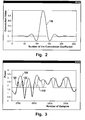
- a suitable reference signal is a sinc function.
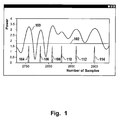
- the first peak of signal 100 which is identified by peak marker 104 is transformed into two new peaks 120 and 122 of signal 118.
- a large number of new peaks is created in the signal portion consisting of the peaks identified by peak markers 108 to 114. Hence additional soft-clipping iterations are required to interatively bring signal 100 to clipping threshold 102.
- the present invention aims to provide an improved method of reducing a peak-to-average power ratio of a signal to be transmitted for improved soft-clipping.
- the present invention provides for a method of reducing a peak-to-average power ratio of a signal to be transmitted by decomposing portions of the signal which are above a clipping threshold level into elementary functions.
- the elementary functions provide the locations and the amplitudes for soft-clipping of the original signal. This enables to substantially reduce the number of iterations which are required for the soft-clipping.
- symmetric functions are used for decomposing of the signal portions, such as gaussian or triangle functions.
- amplitudes and the positions of the functions are parameterised for decomposing of the portions of the signal which are above the clipping threshold level. This reduces the computational complexity of the decomposition process.
- the present invention can be used for any sender, such as an end-user telecommunication device, a transmitter, such as a base station of a wireless cellular telecommunication network and other telecommunication applications.
- Peak 400 is a magnitude signal and is above a clipping threshold level.
- Peak 400 is decomposed into gaussian functions 500, 502 and 504.
- the number of the gaussian functions which is used to perform the decomposition is chosen in proportion to the duration of peak 400.
- a reference function such as the function shown in figure 2, is used.
- the positions for subtracting of the reference function are given by the positions of the elementary functions into which the peak 400 is decomposed.
- the scaling of the reference function at those positions is determined by the amplitudes of the corresponding elementary functions. This way only one or a small number of iterations are required to bring peak 400 to the clipping threshold.
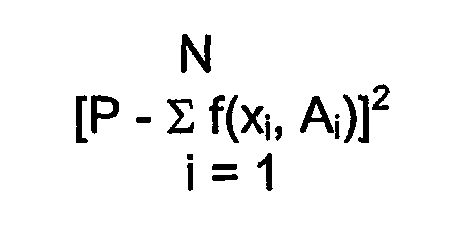
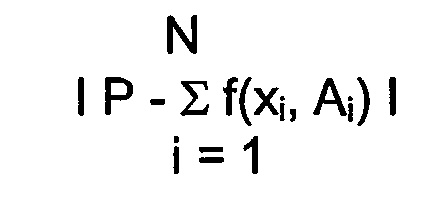
- a peak P of a signal to be transmitted which is above the clipping threshold level is developed as a sum of elementary functions f: where N is the number of elementary functions which is proportional to the duration of the peak P, x i the position of the maxima of the elementary functions and A i the amplitudes at the positions of the maxima x i .
- a gaussian function can be used as elementary function f or another symmetric function, such as a triangle function.
- a gaussian function is used as elementary function f.
- the first gaussian function 500 which is used for the decomposition of peak P is positioned at x 1 and has amplitude A 1 ;
- gaussian function 502 is positioned at x 2 and has amplitude A 2 ;
- gaussian function 504 is positioned at x 3 and has amplitude A 3 .
- the number N is equal to 3 in the example considered here as a number of 3 elementary functions is used for the decomposition.
- soft-clippings are performed at positions x 1 , x 2 , x 3 .
- the reference function is scaled in proportion to the amplitude A 1 .
- the reference function is scaled in proportion to the amplitude A 2 , etc.
- the decomposition of the peak P into a number of N elementary functions can be performed by means of mathematical methods which are as such known.
- the decomposition can be performed by finding a minimum for
- the absolute value i.e. can be used.
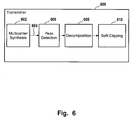
- Transmitter 600 has multi- carrier synthesis module 602 to provide a multi-carrier multiplexed signal 604, such as an OFDM or OCDM signal.
- Further transmitter 600 has peak detection module 606 which outputs those portions of signal 604 which are above a clipping threshold level. These peaks are provided from peak detection module 606 to peak decomposition module 608, where the peaks are decomposed into elementary functions as explained above. The result of the peak decomposition is provided from peak decomposition module 608 to soft-clipping module 610. In soft-clipping module 610 a reference function is subtracted from the peak at the positions of the elementary functions; the respective scalings of the reference function are determined by the amplitudes of the elementary functions. The resulting soft-clipped signal is then sent out by transmitter 600 over an air-interface or a cable connection.
Landscapes
- Engineering & Computer Science (AREA)
- Computer Networks & Wireless Communication (AREA)
- Signal Processing (AREA)
- Transmitters (AREA)
- Arc Welding Control (AREA)
- Crystals, And After-Treatments Of Crystals (AREA)
- Mechanical Treatment Of Semiconductor (AREA)
Abstract
Description
- Figure 1
- shows a signal which has portions above a clipping threshold,
- Figure 2
- shows a reference function for performing soft-clipping,
- Figure 3
- shows the signal of figure 1 after performing one iteration of soft-clipping by means of the reference function of figure 2,
- Figure 4
- shows an example of a portion of a signal to be transmitted which is above the clipping threshold,
- Figure 5
- shows the decomposition of the signal of figure 4 into elementary gaussian functions,
- Figure 6
- shows a portion of a block diagram of a transmitter.

- 100
- signal
- 102
- clipping threshold
- 104
- peak markers
- 106
- peak markers
- 108
- peak markers
- 110
- peak markers
- 112
- peak markers
- 114
- peak markers
- 116
- reference signal
- 118
- signal
- 120
- peak
- 122
- peak
- 400
- peak
- 500
- gaussian function
- 502
- gaussian function
- 504
- gaussian function
- 600
- transmitter
- 602
- multi carrier synthesis module
- 604
- signal
- 606
- peak detection module
- 608
- peak decomposition module
- 610
- soft-clipping module
Claims (10)
- A method of reducing a peak-to-average power ratio of a signal to be transmitted, the method comprising the steps of:detecting a portion of the signal being above a clipping threshold level,decomposing the portion of the signal into a number of functions, the number of functions being proportional to a duration of the portion of the signal,performing the number of soft-clippings on the signal by means of a reference function, the positions of the soft-clippings being given by the positions of the functions and the respective scalings of the reference function being determined by the amplitudes of the functions.
- The method of claim 1, further comprising parameterising the functions by determining an amplitude value and a position value for each function.
- The method of claim 1, the functions being symmetric.
- The method of claim 1, the step of decomposing being performed by minimising ofor
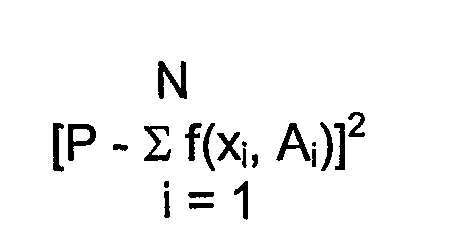 where
where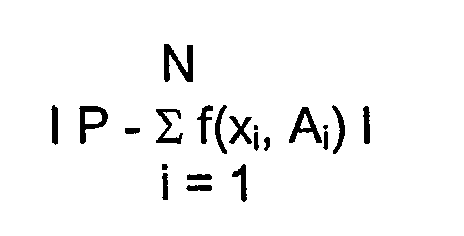
- N:
- number of functions f,
- xi:
- position of function f,
- Ai:
- amplitude of function f
- P:
- portion of the signal above clipping threshold level.
- The method of claim 1, whereby the soft-clipping is performed by using the positions of the functions as peak positions for subtracting of the reference function.
- A computer program product, in particular digital storage medium, for reducing a peak-to-average power ratio of a signal to be transmitted, comprising program means for performing the steps of:decomposing of a portion of the signal being above a clipping threshold level into a number of functions, the number of functions being proportional to a duration of the portion of the signal,performing the number of soft-clippings on the portion of the signal by means of a reference function, the positions of the soft-clippings being given by the positions of the functions and the respective scalings of the reference function being determined by the amplitudes of the functions.
- An electronic circuit for reducing a peak-to-average power ratio of a signal to be transmitted, the electronic circuit comprising:means (606) for detecting a portion (P) of the signal being above a clipping threshold level (102),means (608) for decomposing of the portion of the signal into a number (N) of functions (f), the number of functions being proportional to a duration of the portion of the signal,means (610) for performing the number of soft-clippings on the signal by means of a reference function, the positions of the soft-clippings being given by the positions of the functions and the respective scalings of the reference function being determined by the amplitudes of the functions.
- An end user telecommunication device for sending of a signal, the end user telecommunication device comprising signal processing means for reducing a peak-to-average power ratio of the signal by the steps of:detecting a portion of the signal being above a equipping threshold level,decomposing the portion of the signal into a number of functions, the number of functions being proportional to a duration of the portion of the signal,performing the number of soft-clippings on the signal by means of a reference function, the positions of the soft-clippings being given by the positions of the functions and the respective scalings of the reference function being determined by the amplitudes of the functions.
- A transmitter comprising:means (602) for multi-carrier synthesis to provide a multi-carrier multiplexed signal to be transmitted,means for reducing a peak-to-average power ratio of the signal by the steps of:a) detecting a portion of the signal being above a clipping threshold level,b) decomposing the portion of the signal into a number of functions, the number of functions being proportional to a duration of the portion of the signal,c) performing the number of soft-clippings on the signal by means of a reference function, the positions of the soft-clippings being given by the positions of the functions and the respective scalings of the reference function being determined by the amplitudes of the functions.
- A telecommunication system having at least one base station comprising an electronic circuit for reducing a peak-to-average power ratio of a signal to be transmitted, the electronic circuit being adapted to perform the reduction by detecting a portion of the signal being above a clipping threshold level, decomposing the portion of the signal into a number of functions, the number of functions being proportional to a duration of the portion of the signal, and performing the number of soft-clippings on the signal.
Priority Applications (5)
| Application Number | Priority Date | Filing Date | Title |
|---|---|---|---|
| DE60312811T DE60312811T2 (en) | 2003-03-11 | 2003-03-11 | Method and apparatus for reducing the ratio of peak to average power |
| EP03290602A EP1458159B1 (en) | 2003-03-11 | 2003-03-11 | Method and device of reducing a peak-to-average power ratio |
| AT03290602T ATE358381T1 (en) | 2003-03-11 | 2003-03-11 | METHOD AND DEVICE FOR REDUCING THE PEAK TO AVERAGE POWER RATIO |
| US10/780,745 US7386060B2 (en) | 2003-03-11 | 2004-02-19 | Method of reducing a peak-to-average power ratio |
| CNB2004100084319A CN100452788C (en) | 2003-03-11 | 2004-03-10 | Method for decreasing peak average power rate |
Applications Claiming Priority (1)
| Application Number | Priority Date | Filing Date | Title |
|---|---|---|---|
| EP03290602A EP1458159B1 (en) | 2003-03-11 | 2003-03-11 | Method and device of reducing a peak-to-average power ratio |
Publications (2)
| Publication Number | Publication Date |
|---|---|
| EP1458159A1 true EP1458159A1 (en) | 2004-09-15 |
| EP1458159B1 EP1458159B1 (en) | 2007-03-28 |
Family
ID=32749007
Family Applications (1)
| Application Number | Title | Priority Date | Filing Date |
|---|---|---|---|
| EP03290602A Expired - Lifetime EP1458159B1 (en) | 2003-03-11 | 2003-03-11 | Method and device of reducing a peak-to-average power ratio |
Country Status (5)
| Country | Link |
|---|---|
| US (1) | US7386060B2 (en) |
| EP (1) | EP1458159B1 (en) |
| CN (1) | CN100452788C (en) |
| AT (1) | ATE358381T1 (en) |
| DE (1) | DE60312811T2 (en) |
Cited By (4)
| Publication number | Priority date | Publication date | Assignee | Title |
|---|---|---|---|---|
| WO2006062291A3 (en) * | 2004-12-11 | 2006-11-02 | Korea Electronics Telecomm | A digital clipping method for a transmitter of an orthogonal frequency division multiple access system |
| EP1826976A1 (en) | 2006-02-22 | 2007-08-29 | Alcatel Lucent | Soft-clipping of multi-carrier multiplexed signals by varying type, number and positions of the clipping functions |
| EP1788768A3 (en) * | 2005-11-21 | 2007-09-12 | Agilent Technologies, Inc. | System and method for reducing dynamic range of modulated signals without increasing out-of-band-power |
| WO2008074801A1 (en) * | 2006-12-21 | 2008-06-26 | Telefonaktiebolaget Lm Ericsson (Publ) | Method and apparatus for signal peak-to-average ratio reduction |
Families Citing this family (17)
| Publication number | Priority date | Publication date | Assignee | Title |
|---|---|---|---|---|
| US7593478B2 (en) * | 2004-04-26 | 2009-09-22 | Qualcomm Incorporated | Low peak to average ratio search algorithm |
| WO2006049140A1 (en) * | 2004-11-01 | 2006-05-11 | Hitachi Kokusai Electric Inc. | Transmitter |
| KR100705443B1 (en) | 2004-12-11 | 2007-04-09 | 한국전자통신연구원 | Digital Clipping Method for Transmitter of Orthogonal Frequency Division Multiple Access System |
| US7675982B2 (en) * | 2005-11-28 | 2010-03-09 | Mitsubishi Electric Research Laboratories, Inc. | Method and system for reducing peak-to-average power for OFDM signals |
| US7783260B2 (en) * | 2006-04-27 | 2010-08-24 | Crestcom, Inc. | Method and apparatus for adaptively controlling signals |
| US8645379B2 (en) * | 2006-04-27 | 2014-02-04 | Vertical Search Works, Inc. | Conceptual tagging with conceptual message matching system and method |
| JP4847392B2 (en) * | 2006-05-29 | 2011-12-28 | 富士通株式会社 | COMMUNICATION SYSTEM, ITS TRANSMITTER, RECEIVER, COMMUNICATION METHOD |
| KR101314254B1 (en) * | 2007-02-16 | 2013-10-02 | 삼성전자주식회사 | OFDM transmitting and receiving systems and methods thereof |
| EP2131545B1 (en) * | 2008-05-14 | 2012-11-28 | Telefonaktiebolaget LM Ericsson (publ) | Technique for peak power reduction |
| CN101442348B (en) * | 2008-12-22 | 2013-08-07 | 华为技术有限公司 | Method, apparatus, system for clipping signal and signal radiation system |
| KR101714784B1 (en) * | 2010-01-25 | 2017-03-10 | 삼성전자주식회사 | Method and apparatus for reducing peak to average power ratio by using peak windowing |
| EP2429141B1 (en) | 2010-09-10 | 2013-03-27 | Cassidian SAS | PAPR reduction using clipping function depending on the peak value and the peak width |
| WO2014172919A1 (en) * | 2013-04-27 | 2014-10-30 | 华为技术有限公司 | Data processing method and base station |
| KR102103276B1 (en) * | 2014-01-07 | 2020-04-22 | 삼성전자주식회사 | Apparatus and method for reducing peak to average ratio in wireless communication system |
| US20150223176A1 (en) * | 2014-02-02 | 2015-08-06 | Redline Innovations Group Inc. | Systems and methods for reducing peak to average power ratio |
| TWI532348B (en) * | 2014-08-26 | 2016-05-01 | 鴻海精密工業股份有限公司 | Method and device for reducing peak to average power ratio |
| US10110187B1 (en) * | 2017-06-26 | 2018-10-23 | Google Llc | Mixture model based soft-clipping detection |
Citations (3)
| Publication number | Priority date | Publication date | Assignee | Title |
|---|---|---|---|---|
| US6175551B1 (en) * | 1997-07-31 | 2001-01-16 | Lucent Technologies, Inc. | Transmission system and method employing peak cancellation to reduce the peak-to-average power ratio |
| EP1195962A2 (en) * | 2000-10-04 | 2002-04-10 | Alcatel | Method for reducing the peak-to-average power ratio of a multicarrier signal |
| US20020101936A1 (en) * | 2000-07-21 | 2002-08-01 | Wright Andrew S. | Systems and methods for the reduction of peak to average signal levels of multi-bearer single-carrier and multi-carrier waveforms |
Family Cites Families (4)
| Publication number | Priority date | Publication date | Assignee | Title |
|---|---|---|---|---|
| US6130918A (en) * | 1997-12-01 | 2000-10-10 | Nortel Networks Limited | Method and apparatus for reducing the peak-to-average ratio in a multicarrier communication system |
| US6853632B1 (en) * | 1998-09-24 | 2005-02-08 | Amit Verma | Technique for peak power to average power ratio reduction in multicarrier communication systems |
| US7013161B2 (en) * | 2002-09-24 | 2006-03-14 | Nortel Networks Limited | Peak power reduction using windowing and filtering |
| WO2004051952A1 (en) * | 2002-11-29 | 2004-06-17 | Telefonaktiebolaget Lm Ericsson (Publ) | Amplitude peak cancellation |
-
2003
- 2003-03-11 DE DE60312811T patent/DE60312811T2/en not_active Expired - Lifetime
- 2003-03-11 EP EP03290602A patent/EP1458159B1/en not_active Expired - Lifetime
- 2003-03-11 AT AT03290602T patent/ATE358381T1/en not_active IP Right Cessation
-
2004
- 2004-02-19 US US10/780,745 patent/US7386060B2/en not_active Expired - Fee Related
- 2004-03-10 CN CNB2004100084319A patent/CN100452788C/en not_active Expired - Fee Related
Patent Citations (3)
| Publication number | Priority date | Publication date | Assignee | Title |
|---|---|---|---|---|
| US6175551B1 (en) * | 1997-07-31 | 2001-01-16 | Lucent Technologies, Inc. | Transmission system and method employing peak cancellation to reduce the peak-to-average power ratio |
| US20020101936A1 (en) * | 2000-07-21 | 2002-08-01 | Wright Andrew S. | Systems and methods for the reduction of peak to average signal levels of multi-bearer single-carrier and multi-carrier waveforms |
| EP1195962A2 (en) * | 2000-10-04 | 2002-04-10 | Alcatel | Method for reducing the peak-to-average power ratio of a multicarrier signal |
Cited By (5)
| Publication number | Priority date | Publication date | Assignee | Title |
|---|---|---|---|---|
| WO2006062291A3 (en) * | 2004-12-11 | 2006-11-02 | Korea Electronics Telecomm | A digital clipping method for a transmitter of an orthogonal frequency division multiple access system |
| EP1788768A3 (en) * | 2005-11-21 | 2007-09-12 | Agilent Technologies, Inc. | System and method for reducing dynamic range of modulated signals without increasing out-of-band-power |
| EP1826976A1 (en) | 2006-02-22 | 2007-08-29 | Alcatel Lucent | Soft-clipping of multi-carrier multiplexed signals by varying type, number and positions of the clipping functions |
| WO2008074801A1 (en) * | 2006-12-21 | 2008-06-26 | Telefonaktiebolaget Lm Ericsson (Publ) | Method and apparatus for signal peak-to-average ratio reduction |
| US7995975B2 (en) | 2006-12-21 | 2011-08-09 | Telefonaktiebolaget Lm Ericsson (Publ) | Method and apparatus for signal peak-to-average ratio reduction |
Also Published As
| Publication number | Publication date |
|---|---|
| US20040179468A1 (en) | 2004-09-16 |
| DE60312811T2 (en) | 2007-08-16 |
| ATE358381T1 (en) | 2007-04-15 |
| DE60312811D1 (en) | 2007-05-10 |
| US7386060B2 (en) | 2008-06-10 |
| CN100452788C (en) | 2009-01-14 |
| EP1458159B1 (en) | 2007-03-28 |
| CN1531293A (en) | 2004-09-22 |
Similar Documents
| Publication | Publication Date | Title |
|---|---|---|
| EP1458159A1 (en) | Method and device of reducing a peak-to-average power ratio | |
| Tellambura | Upper bound on peak factor of N-multiple carriers | |
| KR100715914B1 (en) | Apparatus and Method for Reducing Peak to Average Power Ratio in Orthogonal Frequency Division Multiplexed Communication Systems | |
| US9130810B2 (en) | OFDM communications methods and apparatus | |
| KR100341562B1 (en) | Method and apparatus for reducing peak-to-average power ratio of a composite carrier signal | |
| JP5161368B2 (en) | Method and system for reducing the PAPR of an OFDM signal | |
| US7809078B2 (en) | OFDM modulator | |
| US7924941B2 (en) | Digital pre-distortion for orthogonal frequency division multiplexing (OFDM) signals | |
| WO1997038503A1 (en) | Method and apparatus for conditioning modulated signals for digital communications | |
| EP0888675B1 (en) | Method and apparatus for conditioning modulated signals using window expansion | |
| US8457162B2 (en) | Packet detection | |
| US6529927B1 (en) | Logarithmic compression methods for spectral data | |
| US20060291372A1 (en) | Apparatus and method for reducing pilot overhead in a wireless communication system | |
| US20070274201A1 (en) | Communications system, transmitter, receiver, and communications method thereof | |
| EP0842567A1 (en) | Synchronization to pseudo random number sequence with sign ambiguity in communications systems | |
| US6631166B1 (en) | Method and apparatus for signal generation and detection using unstable periodic chaotic orbits | |
| CN1084979C (en) | Method and arrangement for separating signals operating in the same channel | |
| Tellambura et al. | PAR reduction of an OFDM signal using partial transmit sequences | |
| Rabie et al. | Improved DPTE technique for impulsive noise mitigation over power-line communication channels | |
| Kwon et al. | Evaluation of a partial-band jammer with Gaussian-shaped spectrum against FH/MFSK | |
| CN1449596A (en) | Data transmission method and apparatus | |
| CN1390392A (en) | Interference Estimation in Communication Systems | |
| EP1788768A2 (en) | System and method for reducing dynamic range of modulated signals without increasing out-of-band-power | |
| CN1514558A (en) | A transmitter and receiver for peak power control | |
| CN101023608A (en) | Estimation of Signal-to-Interference-to-Noise Ratio Output from OFDM-CDMA Receiver |
Legal Events
| Date | Code | Title | Description |
|---|---|---|---|
| PUAI | Public reference made under article 153(3) epc to a published international application that has entered the european phase |
Free format text: ORIGINAL CODE: 0009012 |
|
| 17P | Request for examination filed |
Effective date: 20030912 |
|
| AK | Designated contracting states |
Kind code of ref document: A1 Designated state(s): AT BE BG CH CY CZ DE DK EE ES FI FR GB GR HU IE IT LI LU MC NL PT RO SE SI SK TR |
|
| AX | Request for extension of the european patent |
Extension state: AL LT LV MK |
|
| AKX | Designation fees paid |
Designated state(s): AT BE BG CH CY CZ DE DK EE ES FI FR GB GR HU IE IT LI LU MC NL PT RO SE SI SK TR |
|
| GRAP | Despatch of communication of intention to grant a patent |
Free format text: ORIGINAL CODE: EPIDOSNIGR1 |
|
| GRAS | Grant fee paid |
Free format text: ORIGINAL CODE: EPIDOSNIGR3 |
|
| GRAA | (expected) grant |
Free format text: ORIGINAL CODE: 0009210 |
|
| AK | Designated contracting states |
Kind code of ref document: B1 Designated state(s): AT BE BG CH CY CZ DE DK EE ES FI FR GB GR HU IE IT LI LU MC NL PT RO SE SI SK TR |
|
| PG25 | Lapsed in a contracting state [announced via postgrant information from national office to epo] |
Ref country code: AT Free format text: LAPSE BECAUSE OF FAILURE TO SUBMIT A TRANSLATION OF THE DESCRIPTION OR TO PAY THE FEE WITHIN THE PRESCRIBED TIME-LIMIT Effective date: 20070328 Ref country code: BE Free format text: LAPSE BECAUSE OF FAILURE TO SUBMIT A TRANSLATION OF THE DESCRIPTION OR TO PAY THE FEE WITHIN THE PRESCRIBED TIME-LIMIT Effective date: 20070328 Ref country code: FI Free format text: LAPSE BECAUSE OF FAILURE TO SUBMIT A TRANSLATION OF THE DESCRIPTION OR TO PAY THE FEE WITHIN THE PRESCRIBED TIME-LIMIT Effective date: 20070328 Ref country code: SI Free format text: LAPSE BECAUSE OF FAILURE TO SUBMIT A TRANSLATION OF THE DESCRIPTION OR TO PAY THE FEE WITHIN THE PRESCRIBED TIME-LIMIT Effective date: 20070328 Ref country code: LI Free format text: LAPSE BECAUSE OF FAILURE TO SUBMIT A TRANSLATION OF THE DESCRIPTION OR TO PAY THE FEE WITHIN THE PRESCRIBED TIME-LIMIT Effective date: 20070328 Ref country code: CH Free format text: LAPSE BECAUSE OF FAILURE TO SUBMIT A TRANSLATION OF THE DESCRIPTION OR TO PAY THE FEE WITHIN THE PRESCRIBED TIME-LIMIT Effective date: 20070328 Ref country code: NL Free format text: LAPSE BECAUSE OF FAILURE TO SUBMIT A TRANSLATION OF THE DESCRIPTION OR TO PAY THE FEE WITHIN THE PRESCRIBED TIME-LIMIT Effective date: 20070328 |
|
| REG | Reference to a national code |
Ref country code: GB Ref legal event code: FG4D |
|
| RAP2 | Party data changed (patent owner data changed or rights of a patent transferred) |
Owner name: ALCATEL LUCENT |
|
| REG | Reference to a national code |
Ref country code: CH Ref legal event code: EP |
|
| REF | Corresponds to: |
Ref document number: 60312811 Country of ref document: DE Date of ref document: 20070510 Kind code of ref document: P |
|
| REG | Reference to a national code |
Ref country code: IE Ref legal event code: FG4D |
|
| NLT2 | Nl: modifications (of names), taken from the european patent patent bulletin |
Owner name: ALCATEL LUCENT Effective date: 20070404 |
|
| PG25 | Lapsed in a contracting state [announced via postgrant information from national office to epo] |
Ref country code: SE Free format text: LAPSE BECAUSE OF FAILURE TO SUBMIT A TRANSLATION OF THE DESCRIPTION OR TO PAY THE FEE WITHIN THE PRESCRIBED TIME-LIMIT Effective date: 20070628 |
|
| PG25 | Lapsed in a contracting state [announced via postgrant information from national office to epo] |
Ref country code: ES Free format text: LAPSE BECAUSE OF FAILURE TO SUBMIT A TRANSLATION OF THE DESCRIPTION OR TO PAY THE FEE WITHIN THE PRESCRIBED TIME-LIMIT Effective date: 20070709 |
|
| PG25 | Lapsed in a contracting state [announced via postgrant information from national office to epo] |
Ref country code: PT Free format text: LAPSE BECAUSE OF FAILURE TO SUBMIT A TRANSLATION OF THE DESCRIPTION OR TO PAY THE FEE WITHIN THE PRESCRIBED TIME-LIMIT Effective date: 20070828 |
|
| ET | Fr: translation filed | ||
| REG | Reference to a national code |
Ref country code: CH Ref legal event code: PL |
|
| NLV1 | Nl: lapsed or annulled due to failure to fulfill the requirements of art. 29p and 29m of the patents act | ||
| PG25 | Lapsed in a contracting state [announced via postgrant information from national office to epo] |
Ref country code: SK Free format text: LAPSE BECAUSE OF FAILURE TO SUBMIT A TRANSLATION OF THE DESCRIPTION OR TO PAY THE FEE WITHIN THE PRESCRIBED TIME-LIMIT Effective date: 20070328 |
|
| PG25 | Lapsed in a contracting state [announced via postgrant information from national office to epo] |
Ref country code: CZ Free format text: LAPSE BECAUSE OF FAILURE TO SUBMIT A TRANSLATION OF THE DESCRIPTION OR TO PAY THE FEE WITHIN THE PRESCRIBED TIME-LIMIT Effective date: 20070328 Ref country code: RO Free format text: LAPSE BECAUSE OF FAILURE TO SUBMIT A TRANSLATION OF THE DESCRIPTION OR TO PAY THE FEE WITHIN THE PRESCRIBED TIME-LIMIT Effective date: 20070328 |
|
| PG25 | Lapsed in a contracting state [announced via postgrant information from national office to epo] |
Ref country code: DK Free format text: LAPSE BECAUSE OF FAILURE TO SUBMIT A TRANSLATION OF THE DESCRIPTION OR TO PAY THE FEE WITHIN THE PRESCRIBED TIME-LIMIT Effective date: 20070328 |
|
| PLBE | No opposition filed within time limit |
Free format text: ORIGINAL CODE: 0009261 |
|
| STAA | Information on the status of an ep patent application or granted ep patent |
Free format text: STATUS: NO OPPOSITION FILED WITHIN TIME LIMIT |
|
| 26N | No opposition filed |
Effective date: 20080102 |
|
| PG25 | Lapsed in a contracting state [announced via postgrant information from national office to epo] |
Ref country code: GR Free format text: LAPSE BECAUSE OF FAILURE TO SUBMIT A TRANSLATION OF THE DESCRIPTION OR TO PAY THE FEE WITHIN THE PRESCRIBED TIME-LIMIT Effective date: 20070629 |
|
| PG25 | Lapsed in a contracting state [announced via postgrant information from national office to epo] |
Ref country code: MC Free format text: LAPSE BECAUSE OF NON-PAYMENT OF DUE FEES Effective date: 20080331 |
|
| PGFP | Annual fee paid to national office [announced via postgrant information from national office to epo] |
Ref country code: IT Payment date: 20080322 Year of fee payment: 5 |
|
| PG25 | Lapsed in a contracting state [announced via postgrant information from national office to epo] |
Ref country code: EE Free format text: LAPSE BECAUSE OF FAILURE TO SUBMIT A TRANSLATION OF THE DESCRIPTION OR TO PAY THE FEE WITHIN THE PRESCRIBED TIME-LIMIT Effective date: 20070328 Ref country code: IE Free format text: LAPSE BECAUSE OF NON-PAYMENT OF DUE FEES Effective date: 20080311 |
|
| PG25 | Lapsed in a contracting state [announced via postgrant information from national office to epo] |
Ref country code: CY Free format text: LAPSE BECAUSE OF FAILURE TO SUBMIT A TRANSLATION OF THE DESCRIPTION OR TO PAY THE FEE WITHIN THE PRESCRIBED TIME-LIMIT Effective date: 20070328 |
|
| PG25 | Lapsed in a contracting state [announced via postgrant information from national office to epo] |
Ref country code: BG Free format text: LAPSE BECAUSE OF FAILURE TO SUBMIT A TRANSLATION OF THE DESCRIPTION OR TO PAY THE FEE WITHIN THE PRESCRIBED TIME-LIMIT Effective date: 20070628 Ref country code: IT Free format text: LAPSE BECAUSE OF NON-PAYMENT OF DUE FEES Effective date: 20080311 |
|
| PG25 | Lapsed in a contracting state [announced via postgrant information from national office to epo] |
Ref country code: HU Free format text: LAPSE BECAUSE OF FAILURE TO SUBMIT A TRANSLATION OF THE DESCRIPTION OR TO PAY THE FEE WITHIN THE PRESCRIBED TIME-LIMIT Effective date: 20070929 Ref country code: LU Free format text: LAPSE BECAUSE OF NON-PAYMENT OF DUE FEES Effective date: 20080311 |
|
| PG25 | Lapsed in a contracting state [announced via postgrant information from national office to epo] |
Ref country code: TR Free format text: LAPSE BECAUSE OF FAILURE TO SUBMIT A TRANSLATION OF THE DESCRIPTION OR TO PAY THE FEE WITHIN THE PRESCRIBED TIME-LIMIT Effective date: 20070328 |
|
| PG25 | Lapsed in a contracting state [announced via postgrant information from national office to epo] |
Ref country code: IT Free format text: LAPSE BECAUSE OF NON-PAYMENT OF DUE FEES Effective date: 20120311 |
|
| REG | Reference to a national code |
Ref country code: FR Ref legal event code: GC Effective date: 20140717 |
|
| REG | Reference to a national code |
Ref country code: FR Ref legal event code: PLFP Year of fee payment: 13 |
|
| PGFP | Annual fee paid to national office [announced via postgrant information from national office to epo] |
Ref country code: DE Payment date: 20150320 Year of fee payment: 13 |
|
| PGFP | Annual fee paid to national office [announced via postgrant information from national office to epo] |
Ref country code: GB Payment date: 20150319 Year of fee payment: 13 Ref country code: FR Payment date: 20150319 Year of fee payment: 13 |
|
| REG | Reference to a national code |
Ref country code: FR Ref legal event code: CA Effective date: 20150521 |
|
| REG | Reference to a national code |
Ref country code: FR Ref legal event code: CA Effective date: 20150521 |
|
| REG | Reference to a national code |
Ref country code: DE Ref legal event code: R119 Ref document number: 60312811 Country of ref document: DE |
|
| GBPC | Gb: european patent ceased through non-payment of renewal fee |
Effective date: 20160311 |
|
| REG | Reference to a national code |
Ref country code: FR Ref legal event code: ST Effective date: 20161130 |
|
| PG25 | Lapsed in a contracting state [announced via postgrant information from national office to epo] |
Ref country code: FR Free format text: LAPSE BECAUSE OF NON-PAYMENT OF DUE FEES Effective date: 20160331 Ref country code: GB Free format text: LAPSE BECAUSE OF NON-PAYMENT OF DUE FEES Effective date: 20160311 Ref country code: DE Free format text: LAPSE BECAUSE OF NON-PAYMENT OF DUE FEES Effective date: 20161001 |