EP1457571A1 - Reporter gene assay method - Google Patents
Reporter gene assay method Download PDFInfo
- Publication number
- EP1457571A1 EP1457571A1 EP20020788808 EP02788808A EP1457571A1 EP 1457571 A1 EP1457571 A1 EP 1457571A1 EP 20020788808 EP20020788808 EP 20020788808 EP 02788808 A EP02788808 A EP 02788808A EP 1457571 A1 EP1457571 A1 EP 1457571A1
- Authority
- EP
- European Patent Office
- Prior art keywords
- cells
- luciferase
- gene
- assay method
- activity
- Prior art date
- Legal status (The legal status is an assumption and is not a legal conclusion. Google has not performed a legal analysis and makes no representation as to the accuracy of the status listed.)
- Withdrawn
Links
Images




Classifications
-
- C—CHEMISTRY; METALLURGY
- C12—BIOCHEMISTRY; BEER; SPIRITS; WINE; VINEGAR; MICROBIOLOGY; ENZYMOLOGY; MUTATION OR GENETIC ENGINEERING
- C12Q—MEASURING OR TESTING PROCESSES INVOLVING ENZYMES, NUCLEIC ACIDS OR MICROORGANISMS; COMPOSITIONS OR TEST PAPERS THEREFOR; PROCESSES OF PREPARING SUCH COMPOSITIONS; CONDITION-RESPONSIVE CONTROL IN MICROBIOLOGICAL OR ENZYMOLOGICAL PROCESSES
- C12Q1/00—Measuring or testing processes involving enzymes, nucleic acids or microorganisms; Compositions therefor; Processes of preparing such compositions
- C12Q1/68—Measuring or testing processes involving enzymes, nucleic acids or microorganisms; Compositions therefor; Processes of preparing such compositions involving nucleic acids
- C12Q1/6897—Measuring or testing processes involving enzymes, nucleic acids or microorganisms; Compositions therefor; Processes of preparing such compositions involving nucleic acids involving reporter genes operably linked to promoters
Definitions
- the present invention relates to a reporter gene assay method.
- the substances having sex hormone-like activity are chemical substances acting as endocrine disruptors exerting an influence on biogenic hormones.
- Typical examples of such substances include substances affecting the functions of estrogen and androgen, namely sex hormone-like substances such as estrogen-like acting substances, antiestrogen-like acting substances, androgen-like acting substances and antiandrogen-like acting substances.
- the means for detecting sex hormone-like substances are the reporter gene assay methods which utilize an estrogen receptor gene or androgen receptor gene (cf. e.g. Japanese Unexamined Patent Publication Nos. 2000-300258 and 2000-300259).
- the principle of the assay method is as follows.
- the androgen receptor (AR) gene-expressing cells with a reporter gene e.g. luciferase (Luc) gene
- a reporter gene e.g. luciferase (Luc) gene
- ARE androgen-response elements
- a substance having an antagonistic activity against the androgen receptor is used as the test substance and when a fixed amount of an agonist is added to the assay system in advance, the inhibitory activity of the test substance against that agonist can be evaluated in terms of the decrease in the expression level or activity of luciferase as a reporter protein.
- this assay system uses living cells, not only the antagonist activity intrinsic in the test substance but also a toxicity (e.g. cytotoxicity) of the test substance, for instance, presumably causes the decrease in reporter protein activity. That is to say, the substance to be tested is by nature toxic to cells and, as the concentration thereof increases, the cytotoxicity thereof increases, resulting in hypofunction of the cells themselves, hence in a reduced level of reporter protein expression. Therefore, this assay system has a fatal defect in that the cytotoxicity or like activity of the test substance counterbalances the antagonistic activity of the test substance, which is to be assayed, and thus makes it difficult to accurately detect and assay that activity. Similarly, when the test substance is a substance having an agonistic activity, the cytotoxicity or like activity of the test substance itself renders it difficult to accurately detect and assay the agonist activity desired to be known, in the same manner as mentioned above.
- cytotoxicity e.g. cytotoxicity
- An object of the present invention is to provide an improved bioassay method by which the sex hormone-like activity inherent in a test substance can be accurately assayed and judged by accurately estimating the test substance-due hypofunction of cells used in this type of reporter gene assay system, namely the variation in cellular protein expression activity.
- the invention thus provides the following assay method and modifications/variations:
- the present invention further provides cells for use in the reporter gene assay method specified above under 1, namely cells resulting from further transfer of a GFP gene into luciferase-expressing cells (hereinafter such cells are sometimes referred to as "cells of the invention").
- the invention provides the use of such cells (cells of the invention) resulting from further transfer of a GFP gene into luciferase-expressing cells in the reporter gene assay method as set forth above under 1.
- luciferase-expressing cells indicate cells in which the gene for a receptor of a sex hormone such as, for example, estrogen or androgen can be expressed and in which a reporter gene occurs as introduced under the control of the translational regulatory region having a sequence of recognizing the receptor gene.
- a sex hormone such as, for example, estrogen or androgen
- reporter gene occurs as introduced under the control of the translational regulatory region having a sequence of recognizing the receptor gene.
- those cells have the receptor gene inherently or as a foreign gene, and the reporter gene can be expressed under the control of the receptor gene.
- the reporter gene assay method of the invention utilizes the very good correlation between the reduction in function of the cells utilized in this assay system as caused by the test substance (sex hormone-like substance) (reduction in protein expression capacity) and the level of GFP expression owing to the GFP gene transferred into the cells. According to the assay method of the invention, it is possible to properly evaluate the degree of cellular activity, namely the degree of retention of the inherent protein expression capacity of the cells, by measuring the GFP expression level. Therefore, in the reporter gene assay method according to the invention, the sex hormone-like activity of a test substance can be accurately assayed and evaluated while avoiding the risk of judging such activity erroneously as being due to a decrease in cellular activity.
- the luciferase-expressing cells for preparing the cells of the invention for use in the method of the invention, those utilized in the conventional reporter gene assay methods can all be utilized (cf. e.g. Japanese Unexamined Patent Publication No. 2000-300258). More specifically, the cells may be ones resulting from transfer of a foreign gene for the expression of luciferase, if necessary together with a sex hormone receptor gene (which may further contain an appropriate DNA for the expression of the receptor gene) for the reporter gene assay, into conventional animal cells as host cells.
- a sex hormone receptor gene which may further contain an appropriate DNA for the expression of the receptor gene
- the host cells are, for example, human, mouse, rat or other mammal-derived cells, frog and other amphibian-derived cells, and insect-derived cells.
- the host cells are preferably cells capable of being subcultured stably.
- Specific examples of the preferred host cells are human-derived 293 cells, human-derived A-431 cells, human-derived HeLa cells, human-derived MCF7 cells, human-derived neuroblastoma cells, mouse-derived NIH3T3 cells, hamster-derived CHO-K1 cells, hamster-derived BHK-21 cells, monkey-derived COS-1 cells, monkey-derived CV-1 cells, rat-derived L6 cells, and mink-derived Mv 1 Lu cells, for instance.
- these cells there are cells inherently having a receptor gene for reporter gene assay.
- an appropriate sex hormone receptor gene (further comprising an appropriate DNA for the expression thereof, for example a promoter sequence etc.), for example the androgen receptor gene, is transferred into them to provide them with the ability to express said gene.
- receptor genes for reporter gene assay are known in the art. Typical examples thereof are androgen receptor genes (cDNA genes) derived from the human androgen receptor gene (GenBank Accession No. M23263), rat androgen receptor gene (GenBank Accession No. M23264), mouse androgen receptor gene (GenBank Accession No. X59592), etc. Other typical examples of the receptor genes are estrogen receptor genes (cDNA genes), such as the human estrogen receptor ⁇ gene (GenBank Accession No. X03635), human estrogen receptor ⁇ gene (Biochem. Biophysical Res. Com., 243, 122-126 (1998)), rat estrogen receptor ⁇ gene (GenBank Accession No. U57439), and mouse estrogen receptor ⁇ gene (GenBank Accession No. M38651).
- cDNA genes such as the human estrogen receptor ⁇ gene (GenBank Accession No. X03635), human estrogen receptor ⁇ gene (Biochem. Biophysical Res. Com., 243, 122-126 (1998)), rat estrogen receptor ⁇ gene (GenBank Acces
- these receptor genes are inserted into a vector at a site downstream from an appropriate promoter in a functionally coupled form so that they can function within the cells, and the vectors obtained are each introduced into the cells.
- Such vector can be introduced into the cells and the cells can be thus provided with the capability to express the relevant gene by conventional processes well known in the art (cf. e.g. the above-cited Japanese Unexamined Patent Publication No. 2000-300258).
- the cells for reporter gene assay should have a luciferase gene introduced therein as a reporter gene.
- the luciferase gene is transferred into the cells in the same manner as in the conventional reporter gene assays so that its expression can be controlled by the transcriptional regulatory region having a receptor recognition sequence. Such control can be established in the conventional manner (cf. e.g. the above-cited Japanese Unexamined Patent Publication No. 2000-300258).
- Specific examples of the luciferase gene as the reporter gene include the genes coding for firefly luciferase, Renilla reniformis (sea pansy) luciferase, etc.
- ARE androgen-response elements
- the cells of the invention are prepared by further transferring a GFP gene into luciferase-expressing cells having an inherent or transferred receptor gene.
- the GFP gene to be transferred may be any of various GFP genes known in the art. Specific examples thereof are EGFP (enhanced GFP) and variants thereof, for example EYFP and ECFP (all being available from Clontech). These commercially available GFP genes have already been prepared in the form of DNAs suited for introduction into various cells, and can be readily transferred into cells according to the manuals attached to the respective products. The utilization of such GFP genes is also advantageous in that the phenomena occurring in living cells can be observed and measured directly in terms of fluorescent intensities without the necessity of using any cofactor or substrate. These GFP genes are further advantageous in that they are nontoxic to cells and can emit the desired fluorescence within a wide variety of cells.
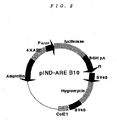
- stable transformant cells can be obtained, for example, by transfecting CHO-K1 cells as the host cells with the vector pZeoSV2(-) (Invitrogen) capable of expressing an androgen receptor gene under the control of the SV40 promoter, the luciferase reporter gene expression plasmid pIND ARE-B10 resulting from insertion of an androgen-responsive element, a heat shock promoter and a luciferase gene, in that order, into the mammalian expression vector pIND/Hygro (Invitrogen) and the EGFP expression vector pcDNA-EGFP resulting from insertion of the EGFP gene (Clontech) into the mammalian expression vector pcDNA3.1Zeo(-) (Invitrogen).
- pZeoSV2(-) Invitrogen
- the luciferase reporter gene expression plasmid pIND ARE-B10 resulting from insertion of an androgen-responsive element
- the cell culture medium, the cell culture conditions, the conditions of transfection with the respective vector plasmids and other conditions to be used in preparing the cells of the invention can all be the same as in the conventional methods utilizing host cells of that kind and gene transfer vectors of those kinds.
- the cells of the invention can be prepared not only by the transfection technique utilizing such respective expression vectors (cyclic DNAs) as mentioned above but also by introduction of the respective genes in the form of linear DNAs by the general DNA introduction techniques, such as the electroporation, calcium phosphate, and lipofection techniques, so long as the receptor gene, luciferase reporter gene and GFP gene transferred can function in the cells. That the cells prepared function as desired can be confirmed by measuring, in the conventional manner, the level of expression of the luciferase gene introduced (luminescent intensity).
- the cells of the invention obtained in the above manner can be utilized in detecting and assaying various test substances, for example sex hormone-like acting substances.
- test substances there are chemical substances showing agonistic action against estrogen receptors (estrogen-like acting substances) and chemical substances showing antagonistic action against the same (antiestrogen-like acting substances).
- the technique of the reporter gene assay method of the invention for identifying such test substances may be basically the same as in the reporter gene assay methods of this kind known in the art except that the cells of the invention are utilized.
- the cells of the invention are first sown in cell culture vessels.
- the cells are sown generally in a proportion of about 10 3 to 2 x 10 4 cells per well, and cultured for about 1 hour to overnight.
- the test substance is added to the cell culture fluids.
- a solution prepared by dissolving the test substance in a solvent or the solvent alone is added to the cell culture fluids so that the final concentration of the solvent in the culture fluids may generally amount to about 0.1 to 2%.
- a system is prepared by adding a solution prepared by dissolving an androgen receptor ligand, for example dihydrotestosterone (DHT), in a solvent to the culture fluids so that the ligand concentration therein may generally amount to about EC50 and, in parallel, a system is prepared by further adding the test substance to the above system.
- DHT dihydrotestosterone
- DMSO dimethyl sulfoxide
- ethanol ethanol
- the cells prepared as mentioned above are cultured for 1 hour to about 72 hours, for instance, and the level of expression of the luciferase gene as the reporter gene and the GFP expression level are then measured.
- the GFP expression level measurement can be made by directly measuring the fluorescent intensity. This GFP expression level measurement is preferably carried out before, more preferably just prior to, the luciferase expression level measurement described below.
- the luciferase expression level measurement can be made, for example, by determining the level of luminescence due to the luciferase produced in the cell extract using luciferin, which is the substrate of luciferase.
- the test substance When, in agonistic activity testing of a test substance, the luciferase activity per cell in the cell system containing the test substance added thereto is higher than in the cell system containing the solvent alone as added thereto, the test substance is judged to show agonistic activity against the androgen receptor.
- the luciferase activity in the cell system containing an androgen receptor-binding ligand and the test chemical substance added thereto is lower as compared with the luciferase activity in the cell system containing the ligand alone as added thereto, the test substance is judged to have androgen receptor antagonist activity.
- the cytotoxicity and/or the reduction in the protein expressing function (reduction in activity) of the cells used as shown or caused by the test substance is not taken into consideration.
- the cytotoxicity and the reduction in cellular activity shown or caused by the test substance are taken into consideration, cases may arise where even when the test substance is judged to have antagonistic activity (to be a substance reducing the luciferase activity) according to the above criteria, the decrease in luciferase activity is actually caused by a decrease in cellular function (reduced protein expression capacity), hence the test substance really has no antagonistic activity.
- the assay method of the invention can avoid such erroneous misunderstanding of measurement results without fail. Namely, the decrease in GFP expression level as obtained according to the assay method of the invention accurately reflects the decrease in cellular activity (decrease in protein expression capacity), as is evident from the results shown later herein in the example section. Therefore, by using this GFP expression level as an indication, it becomes possible to judge as to whether the change in luciferase expression level is due to a decrease in cellular activity or not and, accordingly, it becomes possible to accurately evaluate the test substance for its actual antagonistic or like activity while excluding the measurement error arising from its cytotoxicy, for instance.
- various chemical substances can be accurately identified as androgen receptor agonists or antagonists, for instance, according to the assay method of the invention which uses the cells of the invention.
- This identification can be utilized in detecting various endocrine disrupting substances, among others, and can further be utilized in searching for drug candidate compounds the targets of which are various receptors such as androgen receptors.
- the cells of the invention can be frozen stored and, where needed, can be thawed and used. In this respect as well, they are suited for use in the above-mentioned field of application.
- the androgen receptor (AR) gene was amplified from human prostate total RNA by the RT-PCR technique, and the amplification product was subcloned into the cloning vector TA cloning (Invitrogen) and the base sequence thereof was determined. It was confirmed that this is identical with that of the human AR gene registered in GenBank.
- Fig. 1 Typical characteristic features of this AR expression vector are shown in Fig. 1.
- the abbreviations used in Fig. 1 are as follows:
- luciferase reporter gene-containing plasmid pIND/Hygro (Invitrogen)
- ARE androgen responsive elements
- C(3) gene Kervonen U., et al., J. Biol. Chem., 272 (25), 15973-9 (1997)
- hs heat shock promoter
- luciferase gene Promega
- Typical characteristic features of the plasmid obtained are shown in Fig. 2.
- the abbreviations used in Fig. 2 are as follows:
- An EGFP expression vector, pcDNA-EGFP (total length: 5.7 kb) was constructed by cloning the EGFP gene (Clontech) into the mammalian cell expression vector pcDNA3.1Zeo(-) (Invitrogen) at the Nhe I- Pme I site thereof.
- Typical characteristic features of the vector obtained are shown in Fig. 3.
- Typical characteristics of the vector shown in Fig. 3 and the abbreviations used in Fig. 3 are as follows:
- CHO-K1 cells (cells deposited with ATCC) were developed on a 96-well plate (8000 cells/well). On the next day, transfection was carried in each well with 50 ng/well of pGL3-Control (retaining the SV40 promoter and containing the luciferase gene; Promega) and 4 ng/well of pcDNA-EGFP using 0.15 ⁇ L of FuGENE6TM (Roche) (at room temperature).
- DMSO DMSO was added to a final concentration of 0.125, 0.25, 1, 2, 4 or 10%.
- the fluorescence intensity of EGFP expressed in each well was measured using Berthord's measuring apparatus ARVO.
- the luciferase activity was measured using Steady-GloTM (Promega) as a substrate and using Berthord's measuring apparatus ARVO.
- MTT assay For comparison, the following MTT assay and AlamarBlue assay were carried out using the respective assay kits.
- CHO-K1 cells with pGL3-Control alone introduced therein were used in lieu of the above-prepared cells, DMSO was added to each well to the same concentration as mentioned above and, after 24 hours of culture, the MTT assay was carried out. The MTT measurement was performed as indicated in the manual attached to the product.
- ALAMAR BLUETM (Serotec) was added, to a concentration of 10% (w/v), to the CHO-K1 cell suspension cultured in each well in the presence of the same predetermined concentration of DMSO as mentioned above and, after 3-4 hours of incubation in an incubator at 37 °C, the AlamarBlue assay was carried out using Berthord's measuring apparatus ARVO. The AlamarBlue measurement was performed as instructed in the manual attached to the product.
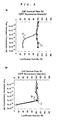
- Fig. 4 the ordinate denotes the relative survival rate (%) (the relative measurement result value at each DMSO concentration with the measurement result in each test carried out without addition of DMSO being taken as 100), and the abscissa denotes the DMSO concentration (%).
- graph (1) shows the luciferase activity measurement results
- graph (2) shows the EGFP activity measurement results
- graph (3) shows the AlamarBlue measurement results
- graph (4) shows the MTT activity measurement results.
- this cytotoxicity can be determined by EGFP activity measurements (cf. graph 2).
- each test substance is dissolved in DMSO to a concentration of 10 -3 M, and the solution was 10-fold diluted stepwise (serial dilution) to give diluted test sample solutions having a test substance concentration of 10 -3 M to 10 -9 M. Then, each diluted sample solution was 100-fold diluted using a solution prepared by adding 5 x 10 -9 M of 5 ⁇ -dehydrotestosterone to DEMEM/F-12 medium (Gibco) (the test substance concentration becoming 10 -5 M to 10 -11 M).
- CHO-K1 cells were developed on a 96-well plate to a size of about 8000 cells/84 ⁇ L of medium per well.
- a solution for transfection was prepared by diluting 1 ng of pZeoSV-2-AR (prepared above in (1)), 50 ng of pIND ARE-B10 (prepared above in (2)) and 4 ng of pcDNA-EGFP (prepared above in (3)) with 6.25 ⁇ L of DMEM/F-12 medium and adding 0.15 ⁇ L of FuGENE6TM (Roche) to the dilution.
- each test sample (generally 10 -5 M to 10 -11 M) as prepared using the above-prepared medium (DMEM/F-12) supplemented with 5 x 10 -9 M of 5a-dehydrotestosterone was added in 10 ⁇ L portions, and cultivation was continued at room temperature (the final test substance concentrations: 10 -6 M to 10 -12 M).
- the GFP fluorescence intensity in each well was measured at the excitation wavelength of 485 nm and fluorescence wavelength of 535 nm using Berthord's ARVO.
- luciferin solution (Steady-GloTM; Promega) was added to each well, and the luciferase-induced activity was measured in terms of luminescence intensity using a 96-well luminescence reader (Berthord's ARVO).
- Fig. 5 A and B
- Fig. 6 C and D
- the ordinate denotes the cell survival rate (%) (the relative EGFP fluorescence intensity value at each test substance concentration as determined by taking the EGFP fluorescence intensity value measured without addition of the test substance as 100; shown by curve (1)) as well as the luciferase activity percentage (shown by curve (2)).
- the abscissa denotes the test substance concentration (M).
- cyproterone acetate an agent known as an androgen receptor antagonist
- the EGFP activity remained almost 100% until the test substance concentration of 5 x 10 -5 M and, within this concentration range, no cytotoxic effect was observed. Therefore, it follows that the decreases in luciferase activity within this concentration range were due to the antagonistic activity of the test substance against the androgen receptor.
- Fig. 6-C shows the results of the assay of the invention for the agrochemical CNP (chloronirophen) used as the test substance.
- the test substance concentration of 10 -6 M the EGFP activity remained at a level close to 100%. Thus, it can be judged that any cytotoxic effect will not manifest itself within this concentration range. Therefore, the decreases in luciferase activity within this concentration range indicate that the test substance has an antagonistic activity against the androgen receptor.
- the EGFP activity markedly decreases at concentrations exceeding 10 -5 M, it can be judged that a cytotoxic effect should contribute to the decreases in luciferase activity.
- the present invention provides an improved bioassay method by which the sex hormone-like activity inherent in a test substance can be accurately assayed and judged by accurately estimating the hypofunction of cells due to the test substance used in the reporter gene assay system, namely the variation in cellular protein expression activity, and the assay system is useful in identifying various substances having sex hormone-like activity.
Landscapes
- Chemical & Material Sciences (AREA)
- Organic Chemistry (AREA)
- Life Sciences & Earth Sciences (AREA)
- Health & Medical Sciences (AREA)
- Genetics & Genomics (AREA)
- Zoology (AREA)
- Wood Science & Technology (AREA)
- Proteomics, Peptides & Aminoacids (AREA)
- Engineering & Computer Science (AREA)
- Analytical Chemistry (AREA)
- Biochemistry (AREA)
- Microbiology (AREA)
- Molecular Biology (AREA)
- Biotechnology (AREA)
- Biophysics (AREA)
- Physics & Mathematics (AREA)
- Immunology (AREA)
- Bioinformatics & Cheminformatics (AREA)
- General Engineering & Computer Science (AREA)
- General Health & Medical Sciences (AREA)
- Measuring Or Testing Involving Enzymes Or Micro-Organisms (AREA)
- Investigating Or Analysing Biological Materials (AREA)
- Investigating Or Analysing Materials By The Use Of Chemical Reactions (AREA)
Abstract
Description
Claims (11)
- A reporter gene assay method using luciferase-expressing cells comprising transferring a GFP gene into the luciferase-expressing cells, measuring the luciferase expression level and GFP expression level and making a judgment about the thus-measured luciferase expression level using the decrease in GFP expression level as an indication of the decrease in cell activity.
- The assay method as defined in Claim 1, wherein the luciferase-expressing cells are cells in which an estrogen receptor gene or androgen receptor gene can be expressed.
- The assay method as defined in Claim 1, wherein the luciferase-expressing cells are cells with an androgen receptor expression vector introduced therein.
- The assay method as defined in Claim 1, wherein the luciferase-expressing cells are cells with a luciferase gene expression plasmid introduced therein.
- The assay method as defined in Claim 1, wherein the luciferase-expressing cells are cells with an androgen receptor expression vector and a luciferase gene expression plasmid as introduced therein.
- The assay method as defined in Claim 1, wherein the luciferase-expressing cells are CHO cells serving as host cells.
- The assay method as defined in any one of Claims 1 to 6, wherein the GFP gene transfer is effected by introduction of a GFP expression vector.
- The assay method as defined in any one of Claims 1 to 6, wherein the GFP gene transfer is effected by introduction of an EGFP gene expression vector.
- The assay method as defined in Claim 1 which is an assay method intended for use in testing a sex hormone-like substance selected from among estrogen-like acting substances, antiestrogen-like acting substances, androgen-like acting substances and antiandrogen-like acting substances.
- A cell for use in the reporter gene assay method defined in Claim 1, said cell being derived from a luciferase-expressing cell by further transferring a GFP gene thereinto.
- The use of a cell resulting from further transfer of a GFP gene into a luciferase-expressing cell in the reporter gene assay method as defined in Claim 1.
Applications Claiming Priority (3)
| Application Number | Priority Date | Filing Date | Title |
|---|---|---|---|
| JP2001379908 | 2001-12-13 | ||
| JP2001379908A JP2003180393A (en) | 2001-12-13 | 2001-12-13 | Reporter gene assaying method |
| PCT/JP2002/013050 WO2003054220A1 (en) | 2001-12-13 | 2002-12-13 | Reporter gene assay method |
Publications (2)
| Publication Number | Publication Date |
|---|---|
| EP1457571A1 true EP1457571A1 (en) | 2004-09-15 |
| EP1457571A4 EP1457571A4 (en) | 2004-12-29 |
Family
ID=19187026
Family Applications (1)
| Application Number | Title | Priority Date | Filing Date |
|---|---|---|---|
| EP02788808A Withdrawn EP1457571A4 (en) | 2001-12-13 | 2002-12-13 | Reporter gene assay method |
Country Status (4)
| Country | Link |
|---|---|
| US (1) | US8609342B2 (en) |
| EP (1) | EP1457571A4 (en) |
| JP (1) | JP2003180393A (en) |
| WO (1) | WO2003054220A1 (en) |
Cited By (1)
| Publication number | Priority date | Publication date | Assignee | Title |
|---|---|---|---|---|
| US7986824B2 (en) | 2005-03-30 | 2011-07-26 | Olympus Corporation | Predetermined site luminescence measuring method, predetermined site luminescence measuring apparatus, expression amount measuring method, and measuring apparatus |
Families Citing this family (3)
| Publication number | Priority date | Publication date | Assignee | Title |
|---|---|---|---|---|
| US8772454B2 (en) | 2009-03-20 | 2014-07-08 | Board Of Regents, The University Of Texas System | Isolation and characterization of novel green fluorescent proteins from copepods |
| WO2018209249A2 (en) * | 2017-05-11 | 2018-11-15 | The Trustees Of Princeton University | Cryptic metabolites and method for activating silent biosynthetic gene clusters in actinomycete bacteria |
| CA3022981C (en) | 2017-11-01 | 2025-05-06 | Queen's University At Kingston | Hippo pathway bioluminescent biosensor |
Family Cites Families (6)
| Publication number | Priority date | Publication date | Assignee | Title |
|---|---|---|---|---|
| US5728534A (en) * | 1996-07-19 | 1998-03-17 | New England Medical Center Hospitals, Inc. | Methods for identifying cardiovascular therapeutic agents |
| US6025192A (en) * | 1996-09-20 | 2000-02-15 | Cold Spring Harbor Laboratory | Modified retroviral vectors |
| CA2301143A1 (en) | 1997-09-04 | 1999-03-11 | The Regents Of The University Of California | Differential ligand activation of estrogen receptors er.alpha. and er.beta. at ap1 sites |
| US6117639A (en) * | 1998-08-31 | 2000-09-12 | Vertex Pharmaceuticals Incorporated | Fusion proteins, DNA molecules, vectors, and host cells useful for measuring protease activity |
| EP1045035B1 (en) | 1999-04-14 | 2006-09-20 | Sumitomo Chemical Company, Limited | Cell for measuring the ability to control the activity of a ligand-responsive transcription control factor |
| IL152491A0 (en) * | 2000-06-28 | 2003-05-29 | Bristol Myers Squibb Co | Stable muscle cell lines and cell-based assay methods for identification of androgen receptor modulations |
-
2001
- 2001-12-13 JP JP2001379908A patent/JP2003180393A/en active Pending
-
2002
- 2002-12-13 US US10/498,265 patent/US8609342B2/en not_active Expired - Fee Related
- 2002-12-13 WO PCT/JP2002/013050 patent/WO2003054220A1/en not_active Ceased
- 2002-12-13 EP EP02788808A patent/EP1457571A4/en not_active Withdrawn
Cited By (2)
| Publication number | Priority date | Publication date | Assignee | Title |
|---|---|---|---|---|
| US7986824B2 (en) | 2005-03-30 | 2011-07-26 | Olympus Corporation | Predetermined site luminescence measuring method, predetermined site luminescence measuring apparatus, expression amount measuring method, and measuring apparatus |
| US8280142B2 (en) | 2005-03-30 | 2012-10-02 | Olympus Corporation | Predetermined site luminescence measuring method, predetermined site luminescence measuring apparatus, expression amount measuring method, and measuring apparatus |
Also Published As
| Publication number | Publication date |
|---|---|
| EP1457571A4 (en) | 2004-12-29 |
| WO2003054220A1 (en) | 2003-07-03 |
| JP2003180393A (en) | 2003-07-02 |
| US8609342B2 (en) | 2013-12-17 |
| US20060166196A1 (en) | 2006-07-27 |
Similar Documents
| Publication | Publication Date | Title |
|---|---|---|
| Durocher et al. | A reporter gene assay for high-throughput screening of G-protein-coupled receptors stably or transiently expressed in HEK293 EBNA cells grown in suspension culture | |
| De et al. | An improved bioluminescence resonance energy transfer strategy for imaging intracellular events in single cells and living subjects | |
| EP1088233B9 (en) | A bioluminescence resonance energy transfer (bret) system and its use | |
| EP2436764B1 (en) | Method for highly sensitive detection of protein-protein interaction | |
| US7045298B2 (en) | Method for identifying or screening agonist and antagonist to PPAR | |
| EP1120653B1 (en) | Method for examining substance interacting with hormone receptor | |
| US8609342B2 (en) | Reporter gene assay method | |
| CA2458879C (en) | Genetic construct intracellular monitoring system | |
| Ma et al. | NanoLuc-based methods to measure β-arrestin2 recruitment to G protein-coupled receptors | |
| EP2036986A1 (en) | Continuous assay method for measuring receptor- and ion channel-mediated calcium response and subsequent gene expression | |
| EP2810064B1 (en) | Cell based sensor | |
| AU2003254442B2 (en) | Functional screening method involving protein translocation/redistribution | |
| US10324099B2 (en) | Ultrasensitive androgen receptor bioassay | |
| JP2011067190A (en) | Single molecular format probe and utilization of the same | |
| EP1752544B1 (en) | Probe for detecting nuclear receptor agonist or antagonist and method of screening agonist or antagonist to nuclear receptor with the use of the same | |
| EP2767592A1 (en) | Mutagenicity test method using mammalian cells | |
| US20030013139A1 (en) | Transgenic cells and a method for detecting disruptors for androgens by using said transgenic cells | |
| EP1767622B1 (en) | Transgenic cell for assay of dioxin and utilizing the same, dioxin detecting method and biosensor | |
| US20030211523A1 (en) | Two-hybrid double screening system and method | |
| Ignar et al. | The study of drug-receptor interaction using reporter gene systems in mammalian cells | |
| EP1045035B1 (en) | Cell for measuring the ability to control the activity of a ligand-responsive transcription control factor | |
| WO2007037482A1 (en) | Kit and method for use in the detection of protein-protein interaction in eukaryotic cell | |
| JP2016202044A (en) | Mutagenesis study method using transformed cells | |
| EP1281720A2 (en) | Progestogen receptor from Japanese eel | |
| Houck et al. | Reporter Gene Assays for Drug Discovery |
Legal Events
| Date | Code | Title | Description |
|---|---|---|---|
| PUAI | Public reference made under article 153(3) epc to a published international application that has entered the european phase |
Free format text: ORIGINAL CODE: 0009012 |
|
| 17P | Request for examination filed |
Effective date: 20040706 |
|
| AK | Designated contracting states |
Kind code of ref document: A1 Designated state(s): AT BE BG CH CY CZ DE DK EE ES FI FR GB GR IE IT LI LU MC NL PT SE SI SK TR |
|
| RIC1 | Information provided on ipc code assigned before grant |
Ipc: 7C 12Q 1/02 A Ipc: 7C 12N 15/09 B Ipc: 7G 01N 33/00 B Ipc: 7G 01N 33/483 B Ipc: 7C 12Q 1/68 B Ipc: 7C 12N 5/10 B Ipc: 7G 01N 33/74 B |
|
| A4 | Supplementary search report drawn up and despatched |
Effective date: 20041112 |
|
| 17Q | First examination report despatched |
Effective date: 20050204 |
|
| STAA | Information on the status of an ep patent application or granted ep patent |
Free format text: STATUS: THE APPLICATION IS DEEMED TO BE WITHDRAWN |
|
| 18D | Application deemed to be withdrawn |
Effective date: 20050615 |