EP1457482A1 - Stable isotope-labeled amino acid, method of integrating the same into target protein, method of nmr structural analysis of protein and process for producing site-selective stable isotope-labeled fumaric acid and tartaric acid - Google Patents
Stable isotope-labeled amino acid, method of integrating the same into target protein, method of nmr structural analysis of protein and process for producing site-selective stable isotope-labeled fumaric acid and tartaric acid Download PDFInfo
- Publication number
- EP1457482A1 EP1457482A1 EP02793357A EP02793357A EP1457482A1 EP 1457482 A1 EP1457482 A1 EP 1457482A1 EP 02793357 A EP02793357 A EP 02793357A EP 02793357 A EP02793357 A EP 02793357A EP 1457482 A1 EP1457482 A1 EP 1457482A1
- Authority
- EP
- European Patent Office
- Prior art keywords
- labeled
- stable isotope
- amino acids
- acid
- protein
- Prior art date
- Legal status (The legal status is an assumption and is not a legal conclusion. Google has not performed a legal analysis and makes no representation as to the accuracy of the status listed.)
- Granted
Links
- ZXLYYQUMYFHCLQ-UHFFFAOYSA-N CN(C(c1c2cccc1)=O)C2=O Chemical compound CN(C(c1c2cccc1)=O)C2=O ZXLYYQUMYFHCLQ-UHFFFAOYSA-N 0.000 description 1
- 0 C[*-][C@@](*C(*)(*)C(C(C(*[C@@]1C(C)C)=O)NC1=O)O)*=C Chemical compound C[*-][C@@](*C(*)(*)C(C(C(*[C@@]1C(C)C)=O)NC1=O)O)*=C 0.000 description 1
Images




Classifications
-
- C—CHEMISTRY; METALLURGY
- C07—ORGANIC CHEMISTRY
- C07B—GENERAL METHODS OF ORGANIC CHEMISTRY; APPARATUS THEREFOR
- C07B59/00—Introduction of isotopes of elements into organic compounds ; Labelled organic compounds per se
- C07B59/001—Acyclic or carbocyclic compounds
-
- C—CHEMISTRY; METALLURGY
- C07—ORGANIC CHEMISTRY
- C07C—ACYCLIC OR CARBOCYCLIC COMPOUNDS
- C07C229/00—Compounds containing amino and carboxyl groups bound to the same carbon skeleton
- C07C229/02—Compounds containing amino and carboxyl groups bound to the same carbon skeleton having amino and carboxyl groups bound to acyclic carbon atoms of the same carbon skeleton
- C07C229/04—Compounds containing amino and carboxyl groups bound to the same carbon skeleton having amino and carboxyl groups bound to acyclic carbon atoms of the same carbon skeleton the carbon skeleton being acyclic and saturated
- C07C229/06—Compounds containing amino and carboxyl groups bound to the same carbon skeleton having amino and carboxyl groups bound to acyclic carbon atoms of the same carbon skeleton the carbon skeleton being acyclic and saturated having only one amino and one carboxyl group bound to the carbon skeleton
- C07C229/08—Compounds containing amino and carboxyl groups bound to the same carbon skeleton having amino and carboxyl groups bound to acyclic carbon atoms of the same carbon skeleton the carbon skeleton being acyclic and saturated having only one amino and one carboxyl group bound to the carbon skeleton the nitrogen atom of the amino group being further bound to hydrogen atoms
-
- C—CHEMISTRY; METALLURGY
- C07—ORGANIC CHEMISTRY
- C07C—ACYCLIC OR CARBOCYCLIC COMPOUNDS
- C07C229/00—Compounds containing amino and carboxyl groups bound to the same carbon skeleton
- C07C229/02—Compounds containing amino and carboxyl groups bound to the same carbon skeleton having amino and carboxyl groups bound to acyclic carbon atoms of the same carbon skeleton
- C07C229/04—Compounds containing amino and carboxyl groups bound to the same carbon skeleton having amino and carboxyl groups bound to acyclic carbon atoms of the same carbon skeleton the carbon skeleton being acyclic and saturated
- C07C229/22—Compounds containing amino and carboxyl groups bound to the same carbon skeleton having amino and carboxyl groups bound to acyclic carbon atoms of the same carbon skeleton the carbon skeleton being acyclic and saturated the carbon skeleton being further substituted by oxygen atoms
-
- C—CHEMISTRY; METALLURGY
- C07—ORGANIC CHEMISTRY
- C07C—ACYCLIC OR CARBOCYCLIC COMPOUNDS
- C07C229/00—Compounds containing amino and carboxyl groups bound to the same carbon skeleton
- C07C229/02—Compounds containing amino and carboxyl groups bound to the same carbon skeleton having amino and carboxyl groups bound to acyclic carbon atoms of the same carbon skeleton
- C07C229/04—Compounds containing amino and carboxyl groups bound to the same carbon skeleton having amino and carboxyl groups bound to acyclic carbon atoms of the same carbon skeleton the carbon skeleton being acyclic and saturated
- C07C229/24—Compounds containing amino and carboxyl groups bound to the same carbon skeleton having amino and carboxyl groups bound to acyclic carbon atoms of the same carbon skeleton the carbon skeleton being acyclic and saturated having more than one carboxyl group bound to the carbon skeleton, e.g. aspartic acid
-
- C—CHEMISTRY; METALLURGY
- C07—ORGANIC CHEMISTRY
- C07C—ACYCLIC OR CARBOCYCLIC COMPOUNDS
- C07C229/00—Compounds containing amino and carboxyl groups bound to the same carbon skeleton
- C07C229/02—Compounds containing amino and carboxyl groups bound to the same carbon skeleton having amino and carboxyl groups bound to acyclic carbon atoms of the same carbon skeleton
- C07C229/04—Compounds containing amino and carboxyl groups bound to the same carbon skeleton having amino and carboxyl groups bound to acyclic carbon atoms of the same carbon skeleton the carbon skeleton being acyclic and saturated
- C07C229/26—Compounds containing amino and carboxyl groups bound to the same carbon skeleton having amino and carboxyl groups bound to acyclic carbon atoms of the same carbon skeleton the carbon skeleton being acyclic and saturated having more than one amino group bound to the carbon skeleton, e.g. lysine
-
- C—CHEMISTRY; METALLURGY
- C07—ORGANIC CHEMISTRY
- C07C—ACYCLIC OR CARBOCYCLIC COMPOUNDS
- C07C229/00—Compounds containing amino and carboxyl groups bound to the same carbon skeleton
- C07C229/02—Compounds containing amino and carboxyl groups bound to the same carbon skeleton having amino and carboxyl groups bound to acyclic carbon atoms of the same carbon skeleton
- C07C229/34—Compounds containing amino and carboxyl groups bound to the same carbon skeleton having amino and carboxyl groups bound to acyclic carbon atoms of the same carbon skeleton the carbon skeleton containing six-membered aromatic rings
- C07C229/36—Compounds containing amino and carboxyl groups bound to the same carbon skeleton having amino and carboxyl groups bound to acyclic carbon atoms of the same carbon skeleton the carbon skeleton containing six-membered aromatic rings with at least one amino group and one carboxyl group bound to the same carbon atom of the carbon skeleton
-
- C—CHEMISTRY; METALLURGY
- C07—ORGANIC CHEMISTRY
- C07C—ACYCLIC OR CARBOCYCLIC COMPOUNDS
- C07C323/00—Thiols, sulfides, hydropolysulfides or polysulfides substituted by halogen, oxygen or nitrogen atoms, or by sulfur atoms not being part of thio groups
- C07C323/50—Thiols, sulfides, hydropolysulfides or polysulfides substituted by halogen, oxygen or nitrogen atoms, or by sulfur atoms not being part of thio groups containing thio groups and carboxyl groups bound to the same carbon skeleton
- C07C323/51—Thiols, sulfides, hydropolysulfides or polysulfides substituted by halogen, oxygen or nitrogen atoms, or by sulfur atoms not being part of thio groups containing thio groups and carboxyl groups bound to the same carbon skeleton having the sulfur atoms of the thio groups bound to acyclic carbon atoms of the carbon skeleton
- C07C323/57—Thiols, sulfides, hydropolysulfides or polysulfides substituted by halogen, oxygen or nitrogen atoms, or by sulfur atoms not being part of thio groups containing thio groups and carboxyl groups bound to the same carbon skeleton having the sulfur atoms of the thio groups bound to acyclic carbon atoms of the carbon skeleton the carbon skeleton being further substituted by nitrogen atoms, not being part of nitro or nitroso groups
- C07C323/58—Thiols, sulfides, hydropolysulfides or polysulfides substituted by halogen, oxygen or nitrogen atoms, or by sulfur atoms not being part of thio groups containing thio groups and carboxyl groups bound to the same carbon skeleton having the sulfur atoms of the thio groups bound to acyclic carbon atoms of the carbon skeleton the carbon skeleton being further substituted by nitrogen atoms, not being part of nitro or nitroso groups with amino groups bound to the carbon skeleton
-
- C—CHEMISTRY; METALLURGY
- C07—ORGANIC CHEMISTRY
- C07C—ACYCLIC OR CARBOCYCLIC COMPOUNDS
- C07C51/00—Preparation of carboxylic acids or their salts, halides or anhydrides
- C07C51/09—Preparation of carboxylic acids or their salts, halides or anhydrides from carboxylic acid esters or lactones
-
- C—CHEMISTRY; METALLURGY
- C07—ORGANIC CHEMISTRY
- C07K—PEPTIDES
- C07K1/00—General methods for the preparation of peptides, i.e. processes for the organic chemical preparation of peptides or proteins of any length
- C07K1/13—Labelling of peptides
-
- C—CHEMISTRY; METALLURGY
- C07—ORGANIC CHEMISTRY
- C07B—GENERAL METHODS OF ORGANIC CHEMISTRY; APPARATUS THEREFOR
- C07B2200/00—Indexing scheme relating to specific properties of organic compounds
- C07B2200/05—Isotopically modified compounds, e.g. labelled
-
- G—PHYSICS
- G01—MEASURING; TESTING
- G01N—INVESTIGATING OR ANALYSING MATERIALS BY DETERMINING THEIR CHEMICAL OR PHYSICAL PROPERTIES
- G01N24/00—Investigating or analyzing materials by the use of nuclear magnetic resonance, electron paramagnetic resonance or other spin effects
- G01N24/08—Investigating or analyzing materials by the use of nuclear magnetic resonance, electron paramagnetic resonance or other spin effects by using nuclear magnetic resonance
Definitions
- the present invention relates to a stable isotope-labeled amino acid and method for incorporating the same into target protein, and NMR method for the structural analysis of protein.
- the present invention also relates to a method for producing regio-selectively stable isotope-labeled fumaric acid and tartaric acid.
- the present invention relates to a method for efficiently producing symmetric and asymmetric stable isotope-labeled fumaric acid and also a method for producing stable isotope-labeled tartaric acid with a high optical purity.
- isotope-labeled amino acids are derived from isotope-labeled fumaric acid and tartaric acid and the structure of protein is analyzed by using those amino acids by NMR. Under those circumstances, the demand of stable isotope-labeled fumaric acid and also isotope-labeled tartaric acid is expected to increase.
- the stable isotope-labeled fumaric acid is quite expensive (for example, 0.1 g of 1,2,3,4- 13 C 4 fumaric acid costs at least 100,000 yen) and stable isotope-labeled tartaric acid is not available on the market.
- Topper is unsuitable for the synthesis of asymmetric fumaric acid such as 1- 13 C fumaric acid or 2- 13 C fumaric acid while it is suitable for the synthesis of labeled symmetric fumaric acid such as 1,4- 13 C 2 fumaric acid, 2,3- 13 C 2 fumaric acid or 1,2,3,4- 13 C 4 fumaric acid.
- asymmetric fumaric acid such as 1- 13 C fumaric acid or 2- 13 C fumaric acid
- labeled symmetric fumaric acid such as 1,4- 13 C 2 fumaric acid, 2,3- 13 C 2 fumaric acid or 1,2,3,4- 13 C 4 fumaric acid.
- the obtained tartaric acid is racemic and, therefore, the optical resolution is necessary for isolating L-tartaric acid or D-tartaric acid.
- This method cannot be easily accepted as a useful method wherein the expensive, stable isotope is used because the yield of the product is reduced by the optical resolution.
- the object of the present invention is to achieve the replacement with deuterium in protein without damaging the NMR sensitivity of the other hydrogen nuclei and also to achieve the rapid analysis of NMR spectra of protein having a molecular weight far higher than that in the prior method and the high-performance determination of the stereostructure.
- Another object of the present invention is to provide a combination of a stable isotope-labeled amino acid suitably usable for method for NMR structure analysis of a target protein by the NMR spectra determination with a stable isotope-labeled amino acid constituting the target protein.
- Still another object of the present invention is to provide a method for incorporating a stable isotope-labeled amino acid(s) into a target protein.
- a further object of the present invention is to provide an NMR method for analyzing the structure of a protein.
- Another object of the present invention is to provide a general-purpose method for synthesizing regio-selective, stable, isotope-labeled fumaric acid having any of all label patterns at a relatively low cost.
- Another object of the present invention is to provide a method for synthesizing stable isotope-labeled tartaric acid of a high chemical purity from the stable isotope-labeled fumaric acid obtained as described above.
- the present invention provides a stable isotope-labeled amino acid which is at least one of amino acids constituting a protein and which has at least one of the following labeling patterns:
- the present invention provides a method for incorporating the above-described stable isotope-labeled amino acid(s) into a target protein, which is characterized by incorporating the above-described stable isotope-labeled amino acid into a target protein by cell-free protein synthesis system.
- the present invention provides a method for NMR analysis of the structure of protein by incorporating the above-described isotope-labeled amino acid(s) into the target protein and determining NMR spectra to analyze the structure.
- the present invention provides a method for producing regio-selectively stable isotope-labeled fumaric acid, which comprises coupling stable isotope-labeled acetic acid with stable isotope-labeled bromoacetic acid.
- the present invention provides a process for producing regio-selectively stable isotope-labeled fumaric acid, which comprises tert-butyl-esterifying stable isotope-labeled acetic acid and stable isotope-labeled bromoacetic acid, oxidatively coupling them and hydrolyzing the product with an acid.
- stable isotope-labeled acetic acid and stable isotope-labeled bromoacetic acid are brought into contact with liquefied isobutene in the presence of an acid catalyst to convert the stable isotope-labeled acetic acid and stable isotope-labeled bromoacetic acid into tert-butyl esters thereof.
- the sixth invention provides a method for producing regio-selectively stable isotope-labeled fumaric acid, which comprises the steps of converting tert-butyl acetate obtained from stable isotope-labeled acetic acid into enolate thereof, adding tert-butyl bromoacetate obtained from stable isotope-labeled bromoacetic acid thereto in the presence of an organoselenium compound, oxidizing the obtained compound and hydrolyzing the product.
- the seventh invention provides a method for producing stable isotope-labeled tartaric acid, which comprises the steps of oxidizing the stable isotope-labeled fumaric acid obtained by the above-described method with an asymmetric dihydroxylating agent and hydrolyzing the obtained product.
- the asymmetric dihydroxylating agent is preferably selected from the group consisting of AD-mix- ⁇ and AD-mix- ⁇ .
- the present invention is characterized as described above, and the mode for carrying out the invention will be described below.
- the stable isotope-labeled amino acid(s) thus prepared is then incorporated into a target protein for the structure analysis of the protein by NMR.
- Any one or more of the amino acids constituting protein or all of them can be replaced with stable isotope-labeled amino acid(s) having a pattern capable of making the obtainment of the stereostructure information and NMR spectra analysis most effective.
- the technique of preparing a protein for this purpose may be any of a technique for synthesizing ordinary high-expression protein with cultured biological cells, a technique for synthesizing peptides and protein by the organic chemistry or enzyme chemistry, or a technique for obtaining a protein by using a cell-free extract.
- the control of the isotopic dilution and diffusion by the amino acid metabolism is easy in the present invention, while they were not easy and they posed problems in the ordinary technique wherein cultured biological cells were used.
- amino acids used herein have various deuterium-labeled patterns.
- the main point of the present invention is that by incorporating those amino acids into protein, advantages which could not be obtained in the prior method can be obtained in the analysis of the stereostructure of the protein. It is thus indispensable for understanding the outline of the present invention to clearly define the various deuterium-labeled patterns. The definition of each pattern of the deuteration will be described below.
- the spin system of a side chain of an amino acid When the spin system of a side chain of an amino acid is complicated, the spin system can be remarkably simplified by selectively deuterate a specific position to remarkably easily obtain the information of the stereostructure of the protein.
- stereo-array deuteration When two or more prochiral centers are present, an extremely large number of isotopomers are produced by the ordinary deuteration to seriously lower the sensitivity and accuracy in the determination of the structure information. In such a case, only single isotopomer can be realized by stereo-selective deuteration while the stereo-chemical interrelationship between new chiral centers formed by the deuteration is kept. This new labeled pattern will be called "stereo-array deuteration" hereinafter.
- Hydrogen atoms in methyl group, aromatic ring, etc. are magnetically equivalent. Therefore, they have protons having Surplus structure information.
- the proton density in protein can be minimized by deuterating all protons (CH 3 ⁇ CHD 2 or the like), leaving necessary and minimum protons. This technique is called the proton-density minimization.
- the stable isotope-labeled amino acids practically have the following labeling patterns as described above in the first mode of the present invention:
- amino acids optimum for obtaining information of stereostructure of protein can be designed.
- deuteration of methylene group and methyl group in the present invention as described above, it is preferred from the viewpoint of NMR determination technique that all carbon atoms having hydrogen atoms which remain after the main chain and side chain signal assignment are replaced with 13 C and that all nitrogen atoms constituting amino acids are replaced with 15 N.
- hydrogen atoms when hydrogen atoms are to be completely removed as CD 3 , it is advantageous to leave carbon as 12 C so that no spin coupling is contained between 13 C- 13 C.
- the term "assignment" herein indicates the position of the residue, from which the signal is derived, in the amino acid sequence.
- all amino acids constituting the target protein are used in the form of a combination of stable isotope-labeled amino acids constituting the target protein and having the following label patterns:
- these hydrogen atoms are preferably partially deuterated. It is preferred that (f) after the deuteration in above (a), (b) and (d), all carbon atoms in hydrogen atom-containing methylene group and methyl group are converted into 13 C. It is also preferred that carbon atoms constituting carbonyl group and guanidyl group in amino acids are replaced with 13 C. Preferably, all carbon atoms bonded with 1 H are completely replaced with 13 C.
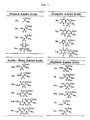
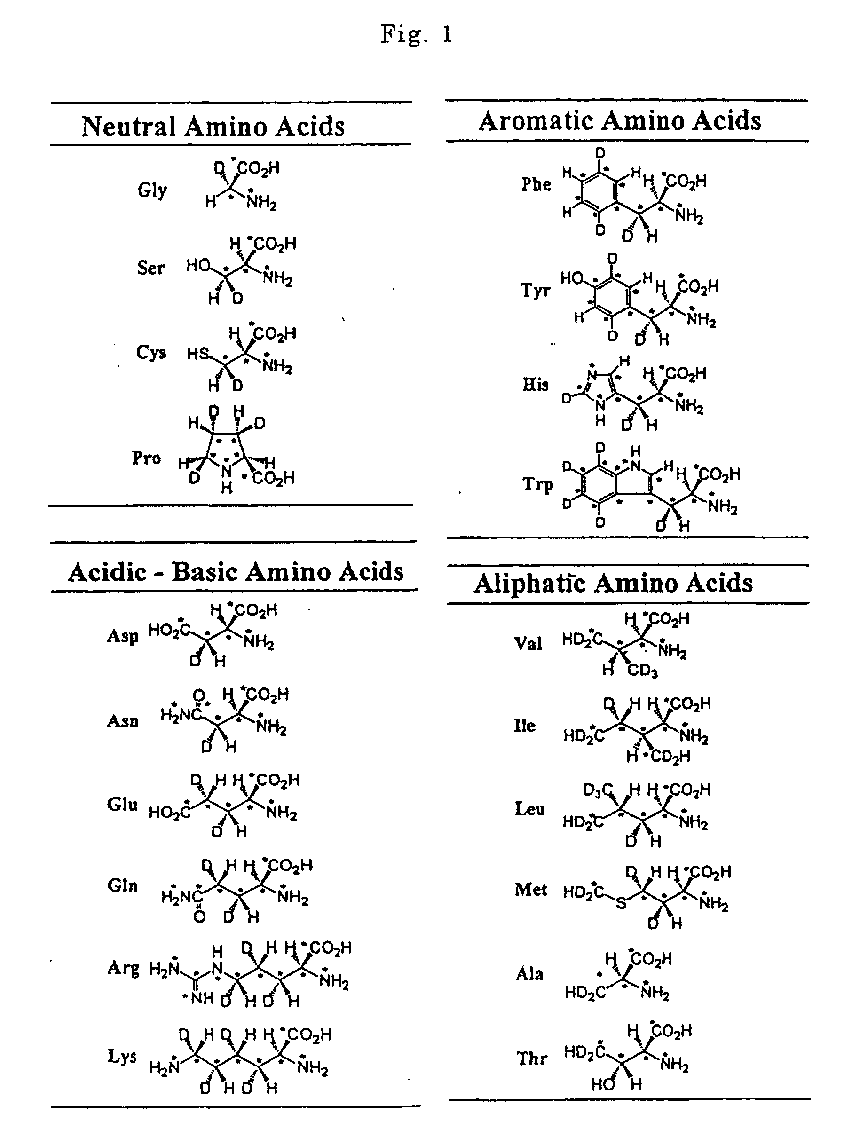
- Fig. 1 shows structures of 20 stable isotope-labeled amino acids designed from the amino acids constituting protein by combining all of these techniques.
- the target of the patterns shown in Fig. 1 is the application of them to the determination of the stereostructure of protein. Further, various designs are also possible according to the necessary structure information or properties of the target protein.
- a preferred method comprises cell-free protein synthesis system by using a combination of the above-described stable isotope-labeled amino acids as the whole amino acids constituting the target protein to prepare the target protein comprising the stable isotope-labeled amino acids.
- a preferred method is that for analyzing NMR structure of a target protein, which comprises analyzing the structure of a target protein in which all amino acids constituting the target protein are replaced with the above-described stable isotope-labeled amino acids by NMR spectral determination.
- the stable isotope-labeled acetic acid and stable isotope-labeled bromoacetic acid used as the starting materials may be of any labeling pattern or, in other words, they may have the stable isotope in any position. Further, the position into which the stable isotope is to be introduced and the number of the stable isotopes are not limited. Namely, two or more stable isotopes may be incorporated thereinto.
- the stable isotope-labeled acetic acids are, for example, [1- 13 C] acetic acid, [2- 13 C] acetic acid, [1,2- 13 C 2 ] acetic acid, [2- 2 H 3 ; 1- 13 C] acetic acid, [2- 2 H 3 ; 2- 13 C] acetic acid and [2- 2 H 3 ; 1,2- 13 C 2 ] acetic acid.
- the stable isotope-labeled bromoacetic acids are, for example, [1- 13 C] bromoacetic acid, [2- 13 C] bromoacetic acid, [1,2- 13 C 2 ] bromoacetic acid, [2- 2 H 3 -; 1- 13 C] bromoacetic acid, [2- 2 H 3 ; 2- 13 C] bromoacetic acid and [2- 2 H 3 ; 1,2- 13 C 2 ] bromoacetic acid.
- the coupling of the stable isotope-labeled acetic acid and the stable isotope-labeled bromoacetic acid is carried out after tert-butyl-esterifying them.
- the method for the tert-butyl-esterification is not particularly limited.
- acetic acid can be esterified by known methods such as a method wherein tert-butyl alcohol and calcium carbide are used [chemical formula (I)] described in R. V. Oppenauer, et al., Monatsh, Chem. 97, 62, 1966 and R. S. Monson, "Advanced Organic Synthesis, Methods and Techniques", Academic, 1971, p.
- bromoacetic acid can be esterified by an ordinary method such as a method of any of following chemical formulae (IV) to (VI):
- a method which is easy and most preferred comprises hermetically containing each of the stable isotope-labeled acetic acid and the stable isotope-labeled bromoacetic acid with liquefied isobutene in the presence of an acid catalyst in a reaction apparatus and stirring them at room temperature.
- an acid catalyst used in this method is not particularly limited, various ion exchange resins are preferably used as the catalyst fixed on a carrier because such a catalyst can be easily removed (see, for example, J. Chem. Soc., Perkin Trans. 1, 3815-4195, 2000). Concrete examples of those resins include sulfonic acid type cation exchange resins [for example, Dowex (registered trade name) W-X8 of Dow Co. and Amberlyst (registered trade name) R15 of Rohm Haas Co.]. These cation exchange resin catalysts can be easily removed by the filtration.
- the reaction conditions such as the amount of isobutene and catalyst, temperature and time are not particularly limited.
- the amount of isobutene is at least 1 equivalent per equivalent of acetic acid.
- the amount of Amberlyst (registered trade name) R 15 may be at least 1 wt. %. Even when Amberlyst R15 is used in an amount of 1 wt. %, the tert-butyl esterification proceeds to form a sufficiently high yield of the product.
- the reaction temperature may be as low as 0°C to around room temperature. Under these conditions, the reaction is completed within 3 hours and the t-butyl esterification reaction proceeds to bring a yield of as high as at least 90 %. Therefore, the product can be used in the subsequent step without the purification.
- the stable isotope-labeled tert-butyl acetate and stable isotope-labeled tert-butyl bromoacetate obtained as described above can be coupled by various organic synthesis reactions.
- the methods are, for example, a method (VII) wherein an acetic acid ester is oxidatively dimerized as described in Leo A. Paquette et al., J. Org. Chem., 60, 7277, 1995, and a method (IX) wherein an acetic acid ester is iodized and then converted into a succinic ester (VIII) and then this ester is converted into fumaric acid with various reagents (IX).
- a method for synthesizing a succinic acid derivative though a selenenyl intermediate is employed.
- stable isotope labeled tert-butyl acetate is converted into a corresponding enolate.
- this compound is brought into contact with strongly basic lithium diisopropylamide (LDA) to form a corresponding lithium enolate.
- LDA strongly basic lithium diisopropylamide
- An organoselenium compound such as phenylselenenyl chloride, phenylselenenyl bromide or phenylselenenyl iodide is added thereto.
- LDA lithium hexamethyldisiloxane
- NaHMDS sodium hexamethyldisiloxane
- n-BuLi butyl lithium
- the reaction is desirably carried out under dehydration conditions in an inert gas atmosphere such as nitrogen or helium atmosphere.
- the reaction is preferably conducted in a solution in a suitable organic solvent such as THF, DME, ether, DMPU (N,N'-dimethylpropyleneurea).
- Di-tert-butyl 2-phenylselenenylsuccinate obtained by the above-described reaction method is oxidized to obtain di-tert-butyl fumarate.
- the oxidation method is not limited, and various well-known methods can be employed.
- peroxide such as m-chloroperbenzoic acid or hydrogen peroxide is used.
- the oganoselenium compounds are made water-soluble by oxidizing them again with hydrogen peroxide or the like, and the water soluble compounds can be removed by washing with water.
- the stable isotope-labeled fumaric acid can be obtained by hydrolyzing di-tert-butyl fumarate with an acid such as hydrochloric acid or sulfuric acid.
- this compound when the intended compound is a stable isotope-labeled fumaric ester derivative, this compound may be synthesized from tert-butyl fumarate by various organic synthesis techniques without the hydrolysis in the last step.
- the present invention also provides a method for obtaining stable isotope-labeled tartaric acid from the stable isotope-labeled fumaric acid obtained as described above.
- regio-selectively stable isotope-labeled fumaric acid is converted into diethyl fumarate and then the ester thus obtained is asymmetrically dihydroxylated to obtain diethyl tartrate.
- diethyl fumarate can be obtained by bringing thionyl chloride into contact with fumaric acid and dissolving the product in diethyl ether.
- asymmetric dihydroxylating reagent for example, osmium oxide having various ligands as described in Hartmuth C. Kolb et al., Chem. Rev., 94, 2483, 1994 can be used.
- AD-mix- ⁇ and Ad-mix- ⁇ developed by K. B. Sharpless et al. are preferably used.
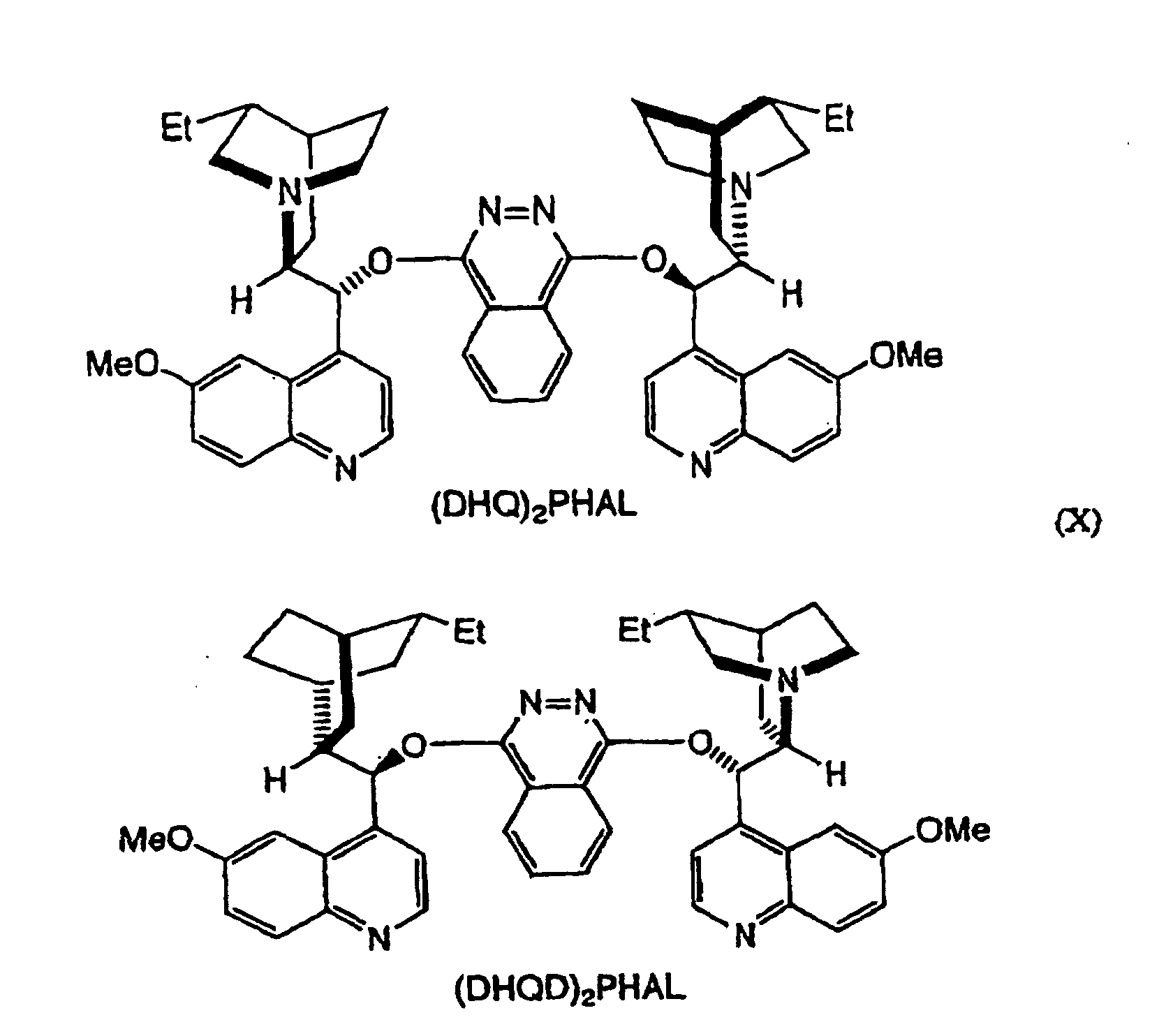
- Both AD-mix- ⁇ and Ad-mix- ⁇ contain potassium osmate, potassium hexacyanoferrate (III), potassium carbonate and chiral ligand (DHQ) 2 PHAL or (DHQD) 2 PHAL (chemical formula (X)).
- asymmetric dihydroxylating agents can be used in addition to those described above.
- either D-diethyl tartrate or L-diethyl tartrate is selectively used.
- AD-mix- ⁇ diethyl D-tartrate having an optical purity of as high as 99 %ee or higher is obtained.
- Diethyl tartrate thus obtained is hydrolyzed to obtain stable isotope-labeled tartaric acid.
- the intended compound when the intended compound is a stable isotope-labeled tartaric ester derivative, the intended compound can be synthesized from diethyl tartrate by various organic synthesis techniques without the final hydrolysis step.
- the reaction proceeds at a low temperature of not higher than room temperature in a relatively short time in all the steps in the process of the present invention for producing stable isotope-labeled fumaric acid and stable isotope-labeled tartaric acid. Further, the yield is as high as at least 60 to 90 % in all the reaction steps.
- stable isotope-labeled acetic acid used as the starting material is relatively inexpensive (for example, about 5,000 yen/10 g to about 60,000 yen/g) depending on the position of the labeling.
- the process of the present invention is useful for synthesizing regio-selectively synthesizing stable isotope-labeled fumaric acid or stable isotope-labeled tartaric acid on a large scale.
- Steps 1 to 12 illustrate the synthesis of stereo-selectively mono-deuterated (2S)-[1,2- 13 C 2 ;2- 15 N;2- 2 H]glycine (hereinafter referred to as SSD-glycine) according to the following scheme 1:
- SSD-glycine (13b) having a reverse configuration at the 2-position can be synthesized.
- compound (5) (5.0 g, 11.72 mmol) was dissolved in diethyl ether (300 ml), and the obtained solution was cooled to 0°C in argon atmosphere.
- Magnesium dibromide / diethyl ether complex (17.96 g, 69.54 mmol) was added to the obtained solution, and they were stirred for 5 minutes.
- lithium tri-tert-butoxyaluminum deuteride (8.88 g, 34.77 mmol) was added thereto, and they were stirred at 0°C for 4 hours.
- 30 ml of 1 N hydrochloric acid was added to the reaction mixture at 0°C, and they were stirred for 10 minutes.
- the organic layer was washed with brine (100 ml x 1), dried over magnesium sulfate and concentrated under reduced pressure to obtain compound (6b).
- Proline cis-trans isomerase EPPlb (molecular weight: 18 kDa) from Escherichia coli was used as the model protein for establishing a process for highly selectively incorporating the above-described SSD-glycine (13a and 13b).
- EPPlb molecular weight: 18 kDa
- SSD-glycine 13a and 13b
- SHMT serine hydroxymethyl transferase
- the inventors of the present invention have succeeded in the preparation of isotope-labeled EPPlb ⁇ the labels being two kinds of SSD-glycine and (2S)- and (3R)-[1,2- 13 C 2 ; 1- 15 N; 2- 2 H]-Gly ⁇ by an in vitro protein synthesizing method with S30 cell-free extract (hereinafter referred to as "cell-free protein synthesis system") while a high stereo-selectivity is kept because the protein-synthesizing function is not lowered even by the addition of a sufficient amount of cycloserine known to be an inhibitor for SHMT.
- cell-free protein synthesis system S30 cell-free extract
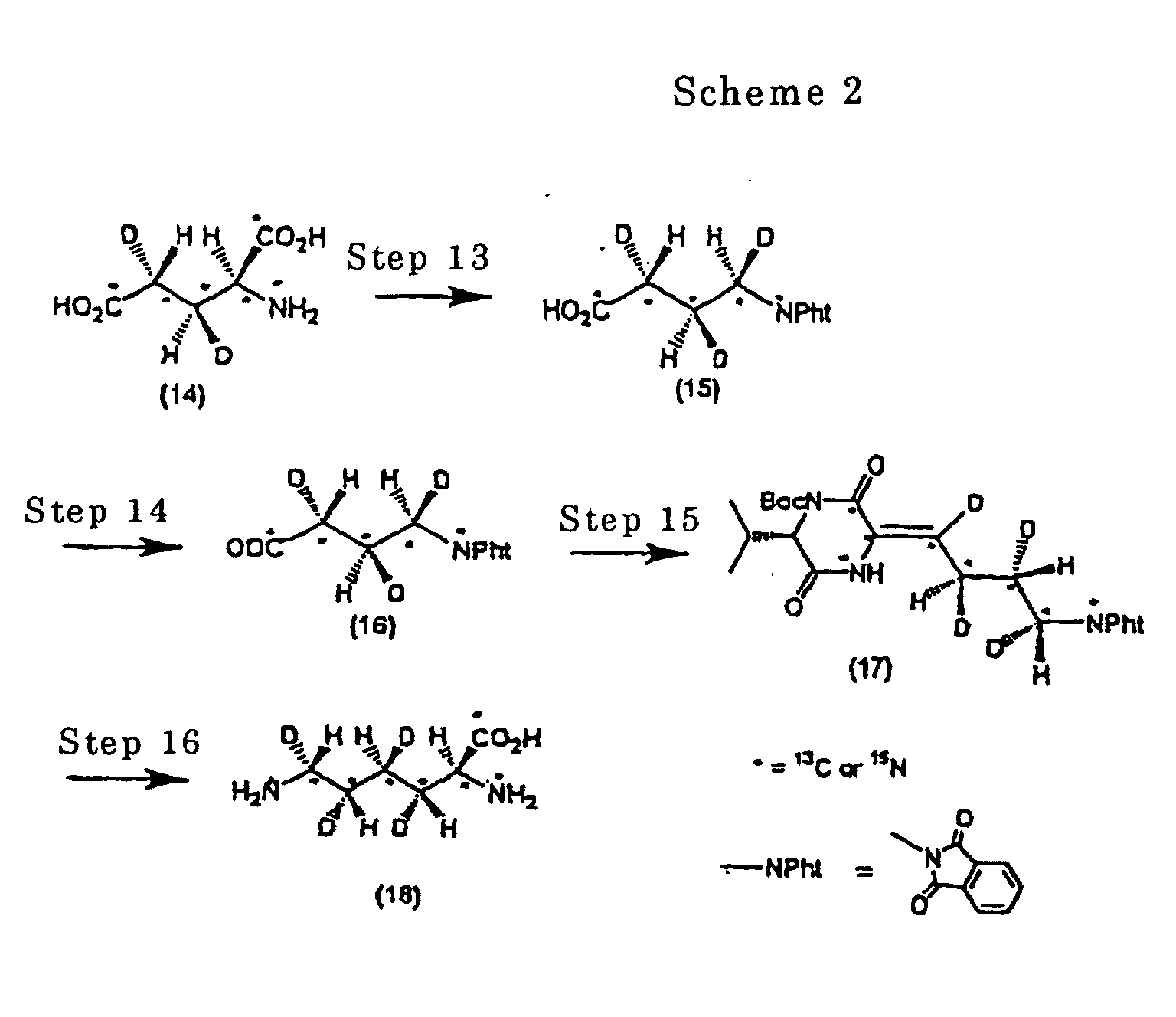
- SAD-glutamic acid (14) (25.02 mmol) derived from uniformly 13 C-labeled L-glutamic acid by a method descried in a literature (M. Oba, et al., J. Org. Chem. 64, 9275, 1999) was dissolved in 0.2 M solution (200 ml) of pyridine hydrochloride in deuterium oxide. The pH of the obtained solution was adjusted at 5 with pyridine containing pyridoxalphosphate (200 mg) and dithiothreitol (120 mg).
- SAD-lysine-labeled EPP1b was prepared by adding SAD-lysine by a method described in a thesis (E. Kariya et al., J. Biomol. NMR 18, 75-76, 2000).
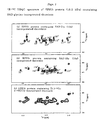
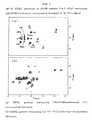
- HCCH TOCSY spectra of EPPlb sample containing SAD-lysine incorporated thereinto were determined.
- Fig. 3 shows the comparison of the results with those of protein containing [ul- 13 C; 15 N]-lysine obtained by an ordinary method. It is apparent from Fig. 3 that protein containing SAD-lysine is more simplified than the protein obtained by the ordinary method. Because the signals of side chains of long-chain amino acids were highly sensitively observed, NMR signals of the side chain of the long-chain amino acids which could not be utilized so far are now utilizable for obtaining the structure information.
- a protein sample containing the above-described SAD-glutamine (19) incorporated thereinto was prepared by adding methionine sulfoximine and 6-diazo-5-oxonorleucine which inhibit enzymes concerning the conversion of SAD-glutamine and glutamic acid - glutamine to EPPlb protein as the model protein under conditions described in a thesis (E. Kariya et al., J. Biomol. NMR 18, 75-76, 2000).
- Those labeled products could not be prepared by ordinary in vivo protein preparation method because conditions required for inhibiting the metabolic change and for producing protein could not be established.
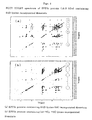
- HCCH TOCSY spectra of EPPlb sample containing SAD-glutamine incorporated thereinto were determined.
- Fig. 4 shows the comparison of the results with those of protein containing [ul- 13 C; 15 N]-glutamine obtained by an ordinary method. It is apparent from Fig. 4 that protein containing SAD-glutamine is more simplified than the protein obtained by the ordinary method. Because the signals of side chains of long-chain amino acids were observed highly sensitively, NMR signals of the side chain of the long-chain amino acids which could not be utilized so far are now utilizable for obtaining the structure information.
- 3,3-Dimethylpropyleneurea (1.45 ml, 11.8 mmol) was added to 1 M hexamethyldisilazane sodium amide / tetrahydrofuran solution (11.8 ml, 11.8 mmol), and they were stirred at 0°C for 10 minutes.
- the reaction solution was cooled to -78°C.
- a solution (10 ml) of compound (23) (1.90 g, 5.64 mmol) in tetrahydrofuran was added thereto and they were stirred at that temperature for 30 minutes.
- Tributyltin hydride (0.21 g, 0.70 mmol) and azobisisobutyronitrile (AIBN) (7.7 mg) were added to a solution (10 ml) of compound (32) (0.199 g, 0.468 mmol) in benzene, and they were stirred for 1 hour. The solvent was evaporated. 1 M hydrochloric acid (15 ml) was added to the residue, and they were refluxed at 130°C for 1 hour. The aqueous layer was washed with chloroform and then concentrated under reduced pressure. After the ion exchange with Dowex 50W-X8, SAD/PDM-leucine (33) (0.0486 g, 0.34 mmol, 73 %) was obtained.
- a protein sample containing the above-described SAD/PDM-leucine incorporated thereinto was prepared by adding SAD/PDM-leucine to EPPlb protein as the model protein under conditions described in a thesis (E. Kariya et al., J. Biomol. NMR 18, 75-76, 2000).
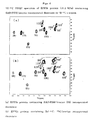
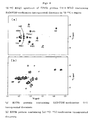
- FIGs. 5 and 6 show the comparison of the results with those of protein containing [ul- 13 C; 15 N]-leucine obtained by an ordinary method. It is apparent from Figs. 5 and 6 that signals of protein containing SAD/PDM-leucine is more simplified than those of the protein obtained by the ordinary method. It is to be noted that one of methyl groups in leucine was completely deuterated and carbon atom was kept as nuclear spin-free 12 C, while in the other methyl group, two of the three hydrogen atoms are deuterated and the remaining hydrogen atom, which was the minimum necessary hydrogen atom, was kept for obtaining the structure.
- the central carbon atom is replaced with 13 C for the NMR determination and assignment.
- the line width is reduced as the proton density is lowered to almost completely compensate for the reduction in number of protons in the deuteration.
- the determination sensitivity is expected to be rather remarkably improved as compared with that of ordinary methods.
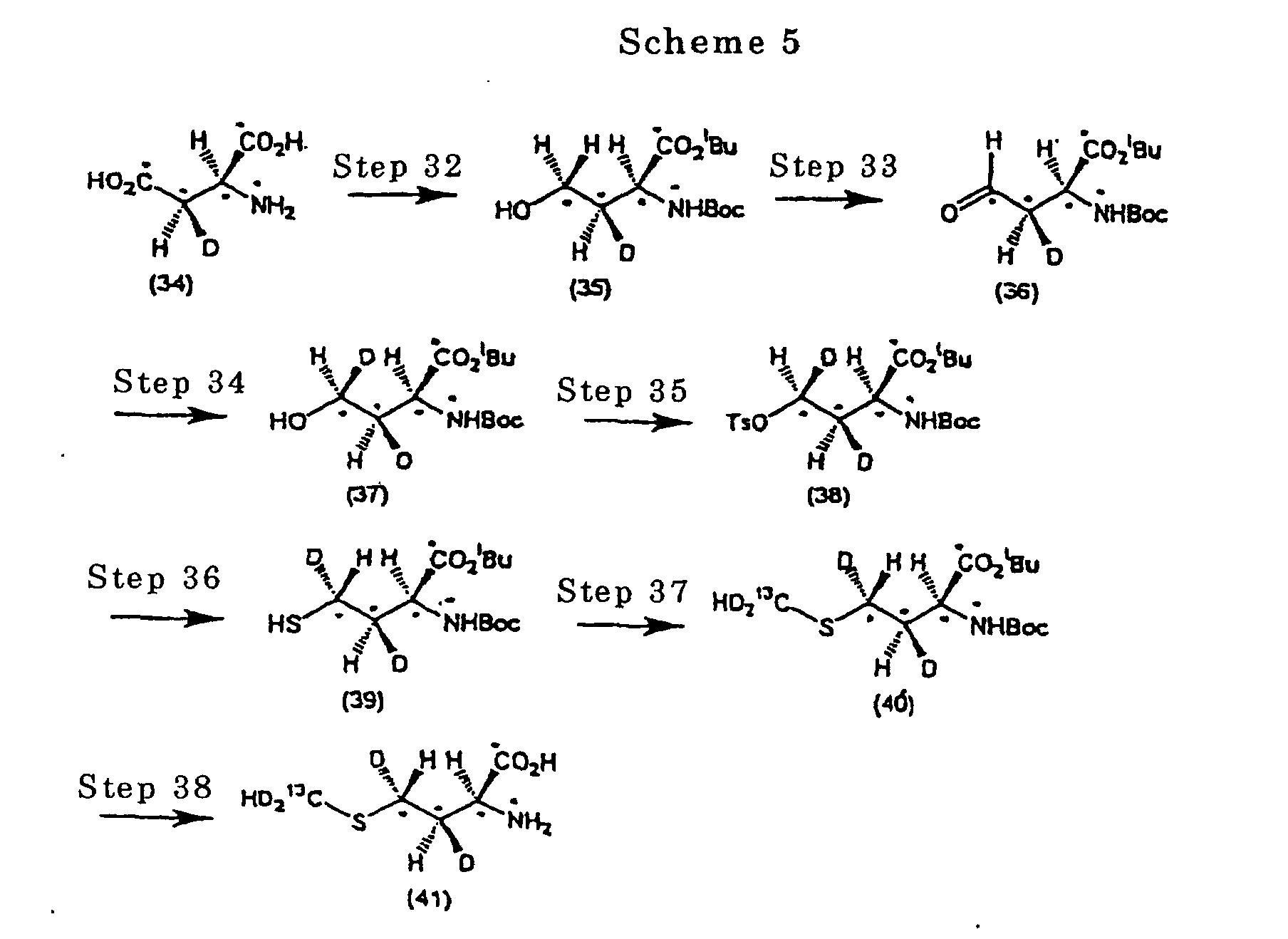
- Steps 32 to 38 illustrate the synthesis of (2S, 3R, 4R)-[1,2,3,4,6- 13 C 5 ;2- 15 N;3,4,6,6- 2 H 4 ]methionine (hereinafter referred to as SAD/PDM-methionine) according to the following scheme 5:
- a protein sample containing the above-described SAD/PDM-methionine incorporated thereinto was prepared by adding SAD/PDM-methionine to EPPlb protein as the model protein under conditions described in a thesis (E. Kariya et al., J. Biomol. NMR 18, 75-76, 2000).
- FIG. 7 shows the comparison of the results with those of protein containing [ul- 13 C; 15 N]-methionine obtained by an ordinary method. It is apparent from Fig. 7 that protein containing SAD/PDM-methionine is more simplified than the protein obtained by the ordinary method. Because the signals of side chains of long-chain amino acids could be observed highly sensitively, NMR signals of the side chain of the long-chain amino acids which could not be utilized so far are now utilizable for obtaining the structure information.
- a protein sample containing the above-described stereo-selectively deuterium-labeled aromatic acid was prepared by using EPPlb protein as the model protein under conditions described in a thesis (E. Karia et al., J. Biomol. NMR 18, 75-76, 2000).
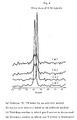
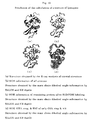
- FIG. 8 shows the comparison of the results with those obtained by an ordinary method. It is apparent from Fig. 8 that NMR spectra of protein containing SSD-labeled amino acids are simplified (c and d), while NMR spectra of protein obtained by the ordinary method are not simple (a and b). The assignment of stereospecific signals without error is also possible.
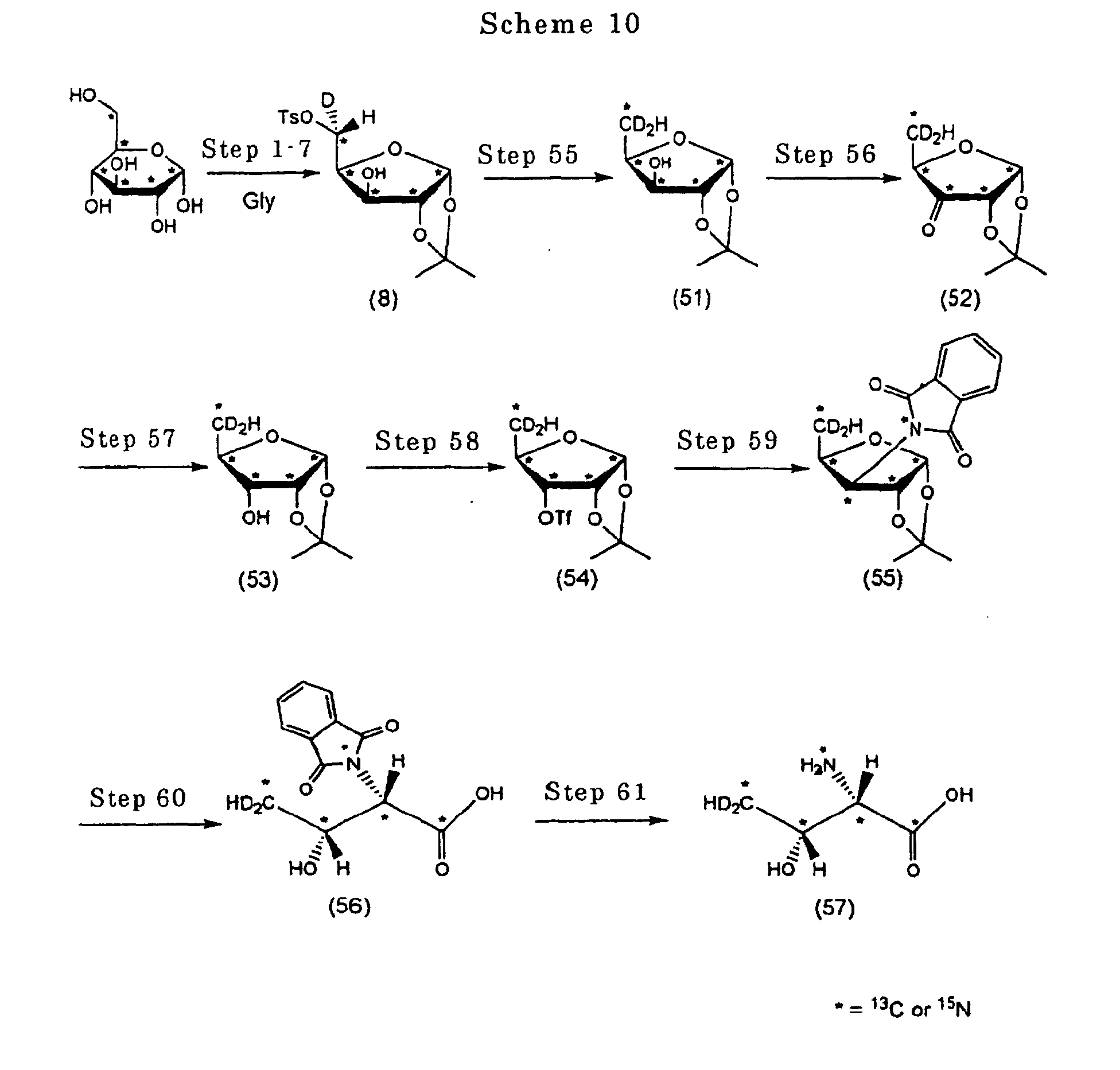
- SAIL amino acids other than those synthesized in the above-described Examples i. e. SAIL alanine, SAIL valine, SAIL isoleucine, SAIL serine, SAIL proline and SAIL arginine, were synthesized by methods described below.
- SAIL valine was synthesized by partially changing a method described in a literature (Jack E. Baldwin et al., Tetrahedron, 51, 4089-4100 (1995)) so as to obtain the intended labeled pattern (scheme 6). Namely, [1,2,3,4- 13 C 4 ;2- 15 N]aspartic acid was used as the substrate, [ 2 H 3 ]methyl iodide was used as the methylating agent in step 39 and NaBD 4 /MeOD was used for realizing the reduction conditions in Step 40.
- SAIL proline was derived from uniformly 13 C, 15 N-labeled L-glutamic acid by a method described in a literature (M. Oba et al., J. Org. Chem. 64, 9275-9278, 1999). The structural formula of synthesized SAIL proline is shown in Fig. 1.
- SAIL arginine was synthesized according to scheme 7. Steps 41 to 43 will be illustrated in detail below.
- O-methylisourea hydrochloride (0.246 g, 2.116 mmol) and then 7.4 % aqueous sodium hydroxide solution (1.15 ml, 2.116 mmol) were added to the solution. The temperature of the obtained mixture was elevated to room temperature, and the mixture was stirred for 5 days. The reaction solution was purified with Dowex 50W-X8. Hydrochloric acid was added to arginine thus obtained to adjust pH thereof to 6. After freeze-drying, arginine hydrochloride (0.394 g, 1.765 mmol) was obtained.
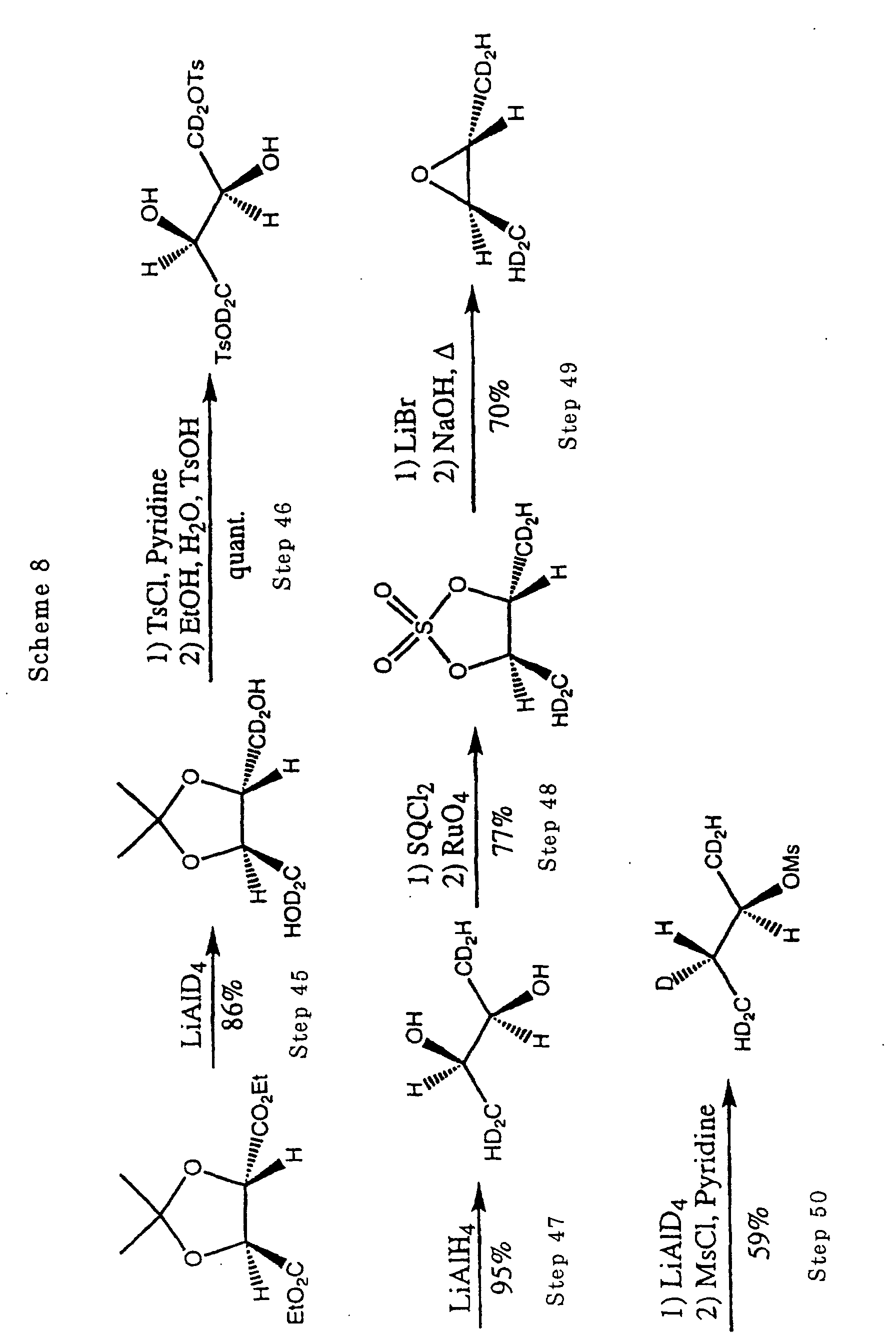
- Butanediol obtained in step 46 was converted into isobutyric acid by a method described in a literature (Richard K. Hill et al., J. Am. Chem. Soc., 102, 7344-7348, 1980).
- Step 51 Isobutyric acid obtained in Step 51 was converted into SAIL isoleucine by a method described in a literature (Nicholas M. Kelly et al., Tetrahedron Let., 37, 1517-1520, 1996).
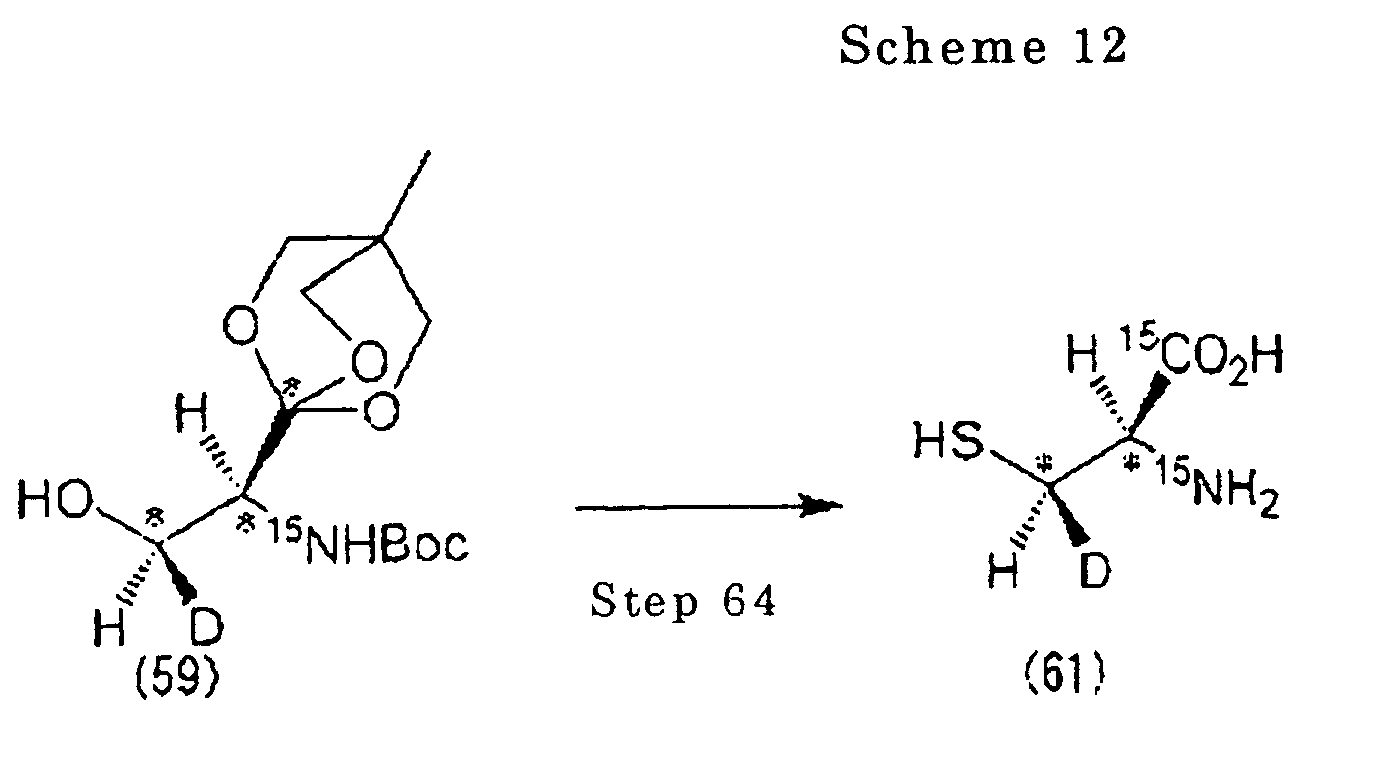
- Triphenylphosphine (2.46 mmol, 618 mg) was added to THF (6 ml), and the obtained mixture was cooled to 0C° in argon atmosphere. 40 % solution of DEAD in toluene (2.46 mmol, 1.12 ml) was added thereto.
- a solution of compound 59 (1.23 mmol, 356 mg) and thioacetic acid (2.46 mmol, 187 mg) in THF (3 ml) was added dropwise to the obtained mixture during 2 minutes. They were stirred at 0 C° for 1 hour and then at room temperature for 1 hour. After the concentration followed by the treatment with the column, compound 7 was obtained.
- SAIL aspartic acid was synthesized by using 15 N labeled ammonia gas as the nitrogen source by a method described in a literature (A. F. Beecham, J. Am. Chem. Soc., 76, 4615, 1953).
- calmodulin protein was used as the model protein.
- Calmodulin was expressed by a method established by Zubay (Protein Expression, A Practical Approach, S. J. Higgins and B. D. Hames, pp. 201 to 223, Oxford University Press) selected from methods for cell-free protein synthesis. Differences between the method of the present invention and this known method are as follows: An E. coli extract was demineralized with PD-10 column (Amersham Biotech) and a mixture of the above-described amino acids in amounts proportional to the residue numbers was used (Fig. 11). pET-3a (Novagen) having calmodulin sequence inserted thereinto was used as the calmodulin expression DNA.
- SAIL calmodulin After conducting the reaction in the cell-free synthetic system at 37C° for 8 hours, 4.4 mg of purified calmodulin was obtained from 44 mg of the amino acid mixture.
- SAIL calmodulin thus prepared had a deuteration rate of 56 %, and the number of signals in the side chains of amino acids was reduced to 60 % based on that observed when they were not labeled with deuterium.
- NMR signals due to the main chain and side chains of calmodulin 1 H- 15 N HSQC, HNCA, HN(CO)CA, HNCO, HN(CA)CO, HNCACB, CBCA(CO)NH, 15 N-TOCSY, HBHA(CO)NH, HCCH-COSY, HCCH-TOCSY, TOCSY (aromatic) and NOESY (aromatic).
- deuterium decoupling by continuous waves was employed for 1 H- 13 C CT-HSQC, HNCACB, CBCA(CO)NH, HBHA(CO)NH, HCCH-COSY and HCCH-TOCSY.
- NOESY spectrum analysis and stereostructure calculation were conducted according to the assignment results of the main chain and side chain signals.
- a program CYANA the Combined assignment and dynamics algorithm for NMR applications, c by Peter Guntert
- This program was a combination of CANDID (NOESY automated analysis program) (Herrmann. T. et al., (2002). Protein NMR structure determination with automated NOE assignment using the new software CANDID and the torsion angle dynamics algorithm DYANA, J. MOL. Biol.
- DYANA torsion angle dynamics algorithm for structure calculation
- CYANA was operated on Linux cluster loaded with 14 Xeon processor. One cycle starts with NOE analysis and ends with the determination of 20 stereostructures. The cycle was repeated seven times by the automatic repetition. Data used for the final structure calculation after completion of the 7 cycles are shown in the following table: Chemical shift value 1201 Peak of 15 N-edited NOESY 1782 Peak of 13 C-edited NOESY 1853 Peak of 2D-NOESY 159
- Examples 1 to 7 show the synthesis of amino acids having various isotope-labeled patterns and also the techniques of efficiently incorporating the labeled amino acids into a target protein by the cell-free protein preparation method without the metabolic transformation or dilution. Examples 1 to 7 also show the facts that precise structure information on high-molecular protein can be obtained by the determination of NMR spectrum of the obtained, labeled protein and that this information is far superior to that of conventional isotope NMR technique.
- RSD/SSD/SAD/PDM-amino acid-labeled protein was prepared by substituting all of 20 amino acid residues constituting protein with the labeled amino acids shown in Fig. 1 and this preparation was practically used for the stereo-structural determination.
- Stable isotope-labeled fumaric acid (0.119 g, 1.027 mmol) obtained in Example 8 was dissolved in ethanol. The obtained solution was cooled to 0°C and then 2.5 equivalents of thionyl chloride was added dropwise thereto. The temperature was elevated to room temperature and the obtained mixture was stirred for 2 hours.
- the reaction mixture was concentrated to remove sulfur dioxide and then the residue was dissolved in diethyl ether.
- the obtained solution was washed with saturated aqueous sodium hydrogencarbonate solution and then dried over anhydrous magnesium sulfate. After the filtration by suction and the concentration, diethyl fumarate was obtained.
- 1HNMR was 13 C decoupled ( 1 H[ 13 C]NMR) with Valian INOVA 300, and the data were compared with those of non-labeled sample to obtain the results.
- the deuteration in the whole protein and the improvement in the sensitivity of the remaining signals are made possible.
- rapid, accurate signal analysis of high-molecular protein and highly precise stereostructure determination thereof are made possible over the range of the conventional techniques.
- the present invention and the technique of determining the structure clearly assumed as an extension of the invention are very effective in determining the structure with a high accuracy at a high throughput.
- modes 4 to 7 in the present invention provide the method for efficiently producing regio-selectively stable isotope-labeled fumaric acid and tartaric acid, which could not be easily obtained in the prior art, by coupling stable isotope-labeled acetic acid and stable isotope-labeled bromoacetic acid which are inexpensive stable isotope reagents. According to this method, isotope-labeled fumaric acid and tartaric acid of any desired pattern can be produced, and the yield and optical purity of the products are high.
- stable isotope-labeled fumaric acid and stable isotope-labeled tartaric acid are used in, for example, the analysis of the stereostructure of protein and the demand thereof is increasing.
- the method of the present invention for producing the regio-selectively stable isotope-labeled fumaric acid and tartaric acid can be considered to be highly utilizable.
Landscapes
- Chemical & Material Sciences (AREA)
- Organic Chemistry (AREA)
- Genetics & Genomics (AREA)
- Medicinal Chemistry (AREA)
- Life Sciences & Earth Sciences (AREA)
- Biochemistry (AREA)
- Biophysics (AREA)
- General Health & Medical Sciences (AREA)
- Analytical Chemistry (AREA)
- Health & Medical Sciences (AREA)
- Molecular Biology (AREA)
- Proteomics, Peptides & Aminoacids (AREA)
- Engineering & Computer Science (AREA)
- Oil, Petroleum & Natural Gas (AREA)
- Organic Low-Molecular-Weight Compounds And Preparation Thereof (AREA)
- Peptides Or Proteins (AREA)
- Other Investigation Or Analysis Of Materials By Electrical Means (AREA)
- Investigating Or Analysing Biological Materials (AREA)
Abstract
Description
















1H-15N HSQC, HNCA, HN(CO)CA, HNCO, HN(CA)CO, HNCACB, CBCA(CO)NH, 15N-TOCSY, HBHA(CO)NH, HCCH-COSY, HCCH-TOCSY, TOCSY (aromatic) and NOESY (aromatic).
| Chemical shift value | 1201 |
| Peak of 15N-edited NOESY | 1782 |
| Peak of 13C-edited NOESY | 1853 |
| Peak of 2D-NOESY | 159 |

Claims (23)
- A stable isotope-labeled amino acid which is at least one of amino acids constituting a protein and which has at least one of the following labeling patterns:(a) hydrogen atoms except at least one hydrogen atom in one or more methylene groups are deuterated,(b) hydrogen atoms in one of prochiral gem-methyl groups are completely deuterated,(c) hydrogen atoms in prochiral methyl groups are partially deuterated, and(d) all hydrogen atoms except one of them in methyl group are deuterated and hydrogen atoms in the aromatic ring are partially deuterated.
- The stable isotope-labeled amino acid according to claim 1, wherein all carbon atoms having the remaining hydrogen atoms in methylene group and/or methyl group are replaced with 13C.
- The stable isotope-labeled amino acid according to claim 2, wherein all nitrogen atoms are replaced with 15N.
- A combination of stable isotope-labeled amino acids constituting a target protein, wherein all amino acids constituting the target protein have the following label patterns:(a) when methylene group having two hydrogen atoms is present, one of methylene hydrogen atoms is deuterated,(b) when prochiral gem-methyl groups are present, all hydrogen atoms in one methyl group are completely deuterated and hydrogen atoms in the other methyl group are partially deuterated,(d) when methyl group other than those stated above is present, all hydrogen atoms except one of them in the methyl group are deuterated or all hydrogen atoms in the methyl group are deuterated,(e) when the aromatic ring has hydrogen atoms, the hydrogen atoms in the aromatic ring may be partially deuterated,(f) after the deuteration in above (a), (b) and (d), all carbon atoms of hydrogen atom-containing methylene group and/or methyl group are replaced with 13C, and(g) all nitrogen atoms are replaced with 15N.
- The combination of stable isotope-labeled amino acids of claim 4, wherein (e) when the aromatic ring has hydrogen atoms, the hydrogen atoms in the aromatic ring are partially deuterated.
- The combination of stable isotope-labeled amino acids of claim 5, wherein (f) all carbon atoms of hydrogen atom-containing methylene group and methyl group are replaced with 13C after the deuteration in (a), (b) and (d).
- The combination of stable isotope-labeled amino acids of claim 6, wherein carbon atoms constituting carbonyl group and guanidyl group in the amino acids are replaced with 13C.
- A method for incorporating the stable isotope-labeled amino acid(s) set forth in claim 1 into a target protein, which comprises performing the incorporation by cell-free protein synthesis.
- A method for producing a target protein composed of stable isotope-labeled amino acids, which comprises synthesizing the cell-free protein by using the combination of the stable isotope-labeled amino acids set forth in claim 4 as all the amino acids constituting the target protein.
- The method for producing a target protein according to claim 9 wherein the combination of stable isotope-labeled amino acids of claim 5 is used as the all amino acids constituting the target protein.
- The method for producing a target protein according to claim 9 wherein the combination of stable isotope-labeled amino acids of claim 6 is used as the all amino acids constituting the target protein.
- The method for producing a target protein according to claim 9 wherein the combination of stable isotope-labeled amino acids of claim 7 is used as the all amino acids constituting the target protein.
- A method for NMR analyzing the structure of protein, which comprises incorporating the stable isotope-labeled amino acid of claim 1 into a target protein and determining NMR spectrum to analyze the structure.
- A method for NMR analyzing the structure of a target protein, which comprises analyzing the structure of the target protein, in which all the amino acids constituting the target protein are replaced with the stable isotope-labeled amino acids of claim 4, by NMR spectral determination.
- The method for NMR analyzing the structure of a target protein according to claim 14 wherein all the amino acids constituting the target protein are replaced with the stable isotope-labeled amino acids of claim 5.
- The method for NMR analyzing the structure of a target protein according to claim 14 wherein all the amino acids constituting the target protein are replaced with the stable isotope-labeled amino acids of claim 6.
- The method for NMR analyzing the structure of a target protein according to claim 14 wherein all the amino acids constituting the target protein are replaced with the stable isotope-labeled amino acids of claim 7.
- A method for producing regio-selectively stable isotope-labeled fumaric acid, which comprises coupling stable isotope-labeled acetic acid with stable isotope-labeled bromoacetic acid.
- A method for producing regio-selectively stable isotope-labeled fumaric acid, which comprises tert-butyl-esterifying stable isotope-labeled acetic acid and stable isotope-labeled bromoacetic acid, oxidatively coupling them and hydrolyzing the product with an acid.
- The method according to claim 19, which comprises bringing stable isotope-labeled acetic acid and stable isotope-labeled bromoacetic acid into contact with liquefied isobutene in the presence of an acid catalyst to convert the stable isotope-labeled acetic acid and stable isotope-labeled bromoacetic acid into tert-butyl esters thereof.
- A method for producing regio-selectively stable isotope-labeled fumaric acid, which comprises converting tert-butyl acetate obtained from stable isotope-labeled acetic acid into enolate thereof, adding tert-butyl bromoacetate obtained from stable isotope-labeled bromoacetic acid thereto in the presence of an organoselenium compound, oxidizing the obtained compound and hydrolyzing the product.
- A method for producing stable isotope-labeled tartaric acid, which comprises oxidizing the stable isotope-labeled fumaric acid produced by the method of claim 18 with an asymmetric dihydroxylating agent and hydrolyzing the obtained product.
- The method for producing stable isotope-labeled tartaric acid according to claim 22, wherein the asymmetric dihydroxylating agent is selected from the group consisting of AD-mix- α and AD-mix-β.
Applications Claiming Priority (5)
| Application Number | Priority Date | Filing Date | Title |
|---|---|---|---|
| JP2001386823 | 2001-12-19 | ||
| JP2001386823 | 2001-12-19 | ||
| JP2002022446 | 2002-01-30 | ||
| JP2002022446 | 2002-01-30 | ||
| PCT/JP2002/013303 WO2003053910A1 (en) | 2001-12-19 | 2002-12-19 | Stable isotope-labeled amino acid, method of integrating the same into target protein, method of nmr structural analysis of protein and process for producing site-selective stable isotope-labeled fumaric acid and tartaric acid |
Publications (4)
| Publication Number | Publication Date |
|---|---|
| EP1457482A1 true EP1457482A1 (en) | 2004-09-15 |
| EP1457482A4 EP1457482A4 (en) | 2007-09-05 |
| EP1457482B1 EP1457482B1 (en) | 2012-01-18 |
| EP1457482B9 EP1457482B9 (en) | 2012-10-24 |
Family
ID=26625157
Family Applications (1)
| Application Number | Title | Priority Date | Filing Date |
|---|---|---|---|
| EP02793357A Expired - Lifetime EP1457482B9 (en) | 2001-12-19 | 2002-12-19 | Stable isotope-labeled amino acid, method of integrating the same into target protein, method of NMR structural analysis of protein |
Country Status (8)
| Country | Link |
|---|---|
| US (1) | US7022310B2 (en) |
| EP (1) | EP1457482B9 (en) |
| JP (1) | JP4340538B2 (en) |
| AT (1) | ATE541829T1 (en) |
| AU (1) | AU2002359993A1 (en) |
| CA (1) | CA2471105C (en) |
| DK (1) | DK1457482T3 (en) |
| WO (1) | WO2003053910A1 (en) |
Cited By (5)
| Publication number | Priority date | Publication date | Assignee | Title |
|---|---|---|---|---|
| EP1678198A4 (en) * | 2003-10-07 | 2007-12-05 | Prospect Pharma | Side chain deuterated amino acids and methods of use |
| EP1995324A1 (en) * | 2007-05-22 | 2008-11-26 | ETH Zurich | Cell-free protein synthesis of deuterated proteins for structural and functional studies by NMR spectroscopy |
| US8022173B2 (en) | 2006-02-27 | 2011-09-20 | Japan Science And Technology Agency | Stable isotope-labeled aliphatic amino acids, method for incorporating the same in target protein and method for NMR-structural analysis of proteins |
| US8440169B2 (en) | 2003-10-31 | 2013-05-14 | Japan Science And Technology Agency | Stable isotope-labeled aromatic amino acids, method for incorporating the same in target protein and method for NMR-structural analysis of proteins |
| WO2018157942A1 (en) | 2017-03-03 | 2018-09-07 | Nmr - Bio | Cell-free synthesis of isotopic labelled proteins from amino-acids precursors |
Families Citing this family (9)
| Publication number | Priority date | Publication date | Assignee | Title |
|---|---|---|---|---|
| EP1551291A4 (en) * | 2002-06-10 | 2007-11-28 | Prospect Pharma | Method for obtaining dynamic and structural data pertaining to proteins and protein/ligand complexes |
| JP2005314398A (en) * | 2004-03-30 | 2005-11-10 | Wako Pure Chem Ind Ltd | Heavy-nitrogenized nitrobenzenesulfonamide, its derivative and production method thereof |
| JP2007246481A (en) * | 2006-03-17 | 2007-09-27 | Japan Science & Technology Agency | Method for synthesizing position- and stereoselective stable isotope-labeled serine, cystine and alanine |
| WO2008146100A1 (en) * | 2007-06-01 | 2008-12-04 | INSERM (Institut National de la Santé et de la Recherche Médicale) | Method for absolute quantification of polypeptides |
| EP2726110A4 (en) * | 2011-07-01 | 2015-07-01 | Niki Zacharias Millward | Compositions and methods for metabolic imaging |
| US9739732B2 (en) | 2012-08-16 | 2017-08-22 | Taiyo Nippon Sanso Corporation | Stable isotope-labeled aliphatic amino acid and NMR structural analysis of protein using same |
| US9366678B2 (en) * | 2012-10-25 | 2016-06-14 | Wisconsin Alumni Research Foundation | Neutron encoded mass tags for analyte quantification |
| JP7755328B2 (en) * | 2021-09-09 | 2025-10-16 | 国立大学法人九州大学 | Deuterium-enriched composition, method for producing deuterium-substituted carboxylic acid, reaction promoter and use of compound for converting carboxylic acid to acid anhydride |
| CN114751801B (en) * | 2022-05-20 | 2022-12-27 | 安徽贵朋功能材料科技有限公司 | Method for preparing deuterated amino acid ester by photocatalysis |
Family Cites Families (5)
| Publication number | Priority date | Publication date | Assignee | Title |
|---|---|---|---|---|
| CA1315801C (en) * | 1987-07-13 | 1993-04-06 | Richard Jay Bosch | Process for the production of high purity tartaric acid |
| JP2518917B2 (en) * | 1989-02-07 | 1996-07-31 | 日本電子株式会社 | Protein structure analysis method |
| JP3145431B2 (en) * | 1991-08-20 | 2001-03-12 | 日本酸素株式会社 | Method for producing stable isotope-labeled protein and reagent kit |
| US5393669A (en) * | 1993-02-05 | 1995-02-28 | Martek Biosciences Corp. | Compositions and methods for protein structural determinations |
| US6111066A (en) * | 1997-09-02 | 2000-08-29 | Martek Biosciences Corporation | Peptidic molecules which have been isotopically substituted with 13 C, 15 N and 2 H in the backbone but not in the sidechains |
-
2002
- 2002-12-19 EP EP02793357A patent/EP1457482B9/en not_active Expired - Lifetime
- 2002-12-19 AU AU2002359993A patent/AU2002359993A1/en not_active Abandoned
- 2002-12-19 DK DK02793357.1T patent/DK1457482T3/en active
- 2002-12-19 JP JP2003554627A patent/JP4340538B2/en not_active Expired - Lifetime
- 2002-12-19 CA CA002471105A patent/CA2471105C/en not_active Expired - Fee Related
- 2002-12-19 WO PCT/JP2002/013303 patent/WO2003053910A1/en not_active Ceased
- 2002-12-19 AT AT02793357T patent/ATE541829T1/en active
-
2004
- 2004-06-18 US US10/872,163 patent/US7022310B2/en not_active Expired - Lifetime
Cited By (7)
| Publication number | Priority date | Publication date | Assignee | Title |
|---|---|---|---|---|
| EP1678198A4 (en) * | 2003-10-07 | 2007-12-05 | Prospect Pharma | Side chain deuterated amino acids and methods of use |
| US8440169B2 (en) | 2003-10-31 | 2013-05-14 | Japan Science And Technology Agency | Stable isotope-labeled aromatic amino acids, method for incorporating the same in target protein and method for NMR-structural analysis of proteins |
| US8022173B2 (en) | 2006-02-27 | 2011-09-20 | Japan Science And Technology Agency | Stable isotope-labeled aliphatic amino acids, method for incorporating the same in target protein and method for NMR-structural analysis of proteins |
| DE112007000484B4 (en) * | 2006-02-27 | 2013-08-08 | Japan Science And Technology Agency | Stable isotope-labeled aliphatic amino acids, methods for introducing them into a target protein, and methods for NMR conformational analysis of proteins |
| EP1995324A1 (en) * | 2007-05-22 | 2008-11-26 | ETH Zurich | Cell-free protein synthesis of deuterated proteins for structural and functional studies by NMR spectroscopy |
| WO2008141795A3 (en) * | 2007-05-22 | 2009-03-05 | Eth Zuerich | Cell-free protein synthesis of deuterated proteins for structural and functional studies by nmr spectroscopy |
| WO2018157942A1 (en) | 2017-03-03 | 2018-09-07 | Nmr - Bio | Cell-free synthesis of isotopic labelled proteins from amino-acids precursors |
Also Published As
| Publication number | Publication date |
|---|---|
| AU2002359993A1 (en) | 2003-07-09 |
| EP1457482A4 (en) | 2007-09-05 |
| DK1457482T3 (en) | 2012-02-27 |
| JPWO2003053910A1 (en) | 2005-04-28 |
| EP1457482B9 (en) | 2012-10-24 |
| US7022310B2 (en) | 2006-04-04 |
| US20050084452A1 (en) | 2005-04-21 |
| WO2003053910A1 (en) | 2003-07-03 |
| CA2471105A1 (en) | 2003-07-03 |
| EP1457482B1 (en) | 2012-01-18 |
| JP4340538B2 (en) | 2009-10-07 |
| ATE541829T1 (en) | 2012-02-15 |
| CA2471105C (en) | 2010-01-12 |
Similar Documents
| Publication | Publication Date | Title |
|---|---|---|
| US7022310B2 (en) | Stable isotope-labeled amino acid and method for incorporating same into target protein | |
| AU711468B2 (en) | Compositions and methods for protein structural determinations | |
| Bang et al. | Chiral recognition of (18-crown-6)-tetracarboxylic acid as a chiral selector determined by NMR spectroscopy | |
| JP2001514239A (en) | Methods and compositions for determining NMR structures | |
| US8440169B2 (en) | Stable isotope-labeled aromatic amino acids, method for incorporating the same in target protein and method for NMR-structural analysis of proteins | |
| Isenegger et al. | Posttranslational, site-directed photochemical fluorine editing of protein sidechains to probe residue oxidation state via 19F-nuclear magnetic resonance | |
| CN110297044B (en) | Method for identifying absolute configuration and optical purity of amino acid and peptide compounds | |
| SE526214C2 (en) | One way to generate metal chelating affinity ligands | |
| JP2002518555A (en) | Fluorophenyl resin compound | |
| CA2643994C (en) | Stable isotope-labeled aliphatic amino acids, method for incorporating the same in target protein and method for nmr-structural analysis of proteins | |
| US20110309831A1 (en) | Side chain deuterated amino acids and methods of use | |
| Toyo'oka | Development of Benzofurazan− bearing Fluorescence Labeling Reagents for separation and detection in high− performance liquid chromatography | |
| Rohden et al. | Synthesis of Selectively 13C/2H/15N‐Labeled Arginine to Probe Protein Conformation and Interaction by NMR Spectroscopy | |
| CN111362958A (en) | A rhodamine-based fluorescent probe that specifically recognizes reduced GSH and its preparation method and application | |
| CN108409622B (en) | A kind of chiral α-fluorophenylacetic acid selenoate compound and its preparation and application | |
| KR100282819B1 (en) | New halogenated royal resins useful for combinatorial chemical synthesis | |
| CN111116511A (en) | A kind of benzothiazole biothiol probe and its preparation method and application | |
| NO334077B1 (en) | Stable Isotope Labeled Amino Acid and Combination thereof, Method for Preparation of a Target Protein Consisting of Stable Isotope Labeled Amino Acids and Method for NMR Analysis of the Structure of a Target Protein | |
| CN114646762A (en) | High-throughput proteome labeling reagent based on secondary mass spectrometry quantification | |
| Karnaukhova et al. | Determination of deuterium-labeled tryptophan in proteins by means of high-performance liquid chromatography and thermospray mass spectrometry | |
| CN121431742A (en) | A quantitative analysis method for thiopolyols based on HPLC-CAD | |
| Wulff | Chemistry and Mass Spectrometry for Protein Structure Determination in Living Cells | |
| Sripada | Catalytic Asymmetric CC Bond Construction Using α-Aryl-α-Fluoronitriles and Chirality Sensing of Biomolecules with Molecular Probes | |
| CN117347509A (en) | A purity detection method for 1-methyl-1,4,6,7-tetrahydro-5H-imidazo[4,5-C]pyridine-5-carboxylic acid tert-butyl ester | |
| CN113156029A (en) | Method for determining purity of aminoguanidine carbonate by liquid chromatography |
Legal Events
| Date | Code | Title | Description |
|---|---|---|---|
| PUAI | Public reference made under article 153(3) epc to a published international application that has entered the european phase |
Free format text: ORIGINAL CODE: 0009012 |
|
| 17P | Request for examination filed |
Effective date: 20040621 |
|
| AK | Designated contracting states |
Kind code of ref document: A1 Designated state(s): AT BE BG CH CY CZ DE DK EE ES FI FR GB GR IE IT LI LU MC NL PT SE SI SK TR |
|
| AX | Request for extension of the european patent |
Extension state: AL LT LV MK RO |
|
| A4 | Supplementary search report drawn up and despatched |
Effective date: 20070803 |
|
| 17Q | First examination report despatched |
Effective date: 20081104 |
|
| RTI1 | Title (correction) |
Free format text: STABLE ISOTOPE-LABELED AMINO ACID, METHOD OF INTEGRATING THE SAME INTO TARGET PROTEIN, METHOD OF NMR STRUCTURAL ANALYSIS OF PROTEIN |
|
| GRAP | Despatch of communication of intention to grant a patent |
Free format text: ORIGINAL CODE: EPIDOSNIGR1 |
|
| GRAS | Grant fee paid |
Free format text: ORIGINAL CODE: EPIDOSNIGR3 |
|
| GRAA | (expected) grant |
Free format text: ORIGINAL CODE: 0009210 |
|
| AK | Designated contracting states |
Kind code of ref document: B1 Designated state(s): AT BE BG CH CY CZ DE DK EE ES FI FR GB GR IE IT LI LU MC NL PT SE SI SK TR |
|
| REG | Reference to a national code |
Ref country code: GB Ref legal event code: FG4D |
|
| REG | Reference to a national code |
Ref country code: CH Ref legal event code: NV Representative=s name: ISLER & PEDRAZZINI AG Ref country code: CH Ref legal event code: EP |
|
| REG | Reference to a national code |
Ref country code: AT Ref legal event code: REF Ref document number: 541829 Country of ref document: AT Kind code of ref document: T Effective date: 20120215 Ref country code: IE Ref legal event code: FG4D |
|
| REG | Reference to a national code |
Ref country code: DK Ref legal event code: T3 |
|
| REG | Reference to a national code |
Ref country code: SE Ref legal event code: TRGR |
|
| REG | Reference to a national code |
Ref country code: DE Ref legal event code: R096 Ref document number: 60242041 Country of ref document: DE Effective date: 20120315 |
|
| REG | Reference to a national code |
Ref country code: NL Ref legal event code: T3 |
|
| PG25 | Lapsed in a contracting state [announced via postgrant information from national office to epo] |
Ref country code: BG Free format text: LAPSE BECAUSE OF FAILURE TO SUBMIT A TRANSLATION OF THE DESCRIPTION OR TO PAY THE FEE WITHIN THE PRESCRIBED TIME-LIMIT Effective date: 20120418 |
|
| PG25 | Lapsed in a contracting state [announced via postgrant information from national office to epo] |
Ref country code: FI Free format text: LAPSE BECAUSE OF FAILURE TO SUBMIT A TRANSLATION OF THE DESCRIPTION OR TO PAY THE FEE WITHIN THE PRESCRIBED TIME-LIMIT Effective date: 20120118 Ref country code: PT Free format text: LAPSE BECAUSE OF FAILURE TO SUBMIT A TRANSLATION OF THE DESCRIPTION OR TO PAY THE FEE WITHIN THE PRESCRIBED TIME-LIMIT Effective date: 20120518 Ref country code: GR Free format text: LAPSE BECAUSE OF FAILURE TO SUBMIT A TRANSLATION OF THE DESCRIPTION OR TO PAY THE FEE WITHIN THE PRESCRIBED TIME-LIMIT Effective date: 20120419 |
|
| REG | Reference to a national code |
Ref country code: AT Ref legal event code: MK05 Ref document number: 541829 Country of ref document: AT Kind code of ref document: T Effective date: 20120118 |
|
| PG25 | Lapsed in a contracting state [announced via postgrant information from national office to epo] |
Ref country code: CY Free format text: LAPSE BECAUSE OF FAILURE TO SUBMIT A TRANSLATION OF THE DESCRIPTION OR TO PAY THE FEE WITHIN THE PRESCRIBED TIME-LIMIT Effective date: 20120118 |
|
| PG25 | Lapsed in a contracting state [announced via postgrant information from national office to epo] |
Ref country code: EE Free format text: LAPSE BECAUSE OF FAILURE TO SUBMIT A TRANSLATION OF THE DESCRIPTION OR TO PAY THE FEE WITHIN THE PRESCRIBED TIME-LIMIT Effective date: 20120118 Ref country code: SI Free format text: LAPSE BECAUSE OF FAILURE TO SUBMIT A TRANSLATION OF THE DESCRIPTION OR TO PAY THE FEE WITHIN THE PRESCRIBED TIME-LIMIT Effective date: 20120118 Ref country code: CZ Free format text: LAPSE BECAUSE OF FAILURE TO SUBMIT A TRANSLATION OF THE DESCRIPTION OR TO PAY THE FEE WITHIN THE PRESCRIBED TIME-LIMIT Effective date: 20120118 |
|
| PLBE | No opposition filed within time limit |
Free format text: ORIGINAL CODE: 0009261 |
|
| STAA | Information on the status of an ep patent application or granted ep patent |
Free format text: STATUS: NO OPPOSITION FILED WITHIN TIME LIMIT |
|
| PG25 | Lapsed in a contracting state [announced via postgrant information from national office to epo] |
Ref country code: SK Free format text: LAPSE BECAUSE OF FAILURE TO SUBMIT A TRANSLATION OF THE DESCRIPTION OR TO PAY THE FEE WITHIN THE PRESCRIBED TIME-LIMIT Effective date: 20120118 |
|
| 26N | No opposition filed |
Effective date: 20121019 |
|
| PG25 | Lapsed in a contracting state [announced via postgrant information from national office to epo] |
Ref country code: AT Free format text: LAPSE BECAUSE OF FAILURE TO SUBMIT A TRANSLATION OF THE DESCRIPTION OR TO PAY THE FEE WITHIN THE PRESCRIBED TIME-LIMIT Effective date: 20120118 |
|
| REG | Reference to a national code |
Ref country code: DE Ref legal event code: R097 Ref document number: 60242041 Country of ref document: DE Effective date: 20121019 |
|
| PG25 | Lapsed in a contracting state [announced via postgrant information from national office to epo] |
Ref country code: ES Free format text: LAPSE BECAUSE OF FAILURE TO SUBMIT A TRANSLATION OF THE DESCRIPTION OR TO PAY THE FEE WITHIN THE PRESCRIBED TIME-LIMIT Effective date: 20120429 |
|
| PG25 | Lapsed in a contracting state [announced via postgrant information from national office to epo] |
Ref country code: MC Free format text: LAPSE BECAUSE OF NON-PAYMENT OF DUE FEES Effective date: 20121231 |
|
| REG | Reference to a national code |
Ref country code: IE Ref legal event code: MM4A |
|
| PG25 | Lapsed in a contracting state [announced via postgrant information from national office to epo] |
Ref country code: IE Free format text: LAPSE BECAUSE OF NON-PAYMENT OF DUE FEES Effective date: 20121219 |
|
| PG25 | Lapsed in a contracting state [announced via postgrant information from national office to epo] |
Ref country code: TR Free format text: LAPSE BECAUSE OF FAILURE TO SUBMIT A TRANSLATION OF THE DESCRIPTION OR TO PAY THE FEE WITHIN THE PRESCRIBED TIME-LIMIT Effective date: 20120118 |
|
| PG25 | Lapsed in a contracting state [announced via postgrant information from national office to epo] |
Ref country code: LU Free format text: LAPSE BECAUSE OF NON-PAYMENT OF DUE FEES Effective date: 20121219 |
|
| PGFP | Annual fee paid to national office [announced via postgrant information from national office to epo] |
Ref country code: DK Payment date: 20141112 Year of fee payment: 13 |
|
| PGFP | Annual fee paid to national office [announced via postgrant information from national office to epo] |
Ref country code: DE Payment date: 20141111 Year of fee payment: 13 Ref country code: SE Payment date: 20141110 Year of fee payment: 13 Ref country code: CH Payment date: 20141111 Year of fee payment: 13 Ref country code: GB Payment date: 20141111 Year of fee payment: 13 Ref country code: FR Payment date: 20141111 Year of fee payment: 13 |
|
| PGFP | Annual fee paid to national office [announced via postgrant information from national office to epo] |
Ref country code: NL Payment date: 20141111 Year of fee payment: 13 |
|
| PGFP | Annual fee paid to national office [announced via postgrant information from national office to epo] |
Ref country code: IT Payment date: 20141111 Year of fee payment: 13 |
|
| PGFP | Annual fee paid to national office [announced via postgrant information from national office to epo] |
Ref country code: BE Payment date: 20141111 Year of fee payment: 13 |
|
| PG25 | Lapsed in a contracting state [announced via postgrant information from national office to epo] |
Ref country code: BE Free format text: LAPSE BECAUSE OF NON-PAYMENT OF DUE FEES Effective date: 20151231 |
|
| REG | Reference to a national code |
Ref country code: DE Ref legal event code: R119 Ref document number: 60242041 Country of ref document: DE |
|
| REG | Reference to a national code |
Ref country code: DK Ref legal event code: EBP Effective date: 20151231 |
|
| REG | Reference to a national code |
Ref country code: CH Ref legal event code: PL |
|
| REG | Reference to a national code |
Ref country code: SE Ref legal event code: EUG |
|
| GBPC | Gb: european patent ceased through non-payment of renewal fee |
Effective date: 20151219 |
|
| PG25 | Lapsed in a contracting state [announced via postgrant information from national office to epo] |
Ref country code: SE Free format text: LAPSE BECAUSE OF NON-PAYMENT OF DUE FEES Effective date: 20151220 |
|
| REG | Reference to a national code |
Ref country code: NL Ref legal event code: MM Effective date: 20160101 |
|
| REG | Reference to a national code |
Ref country code: FR Ref legal event code: ST Effective date: 20160831 |
|
| PG25 | Lapsed in a contracting state [announced via postgrant information from national office to epo] |
Ref country code: LI Free format text: LAPSE BECAUSE OF NON-PAYMENT OF DUE FEES Effective date: 20151231 Ref country code: NL Free format text: LAPSE BECAUSE OF NON-PAYMENT OF DUE FEES Effective date: 20160101 Ref country code: GB Free format text: LAPSE BECAUSE OF NON-PAYMENT OF DUE FEES Effective date: 20151219 Ref country code: CH Free format text: LAPSE BECAUSE OF NON-PAYMENT OF DUE FEES Effective date: 20151231 Ref country code: DE Free format text: LAPSE BECAUSE OF NON-PAYMENT OF DUE FEES Effective date: 20160701 |
|
| PG25 | Lapsed in a contracting state [announced via postgrant information from national office to epo] |
Ref country code: FR Free format text: LAPSE BECAUSE OF NON-PAYMENT OF DUE FEES Effective date: 20151231 |
|
| PG25 | Lapsed in a contracting state [announced via postgrant information from national office to epo] |
Ref country code: IT Free format text: LAPSE BECAUSE OF NON-PAYMENT OF DUE FEES Effective date: 20151219 |
|
| PG25 | Lapsed in a contracting state [announced via postgrant information from national office to epo] |
Ref country code: DK Free format text: LAPSE BECAUSE OF NON-PAYMENT OF DUE FEES Effective date: 20151231 |