EP1454992A1 - Anaplastic lymphoma kinase assay, reagents and compositions thereof - Google Patents
Anaplastic lymphoma kinase assay, reagents and compositions thereof Download PDFInfo
- Publication number
- EP1454992A1 EP1454992A1 EP03005186A EP03005186A EP1454992A1 EP 1454992 A1 EP1454992 A1 EP 1454992A1 EP 03005186 A EP03005186 A EP 03005186A EP 03005186 A EP03005186 A EP 03005186A EP 1454992 A1 EP1454992 A1 EP 1454992A1
- Authority
- EP
- European Patent Office
- Prior art keywords
- alk
- peptide
- seq
- antibody
- solid phase
- Prior art date
- Legal status (The legal status is an assumption and is not a legal conclusion. Google has not performed a legal analysis and makes no representation as to the accuracy of the status listed.)
- Granted
Links
- 102100033793 ALK tyrosine kinase receptor Human genes 0.000 title claims abstract description 82
- 239000003153 chemical reaction reagent Substances 0.000 title claims abstract description 9
- 239000000203 mixture Substances 0.000 title abstract description 5
- 101710168331 ALK tyrosine kinase receptor Proteins 0.000 title description 69
- 238000000021 kinase assay Methods 0.000 title description 8
- 108090000765 processed proteins & peptides Proteins 0.000 claims abstract description 65
- 230000000694 effects Effects 0.000 claims abstract description 40
- 239000000758 substrate Substances 0.000 claims abstract description 29
- 150000001875 compounds Chemical class 0.000 claims abstract description 25
- 238000000034 method Methods 0.000 claims abstract description 21
- 238000006366 phosphorylation reaction Methods 0.000 claims description 20
- 230000026731 phosphorylation Effects 0.000 claims description 18
- 239000007790 solid phase Substances 0.000 claims description 16
- 238000006243 chemical reaction Methods 0.000 claims description 13
- 102000004190 Enzymes Human genes 0.000 claims description 12
- 108090000790 Enzymes Proteins 0.000 claims description 12
- HKSZLNNOFSGOKW-FYTWVXJKSA-N staurosporine Chemical compound C12=C3N4C5=CC=CC=C5C3=C3CNC(=O)C3=C2C2=CC=CC=C2N1[C@H]1C[C@@H](NC)[C@@H](OC)[C@]4(C)O1 HKSZLNNOFSGOKW-FYTWVXJKSA-N 0.000 claims description 10
- HKSZLNNOFSGOKW-UHFFFAOYSA-N ent-staurosporine Natural products C12=C3N4C5=CC=CC=C5C3=C3CNC(=O)C3=C2C2=CC=CC=C2N1C1CC(NC)C(OC)C4(C)O1 HKSZLNNOFSGOKW-UHFFFAOYSA-N 0.000 claims description 9
- CGPUWJWCVCFERF-UHFFFAOYSA-N staurosporine Natural products C12=C3N4C5=CC=CC=C5C3=C3CNC(=O)C3=C2C2=CC=CC=C2N1C1CC(NC)C(OC)C4(OC)O1 CGPUWJWCVCFERF-UHFFFAOYSA-N 0.000 claims description 9
- OUYCCCASQSFEME-QMMMGPOBSA-N L-tyrosine Chemical compound OC(=O)[C@@H](N)CC1=CC=C(O)C=C1 OUYCCCASQSFEME-QMMMGPOBSA-N 0.000 claims description 8
- 239000000872 buffer Substances 0.000 claims description 8
- 238000002360 preparation method Methods 0.000 claims description 8
- 238000005406 washing Methods 0.000 claims description 8
- 230000003197 catalytic effect Effects 0.000 claims description 7
- 230000002255 enzymatic effect Effects 0.000 claims description 5
- 239000012634 fragment Substances 0.000 claims description 5
- 125000006273 (C1-C3) alkyl group Chemical group 0.000 claims description 4
- 206010028980 Neoplasm Diseases 0.000 claims description 4
- 208000015914 Non-Hodgkin lymphomas Diseases 0.000 claims description 4
- 229910052736 halogen Inorganic materials 0.000 claims description 4
- 150000002367 halogens Chemical class 0.000 claims description 4
- 125000002887 hydroxy group Chemical group [H]O* 0.000 claims description 4
- 108010001336 Horseradish Peroxidase Proteins 0.000 claims description 3
- 208000032004 Large-Cell Anaplastic Lymphoma Diseases 0.000 claims description 3
- 239000013592 cell lysate Substances 0.000 claims description 3
- ZAMOUSCENKQFHK-UHFFFAOYSA-N Chlorine atom Chemical group [Cl] ZAMOUSCENKQFHK-UHFFFAOYSA-N 0.000 claims description 2
- HRNLUBSXIHFDHP-UHFFFAOYSA-N N-(2-aminophenyl)-4-[[[4-(3-pyridinyl)-2-pyrimidinyl]amino]methyl]benzamide Chemical group NC1=CC=CC=C1NC(=O)C(C=C1)=CC=C1CNC1=NC=CC(C=2C=NC=CC=2)=N1 HRNLUBSXIHFDHP-UHFFFAOYSA-N 0.000 claims description 2
- 125000001797 benzyl group Chemical group [H]C1=C([H])C([H])=C(C([H])=C1[H])C([H])([H])* 0.000 claims description 2
- 229910052801 chlorine Inorganic materials 0.000 claims description 2
- 239000000460 chlorine Substances 0.000 claims description 2
- 239000003599 detergent Substances 0.000 claims description 2
- 239000003085 diluting agent Substances 0.000 claims description 2
- 239000003814 drug Substances 0.000 claims description 2
- 125000004029 hydroxymethyl group Chemical group [H]OC([H])([H])* 0.000 claims description 2
- 125000001997 phenyl group Chemical group [H]C1=C([H])C([H])=C(*)C([H])=C1[H] 0.000 claims description 2
- 239000003381 stabilizer Substances 0.000 claims description 2
- OUYCCCASQSFEME-UHFFFAOYSA-N tyrosine Natural products OC(=O)C(N)CC1=CC=C(O)C=C1 OUYCCCASQSFEME-UHFFFAOYSA-N 0.000 claims description 2
- 238000003556 assay Methods 0.000 description 17
- 102000004196 processed proteins & peptides Human genes 0.000 description 13
- 238000002965 ELISA Methods 0.000 description 10
- 229940088598 enzyme Drugs 0.000 description 10
- IAZDPXIOMUYVGZ-UHFFFAOYSA-N Dimethylsulphoxide Chemical compound CS(C)=O IAZDPXIOMUYVGZ-UHFFFAOYSA-N 0.000 description 9
- FAPWRFPIFSIZLT-UHFFFAOYSA-M Sodium chloride Chemical compound [Na+].[Cl-] FAPWRFPIFSIZLT-UHFFFAOYSA-M 0.000 description 8
- 108090000623 proteins and genes Proteins 0.000 description 8
- 108091000080 Phosphotransferase Proteins 0.000 description 7
- 102000020233 phosphotransferase Human genes 0.000 description 7
- 102000004169 proteins and genes Human genes 0.000 description 7
- 230000002285 radioactive effect Effects 0.000 description 7
- WEVYAHXRMPXWCK-UHFFFAOYSA-N Acetonitrile Chemical compound CC#N WEVYAHXRMPXWCK-UHFFFAOYSA-N 0.000 description 6
- RAXXELZNTBOGNW-UHFFFAOYSA-N imidazole Natural products C1=CNC=N1 RAXXELZNTBOGNW-UHFFFAOYSA-N 0.000 description 6
- 239000003112 inhibitor Substances 0.000 description 6
- 238000012216 screening Methods 0.000 description 6
- 238000002835 absorbance Methods 0.000 description 5
- RTZKZFJDLAIYFH-UHFFFAOYSA-N Diethyl ether Chemical compound CCOCC RTZKZFJDLAIYFH-UHFFFAOYSA-N 0.000 description 4
- TWRXJAOTZQYOKJ-UHFFFAOYSA-L Magnesium chloride Chemical compound [Mg+2].[Cl-].[Cl-] TWRXJAOTZQYOKJ-UHFFFAOYSA-L 0.000 description 4
- DTQVDTLACAAQTR-UHFFFAOYSA-N Trifluoroacetic acid Chemical compound OC(=O)C(F)(F)F DTQVDTLACAAQTR-UHFFFAOYSA-N 0.000 description 4
- 108020001507 fusion proteins Proteins 0.000 description 4
- 102000037865 fusion proteins Human genes 0.000 description 4
- 238000000338 in vitro Methods 0.000 description 4
- 238000011534 incubation Methods 0.000 description 4
- 238000000746 purification Methods 0.000 description 4
- 239000011780 sodium chloride Substances 0.000 description 4
- 239000000243 solution Substances 0.000 description 4
- 241000701447 unidentified baculovirus Species 0.000 description 4
- 238000012286 ELISA Assay Methods 0.000 description 3
- PEDCQBHIVMGVHV-UHFFFAOYSA-N Glycerine Chemical compound OCC(O)CO PEDCQBHIVMGVHV-UHFFFAOYSA-N 0.000 description 3
- 229910021380 Manganese Chloride Inorganic materials 0.000 description 3
- GLFNIEUTAYBVOC-UHFFFAOYSA-L Manganese chloride Chemical compound Cl[Mn]Cl GLFNIEUTAYBVOC-UHFFFAOYSA-L 0.000 description 3
- 102000004022 Protein-Tyrosine Kinases Human genes 0.000 description 3
- 108090000412 Protein-Tyrosine Kinases Proteins 0.000 description 3
- 230000035578 autophosphorylation Effects 0.000 description 3
- 239000012148 binding buffer Substances 0.000 description 3
- 238000001514 detection method Methods 0.000 description 3
- 230000005764 inhibitory process Effects 0.000 description 3
- 239000011565 manganese chloride Substances 0.000 description 3
- 229920000642 polymer Polymers 0.000 description 3
- 239000000047 product Substances 0.000 description 3
- 239000011541 reaction mixture Substances 0.000 description 3
- 238000002415 sodium dodecyl sulfate polyacrylamide gel electrophoresis Methods 0.000 description 3
- 239000002904 solvent Substances 0.000 description 3
- YBJHBAHKTGYVGT-ZKWXMUAHSA-N (+)-Biotin Chemical compound N1C(=O)N[C@@H]2[C@H](CCCCC(=O)O)SC[C@@H]21 YBJHBAHKTGYVGT-ZKWXMUAHSA-N 0.000 description 2
- JKMHFZQWWAIEOD-UHFFFAOYSA-N 2-[4-(2-hydroxyethyl)piperazin-1-yl]ethanesulfonic acid Chemical compound OCC[NH+]1CCN(CCS([O-])(=O)=O)CC1 JKMHFZQWWAIEOD-UHFFFAOYSA-N 0.000 description 2
- 229940122531 Anaplastic lymphoma kinase inhibitor Drugs 0.000 description 2
- 208000002109 Argyria Diseases 0.000 description 2
- -1 Fmoc amino acids Chemical class 0.000 description 2
- 125000000899 L-alpha-glutamyl group Chemical group [H]N([H])[C@]([H])(C(=O)[*])C([H])([H])C([H])([H])C(O[H])=O 0.000 description 2
- 206010025323 Lymphomas Diseases 0.000 description 2
- JGFZNNIVVJXRND-UHFFFAOYSA-N N,N-Diisopropylethylamine (DIPEA) Chemical compound CCN(C(C)C)C(C)C JGFZNNIVVJXRND-UHFFFAOYSA-N 0.000 description 2
- VYPSYNLAJGMNEJ-UHFFFAOYSA-N Silicium dioxide Chemical compound O=[Si]=O VYPSYNLAJGMNEJ-UHFFFAOYSA-N 0.000 description 2
- 239000007983 Tris buffer Substances 0.000 description 2
- ZKHQWZAMYRWXGA-KNYAHOBESA-N [[(2r,3s,4r,5r)-5-(6-aminopurin-9-yl)-3,4-dihydroxyoxolan-2-yl]methoxy-hydroxyphosphoryl] dihydroxyphosphoryl hydrogen phosphate Chemical compound C1=NC=2C(N)=NC=NC=2N1[C@@H]1O[C@H](COP(O)(=O)OP(O)(=O)O[32P](O)(O)=O)[C@@H](O)[C@H]1O ZKHQWZAMYRWXGA-KNYAHOBESA-N 0.000 description 2
- 150000001413 amino acids Chemical group 0.000 description 2
- 210000003169 central nervous system Anatomy 0.000 description 2
- 229940042399 direct acting antivirals protease inhibitors Drugs 0.000 description 2
- 238000003119 immunoblot Methods 0.000 description 2
- 230000002401 inhibitory effect Effects 0.000 description 2
- 229910001629 magnesium chloride Inorganic materials 0.000 description 2
- 231100000590 oncogenic Toxicity 0.000 description 2
- 230000002246 oncogenic effect Effects 0.000 description 2
- 239000008188 pellet Substances 0.000 description 2
- 239000000137 peptide hydrolase inhibitor Substances 0.000 description 2
- 239000011347 resin Substances 0.000 description 2
- 229920005989 resin Polymers 0.000 description 2
- LENZDBCJOHFCAS-UHFFFAOYSA-N tris Chemical compound OCC(N)(CO)CO LENZDBCJOHFCAS-UHFFFAOYSA-N 0.000 description 2
- 239000011534 wash buffer Substances 0.000 description 2
- XLYOFNOQVPJJNP-UHFFFAOYSA-N water Substances O XLYOFNOQVPJJNP-UHFFFAOYSA-N 0.000 description 2
- 239000003643 water by type Substances 0.000 description 2
- DGVVWUTYPXICAM-UHFFFAOYSA-N β‐Mercaptoethanol Chemical compound OCCS DGVVWUTYPXICAM-UHFFFAOYSA-N 0.000 description 2
- 125000003088 (fluoren-9-ylmethoxy)carbonyl group Chemical group 0.000 description 1
- VYMPLPIFKRHAAC-UHFFFAOYSA-N 1,2-ethanedithiol Chemical compound SCCS VYMPLPIFKRHAAC-UHFFFAOYSA-N 0.000 description 1
- ASOKPJOREAFHNY-UHFFFAOYSA-N 1-Hydroxybenzotriazole Chemical compound C1=CC=C2N(O)N=NC2=C1 ASOKPJOREAFHNY-UHFFFAOYSA-N 0.000 description 1
- QKNYBSVHEMOAJP-UHFFFAOYSA-N 2-amino-2-(hydroxymethyl)propane-1,3-diol;hydron;chloride Chemical compound Cl.OCC(N)(CO)CO QKNYBSVHEMOAJP-UHFFFAOYSA-N 0.000 description 1
- BFSVOASYOCHEOV-UHFFFAOYSA-N 2-diethylaminoethanol Chemical compound CCN(CC)CCO BFSVOASYOCHEOV-UHFFFAOYSA-N 0.000 description 1
- UAIUNKRWKOVEES-UHFFFAOYSA-N 3,3',5,5'-tetramethylbenzidine Chemical compound CC1=C(N)C(C)=CC(C=2C=C(C)C(N)=C(C)C=2)=C1 UAIUNKRWKOVEES-UHFFFAOYSA-N 0.000 description 1
- 102000002260 Alkaline Phosphatase Human genes 0.000 description 1
- 108020004774 Alkaline Phosphatase Proteins 0.000 description 1
- 108010039627 Aprotinin Proteins 0.000 description 1
- 229920002271 DEAE-Sepharose Polymers 0.000 description 1
- KCXVZYZYPLLWCC-UHFFFAOYSA-N EDTA Chemical compound OC(=O)CN(CC(O)=O)CCN(CC(O)=O)CC(O)=O KCXVZYZYPLLWCC-UHFFFAOYSA-N 0.000 description 1
- 208000034951 Genetic Translocation Diseases 0.000 description 1
- 108010015776 Glucose oxidase Proteins 0.000 description 1
- 239000004366 Glucose oxidase Substances 0.000 description 1
- 241000238631 Hexapoda Species 0.000 description 1
- GDBQQVLCIARPGH-UHFFFAOYSA-N Leupeptin Natural products CC(C)CC(NC(C)=O)C(=O)NC(CC(C)C)C(=O)NC(C=O)CCCN=C(N)N GDBQQVLCIARPGH-UHFFFAOYSA-N 0.000 description 1
- 229910019142 PO4 Inorganic materials 0.000 description 1
- 241001494479 Pecora Species 0.000 description 1
- ISWSIDIOOBJBQZ-UHFFFAOYSA-N Phenol Chemical compound OC1=CC=CC=C1 ISWSIDIOOBJBQZ-UHFFFAOYSA-N 0.000 description 1
- 239000004793 Polystyrene Substances 0.000 description 1
- BQCADISMDOOEFD-UHFFFAOYSA-N Silver Chemical compound [Ag] BQCADISMDOOEFD-UHFFFAOYSA-N 0.000 description 1
- 241000256251 Spodoptera frugiperda Species 0.000 description 1
- 108010090804 Streptavidin Proteins 0.000 description 1
- QAOWNCQODCNURD-UHFFFAOYSA-N Sulfuric acid Chemical compound OS(O)(=O)=O QAOWNCQODCNURD-UHFFFAOYSA-N 0.000 description 1
- 241000700605 Viruses Species 0.000 description 1
- 230000004913 activation Effects 0.000 description 1
- 238000001042 affinity chromatography Methods 0.000 description 1
- 238000005349 anion exchange Methods 0.000 description 1
- 229960004405 aprotinin Drugs 0.000 description 1
- 238000000376 autoradiography Methods 0.000 description 1
- 239000011324 bead Substances 0.000 description 1
- PXXJHWLDUBFPOL-UHFFFAOYSA-N benzamidine Chemical compound NC(=N)C1=CC=CC=C1 PXXJHWLDUBFPOL-UHFFFAOYSA-N 0.000 description 1
- 102000005936 beta-Galactosidase Human genes 0.000 description 1
- 108010005774 beta-Galactosidase Proteins 0.000 description 1
- 230000015572 biosynthetic process Effects 0.000 description 1
- 229960002685 biotin Drugs 0.000 description 1
- 235000020958 biotin Nutrition 0.000 description 1
- 239000011616 biotin Substances 0.000 description 1
- 239000006285 cell suspension Substances 0.000 description 1
- 238000005119 centrifugation Methods 0.000 description 1
- 239000007795 chemical reaction product Substances 0.000 description 1
- 238000001142 circular dichroism spectrum Methods 0.000 description 1
- 239000011248 coating agent Substances 0.000 description 1
- 238000000576 coating method Methods 0.000 description 1
- 238000011161 development Methods 0.000 description 1
- 239000006185 dispersion Substances 0.000 description 1
- 238000005516 engineering process Methods 0.000 description 1
- 238000002474 experimental method Methods 0.000 description 1
- 239000000706 filtrate Substances 0.000 description 1
- 230000004927 fusion Effects 0.000 description 1
- 239000011521 glass Substances 0.000 description 1
- 229940116332 glucose oxidase Drugs 0.000 description 1
- 235000019420 glucose oxidase Nutrition 0.000 description 1
- 238000010438 heat treatment Methods 0.000 description 1
- 238000013537 high throughput screening Methods 0.000 description 1
- NPZTUJOABDZTLV-UHFFFAOYSA-N hydroxybenzotriazole Substances O=C1C=CC=C2NNN=C12 NPZTUJOABDZTLV-UHFFFAOYSA-N 0.000 description 1
- 230000000984 immunochemical effect Effects 0.000 description 1
- 229940127121 immunoconjugate Drugs 0.000 description 1
- 230000036046 immunoreaction Effects 0.000 description 1
- 208000015181 infectious disease Diseases 0.000 description 1
- ZPNFWUPYTFPOJU-LPYSRVMUSA-N iniprol Chemical compound C([C@H]1C(=O)NCC(=O)NCC(=O)N[C@H]2CSSC[C@H]3C(=O)N[C@@H](CCCCN)C(=O)N[C@@H](C)C(=O)N[C@@H](CCCNC(N)=N)C(=O)N[C@H](C(N[C@H](C(=O)N[C@@H](CCCNC(N)=N)C(=O)N[C@@H](CC=4C=CC(O)=CC=4)C(=O)N[C@@H](CC=4C=CC=CC=4)C(=O)N[C@@H](CC=4C=CC(O)=CC=4)C(=O)N[C@@H](CC(N)=O)C(=O)N[C@@H](C)C(=O)N[C@@H](CCCCN)C(=O)N[C@@H](C)C(=O)NCC(=O)N[C@@H](CC(C)C)C(=O)N[C@@H](CSSC[C@H](NC(=O)[C@H](CC(O)=O)NC(=O)[C@H](CCC(O)=O)NC(=O)[C@H](C)NC(=O)[C@H](CO)NC(=O)[C@H](CCCCN)NC(=O)[C@H](CC=4C=CC=CC=4)NC(=O)[C@H](CC(N)=O)NC(=O)[C@H](CC(N)=O)NC(=O)[C@H](CCCNC(N)=N)NC(=O)[C@H](CCCCN)NC(=O)[C@H](C)NC(=O)[C@H](CCCNC(N)=N)NC2=O)C(=O)N[C@@H](CCSC)C(=O)N[C@@H](CCCNC(N)=N)C(=O)N[C@@H]([C@@H](C)O)C(=O)N[C@@H](CSSC[C@H](NC(=O)[C@H](CC=2C=CC=CC=2)NC(=O)[C@H](CC(O)=O)NC(=O)[C@H]2N(CCC2)C(=O)[C@@H](N)CCCNC(N)=N)C(=O)N[C@@H](CC(C)C)C(=O)N[C@@H](CCC(O)=O)C(=O)N2[C@@H](CCC2)C(=O)N2[C@@H](CCC2)C(=O)N[C@@H](CC=2C=CC(O)=CC=2)C(=O)N[C@@H]([C@@H](C)O)C(=O)NCC(=O)N2[C@@H](CCC2)C(=O)N3)C(=O)NCC(=O)NCC(=O)N[C@@H](C)C(O)=O)C(=O)N[C@@H](CCC(N)=O)C(=O)N[C@H](C(=O)N[C@@H](CC=2C=CC=CC=2)C(=O)N[C@H](C(=O)N1)C(C)C)[C@@H](C)O)[C@@H](C)CC)=O)[C@@H](C)CC)C1=CC=C(O)C=C1 ZPNFWUPYTFPOJU-LPYSRVMUSA-N 0.000 description 1
- 238000013383 initial experiment Methods 0.000 description 1
- 229920000126 latex Polymers 0.000 description 1
- GDBQQVLCIARPGH-ULQDDVLXSA-N leupeptin Chemical compound CC(C)C[C@H](NC(C)=O)C(=O)N[C@@H](CC(C)C)C(=O)N[C@H](C=O)CCCN=C(N)N GDBQQVLCIARPGH-ULQDDVLXSA-N 0.000 description 1
- 108010052968 leupeptin Proteins 0.000 description 1
- 239000007788 liquid Substances 0.000 description 1
- 238000004519 manufacturing process Methods 0.000 description 1
- 239000003550 marker Substances 0.000 description 1
- 238000004949 mass spectrometry Methods 0.000 description 1
- 239000000463 material Substances 0.000 description 1
- 238000000816 matrix-assisted laser desorption--ionisation Methods 0.000 description 1
- 239000012528 membrane Substances 0.000 description 1
- 239000002923 metal particle Substances 0.000 description 1
- 238000000302 molecular modelling Methods 0.000 description 1
- 210000000653 nervous system Anatomy 0.000 description 1
- 229910052759 nickel Inorganic materials 0.000 description 1
- PXHVJJICTQNCMI-UHFFFAOYSA-N nickel Substances [Ni] PXHVJJICTQNCMI-UHFFFAOYSA-N 0.000 description 1
- 229950000964 pepstatin Drugs 0.000 description 1
- 108010091212 pepstatin Proteins 0.000 description 1
- FAXGPCHRFPCXOO-LXTPJMTPSA-N pepstatin A Chemical compound OC(=O)C[C@H](O)[C@H](CC(C)C)NC(=O)[C@H](C)NC(=O)C[C@H](O)[C@H](CC(C)C)NC(=O)[C@H](C(C)C)NC(=O)[C@H](C(C)C)NC(=O)CC(C)C FAXGPCHRFPCXOO-LXTPJMTPSA-N 0.000 description 1
- 238000010647 peptide synthesis reaction Methods 0.000 description 1
- NBIIXXVUZAFLBC-UHFFFAOYSA-K phosphate Chemical compound [O-]P([O-])([O-])=O NBIIXXVUZAFLBC-UHFFFAOYSA-K 0.000 description 1
- 239000010452 phosphate Substances 0.000 description 1
- 229940080469 phosphocellulose Drugs 0.000 description 1
- DCWXELXMIBXGTH-QMMMGPOBSA-N phosphonotyrosine Chemical class OC(=O)[C@@H](N)CC1=CC=C(OP(O)(O)=O)C=C1 DCWXELXMIBXGTH-QMMMGPOBSA-N 0.000 description 1
- 239000004033 plastic Substances 0.000 description 1
- 229920000136 polysorbate Polymers 0.000 description 1
- 229920002223 polystyrene Polymers 0.000 description 1
- 239000013641 positive control Substances 0.000 description 1
- 229940124606 potential therapeutic agent Drugs 0.000 description 1
- 239000000843 powder Substances 0.000 description 1
- 238000007420 radioactive assay Methods 0.000 description 1
- 102000027426 receptor tyrosine kinases Human genes 0.000 description 1
- 108091008598 receptor tyrosine kinases Proteins 0.000 description 1
- 238000004007 reversed phase HPLC Methods 0.000 description 1
- 230000035945 sensitivity Effects 0.000 description 1
- 239000000377 silicon dioxide Substances 0.000 description 1
- 229910052709 silver Inorganic materials 0.000 description 1
- 239000004332 silver Substances 0.000 description 1
- 239000001488 sodium phosphate Substances 0.000 description 1
- 229910000162 sodium phosphate Inorganic materials 0.000 description 1
- 239000007787 solid Substances 0.000 description 1
- 238000010532 solid phase synthesis reaction Methods 0.000 description 1
- 238000006467 substitution reaction Methods 0.000 description 1
- 239000006228 supernatant Substances 0.000 description 1
- 239000000725 suspension Substances 0.000 description 1
- 230000001225 therapeutic effect Effects 0.000 description 1
- HNKJADCVZUBCPG-UHFFFAOYSA-N thioanisole Chemical compound CSC1=CC=CC=C1 HNKJADCVZUBCPG-UHFFFAOYSA-N 0.000 description 1
- 238000012546 transfer Methods 0.000 description 1
- RYFMWSXOAZQYPI-UHFFFAOYSA-K trisodium phosphate Chemical compound [Na+].[Na+].[Na+].[O-]P([O-])([O-])=O RYFMWSXOAZQYPI-UHFFFAOYSA-K 0.000 description 1
- MDYOLVRUBBJPFM-UHFFFAOYSA-N tropolone Chemical compound OC1=CC=CC=CC1=O MDYOLVRUBBJPFM-UHFFFAOYSA-N 0.000 description 1
- 239000012130 whole-cell lysate Substances 0.000 description 1
Images


Classifications
-
- C—CHEMISTRY; METALLURGY
- C12—BIOCHEMISTRY; BEER; SPIRITS; WINE; VINEGAR; MICROBIOLOGY; ENZYMOLOGY; MUTATION OR GENETIC ENGINEERING
- C12N—MICROORGANISMS OR ENZYMES; COMPOSITIONS THEREOF; PROPAGATING, PRESERVING, OR MAINTAINING MICROORGANISMS; MUTATION OR GENETIC ENGINEERING; CULTURE MEDIA
- C12N9/00—Enzymes; Proenzymes; Compositions thereof; Processes for preparing, activating, inhibiting, separating or purifying enzymes
- C12N9/10—Transferases (2.)
- C12N9/12—Transferases (2.) transferring phosphorus containing groups, e.g. kinases (2.7)
- C12N9/1205—Phosphotransferases with an alcohol group as acceptor (2.7.1), e.g. protein kinases
-
- A—HUMAN NECESSITIES
- A61—MEDICAL OR VETERINARY SCIENCE; HYGIENE
- A61K—PREPARATIONS FOR MEDICAL, DENTAL OR TOILETRY PURPOSES
- A61K31/00—Medicinal preparations containing organic active ingredients
- A61K31/33—Heterocyclic compounds
- A61K31/395—Heterocyclic compounds having nitrogen as a ring hetero atom, e.g. guanethidine or rifamycins
- A61K31/535—Heterocyclic compounds having nitrogen as a ring hetero atom, e.g. guanethidine or rifamycins having six-membered rings with at least one nitrogen and one oxygen as the ring hetero atoms, e.g. 1,2-oxazines
- A61K31/5395—Heterocyclic compounds having nitrogen as a ring hetero atom, e.g. guanethidine or rifamycins having six-membered rings with at least one nitrogen and one oxygen as the ring hetero atoms, e.g. 1,2-oxazines having two or more nitrogen atoms in the same ring, e.g. oxadiazines
-
- C—CHEMISTRY; METALLURGY
- C12—BIOCHEMISTRY; BEER; SPIRITS; WINE; VINEGAR; MICROBIOLOGY; ENZYMOLOGY; MUTATION OR GENETIC ENGINEERING
- C12Q—MEASURING OR TESTING PROCESSES INVOLVING ENZYMES, NUCLEIC ACIDS OR MICROORGANISMS; COMPOSITIONS OR TEST PAPERS THEREFOR; PROCESSES OF PREPARING SUCH COMPOSITIONS; CONDITION-RESPONSIVE CONTROL IN MICROBIOLOGICAL OR ENZYMOLOGICAL PROCESSES
- C12Q1/00—Measuring or testing processes involving enzymes, nucleic acids or microorganisms; Compositions therefor; Processes of preparing such compositions
- C12Q1/48—Measuring or testing processes involving enzymes, nucleic acids or microorganisms; Compositions therefor; Processes of preparing such compositions involving transferase
- C12Q1/485—Measuring or testing processes involving enzymes, nucleic acids or microorganisms; Compositions therefor; Processes of preparing such compositions involving transferase involving kinase
-
- G—PHYSICS
- G01—MEASURING; TESTING
- G01N—INVESTIGATING OR ANALYSING MATERIALS BY DETERMINING THEIR CHEMICAL OR PHYSICAL PROPERTIES
- G01N33/00—Investigating or analysing materials by specific methods not covered by groups G01N1/00 - G01N31/00
- G01N33/48—Biological material, e.g. blood, urine; Haemocytometers
- G01N33/50—Chemical analysis of biological material, e.g. blood, urine; Testing involving biospecific ligand binding methods; Immunological testing
- G01N33/74—Chemical analysis of biological material, e.g. blood, urine; Testing involving biospecific ligand binding methods; Immunological testing involving hormones or other non-cytokine intercellular protein regulatory factors such as growth factors, including receptors to hormones and growth factors
-
- G—PHYSICS
- G01—MEASURING; TESTING
- G01N—INVESTIGATING OR ANALYSING MATERIALS BY DETERMINING THEIR CHEMICAL OR PHYSICAL PROPERTIES
- G01N2500/00—Screening for compounds of potential therapeutic value
- G01N2500/04—Screening involving studying the effect of compounds C directly on molecule A (e.g. C are potential ligands for a receptor A, or potential substrates for an enzyme A)
Definitions
- the present invention provides an assay for measuring the kinase activity of the Anaplastic lymphoma kinase (ALK). More specifically the invention is directed to methods, reagents and compositions for detecting the tyrosine-phosphorylating activity of ALK. The assay is particularly useful for in vitro screening and identification of potential ALK inhibitors.
- ALK Anaplastic lymphoma kinase
- Anaplastic lymphoma kinase is a receptor tyrosine kinase, believed to play an important role in the development and function of the nervous system.
- ALK is normally expressed in the central nervous system, with peak expression during the neonatal period.
- ALK is also aberrantly expressed and activated in some cancers in the form of oncogenic fusion proteins.
- ALK fusion proteins are responsible for approximately 5 - 10% of all non-Hodgkin's lymphomas.
- the annual incidence of ALK positive lymphomas is about 100 000 worldwide, with 2000 - 3000 new cases occurring in EU countries.
- ALK is an excellent candidate for therapeutic intervention, as it plays an essential role in oncogenicity and its normal expression is mostly restricted to the central nervous system. Hence, a specific ALK inhibitor could be an efficient treatment for ALK positive lymphomas with few associated clinical side effects. For the identification of potential ALK inhibitors it is highly desirable to develop a suitable assay for assessing directly the inhibitory effect of compounds on enzyme activity.
- an in vitro kinase assay specific for ALK and useful for screening compounds that modulate ALK activity is provided.
- This assay is based on the use of a peptide substrate which is readily phosphorylated by ALK and on the subsequent detection of the phosphorylated product thus obtained.
- the assay is an ELISA wherein the phosphorylated product is detected by immunochemical reactions.
- ALK activation loop (aa 1274-1294: ALK_HUMAN, Q9UM73, swiss-PROT) were synthesized and tested.
- the first object of the invention is therefore a peptide having an amino acid sequence selected from SEQ ID N. 1 and SEQ ID N. 2.
- a further object of the invention is a method for detecting ALK tyrosine kinase activity, which essentially comprises the steps of:
- ALK functional derivative means any modified form of ALK protein, for example a truncated or conjugated form or a fragment thereof, which maintains the catalytic activity of unmodified ALK.
- the functional derivative should preferably contain the entire catalytic domain of ALK spanning residues 1116-1392 of ALK sequence (Q9UM73).
- the portion of ALK protein stretching from residue Leul 1073 to Ala 1459 is preferably used.
- this ALK fragment shows a correct folding (confirmed by CD spectra) and an effective catalytic activity.
- a preparation containing a constitutively active form of ALK may be used instead of the purified protein or its functional derivative.
- Such a preparation is preferably a cell lysate, which could be used to a) assess for ALK activity in whole cells expressing ALK or ALK fusion proteins and b) assess for the effect of potential inhibitors on ALK within a cell, by treating ALK-expressing cells with different compounds and then assaying cell lysate for ALK kinase activity.
- the phosphorylation reaction of step i) can be performed in the presence of a radioactive reagent, such as [ ⁇ 32 P]ATP or [ ⁇ 33 P]ATP, whereby a radioactive product is formed which is easily detected by radiometric techniques.
- a radioactive reagent such as [ ⁇ 32 P]ATP or [ ⁇ 33 P]ATP
- an immunoreaction can be carried out, which comprises the formation of an immune complex between the phosphorylated peptide and an anti-phosphotyrosine antibody.
- This anti-phosphotyrosine antibody can be radioactively labelled or conjugated to a reporter enzyme, such as horse-radish peroxidase, beta-galactosidase, alkaline phosphatase or glucose oxidase, thereby allowing the direct detection of the antibody and thus of the phosphorylated peptide by measuring the specific radioactivity or enzymatic activity.
- a reporter enzyme such as horse-radish peroxidase, beta-galactosidase, alkaline phosphatase or glucose oxidase
- the anti-phosphotyrosine antibody may be detected indirectly by a second antibody recognizing the anti-phosphotyrosine antibody and carrying a radioactive label or a reporter enzyme, or by an enzyme conjugated streptavidin which recognises a biotin label on the anti-phosphotyrosine antibody.
- the invention provides a method for detecting ALK tyrosine kinase activity which comprises the steps of:
- This assay which is properly an ELISA-based kinase assay, utilizes enzyme-antibody conjugates.
- the conjugated enzyme cleaves a substrate to generate a colored reaction product that can be detected spectrophotometrically by measuring the absorbance of the colored solution, which is proportional to the amount of phosphotyrosines.
- Solid phases or supports which can be used according to the invention comprise plastic material (reaction plates, wells, vials), polystyrene, latice and magnetic beads, colloidal metal particles, glass and/or silica surfaces and others.
- the ELISA-based ALK assay is preferably used for the screening of compounds that modulate the tyrosine-phosphorylating activity of ALK, in particular for screening ALK inhibitors.
- the invention is therefore directed to a method for the identification of compounds that modulate ALK tyrosine-kinase activity, wherein the ALK assay described above is carried out in the presence of a candidate compound or of a compound known to stimulate or inhibit ALK tyrosine kinase activity (control).
- the method for identifying compounds that modulate ALK tyrosine-kinase activity comprises the steps of
- the invention is directed to a kit for carrying out the ALK assay described above.
- the kit consists of a packaged combination of reagents in predetermined ratios.
- the kit will contain a peptide of SEQ ID N: 1 or 2, optionally immobilized on a solid phase, the anti-phosphotyrosine antibody and, if necessary, an antibody labelled with an enzymatic or radioactive label.
- the kit may contain reagents for colorimetric or radiometric reactions, buffers, controls such as staurosporine or a derivative thereof, diluents, detergents, stabilizers and any other component useful for setting up and carrying out the assay.
- the relative amounts of the various reagents may be varied to optimize the sensitivity of the assay.
- the reagents may be provided in solid or liquid preparations, such as solution, suspension, dispersion, dry powders, lyophilized preparation.
- the kit components are supplied in single or separate containers.
- the kit may also include instructions for carrying out the assay.
- Peptides were synthesised by automatic solid phase synthesis utilising 9-fluorenilmethoxycarbonyl (Fmoc) chemistry with an Applied Biosystems Model 431A synthesiser on 4-hydroxymethyl-copolystirene-1% divinylbenzene-resin (0.95 mmol/g, 0.05 mmol).
- Fmoc 9-fluorenilmethoxycarbonyl
- Fmoc amino acids (0.5 mmol) were activated by 2-(1H-benzotriazol-1-yl)-1,1,3,3-tetramethyluronium hexafluorophosphate (HBTU) (1 eq) and 1-hydroxybenzotriazole (HOBt) (1 eq) in the presence of DIPEA (2 eq).
- HBTU 2-(1H-benzotriazol-1-yl)-1,1,3,3-tetramethyluronium hexafluorophosphate
- HOBt 1-hydroxybenzotriazole
- Peptidyl-resins (100 mg) were cleaved and deprotected in a mixture containing 5 ml of trifluoroacetic acid, 0.375 gr of phenol, 0.125 ⁇ l of 1,2-ethanedithiol, 0.250 ⁇ l of thioanisole, and 0.25 ⁇ l of water for 2 hours.
- the reaction mixture was filtered onto a tube containing ethyl ether cooled at 0°C. Precipitated peptides were separated by centrifugation and washed with fresh ether.
- pBlueBacHis2C baculovirus transfer vector
- MaxBac® 2.0 baculovirus expression system Invitrogen we have produced recombinant baculovirus and expressed recombinant ALK (rALK) protein in Sf9 (Spodoptera frugiperda) insect cells.
- This protein has a theoretical molecular weight of 49 kDa and contains the predicted catalytic domain of ALK (Ile 1116 to Val 1392 ) fused to a 6-histidine-tag (His-tag).
- His-tagged rALK which is indicative of correct folding, has been verified by anti-phosphotyrosine immunoblotting of whole cell lysates and an in vitro radioactive kinase assay.
- Sf9 cells were infected with recombinant virus at a multiplicity of infection (MOI) of 5. Cultures were incubated for 3 days at 27°C and then harvested by centrifuging at 400 g for 10 minutes at 4°C. Cell pellets were stored at -80°C until use. To lyse the cells, cell pellets were resuspended in hypotonic buffer (Buffer A) containing 50 mM Tris-HCl pH 8, 20 mM NaCl and protease inhibitors (Pepstatin, Benzamidine, Leupeptin and Aprotinin).
- Buffer A hypotonic buffer
- protease inhibitors Pepstatin, Benzamidine, Leupeptin and Aprotinin
- the cell suspension was centrifuged at 1500 g for 15 minutes at 4°C and the supernatant was filtered through a 0.45 ⁇ m filter.
- the filtrate was then loaded onto an 80 ml anion exchange Fast Flow DEAE-sepharose (Sigma) column in the presence of Buffer A at a flow of 1.5 ml/min using the AKTA FPLC system (Amersham-Pharmacia Biotech). Bound proteins were eluted in gradient of NaCl ranging from 20 to 200 mM. Fractions were analysed for the presence of ALK protein by immunoblotting.
- the reaction was stopped by adding Laemmli buffer and heating at 95°C for 5 minutes.
- the samples were resolved on a 10% SDS-PAGE gel and transferred to an ImmobilonTM-P membrane. Radioactively labelled proteins were visualized by autoradiography as shown in Figure 1B.
- Peptides and the random polymer polyGlu/Tyr (1:4) were phosphorylated in 30 ⁇ l of a medium containing 50 mM Tris/HCl, pH 7.5, 5 mM MnCl 2 , 10 ⁇ M Na-vanadate, 30 ⁇ M [ ⁇ 32 P]ATP or [ ⁇ 33 P]ATP (specific activity 1000 cpm/pmol) and 10 units of rALK [one unit was defined as the amount of enzyme transferring 1 pmol phosphate per min to polyGluTyr (0.1 mg/ml)].
- the reactions were terminated after 10 min of incubation at 30°C by spotting 25 ⁇ l of the mixture onto P81 phosphocellulose papers, which were processed as described elsewhere (1).
- Kinetic constants were determined by GraphPad Prism software fitting the data directly to the Michaelis-Menten equation using nonlinear regression.
- the peptide derived from ALK reference sequence, containing Tyr-1278 was a good substrate of rALK, whereas peptides containing either Tyr-1282 or Tyr-1283 were slightly affected by the enzyme (see Fig. 2).
- the Tyr-1278-derivative was phosphorylated with an efficiency even higher than that displayed by the peptide bearing three Tyr residues (Table I).
- Tyr-1278-derivative is an optimal peptide substrate for ALK catalytic domain, we compared its phosphorylation degree with that displayed by polyGlu/Tyr (1:4), a random polymer that is a very good substrate for most tyrosine kinases. Table II shows that Tyr-1278-derivative is a better ALK substrate than polyGlu/Tyr.
- a Nunc Immuno 96 well plate was incubated overnight at 37°C with coating solution (125 ⁇ l/ well) containing ALK peptide substrate (SEQ ID N. 1 or SEQ ID N. 2) at various concentrations in PBS. The wells were then washed with 200 ⁇ l of wash buffer (PBS-Tween 0.05 %) and left to dry for at least 2 hours at 37°C.
- the kinase reaction was performed by incubating kinase buffer (25 mM Hepes pH 7.5, 5 mM MnCl 2 , 5 mM MgCl 2 ), 0.3 mM ATP and purified rALK at various concentrations in a total volume of 100 ⁇ l/well at 30°C for 15 minutes.
- the plate was developed using 100 ⁇ l/well TMB Substrate Solution (Endogen) and the reaction was stopped by adding an equal volume of H 2 SO 4 0.18 M. Finally, the absorbance was read at 450 or 490 nm using an Ultrospec® 300 spectrophotometer (Amersham-Pharmacia Biotech).
- the ELISA-based kinase assay can be used to detect phosphorylated ALK peptide substrates (SEQ ID N.1 and N.2) and hence the activity of purified rALK.
- the assay in the presence and absence of both purified rALK and the peptide substrate SEQ ID N.2, in order to determine if a specific increase in absorbance at 450 nm (A450) could be observed (Figure 3A). Indeed in the presence of both rALK and substrate a dramatic increase in A450 was observed. In contrast, in the absence of either peptide or rALK or both, A450 was low, indicating a low level of background absorbance. To determine the kinetics of substrate phosphorylation we measured A450 after various incubation times (Figure 3B). For both peptides the kinetics of the reaction was similar with maximum phosphorylation achieved after 10 minutes.
Landscapes
- Health & Medical Sciences (AREA)
- Life Sciences & Earth Sciences (AREA)
- Chemical & Material Sciences (AREA)
- Engineering & Computer Science (AREA)
- Molecular Biology (AREA)
- Organic Chemistry (AREA)
- General Health & Medical Sciences (AREA)
- Wood Science & Technology (AREA)
- Zoology (AREA)
- Genetics & Genomics (AREA)
- Immunology (AREA)
- Medicinal Chemistry (AREA)
- Biochemistry (AREA)
- Microbiology (AREA)
- Biotechnology (AREA)
- Bioinformatics & Cheminformatics (AREA)
- Biomedical Technology (AREA)
- Hematology (AREA)
- General Engineering & Computer Science (AREA)
- Urology & Nephrology (AREA)
- Proteomics, Peptides & Aminoacids (AREA)
- Physics & Mathematics (AREA)
- Analytical Chemistry (AREA)
- Endocrinology (AREA)
- General Physics & Mathematics (AREA)
- Pathology (AREA)
- Biophysics (AREA)
- Food Science & Technology (AREA)
- Cell Biology (AREA)
- Veterinary Medicine (AREA)
- Public Health (AREA)
- Animal Behavior & Ethology (AREA)
- Epidemiology (AREA)
- Pharmacology & Pharmacy (AREA)
- Measuring Or Testing Involving Enzymes Or Micro-Organisms (AREA)
- Peptides Or Proteins (AREA)
- Nitrogen And Oxygen Or Sulfur-Condensed Heterocyclic Ring Systems (AREA)
- Investigating Or Analysing Biological Materials (AREA)
- Medicines Containing Antibodies Or Antigens For Use As Internal Diagnostic Agents (AREA)
- Medicines That Contain Protein Lipid Enzymes And Other Medicines (AREA)
Abstract
Description
- The present invention provides an assay for measuring the kinase activity of the Anaplastic lymphoma kinase (ALK). More specifically the invention is directed to methods, reagents and compositions for detecting the tyrosine-phosphorylating activity of ALK. The assay is particularly useful for in vitro screening and identification of potential ALK inhibitors.
- Anaplastic lymphoma kinase (ALK) is a receptor tyrosine kinase, believed to play an important role in the development and function of the nervous system. ALK is normally expressed in the central nervous system, with peak expression during the neonatal period. However, due to chromosomal translocations, ALK is also aberrantly expressed and activated in some cancers in the form of oncogenic fusion proteins. ALK fusion proteins are responsible for approximately 5 - 10% of all non-Hodgkin's lymphomas. The annual incidence of ALK positive lymphomas is about 100 000 worldwide, with 2000 - 3000 new cases occurring in EU countries. ALK is an excellent candidate for therapeutic intervention, as it plays an essential role in oncogenicity and its normal expression is mostly restricted to the central nervous system. Hence, a specific ALK inhibitor could be an efficient treatment for ALK positive lymphomas with few associated clinical side effects. For the identification of potential ALK inhibitors it is highly desirable to develop a suitable assay for assessing directly the inhibitory effect of compounds on enzyme activity.
- According to the invention, an in vitro kinase assay specific for ALK and useful for screening compounds that modulate ALK activity is provided. This assay is based on the use of a peptide substrate which is readily phosphorylated by ALK and on the subsequent detection of the phosphorylated product thus obtained. In a preferred embodiment of the invention the assay is an ELISA wherein the phosphorylated product is detected by immunochemical reactions.
- In order to generate a selective ALK substrate, peptides reproducing the sequence of ALK activation loop (aa 1274-1294: ALK_HUMAN, Q9UM73, swiss-PROT) were synthesized and tested. The peptides ARDIYRASFFRKGGCAMLPVK (SEQ ID N. 1) and ARDIYRASYYRKGGCAMLPVK (SEQ ID N.2) were particularly effective as ALK substrates showing a phosphorylation degree higher than that of polyGlu/Tyr, a random polymer which is known to be a good substrate for most tyrosine kinases. The first object of the invention is therefore a peptide having an amino acid sequence selected from SEQ ID N. 1 and SEQ ID N. 2.
- A further object of the invention is a method for detecting ALK tyrosine kinase activity, which essentially comprises the steps of:
- i) incubating the ALK protein or a functional derivative thereof with a peptide selected from SEQ ID N. 1 and 2 in conditions suitable for phosphorylation of the peptide;
- ii) detecting the phosphorylated peptide thus formed.
-
- As used herein, "ALK functional derivative" means any modified form of ALK protein, for example a truncated or conjugated form or a fragment thereof, which maintains the catalytic activity of unmodified ALK. The functional derivative should preferably contain the entire catalytic domain of ALK spanning residues 1116-1392 of ALK sequence (Q9UM73). The portion of ALK protein stretching from residue Leul1073 to Ala1459 is preferably used. When produced by recombinant gene technology using the baculovirus-based expression system, this ALK fragment shows a correct folding (confirmed by CD spectra) and an effective catalytic activity.
- In addition, a preparation containing a constitutively active form of ALK may be used instead of the purified protein or its functional derivative. Such a preparation is preferably a cell lysate, which could be used to a) assess for ALK activity in whole cells expressing ALK or ALK fusion proteins and b) assess for the effect of potential inhibitors on ALK within a cell, by treating ALK-expressing cells with different compounds and then assaying cell lysate for ALK kinase activity.
- To detect the phosphorylated peptide in step ii), the phosphorylation reaction of step i) can be performed in the presence of a radioactive reagent, such as [γ32P]ATP or [γ33P]ATP, whereby a radioactive product is formed which is easily detected by radiometric techniques. Alternatively, an immunoreaction can be carried out, which comprises the formation of an immune complex between the phosphorylated peptide and an anti-phosphotyrosine antibody. This anti-phosphotyrosine antibody can be radioactively labelled or conjugated to a reporter enzyme, such as horse-radish peroxidase, beta-galactosidase, alkaline phosphatase or glucose oxidase, thereby allowing the direct detection of the antibody and thus of the phosphorylated peptide by measuring the specific radioactivity or enzymatic activity. As a further alternative, the anti-phosphotyrosine antibody may be detected indirectly by a second antibody recognizing the anti-phosphotyrosine antibody and carrying a radioactive label or a reporter enzyme, or by an enzyme conjugated streptavidin which recognises a biotin label on the anti-phosphotyrosine antibody.
- In a preferred embodiment the invention provides a method for detecting ALK tyrosine kinase activity which comprises the steps of:
- a) adhering a peptide of SEQ ID N. 1 or 2 to a solid phase;
- b) incubating the solid phase with an ALK fragment extending from Leu1073 to Ala1459 in suitable conditions for tyrosine phosphorylation;
- c) washing the solid phase;
- d) incubating the solid phase with an anti-phosphotyrosine antibody (primary antibody) in conditions suitable for antigen-antibody binding;
- e) washing the solid phase;
- f) incubating the solid phase with an enzyme-conjugated antibody (secondary antibody) recognizing the anti-phosphotyrosine primary antibody in conditions suitable for binding of primary antibody to secondary antibody, so that a ternary immune complex is formed;
- g) washing the solid phase;
- h) measuring the enzymatic activity of the immune complex wherein the measured activity is proportional to the amount of tyrosinephosphorylation.
-
- This assay, which is properly an ELISA-based kinase assay, utilizes enzyme-antibody conjugates. The conjugated enzyme cleaves a substrate to generate a colored reaction product that can be detected spectrophotometrically by measuring the absorbance of the colored solution, which is proportional to the amount of phosphotyrosines.
- Solid phases or supports which can be used according to the invention comprise plastic material (reaction plates, wells, vials), polystyrene, latice and magnetic beads, colloidal metal particles, glass and/or silica surfaces and others.
- The ELISA-based ALK assay is preferably used for the screening of compounds that modulate the tyrosine-phosphorylating activity of ALK, in particular for screening ALK inhibitors.
- In a preferred embodiment the invention is therefore directed to a method for the identification of compounds that modulate ALK tyrosine-kinase activity, wherein the ALK assay described above is carried out in the presence of a candidate compound or of a compound known to stimulate or inhibit ALK tyrosine kinase activity (control). Specifically, the method for identifying compounds that modulate ALK tyrosine-kinase activity comprises the steps of
- i) incubating ALK protein or a functional derivative thereof with a peptide selected from SEQ ID N. 1 or 2, preferably SEQ ID N. 1, in the presence of a candidate compound, in conditions suitable for phosphorylation of the peptide;
- ii) quantifying the phosphorylated peptide thus formed; Compounds that inhibit ALK activity are selected as potential therapeutic agents for use in the treatment of ALK-related tumors, such as anaplastic large cell lymphomas and non-Hodgkin lymphomas. The ALK-modulating activity of a candidate compound can be compared to that of a reference compound (control), which is assayed under the same conditions as the candidate compound. Staurosporine (Meggio F. et al, Eyr. J. Biochem. (1995) 234, 317-322), which proved effective as an ALK inhibitor at 0.2 - 0.3 µM concentration, can be used as a positive control when screening other compounds for ALK inhibitory activity.
-
- According to a further aspect, the invention is directed to a kit for carrying out the ALK assay described above. The kit consists of a packaged combination of reagents in predetermined ratios. Typically the kit will contain a peptide of SEQ ID N: 1 or 2, optionally immobilized on a solid phase, the anti-phosphotyrosine antibody and, if necessary, an antibody labelled with an enzymatic or radioactive label. In addition the kit may contain reagents for colorimetric or radiometric reactions, buffers, controls such as staurosporine or a derivative thereof, diluents, detergents, stabilizers and any other component useful for setting up and carrying out the assay. The relative amounts of the various reagents may be varied to optimize the sensitivity of the assay. Particularly the reagents may be provided in solid or liquid preparations, such as solution, suspension, dispersion, dry powders, lyophilized preparation. The kit components are supplied in single or separate containers. The kit may also include instructions for carrying out the assay.
-
- Figure 1: purification and activity of recombinant His-tagged ALK
- A) Silver stained 10% SDS-PAGE gel showing marker (M), dialysed
and pooled DEAE column fractions loaded onto the HiTrap column (load),
HiTrap column fractions (numbers indicate fraction number). B) Radioactive
autophosphorylation assay of purified rALK. Lane 1: autoradiograph of 32P-labelled
rALK. Lane 2: silver staining of the same sample as in
Lane 1. - Figure 2: kinetics for ALK kinase with peptides
- Figure 3: Detection of rALK activity using the ELISA based kinase
assay
- A) Phosphorylation of peptide SEQ ID N.2 by purified rALK. An ELISA kinase reaction was performed with or without 0.5 µg purified rALK, 15 µg peptide SEQ. ID N.2 or no peptide, at 30°C for 30 mins. The graph shows absorbance at 450 nm. B) The kinetics of ALK peptide substrate phosphorylation. An ELISA kinase reaction was performed using 206 µM peptide SEQ. ID N.2 or 42 µM peptide SEQ. ID N.1 with 0.1 µg of purified rALK. The reaction was stopped by adding EDTA after 0, 0.5, 2, 5, 10 and 15 mins.
- Figure 4: The effect of peptide substrate concentration on level of phosphorylation The ELISA assay was performed in the presence of 0.2 µg purified rALK and 0 - 105 µM peptide SEQ ID N.1 (A) or 0 - 315 µM peptide SEQ ID N.2 (B), at 30°C for 15 mins.
- Figure 5: The effect of rALK concentration on substrate phosphorylation An ELISA assay was performed using 206 µM peptide SEQ ID N.2 or 42 µM peptide SEQ ID N.1 and rALK ranging from 0 - 225 ng, at 30°C for 15 mins.
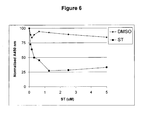
- Figure 6: Inhibition of rALK activity by Staurosporine An ELISA assay was performed using 42 µM SEQ ID N.1, 20 ng rALK, at 30°C for 15 mins in the presence of 0 - 5 µM staurosporine or an equivalent volume of solvent, DMSO. Graph shows A450 normalised to the untreated control.
-
- Peptides were synthesised by automatic solid phase synthesis utilising 9-fluorenilmethoxycarbonyl (Fmoc) chemistry with an Applied Biosystems Model 431A synthesiser on 4-hydroxymethyl-copolystirene-1% divinylbenzene-resin (0.95 mmol/g, 0.05 mmol).
- Fmoc amino acids (0.5 mmol) were activated by 2-(1H-benzotriazol-1-yl)-1,1,3,3-tetramethyluronium hexafluorophosphate (HBTU) (1 eq) and 1-hydroxybenzotriazole (HOBt) (1 eq) in the presence of DIPEA (2 eq).
- Peptidyl-resins (100 mg) were cleaved and deprotected in a mixture containing 5 ml of trifluoroacetic acid, 0.375 gr of phenol, 0.125 µl of 1,2-ethanedithiol, 0.250 µl of thioanisole, and 0.25 µl of water for 2 hours. The reaction mixture was filtered onto a tube containing ethyl ether cooled at 0°C. Precipitated peptides were separated by centrifugation and washed with fresh ether.
- Crude peptides (50-100 mg in 10 ml of water) were pumped onto a preparative RP-column (prepNova-Pak HR C18, 6 µm, 25x10 mm, Waters) and eluted with a linear gradient of 10% to 45% acetonitrile at 12 ml/min.
- The purity of peptides was > 90% as judged by analytical RP-HPLC on a 5 µm, C 18 Symmetry300 column, 4.6x250 mm (Waters) using a linear gradient of acetonitrile in 0.1% trifluoroacetic acid at 1 ml/min. Peptide molecular weights were confirmed by mass spectroscopy using a matrix-assisted laser-desorption ionisation time-of-flight (MALDI-Tof) spectrometer (Maldi-1; Kratos-Schimadzu, Mancester, UK).
- A portion of ALK, stretching from amino acids Leu1073 to Ala1459, has been cloned into the baculovirus transfer vector, pBlueBacHis2C (Invitrogen). Using this vector and the MaxBac® 2.0 baculovirus expression system (Invitrogen) we have produced recombinant baculovirus and expressed recombinant ALK (rALK) protein in Sf9 (Spodoptera frugiperda) insect cells. This protein has a theoretical molecular weight of 49 kDa and contains the predicted catalytic domain of ALK (Ile1116 to Val1392) fused to a 6-histidine-tag (His-tag). The autophosphorylation activity of His-tagged rALK, which is indicative of correct folding, has been verified by anti-phosphotyrosine immunoblotting of whole cell lysates and an in vitro radioactive kinase assay.
- To produce protein for purification, Sf9 cells were infected with recombinant virus at a multiplicity of infection (MOI) of 5. Cultures were incubated for 3 days at 27°C and then harvested by centrifuging at 400 g for 10 minutes at 4°C. Cell pellets were stored at -80°C until use. To lyse the cells, cell pellets were resuspended in hypotonic buffer (Buffer A) containing 50 mM Tris-
HCl pH 8, 20 mM NaCl and protease inhibitors (Pepstatin, Benzamidine, Leupeptin and Aprotinin). After 30 minutes incubation on ice, the cell suspension was centrifuged at 1500 g for 15 minutes at 4°C and the supernatant was filtered through a 0.45 µm filter. The filtrate was then loaded onto an 80 ml anion exchange Fast Flow DEAE-sepharose (Sigma) column in the presence of Buffer A at a flow of 1.5 ml/min using the AKTA FPLC system (Amersham-Pharmacia Biotech). Bound proteins were eluted in gradient of NaCl ranging from 20 to 200 mM. Fractions were analysed for the presence of ALK protein by immunoblotting. Positive fractions were pooled and dialysed for 3 h at 4°C in 1 litre of native binding buffer (20 mM sodium phosphate pH 7.8, 500 mM NaCl and PI), changing the buffer every hour. Dialysed fractions were then loaded onto a HiTrap™-nickel affinity chromatography column (Amersham-Pharmacia Biotech), previously equilibrated with native binding buffer supplemented with 50 mM imidazole and 20 mM β-mercaptoethanol. A flow of 0.5 - 1 ml/min was applied to the column. After washing the column with native binding buffer bound proteins were eluted using a linear gradient of imidazole ranging from 50 to 200 mM. Fractions were then analysed for the presence and purity of rALK by SDS-PAGE and silver staining. Figure 1A shows an example purification of rALK. - Finally, positive fractions were dialysed in 50 mM Tris pH 7.4, 100 mM NaCl, 10% glycerol, 20 mM β-mercaptoethanol and protease inhibitors, and stored at -80°C until use. To verify that purified rALK was active we have performed a radioactive autophosphorylation assay. A reaction mix containing 25 µl of a rALK positive fraction, 6 µM cold ATP, 1.2 mM DTT, 10 µCi [y-32P]ATP, 25 mM Hepes pH 7.5, 10 mM MgCl2 and 10 mM MnCl2 was incubated at 30°C for 30 minutes. The reaction was stopped by adding Laemmli buffer and heating at 95°C for 5 minutes. The samples were resolved on a 10% SDS-PAGE gel and transferred to an Immobilon™-P membrane. Radioactively labelled proteins were visualized by autoradiography as shown in Figure 1B.
- Peptides and the random polymer polyGlu/Tyr (1:4) were phosphorylated in 30 µl of a medium containing 50 mM Tris/HCl, pH 7.5, 5 mM MnCl2, 10 µM Na-vanadate, 30 µM [γ32P]ATP or [γ33P]ATP (specific activity 1000 cpm/pmol) and 10 units of rALK [one unit was defined as the amount of enzyme transferring 1 pmol phosphate per min to polyGluTyr (0.1 mg/ml)]. The reactions were terminated after 10 min of incubation at 30°C by spotting 25 µl of the mixture onto P81 phosphocellulose papers, which were processed as described elsewhere (1). Kinetic constants were determined by GraphPad Prism software fitting the data directly to the Michaelis-Menten equation using nonlinear regression.
- The peptide derived from ALK reference sequence, containing Tyr-1278 was a good substrate of rALK, whereas peptides containing either Tyr-1282 or Tyr-1283 were slightly affected by the enzyme (see Fig. 2). The Tyr-1278-derivative was phosphorylated with an efficiency even higher than that displayed by the peptide bearing three Tyr residues (Table I). To confirm that Tyr-1278-derivative is an optimal peptide substrate for ALK catalytic domain, we compared its phosphorylation degree with that displayed by polyGlu/Tyr (1:4), a random polymer that is a very good substrate for most tyrosine kinases. Table II shows that Tyr-1278-derivative is a better ALK substrate than polyGlu/Tyr.
Kinetic constants for rALK with synthetic peptides. PEPTIDE Vmax
(pmol/min)Km
(µM)Efficiency
(Vmax/Km)ARDIYRASYYRKGGCAMLPVK 99.5 90.5 1.1 ARDIYRASFFRKGGCAMLPVK 186.3 109.4 1.7 Phosphorylation rates of model substrates by ALK catalytic domain. Poly(Glu/Tyr) and peptide concentrations were 0.1 mg/ml and 400 µM, respectively. Enzyme concentration was 10 units. Reported values represent the means for three separate experiments. S.E.M. values were always less than 14%. SUBSTRATE Phosphorylation degree
(pmol/min)Poly(Glu/Tyr) 10.0 ARDIYRASFFRKGGCAMLPVK 30.3 - A Nunc Immuno 96 well plate was incubated overnight at 37°C with coating solution (125 µl/ well) containing ALK peptide substrate (SEQ ID N. 1 or SEQ ID N. 2) at various concentrations in PBS. The wells were then washed with 200 µl of wash buffer (PBS-Tween 0.05 %) and left to dry for at least 2 hours at 37°C. The kinase reaction was performed by incubating kinase buffer (25 mM Hepes pH 7.5, 5 mM MnCl2, 5 mM MgCl2), 0.3 mM ATP and purified rALK at various concentrations in a total volume of 100 µl/well at 30°C for 15 minutes. The reaction mix was then removed and wells were washed 5 times with 200 µl of wash buffer. Phosphorylated peptide was detected using 100 µl/well of a mouse monoclonal anti-phosphotyrosine antibody (clone 4G10 UpstateBiotech Ltd) diluted 1:500 in PBS + 4% BSA. After 30 minutes incubation at room temperature the antibody was removed and wells were washed as described above. 100 µl of a secondary antibody (anti-mouse IgG, Horseradish Peroxidase linked whole antibody, from sheep, Amersham Pharmacia Biotech) diluted 1:1000 in PBS + 4% BSA was added to each well and the plate was incubated again for 30 minutes at room temperature before washing as above. The plate was developed using 100 µl/well TMB Substrate Solution (Endogen) and the reaction was stopped by adding an equal volume of H2SO4 0.18 M. Finally, the absorbance was read at 450 or 490 nm using an
Ultrospec® 300 spectrophotometer (Amersham-Pharmacia Biotech). - We have shown that the ELISA-based kinase assay can be used to detect phosphorylated ALK peptide substrates (SEQ ID N.1 and N.2) and hence the activity of purified rALK. In initial experiments we performed the assay in the presence and absence of both purified rALK and the peptide substrate SEQ ID N.2, in order to determine if a specific increase in absorbance at 450 nm (A450) could be observed (Figure 3A). Indeed in the presence of both rALK and substrate a dramatic increase in A450 was observed. In contrast, in the absence of either peptide or rALK or both, A450 was low, indicating a low level of background absorbance. To determine the kinetics of substrate phosphorylation we measured A450 after various incubation times (Figure 3B). For both peptides the kinetics of the reaction was similar with maximum phosphorylation achieved after 10 minutes.
- To compare the efficiency of the two peptides in the ELISA kinase assay and to determine the optimal concentration of peptide to use we performed standard curves for both peptides. Results show that increasing the amount of peptide substrate increased A450 and hence rALK kinase activity. For the peptide substrate SEQ ID N.2, maximum A450 and hence phosphorylation was observed at approximately 200 µM, compared with only 25 µM for peptide substrate SEQ ID N.1 (Figures 4A and B). This indicates that peptide substrate SEQ ID N.1 is more efficient as a substrate for rALK.
- To observe inhibition of kinase activity it is essential that we use an appropriate concentration of enzyme, i.e. in the linear range of a standard curve. An ELISA was performed using 206 µM SEQ ID N.2 or 42 µM SEQ ID N.1 and rALK ranging from 0 - 220 ng. The linear range of the curve for both substrates was approximately between 0 - 15 ng of rALK, after which the curves reached plateau (Figure 5).
- The effect of the inhibitor staurosporine on rALK activity was assessed using 42 µM peptide substrate SEQ ID N.2. A solvent control containing DMSO at corresponding concentrations was also performed. Staurosporine markedly inhibited rALK activity reaching maximum inhibition at 1 µM and with an estimated IC50= 300 nM (Figure 6). The solvent (DMSO) alone had no substantial effect on rALK activity.
-
- [1] Glass, D.B., Masaracchia, R.A., Feramisco, J.R. and Kemp, D.E. (1978) Anal. Biochem. 87, 566-575.
- [2] Till, J.H., Ablooglu, A.J., Frankel, M., Bishop, S.M., Kohanski, R.A. and Hubbard S.R. (2001) J. Biol. Chem. 276, 10049-10055.
-
Studies of molecular modeling gave important indications as to the pattern of substitutions required to improve staurosporine affinity and specificity towards ALK protein. The most effective structures are represented in the following general formula (I):

The compounds of formula (I) antagonize the binding of ATP to the tyrosine kinase domain of ALK within oncogenic fusion proteins such as NPM-ALK, ATIC-ALK, CTLC-ALK, TFG-ALK or other sporadic fusions with tropomyosins. Accordingly, they can be used in the preparation of a medicament for the treatment of ALK-related tumors, especially anaplastic large cell lymphomas and non-Hodgkin lymphomas.
In a different embodiment of the invention, compounds (I) are used in an ALK-assay for the screening of ALK-inhibitors, as herein disclosed. High-throughput screenings can also be implemented using the ALK assay of the invention.

Claims (20)
- A method for detecting ALK tyrosine kinase activity, which comprises the following steps:i) incubating the ALK protein or a functional derivative thereof with a peptide substrate selected from SEQ ID N. 1 or 2 in conditions suitable for phosphorylation of the peptide;ii) detecting the phosphorylated peptide.
- A method according to claim 1, wherein the peptide has sequence SEQ ID N. 1.
- A method according to claim 1, wherein purified ALK protein or an ALK-containing preparation is used.
- A method according to claim 3, wherein said preparation is a cell lysate.
- A method according to claim 1, wherein said functional derivative contains the entire catalytic domain of ALK spanning residues 1116-1392 of ALK sequence.
- A method according to claim 5, wherein said functional derivative is a fragment of ALK protein extending from residue Leu1073 to Ala1459.
- A method according to claim 6, which comprises the steps of:a) adhering a peptide of SEQ ID N. 1 or 2 to a solid phase;b) incubating the solid phase with said ALK fragment in conditions suitable for tyrosine phosphorylation;c) washing the solid phase;d) incubating the solid phase with an anti-phosphotyrosine antibody (primary antibody) in conditions suitable for antigen-antibody binding;e) washing the solid phase;f) incubating the solid phase with an enzyme-conjugated antibody (secondary antibody) recognizing the primary antibody in conditions suitable for the binding of primary and secondary antibodies, so that a ternary immune complex is formed;g) washing the solid phase;h) measuring the enzymatic activity of the immune complex wherein the measured activity is proportional to the amount of tyrosine-phosphorylation.
- A method according to claim 7, wherein the enzyme conjugated to the antibody is Horse-Radish peroxidase.
- A method according to claim 7, wherein the enzymatic activity is detected by colorimetric reaction.
- A method according to any previous claims, for the identification of compounds that modulate ALK tyrosine-kinase activity.
- A method according to claim 10, which comprises the steps ofi) incubating ALK protein or a functional derivative thereof with a peptide selected from SEQ ID N. 1 or 2 in the presence of a candidate compound (a) in conditions suitable for peptide phosphorylation;ii) detecting the phosphorylated peptide thus formed;
- A method according to claims 10-11, wherein the ALK-modulating activity of the candidate compound is compared to that of a reference compound which is assayed under the same conditions as the candidate compound.
- A method according to claim 12, wherein the reference compound is staurosporine.
- A method according to claim 12, wherein the reference compound is a staurosporine derivative of general formula (I):Wherein R1 and R2, independently of one another, are selected from halogen, preferably chlorine, phenyl or C1-C3 alkyl optionally substituted with one or more halogens; R3 is hydroxyl; R4 is hydroxyl or hydroxymethyl; R5 is C1-C3 alkyl, optionally halo-substituted, or benzyl.

- A peptide useful as ALK substrate selected from SEQ ID N. 1 or 2.
- A peptide acording to claim 15, which is SEQ ID N. 1.
- The use of a peptide according to claim 15 or 16 for the determination of ALK tyrosine-kinase activity.
- The use of a compound of formula (I), as per claim 14, for the preparation of a medicament for the treatment of ALK-related tumors, especially anaplastic large cell lymphomas and non-Hodgkin lymphomas.
- A kit for detecting ALK tyrosine-kinase activity according to claims 1-14, which comprises a peptide of SEQ ID N: 1 or 2 and an anti-phosphotyrosine antibody.
- A kit according to claim 19, containing an additional component selected from reagents for colorimetric reactions, buffers, diluents, detergents, stabilizers, staurosporine or a derivative thereof as per claim 14.
Priority Applications (15)
| Application Number | Priority Date | Filing Date | Title |
|---|---|---|---|
| DK03005186T DK1454992T3 (en) | 2003-03-07 | 2003-03-07 | Anaplastic lymphoma kinase assay, reagents and compositions thereof |
| PT03005186T PT1454992E (en) | 2003-03-07 | 2003-03-07 | KINASE-TEST OF ANAPLASTIC LYMPHOMA, REAGENTS AND COMPOSITIONS |
| DE60305634T DE60305634T2 (en) | 2003-03-07 | 2003-03-07 | Anaplastic lymphoma kinase assays, reagents and compositions thereof |
| SI200330308T SI1454992T1 (en) | 2003-03-07 | 2003-03-07 | Anaplastic lymphoma kinase assay, reagents and compositions thereof |
| AT03005186T ATE328112T1 (en) | 2003-03-07 | 2003-03-07 | ANAPLASTIC LYMPHOMA KINASE TESTING METHODS, REAGENTS AND COMPOSITIONS THEREOF |
| EP03005186A EP1454992B1 (en) | 2003-03-07 | 2003-03-07 | Anaplastic lymphoma kinase assay, reagents and compositions thereof |
| ES03005186T ES2263862T3 (en) | 2003-03-07 | 2003-03-07 | ANAPLASIC LYMPHOMA KINASE TEST, ITS REAGENTS AND COMPOSITIONS. |
| US10/547,842 US20070031907A1 (en) | 2003-03-07 | 2004-03-04 | Anaplastic lymphoma kinase assay, reagents and compositions thereof |
| JP2006504533A JP2006519800A (en) | 2003-03-07 | 2004-03-04 | Anaplastic lymphoma kinase assay, reagents and compositions thereof |
| CA002518094A CA2518094A1 (en) | 2003-03-07 | 2004-03-04 | Anaplastic lymphoma kinase assay, reagents and compositions thereof |
| PCT/EP2004/002185 WO2004079326A2 (en) | 2003-03-07 | 2004-03-04 | Anaplastic lymphoma kinase assay, reagents and compositions thereof |
| CNB2004800060187A CN100345978C (en) | 2003-03-07 | 2004-03-04 | Anaplastic lymphoma kinase assay, reagents and compositions thereof |
| HK05101314.2A HK1068154B (en) | 2005-02-17 | Anaplastic lymphoma kinase assay, reagents and compositions thereof | |
| IL170669A IL170669A0 (en) | 2003-03-07 | 2005-09-05 | Anaplastic lymphoma kinase assay, reagents and compositions thereof |
| CY20061100923T CY1106115T1 (en) | 2003-03-07 | 2006-07-04 | DETERMINATION OF ANAPLASTIC LYMPHOMA KINASE, REAGENTS AND COMPOSITIONS THEREOF |
Applications Claiming Priority (1)
| Application Number | Priority Date | Filing Date | Title |
|---|---|---|---|
| EP03005186A EP1454992B1 (en) | 2003-03-07 | 2003-03-07 | Anaplastic lymphoma kinase assay, reagents and compositions thereof |
Publications (2)
| Publication Number | Publication Date |
|---|---|
| EP1454992A1 true EP1454992A1 (en) | 2004-09-08 |
| EP1454992B1 EP1454992B1 (en) | 2006-05-31 |
Family
ID=32798804
Family Applications (1)
| Application Number | Title | Priority Date | Filing Date |
|---|---|---|---|
| EP03005186A Expired - Lifetime EP1454992B1 (en) | 2003-03-07 | 2003-03-07 | Anaplastic lymphoma kinase assay, reagents and compositions thereof |
Country Status (14)
| Country | Link |
|---|---|
| US (1) | US20070031907A1 (en) |
| EP (1) | EP1454992B1 (en) |
| JP (1) | JP2006519800A (en) |
| CN (1) | CN100345978C (en) |
| AT (1) | ATE328112T1 (en) |
| CA (1) | CA2518094A1 (en) |
| CY (1) | CY1106115T1 (en) |
| DE (1) | DE60305634T2 (en) |
| DK (1) | DK1454992T3 (en) |
| ES (1) | ES2263862T3 (en) |
| IL (1) | IL170669A0 (en) |
| PT (1) | PT1454992E (en) |
| SI (1) | SI1454992T1 (en) |
| WO (1) | WO2004079326A2 (en) |
Cited By (3)
| Publication number | Priority date | Publication date | Assignee | Title |
|---|---|---|---|---|
| EP2107054A1 (en) | 2008-04-01 | 2009-10-07 | Università Degli Studi Di Milano - Bicocca | Antiproliferative compounds and therapeutic uses thereof |
| EP2161271A1 (en) | 2008-09-08 | 2010-03-10 | Università Degli Studi Di Milano - Bicocca | Alpha-carboline inhibitors of NMP-ALK, RET, and Bcr-Abl |
| WO2012019132A3 (en) * | 2010-08-06 | 2012-03-29 | Cell Signaling Technology, Inc. | Anaplastic lymphoma kinase in kidney cancer |
Families Citing this family (20)
| Publication number | Priority date | Publication date | Assignee | Title |
|---|---|---|---|---|
| EP2447359B1 (en) | 2006-04-14 | 2015-11-04 | Cell Signaling Technology, Inc. | Gene defects and mutant ALK kinase in human solid tumors |
| US8168383B2 (en) | 2006-04-14 | 2012-05-01 | Cell Signaling Technology, Inc. | Gene defects and mutant ALK kinase in human solid tumors |
| CA2722326A1 (en) | 2008-04-24 | 2009-10-29 | Incyte Corporation | Macrocyclic compounds and their use as kinase inhibitors |
| US8765727B2 (en) | 2009-01-23 | 2014-07-01 | Incyte Corporation | Macrocyclic compounds and their use as kinase inhibitors |
| ES2668775T3 (en) * | 2009-06-10 | 2018-05-22 | Chugai Seiyaku Kabushiki Kaisha | Tetracyclic compounds |
| CN101955995B (en) * | 2010-06-17 | 2013-06-26 | 江苏迈迪基因生物科技有限公司 | Combined detection method and diagnostic kit of fusion genes related to lymphoma |
| MX355836B (en) | 2010-08-20 | 2018-05-02 | Chugai Pharmaceutical Co Ltd | Composition containing tetracyclic compound. |
| EP2847353B1 (en) | 2012-05-10 | 2022-01-19 | The General Hospital Corporation | Methods for determining a nucleotide sequence |
| US10668075B2 (en) | 2012-09-25 | 2020-06-02 | Chugai Seiyaku Kabushiki Kaisha | RET inhibitor |
| KR20150118159A (en) | 2013-02-22 | 2015-10-21 | 에프. 호프만-라 로슈 아게 | Methods of treating cancer and preventing drug resistance |
| JP7016215B2 (en) | 2014-01-27 | 2022-02-04 | ザ ジェネラル ホスピタル コーポレイション | How to Prepare Nucleic Acids for Sequencing |
| EP3135671B1 (en) | 2014-04-25 | 2019-09-18 | Chugai Seiyaku Kabushiki Kaisha | Novel crystal of tetracyclic compound |
| WO2015163448A1 (en) | 2014-04-25 | 2015-10-29 | 中外製薬株式会社 | Preparation containing tetracyclic compound at high dose |
| TWI831347B (en) | 2014-08-08 | 2024-02-01 | 日商中外製藥股份有限公司 | Solid dispersion containing amorphous body of tetracyclic compound and preparation |
| JP6741596B2 (en) | 2015-01-16 | 2020-08-19 | 中外製薬株式会社 | Concomitant medication |
| JP6997773B2 (en) | 2016-09-15 | 2022-01-18 | アーチャーディーエックス, エルエルシー | Method for preparing nucleic acid sample for analysis of cell-free DNA |
| CA3037185A1 (en) | 2016-09-15 | 2018-03-22 | ArcherDX, Inc. | Methods of nucleic acid sample preparation |
| CN110191959B (en) | 2016-11-02 | 2024-04-09 | 阿谢尔德克斯有限责任公司 | Nucleic acid sample preparation method for immune repertoire sequencing |
| CN112384223B (en) | 2018-06-29 | 2024-08-27 | 中外制药株式会社 | Pharmaceutical composition containing poorly soluble alkaline agent |
| WO2020050241A1 (en) | 2018-09-04 | 2020-03-12 | 中外製薬株式会社 | Method of producing tetracyclic compound |
Citations (6)
| Publication number | Priority date | Publication date | Assignee | Title |
|---|---|---|---|---|
| JPH05126833A (en) * | 1991-10-31 | 1993-05-21 | Tosoh Corp | Immunochemical measurement method of tyrosine quinase activity and kit therefor |
| EP0575955A1 (en) * | 1992-06-22 | 1993-12-29 | Kyowa Hakko Kogyo Co., Ltd. | Process for producing staurosporine derivatives |
| WO1995002187A1 (en) * | 1993-07-09 | 1995-01-19 | The Institute Of Cancer Research | Cell growth factor receptors |
| WO1995014930A1 (en) * | 1993-11-23 | 1995-06-01 | Genentech, Inc. | Kinase receptor activation assay |
| US5770421A (en) * | 1993-12-03 | 1998-06-23 | St. Jude Children's Research Hospital | Human ALK protein tyrosine kinase |
| WO1998049317A2 (en) * | 1997-04-28 | 1998-11-05 | Sugen, Inc. | Diagnosis and treatment of phosphatase- 0r kinase-related disorders |
Family Cites Families (5)
| Publication number | Priority date | Publication date | Assignee | Title |
|---|---|---|---|---|
| CA2117913C (en) * | 1992-04-10 | 2006-05-09 | Richard J. Epstein | Activation-state-specific phosphoprotein immunodetection |
| US6001621A (en) * | 1993-11-23 | 1999-12-14 | Genetech, Inc. | Protein tyrosine kinases |
| US5763198A (en) * | 1994-07-22 | 1998-06-09 | Sugen, Inc. | Screening assays for compounds |
| US5759787A (en) * | 1996-08-26 | 1998-06-02 | Tularik Inc. | Kinase assay |
| US6806266B1 (en) * | 1999-07-13 | 2004-10-19 | Kyowa Hakko Kogyo Co., Ltd. | Staurosporin derivatives |
-
2003
- 2003-03-07 PT PT03005186T patent/PT1454992E/en unknown
- 2003-03-07 ES ES03005186T patent/ES2263862T3/en not_active Expired - Lifetime
- 2003-03-07 SI SI200330308T patent/SI1454992T1/en unknown
- 2003-03-07 EP EP03005186A patent/EP1454992B1/en not_active Expired - Lifetime
- 2003-03-07 DE DE60305634T patent/DE60305634T2/en not_active Expired - Fee Related
- 2003-03-07 AT AT03005186T patent/ATE328112T1/en not_active IP Right Cessation
- 2003-03-07 DK DK03005186T patent/DK1454992T3/en active
-
2004
- 2004-03-04 CN CNB2004800060187A patent/CN100345978C/en not_active Expired - Fee Related
- 2004-03-04 CA CA002518094A patent/CA2518094A1/en not_active Abandoned
- 2004-03-04 JP JP2006504533A patent/JP2006519800A/en active Pending
- 2004-03-04 WO PCT/EP2004/002185 patent/WO2004079326A2/en not_active Ceased
- 2004-03-04 US US10/547,842 patent/US20070031907A1/en not_active Abandoned
-
2005
- 2005-09-05 IL IL170669A patent/IL170669A0/en unknown
-
2006
- 2006-07-04 CY CY20061100923T patent/CY1106115T1/en unknown
Patent Citations (6)
| Publication number | Priority date | Publication date | Assignee | Title |
|---|---|---|---|---|
| JPH05126833A (en) * | 1991-10-31 | 1993-05-21 | Tosoh Corp | Immunochemical measurement method of tyrosine quinase activity and kit therefor |
| EP0575955A1 (en) * | 1992-06-22 | 1993-12-29 | Kyowa Hakko Kogyo Co., Ltd. | Process for producing staurosporine derivatives |
| WO1995002187A1 (en) * | 1993-07-09 | 1995-01-19 | The Institute Of Cancer Research | Cell growth factor receptors |
| WO1995014930A1 (en) * | 1993-11-23 | 1995-06-01 | Genentech, Inc. | Kinase receptor activation assay |
| US5770421A (en) * | 1993-12-03 | 1998-06-23 | St. Jude Children's Research Hospital | Human ALK protein tyrosine kinase |
| WO1998049317A2 (en) * | 1997-04-28 | 1998-11-05 | Sugen, Inc. | Diagnosis and treatment of phosphatase- 0r kinase-related disorders |
Non-Patent Citations (11)
| Title |
|---|
| DATABASE WPI Section Ch Week 199325, Derwent World Patents Index; Class A96, AN 1993-201126, XP002249142 * |
| GROSIOS, KONSTANTINA: "Midostaurin, Novartis AG", CURRENT OPINION IN ONCOLOGIC, ENDOCRINE & METABOLIC INVESTIGATIONAL DRUGS (2000), 2(1), 92-103, XP008024624 * |
| GROSIOS, KONSTANTINA: "UCN-01 Kyowa Hakko Kogyo Co", CURRENT OPINION IN INVESTIGATIONAL DRUGS (PHARMAPRESS LTD.) (2001), 2(2), 287-297, XP008024634 * |
| HALLAHAN, DENNIS E. ET AL: "Inhibition of protein kinases sensitizes human tumor cells to ionizing radiation", RADIATION RESEARCH (1992), 129(3), 345-50, XP008024620 * |
| HARVEY, SARAH ET AL: "Interactions between 2-fluoroadenine 9-.beta.-D-arabinofuranoside and the kinase inhibitor UCN-01 in human leukemia and lymphoma cells", CLINICAL CANCER RESEARCH (2001), 7(2), 320-330, XP002261605 * |
| MORRIS STEPHAN W ET AL: "ALK, the chromosome 2 gene locus altered by the t(2;5) in non-Hodgkin's lymphoma, encodes a novel neural receptor tyrosine kinase that is highly related to leukocyte tyrosine kinase (LTK).", ONCOGENE, vol. 14, no. 18, 1997, pages 2175 - 2188, XP002249141, ISSN: 0950-9232 * |
| SADICK M D ET AL: "Kinase receptor activation (KIRA): A rapid and accurate alternative to end-point bioassays", JOURNAL OF PHARMACEUTICAL AND BIOMEDICAL ANALYSIS 1999 NETHERLANDS, vol. 19, no. 6, 1999, pages 883 - 891, XP002249139, ISSN: 0731-7085 * |
| SAUSVILLE, EDWARD A. ET AL: "Phase I trial of 72-hour continuous infusion UCN-01 in patients with refractory neoplasms", JOURNAL OF CLINICAL ONCOLOGY (2001), 19(8), 2319-2333, XP008024621 * |
| SENDEROWICZ, A. M.: "Development of cyclin-dependent kinase modulators as novel therapeutic approaches for hematological malignancies", LEUKEMIA (2001), 15(1), 1-9, XP002261606 * |
| TURTURRO FRANCESCO ET AL: "Model of inhibition of the NPM-ALK kinase activity by herbimycin A.", CLINICAL CANCER RESEARCH: AN OFFICIAL JOURNAL OF THE AMERICAN ASSOCIATION FOR CANCER RESEARCH. UNITED STATES JAN 2002, vol. 8, no. 1, January 2002 (2002-01-01), pages 240 - 245, XP002249140, ISSN: 1078-0432 * |
| VIRCHIS, ANDRES ET AL: "A novel treatment approach for low grade lymphoproliferative disorders using PKC412 (CGP41251), an inhibitor of protein kinase C", HEMATOLOGY JOURNAL (2002), 3(3), 131-136, XP008024623 * |
Cited By (4)
| Publication number | Priority date | Publication date | Assignee | Title |
|---|---|---|---|---|
| EP2107054A1 (en) | 2008-04-01 | 2009-10-07 | Università Degli Studi Di Milano - Bicocca | Antiproliferative compounds and therapeutic uses thereof |
| EP2161271A1 (en) | 2008-09-08 | 2010-03-10 | Università Degli Studi Di Milano - Bicocca | Alpha-carboline inhibitors of NMP-ALK, RET, and Bcr-Abl |
| WO2012019132A3 (en) * | 2010-08-06 | 2012-03-29 | Cell Signaling Technology, Inc. | Anaplastic lymphoma kinase in kidney cancer |
| US10551383B2 (en) | 2010-08-06 | 2020-02-04 | Cell Signaling Technology, Inc. | Methods of detecting a polypeptide having anaplastic lymphoma kinase activity in kidney cancer |
Also Published As
| Publication number | Publication date |
|---|---|
| WO2004079326A2 (en) | 2004-09-16 |
| US20070031907A1 (en) | 2007-02-08 |
| CA2518094A1 (en) | 2004-09-16 |
| CY1106115T1 (en) | 2011-06-08 |
| DK1454992T3 (en) | 2006-10-02 |
| PT1454992E (en) | 2006-09-29 |
| WO2004079326A3 (en) | 2004-12-09 |
| DE60305634T2 (en) | 2006-09-21 |
| EP1454992B1 (en) | 2006-05-31 |
| IL170669A0 (en) | 2011-08-01 |
| DE60305634D1 (en) | 2006-07-06 |
| CN100345978C (en) | 2007-10-31 |
| SI1454992T1 (en) | 2006-10-31 |
| ATE328112T1 (en) | 2006-06-15 |
| CN1756850A (en) | 2006-04-05 |
| HK1068154A1 (en) | 2005-04-22 |
| ES2263862T3 (en) | 2006-12-16 |
| JP2006519800A (en) | 2006-08-31 |
Similar Documents
| Publication | Publication Date | Title |
|---|---|---|
| EP1454992B1 (en) | Anaplastic lymphoma kinase assay, reagents and compositions thereof | |
| Tolstykh et al. | Carboxyl methylation regulates phosphoprotein phosphatase 2A by controlling the association of regulatory B subunits | |
| Scott et al. | Reversible phosphorylation at the C-terminal regulatory domain of p21Waf1/Cip1 modulates proliferating cell nuclear antigen binding | |
| Hunter et al. | Protein kinase C phosphorylation of the EGF receptor at a threonine residue close to the cytoplasmic face of the plasma membrane | |
| Lee et al. | INH, a negative regulator of MPF, is a form of protein phosphatase 2A | |
| Brizuela et al. | Activation of human CDC2 protein as a histone H1 kinase is associated with complex formation with the p62 subunit. | |
| Featherstone et al. | Fission yeast p107 wee1 mitotic inhibitor is a tyrosine/serine kinase | |
| Jones et al. | Phosphatidylinositol 3–kinase is required for the formation of constitutive transport vesicles from the TGN | |
| KISS et al. | Integrin-linked kinase phosphorylates the myosin phosphatase target subunit at the inhibitory site in platelet cytoskeleton | |
| McNEILL et al. | A novel UBA and UBX domain protein that binds polyubiquitin and VCP and is a substrate for SAPKs | |
| Imoto et al. | Kinetic studies of tyrosine kinase inhibition by erbstatin | |
| Watts et al. | Purification and initial characterization of the lymphocyte-specific protein-tyrosyl kinase p56lck from a baculovirus expression system. | |
| Corti et al. | Tyrosine phosphorylation modulates the interaction of calmodulin with its target proteins | |
| Swanson et al. | Transcription factor phosphorylation by pp90rsk2: identification of Fos kinase and NGFI-B kinase I as pp90rsk2 | |
| US20030088057A1 (en) | Peptide substrates phosphorylated by p21-activaged protein kinase statement regarding federally sponsored reasearch or development | |
| Baykov et al. | Inorganic pyrophosphatase as a label in heterogeneous enzyme immunoassay | |
| Campos-Sandoval et al. | Expression of functional human glutaminase in baculovirus system: affinity purification, kinetic and molecular characterization | |
| Imparl et al. | Studies of calcineurin-calmodulin interaction: probing the role of arginine residues using peptidylarginine deiminase | |
| Kimura et al. | Subunit assembly in vivo of Escherichia coli RNA polymerase: Role of the amino‐terminal assembly domain of alpha subunit | |
| Ruzzene et al. | Ser/Thr phosphorylation of hematopoietic specific protein 1 (HS1) Implication of protein kinase CK2 | |
| Colbran et al. | Analysis of specific interactions of native protein phosphatase 1 isoforms with targeting subunits | |
| Vastiau et al. | Farnesylation of Pex19p is not essential for peroxisome biogenesis in yeast and mammalian cells | |
| Joseph et al. | Calcium binding is required for calmodulin function in Aspergillus nidulans | |
| Matthews et al. | Protein histidine phosphatase activity in rat liver and spinach leaves | |
| Blake et al. | Synthetic segments of the mammalian βAR are preferentially recognized by cAMP-dependent protein kinase and protein kinase C |
Legal Events
| Date | Code | Title | Description |
|---|---|---|---|
| PUAI | Public reference made under article 153(3) epc to a published international application that has entered the european phase |
Free format text: ORIGINAL CODE: 0009012 |
|
| AK | Designated contracting states |
Kind code of ref document: A1 Designated state(s): AT BE BG CH CY CZ DE DK EE ES FI FR GB GR HU IE IT LI LU MC NL PT RO SE SI SK TR |
|
| AX | Request for extension of the european patent |
Extension state: AL LT LV MK |
|
| 17P | Request for examination filed |
Effective date: 20041214 |
|
| REG | Reference to a national code |
Ref country code: HK Ref legal event code: DE Ref document number: 1068154 Country of ref document: HK |
|
| AKX | Designation fees paid |
Designated state(s): AT BE BG CH CY CZ DE DK EE ES FI FR GB GR HU IE IT LI LU MC NL PT RO SE SI SK TR |
|
| AXX | Extension fees paid |
Extension state: AL Payment date: 20041214 Extension state: LT Payment date: 20041214 Extension state: MK Payment date: 20041214 Extension state: LV Payment date: 20041214 |
|
| 17Q | First examination report despatched |
Effective date: 20050415 |
|
| GRAP | Despatch of communication of intention to grant a patent |
Free format text: ORIGINAL CODE: EPIDOSNIGR1 |
|
| GRAS | Grant fee paid |
Free format text: ORIGINAL CODE: EPIDOSNIGR3 |
|
| GRAA | (expected) grant |
Free format text: ORIGINAL CODE: 0009210 |
|
| AK | Designated contracting states |
Kind code of ref document: B1 Designated state(s): AT BE BG CH CY CZ DE DK EE ES FI FR GB GR HU IE IT LI LU MC NL PT RO SE SI SK TR |
|
| AX | Request for extension of the european patent |
Extension state: AL LT LV MK |
|
| PG25 | Lapsed in a contracting state [announced via postgrant information from national office to epo] |
Ref country code: IT Free format text: LAPSE BECAUSE OF FAILURE TO SUBMIT A TRANSLATION OF THE DESCRIPTION OR TO PAY THE FEE WITHIN THE PRESCRIBED TIME-LIMIT;WARNING: LAPSES OF ITALIAN PATENTS WITH EFFECTIVE DATE BEFORE 2007 MAY HAVE OCCURRED AT ANY TIME BEFORE 2007. THE CORRECT EFFECTIVE DATE MAY BE DIFFERENT FROM THE ONE RECORDED. Effective date: 20060531 |
|
| REG | Reference to a national code |
Ref country code: CH Ref legal event code: EP Ref country code: GB Ref legal event code: FG4D |
|
| REG | Reference to a national code |
Ref country code: SE Ref legal event code: TRGR |
|
| REG | Reference to a national code |
Ref country code: IE Ref legal event code: FG4D |
|
| REF | Corresponds to: |
Ref document number: 60305634 Country of ref document: DE Date of ref document: 20060706 Kind code of ref document: P |
|
| REG | Reference to a national code |
Ref country code: HK Ref legal event code: GR Ref document number: 1068154 Country of ref document: HK |
|
| REG | Reference to a national code |
Ref country code: RO Ref legal event code: EPE |
|
| REG | Reference to a national code |
Ref country code: CH Ref legal event code: NV Representative=s name: ISLER & PEDRAZZINI AG |
|
| REG | Reference to a national code |
Ref country code: GR Ref legal event code: EP Ref document number: 20060401931 Country of ref document: GR |
|
| REG | Reference to a national code |
Ref country code: HU Ref legal event code: AG4A Ref document number: E000568 Country of ref document: HU |
|
| REG | Reference to a national code |
Ref country code: PT Ref legal event code: SC4A Effective date: 20060721 |
|
| REG | Reference to a national code |
Ref country code: DK Ref legal event code: T3 |
|
| ET | Fr: translation filed | ||
| REG | Reference to a national code |
Ref country code: ES Ref legal event code: FG2A Ref document number: 2263862 Country of ref document: ES Kind code of ref document: T3 |
|
| PGFP | Annual fee paid to national office [announced via postgrant information from national office to epo] |
Ref country code: CY Payment date: 20070301 Year of fee payment: 5 |
|
| PLBE | No opposition filed within time limit |
Free format text: ORIGINAL CODE: 0009261 |
|
| STAA | Information on the status of an ep patent application or granted ep patent |
Free format text: STATUS: NO OPPOSITION FILED WITHIN TIME LIMIT |
|
| 26N | No opposition filed |
Effective date: 20070301 |
|
| REG | Reference to a national code |
Ref country code: CH Ref legal event code: PCAR Free format text: ISLER & PEDRAZZINI AG;POSTFACH 1772;8027 ZUERICH (CH) |
|
| PGFP | Annual fee paid to national office [announced via postgrant information from national office to epo] |
Ref country code: DK Payment date: 20080326 Year of fee payment: 6 Ref country code: ES Payment date: 20080227 Year of fee payment: 6 |
|
| PGFP | Annual fee paid to national office [announced via postgrant information from national office to epo] |
Ref country code: BG Payment date: 20080321 Year of fee payment: 6 Ref country code: CZ Payment date: 20080227 Year of fee payment: 6 Ref country code: EE Payment date: 20080314 Year of fee payment: 6 Ref country code: FI Payment date: 20080327 Year of fee payment: 6 Ref country code: GB Payment date: 20080305 Year of fee payment: 6 Ref country code: HU Payment date: 20080326 Year of fee payment: 6 Ref country code: IE Payment date: 20080305 Year of fee payment: 6 Ref country code: LU Payment date: 20080327 Year of fee payment: 6 Ref country code: MC Payment date: 20080306 Year of fee payment: 6 Ref country code: NL Payment date: 20080318 Year of fee payment: 6 Ref country code: PT Payment date: 20080226 Year of fee payment: 6 Ref country code: SE Payment date: 20080318 Year of fee payment: 6 Ref country code: SI Payment date: 20080229 Year of fee payment: 6 Ref country code: SK Payment date: 20080226 Year of fee payment: 6 |
|
| PGFP | Annual fee paid to national office [announced via postgrant information from national office to epo] |
Ref country code: AT Payment date: 20080331 Year of fee payment: 6 Ref country code: RO Payment date: 20080229 Year of fee payment: 6 |
|
| PGFP | Annual fee paid to national office [announced via postgrant information from national office to epo] |
Ref country code: CH Payment date: 20080409 Year of fee payment: 6 Ref country code: DE Payment date: 20080520 Year of fee payment: 6 Ref country code: FR Payment date: 20080313 Year of fee payment: 6 |
|
| PGFP | Annual fee paid to national office [announced via postgrant information from national office to epo] |
Ref country code: BE Payment date: 20080313 Year of fee payment: 6 |
|
| PGFP | Annual fee paid to national office [announced via postgrant information from national office to epo] |
Ref country code: TR Payment date: 20080303 Year of fee payment: 6 |
|
| PGFP | Annual fee paid to national office [announced via postgrant information from national office to epo] |
Ref country code: IT Payment date: 20080327 Year of fee payment: 5 |
|
| PGRI | Patent reinstated in contracting state [announced from national office to epo] |
Ref country code: IT Effective date: 20081001 |
|
| PGFP | Annual fee paid to national office [announced via postgrant information from national office to epo] |
Ref country code: GR Payment date: 20080331 Year of fee payment: 6 |
|
| PG25 | Lapsed in a contracting state [announced via postgrant information from national office to epo] |
Ref country code: CY Free format text: LAPSE BECAUSE OF NON-PAYMENT OF DUE FEES Effective date: 20080307 |
|
| PGRI | Patent reinstated in contracting state [announced from national office to epo] |
Ref country code: IT Effective date: 20081001 |
|
| REG | Reference to a national code |
Ref country code: PT Ref legal event code: MM4A Free format text: LAPSE DUE TO NON-PAYMENT OF FEES Effective date: 20090907 |
|
| BERE | Be: lapsed |
Owner name: *ISTITUTO NAZIONALE PER LO STUDIO E LA CURA DEI TU Effective date: 20090331 |
|
| LTLA | Lt: lapse of european patent or patent extension |
Effective date: 20090307 |
|
| PG25 | Lapsed in a contracting state [announced via postgrant information from national office to epo] |
Ref country code: CZ Free format text: LAPSE BECAUSE OF NON-PAYMENT OF DUE FEES Effective date: 20090307 Ref country code: AT Free format text: LAPSE BECAUSE OF NON-PAYMENT OF DUE FEES Effective date: 20090307 Ref country code: PT Free format text: LAPSE BECAUSE OF NON-PAYMENT OF DUE FEES Effective date: 20090907 Ref country code: MC Free format text: LAPSE BECAUSE OF NON-PAYMENT OF DUE FEES Effective date: 20090331 Ref country code: FI Free format text: LAPSE BECAUSE OF NON-PAYMENT OF DUE FEES Effective date: 20090307 |
|
| REG | Reference to a national code |
Ref country code: CH Ref legal event code: PL |
|
| REG | Reference to a national code |
Ref country code: DK Ref legal event code: EBP |
|
| EUG | Se: european patent has lapsed | ||
| GBPC | Gb: european patent ceased through non-payment of renewal fee |
Effective date: 20090307 |
|
| NLV4 | Nl: lapsed or anulled due to non-payment of the annual fee |
Effective date: 20091001 |
|
| REG | Reference to a national code |
Ref country code: EE Ref legal event code: MM4A Ref document number: E000458 Country of ref document: EE Effective date: 20090331 |
|
| REG | Reference to a national code |
Ref country code: FR Ref legal event code: ST Effective date: 20091130 |
|
| REG | Reference to a national code |
Ref country code: SI Ref legal event code: KO00 Effective date: 20091026 |
|
| PG25 | Lapsed in a contracting state [announced via postgrant information from national office to epo] |
Ref country code: DE Free format text: LAPSE BECAUSE OF NON-PAYMENT OF DUE FEES Effective date: 20091001 Ref country code: HU Free format text: LAPSE BECAUSE OF NON-PAYMENT OF DUE FEES Effective date: 20090308 Ref country code: EE Free format text: LAPSE BECAUSE OF NON-PAYMENT OF DUE FEES Effective date: 20090331 Ref country code: CH Free format text: LAPSE BECAUSE OF NON-PAYMENT OF DUE FEES Effective date: 20090331 Ref country code: LI Free format text: LAPSE BECAUSE OF NON-PAYMENT OF DUE FEES Effective date: 20090331 Ref country code: RO Free format text: LAPSE BECAUSE OF NON-PAYMENT OF DUE FEES Effective date: 20090307 Ref country code: IE Free format text: LAPSE BECAUSE OF NON-PAYMENT OF DUE FEES Effective date: 20090309 |
|
| PG25 | Lapsed in a contracting state [announced via postgrant information from national office to epo] |
Ref country code: BE Free format text: LAPSE BECAUSE OF NON-PAYMENT OF DUE FEES Effective date: 20090331 Ref country code: SI Free format text: LAPSE BECAUSE OF NON-PAYMENT OF DUE FEES Effective date: 20090308 Ref country code: NL Free format text: LAPSE BECAUSE OF NON-PAYMENT OF DUE FEES Effective date: 20091001 Ref country code: SK Free format text: LAPSE BECAUSE OF NON-PAYMENT OF DUE FEES Effective date: 20090307 |
|
| PG25 | Lapsed in a contracting state [announced via postgrant information from national office to epo] |
Ref country code: GB Free format text: LAPSE BECAUSE OF NON-PAYMENT OF DUE FEES Effective date: 20090307 Ref country code: DK Free format text: LAPSE BECAUSE OF NON-PAYMENT OF DUE FEES Effective date: 20090331 Ref country code: FR Free format text: LAPSE BECAUSE OF NON-PAYMENT OF DUE FEES Effective date: 20091123 |
|
| REG | Reference to a national code |
Ref country code: ES Ref legal event code: FD2A Effective date: 20090309 |
|
| PG25 | Lapsed in a contracting state [announced via postgrant information from national office to epo] |
Ref country code: GR Free format text: LAPSE BECAUSE OF NON-PAYMENT OF DUE FEES Effective date: 20091002 |
|
| PG25 | Lapsed in a contracting state [announced via postgrant information from national office to epo] |
Ref country code: ES Free format text: LAPSE BECAUSE OF NON-PAYMENT OF DUE FEES Effective date: 20090309 |
|
| PG25 | Lapsed in a contracting state [announced via postgrant information from national office to epo] |
Ref country code: BG Free format text: LAPSE BECAUSE OF FAILURE TO SUBMIT A TRANSLATION OF THE DESCRIPTION OR TO PAY THE FEE WITHIN THE PRESCRIBED TIME-LIMIT Effective date: 20090331 |
|
| PG25 | Lapsed in a contracting state [announced via postgrant information from national office to epo] |
Ref country code: LU Free format text: LAPSE BECAUSE OF NON-PAYMENT OF DUE FEES Effective date: 20090307 |
|
| PG25 | Lapsed in a contracting state [announced via postgrant information from national office to epo] |
Ref country code: SE Free format text: LAPSE BECAUSE OF NON-PAYMENT OF DUE FEES Effective date: 20090308 |
|
| PG25 | Lapsed in a contracting state [announced via postgrant information from national office to epo] |
Ref country code: TR Free format text: LAPSE BECAUSE OF NON-PAYMENT OF DUE FEES Effective date: 20090307 |