EP1453961B1 - Stabilisation of double-stranded nucleic acids using proteins - Google Patents
Stabilisation of double-stranded nucleic acids using proteins Download PDFInfo
- Publication number
- EP1453961B1 EP1453961B1 EP02804620A EP02804620A EP1453961B1 EP 1453961 B1 EP1453961 B1 EP 1453961B1 EP 02804620 A EP02804620 A EP 02804620A EP 02804620 A EP02804620 A EP 02804620A EP 1453961 B1 EP1453961 B1 EP 1453961B1
- Authority
- EP
- European Patent Office
- Prior art keywords
- nucleic acid
- ubiquitin
- protein
- composition
- duplex
- Prior art date
- Legal status (The legal status is an assumption and is not a legal conclusion. Google has not performed a legal analysis and makes no representation as to the accuracy of the status listed.)
- Expired - Lifetime
Links
Images
Classifications
-
- C—CHEMISTRY; METALLURGY
- C07—ORGANIC CHEMISTRY
- C07H—SUGARS; DERIVATIVES THEREOF; NUCLEOSIDES; NUCLEOTIDES; NUCLEIC ACIDS
- C07H1/00—Processes for the preparation of sugar derivatives
- C07H1/06—Separation; Purification
-
- C—CHEMISTRY; METALLURGY
- C07—ORGANIC CHEMISTRY
- C07H—SUGARS; DERIVATIVES THEREOF; NUCLEOSIDES; NUCLEOTIDES; NUCLEIC ACIDS
- C07H21/00—Compounds containing two or more mononucleotide units having separate phosphate or polyphosphate groups linked by saccharide radicals of nucleoside groups, e.g. nucleic acids
- C07H21/04—Compounds containing two or more mononucleotide units having separate phosphate or polyphosphate groups linked by saccharide radicals of nucleoside groups, e.g. nucleic acids with deoxyribosyl as saccharide radical
-
- C—CHEMISTRY; METALLURGY
- C12—BIOCHEMISTRY; BEER; SPIRITS; WINE; VINEGAR; MICROBIOLOGY; ENZYMOLOGY; MUTATION OR GENETIC ENGINEERING
- C12N—MICROORGANISMS OR ENZYMES; COMPOSITIONS THEREOF; PROPAGATING, PRESERVING, OR MAINTAINING MICROORGANISMS; MUTATION OR GENETIC ENGINEERING; CULTURE MEDIA
- C12N15/00—Mutation or genetic engineering; DNA or RNA concerning genetic engineering, vectors, e.g. plasmids, or their isolation, preparation or purification; Use of hosts therefor
- C12N15/09—Recombinant DNA-technology
- C12N15/10—Processes for the isolation, preparation or purification of DNA or RNA
-
- C—CHEMISTRY; METALLURGY
- C12—BIOCHEMISTRY; BEER; SPIRITS; WINE; VINEGAR; MICROBIOLOGY; ENZYMOLOGY; MUTATION OR GENETIC ENGINEERING
- C12N—MICROORGANISMS OR ENZYMES; COMPOSITIONS THEREOF; PROPAGATING, PRESERVING, OR MAINTAINING MICROORGANISMS; MUTATION OR GENETIC ENGINEERING; CULTURE MEDIA
- C12N15/00—Mutation or genetic engineering; DNA or RNA concerning genetic engineering, vectors, e.g. plasmids, or their isolation, preparation or purification; Use of hosts therefor
- C12N15/09—Recombinant DNA-technology
- C12N15/10—Processes for the isolation, preparation or purification of DNA or RNA
- C12N15/1003—Extracting or separating nucleic acids from biological samples, e.g. pure separation or isolation methods; Conditions, buffers or apparatuses therefor
Definitions
- This invention is in the field of nucleic acid preparation and relates to reagents and methods for stabilising nucleic acid duplexes.
- dsDNA double stranded DNA
- ssDNA single-stranded DNA
- reference 1 reviews the sequence-specific isolation and purification of intact dsDNA by oligonucleotide/PNA-assisted affinity capture.
- References 2 & 3 discuss the use of the PD-loop in the isolation of dsDNA fragments from complex mixtures.
- Reference 4 discloses the use of ion-pair reversed-phase HPLC to purify dsDNA.
- Other methods are discussed in the introduction to references 5 and 6, and commercially-available kits include the WizardTM Genomic DNA Purification Kit (Promega), FlexiPrepTM (Pharmacia Biotech) and Whatman BioScience's Genomic DNA Purification System ('WBPS'; ref. 7).
- Reference 20 discloses that the hyperthermophilic archaeon Sulfolobus solfataricus DNA-binding protein Sso7d protects DNA from thermal denaturation and promotes renaturation at temperatures above the melting point of the duplex.
- Reference 5 discloses methods and reagents for stabilising dsDNA. It discloses an aqueous solution for treating a nucleic acid duplex having a pH of from 3 to 11 and comprising (a) a soluble protein or mixture of proteins and (b) 0.1 mM to 10mM divalent cations. The nature and concentration of the soluble protein or mixture of proteins is selected so that the solution is capable of inhibiting heat denaturation of a nucleic acid duplex.
- the preferred proteins used in reference 5 are from mammalian blood serum. By its nature, however, serum is a complex mixture. It would be advantageous to achieve the same effects as disclosed in reference 5 using simpler and/or more defined reagents. It is therefore an object of the invention to provide improved reagents, methods and compositions for use in stabilising nucleic acid duplexes such as dsDNA.
- ubiquitin-like proteins and macroglobulins can stabilise nucleic acid duplexes.
- the invention provides a composition for inhibiting heat denaturation of a nucleic acid duplex, characterised in that the composition comprises a ubiquitin-like protein.
- the invention also provides a composition for inhibiting heat denaturation of a nucleic acid duplex, characterised in that the composition comprises a ubiquitin-like protein and a macroglobulin.
- a nucleic acid duplex which has been contacted with the composition of the invention can be subjected to more stringent processing conditions than would otherwise be possible, with heat denaturation of the duplex being inhibited.
- the invention assists in purifying double-stranded nucleic acids from complex mixtures and allows, for instance, dsDNA to be preserved in its intact biologically active form (e.g. for studying epigenetic modifications in imprinted genes).
- the invention also provides a method for inhibiting the heat denaturation of a nucleic acid duplex, comprising the step of contacting a nucleic acid duplex with a composition of the invention.
- the invention also provides the use of the composition of the invention for inhibiting heat denaturation of a nucleic acid duplex.
- the invention also provides a method for purifying a nucleic acid duplex, comprising the step of contacting the nucleic acid duplex with a composition of the invention.
- the invention also provides a method for purifying a nucleic acid duplex from a sample, comprising the step of contacting the sample with a composition of the invention.
- the invention also provides a method in which two nucleic acids (e.g. single stranded) are contacted under hybridising conditions to form a nucleic acid duplex, wherein the method comprises the subsequent step of contacting the duplex with a composition of the invention.
- the invention also provides a process for extracting or purifying double-stranded nucleic acid from a biological sample which includes cells, comprising the steps of (a) lysing cells which contain nucleic acid, to form a cell lysate; (b) contacting the cell lysate with a composition of the invention; and (c) purifying nucleic acid from the lysate, optionally including heating the lysate.
- the lysis step may take place on a filter, which conveniently allows treatment of the sample and the lysate (e.g. retention of cells in a sample, washing steps etc. ) on a single support.
- the filter composition and dimensions are selected so that the nucleic acid is retained by the filter substantially in the absence of ionic interaction [e.g. ref. 8]. lf a cell lysate is already available, step (a) is optional.
- the invention provides a composition comprising: (1) a cell lysate; and (2) a ubiquitin-like protein and, optionally, a macroglobulin.
- the invention also provides a kit for isolating nucleic acid from a sample comprising cells containing nucleic acid, comprising a composition of the invention and a filter.
- the invention also provides a product for use in affinity capture of double-stranded nucleic acid, comprising a ubiquitin-like protein and, optionally, a macroglobulin immobilised on a solid support.
- the nucleic acid duplex The nucleic acid duplex
- the invention can be used with any appropriate nucleic acid duplex, but will typically be used with DNA/DNA duplexes (i.e. with dsDNA).
- duplexes may be formed from single-stranded molecules including both RNA and DNA.
- Duplexes for use according to the invention therefore include, without limitation: RNA/RNA duplexes; DNA/RNA duplexes; DNA/PNA duplexes, PNA/PNA duplexes, PNA/RNA duplexes etc.
- duplex nucleic acid may be in any form e.g. A, B, C, Z etc.
- Inhibition of heat denaturation can readily tested by the skilled person by a comparison of the behaviour of a duplex contacted with (a) the composition of the invention or (b) a standard wash solution (e.g. water, or a low-salt nucleic acid preserving solution such as AE or the like).
- a convenient way of comparing denaturation is to compare the melting temperature (T m ) of the duplex in (a) and (b) e.g. using a parameter such as OD 260 ( i.e. measuring the hyperchromic effect) or density.
- Denaturation can also be compared in (a) and (b) by using reagents specific for double- or single-stranded nucleic acids e.g.
- the amount of dsDNA in (a) and (b) can be compared using anti-dsDNA antibodies.
- Other methods which can be used include spectroscopic methods, and the differential affinity of dsDNA and ssDNA for hydroxyapatite [see also ref. 9].
- Heat denaturation of the duplex is inhibited using the composition of the invention.
- the extent of inhibition may range from a relatively small degree to substantially complete inhibition depending on various factors (e.g. pH, ionic strength, the nature and concentration of cations, temperature, duration of heating etc .) but inhibition is preferably at least 50% (e.g. 60%, 70%, 80%, 90%, 95%, 98%, 99%, or even 100%) compared to a control in which the composition of the invention is not used.
- compositions inhibit denaturation so that in excess of 50% of a nucleic acid duplex sample is maintained in duplex form when the sample is subjected to a temperature of 90°C for up to 30 minutes, more preferably 100°C for up to 1 hour.
- the components of the composition are selected so as to inhibit heat denaturation of some duplexes whilst allowing other (weaker) duplexes to be denatured.
- the denaturation of inhibition is at least partially specific.
- composition of the invention is contacted with a nucleic acid duplex prior to subjecting the duplex to denaturing conditions
- nucleic acid duplex it is also possible for the nucleic acid duplex to be subjected to mild denaturing conditions (e.g. a degree of heating) followed by contacting the duplex with the composition of the invention, with the duplex then being subjected to harsher denaturing conditions.
- composition used in the methods of the invention will typically be in the form of an aqueous solution.
- the pH of the composition of the invention is therefore generally between 3 and 11, preferably between 4 and 10, more preferably between 5 and 9, and most preferably between 6 and 8.
- a typical pH will be neutral i.e. around pH 7.0, although the optimum pH for dsDNA-binding will be different for each particular ubiquitin-like protein or macroglobulin.
- the pH of the composition is preferably controlled using a buffer e.g. Tris, phosphate buffer, histidine buffer, PIPES, HEPES etc.
- a buffer e.g. Tris, phosphate buffer, histidine buffer, PIPES, HEPES etc.
- the composition is preferably sterile.
- the composition will generally comprise divalent cations. These will generally be present at a concentration between 0.1 mM and 10mM, preferably between 0.5mM and 8mM, more preferably between 1mM and 5mM, and most preferably between 2 and 4 mM. A typical concentration of divalent cations will be around 3mM, although the optimum concentration for dsDNA-binding will be different for each particular ubiquitin-like protein or macroglobulin.
- Preferred divalent cations are Mg 2+ ions.
- a solution of the invention additionally comprises monovalent cations. These will generally be present at a concentration between 0.1mM and 100mM, preferably between 1mM and 50mM, more preferably between 5mM and 15mM, and most preferably between 7 and 10 mM. A typical concentration of monovalent cations will be around 8mM, although the optimum pH for dsDNA-binding will be different for each particular ubiquitin-like protein or macroglobulin.
- Preferred monovalent cations are K + or Na + ions.
- compositions used in the methods of the invention can be mixed in any convenient order. In general, however, proteins are added at the end of mixing to avoid precipitation, and any monovalent cations are preferably added after divalent cations.
- the composition may contain a low concentration of an antimicrobial agent (e.g. Na 2 S 2 O 5 ).
- an antimicrobial agent e.g. Na 2 S 2 O 5
- composition is preferably free from serum (e.g. free from FCS).
- composition used in the methods of the invention may take the form of a dry composition which can be dissolved in an aqueous medium.
- a dry composition which can be dissolved in an aqueous medium.
- the ubiquitin-like protein and optional macroglobulin in the composition can take various forms e.g. a fusion protein, a tandem repeat protein, a precursor, a mature protein, glycosylated, unglycosylated, methylated, labelled ( e.g. biotinylated), with or without N-terminal methionine etc. provided that duplex-stabilisation activity is retained.
- a fusion protein e.g. a tandem repeat protein, a precursor, a mature protein, glycosylated, unglycosylated, methylated, labelled (e.g. biotinylated), with or without N-terminal methionine etc. provided that duplex-stabilisation activity is retained.
- the ubiquitin-like protein and optional macroglobulin willl typically be present at a concentration of between 0.1 and 20 mg/ml, preferably between 0.25 and 10mg/ml, more preferably between 0.5 and 5mg/ml, and most preferably between 1 and 3 mg/ml.
- Ubiquitin is a highly-conserved 76 amino acid protein found in all eukaryotic cells and whose sequence is extremely well conserved from protozoa to vertebrates. In most species, there are many genes coding for ubiquitin. These fall into two classes. The first class produces polyubiquitin molecules consisting of exact head to tail repeats of ubiquitin. The number of repeats is variable. In the majority of polyubiquitin precursors, there is a final amino-acid after the last repeat. The second class of genes produces precursor proteins consisting of a single copy of ubiquitin fused to a C-terminal extension protein (CEP). There are generally two types of CEP proteins, both being ribosomal proteins. Any ubiquitin from any suitable species can be used according to the invention, as can any of the large number of proteins which are evolutionary related to ubiquitin. DNA-binding activity for these proteins has not previously been reported.
- CEP C-terminal extension protein
- compositions used in the methods of the invention comprise a ubiquitin-like protein.
- This protein may be any of the following: (a) a protein which satisfies the ubiquitin domain signature of PROSITE (entry PS00299); (b) a protein which satisfies the ubiquitin domain profile of PROSITE (entry PS50053; Table 1 herein); (c) a protein which satisfies the requirements of superset 368 of METAFAM; (d) a protein which satisfies the requirements of InterPro entry IPR000626; or.(e) a protein in the 'Ubiquitin-like' superfamily of the Structural Classification of Proteins database (SCOP);. Proteins in categories (a) and (b) are preferred (see PROSITE documentation entry PDOC00271).
- PROSITE database is described in further detail in reference 10, and more details about PROSITE profiles can be found in reference 11.
- the METAFAM database is described in further detail in references 12, 13 and 14.
- the InterPro database is described in further detail in references 15 and 16.
- the SCOP database is described in further detail in reference 17. Determining whether a protein satisfies a particular PROSITE, METAFAM, SCOP or InterPro database entry is routine using widely available software tools.
- the ubiquitin domain signature consensus pattern in release 16.51 of PROSITE is: K-x(2)-[LIVM]-x-[DESAK]-x(3)-[LIVM]-[PA]-x(3)-Q-x-[LIVM]-[LIVMC]-[LIVMFY]-x-6-x(4)-[DE]
- Any protein containing an amino acid sequence which satisfies this consensus pattern can be used according to the invention (see also Table 2 herein).
- the ubiquitin domain profile in release 16.51 of PROSITE is shown in Table 1. Any protein containing an amino acid sequence which satisfies this profile can be used according to the invention.
- the five families in release 1.55 of SCOP are: (1) Ubiquitin-related; (2) UBX domain; (3) Golgi-associated ATPase enhancer of 16kD, Gate-16; (4) First domain of FERM; and (5) Ras-binding domain, RBD. Proteins from any of these five families can be used, but it is preferred to use a protein from the 'ubiquitin-related' family.
- the five SCOP domains within the "ubiquitin-related" family are: (1) ubiquitin; (2) SUMO-1 (smt3 homologue); (3) Nedd8; (4) Elongin B; and (5) Rub1. Any protein within these five families can be used with the invention.
- ubiquitin-like proteins which can be used according to the invention are: ubiquitin; mammalian protein GDX (preferably the N-terminal 74 residues); mammalian protein FAU (preferably the N-terminal 74 residues); mouse protein NEDD8; human protein BAT3 (preferably the N-terminal domain); Caenorhabditis elegans protein ubl-1 (preferably the N-terminal 70 residues); yeast DNA repair protein RAD23 (preferably the N-terminal domain);mammalian RAD23-related proteins RAD23A and RAD23B; mammalian BCL-2 binding athanogene-1 (BAG-1) (preferably the central domain); human spliceosome associated protein 114 (SAP 114 or SF3A120); yeast protein DSK2 (preferably the N-terminal domain); human protein CKAP1/TFCB; Schizosaccharomyces pombe protein alp11; Caenorhabditis elegans hypothetical protein F53F4.3;
- Preferred ubiquitin-like proteins for use with the invention are NEDD8, ubiquitin and RAD23.
- Other preferred ubiquitin-like proteins are those with a positive surface charge.
- sequence alignments for all of these proteins are readily available from public databases (e.g. from. GenBank; see also field DR in Table 1), as are sequence alignments (see PFAM, METAFAM etc. ). It will be appreciated that the protein which is used according to the invention may comprise one of these sequences or may altematively have: (a) an amino sequence which has greater than x% sequence identity thereto; and/or (b) an amino acid sequence comprising at least n consecutive amino acids therefrom.
- the value of x is 50 or more (e.g. 60, 70, 80, 90, 95, 99 or more).
- n is 7 or more (e.g. 8, 10, 12, 14, 16, 18, 20, 30, 40, 50, 60, 70, 80, 90, 100, 150, 200 or more).
- the ubiquitin-like protein will typically comprise at least 10% by weight of the total protein in the composition (e.g. 20%, 30%, 40%, 50%, 60%, 70%, 80%, 90%, 95%, 98%, 99% or more). If the ubiquitin-like protein is a fusion protein, the fusion partner is included within this figure (i.e. the fusion protein comprises at least 10% by weight of the total protein in the composition).
- the ubiquitin-like protein is preferably in oligomeric form (e.g. a dimer, trimer, tetramer etc. ).
- compositions used in the methods of the invention may comprise mixtures of one or more ubiquitin-like proteins.
- the ubiquitin-like protein used in the methods of the invention causes a stability change in nucleic acid duplexes. It is thought that the stability change may involve the protein wrapping-around the duplex as a result of specific or nonspecific binding to the protein.
- the macroglobulin The macroglobulin
- Macroglobulins are high MW antibodies that accumulate in the blood.
- the macroglobulin for use according to the invention is preferably an ⁇ -macroglobulin, and more preferably an ⁇ 2 -macroglobulin.
- the a-macroglobulins are protease inhibitors which have been isolated in many organisms ( e.g. mammals and arthropods). Their inhibitory activity does not result from competitive inhibition of proteases, but from an ability to form "cages" around protease enzymes which block access of high MW substrates to the active site.
- the ⁇ 2 -macroglobulins are able to bind and neutralize some growth factors, including TGF- ⁇ .
- TGF- ⁇ some growth factors
- ⁇ 2 -macroglobulins induce synthesis of nitric oxide synthase
- ⁇ 2 -macroglobulins induce expression of platelet-derived growth factor ⁇ receptor. Further details are given in refs. 18 & 19.
- the macroglobulin should retain its protease inhibitory activity, as denatured ⁇ 2 -macroglobulin which could not inhibit trypsin was found not to stabilise dsDNA.
- the macroglobulin is preferably in oligomeric form (e.g. a dimer, trimer, tetramer etc. ).
- compositions of the invention may comprise mixtures of one or more macroglobulins.
- the stabilisation of duplexes by use of the invention can be integrated into any appropriate technique which uses double-stranded nucleic acids.
- the invention is particularly suited to stabilising genomic dsDNA e.g. during its purification.
- a stabilised duplex may be subjected to downstream processing e.g. one or more steps of purification, analysis, ligation, enzymatic treatment (e.g. restriction enzyme digestion), amplification (e.g. PCR), denaturation, hybridisation, expression, sequencing, separation, etc.
- the duplex to be stabilised may be the product of a hybridisation-based technique in which a labelled probe is hybridised to a nucleic acid sample.
- a hybridisation-based technique in which a labelled probe is hybridised to a nucleic acid sample.
- Such techniques include blotting (Southern; Northern, slot, dot etc. ), microarray hybridisation, in situ hybridisation (e.g. FISH) etc.
- FISH in situ hybridisation
- the invention allows hybridisation products to be protected against denaturation during downstream processing steps in the technique i.e. it allows the duplex to be subjected to more stringent downstream conditions than would otherwise be possible.
- the nucleic acid duplex may be subjected to more stringent wash conditions (e.g . washing at an elevated temperature).
- the invention allows dsDNA to be purified directly from an amplification reaction or from an agarose gel slice. Amplification products can be separated from contaminants such as primers.
- compositions described herein may be used in methods known under the trade names FTA / FTA eluteTM, GenspinTM and GenprepTM.
- the invention is particularly suited for use with methods for extracting or purifying dsDNA (e.g. genomic DNA) from samples which include cells (e.g. from blood samples).
- dsDNA e.g. genomic DNA
- the invention provides a process for purifying double-stranded nucleic acid [ cf. ref. 8] comprising the steps of:
- the filter used in step (c) preferably retains nucleic acid substantially in the absence of ionic interactions.
- Steps (a) to (e) are preferably performed between 0°C and 100°C.
- the process will generally be performed at between 20 and 50°C ( e.g. between 25 and 40°C, or around 35°C), although individual steps in the overall process may involve heating or cooling outside this range.
- Extraction of double-stranded nucleic acid by the methods of the invention enables a required sample to be obtained in a significantly shorter period of time as compared with previous extraction methods.
- FCS can stabilise nucleic acid duplexes.
- the activity of FCS was compared to ubiquitin.
- the filter was then washed with 1ml of either 'solution 3' (1% FCS; KCI, MgCl 2 , Tris; pH ⁇ 7) or 'solution 3' in which FCS was replaced by ubiquitin (Sigma, product code U6253) from bovine erythrocytes. After vacuum elution, 100 ⁇ l TE was added and the column was heated to 80°C for 10 minutes. After heating, 200 ⁇ l TE was added. Elution gives dsDNA from the blood sample.
- 'solution 3' 1% FCS; KCI, MgCl 2 , Tris; pH ⁇ 7
- FCS ubiquitin
- the concentration of dsDNA obtained under the same conditions using FCS-containing 'solution 3' was 17.86 ⁇ 3.41 ng/ ⁇ l (i.e. yield of 5.37 ⁇ 1.25 ⁇ g/ml blood).
- the stabilising effect of 1% FCS can therefore be achieved using between 1 and 2 mg/ml ubiquitin.
- NEDD8 is related to ubiquitin and the dsDNA-stabilising activity of NEDD8 was also tested. Solutions were prepared in the same way as the ubiquitin solutions (i.e. WBPS 'solution 3' but with NEDD8 instead of FCS; pH 7-8). Two forms of NEDD8 were used (a native sequence and a 'control' form with a Gly76 ⁇ Ala mutation, which cannot conjugate), both as GST-fusion proteins. SUMO-1 and ⁇ 2 -macroglobulin were also tested. All proteins were compared to the results obtained using WBPS 'solution 3' (and, as a negative control, against 'solution 3' lacking its FCS component).
- NEDD8 was used in the form of GST-fusion proteins, in which NEDD8 makes up only 24% by weight. Ubiquitin and NEDD8 both have MW -8kDa so, at the same concentration (0.49 mg/ml), NEDD8-GST represents about 4x less active protein than ubiquitin. Taking this into account, the specific activity of NEDD8 is around 20 times greater than that of ubiquitin.
- the M6159 preparation was able to stabilise dsDNA whereas the M7151 form was not: Composition Concentration dsDNA concentration (ng/ ⁇ l) ⁇ 2 -macroglobulin (M6159) 5 mg/ml 10.79 ⁇ 0.54 ⁇ 2 -macroglobulin (M7151) 0.1 mg/ml 2.36 ⁇ 0.25 ⁇ 2 -macroglobulin (M7151) 0.5 mg/ml 1.86 ⁇ 0.13 ⁇ 2 -macroglobulin (M7151) 2.5 mg/ml 1.43 ⁇ 0.19 ⁇ 2 -macroglobulin (M7151) 5.0 mg/ml 1.16 ⁇ 0.07 WBPS (0% FCS) Control 2.25 ⁇ 0.58
Landscapes
- Chemical & Material Sciences (AREA)
- Health & Medical Sciences (AREA)
- Engineering & Computer Science (AREA)
- Life Sciences & Earth Sciences (AREA)
- Genetics & Genomics (AREA)
- Organic Chemistry (AREA)
- Biotechnology (AREA)
- Biomedical Technology (AREA)
- Biochemistry (AREA)
- Molecular Biology (AREA)
- Bioinformatics & Cheminformatics (AREA)
- General Engineering & Computer Science (AREA)
- General Health & Medical Sciences (AREA)
- Zoology (AREA)
- Wood Science & Technology (AREA)
- Microbiology (AREA)
- Plant Pathology (AREA)
- Crystallography & Structural Chemistry (AREA)
- Biophysics (AREA)
- Physics & Mathematics (AREA)
- Analytical Chemistry (AREA)
- Measuring Or Testing Involving Enzymes Or Micro-Organisms (AREA)
- Pharmaceuticals Containing Other Organic And Inorganic Compounds (AREA)
- Medicines That Contain Protein Lipid Enzymes And Other Medicines (AREA)
- Peptides Or Proteins (AREA)
- Preparation Of Compounds By Using Micro-Organisms (AREA)
- Addition Polymer Or Copolymer, Post-Treatments, Or Chemical Modifications (AREA)
- Saccharide Compounds (AREA)
- Organic Low-Molecular-Weight Compounds And Preparation Thereof (AREA)
Abstract
Description
- This invention is in the field of nucleic acid preparation and relates to reagents and methods for stabilising nucleic acid duplexes.
- Many purification techniques include a heating step. It is difficult to purify double-stranded DNA using these techniques because heating causes denaturation of double stranded DNA (dsDNA) duplexes to form single-stranded DNA (ssDNA). This causes problems for any downstream DNA processing techniques which require dsDNA.
- Various methods for stabilising double-stranded nucleic acids are known. For examples, reference 1 reviews the sequence-specific isolation and purification of intact dsDNA by oligonucleotide/PNA-assisted affinity capture. References 2 & 3 discuss the use of the PD-loop in the isolation of dsDNA fragments from complex mixtures. Reference 4 discloses the use of ion-pair reversed-phase HPLC to purify dsDNA. Other methods are discussed in the introduction to references 5 and 6, and commercially-available kits include the Wizard™ Genomic DNA Purification Kit (Promega), FlexiPrep™ (Pharmacia Biotech) and Whatman BioScience's Genomic DNA Purification System ('WBPS'; ref. 7). Reference 20 discloses that the hyperthermophilic archaeon Sulfolobus solfataricus DNA-binding protein Sso7d protects DNA from thermal denaturation and promotes renaturation at temperatures above the melting point of the duplex.
- Reference 5 discloses methods and reagents for stabilising dsDNA. It discloses an aqueous solution for treating a nucleic acid duplex having a pH of from 3 to 11 and comprising (a) a soluble protein or mixture of proteins and (b) 0.1 mM to 10mM divalent cations. The nature and concentration of the soluble protein or mixture of proteins is selected so that the solution is capable of inhibiting heat denaturation of a nucleic acid duplex.
- The preferred proteins used in reference 5 are from mammalian blood serum. By its nature, however, serum is a complex mixture. It would be advantageous to achieve the same effects as disclosed in reference 5 using simpler and/or more defined reagents. It is therefore an object of the invention to provide improved reagents, methods and compositions for use in stabilising nucleic acid duplexes such as dsDNA.
- It has surprisingly been found that ubiquitin-like proteins and macroglobulins can stabilise nucleic acid duplexes.
- The invention provides a composition for inhibiting heat denaturation of a nucleic acid duplex, characterised in that the composition comprises a ubiquitin-like protein. The invention also provides a composition for inhibiting heat denaturation of a nucleic acid duplex, characterised in that the composition comprises a ubiquitin-like protein and a macroglobulin.
- A nucleic acid duplex which has been contacted with the composition of the invention can be subjected to more stringent processing conditions than would otherwise be possible, with heat denaturation of the duplex being inhibited. The invention assists in purifying double-stranded nucleic acids from complex mixtures and allows, for instance, dsDNA to be preserved in its intact biologically active form (e.g. for studying epigenetic modifications in imprinted genes).
- The invention also provides a method for inhibiting the heat denaturation of a nucleic acid duplex, comprising the step of contacting a nucleic acid duplex with a composition of the invention.
- The invention also provides the use of the composition of the invention for inhibiting heat denaturation of a nucleic acid duplex.
- The invention also provides a method for purifying a nucleic acid duplex, comprising the step of contacting the nucleic acid duplex with a composition of the invention. The invention also provides a method for purifying a nucleic acid duplex from a sample, comprising the step of contacting the sample with a composition of the invention.
- The invention also provides a method in which two nucleic acids (e.g. single stranded) are contacted under hybridising conditions to form a nucleic acid duplex, wherein the method comprises the subsequent step of contacting the duplex with a composition of the invention.
- The invention also provides a process for extracting or purifying double-stranded nucleic acid from a biological sample which includes cells, comprising the steps of (a) lysing cells which contain nucleic acid, to form a cell lysate; (b) contacting the cell lysate with a composition of the invention; and (c) purifying nucleic acid from the lysate, optionally including heating the lysate. The lysis step may take place on a filter, which conveniently allows treatment of the sample and the lysate (e.g. retention of cells in a sample, washing steps etc.) on a single support. Preferably the filter composition and dimensions are selected so that the nucleic acid is retained by the filter substantially in the absence of ionic interaction [e.g. ref. 8]. lf a cell lysate is already available, step (a) is optional.
- The invention provides a composition comprising: (1) a cell lysate; and (2) a ubiquitin-like protein and, optionally, a macroglobulin.
- The invention also provides a kit for isolating nucleic acid from a sample comprising cells containing nucleic acid, comprising a composition of the invention and a filter.
- The invention also provides a product for use in affinity capture of double-stranded nucleic acid, comprising a ubiquitin-like protein and, optionally, a macroglobulin immobilised on a solid support.
- The invention can be used with any appropriate nucleic acid duplex, but will typically be used with DNA/DNA duplexes (i.e. with dsDNA).
- Other suitable duplexes may be formed from single-stranded molecules including both RNA and DNA. This includes analogues, such as those containing modified backbones (e.g. phosphorothioates) and peptide nucleic acids (PNA), as well as hybrid molecules (e.g. DNA-RNA hybrids). Duplexes for use according to the invention therefore include, without limitation: RNA/RNA duplexes; DNA/RNA duplexes; DNA/PNA duplexes, PNA/PNA duplexes, PNA/RNA duplexes etc.
- The duplex nucleic acid may be in any form e.g. A, B, C, Z etc.
- Inhibition of heat denaturation can readily tested by the skilled person by a comparison of the behaviour of a duplex contacted with (a) the composition of the invention or (b) a standard wash solution (e.g. water, or a low-salt nucleic acid preserving solution such as AE or the like). A convenient way of comparing denaturation is to compare the melting temperature (Tm) of the duplex in (a) and (b) e.g. using a parameter such as OD260 (i.e. measuring the hyperchromic effect) or density. Denaturation can also be compared in (a) and (b) by using reagents specific for double- or single-stranded nucleic acids e.g. the amount of dsDNA in (a) and (b) can be compared using anti-dsDNA antibodies. Other methods which can be used include spectroscopic methods, and the differential affinity of dsDNA and ssDNA for hydroxyapatite [see also ref. 9].
- Heat denaturation of the duplex is inhibited using the composition of the invention. The extent of inhibition may range from a relatively small degree to substantially complete inhibition depending on various factors (e.g. pH, ionic strength, the nature and concentration of cations, temperature, duration of heating etc.) but inhibition is preferably at least 50% (e.g. 60%, 70%, 80%, 90%, 95%, 98%, 99%, or even 100%) compared to a control in which the composition of the invention is not used.
- Preferred compositions inhibit denaturation so that in excess of 50% of a nucleic acid duplex sample is maintained in duplex form when the sample is subjected to a temperature of 90°C for up to 30 minutes, more preferably 100°C for up to 1 hour.
- In some embodiments of the invention, the components of the composition are selected so as to inhibit heat denaturation of some duplexes whilst allowing other (weaker) duplexes to be denatured. In other words, the denaturation of inhibition is at least partially specific.
- Although it is preferred that the composition of the invention is contacted with a nucleic acid duplex prior to subjecting the duplex to denaturing conditions, it is also possible for the nucleic acid duplex to be subjected to mild denaturing conditions (e.g. a degree of heating) followed by contacting the duplex with the composition of the invention, with the duplex then being subjected to harsher denaturing conditions.
- The composition used in the methods of the invention will typically be in the form of an aqueous solution..
- DNA undergoes depurination and structural degradation below pH 3, and denaturation is favoured above pH 11. The pH of the composition of the invention is therefore generally between 3 and 11, preferably between 4 and 10, more preferably between 5 and 9, and most preferably between 6 and 8. A typical pH will be neutral i.e. around pH 7.0, although the optimum pH for dsDNA-binding will be different for each particular ubiquitin-like protein or macroglobulin.
- The pH of the composition is preferably controlled using a buffer e.g. Tris, phosphate buffer, histidine buffer, PIPES, HEPES etc. In addition, the composition is preferably sterile.
- The composition will generally comprise divalent cations. These will generally be present at a concentration between 0.1 mM and 10mM, preferably between 0.5mM and 8mM, more preferably between 1mM and 5mM, and most preferably between 2 and 4 mM. A typical concentration of divalent cations will be around 3mM, although the optimum concentration for dsDNA-binding will be different for each particular ubiquitin-like protein or macroglobulin.
- Preferred divalent cations are Mg2+ ions.
- It is preferred, but not essential, that a solution of the invention additionally comprises monovalent cations. These will generally be present at a concentration between 0.1mM and 100mM, preferably between 1mM and 50mM, more preferably between 5mM and 15mM, and most preferably between 7 and 10 mM. A typical concentration of monovalent cations will be around 8mM, although the optimum pH for dsDNA-binding will be different for each particular ubiquitin-like protein or macroglobulin.
- Preferred monovalent cations are K+or Na+ ions.
- The components of the composition used in the methods of the invention can be mixed in any convenient order. In general, however, proteins are added at the end of mixing to avoid precipitation, and any monovalent cations are preferably added after divalent cations.
- The composition may contain a low concentration of an antimicrobial agent (e.g. Na2S2O5).
- The composition is preferably free from serum (e.g. free from FCS).
- The composition used in the methods of the invention may take the form of a dry composition which can be dissolved in an aqueous medium. In these circumstances, it will be appreciated that the above characteristics of the composition relate to the resulting aqueous composition.
- The ubiquitin-like protein and optional macroglobulin in the composition can take various forms e.g. a fusion protein, a tandem repeat protein, a precursor, a mature protein, glycosylated, unglycosylated, methylated, labelled (e.g. biotinylated), with or without N-terminal methionine etc. provided that duplex-stabilisation activity is retained.
- The ubiquitin-like protein and optional macroglobulin willl typically be present at a concentration of between 0.1 and 20 mg/ml, preferably between 0.25 and 10mg/ml, more preferably between 0.5 and 5mg/ml, and most preferably between 1 and 3 mg/ml.
- Ubiquitin is a highly-conserved 76 amino acid protein found in all eukaryotic cells and whose sequence is extremely well conserved from protozoa to vertebrates. In most species, there are many genes coding for ubiquitin. These fall into two classes. The first class produces polyubiquitin molecules consisting of exact head to tail repeats of ubiquitin. The number of repeats is variable. In the majority of polyubiquitin precursors, there is a final amino-acid after the last repeat. The second class of genes produces precursor proteins consisting of a single copy of ubiquitin fused to a C-terminal extension protein (CEP). There are generally two types of CEP proteins, both being ribosomal proteins. Any ubiquitin from any suitable species can be used according to the invention, as can any of the large number of proteins which are evolutionary related to ubiquitin. DNA-binding activity for these proteins has not previously been reported.
- The compositions used in the methods of the invention comprise a ubiquitin-like protein. This protein may be any of the following: (a) a protein which satisfies the ubiquitin domain signature of PROSITE (entry PS00299); (b) a protein which satisfies the ubiquitin domain profile of PROSITE (entry PS50053; Table 1 herein); (c) a protein which satisfies the requirements of superset 368 of METAFAM; (d) a protein which satisfies the requirements of InterPro entry IPR000626; or.(e) a protein in the 'Ubiquitin-like' superfamily of the Structural Classification of Proteins database (SCOP);. Proteins in categories (a) and (b) are preferred (see PROSITE documentation entry PDOC00271).
- The PROSITE database is described in further detail in reference 10, and more details about PROSITE profiles can be found in reference 11. The METAFAM database is described in further detail in references 12, 13 and 14. The InterPro database is described in further detail in references 15 and 16. The SCOP database is described in further detail in reference 17. Determining whether a protein satisfies a particular PROSITE, METAFAM, SCOP or InterPro database entry is routine using widely available software tools.
- For group (a), the ubiquitin domain signature consensus pattern in release 16.51 of PROSITE is:
K-x(2)-[LIVM]-x-[DESAK]-x(3)-[LIVM]-[PA]-x(3)-Q-x-[LIVM]-[LIVMC]-[LIVMFY]-x-6-x(4)-[DE] - Any protein containing an amino acid sequence which satisfies this consensus pattern can be used according to the invention (see also Table 2 herein).
- For group (b), the ubiquitin domain profile in release 16.51 of PROSITE is shown in Table 1. Any protein containing an amino acid sequence which satisfies this profile can be used according to the invention.
- Within group (e), the five families in release 1.55 of SCOP are: (1) Ubiquitin-related; (2) UBX domain; (3) Golgi-associated ATPase enhancer of 16kD, Gate-16; (4) First domain of FERM; and (5) Ras-binding domain, RBD. Proteins from any of these five families can be used, but it is preferred to use a protein from the 'ubiquitin-related' family. The five SCOP domains within the "ubiquitin-related" family are: (1) ubiquitin; (2) SUMO-1 (smt3 homologue); (3) Nedd8; (4) Elongin B; and (5) Rub1. Any protein within these five families can be used with the invention.
- Specific examples of ubiquitin-like proteins which can be used according to the invention are: ubiquitin; mammalian protein GDX (preferably the N-terminal 74 residues); mammalian protein FAU (preferably the N-terminal 74 residues); mouse protein NEDD8; human protein BAT3 (preferably the N-terminal domain); Caenorhabditis elegans protein ubl-1 (preferably the N-terminal 70 residues); yeast DNA repair protein RAD23 (preferably the N-terminal domain);mammalian RAD23-related proteins RAD23A and RAD23B; mammalian BCL-2 binding athanogene-1 (BAG-1) (preferably the central domain); human spliceosome associated protein 114 (SAP 114 or SF3A120); yeast protein DSK2 (preferably the N-terminal domain); human protein CKAP1/TFCB; Schizosaccharomyces pombe protein alp11; Caenorhabditis elegans hypothetical protein F53F4.3; Schizosaccharomyces pombe hypothetical protein SpAC26A3.16; yeast protein SMT3; human ubiquitin-like proteins SMT3A and SMT3B; human ubiquitin-like protein SMT3C (also known as PIC1; Ub11, Sumo-1; Gmp-1 or Sentrin); SMT3-like proteins in plants and Caenorhabditis elegans; ISG15 (also known as UCRP); S.cerevisiae protease Ubp6. The invention can utilise these proteins from any organism.
- Preferred ubiquitin-like proteins for use with the invention are NEDD8, ubiquitin and RAD23. Other preferred ubiquitin-like proteins are those with a positive surface charge.
- Sequences for all of these proteins are readily available from public databases (e.g. from. GenBank; see also field DR in Table 1), as are sequence alignments (see PFAM, METAFAM etc.). It will be appreciated that the protein which is used according to the invention may comprise one of these sequences or may altematively have: (a) an amino sequence which has greater than x% sequence identity thereto; and/or (b) an amino acid sequence comprising at least n consecutive amino acids therefrom. The value of x is 50 or more (e.g. 60, 70, 80, 90, 95, 99 or more). The value of n is 7 or more (e.g. 8, 10, 12, 14, 16, 18, 20, 30, 40, 50, 60, 70, 80, 90, 100, 150, 200 or more). These sequences (a) and (b) include homologs, orthologs, allelic variants and functional mutants (e.g. a Gly76→Ala mutant of NEDD8 is commercially available). Sequence identity is preferably determined by the Smith Waterman homology search algorithm as implemented in the MPSRCH program (Oxford Molecular), using an affine gap search with parameters gap open penalty=12 and gap extension penalty=1.
- In a composition for use in the methods of the invention, the ubiquitin-like protein will typically comprise at least 10% by weight of the total protein in the composition (e.g. 20%, 30%, 40%, 50%, 60%, 70%, 80%, 90%, 95%, 98%, 99% or more). If the ubiquitin-like protein is a fusion protein, the fusion partner is included within this figure (i.e. the fusion protein comprises at least 10% by weight of the total protein in the composition).
- The ubiquitin-like protein is preferably in oligomeric form (e.g. a dimer, trimer, tetramer etc.).
- The compositions used in the methods of the invention may comprise mixtures of one or more ubiquitin-like proteins.
- Without wishing to be bound by theory, it is thought that the ubiquitin-like protein used in the methods of the invention causes a stability change in nucleic acid duplexes. It is thought that the stability change may involve the protein wrapping-around the duplex as a result of specific or nonspecific binding to the protein.
- Macroglobulins are high MW antibodies that accumulate in the blood. The macroglobulin for use according to the invention is preferably an α-macroglobulin, and more preferably an α2-macroglobulin. The a-macroglobulins are protease inhibitors which have been isolated in many organisms (e.g. mammals and arthropods). Their inhibitory activity does not result from competitive inhibition of proteases, but from an ability to form "cages" around protease enzymes which block access of high MW substrates to the active site.
- As well as having protease inhibitory activity, the α2-macroglobulins are able to bind and neutralize some growth factors, including TGF-β. In macrophages, α2-macroglobulins induce synthesis of nitric oxide synthase; in vascular smooth muscle cells, α2-macroglobulins induce expression of platelet-derived growth factor α receptor. Further details are given in refs. 18 & 19.
- For use with the invention, the macroglobulin should retain its protease inhibitory activity, as denatured α2-macroglobulin which could not inhibit trypsin was found not to stabilise dsDNA.
- The macroglobulin is preferably in oligomeric form (e.g. a dimer, trimer, tetramer etc.).
- The compositions of the invention may comprise mixtures of one or more macroglobulins.
- The stabilisation of duplexes by use of the invention can be integrated into any appropriate technique which uses double-stranded nucleic acids. The invention is particularly suited to stabilising genomic dsDNA e.g. during its purification. For example, a stabilised duplex may be subjected to downstream processing e.g. one or more steps of purification, analysis, ligation, enzymatic treatment (e.g. restriction enzyme digestion), amplification (e.g. PCR), denaturation, hybridisation, expression, sequencing, separation, etc.
- The duplex to be stabilised may be the product of a hybridisation-based technique in which a labelled probe is hybridised to a nucleic acid sample. Such techniques include blotting (Southern; Northern, slot, dot etc.), microarray hybridisation, in situ hybridisation (e.g. FISH) etc. The invention allows hybridisation products to be protected against denaturation during downstream processing steps in the technique i.e. it allows the duplex to be subjected to more stringent downstream conditions than would otherwise be possible. For example, the nucleic acid duplex may be subjected to more stringent wash conditions (e.g. washing at an elevated temperature).
- The invention allows dsDNA to be purified directly from an amplification reaction or from an agarose gel slice. Amplification products can be separated from contaminants such as primers.
- The compositions described herein may be used in methods known under the trade names FTA/FTA elute™, Genspin™ and Genprep™.
- The invention is particularly suited for use with methods for extracting or purifying dsDNA (e.g. genomic DNA) from samples which include cells (e.g. from blood samples). The invention provides a process for purifying double-stranded nucleic acid [cf. ref. 8] comprising the steps of:
- (a) applying a sample comprising cells which contain nucleic acid to a filter, whereby.the cells are retained as a retentate and contaminants are removed;
- (b) lysing the retentate from step (a) whilst the retentate is retained by the filter to form a cell lysate containing the nucleic acid;
- (c) filtering the cell lysate with the filter to retain the nucleic acid and remove remaining cell lysate;
- (d) optionally washing the nucleic acid retained by the filter; and
- (e) eluting the nucleic acid,
- The filter used in step (c) preferably retains nucleic acid substantially in the absence of ionic interactions.
- Steps (a) to (e) are preferably performed between 0°C and 100°C. The process will generally be performed at between 20 and 50°C (e.g. between 25 and 40°C, or around 35°C), although individual steps in the overall process may involve heating or cooling outside this range.
- Extraction of double-stranded nucleic acid by the methods of the invention enables a required sample to be obtained in a significantly shorter period of time as compared with previous extraction methods.
-
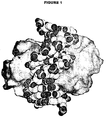
- Figure 1 shows a molecular model of interactions between a DNA duplex and a ubiquitin dimer.
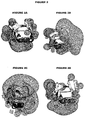
- Figure 2 shows models of charge fields surrounding various ubiquitin domain structures. Blue shows positive charge; red shows negative charge. DNA is shown in yellow and grey. The proteins shown are: (2A) ubiquitin; (2B) RAD23A; (2C) SUMO-1; (2D) NEDD8.
- References 5 and 6 disclose that FCS can stabilise nucleic acid duplexes. The activity of FCS was compared to ubiquitin.
- The comparison was carried out using 1 ml WBPS columns according to the standard protocol [7]. Briefly, 0.5ml blood was added to columns with 0.5ml 'solution 1' (a red blood cell lysis solution) and the column is eluted by vacuum pump. A further 1ml of 'solution 1' was then added, followed by vacuum elution. At this stage, white blood cells are captured within the filter and red blood cells have been removed. 1 ml of 'solution 2' (a white blood cell lysis solution) was then added to lyse the trapped cells, followed by vacuum elution. The filter was then washed with 1ml of either 'solution 3' (1% FCS; KCI, MgCl2, Tris; pH ∼7) or 'solution 3' in which FCS was replaced by ubiquitin (Sigma, product code U6253) from bovine erythrocytes. After vacuum elution, 100µl TE was added and the column was heated to 80°C for 10 minutes. After heating, 200µl TE was added. Elution gives dsDNA from the blood sample.
- Various concentrations of ubiquitin were tested, and results were as follows:
Ubiquitin concentration (mg/ml) Concentration of dsDNA (ng/µl) ± SD dsDNA yield (µg/ml blood) ± SD 0.00 2.85 ± 0.26 0.84 ± 0.08 0.10 3.11 ± 0.29 0.85 ± 0.10 0.25 4.52 ± 0.50 1.25 ± 0.18 0.50 12.70 ± 10.14 3.65 ± 3.14 1.00 13.59 ± 1.32 3.89 ± 0.51 2.00 22.37 ± 1.76 6.47 ± 0.63 2.50 20.96 ± 6.04 6.21 ± 1.70 - For comparison, the concentration of dsDNA obtained under the same conditions using FCS-containing 'solution 3' was 17.86 ± 3.41 ng/µl (i.e. yield of 5.37 ± 1.25 µg/ml blood). The stabilising effect of 1% FCS can therefore be achieved using between 1 and 2 mg/ml ubiquitin.
- Similar experiments were performed on blood using higher ubiquitin concentrations:
Ubiquitin concentration (mg/ml) Concentration of dsDNA (ng/µl) ± SD 0.0 2.25 ± 0.58 2.5 27.06 ± 5.91 5.0 30.87 ± 4.93 - For comparison, the concentration of dsDNA obtained under the same conditions using WBPS 'solution 3' was 15.49+10.49 ng/µl
- NEDD8 is related to ubiquitin and the dsDNA-stabilising activity of NEDD8 was also tested. Solutions were prepared in the same way as the ubiquitin solutions (i.e. WBPS 'solution 3' but with NEDD8 instead of FCS; pH 7-8). Two forms of NEDD8 were used (a native sequence and a 'control' form with a Gly76→Ala mutation, which cannot conjugate), both as GST-fusion proteins. SUMO-1 and α2-macroglobulin were also tested. All proteins were compared to the results obtained using WBPS 'solution 3' (and, as a negative control, against 'solution 3' lacking its FCS component).
- These assays were performed using WBPS reagents, but in a 96-well format which uses a slightly modified protocol. Briefly, 0.4ml blood was mixed with 0.4ml 'solution 1'. After vacuum, a further 0.8ml of 'solution 1' was then added (vacuum), followed by 0.3ml 'solution 2' (incubation period 5 minutes, then vacuum). The wells were then incubated for 5 minutes with 0.3ml of either 'solution 3' or an equivalent solution in which FCS was replaced by the protein under investigation. After vacuum, 25 µl TE was added and the column was heated to 50°C for 10 minutes. After heating, 200µl TE was added and the TE was then sucked out and collected. The eluted TE contains dsDNA from the blood sample.
- Results were as follows:
Composition Concentration dsDNA concentration (ng/µl) Ubiquitin 1.16 mg/ml 22.34 ± 9.99 Ubiquitin 0.49 mg/ml 13.07 ± 7.37 NEDD8 0.49 mg/ml 68.64 ± 16.63 NEDD8 (G76A) 0.49 mg/ml 50.33 ± 8.22 SUMO-1 (G76A) 1 mg/ml 2.60 ± 0.35 α2-macroglobulin 5 mg/ml 10.79 ± 0.54 'Solution 3' (1% FCS) 1% FCS 26.35 ± 7.26 'Solution 3' (0% FCS) Control 1.35 ± 0.13 - The data in this table show that both forms of NEDD8 are more active than ubiquitin in stabilising dsDNA, and that the stabilising activity is independent of NEDD8's ability to conjugate to target proteins.
- NEDD8 was used in the form of GST-fusion proteins, in which NEDD8 makes up only 24% by weight. Ubiquitin and NEDD8 both have MW -8kDa so, at the same concentration (0.49 mg/ml), NEDD8-GST represents about 4x less active protein than ubiquitin. Taking this into account, the specific activity of NEDD8 is around 20 times greater than that of ubiquitin.
- Computer modelling (using Deep View 3.7b2 and ProModII v.3.5) suggests that a dimer of ubiquitin can form a groove which can accommodate dsDNA (Figures 1 & 2A). The charge field surrounding the dimer in this model is fairly positive, enabling the negative DNA backbone to be held in place. A similar field is seen in NEDD8 (Figure 2D) and also in RAD23 (Figure 2B). The charge surrounding SUM01, however, is different (Figure 2C). The experimental data obtained using SUMO1 support the view that the charge field of a ubiquitin-like protein is important in determining dsDNA stabilising activity.
- The results obtained with α2-macroglobulin were investigated further. Two forms of α2-macroglobulin were tested - a form which did not inhibit trypsin (Sigma code M7151) and a form The results obtained with α2-macroglobulin were investigated further. Two forms of α2-macroglobulin were tested - a form which did not inhibit trypsin (Sigma code M7I51) and a form which did inhibit trypsin (Sigma code M6159). The M6159 preparation was able to stabilise dsDNA whereas the M7151 form was not:
Composition Concentration dsDNA concentration (ng/µl) α2-macroglobulin (M6159) 5 mg/ml 10.79 ± 0.54 α2-macroglobulin (M7151) 0.1 mg/ml 2.36 ± 0.25 α2-macroglobulin (M7151) 0.5 mg/ml 1.86 ± 0.13 α2-macroglobulin (M7151) 2.5 mg/ml 1.43 ± 0.19 α2-macroglobulin (M7151) 5.0 mg/ml 1.16 ± 0.07 WBPS (0% FCS) Control 2.25 ± 0.58 - The data in this table show that α2-macroglobulin which is unable to inhibit trypsin activity (i. e. which is somehow denatured) is unable to stabilise dsDNA, whereas α2-macroglobulin which can inhibit trypsin activity (i.e. which is not denatured) can stabilise dsDNA.
- It will be understood that the invention has been described by way of example only and modifications may be made whilst remaining within the scope of the invention.


-
- 1 - Demidov et al. (2000) Curr Issues Mol Biol. 2(1):31-35.
- 2 -Bukanov et al. (1998) Proc. Natl. Acad. Sci. USA 95(10)5516-5520.
- 3 - US patent 6,265,166.
- 4 - Wong et al. (2000) Biotechniques 28(4):776-783.
- 5 -International patent application PCT/GB01/02564.
- 6 - UK patent application 0014324.8 (GB-A-2363381).
- 7 - Baker et al. (2001) Biotechniques 31(1):142-145.
- 8 - International patent application PCT/GB99/03357 (WO00/21973).
- 9 - International patent application PCT/US99/30751 (WO00/37686).
- 10 - Hofmann et al. (1999) Nucleic Acids Research 27(1):215-219.
- 11 - Bucher & Bairoch (1994) Proc. Int. Conf. Intell. Syst. Mol. Biol. 2:53-61 [ISMB-94; Proceedings 2nd International Conference on Intelligent Systems for Molecular Biology. (eds. Altman et al.), AAAIPress, Menlo Park].
- 12 - Silverstein et al. (2001) Nucleic Acids Research 29(1):49-51.
- 13 - Shoop et al. (2001) Bioinformatics 17(3):262-271.
- 14 - Silverstein et al. (2001) Bioinformatics 17(3):249-261.
- 15 - Apweiler et al. (2000) Bioinformatics 16(12):1145-1150.
- 16 - Apweiier et al. (2000) Nucleic Acids Research 29(1):37-40.
- 17- Lo Conte et al. (2000) Nucleic Acids Research 28(1):257-259.
- 18 - Armstrong & Quigley (1999) Dev Comp Immunol 23(4-5):375-390.
- 19 - Feige et al. (1996) Horm Res 45(3-5):227-232.
- 20 - Guagliardi A et al : "Annealing of complementary ONA strands above the melting point of the duplex promoted by an archaeal protein "Journal of molecular biology, London, GB, vol. 267, 1997, pages 841-848.
Claims (13)
- A method for inhibiting the heat denaturation of a nucleic acid duplex, comprising the step of contacting a nucleic acid duplex with a composition which comprises a ubiquitin-like protein.
- The use of a composition which comprises a ubiquitin-like protein for inhibiting heat denaturation of a nucleic acid duplex.
- A method for purifying a nucleic acid duplex, comprising the step of contacting the nucleic acid duplex with a composition which comprises a ubiquitin-like protein.
- A method for extracting or purifying double-stranded nucleic acid from a biological sample which includes cells, comprising the steps of: (a) lysing cells which contain nucleic acid, to form a cell lysate; (b) contacting the cell lysate with a composition which comprises a ubiquitin-like protein; and (c) purifying nucleic acid from the lysate, optionally including heating the lysate.
- A method for purifying double-stranded nucleic acid, comprising the steps of: (a) applying a sample comprising cells which contain nucleic acid to a filter, whereby the cells are retained as a retentate and contaminants are removed; (b) lysing the retentate from step (a) whilst the retentate is retained by the filter to form a cell lysate containing the nucleic acid; (c) filtering the cell lysate with the filter to retain the nucleic acid and remove remaining cell lysate; (d) optionally washing the nucleic acid retained by the filter; and (e) eluting the nucleic acid, wherein at least one step of the process is performed in the presence of a ubiquitin-like protein.
- The method of claim 5, wherein the filter used in step (c) retains nucleic acid substantially in the absence of ionic interactions.
- A kit for isolating nucleic acid from a sample comprising cells containing nucleic acid comprising a composition which comprises a ubiquitin-like protein, and a filter.
- The kit of claim 7, wherein the filter retains nucleic acid substantially in the absence of ionic interactions.
- A method for the affinity capture and stabilisation of double-stranded nucleic acids, comprising using a ubiquitin-like protein immobilised on a solid support for the affinity capture and stabilisation of the double-stranded nucleic acid.
- The method of claim 9, further comprising using a macroglobin immobilised on the solid support.
- A method according to claim 1 or any one of claims 3, 4 or 7, a use according to claim 2, a kit according to claim 7 or 8, wherein the composition further comprises a macroglobin.
- A method according to claim 5 or claim 6 wherein at least one step of the process is performed in the presence of a ubiquitin-like protein and a macroglobin.
- The method, use or kit according to claim 11 or the method according to claim 12. wherein the macroglobin is alpha-2-macroglobulin.
Priority Applications (1)
| Application Number | Priority Date | Filing Date | Title |
|---|---|---|---|
| EP05076162A EP1586640B1 (en) | 2001-12-11 | 2002-12-11 | Stabilisation of double-stranded nucleic acids using proteins |
Applications Claiming Priority (3)
| Application Number | Priority Date | Filing Date | Title |
|---|---|---|---|
| GBGB0129662.3A GB0129662D0 (en) | 2001-12-11 | 2001-12-11 | Stabilisation of double-stranded nucleic acids |
| GB0129662 | 2001-12-11 | ||
| PCT/GB2002/005617 WO2003050278A2 (en) | 2001-12-11 | 2002-12-11 | Stabilisation of double-stranded nucleic acids using proteins |
Related Child Applications (1)
| Application Number | Title | Priority Date | Filing Date |
|---|---|---|---|
| EP05076162A Division EP1586640B1 (en) | 2001-12-11 | 2002-12-11 | Stabilisation of double-stranded nucleic acids using proteins |
Publications (2)
| Publication Number | Publication Date |
|---|---|
| EP1453961A2 EP1453961A2 (en) | 2004-09-08 |
| EP1453961B1 true EP1453961B1 (en) | 2006-02-22 |
Family
ID=9927430
Family Applications (2)
| Application Number | Title | Priority Date | Filing Date |
|---|---|---|---|
| EP02804620A Expired - Lifetime EP1453961B1 (en) | 2001-12-11 | 2002-12-11 | Stabilisation of double-stranded nucleic acids using proteins |
| EP05076162A Expired - Lifetime EP1586640B1 (en) | 2001-12-11 | 2002-12-11 | Stabilisation of double-stranded nucleic acids using proteins |
Family Applications After (1)
| Application Number | Title | Priority Date | Filing Date |
|---|---|---|---|
| EP05076162A Expired - Lifetime EP1586640B1 (en) | 2001-12-11 | 2002-12-11 | Stabilisation of double-stranded nucleic acids using proteins |
Country Status (8)
| Country | Link |
|---|---|
| US (1) | US7893016B2 (en) |
| EP (2) | EP1453961B1 (en) |
| AT (2) | ATE386112T1 (en) |
| AU (1) | AU2002356283A1 (en) |
| CA (2) | CA2475949C (en) |
| DE (2) | DE60209385T2 (en) |
| GB (1) | GB0129662D0 (en) |
| WO (1) | WO2003050278A2 (en) |
Families Citing this family (1)
| Publication number | Priority date | Publication date | Assignee | Title |
|---|---|---|---|---|
| WO2012064898A1 (en) * | 2010-11-09 | 2012-05-18 | Yuan Chen | Singleton inhibitors of sumoylation enzymes and methods for their use |
Family Cites Families (4)
| Publication number | Priority date | Publication date | Assignee | Title |
|---|---|---|---|---|
| AU3671099A (en) | 1998-04-29 | 1999-11-16 | Trustees Of Boston University | Methods and compositions pertaining to pd-loops |
| US20020010323A1 (en) | 1998-10-09 | 2002-01-24 | Andrew Martin Mitchell | Isolation method and apparatus |
| CA2355920A1 (en) | 1998-12-23 | 2000-06-29 | Rutgers, The State University | Methods and kits for screening nucleic acid duplex stability |
| GB2363381B (en) | 2000-06-12 | 2004-11-24 | Cambridge Molecular Tech | Solution |
-
2001
- 2001-12-11 GB GBGB0129662.3A patent/GB0129662D0/en not_active Ceased
-
2002
- 2002-12-11 AU AU2002356283A patent/AU2002356283A1/en not_active Abandoned
- 2002-12-11 US US10/498,437 patent/US7893016B2/en not_active Expired - Fee Related
- 2002-12-11 DE DE60209385T patent/DE60209385T2/en not_active Expired - Lifetime
- 2002-12-11 CA CA2475949A patent/CA2475949C/en not_active Expired - Fee Related
- 2002-12-11 DE DE60225080T patent/DE60225080T2/en not_active Expired - Lifetime
- 2002-12-11 EP EP02804620A patent/EP1453961B1/en not_active Expired - Lifetime
- 2002-12-11 EP EP05076162A patent/EP1586640B1/en not_active Expired - Lifetime
- 2002-12-11 CA CA2783164A patent/CA2783164A1/en not_active Abandoned
- 2002-12-11 WO PCT/GB2002/005617 patent/WO2003050278A2/en not_active Ceased
- 2002-12-11 AT AT05076162T patent/ATE386112T1/en not_active IP Right Cessation
- 2002-12-11 AT AT02804620T patent/ATE318308T1/en not_active IP Right Cessation
Non-Patent Citations (2)
| Title |
|---|
| KAMITANI ET AL: "Covalent modification of PML by the sentrin family of ubiquitin-like proteins.", J. BIOL. CHEM., vol. 273, no. 6, 6 February 1998 (1998-02-06), pages 3117 - 3120 * |
| KAMITANI ET AL: "Preferential modification of nuclear proteins by a novel ubiquitin-like molecule.", J. BIOL. CHEM., vol. 272, no. 22, 30 May 1997 (1997-05-30), pages 14001 - 14004, XP001152179, DOI: doi:10.1074/jbc.272.22.14001 * |
Also Published As
| Publication number | Publication date |
|---|---|
| EP1453961A2 (en) | 2004-09-08 |
| CA2475949C (en) | 2012-10-23 |
| DE60225080D1 (en) | 2008-03-27 |
| EP1586640A2 (en) | 2005-10-19 |
| CA2475949A1 (en) | 2003-06-19 |
| DE60225080T2 (en) | 2008-08-21 |
| DE60209385T2 (en) | 2006-09-07 |
| US7893016B2 (en) | 2011-02-22 |
| WO2003050278A3 (en) | 2003-09-25 |
| EP1586640A3 (en) | 2005-10-26 |
| AU2002356283A1 (en) | 2003-06-23 |
| GB0129662D0 (en) | 2002-01-30 |
| EP1586640B1 (en) | 2008-02-13 |
| CA2783164A1 (en) | 2003-06-19 |
| US20050221307A1 (en) | 2005-10-06 |
| DE60209385D1 (en) | 2006-04-27 |
| WO2003050278A2 (en) | 2003-06-19 |
| ATE386112T1 (en) | 2008-03-15 |
| ATE318308T1 (en) | 2006-03-15 |
Similar Documents
| Publication | Publication Date | Title |
|---|---|---|
| Beloglazova et al. | A novel family of sequence-specific endoribonucleases associated with the clustered regularly interspaced short palindromic repeats | |
| EP1641944B1 (en) | Room temperature elution of nucleic acids | |
| KR101218469B1 (en) | Methods for isolation of purified RNA | |
| US20040048251A1 (en) | Deprotection and purification of oligonucleotides and their derivatives | |
| EP0543484A2 (en) | A method of DNA amplification | |
| Srivastava et al. | Coregulation of processing and translation: mature 5'termini of Escherichia coli 23S ribosomal RNA form in polysomes. | |
| US7888006B2 (en) | Method for isolating DNA from biological samples | |
| Weil | Cytoplasmic and organellar tRNAs in plants | |
| MXPA00008559A (en) | Production and use of normalized dna libraries. | |
| CA2169271A1 (en) | In situ extraction of microbial dna | |
| EP0784695B1 (en) | Method for preparing nucleic acids for analysis and kits useful therefor | |
| US20090130687A1 (en) | Formulations and method isolating nucleic acids from arbitrary complex starting materials and subsequent complex genetic materials | |
| Soave et al. | 5‐S RNA: Investigation of the Different Extent of Phosphorylation at 5′ Terminus | |
| EP1586640A2 (en) | Stabilisation of double-stranded nucleic acids using proteins | |
| CN112301020B (en) | III type deoxyribozyme mutant and preparation method and application thereof | |
| Hummel et al. | Y-chromosomal DNA from ancient bones | |
| Zielinski et al. | A Comparison of RNA with DNA in Template‐Directed Synthesis | |
| CN112752842A (en) | Alkaline phosphatase composition, and method for producing dephosphorylated nucleic acid and labeled nucleic acid | |
| Cano | DNA amplification techniques in fossilized samples | |
| RU2839144C1 (en) | Whole exome enrichment technology based on difference in reassociation kinetics of dna fragments | |
| WO1998028321A1 (en) | Method and compounds for inhibition of ribonucleases | |
| KR20240086707A (en) | Direct RNA extraction buffer and uses thereof | |
| US7244561B2 (en) | Inhibiting denaturation of nucleic acid duplexes | |
| Nothwang et al. | Purification of nucleic acids from eukaryotic cells | |
| Sochacka | The chemical synthesis of E. coli tRNALys anticodon loop fragment and its analogues |
Legal Events
| Date | Code | Title | Description |
|---|---|---|---|
| PUAI | Public reference made under article 153(3) epc to a published international application that has entered the european phase |
Free format text: ORIGINAL CODE: 0009012 |
|
| 17P | Request for examination filed |
Effective date: 20040609 |
|
| AK | Designated contracting states |
Kind code of ref document: A2 Designated state(s): AT BE BG CH CY CZ DE DK EE ES FI FR GB GR IE IT LI LU MC NL PT SE SI SK TR |
|
| AX | Request for extension of the european patent |
Extension state: AL LT LV MK RO |
|
| 17Q | First examination report despatched |
Effective date: 20041122 |
|
| GRAP | Despatch of communication of intention to grant a patent |
Free format text: ORIGINAL CODE: EPIDOSNIGR1 |
|
| GRAS | Grant fee paid |
Free format text: ORIGINAL CODE: EPIDOSNIGR3 |
|
| GRAA | (expected) grant |
Free format text: ORIGINAL CODE: 0009210 |
|
| AK | Designated contracting states |
Kind code of ref document: B1 Designated state(s): AT BE BG CH CY CZ DE DK EE ES FI FR GB GR IE IT LI LU MC NL PT SE SI SK TR |
|
| PG25 | Lapsed in a contracting state [announced via postgrant information from national office to epo] |
Ref country code: IT Free format text: LAPSE BECAUSE OF FAILURE TO SUBMIT A TRANSLATION OF THE DESCRIPTION OR TO PAY THE FEE WITHIN THE PRESCRIBED TIME-LIMIT;WARNING: LAPSES OF ITALIAN PATENTS WITH EFFECTIVE DATE BEFORE 2007 MAY HAVE OCCURRED AT ANY TIME BEFORE 2007. THE CORRECT EFFECTIVE DATE MAY BE DIFFERENT FROM THE ONE RECORDED. Effective date: 20060222 Ref country code: CH Free format text: LAPSE BECAUSE OF FAILURE TO SUBMIT A TRANSLATION OF THE DESCRIPTION OR TO PAY THE FEE WITHIN THE PRESCRIBED TIME-LIMIT Effective date: 20060222 Ref country code: SK Free format text: LAPSE BECAUSE OF FAILURE TO SUBMIT A TRANSLATION OF THE DESCRIPTION OR TO PAY THE FEE WITHIN THE PRESCRIBED TIME-LIMIT Effective date: 20060222 Ref country code: AT Free format text: LAPSE BECAUSE OF FAILURE TO SUBMIT A TRANSLATION OF THE DESCRIPTION OR TO PAY THE FEE WITHIN THE PRESCRIBED TIME-LIMIT Effective date: 20060222 Ref country code: LI Free format text: LAPSE BECAUSE OF FAILURE TO SUBMIT A TRANSLATION OF THE DESCRIPTION OR TO PAY THE FEE WITHIN THE PRESCRIBED TIME-LIMIT Effective date: 20060222 Ref country code: FI Free format text: LAPSE BECAUSE OF FAILURE TO SUBMIT A TRANSLATION OF THE DESCRIPTION OR TO PAY THE FEE WITHIN THE PRESCRIBED TIME-LIMIT Effective date: 20060222 Ref country code: SI Free format text: LAPSE BECAUSE OF FAILURE TO SUBMIT A TRANSLATION OF THE DESCRIPTION OR TO PAY THE FEE WITHIN THE PRESCRIBED TIME-LIMIT Effective date: 20060222 |
|
| REG | Reference to a national code |
Ref country code: GB Ref legal event code: FG4D |
|
| REG | Reference to a national code |
Ref country code: CH Ref legal event code: EP |
|
| REG | Reference to a national code |
Ref country code: IE Ref legal event code: FG4D |
|
| REF | Corresponds to: |
Ref document number: 60209385 Country of ref document: DE Date of ref document: 20060427 Kind code of ref document: P |
|
| PG25 | Lapsed in a contracting state [announced via postgrant information from national office to epo] |
Ref country code: SE Free format text: LAPSE BECAUSE OF FAILURE TO SUBMIT A TRANSLATION OF THE DESCRIPTION OR TO PAY THE FEE WITHIN THE PRESCRIBED TIME-LIMIT Effective date: 20060522 Ref country code: BG Free format text: LAPSE BECAUSE OF FAILURE TO SUBMIT A TRANSLATION OF THE DESCRIPTION OR TO PAY THE FEE WITHIN THE PRESCRIBED TIME-LIMIT Effective date: 20060522 Ref country code: DK Free format text: LAPSE BECAUSE OF FAILURE TO SUBMIT A TRANSLATION OF THE DESCRIPTION OR TO PAY THE FEE WITHIN THE PRESCRIBED TIME-LIMIT Effective date: 20060522 |
|
| PG25 | Lapsed in a contracting state [announced via postgrant information from national office to epo] |
Ref country code: ES Free format text: LAPSE BECAUSE OF FAILURE TO SUBMIT A TRANSLATION OF THE DESCRIPTION OR TO PAY THE FEE WITHIN THE PRESCRIBED TIME-LIMIT Effective date: 20060602 |
|
| PG25 | Lapsed in a contracting state [announced via postgrant information from national office to epo] |
Ref country code: PT Free format text: LAPSE BECAUSE OF FAILURE TO SUBMIT A TRANSLATION OF THE DESCRIPTION OR TO PAY THE FEE WITHIN THE PRESCRIBED TIME-LIMIT Effective date: 20060724 |
|
| REG | Reference to a national code |
Ref country code: CH Ref legal event code: PL |
|
| ET | Fr: translation filed | ||
| PG25 | Lapsed in a contracting state [announced via postgrant information from national office to epo] |
Ref country code: IE Free format text: LAPSE BECAUSE OF NON-PAYMENT OF DUE FEES Effective date: 20061211 |
|
| PLBE | No opposition filed within time limit |
Free format text: ORIGINAL CODE: 0009261 |
|
| STAA | Information on the status of an ep patent application or granted ep patent |
Free format text: STATUS: NO OPPOSITION FILED WITHIN TIME LIMIT |
|
| PG25 | Lapsed in a contracting state [announced via postgrant information from national office to epo] |
Ref country code: MC Free format text: LAPSE BECAUSE OF NON-PAYMENT OF DUE FEES Effective date: 20061231 |
|
| 26N | No opposition filed |
Effective date: 20061123 |
|
| PG25 | Lapsed in a contracting state [announced via postgrant information from national office to epo] |
Ref country code: CZ Free format text: LAPSE BECAUSE OF FAILURE TO SUBMIT A TRANSLATION OF THE DESCRIPTION OR TO PAY THE FEE WITHIN THE PRESCRIBED TIME-LIMIT Effective date: 20060222 Ref country code: GR Free format text: LAPSE BECAUSE OF FAILURE TO SUBMIT A TRANSLATION OF THE DESCRIPTION OR TO PAY THE FEE WITHIN THE PRESCRIBED TIME-LIMIT Effective date: 20060523 |
|
| PG25 | Lapsed in a contracting state [announced via postgrant information from national office to epo] |
Ref country code: EE Free format text: LAPSE BECAUSE OF FAILURE TO SUBMIT A TRANSLATION OF THE DESCRIPTION OR TO PAY THE FEE WITHIN THE PRESCRIBED TIME-LIMIT Effective date: 20060222 |
|
| PG25 | Lapsed in a contracting state [announced via postgrant information from national office to epo] |
Ref country code: LU Free format text: LAPSE BECAUSE OF NON-PAYMENT OF DUE FEES Effective date: 20061211 Ref country code: TR Free format text: LAPSE BECAUSE OF FAILURE TO SUBMIT A TRANSLATION OF THE DESCRIPTION OR TO PAY THE FEE WITHIN THE PRESCRIBED TIME-LIMIT Effective date: 20060222 |
|
| PG25 | Lapsed in a contracting state [announced via postgrant information from national office to epo] |
Ref country code: CY Free format text: LAPSE BECAUSE OF FAILURE TO SUBMIT A TRANSLATION OF THE DESCRIPTION OR TO PAY THE FEE WITHIN THE PRESCRIBED TIME-LIMIT Effective date: 20060222 |
|
| PGFP | Annual fee paid to national office [announced via postgrant information from national office to epo] |
Ref country code: NL Payment date: 20131226 Year of fee payment: 12 |
|
| PGFP | Annual fee paid to national office [announced via postgrant information from national office to epo] |
Ref country code: BE Payment date: 20131227 Year of fee payment: 12 |
|
| PG25 | Lapsed in a contracting state [announced via postgrant information from national office to epo] |
Ref country code: BE Free format text: LAPSE BECAUSE OF NON-PAYMENT OF DUE FEES Effective date: 20141231 |
|
| REG | Reference to a national code |
Ref country code: NL Ref legal event code: V1 Effective date: 20150701 |
|
| REG | Reference to a national code |
Ref country code: NL Ref legal event code: V1 Effective date: 20150701 |
|
| PG25 | Lapsed in a contracting state [announced via postgrant information from national office to epo] |
Ref country code: NL Free format text: LAPSE BECAUSE OF NON-PAYMENT OF DUE FEES Effective date: 20150701 |
|
| REG | Reference to a national code |
Ref country code: FR Ref legal event code: PLFP Year of fee payment: 14 |
|
| REG | Reference to a national code |
Ref country code: FR Ref legal event code: PLFP Year of fee payment: 15 |
|
| REG | Reference to a national code |
Ref country code: FR Ref legal event code: PLFP Year of fee payment: 16 |
|
| PGFP | Annual fee paid to national office [announced via postgrant information from national office to epo] |
Ref country code: DE Payment date: 20191210 Year of fee payment: 18 |
|
| PGFP | Annual fee paid to national office [announced via postgrant information from national office to epo] |
Ref country code: FR Payment date: 20191219 Year of fee payment: 18 |
|
| PGFP | Annual fee paid to national office [announced via postgrant information from national office to epo] |
Ref country code: GB Payment date: 20191220 Year of fee payment: 18 |
|
| REG | Reference to a national code |
Ref country code: DE Ref legal event code: R119 Ref document number: 60209385 Country of ref document: DE |
|
| GBPC | Gb: european patent ceased through non-payment of renewal fee |
Effective date: 20201211 |
|
| PG25 | Lapsed in a contracting state [announced via postgrant information from national office to epo] |
Ref country code: FR Free format text: LAPSE BECAUSE OF NON-PAYMENT OF DUE FEES Effective date: 20201231 |
|
| PG25 | Lapsed in a contracting state [announced via postgrant information from national office to epo] |
Ref country code: GB Free format text: LAPSE BECAUSE OF NON-PAYMENT OF DUE FEES Effective date: 20201211 Ref country code: DE Free format text: LAPSE BECAUSE OF NON-PAYMENT OF DUE FEES Effective date: 20210701 |