The present invention generally relates to a
communication device for receiving information through
wireless communication, and in particular, relates to a
technique to manage information.
Recently, portable communication devices such as
mobile phones or personal digital assistants (PDAs) are
in widespread use. In these communication devices,
there are provided functions in which the wireless
communication can be used to receive a wide variety of
information from information providing systems using a
wireless communication function, and the information
can be employed using software.
Specifically, a portable terminal is proposed in
which there is provided a function to receive
geographical information and use it (e.g., see Jpn.
Pat. Appln. KOKAI Publication No. 2002-236763).
A telecommunications system is also proposed in
which desired information only can be obtained
efficiently from among provided information (e.g., see
Jpn. Pat. Appln. KOKAI Publication No. 2002-24273).
In the portable terminal related to the former
prior art, the following function is given, namely,
when the portable terminal receives the geographical
information and use-permission positional information
and determines that the portable terminal does not
belong to an effective area identified by the received
use-permission positional information, it deletes the
received geographical information.
Here, the geographical information delivered to
the portable terminal is associated with the use-permission
positional information. Therefore, a
geographical information transmitting party must
attach, without fail, restraint information, namely
the use-permission positional information, to the
geographical information to be transmitted. In
addition, when there are provided a plurality of
geographical information transmitting parties, no
procedure is considered if the portable terminal
receiving the geographical information receives the
information of the same type.
Moreover, in the system related to the latter
prior art, there is provided a function to delete the
provided information in which the system constantly
checks whether established deletion conditions with
respect to the received information in a memory are
satisfied or not so that only the provided information
needed is stored in the memory.
In this system, deletion conditions are generated
by an information receiving party and the information
is deleted after the deletion conditions are satisfied.
Therefore, the deletion conditions that are set by
users are assumed. In addition, when there are
provided a plurality of information transmitting
parties, as well as the former prior art, no procedure
is considered if information of the same type is
received.
In other words, in each method of the prior art,
since particular conditions are required upon deletion
of the received information, as a result, the
possibility increases in which unnecessary information
is accumulated within a communication device such as a
portable terminal.
An object of the presence invention is to provide
a communication device that has a function to
automatically delete information that becomes
unnecessary among information received through wireless
communication.
The communication device comprises an antenna
module which receives information transmitted through
wireless communication and includes a receiver
sensitivity measuring function; a determining unit
which determines effectiveness of the received
information in accordance with the receiver sensitivity
measured by the antenna module; a category determining
unit which determines a category of the received
information; a storage unit which stores the received
information as effective information in accordance with
determining results of the determining unit and the
category determining unit; and an information deletion
unit which deletes information of the same category
received prior to the latest received information from
the storage unit.
This summary of the invention does not necessarily
describe all necessary features so that the invention
may also be a sub-combination of these described
features.
The invention can be more fully understood from
the following detailed description when taken in
conjunction with the accompanying drawings, in which:
Now, with reference to the drawings, embodiments
of the invention will be described.
FIG. 1 describes an outline of an information
providing system in accordance with the embodiment.
A communication device in accordance with the
embodiment is a portable terminal 10 that has a
wireless communication function. As shown in FIG. 1A
and FIG. 1B, the portable terminal 10 has the function
in which information delivered, through wireless
communication, from a plurality of wireless communication
base stations (20A to 20D) that correspond to
respective information providing apparatuses, is
received and employed.
FIG. 1A shows state in which the portable terminal
10 moves to respective areas covered by respective
wireless communication base stations (20A to 20D) along
with a moving user (dashed line arrow). The portable
terminal 10 utilizes information delivered from the
wireless communication base station (20A to 20D) that
is located at a relatively short distance as effective
information. As mentioned below, the portable terminal
10 determines, using a function measuring receiver
sensitivity (i.e., strength of received radio wave)
included in an antenna module, the wireless communication
station (20A to 20D) that is located at the
relatively short distance (See FIG. 2).
Here, for example, geographical information is
assumed as the information provided by the respective
information providing apparatuses. This geographical
information shall be the information that corresponds
to the communication areas covered by the wireless
communication base station (20A to 20D).
To be more precise, as shown in FIG. 1A, the
portable terminal 10 receives the information
(geographical information) from the wireless communication
base station 20A that is located at the
relatively short distance as the effective information
to store it in an internal memory. The portable
terminal 10 executes processing so that the received
geographical information is displayed on a display.
Hereby, the user can refer to a map whose effective
area is only the area that is based on the provided
geographical information.
Next, as shown in FIG. 1B, along with the moving
user, the portable terminal 10 receives the information
(geographical information) from, for example, the
wireless communication base station 20C that is located
at the relatively short distance as the effective
information and stores it in the internal memory.
Hereby, the user can refer to the map whose effective
area is only the area where the user moved.
Here, for the portable terminal 10, after its
movement, information received prior to its movement
(here, it means the geographical information from the
wireless communication base station 20A) generally
becomes unnecessary information. Therefore, in the
embodiment, the portable terminal 10 deletes the
information that becomes unnecessary (i.e., information
received prior to its movement) from the internal
memory. Hereby, a use rate and information processing
efficiency of the internal memory in the portable
terminal 10 can be improved. In addition, the user
can constantly employ only the latest and effective
geographical information using the portable
terminal 10.
(Structure and operation of the portable terminal
and the information providing apparatus)
Hereinafter, the concrete structure and operation
of the embodiment will be described with reference to
FIG. 2 to FIG. 4.
FIG. 2 is a block diagram that shows the
structures of the portable terminal 10 and the
information providing apparatus 20, respectively.
The information providing apparatus 20 is what is
called a server and includes a provided information
input unit 200, a category information input unit 201,
a provided information storage unit 202, a category
information storage unit 203, an associating unit 204,
an associated data storage unit 205 and an associated
data delivery unit 206. The information providing
apparatus 20 is designed by the structure comprising
software and a CPU executing the relevant software or
by hardware configuration such as the memory and
storage (disk drive) or the like.
The provided information input unit 200 receives
the information to be provided (here, it means the
geographical information.) and stores it in the
provided information storage unit 202. The category
information input unit 201 receives the category
information that indicates the category of the
information to be provided (here, it means the map) and
stores it in the category information storage unit 203.
Here, the provided information storage unit 202, the
category information storage unit 203 and the
associated data storage unit 205 mean, for example, a
hard disk drive or the like.
The associating unit 204 associates the
information (geographical information) that is to be
provided and is stored in the provided information
storage unit 202 with its category information that is
stored in the category information storage unit 203,
then stores it in the associated data storage unit 205.
The associated data delivery unit 206 delivers
associated information (geographical information and
its category information) that is stored in the
associated data storage unit 205 through the wireless
communication base station (20A to 20D).
The portable terminal 10 includes an antenna
module 100 for receiving the radio wave transmitted
from the wireless communication base station (20A to
20D), an associated data reception unit 101, a distance
determining unit 102, a category information determining
unit 103, a receivable category information
storage unit 104 and a receivable category information
input unit 105.
The antenna module 100 includes the receiving
function receiving the information, in the form of
radio waves, that is delivered from the information
providing apparatus 20, while including the measuring
function measuring the receiver sensitivity corresponding
to the strength of the relevant received radio
wave. The distance determining unit 102 determines the
distance from the wireless communication base station
(20A to 20D) of the information providing apparatus 20
in accordance with the receiver sensitivity that is
measured with the antenna module 100. To be more
precise, the distance determining unit 102 generates
determining information identifying the wireless
communication base station (20A to 20D) that is located
at the relatively short distance.
The associated data reception unit 101 has a
function determining whether the information
(associated information) received with the antenna
module 100 is received or not and stores the received
information in an associated data storage unit 107.
The associated data reception unit 101 determines
reception of the received information (authentic
reception) based on a determining result from the
distance determining unit 102 and a determining result
from the category information determining unit 103.
That is to say, the associated data reception unit
101 receives the information in accordance with the
determining result from the category information
determining unit 103 when the category information
included in the associated information received matches
a predetermined category information, while the
reception is rejected when mismatch occurs. In
addition, the associated data reception unit 101
receives, in case of the information of the same
category, the information from the information
providing apparatus 20 that is located at the
relatively short distance in accordance with the
determining result from the distance determining
unit 102.
The category information determining unit 103
compares receivable category information that is input
by the category information input unit 105 and is
stored in the receivable category information storage
unit 104 with the category information tentatively
received at the associated data reception unit 101.
The category information input unit 105 inputs the
category information that is previously transmitted
from outside through the antenna module 100 or the
category information that is input from an input
apparatus (not shown) of the portable terminal 10 by
the user into the receivable category information
storage unit 104.
Moreover, the portable terminal 10 has an
associated data deletion unit 106 and an information
presentation unit 108. The information presentation
unit 108 executes processing by which the information
that is stored in the associated data storage unit 107
is displayed on the display, for example, provided on
the portable terminal 10, or the like. Using this
information presentation unit 108, the user can refer
to the received geographical information on the
display.
The associated data deletion unit 106 deletes the
information determined to be unnecessary from among the
information that is stored in the associated data
storage unit 107. To be more precise, when the
associated data deletion unit 106 receives, in
accordance with the determining result from the
distance determining unit 102, the information from the
information providing apparatus 20 that is located at
the relatively short distance, it deletes all the
information (information of the same category) that is
previously received and is stored in the associated
data storage unit 107. The distance determining unit
102 constantly monitors, in accordance with the
receiver sensitivity measured with the antenna module
100, the distance from the information providing
apparatus 20 (wireless communication base station (20A
to 20D) .
In addition, the portable terminal 10 is designed
by the structure including the software, the CPU that
executes the relevant software and the internal memory
(such as flash EEPROM). The associated data storage
unit 107 is a component that corresponds to the
internal memory.
(Operation of the portable terminal)
Next, the operation of the portable terminal 10 in
accordance with the embodiment will be described with
reference to FIG. 3 and FIG. 4.
First, basic operation in accordance with the
embodiment will be described with reference to a
flowchart of FIG. 3.
When the portable terminal 10 receives the radio
wave with the antenna module 100, the associated data
reception unit 101 determines whether the received
information is effective or not (receivable or
not)(Step S1 and S2). The associated data reception
unit 101 determines it, as mentioned above, in
accordance with both measured result of the receiver
sensitivity at the antenna module 100 and the category
information (information indicating that it is the
geographical information) included in the associated
information received.
To be more precise, in accordance with the
measured result of the receiver sensitivity, the
associated data reception unit 101 regards the
information as effective, the information being
delivered from the information providing apparatus 20
located at the relatively short distance. For more
detail, when the portable terminal 10 is located on a
position as shown in FIG. 1A, the information that is
delivered from the information providing apparatus 20
corresponding to the wireless communication base
station 20A. It is needless to say that the associated
data reception unit 101 regards the information as
ineffective regardless of content of the information
when the receiver sensitivity does not exceed a given
level.
Furthermore, when the mismatch occurs between the
category information included in the associated data
received and the category information (map) previously
stored in the receivable category information storage
unit 104, the associated data reception unit 101
determines that it is not effective (NO in step S2).
In this case, the portable terminal 10 executes other
processing until it receives the effective information.
The associated data reception unit 101 determines
the received geographical information to be effective
and receives it, and then stores the information in the
associated data storage unit 107 (YES in Step S2 and
Step S4). Hereby, with the information presentation
unit 108 of the portable terminal 10, the user can
refer to the received geographical information on the
display.
In this embodiment, when the associated data
reception unit 101 receives the effective geographical
information, the associated data deletion unit 106
deletes the geographical information (information of
the same category) that is previously received prior to
the current point of time of reception (the latest
point of time of reception) and stored in the
associated data storage unit 107 (Step S3). For
example, as shown in FIG. 1B, a case is assumed in
which, along with the moving portable terminal 10, the
information is received from the information providing
apparatus 20 that corresponds to the wireless communication
base station 20C. In the above-mentioned case,
the information that is delivered from the information
providing apparatus 20 corresponding to the wireless
communication base station 20A is deleted from the
internal memory 107, the information being received
prior thereto.
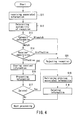
Concrete operation of the portable terminal 10 in
the embodiment is described with reference to a
flowchart of FIG. 4.
When the antenna module 100 receive the radio
waves, the associated data reception unit 101 executes
the determining of suitability whether it is receivable
or not (Steps S11 and S12). When the mismatch occurs
between the category information included in the
associated information received and the category
information previously stored in the category
information storage unit 104, reception is rejected by
the associated data reception unit 101 in accordance
with the determining result from the category
information determining unit 103 (Steps S13 and S20).
When both pieces of the category information
match, the associated data reception unit 101 receives
the information as effective in accordance with the
determining result (receiver sensitivity) of the
distance determining unit 102, the information being
from the information providing apparatus 20 located at
the relatively short distance (Step S14). As a matter
of course, reception of the information that is from
the information providing apparatus 20 located at a
relatively long distance is rejected even if the
category is the same (Step S20).
The associated data reception unit 101 stores the
received information (geographical information) in the
associated data storage unit 107 (Step S15). The
information presentation unit 108 executes processing
such as displaying the information stored in the
associated data storage unit 107 on the display, for
example, provided on the portable terminal 10, or the
like (Step S16). With this information presentation
unit 108, the user can refer to the received
geographical information on the display.
In the portable terminal 10, when the effective
geographical information is received by the associated
data reception unit 101, the associated data deletion
unit 106 is activated (YES in Step S17). The
associated data deletion unit 106 retrieves the
associated data storage unit 107 and deletes the
geographical information that is received prior to the
current point of time of reception (the latest point of
time of reception)(Step S18 and S19).
As described above, in accordance with the
embodiment, when the information (geographical
information) of the predetermined category (e.g., map)
is received as effective, the information of the same
category (e.g., geographical information in different
area) that is previously received and stored can be
deleted from the internal memory 107.
In consequence, the user's operation is not
necessary and the unnecessary information can be
automatically deleted from the portable terminal 10.
Hereby, the portable terminal 10 can omit the
processing for displaying the unnecessary information
for the user. In addition, since the unnecessary
information can be deleted from the internal memory 107
of the portable terminal 10, the use rate of the
internal memory 107 can be improved.
Here, the associated data deletion unit 106 of
the embodiment may delete, in accordance with the
determining result (receiver sensitivity) from the
distance determining unit 102, the received information
as unnecessary, the received information being the
information received when the distance changes from the
relatively short distance to a long distance. In this
case, an operation may be possible in which at the
stage when communication to the information providing
apparatus located at the relatively short distance is
established, the previous information is not deleted
immediately but is temporarily stored and is deleted at
the stage when a certain distance arises.
In addition, the portable terminal 10 may include
the structure having a function in which the information
received from respective information providing
apparatuses is not deleted immediately but stored in
the internal memory, and then the plurality of pieces
of information are displayed on the display, the pieces
of information being weighted according to the distance
from the information providing apparatuses.
Furthermore, the portable terminal 10 does not
delete information previously received but stores it in
the internal memory after attaching a possible deletion
index to it. Then, the portable terminal 10 deletes
the information only to which the possible deletion
index is attached at the time there is a shortage of
internal memory capacity.
Moreover, at the stage when the communication to
the information providing apparatus located at the
relatively short distance is established, the portable
terminal 10 does not receive and store the information
received from the apparatus, yet retrieves the internal
memory. The portable terminal 10 may have structure in
which when the portable terminal succeed in retrieving
the information from the internal memory, then the
information can be used intact. Here, when the
possible deletion index is attached to the information,
the possible deletion index is deleted.
Although the portable terminal 10 in accordance
with the embodiment is assumed to be standard mobile
phones and personal digital assistants (PDAs), the
embodiment is not limited thereto and dedicated
terminals, for example, applicable to portable type
navigation can also be assumed.
(Another embodiment)
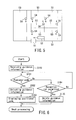
FIG. 5 and FIG. 6 describe another embodiment.
The embodiment relates to the portable terminal 10
that receives positional information transmitted from a
wireless communication device 54 (wireless chip),
instead of the wireless communication base station, the
wireless communication device 54 having a short
distance wireless communication function in a narrow
area such as exhibition hall and so on. In addition,
the basic structure of the portable terminal 10 is the
same as the one that is shown in FIG. 2.
The wireless communication device 54 is a small
sized device which includes a wireless communication
circuit that transmits identification code information
such as a positional code. In the embodiment, as shown
in FIG. 5, an exhibition hall 50 in which plural booths
are placed is assumed. Respective booths 53 are
exhibition areas to present different products and
services, respectively.
The wireless communication device 54 is placed
with respect to each booth 53 and constantly transmits
the identification code information (positional code
information) to identify a position of each booth 53.
Moreover, in the embodiment, an information providing
apparatus 52 that delivers guidance information of each
booth 53 is placed, for example, in the vicinity of an
entrance 51 of the exhibition hall 50. The information
providing apparatus 52 is basically the same as the one
that is shown in FIG. 2 while aforementioned positional
code information with respect to each booth 53 is used
as the information corresponding to the category
information.
(Operation of another embodiment)
Hereinafter, mainly with reference to a flowchart
in FIG. 6, the operation of the embodiment will be
described.
First, when the user enters the exhibition hall 50
through the entrance 51, the portable terminal 10
receives the guidance information that is delivered
from the information providing apparatus 52 (Step
S100). At the time, the portable terminal 10 receives
the guidance information that is associated with the
positional code information and stores it in the
internal memory.
Next, when the portable terminal 10 moves within
the exhibition hall 50 along with the user, it receives
the positional code information transmitted from the
wireless communication device 54 placed with respect to
each booth 53. At the time, as mentioned above, the
portable terminal 10 receives the positional code
information as effective in accordance with the
receiver sensitivity measured with the antenna module,
the positional code information being transmitted from
the wireless communication device 54 located at the
relatively short distance (YES of Step S101).
The portable terminal 10 retrieves the guidance
information from the internal memory, the guidance
information corresponding to the received positional
code information (Step S102). The portable terminal 10
executes the processing displaying the relevant
guidance information on the display (Step S103).
Hereby, the user can refer to the guidance
information on the display of the portable terminal 10,
the guidance information being the information from the
nearest located booth 53. Therefore, for example, the
user can judge, in accordance with the relevant
guidance information, whether the booth is the desired
booth or not and when he does not have interest in the
booth, he can move to the other booths.
On the other hand, after receiving the guidance
information regarding the positional code information
when the portable terminal 10 cannot receive the
relevant positional code information, the portable
terminal 10 deletes the guidance information that is
stored in the internal memory (YES in Step S104, and
S105). As mentioned above, based on the receiver
sensitivity measured with the antenna module, when
reception level does not exceed a given level, the
portable terminal 10 determines that the relevant
positional code information cannot be received.
Here, when the portable terminal 10 cannot receive
the positional code information correctly within a
predetermined time interval, the portable terminal 10
makes a transition to the processing to delete the
guidance information stored in the internal memory.
Even if the guidance information stored in the internal
memory is once deleted, the portable terminal 10 can
restore the relevant guidance information by moving in
the vicinity of the entrance 51 again to receive the
guidance information from the information providing
apparatus 52.
As mentioned above, it follows that, for example,
when the portable terminal 10 in the embodiment cannot
receive the positional code information which is
effective only within the area in the exhibition hall
50 after receiving and storing the guidance information
which is effective only within the area in the
exhibition hall 50, it deletes the relevant guidance
information.
To be more precise, when the user goes out of the
exhibition hall 50, the portable terminal 10 automatically
deletes the relevant guidance information because
it cannot receive the positional code information.
Hence, outside the exhibition hall 50, the relevant
information that becomes unnecessary can be deleted
from the portable terminal 10. If the user hopes to
restore the deleted guidance information, it can be
realized by receiving the guidance information again at
the exhibition hall 50.
In addition, although the embodiment relates to an
information management method in which the guidance
information at the exhibition hall 50 is associated
with the positional code information, the embodiment is
not limited thereto and it can be applied to the
information management method in a narrow area, for
example, a theme park or the like. Moreover, in the
embodiment, although the portable terminal has the
structure in which the stored guidance information is
deleted when it cannot receive the positional code
information, the embodiment is not limited thereto.
For example, one structure may be possible in which,
when the portable terminal 10 receives the information
that indicates deletion of the guidance information, it
deletes the stored guidance information.
As described above in detail, in accordance with
the embodiment, when the information of the same
category is received from a plurality of information
providing parties to utilize, all the information other
than the latest information is deleted. Moreover,
among the information that is received prior to the
latest point of time of reception, information that is
shifted from effective to ineffective is deleted.
Therefore, as a result, unnecessary information can be
automatically deleted from the communication device.