EP1452812A1 - Crucible for melting rare earth element alloy and rare earth element alloy - Google Patents
Crucible for melting rare earth element alloy and rare earth element alloy Download PDFInfo
- Publication number
- EP1452812A1 EP1452812A1 EP02780089A EP02780089A EP1452812A1 EP 1452812 A1 EP1452812 A1 EP 1452812A1 EP 02780089 A EP02780089 A EP 02780089A EP 02780089 A EP02780089 A EP 02780089A EP 1452812 A1 EP1452812 A1 EP 1452812A1
- Authority
- EP
- European Patent Office
- Prior art keywords
- crucible
- rare earth
- volume
- particle size
- melting
- Prior art date
- Legal status (The legal status is an assumption and is not a legal conclusion. Google has not performed a legal analysis and makes no representation as to the accuracy of the status listed.)
- Granted
Links
Images

Classifications
-
- F—MECHANICAL ENGINEERING; LIGHTING; HEATING; WEAPONS; BLASTING
- F27—FURNACES; KILNS; OVENS; RETORTS
- F27B—FURNACES, KILNS, OVENS OR RETORTS IN GENERAL; OPEN SINTERING OR LIKE APPARATUS
- F27B14/00—Crucible or pot furnaces
- F27B14/08—Details specially adapted for crucible or pot furnaces
- F27B14/10—Crucibles
-
- C—CHEMISTRY; METALLURGY
- C04—CEMENTS; CONCRETE; ARTIFICIAL STONE; CERAMICS; REFRACTORIES
- C04B—LIME, MAGNESIA; SLAG; CEMENTS; COMPOSITIONS THEREOF, e.g. MORTARS, CONCRETE OR LIKE BUILDING MATERIALS; ARTIFICIAL STONE; CERAMICS; REFRACTORIES; TREATMENT OF NATURAL STONE
- C04B35/00—Shaped ceramic products characterised by their composition; Ceramics compositions; Processing powders of inorganic compounds preparatory to the manufacturing of ceramic products
- C04B35/01—Shaped ceramic products characterised by their composition; Ceramics compositions; Processing powders of inorganic compounds preparatory to the manufacturing of ceramic products based on oxide ceramics
- C04B35/10—Shaped ceramic products characterised by their composition; Ceramics compositions; Processing powders of inorganic compounds preparatory to the manufacturing of ceramic products based on oxide ceramics based on aluminium oxide
- C04B35/101—Refractories from grain sized mixtures
-
- B—PERFORMING OPERATIONS; TRANSPORTING
- B29—WORKING OF PLASTICS; WORKING OF SUBSTANCES IN A PLASTIC STATE IN GENERAL
- B29C—SHAPING OR JOINING OF PLASTICS; SHAPING OF MATERIAL IN A PLASTIC STATE, NOT OTHERWISE PROVIDED FOR; AFTER-TREATMENT OF THE SHAPED PRODUCTS, e.g. REPAIRING
- B29C33/00—Moulds or cores; Details thereof or accessories therefor
- B29C33/56—Coatings, e.g. enameled or galvanised; Releasing, lubricating or separating agents
-
- C—CHEMISTRY; METALLURGY
- C04—CEMENTS; CONCRETE; ARTIFICIAL STONE; CERAMICS; REFRACTORIES
- C04B—LIME, MAGNESIA; SLAG; CEMENTS; COMPOSITIONS THEREOF, e.g. MORTARS, CONCRETE OR LIKE BUILDING MATERIALS; ARTIFICIAL STONE; CERAMICS; REFRACTORIES; TREATMENT OF NATURAL STONE
- C04B35/00—Shaped ceramic products characterised by their composition; Ceramics compositions; Processing powders of inorganic compounds preparatory to the manufacturing of ceramic products
- C04B35/01—Shaped ceramic products characterised by their composition; Ceramics compositions; Processing powders of inorganic compounds preparatory to the manufacturing of ceramic products based on oxide ceramics
- C04B35/10—Shaped ceramic products characterised by their composition; Ceramics compositions; Processing powders of inorganic compounds preparatory to the manufacturing of ceramic products based on oxide ceramics based on aluminium oxide
- C04B35/111—Fine ceramics
- C04B35/117—Composites
-
- C—CHEMISTRY; METALLURGY
- C04—CEMENTS; CONCRETE; ARTIFICIAL STONE; CERAMICS; REFRACTORIES
- C04B—LIME, MAGNESIA; SLAG; CEMENTS; COMPOSITIONS THEREOF, e.g. MORTARS, CONCRETE OR LIKE BUILDING MATERIALS; ARTIFICIAL STONE; CERAMICS; REFRACTORIES; TREATMENT OF NATURAL STONE
- C04B35/00—Shaped ceramic products characterised by their composition; Ceramics compositions; Processing powders of inorganic compounds preparatory to the manufacturing of ceramic products
- C04B35/01—Shaped ceramic products characterised by their composition; Ceramics compositions; Processing powders of inorganic compounds preparatory to the manufacturing of ceramic products based on oxide ceramics
- C04B35/16—Shaped ceramic products characterised by their composition; Ceramics compositions; Processing powders of inorganic compounds preparatory to the manufacturing of ceramic products based on oxide ceramics based on silicates other than clay
- C04B35/18—Shaped ceramic products characterised by their composition; Ceramics compositions; Processing powders of inorganic compounds preparatory to the manufacturing of ceramic products based on oxide ceramics based on silicates other than clay rich in aluminium oxide
-
- C—CHEMISTRY; METALLURGY
- C04—CEMENTS; CONCRETE; ARTIFICIAL STONE; CERAMICS; REFRACTORIES
- C04B—LIME, MAGNESIA; SLAG; CEMENTS; COMPOSITIONS THEREOF, e.g. MORTARS, CONCRETE OR LIKE BUILDING MATERIALS; ARTIFICIAL STONE; CERAMICS; REFRACTORIES; TREATMENT OF NATURAL STONE
- C04B35/00—Shaped ceramic products characterised by their composition; Ceramics compositions; Processing powders of inorganic compounds preparatory to the manufacturing of ceramic products
- C04B35/01—Shaped ceramic products characterised by their composition; Ceramics compositions; Processing powders of inorganic compounds preparatory to the manufacturing of ceramic products based on oxide ceramics
- C04B35/46—Shaped ceramic products characterised by their composition; Ceramics compositions; Processing powders of inorganic compounds preparatory to the manufacturing of ceramic products based on oxide ceramics based on titanium oxides or titanates
- C04B35/462—Shaped ceramic products characterised by their composition; Ceramics compositions; Processing powders of inorganic compounds preparatory to the manufacturing of ceramic products based on oxide ceramics based on titanium oxides or titanates based on titanates
- C04B35/478—Shaped ceramic products characterised by their composition; Ceramics compositions; Processing powders of inorganic compounds preparatory to the manufacturing of ceramic products based on oxide ceramics based on titanium oxides or titanates based on titanates based on aluminium titanates
-
- C—CHEMISTRY; METALLURGY
- C04—CEMENTS; CONCRETE; ARTIFICIAL STONE; CERAMICS; REFRACTORIES
- C04B—LIME, MAGNESIA; SLAG; CEMENTS; COMPOSITIONS THEREOF, e.g. MORTARS, CONCRETE OR LIKE BUILDING MATERIALS; ARTIFICIAL STONE; CERAMICS; REFRACTORIES; TREATMENT OF NATURAL STONE
- C04B35/00—Shaped ceramic products characterised by their composition; Ceramics compositions; Processing powders of inorganic compounds preparatory to the manufacturing of ceramic products
- C04B35/50—Shaped ceramic products characterised by their composition; Ceramics compositions; Processing powders of inorganic compounds preparatory to the manufacturing of ceramic products based on rare-earth compounds
- C04B35/505—Shaped ceramic products characterised by their composition; Ceramics compositions; Processing powders of inorganic compounds preparatory to the manufacturing of ceramic products based on rare-earth compounds based on yttrium oxide
-
- C—CHEMISTRY; METALLURGY
- C04—CEMENTS; CONCRETE; ARTIFICIAL STONE; CERAMICS; REFRACTORIES
- C04B—LIME, MAGNESIA; SLAG; CEMENTS; COMPOSITIONS THEREOF, e.g. MORTARS, CONCRETE OR LIKE BUILDING MATERIALS; ARTIFICIAL STONE; CERAMICS; REFRACTORIES; TREATMENT OF NATURAL STONE
- C04B35/00—Shaped ceramic products characterised by their composition; Ceramics compositions; Processing powders of inorganic compounds preparatory to the manufacturing of ceramic products
- C04B35/622—Forming processes; Processing powders of inorganic compounds preparatory to the manufacturing of ceramic products
- C04B35/626—Preparing or treating the powders individually or as batches ; preparing or treating macroscopic reinforcing agents for ceramic products, e.g. fibres; mechanical aspects section B
- C04B35/62605—Treating the starting powders individually or as mixtures
- C04B35/62645—Thermal treatment of powders or mixtures thereof other than sintering
- C04B35/6268—Thermal treatment of powders or mixtures thereof other than sintering characterised by the applied pressure or type of atmosphere, e.g. in vacuum, hydrogen or a specific oxygen pressure
-
- C—CHEMISTRY; METALLURGY
- C04—CEMENTS; CONCRETE; ARTIFICIAL STONE; CERAMICS; REFRACTORIES
- C04B—LIME, MAGNESIA; SLAG; CEMENTS; COMPOSITIONS THEREOF, e.g. MORTARS, CONCRETE OR LIKE BUILDING MATERIALS; ARTIFICIAL STONE; CERAMICS; REFRACTORIES; TREATMENT OF NATURAL STONE
- C04B2235/00—Aspects relating to ceramic starting mixtures or sintered ceramic products
- C04B2235/02—Composition of constituents of the starting material or of secondary phases of the final product
- C04B2235/30—Constituents and secondary phases not being of a fibrous nature
- C04B2235/32—Metal oxides, mixed metal oxides, or oxide-forming salts thereof, e.g. carbonates, nitrates, (oxy)hydroxides, chlorides
- C04B2235/3205—Alkaline earth oxides or oxide forming salts thereof, e.g. beryllium oxide
- C04B2235/3206—Magnesium oxides or oxide-forming salts thereof
-
- C—CHEMISTRY; METALLURGY
- C04—CEMENTS; CONCRETE; ARTIFICIAL STONE; CERAMICS; REFRACTORIES
- C04B—LIME, MAGNESIA; SLAG; CEMENTS; COMPOSITIONS THEREOF, e.g. MORTARS, CONCRETE OR LIKE BUILDING MATERIALS; ARTIFICIAL STONE; CERAMICS; REFRACTORIES; TREATMENT OF NATURAL STONE
- C04B2235/00—Aspects relating to ceramic starting mixtures or sintered ceramic products
- C04B2235/02—Composition of constituents of the starting material or of secondary phases of the final product
- C04B2235/30—Constituents and secondary phases not being of a fibrous nature
- C04B2235/32—Metal oxides, mixed metal oxides, or oxide-forming salts thereof, e.g. carbonates, nitrates, (oxy)hydroxides, chlorides
- C04B2235/3217—Aluminum oxide or oxide forming salts thereof, e.g. bauxite, alpha-alumina
-
- C—CHEMISTRY; METALLURGY
- C04—CEMENTS; CONCRETE; ARTIFICIAL STONE; CERAMICS; REFRACTORIES
- C04B—LIME, MAGNESIA; SLAG; CEMENTS; COMPOSITIONS THEREOF, e.g. MORTARS, CONCRETE OR LIKE BUILDING MATERIALS; ARTIFICIAL STONE; CERAMICS; REFRACTORIES; TREATMENT OF NATURAL STONE
- C04B2235/00—Aspects relating to ceramic starting mixtures or sintered ceramic products
- C04B2235/02—Composition of constituents of the starting material or of secondary phases of the final product
- C04B2235/30—Constituents and secondary phases not being of a fibrous nature
- C04B2235/32—Metal oxides, mixed metal oxides, or oxide-forming salts thereof, e.g. carbonates, nitrates, (oxy)hydroxides, chlorides
- C04B2235/3224—Rare earth oxide or oxide forming salts thereof, e.g. scandium oxide
-
- C—CHEMISTRY; METALLURGY
- C04—CEMENTS; CONCRETE; ARTIFICIAL STONE; CERAMICS; REFRACTORIES
- C04B—LIME, MAGNESIA; SLAG; CEMENTS; COMPOSITIONS THEREOF, e.g. MORTARS, CONCRETE OR LIKE BUILDING MATERIALS; ARTIFICIAL STONE; CERAMICS; REFRACTORIES; TREATMENT OF NATURAL STONE
- C04B2235/00—Aspects relating to ceramic starting mixtures or sintered ceramic products
- C04B2235/02—Composition of constituents of the starting material or of secondary phases of the final product
- C04B2235/30—Constituents and secondary phases not being of a fibrous nature
- C04B2235/32—Metal oxides, mixed metal oxides, or oxide-forming salts thereof, e.g. carbonates, nitrates, (oxy)hydroxides, chlorides
- C04B2235/3224—Rare earth oxide or oxide forming salts thereof, e.g. scandium oxide
- C04B2235/3225—Yttrium oxide or oxide-forming salts thereof
-
- C—CHEMISTRY; METALLURGY
- C04—CEMENTS; CONCRETE; ARTIFICIAL STONE; CERAMICS; REFRACTORIES
- C04B—LIME, MAGNESIA; SLAG; CEMENTS; COMPOSITIONS THEREOF, e.g. MORTARS, CONCRETE OR LIKE BUILDING MATERIALS; ARTIFICIAL STONE; CERAMICS; REFRACTORIES; TREATMENT OF NATURAL STONE
- C04B2235/00—Aspects relating to ceramic starting mixtures or sintered ceramic products
- C04B2235/02—Composition of constituents of the starting material or of secondary phases of the final product
- C04B2235/30—Constituents and secondary phases not being of a fibrous nature
- C04B2235/32—Metal oxides, mixed metal oxides, or oxide-forming salts thereof, e.g. carbonates, nitrates, (oxy)hydroxides, chlorides
- C04B2235/3224—Rare earth oxide or oxide forming salts thereof, e.g. scandium oxide
- C04B2235/3229—Cerium oxides or oxide-forming salts thereof
-
- C—CHEMISTRY; METALLURGY
- C04—CEMENTS; CONCRETE; ARTIFICIAL STONE; CERAMICS; REFRACTORIES
- C04B—LIME, MAGNESIA; SLAG; CEMENTS; COMPOSITIONS THEREOF, e.g. MORTARS, CONCRETE OR LIKE BUILDING MATERIALS; ARTIFICIAL STONE; CERAMICS; REFRACTORIES; TREATMENT OF NATURAL STONE
- C04B2235/00—Aspects relating to ceramic starting mixtures or sintered ceramic products
- C04B2235/02—Composition of constituents of the starting material or of secondary phases of the final product
- C04B2235/30—Constituents and secondary phases not being of a fibrous nature
- C04B2235/32—Metal oxides, mixed metal oxides, or oxide-forming salts thereof, e.g. carbonates, nitrates, (oxy)hydroxides, chlorides
- C04B2235/3231—Refractory metal oxides, their mixed metal oxides, or oxide-forming salts thereof
- C04B2235/3232—Titanium oxides or titanates, e.g. rutile or anatase
- C04B2235/3234—Titanates, not containing zirconia
-
- C—CHEMISTRY; METALLURGY
- C04—CEMENTS; CONCRETE; ARTIFICIAL STONE; CERAMICS; REFRACTORIES
- C04B—LIME, MAGNESIA; SLAG; CEMENTS; COMPOSITIONS THEREOF, e.g. MORTARS, CONCRETE OR LIKE BUILDING MATERIALS; ARTIFICIAL STONE; CERAMICS; REFRACTORIES; TREATMENT OF NATURAL STONE
- C04B2235/00—Aspects relating to ceramic starting mixtures or sintered ceramic products
- C04B2235/02—Composition of constituents of the starting material or of secondary phases of the final product
- C04B2235/30—Constituents and secondary phases not being of a fibrous nature
- C04B2235/32—Metal oxides, mixed metal oxides, or oxide-forming salts thereof, e.g. carbonates, nitrates, (oxy)hydroxides, chlorides
- C04B2235/3231—Refractory metal oxides, their mixed metal oxides, or oxide-forming salts thereof
- C04B2235/3244—Zirconium oxides, zirconates, hafnium oxides, hafnates, or oxide-forming salts thereof
-
- C—CHEMISTRY; METALLURGY
- C04—CEMENTS; CONCRETE; ARTIFICIAL STONE; CERAMICS; REFRACTORIES
- C04B—LIME, MAGNESIA; SLAG; CEMENTS; COMPOSITIONS THEREOF, e.g. MORTARS, CONCRETE OR LIKE BUILDING MATERIALS; ARTIFICIAL STONE; CERAMICS; REFRACTORIES; TREATMENT OF NATURAL STONE
- C04B2235/00—Aspects relating to ceramic starting mixtures or sintered ceramic products
- C04B2235/02—Composition of constituents of the starting material or of secondary phases of the final product
- C04B2235/30—Constituents and secondary phases not being of a fibrous nature
- C04B2235/34—Non-metal oxides, non-metal mixed oxides, or salts thereof that form the non-metal oxides upon heating, e.g. carbonates, nitrates, (oxy)hydroxides, chlorides
- C04B2235/3418—Silicon oxide, silicic acids or oxide forming salts thereof, e.g. silica sol, fused silica, silica fume, cristobalite, quartz or flint
-
- C—CHEMISTRY; METALLURGY
- C04—CEMENTS; CONCRETE; ARTIFICIAL STONE; CERAMICS; REFRACTORIES
- C04B—LIME, MAGNESIA; SLAG; CEMENTS; COMPOSITIONS THEREOF, e.g. MORTARS, CONCRETE OR LIKE BUILDING MATERIALS; ARTIFICIAL STONE; CERAMICS; REFRACTORIES; TREATMENT OF NATURAL STONE
- C04B2235/00—Aspects relating to ceramic starting mixtures or sintered ceramic products
- C04B2235/02—Composition of constituents of the starting material or of secondary phases of the final product
- C04B2235/30—Constituents and secondary phases not being of a fibrous nature
- C04B2235/34—Non-metal oxides, non-metal mixed oxides, or salts thereof that form the non-metal oxides upon heating, e.g. carbonates, nitrates, (oxy)hydroxides, chlorides
- C04B2235/3427—Silicates other than clay, e.g. water glass
- C04B2235/3463—Alumino-silicates other than clay, e.g. mullite
-
- C—CHEMISTRY; METALLURGY
- C04—CEMENTS; CONCRETE; ARTIFICIAL STONE; CERAMICS; REFRACTORIES
- C04B—LIME, MAGNESIA; SLAG; CEMENTS; COMPOSITIONS THEREOF, e.g. MORTARS, CONCRETE OR LIKE BUILDING MATERIALS; ARTIFICIAL STONE; CERAMICS; REFRACTORIES; TREATMENT OF NATURAL STONE
- C04B2235/00—Aspects relating to ceramic starting mixtures or sintered ceramic products
- C04B2235/02—Composition of constituents of the starting material or of secondary phases of the final product
- C04B2235/30—Constituents and secondary phases not being of a fibrous nature
- C04B2235/38—Non-oxide ceramic constituents or additives
- C04B2235/3804—Borides
-
- C—CHEMISTRY; METALLURGY
- C04—CEMENTS; CONCRETE; ARTIFICIAL STONE; CERAMICS; REFRACTORIES
- C04B—LIME, MAGNESIA; SLAG; CEMENTS; COMPOSITIONS THEREOF, e.g. MORTARS, CONCRETE OR LIKE BUILDING MATERIALS; ARTIFICIAL STONE; CERAMICS; REFRACTORIES; TREATMENT OF NATURAL STONE
- C04B2235/00—Aspects relating to ceramic starting mixtures or sintered ceramic products
- C04B2235/02—Composition of constituents of the starting material or of secondary phases of the final product
- C04B2235/30—Constituents and secondary phases not being of a fibrous nature
- C04B2235/38—Non-oxide ceramic constituents or additives
- C04B2235/3804—Borides
- C04B2235/3813—Refractory metal borides
-
- C—CHEMISTRY; METALLURGY
- C04—CEMENTS; CONCRETE; ARTIFICIAL STONE; CERAMICS; REFRACTORIES
- C04B—LIME, MAGNESIA; SLAG; CEMENTS; COMPOSITIONS THEREOF, e.g. MORTARS, CONCRETE OR LIKE BUILDING MATERIALS; ARTIFICIAL STONE; CERAMICS; REFRACTORIES; TREATMENT OF NATURAL STONE
- C04B2235/00—Aspects relating to ceramic starting mixtures or sintered ceramic products
- C04B2235/02—Composition of constituents of the starting material or of secondary phases of the final product
- C04B2235/30—Constituents and secondary phases not being of a fibrous nature
- C04B2235/38—Non-oxide ceramic constituents or additives
- C04B2235/3852—Nitrides, e.g. oxynitrides, carbonitrides, oxycarbonitrides, lithium nitride, magnesium nitride
- C04B2235/386—Boron nitrides
-
- C—CHEMISTRY; METALLURGY
- C04—CEMENTS; CONCRETE; ARTIFICIAL STONE; CERAMICS; REFRACTORIES
- C04B—LIME, MAGNESIA; SLAG; CEMENTS; COMPOSITIONS THEREOF, e.g. MORTARS, CONCRETE OR LIKE BUILDING MATERIALS; ARTIFICIAL STONE; CERAMICS; REFRACTORIES; TREATMENT OF NATURAL STONE
- C04B2235/00—Aspects relating to ceramic starting mixtures or sintered ceramic products
- C04B2235/02—Composition of constituents of the starting material or of secondary phases of the final product
- C04B2235/30—Constituents and secondary phases not being of a fibrous nature
- C04B2235/38—Non-oxide ceramic constituents or additives
- C04B2235/3852—Nitrides, e.g. oxynitrides, carbonitrides, oxycarbonitrides, lithium nitride, magnesium nitride
- C04B2235/3873—Silicon nitrides, e.g. silicon carbonitride, silicon oxynitride
-
- C—CHEMISTRY; METALLURGY
- C04—CEMENTS; CONCRETE; ARTIFICIAL STONE; CERAMICS; REFRACTORIES
- C04B—LIME, MAGNESIA; SLAG; CEMENTS; COMPOSITIONS THEREOF, e.g. MORTARS, CONCRETE OR LIKE BUILDING MATERIALS; ARTIFICIAL STONE; CERAMICS; REFRACTORIES; TREATMENT OF NATURAL STONE
- C04B2235/00—Aspects relating to ceramic starting mixtures or sintered ceramic products
- C04B2235/02—Composition of constituents of the starting material or of secondary phases of the final product
- C04B2235/50—Constituents or additives of the starting mixture chosen for their shape or used because of their shape or their physical appearance
- C04B2235/54—Particle size related information
- C04B2235/5463—Particle size distributions
- C04B2235/5472—Bimodal, multi-modal or multi-fraction
-
- C—CHEMISTRY; METALLURGY
- C04—CEMENTS; CONCRETE; ARTIFICIAL STONE; CERAMICS; REFRACTORIES
- C04B—LIME, MAGNESIA; SLAG; CEMENTS; COMPOSITIONS THEREOF, e.g. MORTARS, CONCRETE OR LIKE BUILDING MATERIALS; ARTIFICIAL STONE; CERAMICS; REFRACTORIES; TREATMENT OF NATURAL STONE
- C04B2235/00—Aspects relating to ceramic starting mixtures or sintered ceramic products
- C04B2235/70—Aspects relating to sintered or melt-casted ceramic products
- C04B2235/80—Phases present in the sintered or melt-cast ceramic products other than the main phase
-
- C—CHEMISTRY; METALLURGY
- C22—METALLURGY; FERROUS OR NON-FERROUS ALLOYS; TREATMENT OF ALLOYS OR NON-FERROUS METALS
- C22B—PRODUCTION AND REFINING OF METALS; PRETREATMENT OF RAW MATERIALS
- C22B59/00—Obtaining rare earth metals
-
- C—CHEMISTRY; METALLURGY
- C22—METALLURGY; FERROUS OR NON-FERROUS ALLOYS; TREATMENT OF ALLOYS OR NON-FERROUS METALS
- C22B—PRODUCTION AND REFINING OF METALS; PRETREATMENT OF RAW MATERIALS
- C22B9/00—General processes of refining or remelting of metals; Apparatus for electroslag or arc remelting of metals
-
- F—MECHANICAL ENGINEERING; LIGHTING; HEATING; WEAPONS; BLASTING
- F27—FURNACES; KILNS; OVENS; RETORTS
- F27D—DETAILS OR ACCESSORIES OF FURNACES, KILNS, OVENS OR RETORTS, IN SO FAR AS THEY ARE OF KINDS OCCURRING IN MORE THAN ONE KIND OF FURNACE
- F27D1/00—Casings; Linings; Walls; Roofs
- F27D1/0003—Linings or walls
- F27D1/0006—Linings or walls formed from bricks or layers with a particular composition or specific characteristics
Definitions
- This invention relates to a crucible for use in the high-frequency melting of rare earth alloys, and rare earth alloys obtained using the crucible.
- Rare earth alloys are recently used in a variety of fields as magnet material, battery electrode material and the like. It is important to manufacture rare earth alloys of consistent quality at a low cost.
- the rare earth alloys are produced by weighing amounts of raw materials so as to give a desired composition, placing them in a crucible, high-frequency melting, and feeding the melt into a mold or rotating rolls for casting.
- the crucible used for high-frequency melting can be manufactured by a conventional process, as used in the ceramic preparation, involving mixing predetermined raw materials with water or a binder and water to form a slurry, and shaping the slurry, followed by removal from the mold and firing (or drying). Since the molten rare earth alloy is extraordinarily reactive, the crucible used for melting of the crucible material must meet the following requirements.
- the crucible material must have (1) least reactivity with water and (2) a certain degree of stability.
- the crucible is given requirements including (1) resistance to cracking by thermal expansion upon high-frequency heating (resistance to thermal shocks), (2) high mechanical strength, (3) easy removal of the slag which deposits within the crucible at the end of melting, and (4) low cost.
- the crucibles used in the melting of rare earth alloys have been constructed of Al 2 O 3 or Al 2 O 3 with additives.
- Al 2 O 3 used herein has a stability which is relatively high among oxides, but inferior to rare earth metals, allowing reaction to proceed little by little.
- the reacted portion becomes a slag.
- the slag which is strongly bound to the crucible and difficult to remove, gives rise to some problems that the slag removal operation takes a long time to detract from productivity and that the crucible can be damaged during the slag removal operation.
- rare earth oxides and calcium oxide which are highly stable and least reactive with rare earth metals. Because of their likelihood to form hydroxides, they can be used as unshaped refractory or added only in small amounts, but are difficult to use as the primary material of shaped refractory to construct the crucible.
- an object of the invention is to provide a rare earth alloy melting crucible which allows any slag generating thereon to be readily removed, can be used repeatedly, and is inexpensive; and a rare earth alloy obtained using the crucible.
- the particle size formulation of the crucible is important in order that the crucible be unsusceptible to cracking by thermal expansion upon high-frequency heating (or be improved in strength to thermal shocks), the particle size distribution is adjusted in accordance with the purpose or the size of the crucible.
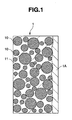
- Al 2 O 3 particles having a particle size of up to 2 mm, especially up to 0.5 mm preferentially undergo reaction with Nd or rare earth metal as shown by the equation: Nd + Al 2 O 3 ⁇ Al + Nd 2 O 3 which reaction proceeds progressively; whereas Al 2 O 3 particles having a particle size of more than 2 mm undergo reaction to a depth of 10 to 100 ⁇ m from their surface, but the reaction does not proceed further as if the particles were protected by the reacted film. This difference arises presumably because finer powder becomes more active.
- the progress of such reaction results in a state as shown in FIG. 2.
- the reaction reaches the interior of a crucible 1 composed of coarse particle portions 10 and fine particle portions 11, the regioin of the crucible that has reacted forms a slag 1A which is strongly bound to the crucible 1.
- the reaction proceeds further and the internal volume of the crucible varies. It is then basically required to remove the slag 1A every batch or periodically. Since the slag 1A is strongly bound to the crucible 1, removal operation is difficult and can damage the crucible 1 during the procedure.
- the life of the crucible can be increased by introducing a rare earth oxide into portions with a particle size of up to 0.5 mm at a high concentration to prevent the crucible material from reacting with a rare earth alloy, whereby the slag if generated can be readily removed.
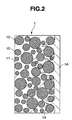
- the above-described thermal cycles cause the crucible 1 composed of coarse particle portions 10 and fine particle portions 11 to crack at 1B.
- reaction reaches the interior of the crucible 1, and the reacted region forms a slag 1A which is strongly bound to the crucible 1.
- the reaction proceeds further and the internal volume of the crucible 1 varies. It is then basically required to remove the slag 1A every batch or periodically.
- removal operation is difficult and can damage the crucible 1 during the procedure.
- the present invention provides:
- a rare earth alloy melting crucible is one comprising Al 2 O 3 and one or more oxides selected from rare earth oxides inclusive of Y 2 O 3 as main components, characterized in that the crucible is obtained by firing at 500 to 1,800°C, the rare earth oxide is distributed at a higher proportion in a portion of fine particles having a particle size of up to 0.5 mm than in a portion of coarse particles having a particle size in excess of 0.5 mm, and the crucible is substantially free of the reaction product of the rare earth oxide with Al 2 O 3 .
- the rare earth oxide which may be used is one or more oxides selected from oxides of rare earth elements including yttrium (Y) and ranging from La to Lu. Of these, Y 2 O 3 , CeO 2 , Dy 2 O 3 , Tb 4 O 7 and Sm 2 O 3 having a lower degree of hydroxide formation are preferred for use.
- the rare earth oxide is distributed in the fine particle portion with a particle size of up to 0.5 mm in a high proportion in order to restrain reaction of the crucible with a rare earth alloy. Specifically, it is preferred that at least 50% by volume, especially at least 60% by volume of the rare earth oxides in the entire crucible be present in the fine particle portion.
- the content of rare earth oxide in the fine particle portion is 2 to 100% by volume, and especially 10 to 100% by volume.
- the balance may be one of ceramics such as Al 2 O 3 , SiO 2 , TiO 2 , ZrO 2 , MgO, CaO, Si 3 N 4 , BN and TiB 2 or a combination thereof.
- the coarse particle portion having a particle size in excess of 0.5 mm is relatively less reactive, it is possible to use Al 2 O 3 having a good balance of mechanical strength, stability and cost.
- the content of Al 2 O 3 is 20 to 100% by volume, and especially 50 to 100% by volume of the coarse particle portion.
- the balance may be one of rare earth oxides such as Y 2 O 3 , CeO 2 , Dy 2 O 3 , Tb 4 O 7 and Sm 2 O 3 and ceramics such as SiO 2 , TiO 2 , ZrO 2 , MgO, CaO, Si 3 N 4 , BN and TiB 2 , or a combination thereof.
- the addition amount thereof is preferably 50% by volume or less.
- the rare earth oxide is used in the coarse particle portion, it must be included such that it is richer in the fine particle portion than in the coarse particle portion.
- the size of coarse particles is preferably up to 10 mm, and especially up to 5 mm.
- the rare earth oxide which may be used is one or more oxides selected from oxides of rare earth elements including yttrium (Y) and ranging from La to Lu, as in the first embodiment.
- Y 2 O 3 , CeO 2 , Dy 2 O 3 , Tb 4 O 7 and Sm 2 O 3 having a lower degree of hydroxide formation are preferred for use.
- Y 2 O 3 having excellent stability is most preferred for use.
- the rare earth oxide is distributed in the fine particle portion with a particle size of up to 0.5 mm in a high proportion in order to restrain reaction of the crucible with a rare earth alloy. Specifically, it is preferred that at least 50% by volume, especially at least 60% by volume of the rare earth oxides in the entire crucible be present in the fine particle portion.
- the content of rare earth oxide in the fine particle portion is 2 to 100% by volume, and especially 10 to 100% by volume.
- the balance is preferably Al 2 TiO 5 , although it is acceptable from the standpoints of mechanical strength and the like to add one of ceramics such as Al 2 OB 2 , SiO 2 , TiO 2 , ZrO 2 , MgO, CaO, Si 3 N 4 , BN and TiB 2 or a combination thereof in an amount of up to 50% by volume.
- ceramics such as Al 2 OB 2 , SiO 2 , TiO 2 , ZrO 2 , MgO, CaO, Si 3 N 4 , BN and TiB 2 or a combination thereof in an amount of up to 50% by volume.
- Al 2 TiO 5 becomes the main component of the coarse particle portion having a particle size in excess of 0.5 mm, and preferably up to 5 mm.
- part of Al 2 TiO 5 may be replaced by Al 2 O 3 which is commonly used as the raw material of the crucible, although a mixture with a higher proportion of Al 2 TiO 5 is preferred as long as mechanical strength is ensured for the crucible.
- the replacement proportion is preferably up to 80% by volume and especially up to 30% by volume.
- one or a mixture of the above-mentioned rare earth oxides and ceramics such as SiO 2 , TiO 2 , ZrO 2 , MgO, CaO, Si 3 N 4 , BN and TiB 2 , may be added in a proportion of up to 50% by volume.
- the rare earth oxide When used in the coarse particle portion, it must be included such that it is richer in the fine particle portion than in the coarse particle portion, as previously described.
- the mixing proportion of fine particles and coarse particles varies with the size of the crucible or the like, and is preferably such that the fine particle portion is 10 to 60% by volume, and especially 20 to 40% by volume. If the fine particle portion is less than 10% by volume, strength lowers with a high probability. If the fine particle portion is more than 60% by volume, a possibility of failure by thermal shocks increases.
- the crucible of the invention is produced, for example, by the following procedure.
- Rare earth oxide and Al 2 O 3 and/or Al 2 TiO 5 are placed on a sieve having openings of a predetermined diameter (e.g., 5 mm or 0.5 mm), and classified into a fine particle portion having a particle size of up to 0.5 mm and a coarse particle portion (e.g., with a particle size of 0.5 to 5 mm).
- the rare earth oxide is used for the fine particle portion
- Al 2 O 3 and/or Al 2 TiO 5 is used for the coarse particle portion.
- the fine particle portion and the coarse particle portion are mixed so that the fine particle portion accounts for 10 to 60% by volume.
- a slurry of the mixture is filled in a predetermined mold where it is fired in an air atmosphere, vacuum atmosphere or inert gas atmosphere of Ar or the like, at 500 to 1,800°C, preferably 1,000 to 1,700°C, obtaining a crucible.
- reaction can occur between the rare earth oxide and Al 2 O 3 and/or Al 2 TiO 5 , and some areas are densified at the same time, with an increased possibility of becoming brittle to thermal shocks. Additionally, the crucible deforms due to the difference in shrinkage factor between reacted areas and unreacted regions, with the enhanced propensity of the crucible becoming unusable. On the other hand, heating at temperatures below 500°C leads to under-firing, failing to achieve the desired strength.
- a crucible substantially free of the reaction products of the rare earth oxide with Al 2 O 3 and/or Al 2 TiO 5 (and/or Al 2 O 3 ) is obtainable.
- the crucible for use in the melting of a rare earth alloy according to the invention uses Al 2 O 3 and/or Al 2 TiO 5 which is a material having a low coefficient of thermal expansion, for preventing cracks from generating upon thermal cycling, and has the rare earth oxide contained at a higher proportion in the fine particle portion with a particle size of up to 0.5 mm, for restraining the reaction of the crucible with the rare earth alloy from proceeding.
- the reaction does not reach the interior of a crucible 1 composed of coarse particle portions 10 and fine particle portions 11, with a slag 1A being weakly bound to the crucible 1. Then the slag 1A can be readily removed, and any damage to the crucible 1 during slag removal operation is avoided.
- An additional advantage of an increased product yield arises from the reduced amount of slag, that is, the suppressed reaction of the crucible with the rare earth alloy.
- the rare earth alloy is not critical as long as it contains one or more rare earth elements selected from among Y and La through Lu.
- Exemplary alloys are Nd-Fe-B base alloys and Sm-Co base alloys.
- Such rare earth alloy can be prepared by blending raw materials so as to provide a predetermined composition, placing the blend in the inventive crucible, effecting high-frequency melting in an inert gas atmosphere such as Ar at 500 to 1,800°C, preferably 1,000 to 1,700°C, and pouring the resulting melt into a mold, followed by cooling.
- an inert gas atmosphere such as Ar at 500 to 1,800°C, preferably 1,000 to 1,700°C
- the temperature used in high-frequency melting is preferably controlled within the above range in order to prevent any reaction with the rare earth oxide, Al 2 TiO 5 and other components of the crucible.
- CeO 2 and Al 2 O 3 were passed through two sieves of 5 mm and 0.5 mm and classified into a fine particle portion having a particle size of up to 0.5 mm and a coarse particle portion having a particle size of 0.5 to 5 mm. CeO 2 was assigned to the fine particle portion, and Al 2 O 3 was assigned to the coarse particle portion.
- the crucible had an outer diameter of 540 mm, a height of 840 mm, a thickness of 40 mm and a weight of 229 kg.
- the crucible was allowed to stand for 80 minutes for cooling and then opened to air, followed by slag removal operation. Thereafter, the raw material was placed therein and melted again. In this way, the process was repeated until the crucible became unusable.
- the crucible failed during the slag removal operation at the end of 58th melting cycle.
- the products of these 58 cycles were in an average yield of 98.7%, and the average time taken for slag removal was 13 minutes.
- a crucible was prepared as in Example 1 except that a mixture consisting of 50% by volume of CeO 2 , 30% by volume of Al 2 O 3 and 20% by volume of SiO 2 was prepared and used for the fine particle portion with a particle size of up to 0.5 mm, and a mixture consisting of 10% by volume of CeO 2 and 90% by volume of Al 2 O 3 was prepared and used for the coarse particle portion with a particle size in excess of 0.5 mm.
- Example 1 Using this crucible, a rare earth alloy was melted as in Example 1. The crucible failed during the slag removal operation at the end of 54th melting cycle. The products of these 54 cycles were in an average yield of 98.5%, and the average time taken for slag removal was 15 minutes.
- a crucible was prepared as in Example 1 except that a mixture consisting of 80% by volume of CeO 2 and 20% by volume of Y 2 O 3 was prepared and used for the fine particle portion with a particle size of up to 0.5 mm, and a mixture consisting of 70% by volume of Al 2 O 3 and 30% by volume of SiO 2 was prepared and used for the coarse particle portion with a particle size in excess of 0.5 mm.
- Example 1 Using this crucible, a rare earth alloy was melted as in Example 1. The crucible failed during the slag removal operation at the end of 68th melting cycle. The products of these 68 cycles were in an average yield of 98.9%, and the average time taken for slag removal was 10 minutes.
- a crucible was prepared as in Example 1 except that Y 2 O 3 was used for the fine particle portion with a particle size of up to 0.5 mm.
- Example 1 Using this crucible, a rare earth alloy was melted as in Example 1. The crucible failed during the slag removal operation at the end of 75th melting cycle. The products of these 75 cycles were in an average yield of 99.0%, and the average time taken for slag removal was 9 minutes.
- a crucible was prepared as in Example 1 except that a mixture consisting of 50% by volume of Y 2 O 3 , 30% by volume of Al 2 O 3 and 20% by volume of SiO 2 was prepared and used for the fine particle portion with a particle size of up to 0.5 mm, and a mixture consisting of 10% by volume of Y 2 O 3 and 90% by volume of Al 2 O 3 was prepared and used for the coarse particle portion with a particle size in excess of 0.5 mm.
- Example 1 Using this crucible, a rare earth alloy was melted as in Example 1. The crucible failed during the slag removal operation at the end of 65th melting cycle. The products of these 65 cycles were in an average yield of 98.8%, and the average time taken for slag removal was 11 minutes.
- a crucible was prepared as in Example 1 except that a mixture consisting of 90% by volume of Y 2 O 3 and 10% by volume of Dy 2 O 3 was prepared and used for the fine particle portion with a particle size of up to 0.5 mm, and a mixture consisting of 70% by volume of Al 2 O 3 and 30% by volume of SiO 2 was prepared and used for the coarse particle portion with a particle size in excess of 0.5 mm.
- Example 1 Using this crucible, a rare earth alloy was melted as in Example 1. The crucible failed during the slag removal operation at the end of 72nd melting cycle. The products of these 72 cycles were in an average yield of 98.8%, and the average time taken for slag removal was 10 minutes.
- a crucible was prepared as in Example 1 except that Al 2 O 3 was used for both the fine particle portion with a particle size of up to 0.5 mm and the coarse particle portion with a particle size in excess of 0.5 mm.
- Example 1 Using this crucible, a rare earth alloy was melted as in Example 1. The crucible failed during the slag removal operation at the end of 36th melting cycle. The products of these 36 cycles were in an average yield of 98.0%, and the average time taken for slag removal was 33 minutes.
- a crucible was prepared as in Example 1 except that a mixture consisting of 80% by volume of Al 2 O 3 and 20% by volume of SiO 2 was prepared and used for the fine particle portion with a particle size of up to 0.5 mm, and a mixture consisting of 10% by volume of CeO 2 and 90% by volume of Al 2 O 3 was prepared and used for the coarse particle portion with a particle size in excess of 0.5 mm.
- Example 1 Using this crucible, a rare earth alloy was melted as in Example 1. The crucible failed during the slag removal operation at the end of 33rd melting cycle. The products of these 33 cycles were in an average yield of 97.9%, and the average time taken for slag removal was 36 minutes.
- a crucible was prepared as in Example 1 except that a mixture consisting of 80% by volume of Al 2 O 3 and 20% by volume of SiO 2 was prepared and used for the fine particle portion with a particle size of up to 0.5 mm, and a mixture consisting of 10% by volume of Y 2 O 3 and 90% by volume of Al 2 O 3 was prepared and used for the coarse particle portion with a particle size in excess of 0.5 mm.
- Example 1 Using this crucible, a rare earth alloy was melted as in Example 1. The crucible failed during the slag removal operation at the end of 37th melting cycle. The products of these 37 cycles were in an average yield of 98.1%, and the average time taken for slag removal was 29 minutes.
- a crucible was prepared as in Example 1 except that a mixture consisting of 99% by volume of Al 2 O 3 and 1% by volume of Y 2 O 3 was prepared and used for the fine particle portion with a particle size of up to 0.5 mm, and a mixture consisting of 70% by volume of Al 2 O 3 and 30% by volume of SiO 2 was prepared and used for the coarse particle portion with a particle size in excess of 0.5 mm.
- Example 1 Using this crucible, a rare earth alloy was melted as in Example 1. The crucible failed during the slag removal operation at the end of 41st melting cycle. The products of these 41 cycles were in an average yield of 97.9%, and the average time taken for slag removal was 30 minutes.
- Examples containing rare earth oxide at a higher proportion in the portion having a particle size of up to 0.5 mm succeed in significantly increasing the use cycles of the crucible and are easy to remove slag and improved in product yield.
- Y 2 O 3 and Al 2 TiO 5 were passed through sieves of 5 mm and 0.5 mm and classified into a fine particle portion having a particle size of up to 0.5 mm and a coarse particle portion having a particle size of 0.5 to 5 mm.
- Y 2 O 3 was assigned to the fine particle portion, and Al 2 TiO 5 was assigned to the coarse particle portion.
- the crucible had an outer diameter of 540 mm, a height of 840 mm, a thickness of 40 mm and a weight of 218 kg.
- the crucible was allowed to stand for 80 minutes for cooling and then opened to air, followed by slag removal operation. Thereafter, the raw material was placed therein and melted again. In this way, the process was repeated until the crucible became unusable.
- the crucible failed during the slag removal operation at the end of 172nd melting cycle.
- the products of these 172 cycles were in an average yield of 99.1%, and the average time taken for slag removal was 7 minutes.
- a crucible was prepared as in Example 7 except that a mixture consisting of 50% by volume of Y 2 O 3 , 30% by volume of Al 2 TiO 5 and 20% by volume of SiO 2 was prepared and used for the fine particle portion with a particle size of up to 0.5 mm, and a mixture consisting of 10% by volume of Y 2 O 3 and 90% by volume of Al 2 TiO 5 was prepared and used for the coarse particle portion with a particle size in excess of 0.5 mm.
- Example 7 Using this crucible, a rare earth alloy was melted as in Example 7. The crucible failed during the slag removal operation at the end of 188th melting cycle. The products of these 188 cycles were in an average yield of 98.9%, and the average time taken for slag removal was 9 minutes.
- a crucible was prepared as in Example 7 except that a mixture consisting of 30% by volume of Y 2 O 3 , 30% by volume of Al 2 TiO 5 , 10% by volume of Al 2 O 3 and 30% by volume of SiO 2 was prepared and used for the fine particle portion with a particle size of up to 0.5 mm, and a mixture consisting of 70% by volume of Al 2 TiO 5 , 20% by volume of Al 2 O 3 and 10% by volume of SiO 2 was prepared and used for the coarse particle portion with a particle size in excess of 0.5 mm.
- Example 7 Using this crucible, a rare earth alloy was melted as in Example 7. The crucible failed during the slag removal operation at the end of 196th melting cycle. The products of these 196 cycles were in an average yield of 98.8%, and the average time taken for slag removal was 11 minutes.
- a crucible was prepared as in Example 7 except that Al 2 O 3 was used for both the fine particle portion with a particle size of up to 0.5 mm and the coarse particle portion with a particle size in excess of 0.5 mm.
- Example 7 Using this crucible, a rare earth alloy was melted as in Example 7. The crucible failed during the slag removal operation at the end of 36th melting cycle. The products of these 36 cycles were in an average yield of 98.0%, and the average time taken for slag removal was 33 minutes.
- a crucible was prepared as in Example 7 except that Al 2 O 3 was used for the fine particle portion with a particle size of up to 0.5 mm and Al 2 TiO 5 was used for the coarse particle portion with a particle size in excess of 0.5 mm.
- Example 7 Using this crucible, a rare earth alloy was melted as in Example 7. The crucible failed during the slag removal operation at the end of 51st melting cycle. The products of these 51 cycles were in an average yield of 98.2%, and the average time taken for slag removal was 24 minutes.
- Examples containing rare earth oxide at a higher proportion in the portion having a particle size of up to 0.5 mm succeed in significantly increasing the use cycles of the crucible and are easy to remove slag and improved in product yield.
- Example 7 A comparison of Example 7 with Example 4 reveals that the life of the crucible is significantly prolonged using Al 2 TiO 5 .
- the present invention is successful in extending the lifetime of the crucible, reducing the slag removal time, increasing the throughput of products, reducing the labor cost, and achieving an increase in product yield.
Landscapes
- Engineering & Computer Science (AREA)
- Chemical & Material Sciences (AREA)
- Ceramic Engineering (AREA)
- Manufacturing & Machinery (AREA)
- Organic Chemistry (AREA)
- Structural Engineering (AREA)
- Materials Engineering (AREA)
- Mechanical Engineering (AREA)
- Composite Materials (AREA)
- General Engineering & Computer Science (AREA)
- Physics & Mathematics (AREA)
- Thermal Sciences (AREA)
- Inorganic Chemistry (AREA)
- Manufacture And Refinement Of Metals (AREA)
- Crucibles And Fluidized-Bed Furnaces (AREA)
Abstract
Description
a rare earth alloy melting crucible according to a third embodiment of the invention is one comprising Al2O3, Al2TiO5 and at least one selected from rare earth oxides inclusive of Y2O3 as main components, characterized in that the crucible is obtained by firing at 1,000 to 1,700°C, the rare earth oxide is distributed at a higher proportion in a portion of fine particles having a particle size of up to 0.5 mm than in a portion of coarse particles having a particle size in excess of 0.5 mm, and the crucible is substantially free of the reaction products of the rare earth oxide with Al2O3 and Al2TiO5.
| Fine particle portion (vol%) | Coarse particle portion (vol%) | Use cycles | Yield (%) | Slag removal time (min) | ||||||||
| CeO2 | Y2O3 | Dy2O3 | Al2O3 | SiO2 | CeO2 | Y2O3 | Al2O3 | SiO2 | ||||
| Example 1 | 100 | - | - | - | - | - | - | 100 | - | 58 | 98.7 | 13 |
| Example 2 | 50 | - | - | 30 | 20 | 10 | - | 90 | - | 54 | 98.5 | 15 |
| Example 3 | 80 | 20 | - | - | - | - | - | 70 | 30 | 68 | 98.9 | 10 |
| Example 4 | - | 100 | - | - | - | - | - | 100 | - | 75 | 99.0 | 9 |
| Example 5 | - | 50 | - | 30 | 20 | - | 10 | 90 | - | 65 | 98.9 | 11 |
| Example 6 | - | 90 | 10 | - | - | - | - | 70 | 30 | 72 | 98.8 | 10 |
| Comparative Example 1 | - | - | - | 100 | - | - | - | 100 | - | 36 | 98.0 | 33 |
| Comparative Example 2 | - | - | - | 80 | 20 | 10 | - | 90 | - | 33 | 97.9 | 36 |
| Comparative Example 3 | - | - | - | 80 | 20 | - | 10 | 90 | - | 37 | 98.1 | 29 |
| Comparative Example 4 | - | 1 | - | 99 | - | - | - | 70 | 30 | 41 | 97.9 | 30 |
| Fine particle portion (vol%) | Coarse particle portion (vol%) | Use cycles | Yield (%) | Slag removal time (min) | |||||||
| Y2O3 | Al2TiO5 | Al2O3 | SiO2 | Y2O3 | Al2TiO5 | Al2O3 | SiO2 | ||||
| Example 7 | 100 | - | - | - | - | 100 | - | - | 172 | 99.1 | 7 |
| Example 8 | 50 | 30 | - | 20 | 10 | 90 | - | - | 188 | 98.9 | 9 |
| Example 9 | 30 | 30 | 10 | 30 | - | 70 | 20 | 10 | 196 | 98.8 | 11 |
| Comparative Example 5 | - | - | 100 | - | - | - | 100 | - | 36 | 98.0 | 33 |
| Comparative Example 6 | - | - | 100 | - | - | 100 | - | - | 51 | 98.2 | 24 |
Claims (8)
- A crucible for the melting of a rare earth alloy, comprising Al2O3 and at least one selected from rare earth oxides inclusive of Y2O3 as main components, characterized in that
the crucible is obtained by firing at 500 to 1,800°C, the rare earth oxide is distributed at a higher proportion in a portion of fine particles having a particle size of up to 0.5 mm than in a portion of coarse particles having a particle size in excess of 0.5 mm, and the crucible is substantially free of the reaction product of the rare earth oxide with Al2O3. - A crucible for the melting of a rare earth alloy according to claim 1, characterized in that 2 to 100% by volume of the fine particle portion is the rare earth oxide and 20 to 100% by volume of the coarse particle portion is Al2O3.
- A rare earth alloy obtained using a crucible according to claim 1 or 2.
- A crucible for the melting of a rare earth alloy, comprising Al2TiO5 and at least one selected from rare earth oxides inclusive of Y2O3 as main components, characterized in that
the crucible is obtained by firing at 1,000 to 1,700°C, the rare earth oxide is distributed at a higher proportion in a portion of fine particles having a particle size of up to 0.5 mm than in a portion of coarse particles having a particle size in excess of 0.5 mm, and the crucible is substantially free of the reaction product of the rare earth oxide with Al2TiO5. - A crucible for the melting of a rare earth alloy, comprising Al2O3, Al2TiO5 and at least one selected from rare earth oxides inclusive of Y2O3 as main components, characterized in that
the crucible is obtained by firing at 1,000 to 1,700°C, the rare earth oxide is distributed at a higher proportion in a portion of fine particles having a particle size of up to 0.5 mm than in a portion of coarse particles having a particle size in excess of 0.5 mm, and the crucible is substantially free of the reaction products of the rare earth oxide with Al2O3 and Al2TiO5. - A crucible for the melting of a rare earth alloy according to claim 4 or 5, characterized in that 2 to 100% by volume of the fine particle portion is the rare earth oxide.
- A crucible for the melting of a rare earth alloy according to claim 4, 5 or 6, characterized in that the at least one rare earth oxide is Y2O3.
- A rare earth alloy obtained using a crucible according to any one of claims 4 to 7.
Applications Claiming Priority (5)
| Application Number | Priority Date | Filing Date | Title |
|---|---|---|---|
| JP2001351584 | 2001-11-16 | ||
| JP2001351583 | 2001-11-16 | ||
| JP2001351584A JP3978578B2 (en) | 2001-11-16 | 2001-11-16 | Rare earth alloy melting crucible and rare earth alloy |
| JP2001351583A JP3944700B2 (en) | 2001-11-16 | 2001-11-16 | Rare earth alloy melting crucible and rare earth alloy |
| PCT/JP2002/011873 WO2003042617A1 (en) | 2001-11-16 | 2002-11-14 | Crucible for melting rare earth element alloy and rare earth element alloy |
Publications (3)
| Publication Number | Publication Date |
|---|---|
| EP1452812A1 true EP1452812A1 (en) | 2004-09-01 |
| EP1452812A4 EP1452812A4 (en) | 2006-08-23 |
| EP1452812B1 EP1452812B1 (en) | 2014-04-23 |
Family
ID=26624566
Family Applications (1)
| Application Number | Title | Priority Date | Filing Date |
|---|---|---|---|
| EP02780089.5A Expired - Lifetime EP1452812B1 (en) | 2001-11-16 | 2002-11-14 | Crucible for melting rare earth element alloy |
Country Status (6)
| Country | Link |
|---|---|
| US (2) | US7157395B2 (en) |
| EP (1) | EP1452812B1 (en) |
| KR (1) | KR100704842B1 (en) |
| CN (1) | CN100410611C (en) |
| TW (1) | TWI253956B (en) |
| WO (1) | WO2003042617A1 (en) |
Cited By (1)
| Publication number | Priority date | Publication date | Assignee | Title |
|---|---|---|---|---|
| US7784764B2 (en) * | 2004-11-02 | 2010-08-31 | Towa Corporation | Low-adhesion material, mold for molding resin using the same and contaminant adhesion preventing material |
Families Citing this family (11)
| Publication number | Priority date | Publication date | Assignee | Title |
|---|---|---|---|---|
| CN101239832B (en) * | 2008-03-12 | 2010-06-02 | 北京航空航天大学 | Yttrium oxide doped neodymium oxide crucible and method for making crucible by hot pressing and sintering |
| CN101239834B (en) * | 2008-03-12 | 2010-06-02 | 北京航空航天大学 | Yttrium oxide doped zirconia crucible and method for making crucible by hot pressing and sintering |
| CN101302115B (en) * | 2008-06-30 | 2010-08-11 | 北京航空航天大学 | Method for making composite multi-stage Y2O3 powder copple by gel casting moulding process |
| CN101302116B (en) * | 2008-06-30 | 2010-09-08 | 北京航空航天大学 | Method for making composite multi-stage fine powder Y2O3 crucible by dry pressing with isostatic pressing process |
| US20110021340A1 (en) * | 2009-07-24 | 2011-01-27 | Karl-Heinz Schofalvi | Refractory |
| US20110129784A1 (en) * | 2009-11-30 | 2011-06-02 | James Crawford Bange | Low thermal expansion doped fused silica crucibles |
| CN104748548A (en) * | 2013-12-30 | 2015-07-01 | 比亚迪股份有限公司 | High-temperature smelting pot and processing method and application thereof |
| CN111848134B (en) * | 2020-08-04 | 2021-06-08 | 江苏隆达超合金航材有限公司 | Crucible integrated forming manufacturing process for vacuum induction furnace |
| CN114044687A (en) * | 2021-12-17 | 2022-02-15 | 江西离子型稀土工程技术研究有限公司 | Rare earth oxide body crucible and preparation method thereof |
| CN115159999B (en) * | 2022-07-06 | 2023-03-24 | 青岛正望新材料股份有限公司 | Rare earth raw material for producing functional refractory material for steelmaking and preparation method thereof |
| CN115121785B (en) * | 2022-07-06 | 2023-02-14 | 青岛正望新材料股份有限公司 | Functional refractory material for steelmaking |
Family Cites Families (15)
| Publication number | Priority date | Publication date | Assignee | Title |
|---|---|---|---|---|
| US3825653A (en) * | 1972-09-11 | 1974-07-23 | Atomic Energy Commission | Process for preparing sinterable aluminum titanate powder |
| US3890140A (en) * | 1973-05-10 | 1975-06-17 | Us Energy | Aluminum titanate crucible for molten uranium |
| CA1122839A (en) * | 1978-05-01 | 1982-05-04 | Ralph R. Keeling | Admission and egress control gate |
| JPS55121966A (en) * | 1979-03-06 | 1980-09-19 | Asahi Glass Co Ltd | Aluminum titanate sintered body |
| US4966875A (en) * | 1987-09-24 | 1990-10-30 | General Motors Corp. | Wear-resistant ceramic for casting rare earth alloys |
| JPH01264963A (en) * | 1988-04-15 | 1989-10-23 | T Ii P Kk | Production of high-purity and dense yttria crucible for metal melting |
| JPH03115535A (en) * | 1989-09-28 | 1991-05-16 | Nippon Mining Co Ltd | Method for decreasing oxygen in rare earth metal |
| US5383978A (en) * | 1992-02-15 | 1995-01-24 | Santoku Metal Industry Co., Ltd. | Alloy ingot for permanent magnet, anisotropic powders for permanent magnet, method for producing same and permanent magnet |
| US5409871A (en) * | 1993-11-02 | 1995-04-25 | Pcc Airfoils, Inc. | Ceramic material for use in casting reactive metals |
| US5480471A (en) * | 1994-04-29 | 1996-01-02 | Crucible Materials Corporation | Re-Fe-B magnets and manufacturing method for the same |
| JPH0840770A (en) * | 1994-07-30 | 1996-02-13 | Shinagawa Refract Co Ltd | Zirconia sintered product and method for producing the same |
| CN1122839A (en) * | 1994-11-11 | 1996-05-22 | 冶金工业部包头稀土研究院 | Process for producing high rare earth content, Cr-Al-rare earth metal-Fe alloy |
| CN1139082C (en) * | 1996-04-10 | 2004-02-18 | 昭和电工株式会社 | Cast alloys for producing rare earth magnets and methods of producing cast alloys and magnets |
| TW446690B (en) * | 1998-06-22 | 2001-07-21 | Showa Denko Kk | Refractories for casting a rare-earth alloy, their production method, and method for casting an rare-earth alloy |
| US20030141829A1 (en) * | 2002-01-31 | 2003-07-31 | Shan-Ho Yu | Current equalizer assembly for LCD backlight panel |
-
2002
- 2002-10-31 TW TW091132310A patent/TWI253956B/en not_active IP Right Cessation
- 2002-11-14 WO PCT/JP2002/011873 patent/WO2003042617A1/en not_active Ceased
- 2002-11-14 US US10/495,452 patent/US7157395B2/en not_active Expired - Lifetime
- 2002-11-14 EP EP02780089.5A patent/EP1452812B1/en not_active Expired - Lifetime
- 2002-11-14 KR KR1020047007248A patent/KR100704842B1/en not_active Expired - Fee Related
- 2002-11-14 CN CNB028265823A patent/CN100410611C/en not_active Expired - Fee Related
-
2006
- 2006-07-05 US US11/480,466 patent/US20060252629A1/en not_active Abandoned
Cited By (1)
| Publication number | Priority date | Publication date | Assignee | Title |
|---|---|---|---|---|
| US7784764B2 (en) * | 2004-11-02 | 2010-08-31 | Towa Corporation | Low-adhesion material, mold for molding resin using the same and contaminant adhesion preventing material |
Also Published As
| Publication number | Publication date |
|---|---|
| KR100704842B1 (en) | 2007-04-10 |
| US20060252629A1 (en) | 2006-11-09 |
| CN100410611C (en) | 2008-08-13 |
| KR20040065219A (en) | 2004-07-21 |
| US20050016635A1 (en) | 2005-01-27 |
| US7157395B2 (en) | 2007-01-02 |
| EP1452812A4 (en) | 2006-08-23 |
| TWI253956B (en) | 2006-05-01 |
| EP1452812B1 (en) | 2014-04-23 |
| WO2003042617A1 (en) | 2003-05-22 |
| CN1610814A (en) | 2005-04-27 |
| TW200300705A (en) | 2003-06-16 |
Similar Documents
| Publication | Publication Date | Title |
|---|---|---|
| US7157395B2 (en) | Crucible for melting rare earth element alloy and rare earth element alloy | |
| EP1338581B1 (en) | Method for producing aluminum titanate sintered object | |
| KR101719284B1 (en) | Sialon bonded silicon carbide material | |
| EP1288177B1 (en) | Porous high alumina cast refractory and method for its production | |
| US5308561A (en) | Process for production of a Si3 N4, based material | |
| EP0237261B1 (en) | Silicon nitride sintered bodies | |
| CN101445361A (en) | Method for preparing eutectic ceramics | |
| US4331771A (en) | High density silicon oxynitride | |
| JP2002220282A (en) | Aluminum nitride sintered body and its manufacturing method | |
| JP4249830B2 (en) | Sintering jig and manufacturing method thereof | |
| CN112341221A (en) | Re-sintered electric-melting mullite brick and preparation method and application thereof | |
| JP3944700B2 (en) | Rare earth alloy melting crucible and rare earth alloy | |
| JP3978578B2 (en) | Rare earth alloy melting crucible and rare earth alloy | |
| JP2021138581A (en) | Ceramic sintered compact and manufacturing method thereof | |
| JPS5855110B2 (en) | Manufacturing method of carbide heat-resistant ceramics | |
| JPS6374978A (en) | Ceramic composite body | |
| JPH10120462A (en) | Zirconia refractories | |
| JP2006096625A (en) | Self-sintered silicon carbide bowl and method for producing the same | |
| JPH06128052A (en) | Silicon nitride sintered body and manufacturing method thereof | |
| JP2671539B2 (en) | Method for producing silicon nitride sintered body | |
| JP2000302542A (en) | Jig for sintering | |
| JP2003321271A (en) | Composite ceramic and method for producing the same | |
| JPH0523921A (en) | Silicon nitride sintered body for cutting tools | |
| JPH046153A (en) | Sintrred body of oxide of light rare earth element, production thereof and crucible made of same | |
| JPH11106283A (en) | Crucible susceptor |
Legal Events
| Date | Code | Title | Description |
|---|---|---|---|
| PUAI | Public reference made under article 153(3) epc to a published international application that has entered the european phase |
Free format text: ORIGINAL CODE: 0009012 |
|
| 17P | Request for examination filed |
Effective date: 20040607 |
|
| AK | Designated contracting states |
Kind code of ref document: A1 Designated state(s): AT BE BG CH CY CZ DE DK EE ES FI FR GB GR IE IT LI LU MC NL PT SE SK TR |
|
| RAP1 | Party data changed (applicant data changed or rights of an application transferred) |
Owner name: SHIN-ETSU CHEMICAL CO., LTD. |
|
| A4 | Supplementary search report drawn up and despatched |
Effective date: 20060726 |
|
| 17Q | First examination report despatched |
Effective date: 20100407 |
|
| REG | Reference to a national code |
Ref country code: DE Ref legal event code: R079 Ref document number: 60246218 Country of ref document: DE Free format text: PREVIOUS MAIN CLASS: F27B0014100000 Ipc: C04B0035117000 |
|
| GRAP | Despatch of communication of intention to grant a patent |
Free format text: ORIGINAL CODE: EPIDOSNIGR1 |
|
| RIC1 | Information provided on ipc code assigned before grant |
Ipc: C04B 35/478 20060101ALI20131114BHEP Ipc: C04B 35/505 20060101ALI20131114BHEP Ipc: B29C 33/56 20060101ALI20131114BHEP Ipc: C04B 35/117 20060101AFI20131114BHEP Ipc: C04B 35/18 20060101ALI20131114BHEP |
|
| INTG | Intention to grant announced |
Effective date: 20131211 |
|
| GRAS | Grant fee paid |
Free format text: ORIGINAL CODE: EPIDOSNIGR3 |
|
| GRAA | (expected) grant |
Free format text: ORIGINAL CODE: 0009210 |
|
| AK | Designated contracting states |
Kind code of ref document: B1 Designated state(s): DE FR GB |
|
| REG | Reference to a national code |
Ref country code: GB Ref legal event code: FG4D |
|
| REG | Reference to a national code |
Ref country code: DE Ref legal event code: R096 Ref document number: 60246218 Country of ref document: DE Effective date: 20140605 |
|
| REG | Reference to a national code |
Ref country code: DE Ref legal event code: R097 Ref document number: 60246218 Country of ref document: DE |
|
| PLBE | No opposition filed within time limit |
Free format text: ORIGINAL CODE: 0009261 |
|
| STAA | Information on the status of an ep patent application or granted ep patent |
Free format text: STATUS: NO OPPOSITION FILED WITHIN TIME LIMIT |
|
| 26N | No opposition filed |
Effective date: 20150126 |
|
| REG | Reference to a national code |
Ref country code: DE Ref legal event code: R097 Ref document number: 60246218 Country of ref document: DE Effective date: 20150126 |
|
| REG | Reference to a national code |
Ref country code: FR Ref legal event code: PLFP Year of fee payment: 14 |
|
| REG | Reference to a national code |
Ref country code: FR Ref legal event code: PLFP Year of fee payment: 15 |
|
| PGFP | Annual fee paid to national office [announced via postgrant information from national office to epo] |
Ref country code: FR Payment date: 20161014 Year of fee payment: 15 Ref country code: GB Payment date: 20161109 Year of fee payment: 15 |
|
| GBPC | Gb: european patent ceased through non-payment of renewal fee |
Effective date: 20171114 |
|
| REG | Reference to a national code |
Ref country code: FR Ref legal event code: ST Effective date: 20180731 |
|
| PG25 | Lapsed in a contracting state [announced via postgrant information from national office to epo] |
Ref country code: FR Free format text: LAPSE BECAUSE OF NON-PAYMENT OF DUE FEES Effective date: 20171130 |
|
| PG25 | Lapsed in a contracting state [announced via postgrant information from national office to epo] |
Ref country code: GB Free format text: LAPSE BECAUSE OF NON-PAYMENT OF DUE FEES Effective date: 20171114 |
|
| PGFP | Annual fee paid to national office [announced via postgrant information from national office to epo] |
Ref country code: DE Payment date: 20191029 Year of fee payment: 18 |
|
| REG | Reference to a national code |
Ref country code: DE Ref legal event code: R119 Ref document number: 60246218 Country of ref document: DE |
|
| PG25 | Lapsed in a contracting state [announced via postgrant information from national office to epo] |
Ref country code: DE Free format text: LAPSE BECAUSE OF NON-PAYMENT OF DUE FEES Effective date: 20210601 |