EP1450254A2 - Method of converting software program for single processor to software program for multiprocessor - Google Patents
Method of converting software program for single processor to software program for multiprocessor Download PDFInfo
- Publication number
- EP1450254A2 EP1450254A2 EP04003671A EP04003671A EP1450254A2 EP 1450254 A2 EP1450254 A2 EP 1450254A2 EP 04003671 A EP04003671 A EP 04003671A EP 04003671 A EP04003671 A EP 04003671A EP 1450254 A2 EP1450254 A2 EP 1450254A2
- Authority
- EP
- European Patent Office
- Prior art keywords
- processor
- software program
- multiprocessor
- write
- program
- Prior art date
- Legal status (The legal status is an assumption and is not a legal conclusion. Google has not performed a legal analysis and makes no representation as to the accuracy of the status listed.)
- Withdrawn
Links
Images




Classifications
-
- G—PHYSICS
- G06—COMPUTING OR CALCULATING; COUNTING
- G06F—ELECTRIC DIGITAL DATA PROCESSING
- G06F8/00—Arrangements for software engineering
- G06F8/40—Transformation of program code
- G06F8/41—Compilation
- G06F8/45—Exploiting coarse grain parallelism in compilation, i.e. parallelism between groups of instructions
- G06F8/456—Parallelism detection
Definitions
- the present invention relates to a method of converting a software program for a single processor to that for a multiprocessor.
- program a source file is written up by an editor or the like and is complied by a compiler to prepare an object file. Furthermore, the object file is passed through a linker to allocate and link addresses of functions or variables in the program, and an execute form file, that is, an execute form program is generated.
- the source file of the software program prepared in this manner is prepared in accordance with operation environments such as a configuration of hardware. Therefore, the software program for a single processor is prepared on the assumption that the hardware configuration is the single processor.
- the source file of the software program for the multiprocessor is automatically prepared based on the source file of the software program for the single processor.
- the program is prepared so as not to perform communication between the processors, but the source file of the software program for the multiprocessor is so-called mechanically prepared, and redundant processing is inevitably described as compared with manual programming.
- the source file is disadvantageous in a processing rate or a required memory capacity as compared with the manual programming.
- advantages of the original software program for the single processor are eliminated.
- the present invention has been developed in consideration of the disadvantages in the related art, and an object of the present invention is to provide a method of converting a software program for a single processor to a software program for a multiprocessor, which is capable of utilizing advantages of the original software program for the single processor and eliminating a trouble of a conversion operation and reducing a possibility of bug occurrence to convert the software program for the single processor to the software program for the multiprocessor.
- a method of converting a software program for a single processor to a software program for a multiprocessor comprising the steps of: allocating a source file to each processor by an object file unit to prepare an execute form program for operating software running on a single memory space on the multiprocessor for each processor.
- the method of converting the software program for the single processor to the software program for the multiprocessor further comprising the steps of: mounting the execute form program described in the first aspect on the memory space to be managed by each processor with an arrangement in which addresses are prevented from being duplicated among the processors.
- the method of converting the software program for the single processor to the software program for the multiprocessor further comprising the steps of: starting exception processing possessed by the processor which is a refer requester to detect that there occurs a refer request to variables arranged on a memory space managed by another processor during running of the execute form program; and sending the refer request to an appropriate processor, wherein the processor which has received the refer request refers to the variables. to return refer results to the refer requester, and the processor which is the refer requester emulation-executes a variable refer command from the returned results to return to the next command from the exception processing.
- the method of converting the software program for the single processor to the software program for the multiprocessor according to the first or second aspect further comprising the steps of: starting exception processing possessed by the processor which is a write requester to detect that there occurs a request for write into variables arranged on a memory space managed by another processor during running of the execute form program; and sending the write request to an appropriate processor, wherein the processor which has received the write request writes the variables, and the processor which is the write requester returns to the next command from the exception processing.
- the method of converting the software program for the single processor to the software program for the multiprocessor further comprising the steps of: starting exception processing possessed by the processor which is a write requester to detect that there occurs a request for write into variables arranged on a memory space managed by another processor during running of the execute form program; and sending the write request to an appropriate processor, wherein the processor which has received the write request writes the variables to return write results to the write requester, and the processor which is the write requester returns to the next command from the exception processing.
- the method of converting the software program for the single processor to the software program for the multiprocessor further comprising the steps of: starting exception processing possessed by the processor which is a call requester to detect that there occurs a call request for functions arranged on a memory space managed by another processor during running of the execute form program; and sending the call request to an appropriate processor, wherein the processor which has received the call request calls the functions to return call results to the call requester, and the processor which is the call requester emulation-executes a function call command from the returned results to return to the next command from the exception processing.
- a seventh aspect of the present invention there is provided the method of converting the software program for the single processor to the software program for the multiprocessor according to the third to sixth aspects, further comprising: communication between the processors in which communication including processing request transmission and processing result return via exception processing is possible.
- a cellular phone in which the software program for the multiprocessor converted by the method according to any one of the first to seventh aspects is installed.
- the method of converting the software program for the single processor to that for the multiprocessor capable of utilizing advantages of the original software program for the single processor and eliminating a trouble of a conversion operation and reducing a possibility of bug occurrence.
- allocation to the processors may be considered by constituting element units of the software such as a source file, object file, and library without changing software structure or logic. Therefore, it is possible to reduce a period for development or verification or cost required for operations.
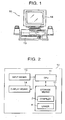
- FIG. 1 is an appearance view showing an outline of a terminal device for program development, which is one example of a device for executing one embodiment of a method of converting a software program for a single processor to that for a multiprocessor according to the present invention.
- the conversion to the software program for the multiprocessor from that for the single processor is performed by a terminal device for program development 10 shown in FIG. 1.
- a personal computer is usable in the terminal device for program development 10, and the device includes input means 13 such as a mouse and keyboard and display means 14 such as a display.
- FIG. 2 is a block diagram showing an inner constitution of the terminal device for program development 10 shown in FIG. 1.
- the terminal device for program development 10 includes a CPU 11 which controls the whole operation, storage means 12 which stores an application file and various data operating on the CPU 11, the input means 13 such as the mouse and keyboard, and the display means 14 such as a display.
- a compiler 2 and a linker 4 are stored which are types of application files which operate on the CPU 11.
- the compiler 2 and linker 4 are used in preparing the software program for the single processor or the multiprocessor.
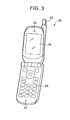
- FIG. 3 is an appearance view showing the outline of a cellular phone which is one example of a device which operates by the software program for the multiprocessor prepared by one embodiment of the method of converting the software program for the single processor to that for the multiprocessor according to the present invention.
- a cellular phone 20 includes an antenna 23, input means 39 such as push-type button switches, display means 36 such as LCD, transmitter means 37 such as a microphone, and receiver means 38 such as a speaker.
- input means 39 such as push-type button switches
- display means 36 such as LCD
- transmitter means 37 such as a microphone
- receiver means 38 such as a speaker.
- FIG. 4 is a block diagram showing the inner constitution of the cellular phone 20 shown in FIG. 3.
- the cellular phone 20 includes control means 21 which controls the whole operation, transmission/reception means 22 and antenna 23 which performs radio transmission/reception for calling and the like, input means 39 such as the push-type button switches, display means 36 such as the LCD, transmitter means 37 such as the microphone, and receiver means 38 such as the speaker.
- control means 21 includes two processor elements PE 26 and PE 31.
- the present invention is not limited to this, and can, needless to say, also be applied a device including three or more PEs.
- the PE 26 includes communication means between PEs 28 which performs communication with a CPU 27 and between the PE 26 and PE 31, a memory 29 which develops program operated by the CPU 27 at an execute time, and a nonvolatile memory 30 in which the program, various data and the like operated by the CPU 27 are stored in a nonvolatile manner.
- the PE 31 includes communication means between PEs 33 which performs communication with a CPU 32 and between the PE 31 and PE 26, a memory 34 which develops the program and the like operated by the CPU 32 at the execute time, and a nonvolatile memory 35 in which the program, various data and the like operated by the CPU 32 are stored in the nonvolatile manner.
- FIG. 5 is an explanatory view of a procedure for preparing an execute form file of the software program for the single processor.
- execute form program 5 is prepared as the software program for the single processor from five source files 1a to 1e as shown in FIG. 5.
- the respective source files 1a to 1e are compiled by the compiler 2 to prepare object files 3a to 3e. All the object files 3a to 3e are linked by the linker 4 to prepare one execute form file 5 which is the software program for the single processor.
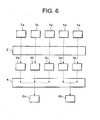
- FIG. 6 is an explanatory view of the procedure for preparing the execute form file of the software program for the multiprocessor.
- the respective source files 1a to 1e are compiled by the compiler 2 to prepare the object files 3a to 3e.
- the object files 3a to 3e are divided into the same number of groups as that of PEs (the number of PEs is two as shown in FIG. 4 in the present embodiment, and are linked by the linker 4 for each group.
- the object files 3a to 3c are linked to prepare the execute form file 6a
- the object files 3d to 3e are linked to prepare the execute form file 6b.
- a function included in the object file 3a refers to the function or the variable having entity in the object file 3d of another group
- an address of a function or variable having no entity is not known in linking the object files 3a, 3b, and 3d, and the linking is impossible.
- the address is determined in the group where the entity of the function or variable exists during the linking
- the determined address is notified during the linking with the groups in which the entity does not exist and which are referred to, and this completes the linking.
- the execute form file 6a completed in this manner is stored in the nonvolatile memory 30 of the PE 26 shown in FIG. 4, developed in the memory 29, and executed by the CPU 27.
- the execute form file 6b is stored in the nonvolatile memory 35 of the PE 31 shown in FIG. 4, developed in the memory 34, and executed by the CPU 32.
- FIGS. 7A to 7C are diagrams showing an address space to which the software program for the multiprocessor prepared by the present embodiment is allocated
- FIG. 7A is a diagram showing a memory space having the entity in the memory 29 of the PE 26 shown in FIG. 4
- FIG. 7B is a diagram showing a memory space having the entity in the memory 34 of another PE 31 shown in FIG. 4E
- FIG. 7C is a diagram showing a virtual memory space handled by the CPU 27 of the PE 26 or the CPU 32 of the PE 31 shown in FIG. 4.
- each of the CPUs 27 and 32 uses addresses 0000h to ffffh as the means at the time of program execute, the PE 26 has 0000h to 7fffh as the entity in the memory 29, and the PE 31 has 8000h to ffffh as the entity in the memory 34.
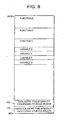
- FIG. 8 is a diagram showing a state in which the execute form file 6a shown in FIG. 6 is developed in the memory 29 of the PE 26.
- the execute form file 6a has the entities of functions A, B, C and variables D, E, F, G each of which is developed in the address space of the memory 29.
- a data abort time interrupt processing storage region 45 is disposed in the memory 29.
- processing executed by interrupt which is one type of so-called exception processing, is stored, when the CPU 27 is to read (refer to) or write the variable having no address of entity in the memory 29.
- the communication means between PEs 28 is used to communicate with the PE 31 and to perform the read or write of the variable having no address of entity in the memory 29, which is a cause for the interrupt, with respect to the memory 34 having the entity of the variable. Therefore, to be consistent with this, the PE 31 requires a program which actually accesses the memory 34 for the variable.
- a prefetch abort time interrupt processing storage region 46 is disposed in the memory 29.
- the processing executed by the interrupt which is one type of the so-called exception processing, is stored, when the CPU 27 is to call the function having no address of entity in the memory 29.
- the communication means between PEs 28 is used to communicate with the PE 31 and to perform the call of the function having no address of entity in the memory 29, which is a cause for the interrupt, with respect to the memory 34 having the entity of the function. Therefore, to be consistent with this, the PE 31 requires an execute program to actually calls the memory 34 for the function.
- interrupt processing stored in the data abort time interrupt processing storage region 45 or the prefetch abort time interrupt processing storage region 46 may also be programmed beforehand, stored in the nonvolatile memory 30, and developed in the memory 29 at the execute time.
- the data abort time interrupt processing storage region 45 or the prefetch abort time interrupt processing storage region 46 may also be disposed in the CPU 27.
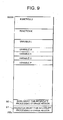
- FIG. 9 is a diagram showing a state in which the execute form file 6b shown in FIG. 6 is developed in the memory 34 of the PE 31.
- the execute form file 6b has the entities of functions J, K and variables L, M, N, O, P each of which is developed in the address space of the memory 34.
- a data abort time interrupt processing storage region 50 is disposed in the memory 34.
- the processing executed by the interrupt which is one type of the so-called exception processing, is stored, when the CPU 32 is to read or write the variable having no address of entity in the memory 34.
- the communication means between PEs 33 is used to communicate with the PE 26 and to perform the read or write of the variable having no address of entity in the memory 34, which is a cause for the interrupt, with respect to the memory 29 having the entity of the variable. Therefore, to be consistent with this, the PE 26 requires the program which actually accesses the memory 29 for the variable.
- a prefetch abort time interrupt processing storage region 51 is disposed in the memory 34.
- the processing executed by the interrupt which is one type of the so-called exception processing, is stored, when the CPU 32 is to call the function having no address of entity in the memory 34.
- the communication means between PEs 33 is used to communicate with the PE 26 and to perform the call of the function having no address of entity in the memory 34, which is a cause for the interrupt, with respect to the memory 29 having the entity of the function. Therefore, in response to this, the PE 26 requires the execute program to actually calls the memory 29 for the function.
- interrupt processing stored in the data abort time interrupt processing storage region 50 or the prefetch abort time interrupt processing storage region 51 may also be programmed beforehand, stored in the nonvolatile memory 35, and developed in the memory 34 at the execute time.
- the data abort time interrupt processing storage region 50 or the prefetch abort time interrupt processing storage region 51 may also be disposed in the CPU 32.
- abort time processing which is the interrupt processing stored in the data abort time interrupt processing storage region 45, prefetch abort time interrupt processing storage region 46, data abort time interrupt processing storage region 50, or prefetch abort time interrupt processing storage region 51 will further be described.
- FIG. 10 is a flowchart of the abort time processing in the present embodiment.
- each PE when there is an access request (read of (refer to) data, write, call for function) with respect to the address having no entity on a self side, the interrupt processing is executed In the interrupt processing, the communication between the PEs is performed to ask the PE other than itself to execute the access request (A-1). The PE which has received the request executes the request, when the entity exists in the PE, and returns execute results to the PE which is a requester if necessary (A-2). The PE which is the requester returns to the processing before the interrupt by the completion of the interrupt processing (A-3).
- the exception processing possessed by the processor which is the refer requester is started to detect this event, and the refer request is sent to the appropriate processor-
- the processor which has received the refer request refers to the variables to return refer results to the refer requester, and the processor which is the refer requester emulation-executes a variable refer command from the returned results to return to the next command or to the processing before the interrupt from the exception processing.
- the exception processing possessed by the processor which is the write requester is started to detect this event, and the write request is sent to the appropriate processor.
- the processor which has received the write request writes the variables to return write results to the write requester, and the processor which is the write requester returns to the next command or to the processing before the interrupt from the exception processing. It is to be noted that with the write, the step of returning the write result to the write requester can be omitted.
- the exception processing possessed by the processor which is the call requester is started to detect this event, and the call request is sent to the appropriate processor.
- the processor which has received the call request calls the variables to return call results to the call requester, and the processor which is the call requester emulation-executes the function call command from the returned results and returns to the next command or to the processing before the interrupt from the exception processing.
- the allocation to the processors may be considered by constituting element units of the software such as the source file, object file, and library without changing the software structure or logic. Therefore, it is possible to reduce a period for development or verification or a cost required for the operations.
- a method for converting a software program for a single processor to that for a multiprocessor In the method, to prepare an execute form program for operating software running on a single memory space on the multiprocessor, a source file is allocated to each processor by an object file unit to prepare the execute form program for each processor.
- the execute form program is mounted on the memory space managed by each processor with an arrangement in which addresses are prevented from being duplicated among the processors.
Landscapes
- Engineering & Computer Science (AREA)
- General Engineering & Computer Science (AREA)
- Theoretical Computer Science (AREA)
- Software Systems (AREA)
- Physics & Mathematics (AREA)
- General Physics & Mathematics (AREA)
- Stored Programmes (AREA)
- Debugging And Monitoring (AREA)
- Multi Processors (AREA)
- Devices For Executing Special Programs (AREA)
Abstract
Description
According to an embodiment, there is disclosed a method for converting a software program for a single processor to that for a multiprocessor. In the method, to prepare an execute form program for operating software running on a single memory space on the multiprocessor, a source file is allocated to each processor by an object file unit to prepare the execute form program for each processor. The execute form program is mounted on the memory space managed by each processor with an arrangement in which addresses are prevented from being duplicated among the processors.
Claims (8)
- A method of converting a software program for a single processor to a software program for a multiprocessor, comprising the steps of: allocating a source file to each processor by an object file unit; and preparing an execute form program for operating software running on a single memory space on the multiprocessor for each processor.
- The method of converting the software program for the single processor to the software program for the multiprocessor according to claim 1, further comprising the step of: disposing the execute form program mounted on the memory space to be managed by each processor in such a manner that addresses are prevented from being duplicated among the processors.
- The method of converting the software program for the single processor to the software program for the multiprocessor according to claim 1 or 2, further comprising the steps of: starting exception processing possessed by the processor which is a refer requester to detect that there occurs a refer request to variables arranged on a memory space managed by another processor during running of the execute form program; and sending the refer request to an appropriate processor, wherein the processor which has received the refer request refers to the variables to return refer results to the refer requester, and the processor which is the refer requester emulation-executes a variable refer command from the returned results to return to the next command from the exception processing.
- The method of converting the software program for the single processor to the software program for the multiprocessor according to claim 1 or 2, further comprising the steps of: starting exception processing possessed by the processor which is a write requester to detect that there occurs a request for write into variables arranged on a memory space managed by another processor during running of the execute form program; and sending the write request to an appropriate processor, wherein the processor which has received the write request writes the variables, and the processor which is the write requester returns to the next command from the exception processing.
- The method of converting the software program for the single processor to the software program for the multiprocessor according to claim 1 or 2, further comprising the steps of: starting exception processing possessed by the processor which is a write requester to detect that there occurs a request for write into variables arranged on a memory space managed by another processor during running of the execute form program; and sending the write request to an appropriate processor, wherein the processor which has received the write request writes the variables to return write results to the write requester, and the processor which is the write requester returns to the next command from the exception processing.
- The method of converting the software program for the single processor to the software program for the multiprocessor according to command 1 or 2, further comprising the steps of: starting exception processing possessed by the processor which is a call requester to detect that there occurs a call request for functions arranged on a memory space managed by another processor during running of the execute form program; and sending the call request to an appropriate processor, wherein the processor which has received the call request calls the functions to return call results to the call requester, and the processor which is the call requester emulation-executes a function call command from the returned results to return to the next command from the exception processing.
- The method of converting the software program for the single processor to the software program for the multiprocessor according to claim 3, 4, or 5, further comprising: communication between the processors in which communication including processing request transmission and processing result return via the exception processing is possible.
- A cellular phone in which the software program for the multiprocessor converted by the method according to any one of claims 1 to 6 is installed.
Applications Claiming Priority (2)
| Application Number | Priority Date | Filing Date | Title |
|---|---|---|---|
| JP2003039059 | 2003-02-18 | ||
| JP2003039059A JP2004252508A (en) | 2003-02-18 | 2003-02-18 | Method for converting software program for single processor into software program for multiprocessor |
Publications (2)
| Publication Number | Publication Date |
|---|---|
| EP1450254A2 true EP1450254A2 (en) | 2004-08-25 |
| EP1450254A3 EP1450254A3 (en) | 2006-04-12 |
Family
ID=32732908
Family Applications (1)
| Application Number | Title | Priority Date | Filing Date |
|---|---|---|---|
| EP04003671A Withdrawn EP1450254A3 (en) | 2003-02-18 | 2004-02-18 | Method of converting software program for single processor to software program for multiprocessor |
Country Status (4)
| Country | Link |
|---|---|
| US (1) | US20040181784A1 (en) |
| EP (1) | EP1450254A3 (en) |
| JP (1) | JP2004252508A (en) |
| CN (1) | CN1267818C (en) |
Families Citing this family (5)
| Publication number | Priority date | Publication date | Assignee | Title |
|---|---|---|---|---|
| JP5119590B2 (en) * | 2005-11-10 | 2013-01-16 | 富士通セミコンダクター株式会社 | Task distribution program and task distribution device for processor device having multiprocessor |
| KR101803303B1 (en) | 2010-12-21 | 2017-12-29 | 삼성전자주식회사 | Method for multimedia architecture pattern determination, method and apparatus for transformation from single-core based architecture to multi-core based architecture and |
| WO2013089767A1 (en) * | 2011-12-16 | 2013-06-20 | Intel Corporation | Method and system using exceptions for code specialization in a computer architecture that supports transactions |
| US10061609B2 (en) | 2013-06-26 | 2018-08-28 | Intel Corporation | Method and system using exceptions for code specialization in a computer architecture that supports transactions |
| US10789202B2 (en) * | 2017-05-12 | 2020-09-29 | Google Llc | Image processor with configurable number of active cores and supporting internal network |
Family Cites Families (4)
| Publication number | Priority date | Publication date | Assignee | Title |
|---|---|---|---|---|
| JPH01108638A (en) * | 1987-10-21 | 1989-04-25 | Hitachi Ltd | Parallelized compilation system |
| US5123094A (en) * | 1990-01-26 | 1992-06-16 | Apple Computer, Inc. | Interprocessor communications includes second CPU designating memory locations assigned to first CPU and writing their addresses into registers |
| US5619680A (en) * | 1994-11-25 | 1997-04-08 | Berkovich; Semyon | Methods and apparatus for concurrent execution of serial computing instructions using combinatorial architecture for program partitioning |
| US6360303B1 (en) * | 1997-09-30 | 2002-03-19 | Compaq Computer Corporation | Partitioning memory shared by multiple processors of a distributed processing system |
-
2003
- 2003-02-18 JP JP2003039059A patent/JP2004252508A/en active Pending
-
2004
- 2004-02-17 US US10/780,225 patent/US20040181784A1/en not_active Abandoned
- 2004-02-18 CN CNB2004100055848A patent/CN1267818C/en not_active Expired - Fee Related
- 2004-02-18 EP EP04003671A patent/EP1450254A3/en not_active Withdrawn
Also Published As
| Publication number | Publication date |
|---|---|
| CN1523493A (en) | 2004-08-25 |
| EP1450254A3 (en) | 2006-04-12 |
| US20040181784A1 (en) | 2004-09-16 |
| JP2004252508A (en) | 2004-09-09 |
| CN1267818C (en) | 2006-08-02 |
Similar Documents
| Publication | Publication Date | Title |
|---|---|---|
| US9678767B2 (en) | Unified extensible firmware interface (UEFI) driver and protocol | |
| CN109445845B (en) | Interface calling method and device, computer equipment and storage medium | |
| CN106909441B (en) | Disk direct I/O access method based on JVM | |
| CN105094910A (en) | Driving function user state debugging system and method | |
| EP1450254A2 (en) | Method of converting software program for single processor to software program for multiprocessor | |
| JPH07230386A (en) | Data processor and method for calling control routine | |
| US20160224325A1 (en) | Hiding compilation latency | |
| Balarin et al. | Processes, interfaces and platforms. Embedded software modeling in Metropolis | |
| CN115658134A (en) | Software version control method, device, equipment and storage medium | |
| CN101490658B (en) | Information communication processing device, information communication terminal, information communication system and function switching method | |
| US20130139181A1 (en) | Transactional Environments for Event and Data Binding Handlers | |
| KR20030037125A (en) | Apparatus and Implementation Method of Retargettable Incremental Linking Loarder for Embedded Systems | |
| KR20080039080A (en) | Terminal equipment with interface function of heterogeneous language editing library, API call method and compilation function generation method | |
| CN100349121C (en) | Embedded type parallel computation system and embedded type parallel computing method | |
| JP3051438B2 (en) | How to give enhanced graphics capabilities | |
| CN116048600A (en) | Applet function development method, device, computer equipment and storage medium | |
| US12602205B2 (en) | Externally-initiated runtime type extension | |
| CN118192952B (en) | Method, device, storage medium and program product for generating shader file | |
| KR100401560B1 (en) | Kernel Stack Dynamic Allocation Method In Operating System | |
| KR20070088160A (en) | Method Invocation Method and Java Virtual Machine Using the Method | |
| JP2019169134A (en) | Computer input system with computation distribution function and computer input method | |
| JPH0863363A (en) | Virtual execution environment implementation system | |
| CN100555224C (en) | A kind of structure and manner of execution of executable dynamic link libraries CAR member | |
| KR0152214B1 (en) | How to Match Microkernels and Servers for Switching Systems | |
| US7996852B2 (en) | Electronic device and computer program |
Legal Events
| Date | Code | Title | Description |
|---|---|---|---|
| PUAI | Public reference made under article 153(3) epc to a published international application that has entered the european phase |
Free format text: ORIGINAL CODE: 0009012 |
|
| AK | Designated contracting states |
Kind code of ref document: A2 Designated state(s): AT BE BG CH CY CZ DE DK EE ES FI FR GB GR HU IE IT LI LU MC NL PT RO SE SI SK TR |
|
| AX | Request for extension of the european patent |
Extension state: AL LT LV MK |
|
| PUAL | Search report despatched |
Free format text: ORIGINAL CODE: 0009013 |
|
| AK | Designated contracting states |
Kind code of ref document: A3 Designated state(s): AT BE BG CH CY CZ DE DK EE ES FI FR GB GR HU IE IT LI LU MC NL PT RO SE SI SK TR |
|
| AX | Request for extension of the european patent |
Extension state: AL LT LV MK |
|
| 17P | Request for examination filed |
Effective date: 20060926 |
|
| AKX | Designation fees paid |
Designated state(s): DE FR GB IT |
|
| 17Q | First examination report despatched |
Effective date: 20070731 |
|
| STAA | Information on the status of an ep patent application or granted ep patent |
Free format text: STATUS: THE APPLICATION IS DEEMED TO BE WITHDRAWN |
|
| 18D | Application deemed to be withdrawn |
Effective date: 20091105 |