EP1449919A1 - Process for producing substance - Google Patents
Process for producing substance Download PDFInfo
- Publication number
- EP1449919A1 EP1449919A1 EP02788693A EP02788693A EP1449919A1 EP 1449919 A1 EP1449919 A1 EP 1449919A1 EP 02788693 A EP02788693 A EP 02788693A EP 02788693 A EP02788693 A EP 02788693A EP 1449919 A1 EP1449919 A1 EP 1449919A1
- Authority
- EP
- European Patent Office
- Prior art keywords
- cell
- culture
- cells
- substance
- medium
- Prior art date
- Legal status (The legal status is an assumption and is not a legal conclusion. Google has not performed a legal analysis and makes no representation as to the accuracy of the status listed.)
- Withdrawn
Links
Classifications
-
- C—CHEMISTRY; METALLURGY
- C12—BIOCHEMISTRY; BEER; SPIRITS; WINE; VINEGAR; MICROBIOLOGY; ENZYMOLOGY; MUTATION OR GENETIC ENGINEERING
- C12N—MICROORGANISMS OR ENZYMES; COMPOSITIONS THEREOF; PROPAGATING, PRESERVING, OR MAINTAINING MICROORGANISMS; MUTATION OR GENETIC ENGINEERING; CULTURE MEDIA
- C12N5/00—Undifferentiated human, animal or plant cells, e.g. cell lines; Tissues; Cultivation or maintenance thereof; Culture media therefor
- C12N5/0018—Culture media for cell or tissue culture
-
- C—CHEMISTRY; METALLURGY
- C12—BIOCHEMISTRY; BEER; SPIRITS; WINE; VINEGAR; MICROBIOLOGY; ENZYMOLOGY; MUTATION OR GENETIC ENGINEERING
- C12N—MICROORGANISMS OR ENZYMES; COMPOSITIONS THEREOF; PROPAGATING, PRESERVING, OR MAINTAINING MICROORGANISMS; MUTATION OR GENETIC ENGINEERING; CULTURE MEDIA
- C12N2500/00—Specific components of cell culture medium
- C12N2500/30—Organic components
-
- C—CHEMISTRY; METALLURGY
- C12—BIOCHEMISTRY; BEER; SPIRITS; WINE; VINEGAR; MICROBIOLOGY; ENZYMOLOGY; MUTATION OR GENETIC ENGINEERING
- C12N—MICROORGANISMS OR ENZYMES; COMPOSITIONS THEREOF; PROPAGATING, PRESERVING, OR MAINTAINING MICROORGANISMS; MUTATION OR GENETIC ENGINEERING; CULTURE MEDIA
- C12N2500/00—Specific components of cell culture medium
- C12N2500/30—Organic components
- C12N2500/32—Amino acids
-
- C—CHEMISTRY; METALLURGY
- C12—BIOCHEMISTRY; BEER; SPIRITS; WINE; VINEGAR; MICROBIOLOGY; ENZYMOLOGY; MUTATION OR GENETIC ENGINEERING
- C12N—MICROORGANISMS OR ENZYMES; COMPOSITIONS THEREOF; PROPAGATING, PRESERVING, OR MAINTAINING MICROORGANISMS; MUTATION OR GENETIC ENGINEERING; CULTURE MEDIA
- C12N2500/00—Specific components of cell culture medium
- C12N2500/30—Organic components
- C12N2500/35—Polyols, e.g. glycerin, inositol
-
- C—CHEMISTRY; METALLURGY
- C12—BIOCHEMISTRY; BEER; SPIRITS; WINE; VINEGAR; MICROBIOLOGY; ENZYMOLOGY; MUTATION OR GENETIC ENGINEERING
- C12N—MICROORGANISMS OR ENZYMES; COMPOSITIONS THEREOF; PROPAGATING, PRESERVING, OR MAINTAINING MICROORGANISMS; MUTATION OR GENETIC ENGINEERING; CULTURE MEDIA
- C12N2500/00—Specific components of cell culture medium
- C12N2500/30—Organic components
- C12N2500/36—Lipids
-
- C—CHEMISTRY; METALLURGY
- C12—BIOCHEMISTRY; BEER; SPIRITS; WINE; VINEGAR; MICROBIOLOGY; ENZYMOLOGY; MUTATION OR GENETIC ENGINEERING
- C12N—MICROORGANISMS OR ENZYMES; COMPOSITIONS THEREOF; PROPAGATING, PRESERVING, OR MAINTAINING MICROORGANISMS; MUTATION OR GENETIC ENGINEERING; CULTURE MEDIA
- C12N2500/00—Specific components of cell culture medium
- C12N2500/30—Organic components
- C12N2500/38—Vitamins
-
- C—CHEMISTRY; METALLURGY
- C12—BIOCHEMISTRY; BEER; SPIRITS; WINE; VINEGAR; MICROBIOLOGY; ENZYMOLOGY; MUTATION OR GENETIC ENGINEERING
- C12N—MICROORGANISMS OR ENZYMES; COMPOSITIONS THEREOF; PROPAGATING, PRESERVING, OR MAINTAINING MICROORGANISMS; MUTATION OR GENETIC ENGINEERING; CULTURE MEDIA
- C12N2500/00—Specific components of cell culture medium
- C12N2500/50—Soluble polymers, e.g. polyethyleneglycol [PEG]
-
- C—CHEMISTRY; METALLURGY
- C12—BIOCHEMISTRY; BEER; SPIRITS; WINE; VINEGAR; MICROBIOLOGY; ENZYMOLOGY; MUTATION OR GENETIC ENGINEERING
- C12N—MICROORGANISMS OR ENZYMES; COMPOSITIONS THEREOF; PROPAGATING, PRESERVING, OR MAINTAINING MICROORGANISMS; MUTATION OR GENETIC ENGINEERING; CULTURE MEDIA
- C12N2510/00—Genetically modified cells
- C12N2510/02—Cells for production
Definitions
- the present invention relates to a process for producing substances by culturing animal cells and a method of improving the productivity of substances.
- the process for producing substances by culturing animal cells or recombinant animal cells has been carried out widely.
- the process is frequently applied to the production of pharmaceutical products, in particular, and thus the demand for the improved process thereof will increase hereafter.
- the animal cell culture is problematic in that the growth rates of animal cells are slow; the media for use in the culture are expensive; the productivity per medium is low; and the productivity per cell is low. Therefore, various studies have been made so as to overcome the problems.
- methods by changing temperature Japanese Unexamined Patent Application No. 75077/97
- n-butyric acids Japanese Unexamined Patent Application No. 9968/96
- iron citrate Japanese Unexamined Patent Application No. 91786/92
- a medium prepared by adding animal serum such as calf fetus serum to a basal medium comprising amino acids, vitamins, sugars, salts and the like or a serum-free medium prepared by adding insulin, transferrin, 2-ethanolamine, sodium selenite, bovine serum albumin, cell growth factors and the like as alternatives of animal serum to the basal medium.
- animal serum such as calf fetus serum
- a serum-free medium prepared by adding insulin, transferrin, 2-ethanolamine, sodium selenite, bovine serum albumin, cell growth factors and the like as alternatives of animal serum to the basal medium.
- animal-derived raw materials typically including animal sera and the alternatives of animal sera as media components should be avoided as much as possible.
- no addition of such materials frequently causes prominent reduction of the productivity of useful substance in many of animal cells.
- ubiquinone Since ubiquinone has a significant role in the mitochondrial respiratory chain during cell growth as well as an anti-oxidative effect, ubiquinone is used in health drinks or pharmaceutical products. Additionally, it has been known that ubiquinone added to media promotes the growth of HeLa cells and murine fibroblast cells [Protoplasma, 184 , 214 (1995)] and the growth of bovine embryo cells [Biol. Reprod., 61 , 541 (1999)].
- the present invention relates to the following (1) to (18).
- any medium used in the animal cell culture can be used as the medium of the present invention, except for necessity of adding a ubiquinone at preferably 1 to 10,000 ⁇ M, more preferably 10 to 1,000 ⁇ M, still more preferably 100 to 1,000 ⁇ M to the medium.
- ubiquinone referred to as Coenzyme Q, namely 2,3-dimethoxy-5-methyl-6-polyprenyl-1,4-benzoquinone
- Qn represents the number of isoprene units
- Q6, Q8 and Q10 are used; and still more preferably, Q10 is used.
- ubiquinone contains an analogous substance of ubiquinone artificially synthesized so as to enhance the water solubility, such as polyethylene glycol 5000-modified Q10 (WO 96/17626).
- Ubiquinone may be added to the medium as it is. Because of the high lipid solubility, it is preferable to be added after improving the water solubility.
- the method of improving the water solubility of ubiquinone includes a method by use of cyclodextrin [Acta Pol. Pharm., 53 , 193 (1996)] or by homogenizing under heating [Biol. Reprod., 61 , 541 (1999)].
- the amount of ubiquinone to be added to the medium may appropriately be selected, depending on the type of the animal cell, the type of a desired substance, the timing of adding ubiquinone and the like.
- the concentration of ubiquinone in the medium is preferably 1 to 10,000 ⁇ mol/L, more preferably 10 to 1,000 ⁇ mol/L and still more preferably 100 to 1,000 ⁇ mol/L.
- any of serum-containing media, serum-free media and protein-free media may be used.
- serum-free media or protein-free media with no content of contaminants derived from animal proteins are used.
- serum-containing medium a basal medium used in general animal cell culture and supplemented with serum can be used.
- the basal media include RPMI 1640 medium [J. Am. Med. Assoc., 199 , 519 (1967)], Eagle's MEM [Science, 122 , 501 (1952)], Dulbecco's modified Eagle's medium (DMEM) [Virology, 8 , 396 (1959)], 199 medium [Proc. Soc. Exp. Biol. Med., 73 , 1 (1950)], F12 medium [Proc. Natl. Acad. Sci. USA., 53 , 288 (1965)], Iscove's modified Dulbecco's Medium (IMDM) [J. Exp. Med., 147 , 923 (1978)] and mixed media of these media.
- RPMI 1640 medium, DMEM, F12 medium, IMDM and the like can be used.
- serum-containing medium a basal medium supplemented with serum from cow, horse or the like can be used at an appropriate amount, usually around 5 to 10 %.
- serum-free medium a basal medium used for the serum medium and supplemented with physiologically active substances, nutrient factors, and carbon sources, nitrogen sources and the like which are assimilable by animal cells, instead of serum is used.
- Nutrient factors, physiologically active substances or the like required for animal cell growth, if necessary, are added to the serum-free medium.
- these additives are preliminarily contained in the medium prior to culturing.
- the nutrient factors include glucose, amino acids and vitamins.
- the amino acids include L-alanine, L-arginine, L-asparagine, L-aspartic acid, L-cystine, L-glutamic acid, L-glutamine, glycine, L-histidine, L-isoleucine, L-leucine, L-lysine, L-methionine, L-phenylalanine, L-proline, L-serine, L-threonine, L-tryptophan, L-tyrosine, andL-valine, which are used singly or in combination of two or more thereof.
- the vitamins include d-biotin, D-pantothenic acid, choline, folic acid, myo-inositol, niacin amide, pyridoxal, riboflavin, thiamine, cyanocobalamine, and DL- ⁇ -tocopherol, which are used singly or in combination of two or more thereof.
- the physiologically active substances include insulin, transferrin, serum albumin and a growth factor-containing serum fraction.
- examples of a substance to be added instead of an animal-derived material such as serum albumin or a serum fraction include a physiologically active protein substance produced by genetic engineering techniques, hydrolyzed soybean and cholesterol lipid free of animal-derived materials.
- the protein-free media include ADPF medium (Animal-derived-protein-free medium; manufactured by HyClone Laboratories Inc.), CD-Hybridoma medium (manufactured by Invitrogen Corporation), and CD-CHO medium (manufactured by Invitrogen Corporation).
- ADPF medium Animal-derived-protein-free medium; manufactured by HyClone Laboratories Inc.
- CD-Hybridoma medium manufactured by Invitrogen Corporation
- CD-CHO medium manufactured by Invitrogen Corporation
- media containing high concentrations of amino acids and vitamins for example, a medium constituted by RPMI 1640 medium, DMEM and F12 medium at a ratio of 1:1:1, a medium constituted by DMEM and F12 medium at a ratio of 1:1, Hybridoma-SFM (manufactured by Invitrogen Corporation) and the like are preferably used.
- cells of animals belonging to any of mammals, birds, reptiles, amphibians, fishes, and insects may be used so long as they have an ability to produce substances.
- cells of animals belonging to mammals are preferably used.
- Suitable cells of animals belonging to mammals include myeloma cells, cells derived from the myeloma cells, ovarian cells, kidney cells, blood cells, uterine cells, connective tissue cells and mammary gland cells.
- myeloma cells, cells derived from the myeloma cells or ovarian cells are preferable.
- the animal cell is preferably an antibody-producing cell.
- HL-60 ATCC No.: CCL-240
- HT-1080 ATCC No.: CCL-121
- HeLa ATCC No.: CCL-2
- 293 ECACC No.: 85120602
- Namalwa ATCC No.: CRL-1432
- Namalwa KJM-1 Cosmetictechnology, 1 , 151 (1988)] which are human cell lines
- Vero ATCC No.: CCL-81
- COS-7 ATCC No.: CRL-1651 which are monkey cell lines
- C127I ATCC No.: CRL-1616
- Sp2/0-Ag14 ATCC No.: CRL-1581
- NIH/3T3 ATCC No.: CRL-15
- the cells of animals belonging to birds, the cells of animals belonging to fishes, and the cells of animals belonging to insects include chicken cell line SL-29 (ATCC No. : CRL-1590), zebra fish cell line ZF4 (ATCC No.: CRL-2050) and moth ( Spodoptera frugiperda ) cell line Sf9 (ATCC No.: CRL-1711), respectively.
- the primary culture cells for use in vaccine production include primary monkey kidney cells, primary rabbit kidney cells, primary chicken embryo cells and primary quail embryo cells.
- myeloma cells or the cells derived from the myeloma cells include rat myeloma cell lines such as NSO, Y3-Ag1.2.3. and YO, and hybridoma cells of myeloma and other cells such as YB2/0 which is a hybridoma cell line of rat myeloma cell line Y3-Ag1.2.3. and a rat spleen cell, and Sp2/0-Ag14 which is a hybridoma cell line of mouse myeloma cell line P3X63Ag8 and a mouse spleen cell.
- rat myeloma cell lines such as NSO, Y3-Ag1.2.3. and YO
- hybridoma cells of myeloma and other cells such as YB2/0 which is a hybridoma cell line of rat myeloma cell line Y3-Ag1.2.3. and a rat spleen cell
- Examples of the ovarian cells include CHO, CHO/dhfr - and CHO/DG44 which are Chinese hamster ovarian cell lines.
- Examples of the kidney cells include 293 which is a human kidney cell line, Vero and COS-7 which are monkey kidney cell lines, BHK 21 (clone 13) which is a hamster kidney cell line, and MDCK which is a dog kidney cell line.
- Examples of the blood cells include HL-60 which is a human promyelocytic cell line, and Namalwa and Namalwa KJM-1 which are human B cell lines.
- Examples of the uterine cells include Hela which is a human uterine cervix cell line.
- connective tissue cells examples include HT-1080 which is a human fibroblast cell line, and NIH/3T3 which is a mouse fibroblast cell line.
- connective tissue cells examples include HT-1080 which is a human fibroblast cell line, and NIH/3T3 which is a mouse fibroblast cell line.
- mammary gland cells examples include C127I which is a mouse mammary gland cell line.
- animal cells producing a desired substance animal cells producing a desired substance, cells treated with a mutation process so as to acquire the ability of producing a desired substance, cells trans formed with a recombinant vector carrying the gene involved in the production of a desired substance, and hybridomas between a B cell obtained from a non-human mammal immunized with an antigen and a myeloma cell are preferably used.
- the cell transformed with a recombinant vector carrying the gene involved in the production of a desired substance can be prepared by transfecting a recombinant vector containing the DNA involved in the production of the substance and a promoter into a host cell.
- the host cell the foregoing animal cells are used.
- DNAs encoding the desired substance such as protein
- DNAs encoding an enzyme capable of catalyzing the biosynthesis of the substance can be used.
- Examples of the vectors for use in preparing the recombinant vector include pcDNA 3.1(+) (manufactured by Invitrogen Corporation), pAGE107 [Japanese Published Unexamined Patent Application No. 22979/91, Cytotechnology, 3 , 133 (1990)], pAS3-3 (Japanese Published Unexamined Patent Application No. 227075/90), pCDM8 [Nature, 329 , 840 (1987)], pcDNA6/HisA (manufactured by Invitrogen Corporation), pREP4 (manufactured by Invitrogen Corporation), pAGE103 [J. Biochem. , 101 , 1307 (1987)] and pAGE210 (WO 97/10354).
- any of promoters capable of functioning in the animal cells for use in the present invention can be used.
- the examples of the promoters include the IE (immediate early) gene promoter of cytomegalovirus (CMV), the early promoter of SV40, retrovirus promoter, metallothionein promoter, heat shock promoter and SR ⁇ promoter.
- An enhancer of the human CMV IE gene may also be used in combination with the promoter.
- any of methods for transfecting DNAs into host cells can be used.
- the examples of the methods include the electroporation method [Cytotechnology, 3 ,133 (1990)], the calcium phosphate method (Japanese Published Unexamined Patent Application No. 227075/90) and the lipofection method [Proc. Natl. Acad. Sci. USA, 84, 7413 (1987), Virology, 52 , 456 (1973)].
- the transformed cell includes transformed cells KM-871 (FERM BP-3512, Japanese Published Unexamined Patent Application No. 304989/93), 7-9-51 (FERM BP-6691, WO 01/29246) and 61-33 ⁇ (FERM BP-7325, WO 01/29246) producing a chimeric humanized anti-GD3 antibody; transformed cell KM 8871 (FERM BP-6790, WO 01/23432) producing a CDR-grafted humanized anti-GD3 antibody; transformed cells KM2760 (FERM BP-7054, WO 01/65754), Nega-13 (FERM BP-7756, WO 02/31140), 503LCA500D (FERM BP-8239) and NSO/LCA-CCR4 (FERM BP-7964) producing a chimeric humanized anti-CCR4 antibody; transformed cells KM1399 (FERM BP-5650, WO 97/10354) and KM7399 (FERM BP-5649,
- any culture process efficiently producing a desired substance can be used, including batch culture, repeated batch culture, fed-batch culture and perfusion culture.
- fed-batch culture or perfusion culture is used.
- Batch culture is usually carried out in a medium for use in animal cell culture at pH 6 to 8, at 30 to 40°C, for 3 to 12 days.
- Ubiquinone may be added to the medium initially or during the culture.
- antibiotics such as streptomycin and penicillinmaybe added to the medium, during culture.
- control of dissolved oxygen concentration, pH control, temperature control, agitation and the like may be carried out according to general methods for use in animal cell culture.
- Repeated batch culture is usually carried out in a medium for use in animal cell culture at pH 6 to 8, at 30 to 40°C, for 2 to 5 days per one batch culture.
- Ubiquinone may be added to the medium initially or during the culture.
- antibiotics such as streptomycin and penicillin may be added to the medium, during the culture. Further, control of dissolved oxygen concentration, pH control, temperature control, agitation and the like may be carried out according to general methods for use in animal cell culture.
- the batch culture Upon completion of the batch culture, a given amount of a fresh medium is added to a part of the liquid culture, and the batch culture is repeated a given number of times. Then, the culture is completed.
- the cell grown in the batch culture is used for a seed cell for the following batch culture.
- Fed-batch culture is usually carried out in a medium for use in animal cell culture at pH 6 to 8, at 30 to 40°C, for 3 to 20 days.
- Ubiquinone may be added to the medium initially or during the culture.
- antibiotics such as streptomycin and penicillin may be added to the medium during the culture. Further, control of dissolved oxygen concentration, pH control, temperature control, agitation and the like may be carried out according to general methods for use in animal cell culture.
- physiologically active substances, nutrient factors and the like for fed-batch culture, they are preferably added at higher concentrations than the concentrations for their routine use.
- the physiologically active substances, the nutrient factors and the like are added in one portion at a volume 1/30- to 1/3-fold, preferably 1/20- to 1/5-fold volume of the medium.
- they are preferably added continuously or in several to several tens portions.
- the fed-batch culture comprising adding the physiologically active substances, the nutrient factors and the like continuously or intermittently in small quantities can attain high cellular metabolic rate and can prevent the reduction of the finally attained cell density of the culture cells due to the accumulation of metabolic waste in the culture. Because the concentration of the desired substance recovered in the fed-batch culture is higher than that in the batch culture, the useful substance can be easily separated and purified in the fed-batch culture. Thus, the productivity of the useful substance per medium is improved, compared with the batch culture.
- Perfusion culture is usually carried out in a medium for use in animal cell culture at pH 6 to 8, at 30 to 40°C, for 10 to 40 days.
- Ubiquinone may be added to the medium initially or during the culture.
- antibiotics such as streptomycin and penicillin may be added to the medium, during the culture. Further, control of dissolved oxygen concentration, pH control, temperature control, agitation and the like may be carried out according to general methods for use in animal cell culture.
- a desired substance can be prepared by culturing an animal cell having an ability to produce the substance in amediumcontaining a ubiquinone until the substance is produced and accumulated in the culture, and recovering the substance therefrom.
- the substances to be produced by the process of the present invention may be any substances which can be produced by animal cells and preferably substances which can be produced by cells of animals belonging to mammals.
- the substances which can be produced by animal cells include substances, at least a part of which is produced by animal cells, for example, artificially modified proteins such as fusion protein or a partial fragment thereof.
- the substances produced by the process of the present invention may be any substances, including immunologically functioning molecules such as an antibody, biocatalyst molecules such as enzyme, structure-forming molecules and structure-maintaining molecules such as structural protein, and vaccines against virus or the like. Suitable examples of the substances are immunologically functioning substances.
- any substances involved in the immune reaction of biological organisms such as proteins and peptides including antibodies; interferon molecules including interleukin-2 (IL-2) [Science, 193 , 1007 (1976)] and interleukin-12 (IL-12) [J. Leukoc. Biol., 55 , 280 (1994)]; colony-stimulating factors including granulocyte colony stimulating factor (G-CSF) [J. Biol. Chem., 258 , 9017 (1983)], macrophage colony stimulating factor (M-CSF) [J. Exp. Med., 173 , 269 (1992)], and granulocyte-macrophage colony stimulating factor (GM-CSF) [J. Biol.
- G-CSF granulocyte colony stimulating factor
- M-CSF macrophage colony stimulating factor
- GM-CSF granulocyte-macrophage colony stimulating factor
- EPO erythropoietin
- TPO thrombopoietin
- the antibodies include antibodies secreted from hybridomas prepared by fusing a cell of an immunized animal and a myeloma cell, and antibodies prepared by genetic engineering techniques, namely antibodies prepared from cells obtained by transfecting an antibody-expression vector carrying the antibody encoding genes into host cells.
- the antibodies include antibodies produced by hybridomas, humanized antibodies, human antibodies, and single chain antibodies.
- the humanized antibodies include chimeric humanized antibody and complementarity determining region (hereinafter referred to as CDR)-grafted humanized antibody.
- CDR complementarity determining region
- the chimeric humanized antibody means an antibody comprising the heavy-chain variable region (the heavy chain and the variable region are referred to as H-chain and as V region, respectively hereinafter, and thus this heavy-chain variable region is also referred to as VH) of a non-human animal antibody, and the light-chain variable region (the light chain is referred to as L-chain, hereinafter, and thus the region is also referred to as VL) of the non-human animal antibody, and the heavy-chain constant region (the constant region is referred to as C region, hereinafter, and thus the region is also referred to as CH) of a human antibody and the light-chain constant region (hereinafter referred to as CL) of the human antibody.
- any animals from which hybridomas can be prepared such as mouse, rat, hamster and rabbit, can be used.
- the chimeric humanized antibody can be prepared by isolating the cDNAs encoding the VH and VL from a hybridoma producing monoclonal antibody, individually inserting the cDNAs into an expression vector carrying the genes encoding the human antibody CH and human antibody CL for a host cell to construct a chimeric humanized antibody expression vector, transfecting said expression vector into the host cell and culturing the resulting transformant.
- any CH of antibodies belonging to human immunoglobulin (hereinafter referred to as human Ig), preferably the CH of antibodies belonging to human IgG class may be used.
- the CH of the antibodies belonging to human IgG subclass such as human IgG1, human IgG2, human IgG3 and human IgG4 can be preferably used.
- the CL of the chimeric humanized antibodies any CL of antibodies belonging to human Ig, for example, ⁇ class or ⁇ class, may be used.
- the CDR-grafted humanized antibody means an antibody prepared by grafting the amino acid sequences of the CDRs in the VH and VL of a non-human animal antibody into appropriate sites in the VH and VL, respectively, of a human antibody.
- the CDR-grafted humanized antibody can be prepared by constructing cDNAs encoding V regions in which the CDR sequences of the VH and VL of a non-human animal antibody are grafted into the CDR regions of the VH and VL of an human antibody, individually inserting the resulting cDNAs into an expression vector carrying the genes encoding human antibody CH and human antibody CL for a host cell to construct a CDR-grafted humanized antibody expression vector, and then transfecting the expression vector into the host cell to express the CDR-grafted humanized antibody.
- the CDR-grafted humanized antibody can be produced by culturing the resulting transformant obtained by transfecting the expression vector into the host cell.
- any CH of antibodies belonging to human Ig preferably the CH of antibodies belonging to human IgG class may be used.
- the CH of the antibodies belonging to human IgG subclass such as human IgG1, human IgG2, human IgG3 and human IgG4 can be preferably used.
- the CL of the CDR-grafted humanized antibodies any CL of antibodies belonging to human Ig, for example, ⁇ class or ⁇ class, may be used.
- the single chain antibody can be prepared by the following manner.
- a single chain antibody expression vector is constructed by linking a DNA encoding VH and a DNA encoding VL together with a linker, and inserting the resultant product into an expression vector for a host cell.
- the single chain antibody can be produced by culturing the transformant obtained by transfecting the expression vector into the host cell.
- the antibodies include an antibody against ganglioside GD3 (hereinafter referred to as an anti-GD3 antibody), an antibody against chemokine receptor CCR4 (hereinafter referred to as an anti-CCR antibody), an antibody against human interleukin-5 receptor ⁇ -chain (hereinafter referred to as an anti-IL-5 receptor ⁇ -chain antibody) and an antibody against ganglioside GM2 (hereinafter referred to as an anti-GM2 antibody).
- the anti-GD3 antibodies include chimeric humanized anti- GD3 antibody (hereinafter referred to as chimeric anti-GD3antibody) KM-871 (Japanese Published Unexamined Patent Application No.
- the anti-CCR4 antibodies include anti-CCR4 chimeric humanized antibody (hereinafter referred to as chimeric anti-CCR4 antibody) KM2760 (WO 01/65754).
- the anti-IL-5 receptor ⁇ -chain antibodies include chimeric humanized anti-IL-5 receptor ⁇ -chain antibodies KM1399 and KM7399 (WO 97/10354) and CDR-grafted humanized anti-IL-5 receptor ⁇ -chain antibodies KM8399 and KM9399 (WO 97/10354).
- the anti-GM2 antibodies include CDR-grafted humanized anti-GM2 antibodies KM8966, KM 8967, KM8969 and KM8970 (Japanese Published Unexamined Patent Application No. 257893/98).
- the biocatalyst molecules include enzymes and ribozymes.
- the structure-forming molecules or structure-maintaining molecules include keratin, collagen, elastin, resilin and fibroin.
- the vaccines include smallpox vaccine, polio vaccine, measles vaccine, rubella vaccine, mumps vaccine, rabies vaccine, and varicella vaccine.
- the virus vaccines for animals include bovine ephemeral fever vaccine, Ibaraki disease vaccine and bovine infectious bronchitis vaccine.
- the desired substance can actively be secreted outside the host cell, according to themethodof Paulson, et al. [J. Biol. Chem., 264 , 17619 (1989)], the method of Lowe, et al. [Proc. Natl. Acad. Sci. USA, 86 , 8227 (1989); Genes Develop., 4 , 1288 (1990)] or the methods described in Japanese Published Unexamined Patent Application No. 336963/97, WO 94/23021 and the like. Namely, the desired substance can be secreted outside the host cell by expressing the substance with a signal peptide added to its N-terminal using genetic engineering techniques.
- the substances produced by the process of the present invention can be isolated and purified by general isolation and purification methods of substances such as proteins.
- the cell When the substance produced by the method of the present invention is expressed in a soluble form intracellularly, the cell is recovered by centrifugation after the completion of culturing, which is suspended in an aqueous buffer, and is then disrupted with sonicator, French Press, Manton-Gaulin homogenizer, Dynomill and the like, to recover a cell-free extract.
- sonicator French Press, Manton-Gaulin homogenizer, Dynomill and the like
- a partially purified product or a purified product can be recovered, by using general methods for isolation and purification of substances, namely solvent extraction, salting-out with ammonium sulfate and the like, desalting, precipitation with organic solvents, anion exchange chromatography using resins such as diethylaminoethyl (DEAE)-Sepharose, DIAION HPA-75 (manufactured by Mitsubishi Chemical Corporation), cation exchange chromatography using resins such as S-Sepharose FF (manufactured by Amersham Biosciences), hydrophobic chromatography using resins such as butyl Sepharose and phenyl Sepharose, gel filtration using molecular sieve, affinity chromatography using protein A, and electrophoresis such as isoelectric focusing, singly or in combination.
- resins such as diethylaminoethyl (DEAE)-Sepharose, DIAION HPA-75 (manufactured by Mitsubishi Chemical Corporation)
- the useful substance can be recovered in the culture supernatant.
- the culture is treated by the same methods as described above, such as centrifugation, to recover the culture supernatant.
- a partially purified product or a purified product can be recovered, by use of the same isolation and purification methods as described above.
- the productivity of the substance can be improved by increasing the specific production rate (SPR) of the substance.
- SPR specific production rate
- ubiquinone to the medium as described above can improve the substance productivity per cell of an animal cell through the increase of the stress tolerance of the animal cell against the culture environment, and the activation of the biosynthesis or secretion of substances such as protein.
- transformant cell line 61-33 ⁇ (FERM BP-7325, WO 01/29246) which was obtained by using hybridoma cell line YB2/0 derived from a rat myeloma cell line as a host cell and produces a chimeric anti-GD3 antibody.
- a health drink SANOMIT (manufactured by MSE Pharmazeutica GmbH) comprising Q10, water, glycerin, ethanol and lecithin was added to a serum-free medium [Hybridoma-SFM (manufactured by Invitrogen Corporation) containing 0.2 %(w/v) bovine serum albumin, 20 mg/L insulin, 20 mg/L transferrin and 200 nmol/L methotrexate (hereinafter abbreviated as MTX)] to a final Q10 concentration of 500 ⁇ M, and 30 mL of the resulting serum-free medium was placed in a T-225 cm 2 flask.
- Hybridoma-SFM manufactured by Invitrogen Corporation
- MTX methotrexate
- the cells were inoculated in the flask to a cell density of 3 ⁇ 10 5 cells/mL, followed by stationary culture in a 5 %-CO 2 incubator at 37°C for 6 days (Q10-added culture). Additionally, the cells were also subjected to stationary culture for 6 days by the same manner as described above, except for no addition of the SANOMIT (manufactured by MSE Pharmazeutica GmbH) to the serum-free medium (Q10-free culture).
- SANOMIT manufactured by MSE Pharmazeutica GmbH
- the liquid culture was sampled once a day, to assay the viable cell density (cells/mL) and the antibody concentration ( ⁇ g/mL) respectively. Further, the viable cell density was measured by a dye-exclusion method using 0.4% trypan blue solution.
- the cumulative number of viable cells is shown as the total sum of the viable cell density multiplied by the time as elapsed.
- the viable cell density was measured once a day, and the cumulative number of viable cells was shown as value of the additive sum of the individual viable cell densities measured each time (cells/mL x days).
- Specific antibody production rate ( ⁇ g/cell/day) antibody concentration ( ⁇ g/mL) ⁇ the cumulative number of viable cells (cells/mL ⁇ days)
- Relative specific antibody production rate (%) (specific antibody production rate in Q10-added culture) ⁇ (specific antibody production rate in Q10-free culture) ⁇ 100.
- the cumulative number of cells on the completion of culturing was determined to be 1.71 ⁇ 10 7 cells/mL ⁇ days in the Q10-free culture and to be 1.51 x 10 7 cells/mL ⁇ days in the Q10-added culture, respectively. Thus, no significant difference in cumulative number of cells was observed, even when Q10 was added to the medium.
- the relative specific antibody production rates in the Q10-free culture and in the Q10-added culture were determined to be 100 % and 166.3 %, respectively, on the completion of culturing.
- the specific antibody production rate was increased by adding Q10 to the medium.
- transformant cell line 61-33 ⁇ (FERM BP-7325) which was obtained by using hybridoma cell line YB2/0 derived from a rat myeloma cell line as a host cell and produces a chimeric anti-GD3 antibody.
- the resulting cells were inoculated in a 1-liter spinner flask (manufactured by Shibata Hario, Co., Ltd.) containing 0.7 liter of Hybridoma-SFM to 3 ⁇ 10 5 cells/ml. While adjusting the liquid culture to pH 7.1 ⁇ 0.1 and the dissolved oxygen concentration to 3 ⁇ 0.2 ppm, culturing was carried out at 37°C for 11 days under the condition of stirring at 50 rpm. Aeration was carried out via a porous polytetrafluoroethylene tube arranged in the spinner flask, and a mixture gas of air, oxygen and carbon dioxide was supplied. Additionally, the pH was controlled by changing the ratio of air and carbon dioxide and by feeding 1 mol/L sodium carbonate solution. Furthermore, the dissolved oxygen concentration was controlled by changing the ratio of air and oxygen.
- a solution of Q10 dissolved in Tween 80 was added to the Hybridoma-SFM to a Q10 concentration of 50 ⁇ mol/L, while for the Q10-free culture, Tween 80 of the same volume was added to the Hybridoma-SFM.
- a feed medium comprising amino acids (0.140 g/L L-alanine, 0.470 g/L L-arginine monohydrochloride, 0.159 g/L L-asparagine monohydrate, 0.168 g/L L-aspartic acid, 0.511 g/L L-cystine dihydrochloride, 0.420 g/L L-glutamic acid, 4.677 g/L L-glutamine, 0.168 g/L glycine, 0.235 g/L L-histidine monohydrochloride dihydrate, 0.588 g/L L-isoleucine, 0.588 g/L L-leucine, 0.818 g/L L-lysine monohydrochloride, 0.168 g/L L-methionine, 0.370 g/L L-phenylalanine, 0.224 g/L L-proline, 0.235 g/L L-s
- 0.07 L of the feed medium was added on 3rd, 5th, 6th, 7th and 8th days after the start of culturing.
- 100 g/L glucose solution was added in appropriate timing so that the glucose concentration in the liquid culture immediately after addition might be 2,500 mg/L.
- the liquid culture was sampled once a day to individually measure the viable cell density (cells/mL) and antibody concentration ( ⁇ g/mL), to calculate the cumulative number of viable cells, the specific antibody production rate and the relative specific antibody production rate according to the method described in Example 1.
- the cumulative number of cells on the completion of culturing was 2.97 ⁇ 10 7 cells/ml ⁇ days in the Q10-free culture and 3.98 ⁇ 10 7 cells/ml ⁇ days in the Q10-added culture, respectively. Thus, no significant change was observed in cumulative number of cells even when Q10 was added to the medium.
- the relative specific antibody production rate on the completion of the culturing was 100 % in the Q10-free culture and 137.1 % in the Q10-added culture, respectively.
- the specific antibody production rate was increased by adding Q10 to the medium.
- LCA agglutinin (hereinafter abbreviated as LCA) resistant cell line CHO-LCA, which is derived from Chinese hamster ovary cell line CHO/DG44, was prepared by the method described in WO 02/31140, and chimeric anti-CCR4 antibody expression vector pCANTEX 2160 (WO 01/64754) was transfected into this cell line. Then, a methotrexate (MTX)-resistant cell was selected for gene amplification to obtain transformant cell line 503LCA500D (FERM BP-8239) producing chimeric anti-CCR4 antibody. The following fed-batch culture was performed using this cell line 503LCA500D.
- LCA agglutinin
- 503LCA500D was deposited as FERM BP-8239 in International Patent Organism Depositary, National Institute of Advanced Industrial Science and Technology (AIST Tsukuba Central 6, 1-1-1 Higashi, Tsukuba, Ibaraki, Japan) as of November 20, 2002.
- the cells were inoculated in a 250-mL conical flask containing 50 mL of a serum-free medium (EX-CELL 302 medium, manufactured by JRH Biosciences) to a cell density of 3 ⁇ 10 5 cells/mL, followed by spinner culture at 100 rpm at 37°C.
- EX-CELL 302 medium manufactured by JRH Biosciences
- a health drink SANOMIT manufactured by MSE Pharmazeutica GmbH
- Q10 water, glycerin, ethanol and lecithin
- an animal-protein-material-free feed medium comprising amino acids (0.22 g/L L-alanine, 0.74 g/L L-arginine monohydrochloride, 0.22 g/L L-asparagine (anhydrous), 0.26 g/L L-aspartic acid, 0.8 g/L L-cystine dihydrochloride, 0.66 g/L L-glutamic acid, 7.34 g/L L-glutamine, 0.26 g/L glycine, 0.37 g/L L-histidine monohydrochloride dihydrate, 0.92 g/L L-isoleucine, 0.92 g/L L-leucine, 1.29 g/L L-lysine mono
- the concentration of Q10 in the medium became from 121 to 393 ⁇ mol/L in the Q10-added culture 1 and from 242 to 786 ⁇ mol/L in the Q10-added culture 2.
- the culture was sampled every three days to individually measure the viable cell density (cells/mL) and the antibody concentration ( ⁇ g/mL) and calculate the cumulative number of viable cells, the specific antibody production rate and the relative specific antibody production rate according to the method described in Example 1.
- the cumulative number of cells on the completion of culturing was 3.94 ⁇ 10 7 cells/mL ⁇ days in the Q10-free culture, 3.64 ⁇ 10 7 cells/mL ⁇ days in the Q10-added culture 1 and 2.00 ⁇ 10 7 cells/mL ⁇ days in the Q10-added culture 2.
- the cumulative number of cells on the completion of culturing was 3.94 ⁇ 10 7 cells/mL ⁇ days in the Q10-free culture, 3.64 ⁇ 10 7 cells/mL ⁇ days in the Q10-added culture 1 and 2.00 ⁇ 10 7 cells/mL ⁇ days in the Q10-added culture 2.
- the relative specific antibody production rate on the completion of culturing was 100 % in the Q10-free culture, 128.8% in the Q10-added culture 1 and 149.1 % in the Q10-added culture 2 which has the high concentration of Q10 added .
- the specific antibody production rate was increased dependently on the concentration of added Q10.
- the batch culture was performed using transformant cell line NSO/LCA-CCR4 (FERM BP-7964) producing chimeric anti-CCR4 antibody as prepared in Reference Example 1.
- the cells were inoculated in a serum fraction-addedmedium [RPMI 1640 medium (manuf actured by Invitrogen Corp.) containing 10% Daigo GF-21 (manufactured by NIHON PHARMACEUTICAL CO.
- the culture On 4th day from the start of culturing, the culture was sampled to assay the viable cell density (cells/mL) and the antibody concentration ( ⁇ g/mL) respectively.
- the cumulative number of viable cells is shown as the total sum of the viable cell density multiplied by the time as elapsed.
- the specific antibody production rate and the relative specific antibody production rate were calculated respectively by the method described in Example 1.
- the cumulative number of cells on the completion of culturing was determined to be 1.59 ⁇ 10 6 cells/mL ⁇ days in the Q10-free culture and to be 1.34 ⁇ 10 6 cells/mL ⁇ days in the Q10-added culture, respectively. Thus, no significant difference in cumulative number of cells was observed even when Q10 was added to the medium.
- the relative specific antibody production rate on the completion of culturing was 100 % in the Q10-free culture and 131.9 % in the Q10-added culture, respectively.
- the specific antibody production rate was increased by adding Q10 to the medium.
- Mouse myeloma cell line NSO (Riken Cell Bank: RCB 0213) was cultured in RPMI 1640 medium (manufactured by Invitrogen Corp.) containing a fetal bovine serum (manufactured by Invitrogen Corp.) at a volume ratio of 10 % (hereinafter referred to as RPMI-FBS (10)) in a flask (75 cm 2 ) for suspension culture (manufactured by Iwaki Glass Co., Ltd.), and was proliferated till just before being confluent.
- RPMI-FBS (10) medium was added to the cells in the culture to a density of 1 ⁇ 10 5 cells/ml for suspension.
- MNNG N-methyl-N'-nitro-N-nitrosoguanidine
- MNNG N-methyl-N'-nitro-N-nitrosoguanidine
- the cells were allowed to stand in a CO 2 incubator (manufactured by TABAI) at 37°C for 3 days, and then inoculated in a 96-well plate for suspension culture (manufactured by Iwaki Glass Co., Ltd.) to a density of 1,000 cells/well.
- LCA manufactured by Vector
- LCA-resistant colonies that appeared were obtained as an LCA-resistant cell line of NSO which was designated NS0-LCA.
- Cells producing a chimeric anti-CCR4 antibody stably were prepared in the following manner using pKANTEX2160, which is a tandem expression vector for chimeric anti-CCR4 antibody, described in WO 01/64754.
- NS0-LCA 4 ⁇ 10 6 cells of NS0-LCA was transfected with 10 ⁇ g of chimeric anti-CCR4 antibody expression vector pKANTEX2160 by electroporation [Cytotechnology, 3 , 133, (1990)], and suspended in 10 ml of RPMI-FBS (10) medium.
- the suspension was dispensed into a 96-well culture plate (manufactured by Sumitomo Bakelite Co., Ltd.) at 200 ⁇ l/well. After culturing was performed in a 5 % CO 2 incubator at 37°C for 24 hours, G418 was added in an amount of 0.5 mg/ml. The culturing was performed for from 1 to 2 weeks.
- Colonies of a transformant showing G418 resistance appeared.
- the culture supernatant was recovered from the wells with the proliferation observed, and the amount of chimeric anti-CCR4 antibody accumulated in the culture supernatant was measured by ELISA described in Reference Example 1(3).
- the cells were suspended in RPMI-FBS (10) medium containing 0.5 mg/ml of G418 and 50 nmol/L of MTX to a cell density of 1 to 2 ⁇ 10 5 cells/ml and 2 ml of the suspension was dispensed into each well of 24-well plate (manufactured by Greiner GmbH) to increase the amount of the antibody by using a dihydrofolate reductase gene amplification system.
- the culturing was performed in a 5 % CO 2 incubator at 37°C for from 1 to 2 weeks to induce a transformant showing 50 nmol/L MTX resistance.
- the expression level of chimeric anti-CCR4 antibody in the culture supernatant in the well where the proliferation of the transformant was observed was measured by ELISA described in Reference Example 1(3).
- the MTX concentration was increased to 200 nmol/L and 500 nmol/L according to the above method, and one transformant capable of proliferation in RPMI-FBS (10) medium finally containing 0.5 mg/ml of G418 and 500 nmol/L of MTX and producing chimeric anti-CCR4 antibody at a high level was selected, and designated NS0/LCA-CCR4.
- NSO/LCA-CCR4 was deposited as FERM BP-7964 in International Patent Organism Depositary, National Institute of Advanced Industrial Science and Technology (AIST Tsukuba Central 6, 1-1-1 Higashi, Tsukuba, Ibaraki, Japan) as of March 14, 2002.
- the concentration of chimeric anti-CCR4 antibody in the culture supernatant was measured as follows.
- Tween-PBS peroxidase-labeled goat anti-human IgG (H & L) antibody solution (manufactured by American Qualex) diluted to 3,000 times with 1 % BSA-PBS was then added in an amount of 50 ⁇ l/well as a secondary antibody solution, and the reaction was performed at room temperature for 1 hour.
- the present invention provides a process for producing a substance efficiently by use of an animal cell.
Landscapes
- Life Sciences & Earth Sciences (AREA)
- Engineering & Computer Science (AREA)
- Health & Medical Sciences (AREA)
- Biomedical Technology (AREA)
- Biotechnology (AREA)
- Chemical & Material Sciences (AREA)
- Organic Chemistry (AREA)
- Bioinformatics & Cheminformatics (AREA)
- Genetics & Genomics (AREA)
- Wood Science & Technology (AREA)
- Zoology (AREA)
- Microbiology (AREA)
- Biochemistry (AREA)
- General Engineering & Computer Science (AREA)
- General Health & Medical Sciences (AREA)
- Cell Biology (AREA)
- Preparation Of Compounds By Using Micro-Organisms (AREA)
- Micro-Organisms Or Cultivation Processes Thereof (AREA)
Abstract
The present invention relates to a process for producing a substance, which comprises culturing an animal cell having an ability to produce the substance in a medium containing a ubiquinone such as Q10 until the substance is produced and accumulated in the culture, and recovering the substance therefrom, and a method of improving the productivity of a substance, which comprises culturing an animal cell having an ability to produce the substance in a medium containing a ubiquinone.
Description
The present invention relates to a process for producing
substances by culturing animal cells and a method of improving
the productivity of substances.
The process for producing substances by culturing animal
cells or recombinant animal cells has been carried out widely.
The process is frequently applied to the production of
pharmaceutical products, in particular, and thus the demand
for the improved process thereof will increase hereafter.
Because many of substances useful as pharmaceutical
products generally have higher order structures or sugar chains,
the animal cell culture by which physiologically active
substances can be acquired is employed to produce such
substances.
However, the animal cell culture is problematic in that
the growth rates of animal cells are slow; the media for use
in the culture are expensive; the productivity per medium is
low; and the productivity per cell is low. Therefore, various
studies have been made so as to overcome the problems. As the
method of improving the substance productivity, for example,
methods by changing temperature (Japanese Published Unexamined
Patent Application No. 75077/97) and by adding n-butyric acids
(Japanese Published Unexamined Patent Application No. 9968/96),
iron citrate or ethanolamine (Japanese Published Unexamined
Patent Application No. 91786/92) have been known.
For animal cell culture, the following media have been
used; a medium prepared by adding animal serum such as calf
fetus serum to a basal medium comprising amino acids, vitamins,
sugars, salts and the like; or a serum-free medium prepared
by adding insulin, transferrin, 2-ethanolamine, sodium
selenite, bovine serum albumin, cell growth factors and the
like as alternatives of animal serum to the basal medium.
Because sera, insulin, cell growth factors and the like are
expensive, the resulting media are costly, leading to the
elevation of the production cost of useful substances.
When desired substances produced by culturing animal
cells, such as an antibody, are used for diagnostic agents
administrated into human bodies or therapeutic agents, the
concentration of protein impurities and the like contaminated
therein should be reduced to no safety concerns. Hence, it
is required to separate and remove the components added to media,
such as sera, insulin, transferrin and cell growth factors from
the desired substances produced.
Still further, it has been demanded in recent years that
the use of animal-derived raw materials typically including
animal sera and the alternatives of animal sera as media
components should be avoided as much as possible. However,
no addition of such materials frequently causes prominent
reduction of the productivity of useful substance in many of
animal cells.
Since ubiquinone has a significant role in the
mitochondrial respiratory chain during cell growth as well as
an anti-oxidative effect, ubiquinone is used in health drinks
or pharmaceutical products. Additionally, it has been known
that ubiquinone added to media promotes the growth of HeLa cells
and murine fibroblast cells [Protoplasma, 184, 214 (1995)] and
the growth of bovine embryo cells [Biol. Reprod., 61, 541
(1999)].
However, no relationship between ubiquinone and the
productivity of a substance has been known.
It is an object of the present invention to provide a
process for producing a substance efficiently by use of an animal
cell.
The present invention relates to the following (1) to
(18).
Any medium used in the animal cell culture can be used
as the medium of the present invention, except for necessity
of adding a ubiquinone at preferably 1 to 10,000 µM, more
preferably 10 to 1,000 µM, still more preferably 100 to 1,000
µM to the medium.
As the ubiquinone (referred to as Coenzyme Q, namely
2,3-dimethoxy-5-methyl-6-polyprenyl-1,4-benzoquinone),
preferably, Qn ("n" represents the number of isoprene units)
with "n" of 1 to 12 is used; more preferably, Q6, Q8 and Q10
are used; and still more preferably, Q10 is used.
The term ubiquinone contains an analogous substance of
ubiquinone artificially synthesized so as to enhance the water
solubility, such as polyethylene glycol 5000-modified Q10 (WO
96/17626).
Ubiquinone may be added to the medium as it is. Because
of the high lipid solubility, it is preferable to be added after
improving the water solubility. The method of improving the
water solubility of ubiquinone includes a method by use of
cyclodextrin [Acta Pol. Pharm., 53, 193 (1996)] or by
homogenizing under heating [Biol. Reprod., 61, 541 (1999)].
Commercially available products containing ubiquinone
include SANOMIT (trade name; manufactured by MSE Pharmazeutica
GmbH.)
The amount of ubiquinone to be added to the medium may
appropriately be selected, depending on the type of the animal
cell, the type of a desired substance, the timing of adding
ubiquinone and the like. The concentration of ubiquinone in
the medium is preferably 1 to 10,000 µmol/L, more preferably
10 to 1,000 µmol/L and still more preferably 100 to 1,000 µmol/L.
As the medium for use in animal cell culture, any of
serum-containing media, serum-free media and protein-free
media may be used. Preferably, serum-free media or
protein-free media with no content of contaminants derived from
animal proteins are used.
As the serum-containing medium, a basal medium used in
general animal cell culture and supplemented with serum can
be used.
The basal media include RPMI 1640 medium [J. Am. Med.
Assoc., 199, 519 (1967)], Eagle's MEM [Science, 122, 501 (1952)],
Dulbecco's modified Eagle's medium (DMEM) [Virology, 8, 396
(1959)], 199 medium [Proc. Soc. Exp. Biol. Med., 73, 1 (1950)],
F12 medium [Proc. Natl. Acad. Sci. USA., 53, 288 (1965)],
Iscove's modified Dulbecco's Medium (IMDM) [J. Exp. Med., 147,
923 (1978)] and mixed media of these media. Preferably, RPMI
1640 medium, DMEM, F12 medium, IMDM and the like can be used.
As the serum-containing medium, a basal medium
supplemented with serum from cow, horse or the like can be used
at an appropriate amount, usually around 5 to 10 %.
As the serum-free medium, a basal medium used for the
serum medium and supplemented with physiologically active
substances, nutrient factors, and carbon sources, nitrogen
sources and the like which are assimilable by animal cells,
instead of serum is used.
Nutrient factors, physiologically active substances or
the like required for animal cell growth, if necessary, are
added to the serum-free medium. Preferably, these additives
are preliminarily contained in the medium prior to culturing.
The nutrient factors include glucose, amino acids and
vitamins.
The amino acids include L-alanine, L-arginine,
L-asparagine, L-aspartic acid, L-cystine, L-glutamic acid,
L-glutamine, glycine, L-histidine, L-isoleucine, L-leucine,
L-lysine, L-methionine, L-phenylalanine, L-proline, L-serine,
L-threonine, L-tryptophan, L-tyrosine, andL-valine, which are
used singly or in combination of two or more thereof.
The vitamins include d-biotin, D-pantothenic acid,
choline, folic acid, myo-inositol, niacin amide, pyridoxal,
riboflavin, thiamine, cyanocobalamine, and DL-α-tocopherol,
which are used singly or in combination of two or more thereof.
The physiologically active substances include insulin,
transferrin, serum albumin and a growth factor-containing serum
fraction.
For a medium free of animal-derived materials, examples
of a substance to be added instead of an animal-derived material
such as serum albumin or a serum fraction include a
physiologically active protein substance produced by genetic
engineering techniques, hydrolyzed soybean and cholesterol
lipid free of animal-derived materials.
The protein-free media include ADPF medium
(Animal-derived-protein-free medium; manufactured by HyClone
Laboratories Inc.), CD-Hybridoma medium (manufactured by
Invitrogen Corporation), and CD-CHO medium (manufactured by
Invitrogen Corporation).
In case of the long-term or high-density culture, media
containing high concentrations of amino acids and vitamins,
for example, a medium constituted by RPMI 1640 medium, DMEM
and F12 medium at a ratio of 1:1:1, a medium constituted by
DMEM and F12 medium at a ratio of 1:1, Hybridoma-SFM
(manufactured by Invitrogen Corporation) and the like are
preferably used.
As the animal cells in the present invention, cells of
animals belonging to any of mammals, birds, reptiles, amphibians,
fishes, and insects may be used so long as they have an ability
to produce substances. Preferably, cells of animals belonging
to mammals are preferably used. Suitable cells of animals
belonging to mammals include myeloma cells, cells derived from
the myeloma cells, ovarian cells, kidney cells, blood cells,
uterine cells, connective tissue cells and mammary gland cells.
Especially, myeloma cells, cells derived from the myeloma cells
or ovarian cells are preferable. When the desired substance
is an antibody, the animal cell is preferably an
antibody-producing cell.
Specific examples of the cells of animals belonging to
mammals include HL-60 (ATCC No.: CCL-240), HT-1080 (ATCC No.:
CCL-121), HeLa (ATCC No.: CCL-2), 293 (ECACC No.: 85120602),
Namalwa (ATCC No.: CRL-1432) and Namalwa KJM-1 (Cytotechnology,
1, 151 (1988)] which are human cell lines; Vero (ATCC No.: CCL-81)
and COS-7 (ATCC No.: CRL-1651) which are monkey cell lines;
C127I (ATCC No.: CRL-1616), Sp2/0-Ag14 (ATCC No.: CRL-1581)
and NIH/3T3 (ATCC No.: CRL-15) which are mouse cell lines; NSO
(ECACC No.: 85110503), Y3-Ag1.2.3. (ATCC No.: CRL-1631), YO
(ECACC No.: 85110501) and YB2/0 (ATCC No.: CRL-1662 ) which are
rat cell lines; CHO (ECACC No.: 85050302), CHO/dhfr- (ATCC No.
CRL-9096), CHO/DG44 [Proc. Natl. Acad. Sci USA, 77, 4216 (1980)]
and BHK21 (clone 13) (ECACC No.: 85011433) which are hamster
cell lines; and MDCK (ATCC No.: CCL-34) which is a dog cell
line. The cells of animals belonging to birds, the cells of
animals belonging to fishes, and the cells of animals belonging
to insects include chicken cell line SL-29 (ATCC No. : CRL-1590),
zebra fish cell line ZF4 (ATCC No.: CRL-2050) and moth
(Spodoptera frugiperda) cell line Sf9 (ATCC No.: CRL-1711),
respectively. Additionally, the primary culture cells for use
in vaccine production include primary monkey kidney cells,
primary rabbit kidney cells, primary chicken embryo cells and
primary quail embryo cells.
Examples of the myeloma cells or the cells derived from
the myeloma cells include rat myeloma cell lines such as NSO,
Y3-Ag1.2.3. and YO, and hybridoma cells of myeloma and other
cells such as YB2/0 which is a hybridoma cell line of rat myeloma
cell line Y3-Ag1.2.3. and a rat spleen cell, and Sp2/0-Ag14
which is a hybridoma cell line of mouse myeloma cell line P3X63Ag8
and a mouse spleen cell. Examples of the ovarian cells include
CHO, CHO/dhfr- and CHO/DG44 which are Chinese hamster ovarian
cell lines. Examples of the kidney cells include 293 which
is a human kidney cell line, Vero and COS-7 which are monkey
kidney cell lines, BHK 21 (clone 13) which is a hamster kidney
cell line, and MDCK which is a dog kidney cell line. Examples
of the blood cells include HL-60 which is a human promyelocytic
cell line, and Namalwa and Namalwa KJM-1 which are human B cell
lines. Examples of the uterine cells include Hela which is
a human uterine cervix cell line. Examples of the connective
tissue cells include HT-1080 which is a human fibroblast cell
line, and NIH/3T3 which is a mouse fibroblast cell line.
Examples of the mammary gland cells include C127I which is a
mouse mammary gland cell line.
As the animal cells of the present invention, animal cells
producing a desired substance, cells treated with a mutation
process so as to acquire the ability of producing a desired
substance, cells trans formed with a recombinant vector carrying
the gene involved in the production of a desired substance,
and hybridomas between a B cell obtained from a non-human mammal
immunized with an antigen and a myeloma cell are preferably
used.
The cell transformed with a recombinant vector carrying
the gene involved in the production of a desired substance can
be prepared by transfecting a recombinant vector containing
the DNA involved in the production of the substance and a promoter
into a host cell. As the host cell, the foregoing animal cells
are used.
As the DNA involved in the production of a desired
substance, DNAs encoding the desired substance such as protein,
DNAs encoding an enzyme capable of catalyzing the biosynthesis
of the substance can be used.
Examples of the vectors for use in preparing the
recombinant vector include pcDNA 3.1(+) (manufactured by
Invitrogen Corporation), pAGE107 [Japanese Published
Unexamined Patent Application No. 22979/91, Cytotechnology,
3, 133 (1990)], pAS3-3 (Japanese Published Unexamined Patent
Application No. 227075/90), pCDM8 [Nature, 329, 840 (1987)],
pcDNA6/HisA (manufactured by Invitrogen Corporation), pREP4
(manufactured by Invitrogen Corporation), pAGE103 [J. Biochem. ,
101, 1307 (1987)] and pAGE210 (WO 97/10354).
As the promoter, any of promoters capable of functioning
in the animal cells for use in the present invention can be
used. The examples of the promoters include the IE (immediate
early) gene promoter of cytomegalovirus (CMV), the early
promoter of SV40, retrovirus promoter, metallothionein
promoter, heat shock promoter and SRα promoter. An enhancer
of the human CMV IE gene may also be used in combination with
the promoter.
As the method for transfecting a recombinant vector into
a host cell, any of methods for transfecting DNAs into host
cells can be used. The examples of the methods include the
electroporation method [Cytotechnology, 3,133 (1990)], the
calcium phosphate method (Japanese Published Unexamined Patent
Application No. 227075/90) and the lipofection method [Proc.
Natl. Acad. Sci. USA, 84, 7413 (1987), Virology, 52, 456 (1973)].
The transformed cell includes transformed cells KM-871
(FERM BP-3512, Japanese Published Unexamined Patent
Application No. 304989/93), 7-9-51 (FERM BP-6691, WO 01/29246)
and 61-33γ (FERM BP-7325, WO 01/29246) producing a chimeric
humanized anti-GD3 antibody; transformed cell KM 8871 (FERM
BP-6790, WO 01/23432) producing a CDR-grafted humanized
anti-GD3 antibody; transformed cells KM2760 (FERM BP-7054, WO
01/65754), Nega-13 (FERM BP-7756, WO 02/31140), 503LCA500D
(FERM BP-8239) and NSO/LCA-CCR4 (FERM BP-7964) producing a
chimeric humanized anti-CCR4 antibody; transformed cells
KM1399 (FERM BP-5650, WO 97/10354) and KM7399 (FERM BP-5649,
WO 97/10354) producing a chimeric humanized anti-IL-5 receptor
α-chain antibody; transformed cells KM8399 (FERM BP-5648, WO
97/10354) and KM9399 (FERM BP-5647, WO 97/10354) producing a
CDR-grafted humanized anti-IL-5 receptor α-chain antibody; and
transformed cells KM8966 (FERM BP-5105, Japanese Patent
Published Unexamined Application No. 257893/98), KM8967 (FERM
BP-5106, Japanese Patent Published Unexamined Application No.
257893/1998), KM8969 (FERM BP-5527, Japanese Patent Published
Unexamined Application No. 257893/1998) and KM8970 (FERM
BP-5528, Japanese Patent Published Unexamined Application No.
257893/1998) producing a CDR-grafted humanized anti-GM2
antibody.
As the culture process for animal cell, any culture process
efficiently producing a desired substance can be used, including
batch culture, repeated batch culture, fed-batch culture and
perfusion culture. Preferably, fed-batch culture or perfusion
culture is used.
Batch culture is usually carried out in a medium for use
in animal cell culture at pH 6 to 8, at 30 to 40°C, for 3 to
12 days.
Ubiquinone may be added to the medium initially or during
the culture.
If necessary, antibiotics such as streptomycin and
penicillinmaybe added to the medium, during culture. Further,
control of dissolved oxygen concentration, pH control,
temperature control, agitation and the like may be carried out
according to general methods for use in animal cell culture.
Repeated batch culture is usually carried out in a medium
for use in animal cell culture at pH 6 to 8, at 30 to 40°C,
for 2 to 5 days per one batch culture. Ubiquinone may be added
to the medium initially or during the culture.
If necessary, antibiotics such as streptomycin and
penicillin may be added to the medium, during the culture.
Further, control of dissolved oxygen concentration, pH control,
temperature control, agitation and the like may be carried out
according to general methods for use in animal cell culture.
Upon completion of the batch culture, a given amount of
a fresh medium is added to a part of the liquid culture, and
the batch culture is repeated a given number of times. Then,
the culture is completed. Herein, the cell grown in the batch
culture is used for a seed cell for the following batch culture.
Fed-batch culture is usually carried out in a medium for
use in animal cell culture at pH 6 to 8, at 30 to 40°C, for
3 to 20 days.
Ubiquinone may be added to the medium initially or during
the culture.
If necessary, antibiotics such as streptomycin and
penicillin may be added to the medium during the culture.
Further, control of dissolved oxygen concentration, pH control,
temperature control, agitation and the like may be carried out
according to general methods for use in animal cell culture.
In case of adding physiologically active substances,
nutrient factors and the like for fed-batch culture, they are
preferably added at higher concentrations than the
concentrations for their routine use. For example, the
physiologically active substances, the nutrient factors and
the like are added in one portion at a volume 1/30- to 1/3-fold,
preferably 1/20- to 1/5-fold volume of the medium. In case
of addition to the medium during the culture, they are preferably
added continuously or in several to several tens portions. The
fed-batch culture comprising adding the physiologically active
substances, the nutrient factors and the like continuously or
intermittently in small quantities can attain high cellular
metabolic rate and can prevent the reduction of the finally
attained cell density of the culture cells due to the
accumulation of metabolic waste in the culture. Because the
concentration of the desired substance recovered in the
fed-batch culture is higher than that in the batch culture,
the useful substance can be easily separated and purified in
the fed-batch culture. Thus, the productivity of the useful
substance per medium is improved, compared with the batch
culture.
Perfusion culture is usually carried out in a medium for
use in animal cell culture at pH 6 to 8, at 30 to 40°C, for
10 to 40 days.
Ubiquinone may be added to the medium initially or during
the culture.
If necessary, antibiotics such as streptomycin and
penicillin may be added to the medium, during the culture.
Further, control of dissolved oxygen concentration, pH control,
temperature control, agitation and the like may be carried out
according to general methods for use in animal cell culture.
As described above, a desired substance can be prepared
by culturing an animal cell having an ability to produce the
substance in amediumcontaining a ubiquinone until the substance
is produced and accumulated in the culture, and recovering the
substance therefrom.
The substances to be produced by the process of the present
invention may be any substances which can be produced by animal
cells and preferably substances which can be produced by cells
of animals belonging to mammals.
The substances which can be produced by animal cells
include substances, at least a part of which is produced by
animal cells, for example, artificially modified proteins such
as fusion protein or a partial fragment thereof.
The substances produced by the process of the present
invention may be any substances, including immunologically
functioning molecules such as an antibody, biocatalyst
molecules such as enzyme, structure-forming molecules and
structure-maintaining molecules such as structural protein,
and vaccines against virus or the like. Suitable examples of
the substances are immunologically functioning substances.
As the immunologically functioning molecules, any
substances involved in the immune reaction of biological
organisms such as proteins and peptides including antibodies;
interferon molecules including interleukin-2 (IL-2) [Science,
193, 1007 (1976)] and interleukin-12 (IL-12) [J. Leukoc. Biol.,
55, 280 (1994)]; colony-stimulating factors including
granulocyte colony stimulating factor (G-CSF) [J. Biol. Chem.,
258, 9017 (1983)], macrophage colony stimulating factor (M-CSF)
[J. Exp. Med., 173, 269 (1992)], and granulocyte-macrophage
colony stimulating factor (GM-CSF) [J. Biol. Chem., 252, 1998
(1977)]; and growth factors including erythropoietin (EPO) [J.
Biol. Chem., 252, 5558 (1977)] and thrombopoietin (TPO) [Nature,
369, 533 (1994)] are mentioned.
The antibodies include antibodies secreted from
hybridomas prepared by fusing a cell of an immunized animal
and a myeloma cell, and antibodies prepared by genetic
engineering techniques, namely antibodies prepared from cells
obtained by transfecting an antibody-expression vector
carrying the antibody encoding genes into host cells.
The antibodies include antibodies produced by hybridomas,
humanized antibodies, human antibodies, and single chain
antibodies.
The humanized antibodies include chimeric humanized
antibody and complementarity determining region (hereinafter
referred to as CDR)-grafted humanized antibody.
The chimeric humanized antibody means an antibody
comprising the heavy-chain variable region (the heavy chain
and the variable region are referred to as H-chain and as V
region, respectively hereinafter, and thus this heavy-chain
variable region is also referred to as VH) of a non-human animal
antibody, and the light-chain variable region (the light chain
is referred to as L-chain, hereinafter, and thus the region
is also referred to as VL) of the non-human animal antibody,
and the heavy-chain constant region (the constant region is
referred to as C region, hereinafter, and thus the region is
also referred to as CH) of a human antibody and the light-chain
constant region (hereinafter referred to as CL) of the human
antibody.
As the non-human animals, any animals from which
hybridomas can be prepared, such as mouse, rat, hamster and
rabbit, can be used.
The chimeric humanized antibody can be prepared by
isolating the cDNAs encoding the VH and VL from a hybridoma
producing monoclonal antibody, individually inserting the
cDNAs into an expression vector carrying the genes encoding
the human antibody CH and human antibody CL for a host cell
to construct a chimeric humanized antibody expression vector,
transfecting said expression vector into the host cell and
culturing the resulting transformant.
As the CH for the chimeric humanized antibodies, any CH
of antibodies belonging to human immunoglobulin (hereinafter
referred to as human Ig), preferably the CH of antibodies
belonging to human IgG class may be used. The CH of the
antibodies belonging to human IgG subclass such as human IgG1,
human IgG2, human IgG3 and human IgG4 can be preferably used.
As the CL of the chimeric humanized antibodies, any CL of
antibodies belonging to human Ig, for example, κ class or λ
class, may be used.
The CDR-grafted humanized antibody means an antibody
prepared by grafting the amino acid sequences of the CDRs in
the VH and VL of a non-human animal antibody into appropriate
sites in the VH and VL, respectively, of a human antibody.
The CDR-grafted humanized antibody can be prepared by
constructing cDNAs encoding V regions in which the CDR sequences
of the VH and VL of a non-human animal antibody are grafted
into the CDR regions of the VH and VL of an human antibody,
individually inserting the resulting cDNAs into an expression
vector carrying the genes encoding human antibody CH and human
antibody CL for a host cell to construct a CDR-grafted humanized
antibody expression vector, and then transfecting the
expression vector into the host cell to express the CDR-grafted
humanized antibody. The CDR-grafted humanized antibody can
be produced by culturing the resulting transformant obtained
by transfecting the expression vector into the host cell.
As the CH for the CDR-grafted humanized antibodies, any
CH of antibodies belonging to human Ig, preferably the CH of
antibodies belonging to human IgG class may be used. The CH
of the antibodies belonging to human IgG subclass such as human
IgG1, human IgG2, human IgG3 and human IgG4 can be preferably
used. As the CL of the CDR-grafted humanized antibodies, any
CL of antibodies belonging to human Ig, for example, κ class
or λ class, may be used.
The single chain antibody can be prepared by the following
manner. A single chain antibody expression vector is
constructed by linking a DNA encoding VH and a DNA encoding
VL together with a linker, and inserting the resultant product
into an expression vector for a host cell. The single chain
antibody can be produced by culturing the transformant obtained
by transfecting the expression vector into the host cell.
Specific examples of the antibodies include an antibody
against ganglioside GD3 (hereinafter referred to as an anti-GD3
antibody), an antibody against chemokine receptor CCR4
(hereinafter referred to as an anti-CCR antibody), an antibody
against human interleukin-5 receptor α-chain (hereinafter
referred to as an anti-IL-5 receptor α-chain antibody) and an
antibody against ganglioside GM2 (hereinafter referred to as
an anti-GM2 antibody). The anti-GD3 antibodies include
chimeric humanized anti- GD3 antibody (hereinafter referred
to as chimeric anti-GD3antibody) KM-871 (Japanese Published
Unexamined Patent Application No. 304989/93) and CDR-grafted
humanized anti-GD3 antibody KM8871 (WO 01/23432). The anti-CCR4
antibodies include anti-CCR4 chimeric humanized antibody
(hereinafter referred to as chimeric anti-CCR4 antibody) KM2760
(WO 01/65754). The anti-IL-5 receptor α-chain antibodies
include chimeric humanized anti-IL-5 receptor α-chain
antibodies KM1399 and KM7399 (WO 97/10354) and CDR-grafted
humanized anti-IL-5 receptor α-chain antibodies KM8399 and
KM9399 (WO 97/10354). The anti-GM2 antibodies include
CDR-grafted humanized anti-GM2 antibodies KM8966, KM 8967,
KM8969 and KM8970 (Japanese Published Unexamined Patent
Application No. 257893/98).
The biocatalyst molecules include enzymes and ribozymes.
The structure-forming molecules or
structure-maintaining molecules include keratin, collagen,
elastin, resilin and fibroin.
The vaccines include smallpox vaccine, polio vaccine,
measles vaccine, rubella vaccine, mumps vaccine, rabies vaccine,
and varicella vaccine. The virus vaccines for animals include
bovine ephemeral fever vaccine, Ibaraki disease vaccine and
bovine infectious bronchitis vaccine.
On the completion of culturing, the desired substance
can actively be secreted outside the host cell, according to
themethodof Paulson, et al. [J. Biol. Chem., 264, 17619 (1989)],
the method of Lowe, et al. [Proc. Natl. Acad. Sci. USA, 86,
8227 (1989); Genes Develop., 4, 1288 (1990)] or the methods
described in Japanese Published Unexamined Patent Application
No. 336963/97, WO 94/23021 and the like. Namely, the desired
substance can be secreted outside the host cell by expressing
the substance with a signal peptide added to its N-terminal
using genetic engineering techniques.
The substances produced by the process of the present
invention can be isolated and purified by general isolation
and purification methods of substances such as proteins.
When the substance produced by the method of the present
invention is expressed in a soluble form intracellularly, the
cell is recovered by centrifugation after the completion of
culturing, which is suspended in an aqueous buffer, and is then
disrupted with sonicator, French Press, Manton-Gaulin
homogenizer, Dynomill and the like, to recover a cell-free
extract. From the supernatant obtained by centrifuging the
cell-free extract, a partially purified product or a purified
product can be recovered, by using general methods for isolation
and purification of substances, namely solvent extraction,
salting-out with ammonium sulfate and the like, desalting,
precipitation with organic solvents, anion exchange
chromatography using resins such as diethylaminoethyl
(DEAE)-Sepharose, DIAION HPA-75 (manufactured by Mitsubishi
Chemical Corporation), cation exchange chromatography using
resins such as S-Sepharose FF (manufactured by Amersham
Biosciences), hydrophobic chromatography using resins such as
butyl Sepharose and phenyl Sepharose, gel filtration using
molecular sieve, affinity chromatography using protein A, and
electrophoresis such as isoelectric focusing, singly or in
combination.
When the substance produced by the method of the present
invention is secreted extracellularly, the useful substance
can be recovered in the culture supernatant. In other words,
the culture is treated by the same methods as described above,
such as centrifugation, to recover the culture supernatant.
From the culture supernatant, a partially purified product or
a purified product can be recovered, by use of the same isolation
and purification methods as described above.
In accordance with the present invention, the
productivity of the substance can be improved by increasing
the specific production rate (SPR) of the substance.
The addition of ubiquinone to the medium as described
above can improve the substance productivity per cell of an
animal cell through the increase of the stress tolerance of
the animal cell against the culture environment, and the
activation of the biosynthesis or secretion of substances such
as protein.
Examples of the present invention are described below.
The following batch culture was performed with
transformant cell line 61-33γ (FERM BP-7325, WO 01/29246) which
was obtained by using hybridoma cell line YB2/0 derived from
a rat myeloma cell line as a host cell and produces a chimeric
anti-GD3 antibody.
A health drink SANOMIT (manufactured by MSE Pharmazeutica
GmbH) comprising Q10, water, glycerin, ethanol and lecithin
was added to a serum-free medium [Hybridoma-SFM (manufactured
by Invitrogen Corporation) containing 0.2 %(w/v) bovine serum
albumin, 20 mg/L insulin, 20 mg/L transferrin and 200 nmol/L
methotrexate (hereinafter abbreviated as MTX)] to a final Q10
concentration of 500 µM, and 30 mL of the resulting serum-free
medium was placed in a T-225 cm2 flask. The cells were inoculated
in the flask to a cell density of 3 × 10⁵ cells/mL, followed
by stationary culture in a 5 %-CO2 incubator at 37°C for 6 days
(Q10-added culture). Additionally, the cells were also
subjected to stationary culture for 6 days by the same manner
as described above, except for no addition of the SANOMIT
(manufactured by MSE Pharmazeutica GmbH) to the serum-free
medium (Q10-free culture).
From the start to the completion of culturing, the liquid
culture was sampled once a day, to assay the viable cell density
(cells/mL) and the antibody concentration (µg/mL) respectively.
Further, the viable cell density was measured by a dye-exclusion
method using 0.4% trypan blue solution.
The cumulative number of viable cells is shown as the
total sum of the viable cell density multiplied by the time
as elapsed. In the present Example, the viable cell density
was measured once a day, and the cumulative number of viable
cells was shown as value of the additive sum of the individual
viable cell densities measured each time (cells/mL x days).
Additionally, the specific antibody production rate and
the relative specific antibody production rate were calculated
respectively by the following equations.
Specific antibody production rate (µg/cell/day) =
antibody concentration (µg/mL) ÷ the cumulative number of
viable cells (cells/mL × days)
Relative specific antibody production rate (%) =
(specific antibody production rate in Q10-added culture) ÷
(specific antibody production rate in Q10-free culture) × 100.
Consequently, the cumulative number of cells on the
completion of culturing was determined to be 1.71 × 10⁷ cells/mL
× days in the Q10-free culture and to be 1.51 x 10⁷ cells/mL
× days in the Q10-added culture, respectively. Thus, no
significant difference in cumulative number of cells was
observed, even when Q10 was added to the medium.
In contrast, the relative specific antibody production
rates in the Q10-free culture and in the Q10-added culture were
determined to be 100 % and 166.3 %, respectively, on the
completion of culturing. Thus, the specific antibody
production rate was increased by adding Q10 to the medium.
The following fed-batch culture was performed with
transformant cell line 61-33γ (FERM BP-7325) which was obtained
by using hybridoma cell line YB2/0 derived from a rat myeloma
cell line as a host cell and produces a chimeric anti-GD3
antibody.
In a T-225 cm2 flask charged with 30 mL of a serum-free
medium (Hybridoma-SFM; manufactured by Invitrogen Corporation),
the cells were inoculated to a cell density of 3 × 10⁵ cells/mL,
followed by stationary culture in a 5 %-CO2 incubator at 37°C
for 3 days.
On the completion of culturing, the resulting cells were
inoculated in a 1-liter spinner flask (manufactured by Shibata
Hario, Co., Ltd.) containing 0.7 liter of Hybridoma-SFM to 3
× 105 cells/ml. While adjusting the liquid culture to pH 7.1
± 0.1 and the dissolved oxygen concentration to 3 ± 0.2 ppm,
culturing was carried out at 37°C for 11 days under the condition
of stirring at 50 rpm. Aeration was carried out via a porous
polytetrafluoroethylene tube arranged in the spinner flask,
and a mixture gas of air, oxygen and carbon dioxide was supplied.
Additionally, the pH was controlled by changing the ratio of
air and carbon dioxide and by feeding 1 mol/L sodium carbonate
solution. Furthermore, the dissolved oxygen concentration was
controlled by changing the ratio of air and oxygen.
For the Q10-added culture, a solution of Q10 dissolved
in Tween 80 was added to the Hybridoma-SFM to a Q10 concentration
of 50 µmol/L, while for the Q10-free culture, Tween 80 of the
same volume was added to the Hybridoma-SFM.
For the purpose of compensating the consumed amino acids
estimated on the basis of the specific consumption rate, a feed
medium comprising amino acids (0.140 g/L L-alanine, 0.470 g/L
L-arginine monohydrochloride, 0.159 g/L L-asparagine
monohydrate, 0.168 g/L L-aspartic acid, 0.511 g/L L-cystine
dihydrochloride, 0.420 g/L L-glutamic acid, 4.677 g/L
L-glutamine, 0.168 g/L glycine, 0.235 g/L L-histidine
monohydrochloride dihydrate, 0.588 g/L L-isoleucine, 0.588 g/L
L-leucine, 0.818 g/L L-lysine monohydrochloride, 0.168 g/L
L-methionine, 0.370 g/L L-phenylalanine, 0.224 g/L L-proline,
0.235 g/L L-serine, 0.532 g/L L-threonine, 0.090 g/L
L-tryptophan, 0.581 g/L L-tyrosine disodium dihydrate, and
0.526 g/L L-valine), vitamins (0.0728 mg/L d-biotin, 0.0224
g/LcalciumD-pantothenate, 0.0224 g/L choline chloride, 0.0224
g/Lfolicacid, 0. 0403 g/Lmyo-inositol, 0. 0224 g/Lniacin amide,
0.0224 g/L pyridoxal hydrochloride, 0.00224 g/L riboflavin,
0.0224 g/L thiamine hydrochloride, and 0.0728 mg/L
cyanocobalamine), 0.2 g/L insulin, 0.2 g/L transferrin, and
1.6 g/L bovine serum albumin, which were adjusted to higher
concentrations than routine concentrations for addition, was
added in 0.07-L portions once a day or at less frequency when
the viable cell density was more than 4 × 10⁶ cells/ml × days.
In other words, 0.07 L of the feed medium was added on 3rd,
5th, 6th, 7th and 8th days after the start of culturing. On
3rd day after the start of culturing and thereafter, 100 g/L
glucose solution was added in appropriate timing so that the
glucose concentration in the liquid culture immediately after
addition might be 2,500 mg/L.
From the start to the completion of culturing, the liquid
culture was sampled once a day to individually measure the viable
cell density (cells/mL) and antibody concentration (µg/mL),
to calculate the cumulative number of viable cells, the specific
antibody production rate and the relative specific antibody
production rate according to the method described in Example
1.
Consequently, the cumulative number of cells on the
completion of culturing was 2.97 ×10⁷ cells/ml × days in the
Q10-free culture and 3.98 ×10⁷ cells/ml × days in the Q10-added
culture, respectively. Thus, no significant change was
observed in cumulative number of cells even when Q10 was added
to the medium.
In contrast, the relative specific antibody production
rate on the completion of the culturing was 100 % in the Q10-free
culture and 137.1 % in the Q10-added culture, respectively.
Thus, the specific antibody production rate was increased by
adding Q10 to the medium.
Lens culinaris agglutinin (hereinafter abbreviated as
LCA) resistant cell line CHO-LCA, which is derived from Chinese
hamster ovary cell line CHO/DG44, was prepared by the method
described in WO 02/31140, and chimeric anti-CCR4 antibody
expression vector pCANTEX 2160 (WO 01/64754) was transfected
into this cell line. Then, a methotrexate (MTX)-resistant cell
was selected for gene amplification to obtain transformant cell
line 503LCA500D (FERM BP-8239) producing chimeric anti-CCR4
antibody. The following fed-batch culture was performed using
this cell line 503LCA500D. 503LCA500D was deposited as FERM
BP-8239 in International Patent Organism Depositary, National
Institute of Advanced Industrial Science and Technology (AIST
Tsukuba Central 6, 1-1-1 Higashi, Tsukuba, Ibaraki, Japan) as
of November 20, 2002.
The cells were inoculated in a 250-mL conical flask
containing 50 mL of a serum-free medium (EX-CELL 302 medium,
manufactured by JRH Biosciences) to a cell density of 3 × 10⁵
cells/mL, followed by spinner culture at 100 rpm at 37°C.
In Q10-added cultures, 0.5 mL or 1 mL of a health drink
SANOMIT (manufactured by MSE Pharmazeutica GmbH) comprising
Q10, water, glycerin, ethanol and lecithin was added to 20 mL
of an animal-protein-material-free feed medium comprising
amino acids (0.22 g/L L-alanine, 0.74 g/L L-arginine
monohydrochloride, 0.22 g/L L-asparagine (anhydrous), 0.26 g/L
L-aspartic acid, 0.8 g/L L-cystine dihydrochloride, 0.66 g/L
L-glutamic acid, 7.34 g/L L-glutamine, 0.26 g/L glycine, 0.37
g/L L-histidine monohydrochloride dihydrate, 0.92 g/L
L-isoleucine, 0.92 g/L L-leucine, 1.29 g/L L-lysine
monohydrochloride, 0.26 g/L L-methionine, 0.58 g/L
L-phenylalanine, 0.35 g/L L-proline, 0.37 g/L L-serine, 0.84
g/L L-threonine, 0.14 g/L L-tryptophan, 0.92 g/L L-tyrosine
disodium dihydrate, and 0.83 g/L L-valine), vitamins (0.11 mg/L
d-biotin, 0.035 g/L calcium D-pantothenate, 0.035 g/L choline
chloride, 0.035 g/L folic acid, 0.063 g/L myo-inositol, 0.035
g/L niacin amide, 0.035 g/L pyridoxal hydrochloride, 0.0035
g/L riboflavin, 0.035 g/L thiamine hydrochloride, and 0. 00011
mg/L cyanocobalamine), 0.0251 g/L ethanolamine, 0.314 g/L
insulin, 8 g/L soybean hydro lys ate HY-SOY (manufactured by Quest
International), 0.05 g/L ethylenediaminetetraacetic acid
ferric sodium salt (manufactured by Sigma-Aldrich Co.), and
2 mL cholesterol lipid concentrate (1,000 × aqueous solution,
manufactured by Invitrogen Corp.). The concentrations of Q10
in the feed media after addition of SANOMIT were 1,563 µmol/L
and 3,125 µmol/L respectively. To the cultures were added the
0.5 mL-SANOMIT-added feed medium in the Q10-added culture 1,
the 1 mL-SANOMIT-added feed medium in the Q10-added culture
2, and the SANOMIT-free feed medium in the Q10-free culture
respectively in 4.2 mL portions on 3rd, 5th, 7th and 9th days
after the start of culturing. By the addition of the feed media,
the concentration of Q10 in the medium became from 121 to 393
µmol/L in the Q10-added culture 1 and from 242 to 786 µmol/L
in the Q10-added culture 2. On 3rd day after the start of
culturing and thereafter, 200 g/L glucose solution was added
in appropriate timing so that the glucose concentration in the
culture immediately after addition might be 4,000 mg/L.
Culturing was performed for 13 days in the Q10-added culture
1 and the Q10-free culture, and for 15 days in the Q10-added
culture 2.
From 3rd day after the start of culturing to the completion
of culturing, the culture was sampled every three days to
individually measure the viable cell density (cells/mL) and
the antibody concentration (µg/mL) and calculate the cumulative
number of viable cells, the specific antibody production rate
and the relative specific antibody production rate according
to the method described in Example 1.
Consequently, the cumulative number of cells on the
completion of culturing was 3.94 × 10⁷ cells/mL × days in the
Q10-free culture, 3.64 × 10⁷ cells/mL × days in the Q10-added
culture 1 and 2.00 × 10⁷ cells/mL × days in the Q10-added culture
2. Thus, no significant change was observed in cumulative
number of cells even when Q10 was added to the medium.
In contrast, the relative specific antibody production
rate on the completion of culturing was 100 % in the Q10-free
culture, 128.8% in the Q10-added culture 1 and 149.1 % in the
Q10-added culture 2 which has the high concentration of Q10
added . Thus, the specific antibody production rate was
increased dependently on the concentration of added Q10.
The batch culture was performed using transformant cell
line NSO/LCA-CCR4 (FERM BP-7964) producing chimeric anti-CCR4
antibody as prepared in Reference Example 1.
The cells were inoculated in a serum fraction-addedmedium
[RPMI 1640 medium (manuf actured by Invitrogen Corp.) containing
10% Daigo GF-21 (manufactured by NIHON PHARMACEUTICAL CO. , LTD.)
and 500 nM MTX (manufactured by Sigma-Aldrich Corp.)] to which
a health drink SANOMIT (manufactured by MSE Pharmazeutica GmbH)
comprising Q10, water, glycerin, ethanol and lecithin had been
added to a Q10 final concentration of 100 µmol/L(Q10-added
culture) and in a serum fraction-added medium free of Q10
(Q10-free culture) to a cell density of 3 × 10⁵ cells/mL, followed
by stationary culture in a 5 %-CO2 incubator at 37°C.
On 4th day from the start of culturing, the culture was
sampled to assay the viable cell density (cells/mL) and the
antibody concentration (µg/mL) respectively.
The cumulative number of viable cells is shown as the
total sum of the viable cell density multiplied by the time
as elapsed. In the present Example, as the viable cell density
was measured once, the cumulative number of viable cells was
calculated by the following equation as a trapezoidal area formed
by the change of the cell density with time related to the
inoculated cell density and the measured cell density.
Cumulative number of viable cells (cells/mL × days) =
(inoculated cell density + measured cell density) ×
time as elapsed ÷ 2
The specific antibody production rate and the relative
specific antibody production rate were calculated respectively
by the method described in Example 1.
Consequently, the cumulative number of cells on the
completion of culturing was determined to be 1.59 × 10⁶ cells/mL
× days in the Q10-free culture and to be 1.34 × 10⁶ cells/mL
× days in the Q10-added culture, respectively. Thus, no
significant difference in cumulative number of cells was
observed even when Q10 was added to the medium.
In contrast, the relative specific antibody production
rate on the completion of culturing was 100 % in the Q10-free
culture and 131.9 % in the Q10-added culture, respectively.
Thus, the specific antibody production rate was increased by
adding Q10 to the medium.
Mouse myeloma cell line NSO (Riken Cell Bank: RCB 0213)
was cultured in RPMI 1640 medium (manufactured by Invitrogen
Corp.) containing a fetal bovine serum (manufactured by
Invitrogen Corp.) at a volume ratio of 10 % (hereinafter referred
to as RPMI-FBS (10)) in a flask (75 cm2) for suspension culture
(manufactured by Iwaki Glass Co., Ltd.), and was proliferated
till just before being confluent. RPMI-FBS (10) medium was
added to the cells in the culture to a density of 1 × 10⁵ cells/ml
for suspension. Then, 0.1 µg/ml of
N-methyl-N'-nitro-N-nitrosoguanidine (hereinafter referred
to as MNNG, manufactured by Sigma-Aldrich Co. ) as an alkylating
agent was added or not added. The cells were allowed to stand
in a CO2 incubator (manufactured by TABAI) at 37°C for 3 days,
and then inoculated in a 96-well plate for suspension culture
(manufactured by Iwaki Glass Co., Ltd.) to a density of 1,000
cells/well. LCA (manufactured by Vector) at a final
concentration of 1 mg/ml in the medium was added to each well.
After the culturing in a CO2 incubator at 37°C for 2 weeks,
LCA-resistant colonies that appeared were obtained as an
LCA-resistant cell line of NSO which was designated NS0-LCA.
Cells producing a chimeric anti-CCR4 antibody stably were
prepared in the following manner using pKANTEX2160, which is
a tandem expression vector for chimeric anti-CCR4 antibody,
described in WO 01/64754.
4 × 10⁶ cells of NS0-LCA was transfected with 10 µg of
chimeric anti-CCR4 antibody expression vector pKANTEX2160 by
electroporation [Cytotechnology, 3, 133, (1990)], and
suspended in 10 ml of RPMI-FBS (10) medium. The suspension
was dispensed into a 96-well culture plate (manufactured by
Sumitomo Bakelite Co., Ltd.) at 200 µl/well. After culturing
was performed in a 5 % CO2 incubator at 37°C for 24 hours, G418
was added in an amount of 0.5 mg/ml. The culturing was performed
for from 1 to 2 weeks. Colonies of a transformant showing G418
resistance appeared. The culture supernatant was recovered
from the wells with the proliferation observed, and the amount
of chimeric anti-CCR4 antibody accumulated in the culture
supernatant was measured by ELISA described in Reference Example
1(3).
With respect to the transformant in the well where the
production of chimeric anti-CCR4 antibody was observed in the
culture supernatant, the cells were suspended in RPMI-FBS (10)
medium containing 0.5 mg/ml of G418 and 50 nmol/L of MTX to
a cell density of 1 to 2 × 10⁵ cells/ml and 2 ml of the suspension
was dispensed into each well of 24-well plate (manufactured
by Greiner GmbH) to increase the amount of the antibody by using
a dihydrofolate reductase gene amplification system. The
culturing was performed in a 5 % CO2 incubator at 37°C for from
1 to 2 weeks to induce a transformant showing 50 nmol/L MTX
resistance. The expression level of chimeric anti-CCR4
antibody in the culture supernatant in the well where the
proliferation of the transformant was observed was measured
by ELISA described in Reference Example 1(3). With respect
to the transformant in the well where the production of chimeric
anti-CCR4 antibody was observed in the culture supernatant,
the MTX concentration was increased to 200 nmol/L and 500 nmol/L
according to the above method, and one transformant capable
of proliferation in RPMI-FBS (10) medium finally containing
0.5 mg/ml of G418 and 500 nmol/L of MTX and producing chimeric
anti-CCR4 antibody at a high level was selected, and designated
NS0/LCA-CCR4. Incidentally, NSO/LCA-CCR4 was deposited as
FERM BP-7964 in International Patent Organism Depositary,
National Institute of Advanced Industrial Science and
Technology (AIST Tsukuba Central 6, 1-1-1 Higashi, Tsukuba,
Ibaraki, Japan) as of March 14, 2002.
The concentration of chimeric anti-CCR4 antibody in the
culture supernatant was measured as follows.
1 mg of anti-human IgG antibody (manufactured by American
Qualex) was dissolved in 1,200 ml of PBS. 50 µl of the solution
was charged in each well of a 96-well ELISA plate (manufactured
by Greiner GmbH), and allowed to stand overnight at 4°C. Then,
the solution in each well was discarded, and PBS containing
1 % bovine serum albumin (manufactured by Sigma-Aldrich
Co.)(hereinafter referred to as 1 % BSA-PBS) was added in an
amount of 100 µl/well. The reaction was performed at room
temperature for 1 hour to block the remaining active groups.
1 % BSA-PBS was discarded, and various dilute solutions of the
culture supernatant of the transformant were added in amounts
of 50 µl/well. The reaction was performed at room temperature
for 1 hour. After the reaction, each well was washed with PBS
containing 0.05 % Tween 20 (manufactured by Wako Pure Chemical
Industries, Ltd.)(hereinafter referred to as Tween-PBS). A
peroxidase-labeled goat anti-human IgG (H & L) antibody solution
(manufactured by American Qualex) diluted to 3,000 times with
1 % BSA-PBS was then added in an amount of 50 µl/well as a secondary
antibody solution, and the reaction was performed at room
temperature for 1 hour. After the reaction, each well was washed
with Tween-PBS, and an ABTS substrate solution [solution
prepared by dissolving 0.55 g of ammonium
2,2'-azino-bis(3-ethylbenzothiazoline-6-sulfonate) in 1 L of
0.1 mol/L citrate buffer (pH 4.2) and adding a 30 % hydrogen
peroxide solution in an amount of 1 µl/mL just before use] was
added in an amount of 50 µl/well for color development, and
an absorbance at 415 nm was measured with a microplate reader
(manufactured by Bio-Rad).
The present invention provides a process for producing
a substance efficiently by use of an animal cell.
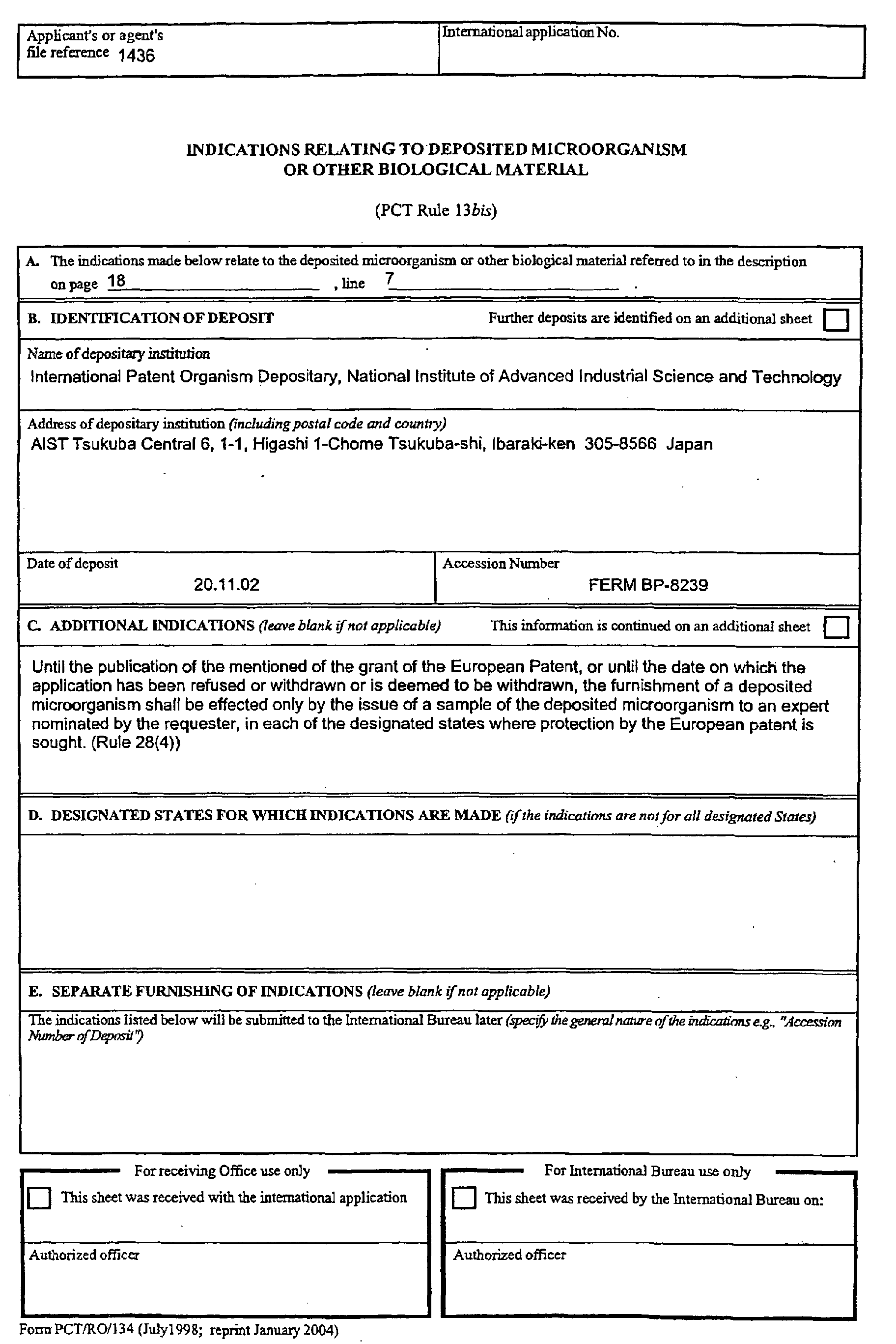
Claims (18)
- A process for producing a substance, which comprises culturing an animal cell having an ability to produce the substance in a medium containing a ubiquinone thereby to produce and accumulate the substance in the culture, and recovering the substance therefrom.
- The process according to claim 1, wherein the ubiquinone is Q10.
- The process according to claim 1 or 2, wherein the animal cell is a cell of an animal belonging to mammals.
- The process according to any one of claims 1 to 3, wherein the animal cell is a myeloma cell, a cell derived from the myeloma cell or an ovarian cell.
- The process according to any one of claims 1 to 4, wherein the cell is a cell transformed with a recombinant vector carrying a gene involved in the production of the substance.
- The process according to any one of claims 1 to 5, wherein the medium is a serum-free medium or a protein-free medium.
- The process according to any one of claims 1 to 6, wherein the culturing is carried out by batch culture, repeated batch culture, fed-batch culture or perfusion culture.
- The process according to any one of claims 1 to 7, wherein the substance is selected from an immunologically functional molecule, a biocatalyst molecule, a structure-forming molecule, a structure-maintaining molecule or a vaccine.
- The process according to claim 8, wherein the immunologically functional molecule is an antibody.
- A method of improving the productivity of a substance, which comprises culturing an animal cell having an ability to produce the substance in a medium containing a ubiquinone.
- The method according to claim 10, wherein the ubiquinone is Q10.
- The method according to claim 10 or 11, wherein the animal cell is a cell of an animal belonging to mammals.
- The method according to any one of claims 10 to 12, wherein the animal cell is a myeloma cell, a cell derived from the myeloma cell or an ovarian cell.
- The method according to any one of claims 10 to 13, wherein the cell is a cell transformed with a recombinant vector carrying a gene involved in the production of the substance.
- The method according to any one of claims 10 to 14, wherein the medium is a serum-free medium or a protein-free medium.
- The method according to any one of claims 10 to 15, wherein the culturing is carried out by batch culture, repeated batch culture, fed-batch culture or perfusion culture.
- The method according to any one of claims 10 to 16, wherein the substance is selected from an immunologically functional molecule, a biocatalyst molecule, a structure-forming molecule, a structure-maintaining molecule or a vaccine.
- The method according to claim 17, wherein the immunologically functional molecule is an antibody.
Applications Claiming Priority (3)
| Application Number | Priority Date | Filing Date | Title |
|---|---|---|---|
| JP2001363734 | 2001-11-29 | ||
| JP2001363734 | 2001-11-29 | ||
| PCT/JP2002/012522 WO2003046174A1 (en) | 2001-11-29 | 2002-11-29 | Process for producing substance |
Publications (2)
| Publication Number | Publication Date |
|---|---|
| EP1449919A1 true EP1449919A1 (en) | 2004-08-25 |
| EP1449919A4 EP1449919A4 (en) | 2004-12-22 |
Family
ID=19174032
Family Applications (1)
| Application Number | Title | Priority Date | Filing Date |
|---|---|---|---|
| EP02788693A Withdrawn EP1449919A4 (en) | 2001-11-29 | 2002-11-29 | PROCESS FOR PRODUCING A SUBSTANCE |
Country Status (6)
| Country | Link |
|---|---|
| US (1) | US20050175599A1 (en) |
| EP (1) | EP1449919A4 (en) |
| JP (1) | JPWO2003046174A1 (en) |
| AU (1) | AU2002355058A1 (en) |
| CA (1) | CA2468970A1 (en) |
| WO (1) | WO2003046174A1 (en) |
Families Citing this family (1)
| Publication number | Priority date | Publication date | Assignee | Title |
|---|---|---|---|---|
| JP2006141247A (en) * | 2004-11-17 | 2006-06-08 | Nisshin Pharma Inc | Medium composition for cell culture containing coenzyme Q10 |
Family Cites Families (4)
| Publication number | Priority date | Publication date | Assignee | Title |
|---|---|---|---|---|
| DE3110559C2 (en) * | 1981-03-18 | 1985-05-09 | Max-Planck-Gesellschaft zur Förderung der Wissenschaften e.V., 3400 Göttingen | Fully synthetic cell culture medium |
| US4560655A (en) * | 1982-12-16 | 1985-12-24 | Immunex Corporation | Serum-free cell culture medium and process for making same |
| FR2540381B1 (en) * | 1983-02-08 | 1986-05-30 | Dior Sa Parfums Christian | METHOD FOR STIMULATING CELL GROWTH; COSMETIC COMPOSITION, PHARMACEUTICAL AND COMPLEMENTARY COMPOSITION FOR CELL CULTURE MEDIUM APPLYING THIS PROCESS |
| US6168941B1 (en) * | 2000-04-07 | 2001-01-02 | Genvec, Inc. | Method of producing adenoviral vector stocks |
-
2002
- 2002-11-29 US US10/497,443 patent/US20050175599A1/en not_active Abandoned
- 2002-11-29 JP JP2003547606A patent/JPWO2003046174A1/en active Pending
- 2002-11-29 CA CA002468970A patent/CA2468970A1/en not_active Abandoned
- 2002-11-29 WO PCT/JP2002/012522 patent/WO2003046174A1/en not_active Ceased
- 2002-11-29 EP EP02788693A patent/EP1449919A4/en not_active Withdrawn
- 2002-11-29 AU AU2002355058A patent/AU2002355058A1/en not_active Abandoned
Also Published As
| Publication number | Publication date |
|---|---|
| AU2002355058A1 (en) | 2003-06-10 |
| JPWO2003046174A1 (en) | 2005-04-07 |
| EP1449919A4 (en) | 2004-12-22 |
| WO2003046174A1 (en) | 2003-06-05 |
| CA2468970A1 (en) | 2003-06-05 |
| US20050175599A1 (en) | 2005-08-11 |
Similar Documents
| Publication | Publication Date | Title |
|---|---|---|
| JP5878682B2 (en) | Improved cell culture | |
| KR100998857B1 (en) | Production of Anti-amyloid Beta Antibodies | |
| KR100988451B1 (en) | Preparation of TNF-Ig Fusion Protein | |
| KR101158447B1 (en) | Production of polypeptides | |
| US8129145B2 (en) | Production of glycoproteins | |
| US7504256B1 (en) | Process for producing polypeptide | |
| TWI629359B (en) | Serum-free cell culture medium | |
| KR20130012589A (en) | Methods for modulating mannose content of recombinant proteins | |
| US20130130317A1 (en) | Method for producing substance | |
| US20150259425A1 (en) | Compositions and methods for producing glycoproteins | |
| WO2008035631A1 (en) | Method of producing substance | |
| US20130150554A1 (en) | Cell culture of growth factor-free adapted cells | |
| ES2710543T3 (en) | Method for preparing an aqueous solution containing culture medium and chelating agent | |
| US20050175599A1 (en) | Process for producing substance | |
| CN102257131A (en) | Feed additives for mammalian cell culture and methods of use | |
| US20240425894A1 (en) | Cell culture processes | |
| HK1259741A1 (en) | Serum-free cell culture medium | |
| HK40002355A (en) | Methods of decreasing trisulfide bonds during recombinant production of polypeptides | |
| HK1180013B (en) | Production of polypeptides |
Legal Events
| Date | Code | Title | Description |
|---|---|---|---|
| PUAI | Public reference made under article 153(3) epc to a published international application that has entered the european phase |
Free format text: ORIGINAL CODE: 0009012 |
|
| 17P | Request for examination filed |
Effective date: 20040618 |
|
| AK | Designated contracting states |
Kind code of ref document: A1 Designated state(s): AT BE BG CH CY CZ DE DK EE ES FI FR GB GR IE IT LI LU MC NL PT SE SK TR |
|
| AX | Request for extension of the european patent |
Extension state: AL LT LV MK RO SI |
|
| A4 | Supplementary search report drawn up and despatched |
Effective date: 20041109 |
|
| 17Q | First examination report despatched |
Effective date: 20061128 |
|
| STAA | Information on the status of an ep patent application or granted ep patent |
Free format text: STATUS: THE APPLICATION IS DEEMED TO BE WITHDRAWN |
|
| 18D | Application deemed to be withdrawn |
Effective date: 20090603 |