EP1448797B1 - Method and kit for detection of novel pathogen inhibitors - Google Patents
Method and kit for detection of novel pathogen inhibitors Download PDFInfo
- Publication number
- EP1448797B1 EP1448797B1 EP02789074A EP02789074A EP1448797B1 EP 1448797 B1 EP1448797 B1 EP 1448797B1 EP 02789074 A EP02789074 A EP 02789074A EP 02789074 A EP02789074 A EP 02789074A EP 1448797 B1 EP1448797 B1 EP 1448797B1
- Authority
- EP
- European Patent Office
- Prior art keywords
- rna
- domain
- growth
- compounds
- binding
- Prior art date
- Legal status (The legal status is an assumption and is not a legal conclusion. Google has not performed a legal analysis and makes no representation as to the accuracy of the status listed.)
- Expired - Lifetime
Links
- 238000000034 method Methods 0.000 title claims abstract description 49
- 230000001717 pathogenic effect Effects 0.000 title claims abstract description 27
- 244000052769 pathogen Species 0.000 title claims abstract description 23
- 238000001514 detection method Methods 0.000 title claims abstract description 14
- 239000003112 inhibitor Substances 0.000 title abstract description 66
- 230000027455 binding Effects 0.000 claims abstract description 42
- 108090000623 proteins and genes Proteins 0.000 claims abstract description 41
- 239000002184 metal Substances 0.000 claims abstract description 30
- 229910052751 metal Inorganic materials 0.000 claims abstract description 30
- 102000004169 proteins and genes Human genes 0.000 claims abstract description 24
- 230000010261 cell growth Effects 0.000 claims abstract description 5
- 108091032973 (ribonucleotides)n+m Proteins 0.000 claims description 176
- 108090000621 Ribonuclease P Proteins 0.000 claims description 47
- 102000004167 Ribonuclease P Human genes 0.000 claims description 47
- 150000001875 compounds Chemical class 0.000 claims description 40
- 102000004190 Enzymes Human genes 0.000 claims description 39
- 108090000790 Enzymes Proteins 0.000 claims description 39
- 229910021645 metal ion Inorganic materials 0.000 claims description 36
- 230000005764 inhibitory process Effects 0.000 claims description 26
- 241000894006 Bacteria Species 0.000 claims description 21
- 230000001580 bacterial effect Effects 0.000 claims description 21
- 230000012010 growth Effects 0.000 claims description 19
- 241000282414 Homo sapiens Species 0.000 claims description 16
- 230000002401 inhibitory effect Effects 0.000 claims description 16
- 108091032955 Bacterial small RNA Proteins 0.000 claims description 14
- 238000000338 in vitro Methods 0.000 claims description 14
- 238000001727 in vivo Methods 0.000 claims description 11
- 230000007022 RNA scission Effects 0.000 claims description 10
- 238000012360 testing method Methods 0.000 claims description 10
- 230000001419 dependent effect Effects 0.000 claims description 9
- 230000004069 differentiation Effects 0.000 claims description 9
- 230000035755 proliferation Effects 0.000 claims description 9
- 238000012216 screening Methods 0.000 claims description 9
- 239000007787 solid Substances 0.000 claims description 9
- 241000700605 Viruses Species 0.000 claims description 8
- 244000005700 microbiome Species 0.000 claims description 8
- 230000007026 protein scission Effects 0.000 claims description 6
- 229920002521 macromolecule Polymers 0.000 claims description 5
- 239000013612 plasmid Substances 0.000 claims description 5
- 239000013598 vector Substances 0.000 claims description 5
- 230000017066 negative regulation of growth Effects 0.000 claims description 4
- 108091027963 non-coding RNA Proteins 0.000 claims description 4
- 102000042567 non-coding RNA Human genes 0.000 claims description 4
- 241000187479 Mycobacterium tuberculosis Species 0.000 claims description 3
- 238000004519 manufacturing process Methods 0.000 claims description 3
- 230000003278 mimic effect Effects 0.000 claims description 3
- 244000000010 microbial pathogen Species 0.000 claims 2
- 229940126575 aminoglycoside Drugs 0.000 abstract description 43
- 230000024245 cell differentiation Effects 0.000 abstract description 3
- 230000004663 cell proliferation Effects 0.000 abstract description 3
- 230000001413 cellular effect Effects 0.000 abstract description 2
- 238000011161 development Methods 0.000 abstract description 2
- 230000018109 developmental process Effects 0.000 abstract description 2
- 239000002547 new drug Substances 0.000 abstract 1
- 230000000694 effects Effects 0.000 description 40
- 238000003776 cleavage reaction Methods 0.000 description 38
- 230000007017 scission Effects 0.000 description 36
- 239000003446 ligand Substances 0.000 description 15
- 108010041090 poly(A)-specific ribonuclease Proteins 0.000 description 15
- 241000588724 Escherichia coli Species 0.000 description 14
- 102100023715 Poly(A)-specific ribonuclease PARN Human genes 0.000 description 14
- 108020004414 DNA Proteins 0.000 description 10
- 229960003704 framycetin Drugs 0.000 description 10
- PGBHMTALBVVCIT-VCIWKGPPSA-N framycetin Chemical compound N[C@@H]1[C@@H](O)[C@H](O)[C@H](CN)O[C@@H]1O[C@H]1[C@@H](O)[C@H](O[C@H]2[C@@H]([C@@H](N)C[C@@H](N)[C@@H]2O)O[C@@H]2[C@@H]([C@@H](O)[C@H](O)[C@@H](CN)O2)N)O[C@@H]1CO PGBHMTALBVVCIT-VCIWKGPPSA-N 0.000 description 10
- 239000000758 substrate Substances 0.000 description 8
- 230000007246 mechanism Effects 0.000 description 7
- 230000001404 mediated effect Effects 0.000 description 7
- XEEYBQQBJWHFJM-UHFFFAOYSA-N Iron Chemical compound [Fe] XEEYBQQBJWHFJM-UHFFFAOYSA-N 0.000 description 6
- 230000003197 catalytic effect Effects 0.000 description 6
- 210000004027 cell Anatomy 0.000 description 6
- 238000009509 drug development Methods 0.000 description 6
- 231100000331 toxic Toxicity 0.000 description 6
- 230000002588 toxic effect Effects 0.000 description 6
- 239000003242 anti bacterial agent Substances 0.000 description 5
- 229940088710 antibiotic agent Drugs 0.000 description 5
- 230000008901 benefit Effects 0.000 description 5
- 238000006243 chemical reaction Methods 0.000 description 5
- 229910001425 magnesium ion Inorganic materials 0.000 description 5
- TWRXJAOTZQYOKJ-UHFFFAOYSA-L Magnesium chloride Chemical compound [Mg+2].[Cl-].[Cl-] TWRXJAOTZQYOKJ-UHFFFAOYSA-L 0.000 description 4
- FAPWRFPIFSIZLT-UHFFFAOYSA-M Sodium chloride Chemical compound [Na+].[Cl-] FAPWRFPIFSIZLT-UHFFFAOYSA-M 0.000 description 4
- 108020004566 Transfer RNA Proteins 0.000 description 4
- 238000006555 catalytic reaction Methods 0.000 description 4
- RGWHQCVHVJXOKC-SHYZEUOFSA-J dCTP(4-) Chemical compound O=C1N=C(N)C=CN1[C@@H]1O[C@H](COP([O-])(=O)OP([O-])(=O)OP([O-])([O-])=O)[C@@H](O)C1 RGWHQCVHVJXOKC-SHYZEUOFSA-J 0.000 description 4
- 239000012634 fragment Substances 0.000 description 4
- TUJKJAMUKRIRHC-UHFFFAOYSA-N hydroxyl Chemical compound [OH] TUJKJAMUKRIRHC-UHFFFAOYSA-N 0.000 description 4
- 230000003993 interaction Effects 0.000 description 4
- 150000002611 lead compounds Chemical class 0.000 description 4
- 239000000126 substance Substances 0.000 description 4
- 238000002198 surface plasmon resonance spectroscopy Methods 0.000 description 4
- 201000008827 tuberculosis Diseases 0.000 description 4
- 102000004163 DNA-directed RNA polymerases Human genes 0.000 description 3
- 108090000626 DNA-directed RNA polymerases Proteins 0.000 description 3
- CWYNVVGOOAEACU-UHFFFAOYSA-N Fe2+ Chemical compound [Fe+2] CWYNVVGOOAEACU-UHFFFAOYSA-N 0.000 description 3
- PEDCQBHIVMGVHV-UHFFFAOYSA-N Glycerine Chemical compound OCC(O)CO PEDCQBHIVMGVHV-UHFFFAOYSA-N 0.000 description 3
- JLVVSXFLKOJNIY-UHFFFAOYSA-N Magnesium ion Chemical compound [Mg+2] JLVVSXFLKOJNIY-UHFFFAOYSA-N 0.000 description 3
- -1 Mg2+ ions Chemical class 0.000 description 3
- 108091034117 Oligonucleotide Proteins 0.000 description 3
- 101710124239 Poly(A) polymerase Proteins 0.000 description 3
- 101710089766 Ribonuclease P protein component Proteins 0.000 description 3
- 102000006382 Ribonucleases Human genes 0.000 description 3
- 108010083644 Ribonucleases Proteins 0.000 description 3
- 238000010171 animal model Methods 0.000 description 3
- 238000003556 assay Methods 0.000 description 3
- 239000011324 bead Substances 0.000 description 3
- 229940079593 drug Drugs 0.000 description 3
- 239000003814 drug Substances 0.000 description 3
- 230000001939 inductive effect Effects 0.000 description 3
- 230000003834 intracellular effect Effects 0.000 description 3
- 229920001184 polypeptide Polymers 0.000 description 3
- 230000003389 potentiating effect Effects 0.000 description 3
- 102000004196 processed proteins & peptides Human genes 0.000 description 3
- 108090000765 processed proteins & peptides Proteins 0.000 description 3
- 239000000523 sample Substances 0.000 description 3
- 239000007858 starting material Substances 0.000 description 3
- QKNYBSVHEMOAJP-UHFFFAOYSA-N 2-amino-2-(hydroxymethyl)propane-1,3-diol;hydron;chloride Chemical compound Cl.OCC(N)(CO)CO QKNYBSVHEMOAJP-UHFFFAOYSA-N 0.000 description 2
- 241001598984 Bromius obscurus Species 0.000 description 2
- 102000053642 Catalytic RNA Human genes 0.000 description 2
- 108090000994 Catalytic RNA Proteins 0.000 description 2
- 108010014303 DNA-directed DNA polymerase Proteins 0.000 description 2
- 102000016928 DNA-directed DNA polymerase Human genes 0.000 description 2
- 241000168726 Dictyostelium discoideum Species 0.000 description 2
- KCXVZYZYPLLWCC-UHFFFAOYSA-N EDTA Chemical compound OC(=O)CN(CC(O)=O)CCN(CC(O)=O)CC(O)=O KCXVZYZYPLLWCC-UHFFFAOYSA-N 0.000 description 2
- ZHNUHDYFZUAESO-UHFFFAOYSA-N Formamide Chemical compound NC=O ZHNUHDYFZUAESO-UHFFFAOYSA-N 0.000 description 2
- NYHBQMYGNKIUIF-UUOKFMHZSA-N Guanosine Chemical group C1=NC=2C(=O)NC(N)=NC=2N1[C@@H]1O[C@H](CO)[C@@H](O)[C@H]1O NYHBQMYGNKIUIF-UUOKFMHZSA-N 0.000 description 2
- 102100034343 Integrase Human genes 0.000 description 2
- 229910019142 PO4 Inorganic materials 0.000 description 2
- UOZODPSAJZTQNH-UHFFFAOYSA-N Paromomycin II Natural products NC1C(O)C(O)C(CN)OC1OC1C(O)C(OC2C(C(N)CC(N)C2O)OC2C(C(O)C(O)C(CO)O2)N)OC1CO UOZODPSAJZTQNH-UHFFFAOYSA-N 0.000 description 2
- 230000004570 RNA-binding Effects 0.000 description 2
- 108010046983 Ribonuclease T1 Proteins 0.000 description 2
- 241000831652 Salinivibrio sharmensis Species 0.000 description 2
- 241000251131 Sphyrna Species 0.000 description 2
- 108010006785 Taq Polymerase Proteins 0.000 description 2
- BFNBIHQBYMNNAN-UHFFFAOYSA-N ammonium sulfate Chemical compound N.N.OS(O)(=O)=O BFNBIHQBYMNNAN-UHFFFAOYSA-N 0.000 description 2
- 229910052921 ammonium sulfate Inorganic materials 0.000 description 2
- 238000004458 analytical method Methods 0.000 description 2
- 238000013459 approach Methods 0.000 description 2
- 230000003115 biocidal effect Effects 0.000 description 2
- 238000004113 cell culture Methods 0.000 description 2
- 108091092328 cellular RNA Proteins 0.000 description 2
- 230000008859 change Effects 0.000 description 2
- 230000000295 complement effect Effects 0.000 description 2
- 238000006073 displacement reaction Methods 0.000 description 2
- 238000005516 engineering process Methods 0.000 description 2
- 238000001215 fluorescent labelling Methods 0.000 description 2
- 238000001502 gel electrophoresis Methods 0.000 description 2
- 229910052742 iron Inorganic materials 0.000 description 2
- 239000012160 loading buffer Substances 0.000 description 2
- 239000011777 magnesium Substances 0.000 description 2
- 229910001629 magnesium chloride Inorganic materials 0.000 description 2
- 238000000329 molecular dynamics simulation Methods 0.000 description 2
- 230000036963 noncompetitive effect Effects 0.000 description 2
- 102000039446 nucleic acids Human genes 0.000 description 2
- 108020004707 nucleic acids Proteins 0.000 description 2
- 150000007523 nucleic acids Chemical class 0.000 description 2
- 229960001914 paromomycin Drugs 0.000 description 2
- UOZODPSAJZTQNH-LSWIJEOBSA-N paromomycin Chemical compound N[C@@H]1[C@@H](O)[C@H](O)[C@H](CN)O[C@@H]1O[C@H]1[C@@H](O)[C@H](O[C@H]2[C@@H]([C@@H](N)C[C@@H](N)[C@@H]2O)O[C@@H]2[C@@H]([C@@H](O)[C@H](O)[C@@H](CO)O2)N)O[C@@H]1CO UOZODPSAJZTQNH-LSWIJEOBSA-N 0.000 description 2
- NBIIXXVUZAFLBC-UHFFFAOYSA-K phosphate Chemical compound [O-]P([O-])([O-])=O NBIIXXVUZAFLBC-UHFFFAOYSA-K 0.000 description 2
- 239000010452 phosphate Substances 0.000 description 2
- 229920002401 polyacrylamide Polymers 0.000 description 2
- GUUBJKMBDULZTE-UHFFFAOYSA-M potassium;2-[4-(2-hydroxyethyl)piperazin-1-yl]ethanesulfonic acid;hydroxide Chemical compound [OH-].[K+].OCCN1CCN(CCS(O)(=O)=O)CC1 GUUBJKMBDULZTE-UHFFFAOYSA-M 0.000 description 2
- 239000002243 precursor Substances 0.000 description 2
- 238000002360 preparation method Methods 0.000 description 2
- 230000008569 process Effects 0.000 description 2
- 230000000717 retained effect Effects 0.000 description 2
- 108091092562 ribozyme Proteins 0.000 description 2
- 239000011780 sodium chloride Substances 0.000 description 2
- 238000004611 spectroscopical analysis Methods 0.000 description 2
- ATHGHQPFGPMSJY-UHFFFAOYSA-N spermidine Chemical compound NCCCCNCCCN ATHGHQPFGPMSJY-UHFFFAOYSA-N 0.000 description 2
- 230000001629 suppression Effects 0.000 description 2
- JKMHFZQWWAIEOD-UHFFFAOYSA-N 2-[4-(2-hydroxyethyl)piperazin-1-yl]ethanesulfonic acid Chemical compound OCC[NH+]1CCN(CCS([O-])(=O)=O)CC1 JKMHFZQWWAIEOD-UHFFFAOYSA-N 0.000 description 1
- HRPVXLWXLXDGHG-UHFFFAOYSA-N Acrylamide Chemical compound NC(=O)C=C HRPVXLWXLXDGHG-UHFFFAOYSA-N 0.000 description 1
- 241000224489 Amoeba Species 0.000 description 1
- 208000002109 Argyria Diseases 0.000 description 1
- 102000014914 Carrier Proteins Human genes 0.000 description 1
- 102000053602 DNA Human genes 0.000 description 1
- 108010017826 DNA Polymerase I Proteins 0.000 description 1
- YQYJSBFKSSDGFO-UHFFFAOYSA-N Epihygromycin Natural products OC1C(O)C(C(=O)C)OC1OC(C(=C1)O)=CC=C1C=C(C)C(=O)NC1C(O)C(O)C2OCOC2C1O YQYJSBFKSSDGFO-UHFFFAOYSA-N 0.000 description 1
- 241000206602 Eukaryota Species 0.000 description 1
- 108060002716 Exonuclease Proteins 0.000 description 1
- 239000007995 HEPES buffer Substances 0.000 description 1
- 108010078851 HIV Reverse Transcriptase Proteins 0.000 description 1
- 108090001102 Hammerhead ribozyme Proteins 0.000 description 1
- 101710203526 Integrase Proteins 0.000 description 1
- 229930183998 Lividomycin Natural products 0.000 description 1
- 229910021380 Manganese Chloride Inorganic materials 0.000 description 1
- GLFNIEUTAYBVOC-UHFFFAOYSA-L Manganese chloride Chemical compound Cl[Mn]Cl GLFNIEUTAYBVOC-UHFFFAOYSA-L 0.000 description 1
- WAEMQWOKJMHJLA-UHFFFAOYSA-N Manganese(2+) Chemical compound [Mn+2] WAEMQWOKJMHJLA-UHFFFAOYSA-N 0.000 description 1
- 241001465754 Metazoa Species 0.000 description 1
- 229930193140 Neomycin Natural products 0.000 description 1
- 206010028980 Neoplasm Diseases 0.000 description 1
- 102000045595 Phosphoprotein Phosphatases Human genes 0.000 description 1
- 108700019535 Phosphoprotein Phosphatases Proteins 0.000 description 1
- 108091000080 Phosphotransferase Proteins 0.000 description 1
- 108091036407 Polyadenylation Proteins 0.000 description 1
- 102000002067 Protein Subunits Human genes 0.000 description 1
- 108010001267 Protein Subunits Proteins 0.000 description 1
- 108010092799 RNA-directed DNA polymerase Proteins 0.000 description 1
- 102000004389 Ribonucleoproteins Human genes 0.000 description 1
- 108010081734 Ribonucleoproteins Proteins 0.000 description 1
- URWAJWIAIPFPJE-UHFFFAOYSA-N Rickamicin Natural products O1CC(O)(C)C(NC)C(O)C1OC1C(O)C(OC2C(CC=C(CN)O2)N)C(N)CC1N URWAJWIAIPFPJE-UHFFFAOYSA-N 0.000 description 1
- 108020005543 Satellite RNA Proteins 0.000 description 1
- 229930192786 Sisomicin Natural products 0.000 description 1
- 101710154250 Small basic protein Proteins 0.000 description 1
- 101710137500 T7 RNA polymerase Proteins 0.000 description 1
- 239000004098 Tetracycline Substances 0.000 description 1
- 102000014384 Type C Phospholipases Human genes 0.000 description 1
- 108010079194 Type C Phospholipases Proteins 0.000 description 1
- XSQUKJJJFZCRTK-UHFFFAOYSA-N Urea Chemical compound NC(N)=O XSQUKJJJFZCRTK-UHFFFAOYSA-N 0.000 description 1
- 241000726445 Viroids Species 0.000 description 1
- PTFCDOFLOPIGGS-UHFFFAOYSA-N Zinc dication Chemical compound [Zn+2] PTFCDOFLOPIGGS-UHFFFAOYSA-N 0.000 description 1
- JLCPHMBAVCMARE-UHFFFAOYSA-N [3-[[3-[[3-[[3-[[3-[[3-[[3-[[3-[[3-[[3-[[3-[[5-(2-amino-6-oxo-1H-purin-9-yl)-3-[[3-[[3-[[3-[[3-[[3-[[5-(2-amino-6-oxo-1H-purin-9-yl)-3-[[5-(2-amino-6-oxo-1H-purin-9-yl)-3-hydroxyoxolan-2-yl]methoxy-hydroxyphosphoryl]oxyoxolan-2-yl]methoxy-hydroxyphosphoryl]oxy-5-(5-methyl-2,4-dioxopyrimidin-1-yl)oxolan-2-yl]methoxy-hydroxyphosphoryl]oxy-5-(6-aminopurin-9-yl)oxolan-2-yl]methoxy-hydroxyphosphoryl]oxy-5-(6-aminopurin-9-yl)oxolan-2-yl]methoxy-hydroxyphosphoryl]oxy-5-(6-aminopurin-9-yl)oxolan-2-yl]methoxy-hydroxyphosphoryl]oxy-5-(6-aminopurin-9-yl)oxolan-2-yl]methoxy-hydroxyphosphoryl]oxyoxolan-2-yl]methoxy-hydroxyphosphoryl]oxy-5-(5-methyl-2,4-dioxopyrimidin-1-yl)oxolan-2-yl]methoxy-hydroxyphosphoryl]oxy-5-(4-amino-2-oxopyrimidin-1-yl)oxolan-2-yl]methoxy-hydroxyphosphoryl]oxy-5-(5-methyl-2,4-dioxopyrimidin-1-yl)oxolan-2-yl]methoxy-hydroxyphosphoryl]oxy-5-(5-methyl-2,4-dioxopyrimidin-1-yl)oxolan-2-yl]methoxy-hydroxyphosphoryl]oxy-5-(6-aminopurin-9-yl)oxolan-2-yl]methoxy-hydroxyphosphoryl]oxy-5-(6-aminopurin-9-yl)oxolan-2-yl]methoxy-hydroxyphosphoryl]oxy-5-(4-amino-2-oxopyrimidin-1-yl)oxolan-2-yl]methoxy-hydroxyphosphoryl]oxy-5-(4-amino-2-oxopyrimidin-1-yl)oxolan-2-yl]methoxy-hydroxyphosphoryl]oxy-5-(4-amino-2-oxopyrimidin-1-yl)oxolan-2-yl]methoxy-hydroxyphosphoryl]oxy-5-(6-aminopurin-9-yl)oxolan-2-yl]methoxy-hydroxyphosphoryl]oxy-5-(4-amino-2-oxopyrimidin-1-yl)oxolan-2-yl]methyl [5-(6-aminopurin-9-yl)-2-(hydroxymethyl)oxolan-3-yl] hydrogen phosphate Polymers Cc1cn(C2CC(OP(O)(=O)OCC3OC(CC3OP(O)(=O)OCC3OC(CC3O)n3cnc4c3nc(N)[nH]c4=O)n3cnc4c3nc(N)[nH]c4=O)C(COP(O)(=O)OC3CC(OC3COP(O)(=O)OC3CC(OC3COP(O)(=O)OC3CC(OC3COP(O)(=O)OC3CC(OC3COP(O)(=O)OC3CC(OC3COP(O)(=O)OC3CC(OC3COP(O)(=O)OC3CC(OC3COP(O)(=O)OC3CC(OC3COP(O)(=O)OC3CC(OC3COP(O)(=O)OC3CC(OC3COP(O)(=O)OC3CC(OC3COP(O)(=O)OC3CC(OC3COP(O)(=O)OC3CC(OC3COP(O)(=O)OC3CC(OC3COP(O)(=O)OC3CC(OC3COP(O)(=O)OC3CC(OC3COP(O)(=O)OC3CC(OC3CO)n3cnc4c(N)ncnc34)n3ccc(N)nc3=O)n3cnc4c(N)ncnc34)n3ccc(N)nc3=O)n3ccc(N)nc3=O)n3ccc(N)nc3=O)n3cnc4c(N)ncnc34)n3cnc4c(N)ncnc34)n3cc(C)c(=O)[nH]c3=O)n3cc(C)c(=O)[nH]c3=O)n3ccc(N)nc3=O)n3cc(C)c(=O)[nH]c3=O)n3cnc4c3nc(N)[nH]c4=O)n3cnc4c(N)ncnc34)n3cnc4c(N)ncnc34)n3cnc4c(N)ncnc34)n3cnc4c(N)ncnc34)O2)c(=O)[nH]c1=O JLCPHMBAVCMARE-UHFFFAOYSA-N 0.000 description 1
- 238000002835 absorbance Methods 0.000 description 1
- 230000009471 action Effects 0.000 description 1
- 239000002647 aminoglycoside antibiotic agent Substances 0.000 description 1
- 244000037640 animal pathogen Species 0.000 description 1
- 230000000840 anti-viral effect Effects 0.000 description 1
- 229960001192 bekanamycin Drugs 0.000 description 1
- 108091008324 binding proteins Proteins 0.000 description 1
- 239000011942 biocatalyst Substances 0.000 description 1
- 230000015572 biosynthetic process Effects 0.000 description 1
- UDSAIICHUKSCKT-UHFFFAOYSA-N bromophenol blue Chemical compound C1=C(Br)C(O)=C(Br)C=C1C1(C=2C=C(Br)C(O)=C(Br)C=2)C2=CC=CC=C2S(=O)(=O)O1 UDSAIICHUKSCKT-UHFFFAOYSA-N 0.000 description 1
- 239000000872 buffer Substances 0.000 description 1
- 244000309466 calf Species 0.000 description 1
- 239000004202 carbamide Substances 0.000 description 1
- 230000015556 catabolic process Effects 0.000 description 1
- 125000002091 cationic group Chemical group 0.000 description 1
- 238000004587 chromatography analysis Methods 0.000 description 1
- 230000000052 comparative effect Effects 0.000 description 1
- 238000006731 degradation reaction Methods 0.000 description 1
- 230000003467 diminishing effect Effects 0.000 description 1
- 230000002255 enzymatic effect Effects 0.000 description 1
- 102000013165 exonuclease Human genes 0.000 description 1
- 230000001036 exonucleolytic effect Effects 0.000 description 1
- 238000002474 experimental method Methods 0.000 description 1
- 239000007850 fluorescent dye Substances 0.000 description 1
- 230000014509 gene expression Effects 0.000 description 1
- 230000009036 growth inhibition Effects 0.000 description 1
- 108091008147 housekeeping proteins Proteins 0.000 description 1
- 244000052637 human pathogen Species 0.000 description 1
- 238000009396 hybridization Methods 0.000 description 1
- 238000011534 incubation Methods 0.000 description 1
- 230000006698 induction Effects 0.000 description 1
- 238000011835 investigation Methods 0.000 description 1
- 229960000318 kanamycin Drugs 0.000 description 1
- SBUJHOSQTJFQJX-NOAMYHISSA-N kanamycin Chemical compound O[C@@H]1[C@@H](O)[C@H](O)[C@@H](CN)O[C@@H]1O[C@H]1[C@H](O)[C@@H](O[C@@H]2[C@@H]([C@@H](N)[C@H](O)[C@@H](CO)O2)O)[C@H](N)C[C@@H]1N SBUJHOSQTJFQJX-NOAMYHISSA-N 0.000 description 1
- 229930182823 kanamycin A Natural products 0.000 description 1
- 229930182824 kanamycin B Natural products 0.000 description 1
- SKKLOUVUUNMCJE-FQSMHNGLSA-N kanamycin B Chemical compound N[C@@H]1[C@@H](O)[C@H](O)[C@@H](CN)O[C@@H]1O[C@H]1[C@H](O)[C@@H](O[C@@H]2[C@@H]([C@@H](N)[C@H](O)[C@@H](CO)O2)O)[C@H](N)C[C@@H]1N SKKLOUVUUNMCJE-FQSMHNGLSA-N 0.000 description 1
- 238000012933 kinetic analysis Methods 0.000 description 1
- 229950003076 lividomycin Drugs 0.000 description 1
- DBLVDAUGBTYDFR-SWMBIRFSSA-N lividomycin A Chemical compound O([C@@H]1[C@@H](N)C[C@@H](N)[C@H](O)[C@H]1O[C@@H]1O[C@H](CO)[C@H]([C@H]1O)O[C@H]1O[C@H]([C@H]([C@H](O)[C@H]1N)O[C@@H]1[C@H]([C@@H](O)[C@H](O)[C@@H](CO)O1)O)CN)[C@H]1O[C@H](CO)[C@@H](O)C[C@H]1N DBLVDAUGBTYDFR-SWMBIRFSSA-N 0.000 description 1
- 231100000053 low toxicity Toxicity 0.000 description 1
- 239000011565 manganese chloride Substances 0.000 description 1
- 239000000463 material Substances 0.000 description 1
- 238000005259 measurement Methods 0.000 description 1
- 239000012528 membrane Substances 0.000 description 1
- 238000002493 microarray Methods 0.000 description 1
- 239000000203 mixture Substances 0.000 description 1
- ZIUHHBKFKCYYJD-UHFFFAOYSA-N n,n'-methylenebisacrylamide Chemical compound C=CC(=O)NCNC(=O)C=C ZIUHHBKFKCYYJD-UHFFFAOYSA-N 0.000 description 1
- 229960004927 neomycin Drugs 0.000 description 1
- 229940046166 oligodeoxynucleotide Drugs 0.000 description 1
- 102000020233 phosphotransferase Human genes 0.000 description 1
- 244000000003 plant pathogen Species 0.000 description 1
- 239000013600 plasmid vector Substances 0.000 description 1
- 108010083529 poly A specific exoribonuclease Proteins 0.000 description 1
- 238000003752 polymerase chain reaction Methods 0.000 description 1
- 230000000379 polymerizing effect Effects 0.000 description 1
- 238000012545 processing Methods 0.000 description 1
- 230000002285 radioactive effect Effects 0.000 description 1
- 238000000163 radioactive labelling Methods 0.000 description 1
- 108091008146 restriction endonucleases Proteins 0.000 description 1
- 108020004418 ribosomal RNA Proteins 0.000 description 1
- 229960005456 sisomicin Drugs 0.000 description 1
- URWAJWIAIPFPJE-YFMIWBNJSA-N sisomycin Chemical compound O1C[C@@](O)(C)[C@H](NC)[C@@H](O)[C@H]1O[C@@H]1[C@@H](O)[C@H](O[C@@H]2[C@@H](CC=C(CN)O2)N)[C@@H](N)C[C@H]1N URWAJWIAIPFPJE-YFMIWBNJSA-N 0.000 description 1
- 238000002741 site-directed mutagenesis Methods 0.000 description 1
- 238000002415 sodium dodecyl sulfate polyacrylamide gel electrophoresis Methods 0.000 description 1
- 239000000243 solution Substances 0.000 description 1
- 241000894007 species Species 0.000 description 1
- 238000001228 spectrum Methods 0.000 description 1
- 229940063673 spermidine Drugs 0.000 description 1
- 230000004083 survival effect Effects 0.000 description 1
- 230000002459 sustained effect Effects 0.000 description 1
- 230000009897 systematic effect Effects 0.000 description 1
- 230000008685 targeting Effects 0.000 description 1
- 235000019364 tetracycline Nutrition 0.000 description 1
- 150000003522 tetracyclines Chemical class 0.000 description 1
- 229940040944 tetracyclines Drugs 0.000 description 1
- 210000001541 thymus gland Anatomy 0.000 description 1
- 229960000707 tobramycin Drugs 0.000 description 1
- NLVFBUXFDBBNBW-PBSUHMDJSA-N tobramycin Chemical compound N[C@@H]1C[C@H](O)[C@@H](CN)O[C@@H]1O[C@H]1[C@H](O)[C@@H](O[C@@H]2[C@@H]([C@@H](N)[C@H](O)[C@@H](CO)O2)O)[C@H](N)C[C@@H]1N NLVFBUXFDBBNBW-PBSUHMDJSA-N 0.000 description 1
- 231100000419 toxicity Toxicity 0.000 description 1
- 230000001988 toxicity Effects 0.000 description 1
- 238000013518 transcription Methods 0.000 description 1
- 230000035897 transcription Effects 0.000 description 1
- 238000012546 transfer Methods 0.000 description 1
- 230000007704 transition Effects 0.000 description 1
- 230000014616 translation Effects 0.000 description 1
- 210000004881 tumor cell Anatomy 0.000 description 1
- NLIVDORGVGAOOJ-MAHBNPEESA-M xylene cyanol Chemical compound [Na+].C1=C(C)C(NCC)=CC=C1C(\C=1C(=CC(OS([O-])=O)=CC=1)OS([O-])=O)=C\1C=C(C)\C(=[NH+]/CC)\C=C/1 NLIVDORGVGAOOJ-MAHBNPEESA-M 0.000 description 1
Images



Classifications
-
- C—CHEMISTRY; METALLURGY
- C12—BIOCHEMISTRY; BEER; SPIRITS; WINE; VINEGAR; MICROBIOLOGY; ENZYMOLOGY; MUTATION OR GENETIC ENGINEERING
- C12Q—MEASURING OR TESTING PROCESSES INVOLVING ENZYMES, NUCLEIC ACIDS OR MICROORGANISMS; COMPOSITIONS OR TEST PAPERS THEREFOR; PROCESSES OF PREPARING SUCH COMPOSITIONS; CONDITION-RESPONSIVE CONTROL IN MICROBIOLOGICAL OR ENZYMOLOGICAL PROCESSES
- C12Q1/00—Measuring or testing processes involving enzymes, nucleic acids or microorganisms; Compositions therefor; Processes of preparing such compositions
- C12Q1/68—Measuring or testing processes involving enzymes, nucleic acids or microorganisms; Compositions therefor; Processes of preparing such compositions involving nucleic acids
- C12Q1/6876—Nucleic acid products used in the analysis of nucleic acids, e.g. primers or probes
-
- C—CHEMISTRY; METALLURGY
- C12—BIOCHEMISTRY; BEER; SPIRITS; WINE; VINEGAR; MICROBIOLOGY; ENZYMOLOGY; MUTATION OR GENETIC ENGINEERING
- C12Q—MEASURING OR TESTING PROCESSES INVOLVING ENZYMES, NUCLEIC ACIDS OR MICROORGANISMS; COMPOSITIONS OR TEST PAPERS THEREFOR; PROCESSES OF PREPARING SUCH COMPOSITIONS; CONDITION-RESPONSIVE CONTROL IN MICROBIOLOGICAL OR ENZYMOLOGICAL PROCESSES
- C12Q1/00—Measuring or testing processes involving enzymes, nucleic acids or microorganisms; Compositions therefor; Processes of preparing such compositions
- C12Q1/02—Measuring or testing processes involving enzymes, nucleic acids or microorganisms; Compositions therefor; Processes of preparing such compositions involving viable microorganisms
- C12Q1/18—Testing for antimicrobial activity of a material
Definitions
- the present invention is within the field of molecular biology. More closely, the invention relates to a method and a kit for detection of novel pathogen inhibitors using models of pathogen specific, and metal binding RNA structures/domains representing essential cellular RNA molecules. The method enables identification of inhibitors that bind to any specific RNA molecule or protein that are essential for cell growth, proliferation and differentiation. Furthermore, the invention relates to use of aminoglycosides as starting compounds for drug development.
- RNA molecules are essential components of the cell and its primary structure dictates its folding. The function of the RNA is subsequently dictated by its structure.
- the overall structure of RNA molecules consists of small structural regions/domains that together build up the RNA structure. Consequently, small stable RNA structural regions/domains can be identified and be produced separately with a retained conformation as exemplified by Kufel and Kirsebom, 1998.
- RNase P is a ribonucleoprotein complex present in all living cells (Altman and Kirsebom, 1999). It catalyses the removal of 5' leader sequences from tRNA precursors and similar molecules.
- RNase P consists of one RNA subunit and a small basic protein, and it has been shown that the catalytic activity is associated with its RNA subunit.
- the RNA alone derived from bacteria is able to cleave a number of substrates correctly and efficiently in vitro in the absence of the protein (Guerrier-Takada et al., 1983).
- the reaction catalyzed by RNase P RNA alone as well as in the presence of the RNase P protein requires divalent metal ions such as Mg2+.
- cleavage proceeds through a trigonal bipyramidal transition state (SN2), where two Mg2+ ions participate in the chemistry of the cleavage (Warnecke et al., 1996) defined as the two metal ion cleavage mechanism.
- Mg2+ ions are important for correct folding of RNase P RNA and for the interaction between RNase P and its substrate (Altman and Kirsebom, 1999).
- the two metal ions cleavage mechanism is considered to be a general mechanism of catalysis in breakage and formation of phosphodiester bonds. Besides its importance in catalyzing RNA mediated cleavage of phosphodiester bonds it is well known that it is used by protein enzyme for the same purpose.
- the polymerizing and exonucleolytic activities of E. coli DNA polymerise I are the paradigm for two metal ion mediated catalysis (Steitz and Steitz, 1993).
- Other protein enzymatic activities proceeding through the two metal ion catalysis mechanism a variety of prokaryotic and eukaryotic DNA polymerases, RNA polymerases, deoxyribo- and ribonucleases, phosphatases, kinases etc.
- RNA based biocatalysts include RNase P RNA (Walter et al., 1999; Mikkelsen et al., 1999).
- RNase P RNA reverse transcriptase
- the inhibitory effect caused by neomycin has been suggested to be due to displacement of essential divalent metal ions ( Herrman and Westhof, J. Mol. Biol. vol. 276, 903-912, 1998 ). Direct evidence for displacement of a divalent metal has been obtained (Mikkelsen et al., 2001).
- Satellite RNA species of certain plant viruses and a number of viroids contain a self-cleaving domain of around 40 bases known as the "hammerhead".
- the isolated hammerhead cleaves in vitro in the presence of certain divalent metal ions. It has been found ( Murray and Arnold, Biochem. J. (1996) vol. 317, 855-860 ) that in addition to neomycin B the tetracyclines are also effective inhibitors to the hammerhead ribozyme.
- Dictyostelium discoideum is a soil-living amoeba often used as a model system for analysis of sequenced genes.
- the effect of aminoglycoside antibiotics on RNase P was investigated by using an in vitro experimental system from Dictyostelium discoideum ( Tekos et al, FEBS Letters 485 (2000) 71-75 ).
- Kinetic analysis showed that all aminoglycosides tested behave as classical non-competitive inhibitors.
- the inhibition effect is attributed to the electrostatic competition of the cationic aminoglycosides with magnesium ions required for catalysis.
- aminoglycosides are also potent inhibitors of enzymes that depend on metal ions for their catalytic activity.
- the present inventors have used Escherichia coli Klenow polymerase (pol) and mammalian poly(A)-specific ribonuclease (PARN) as model enzymes.
- the inhibitory potential of several aminoglycosides have been tested and neomycin B has been found to be a potent inhibitor (Table 1).
- the neomycin B inhibition is pH dependent, suggesting that the nature of the interaction is electrostatic.
- Enzyme kinetic analyses show that neomycin B behave as a mixed non-competitive inhibitor.
- Iron mediated hydroxyl radical cleavage was used to locate functionally important metal ions of both enzymes and to establish that neomycin B interfered with iron mediated cleavage at the active sites of Klenow pol and PARN.
- the present inventors have found a mechanism of inhibition where the aminoglycoside binds in the active site of the enzyme and thereby displaces catalytically important divalent metal ions in analogy with the inhibition of RNA activity by aminoglycosides.
- aminoglycosides are potent inhibitors of enzymes depending on metal ions for their catalytic activity and as such they can be used to probe metal ion binding sites on enzymes. Table 1.
- aminoglycosides can be considered as "metal mimics" (Mikkelsen et al. 2001), since they bind to metal ion binding sites of RNA molecules and interfere with the function of RNA by displacing functionally/structurally important divalent metal ions.
- the present inventors have now established that aminoglycosides also interfere with metal ion binding sites of protein enzymes, showing that the "metal mimics" property of aminoglycosides is not only restricted to the interaction between aminoglycosides and RNA.
- aminoglycosides as "metal mimics” can be used as functional probes to perturb the catalytic activity of both ribozymes and metalloenzymes, and as functional/structural probes to map and characterize the active sites of such catalytic activities.
- aminoglycosides as "metal mimics” can serve as starting compounds for development of novel drugs (e.g. antibiotics) and that aminoglycosides or derivatives thereof can be used as ligands to identify metal binding proteins in systematic screening efforts using the protein microarray technique recently developed by MacBeath and Schreiber (MacBeath and Schreiber 2000).
- the present invention relates to a method for identification of novel antibiotics/lead compounds directed against microorganisms including viruses.
- the method is particularly suitable for selecting novel antibiotics/lead compounds with high specificity for target molecules/microorganism and with low toxicity i . e . with few side effects on the treated patient/host.
- the strategy/method of the invention relies on targeting the novel antibiotic/lead compound against RNA or protein molecules that are essential for growth, proliferation and/or differentiation of the selected microorganism.
- the selected RNA or protein molecules should be metal binding and show distinct structural differences compared to its eukaroytic counterpart or be absent in the treated host.
- the present invention provides an improved way of selecting novel antibiotics interacting with a specific target (RNA and/or protein) and limits unwanted side effects. Furthermore, a differential screening procedure to identify toxic side effects of selected compounds is disclosed wherein specific protein enzymes that depend on metal ions for activity are used. A major advantage is therefore that this strategy/method minimises the usage of animal experimental model systems.
- the strategy/method may in principle be used to identify any compound that confers their inhibitory activity by displacing divalent metal ions, for example to identify novel metal mimics.
- the disclosure can also be used to select and screen for inhibitors of protein enzymes that depend on divalent metal ions for activity and reducing toxic side effects. Examples can be inhibition of essential enzymes encoded by pathogenic/tumor viruses and pathogenic microorganims.
- the term pathogens is intended to include animal pathogens, plant pathogens and human pathogens.
- the pathogens may be procaryotic or eucaryotic or their viruses.
- the invention relates to methods as disclosed in claim 1 or 2 and to kits a disclosed in claims 11 and 12.
- the method comprises
- the model molecule provided in step a) is RNA or protein.
- the model molecule provided in step a) is linked to a solid support, such as a strip or beads, for example biotionylated RNA binding to streptavidine beads.
- Step b) may be by detection of RNA or protein cleavage in vitro, wherein interaction/binding of inhibiting compounds prevents RNA/protein cleavage.
- the possible cleavage may, for example, be detected electrophoretically using radioactive or fluorescent labelling.
- the RNA/protein cleavage is induced by Pb 2+ or Fe 2+ -mediated hydroxyl radical cleavage.
- step b) is by detection of bacterial growth in vivo, wherein the following bacteria are cultivated in the presence of a suspected inhibitor:
- the model molecules may be provided as synthetically produced molecules.
- the model molecules are provided in vectors carrying genes encoding said model molecules harbouring sequences encoding functionally important domains of essential cellular RNA molecules which are autonomous divalent metal ion binding sites for recombinant production of the model molecules.
- the model molecules are derived from RNA or protein.
- model RNA gene sequences encode P15, P15/P16-loop, P16 or P17 of RNase P RNA of bacterial origin, such as from Mycobacterium tuberculosis .
- aminoglycosides as starting compounds for drug development.
- aminoglycosides for production of a drug for inhibition of pathogenic meta 110 enzymes, i.e. for treatment of pathogenic conditions involving such enzymes.
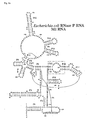
- RNase P RNA is essential for the processing of tRNA precursors in bacteria as well as in eukaryotic ( e . g . mammalian) cells (Altman and Kirsebom, 1999). Comparison of the secondary structures of RNase P RNA derived from bacteria with Homo sapiens RNase P RNA reveals significant structural differences (see Fig 1 where E. coli and H. sapiens RNase P RNA are compared). The P15-loop is a functionally important domain of bacterial RNase P RNA, which is missing in H. sapiens RNase P RNA and in eukaryotic RNase P RNA in general (boxed in Fig. 1 ).
- the P15-loop of bacterial RNase P RNA interacts with the RNase P substrate through base-pairing, where the "GGU-motif" base pair with the RCC A (interacting residues underlined) located at the 3' end of the substrate (Altman and Kirsebom, 1999; Kirsebom and Virtanen, 2000).
- This is rationalized by the fact that most of the tRNA genes in bacteria encode the 3' CCA-motif while none of the tRNA in eukaryotes encode this sequence motif.
- This example establishes a situation where a structural difference at the RNA level can be used to discriminate between a pathogen and its host.
- this fulfils the criteria that a chosen target RNA in the pathogen (here exemplified with the bacteria E. coli ) should show structural differences compared to its counterpart in the host (in our example H. sapiens ) in a region of the RNA that plays a functional important role.
- RNA The function of RNA is dictated by its structure.
- the overall structure of RNA molecules consists of small structural regions/domains that together build up the RNA structure. It is therefore possible to identify small stable RNA structural regions/domains that fold into the final structure when separated from the natural context in a large RNA molecule.
- small model RNA molecules representing functional important RNA regions/domains can be produced separately with retained conformation. This is clearly exemplified by the finding that the structure of the E . coli P15-loop is maintained when present in a small model 31-mer RNA (Kufel and Kirsebom, 1998).
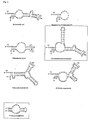
- a library of several variants of P15-loop structures that have been identified in different bacteria together with the small model 31-mer RNA are depicted in figure 2 .
- Bacterial RNase P RNA alone or in the presence of the protein subunit cleaves its substrate in vitro correctly and efficiently and this cleavage activity can be inhibited by various aminoglycosides (Mikkelsen et al ., 1999).
- the structure of some aminoglycosides that inhibit RNase P cleavage are depicted in figure 3 .
- Aminoglycosides bind to RNA and displace functionally important divalent metal ions. Thus, aminoglycosides function as metal mimics (Mikkelsen et al ., 2001).
- the observed app Ki given in Table 2 are in the same concentration range as the range that inhibit RNase P cleavage activity.
- the app Ki is defined as the aminoglycoside concentration that gives 50% inhibition of Pb2+-induced cleavage activity.
- a model RNA comprising the P15-loop (shown in Fig 2 ) derived from Mycobacterium tuberculosis is also surprisingly cleaved at specific positions by Pb2+ and the Pb2+-induced cleavage of this particular model RNA is inhibited by several aminoglycosides some of which are shown in figure 3 . This demonstrates that also model RNA molecules (comprising functionally important domains) built on naturally occurring sequences may be used.
- RNA molecules bind divalent metal ions, and binding of the divalent metal ion Pb2+ result in cleavage of the RNA given that it is positioned in a specific way (Brown et al. 1985). Therefore this approach is general and consequently any RNA molecule can be selected as a target. This fulfils the criteria to have a way to identify small ligands that bind to a small RNA molecule that represent a functionally important domain of an essential RNA molecule.
- RNA cleavage is inhibited by small ligands.
- RNA cleavage can be performed by Pb2+ and a variety of other metal ions and enzymes.
- Other divalent metal ions such as Mg2+, Mn2+, Zn2+ etc can replace Pb2+, however, the advantage to use Pb2+ is that Pb2+-induced cleavage is much faster compared to cleavage by other divalent metal ions at physiological pH. Maintaining the pH at approximately 7 is to prefer since at high pH the structure of RNA changes and RNA is also degraded.
- Detection of binding of a small ligand may also be achieved using various ribonucleases i.e. enzymes that cleave RNA at specific positions.
- RNase T1 cleaves preferentially 3' of single stranded guanosine residues.
- addition of a small ligand i.e. inhibitor may change the accessibility of single stranded guanosine residues and therefore binding of a small ligand would inhibit RNase T1 cleavage at the small ligand binding site.
- the detection of binding of a small ligand to an RNA is not restricted to the detection of cleavage of RNA by various means.
- the detection of binding may also be by various spectroscopic or surface plasmon resonance methods.
- binding of a small ligand may be detected for example as i) a shift of the spectra due to ligand binding, ii) as an increase or a decrease in stability of the RNA structure as a result of small ligand binding, which for example is measured as absorbance as function of temperature.
- Surface plasmon resonance may be used as follows.
- the model RNA comprising a functionally important region/domain is coupled to a surface using standard protocols. A solution containing potential inhibitors is passed over this surface and binding of an inhibitor (small ligand) is detected by reflection according to surface plasmon resonance technology.
- RNA molecules When the aim is to screen for substances that bind to RNA using a mixture of different substances (for example a combinatorial library) a small model RNA molecule is linked to a solid surface and substances that bind to the RNA are identified using the tool of choice, for example Pb2+-induced cleavage or a specific ribonuclease or spectroscopic methods as discussed above.
- a mixture of different substances for example a combinatorial library
- Linkage of the RNA to a solid surface may be accomplished by biotionylating the 5' or 3' end of the RNA. The so obtained RNA is subsequently allowed to bind to streptavidine beads or streptavidine coated tubes.
- a model RNA (comprising a functionally important region/domain) carrying a 5' or 3' single stranded region is allowed to hybridise to a oligonucleotide that is anchored to a solid support.
- the 5' or 3' is complementary to the oligonucleotide that is anchored to the solid support.
- the inhibitor may be tested for inhibitory action using the larger RNA as the target and an appropriate assay system.
- a novel small compound that binds the P15-loop derived from e.g. M. tuberculosis is tested for inhibitory activity of the full-size M. tuberculosis RNase P RNA both alone and in the presence of the RNase P protein C5. It is essential to establish that the inhibitor inhibits RNase P RNA cleavage in the presence of C5, since C5 is essential for activity in vivo.
- the inhibitor inhibits the activity of the targeted RNA with high specificity. This means, in this example that the inhibitor should inhibit M. tuberculosis RNase P with high specificity and should not inhibit human RNase P activity. Thus, inhibition studies using human RNase P are performed to ensure that the inhibitor does not inhibits its activity.
- the method can be used to investigate and identify inhibitors that are highly specific or less specific. This is achieved by using, for example, RNase P derived from different bacterial sources and study their catalytic performance in the presence of the chosen inhibitor. If an inhibitor with high specificity is to be identified, then the inhibitor should (in the given example M. tuberculosis RNase P) not inhibit the activity of E. coli and other bacterial RNase P variants.
- the main advantages with this are: i) Growth of "house-keeping" bacteria is not inhibited in the presence of the inhibitor which as a consequence will suppress unwanted side-effects and ii) possible suppression of the appearance of resistance against the inhibitor that propagate via horizontal gene-transfer. If an inhibitor with broad spectrum, such as a broad spectrum antibiotic, is to be identified then the method can be used to identify inhibitors that inhibit a large number of different bacteria spp. or classes of bacteria.
- nucleic acid metabolising enzymes inhibit Klenow pol and PARN suggest that inhibition of nucleic acid metabolising enzymes may be a common mechanism by which aminoglycosides cause unwanted side effects.
- Bam HI restriction enzyme HIV reverse transcriptase
- bacterial RNase H bacterial RNase H
- mammalian poly(A) polymerase bacterial RNase H
- Taq DNA polymerase bacterial RNase H
- T7 RNA polymerase RNA polymerase
- a significant advantage of the invention is that it can be used to test the inhibitors that bind the target RNA for binding to proteins that play crucial roles during gene expression.
- the reasons for this are: i) We screen for inhibitors that bind to pockets on RNA that bind divalent metal ions that are important for function. ii) Many protein enzymes also bind divalent metal ions that are important for function. iii) Therefore, inhibitors that bind to RNA and displace divalent metal ions also have the potential to bind to protein enzymes and thereby displace divalent metal ions that are crucial for the function of such proteins.
- the present inventors have demonstrated that several metallo-enzymes are inhibited by the addition of various aminoglycosides.
- a small ligand can have the potential to bind to both RNA and protein enzymes and inactivate their function by displacing functionally important divalent metal ions. This may cause severe toxic side effects.
- the criteria is that the inhibitors that are identified to bind to RNA should not interact/bind to protein enzymes that depend on divalent metal ions for activity.
- the invention therefore makes a "counter screening" step possible, where the inhibition of a set of specific house keeping protein enzymes is tested. Thus, this step has the potential to identify toxic side effects at an early stage in drug development and thereby reduce time and usage of experimental animal systems.
- the identified inhibitors may be passed through series of in vivo inhibition studies in bacterial cultures and cell cultures.
- the objective is to further establish the identified inhibitor(s) as (a) potential lead compound(s) for drug development.
- RNA was generated using T7 DNA dependent RNA polymerase (or its equivalent) according to standard protocols.
- Shorter RNA molecules can be synthesized chemically however, here the size of the RNA is of crucial importance i. e. the RNA cannot be too large.
- the RNA was labelled internally, at the 5' or 3' end with 32 P.
- the RNA can be labelled by other means using 3 H or 14 C or for example fluorescence labelling.
- RNase P cleavage and Pb2+-induced cleavage was performed and monitored according to standard protocols as described by Kufel and Kirsebom (1998).
- To determine the app Ki value for a given substance RNase P cleavage or Pb2+-induced cleavage conditions were adjusted in such a way that measurements were carried out in the linear portion of the curve of kinetics of the cleavage reaction. Cleavage efficiency was plotted as a function of the concentration of the compound X under study, and app Ki is defined as the concentration resulting in 50% inhibition of cleavage activity.
- enzymes depending on metal ions for activity are particularly relevant for this invention. Many of these enzymes are essential for cell survival, for example the so called house-keeping enzymes. Examples of such enzymes are: mammalian poly(A) polymerase (PAP), mammalian poly(A)-specific ribonuclease (PARN) and E. coli Klenow DNA polymerase (POL I), phospholipase C, Rnase H, T7 DNA dependent polymerase, RNA polymerase, Taq polymerse, BamH1 and reverse transcriptase.
- PAP mammalian poly(A) polymerase
- PARN mammalian poly(A)-specific ribonuclease
- POL I E. coli Klenow DNA polymerase
- Klenow(D355A,E357A) recombinant polypeptide in which the 3'-5' exonuclease active site was inactivated by site directed mutagenesis, as the enzyme and a double stranded DNA fragment, generated by hybridisation of oligonucleotides 5'-TCGCAGCCGTGAG-3' and 5'-ATCCAAGCTCACGGCTGCGA-3', as the template.
- the DNA template was prepared as described (Eger and Benkovic 1992).
- the reactions were performed in 10 microliter in the presence of 100 mM HEPES-KOH pH 7.0, 1 mM DTT, 0.5 microgram/microliter BSA, 150 mM KCl, 4 mM MgCl 2 , 10 mM spermidine, 1 micromolar DNA template, 0.3 micromolar (alpha- 32 P)dCTP (3000 Ci/mmol) (Amersham Pharmacia Biotech) and contained 0.2-1 nM of indicated Klenow pol fragment.
- Reactions were incubated at 30 °C for 5-20 minutes and then stopped by the addition 10 microliter loading buffer (80 % formamide (v/v), 0.1 % xylene cyanol, 0.1 % bromophenol blue, 50 mM Tris-HCl pH 7.9, 50 mM EDTA).
- the reacted DNA was fractionated by 10 % polyacrylamide (19:1 acrylamide/bisacrylamide 30:0.8 )-7 M urea gel electrophoresis. The obtained gel was scanned using a 400 S PhosphorImager (Molecular Dynamics). When dCTP was titrated, the DNA template concentration was 1 micromolar, while the dCTP concentration was 50 micromolar when the DNA template was titrated.
- the pH of the reactions were 7.0 if not stated otherwise.
- the consumption of substrate (dCTP or DNA) was controlled so that not more than 20 % of its total amount was consumed.
- Homogeneously purified calf thymus PARN 54 kDa active fragment was used as the source of PARN (Martinez et al. 2000). Recombinant full length human PARN was expressed and purified as described (Martinez et al. 2000).
- As the substrate we used L3(A 30 ) RNA radioactively labelled in its poly(A) tail ( ⁇ ström et al. 1991). Assay conditions and 1-D TLC quantitation procedures were as previously described ( ⁇ ström et al. 1992).
- the pH of the deadenylation reactions were 7.0, unless stated otherwise.
- L3(A 30 ) RNA substrate was controlled so that no more than 20 % of it was consumed.
- the aminoglycosides were purchased from Sigma Chemical Co. and added amount was as indicated.
- the polymerisation or deadenylation efficiencies were plotted as a function of the concentration of the aminoglycoside under study.
- K i was defined as the concentration of added aminoglycoside resulting in 50 % inhibition of Klenow pol or PARN activities, respectiviely.
- K i values were obtained by plotting the determined -(K M /V max ) values against the concentration of aminoglycoside under study.
- Fe(II) mediated hydroxyl radical cleavage of PARN was essentially performed as described above. Reacted samples were subjected to 10 % SDS-polyacrylamide gel eletrophoresis and the resulting gel was subsequently visualized and quantified using a 400 S PhosphorImager (Molecular Dynamics). In the Mg(II) and Mn(II) ions competition experiments, MgCl 2 or MnCl 2 was added at indicated concentration in the presence of 20 micromolar Fe(NH 4 ) 2 SO 4 .
- RNA targets are selected based on the same criteria as described under paragraphs A through C.
- RNA domain a gene encoding the selected RNA domain behind an inducible promoter (see Fig 4 ).
- This gene construct is either synthesized chemically or generated by PCR technology (polymerase chain reaction) with suitable oligodeoxynucleotide primers that are complementary to specific regions on the gene that encodes the model RNA comprising the selected RNA domain/region.
- this gene construct carries a self-cleaving RNA structure element downstream of the gene construct encoding the RNA target.
- the transcription product carries the selected RNA domain plus a self-cleaving RNA structural element.
- the cleaved transcript consists of only the selected model RNA comprising the selected domain/region with a 2';3'-cyclic phosphate at the 3' end.
- the advantage to have the 2';3'-cyclic phosphate at the 3' end is that it blocks the action of 3' exoribonucleases and thereby degradation of the selected RNA domain inside for example a bacteria.
- the presence of the self-cleaving RNA ensures that a desired size/length of the selected RNA target is produced.
- the so obtained gene construct is subsequently introduced into a suitable plasmid vector.
- a vector harboring the gene construct according to step 1 is transformed into suitable bacterial strains and expressed by induction of the inducible promoter.
- suitable bacterial strains can be used in the context of the invention.
- Example 1 test of in vitro identified inhibitors Two bacterial strains are used. In one of the strains the selected RNA will be expressed (bottom case in Fig 5 ). Due to the presence of high intracellular concentration of the selected RNA (model RNA used comprising the selected RNA domain/region to identify the inhibitor according to the outline described above) the inhibitor will bind mainly to the selected RNA. The essential full-size RNA comprising the selected RNA will not bind the inhibitor since the selected RNA domain is in large excess over the essential full-size RNA. The result is that the strain will grow.
- the selected RNA is not produced as a result of repression of its gene or due to fact that the plasmid is missing or that it does not encode the selected RNA (as indicated top of Fig 5 , example with plasmid not encoding RNA gene).
- Addition of inhibitor will therefore result in inhibition of growth since the inhibitor will bind to the selected RNA region/domain on the full-size RNA, which as a consequence result in inhibition of the activity of the RNA.
- this protocol identifies inhibitors also functioning under in vivo conditions. Inhibitors that allow both strains to grow are of no interest.
- Example 2 selection of novel inhibitors The above outline can also be used to select for inhibitors that bind/interact with a selected domain/region directly.
- two strains are used one in which the selected model RNA comprising the RNA domain/region is expressed (strain A bottom Fig 5 ) and one in which the selected model RNA comprising the RNA domain/region is not expressed (strain B top Fig 5 ).
- the criteria are that addition of an inhibitor or pool thereof (for example combinatorial libraries) of potential inhibitors should allow growth in strain A but not in strain B ( Fig 5 ) demonstrating that growth depends on the presence of high intracellular concentration of the model RNA comprising the selected RNA domain/region.
- One achievement using this set-up is that it allows for the identification of inhibitors that penetrate a bacteria/cell and bind/interact with the selected RNA domain/region under in vivo conditions.
- the metal mimic concept is that an inhibitor binds to an RNA or protein and thereby displaces a divalent metal ion(s) important for function.
- the metal mimic concept together with the outlined method can therefore be used to identify any ligand that displaces functionally important divalent metal ions in any macromolecule, i . e . RNA or protein.
- the method can be used to identify inhibitors that bind to any specific RNA molecules or proteins that are essential for cell growth, proliferation and differentiation. Consequently, the method can be used to identify inhibitors that suppress the growth of a tumor cell.
- the method can be used to identify antiviral inhibitors.
Landscapes
- Chemical & Material Sciences (AREA)
- Life Sciences & Earth Sciences (AREA)
- Organic Chemistry (AREA)
- Health & Medical Sciences (AREA)
- Proteomics, Peptides & Aminoacids (AREA)
- Zoology (AREA)
- Wood Science & Technology (AREA)
- Engineering & Computer Science (AREA)
- Analytical Chemistry (AREA)
- Molecular Biology (AREA)
- Biochemistry (AREA)
- Microbiology (AREA)
- Biotechnology (AREA)
- Biophysics (AREA)
- Physics & Mathematics (AREA)
- Genetics & Genomics (AREA)
- Immunology (AREA)
- Bioinformatics & Cheminformatics (AREA)
- General Engineering & Computer Science (AREA)
- General Health & Medical Sciences (AREA)
- Toxicology (AREA)
- Measuring Or Testing Involving Enzymes Or Micro-Organisms (AREA)
- Investigating Or Analysing Biological Materials (AREA)
- Medicines That Contain Protein Lipid Enzymes And Other Medicines (AREA)
Abstract
Description
- The present invention is within the field of molecular biology. More closely, the invention relates to a method and a kit for detection of novel pathogen inhibitors using models of pathogen specific, and metal binding RNA structures/domains representing essential cellular RNA molecules. The method enables identification of inhibitors that bind to any specific RNA molecule or protein that are essential for cell growth, proliferation and differentiation. Furthermore, the invention relates to use of aminoglycosides as starting compounds for drug development.
- RNA molecules are essential components of the cell and its primary structure dictates its folding. The function of the RNA is subsequently dictated by its structure. The overall structure of RNA molecules consists of small structural regions/domains that together build up the RNA structure. Consequently, small stable RNA structural regions/domains can be identified and be produced separately with a retained conformation as exemplified by Kufel and Kirsebom, 1998.
- RNase P is a ribonucleoprotein complex present in all living cells (Altman and Kirsebom, 1999). It catalyses the removal of 5' leader sequences from tRNA precursors and similar molecules. In bacteria, RNase P consists of one RNA subunit and a small basic protein, and it has been shown that the catalytic activity is associated with its RNA subunit. The RNA alone derived from bacteria is able to cleave a number of substrates correctly and efficiently in vitro in the absence of the protein (Guerrier-Takada et al., 1983). The reaction catalyzed by RNase P RNA alone as well as in the presence of the RNase P protein requires divalent metal ions such as Mg2+. It has been proposed that cleavage proceeds through a trigonal bipyramidal transition state (SN2), where two Mg2+ ions participate in the chemistry of the cleavage (Warnecke et al., 1996) defined as the two metal ion cleavage mechanism. In addition, Mg2+ ions are important for correct folding of RNase P RNA and for the interaction between RNase P and its substrate (Altman and Kirsebom, 1999).
- The two metal ions cleavage mechanism is considered to be a general mechanism of catalysis in breakage and formation of phosphodiester bonds. Besides its importance in catalyzing RNA mediated cleavage of phosphodiester bonds it is well known that it is used by protein enzyme for the same purpose. The polymerizing and exonucleolytic activities of E. coli DNA polymerise I are the paradigm for two metal ion mediated catalysis (Steitz and Steitz, 1993). Other protein enzymatic activities proceeding through the two metal ion catalysis mechanism: a variety of prokaryotic and eukaryotic DNA polymerases, RNA polymerases, deoxyribo- and ribonucleases, phosphatases, kinases etc.
- Several aminoglycosides are known to interact with RNA and interfere with its function. For example neomycin B interferes with protein biosynthesis due to binding to ribosomal RNA, inhibits the activity of several RNA based biocatalysts (known ribozymes) including RNase P RNA (Walter et al., 1999; Mikkelsen et al., 1999). The inhibitory effect caused by neomycin has been suggested to be due to displacement of essential divalent metal ions (Herrman and Westhof, J. Mol. Biol. vol. 276, 903-912, 1998). Direct evidence for displacement of a divalent metal has been obtained (Mikkelsen et al., 2001).
- Satellite RNA species of certain plant viruses and a number of viroids contain a self-cleaving domain of around 40 bases known as the "hammerhead". The isolated hammerhead cleaves in vitro in the presence of certain divalent metal ions. It has been found (Murray and Arnold, Biochem. J. (1996) vol. 317, 855-860) that in addition to neomycin B the tetracyclines are also effective inhibitors to the hammerhead ribozyme.
- Dictyostelium discoideum is a soil-living amoeba often used as a model system for analysis of sequenced genes. The effect of aminoglycoside antibiotics on RNase P was investigated by using an in vitro experimental system from Dictyostelium discoideum (Tekos et al, FEBS Letters 485 (2000) 71-75). Kinetic analysis showed that all aminoglycosides tested behave as classical non-competitive inhibitors. The inhibition effect is attributed to the electrostatic competition of the cationic aminoglycosides with magnesium ions required for catalysis.
- The present inventors have now found that aminoglycosides are also potent inhibitors of enzymes that depend on metal ions for their catalytic activity. The present inventors have used Escherichia coli Klenow polymerase (pol) and mammalian poly(A)-specific ribonuclease (PARN) as model enzymes. The inhibitory potential of several aminoglycosides have been tested and neomycin B has been found to be a potent inhibitor (Table 1). The neomycin B inhibition is pH dependent, suggesting that the nature of the interaction is electrostatic. Enzyme kinetic analyses show that neomycin B behave as a mixed non-competitive inhibitor. Iron mediated hydroxyl radical cleavage was used to locate functionally important metal ions of both enzymes and to establish that neomycin B interfered with iron mediated cleavage at the active sites of Klenow pol and PARN. The present inventors have found a mechanism of inhibition where the aminoglycoside binds in the active site of the enzyme and thereby displaces catalytically important divalent metal ions in analogy with the inhibition of RNA activity by aminoglycosides. Thus, the present inventors have found that aminoglycosides are potent inhibitors of enzymes depending on metal ions for their catalytic activity and as such they can be used to probe metal ion binding sites on enzymes.
Table 1. Inhibition effects of aminoglycosides on PARN and Klenow pol Aminoglycoside appKi(µM)
(for PARN)appKi(mM)
(for KL pol)Neomycin B 0.4±0.1 4.8±0.3 Paromomycin 17.3±3.5 10.3±0.8 Lividomycin 18.7±2.8 11.6±2.0 Kanamycin B 7.3±0.4 9.2±0.3 Kanamycin A 64.7±7.8 14.3±1.7 Tobramycin 7.1±0.2 9.3±0.7 - We have previously suggested that aminoglycosides can be considered as "metal mimics" (Mikkelsen et al. 2001), since they bind to metal ion binding sites of RNA molecules and interfere with the function of RNA by displacing functionally/structurally important divalent metal ions. The present inventors have now established that aminoglycosides also interfere with metal ion binding sites of protein enzymes, showing that the "metal mimics" property of aminoglycosides is not only restricted to the interaction between aminoglycosides and RNA. Thus, aminoglycosides as "metal mimics" can be used as functional probes to perturb the catalytic activity of both ribozymes and metalloenzymes, and as functional/structural probes to map and characterize the active sites of such catalytic activities. We expect that aminoglycosides as "metal mimics" can serve as starting compounds for development of novel drugs (e.g. antibiotics) and that aminoglycosides or derivatives thereof can be used as ligands to identify metal binding proteins in systematic screening efforts using the protein microarray technique recently developed by MacBeath and Schreiber (MacBeath and Schreiber 2000).
- The present invention relates to a method for identification of novel antibiotics/lead compounds directed against microorganisms including viruses. The method is particularly suitable for selecting novel antibiotics/lead compounds with high specificity for target molecules/microorganism and with low toxicity i.e. with few side effects on the treated patient/host. The strategy/method of the invention relies on targeting the novel antibiotic/lead compound against RNA or protein molecules that are essential for growth, proliferation and/or differentiation of the selected microorganism. The selected RNA or protein molecules should be metal binding and show distinct structural differences compared to its eukaroytic counterpart or be absent in the treated host.
- The present invention provides an improved way of selecting novel antibiotics interacting with a specific target (RNA and/or protein) and limits unwanted side effects. Furthermore, a differential screening procedure to identify toxic side effects of selected compounds is disclosed wherein specific protein enzymes that depend on metal ions for activity are used. A major advantage is therefore that this strategy/method minimises the usage of animal experimental model systems.
- The strategy/method may in principle be used to identify any compound that confers their inhibitory activity by displacing divalent metal ions, for example to identify novel metal mimics. Hence, the disclosure can also be used to select and screen for inhibitors of protein enzymes that depend on divalent metal ions for activity and reducing toxic side effects. Examples can be inhibition of essential enzymes encoded by pathogenic/tumor viruses and pathogenic microorganims. According to the invention, the term pathogens is intended to include animal pathogens, plant pathogens and human pathogens. The pathogens may be procaryotic or eucaryotic or their viruses.
- Exemplifying strategy
- 1. Specific regions/domains of RNase P RNA unique to, for example, bacterial RNase P RNA is chosen. These regions/domains are produced as small model RNA molecules and used to select for compounds that specifically bind to these regions/domains.
- 2. Selected compounds are tested for inhibitory activity in vitro using RNase P RNA alone and RNase P RNA in the presence of the RNase P protein (in bacteria referred to as the C5 protein). Those inhibitory compounds are selected which do not affect eukaryotic RNase P activity.
- 3. The selected compounds are tested for inhibition of various protein enzyme activities that depend on metal ions for activity.
- 4. The compounds that fulfil the criteria to inhibit bacterial RNase P activity specifically will subsequently be tested in bacteria infected cell cultures. The criteria will be that bacterial growth should be inhibited specifically.
- 5. Optionally,
step 4 is repeated in animal models. - The invention relates to methods as disclosed in
claim - Disclosed is also a method for detection of novel pathogen inhibitors, characterised by the following steps:
- a) providing a model molecule (which may be RNA or protein and may be chemically or recombinantly produced and which also comprise chemically or enzymatically modified and mutated variants thereof) comprising at least one functionally important, pathogen unique and metal binding region/domain of an essential cellular macromolecule, wherein pathogen unique means derived from pathogen microorganisms and virus of any source ; and
- b) screening for compounds interacting/binding to said model molecule. The binding may be detected spectrophotometrically, by surface plasmon resonance, by gel electrophoresis or by chromatographic methods (for proteins).
- Optionally the method comprises
- c) testing said compounds for inhibition of human metal dependent (house keeping) enzymes, and selecting compounds which do not inhibit said enzymes. This step is very valuable for diminishing side effects of the pathogen inhibitor in the treated patient.
- Further optional steps in the method are:
- d) testing said compounds for inhibition of corresponding full size pathogenic RNA molecule both alone and in the presence of its corresponding protein and selecting compounds with inhibiting properties, wherein strong or weak inhibiting properties may be desired; and
- e) cultivation of corresponding pathogen in the presence of inhibitor, wherein bacterial growth is to be substantially inhibited.
- The model molecule provided in step a) is RNA or protein.
In a preferred embodiment the model molecule provided in step a) is linked to a solid support, such as a strip or beads, for example biotionylated RNA binding to streptavidine beads. - Step b) may be by detection of RNA or protein cleavage in vitro, wherein interaction/binding of inhibiting compounds prevents RNA/protein cleavage.
The possible cleavage may, for example, be detected electrophoretically using radioactive or fluorescent labelling.
Preferably the RNA/protein cleavage is induced by Pb2+ or Fe2+-mediated hydroxyl radical cleavage. - Alternatively, step b) is by detection of bacterial growth in vivo, wherein the following bacteria are cultivated in the presence of a suspected inhibitor:
- i) bacteria transformed with a plasmid not encoding any model RNA/protein or untransformed bacteria
- ii) bacteria transformed with a vector comprising a gene encoding the model RNA molecule according to step a) and a self cleaving RNA structure element;
- Further disclosed is a kit for detection of novel pathogen inhibitors, characterised in
- i) metal binding and pathogen unique model molecules for use in step a) of the above method; and optionally
- ii) one or more human metal dependent enzymes for use in step c) of the above method; and optionally
- iii) Pb2+for use in step b) of the above method.
- The model molecules may be provided as synthetically produced molecules.
Alternatively, the model molecules are provided in vectors carrying genes encoding said model molecules harbouring sequences encoding functionally important domains of essential cellular RNA molecules which are autonomous divalent metal ion binding sites for recombinant production of the model molecules.
The model molecules are derived from RNA or protein. - In a preferred embodiment the model RNA gene sequences encode P15, P15/P16-loop, P16 or P17 of RNase P RNA of bacterial origin, such as from Mycobacterium tuberculosis.
- Disclosed herein is the use of aminoglycosides as starting compounds for drug development.
- Further disclosed herein is the use of aminoglycosides for production of a drug for inhibition of
pathogenic meta 110 enzymes, i.e. for treatment of pathogenic conditions involving such enzymes. -
-
Fig. 1 shows the secondary structure of RNase P RNA derived from Escherichia coli and Homo sapiens. Residues marked in box correspond to residues constituting the P15 loop that is missing in H. sapiens RNase P RNA. -
Fig. 2 shows examples of bacterial P15-loop variants. At the bottom of the figure is an illustration of the secondary structure of the model 31-mer RNA representing the P15-loop derived from Escherichia coli RNase P RNA. -
Fig. 3 shows example of aminoglycosides used in the present invention. -
Fig. 4 shows a gene construct encoding model RNA and a self-cleaving RNA element. -
Fig. 5 is schematic view illustrating a summary of the in vivo approach described below. - RNase P RNA is essential for the processing of tRNA precursors in bacteria as well as in eukaryotic (e.g. mammalian) cells (Altman and Kirsebom, 1999). Comparison of the secondary structures of RNase P RNA derived from bacteria with Homo sapiens RNase P RNA reveals significant structural differences (see
Fig 1 where E. coli and H. sapiens RNase P RNA are compared). The P15-loop is a functionally important domain of bacterial RNase P RNA, which is missing in H. sapiens RNase P RNA and in eukaryotic RNase P RNA in general (boxed inFig. 1 ). The P15-loop of bacterial RNase P RNA interacts with the RNase P substrate through base-pairing, where the "GGU-motif" base pair with the RCCA (interacting residues underlined) located at the 3' end of the substrate (Altman and Kirsebom, 1999; Kirsebom and Virtanen, 2000). This is rationalized by the fact that most of the tRNA genes in bacteria encode the 3' CCA-motif while none of the tRNA in eukaryotes encode this sequence motif. - This example establishes a situation where a structural difference at the RNA level can be used to discriminate between a pathogen and its host. Thus, this fulfils the criteria that a chosen target RNA in the pathogen (here exemplified with the bacteria E. coli) should show structural differences compared to its counterpart in the host (in our example H. sapiens) in a region of the RNA that plays a functional important role.
- The function of RNA is dictated by its structure. The overall structure of RNA molecules consists of small structural regions/domains that together build up the RNA structure. It is therefore possible to identify small stable RNA structural regions/domains that fold into the final structure when separated from the natural context in a large RNA molecule. Thus, small model RNA molecules representing functional important RNA regions/domains can be produced separately with retained conformation. This is clearly exemplified by the finding that the structure of the E. coli P15-loop is maintained when present in a small model 31-mer RNA (Kufel and Kirsebom, 1998). A library of several variants of P15-loop structures that have been identified in different bacteria together with the small model 31-mer RNA are depicted in
figure 2 . - This fulfils the criteria that it should be possible to produce a small model RNA harbouring a functionally important domain/region that does not change its structure when taken out of its natural context.
- Bacterial RNase P RNA alone or in the presence of the protein subunit (referred to the C5 protein) cleaves its substrate in vitro correctly and efficiently and this cleavage activity can be inhibited by various aminoglycosides (Mikkelsen et al., 1999). The structure of some aminoglycosides that inhibit RNase P cleavage are depicted in
figure 3 . Aminoglycosides bind to RNA and displace functionally important divalent metal ions. Thus, aminoglycosides function as metal mimics (Mikkelsen et al., 2001). - Full-size E. coli RNase P RNA is cleaved at specific positions by Pb2+. Pb2+-induced cleavage of E. coli RNase P RNA is inhibited by the addition of for example the aminoglycoside neomycin B (Mikkelsen et al., 1999). The above discussed small model 31-mer RNA harbouring the E. coli P15-loop is also cleaved at specific positions in the presence of Pb2+ (Kufel and Kirsebom, 1998). Surprisingly, Pb2+-induced cleavage of the 31-mer RNA is inhibited as a result of addition of various aminoglycosides as shown in Table 2. This clearly demonstrates that the small 31-mer model RNA comprising the functionally important P15-domain is a binding site for aminoglycosides.
Table 2. Summary of appKi values for inhibition of Pb2+-induced cleavage of the 31-mer RNA by various aminoglycosides. The P15-loop is derived from Escherichia coli RNase P RNA. appKi is defined as the aminoglycoside concentration that result in 50% inhibition of cleavage activity. appKi (µM) appKi (µM) 31-mer RNA inhibition of RNase P RNA cleavage Aminoglycoside Neomycin B 40 35±12* Paromomycin 340 190±12* Sisomicin 17 - 5-epi-Sisomicin 1.2 ≈3 Hygromycin 220 - * The values are included for comparative reasons from Mikkelsen et al., 1999. - The observed appKi given in Table 2 are in the same concentration range as the range that inhibit RNase P cleavage activity. The appKi is defined as the aminoglycoside concentration that gives 50% inhibition of Pb2+-induced cleavage activity. A model RNA comprising the P15-loop (shown in
Fig 2 ) derived from Mycobacterium tuberculosis is also surprisingly cleaved at specific positions by Pb2+ and the Pb2+-induced cleavage of this particular model RNA is inhibited by several aminoglycosides some of which are shown infigure 3 . This demonstrates that also model RNA molecules (comprising functionally important domains) built on naturally occurring sequences may be used. - The present inventors have now surprisingly found that Pb2+-induced cleavage can be used as a tool to identify small ligands that bind to a specific domain of a functionally important RNA. Note that all RNA molecules bind divalent metal ions, and binding of the divalent metal ion Pb2+ result in cleavage of the RNA given that it is positioned in a specific way (Brown et al. 1985). Therefore this approach is general and consequently any RNA molecule can be selected as a target. This fulfils the criteria to have a way to identify small ligands that bind to a small RNA molecule that represent a functionally important domain of an essential RNA molecule. The method relies on the idea that RNA cleavage is inhibited by small ligands. RNA cleavage can be performed by Pb2+ and a variety of other metal ions and enzymes. Other divalent metal ions such as Mg2+, Mn2+, Zn2+ etc can replace Pb2+, however, the advantage to use Pb2+ is that Pb2+-induced cleavage is much faster compared to cleavage by other divalent metal ions at physiological pH. Maintaining the pH at approximately 7 is to prefer since at high pH the structure of RNA changes and RNA is also degraded.
- Detection of binding of a small ligand may also be achieved using various ribonucleases i.e. enzymes that cleave RNA at specific positions. For example RNase T1 cleaves preferentially 3' of single stranded guanosine residues. Thus, addition of a small ligand (i.e. inhibitor) may change the accessibility of single stranded guanosine residues and therefore binding of a small ligand would inhibit RNase T1 cleavage at the small ligand binding site.
- The detection of binding of a small ligand to an RNA is not restricted to the detection of cleavage of RNA by various means. The detection of binding may also be by various spectroscopic or surface plasmon resonance methods. As examples of spectroscopic methods, binding of a small ligand may be detected for example as i) a shift of the spectra due to ligand binding, ii) as an increase or a decrease in stability of the RNA structure as a result of small ligand binding, which for example is measured as absorbance as function of temperature. Surface plasmon resonance may be used as follows. The model RNA comprising a functionally important region/domain is coupled to a surface using standard protocols. A solution containing potential inhibitors is passed over this surface and binding of an inhibitor (small ligand) is detected by reflection according to surface plasmon resonance technology.
- When the aim is to screen for substances that bind to RNA using a mixture of different substances (for example a combinatorial library) a small model RNA molecule is linked to a solid surface and substances that bind to the RNA are identified using the tool of choice, for example Pb2+-induced cleavage or a specific ribonuclease or spectroscopic methods as discussed above.
- Linkage of the RNA to a solid surface may be accomplished by biotionylating the 5' or 3' end of the RNA. The so obtained RNA is subsequently allowed to bind to streptavidine beads or streptavidine coated tubes. Alternatively, a model RNA (comprising a functionally important region/domain) carrying a 5' or 3' single stranded region is allowed to hybridise to a oligonucleotide that is anchored to a solid support. Here the 5' or 3' is complementary to the oligonucleotide that is anchored to the solid support.
- When a specific inhibitor of a targeted RNA, using a small model RNA representing a functionally important domain of an RNA present in given pathogen, has been identified the inhibitor may be tested for inhibitory action using the larger RNA as the target and an appropriate assay system. In the above discussed exemplification a novel small compound that binds the P15-loop derived from e.g. M. tuberculosis is tested for inhibitory activity of the full-size M. tuberculosis RNase P RNA both alone and in the presence of the RNase P protein C5. It is essential to establish that the inhibitor inhibits RNase P RNA cleavage in the presence of C5, since C5 is essential for activity in vivo. A crucial criteria is that the inhibitor inhibits the activity of the targeted RNA with high specificity. This means, in this example that the inhibitor should inhibit M. tuberculosis RNase P with high specificity and should not inhibit human RNase P activity. Thus, inhibition studies using human RNase P are performed to ensure that the inhibitor does not inhibits its activity.
- Moreover, the method can be used to investigate and identify inhibitors that are highly specific or less specific. This is achieved by using, for example, RNase P derived from different bacterial sources and study their catalytic performance in the presence of the chosen inhibitor. If an inhibitor with high specificity is to be identified, then the inhibitor should (in the given example M. tuberculosis RNase P) not inhibit the activity of E. coli and other bacterial RNase P variants. The main advantages with this are: i) Growth of "house-keeping" bacteria is not inhibited in the presence of the inhibitor which as a consequence will suppress unwanted side-effects and ii) possible suppression of the appearance of resistance against the inhibitor that propagate via horizontal gene-transfer. If an inhibitor with broad spectrum, such as a broad spectrum antibiotic, is to be identified then the method can be used to identify inhibitors that inhibit a large number of different bacteria spp. or classes of bacteria.
- Many antibiotics that are used today cause severe side-effects. Additionally, as of today a necessary, time-consuming, important and expensive step in drug development is the usage of experimental animal systems in the process to identify novel drugs with low levels of toxic side-effects.
- The mechanisms behind toxicity and severe side-effects are not understood and several potential causes have been discussed in the literature. The finding by the present inventors that aminoglycosides inhibit Klenow pol and PARN suggest that inhibition of nucleic acid metabolising enzymes may be a common mechanism by which aminoglycosides cause unwanted side effects. In support of this we have shown that several other nucleic acid metabolising enzymes, among them Bam HI restriction enzyme, HIV reverse transcriptase, bacterial RNase H, mammalian poly(A) polymerase, Taq DNA polymerase and T7 RNA polymerase, can be inhibited in vitro by the addition of 0.1-5 mM neomycin B. This shows that binding to and inhibition of metalloenzymes involved in breaking and forming phosphodiesterbonds is a general feature of aminoglycosides.
- A significant advantage of the invention is that it can be used to test the inhibitors that bind the target RNA for binding to proteins that play crucial roles during gene expression. The reasons for this are: i) We screen for inhibitors that bind to pockets on RNA that bind divalent metal ions that are important for function. ii) Many protein enzymes also bind divalent metal ions that are important for function. iii) Therefore, inhibitors that bind to RNA and displace divalent metal ions also have the potential to bind to protein enzymes and thereby displace divalent metal ions that are crucial for the function of such proteins. The present inventors have demonstrated that several metallo-enzymes are inhibited by the addition of various aminoglycosides. Thus, a small ligand can have the potential to bind to both RNA and protein enzymes and inactivate their function by displacing functionally important divalent metal ions. This may cause severe toxic side effects. To circumvent the problem of inhibitor-binding to essential metallo-enzymes of the host the criteria is that the inhibitors that are identified to bind to RNA should not interact/bind to protein enzymes that depend on divalent metal ions for activity. The invention therefore makes a "counter screening" step possible, where the inhibition of a set of specific house keeping protein enzymes is tested. Thus, this step has the potential to identify toxic side effects at an early stage in drug development and thereby reduce time and usage of experimental animal systems.
- After the outlined in vitro screening for novel RNA binding compounds, inhibition studies and "counter screening" investigations, the identified inhibitors may be passed through series of in vivo inhibition studies in bacterial cultures and cell cultures. Here the objective is to further establish the identified inhibitor(s) as (a) potential lead compound(s) for drug development.
- The different gene constructs were put behind the T7 promoter and the RNA was generated using T7 DNA dependent RNA polymerase (or its equivalent) according to standard protocols. Shorter RNA molecules can be synthesized chemically however, here the size of the RNA is of crucial importance i. e. the RNA cannot be too large. When necessary the RNA was labelled internally, at the 5' or 3' end with 32P. Alternatively, the RNA can be labelled by other means using 3H or 14C or for example fluorescence labelling.
- RNase P cleavage and Pb2+-induced cleavage was performed and monitored according to standard protocols as described by Kufel and Kirsebom (1998). To determine the appKi value for a given substance RNase P cleavage or Pb2+-induced cleavage conditions were adjusted in such a way that measurements were carried out in the linear portion of the curve of kinetics of the cleavage reaction. Cleavage efficiency was plotted as a function of the concentration of the compound X under study, and appKi is defined as the concentration resulting in 50% inhibition of cleavage activity.
- Several enzymes depending on metal ions for activity are particularly relevant for this invention. Many of these enzymes are essential for cell survival, for example the so called house-keeping enzymes. Examples of such enzymes are: mammalian poly(A) polymerase (PAP), mammalian poly(A)-specific ribonuclease (PARN) and E. coli Klenow DNA polymerase (POL I), phospholipase C, Rnase H, T7 DNA dependent polymerase, RNA polymerase, Taq polymerse, BamH1 and reverse transcriptase.
- To test for Klenow polymerase activity we used the Klenow(D355A,E357A) recombinant polypeptide, in which the 3'-5' exonuclease active site was inactivated by site directed mutagenesis, as the enzyme and a double stranded DNA fragment, generated by hybridisation of oligonucleotides 5'-TCGCAGCCGTGAG-3' and 5'-ATCCAAGCTCACGGCTGCGA-3', as the template. The DNA template was prepared as described (Eger and Benkovic 1992). The reactions were performed in 10 microliter in the presence of 100 mM HEPES-KOH pH 7.0, 1 mM DTT, 0.5 microgram/microliter BSA, 150 mM KCl, 4 mM MgCl2, 10 mM spermidine, 1 micromolar DNA template, 0.3 micromolar (alpha-32P)dCTP (3000 Ci/mmol) (Amersham Pharmacia Biotech) and contained 0.2-1 nM of indicated Klenow pol fragment. Reactions were incubated at 30 °C for 5-20 minutes and then stopped by the addition 10 microliter loading buffer (80 % formamide (v/v), 0.1 % xylene cyanol, 0.1 % bromophenol blue, 50 mM Tris-HCl pH 7.9, 50 mM EDTA). The reacted DNA was fractionated by 10 % polyacrylamide (19:1 acrylamide/bisacrylamide 30:0.8 )-7 M urea gel electrophoresis. The obtained gel was scanned using a 400 S PhosphorImager (Molecular Dynamics). When dCTP was titrated, the DNA template concentration was 1 micromolar, while the dCTP concentration was 50 micromolar when the DNA template was titrated. The pH of the reactions were 7.0 if not stated otherwise. The consumption of substrate (dCTP or DNA) was controlled so that not more than 20 % of its total amount was consumed.
Homogeneously purified calf thymus PARN 54 kDa active fragment was used as the source of PARN (Martinez et al. 2000). Recombinant full length human PARN was expressed and purified as described (Martinez et al. 2000). As the substrate we used L3(A30) RNA radioactively labelled in its poly(A) tail (Åström et al. 1991). Assay conditions and 1-D TLC quantitation procedures were as previously described (Åström et al. 1992). The pH of the deadenylation reactions were 7.0, unless stated otherwise. The consumption of L3(A30) RNA substrate was controlled so that no more than 20 % of it was consumed.
The aminoglycosides were purchased from Sigma Chemical Co. and added amount was as indicated. The polymerisation or deadenylation efficiencies were plotted as a function of the concentration of the aminoglycoside under study. The appKi was defined as the concentration of added aminoglycoside resulting in 50 % inhibition of Klenow pol or PARN activities, respectiviely. Ki values were obtained by plotting the determined -(KM/Vmax) values against the concentration of aminoglycoside under study. - 2-4 microgram of purified recombinant Klenow pol fragment or mutant thereof, dialysed against buffer F (20 mM HEPES-KOH pH 7.0, 5 mM NaCl) on a Milipore "V" Series Membrane (Millipore) for 30 minutes at 4°C, was incubated for 30 minutes at 37°C in 50 mM HEPES pH 7.0, 5 mM NaCl, 20 micromolar Fe(NH4)2SO4 and 10 mM DTT in total volume of 10 microliter. The incubations were stopped by the addition of 10 microliter of 2xSDS-loading buffer (100 mM Tris-HCl pH 6.8, 2 % (w/v) SDS, 200 mM DTT, 16 %(v/v) glycerol, 0.05 %(w/v) bromolphenol blue and 50 mM EDTA). The amount of added Mg(II)-ions, Mn(II)-ions or aminoglycoside was as indicated. Reacted polypeptides were fractionated by 10 % SDS-polyacrylamide gel electrophoresis and subsequently visualised by silver staining.
Recombinant PARN polypeptides expressed in E. coli were purified and radioactively labelled in their N-termini. Fe(II) mediated hydroxyl radical cleavage of PARN was essentially performed as described above. Reacted samples were subjected to 10 % SDS-polyacrylamide gel eletrophoresis and the resulting gel was subsequently visualized and quantified using a 400 S PhosphorImager (Molecular Dynamics). In the Mg(II) and Mn(II) ions competition experiments, MgCl2 or MnCl2 was added at indicated concentration in the presence of 20 micromolar Fe(NH4)2SO4. - The objective with this embodiment of the novel method according to the invention is two-fold: i) to identify novel inhibitors that interact/bind with/to functionally important domains of selected RNA targets that are essential for growth of microorganisms including virus under in vivo conditions and ii) to test novel inhibitors that have been identified using the in vitro strategy described above for binding to its selected target under in vivo conditions. The RNA targets are selected based on the same criteria as described under paragraphs A through C.
- Generate a gene encoding the selected RNA domain behind an inducible promoter (see
Fig 4 ). This gene construct is either synthesized chemically or generated by PCR technology (polymerase chain reaction) with suitable oligodeoxynucleotide primers that are complementary to specific regions on the gene that encodes the model RNA comprising the selected RNA domain/region. - In addition, this gene construct carries a self-cleaving RNA structure element downstream of the gene construct encoding the RNA target. The transcription product carries the selected RNA domain plus a self-cleaving RNA structural element. After self-cleavage the cleaved transcript consists of only the selected model RNA comprising the selected domain/region with a 2';3'-cyclic phosphate at the 3' end. The advantage to have the 2';3'-cyclic phosphate at the 3' end is that it blocks the action of 3' exoribonucleases and thereby degradation of the selected RNA domain inside for example a bacteria. In addition, the presence of the self-cleaving RNA ensures that a desired size/length of the selected RNA target is produced.
- The so obtained gene construct is subsequently introduced into a suitable plasmid vector.
- Following the outline described above a vector harboring the gene construct according to
step 1 is transformed into suitable bacterial strains and expressed by induction of the inducible promoter. Below are two examples of how the bacterial strains can be used in the context of the invention. - Example 1 test of in vitro identified inhibitors: Two bacterial strains are used. In one of the strains the selected RNA will be expressed (bottom case in
Fig 5 ). Due to the presence of high intracellular concentration of the selected RNA (model RNA used comprising the selected RNA domain/region to identify the inhibitor according to the outline described above) the inhibitor will bind mainly to the selected RNA. The essential full-size RNA comprising the selected RNA will not bind the inhibitor since the selected RNA domain is in large excess over the essential full-size RNA. The result is that the strain will grow. In the other strain the selected RNA is not produced as a result of repression of its gene or due to fact that the plasmid is missing or that it does not encode the selected RNA (as indicated top ofFig 5 , example with plasmid not encoding RNA gene). Addition of inhibitor will therefore result in inhibition of growth since the inhibitor will bind to the selected RNA region/domain on the full-size RNA, which as a consequence result in inhibition of the activity of the RNA. In conclusion, this protocol identifies inhibitors also functioning under in vivo conditions. Inhibitors that allow both strains to grow are of no interest. - Example 2 selection of novel inhibitors: The above outline can also be used to select for inhibitors that bind/interact with a selected domain/region directly. Here again two strains are used one in which the selected model RNA comprising the RNA domain/region is expressed (strain A bottom
Fig 5 ) and one in which the selected model RNA comprising the RNA domain/region is not expressed (strain B topFig 5 ). Here the criteria are that addition of an inhibitor or pool thereof (for example combinatorial libraries) of potential inhibitors should allow growth in strain A but not in strain B (Fig 5 ) demonstrating that growth depends on the presence of high intracellular concentration of the model RNA comprising the selected RNA domain/region. One achievement using this set-up is that it allows for the identification of inhibitors that penetrate a bacteria/cell and bind/interact with the selected RNA domain/region under in vivo conditions. - In the example illustrated in the top of
Fig. 5 the addition of an inhibitor (indicated in black ellipsis) results in inhibition of growth. The reason for growth inhibition is that the inhibitor binds (thin arrows) to a domain of an essential RNA thereby inactivates its function. In the bottom ofFig. 5 , a plasmid carrying a gene encoding the model RNA comprising the selected RNA domain/region (which is taken from the essential RNA molecule indicated in the figure) behind an inducible promoter (here T7 promoter) is introduced. The outcome is that high intracellular concentration of the targeted RNA motif is obtained indicated by the small "hair-pins". These small RNA molecules bind the inhibitor and the result is sustained growth of the cell since the binding of the inhibitor to the essential RNA molecule is out competed. - The above outlined exemplification of the method according to the disclosure is not restricted to the given examples but can be applied to any pathogen that harbours an essential RNA molecule with a unique metal binding domain that is absent or show structural differences in comparison with its host analogue.
- The metal mimic concept is that an inhibitor binds to an RNA or protein and thereby displaces a divalent metal ion(s) important for function. The metal mimic concept together with the outlined method can therefore be used to identify any ligand that displaces functionally important divalent metal ions in any macromolecule, i.e. RNA or protein. Thus, the method can be used to identify inhibitors that bind to any specific RNA molecules or proteins that are essential for cell growth, proliferation and differentiation. Consequently, the method can be used to identify inhibitors that suppress the growth of a tumor cell. Similarly, the method can be used to identify antiviral inhibitors.
-
- Altman, S. & Kirsebom, L.A. (1999) in The RNA World, eds. Gesteland, R.F., Cech, T.R. & Atkins, J.F. (Cold Spring Harbor Lab. Press, Plainview, NY), pp. 351-380.
- Åström, J. et al. (1991). EMBO J. 10, 3067-3071.
- Åström, J. et al. (1992). J. Biol. Chem. 267, 18154-18159.
- Brown, R.S., Dewan, J.C. & Klug, A. (1985) Biochemistry 24, 4785-4801.
- Eger, B. T. and S. J. Benkovic (1992). Biochemistry 31, 9227-9236.
- Guerrier-Takada, C., Gardiner, K., Marsh, T., Pace, N. & Altman, S. (1983) Cell 35, 849-857.
- Hermann, T. & Westhof, E. (1998) J. Mol. Biol. 276, 903-912.
- Kirsebom, L.A. & Svärd, S.G. (1994) EMBO J. 13, 4870-4876.
- Kirsebom, L.A. & Virtanen, A. (2001).In "Inhibition of RNase P processing". (Eds Schroeder and Wallis). RG Landes Co. pp 56-72.
- Kufel, J. & Kirsebom, L.A. (1998) .
- MacBeath, G. and S. L. Schreiber (2000). Science 289, 1760-1763.
- Martinez, J. et al. (2000). J Biol Chem 275, 24222-24230.
- Mikkelsen, N.E., Brännvall, M., Virtanen, A. & Kirsebom, L.A. (1999) Proc. Natl. Acad. Sci. USA 96, 6155-6160.
- Mikkelsen, N.E., Johansson, K., Virtanen, A. & Kirsebom, L.A. (2001) Nature Struc. Biol. 8, 510-514.
- Steitz, T. A. (1999) J. Biol. Chem. 274, 17395-17398.
- Steitz, T. & Steitz, J.A. (1993) Proc. Natl. Acad. Sci. USA 90, 6498-6502.
- Svärd, S.G., Kagardt, U. & Kirsebom, L.A. (1996) .
- Walter, F., Vicens, Q. & Westhof, E. (1999) Curr. Opin. Chem. Biol. 3, 694-704.
- Warnecke, J.M., Fürste,J.P., Hardt, W.-D., Erdmann, V. & Hartmann, R.K. (1996) Proc. Natl. Acad. Sci. USA 93, 8924-8928.
This may also be used to test an in vitro identified inhibitor.
Claims (19)
- A method for identification of compounds directed against target molecules that are essential for growth, proliferation and/or differentiation of a microorganism, characterised by the following steps:a) providing a small RNA molecule, comprising at least one target molecule unique and metal binding domain/region of a RNA macromolecule, which domain/region is also important for the target molecule's function in growth, proliferation and/or differentiation; andb) adding the compound to be detected; andc) detecting whether said compound is binding to said small RNA molecule or not, wherein the small RNA molecule is linked to a solid support.
- A method for identification of novel compounds directed against target molecules that are essential for growth, proliferation and/or differentiation of a microorganism, characterized by the following steps:a) providing a metalloenzyme representing at least one target molecule unique and metal binding region/domain, which domain/region is also important for the target molecule's function in growth, proliferation and/or differentiation; andb) adding the compound to be detected; andc) detecting whether said compound is binding to said metalloenzyme or not, wherein the metalloenzyme is linked to a solid support; andd) testing said compound for inhibition of human metal dependent enzymes, and selecting compounds which do not inhibit the corresponding human enzyme.
- A method according to claim 1, further comprisingd) testing said compound for inhibition of human metal dependent enzymes, and selecting compounds which do not inhibit the corresponding human enzyme.
- A method according to any of the above claims, wherein screening for compounds is by detection of RNA or protein cleavage in vitro, wherein binding of inhibiting, metal mimic compounds prevents RNA/protein cleavage.
- A method according to claim 4, wherein the RNA/protein cleavage is induced by Pb2+.
- A method according to claim 4, wherein the screening for compounds is by detection of a spectroscopic shift due to binding compounds.
- A method for identification of compounds directed against target molecules that are essential for growth, proliferation and/or differentiation of a microorganism, characterised by the following steps:a) providing a small RNA molecule, comprising at least one target molecule unique and metal binding domain/region of a RNA macromolecule, which domain/region is also important for the target molecule's function in growth, proliferation and/or differentiation; andb) adding the compound to be detected; andc) detecting whether said compound is binding to said small RNA molecule or not wherein the identification of compounds is by detection of bacterial growth in vivo, wherein the following bacteria are cultivated in the presence of a suspected inhibiting compound:wherein inhibition of growth in step i) and cell growth in step ii) indicates the presence of an inhibiting compound.i) bacteria transformed with a plasmid not encoding any small RNA or untransformed bacteriaii) bacteria transformed with a vector comprising a gene encoding the small RNA molecule according to a) and a self cleaving RNA structure element;
- A method according to any of the claims 1-6, wherein an in vitro identified inhibiting compound is tested under in vivo conditions as defined in claim 7.
- A method according to any of the claims 1, 5-8, further comprisinge) testing said compounds for inhibition of corresponding full size pathogenic RNA molecule both alone and in the presence of its corresponding protein and selecting compounds with inhibiting properties.
- A method according to claim 9, further comprising:f) cultivation of corresponding pathogen in the presence of inhibiting compound.
- A kit for performing the method according to any of claims 3-10, characterised in that it comprisesa) a metal binding and pathogen unique small RNA molecule derived from a pathogenic microorganism or virus, representing at least one pathogen unique and metal binding region/domain of a RNA macromolecule, which domain/region is also important for the target molecule's function in growth, proliferation and/or differentiation linked to a solid support, ; andb) one or more human metal dependent enzymes.
- A kit for performing the method according to any of claims 3-6, characterised in that it comprisesa) a metalloenzyme derived from a pathogenic microorganism or virus, representing at least one pathogen unique, and metal binding region/domain linked to a solid support, which domain/region is also important for the target molecule's function in growth, proliferation and/or differentiation; andb) one or more human metal dependent enzymes.
- A kit according to claim 11 or 12, also comprisingc) Pb2+.
- A kit according to claim 11 or 13, wherein the small RNA molecules are provided as synthetically produced molecules.
- A kit according to claim 11 or 13, wherein the small RNA molecules are provided in vectors carrying genes encoding said small RNA molecules harbouring sequences encoding functionally important regions/domains of RNA molecules which are autonomous divalent metal ion binding sites for recombinant production of the small RNA molecules.
- A kit according to claim 15, wherein the RNA gene sequences encode P15, P15/P16-loop, P 16 or P 17 of RNase P RNA of bacterial origin.
- A kit according to claim 16, wherein the bacterial origin is from Mycobacterium tuberculosis.
- A kit according to any of the claims 11-15, wherein the RNA gene sequence encode P7, P8, P9, P10 and P11 of RNase P RNA of bacterial origin.
- A kit according to any of the claims 11, 13-18, further comprising a self- cleaving RNA structure.
Applications Claiming Priority (3)
| Application Number | Priority Date | Filing Date | Title |
|---|---|---|---|
| SE0103876 | 2001-11-21 | ||
| SE0103876 | 2001-11-21 | ||
| PCT/SE2002/002116 WO2003044230A1 (en) | 2001-11-21 | 2002-11-21 | Method and kit for detection of novel pathogen inhibitors |
Publications (2)
| Publication Number | Publication Date |
|---|---|
| EP1448797A1 EP1448797A1 (en) | 2004-08-25 |
| EP1448797B1 true EP1448797B1 (en) | 2009-03-18 |
Family
ID=20286055
Family Applications (1)
| Application Number | Title | Priority Date | Filing Date |
|---|---|---|---|
| EP02789074A Expired - Lifetime EP1448797B1 (en) | 2001-11-21 | 2002-11-21 | Method and kit for detection of novel pathogen inhibitors |
Country Status (7)
| Country | Link |
|---|---|
| US (1) | US7794967B2 (en) |
| EP (1) | EP1448797B1 (en) |
| JP (1) | JP4417109B2 (en) |
| AT (1) | ATE426042T1 (en) |
| AU (1) | AU2002353704A1 (en) |
| DE (1) | DE60231638D1 (en) |
| WO (1) | WO2003044230A1 (en) |
Families Citing this family (1)
| Publication number | Priority date | Publication date | Assignee | Title |
|---|---|---|---|---|
| CN117198386B (en) * | 2023-11-08 | 2024-01-05 | 深圳新锐基因科技有限公司 | Method and device for predicting protein molecule interaction based on artificial intelligence technology |
Family Cites Families (4)
| Publication number | Priority date | Publication date | Assignee | Title |
|---|---|---|---|---|
| US5544650A (en) | 1988-04-08 | 1996-08-13 | Neuromedical Systems, Inc. | Automated specimen classification system and method |
| US5679548A (en) * | 1993-02-02 | 1997-10-21 | The Scripps Research Institute | Methods for producing polypeptide metal binding sites and compositions thereof |
| US6010847A (en) * | 1994-08-18 | 2000-01-04 | Akzo Nobel N.V. | Oligonucleotides that can be used in the amplification and detection of CMV nucleic acid |
| US6518035B1 (en) | 1998-06-02 | 2003-02-11 | Rosetta Inpharmatics, Inc. | Targeted methods of drug screening using co-culture methods |
-
2002
- 2002-11-21 WO PCT/SE2002/002116 patent/WO2003044230A1/en not_active Ceased
- 2002-11-21 EP EP02789074A patent/EP1448797B1/en not_active Expired - Lifetime
- 2002-11-21 AU AU2002353704A patent/AU2002353704A1/en not_active Abandoned
- 2002-11-21 JP JP2003545850A patent/JP4417109B2/en not_active Expired - Fee Related
- 2002-11-21 AT AT02789074T patent/ATE426042T1/en not_active IP Right Cessation
- 2002-11-21 DE DE60231638T patent/DE60231638D1/en not_active Expired - Lifetime
- 2002-11-21 US US10/495,617 patent/US7794967B2/en not_active Expired - Fee Related
Also Published As
| Publication number | Publication date |
|---|---|
| JP2005509443A (en) | 2005-04-14 |
| US7794967B2 (en) | 2010-09-14 |
| AU2002353704A1 (en) | 2003-06-10 |
| WO2003044230A1 (en) | 2003-05-30 |
| US20050118587A1 (en) | 2005-06-02 |
| JP4417109B2 (en) | 2010-02-17 |
| ATE426042T1 (en) | 2009-04-15 |
| EP1448797A1 (en) | 2004-08-25 |
| DE60231638D1 (en) | 2009-04-30 |
Similar Documents
| Publication | Publication Date | Title |
|---|---|---|
| Li et al. | Ribonuclease P catalysis requires Mg2+ coordinated to the pro-R P oxygen of the scissile bond | |
| Cone et al. | Enzymic degradation of uracil-containing DNA. 3. Partial purification and characterization of a uracil DNA N-glycosidase from Bacillus subtilis | |
| Pourquier et al. | Induction of reversible complexes between eukaryotic DNA topoisomerase I and DNA-containing oxidative base damages: 7, 8-dihydro-8-oxoguanine and 5-hydroxycytosine | |
| Hertel et al. | The internal equilibrium of the hammerhead ribozyme reaction | |
| Strobel et al. | Double strand cleavage of genomic DNA at a single site by triple helix formation | |
| Raines | Ribonuclease a | |
| Asagoshi et al. | Distinct repair activities of human 7, 8-dihydro-8-oxoguanine DNA glycosylase and formamidopyrimidine DNA glycosylase for formamidopyrimidine and 7, 8-dihydro-8-oxoguanine | |
| Kurz et al. | The Affinity of Magnesium Binding Sites in the Bacillus subtilis RNase P⊙ Pre-tRNA Complex Is Enhanced by the Protein Subunit | |
| Talbot et al. | Gel retardation analysis of the interaction between C5 protein and M1 RNA in the formation of the ribonuclease P holoenzyme from Escherichia coli | |
| Bartels et al. | A redox role for the [4Fe4S] cluster of yeast DNA polymerase δ | |
| Xiao et al. | Eukaryotic ribonuclease P: Increased complexity to cope with the nuclear pre‐tRNA pathway | |
| Pope et al. | DNA damage recognition and repair by the murine MutY homologue | |
| Stathopoulos et al. | Extensive deproteinization of Dictyostelium discoideum RNase P reveals a new catalytic activity | |
| Cheng et al. | Mapping substrate-induced conformational changes in cAMP-dependent protein kinase by protein footprinting | |
| Williams et al. | A single engineered point mutation in the adenine glycosylase MutY confers bifunctional glycosylase/AP lyase activity | |
| Ren et al. | Sensitivity of a classic DNAzyme for Pb 2+ modulated by cations, anions and buffers | |
| Naumann et al. | Tn 5 transposase active site mutants | |
| Kirsebom et al. | Identification of a region within M1 RNA of Escherichia coli RNase P important for the location of the cleavage site on a wild-type tRNA precursor | |
| Guillou et al. | Mutational analysis of carbamyl phosphate synthetase. Substitution of Glu841 leads to loss of functional coupling between the two catalytic domains of the synthetase subunit | |
| Kloft et al. | Protein phosphatase PphA from Synechocystis sp. PCC 6803: the physiological framework of PII-P dephosphorylation | |
| Pagán-Ramos et al. | Mutational analysis of Saccharomyces cerevisiae nuclear RNase P: randomization of universally conserved positions in the RNA subunit. | |
| Frank et al. | In vitro selection of RNase P RNA reveals optimized catalytic activity in a highly conserved structural domain. | |
| EP3265558B1 (en) | Stabilized rna solutions | |
| Chen et al. | Functions of the ATP hydrolysis subunits (RecB and RecD) in the nuclease reactions catalyzed by the RecBCD enzyme fromEscherichia coli | |
| Fisher et al. | An interaction between gramicidin and the sigma subunit of RNA polymerase. |
Legal Events
| Date | Code | Title | Description |
|---|---|---|---|
| PUAI | Public reference made under article 153(3) epc to a published international application that has entered the european phase |
Free format text: ORIGINAL CODE: 0009012 |
|
| 17P | Request for examination filed |
Effective date: 20040607 |
|
| AK | Designated contracting states |
Kind code of ref document: A1 Designated state(s): AT BE BG CH CY CZ DE DK EE ES FI FR GB GR IE IT LI LU MC NL PT SE SK TR |
|
| AX | Request for extension of the european patent |
Extension state: AL LT LV MK RO SI |
|
| 17Q | First examination report despatched |
Effective date: 20051208 |
|
| GRAP | Despatch of communication of intention to grant a patent |
Free format text: ORIGINAL CODE: EPIDOSNIGR1 |
|
| RIC1 | Information provided on ipc code assigned before grant |
Ipc: C12Q 1/68 20060101AFI20071110BHEP Ipc: C12Q 1/34 20060101ALI20071110BHEP Ipc: C12N 9/00 20060101ALI20071110BHEP |
|
| GRAS | Grant fee paid |
Free format text: ORIGINAL CODE: EPIDOSNIGR3 |
|
| GRAA | (expected) grant |
Free format text: ORIGINAL CODE: 0009210 |
|
| AK | Designated contracting states |
Kind code of ref document: B1 Designated state(s): AT BE BG CH CY CZ DE DK EE ES FI FR GB GR IE IT LI LU MC NL PT SE SK TR |
|
| AX | Request for extension of the european patent |
Extension state: AL LT LV MK RO SI |
|
| REG | Reference to a national code |
Ref country code: GB Ref legal event code: FG4D |
|
| REG | Reference to a national code |
Ref country code: CH Ref legal event code: EP |
|
| REG | Reference to a national code |
Ref country code: IE Ref legal event code: FG4D |
|
| REF | Corresponds to: |
Ref document number: 60231638 Country of ref document: DE Date of ref document: 20090430 Kind code of ref document: P |
|
| REG | Reference to a national code |
Ref country code: SE Ref legal event code: TRGR |
|
| PG25 | Lapsed in a contracting state [announced via postgrant information from national office to epo] |
Ref country code: NL Free format text: LAPSE BECAUSE OF FAILURE TO SUBMIT A TRANSLATION OF THE DESCRIPTION OR TO PAY THE FEE WITHIN THE PRESCRIBED TIME-LIMIT Effective date: 20090318 Ref country code: FI Free format text: LAPSE BECAUSE OF FAILURE TO SUBMIT A TRANSLATION OF THE DESCRIPTION OR TO PAY THE FEE WITHIN THE PRESCRIBED TIME-LIMIT Effective date: 20090318 |
|
| LTIE | Lt: invalidation of european patent or patent extension |
Effective date: 20090318 |
|
| PG25 | Lapsed in a contracting state [announced via postgrant information from national office to epo] |
Ref country code: AT Free format text: LAPSE BECAUSE OF FAILURE TO SUBMIT A TRANSLATION OF THE DESCRIPTION OR TO PAY THE FEE WITHIN THE PRESCRIBED TIME-LIMIT Effective date: 20090318 |
|
| REG | Reference to a national code |
Ref country code: CH Ref legal event code: NV Representative=s name: DR. LUSUARDI AG |
|
| NLV1 | Nl: lapsed or annulled due to failure to fulfill the requirements of art. 29p and 29m of the patents act | ||
| PG25 | Lapsed in a contracting state [announced via postgrant information from national office to epo] |
Ref country code: BE Free format text: LAPSE BECAUSE OF FAILURE TO SUBMIT A TRANSLATION OF THE DESCRIPTION OR TO PAY THE FEE WITHIN THE PRESCRIBED TIME-LIMIT Effective date: 20090318 |
|
| PG25 | Lapsed in a contracting state [announced via postgrant information from national office to epo] |
Ref country code: EE Free format text: LAPSE BECAUSE OF FAILURE TO SUBMIT A TRANSLATION OF THE DESCRIPTION OR TO PAY THE FEE WITHIN THE PRESCRIBED TIME-LIMIT Effective date: 20090318 Ref country code: ES Free format text: LAPSE BECAUSE OF FAILURE TO SUBMIT A TRANSLATION OF THE DESCRIPTION OR TO PAY THE FEE WITHIN THE PRESCRIBED TIME-LIMIT Effective date: 20090629 Ref country code: PT Free format text: LAPSE BECAUSE OF FAILURE TO SUBMIT A TRANSLATION OF THE DESCRIPTION OR TO PAY THE FEE WITHIN THE PRESCRIBED TIME-LIMIT Effective date: 20090826 Ref country code: CZ Free format text: LAPSE BECAUSE OF FAILURE TO SUBMIT A TRANSLATION OF THE DESCRIPTION OR TO PAY THE FEE WITHIN THE PRESCRIBED TIME-LIMIT Effective date: 20090318 |
|
| PG25 | Lapsed in a contracting state [announced via postgrant information from national office to epo] |
Ref country code: SK Free format text: LAPSE BECAUSE OF FAILURE TO SUBMIT A TRANSLATION OF THE DESCRIPTION OR TO PAY THE FEE WITHIN THE PRESCRIBED TIME-LIMIT Effective date: 20090318 |
|
| PLBE | No opposition filed within time limit |
Free format text: ORIGINAL CODE: 0009261 |
|
| STAA | Information on the status of an ep patent application or granted ep patent |
Free format text: STATUS: NO OPPOSITION FILED WITHIN TIME LIMIT |
|
| PG25 | Lapsed in a contracting state [announced via postgrant information from national office to epo] |
Ref country code: DK Free format text: LAPSE BECAUSE OF FAILURE TO SUBMIT A TRANSLATION OF THE DESCRIPTION OR TO PAY THE FEE WITHIN THE PRESCRIBED TIME-LIMIT Effective date: 20090318 Ref country code: BG Free format text: LAPSE BECAUSE OF FAILURE TO SUBMIT A TRANSLATION OF THE DESCRIPTION OR TO PAY THE FEE WITHIN THE PRESCRIBED TIME-LIMIT Effective date: 20090618 |
|
| 26N | No opposition filed |
Effective date: 20091221 |
|
| EUG | Se: european patent has lapsed | ||
| PG25 | Lapsed in a contracting state [announced via postgrant information from national office to epo] |
Ref country code: MC Free format text: LAPSE BECAUSE OF NON-PAYMENT OF DUE FEES Effective date: 20091130 |
|
| PG25 | Lapsed in a contracting state [announced via postgrant information from national office to epo] |
Ref country code: GR Free format text: LAPSE BECAUSE OF FAILURE TO SUBMIT A TRANSLATION OF THE DESCRIPTION OR TO PAY THE FEE WITHIN THE PRESCRIBED TIME-LIMIT Effective date: 20090619 Ref country code: IE Free format text: LAPSE BECAUSE OF NON-PAYMENT OF DUE FEES Effective date: 20091121 |
|
| PG25 | Lapsed in a contracting state [announced via postgrant information from national office to epo] |
Ref country code: IT Free format text: LAPSE BECAUSE OF FAILURE TO SUBMIT A TRANSLATION OF THE DESCRIPTION OR TO PAY THE FEE WITHIN THE PRESCRIBED TIME-LIMIT Effective date: 20090318 |
|
| PG25 | Lapsed in a contracting state [announced via postgrant information from national office to epo] |
Ref country code: LU Free format text: LAPSE BECAUSE OF NON-PAYMENT OF DUE FEES Effective date: 20091121 |
|
| PG25 | Lapsed in a contracting state [announced via postgrant information from national office to epo] |
Ref country code: SE Free format text: LAPSE BECAUSE OF NON-PAYMENT OF DUE FEES Effective date: 20091122 |
|
| PG25 | Lapsed in a contracting state [announced via postgrant information from national office to epo] |
Ref country code: TR Free format text: LAPSE BECAUSE OF FAILURE TO SUBMIT A TRANSLATION OF THE DESCRIPTION OR TO PAY THE FEE WITHIN THE PRESCRIBED TIME-LIMIT Effective date: 20090318 |
|
| PG25 | Lapsed in a contracting state [announced via postgrant information from national office to epo] |
Ref country code: CY Free format text: LAPSE BECAUSE OF FAILURE TO SUBMIT A TRANSLATION OF THE DESCRIPTION OR TO PAY THE FEE WITHIN THE PRESCRIBED TIME-LIMIT Effective date: 20090318 |
|
| PGFP | Annual fee paid to national office [announced via postgrant information from national office to epo] |
Ref country code: DE Payment date: 20131122 Year of fee payment: 12 Ref country code: GB Payment date: 20131125 Year of fee payment: 12 Ref country code: CH Payment date: 20131125 Year of fee payment: 12 |
|
| PGFP | Annual fee paid to national office [announced via postgrant information from national office to epo] |
Ref country code: FR Payment date: 20131202 Year of fee payment: 12 |
|
| REG | Reference to a national code |
Ref country code: DE Ref legal event code: R119 Ref document number: 60231638 Country of ref document: DE |
|
| REG | Reference to a national code |
Ref country code: CH Ref legal event code: PL |
|
| GBPC | Gb: european patent ceased through non-payment of renewal fee |
Effective date: 20141121 |
|
| PG25 | Lapsed in a contracting state [announced via postgrant information from national office to epo] |
Ref country code: LI Free format text: LAPSE BECAUSE OF NON-PAYMENT OF DUE FEES Effective date: 20141130 Ref country code: CH Free format text: LAPSE BECAUSE OF NON-PAYMENT OF DUE FEES Effective date: 20141130 |
|
| REG | Reference to a national code |
Ref country code: FR Ref legal event code: ST Effective date: 20150731 |
|
| PG25 | Lapsed in a contracting state [announced via postgrant information from national office to epo] |
Ref country code: DE Free format text: LAPSE BECAUSE OF NON-PAYMENT OF DUE FEES Effective date: 20150602 Ref country code: GB Free format text: LAPSE BECAUSE OF NON-PAYMENT OF DUE FEES Effective date: 20141121 |
|
| PG25 | Lapsed in a contracting state [announced via postgrant information from national office to epo] |
Ref country code: FR Free format text: LAPSE BECAUSE OF NON-PAYMENT OF DUE FEES Effective date: 20141201 |