EP1446978B1 - A telecommunications system and method for controlling privacy - Google Patents
A telecommunications system and method for controlling privacy Download PDFInfo
- Publication number
- EP1446978B1 EP1446978B1 EP02803474A EP02803474A EP1446978B1 EP 1446978 B1 EP1446978 B1 EP 1446978B1 EP 02803474 A EP02803474 A EP 02803474A EP 02803474 A EP02803474 A EP 02803474A EP 1446978 B1 EP1446978 B1 EP 1446978B1
- Authority
- EP
- European Patent Office
- Prior art keywords
- information
- entity
- user
- location
- request
- Prior art date
- Legal status (The legal status is an assumption and is not a legal conclusion. Google has not performed a legal analysis and makes no representation as to the accuracy of the status listed.)
- Expired - Lifetime
Links
- 238000000034 method Methods 0.000 title claims description 17
- 230000004044 response Effects 0.000 claims abstract description 22
- 230000011664 signaling Effects 0.000 claims 1
- 238000004891 communication Methods 0.000 description 15
- 210000004027 cell Anatomy 0.000 description 9
- 230000001413 cellular effect Effects 0.000 description 9
- 238000012986 modification Methods 0.000 description 6
- 230000004048 modification Effects 0.000 description 6
- 238000010295 mobile communication Methods 0.000 description 4
- 238000012795 verification Methods 0.000 description 4
- 230000001419 dependent effect Effects 0.000 description 3
- 238000012545 processing Methods 0.000 description 3
- 230000009118 appropriate response Effects 0.000 description 2
- 238000013459 approach Methods 0.000 description 1
- 210000004271 bone marrow stromal cell Anatomy 0.000 description 1
- 230000010267 cellular communication Effects 0.000 description 1
- 230000000694 effects Effects 0.000 description 1
- 238000005516 engineering process Methods 0.000 description 1
- 238000004519 manufacturing process Methods 0.000 description 1
- 238000005259 measurement Methods 0.000 description 1
- 230000000737 periodic effect Effects 0.000 description 1
- 238000012216 screening Methods 0.000 description 1
Images



Classifications
-
- H—ELECTRICITY
- H04—ELECTRIC COMMUNICATION TECHNIQUE
- H04W—WIRELESS COMMUNICATION NETWORKS
- H04W8/00—Network data management
- H04W8/02—Processing of mobility data, e.g. registration information at HLR [Home Location Register] or VLR [Visitor Location Register]; Transfer of mobility data, e.g. between HLR, VLR or external networks
- H04W8/08—Mobility data transfer
- H04W8/16—Mobility data transfer selectively restricting mobility data tracking
-
- H—ELECTRICITY
- H04—ELECTRIC COMMUNICATION TECHNIQUE
- H04L—TRANSMISSION OF DIGITAL INFORMATION, e.g. TELEGRAPHIC COMMUNICATION
- H04L63/00—Network architectures or network communication protocols for network security
- H04L63/10—Network architectures or network communication protocols for network security for controlling access to devices or network resources
- H04L63/101—Access control lists [ACL]
-
- H—ELECTRICITY
- H04—ELECTRIC COMMUNICATION TECHNIQUE
- H04W—WIRELESS COMMUNICATION NETWORKS
- H04W12/00—Security arrangements; Authentication; Protecting privacy or anonymity
- H04W12/02—Protecting privacy or anonymity, e.g. protecting personally identifiable information [PII]
-
- H—ELECTRICITY
- H04—ELECTRIC COMMUNICATION TECHNIQUE
- H04W—WIRELESS COMMUNICATION NETWORKS
- H04W4/00—Services specially adapted for wireless communication networks; Facilities therefor
- H04W4/02—Services making use of location information
-
- H—ELECTRICITY
- H04—ELECTRIC COMMUNICATION TECHNIQUE
- H04M—TELEPHONIC COMMUNICATION
- H04M2203/00—Aspects of automatic or semi-automatic exchanges
- H04M2203/60—Aspects of automatic or semi-automatic exchanges related to security aspects in telephonic communication systems
- H04M2203/6009—Personal information, e.g. profiles or personal directories being only provided to authorised persons
-
- H—ELECTRICITY
- H04—ELECTRIC COMMUNICATION TECHNIQUE
- H04M—TELEPHONIC COMMUNICATION
- H04M2242/00—Special services or facilities
- H04M2242/22—Automatic class or number identification arrangements
-
- H—ELECTRICITY
- H04—ELECTRIC COMMUNICATION TECHNIQUE
- H04M—TELEPHONIC COMMUNICATION
- H04M3/00—Automatic or semi-automatic exchanges
- H04M3/42—Systems providing special services or facilities to subscribers
- H04M3/42025—Calling or Called party identification service
- H04M3/42034—Calling party identification service
- H04M3/42059—Making use of the calling party identifier
-
- H—ELECTRICITY
- H04—ELECTRIC COMMUNICATION TECHNIQUE
- H04M—TELEPHONIC COMMUNICATION
- H04M3/00—Automatic or semi-automatic exchanges
- H04M3/42—Systems providing special services or facilities to subscribers
- H04M3/42025—Calling or Called party identification service
- H04M3/42034—Calling party identification service
- H04M3/42059—Making use of the calling party identifier
- H04M3/42068—Making use of the calling party identifier where the identifier is used to access a profile
-
- H—ELECTRICITY
- H04—ELECTRIC COMMUNICATION TECHNIQUE
- H04W—WIRELESS COMMUNICATION NETWORKS
- H04W8/00—Network data management
- H04W8/18—Processing of user or subscriber data, e.g. subscribed services, user preferences or user profiles; Transfer of user or subscriber data
Definitions
- a home location register 20 is provided.
- the home location register may store the same privacy parameters which are currently proposed. Alternatively or additionally, the home location register will store the address of an entity which stores privacy parameters for the user. In preferred embodiments of the present invention, the home location register does not include any privacy parameters. Rather, they are stored in the separate privacy entity referenced 22 in Figure 2 .
- the home location register 8 is arranged to include a privacy reference address for each subscriber allocated for location services. This address is, in the described embodiment, for example the GT (global title) or the IP (internet protocol) address or any other suitable address of the privacy policy holder entity 22.
- This entity 22 may take the form of a server.
- the profile can be as detailed as required.
- the privacy holder entity may store information which indicates that the location of the user can only be provided with the explicit consent of a user. In this case the verification may be required from the user before accepting the original location request from the client/ASP and completing the privacy check. If a subscriber has set that notification is needed in the privacy rules then the privacy policy entity should request notification additionally while making the privacy check.
- the privacy profile entity can be in separate network element. In some embodiments the functionality of the privacy policy entity can be added to another network element e.g. GMLC.
- the GMLC in step S6 sends a request to the entity to check whether the location request received from the client can be actioned.
- all the available information is passed which can for example be the Client ID, requestor, MSID, QoS, request type (i.e. immediate, periodic) etc.
- the privacy policy entity 22 will take into account the parameters defined by the user and see whether or not the location request from the particular location client 12 is allowable in view of that profile.
- the privacy policy entity sends, in step S7, a reply to the GMLC 10 indicating whether or not location information on the user can be provided. In that reply there may also be information as to whether notification or privacy verification is needed to send to MS/UE.
- the GMLC has been described as sending the privacy check requests.
- other entities may provide that request, for example, the SGSN or MSC or indeed any other suitable entity.
- Figure 4 illustrates a modification to the method shown in Figure 3 .
- the method illustrated in relation to Figure 4 is arranged so as to take into account whether the location request is in response to a location request from the user.
- the user may initiate a call or session and request a location based service from an LCS client. If the user has requested a location related service, there is no privacy problem in supplying the location information from the user to the LCS client. However, if the user is to, for example, to be provided with an advertisement dependent on the location of the user, this would have to take into account the profile stored in the privacy profile register.
Landscapes
- Engineering & Computer Science (AREA)
- Computer Networks & Wireless Communication (AREA)
- Signal Processing (AREA)
- Computer Security & Cryptography (AREA)
- Databases & Information Systems (AREA)
- Computer Hardware Design (AREA)
- Computing Systems (AREA)
- General Engineering & Computer Science (AREA)
- Mobile Radio Communication Systems (AREA)
- Selective Calling Equipment (AREA)
- Telephonic Communication Services (AREA)
- Monitoring And Testing Of Transmission In General (AREA)
Abstract
Description
- The present invention relates to a method for controlling the privacy of a user in a network and to a telecommunications network.
- Communication systems providing mobility for the users thereof are known. A well known example of the mobile communication systems is the public land line mobile network (PLMN), a cellular communication network being an example of the PLMN. Another example is a mobile communication system that is based, at least partially, on use of communication satellites.
- The mobile network apparatus and/or user equipment such as a mobile station can be employed for provision of information regarding the geographical location of the user equipment and thus the user thereof. A mobile user equipment and thus the user thereof can be positioned by various different techniques. For example, substantially accurate geographical location information that associates with a user equipment can be obtained based on the known satellite based GPS (Global Positioning System). More accurate location information can be obtained through a differential GPS.
- Another possibility is to use a location service that associates with a cellular telecommunications system for the provision of the location information. In this approach the cells or similar geographically limited radio access entities and associated controllers of the communication system are utilised in production of at least a rough location information estimate concerning the current location of the mobile user equipment. To improve the accuracy of the location information the communication system may be provided with specific location measurement units that provide more accurate data concerning the location of a user equipment within the service area of the cellular system. It is also possible to determine geographical location when the mobile user equipment is located within the coverage area of a visited or "foreign" network. The visited network may be made capable of transmitting the location of the mobile user equipment back to the home network, e.g. to support services that are based on location information or for the purposes of routing and charging.
- The location data may be processed in a specific location service entity that is implemented either within the cellular system or connected thereto. The location data may also be processed in the user equipment that is provided with appropriate processing capacity. The location service entity provided by the communication system may serve different clients via an appropriate interface.
- The location information may be used for various purposes, such as for location of a mobile telephone that has made an emergency call, for locating vehicles or given mobile subscribers and so on. In general, a client such as user equipment or another entity wishing to receive location information regarding user equipment may send a request for such information to the location service provision entity. The location service provisioning entity will then process the request, obtain the required data and generate an appropriate response.
- An example of the provision of location information by a PLMN is described in more detail in 3rd Generation Partnership Project (3GPP) technical specifications, see e.g. 3GPP TS 23.271 version 4.2.0, titled "
Functional stage 2 description of LCS", June 2001. - According to the 3GPP specification a location service (LCS) server entity referred to as a Gateway Mobile Location Center (GMLC) is provided for managing the location services. The GMLC is for gathering and storing various data that may be used in the provision of location information for location service clients (LCS clients). The LCS Client may make use of that location information for various services/applications. A possible application comprises a LCS client arranged to provide location information in response to a request for non-call related location information. Such a request for location information is referred to in the 3GPP specifications as a non-call related MT-LR (Mobile Terminated Location Request).
- Use of a so called "Authorized UE List" has been proposed. This list contains Mobile Subscriber ISDN (MSISDN) (ISDN - Integrated Services Digital Network) numbers or groups of MSISDNs which are authorised to initiate a location information provision procedure. That is, MSISDNs or groups of MSISDN are listed for which the LCS Client may issue a non-call related MT-LR. Separate lists of MSISDNs may be associated with each distinct external or non-call related client identity. Location information may be provided by the LCS server to the LCS client in response to a request for location information from a user with a MSISDN number that appears in the list.
- The LCS Client who is external to the PLMN system may only be enabled to validly issue location information requests for those MSISDNs which are found on the "Authorized UE List". That is, the LCS clients request may only be responded for subscribers who subscribe to the location services provided by the PLMN, as their MSISDNs would not otherwise appear on the list.
- Requests from the LCS Client are authenticated based on a combination of a Client ID and password stored in a LCS Client profile at the LSC server (e.g. the GMLC) and authorized based on the "Authorized UE List". That is, the LCS client is authorised to receive location information from the GMLC entity if the requesting user equipment (UE) is found from the list.
- LCS clients are typically Application Service Providers (ASP) who are not a part of the PLMN system.
- One important issue in Mobile Location Services (MLS) is the subscriber's privacy. In particular the user is able to define only broad privacy requirements which are stored in the home location register HLR. The current privacy requirements allow a user to define whether or not the user's location information can be provided and if so to which clients. Currently these privacy requirements have been handled by Mobile Services Switching Centre (MSC), GMLC, and the mobile terminal based on the information stored in the home location register. For example, Client screening is done in the GMLC (that is clients can request location information via the GMLC network operator) and in the MSC/VLR (that is clients can request for example a user's subscriber's location information) (VLR = Visitor Location Register).
- The subscriber specific privacy parameter information is stored in the HLR and copied to VLR, if required. This information is generally called LCS privacy parameters. The problem with the existing system is that it is limited and inflexible.
-
US 6,311,069 , for example, describes a telecommunication system able to determine whether or not positioning of a mobile station is allowed. A subscriber location privacy profile (SLPP) is stored in an HLR and copied, on request, to a VLR. An MSC in response to a location request checks the privacy profile stored in the VLR and determines whether or not the position of a mobile station can be provided. - Embodiments of the present invention aim to address one or several of the above problems.
- According to a first aspect of the invention, there is provided a telecommunications system comprising: at least one user equipment; characterized by: a first entity arranged to store information defining a privacy profile for said at least one user equipment; a second entity arranged to store an association between at least one user equipment and said first entity; wherein said second entity does not store the information defining the privacy profile stored in said first entity; wherein said system is arranged so that in response to a request for information relating to said user equipment, said association stored in said second entity is used to identify said first entity; so that said first entity is arranged to make a check with respect to the privacy profile as to whether or not the requested information can be provided.
- According to a second aspect of the invention, there is provided a method for controlling the privacy of a user in a telecommunications system comprising the steps of: receiving a request for information relating to said user; obtaining information from a second entity identifying a first entity, said first entity storing information defining a privacy profile for said user, said second entity not including the information defining the privacy profile stored in said first entity; and carrying out in said first entity a check with respect to the privacy profile as to whether or not the requested information can be provided.
- According to a third aspect of the present invention, there is provided a home location register for use in a telecommunication system, said home location register being arranged to store information for a plurality of user equipment, identifying for each user equipment an entity, the or each entity being arranged to store a privacy profile for the respective plurality of user equipment; wherein said home location register does not store information defining the privacy profile stored in said entity; wherein said system is arranged so that in response to a request for information relating to said user equipment, said association stored in said home location register is used to identify said entity; so that said entity is arranged to make a check with respect to the privacy profile as to whether or not the requested information can be provided.
- For better understanding of the present invention, and as to how the same may be carried into effect, reference will now be made by way of example to the accompanying drawings in which:
-
Figure 1 shows a system in which embodiments of the present invention can be used ; -
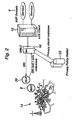
Figure 2 shows an embodiment of the invention; and -
Figure 3 shows a method embodying the present invention; and -
Figure 4 illustrates a modified version of the method ofFigure 3 . - Reference is made to
Figure 1 which is a simplified presentation of a cellular system providing location services. It should be appreciated that even though the exemplifying telecommunications network shown and described in more detail uses the terminology of the third generation (3G) UMTS (Universal Mobile Telecommunications System) public land mobile network (PLMN), the proposed solution can be used in any system providing mobile communications for users and some kind of location information service. Examples of other telecommunications systems include, without limiting to these, standards such as the GSM (Global System for Mobile communications) or various GSM based systems (such as GPRS: General Packet Radio Service), AMPS (American Mobile Phone System) or DAMPS (Digital AMPS), IMT 2000 (International Mobile Telecommunications system 2000), i-phone and so on. - More particularly,
Figure 1 shows an arrangement in which base stations 3 (only three shown for clarity) of the cellular system 1 provide radio coverage areas i.e.cells 2. Eachradio coverage area 2 is typically served by a base station. It should be appreciated that one cell may include more than one base station site. A base station apparatus or site may also provide more than one cell. The shape and size of thecells 2 depend on the implementation and may be different from the illustrated shapes. The shape and size of the cells may also vary from cell to cell. It should be appreciated that in some systems the base station may be referred to as Node B. - Two user equipment such as mobile stations (MS) 6 are also shown. It shall be appreciated that typically a number of user equipment will be in communication with each base station. Each base station is arranged to transmit signals to and receive signals from the mobile user equipment (UE) 6 via a wireless interface. Likewise, the
user equipment 6 are able to transmit signals to and receive signals from the base stations. - Each of the base stations is connected to an access network controller such as a radio network controller (RNC) 7 of a UMTS terrestrial radio access network (UTRAN) or a base station controller of a GSM type- system. The radio network controller may be connected to appropriate core network entities of the cellular system, such as a MSC (mobile switching centre) 8 and/or SGSN (serving general packet radio service support node) 11, via a suitable interface arrangement.
- The location of a mobile user equipment may vary in time as the user equipment is free to move within the coverage area of a base station and also from a coverage area to another coverage area. The modern communication systems are capable of providing information regarding the geographical location of a user equipment within the coverage area thereof. The geographical location may be defined on the basis of the position of the mobile station relative to the base station(s) of the mobile telecommunications network.
- The geographical location of the user equipment may be defined, for example, in X and Y co-ordinates or in latitudes and longitudes. A possibility is to use the relation between defined radiuses and angles, e.g. based on the spherical coordinate system or alike. It is also possible to define the location of the base stations and/or mobile stations in vertical directions. For example, Z co-ordinate may be used when providing the location information in the vertical direction. The vertical location may be needed e.g. in mountainous environments or in cities with tall buildings.
- Reference is made to
Figure 2 which shows in more detail the location elements of a communications system. The base stations and radio network controllers define a radio access network 14. Different networks have equivalent elements. - The location service (LCS) functionality of the communication system is provided by a Gateway Mobile Location Center (GMLC)
entity 10. The GMLClocation service node 10 is for gathering and storing data that is required for the provision of the location information. Thelocation service node 10 is arranged to receive via appropriate interface means information concerning the location of the mobile user equipment from the cellular system. - The cellular system may be provided with various different means for processing information gathered from the cells and/or some other parameters and/or for computing by processor means appropriate calculations for determining and outputting the geographical location of the target user equipment. The location information may be obtained by using one or more of the appropriate location techniques. At least a part of the location information may be provided based on information provided by system that is separate from the communication system, such as by means of the Global Positioning System (GPS) or similar. Since there are various possibilities how to implement the location services in the cellular system and since the invention is not dependent on the used location determination technology, these are not be described in any greater detail herein.
- In order to be able to separate the user equipment from each other, the
location service entity 10 is capable of processing at least one form of identifiers. The identity information may be provided e.g. by means of a mobile subscriber ISDN number (MSISDN), an international mobile subscriber identifier (IMSI) or a temporary identifier (such as a temporary international mobile subscriber identifier: TIMSI) of the mobile user equipment, passwords, or any other form of identifier that can be reliably used for identifying a user equipment and/or a user. - The
GMLC server 10 is arranged to receive location information from the radio access network 14 via appropriate controller entities such as theMSC 8 and/or SGSN (not shown) connected by the appropriate interface means to the access network. - The
GMLC 10 may provide the location information in a predefined manner to a location services (LCS)client 12. ALCS Client 12 can be any entity that makes use of the location information. TheLCS client 12 can be seen as a logical functional entity that may make a request to thelocation service entity 10 for the location information of one or more target user equipment. TheLCS client 12 may be an entity that is external to the communication network, theclient entity 12 being provided in anASP domain 4. Examples of an ASP are Yahoo and Aktivist. The LCS client may also be an internal client (ILCS) i.e. reside in any entity or node (including the mobile station) within the communication system 1. - The LCS clients are entitled to receive at least some degree of information concerning the location (or location history) of a target user equipment. The particular requirements and characteristics of a LCS Client are typically known to the location service server of the communication system by its LCS client subscription profile. This is discussed in more detail hereinafter.
- The
GMLC 10 may consist of components and bearers needed to serve theLCS client 12. TheGMLC 10 may provide a platform which will enable the support of location based services in parallel with other telecommunication services such as speech, data, messaging, other teleservices, user applications and supplementary services. TheGMLC 10 may thus provide theclient 12, on request or periodically, the current or most recent geographic location (if available) of the target user equipment or, if the location fails, an error indication and optionally the reason for the failure. A more detailed description of a LCS entity that may be employed in the embodiments of the invention can be found e.g. from the above referenced 3GPP technical specification No. 3GPP TS23.271. - A
home location register 20 is provided. The home location register may store the same privacy parameters which are currently proposed. Alternatively or additionally, the home location register will store the address of an entity which stores privacy parameters for the user. In preferred embodiments of the present invention, the home location register does not include any privacy parameters. Rather, they are stored in the separate privacy entity referenced 22 inFigure 2 . In particular, thehome location register 8 is arranged to include a privacy reference address for each subscriber allocated for location services. This address is, in the described embodiment, for example the GT (global title) or the IP (internet protocol) address or any other suitable address of the privacypolicy holder entity 22. Thisentity 22 may take the form of a server. - The
privacy policy entity 22 can be provided internally or externally of the operator's network. Access to theprivacy policy entity 22 can be via an IP or SS7 based connection or by any other suitable type of connection. - The
privacy policy entity 22 can store a detailed privacy policy for a user. For example, the privacy policy entity can store information relating to firstly whether or not the location of the user can be provided to an LCS client. If so, the times when the location of the user can be provided to the client can also be defined. Theprivacy policy entity 22 can also store information defining those clients- to which location information can be sent. The user can also define locations for example the user's home and/or office environment, in which the location of the user cannot be provided to a location client. The information stored can be in any suitable format. For example, the times when the location of the user can be sent to a client can be stored and/or the times when information cannot be sent to the client can be stored. Likewise, information can be stored defining the area in which when the user is located, information cannot be sent to the user or vice versa. Theprivacy policy entity 22 may also store information defining how accurate the location information may be for an LCS client, for example some LCS clients may only be able to obtain ID/Service area based location information. The privacy policy entity stores information as to who is the owner of the policy (profile) for each subscriber and who is authorised to manage the settings. Communities can be introduced for a subscriber or global communities can be defined which subscribers can join. These communities can have certain privacy rules separately set by the community owner. - As a separate entity is provided for storing the privacy profile for a user, the profile can be as detailed as required. For example, the privacy holder entity may store information which indicates that the location of the user can only be provided with the explicit consent of a user. In this case the verification may be required from the user before accepting the original location request from the client/ASP and completing the privacy check. If a subscriber has set that notification is needed in the privacy rules then the privacy policy entity should request notification additionally while making the privacy check. The privacy profile entity can be in separate network element. In some embodiments the functionality of the privacy policy entity can be added to another network element e.g. GMLC.
- Reference is made to
Figure 3 which illustrates the method embodying the present invention. In step S1, a user sends a service request message to theclient 12. Theclient 12 sends a location request, in step S2, to the GMLC. The GMLC in step S3 authenticates the LCS client. If that authentication is successful, an SRI (send routing information) is sent in step S4 to the user'shome location register 20. The SRI message requests the details of the MSC/SGSN in which a subscriber is currently located. Thehome location register 20 in step S5 acknowledges the request and provides the address or identification information for theprivacy policy entity 22. The home location register also provides the current MSC/SGSN address. This acknowledgement and identification information is sent to theGMLC 10. The GMLC, in step S6 sends a request to the entity to check whether the location request received from the client can be actioned. In this request all the available information is passed which can for example be the Client ID, requestor, MSID, QoS, request type (i.e. immediate, periodic) etc. Theprivacy policy entity 22 will take into account the parameters defined by the user and see whether or not the location request from theparticular location client 12 is allowable in view of that profile. The privacy policy entity sends, in step S7, a reply to theGMLC 10 indicating whether or not location information on the user can be provided. In that reply there may also be information as to whether notification or privacy verification is needed to send to MS/UE. It should be appreciated that at this point, the location of the user is not identified and as such, no check is made with respect to any location part of the defined profile. This is because the level of location information available in this point is only the MSC identity and/or the last known location of the subscriber. If this is the accepted level of accuracy defined then the location dependent privacy check can be performed also in this stage. Otherwise the location check is not made in this stage. - In step S8, if it is determined that the
privacy policy entity 22 has not provided a negative reply, a PSL (provider subscriber location) message is sent to the MSC/SGSN 8. In this message it could be indicated that privacy check is already done by GMLC or the privacy override indicator (POI) that is already defined in current standards is used. Here the new privacy check performed indication is preferred. This would result that MSC/SGSN may not perform the privacy check. The PSL message could also include the information whether notification or verification is needed or not. If the PSL message does not include this information, the GMLC should use the client identity that specifies if this to be done. In current standards the system does not do verification or notification if the POI is used. So in the case that the privacy check indication is not received or POI not set, in step S9, theMSC 8 carries out a basic privacy check as defined in 3GPP TS 23.271 chapter 9.5. - In step S10, a response is sent by the MSC to the GMLC which provides the MSISDN of the user and its location.
- If necessary, the further check is made to see whether or not the location of the user rules out that information being provided to the client. To do this, the location information may be sent by the GMLC to the
privacy policy entity 22 in step S11. That will check the location of the user against the defined areas. Theprivacy policy entity 22 will send a reply to the GMLC which will indicate whether or not it is acceptable for the client to be provided with the location of the user. This takes place in step S12. If it is determined that the client can be provided with the user's location, the next step is step S13 where the GMLC provides theclient 12 with the location of the user. Theclient 12 then, in step S14, provides the user with the required information. - In some arrangements, some GMLCs or the like may not support the use of the privacy policy entity. Accordingly, for these GMLCs steps S6 and S7 may be omitted and replaced by an additional step which would send the privacy check request after step S8. This additional step may be part of step S9. In the case that the GMLC or the like does not support the use of the privacy policy entity, a different entity such as the MSC could send the privacy check request on behalf of the GMLC.
- If the user visits another network, then the address or the like of the privacy policy entity should be copied to the VLR of the visited network.
- In one embodiment of the present invention, the HLR can in response to a service request provide the GMLC with the address or the like of the privacy policy entity. The GMLC can then communicate with the privacy policy entity. In alternative embodiments of the present invention, the HLR may be arranged to communicate with the
privacy policy entity 22. For example, the SRI request would be received by thehome location register 20. In response to that request thehome location register 20 would carry out the required privacy check by communicating with theprivacy policy entity 22 directly. - It should be appreciated that depending on the user's privacy profile, more information may be required by the
privacy policy entity 22 for indicating whether a location request is or is not allowable. For example, the identity of the client may be required, the location of the user may be required etc. In those circumstances, the privacy policy entity would need to receive further information. In those circumstances, the privacy policy entity would send a reply indicating that the further information would be required before a decision could be given. - In preferred embodiments of the present invention, the GMLC has been described as sending the privacy check requests. However, in alternative embodiments of the present invention, other entities may provide that request, for example, the SGSN or MSC or indeed any other suitable entity.
- Reference is made to
Figure 4 which illustrates a modification to the method shown inFigure 3 . The method illustrated in relation toFigure 4 is arranged so as to take into account whether the location request is in response to a location request from the user. In particular, the user may initiate a call or session and request a location based service from an LCS client. If the user has requested a location related service, there is no privacy problem in supplying the location information from the user to the LCS client. However, if the user is to, for example, to be provided with an advertisement dependent on the location of the user, this would have to take into account the profile stored in the privacy profile register. - In step T1, the LCS client sends a request to the GMLC. This corresponds to step S2 in
Figure 3 . In step T2, an SRI (send routing information) message is sent to the user'shome location register 22. This is the same as step S4 inFigure 3 . It should be appreciated that the GMLC may also carry out authentication procedure as in the method illustrated inFigure 3 . Step T3 is the same as step S5 ofFigure 3 . In step T4, the GMLC sends a request to the entity to check whether the location request received from the client can be actioned. Again, is the same or similar to step S6.
In step T5, theprivacy profile register 22 provides two responses. One response is call/session related. That is, the response indicating whether or not location information on the user can be provided will take into account the fact that the user has requested the particular location service. However, there may be, for example, bars on the user' s subscription which prevent the user from obtaining a particular location service. The second result assumes that the user has not initiated a call/session. It may well be that the call/session related response and the call/session unrelated response may be different or the same. - In step T6, the
GMLC 10 sends the provide subscriber location message to the MSC or SGSN, depending on the network. This message can contain two results, one call/session related and second call/session unrelated. Depending on whether or not the user has initiated the call/session, one of the two responses from theprivacy profile holder 22 will be used. The remaining steps ofFigure 4 would be the same as steps S10 to S14 ofFigure 3 , taking into account the appropriate response from theprivacy profile register 22. - In one modification to the embodiment of the present invention, the GMLC may have already received information either from the MSC/SGSN directly or, for example from the LCS client indicating whether or not there is a call/session in place. If so, the GMLC request in step T4 would specify whether or not there was a call/session in place. The privacy profile register would then need only to provide a single response.
- In one modification to the embodiment of the present invention, the GMLC may receive information in the provide subscriber location response message either from the MSC/SGSN indicating whether or not there is a call/session, in place. The GMLC can forward this information and the location information to the privacy profile register before sending the LCS response to the LCS client as in step S13. Based on call/session information and location information the privacy profile register can reject or approve the location request.
- In yet another embodiment of the present invention, the response from the privacy profile register could instead be sent directly to the MSC/SGSN and not to the GMLC entity.
- One further modification to the present invention will now be described. A, concept called anonymous target subscriber has been proposed in the context of the location request procedure. In this concept the target subscriber can hide his true identity from LCS client (application). In this case the LCS service request is send from the LCS client to the LCS server (GMLC) containing only the pseudonym of the target subscriber. In one preferred modification to the present invention, it is possible for the target subscriber to allow only location requests where the true identity of the target subscriber is hidden from the LCS client. The target subscriber can be kept anonymous from the LCS client when the LSC service request only contains the pseudonym of the target subscriber.
- Embodiments of the present invention may be such that the subscriber can be sure that only location requests where the true identity of the subscriber is hidden shall be allowed. In an embodiment of the present invention, the target subscriber is able to use this anonymity as a part of..his privacy profile, as discussed previously and to be used in the privacy check.
- This embodiment enhances the subscriber's privacy.
- In the 3GPP Rel-6 the privacy check for the location request is made in the Home PLMN either in the Home GMLC or in the privacy policy holder. This would mean that when this anonymous target subscriber concept is used, the H-GMLC or privacy policy holder should get the corresponding information when the anonymous LCS service request is send from the LCS client, This information can be used in the privacy check. Also the subscribers LCS privacy profile kept in the H-GMLC/PPR shall contain this new information that only anonymous location requests are allowed by that user and optionally the circumstances in which the anonymous location request are required and when they are not required.
- Reference is made to the two third generation specifications LSC3GPP TS 23.071 and LCS 3GPP TS 23.271 which currently define location requests.
- Embodiments of the present invention have been described in the context of privacy relating to location services. However, it should be appreciated that alternative embodiments of the present invention can be used with additional or alternative services such as presence services and other services which contain information about the subscriber, e.g. dating services. It should also be appreciated that general and specific information regarding the user, the subscriber, the client, ASP or service may be stored in the profile data base. Thus the information stored in the entity may define a user profile, a subscriber profile, a client profile, an ASP profile or a service profile, these profiles may or may not include privacy information. Where the information relates to the client, the ASP or the service, there may be no information or there may be information relating to a subscriber or a user.
- It should be appreciated that when the
user 3 roams to a different network, the so-called "visited network", the information associated with that user is copied from thehome location register 20 to the visitor location register of the visited network. The check as to whether or not the user can receive the information is made in a MSC of the visited network using the information temporarily stored in the VLR. The visited network may access theprivacy entity 22. - Whilst the invention has been particularly described herein with reference to MSCs and VLRs, the invention is not limited to such and applies equally, for example to GPRS arrangements and consequently SGSNs.
- It should be appreciated that whilst embodiments of the present invention have been described in relation to user equipment such as mobile stations, embodiments of the present invention are applicable to any other suitable type of user equipment.
- The entity which stores the address of the privacy entity is described in preferred embodiments of the invention as being the HLR but in alternative embodiments of the invention can be provided in user equipment, mobile services switching centre or a mobile station. The entity making the location request or the like is preferably the GMLC, SGSN or MSC but may in alternative embodiments be the HLR, mobile station or user equipment. The privacy entity may be a server, user equipment or mobile station.
- The embodiment of the present invention has been described in the context of a third generation communication system. This invention is also applicable to any other communication system.
- It is also noted herein that while the above describes exemplifying embodiments of the invention, there are several variations and modifications which may be made to the disclosed solution without departing from the scope of the present invention as defined in the appended claims.
Claims (28)
- A telecommunications system comprising:at least one user equipment (6);characterized by:a first entity (22) arranged to store information defining a privacy profile for said at least one user equipment (6);a second entity (20) arranged to store an association between at least one user equipment (6) and said first entity (22) ;wherein said second entity (20) does not store the information defining the privacy profile stored in said first entity (22);
wherein said system is arranged so that in response to a request for information relating to said user equipment, said association stored in said second entity (20) is used to identify said first entity (22);
so that said first entity (22) is arranged to make a check with respect to the privacy profile as to whether or not the requested information can be provided. - A system as claimed in claim 1, wherein a third entity (10) is provided, wherein said third entity (10) is arranged in use to receive said request for information.
- A system as claimed in claim 2, wherein said third entity comprises one of a gateway mobile location centre, a serving general packet radio service support node, home location register, user equipment, mobile station or a mobile switching centre.
- A system as claimed in claim 2 or 3, wherein said third entity (10) is arranged to obtain from the second entity (20) information identifying the first entity (22).
- A system as claimed in any of preceding claims 2 to 4, wherein said third entity (10) is arranged to communicate with said first entity (22) so that it can be determined if the requested information can be provided.
- A system as claimed in any preceding claim, wherein said second entity (20) is arranged to communicate with said first entity (22) so that it can be determined if the requested information can be provided.
- A system as claimed in any preceding claim, wherein said privacy profile comprises at least one of the following types of information:information defining time when the information on the user can be provided;information defining time when the information on the user can not be provided;information defining locations of the user when the information on the user can be provided;information defining locations of the user when the information on the user can not be provided;information defining that the identity of said user is to be hidden;information defining when and/or in what circumstances that the identity of the user is to be hidden;information defining entities to which information can be provided; andinformation defining entities to which information can not be provided.
- A system as claimed in any preceding claim, wherein said request for information comprises a location request.
- A system as claimed in any preceding claim, wherein said request for information is received from a further entity (4) external to said system.
- A system as claimed in any of claims 1 to 8, wherein said request for information is received from a further entity (12) in said system.
- A system as claimed in claim 9 or 10, wherein said further entity (4;12) comprises a service provider.
- A system as claimed in any preceding claim, wherein said second entity- (20) is a home location register, user equipment or mobile station or a mobile services switching centre.
- A system as claimed in any preceding claim, wherein said first entity (22) comprises a server, a mobile station or user equipment.
- A system as claimed in any preceding claim, wherein said at least one user equipment (6) is a mobile station.
- A system as claimed in any preceding claim, wherein if the first entity (22) requires further information to carry out said check, a further check is carried out by said first entity (22) when said further information is available.
- A system as claimed in any preceding claim, wherein said first entity (22) is arranged to provide first information and second information, said first information being usable if there is a call /session and second information being usable if there is no call/session
- A system as claimed in claim 16, wherein said first information is usable if there is a call/session related to a location request and said second information is usable if there is no call/session related to a location request.
- A system as claimed in claim 16 or 17 when appended to claim 2, wherein said first information and second information are sent to said third entity (10).
- A system as claimed in any one of claims 1 to 15, wherein said first entity (22) is arranged to receive information indicating if there is a call/session and to provide information in dependence on whether or not there is a call/session.
- A system as claimed in claim 19, wherein said information indicates if there is a call/session related to a location request.
- A system as claimed in claim 19 or 20, wherein said first entity (22) is arranged to receive information indicating if there is a call/session from a mobile services switching centre, a signalling GPRS support node or a gateway mobile location centre.
- A system as claimed in any of claims 19 to 21, wherein said first entity (22) is arranged to receive location information and the information relating to said call/session after a positioning procedure has been carried out.
- A system as claimed in claim 22 wherein based on the location information and/or the information relating to the call/session the first entity (22) is arranged to reject or approve the location request.
- A system as claimed in any preceding claim, wherein the requested information is provided without providing the identity of the user.
- A system as claimed in any preceding claim, wherein the requested information is provided with a pseudonym of said user.
- A method for controlling the privacy of a user in a telecommunications system comprising the steps of:receiving a request for information relating to said user;obtaining information from a second entity identifying a first entity, said first entity storing information defining a privacy profile for said user, said second entity not including the information defining the privacy profile stored in said first entity; andcarrying out in said first entity a check with respect to the privacy profile as to whether or not the requested information can be provided.
- A home location register (20) for use in a telecommunication system, said home location register (20) being arranged to store information for a plurality of user equipment,
characterised by: identifying for each user equipment an entity (22), the or each entity being arranged to store a privacy profile for the respective plurality of user equipment;
wherein said home location register (20) does not store information defining the privacy profile stored in said entity (22);
wherein the home location register is arranged so that in response to a request for information relating to said user equipment, said association stored in said home location register (20) is used to identify said entity (22) so that said entity (22) is arranged to make a check with respect to the privacy profile as to whether or not the requested information can be provided. - A home location register as claimed in claim 27, wherein said home location register is arranged to store for said plurality of users an address of the entity storing the privacy profile for the respective user.
Applications Claiming Priority (5)
| Application Number | Priority Date | Filing Date | Title |
|---|---|---|---|
| WOPCT/IB01/02754 | 2001-11-21 | ||
| PCT/IB2001/002754 WO2003047297A1 (en) | 2001-11-21 | 2001-11-21 | A telecommunications system and method for controlling privacy |
| WOPCT/IB02/01264 | 2002-02-13 | ||
| PCT/IB2002/001264 WO2003045078A1 (en) | 2001-11-21 | 2002-02-13 | A telecommunications system and method for controlling privacy |
| PCT/IB2002/004400 WO2003045099A1 (en) | 2001-11-21 | 2002-10-09 | A telecommunications system and method for controlling privacy |
Publications (2)
| Publication Number | Publication Date |
|---|---|
| EP1446978A1 EP1446978A1 (en) | 2004-08-18 |
| EP1446978B1 true EP1446978B1 (en) | 2008-07-30 |
Family
ID=11004247
Family Applications (1)
| Application Number | Title | Priority Date | Filing Date |
|---|---|---|---|
| EP02803474A Expired - Lifetime EP1446978B1 (en) | 2001-11-21 | 2002-10-09 | A telecommunications system and method for controlling privacy |
Country Status (12)
| Country | Link |
|---|---|
| US (1) | US7242946B2 (en) |
| EP (1) | EP1446978B1 (en) |
| JP (1) | JP4105094B2 (en) |
| KR (1) | KR100704979B1 (en) |
| CN (1) | CN1602645B (en) |
| AT (1) | ATE403355T1 (en) |
| AU (3) | AU2002219421A1 (en) |
| BR (1) | BRPI0214370B1 (en) |
| CA (1) | CA2467516C (en) |
| DE (1) | DE60227977D1 (en) |
| PT (1) | PT1446978E (en) |
| WO (3) | WO2003047297A1 (en) |
Families Citing this family (50)
| Publication number | Priority date | Publication date | Assignee | Title |
|---|---|---|---|---|
| US8755822B2 (en) | 2003-01-13 | 2014-06-17 | Nokia Corporation | Method and system for locating a mobile terminal |
| US7992195B2 (en) * | 2003-03-26 | 2011-08-02 | International Business Machines Corporation | Efficient browser-based identity management providing personal control and anonymity |
| EP1511235A1 (en) * | 2003-08-28 | 2005-03-02 | Alcatel | Distributed pairing between different terminals |
| CN1301034C (en) | 2004-02-11 | 2007-02-14 | 华为技术有限公司 | Method for handling position information request initiated by user facility |
| US7827603B1 (en) * | 2004-02-13 | 2010-11-02 | Citicorp Development Center, Inc. | System and method for secure message reply |
| FR2867006B1 (en) * | 2004-02-27 | 2006-06-23 | Cit Alcatel | METHOD FOR CONTROLLING RIGHTS OF ACCESS IN A MOBILE RADIOCOMMUNICATIONS SYSTEM |
| KR100690867B1 (en) * | 2004-08-06 | 2007-03-09 | 엘지전자 주식회사 | User's privacy management device and method in mobile communication system |
| US9723087B2 (en) | 2004-08-03 | 2017-08-01 | Lg Electronics Inc. | User privacy management apparatus and method in mobile communications system |
| US8086536B2 (en) | 2004-09-16 | 2011-12-27 | Microsoft Corporation | Location based licensing |
| GB0424052D0 (en) * | 2004-10-29 | 2004-12-01 | Nortel Networks Ltd | Improvements in or relating to internet protocol (IP) location, privacy and presence |
| KR100620055B1 (en) * | 2004-12-06 | 2006-09-08 | 엘지전자 주식회사 | How to cancel your location information request |
| US8027658B2 (en) * | 2004-12-10 | 2011-09-27 | At&T Intellectual Property I, L.P. | Enhanced emergency service provider |
| KR100834817B1 (en) * | 2005-04-21 | 2008-06-05 | 삼성전자주식회사 | Method for providing location services in an IMS-based network |
| KR100767419B1 (en) * | 2005-04-30 | 2007-10-18 | 엘지전자 주식회사 | A terminal for providing a location information service based on a user location and a method of providing the same |
| MX2007010137A (en) | 2005-04-30 | 2007-09-27 | Lg Electronics Inc | Method for providing a location information service in mobile communications system. |
| US7873370B2 (en) | 2005-12-01 | 2011-01-18 | Lg Electronics Inc. | Location information system and method for performing notification based upon location |
| KR20070108301A (en) * | 2005-12-01 | 2007-11-09 | 엘지전자 주식회사 | Location information system and method for location based notification |
| US8045976B2 (en) | 2006-04-04 | 2011-10-25 | Aegis Mobility, Inc. | Mobility call management |
| US20080086765A1 (en) * | 2006-10-05 | 2008-04-10 | Microsoft Corporation | Issuance privacy |
| WO2008109477A1 (en) * | 2007-03-02 | 2008-09-12 | Aegis Mobility, Inc. | Management of mobile device communication sessions to reduce user distraction |
| KR101454021B1 (en) * | 2007-08-07 | 2014-10-27 | 삼성전자주식회사 | MEASUREMENT DEVICE AND METHOD OF HOMELESS / PERSONNEL NETWORK CELL IN MOBILE COMMUNICATION SYSTEMS |
| US8050690B2 (en) | 2007-08-14 | 2011-11-01 | Mpanion, Inc. | Location based presence and privacy management |
| US8583079B2 (en) | 2007-08-14 | 2013-11-12 | Mpanion, Inc. | Rich presence status based on location, activity, availability and transit status of a user |
| US8489111B2 (en) | 2007-08-14 | 2013-07-16 | Mpanion, Inc. | Real-time location and presence using a push-location client and server |
| US12439340B2 (en) | 2007-08-14 | 2025-10-07 | Mpanion, Inc. | Real-time location and presence using a push-location client and server |
| US8224353B2 (en) * | 2007-09-20 | 2012-07-17 | Aegis Mobility, Inc. | Disseminating targeted location-based content to mobile device users |
| WO2009155681A1 (en) * | 2008-06-26 | 2009-12-30 | Redknee Inc. | System, method and apparatus for security management of an electronic device |
| US9641537B2 (en) | 2008-08-14 | 2017-05-02 | Invention Science Fund I, Llc | Conditionally releasing a communiqué determined to be affiliated with a particular source entity in response to detecting occurrence of one or more environmental aspects |
| US9659188B2 (en) * | 2008-08-14 | 2017-05-23 | Invention Science Fund I, Llc | Obfuscating identity of a source entity affiliated with a communiqué directed to a receiving user and in accordance with conditional directive provided by the receiving use |
| US8942686B2 (en) | 2008-09-05 | 2015-01-27 | Aegis Mobility, Inc. | Providing and managing bypass of enhanced services |
| US8620352B2 (en) | 2009-04-08 | 2013-12-31 | Nokia Solutions And Networks Oy | Privacy of location information |
| MX2011010642A (en) * | 2009-04-09 | 2012-03-26 | Aegis Mobility Inc | Context based data mediation. |
| US9615213B2 (en) | 2009-07-21 | 2017-04-04 | Katasi Llc | Method and system for controlling and modifying driving behaviors |
| US9386447B2 (en) | 2009-07-21 | 2016-07-05 | Scott Ferrill Tibbitts | Method and system for controlling a mobile communication device |
| US8761821B2 (en) | 2009-07-21 | 2014-06-24 | Katasi Llc | Method and system for controlling a mobile communication device in a moving vehicle |
| US9509791B2 (en) * | 2010-01-07 | 2016-11-29 | Oracle International Corporation | Policy-based exposure of presence |
| US20110167479A1 (en) * | 2010-01-07 | 2011-07-07 | Oracle International Corporation | Enforcement of policies on context-based authorization |
| US20110166943A1 (en) * | 2010-01-07 | 2011-07-07 | Oracle International Corporation | Policy-based advertisement engine |
| US9467858B2 (en) | 2010-02-05 | 2016-10-11 | Oracle International Corporation | On device policy enforcement to secure open platform via network and open network |
| US20110196728A1 (en) * | 2010-02-05 | 2011-08-11 | Oracle International Corporation | Service level communication advertisement business |
| US9495521B2 (en) * | 2010-02-05 | 2016-11-15 | Oracle International Corporation | System self integrity and health validation for policy enforcement |
| EP2418818B1 (en) | 2010-08-12 | 2018-02-14 | Deutsche Telekom AG | Network entity for managing communications towards a user entity over a communication network |
| EP2418815B1 (en) | 2010-08-12 | 2019-01-02 | Deutsche Telekom AG | Managing Session Initiation Protocol communications towards a user entity in a communication network |
| EP2418816B1 (en) | 2010-08-12 | 2018-12-12 | Deutsche Telekom AG | Registering a user entity with a communication network via another communication network |
| EP2418817B1 (en) * | 2010-08-12 | 2018-12-12 | Deutsche Telekom AG | Application server for managing communications towards a set of user entities |
| US20120222083A1 (en) | 2011-02-28 | 2012-08-30 | Nokia Corporation | Method and apparatus for enforcing data privacy |
| US9454664B2 (en) | 2011-11-23 | 2016-09-27 | Nokia Solutions And Networks Oy | Privacy of location information |
| US8893287B2 (en) * | 2012-03-12 | 2014-11-18 | Microsoft Corporation | Monitoring and managing user privacy levels |
| US9946887B2 (en) | 2012-06-04 | 2018-04-17 | Nokia Technologies Oy | Method and apparatus for determining privacy policy based on data and associated values |
| US9699301B1 (en) | 2015-05-31 | 2017-07-04 | Emma Michaela Siritzky | Methods, devices and systems supporting driving and studying without distraction |
Family Cites Families (20)
| Publication number | Priority date | Publication date | Assignee | Title |
|---|---|---|---|---|
| US5493692A (en) * | 1993-12-03 | 1996-02-20 | Xerox Corporation | Selective delivery of electronic messages in a multiple computer system based on context and environment of a user |
| US5790665A (en) * | 1996-01-17 | 1998-08-04 | Micali; Silvio | Anonymous information retrieval system (ARS) |
| US6138003A (en) | 1997-11-26 | 2000-10-24 | Ericsson Inc. | System and method for authorization of location services |
| US6195557B1 (en) * | 1998-04-20 | 2001-02-27 | Ericsson Inc. | System and method for use of override keys for location services |
| US6519249B1 (en) * | 1998-12-23 | 2003-02-11 | Nortel Networks Ltd | Scalable gatekeepers in an internet telephony system and a method of operation |
| US6311069B1 (en) * | 1999-03-18 | 2001-10-30 | Ericsson Inc. | System and method for alerting a mobile subscriber being positioned |
| US6463289B1 (en) * | 1999-08-09 | 2002-10-08 | Ericsson Inc. | System and method for providing restricting positioning of a target mobile station based on the calculated location estimate |
| US6269244B1 (en) * | 1999-09-22 | 2001-07-31 | Ericsson Inc. | Enhanced cellular network architecture |
| FI107863B (en) * | 1999-10-11 | 2001-10-15 | Sonera Oyj | Procedures and systems for protecting a user identification |
| US6429808B1 (en) * | 1999-11-12 | 2002-08-06 | Motorola, Inc. | Method and apparatus for assisted GPS integrity maintenance |
| US6505048B1 (en) * | 1999-12-30 | 2003-01-07 | Samsung Electronics Co., Ltd. | Location privacy feature for wireless mobile stations and method of operation |
| US20020098832A1 (en) * | 2001-01-22 | 2002-07-25 | Wolfgang Fleischer | Intelligent personalized customer service |
| US7054283B2 (en) * | 2001-02-13 | 2006-05-30 | Ericsson Inc. | Wireless network architechture and protocol for location services in GPRS packet data network |
| US20020160810A1 (en) * | 2001-03-14 | 2002-10-31 | Telefonaktiebolaget Lm Ericsson (Publ) | Intelligent network service control point and method of implementing user services utilizing call processing language scripts |
| US7242948B2 (en) * | 2001-03-23 | 2007-07-10 | Lucent Technologies Inc. | Providing location based directory numbers for personalized services |
| FI112426B (en) * | 2001-03-23 | 2003-11-28 | Nixu Oy | Content server mediation server |
| US7492733B2 (en) * | 2001-04-24 | 2009-02-17 | Alcatel-Lucent Usa Inc. | Method of transmitting packets in a mobile 3G network system |
| US20020174363A1 (en) * | 2001-05-17 | 2002-11-21 | International Business Machines Corporation | Method and apparatus for providing an anonymous identity for a user |
| US20030134648A1 (en) * | 2001-10-04 | 2003-07-17 | Reed Mark Jefferson | Machine for providing a dynamic data base of geographic location information for a plurality of wireless devices and process for making same |
| US20030074456A1 (en) * | 2001-10-12 | 2003-04-17 | Peter Yeung | System and a method relating to access control |
-
2001
- 2001-11-21 WO PCT/IB2001/002754 patent/WO2003047297A1/en not_active Ceased
- 2001-11-27 AU AU2002219421A patent/AU2002219421A1/en not_active Abandoned
-
2002
- 2002-02-13 WO PCT/IB2002/001264 patent/WO2003045078A1/en not_active Ceased
- 2002-02-13 AU AU2002251425A patent/AU2002251425A1/en not_active Abandoned
- 2002-10-09 PT PT02803474T patent/PT1446978E/en unknown
- 2002-10-09 KR KR1020047007833A patent/KR100704979B1/en not_active Expired - Lifetime
- 2002-10-09 DE DE60227977T patent/DE60227977D1/en not_active Expired - Fee Related
- 2002-10-09 US US10/495,793 patent/US7242946B2/en not_active Expired - Lifetime
- 2002-10-09 WO PCT/IB2002/004400 patent/WO2003045099A1/en not_active Ceased
- 2002-10-09 BR BRPI0214370A patent/BRPI0214370B1/en active IP Right Grant
- 2002-10-09 CA CA2467516A patent/CA2467516C/en not_active Expired - Lifetime
- 2002-10-09 AT AT02803474T patent/ATE403355T1/en not_active IP Right Cessation
- 2002-10-09 CN CN028246195A patent/CN1602645B/en not_active Expired - Lifetime
- 2002-10-09 EP EP02803474A patent/EP1446978B1/en not_active Expired - Lifetime
- 2002-10-09 AU AU2002366183A patent/AU2002366183A1/en not_active Abandoned
- 2002-10-09 JP JP2003546608A patent/JP4105094B2/en not_active Expired - Lifetime
Also Published As
| Publication number | Publication date |
|---|---|
| WO2003045099A1 (en) | 2003-05-30 |
| CA2467516C (en) | 2011-01-25 |
| AU2002366183A1 (en) | 2003-06-10 |
| AU2002219421A1 (en) | 2003-06-10 |
| CN1602645B (en) | 2012-10-17 |
| BR0214370A (en) | 2004-10-26 |
| CN1602645A (en) | 2005-03-30 |
| US7242946B2 (en) | 2007-07-10 |
| BRPI0214370B1 (en) | 2016-06-21 |
| AU2002251425A1 (en) | 2003-06-10 |
| PT1446978E (en) | 2008-11-11 |
| CA2467516A1 (en) | 2003-05-30 |
| JP2005510912A (en) | 2005-04-21 |
| WO2003047297A1 (en) | 2003-06-05 |
| KR20050034631A (en) | 2005-04-14 |
| KR100704979B1 (en) | 2007-04-10 |
| JP4105094B2 (en) | 2008-06-18 |
| WO2003045078A1 (en) | 2003-05-30 |
| ATE403355T1 (en) | 2008-08-15 |
| EP1446978A1 (en) | 2004-08-18 |
| DE60227977D1 (en) | 2008-09-11 |
| US20050014485A1 (en) | 2005-01-20 |
Similar Documents
| Publication | Publication Date | Title |
|---|---|---|
| CA2467516C (en) | A telecommunications system and method for controlling privacy | |
| US8019361B2 (en) | Provision of location information | |
| JP4777314B2 (en) | How to provide location information | |
| EP1518432B1 (en) | Communicating information associated with provisioning of a service, over a user plane connection | |
| CN1922913B (en) | Method, system and device for providing location information | |
| EP1588523B1 (en) | Provision of location information in a communication system | |
| CN1709005B (en) | Method and system for positioning in a mobile communication network | |
| GB2381419A (en) | Authorising location information request in a communications system | |
| CA2465223C (en) | Method and equipment for controlling information provided to a user in a network | |
| CN101009930B (en) | Method and device for controlling the information provided to the user in the network | |
| HK1126608A (en) | Method for the provision of location information | |
| HK1104411A (en) | Method of invoking privacy on telecommunications network and related network units and telecommunications systems | |
| HK1108597B (en) | Method and equipment for controlling information provided to a user in a network |
Legal Events
| Date | Code | Title | Description |
|---|---|---|---|
| PUAI | Public reference made under article 153(3) epc to a published international application that has entered the european phase |
Free format text: ORIGINAL CODE: 0009012 |
|
| 17P | Request for examination filed |
Effective date: 20040514 |
|
| AK | Designated contracting states |
Kind code of ref document: A1 Designated state(s): AT BE BG CH CY CZ DE DK EE ES FI FR GB GR IE IT LI LU MC NL PT SE SK TR |
|
| AX | Request for extension of the european patent |
Extension state: AL LT LV MK RO SI |
|
| RIN1 | Information on inventor provided before grant (corrected) |
Inventor name: MAANOJA, MARKUS Inventor name: KOKKONEN, PETRI Inventor name: IGNATIUS, JAN Inventor name: VARONEN, TOMI |
|
| 17Q | First examination report despatched |
Effective date: 20060818 |
|
| GRAP | Despatch of communication of intention to grant a patent |
Free format text: ORIGINAL CODE: EPIDOSNIGR1 |
|
| RAP1 | Party data changed (applicant data changed or rights of an application transferred) |
Owner name: NOKIA SIEMENS NETWORKS OY |
|
| GRAS | Grant fee paid |
Free format text: ORIGINAL CODE: EPIDOSNIGR3 |
|
| GRAA | (expected) grant |
Free format text: ORIGINAL CODE: 0009210 |
|
| AK | Designated contracting states |
Kind code of ref document: B1 Designated state(s): AT BE BG CH CY CZ DE DK EE ES FI FR GB GR IE IT LI LU MC NL PT SE SK TR |
|
| REG | Reference to a national code |
Ref country code: GB Ref legal event code: FG4D |
|
| REG | Reference to a national code |
Ref country code: CH Ref legal event code: EP |
|
| REF | Corresponds to: |
Ref document number: 60227977 Country of ref document: DE Date of ref document: 20080911 Kind code of ref document: P |
|
| REG | Reference to a national code |
Ref country code: IE Ref legal event code: FG4D |
|
| REG | Reference to a national code |
Ref country code: PT Ref legal event code: SC4A Free format text: AVAILABILITY OF NATIONAL TRANSLATION Effective date: 20081030 |
|
| PG25 | Lapsed in a contracting state [announced via postgrant information from national office to epo] |
Ref country code: ES Free format text: LAPSE BECAUSE OF FAILURE TO SUBMIT A TRANSLATION OF THE DESCRIPTION OR TO PAY THE FEE WITHIN THE PRESCRIBED TIME-LIMIT Effective date: 20081110 |
|
| PG25 | Lapsed in a contracting state [announced via postgrant information from national office to epo] |
Ref country code: BG Free format text: LAPSE BECAUSE OF FAILURE TO SUBMIT A TRANSLATION OF THE DESCRIPTION OR TO PAY THE FEE WITHIN THE PRESCRIBED TIME-LIMIT Effective date: 20081030 Ref country code: AT Free format text: LAPSE BECAUSE OF FAILURE TO SUBMIT A TRANSLATION OF THE DESCRIPTION OR TO PAY THE FEE WITHIN THE PRESCRIBED TIME-LIMIT Effective date: 20080730 Ref country code: FI Free format text: LAPSE BECAUSE OF FAILURE TO SUBMIT A TRANSLATION OF THE DESCRIPTION OR TO PAY THE FEE WITHIN THE PRESCRIBED TIME-LIMIT Effective date: 20080730 |
|
| PG25 | Lapsed in a contracting state [announced via postgrant information from national office to epo] |
Ref country code: BE Free format text: LAPSE BECAUSE OF FAILURE TO SUBMIT A TRANSLATION OF THE DESCRIPTION OR TO PAY THE FEE WITHIN THE PRESCRIBED TIME-LIMIT Effective date: 20080730 |
|
| PG25 | Lapsed in a contracting state [announced via postgrant information from national office to epo] |
Ref country code: DK Free format text: LAPSE BECAUSE OF FAILURE TO SUBMIT A TRANSLATION OF THE DESCRIPTION OR TO PAY THE FEE WITHIN THE PRESCRIBED TIME-LIMIT Effective date: 20080730 Ref country code: EE Free format text: LAPSE BECAUSE OF FAILURE TO SUBMIT A TRANSLATION OF THE DESCRIPTION OR TO PAY THE FEE WITHIN THE PRESCRIBED TIME-LIMIT Effective date: 20080730 |
|
| PG25 | Lapsed in a contracting state [announced via postgrant information from national office to epo] |
Ref country code: SK Free format text: LAPSE BECAUSE OF FAILURE TO SUBMIT A TRANSLATION OF THE DESCRIPTION OR TO PAY THE FEE WITHIN THE PRESCRIBED TIME-LIMIT Effective date: 20080730 Ref country code: MC Free format text: LAPSE BECAUSE OF NON-PAYMENT OF DUE FEES Effective date: 20081031 |
|
| REG | Reference to a national code |
Ref country code: CH Ref legal event code: PL |
|
| PLBE | No opposition filed within time limit |
Free format text: ORIGINAL CODE: 0009261 |
|
| STAA | Information on the status of an ep patent application or granted ep patent |
Free format text: STATUS: NO OPPOSITION FILED WITHIN TIME LIMIT |
|
| GBPC | Gb: european patent ceased through non-payment of renewal fee |
Effective date: 20081030 |
|
| 26N | No opposition filed |
Effective date: 20090506 |
|
| PG25 | Lapsed in a contracting state [announced via postgrant information from national office to epo] |
Ref country code: DE Free format text: LAPSE BECAUSE OF NON-PAYMENT OF DUE FEES Effective date: 20090501 Ref country code: IT Free format text: LAPSE BECAUSE OF FAILURE TO SUBMIT A TRANSLATION OF THE DESCRIPTION OR TO PAY THE FEE WITHIN THE PRESCRIBED TIME-LIMIT Effective date: 20080730 |
|
| PG25 | Lapsed in a contracting state [announced via postgrant information from national office to epo] |
Ref country code: LI Free format text: LAPSE BECAUSE OF NON-PAYMENT OF DUE FEES Effective date: 20081031 Ref country code: IE Free format text: LAPSE BECAUSE OF NON-PAYMENT OF DUE FEES Effective date: 20081009 Ref country code: CH Free format text: LAPSE BECAUSE OF NON-PAYMENT OF DUE FEES Effective date: 20081031 |
|
| PG25 | Lapsed in a contracting state [announced via postgrant information from national office to epo] |
Ref country code: GB Free format text: LAPSE BECAUSE OF NON-PAYMENT OF DUE FEES Effective date: 20081030 |
|
| PG25 | Lapsed in a contracting state [announced via postgrant information from national office to epo] |
Ref country code: SE Free format text: LAPSE BECAUSE OF FAILURE TO SUBMIT A TRANSLATION OF THE DESCRIPTION OR TO PAY THE FEE WITHIN THE PRESCRIBED TIME-LIMIT Effective date: 20081030 |
|
| PG25 | Lapsed in a contracting state [announced via postgrant information from national office to epo] |
Ref country code: CY Free format text: LAPSE BECAUSE OF FAILURE TO SUBMIT A TRANSLATION OF THE DESCRIPTION OR TO PAY THE FEE WITHIN THE PRESCRIBED TIME-LIMIT Effective date: 20080730 Ref country code: LU Free format text: LAPSE BECAUSE OF NON-PAYMENT OF DUE FEES Effective date: 20081009 |
|
| PG25 | Lapsed in a contracting state [announced via postgrant information from national office to epo] |
Ref country code: TR Free format text: LAPSE BECAUSE OF FAILURE TO SUBMIT A TRANSLATION OF THE DESCRIPTION OR TO PAY THE FEE WITHIN THE PRESCRIBED TIME-LIMIT Effective date: 20080730 |
|
| PG25 | Lapsed in a contracting state [announced via postgrant information from national office to epo] |
Ref country code: GR Free format text: LAPSE BECAUSE OF FAILURE TO SUBMIT A TRANSLATION OF THE DESCRIPTION OR TO PAY THE FEE WITHIN THE PRESCRIBED TIME-LIMIT Effective date: 20081031 |
|
| REG | Reference to a national code |
Ref country code: FR Ref legal event code: CD Owner name: NOKIA SOLUTIONS AND NETWORKS OY, FI Effective date: 20141201 |
|
| REG | Reference to a national code |
Ref country code: NL Ref legal event code: TD Effective date: 20150126 |
|
| REG | Reference to a national code |
Ref country code: FR Ref legal event code: PLFP Year of fee payment: 14 |
|
| REG | Reference to a national code |
Ref country code: FR Ref legal event code: PLFP Year of fee payment: 15 |
|
| REG | Reference to a national code |
Ref country code: FR Ref legal event code: PLFP Year of fee payment: 16 |
|
| REG | Reference to a national code |
Ref country code: FR Ref legal event code: PLFP Year of fee payment: 17 |
|
| PGFP | Annual fee paid to national office [announced via postgrant information from national office to epo] |
Ref country code: NL Payment date: 20210928 Year of fee payment: 20 Ref country code: CZ Payment date: 20210915 Year of fee payment: 20 Ref country code: FR Payment date: 20210913 Year of fee payment: 20 |
|
| PGFP | Annual fee paid to national office [announced via postgrant information from national office to epo] |
Ref country code: PT Payment date: 20211008 Year of fee payment: 20 |
|
| REG | Reference to a national code |
Ref country code: NL Ref legal event code: MK Effective date: 20221008 |
|
| PG25 | Lapsed in a contracting state [announced via postgrant information from national office to epo] |
Ref country code: CZ Free format text: LAPSE BECAUSE OF EXPIRATION OF PROTECTION Effective date: 20221009 |
|
| PG25 | Lapsed in a contracting state [announced via postgrant information from national office to epo] |
Ref country code: PT Free format text: LAPSE BECAUSE OF EXPIRATION OF PROTECTION Effective date: 20221019 |