EP1446400B1 - Piperidine derivatives, process for preparation thereof, and pharmaceutical composition for alzheimer's disease containing the same - Google Patents
Piperidine derivatives, process for preparation thereof, and pharmaceutical composition for alzheimer's disease containing the same Download PDFInfo
- Publication number
- EP1446400B1 EP1446400B1 EP02801599A EP02801599A EP1446400B1 EP 1446400 B1 EP1446400 B1 EP 1446400B1 EP 02801599 A EP02801599 A EP 02801599A EP 02801599 A EP02801599 A EP 02801599A EP 1446400 B1 EP1446400 B1 EP 1446400B1
- Authority
- EP
- European Patent Office
- Prior art keywords
- piperidino
- butyl
- benzhydryloxy
- benzyloxy
- formula
- Prior art date
- Legal status (The legal status is an assumption and is not a legal conclusion. Google has not performed a legal analysis and makes no representation as to the accuracy of the status listed.)
- Expired - Lifetime
Links
- 208000024827 Alzheimer disease Diseases 0.000 title claims abstract description 29
- 150000003053 piperidines Chemical class 0.000 title claims abstract description 26
- 239000008194 pharmaceutical composition Substances 0.000 title claims description 14
- 238000000034 method Methods 0.000 title claims description 10
- 230000008569 process Effects 0.000 title claims description 7
- 238000002360 preparation method Methods 0.000 title description 2
- 150000001875 compounds Chemical class 0.000 claims description 39
- 239000000203 mixture Substances 0.000 claims description 35
- 238000006243 chemical reaction Methods 0.000 claims description 28
- 125000000587 piperidin-1-yl group Chemical group [H]C1([H])N(*)C([H])([H])C([H])([H])C([H])([H])C1([H])[H] 0.000 claims description 12
- 238000002347 injection Methods 0.000 claims description 9
- 239000007924 injection Substances 0.000 claims description 9
- 229920002472 Starch Polymers 0.000 claims description 8
- 239000008107 starch Substances 0.000 claims description 8
- 235000019698 starch Nutrition 0.000 claims description 8
- 125000004169 (C1-C6) alkyl group Chemical group 0.000 claims description 7
- GUBGYTABKSRVRQ-XLOQQCSPSA-N Alpha-Lactose Chemical compound O[C@@H]1[C@@H](O)[C@@H](O)[C@@H](CO)O[C@H]1O[C@@H]1[C@@H](CO)O[C@H](O)[C@H](O)[C@H]1O GUBGYTABKSRVRQ-XLOQQCSPSA-N 0.000 claims description 6
- 239000003085 diluting agent Substances 0.000 claims description 5
- 239000000546 pharmaceutical excipient Substances 0.000 claims description 5
- GUBGYTABKSRVRQ-QKKXKWKRSA-N Lactose Natural products OC[C@H]1O[C@@H](O[C@H]2[C@H](O)[C@@H](O)C(O)O[C@@H]2CO)[C@H](O)[C@@H](O)[C@H]1O GUBGYTABKSRVRQ-QKKXKWKRSA-N 0.000 claims description 4
- 125000001797 benzyl group Chemical group [H]C1=C([H])C([H])=C(C([H])=C1[H])C([H])([H])* 0.000 claims description 4
- 239000001913 cellulose Substances 0.000 claims description 4
- 229920002678 cellulose Polymers 0.000 claims description 4
- 229910052736 halogen Inorganic materials 0.000 claims description 4
- 239000008101 lactose Substances 0.000 claims description 4
- 229920000036 polyvinylpyrrolidone Polymers 0.000 claims description 4
- 235000013855 polyvinylpyrrolidone Nutrition 0.000 claims description 4
- 150000003839 salts Chemical class 0.000 claims description 4
- 239000002202 Polyethylene glycol Substances 0.000 claims description 3
- 239000000654 additive Substances 0.000 claims description 3
- 239000002775 capsule Substances 0.000 claims description 3
- ZZVUWRFHKOJYTH-UHFFFAOYSA-N diphenhydramine Chemical group C=1C=CC=CC=1C(OCCN(C)C)C1=CC=CC=C1 ZZVUWRFHKOJYTH-UHFFFAOYSA-N 0.000 claims description 3
- 150000002367 halogens Chemical class 0.000 claims description 3
- 229920001223 polyethylene glycol Polymers 0.000 claims description 3
- 239000001267 polyvinylpyrrolidone Substances 0.000 claims description 3
- 239000002904 solvent Substances 0.000 claims description 3
- POYPPSSYHBKLEI-UHFFFAOYSA-N 4-(4-benzhydryloxypiperidin-1-yl)butyl 3-chlorobenzoate Chemical compound ClC1=CC=CC(C(=O)OCCCCN2CCC(CC2)OC(C=2C=CC=CC=2)C=2C=CC=CC=2)=C1 POYPPSSYHBKLEI-UHFFFAOYSA-N 0.000 claims description 2
- DYTKBQNLTOIBHE-UHFFFAOYSA-N 4-(4-benzhydryloxypiperidin-1-yl)butyl 3-fluorobenzoate Chemical compound FC1=CC=CC(C(=O)OCCCCN2CCC(CC2)OC(C=2C=CC=CC=2)C=2C=CC=CC=2)=C1 DYTKBQNLTOIBHE-UHFFFAOYSA-N 0.000 claims description 2
- MVIZKYMCKNLHOB-UHFFFAOYSA-N 4-(4-benzhydryloxypiperidin-1-yl)butyl 4-fluorobenzoate Chemical compound C1=CC(F)=CC=C1C(=O)OCCCCN1CCC(OC(C=2C=CC=CC=2)C=2C=CC=CC=2)CC1 MVIZKYMCKNLHOB-UHFFFAOYSA-N 0.000 claims description 2
- QWCNWPIATXKXKM-UHFFFAOYSA-N 4-(4-benzhydryloxypiperidin-1-yl)butyl 4-nitrobenzoate Chemical compound C1=CC([N+](=O)[O-])=CC=C1C(=O)OCCCCN1CCC(OC(C=2C=CC=CC=2)C=2C=CC=CC=2)CC1 QWCNWPIATXKXKM-UHFFFAOYSA-N 0.000 claims description 2
- QUOAJLYKYXSDOC-UHFFFAOYSA-N 4-(4-benzhydryloxypiperidin-1-yl)butyl 4-propan-2-ylbenzoate Chemical compound C1=CC(C(C)C)=CC=C1C(=O)OCCCCN1CCC(OC(C=2C=CC=CC=2)C=2C=CC=CC=2)CC1 QUOAJLYKYXSDOC-UHFFFAOYSA-N 0.000 claims description 2
- OZFZSZURBQGDFI-UHFFFAOYSA-N 4-(4-benzhydryloxypiperidin-1-yl)butyl 4-tert-butylbenzoate Chemical compound C1=CC(C(C)(C)C)=CC=C1C(=O)OCCCCN1CCC(OC(C=2C=CC=CC=2)C=2C=CC=CC=2)CC1 OZFZSZURBQGDFI-UHFFFAOYSA-N 0.000 claims description 2
- SUQKPOGAPWZPRM-UHFFFAOYSA-N 4-(4-benzhydryloxypiperidin-1-yl)butyl benzoate Chemical compound C=1C=CC=CC=1C(=O)OCCCCN(CC1)CCC1OC(C=1C=CC=CC=1)C1=CC=CC=C1 SUQKPOGAPWZPRM-UHFFFAOYSA-N 0.000 claims description 2
- GAGXMDYTZIENSW-UHFFFAOYSA-N 4-(4-benzhydryloxypiperidin-1-yl)butyl n-(4-chlorophenyl)carbamate Chemical compound C1=CC(Cl)=CC=C1NC(=O)OCCCCN1CCC(OC(C=2C=CC=CC=2)C=2C=CC=CC=2)CC1 GAGXMDYTZIENSW-UHFFFAOYSA-N 0.000 claims description 2
- WLJQCKZUHRFXBV-UHFFFAOYSA-N 4-(4-benzhydryloxypiperidin-1-yl)butyl n-(4-fluorophenyl)carbamate Chemical compound C1=CC(F)=CC=C1NC(=O)OCCCCN1CCC(OC(C=2C=CC=CC=2)C=2C=CC=CC=2)CC1 WLJQCKZUHRFXBV-UHFFFAOYSA-N 0.000 claims description 2
- NDGPQNPYSUGIAY-UHFFFAOYSA-N 4-(4-phenylmethoxypiperidin-1-yl)butyl 3-chlorobenzoate Chemical compound ClC1=CC=CC(C(=O)OCCCCN2CCC(CC2)OCC=2C=CC=CC=2)=C1 NDGPQNPYSUGIAY-UHFFFAOYSA-N 0.000 claims description 2
- YJPYLKLJKPTNBQ-UHFFFAOYSA-N 4-(4-phenylmethoxypiperidin-1-yl)butyl 3-fluorobenzoate Chemical compound FC1=CC=CC(C(=O)OCCCCN2CCC(CC2)OCC=2C=CC=CC=2)=C1 YJPYLKLJKPTNBQ-UHFFFAOYSA-N 0.000 claims description 2
- ZUARKRNDJKGEIT-UHFFFAOYSA-N 4-(4-phenylmethoxypiperidin-1-yl)butyl 4-chlorobenzoate Chemical compound C1=CC(Cl)=CC=C1C(=O)OCCCCN1CCC(OCC=2C=CC=CC=2)CC1 ZUARKRNDJKGEIT-UHFFFAOYSA-N 0.000 claims description 2
- WNLQOEBYDOWFBU-UHFFFAOYSA-N 4-(4-phenylmethoxypiperidin-1-yl)butyl 4-fluorobenzoate Chemical compound C1=CC(F)=CC=C1C(=O)OCCCCN1CCC(OCC=2C=CC=CC=2)CC1 WNLQOEBYDOWFBU-UHFFFAOYSA-N 0.000 claims description 2
- CBYWQHUSTLWEBJ-UHFFFAOYSA-N 4-(4-phenylmethoxypiperidin-1-yl)butyl 4-nitrobenzoate Chemical compound C1=CC([N+](=O)[O-])=CC=C1C(=O)OCCCCN1CCC(OCC=2C=CC=CC=2)CC1 CBYWQHUSTLWEBJ-UHFFFAOYSA-N 0.000 claims description 2
- CHWHEVBNJSELJL-UHFFFAOYSA-N 4-(4-phenylmethoxypiperidin-1-yl)butyl 4-propan-2-ylbenzoate Chemical compound C1=CC(C(C)C)=CC=C1C(=O)OCCCCN1CCC(OCC=2C=CC=CC=2)CC1 CHWHEVBNJSELJL-UHFFFAOYSA-N 0.000 claims description 2
- PIHTVJYRMYAPDJ-UHFFFAOYSA-N 4-(4-phenylmethoxypiperidin-1-yl)butyl benzoate Chemical compound C=1C=CC=CC=1C(=O)OCCCCN(CC1)CCC1OCC1=CC=CC=C1 PIHTVJYRMYAPDJ-UHFFFAOYSA-N 0.000 claims description 2
- BTLPMPJMTSKASK-UHFFFAOYSA-N 4-(4-phenylmethoxypiperidin-1-yl)butyl n-(4-chlorophenyl)carbamate Chemical compound C1=CC(Cl)=CC=C1NC(=O)OCCCCN1CCC(OCC=2C=CC=CC=2)CC1 BTLPMPJMTSKASK-UHFFFAOYSA-N 0.000 claims description 2
- MVZFGRRKRJNJDO-UHFFFAOYSA-N 4-(4-phenylmethoxypiperidin-1-yl)butyl n-(4-fluorophenyl)carbamate Chemical compound C1=CC(F)=CC=C1NC(=O)OCCCCN1CCC(OCC=2C=CC=CC=2)CC1 MVZFGRRKRJNJDO-UHFFFAOYSA-N 0.000 claims description 2
- 230000002421 anti-septic effect Effects 0.000 claims description 2
- 239000011230 binding agent Substances 0.000 claims description 2
- 239000003795 chemical substances by application Substances 0.000 claims description 2
- 239000003937 drug carrier Substances 0.000 claims description 2
- 125000003976 glyceryl group Chemical group [H]C([*])([H])C(O[H])([H])C(O[H])([H])[H] 0.000 claims description 2
- 239000003112 inhibitor Substances 0.000 claims description 2
- 239000000314 lubricant Substances 0.000 claims description 2
- 238000004519 manufacturing process Methods 0.000 claims description 2
- 125000004178 (C1-C4) alkyl group Chemical group 0.000 claims 1
- XAXKAPWZWSLUOX-UHFFFAOYSA-N 2-tert-butyl-3-[4-(4-phenylmethoxypiperidin-1-yl)butyl]benzoic acid Chemical compound C1=CC=C(C(O)=O)C(C(C)(C)C)=C1CCCCN1CCC(OCC=2C=CC=CC=2)CC1 XAXKAPWZWSLUOX-UHFFFAOYSA-N 0.000 claims 1
- GDEBCOCVLFYEHP-UHFFFAOYSA-N 4-(4-benzhydryloxypiperidin-1-yl)butyl pyridine-3-carboxylate Chemical compound C=1C=CN=CC=1C(=O)OCCCCN(CC1)CCC1OC(C=1C=CC=CC=1)C1=CC=CC=C1 GDEBCOCVLFYEHP-UHFFFAOYSA-N 0.000 claims 1
- 230000000996 additive effect Effects 0.000 claims 1
- PBPVJPWUWLGOEC-UHFFFAOYSA-N butyl 4-chlorobenzoate Chemical compound CCCCOC(=O)C1=CC=C(Cl)C=C1 PBPVJPWUWLGOEC-UHFFFAOYSA-N 0.000 claims 1
- 125000005843 halogen group Chemical group 0.000 claims 1
- 108010022752 Acetylcholinesterase Proteins 0.000 abstract description 25
- 102000012440 Acetylcholinesterase Human genes 0.000 abstract description 25
- 229940022698 acetylcholinesterase Drugs 0.000 abstract description 24
- 230000000694 effects Effects 0.000 abstract description 12
- 108010090849 Amyloid beta-Peptides Proteins 0.000 abstract description 9
- 102000013455 Amyloid beta-Peptides Human genes 0.000 abstract description 9
- 230000002776 aggregation Effects 0.000 abstract description 6
- 238000004220 aggregation Methods 0.000 abstract description 6
- 230000002401 inhibitory effect Effects 0.000 abstract description 6
- 102000004169 proteins and genes Human genes 0.000 abstract 1
- 108090000623 proteins and genes Proteins 0.000 abstract 1
- HEDRZPFGACZZDS-UHFFFAOYSA-N Chloroform Chemical compound ClC(Cl)Cl HEDRZPFGACZZDS-UHFFFAOYSA-N 0.000 description 78
- VEXZGXHMUGYJMC-UHFFFAOYSA-N Hydrochloric acid Chemical compound Cl VEXZGXHMUGYJMC-UHFFFAOYSA-N 0.000 description 68
- HEMHJVSKTPXQMS-UHFFFAOYSA-M Sodium hydroxide Chemical compound [OH-].[Na+] HEMHJVSKTPXQMS-UHFFFAOYSA-M 0.000 description 51
- HEDRZPFGACZZDS-MICDWDOJSA-N Trichloro(2H)methane Chemical compound [2H]C(Cl)(Cl)Cl HEDRZPFGACZZDS-MICDWDOJSA-N 0.000 description 50
- 239000000243 solution Substances 0.000 description 47
- CSNNHWWHGAXBCP-UHFFFAOYSA-L Magnesium sulfate Chemical compound [Mg+2].[O-][S+2]([O-])([O-])[O-] CSNNHWWHGAXBCP-UHFFFAOYSA-L 0.000 description 46
- VHYFNPMBLIVWCW-UHFFFAOYSA-N 4-Dimethylaminopyridine Chemical compound CN(C)C1=CC=NC=C1 VHYFNPMBLIVWCW-UHFFFAOYSA-N 0.000 description 36
- XLYOFNOQVPJJNP-UHFFFAOYSA-N water Substances O XLYOFNOQVPJJNP-UHFFFAOYSA-N 0.000 description 30
- 230000015572 biosynthetic process Effects 0.000 description 26
- 238000003786 synthesis reaction Methods 0.000 description 26
- 238000005160 1H NMR spectroscopy Methods 0.000 description 25
- 238000004440 column chromatography Methods 0.000 description 25
- 239000012263 liquid product Substances 0.000 description 25
- 239000010410 layer Substances 0.000 description 24
- 229910052943 magnesium sulfate Inorganic materials 0.000 description 23
- 235000019341 magnesium sulphate Nutrition 0.000 description 23
- 125000001436 propyl group Chemical group [H]C([*])([H])C([H])([H])C([H])([H])[H] 0.000 description 16
- 230000005764 inhibitory process Effects 0.000 description 15
- 239000000126 substance Substances 0.000 description 13
- WEVYAHXRMPXWCK-UHFFFAOYSA-N Acetonitrile Chemical compound CC#N WEVYAHXRMPXWCK-UHFFFAOYSA-N 0.000 description 12
- 0 CC(C)(*(C)(C)*=*)NC Chemical compound CC(C)(*(C)(C)*=*)NC 0.000 description 12
- LRHPLDYGYMQRHN-UHFFFAOYSA-N 1-butanol Substances CCCCO LRHPLDYGYMQRHN-UHFFFAOYSA-N 0.000 description 11
- MVMSVQDUUQIDRY-UHFFFAOYSA-N 4-(4-phenylmethoxypiperidin-1-yl)butan-1-ol Chemical compound C1CN(CCCCO)CCC1OCC1=CC=CC=C1 MVMSVQDUUQIDRY-UHFFFAOYSA-N 0.000 description 11
- -1 polyethylene monostearate Polymers 0.000 description 9
- IAZDPXIOMUYVGZ-UHFFFAOYSA-N Dimethylsulphoxide Chemical compound CS(C)=O IAZDPXIOMUYVGZ-UHFFFAOYSA-N 0.000 description 8
- NQRYJNQNLNOLGT-UHFFFAOYSA-N Piperidine Chemical compound C1CCNCC1 NQRYJNQNLNOLGT-UHFFFAOYSA-N 0.000 description 8
- 230000006933 amyloid-beta aggregation Effects 0.000 description 8
- 239000003153 chemical reaction reagent Substances 0.000 description 7
- 102000004190 Enzymes Human genes 0.000 description 6
- 108090000790 Enzymes Proteins 0.000 description 6
- UIIMBOGNXHQVGW-UHFFFAOYSA-M Sodium bicarbonate Chemical compound [Na+].OC([O-])=O UIIMBOGNXHQVGW-UHFFFAOYSA-M 0.000 description 6
- WPYMKLBDIGXBTP-UHFFFAOYSA-N benzoic acid Chemical group OC(=O)C1=CC=CC=C1 WPYMKLBDIGXBTP-UHFFFAOYSA-N 0.000 description 6
- 229940088598 enzyme Drugs 0.000 description 6
- 238000002474 experimental method Methods 0.000 description 6
- NLKNQRATVPKPDG-UHFFFAOYSA-M potassium iodide Chemical compound [K+].[I-] NLKNQRATVPKPDG-UHFFFAOYSA-M 0.000 description 6
- OIPILFWXSMYKGL-UHFFFAOYSA-N acetylcholine Chemical compound CC(=O)OCC[N+](C)(C)C OIPILFWXSMYKGL-UHFFFAOYSA-N 0.000 description 5
- 229960004373 acetylcholine Drugs 0.000 description 5
- 201000010099 disease Diseases 0.000 description 5
- 208000037265 diseases, disorders, signs and symptoms Diseases 0.000 description 5
- 239000000047 product Substances 0.000 description 5
- 239000011541 reaction mixture Substances 0.000 description 5
- 239000011369 resultant mixture Substances 0.000 description 5
- 239000012064 sodium phosphate buffer Substances 0.000 description 5
- LULAYUGMBFYYEX-UHFFFAOYSA-N 3-chlorobenzoic acid Chemical compound OC(=O)C1=CC=CC(Cl)=C1 LULAYUGMBFYYEX-UHFFFAOYSA-N 0.000 description 4
- RTZKZFJDLAIYFH-UHFFFAOYSA-N Diethyl ether Chemical compound CCOCC RTZKZFJDLAIYFH-UHFFFAOYSA-N 0.000 description 4
- LFQSCWFLJHTTHZ-UHFFFAOYSA-N Ethanol Chemical compound CCO LFQSCWFLJHTTHZ-UHFFFAOYSA-N 0.000 description 4
- 230000004913 activation Effects 0.000 description 4
- 239000000544 cholinesterase inhibitor Substances 0.000 description 4
- ADEBPBSSDYVVLD-UHFFFAOYSA-N donepezil Chemical compound O=C1C=2C=C(OC)C(OC)=CC=2CC1CC(CC1)CCN1CC1=CC=CC=C1 ADEBPBSSDYVVLD-UHFFFAOYSA-N 0.000 description 4
- CKMXAIVXVKGGFM-UHFFFAOYSA-N p-cumic acid Chemical compound CC(C)C1=CC=C(C(O)=O)C=C1 CKMXAIVXVKGGFM-UHFFFAOYSA-N 0.000 description 4
- 239000000454 talc Substances 0.000 description 4
- 229910052623 talc Inorganic materials 0.000 description 4
- KIUMMUBSPKGMOY-UHFFFAOYSA-N 3,3'-Dithiobis(6-nitrobenzoic acid) Chemical compound C1=C([N+]([O-])=O)C(C(=O)O)=CC(SSC=2C=C(C(=CC=2)[N+]([O-])=O)C(O)=O)=C1 KIUMMUBSPKGMOY-UHFFFAOYSA-N 0.000 description 3
- QTBSBXVTEAMEQO-UHFFFAOYSA-N Acetic acid Chemical group CC(O)=O QTBSBXVTEAMEQO-UHFFFAOYSA-N 0.000 description 3
- 239000005711 Benzoic acid Chemical group 0.000 description 3
- YMWUJEATGCHHMB-UHFFFAOYSA-N Dichloromethane Chemical compound ClCCl YMWUJEATGCHHMB-UHFFFAOYSA-N 0.000 description 3
- ZMXDDKWLCZADIW-UHFFFAOYSA-N N,N-Dimethylformamide Chemical compound CN(C)C=O ZMXDDKWLCZADIW-UHFFFAOYSA-N 0.000 description 3
- MUBZPKHOEPUJKR-UHFFFAOYSA-N Oxalic acid Chemical group OC(=O)C(O)=O MUBZPKHOEPUJKR-UHFFFAOYSA-N 0.000 description 3
- 231100000215 acute (single dose) toxicity testing Toxicity 0.000 description 3
- 238000011047 acute toxicity test Methods 0.000 description 3
- 108010064539 amyloid beta-protein (1-42) Proteins 0.000 description 3
- 235000010233 benzoic acid Nutrition 0.000 description 3
- KRKNYBCHXYNGOX-UHFFFAOYSA-N citric acid group Chemical group C(CC(O)(C(=O)O)CC(=O)O)(=O)O KRKNYBCHXYNGOX-UHFFFAOYSA-N 0.000 description 3
- 239000003814 drug Substances 0.000 description 3
- 229960001375 lactose Drugs 0.000 description 3
- 125000003386 piperidinyl group Chemical group 0.000 description 3
- 238000011160 research Methods 0.000 description 3
- 229910000030 sodium bicarbonate Inorganic materials 0.000 description 3
- 230000001225 therapeutic effect Effects 0.000 description 3
- ADAKRBAJFHTIEW-UHFFFAOYSA-N 1-chloro-4-isocyanatobenzene Chemical compound ClC1=CC=C(N=C=O)C=C1 ADAKRBAJFHTIEW-UHFFFAOYSA-N 0.000 description 2
- DSVGFKBFFICWLZ-UHFFFAOYSA-N 1-fluoro-4-isocyanatobenzene Chemical compound FC1=CC=C(N=C=O)C=C1 DSVGFKBFFICWLZ-UHFFFAOYSA-N 0.000 description 2
- HJFGULDHUDIPDA-UHFFFAOYSA-N 2-(2-formylphenyl)benzaldehyde Chemical compound O=CC1=CC=CC=C1C1=CC=CC=C1C=O HJFGULDHUDIPDA-UHFFFAOYSA-N 0.000 description 2
- SMBBQHHYSLHDHF-UHFFFAOYSA-M 2-acetyloxyethyl(trimethyl)azanium;iodide Chemical compound [I-].CC(=O)OCC[N+](C)(C)C SMBBQHHYSLHDHF-UHFFFAOYSA-M 0.000 description 2
- MXNBDFWNYRNIBH-UHFFFAOYSA-N 3-fluorobenzoic acid Chemical compound OC(=O)C1=CC=CC(F)=C1 MXNBDFWNYRNIBH-UHFFFAOYSA-N 0.000 description 2
- XOLJQOANRCUANC-UHFFFAOYSA-N 4-(4-benzhydryloxypiperidin-1-yl)butyl 4-chlorobenzoate Chemical compound C1=CC(Cl)=CC=C1C(=O)OCCCCN1CCC(OC(C=2C=CC=CC=2)C=2C=CC=CC=2)CC1 XOLJQOANRCUANC-UHFFFAOYSA-N 0.000 description 2
- XRHGYUZYPHTUJZ-UHFFFAOYSA-N 4-chlorobenzoic acid Chemical compound OC(=O)C1=CC=C(Cl)C=C1 XRHGYUZYPHTUJZ-UHFFFAOYSA-N 0.000 description 2
- BBYDXOIZLAWGSL-UHFFFAOYSA-N 4-fluorobenzoic acid Chemical compound OC(=O)C1=CC=C(F)C=C1 BBYDXOIZLAWGSL-UHFFFAOYSA-N 0.000 description 2
- OTLNPYWUJOZPPA-UHFFFAOYSA-N 4-nitrobenzoic acid Chemical compound OC(=O)C1=CC=C([N+]([O-])=O)C=C1 OTLNPYWUJOZPPA-UHFFFAOYSA-N 0.000 description 2
- KDVYCTOWXSLNNI-UHFFFAOYSA-N 4-t-Butylbenzoic acid Chemical compound CC(C)(C)C1=CC=C(C(O)=O)C=C1 KDVYCTOWXSLNNI-UHFFFAOYSA-N 0.000 description 2
- RGHNJXZEOKUKBD-SQOUGZDYSA-N D-gluconic acid Chemical group OC[C@@H](O)[C@@H](O)[C@H](O)[C@@H](O)C(O)=O RGHNJXZEOKUKBD-SQOUGZDYSA-N 0.000 description 2
- VZCYOOQTPOCHFL-OWOJBTEDSA-N Fumaric acid Chemical group OC(=O)\C=C\C(O)=O VZCYOOQTPOCHFL-OWOJBTEDSA-N 0.000 description 2
- AEMRFAOFKBGASW-UHFFFAOYSA-N Glycolic acid Chemical group OCC(O)=O AEMRFAOFKBGASW-UHFFFAOYSA-N 0.000 description 2
- 241001465754 Metazoa Species 0.000 description 2
- AFVFQIVMOAPDHO-UHFFFAOYSA-N Methanesulfonic acid Chemical group CS(O)(=O)=O AFVFQIVMOAPDHO-UHFFFAOYSA-N 0.000 description 2
- NTIZESTWPVYFNL-UHFFFAOYSA-N Methyl isobutyl ketone Chemical compound CC(C)CC(C)=O NTIZESTWPVYFNL-UHFFFAOYSA-N 0.000 description 2
- 241000699670 Mus sp. Species 0.000 description 2
- PVNIIMVLHYAWGP-UHFFFAOYSA-N Niacin Chemical compound OC(=O)C1=CC=CN=C1 PVNIIMVLHYAWGP-UHFFFAOYSA-N 0.000 description 2
- NBIIXXVUZAFLBC-UHFFFAOYSA-N Phosphoric acid Chemical compound OP(O)(O)=O NBIIXXVUZAFLBC-UHFFFAOYSA-N 0.000 description 2
- VYPSYNLAJGMNEJ-UHFFFAOYSA-N Silicium dioxide Chemical compound O=[Si]=O VYPSYNLAJGMNEJ-UHFFFAOYSA-N 0.000 description 2
- FAPWRFPIFSIZLT-UHFFFAOYSA-M Sodium chloride Chemical compound [Na+].[Cl-] FAPWRFPIFSIZLT-UHFFFAOYSA-M 0.000 description 2
- QAOWNCQODCNURD-UHFFFAOYSA-N Sulfuric acid Chemical compound OS(O)(=O)=O QAOWNCQODCNURD-UHFFFAOYSA-N 0.000 description 2
- DTQVDTLACAAQTR-UHFFFAOYSA-N Trifluoroacetic acid Chemical group OC(=O)C(F)(F)F DTQVDTLACAAQTR-UHFFFAOYSA-N 0.000 description 2
- 239000002253 acid Substances 0.000 description 2
- 125000000129 anionic group Chemical group 0.000 description 2
- 125000000051 benzyloxy group Chemical group [H]C1=C([H])C([H])=C(C([H])=C1[H])C([H])([H])O* 0.000 description 2
- 239000003054 catalyst Substances 0.000 description 2
- 235000010980 cellulose Nutrition 0.000 description 2
- 230000007850 degeneration Effects 0.000 description 2
- XBDQKXXYIPTUBI-UHFFFAOYSA-N dimethylselenoniopropionate Chemical group CCC(O)=O XBDQKXXYIPTUBI-UHFFFAOYSA-N 0.000 description 2
- 229960003530 donepezil Drugs 0.000 description 2
- 231100000673 dose–response relationship Toxicity 0.000 description 2
- 150000002148 esters Chemical class 0.000 description 2
- 125000000524 functional group Chemical group 0.000 description 2
- 239000008187 granular material Substances 0.000 description 2
- 239000001866 hydroxypropyl methyl cellulose Substances 0.000 description 2
- 229920003088 hydroxypropyl methyl cellulose Polymers 0.000 description 2
- 235000010979 hydroxypropyl methyl cellulose Nutrition 0.000 description 2
- UFVKGYZPFZQRLF-UHFFFAOYSA-N hydroxypropyl methyl cellulose Chemical compound OC1C(O)C(OC)OC(CO)C1OC1C(O)C(O)C(OC2C(C(O)C(OC3C(C(O)C(O)C(CO)O3)O)C(CO)O2)O)C(CO)O1 UFVKGYZPFZQRLF-UHFFFAOYSA-N 0.000 description 2
- JVTAAEKCZFNVCJ-UHFFFAOYSA-N lactic acid Chemical group CC(O)C(O)=O JVTAAEKCZFNVCJ-UHFFFAOYSA-N 0.000 description 2
- 239000003446 ligand Substances 0.000 description 2
- HQKMJHAJHXVSDF-UHFFFAOYSA-L magnesium stearate Chemical compound [Mg+2].CCCCCCCCCCCCCCCCCC([O-])=O.CCCCCCCCCCCCCCCCCC([O-])=O HQKMJHAJHXVSDF-UHFFFAOYSA-L 0.000 description 2
- 238000005259 measurement Methods 0.000 description 2
- BDAGIHXWWSANSR-UHFFFAOYSA-N methanoic acid Chemical group OC=O BDAGIHXWWSANSR-UHFFFAOYSA-N 0.000 description 2
- LXCFILQKKLGQFO-UHFFFAOYSA-N methylparaben Chemical compound COC(=O)C1=CC=C(O)C=C1 LXCFILQKKLGQFO-UHFFFAOYSA-N 0.000 description 2
- 150000007522 mineralic acids Chemical class 0.000 description 2
- LULNWZDBKTWDGK-UHFFFAOYSA-M neostigmine bromide Chemical compound [Br-].CN(C)C(=O)OC1=CC=CC([N+](C)(C)C)=C1 LULNWZDBKTWDGK-UHFFFAOYSA-M 0.000 description 2
- 210000002569 neuron Anatomy 0.000 description 2
- 239000002858 neurotransmitter agent Substances 0.000 description 2
- 150000007524 organic acids Chemical class 0.000 description 2
- 239000012188 paraffin wax Substances 0.000 description 2
- 239000008363 phosphate buffer Substances 0.000 description 2
- 239000002504 physiological saline solution Substances 0.000 description 2
- QELSKZZBTMNZEB-UHFFFAOYSA-N propylparaben Chemical compound CCCOC(=O)C1=CC=C(O)C=C1 QELSKZZBTMNZEB-UHFFFAOYSA-N 0.000 description 2
- 230000009257 reactivity Effects 0.000 description 2
- WXMKPNITSTVMEF-UHFFFAOYSA-M sodium benzoate Chemical compound [Na+].[O-]C(=O)C1=CC=CC=C1 WXMKPNITSTVMEF-UHFFFAOYSA-M 0.000 description 2
- 239000004299 sodium benzoate Substances 0.000 description 2
- 235000010234 sodium benzoate Nutrition 0.000 description 2
- 229960003885 sodium benzoate Drugs 0.000 description 2
- 235000017557 sodium bicarbonate Nutrition 0.000 description 2
- 239000011780 sodium chloride Substances 0.000 description 2
- 229940056729 sodium sulfate anhydrous Drugs 0.000 description 2
- 229940032147 starch Drugs 0.000 description 2
- 239000000758 substrate Substances 0.000 description 2
- 238000012360 testing method Methods 0.000 description 2
- JADVWWSKYZXRGX-UHFFFAOYSA-M thioflavine T Chemical compound [Cl-].C1=CC(N(C)C)=CC=C1C1=[N+](C)C2=CC=C(C)C=C2S1 JADVWWSKYZXRGX-UHFFFAOYSA-M 0.000 description 2
- VZCYOOQTPOCHFL-UHFFFAOYSA-N trans-butenedioic acid Chemical group OC(=O)C=CC(O)=O VZCYOOQTPOCHFL-UHFFFAOYSA-N 0.000 description 2
- URAYPUMNDPQOKB-UHFFFAOYSA-N triacetin Chemical compound CC(=O)OCC(OC(C)=O)COC(C)=O URAYPUMNDPQOKB-UHFFFAOYSA-N 0.000 description 2
- NQPDZGIKBAWPEJ-UHFFFAOYSA-N valeric acid Chemical group CCCCC(O)=O NQPDZGIKBAWPEJ-UHFFFAOYSA-N 0.000 description 2
- LNAZSHAWQACDHT-XIYTZBAFSA-N (2r,3r,4s,5r,6s)-4,5-dimethoxy-2-(methoxymethyl)-3-[(2s,3r,4s,5r,6r)-3,4,5-trimethoxy-6-(methoxymethyl)oxan-2-yl]oxy-6-[(2r,3r,4s,5r,6r)-4,5,6-trimethoxy-2-(methoxymethyl)oxan-3-yl]oxyoxane Chemical compound CO[C@@H]1[C@@H](OC)[C@H](OC)[C@@H](COC)O[C@H]1O[C@H]1[C@H](OC)[C@@H](OC)[C@H](O[C@H]2[C@@H]([C@@H](OC)[C@H](OC)O[C@@H]2COC)OC)O[C@@H]1COC LNAZSHAWQACDHT-XIYTZBAFSA-N 0.000 description 1
- SMZOUWXMTYCWNB-UHFFFAOYSA-N 2-(2-methoxy-5-methylphenyl)ethanamine Chemical compound COC1=CC=C(C)C=C1CCN SMZOUWXMTYCWNB-UHFFFAOYSA-N 0.000 description 1
- NIXOWILDQLNWCW-UHFFFAOYSA-N 2-Propenoic acid Natural products OC(=O)C=C NIXOWILDQLNWCW-UHFFFAOYSA-N 0.000 description 1
- FPQQSJJWHUJYPU-UHFFFAOYSA-N 3-(dimethylamino)propyliminomethylidene-ethylazanium;chloride Chemical compound Cl.CCN=C=NCCCN(C)C FPQQSJJWHUJYPU-UHFFFAOYSA-N 0.000 description 1
- OSWFIVFLDKOXQC-UHFFFAOYSA-N 4-(3-methoxyphenyl)aniline Chemical group COC1=CC=CC(C=2C=CC(N)=CC=2)=C1 OSWFIVFLDKOXQC-UHFFFAOYSA-N 0.000 description 1
- YCWFYYHKKBSRKQ-UHFFFAOYSA-N 4-(4-benzhydryloxypiperidin-1-yl)butan-1-ol Chemical compound C1CN(CCCCO)CCC1OC(C=1C=CC=CC=1)C1=CC=CC=C1 YCWFYYHKKBSRKQ-UHFFFAOYSA-N 0.000 description 1
- GFIJRXDCBUNMRS-UHFFFAOYSA-N 4-(4-phenylmethoxypiperidin-1-yl)butyl 4-tert-butylbenzoate Chemical compound C1=CC(C(C)(C)C)=CC=C1C(=O)OCCCCN1CCC(OCC=2C=CC=CC=2)CC1 GFIJRXDCBUNMRS-UHFFFAOYSA-N 0.000 description 1
- OQAOREVBRZVXDS-UHFFFAOYSA-N 4-benzhydryloxypiperidine Chemical compound C1CNCCC1OC(C=1C=CC=CC=1)C1=CC=CC=C1 OQAOREVBRZVXDS-UHFFFAOYSA-N 0.000 description 1
- 229960000549 4-dimethylaminophenol Drugs 0.000 description 1
- ILJHWVWEYBJDDM-UHFFFAOYSA-N 4-phenylmethoxypiperidine Chemical compound C=1C=CC=CC=1COC1CCNCC1 ILJHWVWEYBJDDM-UHFFFAOYSA-N 0.000 description 1
- 206010000090 Abdominal rigidity Diseases 0.000 description 1
- 229940100578 Acetylcholinesterase inhibitor Drugs 0.000 description 1
- PSUOZROYSMDUSN-UHFFFAOYSA-N CNc1ccc(C[N+]([O-])=C)cc1 Chemical compound CNc1ccc(C[N+]([O-])=C)cc1 PSUOZROYSMDUSN-UHFFFAOYSA-N 0.000 description 1
- OYPRJOBELJOOCE-UHFFFAOYSA-N Calcium Chemical compound [Ca] OYPRJOBELJOOCE-UHFFFAOYSA-N 0.000 description 1
- 229920002134 Carboxymethyl cellulose Polymers 0.000 description 1
- 206010008190 Cerebrovascular accident Diseases 0.000 description 1
- RGHNJXZEOKUKBD-UHFFFAOYSA-N D-gluconic acid Chemical group OCC(O)C(O)C(O)C(O)C(O)=O RGHNJXZEOKUKBD-UHFFFAOYSA-N 0.000 description 1
- FEWJPZIEWOKRBE-JCYAYHJZSA-N Dextrotartaric acid Chemical group OC(=O)[C@H](O)[C@@H](O)C(O)=O FEWJPZIEWOKRBE-JCYAYHJZSA-N 0.000 description 1
- 206010012735 Diarrhoea Diseases 0.000 description 1
- 241000277305 Electrophorus electricus Species 0.000 description 1
- 239000001856 Ethyl cellulose Substances 0.000 description 1
- ZZSNKZQZMQGXPY-UHFFFAOYSA-N Ethyl cellulose Chemical compound CCOCC1OC(OC)C(OCC)C(OCC)C1OC1C(O)C(O)C(OC)C(CO)O1 ZZSNKZQZMQGXPY-UHFFFAOYSA-N 0.000 description 1
- 229940123457 Free radical scavenger Drugs 0.000 description 1
- 108010010803 Gelatin Proteins 0.000 description 1
- WQZGKKKJIJFFOK-GASJEMHNSA-N Glucose Natural products OC[C@H]1OC(O)[C@H](O)[C@@H](O)[C@@H]1O WQZGKKKJIJFFOK-GASJEMHNSA-N 0.000 description 1
- WHUUTDBJXJRKMK-UHFFFAOYSA-N Glutamic acid Natural products OC(=O)C(N)CCC(O)=O WHUUTDBJXJRKMK-UHFFFAOYSA-N 0.000 description 1
- 206010019851 Hepatotoxicity Diseases 0.000 description 1
- ZRJBHWIHUMBLCN-SEQYCRGISA-N Huperzine A Natural products N1C(=O)C=CC2=C1C[C@H]1/C(=C/C)[C@]2(N)CC(C)=C1 ZRJBHWIHUMBLCN-SEQYCRGISA-N 0.000 description 1
- 229920000663 Hydroxyethyl cellulose Polymers 0.000 description 1
- 239000004354 Hydroxyethyl cellulose Substances 0.000 description 1
- 229920002153 Hydroxypropyl cellulose Polymers 0.000 description 1
- CKLJMWTZIZZHCS-REOHCLBHSA-N L-aspartic acid Chemical compound OC(=O)[C@@H](N)CC(O)=O CKLJMWTZIZZHCS-REOHCLBHSA-N 0.000 description 1
- WHUUTDBJXJRKMK-VKHMYHEASA-N L-glutamic acid Chemical compound OC(=O)[C@@H](N)CCC(O)=O WHUUTDBJXJRKMK-VKHMYHEASA-N 0.000 description 1
- 229910010084 LiAlH4 Inorganic materials 0.000 description 1
- 241000699666 Mus <mouse, genus> Species 0.000 description 1
- WHNWPMSKXPGLAX-UHFFFAOYSA-N N-Vinyl-2-pyrrolidone Chemical class C=CN1CCCC1=O WHNWPMSKXPGLAX-UHFFFAOYSA-N 0.000 description 1
- 206010028980 Neoplasm Diseases 0.000 description 1
- OFOBLEOULBTSOW-UHFFFAOYSA-N Propanedioic acid Chemical group OC(=O)CC(O)=O OFOBLEOULBTSOW-UHFFFAOYSA-N 0.000 description 1
- ZRJBHWIHUMBLCN-UHFFFAOYSA-N Shuangyiping Natural products N1C(=O)C=CC2=C1CC1C(=CC)C2(N)CC(C)=C1 ZRJBHWIHUMBLCN-UHFFFAOYSA-N 0.000 description 1
- BQCADISMDOOEFD-UHFFFAOYSA-N Silver Chemical compound [Ag] BQCADISMDOOEFD-UHFFFAOYSA-N 0.000 description 1
- DBMJMQXJHONAFJ-UHFFFAOYSA-M Sodium laurylsulphate Chemical compound [Na+].CCCCCCCCCCCCOS([O-])(=O)=O DBMJMQXJHONAFJ-UHFFFAOYSA-M 0.000 description 1
- 229920002125 Sokalan® Polymers 0.000 description 1
- 235000021355 Stearic acid Nutrition 0.000 description 1
- 208000006011 Stroke Diseases 0.000 description 1
- KDYFGRWQOYBRFD-UHFFFAOYSA-N Succinic acid Chemical group OC(=O)CCC(O)=O KDYFGRWQOYBRFD-UHFFFAOYSA-N 0.000 description 1
- CZMRCDWAGMRECN-UGDNZRGBSA-N Sucrose Chemical compound O[C@H]1[C@H](O)[C@@H](CO)O[C@@]1(CO)O[C@@H]1[C@H](O)[C@@H](O)[C@H](O)[C@@H](CO)O1 CZMRCDWAGMRECN-UGDNZRGBSA-N 0.000 description 1
- 229930006000 Sucrose Natural products 0.000 description 1
- FEWJPZIEWOKRBE-UHFFFAOYSA-N Tartaric acid Chemical group [H+].[H+].[O-]C(=O)C(O)C(O)C([O-])=O FEWJPZIEWOKRBE-UHFFFAOYSA-N 0.000 description 1
- 206010047700 Vomiting Diseases 0.000 description 1
- 238000009825 accumulation Methods 0.000 description 1
- 235000011054 acetic acid Nutrition 0.000 description 1
- 150000001252 acrylic acid derivatives Chemical class 0.000 description 1
- 150000001298 alcohols Chemical class 0.000 description 1
- 229910000147 aluminium phosphate Inorganic materials 0.000 description 1
- 150000001412 amines Chemical group 0.000 description 1
- 238000004458 analytical method Methods 0.000 description 1
- 229960004977 anhydrous lactose Drugs 0.000 description 1
- 239000002260 anti-inflammatory agent Substances 0.000 description 1
- 229940121363 anti-inflammatory agent Drugs 0.000 description 1
- 239000003963 antioxidant agent Substances 0.000 description 1
- 229940064004 antiseptic throat preparations Drugs 0.000 description 1
- 235000003704 aspartic acid Nutrition 0.000 description 1
- OQFSQFPPLPISGP-UHFFFAOYSA-N beta-carboxyaspartic acid Natural products OC(=O)C(N)C(C(O)=O)C(O)=O OQFSQFPPLPISGP-UHFFFAOYSA-N 0.000 description 1
- 210000004556 brain Anatomy 0.000 description 1
- SXDBWCPKPHAZSM-UHFFFAOYSA-N bromic acid Chemical compound OBr(=O)=O SXDBWCPKPHAZSM-UHFFFAOYSA-N 0.000 description 1
- KDYFGRWQOYBRFD-NUQCWPJISA-N butanedioic acid Chemical group O[14C](=O)CC[14C](O)=O KDYFGRWQOYBRFD-NUQCWPJISA-N 0.000 description 1
- 239000011575 calcium Substances 0.000 description 1
- 229910052791 calcium Inorganic materials 0.000 description 1
- FUFJGUQYACFECW-UHFFFAOYSA-L calcium hydrogenphosphate Chemical compound [Ca+2].OP([O-])([O-])=O FUFJGUQYACFECW-UHFFFAOYSA-L 0.000 description 1
- 201000011510 cancer Diseases 0.000 description 1
- 125000003178 carboxy group Chemical group [H]OC(*)=O 0.000 description 1
- 239000001768 carboxy methyl cellulose Substances 0.000 description 1
- 235000010948 carboxy methyl cellulose Nutrition 0.000 description 1
- 239000008112 carboxymethyl-cellulose Substances 0.000 description 1
- 210000004027 cell Anatomy 0.000 description 1
- 230000002490 cerebral effect Effects 0.000 description 1
- 230000008859 change Effects 0.000 description 1
- 125000004803 chlorobenzyl group Chemical group 0.000 description 1
- OEYIOHPDSNJKLS-UHFFFAOYSA-N choline Chemical compound C[N+](C)(C)CCO OEYIOHPDSNJKLS-UHFFFAOYSA-N 0.000 description 1
- 229960001231 choline Drugs 0.000 description 1
- 235000015165 citric acid Nutrition 0.000 description 1
- 239000012050 conventional carrier Substances 0.000 description 1
- 238000007796 conventional method Methods 0.000 description 1
- 230000003111 delayed effect Effects 0.000 description 1
- 238000011161 development Methods 0.000 description 1
- 235000019700 dicalcium phosphate Nutrition 0.000 description 1
- 235000014113 dietary fatty acids Nutrition 0.000 description 1
- 238000007865 diluting Methods 0.000 description 1
- LOKCTEFSRHRXRJ-UHFFFAOYSA-I dipotassium trisodium dihydrogen phosphate hydrogen phosphate dichloride Chemical compound P(=O)(O)(O)[O-].[K+].P(=O)(O)([O-])[O-].[Na+].[Na+].[Cl-].[K+].[Cl-].[Na+] LOKCTEFSRHRXRJ-UHFFFAOYSA-I 0.000 description 1
- 229940079593 drug Drugs 0.000 description 1
- 238000001647 drug administration Methods 0.000 description 1
- 125000006575 electron-withdrawing group Chemical group 0.000 description 1
- 238000006911 enzymatic reaction Methods 0.000 description 1
- 229940011871 estrogen Drugs 0.000 description 1
- 239000000262 estrogen Substances 0.000 description 1
- FEIPCGBSUVLAJF-UHFFFAOYSA-N ethyl 4-(4-benzhydryloxypiperidin-1-yl)butanoate Chemical compound C1CN(CCCC(=O)OCC)CCC1OC(C=1C=CC=CC=1)C1=CC=CC=C1 FEIPCGBSUVLAJF-UHFFFAOYSA-N 0.000 description 1
- HMNKWYDOPQMOEJ-UHFFFAOYSA-N ethyl 4-(4-phenylmethoxypiperidin-1-yl)butanoate Chemical compound C1CN(CCCC(=O)OCC)CCC1OCC1=CC=CC=C1 HMNKWYDOPQMOEJ-UHFFFAOYSA-N 0.000 description 1
- 229920001249 ethyl cellulose Polymers 0.000 description 1
- 235000019325 ethyl cellulose Nutrition 0.000 description 1
- 239000000194 fatty acid Substances 0.000 description 1
- 229930195729 fatty acid Natural products 0.000 description 1
- 230000002349 favourable effect Effects 0.000 description 1
- 239000012530 fluid Substances 0.000 description 1
- 235000019253 formic acid Nutrition 0.000 description 1
- 239000001530 fumaric acid Chemical group 0.000 description 1
- 235000011087 fumaric acid Nutrition 0.000 description 1
- 239000008273 gelatin Substances 0.000 description 1
- 229920000159 gelatin Polymers 0.000 description 1
- 235000019322 gelatine Nutrition 0.000 description 1
- 235000011852 gelatine desserts Nutrition 0.000 description 1
- 230000002068 genetic effect Effects 0.000 description 1
- 239000000174 gluconic acid Chemical group 0.000 description 1
- 235000012208 gluconic acid Nutrition 0.000 description 1
- 239000008103 glucose Substances 0.000 description 1
- 235000013922 glutamic acid Nutrition 0.000 description 1
- 239000004220 glutamic acid Substances 0.000 description 1
- 235000013773 glyceryl triacetate Nutrition 0.000 description 1
- 239000001087 glyceryl triacetate Substances 0.000 description 1
- 208000019622 heart disease Diseases 0.000 description 1
- 230000007686 hepatotoxicity Effects 0.000 description 1
- 231100000304 hepatotoxicity Toxicity 0.000 description 1
- ZRJBHWIHUMBLCN-YQEJDHNASA-N huperzine A Chemical compound N1C(=O)C=CC2=C1C[C@H]1\C(=C/C)[C@]2(N)CC(C)=C1 ZRJBHWIHUMBLCN-YQEJDHNASA-N 0.000 description 1
- 235000019447 hydroxyethyl cellulose Nutrition 0.000 description 1
- 239000001863 hydroxypropyl cellulose Substances 0.000 description 1
- 235000010977 hydroxypropyl cellulose Nutrition 0.000 description 1
- 230000003993 interaction Effects 0.000 description 1
- 230000002427 irreversible effect Effects 0.000 description 1
- 239000004310 lactic acid Chemical group 0.000 description 1
- 235000014655 lactic acid Nutrition 0.000 description 1
- 239000012280 lithium aluminium hydride Substances 0.000 description 1
- ZLNQQNXFFQJAID-UHFFFAOYSA-L magnesium carbonate Chemical compound [Mg+2].[O-]C([O-])=O ZLNQQNXFFQJAID-UHFFFAOYSA-L 0.000 description 1
- 239000001095 magnesium carbonate Substances 0.000 description 1
- 229910000021 magnesium carbonate Inorganic materials 0.000 description 1
- 235000014380 magnesium carbonate Nutrition 0.000 description 1
- 229940037627 magnesium lauryl sulfate Drugs 0.000 description 1
- 239000000395 magnesium oxide Substances 0.000 description 1
- CPLXHLVBOLITMK-UHFFFAOYSA-N magnesium oxide Inorganic materials [Mg]=O CPLXHLVBOLITMK-UHFFFAOYSA-N 0.000 description 1
- 235000012245 magnesium oxide Nutrition 0.000 description 1
- 235000019359 magnesium stearate Nutrition 0.000 description 1
- HBNDBUATLJAUQM-UHFFFAOYSA-L magnesium;dodecyl sulfate Chemical compound [Mg+2].CCCCCCCCCCCCOS([O-])(=O)=O.CCCCCCCCCCCCOS([O-])(=O)=O HBNDBUATLJAUQM-UHFFFAOYSA-L 0.000 description 1
- DKXULEFCEORBJK-UHFFFAOYSA-N magnesium;octadecanoic acid Chemical compound [Mg].CCCCCCCCCCCCCCCCCC(O)=O DKXULEFCEORBJK-UHFFFAOYSA-N 0.000 description 1
- AXZKOIWUVFPNLO-UHFFFAOYSA-N magnesium;oxygen(2-) Chemical compound [O-2].[Mg+2] AXZKOIWUVFPNLO-UHFFFAOYSA-N 0.000 description 1
- VZCYOOQTPOCHFL-UPHRSURJSA-N maleic acid Chemical group OC(=O)\C=C/C(O)=O VZCYOOQTPOCHFL-UPHRSURJSA-N 0.000 description 1
- 239000011976 maleic acid Chemical group 0.000 description 1
- 239000000463 material Substances 0.000 description 1
- 230000007246 mechanism Effects 0.000 description 1
- 229940098779 methanesulfonic acid Drugs 0.000 description 1
- 229920000609 methyl cellulose Polymers 0.000 description 1
- 239000004292 methyl p-hydroxybenzoate Substances 0.000 description 1
- 239000001923 methylcellulose Substances 0.000 description 1
- 235000010981 methylcellulose Nutrition 0.000 description 1
- 229960002216 methylparaben Drugs 0.000 description 1
- 230000004899 motility Effects 0.000 description 1
- 229960002362 neostigmine Drugs 0.000 description 1
- 229960001499 neostigmine bromide Drugs 0.000 description 1
- 230000000926 neurological effect Effects 0.000 description 1
- 235000001968 nicotinic acid Nutrition 0.000 description 1
- 229960003512 nicotinic acid Drugs 0.000 description 1
- 239000011664 nicotinic acid Substances 0.000 description 1
- 229910052757 nitrogen Inorganic materials 0.000 description 1
- 125000004433 nitrogen atom Chemical group N* 0.000 description 1
- 231100000252 nontoxic Toxicity 0.000 description 1
- 230000003000 nontoxic effect Effects 0.000 description 1
- 231100000956 nontoxicity Toxicity 0.000 description 1
- QIQXTHQIDYTFRH-UHFFFAOYSA-N octadecanoic acid Chemical compound CCCCCCCCCCCCCCCCCC(O)=O QIQXTHQIDYTFRH-UHFFFAOYSA-N 0.000 description 1
- OQCDKBAXFALNLD-UHFFFAOYSA-N octadecanoic acid Natural products CCCCCCCC(C)CCCCCCCCC(O)=O OQCDKBAXFALNLD-UHFFFAOYSA-N 0.000 description 1
- 239000003921 oil Substances 0.000 description 1
- 239000012044 organic layer Substances 0.000 description 1
- 235000006408 oxalic acid Nutrition 0.000 description 1
- 125000004430 oxygen atom Chemical group O* 0.000 description 1
- 239000002953 phosphate buffered saline Substances 0.000 description 1
- 239000004584 polyacrylic acid Substances 0.000 description 1
- 229940057838 polyethylene glycol 4000 Drugs 0.000 description 1
- 229940069328 povidone Drugs 0.000 description 1
- 108090000765 processed proteins & peptides Proteins 0.000 description 1
- 235000019260 propionic acid Nutrition 0.000 description 1
- 239000004405 propyl p-hydroxybenzoate Substances 0.000 description 1
- 235000010232 propyl p-hydroxybenzoate Nutrition 0.000 description 1
- 229960003415 propylparaben Drugs 0.000 description 1
- 230000004845 protein aggregation Effects 0.000 description 1
- IUVKMZGDUIUOCP-BTNSXGMBSA-N quinbolone Chemical group O([C@H]1CC[C@H]2[C@H]3[C@@H]([C@]4(C=CC(=O)C=C4CC3)C)CC[C@@]21C)C1=CCCC1 IUVKMZGDUIUOCP-BTNSXGMBSA-N 0.000 description 1
- ZRJBHWIHUMBLCN-BMIGLBTASA-N rac-huperzine A Natural products N1C(=O)C=CC2=C1C[C@@H]1C(=CC)[C@@]2(N)CC(C)=C1 ZRJBHWIHUMBLCN-BMIGLBTASA-N 0.000 description 1
- 239000002516 radical scavenger Substances 0.000 description 1
- 239000000377 silicon dioxide Substances 0.000 description 1
- 235000012239 silicon dioxide Nutrition 0.000 description 1
- 229910052709 silver Inorganic materials 0.000 description 1
- 239000004332 silver Substances 0.000 description 1
- 235000019333 sodium laurylsulphate Nutrition 0.000 description 1
- 235000010268 sodium methyl p-hydroxybenzoate Nutrition 0.000 description 1
- 239000007858 starting material Substances 0.000 description 1
- 239000008117 stearic acid Substances 0.000 description 1
- 238000006467 substitution reaction Methods 0.000 description 1
- 239000005720 sucrose Substances 0.000 description 1
- 229960004793 sucrose Drugs 0.000 description 1
- 229960004016 sucrose syrup Drugs 0.000 description 1
- 208000024891 symptom Diseases 0.000 description 1
- 210000000225 synapse Anatomy 0.000 description 1
- 230000002194 synthesizing effect Effects 0.000 description 1
- 235000012222 talc Nutrition 0.000 description 1
- 239000011975 tartaric acid Chemical group 0.000 description 1
- 235000002906 tartaric acid Nutrition 0.000 description 1
- 125000000999 tert-butyl group Chemical group [H]C([H])([H])C(*)(C([H])([H])[H])C([H])([H])[H] 0.000 description 1
- JOXIMZWYDAKGHI-UHFFFAOYSA-N toluene-4-sulfonic acid Chemical compound CC1=CC=C(S(O)(=O)=O)C=C1 JOXIMZWYDAKGHI-UHFFFAOYSA-N 0.000 description 1
- 229960002622 triacetin Drugs 0.000 description 1
- 230000008673 vomiting Effects 0.000 description 1
- 230000004580 weight loss Effects 0.000 description 1
- 239000010497 wheat germ oil Substances 0.000 description 1
- XOOUIPVCVHRTMJ-UHFFFAOYSA-L zinc stearate Chemical compound [Zn+2].CCCCCCCCCCCCCCCCCC([O-])=O.CCCCCCCCCCCCCCCCCC([O-])=O XOOUIPVCVHRTMJ-UHFFFAOYSA-L 0.000 description 1
Images

Classifications
-
- C—CHEMISTRY; METALLURGY
- C07—ORGANIC CHEMISTRY
- C07D—HETEROCYCLIC COMPOUNDS
- C07D401/00—Heterocyclic compounds containing two or more hetero rings, having nitrogen atoms as the only ring hetero atoms, at least one ring being a six-membered ring with only one nitrogen atom
- C07D401/02—Heterocyclic compounds containing two or more hetero rings, having nitrogen atoms as the only ring hetero atoms, at least one ring being a six-membered ring with only one nitrogen atom containing two hetero rings
- C07D401/12—Heterocyclic compounds containing two or more hetero rings, having nitrogen atoms as the only ring hetero atoms, at least one ring being a six-membered ring with only one nitrogen atom containing two hetero rings linked by a chain containing hetero atoms as chain links
-
- A—HUMAN NECESSITIES
- A61—MEDICAL OR VETERINARY SCIENCE; HYGIENE
- A61K—PREPARATIONS FOR MEDICAL, DENTAL OR TOILETRY PURPOSES
- A61K31/00—Medicinal preparations containing organic active ingredients
- A61K31/33—Heterocyclic compounds
- A61K31/395—Heterocyclic compounds having nitrogen as a ring hetero atom, e.g. guanethidine or rifamycins
- A61K31/435—Heterocyclic compounds having nitrogen as a ring hetero atom, e.g. guanethidine or rifamycins having six-membered rings with one nitrogen as the only ring hetero atom
-
- A—HUMAN NECESSITIES
- A61—MEDICAL OR VETERINARY SCIENCE; HYGIENE
- A61K—PREPARATIONS FOR MEDICAL, DENTAL OR TOILETRY PURPOSES
- A61K9/00—Medicinal preparations characterised by special physical form
- A61K9/0012—Galenical forms characterised by the site of application
- A61K9/0019—Injectable compositions; Intramuscular, intravenous, arterial, subcutaneous administration; Compositions to be administered through the skin in an invasive manner
-
- A—HUMAN NECESSITIES
- A61—MEDICAL OR VETERINARY SCIENCE; HYGIENE
- A61K—PREPARATIONS FOR MEDICAL, DENTAL OR TOILETRY PURPOSES
- A61K9/00—Medicinal preparations characterised by special physical form
- A61K9/48—Preparations in capsules, e.g. of gelatin, of chocolate
- A61K9/50—Microcapsules having a gas, liquid or semi-solid filling; Solid microparticles or pellets surrounded by a distinct coating layer, e.g. coated microspheres, coated drug crystals
- A61K9/5005—Wall or coating material
- A61K9/5021—Organic macromolecular compounds
- A61K9/5036—Polysaccharides, e.g. gums, alginate; Cyclodextrin
-
- A—HUMAN NECESSITIES
- A61—MEDICAL OR VETERINARY SCIENCE; HYGIENE
- A61K—PREPARATIONS FOR MEDICAL, DENTAL OR TOILETRY PURPOSES
- A61K9/00—Medicinal preparations characterised by special physical form
- A61K9/48—Preparations in capsules, e.g. of gelatin, of chocolate
- A61K9/50—Microcapsules having a gas, liquid or semi-solid filling; Solid microparticles or pellets surrounded by a distinct coating layer, e.g. coated microspheres, coated drug crystals
- A61K9/5005—Wall or coating material
- A61K9/5021—Organic macromolecular compounds
- A61K9/5036—Polysaccharides, e.g. gums, alginate; Cyclodextrin
- A61K9/5042—Cellulose; Cellulose derivatives, e.g. phthalate or acetate succinate esters of hydroxypropyl methylcellulose
-
- A—HUMAN NECESSITIES
- A61—MEDICAL OR VETERINARY SCIENCE; HYGIENE
- A61P—SPECIFIC THERAPEUTIC ACTIVITY OF CHEMICAL COMPOUNDS OR MEDICINAL PREPARATIONS
- A61P25/00—Drugs for disorders of the nervous system
- A61P25/28—Drugs for disorders of the nervous system for treating neurodegenerative disorders of the central nervous system, e.g. nootropic agents, cognition enhancers, drugs for treating Alzheimer's disease or other forms of dementia
-
- C—CHEMISTRY; METALLURGY
- C07—ORGANIC CHEMISTRY
- C07D—HETEROCYCLIC COMPOUNDS
- C07D211/00—Heterocyclic compounds containing hydrogenated pyridine rings, not condensed with other rings
- C07D211/04—Heterocyclic compounds containing hydrogenated pyridine rings, not condensed with other rings with only hydrogen or carbon atoms directly attached to the ring nitrogen atom
- C07D211/06—Heterocyclic compounds containing hydrogenated pyridine rings, not condensed with other rings with only hydrogen or carbon atoms directly attached to the ring nitrogen atom having no double bonds between ring members or between ring members and non-ring members
- C07D211/36—Heterocyclic compounds containing hydrogenated pyridine rings, not condensed with other rings with only hydrogen or carbon atoms directly attached to the ring nitrogen atom having no double bonds between ring members or between ring members and non-ring members with hetero atoms or with carbon atoms having three bonds to hetero atoms with at the most one bond to halogen, e.g. ester or nitrile radicals, directly attached to ring carbon atoms
- C07D211/40—Oxygen atoms
- C07D211/44—Oxygen atoms attached in position 4
- C07D211/46—Oxygen atoms attached in position 4 having a hydrogen atom as the second substituent in position 4
Definitions
- the present invention relates to novel piperidine derivatives and pharmaceutical compositions containing them.
- the present invention relates to novel piperidine derivatives useful for treating Alzheimer's disease and processes for preparing them.
- Alzheimer's disease not only deteriorates the quality of personal and social life, but also puts the patients themselves and others in misery. Alzheimer's disease is the fourth highest death reason followed by cancer, heart disease, and cerebral apoplexy.
- the Alzheimer's disease is caused by the lowering concentration of neurotransmitter, acetylcholine.
- Acetylcholine having a quaternary amine structure is a neurotransmitter that, with acetylcholinesterase, is hydrolyzed to choline.
- the patients with Alzheimer's disease have low concentration of acetylcholine, and when acetylcholinesterase is inhibited, its concentration increases to improve the symptoms of Alzheimer's disease.
- Current medicinal substances used for treating Alzheimer's disease are synthetic acetylcholinesterase inhibitors such as Tarcrine (1) and Donepezil (2), illustrated in Formula 1.
- Huperzine A is also an acetylcholinesterase inhibitor obtained from Hupersia Serrata.
- the Alzheimer's disease can be delayed in its progression by studying genetic factors of Alzheimer's disease that relate to ⁇ -amyloid synthesis, progression, accumulation of neuron, and ⁇ -amyloid settlement in the cortex. Likewise, by finding control factors for lowering ⁇ -amyloid concentration outside the cell and selectively removing ⁇ -amyloid settlement inside the brain, the Alzheimer's disease can be treated. ⁇ -amyloid aggregation is a substantial cause of Alzheimer's disease, thus active researches are done on the matter to suppress its forming.
- the Alzheimer's disease can be treated by using estrogen, an antioxidants, a free radical scavengers or anti-inflammatory agents. As a result, the disease progress can be prevented indirectly.
- the Alzheimer's disease can be treated by preventing gradual and irreversible degeneration of the synapse and neurons.
- the therapeutics for Alzheimer's disease that have been approved by Food and Drug Administration (FDA) in the U.S. are all acetylcholinesterase inhibitors.
- Tarcrine has side effects such as hepatotoxicity, abdominal spasm, vomiting, and diarrhea; moreover, it is efficacious to only about 25 % of the patients with Alzheimer's disease.
- Donepezil is more selective to acetylcholine, and has fewer side effects compared to Tarcrine; however, it is much less effective in treating the disease.
- JP 2001/139547 describes piperidine derivatives as acetylcholinesterase inhibitors for treating Alzheimer.
- the present invention relates to novel compounds having high selectivity to acetylcholinesterase, and having effective inhibition for aggregation of ⁇ -amyloid, and to provide the process for preparing them.
- the present invention also relates to produce therapeutic substances for Alzheimer's disease comprising the above compounds.
- R' is benzyl ( ) or benzhydryl ( );
- R is (i) linear or branched C 1 -C 6 alkyl, (ii) or (iii) NHR 2 ;
- R 1 is H, -OH, halogen, -NO 2 , -NH 2 , linear or branched C 1 -C 6 alkyl;
- X 1 is C;
- X 2 , X 3 , X 4 , X 5 , and X 6 individually are CH or N;
- k is an integer ranging from 1 to 5; and
- R 2 is H or
- R when R is linear or branched C 1 -C 6 alkyl, the R is -CH 3 , or -(CH 2 ) n CH 3 (wherein n is an integer raging from 2 to 5); (ii) when R is the R is or and (iii) when R is NHR 2 , the R is or NH 2 .
- Formula 3 has characteristics to treat Alzheimer's disease.
- Formula 3 above has basic structure of piperidine that comprises carboxyl group, wherein R and R' is substituted with various functional groups to strengthen the efficacy in treating Alzheimer's disease.
- Reaction Scheme 1 represents the mechanism of inhibiting the function of acetylcholinesterase by binding enzyme acetylcholinesterase and ligand neostigmine.
- acetylcholinesterase that decomposes acetylcholine has functional anionic site and esteratic site, which is 6 ⁇ apart from each other. The distance and interaction between the reaction sites are important factors for this enzyme to react with the ligand, thus the piperidine structure was planned so that a nitrogen atom on a piperidine ring would interact with an anionic site and an oxygen atom on an esteric group would interact with ant esteratic site.
- the present invention validates structure-activity relations between a piperidine derivative and an acetylcholinesterase:
- the starting material represented by Formula 4 can be synthesized by various synthetic processes, or be purchased.
- One of conventional process for obtaining Formula 4 is shown in the Reaction Scheme 3 below:
- the present invention also providers pharmaceutical composition comprising an effective amount of the piperidine derivative of Formula 3 or its pharmaceutically acceptable salts.
- the compound of Formula 3 can be comprised in the pharmaceutical composition as a pharmaceutically acceptable salt form, and acid-salt formed by pharmaceutically acceptable free acid is useful as its salt. That is, the compound of Formula 3 can be formed easily into pharmaceutically acceptable acid-salt by conventional method.
- An organic acid and inorganic acid can be used for free acid, wherein the inorganic acid is hydrochloric acid, bromic acid, sulfuric acid, or phosphoric acid, and the organic acid is substituted with citric acid, acetic acid, lactic acid, tartaric acid, maleic acid, fumaric acid, formic acid, propionic acid, oxalic acid, trifluoroacetic acid, benzoic acid, gluconic acid, methane sulfonic acid, glycolic acid, succinic acid, 4-toluene sulfonic acid, glutamic acid, aspartic acid, etc.
- the pharmaceutical composition has inhibition effect of acetylcholinesterase and ⁇ -amyloid aggregation.
- the present invention of piperidine derivative can be both orally administrated in combination with a pharmaceutically acceptable carrier and injected with suitable solvent and diluent.
- the present invention of piperidine derivative can be orally administrated as a form of a capsule or a tablet.
- general excipients such as starch, lactose, talc, stearic acid magnesium, etc.
- Any conventional excipient is also acceptable for tablets, because tablets are manufactured from granules.
- other conventional carriers are all suitable.
- additives such as starch, crystallized cellulose, hydroxypropylmethylcellulose, polyethylene glycol, lactose, polyvinyl pyrrolidone, glyceryl behanate, etc. and diluent such as glucose, spray-dried lactose, fast-flolactose, anhydrous lactose, sucrose, starch, starch 1500, calcium monohydrogen phosphate, emcompress, avicel, etc. can be added in the pharmaceutical composition for oral administration.
- diluent such as glucose, spray-dried lactose, fast-flolactose, anhydrous lactose, sucrose, starch, starch 1500, calcium monohydrogen phosphate, emcompress, avicel, etc.
- Wet binder and granule solutions such as water, ethanol, gelatin solution, starch paste solution, sucrose syrup, povidone, cellulose derivatives, etc. and lubricants such as polyethylene glycol 4000, 6000, 8000, sodium lauryl sulfate, magnesium lauryl sulfate, sodium benzoate, polyethylene monostearate, glyceryl triacetate, magnesium stearate, zinc stearate, calcium, stearic acid, talc, hardened vegitable oil, fluid paraffin, paraffin, etc. can be added in the composition for oral administration.
- lubricants such as polyethylene glycol 4000, 6000, 8000, sodium lauryl sulfate, magnesium lauryl sulfate, sodium benzoate, polyethylene monostearate, glyceryl triacetate, magnesium stearate, zinc stearate, calcium, stearic acid, talc, hardened vegitable oil, fluid paraffin, paraffin,
- Fluidizing agents such as starch, talc, silicon dioxide, magnesium carbonate, magnesium oxide, etc. and adhesion inhibitors such as starch, talc, etc. and other additives such as hydroxypropylmethylcellulose, hydroxypropylcellulose, hydroxyethylcellulose, ethyl cellulose, methyl cellulose, carboxymethyl cellulose, polyacrylic acid, acrylic acid, acrylic acid derivative, polyvinyl pyrrolidone, polyethylene glycol, etc. can be added in the composition for oral administration.
- the solvents such as alcohol derivatives, higher fatty acid ester, etc. and diluents comprising phosphate buffer saline and physiological saline and antiseptics such as sodium benzoate, methylparaben, or propylparaben can be added in the pharmaceutical composition for injection.
- the pharmaceutical composition for injection can be manufactured by dissolving the piperidine derivative in an alcohol, and diluting it with either phosphate buffer saline or physiological saline.
- An effective amount of the compound of Formula 3 according to the present invention is generally 0.01 ⁇ 500 mg/kg for adult. Furthermore, with doctors prescription, this dosage can be divided into 1 ⁇ 6 edible amount per day.
- Step 1 The synthesis of Ethyl-4-[4-(benzhydryloxy)piperidino]butanoate
- step 1 The compound obtained from step 1 (0.4g) was dissolved in ether, and cooled in an ice bath. LiAlH 4 (0.1g) was added slowly to the solution. The resulting mixture was reacted at room temperature for 1 hr. before adding water to end the reaction. The resulting solution was then extracted by using water and ester. An organic solution layer was dehydrated over magnesium sulfate, filtered, and concentrated under reduced pressure. The column chromatography was performed thereon, thereby obtaining crude yellowish liquid product (0.15, 43% yield) of the title.
- step 1 The compound obtained from step 1 (4.8g) was dissolved in ether, and cooled in an ice bath. LialH 4 (0.1g) was added slowly to the solution. The resulting mixture was reacted at room temperature for 1 hr. before adding water to end the reaction. The resulting solution was then extracted by using water and ester. An organic solution layer was dehydrated over magnesium sulfate, filtered, and concentrated under reduced pressure. The column chromatography was performed thereon, thereby obtaining crude yellowish liquid product (3.44g, 83% yield) of the title.
- acetylcholinesterase (AChE) activity such as acetylcholinesterase (Type V-S: from electric eel), acetylcholine iodide, 5,5-dithio-bis(2-nitro benzoic acid), and neostigmine bromide, were products of Sigma Chemical Co., U.S.A., and high purity reagents were selected for other reagents.
- SmartSpec3000 an UV spectrometer, was manufactured by BioRad Company; Mettler AB204S, chemical balance, was manufactured by Toledo company; pH meter 360 was manufactured by Beckman Company; and other apparatus such as ice maker, water bath, freezer were standard products.
- Modified Ellman's method for measuring enzyme activity was used to meet with the measurement of acetylcholinesterase activity.
- the enzyme was separated into certain amount, and kept under 80°C below zero.
- the final concentration of the enzyme used in the experiment was 0.03 unit concentration.
- 1000 ⁇ M of acetylcholine iodide dissolved in 0.1 M sodium phosphate buffer (pH 8.0) was used for substrate.
- dye reagent 5,5-dithio-bis-(2-nitrobenzoic acid) (39.6 mg) and sodium bicarbonate(15 mg) dissolved in 10mL sodium phosphate buffer (0.1M, pH 7.0) was used.
- the procedure for the enzyme reaction was as follows. After adding 200 ⁇ l DTNB and 100 ⁇ l enzyme (0.03U) to 2mL sodium phosphate buffer (pH 8.0), the resulting mixture was pre-heated at 37°C for 10 minutes. To the resulting mixture 200 ⁇ l substrate was added, and allowed to react for 3 minutes. The spectrometer of finished reaction was measured at 412 nm wave. IC 50 value connected to activity inhibition was measured by quantal-dose response. The results are summarized in Table 1a and Table 1b
- ⁇ -amyloid As the materials used for measuring ⁇ -amyloid aggregation, ⁇ -amyloid (1-42) was a product of American Peptide Co., U.S.A.; and thioflavin T, phosphate buffered saline tablets, and dimethyl sulfoxide (DMSO, 99.5%) were products of Sigma Chemical Co., U.S.A., and high purity reagents were selected for other reagents.
- RF-5300PC a fluorescent spectrometer, was manufactured by Shimadzu Corp.; Mettler AB204S, chemical balance, was manufactured by Toledo company; pH meter 360 was manufactured by Beckman Company; and other apparatus such as ice maker, water bath, freezer were standard products.
- Fluorescent analysis was used in measuring ⁇ -amyloid aggregation. This peptide compound was kept in the deep freezer (-80°C), and the final concentration used in the measurement was 5 ⁇ M. Compounds that need to be analyzed were dissolved in 99.5% DMSO, and fluorescent substance was prepared by dissolving thioflavin T (5 ⁇ M) in 0.01 M sodium phosphate buffer.
- the piperidine derivatives of Formula 3 synthesized as Example 2 wherein R is chlorobenzyl group and R' is benzhydryl group, are used in the lowest concentration (0.3 ⁇ M) to inhibit 50% of enzyme activity. Thus, they are useful as a pharmaceutical composition for treating Alzheimer's disease.
- the piperidine derivatives synthesized as Example 6, wherein R is tert- butyl group and R' is benzhydryl group are used in the lowest concentration to inhibit ⁇ -amyloid aggregation.
- R' substituted with benzhydryl group, rather than benzyl was favorable to inhibition of acetylcholinesterase and ⁇ -amyloid.
- Example 2 the best substance for inhibiting acetylcholinesterase
- Example 6 the best substance for inhibiting ⁇ -amyloid aggregation
- the compound of the present application have the structure of piperidine ring having butylcarboxylate functional group, and benzyloxy or benzhydryl functional group.
- This compound can be a great use as a therapeutic substance by designing and synthesizing in consideration to the distance in reaction site and reactivity of butyl carboxylate group and benzyloxy or benzhydryl group to the parent structure of piperidine.
- the electronic donating group and electron withdrawing group were introduced as substitutes of piperidine, the reactivity of the compound showed excellent inhibiting effect on acetylcholinesterase and ⁇ -amyloid protein aggregation.
- the compounds showed no toxicity on mouse even with 500 mg/kg injection when acute toxicity test was done
- the present invention can be a great use as a therapeutic substance for Alzheimer's disease due to its excellency in inhibiting acetylcholinesterase and aggregation of ⁇ -amyloid protein that relates to causing the disease.
Landscapes
- Chemical & Material Sciences (AREA)
- Organic Chemistry (AREA)
- Health & Medical Sciences (AREA)
- Public Health (AREA)
- Veterinary Medicine (AREA)
- General Health & Medical Sciences (AREA)
- Animal Behavior & Ethology (AREA)
- Life Sciences & Earth Sciences (AREA)
- Pharmacology & Pharmacy (AREA)
- Medicinal Chemistry (AREA)
- Epidemiology (AREA)
- Bioinformatics & Cheminformatics (AREA)
- Engineering & Computer Science (AREA)
- Biomedical Technology (AREA)
- Neurosurgery (AREA)
- Neurology (AREA)
- Nuclear Medicine, Radiotherapy & Molecular Imaging (AREA)
- Hospice & Palliative Care (AREA)
- Chemical Kinetics & Catalysis (AREA)
- Psychiatry (AREA)
- General Chemical & Material Sciences (AREA)
- Dermatology (AREA)
- Hydrogenated Pyridines (AREA)
- Pharmaceuticals Containing Other Organic And Inorganic Compounds (AREA)
- Plural Heterocyclic Compounds (AREA)
Abstract
Description
- The present invention relates to novel piperidine derivatives and pharmaceutical compositions containing them. In particular, the present invention relates to novel piperidine derivatives useful for treating Alzheimer's disease and processes for preparing them.
- As it becomes clear that 21st century will be a silver society, people pursuit for high quality in life by having healthy and longer life without harmful diseases. Development in science increased the number of aged people to have longer life, and consequently it led to sudden increase rate in patients with Alzheimer's disease, which caused from neurological degeneration. Alzheimer's disease not only deteriorates the quality of personal and social life, but also puts the patients themselves and others in misery. Alzheimer's disease is the fourth highest death reason followed by cancer, heart disease, and cerebral apoplexy.
- Studied statistics of the advanced countries show the percentage in number of patients with Alzheimer's disease increase with increase in age: 60s 15-20%, 70s 30-40%, and
80s 60%. That is, the situation becomes serious in 80s that one in every couple is to have Alzheimer's disease. There is no accurate statistical data in Korea yet; however knowing more than 12 million people suffer from the disease in Japan, the United States, and Europe, we can predict the numbers to grow fast in close future. - There are several reasons in the causes of Alzheimer's disease. First, the Alzheimer's disease is caused by the lowering concentration of neurotransmitter, acetylcholine. Acetylcholine having a quaternary amine structure is a neurotransmitter that, with acetylcholinesterase, is hydrolyzed to choline. According to the prior researches, the patients with Alzheimer's disease have low concentration of acetylcholine, and when acetylcholinesterase is inhibited, its concentration increases to improve the symptoms of Alzheimer's disease. Current medicinal substances used for treating Alzheimer's disease are synthetic acetylcholinesterase inhibitors such as Tarcrine (1) and Donepezil (2), illustrated in Formula 1. Another substance currently on clinical examination is Huperzine A, which is also an acetylcholinesterase inhibitor obtained from Hupersia Serrata.


- Second, the Alzheimer's disease can be delayed in its progression by studying genetic factors of Alzheimer's disease that relate to β-amyloid synthesis, progression, accumulation of neuron, and β-amyloid settlement in the cortex. Likewise, by finding control factors for lowering β-amyloid concentration outside the cell and selectively removing β-amyloid settlement inside the brain, the Alzheimer's disease can be treated. β-amyloid aggregation is a substantial cause of Alzheimer's disease, thus active researches are done on the matter to suppress its forming.
- Third, the Alzheimer's disease can be treated by using estrogen, an antioxidants, a free radical scavengers or anti-inflammatory agents. As a result, the disease progress can be prevented indirectly.
- Fourth, the Alzheimer's disease can be treated by preventing gradual and irreversible degeneration of the synapse and neurons.
- Currently, the therapeutics for Alzheimer's disease that have been approved by Food and Drug Administration (FDA) in the U.S. are all acetylcholinesterase inhibitors.
- Among the therapeutics mentioned above, Tarcrine has side effects such as hepatotoxicity, abdominal spasm, vomiting, and diarrhea; moreover, it is efficacious to only about 25 % of the patients with Alzheimer's disease. Meanwhile, Donepezil is more selective to acetylcholine, and has fewer side effects compared to Tarcrine; however, it is much less effective in treating the disease.
-
JP 2001/139547 - The present invention relates to novel compounds having high selectivity to acetylcholinesterase, and having effective inhibition for aggregation of β-amyloid, and to provide the process for preparing them.
- The present invention also relates to produce therapeutic substances for Alzheimer's disease comprising the above compounds.
- In order to accomplish the objectives above, the present invention is provided with novel piperidine derivatives of Formula 3.


R is (i) linear or branched C1-C6 alkyl, (ii)
R1 is H, -OH, halogen, -NO2, -NH2, linear or branched C1-C6 alkyl;
X1 is C;
X2, X3, X4, X5, and X6 individually are CH or N;
k is an integer ranging from 1 to 5; and
R2 is H or
- In Formula 3, it is preferable that (i) when R is linear or branched C1-C6 alkyl, the R is -CH3, or -(CH2)nCH3 (wherein n is an integer raging from 2 to 5);
(ii) when R is


(iii) when R is NHR2, the R is


- The present inventor discovered through numerous researches and experiments that the novel piperidine derivative illustrated as Formula 3 has characteristics to treat Alzheimer's disease. Formula 3 above has basic structure of piperidine that comprises carboxyl group, wherein R and R' is substituted with various functional groups to strengthen the efficacy in treating Alzheimer's disease.
-
Reaction Scheme 1 represents the mechanism of inhibiting the function of acetylcholinesterase by binding enzyme acetylcholinesterase and ligand neostigmine. As shown in theReaction Scheme 1, acetylcholinesterase that decomposes acetylcholine has functional anionic site and esteratic site, which is 6Å apart from each other. The distance and interaction between the reaction sites are important factors for this enzyme to react with the ligand, thus the piperidine structure was planned so that a nitrogen atom on a piperidine ring would interact with an anionic site and an oxygen atom on an esteric group would interact with ant esteratic site. Furthermore, by substituting the piperidine with various functional groups, the present invention validates structure-activity relations between a piperidine derivative and an acetylcholinesterase:

- Although the present invention can be synthesized by various synthetic processes, one example is described below comprising the steps of:
- (a) reacting a compound of Formula 4 and a compound of Formula 5 to obtain a compound of Formula 6;
- (b) reducing the compound of Formula 6 to obtain a compound of Formula 7;
- (c) reacting the compound of Formula 7 with RCOOH or R-N=C=O to obtain a compound of Formula 3:


- More particularly, the process can be illustrated as Reaction Scheme 2 below:

- The starting material represented by Formula 4 can be synthesized by various synthetic processes, or be purchased. One of conventional process for obtaining Formula 4 is shown in the Reaction Scheme 3 below:


- The present invention also providers pharmaceutical composition comprising an effective amount of the piperidine derivative of Formula 3 or its pharmaceutically acceptable salts. The compound of Formula 3 can be comprised in the pharmaceutical composition as a pharmaceutically acceptable salt form, and acid-salt formed by pharmaceutically acceptable free acid is useful as its salt. That is, the compound of Formula 3 can be formed easily into pharmaceutically acceptable acid-salt by conventional method. An organic acid and inorganic acid can be used for free acid, wherein the inorganic acid is hydrochloric acid, bromic acid, sulfuric acid, or phosphoric acid, and the organic acid is substituted with citric acid, acetic acid, lactic acid, tartaric acid, maleic acid, fumaric acid, formic acid, propionic acid, oxalic acid, trifluoroacetic acid, benzoic acid, gluconic acid, methane sulfonic acid, glycolic acid, succinic acid, 4-toluene sulfonic acid, glutamic acid, aspartic acid, etc.
- The pharmaceutical composition has inhibition effect of acetylcholinesterase and β-amyloid aggregation. The present invention of piperidine derivative can be both orally administrated in combination with a pharmaceutically acceptable carrier and injected with suitable solvent and diluent.
- The present invention of piperidine derivative can be orally administrated as a form of a capsule or a tablet. Here, general excipients such as starch, lactose, talc, stearic acid magnesium, etc., are used for a capsule excipient. Any conventional excipient is also acceptable for tablets, because tablets are manufactured from granules. Moreover, other conventional carriers are all suitable.
- In addition, additives such as starch, crystallized cellulose, hydroxypropylmethylcellulose, polyethylene glycol, lactose, polyvinyl pyrrolidone, glyceryl behanate, etc. and diluent such as glucose, spray-dried lactose, fast-flolactose, anhydrous lactose, sucrose, starch, starch 1500, calcium monohydrogen phosphate, emcompress, avicel, etc. can be added in the pharmaceutical composition for oral administration.
- Wet binder and granule solutions such as water, ethanol, gelatin solution, starch paste solution, sucrose syrup, povidone, cellulose derivatives, etc. and lubricants such as polyethylene glycol 4000, 6000, 8000, sodium lauryl sulfate, magnesium lauryl sulfate, sodium benzoate, polyethylene monostearate, glyceryl triacetate, magnesium stearate, zinc stearate, calcium, stearic acid, talc, hardened vegitable oil, fluid paraffin, paraffin, etc. can be added in the composition for oral administration.
- Fluidizing agents such as starch, talc, silicon dioxide, magnesium carbonate, magnesium oxide, etc. and adhesion inhibitors such as starch, talc, etc. and other additives such as hydroxypropylmethylcellulose, hydroxypropylcellulose, hydroxyethylcellulose, ethyl cellulose, methyl cellulose, carboxymethyl cellulose, polyacrylic acid, acrylic acid, acrylic acid derivative, polyvinyl pyrrolidone, polyethylene glycol, etc. can be added in the composition for oral administration.
- Meanwhile, in case of injection, the solvents such as alcohol derivatives, higher fatty acid ester, etc. and diluents comprising phosphate buffer saline and physiological saline and antiseptics such as sodium benzoate, methylparaben, or propylparaben can be added in the pharmaceutical composition for injection.
- For example, the pharmaceutical composition for injection can be manufactured by dissolving the piperidine derivative in an alcohol, and diluting it with either phosphate buffer saline or physiological saline.
- An effective amount of the compound of Formula 3 according to the present invention is generally 0.01~500 mg/kg for adult. Furthermore, with doctors prescription, this dosage can be divided into 1~6 edible amount per day.
- For the reference, various literatures, which are related to the present invention, are cited as follows. These references compose the present invention in combination with the invention, and some of the background and detailed descriptions are quoted from these references.
- [1] Wurtman, R. J. Sci. Am. 1985, 252, 48.
- [2] Davies, P.; Maloney, A. J. F. Lancet 1796, 2, 1404
- [3] Bowen, D. M.; Smith, C. B.; White, P.; Dawson, A. N. Brain 1976, 99, 459
- [4] Albert, A.; Gledhill, W. J. J. soc. Chem. Ind. 1945, 64, 169
- [5] Sugimoto, H.; Iimura, Y.; Yamanishi, Y.; Yamatsu, K. J. Med Chem. 1995, 38, 4821
- [6] Murphy, M. F.; Hardiman, S. T.; Nash, R. J.; Huff, F. J.; Demkovich, J. J.; Dobson, C.; Knappe, U. E. Ann. N. Y. Acadd. Sci. 1991, 640, 253
- [7] Huff, F. J.; Antuno, P.; Murphy, M.; Beyer, J.; Dobson, C. Ann. N. Y. Acad. Sci. 1991, 640, 263
- [8] Volger, B. W. Clin. Pharm. 1991, 10, 447
- [9] Rupniak, N. M.; Tye, S. J.; Brazeil, C.; Heald, A.; Iverson, S. D.; Pagella, P. G.; J. Neurol. Sci. 1992, 107, 246
- [10] Chen, Y. L.; Nielsen, J.; Hedberg, K.; Dunaiskis, A.; Jones, S.; Russo, L.; Johnson, J.; Ives, J.; Liston, D. J. Med. Chem. 1992, 35, 1429
- [11] Thomsen, T.; Bickel, U.; Fischer, J. P.; Kewitz, H. Dementia, 1990, 1, 46
- [12] Dal-Bianco, P.; Maly, J.; Wobwer, C.; Lind, C.; Koch, G.; Hufgard, J.; Marschall, I.; Mraz, M.; Deecke, L. J. Neural. Trasm. Suppl. (Austria), 1991, 33, 59
- [13] Giacobini, E.; Becker, R. Clin. Neuropharmacol. 1990, 13 (suppl2), 577
- [14] Kozikowski, A. P.; Theils, E.; Tang, X. C.; Hanin, I. Adv. med. Chem. 1992, 1, 175
- [15] Hulme, E. C.; Birdsall. N. J. M.; Buckley, N. J. Ann. Rev. Pharmacol. Toxicol. 1990, 30, 633
- [16] Mei, L.; Roeske, W. R.; Yamamura, H. I. Life Sci. 1989, 45, 1831
- [17] Raffaele, K. C.; Berardi, A.; Asthana, S.; Morris, P.; Haxby, J. V.; soncart, T. T. Psychopharmacol. Bull. 1991, 27, 315
- [18] Kumar. v.; Calache, M. Int. J. Clin. Pharmacol. Ther. Toxicol. 1991, 29, 23
- [19] Gray, J. A.; Enz, A.; Spiegel, R. Trends Pharmacal. Sci. 1989, 85
- [20] Traub, M.; Freedman, S. B. Dementia, 1992, 3, 189
- [21] Rupniak, N. M. J.; Iverson, S. J.; Iverson S. D. J. Neurol. Sci. 1992, 110, 222
- [22] Sauerberg, P.; Olsen, P. H.; Nielsen, S.; Treppendahl, s.; sheardown, M. J.; Honore, T.; Mitch, C. H.; Ward, J. S.; Pike, A. J.; Bymaster, F. P.; Sawyer, B. D.; Shanon, H. E. J. Med. Chem. 1992, 35, 2274
- [23] Sapiro, G.; Floersheim, P.; Boelsterli, j.; Amstutz, R; Bolliger, G.; Gammenthaler, H.; Gmelin, G.; Supavilai, P.; Walkinshaw, M. J. Med. Chem. 1992, 35, 15
- [24] Nilsson, B. M.; Vargas, H. M.; Hacksell, U. J. Med Chem. 1992, 35, 3270
- [25] Pang, Y. P.; Quiram, P.; Jelacic, T.; hong, F.; Brimijoin, S. J. Biol. Chem. 1996, 271, 23646
- [26] Mckenna, M. T.; proctoer, G. R.; Young, 1. C.; Harvey, A.L. J. Med. Chem. 1997, 40, 3516
- [27] Rampa, A.; bisi, A.; Valenti, P.; Recanatini, M.; Cavalli, a.; andrisano, V.; Cavrini, V.; Fin, L.; Buriani, A.; Giusti, P. J. Med. Chem. 1998, 41, 3976
- [28] Badia, A.; Banos, J. E.; Camps, P.; Contreas, J.; Gorbig, d.M.; Munoz-Torrero, D.; Simon, M.; Vivas, N. M. Bioorg. Med. Chem. 1998, 6, 427
- [29] Suzuki, T.;Usui, T.; Oka, M.; suzuki, ts.; Kataoka, T. Chem. Pharm. Bull. 1998, 46(8), 1265
- [30] Suzuki, T.; Uesaka H.; Hamajima, H.; Ikami, T.; Chem Pharm Bull 1999, 47(6), 87
- [31] Messer, Jr. W. S.; Abuh, Y. F.; Liu, Y.; Periyasamy, S.; Ngur, D. O.; Edgar, M. A. N.; El-Assadi S. S., A. A.; Dunbar, P.G.; Roknich, S.;Rho, T.; Fang, Z.; Ojo, B.; Zhang, H.; Huzl, III, J. J.; Nagy, p. 1. J. Med. Chem. 1997, 40, 1230
- [32] Yu, Q.-S.; holloway, H. W.; utsuki, T.; Brossi, a.; Greig. N. H. J. Med. Chem. 1999, 42, 1855
- [33] Al-Jafari, A.; Kamal, M.; Grieg, N.; Alhomida, A.; Perry, E. Biochem. Biophy. Res. Comm. 1998, 248, 180
- [34] Ellman, G.;Courtney, D.; Andres, V.; Featherstone, R. Biochem. Pharm. 1961, 7,88
- [35] Jeyarasasingam, G.; Yeluashvili, M.; Quik, M. Neuropharm. 2000, 11, 1173
- [36] Kuno, F.; Otoguro, K.; Shiomi, K.; Iwai, Y.; Omura, S. J. Antibiotics 1996, 49, 742
- [37] Ehrenstein, G; Galdzicki, Z.; Lange, G. D. Biophys. J. 1997, 73, 1276
- [38] Kiely, J.; Moos, W.; Pavia, M.; Schwarz, R.; Woodard, G. Anal. Biochem. 1991, 196, 439
- [39] Kamal, M.; Greig, N.; Alhomida, A.; Al-Jafari, A. Biochem. Pharm. 2000, 60, 561
-
-
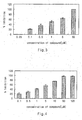
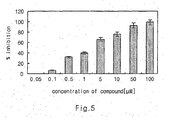
Figure 1 is a graph illustrating inhibition of acetylcholinesterase activation of piperidine derivatives obtained from Example 1 according to the present invention; -
Figure 2 is a graph illustrating inhibition of acetylcholinesterase activation of piperidine derivatives obtained from Example 2 according to the present invention; -
Figure 3 is a graph illustrating inhibition of acetylcholinesterase activation of piperidine derivatives obtained from Example 3 according to the present invention; -
Figure 4 is a graph illustrating inhibition of acetylcholinesterase activation of piperidine derivatives obtained from Example 4 according to the present invention; and -
Figure 5 is a graph illustrating inhibition of acetylcholinesterase activation of piperidine derivatives obtained from Example 5 according to the present invention; - To 28mL of methyl isobutyl keton (MIBK) was added 4-(benzhydryloxy)piperidine (1.5g), NaHCO3 (1.42g), potassium iodide (catalyst), and ethyl-4-chlorobutyrate (1.2mL). The resulting mixture was refluxed for 4 hrs. The resulting mixture was cooled, and concentrated under reduced pressure. The resultant solution was then extracted by using water and chloroform. An organic solution layer was dehydrated over magnesium sulfate, filtered, and concentrated under reduced pressure. The column chromatography was performed thereon, thereby obtaining crude yellowish liquid product (1.41g, 66% yield) of the title.
- 1H-NMR(CDCl3): δ1.26 (t, J=15.2Hz, 3H) 1.77-1.93 (m, 6H) 2.21-2.30 (m, 2H) 2.32-2.42 (m, 4H) 2.77-2.79 (m, 2H) 3.41-3.44 (m, 1H) 4.14 (q, J=15.2Hz, 2H) 5.53 (s, 1H) 7.23-7.37 (m, 10H)
- The compound obtained from step 1 (0.4g) was dissolved in ether, and cooled in an ice bath. LiAlH4 (0.1g) was added slowly to the solution. The resulting mixture was reacted at room temperature for 1 hr. before adding water to end the reaction. The resulting solution was then extracted by using water and ester. An organic solution layer was dehydrated over magnesium sulfate, filtered, and concentrated under reduced pressure. The column chromatography was performed thereon, thereby obtaining crude yellowish liquid product (0.15, 43% yield) of the title.
- 1H-NMR(CDCl3): δ1.68-1.77 (m, 4H) 1.78-1.94 (m, 4H) 2.27-2.38 (m, 4H) 2.76-2.79 (m, 2H) 3.45-3.58 (m, 3H) 5.51 (s, 1H) 7.23-7.36 (m, 10H)
- To 4mL of chloroform was added 4-[4-benzhydryloxy]piperidino]-1-butanol obtained from step 2 (0.11g), 4-nitrobenzoic acid (0.1g), 4-dimethylaminopyridine (DMAP, 0.12g), and 1-[3-(dimethylamino)propyl]-3-ethylcarbodimide hydrochloride (0.1g). The resulting mixture was allowed to react at room temperature for 3 hrs. before adding water to end the reaction. The resulting solution was acidified with 1N hydrochloric acid, and extracted by using chloroform. An organic solution layer was washed with 1N sodium hydroxide, dehydrated over magnesium sulfate, filtered, and concentrated under reduced pressure. The column chromatography was performed thereon, thereby obtaining crude yellowish liquid product (0.12g, 76% yield) of the title.
- 1H-NMR(CDCl3): δ1.65-1.89 (m, 8H) 2.06-2.16 (m, 2H) 2.39 (t, J=14.8Hz, 2H) 2.74-2.77 (m, 2H) 3.45-3.48 (m, 1H) 4.40 (t, J=12.9Hz, 2H) 5.53 (s, 1H) 7.23-7.37 (m, 2H) 8.21 (d, J=8.8Hz, 2H) 8.29 (d, J=8.7Hz, 2H)
- To 5mL of chloroform was added 4-[4-benzhydryloxy]piperidino]-1-butanol, which was obtained from step 2 of example 1 (0.15g), 4-chlorobenzoic acid (0.11g), 4-dimethylaminopyridine (0.16g), 1-[3-(dimethylamino)propyl]-3-ethylcarboimide hydrochloric acid (0.1g). The resulting mixture was allowed to react at room temperature for 2 hrs. before adding water to end the reaction. The resulting solution was acidified with IN hydrochloric acid, and extracted by using chloroform. An organic solution layer was washed with 4N sodium hydroxide, dehydrated over magnesium sulfate, filtered, and concentrated under reduced pressure. The column chromatography was performed thereon, thereby obtaining crude yellowish liquid product (0.15g, 71% yield) of the title.
- 1H-NMR(CDCl3): 1.62-1.90 (m,8H) 2.14-2.22 (m, 2H) 2.39 (t, J=14.9Hz, 2H) 3.45-3.51 (m, 1H) 4.3 (t, J=12.7Hz, 2H) 5.53 (s, 1H) 7.27-7.37 (m, 10H) 7.41 (d, J=8.5Hz, 2H) 7.97 (d, J=8.5Hz, 2H)
- To 5mL of chloroform was added 4-[4-benzhydryloxy]piperidino]-1-butanol, which was obtained from step 2 of example 1 (0.16g), 4-fluorobenzoic acid (0.1g), 4-dimethylaminopyridine (0.17g), 1-[3-(dimethylamino)propyl]-3-ethylcarboimide hydrochloric acid (0.1g). The resulting mixture was allowed to react at room temperature for 2 hrs. before adding water to end the reaction. The resulting solution was acidified with 1N hydrochloric acid, and extracted by using chloroform. An organic solution layer was washed with 4N sodium hydroxide, dehydrated over magnesium sulfate, filtered, and concentrated under reduced pressure. The column chromatography was performed thereon, thereby obtaining yellowish liquid product (0.16g, 74% yield) of the title.
- 1H-NMR(CDCl3): 1.61-1.89 (m, 8H) 2.11-2.14 (m, 2H) 2.34 (t, J=15.2Hz, 2H) 2.69-2.77 (m, 2H) 3.38-3.45 (m, 1H) 4.29 (t, J=13.2Hz, 2H) 5.50 (s, 1H) 7.07 (t, J=22.8Hz, 2H) 7.21-7.39 (m, 10H) 8.02 (d,d J=19.6Hz, 2H)
- To 6mL of chloroform was added 4-[4-benzhydryloxy]piperidino]-1-butanol, which was obtained from step 2 of example 1 (0.21g), benzoic acid (0.11g), 4-dimethylaminopyridine (0.23g), 1-[3-(dimethylamino)propyl]-3-ethylcarboimide hydrochloric acid (0.13g). The resulting mixture was allowed to react at room temperature for 2 hrs. before adding water to end the reaction. The resulting solution was acidified with 1N hydrochloric acid, and extracted using chloroform. An organic solution layer was washed with 1N sodium hydroxide, dehydrated over magnesium sulfate, filtered, and concentrated under reduced pressure. The column chromatography was performed thereon, thereby obtaining crude yellowish liquid product (0.17g, 63% yield) of the title.
- 1H-NMR(CDCl3): 1.67-1.91 (m, 8H) 2.12-2.20 (m, 2H) 2.40 (t, J=15.0Hz, 2H) 2.77-2.80 (m, 2H) 3.44-3.50 (m, 1H) 4.35 (t, J=12.7Hz, 2H) 5.54 (s, 1H) 7.25-7.37 (m, 10H) 7.42-7.47 (m, 2H) 7.54-7.57 (m, 1H) 8.05 (d, J=8.5Hz, 2H)
- To 12mL of chloroform was added 4-[4-benzhydryloxy]piperidino]-1-butanol, which was obtained from step 2 of example 1 (0.3g), 4-isopropylbenzoic acid (0.22g), 4-dimethylaminopyridine (0.32g), 1-[3-(dimethylamino)propyl]-3-ethylcarboimide hydrochloric acid (0.19g). The resulting mixture was allowed to react at room temperature for 3 hrs. before adding water to end the reaction. The resulting solution was acidified with 1N hydrochloric acid, and extracted by using chloroform. An organic solution layer was washed with 1N sodium hydroxide, dehydrated over magnesium sulfate, filtered, and concentrated under reduced pressure. The column chromatography was performed thereon, thereby obtaining crude yellowish liquid product (0.28g, 66% yield) of the title.
- 1H-NMR(CDCl3): 1.24 (d, J=14.4Hz, 6H) 1.58-1.86 (m, 8H) 2.04-2.18 (m, 2H) 2.34 (t, J=15.2Hz, 2H) 2.72-2.78 (m, 2H) 2.97-2.90 (m, 1H) 3.46-3.40 (m, 1H) 4.28 (t, J=19.6Hz, 2H) 5.50 (s, 1H) 7.34-7.19 (m, 12H) 7.93 (d, J=16.0Hz, 2H)
- To 5mL of chloroform was added 4-[4-benzhydryloxy]piperidino]-1-butanol, which was obtained from step 2 of example 1 (0.15g), 4-tert-butylbenzoic acid (0.12g), 4-dimethylaminopyridine (0.16g), 1-[3-(dimethylamino)propyl]-3-ethylcarboimide hydrochloric acid (0.1g). The resulting mixture was allowed to react at room temperature for 3 hrs. before adding water to end the reaction. The reaction mixture was acidified with 1N hydrochloric acid, and extracted by using methylene chloride. An organic solution layer was washed with 1N sodium hydroxide, dehydrated over sodium sulfate anhydrous, filtered, and concentrated under reduced pressure. The column chromatography was performed thereon, thereby obtaining crude yellowish liquid product (0.19g, 96% yield) of the title.
- 1H-NMR(CDCl3): 1.41 (s, 9H) 1.72-1.86 (m, 8H) 2.05-2.15 (m, 2H) 2.34 (t, J=14.6Hz, 2H) 2.71-2.77 (m, 2H) 3.39-3.47 (m, 1H) 4.3 (t, J=12.5Hz, 2H) 5.51 (s, 1H) 7.21-7.37 (m, 10H) 7.42 (d, J=8.74Hz, 2H) 7.96 (d, J=10.56Hz, 2H)
- To 6mL of chloroform was added 4-[4-benzhydryloxy]piperidino]-1-butanol, which was obtained from step 2 of example 1 (0.2g), 3-chlorobenzoic acid (0.14g), 4-dimethylaminopyridine (0.22g), 1-[3-(dimethylamino)propyl]-3-ethylcarboimide hydrochloric acid (0.13g). The resulting mixture was allowed to react in room temperature for 4 hrs. before adding water to end the reaction. The resulting solution was acidified with IN hydrochloric acid, and extracted by using chloroform. An organic solution layer was washed with IN sodium hydroxide, dehydrated over magnesium sulfate, filtered, and concentrated under reduced pressure. The column chromatography was performed thereon, thereby obtaining crude yellowish liquid product (0.092g, 33% yield) of the title.
- 1H-NMR(CDCl3): 1.57-1.92 (m, 8H) 2.10-2.18 (m, 2H) 2.34 (t, J=14.8Hz, 2H) 2.73-2.79 (m, 2H) 3.41-3.48(m, 1H) 4.31 (t, J=12.8Hz, 2H) 5.50 (s, 1H) 7.20-7.39 (m, 11H) 7.50 (d, J=8Hz, 1H) 7.89 (d, J=7.6Hz, 1H) 7.98 (s, 1H)
- To 6mL of chloroform was added 4-[4-benzhydryloxy]piperidino]-1-butanol, which was obtained from step 2 of example 1 (0.21g), 3-fluorobenzoic acid (0.13g), 4-dimethylaminopyridine (0.23g), 1-[3-(dimethylamino)propyl]-3-ethylcarboimide hydrochloric acid (0.13g). The resulting mixture was allowed to react at room temperature for 3 hrs. before adding water to end the reaction. The resulting solution was acidified with 1N hydrochloric acid, and extracted by using chloroform. The organic layer was washed with 1N sodium hydroxide, dehydrated over magnesium sulfate, filtered, and concentrated under reduced pressure. The column chromatography was performed thereon, thereby obtaining crude yellowish liquid product (0.0388g, 14% yield) of the title.
- 1H-NMR(CDCl3): 1.66-1.92 (m, 8H) 2.17-2.24 (m, 2H) 2.40 (t, J=14.4Hz, 2H) 2.76-2.82 (m, 2H) 3.44-3.49 (m, 1H) 4.35 (t, J=12.8Hz, 2H) 5.53 (s, 1H) 7.23-7.43 (m, 12H) 7.72(d, J=7.7Hz, 1H) 7.84 (d, J=7.7Hz, 1H)
- To 19mL of acetonitrile was added 4-[4-benzhydryloxy]piperidino]-1-butanol, which was obtained from step 2 of example 1 (0.66g), 4-chlorophenyl isocyanate (0.3g). The resulting mixture was refluxed for 4 hrs. The reaction mixture was cooled, and concentrated under reduced pressure. The resultant mixture was then extracted by using water and chloroform. An organic solution layer was dehydrated over magnesium sulfate, filtered, and concentrated under reduced pressure. The column chromatography was performed thereon, thereby obtaining crude yellowish liquid product (0.23g, 24% yield) of the title.
- 1H-NMR(CDCl3): 1.68-1.94 (m, 6H) 2.04-2.12 (m, 2H) 2.22-2.28 (m, 2H) 2.43 (t, J=13.4Hz, 2H) 2.76-2.82 (m, 2H) 3.47-3.51 (m, 1H) 4.18 (t, J=10.8Hz, 2H) 5.52 (s, 1H) 6.85 (s, 1H) 7.24-7.43 (m, 14H)
- To 14mL of acetonitrile was added 4-[4-benzhydryloxy]piperidino]-1-butanol, which was obtained from step 2 of example 1 (0.48g), 4-fluorophenyl isocyanate (0.23g). The mixture was refluxed for 4 hrs. The reaction mixture was cooled, and concentrated under reduced pressure. The resultant mixture was then extracted by using water and chloroform. An organic solution layer was dehydrated over magnesium sulfate, filtered, and concentrated under reduced pressure. The column chromatography was performed thereon, thereby obtaining crude yellowish liquid product (0.18g, 24% yield) of the title.
- 1H-NMR(CDCl3): 1.66-1.92 (m, 6H) 1.81-1.97 (m, 2H) 2.09-2.16 (m, 2H) 2.31 (t, J=12.2Hz, 2H) 2.74-2.82 (m, 2H) 3.39-3.42 (m, 1H) 4.12 (t, J=11.2Hz, 2H) 5.49 (s, 1H) 6.67 (s, 1H) 6.98 (t, J=10.6Hz, 2H) 7.14-7.25 (m, 12H)
- To 8mL of chloroform was added 4-[4-benzhydryloxy]piperidino]-1-butanol, which was obtained from step 2 of example 1 (0.14g); nicotinic acid (0.1g), 4-dimethylaminopyridine (0.12g), 1-[3-(dimethylamino)propyl]-3-ethylcarboimide hydrochloric acid (0.1g). The mixture was allowed to react at room temperature for 3 hrs. before adding water to end the reaction. The reaction mixture was acidified with 1N hydrochloric acid, and extracted by using chloroform. An organic solution layer was washed with 1N sodium hydroxide, dehydrated over magnesium sulfate, filtered, and concentrated under reduced pressure. The column chromatography was performed thereon, thereby obtaining crude yellowish liquid product (0.12g, 66% yield) of the title.
- 1H-NMR(CDCl3): 1.64-1.89 (m, 8H) 2.14-2.17 (m, 2H) 2.38 (t, J=14.9Hz, 2H) 2.75-2.78 (m, 2H) 3.46-3.51 (m, 1H) 4.38 (t, J=12.9Hz, 2H) 5.53 (s, 1H) 7.24-7.39 (m, 11H) 8.35 (d, J=4.9Hz, 1H) 8.78 (d, J=4.8Hz, 1H) 9.23 (s, 1H)
- To 12mL of N,N-dimethylformamide was added 4-(benzyloxy)piperidine (0.8g), sodium bicarbonate (1.05g), potassium iodide (used as a catalyst), ethyl-4-chlorobutyrate (0.88mL). The resulting mixture was refluxed for 4 hrs. The resulting mixture was cooled, and concentrated under reduced pressure. The resultant mixture was then extracted by using water and chloroform. An organic solution layer was dehydrated over magnesium sulfate, filtered, and concentrated under reduced pressure. The column chromatography was performed thereon, thereby obtaining crude yellowish liquid product (1.05g, 82% yield) of the title.
- 1H-NMR(CDCl3): 1.22 (t, J=16.8Hz, 3H) 1.67-1.91 (m, 6H) 2.09-2.19 (m, 2H) 2.27-2.36 (m, 4H) 2.78-2.81 (m, 2H) 3.38-3.42 (m, 1H) 4.10 (q, J=16.8Hz, 2H) 4.51 (s, 2H) 7.23-7.34 (m, 5H)
- The compound obtained from step 1 (4.8g) was dissolved in ether, and cooled in an ice bath. LialH4 (0.1g) was added slowly to the solution. The resulting mixture was reacted at room temperature for 1 hr. before adding water to end the reaction. The resulting solution was then extracted by using water and ester. An organic solution layer was dehydrated over magnesium sulfate, filtered, and concentrated under reduced pressure. The column chromatography was performed thereon, thereby obtaining crude yellowish liquid product (3.44g, 83% yield) of the title.
- 1H-NMR(CDCl3): 1.62-1.76 (m, 6H) 1.84-1.91 (m, 2H) 2.21-2.31 (m, 4H) 2.70-2.76 (m, 2H) 3.42-3.56 (m, 3H) 4.48 (s, 2H) 7.19-7.30 (m, 5 H)
- To 14mL of chloroform was added 4-[4-(benzyloxy)piperidino]-1-butanol, which was obtained from step 2 (0.37g), 4-nitrobenzoic acid (0.35g), 4-dimethylaminopyridine (0.51g), 1-[3-(dimethylamino)propyl]-3-ethylcarboimide hydrochloric acid (0.3g). The resulting mixture was allowed to react at room temperature for 2 hrs. before adding water to end the reaction. The resulting solution was acidified with 1N hydrochloric acid, and extracted by using chloroform. An organic solution layer was washed with 1N sodium hydroxide, dehydrated over magnesium sulfate, filtered, and concentrated under reduced pressure. The column chromatography was performed thereon, thereby obtaining crude yellowish liquid product (0.58g, 64% yield) of the title.
- 1H-NMR(CDCl3): 1.64-1.91 (m, 8H) 2.12-2.18 (m, 2H) 2.40 (t, J=14.9Hz, 2H) 2.76-2.82 (m, 2H) 3.42-3.48 (m, 1H) 4.40 (t, J=12.9Hz, 2H) 4.55 (s, 1H) 7.27-7.36 (m, 5H) 8.21 (d, J=10.7Hz, 2H) 8.29 (d, J=10.6Hz, 2H)
- To 30mL of chloroform was added 4-[4-(benzyloxy)piperidino]-1-butanol, which was obtained from step 2 of example 12 (0.8g), 4-chlorobenzoic acid (0.71g), 4-dimethylaminopyridine (0.64g), 1-[3-(dimethylamino)propyl]-3-ethylcarboimide hydrochloric acid (1.11g). The resulting mixture was allowed to react at room temperature for 4 hrs. before adding water to end the reaction. The resulting solution was acidified with 1N hydrochloric acid, and extracted by using chloroform. An organic solution layer was washed with 1N sodium hydroxide, dehydrated over magnesium sulfate, filtered, and concentrated under reduced pressure. The column chromatography was performed thereon, thereby obtaining crude yellowish liquid product (0.74g, 61% yield) of the title.
- 1H-NMR(CDCl3): 1.68-1.94 (m, 8H) 2.15-2.22 (m, 2H) 2.40 (t, J=14.7Hz, 2H) 2.78-2.84 (m, 2H) 3.42-3.46 (m, 1H) 4.34 (t, J=12.6Hz, 2H) 4.56 (s, 2H) 7.28-7.37 (m; 5H) 7.42 (d, J=8.4Hz, 2H) 7.98 (d, J=8.4Hz, 2H)
- To 145mL of chloroform was added 4-[4-(benzyloxy)piperidino]-1-butanol, which was obtained from step 2 of example 12 (0.37g), 4-fluorobenzoic acid (0.3g), 4-dimethylaminopyridine (0.51 g), 1-[3-(dimethylamino)propyl]-3-ethylcarboimide hydrochloric acid (0.3g). The resulting mixture was allowed to react at room temperature for 2 hrs. before adding water to end the reaction. The resulting solution was acidified with 1N hydrochloric acid, and extracted by using chloroform. An organic solution layer was washed with 1N sodium hydroxide, dehydrated over magnesium sulfate, filtered, and concentrated under reduced pressure. The column chromatography was performed thereon, thereby obtaining crude yellowish liquid product (0.34g, 63% yield) of the title.
- 1H-NMR(CDCl3): 1.61-1.78 (m, 6H) 1.84-1.90 (m, 2H) 2.10-2.16 (m, 2H) 2.34 (t, J=15.2Hz, 2H) 2.71-2.78 (m, 2H) 3.38-3.44 (m, 1H) 4.29 (t, J=13.2Hz, 2H) 4.51 (s, 2H) 7.07 (t, J=23.2Hz, 2H) 7.21-7.34 (m, 5H) 8.02 (d,d J=20.0Hz, 2H)
- To 14mL of chloroform was added 4-[4-(benzyloxy)piperidino]-1-butanol, which was obtained from step 2 of example 12 (0.3g), benzoic acid (0.26g), 4-dimethylaminopyridine (0.51g), 1-[3-(dimethylamino)propyl]-3-ethylcarboimide hydrochloric acid (0.3g). The resulting mixture was allowed to react at room temperature for 2 hrs. before adding water to end the reaction. The resulting solution was acidified with 1N hydrochloric acid, and extracted by using chloroform. An organic solution layer was washed with 1N sodium hydroxide, dehydrated over magnesium sulfate, filtered, and concentrated under reduced pressure. The column chromatography was performed thereon, thereby obtaining crude yellowish liquid product (0.35g, 69% yield) of the title.
- 1H-NMR(CDCl3): 1.58-1.79 (m, 6H) 1.88-1.96(m, 2H) 2.08-2.16 (m, 2H) 2.35 (t, J=15.2Hz, 2H) 2.74-2.78 (m, 2H) 3.36-3.44 (m, 1H) 4.30 (t, J=13.2Hz, 2H) 4.51 (s, 2H) 7.21-7.33 (m, 5H) 7.38-7.45 (m, 2H) 7.50-7.54 (m, 1H) 8.01 (d, J=9.6Hz, 2H)
- To 20mL of chloroform was added 4-[4-(benzyloxy)piperidino]-1-butanol, which was obtained from step 2 of example 12 (0.63g), 4-isopropylbenzoic acid (0.59g), 4-dimethylaminopyridine (0.50g), 1-[3-(dimethylamino)propyl]-3-ethylcarboimide hydrochloric acid (0.88g). The resulting mixture was allowed to react at room temperature for 3 hrs. before adding water to end the reaction. The resulting solution was acidified with 1N hydrochloric acid, and extracted by using chloroform. An organic solution layer was washed with 1N sodium hydroxide, dehydrated over magnesium sulfate, filtered, and concentrated under reduced pressure. The column chromatography was performed thereon, thereby obtaining crude yellowish liquid product (0.62g, 64% yield) of the title.
- 1H-NMR(CDCl3): 1.24 (d, J=8.2Hz, 6H) 1.63-1.77 (m, 6H) 1.80-1.94 (m, 2H) 2.10-2.14 (m, 2H) 2.39 (t, J=14.9Hz, 2H) 2.76-2.81 (m, 2H) 2.90-2.97(m, 1H) 3.38-3.44 (m, 1H) 4.33 (t, J=12.7Hz, 2H) 4.56 (s, 2H) 7.29-7.37 (m, 12H) 7.94 (d, J=8.2Hz, 2H)
- To 30mL of chloroform was added 4-[4-(benzyloxy)piperidino]-1-butanol, which was obtained from step 2 of example 12 (0.35g), 4-tert-butylbenzoic acid (0.36g), 4-dimethylaminopyridine (0.49g), 1-[3-(dimethylamino)propyl]-3-ethylcarboimide hydrochloric acid (0.28g). The resulting mixture was allowed to react at room temperature for 2 hrs. before adding water to end the reaction. The resulting solution was acidified with 1N hydrochloric acid, and extracted by using chloroform. An organic solution layer was washed with 1N sodium hydroxide, dehydrated over sodium sulfate anhydrous, filtered, and concentrated under reduced pressure. The column chromatography was performed thereon, thereby obtaining crude yellowish liquid product (0.42g, 76% yield) of the title.
- 1H-NMR(CDCl3): 1.32 (s, 9H) 1.64-1.78 (m, 6H) 1.86-1.92 (m, 2H) 2.08-2.14 (m, 2H) 2.35 (t, J=15.2Hz, 2H) 2.72-2.77 (m, 2H) 3.37-3.41 (m, 1H) 4.29 (t, J=12.8Hz, 2H) 4.51 (s, 2H) 7.23-7.36 (m, 5H) 7.42 (d, J=8.0Hz, 2H) 7.94 (d, J=8.0Hz, 2H)
- To 12mL of chloroform was added 4-[4-(benzyloxy)piperidino]-1-butanol, which was obtained from step 2 of example 12 (0.43g), 3-chlorobenzoic acid (0.3 8g), 4-dimethylaminopyridine (0.60g), 1-[3-(dimethylamino)propyl]-3-ethylcarboimide hydrochloric acid (0.34g). The resulting mixture was allowed to react at room temperature for 4 hrs. before adding water to end the reaction. The resulting solution was acidified with 1N hydrochloric acid, and extracted by using chloroform. An organic solution layer was washed with 1N sodium hydroxide, dehydrated over magnesium sulfate, filtered, and concentrated under reduced pressure. The column chromatography was performed thereon, thereby obtaining crude yellowish liquid product (0.31g, 47% yield) of the title.
- 1H-NMR(CDCl3): 1.57-1.77 (m, 6H) 1.89-1.96 (m, 2H) 2.08-2.14 (m, 2H) 2.31 (t, J=14.8Hz, 2H) 2.71-2.78 (m, 2H) 3.36-3.42(m, 1H) 4.30 (t, J=12.8Hz, 2H) 4.51 (s, 2H) 7.21-7.38 (m, 6H) 7.48 (d, J=8.0Hz, 1H) 7.86 (d, J=7.6Hz, 1H) 7.94 (s, 1H)
- To 26mL of chloroform was added 4-[4-(benzyloxy)piperidino]-1-butanol, which was obtained from step 2 of example 12 (0.7g), 3-fluorobenzoic acid (0.56g), 4-dimethylaminopyridine (0.97g), 1-[3-(dimethylamino)propyl]-3-ethylcarboimide hydrochloric acid (0.56g). The resulting mixture was allowed to react at room temperature for 4 hrs. before adding water to end the reaction. The resulting solution was acidified with 1N hydrochloric acid, and extracted by using chloroform. An organic solution layer was washed with 1N sodium hydroxide, dehydrated over magnesium sulfate, filtered, and concentrated under reduced pressure. The column chromatography was performed thereon, thereby obtaining crude yellowish liquid product (0.49g, 48% yield) of the title.
- 1H-NMR(CDCl3): 1.64-1.79 (m, 6H) 1.89-1.94 (m, 2H) 2.08-2.17 (m, 2H) 2.35 (t, J=15.2Hz, 2H) 2.73-2.84 (m, 2H) 3.39-3.44 (m, 1H) 4.31 (t, J=12.8Hz, 2H) 4.51 (s, 2H) 7.24-7.66 (m, 7H) 7.80 (d, J=2.8Hz, 1H) 7.79 (d, J=3.2Hz, 1H)
- To 26mL of acetonitrile was added 4-[4-(benzyloxy)piperidino]-1-butanol, which was obtained from step 2 of example 12 (0.7g), 4-chlorophenyl isocyanate (0.42g). The mixture was refluxed for 4 hrs. The resulting mixture was cooled, and concentrated under reduced pressure. The resultant mixture was then extracted by using water and chloroform. An organic solution layer was dehydrated over magnesium sulfate, filtered, and concentrated under reduced pressure. The column chromatography was performed thereon, thereby obtaining crude yellowish liquid product (0.67g, 61% yield) of the title.
- 1H-NMR(CDCl3): 1.53-1.69 (m, 6H) 1.89-1.99 (m, 2H) 2.08-2.16 (m, 2H) 2.32 (t, J=15.2Hz, 2H) 2.68-2.74 (m, 2H) 3.38-3.43 (m, 1H) 4.14 (t, J=12.8Hz, 2H) 4.51 (s, 2H) 6.67 (s, 1H) 7.21-7.32 (m, 9H)
- To 37mL of acetonitrile was added 4-[4-(benzyloxy)piperidino]-1-butanol, which was obtained from step 2 of example 12 (0.99g), 4-fluorophenyl isocyanate (0.49mL). The mixture was refluxed for 5 hrs. The reaction mixture was cooled, and concentrated under reduced pressure. The resultant mixture was then extracted by using water and chloroform. An organic solution layer was dehydrated over magnesium sulfate, filtered, and concentrated under reduced pressure. The column chromatography was performed thereon, thereby obtaining crude yellowish liquid product (0.72g, 48% yield) of the title.
- 1H-NMR(CDCl3): 1.59-1.71 (m, 6H) 1.88-1.94 (m, 2H) 2.12-2.18 (m, 2H) 2.36 (t, J=14.8Hz, 2H) 2.78-88 (m, 2H) 3.42-3.48 (m, 1H) 4.18 (t, J=12.6Hz, 2H) 4.56 (s, 2H) 6.78 (s, 1H) 7.02 (t, J=8.6Hz, 2H) 7.28-7.36 (m, 7H)
- The compounds used for measuring acetylcholinesterase (AChE) activity such as acetylcholinesterase (Type V-S: from electric eel), acetylcholine iodide, 5,5-dithio-bis(2-nitro benzoic acid), and neostigmine bromide, were products of Sigma Chemical Co., U.S.A., and high purity reagents were selected for other reagents.
- SmartSpec3000, an UV spectrometer, was manufactured by BioRad Company; Mettler AB204S, chemical balance, was manufactured by Toledo company; pH meter 360 was manufactured by Beckman Company; and other apparatus such as ice maker, water bath, freezer were standard products.
- Modified Ellman's method for measuring enzyme activity was used to meet with the measurement of acetylcholinesterase activity. The enzyme was separated into certain amount, and kept under 80°C below zero. The final concentration of the enzyme used in the experiment was 0.03 unit concentration. 1000 µM of acetylcholine iodide dissolved in 0.1 M sodium phosphate buffer (pH 8.0) was used for substrate. As for dye reagent, 5,5-dithio-bis-(2-nitrobenzoic acid) (39.6 mg) and sodium bicarbonate(15 mg) dissolved in 10mL sodium phosphate buffer (0.1M, pH 7.0) was used.
- The procedure for the enzyme reaction was as follows. After adding 200 µℓ DTNB and 100 µℓ enzyme (0.03U) to 2mL sodium phosphate buffer (pH 8.0), the resulting mixture was pre-heated at 37°C for 10 minutes. To the resulting mixture 200 µℓ substrate was added, and allowed to react for 3 minutes. The spectrometer of finished reaction was measured at 412 nm wave. IC50 value connected to activity inhibition was measured by quantal-dose response. The results are summarized in Table 1a and Table 1b
- As the materials used for measuring β-amyloid aggregation, β-amyloid (1-42) was a product of American Peptide Co., U.S.A.; and thioflavin T, phosphate buffered saline tablets, and dimethyl sulfoxide (DMSO, 99.5%) were products of Sigma Chemical Co., U.S.A., and high purity reagents were selected for other reagents.
- RF-5300PC, a fluorescent spectrometer, was manufactured by Shimadzu Corp.; Mettler AB204S, chemical balance, was manufactured by Toledo company; pH meter 360 was manufactured by Beckman Company; and other apparatus such as ice maker, water bath, freezer were standard products.
- Fluorescent analysis was used in measuring β-amyloid aggregation. This peptide compound was kept in the deep freezer (-80°C), and the final concentration used in the mesurement was 5µM. Compounds that need to be analyzed were dissolved in 99.5% DMSO, and fluorescent substance was prepared by dissolving thioflavin T (5 µM) in 0.01 M sodium phosphate buffer.
- The procedure for aggregation reaction was as follows. To 0.01 M sodium phosphate buffer (92.5 µℓ) was added fixed concentration of a compound, for measuring purpose, (5 µℓ) and 5 µM β-amyloid 1-42 (2.5 µℓ). The resulting mixture was kept at 37°C for 26 hours to aggregate. 5 µM tioflavin T (2000 µℓ) was added thereto, and then fluorescent strength was measured with fluorescent spectrometer. The wavelength of fluorescent spectrometer was set at Ex=446 nm (slit width=5 nm), Em=490 nm (slit width=10 nm), and IC50 value connected to aggregation inhibition was measured by quantal-dose response. The results are summarized in Table 1a.
- As shown in Table 1a, the piperidine derivatives of Formula 3 synthesized as Example 2, wherein R is chlorobenzyl group and R' is benzhydryl group, are used in the lowest concentration (0.3 µM) to inhibit 50% of enzyme activity. Thus, they are useful as a pharmaceutical composition for treating Alzheimer's disease. Likewise, the piperidine derivatives synthesized as Example 6, wherein R is tert-butyl group and R' is benzhydryl group, are used in the lowest concentration to inhibit β-amyloid aggregation. In general, R' substituted with benzhydryl group, rather than benzyl, was favorable to inhibition of acetylcholinesterase and β-amyloid.
[Table 1a] Example Chemical Structure AChE
Inhibition
(IC50)β -Amyloid
Aggregation
Inhibition (IC50)1 
7.2µM 53.14µM 2 
0.3µM 28.21µM 3 
0.84µM 36.33µM 4 
1.3µM 40.33 µM 5 
3.89µM 76.86µM 6 
2.41µM 20.02µM 7 
3.39µM 91.96µM 8 
70.7µM 33.72µM 9 
2.45µM 37.32µM 10 
2.45µM 113.64µM 11 
>150µM 61.15µM [Table 1b] Example Chemical Structure AChE Inhibition
(IC50)12 
>100µM 13 
>100µM 14 
>100µM 15 
>100µM 16 
14.78µM 17 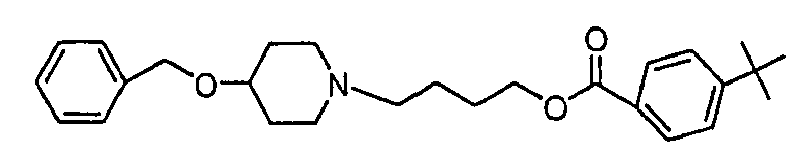
12.20µM 18 
>100µM 19 
> 100µM 20 
>100µM 21 
>100µM - In order for a compound to be comprised in the pharmaceutical composition for treating Alzheimer's disease, it must be nontoxic. The representative compounds synthesized by Example 2 (the best substance for inhibiting acetylcholinesterase) and by Example 6 (the best substance for inhibiting β-amyloid aggregation) were put through an acute toxicity test on animals. This test followed the protocol of Korea Food & Drug Administration. Several groups of ICR mice (male, weight 30±3 g), wherein one group comprises 4 mice, were intraperitoneally injected at once with the above compound according to the concentration ranging from 50 mg/kg to 500 mg/kg, and the death rate and weight change was observed for 10 days. The compounds used for the test were diluted with wheat germ oil. Consequently, there were no death in both groups that were injected with compounds from Example 2 and Example 6. Although some weight loss occurred on the first day of injection for groups with 500 mg/kg injection (6.96%) of the compound from Example 2 and 200 mg/kg injection (6.31%) of the compound from Example 6, the weight consistently increased from second day on. Furthermore, there were no problems in the motility of the animals. Through the experiment, prediction can be made that the fatal dose of the compounds to be much higher in concentration than 500 mg/kg, which prove that these substances are very safe to use. The results are summarized in Table 2 (the compounds of Example 2) and Table 3 (the compounds of Example 6).


- The compound of the present application have the structure of piperidine ring having butylcarboxylate functional group, and benzyloxy or benzhydryl functional group. This compound can be a great use as a therapeutic substance by designing and synthesizing in consideration to the distance in reaction site and reactivity of butyl carboxylate group and benzyloxy or benzhydryl group to the parent structure of piperidine. Furthermore, when the electronic donating group and electron withdrawing group were introduced as substitutes of piperidine, the reactivity of the compound showed excellent inhibiting effect on acetylcholinesterase and β-amyloid protein aggregation. Finally, the compounds showed no toxicity on mouse even with 500 mg/kg injection when acute toxicity test was done
- As we have described in the above, the present invention can be a great use as a therapeutic substance for Alzheimer's disease due to its excellency in inhibiting acetylcholinesterase and aggregation of β-amyloid protein that relates to causing the disease.
Claims (9)
- A piperidine derivative represented by Formula 3:


R is (i) linear or branched C1-C6 alkyl, (ii)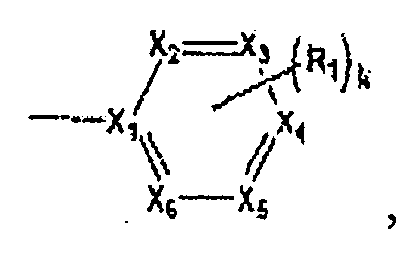
R1 is -H, -OH, halogen, -NO2, -NH2, linear or branched C1-C6 alkyl;
X1 is C;
X2, X3, X4, X5, and X6 individually are CH or N;
k is an integer ranging from 1 to 5; and
R2 is H or
- The piperidine derivative according to claim 1, wherein R is selected from the group consisting of following moieties:(i) -CH3, -(CH2)nCH3 (wherein n is an integer raging from 2 to 5),(ii)

 (iii)
(iii)


- The piperidine derivative according to claim 1, wherein the piperidine derivative is selected from the group consisting of:4-[4-(benzhydryloxy)piperidino]butyl-4-nitrobenzoate;4-[4-(benzhyryloxy)piperidino]butyl-4-chlorobenzoate;4-[4-(benzhydryloxy)piperidino]butyl-4-fluorobenzoate;4-[4-(benzhydryloxy)piperidino]butyl benzoate;4-[4-(benzhydryloxy)piperidino]butyl-4-isopropylbenzoate;4-[4-(benzhydryloxy)piperidino]butyl-4-(tertiary-butyl)benzoate;4-[4-(benzhydryloxy)piperidino]butyl-3-chlorobenzoate;4-[4-(benzhydryloxy)piperidino]butyl-3-fluorobenzoate;4-[4-(benzhydryloxy)piperidino]butyl-N-(4-chlorophenyl)carbamate;4-[4-(benzhydryloxy)piperidino]butyl-N-(4-fluorophenyl)carbamate;4-[4-(benzhydryloxy)piperidino]butyl nicotinate;4-[4-(benzyloxy)piperidino]butyl-4-nitrobenzoate;4-[4-(benzyloxy)piperidino]butyl-4-chlorobenzoate;4-[4-(benzyloxy)piperidino]butyl-4-fluorobenzoate;4-[4-(benzyloxy)piperidino]butyl benzoate;4-[4-(benzyloxy)piperidino]butyl-4-isopropylbenzoate;4-[4-(benzyloxy)piperidino]butyl-(tertiary-butyl)benzoate;4-[4-(benzyloxy)piperidino]butyl-3-chlorobenzoate;4-[4-(benzyloxy)piperidino]butyl-3-fluorobenzoate;4-[4-(benzyloxy)piperidino]butyl-N-(4-chlorophenyl)carbamate; and4-[4-(benzyloxy)piperidino]butyl-N-(4-fluorophenyl)carbamate.
- A process for preparing the piperidine derivative of claim 1 comprising the steps of:(a) reacting a compound of Formula 4 and a compound of Formula 5 to obtain a compound of Formula 6;(b) reducing the compound of Formula 6 to obtain a compound of Formula 7;(c) reacting the compound of Formula 7 with RCOOH or R-N=C=O to obtain a compound of Formula 3:


R is (i) linear or branched C1-C6 alkyl, (ii)
R1 is -H, -OH, halogen, -NO2, -NH2, linear or branched C1-C6 alkyl;
X1 is C;
X2, X3, X4, X5, and X6 individually are CH or N;
k is an integer ranging from 1 to 5; and
R2 is H or
X is a halogen element. - The process according to claim 4, comprising the steps represented by the following Reaction Scheme 2:


- A pharmaceutical composition for treating Alzheimer's disease, comprising an effective amount of the piperidine derivative described in claim 1 or its pharmaceutically acceptable salts.
- The pharmaceutical composition according to claim 6 further comprising a pharmaceutically acceptable carrier.
- The pharmaceutical composition according to claim 6, wherein the composition is used for an oral administration further comprising:(i) a capsule excipient;(ii) a tablet excipient;(iii) an additive selected from the group consisting of: starch, crystallized cellulose, hydroxyproplymethyl cellulose, polyethylene glycol, lactose, polyvinyl pyrrolidone, and glyceryl behanate(iv) a diluent;(v) a wet binder;(vi) a lubricant;(vii) a fluidizing agent; or(viii) an adhesion inhibitor.
- The pharmaceutical composition according to claim 6, wherein the composition is used for an injection further comprising:(i) a solvent;(ii) a diluent; or(iii) an antiseptic.
Applications Claiming Priority (3)
| Application Number | Priority Date | Filing Date | Title |
|---|---|---|---|
| KR20010063778 | 2001-10-16 | ||
| KR2001063778 | 2001-10-16 | ||
| PCT/KR2002/001930 WO2003033489A1 (en) | 2001-10-16 | 2002-10-16 | Piperidine derivatives, process for preparation thereof, and pharmaceutical composition for alzheimer's disease containing the same |
Publications (3)
| Publication Number | Publication Date |
|---|---|
| EP1446400A1 EP1446400A1 (en) | 2004-08-18 |
| EP1446400A4 EP1446400A4 (en) | 2005-06-01 |
| EP1446400B1 true EP1446400B1 (en) | 2009-01-28 |
Family
ID=19715173
Family Applications (1)
| Application Number | Title | Priority Date | Filing Date |
|---|---|---|---|
| EP02801599A Expired - Lifetime EP1446400B1 (en) | 2001-10-16 | 2002-10-16 | Piperidine derivatives, process for preparation thereof, and pharmaceutical composition for alzheimer's disease containing the same |
Country Status (8)
| Country | Link |
|---|---|
| US (1) | US7288552B2 (en) |
| EP (1) | EP1446400B1 (en) |
| JP (1) | JP4179468B2 (en) |
| KR (1) | KR100579813B1 (en) |
| CN (1) | CN1301991C (en) |
| AT (1) | ATE421961T1 (en) |
| DE (1) | DE60231054D1 (en) |
| WO (1) | WO2003033489A1 (en) |
Families Citing this family (7)
| Publication number | Priority date | Publication date | Assignee | Title |
|---|---|---|---|---|
| US7355042B2 (en) | 2001-10-16 | 2008-04-08 | Hypnion, Inc. | Treatment of CNS disorders using CNS target modulators |
| WO2003032912A2 (en) | 2001-10-16 | 2003-04-24 | Hypnion, Inc. | Treatment of cns disorders using cns target modulators |
| US7189757B2 (en) | 2001-10-16 | 2007-03-13 | Hypnion, Inc. | Treatment of sleep disorders using CNS target modulators |
| GB0316094D0 (en) | 2003-07-09 | 2003-08-13 | Neuropharma Sa | Acetylcholinesterase dual inhibitors |
| BRPI0511993A (en) * | 2004-07-20 | 2008-01-22 | Siena Biotech Spa | alpha7 nicotinic acetylcholine receptor modulating compounds, pharmaceutical compositions and therapeutic uses thereof |
| TW200901974A (en) | 2007-01-16 | 2009-01-16 | Wyeth Corp | Compounds, compositions, and methods of making and using them |
| WO2012154944A2 (en) * | 2011-05-10 | 2012-11-15 | Stc.Unm | Methods of treating autophagy-associated disorders and related pharmaceutical compositions, diagnostics, screening techniques and kits |
Family Cites Families (7)
| Publication number | Priority date | Publication date | Assignee | Title |
|---|---|---|---|---|
| JPS625956A (en) * | 1985-07-02 | 1987-01-12 | Terumo Corp | Vinyl derivative and 5-lipoxygenase action inhibitor containing same |
| DE69418789T2 (en) * | 1993-08-05 | 1999-12-02 | Hoechst Marion Roussel, Inc. | 2- (Piperidin-4-yl, pyridin-4-yl and tetrahydropyridin-4-yl) benzofuran-7-carbamate derivatives, their preparation and use as acetylcholinesterase inhibitors |
| US5889006A (en) * | 1995-02-23 | 1999-03-30 | Schering Corporation | Muscarinic antagonists |
| CZ43399A3 (en) * | 1996-08-15 | 1999-07-14 | Schering Corporation | Etheric muscarinic antagonists |
| DK1209151T3 (en) * | 1999-09-01 | 2007-08-20 | Eisai R&D Man Co Ltd | 4-SUBSTITUTED PIPERIDE INGREDIATES |
| JP4242048B2 (en) * | 1999-09-01 | 2009-03-18 | エーザイ・アール・アンド・ディー・マネジメント株式会社 | 4-substituted piperidine derivatives |
| WO2003032912A2 (en) * | 2001-10-16 | 2003-04-24 | Hypnion, Inc. | Treatment of cns disorders using cns target modulators |
-
2001
- 2001-10-16 KR KR1020047005543A patent/KR100579813B1/en not_active Expired - Fee Related
-
2002
- 2002-10-16 DE DE60231054T patent/DE60231054D1/en not_active Expired - Lifetime
- 2002-10-16 WO PCT/KR2002/001930 patent/WO2003033489A1/en not_active Ceased
- 2002-10-16 CN CNB028204670A patent/CN1301991C/en not_active Expired - Fee Related
- 2002-10-16 EP EP02801599A patent/EP1446400B1/en not_active Expired - Lifetime
- 2002-10-16 US US10/492,984 patent/US7288552B2/en not_active Expired - Fee Related
- 2002-10-16 AT AT02801599T patent/ATE421961T1/en not_active IP Right Cessation
- 2002-10-16 JP JP2003536229A patent/JP4179468B2/en not_active Expired - Fee Related
Also Published As
| Publication number | Publication date |
|---|---|
| WO2003033489A1 (en) | 2003-04-24 |
| KR100579813B1 (en) | 2006-05-12 |
| EP1446400A1 (en) | 2004-08-18 |
| ATE421961T1 (en) | 2009-02-15 |
| KR20040053173A (en) | 2004-06-23 |
| JP2005505626A (en) | 2005-02-24 |
| EP1446400A4 (en) | 2005-06-01 |
| DE60231054D1 (en) | 2009-03-19 |
| JP4179468B2 (en) | 2008-11-12 |
| CN1301991C (en) | 2007-02-28 |
| CN1571784A (en) | 2005-01-26 |
| US20050043316A1 (en) | 2005-02-24 |
| US7288552B2 (en) | 2007-10-30 |
Similar Documents
| Publication | Publication Date | Title |
|---|---|---|
| DE60113412T2 (en) | INHIBITORS OF SERIN PROTEASES | |
| DE60105419T2 (en) | Serine protease inhibitors | |
| FR2609716A1 (en) | NOVEL PEPTIDE DERIVATIVES, THEIR PREPARATION AND THEIR USE AS MEDICAMENTS | |
| EP0313974A1 (en) | N-substituted derivatives of 1-desoxynojirimycine and 1-desoxymannonojirimycine, process for their preparation and their use as pharmaceuticals | |
| EP0499926B1 (en) | 2-Substituted quinolines, process for their preparation as well as their use in medicaments | |
| DE60105418T2 (en) | Serine protease inhibitors | |
| DE60113252T2 (en) | INHIBITORS OF SERIN PROTEASES | |
| EP0628310A1 (en) | Use of partially known substituted chromanes as medicine, new products and process for their preparation | |
| US7288552B2 (en) | Piperidine derivatives, process for preparation thereof, and pharmaceutical composition for alzheimer's disease containing the same | |
| EP0288758B1 (en) | Dihydropyridinamides, process for their preparation and their use in medicines | |
| EP1050531B1 (en) | Pyridine and piperidine derivatives for treating neurodegenerative diseases | |
| EP0530639A1 (en) | Quinolylmethoxy-phenylacetamides substituted by a heterocycle as lipoxygenase inhibitors | |
| KR101402969B1 (en) | New modafinil derivatives and a pharmaceutical composition for treating or preventing inflammation comprising modafinil derivatives | |
| KR20050084070A (en) | Drugs for chronic pain | |
| EP2116526B1 (en) | Derivates of substituted tartaric aicd and usage for preparating beta secretase inhibitors | |
| DE69608121T2 (en) | N-PROTECTED / N-SUBSTITUTED BETA-AMINOHYDROXYSULFONATES | |
| FR2846654A1 (en) | New dihydro-4(1H)-pyridinone derivatives are useful in the treatment of cognitive disorders, neurodegenerative diseases and pain | |
| JP4945448B2 (en) | AMINE DERIVATIVE, PROCESS FOR PRODUCTION AND USE | |
| EP0545170A1 (en) | Quinolylmethoxyphenylacetamides | |
| DE69722002T2 (en) | TRICYCLIC N-CYANOIMINE AS INHIBITORS OF THE FARNESYL PROTEIN TRANSFERASE | |
| US7579482B2 (en) | Structure of camphor-derived chiral auxiliary and method for forming the same | |
| KR101098031B1 (en) | Novel crystalline form of amlodipine nicotinate and its preparation method | |
| EP0663395A1 (en) | 3-(phenylalkylaminoalkyloxy)-5-phenylpyrazole derivatives, process and intermediates for their preparation and their use as cardiac rhythm reduction agent | |
| NZ268048A (en) | 9-(4-hydroxypiperidylmethyl)-9,10-methanoanthracenes; pharmaceutical compositions |
Legal Events
| Date | Code | Title | Description |
|---|---|---|---|
| PUAI | Public reference made under article 153(3) epc to a published international application that has entered the european phase |
Free format text: ORIGINAL CODE: 0009012 |
|
| 17P | Request for examination filed |
Effective date: 20040517 |
|
| AK | Designated contracting states |
Kind code of ref document: A1 Designated state(s): AT BE BG CH CY CZ DE DK EE ES FI FR GB GR IE IT LI LU MC NL PT SE SK TR |
|
| AX | Request for extension of the european patent |
Extension state: AL LT LV MK RO SI |
|
| A4 | Supplementary search report drawn up and despatched |
Effective date: 20050420 |
|
| RIC1 | Information provided on ipc code assigned before grant |
Ipc: 7C 07D 401/12 A Ipc: 7C 07D 211/46 B |
|
| 17Q | First examination report despatched |
Effective date: 20080205 |
|
| GRAP | Despatch of communication of intention to grant a patent |
Free format text: ORIGINAL CODE: EPIDOSNIGR1 |
|
| GRAS | Grant fee paid |
Free format text: ORIGINAL CODE: EPIDOSNIGR3 |
|
| GRAA | (expected) grant |
Free format text: ORIGINAL CODE: 0009210 |
|
| AK | Designated contracting states |
Kind code of ref document: B1 Designated state(s): AT BE BG CH CY CZ DE DK EE ES FI FR GB GR IE IT LI LU MC NL PT SE SK TR |
|
| REG | Reference to a national code |
Ref country code: GB Ref legal event code: FG4D |
|
| REG | Reference to a national code |
Ref country code: CH Ref legal event code: EP |
|
| REG | Reference to a national code |
Ref country code: IE Ref legal event code: FG4D |
|
| REF | Corresponds to: |
Ref document number: 60231054 Country of ref document: DE Date of ref document: 20090319 Kind code of ref document: P |
|
| NLV1 | Nl: lapsed or annulled due to failure to fulfill the requirements of art. 29p and 29m of the patents act | ||
| PG25 | Lapsed in a contracting state [announced via postgrant information from national office to epo] |
Ref country code: FI Free format text: LAPSE BECAUSE OF FAILURE TO SUBMIT A TRANSLATION OF THE DESCRIPTION OR TO PAY THE FEE WITHIN THE PRESCRIBED TIME-LIMIT Effective date: 20090128 Ref country code: ES Free format text: LAPSE BECAUSE OF FAILURE TO SUBMIT A TRANSLATION OF THE DESCRIPTION OR TO PAY THE FEE WITHIN THE PRESCRIBED TIME-LIMIT Effective date: 20090509 Ref country code: NL Free format text: LAPSE BECAUSE OF FAILURE TO SUBMIT A TRANSLATION OF THE DESCRIPTION OR TO PAY THE FEE WITHIN THE PRESCRIBED TIME-LIMIT Effective date: 20090128 |
|
| PG25 | Lapsed in a contracting state [announced via postgrant information from national office to epo] |
Ref country code: AT Free format text: LAPSE BECAUSE OF FAILURE TO SUBMIT A TRANSLATION OF THE DESCRIPTION OR TO PAY THE FEE WITHIN THE PRESCRIBED TIME-LIMIT Effective date: 20090128 Ref country code: SE Free format text: LAPSE BECAUSE OF FAILURE TO SUBMIT A TRANSLATION OF THE DESCRIPTION OR TO PAY THE FEE WITHIN THE PRESCRIBED TIME-LIMIT Effective date: 20090428 Ref country code: PT Free format text: LAPSE BECAUSE OF FAILURE TO SUBMIT A TRANSLATION OF THE DESCRIPTION OR TO PAY THE FEE WITHIN THE PRESCRIBED TIME-LIMIT Effective date: 20090629 |
|
| PG25 | Lapsed in a contracting state [announced via postgrant information from national office to epo] |
Ref country code: BE Free format text: LAPSE BECAUSE OF FAILURE TO SUBMIT A TRANSLATION OF THE DESCRIPTION OR TO PAY THE FEE WITHIN THE PRESCRIBED TIME-LIMIT Effective date: 20090128 |
|
| PG25 | Lapsed in a contracting state [announced via postgrant information from national office to epo] |
Ref country code: DK Free format text: LAPSE BECAUSE OF FAILURE TO SUBMIT A TRANSLATION OF THE DESCRIPTION OR TO PAY THE FEE WITHIN THE PRESCRIBED TIME-LIMIT Effective date: 20090128 Ref country code: EE Free format text: LAPSE BECAUSE OF FAILURE TO SUBMIT A TRANSLATION OF THE DESCRIPTION OR TO PAY THE FEE WITHIN THE PRESCRIBED TIME-LIMIT Effective date: 20090128 Ref country code: CZ Free format text: LAPSE BECAUSE OF FAILURE TO SUBMIT A TRANSLATION OF THE DESCRIPTION OR TO PAY THE FEE WITHIN THE PRESCRIBED TIME-LIMIT Effective date: 20090128 |
|
| PG25 | Lapsed in a contracting state [announced via postgrant information from national office to epo] |
Ref country code: SK Free format text: LAPSE BECAUSE OF FAILURE TO SUBMIT A TRANSLATION OF THE DESCRIPTION OR TO PAY THE FEE WITHIN THE PRESCRIBED TIME-LIMIT Effective date: 20090128 |
|
| PLBE | No opposition filed within time limit |
Free format text: ORIGINAL CODE: 0009261 |
|
| STAA | Information on the status of an ep patent application or granted ep patent |
Free format text: STATUS: NO OPPOSITION FILED WITHIN TIME LIMIT |
|
| 26N | No opposition filed |
Effective date: 20091029 |
|
| PG25 | Lapsed in a contracting state [announced via postgrant information from national office to epo] |
Ref country code: BG Free format text: LAPSE BECAUSE OF FAILURE TO SUBMIT A TRANSLATION OF THE DESCRIPTION OR TO PAY THE FEE WITHIN THE PRESCRIBED TIME-LIMIT Effective date: 20090428 |
|
| PG25 | Lapsed in a contracting state [announced via postgrant information from national office to epo] |
Ref country code: MC Free format text: LAPSE BECAUSE OF NON-PAYMENT OF DUE FEES Effective date: 20091031 |
|
| REG | Reference to a national code |
Ref country code: CH Ref legal event code: PL |
|
| REG | Reference to a national code |
Ref country code: IE Ref legal event code: MM4A |
|
| PG25 | Lapsed in a contracting state [announced via postgrant information from national office to epo] |
Ref country code: GR Free format text: LAPSE BECAUSE OF FAILURE TO SUBMIT A TRANSLATION OF THE DESCRIPTION OR TO PAY THE FEE WITHIN THE PRESCRIBED TIME-LIMIT Effective date: 20090429 Ref country code: CH Free format text: LAPSE BECAUSE OF NON-PAYMENT OF DUE FEES Effective date: 20091031 Ref country code: LI Free format text: LAPSE BECAUSE OF NON-PAYMENT OF DUE FEES Effective date: 20091031 Ref country code: IE Free format text: LAPSE BECAUSE OF NON-PAYMENT OF DUE FEES Effective date: 20091016 |
|
| PG25 | Lapsed in a contracting state [announced via postgrant information from national office to epo] |
Ref country code: IT Free format text: LAPSE BECAUSE OF FAILURE TO SUBMIT A TRANSLATION OF THE DESCRIPTION OR TO PAY THE FEE WITHIN THE PRESCRIBED TIME-LIMIT Effective date: 20090128 |
|
| PG25 | Lapsed in a contracting state [announced via postgrant information from national office to epo] |
Ref country code: LU Free format text: LAPSE BECAUSE OF NON-PAYMENT OF DUE FEES Effective date: 20091016 |
|
| PG25 | Lapsed in a contracting state [announced via postgrant information from national office to epo] |
Ref country code: TR Free format text: LAPSE BECAUSE OF FAILURE TO SUBMIT A TRANSLATION OF THE DESCRIPTION OR TO PAY THE FEE WITHIN THE PRESCRIBED TIME-LIMIT Effective date: 20090128 |
|
| PG25 | Lapsed in a contracting state [announced via postgrant information from national office to epo] |
Ref country code: CY Free format text: LAPSE BECAUSE OF FAILURE TO SUBMIT A TRANSLATION OF THE DESCRIPTION OR TO PAY THE FEE WITHIN THE PRESCRIBED TIME-LIMIT Effective date: 20090128 |
|
| PGFP | Annual fee paid to national office [announced via postgrant information from national office to epo] |
Ref country code: DE Payment date: 20121112 Year of fee payment: 11 Ref country code: FR Payment date: 20121128 Year of fee payment: 11 |
|
| PGFP | Annual fee paid to national office [announced via postgrant information from national office to epo] |
Ref country code: GB Payment date: 20121120 Year of fee payment: 11 |
|
| GBPC | Gb: european patent ceased through non-payment of renewal fee |
Effective date: 20131016 |
|
| PG25 | Lapsed in a contracting state [announced via postgrant information from national office to epo] |
Ref country code: GB Free format text: LAPSE BECAUSE OF NON-PAYMENT OF DUE FEES Effective date: 20131016 |
|
| REG | Reference to a national code |
Ref country code: FR Ref legal event code: ST Effective date: 20140630 |
|
| REG | Reference to a national code |
Ref country code: DE Ref legal event code: R119 Ref document number: 60231054 Country of ref document: DE Effective date: 20140501 |
|
| PG25 | Lapsed in a contracting state [announced via postgrant information from national office to epo] |
Ref country code: DE Free format text: LAPSE BECAUSE OF NON-PAYMENT OF DUE FEES Effective date: 20140501 Ref country code: FR Free format text: LAPSE BECAUSE OF NON-PAYMENT OF DUE FEES Effective date: 20131031 |