EP1445695A1 - JIT COMPILER−EQUIPPED VIRTUAL COMPUTER, OPERATION METHOD THEREOF, AND TERMINAL APPARATUS HAVING THE VIRTUAL COMPUTER - Google Patents
JIT COMPILER−EQUIPPED VIRTUAL COMPUTER, OPERATION METHOD THEREOF, AND TERMINAL APPARATUS HAVING THE VIRTUAL COMPUTER Download PDFInfo
- Publication number
- EP1445695A1 EP1445695A1 EP02775508A EP02775508A EP1445695A1 EP 1445695 A1 EP1445695 A1 EP 1445695A1 EP 02775508 A EP02775508 A EP 02775508A EP 02775508 A EP02775508 A EP 02775508A EP 1445695 A1 EP1445695 A1 EP 1445695A1
- Authority
- EP
- European Patent Office
- Prior art keywords
- compiling
- native code
- virtual computer
- bytecode
- native
- Prior art date
- Legal status (The legal status is an assumption and is not a legal conclusion. Google has not performed a legal analysis and makes no representation as to the accuracy of the status listed.)
- Withdrawn
Links
Images









Classifications
-
- G—PHYSICS
- G06—COMPUTING OR CALCULATING; COUNTING
- G06F—ELECTRIC DIGITAL DATA PROCESSING
- G06F8/00—Arrangements for software engineering
- G06F8/40—Transformation of program code
-
- G—PHYSICS
- G06—COMPUTING OR CALCULATING; COUNTING
- G06F—ELECTRIC DIGITAL DATA PROCESSING
- G06F8/00—Arrangements for software engineering
- G06F8/40—Transformation of program code
- G06F8/41—Compilation
-
- G—PHYSICS
- G06—COMPUTING OR CALCULATING; COUNTING
- G06F—ELECTRIC DIGITAL DATA PROCESSING
- G06F9/00—Arrangements for program control, e.g. control units
- G06F9/06—Arrangements for program control, e.g. control units using stored programs, i.e. using an internal store of processing equipment to receive or retain programs
- G06F9/44—Arrangements for executing specific programs
- G06F9/455—Emulation; Interpretation; Software simulation, e.g. virtualisation or emulation of application or operating system execution engines
- G06F9/45504—Abstract machines for programme code execution, e.g. Java virtual machine [JVM], interpreters, emulators
- G06F9/45516—Runtime code conversion or optimisation
Definitions
- the present invention relates to a virtual computer comprising a Just-In-Time, or JIT compiler.
- the virtual computer of the present invention is suitable for a portable wireless communication apparatus such as a terminal apparatus, a cellular phone, or a personal digital assistant (PDA) having wireless communication function.
- a portable wireless communication apparatus such as a terminal apparatus, a cellular phone, or a personal digital assistant (PDA) having wireless communication function.
- PDA personal digital assistant
- the Java language is distributed for programs executed on a virtual computer which can be used on every platform, and the program is called "bytecode.”
- the Java language cannot be executed directly by processors of portable wireless communication apparatus. Instead, such devices execute the bytecode by using emulation techniques.
- the present invention relates to a virtual computer comprising a Just-in-Time, or JIT, compiler.
- the virtual computer of the Java language of the present invention can run bytecode with high speed, making it suitable for use with portable wireless communication apparatus with small memory capacity, such as cellular phones, PDAs, and the like.
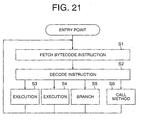
- Fig.21 shows a flowchart of the interpreter, which interprets and executes the bytecode on the virtual computer.
- the boxes labeled S1-S6 shows processing steps.
- An interpreter system that interprets and subsequently executes bytecodes by software is used to execute bytecodes on a virtual computer.
- the running speed of this process by the interpreter system is low, because of the step-by-step execution of instructions.
- the embodiment of the prior art process is as follows.
- the instruction of bytecode is fetched (S1), and the fetched instruction is decoded (S2).
- the decoded result of the instruction is an "execution” of instruction
- the instruction is executed (S3,S4), and the process goes back to step S1.
- the decoded result of the instruction is "branch” (S5), the branch process is executed and the the process goes back to step S1.
- the decoded instruction is "call-method” (S6)
- the calling method is executed (S6) and the step goes to the process of S1.
- Each subsequent instruction is processed in the same way.
- Fig. 22 shows a flowchart of the process, combining the interpreter and the JIT compiler.
- the combination process of the interpreter and the JIT compiler that is used generally only in personal computers will be explained based on Fig.22.
- This JIT compiler has never been used in cellular phones.
- Steps S11- S20 are the process steps. Of these steps, steps S11-S16 show the process of the interpreter and steps S17-S20 show the process of the JIT compiler.
- the JIT compiler is generally used to resolve the problem of the low running speed of the interpreter process.
- the JIT compiler compiles the bytecode into native code. This native machine code can be executed on the underlying platform, thus allowing the program to run with high speed.
- the JIT compiler takes a downloaded program, which has methods to execute, and compiles a whole of bytecodes of the methods into native machine codes.
- the compiled native codes are stored in memory (-storing area for program-), and are then used when the program is executed.
- the first execution does incur overhead time, but subsequent executions occur with high speed, without the overhead.
- the embodiment of the process is asfollows.
- the instruction of the bytecode is fetched (S11), and the fetched instruction is decoded (S12).
- the instruction is executed (S13, S14) and the process goes back to step S11.
- the decoded instruction is "branch”, the branch process is executed (S 15), and the process goes back to step S11.
- the decoded instruction is "call method”
- the calling method is executed (S16) and goes to the next step to decide whether or not the bytecode has been compiled (S17).
- the next step is to decide whether the bytecode needs to be compiled (S18).
- the process goes back to step S11.
- the bytecodes called by the method are compiled with the JIT compiler to produce native codes, and the native codes are stored in the native code storing area (S19). Further, the native codes are executed (S20).
- the process goes to step S16, and the method is implemented, the process returns to step S11.
- the process when compiling is implemented by the decision at step S17, the process goes to step S20. The above-mentioned process will be continued to address each instruction.
- the above-mentioned bytecode refers to the machine code of the Java virtual machine (virtual computer) that is the binary form of the Java application created by Sun Microsystems (Santa Clara, CA, USA).
- the "JIT (Just-In-Time) compiler-” is software that transforms bytecode into native code that a computer executes directly.
- the "method” is a program (or subroutine) that defines the execution method of an object in object oriented programming.
- Fig. 23 shows prior art terminal apparatus loading the virtual computer.
- a server 51 comprises JAVA application program 52 and JAVA compiler 53 which compiles the JAVA application program, and an output unit 54 that outputs bytecodes compiled by the JAVA compiler on a network.
- an input unit 62 inputs bytecodes sent from the server 51.
- a bytecode storing area 63 in memory stores the input bytecode.
- Methods 64 and 65 are methods compiled to the bytecode by the JAVA compiler 53.
- a virtual computer 66 comprises an interpreter 71, a JIT compiler 73 and a native code area 3, which is a memory area storing the native code compiled by the JIT compiler.
- the terminal apparatus comprises CPU 80, calculation result holding area 81 holds the calculation result in memory, and an output unit 82 outputs the calculation results.
- the bytecodes sent from the server 51 are input through the input unit 62 and stored in the byte code storing area 63, with bytecode addresses.
- the interpreter 71 interprets and executes the bytecodes.
- the JIT compiler 73 inputs the bytecode instruction from the bytecode storing area and compiles the bytecode.
- the compiled bytecodes are stored at native code addresses in the native code storing area 3.
- the calculated result of CPU 81 is held in the calculation result holding area 81 of memory, and output through the output unit 82.
- FIG. 24 A telephone set loading prior art virtual computer is shown in Fig. 24.
- Figs. 23 and 24 the same numerals denote the same units.
- the bytecodes sent from the server 51 are input through the input unit 62 and stored in the byte code storing area 63 with byte code address.
- the interpreter 71 interprets each instruction in order of the input bytecode, and CPU 80 calculates the decoded bytecodes.
- the calculated result of CPU 80 is held in memory in the calculation result holding area 81, and output through the output unit 82.
- High performance processors are generally not used in portable radio apparatus.
- interruptions occur, for example in game play, while using the softeware.
- the execution speed is retarded by the overhead time of the compiling, and because of the overhead, when compiling a large program, the execution speed is lower than execution speed performed by interpreter.
- Objects of the present invention are to resolve the above-mentioned problems, and improve processing speed and response characteristics of the portable wireless apparatus having limited memory capacity.
- the present invention comprises constructions that follow.
- the present invention easily decides whether or not compiling is required, and the search of the stored addresses of native codes is easily performed in the cases where compiling has been implemented. Furthermore, only the frequently used parts of methods are compiled and held. Thus, in the present invention, compiling can be executed in a device with small memory capacity. Further, even if the JIT compiler of the present invention is used in a portable terminal apparatus that limits memory for generating and holding the native codes, the processing speed is high because of the ability to compile with small memory capacity.
- the first embodiment of the present invention interprets and executes the bytecode of the virtual computer with software.
- the virtual computer comprises a code cache, which is a limited area in the memory to store the native codes.
- the virtual computer also comprises a JIT compiler. When executing the bytecodes, the JIT compiler compiles the bytecode to the native code, which the virtual computer can execute directly, and stores the native codes in the code cache.
- the virtual computer comprises a search table holding the information that determines whether or not compiling is implemented using the bytecode address, which will be explained later. The addresses of the compiled native codes can be found by retrieving the search table.
- Free space for storing the native code does not exist in the native code area when the bytecode is compiled. Any compiled native codes are cancelled to make some free spaces in the native code area.
- the search table can be updated in this manner.
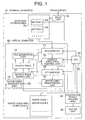
- Fig. 1 shows a terminal apparatus comprising the virtual computer of the present invention.
- the terminal apparatus 61 comprises a search table 2, and a native code area 3 in memory area to store the native code. Further, the terminal apparatus 61 comprises an input unit 62 to input the bytecodes sent from a server 51, a byte code storing area 63 to store the input bytecodes in memory, and methods 64 and 65 to be compiled.
- the virtual computer 66 comprises an interpreter 71 and a compile execution control unit 72.
- the compile execution control unit 72 finds whether there is a need to compile from the search result for the search table unit 76. Moreover, the compile execution control unit 72 decides compiling portions. For example, it finds portions inevitably executed or portions of instructions frequently used for compiling, or a portion for compiling of a fixed number of instructions or a portion for compiling for a fixed time.
- the virtual computer 66 further comprises the JIT compiler 73, a CPU 80, a calculation result holding area 81 to hold the calculation result in memory, and an output unit 82 outputting the execution result.
- the virtual computer 66 further comprises a tag generation unit 74 to generate tags in the search table 2 and writes the bytecode address of the native code area 3 in the tag, a JIT compiler 73 to generate the native code, and a native code registering unit 75 to register the address of native code of the native code area in a tag corresponding to the bytecode in the search table.
- the search table search unit 76 searches the search table 2 and decides whether or not the bytecode is compiled and registered in the native code storing area.
- the native code execution unit 78 executes the native codes stored in the native code area 3 according to the search result of the search table search unit 76.
- the tag generation unit 74 generates a tag that points to a bytecode in a process sequence of the interpreter 71. Alternatively, the tag is generated for every bytecode.
- the JIT compiler compiles bytecodes to generate native codes.
- the native code registration unit 75 registers the native code addresses in the tag corresponding to the bytecodes.
- the search table search unit 76 searches the tag of the bytecode to be processed in the search table 2. When the search table search unit finds that the native code corresponding to the bytecode is registered, that is considered a "hit", and the native code execution unit 78 executes the bytecode by using the native code.
- the bytecodes sent from the server 51 are input through the input unit 62, and stored at their bytecode addresses in the bytecode storing area 63.
- the interpreter 71 interprets and executes bytecodes.
- the decoded bytecode is a method and the search result of the search table searching unit 76 shows that the native code has been compiled, that is a "hit”, and the native code execution unit 78 executes the bytecode by using the native code.
- the search result of searching the search table by the search table search unit 76 is that the native code is not compiled, that is a "miss”, and the compile execution control unit 72 directs the JIT compiler to compile a portion of the instruction or method etc.
- the JIT compiler 73 compiles a portion of the instruction, etc.
- the native code compiled by the JIT compiler is stored at the native code address in the native code storage area 3. Further, the native code registration unit 75 registers the native code address corresponding to the tag of the compiled bytecode.
- the search table 2 only registers the first instruction of the block of a compiling sequence.
- the calculation result of CPU 80 is held in the calculation result holding area 81 and output through the output unit 82.
- Fig. 2 shows the first example of a flowchart of the virtual computer of the present invention. Referring to Fig. 2, the first embodiment of the present invention will be explained.
- the flowchart illustrates the process executed by the virtual computer in checking whether or not the bytecodes have been compiled. For all byte codes, whether or not compiling should be implemented is checked by using the tag information in the search table (S31). When the bytecode has not yet been compiled, it is determined whether or not compiling is needed (S32). When compiling is not needed, the bytecode instruction is fetched (S33), and the bytecode instruction is decoded (S34).
- step S32 When the decision of step S32 is that compiling is required, a portion of the bytecodes are compiled to generate native codes and the native codes are stored in the native code storage area (S39). Further the native codes are executed (S40), and the process returns to step S31. Alternatively, when the bytecode has been compiled in the process of step 31, the process goes to step 40.
- the processes of S31 - S 38 are executed by the interpreter 71, and the processes of S 39 and S40 are executed by the JIT compiler 73.
- FIG. 3 shows a flowchart of a second example of the first embodiment of the present invention. Referring to Fig. 3, the second example of the first embodiment of the present invention is explained.
- the process of the second example is that the necessity of compiling is decided at a pause of the execution control, for example when executing branch or method, etc.
- the second example is characterized in that compiling is not executed by a whole method unit, but interrupted by some conditions which will be explained later in the fifth, sixth, seventh and eighth embodiment of the present invention. That is, the present invention is different from the general JIT compiler.
- a byte code instruction is fetched (S41) and the instruction is decoded (S42).
- the decoded result is "execution” (S43, S44)
- the instruction is executed and the process returns to step S41.
- the decoded result is "branch” (S45)
- the branch process is executed, and when the instruction is "call method” (S46), the calling method is executed.
- compiling when compiling is necessary, compiling in part is executed to generate native codes, and the generated native codes are stored in the native code storage area (S49). The native codes are executed (S50), and the step returns to step S46 or S47.
- Fig. 4 shows a block diagram of the virtual computer of the first embodiment of the present invention.
- a comparator 1 a search table 2, a native code area 3, an interpreter 71, a compiling execution control unit 72, a JIT compiler 73, a tag generating unit 74, a native code registering unit 75, a search table search unit 76 and a native code execution unit 78 are shown.
- the native code area 3 of the present invention acts as cache memory with the search table 2, the tag generating unit 74, the native code registering unit 75 and the search table searching unit 76.
- the code cache corresponds to the native code area 3.
- the search table 2 is used to determine whether or not the bytecode has been compiled.
- the search table 2 registers the correspondence between a tag and a native code address, that is the address of the native code area in the cache.
- the data of the native code area 3 in the cache can be retrieved by the native code address.
- the address of bytecode is composed of an upper M bit and a lower N bit.
- the native code address can be found from the lower N bit of the bytecode address by search in the search table.
- the upper M bit of the bytecode and the tag information are input into the comparator 1.
- the comparator 1 automatically compares to find the match or mismatch of the information.
- the native code execution unit 78 executes the instruction with the native code stored in the native code area.
- the comparator 1 When the result of the comparison is match or hit, the comparator 1 outputs a match signal, indicating that the bytecode has been compiled.
- the first embodiment of the present invention is characterized in the following features. Whether or not the bytecode has been compiled is easily determined by searching the search table. Moreover, in the case where the bytecode is compiled, finding the native code address, that is the address of the native code area 3 in the cache, corresponding to the bytecode is easy. The running speed of a program is quick with the compiled bytecodes and stored native codes. The memory necessary for storing the native codes generated by the JIT compiler is limited, thus the program can be run with high speed, even with small memory capacity.
- the second embodiment of the present invention is that the search table 2 or the code cache 3 comprises a counter for counting the number of times instructions are executed.
- the interpreter executes the instruction.
- the bytecode is compiled by the JIT compiler and executed.
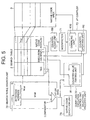
- Fig. 5 shows the explanation of the construction and action of the second embodiment of the present invention.
- an interpreter 71 a compiling execution control unit 72, a JIT compiler 73, and a native code control unit 72 are shown.
- the counter value finding unit 91 reads the counter value of the search table 2.
- the JIT compiler 73 comprises a counter updating unit 92 to update the execution counter and a compiling unit 100.
- the interpreter 71 registers a bytecode address to a tag in the case where the bytecode address is not registered to the tag, and the execution counter is cleared. Further, the interpreter 71 increases the count value of the execution counter in the case where the bytecode address is registered in the tag and the bytecode has not been compiled.
- the counter value finding unit 91 finds the counter value and, in the case where the counter value is less than the predetermined value, the interpreter executes the instruction of the bytecode.
- the JIT compiler 73 compiles the bytecode to the native code by the compiling direction of the compile execution control unit 72.
- the native code is stored in the native code area 3.
- the native code address is registered in the tag corresponding to the instruction.
- the instruction of byte code is executed with the native code in the native code area by the search hit of the search table search unit 76.
- the search table 2 is composed of the tag, the execution counter and the information corresponding to the native code address.
- the address of the native code area 3 in the code cache can be found by searching the native code address.
- the native code address can be found by searching the search table 2 for a tag of lower N bit of the lower address of the bytecode, which is composed of upper Mbit and lower N bit.
- the upper M bit of the bytecode and the tag information of the search table are input to the comparator 1, and the comparator 1 determines whether a match, or "hit" exists between the tag information and the upper M bit.
- the native code execution unit 78 executes the native code.
- the compiling execution control unit 72 refers the execution counter value in the case of the search resulting in a miss.
- the native code execution control unit directs the interpreter 71 to process the bytecode.
- the interpreter process is the same as that of the prior art.
- the native code execution control unit 72 directs the JIT compiler to compile the bytecode.
- the execution counter is composed on the tag, but the execution counter can also be composed in the cache code 3, that is native code area.
- Fig. 6 shows a flowchart of the virtual computer of the second embodiment of the present invention.
- the flowchart shows the compile selection process. Referring to Fig. 6, the compile selection process of the second embodiment of the present invention will be explained.
- the process is composed of two parts. The first part is the process of interpreting (S61-S67), and the second is the process of compiling (S71-S75).
- S61-S67 the process of interpreting
- S71-S75 the process of compiling
- it is determined whether the bytecode has been compiled(S 61). When the bytecode has not been compiled, it is determined whether or not the bytecode address registered in the search table, by checking whether the bytecode address is registered or not in the tag of the search table in Fig. 4 (S62). When the address is not registered in the table, the address is registered in the tag (S63). The execution counter is then cleared (S64). Further, the instruction is fetched (S65), decoded (S66), and executed (S67). The process then returns to step S61.
- step S62 determines that the tag is registered in the search table
- the execution counter of the search table 2 is increased by +1, for example (S71), and it is determined whether or not the count value is greater than the predetermined value (S72).
- the process goes to the process of step S65 and the instruction is decoded and executed by the interpreter.
- the process goes to the process of step S73, and the bytecode is compiled by the JIT compiler to generate the native code, and the native code is registered in the code cache 3.
- the necessary information that is the native code address, is registered in table 2 (S74).
- the native code is executed (S75) and the process then returns to the process of step S61.
- step S61 when the compiling has been implemented, the process returns to the process of S75 and the native code is executed.
- the second embodiment of the present invention is characterized in the following features.
- the compiling process is generally lengthy.
- the entire processing time of the interpreter execution for bytecodes which are not frequently used is less than the processing time of the execution by compiling them.
- the native code which is rarely used is not compiled, the process speed is increased significantly.
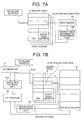
- Figs. 7A and 7B are block diagrams of the third embodiment of the present invention.
- Fig. 7A shows the first access to the search table.
- Fig. 7B shows the second access to the search table.
- the third embodiment of the present invention decides whether compiling is necessary without using the execution counter in the second embodiment.
- first execution only the bytecode address is registered, that is, registered in the tag of the search table 2.
- a special function for compiling that is the top address of the compiling or processing, is registered.
- numerical 0 can be used to register in the native code address registering area. In this way, for example, the first time process is implemented by the interpreter, and the second time process, the process is implemented by the compiler.
- Fig. 7-A shows the first time access.
- reference numeral 71 denotes an interpreter
- the search table information registering unit 79 registers the native code address in the native code area of the search table 2 by the interpreter processing.
- the interpreter 71 registers the bytecode in the search table 2, and writes numeric 0 or the special function of compiling into the native code address area of the search table 2.
- the bytecode is executed by the interpreter 71.
- Fig. 7B shows a block diagram to explain the action of the second time access.
- an interpreter 71 an execution control unit 721, a JIT compiler 73, a search table 2 and a native code registering unit 75 are shown.
- the interpreter 71 process at the first access, and the execution control unit 721 direct the JIT compiler, which compiles the bytecode to the native code that the virtual computer can execute when subsequently accessed.
- the second time the process of the bytecode occurs numeric 0 or the special function is registered in the native code address area of the search table 2.
- the execution control unit 721 finds the registered numeric 0 or the special function, and directs the JIT compiler 73 to compile the bytecode.
- the native code generated by the compiling is stored in the native code area 3, and the native code is then executed. Further, the native code registering unit 75 registers the native code address in the search table 2. After this, when the bytecode process occurs, the search result is always "hit," and the native code can be executed.
- Fig. 8 shows a flowchart of the compiling selection of the third embodiment of the present invention.
- the processes are composed of the interpreter process of S81-S86 and the compiling process of S01-S04.
- the interpreter process starts from the circled reference character A, and it is determined whether or not the bytecode address is registered in the search table 2 (S81). When the bytecode address is not registered, that means that it is the first access, and the interpreter interprets the bytecode. In this process, only the bytecode address is registered (S82) in the tag of the search table 2.
- step S82 entry B is registered in the native code address (S83). Further, the instruction is fetched (S84) and decoded (S85). The decoded instruction is then executed (S86) and the process returns to step S81.
- step S81 when the bytecode address is registered, that means that it is the second access, thus the process is implemented by JIT compiler.
- the process jumps to a native code address (S91), and the JIT compiler compiles from the entry B (S92), and the native code address is registered (S93). Further, the native code is executed (S94) and the process returns to the process of step S81.
- step S91 the process goes to the process of step 94 to execute the native code (S94) and returns to S81.
- the third embodiment of the present invention is characterized in the following features. Because the compiling process requires long period of time, when processing any bytecode used only one time, the process executed by the interpreter is quicker than if executed by compiling. Thus, the total running speed of a program is increased by the aforementioned processing. Moreover, the third embodiment does not require an area for the execution counter, so memory required in the third embodiment is less than in the second embodiment.
- the search table does not involve the native code address, but rather involves the information of the compiling being implemented, that is tag information.
- the native code address in the native code area can be obtained by the calculation of the bytecode address.
- Fig. 9 shows the construction of the search table 2 and the native code area of the fourth embodiment.
- the search table 2 stores only the tag.
- the search table 2 is accessed by using lower N bit of the bytecode address.
- the native code address in the native code area 3 is set with the calculation result of the lower N bit with the arithmetic unit 4.
- the arithmetic unit 4 calculates the lower N bit of the bytecode times 8 ,that is N ⁇ 8, and the calculation result is set to the native code address of the native code area 3.
- the tag in the search table 2 can be searched by using lower N bit of the bytecode address composed of upper address of M bit and lower address of N bit.
- the upper M bit of the bytecode address and the tag information in the search table are input into the comparator 1. Both inputs are compared to decide whether there is a hit or miss. In the case of match, a match signal is output from the comparator 1, and the compiling implementation can be found by the match signal.
- the address can be decided by the calculation result of the arithmetic unit 4 that calculates the address based on the lower N bit of the byte code.
- the fourth embodiment is characterized in the following features.
- the address of the compiled native code on the memory can be obtained uniquely based on the calculation of bytecode address. Thus, retrieving the native code address in the search table 2 is unnecessary. Further, when substituting the native codes in the native code area, which will be explained later, seeking native codes to be cancelled is unnecessary. Thus, the substitution process is simplified.
- the fifth embodiment limits the compiling range in the first embodiment to shorten the compiling time, that is, to improve the response performance.
- specific instruction such as a branch instruction or a calling method etc., which are defined in advance, are found in the compiling process, an instruction to stop the compiling, such as a branch instruction or interrupt instruction of the native code, is generated. That is, if a branch instruction or interrupt instruction is inserted at the end of the native code, the rest of the bytecode is not compiled.
- Fig. 10A shows the compiling execution control unit 72 in the virtual computer of the fifth embodiment.
- the search table in the fifth embodiment is the same as in the first embodiment, shown in Fig. 4.
- a process limiting unit 20 finds the specific instruction and breaks to compile at the point where the specific instruction is found. Further, the specific instruction finding unit 21 finds the instruction such as THEN processing in an IF condition sentence, or a RETURN instruction.
- a compiling end direction unit 25 directs to end the compiling.
- Fig. 10B shows a flowchart of compiling by the compiling execution control unit 72 of the fifth embodiment and the JIT compiler.
- the compiling is executed at the step S1. Then it is decided whether or not a specific instruction exists (S2, S3). When the specific instruction is not found, the compiling continues at step S1. Alternatively, when the specific instruction is found at the step S3, the compiling is ended at the step S4.
- the process limiting unit 20 limits the compiling range to shorten the compiling time in the virtual computer.
- the fifth embodiment is characterized by the following features. Only portions of bytecode that need to be compiled are compiled, so the compiling performance is high. For example, when compiling a string of bytecodes of the "IF condition and THEN processing", only the process of the condition "IF” is compiled, and the process of "THEN" is not compiled.
- the sixth embodiment reduces the compiling time.
- the sixth embodiment breaks the compiling by the volume of compiled bytecode rather than finding the specific instruction in the fifth embodiment. For example, when one hundred instructions are compiled, the compiling is broken.
- the sixth embodiment also comprises the same function as the fifth embodiment to interrupt the process at the step of the specific instruction.
- Fig. 11A shows the structure of the compiling execution control unit of the virtual computer of the sixth embodiment.
- the compiling execution control unit 72 comprises a process limiting unit 20 composed of a specific instruction finding unit 21, an instruction number counting unit 22 that counts the number of compiled instructions, and a compiling end directing unit 25.
- the instruction number counting unit 22 counts the number of the compiled instructions.
- the compiling end direction unit 25 directs to end the compiling at the time that the count of instruction number reaches to the predetermined number. The compiling is ended at the time of finding the specific instruction, however, even if the instruction count number does not reach to the predetermined number,
- Fig. 11B shows a flowchart of compiling by the instruction counting number unit 22 and the JIT compiler of the sixth embodiment of the present invention.
- S1 of the flowchart whether the specific instruction to end the compiling process is found or not found is decided (S2, S3).
- S6 the compiling process is ended (S6).
- S4, S5 the number of compiled instructions is determined (S4, S5).
- S4 the number is less than the predetermined number
- the process returns to S1 to continue the compiling, and when the number reaches to the predetermined number, the compiling is ended (S6).
- the sixth embodiment of the present invention is characterized in the following features. Generated codes are not wasted, and the consumption of memories decreases, because only inevitably executed portions of code are compiled. The response performance of an application is thus improved. In general, an application program is interrupted during compiling. In the present invention, however, only the inevitably executed portions are compiled, thus the breaking time caused by the compiling is reduced. In addition, waste of memory consumption decreases, because the compiling is limited by the condition of the number of compiled instructions.
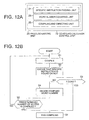
- Fig. 12A shows the compiling execution control unit of the virtual computer of the seventh embodiment of the present invention.
- the seventh embodiment shortens the compiling time.
- the sixth embodiment breaks the compiling by a condition of the quantity of generated native codes, in addition to a condition of the finding specific instruction in the fifth embodiment. For example, when 128 native codes are generated, the compiling is interrupted.
- the seventh embodiment comprises the condition of interruption of the compiling in time of finding the specific instruction, which is the same condition as in the fifth embodiment of the present invention.
- the compiling execution control unit 72 comprises a process limiting unit 20.
- the process limiting unit 20 is composed of a specific instruction finding unit 21, a word number counting unit 23 that counts word number compiled (the number of compiled machine words), and the compiling end directing unit 25.
- the word number counting unit 23 counts the number of the words.
- the compiling end direction unit 25 directs to interrupt the compiling when the compiled word number reaches to a predetermined value. When one of the specific instructions is found, however, the compiling is interrupted even if the compiled word number is less than the predetermined volume.
- Fig. 12B shows a flowchart of the compiling execution control unit and JIT compiler of the seventh embodiment of the present invention.
- S1 it is determined whether or not the specific instruction for interrupting the process is found (S2, S3).
- S6 the process is ended (S6).
- S4, S5 the compiled word number is checked (S4, S5).
- the compiling continues at step S1.
- the process is ended (S6).
- the seventh embodiment of the present invention is characterized in features as follows. Generated native codes are not wasted, and consumption of memory decreases, because only inevitably executed portions are compiled. The response performance of application programs is thus improved. In general, application programs are interrupted during the compiling. In the present invention, however, only inevitably executed portions are compiled, thus the interruption time of the program caused by the compiling is decreased. Further, the response performance of application programs is improved. In addition, the waste of memory consumption is surely suppressed, because the compiling is also limited by the condition of the compiled word number.
- the eighth embodiment reduces compiling time.
- the compiling is interrupted by the condition of the elapsed time of compiling, in addition to the condition of finding the specific instruction. For example, when the compiler has compiled for 100 ms, the compiling is interrupted.
- the eighth embodiment of the present invention comprises also the condition to interrupt compiling in time of finding the specific instruction.
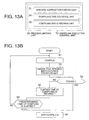
- Fig. 13A shows a compiling execution control unit of the virtual computer of the eighth embodiment of the present invention.
- the compiling execution control unit 72 comprises a process limiting unit 20, a compiling time count unit 24 that counts the. elapsed time from starting compiling, and the compiling end directing unit 25.
- the compiling time count unit 24 counts the elapsed time of compiling process.
- the compiling end direction unit 25 directs to interrupt the compiling, when the elapsed time reaches the predetermined time. The compiling is interrupted, however, when the specific instruction is found, even if the compiling time is less than the predetermined time.
- Fig. 13B shows a flowchart of the compiling execution control unit and the JIT compiler of the eighth embodiment of the present invention.
- S1 whether the specific instruction found or not found is decided (S2 ,S3). If the specific instruction is found (S2, S4), compiling is ended (S3, S6). If the specific instruction is not found (S3), the elapsed time of the compiling is checked (S4. S5). When the elapsed time of compiling time is less than the predetermined time, the process continues in step S1. When the elapsed time of the compiling reaches to the predetermined time, the process is ended (S6).
- the eighth embodiment of the present invention is characterized in features as follows. Generated native codes are not wasted and consumption of memory decreases, because only inevitably executed portions are compiled. The response performance of application programs is improved. In general, application programs are interrupted during the compiling. In the present invention, however, only inevitably executed portion are compiled, thus the interrupting time of application programs caused by compiling is decreased. In addition, waste of memory consumption is decreased, because the compiling is limited also by the condition of the elapsed time of the compiling.
- the ninth embodiment is substitutes native codes in the code cache.
- free space is not found in the cache, that is native code area 3
- some native codes in the code cache are cancelled in order from the top of the cache.
- Another method of substitution is realized by FIFO (first in first out) which cancels in turn from the oldest compiled code that is compiled in oldest time.
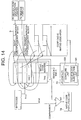
- Fig. 14 illustrates an explanation of the search action of the ninth embodiment of the virtual machine of the present invention.
- a comparator 1 a search table 2, a native code area 3, and a JIT compiler 73 are shown.
- the JIT compiler 73 is composed of a compiling unit 100 and a cache block substitution unit 101.
- P1 is an instruction generation pointer
- P2 is a release pointer.
- the initial value of P1 points to the leading address of the code cache and the initial value of P2 points to the end address of the code cache.
- the code cache is divided into blocks each time compiling is executed.
- a tag pointer that is the leading address of the block, and a next pointer that points the next block are generated and stored.
- the rest of the block area is instruction region to store the native code.
- the next pointer is not required to be the pointer, but any thing showing the border of the block could be used instead of the pointer.
- Fig.15 shows the flow chart of the code cache substitution of the ninth embodiment of the present invention..
- This process shows an example that executes the substitution in the code cache 3 during compiling.
- a tag pointer to the search table 2 is set in a tag pointer in the native code generation area (S101).
- the tag pointer setting area is directed by the P1 (instruction generating pointer) shown in Fig. 14.
- the steps S102, S 103, S104 and S105 are a main group of the compiling process that produce the native code from the bytecode.
- the JIT compiler transforms the bytecode to the native code (S102). Before storing the native code in the code cache 3, the value of the instruction generating pointer and the value of the releasing pointer are compared to each other, to determine whether or not the instruction generating pointer is less than the releasing pointer. This check prevents overwriting a valid native code.
- the native code is generated and written in the cache code 3 (S104). Further, the instruction generating pointer is increased and it is determined whether or not the compiling ending condition is satisfied (S105). As a result, when compiling ending condition is not satisfied, the process returns to step S102 to continue the compiling.
- the condition of the compiling ending condition is satisfied, the block of the generated native codes is settled as one block. That is, the instruction generating pointer is set to the next pointer (S106).
- the aforementioned condition is not satisfied, that is, the instruction generating pointer is more than or equal to the release pointer, an effective area for storing the generated native code has to be generated.
- a tag in the search table 2 is cleared according to the tag pointer pointed by the release pointer (S110).
- the tag in the search table is canceled by the process of step S110, and the block pointed by the release pointer is really released.
- the set of the release pointer is changed to the next pointer (S111) and goes to the process of step S104. With this process, the release pointer points to the next block.
- the release pointer When the condition that the release pointer is less than the end address of code-cache is satisfied at S107, the tag of search table pointed by the tag pointer of the release pointer is cancelled (S110), and the block pointed by the release pointer is really released. After this, the release pointer is set to the next pointer (S 111), and the process goes to the process of S104. With this process, the release pointer points to the next block.
- the ninth embodiment of the present invention is characterized in features as follows. Because of the code cache comprising the pointer to the search table, the block size of the code cache can be variable in length, and the memory is used effectively. The code cache could be cancelled by investigating the whole search table instead of using the pointers, but investigating the whole table is a big quantity of processing volume and wastes processing time for compiling. The ninth embodiment of the present invention, however, is able to cancel a portion of the code cache, that is native code area, and the cancel of the code cache is executed with high speed.
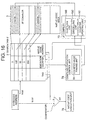
- Fig. 16 shows the drawing for explanation of substitution in the code cache of the virtual computer of the tenth embodiment of the present invention.
- a compiling execution control unit 72 a counter value finding unit 91, a JIT compiler 73, a count value updating unit 92, a compiling unit 100, a native code executing unit 78, and a native code canceling unit 102 are shown.
- the count value updating unit 92 counts the number of the bytecode, that is the instruction, implemented by the interpreter, and counts the number of times the compiled native code has been accessed, and updates the count value of an execution counter.
- the counter value finding unit 91 finds the native code with the least execution count value by scanning, and the native code canceling unit 102 cancels the native codes in turn from the native code of the least execution count value.
- the execution counter is set with any value at the time just starting the compiling. With each execution of the native code, the execution counter corresponding to the executed native code is increased, and when a native code is cancelled, the values of the all counters are decreased.
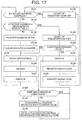
- Fig. 17 shows a flow chart of the tenth embodiment of the present invention.
- the tenth embodiment will be explained with reference to Fig. 17.
- the steps of S121-S131 are the same as the steps of S61-S67 in Fig. 6.
- the execution counter of the search table 2 is increased up (+1) (S129), and it is determined whether the counter value exceeds a predetermined value (S130).
- the process goes to step S 125 to be executed by the interpreter.
- the bytecode is compiled by the compiler to generate the native code (S132), and the generated native code is registered in the code cache (S132).
- the execution counter of the search table 2 is set.
- the native code registered in the process of S 123 is executed (S133), and the process goes to the process of S121.
- the execution counter of the search table 2 is increased up (+1) (S128), and the process goes to step of S 133.
- step S131 when a native code is generated, the existence of free space in the code cache 3 is determined (S134). When free space exists in the code cache 3, the process returns to step S131. When free space does not exist in the code cache 3, all execution counter in the table is scanned, and all execution counters are decreased (S135). Then, the entries of small numbers of execution times are cancelled to make free space in the code cache 3 (S136). The process then returns to step 131.
- the tenth embodiment of the present invention is characterized in the features as follow. Native codes that are executed frequently are hardly canceled. The free spaces, however, are scattered in the code cache area, and branch instruction to the scattered codes, which is not necessary essentially, are needed.
- the eleventh embodiment is an example that closes the native codes in the code cache that the free spaces are scattered in the native codes.
- free spaces scattered in the code cache 3 were inevitably caused.
- the scattered blocks of the native codes, which are generated in one compiling process, are moved or relocated so as to be close each other in the location of the native codes.
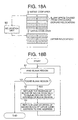
- Fig. 18A is the drawing for explaining the action of the eleventh embodiment of the virtual computer of the present invention.
- a native code area 3 before the relocation of the native code block, and the native code area 3' after the relocation and a relocation unit 90 are shown.
- the relocation unit 90 finds the space area A and C, and closes the block of the native code block.
- Fig. 18B shows a flowchart of the relocation of the native codes.
- the eleventh embodiment of the present invention is characterized in features as follow. Insertion of the branch instruction to connect a divided instruction caused by the scattered space area is not needed.
- the instruction queue to be executed is located closely in the code cache, and is always arranged to be one block, because of this, the code cache is used effectively and the performance is improved.
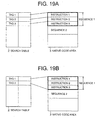
- Figs. 19A and 19B show the drawing of an explanation to improve the hit rate.
- the tag of the search table of the present invention can be applied to both cases.
- One case is that generates the tag for each instruction in the native code area.
- the other case is that generates the tag for one compiling sequence.
- Fig. 19A shows the case that generates the tag for each instruction.
- Fig. 19B shows the case that generates the tag for one compiling sequence.
- Fig. 20 shows a cellular phone comprising the virtual computer of the present invention.
- the virtual computer of the present invention can be applied to a portable wireless communication device that memory size is small.
- Fig. 20 shows an example of application for a cellar phone. In Fig. 20, the construction that does not relate to the present invention is not shown.
- an input unit 62 inputs bytecodes sent from sever 51.
- a bytecode storing area 63 in memory holds the input bytecodes.
- Methods 64 and 65 are compiled to bytecodes.
- the virtual computer 66, an interpreter 71, a compile execution control unit 72, a JIT compiler 73, CPU 80, and a native code executing unit 78 are shown.
- a native code area 3 is a memory region storing native codes:
- An output 82 outputs the calculated result.
- a tag generation unit 74 generates tags in the search table 2.
- a search table search unit 76 searches the search table, decides whether the bytecodes have been compiled and stored in the native code area or not.
- the present invention comprises the search table involving information to decide whether or not bytecodes have been compiled from byte code addresses, and to search the addresses of the compiled native code.
- the bytecode has been compiled or not can be easily decided from the search table, and the stored addresses of the compiled native codes are easily found by searching the search table.
- the execution speed of programs is increased by compiling the byte code to the native code. Comparing the memory size used by the prior art JIT compiler, the memory size for generating and storing the native code is significantly reduced. Thus, the processing speed is increased with small memory size in the present invention.
- the virtual computer of the present invention can be applied to a cellular phone, PDA,etc., that are portable wireless communication devices of small memory size, and makes their running speed high.
Landscapes
- Engineering & Computer Science (AREA)
- Software Systems (AREA)
- Theoretical Computer Science (AREA)
- General Engineering & Computer Science (AREA)
- Physics & Mathematics (AREA)
- General Physics & Mathematics (AREA)
- Devices For Executing Special Programs (AREA)
Abstract
A virtual computer having a JIT compiler with a bytecode storing area, a
unit to execute bytecodes by interpreting the bytecodes in order, a compiler to
compile bytecodes to native codes that the virtual computer executes, a native
code area and a search table storing tag information generated from an address
of the bytecodes and addresses of compiled native codes in the native code area.
Description
The present invention relates to a virtual computer comprising a
Just-In-Time, or JIT compiler. The virtual computer of the present invention is
suitable for a portable wireless communication apparatus such as a terminal
apparatus, a cellular phone, or a personal digital assistant (PDA) having
wireless communication function.
The widespread use of the internet makes it practical to have a system
to run programs that are available via the internet. Use of the Java language,
for example, is common for programs meant for cellular phones.
The Java language is distributed for programs executed on a virtual
computer which can be used on every platform, and the program is called
"bytecode." The Java language, however, cannot be executed directly by
processors of portable wireless communication apparatus. Instead, such
devices execute the bytecode by using emulation techniques.
The present invention relates to a virtual computer comprising a
Just-in-Time, or JIT, compiler. The virtual computer of the Java language of
the present invention can run bytecode with high speed, making it suitable for
use with portable wireless communication apparatus with small memory
capacity, such as cellular phones, PDAs, and the like.
Prior art of the present invention will be explained referring to Figs.
21-24.
Fig.21 shows a flowchart of the interpreter, which interprets and
executes the bytecode on the virtual computer. The boxes labeled S1-S6 shows
processing steps.
An interpreter system that interprets and subsequently executes
bytecodes by software is used to execute bytecodes on a virtual computer. The
running speed of this process by the interpreter system, however, is low,
because of the step-by-step execution of instructions. The embodiment of the
prior art process is as follows.
The instruction of bytecode is fetched (S1), and the fetched instruction is
decoded (S2). When the decoded result of the instruction is an "execution" of
instruction, the instruction is executed (S3,S4), and the process goes back to
step S1. When the decoded result of the instruction is "branch" (S5), the
branch process is executed and the the process goes back to step S1. When the
decoded instruction is "call-method" (S6), the calling method is executed (S6)
and the step goes to the process of S1. Each subsequent instruction is
processed in the same way.
The prior art JIT compiler that is generally used will be explained
referring to Fig. 22.
Fig. 22 shows a flowchart of the process, combining the interpreter and
the JIT compiler. The combination process of the interpreter and the JIT
compiler that is used generally only in personal computers will be explained
based on Fig.22. This JIT compiler has never been used in cellular phones.
Steps S11- S20 are the process steps. Of these steps, steps S11-S16 show the
process of the interpreter and steps S17-S20 show the process of the JIT
compiler.
The JIT compiler is generally used to resolve the problem of the low
running speed of the interpreter process. The JIT compiler compiles the
bytecode into native code. This native machine code can be executed on the
underlying platform, thus allowing the program to run with high speed.
The JIT compiler takes a downloaded program, which has methods to
execute, and compiles a whole of bytecodes of the methods into native machine
codes. The compiled native codes are stored in memory (-storing area for
program-), and are then used when the program is executed. The first
execution does incur overhead time, but subsequent executions occur with high
speed, without the overhead. The embodiment of the process is asfollows.
The instruction of the bytecode is fetched (S11), and the fetched
instruction is decoded (S12). When the decoded result is "execution", the
instruction is executed (S13, S14) and the process goes back to step S11. When
the decoded instruction is "branch", the branch process is executed (S 15), and
the process goes back to step S11. When the decoded instruction is "call
method", the calling method is executed (S16) and goes to the next step to
decide whether or not the bytecode has been compiled (S17).
When the bytecode has not been compiled, the next step is to decide
whether the bytecode needs to be compiled (S18). When compiling is not
needed, the process goes back to step S11. Alternatively, when the bytecode
needs to be compiled, the bytecodes called by the method are compiled with the
JIT compiler to produce native codes, and the native codes are stored in the
native code storing area (S19). Further, the native codes are executed (S20).
In execution of the process, when a method is called, the process goes to step
S16, and the method is implemented, the process returns to step S11. In the
process, when compiling is implemented by the decision at step S17, the process
goes to step S20. The above-mentioned process will be continued to address
each instruction.
The above-mentioned bytecode refers to the machine code of the Java
virtual machine (virtual computer) that is the binary form of the Java
application created by Sun Microsystems (Santa Clara, CA, USA). The "JIT
(Just-In-Time) compiler-" is software that transforms bytecode into native code
that a computer executes directly. The "method" is a program (or
subroutine) that defines the execution method of an object in object oriented
programming.
Fig. 23 shows prior art terminal apparatus loading the virtual computer.
In Fig. 23 a server 51 comprises JAVA application program 52 and JAVA
compiler 53 which compiles the JAVA application program, and an output unit
54 that outputs bytecodes compiled by the JAVA compiler on a network.
In the terminal apparatus 61, an input unit 62 inputs bytecodes sent
from the server 51. A bytecode storing area 63 in memory stores the input
bytecode. Methods 64 and 65 are methods compiled to the bytecode by the JAVA
compiler 53. A virtual computer 66 comprises an interpreter 71, a JIT
compiler 73 and a native code area 3, which is a memory area storing the native
code compiled by the JIT compiler. The terminal apparatus comprises CPU 80,
calculation result holding area 81 holds the calculation result in memory, and
an output unit 82 outputs the calculation results.
In Fig. 23, the bytecodes sent from the server 51 are input through the
input unit 62 and stored in the byte code storing area 63, with bytecode
addresses. The interpreter 71 interprets and executes the bytecodes. When
the decoded result is method 1 64, the JIT compiler 73 inputs the bytecode
instruction from the bytecode storing area and compiles the bytecode. The
compiled bytecodes are stored at native code addresses in the native code
storing area 3.
The calculated result of CPU 81 is held in the calculation result holding
area 81 of memory, and output through the output unit 82.
A telephone set loading prior art virtual computer is shown in Fig. 24.
In Figs. 23 and 24, the same numerals denote the same units. In the
construction of Fig.24, the bytecodes sent from the server 51 are input through
the input unit 62 and stored in the byte code storing area 63 with byte code
address. The interpreter 71 interprets each instruction in order of the input
bytecode, and CPU 80 calculates the decoded bytecodes. The calculated result
of CPU 80 is held in memory in the calculation result holding area 81, and
output through the output unit 82.
The above-mentioned prior art virtual computer has several
disadvantages.
Memory capacity used in portable wireless communication apparatuses
such as cellular phones and PDAs, etc. are limited, so all compiled codes cannot
be stored in the memory. Moreover, many of the applications executed in the
portable wireless communication apparatuses are interactive software, such as
game software, that requires high response speed. Because of this, long
compiling time is not acceptable for portable wireless communication
apparatuses.
High performance processors are generally not used in portable radio
apparatus. When using the prior art JIT compiler with this apparatus,
interruptions occur, for example in game play, while using the softeware.
Moreover, for any bytecode executed only one time, the execution speed is
retarded by the overhead time of the compiling, and because of the overhead,
when compiling a large program, the execution speed is lower than execution
speed performed by interpreter.
Objects of the present invention are to resolve the above-mentioned
problems, and improve processing speed and response characteristics of the
portable wireless apparatus having limited memory capacity.
The present invention comprises constructions that follow.
comprises a storing bytecodes in a bytecode storing area, executing bytecodes by interpreting the bytecodes in order, compiling bytecodes to native codes that the virtual computer executes, storing tag information generated from the addresses of the bytecodes and addresses of the native codes in the native code area in a search table, and deciding that compiling of the byte code is needed or not by searching the search table.
Thus, the present invention easily decides whether or not compiling is
required, and the search of the stored addresses of native codes is easily
performed in the cases where compiling has been implemented. Furthermore,
only the frequently used parts of methods are compiled and held. Thus, in the
present invention, compiling can be executed in a device with small memory
capacity. Further, even if the JIT compiler of the present invention is used in a
portable terminal apparatus that limits memory for generating and holding the
native codes, the processing speed is high because of the ability to compile with
small memory capacity.
Referring to the drawings, the embodiments of the present invention
will be explained. The virtual computer explained below is virtually realized
with software programs and a processor (CPU or MPU) in a portable radio
communication apparatus which executes the program.
Thus, all processes of the flowcharts explained below are executed by the
software program. The memory, the code cache and the search table, etc. in
the virtual computer are realized in the software program.
The first embodiment of the present invention interprets and executes
the bytecode of the virtual computer with software. Further, the virtual
computer comprises a code cache, which is a limited area in the memory to store
the native codes. The virtual computer also comprises a JIT compiler. When
executing the bytecodes, the JIT compiler compiles the bytecode to the native
code, which the virtual computer can execute directly, and stores the native
codes in the code cache. Further, the virtual computer comprises a search
table holding the information that determines whether or not compiling is
implemented using the bytecode address, which will be explained later. The
addresses of the compiled native codes can be found by retrieving the search
table.
Free space for storing the native code does not exist in the native code
area when the bytecode is compiled. Any compiled native codes are cancelled
to make some free spaces in the native code area. The search table can be
updated in this manner.
Fig. 1 shows a terminal apparatus comprising the virtual computer of the
present invention. The terminal apparatus 61 comprises a search table 2, and
a native code area 3 in memory area to store the native code. Further, the
terminal apparatus 61 comprises an input unit 62 to input the bytecodes sent
from a server 51, a byte code storing area 63 to store the input bytecodes in
memory, and methods 64 and 65 to be compiled.
The virtual computer 66 comprises an interpreter 71 and a compile
execution control unit 72. The compile execution control unit 72 finds whether
there is a need to compile from the search result for the search table unit 76.
Moreover, the compile execution control unit 72 decides compiling portions.
For example, it finds portions inevitably executed or portions of instructions
frequently used for compiling, or a portion for compiling of a fixed number of
instructions or a portion for compiling for a fixed time. The virtual computer
66 further comprises the JIT compiler 73, a CPU 80, a calculation result
holding area 81 to hold the calculation result in memory, and an output unit 82
outputting the execution result.
The virtual computer 66 further comprises a tag generation unit 74 to
generate tags in the search table 2 and writes the bytecode address of the
native code area 3 in the tag, a JIT compiler 73 to generate the native code, and
a native code registering unit 75 to register the address of native code of the
native code area in a tag corresponding to the bytecode in the search table.
The search table search unit 76 searches the search table 2 and decides
whether or not the bytecode is compiled and registered in the native code
storing area. The native code execution unit 78 executes the native codes
stored in the native code area 3 according to the search result of the search
table search unit 76.
In Fig. 1, the tag generation unit 74 generates a tag that points to a
bytecode in a process sequence of the interpreter 71. Alternatively, the tag is
generated for every bytecode. The JIT compiler compiles bytecodes to generate
native codes. The native code registration unit 75 registers the native code
addresses in the tag corresponding to the bytecodes. The search table search
unit 76 searches the tag of the bytecode to be processed in the search table 2.
When the search table search unit finds that the native code corresponding to
the bytecode is registered, that is considered a "hit", and the native code
execution unit 78 executes the bytecode by using the native code.
The bytecodes sent from the server 51 are input through the input unit
62, and stored at their bytecode addresses in the bytecode storing area 63. The
interpreter 71 interprets and executes bytecodes. When the decoded bytecode
is a method and the search result of the search table searching unit 76 shows
that the native code has been compiled, that is a "hit", and the native code
execution unit 78 executes the bytecode by using the native code. When the
search result of searching the search table by the search table search unit 76 is
that the native code is not compiled, that is a "miss", and the compile execution
control unit 72 directs the JIT compiler to compile a portion of the instruction or
method etc. The JIT compiler 73 compiles a portion of the instruction, etc.
The native code compiled by the JIT compiler is stored at the native code
address in the native code storage area 3. Further, the native code
registration unit 75 registers the native code address corresponding to the tag
of the compiled bytecode. The search table 2 only registers the first instruction
of the block of a compiling sequence.
The calculation result of CPU 80 is held in the calculation result holding
area 81 and output through the output unit 82.
Fig. 2 shows the first example of a flowchart of the virtual computer of
the present invention. Referring to Fig. 2, the first embodiment of the present
invention will be explained. The flowchart illustrates the process executed
by the virtual computer in checking whether or not the bytecodes have been
compiled. For all byte codes, whether or not compiling should be
implemented is checked by using the tag information in the search table (S31).
When the bytecode has not yet been compiled, it is determined whether or not
compiling is needed (S32). When compiling is not needed, the bytecode
instruction is fetched (S33), and the bytecode instruction is decoded (S34).
When the result is "execution" (S35, 36), the instruction is executed, and
the process returns to step 31. When the result is "branch" (S37), the
instruction is executed, and the process returns to step 31. When the result is
"call method" (S38), the instruction is executed, and the process returns to step
31.
When the decision of step S32 is that compiling is required, a portion of
the bytecodes are compiled to generate native codes and the native codes are
stored in the native code storage area (S39). Further the native codes are
executed (S40), and the process returns to step S31. Alternatively, when the
bytecode has been compiled in the process of step 31, the process goes to step 40.
In the above-mentioned processes, the processes of S31 - S 38 are executed by
the interpreter 71, and the processes of S 39 and S40 are executed by the JIT
compiler 73.
Fig. 3 shows a flowchart of a second example of the first embodiment of
the present invention. Referring to Fig. 3, the second example of the first
embodiment of the present invention is explained.
The process of the second example is that the necessity of compiling is
decided at a pause of the execution control, for example when executing branch
or method, etc. The second example is characterized in that compiling is not
executed by a whole method unit, but interrupted by some conditions which will
be explained later in the fifth, sixth, seventh and eighth embodiment of the
present invention. That is, the present invention is different from the general
JIT compiler.
In Fig. 3, a byte code instruction is fetched (S41) and the instruction is
decoded (S42). When the decoded result is "execution" (S43, S44), the
instruction is executed and the process returns to step S41. When the decoded
result is "branch" (S45), the branch process is executed, and when the
instruction is "call method" (S46), the calling method is executed.
Further, when branch or calling method is executed in the
above-mentioned steps, it is decided whether or not the bytecode has been
compiled (S47). If the bytecode has not been compiled, the next step
determines whether or compiling of the bytecode is necessary (S48). If the
result of this step is that compiling of the bytecode is not needed, the process
returns to step S41.
Alternatively, when compiling is necessary, compiling in part is executed
to generate native codes, and the generated native codes are stored in the
native code storage area (S49). The native codes are executed (S50), and the
step returns to step S46 or S47.
Fig. 4 shows a block diagram of the virtual computer of the first
embodiment of the present invention. In Fig. 4, a comparator 1, a search table
2, a native code area 3, an interpreter 71, a compiling execution control unit 72,
a JIT compiler 73, a tag generating unit 74, a native code registering unit 75, a
search table search unit 76 and a native code execution unit 78 are shown.
The native code area 3 of the present invention acts as cache memory
with the search table 2, the tag generating unit 74, the native code registering
unit 75 and the search table searching unit 76. In the explanation in that
follows, the code cache corresponds to the native code area 3.
In Fig. 4, the search table 2 is used to determine whether or not the
bytecode has been compiled. The search table 2 registers the correspondence
between a tag and a native code address, that is the address of the native code
area in the cache. Thus, the data of the native code area 3 in the cache can be
retrieved by the native code address.
The address of bytecode is composed of an upper M bit and a lower N bit.
The native code address can be found from the lower N bit of the bytecode
address by search in the search table. The upper M bit of the bytecode and the
tag information are input into the comparator 1. The comparator 1
automatically compares to find the match or mismatch of the information.
When the search result is a match or "hit," the native code execution unit 78
executes the instruction with the native code stored in the native code area.
When the result of the comparison is match or hit, the comparator 1
outputs a match signal, indicating that the bytecode has been compiled.
The first embodiment of the present invention is characterized in the
following features. Whether or not the bytecode has been compiled is easily
determined by searching the search table. Moreover, in the case where the
bytecode is compiled, finding the native code address, that is the address of the
native code area 3 in the cache, corresponding to the bytecode is easy. The
running speed of a program is quick with the compiled bytecodes and stored
native codes. The memory necessary for storing the native codes generated by
the JIT compiler is limited, thus the program can be run with high speed, even
with small memory capacity.
The second embodiment of the present invention is that the search table
2 or the code cache 3 comprises a counter for counting the number of times
instructions are executed. When executing the bytecode of virtual computer, in
the case where the counter value of the execution counter is less than a
predetermined value, the interpreter executes the instruction. Alternatively,
in the case where the counter value is equal to or greater than the
predetermined value, that the bytecode is frequently executed, the bytecode is
compiled by the JIT compiler and executed.
Fig. 5 shows the explanation of the construction and action of the second
embodiment of the present invention. In Fig. 5, an interpreter 71, a compiling
execution control unit 72, a JIT compiler 73, and a native code control unit 72
are shown. In the compiling execution control unit 72, the counter value
finding unit 91 reads the counter value of the search table 2. The JIT compiler
73 comprises a counter updating unit 92 to update the execution counter and a
compiling unit 100.
In Fig. 5, the interpreter 71 registers a bytecode address to a tag in the
case where the bytecode address is not registered to the tag, and the execution
counter is cleared. Further, the interpreter 71 increases the count value of the
execution counter in the case where the bytecode address is registered in the
tag and the bytecode has not been compiled. The counter value finding unit 91
finds the counter value and, in the case where the counter value is less than the
predetermined value, the interpreter executes the instruction of the bytecode.
When the counter value finding unit 91 finds that the number of occurences of
the bytecode has reached the predetermined value, the JIT compiler 73
compiles the bytecode to the native code by the compiling direction of the
compile execution control unit 72. The native code is stored in the native code
area 3. The native code address is registered in the tag corresponding to the
instruction. After the native code address is registered in the search table 2,
the instruction of byte code is executed with the native code in the native code
area by the search hit of the search table search unit 76.
As shown in Fig.5, the search table 2 is composed of the tag, the
execution counter and the information corresponding to the native code address.
Thus, the address of the native code area 3 in the code cache can be found by
searching the native code address. Further, the native code address can
be found by searching the search table 2 for a tag of lower N bit of the lower
address of the bytecode, which is composed of upper Mbit and lower N bit. The
upper M bit of the bytecode and the tag information of the search table are
input to the comparator 1, and the comparator 1 determines whether a match,
or "hit" exists between the tag information and the upper M bit. When there is
a hit, the native code execution unit 78 executes the native code.
When the comparison result is a match or hit, a match signal is output
from the comparator 1, and the match signal can be used to determine whether
the bytecode has been compiled. The compiling execution control unit 72 refers
the execution counter value in the case of the search resulting in a miss. When
the counter value corresponding to the bytecode is less than the predetermined
value, the native code execution control unit directs the interpreter 71 to
process the bytecode. The interpreter process is the same as that of the prior
art. Alternatively, when the counter value is equal to or greater than the
predetermined value, the native code execution control unit 72 directs the JIT
compiler to compile the bytecode. In the above, the execution counter is
composed on the tag, but the execution counter can also be composed in the
cache code 3, that is native code area.
Fig. 6 shows a flowchart of the virtual computer of the second
embodiment of the present invention. The flowchart shows the compile
selection process. Referring to Fig. 6, the compile selection process of the
second embodiment of the present invention will be explained.
The process is composed of two parts. The first part is the process of
interpreting (S61-S67), and the second is the process of compiling (S71-S75).
In the process of interpreting, it is determined whether the bytecode has been
compiled(S 61). When the bytecode has not been compiled, it is determined
whether or not the bytecode address registered in the search table, by checking
whether the bytecode address is registered or not in the tag of the search table
in Fig. 4 (S62). When the address is not registered in the table, the address is
registered in the tag (S63). The execution counter is then cleared (S64).
Further, the instruction is fetched (S65), decoded (S66), and executed (S67).
The process then returns to step S61.
When the result of step S62 determines that the tag is registered in the
search table, the execution counter of the search table 2 is increased by +1, for
example (S71), and it is determined whether or not the count value is greater
than the predetermined value (S72). When the count value is less than the
predetermined value, the process goes to the process of step S65 and the
instruction is decoded and executed by the interpreter. When the value is
equal to or greater than the predetermined value, the process goes to the
process of step S73, and the bytecode is compiled by the JIT compiler to
generate the native code, and the native code is registered in the code cache 3.
In this process, the necessary information, that is the native code address, is
registered in table 2 (S74). The native code is executed (S75) and the process
then returns to the process of step S61.
In the process of step S61, when the compiling has been implemented,
the process returns to the process of S75 and the native code is executed.
The second embodiment of the present invention is characterized in the
following features. The compiling process is generally lengthy. The entire
processing time of the interpreter execution for bytecodes which are not
frequently used is less than the processing time of the execution by compiling
them. In the second embodiment of the present invention, however, because
the native code which is rarely used is not compiled, the process speed is
increased significantly.
Figs. 7A and 7B are block diagrams of the third embodiment of the
present invention. Fig. 7A shows the first access to the search table. Fig. 7B
shows the second access to the search table.
The third embodiment of the present invention decides whether
compiling is necessary without using the execution counter in the second
embodiment. At the time of first execution, only the bytecode address is
registered, that is, registered in the tag of the search table 2. In the native
code address area, a special function for compiling, that is the top address of the
compiling or processing, is registered. Instead of the special function,
numerical 0 can be used to register in the native code address registering area.
In this way, for example, the first time process is implemented by the
interpreter, and the second time process, the process is implemented by the
compiler.
Fig. 7-A shows the first time access. In Fig.7-A, reference numeral 71
denotes an interpreter, and the search table information registering unit 79
registers the native code address in the native code area of the search table 2 by
the interpreter processing. In Fig. 7A, at the first time access, as the
bytecode address is not registered in the search table 2, the interpreter 71
registers the bytecode in the search table 2, and writes numeric 0 or the special
function of compiling into the native code address area of the search table 2.
Moreover, the bytecode is executed by the interpreter 71.
Fig. 7B shows a block diagram to explain the action of the second time
access. In Fig. 7B, an interpreter 71, an execution control unit 721, a JIT
compiler 73, a search table 2 and a native code registering unit 75 are shown.
In Fig. 7B, the interpreter 71 process at the first access, and the execution
control unit 721 direct the JIT compiler, which compiles the bytecode to the
native code that the virtual computer can execute when subsequently accessed.
The second time the process of the bytecode occurs, numeric 0 or the special
function is registered in the native code address area of the search table 2.
The execution control unit 721 finds the registered numeric 0 or the special
function, and directs the JIT compiler 73 to compile the bytecode. The native
code generated by the compiling is stored in the native code area 3, and the
native code is then executed. Further, the native code registering unit 75
registers the native code address in the search table 2. After this, when the
bytecode process occurs, the search result is always "hit," and the native code
can be executed.
Fig. 8 shows a flowchart of the compiling selection of the third
embodiment of the present invention. The processes are composed of the
interpreter process of S81-S86 and the compiling process of S01-S04. The
interpreter process starts from the circled reference character A, and it is
determined whether or not the bytecode address is registered in the search
table 2 (S81). When the bytecode address is not registered, that means that it
is the first access, and the interpreter interprets the bytecode. In this process,
only the bytecode address is registered (S82) in the tag of the search table 2.
Subsequent to the process of the step S82, entry B is registered in the
native code address (S83). Further, the instruction is fetched (S84) and
decoded (S85). The decoded instruction is then executed (S86) and the process
returns to step S81.
At the process of step S81, when the bytecode address is registered, that
means that it is the second access, thus the process is implemented by JIT
compiler. In the process, the process jumps to a native code address (S91), and
the JIT compiler compiles from the entry B (S92), and the native code address is
registered (S93). Further, the native code is executed (S94) and the process
returns to the process of step S81.
Alternatively, according to the result of the process of step S91, the
process goes to the process of step 94 to execute the native code (S94) and
returns to S81.
The third embodiment of the present invention is characterized in the
following features. Because the compiling process requires long period of time,
when processing any bytecode used only one time, the process executed by the
interpreter is quicker than if executed by compiling. Thus, the total running
speed of a program is increased by the aforementioned processing. Moreover,
the third embodiment does not require an area for the execution counter, so
memory required in the third embodiment is less than in the second
embodiment.
In the fourth embodiment the search table does not involve the native
code address, but rather involves the information of the compiling being
implemented, that is tag information. The native code address in the native
code area can be obtained by the calculation of the bytecode address.
Fig. 9 shows the construction of the search table 2 and the native code
area of the fourth embodiment. The search table 2 stores only the tag. The
search table 2 is accessed by using lower N bit of the bytecode address. The
native code address in the native code area 3 is set with the calculation result of
the lower N bit with the arithmetic unit 4. For example, the arithmetic unit 4
calculates the lower N bit of the bytecode times 8 ,that is N × 8, and the
calculation result is set to the native code address of the native code area 3.
The tag in the search table 2 can be searched by using lower N bit of the
bytecode address composed of upper address of M bit and lower address of N bit.
The upper M bit of the bytecode address and the tag information in the search
table are input into the comparator 1. Both inputs are compared to decide
whether there is a hit or miss. In the case of match, a match signal is output
from the comparator 1, and the compiling implementation can be found by the
match signal. The address can be decided by the calculation result of the
arithmetic unit 4 that calculates the address based on the lower N bit of the
byte code.
The fourth embodiment is characterized in the following features. The
address of the compiled native code on the memory can be obtained uniquely
based on the calculation of bytecode address. Thus, retrieving the native code
address in the search table 2 is unnecessary. Further, when substituting the
native codes in the native code area, which will be explained later, seeking
native codes to be cancelled is unnecessary. Thus, the substitution process is
simplified.
The fifth embodiment limits the compiling range in the first
embodiment to shorten the compiling time, that is, to improve the response
performance. When specific instruction, such as a branch instruction or a
calling method etc., which are defined in advance, are found in the compiling
process, an instruction to stop the compiling, such as a branch instruction or
interrupt instruction of the native code, is generated. That is, if a branch
instruction or interrupt instruction is inserted at the end of the native code, the
rest of the bytecode is not compiled.
Fig. 10A shows the compiling execution control unit 72 in the virtual
computer of the fifth embodiment. The search table in the fifth embodiment is
the same as in the first embodiment, shown in Fig. 4. A process limiting unit
20 finds the specific instruction and breaks to compile at the point where the
specific instruction is found. Further, the specific instruction finding unit 21
finds the instruction such as THEN processing in an IF condition sentence, or a
RETURN instruction. A compiling end direction unit 25 directs to end the
compiling.
Fig. 10B shows a flowchart of compiling by the compiling execution
control unit 72 of the fifth embodiment and the JIT compiler. The compiling is
executed at the step S1. Then it is decided whether or not a specific
instruction exists (S2, S3). When the specific instruction is not found, the
compiling continues at step S1. Alternatively, when the specific instruction is
found at the step S3, the compiling is ended at the step S4. As
mentioned above, the process limiting unit 20 limits the compiling range to
shorten the compiling time in the virtual computer. When finding the specific
instruction in the compiling process, an instruction to interrupt the process is
generated so as not to compile the rest of the bytecode from the specific
instruction.
The fifth embodiment is characterized by the following features. Only
portions of bytecode that need to be compiled are compiled, so the compiling
performance is high. For example, when compiling a string of bytecodes of the
"IF condition and THEN processing", only the process of the condition "IF" is
compiled, and the process of "THEN" is not compiled.
In the prior art, because the whole method is compiled, parts of the
process that were never executed were also compiled. On the other hand, in
the fifth embodiment of the present invention, only parts inevitably executed
are compiled, thus the time wasted on compiling is less and the process can run
with high speed. Further, the memory is not wasted, and response efficiency is
improved also. In general an application program is interrupted during
compiling. In the present invention, however, interrupted time of the
application program occurred by the compiling is reduced, because inevitably
necessary portions for execution are only compiled by the present invention.
The sixth embodiment reduces the compiling time. The sixth
embodiment breaks the compiling by the volume of compiled bytecode rather
than finding the specific instruction in the fifth embodiment. For example,
when one hundred instructions are compiled, the compiling is broken. The
sixth embodiment also comprises the same function as the fifth embodiment to
interrupt the process at the step of the specific instruction.
Fig. 11A shows the structure of the compiling execution control unit of
the virtual computer of the sixth embodiment. As shown in Fig. 11A, the
compiling execution control unit 72 comprises a process limiting unit 20
composed of a specific instruction finding unit 21, an instruction number
counting unit 22 that counts the number of compiled instructions, and a
compiling end directing unit 25. In Fig. 11A, the instruction number counting
unit 22 counts the number of the compiled instructions. The compiling end
direction unit 25 directs to end the compiling at the time that the count of
instruction number reaches to the predetermined number. The compiling is
ended at the time of finding the specific instruction, however, even if the
instruction count number does not reach to the predetermined number,
Fig. 11B shows a flowchart of compiling by the instruction counting
number unit 22 and the JIT compiler of the sixth embodiment of the present
invention. In the process (S1) of the flowchart, whether the specific instruction
to end the compiling process is found or not found is decided (S2, S3). When
the specific instruction is found, the compiling process is ended (S6). When the
specific instruction is not found, the number of compiled instructions is
determined (S4, S5). When the number is less than the predetermined number,
the process returns to S1 to continue the compiling, and when the number
reaches to the predetermined number, the compiling is ended (S6).
The sixth embodiment of the present invention is characterized in the
following features. Generated codes are not wasted, and the consumption of
memories decreases, because only inevitably executed portions of code are
compiled. The response performance of an application is thus improved. In
general, an application program is interrupted during compiling. In the
present invention, however, only the inevitably executed portions are compiled,
thus the breaking time caused by the compiling is reduced. In addition, waste
of memory consumption decreases, because the compiling is limited by the
condition of the number of compiled instructions.
Fig. 12A shows the compiling execution control unit of the virtual
computer of the seventh embodiment of the present invention. The seventh
embodiment shortens the compiling time. The sixth embodiment breaks the
compiling by a condition of the quantity of generated native codes, in addition to
a condition of the finding specific instruction in the fifth embodiment. For
example, when 128 native codes are generated, the compiling is interrupted.
The seventh embodiment, however, comprises the condition of interruption of
the compiling in time of finding the specific instruction, which is the same
condition as in the fifth embodiment of the present invention.
In Fig. 12A, the compiling execution control unit 72 comprises a process
limiting unit 20. The process limiting unit 20 is composed of a specific
instruction finding unit 21, a word number counting unit 23 that counts word
number compiled (the number of compiled machine words), and the compiling
end directing unit 25. In the configuration of Fig. 12A, the word number
counting unit 23 counts the number of the words. The compiling end direction
unit 25 directs to interrupt the compiling when the compiled word number
reaches to a predetermined value. When one of the specific instructions is
found, however, the compiling is interrupted even if the compiled word number
is less than the predetermined volume.
Fig. 12B shows a flowchart of the compiling execution control unit and
JIT compiler of the seventh embodiment of the present invention. In the
compiling process (S1), it is determined whether or not the specific instruction
for interrupting the process is found (S2, S3). When the specific instruction is
found, the process is ended (S6). When the specific instruction is not found (S2,
S3), the compiled word number is checked (S4, S5). When the number is less
than the predetermined number, the compiling continues at step S1.
Alternatively, when compiled word number reaches to the predetermined, the
process is ended (S6).
The seventh embodiment of the present invention is characterized in
features as follows. Generated native codes are not wasted, and consumption
of memory decreases, because only inevitably executed portions are compiled.
The response performance of application programs is thus improved. In
general, application programs are interrupted during the compiling. In the
present invention, however, only inevitably executed portions are compiled,
thus the interruption time of the program caused by the compiling is
decreased. Further, the response performance of application programs is
improved. In addition, the waste of memory consumption is surely suppressed,
because the compiling is also limited by the condition of the compiled word
number.
The eighth embodiment reduces compiling time. The compiling is
interrupted by the condition of the elapsed time of compiling, in addition to the
condition of finding the specific instruction. For example, when the compiler
has compiled for 100 ms, the compiling is interrupted. The eighth embodiment
of the present invention comprises also the condition to interrupt compiling in
time of finding the specific instruction.
Fig. 13A shows a compiling execution control unit of the virtual
computer of the eighth embodiment of the present invention. The compiling
execution control unit 72 comprises a process limiting unit 20, a compiling time
count unit 24 that counts the. elapsed time from starting compiling, and the
compiling end directing unit 25. In Fig. 13A, the compiling time count unit 24
counts the elapsed time of compiling process. The compiling end direction unit
25 directs to interrupt the compiling, when the elapsed time reaches the
predetermined time. The compiling is interrupted, however, when the specific
instruction is found, even if the compiling time is less than the predetermined
time.
Fig. 13B shows a flowchart of the compiling execution control unit and
the JIT compiler of the eighth embodiment of the present invention. In the
compiling process (S1), whether the specific instruction found or not found is
decided (S2 ,S3). If the specific instruction is found (S2, S4), compiling is ended
(S3, S6). If the specific instruction is not found (S3), the elapsed time of the
compiling is checked (S4. S5). When the elapsed time of compiling time is less
than the predetermined time, the process continues in step S1. When the
elapsed time of the compiling reaches to the predetermined time, the process is
ended (S6).
The eighth embodiment of the present invention is characterized in
features as follows. Generated native codes are not wasted and consumption of
memory decreases, because only inevitably executed portions are compiled.
The response performance of application programs is improved. In general,
application programs are interrupted during the compiling. In the present
invention, however, only inevitably executed portion are compiled, thus the
interrupting time of application programs caused by compiling is decreased.
In addition, waste of memory consumption is decreased, because the compiling
is limited also by the condition of the elapsed time of the compiling.
The ninth embodiment is substitutes native codes in the code cache.
When free space is not found in the cache, that is native code area 3, some
native codes in the code cache are cancelled in order from the top of the cache.
Another method of substitution is realized by FIFO (first in first out) which
cancels in turn from the oldest compiled code that is compiled in oldest time.
Fig. 14 illustrates an explanation of the search action of the ninth
embodiment of the virtual machine of the present invention. In Fig. 14, a
comparator 1, a search table 2, a native code area 3, and a JIT compiler 73 are
shown. The JIT compiler 73 is composed of a compiling unit 100 and a cache
block substitution unit 101.
In the ninth embodiment, P1 is an instruction generation pointer, and
P2 is a release pointer. The initial value of P1 points to the leading address of
the code cache and the initial value of P2 points to the end address of the code
cache. As the process proceeds with many compilings, the code cache is
divided into blocks each time compiling is executed. A tag pointer that is the
leading address of the block, and a next pointer that points the next block are
generated and stored. The rest of the block area is instruction region to store
the native code. The next pointer is not required to be the pointer, but any
thing showing the border of the block could be used instead of the pointer.
Fig.15 shows the flow chart of the code cache substitution of the ninth
embodiment of the present invention..
This process shows an example that executes the substitution in the
code cache 3 during compiling. A tag pointer to the search table 2 is set in a
tag pointer in the native code generation area (S101). The tag pointer setting
area is directed by the P1 (instruction generating pointer) shown in Fig. 14.
The steps S102, S 103, S104 and S105 are a main group of the compiling
process that produce the native code from the bytecode.
The JIT compiler transforms the bytecode to the native code (S102).
Before storing the native code in the code cache 3, the value of the instruction
generating pointer and the value of the releasing pointer are compared to each
other, to determine whether or not the instruction generating pointer is less
than the releasing pointer. This check prevents overwriting a valid native
code.
When the instruction generating pointer is less than the release pointer,
that is, that all the area is free space, the native code is generated and written
in the cache code 3 (S104). Further, the instruction generating pointer is
increased and it is determined whether or not the compiling ending condition is
satisfied (S105). As a result, when compiling ending condition is not satisfied,
the process returns to step S102 to continue the compiling. When the
condition of the compiling ending condition is satisfied, the block of the
generated native codes is settled as one block. That is, the instruction
generating pointer is set to the next pointer (S106). When the aforementioned
condition is not satisfied, that is, the instruction generating pointer is more
than or equal to the release pointer, an effective area for storing the generated
native code has to be generated. Because of this, twhether or not the release
pointer points to the end address of the cache has to be checked. That is, that
the release pointer is less than the end address of the cache or not (S107) has to
be checked. As a result, when the release pointer points the end address of the
code cache, the release pointer is set at the top address of the cache (S 108), and
the instruction generating pointer is set in the instruction region of the leading
block (see Fig. 14) (S109). With this procedure, the block is released at the top
address of the code cache 3.
Further, a tag in the search table 2 is cleared according to the tag
pointer pointed by the release pointer (S110). The tag in the search table is
canceled by the process of step S110, and the block pointed by the release
pointer is really released. Then the set of the release pointer is changed to the
next pointer (S111) and goes to the process of step S104. With this process, the
release pointer points to the next block.
When the condition that the release pointer is less than the end address
of code-cache is satisfied at S107, the tag of search table pointed by the tag
pointer of the release pointer is cancelled (S110), and the block pointed by the
release pointer is really released. After this, the release pointer is set to the
next pointer (S 111), and the process goes to the process of S104. With this
process, the release pointer points to the next block.
In the aforementioned flowchart, when using the FIFO system, the code
is cancelled in turn from the oldest code, and the release pointer is set to the top
of the oldest block at the step of S 108.
The ninth embodiment of the present invention is characterized in
features as follows. Because of the code cache comprising the pointer to the
search table, the block size of the code cache can be variable in length, and the
memory is used effectively. The code cache could be cancelled by investigating
the whole search table instead of using the pointers, but investigating the whole
table is a big quantity of processing volume and wastes processing time for
compiling. The ninth embodiment of the present invention, however, is able to
cancel a portion of the code cache, that is native code area, and the cancel of the
code cache is executed with high speed.
Fig. 16 shows the drawing for explanation of substitution in the code
cache of the virtual computer of the tenth embodiment of the present invention.
In Fig. 16, a compiling execution control unit 72, a counter value finding unit 91,
a JIT compiler 73, a count value updating unit 92, a compiling unit 100, a
native code executing unit 78, and a native code canceling unit 102 are shown.
The count value updating unit 92 counts the number of the bytecode, that is the
instruction, implemented by the interpreter, and counts the number of times
the compiled native code has been accessed, and updates the count value of an
execution counter.
In the tenth embodiment of the present invention, when there is not free
space in the code cache, the counter value finding unit 91 finds the native code
with the least execution count value by scanning, and the native code canceling
unit 102 cancels the native codes in turn from the native code of the least
execution count value. The execution counter is set with any value at the time
just starting the compiling. With each execution of the native code, the
execution counter corresponding to the executed native code is increased, and
when a native code is cancelled, the values of the all counters are decreased.
Fig. 17 shows a flow chart of the tenth embodiment of the present
invention. The tenth embodiment will be explained with reference to Fig. 17.
The steps of S121-S131 are the same as the steps of S61-S67 in Fig. 6.
In the process of the interpreter, it is determined whether or not the
bytecode has been compiled (S121). When compiled, the registration or lack of
registration of the bytecode in the table is determined, which decides whether
the byte code is registered in the tag of the search table 2 or not (S122). As a
result, when the byte code is not registered in the tag table, the registration of
the address of the bytecode of the byte code is implemented (S123), and the
execution counter is cleared (S124). Then, an instruction is fetched and decoded
(S125, S126). The instruction is executed as aforementioned (S127), and
further the process goes to step S121.
When the decision at step 122 is that the bytecode address has been
registered in the table, the execution counter of the search table 2 is increased
up (+1) (S129), and it is determined whether the counter value exceeds a
predetermined value (S130). As a result, when the value is less than the fixed
value, the process goes to step S 125 to be executed by the interpreter. When
the number of execution times is more than or equal to the fixed value, the
bytecode is compiled by the compiler to generate the native code (S132), and the
generated native code is registered in the code cache (S132). At the same
time, the execution counter of the search table 2 is set. Then, the native code
registered in the process of S 123 is executed (S133), and the process goes to the
process of S121. At the process of S121, when the byte code has been compiled
is decided, the execution counter of the search table 2 is increased up (+1)
(S128), and the process goes to step of S 133.
In the process of the step S131, when a native code is generated, the
existence of free space in the code cache 3 is determined (S134). When free
space exists in the code cache 3, the process returns to step S131. When free
space does not exist in the code cache 3, all execution counter in the table is
scanned, and all execution counters are decreased (S135). Then, the entries of
small numbers of execution times are cancelled to make free space in the code
cache 3 (S136). The process then returns to step 131.
The tenth embodiment of the present invention is characterized in the
features as follow. Native codes that are executed frequently are hardly
canceled. The free spaces, however, are scattered in the code cache area, and
branch instruction to the scattered codes, which is not necessary essentially, are
needed.
The eleventh embodiment is an example that closes the native codes in
the code cache that the free spaces are scattered in the native codes. In the
tenth embodiment, free spaces scattered in the code cache 3 were inevitably
caused. The scattered blocks of the native codes, which are generated in one
compiling process, are moved or relocated so as to be close each other in the
location of the native codes.
Fig. 18A is the drawing for explaining the action of the eleventh
embodiment of the virtual computer of the present invention. In Fig. 18A, a
native code area 3 before the relocation of the native code block, and the native
code area 3' after the relocation and a relocation unit 90 are shown. The
relocation unit 90 finds the space area A and C, and closes the block of the
native code block. Fig. 18B shows a flowchart of the relocation of the native
codes. When the relocation unit 90 finds the space area between the native
code blocks (S1), the top address of the space area is replaced to the top address
of a native code block next to the free space (S2). Further, the end address of
the moved block of native codes is relocated to the end address of the moved
block of the native codes. (S3).
The eleventh embodiment of the present invention is characterized in
features as follow. Insertion of the branch instruction to connect a divided
instruction caused by the scattered space area is not needed. In the eleventh
embodiment of the present invention, the instruction queue to be executed is
located closely in the code cache, and is always arranged to be one block,
because of this, the code cache is used effectively and the performance is
improved.
Figs. 19A and 19B show the drawing of an explanation to improve the
hit rate. The tag of the search table of the present invention can be applied to
both cases. One case is that generates the tag for each instruction in the
native code area. The other case is that generates the tag for one compiling
sequence. Fig. 19A shows the case that generates the tag for each instruction.
Fig. 19B shows the case that generates the tag for one compiling sequence.
In the case that the addresses of all compiled bytecodes are registered in
the search table as shown in Fig. 19A, overwriting on the search table 2 would
increase, because of the limitation of the entry number of the search table.
From this, canceling of compiled native codes on the search table increase. It
causes an increase in missing, and makes the compiling a waste. But the case
that generates the tag for one compiling sequence shown in Fig. 19B prevents
bad performance.
Fig. 20 shows a cellular phone comprising the virtual computer of the
present invention. The virtual computer of the present invention can be
applied to a portable wireless communication device that memory size is small.
Fig. 20 shows an example of application for a cellar phone. In Fig. 20, the
construction that does not relate to the present invention is not shown.
In the cellar phone 61 shown in Fig. 20, an input unit 62 inputs
bytecodes sent from sever 51. A bytecode storing area 63 in memory holds the
input bytecodes. Methods 64 and 65 are compiled to bytecodes. The virtual
computer 66, an interpreter 71, a compile execution control unit 72, a JIT
compiler 73, CPU 80, and a native code executing unit 78 are shown. A native
code area 3 is a memory region storing native codes: An output 82 outputs the
calculated result. A tag generation unit 74 generates tags in the search table 2.
A search table search unit 76 searches the search table, decides whether the
bytecodes have been compiled and stored in the native code area or not.
Because the action of the virtual computer in Fig. 20 is the same as the
action of the virtual computer in Fig. 2, the detail explanation of the action is
omitted.
The present invention comprises the search table involving information
to decide whether or not bytecodes have been compiled from byte code addresses,
and to search the addresses of the compiled native code. Thus, that the
bytecode has been compiled or not can be easily decided from the search table,
and the stored addresses of the compiled native codes are easily found by
searching the search table. As a result, the execution speed of programs is
increased by compiling the byte code to the native code. Comparing the
memory size used by the prior art JIT compiler, the memory size for generating
and storing the native code is significantly reduced. Thus, the processing
speed is increased with small memory size in the present invention.
Because of these features, the virtual computer of the present invention
can be applied to a cellular phone, PDA,etc., that are portable wireless
communication devices of small memory size, and makes their running speed
high.
Claims (22)
- A virtual computer realized in memory comprising:a bytecode storing area;
a unit to execute bytecodes by interpreting the bytecodes in order;
a compiler to compile bytecodes to native codes that the virtual computer executes; anda native code area comprising:a search table storing tag information generated from addresses of the bytecodes and addresses of compiled native codes in the native code area. - The virtual computer of claim 1, further comprising:an execution counter formed in the search table or in the native code area to count instruction executing times; anda compiling execution control unit, whereinthe compiling execution control unit checks a value of the execution counter in the process of executing the bytecode, and when the value is less than a previously fixed value, the interpreter executes bytecodes by interpreting bytecodes in turn to execute the bytecode andwhen the value is equal to or more than the fixed value, the compiler compiles the bytecodes,and the execution is implemented.
- The virtual computer of claim 1, further comprising:at the times of subsequent executions, the compiling execution control unit controls the JIT compiler to compile the bytecode to the native code that the virtual computer can execute.a registering unit registering bytecode addresses and native code addresses in the search table; andthe compiling execution control unit,whereinat the first time of the execution, the registering unit registers only the native code address in the search table and special values or 0 for the native code address and
- The virtual computer of claim 1, further comprising:a compiling execution control unit to limit compiling range to shorten the compiling time, wherein the compiling execution control unit generates an instruction to interrupt compile and not to compile the rest of the process, when finding a specific instruction that is predetermined.
- The virtual computer of any of claims 1 to 4, further comprising:a first discarding unit to discard native codes in order from a top address of the native code area, when free space does not exist in the native code area.
- The virtual computer of any of claims 1 to 5, further comprising:a second discarding unit to discard an oldest native code by FIFO system, when free space does not exist in the native code area.
- The virtual computer of any of claims 1 to 6, further comprising:an arithmetic unit to calculate the native code address from the bytecode address, wherein the search table involves only information to decide whether the bytecode is compiled or not, and the native code address is calculated by the arithmetic unit calculation based on the bytecode address.
- The virtual computer of claim 4,
wherein the compiling execution control unit controls the interruption of compiling when both a predetermined number of compiled bytecodes and aspecific instruction are found. - The virtual computer of claim 4, wherein the compiling execution control unit controls the interruption of compiling when both a predetermined number of generated native codes and a specific instruction are found.
- The virtual computer of claim 4, wherein the compiling execution control controls the interruption of compiling when both a predetermined compiling time elapses and and aspecific instruction is found.
- An operating method of virtual computer realized in memory, comprising:a bytecode storing area;a unit to execute bytecodes by interpreting the bytecodes in order;a compiler to compile bytecodes to native codes that the virtual computer executes; anda native code area comprising:storing tag information generated from an address of the bytecode and addresses of native codes in the native code area in a search table; anddeciding whether or not compiling the byte code is necessary by searching the search table.
- The operating method of the virtual computer of claim 11, further comprising:wherein, a value of the execution counter is checked in the process of executing the bytecode, and when the value is less than a previously fixed value, bytecodes are executed by the interpreter, andan execution counter formed in the search table or in the native code area to count instruction executing times,
when the value is equal to or more than the fixed value, the compiler compiles the bytecode and the execution is implemented. - The operating method of the virtual computer of claim 11 or 12,
wherein the compiling range is limited to shorten the compiling time by interrupting the compiling and not compiling the rest of the process when a predetermined specific instruction is found. - The operating method of the virtual computer of claim 11, 12 or 13, wherein
native codes are discarded in order from a top address of the native code area, when free space does not exist in the native code area. - The operating method of the virtual computer of claim 11, 12, 13 or 14 wherein an oldest native code is discarded in order by FIFO system, when free space does not exist in the native code area.
- The operating method of the virtual computer of claim 11,
wherein the search table involving only information to determine whether or not bytecodes are compiled, and native code addresses are calculated by the arithmetic unit calculation based on the bytecode address. - The operating method of the virtual computer of claim 13,
wherein the compiling is interrupted when a predetermined number of compiled bytecodes are found and the specific instruction is found. - The operating method of the virtual computer of claim 13,
wherein the compiling is interrupted when a predetermined number of generated native codes is found and the specific instruction is found. - The operating method of the virtual computer of claim 13,
wherein the compiling is interrupted when a predetermined compiling time has elapsed and the specific instruction is found. - A terminal apparatus, comprising:a virtual computer realized in memory comprising a bytecode storing area;a unit to execute bytecodes by interpreting the bytecodes in order;a compiler to compile bytecodes to native codes that the virtual computer executes; anda native code area comprising:a search table storing tag information generated from an address of the bytecode and addresses of the native codes in the native code area.
- The terminal apparatus of claim 20, wherein the terminal device is a portable terminal device.
- The terminal apparatus of claim 20 or 21, wherein the terminal device is a portable wireless terminal device.
Applications Claiming Priority (3)
| Application Number | Priority Date | Filing Date | Title |
|---|---|---|---|
| JP2001341577A JP3808755B2 (en) | 2001-11-07 | 2001-11-07 | Virtual machine with JIT compiler |
| JP2001341577 | 2001-11-07 | ||
| PCT/JP2002/011599 WO2003040918A1 (en) | 2001-11-07 | 2002-11-07 | Jit compiler-equipped virtual computer, operation method thereof, and terminal apparatus having the virtual computer |
Publications (2)
| Publication Number | Publication Date |
|---|---|
| EP1445695A1 true EP1445695A1 (en) | 2004-08-11 |
| EP1445695A4 EP1445695A4 (en) | 2005-05-04 |
Family
ID=19155584
Family Applications (1)
| Application Number | Title | Priority Date | Filing Date |
|---|---|---|---|
| EP02775508A Withdrawn EP1445695A4 (en) | 2001-11-07 | 2002-11-07 | VIRTUAL COMPUTER EQUIPPED WITH A JIT COMPILER, CORRESPONDING METHOD OF OPERATION, AND TERMINAL DEVICE COMPRISING THE VIRTUAL COMPUTER |
Country Status (6)
| Country | Link |
|---|---|
| US (1) | US20040210865A1 (en) |
| EP (1) | EP1445695A4 (en) |
| JP (1) | JP3808755B2 (en) |
| KR (1) | KR20040063923A (en) |
| CN (1) | CN100354826C (en) |
| WO (1) | WO2003040918A1 (en) |
Cited By (2)
| Publication number | Priority date | Publication date | Assignee | Title |
|---|---|---|---|---|
| EP1394677A3 (en) * | 2002-08-29 | 2006-01-04 | Anadigm, Inc. | Generation of compiled code for speeding up a simulator |
| EP2521033A4 (en) * | 2010-10-09 | 2013-11-06 | Zte Corp | Startup method and device for application program on mobile device |
Families Citing this family (56)
| Publication number | Priority date | Publication date | Assignee | Title |
|---|---|---|---|---|
| JP4701611B2 (en) * | 2004-01-15 | 2011-06-15 | 株式会社日立製作所 | Memory management method for dynamic conversion emulators |
| US7412693B2 (en) * | 2004-03-05 | 2008-08-12 | Sun Microsystems, Inc. | Method and apparatus for determining frequency of execution for compiled methods within a virtual machine |
| GB0410151D0 (en) * | 2004-05-07 | 2004-06-09 | Zeus Technology Ltd | Load balancing & traffic management |
| JP4846226B2 (en) * | 2004-10-26 | 2011-12-28 | 株式会社日立ソリューションズ | Information processing apparatus, information processing method, and program |
| DE102004056006B3 (en) * | 2004-11-19 | 2006-03-23 | Fujitsu Siemens Computers Gmbh | Emulation system for source data processor with program containing source code and output block frequently outputting data signals in source code to target code blocks using data table |
| US7844958B2 (en) * | 2005-03-11 | 2010-11-30 | Aptana, Inc. | System and method for creating target byte code |
| US7707547B2 (en) * | 2005-03-11 | 2010-04-27 | Aptana, Inc. | System and method for creating target byte code |
| DE102005015746A1 (en) * | 2005-04-06 | 2006-10-12 | Man Roland Druckmaschinen Ag | Press simulator |
| KR100763199B1 (en) * | 2006-02-20 | 2007-10-04 | 삼성전자주식회사 | Method invocation method in virtual machine environment and system equipped with virtual machine performing the method |
| US7784041B2 (en) * | 2006-03-30 | 2010-08-24 | Oracle America, Inc. | Mechanism for reducing detectable pauses in dynamic output caused by dynamic compilation |
| US7963839B2 (en) * | 2006-09-19 | 2011-06-21 | Mudalla Technology, Inc. | Regulated gaming exchange |
| US8413125B2 (en) * | 2007-01-26 | 2013-04-02 | Oracle International Corporation | Asynchronous dynamic compilation based on multi-session profiling to produce shared native code |
| US8341609B2 (en) * | 2007-01-26 | 2012-12-25 | Oracle International Corporation | Code generation in the presence of paged memory |
| US8037460B2 (en) * | 2007-01-26 | 2011-10-11 | Oracle International Corporation | Code persistence and dependency management for dynamic compilation in a database management system |
| KR101407629B1 (en) * | 2007-06-04 | 2014-06-13 | 더 보드 오브 리젠츠 오브 더 유니버시티 오브 텍사스 시스템 | Apparatus and method for accelerating java translation |
| KR101407628B1 (en) | 2007-06-04 | 2014-06-13 | 더 보드 오브 리젠츠 오브 더 유니버시티 오브 텍사스 시스템 | Devices and methods that speed up the performance of tasks |
| US8914774B1 (en) | 2007-11-15 | 2014-12-16 | Appcelerator, Inc. | System and method for tagging code to determine where the code runs |
| US8954989B1 (en) | 2007-11-19 | 2015-02-10 | Appcelerator, Inc. | Flexible, event-driven JavaScript server architecture |
| US8260845B1 (en) | 2007-11-21 | 2012-09-04 | Appcelerator, Inc. | System and method for auto-generating JavaScript proxies and meta-proxies |
| US8566807B1 (en) | 2007-11-23 | 2013-10-22 | Appcelerator, Inc. | System and method for accessibility of document object model and JavaScript by other platforms |
| US8719451B1 (en) | 2007-11-23 | 2014-05-06 | Appcelerator, Inc. | System and method for on-the-fly, post-processing document object model manipulation |
| US8806431B1 (en) | 2007-12-03 | 2014-08-12 | Appecelerator, Inc. | Aspect oriented programming |
| US8756579B1 (en) | 2007-12-03 | 2014-06-17 | Appcelerator, Inc. | Client-side and server-side unified validation |
| US8819539B1 (en) | 2007-12-03 | 2014-08-26 | Appcelerator, Inc. | On-the-fly rewriting of uniform resource locators in a web-page |
| US8938491B1 (en) | 2007-12-04 | 2015-01-20 | Appcelerator, Inc. | System and method for secure binding of client calls and server functions |
| US8527860B1 (en) | 2007-12-04 | 2013-09-03 | Appcelerator, Inc. | System and method for exposing the dynamic web server-side |
| US8639743B1 (en) | 2007-12-05 | 2014-01-28 | Appcelerator, Inc. | System and method for on-the-fly rewriting of JavaScript |
| US8285813B1 (en) | 2007-12-05 | 2012-10-09 | Appcelerator, Inc. | System and method for emulating different user agents on a server |
| US8335982B1 (en) | 2007-12-05 | 2012-12-18 | Appcelerator, Inc. | System and method for binding a document object model through JavaScript callbacks |
| US8516459B2 (en) * | 2008-03-25 | 2013-08-20 | Intel Corporation | XSLT-specific XJIT compiler |
| US8490077B2 (en) * | 2008-05-15 | 2013-07-16 | Microsoft Corporation | Runtime versioning and distribution of dynamic web-elements |
| US8291079B1 (en) | 2008-06-04 | 2012-10-16 | Appcelerator, Inc. | System and method for developing, deploying, managing and monitoring a web application in a single environment |
| US8880678B1 (en) | 2008-06-05 | 2014-11-04 | Appcelerator, Inc. | System and method for managing and monitoring a web application using multiple cloud providers |
| WO2010017251A1 (en) | 2008-08-05 | 2010-02-11 | Wms Gaming, Inc. | Mash-up wagering game creation |
| US7596620B1 (en) | 2008-11-04 | 2009-09-29 | Aptana, Inc. | System and method for developing, deploying, managing and monitoring a web application in a single environment |
| US9250938B2 (en) * | 2008-10-15 | 2016-02-02 | Microsoft Technology Licensing, Llc | Caching runtime generated code |
| JP2010140233A (en) * | 2008-12-11 | 2010-06-24 | Nec Computertechno Ltd | Emulation system and emulation method |
| KR100930831B1 (en) * | 2009-03-24 | 2009-12-10 | 주식회사 에이디칩스 | Bytecode conversion accelerator and method |
| US8938728B2 (en) | 2010-04-05 | 2015-01-20 | International Business Machines Corporation | Dynamic compiler program, dynamic compiling method and dynamic compiling device |
| JP5460430B2 (en) | 2010-04-05 | 2014-04-02 | インターナショナル・ビジネス・マシーンズ・コーポレーション | Dynamic compiler program, dynamic compilation method, and dynamic compilation apparatus |
| JP5505522B2 (en) * | 2011-02-01 | 2014-05-28 | 富士通株式会社 | Program execution method |
| JP2013061810A (en) * | 2011-09-13 | 2013-04-04 | Fujitsu Ltd | Information processor, information processor control method, and intermediate code instruction execution program |
| CN103092618A (en) * | 2013-01-15 | 2013-05-08 | 东南大学 | Dalvik virtual machine just-in-time compilation (JIT) acceleration method based on software Cache |
| US9003382B2 (en) * | 2013-02-18 | 2015-04-07 | Red Hat, Inc. | Efficient just-in-time compilation |
| US9239712B2 (en) * | 2013-03-29 | 2016-01-19 | Intel Corporation | Software pipelining at runtime |
| CN103984531B (en) * | 2014-05-30 | 2016-09-28 | 龙芯中科技术有限公司 | Overlength branch redirects processing method and processing device |
| JP6287650B2 (en) * | 2014-07-10 | 2018-03-07 | 富士通株式会社 | Simulation method and simulation program |
| US10353680B2 (en) * | 2014-07-25 | 2019-07-16 | Intel Corporation | System converter that implements a run ahead run time guest instruction conversion/decoding process and a prefetching process where guest code is pre-fetched from the target of guest branches in an instruction sequence |
| US9696973B1 (en) * | 2016-02-24 | 2017-07-04 | Semmle Limited | Compilation cache with imports scanner |
| US9934051B1 (en) * | 2017-04-17 | 2018-04-03 | Futurewei Technologies, Inc. | Adaptive code generation with a cost model for JIT compiled execution in a database system |
| US10802854B2 (en) * | 2019-08-30 | 2020-10-13 | Alibaba Group Holding Limited | Method and apparatus for interpreting bytecode instruction stream |
| US10783082B2 (en) * | 2019-08-30 | 2020-09-22 | Alibaba Group Holding Limited | Deploying a smart contract |
| US20220253488A1 (en) * | 2019-09-27 | 2022-08-11 | Intel Corporation | Methods and apparatus to process a machine learning model in a web-browser environment |
| US12271718B2 (en) * | 2020-06-22 | 2025-04-08 | Apple Inc. | Systems and methods for performing binary translation |
| CN112925523B (en) * | 2021-03-02 | 2024-06-21 | 京东科技控股股份有限公司 | Object comparison method, device, equipment and computer readable medium |
| US11972240B2 (en) * | 2021-12-03 | 2024-04-30 | Samsung Electronics Co., Ltd. | Systems and methods for automapping source code to machine code |
Family Cites Families (18)
| Publication number | Priority date | Publication date | Assignee | Title |
|---|---|---|---|---|
| US5560013A (en) * | 1994-12-06 | 1996-09-24 | International Business Machines Corporation | Method of using a target processor to execute programs of a source architecture that uses multiple address spaces |
| US6226789B1 (en) * | 1996-01-29 | 2001-05-01 | Compaq Computer Corporation | Method and apparatus for data flow analysis |
| US5768593A (en) * | 1996-03-22 | 1998-06-16 | Connectix Corporation | Dynamic cross-compilation system and method |
| JPH09282174A (en) * | 1996-04-10 | 1997-10-31 | Hitachi Ltd | Program execution method |
| JPH1097431A (en) * | 1996-07-31 | 1998-04-14 | Fujitsu Ltd | Simulation apparatus, simulation method, and computer-readable recording medium |
| JP3632344B2 (en) * | 1997-01-06 | 2005-03-23 | 日産自動車株式会社 | Semiconductor device |
| US5933635A (en) * | 1997-10-06 | 1999-08-03 | Sun Microsystems, Inc. | Method and apparatus for dynamically deoptimizing compiled activations |
| US5995754A (en) * | 1997-10-06 | 1999-11-30 | Sun Microsystems, Inc. | Method and apparatus for dynamically optimizing byte-coded programs |
| US6170083B1 (en) * | 1997-11-12 | 2001-01-02 | Intel Corporation | Method for performing dynamic optimization of computer code |
| US6760907B2 (en) * | 1998-06-30 | 2004-07-06 | Sun Microsystems, Inc. | Code generation for a bytecode compiler |
| US6324687B1 (en) * | 1998-12-03 | 2001-11-27 | International Business Machines Corporation | Method and apparatus to selectively control processing of a method in a java virtual machine |
| JP2000215181A (en) * | 1999-01-21 | 2000-08-04 | Fujitsu Ltd | Network computer system and proxy compilation server device |
| JP3470948B2 (en) * | 1999-01-28 | 2003-11-25 | インターナショナル・ビジネス・マシーンズ・コーポレーション | Dynamic compilation timing determination method, bytecode execution mode selection method, and computer |
| US6295642B1 (en) * | 1999-04-29 | 2001-09-25 | International Business Machines Corporation | Method and apparatus for partial just in time compiling in a data processing system |
| GB9921720D0 (en) * | 1999-09-14 | 1999-11-17 | Tao Group Ltd | Loading object-oriented computer programs |
| US6880152B1 (en) * | 1999-10-13 | 2005-04-12 | Transmeta Corporation | Method of determining a mode of code generation |
| US7290254B2 (en) * | 2003-03-25 | 2007-10-30 | Intel Corporation | Combining compilation and instruction set translation |
| US7257657B2 (en) * | 2003-11-06 | 2007-08-14 | International Business Machines Corporation | Method and apparatus for counting instruction execution and data accesses for specific types of instructions |
-
2001
- 2001-11-07 JP JP2001341577A patent/JP3808755B2/en not_active Expired - Fee Related
-
2002
- 2002-11-07 WO PCT/JP2002/011599 patent/WO2003040918A1/en not_active Ceased
- 2002-11-07 CN CNB028267303A patent/CN100354826C/en not_active Expired - Fee Related
- 2002-11-07 KR KR10-2004-7006877A patent/KR20040063923A/en not_active Ceased
- 2002-11-07 EP EP02775508A patent/EP1445695A4/en not_active Withdrawn
-
2004
- 2004-05-06 US US10/839,310 patent/US20040210865A1/en not_active Abandoned
Cited By (3)
| Publication number | Priority date | Publication date | Assignee | Title |
|---|---|---|---|---|
| EP1394677A3 (en) * | 2002-08-29 | 2006-01-04 | Anadigm, Inc. | Generation of compiled code for speeding up a simulator |
| EP2521033A4 (en) * | 2010-10-09 | 2013-11-06 | Zte Corp | Startup method and device for application program on mobile device |
| US8726249B2 (en) | 2010-10-09 | 2014-05-13 | ZTE Corportaion | Bootup method and device for application program in mobile equipment |
Also Published As
| Publication number | Publication date |
|---|---|
| US20040210865A1 (en) | 2004-10-21 |
| EP1445695A4 (en) | 2005-05-04 |
| JP2003140909A (en) | 2003-05-16 |
| KR20040063923A (en) | 2004-07-14 |
| JP3808755B2 (en) | 2006-08-16 |
| WO2003040918A1 (en) | 2003-05-15 |
| CN100354826C (en) | 2007-12-12 |
| CN1613058A (en) | 2005-05-04 |
Similar Documents
| Publication | Publication Date | Title |
|---|---|---|
| EP1445695A1 (en) | JIT COMPILER−EQUIPPED VIRTUAL COMPUTER, OPERATION METHOD THEREOF, AND TERMINAL APPARATUS HAVING THE VIRTUAL COMPUTER | |
| US7987473B1 (en) | Accelerated class check | |
| US4847753A (en) | Pipelined computer | |
| US8024554B2 (en) | Modifying an instruction stream using one or more bits to replace an instruction or to replace an instruction and to subsequently execute the replaced instruction | |
| JP4027620B2 (en) | Branch prediction apparatus, processor, and branch prediction method | |
| US5600823A (en) | Method for optimizing software for any one of a plurality of variant architectures | |
| US20070226714A1 (en) | Program execution control device, program execution control method, control program, and recording medium | |
| US20040194076A1 (en) | Combining compilation and instruction set translation | |
| WO2002077821A2 (en) | Method and system for collaborative profiling for continuous detection of profile phase | |
| JPH03147022A (en) | Branch instruction processing apparatus and method | |
| US7318062B2 (en) | Storing method metadata in code | |
| US6553426B2 (en) | Method apparatus for implementing multiple return sites | |
| US6412050B1 (en) | Memory record update filtering | |
| EP1589425B1 (en) | Method and apparatus for determining frequency of execution for compiled methods within a virtual machine | |
| US20030061598A1 (en) | Providing instruction execution hints to a processor using break instructions | |
| JP3517580B2 (en) | Processor unit | |
| US9342319B1 (en) | Accelerated class check | |
| JP2006164294A (en) | Virtual machine with JIT compiler | |
| US20020138711A1 (en) | Instruction path coprocessor synchronization | |
| JP2006202317A (en) | Virtual machine with JIT compiler | |
| JP2006134351A (en) | Virtual machine with JIT compiler | |
| CN112579129A (en) | Software updating method, device, equipment and storage medium based on server | |
| US6996825B2 (en) | Method and apparatus for efficient object sub-typing | |
| JP2005063165A (en) | High-speed emulator for virtual machines |
Legal Events
| Date | Code | Title | Description |
|---|---|---|---|
| PUAI | Public reference made under article 153(3) epc to a published international application that has entered the european phase |
Free format text: ORIGINAL CODE: 0009012 |
|
| 17P | Request for examination filed |
Effective date: 20040603 |
|
| AK | Designated contracting states |
Kind code of ref document: A1 Designated state(s): AT BE BG CH CY CZ DE DK EE ES FI FR GB GR IE IT LI LU MC NL PT SE SK TR |
|
| AX | Request for extension of the european patent |
Extension state: AL LT LV MK RO SI |
|
| A4 | Supplementary search report drawn up and despatched |
Effective date: 20050316 |
|
| 17Q | First examination report despatched |
Effective date: 20050624 |
|
| STAA | Information on the status of an ep patent application or granted ep patent |
Free format text: STATUS: THE APPLICATION HAS BEEN WITHDRAWN |
|
| 18W | Application withdrawn |
Effective date: 20090710 |