EP1445616A1 - Substrate having ligands immobilized thereon - Google Patents
Substrate having ligands immobilized thereon Download PDFInfo
- Publication number
- EP1445616A1 EP1445616A1 EP02760689A EP02760689A EP1445616A1 EP 1445616 A1 EP1445616 A1 EP 1445616A1 EP 02760689 A EP02760689 A EP 02760689A EP 02760689 A EP02760689 A EP 02760689A EP 1445616 A1 EP1445616 A1 EP 1445616A1
- Authority
- EP
- European Patent Office
- Prior art keywords
- substrate
- ligands
- gene
- seq
- amplifying
- Prior art date
- Legal status (The legal status is an assumption and is not a legal conclusion. Google has not performed a legal analysis and makes no representation as to the accuracy of the status listed.)
- Withdrawn
Links
- 239000000758 substrate Substances 0.000 title claims abstract description 137
- 239000003446 ligand Substances 0.000 title claims abstract description 121
- 230000027455 binding Effects 0.000 claims abstract description 29
- 238000009739 binding Methods 0.000 claims abstract description 29
- 239000000463 material Substances 0.000 claims description 20
- 230000003100 immobilizing effect Effects 0.000 claims description 16
- 239000002184 metal Substances 0.000 claims description 5
- 229910052751 metal Inorganic materials 0.000 claims description 5
- 238000004020 luminiscence type Methods 0.000 claims description 4
- 238000003825 pressing Methods 0.000 claims description 4
- 108091034117 Oligonucleotide Proteins 0.000 description 64
- 102000005962 receptors Human genes 0.000 description 35
- 108020003175 receptors Proteins 0.000 description 35
- 108020004414 DNA Proteins 0.000 description 27
- 108090000623 proteins and genes Proteins 0.000 description 24
- 239000000126 substance Substances 0.000 description 17
- 239000012634 fragment Substances 0.000 description 13
- 108091032973 (ribonucleotides)n+m Proteins 0.000 description 10
- 239000000243 solution Substances 0.000 description 10
- 102000039446 nucleic acids Human genes 0.000 description 9
- 108020004707 nucleic acids Proteins 0.000 description 9
- 150000007523 nucleic acids Chemical class 0.000 description 9
- 238000001514 detection method Methods 0.000 description 8
- 239000011541 reaction mixture Substances 0.000 description 8
- 230000035945 sensitivity Effects 0.000 description 8
- 238000000034 method Methods 0.000 description 7
- 150000001720 carbohydrates Chemical class 0.000 description 6
- 210000004027 cell Anatomy 0.000 description 6
- 235000018102 proteins Nutrition 0.000 description 6
- 102000004169 proteins and genes Human genes 0.000 description 6
- 125000000524 functional group Chemical group 0.000 description 5
- 238000009396 hybridization Methods 0.000 description 5
- 108090000765 processed proteins & peptides Proteins 0.000 description 5
- 108010085238 Actins Proteins 0.000 description 4
- 108091011896 CSF1 Proteins 0.000 description 4
- -1 Cascade Blue Chemical compound 0.000 description 4
- 102100028123 Macrophage colony-stimulating factor 1 Human genes 0.000 description 4
- 108091028043 Nucleic acid sequence Proteins 0.000 description 4
- 108700000707 bcl-2-Associated X Proteins 0.000 description 4
- 239000000203 mixture Substances 0.000 description 4
- 102000002574 p38 Mitogen-Activated Protein Kinases Human genes 0.000 description 4
- 102000040650 (ribonucleotides)n+m Human genes 0.000 description 3
- 101000761770 Bombina maxima Kininogen-1c Proteins 0.000 description 3
- 101000899015 Bombina maxima Kininogen-2 Proteins 0.000 description 3
- 108091003079 Bovine Serum Albumin Proteins 0.000 description 3
- 101100534223 Caenorhabditis elegans src-1 gene Proteins 0.000 description 3
- 101000636219 Cyprinus carpio Transcriptional regulator Myc-1 Proteins 0.000 description 3
- 101000636222 Cyprinus carpio Transcriptional regulator Myc-2 Proteins 0.000 description 3
- 102000004190 Enzymes Human genes 0.000 description 3
- 108090000790 Enzymes Proteins 0.000 description 3
- 108091008794 FGF receptors Proteins 0.000 description 3
- 101000950695 Homo sapiens Mitogen-activated protein kinase 8 Proteins 0.000 description 3
- 101000950669 Homo sapiens Mitogen-activated protein kinase 9 Proteins 0.000 description 3
- 108010001127 Insulin Receptor Proteins 0.000 description 3
- 108010063045 Lactoferrin Proteins 0.000 description 3
- 108090001145 Nuclear Receptor Coactivator 3 Proteins 0.000 description 3
- 102100022935 Nuclear receptor corepressor 1 Human genes 0.000 description 3
- 101710153661 Nuclear receptor corepressor 1 Proteins 0.000 description 3
- 101710153660 Nuclear receptor corepressor 2 Proteins 0.000 description 3
- 108091008606 PDGF receptors Proteins 0.000 description 3
- HEMHJVSKTPXQMS-UHFFFAOYSA-M Sodium hydroxide Chemical compound [OH-].[Na+] HEMHJVSKTPXQMS-UHFFFAOYSA-M 0.000 description 3
- 108700000711 bcl-X Proteins 0.000 description 3
- 239000012091 fetal bovine serum Substances 0.000 description 3
- 239000011521 glass Substances 0.000 description 3
- 239000000523 sample Substances 0.000 description 3
- 238000011282 treatment Methods 0.000 description 3
- 108050000156 vitamin D receptors Proteins 0.000 description 3
- 101150084750 1 gene Proteins 0.000 description 2
- QKNYBSVHEMOAJP-UHFFFAOYSA-N 2-amino-2-(hydroxymethyl)propane-1,3-diol;hydron;chloride Chemical compound Cl.OCC(N)(CO)CO QKNYBSVHEMOAJP-UHFFFAOYSA-N 0.000 description 2
- LKDMKWNDBAVNQZ-UHFFFAOYSA-N 4-[[1-[[1-[2-[[1-(4-nitroanilino)-1-oxo-3-phenylpropan-2-yl]carbamoyl]pyrrolidin-1-yl]-1-oxopropan-2-yl]amino]-1-oxopropan-2-yl]amino]-4-oxobutanoic acid Chemical compound OC(=O)CCC(=O)NC(C)C(=O)NC(C)C(=O)N1CCCC1C(=O)NC(C(=O)NC=1C=CC(=CC=1)[N+]([O-])=O)CC1=CC=CC=C1 LKDMKWNDBAVNQZ-UHFFFAOYSA-N 0.000 description 2
- 101150094765 70 gene Proteins 0.000 description 2
- 241000972773 Aulopiformes Species 0.000 description 2
- 101150069831 CBP gene Proteins 0.000 description 2
- BVKZGUZCCUSVTD-UHFFFAOYSA-L Carbonate Chemical compound [O-]C([O-])=O BVKZGUZCCUSVTD-UHFFFAOYSA-L 0.000 description 2
- 102000004173 Cathepsin G Human genes 0.000 description 2
- 108090000617 Cathepsin G Proteins 0.000 description 2
- 108020004635 Complementary DNA Proteins 0.000 description 2
- 102000053602 DNA Human genes 0.000 description 2
- 238000000018 DNA microarray Methods 0.000 description 2
- 101100532034 Drosophila melanogaster RTase gene Proteins 0.000 description 2
- KCXVZYZYPLLWCC-UHFFFAOYSA-N EDTA Chemical compound OC(=O)CN(CC(O)=O)CCN(CC(O)=O)CC(O)=O KCXVZYZYPLLWCC-UHFFFAOYSA-N 0.000 description 2
- 108091008604 NGF receptors Proteins 0.000 description 2
- 102000007339 Nerve Growth Factor Receptors Human genes 0.000 description 2
- 101150077909 Smad3 gene Proteins 0.000 description 2
- 101150046659 TIF2 gene Proteins 0.000 description 2
- 108091008605 VEGF receptors Proteins 0.000 description 2
- 101150024147 bax gene Proteins 0.000 description 2
- 102000055102 bcl-2-Associated X Human genes 0.000 description 2
- 238000006243 chemical reaction Methods 0.000 description 2
- 239000002299 complementary DNA Substances 0.000 description 2
- 101150082032 efp gene Proteins 0.000 description 2
- 239000000598 endocrine disruptor Substances 0.000 description 2
- 231100000049 endocrine disruptor Toxicity 0.000 description 2
- 238000012869 ethanol precipitation Methods 0.000 description 2
- 101150034785 gamma gene Proteins 0.000 description 2
- 230000002209 hydrophobic effect Effects 0.000 description 2
- 238000001746 injection moulding Methods 0.000 description 2
- 239000007769 metal material Substances 0.000 description 2
- 239000013642 negative control Substances 0.000 description 2
- 102000040430 polynucleotide Human genes 0.000 description 2
- 108091033319 polynucleotide Proteins 0.000 description 2
- 239000002157 polynucleotide Substances 0.000 description 2
- 239000011148 porous material Substances 0.000 description 2
- 239000013641 positive control Substances 0.000 description 2
- 238000002360 preparation method Methods 0.000 description 2
- 235000019515 salmon Nutrition 0.000 description 2
- 238000013207 serial dilution Methods 0.000 description 2
- 238000004381 surface treatment Methods 0.000 description 2
- VGIRNWJSIRVFRT-UHFFFAOYSA-N 2',7'-difluorofluorescein Chemical compound OC(=O)C1=CC=CC=C1C1=C2C=C(F)C(=O)C=C2OC2=CC(O)=C(F)C=C21 VGIRNWJSIRVFRT-UHFFFAOYSA-N 0.000 description 1
- FWMNVWWHGCHHJJ-SKKKGAJSSA-N 4-amino-1-[(2r)-6-amino-2-[[(2r)-2-[[(2r)-2-[[(2r)-2-amino-3-phenylpropanoyl]amino]-3-phenylpropanoyl]amino]-4-methylpentanoyl]amino]hexanoyl]piperidine-4-carboxylic acid Chemical compound C([C@H](C(=O)N[C@H](CC(C)C)C(=O)N[C@H](CCCCN)C(=O)N1CCC(N)(CC1)C(O)=O)NC(=O)[C@H](N)CC=1C=CC=CC=1)C1=CC=CC=C1 FWMNVWWHGCHHJJ-SKKKGAJSSA-N 0.000 description 1
- 102000007469 Actins Human genes 0.000 description 1
- 239000012099 Alexa Fluor family Substances 0.000 description 1
- 206010006187 Breast cancer Diseases 0.000 description 1
- 208000026310 Breast neoplasm Diseases 0.000 description 1
- 102000016911 Deoxyribonucleases Human genes 0.000 description 1
- 108010053770 Deoxyribonucleases Proteins 0.000 description 1
- AHCYMLUZIRLXAA-SHYZEUOFSA-N Deoxyuridine 5'-triphosphate Chemical compound O1[C@H](COP(O)(=O)OP(O)(=O)OP(O)(O)=O)[C@@H](O)C[C@@H]1N1C(=O)NC(=O)C=C1 AHCYMLUZIRLXAA-SHYZEUOFSA-N 0.000 description 1
- 229920002307 Dextran Polymers 0.000 description 1
- 108700039887 Essential Genes Proteins 0.000 description 1
- 102000044168 Fibroblast Growth Factor Receptor Human genes 0.000 description 1
- SXRSQZLOMIGNAQ-UHFFFAOYSA-N Glutaraldehyde Chemical compound O=CCCCC=O SXRSQZLOMIGNAQ-UHFFFAOYSA-N 0.000 description 1
- 102000003886 Glycoproteins Human genes 0.000 description 1
- 108090000288 Glycoproteins Proteins 0.000 description 1
- 101000602930 Homo sapiens Nuclear receptor coactivator 2 Proteins 0.000 description 1
- 101000851030 Homo sapiens Vascular endothelial growth factor receptor 3 Proteins 0.000 description 1
- 102000003746 Insulin Receptor Human genes 0.000 description 1
- 102000010445 Lactoferrin Human genes 0.000 description 1
- 108090001090 Lectins Proteins 0.000 description 1
- 102000004856 Lectins Human genes 0.000 description 1
- 108010058398 Macrophage Colony-Stimulating Factor Receptor Proteins 0.000 description 1
- 102000018697 Membrane Proteins Human genes 0.000 description 1
- 108010052285 Membrane Proteins Proteins 0.000 description 1
- 102100037805 Mitogen-activated protein kinase 7 Human genes 0.000 description 1
- 102100037808 Mitogen-activated protein kinase 8 Human genes 0.000 description 1
- 102100037809 Mitogen-activated protein kinase 9 Human genes 0.000 description 1
- 102100025748 Mothers against decapentaplegic homolog 3 Human genes 0.000 description 1
- 101710143111 Mothers against decapentaplegic homolog 3 Proteins 0.000 description 1
- 102100037226 Nuclear receptor coactivator 2 Human genes 0.000 description 1
- 102100022883 Nuclear receptor coactivator 3 Human genes 0.000 description 1
- 102100030569 Nuclear receptor corepressor 2 Human genes 0.000 description 1
- 238000009004 PCR Kit Methods 0.000 description 1
- 238000012408 PCR amplification Methods 0.000 description 1
- 102000011653 Platelet-Derived Growth Factor Receptors Human genes 0.000 description 1
- 229920002873 Polyethylenimine Polymers 0.000 description 1
- 108010039918 Polylysine Proteins 0.000 description 1
- 239000006087 Silane Coupling Agent Substances 0.000 description 1
- 108020004682 Single-Stranded DNA Proteins 0.000 description 1
- 102100033179 Vascular endothelial growth factor receptor 3 Human genes 0.000 description 1
- 241000700605 Viruses Species 0.000 description 1
- XYIPYISRNJUPBA-UHFFFAOYSA-N [3-(3'-methoxyspiro[adamantane-2,4'-dioxetane]-3'-yl)phenyl] dihydrogen phosphate Chemical compound O1OC2(C3CC4CC(C3)CC2C4)C1(OC)C1=CC=CC(OP(O)(O)=O)=C1 XYIPYISRNJUPBA-UHFFFAOYSA-N 0.000 description 1
- JLCPHMBAVCMARE-UHFFFAOYSA-N [3-[[3-[[3-[[3-[[3-[[3-[[3-[[3-[[3-[[3-[[3-[[5-(2-amino-6-oxo-1H-purin-9-yl)-3-[[3-[[3-[[3-[[3-[[3-[[5-(2-amino-6-oxo-1H-purin-9-yl)-3-[[5-(2-amino-6-oxo-1H-purin-9-yl)-3-hydroxyoxolan-2-yl]methoxy-hydroxyphosphoryl]oxyoxolan-2-yl]methoxy-hydroxyphosphoryl]oxy-5-(5-methyl-2,4-dioxopyrimidin-1-yl)oxolan-2-yl]methoxy-hydroxyphosphoryl]oxy-5-(6-aminopurin-9-yl)oxolan-2-yl]methoxy-hydroxyphosphoryl]oxy-5-(6-aminopurin-9-yl)oxolan-2-yl]methoxy-hydroxyphosphoryl]oxy-5-(6-aminopurin-9-yl)oxolan-2-yl]methoxy-hydroxyphosphoryl]oxy-5-(6-aminopurin-9-yl)oxolan-2-yl]methoxy-hydroxyphosphoryl]oxyoxolan-2-yl]methoxy-hydroxyphosphoryl]oxy-5-(5-methyl-2,4-dioxopyrimidin-1-yl)oxolan-2-yl]methoxy-hydroxyphosphoryl]oxy-5-(4-amino-2-oxopyrimidin-1-yl)oxolan-2-yl]methoxy-hydroxyphosphoryl]oxy-5-(5-methyl-2,4-dioxopyrimidin-1-yl)oxolan-2-yl]methoxy-hydroxyphosphoryl]oxy-5-(5-methyl-2,4-dioxopyrimidin-1-yl)oxolan-2-yl]methoxy-hydroxyphosphoryl]oxy-5-(6-aminopurin-9-yl)oxolan-2-yl]methoxy-hydroxyphosphoryl]oxy-5-(6-aminopurin-9-yl)oxolan-2-yl]methoxy-hydroxyphosphoryl]oxy-5-(4-amino-2-oxopyrimidin-1-yl)oxolan-2-yl]methoxy-hydroxyphosphoryl]oxy-5-(4-amino-2-oxopyrimidin-1-yl)oxolan-2-yl]methoxy-hydroxyphosphoryl]oxy-5-(4-amino-2-oxopyrimidin-1-yl)oxolan-2-yl]methoxy-hydroxyphosphoryl]oxy-5-(6-aminopurin-9-yl)oxolan-2-yl]methoxy-hydroxyphosphoryl]oxy-5-(4-amino-2-oxopyrimidin-1-yl)oxolan-2-yl]methyl [5-(6-aminopurin-9-yl)-2-(hydroxymethyl)oxolan-3-yl] hydrogen phosphate Polymers Cc1cn(C2CC(OP(O)(=O)OCC3OC(CC3OP(O)(=O)OCC3OC(CC3O)n3cnc4c3nc(N)[nH]c4=O)n3cnc4c3nc(N)[nH]c4=O)C(COP(O)(=O)OC3CC(OC3COP(O)(=O)OC3CC(OC3COP(O)(=O)OC3CC(OC3COP(O)(=O)OC3CC(OC3COP(O)(=O)OC3CC(OC3COP(O)(=O)OC3CC(OC3COP(O)(=O)OC3CC(OC3COP(O)(=O)OC3CC(OC3COP(O)(=O)OC3CC(OC3COP(O)(=O)OC3CC(OC3COP(O)(=O)OC3CC(OC3COP(O)(=O)OC3CC(OC3COP(O)(=O)OC3CC(OC3COP(O)(=O)OC3CC(OC3COP(O)(=O)OC3CC(OC3COP(O)(=O)OC3CC(OC3COP(O)(=O)OC3CC(OC3CO)n3cnc4c(N)ncnc34)n3ccc(N)nc3=O)n3cnc4c(N)ncnc34)n3ccc(N)nc3=O)n3ccc(N)nc3=O)n3ccc(N)nc3=O)n3cnc4c(N)ncnc34)n3cnc4c(N)ncnc34)n3cc(C)c(=O)[nH]c3=O)n3cc(C)c(=O)[nH]c3=O)n3ccc(N)nc3=O)n3cc(C)c(=O)[nH]c3=O)n3cnc4c3nc(N)[nH]c4=O)n3cnc4c(N)ncnc34)n3cnc4c(N)ncnc34)n3cnc4c(N)ncnc34)n3cnc4c(N)ncnc34)O2)c(=O)[nH]c1=O JLCPHMBAVCMARE-UHFFFAOYSA-N 0.000 description 1
- 238000002835 absorbance Methods 0.000 description 1
- 125000002252 acyl group Chemical group 0.000 description 1
- 239000000556 agonist Substances 0.000 description 1
- 125000003172 aldehyde group Chemical group 0.000 description 1
- 125000003277 amino group Chemical group 0.000 description 1
- 238000004458 analytical method Methods 0.000 description 1
- 239000005557 antagonist Substances 0.000 description 1
- 102000055104 bcl-X Human genes 0.000 description 1
- 125000003178 carboxy group Chemical group [H]OC(*)=O 0.000 description 1
- 210000000170 cell membrane Anatomy 0.000 description 1
- 239000003153 chemical reaction reagent Substances 0.000 description 1
- 230000000295 complement effect Effects 0.000 description 1
- 238000010276 construction Methods 0.000 description 1
- 238000007796 conventional method Methods 0.000 description 1
- 238000001816 cooling Methods 0.000 description 1
- SUYVUBYJARFZHO-RRKCRQDMSA-N dATP Chemical compound C1=NC=2C(N)=NC=NC=2N1[C@H]1C[C@H](O)[C@@H](COP(O)(=O)OP(O)(=O)OP(O)(O)=O)O1 SUYVUBYJARFZHO-RRKCRQDMSA-N 0.000 description 1
- SUYVUBYJARFZHO-UHFFFAOYSA-N dATP Natural products C1=NC=2C(N)=NC=NC=2N1C1CC(O)C(COP(O)(=O)OP(O)(=O)OP(O)(O)=O)O1 SUYVUBYJARFZHO-UHFFFAOYSA-N 0.000 description 1
- RGWHQCVHVJXOKC-SHYZEUOFSA-J dCTP(4-) Chemical compound O=C1N=C(N)C=CN1[C@@H]1O[C@H](COP([O-])(=O)OP([O-])(=O)OP([O-])([O-])=O)[C@@H](O)C1 RGWHQCVHVJXOKC-SHYZEUOFSA-J 0.000 description 1
- HAAZLUGHYHWQIW-KVQBGUIXSA-N dGTP Chemical compound C1=NC=2C(=O)NC(N)=NC=2N1[C@H]1C[C@H](O)[C@@H](COP(O)(=O)OP(O)(=O)OP(O)(O)=O)O1 HAAZLUGHYHWQIW-KVQBGUIXSA-N 0.000 description 1
- NHVNXKFIZYSCEB-XLPZGREQSA-N dTTP Chemical compound O=C1NC(=O)C(C)=CN1[C@@H]1O[C@H](COP(O)(=O)OP(O)(=O)OP(O)(O)=O)[C@@H](O)C1 NHVNXKFIZYSCEB-XLPZGREQSA-N 0.000 description 1
- 230000003247 decreasing effect Effects 0.000 description 1
- FFYPMLJYZAEMQB-UHFFFAOYSA-N diethyl pyrocarbonate Chemical compound CCOC(=O)OC(=O)OCC FFYPMLJYZAEMQB-UHFFFAOYSA-N 0.000 description 1
- RGLYKWWBQGJZGM-ISLYRVAYSA-N diethylstilbestrol Chemical compound C=1C=C(O)C=CC=1C(/CC)=C(\CC)C1=CC=C(O)C=C1 RGLYKWWBQGJZGM-ISLYRVAYSA-N 0.000 description 1
- 238000010790 dilution Methods 0.000 description 1
- 239000012895 dilution Substances 0.000 description 1
- 229940079593 drug Drugs 0.000 description 1
- 239000003814 drug Substances 0.000 description 1
- 230000009977 dual effect Effects 0.000 description 1
- 230000000694 effects Effects 0.000 description 1
- GNBHRKFJIUUOQI-UHFFFAOYSA-N fluorescein Chemical compound O1C(=O)C2=CC=CC=C2C21C1=CC=C(O)C=C1OC1=CC(O)=CC=C21 GNBHRKFJIUUOQI-UHFFFAOYSA-N 0.000 description 1
- 230000002068 genetic effect Effects 0.000 description 1
- 238000010353 genetic engineering Methods 0.000 description 1
- 229940088597 hormone Drugs 0.000 description 1
- 239000005556 hormone Substances 0.000 description 1
- 125000002887 hydroxy group Chemical group [H]O* 0.000 description 1
- CSSYQJWUGATIHM-IKGCZBKSSA-N l-phenylalanyl-l-lysyl-l-cysteinyl-l-arginyl-l-arginyl-l-tryptophyl-l-glutaminyl-l-tryptophyl-l-arginyl-l-methionyl-l-lysyl-l-lysyl-l-leucylglycyl-l-alanyl-l-prolyl-l-seryl-l-isoleucyl-l-threonyl-l-cysteinyl-l-valyl-l-arginyl-l-arginyl-l-alanyl-l-phenylal Chemical compound C([C@H](N)C(=O)N[C@@H](CCCCN)C(=O)N[C@@H](CS)C(=O)N[C@@H](CCCNC(N)=N)C(=O)N[C@@H](CCCNC(N)=N)C(=O)N[C@@H](CC=1C2=CC=CC=C2NC=1)C(=O)N[C@@H](CCC(N)=O)C(=O)N[C@@H](CC=1C2=CC=CC=C2NC=1)C(=O)N[C@@H](CCCNC(N)=N)C(=O)N[C@@H](CCSC)C(=O)N[C@@H](CCCCN)C(=O)N[C@@H](CCCCN)C(=O)N[C@@H](CC(C)C)C(=O)NCC(=O)N[C@@H](C)C(=O)N1CCC[C@H]1C(=O)N[C@@H](CO)C(=O)N[C@@H]([C@@H](C)CC)C(=O)N[C@@H]([C@@H](C)O)C(=O)N[C@@H](CS)C(=O)N[C@@H](C(C)C)C(=O)N[C@@H](CCCNC(N)=N)C(=O)N[C@@H](CCCNC(N)=N)C(=O)N[C@@H](C)C(=O)N[C@@H](CC=1C=CC=CC=1)C(O)=O)C1=CC=CC=C1 CSSYQJWUGATIHM-IKGCZBKSSA-N 0.000 description 1
- 229940078795 lactoferrin Drugs 0.000 description 1
- 235000021242 lactoferrin Nutrition 0.000 description 1
- 239000002523 lectin Substances 0.000 description 1
- 108020004084 membrane receptors Proteins 0.000 description 1
- 102000006240 membrane receptors Human genes 0.000 description 1
- 108020004999 messenger RNA Proteins 0.000 description 1
- 238000002493 microarray Methods 0.000 description 1
- 230000007935 neutral effect Effects 0.000 description 1
- 229920001542 oligosaccharide Polymers 0.000 description 1
- 150000002482 oligosaccharides Chemical class 0.000 description 1
- 229940127240 opiate Drugs 0.000 description 1
- 230000003287 optical effect Effects 0.000 description 1
- 102000014187 peptide receptors Human genes 0.000 description 1
- 108010011903 peptide receptors Proteins 0.000 description 1
- 238000002205 phenol-chloroform extraction Methods 0.000 description 1
- 239000013612 plasmid Substances 0.000 description 1
- 229920000656 polylysine Polymers 0.000 description 1
- 102000004196 processed proteins & peptides Human genes 0.000 description 1
- 238000010839 reverse transcription Methods 0.000 description 1
- PYWVYCXTNDRMGF-UHFFFAOYSA-N rhodamine B Chemical compound [Cl-].C=12C=CC(=[N+](CC)CC)C=C2OC2=CC(N(CC)CC)=CC=C2C=1C1=CC=CC=C1C(O)=O PYWVYCXTNDRMGF-UHFFFAOYSA-N 0.000 description 1
- 239000003161 ribonuclease inhibitor Substances 0.000 description 1
- 229940125723 sedative agent Drugs 0.000 description 1
- 239000000932 sedative agent Substances 0.000 description 1
- 239000003270 steroid hormone Substances 0.000 description 1
- 150000003431 steroids Chemical class 0.000 description 1
- 230000002194 synthesizing effect Effects 0.000 description 1
- MPLHNVLQVRSVEE-UHFFFAOYSA-N texas red Chemical compound [O-]S(=O)(=O)C1=CC(S(Cl)(=O)=O)=CC=C1C(C1=CC=2CCCN3CCCC(C=23)=C1O1)=C2C1=C(CCC1)C3=[N+]1CCCC3=C2 MPLHNVLQVRSVEE-UHFFFAOYSA-N 0.000 description 1
- 125000003396 thiol group Chemical group [H]S* 0.000 description 1
- 239000003053 toxin Substances 0.000 description 1
- 231100000765 toxin Toxicity 0.000 description 1
- 108700012359 toxins Proteins 0.000 description 1
- 229910021642 ultra pure water Inorganic materials 0.000 description 1
- 239000012498 ultrapure water Substances 0.000 description 1
- 231100000611 venom Toxicity 0.000 description 1
- 239000002435 venom Substances 0.000 description 1
- 210000001048 venom Anatomy 0.000 description 1
- 102000009310 vitamin D receptors Human genes 0.000 description 1
- XLYOFNOQVPJJNP-UHFFFAOYSA-N water Substances O XLYOFNOQVPJJNP-UHFFFAOYSA-N 0.000 description 1
Images

Classifications
-
- B—PERFORMING OPERATIONS; TRANSPORTING
- B01—PHYSICAL OR CHEMICAL PROCESSES OR APPARATUS IN GENERAL
- B01J—CHEMICAL OR PHYSICAL PROCESSES, e.g. CATALYSIS OR COLLOID CHEMISTRY; THEIR RELEVANT APPARATUS
- B01J19/00—Chemical, physical or physico-chemical processes in general; Their relevant apparatus
- B01J19/0046—Sequential or parallel reactions, e.g. for the synthesis of polypeptides or polynucleotides; Apparatus and devices for combinatorial chemistry or for making molecular arrays
-
- B—PERFORMING OPERATIONS; TRANSPORTING
- B82—NANOTECHNOLOGY
- B82Y—SPECIFIC USES OR APPLICATIONS OF NANOSTRUCTURES; MEASUREMENT OR ANALYSIS OF NANOSTRUCTURES; MANUFACTURE OR TREATMENT OF NANOSTRUCTURES
- B82Y30/00—Nanotechnology for materials or surface science, e.g. nanocomposites
-
- B—PERFORMING OPERATIONS; TRANSPORTING
- B01—PHYSICAL OR CHEMICAL PROCESSES OR APPARATUS IN GENERAL
- B01J—CHEMICAL OR PHYSICAL PROCESSES, e.g. CATALYSIS OR COLLOID CHEMISTRY; THEIR RELEVANT APPARATUS
- B01J2219/00—Chemical, physical or physico-chemical processes in general; Their relevant apparatus
- B01J2219/00274—Sequential or parallel reactions; Apparatus and devices for combinatorial chemistry or for making arrays; Chemical library technology
- B01J2219/00277—Apparatus
- B01J2219/00351—Means for dispensing and evacuation of reagents
- B01J2219/00427—Means for dispensing and evacuation of reagents using masks
-
- B—PERFORMING OPERATIONS; TRANSPORTING
- B01—PHYSICAL OR CHEMICAL PROCESSES OR APPARATUS IN GENERAL
- B01J—CHEMICAL OR PHYSICAL PROCESSES, e.g. CATALYSIS OR COLLOID CHEMISTRY; THEIR RELEVANT APPARATUS
- B01J2219/00—Chemical, physical or physico-chemical processes in general; Their relevant apparatus
- B01J2219/00274—Sequential or parallel reactions; Apparatus and devices for combinatorial chemistry or for making arrays; Chemical library technology
- B01J2219/00277—Apparatus
- B01J2219/00497—Features relating to the solid phase supports
- B01J2219/00527—Sheets
-
- B—PERFORMING OPERATIONS; TRANSPORTING
- B01—PHYSICAL OR CHEMICAL PROCESSES OR APPARATUS IN GENERAL
- B01J—CHEMICAL OR PHYSICAL PROCESSES, e.g. CATALYSIS OR COLLOID CHEMISTRY; THEIR RELEVANT APPARATUS
- B01J2219/00—Chemical, physical or physico-chemical processes in general; Their relevant apparatus
- B01J2219/00274—Sequential or parallel reactions; Apparatus and devices for combinatorial chemistry or for making arrays; Chemical library technology
- B01J2219/00277—Apparatus
- B01J2219/0054—Means for coding or tagging the apparatus or the reagents
- B01J2219/00572—Chemical means
- B01J2219/00576—Chemical means fluorophore
-
- B—PERFORMING OPERATIONS; TRANSPORTING
- B01—PHYSICAL OR CHEMICAL PROCESSES OR APPARATUS IN GENERAL
- B01J—CHEMICAL OR PHYSICAL PROCESSES, e.g. CATALYSIS OR COLLOID CHEMISTRY; THEIR RELEVANT APPARATUS
- B01J2219/00—Chemical, physical or physico-chemical processes in general; Their relevant apparatus
- B01J2219/00274—Sequential or parallel reactions; Apparatus and devices for combinatorial chemistry or for making arrays; Chemical library technology
- B01J2219/00583—Features relative to the processes being carried out
- B01J2219/00585—Parallel processes
-
- B—PERFORMING OPERATIONS; TRANSPORTING
- B01—PHYSICAL OR CHEMICAL PROCESSES OR APPARATUS IN GENERAL
- B01J—CHEMICAL OR PHYSICAL PROCESSES, e.g. CATALYSIS OR COLLOID CHEMISTRY; THEIR RELEVANT APPARATUS
- B01J2219/00—Chemical, physical or physico-chemical processes in general; Their relevant apparatus
- B01J2219/00274—Sequential or parallel reactions; Apparatus and devices for combinatorial chemistry or for making arrays; Chemical library technology
- B01J2219/00583—Features relative to the processes being carried out
- B01J2219/00596—Solid-phase processes
-
- B—PERFORMING OPERATIONS; TRANSPORTING
- B01—PHYSICAL OR CHEMICAL PROCESSES OR APPARATUS IN GENERAL
- B01J—CHEMICAL OR PHYSICAL PROCESSES, e.g. CATALYSIS OR COLLOID CHEMISTRY; THEIR RELEVANT APPARATUS
- B01J2219/00—Chemical, physical or physico-chemical processes in general; Their relevant apparatus
- B01J2219/00274—Sequential or parallel reactions; Apparatus and devices for combinatorial chemistry or for making arrays; Chemical library technology
- B01J2219/00583—Features relative to the processes being carried out
- B01J2219/00603—Making arrays on substantially continuous surfaces
- B01J2219/00605—Making arrays on substantially continuous surfaces the compounds being directly bound or immobilised to solid supports
-
- B—PERFORMING OPERATIONS; TRANSPORTING
- B01—PHYSICAL OR CHEMICAL PROCESSES OR APPARATUS IN GENERAL
- B01J—CHEMICAL OR PHYSICAL PROCESSES, e.g. CATALYSIS OR COLLOID CHEMISTRY; THEIR RELEVANT APPARATUS
- B01J2219/00—Chemical, physical or physico-chemical processes in general; Their relevant apparatus
- B01J2219/00274—Sequential or parallel reactions; Apparatus and devices for combinatorial chemistry or for making arrays; Chemical library technology
- B01J2219/00583—Features relative to the processes being carried out
- B01J2219/00603—Making arrays on substantially continuous surfaces
- B01J2219/00659—Two-dimensional arrays
-
- B—PERFORMING OPERATIONS; TRANSPORTING
- B01—PHYSICAL OR CHEMICAL PROCESSES OR APPARATUS IN GENERAL
- B01J—CHEMICAL OR PHYSICAL PROCESSES, e.g. CATALYSIS OR COLLOID CHEMISTRY; THEIR RELEVANT APPARATUS
- B01J2219/00—Chemical, physical or physico-chemical processes in general; Their relevant apparatus
- B01J2219/00274—Sequential or parallel reactions; Apparatus and devices for combinatorial chemistry or for making arrays; Chemical library technology
- B01J2219/00709—Type of synthesis
- B01J2219/00711—Light-directed synthesis
-
- B—PERFORMING OPERATIONS; TRANSPORTING
- B01—PHYSICAL OR CHEMICAL PROCESSES OR APPARATUS IN GENERAL
- B01J—CHEMICAL OR PHYSICAL PROCESSES, e.g. CATALYSIS OR COLLOID CHEMISTRY; THEIR RELEVANT APPARATUS
- B01J2219/00—Chemical, physical or physico-chemical processes in general; Their relevant apparatus
- B01J2219/00274—Sequential or parallel reactions; Apparatus and devices for combinatorial chemistry or for making arrays; Chemical library technology
- B01J2219/00718—Type of compounds synthesised
- B01J2219/0072—Organic compounds
- B01J2219/00722—Nucleotides
Definitions
- the present invention relates to a substrate having immobilized ligands and a substrate for immobilizing ligands which are used for detecting a binding of a ligand to a receptor with high sensitivity and which are useful in a field of genetic engineering.
- Relationships between structures and activities of molecules are essential matters to be studied with regard to biological systems. Certain molecules are known to interact with and bind to other molecules. Such specific intermolecular bindings are known as relationships between receptors and ligands.
- substrates having immobilized ligands in which ligands are immobilized on predetermined regions on a surface of the substrate are used for determining binding affinities between ligands and receptors.
- the density of ligands immobilized on the substrate is increasing and the size of the substrate is decreasing.
- the main object of the present invention is to provide a substrate having immobilized ligands and a substrate for immobilizing ligands which are used for analyzing information on bindings between various ligands and receptors therefor with extraordinarily high sensitivity and good reproducibility.
- the present invention is outlined as follows.
- the first aspect of the present invention relates to a substrate having immobilized ligands in which plural ligands are immobilized in predetermined regions on a surface of the substrate, wherein the shape of each of the regions on the substrate forces a signal due to a binding of the ligand to a receptor in the region to be concentrated on a receiver.
- the second aspect of the present invention relates to a substrate for immobilizing ligands which is used for immobilizing plural ligands in predetermined regions on a surface of the substrate, wherein the shape of each of the regions on the substrate forces a signal due to a binding of the ligand to a receptor in the region to be concentrated on a receiver.
- the shape of the region may be a concave shape that forces a signal to be focused on a receiver.
- the signal may be fluorescence or luminescence from a fluorescent substance or a luminescent substance.
- the region is preferably coated with a material capable of reflecting signals. Although there is no specific limitation concerning the substrate capable of reflecting signals, it may be a specular material such as a metal.
- the region can be made by physical or chemical means. For example, the region may be formed by pressing.
- the present invention encompasses an embodiment in which a signal is forced to be concentrated on a receiver by raising the circumference of the region.
- the efficiency of receiving a signal due to a binding of a ligand to a receptor is increased, and the sensitivity of detecting a binding of a ligand to a receptor is remarkably increased.
- the present invention provides a method for detecting a receptor in which a substrate having immobilized ligands of the present invention is used.
- the detection method of the present invention is particularly useful for detecting a receptor present at a trace amount.
- the ligand may be a nucleic acid, a saccharide, a peptide or a protein.
- the nucleic acid may be a DNA or an RNA.
- the DNA may be a double-stranded DNA or a single-stranded DNA. Examples of RNAs include mRNAs, fragments thereof and synthetic RNAs. Examples of DNAs include cDNAs, fragments thereof and synthetic DNAs.
- the nucleic acid may be a polynucleotide or an oligonucleotide.
- the ligand is a nucleic acid, a saccharide, a protein or a peptide.
- ligands examples include agonists and antagonists of cell membrane receptors, toxins and venoms, epitopes of viruses, hormones (e.g., sedatives, opiates and steroids), hormone receptors, peptides, enzymes, substrates for enzymes, cofactors, drugs, lectins, saccharides, oligonucleotides, polynucleotides, nucleic acids, oligosaccharides, proteins, antibodies, and monoclonal antibodies.
- hormones e.g., sedatives, opiates and steroids
- hormone receptors e.g., sedatives, opiates and steroids
- peptides e.g., sedatives, opiates and steroids
- enzymes e.g., substrates for enzymes, cofactors, drugs, lectins, saccharides, oligonucleotides, polynucleotides, nucleic acids, oligosaccharides, proteins, antibodies,
- the receptor there is no specific limitation concerning the receptor according to the present invention as long as it is capable of binding to the corresponding ligand. It may be a naturally occurring molecule or an artificial molecule.
- the receptors include nucleic acids, saccharides, proteins and peptides such as enzymes, cell surface proteins (receptors), glycoproteins and antibodies.
- the receptor may be a nucleic acid, a saccharide, a peptide or a protein that is capable of binding to a nucleic acid, a saccharide, a peptide or a protein.
- a receptor labeled with a fluorescent substance or a luminescent substance may be used as the receptor.
- the properties of the contacting surfaces of a ligand and a receptor capable of binding to the ligand according to the present invention are complementary to each other.
- the substrate can be used to detect a binding of a ligand to a receptor capable of binding to the ligand with high sensitivity.
- the substrates of the present invention include a substrate in which the distance between the ligand immobilization regions is 1 mm or more, or less than 1 mm; a substrate in which the density of the regions is less than 100 regions/cm 2 , or 100 regions/cm 2 or more; a substrate in which the density of the regions is less than 10 regions/cm 2 , or 10 regions/cm 2 or more; and a substrate in which the number of the regions is 100 or more, or 1000 or more.
- the present invention provides a square, tape-shaped or disk-shaped substrate having plural ligands being immobilized in predetermined regions on a surface of the substrate, wherein the shape of each of the regions on the substrate forces a signal due to a binding of the ligand to a receptor in the region to be concentrated on a receiver.
- a square substrate refers to a substrate having a quadrangular shape. It may be in any form such as a regular square, a rectangle or a trapezoid.
- the square substrate may be made from any material as long as ligands can be immobilized in predetermined regions on a surface of the substrate.
- a tape-shaped substrate refers to a narrow, long and belt-like substrate.
- the tape-shaped substrate may be made from any material as long as ligands can be immobilized in predetermined regions on a surface of the substrate.
- a disk-shaped substrate according to the present invention is a disk-shaped substrate that may be made from any material as long as ligands can be immobilized in predetermined regions on a surface of the substrate.
- Any material may be selected for the substrate according to the present invention depending on the object.
- the square substrate is made from a non-porous or porous material, and plural ligand immobilization regions are placed at physically separated positions on a surface of the substrate.
- a non-porous material having a smooth surface can be used.
- glass e.g., a slide glass
- the surface of the substrate one onto which ligands can be covalently or non-covalently immobilized, or one on which ligands can be synthesized may be used.
- Any flexible or semi-flexible material may be used for the tape-shaped substrate. It is desirable that at least one surface of the substrate is substantially flat, and plural ligand immobilization regions are placed at physically separated positions on the surface. Any rigid, flexible or semi-flexible material may be preferably used for the disk-shaped substrate. It is desirable that at least one surface of the substrate is substantially flat, and plural ligand immobilization regions are placed at physically separated positions on the surface.
- the array may be changed depending on the object.
- ligands may be spotted at density of 10 to 10000 ligands/cm 2 onto the square substrate, and ligands may be spotted at density of 1 to 100 ligands/cm along the short side and 1 to 100 ligands/cm along the long side onto the tape-shaped substrate.
- ligands may be spotted at density of 1 to 10000 ligands/cm 2 .
- Ligands may be conveniently spotted onto a substrate using a commercially available spotter. Certain types of ligands can be synthesized on a substrate.
- the signal-emitting substance used for detecting a receptor bound to a ligand according to the present invention examples include fluorescent substances and luminescent substances.
- a chemiluminescent substance such as AMPPD or a fluorescent substance such as fluorescein, Cascade Blue, Oregon Green, BODIPY, Rhodamine Green, Alexa Fluor, Texas Red, Cy3 or Cy5 can be preferably used.
- the substrate used according to the present invention may be made from any material that can be used for a substrate for a DNA chip or a biosensor and that can retain DNAs to be immobilized on its surface.
- a substrate having a hydrophilic or hydrophobic functional group on its surface can be preferably used.
- the functional groups include a hydroxyl group, an amino group, a thiol group, an aldehyde group, a carboxyl group and an acyl group.
- the substrates also include a substrate having such a functional group on its surface as a property of the material of the substrate. Even if a substrate does not have a hydrophilic or hydrophobic functional group on its surface, it may be used without limitation as long as it can be made to have such a functional group on its surface by surface treatment.
- Examples of the substrates subjected to such surface treatment include a substrate having a surface treated with a commercially available silane-coupling agent such as aminoalkylsilane, with a polycation such as polylysine or polyethylenimine, or with aminoalkylsilane and glutaraldehyde.
- a commercially available silane-coupling agent such as aminoalkylsilane
- a polycation such as polylysine or polyethylenimine
- aminoalkylsilane and glutaraldehyde glutaraldehyde
- An electrically negative, neutral or positive material may be preferably used as a material for the substrate used according to the present invention if ligands can be efficiently immobilized onto it.
- the substrate may have a dual structure consisting of a part for ligand immobilization and a part for supporting the part for ligand immobilization. The material may be selected taking the ligand immobilization efficiency and the strength of the substrate into consideration.
- a part for ligand immobilization may be prepared beforehand, stuck to a part for supporting the part for ligand immobilization, and then used.
- Any material may be preferably used for the substrate used according to the present invention without limitation as long as the use of the material results in sufficient reduction in background as compared with signals upon detection using a detector.
- the substrate is formed such that the shape of each ligand immobilization region on the substrate forces a signal due to a binding of a ligand to a receptor to be concentrated on a receiver.
- the region may be formed by micropressing using a metal material or by using a specular material which is a combination of a glass substrate and a metal material.
- pressing methods include micropressing and injection molding.
- the shape of the region is preferably a concave shape that forces a signal to be focused on a receiver.
- the diameter of the region it is for example 20 to 2000 ⁇ m, preferably 50 to 500 ⁇ m, more preferably 100 to 200 ⁇ m.
- the position of the substrate relative to a detector for detecting a binding of a ligand to a receptor which contains a receiver may be one-dimensionally or two-dimensionally moved.
- the detector may be one-dimensionally or two-dimensionally moved on the substrate.
- movement of the detector and movement of the substrate may be carried out in combination.
- a binding of a ligand to a receptor therefor can be determined by exposing the substrate of the present invention, which contains plural ligands, to at least one receptor (for example, a receptor labeled with a label) of which the ability to bind to the ligands is to be determined, and detecting a position of the label on the substrate.
- the whole substrate may be exposed to the receptor, or portions of the substrate may be successively exposed to the receptor.
- the whole substrate may be subjected to detection, or portions of the substrate may be successively subjected to detection.
- the substrate having immobilized ligands of the present invention By using the substrate having immobilized ligands of the present invention, results can be obtained with extraordinarily high detection sensitivity (e.g., several fold to several orders of magnitude higher) even if a trace amount of a sample is used.
- a substrate having immobilized ligands and a substrate for immobilizing ligands which enable detection of a binding of a ligand to a receptor with extraordinarily high sensitivity are provided.
- a substrate having immobilized ligands which results in a high signal, a low signal to noise ratio and excellent reproducibility is provided.
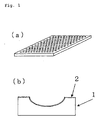
- Figure 1(a) shows a perspective view which illustrates one embodiment of the substrate having immobilized ligands of the present invention.
- Figure 1(b) is an enlarged drawing which illustrates a portion of one embodiment of the substrate having immobilized ligands of the present invention.
- the substrate having immobilized ligands as shown in Figure 1 consisted of a support substrate 1 and a surface coat 2.
- the support substrate was made from plastic and the surface coat was made from a metal.
- the support substrate was prepared by injection molding of plastic to form concavities with diameter of 200 ⁇ m and depth of 50-200 ⁇ m at a center-to-center distance of 300 ⁇ m on the surface. The surface was coated with a metal.
- Genes influenced by endocrine disruptors were used as ligands to be immobilized. Specifically, 33 genes were selected from a group of genes that are potentially influenced by endocrine disruptors. The genes are shown in Table 1. Gene no. Name of immobilized gene (Gene product name) Combination of primers (SEQ ID NO) 1. Smad3 1, 2 2. VEGF receptor 3, 4 3. ACTR 5, 6 4. N-CoR/SMRT 7, 8 5. efp 9,10 6. c-Myc-1 11,12 7. Vitamin D receptor 13,14 8. cathepsin G commercially available 9. c-Myc-2 15,16 10. Bax 17,18 11. JNK1 19,20 12. p38 21,22 13. TRIP 1 23,24 14. ARA 70 25,26 15. insulin receptor 27,28 16.
- NGF receptor commercially available 17.
- CSF1 receptor-1 commercially available 19.
- pS2 protein 41,42 25. lactoferrin 43,44 26. RIP 140 45,46 27. TIF2 47, 48 28. JNK2 49,50 29.
- ⁇ -actin positive control
- pBR322 negative control
- Genes selected from those listed in Table 1 or DNA fragments thereof were prepared as follows. Information on nucleotide sequences of genes (or genes for gene products) to be immobilized was obtained from GenBank in which the nucleotide sequences are registered under specific accession numbers. Primer pairs for PCR amplification were constructed based on the information. OLIGOTM Primer Analysis Software (Takara Shuzo) was used for the construction setting the parameters of the software to result in DNA fragments of about 100 b to about 1 kb, which are optimal for the method of the present invention. Primers were then synthesized using a DNA synthesizer according to the designed nucleotide sequences.
- NGF receptor and CSF1 receptor genes primers for the respective genes contained in Human UniGene DNA set (Research Genetics) were used. The primers were modified to have mercaptohexyl groups at the 5' ends.
- PCR-amplified fragments of interest were obtained according to a standard protocol attached to a commercially available PCR kit using the primer pairs as well as a genomic DNA, a genomic DNA library or a cDNA library as a template.
- the thus obtained DNA fragments were purified using SUPREC-02 (Takara Shuzo). Nucleotide sequences of the amplified cDNAs were analyzed to determine if they were the fragments of interest.
- Each of the amplified fragments was recovered by ethanol precipitation and dissolved at a concentration of 1 ⁇ M in 100 mM carbonate buffer (pH 9.5).
- a housekeeping gene, ⁇ -actin gene, as a positive control was prepared in a similar manner.
- a plasmid pBR322 DNA was used as a negative control.
- each dilution contained the DNA fragment at concentrations ranging from 0.1 to 0.5 mg/ml.
- a portion of the purified DNA fragment was dissolved in 50 mM carbonate buffer (pH 9.5), and the absorbance at 260 nm was measured to determine the concentration.
- GMS 417 Arrayer Genetic Microsystems, GMS
- the solutions of DNAs having mercaptohexyl groups at the 5' ends prepared as described above were spotted to the centers of the concavities on the substrate for immobilizing ligands prepared in (1) above.
- the substrate having the spotted DNA fragments was allowed to stand at room temperature for two hours, washed in ultrapure water and air-dried.
- the DNA array of the present invention was prepared.
- Human breast cancer MCF-7 cells were grown in DME medium containing 10% fetal bovine serum (FBS). After trypsinization, 2 x 10 6 cells were placed in a 10-cm dish. The cells were cultured for 24 hours in DME medium containing 5% fetal bovine serum from which steroid hormones had been removed by treatment with activated carbon-dextran. After the medium was removed, the cells were cultured for 2 hours in the same medium containing diethylstilbestrol (DES) at a concentration of 10 nM. Cells cultured in a similar manner in the absence of the chemical substance were prepared as a control. Total RNAs were prepared using TRIzol reagent (Gibco-BRL) from the respective cells recovered after treatments.
- FBS fetal bovine serum
- the total RNA prepared in (3) above was treated with DNase. 12 ⁇ l of a reaction mixture containing about 100 to about 300 ⁇ g of the total RNA, 10 ⁇ l of 10 x AMV buffer (Life Sciences) and 10 U of DNaseI (Takara Shuzo) was prepared, incubated at 37°C for 10 minutes, and subjected to two rounds of phenol-chloroform extraction followed by ethanol precipitation. The concentration was determined using a portion of the resulting total RNA.
- the reaction mixture A was incubated at 70°C for 10 minutes, and then cooled on ice bath.
- the reaction mixture B was added thereto, and the resulting mixture was incubated at 42°C for 5 minutes. About 60 U of AMV RTase (Life Sciences) was further added thereto.
- the RT reaction mixture (a total reaction volume of 60 ⁇ l) was incubated at 42°C for 70 minutes. 7.5 ⁇ l of 500 mM EDTA solution and 15 ⁇ l of 1 M sodium hydroxide were added to the reaction mixture.
- the resulting mixture was incubated at 60°C for 1 hour to degrade the template RNA. After cooling to room temperature, 37.5 ⁇ l of 1 M tris-hydrochloride (pH 7.5) was added thereto.
- the resulting solution was concentrated using MicroconTM-30 (Millipore) to a volume of 20 ⁇ l. After adding 200 ⁇ l of 10 mM tris-hydrochloride containing 1 mM EDTA thereto, the mixture was concentrated to a volume of 20 ⁇ l again.
- This Cy3-labeled cDNA solution was used for hybridization below.
- the substrate having immobilized ligands prepared as described in (2) above was subjected to permeation with 2 x SSC for 1 minute, and then subjected to prehybridization in a solution containing 4 x SSC, 0.2% SDS and 100 ⁇ g/ml salmon sperm DNA at 40°C for 1 hour.
- the DNA array on the substrate was incubated at 40°C overnight in a hybridization solution.
- the hybridization solution was prepared by heat-denaturing the Cy3-labeled target DNA prepared in (3) above and suspending it at a concentration of about 10 ⁇ g/ml in a solution containing 4 x SSC, 0.2% SDS and 100 ⁇ g/ml salmon sperm DNA.
- the substrate was washed twice in a solution containing 2 x SSC and 0.1% SDS at room temperature for 5 minutes, followed by twice in solution containing 0.1 x SSC and 0.1% SDS at 68°C for 15 minutes.
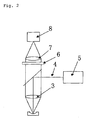
- FIG. 2 illustrates an example of a fluorescence detector for detecting a fluoresce-labeled probe hybridized on the substrate having immobilized ligands ( 3 : lens; 4 : irradiation laser; 5 : laser source; 6 : optical filter; 7 : lens; 8 : detector).
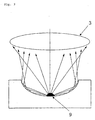
- FIG. 3 and 4 The principle of concentration of fluorescent rays emitted from a fluorescent substance on the substrate having immobilized ligands is schematically illustrated in Figures 3 and 4.
- " 9" represents the fluorescent substance on the substrate having immobilized ligands. Fluorescence rays are emitted from the fluorescent substance omnidirectionally.
- the fluorescent rays emitted from the fluorescent substance in directions other than the direction towards the lens 3 are reflected on the concavities on the substrate having immobilized ligands such that they are concentrated on the lens 3 .
- the substrate having immobilized ligands of the present invention is one in which plural ligands are immobilized in predetermined regions on a surface of the substrate, wherein the shape of each of the regions on the substrate forces a signal due to a binding of the ligand to a receptor in the region to be concentrated on a receiver.
Landscapes
- Chemical & Material Sciences (AREA)
- Engineering & Computer Science (AREA)
- Organic Chemistry (AREA)
- Nanotechnology (AREA)
- Condensed Matter Physics & Semiconductors (AREA)
- Composite Materials (AREA)
- Physics & Mathematics (AREA)
- General Physics & Mathematics (AREA)
- Materials Engineering (AREA)
- Crystallography & Structural Chemistry (AREA)
- Chemical Kinetics & Catalysis (AREA)
- Apparatus Associated With Microorganisms And Enzymes (AREA)
- Measuring Or Testing Involving Enzymes Or Micro-Organisms (AREA)
- Immobilizing And Processing Of Enzymes And Microorganisms (AREA)
Abstract
A substrate having a plural number of ligands
which have been immobilized on a pre-determined region of
the surface thereof, characterized in that the region on
the substrate has such a shape as allowing the
concentration of signals caused by binding of the ligands
to receptors in the region towards the receiver.
Description
- The present invention relates to a substrate having immobilized ligands and a substrate for immobilizing ligands which are used for detecting a binding of a ligand to a receptor with high sensitivity and which are useful in a field of genetic engineering.
- Relationships between structures and activities of molecules are essential matters to be studied with regard to biological systems. Certain molecules are known to interact with and bind to other molecules. Such specific intermolecular bindings are known as relationships between receptors and ligands.
- A number of methods are known for determining binding affinities between ligands and receptors (see, for example, JP-A 4-505763).
- Recently, substrates having immobilized ligands in which ligands are immobilized on predetermined regions on a surface of the substrate are used for determining binding affinities between ligands and receptors. The density of ligands immobilized on the substrate is increasing and the size of the substrate is decreasing.
- As a result of the increase in density and the decrease in size of the substrate having immobilized ligands, it has been desired to provide a substrate having immobilized ligands which is used for determining a binding affinity between a ligand and a receptor with good reproducibility and high sensitivity.
- The main object of the present invention is to provide a substrate having immobilized ligands and a substrate for immobilizing ligands which are used for analyzing information on bindings between various ligands and receptors therefor with extraordinarily high sensitivity and good reproducibility.
- The present invention is outlined as follows. The first aspect of the present invention relates to a substrate having immobilized ligands in which plural ligands are immobilized in predetermined regions on a surface of the substrate, wherein the shape of each of the regions on the substrate forces a signal due to a binding of the ligand to a receptor in the region to be concentrated on a receiver.
- The second aspect of the present invention relates to a substrate for immobilizing ligands which is used for immobilizing plural ligands in predetermined regions on a surface of the substrate, wherein the shape of each of the regions on the substrate forces a signal due to a binding of the ligand to a receptor in the region to be concentrated on a receiver.
-
- Figure 1 is a schematic drawing that illustrates one embodiment of the substrate having immobilized ligands of the present invention.
- Figure 2 is a schematic drawing that illustrates one embodiment of an analytical apparatus for the substrate having immobilized ligands of the present invention.
- Figure 3 is a schematic drawing that illustrates one embodiment of the substrate having immobilized ligands of the present invention in which a signal due to a binding of a ligand to a receptor is forced to be concentrated on a receiver.
- Figure 4 is a schematic drawing that illustrates one embodiment of the substrate having immobilized ligands of the present invention in which a signal due to a binding of a ligand to a receptor is forced to be concentrated on a receiver.
-
- According to the present invention, the shape of the region may be a concave shape that forces a signal to be focused on a receiver. The signal may be fluorescence or luminescence from a fluorescent substance or a luminescent substance. The region is preferably coated with a material capable of reflecting signals. Although there is no specific limitation concerning the substrate capable of reflecting signals, it may be a specular material such as a metal. The region can be made by physical or chemical means. For example, the region may be formed by pressing. Alternatively, the present invention encompasses an embodiment in which a signal is forced to be concentrated on a receiver by raising the circumference of the region.
- According to the present invention, the efficiency of receiving a signal due to a binding of a ligand to a receptor (e.g., fluorescence or luminescence) is increased, and the sensitivity of detecting a binding of a ligand to a receptor is remarkably increased.
- The present invention provides a method for detecting a receptor in which a substrate having immobilized ligands of the present invention is used. The detection method of the present invention is particularly useful for detecting a receptor present at a trace amount.
- There is no specific limitation concerning the method used for immobilizing ligands onto a substrate for immobilizing ligands provided according to the present invention. Examples thereof include a method of immobilization by electrostatic binding, a method of immobilization by covalent binding through a modified site, and a method of immobilization by synthesizing ligands on a substrate.
- In one embodiment of the present invention, the ligand may be a nucleic acid, a saccharide, a peptide or a protein. The nucleic acid may be a DNA or an RNA. The DNA may be a double-stranded DNA or a single-stranded DNA. Examples of RNAs include mRNAs, fragments thereof and synthetic RNAs. Examples of DNAs include cDNAs, fragments thereof and synthetic DNAs. Furthermore, the nucleic acid may be a polynucleotide or an oligonucleotide.
- There is no specific limitation concerning the ligand according to the present invention as long as it is a molecule recognized and bound by a specific receptor. For example, the ligand is a nucleic acid, a saccharide, a protein or a peptide.
- Examples of the ligands include agonists and antagonists of cell membrane receptors, toxins and venoms, epitopes of viruses, hormones (e.g., sedatives, opiates and steroids), hormone receptors, peptides, enzymes, substrates for enzymes, cofactors, drugs, lectins, saccharides, oligonucleotides, polynucleotides, nucleic acids, oligosaccharides, proteins, antibodies, and monoclonal antibodies.
- There is no specific limitation concerning the receptor according to the present invention as long as it is capable of binding to the corresponding ligand. It may be a naturally occurring molecule or an artificial molecule. Examples of the receptors include nucleic acids, saccharides, proteins and peptides such as enzymes, cell surface proteins (receptors), glycoproteins and antibodies. For example, the receptor may be a nucleic acid, a saccharide, a peptide or a protein that is capable of binding to a nucleic acid, a saccharide, a peptide or a protein. A receptor labeled with a fluorescent substance or a luminescent substance may be used as the receptor.
- The properties of the contacting surfaces of a ligand and a receptor capable of binding to the ligand according to the present invention are complementary to each other.
- It is preferable that the substrate can be used to detect a binding of a ligand to a receptor capable of binding to the ligand with high sensitivity. Examples of the substrates of the present invention include a substrate in which the distance between the ligand immobilization regions is 1 mm or more, or less than 1 mm; a substrate in which the density of the regions is less than 100 regions/cm2, or 100 regions/cm2 or more; a substrate in which the density of the regions is less than 10 regions/cm2, or 10 regions/cm2 or more; and a substrate in which the number of the regions is 100 or more, or 1000 or more.
- The present invention provides a square, tape-shaped or disk-shaped substrate having plural ligands being immobilized in predetermined regions on a surface of the substrate, wherein the shape of each of the regions on the substrate forces a signal due to a binding of the ligand to a receptor in the region to be concentrated on a receiver.
- As used herein, a square substrate refers to a substrate having a quadrangular shape. It may be in any form such as a regular square, a rectangle or a trapezoid. The square substrate may be made from any material as long as ligands can be immobilized in predetermined regions on a surface of the substrate.
- As used herein, a tape-shaped substrate refers to a narrow, long and belt-like substrate. The tape-shaped substrate may be made from any material as long as ligands can be immobilized in predetermined regions on a surface of the substrate. A disk-shaped substrate according to the present invention is a disk-shaped substrate that may be made from any material as long as ligands can be immobilized in predetermined regions on a surface of the substrate.
- Any material (porous, non-porous, etc.) may be selected for the substrate according to the present invention depending on the object.
- Although it is not intended to limit the present invention, for example, it is desirable that the square substrate is made from a non-porous or porous material, and plural ligand immobilization regions are placed at physically separated positions on a surface of the substrate. For example, a non-porous material having a smooth surface can be used. Although it is not intended to limit the present invention, glass (e.g., a slide glass) can be preferably used. As for the surface of the substrate, one onto which ligands can be covalently or non-covalently immobilized, or one on which ligands can be synthesized may be used.
- Any flexible or semi-flexible material may be used for the tape-shaped substrate. It is desirable that at least one surface of the substrate is substantially flat, and plural ligand immobilization regions are placed at physically separated positions on the surface. Any rigid, flexible or semi-flexible material may be preferably used for the disk-shaped substrate. It is desirable that at least one surface of the substrate is substantially flat, and plural ligand immobilization regions are placed at physically separated positions on the surface.
- There is no specific limitation concerning the array of ligand immobilization sites on a surface of the square, tape-shaped or disk-shaped substrate. The array may be changed depending on the object.
- For example, ligands may be spotted at density of 10 to 10000 ligands/cm2 onto the square substrate, and ligands may be spotted at density of 1 to 100 ligands/cm along the short side and 1 to 100 ligands/cm along the long side onto the tape-shaped substrate. In case of the disk-shaped substrate, ligands may be spotted at density of 1 to 10000 ligands/cm2.
- Ligands may be conveniently spotted onto a substrate using a commercially available spotter. Certain types of ligands can be synthesized on a substrate.
- There is no specific limitation concerning the signal-emitting substance used for detecting a receptor bound to a ligand according to the present invention. Examples of the signal-emitting substances include fluorescent substances and luminescent substances. For example, a chemiluminescent substance such as AMPPD or a fluorescent substance such as fluorescein, Cascade Blue, Oregon Green, BODIPY, Rhodamine Green, Alexa Fluor, Texas Red, Cy3 or Cy5 can be preferably used.
- For example, the substrate used according to the present invention may be made from any material that can be used for a substrate for a DNA chip or a biosensor and that can retain DNAs to be immobilized on its surface. For example, a substrate having a hydrophilic or hydrophobic functional group on its surface can be preferably used. Examples of the functional groups include a hydroxyl group, an amino group, a thiol group, an aldehyde group, a carboxyl group and an acyl group. The substrates also include a substrate having such a functional group on its surface as a property of the material of the substrate. Even if a substrate does not have a hydrophilic or hydrophobic functional group on its surface, it may be used without limitation as long as it can be made to have such a functional group on its surface by surface treatment.
- Examples of the substrates subjected to such surface treatment include a substrate having a surface treated with a commercially available silane-coupling agent such as aminoalkylsilane, with a polycation such as polylysine or polyethylenimine, or with aminoalkylsilane and glutaraldehyde.
- An electrically negative, neutral or positive material may be preferably used as a material for the substrate used according to the present invention if ligands can be efficiently immobilized onto it. Furthermore, the substrate may have a dual structure consisting of a part for ligand immobilization and a part for supporting the part for ligand immobilization. The material may be selected taking the ligand immobilization efficiency and the strength of the substrate into consideration.
- A part for ligand immobilization may be prepared beforehand, stuck to a part for supporting the part for ligand immobilization, and then used.
- Any material may be preferably used for the substrate used according to the present invention without limitation as long as the use of the material results in sufficient reduction in background as compared with signals upon detection using a detector.
- In any case, the substrate is formed such that the shape of each ligand immobilization region on the substrate forces a signal due to a binding of a ligand to a receptor to be concentrated on a receiver.
- The region may be formed by micropressing using a metal material or by using a specular material which is a combination of a glass substrate and a metal material. As used herein, pressing methods include micropressing and injection molding. The shape of the region is preferably a concave shape that forces a signal to be focused on a receiver. Although there is no specific limitation concerning the diameter of the region, it is for example 20 to 2000 µm, preferably 50 to 500 µm, more preferably 100 to 200 µm.
- According to the present invention, the position of the substrate relative to a detector for detecting a binding of a ligand to a receptor which contains a receiver may be one-dimensionally or two-dimensionally moved. Alternatively, the detector may be one-dimensionally or two-dimensionally moved on the substrate. Furthermore, movement of the detector and movement of the substrate may be carried out in combination.
- A binding of a ligand to a receptor therefor can be determined by exposing the substrate of the present invention, which contains plural ligands, to at least one receptor (for example, a receptor labeled with a label) of which the ability to bind to the ligands is to be determined, and detecting a position of the label on the substrate. The whole substrate may be exposed to the receptor, or portions of the substrate may be successively exposed to the receptor.
- Upon determination of a binding of a ligand to a receptor, the whole substrate may be subjected to detection, or portions of the substrate may be successively subjected to detection.
- By using the substrate having immobilized ligands of the present invention, results can be obtained with extraordinarily high detection sensitivity (e.g., several fold to several orders of magnitude higher) even if a trace amount of a sample is used. Thus, a substrate having immobilized ligands and a substrate for immobilizing ligands which enable detection of a binding of a ligand to a receptor with extraordinarily high sensitivity are provided. Furthermore, a substrate having immobilized ligands which results in a high signal, a low signal to noise ratio and excellent reproducibility is provided.
- The following Examples further illustrate the present invention in detail but are not to be construed to limit the scope thereof.
- Examination was carried out using DNAs as ligands. Specifically, a substrate having immobilized ligands as shown in Figure 1 was prepared. Figure 1(a) shows a perspective view which illustrates one embodiment of the substrate having immobilized ligands of the present invention. Figure 1(b) is an enlarged drawing which illustrates a portion of one embodiment of the substrate having immobilized ligands of the present invention. The substrate having immobilized ligands as shown in Figure 1 consisted of a
support substrate 1 and asurface coat 2. The support substrate was made from plastic and the surface coat was made from a metal. The support substrate was prepared by injection molding of plastic to form concavities with diameter of 200 µm and depth of 50-200 µm at a center-to-center distance of 300 µm on the surface. The surface was coated with a metal. - Genes influenced by endocrine disruptors were used as ligands to be immobilized. Specifically, 33 genes were selected from a group of genes that are potentially influenced by endocrine disruptors. The genes are shown in Table 1.
Gene no. Name of immobilized gene
(Gene product name)Combination of
primers (SEQ ID NO)1. Smad3 1, 2 2. VEGF receptor 3, 4 3. ACTR 5, 6 4. N-CoR/SMRT 7, 8 5. efp 9,10 6. c-Myc-1 11,12 7. Vitamin D receptor 13,14 8. cathepsin G commercially available 9. c-Myc-2 15,16 10. Bax 17,18 11. JNK1 19,20 12. p38 21,22 13. TRIP 123,24 14. ARA 70 25,26 15. insulin receptor 27,28 16. NGF receptor commercially available 17. PDGF receptor 29,30 18. CSF1 receptor-1 commercially available 19. CSF1 receptor-2 31,32 20. FGF receptor 33,34 21. p38 gamma 35,36 22. Bcl-X 37,38 23. c-Myc-3 39,40 24. pS2 protein 41,42 25. lactoferrin 43,44 26. RIP 140 45,46 27. TIF2 47, 48 28. JNK2 49,50 29. Bax delta 51,52 30. BMK-1 53,54 31. BMK-2 55,56 32. Src-1 57,58 33. p300/CBP 59,60 34. β-actin (positive control) 61,62 35. pBR322 (negative control) - Genes selected from those listed in Table 1 or DNA fragments thereof were prepared as follows. Information on nucleotide sequences of genes (or genes for gene products) to be immobilized was obtained from GenBank in which the nucleotide sequences are registered under specific accession numbers. Primer pairs for PCR amplification were constructed based on the information. OLIGO™ Primer Analysis Software (Takara Shuzo) was used for the construction setting the parameters of the software to result in DNA fragments of about 100 b to about 1 kb, which are optimal for the method of the present invention. Primers were then synthesized using a DNA synthesizer according to the designed nucleotide sequences. As for cathepsin G, NGF receptor and CSF1 receptor genes, primers for the respective genes contained in Human UniGene DNA set (Research Genetics) were used. The primers were modified to have mercaptohexyl groups at the 5' ends.
- PCR-amplified fragments of interest were obtained according to a standard protocol attached to a commercially available PCR kit using the primer pairs as well as a genomic DNA, a genomic DNA library or a cDNA library as a template. The thus obtained DNA fragments were purified using SUPREC-02 (Takara Shuzo). Nucleotide sequences of the amplified cDNAs were analyzed to determine if they were the fragments of interest. Each of the amplified fragments was recovered by ethanol precipitation and dissolved at a concentration of 1 µM in 100 mM carbonate buffer (pH 9.5). In addition, a housekeeping gene, β-actin gene, as a positive control was prepared in a similar manner. A plasmid pBR322 DNA was used as a negative control.
- Five serial dilutions were prepared for each of the purified DNA fragments as follows such that each dilution contained the DNA fragment at concentrations ranging from 0.1 to 0.5 mg/ml. A portion of the purified DNA fragment was dissolved in 50 mM carbonate buffer (pH 9.5), and the absorbance at 260 nm was measured to determine the concentration. Using GMS 417 Arrayer (Genetic Microsystems, GMS), the solutions of DNAs having mercaptohexyl groups at the 5' ends prepared as described above were spotted to the centers of the concavities on the substrate for immobilizing ligands prepared in (1) above. 5 serial dilutions of 35 DNA fragments were spotted (35 x 5 = 175 spots). The substrate having the spotted DNA fragments was allowed to stand at room temperature for two hours, washed in ultrapure water and air-dried. Thus, the DNA array of the present invention was prepared.
- Human breast cancer MCF-7 cells were grown in DME medium containing 10% fetal bovine serum (FBS). After trypsinization, 2 x 10⁶ cells were placed in a 10-cm dish. The cells were cultured for 24 hours in DME medium containing 5% fetal bovine serum from which steroid hormones had been removed by treatment with activated carbon-dextran. After the medium was removed, the cells were cultured for 2 hours in the same medium containing diethylstilbestrol (DES) at a concentration of 10 nM. Cells cultured in a similar manner in the absence of the chemical substance were prepared as a control. Total RNAs were prepared using TRIzol reagent (Gibco-BRL) from the respective cells recovered after treatments.
- The total RNA prepared in (3) above was treated with DNase. 12 µl of a reaction mixture containing about 100 to about 300 µg of the total RNA, 10 µl of 10 x AMV buffer (Life Sciences) and 10 U of DNaseI (Takara Shuzo) was prepared, incubated at 37°C for 10 minutes, and subjected to two rounds of phenol-chloroform extraction followed by ethanol precipitation. The concentration was determined using a portion of the resulting total RNA.
- A reverse transcription reaction was carried out using the total RNA prepared as described above. The compositions of the reaction mixtures are shown below:
- Reaction mixture A: about 130 µg of the total RNA, 10 µg of an oligo(dT) primer (Takara Shuzo) and 20 µl of water treated with diethylpyrocarbonate (DEPC, Wako Pure Chemical Industries); and
- Reaction mixture B: 12 µl of 5 x AMV RTase buffer (Life Sciences), 0.5 mM each of dATP, dCTP and dGTP, 0.2 mM of dTTP, 60 U of RNase inhibitor (Takara Shuzo), 0.1 mM of Cy3-labeled dUTP (Amersham Pharmacia).
-
- The reaction mixture A was incubated at 70°C for 10 minutes, and then cooled on ice bath. The reaction mixture B was added thereto, and the resulting mixture was incubated at 42°C for 5 minutes. About 60 U of AMV RTase (Life Sciences) was further added thereto. The RT reaction mixture (a total reaction volume of 60 µl) was incubated at 42°C for 70 minutes. 7.5 µl of 500 mM EDTA solution and 15 µl of 1 M sodium hydroxide were added to the reaction mixture. The resulting mixture was incubated at 60°C for 1 hour to degrade the template RNA. After cooling to room temperature, 37.5 µl of 1 M tris-hydrochloride (pH 7.5) was added thereto. The resulting solution was concentrated using Microcon™-30 (Millipore) to a volume of 20 µl. After adding 200 µl of 10 mM tris-hydrochloride containing 1 mM EDTA thereto, the mixture was concentrated to a volume of 20 µl again. This Cy3-labeled cDNA solution was used for hybridization below.
- The substrate having immobilized ligands prepared as described in (2) above was subjected to permeation with 2 x SSC for 1 minute, and then subjected to prehybridization in a solution containing 4 x SSC, 0.2% SDS and 100 µg/ml salmon sperm DNA at 40°C for 1 hour. Next, the DNA array on the substrate was incubated at 40°C overnight in a hybridization solution. The hybridization solution was prepared by heat-denaturing the Cy3-labeled target DNA prepared in (3) above and suspending it at a concentration of about 10 µg/ml in a solution containing 4 x SSC, 0.2% SDS and 100 µg/ml salmon sperm DNA. After hybridization, the substrate was washed twice in a solution containing 2 x SSC and 0.1% SDS at room temperature for 5 minutes, followed by twice in solution containing 0.1 x SSC and 0.1% SDS at 68°C for 15 minutes.
- After the above-mentioned treatments, the microarray was subjected to analyses using a fluorescence scanner according to the present invention. A schematic drawing thereof is shown in Figure 2. Figure 2 illustrates an example of a fluorescence detector for detecting a fluoresce-labeled probe hybridized on the substrate having immobilized ligands (3: lens; 4: irradiation laser; 5: laser source; 6: optical filter; 7: lens; 8: detector).
- The principle of concentration of fluorescent rays emitted from a fluorescent substance on the substrate having immobilized ligands is schematically illustrated in Figures 3 and 4. In Figures 3 and 4, "9" represents the fluorescent substance on the substrate having immobilized ligands. Fluorescence rays are emitted from the fluorescent substance omnidirectionally. By using the substrate having immobilized ligands of the present invention, the fluorescent rays emitted from the fluorescent substance in directions other than the direction towards the
lens 3 are reflected on the concavities on the substrate having immobilized ligands such that they are concentrated on thelens 3. - As a result of fluorescence scanning, it was confirmed that the signal intensity was increased using the substrate having immobilized ligands of the present invention as compared with a DNA microarray prepared according to a conventional method.
- The substrate having immobilized ligands of the present invention is one in which plural ligands are immobilized in predetermined regions on a surface of the substrate, wherein the shape of each of the regions on the substrate forces a signal due to a binding of the ligand to a receptor in the region to be concentrated on a receiver. By using the substrate, results can be obtained with extraordinarily high detection sensitivity even if a trace amount of a sample is used. Furthermore, it is possible to obtain analytical results with a high signal, a low signal to noise ratio and excellent reproducibility using the substrate.
-
- SEQ ID NO: 1: Designed oligonucleotide primer for amplifying a portion of Smad3 gene.
- SEQ ID NO: 2: Designed oligonucleotide primer for amplifying a portion of Smad3 gene.
- SEQ ID NO: 3: Designed oligonucleotide primer for amplifying a portion of VEGF receptor gene.
- SEQ ID NO: 4: Designed oligonucleotide primer for amplifying a portion of VEGF receptor gene.
- SEQ ID NO: 5: Designed oligonucleotide primer for amplifying a portion of ACTR gene.
- SEQ ID NO: 6: Designed oligonucleotide primer for amplifying a portion of ACTR gene.
- SEQ ID NO: 7: Designed oligonucleotide primer for amplifying a portion of N-CoR/SMRT gene.
- SEQ ID NO: 8: Designed oligonucleotide primer for amplifying a portion of N-CoR/SMRT gene.
- SEQ ID NO: 9: Designed oligonucleotide primer for amplifying a portion of efp gene.
- SEQ ID NO: 10: Designed oligonucleotide primer for amplifying a portion of efp gene.
- SEQ ID NO: 11: Designed oligonucleotide primer for amplifying a portion of c-Myc-1 gene.
- SEQ ID NO: 12: Designed oligonucleotide primer for amplifying a portion of c-Myc-1 gene.
- SEQ ID NO: 13: Designed oligonucleotide primer for amplifying a portion of vitamin D receptor gene.
- SEQ ID NO: 14: Designed oligonucleotide primer for amplifying a portion of vitamin D receptor gene.
- SEQ ID NO: 15: Designed oligonucleotide primer for amplifying a portion of c-Myc-2 gene.
- SEQ ID NO: 16: Designed oligonucleotide primer for amplifying a portion of c-Myc-2 gene.
- SEQ ID NO: 17: Designed oligonucleotide primer for amplifying a portion of Bax gene.
- SEQ ID NO: 18: Designed oligonucleotide primer for amplifying a portion of Bax gene.
- SEQ ID NO: 19: Designed oligonucleotide primer for amplifying a portion of JNK1 gene.
- SEQ ID NO: 20: Designed oligonucleotide primer for amplifying a portion of JNK1 gene.
- SEQ ID NO: 21: Designed oligonucleotide primer for amplifying a portion of p38 gene.
- SEQ ID NO: 22: Designed oligonucleotide primer for amplifying a portion of p38 gene.
- SEQ ID NO: 23: Designed oligonucleotide primer
for amplifying a portion of
TRIP 1 gene. - SEQ ID NO: 24: Designed oligonucleotide primer
for amplifying a portion of
TRIP 1 gene. - SEQ ID NO: 25: Designed oligonucleotide primer for amplifying a portion of ARA 70 gene.
- SEQ ID NO: 26: Designed oligonucleotide primer for amplifying a portion of ARA 70 gene.
- SEQ ID NO: 27: Designed oligonucleotide primer for amplifying a portion of insulin receptor gene.
- SEQ ID NO: 28: Designed oligonucleotide primer for amplifying a portion of insulin receptor gene.
- SEQ ID NO: 29: Designed oligonucleotide primer for amplifying a portion of PDGF receptor gene.
- SEQ ID NO: 30: Designed oligonucleotide primer for amplifying a portion of PDGF receptor gene.
- SEQ ID NO: 31: Designed oligonucleotide primer for amplifying a portion of CSF1 receptor-2 gene.
- SEQ ID NO: 32: Designed oligonucleotide primer for amplifying a portion of CSF1 receptor-2 gene.
- SEQ ID NO: 33: Designed oligonucleotide primer for amplifying a portion of FGF receptor gene.
- SEQ ID NO: 34: Designed oligonucleotide primer for amplifying a portion of FGF receptor gene.
- SEQ ID NO: 35: Designed oligonucleotide primer for amplifying a portion of p38 gamma gene.
- SEQ ID NO: 36: Designed oligonucleotide primer for amplifying a portion of p38 gamma gene.
- SEQ ID NO: 37: Designed oligonucleotide primer for amplifying a portion of Bcl-X gene.
- SEQ ID NO: 38: Designed oligonucleotide primer for amplifying a portion of Bcl-X gene.
- SEQ ID NO: 39: Designed oligonucleotide primer for amplifying a portion of c-Myc-3 gene.
- SEQ ID NO: 40: Designed oligonucleotide primer for amplifying a portion of c-Myc-3 gene.
- SEQ ID NO: 41: Designed oligonucleotide primer for amplifying a portion of pS2 protein gene.
- SEQ ID NO: 42: Designed oligonucleotide primer for amplifying a portion of pS2 protein gene.
- SEQ ID NO: 43: Designed oligonucleotide primer for amplifying a portion of lactoferrin gene.
- SEQ ID NO: 44: Designed oligonucleotide primer for amplifying a portion of lactoferrin gene.
- SEQ ID NO: 45: Designed oligonucleotide primer for amplifying a portion of RIP 140 gene.
- SEQ ID NO: 46: Designed oligonucleotide primer for amplifying a portion of RIP 140 gene.
- SEQ ID NO: 47: Designed oligonucleotide primer for amplifying a portion of TIF2 gene.
- SEQ ID NO: 48: Designed oligonucleotide primer for amplifying a portion of TIF2 gene.
- SEQ ID NO: 49: Designed oligonucleotide primer for amplifying a portion of JNK2 gene.
- SEQ ID NO: 50: Designed oligonucleotide primer for amplifying a portion of JNK2 gene.
- SEQ ID NO: 51: Designed oligonucleotide primer for amplifying a portion of Bax delta gene.
- SEQ ID NO: 52: Designed oligonucleotide primer for amplifying a portion of Bax delta gene.
- SEQ ID NO: 53: Designed oligonucleotide primer for amplifying a portion of BMK-1 gene.
- SEQ ID NO: 54: Designed oligonucleotide primer for amplifying a portion of BMK-1 gene.
- SEQ ID NO: 55: Designed oligonucleotide primer for amplifying a portion of BMK-2 gene.
- SEQ ID NO: 56: Designed oligonucleotide primer for amplifying a portion of BMK-2 gene.
- SEQ ID NO: 57: Designed oligonucleotide primer for amplifying a portion of Src-1 gene.
- SEQ ID NO: 58: Designed oligonucleotide primer for amplifying a portion of Src-1 gene.
- SEQ ID NO: 59: Designed oligonucleotide primer for amplifying a portion of p300/CBP gene.
- SEQ ID NO: 60: Designed oligonucleotide primer for amplifying a portion of p300/CBP gene.
- SEQ ID NO: 61: Designed oligonucleotide primer for amplifying a portion of β-actin gene.
- SEQ ID NO: 62: Designed oligonucleotide primer for amplifying a portion of β-actin gene.
-


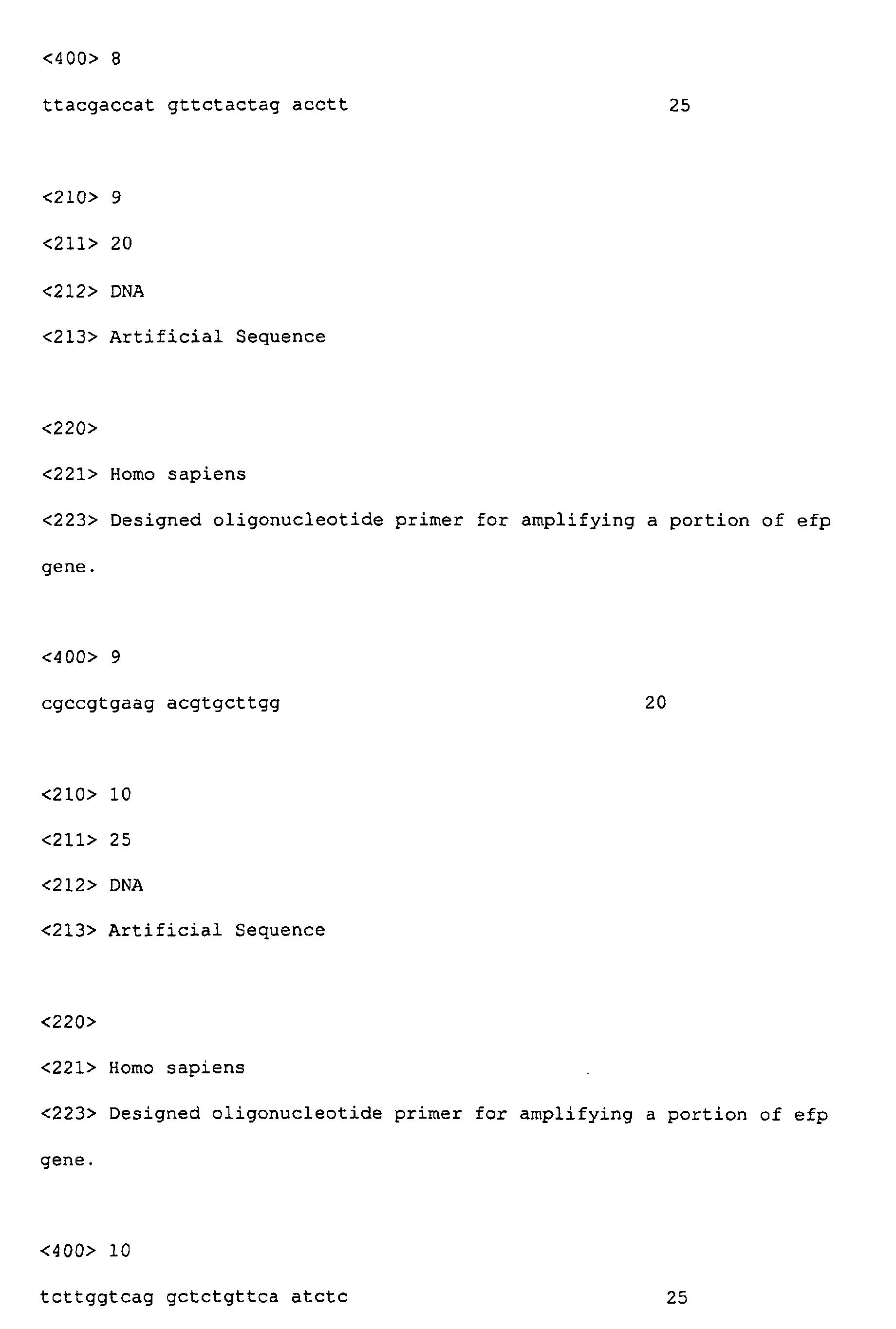


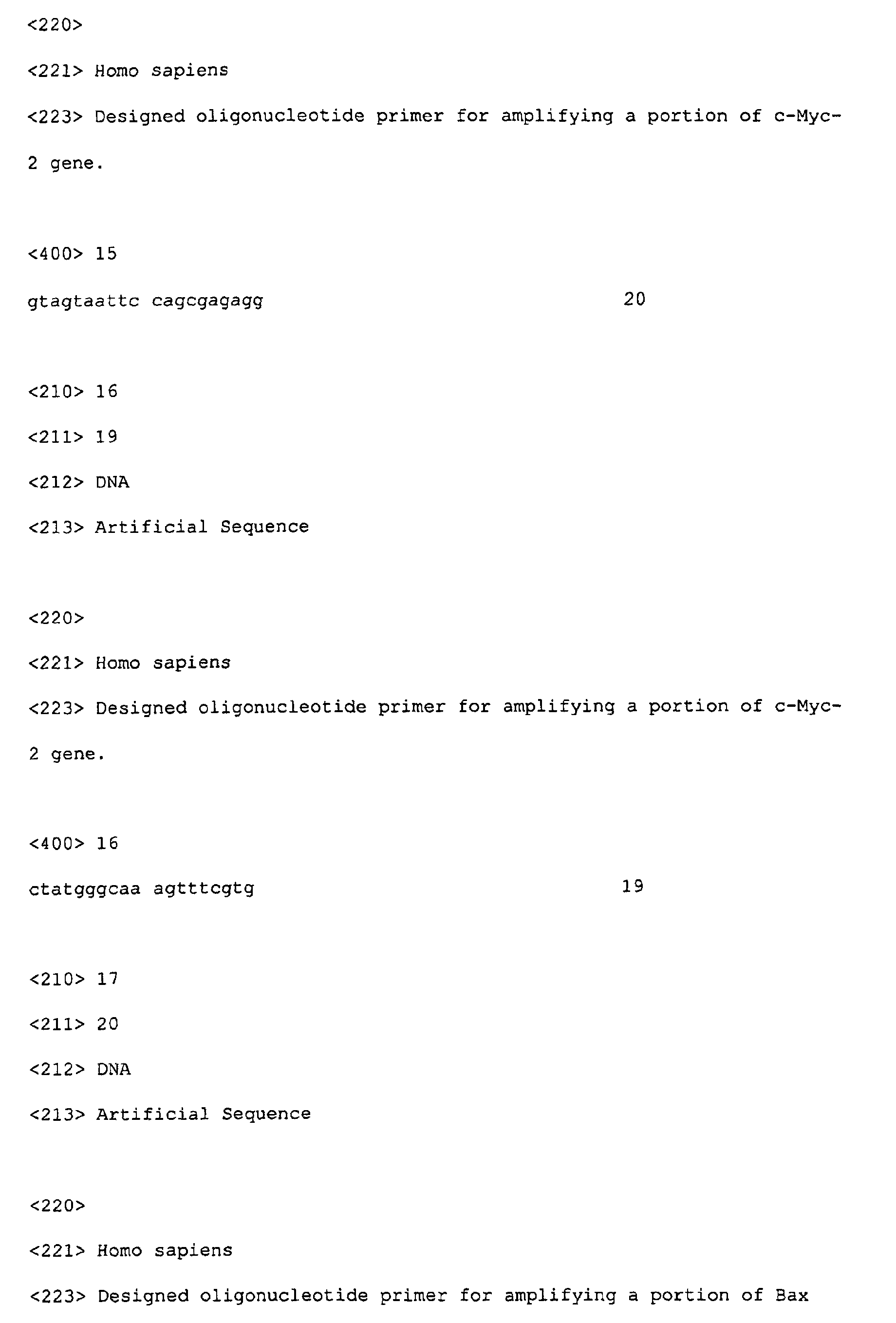

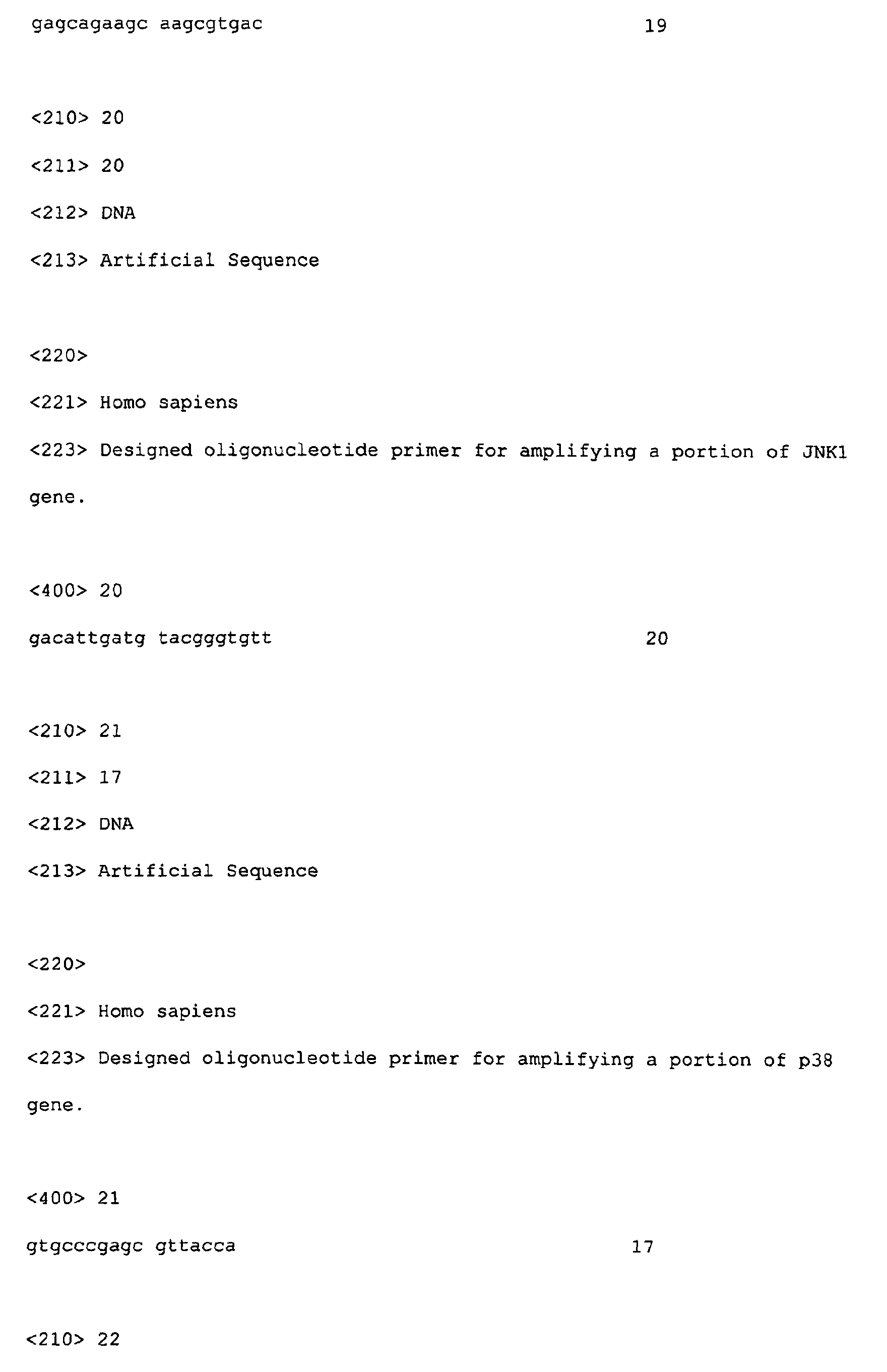


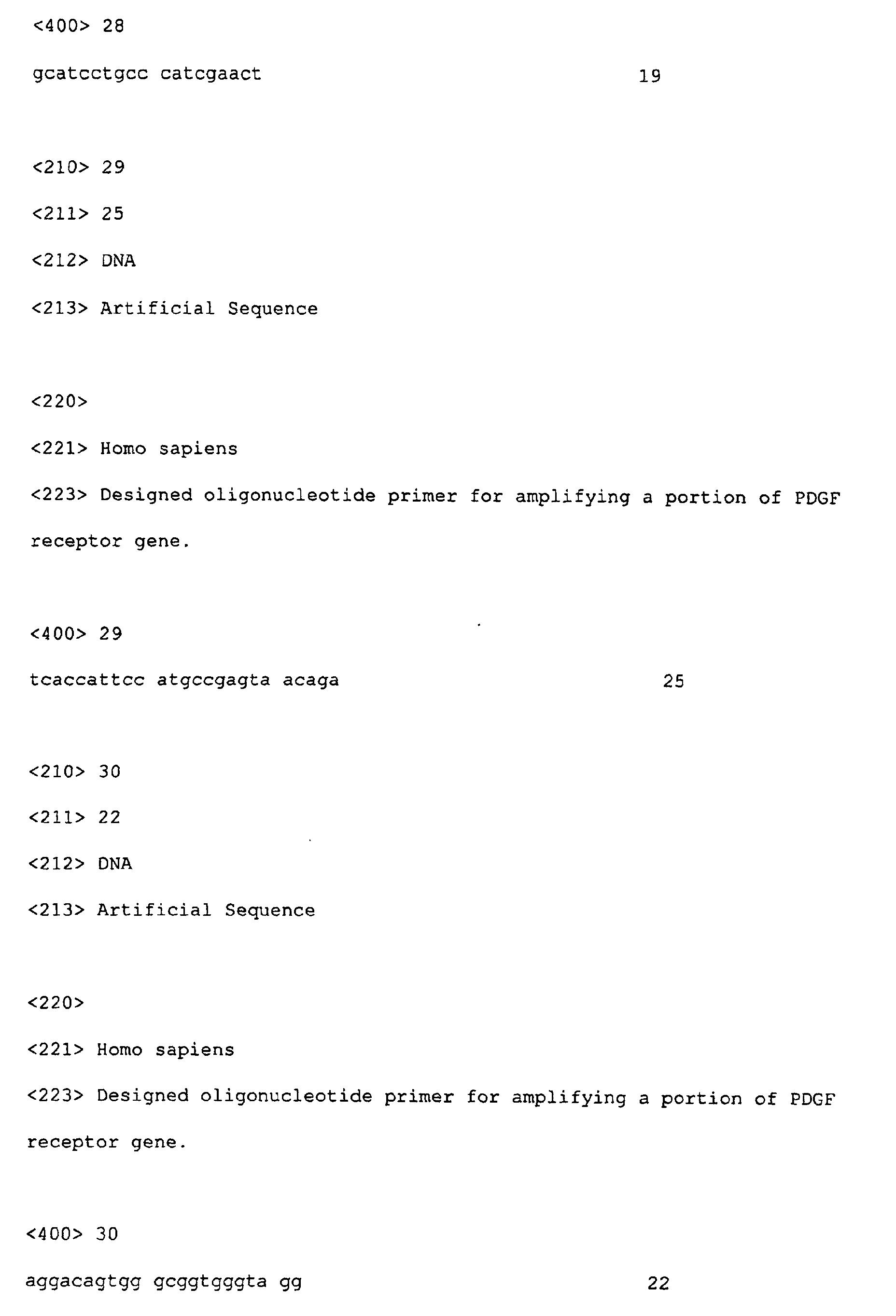
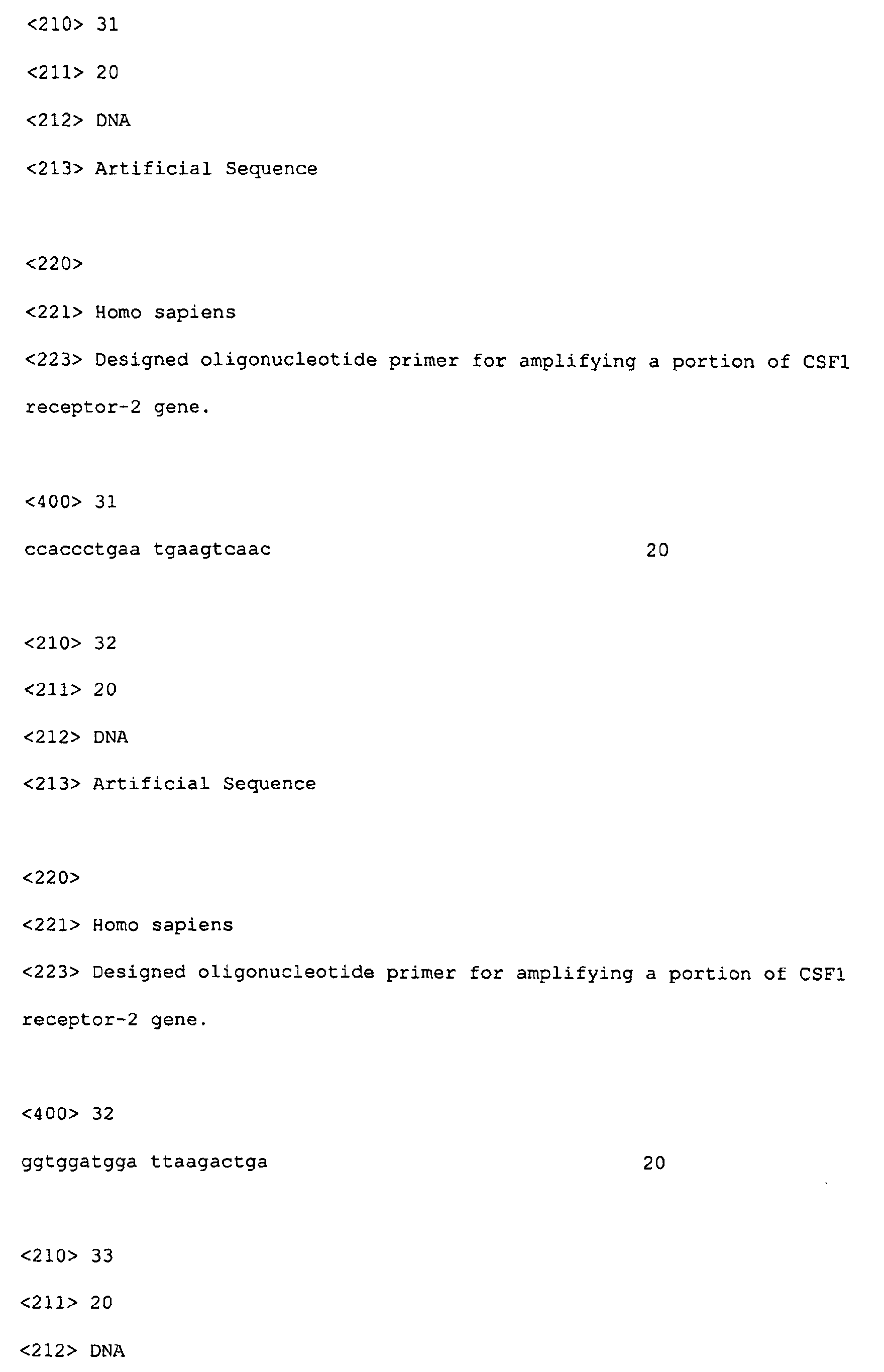


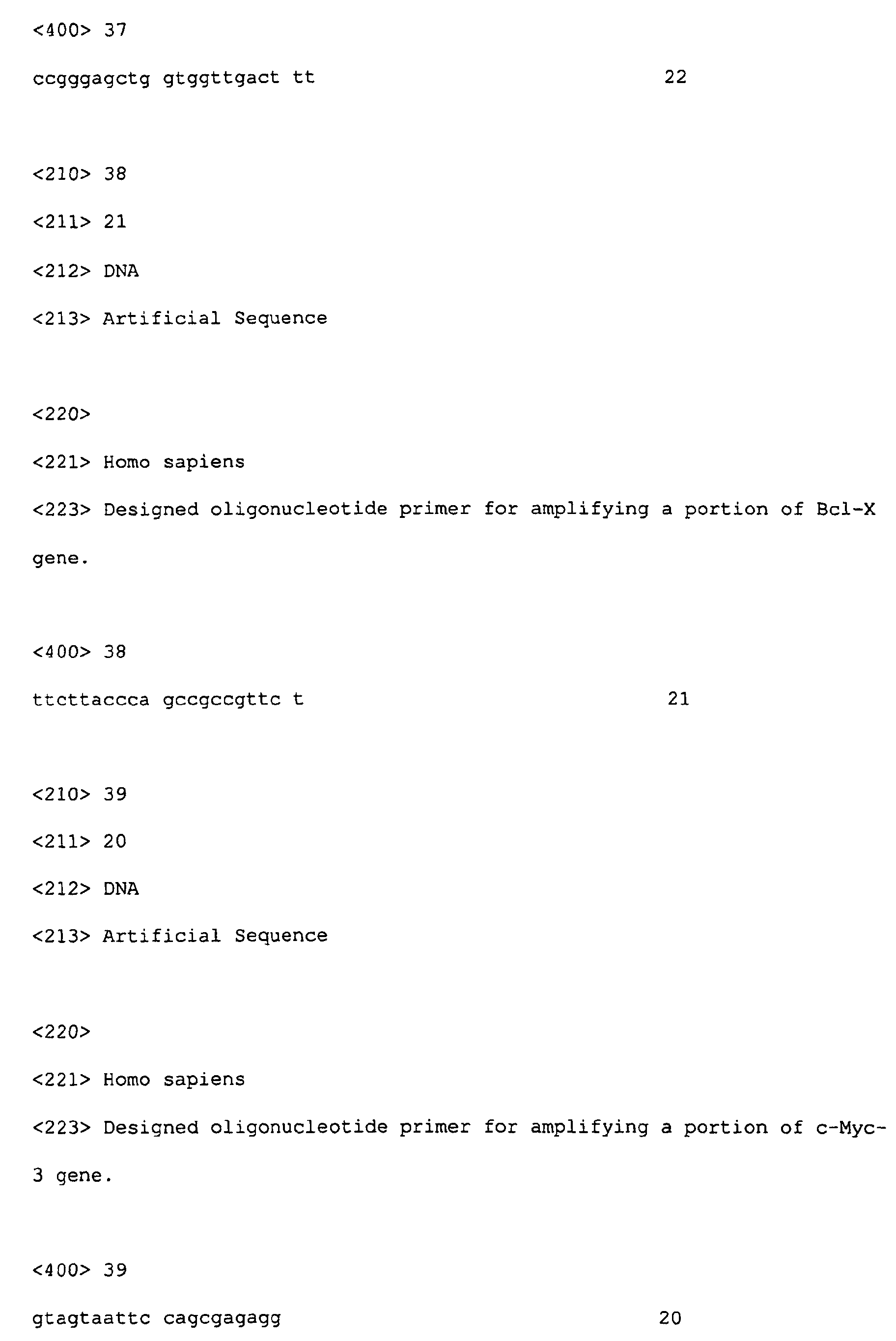
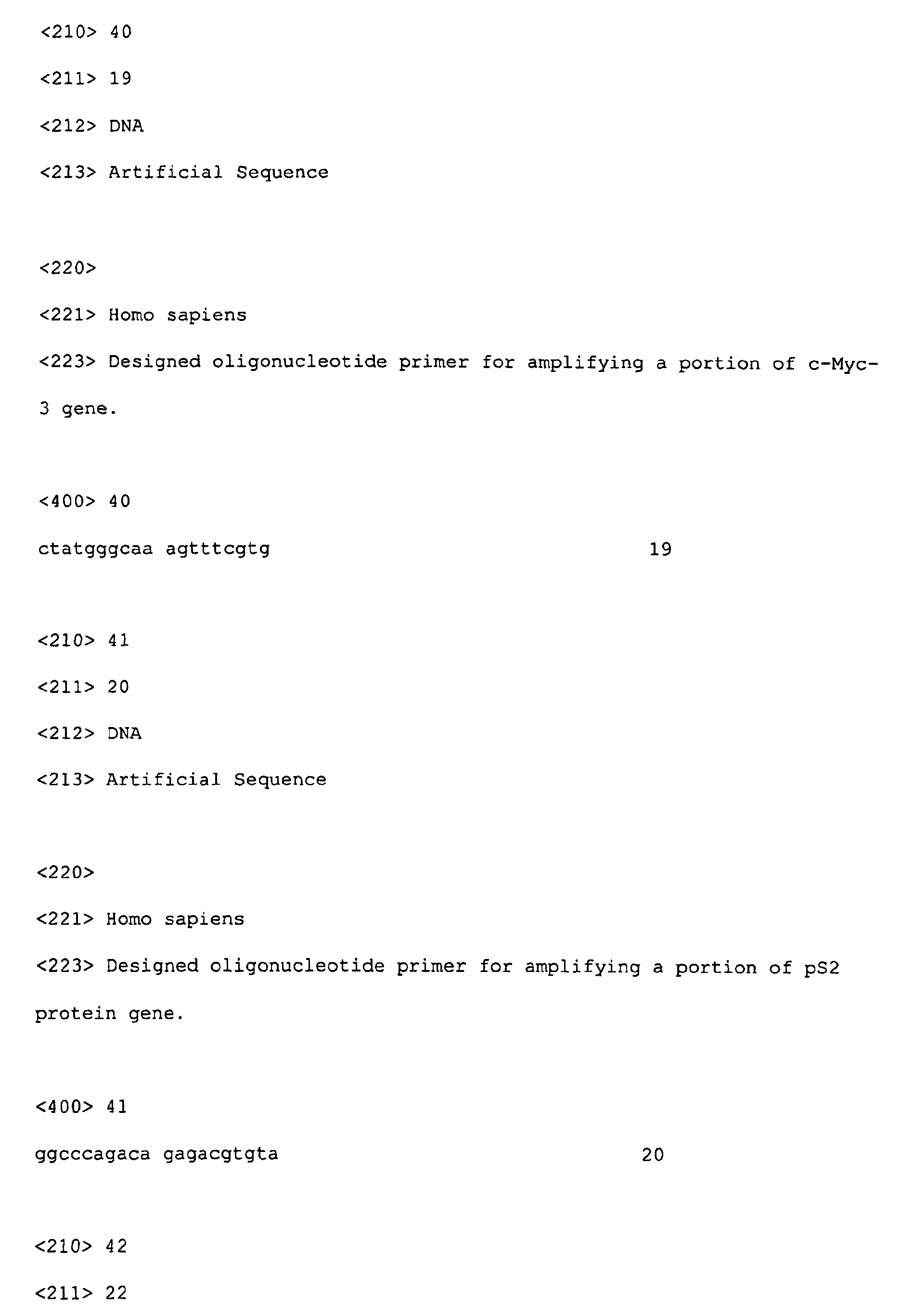
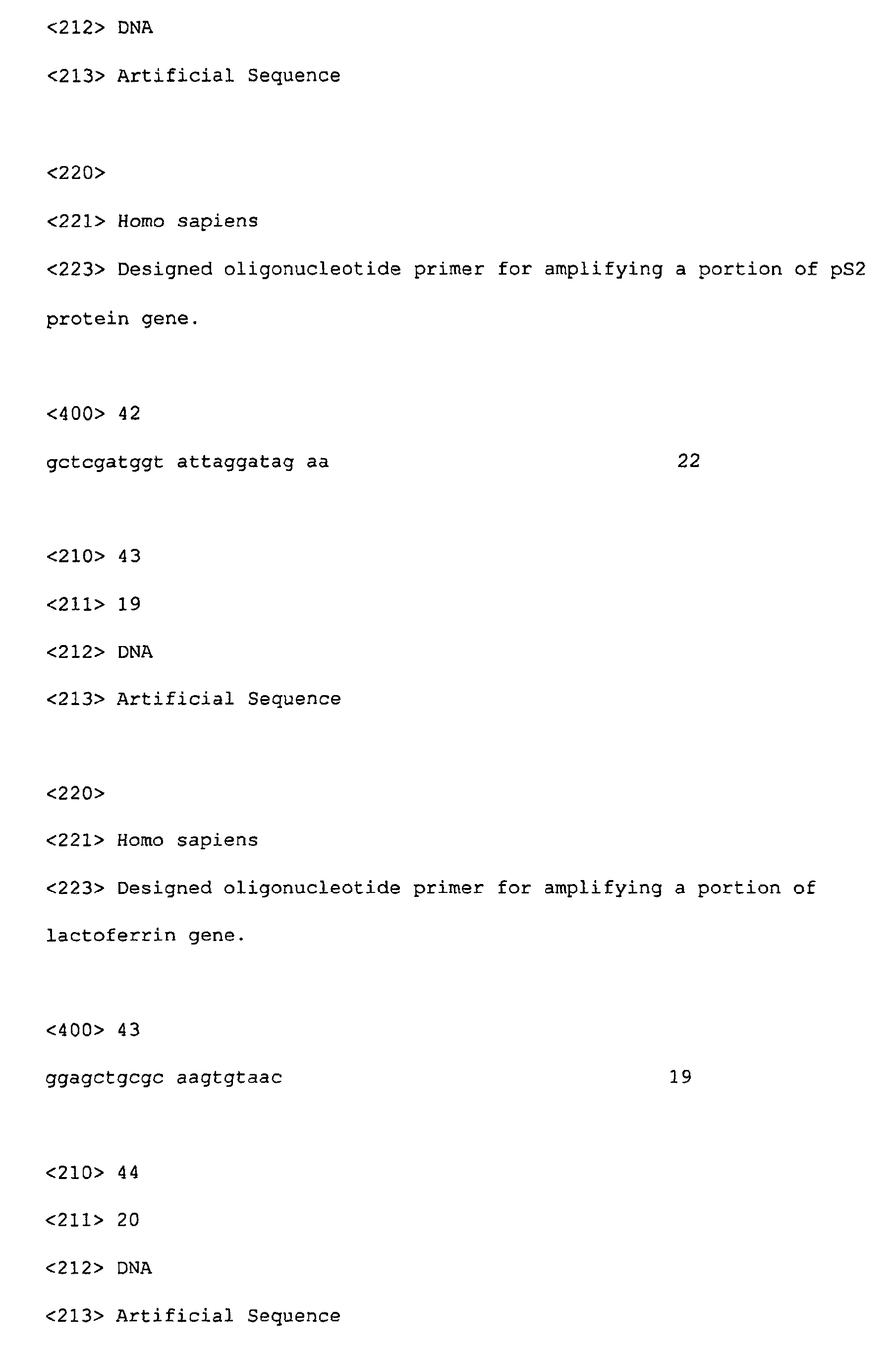
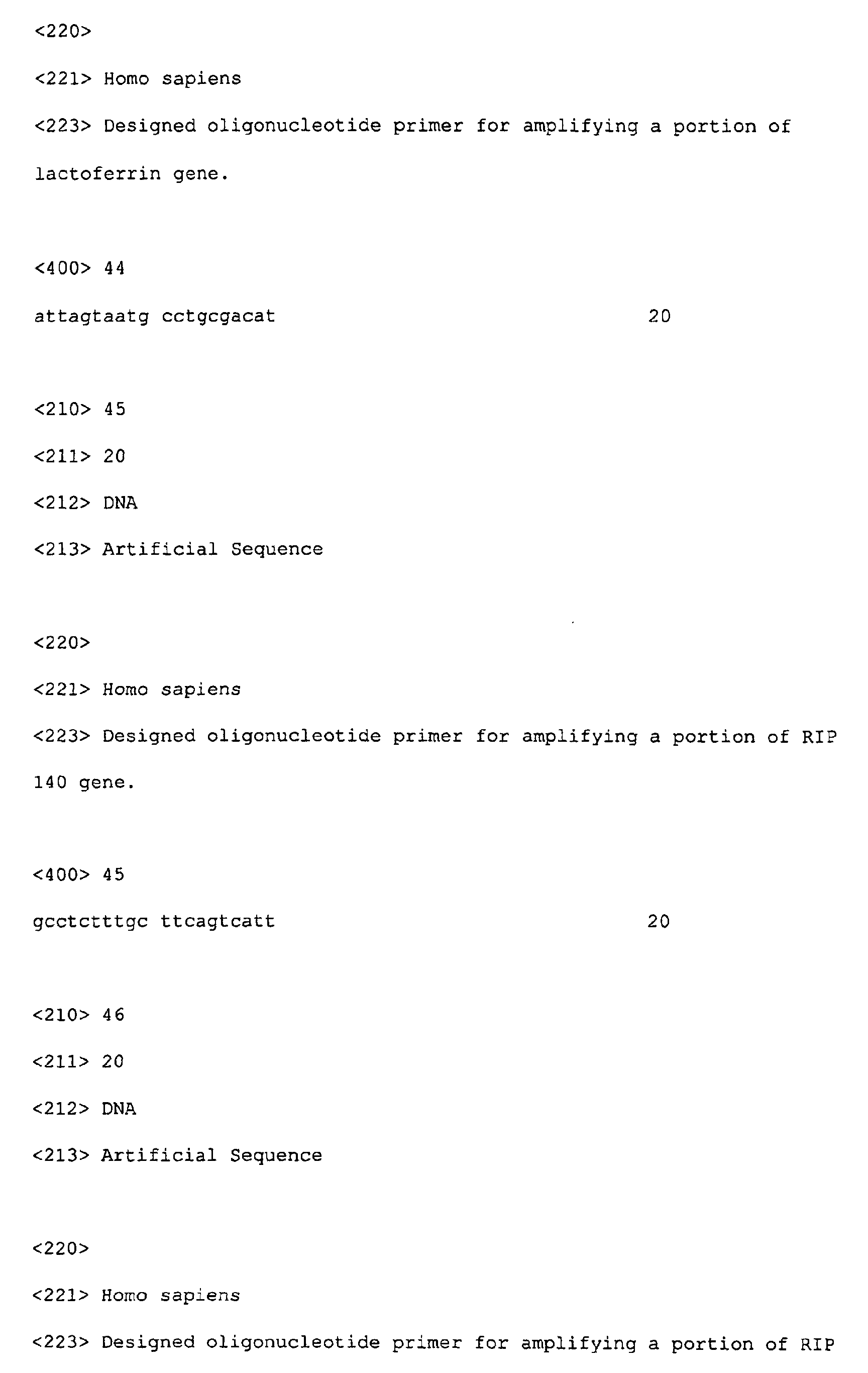

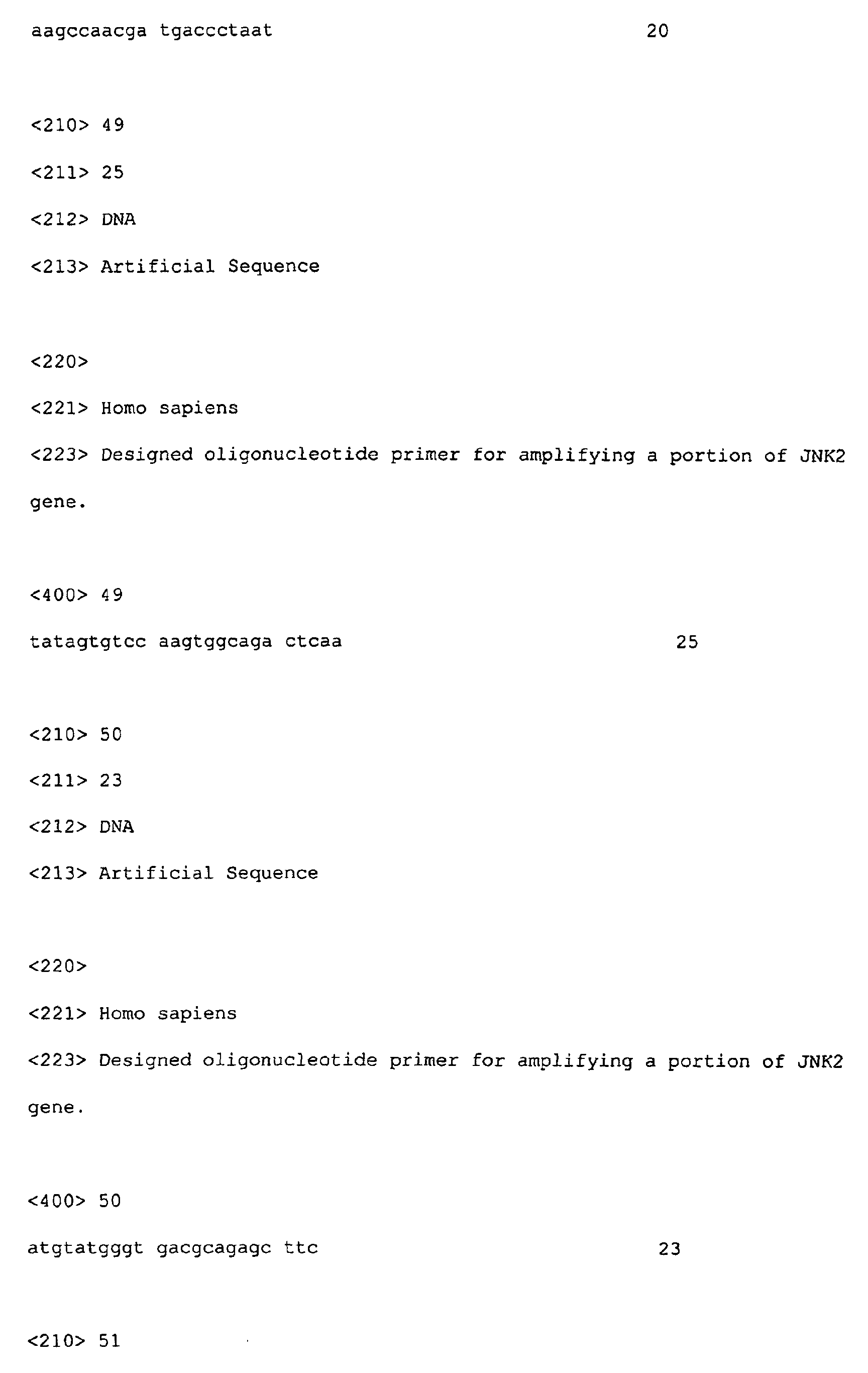
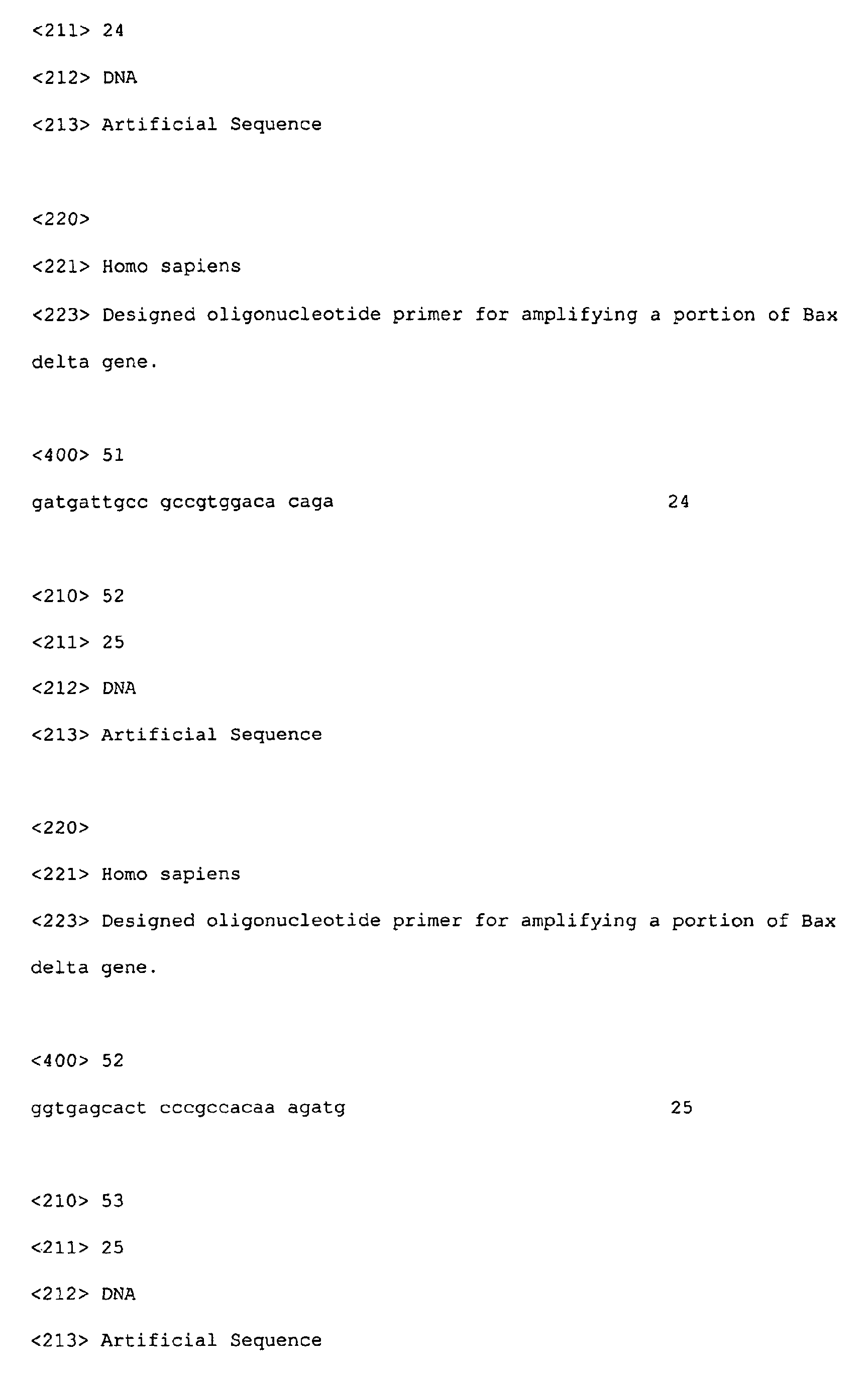
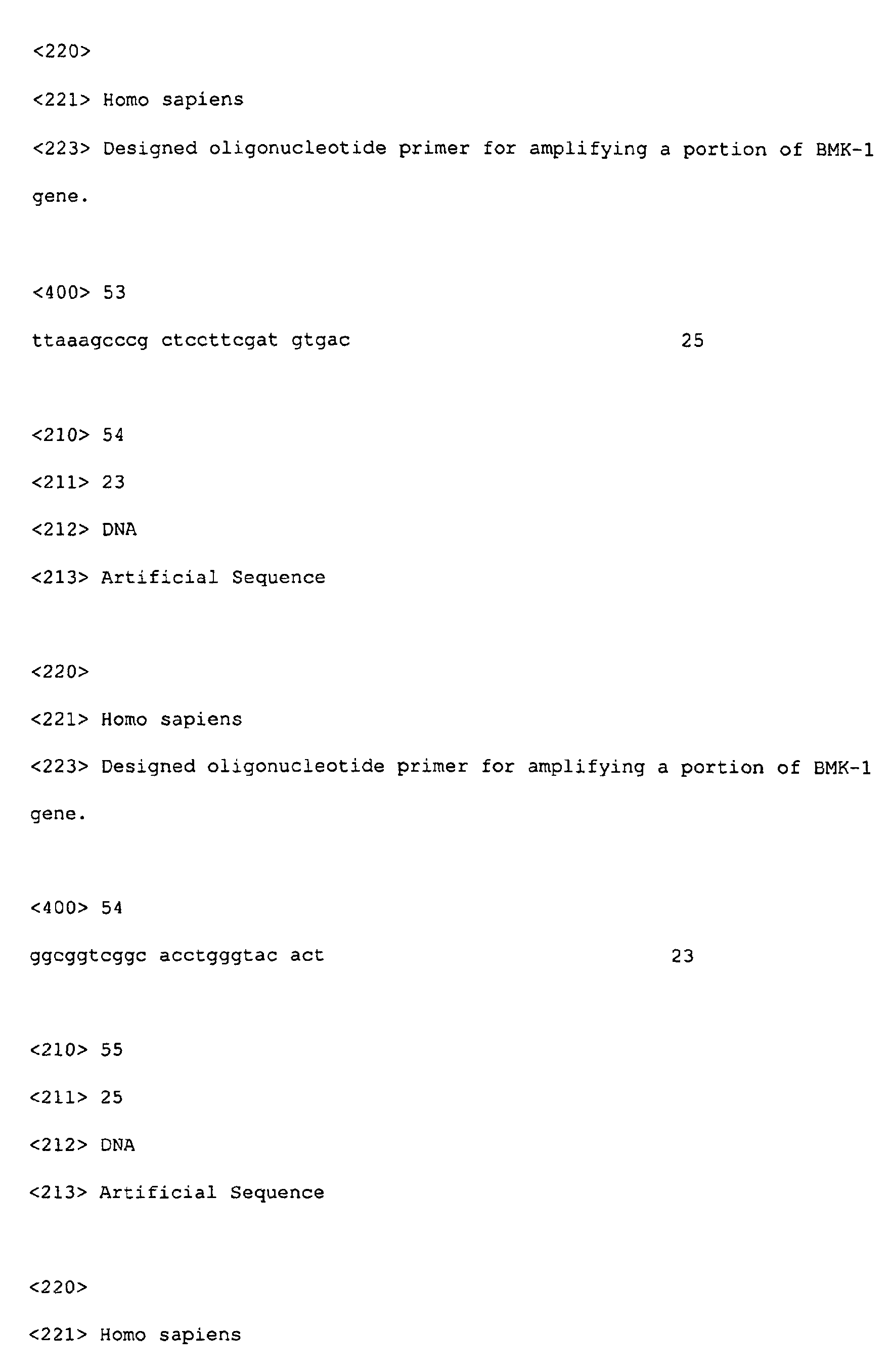

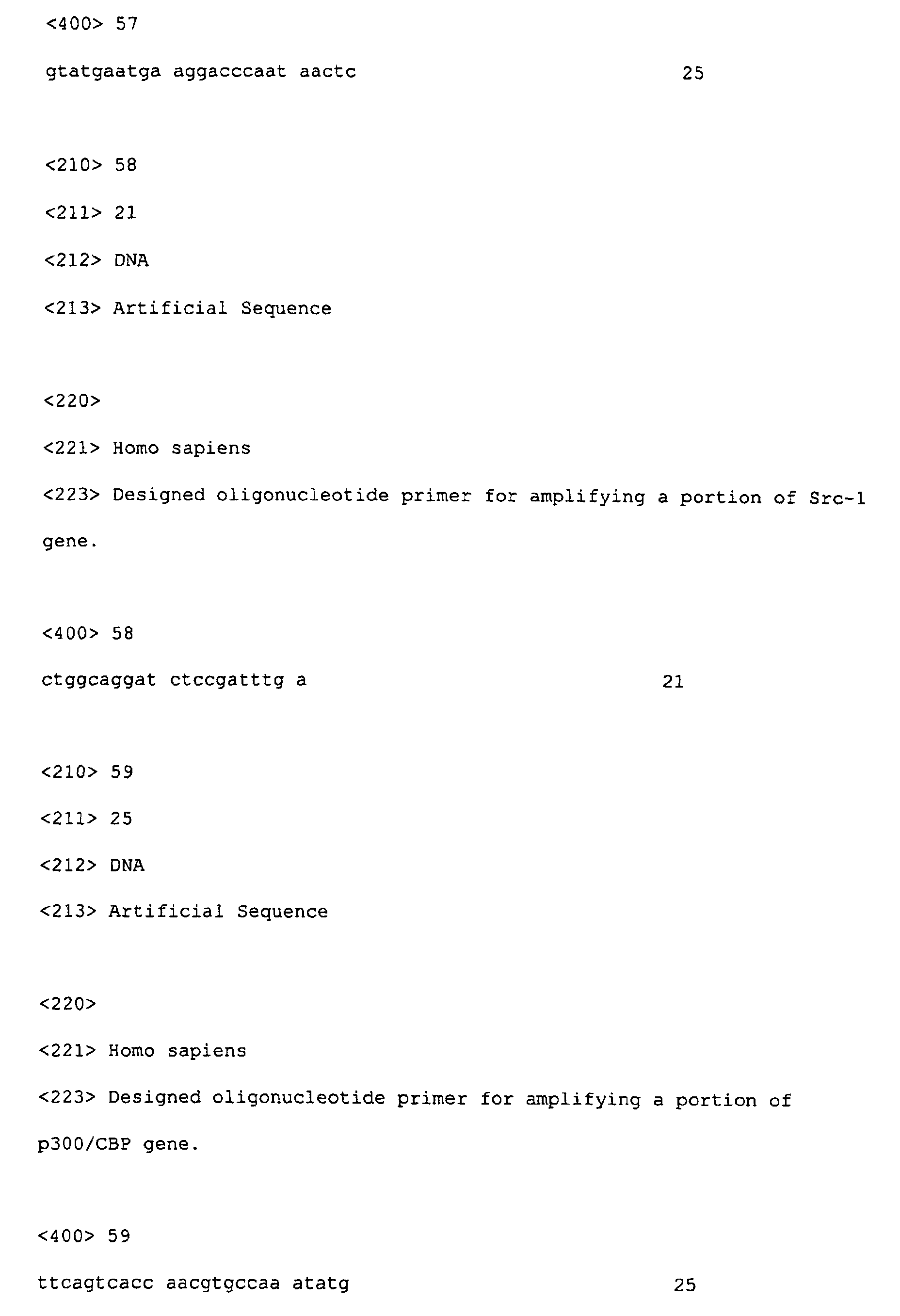
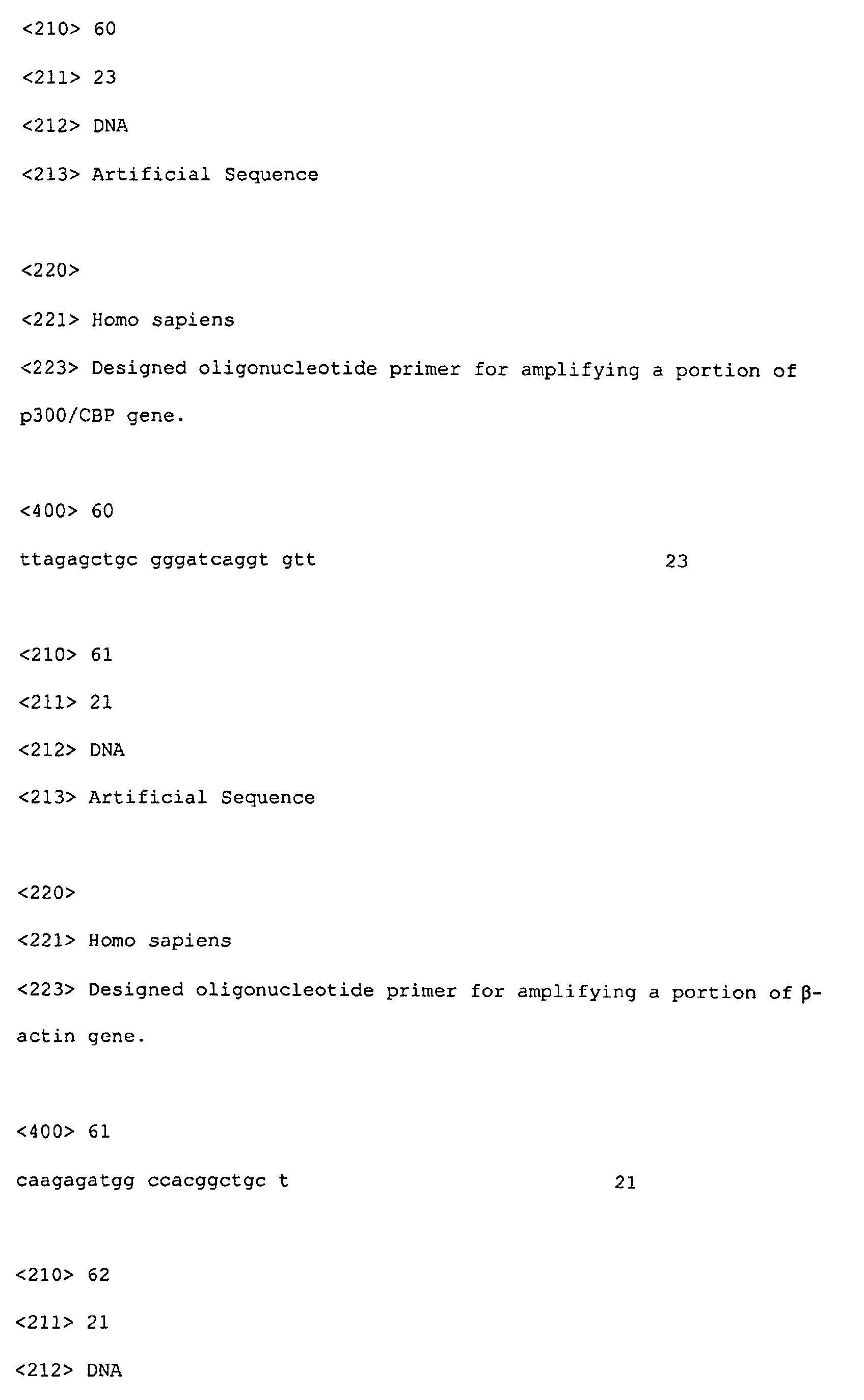
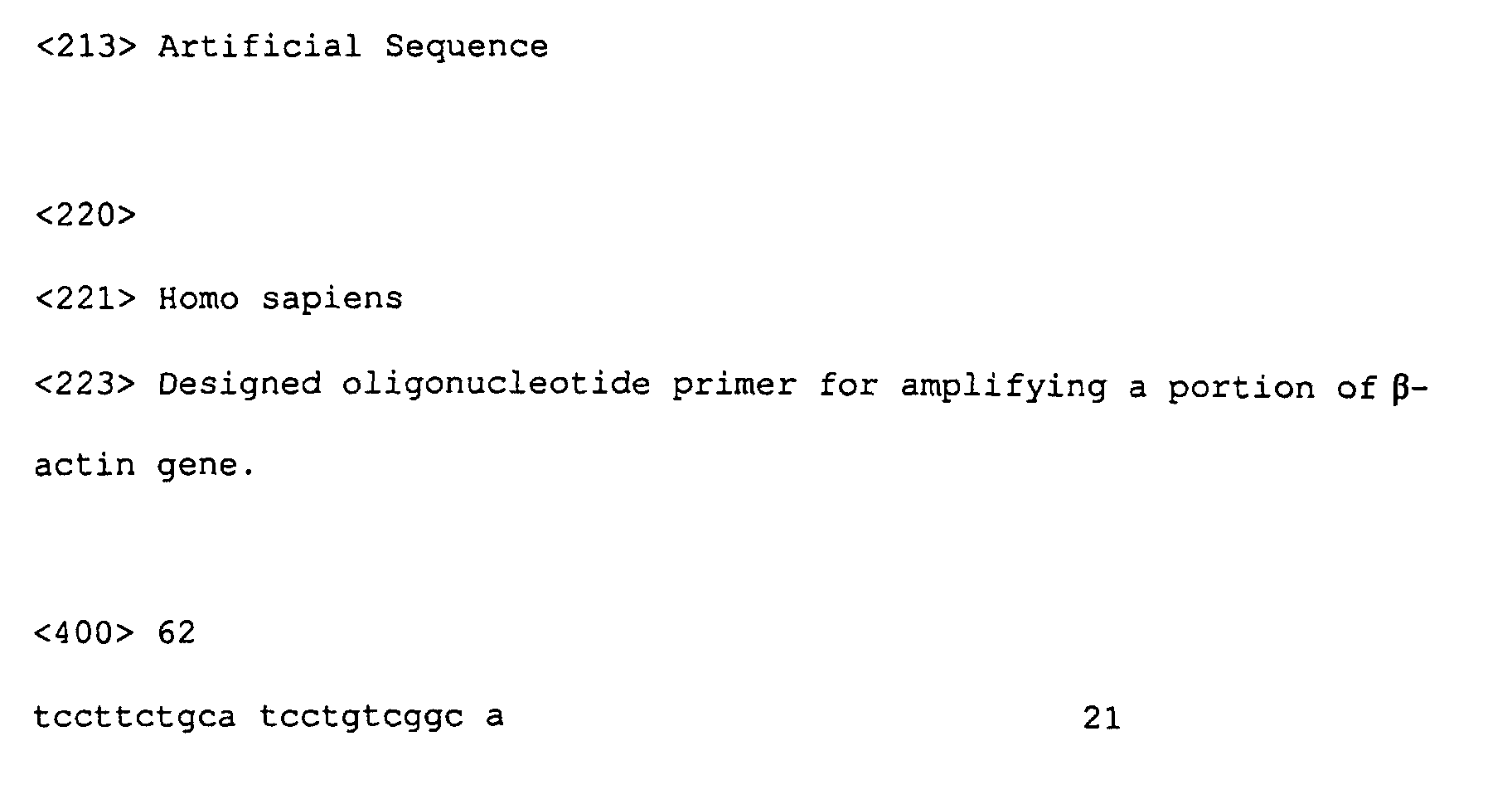
Claims (14)
- A substrate having immobilized ligands in which plural ligands are immobilized in predetermined regions on a surface of the substrate, wherein the shape of each of the regions on the substrate forces a signal due to a binding of the ligand to a receptor in the region to be concentrated on a receiver.
- The substrate having immobilized ligands according claim 1, wherein the shape of each of the regions is a concave shape that forces the signal to be focused on the receiver.
- The substrate having immobilized ligands according to claim 1, wherein the signal is fluorescence or luminescence.
- The substrate having immobilized ligands according to claim 1, wherein each of the regions is coated with a material capable of reflecting signals.
- The substrate having immobilized ligands according to claim 4, wherein the substrate capable of reflecting signals is a specular material.
- The substrate having immobilized ligands according to claim 4, wherein the substrate capable of reflecting signals is a metal.
- The substrate having immobilized ligands according claim 1, wherein each of the regions is formed by pressing.
- A substrate for immobilizing ligands which is used for immobilizing plural ligands in predetermined regions on a surface of the substrate, wherein the shape of each of the regions on the substrate forces a signal due to a binding of the ligand to a receptor in the region to be concentrated on a receiver.
- The substrate for immobilizing ligands according claim 8, wherein the shape of each of the regions is a concave shape that forces the signal to be focused on the receiver.
- The substrate for immobilizing ligands according to claim 8, wherein the signal is fluorescence or luminescence.
- The substrate for immobilizing ligands according to claim 8, wherein each of the regions is coated with a material capable of reflecting signals.
- The substrate for immobilizing ligands according to claim 11, wherein the substrate capable of reflecting signals is a specular material.
- The substrate for immobilizing ligands according to claim 11, wherein the substrate capable of reflecting signals is a metal.
- The substrate for immobilizing ligands according claim 8, wherein each of the regions is formed by pressing.
Applications Claiming Priority (3)
| Application Number | Priority Date | Filing Date | Title |
|---|---|---|---|
| JP2001250974 | 2001-08-22 | ||
| JP2001250974 | 2001-08-22 | ||
| PCT/JP2002/008444 WO2003019199A1 (en) | 2001-08-22 | 2002-08-22 | Substrate having ligands immobilized thereon |
Publications (1)
| Publication Number | Publication Date |
|---|---|
| EP1445616A1 true EP1445616A1 (en) | 2004-08-11 |
Family
ID=19079695
Family Applications (1)
| Application Number | Title | Priority Date | Filing Date |
|---|---|---|---|
| EP02760689A Withdrawn EP1445616A1 (en) | 2001-08-22 | 2002-08-22 | Substrate having ligands immobilized thereon |
Country Status (3)
| Country | Link |
|---|---|
| EP (1) | EP1445616A1 (en) |
| JP (1) | JPWO2003019199A1 (en) |
| WO (1) | WO2003019199A1 (en) |
Family Cites Families (2)
| Publication number | Priority date | Publication date | Assignee | Title |
|---|---|---|---|---|
| JPS57208439A (en) * | 1981-06-18 | 1982-12-21 | Olympus Optical Co Ltd | Particle coagulation discriminating vessel |
| JPS6266141A (en) * | 1985-09-19 | 1987-03-25 | Sumitomo Bakelite Co Ltd | Container for fluorescence immunoassay |
-
2002
- 2002-08-22 JP JP2003524014A patent/JPWO2003019199A1/en active Pending
- 2002-08-22 EP EP02760689A patent/EP1445616A1/en not_active Withdrawn
- 2002-08-22 WO PCT/JP2002/008444 patent/WO2003019199A1/en not_active Ceased
Non-Patent Citations (1)
| Title |
|---|
| See references of WO03019199A1 * |
Also Published As
| Publication number | Publication date |
|---|---|
| WO2003019199A1 (en) | 2003-03-06 |
| JPWO2003019199A1 (en) | 2004-12-16 |
Similar Documents
| Publication | Publication Date | Title |
|---|---|---|
| US20250092385A1 (en) | Barcoded wells for spatial mapping of single cells through sequencing | |
| US20070037148A1 (en) | Compositions and methods for the treatmetn of natural killer cell related diseases | |
| US20050059049A1 (en) | Hairpin-labeled probes and methods of use | |
| US20070154915A1 (en) | Method for detecting cancer and a method for suppressing cancer | |
| JP2003523183A (en) | Method for amplifying and detecting a plurality of polynucleotides on a solid support | |
| WO2009100449A1 (en) | Dynamic array assay methods | |
| WO2001075159A2 (en) | Microchip arrays of regulatory genes | |
| CN1222624C (en) | DNA microarray quality control method | |
| US6448387B1 (en) | Polymeric arrays adapted for high expressing polynucleotides | |
| EP1816476A1 (en) | A testing method of nucleic acid binding protein based on biochip | |
| US20040209261A1 (en) | Oligonucleotide pairs for multiplexed binding assays | |
| JP2003528315A (en) | Mixed polynucleotide sequences as discrete assay ends | |
| US20060199181A1 (en) | Compositions and methods for the treatment of immune related diseases | |
| EP1457573B1 (en) | Method for integrated nucleic acid integrity assessment and analysis | |
| EP1304377B1 (en) | Method of detecting cancer | |
| US20030096321A1 (en) | Method for the identification and/or the quantification of a target compound obtained from a biological sample upon chips | |
| WO2008153228A1 (en) | Nucleic acid chip for obtaining bind profile of single strand nucleic acid and unknown biomolecule, manufacturing method thereof and analysis method of unknown biomolecule using nucleic acid chip | |
| US20060134667A1 (en) | Method for detecting fusion gene | |
| EP1512741A2 (en) | A method for separation and purification of nucleic acid | |
| US20040058325A1 (en) | Gene expression in biological conditions | |
| US20100167955A1 (en) | Microarray including layer comprising dna molecule and method of manufacturing the same | |
| JPWO2003019199A1 (en) | Ligand-immobilized substrate | |
| KR101383653B1 (en) | Specific biomarker for identification of exposure to Propionaldehyde and the method of identification using thesame | |
| WO2010079118A1 (en) | Use of rna obtained from proteolipid complexes circulating in blood for diagnosis and treatment of tumors | |
| KR100985447B1 (en) | Biomarker for confirming exposure of indeno (1,2,3-c, d) pyrene and method for identifying using same |
Legal Events
| Date | Code | Title | Description |
|---|---|---|---|
| PUAI | Public reference made under article 153(3) epc to a published international application that has entered the european phase |
Free format text: ORIGINAL CODE: 0009012 |
|
| 17P | Request for examination filed |
Effective date: 20040209 |
|
| AK | Designated contracting states |
Kind code of ref document: A1 Designated state(s): AT BE BG CH CY CZ DE DK EE ES FI FR GB GR IE IT LI LU MC NL PT SE SK TR |
|
| AX | Request for extension of the european patent |
Extension state: AL LT LV MK RO SI |
|
| STAA | Information on the status of an ep patent application or granted ep patent |
Free format text: STATUS: THE APPLICATION HAS BEEN WITHDRAWN |
|
| 18W | Application withdrawn |
Effective date: 20060720 |