EP1445314A1 - Novel glutamic acid receptor and utilization thereof - Google Patents
Novel glutamic acid receptor and utilization thereof Download PDFInfo
- Publication number
- EP1445314A1 EP1445314A1 EP02770242A EP02770242A EP1445314A1 EP 1445314 A1 EP1445314 A1 EP 1445314A1 EP 02770242 A EP02770242 A EP 02770242A EP 02770242 A EP02770242 A EP 02770242A EP 1445314 A1 EP1445314 A1 EP 1445314A1
- Authority
- EP
- European Patent Office
- Prior art keywords
- glutamic acid
- acid receptor
- receptor protein
- mglur4
- cell
- Prior art date
- Legal status (The legal status is an assumption and is not a legal conclusion. Google has not performed a legal analysis and makes no representation as to the accuracy of the status listed.)
- Granted
Links
Images


Classifications
-
- C—CHEMISTRY; METALLURGY
- C07—ORGANIC CHEMISTRY
- C07K—PEPTIDES
- C07K14/00—Peptides having more than 20 amino acids; Gastrins; Somatostatins; Melanotropins; Derivatives thereof
- C07K14/435—Peptides having more than 20 amino acids; Gastrins; Somatostatins; Melanotropins; Derivatives thereof from animals; from humans
- C07K14/705—Receptors; Cell surface antigens; Cell surface determinants
- C07K14/70571—Receptors; Cell surface antigens; Cell surface determinants for neuromediators, e.g. serotonin receptor, dopamine receptor
-
- A—HUMAN NECESSITIES
- A61—MEDICAL OR VETERINARY SCIENCE; HYGIENE
- A61P—SPECIFIC THERAPEUTIC ACTIVITY OF CHEMICAL COMPOUNDS OR MEDICINAL PREPARATIONS
- A61P1/00—Drugs for disorders of the alimentary tract or the digestive system
-
- A—HUMAN NECESSITIES
- A61—MEDICAL OR VETERINARY SCIENCE; HYGIENE
- A61P—SPECIFIC THERAPEUTIC ACTIVITY OF CHEMICAL COMPOUNDS OR MEDICINAL PREPARATIONS
- A61P1/00—Drugs for disorders of the alimentary tract or the digestive system
- A61P1/04—Drugs for disorders of the alimentary tract or the digestive system for ulcers, gastritis or reflux esophagitis, e.g. antacids, inhibitors of acid secretion, mucosal protectants
-
- A—HUMAN NECESSITIES
- A61—MEDICAL OR VETERINARY SCIENCE; HYGIENE
- A61P—SPECIFIC THERAPEUTIC ACTIVITY OF CHEMICAL COMPOUNDS OR MEDICINAL PREPARATIONS
- A61P1/00—Drugs for disorders of the alimentary tract or the digestive system
- A61P1/10—Laxatives
-
- A—HUMAN NECESSITIES
- A61—MEDICAL OR VETERINARY SCIENCE; HYGIENE
- A61P—SPECIFIC THERAPEUTIC ACTIVITY OF CHEMICAL COMPOUNDS OR MEDICINAL PREPARATIONS
- A61P1/00—Drugs for disorders of the alimentary tract or the digestive system
- A61P1/12—Antidiarrhoeals
-
- A—HUMAN NECESSITIES
- A61—MEDICAL OR VETERINARY SCIENCE; HYGIENE
- A61P—SPECIFIC THERAPEUTIC ACTIVITY OF CHEMICAL COMPOUNDS OR MEDICINAL PREPARATIONS
- A61P1/00—Drugs for disorders of the alimentary tract or the digestive system
- A61P1/14—Prodigestives, e.g. acids, enzymes, appetite stimulants, antidyspeptics, tonics, antiflatulents
-
- A—HUMAN NECESSITIES
- A61—MEDICAL OR VETERINARY SCIENCE; HYGIENE
- A61P—SPECIFIC THERAPEUTIC ACTIVITY OF CHEMICAL COMPOUNDS OR MEDICINAL PREPARATIONS
- A61P21/00—Drugs for disorders of the muscular or neuromuscular system
-
- A—HUMAN NECESSITIES
- A61—MEDICAL OR VETERINARY SCIENCE; HYGIENE
- A61P—SPECIFIC THERAPEUTIC ACTIVITY OF CHEMICAL COMPOUNDS OR MEDICINAL PREPARATIONS
- A61P21/00—Drugs for disorders of the muscular or neuromuscular system
- A61P21/04—Drugs for disorders of the muscular or neuromuscular system for myasthenia gravis
-
- A—HUMAN NECESSITIES
- A61—MEDICAL OR VETERINARY SCIENCE; HYGIENE
- A61P—SPECIFIC THERAPEUTIC ACTIVITY OF CHEMICAL COMPOUNDS OR MEDICINAL PREPARATIONS
- A61P25/00—Drugs for disorders of the nervous system
-
- A—HUMAN NECESSITIES
- A61—MEDICAL OR VETERINARY SCIENCE; HYGIENE
- A61P—SPECIFIC THERAPEUTIC ACTIVITY OF CHEMICAL COMPOUNDS OR MEDICINAL PREPARATIONS
- A61P25/00—Drugs for disorders of the nervous system
- A61P25/14—Drugs for disorders of the nervous system for treating abnormal movements, e.g. chorea, dyskinesia
-
- A—HUMAN NECESSITIES
- A61—MEDICAL OR VETERINARY SCIENCE; HYGIENE
- A61P—SPECIFIC THERAPEUTIC ACTIVITY OF CHEMICAL COMPOUNDS OR MEDICINAL PREPARATIONS
- A61P25/00—Drugs for disorders of the nervous system
- A61P25/14—Drugs for disorders of the nervous system for treating abnormal movements, e.g. chorea, dyskinesia
- A61P25/16—Anti-Parkinson drugs
-
- A—HUMAN NECESSITIES
- A61—MEDICAL OR VETERINARY SCIENCE; HYGIENE
- A61P—SPECIFIC THERAPEUTIC ACTIVITY OF CHEMICAL COMPOUNDS OR MEDICINAL PREPARATIONS
- A61P25/00—Drugs for disorders of the nervous system
- A61P25/28—Drugs for disorders of the nervous system for treating neurodegenerative disorders of the central nervous system, e.g. nootropic agents, cognition enhancers, drugs for treating Alzheimer's disease or other forms of dementia
-
- A—HUMAN NECESSITIES
- A61—MEDICAL OR VETERINARY SCIENCE; HYGIENE
- A61P—SPECIFIC THERAPEUTIC ACTIVITY OF CHEMICAL COMPOUNDS OR MEDICINAL PREPARATIONS
- A61P3/00—Drugs for disorders of the metabolism
- A61P3/04—Anorexiants; Antiobesity agents
-
- A—HUMAN NECESSITIES
- A61—MEDICAL OR VETERINARY SCIENCE; HYGIENE
- A61P—SPECIFIC THERAPEUTIC ACTIVITY OF CHEMICAL COMPOUNDS OR MEDICINAL PREPARATIONS
- A61P3/00—Drugs for disorders of the metabolism
- A61P3/08—Drugs for disorders of the metabolism for glucose homeostasis
- A61P3/10—Drugs for disorders of the metabolism for glucose homeostasis for hyperglycaemia, e.g. antidiabetics
-
- A—HUMAN NECESSITIES
- A61—MEDICAL OR VETERINARY SCIENCE; HYGIENE
- A61P—SPECIFIC THERAPEUTIC ACTIVITY OF CHEMICAL COMPOUNDS OR MEDICINAL PREPARATIONS
- A61P43/00—Drugs for specific purposes, not provided for in groups A61P1/00-A61P41/00
-
- A—HUMAN NECESSITIES
- A61—MEDICAL OR VETERINARY SCIENCE; HYGIENE
- A61P—SPECIFIC THERAPEUTIC ACTIVITY OF CHEMICAL COMPOUNDS OR MEDICINAL PREPARATIONS
- A61P9/00—Drugs for disorders of the cardiovascular system
-
- A—HUMAN NECESSITIES
- A61—MEDICAL OR VETERINARY SCIENCE; HYGIENE
- A61P—SPECIFIC THERAPEUTIC ACTIVITY OF CHEMICAL COMPOUNDS OR MEDICINAL PREPARATIONS
- A61P9/00—Drugs for disorders of the cardiovascular system
- A61P9/10—Drugs for disorders of the cardiovascular system for treating ischaemic or atherosclerotic diseases, e.g. antianginal drugs, coronary vasodilators, drugs for myocardial infarction, retinopathy, cerebrovascula insufficiency, renal arteriosclerosis
-
- A—HUMAN NECESSITIES
- A61—MEDICAL OR VETERINARY SCIENCE; HYGIENE
- A61K—PREPARATIONS FOR MEDICAL, DENTAL OR TOILETRY PURPOSES
- A61K38/00—Medicinal preparations containing peptides
-
- G—PHYSICS
- G01—MEASURING; TESTING
- G01N—INVESTIGATING OR ANALYSING MATERIALS BY DETERMINING THEIR CHEMICAL OR PHYSICAL PROPERTIES
- G01N2500/00—Screening for compounds of potential therapeutic value
Definitions
- the present invention relates to novel glutamic acid receptor and utilization thereof, and more specifically to a glutamic acid receptor, DNA which encodes the receptor, a method of screening a ligand that binds to the receptor utilizing the same, a receptor binding test and so forth.
- Glutamic acid is the major excitatory neurotransmitter in the central nervous system and it is widely accepted that anomaly of its control is involved in creation of pathological conditions of progressive encephalopathies such as disorder in memory, ischemic encephalopathy, amyotropic lateral sclerosis (ALS), Parkinson's disease, and Huntingon's chorea (Meldrum, B.S., Meruolgy, 1994 Nov;44 (11 Supple 8):S14-23; Nishizawa, Y., Life Sci. 2001, Jun 15;69(4):369-81).
- Glutamic acid is known to serve also as an energy source and a source for trapping ammonia that is no longer necessary and always exist in blood plasma in an amount on the order of several tens micromoles or more.
- concentration of intracellular glutamic acid is on the order of nanomoles or less due to the existence of blood-brain barrier.
- affinity of the above-mentioned glutamic acid receptor discovered in the central nervous system for glutamic acid is on the order of nanomoles to micromoles, so that the glutamic acid receptor can act only when glutamic acid is released from the nerve ending.
- the glutamic acid receptor tends to be inactivated or cause tachyphylaxis; in the central nervous system, gliacytes always take up glutamic acid through specific transporters to lower extracellular concentration of glutamic acid.
- glutamic acid receptors are expressed, it is considered that the glutamic acid receptors are always in a stimulated state and thus actually are inactivated and do not function.
- the umami receptor is gustatory type mGluR4, which has the same host gene as type 4 (mGluR4), a subtype of rat brain type metabotropic type glutamic acid receptor (Tanabe, Y. et al., Neuron, 1992, Jan;8)1):169-79; Flor, P.J. et al., Neuropharamacology, 1995, Feb;34(2):149-55) and is partially defective of extracellular domain of the brain type mGluR4 due to splicing mutation.
- salty taste serves as a marker of minerals and is useful for maintaining the osmotic pressure of the body fluid
- sweetness serves as a marker of carbohydrates and is useful for supplementing energy
- umami sodium glutamate
- bitterness serves as a marker of toxic substances. That is, necessary nutrients are taken up relying on the tastes thereof.
- the digestive sensors include a glucose sensor (Mei, N., J. Physiol. (Lond.) 1978, 282, 485-5-6), a temperature sensor (El Ouazzani, T., Mei, N., Exp. Brain Res.
- an osmotic pressure sensor (Mei, N., Garnier, L., J. Auton. Nerv. Syst., 1986;16:159-70), a pH sensor, an amino acid sensor (Mei, N., Physiol. Rev., 1985;65:211-37), and a pressure sensor (Barber, W.D., Burks, T.F., Gastroenterol Clin. North. Am. 1987; 16:521-4).
- the sensor that recognizes glutamic acid was suggested by Niijima et al. from neural excitation that occurred when glutamic acid was administered in the digestive tract by using the technique of electrically grasping the neural activity in the stomach branch and abdominal cavity branch of the vagus nerve that controls mainly the stomach and small intestine, assuming that there is a mechanism that recognizes glutamic acid in the vagus nerve ending (Niijima, A., Physiol. Behav., 1991;49:1025-8).
- the nutrient recognition mechanism also plays an important role on satiety or surfeit and improves poor physical condition due to edacity and imbalance of taken-up nutrients due to deviated food habit. It is considered that anomaly in the recognition of nutrients in the digestive tract naturally results in disturbance in the overall process of digestion and absorption, thus causing edacity, deviated food habit, inappetence, indigestion, diarrhea, constipation, etc.
- digestive ulcers due to psychogenetic hyperphagia, cibophobia, obesity, anomaly of acid secretion, anomaly of blood flow in digestive tract, anomaly of secretion of digestive enzymes, etc., stress ulcers, drug-caused (NSAIDs, etc.) acute ulcers, ischemic ulcer (ischemic colitis), diabetes due to anomaly of secretion of insulin or anomaly of secretion of digestive tract hormone, heavy stomach, nausea, constipation, diarrhea, hypersensitivity vowel syndrome, etc. due to anomaly of motility and so forth.
- NSAIDs drug-caused
- the present invention has been made from the above-mentioned viewpoint and it is an object of the present invention to elucidate the substance of the glutamic acid sensor in the digestive tract and provide a technology utilizing it.
- the inventors of the present invention have studied the distribution of receptors in the digestive tract by an immunohistological technique using an antibody that recognizes intracellular domain of metabotropic glutamic acid receptor (type 4). As a result, they have found that in the mucous membrane layers of small intestine and large intestine, there are type 4 metabotropic glutamic acid receptor (GluR4)-positive cells. In the small intestine and large intestine, mucus-producing cell (goblet cell) was mGluR4-positive. Then, cDNA that is supposed to be a novel glutamic acid receptor was successfully cloned from the samples of the small intestine and large intestine.
- GluR4 metabotropic glutamic acid receptor
- the glutamic acid receptor is a glutamic acid sensor in the digestive tract and it is considered that the cDNA of the receptor, purified receptor and cell expressing the receptor are useful for screening agents for controlling the function of the glutamic acid sensor in the digestive tract.
- the present invention has been accomplished based on the above-mentioned findings and the gist of the present invention is as follows.
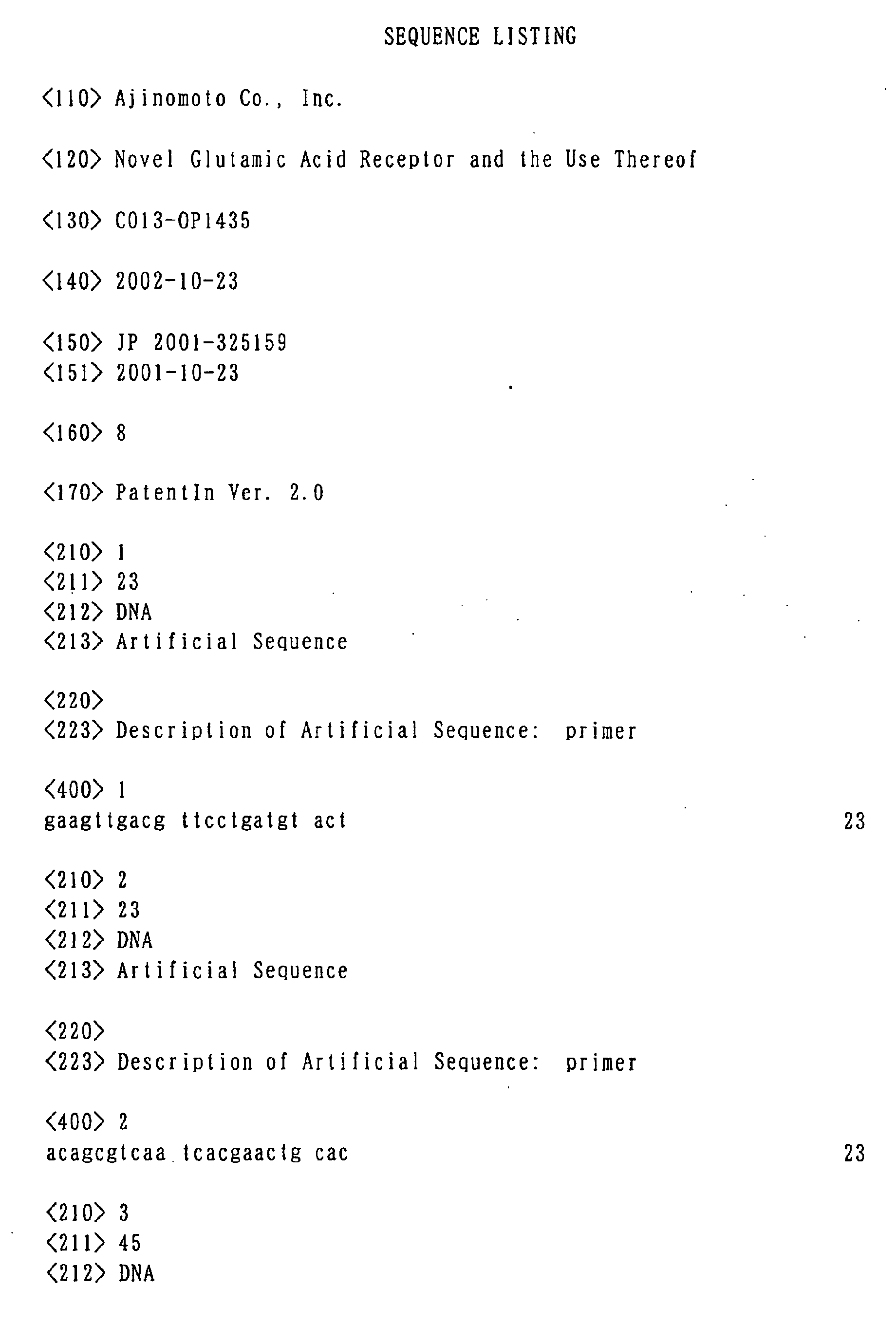
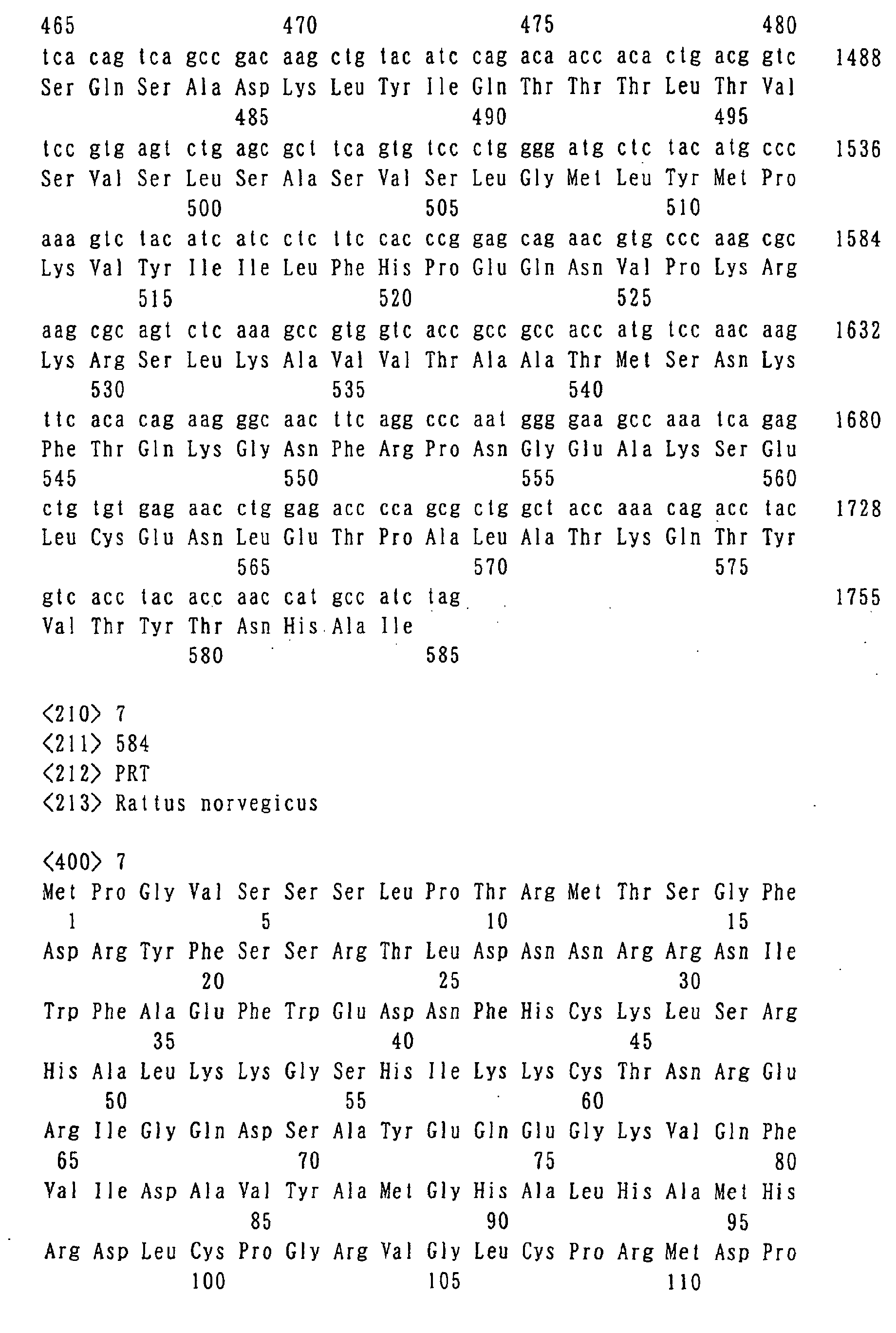
- the glutamic acid receptor protein of the present invention typically has an amino acid sequence consisting of amino acids numbers 12 to 584 in the amino acid sequence described in SEQ ID NO: 7 in the Sequence Listing.
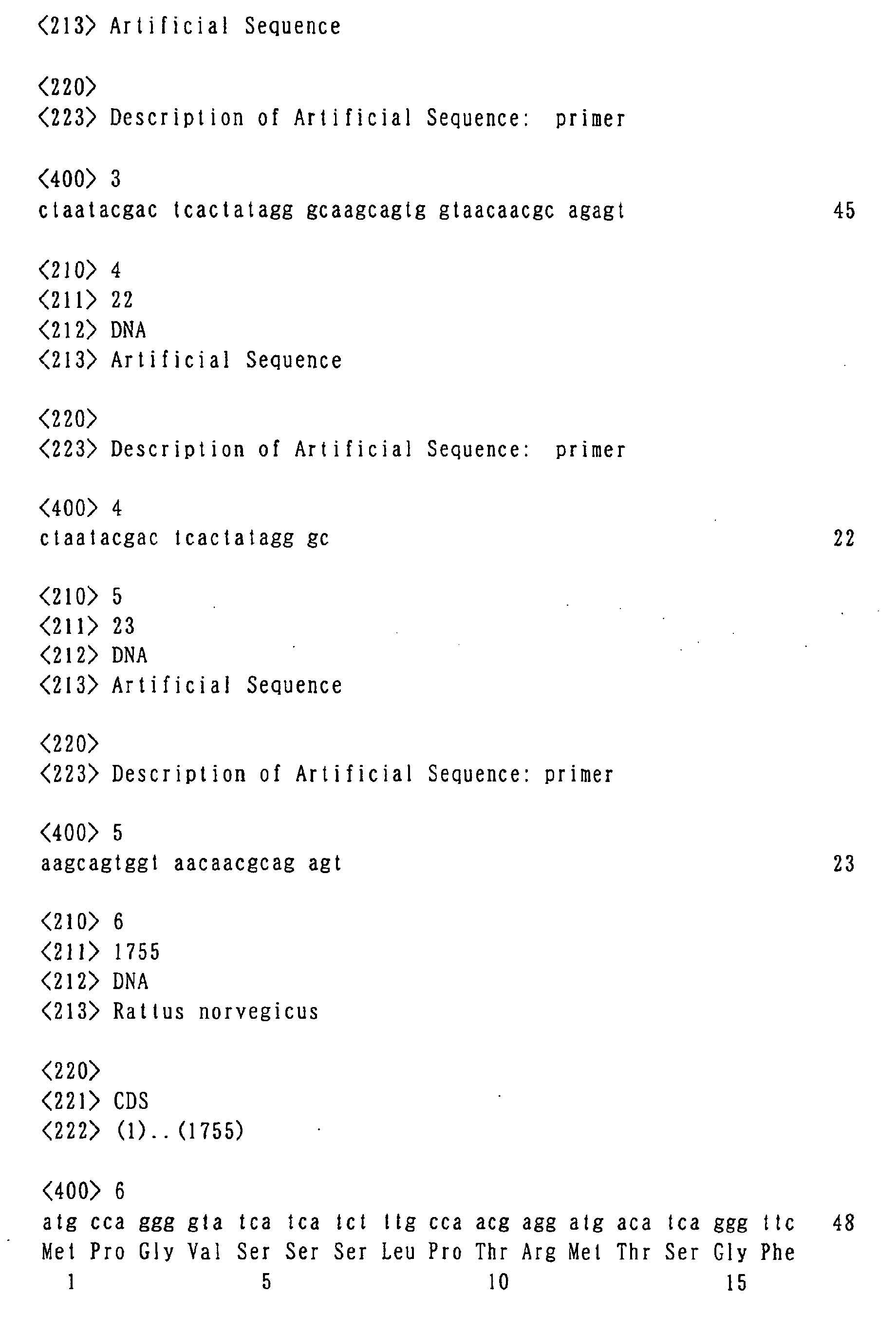
- the open reading frame of the nucleotide sequence of rat cDNA encoding the protein is shown in SEQ ID NO: 6.
- methionine codons base numbers 1 to 3, and 34 to 36
- the methionine codon on the N-terminal side is the start codon
- the second methionine codon is the start codon.
- ligation of a suitable promoter to upstream of the nucleotide sequence shown in SEQ ID NO: 6 and expression of the resultant in a suitable cell enables production of an active glutamic acid receptor.
- the glutamic acid receptor protein of the present invention was considered to be a splicing variant derived from the gene common with that of mGluR4.
- the glutamic acid receptor protein of the present invention will also be referred to as mGluR4 variant in some cases.
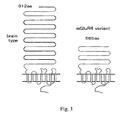
- Fig. 1 shows the structures of mGluR4 and mGluR4 variant.
- mGluR4 consists of an intracellular domain, 7 transmembrane domains and an extracellular domain.
- the mGluR4 variant also has an intracellular domain and 7 transmembrane domains that have the same sequences as those of mGluR4.
- the extracellular domain of the mGluR4 variant is shorter by 316 amino acid residues if the first methionine codon is a start codon, or by 327 amino acids if the second methionine codon is a start codon, than mGluR4.
- the mGluR4 variant of the present invention has common transmembrane domain and intracellular domain with those of the type 4 metabotropic glutamic acid receptor protein and an extracellular domain that is by about 316 or 327 amino acid residues shorter than the type 4 metabotropic glutamic acid receptor protein.
- mGluR4 variant is presumed to be a result of elimination of the second exon in the mGluR4 gene by alternative splicing to generate frame shift, which in turn causes a stop codon to appear in the first exon and causes a start codon downstream thereof.
- the mGluR4 variant of the present invention may be derived from a rat.
- the mGluR4 variant may be derived from any animal including mammalian such as human, monkey, mouse, dog, cow, and rabbit, birds, and fin.
- mammalian such as human, monkey, mouse, dog, cow, and rabbit, birds, and fin.
- the mGluR4 variant is used as a component of pharmaceutical composition, it is preferably derived from a mammalian.
- the mGluR4 variant of the present invention may be a protein having the amino acid sequence of SEQ ID NO: 7 or the amino acid sequence consisting of amino acid numbers 12 to 584 in SEQ ID NO: 7, or a protein having the amino acid sequence of SEQ ID NO: 7 including substitution, deletion, insertion or addition of one or a plurality of amino acids at one or a plurality of sites so long as it has properties that it can generate a second messenger when glutamic acid is bonded thereto.
- the "plurality” as used herein varies depending on the positions of amino acid residues in the three-dimensional structure of the protein and the types of the amino acids, however, the number may be such that the homology with the amino acid sequence shown by SEQ ID NO: 7 is 80% or more, preferably 90% or more. More particularly, the plurality is 2 to 115, preferably 2 to 58, more preferably 2 to 30.
- the glutamic acid receptor of the present invention may be in a purified or isolated form; however, when the activity is required, it is preferably in a form that is expressed in a suitable cell and localized in the membrane of the cell or in a form contained in a membrane fraction prepared from a cell in which the mGluR4 variant was expressed.
- the glutamic acid receptor of the present invention also includes cells that express mGluR4 variant or a membrane fraction prepared from such cells.
- the mGluR4 variant can be obtained, for example, by introducing DNA that encodes the mGluR4 variant into a suitable host cell to express the mGluR4 variant.
- the above-mentioned DNA includes gene that encodes the mGluR4 variant, isolated from the chromosome of a cell of a mammalian such as mouse. When chromosomal gene is used, it is preferable that cDNA is used since it is considered necessary to control a post-transcriptional process such as splicing so that mGluR4 variant can be generated.
- the cDNA of mGluR4 variant can be cloned by amplifying the cDNA of mGluR4 variant using RNA prepared from the small intestine or large intestine of a mammal such as a rat as a template and oligonucleotides shown in, for example, SEQ ID NOS: 1 to 5 as primers.
- RNA prepared from the small intestine or large intestine of a mammal such as a rat
- oligonucleotides shown in, for example, SEQ ID NOS: 1 to 5 as primers.
- cloning and identification of the cDNA of mGluR4 variant can be performed easily based on the structures.
- the open reading frame nucleotide sequence of the thus obtained cDNA of mGluR4 variant is shown in SEQ ID NO: 6.
- the DNA which encodes the mGluR4 variant includes in addition to the nucleotide sequence shown in SEQ ID NO: 6, DNA which hybridizes with DNA having this nucleotide sequence or a probe that can be prepared from the same nucleotide sequence under stringent conditions and that encodes the mGluR4 variant.
- stringent conditions means conditions whereby specific hybrid is formed but nonspecific hybrids are not formed.
- numeric values examples thereof include those conditions whereby DNAs having high homology, for example, DNAs having 50% or more, preferably 75% or more homology hybridize with each other but DNAs having a lower homology than that will not hybridize with each other, or those conditions whereby DNAs hybridize with each other under ordinary washing conditions in southern hybridization, i.e., at 60°C and a salt concentration corresponding to 1 ⁇ SSC, 0.1% SDS, preferably 0.1 ⁇ SSC, 0.1% SDS.
- Cells to which DNA encoding the mGluR4 variant is introduced include preferably animal cells, insect cells or yeast when the activity of mGluR4 variant is necessary, with animal cells being particularly preferable.
- Examples of cells that are considered to enable transient expression of the function by introducing a recombinant vector containing DNA encoding the mGluR4 variant include Xenopus laevis oocyte, Chinese hamster ovary (CHO), baby hamster kidney (BHK) cell, human embryonic kidney (HEK) cell, Sf-9 insect cell, PC12 cell, and COCA-2 cell.
- CHO Chinese hamster ovary
- BHK baby hamster kidney
- HEK human embryonic kidney
- Sf-9 insect cell PC12 cell
- COCA-2 cell COCA-2 cell.
- DNA encoding the mGluR4 variant is incorporated in chromosomal DNA to express the mGluR4 variant permanently, those cells other than the Xenopus laevis oocyte are suitable.
- cells to which DNA encoding the mGluR4 variant is introduced may be those cells that do not express the mGluR4 variant in an active form.
- microbial cells that are usually used for the production of heterologous protein, including Escherichia coli may be used.
- DNA which encodes the mGluR4 variant
- an expression regulation sequence such as promoter or enhancer suitable for the host cell.
- the DNA which encodes the mGluR4 variant may include a processing information site, for example, a ribosome binding site, an RNA splicing site, a polyadenylation site, and a transcription terminator sequence as necessary.
- Preferable expression control sequences include promoters derived from immunoglobulin gene, SV40, adenovirus, bovine papilloma virus, and cytomegalovirus.
- the mGluR4 variant and a cell that retains the mGluR4 variant can be produced by cultivating a cell that harbors the DNA encoding the mGluR4 variant obtained as described above in an expressible form in a medium to produce the mGluR4 variant.
- Active mGluR4 variant that is, mGluR4 variant that can generate a second messenger when glutamic acid is bound thereto can be utilized for screening agonist, antagonist or allosteric modulator of glutamic acid.
- the mGluR4 variant and a substance that binds to the mGluR4 variant are reacted in the presence of a test substance, and inhibition or promotion of the reaction is detected, thereby screening agonist, antagonist or allosteric modulator of glutamic acid (hereinafter, these may be referred to collectively as "ligand").
- the allosteric modulator binds to a site other than the binding site between the mGluR4 variant and glutamic acid to exhibit similar function to that of the agonist or antagonist.
- the agonist of glutamic acid may be screened by reacting the mGluR4 variant with a test substance and detecting the reaction.
- the active mGluR4 variant may include cells that express the mGluR4 variant or membrane fractions prepared from such cells.
- Such membrane fractions may be prepared by allowing cells to express active mGluR4 variant, ultrasonically disrupting the cells, and subjecting the sonicate to density gradient centrifugation to collect a membrane fraction.
- examples of the substance that binds to the above-mentioned mGluR4 variant include glutamic acid, glutamic acid agonist, or known ligands that bind to mGluR4 (L-AP4, CPPG, MAP-4, or the like).
- the substances that modulate the activity of the mGluR4 variant include drugs that influence the intracellular concentration of calcium (calcium channel and sodium channel opener, Na/K pump inhibitor, Na/Ca exchange agonist, Ca-ATPase inhibitor, protein kinase C agonist), drugs that influence intracellular cAMP concentration (phosphodiesterase agonist, adenylate cyclase agonist), and drugs that influence intracellular cGMP concentration (cGMP-dependent phosphodiesterase agonist, guanylate cyclase agonist) and so forth.
- drugs that influence the intracellular concentration of calcium calcium
- Na/K pump inhibitor Na/Ca exchange agonist
- Ca-ATPase inhibitor Ca-ATPase inhibitor
- protein kinase C agonist protein kinase C agonist
- drugs that influence intracellular cAMP concentration phosphodiesterase agonist, adenylate cyclase agonist
- drugs that influence intracellular cGMP concentration cGMP-dependent phosphodiesterase
- Inhibition or promotion of the reaction between mGluR4 variant and a substance that binds thereto can be detected by measuring a second messenger that is generated by binding of a ligand such as glutamic acid to the mGluR4 variant.
- the above-mentioned inhibition or promotion of reaction can also be detected by measuring the binding of a labeled known ligand to the mGluR4 variant instead of detecting the second messenger.
- reaction between the mGluR4 variant and the agonist of glutamic acid can be detected by detecting a second messenger that is generated by binding of the mGluR4 variant to the agonist of glutamic acid.
- the intracellular domain of mGluR4 variant is the same as the brain type and gustatory bud type mGluR4 and the brain type and gustatory bud type mGluR4 have the same intracellular signal transmitting mechanism. Therefore, the mGluR4 variant is expected to have similar intracellular signal transmitting mechanism. Therefore, the above-mentioned second messenger is inhibition of production of intracellular cAMP accompanying activation of Gi (inhibitory GTP binding protein) to adenylate cyclase. Furthermore, downstream of cAMP in signal transmission includes regulation of gene expression through modulation of CAMP-responsive element and modulation of function of acute phase by phosphorylation of cytoplasm or membrane protein. Therefore, the second messenger can be detected by measuring change in the amount of cAMP accumulated in the cell, measuring change in intracellular calcium concentration through modulation of intracellular Ca-ATPase activity, or measuring change in the function of channel.
- a pharmaceutical composition that comprises the agonist, antagonist or allosteric modulator of glutamic acid as an active ingredient thus screened can be used as a drug for modulating the second messenger generated when glutamic acid is bound to a glutamic acid receptor. Modulation of the second messenger enables improvement and prevention of diseases and pathology caused by anomaly of glutamic acid receptor.
- the anomalies of control of vagus nerve include anomaly of afferent pathway (disorder of nutrient recognition) and anomaly of efferent pathway.
- the diseases or pathology due to the anomaly of afferent pathway include hyperphagia, cibophobia, obesity and so on.
- those due to the anomaly of efferent pathway include digestive ulcers (stomach ulcer, duodendum ulcer) due to psychogenetic hyperphagia, cibophobia, obesity, anomaly of acid secretion, anomaly of blood flow in digestive tract, anomaly of secretion of digestive enzymes, etc., stress ulcers, drug-caused (NSAIDs, etc.) acute ulcers, ischemic ulcer (ischemic colitis), diabetes due to anomaly of secretion of insulin or anomaly of secretion of digestive tract hormone, heavy stomach, nausea, constipation, diarrhea, hypersensitivity vowel syndrome, etc. due to anomaly of motility and so forth.
- digestive ulcers stomach ulcer, duodendum ulcer
- obesity anomaly of acid secretion
- anomaly of blood flow in digestive tract anomaly of secretion of digestive enzymes, etc.
- stress ulcers drug-caused (NSAIDs, etc.) acute ulcers
- ischemic ulcer ischemic colitis
- diabetes due to anomaly of secreti
- mGluR4 variant as an immunogen enables preparation of an antibody that specifically binds to the mGluR4 variant.
- the mGluR4 variant has a novel amino acid sequence in the N-terminus, antibody, particularly monoclonal antibody, that contains this portion as an epitope is expected to bind to the mGluR4 variant and not to bind to other glutamic acid receptors.
- the antibody specific to the mGluR4 variant can be used in immunostaining specific to the mGluR4 variant.
- Fig. 1 is a schematic diagram showing the structures of mGluR4 and mGluR4 variant.
- Fig. 2 is a photograph showing results of immunostaining with an anti-mGluR4 antibody.
- A small intestine.
- B large intestine.
- Fig. 3 is a diagram showing action of L-glutamic acid on afferent action of the abdominal branch of vagus nerve, with horizontal axis indicating time and vertical axis showing neuronal action.
- Example 1 Cloning of novel metabotropic glutamic acid receptor cDNA from rat intestinal tissue
- Reverse transcription was performed by using superscript (Gibco-BRL) and SMART (Switching Mechanism at 5' end of RNA Transcript) RACE (rapid amplification of cDNA ends) cDNA amplification kit (Clontech) and using total RNA derived from small intestine and large intestine of a Wistar rat (CRJ) as a template.
- RACE Rapid amplification of cDNA ends
- cDNA amplification kit Clontech
- CRJ Wistar rat
- the 5' end fragment of rat mGluR4 was amplified by 5'-RACE using LA taq (TaKaRa) followed by nested PCR.
- the primers from SMART-RACE kit (Universal primer mix: Long 5'-CTA ATA CGA CTC ACT ATA GGG CAA GCA GTG GTA ACA ACG CAG AGT-3' (SEQ ID NO: 3), Short 5'-CTA ATA CGA CTC ACT ATA GGG C-3' (SEQ ID NO: 4), and Nested universal primer: 5'-AAG CAG TGG TAA CAA CGC AGA GT-3' (SEQ ID NO: 5)) were used for performing 5'-RACE PCR.
- rat cDNA was amplified in 10 ⁇ l 10 ⁇ LA PCR buffer, 2.5 mM MgCl 2 , 2.5 mM dNTP mixure and 0.25 units La Taq enzyme by using gene-specific primer, R-mGluR4 and Universal primer mix.
- PCR was performed 40 cycles by using a GeneAmp PCR system 9700 at 94°C for 20 seconds, 50°C for 1 minute, and 68°C for 3 minutes, followed by chain extension at 68°C for 10 minutes.
- the obtained reaction product was amplified again by using R2-mGluR4 and Nested universal primer under the same conditions as described above to obtain a 300 bp fragment.
- the amplification product was separated by electrophoresis on agarose and cloned in pCR-II vector having dual promoter by using TA cloning kit (Invitrogen).
- nucleotide sequence identified from each of the above-mentioned clones is shown in SEQ ID NO: 6.
- amino acid sequence encoded by the open reading frame contained in the nucleotide sequence is shown in SEQ ID NO: 7.
- Comparison of the nucleotide sequence with the mRNA sequence of brain mGluR4 revealed that in the nucleotide sequence of SEQ ID NO: 6, cytosine at position 1724 is directly liked to adenine at position 1880 (the positions of nucleotides are based on mGluR4 mRNA) and that 155 bp fragment is deleted.
- the above-mentioned protein encoded by the open reading frame has a molecular weight of about 88 kD assuming that the first methionine in the amino acid sequence shown in SEQ ID NO: 7 is the N-terminus. Fourteen amino acids on the N-terminus does not exist in the amino acid sequence encoded by mGluR4 mRNA.
- the obtained clone is a splicing variant of mGluR4 having a novel extracellular domain.
- Rats (Wistar strain, male, 10 to 15-week age) were let bleed by dissecting right auricle of the heart under anesthesia with ether and immediately thereafter, small intestine and large intestine were extracted. From the small intestine, a part about 5 cm from the outlet of stomach was extracted. From the large intestine, about 7 cm long part from the ileocecal opening on the side of rectum was extracted. When a large amount of digestion product remained in the intestine, the intestinal tract was washed with physiological saline.
- the dissected intestinal tract was cut open, put on a cork board with a needle, and immersed in 4% paraformaldehyde (4°C) with shaking for one day to fix it. Thereafter, the intestinal tract was immersed in 20% Sucrose-PBS for 3 to 4 days for cryprotection, wrapped in Tissue-Tek R (OCT compound), and then sliced to a thickness of 5 to 7 ⁇ m in a cryostat. The sections were dried at room temperature and then stored at 4°C until use for various kinds of staining.
- Immunostaining of the sections was performed according to the method described in Drengk, A.C. et al., J. Auto. Nerv. Sys. 78: 109-112, 2000, and Miampamba, M. et al., J. Auto. Nerv. Sys. 77: 140-151, 1999.
- the sections were first washed with PBS and then treated with 3% hydrogen peroxide/methanol for 15 minutes in order to inhibit a reaction by endogenous peroxidase. Then, the sections were washed with PBS and blocked with 1% bovine serum albumin added PBS (1% BSA-PBS) containing 10% normal equine serum for 1 hour.
- the sections were washed with running water, treated with 3% acetic acid, and then reacted with Alcian Blue solution (pH 2.5, WAKO) for 30 to 40 minutes. Then, the sections were washed with running water and immersed in 1% periodic acid solution for 10 minutes, followed by reaction with Schiff's reagent (WAKO) for 8 to 10 minutes. By the above treatment, mucin was stained to identify goblet cell of the intestinal tract. After washing the sections with running water again, finally, the sections were subjected to nuclear stain with Mayer's hematoxylin (WAKO), and after thus performing color intensification, the sections were dehydrated and sealed.
- Alcian Blue solution pH 2.5, WAKO
- WAKO Schiff's reagent
- Fig. 2A The results of immunostaining are shown in Fig. 2.
- Fig. 2B the goblet cells were stained with the anti-mGluR4. It is a general assumption that mGluR4 receptors are not expressed in the goblet cells. Therefore, it is conceived that the mGluR4 variant is expressed in the goblet cells, which suggests that the mGluR4 variant is functionally related to secretion of mucoid.
- the neural activity potential was amplified 10,000 folds by a micro potential amplifier (DAM-80 manufactured by WPI) and subjected to A/D conversion (Powerlab 4sp, manufactured by ADI Instruments) after noise was decreased by a Bessel filter (4-pole, High Cut 10 Hz, Low Cut 1 KHz). Thereafter, the potential was incorporated in a computer (sampling rate 3 KHz, iBook).
- DAM-80 micro potential amplifier
- A/D conversion Powerlab 4sp, manufactured by ADI Instruments
- a noise component is separated from a neural signal component by a window discriminator (DSE-435, manufactured by DiaMedical Corporation), integrated for 5 seconds by a Spike Counter (DSE-335P, manufactured by Nihon Kohden Corporation) and recorded by a chart recorder (WT-465G, manufactured by Nihon Kohden Corporation).
- DSE-435 window discriminator
- DSE-335P Spike Counter
- WT-465G chart recorder
- the results obtained are shown in Fig. 3.
- the afferent activity of the abdominal cavity branch of vagus nerve when 150 mM MSD was administered in the duodendum was increased.
- the afferent pathway of vagus nerve is considered to be a signal transmitting pathway that transmits visceral sense, particularly nutrient information from the stomach and intestines to the nucleus solitary tract and performs control of postcibal sense such as satiety or sense of displeasure and digestion by modulating the efferent pathway of the vagus nerve.
- a full-length cDNA of a novel mGluR4 variant was amplified again by a RT-PCR method by using PFU polymerase (Promega). Then, the resultant was cloned in pUni-V5-His-TOPO by using a cloning kit (Invitrogen) according to a conventional method and thereafter, the cDNA was incorporated into pcDNA3.1E by using a plasmid fusing method.
- the prepared vector (pcDNA3.1E) was introduced in CHO-K1 cell (Dainippon Pharmaceutical Co., Ltd.) by using polyFect reagent (Qiagen). After 48 hours, neomycin (600 ⁇ g/ml) was added to a culture medium (Modified Eagle Medium ( ⁇ MEM) containing 10% fetal bovine serum, 100 U/ml penicillin; Nacalai Tesque) and cultivation was continued for 2 to 3 weeks to perform screening of gene-introduced cells. The screened CHO-K1 cell was proliferated to a cell number that is necessary for the evaluation of function after expression of mRNA of novel mGluR1 variant was confirmed by an RT-PCR method.
- ⁇ MEM Modified Eagle Medium
- the variant expressing cells obtained as described above were dispensed to 2.5 ⁇ 10 5 cells/well on a plate (24-well) and cultivated for 20 hours and then used for the measurement of the function of cAMP. Each plate was washed well with Dulbeco's phosphate buffer and incubated for 20 minutes. Thereafter, stimulation was performed with each drug for 10 minutes at 37°C. After the stimulation, the cells were at once treated with ice-cooled 2.5% perchloric acid (PCA) for 30 minutes, neutralized with KOH, and centrifuged to obtain a supernatant (12,000 rpm ⁇ 10 min, 4°C). The cAMP content of the supernatant was determined according to a conventional enzyme immunoassay (ELISA) by using a cAMP assay kit (Amersham).
- ELISA enzyme immunoassay
- the amount of cAMP in the mGluR4 variant expressing cell was increased about 9 folds by treatment with a phosphodiesterase inhibitor (isobutyl-methyl-xanthine; IBMX; 100 ⁇ M) and an adenyl cyclase activator (forskolin; 10 ⁇ M).
- a phosphodiesterase inhibitor isobutyl-methyl-xanthine; IBMX; 100 ⁇ M
- an adenyl cyclase activator forskolin; 10 ⁇ M.
- a novel metabotropic glutamic acid receptor can be provided.
- the glutamic acid receptor can be used in screening agonists, antagonists or allosteric modulators of glutamic acid.
- the glutamic acid receptor can be used as a medicine for improving diseases and pathology due to metabolic disorder in digestive tracts such as small intestine and large intestine.
Landscapes
- Health & Medical Sciences (AREA)
- Life Sciences & Earth Sciences (AREA)
- Chemical & Material Sciences (AREA)
- Engineering & Computer Science (AREA)
- Organic Chemistry (AREA)
- Bioinformatics & Cheminformatics (AREA)
- Medicinal Chemistry (AREA)
- General Health & Medical Sciences (AREA)
- Veterinary Medicine (AREA)
- Public Health (AREA)
- Chemical Kinetics & Catalysis (AREA)
- General Chemical & Material Sciences (AREA)
- Nuclear Medicine, Radiotherapy & Molecular Imaging (AREA)
- Pharmacology & Pharmacy (AREA)
- Animal Behavior & Ethology (AREA)
- Neurology (AREA)
- Biomedical Technology (AREA)
- Neurosurgery (AREA)
- Diabetes (AREA)
- Genetics & Genomics (AREA)
- Toxicology (AREA)
- Hematology (AREA)
- Obesity (AREA)
- Proteomics, Peptides & Aminoacids (AREA)
- Molecular Biology (AREA)
- Cardiology (AREA)
- Psychology (AREA)
- Immunology (AREA)
- Heart & Thoracic Surgery (AREA)
- Biophysics (AREA)
- Biochemistry (AREA)
- Orthopedic Medicine & Surgery (AREA)
- Physical Education & Sports Medicine (AREA)
- Gastroenterology & Hepatology (AREA)
- Zoology (AREA)
- Cell Biology (AREA)
- Urology & Nephrology (AREA)
- Nutrition Science (AREA)
- Child & Adolescent Psychology (AREA)
- Psychiatry (AREA)
Abstract

Description
| Primary antibody | Magnifications of primary antibody | Secondary antibody | Magnifications of primary antibody |
| anti-mGluR1a, rabbit, polyclonal, Chemicon, cat# AB1551 | 100 | Biotinylated anti-rabbit Ig, Amersham Pharmacia Biotech, cat# RPN 1004 | 150 |
| anti-mGluR2/3, rabbit, polyclonal. Chemicon, cat# AB1553 | 100 | Biotinylated anti-rabbit Ig, Amersham Pharmacia Biotech, cat# RPN 1004 | 150 |
| anti-mGluR4a, rabbit, Upstate Biotechnology, cat# 06-765 | 400 | Biotinylated anti-rabbit Ig, Amersham Pharmacia Biotech, cat# RPN 1004 | 150 |
| anti-mGluR5, rabbit, polyclonal, Chemicon, cat# AB5323 | 400 | Biotinylated anti-rabbit Ig, Amersham Pharmacia Biotech, cat# RPN 1004 | 150 |




Claims (16)
- A glutamic acid receptor protein having the following properties:(A) it has a transmembrane domain and an intracellular domain common to those of type 4 metabotropic glutamic acid receptor protein, and(B) it has an extracellular domain by about 316 or 327 amino acid residues shorter than that of the type 4 metabotropic glutamic acid receptor protein.
- The glutamic acid receptor protein according to claim 1, wherein the protein is expressed in rat small intestine and large intestine.
- The glutamic acid receptor protein according to claim 1, wherein the protein comprises the amino acid sequence shown in SEQ ID NO: 7 or the amino acid sequence consisting of amino acids numbers 12 to 584 in the amino acid sequence shown in SEQ ID NO: 7.
- The glutamic acid receptor protein according to claim 3, wherein the sequence includes substitution, deletion, insertion, or addition of one or a plurality of amino acid residues and the protein can generate a second messenger by binding glutamic acid thereto.
- A DNA which encodes a glutamic acid receptor protein according to any one of claims 1 to 4 and does not express type 4 metabotropic glutamic acid receptor protein.
- A cell harboring a DNA which encodes the glutamic acid receptor protein according to any one of claims 1 to 4 in an expressible form.
- A method of producing glutamic acid receptor protein or a cell harboring the glutamic acid receptor protein, comprising cultivating a cell harboring a DNA which encodes the glutamic acid receptor protein according to any one of claims 1 to 4 in an expressible form in a medium to produce the glutamic acid receptor protein.
- A method of screening an agonist, an antagonist, or an allosteric modulator of glutaminc acid, comprising the steps of reacting the glutamic acid receptor protein according to any one of claims 1 to 4 with a substance that binds to the protein in the presence of a test substance, and detecting inhibition or promotion of the reaction.
- A method of screening an agonist of glutamic acid comprising the steps of reacting a glutamic acid receptor protein according to any one of claims 1 to 4 and a test substance, and detecting the reaction.
- A method according to claim 8, wherein the cell according to claim 6 or a membrane fraction prepared from the cell is used as the glutamic acid receptor protein.
- A method according to claim 10, wherein the inhibition or promotion of the binding is detected by a second messenger generated by the glutamic acid receptor protein.
- A method according to claim 9, wherein the cell according to claim 6 or a membrane fraction prepared from the cell is used as the glutamic acid receptor protein.
- A method according to claim 12, wherein inhibition or promotion of the binding is detected by a second messenger generated by the glutamic acid receptor protein.
- An antibody that specifically binds to the glutamic acid receptor protein according to any one of claims 1 to 4.
- A method of producing a drug for modulating a second messenger generated by binding glutamic acid to a glutamic acid receptor, comprising the steps of:reacting the glutamic acid receptor protein according to any one of claims 1 to 4 with a substance that binds to the protein in the presence of a test substance and detecting inhibition or promotion of the reaction to screen an agonist, an antagonist, or an allosteric modulator of glutamic acid; andpreparing a pharmaceutical composition containing the agonist, antagonist, or allosteric modulator of glutamic acid obtained in the reacting step as an active ingredient.
- A method of producing a drug for modulating a second messenger generated by binding glutamic acid to a glutamic acid receptor, comprising the steps of:reacting the glutamic acid receptor protein according to any one of claims 1 to 4 with a test substance and detecting the reaction to screen an agonist of glutamic acid; andpreparing a pharmaceutical composition containing the agonist of glutamic acid obtained in the reacting step as an active ingredient.
Applications Claiming Priority (3)
| Application Number | Priority Date | Filing Date | Title |
|---|---|---|---|
| JP2001325159 | 2001-10-23 | ||
| JP2001325159 | 2001-10-23 | ||
| PCT/JP2002/010984 WO2003035873A1 (en) | 2001-10-23 | 2002-10-23 | Novel glutamic acid receptor and utilization thereof |
Publications (3)
| Publication Number | Publication Date |
|---|---|
| EP1445314A1 true EP1445314A1 (en) | 2004-08-11 |
| EP1445314A4 EP1445314A4 (en) | 2005-03-02 |
| EP1445314B1 EP1445314B1 (en) | 2011-09-14 |
Family
ID=19141773
Family Applications (1)
| Application Number | Title | Priority Date | Filing Date |
|---|---|---|---|
| EP02770242A Expired - Lifetime EP1445314B1 (en) | 2001-10-23 | 2002-10-23 | Novel glutamic acid receptor and utilization thereof |
Country Status (4)
| Country | Link |
|---|---|
| US (1) | US7157250B2 (en) |
| EP (1) | EP1445314B1 (en) |
| JP (1) | JP4356454B2 (en) |
| WO (1) | WO2003035873A1 (en) |
Families Citing this family (14)
| Publication number | Priority date | Publication date | Assignee | Title |
|---|---|---|---|---|
| US7524209B2 (en) * | 2003-09-26 | 2009-04-28 | Fci Americas Technology, Inc. | Impedance mating interface for electrical connectors |
| US20080103060A1 (en) * | 2006-08-08 | 2008-05-01 | Regents Of The University Of Colorado | Compositions and methods for chemical reporter vectors |
| US7713088B2 (en) | 2006-10-05 | 2010-05-11 | Fci | Broadside-coupled signal pair configurations for electrical connectors |
| US7708569B2 (en) | 2006-10-30 | 2010-05-04 | Fci Americas Technology, Inc. | Broadside-coupled signal pair configurations for electrical connectors |
| SG181953A1 (en) * | 2009-12-30 | 2012-07-30 | Framatome Connectors Int | Electrical connector having impedence tuning ribs |
| US9136634B2 (en) | 2010-09-03 | 2015-09-15 | Fci Americas Technology Llc | Low-cross-talk electrical connector |
| CN109182238A (en) | 2012-08-10 | 2019-01-11 | 嘉吉有限公司 | For producing microorganism and the method for fatty acid and fatty acid derivative products |
| WO2014146026A1 (en) | 2013-03-15 | 2014-09-18 | Opx Biotechnologies, Inc. | Bioproduction of chemicals |
| US11408013B2 (en) | 2013-07-19 | 2022-08-09 | Cargill, Incorporated | Microorganisms and methods for the production of fatty acids and fatty acid derived products |
| JP6603658B2 (en) | 2013-07-19 | 2019-11-06 | カーギル インコーポレイテッド | Microorganisms and methods for the production of fatty acids and fatty acid derivatives |
| EP2993228B1 (en) | 2014-09-02 | 2019-10-09 | Cargill, Incorporated | Production of fatty acid esters |
| KR20250008141A (en) | 2015-08-07 | 2025-01-14 | 이미지냅 인코포레이티드 | Antigen binding constructs to target molecules |
| WO2018144701A2 (en) | 2017-02-02 | 2018-08-09 | Cargill Incorporated | Genetically modified cells that produce c6-c10 fatty acid derivatives |
| WO2018147960A1 (en) | 2017-02-08 | 2018-08-16 | Imaginab, Inc. | Extension sequences for diabodies |
Family Cites Families (1)
| Publication number | Priority date | Publication date | Assignee | Title |
|---|---|---|---|---|
| JPH10507934A (en) * | 1995-07-26 | 1998-08-04 | エヌピーエス・ファーマシウティカルズ・インコーポレイテッド | Chimeric receptors and methods for identifying compounds exhibiting activity at metabotropic glutamate receptors, and the use of such compounds in the treatment of neurological disorders and diseases |
-
2002
- 2002-10-23 WO PCT/JP2002/010984 patent/WO2003035873A1/en not_active Ceased
- 2002-10-23 JP JP2003538373A patent/JP4356454B2/en not_active Expired - Fee Related
- 2002-10-23 EP EP02770242A patent/EP1445314B1/en not_active Expired - Lifetime
-
2004
- 2004-04-21 US US10/828,332 patent/US7157250B2/en not_active Expired - Fee Related
Also Published As
| Publication number | Publication date |
|---|---|
| JPWO2003035873A1 (en) | 2005-02-10 |
| EP1445314A4 (en) | 2005-03-02 |
| US20050003481A1 (en) | 2005-01-06 |
| JP4356454B2 (en) | 2009-11-04 |
| US7157250B2 (en) | 2007-01-02 |
| EP1445314B1 (en) | 2011-09-14 |
| WO2003035873A1 (en) | 2003-05-01 |
Similar Documents
| Publication | Publication Date | Title |
|---|---|---|
| US7157250B2 (en) | Glutamic acid receptor and utilization thereof | |
| Hausdorff et al. | Turning off the signal: desensitization of β‐adrenergic receptor function | |
| SE523013C2 (en) | Nucleic Acid (IIP-10) Encoding an IGF-1 Receptor Binding Polypeptide and Using the Nucleic Acid or Polypeptide in a Method for Detecting the Proliferative Potential of a Cancer Cell or to Identify Substances That Modulate the Interaction between IIP-10 and IGF-1R | |
| EP2086992B1 (en) | Human salty taste receptor and methods of modulating salty taste perception | |
| Tensen et al. | The Lymnaea cardioexcitatory peptide (LyCEP) receptor: a G-protein–coupled receptor for a novel member of the RFamide neuropeptide family | |
| Ninomiya et al. | Leptin and sweet taste | |
| Schulz | The pharmacology of phosducin | |
| US7960128B2 (en) | TRP8, a transient receptor potential channel expressed in taste receptor cells | |
| JP2003530821A (en) | Melanin-concentrating hormone receptor | |
| US6750322B2 (en) | Guanosine triphosphate (GTP) binding protein-coupled receptor proteins | |
| EP1473305B1 (en) | Novel glutamate receptor and utilization thereof | |
| EP1693456B1 (en) | Method of identifying modulators of a g protein-coupled receptor | |
| US7271257B2 (en) | Glutamate receptors and utilization thereof | |
| KR100554551B1 (en) | Novel, ubiquitous potassium-channel proteins and genes for the same | |
| JP2003527302A (en) | Novel neuropeptide receptor HFGAN72 ligand and therapeutic method using agonist or antagonist thereof | |
| KR100448029B1 (en) | Novel, atp-sensitive potassium-channel proteins and genes for the same | |
| US20040241757A1 (en) | Novel screening method using prokineticin receptor | |
| JPWO2003044196A1 (en) | Post-synaptic protein | |
| US20040121330A1 (en) | Novel human G-protein coupled receptor, HGPRBMY4, and methods of use thereof | |
| Hinke | Modulation of insulinotropic hormone bioactivity with a focus on clucose-dependent insulinotropic polipeptide (GIP) and its receptor | |
| EP2085484A1 (en) | Method for identification of compound having antianxiety effect | |
| LARASATI | Personalized Drug Discoveries for Patients with GNAO1 Encephalopathies | |
| JPWO2000077192A1 (en) | Reg binding protein |
Legal Events
| Date | Code | Title | Description |
|---|---|---|---|
| PUAI | Public reference made under article 153(3) epc to a published international application that has entered the european phase |
Free format text: ORIGINAL CODE: 0009012 |
|
| 17P | Request for examination filed |
Effective date: 20040423 |
|
| AK | Designated contracting states |
Kind code of ref document: A1 Designated state(s): AT BE BG CH CY CZ DE DK EE ES FI FR GB GR IE IT LI LU MC NL PT SE SK TR |
|
| AX | Request for extension of the european patent |
Extension state: AL LT LV MK RO SI |
|
| A4 | Supplementary search report drawn up and despatched |
Effective date: 20050118 |
|
| RIC1 | Information provided on ipc code assigned before grant |
Ipc: 7C 07K 14/705 B Ipc: 7A 61P 21/00 B Ipc: 7C 12P 21/02 B Ipc: 7C 12N 15/12 A Ipc: 7A 61K 45/00 B |
|
| 17Q | First examination report despatched |
Effective date: 20050421 |
|
| 17Q | First examination report despatched |
Effective date: 20050412 |
|
| GRAP | Despatch of communication of intention to grant a patent |
Free format text: ORIGINAL CODE: EPIDOSNIGR1 |
|
| GRAS | Grant fee paid |
Free format text: ORIGINAL CODE: EPIDOSNIGR3 |
|
| GRAA | (expected) grant |
Free format text: ORIGINAL CODE: 0009210 |
|
| AK | Designated contracting states |
Kind code of ref document: B1 Designated state(s): CH DE FR GB LI NL |
|
| REG | Reference to a national code |
Ref country code: GB Ref legal event code: FG4D |
|
| REG | Reference to a national code |
Ref country code: CH Ref legal event code: EP Ref country code: CH Ref legal event code: NV Representative=s name: NOVAGRAAF INTERNATIONAL SA |
|
| REG | Reference to a national code |
Ref country code: NL Ref legal event code: T3 |
|
| REG | Reference to a national code |
Ref country code: DE Ref legal event code: R096 Ref document number: 60241048 Country of ref document: DE Effective date: 20111201 |
|
| PLBE | No opposition filed within time limit |
Free format text: ORIGINAL CODE: 0009261 |
|
| STAA | Information on the status of an ep patent application or granted ep patent |
Free format text: STATUS: NO OPPOSITION FILED WITHIN TIME LIMIT |
|
| 26N | No opposition filed |
Effective date: 20120615 |
|
| REG | Reference to a national code |
Ref country code: DE Ref legal event code: R097 Ref document number: 60241048 Country of ref document: DE Effective date: 20120615 |
|
| REG | Reference to a national code |
Ref country code: FR Ref legal event code: PLFP Year of fee payment: 15 |
|
| REG | Reference to a national code |
Ref country code: FR Ref legal event code: PLFP Year of fee payment: 16 |
|
| PGFP | Annual fee paid to national office [announced via postgrant information from national office to epo] |
Ref country code: FR Payment date: 20170918 Year of fee payment: 16 |
|
| PGFP | Annual fee paid to national office [announced via postgrant information from national office to epo] |
Ref country code: NL Payment date: 20170915 Year of fee payment: 16 |
|
| PGFP | Annual fee paid to national office [announced via postgrant information from national office to epo] |
Ref country code: DE Payment date: 20171018 Year of fee payment: 16 |
|
| PGFP | Annual fee paid to national office [announced via postgrant information from national office to epo] |
Ref country code: GB Payment date: 20171018 Year of fee payment: 16 Ref country code: CH Payment date: 20171013 Year of fee payment: 16 |
|
| REG | Reference to a national code |
Ref country code: DE Ref legal event code: R119 Ref document number: 60241048 Country of ref document: DE |
|
| REG | Reference to a national code |
Ref country code: CH Ref legal event code: PL |
|
| REG | Reference to a national code |
Ref country code: NL Ref legal event code: MM Effective date: 20181101 |
|
| GBPC | Gb: european patent ceased through non-payment of renewal fee |
Effective date: 20181023 |
|
| PG25 | Lapsed in a contracting state [announced via postgrant information from national office to epo] |
Ref country code: DE Free format text: LAPSE BECAUSE OF NON-PAYMENT OF DUE FEES Effective date: 20190501 Ref country code: NL Free format text: LAPSE BECAUSE OF NON-PAYMENT OF DUE FEES Effective date: 20181101 |
|
| PG25 | Lapsed in a contracting state [announced via postgrant information from national office to epo] |
Ref country code: FR Free format text: LAPSE BECAUSE OF NON-PAYMENT OF DUE FEES Effective date: 20181031 Ref country code: LI Free format text: LAPSE BECAUSE OF NON-PAYMENT OF DUE FEES Effective date: 20181031 Ref country code: CH Free format text: LAPSE BECAUSE OF NON-PAYMENT OF DUE FEES Effective date: 20181031 |
|
| PG25 | Lapsed in a contracting state [announced via postgrant information from national office to epo] |
Ref country code: GB Free format text: LAPSE BECAUSE OF NON-PAYMENT OF DUE FEES Effective date: 20181023 |