EP1443453A1 - Method for picture improvement - Google Patents
Method for picture improvement Download PDFInfo
- Publication number
- EP1443453A1 EP1443453A1 EP03001861A EP03001861A EP1443453A1 EP 1443453 A1 EP1443453 A1 EP 1443453A1 EP 03001861 A EP03001861 A EP 03001861A EP 03001861 A EP03001861 A EP 03001861A EP 1443453 A1 EP1443453 A1 EP 1443453A1
- Authority
- EP
- European Patent Office
- Prior art keywords
- image
- classification
- data
- content
- image data
- Prior art date
- Legal status (The legal status is an assumption and is not a legal conclusion. Google has not performed a legal analysis and makes no representation as to the accuracy of the status listed.)
- Granted
Links
Images




Classifications
-
- H—ELECTRICITY
- H04—ELECTRIC COMMUNICATION TECHNIQUE
- H04N—PICTORIAL COMMUNICATION, e.g. TELEVISION
- H04N5/00—Details of television systems
- H04N5/14—Picture signal circuitry for video frequency region
-
- G—PHYSICS
- G06—COMPUTING OR CALCULATING; COUNTING
- G06V—IMAGE OR VIDEO RECOGNITION OR UNDERSTANDING
- G06V20/00—Scenes; Scene-specific elements
- G06V20/40—Scenes; Scene-specific elements in video content
-
- H—ELECTRICITY
- H04—ELECTRIC COMMUNICATION TECHNIQUE
- H04N—PICTORIAL COMMUNICATION, e.g. TELEVISION
- H04N5/00—Details of television systems
- H04N5/14—Picture signal circuitry for video frequency region
- H04N5/144—Movement detection
- H04N5/145—Movement estimation
-
- H—ELECTRICITY
- H04—ELECTRIC COMMUNICATION TECHNIQUE
- H04N—PICTORIAL COMMUNICATION, e.g. TELEVISION
- H04N7/00—Television systems
- H04N7/01—Conversion of standards, e.g. involving analogue television standards or digital television standards processed at pixel level
- H04N7/0112—Conversion of standards, e.g. involving analogue television standards or digital television standards processed at pixel level one of the standards corresponding to a cinematograph film standard
- H04N7/0115—Conversion of standards, e.g. involving analogue television standards or digital television standards processed at pixel level one of the standards corresponding to a cinematograph film standard with details on the detection of a particular field or frame pattern in the incoming video signal, e.g. 3:2 pull-down pattern
Definitions
- the invention relates to a method for picture improvement, and in particular to a method for picture improvement based on image content classification/identification.
- the invention provides a method for picture improvement according to claim 1.
- the invention provides a picture improvement system, a computer program product, and a computer readable storage medium as defined in claims 10, 11, and 12, respectively. Further features and preferred embodiments are respectively defined in respective subclaims and/or in the following description.
- a method for picture improvement comprises the steps of receiving image data as input data, classifying and/or identifying the content of said image data, thereby generating image content classification/identification data from said image data, improving and/or processing said image data using said image content classification/identification data, thereby generating and/or outputting improved image data as output data.
- said trainable classification method is based on an artificial neural network and/or a Bayesian belief network.
- a training of said trainable classification method is advantageously performed as supervised training wherein a target information is said image content classification/identification data and an input information is said feature vector.
- a picture improvement system is capable of performing or realizing a method for picture improvement as defined above and/or the steps thereof.
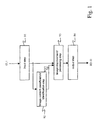
- image data ID is received as input data I in an input step S1.
- the received image data ID is used as input for an image content identification/classification step S2.
- the output of the image content identification/classification step S2 is image content classification/identification data ICCI.
- the input data ID and the image content classification/identification data ICCI are used as input for an image improvement/processing step S3.
- the output of the image improvement/processing step S3 is received by an output step S4, which outputs improved image data IID as output data O.
- All of the output data i.e., the noise measurement features nl, the average pixel level features APL, the histogram analysis features m, and the other spatial content analysis features n, p, are multiplexed in a spatial multiplexing step MUXSF to yield the spatial feature vector SFV.
- Multiplexing refers to the combination of the different above-mentioned features to a single vector, the spatial feature vector SFV, which is given by
- FIG. 6 depicts the different steps performed within the temporal content analysis step TCA.
- the following steps are performed, whereby in each step the image data ID is used as input:
- the spatial feature vector SFV and the temporal feature vector TFV are combined in the spatial and temporal multiplexing step MUXSTF to yield the feature vector FV.
- the feature vector FV is given by
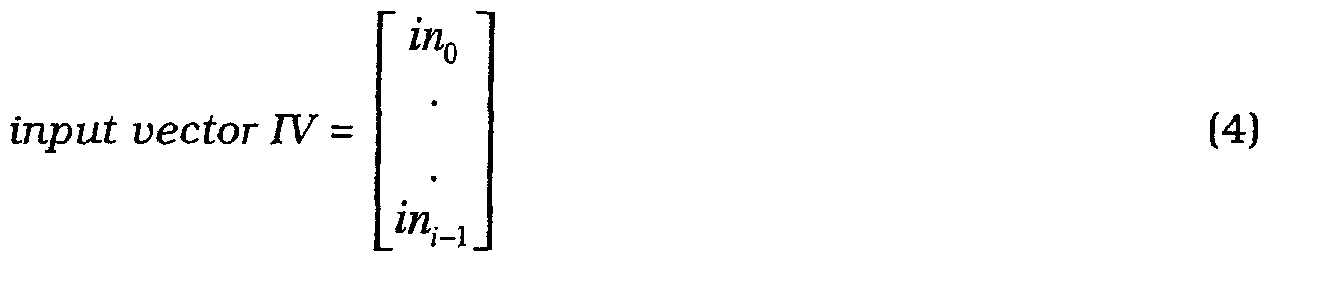
- the feature vector FV is used as input vector IV for the automatic classification step ACS.
- any technique of complex linear/non-linear correlation analysis of input and output data may be used, e.g., an artificial neural network ANN or a Bayesian belief network BBN.
- an artificial neural network ANN is used for classification/identification of the input vector IV, i.e., a complex non-linear correlation analysis is performed.
- the main advantage of using an artificial neural network ANN for a classification is its capability to "learn" the classification from a set of training data which consists of pairs of input vectors IV and target vectors TV.
- the input vector IV is the feature vector FV.
- the target vector TV contains the information about the image content classification/identification for a respective input vector IV, i.e. the aspired image content classification/identification.
- Figure 7 shows the general structure of the artificial neural networks ANN.
- the network consists of an input layer IL, one or more hidden layers HL, and an output layer OL.
- Figure 8 shows the detailed structure of the used artificial neural network ANN.
- the hidden layer HL consists of hidden neurons h 0 , ..., h j-1 .
- the input of the hidden neurons h 0 , ..., h j-I is given by
- Each hidden cell/unit, i.e. hidden neuron, of the artificial neural network ANN has an activation function f act . This activation function describes how the result/output of each cell/unit can be derived from the corresponding input data.
- the output of a cell/unit of the hidden layer is given by
- a set of 6 values is generated for each motion estimation ME.
- the result (6 values) of the previous 'Vector-field analysis' is stored in a buffer z -1 .
- a valid Merge Flag MF is sent out.
- MUXMFVFA merge flag and vector field analysis data multiplexing step MUXMFVFA, the result of the current 'Vector-field Analysis' and the previous results, which are stored in the buffer z -1 , are multiplexed, but only if the merge flag MF is valid.
Landscapes
- Engineering & Computer Science (AREA)
- Multimedia (AREA)
- Physics & Mathematics (AREA)
- General Physics & Mathematics (AREA)
- Theoretical Computer Science (AREA)
- Signal Processing (AREA)
- Image Analysis (AREA)
- Image Processing (AREA)
- Television Systems (AREA)
Abstract
Description
- motion sequence,
- static images, in particular no-motion,
- camera-mode,
- film-mode,
- noise level,
- scene change, and
- lightning conditions of current image, in particular dark, medium dark, normal, medium-bright and/or bright image.
- Fig. 1
- is a block diagram, which shows the main steps performed according to an embodiment of the invention;
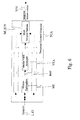
- Fig. 2
- is a block diagram, which shows a different view of the main steps performed according to an embodiment of the invention;
- Fig. 3
- is a block diagram, which shows the steps performed within an image content/classification step;
- Fig. 4
- is a block diagram, which shows the steps performed within an image content feature analysis step;
- Fig. 5
- is a block diagram, which shows the steps performed within a spatial content analysis step;
- Fig. 6
- is a block diagram, which shows the steps performed within a temporal content analysis step;
- Fig. 7
- depicts the structure of an artificial neural network ANN;
- Fig. 8
- depicts a detailed view of the different layers of the artificial neural network ANN;
- Fig. 9
- is a block diagram illustrating the training of the artificial neural network ANN;
- Fig. 10
- shows the motion phases in a film mode;
- Fig. 11
- shows the motion phases in a camera mode;
- Fig. 12
- shows the steps performed within the temporal content analysis step, for the case of a video-mode classification/identification.
- a noise measurement step NM, generating noise measurement features nl,
- an average pixel level analysis step, which is the same as a picture level analysis, generating average pixel level features APL,
- a histogram generating step H, which generates a histogram of the image data ID and outputs histogram data k. This histogram data k is used in a histogram analysis step HA which outputs histogram analysis features m;
- further steps relating to spatial content analysis, that means the extraction, generation, and analysis of the image content in the spatial domain, whereby other spatial content analysis features n, p are generated.

- A motion estimation step ME outputting motion estimation data med, which motion estimation data med is used as input for a vector field analysis step VFA outputting vector field analysis features r;
- further steps relating to temporal content analysis, which further steps output
other temporal content analysis features q, s. The vector field analysis feature
r and the other temporal content analysis feature q, s are multiplexed in a
temporal multiplexing step MUXTF to yield the temporal feature vector TFV.
Again, here multiplexing means to combine the different temporal features,
i.e., the vector field analysis feature r, and the other temporal content analysis
features q, s. The temporal feature vector TFV is therefore given as follows:





- No motion, i.e., still picture;
- film mode, i.e., 25 motion phases within a 50 Hz signal, motion between consecutive frames;
- camera mode, i.e., 50 motion phases within a 50 Hz signal, motion between consecutive fields;
- ACS
- automatic classification step
- ANN
- artificial neural network
- APL
- average pixel level analysis step
- apl
- average pixel level feature
- DV
- difference vector
- FD
- frame detector
- FM
- field memory
- FV
- feature vector
- H
- histogram generating step
- HA
- histogram analysis step
- HL
- hidden layer
- I
- input data
- ICCI
- image content classification/identification data
- ICFA
- image content feature analysis step
- ID
- image data
- IID
- improved image data
- IL
- input layer
- IV
- input vector
- m
- histogram analysis features
- ME
- motion estimation step
- med
- motion estimation data
- MF
- merge flag
- MUXMFVFA
- merge flag and vector field analysis data analysis step
- MUXSF
- spatial multiplexing step
- MUXSTF
- spatial and temporal multiplexing step
- MUXTF
- temporal multiplexing step
- n,p
- other spatial content analysis features
- nl
- noise measurement features
- NM
- noise measurement step
- O
- output data
- OL
- output layer
- OV
- output vector
- q,s
- other temporal content analysis features
- r
- vector-field analysis features
-
S 1 - input step
- S2
- image content classification/identification step
- S3
- image improvement/processing step
- S4
- output step
- SCA
- spatial content analysis step
- SFV
- spatial feature vector
- TCA
- temporal content analysis step
- TFV
- temporal feature vector
- TV
- target vector
- VFA
- vector-field analysis step
Claims (12)
- A method for picture improvement
characterized by the steps ofreceiving (S1) image data (ID) as input data (I),classifying and/or identifying (S2) the content of said image data (ID), thereby generating image content classification/identification data (ICCI) from said image data (ID),improving and/or processing (S3) said image data (ID) using said image content classification/identification data (ICCI), thereby generating and/or outputting (S4) improved image data (IID) as output data (O). - The method according to claim 1,
characterized in that
a trainable classification method is used for generating said image content classification/identification data (ICCI). - The method according to any one of the preceding claims,
characterized in that
said trainable classification method is based on an artificial neural network and/or a Bayesian belief network. - The method according to any one of the preceding claims,
characterized in that
said image content classification/identification data (ICCI) is generated to be descriptive for one or any combination of the following image modes and/or types:motion sequence,static images, in particular no-motion,camera-mode,film-mode,noise level,scene change, andlightning conditions of current image, in particular dark, medium dark, normal, medium-bright and/or bright image. - The method according to any one of the preceding claims,
characterized in that
for generating said image content classification/identification data (ICCI) a feature vector (FV) is used, which is generated (ICFA) from said image data (ID). - The method according to claim 5,
characterized in that
said feature vector (FV) is generated to contain spatial (SFV) and/or temporal (TFV) information. - The method according to claim 6,
characterized in that
said spatial information (SFV) is generated to contain information about noise measurement (NM), average picture level (APL), histogram analysis (HA), and/or other features used in spatial content analysis. - The method according to claims 6 or 7,
characterized in that
said temporal information (TFV) is generated to contain information about motion estimation (ME), and/or other features used in temporal content analysis. - The method according to claims 5 or 8 referring back to claim 4,
characterized in that
a training of said trainable classification method (S2) is performed as supervised training wherein target information is said image content classification/identification data (ICCI) and input information is said feature vector (FV). - Picture improvement system,
which is capable of performing or realizing a method for picture improvement according to any one of the preceding claims 1 to 9 and/or the steps thereof. - Computer program product,
comprising computer program means adapted to perform and/or to realize the method of picture improvement according to any one of the claims 1 to 9 and/or the steps thereof, when it is executed on a computer, a digital signal processing means, and/or the like. - Computer readable storage medium,
comprising a computer program product according to claim 11.
Priority Applications (4)
| Application Number | Priority Date | Filing Date | Title |
|---|---|---|---|
| EP07013135A EP1850271B1 (en) | 2003-01-29 | 2003-01-29 | Method for video mode classification |
| DE60316768T DE60316768T2 (en) | 2003-01-29 | 2003-01-29 | Image enhancement method |
| DE60329241T DE60329241D1 (en) | 2003-01-29 | 2003-01-29 | Method for classifying the video mode |
| EP03001861A EP1443453B1 (en) | 2003-01-29 | 2003-01-29 | Method for picture improvement |
Applications Claiming Priority (1)
| Application Number | Priority Date | Filing Date | Title |
|---|---|---|---|
| EP03001861A EP1443453B1 (en) | 2003-01-29 | 2003-01-29 | Method for picture improvement |
Related Child Applications (1)
| Application Number | Title | Priority Date | Filing Date |
|---|---|---|---|
| EP07013135A Division EP1850271B1 (en) | 2003-01-29 | 2003-01-29 | Method for video mode classification |
Publications (2)
| Publication Number | Publication Date |
|---|---|
| EP1443453A1 true EP1443453A1 (en) | 2004-08-04 |
| EP1443453B1 EP1443453B1 (en) | 2007-10-10 |
Family
ID=32605263
Family Applications (2)
| Application Number | Title | Priority Date | Filing Date |
|---|---|---|---|
| EP07013135A Expired - Lifetime EP1850271B1 (en) | 2003-01-29 | 2003-01-29 | Method for video mode classification |
| EP03001861A Expired - Lifetime EP1443453B1 (en) | 2003-01-29 | 2003-01-29 | Method for picture improvement |
Family Applications Before (1)
| Application Number | Title | Priority Date | Filing Date |
|---|---|---|---|
| EP07013135A Expired - Lifetime EP1850271B1 (en) | 2003-01-29 | 2003-01-29 | Method for video mode classification |
Country Status (2)
| Country | Link |
|---|---|
| EP (2) | EP1850271B1 (en) |
| DE (2) | DE60329241D1 (en) |
Families Citing this family (5)
| Publication number | Priority date | Publication date | Assignee | Title |
|---|---|---|---|---|
| US8131086B2 (en) | 2008-09-24 | 2012-03-06 | Microsoft Corporation | Kernelized spatial-contextual image classification |
| CN101923653B (en) * | 2010-08-17 | 2013-03-06 | 北京大学 | Multilevel content description-based image classification method |
| CN103150579A (en) * | 2013-02-25 | 2013-06-12 | 东华大学 | Abnormal human behavior detecting method based on video sequence |
| CN104063721B (en) * | 2014-07-04 | 2017-06-16 | 中国科学院自动化研究所 | A kind of human behavior recognition methods learnt automatically based on semantic feature with screening |
| KR102799372B1 (en) * | 2018-11-19 | 2025-04-25 | 삼성전자주식회사 | Image processing apparatus and controlling method thereof |
Citations (4)
| Publication number | Priority date | Publication date | Assignee | Title |
|---|---|---|---|---|
| WO1995024017A2 (en) * | 1994-03-02 | 1995-09-08 | THE UNITED STATES OF AMERICA, represented by THE SECRETARY, DEPARTMENT OF HEALTH AND HUMAN SERVICES NATIONAL INSTITUTES OF HEALTH | A top down preprocessor for a machine vision system |
| US5497196A (en) * | 1991-03-15 | 1996-03-05 | Sharp Kabushiki Kaisha | Video camera having an adaptive automatic iris control circuit |
| US6064775A (en) * | 1996-12-27 | 2000-05-16 | Fuji Xerox Co., Ltd. | Image processing apparatus for enhancing texture and three dimensional effect |
| US20020149703A1 (en) * | 2000-04-18 | 2002-10-17 | Adams Dale R. | Method, system and article of manufacture for identifying the source type and quality level of a video sequence |
Family Cites Families (1)
| Publication number | Priority date | Publication date | Assignee | Title |
|---|---|---|---|---|
| US6977679B2 (en) * | 2001-04-03 | 2005-12-20 | Hewlett-Packard Development Company, L.P. | Camera meta-data for content categorization |
-
2003
- 2003-01-29 DE DE60329241T patent/DE60329241D1/en not_active Expired - Lifetime
- 2003-01-29 DE DE60316768T patent/DE60316768T2/en not_active Expired - Lifetime
- 2003-01-29 EP EP07013135A patent/EP1850271B1/en not_active Expired - Lifetime
- 2003-01-29 EP EP03001861A patent/EP1443453B1/en not_active Expired - Lifetime
Patent Citations (4)
| Publication number | Priority date | Publication date | Assignee | Title |
|---|---|---|---|---|
| US5497196A (en) * | 1991-03-15 | 1996-03-05 | Sharp Kabushiki Kaisha | Video camera having an adaptive automatic iris control circuit |
| WO1995024017A2 (en) * | 1994-03-02 | 1995-09-08 | THE UNITED STATES OF AMERICA, represented by THE SECRETARY, DEPARTMENT OF HEALTH AND HUMAN SERVICES NATIONAL INSTITUTES OF HEALTH | A top down preprocessor for a machine vision system |
| US6064775A (en) * | 1996-12-27 | 2000-05-16 | Fuji Xerox Co., Ltd. | Image processing apparatus for enhancing texture and three dimensional effect |
| US20020149703A1 (en) * | 2000-04-18 | 2002-10-17 | Adams Dale R. | Method, system and article of manufacture for identifying the source type and quality level of a video sequence |
Non-Patent Citations (1)
| Title |
|---|
| WISCHERMANN G: "DAS DIGITALE WETGATE. DIE DRITTE NOISE-REDUCER-GENERATION VON PHILIPS BTS", FERNSEH UND KINOTECHNIK, VDE VERLAG GMBH. BERLIN, DE, vol. 50, no. 7, 1 July 1996 (1996-07-01), pages 387 - 390, XP000623232, ISSN: 0015-0142 * |
Also Published As
| Publication number | Publication date |
|---|---|
| DE60329241D1 (en) | 2009-10-22 |
| EP1850271A1 (en) | 2007-10-31 |
| EP1850271B1 (en) | 2009-09-09 |
| DE60316768T2 (en) | 2008-07-17 |
| DE60316768D1 (en) | 2007-11-22 |
| EP1443453B1 (en) | 2007-10-10 |
Similar Documents
| Publication | Publication Date | Title |
|---|---|---|
| US11210775B1 (en) | Gradient-embedded video anomaly detection | |
| McHugh et al. | Foreground-adaptive background subtraction | |
| US7822275B2 (en) | Method for detecting water regions in video | |
| CN112990078B (en) | A Generative Adversarial Network-Based Facial Expression Generation Method | |
| CN109961019A (en) | A spatiotemporal behavior detection method | |
| US9159137B2 (en) | Probabilistic neural network based moving object detection method and an apparatus using the same | |
| Wang | A survey on IQA | |
| KR102391853B1 (en) | System and Method for Processing Image Informaion | |
| CN107481256A (en) | Method and apparatus for updating background model | |
| US20090123083A1 (en) | Image processing apparatus and method, learning apparatus and method, and program | |
| CN100558155C (en) | Apparatus and method for inverse telecine processing | |
| Yuan et al. | Single image dehazing via NIN-DehazeNet | |
| CN109191498A (en) | Object detection method and system based on dynamic memory and motion perception | |
| CN120298265B (en) | Intelligent traceless erasing method and system for video picture characters | |
| Gao et al. | De-interlacing algorithms based on motion compensation | |
| Wang et al. | Zrid-net: Zero-reference real-world image dehazing framework via deep self-decoupling and reverse knowledge transfer | |
| US11373060B2 (en) | Training method for video stabilization and image processing device using the same | |
| CN101420594A (en) | Apparatus and method for dividing video image into constituent regions | |
| EP1850271B1 (en) | Method for video mode classification | |
| EP4224860A1 (en) | Processing a time-varying signal using an artificial neural network for latency compensation | |
| Lu et al. | Environment-aware multiscene image enhancement for internet of things enabled edge cameras | |
| Kim et al. | Long-term video generation with evolving residual video frames | |
| CN116612355A (en) | Training method and device for face fake recognition model, face recognition method and device | |
| Kesrarat et al. | Experimental Analysis of Performance Comparison on Both Linear Filter and Bidirectional Condential Technique for Spatial Domain Optical Flow Algorithm | |
| US12598331B2 (en) | Transmitting image data |
Legal Events
| Date | Code | Title | Description |
|---|---|---|---|
| PUAI | Public reference made under article 153(3) epc to a published international application that has entered the european phase |
Free format text: ORIGINAL CODE: 0009012 |
|
| AK | Designated contracting states |
Kind code of ref document: A1 Designated state(s): AT BE BG CH CY CZ DE DK EE ES FI FR GB GR HU IE IT LI LU MC NL PT SE SI SK TR |
|
| AX | Request for extension of the european patent |
Extension state: AL LT LV MK RO |
|
| 17P | Request for examination filed |
Effective date: 20041119 |
|
| AKX | Designation fees paid |
Designated state(s): DE FR GB |
|
| 17Q | First examination report despatched |
Effective date: 20050419 |
|
| RAP1 | Party data changed (applicant data changed or rights of an application transferred) |
Owner name: SONY DEUTSCHLAND GMBH |
|
| 17Q | First examination report despatched |
Effective date: 20050419 |
|
| GRAP | Despatch of communication of intention to grant a patent |
Free format text: ORIGINAL CODE: EPIDOSNIGR1 |
|
| RAP1 | Party data changed (applicant data changed or rights of an application transferred) |
Owner name: SONY DEUTSCHLAND GMBH |
|
| GRAS | Grant fee paid |
Free format text: ORIGINAL CODE: EPIDOSNIGR3 |
|
| GRAA | (expected) grant |
Free format text: ORIGINAL CODE: 0009210 |
|
| RIN1 | Information on inventor provided before grant (corrected) |
Inventor name: UNRUH, CHRISTIAN,C/O STUTTGART TECHNOLOGY CENTER |
|
| AK | Designated contracting states |
Kind code of ref document: B1 Designated state(s): DE FR GB |
|
| REG | Reference to a national code |
Ref country code: GB Ref legal event code: FG4D |
|
| REF | Corresponds to: |
Ref document number: 60316768 Country of ref document: DE Date of ref document: 20071122 Kind code of ref document: P |
|
| ET | Fr: translation filed | ||
| PLBE | No opposition filed within time limit |
Free format text: ORIGINAL CODE: 0009261 |
|
| STAA | Information on the status of an ep patent application or granted ep patent |
Free format text: STATUS: NO OPPOSITION FILED WITHIN TIME LIMIT |
|
| 26N | No opposition filed |
Effective date: 20080711 |
|
| PGFP | Annual fee paid to national office [announced via postgrant information from national office to epo] |
Ref country code: DE Payment date: 20130122 Year of fee payment: 11 Ref country code: FR Payment date: 20130213 Year of fee payment: 11 Ref country code: GB Payment date: 20130122 Year of fee payment: 11 |
|
| REG | Reference to a national code |
Ref country code: DE Ref legal event code: R119 Ref document number: 60316768 Country of ref document: DE |
|
| GBPC | Gb: european patent ceased through non-payment of renewal fee |
Effective date: 20140129 |
|
| REG | Reference to a national code |
Ref country code: DE Ref legal event code: R119 Ref document number: 60316768 Country of ref document: DE Effective date: 20140801 |
|
| PG25 | Lapsed in a contracting state [announced via postgrant information from national office to epo] |
Ref country code: DE Free format text: LAPSE BECAUSE OF NON-PAYMENT OF DUE FEES Effective date: 20140801 |
|
| REG | Reference to a national code |
Ref country code: FR Ref legal event code: ST Effective date: 20140930 |
|
| PG25 | Lapsed in a contracting state [announced via postgrant information from national office to epo] |
Ref country code: FR Free format text: LAPSE BECAUSE OF NON-PAYMENT OF DUE FEES Effective date: 20140131 Ref country code: GB Free format text: LAPSE BECAUSE OF NON-PAYMENT OF DUE FEES Effective date: 20140129 |