EP1443104A1 - Microorganism and production of carotinoid compounds thereby - Google Patents
Microorganism and production of carotinoid compounds thereby Download PDFInfo
- Publication number
- EP1443104A1 EP1443104A1 EP02775336A EP02775336A EP1443104A1 EP 1443104 A1 EP1443104 A1 EP 1443104A1 EP 02775336 A EP02775336 A EP 02775336A EP 02775336 A EP02775336 A EP 02775336A EP 1443104 A1 EP1443104 A1 EP 1443104A1
- Authority
- EP
- European Patent Office
- Prior art keywords
- astaxanthin
- canthaxanthin
- microorganism
- culture medium
- cells
- Prior art date
- Legal status (The legal status is an assumption and is not a legal conclusion. Google has not performed a legal analysis and makes no representation as to the accuracy of the status listed.)
- Granted
Links
Images




Classifications
-
- C—CHEMISTRY; METALLURGY
- C12—BIOCHEMISTRY; BEER; SPIRITS; WINE; VINEGAR; MICROBIOLOGY; ENZYMOLOGY; MUTATION OR GENETIC ENGINEERING
- C12N—MICROORGANISMS OR ENZYMES; COMPOSITIONS THEREOF; PROPAGATING, PRESERVING, OR MAINTAINING MICROORGANISMS; MUTATION OR GENETIC ENGINEERING; CULTURE MEDIA
- C12N1/00—Microorganisms; Compositions thereof; Processes of propagating, maintaining or preserving microorganisms or compositions thereof; Processes of preparing or isolating a composition containing a microorganism; Culture media therefor
- C12N1/10—Protozoa; Culture media therefor
- C12N1/105—Protozoal isolates
-
- C—CHEMISTRY; METALLURGY
- C12—BIOCHEMISTRY; BEER; SPIRITS; WINE; VINEGAR; MICROBIOLOGY; ENZYMOLOGY; MUTATION OR GENETIC ENGINEERING
- C12N—MICROORGANISMS OR ENZYMES; COMPOSITIONS THEREOF; PROPAGATING, PRESERVING, OR MAINTAINING MICROORGANISMS; MUTATION OR GENETIC ENGINEERING; CULTURE MEDIA
- C12N1/00—Microorganisms; Compositions thereof; Processes of propagating, maintaining or preserving microorganisms or compositions thereof; Processes of preparing or isolating a composition containing a microorganism; Culture media therefor
- C12N1/12—Unicellular algae; Culture media therefor
- C12N1/125—Unicellular algae isolates
-
- C—CHEMISTRY; METALLURGY
- C12—BIOCHEMISTRY; BEER; SPIRITS; WINE; VINEGAR; MICROBIOLOGY; ENZYMOLOGY; MUTATION OR GENETIC ENGINEERING
- C12P—FERMENTATION OR ENZYME-USING PROCESSES TO SYNTHESISE A DESIRED CHEMICAL COMPOUND OR COMPOSITION OR TO SEPARATE OPTICAL ISOMERS FROM A RACEMIC MIXTURE
- C12P23/00—Preparation of compounds containing a cyclohexene ring having an unsaturated side chain containing at least ten carbon atoms bound by conjugated double bonds, e.g. carotenes
-
- C—CHEMISTRY; METALLURGY
- C12—BIOCHEMISTRY; BEER; SPIRITS; WINE; VINEGAR; MICROBIOLOGY; ENZYMOLOGY; MUTATION OR GENETIC ENGINEERING
- C12R—INDEXING SCHEME ASSOCIATED WITH SUBCLASSES C12C - C12Q, RELATING TO MICROORGANISMS
- C12R2001/00—Microorganisms ; Processes using microorganisms
- C12R2001/89—Algae ; Processes using algae
-
- C—CHEMISTRY; METALLURGY
- C12—BIOCHEMISTRY; BEER; SPIRITS; WINE; VINEGAR; MICROBIOLOGY; ENZYMOLOGY; MUTATION OR GENETIC ENGINEERING
- C12R—INDEXING SCHEME ASSOCIATED WITH SUBCLASSES C12C - C12Q, RELATING TO MICROORGANISMS
- C12R2001/00—Microorganisms ; Processes using microorganisms
- C12R2001/90—Protozoa ; Processes using protozoa
-
- Y—GENERAL TAGGING OF NEW TECHNOLOGICAL DEVELOPMENTS; GENERAL TAGGING OF CROSS-SECTIONAL TECHNOLOGIES SPANNING OVER SEVERAL SECTIONS OF THE IPC; TECHNICAL SUBJECTS COVERED BY FORMER USPC CROSS-REFERENCE ART COLLECTIONS [XRACs] AND DIGESTS
- Y10—TECHNICAL SUBJECTS COVERED BY FORMER USPC
- Y10S—TECHNICAL SUBJECTS COVERED BY FORMER USPC CROSS-REFERENCE ART COLLECTIONS [XRACs] AND DIGESTS
- Y10S435/00—Chemistry: molecular biology and microbiology
- Y10S435/8215—Microorganisms
- Y10S435/946—Microorganisms using algae
Definitions
- the invention relates to a novel microorganism strain belonging to Thraustochytrium species of genus Labyrinthula , and a method for producing astaxanthin and canthaxanthin as natural carotenoid compounds using the microorganisms.
- Astaxanthin and canthaxanthin are dye compounds widely distributed in microbial cells, macroalgae, and miroalgae, and in various animals and plants.
- the compounds are used as aging retarders, detoxificants, cancer preventive agents and color improving agents of bred fish.
- Haematococcus pluvialis are also known to produce astaxanthin.
- productivity of astaxanthin is also low.
- growth of the alga is variously restricted such that the alga is readily contaminated with bacteria, and is required to be cultured under irradiation of intense light using a special culturing apparatus, industrial production of astaxanthin involves many problems.
- Canthaxanthin is distributed in a certain kind of mushroom, fish and crustacean, and are known to be produced by microorganisms belonging to genus Brevibacterium and genus Rhodococcus . While methods for obtaining canthaxanthin by chemical synthesis has been developed, the methods are not industrially used due to their low productivity.
- the object of the present invention based on the situations above is to provide a method capable of simple and efficient large-scale production of astaxanthin and canthaxanthin from a readily available material while drawbacks of conventional methods are solved.
- the inventor of the invention has made various studies on the ecology of marine microorganisms collected in the Inland Sea of Japan, and discovered novel microorganisms having high productivity of astaxanthin and canthaxanthin in their cells.
- the invention has been completed on the basis of the finding that astaxanthin and canthaxanthin can be efficiently produced by culturing these microorganisms.
- the invention provides an isolated novel microorganism Thraustochytrium species CHN-3 (FERM P-18556) belonging to Thraustochytrium Labyrinthula which produces astaxanthin and canthaxanthin and a method for producing astaxanthin and canthaxanthin comprising the steps of: culturing the microorganism; allowing the microorganism to accumulate astaxanthin and canthaxanthin in their cells; separating the cells from the culture medium; and recovering astaxanthin and canthaxanthin from the separated cells by solvent extraction.
- CHN-3 Thraustochytrium Labyrinthula which produces astaxanthin and canthaxanthin
- a method for producing astaxanthin and canthaxanthin comprising the steps of: culturing the microorganism; allowing the microorganism to accumulate astaxanthin and canthaxanthin in their cells; separating the cells from the culture medium; and recovering astaxanthin and canthax
- Fig. 1 is an electron microscopic photograph showing the shape of the microorganism of the invention.
- the microorganism of the invention consists of cells having a spherical or ellipsoidal extracellular net characteristic to Thraustochytrids Thraustochytrium .
- the cell hasoireogenetosome only at one site of the cell, and intrudes into or adheres on a substrate by extending the extracellular net therefrom.
- the microorganism was concluded to belong to Thraustochytrids with reference to this characteristic.
- the life cycle as shown in Fig. 2 is established, and amoebae-like cells appear in a culture medium abundant in sugars such as glucose and fructose, and abundant in organic substances including proteins such as yeast extract and corn steep liquor.
- the microorganism is identified to be Thraustochytrium species since the characteristic described above is largely different from that of genus Ulkenia , and is different from Schizochytrium species in forming zoospore having two kinds of flagella. It was also confirmed that the microorganism is identified to be Thraustochytrium species in a phylogenetic tree based on 18SrDNA.
- the microorganism of the invention is classified into Thraustochytrium species of genus Labyrinthula since the microorganism can be readily distinguished from spindle-shaped Labyrinthula species in that the trophocyte of the microorganism of the invention is egg-shaped or spherical. Microorganisms of this type are widely distributed in the marine environment, and are known as so-called marine microorganisms that exhibit heterotrophic proliferation.
- microorganism of the invention is readily distinguished from known microorganisms from the following microbiological properties.
- the microorganism of the invention or Thraustochytrium sp. CHN-3, has been deposited at International Patent Organism Depositary, National Institute of Advanced Industrial Science and Technology (Central 6, 1-1-1 Higashi, Tsukuba-shi, Ibaraki, 305-8566, Japan) as of October 9, 2001, with an accession No. FERM P-18556.
- the microorganism of the invention is a single cell microorganism inhabiting in the sea with a size of about 10 ⁇ m, and is readily collected from seawater from, for example, the Inland Sea of Japan.
- pollens of black pine tree Pinus thunbergii
- For collecting the cells pollens of black pine tree ( Pinus thunbergii ) are suspended in seawater and kept standing for several days followed by separation of the pollens from seawater and collecting the microbial bodies deposited on the pollens.
- the cells collected as described above are subjected to pure culture in a saccharic culture medium or, namely, a culture solution abundant in sugars and peptone (for example, a medium containing 30 to 50 g of glucose and 1 g of peptone in 1 liter of seawater).
- the pure culture is preferably performed by aeration with a stirring while a light, preferably a blue light (wavelength 420 to 470 nm), is continuously irradiated.
- a red light (wavelength 600 to 700 nm) can be used concurrently with the blue light as the irradiation light.
- the cells of Thraustochytrium obtained by culturing are ground on a mortar, and the cells as ground are extracted with 100% acetone.
- the extract was separated by high-performance liquid chromatography equipped with an ODSC18 column, and was identified with a high-performance liquid chromatography - mass spectrometer.
- the chromatogram of liquid chromatography thus obtained is shown in Fig. 3 (see Example 1). It was shown from analysis that the dye consists of ⁇ - and ⁇ -carotenes, echinenone, canthaxanthin, phenocoxanthin and astaxanthin.
- Thraustochytrium sp. CHN-3 of the invention produces ⁇ - and ⁇ -carotenes, echinenone, canthaxanthin, phenocoxanthin and astaxanthin, and colors in red by particularly accumulating a large amount of astaxanthin and canthaxanthin in the cells.
- No microorganisms having such ability are known among those of genus Labyrinthula to which Thraustochytrium species belongs.
- Thraustochytrium sp. CHN-3 a microorganism classified into Thraustochytrium species of genus Labyrinthula , can be cultured in a culture medium (culture solution) containing sugars, organic nitrogen and inorganic salts.
- sugars examples include glucose, sucrose, fructose and those containing them, such as thick malt syrup.
- source of the organic nitrogen include peptone and yeast extract, while examples of the inorganic salt include sodium chloride, potassium chloride and inorganic phosphate salts.
- Thraustochytrium sp. CHN-3 as a microorganism is grown utilizing glucose, organic nitrogen, light energy and inorganic phosphorus, the illuminance of the light irradiation, temperature, nutrient composition in the culture medium and the amount of oxygen feed should be appropriately controlled in order to allow productivity thereof to be maximized.
- Pure culture conditions include, for example, aeration with stirring, irradiation of the blue light at an illuminance of 1,000 lux or higher, and a temperature of 20 to 30 °C or, preferably, about 28 °C.
- the supply source of phosphorus in the medium is preferably KH 2 PO 4 , and the concentration thereof is in the range of 0.1 to 3 g/liter.
- the cells are cultured in a medium having a composition in the range for permitting microorganisms of genus Labyrinthula to grow (60 g of glucose, 1 g of peptone and 1 g of KH 2 PO 4 in 1 liter of seawater, or 30 g of glucose, 1 g of peptone and 1 g of yeast extract in 1 liter of seawater).
- a medium having a composition in the range for permitting microorganisms of genus Labyrinthula to grow 60 g of glucose, 1 g of peptone and 1 g of KH 2 PO 4 in 1 liter of seawater, or 30 g of glucose, 1 g of peptone and 1 g of yeast extract in 1 liter of seawater.
- Productivity of each of astaxanthin and canthaxanthin can be selectively enhanced by adjusting the concentration of the nutrient components in the culture medium in a specified range at the end of the growth of the cells.
- the inorganic salts used in the method of the invention include sodium chloride and potassium chloride, and the concentration of the salts is preferably 4 to 10% by weight.
- alkaline substances used in the method of the invention include potassium carbonate and sodium carbonate.
- the pH of the culture medium is desirably 9 or higher or, preferably, about 10. While the pH of the culture medium available is in the range of 4 to 12 or, preferably, 6 to 10, productivity increases, as the pH is higher.
- the yield of astaxanthin is remarkably increased by adding vitamin compounds, particularly thiamine, in a concentration of up to 5 mg/liter in the culture medium in addition to the additives described above. Fatty acid esters of astaxanthin may be produced when the amount of addition of thiamine is large, although the amount of production of the fatty acid esters is small.
- productivity of astaxanthin and canthaxanthin can be further increased by strongly stimulating proliferation of Thraustochytrium species by changing the culture conditions, particularly by changing the nitrogen source composition.
- the nitrogen source used in the invention include urea, ammonia and potassium nitrate, and the amount of addition of them is up to 2% by weight or, preferably, 1% by weight.
- the content of astaxanthin is increased to as high as 1.537 mg in 1 g of dry cells by reducing the amount of yeast extract as a nitrogen source in the culture medium.
- the culture medium is changed to a yeast extract-free culture solution when the content of astaxanthin is increased.
- the content of astaxanthin is increased to about 2 mg per 1 g of the dry cells, since no nitrogen introduced into the cells of Thraustochytrium species is contained in the culture medium.
- the cells are cultured in a culture medium supplemented with yeast extract at the initial stage, and are cultured in a nitrogen source-free medium without replenishing the nitrogen source after yeast extract has been consumed. Culturing in the nitrogen source-free medium as described above permits the yield of astaxanthin to be increased by five times or more as much as the yield obtained by adding the nitrogen source in the culture medium. The yield of astaxanthin may be further increased by culturing the cells in an aerobic condition abundant in oxygen.
- the microorganism is cultured in a medium supplemented with yeast extract at the initial stage, and the nitrogen source is replenished after yeast extract has been consumed in order to maintain the culture condition in which the nitrogen source is always contained and which is slightly acidic.
- the productivity of canthaxanthin increases by culturing in which inorganic nitrogen such as potassium nitrate is added as the nitrogen source (see Fig. 6).
- the yield of canthaxanthin is increased by 4 to 5 times or more as much as the yield when the cells are cultured in a nitrogen-free medium.
- the cells are preferably extracted with a solvent such as acetone, chloroform, methyl alcohol and hexane, or with a mixed solvent thereof.
- astaxanthin and canthaxanthin produced are separated from the cells into the extract.
- the extract is applied on a column filled with silica gel to adsorb carotenoid, which is eluted with a mixed solvent of methyl alcohol or hexane/chloroform mixed solvent to recover astaxanthin and canthaxanthin in 100% yield.
- the mixed solvent of methyl alcohol used contains 90 to 95% by volume of methyl alcohol with a balance of chloroform.
- a mixed solvent comprising 60 to 65% by volume of chloroform with a balance of hexane is used when a hexane-chloroform mixed solvent is used for elution.
- Thraustochytrium species CHN-3 purified from Thraustochytrium species CHN-1 collected by suspending the pollens of Pinus thunbergii in seawater sampled from the coast of Nagahama district of the seacoast of the Inland Sea of Japan was inoculated to a saccharic culture medium (pH 5.0) containing 60 g/liter of glucose, 1 g/liter of peptone, 1 g/liter of potassium dihydrogen phosphate and 1 g/liter of phosphorus as phosphate ions in seawater.
- a saccharic culture medium pH 5.0
- the cells were cultured at a temperature of 28 °C for 6 days under aeration with stirring while a white light (the light from a fluorescent lamp) is irradiated at an intensity of 1000 lux.
- the culture solution obtained was centrifuged to collect the cells of the microorganism.
- the electron microscopic photograph of the cells obtained as described above is shown in Fig. 1.
- Fig. 3 shows a chromatogram of high-performance liquid chromatography of carotenoid obtained in Example 1.
- the reference numerals in the drawing correspond to the following compounds. 1: astaxanthin, 2: phenocoxanthin, 3: canthaxanthin, 4: echinenone, 5: ⁇ -carotene, 6: ⁇ -carotene.
- Thraustochytrium species CHN-3 was cultured at a temperature of 23 °C for 6 days using a culture medium containing 50 g/liter of glucose, 1 g/liter of peptone and 1 g/liter of potassium dihydrogen phosphate in seawater under the following conditions; (a) rotation-vibration culturing at 100 rpm under a white light illumination at an illuminance of 1000 lux, (b) rotation-vibration culturing at 100 rpm in dark, (c) static culturing at an illuminance of 1000 lux, and (d) aeration culturing with stirring at an illuminance of 1000 lux. The results are shown in Table 1.
- Table 1 shows that substantially no astaxanthin is produced by static culturing. Light irradiation affords more astaxanthin in rotation-vibration culture. The yield of astaxanthin could be increased as much as 1.8 times by increasing the oxygen concentration by aeration. Employing an aerobic condition, or enhancing the oxygen concentration in the culture medium, permits the production ratio of astaxanthin to be enhanced.
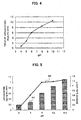
- Example 4 Culturing was continued for 14 days by the same test culturing as in Example 1, except that the pH of the sugar-rich culture medium used in Example 1 was changed using aqueous hydrochloric acid solution and aqueous sodium hydroxide solution, and productivity of astaxanthin at each pH was determined. The results are shown in the graph in Fig. 4. The graph shows that the productivity of astaxanthin increased, as the pH was increased.
- Various culture solutions each different from the orders in the sodium chloride concentration were prepared by adding sodium chloride in a sugar-rich culture medium (referred to as a sugar medium hereinafter) containing 30 g/liter of glucose, 1 g/liter of peptone and 1 g/liter of yeast extract in seawater (sodium chloride concentration 3.2%).
- a sugar medium containing 30 g/liter of glucose, 1 g/liter of peptone and 1 g/liter of yeast extract in seawater (sodium chloride concentration 3.2%).
- Thraustochytrium species CHN-3 used in Example 1 was inoculated to the culture solutions, and was cultured for 6 days by aeration with stirring at a temperature of 28 °C under white light illumination at an illuminance of 1000 lux. Then, each of the culture solutions was centrifuged to collect the microorganism cells. The yields of the biomass and carotenoid thus obtained were 2 to 5 g/liter and 0.5 to 1 mg/g, respectively.
- the cells obtained were extracted with acetone, chloroform and methyl alcohol, and the extract was analyzed by high-performance liquid chromatograph equipped with an ODS C18 column.
- the contents of astaxanthin and canthaxanthin in the cells were 1.0 to 2.0 mg and 0.3 to 0.5 mg, respectively, per 1 g of dry cells.
- Thraustochytrium species CHN-3 was cultured using a culture medium containing 50 g of glucose, 1 g of peptone and 1 g of potassium dihydrogen phosphate in 1 liter of seawater, and by stirring the medium by feeding air with shaking at a rotation speed of 100 rpm at a temperature of 23 °C under irradiation of a white light from a fluorescent lamp or blue light (wavelength 470 nm) at an illuminance of 1000 lux, or in dark.
- the results are shown in the graph in Fig. 7.
- the graph shows that a small amount of astaxanthin is produced in dark. More astaxanthin could be obtained by irradiating the blue light than irradiating a white light in the rotation-vibration culturing under light irradiation. This shows that increasing the intensity of irradiation of the blue light to the medium enhances the production ratio of astaxanthin.
- a culturing test was continued for 7 days under the same conditions as in Example 4 except that the amount of addition of NaCl in the sugar medium was changed and the amount of the biomass, and productivity of astaxanthin and canthaxanthin were determined.
- the productivity at each increment of the NaCl concentration is shown in the graph in Fig. 9.
- the graph shows that the amount of the biomass and productivity of astaxanthin are increased as the concentration of NaCl increases up to 6%.
- a culturing test was continued for 7 days under the same conditions as in Example 4, and the amount of the biomass, and productivity of astaxanthin and canthaxanthin were determined, except that thiamine as a vitamin compound was added in the sugar medium by changing the amount of addition thereof.
- the results are shown in the graph in Fig. 10.
- the graph shows that the amount of the biomass and productivity of astaxanthin are increased, as the amount of addition of thiamin is increased. It is also shown that fatty acid esters of astaxanthin (denoted by ES) as by-products are increased, as the thiamin concentration increases.
- the invention provides a method for culturing pure Thraustochytrium species microorganisms particularly containing high concentrations of astaxanthin and canthaxanthin in a large scale, and a method for simply extracting and separating astaxanthin and canthaxanthin.
- the invention enables to provide astaxanthin, canthaxanthin or a mixture containing a desired proportion of astaxanthin and canthaxanthin in a high yield and high concentration.
Landscapes
- Life Sciences & Earth Sciences (AREA)
- Engineering & Computer Science (AREA)
- Chemical & Material Sciences (AREA)
- Biotechnology (AREA)
- Organic Chemistry (AREA)
- Health & Medical Sciences (AREA)
- Zoology (AREA)
- Wood Science & Technology (AREA)
- Genetics & Genomics (AREA)
- Bioinformatics & Cheminformatics (AREA)
- Biochemistry (AREA)
- General Health & Medical Sciences (AREA)
- General Engineering & Computer Science (AREA)
- Microbiology (AREA)
- Tropical Medicine & Parasitology (AREA)
- Medicinal Chemistry (AREA)
- Virology (AREA)
- Biomedical Technology (AREA)
- Cell Biology (AREA)
- Botany (AREA)
- Chemical Kinetics & Catalysis (AREA)
- General Chemical & Material Sciences (AREA)
- Preparation Of Compounds By Using Micro-Organisms (AREA)
- Micro-Organisms Or Cultivation Processes Thereof (AREA)
Abstract
Description
1: astaxanthin, 2: phenocoxanthin, 3: canthaxanthin,
4: echinenone, 5: α-carotene, 6: β-carotene.
| Culture condition | |||||
| (a) | (b) | (c) | (d) | ||
| Products | Astaxanthin (mg/g dry cells) | 0.8-1.0 | 0.2-0.5 | 0.1> | 1.0-1.8 |
| Biomass (g dry cells/litter) | 2.01-2.62 | 1.37-1.46 | 0.26-0.39 | 2.46-3.10 |
Claims (11)
- A microorganism strain Thraustochytrium species CHN-3 (accession No. FERM P-18556) belonging to Thraustochytrium species of genus Labyrinthula.
- A method for producing astaxanthin and canthaxanthin comprising the steps of:culturing the microorganism strain according to Claim 1 in a culture medium to accumulate astaxanthin and canthaxanthin in the microorganism cells,isolating the microorganism cells from the culture medium, andrecovering astaxanthin and canthaxanthin from the isolated microorganism cells by solvent extraction.
- The production method according to Claim 2, wherein the pH of the culture medium is maintained at 4 to 12, and the microorganism cells are cultured under an aerobic condition.
- The production method according to Claim 2, wherein the culture medium contains a sugar selected from sucrose, glucose and fructose.
- The production method according to Claim 2, wherein the microorganism cells are cultured under irradiation of a light.
- The production method according to Claim 5, wherein the light used for light irradiation is a blue light having a wavelength of 420 to 470 nm.
- The production method according to Claim 5, wherein the light used for light irradiation is a mixed light of a blue light having a wavelength of 420 to 470 nm and a red light having a wavelength of 600 to 700 nm.
- The production method according to Claim 2, wherein the culture medium contains a vitamin compound.
- The production method according to Claim 8, wherein the vitamin compound is thiamine.
- The production method according to Claim 2, wherein the culture medium contains a nitrogen compound selected from urea, ammonia and potassium nitrate.
- Culture products, microorganism cells or processed products of the microorganism strain according to Claim 1.
Applications Claiming Priority (7)
| Application Number | Priority Date | Filing Date | Title |
|---|---|---|---|
| JP2001318746 | 2001-10-16 | ||
| JP2001318746 | 2001-10-16 | ||
| JP2002132190 | 2002-05-07 | ||
| JP2002132190A JP2003319795A (en) | 2002-05-07 | 2002-05-07 | Method for producing carotenoid with thraustochytrium |
| JP2002231126 | 2002-08-08 | ||
| JP2002231126A JP3834626B2 (en) | 2001-10-16 | 2002-08-08 | Novel microorganism and method for producing natural carotenoid using the same |
| PCT/JP2002/010619 WO2003033683A1 (en) | 2001-10-16 | 2002-10-11 | Microorganism and production of carotinoid compounds thereby |
Publications (3)
| Publication Number | Publication Date |
|---|---|
| EP1443104A1 true EP1443104A1 (en) | 2004-08-04 |
| EP1443104A4 EP1443104A4 (en) | 2005-02-02 |
| EP1443104B1 EP1443104B1 (en) | 2006-06-07 |
Family
ID=27347691
Family Applications (1)
| Application Number | Title | Priority Date | Filing Date |
|---|---|---|---|
| EP02775336A Expired - Lifetime EP1443104B1 (en) | 2001-10-16 | 2002-10-11 | Microorganism and production of carotinoid compounds thereby |
Country Status (4)
| Country | Link |
|---|---|
| US (1) | US7374908B2 (en) |
| EP (1) | EP1443104B1 (en) |
| CN (1) | CN1276073C (en) |
| WO (1) | WO2003033683A1 (en) |
Cited By (3)
| Publication number | Priority date | Publication date | Assignee | Title |
|---|---|---|---|---|
| EP2952573A4 (en) * | 2013-02-04 | 2016-08-10 | Showa Denko Kk | METHOD FOR PROMOTING GROWTH OF GREEN ALGAE |
| EP2952574A4 (en) * | 2013-02-04 | 2016-08-17 | Showa Denko Kk | METHOD FOR PROMOTING GROWTH OF GREEN ALGAE |
| EP2952575A4 (en) * | 2013-02-04 | 2016-09-14 | Showa Denko Kk | Method for promoting growth of green algae |
Families Citing this family (9)
| Publication number | Priority date | Publication date | Assignee | Title |
|---|---|---|---|---|
| US20080038774A1 (en) * | 2004-03-04 | 2008-02-14 | Kenichi Higashiyama | Process For Producing Astaxanthin-Containing Lipids |
| GB0501365D0 (en) * | 2005-01-21 | 2005-03-02 | Promar As | Compositions |
| DK2447356T3 (en) | 2005-06-07 | 2016-06-06 | Dsm Nutritional Products Ag | Eukaryotic MICROORGANISMS FOR PRODUCTION OF LIPIDS AND ANTIOXIDANTS |
| WO2008129358A2 (en) * | 2006-08-01 | 2008-10-30 | Ocean Nutrition Canada Ltd. | Oil producing microbes and methods of modification thereof |
| EP2970926B1 (en) | 2013-03-13 | 2018-01-31 | DSM Nutritional Products AG | Engineering microorganisms |
| US20170107554A1 (en) * | 2014-04-03 | 2017-04-20 | Nippon Suisan Kaisha, Ltd. | Method for producing astaxanthin |
| AR104042A1 (en) | 2015-03-26 | 2017-06-21 | Mara Renewables Corp | HIGH-DENSITY PRODUCTION OF BIOMASS AND OIL USING GLUCEROL IN GROSS |
| AU2016293487B2 (en) | 2015-07-13 | 2021-07-01 | MARA Renewables Corporation | Enhancing microalgal metabolism of xylose |
| US10851395B2 (en) | 2016-06-10 | 2020-12-01 | MARA Renewables Corporation | Method of making lipids with improved cold flow properties |
Family Cites Families (3)
| Publication number | Priority date | Publication date | Assignee | Title |
|---|---|---|---|---|
| CA2401688A1 (en) * | 2000-02-24 | 2001-08-30 | Thomas Veach Ii Long | Process for production of carotenoids, xanthophylls and apo-carotenoids utilizing eukaryotic microorganisms |
| JP3425622B2 (en) * | 2000-03-30 | 2003-07-14 | 独立行政法人産業技術総合研究所 | Cultures containing polyunsaturated fatty acids and methods for producing oils and fats containing polyunsaturated fatty acids using Labyrinthula |
| JP3511093B2 (en) * | 2001-03-29 | 2004-03-29 | 独立行政法人産業技術総合研究所 | Novel arachidonic acid and carotenoid producing microorganism, method for producing the same, and method for producing arachidonic acid and carotenoid using the same |
-
2002
- 2002-10-11 WO PCT/JP2002/010619 patent/WO2003033683A1/en not_active Ceased
- 2002-10-11 EP EP02775336A patent/EP1443104B1/en not_active Expired - Lifetime
- 2002-10-11 US US10/492,475 patent/US7374908B2/en not_active Expired - Fee Related
- 2002-10-11 CN CNB028203976A patent/CN1276073C/en not_active Expired - Fee Related
Cited By (6)
| Publication number | Priority date | Publication date | Assignee | Title |
|---|---|---|---|---|
| EP2952573A4 (en) * | 2013-02-04 | 2016-08-10 | Showa Denko Kk | METHOD FOR PROMOTING GROWTH OF GREEN ALGAE |
| EP2952574A4 (en) * | 2013-02-04 | 2016-08-17 | Showa Denko Kk | METHOD FOR PROMOTING GROWTH OF GREEN ALGAE |
| EP2952575A4 (en) * | 2013-02-04 | 2016-09-14 | Showa Denko Kk | Method for promoting growth of green algae |
| US9617510B2 (en) | 2013-02-04 | 2017-04-11 | Showa Denko K.K. | Method of promoting growth of green algae |
| US9624466B2 (en) | 2013-02-04 | 2017-04-18 | Showa Denko K.K. | Method of promoting growth of green algae |
| US9683211B2 (en) | 2013-02-04 | 2017-06-20 | Showa Denko K.K. | Method of promoting growth of green algae |
Also Published As
| Publication number | Publication date |
|---|---|
| CN1276073C (en) | 2006-09-20 |
| WO2003033683A1 (en) | 2003-04-24 |
| CN1571832A (en) | 2005-01-26 |
| US7374908B2 (en) | 2008-05-20 |
| EP1443104B1 (en) | 2006-06-07 |
| EP1443104A4 (en) | 2005-02-02 |
| US20040253724A1 (en) | 2004-12-16 |
Similar Documents
| Publication | Publication Date | Title |
|---|---|---|
| Aki et al. | Thraustochytrid as a potential source of carotenoids | |
| Kobayashi et al. | Astaxanthin production by a green alga, Haematococcus pluvialis accompanied with morphological changes in acetate media | |
| Ma et al. | Enhanced production of free trans-astaxanthin by oxidative stress in the cultures of the green microalga Chlorococcum sp | |
| US7374908B2 (en) | Microorganism and production of carotinoid compounds thereby | |
| EP1138208B1 (en) | Pigment-containing materials to be added to feeds | |
| US20170107554A1 (en) | Method for producing astaxanthin | |
| US5182208A (en) | Processes for in vivo production of astaxanthin and phaffia rhodozyma yeast of enhanced astaxanthin content | |
| Chatdumrong et al. | Optimization of docosahexaenoic acid (DHA) production and improvement of astaxanthin content in a mutant Schizochytrium limacinum isolated from mangrove forest in Thailand | |
| EP0454024A2 (en) | A process for producing astaxanthin in phaffia rhodozyma | |
| Roadjanakamolson et al. | Production of β-carotene-enriched rice bran using solid-state fermentation of Rhodotorula glutinis | |
| EP0438182A1 (en) | Novel strains of phaffia rhodozyma containing high levels of astaxanthin | |
| US8853460B2 (en) | Method for separating carotenoid | |
| EP0436562B1 (en) | Process for in vivo production of astaxanthin and Phaffia rhodozyma yeast of enhanced astaxanthin content | |
| US5356809A (en) | Processes for in vivo production of astaxanthin and phaffia rhodozyma yeast of enhanced astaxanthin content | |
| US5739006A (en) | Process of feeding juvenile fish with astaxanthin-containing zooplankton | |
| EP1956077A1 (en) | Novel microorganism and method for producing carotenoid using the same | |
| Moulton et al. | The mass culture of Dunaliella viridis (Volvocales, Chlorophyta) for oxygenated carotenoids: laboratory and pilot plant studies | |
| AU5538590A (en) | Processes for in vivo production of astaxanthin and phaffia rhodozyma yeast of enhanced astaxanthin content | |
| Markovits et al. | Strain selection for β-carotene production by Dunaliella | |
| Hu et al. | Mechanism of photoperiod regime and fermentation mode effects on wastewater treatment by Chlorella pyrenoidosa | |
| JP3834626B2 (en) | Novel microorganism and method for producing natural carotenoid using the same | |
| JP2008259449A (en) | Astaxanthin-producing bacteria, bacterial culture, astaxanthin-containing composition, and method for producing astaxanthin | |
| SU1324627A1 (en) | Strain of algae dunaliella salina teod calv-834 - producer of protein-carotene biomass | |
| Liu et al. | Effects of nutrient levels on cell growth and secondary carotenoids formation in the freshwater green alga, Chlorococcum sp. | |
| EP0482544A2 (en) | Spheroplast fusions of phaffia rhodozyma cells |
Legal Events
| Date | Code | Title | Description |
|---|---|---|---|
| PUAI | Public reference made under article 153(3) epc to a published international application that has entered the european phase |
Free format text: ORIGINAL CODE: 0009012 |
|
| 17P | Request for examination filed |
Effective date: 20040419 |
|
| AK | Designated contracting states |
Kind code of ref document: A1 Designated state(s): AT BE BG CH CY CZ DE DK EE ES FI FR GB GR IE IT LI LU MC NL PT SE SK TR |
|
| A4 | Supplementary search report drawn up and despatched |
Effective date: 20041216 |
|
| RIC1 | Information provided on ipc code assigned before grant |
Ipc: 7C 12R 1/645 B Ipc: 7C 12N 1/14 A Ipc: 7C 12P 23/00 B |
|
| REG | Reference to a national code |
Ref country code: DE Ref legal event code: 8566 |
|
| GRAP | Despatch of communication of intention to grant a patent |
Free format text: ORIGINAL CODE: EPIDOSNIGR1 |
|
| GRAS | Grant fee paid |
Free format text: ORIGINAL CODE: EPIDOSNIGR3 |
|
| GRAA | (expected) grant |
Free format text: ORIGINAL CODE: 0009210 |
|
| AK | Designated contracting states |
Kind code of ref document: B1 Designated state(s): GB |
|
| REG | Reference to a national code |
Ref country code: GB Ref legal event code: FG4D |
|
| PLBE | No opposition filed within time limit |
Free format text: ORIGINAL CODE: 0009261 |
|
| STAA | Information on the status of an ep patent application or granted ep patent |
Free format text: STATUS: NO OPPOSITION FILED WITHIN TIME LIMIT |
|
| 26N | No opposition filed |
Effective date: 20070308 |
|
| PGFP | Annual fee paid to national office [announced via postgrant information from national office to epo] |
Ref country code: GB Payment date: 20200824 Year of fee payment: 19 |
|
| GBPC | Gb: european patent ceased through non-payment of renewal fee |
Effective date: 20211011 |
|
| PG25 | Lapsed in a contracting state [announced via postgrant information from national office to epo] |
Ref country code: GB Free format text: LAPSE BECAUSE OF NON-PAYMENT OF DUE FEES Effective date: 20211011 |