EP1443102A1 - Apparatus for culturing organism and method of culturing organism - Google Patents
Apparatus for culturing organism and method of culturing organism Download PDFInfo
- Publication number
- EP1443102A1 EP1443102A1 EP02781771A EP02781771A EP1443102A1 EP 1443102 A1 EP1443102 A1 EP 1443102A1 EP 02781771 A EP02781771 A EP 02781771A EP 02781771 A EP02781771 A EP 02781771A EP 1443102 A1 EP1443102 A1 EP 1443102A1
- Authority
- EP
- European Patent Office
- Prior art keywords
- organism
- culture
- culture medium
- microporous body
- medium
- Prior art date
- Legal status (The legal status is an assumption and is not a legal conclusion. Google has not performed a legal analysis and makes no representation as to the accuracy of the status listed.)
- Granted
Links
Images










Classifications
-
- C—CHEMISTRY; METALLURGY
- C12—BIOCHEMISTRY; BEER; SPIRITS; WINE; VINEGAR; MICROBIOLOGY; ENZYMOLOGY; MUTATION OR GENETIC ENGINEERING
- C12M—APPARATUS FOR ENZYMOLOGY OR MICROBIOLOGY; APPARATUS FOR CULTURING MICROORGANISMS FOR PRODUCING BIOMASS, FOR GROWING CELLS OR FOR OBTAINING FERMENTATION OR METABOLIC PRODUCTS, i.e. BIOREACTORS OR FERMENTERS
- C12M29/00—Means for introduction, extraction or recirculation of materials, e.g. pumps
- C12M29/04—Filters; Permeable or porous membranes or plates, e.g. dialysis
-
- C—CHEMISTRY; METALLURGY
- C12—BIOCHEMISTRY; BEER; SPIRITS; WINE; VINEGAR; MICROBIOLOGY; ENZYMOLOGY; MUTATION OR GENETIC ENGINEERING
- C12M—APPARATUS FOR ENZYMOLOGY OR MICROBIOLOGY; APPARATUS FOR CULTURING MICROORGANISMS FOR PRODUCING BIOMASS, FOR GROWING CELLS OR FOR OBTAINING FERMENTATION OR METABOLIC PRODUCTS, i.e. BIOREACTORS OR FERMENTERS
- C12M25/00—Means for supporting, enclosing or fixing the microorganisms, e.g. immunocoatings
- C12M25/02—Membranes; Filters
-
- C—CHEMISTRY; METALLURGY
- C12—BIOCHEMISTRY; BEER; SPIRITS; WINE; VINEGAR; MICROBIOLOGY; ENZYMOLOGY; MUTATION OR GENETIC ENGINEERING
- C12N—MICROORGANISMS OR ENZYMES; COMPOSITIONS THEREOF; PROPAGATING, PRESERVING, OR MAINTAINING MICROORGANISMS; MUTATION OR GENETIC ENGINEERING; CULTURE MEDIA
- C12N2710/00—MICROORGANISMS OR ENZYMES; COMPOSITIONS THEREOF; PROPAGATING, PRESERVING, OR MAINTAINING MICROORGANISMS; MUTATION OR GENETIC ENGINEERING; CULTURE MEDIA dsDNA viruses
- C12N2710/00011—Details
- C12N2710/24011—Poxviridae
- C12N2710/24111—Orthopoxvirus, e.g. vaccinia virus, variola
Definitions
- the present invention relates to an apparatus and a method for culturing an organism tissue or an organism cell. More particularly, the present invention relates to an apparatus and a method for culturing an organism tissue or an organism cell, without directly contacting a pooled culture medium and an organism tissue or an organism cell, by supplying a culture medium to an organism tissue or an organism cell via a microporous body.
- organism tissue culture techniques Due to rapid progression in the bio-technological field in recent years, organism tissue culture techniques have become significantly important, from a viewpoint at a level of a basic research investigating expression of a particular gene and metabolism of a particular factor, and at an industrial level such as propagation of a rare plant, enlargement of a genetic mutation, mass production of a useful substance, shortening of a culture period, preservation of a genetic source and the like.
- tissue culture techniques in the tissue culture using a solid medium such as an agar medium, it was necessary that the culturing tissue is subcultured to a fresh medium within a relatively short period, because water and nutrients in the culture medium are rapidly consumed by the culturing tissue while waste products are excreted from the culturing tissue into the culture medium.
- the culture medium is contaminated in some cases upon such the subculture operation. In such the case, there was a problem that the culturing tissue can not be easily isolated from the tissue culture system again in a conventional tissue culture system in which the culturing tissue and the culture medium are directly contacted.
- viable cell counting the number of viable cells such as of bacteria in a sample is counted by measuring the number of colonies on an agar plate medium. But, this can not be conducted in the case of bacteria such as lactic acid bacteria and the like because such bacteria have an extremely acidic growth pH range and, therefore, the medium can not be solidified to prepare an agar plate medium under such the condition due to nature of an agar.
- microorganisms have been found which live under a severe environment such as high pressure, low pressure, strong acidic, strong alkalic, high temperature, low temperature, high salt concentration, anaerobic, aerobic conditions, radiation, an organic solvent and the like (barophilic, acidophilic, alkaliphilic, thermophilic, psychrophilic, highly halophilic, solvent-resistant, radiation-resistant bacteria and the like), and it has been known that they produce a useful substance such as an enzyme and the like which can effectively act even under such the severe environmental conditions.
- the present inventors studied intensively in view of the aforementioned problems and, as a result, found that the problems can be solved by supplying a culture medium to a culturing tissue via a particular microporous body, which resulted in completion of the present invention.
- the present invention provides (1) an organism-culturing apparatus, which comprises a culture medium, a microporous body having the water-absorbing ability, a part of which is immersed in the culture medium, and a container containing at least a part of the culture medium and the microporous body, wherein the culture medium is transferred upwardly via communicating pores in the interior of the microporous body having the capillary attraction, to supply the culture medium to an organism tissue or an organism cell placed on a surface of the microporous body, whereby, the organism tissue or the organism cell is cultured.
- the present invention provides (2) the organism-culturing apparatus according to (1), wherein the microporous body has a shape of an upright cylindrical type or pillar type.
- the present invention provides (3) the organism-culturing apparatus according to (1) or (2), wherein the microporous body comprises a cylindrical or pillar type part, and a pan type part continuing upwardly from the cylindrical or pillar type part and having a greater outer diameter than that of the cylindrical or pillar type part, in which a center of the pan type part is recessed, wherein a part of the pan type part is projected in its diametric direction and has a greater outer diameter than that of an opening of a container, and the microporous body is supported by the container by contact between a bottom of the projected part and a periphery of an opening of the container.
- the present invention provides (4) the organism-culturing apparatus according to any one of (1) to (3), wherein the microporous body is a fired product of a non-metal inorganic solid material.
- the present invention provides (5) the organism-culturing apparatus according to any one of (1) to (3), wherein the microporous body is an open-cell type plastic foam.
- the present invention provides (6) an organism-culturing apparatus, which comprises a culture medium, a microporous body having the water-absorbing ability, an intervening body connected to the microporous body which can supply the culture medium to the microporous body by contact between a part of the intervening body and the culture medium, and a container containing at least a part of the culture medium and the microporous body, wherein the culture medium supplied via the intervening body is transferred upwardly via communicating pores in the interior of the microporous body having the capillary attraction, to supply the culture medium to an organism tissue or an organism cell placed on a surface of the microporous body, whereby, the organism tissue or the organism cell is cultured.
- the present invention provides (7) the organism-culturing apparatus according to any one of (1) to (6), wherein the organism tissue or the organism cell is a tissue or a cell of plants, fungi or bacteria.
- the present invention provides (8) a method of culturing an organism, which comprises transferring a culture medium upwardly via communicating pores in the interior of a microporous body having the water-absorbing ability, a part of which is immersed in the culture medium, to supply the culture medium to an organism tissue or an organism cell placed on a surface of the microporous body, whereby, the organism tissue or the organism cell is cultured.
- the present invention provides (9) the method of culturing an organism according to claim 8, wherein the organism tissue or the organism cell is a tissue or a cell of plants, fungi or bacteria.
- an organism body and an organism tissue such as of animals, plants, fungi, bacteria and the like are collectively referred to as an organism tissue.
- an individual cell prepared by an enzyme treatment of the tissue is referred to as an organism cell.
- a medium which contains a variety of medium ingredients such as nutrients, buffers, viscosity-adjusting agents, antibiotics, osmoregulatories, enzymes, natural materials (such as yeast extract), regulators (such as plant hormone), amino acids, vitamins and the like are referred to as a culture medium.
- consumption of the culture medium can be reduced because only a necessary amount of the culture medium is supplied to the organism tissue by the capillary action of the microporous body, as compared with the conventional culturing system in which the organism tissue is cultured by directly contacting it with the culture medium.
- a necessity of operations such as stirring and shaking is lowered because the organism tissue is cultured outside the pooled culture medium and on the microporous body such that a gas required for culturing the tissue such as oxygen is adequately supplied.
- the number of required subcultures to be conducted can be reduced because the waste products which are excreted from and accumulated near the organism tissue are also diffused into the culture medium via the microporous body and diluted therein. Therefore, in the apparatus and the method of the present invention, together with the aforementioned effects, contamination which may be caused upon subculturing operation can be prevented, and culturing in one culture medium for a long period without subculture becomes possible.
- the organism tissue is not contaminated, or at least, the time, until the organism tissue is contaminated, is extended because the culture medium is supplied to the organism tissue via the communicating pores and, thereby, the organism tissue can be transferred to the fresh medium, before it is contaminated, to prevent contamination of the organism tissue itself.
- the plate agar culture which is not affected by the pH, temperature, high pressure, low pressure, ingredients of the culture medium, ultraviolet, radiation or the like becomes possible, and culture can be conducted by merely placing the microporous body which has been sterilized into the culture container and then pouring the culture medium therein without conducting procedures for melting or solidifying agar.
- the organism tissue can be easily cultured by aseptically transferring the microporous body impregnated with the culture medium to a clean bench such as by aseptically packaging it with a retort pouch or the like, opening it in the clean bench and placing it into the culture container.
- the cost for manufacturing the organism-culture apparatus can be reduced by utilizing the cylindrical or pillar type microporous body which can be easily formed.
- culture for a long period or culture a larger amount of the organism tissue become possible by utilizing a pan type microporous body having a larger diameter than that of the cylindrical or pillar type microporous body.
- the organism-culture apparatus having the excellent formability and durability and a light weight, can be provided by utilizing the fired product of a non-metal inorganic solid material as the microporous body.
- the organism-culture apparatus of the present invention can be applied to a variety of uses by utilizing the open-cell type plastic foam as the microporous body, because it has the excellent moldability, it can be formed to a variety of shapes and it can be prepared into a light microporous body.
- the organism-culture apparatus of the present invention can be suitably applied to culture under an environment such as in a space station where a culturing area and a weight of the apparatus should be restricted, because the fired product of a non-metal inorganic solid material or open-cell type plastic foam as described above can be formed or molded smaller.
- the culture medium can be continuously supplied to the microporous body and the organism tissue even when the culture medium is consumed, the surface thereof is lowered and, thereby, it becomes possible to culture for a long period, because the culture medium is supplied to the microporous body and the organism tissue via the intervening body even when the microporous body is not directly contacted with the culture medium.
- a degree of freedom in designing the container can be enhanced, because the flexibility of a relative location of the microporous body to the container is enhanced.
- a metabolizing rate and a growing rate of a tissue or a cell of plants, fungi and bacteria are low relative to those of a tissue or a cell of animals. For this reason, it was impossible to culture the tissue or the cell of plants, fungi and bacteria in a single medium for a long period of time because a lifetime of the conventional medium such as an agar medium is shorter as compared with that of the culturing tissue or cell due to dryness of the medium.
- culture can be continued for a long period in the liquid culture, in addition to necessity of shaking, there is a risk that it may give a stress due to a drastic change in the environment near the culturing tissue or cell and contamination may be caused upon exchanging the culture medium.
- the organism tissue or cell can be cultured for an extremely long period without subculturing or repotting because the culture medium is successively supplied to the microporous body of the culture apparatus. Therefore, a culture apparatus can be provided by which a greater amount of a useful substance can be obtained more conveniently in a single culture operation, upon extraction of a useful substance from a tissue or a cell of plants, fungi and bacteria, and by which the conditioning operation can be conducted by merely exchanging the culture medium after redifferentiation, particularly in the case of culture a plant.
- an organism-culture apparatus having the aforementioned advantages can be provided.
- a metabolizing rate and a growing rate of a tissue or a cell of plants, fungi and bacteria are lower as compared with those of a tissue or a cell of animals. For this reason, it was impossible to culture the tissue or the cell of plants, fungi and bacteria in a single medium for a long period of time because a lifetime of the conventional medium such as an agar medium is shorter as compared with that of the culturing tissue or cell due to dryness of the medium.
- culturing can be continued for a long period of time in the liquid culture, in addition to necessity of shaking, there is a risk that it may give a stress due to a drastic change in the environment near the culturing cell and contamination may be caused upon exchanging the culture medium.
- the organism tissue or cell can be cultured for an extremely long period without subculturing or repotting because the culture medium is successively supplied to the microporous body of the cultur apparatus. Therefore, a culture method can be provided by which a greater amount of a useful substance can be obtained more conveniently in a single culturing operation, upon extraction of a useful substance from a tissue or a cell of plants, fungi and bacteria, and by which the conditioning operation can be conducted by merely exchanging the culture medium after redifferentiate, particularly in the case of culturing a plant.
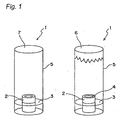
- Fig. 1 is a perspective view from an upper visual point showing one embodiment of the culturing apparatus of the present invention.
- Fig. 2 is a perspective view from an upper visual point showing another embodiment of the culturing apparatus of the present invention.
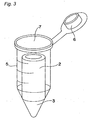
- Fig. 3 is a perspective view from an upper visual point showing another embodiment of the culturing apparatus of the present invention.
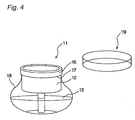
- Fig. 4 is a perspective view from an upper visual point showing another embodiment of the culturing apparatus of the present invention.
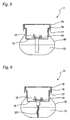
- Fig. 5 is a cross-sectionef view from a side visual point showing another embodiment of the culturing apparatus of the present invention.
- Fig. 6 is a cross-sectioned view from a side visual point showing another embodiment of the culturing apparatus of the present invention.
- Fig. 7 is a photograph as a substitute for a drawing showing a tobacco (Nicotiana tabacum) seed which has been germinated with a culturing apparatus 1 of the present invention which contains a culture medium containing a plant hormone.
- Fig. 8 is a photograph as a substitute for a drawing showing a tobacco (Nicotiana tabacum) callus at the day 10 after seeding which has been grown with a culturing apparatus 1 of the present invention which contains a culture medium containing a plant hormone.
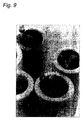
- Fig. 9 is a photograph as asubstitute for a drawing showing a tobacco callus at the day 26 after seeding which has been grown with a culturing apparatus 1 of the present invention which contains a culture medium containing a plant hormone.
- Fig. 10 is a photograph as a substitute for a drawing showing a tobacco callus at the day 28 after seeding which has been grown with a culturing apparatus 1 of the present invention which contains a culture medium containing a plant hormone.
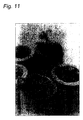
- Fig. 11 is a photograph as a substitute for a drawing showing a tobacco callus at the day 32 after seeding which has been grown with a culturing apparatus 1 of the present invention which contains a culture medium containing a plant hormone.
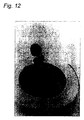
- Fig. 12 is a photograph as a substitute for a drawing showing a tobacco seed which has been germinated with a culturing apparatus 1 of the present invention which contains a culture medium containing a plant hormone.
- Fig. 13 is a photograph as a substitute for a drawing showing a leaf and a top of a tobacco seedling immediately after it is placing it on the culturing apparatus 2 of the present invention which contains a culture medium containing a plant hormone.
- Fig. 14 is a photograph as a substitute for a drawing showing a tobacco callus at the day 10 after placed on the culturing apparatus 2 of the present invention which contains a culture medium containing a plant hormone.
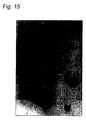
- Fig. 15 is a photograph as a substitute for a drawing showing a tobacco callus at the day 33 after placed on the culturing apparatus 2 of the present invention which contains a culture medium containing a plant hormone.
- Fig. 16 is a photograph as a substitute for a drawing showing a tobacco callus at the day 56 after placed on the culturing apparatus 2 of the present invention which contains a culture medium containing a plant hormone.
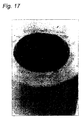
- Fig. 17 is a photograph as a substitute for a drawing showing a strawberry (Fragaria chiloensis) anther on the day 35 after placed on the culture apparatus 1 of the present invention which contains a culture medium containing a plant hormone.
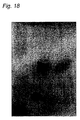
- Fig. 18 is a photograph as a substitute for a drawing showing a fungus flora of filamentous fungus Oospora roseoflava 26 hours after seeded on the culture apparatus 2 of the present invention.
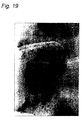
- Fig. 19 is a photograph as a substitute for a drawing showing a fungus flora of filamentous fungus Oospora roseoflava 49 hours after seeded on the culture apparatus 2 of the present invention.
- Fig. 20 is a photograph as a substitute for a drawing showing a fungus flora of filamentous fungus Oospora roseoflava 73 hours after seeded on the culture apparatus 2 of the present invention.
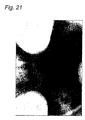
- Fig. 21 is a photograph as a substitute for a drawing showing a fungus flora of filamentous fungus Oospora roseoflava 91 hours after seeded on the culture apparatus 2 of the present invention.
- Fig. 22 is a photograph as a substitute for a drawing showing a fungus flora of enoki mushroom (Flammulina velutipes) on the day 10 after seeded on the culture apparatus 2 of the present invention.
- Fig. 23 is a photograph as a substitute for a drawing showing a fungus flora of enoki mushroom on the day 11 after seeded on the culture apparatus 2 of the present invention.
- Fig. 24 is a photograph as a substitute for a drawing showing a fungus flora of enoki mushroom on the day 13 after seeded on the culture apparatus 2 of the present invention.
- Fig. 25 is a photograph as a substitute for a drawing showing a fungus flora of enoki mushroom on the day 14 after seeded on the culture apparatus 2 of the present invention.
- Fig. 26 is a photograph as a substitute for a drawing showing a fungus flora of enoki mushroom on the day 16 after seeded on the culture apparatus 2 of the present invention.
- Fig. 27 is a photograph as a substitute for a drawing showing a bacterial flora of bacterium Bacillus subtilis at 66 hours after inoculated on the culture apparatus 2 of the present invention.
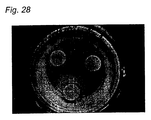
- Fig. 28 is a photograph as a substitute for a drawing showing a bacterial flora of bacterium Bacillus subtilis at 109 hours after inoculated on the culture apparatus 2 of the present invention.
- Fig. 29 is a photograph as a substitute for a drawing showing a fungus flora of Gonytrichum macrocladum on the day 55 after seeded on the culture apparatus 2 of the present invention.
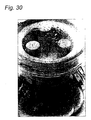
- Fig. 30 is a photograph as a substitute for a drawing showing a fungus flora of Gonytrichum macrocladum on the day 55 after seeded on the culture apparatus 2 of the present invention.
- an organism-culture apparatus of the present invention is an organism-culture apparatus comprising a culture medium 3 and a cylindrical or pillar type microporous body 2 which stands upright from a bottom of said organism-culture apparatus 1, which can propagate, dedifferentiate , differentiate, regenerate, preserve, select, isolate or cross an organism tissue or an organism cell 4 by placing it on a surface of said microporous body.
- a culture medium 3 used in the organism-culture apparatus is not particularly limited, but any culture media may be used as far as they can propagate, dedifferentiate, differentiate and regenerate the organism tissue or the organism cell.
- examples thereof include, for example, a culture medium for a plant tissue such as an MS (Murashige-Skoog) medium, a B5 medium, a W medium, an NT medium, a Kao8P medium, an LS medium, an H medium, a KC medium, an HB medium, WPM, a Kassanis medium, a Neelsen's medium, a Galzy medium, a Nitsh and Nitsh medium, a Matthi medium and the like to which a variety of plant hormones, amino acids, vitamins, antibiotics, osmoregulatories, buffering agents, natural materials (such as yeast extract), or enzymes may be added depending upon a purpose; a culture medium for an animal tissue such as a 199 medium, a minimum Eagle medium (MEM), a du
- a microporous body 2 having the water-absorbing ability used in the organism-culture apparatus of the present invention is not particularly limited, but any microporous bodies may be used as far as they have the water-absorbing ability being capable of retaining 0.005-500 (wt/wt), preferably 0.01-100 (wt/wt), more preferably 0.025-50 (wt/wt), most preferably 0.05-5 (wt/wt)-fold amount of water at 20°C, and have communicating pores having a pore diameter of 0.02-900 ⁇ m, preferably 0.05-80 ⁇ m, more preferably 0.1-9 ⁇ m, most preferably 0.2-3 ⁇ m at a pore rate (vol/vol) of 0.05-1, preferably 0.2-0.4 relative to the microporous body.
- a pore diameter and a pore rate in the microporous body even when a culture medium is contaminated with virus, bacterium, filamentous fungus, algae or protozoa, those organisms can not reach an organism tissue being cultured or it takes a longer time for those organisms to reach there due to the filtering effect of the microporous body and, by transferring the organism tissue to another culture apparatus during that time, the organism tissue itself can be prevented from being contaminated.
- the microporous body has not only the aforementioned characteristics but also resistance to high temperature and high pressure sterilizing treatment such as treatment with an autoclave, and strong alkaline, strong acidic, high temperature, low temperature, organic solvent, radiation or gravity-applying conditions or the like, examples of the microporous body include porous bodies obtaining by kneading, forming and firing non-metal inorganic solid raw materials such as No.
- the petalite preferably contains 76.81 % by weight of SiO 2 , 16.96 % by weight of Al 2 O 3 , 4.03 % by weight of LiO 2 , 0.26 % by weight of K 2 O and 1.94 % by weight of inevitable impurities.
- non-metal inorganic raw materials may contain powdery inorganic foam.
- the microporous body used in the organism-culture apparatus of the present invention is composed of a non-metal inorganic material, the strength of which is not substantially reduced or the shape of which is not transformed even when it has absorbed water.
- a method of forming a non-metal inorganic solid raw material there are forming methods which are known in the art such as slip casting forming, extruding forming, press forming and potter's wheel forming.
- extruding forming is preferable.
- drying after forming can be performed using the normal methods and conditions known in the art.
- Subsequent firing of a formed body is not particularly limited as far as firing is performed by the conventional conditions and methods. For example, oxidative firing by which a desired pore is easily obtained can be selected.
- a firing temperature is 1000 °C to 2000 °C, preferably 1100 °C to 1500 °C, more preferably 1150 °C to 1250 °C, most preferably 1200 °C.
- a temperature for firing a non-metal inorganic solid raw material is lower than 1000 °C, a sulfur component easily remains and, on the other hand, when the temperature is higher than 2000 °C, the desired water-absorbing property is not obtained.
- Main steps in melt foaming molding comprise melting and kneading, molding of an unfoamed sheet, heat foaming or extrusion foaming, cooling, cutting and processing.
- solid phase foaming molding a polymer is foamed in the solid phase or in the state near the solid phase.
- casting foaming molding a liquid raw material (monomer or oligomer) is cast and foamed while reacting in the air.
- a foaming agent is generally used.
- a microporous body 2 has a shape of cylindrical type or pillar type, a shape including cylindrical type or pillar type part and a pan type part continuing upwardly from the cylindrical type or the pillar type and having a larger outer diameter than that of the cylindrical type or the pillar type, in which a center of the pan part is recessed, or a structure in which a steric projection or concovity is disposed on a recessed bottom of the pan type part in order to increase specific surface area, depending on a culture purpose.
- a culture medium 3 is contacted with a part of a microporous body 2, is transferred upwardly via communicating pores in the interior of the microporous body due to capillary action, is retained in the interior thereof, and is supplied to an organism tissue or organism cell 4, whereby, propagation, dedifferentiation, differentiation, regeneration, preservation, selection, isolation and cross of an organism tissue can be induced.
- an organism tissue or cell which is seeded on the microporous body without contacting with the culture medium sometimes grows big and comes in contact with the pooled culture medium in the process of culture. This case is also included within the scope of the present invention.
- a container 5 containing at least a part of the aforementioned culture medium 3 and microporous body 2 is enough as far as, by sealing an opening of the container with an aluminum foil, the microporous body 2, the culture medium 3 and the organism tissue or the organism cell 4 can be shut off from the outside of the container.
- the container is resistant to high temperature and high pressure sterilizing treatment such as treatment with an autoclave, and various culturing conditions and culture medium conditions such as strong alkaline, strong acidic, high temperature, low temperature, high salt concentration, high pressure, low pressure, organic solvent, radiation or applying gravity condition or the like, has material and shape by which the culture status can be observed from the outside, is made of materials which are generally used as a tissue culture container such as glass, plastic and vinyl polymer, and has shapes such as cylinder type, flat-bottom flask type, cup type, lattice type and plate type.
- a lid 6 and a container 7 are provided with a threading mechanism 8 which can engage so that the interior of a container can be kept sealed even under pressure or depressure conditions, and a feeding tube 9, as shown in Fig. 2 (when the atmosphere in the container is substituted by a particular gas, two or more of feeding tubes are provided).
- centrifuging tube may be used as a container and a lid as shown in Fig. 3.
- a culture medium 3 and a microporous body 2 are placed into a container 5 through an opening 7, an opening 7 of the container is sealed with a plug 6 such as an aluminium foil, a cotton plug, a silicone plug, a rubber plug, and a cork plug, and it is confirmed that a culture medium 3 has been absorbed throughout a microporous body 2 and, thereafter, the organism-culture apparatus is subjected to high temperature and high pressure sterilizing treatment such as treatment with an autoclave. Alternatively, such the organism-culture apparatus may be subjected to non-heating sterilization such as ultraviolet sterilization.
- a plug 6 such as an aluminium foil, a cotton plug, a silicone plug, a rubber plug, and a cork plug
- this organism-culture apparatus 1 is cooled to room temperature, a plug 6 is removed under the aseptic conditions such as in a clean bench, and then an organism tissue or an organism cell 4 which has been subjected to sterilization treatment in advance by the method well known by a person skilled in the art is placed on the surface of a microporous body 2 using an equipment such as a forceps, a pipette , a platinum loop and platinum needle. Thereafter, an opening 7 is sealed again with a plug, and an organism tissue or an organism cell 4 is cultured by standing, shaking, centrifuging or the like the culture apparatus 1 under the suitable condition.
- the culture medium may be absorbed throughout a microporous body by subjecting a microporous body 2 placed in a container 5 and a culture medium 3 placed in another container to high temperature and high pressure sterilization dry heat sterilization separately, and dispensing a culture medium 3 in a container 5 under the aseptic conditions.
- a microporous body 2, and a culture medium 3 placed in a container are subjected to ultraviolet or gamma ray sterilization separately, and a microporous body 2 may be placed in a container containing a culture medium under the aseptic conditions.
- a microporous body 2 is disposed upright on a bottom of a container 5.
- a part of a microporous body 2 is disposed in a container 5 in such a positional relationship that the part is contacted with a culture medium 3 or is immersed in a culture medium 3.
- a microporous body may be hung from a side or an upper part of a container 5 or a plug 6.
- an intervening body 20 composed of polyvinyl alcohol, carbon fiber bundle, glass fiber bundle or water-absorbing acryl fiber bundle is provided at a lower part of a microporous body 12 and, by immersing a part of the intervening body, a culture medium 3 can be penetrated into a microporous body via the intervening body.
- the intervening body 20 has the flexibility. Then, by penetrating a culture medium into a microporous body via an intervening body by using the intervening body, it is possible to impart a degree of freedom to a size of a microporous body and that of a container.
- a precipitatable component contained in a culture medium can be prevented from being precipitated in pores of a microporous body by precipitating the precipitatable component on an intervening body by using the intervening body.
- the microporous body and the intervening body have the resistant to heat, low temperature, strong alkaline, strong acidic, organic solvent, radiation, ultraviolet ray, pressure, and depressure and have a strength such that a shape thereof is not deformed by a gravity.
- the organism-culture apparatus of the present invention can be used for culture the plant tissue or cell such as of a seed, a leaf, a shoot apex, a stem, a root, an anther, a filament, a growing point (a terminal bud, a lateral bud, a shoot apex, a root apex), an axillary bud, a scale, an ovary, an ovule, an embryo, a pollen, an adventitious bud, an adventive embryo and an adventitious root of a useful tree such as bishop's flower (Ammi majus), onion (Allium cepa), garlic (Allium sativum), celery (Apium graveolens), asparagus (Asparagus officinalis), sugar beet (Beta vulgaris), cauliflower (Brassica oleracea var.
- a seed a leaf, a shoot apex, a stem, a root, an anther, a filament
- any culturings known in the art are possible.
- examples thereof include dedifferentiation (callusing) and redifferentiation of a plant tissue, anther culture, shoot apex culture, protoplast culture, batch culture, clonal cell culture, seed culture, high density culture, cocultivation, nurse culture methods, a conditioning culture method, an isotope competition method, a direct labeling method, an ovary culture method, an ovule culture method, an embryo culture method, a pollen culture method, a synchronized culture method and the like.
- fungi when fungi are a subject, examples thereof include isolation culture from parts such as stalk, upper part of stalk, gill and pileus of mushroom fruit-body, spore isolation culture, isolation culture from soil and air, subculturing from isolated fungus strain and the like.
- examples thereof include gastrointestinal epithelial cells culture, hepatocyte culture, human epidermal keratinocytes culture, vascular endothelial cells culture, renal cells culture, langerhans islet cells culture, fibroblast culture, muscle cells culture, myelocyte culture, cancer cells culture, neural cells culture, bronchial epithelium cells culture, neural cells differentiation culture, blood cells differentiation culture, embryonic stem cells differentiation culture and hepatocarcinoma cells differentiation culture.
- bacteria when bacteria are a subject, examples thereof include anaerobic culture using nitrogen, carbon dioxide or the like as the atmosphere, aerobic culture using air, pressurized oxygen or the like, culturing under strong alkaline condition, culture under strong acidic condition, culture at high temperature, culture at low temperature, culture at a high salt concentration, pressurized culture which is performed in the atmosphere exceeding the atmospheric pressure, depressurized culture, culture in an organic solvent, culture under radiation, and culture which is performed with applying gravity by centrifuging.
- anaerobic culture using nitrogen, carbon dioxide or the like as the atmosphere aerobic culture using air, pressurized oxygen or the like
- culturing under strong alkaline condition culture under strong acidic condition
- culture at high temperature culture at low temperature
- culture at a high salt concentration pressurized culture which is performed in the atmosphere exceeding the atmospheric pressure
- depressurized culture culture in an organic solvent, culture under radiation, and culture which is performed with applying gravity by centrifuging.
- the second embodiment of the organism-culture apparatus of the present invention is an organism-culture apparatus 11 comprising a culture medium 13, and a microporous body 12 comprising a cylindrical part and a pan type part continuing upwardly from the cylindrical part and having a larger outer diameter than that of the cylindrical part, and which can induce propagation, dedifferentiation, differentiation, regeneration, preservation, selection, isolation and cross by placing an organism tissue 14 on a bottom 15 of a pan part in which a center thereof is recessed, as shown in Fig. 4 and Fig. 5.
- a microporous body 12 comprising a cylindrical type part and a pan type part is supported by a container 18 and seals the interior of the container by contact between a bottom 17 of a part 16 which projects in a diametric direction of the pan type part and a periphery of an opening of a container.
- a pan type part 12 of a microporous body can be sealed by fitting thereto a lid 19 which has material and shape by which the culturing status can be observed from the outside, such as a petri dish having an inner diameter corresponding to or greater than an outer diameter of the pan type part.
- a pan type part may be simply sealed with an aluminum foil as explained in the first embodiment.
- the microporous body has the resistant to heat, strong alkaline, strong acidic, high pressure, low pressure, organic solvent, radiation, ultraviolet or the like.
- NAA naphthalene acetic acid
- BA benzyladenine
- a microporous body composed of a pan type part having an outer diameter of 7.5 cm, an inner diameter of 5.5 cm and a depth of 5.0 cm and a cylindrical part having an outer diameter 1.7 cm, an inner diameter of 0.7 cm and a height of 4.7 cm, and having a pillar type part having an outer diameter of 1.5 cm and a height 4.3 cm and projecting upwardly on a bottom of the part in which a center of the pan type part is recessed, which had been prepared using the same raw materials and conditions as those for the above culture apparatus 1, was fitted in a glass container having a volume of 570 ml, and an opening of the pan type part was sealed by covering with a petri dish.
- a dedifferentiation MS liquid culture medium containing each 2 ppm of naphthalene acetic acid (NAA) and benzyladenine (BA) was poured into an Erlenmeyer flask, and sterilized at a high temperature and a high pressure for 10 minutes using an autoclave (121°C, pressurized at 1.2 atm). Then, under the aseptic conditions, the microporous body was lifted slightly to detach from the container, and 130 ml of a dedifferentiation MS liquid culture medium which had been sterilized was poured therein through a gap. Thereafter, this was allowed to stand until the culture medium was absorbed throughout the microporous body, to obtain a culture apparatus 2.
- NAA naphthalene acetic acid
- BA benzyladenine
- test material As a test material, a seed and a leaf of an immature tobacco SR1 (Nicotiana tabacum) of 17 days after germination, and anther in a bud of strawberry (Fragaria chiloensis) having a diameter of 3 mm were used. These test materials were sterilication-treated by washing with flowing water, immersing in 70% ethanol for a few seconds, immersing in a 5% aqueous sodium hypochlorite solution for 10 minutes to used. As an anther in a strawberry bud, an anther was separated under the aseptic conditions from the bud which had been sterilization-treated as described above, and was used as a test material.
- the aluminium foil was removed from the culture apparatus 1 under the aseptic conditions, the test material was placed on an inner surface at a top of the microporous body and an opening was sealed with the aluminum foil again.
- the petri dish was removed from the culture apparatus 2 under the same conditions, the test material was placed on a bottom of the pan type part of the microporous body, and an opening of the pan type part was sealed with the petri dish again.
- the test material placed on the culture apparatus 1 or 2 was subjected to stationary culture at 26°C under the natural sunshine conditions (around 10 cm beyond a frosted glass).
- the plant tissue can be grown similar to the conventional agar media, regardless of species of a plant and a tissue part, and plant hormones in a culture medium influence on morpholgenesis and propagation of a plant tissue via the microporous body.
- a callused rate of an anther of strawberry was 55.1 %.
- filamentous fungi Oospora roseoflava, and Flammulila velutipes were used as test materials.
- test material a bacterium Bacillus subtilis was used.
- a petri dish was removed from the culture apparatus 2 a Bacillus subtilis suspension was coated on a bottom of a pan type part of a microporous body, and the pan type part was sealed with the petri dish again.
- the bacterium seeded on the culture apparatus 2 like this was subjected to stationary culture at 26°C under the natural sunshine conditions (around 10 cm beyond a frosted glass).
- a filamentous fungus, Gonytrichum macrocladum was seeded on a culture medium of the culture apparatus 2 used in the above culture experiment for strawberry anther, and subjected to stationary culture at 26°C under the natural sunshine conditions (around 10 cm beyond a frosted glass). The results are shown in Figs 29 and 30.
- a culture apparatus in which only a small amount of a culture medium is consumed, a necessity of operations such as stirring and shaking are reduced, the number of necessary subculture can be reduced and, thereby, culturing of an organism tissue or an organism cell over a longer period becomes possible without subculture operation so the culture apparatus can be provided by which a greater amount of useful substance can be obtained more conveniently in a single culture operation, upon extraction of useful substance from a tissue or cell. And contamination upon subculture operation and other stimulation having adverse influences (physical stimulation upon subculturing) can be prevented.
- culturing which is not influenced by a pH of a culture medium and a culturing temperature or the like becomes possible.
- thinner, smaller, lighter culture apparatus can be provided.
Landscapes
- Health & Medical Sciences (AREA)
- Organic Chemistry (AREA)
- Life Sciences & Earth Sciences (AREA)
- Engineering & Computer Science (AREA)
- Bioinformatics & Cheminformatics (AREA)
- Chemical & Material Sciences (AREA)
- Zoology (AREA)
- Wood Science & Technology (AREA)
- Sustainable Development (AREA)
- Microbiology (AREA)
- Biotechnology (AREA)
- Biomedical Technology (AREA)
- Biochemistry (AREA)
- General Engineering & Computer Science (AREA)
- General Health & Medical Sciences (AREA)
- Genetics & Genomics (AREA)
- Immunology (AREA)
- Micro-Organisms Or Cultivation Processes Thereof (AREA)
- Apparatus Associated With Microorganisms And Enzymes (AREA)
Abstract
Description
| Days after seeding | Process of growth of tobacco seed |
| Day 0 | |
| Day | |
| 5 | Germination, root being |
| Day | |
| 7 | Callused |
| Day 10 | Callus, diameter 0.8 mm |
| Day 26 | Callus, diameter 4.3 mm |
| Day 28 | Callus, diameter 5.0 mm |
| Day 32 | Callus, diameter 6.6 mm |
| Days after placement | Change in tobacco leaf and callus diameter |
| Day 0 | Placement, 3.1 mm |
| Day 10 | Callus, diameter 4.7 mm |
| Day 33 | Callus, diameter 4.9 mm |
| Day 56 | Callus, diameter 5.1 mm |
| Sample No. 26 | |
| Days after seeding | Process of growth of strawberry anther |
| Day 0 | |
| Day | |
| 7 | Callused |
| Day 10 | Callus, diameter 0.3mm |
| Day 28 | Callus, diameter 0.8mm |
| Day 35 | Callus, diameter 2.6mm |
| Hours after seeding | Process in growth of filamentous fungus |
| 0 hour | Seeding |
| 26 hours | Flora, diameter 5.2 mm |
| 49 hours | Flora, diameter 29.6 mm |
| 73 hours | Flora, diameter 56.8 mm |
| 91 hours | Flora, diameter 56.8 mm |
| (Bottom 22.9 mm, Inner side 5.1 mm) |
| Time after seeding | |
| 0 hour | Seeding |
| Day 10 | Flora, diameter 19.6 |
| Day | |
| 11 | Flora, diameter 34.6 |
| Day | |
| 12 | Flora, diameter 42.0 |
| Day | |
| 13 | Flora, diameter 44.8 |
| Day | |
| 14 | Flora, diameter 54.0 |
| Day | |
| 15 | Flora, diameter 56.0 mm |
| Time after seeding | Process of growth of bacterium |
| 0 hour | Seeding |
| 66 hours | Flora, diameter 2.00 mm |
| 92 hours | Flora, diameter 5.29 mm |
| 109 hours | Flora, diameter 5.94 mm |
| 118 hours | Flora, diameter 7.12 mm |
| 132 hours | Flora, diameter 7.74 mm |
Claims (9)
- An organism-culture apparatus, which comprises a culture medium, a microporous body having the water-absorbing ability, a part of which is immersed in the culture medium, and a container containing at least a part of the culture medium and the microporous body, wherein the culture medium is transferred upwardly via communicating pores in the interior of the microporous body having the capillary attraction, to supply the culture medium to an organism tissue or an organism cell placed on a surface of the microporous body, whereby, the organism tissue or an organism cell is cultured.
- The organism-culture apparatus according to claim 1, wherein the microporous body has a shape of an upright cylindrical type or pillar type.
- The organism-culture apparatus according to claim 1 or 2, wherein the microporous body comprises a cylindrical or pillar type part, and a pan type part continuing upwardly from the cylindrical or pillar type part and having a greater outer diameter than that of the cylindrical or pillar type part, in which a center of the pan type part is recessed, wherein a part of the pan type part is projected in its diametric direction and has a greater outer diameter than that of an opening of a container, and the microporous body is supported by the container by contact between a bottom of the projected part and a periphery of an opening of the container.
- The organism-culture apparatus according to any one of claims 1 to 3, wherein the microporous body is a fired product of a non-metal inorganic solid material.
- The organism-culturing apparatus according to any one of claims 1 to 3, wherein the microporous body is an open-cell type plastic foam.
- An organism-culture apparatus, which comprises a culture medium, a microporous body having the water-absorbing ability, an intervening body connected to the microporous body which can supply the culture medium to the microporous body by contact between a part of the intervening body and the culture medium, and a container containing at least a part of the culture medium and the microporous body, wherein the culture medium supplied via the intervening body is transferred upwardly via communicating pores in the interior of the microporous body having the capillary attraction, to supply the culture medium to an organism tissue or an organism cell placed on a surface of the microporous body, whereby, the organism tissue or the organism cell is cultured.
- The organism-culture apparatus according to any one of claims 1 to 6, wherein the organism tissue or the organism cell is a tissue or a cell of plants, fungi or bacteria.
- A method of culturing an organism, which comprises transferring a culture medium upwardly via communicating pores in the interior of a microporous body having the water-absorbing ability, a part of which is immersed in the culture medium, to supply the culture medium to an organism tissue or an organism cell placed on a surface of the microporous body, whereby, the organism tissue or the organism cell is cultured.
- The method of culturing an organism according to claim 8, wherein the organism tissue or the organism cell is a tissue or a cell of plants, fungi or bacteria.
Applications Claiming Priority (3)
| Application Number | Priority Date | Filing Date | Title |
|---|---|---|---|
| JP2001351680 | 2001-11-16 | ||
| JP2001351680 | 2001-11-16 | ||
| PCT/JP2002/011906 WO2003042352A1 (en) | 2001-11-16 | 2002-11-15 | Apparatus for culturing organism and method of culturing organism |
Publications (3)
| Publication Number | Publication Date |
|---|---|
| EP1443102A1 true EP1443102A1 (en) | 2004-08-04 |
| EP1443102A4 EP1443102A4 (en) | 2007-07-18 |
| EP1443102B1 EP1443102B1 (en) | 2014-06-18 |
Family
ID=19163959
Family Applications (1)
| Application Number | Title | Priority Date | Filing Date |
|---|---|---|---|
| EP02781771.7A Expired - Lifetime EP1443102B1 (en) | 2001-11-16 | 2002-11-15 | Apparatus for culturing organism and method of culturing organism |
Country Status (15)
| Country | Link |
|---|---|
| US (1) | US7972840B2 (en) |
| EP (1) | EP1443102B1 (en) |
| JP (1) | JP4744082B2 (en) |
| KR (1) | KR100952246B1 (en) |
| CN (1) | CN1288234C (en) |
| AR (1) | AR037530A1 (en) |
| AU (1) | AU2002349640B2 (en) |
| BR (1) | BR0214162A (en) |
| CA (1) | CA2466992C (en) |
| MY (1) | MY138234A (en) |
| NO (1) | NO20041976L (en) |
| NZ (1) | NZ532960A (en) |
| RU (1) | RU2364622C2 (en) |
| TW (1) | TWI308591B (en) |
| WO (1) | WO2003042352A1 (en) |
Cited By (3)
| Publication number | Priority date | Publication date | Assignee | Title |
|---|---|---|---|---|
| EP1495670A4 (en) * | 2002-04-15 | 2005-04-13 | Phytoculture Control Co Ltd | Plant transformation system |
| CN109479704A (en) * | 2018-12-19 | 2019-03-19 | 上海市农业科学院 | A kind of method of precocity peento rescue culture |
| CN110897032A (en) * | 2019-11-19 | 2020-03-24 | 华南理工大学 | A kind of fermented feed protein and its preparation method and application |
Families Citing this family (45)
| Publication number | Priority date | Publication date | Assignee | Title |
|---|---|---|---|---|
| TW200516147A (en) * | 2003-10-15 | 2005-05-16 | Phytoculture Control Co Ltd | Method for transforming plants and equipment for use therein |
| KR100786744B1 (en) * | 2006-05-17 | 2007-12-18 | 경북전문대학 산학협력단 | Medium for growing gray stranded mushrooms and a method of growing gray stranded mushrooms using the same |
| US9868095B2 (en) * | 2007-05-02 | 2018-01-16 | Finesse Solutions, Inc. | Disposable bioreactor system |
| JP5248984B2 (en) * | 2008-11-04 | 2013-07-31 | エースバイオプロダクト株式会社 | Biofuel cell |
| KR100931768B1 (en) * | 2009-05-25 | 2009-12-14 | (주)바이오에프디엔씨 | Skin external preparation composition containing orchid callus extract and preparation method thereof |
| MX2009013966A (en) * | 2009-12-17 | 2011-06-16 | Inst Potosino De Investigacion Cientifica Y Tecnologica A C | Packing material comprising starch-modified polyurethane for the biofiltration of organic compounds present in gaseous or liquid effluents, production methods thereof and biofiltration system. |
| US8460897B1 (en) | 2009-12-17 | 2013-06-11 | Eclipse Bioproducts, LLC | Methods of culturing fungi and producing cellulases and chitin |
| KR101150903B1 (en) * | 2010-03-05 | 2012-05-29 | 인하대학교 산학협력단 | Apparatus for cultivating micro algae using filtered sunlight |
| JP5674953B2 (en) * | 2010-10-08 | 2015-02-25 | ナツリン・ヴィスコファン・ゲーエムベーハー | Cell culture insert |
| RU2435845C1 (en) * | 2010-10-12 | 2011-12-10 | Евгений Петрович Сиволодский | METHOD OF Shewanella BACTERIA RECOVERY AND IDENTIFICATION |
| RU2458147C2 (en) * | 2010-11-19 | 2012-08-10 | Государственное образовательное учреждение высшего профессионального образования Воронежская государственная технологическая академия (ГОУ ВПО ВГТА) | Method of control of photoautotrophic microorganism cultivation process |
| US20120295299A1 (en) * | 2011-05-17 | 2012-11-22 | Sergey Gazenko | Method and apparatus for rapidly analyzing microorganisms using petri plates |
| CN102405770B (en) * | 2011-09-19 | 2013-03-13 | 河南农业大学 | Method for promoting growth of pleurotus ostreatus by using bradyrhizobium ddjaponicum |
| EP2768296A4 (en) | 2011-10-18 | 2015-06-17 | Inst Environmental Health Inc | Improved method and apparatus for growing sprouts |
| CN102550284B (en) * | 2011-12-31 | 2014-03-12 | 浙江大学 | Edible mushroom culturing method |
| JP2014054230A (en) * | 2012-09-14 | 2014-03-27 | Toyama Prefecture | Method for inducing callus and cultured cells from plant tissue and method of producing transformant |
| CN105189727A (en) | 2013-05-06 | 2015-12-23 | 3M创新有限公司 | Culture device and method for counting mold colonies |
| CA2891136C (en) * | 2014-05-12 | 2023-05-09 | Kevin J. Stevens | Device for phyto-ecological monitoring |
| CN104186311B (en) * | 2014-07-31 | 2018-04-27 | 浙江农林大学 | A kind of tissue culture device and smoothbark birch minitype cuttage quick-breeding method |
| BR112017024265B1 (en) | 2015-05-11 | 2022-08-09 | Mybiotics Pharma Ltd | METHODS FOR GROWING A BIOFILM OF PROBIOTIC BACTERIA IN SOLID PARTICLES |
| CN105638268B (en) * | 2015-12-29 | 2019-04-02 | 中国热带农业科学院橡胶研究所 | Rubber tree red root disease inoculation method |
| IL294171A (en) | 2016-05-25 | 2022-08-01 | Mybiotics Pharma Ltd | Compounds and methods for microbiotic therapy |
| AU2016426478A1 (en) * | 2016-10-14 | 2018-06-28 | Sunshine Horticulture Co., Ltd. | Method for cultivating plant in transparent sealed container and medium therefor |
| USD821194S1 (en) | 2017-03-10 | 2018-06-26 | Johannes Cornelious VAN WINGERDEN | Produce bowl |
| USD830664S1 (en) | 2017-03-30 | 2018-10-09 | Johannes Cornelious VAN WINGERDEN | Engagement device for a hydroponic growing system |
| USD839783S1 (en) | 2017-04-27 | 2019-02-05 | Johannes Cornelious VAN WINGERDEN | Growing trough |
| USD831178S1 (en) | 2017-05-12 | 2018-10-16 | Johannes Cornelious VAN WINGERDEN | Gutter |
| KR102088102B1 (en) * | 2017-07-05 | 2020-03-11 | 가부시키가이샤 스크린 홀딩스 | Specimen container |
| US10485192B2 (en) | 2017-07-26 | 2019-11-26 | Johannes Cornelious VAN WINGERDEN | Hydroponic growing system |
| US10004187B1 (en) | 2017-07-26 | 2018-06-26 | Johannes Cornelious VAN WINGERDEN | Hydroponic growing system |
| US10051799B1 (en) | 2017-07-26 | 2018-08-21 | Johannes Cornelious VAN WINGERDEN | Gutter for a hydroponic growing system |
| US10201134B1 (en) | 2017-07-26 | 2019-02-12 | Johannes Cornelious VAN WINGERDEN | Hydroponic growing system |
| US10368507B2 (en) | 2017-07-26 | 2019-08-06 | Johannes Cornelious VAN WINGERDEN | Hydroponic growing system |
| US10080335B1 (en) * | 2017-10-02 | 2018-09-25 | Johannes Cornelious VAN WINGERDEN | Apparatus, system and method for a grow ring for produce |
| US20190174688A1 (en) * | 2017-12-08 | 2019-06-13 | Rami Elkhatib | Watering device |
| US12030825B2 (en) * | 2018-10-30 | 2024-07-09 | Arizona Board Of Regents On Behalf Of Arizona State University | Methods of tracing and/or sourcing plant material |
| CN110156174B (en) * | 2019-05-30 | 2022-01-25 | 杭州秀川科技有限公司 | Mixed strain fermentation biological pretreatment method for high-concentration high-salt pharmaceutical wastewater |
| CN112021180B (en) * | 2020-09-17 | 2022-03-08 | 北京农学院 | Synchronization method for chestnut somatic embryo development and tissue culture seedling rooting method |
| CN112680365B (en) * | 2021-02-02 | 2023-01-31 | 吉林农业大学 | Liquid culture medium for beauveria bassiana and preparation method of beauveria bassiana microbial inoculum |
| WO2022186001A1 (en) * | 2021-03-01 | 2022-09-09 | 本田技研工業株式会社 | Culture apparatus and culture method |
| CN113575418A (en) * | 2021-08-17 | 2021-11-02 | 青岛农业大学 | Device and culture method for drying treatment of Pinus sylvestris in vitro embryos |
| CN114540155B (en) * | 2022-02-23 | 2023-09-01 | 中国水产科学研究院黄海水产研究所 | Algae seed culture system and algae seed subculture method |
| CN114698509B (en) * | 2022-03-22 | 2022-12-30 | 柞水县农产品质量安全站 | Bag hanging bracket for agaric bag |
| JP7281851B1 (en) | 2022-07-08 | 2023-05-26 | 株式会社Gcj | Whole plant cultivation apparatus and cultivation method, and cultivation apparatus manufacturing method |
| US20260033445A1 (en) * | 2023-04-28 | 2026-02-05 | Gcj Co., Ltd. | Culture apparatus and a culture method for a plant whole body |
Family Cites Families (20)
| Publication number | Priority date | Publication date | Assignee | Title |
|---|---|---|---|---|
| SU948998A1 (en) | 1978-08-30 | 1982-08-07 | Научно-производственное объединение "Агроприбор" | Process for preparing biomass of microorganisms |
| SU901266A1 (en) | 1979-12-20 | 1982-01-30 | Предприятие П/Я А-1631 | Chamber for culturing microorganisms |
| US4289854A (en) * | 1980-06-20 | 1981-09-15 | Monsanto Company | Cell culture method and apparatus |
| US5180676A (en) * | 1984-06-14 | 1993-01-19 | Teijin Limited | Method of cultivating animal or plant cells |
| US4829002A (en) * | 1986-05-12 | 1989-05-09 | Baxter International Inc. | System for metering nutrient media to cell culture containers and method |
| WO1987007113A1 (en) | 1986-05-30 | 1987-12-03 | Michael Ernest Farrell | Systemic plant interface |
| SU1585325A1 (en) | 1988-04-26 | 1990-08-15 | Пензенский филиал Всесоюзного научно-исследовательского института антибиотиков | Apparatus for cultivating microorganisms of filamentary-spongy structure |
| JPH02195827A (en) * | 1989-01-21 | 1990-08-02 | Shimadzu Corp | Culture container of plant |
| JPH0337835A (en) * | 1989-07-05 | 1991-02-19 | Mitsubishi Electric Corp | Optical recording and reproducing device |
| JPH0633768Y2 (en) * | 1989-08-21 | 1994-09-07 | 株式会社学習研究社 | Case for plant cultivation |
| JPH03160988A (en) * | 1989-11-20 | 1991-07-10 | Bio Material Kenkyusho:Kk | Preparation of substance produced by cell |
| JPH09191785A (en) * | 1996-01-23 | 1997-07-29 | Mitsubishi Chem Corp | Plant culture vessel |
| JP3044006B2 (en) * | 1996-09-30 | 2000-05-22 | ハイトカルチャ株式会社 | Cultivation apparatus and manufacturing method thereof |
| JPH10328283A (en) * | 1997-05-29 | 1998-12-15 | Pentel Kk | aromatic |
| NZ507085A (en) * | 1998-03-17 | 2003-11-28 | Silvagen Inc | Maturation of somatic embryos in a medium comprising a gelling agent and a porous support which reduces the availability of water in the growth environment |
| JP2922202B1 (en) * | 1998-07-10 | 1999-07-19 | 高広 鈴木 | Liquid solvent separation method and apparatus in microorganism culturing apparatus |
| US6455310B1 (en) * | 1999-03-23 | 2002-09-24 | Biocrystal Ltd. | Cell culture apparatus and method for culturing cells |
| JP3971053B2 (en) * | 1999-05-20 | 2007-09-05 | ハイトカルチャ株式会社 | Plant growing equipment |
| JP2001045895A (en) * | 1999-08-11 | 2001-02-20 | Phytoculture Control Co Ltd | Culturing device |
| US6995016B2 (en) * | 2000-08-17 | 2006-02-07 | Her Majesty The Queen In Right Of Canada, As Represented By The Minister Of Agriculture And Agri-Food | Process for inducing direct somatic embryogenesis in immature scutella cells of pooideae, and rapidly regenerating fertile plants |
-
2002
- 2002-11-15 WO PCT/JP2002/011906 patent/WO2003042352A1/en not_active Ceased
- 2002-11-15 JP JP2003544172A patent/JP4744082B2/en not_active Expired - Fee Related
- 2002-11-15 BR BR0214162-0A patent/BR0214162A/en not_active Application Discontinuation
- 2002-11-15 RU RU2004118074/13A patent/RU2364622C2/en not_active IP Right Cessation
- 2002-11-15 CN CNB028227743A patent/CN1288234C/en not_active Expired - Fee Related
- 2002-11-15 MY MYPI20024292A patent/MY138234A/en unknown
- 2002-11-15 CA CA2466992A patent/CA2466992C/en not_active Expired - Fee Related
- 2002-11-15 AU AU2002349640A patent/AU2002349640B2/en not_active Ceased
- 2002-11-15 KR KR1020047007406A patent/KR100952246B1/en not_active Expired - Fee Related
- 2002-11-15 AR ARP020104400A patent/AR037530A1/en active IP Right Grant
- 2002-11-15 TW TW091133521A patent/TWI308591B/en not_active IP Right Cessation
- 2002-11-15 US US10/495,534 patent/US7972840B2/en not_active Expired - Fee Related
- 2002-11-15 EP EP02781771.7A patent/EP1443102B1/en not_active Expired - Lifetime
- 2002-11-15 NZ NZ532960A patent/NZ532960A/en not_active IP Right Cessation
-
2004
- 2004-05-13 NO NO20041976A patent/NO20041976L/en not_active Application Discontinuation
Cited By (3)
| Publication number | Priority date | Publication date | Assignee | Title |
|---|---|---|---|---|
| EP1495670A4 (en) * | 2002-04-15 | 2005-04-13 | Phytoculture Control Co Ltd | Plant transformation system |
| CN109479704A (en) * | 2018-12-19 | 2019-03-19 | 上海市农业科学院 | A kind of method of precocity peento rescue culture |
| CN110897032A (en) * | 2019-11-19 | 2020-03-24 | 华南理工大学 | A kind of fermented feed protein and its preparation method and application |
Also Published As
| Publication number | Publication date |
|---|---|
| MY138234A (en) | 2009-05-29 |
| WO2003042352A1 (en) | 2003-05-22 |
| US7972840B2 (en) | 2011-07-05 |
| AR037530A1 (en) | 2004-11-17 |
| BR0214162A (en) | 2004-09-28 |
| EP1443102B1 (en) | 2014-06-18 |
| CA2466992C (en) | 2014-04-08 |
| KR100952246B1 (en) | 2010-04-09 |
| US20050032206A1 (en) | 2005-02-10 |
| NO20041976L (en) | 2004-08-16 |
| EP1443102A4 (en) | 2007-07-18 |
| CN1589321A (en) | 2005-03-02 |
| NZ532960A (en) | 2005-11-25 |
| AU2002349640B2 (en) | 2007-12-20 |
| CN1288234C (en) | 2006-12-06 |
| RU2004118074A (en) | 2005-10-27 |
| RU2364622C2 (en) | 2009-08-20 |
| NO20041976D0 (en) | 2004-05-13 |
| CA2466992A1 (en) | 2003-05-22 |
| KR20050044484A (en) | 2005-05-12 |
| JP4744082B2 (en) | 2011-08-10 |
| HK1068645A1 (en) | 2005-04-29 |
| JPWO2003042352A1 (en) | 2005-03-10 |
| TWI308591B (en) | 2009-04-11 |
| TW200300449A (en) | 2003-06-01 |
Similar Documents
| Publication | Publication Date | Title |
|---|---|---|
| US7972840B2 (en) | Apparatus for culturing organism and method of culturing organism | |
| CN106011005B (en) | A kind of Bacillus amyloliquefaciens T600 and its preparation method and application | |
| US20070122869A1 (en) | Organism-culture apparatus and culture method | |
| CN105052498B (en) | A kind of liquid cultivating method for setting up DSE and corn syntaxial system | |
| CN105969652B (en) | A co-culture device that simulates the metabolic communication between plant suspension cells and their endophytic fungi | |
| CN109486698A (en) | The enterobacteria of the resistance to lead of one plant height and its application | |
| CN102443546A (en) | A kind of laccase-producing Inonotus pilosa mutagen T906 and its preparation method | |
| HK1068645B (en) | Apparatus for culturing organism and method of culturing organism | |
| CN118879539B (en) | A species of Priestella megaterium and its application in the control of anthracnose in peppers | |
| CN108546710A (en) | A kind of castor-oil plant genetic transforming method | |
| US7374905B2 (en) | Medium composition, method and device for selectively enhancing the isolation of anaerobic microorganisms contained in a mixed sample with facultative microorganisms | |
| CN110452821B (en) | Rhizosphere fungi capable of promoting adventitious root and secondary root development of seedlings and use thereof | |
| CN107815459A (en) | A kind of oyster cap fungus manganese peroxidase enzyme gene and its application | |
| CN120484987B (en) | Agrocybe aegerita strain CXG003 with early fruiting and culture and cultivation method and application | |
| CN118006675B (en) | A highly efficient genetic transformation method for grape seeds that does not rely on tissue culture | |
| CN106434384B (en) | A strain of Penicillium nadigis with high protease production and its application | |
| Windy et al. | Detection of Lactic Acid Bacteria (LAB) In Soaking Water of Arabica Coffee Cherries on Mount Sindoro | |
| CN117487664B (en) | Bifidobacterium separation culture method | |
| KR20240039685A (en) | apparatus and method for co-culturing anaerobic and aerobic cells using intestinal environment simulation | |
| CN103215338B (en) | Mycobacterium culture medium and preparation method thereof | |
| KR100869254B1 (en) | Method for Diagnosing Fermentation State of Lung medium for Pleurotus cultivation | |
| CN121518272A (en) | A type of Aspergillus niger and its application in the fermentation of dark tea and a method for processing dark tea. | |
| CN112111405A (en) | Method for screening biocontrol bacteria of soft rot of betel nut taro |
Legal Events
| Date | Code | Title | Description |
|---|---|---|---|
| PUAI | Public reference made under article 153(3) epc to a published international application that has entered the european phase |
Free format text: ORIGINAL CODE: 0009012 |
|
| 17P | Request for examination filed |
Effective date: 20040511 |
|
| AK | Designated contracting states |
Kind code of ref document: A1 Designated state(s): AT BE BG CH CY CZ DE DK EE ES FI FR GB GR IE IT LI LU MC NL PT SE SK TR |
|
| REG | Reference to a national code |
Ref country code: HK Ref legal event code: DE Ref document number: 1068645 Country of ref document: HK |
|
| A4 | Supplementary search report drawn up and despatched |
Effective date: 20070615 |
|
| 17Q | First examination report despatched |
Effective date: 20070905 |
|
| GRAP | Despatch of communication of intention to grant a patent |
Free format text: ORIGINAL CODE: EPIDOSNIGR1 |
|
| INTG | Intention to grant announced |
Effective date: 20140109 |
|
| GRAS | Grant fee paid |
Free format text: ORIGINAL CODE: EPIDOSNIGR3 |
|
| GRAA | (expected) grant |
Free format text: ORIGINAL CODE: 0009210 |
|
| RAP1 | Party data changed (applicant data changed or rights of an application transferred) |
Owner name: PHYTOCULTURE CONTROL CO., LTD., |
|
| RIN1 | Information on inventor provided before grant (corrected) |
Inventor name: SUZUMURA, DAISUKE, PHYTOCULTURE CONTROL CO., LTD. Inventor name: HASEGAWA, RYOU, PHYTOCULTURE CONTROL CO., LTD. |
|
| AK | Designated contracting states |
Kind code of ref document: B1 Designated state(s): AT BE BG CH CY CZ DE DK EE ES FI FR GB GR IE IT LI LU MC NL PT SE SK TR |
|
| REG | Reference to a national code |
Ref country code: GB Ref legal event code: FG4D |
|
| REG | Reference to a national code |
Ref country code: CH Ref legal event code: EP |
|
| REG | Reference to a national code |
Ref country code: AT Ref legal event code: REF Ref document number: 673378 Country of ref document: AT Kind code of ref document: T Effective date: 20140715 |
|
| REG | Reference to a national code |
Ref country code: IE Ref legal event code: FG4D |
|
| REG | Reference to a national code |
Ref country code: DE Ref legal event code: R096 Ref document number: 60246361 Country of ref document: DE Effective date: 20140731 |
|
| REG | Reference to a national code |
Ref country code: CH Ref legal event code: NV Representative=s name: BOHEST AG, CH |
|
| REG | Reference to a national code |
Ref country code: NL Ref legal event code: T3 |
|
| PG25 | Lapsed in a contracting state [announced via postgrant information from national office to epo] |
Ref country code: CY Free format text: LAPSE BECAUSE OF FAILURE TO SUBMIT A TRANSLATION OF THE DESCRIPTION OR TO PAY THE FEE WITHIN THE PRESCRIBED TIME-LIMIT Effective date: 20140618 Ref country code: GR Free format text: LAPSE BECAUSE OF FAILURE TO SUBMIT A TRANSLATION OF THE DESCRIPTION OR TO PAY THE FEE WITHIN THE PRESCRIBED TIME-LIMIT Effective date: 20140919 Ref country code: FI Free format text: LAPSE BECAUSE OF FAILURE TO SUBMIT A TRANSLATION OF THE DESCRIPTION OR TO PAY THE FEE WITHIN THE PRESCRIBED TIME-LIMIT Effective date: 20140618 |
|
| REG | Reference to a national code |
Ref country code: AT Ref legal event code: MK05 Ref document number: 673378 Country of ref document: AT Kind code of ref document: T Effective date: 20140618 |
|
| PG25 | Lapsed in a contracting state [announced via postgrant information from national office to epo] |
Ref country code: SE Free format text: LAPSE BECAUSE OF FAILURE TO SUBMIT A TRANSLATION OF THE DESCRIPTION OR TO PAY THE FEE WITHIN THE PRESCRIBED TIME-LIMIT Effective date: 20140618 |
|
| PG25 | Lapsed in a contracting state [announced via postgrant information from national office to epo] |
Ref country code: EE Free format text: LAPSE BECAUSE OF FAILURE TO SUBMIT A TRANSLATION OF THE DESCRIPTION OR TO PAY THE FEE WITHIN THE PRESCRIBED TIME-LIMIT Effective date: 20140618 Ref country code: PT Free format text: LAPSE BECAUSE OF FAILURE TO SUBMIT A TRANSLATION OF THE DESCRIPTION OR TO PAY THE FEE WITHIN THE PRESCRIBED TIME-LIMIT Effective date: 20141020 Ref country code: CZ Free format text: LAPSE BECAUSE OF FAILURE TO SUBMIT A TRANSLATION OF THE DESCRIPTION OR TO PAY THE FEE WITHIN THE PRESCRIBED TIME-LIMIT Effective date: 20140618 Ref country code: ES Free format text: LAPSE BECAUSE OF FAILURE TO SUBMIT A TRANSLATION OF THE DESCRIPTION OR TO PAY THE FEE WITHIN THE PRESCRIBED TIME-LIMIT Effective date: 20140618 Ref country code: SK Free format text: LAPSE BECAUSE OF FAILURE TO SUBMIT A TRANSLATION OF THE DESCRIPTION OR TO PAY THE FEE WITHIN THE PRESCRIBED TIME-LIMIT Effective date: 20140618 |
|
| REG | Reference to a national code |
Ref country code: HK Ref legal event code: GR Ref document number: 1068645 Country of ref document: HK |
|
| PG25 | Lapsed in a contracting state [announced via postgrant information from national office to epo] |
Ref country code: AT Free format text: LAPSE BECAUSE OF FAILURE TO SUBMIT A TRANSLATION OF THE DESCRIPTION OR TO PAY THE FEE WITHIN THE PRESCRIBED TIME-LIMIT Effective date: 20140618 |
|
| REG | Reference to a national code |
Ref country code: DE Ref legal event code: R097 Ref document number: 60246361 Country of ref document: DE |
|
| PLBE | No opposition filed within time limit |
Free format text: ORIGINAL CODE: 0009261 |
|
| STAA | Information on the status of an ep patent application or granted ep patent |
Free format text: STATUS: NO OPPOSITION FILED WITHIN TIME LIMIT |
|
| PG25 | Lapsed in a contracting state [announced via postgrant information from national office to epo] |
Ref country code: DK Free format text: LAPSE BECAUSE OF FAILURE TO SUBMIT A TRANSLATION OF THE DESCRIPTION OR TO PAY THE FEE WITHIN THE PRESCRIBED TIME-LIMIT Effective date: 20140618 Ref country code: IT Free format text: LAPSE BECAUSE OF FAILURE TO SUBMIT A TRANSLATION OF THE DESCRIPTION OR TO PAY THE FEE WITHIN THE PRESCRIBED TIME-LIMIT Effective date: 20140618 |
|
| 26N | No opposition filed |
Effective date: 20150319 |
|
| PG25 | Lapsed in a contracting state [announced via postgrant information from national office to epo] |
Ref country code: BE Free format text: LAPSE BECAUSE OF FAILURE TO SUBMIT A TRANSLATION OF THE DESCRIPTION OR TO PAY THE FEE WITHIN THE PRESCRIBED TIME-LIMIT Effective date: 20140618 Ref country code: LU Free format text: LAPSE BECAUSE OF FAILURE TO SUBMIT A TRANSLATION OF THE DESCRIPTION OR TO PAY THE FEE WITHIN THE PRESCRIBED TIME-LIMIT Effective date: 20141115 Ref country code: MC Free format text: LAPSE BECAUSE OF FAILURE TO SUBMIT A TRANSLATION OF THE DESCRIPTION OR TO PAY THE FEE WITHIN THE PRESCRIBED TIME-LIMIT Effective date: 20140618 |
|
| PGFP | Annual fee paid to national office [announced via postgrant information from national office to epo] |
Ref country code: GB Payment date: 20150501 Year of fee payment: 13 |
|
| REG | Reference to a national code |
Ref country code: IE Ref legal event code: MM4A |
|
| PG25 | Lapsed in a contracting state [announced via postgrant information from national office to epo] |
Ref country code: IE Free format text: LAPSE BECAUSE OF NON-PAYMENT OF DUE FEES Effective date: 20141115 |
|
| REG | Reference to a national code |
Ref country code: FR Ref legal event code: PLFP Year of fee payment: 14 |
|
| PG25 | Lapsed in a contracting state [announced via postgrant information from national office to epo] |
Ref country code: BG Free format text: LAPSE BECAUSE OF FAILURE TO SUBMIT A TRANSLATION OF THE DESCRIPTION OR TO PAY THE FEE WITHIN THE PRESCRIBED TIME-LIMIT Effective date: 20140618 |
|
| PGFP | Annual fee paid to national office [announced via postgrant information from national office to epo] |
Ref country code: NL Payment date: 20160428 Year of fee payment: 14 |
|
| GBPC | Gb: european patent ceased through non-payment of renewal fee |
Effective date: 20151115 |
|
| PG25 | Lapsed in a contracting state [announced via postgrant information from national office to epo] |
Ref country code: TR Free format text: LAPSE BECAUSE OF FAILURE TO SUBMIT A TRANSLATION OF THE DESCRIPTION OR TO PAY THE FEE WITHIN THE PRESCRIBED TIME-LIMIT Effective date: 20140618 |
|
| PGFP | Annual fee paid to national office [announced via postgrant information from national office to epo] |
Ref country code: DE Payment date: 20160504 Year of fee payment: 14 Ref country code: CH Payment date: 20160420 Year of fee payment: 14 |
|
| REG | Reference to a national code |
Ref country code: FR Ref legal event code: PLFP Year of fee payment: 15 |
|
| PG25 | Lapsed in a contracting state [announced via postgrant information from national office to epo] |
Ref country code: GB Free format text: LAPSE BECAUSE OF NON-PAYMENT OF DUE FEES Effective date: 20151115 |
|
| PGFP | Annual fee paid to national office [announced via postgrant information from national office to epo] |
Ref country code: FR Payment date: 20161026 Year of fee payment: 15 |
|
| REG | Reference to a national code |
Ref country code: DE Ref legal event code: R119 Ref document number: 60246361 Country of ref document: DE |
|
| REG | Reference to a national code |
Ref country code: CH Ref legal event code: PL |
|
| REG | Reference to a national code |
Ref country code: NL Ref legal event code: MM Effective date: 20161201 |
|
| PG25 | Lapsed in a contracting state [announced via postgrant information from national office to epo] |
Ref country code: CH Free format text: LAPSE BECAUSE OF NON-PAYMENT OF DUE FEES Effective date: 20161130 Ref country code: LI Free format text: LAPSE BECAUSE OF NON-PAYMENT OF DUE FEES Effective date: 20161130 |
|
| PG25 | Lapsed in a contracting state [announced via postgrant information from national office to epo] |
Ref country code: NL Free format text: LAPSE BECAUSE OF NON-PAYMENT OF DUE FEES Effective date: 20161201 |
|
| PG25 | Lapsed in a contracting state [announced via postgrant information from national office to epo] |
Ref country code: DE Free format text: LAPSE BECAUSE OF NON-PAYMENT OF DUE FEES Effective date: 20170601 |
|
| REG | Reference to a national code |
Ref country code: FR Ref legal event code: ST Effective date: 20180731 |
|
| PG25 | Lapsed in a contracting state [announced via postgrant information from national office to epo] |
Ref country code: FR Free format text: LAPSE BECAUSE OF NON-PAYMENT OF DUE FEES Effective date: 20171130 |