EP1442620B1 - Communication equipment, transcoder device and method for processing frames associated with a plurality of wireless protocols - Google Patents
Communication equipment, transcoder device and method for processing frames associated with a plurality of wireless protocols Download PDFInfo
- Publication number
- EP1442620B1 EP1442620B1 EP02761796A EP02761796A EP1442620B1 EP 1442620 B1 EP1442620 B1 EP 1442620B1 EP 02761796 A EP02761796 A EP 02761796A EP 02761796 A EP02761796 A EP 02761796A EP 1442620 B1 EP1442620 B1 EP 1442620B1
- Authority
- EP
- European Patent Office
- Prior art keywords
- frame
- type
- wireless protocol
- voice processing
- processing resource
- Prior art date
- Legal status (The legal status is an assumption and is not a legal conclusion. Google has not performed a legal analysis and makes no representation as to the accuracy of the status listed.)
- Expired - Lifetime
Links
- 238000000034 method Methods 0.000 title claims abstract description 18
- 238000004891 communication Methods 0.000 title claims description 26
- 238000012384 transportation and delivery Methods 0.000 claims abstract description 37
- 238000010586 diagram Methods 0.000 description 6
- 238000010295 mobile communication Methods 0.000 description 2
- 241000576451 Dimetra Species 0.000 description 1
- 230000005540 biological transmission Effects 0.000 description 1
- 238000005516 engineering process Methods 0.000 description 1
- 230000010354 integration Effects 0.000 description 1
- 238000012163 sequencing technique Methods 0.000 description 1
- 230000001360 synchronised effect Effects 0.000 description 1
Images
Classifications
-
- H—ELECTRICITY
- H04—ELECTRIC COMMUNICATION TECHNIQUE
- H04W—WIRELESS COMMUNICATION NETWORKS
- H04W88/00—Devices specially adapted for wireless communication networks, e.g. terminals, base stations or access point devices
- H04W88/18—Service support devices; Network management devices
- H04W88/181—Transcoding devices; Rate adaptation devices
-
- H—ELECTRICITY
- H04—ELECTRIC COMMUNICATION TECHNIQUE
- H04L—TRANSMISSION OF DIGITAL INFORMATION, e.g. TELEGRAPHIC COMMUNICATION
- H04L69/00—Network arrangements, protocols or services independent of the application payload and not provided for in the other groups of this subclass
- H04L69/08—Protocols for interworking; Protocol conversion
Definitions
- the present invention relates generally to communications systems and, in particular, to transcoding a plurality of wireless protocols.
- Transcoders are an essential part of today's wireless digital communications systems. They are used to convert (or transcode) between pulse code modulation (PCM) and the various voice-coding (or vocoding) protocols that are used to transport voice information over-the-air. Transcoders today, such as Motorola's "iDEN” transcoder, are built and optimized for transcoding the particular air interface of a target communication system. For example, Motorola's "iDEN” transcoder is optimized for transcoding the "iDEN" air interface in an "iDEN” communication system.
- Transcoding optimized for a particular protocol therefore, is less desirable.
- EP-A-1 014 737 discloses a base station that includes a multiple technology vocoder having a plurality of vocoder resource modules that are individually selectable to facilitate support by the base station of corresponding communication protocols serviceable by the base station within each coverage area.
- a buffer and associated buffer manager are responsive to messages such that memory space is partitioned appropriately to support a specific nature of the communication protocol identified within the message.
- a selection manager then acts to provide a path between buffered messages and an appropriately selected vocoder resource module.
- support of a subscriber unit operating using a first communication protocol is maintained at a base station not having the necessary vocoder by the re-routing and remote processing of messages from the subscriber unit to a secondary base station able to provide the requisite vocoder processing capability.
- the present invention provides a method for a voice processing resource to process frames associated with a plurality of wireless protocols, as claimed in claim 1.
- the present invention provides a transcoder device, as claimed in claim 8.
- the present invention provides communication equipment, as claimed in claim 9.
- a voice processing resource of a transcoder receives the dynamic transcoding attributes for a frame and then transcodes that frame according to the requirements of the transcoding attributes.
- These dynamic attributes may contain information such as the wireless protocol involved, the frame type, the source type, the sequence number, the delivery timing requirements, and the delivery mode of subsequent frames.
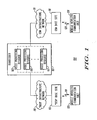
- FIG. 1 is a block diagram depiction of communication system 100 in accordance with a preferred embodiment of the present invention.
- communication system 100 comprises a known "iDEN” subsystem and a known GSM subsystem, each modified as described below to implement the present invention and otherwise integrated to provide system-wide communication services across both wireless standards.
- iDEN an "iDEN” and a GSM subsystem are shown in FIG. 1, they are merely shown as an example of systems that may be integrated. The scope of the present invention is not limited to the particular types or number of differing systems that are integrated.
- the present invention would be equally applicable to an integrated system that included an "iDEN” subsystem, a TETRA subsystem, a GSM subsystem, and a “HARMONY” subsystem.
- an "iDEN” subsystem a TETRA subsystem
- GSM GSM
- HARMONY a subsystem that receives "iDEN” signals from Motorola, Inc. of Schaumburg, Illinois.
- System 100 comprises fixed network equipment and mobile communication units.
- the fixed network equipment, or communication infrastructure includes transcoder 101 and base sites 115 and 116 that are preferably networked to other base sites, controllers, transcoders, and switches, all part of infrastructure networks 110 and 111 and all well known to those skilled in the art. For simplicity, only transcoder 101 and base sites 115 and 116 are shown in FIG. 1.
- Communication units 125 and 126 each preferably comprise wireless phones that transmit and receive communications from base sites 115 and 116, respectively, via "iDEN" wireless protocol 119 and GSM wireless protocol 120, respectively.
- Each of the communication units 125 and 126 preferably comprises a common set of elements, a transmitter, a receiver, and a processor that comprises one or more memory devices and processing devices (e.g., microprocessors, digital signal processors, etc.). Each of these elements is well known in the art, as are communication units in general.
- Transcoder 101 preferably comprises numerous voice processing resources, e.g., voice processing resources 105-107.
- Each voice processing resource comprises one or more memory devices and processing devices (e.g., microprocessors, digital signal processors, etc.)
- transcoder 101 under the control of software / firmware algorithms stored in the memory devices of transcoder 101, transcoder 101 performs those tasks required for well-known transcoder operation and, additionally, the method described relative to FIG. 3.
- Operation of preferred communication system 100 occurs substantially as follows. Assume that the user of communication unit 125 initiates a call to the user of unit 126. Because unit 125 communicates with base site 115 via "iDEN" wireless protocol 119 and unit 126 communicates with base site 116 via GSM wireless protocol 120, transcoder 101 must transcode "iDEN" vocoded voice frames into GSM vocoded voice frames for transmission to unit 126 via base site 116.
- transcoder 101 allocates voice processing resources, such as resources 105 and 106, to handle the transcoding for the call, resource 105 to transcode voice encoded per the "iDEN” wireless protocol into voice encoded per the GSM wireless protocol and resource 106 to transcode GSM voice to "iDEN" voice.
- voice processing resources such as resources 105 and 106
- Base site 115 receives wireless information for the call from unit 125 via "iDEN" wireless protocol 119. Base site 115 then generates a frame associated with the "iDEN" wireless protocol that contains at least a portion of the wireless information and sends the frame to voice processing resource 105. To better understand the frame that is generated by base site 115, FIG. 2 will be now be discussed before returning to the discussion of system 100's operation.
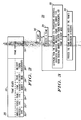
- FIG. 2 is a block diagram depiction of such a preferred transcoder frame.
- Frame 200 contains frame header 201 and frame payload 210.
- Payload 210 comprises encoded voice information from unit 125, while header 201 contains an indication of the frame's associated wireless protocol (wireless protocol type 202), the frame's source type (source type 203), the frame's type (frame type 204), the frame's sequence number (frame sequence number 205), the delivery mode for future frames (frame delivery mode 206), and the frame's delivery timing requirements (delivery timing requirements 207).
- wireless protocol type 202 wireless protocol type
- source type 203 source type
- frame's type frame's type
- frame's sequence number frame sequence number
- delivery mode for future frames frame delivery mode 206
- frame's delivery timing requirements delivery timing requirements
- an alternative frame may instead contain a system type and a call type from which the wireless protocol associated with the frame can be determined.
- System types may include "iDEN”, TETRA, GSM, CDMA, "DIMETRA”, and "HARMONY”, while call types may include interconnect and dispatch.
- a transcoder in a system that supported "iDEN” calls could determine, for example, from an alternative frame that specified "iDEN” as the system type whether "iDEN” 3:1 or New 6:1 voice encoding was the associated wireless protocol based on whether the call type indicated interconnect or dispatch, respectively.
- Source type 203 preferably indicates whether the source of the frame is an asynchronous base site, a subscriber (i.e., a mobile wireless communication unit, an asynchronous transcoder, or a synchronous transcoder.
- Frame type 204 preferably indicates the type of each packet in payload 210.
- payload 210 may also contain control packets, error correction packets, debug packets, diagnostic packets, TTY-Baudo packets, key size packets, key type packets, loading packets, timing packets, sequencing/ordering packets, or priority packets.
- frame type 204 may simply indicate the number of packets in payload 210.
- Delivery mode 206 preferably indicates information such as a frame delivery frequency, a frame delivery rate, an interval between frame deliveries, or a pattern of frame deliveries for subsequent frames.
- Frame sequence number 205 and delivery timing requirements 207 allow the reconstruction of the timing produced by the source (so that audio can be contiguously played). Additionally, sequence number 205 can be used to estimate a packet loss rate.
- delivery timing requirements 207 preferably indicates a timestamp derived from a clock that increments monotonically and linearly in time to allow for synchronization and jitter calculations. The particular clock frequency and resolution may depend on the particular protocol, source and frame types.
- Voice processing resource 105 preferably receives the frame with its embedded indications of the associated wireless protocol, the source type, the frame type, the frame sequence number, the frame delivery mode, and the delivery timing requirements. Resource 105 then processes the payload portion of the frame based on the header information. For example, voice processing resource 105 preferably configures itself to transcode the frame payload according to the wireless protocol indicated. This processing substantially amounts to selecting the appropriate software and establishing the input parameters for the software.
- Prior art transcoders do not determine what wireless protocol to transcode based on frame header information but rather are preconfigured to transcode a single wireless protocol. Likewise, for the other header information, prior art transcoders do not reconfigure their transcoding based on the header information in their received frames, but again are dedicated or pre-configured for the transcoding tasks that their systems require.
- the dynamic information required for transcoding in today's communication systems is sent within each transcoder frame.
- This allows the transcoding function to be modified on a call-by-call or even frame-by-frame basis.
- this generalization of the transcoding function allows for simplified integration, at least in the transcoding realm, of systems that use different wireless protocols.
- This generalized transcoding is illustrated in the preferred embodiment by the scenario where the first call ends and another call, this time from GSM unit 126, begins.
- Voice processing resource 105 may be reallocated to the new call and, in which case, may begin receiving transcoder frames associated with the GSM protocol.
- resource 105 which previously transcoded "iDEN" frames now transcodes GSM frames generated by base site 116 in accordance with the transcoding parameters specified in each of the frames. If system 100 had a TETRA subsystem in addition to the "iDEN" and GSM subsystems, voice processing resource 105 could later receive frames associated with the TETRA protocol. Resource 105 would then transcode the TETRA frames according to the dynamic header information in each frame. Therefore, the present invention provides "multi-protocol" transcoding using the same transcoder equipment.
- FIG. 3 is a logic flow diagram of steps executed by a transcoder in accordance with a preferred embodiment of the present invention.
- Logic flow 300 begins (302) when the transcoder receives (304) a transcoder frame. As discussed previously, the transcoder then determines (306) from the frame header the transcoding attributes that apply to this frame and processes (i.e., transcodes) (308) the payload of the frame according to the attributes determined. The transcoder preferably repeats these steps for subsequently received frames.
- the dynamic transcoding attributes are preferably received by the voice processing resources in the frame headers, the present invention is not limited to this implementation. Some or all of the attributes may be received as part of other control information, not considered frame header information.
Landscapes
- Engineering & Computer Science (AREA)
- Computer Networks & Wireless Communication (AREA)
- Signal Processing (AREA)
- Computer Security & Cryptography (AREA)
- Mobile Radio Communication Systems (AREA)
- Communication Control (AREA)
Abstract
Description
- The present invention relates generally to communications systems and, in particular, to transcoding a plurality of wireless protocols.
- Transcoders are an essential part of today's wireless digital communications systems. They are used to convert (or transcode) between pulse code modulation (PCM) and the various voice-coding (or vocoding) protocols that are used to transport voice information over-the-air. Transcoders today, such as Motorola's "iDEN" transcoder, are built and optimized for transcoding the particular air interface of a target communication system. For example, Motorola's "iDEN" transcoder is optimized for transcoding the "iDEN" air interface in an "iDEN" communication system. However, the marketplace is now demanding more complete and integrated communications solutions, such as systems that integrate multiple air interface protocols. Transcoding optimized for a particular protocol, therefore, is less desirable.
- EP-A-1 014 737 discloses a base station that includes a multiple technology vocoder having a plurality of vocoder resource modules that are individually selectable to facilitate support by the base station of corresponding communication protocols serviceable by the base station within each coverage area. A buffer and associated buffer manager are responsive to messages such that memory space is partitioned appropriately to support a specific nature of the communication protocol identified within the message. A selection manager then acts to provide a path between buffered messages and an appropriately selected vocoder resource module. In an inter-cell/protocol handoff between base stations having dissimilar vocoders, support of a subscriber unit operating using a first communication protocol is maintained at a base station not having the necessary vocoder by the re-routing and remote processing of messages from the subscriber unit to a secondary base station able to provide the requisite vocoder processing capability.
- Thus, an apparatus and method for transcoding among multiple wireless protocols is needed.
- In a first aspect, the present invention provides a method for a voice processing resource to process frames associated with a plurality of wireless protocols, as claimed in claim 1.
- In a further aspect, the present invention provides a transcoder device, as claimed in claim 8.
- In a further aspect, the present invention provides communication equipment, as claimed in claim 9.
-
- FIG. 1 is a block diagram depiction of a communication system in accordance with a preferred embodiment of the present invention.
- FIG. 2 is a block diagram depiction of a transcoder frame in accordance with a preferred embodiment of the present invention.
- FIG. 3 is a logic flow diagram of steps executed by a transcoder in accordance with a preferred embodiment of the present invention.
- To address the need for an apparatus and method for transcoding among multiple wireless protocols, the present invention provides a framework for more generalized transcoding. A voice processing resource of a transcoder receives the dynamic transcoding attributes for a frame and then transcodes that frame according to the requirements of the transcoding attributes. These dynamic attributes may contain information such as the wireless protocol involved, the frame type, the source type, the sequence number, the delivery timing requirements, and the delivery mode of subsequent frames.
- The present invention can be more fully understood with reference to FIGs. 1-3. FIG. 1 is a block diagram depiction of
communication system 100 in accordance with a preferred embodiment of the present invention. Preferably,communication system 100 comprises a known "iDEN" subsystem and a known GSM subsystem, each modified as described below to implement the present invention and otherwise integrated to provide system-wide communication services across both wireless standards. Although an "iDEN" and a GSM subsystem are shown in FIG. 1, they are merely shown as an example of systems that may be integrated. The scope of the present invention is not limited to the particular types or number of differing systems that are integrated. For example, the present invention would be equally applicable to an integrated system that included an "iDEN" subsystem, a TETRA subsystem, a GSM subsystem, and a "HARMONY" subsystem. (Note, "iDEN", TETRA, GSM, and "HARMONY" wireless communication equipment is available from Motorola, Inc. of Schaumburg, Illinois.) -
System 100 comprises fixed network equipment and mobile communication units. The fixed network equipment, or communication infrastructure, includestranscoder 101 andbase sites infrastructure networks 110 and 111 and all well known to those skilled in the art. For simplicity, onlytranscoder 101 andbase sites - Again for simplicity, only two of what could be thousands of mobile communication units are shown in FIG. 1.
Communication units base sites wireless protocol 119 and GSMwireless protocol 120, respectively. Each of thecommunication units - Transcoder 101 preferably comprises numerous voice processing resources, e.g., voice processing resources 105-107. Each voice processing resource comprises one or more memory devices and processing devices (e.g., microprocessors, digital signal processors, etc.) In the preferred embodiment, under the control of software / firmware algorithms stored in the memory devices of
transcoder 101,transcoder 101 performs those tasks required for well-known transcoder operation and, additionally, the method described relative to FIG. 3. - Operation of preferred
communication system 100, in accordance with the present invention, occurs substantially as follows. Assume that the user ofcommunication unit 125 initiates a call to the user ofunit 126. Becauseunit 125 communicates withbase site 115 via "iDEN"wireless protocol 119 andunit 126 communicates withbase site 116 via GSMwireless protocol 120,transcoder 101 must transcode "iDEN" vocoded voice frames into GSM vocoded voice frames for transmission tounit 126 viabase site 116. Preferably,transcoder 101 allocates voice processing resources, such asresources resource 105 to transcode voice encoded per the "iDEN" wireless protocol into voice encoded per the GSM wireless protocol andresource 106 to transcode GSM voice to "iDEN" voice. -
Base site 115 receives wireless information for the call fromunit 125 via "iDEN"wireless protocol 119.Base site 115 then generates a frame associated with the "iDEN" wireless protocol that contains at least a portion of the wireless information and sends the frame tovoice processing resource 105. To better understand the frame that is generated bybase site 115, FIG. 2 will be now be discussed before returning to the discussion ofsystem 100's operation. - FIG. 2 is a block diagram depiction of such a preferred transcoder frame.
Frame 200 containsframe header 201 andframe payload 210.Payload 210 comprises encoded voice information fromunit 125, whileheader 201 contains an indication of the frame's associated wireless protocol (wireless protocol type 202), the frame's source type (source type 203), the frame's type (frame type 204), the frame's sequence number (frame sequence number 205), the delivery mode for future frames (frame delivery mode 206), and the frame's delivery timing requirements (delivery timing requirements 207). - Although
preferred frame 200 containswireless protocol type 202, an alternative frame may instead contain a system type and a call type from which the wireless protocol associated with the frame can be determined. System types may include "iDEN", TETRA, GSM, CDMA, "DIMETRA", and "HARMONY", while call types may include interconnect and dispatch. A transcoder in a system that supported "iDEN" calls could determine, for example, from an alternative frame that specified "iDEN" as the system type whether "iDEN" 3:1 or New 6:1 voice encoding was the associated wireless protocol based on whether the call type indicated interconnect or dispatch, respectively. -
Source type 203 preferably indicates whether the source of the frame is an asynchronous base site, a subscriber (i.e., a mobile wireless communication unit, an asynchronous transcoder, or a synchronous transcoder.Frame type 204 preferably indicates the type of each packet inpayload 210. In addition to audio or encoded voice packets,payload 210 may also contain control packets, error correction packets, debug packets, diagnostic packets, TTY-Baudo packets, key size packets, key type packets, loading packets, timing packets, sequencing/ordering packets, or priority packets. Alternatively, instead of indicating the type of each packet inpayload 210,frame type 204 may simply indicate the number of packets inpayload 210.Delivery mode 206 preferably indicates information such as a frame delivery frequency, a frame delivery rate, an interval between frame deliveries, or a pattern of frame deliveries for subsequent frames.Frame sequence number 205 anddelivery timing requirements 207 allow the reconstruction of the timing produced by the source (so that audio can be contiguously played). Additionally,sequence number 205 can be used to estimate a packet loss rate. Lastly,delivery timing requirements 207 preferably indicates a timestamp derived from a clock that increments monotonically and linearly in time to allow for synchronization and jitter calculations. The particular clock frequency and resolution may depend on the particular protocol, source and frame types. - Having discussed in detail the frame generated by
base site 115, the discussion ofsystem 100's operation with reference to FIG. 1 will now be resumed.Voice processing resource 105 preferably receives the frame with its embedded indications of the associated wireless protocol, the source type, the frame type, the frame sequence number, the frame delivery mode, and the delivery timing requirements.Resource 105 then processes the payload portion of the frame based on the header information. For example,voice processing resource 105 preferably configures itself to transcode the frame payload according to the wireless protocol indicated. This processing substantially amounts to selecting the appropriate software and establishing the input parameters for the software. - Prior art transcoders do not determine what wireless protocol to transcode based on frame header information but rather are preconfigured to transcode a single wireless protocol. Likewise, for the other header information, prior art transcoders do not reconfigure their transcoding based on the header information in their received frames, but again are dedicated or pre-configured for the transcoding tasks that their systems require.
- Thus, in the preferred embodiment of the present invention the dynamic information required for transcoding in today's communication systems is sent within each transcoder frame. This allows the transcoding function to be modified on a call-by-call or even frame-by-frame basis. Furthermore, this generalization of the transcoding function allows for simplified integration, at least in the transcoding realm, of systems that use different wireless protocols.
- This generalized transcoding is illustrated in the preferred embodiment by the scenario where the first call ends and another call, this time from
GSM unit 126, begins.Voice processing resource 105 may be reallocated to the new call and, in which case, may begin receiving transcoder frames associated with the GSM protocol. Thus,resource 105 which previously transcoded "iDEN" frames now transcodes GSM frames generated bybase site 116 in accordance with the transcoding parameters specified in each of the frames. Ifsystem 100 had a TETRA subsystem in addition to the "iDEN" and GSM subsystems,voice processing resource 105 could later receive frames associated with the TETRA protocol.Resource 105 would then transcode the TETRA frames according to the dynamic header information in each frame. Therefore, the present invention provides "multi-protocol" transcoding using the same transcoder equipment. - FIG. 3 is a logic flow diagram of steps executed by a transcoder in accordance with a preferred embodiment of the present invention.
Logic flow 300 begins (302) when the transcoder receives (304) a transcoder frame. As discussed previously, the transcoder then determines (306) from the frame header the transcoding attributes that apply to this frame and processes (i.e., transcodes) (308) the payload of the frame according to the attributes determined. The transcoder preferably repeats these steps for subsequently received frames. - While the present invention has been particularly shown and described with reference to particular embodiments thereof, it will be understood by those skilled in the art that various changes in form and details may be made therein without departing from the scope of the present invention. For example, although the dynamic transcoding attributes are preferably received by the voice processing resources in the frame headers, the present invention is not limited to this implementation. Some or all of the attributes may be received as part of other control information, not considered frame header information.
Claims (10)
- A method for a voice processing resource to process frames associated with a plurality of wireless protocols, the method comprising the steps of:receiving, by the voice processing resource from a base site, a first frame (200) associated with a first wireless protocol;receiving, by the voice processing resource from a base site, a frame type of the first frame;receiving, by the voice processing resource from a base site, delivery timing requirements of the first frame;receiving, by the voice processing resource from a base site, a source type of the first frame; andprocessing, by the voice processing resource, the first frame based on the first wireless protocol, the frame type, the delivery timing requirements, and the source type, wherein the first frame comprises a frame header (201) and a frame payload (210), wherein the frame header of the first frame comprises a wireless protocol type of the first frame, the frame type of the first frame, the delivery timing requirements of the first frame, and the source type of the first frame.
- The method of claim 1 further comprising the steps of:receiving, by the voice processing resource from a base site, a second frame associated with a second wireless protocol, wherein the second wireless protocol is different than the first wireless protocol;receiving, by the voice processing resource from a base site, a frame type of the second frame;receiving, by the voice processing resource from a base site, delivery timing requirements of the second frame;receiving, by the voice processing resource from a base site, a source type of the second frame; andprocessing, by the voice processing resource, the second frame based on the second wireless protocol, the frame type of the second frame, the delivery timing requirements of the second frame, and the source type of the second frame.
- The method of claim 2, wherein the second frame comprises a frame header and a frame payload, wherein the frame header of the second frame comprises a wireless protocol type of the second frame, the frame type of the second frame, the delivery timing requirements of the second frame, and the source type of the second frame.
- The method of claim 1 wherein the first frame comprises a frame header and a frame payload and wherein the frame header comprises a wireless protocol type, the frame type, the delivery timing requirements, and the source type.
- The method of claim 4 further comprising the step of determining from the frame header of the first frame an indication of ordering for the first frame, wherein the step of processing the first frame comprises the step of processing the frame payload of the first frame based on the indication of ordering for the first frame.
- The method of claim 4 further comprising the step of determining from the frame header of the first frame a frame delivery mode for future frames, wherein the step of processing the first frame comprises the step of processing the frame payload of the first frame based on the frame delivery mode for future frames.
- The method of claim 6 wherein the frame delivery mode for future frames comprises information selected from the group consisting of a frame delivery frequency, a frame delivery rate, an interval between frame deliveries, and a pattern of frame deliveries.
- A transcoder device comprising:at least one voice processing resource comprising means for receiving a first frame (200) associated with a first wireless protocol, a frame type of the first frame, delivery timing requirements of the first frame, and a source type of the first frame and comprising means for processing the first frame based on the first wireless protocol, the frame type, the delivery timing requirements, and the source type, wherein the first frame comprises a frame header (201) and a frame payload (210), wherein the frame header of the first frame comprises a wireless protocol type of the first frame, the frame type of the first frame, the delivery timing requirements of the first frame, and the source type of the first frame.
- Communication equipment comprising:a first base site comprising means for receiving wireless information via a first wireless protocol, comprising means for generating a first frame (200) associated with the first wireless protocol containing at least a portion of the wireless information, and comprising means for sending to a voice processing resource the first frame, a frame type of the first frame, delivery timing requirements of the first frame, and a source type of the first frame, wherein the first frame comprises a frame header (201) and a frame payload (210), wherein the frame header of the first frame comprises a wireless protocol type of the first frame, the frame type of the first frame, the delivery timing requirements of the first frame, and the source type of the first frame.
- The communication equipment of claim 9 further comprising:a second base site comprising means for receiving wireless information via a second wireless protocol that is different than the first wireless protocol, comprising means for generating a second frame associated with the second wireless protocol containing at least a portion of the wireless information, and comprising means for sending to the voice processing resource the second frame, a frame type of the second frame, delivery timing requirements of the second frame, and a source type of the second frame.
Applications Claiming Priority (3)
| Application Number | Priority Date | Filing Date | Title |
|---|---|---|---|
| US10/053,338 US7155255B2 (en) | 2001-10-25 | 2001-10-25 | Communication equipment, transcoder device and method for processing frames associated with a plurality of wireless protocols |
| US53338 | 2001-10-25 | ||
| PCT/US2002/030139 WO2003037013A1 (en) | 2001-10-25 | 2002-09-20 | Communication equipment, transcoder device and method for processing frames associated with a plurality of wireless protocols |
Publications (2)
| Publication Number | Publication Date |
|---|---|
| EP1442620A1 EP1442620A1 (en) | 2004-08-04 |
| EP1442620B1 true EP1442620B1 (en) | 2006-11-08 |
Family
ID=21983509
Family Applications (1)
| Application Number | Title | Priority Date | Filing Date |
|---|---|---|---|
| EP02761796A Expired - Lifetime EP1442620B1 (en) | 2001-10-25 | 2002-09-20 | Communication equipment, transcoder device and method for processing frames associated with a plurality of wireless protocols |
Country Status (6)
| Country | Link |
|---|---|
| US (1) | US7155255B2 (en) |
| EP (1) | EP1442620B1 (en) |
| CN (1) | CN1575612A (en) |
| BR (1) | BR0213020A (en) |
| DE (1) | DE60215967T2 (en) |
| WO (1) | WO2003037013A1 (en) |
Families Citing this family (36)
| Publication number | Priority date | Publication date | Assignee | Title |
|---|---|---|---|---|
| US8670390B2 (en) | 2000-11-22 | 2014-03-11 | Genghiscomm Holdings, LLC | Cooperative beam-forming in wireless networks |
| US20080095121A1 (en) * | 2002-05-14 | 2008-04-24 | Shattil Steve J | Carrier interferometry networks |
| US10355720B2 (en) | 2001-04-26 | 2019-07-16 | Genghiscomm Holdings, LLC | Distributed software-defined radio |
| US9819449B2 (en) | 2002-05-14 | 2017-11-14 | Genghiscomm Holdings, LLC | Cooperative subspace demultiplexing in content delivery networks |
| US9893774B2 (en) | 2001-04-26 | 2018-02-13 | Genghiscomm Holdings, LLC | Cloud radio access network |
| US10931338B2 (en) | 2001-04-26 | 2021-02-23 | Genghiscomm Holdings, LLC | Coordinated multipoint systems |
| US10425135B2 (en) | 2001-04-26 | 2019-09-24 | Genghiscomm Holdings, LLC | Coordinated multipoint systems |
| US20030099258A1 (en) * | 2001-11-21 | 2003-05-29 | George Calcev | Method for controlling pilot power of a cell within a CDMA system |
| US20030212937A1 (en) * | 2002-05-07 | 2003-11-13 | Marc Todd | System and method for exposing state based logic signals within an electronics system over an existing network conduit |
| US8942082B2 (en) | 2002-05-14 | 2015-01-27 | Genghiscomm Holdings, LLC | Cooperative subspace multiplexing in content delivery networks |
| US9628231B2 (en) | 2002-05-14 | 2017-04-18 | Genghiscomm Holdings, LLC | Spreading and precoding in OFDM |
| US9136931B2 (en) | 2002-05-14 | 2015-09-15 | Genghiscomm Holdings, LLC | Cooperative wireless networks |
| US10644916B1 (en) | 2002-05-14 | 2020-05-05 | Genghiscomm Holdings, LLC | Spreading and precoding in OFDM |
| US10200227B2 (en) | 2002-05-14 | 2019-02-05 | Genghiscomm Holdings, LLC | Pre-coding in multi-user MIMO |
| US9270421B2 (en) | 2002-05-14 | 2016-02-23 | Genghiscomm Holdings, LLC | Cooperative subspace demultiplexing in communication networks |
| US10142082B1 (en) | 2002-05-14 | 2018-11-27 | Genghiscomm Holdings, LLC | Pre-coding in OFDM |
| US9225471B2 (en) | 2002-05-14 | 2015-12-29 | Genghiscomm Holdings, LLC | Cooperative subspace multiplexing in communication networks |
| US7382749B2 (en) * | 2002-11-26 | 2008-06-03 | Sony Corporation | Systems, methods, and apparatus with a common wireless communications protocol |
| US11381285B1 (en) | 2004-08-02 | 2022-07-05 | Genghiscomm Holdings, LLC | Transmit pre-coding |
| US11552737B1 (en) | 2004-08-02 | 2023-01-10 | Genghiscomm Holdings, LLC | Cooperative MIMO |
| US11184037B1 (en) | 2004-08-02 | 2021-11-23 | Genghiscomm Holdings, LLC | Demodulating and decoding carrier interferometry signals |
| CN100369444C (en) * | 2004-09-30 | 2008-02-13 | 北京信威通信技术股份有限公司 | Non-continuous full rate voice transmitting method in SCDMA system |
| WO2006069025A2 (en) * | 2004-12-20 | 2006-06-29 | Nextel Communications, Inc. | Systems and method for a dispatch communication router |
| JP4793539B2 (en) * | 2005-03-29 | 2011-10-12 | 日本電気株式会社 | Code conversion method and apparatus, program, and storage medium therefor |
| US7437163B2 (en) * | 2005-06-21 | 2008-10-14 | Nextel Communications Inc. | Method and computer-readable medium for controlling operations of a dual-dialer state machine |
| US20070076696A1 (en) * | 2005-09-30 | 2007-04-05 | Yafan An | Use of SIP messages for location services |
| CN102790926B (en) * | 2011-05-19 | 2016-04-13 | 福建联拓科技有限公司 | A voice transmission method and system |
| US10136275B2 (en) * | 2013-06-14 | 2018-11-20 | Microsoft Technology Licensing, Llc | Framework and applications for proximity-based social interaction |
| US12224860B1 (en) | 2014-01-30 | 2025-02-11 | Genghiscomm Holdings, LLC | Linear coding in decentralized networks |
| US10243773B1 (en) | 2017-06-30 | 2019-03-26 | Genghiscomm Holdings, LLC | Efficient peak-to-average-power reduction for OFDM and MIMO-OFDM |
| US10637705B1 (en) | 2017-05-25 | 2020-04-28 | Genghiscomm Holdings, LLC | Peak-to-average-power reduction for OFDM multiple access |
| US11917604B2 (en) | 2019-01-25 | 2024-02-27 | Tybalt, Llc | Orthogonal multiple access and non-orthogonal multiple access |
| US12206535B1 (en) | 2018-06-17 | 2025-01-21 | Tybalt, Llc | Artificial neural networks in wireless communication systems |
| US11343823B2 (en) | 2020-08-16 | 2022-05-24 | Tybalt, Llc | Orthogonal multiple access and non-orthogonal multiple access |
| CN113454964A (en) | 2019-01-25 | 2021-09-28 | 珍吉斯科姆控股有限责任公司 | Orthogonal and non-orthogonal multiple access |
| WO2020242898A1 (en) | 2019-05-26 | 2020-12-03 | Genghiscomm Holdings, LLC | Non-orthogonal multiple access |
Family Cites Families (3)
| Publication number | Priority date | Publication date | Assignee | Title |
|---|---|---|---|---|
| US6014375A (en) | 1997-02-13 | 2000-01-11 | Ericsson Inc. | TDMA radio protocol with adaptive vocoder selection |
| US6363339B1 (en) | 1997-10-10 | 2002-03-26 | Nortel Networks Limited | Dynamic vocoder selection for storing and forwarding voice signals |
| US6542486B1 (en) | 1998-12-22 | 2003-04-01 | Nortel Networks Limited | Multiple technology vocoder and an associated telecommunications network |
-
2001
- 2001-10-25 US US10/053,338 patent/US7155255B2/en not_active Expired - Lifetime
-
2002
- 2002-09-20 CN CNA028211790A patent/CN1575612A/en active Pending
- 2002-09-20 WO PCT/US2002/030139 patent/WO2003037013A1/en not_active Ceased
- 2002-09-20 BR BR0213020-3A patent/BR0213020A/en not_active IP Right Cessation
- 2002-09-20 DE DE60215967T patent/DE60215967T2/en not_active Expired - Lifetime
- 2002-09-20 EP EP02761796A patent/EP1442620B1/en not_active Expired - Lifetime
Also Published As
| Publication number | Publication date |
|---|---|
| CN1575612A (en) | 2005-02-02 |
| BR0213020A (en) | 2005-08-30 |
| US20030083102A1 (en) | 2003-05-01 |
| DE60215967D1 (en) | 2006-12-21 |
| US7155255B2 (en) | 2006-12-26 |
| EP1442620A1 (en) | 2004-08-04 |
| DE60215967T2 (en) | 2007-05-03 |
| WO2003037013A1 (en) | 2003-05-01 |
Similar Documents
| Publication | Publication Date | Title |
|---|---|---|
| US7155255B2 (en) | Communication equipment, transcoder device and method for processing frames associated with a plurality of wireless protocols | |
| JP4847664B2 (en) | Frame structure for variable-speed wireless channels transmitting high-speed data | |
| AU719645B2 (en) | Method and transcoder for performing a distributed handover in the uplink direction | |
| KR100711627B1 (en) | Wireless communications using circuit-oriented and packet-oriented frame selection/distribution functions | |
| RU2197782C2 (en) | System and method for user's data transmission inside mobile telecommunication network | |
| WO2005006597A1 (en) | Apparatus and method for assigning resource in a mobile communication system | |
| EP0873641A4 (en) | COMMUNICATION SYSTEM AND ITS OPERATING METHOD | |
| WO1997013353A9 (en) | Communication system and method | |
| EP0852888B1 (en) | Method and system for processing telephone calls involving two digital wireless subscriber units that avoids double vocoding | |
| US20050288012A1 (en) | Timing compensation method and means for a terrestrial wireless communication system having satelite backhaul link | |
| US6512918B1 (en) | Methods and arrangements for transcoder selection and transcoding data within packet-switched communication networks supporting radio interfaces | |
| KR100469706B1 (en) | Packet service apparatus and method in mobile communication system | |
| JP4343224B2 (en) | Mobile packet communication system | |
| AU715374B2 (en) | Remote vocoding over a long distance link | |
| KR20010020226A (en) | Method and apparatus for providing synchronization during transcoder switching in a communication system | |
| US7171214B2 (en) | System and method for dynamic scheduling of channels in a code division multiple access system | |
| US6842771B2 (en) | Adapter for rendering data transmission request and responses compatible between the requesting client and its target server in a wireless communication environment | |
| JP3214498B2 (en) | Data packet multi-access communication method and system and transmission / reception apparatus therefor | |
| US7050411B2 (en) | Dynamic DCCH/FCH switching | |
| EP1014737A2 (en) | Multiple technology vocoder and an associated telecommunications network | |
| US8024634B2 (en) | System and method for implementing a subrate recovery for lost packets in a communications environment | |
| CN101990241A (en) | Packet data transmission system and method | |
| EP1513294B1 (en) | A method of obtaining user data to be transmitted to a network side, and a radio control base station | |
| KR100678188B1 (en) | Method and device for congestion control of reverse link in mobile communication system | |
| US20020103004A1 (en) | Method and apparatus for providing fast mobile-to-mobile data connectivity |
Legal Events
| Date | Code | Title | Description |
|---|---|---|---|
| PUAI | Public reference made under article 153(3) epc to a published international application that has entered the european phase |
Free format text: ORIGINAL CODE: 0009012 |
|
| 17P | Request for examination filed |
Effective date: 20040525 |
|
| AK | Designated contracting states |
Kind code of ref document: A1 Designated state(s): AT BE BG CH CY CZ DE DK EE ES FI FR GB GR IE IT LI LU MC NL PT SE SK TR |
|
| AX | Request for extension of the european patent |
Extension state: AL LT LV MK RO SI |
|
| 17Q | First examination report despatched |
Effective date: 20050216 |
|
| GRAP | Despatch of communication of intention to grant a patent |
Free format text: ORIGINAL CODE: EPIDOSNIGR1 |
|
| GRAS | Grant fee paid |
Free format text: ORIGINAL CODE: EPIDOSNIGR3 |
|
| GRAA | (expected) grant |
Free format text: ORIGINAL CODE: 0009210 |
|
| AK | Designated contracting states |
Kind code of ref document: B1 Designated state(s): DE FR GB |
|
| REG | Reference to a national code |
Ref country code: GB Ref legal event code: FG4D |
|
| REF | Corresponds to: |
Ref document number: 60215967 Country of ref document: DE Date of ref document: 20061221 Kind code of ref document: P |
|
| ET | Fr: translation filed | ||
| PLBE | No opposition filed within time limit |
Free format text: ORIGINAL CODE: 0009261 |
|
| STAA | Information on the status of an ep patent application or granted ep patent |
Free format text: STATUS: NO OPPOSITION FILED WITHIN TIME LIMIT |
|
| 26N | No opposition filed |
Effective date: 20070809 |
|
| PGFP | Annual fee paid to national office [announced via postgrant information from national office to epo] |
Ref country code: GB Payment date: 20090807 Year of fee payment: 8 |
|
| PGFP | Annual fee paid to national office [announced via postgrant information from national office to epo] |
Ref country code: DE Payment date: 20090930 Year of fee payment: 8 |
|
| GBPC | Gb: european patent ceased through non-payment of renewal fee |
Effective date: 20100920 |
|
| REG | Reference to a national code |
Ref country code: FR Ref legal event code: ST Effective date: 20110531 |
|
| REG | Reference to a national code |
Ref country code: DE Ref legal event code: R119 Ref document number: 60215967 Country of ref document: DE Effective date: 20110401 |
|
| PG25 | Lapsed in a contracting state [announced via postgrant information from national office to epo] |
Ref country code: FR Free format text: LAPSE BECAUSE OF NON-PAYMENT OF DUE FEES Effective date: 20100930 Ref country code: DE Free format text: LAPSE BECAUSE OF NON-PAYMENT OF DUE FEES Effective date: 20110401 |
|
| PG25 | Lapsed in a contracting state [announced via postgrant information from national office to epo] |
Ref country code: GB Free format text: LAPSE BECAUSE OF NON-PAYMENT OF DUE FEES Effective date: 20100920 |
|
| PGFP | Annual fee paid to national office [announced via postgrant information from national office to epo] |
Ref country code: FR Payment date: 20090916 Year of fee payment: 8 |