EP1439854B1 - Conformationally constrained parathyroid hormone (pth) analogs - Google Patents
Conformationally constrained parathyroid hormone (pth) analogs Download PDFInfo
- Publication number
- EP1439854B1 EP1439854B1 EP02778189.7A EP02778189A EP1439854B1 EP 1439854 B1 EP1439854 B1 EP 1439854B1 EP 02778189 A EP02778189 A EP 02778189A EP 1439854 B1 EP1439854 B1 EP 1439854B1
- Authority
- EP
- European Patent Office
- Prior art keywords
- peptide
- pth
- aib
- seq
- ala
- Prior art date
- Legal status (The legal status is an assumption and is not a legal conclusion. Google has not performed a legal analysis and makes no representation as to the accuracy of the status listed.)
- Expired - Lifetime
Links
Images


Classifications
-
- C—CHEMISTRY; METALLURGY
- C07—ORGANIC CHEMISTRY
- C07K—PEPTIDES
- C07K14/00—Peptides having more than 20 amino acids; Gastrins; Somatostatins; Melanotropins; Derivatives thereof
- C07K14/435—Peptides having more than 20 amino acids; Gastrins; Somatostatins; Melanotropins; Derivatives thereof from animals; from humans
- C07K14/575—Hormones
- C07K14/635—Parathyroid hormone, i.e. parathormone; Parathyroid hormone-related peptides
-
- A—HUMAN NECESSITIES
- A61—MEDICAL OR VETERINARY SCIENCE; HYGIENE
- A61P—SPECIFIC THERAPEUTIC ACTIVITY OF CHEMICAL COMPOUNDS OR MEDICINAL PREPARATIONS
- A61P19/00—Drugs for skeletal disorders
- A61P19/08—Drugs for skeletal disorders for bone diseases, e.g. rachitism, Paget's disease
-
- A—HUMAN NECESSITIES
- A61—MEDICAL OR VETERINARY SCIENCE; HYGIENE
- A61P—SPECIFIC THERAPEUTIC ACTIVITY OF CHEMICAL COMPOUNDS OR MEDICINAL PREPARATIONS
- A61P19/00—Drugs for skeletal disorders
- A61P19/08—Drugs for skeletal disorders for bone diseases, e.g. rachitism, Paget's disease
- A61P19/10—Drugs for skeletal disorders for bone diseases, e.g. rachitism, Paget's disease for osteoporosis
-
- A—HUMAN NECESSITIES
- A61—MEDICAL OR VETERINARY SCIENCE; HYGIENE
- A61P—SPECIFIC THERAPEUTIC ACTIVITY OF CHEMICAL COMPOUNDS OR MEDICINAL PREPARATIONS
- A61P5/00—Drugs for disorders of the endocrine system
- A61P5/18—Drugs for disorders of the endocrine system of the parathyroid hormones
-
- A—HUMAN NECESSITIES
- A61—MEDICAL OR VETERINARY SCIENCE; HYGIENE
- A61P—SPECIFIC THERAPEUTIC ACTIVITY OF CHEMICAL COMPOUNDS OR MEDICINAL PREPARATIONS
- A61P5/00—Drugs for disorders of the endocrine system
- A61P5/18—Drugs for disorders of the endocrine system of the parathyroid hormones
- A61P5/20—Drugs for disorders of the endocrine system of the parathyroid hormones for decreasing, blocking or antagonising the activity of PTH
-
- A—HUMAN NECESSITIES
- A61—MEDICAL OR VETERINARY SCIENCE; HYGIENE
- A61K—PREPARATIONS FOR MEDICAL, DENTAL OR TOILETRY PURPOSES
- A61K38/00—Medicinal preparations containing peptides
Definitions
- the present invention relates to conformationally constrained parathyroid hormone (PTH) analogs, and methods of preparing and using the PTH analogs.
- PTH parathyroid hormone
- Parathyroid hormone an 84 amino acid peptide, is the principal regulator of ionized blood calcium in the human body ( Kronenberg, H.M., et al., In Handbook of Experimental Pharmacology, Mundy, G.R., and Martin, T.J., (eds), pp. 185-201, Springer-Verlag, Heidelberg (1993 )). Regulation of calcium concentration is necessary for the normal function of the gastrointestinal, skeletal, neurologic, neuromuscular, and cardiovascular systems. PTH synthesis and release are controlled principally by the serum calcium level; a low level stimulates and a high level suppresses both hormone synthesis and release.
- PTH maintains the serum calcium level by directly or indirectly promoting calcium entry into the blood at three sites of calcium exchange: gut, bone, and kidney.
- PTH contributes to net gastrointestinal absorption of calcium by favoring the renal synthesis of the active form of vitamin D.
- PTH promotes calcium resorption from bone indirectly by stimulating differentiation of the bone-resorbing cells, osteoclasts. It also mediates at least three main effects on the kidney: stimulation of tubular calcium reabsorption, enhancement of phosphate clearance, and promotion of an increase in the enzyme that completes synthesis of the active form of vitamin D.
- PTH is thought to exert these effects primarily through receptor-mediated activation of adenylate cyclase and/or phospholipase C.
- Disruption of calcium homeostasis may produce many clinical disorders (e . g ., severe bone disease, anemia, renal impairment, ulcers, myopathy, and neuropathy) and usually results from conditions that produce an alteration in the level of parathyroid hormone.
- Hypercalcemia is a condition that is characterized by an elevation in the serum calcium level. It is often associated with primary hyperparathyroidism in which an excess of PTH production occurs as a result of a parathyroid gland lesion ( e . g ., adenoma, hyperplasia, or carcinoma).
- Another type of hypercalcemia humoral hypercalcemia of malignancy (HHM) is the most common paraneoplastic syndrome. It appears to result in most instances from the production by tumors ( e .
- PTHrP PTH-related proteins
- Osteoporosis is a potentially crippling skeletal disease observed in a substantial portion of the senior adult population, in pregnant women and even in juveniles.
- the term osteoporosis refers to a heterogeneous group of disorders. Clinically, osteoporosis is separated into type I and type II. Type I osteoporosis occurs predominantly in middle aged women and is associated with estrogen loss at menopause, while osteoporosis type II is associated with advancing age. Patients with osteoporosis would benefit from new therapies designed to promote fracture repair, or from therapies designed to prevent or lessen the fractures associated with the disease.
- the disease is marked by diminished bone mass, decreased bone mineral density (BMD), decreased bone strength and an increased risk of bone fracture.
- BMD bone mineral density
- osteoporosis there is no effective cure for osteoporosis, though estrogen, calcitonin and the bisphosphonates, etidronate and alendronate are used to treat the disease with varying levels of success. These agents act to decrease bone resorption.
- parathyroid hormone regulates blood calcium and the phosphate levels, and has potent anabolic (bone-forming) effects on the skeleton, in animals ( Shen, V., et al., Calcif. Tissue Int. 50:214-220 (1992 ); Whitefild, J.F., et al., Calcif. Tissue Int.
- PTH derivatives include polypeptides that have amino acid substitutions or are truncated relative to the full length molecule. Both a 14 and a 34 amino acid amino-terminal truncated form of PTH, as well as a C-terminal truncated form have been studied. Additionally, amino acid substitutions within the truncated polypeptides have also been investigated.
- Synthetic PTH(1-34) exhibits full bioactivity in most cell-based assay systems, has potent anabolic effects on bone mass in animals and has recently been shown to reduce the risk of bone fracture in postmenopausal osteoporotic women ( Neer, R.M., et al., N.E.J.M. 344:1434-1441 (2001 ); Dempster, D.W., et al., Endocr Rev 14:690-709 (1993 )).
- PTH acts on the PTH/PTHrP receptor (P1R), a class II G protein-coupled heptahelical receptor that couples to the adenylyl cyclase/CAMP and phospolipase C/inositol phosphate (IP) signaling pathway ( Rippner, H., et al., Science 254:1024-1026 (1991 )).
- P1R PTH/PTHrP receptor
- IP phospolipase C/inositol phosphate
- EP-A-0477 855 discloses the peptide [Aib 1 ]hPTH(1-34).
- the present invention provides, in a first aspect, a biologically active peptide, wherein said peptide is selected from:
- the invention provides novel PTH polypeptide derivatives containing amino acid substitutions at selected positions in the polypeptides.
- the derivatives function as full, or nearly full, agonists of the PTH-1 receptor. Because of their unique properties, these polypeptides have a utility as drugs for treating human diseases of the skeleton, such as osteoporosis.
- the invention provides derivatives of PTH(1-21), PTH(1-20), PTH(1-19), PTH(1-18), PTH(1-17), PTH(1-16), PTH(1-15), PTH(1-14), PTH(1-13), PTH(1-12), PTH(1-11) and PTH(1-10) polypeptides, wherein at least one residue in each polypeptide is a helix, preferably an ⁇ -helix, stabilizing residue, which is Aib.
- the invention also provides methods of making such peptides.
- the invention encompasses compositions for use in limiting undesired bone loss in a vertebrate at risk of such bone loss, in treating conditions that are characterized by undesired bone loss or by the need,for bone growth, e.g. in treating fractures or cartilage disorders and for raising cAMP levels in cells where deemed necessary.
- the biologically active peptide may consist essentially of X 01 ValX 02 GluIleGlnLeuMetHisX 03 X 04 X 05 X 06 X 07 (SEQ ID NO: 1).
- the invention is further drawn to fragments of the peptide of SEQ ID NO: 1, in particular X 01 , ValX 02 GluIleGlnLeuMetHisX 03 X 04 X 05 X 06 SEQ ID NO: 12), X 01 , ValX 02 GluIleGlnLeuMetHisX 03 X 04 X 05 (SEQ ID NO: 13), X 01 , ValX 02 GluIleGlnLeuMetHisX 03 X 04 (SEQ ID NO: 14) and AibValAibGluIleGlnLeuMetHisGlnHar (SEQ ID NO. 16).
- the invention further encompasses pharmaceutically acceptable salts of the above-described peptides, and Nor C-derivatives of the peptides.
- a preferable embodiment of the invention is drawn to any of the above recited polypeptides, wherein the polypeptide is amidated, optionally containing a C-terminal amide.
- the invention is drawn to a biologically active polypeptide comprising AibValAibGluIleGlnLeuNleHisGlnHarAlaLysTrpLeuAlaSerValArgArgTyr (SEQ ID NO. 8); fragments thereof, containing amino acids 1-20, 1-19, 1-18,1-17, 1-16 or 1-15; pharmaceutically acceptable salts thereof; or N-or C-derivatives thereof.
- the invention also provides a biologically active peptide selected from:
- the invention relates to a biologically active peptide, wherein said peptide consists of:
- the invention also relates to N- or C- derivatives of SEQ ID NO: 19 or the above described fragments.
- the invention also relates specifically to the following peptides:
- any of the above peptides may be labeled, for example with a fluorescent label, a chemiluminescent label; a bioluminescent label; a radioactive label; 125 I; or 99m Tc.
- the invention is directed to a pharmaceutical composition
- a pharmaceutical composition comprising a biologically active peptide of the invention and a pharmaceutically acceptable carrier.
- the invention is directed to the use of a biologically active peptide of the invention in the manufacture of a medicament for treating a mammalian condition characterized by decreases in bone mass.
- the invention is directed to a biologically active peptide of the invention for use in a method for treating a mammalian condition characterized by decreases in bone mass.
- the biologically active peptide may be formulated with a pharmaceutically acceptable carrier.
- the condition to be treated may be osteoporosis, such as old age osteoporosis, or post-menopausal osteoporosis.
- the effective amount of the peptide of the invention for increasing bone mass is from about 0.01 ⁇ g/kg/day to about 1.0 ⁇ g/kg/day.
- the method of administration may be parenteral, subcutaneous or nasal insufflation.
- the invention is directed to the use of a biologically active peptide of the invention in the manufacture of a medicament for determining rates of bone reformation, bone resorption and/or bone remodeling.
- the invention is directed to a biologically active peptide of the invention for use in determining rates of bone reformation, bone resorption, and/or bone remodeling.
- the invention is directed to a method of making a peptide of the invention, said method comprising synthesizing said peptide by solid phase synthesis.
- the peptide may be protected by FMOC.
- a peptide having the sequence X 01 ValX 02 GluIleGlnLeuMetHisX 03 (SEQ ID NO: 15), other constrained amino acids that may be substituted for Aib are ACPC (1- aminocyclopropylcarboxylic acid), DEG (diethylglycine) and 1- aminocyclopentanecarboxylic acid, a method of increasing cAMP in a mammalian cell having PTH-1 receptors, the method comprising contacting the cell with a sufficient amount of the polypeptide of the invention to increase cAMP, derivatives of rat PTH (1-34) (rPTH (I-34)) given by AlaValSerGluIleGlnLeuMetHisAsnLeuGlyLysHisLeu AlaSerValGluArgMetGlnTrpLeuArg LysLysLeuGlnAspValHisAsnPhe (SEQ ID NO: 30), and of human PTH (1-34) (hP
- the invention is directed to a pharmaceutical composition
- a pharmaceutical composition comprising the biologically active peptide SEQ ID NO: 19, SEQ ID NO: 29 or any of the above peptides, and a pharmaceutically acceptable carrier.
- the invention is directed to a method for treating mammalian conditions characterized by decreases in bone mass, the method comprising administering to a subject in need thereof an effective bone mass-increasing amount of a biologically active peptide of SEQ ID NO: 19, SEQ ID NO: 29 or any of the above peptides.
- the invention is directed to a method for treating mammalian conditions characterized by decreases in bone mass, the method comprising administering to a subject in need thereof an effective bone mass-increasing amount of a composition comprising a biologically active peptide of SEQ ID NO: 19, SEQ ID NO: 29 or any of the above peptides and a pharmaceutically acceptable carrier.
- the condition to be treated is osteoporosis, old age osteoporosis, or post-menopausal osteoporosis.
- the effective amount of SEQ ID NO: 19, SEQ ID NO: 29 or any of the above peptides for increasing bone mass is from about 0.01 ⁇ g/kg/day to about 1.0 ⁇ g/kg/day.
- the method of administration is parenteral, subcutaneous or nasal insufflation.
- the invention is directed to a method for determining rates of bone reformation, bone resorption and/or bone remodeling comprising administering to a patient an effective amount of SEQ ID NO: 19, SEQ ID NO: 29 or any of the above peptides and determining the uptake of the peptide into the bone of the patient.
- the invention is directed to a method of making SEQ ID NO: 19, SEQ ID NO: 29 or any of the above peptides, wherein the peptide is synthesized by solid phase synthesis.
- Amino Acid Sequences The amino acid sequences in this application use either the single letter or three letter designations for the amino acids. These designations are well known to one of skill in the art and can be found in numerous readily available references, such as for example in Cooper, G.M., The Cell 1997, ASM Press, Washington, D.C . or Ausubel et al., Current Protocols in Molecular Biology, 1994 . Where substitutions in a sequence are referred to, for example, as Ser-3 -->Ala or [Ala 3 ]peptide, this means that the serine in the third position from the N-terminal end of the polypeptide is replaced with another amino acid, Alanine in this instance.
- [M]PTH(1-14) is defined as [Ala 3,12 ,Gln 10 ,Har 11 ,Trp 14 ]PTH(1-14)amide.
- [M]PTH(1-21) is defined as [Ala 3,12 ,Nle 8 ,Gln 10 ,Har 11 ,Trp 14 ,Arg 19 ,Tyr 21 ]PTH(1-21)amide.
- [M]PTH(1-11) is defined as [Ala 3 ,Gln 10 ,Har 11 ]PTH(1-11)amide.
- Alb refers to ⁇ -aminoisobutyric acid
- Hard refers to homoarginine
- Nle refers to norleucine
- other amino acids are in either the conventional one- or three-letter codes.
- Biological Activity of the Protein refers to any biological activity of the polypeptide. Examples of these activities include, but are not limited to metabolic or physiologic function of compounds of SEQ ID NO: 1 or SEQ ID NO: 8 or derivatives thereof, including similar activities or improved activities, or those activities with decreased undesirable side-effects. Also included are antigenic and immunogenic activities of the above-described compounds.
- Derivative or Functional Derivative is intended to include “variants,” the “derivatives,” or “chemical derivatives” of the PTH molecule.
- a “variant” of a molecule such as for example, a compound of SEQ ID NO: 1 or derivative thereof is meant to refer to a molecule substantially similar to either the entire molecule, or a fragment thereof.
- An “analog” of a molecule such as for example, a compound of SEQ ID NO: 1 or derivative thereof is meant to refer to a non-natural molecule substantially similar to either the SEQ ID NO: 1 molecules or fragments thereof.
- PTH derivatives contain changes in the polypeptide relative to the native PTH polypeptide of the same size.
- the sequence of the native PTH(1-14) polypeptide is the first fourteen amino acids of SEQ. ID NO: 17 (human PTH (1-21)) or SEQ. ID NO: 18 (rat PTH (1-21)).
- a molecule is said to be "substantially similar” to another molecule if the sequence of amino acids in both molecules is substantially the same, and if both molecules possess a similar biological activity.
- two molecules that possess a similar activity may be considered variants, derivatives, or analogs as that term is used herein even if one of the molecules contains additional amino acid residues not found in the other, or if the sequence of amino acid residues is not identical.
- PTH derivatives need not have substantially similar biological activity to the native molecule.
- PTH derivatives have substantially different activity than the native PTH.
- a derivative may be either an antagonist or an agonist of the PTH receptor.
- a molecule is said to be a "chemical derivative" of another molecule when it contains additional chemical moieties not normally a part of the molecule. Such moieties may improve the molecule's solubility, absorption, biological half-life, etc. The moieties may alternatively decrease the toxicity of the molecule, eliminate or attenuate any undesirable side effect of the molecule, etc. Examples of moieties capable of mediating such effects are disclosed in Remington's Pharmaceutical Sciences (1980 ) and will be apparent to those of ordinary skill in the art.
- Fragment A "fragment" of a molecule such as for example, SEQ ID NO: 1 or derivative thereof is meant to refer to any polypeptide subset of these molecules.
- Fusion protein By the term “fusion protein” is intended a fused protein comprising compounds such as for example, SEQ ID NO: 1 or derivatives thereof, either with or without a "selective cleavage site” linked at its N-terminus, which is in turn linked to an additional amino acid leader polypeptide sequence.
- Polypeptide Polypeptide and peptide are used interchangeably.
- the term polypeptide refers to any peptide or protein comprising two or more amino acids joined to each other by peptide bonds or modified peptide bonds, i.e., peptide isosteres.
- Polypeptide refers to both short chains, commonly referred to as peptides, oligopeptides or oligomers, and to longer chains, generally referred to as proteins.
- Polypeptides may contain amino acids other than the 20 gene-encoded amino acids and include amino acid sequences modified either by natural processes, such as post-translational processing, or by chemical modification techniques which are well known in the art. Such modifications are well described in basic texts and in more detailed monographs, as well as in the research literature.
- Modifications can occur anywhere in a polypeptide, including the peptide backbone, the amino acid side-chains and the amino or carboxyl termini. It will be appreciated that the same type of modification may be present in the same or varying degrees at several sites in a given polypeptide. Also, a given polypeptide may contain many types of modifications.
- Polypeptides may be branched and they may be cyclic, with or without branching. Cyclic, branched and branched cyclic polypeptides may result from post-translational modifications or may be made by synthetic methods. Modifications include acetylation, acylation, ADP-ribosylation, amidation, covalent attachment of flavin, covalent attachment of a heme moiety, covalent attachment of a nucleotide or nucleotide derivative, covalent attachment of a lipid or lipid derivative, covalent attachment of phosphotidylinositol, cross-linking, cyclization, disulfide bond formation, demethylation, formation of covalent crosslinks, formation of cystine, formation of pyroglutamate, formylation, gamma-carboxylation, glycosylation, GPI anchor formation, hydroxylation, iodination, methylation, myristoylation, oxidation, proteolytic processing, phosphorylation, preny
- ⁇ -aminoisobutyric acid (Aib) was introduced into short N-terminal PTH peptide analogs.
- variants of the present invention contain substitutions in the first 14 amino acids of the polypeptide.
- Certain polypeptides of the invention correspond to the 1-21, 1-20, 1-19, 1-18, 1-17, 1-16, 1-15, 1-14, 1-13, 1-12, 1-11, and 1-10 amino acid sequence of the mature PTH polypeptide.
- the shorter variants ( ⁇ PTH1-14) have a molecular weight of less than 2,000 daltons.
- Compounds of the invention or derivatives thereof have multiple uses. These include, inter alia, agonists or antagonists of the PTH receptor, prevention and treatment of a variety of mammalian conditions manifested by loss of bone mass, diagnostic probes, antigens to prepare antibodies for use as diagnostic probes and even as molecular weight markers. Being able to specifically substitute one or more amino acids in the PTH polypeptide permits construction of specific molecular weight polypeptides.
- the compounds of this invention are indicated for the prophylaxis and therapeutic treatment of osteoporosis and osteopenia in humans. Furthermore, the compounds of this invention are indicated for the prophylaxis and therapeutic treatment of other bone diseases. The compounds of this invention are also indicated for the prophylaxis and therapeutic treatment of hypoparathyroidism. Finally, the compounds of this invention are indicated for use as agonists for fracture repair and as antagonists for hypercalcemia.
- compounds of the present invention, or salts thereof are administered in amounts between about 0.01 and 1 ⁇ g/kg body weight per day, preferably from about 0.07 to about 0.2 ⁇ g/kg body weight per day.
- the daily dose of biologically active compound is from about 0.5 to about 50 ⁇ gs, preferably from about 3.5 to about 10 ⁇ gs.
- This dosage may be delivered in a conventional pharmaceutical composition by a single administration, by multiple applications, or via controlled release, as needed to achieve the most effective results, preferably one or more times daily by injection.
- this dosage may be delivered in a conventional pharmaceutical composition by nasal insufflation.
- the selection of the exact dose and composition and the most appropriate delivery regimen will be influenced by, inter alia, the pharmacological properties of the selected compounds of the invention, the nature and severity of the condition being treated, and the physical condition and mental acuity of the recipient.
- Representative preferred delivery regimens include, without limitation, oral, parenteral, subcutaneous, transcutaneous, intramuscular and intravenous, rectal, buccal (including sublingual), transdermal, and intranasal insufflation.
- salts retain the desired biological activity of the compounds of the invention without toxic side effects.
- examples of such salts are (a) acid addition salts formed with inorganic acids, for example hydrochloric acid, hydrobromic acid, sulfuric acid, phosphoric acid, nitric acid and the like; and salts formed with organic acids such as, for example, acetic acid, oxalic acid, tartaric acid, succinic acid, maleic acid, fumaric acid, gluconic acid, citric acid, malic acid, ascorbic acid, benzoic acid, tannic acid, pamoic acid, alginic acid, polyglutamic acid, naphthalenesulfonic acids, naphthalene disulfonic acids, polygalacturonic acid and the like; (b) base addition salts formed with polyvalent metal cations such as zinc, calcium, bismuth, barium, magnesium, aluminum, copper, cobalt, nickel, cadmium, and the like; or with an organic cation formed from
- compositions comprising as an active ingredient compounds of the invention or derivatives thereof of the present invention, or pharmaceutically acceptable salt thereof, in admixture with a pharmaceutically acceptable, non-toxic carrier.
- compositions may be prepared for parenteral (subcutaneous, transcutaneous, intramuscular or intravenous) administration, particularly in the form of liquid solutions or suspensions; for oral or buccal administration, particularly in the form of tablets or capsules; for rectal, transdermal administration; and for intranasal administration, particularly in the form of powders, nasal drops or aerosols.
- compositions may conveniently be administered in unit dosage form and may be prepared by any of the methods well-known in the pharmaceutical art, for example as described in Remington's Pharmaceutical Sciences, 17th ed., Mack Publishing Company, Easton, Pa., (1985 ).
- Formulations for parenteral administration may contain as excipients sterile water or saline, alkylene glycols such as propylene glycol, polyalkylene glycols such as polyethylene glycol, oils of vegetable origin, hydrogenated naphthalenes and the like.
- the formulation can be enhanced by the addition of bile salts or acylcarnitines.
- Formulations for nasal administration may be solid and may contain excipients, for example, lactose or dextran, or may be aqueous or oily solutions for use in the form of nasal drops or metered spray.
- excipients include sugars, calcium stearate, magnesium stearate, pregelatinated starch, and the like.
- the absorption across the nasal mucous membrane may be enhanced by surfactant acids, such as for example, glycocholic acid, cholic acid, taurocholic acid, ethocholic acid, deoxycholic acid, chenodeoxycholic acid, dehydrocholic acid, glycodeoxycholic acid, cyclodextrins and the like in an amount in the range between about 0.2 and 15 weight percent, preferably between about 0.5 and 4 weight percent, most preferably about 2 weight percent.
- surfactant acids such as for example, glycocholic acid, cholic acid, taurocholic acid, ethocholic acid, deoxycholic acid, chenodeoxycholic acid, dehydrocholic acid, glycodeoxycholic acid, cyclodextrins and the like in an amount in the range between about 0.2 and 15 weight percent, preferably between about 0.5 and 4 weight percent, most preferably about 2 weight percent.
- Delivery of the compounds of the present invention to the subject over prolonged periods of time, for example, for periods of one week to one year, may be accomplished by a single administration of a controlled release system containing sufficient active ingredient for the desired release period.
- a controlled release system containing sufficient active ingredient for the desired release period.
- Various controlled release systems such as monolithic or reservoir-type microcapsules, depot implants, osmotic pumps, vesicles, micelles, liposomes, transdermal patches, iontophoretic devices and alternative injectable dosage forms may be utilized for this purpose.
- Localization at the site to which delivery of the active ingredient is desired is an additional feature of some controlled release devices, which may prove beneficial in the treatment of certain disorders.
- controlled release formulation contains the polypeptide or its salt dispersed or encapsulated in a slowly degrading, non-toxic, non-antigenic polymer such as copoly(lactic/glycolic) acid, as described in the pioneering work of Kent, Lewis, Sanders, and Tice, U.S. Pat. No. 4,675,189 .
- the compounds or, preferably, their relatively insoluble salts may also be formulated in cholesterol or other lipid matrix pellets, or silastomer matrix implants. Additional slow release, depot implant or injectable formulations will be apparent to the skilled artisan. See, for example, Sustained and Controlled Release Drug Delivery Systems, J. R. Robinson ed., Marcel Dekker, Inc., New York, 1978 , and R. W. Baker, Controlled Release of Biologically Active Agents, John Wiley & Sons, New York, 1987 .
- the PTH variants may be administered in combination with other agents useful in treating a given clinical condition.
- the PTH variants may be administered in conjunction with a dietary calcium supplement or with a vitamin D analog ( see U.S. Pat. No. 4,698,328 ).
- the PTH variant may be administered, preferably using a cyclic therapeutic regimen, in combination with bisphosphonates, as described for example in U.S. Pat. No. 4,761,406 , or in combination with one or more bone therapeutic agents such as, without limitation, calcitonin and estrogen.
- a crucial step in the expression of hormonal action is the interaction of hormones with receptors on the plasma membrane surface of target cells.
- the formation of hormone-receptor complexes allows the transduction of extracellular signals into the cell to elicit a variety of biological responses.
- Polypeptides described herein can be screened for their agonistic or antagonistic properties using the cAMP accumulation assay.
- Cells expressing PTH-1 receptor on the cell surface are incubated with native PTH(1-84) for 5-60 minutes at 37 °C., in the presence of 2 mM IBMX (3-isobutyl-1-methyl-xanthine, Sigma, St. Louis, MO). Cyclic AMP accumulation is measured by specific radio-immunoassay.
- a compound that competes with native PTH(1-84) or PTH(1-34) for binding to the PTH-1 receptor, and that inhibits the effect of native PTH(1-84) or PTH(1-34) on cAMP accumulation is considered a competitive antagonist. Such a compound would be useful for treating hypercalcemia.
- a PTH analog described herein or a derivative thereof that does not compete with native PTH(1-84) or PTH(1-34) for binding to the PTH-1 receptor, but which still prevents native PTH(1-84) or PTH(1-34) activation of cAMP accumulation (presumably by blocking the receptor activation site) is considered a non-competitive antagonist.
- Such a compound would be useful for treating hypercalcemia.
- the compounds described herein that compete with native PTH(1-84) or PTH(1-34)) for binding to the PTH-1 receptor, and which stimulates cAMP accumulation in the presence or absence of native PTH(1-84) or PTH(1-34) are competitive agonists.
- a compound that does not compete with native PTH(1-84) or PTH(1-34) for binding to the PTH-1 receptor but which is still capable of stimulating cAMP accumulation in the presence or absence of native PTH(1-84) or PTH(1-34), or which stimulates a higher cAMP accumulation than that observed by a compound of the invention or a derivative thereof alone, would be considered a non-competitive agonist.
- hypercalcemia and hypocalcemia are related to the interaction between PTH and PTHrP and the PTH-1 and receptors.
- Hypercalcemia is a condition in which there is an abnormal elevation in serum calcium level; it is often associated with other diseases, including hyperparathyroidism, osteoporosis, carcinomas of the breast, lung and prostate, epidermoid cancers of the head and neck and of the esophagus, multiple myeloma, and hypernephroma.
- Hypocalcemia a condition in which the serum calcium level is abnormally low, may result from a deficiency of effective PTH, e . g ., following thyroid surgery.
- agonist is intended a ligand capable of enhancing or potentiating a cellular response mediated by the PTH-1 receptor.
- antagonist is intended a ligand capable of inhibiting a cellular response mediated by the PTH-1 receptor. Whether any candidate "agonist” or “antagonist” of the present invention can enhance or inhibit such a cellular response can be determined using art-known protein ligand/receptor cellular response or binding assays, including those described elsewhere in this application.
- a method for treating a medical disorder that results from altered or excessive action of the PTH-1 receptor may comprise administering to a patient therapeutically effective amount of a compound of the invention or a derivative thereof sufficient to inhibit activation of the PTH-1 receptor of said patient.
- a patient who is suspected of having a disorder resulting from altered action of the PTH-1 receptor can be treated using compounds of the invention or derivatives thereof of the invention which are a selective antagonists of the PTH-1 receptor.
- Such antagonists include compounds of the invention or derivatives thereof of the invention which have been determined (by the assays described herein) to interfere with PTH-1 receptor-mediated cell activation or other derivatives having similar properties.
- the appropriate compound of the invention or a derivative thereof is used in the manufacture of a medicament, generally by being formulated in an appropriate carrier or excipient such as, e . g ., physiological saline, and preferably administered intravenously, intramuscularly, subcutaneously, orally, or intranasally, at a dosage that provides adequate inhibition of a compound pf the invention or a derivative thereof binding to the PTH-1 receptor.
- Typical dosage would be 1 ng to 10 mg of the peptide per kg body weight per day.
- a method for treating osteoporosis may comprise administering to a patient a therapeutically effective amount of a compound of the invention or a derivative thereof, sufficient to activate the PTH-1 receptor of said patient.
- Similar dosages and administration as described above for the PTH/PTHrP antagonist can be used for administration of a PTH/PTHrP agonist, e . g ., for treatment of conditions such as osteoporosis, other metabolic bone disorders, and hypoparathyroidism and related disorders.
- Peptides Each peptide utilized in this study contained a free amino acid terminus and a carboxamide at the C-terminus. Peptides were prepared on automated peptide synthesizers (model 430A PE, Applied Biosystems, Foster City, CA, or Model 396 MBS Advanced Chem Tect, Louisville, KY) using Fmoc main-chain protecting group chemistry, HBTU/HOBt/DIEA (1:1:2 molar ratio) for coupling reactions, and TFA-mediated cleavage/sidechain-deprotection (MGH Biopolymer Synthesis Facility, Boston, MA). All peptides were desalted by adsorption on a C18-containing cartridge, and purified further by HPLC.
- the dry peptide powders were reconstituted in 10 mM acetic acid and stored at -80°C.
- the purity, identity, and stock concentration for each peptide was secured by analytical HPLC, Matrix-assisted laser desorption/ionization (MALDI) mass spectrometry and amino acid analysis.
- Radiolabeling of [M]PTH(1-21) and [Aib 1,3 ,M]PTH(1-21) was performed using 125 I-Na (2,200 Ci/mmol, NEN) and chloramine-T; the resultant radioligands were purified by HPLC.
- the cell line HKRK-B28 ( Takasu, H., et al., J. Bone Miner. Res. 14:11-20 (1999 )) was derived from the porcine kidney cell line, LLC-PK 1 by stable transfection with plasmid DNA encoding the human P1R and expresses ⁇ 280,000 receptors per cell.
- COS-7 cells sub-cultured in 24-well plates were transfected with plasmid DNA (200 ng per well) encoding the wild-type human P 1 R or truncated human P1R deleted for residues (24-181) ( Shimizu, M., et al., J. Biol. Chem. 275:21836-21843 (2000 )) that was purified by cesium chloride/ethidium bromide density gradient centrifugation, and FuGENE 6 transfection reagent (Roche Indianapolis IN) according to the manufacturer's recommended procedure. All cells, in 24-well plates, were treated with fresh media and shifted to 33 °C for 12 to 24 h prior to assay.
- binding buffer 50 mM Tris-HCl, 100 mM NaCl, 5 mM KCl, 2 mM CaCl 2 , 5% heat-inactivated horse serum, 0.
- the medium was removed after incubation for 30 to 60 minutes at room temperature, and the cells were frozen on dry ice, lysed with 0.5 mL 50 mM HCl, and refrozen ( ⁇ 80°C).
- the cAMP content of the diluted lysate was determined by radioimmunoassay.
- the EC 50 response values were calculated using nonlinear regression (see below).
- COS-7 cells transfected as above with P1R-WT were treated with serum-free, inositol-free DMEM containing 0.1% bovine serum albumin and [ 3 H]myo-inositol (NEN, Boston, MA) (2 ⁇ Ci/mL) for 16 h prior to assay.
- the cells were rinsed with binding buffer containing LiCl (30 mM) and treated with the same buffer with or without a PTH analog. The cells were then incubated at 37°C for 40 min, after which the buffer was removed and replaced by 0.5 mL of ice cold 5% trichloroacetic acid solution.
- Circular Dichroism Circular Dichroism spectra were recorded on a Jasco model 710 spectropolarimeter; peptides were analyzed at a concentrtion of 20 ⁇ M in 50 mM sodium phosphate buffer pH 7.4, or the same buffer containing 2,2,2-trifluoroethanol at 20% (v/v). Spectroscopic scans were performed at 20°C and at wavelengths between 185 and 255 nM, with data recored at each 1 nM interval. The spectral bandwidth was 1.5 nM and 8 scans were accumulated and averaged for each sample.
- the helical content of each peptide was estimated by dividing [ ⁇ ] observed at 222 nM for that peptide by -28,100, which is the reported [ ⁇ ] 222 obs for a model helical decapeptide ( Bowen, W.P., and Jerman, J.C., Trends in Pharmacol. Sci. 16: 413-417 (1995 )).
- PTH(1-14) binding could not be detected using 125 I-PTH(1-34) and related N-terminally intact and relatively unmodified radioligands ( Luck, M.D., et al., Molecular Endocrinology 13:670-680 (1999 )).
- measurable PTH(1-14) binding was observed with 125 I-PTH(3-34) used as a tracer radioligand ( Hoare, S.R.J., et al., J. Biol.
- Peptides were based on the rat PTH sequence and were carboxy-amidated.
- Competition binding analyses were performed with 125 I-[M]PTH(1-21)amide (Ala 1,3 ) as tracer for 4h at 4°C. Data are means ( ⁇ S.E.M.) Of the number of experiments indiated (n). N.B., no binding was detected at a peptide concentration of 10 ⁇ m; N.D.; the experiment was not done.
- the sequence of MPTH(1-14) is: Ala-Val-Ala*-Glu-Ile-Gln-Leu-Met-His-Gln*-Har*-Ala*-Lys-Trp* where the asterisk denotes substituted amino acids are not found at that position in native rat PTH(1-14).
- hP1R-WT wild-type hP1R
- hP1R-delNt truncated hP1R lacking most of the amino-terminal extracellular domain
- the basal levels of cAMP were 10.3 ⁇ 1.1 and 9.5 ⁇ 1.3 picomole per well for HP1R-WT and hP1R-delNt, respectively.
- the basal levels of 3 H-inositol phosphates were 1,103 ⁇ 143 and 2,929 ⁇ 877 cpm per well for hP1R-WT and hP1R-delNt, respectively.
- Emax (obs.) (maximum response observed) values in the cAMP and PLC assays were determined at ligand doses of 0.1 to 100 ⁇ M; an asterisk indicated that a plateau in the response curve was not attained and the curve-fitting equation used to determine the EC 50 was constrained to within one standard deviation of the maximum response observed with the same receptor in the same assay.
- Competition binding assays were performed with 123 I-[Aib 1,3 ,M]PTH(1-21) radioligand as tracer. Values are means ( ⁇ S.E.M.) of data from the number of independent experiments indicated (n), each of which was performed in duplicate. A dashed line indicates that no cAMP or PLC response was observed. N.B. indicates that no inhibition of tracer binding was observed. N.D. indicates that the experiment was not done.
- PTH-1 receptors expressed on the surface of the PTH target cells in bone or kidney is uncertain, but it is likely to be considerably lower than that found in HKRK-B28 cells. Therefore, several of the Aib-mounted PTH analogs were evaluated using SaOS-2 cells. These cells were derived from a human osteosarcoma, exhibited osteoblast-like properties and endogenously expressed relatively low levels of the PTH-1 receptor ( ⁇ 20,000 receptors/cell ( Marx, U.C., et al., J. Biol. Chem. 273:4308-4316 (1998 )).
- [Aib 1 ,M]PTH(1-14) and [Aib 3 ,M]PTH(1-14) were 15- and 8-fold more potent in stimulating cAMP formation than was [M]PTH(1-14), and [Aib 1,3 ,M]PTH(1-14) was 130-fold more potent than [M]PTH(1-14) ( Fig. 4 and Table 3).
- [Aib 1,3 ,M]PTH(1-14) was only 13-fold less potent than PTH(1-34) and at least five-orders of magnitude more potent than native PTH(1-14), for which no activity could be detected, even at a dose of 10 ⁇ M ( Fig. 4 ).
- the calculated EC50 values and observed maximum response values are means ( ⁇ S.E.M.) of data from the number of experiments indicated (n).
- N.R. indicates that no cAMP response was detected.
- Circular dichroism (CD) spectroscopy was used to analyze the potential effects that the Aib substitutions had on peptide secondary structure when the peptides were free in solution.
- Samples were analyzed in both aqueous phosphate buffer and in phosphate buffer containing 2,2,2-trifloroethanol, an organic solvent which promotes helical structure in oligopeptides, including PTH peptide fragments ( Pellegrini, M., et al., J. Biol. Chem. 273:10420-10427 (1998 ); Gronwald, W., et al., Biol. Chem.
- Aib was introduced at each position in [M]PTH(1-14).
- the Aib-scanning data indicated that substitutions at most positions diminished activity.
- the Aib scan data revealed considerable (8- to 10-fold) improvements in cAMP signaling potency with substitutions at position one and three, and these effects were additive, as [Aib 1,3 ,M]PTH(1-14), with an EC 50 of ⁇ 1 nM in HKRK-B28 cells, was 100-fold more potent than [M]PTH(1-14), and at least as potent as PTH(1-34).
- the approach can facilitate the de novo design of peptide or nonpeptide agonists for the PTH-1 receptor.
- PTH(1-34) in treating osteoporosis ( Neer, R.M., et al., N.E.J.M. 344:1434-1441 (2001 )
- such agonists should have important medical impact.
- highly potent PTH(1-14) analogs are obtained by introducing the conformationally constrained amino acid, Aib, at the N-terminus of the peptide.
- Aib conformationally constrained amino acid
- the results also establish that the activation domain of the PTH-1R, as defined by P1R-delNt, is fully capable of mediating high affinity and productive interactions with an agonist ligand.
- Table 5 cAMP Responses of hPTH(1-34) Analogs in COS-7 Cells EC50(nM) EC50(nM) peptide HP1R-WT hP1R-delNt [Tyr 34 )-hPTH(1-34) 0.44 ⁇ 0,02 2,800 ⁇ 300 [Aib 1,3 ,Tyr 34 ]-hPTH(1-34) 0.67 ⁇ 0.18 43 ⁇ 24
Landscapes
- Health & Medical Sciences (AREA)
- Chemical & Material Sciences (AREA)
- Life Sciences & Earth Sciences (AREA)
- Organic Chemistry (AREA)
- Medicinal Chemistry (AREA)
- General Health & Medical Sciences (AREA)
- Endocrinology (AREA)
- Physical Education & Sports Medicine (AREA)
- General Chemical & Material Sciences (AREA)
- Engineering & Computer Science (AREA)
- Chemical Kinetics & Catalysis (AREA)
- Pharmacology & Pharmacy (AREA)
- Nuclear Medicine, Radiotherapy & Molecular Imaging (AREA)
- Animal Behavior & Ethology (AREA)
- Bioinformatics & Cheminformatics (AREA)
- Public Health (AREA)
- Veterinary Medicine (AREA)
- Rheumatology (AREA)
- Orthopedic Medicine & Surgery (AREA)
- Biophysics (AREA)
- Toxicology (AREA)
- Zoology (AREA)
- Gastroenterology & Hepatology (AREA)
- Biochemistry (AREA)
- Diabetes (AREA)
- Genetics & Genomics (AREA)
- Molecular Biology (AREA)
- Proteomics, Peptides & Aminoacids (AREA)
- Medicines That Contain Protein Lipid Enzymes And Other Medicines (AREA)
- Peptides Or Proteins (AREA)
- Medicines Containing Antibodies Or Antigens For Use As Internal Diagnostic Agents (AREA)
Description
- The present invention relates to conformationally constrained parathyroid hormone (PTH) analogs, and methods of preparing and using the PTH analogs.
- Parathyroid hormone (PTH), an 84 amino acid peptide, is the principal regulator of ionized blood calcium in the human body (Kronenberg, H.M., et al., In Handbook of Experimental Pharmacology, Mundy, G.R., and Martin, T.J., (eds), pp. 185-201, Springer-Verlag, Heidelberg (1993)). Regulation of calcium concentration is necessary for the normal function of the gastrointestinal, skeletal, neurologic, neuromuscular, and cardiovascular systems. PTH synthesis and release are controlled principally by the serum calcium level; a low level stimulates and a high level suppresses both hormone synthesis and release. PTH, in turn, maintains the serum calcium level by directly or indirectly promoting calcium entry into the blood at three sites of calcium exchange: gut, bone, and kidney. PTH contributes to net gastrointestinal absorption of calcium by favoring the renal synthesis of the active form of vitamin D. PTH promotes calcium resorption from bone indirectly by stimulating differentiation of the bone-resorbing cells, osteoclasts. It also mediates at least three main effects on the kidney: stimulation of tubular calcium reabsorption, enhancement of phosphate clearance, and promotion of an increase in the enzyme that completes synthesis of the active form of vitamin D. PTH is thought to exert these effects primarily through receptor-mediated activation of adenylate cyclase and/or phospholipase C.
- Disruption of calcium homeostasis may produce many clinical disorders (e.g., severe bone disease, anemia, renal impairment, ulcers, myopathy, and neuropathy) and usually results from conditions that produce an alteration in the level of parathyroid hormone. Hypercalcemia is a condition that is characterized by an elevation in the serum calcium level. It is often associated with primary hyperparathyroidism in which an excess of PTH production occurs as a result of a parathyroid gland lesion (e.g., adenoma, hyperplasia, or carcinoma). Another type of hypercalcemia, humoral hypercalcemia of malignancy (HHM) is the most common paraneoplastic syndrome. It appears to result in most instances from the production by tumors (e.g., squamous, renal, ovarian, or bladder carcinomas) of a class of protein hormone which shares amino acid homology with PTH. These PTH-related proteins (PTHrP) appear to mimic certain of the renal and skeletal actions of PTH and are believed to interact with the PTH receptor in these tissues.
- Osteoporosis is a potentially crippling skeletal disease observed in a substantial portion of the senior adult population, in pregnant women and even in juveniles. The term osteoporosis refers to a heterogeneous group of disorders. Clinically, osteoporosis is separated into type I and type II. Type I osteoporosis occurs predominantly in middle aged women and is associated with estrogen loss at menopause, while osteoporosis type II is associated with advancing age. Patients with osteoporosis would benefit from new therapies designed to promote fracture repair, or from therapies designed to prevent or lessen the fractures associated with the disease.
- The disease is marked by diminished bone mass, decreased bone mineral density (BMD), decreased bone strength and an increased risk of bone fracture. At present, there is no effective cure for osteoporosis, though estrogen, calcitonin and the bisphosphonates, etidronate and alendronate are used to treat the disease with varying levels of success. These agents act to decrease bone resorption. Since parathyroid hormone regulates blood calcium and the phosphate levels, and has potent anabolic (bone-forming) effects on the skeleton, in animals (Shen, V., et al., Calcif. Tissue Int. 50:214-220 (1992); Whitefild, J.F., et al., Calcif. Tissue Int. 56:227-231 (1995) and Whitfield, J.F., et al., Calcif. Tissue Int. 60:26-29 (1997)) and humans (Slovik, D.M., et al., J. Bone Miner. Res. 1:377-381 (1986); Dempster, D.W., et al., Endocr. Rev. 14:690-709 (1993) and Dempster, D.W., et al., Endocr. Rev. 15:261 (1994)) when administered intermittently, PTH, or PTH derivatives, are prime candidates for new and effective therapies for osteoporosis.
- PTH derivatives include polypeptides that have amino acid substitutions or are truncated relative to the full length molecule. Both a 14 and a 34 amino acid amino-terminal truncated form of PTH, as well as a C-terminal truncated form have been studied. Additionally, amino acid substitutions within the truncated polypeptides have also been investigated.
- Synthetic PTH(1-34) exhibits full bioactivity in most cell-based assay systems, has potent anabolic effects on bone mass in animals and has recently been shown to reduce the risk of bone fracture in postmenopausal osteoporotic women (Neer, R.M., et al., N.E.J.M. 344:1434-1441 (2001); Dempster, D.W., et al., Endocr Rev 14:690-709 (1993)). PTH acts on the PTH/PTHrP receptor (P1R), a class II G protein-coupled heptahelical receptor that couples to the adenylyl cyclase/CAMP and phospolipase C/inositol phosphate (IP) signaling pathway (Rippner, H., et al., Science 254:1024-1026 (1991)). Deletion analysis studies have shown that the amino-terminal residues of PTH play a crucial role in stimulating the P1R to activate the cAMP and IP signaling pathways (Tregear, G.W., et al., Endocrinology 93:1349-1353 (1973); Takasu, H., et al., Biochemistry 38:13453-13460 (1999)). Crosslinking and receptor mutagenesis studies have indicated that residues in the amino-terminal portion of PTH interact with the extracellular loops and extracellular ends of the seven transmembrane helices, which reside within the juxtamembrane region of the receptor (Bergwitz, C., et al., J. Biol. Chem. 271:26469-26472 (1996); Hoare, S.R.J., et al., J. Biol. Chem 276:7741-7753 (2001); Behar, V., et al., J. Biol. Chem. 275:9-17 (1999); Shimizu, M., et al., J. Biol. Chem. 275:19456-19460 (2000); Luck, M.D., et al., Molecular Endocrinology 13:670-680 (1999)).
-
EP-A-0477 855 discloses the peptide [Aib1]hPTH(1-34). - The present invention provides, in a first aspect, a biologically active peptide, wherein said peptide is selected from:
- (a) fragments consisting of amino acids 1-21, 1-20, 1-19, 1-18, 1-17, 1-16, 1-15, 1-14, 1-13, 1-12, or 1-11 of X01ValX02GluIleGlnLeuX03HisX04X05X06X07X08LeuX09Ser X10X11ArgX12X13 TrpLeuArgLysLysLeuGlnAspValHisAsnX14 (SEQ ID NO. 19); and
- (b) pharmaceutically acceptable salts thereof;
- X01 is Aib, desaminoGly, desaminoSer, or desaminoAla;
- X02 is Aib, Ala, or Ser;
- X03 is Met;
- X04 is Ala, Gln, or Asn;
- X05 is Arg, Har, or Leu;
- X06 is Aib, Ala, or Gly;
- X07 is Aib or Lys;
- X08 is Aib, Trp, or His;
- X09 is Ala or Asn;
- X10 is Met or Val;
- X11 is Arg or Glu;
- X12 is Met or Val;
- X13 is Gln or Glu; and
- X14 is Tyr or Phe;
- The invention provides novel PTH polypeptide derivatives containing amino acid substitutions at selected positions in the polypeptides. The derivatives function as full, or nearly full, agonists of the PTH-1 receptor. Because of their unique properties, these polypeptides have a utility as drugs for treating human diseases of the skeleton, such as osteoporosis.
- The invention provides derivatives of PTH(1-21), PTH(1-20), PTH(1-19), PTH(1-18), PTH(1-17), PTH(1-16), PTH(1-15), PTH(1-14), PTH(1-13), PTH(1-12), PTH(1-11) and PTH(1-10) polypeptides, wherein at least one residue in each polypeptide is a helix, preferably an α-helix, stabilizing residue, which is Aib. The invention also provides methods of making such peptides. Further, the invention encompasses compositions for use in limiting undesired bone loss in a vertebrate at risk of such bone loss, in treating conditions that are characterized by undesired bone loss or by the need,for bone growth, e.g. in treating fractures or cartilage disorders and for raising cAMP levels in cells where deemed necessary.
- The biologically active peptide may consist essentially of X01 ValX02GluIleGlnLeuMetHisX03X04X05X06X07 (SEQ ID NO: 1).
- The invention is further drawn to fragments of the peptide of SEQ ID NO: 1, in particular X01, ValX02GluIleGlnLeuMetHisX03X04X05X06 SEQ ID NO: 12), X01, ValX02GluIleGlnLeuMetHisX03X04X05 (SEQ ID NO: 13), X01, ValX02GluIleGlnLeuMetHisX03X04 (SEQ ID NO: 14) and AibValAibGluIleGlnLeuMetHisGlnHar (SEQ ID NO. 16). The invention further encompasses pharmaceutically acceptable salts of the above-described peptides, and Nor C-derivatives of the peptides. A preferable embodiment of the invention is drawn to any of the above recited polypeptides, wherein the polypeptide is amidated, optionally containing a C-terminal amide.
- In addition, the invention is drawn to a biologically active polypeptide comprising AibValAibGluIleGlnLeuNleHisGlnHarAlaLysTrpLeuAlaSerValArgArgTyr (SEQ ID NO. 8); fragments thereof, containing amino acids 1-20, 1-19, 1-18,1-17, 1-16 or 1-15; pharmaceutically acceptable salts thereof; or N-or C-derivatives thereof.
- The invention also provides a biologically active peptide selected from:
- AibValSerGluIleGlnLeuMetHisAsnLeuGlyLysHis (SEQ ID NO.2); desamino-
- AlaValAibGluIleGlnLeuMetHisAsnLeuGlyLysHis (SEQ ID NO. 3); desamino-
- SerValAibGluIleGlnLeuMetHisAsnLeuGlyLysHis (SEQ ID NO.4); desamino-
- GlyValAibGluIleGlnLeuMetHisAsnLeuGlyLysHis (SEQ ID NO. 5);
- AibValAibGluIleGlnLeuMetHisGlnHarAlaLysTrp (SEQ ID NO. 6);
- AibValAibGluIleGlnLeuMetHisAsnLeuGlyLysHis (SEQ ID NO. 7);
- AibValAlaGluIleGlnLeuMetHisGlnHarAlaLysTrp (SEQ ID NO. 9);
- AlaValAibGluIleGlnLeuMetHisGlnHarAlaLysTrp (SEQ ID NO. 10);
- SerValAibGluIleGInLeuMetHisGlnHarAlaLysTrp (SEQ ID NO. 11); fragments containing amino acids 1-10, 1-11, 1-12 or 1-13; pharmaceutically acceptable salts thereof; and N-or C-derivatives of the peptides.
- In another aspect the invention relates to a biologically active peptide, wherein said peptide consists of:
- (a) X01ValX02GluIleGlnLeuX03HisX04X05X06X07X08LeuX09SerX10X11ArgX12X13 TrpLeuArgLysLysLeuGlnAspValHisAsnX14 (SEQ ID NO. 19);
- (b) AibValAibGluIleGlnLeuNleHisGlnHarAlaLysTrpLeuAlaSerValArg ArgX12X13TrpLeuArgLysLysLeuGlnAspValHisAsnX14 (SEQ ID NO. 29);
- (c) fragments thereof, containing amino acids 1-33, 1-32, 1-31, 1-30, 1-29, 1-28, 1-27, 1-26, 1-25, 1-24, 1-23, 1-22, 1-21, 1-20, 1-19, 1-18, 1-17, 1-16, 1-15, 1-14, 1-13, 1-12, or 1-11; or
- (d) pharmaceutically acceptable salts thereof;
- X01 is Aib;
- X02 is Aib;
- X03 is Met or Nle;
- X04 is Ala, Gln, or Asn;
- X05 is Arg, Har, or Leu;
- X06 is Aib, Ala, or Gly;
- X07 is Aib or Lys;
- X08 is Aib, Trp, or His;
- X09 is Ala or Asn;
- X10 is Met or Val;
- X11 is Arg or Glu;
- X12 is Met or Val;
- X13 is Gln or Glu; and
- X14 is Tyr or Phe.
- The invention also relates to N- or C- derivatives of SEQ ID NO: 19 or the above described fragments.
- The invention also relates specifically to the following peptides:
- AibValSerGluIleGlnLeuMetHisAsnLeuGlyLysHisLeuX09SerX10X11Arg X12X13TrpLeuArgLysLysLeuGlnAspValHisAsnX14 (SEQ ID NO. 20);
- desaminoAlaValAibGluIleGlnLeuMetHisAsnLeuGlyLysHis LeuX09SerX10X11ArgX12X13Trp LeuArgLysLysLeuGlnAspValHisAsnX14 (SEQ ID NO. 21); desaminoSerValAibGluIleGlnLeuMetHisAsnLeuGlyLysHis LeuX09SerX10X11ArgX12X13Trp LeuArgLysLysLeuGlnAspValHisAsnX14 (SEQ ID NO. 22); desaminoGlyValAibGluIleGlnLeuMetHisAsnLeuGlyLysHisLeu X09SerX10X11ArgX12X13Trp LeuArgLysLysLeuGlnAspValHisAsnX14 (SEQ ID NO. 23); AibValAibGluIleGlnLeuMetHisGlnHarGlyLysTrpLeuX09Ser X10X11ArgX12X13Trp LeuArgLysLysLeuGlnAspValHisAsnXI4 (SEQ ID NO. 24);
- AibValAibGluIleGlnLeuMetHisAsnLeuGlyLysHisLeuX09SerX10X11ArgX12X13Trp LeuArgLysLysLeuGlnAspValHisAsnX14 (SEQ ID NO. 25); and
- AibValAlaGluIleGlnLeuMetHisGlnHarAlaLysTrpLeuX09SerX10X11ArgX12X13Trp LeuArgLysLysLeuGlnAspValHisAsnX14 (SEQ ID NO. 26);
- X09, X10, X11, X12, X13 and X14 have the same meaning as defined for SEQ ID NO: 19. The invention also relates to pharmaceutically acceptable salts or Nor C-derivatives of the above peptides.
- In the invention, any of the above peptides may be labeled, for example with a fluorescent label, a chemiluminescent label; a bioluminescent label; a radioactive label; 125I; or 99mTc.
- In another aspect, the invention is directed to a pharmaceutical composition comprising a biologically active peptide of the invention and a pharmaceutically acceptable carrier.
- In another aspect, the invention is directed to the use of a biologically active peptide of the invention in the manufacture of a medicament for treating a mammalian condition characterized by decreases in bone mass.
- In another aspect, the invention is directed to a biologically active peptide of the invention for use in a method for treating a mammalian condition characterized by decreases in bone mass. The biologically active peptide may be formulated with a pharmaceutically acceptable carrier.
- The condition to be treated may be osteoporosis, such as old age osteoporosis, or post-menopausal osteoporosis. The effective amount of the peptide of the invention for increasing bone mass is from about 0.01 µg/kg/day to about 1.0 µg/kg/day. The method of administration may be parenteral, subcutaneous or nasal insufflation.
- In another aspect, the invention is directed to the use of a biologically active peptide of the invention in the manufacture of a medicament for determining rates of bone reformation, bone resorption and/or bone remodeling.
- In another aspect the invention is directed to a biologically active peptide of the invention for use in determining rates of bone reformation, bone resorption, and/or bone remodeling.
- In another aspect, the invention is directed to a method of making a peptide of the invention, said method comprising synthesizing said peptide by solid phase synthesis.
- The peptide may be protected by FMOC.
- Also disclosed herein is a peptide having the sequence X01ValX02GluIleGlnLeuMetHisX03 (SEQ ID NO: 15), other constrained amino acids that may be substituted for Aib are ACPC (1- aminocyclopropylcarboxylic acid), DEG (diethylglycine) and 1- aminocyclopentanecarboxylic acid, a method of increasing cAMP in a mammalian cell having PTH-1 receptors, the method comprising contacting the cell with a sufficient amount of the polypeptide of the invention to increase cAMP, derivatives of rat PTH (1-34) (rPTH (I-34)) given by AlaValSerGluIleGlnLeuMetHisAsnLeuGlyLysHisLeu AlaSerValGluArgMetGlnTrpLeuArg LysLysLeuGlnAspValHisAsnPhe (SEQ ID NO: 30), and of human PTH (1-34) (hPTH (1-34)) given by SerValSerGluIleGlnLeuMetHisAsn LeuGlyLysHisLeuAsnSerMetGluArgValGluTrpLeuArgLysLysLeuGlnAspValHisAsnPhe (SEQ ID NO: 31), and AlaValAibGluIleGlnLeuMetHisGlnHarAlaLysTrpLeuX09SerX10X11 Arg,X12,X13TrpLeuArgLysLysLeuGlnAspValHisAsn X14 (SEQ IDNO. 27); and SerValAibGluIleGlnLeuMetHisGlnHarAlaLysTrpLeuX09SerX10X11ArgX12X13TrpLeu ArgLysLysLeuGlnAsp ValHisAsnX14 (SEQ ID NO. 28). fluorescent label, a chemiluminescent label; a bioluminescent label; a radioactive label; 125I; or 99mTc.
- In another aspect, the invention is directed to a pharmaceutical composition comprising the biologically active peptide SEQ ID NO: 19, SEQ ID NO: 29 or any of the above peptides, and a pharmaceutically acceptable carrier.
- In another aspcet, the invention is directed to a method for treating mammalian conditions characterized by decreases in bone mass, the method comprising administering to a subject in need thereof an effective bone mass-increasing amount of a biologically active peptide of SEQ ID NO: 19, SEQ ID NO: 29 or any of the above peptides.
- In another aspcet, the invention is directed to a method for treating mammalian conditions characterized by decreases in bone mass, the method comprising administering to a subject in need thereof an effective bone mass-increasing amount of a composition comprising a biologically active peptide of SEQ ID NO: 19, SEQ ID NO: 29 or any of the above peptides and a pharmaceutically acceptable carrier.
- In another aspect of the invention, the condition to be treated is osteoporosis, old age osteoporosis, or post-menopausal osteoporosis. In another aspect of the invention, the effective amount of SEQ ID NO: 19, SEQ ID NO: 29 or any of the above peptides for increasing bone mass is from about 0.01 µg/kg/day to about 1.0 µg/kg/day. In another aspect of the invention, the method of administration is parenteral, subcutaneous or nasal insufflation.
- In another aspcet, the invention is directed to a method for determining rates of bone reformation, bone resorption and/or bone remodeling comprising administering to a patient an effective amount of SEQ ID NO: 19, SEQ ID NO: 29 or any of the above peptides and determining the uptake of the peptide into the bone of the patient.
- In another aspcet, the invention is directed to a method of making SEQ ID NO: 19, SEQ ID NO: 29 or any of the above peptides, wherein the peptide is synthesized by solid phase synthesis.
-
-
FIG. 1 . Aib-scan of a modified PTH(1-14) analog in HKRK-B28 cells. The peptide [Ala3,12,Gln10,Har11,Trp14]PTH(1-14) amide {[M]PTH(1-14)}, and derivatives of that peptide containing a single Aib substitution at one of each residue position, were evaluated for the capacity to stimulate intracellular cAMP accumulation in HKRK-B28 cells. The peptides with substitutions at position 1-7 are shown in panel A, and those with substitutions at position 8-9 are shown in B. Shown are combined data (mean±S.E.M.) from 3 to 10 experiments, each performed in duplicate. Symbols are defined in the key. -
FIG. 2 . cAMP-signaling and binding properties of PTH analogs in HKRK-B28 cells. Peptides were evaluated in HKRK-B28 cells for the capacity to stimulate intracellular cAMP accumulation (A) and the capacity to inhibit binding of 125I-[M]PTH(1-21) (B). Shown are combined data (mean±S.E.M.) from 3 or 4 experiments, each performed in duplicate. Peptides and corresponding symbols are identified in the key. -
FIG. 3 . Signaling and binding properties of PTH analogs in COS-7 cells expressing an N-terminally truncated P1R. COS-7 cells were transiently transfected with P1R-delNt, a truncated P1 R which is deleted for most of the amino-terminal extracellular domain, and subsequently used to evaluate the capacities of the indicated PTH analogs to stimulate intracellular cAMP accumulation (A); stimulate formation of 3H-inositol phosphates (IP1+IP2+IP3) (B); and inhibit the binding of 125I-[Aib1,3,M]PTH(1-21) (C). Each curve shows data combined (mean±S.E.M.) from 3 to 6 experiments, each performed in duplicate. The mean basal level of 3H-inositol phosphates (2,929±877 cpm/well) is indicated by the dashed line. Peptides and corresponding symbols are identified in the key. -
FIG. 4 . cAMP-signaling properties of PTH analogs in SaOS-2 cells. The peptides, PTH(1-34), native PTH(1-14), [M]PTH(1-14) and [Aib1,3,M]PTH(1-14) were evaluated in the human osteosarcoma-derived cell line SaOS-2 for the capacity to stimulate intracellular cAMP accumulation. Shown are combined data (mean±S.E.M.) from 3 or 4 experiments, each performed in duplicate. Symbols are defined in the Key. -
FIG. 5 . Effect of PTH analogs on bone mineralization in embryonic mouse metatarsals. Cartilaginous metatarsal bone rudiments were excised from E15.5 mouse embryos and transferred to tissue culture plates containing serum-free media. Added to the samples for 48 h were vehicle: (A); PTH(1-34) (0.1µM) (B); [Aib1,3,M]PTH(1-14) (1 µM) (C) or native PTH(1-14) (2 µM) (D). Samples were explanted and incubated at 37°C for a total of 64 h; peptide or vehicle were added at 16 h and again at 24 h. At the end of the incubation, the samples were fixed, sectioned and directly visualized under white light using a dissecting scope. In the vehicle- and native PTH(1-14)-treated samples mineralization can be detected as dark material at the center of the bone rudiment. Both PTH(1-34) and [Aib1,3,M]PTH(1-14) inhibited mineralization. Shown are data from a single experiment, comparable results were obtained in three other replicate experiments. -
FIG. 6 . Circular Dichroism Spectroscopy. Spectra were recorded for the indicated N-terminal PTH oligopeptides, each at 20 µM, in 50 nM sodium phosphate buffer, pH 7.4 containing 20% 2,2,2,-trifluoroethanol. The negative extrema in the spectra at ∼209 nM and ∼222 nM, and the positive extrema at ∼192 nM, which are more apparent in the Aib-containing PTH analogs, as compared to the non-Aib-containing peptides, are indicative of helical content. -
FIG. 7 . Signaling and binding properties of hPTH(1-34) analogs in COS-7 cells expressing wildtype P1R (hP1R-WT,FIG. 7A ) and N-terminally truncated P1R (hP1R-delNT,FIG. 7B ). The COS-7 cells were used to evaluate the capacities of the indicated PTH analogs to stimulate intracellular cAMP accumulation. Cells expressing hP1R-delNT were prepared as described above. Peptides and corresponding symbols are identified in the key. - Amino Acid Sequences: The amino acid sequences in this application use either the single letter or three letter designations for the amino acids. These designations are well known to one of skill in the art and can be found in numerous readily available references, such as for example in Cooper, G.M., The Cell 1997, ASM Press, Washington, D.C. or Ausubel et al., Current Protocols in Molecular Biology, 1994. Where substitutions in a sequence are referred to, for example, as Ser-3 -->Ala or [Ala3]peptide, this means that the serine in the third position from the N-terminal end of the polypeptide is replaced with another amino acid, Alanine in this instance.
- In the present application [M]PTH(1-14) is defined as [Ala3,12,Gln10,Har11,Trp14]PTH(1-14)amide. [M]PTH(1-21) is defined as [Ala3,12,Nle8,Gln10,Har11,Trp14,Arg19,Tyr21]PTH(1-21)amide. [M]PTH(1-11) is defined as [Ala3,Gln10,Har11]PTH(1-11)amide.
- In the present application, "Aib" refers to α-aminoisobutyric acid; "Har" refers to homoarginine; "Nle" refers to norleucine; and other amino acids are in either the conventional one- or three-letter codes.
- Biological Activity of the Protein: This expression refers to any biological activity of the polypeptide. Examples of these activities include, but are not limited to metabolic or physiologic function of compounds of SEQ ID NO: 1 or SEQ ID NO: 8 or derivatives thereof, including similar activities or improved activities, or those activities with decreased undesirable side-effects. Also included are antigenic and immunogenic activities of the above-described compounds.
- Derivative or Functional Derivative: The term "derivative" or "functional derivative" is intended to include "variants," the "derivatives," or "chemical derivatives" of the PTH molecule. A "variant" of a molecule such as for example, a compound of SEQ ID NO: 1 or derivative thereof is meant to refer to a molecule substantially similar to either the entire molecule, or a fragment thereof. An "analog" of a molecule such as for example, a compound of SEQ ID NO: 1 or derivative thereof is meant to refer to a non-natural molecule substantially similar to either the SEQ ID NO: 1 molecules or fragments thereof.
- PTH derivatives contain changes in the polypeptide relative to the native PTH polypeptide of the same size. The sequence of the native PTH(1-14) polypeptide is the first fourteen amino acids of SEQ. ID NO: 17 (human PTH (1-21)) or SEQ. ID NO: 18 (rat PTH (1-21)). A molecule is said to be "substantially similar" to another molecule if the sequence of amino acids in both molecules is substantially the same, and if both molecules possess a similar biological activity. Thus, two molecules that possess a similar activity, may be considered variants, derivatives, or analogs as that term is used herein even if one of the molecules contains additional amino acid residues not found in the other, or if the sequence of amino acid residues is not identical. PTH derivatives, however, need not have substantially similar biological activity to the native molecule. In some instances PTH derivatives have substantially different activity than the native PTH. For example, a derivative may be either an antagonist or an agonist of the PTH receptor.
- As used herein, a molecule is said to be a "chemical derivative" of another molecule when it contains additional chemical moieties not normally a part of the molecule. Such moieties may improve the molecule's solubility, absorption, biological half-life, etc. The moieties may alternatively decrease the toxicity of the molecule, eliminate or attenuate any undesirable side effect of the molecule, etc. Examples of moieties capable of mediating such effects are disclosed in Remington's Pharmaceutical Sciences (1980) and will be apparent to those of ordinary skill in the art.
- Fragment: A "fragment" of a molecule such as for example, SEQ ID NO: 1 or derivative thereof is meant to refer to any polypeptide subset of these molecules.
- Fusion protein: By the term "fusion protein" is intended a fused protein comprising compounds such as for example, SEQ ID NO: 1 or derivatives thereof, either with or without a "selective cleavage site" linked at its N-terminus, which is in turn linked to an additional amino acid leader polypeptide sequence.
- Polypeptide: Polypeptide and peptide are used interchangeably. The term polypeptide refers to any peptide or protein comprising two or more amino acids joined to each other by peptide bonds or modified peptide bonds, i.e., peptide isosteres. "Polypeptide" refers to both short chains, commonly referred to as peptides, oligopeptides or oligomers, and to longer chains, generally referred to as proteins. Polypeptides may contain amino acids other than the 20 gene-encoded amino acids and include amino acid sequences modified either by natural processes, such as post-translational processing, or by chemical modification techniques which are well known in the art. Such modifications are well described in basic texts and in more detailed monographs, as well as in the research literature. Modifications can occur anywhere in a polypeptide, including the peptide backbone, the amino acid side-chains and the amino or carboxyl termini. It will be appreciated that the same type of modification may be present in the same or varying degrees at several sites in a given polypeptide. Also, a given polypeptide may contain many types of modifications.
- Polypeptides may be branched and they may be cyclic, with or without branching. Cyclic, branched and branched cyclic polypeptides may result from post-translational modifications or may be made by synthetic methods. Modifications include acetylation, acylation, ADP-ribosylation, amidation, covalent attachment of flavin, covalent attachment of a heme moiety, covalent attachment of a nucleotide or nucleotide derivative, covalent attachment of a lipid or lipid derivative, covalent attachment of phosphotidylinositol, cross-linking, cyclization, disulfide bond formation, demethylation, formation of covalent crosslinks, formation of cystine, formation of pyroglutamate, formylation, gamma-carboxylation, glycosylation, GPI anchor formation, hydroxylation, iodination, methylation, myristoylation, oxidation, proteolytic processing, phosphorylation, prenylation, racemization, selenoylation, sulfation, transfer-RNA mediated addition of amino acids to proteins such as arginylation, and ubiquitination. See, for instance, Proteins-Structure and Molecular Properties, 2nd Ed., T. E. Creighton, W. H. Freeman and Company, New York, 1993 and Wold, F., Posttranslational Protein Modifications: Perspectives and Prospects, pgs. 1-12 in Posttranslational Covalent Modification of Proteins, B. C. Johnson, Ed., Academic Press, New York, 1983; Seifter et al., "Analysis for protein modifications and nonprotein cofactors", Methods in Enzymol. 182:626-646 (1990) and Rattan et al., "Protein Synthesis: Posttranslational Modifications and Aging", Ann NY Acad Sci 663:48-62 (1992).
- α-aminoisobutyric acid (Aib) was introduced into short N-terminal PTH peptide analogs. The numerous NMR studies of PTH(1-34) analogs, performed in a variety of polar or non-polar solvents, have generally indicated two domains of secondary structure: a stable C-terminal helix extending approximately from Ser-17 to Val-31, and a shorter and less stable amino-terminal helix, extending variably from Ser-3 to Lys-13, the two domain being connected by a bend or turn region (Marx, U.C., et al., Biochem. Biophys. Res. Commun. 267:213-220 (2000); Chen, Z., et al., Biochemistry 39:12766-12777 (2000); Marx, U.C., et al., J. Biol. Chem. 270:15194-15202 (1995); Marx, U.C., et al., J. Biol. Chem. 273:4308-4316 (1998); Pellegrini, M., et al., Biochemistry 37:12737-12743 (1998); Gronwald, W., et al., Biol. Chem. Hoppe Seyler 377:175-186 (1996); Barden, J.A., and Kemp, B.E., Biochemistry 32:7126-7132 (1993)). The recent crystallographic study of PTH(1-34) indicated a continuous α-helix extending from Ser-3 to His-32 and containing only a slight 15° bend at the midsection. However, NMR data indicates that the N-terminal α-helix is relatively weak. Helix-stabilizing modifications, such as the introduction of Aib residues, offer significant benefits in terms of peptide potency, and result in short peptides (≤ 14 amino acids) with activity comparable to PTH(1-34).
- Described herein are novel "minimized" variants of PTH that are small enough to be deliverable by simple non-injection methods. The variants of the present invention contain substitutions in the first 14 amino acids of the polypeptide. Certain polypeptides of the invention correspond to the 1-21, 1-20, 1-19, 1-18, 1-17, 1-16, 1-15, 1-14, 1-13, 1-12, 1-11, and 1-10 amino acid sequence of the mature PTH polypeptide. The shorter variants (≤ PTH1-14) have a molecular weight of less than 2,000 daltons.
- The primary amino acid sequence of the native human PTH(1-21) peptide (N-terminus to C-terminus) is SerValSerGluIleGlnLeuMetHisAsnLeuGlyLys-HisLeuAsnSerMetGluArgVal (SEQ ID NO: 17), whereas the primary sequence of the native rat PTH (1-21) is AlaValSerGluIleGlnLeuMetHisAsnLeuGlyLys-HisLeuAlaSerValGluArgMet (SEQ ID NO. 18).
- As protein products, compounds described herein are amenable to production by the techniques of solution- or solid-phase peptide synthesis. The solid phase peptide synthesis technique, in particular, has been successfully applied in the production of human PTH and can be used for the production of these compounds (for guidance, see Kimura et al., supra, and see Fairwell et al., Biochem. 22:2691 (1983)). Success with producing human PTH on a relatively large scale has been reported by Goud et al., in J. Bone Min. Res. 6(8):781 (1991). The synthetic peptide synthesis approach generally entails the use of automated synthesizers and appropriate resin as solid phase, to which is attached the C-terminal amino acid of the desired compounds of SEQ ID NO: 1 or derivatives thereof. Extension of the peptide in the N-terminal direction is then achieved by successively coupling a suitably protected form of the next desired amino acid, using either FMOC- or BOC-based chemical protocols typically, until synthesis is complete. Protecting groups are then cleaved from the peptide, usually simultaneously with cleavage of peptide from the resin, and the peptide is then isolated and purified using conventional techniques, such as by reversed phase HPLC using acetonitrile as solvent and tri-fluoroacetic acid as ion-pairing agent. Such procedures are generally described in numerous publications and reference may be made, for example, to Stewart and Young, "Solid Phase Peptide Synthesis," 2nd Edition, Pierce Chemical Company, Rockford, IL (1984). It will be appreciated that the peptide synthesis approach is required for production of such as for example, SEQ ID NO: 1 and derivatives thereof which incorporate amino acids that are not genetically encoded, such as Aib.
- In accordance with another aspect of the present invention, substituents are attached to the tree amine of the N-terminal amino acid of compounds of the present invention standard methods known in the art. For example, alkyl groups, e.g., C1-12 alkyl, are attached using reductive alkylation. Hydroxyalkyl groups, e.g. C1-12 hydroxyalkyl, are also attached using reductive alkylation wherein the free hydroxy group is protected with a t-butyl ester. Acyl groups, e.g., COE1, are attached by coupling the free acid, e.g., E1COOH, to the free amino of the N-terminal amino acid. Additionally, possible chemical modifications of the C-terminal end of the polypeptide are encompassed within the scope of the invention. These modifications may modify binding affinity to the receptor.
- Also contemplated within the scope of this invention are those compounds with altered secondary or tertiary structure, and/or altered stability, which still retain biological activity. Such derivatives might be achieved through lactam cyclization, disulfide bonds, or other means known to a person of ordinary skill in the art.
- Compounds of the invention or derivatives thereof have multiple uses. These include, inter alia, agonists or antagonists of the PTH receptor, prevention and treatment of a variety of mammalian conditions manifested by loss of bone mass, diagnostic probes, antigens to prepare antibodies for use as diagnostic probes and even as molecular weight markers. Being able to specifically substitute one or more amino acids in the PTH polypeptide permits construction of specific molecular weight polypeptides.
- In particular, the compounds of this invention are indicated for the prophylaxis and therapeutic treatment of osteoporosis and osteopenia in humans. Furthermore, the compounds of this invention are indicated for the prophylaxis and therapeutic treatment of other bone diseases. The compounds of this invention are also indicated for the prophylaxis and therapeutic treatment of hypoparathyroidism. Finally, the compounds of this invention are indicated for use as agonists for fracture repair and as antagonists for hypercalcemia.
- In general, compounds of the present invention, or salts thereof, are administered in amounts between about 0.01 and 1 µg/kg body weight per day, preferably from about 0.07 to about 0.2 µg/kg body weight per day. For a 50 kg human female subject, the daily dose of biologically active compound is from about 0.5 to about 50 µgs, preferably from about 3.5 to about 10 µgs. In other mammals, such as horses, dogs, and cattle, higher doses may be required. This dosage may be delivered in a conventional pharmaceutical composition by a single administration, by multiple applications, or via controlled release, as needed to achieve the most effective results, preferably one or more times daily by injection. For example, this dosage may be delivered in a conventional pharmaceutical composition by nasal insufflation.
- The selection of the exact dose and composition and the most appropriate delivery regimen will be influenced by, inter alia, the pharmacological properties of the selected compounds of the invention, the nature and severity of the condition being treated, and the physical condition and mental acuity of the recipient.
- Representative preferred delivery regimens include, without limitation, oral, parenteral, subcutaneous, transcutaneous, intramuscular and intravenous, rectal, buccal (including sublingual), transdermal, and intranasal insufflation.
- Pharmaceutically acceptable salts retain the desired biological activity of the compounds of the invention without toxic side effects. Examples of such salts are (a) acid addition salts formed with inorganic acids, for example hydrochloric acid, hydrobromic acid, sulfuric acid, phosphoric acid, nitric acid and the like; and salts formed with organic acids such as, for example, acetic acid, oxalic acid, tartaric acid, succinic acid, maleic acid, fumaric acid, gluconic acid, citric acid, malic acid, ascorbic acid, benzoic acid, tannic acid, pamoic acid, alginic acid, polyglutamic acid, naphthalenesulfonic acids, naphthalene disulfonic acids, polygalacturonic acid and the like; (b) base addition salts formed with polyvalent metal cations such as zinc, calcium, bismuth, barium, magnesium, aluminum, copper, cobalt, nickel, cadmium, and the like; or with an organic cation formed from N,N'-dibenzylethylenediamine or ethylenediamine; or (c) combinations of (a) and (b), e.g., a zinc tannate salt and the like. Pharmaceutically acceptable buffers include but are not limited to saline or phosphate buffered saline. Also included in these solutions may be acceptable preservative known to those of skill in the art.
- A further aspect of the present invention relates to pharmaceutical compositions comprising as an active ingredient compounds of the invention or derivatives thereof of the present invention, or pharmaceutically acceptable salt thereof, in admixture with a pharmaceutically acceptable, non-toxic carrier. As mentioned above, such compositions may be prepared for parenteral (subcutaneous, transcutaneous, intramuscular or intravenous) administration, particularly in the form of liquid solutions or suspensions; for oral or buccal administration, particularly in the form of tablets or capsules; for rectal, transdermal administration; and for intranasal administration, particularly in the form of powders, nasal drops or aerosols.
- The compositions may conveniently be administered in unit dosage form and may be prepared by any of the methods well-known in the pharmaceutical art, for example as described in Remington's Pharmaceutical Sciences, 17th ed., Mack Publishing Company, Easton, Pa., (1985).
Formulations for parenteral administration may contain as excipients sterile water or saline, alkylene glycols such as propylene glycol, polyalkylene glycols such as polyethylene glycol, oils of vegetable origin, hydrogenated naphthalenes and the like. For oral administration, the formulation can be enhanced by the addition of bile salts or acylcarnitines. Formulations for nasal administration may be solid and may contain excipients, for example, lactose or dextran, or may be aqueous or oily solutions for use in the form of nasal drops or metered spray. For buccal administration typical excipients include sugars, calcium stearate, magnesium stearate, pregelatinated starch, and the like. - When formulated for the most preferred route of administration, nasal administration, the absorption across the nasal mucous membrane may be enhanced by surfactant acids, such as for example, glycocholic acid, cholic acid, taurocholic acid, ethocholic acid, deoxycholic acid, chenodeoxycholic acid, dehydrocholic acid, glycodeoxycholic acid, cyclodextrins and the like in an amount in the range between about 0.2 and 15 weight percent, preferably between about 0.5 and 4 weight percent, most preferably about 2 weight percent.
- Delivery of the compounds of the present invention to the subject over prolonged periods of time, for example, for periods of one week to one year, may be accomplished by a single administration of a controlled release system containing sufficient active ingredient for the desired release period. Various controlled release systems, such as monolithic or reservoir-type microcapsules, depot implants, osmotic pumps, vesicles, micelles, liposomes, transdermal patches, iontophoretic devices and alternative injectable dosage forms may be utilized for this purpose. Localization at the site to which delivery of the active ingredient is desired is an additional feature of some controlled release devices, which may prove beneficial in the treatment of certain disorders.
- One form of controlled release formulation contains the polypeptide or its salt dispersed or encapsulated in a slowly degrading, non-toxic, non-antigenic polymer such as copoly(lactic/glycolic) acid, as described in the pioneering work of Kent, Lewis, Sanders, and Tice,
U.S. Pat. No. 4,675,189 . The compounds or, preferably, their relatively insoluble salts, may also be formulated in cholesterol or other lipid matrix pellets, or silastomer matrix implants. Additional slow release, depot implant or injectable formulations will be apparent to the skilled artisan. See, for example, Sustained and Controlled Release Drug Delivery Systems, J. R. Robinson ed., Marcel Dekker, Inc., New York, 1978, and R. W. Baker, Controlled Release of Biologically Active Agents, John Wiley & Sons, New York, 1987. - Like PTH, the PTH variants may be administered in combination with other agents useful in treating a given clinical condition. When treating osteoporosis and other bone-related disorders for example, the PTH variants may be administered in conjunction with a dietary calcium supplement or with a vitamin D analog (see
U.S. Pat. No. 4,698,328 ). Alternatively, the PTH variant may be administered, preferably using a cyclic therapeutic regimen, in combination with bisphosphonates, as described for example inU.S. Pat. No. 4,761,406 , or in combination with one or more bone therapeutic agents such as, without limitation, calcitonin and estrogen. - A crucial step in the expression of hormonal action is the interaction of hormones with receptors on the plasma membrane surface of target cells. The formation of hormone-receptor complexes allows the transduction of extracellular signals into the cell to elicit a variety of biological responses.
- Polypeptides described herein can be screened for their agonistic or antagonistic properties using the cAMP accumulation assay. Cells expressing PTH-1 receptor on the cell surface are incubated with native PTH(1-84) for 5-60 minutes at 37 °C., in the presence of 2 mM IBMX (3-isobutyl-1-methyl-xanthine, Sigma, St. Louis, MO). Cyclic AMP accumulation is measured by specific radio-immunoassay. A compound that competes with native PTH(1-84) or PTH(1-34) for binding to the PTH-1 receptor, and that inhibits the effect of native PTH(1-84) or PTH(1-34) on cAMP accumulation, is considered a competitive antagonist. Such a compound would be useful for treating hypercalcemia.
- Conversely, a PTH analog described herein or a derivative thereof that does not compete with native PTH(1-84) or PTH(1-34) for binding to the PTH-1 receptor, but which still prevents native PTH(1-84) or PTH(1-34) activation of cAMP accumulation (presumably by blocking the receptor activation site) is considered a non-competitive antagonist. Such a compound would be useful for treating hypercalcemia.
- The compounds described herein that compete with native PTH(1-84) or PTH(1-34)) for binding to the PTH-1 receptor, and which stimulates cAMP accumulation in the presence or absence of native PTH(1-84) or PTH(1-34) are competitive agonists. A compound that does not compete with native PTH(1-84) or PTH(1-34) for binding to the PTH-1 receptor but which is still capable of stimulating cAMP accumulation in the presence or absence of native PTH(1-84) or PTH(1-34), or which stimulates a higher cAMP accumulation than that observed by a compound of the invention or a derivative thereof alone, would be considered a non-competitive agonist.
- Some forms of hypercalcemia and hypocalcemia are related to the interaction between PTH and PTHrP and the PTH-1 and receptors. Hypercalcemia is a condition in which there is an abnormal elevation in serum calcium level; it is often associated with other diseases, including hyperparathyroidism, osteoporosis, carcinomas of the breast, lung and prostate, epidermoid cancers of the head and neck and of the esophagus, multiple myeloma, and hypernephroma. Hypocalcemia, a condition in which the serum calcium level is abnormally low, may result from a deficiency of effective PTH, e.g., following thyroid surgery.
- By "agonist" is intended a ligand capable of enhancing or potentiating a cellular response mediated by the PTH-1 receptor. By "antagonist" is intended a ligand capable of inhibiting a cellular response mediated by the PTH-1 receptor. Whether any candidate "agonist" or "antagonist" of the present invention can enhance or inhibit such a cellular response can be determined using art-known protein ligand/receptor cellular response or binding assays, including those described elsewhere in this application.
- A method for treating a medical disorder that results from altered or excessive action of the PTH-1 receptor, may comprise administering to a patient therapeutically effective amount of a compound of the invention or a derivative thereof sufficient to inhibit activation of the PTH-1 receptor of said patient.
- A patient who is suspected of having a disorder resulting from altered action of the PTH-1 receptor can be treated using compounds of the invention or derivatives thereof of the invention which are a selective antagonists of the PTH-1 receptor. Such antagonists include compounds of the invention or derivatives thereof of the invention which have been determined (by the assays described herein) to interfere with PTH-1 receptor-mediated cell activation or other derivatives having similar properties.
- To administer the antagonist, the appropriate compound of the invention or a derivative thereof is used in the manufacture of a medicament, generally by being formulated in an appropriate carrier or excipient such as, e.g., physiological saline, and preferably administered intravenously, intramuscularly, subcutaneously, orally, or intranasally, at a dosage that provides adequate inhibition of a compound pf the invention or a derivative thereof binding to the PTH-1 receptor. Typical dosage would be 1 ng to 10 mg of the peptide per kg body weight per day.
- A method for treating osteoporosis, may comprise administering to a patient a therapeutically effective amount of a compound of the invention or a derivative thereof, sufficient to activate the PTH-1 receptor of said patient. Similar dosages and administration as described above for the PTH/PTHrP antagonist, can be used for administration of a PTH/PTHrP agonist, e.g., for treatment of conditions such as osteoporosis, other metabolic bone disorders, and hypoparathyroidism and related disorders.
- It will be appreciated to those skilled in the art that the invention can be performed within a wide range of equivalent parameters of composition, concentration, modes of administration, and conditions without departing from the scope of the invention or any embodiment thereof.
- Having now fully described the invention, the same will be more readily understood by reference to specific examples which are provided by way of illustration, and are not intended to be limiting of the invention, unless herein specified.
- The following protocols and experimental details are referenced in the examples that follow.
- Peptides. Each peptide utilized in this study contained a free amino acid terminus and a carboxamide at the C-terminus. Peptides were prepared on automated peptide synthesizers (model 430A PE, Applied Biosystems, Foster City, CA, or Model 396 MBS Advanced Chem Tect, Louisville, KY) using Fmoc main-chain protecting group chemistry, HBTU/HOBt/DIEA (1:1:2 molar ratio) for coupling reactions, and TFA-mediated cleavage/sidechain-deprotection (MGH Biopolymer Synthesis Facility, Boston, MA). All peptides were desalted by adsorption on a C18-containing cartridge, and purified further by HPLC. The dry peptide powders were reconstituted in 10 mM acetic acid and stored at -80°C. The purity, identity, and stock concentration for each peptide was secured by analytical HPLC, Matrix-assisted laser desorption/ionization (MALDI) mass spectrometry and amino acid analysis. Radiolabeling of [M]PTH(1-21) and [Aib1,3,M]PTH(1-21) was performed using 125I-Na (2,200 Ci/mmol, NEN) and chloramine-T; the resultant radioligands were purified by HPLC.
- Cell Culture. The cell line HKRK-B28 (Takasu, H., et al., J. Bone Miner. Res. 14:11-20 (1999)) was derived from the porcine kidney cell line, LLC-PK1 by stable transfection with plasmid DNA encoding the human P1R and expresses ∼280,000 receptors per cell. These cells, as well as COS-7 cells and SaOS-2-B10 cells, were cultured at 27°C in T-75 flasks (75 mm2) in Dulbecco's modified Eagle's medium (DMEM) supplemented with fetal bovine serum (10%), penicillin G (20 units/ml), streptomycin sulfate (20 µg/ml) and amphotericin B (0.05 µg/ml) in a humidified atmosphere containing 5% CO2. Stock solutions of EGTA/trypsin and antibiotics were from GIBCO; fetal bovine serum was from Hyclone Laboratories (Logan, UT). COS-7 cells sub-cultured in 24-well plates were transfected with plasmid DNA (200 ng per well) encoding the wild-type human P 1 R or truncated human P1R deleted for residues (24-181) (Shimizu, M., et al., J. Biol. Chem. 275:21836-21843 (2000)) that was purified by cesium chloride/ethidium bromide density gradient centrifugation, and FuGENE 6 transfection reagent (Roche Indianapolis IN) according to the manufacturer's recommended procedure. All cells, in 24-well plates, were treated with fresh media and shifted to 33 °C for 12 to 24 h prior to assay.
- cAMP Stimulation. Stimulation of cells with peptide analogs was performed in 24-well plates. Cells were rinsed with 0.5 mL of binding buffer (50 mM Tris-HCl, 100 mM NaCl, 5 mM KCl, 2 mM CaCl2, 5% heat-inactivated horse serum, 0.5% fetal bovine serum, adjusted to pH 7.5 with HCl) and treated with 200 µL of cAMP assay buffer (Delbecco's modified Eagle's medium containing 2 mM 3-isobutyl-1-methylxanthine, 1 mg/mL bovine serum albumin, 35 mM Hepes-NaOH, pH 7.4) and 100 µL of binding buffer containing varying amounts of peptide analog (final volume = 300µL). The medium was removed after incubation for 30 to 60 minutes at room temperature, and the cells were frozen on dry ice, lysed with 0.5
mL 50 mM HCl, and refrozen (∼80°C). The cAMP content of the diluted lysate was determined by radioimmunoassay. The EC50 response values were calculated using nonlinear regression (see below). - Competition Binding. Binding reactions were performed with HKRK-B28 cells or in COS-7 cells in 24-well plates. The cells were rinsed with 0.5 mL of binding buffer, and then treated successively with 100 µL binding buffer, 100 µL of binding buffer containing various amounts of unlabeled competitor ligand, and 100 µL of binding buffer containing ca. 100,000 cpm of 125I-[M]PTH(1-21) or 125I-[Aib1,3,M]PTH(1-21)} (ca. 26 fmol; final volume = 300 µL). Incubations were 4 to 6 h at 4°C, at which time near equilibrium conditions were attained. Cells were then placed on ice, the binding medium was removed, and the monolayer was rinsed three times with 0.5 mL of cold binding buffer. The cells were subsequently lysed with 0.5 mL 5N NaOH and counted for radioactivity. For each tracer and in each experiment, the non-specific binding was determined as the radioactivity that bound in the presence of the same unlabeled peptide at a concentration of 1 µM, and was ∼1% of total radioactivity added for each tracer. The maximum specific binding (B0) was the total radioactivity bound in the absence of competing ligand, corrected for nonspecific binding, and for each tracer, ranged from 8% to 20% of the total radioactivity added. Nonlinear regression was used to calculate binding IC50 values (see below). Scatchard transformations of homologous competition binding data derived from studies with 26 fmol of 125I-[Aib1,3,M]PTH(1-21) were employed for estimations of apparent equilibrium dissociation constant (kDapps) and total number of ligand binding sites (Bmax), assuming a single class of binding sites and equal affinities of the iodinated and non iodinated ligand.
- Stimulation of Inositol Phosphate Production. COS-7 cells transfected as above with P1R-WT were treated with serum-free, inositol-free DMEM containing 0.1% bovine serum albumin and [3H]myo-inositol (NEN, Boston, MA) (2 µCi/mL) for 16 h prior to assay. At the time of the assay, the cells were rinsed with binding buffer containing LiCl (30 mM) and treated with the same buffer with or without a PTH analog. The cells were then incubated at 37°C for 40 min, after which the buffer was removed and replaced by 0.5 mL of ice cold 5% trichloroacetic acid solution. After 3 h on ice, the lysate was collected and extracted twice with ethyl ether. The lysate was then applied to an ion exchange column (0.5 mL resin bed) and the total inositol phosphates were eluted as described previously (Berridge, M.J., et al., Biochem. J. 212:473-482 (1983)), and counted in liquid scintillation cocktail.
- Inhibition of Chondrocyte Differentiation in Embryonic Mouse Metatarsals. Metatarsals from embryonic day (E) 15.5 mouse embryos were excised and cultured in a 37°C humidified incubator (5% CO2) in serum-free αMEM media in 24 well plates. Sixteen hours later, a PTH analog or vehicle was added, and the samples were incubated for an additional 48 h in 37°C with peptide or vehicle added again at the 24 h time point. At the end of the 64 h incubation period, the samples were fixed with 10% formalin/phosphate-buffered saline, then directly visualized on a dissecting microscope using white light. Sections were processed for in-situ hybridization analysis using 35S-labeled riboprobes specific for collagen type X mRNA, a developmental marker gene expressed only in hypertrophic chrondrocytes of the growth plate.
- Circular Dichroism. Circular Dichroism spectra were recorded on a Jasco model 710 spectropolarimeter; peptides were analyzed at a concentrtion of 20 µM in 50 mM sodium phosphate buffer pH 7.4, or the same buffer containing 2,2,2-trifluoroethanol at 20% (v/v). Spectroscopic scans were performed at 20°C and at wavelengths between 185 and 255 nM, with data recored at each 1 nM interval. The spectral bandwidth was 1.5 nM and 8 scans were accumulated and averaged for each sample. At each wavelength, the mean residue elipticity [θ x 100/l x C x n); where θ is the raw elipticity value (in dimensions of millidegree), l is the sample path length, C = is the molar peptide concentration, and n is the number of residues in the peptide (Bowen, W.P., and Jerman, J.C., Trends in Pharmacol. Sci. 16: 413-417 (1995)). The helical content of each peptide was estimated by dividing [θ] observed at 222 nM for that peptide by -28,100, which is the reported [θ]222obs for a model helical decapeptide (Bowen, W.P., and Jerman, J.C., Trends in Pharmacol. Sci. 16: 413-417 (1995)).
- Data Calculation. Calculations were performed using Microsoft® Excel. Nonlinear regression analyses of binding and cAMP dose-response data were performed using the four-parameter equation: y p = Min + [(Max - Min)/(1 + (IC50/x)slope)]. The Excel Solver function was utilized for parameter optimization, as described previously (Carter, P.H., et al., Endocrinology 140: 4972-4981 (1999); Bowen, W.P., and Jerman, J.C., Trends in Pharmacol. Sci. 16: 413-417 (1995)). Differences between paired data sets were statistically evaluated using a one-tailed Student's t-test, assuming unequal variances for the two sets.
- The effect of introducing individual Aib substitutions at each position in the scaffold peptide [M]PTH(1-14) (Shimizu, M., et al., Endocrinology (2001) (In Press))) were analyzed. In cAMP stimulation assays in HKRK-B28 cells, the parent peptide [M]PTH(1-14) stimulated approximately the same (∼70-fold) maximum (Emax) increase in intracellular cAMP that was induced by PTH(1-34), but the potency (EC50) of the shorter peptide was 40-fold less than that of PTH(1-34) (EC50 s= 100±20 and 2.5±0.4 nM, respectively) (
Fig 1 and Table 1). Most of the Aib substitutions diminished potency. Severe reductions occured with Aib substitutions atpositions 6, 8 and 9 (all > 2,300-fold), moderate reductions occurred with substitution atpositions 2, 4, 5 and 11 (all 170 to 670-fold) and minor reductions occurred with substitutions atpositions positions residue 3, were found to be intolerant to substitution, andresidues 3 and 10-14 were found to be relatively tolerant (Luck, M.D., et al., Molecular Endocrinology 13:670-680 (1999); Shimizu, M., et al., J. Biol. Chem. 275:19456-19460 (2000); Pellegrini, M., et al., J. Biol. Chem. 273:10420-10427 (1998)). - The P 1 R-binding properties of these analogs were assayed in competition studies performed in HKRK-B8 cells. In previous studies, PTH(1-14) binding could not be detected using 125I-PTH(1-34) and related N-terminally intact and relatively unmodified radioligands (Luck, M.D., et al., Molecular Endocrinology 13:670-680 (1999)). However, measurable PTH(1-14) binding was observed with 125I-PTH(3-34) used as a tracer radioligand (Hoare, S.R.J., et al., J. Biol. Chem 276:7741-7753 (2001); Shimizu, M., et al., Endocrinology (2001) (In Press)). Receptor binding affinity was assessed using a tracer radioligand that was structurally more homologous to the [M]PTH(1-14) analogs being investigated. The radiolabeled peptide 125I-[Ala3,12Nle8Gln10,Har11,Trp14,Tyr15]PTH(1-15)amide was evaluated, but did not bind detectably to HKRK-B28 cells. A similar analog, which was extended to position 21 and contained the affinity-enhancing substitution of Glu19→Arg (Takasu, H., et al., Biochemistry 38:13453-13460 (1999); Kronenberg, H.M., et al., Recent Prog. Horm. Res. 53:283-301 (1998)), was prepared. The resulting radioligand 125I-[M]PTH(1-21) bound adequately to the P1R expressed intact HKRK-B28 cells, as the amount of specifically bound radioactivity (e.g. that which could be inhibited by excess unlabeled [M]PTH(1 -21) peptide), was ∼15% to 20% of total radioactivity added, and that which bound to untransfected LLC-PK1 cells was <2% of total added. Thus, this tracer ligand was suitable for competition analyses.
- The binding of 125I-[M]PTH(1-21) to HKRK-B28 cells was fully inhibited by PTH(1-34) (IC50 = 18±3 nM) and more weakly but to near completion by [M]PTH(1-14) (IC50 = 13,000±3,000 nM, Table 1). Relative to the apparent binding affinity of [M]PTH(1-14), most of the Aib substitutions reduced affinity, in accordance with the corresponding effects on cAMP-signaling potency (Table 1). The only Aib substitutions that improved affinity significantly were those at
positions 1 and 3 (13- and 8-fold, respectively, Aib atposition 10 showed a trend towards causing a 1.4-fold improvement in affinity, P = 0.16). Strong (>10-fold) reductions in affinity occurred with Aib substitutions atpositions positions positions 2 and 6 had less of an effect on binding than on potency. Thus, these two substitutions reduced affinity ∼3-fold, relative to [M]PTH(1-14), while they reduced potency ∼470- and ∼2,300-fold, respectively (Table 1). - Combining the Aib substitutions at
positions Fig. 2A and Tale 1). The effects of the single Aib substitutions atposition Fig. 2B and Table 1). Aib substitutions were subsequently introduced atpositions Fig. 2A , Table 1). The Air-1,3 modification also enhanced potency of PTH(1-10) analog, as [Aib1,3,Gln10]PTH(1-10) was 50-fold more potent than our previously most potent PTH(1-10) analog, [Ala3,Gln10]PTH(1-10) (EC50 s=16±2 µM and ∼ 800 µM, respectively) (Shimizu, M., et al., Endocrinology (2001) (In Press)) (Fig. 2A , Table 1). The 4000-fold weaker potency that [Aib1,3,Gln10]PTH(1-10) exhibited, relative to that of [Aib1,3,M]PTH(1-11), indicated the importance of the position 11 residue (homoarginine) in the activities of the Aib-containing peptides. Little or no stimulation of cAMP accumulation was observed with [Aib1,3]PTH(1-9) (Fig. 2A and Table 1). In competition binding assays, [Aib1,3,M]PTH(1-11) effectively inhibited 125I-[Aib1,3,M[PTH(1-21) binding to HKRK-B8 cells (IC50 = 970±300 nM), but [Aib1,3,Gln10]PTH(1-10) and [Aib1,3]PTH(1-9) did not bind detachably (Fig. 2B and Table 1).Table 1 cAMP Stimulation and hP1R-Binding Properties in HKRK-B28 cells cAMP Binding Peptide EC50 nM EMax (obs.,) pmole / well IC50 nM # (n) (n) 92 PTH(1-34) 2.5±0.4 280 ± 11 10 18 ± 3 7 621 [M]PTH(1-14) 100 ± 20 270 ± 8 10 13,000 ± 3,000 4 Aib scan in [M]PTH(1-14) 622 Aib-1 10 ± 3 273 ± 6 6 980 ± 160 3 623 Aib-2 47,000 ± 13,000 168 ± 6 3 50,000 ± 11,000 3 624 Aib-3 13 ± 3 269 ± 7 6 1,700 ± 200 3 625 Aib-4 17,000 ± 3,400 221 ± 10 3 148,000 ± 40,000 3 626 Aib-5 66,000 ± 38,000 169 ± 18 3 N.B. 3 627 Aib-6 230,000 ± 78,000 116 ± 12 3 31,000 ± 7,000 3 628 Aib-7 2,600 ± 980 275 ± 8 3 490,000 ± 170,000 3 629 Aib-8 1,500,000 ± 970,000 34 ± 7 3 N.B. 3 630 Aib-9 710,000 ± 330,000 51 ± 8 4 N.B. 3 631 Aib-10 3,000 ± 2,100 214 ± 22 3 9,100 ± 1,500 3 632 Aib-11 67,000 ± 51,000 96 ± 18 4 N.B. 3 633 Aib-12 440 ± 300 263 ± 9 3 15,000 ± 3,000 3 634 Aib-13 480 ± 250 259 ± 10 4 44,000 ± 8,000 3 635 Aib-14 350 ± 100 273 ± 6 3 79,000 ± 27,000 3 Aib-1,3 in [M]PTH(1-X) 608 [M]PTH(1-21) N.D. 53 ± 4 3 674 [Aib1,3, M]PTH(1-21) 4.3 ± 1.6 284 ± 76 3 31 ± 7 3 671 [Aib1,3, M]PTH (1-14) 1.1 ± 0.1 278 ± 20 5 130 ± 20 5 682 [Aib1,3, M]PTH (1-11) 4.0 ± 0.8 243 ± 15 4 970 ± 300 3 684 [Aib1,3, M]PTH (1-10) 16,000 ± 2,000 111 ± 8 4 N.B. 3 696 [Aib1,3]PTH (1-9) >10,000 10 ± 1 3 N.B. 3 Peptides PTH(1-34) ([Nle8,21, Tyr34]PTH(1-34)amide), [M]PTH(1-14) (M = Ala3,12, Gln10, Har", Trp14), and [M]PTH(1-14 analogs, or C-terminally truncated derivatives thereof, containing α-aminoisobutyric acid (Aib) substitutions at the indicated positions were functionally evaluated inHKRK-B28 cells. "M" in [Aib1,3,M]PTH(1-21) = Nle8, Gln10,Har11, Ala12, Trp14, Arg19 and Tyr21. The basal cAMP values (not subtracted) were 4.0 ± 0.1 pmole/well (n=10). Peptides were based on the rat PTH sequence and were carboxy-amidated. Competition binding analyses were performed with 125I-[M]PTH(1-21)amide (Ala1,3) as tracer for 4h at 4°C. Data are means (±S.E.M.) Of the number of experiments indiated (n). N.B., no binding was detected at a peptide concentration of 10 µm; N.D.; the experiment was not done. The sequence of MPTH(1-14) is: Ala-Val-Ala*-Glu-Ile-Gln-Leu-Met-His-Gln*-Har*-Ala*-Lys-Trp* where the asterisk denotes substituted amino acids are not found at that position in native rat PTH(1-14). - The possibility that the activity-enhancing effects of the Aib substitutions at
positions Fig. 3A and Table 2). This result indicated that the potency-enhancing effects of the Aib-1,3 substitutions were exerted through the J domain of the receptor. Remarkably, [Aib1,3,M]PTH(1-14) was as potent on P1R-delNt as PTH(1-34) was on P1R-WT (EC50s=0.73±0.16 nM and 1.4±0.7 nM, respectively, P=0.4, Table 2) and the EMax induced by [Aib1,3,M]PTH(1-14) on P1R-delNt was equal to that induced by PTH(1-34) on P1R-WT (250±20 picomole/well and 240±50 picomole/well, respectively, P=0.7, Table 2). As expected, PTH(1-34), was ∼500-fold weaker on P1R-delNt than P1R-WT (EC50s=680±110 nM and 1.4±0.7 nM, respectively;Fig. 3A and Table 2). - Heretofore, it was not possible to demonstrate a PLC response for any PTH analog in cells expressing P1R-delNt, including [M]PTH(1-14). The analog [Aib1,3,M]PTH(1-14), however, induced an approximate 3-fold increase in inositol phosphate (IP) production, relative to the basal level of IPs, in COS-7 cells expressing P1R-delNt, while, as expected, PTH(1-34) and [M]PTH(1-14) were inactive (
Fig. 3B ). Thus, the truncated receptor can couple to the PCL signaling pathway when stimulated with the Aib-containing PTH peptide. With P1R-WT, both [Aib1,3,M]PTH(1-14) and [M]PTH(1-14) stimulated the same 4-fold increase in IP formation that was observed for PTH(1-34) acting on this receptor, and with this receptor, [Aib1,3,M]PTH(1-14) was 66-fold more potent than [M]PTH(1-14) (EC50=71±9 nM, and 4,700±2,000 nM, respectively, Table 2). Thus, the Aib-1,3 substitutions enhance the ligand's capacity to stimulate PLC activity with P1R-WT, as well as with P1R-delNt. - The radioligand used in the above binding studies in HKRK-B8 cells, 125I-[M]PTH(1-21), did not bind detectably to P1R-delNt. To potentially improve affinity of this peptide, the paired Aib-1,3 modifications were introduced to produce [Aib1,3,M]PTH(1-21). The corresponding radioiodinated peptide, 125I-[Aib1,3,M]PTH(1-21), bound to COS-7 cells expressing P1R-WT; thus, the specific binding of this tracer (e.g. that which could be inhibited by excess unlabeled [Aib1,3,M]PTH(1-21) peptide) was ∼10% and ∼15% of the total radioactivity added, for each receptor, respectively. The total specific binding observed in COS-7 cells transfected with vector DNA alone was <2% of total radioactivity added. This radioligand, therefore, enabled competition binding experiments to be performed with both the wild-type and truncated PTH-1 receptors. Scatchard transformation of homologous competition binding data obtained with 125I-[Aib1,3,M]PTH(1-21) as tracer radioligand and varying amounts of unlabeled [Aib1,3,M]PTH(1-21) indicated that the ligand's affinity at P1R-delNt was slightly (<2-fold) weaker than it was at P1R-WT (KDapps=29±3 and 17±2 nM, respectively, P=0.01), while the corresponding Bmax values for the two receptors were not significantly different (1.3±0.1x10⁶ receptors/cell and 1.9±0.8x10⁶ receptors/cell respectively, P=0.3).
- At the truncated receptor, [Aib1,3,M]PTH(1-14) and [M]PTH(1-14), in addition to [Aib1,3,M]PTH(1-21), effectively inhibited the binding of 125I-[Aib1,3,M]PTH(1-21), whereas, PTH(1-34) did not (
Fig. 3C ). Like [Aib1,3,M]PTH(1-21), the apparent binding affinities that [Aib1,3,M]PTH(1-14) and [M]PTH(1-14) exhibited at P1R-delNt were comparable to the corresponding affinities observed at the wild-type P1R (Table 2). At both P1R-delNt and P1R-WT, the binding affinities of [Aib1,3,M]PTH(1-14) were ∼10-fold stronger than the corresponding affinities observed for [M]PTH(1-14). The Aib substitutions therefore enhanced the ligand's binding affinity for the J domain of the P1R.Table 2 Functional properties of PTH analogs in COS-7 cells cAMP PLC Binding Peptidea EC50 EMAX(obs.) EC50 EMAX (obs.) IC50 nM pmole/well (n) nM foldxbasal (n) nM (n) hP1R-WT 92.5 PTH(1-34) 1.4±0.7 240±50 3 17 ± 2 4.2 ± 0.6 3 12 ± 3 4 521 PTH(1-14) 90,000 ± 34,000 140 ± 30 * 3 --- N.B. 3 621 [M]PTH(1-14) 49 ± 21 240 ± 50 3 4,700 ± 2,000 3.9 ± 0.5 3 20,000 ± 3,000 3 674 [Aib1,3M]PTH(1-21) 0.8 ± 0.1 300 ± 30 3 N.D. 28 ± 5 6 671 [Aib1,3M]PTH(1-14) 1.2 ± 0.6 240 ± 40 3 71 ± 9 4.3 ± 0.6 3 2,250 ± 1,100 4 682 [Aib1,3M]PTH(1-11) 2.1 ± 0.7 190 ± 40 3 N.D. 16,000 ± 1,000 3 684 [Aib1,3M]PTH(1-10) 100,000 ± 40,000 120 ± 10 * 3 N.D. N.B. 3 hP1R-delNT 92.5 PTH(1-34) 680 ± 110 220 ± 30 3 --- 3 N.B. 4 521 PTH(1-14) 140,000 ± 30,000 110 ± 10 * 3 --- N.B. 3 621 [M]PTH(1-14) 40 ± 2.0 220 ± 20 3 --- 3 17,400 ± 1,400 3 674 [Aib1,3M]PTH(1-21) 0.38 ± 0.10 240 ± 20 3 N.D. 27 ± 1 6 671 [Aib1,3M]PTH(1-14) 0.73 ± 0.16 250 ± 20 3 130 ± 30 3.1 ± 0.2 3 1,600 ± 200 4 682 [Aib1,3M]PTH(1-11) 2.00 ± 0.40 220 ± 20 3 N.D. 13,000 ± 1,000 3 684 [Aib1.3M]PTH(1-10) 53,000 ± 10,000 84 ± 4 * 3 N.D. N.B. 3 The peptides were derivatives of rat PTH with C-terminal carboxamides; in PTH(1-14) and shorter analogs, "M" refers to the amino acid modifications: Ala3,12,Gln10,Har11,Trp14, unless the residue position was absent due to truncation or replaced by Aib (α-aminoisobutyric acid); in the PTH(1-21) analog, "M" refers to the same modifications and the modifications of Nle8,Arg19 and Tyr21. Peptides were evaluated in COS-7 cells transiently transected with either the wild-type hP1R (hP1R-WT), or a truncated hP1R lacking most of the amino-terminal extracellular domain (hP1R-delNt).The basal levels of cAMP were 10.3±1.1 and 9.5±1.3 picomole per well for HP1R-WT and hP1R-delNt, respectively. The basal levels of 3H-inositol phosphates were 1,103±143 and 2,929±877 cpm per well for hP1R-WT and hP1R-delNt, respectively. The Emax(obs.) (maximum response observed) values in the cAMP and PLC assays were determined at ligand doses of 0.1 to 100 µM; an asterisk indicated that a plateau in the response curve was not attained and the curve-fitting equation used to determine the EC50 was constrained to within one standard deviation of the maximum response observed with the same receptor in the same assay. Competition binding assays were performed with 123I-[Aib1,3,M]PTH(1-21) radioligand as tracer. Values are means (±S.E.M.) of data from the number of independent experiments indicated (n), each of which was performed in duplicate. A dashed line indicates that no cAMP or PLC response was observed. N.B. indicates that no inhibition of tracer binding was observed. N.D. indicates that the experiment was not done. - The number of PTH-1 receptors expressed on the surface of the PTH target cells in bone or kidney is uncertain, but it is likely to be considerably lower than that found in HKRK-B28 cells. Therefore, several of the Aib-mounted PTH analogs were evaluated using SaOS-2 cells. These cells were derived from a human osteosarcoma, exhibited osteoblast-like properties and endogenously expressed relatively low levels of the PTH-1 receptor (∼20,000 receptors/cell (Marx, U.C., et al., J. Biol. Chem. 273:4308-4316 (1998)). In these cells, [Aib1,M]PTH(1-14) and [Aib3,M]PTH(1-14) were 15- and 8-fold more potent in stimulating cAMP formation than was [M]PTH(1-14), and [Aib1,3,M]PTH(1-14) was 130-fold more potent than [M]PTH(1-14) (
Fig. 4 and Table 3). Thus, in SaOS-2 cells, [Aib1,3,M]PTH(1-14) was only 13-fold less potent than PTH(1-34) and at least five-orders of magnitude more potent than native PTH(1-14), for which no activity could be detected, even at a dose of 10 µM (Fig. 4 ). - Whether or not [Aib1,3,M]PTH(1-14) activity could be detected in a more intact bone system was studied in an explant assay. An explant assay utilized cartilaginous metatarsal rudiments isolated from E15.5mouse embryos and subsequently cultured in multi-well plates containing serum-free media. A PTH peptide analog or vehicle control, was added to the culture 16 h after explantion, then again at 24 h. The incubation was terminated 24 h later for a total of 48 h of treatment over a 64 h period. In the absence of PTH, chondrocyte differentation occurred, such that by the end of the experiment, dense mineralization was apparent at the bone's mid-section (
Fig. 5A ). Differentiation was inhibited by the presence of PTH(1-34) (0.1 µM) or [Aib1,3,M]PTH(1-14)(1 µM), as no mineralization was observed (Fig. 5 , B and C). Mineralization was also inhibited in these assays by [Aib1,3,M]PTH(1-14), whereas no effect could be detected for native PTH(1-14) (2 µM) (Fig. 5D ). Comparable results were obtained in each of three replicate experiments. In addition, mRNA in situ hybridization analysis performed on the explanted metatarsals demonstrated that both PTH(1-34) and [Aib1,3,M]PTH(1-14) inhibited expression of the collagen X gene, a bone developmental marker gene (data not shown). These inhibitory effects were consistent with the known capacity of PTHrP to retard chondrocyte differentiation in the growth plate cartilage of developing long bones (Pellegrini, M., et al., Biochemistry 37:12737-12743 (1998)).Table 3 cAMP Stimulation in SaOS-2 cells EC50 EMAX(obs.) Peptide nM pmole/well n 93 PTH (1-34) 0.2 ± 0.02 350 ± 30 4 621 [M]PTH(1-14) 340 ± 120 340 ± 30 4 521 PTH(1-14) N.R. 2 622 [Aib1,M]PTH(1-14) 22 ± 4 340 ± 30 4 624 [Aib3,M]PTH(1-14) 42 ± 8 330 ± 30 4 671 [Aib1,3,M]PTH(1-14) 2.6 ± 0.5 320 ± 30 3 The peptides PTH(1-34) ([Nle8,21, Tyr34]PTH(1-34)amide), [M]PTH(1-14) (m = Ala3,12 Gln10, Har11, Trp14), native PTH(1-14), and analogs of [M]PTH(1-14) containing α-aminoisobutyric acid (Aib) at positions 1 and/or 3, were evaluated for the capacity to stimulate cAMP production in the human osteoblastic cell line SaOS-2. The calculated EC50 values and observed maximum response values are means (±S.E.M.) of data from the number of experiments indicated (n). The basal cAMP level was 6.4 ± 0.8 (n= 4). N.R. indicates that no cAMP response was detected. - Circular dichroism (CD) spectroscopy was used to analyze the potential effects that the Aib substitutions had on peptide secondary structure when the peptides were free in solution. Samples were analyzed in both aqueous phosphate buffer and in phosphate buffer containing 2,2,2-trifloroethanol, an organic solvent which promotes helical structure in oligopeptides, including PTH peptide fragments (Pellegrini, M., et al., J. Biol. Chem. 273:10420-10427 (1998); Gronwald, W., et al., Biol. Chem. Hoppe Seyler 377:175-186 (1996); Barden, J.A., and Kemp, B.E., Biochemistry 32:7126-7132 (1993)). In phosphate buffer, the helical content of each peptide, estimated from the elipticity observed at 222 nM, was small (≤ 16%); however, [Aib1,3,M]PTH(1-14) contained nearly twice as much helix as did [M]PTH(1-14) (16% and 8.1% respectively), as did [Aib1,3,M]PTH(1-11), as compared to [M]PTH(1-11) (13% and 7.5% respectively, Table 4). In 2,2,2-trifluoroethanol, the helical content of each peptide increased; [Aib1,3,M]PTH(1-14) and [Aib1,3,M]PTH(1-11) exhibited the two highest levels of helical content (56% and 57%, respectively) and were each more helical than their Ala-1,-3-containing counterpart peptides (
Figure 6 and Table 4). The higher helical contents of these two peptides were evident not only from the negative elipticities at 192 nM and 222 nM, but also from the positive elipticities at 192 nM (Fig. 6 ). Unmodified PTH(1-11) exhibited the least amount ofhelical structure (30%), whereas [Aib1,3,M]PTH(1-10) was approximately 47% helical (Fig. 6 and Table 4). These results suggest that the Aib-1,3 modifications increase the helical structure of the N-terminal PTH oligo peptides in the free solution phase.Table 4 Helicity in N-terminal PTH peptides [0]222obs x 10-3 helical residues (%) peptide Phos. Phos+TFE Phos. Phos+TFE PTH(1-14) -2.6 -10.6 9.1 38 [M]PTH(1-14) -2.3 -11.9 8.1 42 Aib1,3,M]PTH(1-14) -4.6 -15.7 16 56 PTH(1-11) -1.8 -8.4 6.5 30 [M]PTH(-11) -2.1 -9.9 7.5 35 [Aib1,3,M]PTH(1-11) -3.7 -16.1 13 57 [Aib1,3,M]PTH(1-10) -3.2 -13.1 11 47 Circular dichroism spectra were recorded in either 50 mM phosphate buffer or 50 mM phosphate buffer containing trifluoroethanol (20%) as described in Material and Methods and shown in Figure 6 . The mean residue elipticity ([0]222 obs/[0]222 max) x 100; where [0]222obs is the mean residue elipticity at 222 nM observed for that peptide and [0]222 max is the mean residue elipticity reported for a model helical peptide of 10 amino acids (-28.1x10⁻³; Yang et al. 1986 Methods in Enzymol. 130, 208-269). - As the first step, Aib was introduced at each position in [M]PTH(1-14). The Aib-scanning data indicated that substitutions at most positions diminished activity. However, the Aib scan data revealed considerable (8- to 10-fold) improvements in cAMP signaling potency with substitutions at position one and three, and these effects were additive, as [Aib1,3,M]PTH(1-14), with an EC50 of ∼1 nM in HKRK-B28 cells, was 100-fold more potent than [M]PTH(1-14), and at least as potent as PTH(1-34).
- Competition binding studies performed with 125I-[M]PTH(1-21) indicated that most of the Aib substitutions exerted their effects on potency (positive or negative), at least in part, by changing PTH-1 receptor-binding affinity. Thus, the Aib-1 and Aib-3 substitutions each improved the apparent affinity of [M]PTH(1-14) for HKRK-B28 cells by approximately 10-fold, and the combined Aib-1,3 substitution increased affinity by approximately 100-fold. Likewise, the decreases in cAMP signaling potency caused by most of the other Aib substitutions could be explained by decreases in apparent binding affinity, even though, overall, binding affinities were generally 10- to 100-fold weaker than the corresponding cAMP signaling potencies. Two exceptions to this were the peptides substituted at
positions 2 and 6, at which signaling potency was comparable with (position 2) or ∼10-fold weaker than the corresponding apparent binding affinity. That the substitution of Aib for valine-2 or glutamine-6 impaired signaling activity more than receptor-binding affinity, is consistent with the disproportionate reductions in signaling potency, relative to binding affinity, that occur with substitutions at these positions in PTH(1-34) analogs, and, in fact, result in PTH-1R antagonists (Cohen, F.E., et al., J. Biol. Chem. 266:1997-2004 (1991); Gardella, T.J., et al., J. Biol. Chem. 266:13141-13146 (1991), Carter 1999 #1180). - The 100-fold increase in cAMP-stimulating potency effect that occurred with the paired Aib-1,3 modification to [M]PTH(1-14) seems consistent with the hypothesis that an α-helix in the N-terminal portion of PTH is required for activation of the PTH-1 receptor. The capacity of Aib to stabilize α-helical structure in oligopeptides arises from the steric restrictions on the rotations about the N-C° (ϕ) and C°-CO (ψ) bonds of the Aib residue that are imposed by the two methyl groups symmetrically bonded to its C° atom (Kaul, R., and Balaram, P., Bioorganic & Medicinal Chemistry 7:105-117 (1999); Burgess, A.W., and Leach, S.J., Biopolymers 12:2599-2605 (1973)). The ϕ and ψ torsion angles about this C° atom are tightly restricted to those that occur in α-helices, but the symmetry of the di-alkyl-substituted C° atom of Aib allows for either right-handed or left-handed α-helices. If the latter "reversed" configuration occurs in an otherwise right-handed helix, then the Aib residue will, in all probability, induce a turn, and thus terminate the helix (Kaul, R., and Balaram, P., Bioorganic & Medicinal Chemistry 7:105-117 (1999); Venkataram Prasad, B.V., et al., Biopolymers 18:1635-1646 (1979)). This reversed configuration is rare in peptide structures, relative to the right-handed configuration (Kaul, R., and Balaram, P., Bioorganic & Medicinal Chemistry 7:105-117 (1999)), but it nevertheless leaves open the possibility that Aib at the amino-terminus of PTH(1-14) enhances potency through some mechanism other than stabilization of an α-helix.
- It is also of interest that the most beneficial effects on peptide potency/affinity occurred with Aib substitutions at
positions residue 3. It may be that Aib atposition 1 nucleates helix formation of "downstream" residues within itself participating in the helix. Alternatively, the modification may induce or stabilize helical structure at the very N-terminus of the peptide which is simply too unstable in the native sequence to be detected by NMR spectroscopy or x-ray crystallography. In any case, the 1000-fold higher cAMP signaling potency exhibited by [Aib1,3,Gln10,Har11]PTH(1-11) as compared to [Ala3,Gln10,Har11]PTH(1-11) (EC50s ∼6 nM Vs. 3 µM, respectively, Table 1 and (Shimizu, M., et al., Endocrinology (2001) (In Press)) demonstrates that the effects of the Aib substitutions are exerted locally, e.g. within the first 11 amino acids of the peptide. - Direct structural analyses of these analogs, as free peptides, or potentially in complex with the PTH-1 receptor, could provide valuable insights into the ligand structures that allow a ligand to act as an agonist on the PTH-1 receptor. In this regard, the information derived from the data set described herein could be of use in the design of peptide mimetics for the PTH-1 receptor. Approaching this problem from the standpoint of the native PTH peptide sequence is made difficult by the conformational diversity that is possible at each position in the peptide backbone chain. The incorporation of stereochemically constrained amino acids, such as Aib, into the peptide chain, lessens this problem, as it serves to nucleate predictable peptide structures. Thus, the approach can facilitate the de novo design of peptide or nonpeptide agonists for the PTH-1 receptor. Given the recently proven utility of PTH(1-34) in treating osteoporosis (Neer, R.M., et al., N.E.J.M. 344:1434-1441 (2001)), such agonists should have important medical impact.
- At the molecular level, it is presently unclear how the [Aib1,3,M]PTH analogs interact with the receptor; nor is this known for any PTH ligand, although fairly specific computer models of the interaction with native PTH are now being developed (Jin, L., et al., J. Biol. Chem. 275:27238-27244 (2000); Rölz, C., and Mierke, D.F., Biophysical Chemistry (2000) (In Press)). The above described experiments with the truncated PTH-1 receptor, P1R-delNt, provide some insights, as they demonstrate that the enhancing effects of the Aib substitutions at
positions - Another important conclusion to derive from our study with P1R-delNt, in which [Aib1,3,M]PTH(1-14) exhibited low nanomolar potency and full efficacy in cAMP assays and nearly full efficacy in PLC assays, is that the truncated receptor, which lacks nearly all of the N domain, is capable of mounting a sensitive and robust response to a small agonist ligand. The availability of a radioligand that binds to the P1R-delNt, 125I-[Aib1,3,M]PTH(1-21), enabled, for the first time, binding studies to be performed on this truncated receptor. Scatchard analysis of our homologous competition binding data yielded Bmax values for P1R-delNt that were not significantly different from those observed for P1R-WT (1.3±0.1 receptors/cell Vs. 1.9±0.8 receptors/cell, respectively, P = 0.3). Thus, the truncated receptor is well expressed on the surface of COS-7 cells. Not surprisingly, PTH(1-34) failed to inhibit the binding of 121I- [Aib1,3,M]PTH(1-21) to P1R-delNt, a result which highlights the importance of the interaction between the N domain of the receptor and the C-terminal (15-34) domain of the native peptide in stabilizing the overall hormone-receptor complex. This result also supports the view that the interaction between the amino-terminal portion of PTH and the J domain of the receptor is of very weak affinity (Hoare, S.R.J., et al., J. Biol. Chem 276:7741-7753 (2001)). Clearly, the affinity of the interaction can be improved considerably, as the apparent affinity with which [Aib1,3,M]PTH(1-14) bound to P1R-delNt (IC50 ∼1,500 nM) was much greater than that of native PTH(1-14), which failed to inhibit tracer binding. The 50-fold difference that we observed in the affinities with which [Aib1,3,M]PTH(1-14) and [Aib1,3,M]PTH(1-21) bound to P1R-delNt shows that residues C-terminal of residue 14 (e.g., residues 15-21) contribute binding interactions to the J domain of the receptor. Studies on related analogs suggest that at least some of this effect involves residue 19.
- In summary, highly potent PTH(1-14) analogs are obtained by introducing the conformationally constrained amino acid, Aib, at the N-terminus of the peptide. The propensity of Aib to stabilize α-helical structure, and the high potency with which the modified analogs activated P1R-delNt, show that the N-terminal portion of PTH is α-helical when it is bound to the activation domain of the receptor. The results also establish that the activation domain of the PTH-1R, as defined by P1R-delNt, is fully capable of mediating high affinity and productive interactions with an agonist ligand.
- We have found that Aib substitutions at
positions Figure 7B ). The Aib substitutions do not detectably improve potency of PTH(1-34) on the intact wild-type PTH-1 receptor in COS-7 cells (Table 5, andFigure 7A ); a result which may be due to the already maximal response mediated by native PTH(1-34) in these cells which express very high levels of the intact receptor. In a less sensitive cell system, such as with the delNT receptor, in which nearly the entire amino-terminal extracellular domain of the receptor is deleted, or perhaps in bone cells in animals expressing low levels of endogenous PTH receptors, the effect of Aib-1,3 substitutions on PTH(1-34) potency are significant. Peptides with other, above described modifications (e.g. Gln10, homoArg11, Ala12, Trp14, Arg19) are much more potent than PTH(1-34) in COS-7 cells expressing hP1R-delNT as well. For example, [Aib1,3,Gln10,Har11, Ala12,Trp14,Arg19,Tyr34]hPTH(1-34) has an EC50 value of 1.9 ± 0.6 nM on P1R-delNT. It is expected that the above described modifications will also be much more potent than PTH(1-34) in other native bone cell systems of low sensitivity.Table 5: cAMP Responses of hPTH(1-34) Analogs in COS-7 Cells EC50(nM) EC50(nM) peptide HP1R-WT hP1R-delNt [Tyr34)-hPTH(1-34) 0.44 ± 0,02 2,800 ± 300 [Aib1,3,Tyr34]-hPTH(1-34) 0.67 ± 0.18 43 ± 24 - Having now fully described the present invention in some detail by way of illustration and example for purposes of clarity of understanding, it will be obvious to one of ordinary skill in the art that same can be performed by modifying or changing the invention with a wide and equivalent range of conditions, formulations and other parameters thereof, and that such modifications or changes are intended to be encompassed within the scope of the appended claims.
- <110> Gardella, Thomas J.
- <120> Conformationally Constrained Parathyroid Hormone (PTH) Analogs
- <130> 0609.511PC01
- <140>
<141> - <150>
60/326,212
<151> 2001-10-02 - <150>
60/306,866
<151> 2001-07-23 - <160> 31
- <170> PatentIn version 3.1
- <210> 1
<211> 14
<212> PRT
<213> Artificial - <220>
<223> Derivative of PTH polypeptide - <220>
<221> VARIANT, MOD_RES
<222> (1)..(1)
<223> alpha-helix stabilizing residue, desamino Gly, desamino Ser or desamino Ala - <220>
<221> VARIANT, MOD_RES
<222> (3) .. (3)
<223> alpha-helix stabilizing residue, Ala or Ser - <220>
<221> VARIANT
<222> (10)..(10)
<223> Gln, Asn or Ala - <220>
<221> VARIANT, MOD_RES
<222> (11)..(11)
<223> Homoarginine, Leu or Arg - <220>
<221> VARIANT, MOD_RES
<222> (12)..(12)
<223> alpha-helix stabilizing residue, Gly or Ala - <220>
<221> VARIANT, MOD_RES
<222> (13)..(13)
<223> alpha-helix stabilizing residue or Lys - <220>
<221> VARIANT,MOD_RES
<222> (14)..(14)
<223> alpha-helix stabilizing residue, Trp or His - <400> 1

- <210> 2
<211> 14
<212> PRT
<213> Artificial - <220>
<223> Derivative of PTH polypeptide - <220>
<221> MOD_RES
<222> (1)..(1)
<223> Aib - <400> 2

- <210> 3
<211> 14
<212> PRT
<213> Artificial - <220>
<223> Derivative of PTH polypeptide - <220>
<221> MOD_RES
<222> (1)..(1)
<223> desamino Ala - <220>
<221> MOD_RES
<222> (3)..(3)
<223> Aib - <400> 3

- <210> 4
<211> 14
<212> PRT
<213> Artificial - <220>
<223> Derivative of PTH polypeptide - <220>
<221> MOD_RES
<222> (1)..(1)
<223> desamino Ser - <220>
<221> MOD_RES
<222> (3) .. (3)
<223> Aib - <400> 4

- <210> 5
<211> 14
<212> PRT
<213> Artificial - <220>
<223> Derivative of PTH polypeptide - <220>
<221> MOD_RES
<222> (1)..(1)
<223> desamino Gly - <220>
<221> MOD_RES
<222> (3)..(3)
<223> Aib - <400> 5

- <210> 6
<211> 14
<212> PRT
<213> Artificial - <220>
<223> Derivative of PTH polypeptide - <220>
<221> MOD_RES
<222> (1)..(1)
<223> Aib - <220>
<221> MOD_RES
<222> (3)..(3)
<223> Aib - <220>
<221> MOD_RES
<222> (11)..(11)
<223> Homoarginine - <400> 6

- <210> 7
<211> 14
<212> PRT
<213> Artificial - <220>
<223> Derivative of PTH polypeptide - <220>
<221> MOD_RES
<222> (1) .. (1)
<223> Aib - <220>
<221> MOD_RES
<222> (3) .. (3)
<223> Aib - <400> 7

- <210> 8
<211> 21
<212> PRT
<213> Artificial - <220>
<223> Derivative of PTH polypeptide - <220>
<221> MOD_RES
<222> (1)..(1)
<223> Aib - <220>
<221> MOD_RES
<222> (3)..(3)
<223> Aib - <220>
<221> MOD_RES
<222> (8) .. (8)
<223> Nle - <220>
<221> MOD_RES
<222> (11)..(11)
<223> Homoarginine - <400> 8

- <210> 9
<211> 14
<212> PRT
<213> Artificial - <220>
<223> Derivative of PTH polypeptide - <220>
<221> MOD_RES
<222> (1)..(1)
<223> Aib - <220>
<221> MOD_RES
<222> (11)..(11)
<223> Homoarginine - <400> 9

- <210> 10
<211> 14
<212> PRT
<213> Artificial - <220>
<223> Derivative of PTH polypeptide - <220>
<221> MOD_RES
<222> (3)..(3)
<223> Aib - <220>
<221> MOD_RES
<222> (11)..(11)
<223> Homoarginine - <400> 10

- <210> 11
<211> 14
<212> PRT
<213> Artificial - <220>
<223> Derivative of PTH polypeptide - <220>
<221> MOD_RES
<222> (3)..(3)
<223> Aib - <220>
<221> MOD_RES
<222> (11)..(11)
<223> Homoarginine - <400> 11

- <210> 12
<211> 13
<212> PRT
<213> Artificial - <220>
<223> Derivative of PTH polypeptide - <220>
<221> VARIANT, MOD_RES
<222> (1)..(1)
<223> alpha-helix stabilizing residue, desamino Gly, desamino Ser or desamino Ala - <220>
<221> VARIANT, MOD_RES
<222> (3) .. (3)
<223> alpha-helix stabilizing residue, Ala, or Ser - <220>
<221> VARIANT
<222> (10)..(10)
<223> Gln, Asn or Ala - <220>
<221> VARIANT, MOD_RES
<222> (11)..(11)
<223> Homoarginine, Leu or Arg - <220>
<221> VARIANT, MOD_RES
<222> (12)..(12)
<223> alpha-helix stabilizing residue, Gly or Ala - <400> 12

- <210> 13
<211> 12
<212> PRT
<213> Artificial - <220>
<223> Derivative of PTH polypeptide - <220>
<221> VARIANT, MOD_RES
<222> (1)..(1)
<223> alpha-helix stabilizing residue, desamino Gly, desamino Ser or desamino Ala - <220>
<221> VARIANT, MOD_RES
<222> (3)..(3)
<223> alpha-helix stabiliizing residue, Ala or Ser - <220>
<221> VARIANT
<222> (10)..(10)
<223> Gln, Asn or Ala - <220>
<221> VARIANT, MOD_RES
<222> (11) .. (11)
<223> Homoarginine, Leu or Arg - <220>
<221> VARIANT, MOD_RES
<222> (12)..(12)
<223> alpha-helix stabilizing residue, Gly or Ala - <400> 13

- <210> 14
<211> 11
<212> PRT
<213> Artificial - <220>
<223> Derivative of PTH polypeptide - <220>
<221> VARIANT, MOD_RES
<222> (1) .. (1)
<223> alpha-helix stabilizing residue, desamino Gly, desamino Ser or desamino Ala - <220>
<221> VARIANT, MOD_RES
<222> (3)..(3)
<223> alpha-helix stabilizing residue, Ala, or Ser - <220>
<221> VARIANT
<222> (10)..(10)
<223> Gln, Asn or Ala - <220>
<221> VARIANT, MOD_RES
<222> (11)..(11)
<223> Homoarginine, Leu or Arg - <400> 14

- <210> 15
<211> 10
<212> PRT
<213> Artificial - <220>
<223> Derivative of PTH polypeptide - <220>
<221> VARIANT, MOD_RES
<222> (1)..(1)
<223> alpha-helix stabilizing residue, desamino Gly, desamino Ser or desamino Ala - <220>
<221> VARIANT, MOD_RES
<222> (3)..(3)
<223> alpha-helix stabilizing residue, Ala, or Ser - <220>
<221> VARIANT
<222> (10)..(10)
<223> Gln, Asn or Ala - <400> 15

- <210> 16
<211> 11
<212> PRT
<213> Artificial - <220>
<223> Derivative of PTH polypeptide - <220>
<221> MOD_RES
<222> (1) .. (1)
<223> Aib - <220>
<221> MOD_RES
<222> (3)..(3)
<223> Aib - <220>
<221> MOD_RES
<222> (11)..(11)
<223> Homoarginine - <400> 16

- <210> 17
<211> 21
<212> PRT
<213> Homo sapiens - <400> 17

- <210> 18
<211> 21
<212> PRT
<213> Rattus sp. - <400> 18

- <210> 19
<211> 34
<212> PRT
<213> Artificial - <220>
<223> Derivative of PTH Polypeptide - <220>
<221> VARIANT, MOD_RES
<222> (1)..(1)
<223> alpha-helix stabilixing residue, desamino Gly, desamino Ser or desamino Ala - <220>
<221> VARIANT, MOD_RES
<222> (3)..(3)
<223> alpha-helix stabilizing residue, Ala, or Ser - <220>
<221> VARIANT, MOD_RES
<222> (8)..(8)
<223> Met or Nle - <220>
<221> VARIANT
<222> (10)..(10)
<223> Ala, Gln or Asn - <220>
<221> VARIANT, MOD_RES
<222> (11)..(11)
<223> Arg, Homoarginine or Leu - <220>
<221> VARIANT, MOD_RES
<222> (12)..(12)
<223> alpha-helix-stabilizing residue, Ala or Gly - <220>
<221> VARIANT, MOD_RES
<222> (13)..(13)
<223> alpha-helix-stabilizing residue or Lys - <220>
<221> VARIANT, MOD_RES
<222> (14)..(14)
<223> alpha-helix-stabilizing residue, Trp or His - <220>
<221> VARIANT
<222> (16)..(16)
<223> Ala or Asn - <220>
<221> VARIANT
<222> (18)..(18)
<223> Met or Val - <220>
<221> VARIANT
<222> (19) .. (19)
<223> Arg or Glu - <220>
<221> VARIANT
<222> (21)..(21)
<223> Met or Val - <220>
<221> VARIANT
<222> (22) .. (22)
<223> Gln or Glu - <220>
<221> VARIANT
<222> (34)..(34)
<223> Tyr or Phe - <400> 19

- <210> 20
<211> 34
<212> PRT
<213> Artificial - <220>
<223> Derivative of PTH Polypeptide - <220>
<221> MOD_RES
<222> (1) .. (1)
<223> Aib - <220>
<221> VARIANT
<222> (16) .. (16)
<223> Ala or Asn - <220>
<221> VARIANT
<222> (18) .. (18)
<223> Met or Val - <220>
<221> VARIANT
<222> (19)..(19)
<223> Arg or Glu - <220>
<221> VARIANT
<222> (21) .. (21)
<223> Met or Val - <220>
<221> VARIANTT
<222> (22)..(22)
<223> Gln or Glu - <220>
<221> VARIANT
<222> (34)..(34)
<223> Tyr or Phe - <400> 20

- <210> 21
<211> 34
<212> PRT
<213> Artificial - <220>
<223> Derivative of PTH Polypeptide - <220>
<221> MOD_RES
<222> (1)..(1)
<223> desamino Ala - <220>
<221> MOD_RES
<222> (3)..(3)
<223> Aib - <220>
<221> VARIANT
<222> (16)..(16)
<223> Ala or Asn - <220>
<221> VARIANT
<222> (18)..(18)
<223> Met or Val - <220>
<221> VARIANT
<222> (19) .. (19)
<223> Arg or Glu - <220>
<221> VARIANT
<222> (21) .. (21)
<223> Met or Val - <220>
<221> VARIANT
<222> (22)..(22)
<223> Gln or Glu - <220>
<221> VARIANT
<222> (34)..(34)
<223> Tyr or Phe - <400> 21

- <210> 22
<211> 34
<212> PRT
<213> Artificial - <220>
<223> Derivative of PTH Polypeptide - <220>
<221> MOD_RES
<222> (1)..(1)
<223> desamino Ser - <220>
<221> MOD_RES
<222> (3) .. (3)
<223> Aib - <220>
<221> VARIANT
<222> (16)..(16)
<223> Ala or Asn - <220>
<221> VARIANT
<222> (18)..(18)
<223> Met or Val - <220>
<221> VARIANT
<222> (19)..(19)
<223> Arg or Glu - <220>
<221> VARIANT
<222> (21)..(21)
<223> Met or Val - <220>
<221> VARIANT
<222> (22)..(22)
<223> Gln or Glu - <220>
<221> VARIANT
<222> (34) .. (34)
<223> Tyr or Phe - <400> 22

- <210> 23
<211> 34
<212> PRT
<213> Artificial - <220>
<223> Derivative of PTH Polypeptide - <220>
<221> MOD_RES
<222> (1) .. (1)
<223> desamino Gly - <220>
<221> MOD_RES
<222> (3) .. (3)
<223> Aib - <220>
<221> VARIANT
<222> (16)..(16)
<223> Ala or Asn - <220>
<221> VARIANT
<222> (18)..(18)
<223> Met or Val - <220>
<221> VARIANT
<222> (19)..(19)
<223> Arg or Glu - <220>
<221> VARIANT
<222> (21)..(21)
<223> Met or Val - <220>
<221> VARIANT
<222> (22) .. (22)
<223> Gln or Glu - <220>
<221> VARIANT
<222> (34) .. (34)
<223> Tyr or Phe - <400> 23

- <210> 24
<211> 34
<212> PRT
<213> Artificial - <220>
<223> Derivative of PTH Polypeptide - <220>
<221> MOD_RES
<222> (1)..(1)
<223> Aib - <220>
<221> MOD_RES
<222> (3)..(3)
<223> Aib - <220>
<221> VARIANT
<222> (16)..(16)
<223> Ala or Asn - <220>
<221> VARIANT
<222> (18)..(18)
<223> Met or Val - <220>
<221> VARIANT
<222> (19) .. (19)
<223> Arg or Glu - <220>
<221> VARIANT
<222> (21) .. (21)
<223> Met or Val - <220>
<221> VARIANT
<222> (22)..(22)
<223> Gln or Glu - <220>
<221> VARIANT
<222> (34)..(34)
<223> Tyr or Phe - <220>
<221> MOD_RES
<222> (11)..(11)
<223> Homoarginine - <400> 24

- <210> 25
<211> 34
<212> PRT
<213> Artificial - <220>
<223> Derivative of PTH Polypeptide - <220>
<221> MOD_RES
<222> (1) .. (1)
<223> Aib - <220>
<221> MOD_RES
<222> (3) .. (3)
<223> Aib - <220>
<221> VARIANT
<222> (16)..(16)
<223> Ala or Asn - <220>
<221> VARIANT
<222> (18)..(18)
<223> Met or Val - <220>
<221> VARIANT
<222> (19) .. (19)
<223> Arg or Glu - <220>
<221> VARIANT
<222> (21) .. (21)
<223> Met or Val - <220>
<221> VARIANT
<222> (22)..(22)
<223> Gln or Glu - <220>
<221> VARIANT
<222> (34)..(34)
<223> Tyr or Phe - <400> 25
Asn Xaa

- <210> 26
<211> 34
<212> PRT
<213> Artificial - <220>
<223> Derivative of PTH Polypeptide - <220>
<221> MOD_RES
<222> (1) .. (1)
<223> Aib - <220>
<221> MOD_RES
<222> (11) .. (11)
<223> Homoarginine - <220>
<221> VARIANT
<222> (16)..(16)
<223> Ala or Asn - <220>
<221> VARIANT
<222> (18)..(18)
<223> Met or Val - <220>
<221> VARIANT
<222> (19) .. (19)
<223> Arg or Glu - <220>
<221> VARIANT
<222> (21) .. (21)
<223> Met or Val - <220>
<221> VARIANT
<222> (22)..(22)
<223> Gln or Glu - <220>
<221> VARIANT
<222> (34) .. (34)
<223> Tyr or Phe - <400> 26

- <210> 27
<211> 34
<212> PRT
<213> Artificial - <220>
<223> Derivative of PTH Polypeptide - <220>
<221> MOD_RES
<222> (3) .. (3)
<223> Aib - <220>
<221> MOD_RES
<222> (11) .. (11)
<223> Homoarginine - <220>
<221> VARIANT
<222> (16)..(16)
<223> Ala or Asn - <220>
<221> VARIANT
<222> (18)..(18)
<223> Met or Val - <220>
<221> VARIANT
<222> (19)..(19)
<223> Arg or Glu - <220>
<221> VARIANT
<222> (21) .. (21)
<223> Met or Val - <220>
<221> VARIANT
<222> (22)..(22)
<223> Gln or Glu - <220>
<221> VARIANT
<222> (34)..(34)
<223> Tyr or Phe - <400> 27

- <210> 28
<211> 34
<212> PRT
<213> Artificial - <220>
<223> Derivative of PTH Polypeptide - <220>
<221> MOD_RES
<222> (3)..(3)
<223> Aib - <220>
<221> MOD_RES
<222> (11)..(11)
<223> Homoarginine - <220>
<221> VARIANT
<222> (16)..(16)
<223> Ala or Asn - <220>
<221> VARIANT
<222> (18)..(18)
<223> Met or Val - <220>
<221> VARIANT
<222> (19)..(19)
<223> Arg or Glu - <220>
<221> VARIANT
<222> (21) .. (21)
<223> Met or Val - <220>
<221> VARIANT
<222> (22)..(22)
<223> Gln or Glu - <220>
<221> VARIANT
<222> (34) .. (34)
<223> Tyr or Phe - <400> 28
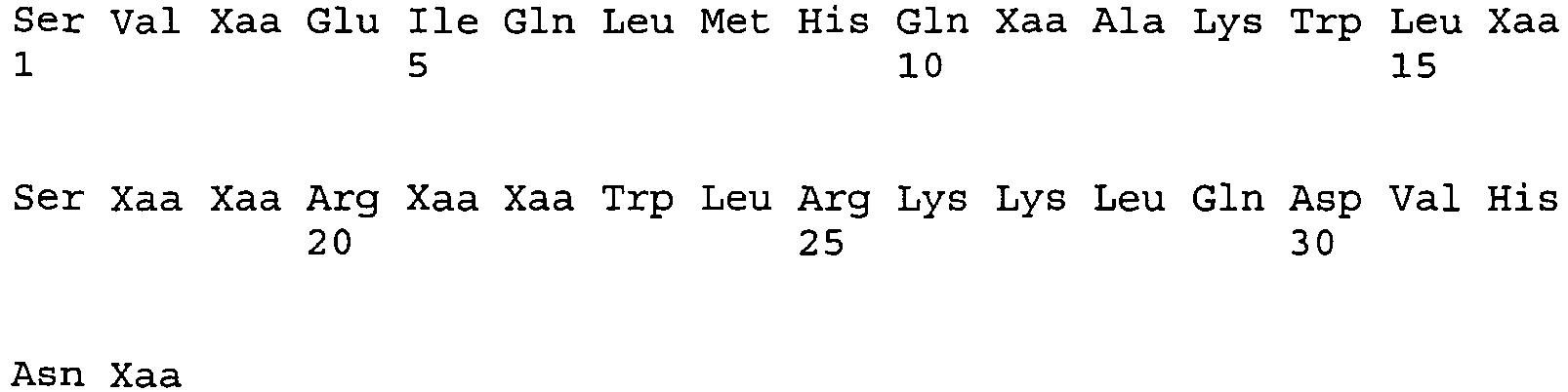
- <210> 29
<211> 34
<212> PRT
<213> Artificial - <220>
<223> Derivative of PTH Polypeptide - <220>
<221> MOD_RES
<222> (1)..(1)
<223> Aib - <220>
<221> MOD_RES
<222> (3)..(3)
<223> Aib - <220>
<221> MOD_RES
<222> (8) .. (8)
<223> Nle - <220>
<221> MOD_RES
<222> (11)..(11)
<223> Homoarginine - <220>
<221> VARIANT
<222> (21) .. (21)
<223> Met or Val - <220>
<221> VARIANT
<222> (22)..(22)
<223> Gln or Glu - <220>
<221> VARIANT
<222> (34)..(34)
<223> Tyr or Phe - <400> 29

- <210> 30
<211> 34
<212> PRT
<213> Rattus sp. - <400> 30

- <210> 31
<211> 34
<212> PRT
<213> Homo sapiens - <400> 31

X01 and/or X02 may be Aib.
Claims (34)
- A biologically active peptide, wherein said peptide is selected from:(a) fragments consisting of amino acids 1-21, 1-20, 1-19, 1-18, 1-17, 1-16, 1-15, 1-14, 1-13, 1-12, or 1-11 of X01ValX02GluIleGlnLeuX03HisX04X05X06X07X08Leu X09Ser X10X11ArgX12X13 TrpLeuArgLysLysLeuGlnAspValHisAsnX14 (SEQ ID NO. 19); and(b) pharmaceutically acceptable salts thereof;wherein:X01 is Aib, desaminoGly, desaminoSer, or desaminoAla;X02 is Aib, Ala, or Ser;X03 is Met;X04 is Ala, Gln, or Asn;X05 is Arg, Har, or Leu;X06 is Aib, Ala, or Gly;X07 is Aib or Lys;X08 is Aib, Trp, or His;X09 is Ala or Asn;X10 is Met or Val;X11 is Arg or Glu;X12 is Met or Val;X13 is Gln or Glu; andX14 is Tyr or Phe;wherein at least one of X01, X02, X06, X07, and X08 is Aib.
- The peptide of claim 1, wherein said peptide is selected from:(a) X01ValX02GluIleGlnLeuMetHisX04X05X06X07X08 (SEQ ID NO. 1);(b) fragments thereof, containing amino acids 1-11, 1-12, or 1-13; and(c) pharmaceutically acceptable salts thereof.
- The peptide of claim 1, wherein X01 or X02 is Aib.
- The peptide of claim 3, wherein X01 is Aib.
- The peptide of claim 3, wherein X02 is Aib.
- The peptide of claim 3, wherein both X01 and X02 are Aib.
- A biologically active peptide, wherein said peptide is selected from:(a) AibValSerGluIleGlnLeuMetHisAsnLeuGlyLysHis (SEQ ID NO. 2);(b) desaminoAlaValAibGlulleGlnLeuMetHisAsnLeuGlyLysHis (SEQ ID NO. 3);(c) desaminoSerValAibGluIleGlnLeuMetHisAsnLeuGlyLysHis (SEQ ID NO. 4);(d) desaminoGlyValAibGluIleGlnLeuMetHisAsnLeuGlyLysHis (SEQ ID NO. 5);(e) AibValAibGluIleGInLeuMetHisGlnHarAlaLysTrp (SEQ ID NO. 6);(f) AibValAibGluIleGlnLeuMetHisAsnLeuGlyLysHis (SEQ ID NO. 7);(g) AibValAlaGluIleGlnLeuMetHisGlnHarAlaLysTrp (SEQ ID NO. 9);(h) AlaValAibGluIleGlnLeuMetHisGlnHarAlaLysTrp (SEQ ID NO. 10);(i) SerValAibGluIleGlnLeuMetHisGlnHarAlaLysTrp (SEQ ID NO. 11);(j) fragments thereof, containing amino acids 1-10, 1-11, 1-12, or 1-13; and(k) pharmaceutically acceptable salts thereof.
- A biologically active peptide comprising:(a) AibValAibGluIleGlnLeuNleHisGlnHarAlaLysTrpLeuAlaSerValArgArgTyr (SEQ ID NO. 8);(b) fragments thereof, containing amino acids 1-20, 1-19, 1-18, 1-17, 1-16, or 1-15; or(c) pharmaceutically acceptable salts thereof.
- A biologically active peptide, wherein said peptide consists of:(a) X01ValX02GluIleGlnLeuX03HisX04X05X06X07X08LeuX09SerX10X11ArgX12X13 TrpLeuArgLysLysLeuGlnAspValHisAsnX14 (SEQ ID NO. 19);(b) AibValAibGluIleGlnLeuNleHisGlnHarAlaLysTrpLeuAlaSerValArg ArgX12X13TrpLeuArgLysLysLeuGlnAspValHisAsnX14 (SEQ ID NO. 29);(c) fragments thereof, containing amino acids 1-33, 1-32, 1-31, 1-30, 1-29, 1-28, 1-27, 1-26, 1-25, 1-24, 1-23, 1-22, 1-21, 1-20, 1-19, 1-18, 1-17, 1-16, 1-15, 1-14, 1-13, 1-12, or 1-11; or(d) pharmaceutically acceptable salts thereof;wherein:X01 is Aib;X02 is Aib;X03 is Met or Nle;X04 is Ala, Gln, or Asn;X05 is Arg, Har, or Leu;X06 is Aib, Ala, or Gly;X07 is Aib or Lys;X08 is Aib, Trp, or His;X09 is Ala or Asn;X10 is Met or Val;X11 is Arg or Glu;X12 is Met or Val;X13 is Gln or Glu; andX14 is Tyr or Phe.
- The peptide of claim 13, wherein said peptide is:(a) AibValAibGluIleGlnLeuMetHisGlnHarAlaLysTrpLeuX09SerX10X11 ArgX12X13TrpLeuArgLysLysLeuGlnAspValHisAsnX14 (SEQ ID NO. 24); or(b) pharmaceutically acceptable salts thereof.
- The peptide of claim 13, wherein said peptide is:(a) AibValAibGluIleGlnLeuMetHisAsnLeuGlyLysHisLeuX09SerX10X11 ArgX12X13TrpLeuArgLysLysLeuGlnAspValHisAsnX14 (SEQ ID NO. 25); or(b) pharmaceutically acceptable salts thereof.
- The peptide of any preceding claim, wherein said peptide is labeled.
- The peptide of claim 12, wherein said peptide is labeled with a fluorescent label.
- The peptide of claim 12, wherein said peptide is labeled with a chemiluminescent label.
- The peptide of claim 12, wherein said peptide is labeled with a bioluminescent label.
- The peptide of claim 12, wherein said peptide is labeled with a radioactive label.
- The peptide of claim 16, wherein said peptide is labeled with 125I.
- The peptide of claim 16, wherein said peptide is labeled with 99mTc.
- The peptide of any preceding claim, wherein said peptide is amidated.
- A pharmaceutical composition comprising the biologically active peptide of any preceding claim and a pharmaceutically acceptable carrier.
- The use of a biologically active peptide as claimed in any one of claims 1 to 19 in the manufacture of a medicament for treating a mammalian condition characterized by decreases in bone mass.
- The biologically active peptide as claimed in any one of claims 1 to 19 for use in the treatment of a mammalian condition characterized by decreases in bone mass.
- The use of claim 21 or the peptide for use according to claim 22, wherein said biologically active peptide is formulated with a pharmaceutically acceptable carrier.
- The use of claim 21 or claim 23 or the peptide for use according to claim 22 or claim 23, wherein said condition to be treated is osteoporosis.
- The use of any one of claims 21, 23 and 24 or the peptide for use according to any one of claims 22 to 24, wherein said condition to be treated is old age osteoporosis.
- The use of any one of claims 21, 23 and 24 or the peptide for use according to any one of claims 22 to 24, wherein said condition to be treated is post-menopausal osteoporosis.
- The use of any one of claims 21 and 23 to 26 or the peptide for use according to any one of claims 22 to 26, wherein said peptide is for increasing bone mass and is provided in an amount from about 0.01 µg/kg/day to about 1.0 µg/kg/day.
- The use of any one of claims 21 and 23 to 27 or the peptide for use according to any one of claims 22 to 27, wherein said peptide is for parenteral administration.
- The use of any one of claims 21 and 23 to 28 or the peptide for use according to any one of claims 22 to 28, wherein said peptide is for subcutaneous administration.
- The use of any one of claims 21 and 23 to 27 or the peptide for use according to any one of claims 22 to 27, wherein said peptide is for nasal insufflation.
- The use of a biologically active peptide as claimed in any one of claims 1 to 19 in the manufacture of a medicament for determining rates of bone reformation, bone resorption, and/or bone remodeling.
- The biologically active peptide as claimed in any one of claims 1 to 19 for use in determining rates of bone reformation, bone resorption, and/or bone remodeling.
- A method of making the peptide of any one of claims 1 to 19, said method comprising synthesizing said peptide by solid phase synthesis.
- The method of claim 33, wherein said peptide is protected by FMOC.
Applications Claiming Priority (5)
| Application Number | Priority Date | Filing Date | Title |
|---|---|---|---|
| US30686601P | 2001-07-23 | 2001-07-23 | |
| US306866P | 2001-07-23 | ||
| US32621201P | 2001-10-02 | 2001-10-02 | |
| US326212P | 2001-10-02 | ||
| PCT/US2002/022922 WO2003009804A2 (en) | 2001-07-23 | 2002-07-19 | Conformationally constrained parathyroid hormone (pth) analogs |
Publications (3)
| Publication Number | Publication Date |
|---|---|
| EP1439854A2 EP1439854A2 (en) | 2004-07-28 |
| EP1439854A4 EP1439854A4 (en) | 2005-12-14 |
| EP1439854B1 true EP1439854B1 (en) | 2016-12-14 |
Family
ID=26975405
Family Applications (1)
| Application Number | Title | Priority Date | Filing Date |
|---|---|---|---|
| EP02778189.7A Expired - Lifetime EP1439854B1 (en) | 2001-07-23 | 2002-07-19 | Conformationally constrained parathyroid hormone (pth) analogs |
Country Status (6)
| Country | Link |
|---|---|
| US (2) | US7572765B2 (en) |
| EP (1) | EP1439854B1 (en) |
| JP (1) | JP4837888B2 (en) |
| AU (1) | AU2002339843B2 (en) |
| CA (1) | CA2454275C (en) |
| WO (1) | WO2003009804A2 (en) |
Families Citing this family (22)
| Publication number | Priority date | Publication date | Assignee | Title |
|---|---|---|---|---|
| WO2000023594A1 (en) * | 1998-10-22 | 2000-04-27 | The General Hospital Corporation | BIOACTIVE PEPTIDES AND PEPTIDE DERIVATIVES OF PARATHYROID HORMONE (PTH) AND PARATHYROID HORMONE-RELATED PEPTIDE (PTHrP) |
| JP4486258B2 (en) | 1998-11-25 | 2010-06-23 | ザ・ジェネラル・ホスピタル・コーポレイション | Modification, preparation and use of human parathyroid hormone |
| ATE308609T1 (en) | 1998-12-31 | 2005-11-15 | Gen Hospital Corp | PTH RECEPTOR AND TESTING METHOD USING THE SAME |
| US6689566B1 (en) * | 1999-01-14 | 2004-02-10 | Scantibodies Laboratory, Inc. | Methods, kits, and antibodies for detecting parathyroid hormone |
| US7820393B2 (en) * | 1999-01-14 | 2010-10-26 | Scantibodies Laboratory, Inc. | Methods, kits and antibodies for detecting parathyroid hormone |
| WO2001023521A2 (en) * | 1999-09-29 | 2001-04-05 | The General Hospital Corporation | Polypeptide derivatives of parathyroid hormone (pth) |
| WO2003009804A2 (en) * | 2001-07-23 | 2003-02-06 | The General Hospital Corporation | Conformationally constrained parathyroid hormone (pth) analogs |
| WO2004093902A1 (en) * | 2003-03-19 | 2004-11-04 | The General Hospital Corporation | CONFORMATIONALLY CONSTRAINED PARATHYROID HORMONES WITH α-HELIX STABILIZERS |
| US7910544B2 (en) | 2003-07-17 | 2011-03-22 | The General Hospital Corporation | Conformationally constrained parthyroid hormone (PTH) analogs |
| ITMI20041440A1 (en) * | 2004-07-19 | 2004-10-19 | Abiogen Pharma Spa | ANALOGUE PEPTIDES OF PTH-1-11 |
| JP2009545320A (en) * | 2006-08-04 | 2009-12-24 | ザ ジェネラル ホスピタル コーポレイション | Polypeptide derivative of parathyroid hormone (PTH) |
| BRPI0719885B8 (en) | 2006-10-13 | 2021-05-25 | Lilly Co Eli | pegylated peptides as pth receptor modulators, their uses, and composition. |
| EP1961765A1 (en) * | 2006-12-08 | 2008-08-27 | Zealand Pharma A/S | Truncated PTH peptides with a cyclic conformation |
| CN101784281B (en) | 2007-08-01 | 2014-07-02 | 总医院有限公司 | Methods of Determining G Protein-Coupled Receptor Agonists |
| EP2411038B1 (en) | 2009-03-27 | 2016-12-28 | Van Andel Research Institute | Parathyroid hormone peptides and parathyroid hormone-related protein peptides and methods of use |
| JP5744844B2 (en) | 2009-04-24 | 2015-07-08 | カディラ ヘルスケア リミティド | Short peptides as parathyroid hormone (PTH) receptor agonists |
| US9492508B2 (en) | 2010-05-13 | 2016-11-15 | The General Hospital Corporation | Parathyroid hormone analogs and uses thereof |
| WO2012120532A2 (en) | 2011-02-02 | 2012-09-13 | Cadila Healthcare Limited | Cyclic short chain peptides |
| EP3016674A4 (en) | 2013-06-23 | 2017-03-15 | Wisconsin Alumni Research Foundation | Alpha-/beta-polypeptide analogs of parathyroid hormone (pth) and method of using same |
| EP3655104A4 (en) | 2017-07-15 | 2021-03-17 | The Regents of the University of California | OSTEOADSORPTIVE FLUOROGENIC SUBSTRATE FROM CATHEPSIN K FOR IMAGING OSTEOCLAST ACTIVITY AND MIGRATION |
| WO2019178462A1 (en) | 2018-03-16 | 2019-09-19 | The General Hospital Corporation | Parathyroid hormone polypeptide conjugates and methods of their use |
| US10730738B2 (en) * | 2018-04-17 | 2020-08-04 | Haier Us Appliance Solutions, Inc. | Refrigerator appliance with accelerated dispensing |
Family Cites Families (97)
| Publication number | Priority date | Publication date | Assignee | Title |
|---|---|---|---|---|
| US4086196A (en) * | 1975-03-28 | 1978-04-25 | Armour Pharmaceutical Company | Parathyroid hormone |
| US4849338A (en) * | 1982-07-16 | 1989-07-18 | Syntex (U.S.A.) Inc. | Simultaneous calibration heterogeneous immunoassay |
| US4843000A (en) * | 1979-12-26 | 1989-06-27 | Syntex (U.S.A.) Inc. | Simultaneous calibration heterogeneous immunoassay |
| US4366241A (en) * | 1980-08-07 | 1982-12-28 | Syva Company | Concentrating zone method in heterogeneous immunoassays |
| US4675189A (en) * | 1980-11-18 | 1987-06-23 | Syntex (U.S.A.) Inc. | Microencapsulation of water soluble active polypeptides |
| US4423037A (en) * | 1982-05-13 | 1983-12-27 | The General Hospital Corporation | Inhibitors of peptide hormone action |
| US4512922A (en) * | 1982-12-22 | 1985-04-23 | Genentech, Inc. | Purification and activity assurance of precipitated heterologous proteins |
| US4620948A (en) * | 1982-12-22 | 1986-11-04 | Genentech, Inc. | Purification and activity assurance of precipitated heterologous proteins |
| US4511502A (en) * | 1982-12-22 | 1985-04-16 | Genentech, Inc. | Purification and activity assurance of precipitated heterologous proteins |
| US4518526A (en) * | 1982-12-22 | 1985-05-21 | Genentech, Inc. | Purification and activity assurance of precipitated heterologous proteins |
| US4736866B1 (en) * | 1984-06-22 | 1988-04-12 | Transgenic non-human mammals | |
| IL78342A (en) * | 1985-04-04 | 1991-06-10 | Gen Hospital Corp | Pharmaceutical composition for treatment of osteoporosis in humans comprising a parathyroid hormone or a fragment thereof |
| US4761406A (en) * | 1985-06-06 | 1988-08-02 | The Procter & Gamble Company | Regimen for treating osteoporosis |
| EP0232262A4 (en) | 1985-08-15 | 1989-09-19 | Stauffer Chemical Co | MICROORGANISM PRODUCING TRYPTOPHANE. |
| US5010010A (en) * | 1986-10-22 | 1991-04-23 | Selmer-Sande, A.S. | Production of human parathyroid hormone from microorganisms |
| US4771124A (en) * | 1987-05-26 | 1988-09-13 | Merck & Co., Inc. | Parathyroid hormone antagonists with simplified synthetic methodology |
| US5527772A (en) | 1987-10-20 | 1996-06-18 | Holick; Michael F. | Regulation of cell proliferation and differentiation using peptides |
| US5605815A (en) * | 1988-03-14 | 1997-02-25 | Yale University | Nucleic acids encoding and expression of parathyroid hormone-like peptide |
| DE68921665T2 (en) | 1988-05-09 | 1995-09-21 | Merck & Co Inc | Liquid calcium-increasing factor inhibitor. |
| US5217896A (en) * | 1988-12-30 | 1993-06-08 | Oncogene Science, Inc. | Monoclonal antibodies recognizing parathyroid hormone-like protein |
| EP0448650A4 (en) * | 1989-02-01 | 1992-05-13 | The General Hospital Corporation | Herpes simplex virus type i expression vector |
| WO1991005050A1 (en) | 1989-09-29 | 1991-04-18 | Her Majesty In Right Of Canada As Represented By The National Research Council Of Canada | Synthesis of mature human parathyroid hormone |
| US5350836A (en) * | 1989-10-12 | 1994-09-27 | Ohio University | Growth hormone antagonists |
| ATE174058T1 (en) * | 1989-11-06 | 1998-12-15 | Cell Genesys Inc | PRODUCTION OF PROTEINS USING HOMOLOGOUS RECOMBINATION |
| IT1238348B (en) * | 1989-11-16 | 1993-07-13 | PROCESS FOR THE PREPARATION OF GENETIC BUILDINGS FOR THE EXPRESSION OF THE NERVE GROWTH FACTOR IN EUCARIOT CELLS. | |
| US5459276A (en) * | 1994-05-20 | 1995-10-17 | Molecular Probes, Inc. | Benzazolylcoumarin-based ion indicators for heavy metals |
| US5453517A (en) * | 1992-02-25 | 1995-09-26 | Molecular Probes, Inc. | Reactive derivatives of bapta used to make ion-selective chelators |
| US5274113A (en) * | 1991-11-01 | 1993-12-28 | Molecular Probes, Inc. | Long wavelength chemically reactive dipyrrometheneboron difluoride dyes and conjugates |
| US5405975A (en) * | 1993-03-29 | 1995-04-11 | Molecular Probes, Inc. | Fluorescent ion-selective diaryldiaza crown ether conjugates |
| US5326692B1 (en) * | 1992-05-13 | 1996-04-30 | Molecular Probes Inc | Fluorescent microparticles with controllable enhanced stokes shift |
| US5648270A (en) * | 1995-02-06 | 1997-07-15 | Molecular Probes, Inc. | Methods of sensing with fluorescent conjugates of metal-chelating nitrogen heterocycles |
| US5227487A (en) * | 1990-04-16 | 1993-07-13 | Molecular Probes, Inc. | Certain tricyclic and pentacyclic-hetero nitrogen rhodol dyes |
| US5433896A (en) * | 1994-05-20 | 1995-07-18 | Molecular Probes, Inc. | Dibenzopyrrometheneboron difluoride dyes |
| US5723218A (en) * | 1990-04-16 | 1998-03-03 | Molecular Probes, Inc. | Dipyrrometheneboron difluoride labeled flourescent microparticles |
| US7253264B1 (en) * | 1990-06-28 | 2007-08-07 | Sanofi-Arentideutschland GmbH | Immunoglobulin fusion proteins, their production and use |
| ATE169030T1 (en) | 1990-06-28 | 1998-08-15 | Hoechst Ag | FUSION PROTEINS WITH IMMUNGLOBULIN COMPONENTS, THEIR PRODUCTION AND USE |
| US5462856A (en) | 1990-07-19 | 1995-10-31 | Bunsen Rush Laboratories, Inc. | Methods for identifying chemicals that act as agonists or antagonists for receptors and other proteins involved in signal transduction via pathways that utilize G-proteins |
| JP2509254Y2 (en) | 1990-09-27 | 1996-08-28 | ホシデン株式会社 | Plug and socket |
| JPH0532696A (en) * | 1990-09-28 | 1993-02-09 | Takeda Chem Ind Ltd | Parathyroid hormone derivative |
| WO1992017602A1 (en) | 1991-04-05 | 1992-10-15 | The General Hospital Corporation Office Of Technology Affairs | Parathyroid hormone receptor and dna encoding same |
| US7150974B1 (en) * | 1991-04-05 | 2006-12-19 | The General Hospital Corporation | Parathyroid hormone receptor binding method |
| US7132260B2 (en) * | 1991-04-05 | 2006-11-07 | The General Hospital Corporation | DNA encoding parathyroid hormone receptor |
| US5261686A (en) * | 1992-04-06 | 1993-11-16 | Buckler Clive E | Semi-recumbent |
| US5208041A (en) * | 1991-05-23 | 1993-05-04 | Allelix Biopharmaceuticals Inc. | Essentially pure human parathyroid hormone |
| DE4138621A1 (en) * | 1991-11-25 | 1993-06-17 | Boehringer Ingelheim Int | METHOD FOR SCREENING SUBSTANCES WITH MODULATING EFFECT ON A RECEPTACLE-RELATED CELLULAR SIGNAL TRANSMISSION PATH |
| CZ282889B6 (en) | 1991-12-17 | 1997-11-12 | Procter And Gamble Pharmaceuticals, Inc. | THE USE OF PHOSPHO-Ci(1-4)ALKYLPHOSPHINATES OR THEIR PHARMACEUTICALLY ACCEPTABLE SALTS OR ESTERS AND PARATHORMONE |
| US5434246A (en) | 1992-03-19 | 1995-07-18 | Takeda Chemical Industries, Ltd. | Parathyroid hormone derivatives |
| US5382658A (en) * | 1992-04-03 | 1995-01-17 | Allelix Biopharmaceuticals Inc. | Stability-enhanced variants of parathyroid hormone |
| US5814603A (en) | 1992-06-12 | 1998-09-29 | Affymax Technologies N.V. | Compounds with PTH activity |
| US5977070A (en) | 1992-07-14 | 1999-11-02 | Piazza; Christin Teresa | Pharmaceutical compositions for the nasal delivery of compounds useful for the treatment of osteoporosis |
| US5821225A (en) * | 1992-07-14 | 1998-10-13 | Syntex (U.S.A.) Inc. | Method for the treatment of corticosteroid induced osteopenia comprising administration of modified PTH or PTHrp |
| US5589452A (en) | 1992-07-14 | 1996-12-31 | Syntex (U.S.A.) Inc. | Analogs of parathyroid hormone and parathyroid hormone related peptide: synthesis and use for the treatment of osteoporosis |
| AU672790B2 (en) | 1992-07-15 | 1996-10-17 | Novartis Ag | Variants of parathyroid hormone and its fragments |
| IT1255723B (en) * | 1992-10-09 | 1995-11-13 | USE OF PARATORMONE, ITS BIOLOGICALLY ACTIVE FRAGMENTS AND RELATED PEPTIDES, FOR THE PREPARATION OF PHARMACEUTICAL COMPOSITIONS USEFUL IN THE PREVENTION AND THERAPY OF ABORTION AND PRETERMONE BIRTH AND IN GENERAL FOR THE TREATMENT OF GESTATION | |
| US5871486A (en) * | 1993-01-21 | 1999-02-16 | Acumed, Inc. | Variable pitch bone screw |
| CA2165162C (en) * | 1993-06-14 | 2000-05-23 | Hermann Bujard | Tight control of gene expression in eucaryotic cells by tetracycline-responsive promoters |
| US5496801A (en) | 1993-12-23 | 1996-03-05 | Allelix Biopharmaceuticals Inc. | Parathyroid hormone formulation |
| US5763416A (en) * | 1994-02-18 | 1998-06-09 | The Regent Of The University Of Michigan | Gene transfer into bone cells and tissues |
| US5656465A (en) * | 1994-05-04 | 1997-08-12 | Therion Biologics Corporation | Methods of in vivo gene delivery |
| US5714353A (en) * | 1994-05-24 | 1998-02-03 | Research Corporation Technologies, Inc. | Safe vectors for gene therapy |
| CA2126132A1 (en) | 1994-06-17 | 1995-12-18 | Witold Neugebauer | Peptide synthesis on chitosan |
| US5556940A (en) | 1994-06-20 | 1996-09-17 | National Research Council Of Canada | Parathyroid hormone analogues for the treatment of osteoporosis |
| US5836905A (en) * | 1994-06-20 | 1998-11-17 | Lemelson; Jerome H. | Apparatus and methods for gene therapy |
| DE4434551A1 (en) | 1994-09-28 | 1996-04-04 | Forssmann Wolf Georg Prof Dr D | Peptides from the sequence of hPTH (1-37) |
| US5717062A (en) | 1995-06-07 | 1998-02-10 | Beth Israel Hospital Association | Cyclic analogs of PTH and PTHrP |
| CA2178894A1 (en) | 1995-06-15 | 1996-12-16 | Tsunehiko Fukuda | Parathyroid hormone derivatives and their use |
| US5723577A (en) * | 1995-07-13 | 1998-03-03 | Biomeasure Inc. | Analogs of parathyroid hormone |
| US5969095A (en) * | 1995-07-13 | 1999-10-19 | Biomeasure, Inc. | Analogs of parathyroid hormone |
| US5955574A (en) | 1995-07-13 | 1999-09-21 | Societe De Conseils De Recherches Et D'applications Scientifiques, S.A. | Analogs of parathyroid hormone |
| AU3819497A (en) * | 1996-07-31 | 1998-02-20 | General Hospital Corporation, The | Novel parathyroid hormone-related peptide analogs |
| RU2203286C2 (en) | 1996-08-02 | 2003-04-27 | Нэшнл Рисерч Каунсил ов Кэнэда | Parathyroid hormone analogues for osteoporosis treatment |
| US5917123A (en) * | 1997-03-14 | 1999-06-29 | University Of Pittsburgh | Transgenic mice containing a nucleic acid encoding tumor necrosis factor-α under the control of a cardiac specific regulatory region |
| US6183974B1 (en) * | 1997-07-31 | 2001-02-06 | The General Hospital Corporation | Screening assays for G protein coupled receptor agonists and antagonists |
| WO1999018945A1 (en) | 1997-10-14 | 1999-04-22 | Eli Lilly And Company | Method of building and maintaining bone |
| WO2000023594A1 (en) | 1998-10-22 | 2000-04-27 | The General Hospital Corporation | BIOACTIVE PEPTIDES AND PEPTIDE DERIVATIVES OF PARATHYROID HORMONE (PTH) AND PARATHYROID HORMONE-RELATED PEPTIDE (PTHrP) |
| ATE384743T1 (en) | 1998-11-25 | 2008-02-15 | Gen Hospital Corp | AMINOTERMINAL MODIFIED PARATHYROID HORMONE (PTH) ANALOGUE |
| JP4486258B2 (en) | 1998-11-25 | 2010-06-23 | ザ・ジェネラル・ホスピタル・コーポレイション | Modification, preparation and use of human parathyroid hormone |
| WO2000032771A1 (en) | 1998-11-30 | 2000-06-08 | The General Hospital Corporation | Pth1r and pth3r receptors, methods and uses thereof |
| US7057012B1 (en) | 1998-12-31 | 2006-06-06 | The General Hospital Corporation | PTH functional domain conjugate peptides, derivatives thereof and novel tethered ligand-receptor molecules |
| ATE308609T1 (en) | 1998-12-31 | 2005-11-15 | Gen Hospital Corp | PTH RECEPTOR AND TESTING METHOD USING THE SAME |
| WO2000039278A2 (en) | 1998-12-31 | 2000-07-06 | The General Hospital Corporation | Pth functional domain conjugate peptides, derivatives thereof and novel tethered ligand-receptor molecules |
| US7022815B1 (en) | 1999-09-29 | 2006-04-04 | The General Hospital Corporation | Polypeptide derivatives of parathyroid hormone (PTH) |
| DE60040678D1 (en) | 1999-09-29 | 2008-12-11 | Gen Hospital Corp | Parathyroid hormon (pth) polypeptidderivate |
| WO2001023521A2 (en) | 1999-09-29 | 2001-04-05 | The General Hospital Corporation | Polypeptide derivatives of parathyroid hormone (pth) |
| US20050124537A1 (en) * | 2000-04-27 | 2005-06-09 | Amgen Inc. | Modulators of receptors for parathyroid hormone and parathyroid hormone-related protein |
| US6756480B2 (en) * | 2000-04-27 | 2004-06-29 | Amgen Inc. | Modulators of receptors for parathyroid hormone and parathyroid hormone-related protein |
| US7371721B2 (en) * | 2000-09-18 | 2008-05-13 | Sanos Bioscience A/S | Use of GLP-2 and related compounds for the treatment, prevention, diagnosis, and prognosis of bone-related disorders and calcium homeostasis related syndromes |
| US6838264B2 (en) * | 2000-12-05 | 2005-01-04 | Immutopics, Inc. | Antibodies and peptide antigens for producing antibodies having a selective binding specificity to bioactive intact parathyroid hormone (PTH) 1-84 |
| JP2004524844A (en) * | 2001-01-17 | 2004-08-19 | ザ・ジェネラル・ホスピタル・コーポレイション | TIP39 polypeptide |
| WO2003009804A2 (en) | 2001-07-23 | 2003-02-06 | The General Hospital Corporation | Conformationally constrained parathyroid hormone (pth) analogs |
| WO2003059291A2 (en) * | 2002-01-10 | 2003-07-24 | Osteotrophin Llc | Treatment of bone disorders with skeletal anabolic drugs |
| WO2004022830A1 (en) | 2002-09-06 | 2004-03-18 | Polymer Group, Inc. | Acid washed nonwoven fabric |
| WO2004067021A1 (en) | 2003-01-24 | 2004-08-12 | Gardella Thomas J | Conformationally constrained parathyroid hormone (pth) analogs with lactam bridges |
| WO2004093902A1 (en) | 2003-03-19 | 2004-11-04 | The General Hospital Corporation | CONFORMATIONALLY CONSTRAINED PARATHYROID HORMONES WITH α-HELIX STABILIZERS |
| US7910544B2 (en) | 2003-07-17 | 2011-03-22 | The General Hospital Corporation | Conformationally constrained parthyroid hormone (PTH) analogs |
| CA2810292C (en) * | 2004-05-14 | 2015-09-29 | Euroscreen S.A. | Ligand for g-protein coupled receptor fprl2 and uses thereof |
| KR100696444B1 (en) * | 2005-11-07 | 2007-03-20 | 엘지전자 주식회사 | Bottom plate manufacturing method of plasma display panel |
-
2002
- 2002-07-19 WO PCT/US2002/022922 patent/WO2003009804A2/en not_active Ceased
- 2002-07-19 EP EP02778189.7A patent/EP1439854B1/en not_active Expired - Lifetime
- 2002-07-19 JP JP2003515197A patent/JP4837888B2/en not_active Expired - Lifetime
- 2002-07-19 AU AU2002339843A patent/AU2002339843B2/en not_active Expired
- 2002-07-19 US US10/484,080 patent/US7572765B2/en not_active Expired - Lifetime
- 2002-07-19 CA CA2454275A patent/CA2454275C/en not_active Expired - Lifetime
-
2009
- 2009-06-09 US US12/481,425 patent/US8603977B2/en not_active Expired - Fee Related
Non-Patent Citations (1)
| Title |
|---|
| None * |
Also Published As
| Publication number | Publication date |
|---|---|
| CA2454275C (en) | 2012-10-23 |
| US20050026839A1 (en) | 2005-02-03 |
| JP2005523873A (en) | 2005-08-11 |
| US20090264365A1 (en) | 2009-10-22 |
| WO2003009804A3 (en) | 2003-11-06 |
| WO2003009804A2 (en) | 2003-02-06 |
| EP1439854A4 (en) | 2005-12-14 |
| EP1439854A2 (en) | 2004-07-28 |
| CA2454275A1 (en) | 2003-02-06 |
| JP4837888B2 (en) | 2011-12-14 |
| US7572765B2 (en) | 2009-08-11 |
| US8603977B2 (en) | 2013-12-10 |
| AU2002339843B2 (en) | 2007-12-06 |
Similar Documents
| Publication | Publication Date | Title |
|---|---|---|
| US8603977B2 (en) | Conformationally constrained parathyroid hormone (PTH) analogs | |
| US7521528B2 (en) | Conformationally constrained parathyroid hormone (PTH) analogs with lactam bridges | |
| US7795220B2 (en) | Conformationally constrained parathyroid hormones with alpha-helix stabilizers | |
| EP1133560B1 (en) | Human parathyroid hormone modifications, preparation and use | |
| AU2002339843A1 (en) | Conformationally constrained parathyroid hormone (PTH) analogs | |
| US7153951B2 (en) | Bioactive peptides and peptide derivatives of parathyroid hormone (PTH) and parathyroid hormone-related peptide (PTHrP) | |
| US6362163B1 (en) | Parathyroid hormone-related peptide analogs | |
| US7910544B2 (en) | Conformationally constrained parthyroid hormone (PTH) analogs | |
| SK4042002A3 (en) | Parathyroid hormone analogues for the treatment of osteoporosis | |
| EP3765061A1 (en) | Parathyroid hormone polypeptide conjugates and methods of their use | |
| HK1040738B (en) | Human parathyroid hormone modifications, preparation and use |
Legal Events
| Date | Code | Title | Description |
|---|---|---|---|
| PUAI | Public reference made under article 153(3) epc to a published international application that has entered the european phase |
Free format text: ORIGINAL CODE: 0009012 |
|
| 17P | Request for examination filed |
Effective date: 20040202 |
|
| AK | Designated contracting states |
Kind code of ref document: A2 Designated state(s): AT BE BG CH CY CZ DE DK EE ES FI FR GB GR IE IT LI LU MC NL PT SE SK TR |
|
| AX | Request for extension of the european patent |
Extension state: AL LT LV MK RO SI |
|
| RIC1 | Information provided on ipc code assigned before grant |
Ipc: 7A 61K 38/29 B Ipc: 7C 07K 14/365 A Ipc: 7A 61P 5/18 B |
|
| A4 | Supplementary search report drawn up and despatched |
Effective date: 20051028 |
|
| 17Q | First examination report despatched |
Effective date: 20080925 |
|
| RIN1 | Information on inventor provided before grant (corrected) |
Inventor name: POTTS, JOHN, T, JR. Inventor name: SHIMIZU, NAOTO Inventor name: KRONENBERG, HENRY, M. Inventor name: GARDELLA, THOMAS, J. |
|
| REG | Reference to a national code |
Ref country code: DE Ref legal event code: R079 Ref document number: 60248559 Country of ref document: DE Free format text: PREVIOUS MAIN CLASS: A61K0038290000 Ipc: C07K0014635000 |
|
| GRAP | Despatch of communication of intention to grant a patent |
Free format text: ORIGINAL CODE: EPIDOSNIGR1 |
|
| RIC1 | Information provided on ipc code assigned before grant |
Ipc: C07K 14/635 20060101AFI20160526BHEP |
|
| INTG | Intention to grant announced |
Effective date: 20160628 |
|
| GRAS | Grant fee paid |
Free format text: ORIGINAL CODE: EPIDOSNIGR3 |
|
| GRAA | (expected) grant |
Free format text: ORIGINAL CODE: 0009210 |
|
| AK | Designated contracting states |
Kind code of ref document: B1 Designated state(s): AT BE BG CH CY CZ DE DK EE ES FI FR GB GR IE IT LI LU MC NL PT SE SK TR |
|
| REG | Reference to a national code |
Ref country code: GB Ref legal event code: FG4D |
|
| REG | Reference to a national code |
Ref country code: CH Ref legal event code: EP |
|
| REG | Reference to a national code |
Ref country code: IE Ref legal event code: FG4D |
|
| REG | Reference to a national code |
Ref country code: AT Ref legal event code: REF Ref document number: 853496 Country of ref document: AT Kind code of ref document: T Effective date: 20170115 |
|
| REG | Reference to a national code |
Ref country code: DE Ref legal event code: R096 Ref document number: 60248559 Country of ref document: DE |
|
| REG | Reference to a national code |
Ref country code: NL Ref legal event code: MP Effective date: 20161214 |
|
| PG25 | Lapsed in a contracting state [announced via postgrant information from national office to epo] |
Ref country code: GR Free format text: LAPSE BECAUSE OF FAILURE TO SUBMIT A TRANSLATION OF THE DESCRIPTION OR TO PAY THE FEE WITHIN THE PRESCRIBED TIME-LIMIT Effective date: 20170315 Ref country code: SE Free format text: LAPSE BECAUSE OF FAILURE TO SUBMIT A TRANSLATION OF THE DESCRIPTION OR TO PAY THE FEE WITHIN THE PRESCRIBED TIME-LIMIT Effective date: 20161214 |
|
| REG | Reference to a national code |
Ref country code: AT Ref legal event code: MK05 Ref document number: 853496 Country of ref document: AT Kind code of ref document: T Effective date: 20161214 |
|
| PG25 | Lapsed in a contracting state [announced via postgrant information from national office to epo] |
Ref country code: FI Free format text: LAPSE BECAUSE OF FAILURE TO SUBMIT A TRANSLATION OF THE DESCRIPTION OR TO PAY THE FEE WITHIN THE PRESCRIBED TIME-LIMIT Effective date: 20161214 |
|
| PG25 | Lapsed in a contracting state [announced via postgrant information from national office to epo] |
Ref country code: NL Free format text: LAPSE BECAUSE OF FAILURE TO SUBMIT A TRANSLATION OF THE DESCRIPTION OR TO PAY THE FEE WITHIN THE PRESCRIBED TIME-LIMIT Effective date: 20161214 |
|
| PG25 | Lapsed in a contracting state [announced via postgrant information from national office to epo] |
Ref country code: EE Free format text: LAPSE BECAUSE OF FAILURE TO SUBMIT A TRANSLATION OF THE DESCRIPTION OR TO PAY THE FEE WITHIN THE PRESCRIBED TIME-LIMIT Effective date: 20161214 Ref country code: CZ Free format text: LAPSE BECAUSE OF FAILURE TO SUBMIT A TRANSLATION OF THE DESCRIPTION OR TO PAY THE FEE WITHIN THE PRESCRIBED TIME-LIMIT Effective date: 20161214 Ref country code: SK Free format text: LAPSE BECAUSE OF FAILURE TO SUBMIT A TRANSLATION OF THE DESCRIPTION OR TO PAY THE FEE WITHIN THE PRESCRIBED TIME-LIMIT Effective date: 20161214 |
|
| REG | Reference to a national code |
Ref country code: FR Ref legal event code: PLFP Year of fee payment: 16 |
|
| PG25 | Lapsed in a contracting state [announced via postgrant information from national office to epo] |
Ref country code: BE Free format text: LAPSE BECAUSE OF FAILURE TO SUBMIT A TRANSLATION OF THE DESCRIPTION OR TO PAY THE FEE WITHIN THE PRESCRIBED TIME-LIMIT Effective date: 20161214 Ref country code: BG Free format text: LAPSE BECAUSE OF FAILURE TO SUBMIT A TRANSLATION OF THE DESCRIPTION OR TO PAY THE FEE WITHIN THE PRESCRIBED TIME-LIMIT Effective date: 20170314 Ref country code: ES Free format text: LAPSE BECAUSE OF FAILURE TO SUBMIT A TRANSLATION OF THE DESCRIPTION OR TO PAY THE FEE WITHIN THE PRESCRIBED TIME-LIMIT Effective date: 20161214 Ref country code: IT Free format text: LAPSE BECAUSE OF FAILURE TO SUBMIT A TRANSLATION OF THE DESCRIPTION OR TO PAY THE FEE WITHIN THE PRESCRIBED TIME-LIMIT Effective date: 20161214 Ref country code: AT Free format text: LAPSE BECAUSE OF FAILURE TO SUBMIT A TRANSLATION OF THE DESCRIPTION OR TO PAY THE FEE WITHIN THE PRESCRIBED TIME-LIMIT Effective date: 20161214 |
|
| REG | Reference to a national code |
Ref country code: DE Ref legal event code: R097 Ref document number: 60248559 Country of ref document: DE |
|
| PLBE | No opposition filed within time limit |
Free format text: ORIGINAL CODE: 0009261 |
|
| STAA | Information on the status of an ep patent application or granted ep patent |
Free format text: STATUS: NO OPPOSITION FILED WITHIN TIME LIMIT |
|
| 26N | No opposition filed |
Effective date: 20170915 |
|
| PG25 | Lapsed in a contracting state [announced via postgrant information from national office to epo] |
Ref country code: DK Free format text: LAPSE BECAUSE OF FAILURE TO SUBMIT A TRANSLATION OF THE DESCRIPTION OR TO PAY THE FEE WITHIN THE PRESCRIBED TIME-LIMIT Effective date: 20161214 |
|
| REG | Reference to a national code |
Ref country code: CH Ref legal event code: PL |
|
| REG | Reference to a national code |
Ref country code: IE Ref legal event code: MM4A |
|
| PG25 | Lapsed in a contracting state [announced via postgrant information from national office to epo] |
Ref country code: LI Free format text: LAPSE BECAUSE OF NON-PAYMENT OF DUE FEES Effective date: 20170731 Ref country code: IE Free format text: LAPSE BECAUSE OF NON-PAYMENT OF DUE FEES Effective date: 20170719 Ref country code: CH Free format text: LAPSE BECAUSE OF NON-PAYMENT OF DUE FEES Effective date: 20170731 |
|
| PG25 | Lapsed in a contracting state [announced via postgrant information from national office to epo] |
Ref country code: LU Free format text: LAPSE BECAUSE OF NON-PAYMENT OF DUE FEES Effective date: 20170719 |
|
| REG | Reference to a national code |
Ref country code: FR Ref legal event code: PLFP Year of fee payment: 17 |
|
| PG25 | Lapsed in a contracting state [announced via postgrant information from national office to epo] |
Ref country code: MC Free format text: LAPSE BECAUSE OF FAILURE TO SUBMIT A TRANSLATION OF THE DESCRIPTION OR TO PAY THE FEE WITHIN THE PRESCRIBED TIME-LIMIT Effective date: 20161214 |
|
| PG25 | Lapsed in a contracting state [announced via postgrant information from national office to epo] |
Ref country code: CY Free format text: LAPSE BECAUSE OF NON-PAYMENT OF DUE FEES Effective date: 20161214 |
|
| PG25 | Lapsed in a contracting state [announced via postgrant information from national office to epo] |
Ref country code: TR Free format text: LAPSE BECAUSE OF FAILURE TO SUBMIT A TRANSLATION OF THE DESCRIPTION OR TO PAY THE FEE WITHIN THE PRESCRIBED TIME-LIMIT Effective date: 20161214 |
|
| PG25 | Lapsed in a contracting state [announced via postgrant information from national office to epo] |
Ref country code: PT Free format text: LAPSE BECAUSE OF FAILURE TO SUBMIT A TRANSLATION OF THE DESCRIPTION OR TO PAY THE FEE WITHIN THE PRESCRIBED TIME-LIMIT Effective date: 20161214 |
|
| PGFP | Annual fee paid to national office [announced via postgrant information from national office to epo] |
Ref country code: FR Payment date: 20210726 Year of fee payment: 20 |
|
| PGFP | Annual fee paid to national office [announced via postgrant information from national office to epo] |
Ref country code: DE Payment date: 20210728 Year of fee payment: 20 Ref country code: GB Payment date: 20210727 Year of fee payment: 20 |
|
| REG | Reference to a national code |
Ref country code: DE Ref legal event code: R071 Ref document number: 60248559 Country of ref document: DE |
|
| REG | Reference to a national code |
Ref country code: GB Ref legal event code: PE20 Expiry date: 20220718 |
|
| PG25 | Lapsed in a contracting state [announced via postgrant information from national office to epo] |
Ref country code: GB Free format text: LAPSE BECAUSE OF EXPIRATION OF PROTECTION Effective date: 20220718 |