EP1439174A1 - 4-imidazolin-2-one compounds - Google Patents
4-imidazolin-2-one compounds Download PDFInfo
- Publication number
- EP1439174A1 EP1439174A1 EP02802049A EP02802049A EP1439174A1 EP 1439174 A1 EP1439174 A1 EP 1439174A1 EP 02802049 A EP02802049 A EP 02802049A EP 02802049 A EP02802049 A EP 02802049A EP 1439174 A1 EP1439174 A1 EP 1439174A1
- Authority
- EP
- European Patent Office
- Prior art keywords
- optionally substituted
- group
- alkyl
- alkoxy
- substituted
- Prior art date
- Legal status (The legal status is an assumption and is not a legal conclusion. Google has not performed a legal analysis and makes no representation as to the accuracy of the status listed.)
- Granted
Links
- 0 CCOC(*)(CNCC*)c1cc(Cl)ncc1 Chemical compound CCOC(*)(CNCC*)c1cc(Cl)ncc1 0.000 description 2
- MKWQFGOCSMRNAY-UHFFFAOYSA-N CCOC(CN)(c1cc(Cl)ncc1)OCC Chemical compound CCOC(CN)(c1cc(Cl)ncc1)OCC MKWQFGOCSMRNAY-UHFFFAOYSA-N 0.000 description 2
- IEFUXGDZWWBJIE-UHFFFAOYSA-N CC(C)C(N(C(C(C)C)=O)c1nccc(C(N2c(cc3)ccc3F)=CN(Cc3ccccc3C#N)C2=O)c1)=O Chemical compound CC(C)C(N(C(C(C)C)=O)c1nccc(C(N2c(cc3)ccc3F)=CN(Cc3ccccc3C#N)C2=O)c1)=O IEFUXGDZWWBJIE-UHFFFAOYSA-N 0.000 description 1
- JKLFATVQAYMHQQ-UHFFFAOYSA-N CC(C)C(Nc1nccc(C(N2c(cc3)ccc3F)=CN(Cc3ccccc3C#N)C2=O)c1)=O Chemical compound CC(C)C(Nc1nccc(C(N2c(cc3)ccc3F)=CN(Cc3ccccc3C#N)C2=O)c1)=O JKLFATVQAYMHQQ-UHFFFAOYSA-N 0.000 description 1
- QYHRHQCOURDECA-UEDWGHLCSA-N CC(C)Nc1nccc(C(N2c(cc3)ccc3F)=CN(C[C@H](CC3)CC[C@H]3O)C2=O)c1 Chemical compound CC(C)Nc1nccc(C(N2c(cc3)ccc3F)=CN(C[C@H](CC3)CC[C@H]3O)C2=O)c1 QYHRHQCOURDECA-UEDWGHLCSA-N 0.000 description 1
- JPRQKXFWFPLLGS-UHFFFAOYSA-N CCOC(CNC(C)C)(c1cc(Cl)ncc1)OCC Chemical compound CCOC(CNC(C)C)(c1cc(Cl)ncc1)OCC JPRQKXFWFPLLGS-UHFFFAOYSA-N 0.000 description 1
- NYJNDSLMUSDGIQ-UHFFFAOYSA-N CCOC(CNC(C)C)(c1cc(NCc(ccc(OC)c2)c2OC)ncc1)OCC Chemical compound CCOC(CNC(C)C)(c1cc(NCc(ccc(OC)c2)c2OC)ncc1)OCC NYJNDSLMUSDGIQ-UHFFFAOYSA-N 0.000 description 1
- FGAGTMNDOJFJCD-UHFFFAOYSA-O CS(c1[nH+]ccc(C(N2c(cc3)ccc3F)=CN(Cc3ccccc3C#N)C2O)n1)O Chemical compound CS(c1[nH+]ccc(C(N2c(cc3)ccc3F)=CN(Cc3ccccc3C#N)C2O)n1)O FGAGTMNDOJFJCD-UHFFFAOYSA-O 0.000 description 1
Classifications
-
- C—CHEMISTRY; METALLURGY
- C07—ORGANIC CHEMISTRY
- C07D—HETEROCYCLIC COMPOUNDS
- C07D401/00—Heterocyclic compounds containing two or more hetero rings, having nitrogen atoms as the only ring hetero atoms, at least one ring being a six-membered ring with only one nitrogen atom
- C07D401/02—Heterocyclic compounds containing two or more hetero rings, having nitrogen atoms as the only ring hetero atoms, at least one ring being a six-membered ring with only one nitrogen atom containing two hetero rings
- C07D401/04—Heterocyclic compounds containing two or more hetero rings, having nitrogen atoms as the only ring hetero atoms, at least one ring being a six-membered ring with only one nitrogen atom containing two hetero rings directly linked by a ring-member-to-ring-member bond
-
- A—HUMAN NECESSITIES
- A61—MEDICAL OR VETERINARY SCIENCE; HYGIENE
- A61K—PREPARATIONS FOR MEDICAL, DENTAL OR TOILETRY PURPOSES
- A61K31/00—Medicinal preparations containing organic active ingredients
- A61K31/33—Heterocyclic compounds
- A61K31/395—Heterocyclic compounds having nitrogen as a ring hetero atom, e.g. guanethidine or rifamycins
- A61K31/435—Heterocyclic compounds having nitrogen as a ring hetero atom, e.g. guanethidine or rifamycins having six-membered rings with one nitrogen as the only ring hetero atom
- A61K31/44—Non condensed pyridines; Hydrogenated derivatives thereof
- A61K31/4427—Non condensed pyridines; Hydrogenated derivatives thereof containing further heterocyclic ring systems
- A61K31/4439—Non condensed pyridines; Hydrogenated derivatives thereof containing further heterocyclic ring systems containing a five-membered ring with nitrogen as a ring hetero atom, e.g. omeprazole
-
- A—HUMAN NECESSITIES
- A61—MEDICAL OR VETERINARY SCIENCE; HYGIENE
- A61K—PREPARATIONS FOR MEDICAL, DENTAL OR TOILETRY PURPOSES
- A61K31/00—Medicinal preparations containing organic active ingredients
- A61K31/33—Heterocyclic compounds
- A61K31/395—Heterocyclic compounds having nitrogen as a ring hetero atom, e.g. guanethidine or rifamycins
- A61K31/435—Heterocyclic compounds having nitrogen as a ring hetero atom, e.g. guanethidine or rifamycins having six-membered rings with one nitrogen as the only ring hetero atom
- A61K31/44—Non condensed pyridines; Hydrogenated derivatives thereof
- A61K31/4427—Non condensed pyridines; Hydrogenated derivatives thereof containing further heterocyclic ring systems
- A61K31/444—Non condensed pyridines; Hydrogenated derivatives thereof containing further heterocyclic ring systems containing a six-membered ring with nitrogen as a ring heteroatom, e.g. amrinone
-
- A—HUMAN NECESSITIES
- A61—MEDICAL OR VETERINARY SCIENCE; HYGIENE
- A61K—PREPARATIONS FOR MEDICAL, DENTAL OR TOILETRY PURPOSES
- A61K31/00—Medicinal preparations containing organic active ingredients
- A61K31/33—Heterocyclic compounds
- A61K31/395—Heterocyclic compounds having nitrogen as a ring hetero atom, e.g. guanethidine or rifamycins
- A61K31/435—Heterocyclic compounds having nitrogen as a ring hetero atom, e.g. guanethidine or rifamycins having six-membered rings with one nitrogen as the only ring hetero atom
- A61K31/44—Non condensed pyridines; Hydrogenated derivatives thereof
- A61K31/445—Non condensed piperidines, e.g. piperocaine
- A61K31/4523—Non condensed piperidines, e.g. piperocaine containing further heterocyclic ring systems
- A61K31/4545—Non condensed piperidines, e.g. piperocaine containing further heterocyclic ring systems containing a six-membered ring with nitrogen as a ring hetero atom, e.g. pipamperone, anabasine
-
- A—HUMAN NECESSITIES
- A61—MEDICAL OR VETERINARY SCIENCE; HYGIENE
- A61K—PREPARATIONS FOR MEDICAL, DENTAL OR TOILETRY PURPOSES
- A61K31/00—Medicinal preparations containing organic active ingredients
- A61K31/33—Heterocyclic compounds
- A61K31/395—Heterocyclic compounds having nitrogen as a ring hetero atom, e.g. guanethidine or rifamycins
- A61K31/495—Heterocyclic compounds having nitrogen as a ring hetero atom, e.g. guanethidine or rifamycins having six-membered rings with two or more nitrogen atoms as the only ring heteroatoms, e.g. piperazine or tetrazines
- A61K31/496—Non-condensed piperazines containing further heterocyclic rings, e.g. rifampin, thiothixene or sparfloxacin
-
- A—HUMAN NECESSITIES
- A61—MEDICAL OR VETERINARY SCIENCE; HYGIENE
- A61K—PREPARATIONS FOR MEDICAL, DENTAL OR TOILETRY PURPOSES
- A61K31/00—Medicinal preparations containing organic active ingredients
- A61K31/33—Heterocyclic compounds
- A61K31/395—Heterocyclic compounds having nitrogen as a ring hetero atom, e.g. guanethidine or rifamycins
- A61K31/495—Heterocyclic compounds having nitrogen as a ring hetero atom, e.g. guanethidine or rifamycins having six-membered rings with two or more nitrogen atoms as the only ring heteroatoms, e.g. piperazine or tetrazines
- A61K31/505—Pyrimidines; Hydrogenated pyrimidines, e.g. trimethoprim
- A61K31/506—Pyrimidines; Hydrogenated pyrimidines, e.g. trimethoprim not condensed and containing further heterocyclic rings
-
- A—HUMAN NECESSITIES
- A61—MEDICAL OR VETERINARY SCIENCE; HYGIENE
- A61P—SPECIFIC THERAPEUTIC ACTIVITY OF CHEMICAL COMPOUNDS OR MEDICINAL PREPARATIONS
- A61P1/00—Drugs for disorders of the alimentary tract or the digestive system
-
- A—HUMAN NECESSITIES
- A61—MEDICAL OR VETERINARY SCIENCE; HYGIENE
- A61P—SPECIFIC THERAPEUTIC ACTIVITY OF CHEMICAL COMPOUNDS OR MEDICINAL PREPARATIONS
- A61P1/00—Drugs for disorders of the alimentary tract or the digestive system
- A61P1/04—Drugs for disorders of the alimentary tract or the digestive system for ulcers, gastritis or reflux esophagitis, e.g. antacids, inhibitors of acid secretion, mucosal protectants
-
- A—HUMAN NECESSITIES
- A61—MEDICAL OR VETERINARY SCIENCE; HYGIENE
- A61P—SPECIFIC THERAPEUTIC ACTIVITY OF CHEMICAL COMPOUNDS OR MEDICINAL PREPARATIONS
- A61P1/00—Drugs for disorders of the alimentary tract or the digestive system
- A61P1/16—Drugs for disorders of the alimentary tract or the digestive system for liver or gallbladder disorders, e.g. hepatoprotective agents, cholagogues, litholytics
-
- A—HUMAN NECESSITIES
- A61—MEDICAL OR VETERINARY SCIENCE; HYGIENE
- A61P—SPECIFIC THERAPEUTIC ACTIVITY OF CHEMICAL COMPOUNDS OR MEDICINAL PREPARATIONS
- A61P11/00—Drugs for disorders of the respiratory system
-
- A—HUMAN NECESSITIES
- A61—MEDICAL OR VETERINARY SCIENCE; HYGIENE
- A61P—SPECIFIC THERAPEUTIC ACTIVITY OF CHEMICAL COMPOUNDS OR MEDICINAL PREPARATIONS
- A61P11/00—Drugs for disorders of the respiratory system
- A61P11/02—Nasal agents, e.g. decongestants
-
- A—HUMAN NECESSITIES
- A61—MEDICAL OR VETERINARY SCIENCE; HYGIENE
- A61P—SPECIFIC THERAPEUTIC ACTIVITY OF CHEMICAL COMPOUNDS OR MEDICINAL PREPARATIONS
- A61P11/00—Drugs for disorders of the respiratory system
- A61P11/06—Antiasthmatics
-
- A—HUMAN NECESSITIES
- A61—MEDICAL OR VETERINARY SCIENCE; HYGIENE
- A61P—SPECIFIC THERAPEUTIC ACTIVITY OF CHEMICAL COMPOUNDS OR MEDICINAL PREPARATIONS
- A61P13/00—Drugs for disorders of the urinary system
- A61P13/12—Drugs for disorders of the urinary system of the kidneys
-
- A—HUMAN NECESSITIES
- A61—MEDICAL OR VETERINARY SCIENCE; HYGIENE
- A61P—SPECIFIC THERAPEUTIC ACTIVITY OF CHEMICAL COMPOUNDS OR MEDICINAL PREPARATIONS
- A61P17/00—Drugs for dermatological disorders
-
- A—HUMAN NECESSITIES
- A61—MEDICAL OR VETERINARY SCIENCE; HYGIENE
- A61P—SPECIFIC THERAPEUTIC ACTIVITY OF CHEMICAL COMPOUNDS OR MEDICINAL PREPARATIONS
- A61P17/00—Drugs for dermatological disorders
- A61P17/02—Drugs for dermatological disorders for treating wounds, ulcers, burns, scars, keloids, or the like
-
- A—HUMAN NECESSITIES
- A61—MEDICAL OR VETERINARY SCIENCE; HYGIENE
- A61P—SPECIFIC THERAPEUTIC ACTIVITY OF CHEMICAL COMPOUNDS OR MEDICINAL PREPARATIONS
- A61P17/00—Drugs for dermatological disorders
- A61P17/04—Antipruritics
-
- A—HUMAN NECESSITIES
- A61—MEDICAL OR VETERINARY SCIENCE; HYGIENE
- A61P—SPECIFIC THERAPEUTIC ACTIVITY OF CHEMICAL COMPOUNDS OR MEDICINAL PREPARATIONS
- A61P17/00—Drugs for dermatological disorders
- A61P17/06—Antipsoriatics
-
- A—HUMAN NECESSITIES
- A61—MEDICAL OR VETERINARY SCIENCE; HYGIENE
- A61P—SPECIFIC THERAPEUTIC ACTIVITY OF CHEMICAL COMPOUNDS OR MEDICINAL PREPARATIONS
- A61P19/00—Drugs for skeletal disorders
-
- A—HUMAN NECESSITIES
- A61—MEDICAL OR VETERINARY SCIENCE; HYGIENE
- A61P—SPECIFIC THERAPEUTIC ACTIVITY OF CHEMICAL COMPOUNDS OR MEDICINAL PREPARATIONS
- A61P19/00—Drugs for skeletal disorders
- A61P19/02—Drugs for skeletal disorders for joint disorders, e.g. arthritis, arthrosis
-
- A—HUMAN NECESSITIES
- A61—MEDICAL OR VETERINARY SCIENCE; HYGIENE
- A61P—SPECIFIC THERAPEUTIC ACTIVITY OF CHEMICAL COMPOUNDS OR MEDICINAL PREPARATIONS
- A61P19/00—Drugs for skeletal disorders
- A61P19/06—Antigout agents, e.g. antihyperuricemic or uricosuric agents
-
- A—HUMAN NECESSITIES
- A61—MEDICAL OR VETERINARY SCIENCE; HYGIENE
- A61P—SPECIFIC THERAPEUTIC ACTIVITY OF CHEMICAL COMPOUNDS OR MEDICINAL PREPARATIONS
- A61P19/00—Drugs for skeletal disorders
- A61P19/08—Drugs for skeletal disorders for bone diseases, e.g. rachitism, Paget's disease
- A61P19/10—Drugs for skeletal disorders for bone diseases, e.g. rachitism, Paget's disease for osteoporosis
-
- A—HUMAN NECESSITIES
- A61—MEDICAL OR VETERINARY SCIENCE; HYGIENE
- A61P—SPECIFIC THERAPEUTIC ACTIVITY OF CHEMICAL COMPOUNDS OR MEDICINAL PREPARATIONS
- A61P25/00—Drugs for disorders of the nervous system
-
- A—HUMAN NECESSITIES
- A61—MEDICAL OR VETERINARY SCIENCE; HYGIENE
- A61P—SPECIFIC THERAPEUTIC ACTIVITY OF CHEMICAL COMPOUNDS OR MEDICINAL PREPARATIONS
- A61P25/00—Drugs for disorders of the nervous system
- A61P25/14—Drugs for disorders of the nervous system for treating abnormal movements, e.g. chorea, dyskinesia
- A61P25/16—Anti-Parkinson drugs
-
- A—HUMAN NECESSITIES
- A61—MEDICAL OR VETERINARY SCIENCE; HYGIENE
- A61P—SPECIFIC THERAPEUTIC ACTIVITY OF CHEMICAL COMPOUNDS OR MEDICINAL PREPARATIONS
- A61P25/00—Drugs for disorders of the nervous system
- A61P25/28—Drugs for disorders of the nervous system for treating neurodegenerative disorders of the central nervous system, e.g. nootropic agents, cognition enhancers, drugs for treating Alzheimer's disease or other forms of dementia
-
- A—HUMAN NECESSITIES
- A61—MEDICAL OR VETERINARY SCIENCE; HYGIENE
- A61P—SPECIFIC THERAPEUTIC ACTIVITY OF CHEMICAL COMPOUNDS OR MEDICINAL PREPARATIONS
- A61P27/00—Drugs for disorders of the senses
- A61P27/02—Ophthalmic agents
-
- A—HUMAN NECESSITIES
- A61—MEDICAL OR VETERINARY SCIENCE; HYGIENE
- A61P—SPECIFIC THERAPEUTIC ACTIVITY OF CHEMICAL COMPOUNDS OR MEDICINAL PREPARATIONS
- A61P29/00—Non-central analgesic, antipyretic or antiinflammatory agents, e.g. antirheumatic agents; Non-steroidal antiinflammatory drugs [NSAID]
-
- A—HUMAN NECESSITIES
- A61—MEDICAL OR VETERINARY SCIENCE; HYGIENE
- A61P—SPECIFIC THERAPEUTIC ACTIVITY OF CHEMICAL COMPOUNDS OR MEDICINAL PREPARATIONS
- A61P3/00—Drugs for disorders of the metabolism
- A61P3/08—Drugs for disorders of the metabolism for glucose homeostasis
- A61P3/10—Drugs for disorders of the metabolism for glucose homeostasis for hyperglycaemia, e.g. antidiabetics
-
- A—HUMAN NECESSITIES
- A61—MEDICAL OR VETERINARY SCIENCE; HYGIENE
- A61P—SPECIFIC THERAPEUTIC ACTIVITY OF CHEMICAL COMPOUNDS OR MEDICINAL PREPARATIONS
- A61P31/00—Antiinfectives, i.e. antibiotics, antiseptics, chemotherapeutics
- A61P31/12—Antivirals
- A61P31/14—Antivirals for RNA viruses
- A61P31/18—Antivirals for RNA viruses for HIV
-
- A—HUMAN NECESSITIES
- A61—MEDICAL OR VETERINARY SCIENCE; HYGIENE
- A61P—SPECIFIC THERAPEUTIC ACTIVITY OF CHEMICAL COMPOUNDS OR MEDICINAL PREPARATIONS
- A61P35/00—Antineoplastic agents
-
- A—HUMAN NECESSITIES
- A61—MEDICAL OR VETERINARY SCIENCE; HYGIENE
- A61P—SPECIFIC THERAPEUTIC ACTIVITY OF CHEMICAL COMPOUNDS OR MEDICINAL PREPARATIONS
- A61P37/00—Drugs for immunological or allergic disorders
- A61P37/08—Antiallergic agents
-
- A—HUMAN NECESSITIES
- A61—MEDICAL OR VETERINARY SCIENCE; HYGIENE
- A61P—SPECIFIC THERAPEUTIC ACTIVITY OF CHEMICAL COMPOUNDS OR MEDICINAL PREPARATIONS
- A61P43/00—Drugs for specific purposes, not provided for in groups A61P1/00-A61P41/00
-
- A—HUMAN NECESSITIES
- A61—MEDICAL OR VETERINARY SCIENCE; HYGIENE
- A61P—SPECIFIC THERAPEUTIC ACTIVITY OF CHEMICAL COMPOUNDS OR MEDICINAL PREPARATIONS
- A61P9/00—Drugs for disorders of the cardiovascular system
-
- A—HUMAN NECESSITIES
- A61—MEDICAL OR VETERINARY SCIENCE; HYGIENE
- A61P—SPECIFIC THERAPEUTIC ACTIVITY OF CHEMICAL COMPOUNDS OR MEDICINAL PREPARATIONS
- A61P9/00—Drugs for disorders of the cardiovascular system
- A61P9/10—Drugs for disorders of the cardiovascular system for treating ischaemic or atherosclerotic diseases, e.g. antianginal drugs, coronary vasodilators, drugs for myocardial infarction, retinopathy, cerebrovascula insufficiency, renal arteriosclerosis
-
- C—CHEMISTRY; METALLURGY
- C07—ORGANIC CHEMISTRY
- C07D—HETEROCYCLIC COMPOUNDS
- C07D401/00—Heterocyclic compounds containing two or more hetero rings, having nitrogen atoms as the only ring hetero atoms, at least one ring being a six-membered ring with only one nitrogen atom
- C07D401/14—Heterocyclic compounds containing two or more hetero rings, having nitrogen atoms as the only ring hetero atoms, at least one ring being a six-membered ring with only one nitrogen atom containing three or more hetero rings
-
- C—CHEMISTRY; METALLURGY
- C07—ORGANIC CHEMISTRY
- C07D—HETEROCYCLIC COMPOUNDS
- C07D403/00—Heterocyclic compounds containing two or more hetero rings, having nitrogen atoms as the only ring hetero atoms, not provided for by group C07D401/00
- C07D403/02—Heterocyclic compounds containing two or more hetero rings, having nitrogen atoms as the only ring hetero atoms, not provided for by group C07D401/00 containing two hetero rings
- C07D403/04—Heterocyclic compounds containing two or more hetero rings, having nitrogen atoms as the only ring hetero atoms, not provided for by group C07D401/00 containing two hetero rings directly linked by a ring-member-to-ring-member bond
-
- C—CHEMISTRY; METALLURGY
- C07—ORGANIC CHEMISTRY
- C07D—HETEROCYCLIC COMPOUNDS
- C07D405/00—Heterocyclic compounds containing both one or more hetero rings having oxygen atoms as the only ring hetero atoms, and one or more rings having nitrogen as the only ring hetero atom
- C07D405/14—Heterocyclic compounds containing both one or more hetero rings having oxygen atoms as the only ring hetero atoms, and one or more rings having nitrogen as the only ring hetero atom containing three or more hetero rings
-
- C—CHEMISTRY; METALLURGY
- C07—ORGANIC CHEMISTRY
- C07D—HETEROCYCLIC COMPOUNDS
- C07D409/00—Heterocyclic compounds containing two or more hetero rings, at least one ring having sulfur atoms as the only ring hetero atoms
- C07D409/14—Heterocyclic compounds containing two or more hetero rings, at least one ring having sulfur atoms as the only ring hetero atoms containing three or more hetero rings
Definitions
- the present invention relates to a novel 4-imidazolin-2-one compound which has an excellent p38MAP kinase inhibitory action and is useful for a medicament.
- Mitogen-activated protein (MAP) kinase is a member of serine-threonine kinases which transfers a ⁇ -phosphate group of adenosine triphosphate (ATP) to a hydroxy of specific serine or threonine which constitutes a protein, and is involved in various cellular responses against extracellular signals.
- MAP kinase is an about 38 kDa protein and cloned as a homologue of MAP kinases.
- p38MAP kinase is activated by inflammatory cytokines such as tumor necrosis factor ⁇ (TNF- ⁇ ) and interleukin 1 (IL-1), and by stimulation caused by stress such as ultraviolet irradiation.
- p38 MAP kinase recognizes various transcription factors and protein kinases as a substrate. It has been clearly shown that, being activated by p38 MAP kinase, these transcription factors and protein kinases become involved in promoting transcription, post-transcriptional regulation (e.g. stabilizing mRNA and promoting protein translation) or stabilizing proteins, etc. of various proteins including inflammatory cytokines, which are involved in inflammatory reactions.
- p38 MAP kinase is critically involved in the various inflammatory reactions by regulating the production and the signal transduction of inflammatory cytokines, and an inhibitor of p38 MAP kinase can highly expected to serve as a therapeutic agent for various diseases including inflammatory diseases.
- An object of the present invention is to provide a novel compound having an excellent p38 MAP kinase inhibitory action and is useful as a pharmaceutical.
- the present inventions are as disclosed as follows.
- an alkyl and alkyls in “an alkylthio”, “an alkylsulfinyl” and “an alkylsulfonyl” are exemplified by a straight or branched chain C 1 -C 6 alkyl, and specifically, methyl, ethyl, propyl, isopropyl, butyl, isobutyl, pentyl, hexyl, etc.
- Preferred is a c 1 -c 4 alkyl.
- alkoxy and alkoxys in “an alkoxycarbonyl” and “an alkoxyoxalyl” are exemplified by a straight and branched chain C 1 -C 6 alkoxy, and specifically, methoxy, ethoxy, propoxy, isopropoxy, butoxy, isobutoxy, pentoxy, hexoxy, etc. Preferred is a C 1 -C 4 alkoxy.
- alkenyl is exemplified by a straight or branched chain C 2 -C 7 alkenyl, and specifically, vinyl, allyl, 3-butenyl, 2-pentenyl, 3-hexenyl, etc. Preferred is a C 2 -C 5 alkenyl, etc.
- Alkynyl is exemplified by a straight or branched chain C 2 -C 7 alkynyl, and specifically, ethynyl, propargyl, 3-butynyl, 2-pentynyl, 3-hexynyl, etc. Preferred is a C 2 -C 5 alkynyl.
- alkanoyl is exemplified by a straight or branched chain C 2 -C 7 alkanoyl, and specifically, acetyl, propionyl, butyryl, isobutyryl, pentanoyl, hexanoyl, etc. Preferred is a C 2 -C 5 alkanoyl.
- a cycloalkyl is exemplified by a C 3 -C 8 cycloalkyl, and preferred is a C 3 -C 6 cycloalkyl.
- a cycloalkane is exemplified by a C 3 -C 8 cycloalkane, and preferred is a C 5 -C 7 cycloalkane.
- a halogen atom is exemplified by fluorine atom, chlorine atom, bromine atom, iodine atom, and preferred are fluorine atom and chlorine atom.
- a heterocyclic group is exemplified by a partially or completely saturated monocyclic, bicyclic or tricyclic heterocyclic group containing 1 to 3 heteroatoms selected from nitrogen atom, oxygen atom, and sulfur atom.
- Preferred is a 5- or 6-membered monocyclic heterocyclic group, and specific examples are furyl, tetrahydrofuryl, tetrahydropyranyl, thienyl, thiazolyl, isothiazolyl, oxazolyl, isoxazolyl, oxadiazolyl, tetrazolyl, pyrrolyl, pyrrolidinyl, pyrrolinyl, imidazolidinyl, pyrazolidinyl, pyridyl, pyridazinyl, pyrimidinyl, pyrazinyl, triazinyl, piperidinyl, pyrazolyl, piperazinyl, morpholinyl, imidazolyl
- a monocyclic or bicyclic aromatic heterocycle is exemplified by a monocyclic or bicyclic aromatic heterocycle containing 1 to 3 heteroatoms selected from nitrogen atom, oxygen atom, and sulfur atom.
- monocyclic aromatic heterocycle is exemplified by a monocyclic aromatic heterocycle containing 1 to 3 heteroatoms selected from nitrogen atom, oxygen atom, and sulfur atom, for example, 5-or 6-membered monocyclic aromatic heterocycle.
- monocyclic and bicyclic aromatic heterocycle examples include thiophene, furan, furazane, pyrrole, imidazole, pyrazole, thiazole, isothiazole, oxazole, isoxazole, oxadiazole, pyridine, pyridazine, pyrimidine, pyrazine, triazine, quinazoline, isoquinoline, phthalazine, naphthyridine, quinazoline, quinoline, chromene, indolizine, isoindole, indole, purine, benzofuran, benzothiophene, etc.
- Preferred monocyclic aromatic heterocycles are thiophene, furan, etc.
- substituent of the alkyl include a halogen atom, hydroxy, amino, etc.
- the said alkyl may have 1 to 3 substituents mentioned above, and when the number of the substituents is two or more, each of the substituents may be the same or different.
- Specific examples for the substituted alkyl include hydroxymethyl, trifluoromethyl, aminomethyl, chloroethyl, etc.
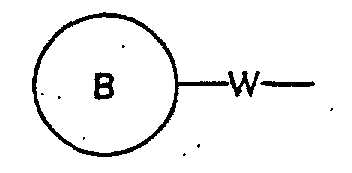
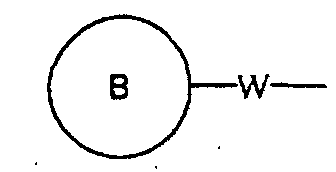
- substituent of the ring B or a substituent of the ring A is "an optionally substituted alkoxy"
- examples for substituent of the alkoxy include hydroxy, amino, etc.
- the said alkoxy may have 1 to 3 substituents mentioned above, and when the number of the substituents is two or more, each of the substituents may be the same or different.
- substituent of the ring B or a substituent of the ring A is "an optionally substituted amino"
- substituent of the amino include an alkyl (said alkyl may be substituted with 1 to 3 groups which are the same or different, selected from the group consisting of an alkoxy, amino and carboxy), an alkanoyl, etc.
- the said amino may have 1 or 2 substituents mentioned above, and when the number of the substituents is two, each of the substituents may be the same or different.
- substituents of the carbamoyl include alkyl, etc.
- the said carbamoyl may have 1 or 2 substituents mentioned above, and when the number of the substituents is two, each of the substituents may be the same or different.
- a substituent of the ring B in the compound [I] or a substituent of the ring A in the compound [Ia] is preferably exemplified by a halogen atom, nitro, an optionally substituted alkyl, an optionally substituted alkoxy, an optionally substituted amino, and cyano. Particularly preferred are a halogen atom, a c 1 -c 4 alkyl, a c 1 -c 4 alkoxy, etc., and specific examples are fluorine atom, chlorine atom, methyl, methoxy, etc.
- R 1 of the compound [I] and the compound [Ia] is "an optionally substituted alkyl"
- substituent of the alkyl include an alkynyl, cyano, an alkoxy, hydroxy, amino (said amino may be substituted with 1 or 2 substituents selected from the group consisting of an alkyl, an alkanoyl, and an alkylsulfonyl.), carboxy, an alkoxycarbonyl, carbamoyl (said carbamoyl may be substituted with 1 or 2 alkyl(s).), phenyl, naphthyl, etc.
- the said alkyl may have 1 to 3 substituents mentioned above, and when the number of the substituents is two or more, each of the substituents may be the same or different.
- substituents include cyano, an alkoxy, hydroxy, amino, carboxy, a carbamoyl which may be substituted by an alkyl, phenyl, etc.
- R 1 is "an optionally substituted cycloalkyl"
- substituents of the cycloalkyl include (1) hydroxy, (2) an alkoxy (said alkoxy may be substituted by 1 to 3 alkoxy(s)), (3) amino (said amino may be substituted by 1 or 2 group(s), being the same or different, and selected from the group consisting of the following (i) to (v) : (i) an alkyl, (ii) an alkanoyl, (iii) an alkoxycarbonyl, (iv) carbamoyl (said carbamoyl may be substituted by 1 or 2 alkyl(s).), and(v) an alkylsulfonyl], (4) carboxy, (5) an alkyl (said alkyl may be substituted by a group selected form the group consisting of hydroxy, an alkoxy and amino), (6) a carbamoyl which may be substituted by alkyl(s), etc.
- R 1 is "an optionally substituted phenyl"
- substituents of the phenyl include (1) a halogen atom, (2) nitro, (3) an alkyl (said alkyl may be substituted by 1 to 3 group(s), being the same or different, selected from the group consisting of a halogen atom, hydroxy, amino, carboxy, and phenylsulfonyl), (4) an alkenyl, (5) cyano, (6) hydroxy, (7) an alkoxy (said alkoxy may be substituted by 1 to 3 group(s), being the same or different, and selected from the group consisting of a halogen atom, carboxy, an alkoxycarbonyl, carbamoyl, phenyl and morpholinylcarbonyl), (8) amino [said amino may be substituted with 1 or 2 group(s), being the same or different, and selected from the group consisting of the following (i) to (iv) : (i) an alkyl, (i
- R 1 is an optionally substituted phenyl
- said phenyl may have 1 to 3 substituent(s) mentioned above, and when the number of the substituents is 2 or more, each of the substituents may be the same or different.
- Preferred substituents are (1) a halogen atom, (2) an alkyl (said alkyl may be substituted by 1 to 3 group(s), being the same or different, and selected from the group consisting of a halogen atom, hydroxy, amino, carboxy, and phenylsulfonyl), (3) cyano, (4) an alkoxy (said alkoxy may be substituted by 1 to 3 group(s), being the same or different, and selected from'the group consisting of a halogen atom, carboxy, an alkoxycarbonyl, carbamoyl, phenyl and morpholinyl carbonyl), etc.
- positions of the substituents there is no limitation regarding positions of the substituents, as long as it is possible to substitute
- R 1 is "a phenyl substituted by a heterocyclic group-substituted carbonyl"
- heterocyclic group include the above-mentioned heterocyclic groups, and preferred are 5- or 6-membered monocyclic nitrogen-containing aliphatic heterocyclic groups. Specific examples are pyrrolidinyl, piperidyl, piperazinyl, morpholinyl, etc.
- R 1 is "an optionally substituted heterocyclic group”
- examples for the heterocyclic group include the above-mentioned heterocyclic groups, and preferred are 5- or 6-membered monocyclic heterocyclic groups.
- Specific examples are furyl, tetrahydrofuryl, thienyl, thiazolyl, isoxazolyl, oxadiazolyl, pyridyl, pyrimidinyl, pyrazinyl, piperidinyl, pyrrolidinyl, pyrazolyl, tetrazolyl, tetrahydropyranyl, etc.
- Particularly preferred are piperidinyl, tetrahydropyranyl, etc.
- the substituents of the heterocyclic group are exemplified by a halogen atom, nitro, an alkyl (said alkyl may be substituted by a group selected from the group consisting of hydroxy, an alkoxy, a carbamoyl which may be substituted by alkyl(s) and carboxy(s)), cyano, hydroxy, amino, an alkanoyl, carboxy, an alkoxycarbonyl, carbamoyl (said carbamoyl may be substituted by 1 or 2 alkyl(s)), an alkylsulfonyl, phenyl, etc.
- the said heterocyclic group may have 1 to 3 substituent(s) mentioned above, and when the number of the substituents is 2 or more, each of the substituents may be the same or different.
- n and R 1 in the compound [I] and the compound [Ia] are exemplified by (1) those in which n is 0 and R 1 is an optionally substituted alkyl, (2) those in which n is 1 and R 1 is an optionally substituted cycloalkyl, (3) those in which n is 1 and R 1 is an optionally substituted phenyl, and (4) those in which n is 1 and R 1 is an optionally substituted heterocyclic group, etc.
- Particularly preferred are (1) those in which n is 0 and R 1 is an optionally substituted alkyl, (2) those in which n is 1 and R 1 is an optionally substituted phenyl, etc.
- n 0 and R 1 is a C 1 -C 4 alkyl
- n 1 and R 1 is a phenyl (said phenyl may be substituted by a group selected from the group consisting of cyano, fluorine atom, chlorine atom and methyl), etc.
- R 3 to R 8 in the compound [I] and the compound [Ia] is "an optionally substituted alkyl"
- the substituents of the alkyl are exemplified by (1) hydroxy, (2) an alkoxy group, (3) amino (said amino may be substituted by 1 or 2 group(s), being the same or different, and selected from the group consisting of an alkyl, an alkanoyl and an alkylsulfonyl), (4) an alkoxycarbonyl, (5) a cycloalkyl [said cycloalkyl may be substituted by 1 to 3 group(s), being the same or different, and selected from the group consisting of hydroxy, an amino which may be substituted by alkyl(s), an alkanoylamino, an alkylsulfonylamino, an alkyl (said alkyl may be substituted by a group selected from hydroxy, an alkoxy, amino and a carbamoyl which may be substituted by alkyl(
- R 3 to R 8 is "a heterocyclic group-substituted alkyl"
- said heterocyclic group are exemplified by the above-mentioned heterocyclic groups, and preferred are 5- or 6-membered monocyclic heterocyclic groups.
- Specific examples are pyridyl, pyrimidinyl, pyrazinyl, piperidyl, pyrrolidinyl, morpholinyl, thienyl, furyl, etc.
- R 3 to R 8 is "an optionally substituted amino"
- substituents of the amino are exemplified by an alkyl (said alkyl may be substituted by 1 to 3 group(s), being the same or different, and selected from the group consisting of hydroxy, an alkoxy and a heterocyclic group), a cycloalkyl (said cycloalkyl may be substituted by 1 to 3 hydroxy(s)), a heterocyclic group, etc.
- the said amino may have 1 or 2 substituent(s) mentioned above, and when the number of the substituents is 2 or more, each of the substituents may be the same or different.
- R 3 to R 8 is "an amino substituted by a heterocyclic group-substituted alkyl" or "an amino substituted by a heterocyclic group"
- the heterocyclic group are exemplified by the above-mentioned heterocyclic groups.
- Preferred are 5- or 6-membered monocyclic heterocyclic groups, specific examples are pyridyl, piperidyl, pyrrolidinyl, morpholinyl, etc..
- R 3 to R 8 is "an optionally substituted alkanoyl"
- substituents of the alkanoyl are exemplified by hydroxy, an alkoxy, amino (said amino may be substituted by 1 or 2 group(s), being the same or different, and selected from the group consisting of an alkyl and an alkanoyl), an alkoxycarbonyl, etc.
- the said alkanoyl may have 1 to 3 substituent(s) mentioned above, and when the number of the substituents is 2 or more, each of the substituents may be the same or different.
- R 3 to R 8 is "an optionally substituted carbamoyl"
- substituents of the carbamoyl are exemplified by an alkyl, a cycloalkyl, a heterocyclic group, etc.
- the said carbamoyl may have 1 or 2 substituent(s) mentioned above, and when the number of the substituents is 2, each of the substituents may be the same or different.
- R 3 to R 8 is "carbamoyl substituted by a heterocyclic group"
- the heterocyclic group is exemplified by the above-mentioned heterocyclic group, and preferred are 5- or 6-membered monocyclic heterocyclic groups. Specific examples are pyridyl, pyrimidinyl, piperidinyl, etc.
- R 3 to R 8 is "an optionally substituted cycloalkyl"
- substituents of the cycloalkyl are exemplified by a halogen atom
- an alkyl (said alkyl may be substituted by 1 to 3 group(s) selected from the group consisting of hydroxy, an alkoxy, amino and a carbamoyl which may be substituted by an alkyl), hydroxy, an alkoxy, amino (said amino may be substituted by 1 or 2 group(s), being the same or different, and selected from the group consisting of an alkyl, an alkanoyl, an alkoxycarbonyl and an alkylsulfonyl), carboxy, an alkanoyloxy, an alkoxycarbonyl, carbamoyl (said carbamoyl may be substituted by 1 or 2 group(s), being the same or different, and selected from the group consisting of an alkyl, a cycloalkyl and a heterocyclic group),
- R 3 to R 8 is an optionally substituted cycloalkyl
- the said cycloalkyl may have 1 to 3 substituent(s) mentioned above, and when the number of the substituents is 2 or more, each of the substituents may be the same or different.
- R 3 to R 8 is "a cycloalkyl substituted by a heterocyclic group-substituted carbamoyl
- the heterocyclic group is exemplified by the above-mentioned heterocyclic groups, and preferred are 5- or 6-membered monocyclic heterocyclic groups. Specific examples are pyridyl, pyrimidinyl, piperidinyl, etc.
- R 3 to R 8 is "an optionally substituted phenyl"
- substituents for the phenyl are exemplified by an alkyl, hydroxy, an alkoxy, a halogen atom, amino (said amino may be substituted by 1 or 2 alkyl(s)), etc.
- the said phenyl may have 1 to 3 substituent(s) mentioned above, and when the number of the substituents is 2 or more, each of the substituents may be the same or different.
- R 3 to R 8 is "an optionally substituted heterocyclic group"
- the heterocyclic group is exemplified by the above-mentioned heterocyclic groups, and preferred are 5- or 6-membered monocyclic heterocyclic groups.
- Specific examples are piperazinyl, piperidyl, pyridyl, pyrimidinyl, pyrazinyl, pyrazolyl, pyrrolidinyl, morpholinyl, oxazolyl, thiazolyl, tetrahydropyranyl, etc.
- substituents of the heterocyclic group are exemplified by an alkyl (said alkyl may be substituted by 1 to 3 group(s), being the same or different, and selected from the group consisting of phenyl, hydroxy, an alkoxy, amino and a carbamoyl which may be substituted by an alkyl), carboxy, an alkoxycarbonyl, an alkanoyl, an alkylsulfonyl, oxo, etc.
- the said heterocyclic group may have 1 to 3 substituent(s) mentioned above, and when the number of the substituents is 2 or more, each of the substituents may be the same or different.
- R 3 to R 8 is "a carbonyl substituted by an optionally substituted cycloalkyl"
- substituents of the cycloalkyl are exemplified by hydroxy, an alkoxy, amino (said amino may be substituted by 1 or 2 group(s), being the same or different, and selected from the group consisting of an alkyl and an alkanoyl), an alkoxycarbonyl, etc.
- the said cycloalkyl may have 1 to 3 substituent(s) mentioned above, and when the number of the substituents is 2 or more, each of the substituents may be the same or different.
- R 3 to R 8 is "a carbonyl substituted by an optionally substituted phenyl"
- substituents of the phenyl are exemplified by a halogen atom, hydroxy, an alkoxy, amino (said amino may be substituted by 1 or 2 group(s), being the same or different, selected from the group consisting of an alkyl and an alkanoyl), etc.
- the said phenyl may have 1 to 3 substituent(s) mentioned above, and when the number of the substituents is 2 or more, each of the substituents may be the same or different.
- R 3 to R 8 is "a carbonyl substituted by an optionally substituted heterocyclic group"
- the heterocyclic group is exemplified by the above-mentioned heterocyclic groups, and preferred are 5- or 6-membered monocyclic heterocyclic groups. Specific examples are piperidyl, pyrrolidinyl, pyridyl, pyrimidinyl, morpholinyl, etc.
- substituents of the heterocyclic group are exemplified by a halogen atom, an alkyl, hydroxy, amino (said amino may be substituted by 1 or 2 alkyl(s)), an alkanoyl, oxo, etc.
- the said heterocyclic group may have 1 to 3 substituent(s) mentioned above, and when the number of the substituents is 2 or more, each of the substituents may be the same or different.
- R 2 in the compound [Ia] are preferably exemplified by -NR 3 R 4 and -OR 5 , and particularly preferably exemplified by -NR 3 R 4 , and further more preferably exemplified by -NHR 4 .
- R 4 may include an optionally substituted alkyl, an alkenyl, an optionally substituted alkanoyl, an optionally substituted carbamoyl, an optionally substituted cycloalkyl, an optionally substituted phenyl, an optionally substituted heterocyclic group, a carbonyl substituted by an optionally substituted cycloalkyl and a carbonyl substituted by an optionally substituted heterocyclic group.
- Particularly preferred examples are an optionally substituted alkyl and an optionally substituted cycloalkyl, and more preferred examples are a C 3 -C 6 alkyl (said alkyl may be substituted by hydroxy(s)), a C 5 -C 7 cycloalkyl (said cycloalkyl may be substituted by a group selected from the group consisting of hydroxy, hydroxymethyl and carbamoyl), etc.
- an optical isomer based on an asymmetric carbon can be present in the compounds [I], [Ia] and [Ib] of the present invention, the present invention includes any of these optical isomers as well as mixtures thereof.
- the compounds [I], [Ia] and [Ib] can be used for a pharmaceutical use, in either a free form or in a form of a pharmaceutically acceptable salt.
- a pharmaceutically acceptable salt of the compound [I], [Ia] and [Ib] are exemplified by an inorganic acid salt such as a hydrochloride, a sulfate, a phosphate and a hydrobromide, and an organic acid salt such as acetate, fumarate, oxalate, citrate, methanesulfonate, benzenesulfonate, tosylate and maleate, etc. Further, in case of having a substituent such as carboxy, etc., there are mentioned a salt with a base (for example, an alkali metal salt such as a sodium salt, a potassium salt, etc. and an alkaline earth metal such as a calcium salt).
- a base for example, an alkali metal salt such as a sodium salt, a potassium salt, etc. and an alkaline earth metal such as a calcium salt.
- the compounds [I], [Ia] and [Ib] of the present invention or a salt thereof include an internal salt thereof and a solvate thereof, such as a hydrate, etc.
- the compounds [I], [Ia] and [Ib] of the present invention or a pharmaceutically acceptable salt thereof have an excellent p38 MAP kinase inhibitory action and is useful for the prophylaxis and treatment for diseases related to the activation of p38 MAP kinase and the excessive production of inflammatory mediators concerned with p38 MAP kinase such as TNF- ⁇ , IL-1, etc. Therefore, the compounds [I], [Ia] and [Ib] of the present invention or a pharmaceutically acceptable salt thereof is expected to be useful for a therapeutic and prophylactic agent for inflammatory diseases, etc.
- arthritis rheumatoid arthritis, osteoarthritis, infectious arthritis, gouty arthritis, traumatic arthritis, synovitis, periarthritis, etc.
- inflammatory bowel disease ulcerative colitis, Crohn's disease, etc.
- inflammatory dermal disease psoriasis, dermatitis (atopic dermatitis, contact dermatitis urticaria, eczema, etc.), etc.]
- inflammatory respiratory disease as asthma, bronchitis, pneumonia, pleurisy, pharyngitis, rhinitis, etc.
- inflammatory optical disease conjunctivitis, keratitis, uveitis, etc.
- nephritis hepatitis
- systemic inflammatory disease Behcet's syndrome, systemic lupus erythematosus, etc.
- shock septic shock, endotoxin shock, etc.
- cerebrovascular disease cerebrovascular
- the compounds [I], [Ia] and [Ib] of the present invention or a pharmaceutically acceptable salt thereof can be administered orally or parenterally, and can be used as conventional pharmaceuticals such as tablets, granules, capsules, powder, injections, inhalants, etc. These pharmaceuticals can be prepared according to the conventional methods.
- An administration amount of the compound [I], [Ia] and [Ib] of the present invention or a pharmaceutically acceptable salt thereof depends on an administration method, age, body weight, and condition of the patient, and usually, it is preferably 0.003 to 30 mg/kg, and particularly preferably, 0.01 to 10 mg/kg.
- the compounds [I], [Ia] and [Ib] of the present invention can be prepared suitably by a method selected from the following [Method A] to [Method D], however, it is not limited to these. Production method will be described in detail using the compound [Ia] as follow, however, the compounds [I] and [Ib] can be produced in a similar manner. (wherein R is an alkyl, and other symbols have the same meanings as mentioned above.)
- the compound [Ia] of the present invention can be produced by reacting a compound [II] with a compound [III], followed by treating the reaction product with an acid.
- This reaction can be carried out in a solvent (Journal of Medicinal Chemistry, 9, 858(1966)).
- a solvent there is no limitation as long as it does not affect the reaction, for example, there are mentioned tetrahydrofuran (THF), chloroform, methylene chloride, dioxane, ethyl acetate, ether, toluene, etc.
- THF tetrahydrofuran
- chloroform methylene chloride
- dioxane ethyl acetate
- ether ethyl acetate
- toluene etc.
- the present reaction proceeds preferably at -20 to 80°C, particularly preferably at 0 to 30°C.
- an acid for an acid treatment there are mentioned, for example, hydrochloric acid, sulfuric acid, phosphoric acid, p-toluenesulfonic acid, methanesulfonic acid, etc.
- an alkyl of R in the formula [II] there are mentioned, for example, methyl, ethyl, propyl, butyl, etc., and particularly preferred are methyl and ethyl.
- Y is a halogen atom, hydroxy, or dihydroxyboranyl
- n1 is 0, 1,2,3 or 4
- R 1a is hydrogen atom, an optionally substituted alkyl, an optionally substituted cycloalkyl, an optionally substituted phenyl, or an optionally substituted heterocyclic group (provided that the case where n1 is 0 and R 1a is hydrogen atom is excluded.), and other symbols have the same meanings as the above.
- the compound [I-B] which is categorized in the compound [Ia] can be produced by reacting a compound [I-A], which is a compound [Ia] where n is 0 and R 1 is hydrogen atom, with a compound [IV] for alkylation.
- Y in the formula [IV] is a halogen atom
- this reaction can be carried out in a solvent, in the presence of a base.
- a solvent can be used as long as it does not affect the reaction, and there are mentioned, for example, dimethylformamide (DMF), dimethylsulfoxide,1-methylpyrrolidone, 1,3,-dimethyl-2-imidazolidinone, etc.
- the base there are mentioned, for example, sodium hydride, sodium hydroxide, potassium t-butoxide, butyllithium, lithium diisopropylamide, etc.
- the reaction proceeds preferably at -20to 100°C, particularly preferably at 0 to 30°C.
- the halogen atom at Y there are mentioned chlorine, bromine and iodine, and bromine and iodine are particularly preferred.
- the reaction can be carried out in a solvent, in the presence of an additive and an activator (Synthesis, 1 (1981)).
- Any solvent can be used as long as it does not affect the reaction, and there are mentioned, for example, methylene chloride, THF, dioxane, chloroform, etc.
- the additive there are mentioned, for example, triphenylphosphine, tributylphosphine, trimethylphosphine, etc.
- the activator there are mentioned, for example, diethyl azodicarboxylate, dimethyl azodicarboxylate, 1,1-azobis(N,N-dimethylformamide), 1,1-(azodicarbonyl)dipiperidine, etc.
- This reaction proceeds preferably at -30 to 100°C, and particularly preferably at 0 to 50°C.
- Y in the formula [IV] is dihydroxyboranyl
- the reaction can be carried out in a solvent, in the presence of a catalyst and a base (Tetrahedron Letters, 39, 2933 (1998)) Any solvent can be used as long as it does not affect the reaction, and there are mentioned, for example, methylene chloride, chloroform, DMF, etc.
- the catalyst there are mentioned, for example, copper (II) acetate, etc.
- the base there are mentioned, for example, triethylamine, diisopropylethylamine, 4-methylmorpholine, pyridine, etc.
- This reaction proceeds preferably at -10 to 100°C, and particularly preferably at 20 to 60°C. (wherein R 21 is -NR 3 R 4 , -OR 5 or -COR 6a , R 6a is an alkoxy, and other symbols have the same meanings as the above.)
- the compound [I-C] which is categorized in the compound [Ia] of the present invention can be produced by reacting a compound [V] with a compound [VI], a compound [VII] or a compound [VIII].
- the reaction between the compound [V] and the compound [VI] can be carried out in a solvent, in the presence of a catalyst, a base and an additive (Journal of Organic Chemistry, 61, 7240(1996)). Any solvent can be used as long as it does not affect the reaction, and there are mentioned, for example, toluene, xylene, dimethoxyethane, dioxane, etc.
- the catalyst there are mentioned, for example, palladium acetate, bis(dibenzylideneacetone)dipalladium, etc.
- the base there are mentioned, for example, sodium t-butoxide, potassium t-butoxide, lithium t-butoxide, triethylamine, etc.
- the additive there are mentioned, for example, 2,2'-bis(diphenylphosphino)-1,1'binaphthyl, etc.
- the reaction proceeds preferably at 30 to 150°C, and particularly preferably at 60 to 80°C.
- the reaction between the compound [V] and the compound [VII] can be carried out in a solvent. Any solvent can be used as long as it does not affect the reaction, and there are mentioned, for example, THF, dioxane, DMF, toluene, methanol, ethanol, etc.
- the reaction proceeds preferably at 20 to 150°C, and particularly preferably at 70 to 100°C.
- the reaction between the compound [V] and the compound [VIII] can be carried out in a solvent, in the copresence of carbon monoxide, and in the presence of a catalyst and an additive (Tetrahedron, 55, 393(1999)).
- a catalyst and an additive Tetrahedron, 55, 393(1999).
- Any solvent can be used as long as it does not affect the reaction, and there are mentioned, for example, toluene, dioxane, DMF, etc.
- the catalyst there are mentioned, for example, palladium acetate, palladium chloride, bis(triphenylphosphine)palladium dichloride, tetrakis(triphenylphosphine)palladium, etc.
- 1,1'-bis(diphenylphosphino)ferrocene 1,4-bis(diphenylphosphino)butane, 1,3-bis(diphenylphosphino) propane, triphenylphosphine, etc.
- the reaction proceeds preferably at 30 to 250°C, and particularly preferably at 80 to 120°C. (wherein m is 1 or 2, R 22 is -NR 3 R 4 or -OR 5 and other symbols have the same meanings as the above.)
- the compound [I-D] which is categorized in the compound [Ia] of the present invention can be produced by reacting a compound [IX] with a compound [VI] or a compound [X].
- the reaction between the compound [IX] and the compound [VI] can be carried out in a solvent. Any solvent can be used as long as it does not affect the reaction, and there are mentioned, for example, dioxane, THF, DMF, dimethylsulfoxide, etc.
- the reaction proceeds preferably at 0 to 150 °C, and particularly preferably at 50 to 100°C.
- the reaction between the compound [IX] and the compound [X] can be carried out in a solvent, in the presence of a base.
- a solvent can be used as long as it does not affect the reaction, and there are mentioned, for example, THF, dioxane, DMF, dimethylsulfoxide, etc.
- the base there are mentioned, for example, sodium hydride, sodium hydroxide, potassium t-butoxide, butyllithium, etc.
- the reaction proceeds preferably at -30 to 100 °C, and particularly preferably at 0 to 30°C.
- the compound [Ia] produced above can also be derived to other compounds [Ia] by converting a functional group using properly a conventionally known organic chemistry reaction.
- a method for converting a functional group may be suitably selected depending on a kind of a desired functional group.
- a conversion of a functional group of R 2 in the compound [Ia] can be carried out according to the following (method a) to (method g). (wherein the symbols have the same meanings as the above.)
- the compound [I-1] can be produced by reacting a compound [I-2] with a hydrogen halide.
- a hydrogen halide there are mentioned hydrogen fluoride, hydrogen chloride, hydrogen bromide, hydrogen iodide, etc., and particularly preferred is hydrogen bromide.
- This reaction proceeds preferably at 0 to 150°C, particularly preferably at 60 t 80°C.
- R 41 is an alkanoyl which may be substituted, an alkylsulfonyl, carbonyl substituted by a cycloalkyl which may be substituted, carbonyl substituted by a phenyl which may be substituted, or carbonyl substituted by a heterocyclic group which may be substituted.
- A is a halogen atom or hydroxy. Other symbols have the same meanings as the above.
- the compound [I-3] and compound [I-4] can be produced by reacting a compound [I-1] with a compound [XI].
- a in the formula [XI] is a halogen atom
- this reaction can be carried out in a solvent in the presence of a base.
- a base Any solvent can be used as long as it does not affect the reaction, and there are mentioned, for example, methylene chloride, chloroform, THF, DMF, etc.
- the base there are mentioned, for example, triethylamine, diisopropylethylamine, 4-methylmorpholine, pyridine, etc.
- the reaction proceeds preferably at -40 to 100°C, particularly preferably at -10 to 30°C.
- the halogen atom at X there are mentioned fluorine, chlorine, bromine, and iodine, and particularly preferred are chlorine and bromine.
- a in the formula [XI] is hydroxy
- this reaction can be carried out in a solvent in the presence of a condensing agent.
- a condensing agent Any solvent can be used as long as it does not affect the reaction, and there are mentioned, for example, methylene chloride, chloroform, THF, DMF, etc.
- the condensing agent there are mentioned, for example, 1,1'-carbonyldiimidazole, 1,3-dicyclohexylcarbodiimide, 1,(3-dimethylaminopropyl)-3-ethylcarbodiimide hydrochloride, etc.
- the reaction proceeds preferably at -40 to 100°C, particularly preferably at -10 to 30°C.
- R 9 and R 10 are independently hydrogen atom, or an alkyl.
- R 10a is an alkyl.
- X is a halogen atom.
- Other symbols have the same meanings as the above.
- the compound [I-5] can be produced by reacting a compound [I-1] with a compound [XII], with triphosgene and a compound [XIII], or with a compound [XIV].
- the compound [I-5] can be produced by reacting a compound [I-1] with a compound [XII] in a solvent.
- a solvent can be used as long as it does not affect the reaction, and there are mentioned, for example, methylene chloride, chloroform, THF, etc.
- halogen atom at X in the formula [XII] fluorine, chlorine, bromine, and iodine are mentioned, and preferred is chlorine.
- the reaction proceeds preferably at -20 to 100°C and particularly at 10 to 60°C.
- the compound [I-5] can be produced by reacting a compound [I-1] with triphosgene in a solvent, and then, by reacting with a compound [XIII].
- Any solvent can be used as long as it does not affect the reaction, and there are mentioned, for example, methylene chloride, chloroform, THF, etc.
- the reaction proceeds preferably at -20 to 100°C and particularly at 10 to 60°C.
- a compound [I-5] in which R 9 is a hydrogen atom and R 10 is an alkyl can be produced by reacting a compound [I-1] with a compound [XIV] in a solvent.
- Any solvent can be used as long as it does not affect the reaction, and there are mentioned, for example, THF, methylene chloride, chloroform, etc.
- the reaction proceeds preferably at -20 to 100°C and particularly at 10 to 60°C. (wherein R is an alkyl, and other symbols have the same meanings as the above.)
- the compound [I-6] can be produced by hydrolyzing a compound [I-7] by a conventional method. (wherein R 61 is an amino which may be substituted, and other symbols have the same meanings as the above.)
- the compound [I-8] can be produced by reacting a compound [I-6] with a compound [XV] in a solvent, in the presence of a condensing agent.
- a condensing agent Any solvent can be used as long as it does not affect the reaction, and there are mentioned, for example, methylene chloride, acetonitrile, DMF, THF, etc.
- the condensing agent there are mentioned, for example, 1,1'-carbonyldiimidazole, 1,3-dicyclohexylcarbodiimide, 1,(3-dimethylaminopropyl)-3-ethylcarbodiimidehydrochloride, etc.
- the reaction proceeds preferably at -30 to 100°C and particularly at 0 to 70°C. (wherein symbols have the same meanings as the above.)
- the compound [I-9] can be produced by reducing a compound [I-6] or a compound [I-7] in a solvent.
- Any solvent can be used as long as it does not affect the reaction, and there are mentioned, for example, THF, diethyl ether, etc.
- the reducing agent there are mentioned, for example, lithium aluminum hydride, sodium borohydride, lithium borohydride, etc.
- the reaction proceeds preferably at -20 to 70°C and particularly at 0 to 40°C. (wherein R 81 is an optionally substituted amino, and other symbols have the same meanings as the above.)
- the compound [I-10] can be produced by reacting a compound [I-9] with a compound [XVI] in a solvent, in the presence of a base and an activating agent.
- a solvent can be used as long as it does not affect the reaction, and there are mentioned, for example, methylene chloride, THF, chloroform, toluene, etc.
- the base there are mentioned, for example, triethylamine, diisopropylethylamine, pyridine, etc.
- the activating agent there are mentioned, for example, methanesulfonyl chloride, p-toluenesulfonyl chloride, etc.
- the reaction proceeds preferably at -10 to 60°C and particularly at 0 to 30°C.
- the compound [Ia] of the present invention obtained according to the above described [Method A] to [Method D] or (Method a) to (Method g) can be optionally converted to a pharmaceutically acceptable salt. Conversion to a pharmaceutically acceptable salt may be carried out by methods known to the person skilled in the art.
- the starting material [II] can be produced as follows. (wherein the symbols have the same meanings as the above.)
- the reaction for producing the compound [2] from the compound [1] and hydroxylamine can be carried out in a solvent. Any solvent can be used as long as it does not affect the reaction, and there are mentioned, for example, ethanol, methanol, etc.
- the reaction proceeds preferably at 0 to 150°C, and particularly preferably at 60 to 80°C.
- the reaction for producing the compound [3] from the compound [2] and tosyl chloride can be carried out in a solvent. Any solvent can be used as long as it does not affect the reaction, and there are mentioned, for example, methylene chloride, chloroform, THF, toluene, etc.
- As the base there are mentioned, for example, triethylamine, diisopropylethylamine, pyridine, etc.
- the reaction proceeds preferably at -20 to 80°C, and particularly preferably at 0 to 30°C.
- the reaction for producing the compound [3a] from the compound [3] can be carried out in a solvent, by reacting the compound [3] with sodium alkoxide, followed by treating the reactant with an acid.
- Any solvent can be used as long as it does not affect the reaction, and there are mentioned, for example, methanol, ethanol, dioxane, THF, dimethoxyethane, etc.
- the acid there are mentioned, for example, hydrogen chloride, etc.
- the reaction proceeds preferably at -20 to 60°C, and particularly preferably at 0 to 30°C.
- the reaction for producing the compound [II] from the compound [3a] can be carried out by reacting a corresponding aldehyde using a conventional reductive alkylation (Journal of Organic Chemistry, 61, 3849(1996)).
- a starting material [V] can be produced, for example, as follows. (wherein the symbols have the same meanings as the above.)
- the reaction for producing the compound [5] from the compound [4] and methyl lithium can be carried out in a solvent. Any solvent can be used as long as it does not affect the reaction, and there are mentioned, for example, THF, diethyl ether, dimethoxyethane, etc.
- the reaction proceeds preferably at -90 to 0°C, and particularly preferably at -60 to -40°C.
- the method for producing the compound [8] from the compound [5] via the compound [6] and the compound [7] can be carried out in a similar manner to the above-mentioned method for producing the compound [II] from the compound [1] via the compound [2] and the compound [3].
- reaction for producing the compound [9] from the compound [8] and the compound [III] can be carried out in a similar manner to the above-mentioned [Method A].
- reaction for producing the compound [V] from the compound [9] and the compound [IV] can be carried out in a similar manner to the above-mentioned [Method B].
- a starting material [IX] can be produced, for example, as follows. (wherein m is 1 or 2, and other symbols have the same meanings as the above.)
- the reaction for producing the compound [12] from the compound [10] and the compound [11] can be carried out in a solvent or without solvent. Any solvent can be used as long as it does not affect the reaction, and there are mentioned, for example, toluene, xylene, dioxane, etc.
- the reaction proceeds preferably at 50 to 150°C, and particularly preferably at 80 to 120°C.
- the reaction for producing the compound [13] from the compound [12] can be carried out by reacting the compound [12] with thiourea in a solvent, in the presence of a base, and then, by reacting an alkylating agent.
- Any solvent can be used as long as it does not affect the reaction, and there are mentioned, for example, methanol, THF, dioxane, etc.
- As the base there are mentioned, for example, sodium methoxide, sodium hydroxide, potassium t-butoxide, etc.
- the alkylating agent there are mentioned, for example, methyl iodide, dimethyl sulfate, etc.
- the reaction proceeds preferably at 0 to 100°C, and particularly preferably at 30 to 70°C.
- the reaction for producing the compound [14] from the compound [13] can be carried out in a solvent, in the presence of an acid.
- Any solvent can be used as long as it does not affect the reaction, and there are mentioned, for example, water, acetone, THF, dioxane, etc.
- the acid there are mentioned, for example, hydrochloric acid, sulfuric acid, phosphoric acid, p-toluenesulfonic acid, etc.
- the reaction proceeds preferably at -10 to 80°C, and particularly preferably at 0 to 30°C.
- the compound [14] can be also produced from the compound [15] via the compound [17].
- the reaction for producing the compound [17] from the compound [15] and the compound [16] can be carried out in a solvent, in the presence of a catalyst.
- a catalyst Any solvent can be used as long as it does not affect the reaction, and there are mentioned, for example, DMF, toluene, xylene, etc.
- the catalyst there are mentioned, for example, bis(triphenylphosphine)palladium dichloride, tetrakis(triphenylphosphine)palladium, etc.
- the reaction proceeds preferably at 50 to 150°C, and particularly preferably at 70 to 90°C.
- reaction for producing the compound [14] from the compound [17] can be carried out in a similar manner to the above-mentioned method for producing the compound [14] from the compound [13].
- reaction for producing the compound [20] from the compound [14] via the compound [18] and the compound [19] can be carried out in a similar manner to the above-mentioned method for producing the compound [II] from the compound [1] via the compound [2] and the compound [3].
- reaction for producing the compound [21] from the compound [20] and the compound [III] can be carried out in a similar manner to the above-mentioned [Method A].
- the reaction for producing the compound [22] from the compound [21] can be carried out in a solvent, using an oxidizing agent. Any solvent can be used as long as it does not affect. the reaction, and there are mentioned, for example, water, methanol, THF, dioxane, chloroform, methylene chloride, etc.
- the oxidizing agent there are mentioned, for example, Oxon (trade name, manufactured by DuPont Co. Ltd.), 3-chloroperoxybenzoic acid, hydrogen peroxide, etc.
- the reaction proceeds preferably at -20 to 60°C, and particularly preferably at -10 to 30°C.
- reaction for producing the compound [IX] from the compound [22] and the compound [IV] can be carried out in a similar manner to the above-mentioned [Method B].
- the compound [IX] can be also produced from the compound [21] via the compound [23].
- reaction for producing the compound [23] from the compound [21] and the compound [IV] can be carried out in a similar manner to the above-mentioned [Method B].
- reaction for producing the compound [IX] from the compound [23] can be carried out in a similar manner to the reaction for producing the compound [22] from the compound [21].
- the above production methods it is possible to optionally protect or deprotect a functional group.
- the protecting group for the functional group those used in a field of conventional organic synthetic chemistry can be used, examples of which include those described in "Protective Groups in Organic Synthesis" by T. W. Greene, P. M. G. Wuts, (published by John Wiley and Sons, 1991).
- the method described in the above reference can be mentioned.
- each compound and each intermediate produced in the above production methods can be purified by means of a conventional method, for example, column chromatography, recrystallization, etc.
- a solvent for recrystallization there are mentioned, for example, an alcohol solvent such as methanol, ethanol, 2-propanol, etc., an ether solvent such as diethyl ether, etc., an ester solvent such as ethyl acetate, etc., an aromatic solvent such as toluene, etc., a ketone solvent such as acetone, etc., a hydrocarbon solvent such as hexane, etc., water, etc., and a mixed solvent thereof.
- the compounds [I], [Ia] and [Ib] of the present invention can be converted to a pharmaceutically acceptable salt according to the conventional method, and recrystallization can be carried out afterwards.
- the reaction mixture was diluted by ethyl acetate, and insoluble matter was removed by filtration through Celite.
- To the filtrate was added 6N hydrochloric acid, and after separation, an aqueous layer was made alkaline with aqueous sodium bicarbonate solution.
- Example 63 To 146 mg of the compound in Example 63 were added 0.2 ml of ethyl acetate and 1. 7 ml of a 4N hydrogen chloride-ethyl acetate solution, and the mixture was stirred at room temperature for 3 hours. The reaction mixture was concentrated under reduced pressure, and ethyl acetate was added to the residue and powder was collected by filtration to give 128 mg of the title dompound. MS 462([M+H] + )
- Example 147 By using the compound of Example 147, it was reacted with a corresponding starting compound to carry out acylation in the same manner as in Example 14 to give the compounds of Examples 157 and 158 shown in Table 16. Also, by using the compound of Example 147, it was reacted with a corresponding starting compound to carry out N-alkylation in the same manner as in Reference example 10 to give the other compounds shown in Table 16. Incidentally, in synthesis of the compound of Example 160, t-butyl bromoacetate was used as a corresponding starting compound, and after the reaction, the ester was hydrolyzed under the same conditions as in Example 80.
- Example 169 The compound of Example 169 was reacted with a corresponding amine in the same manner as in Example 170 to give the compounds shown in Table 18.
- Example 55 By using the compound of Example 55, it was reacted in the same manner as in Examples 179 and 180 to give the compounds of Examples 181 and 182 shown in Table 20. Also, in the same manner as in Example 55, a corresponding compound having isobutylamino group was synthesized, and subsequently the compound was reacted in the same manner as in Example 180 to give the compound of Example 183.
- Example 70 By using the compound of Example 70 or the compound of Example 105, it was reacted under the same conditions (conc. hydrochloric acid was used in place of HBr-acetic acid) as in Example 179 to give the compounds shown in Table 21.
- Example 182 The compound of Example 182, 192, 189, 187 or 188 was reacted with a corresponding halide in the same manner as in Reference example 1(6) to subject to alkylation to give the compounds shown in Tables 23 and 24.
- the compound of Example 211 was synthesized by protecting the amino group with a t-butoxycarbonyl for the reaction and deprotecting in the same manner as in Example 80.
- the compound of Example 214 was synthesized by eliminating a methoxymethyl group of the compound of Example 213 in the same manner as in Example 81.
- Example 192 The corresponding starting materials obtained in the same manner as in Example 192 were reacted with a corresponding halide in the same manner as in Reference example 1(6) to subj ect to alkylation to give the compounds shown in Table 25.
- Example 182 The compound of Example 182 was reacted with a corresponding halide in the same manner as in Reference example 1(6) to subject to alkylation to synthesize Compound (1).
- a mixture comprising 226 mg of Compound (1), 1.1 ml of 1N aqueous NaOH solution and 1.1 ml of ethanol was stirred at room temperature for 3 hours. The resulting mixture was neutralized with 1N hydrochloric acid, and precipitated crystals were collected by filtration to give 184 mg of the corresponding carboxylic acid. 148 mg of the obtained crystals was reacted with methylamine in the same manner as in Example 170 to give 96 mg of Compound (2).
- MS 384 [M+H] + )
- Example 226(1) The compound of Example 226(1) was reacted with ethylamine in the same manner as in Example 226 (2) to give the title compound. MS 398 ([M+H] + )
- Example 13 By using the compounds of Example 13 and Examples 228 to 230, they were reacted with an acid halide in the same manner as in Example 14, and if necessary, by removing t-butoxycarbonyl in the same manner as in Example 80 to give the compounds shown in Table 27.
- Example 303 or 304 The compound of Example 303 or 304 was subjected to methanesulfonylation or methoxycarbonylation according to the conventional methods to give the compounds shown in Table 41.
- Example 2 The compound of Example 1 (100 mg), 4-acetylphenylboronic acid (129 mg), copper (II) acetate (72 mg) and triethylamine (220 ⁇ l) were suspended in 10 ml of methylene chloride, and the suspension was stirred at room temperature for 24 hours. To the readction mixture, 28% aqueous ammonia was added and the mixture was extracted with chloroform, washed with brine, and dried over anhydrous magnesium sulfate. The resultant mixture was concentrated under reduced pressure, and ether was added to the residue and precipitated crystals were collected by filtration to give 92 mg of the title compound. Melting point: 206°C (decomposed)
- Example 2 The compound of Example 1 and the corresponding starting materials were reacted in the same manner as in Example 387 to give the compounds shown in Table 42.
- Example 16 The compound of Example 16 and the compounds prepared in the same manner as in Example 16 were subjected to hydrolysis followed by amidation according to the conventional methods, or subjected to reduction followed by mesylation and dimethylamination, to give the compounds'shown in Table 43.
- LPS lipopolysaccharide
- Tests were carried out to measure an inhibitory effects of the compounds of the present invention on LPS-stimulated TNF- ⁇ production in mice.
- mice (6-8 weeks old, female, available from Japan Charlesriver, Co.) were administered test compounds (10 mg/kg, p.o.) dissolved in 0.5% methyl cellulose and 0.2% PEG-60 hydrogenated caster oil (HCO60, available from Nikko Chemicals, Co.).
- HCO60 PEG-60 hydrogenated caster oil
- LPS E. coli 0111:B4, available from Difco, with a final concentration of 1 mg/kg adjusted by phosphate buffered saline
- blood was collected from abdominal vein of the mouse under diethyl ether anesthesia. The collected blood was subjected to centrifugation with 3000g to collect serum.
- TNF- ⁇ in the sera was measured by DuoSet mouse TNF- ⁇ ELISA kit (trade name, available from genzymeTECHNE).
- the compounds of the present invention significantly reduced the production of TNF- ⁇ as shown in Table 52.
- TNF- ⁇ inhibition rate 182 64% 202 57% 239 69% 296 52% 300 57%
- a novel 4-imidazolin-2-one compound having excellent p38MAP kinase inhibitory activity which is useful as a medicine, can be provided.
Landscapes
- Health & Medical Sciences (AREA)
- Chemical & Material Sciences (AREA)
- Organic Chemistry (AREA)
- Life Sciences & Earth Sciences (AREA)
- Veterinary Medicine (AREA)
- Public Health (AREA)
- General Health & Medical Sciences (AREA)
- Animal Behavior & Ethology (AREA)
- Medicinal Chemistry (AREA)
- Pharmacology & Pharmacy (AREA)
- Chemical Kinetics & Catalysis (AREA)
- Bioinformatics & Cheminformatics (AREA)
- General Chemical & Material Sciences (AREA)
- Engineering & Computer Science (AREA)
- Nuclear Medicine, Radiotherapy & Molecular Imaging (AREA)
- Physical Education & Sports Medicine (AREA)
- Rheumatology (AREA)
- Epidemiology (AREA)
- Pulmonology (AREA)
- Neurosurgery (AREA)
- Neurology (AREA)
- Biomedical Technology (AREA)
- Dermatology (AREA)
- Orthopedic Medicine & Surgery (AREA)
- Diabetes (AREA)
- Pain & Pain Management (AREA)
- Urology & Nephrology (AREA)
- Cardiology (AREA)
- Heart & Thoracic Surgery (AREA)
- Immunology (AREA)
- Virology (AREA)
- Obesity (AREA)
- Hematology (AREA)
- Molecular Biology (AREA)
- Tropical Medicine & Parasitology (AREA)
- Ophthalmology & Optometry (AREA)
- AIDS & HIV (AREA)
- Endocrinology (AREA)
- Hospice & Palliative Care (AREA)
- Psychiatry (AREA)
Abstract

Q1 and Q2 may be the same or different, and each is hydrogen atom, a halogen atom or an alkyl,
n is 0, 1, 2, 3 or 4,
R1 is hydrogen atom, an alkyl which may be substituted, a cycloalkyl which may be substituted, a phenyl which may be substituted, etc.,
Z1, Z2, Z3 and Z4 may be the same or different, and each is CH or N, provided that 3 or more of Z1, Z2, Z3 and Z4 should not be N at the same time,
G2 is hydrogen atom, -NR3R4, -OR5, etc., where R3 to R8 each is independently hydrogen atom, an alkyl which may be substituted, an alkenyl, an alkynyl, etc.,
or a pharmaceutically acceptable salt thereof.
Description
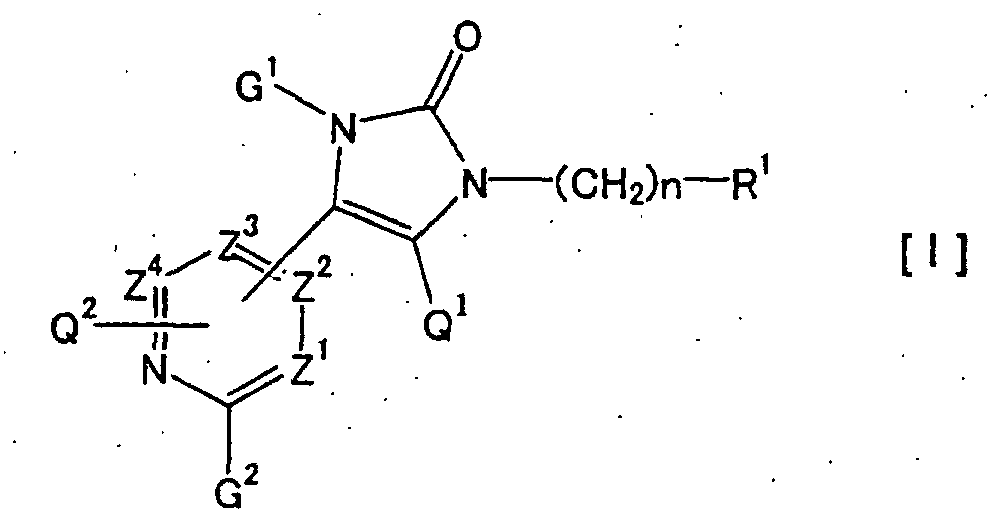
Q1 and Q2 may be the same or different, and each is hydrogen atom, a halogen atom or an alkyl,
n is 0, 1, 2, 3 or 4,
R1 is hydrogen atom, an optionally substituted alkyl, an optionally substituted cycloalkyl, an optionally substituted phenyl or an optionally substituted heterocyclic group,
Z1, Z2, Z3 and Z4 may be the same or different, and each is CH or N, provided that 3 or more of Z1, Z2, Z3 and Z4 should not be N at the same time,
G2 is hydrogen atom, -NR3R4, -OR5, -SR5 -COR6, -CHR7R8, or a heterocyclic group,
where R3 to R8 each independently is hydrogen atom, an optionally substituted alkyl, an alkenyl, an alkynyl, hydroxy, an alkoxy, an optionally substituted amino, an optionally substituted alkanoyl, an optionally substituted carbamoyl, an alkoxyoxalyl, an alkylsulfonyl, an optionally substituted cycloalkyl, an optionally substituted phenyl, an optionally substituted heterocyclic group, a carbonyl substituted by an optionally substituted cycloalkyl, a carbonyl substituted by an optionally substituted phenyl or a carbonyl substituted by an optionally substituted heterocyclic group,
or a pharmaceutically acceptable salt thereof.

W is a single bond, or a c1 - c4 alkylene which may be substituted by 1 or 2 alkyl(s),
n is 0, 1, 2, 3 or 4,
R1 is hydrogen atom, an optionally substituted alkyl, an optionally substituted cycloalkyl, an optionally substituted phenyl or an optionally substituted heterocyclic group,
Z is CH or N,
R2 is hydrogen atom, -NR3R4, -OR5, -COR6 or -CHR7R8,
where R3 to R8, each independently is hydrogen atom, an optionally substituted alkyl, an alkenyl, an alkynyl, hydroxy, an alkoxy, an optionally substituted amino, an optionally substituted alkanoyl, an optionally substituted carbamoyl, an alkoxyoxalyl, an alkylsulfonyl, an optionally substituted cycloalkyl, an optionally substituted phenyl, an optionally substituted heterocyclic group, a carbonyl substituted by an optionally substituted cycloalkyl, a carbonyl substituted by an optionally substituted phenyl or a carbonyl substituted by an optionally substituted heterocyclic group,
or a pharmaceutically acceptable salt thereof.
W is a single bond,
n is 0 or 1,
R1 is hydrogen atom, an optionally substituted alkyl, an optionally substituted cycloalkyl, an optionally substituted phenyl or an optionally substituted heterocyclic group,
Z is CH or N,
R2 is hydrogen atom, -NR3R4, -OR5, -COR6 or -CHR7R8,
where R3 to R8 each independently is hydrogen atom, an optionally substituted alkyl, an alkenyl, an alkoxy, an optionally substituted alkanoyl, an optionally substituted carbamoyl, an alkoxyoxalyl, an optionally substituted cycloalkyl, an optionally substituted phenyl, an optionally substituted heterocyclic group, a carbonyl substituted by an optionally substituted cycloalkyl or a carbonyl substituted by an optionally substituted heterocyclic group,
or a pharmaceutically acceptable salt thereof.
W is a single bond,
n is 0 or 1,
R1 is
R2 is hydrogen atom, -NR3R4, -OR5, -COR6 or -CHR7R8,
where R3 to R8 each independently is:
- (1) hydrogen atom,
- (2) an alkyl optionally substituted by group(s) selected
from the group consisting of the following (i) to
(vii) :
- (i) hydroxy,
- (ii) an alkoxy,
- (iii) an amino optionally substituted by group(s) selected from the group consisting of an alkyl, an alkanoyl and an alkylsulfonyl,
- (iv) an alkoxycarbonyl,
- (v) a cycloalkyl optionally substituted by group(s)
selected from the group consisting of the following
a) to g) :
- a) hydroxy,
- b) an amino optionally substituted by alkyl(s),
- c) an alkanoylamino,
- d) an alkylsulfonylamino,
- e) an alkyl optioinally substituted by group(s) selected from the group consisting of hydroxy, an alkoxy, amino, a carbamoyl optionally substituted by alkyl(s),
- f) carboxy and
- g) a carbamoyl optionally substituted by alkyl(s),
W is a single bond,
n is 0 or 1,
R1 is
R2 is hydrogen atom, -NR3R4, -OR5, or -COR6,
where R3 to R6 each independently is:
- (1) hydrogen atom,
- (2) an alkyl optionally substituted by group(s) selected
from the group consisting of the following (i) to (vi) :
- (i) hydroxy,
- (ii) an alkoxy,
- (iii) an alkoxycarbonyl,
- (iv) a cycloalkyl optionally substituted by group(s)
selected from the group consisting of the following
a) to e) :
- a) hydroxy,
- b) an amino optionally substituted by alkyl(s),
- c) an alkanoylamino,
- d) an alkyl optionally substituted by group(s) selected from the group consisting of hydroxy, amino and a carbamoyl optionally substituted by alkyl(s), and
- e) a carbamoyl optionally substituted by alkyl(s),

k is 1 or 2, and when k is 2, two of R11s may be the same or different,
R12 is
R13 is
- (1) a c1 - c6 alkyl optionally substituted by group(s)
selected from the group consisting of the following
(i) to (iii):
- (i) a c5 - c7 cycloalkyl optionally substituted by
group(s) selected from the group consisting of the
following a) to e):
- a) hydroxy
- b) an amino optionally substituted by c1- c4 alkyl(s),
- c) a c1 - c4 alkanoylamino,
- d) a c1 - c4 alkyl optionally substituted by group(s) selected from the group consisting of hydroxy, amino, and a carbamoyl optionally substituted by c1 - c4 alkyl(s), and
- e) a carbamoyl which may be substituted by c1 - c4 alkyl(s),
k is 1 or 2, and when k is 2, two of R11s may be the same or different,
R12 is a c1 - c4 alkyl, cyclopropylmethyl or carbamoylmethyl, or a pharmaceutically acceptable salt thereof.
k is 1,
R12 is ethyl, isopropyl, isobutyl, cyclopropylmethyl or carbamoylmethyl,
R13 is
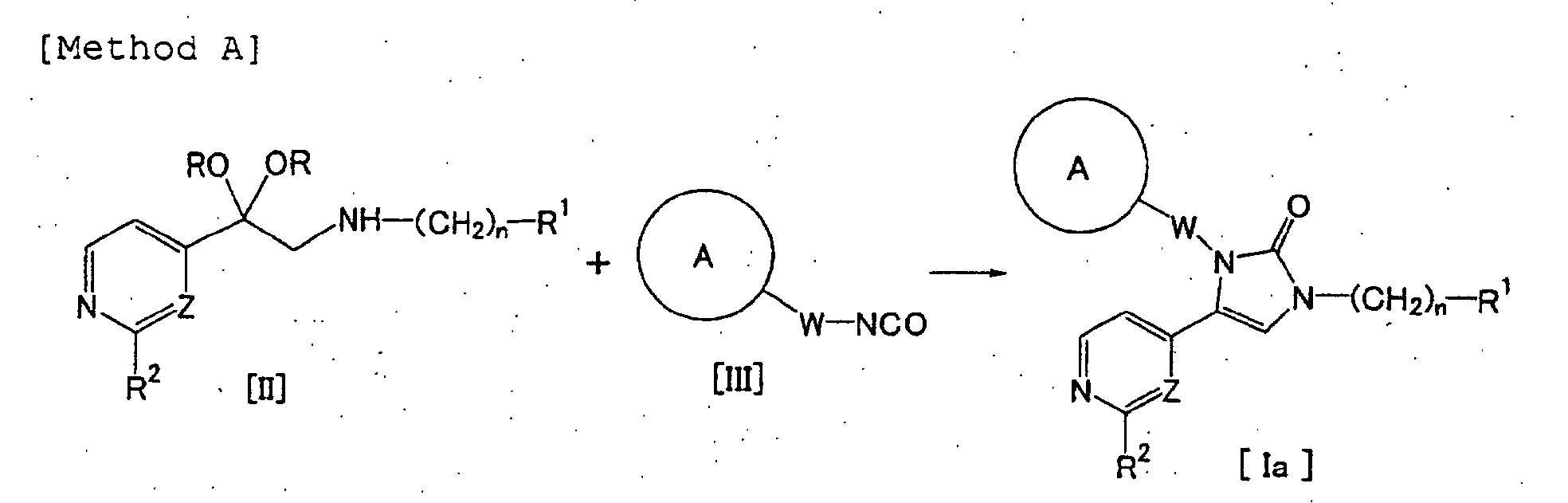


The reaction proceeds preferably at 20 to 150°C, and particularly preferably at 70 to 100°C.
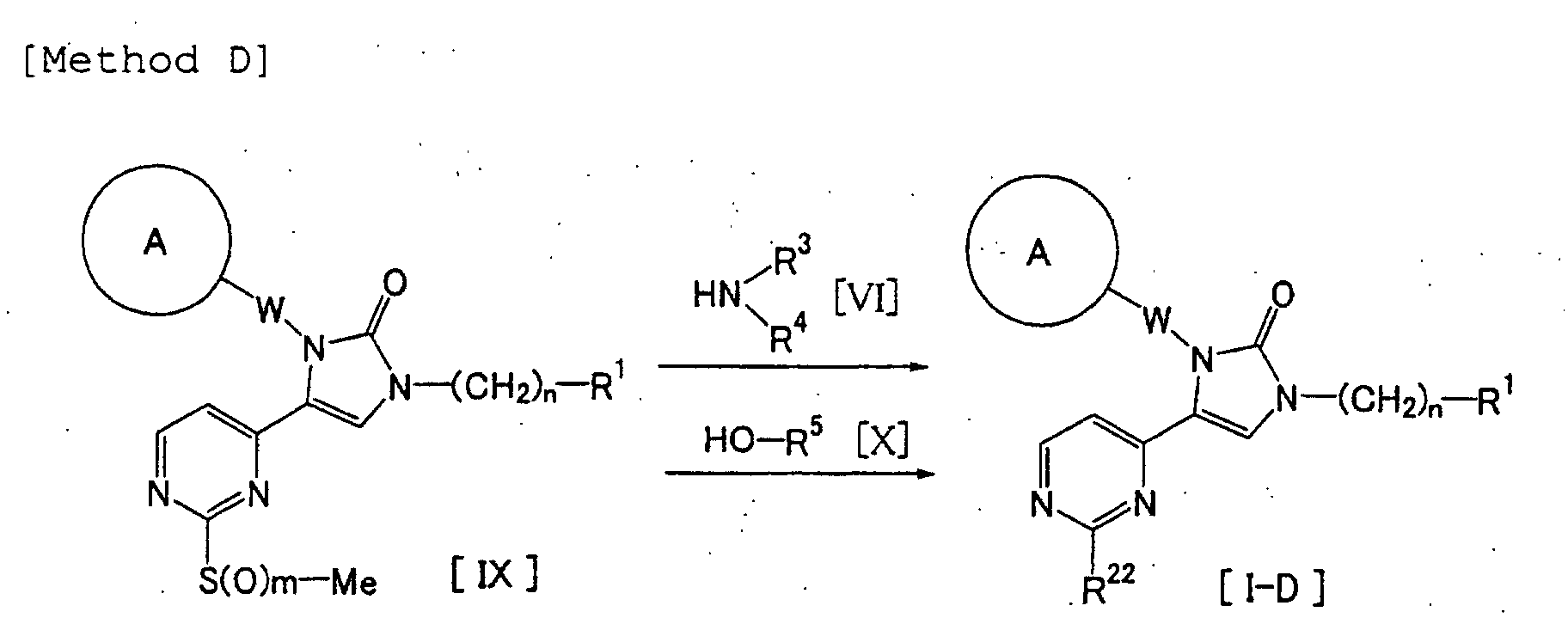
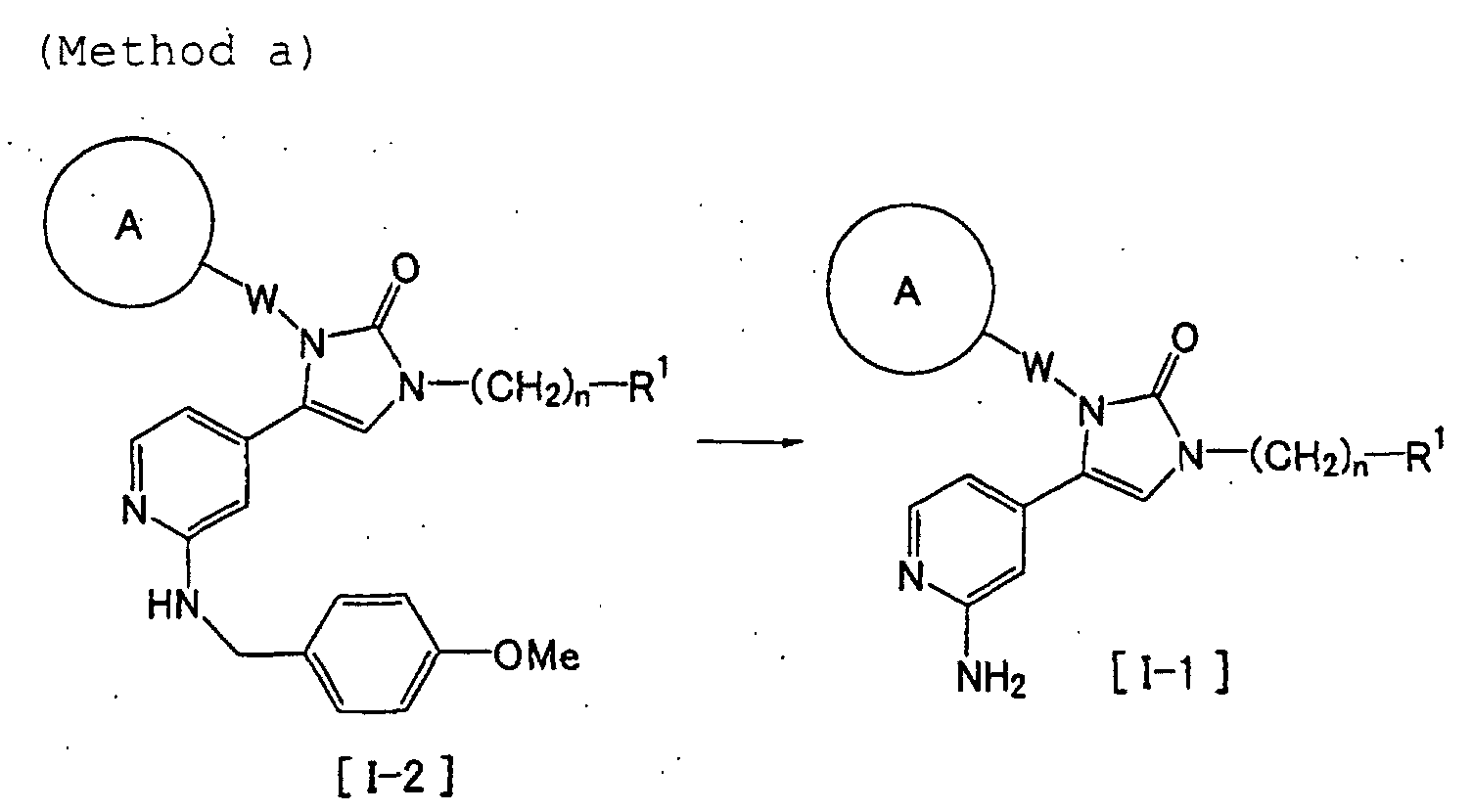
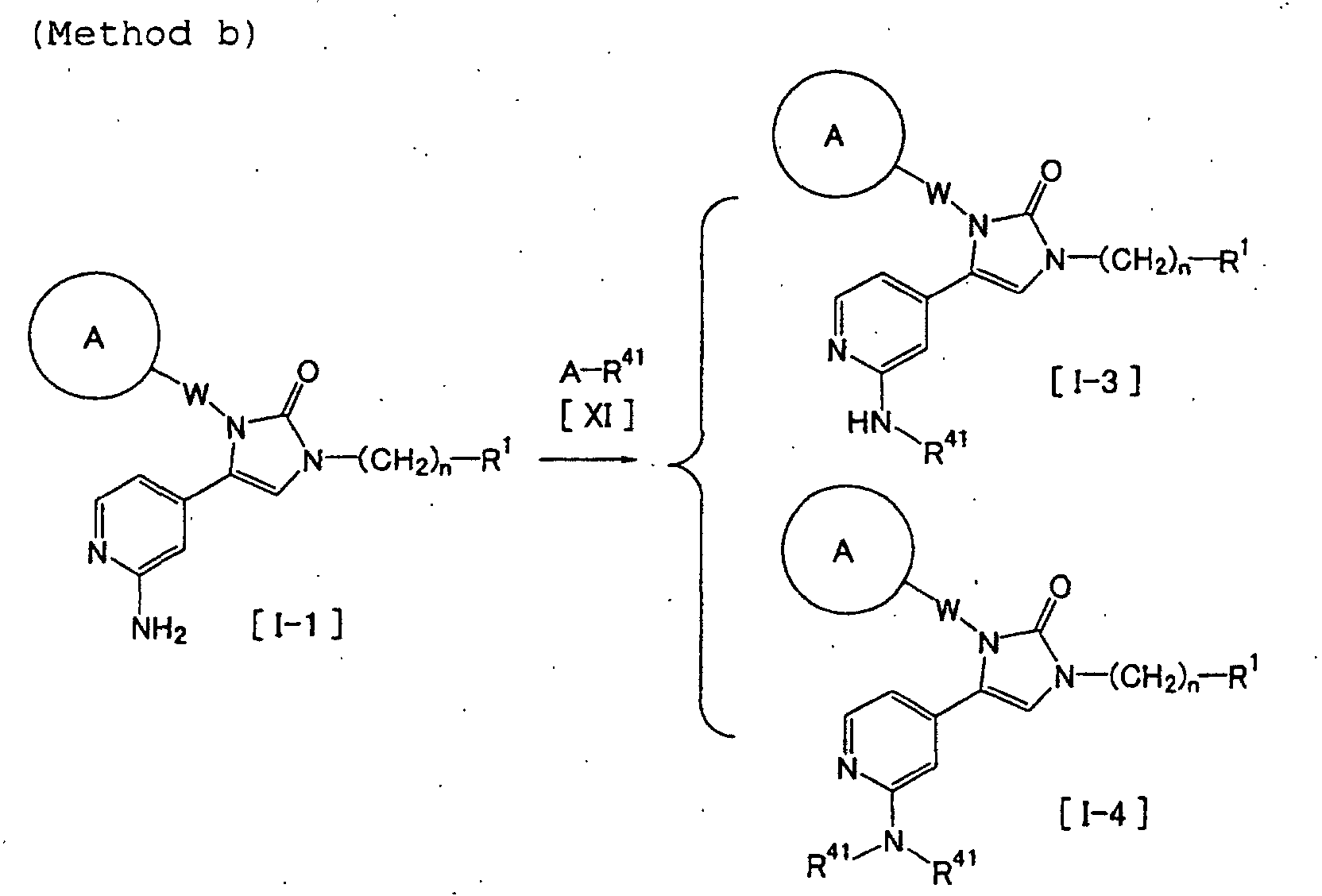

R10a is an alkyl. X is a halogen atom. Other symbols have the same meanings as the above.)

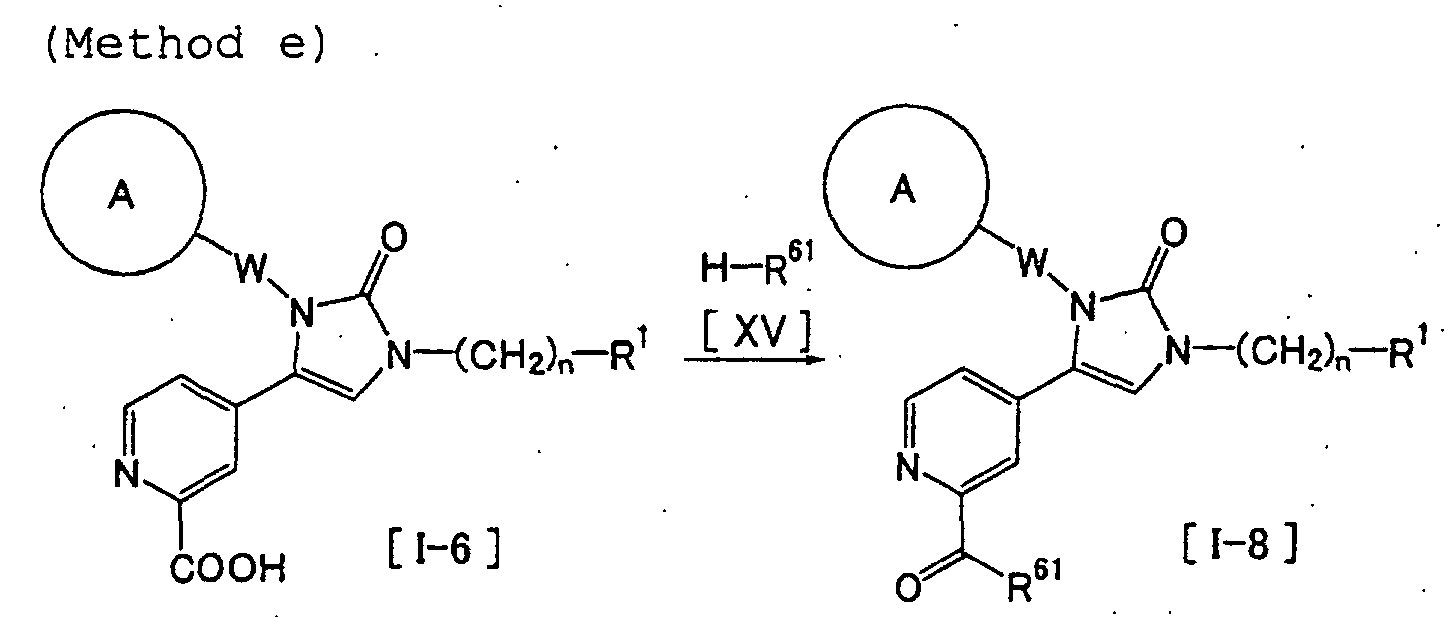


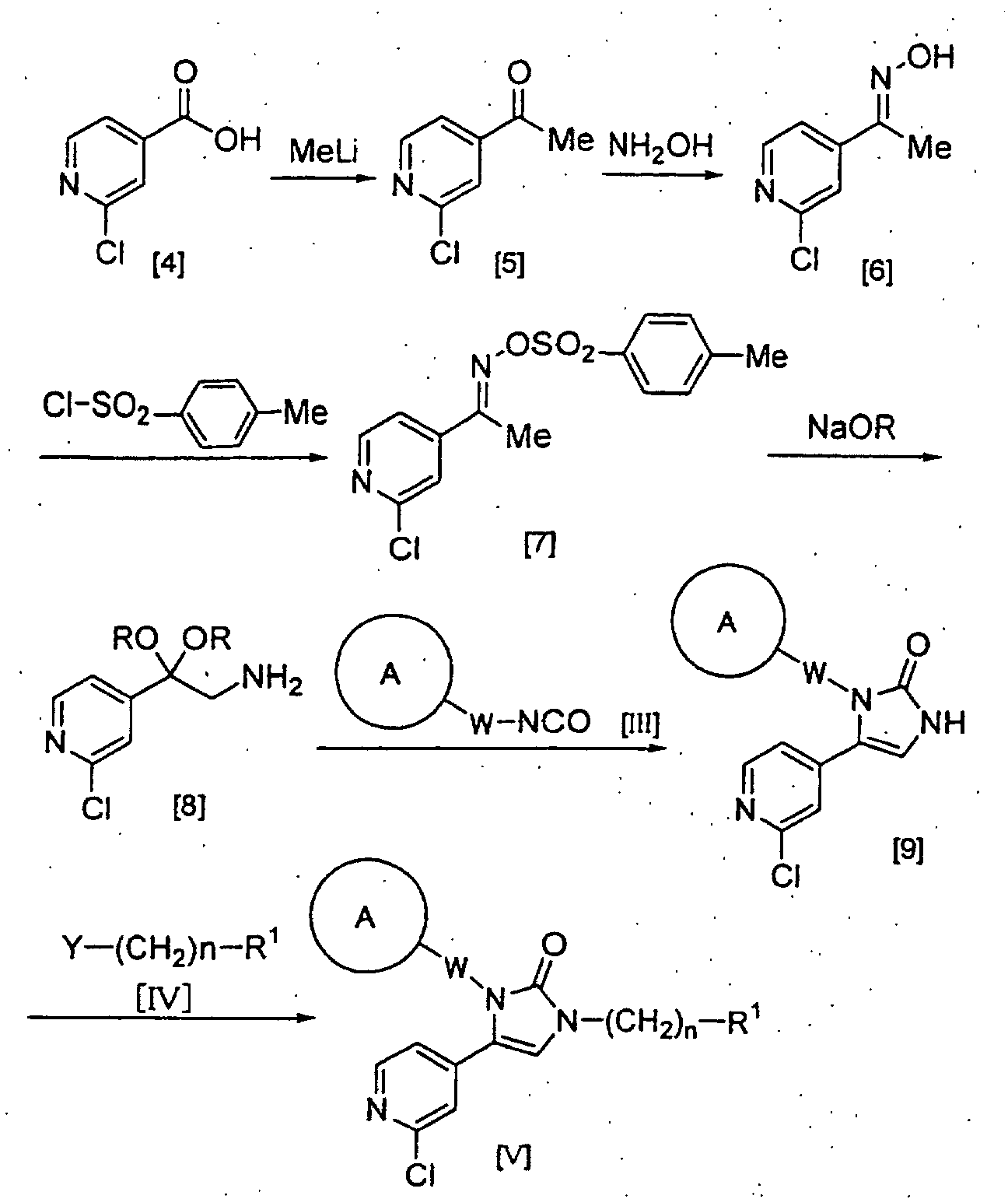
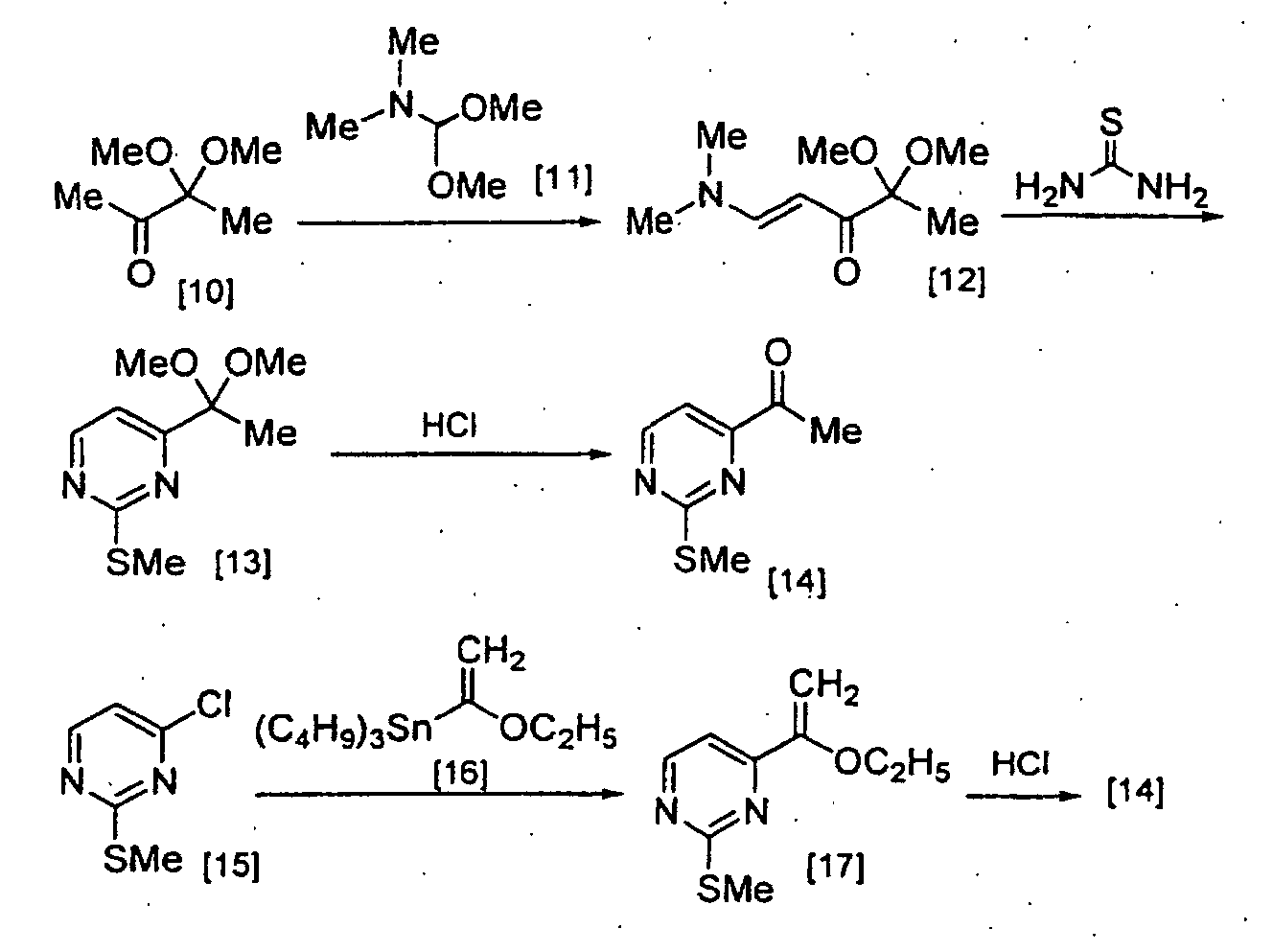

- Me :
- methyl
- Et :
- ethyl
- THF:
- tetrahydrofuran
- DMF:
- N,N-dimethylformamide
- t- :
- tert-
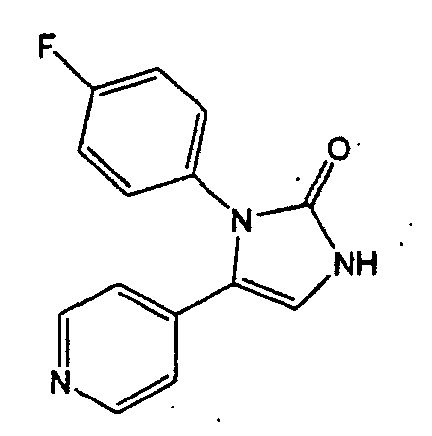

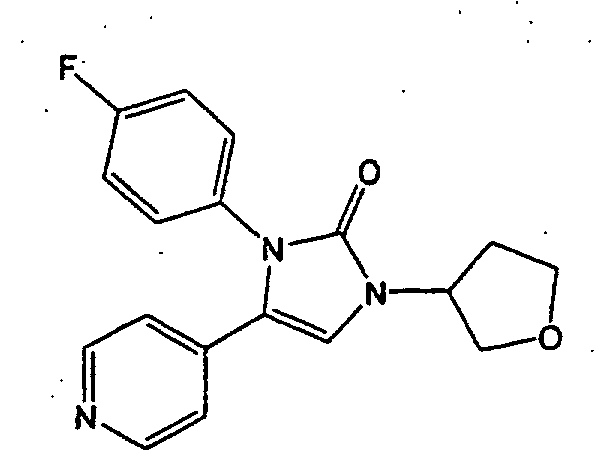
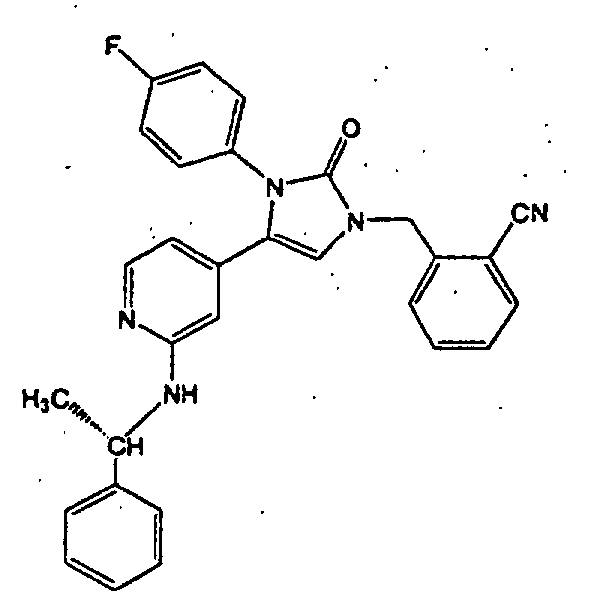
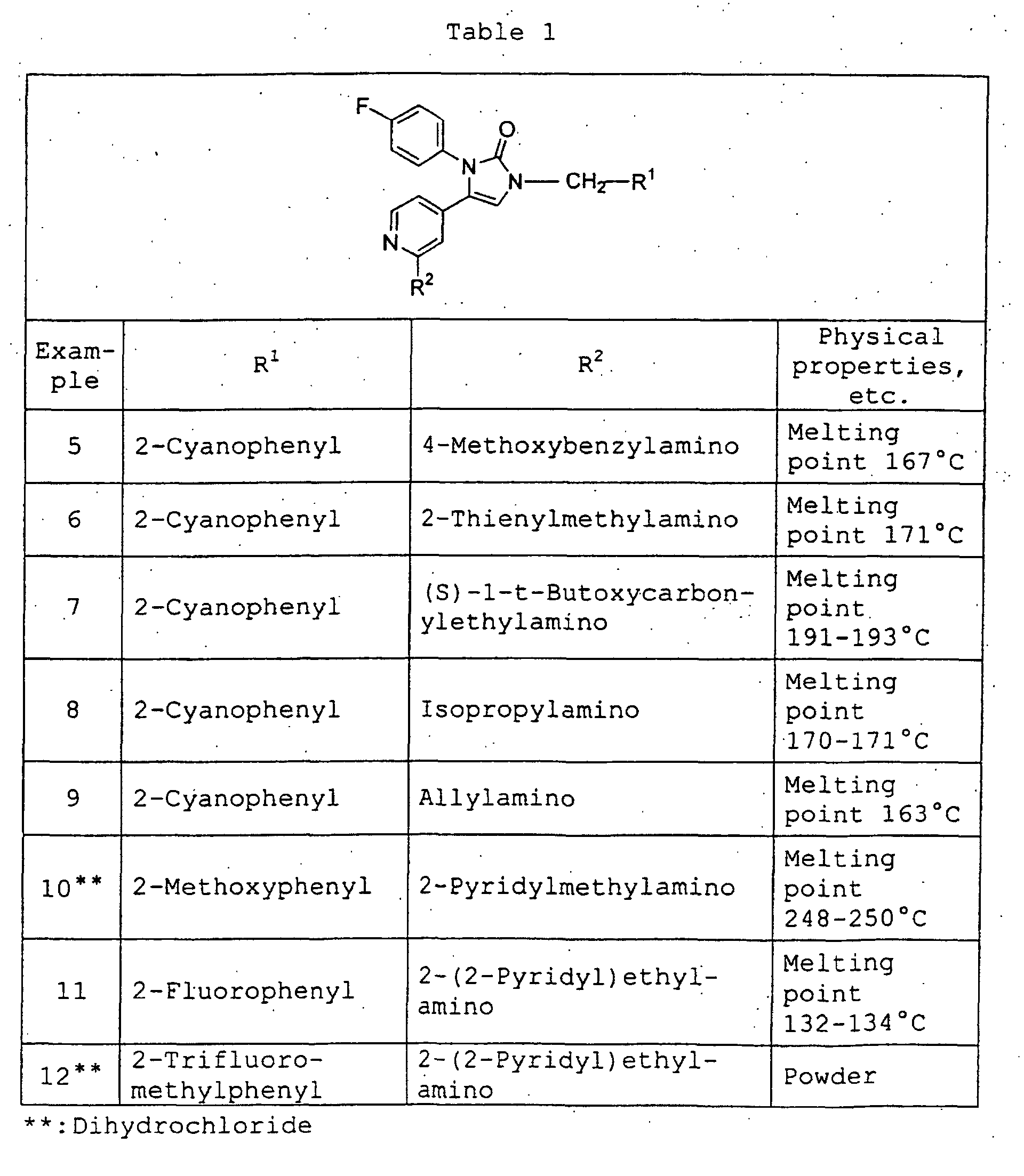
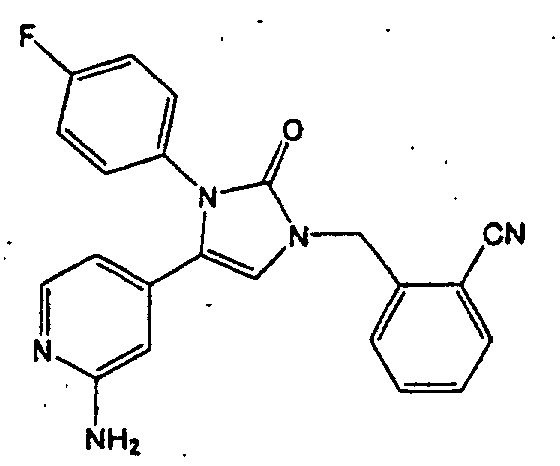
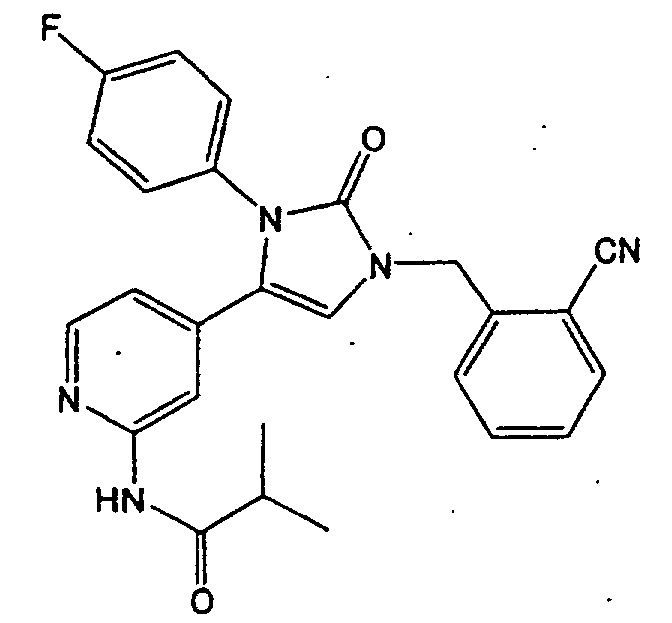
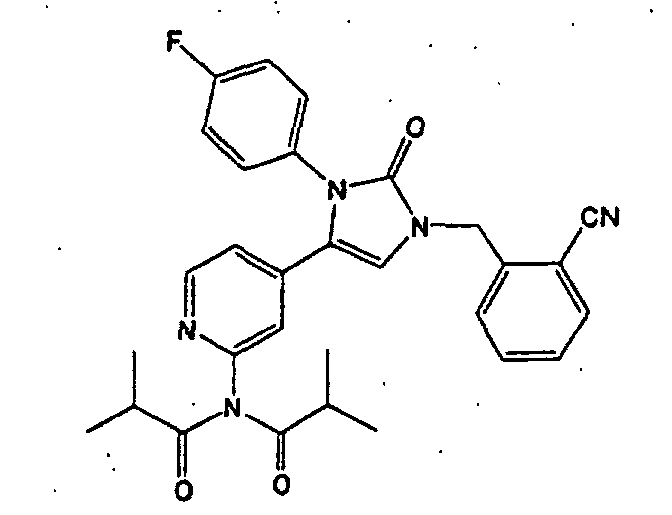

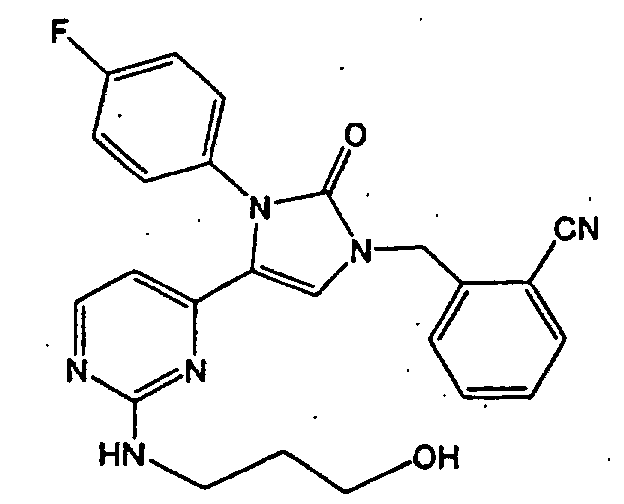
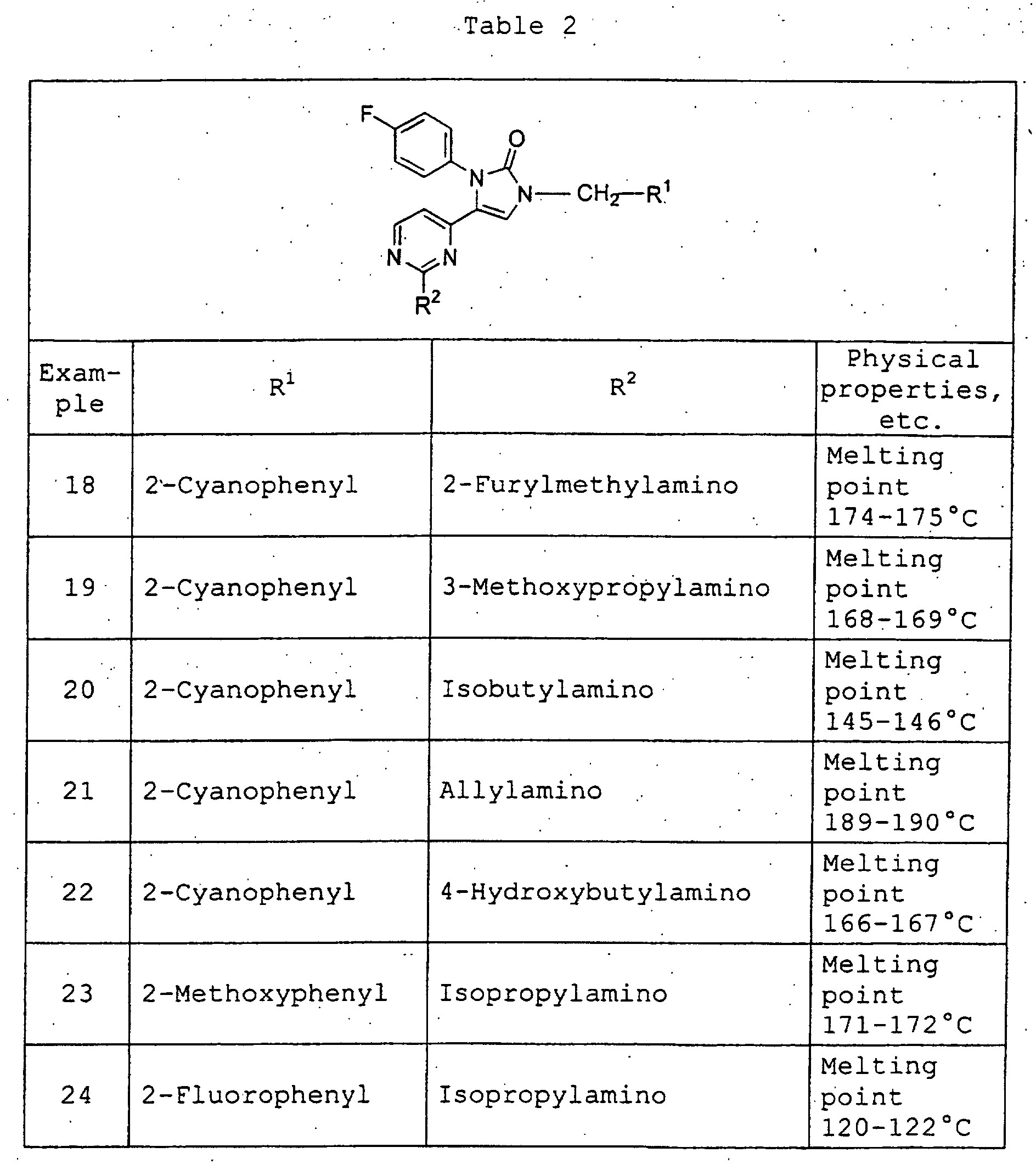


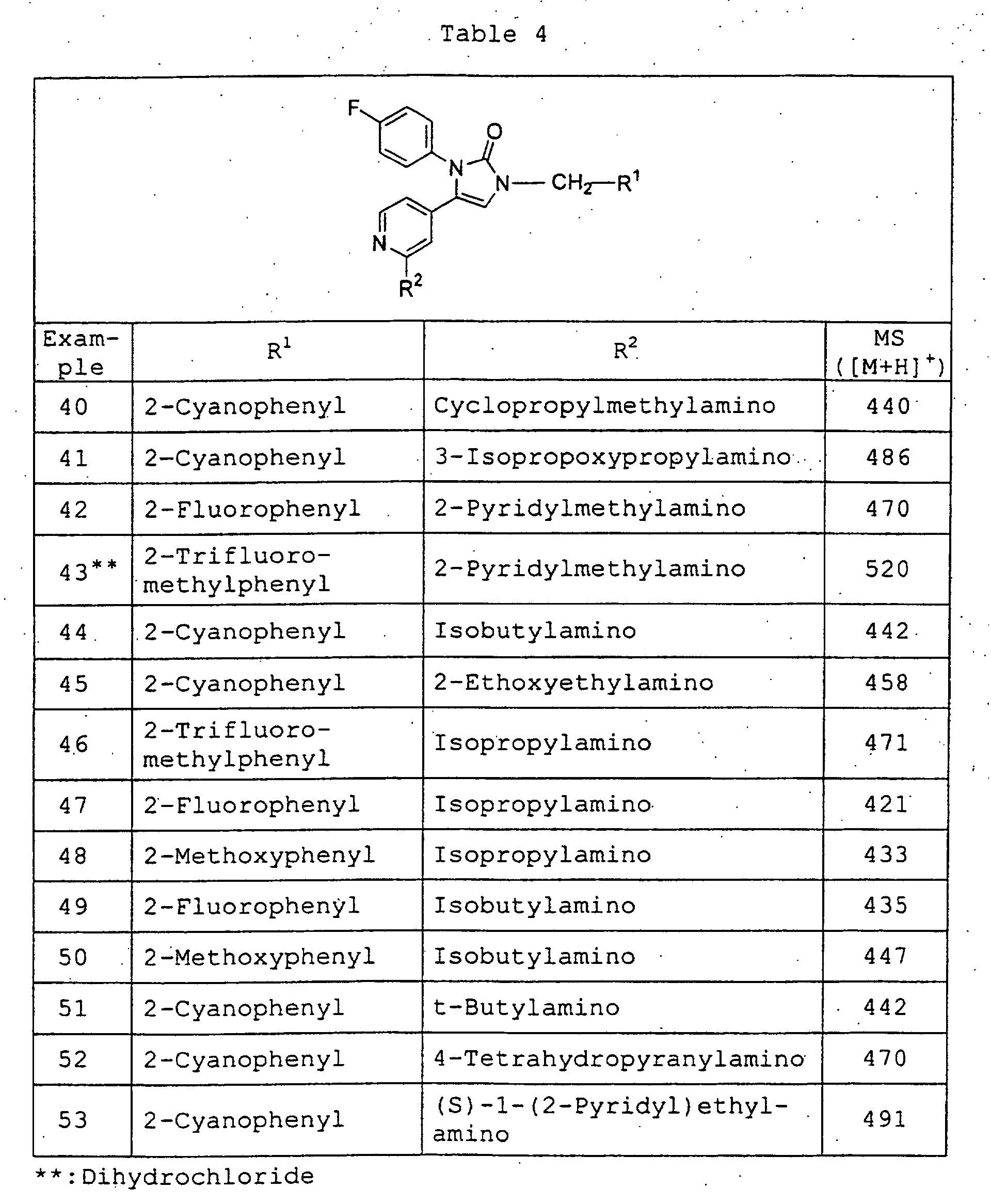
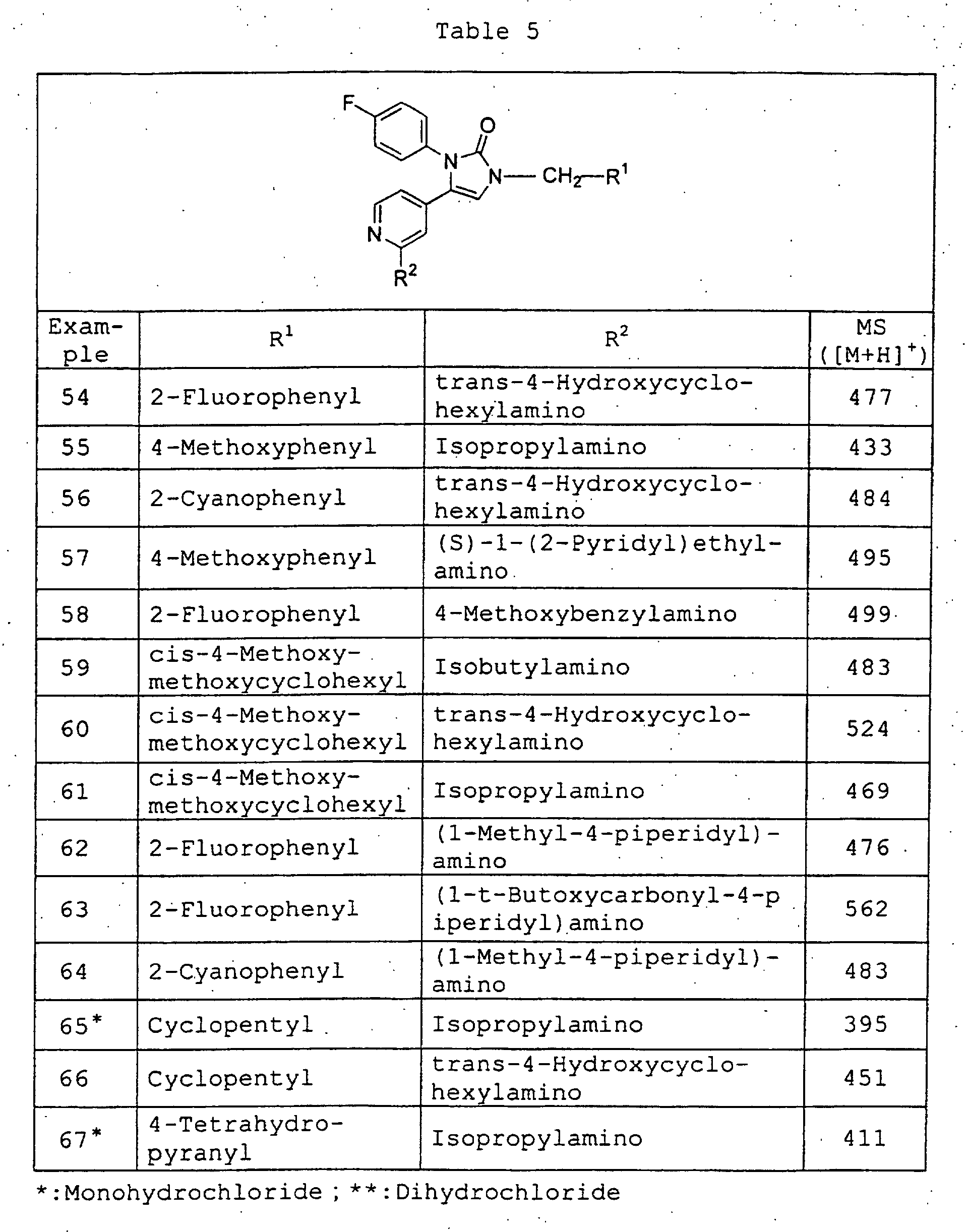
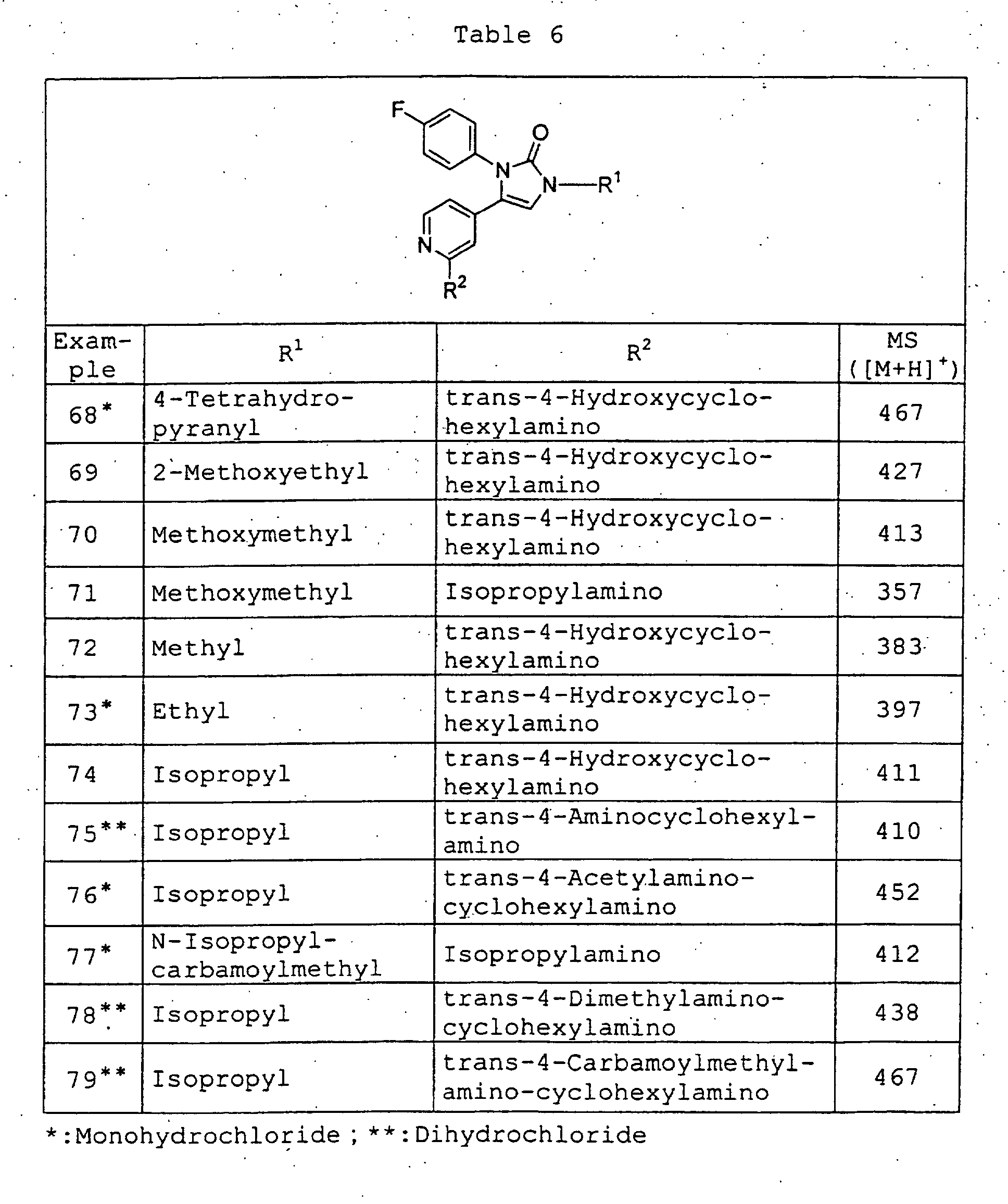
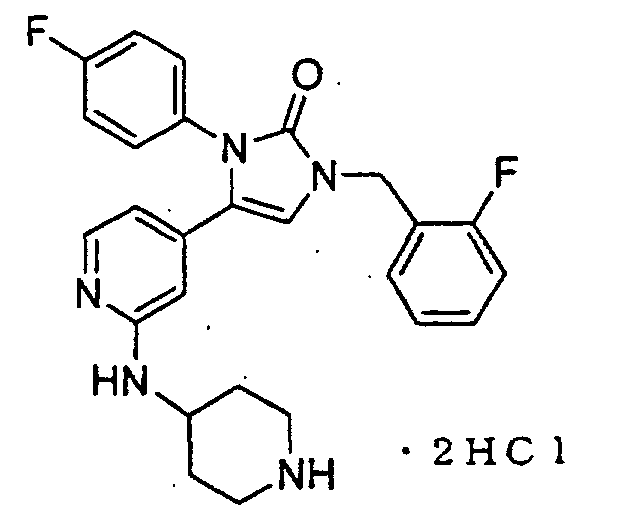
MS 462([M+H]+)
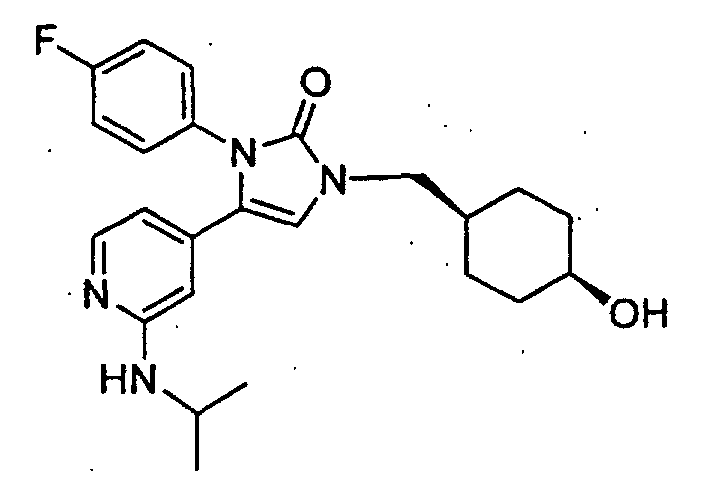
MS 425([M+H]+)

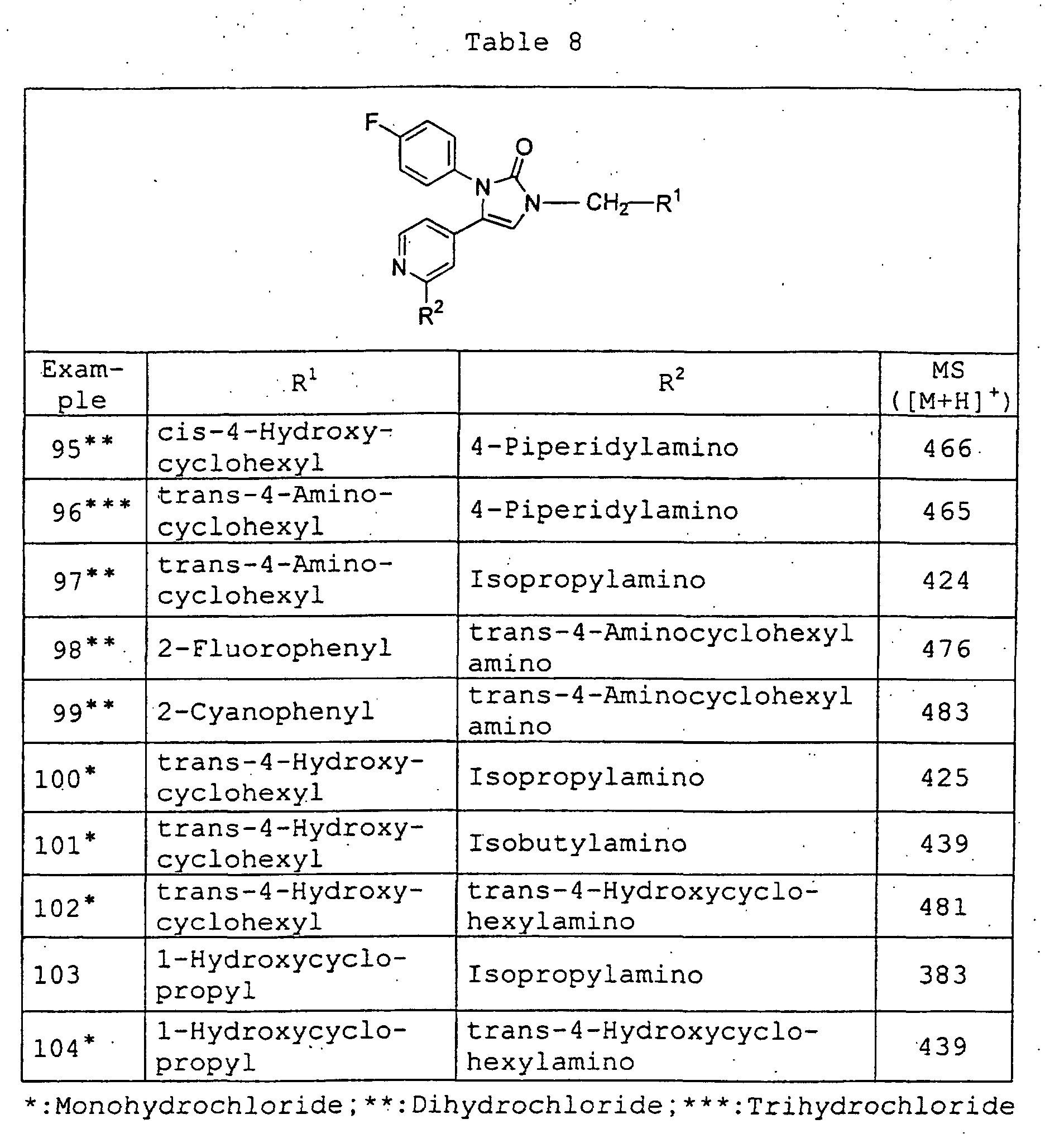
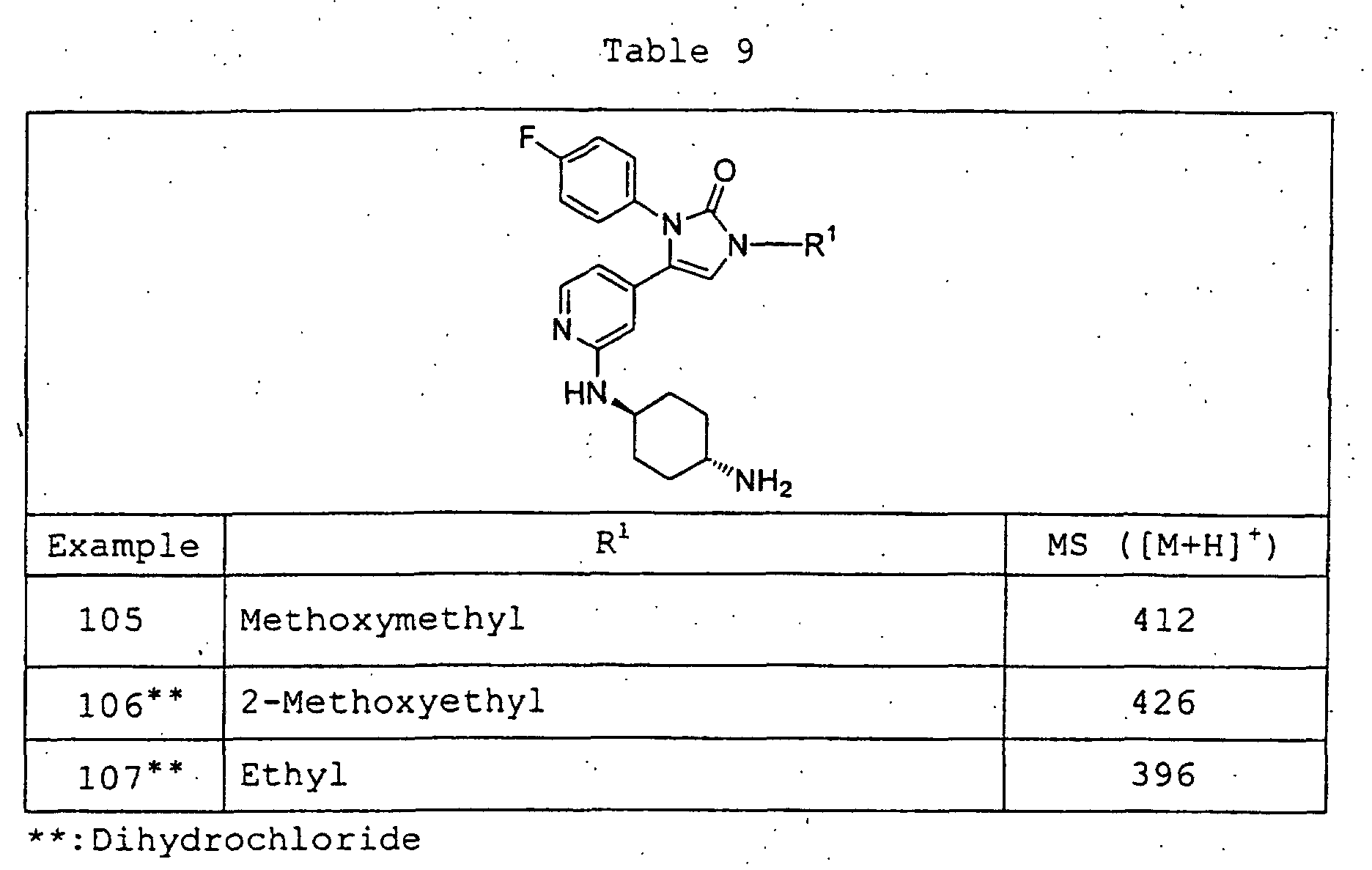
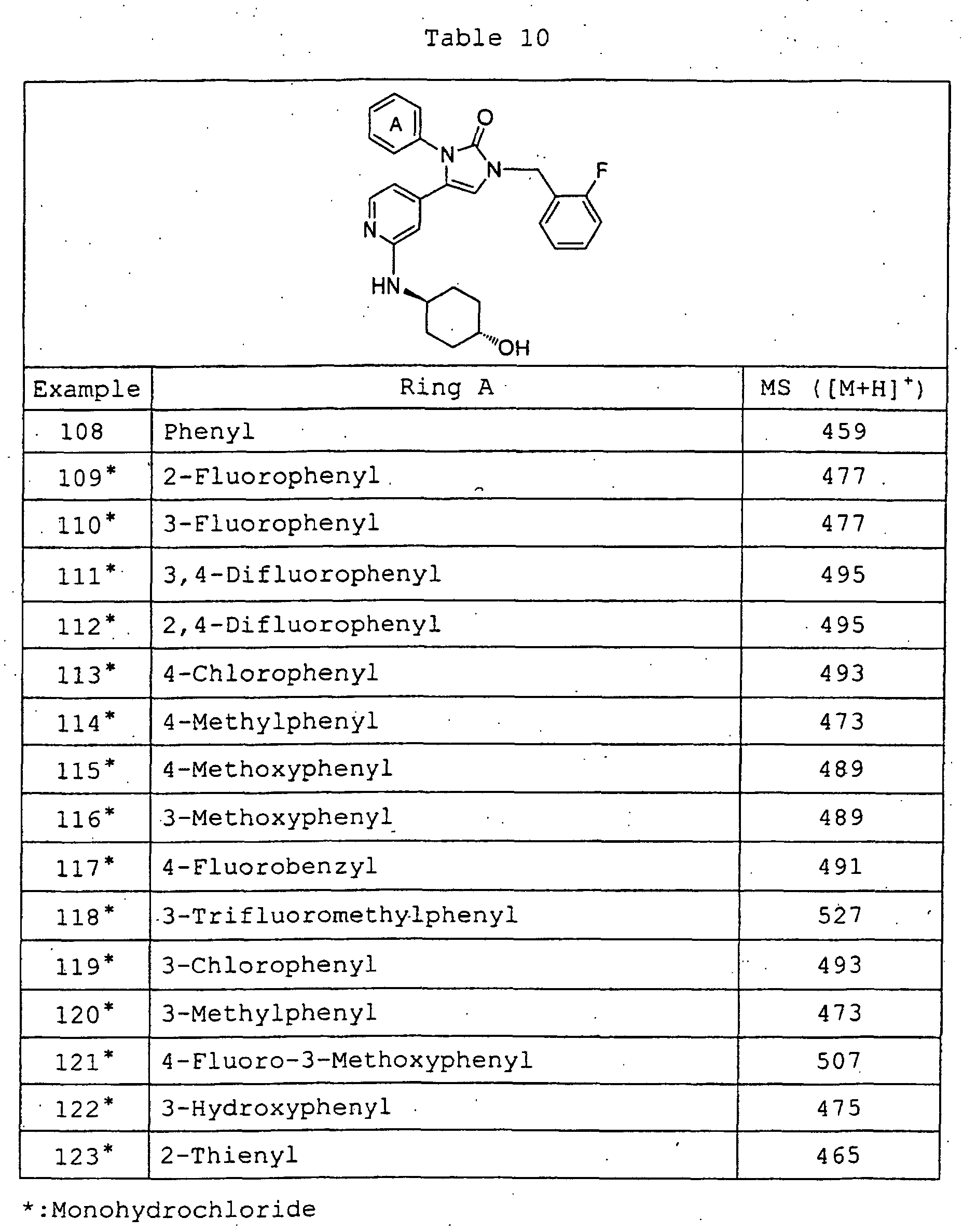
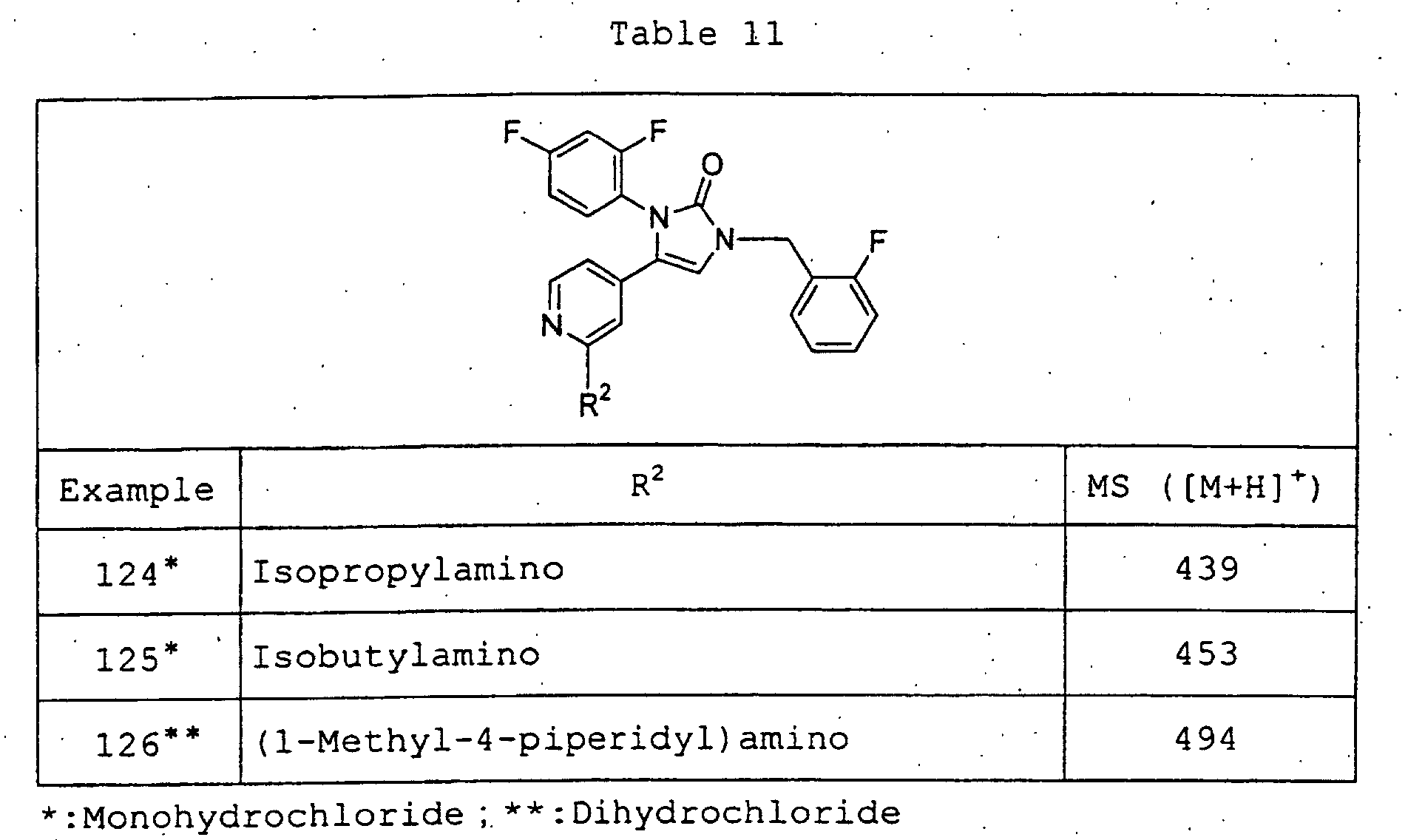

MS 452([M+H]+)


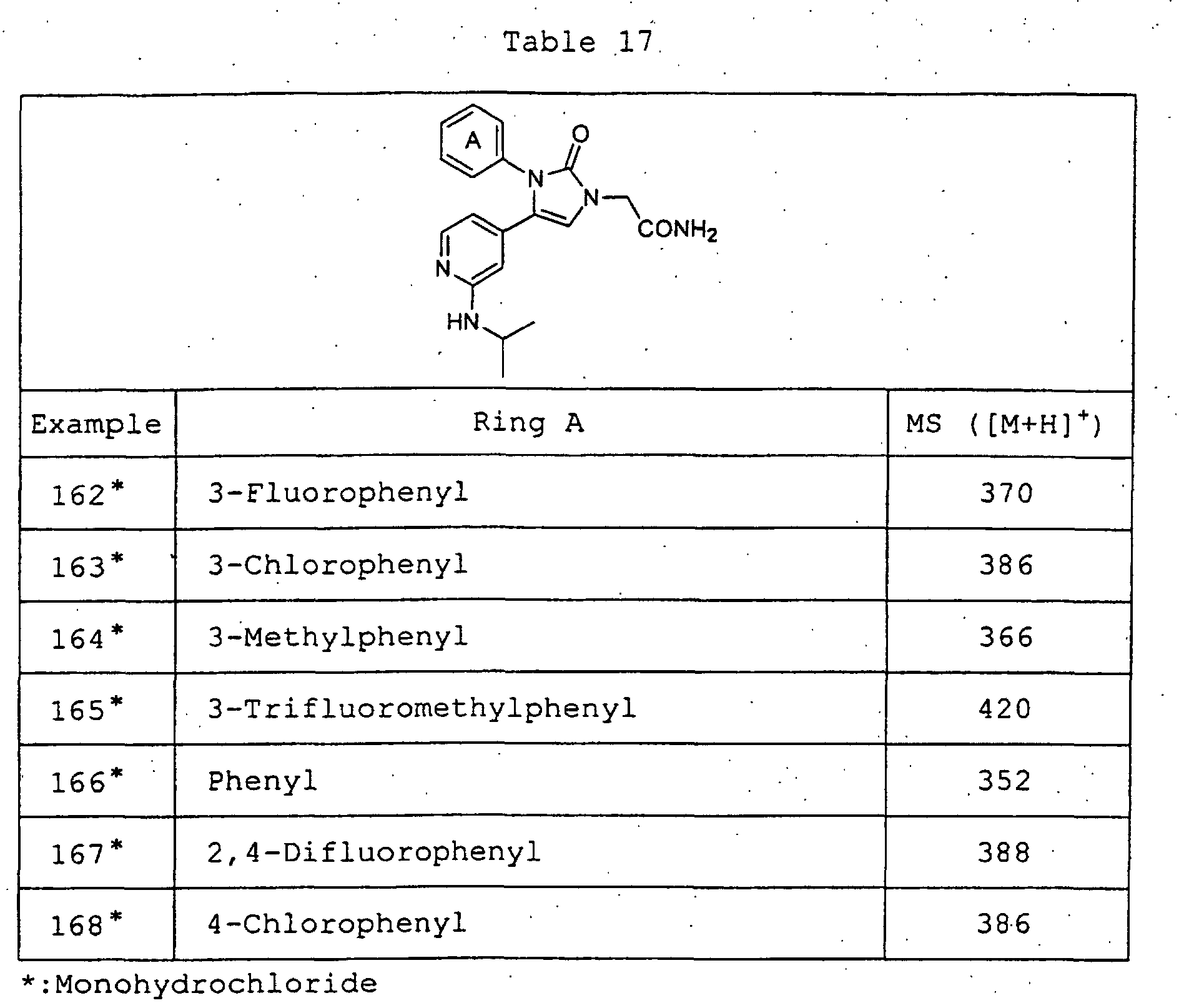

MS 385 ([M+H]+)
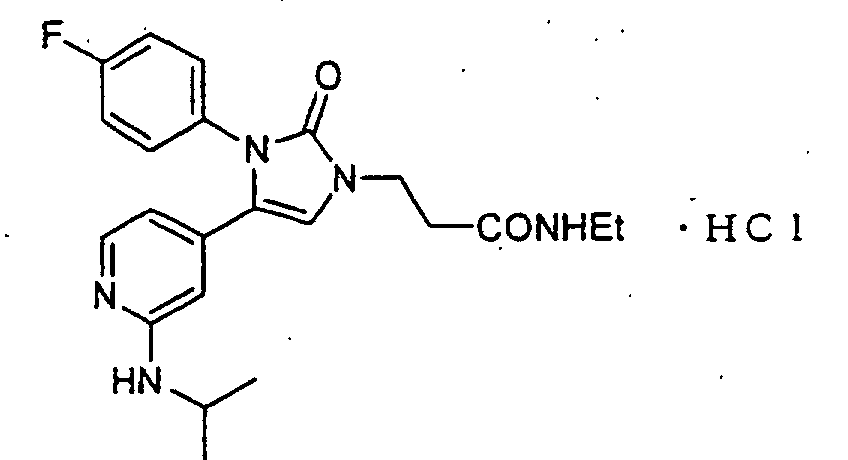
MS 412([M+H]+)
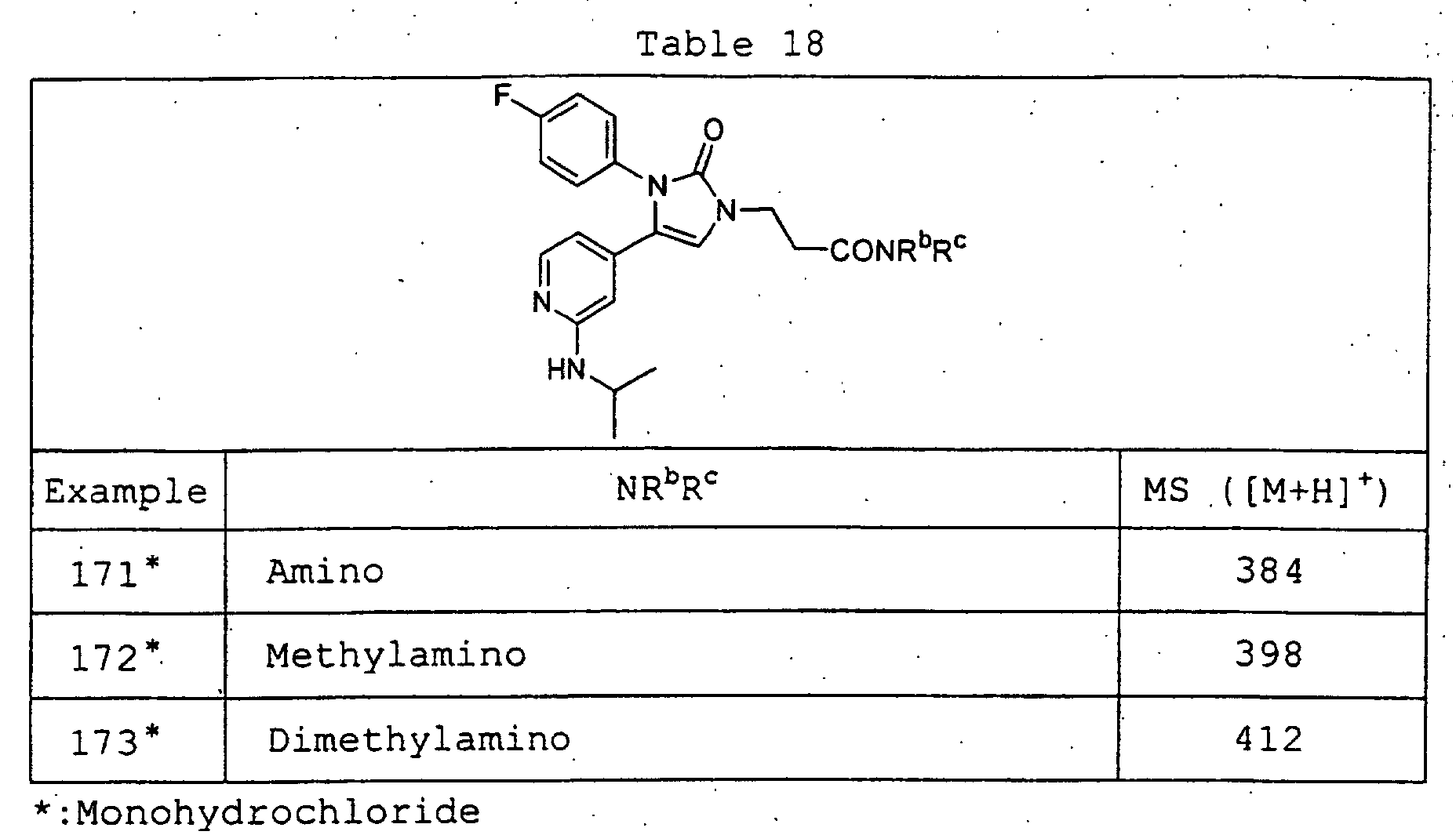
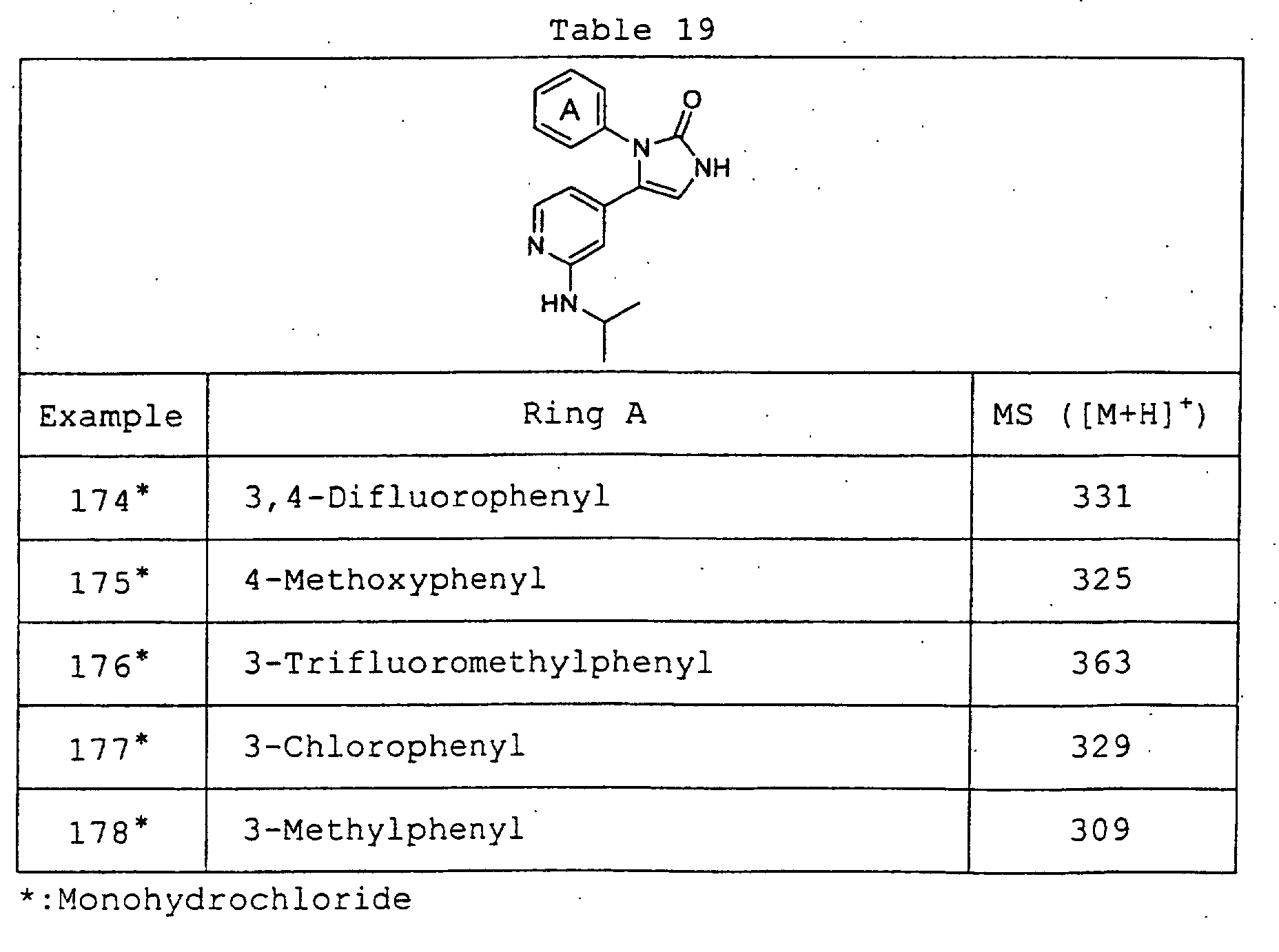
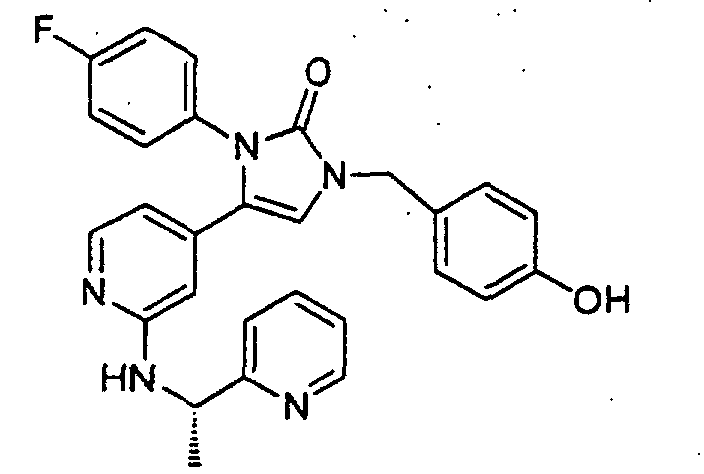
MS 482 ([M+H]+)

MS 376 ([M+H]+)

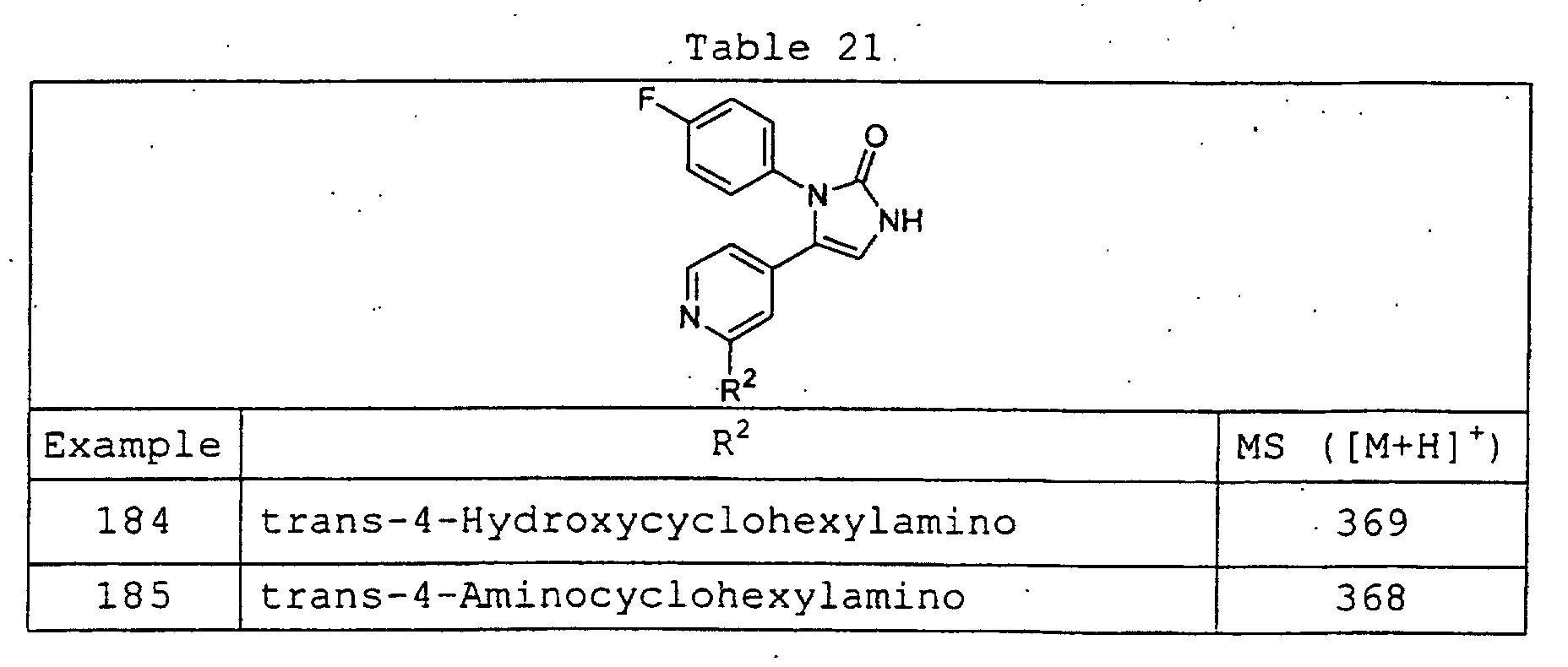

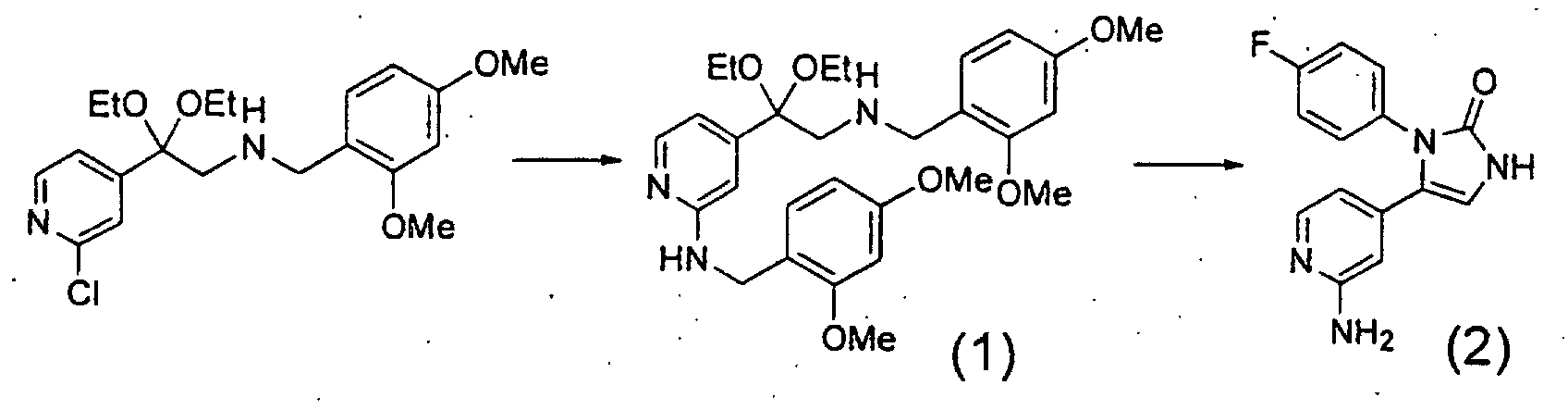
MS 271 ([M+H]+)
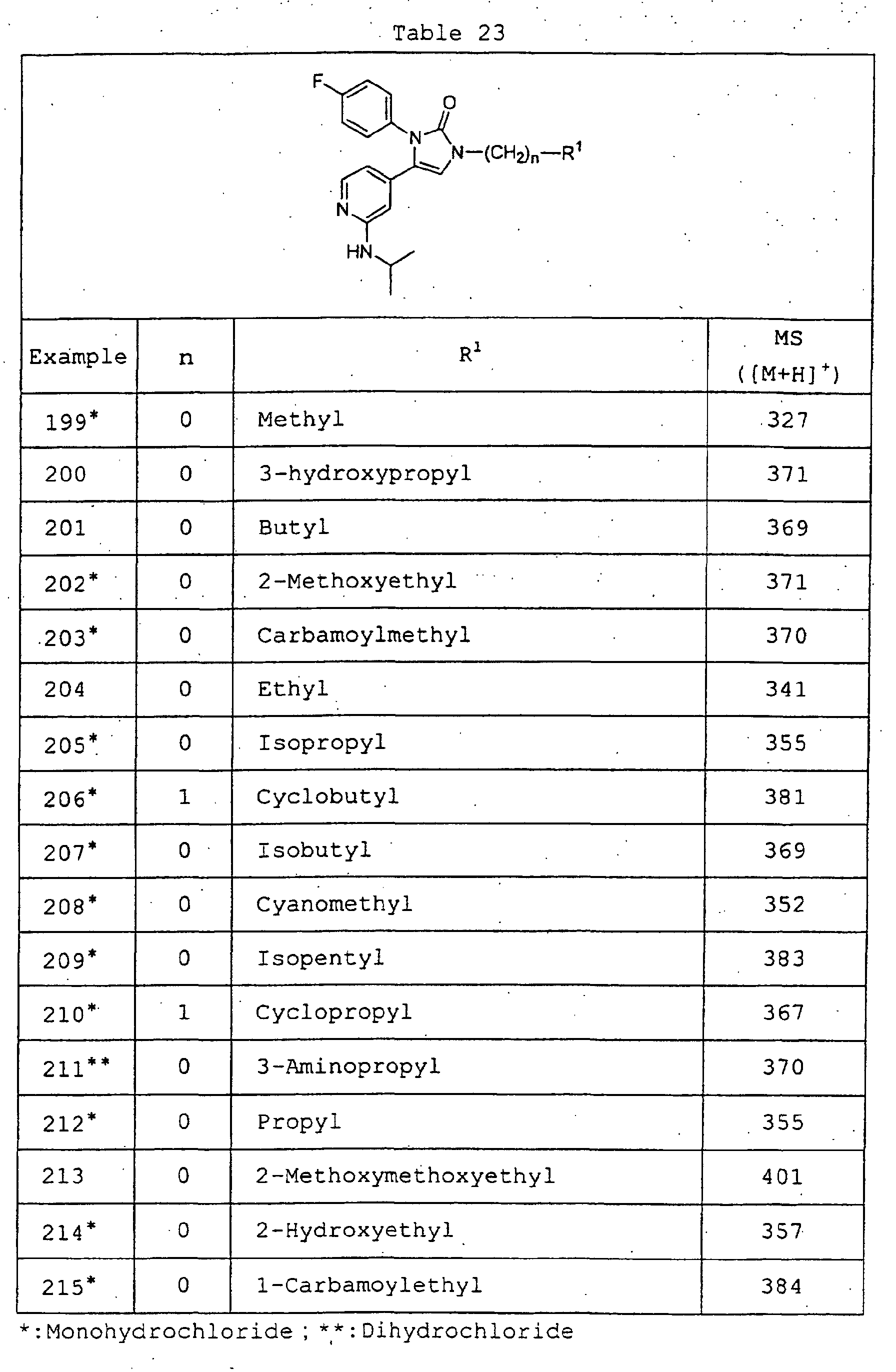

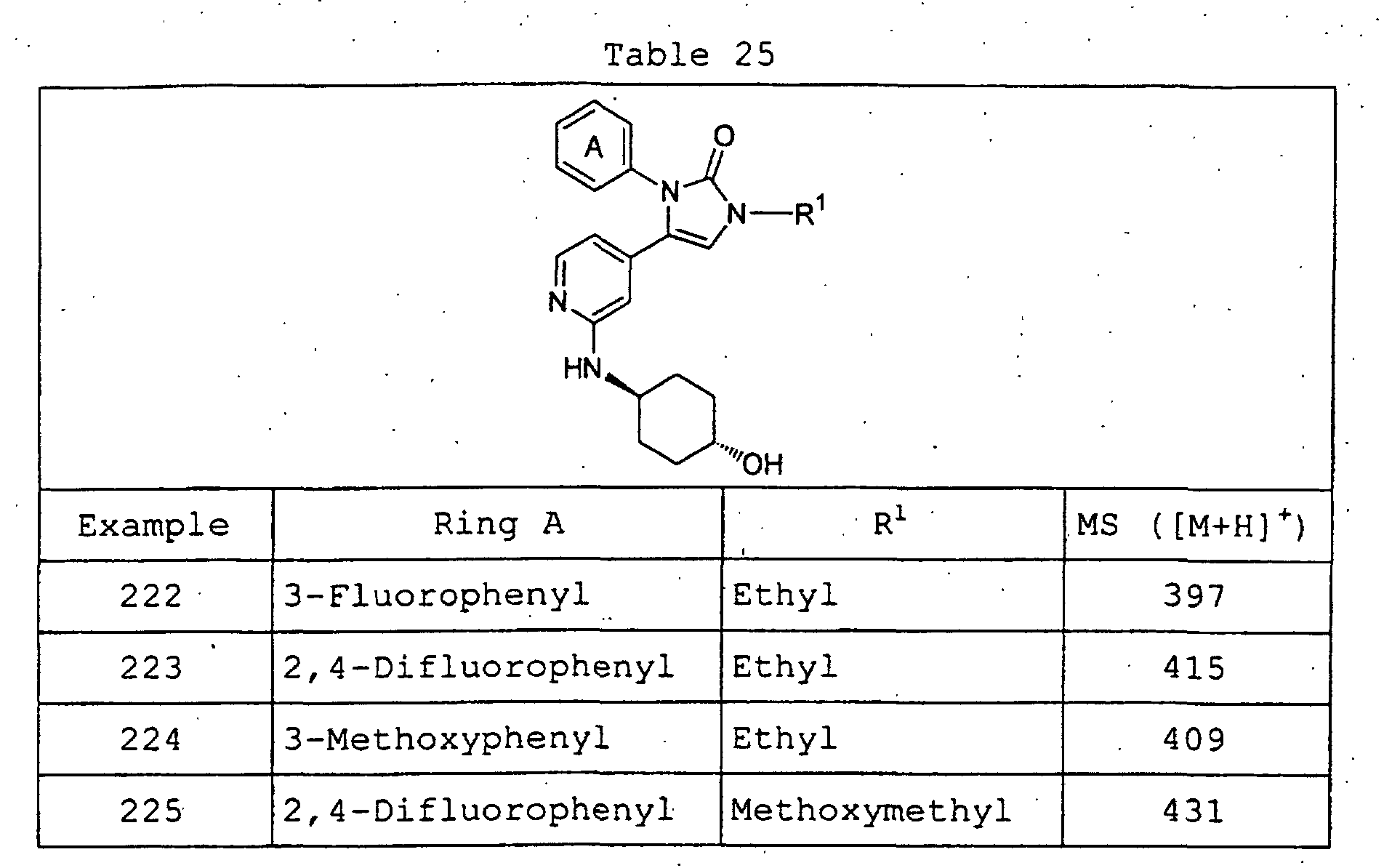

MS 384 ([M+H]+)
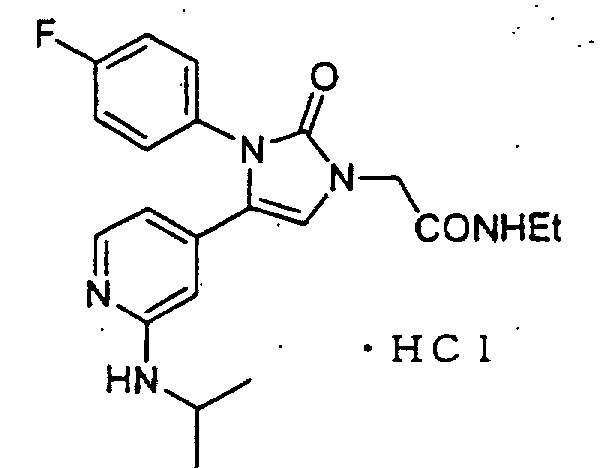
MS 398 ([M+H]+)
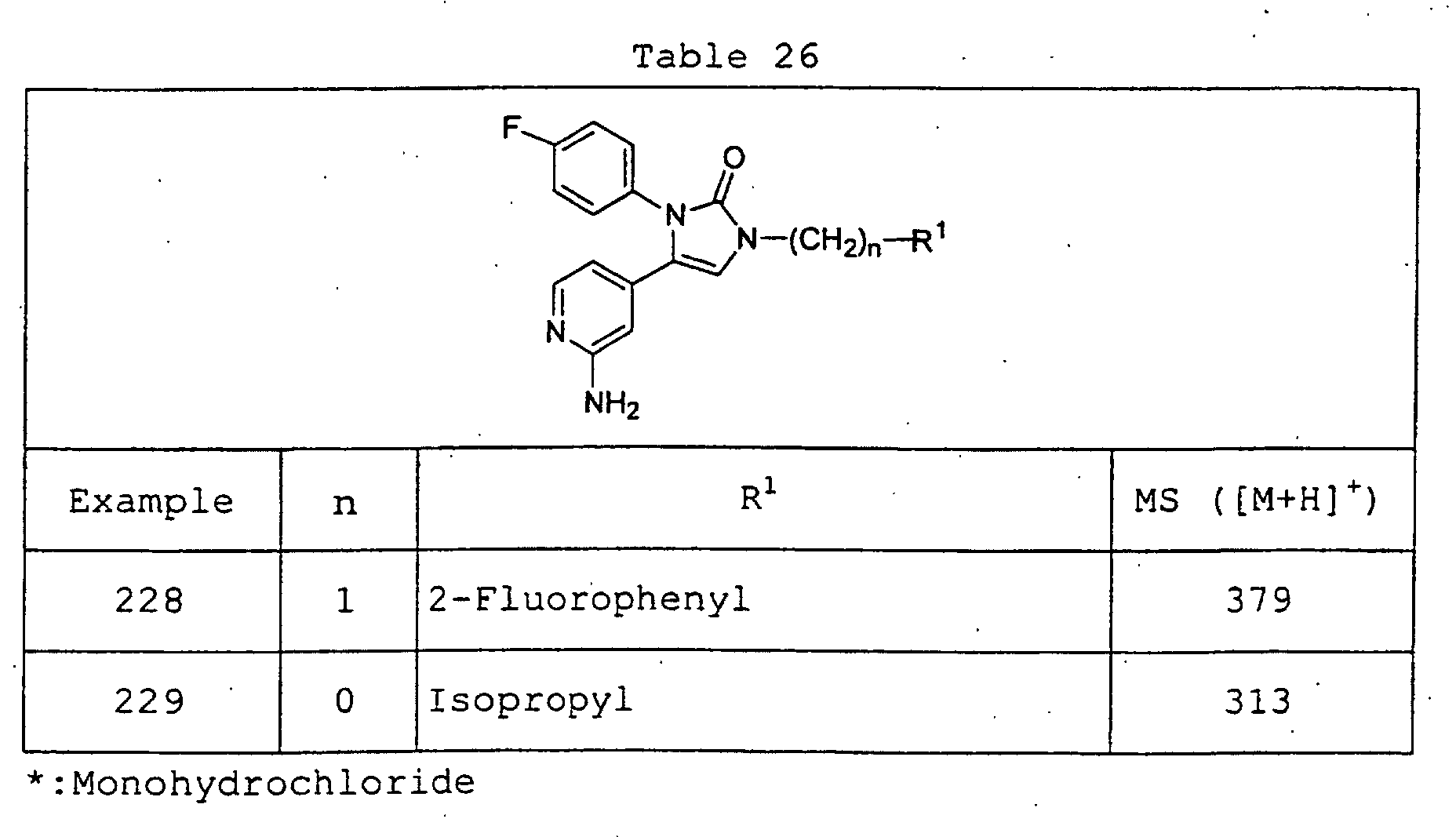

MS 454 ([M+H]+)
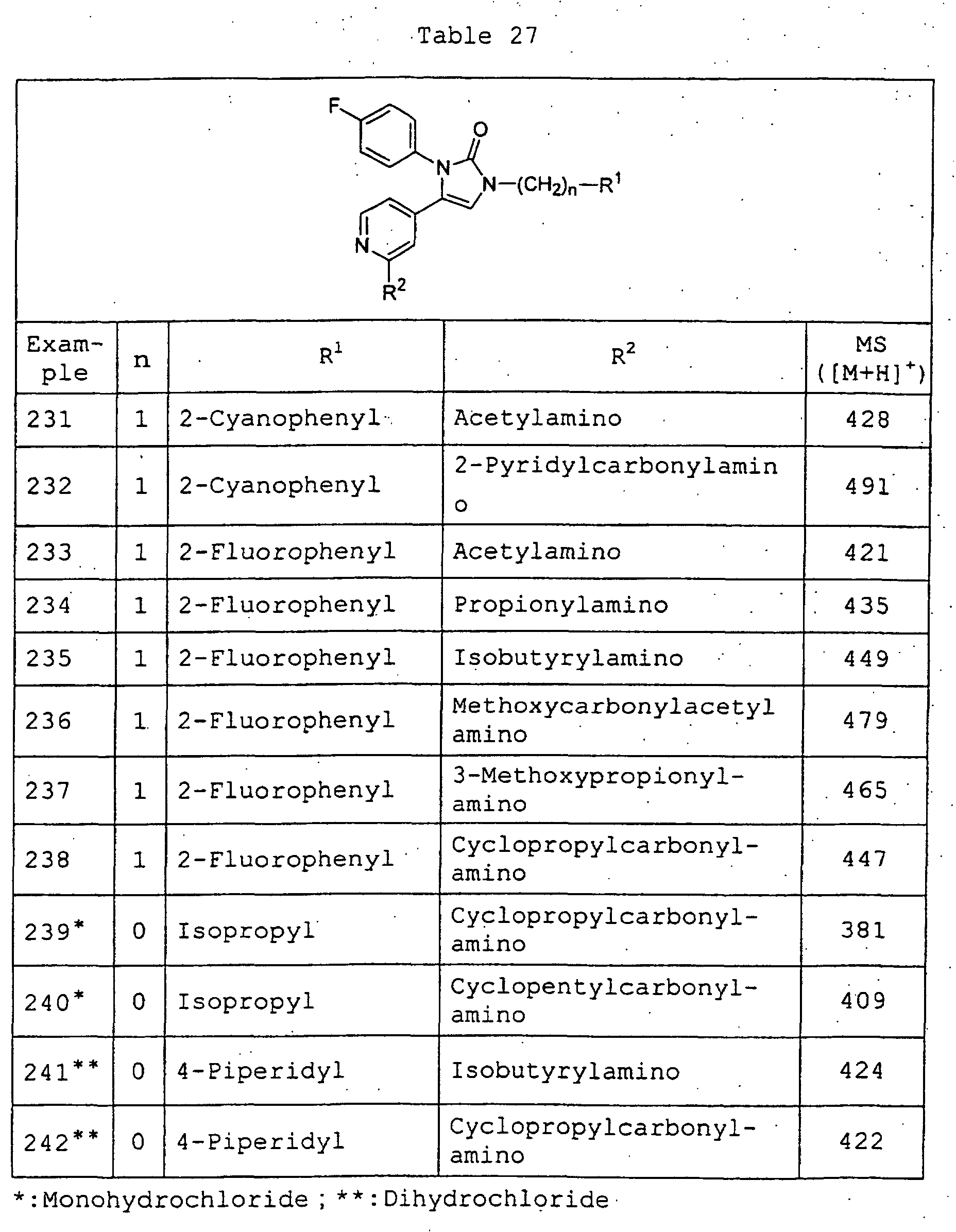

MS 439 ([M+H]+)
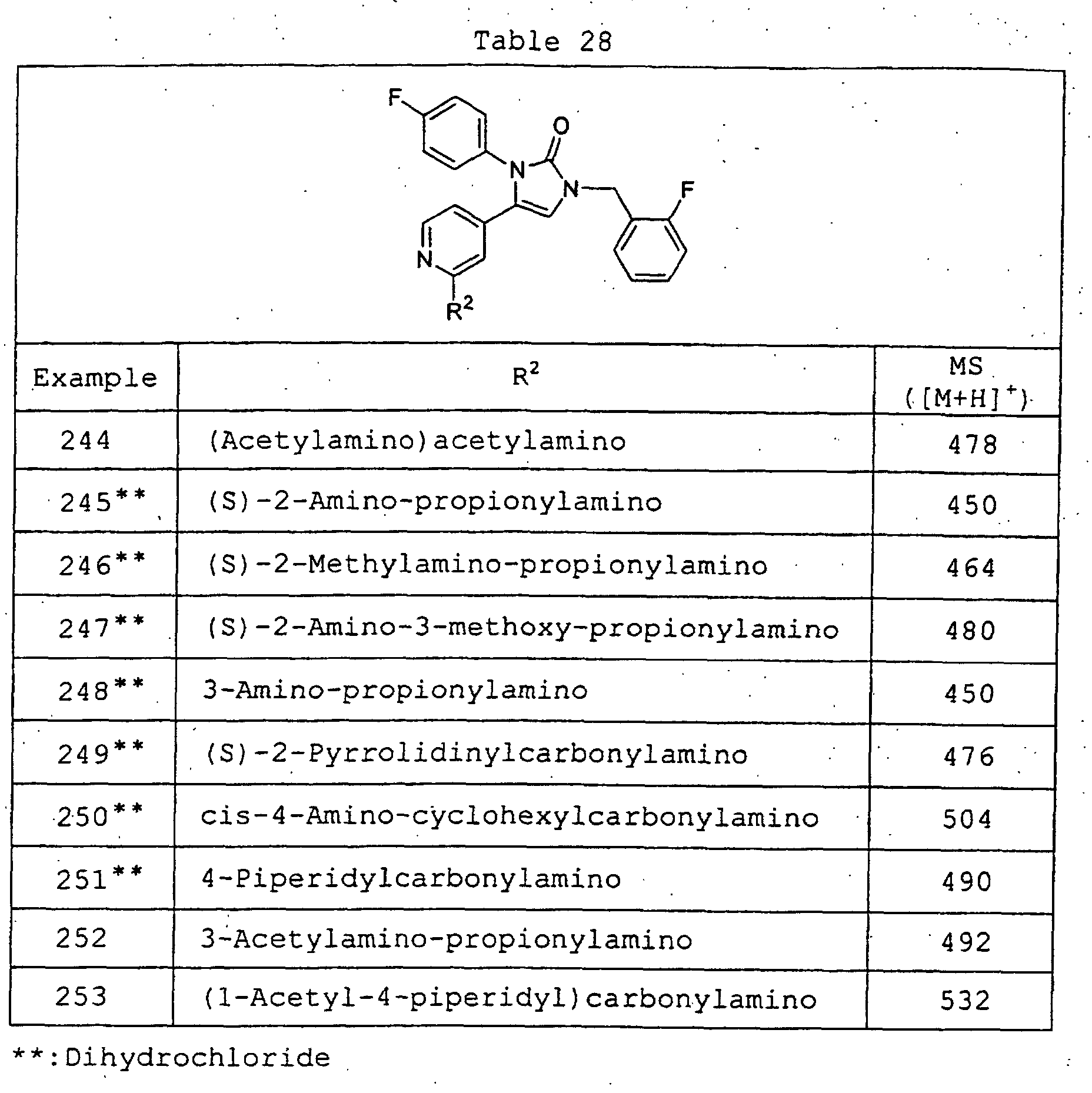


MS 496 ([M+H]+)
MS 396 ([M+H]+)

MS 507 ([M+H]+)
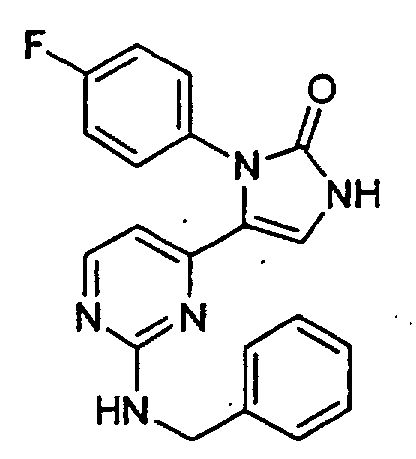
MS 362 ([M+H]+)

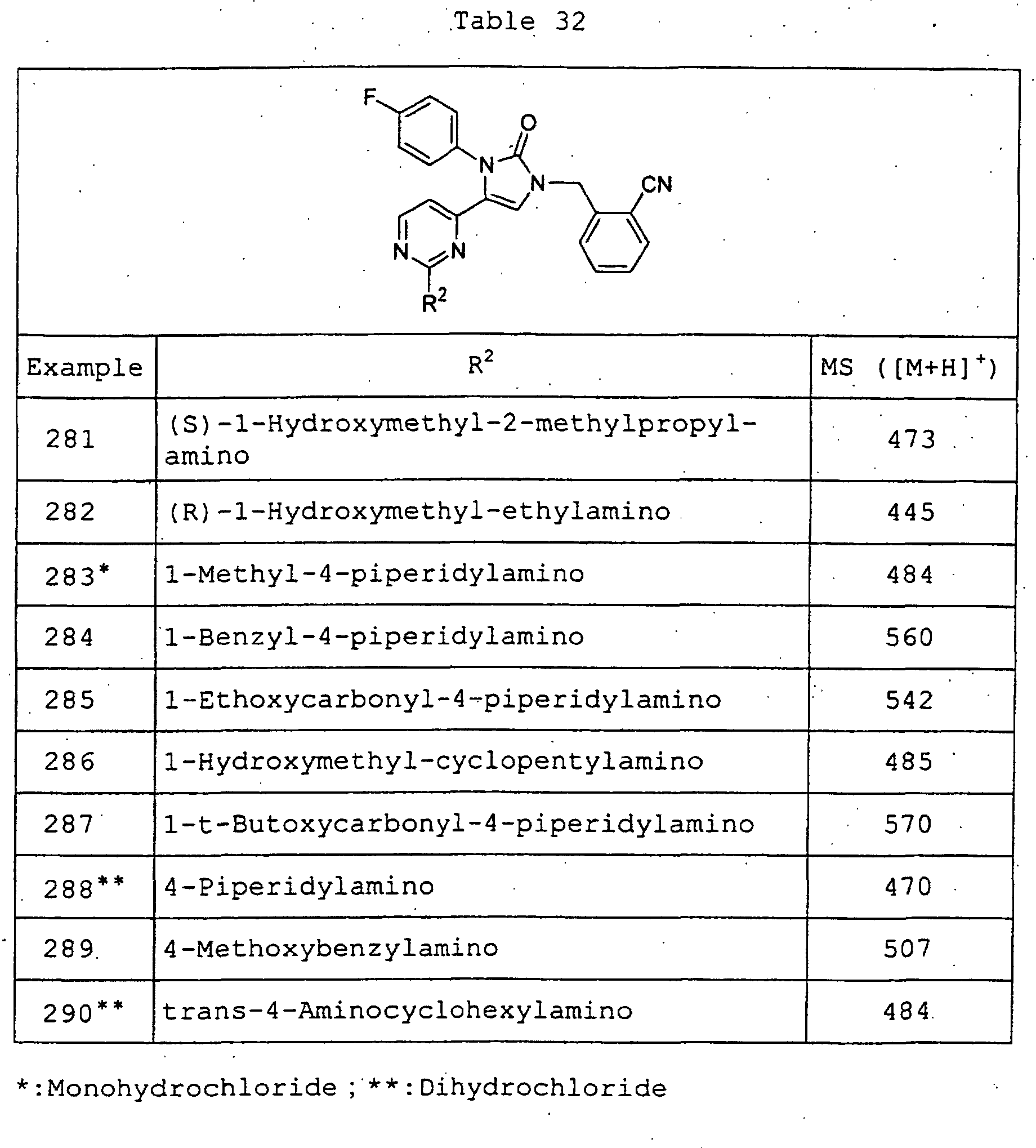


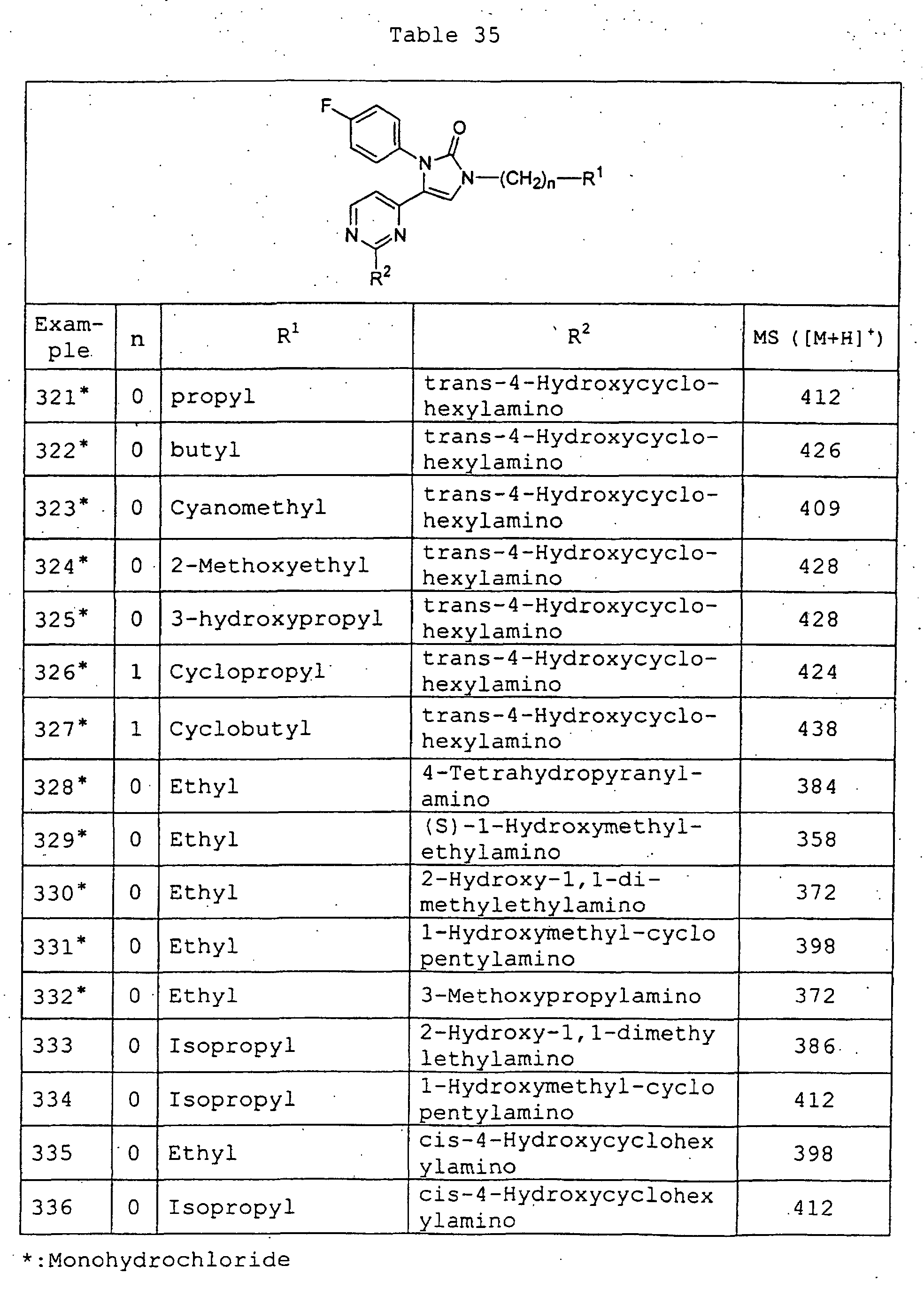

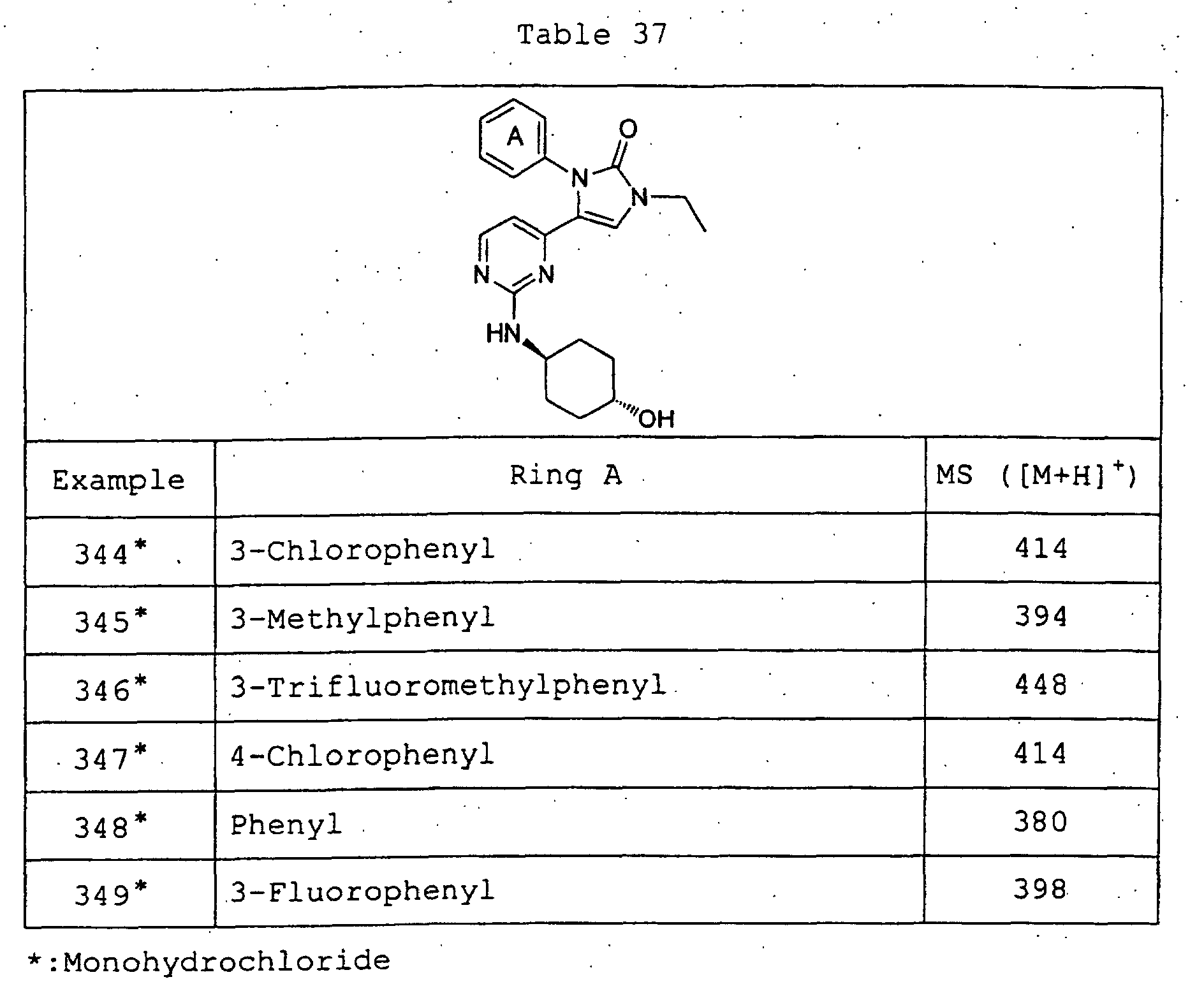

MS 314 ([M+H]+)


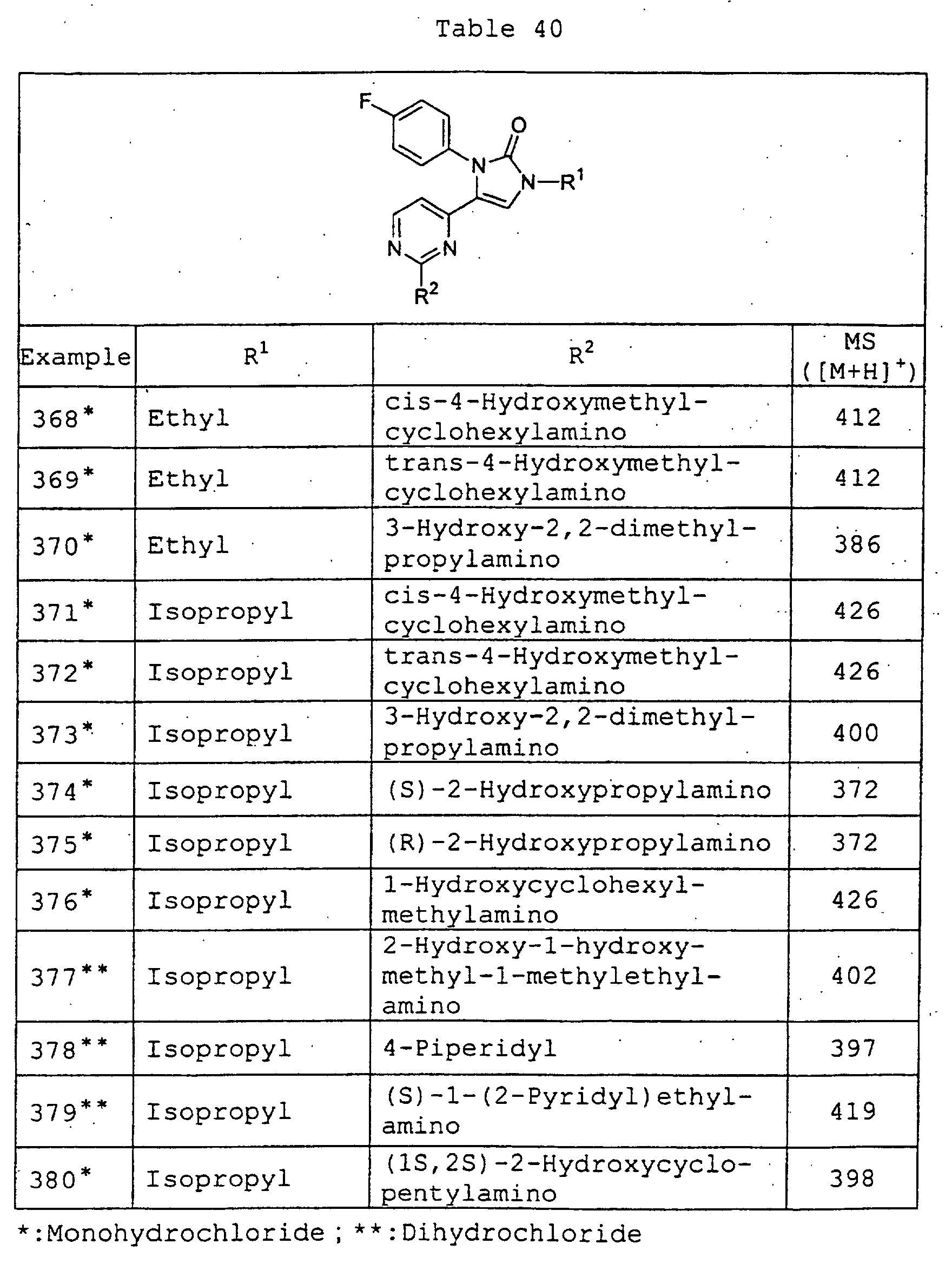

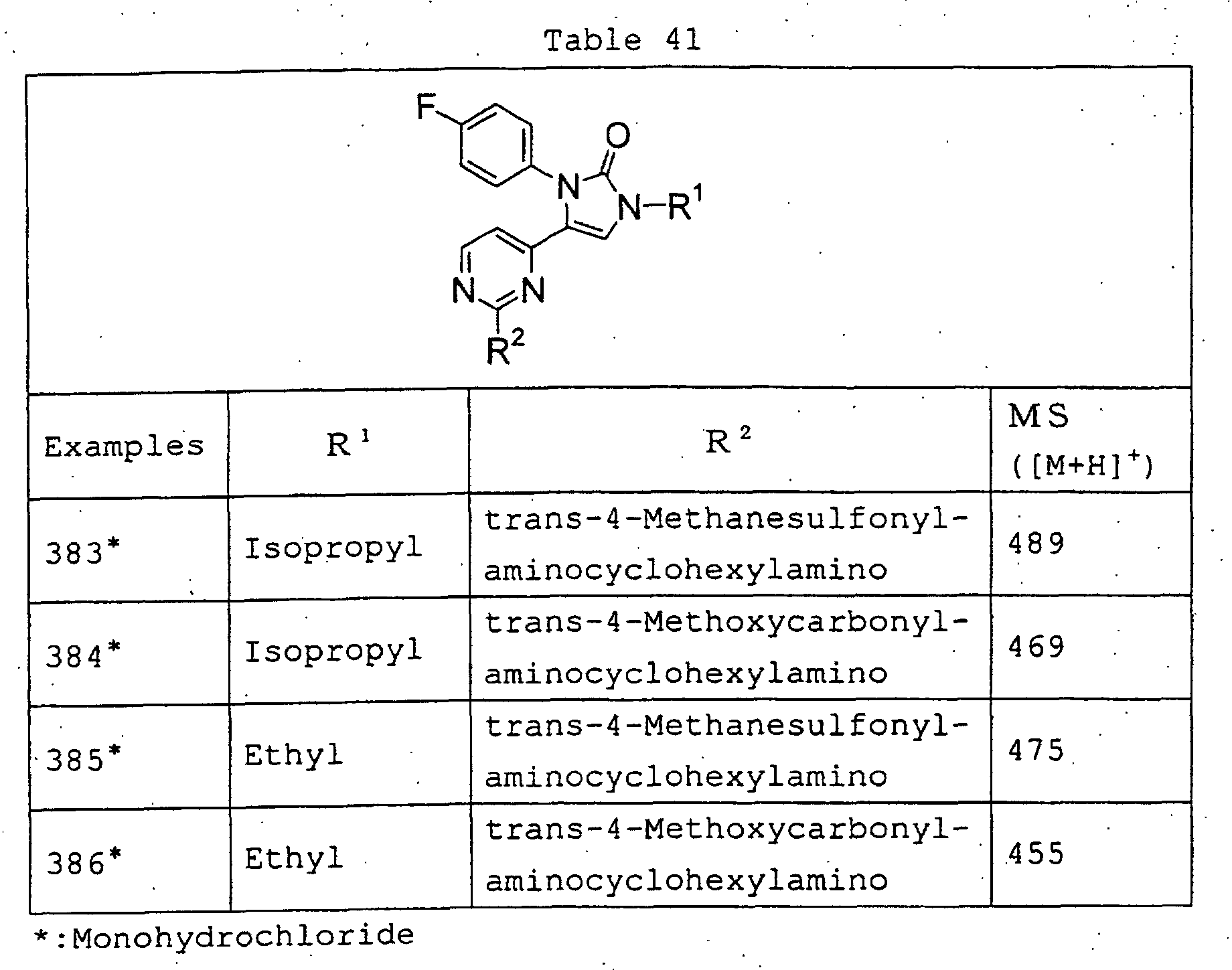
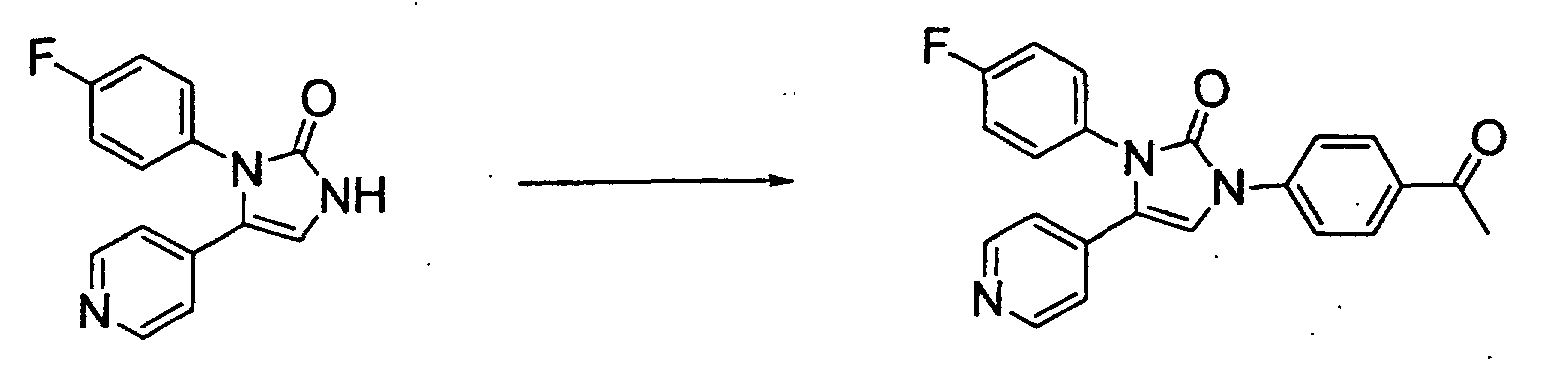
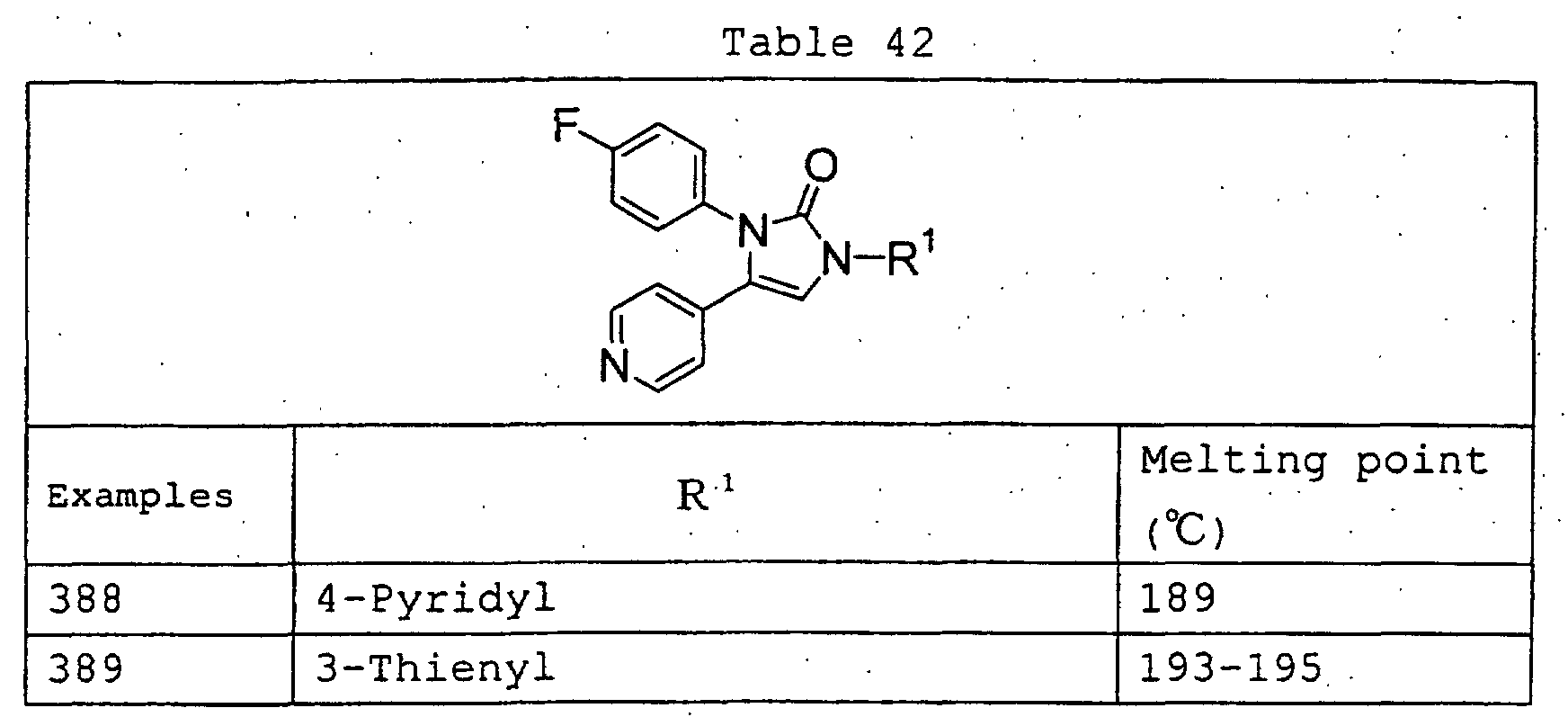
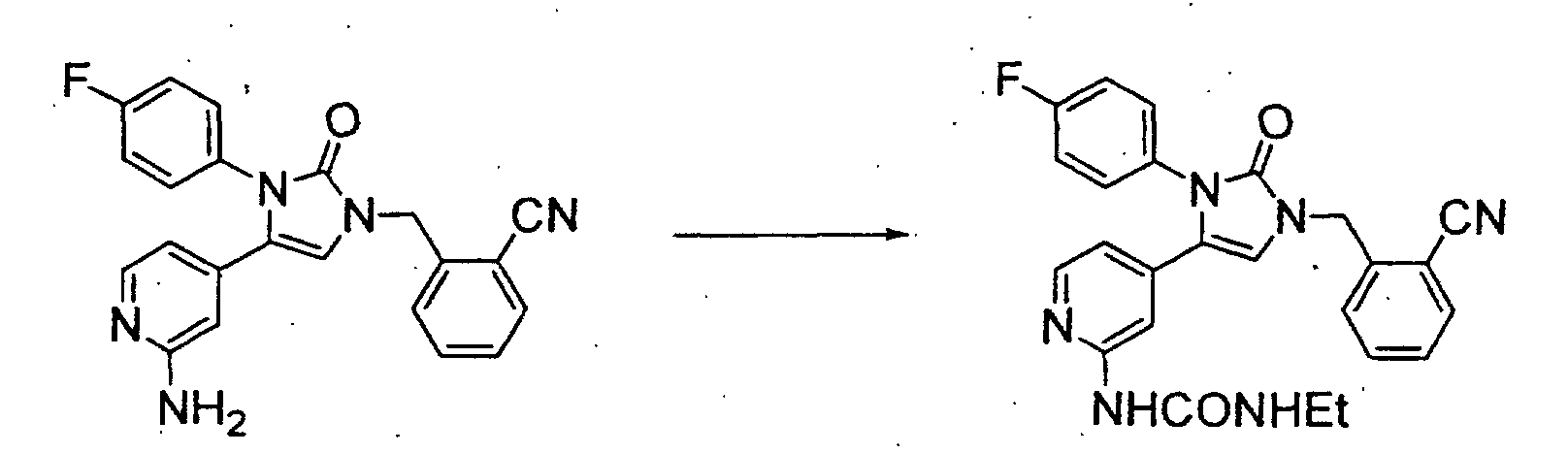


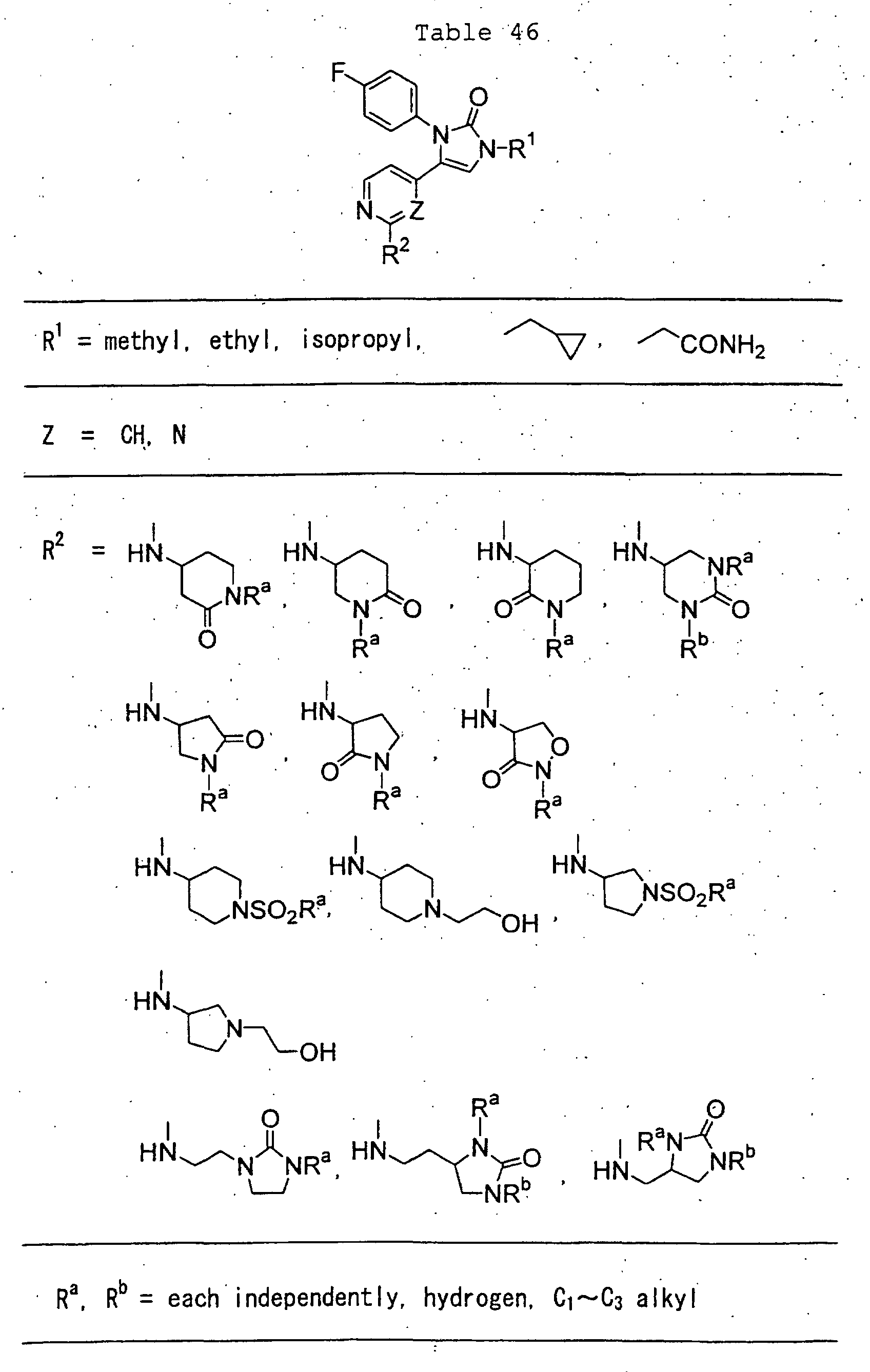
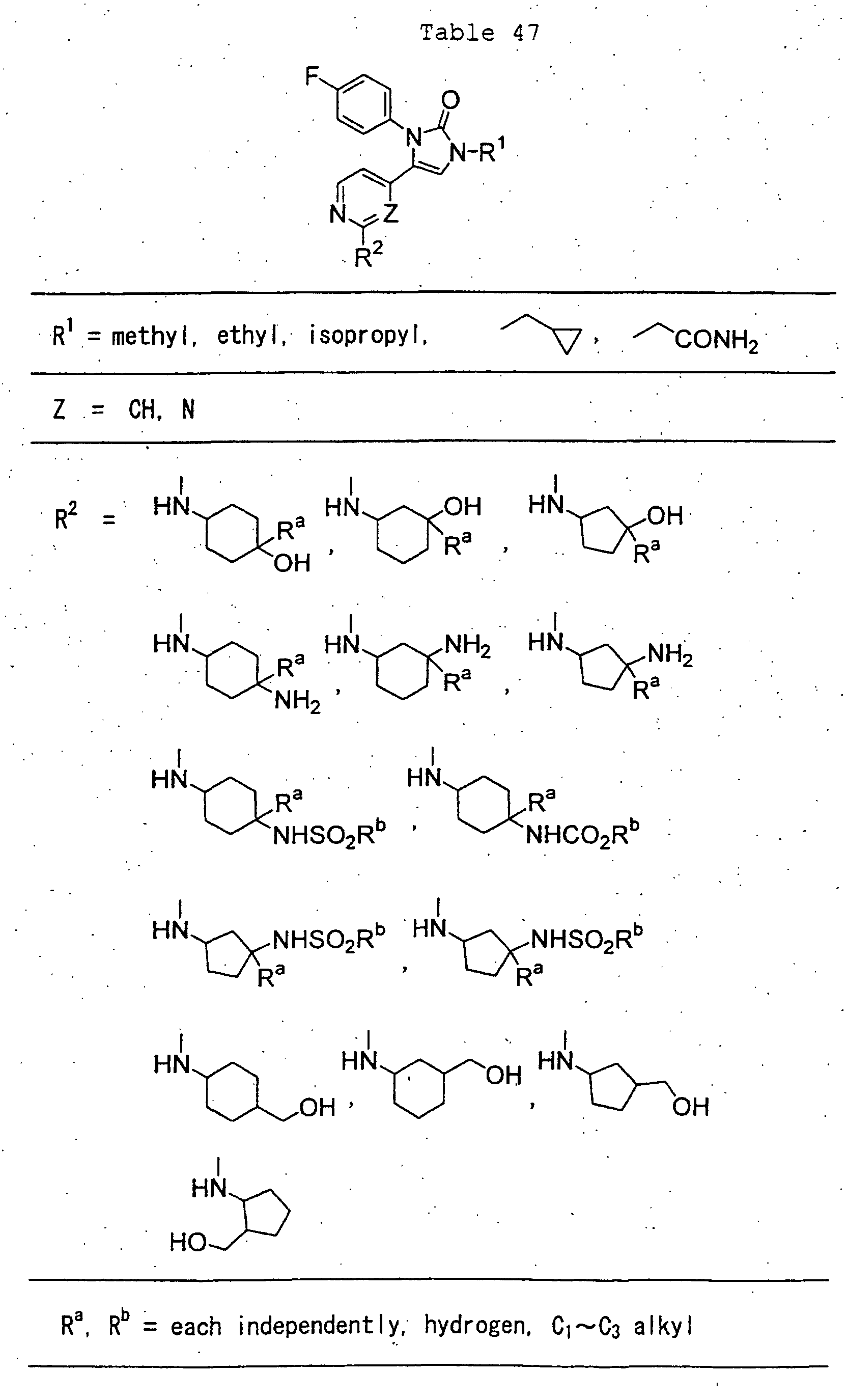
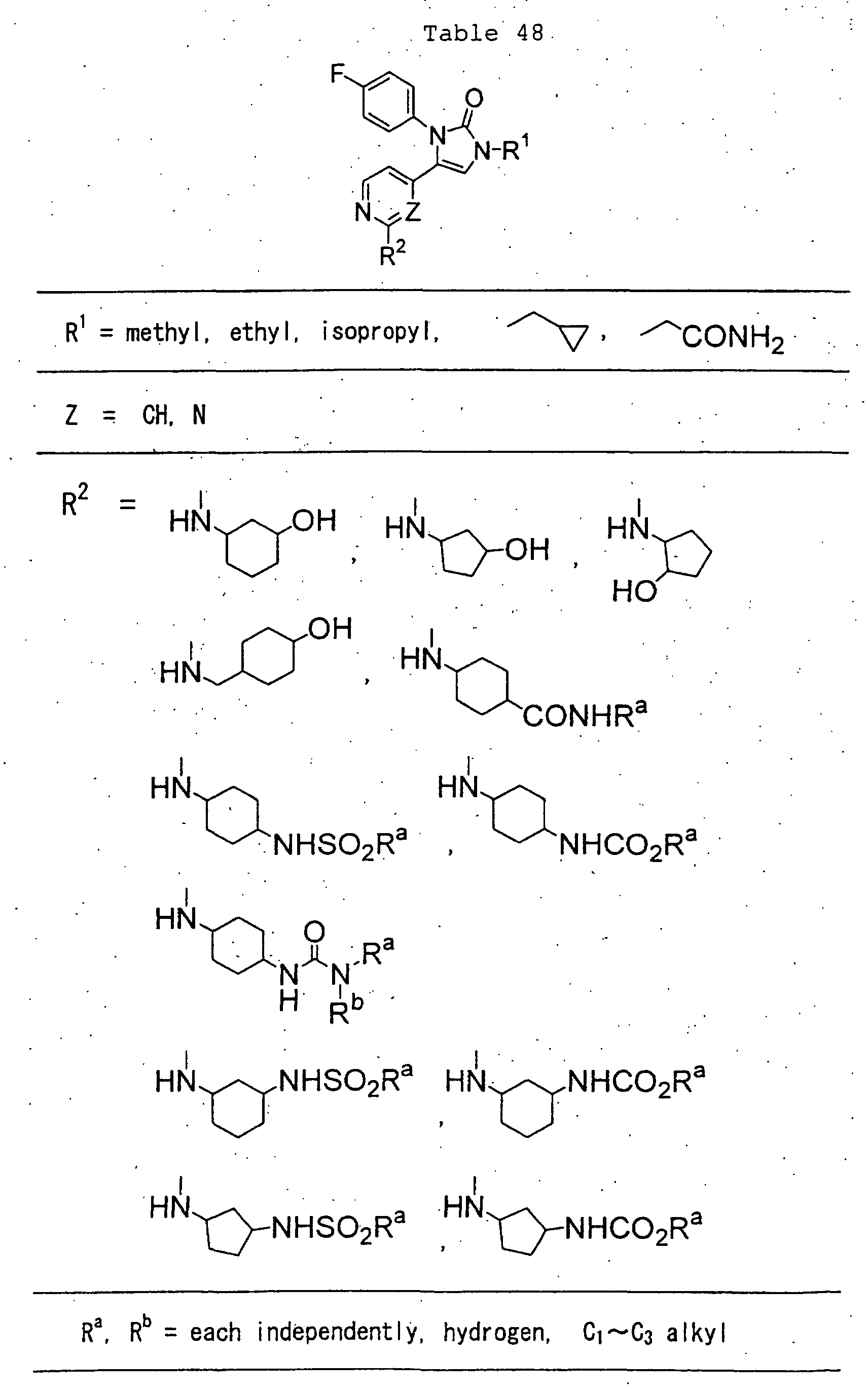


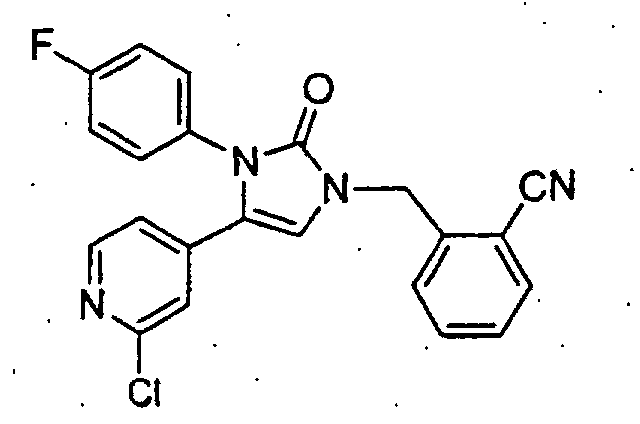

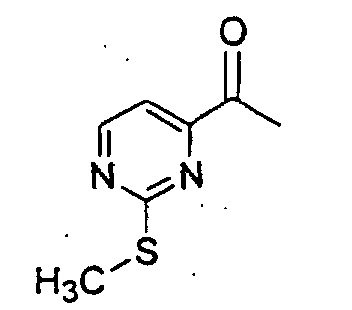
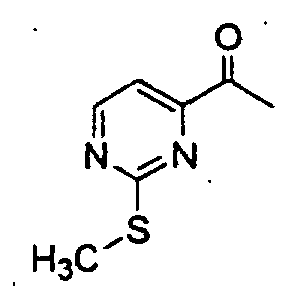

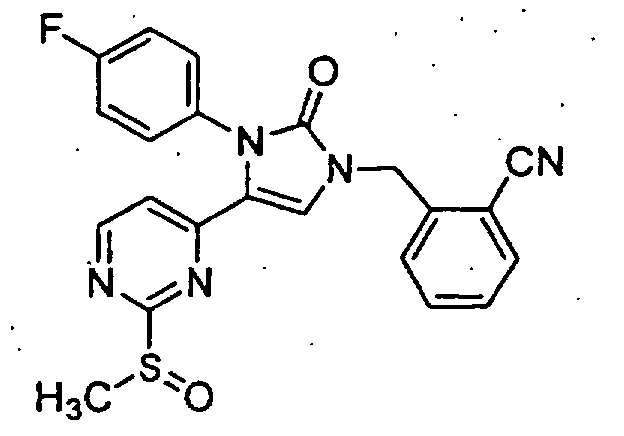


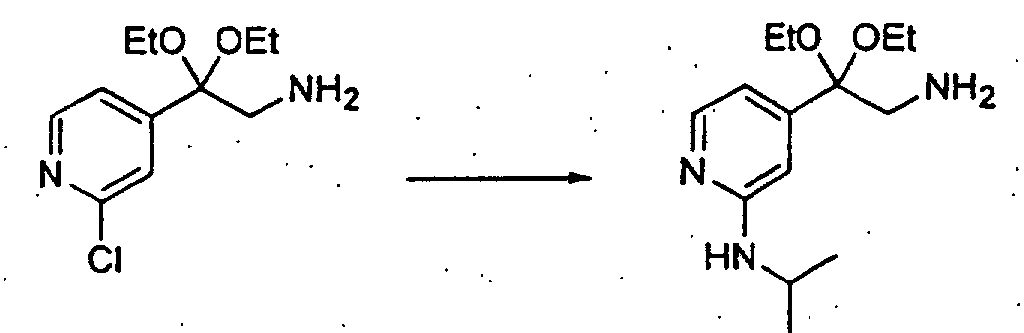


MS 364 ([M+H]+)
MS 423 ([M+H]+)
MS 369 ([M+H]+)
| Examples | TNF-α inhibition rate |
| 182 | 64% |
| 202 | 57% |
| 239 | 69% |
| 296 | 52% |
| 300 | 57% |
Claims (13)
- A compound of the formula [I]:wherein G1 is an alkyl which may be substituted by a halogen atom or an alkoxy, or a group of the formula:
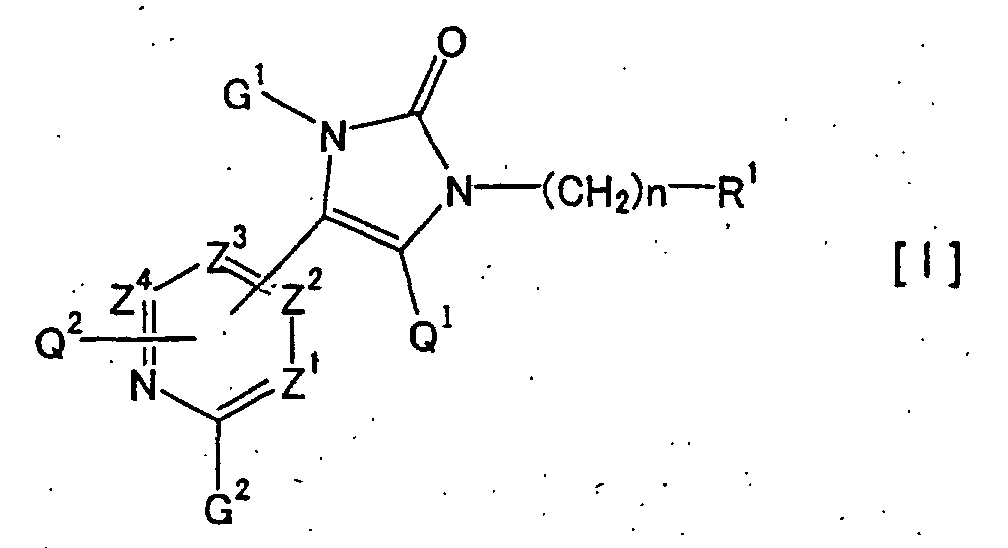 wherein ring B is benzene ring, naphthalene ring, a monocyclic or bicyclic aromatic heterocycle or a cycloalkane, and the benzene ring, the naphthalene ring, the monocyclic or bicyclic aromatic heterocycle and the cycloalkane may be substituted by 1 to 3 substituent(s), which is(are) the same or different, and selected from the group consisting of a halogen atom, nitro, an optionally substituted alkyl, an optionally substituted alkoxy, an optionally substituted amino, an optionally substituted carbamoyl and cyano,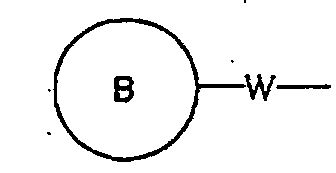
W is a single bond, or a c1 - c4 alkylene which may be substituted by 1 or 2 alkyl(s),
Q1 and Q2 may be the same or different, and each is hydrogen atom, a halogen atom or an alkyl,
n is 0, 1, 2, 3 or 4,
R1 is hydrogen atom, an optionally substituted alkyl, an optionally substituted cycloalkyl, an optionally substituted phenyl or an optionally substituted heterocyclic group,
Z1, Z2, Z3 and Z4 may be the same or different, and each is CH or N, provided that 3 or more of Z1, Z2, Z3 and Z4 should not be N at the same time,
G2 is hydrogen atom, -NR3R4, -OR5, -SR5 -COR6, -CHR7R8, or
a heterocyclic group,
where R3 to R8 each independently is hydrogen atom, an optionally substituted alkyl, an alkenyl, an alkynyl, hydroxy, an alkoxy, an optionally substituted amino, an optionally substituted alkanoyl, an optionally substituted carbamoyl, an alkoxyoxalyl, an alkylsulfonyl, an optionally substituted cycloalkyl, an optionally substituted phenyl, an optionally substituted heterocyclic group, a carbonyl substituted by an optionally substituted cycloalkyl, a carbonyl substituted by an optionally substituted phenyl or a carbonyl substituted by an optionally substituted heterocyclic group,
or a pharmaceutically acceptable salt thereof. - A compound of the formula [Ia]:wherein ring A is benzene ring or a monocyclic aromatic heterocycle, and the benzene ring and the monocyclic aromatic heterocycle may be substituted by 1 to 3 substituent(s), which is (are) the same or different, and selected from the group consisting of a halogen atom, nitro, an optionally substituted alkyl, an optionally substituted alkoxy, an optionally substituted amino, an optionally substituted carbamoyl and cyano,
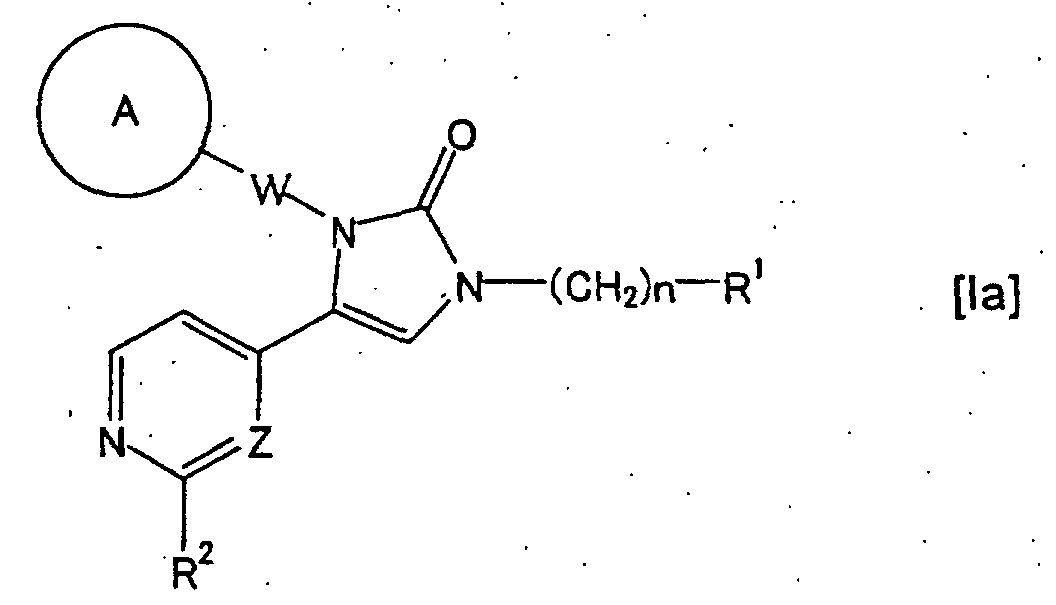
W is a single bond, or a c1 - c4 alkylene which may be substituted by 1 or 2 alkyl(s),
n is 0, 1, 2, 3 or 4,
R1 is hydrogen atom, an optionally substituted alkyl, an optionally substituted cycloalkyl, an optionally substituted phenyl or an optionally substituted heterocyclic group,
Z is CH or N,
R2 is hydrogen atom, -NR3R4, -OR5, -COR6 or -CHR7R8,
where R3 to R8, each independently is hydrogen atom, an optionally substituted alkyl, an alkenyl, an alkynyl, hydroxy, an alkoxy, an optionally substituted amino, an optionally substituted alkanoyl, an optionally substituted carbamoyl, an alkoxyoxalyl, an alkylsulfonyl, an optionally substituted cycloalkyl, an optionally substituted phenyl, an optionally substituted heterocyclic group, a carbonyl substituted by an optionally substituted cycloalkyl, a carbonyl substituted by an optionally substituted phenyl or a carbonyl substituted by an optionally substituted heterocyclic group,
or a pharmaceutically acceptable salt thereof. - The compound according to Claim 2, wherein the ring A is a benzene ring which may be substituted by 1 to 3 substituent(s), which is(are) the same or different, and selected from the group consisting of a halogen atom, nitro, an optionally substituted alkyl, an optionally substituted alkoxy, an optionally substituted amino and cyano, and W is a single bond, or a pharmaceutically acceptable salt thereof.
- The compound according to Claim 2 or 3, wherein n is 0 or 1, or a pharmaceutically acceptable salt thereof.
- The compound according to any one of Claims 2 to 4, wherein n is 0 and R1 is an optionally substituted alkyl, or n is 1 and R1 is an optionally substituted cycloalkyl or an optionally substituted phenyl, or a pharmaceutically acceptable salt thereof.
- The compound according to any one of Claims 2 to 5, wherein R2 is -NR3R4 or -OR5, or a pharmaceutically acceptable salt thereof.
- The compound according to any one of Claims 2 to 5, wherein R2 is -NHR4, and R4 is an optionally substituted alkyl, an alkenyl, an optionally substituted alkanoyl, an optionally substituted carbamoyl, an optionally substituted cycloalkyl, an optionally substituted phenyl, an optionally substituted heterocyclic group, a carbonyl substituted by an optionally substituted cycloalkyl or a carbonyl substituted by an optionally substituted heterocyclic group, or a pharmaceutically acceptable salt thereof.
- The compound according to Claim 2, wherein the ring A is a benzene ring which may be substituted by 1 or 2 substituent(s), which is(are) the same or different, and selected from the group consisting of a halogen atom, an optionally substituted alkyl, an optionally substituted alkoxy, an optionally substituted amino and cyano,
W is a single bond,
n is 0 or 1,
R1 is hydrogen atom, an optionally substituted alkyl, an optionally substituted cycloalkyl, an optionally substituted phenyl or an optionally substituted heterocyclic group,
Z is CH or N,
R2 is hydrogen atom, -NR3R4, -OR5, -COR6 or -CHR7R8,
Where R3 to R8 each independently is hydrogen atom, an optionally substituted alkyl, an alkenyl, an alkoxy, an optionally substituted alkanoyl, an optionally substituted carbamoyl, an alkoxyoxalyl, an optionally substituted cycloalkyl, an optionally substituted phenyl, an optionally substituted heterocyclic group, a carbonyl substituted by an optionally substituted cycloalkyl or a carbonyl substituted by an optionally substituted heterocyclic group,
or a pharmaceutically acceptable salt thereof. - The compound according to Claim 2, wherein the ring A is a benzene ring which may be substituted by 1 or 2 substituent(s), which is(are) the same or different, and selected from the group consisting of a halogen atom, an alkyl, an alkoxy, an amino optionally substituted by alkyl(s) and cyano,
W is a single bond,
n is 0 or 1,
R1 isZ is CH or N,(1) hydrogen atom,(2) an alkyl optionally substituted by group(s) selected from the group consisting of phenyl, an alkoxy, an alkylamino, a dialkylamino, an alkanoylamino, an alkylsulfonylamino, a carbamoyl optionally substituted by alkyl(s), hydroxy, carboxy and cyano,(3) a cycloalkyl optionally substituted by group(s) selected from the group consisting of the following (i) to (v):(i) hydroxy,(ii) an alkoxy optionally substituted by alkoxy(s),(iii) an amino optionally substituted by group(s) selected from the group consisting of an alkyl', an alkanoyl and an alkylsulfonyl,(iv) a carbamoyl optionally substituted by alkyl(s), and(v) an alkyl optionally substituted by group(s) selected from the group consisting of hydroxy, an alkoxy and amino,(4) a phenyl optionally substituted by group(s) selected from the group consisting of the following (i) to (vi) :(i) a halogen atom,(ii) an alkyl optionally substituted by group(s) selected from the group consisting of a halogen atom, hydroxy and phenylsulfonyl,(iii) cyano,(iv) an alkoxy,(v) an amino optionally substituted by group(s) selected from the group consisting of an alkyl and an alkylsulfonyl,(vi) a carbonyl substituted by a heterocyclic group, or(5) a heterocyclic group optionally substituted by group(s) selected from the group consisting of the following (i) to (iv):(i) an alkoxycarbonyl,(ii) an alkyl optionally substituted by group(s) selected from the group consisting of hydroxy, an alkoxy and a carbamoyl optionally substituted by alkyl(s),(iii) an alkanoyl and(iv) an alkylsulfonyl,
R2 is hydrogen atom, -NR3R4, -OR5, -COR6 or -CHR7R8,
where R3 to R8 each independently is:or a pharmaceutically acceptable salt thereof.(1) hydrogen atom,(2) an alkyl optionally substituted by group(s) selected from the group consisting of the following (i) to (vii) :(i) hydroxy,(ii) an alkoxy,(iii) an amino optionally substituted by group(s) selected from the group consisting of an alkyl, an alkanoyl and an alkylsulfonyl,(iv) an alkoxycarbonyl,(v) a cycloalkyl optionally substituted by group(s) selected from the group consisting of the following a) to g) :a) hydroxy,b) an amino optionally substituted by alkyl(s),c) an alkanoylamino,d) an alkylsulfonylamino,e) an alkyl optioinally substituted by group(s) selected from the group consisting of hydroxy, an alkoxy, amino, a carbamoyl optionally substituted by alkyl(s),f) carboxy andg) a carbamoyl optionally substituted by alkyl(s),(vi) a phenyl optionally substituted by group(s) selected from the group consisting of a halogen atom, an alkoxy and morpholinylcarbonyl, and(vii) a heterocyclic group optionally substituted by alkyl(s),(3) an alkenyl,(4) an alkoxy,(5) an alkanoyl optionally substituted by group(s) selected from the group consisting of the following (i) to (iv) :(i) hydroxy,(ii) an alkoxy,(iii) an amino optionally substituted by group(s) selected from the group consisting of an alkyl and an alkanoyl,(iv) an alkoxycarbonyl,(6) a carbamoyl optionally substituted by alkyl(s),(7) an alkoxyoxalyl,(8) a cycloalkyl optionally substituted by group(s) selected from the group consisting of the following (i) to (vii):(i) a halogen atom,(ii) hydroxy,(iii) an alkoxy,(iv) an amino optionally substituted by group(s) selected from the group consisting of an alkyl, an alkanoyl, an alkoxycarbonyl and an alkylsulfonyl,(v) an alkyl optionally substituted by group(s) selected from the group consisting of hydroxy, an alkoxy, amino, a carbamoyl optionally substituted by alkyl(s),(vi) an alkanoyloxy and(vii) a carbamoyl optionally substituted by alkyl(s),(9) a phenyl optionally substituted by group(s) selected from the group consisting of a halogen atom and an alkoxy,(10) a heterocyclic group optionally substituted by group(s) selected from the group consisting of the following (i) to (v):(i) an alkyl optionally substituted by group(s) selected from the group consisting of phenyl, hydroxy, an alkoxy, amino and a carbamoyl optionally substituted by alkyl(s),(ii) an alkoxycarbonyl,(iii) an alkanoyl,(iv) an alkylsulfonyl,(v) oxo(11) a carbonyl substituted by a cycloalkyl optionally substituted by group(s) selected from the group consisting of hydroxy, amino and an alkanoylamino, or(12) a heterocyclic group-substituted carbonyl, - The compound according to Claim 2, wherein the ring A is a benzene ring which may be substituted by 1 or 2 substituent(s), which is(are) the same or different, and selected from the group consisting of fluorine atom, chlorine atom, an alkyl and an alkoxy,
W is a single bond,
n is 0 or 1,
R1 isZ is CH or N,(1) hydrogen atom,(2) an alkyl optionally substituted by group(s) selected from the group consisting of phenyl, an alkoxy, an alkylamino, a dialkylamino, an alkanoylamino, an alkylsulfonylamino, a carbamoyl optionally substituted by alkyl(s), hydroxy, carboxy and cyano,(3) a cycloalkyl optionally substituted by group(s) selected from the group consisting of the following (i) to (v):(i) hydroxy,(ii) an alkoxy optionally substituted by alkoxy(s),(iii) an amino optionally substituted by group(s) selected from the group consisting of an alkyl, an alkanoyl and an alkylsulfonyl,(iv) a carbamoyl optionally substituted by alkyl(s),(v) an alkyl optionally substituted by group(s) selected from the group consisting of hydroxy and amino,(4) a phenyl optionally substituted by group (s) selected from the group consisting of the following (i) to (iv) :(i) a halogen atom,(ii) an alkyl optionally substituted by halogen atom(s),(iii) cyano, and(iv) an alkoxy, or(5) a heterocyclic group,
R2 is hydrogen atom, -NR3R4, -OR5, or -COR6,
Where R3 to R6 each independently is:or a pharmaceutically acceptable salt thereof.(1) hydrogen atom,(2) an alkyl optionally substituted by group(s) selected from the group consisting of the following (i) to (vi) :(i) hydroxy,(ii) an alkoxy,(iii) an alkoxycarbonyl,(iv) a cycloalkyl optionally substituted by group(s) selected from the group consisting of the following a) to e) :a) hydroxy,b) an amino optionally substituted by alkyl(s),c) an alkanoylamino,d) an alkyl optionally substituted by group(s) selected from the group consisting of hydroxy, amino and a carbamoyl optionally substituted by alkyl(s), ande) a carbamoyl optionally substituted by alkyl(s),(v) a phenyl optionally substituted by alkoxy(s), and(vi) a heterocyclic group,(3) an alkenyl,(4) an alkoxy,(5) an alkanoyl optionally substituted by group(s) selected from the group consisting of an alkoxy, an amino optionally substituted by alkanoyl(s), and an alkoxycarbonyl,(6) a cycloalkyl optionally substituted by group(s) selected from the group consisting of the following (i) to (v):(i) hydroxy,(ii) an alkoxy,(iii) an amino optionally substituted by group(s) selected from the group consisting of an alkyl, an alkanoyl, an alkoxycarbonyl and an alkylsulfonyl,(iv) an alkyl optionally substituted by group(s) selected from the group consisting of hydroxy, amino and a carbamoyl optionally substituted by alkyl(s),(v) a carbamoyl optionally substituted by alkyl(s),(7) a heterocyclic group optionally substituted by group(s) selected from the group consisting of an alkyl optionally substituted by phenyl(s) and an alkoxycarbonyl,(8) a carbonyl substituted by a cycloalkyl optionally substituted by group(s) selected from the group consisting of hydroxy and amino, or(9) a heterocyclic group-substituted carbonyl, - A compound of the formula [Ib]:wherein R11 is a group selected from the group consisting of hydrogen atom, a halogen atom, a c1 - c4 alkyl, and a c1 - c4 alkoxy,
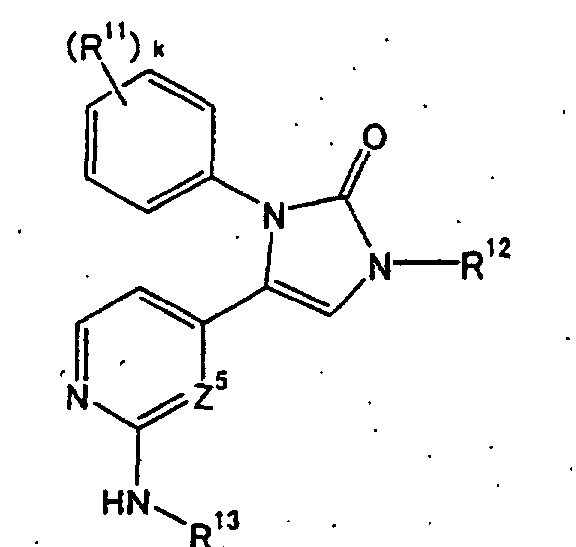
k is 1 or 2, and when k is 2, two of R11s may be the same or different,
R12 isZ5 is CH or N,(1) a c1 - c4 alkyl,(2) a c3 - c4 cycloalkylmethyl,(3) carbamoylmethyl, or(4) a benzyl optinally substituted by group(s) selected from the group consisting of cyano, a halogen atom, a c1 - c3 alkoxy, a c1 - c3 alkyl and a halogen-substituted c1 - c3 alkyl,
R13 isor a pharmaceutically acceptable salt thereof.(1) a c1 - c6 alkyl optionally substituted by group(s) selected from the group consisting of the following (i) to (iii):(i) a c5 - c7 cycloalkyl optionally substituted by group(s) selected from the group consisting of the following a) to e):a) hydroxyb) an amino optionally substituted by c1- c4 alkyl(s),c) a c1 - c4 alkanoylamino,d) a c1 - c4 alkyl optionally substituted by group(s) selected from the group consisting of hydroxy, amino, and a carbamoyl optionally substituted by c1 - c4 alkyl(s), ande) a carbamoyl optionally substituted by c1 - c4 alkyl(s),(ii) hydroxy, and(iii) a carbamoyl optionally substituted by c1 - c4 alkyl (s), or(2) a c5 - c7 cycloalkyl optionally substituted by group(s) selected from the group consisting of the following (i) to (iii):(i) hydroxy,(ii) a c1 - c4 alkyl optionally substituted by group(s) selected from the group consisting of hydroxy, amino and a carbamoyl optionally substituted by c1 - c4 alkyl(s), and(iii) a carbamoyl optionally substituted by c1 - c4 alkyl(s), - The compound according to Claim 11, wherein R11 is a group selected from the group consisting of hydrogen atom, fluorine atom, chlorine atom, methyl and methoxy,
k is 1 or 2, and when k is 2, two of R11s may be the same or different,
R12 is a c1 - c4 alkyl, cyclopropylmethyl or carbamoylmethyl, or a pharmaceutically acceptable salt thereof. - The compound according to Claim 11, wherein R11 is hydrogen atom or fluorine atom,
k is 1,
R12 is ethyl, isopropyl, isobutyl, cyclopropylmethyl or carbamoylmethyl,
R13 isor a pharmaceutically acceptable salt thereof.(1) a c1 - c6 alkyl optionally substituted by group(s) selected from the group consisting of the following (i) and (ii):(i) a c5 - c7 cycloalkyl optionally substituted by group(s) selected from the group consisting of hydroxy, a hydroxy c1 - c4 alkyl and a carbamoyl optionally substituted by c1 - c4 alkyl(s), and(ii) hydroxy, or(2) a c5 - c7 cycloalkyl optionally substituted by group(s) selected from the group consisting of the following (i) to (iii):(i) hydroxy,(ii) a c1 - c4 alkyl optionally substituted by group(s) selected from the group consisting of hydroxy, amino and a carbamoyl optionally substituted by c1 - c4 alkyl(s),(iii) a carbamoyl optionally substituted by c1 - c4 alkyl(s),
Applications Claiming Priority (5)
| Application Number | Priority Date | Filing Date | Title |
|---|---|---|---|
| JP2001324029 | 2001-10-22 | ||
| JP2001324029 | 2001-10-22 | ||
| JP2002263680 | 2002-09-10 | ||
| JP2002263680 | 2002-09-10 | ||
| PCT/JP2002/010937 WO2003035638A1 (en) | 2001-10-22 | 2002-10-22 | 4-imidazolin-2-one compounds |
Publications (3)
| Publication Number | Publication Date |
|---|---|
| EP1439174A1 true EP1439174A1 (en) | 2004-07-21 |
| EP1439174A4 EP1439174A4 (en) | 2004-12-22 |
| EP1439174B1 EP1439174B1 (en) | 2012-03-21 |
Family
ID=26624024
Family Applications (1)
| Application Number | Title | Priority Date | Filing Date |
|---|---|---|---|
| EP02802049A Expired - Lifetime EP1439174B1 (en) | 2001-10-22 | 2002-10-22 | 4-IMIDAZOLIN-2-ONE COMPOUNDS AS p38 MAP KINASE INHIBITORS |
Country Status (16)
| Country | Link |
|---|---|
| EP (1) | EP1439174B1 (en) |
| JP (1) | JP4432492B2 (en) |
| KR (1) | KR100742058B1 (en) |
| CN (1) | CN100402521C (en) |
| AT (1) | ATE550332T1 (en) |
| BR (1) | BR0213465A (en) |
| CA (1) | CA2461100C (en) |
| HU (1) | HUP0401949A3 (en) |
| IL (2) | IL160874A0 (en) |
| MX (1) | MXPA04003729A (en) |
| MY (1) | MY147948A (en) |
| NO (1) | NO20042010L (en) |
| PH (1) | PH12009500610A1 (en) |
| PL (1) | PL210470B1 (en) |
| TW (1) | TWI329642B (en) |
| WO (1) | WO2003035638A1 (en) |
Cited By (4)
| Publication number | Priority date | Publication date | Assignee | Title |
|---|---|---|---|---|
| WO2005105790A1 (en) * | 2004-04-28 | 2005-11-10 | Tanabe Seiyaku Co., Ltd. | 4- 2- (cycloalkylamino) pyrimidin-4-yl ! - (phenyl) - imidazolin-2- one derivatives as p38 map- kinase inhibitors for the treatment of inflammatory diseases |
| WO2006066924A3 (en) * | 2004-12-23 | 2006-08-31 | Chiesi Farma Spa | Azole derivatives with antimuscarinic activity |
| EP1464335A3 (en) * | 2003-03-31 | 2007-05-09 | Taisho Pharmaceutical Co. Ltd. | Quinoline, tetrahydroquinoline and pyrimidine derivatives as mch antagonist |
| US12441707B2 (en) | 2019-12-30 | 2025-10-14 | Tyra Biosciences, Inc. | Indazole compounds |
Families Citing this family (11)
| Publication number | Priority date | Publication date | Assignee | Title |
|---|---|---|---|---|
| US7473695B2 (en) | 2001-10-22 | 2009-01-06 | Mitsubishi Tanabe Pharma Corporation | 4-imidazolin-2-one compounds |
| ATE504583T1 (en) * | 2003-04-21 | 2011-04-15 | Mitsubishi Tanabe Pharma Corp | 4-IMIDAZOLINE-2-ONE COMPOUNDS |
| KR100793479B1 (en) * | 2004-04-28 | 2008-01-14 | 다나베 미츠비시 세이야꾸 가부시키가이샤 | 4-2- (cycloalkylamino) pyridin-4-yl- (phenyl) -imidazolin-2-one derivatives as p38 MAP- kinase inhibitors for the treatment of inflammatory diseases |
| JPWO2006083010A1 (en) * | 2005-02-02 | 2008-06-26 | 味の素株式会社 | Method for producing 4-acetylpyrimidine compound and crystal thereof |
| CA2618724A1 (en) * | 2005-08-18 | 2007-02-22 | Synta Pharmaceuticals Corp. | Imidazole compounds that modulate hsp90 activity |
| JP2007145819A (en) * | 2005-10-28 | 2007-06-14 | Tanabe Seiyaku Co Ltd | Pharmaceutical composition |
| CN101130539B (en) * | 2007-09-26 | 2012-05-30 | 浙江大学 | Indole-substituted imidazolin-2-one derivatives, preparation method and use thereof |
| DE102009043260A1 (en) | 2009-09-28 | 2011-04-28 | Merck Patent Gmbh | Pyridinyl-imidazolone derivatives |
| DE102009049679A1 (en) | 2009-10-19 | 2011-04-21 | Merck Patent Gmbh | Pyrazolopyrimidinderivate |
| DE102010049595A1 (en) | 2010-10-26 | 2012-04-26 | Merck Patent Gmbh | quinazoline derivatives |
| US20190060286A1 (en) | 2016-02-29 | 2019-02-28 | University Of Florida Research Foundation, Incorpo | Chemotherapeutic Methods |
Family Cites Families (9)
| Publication number | Priority date | Publication date | Assignee | Title |
|---|---|---|---|---|
| US3538104A (en) | 1969-02-28 | 1970-11-03 | Geigy Chem Corp | Pyridyl-2-imidazolones |
| US4532250A (en) * | 1983-11-23 | 1985-07-30 | American Hospital Supply Corporation | 5-Heteroarylimidazol-2-ones having cardiotonic activity |
| US5593992A (en) * | 1993-07-16 | 1997-01-14 | Smithkline Beecham Corporation | Compounds |
| NZ302117A (en) * | 1995-01-12 | 1999-10-28 | Smithkline Beecham Corp | 1-cycloalkyl or cycloalkylalkyl 4,5-trisubstituted imidazole derivatives and medicaments |
| IL118544A (en) * | 1995-06-07 | 2001-08-08 | Smithkline Beecham Corp | Imidazole derivatives, process for their preparation and pharmaceutical compositions comprising them |
| GB9713726D0 (en) * | 1997-06-30 | 1997-09-03 | Ciba Geigy Ag | Organic compounds |
| US6040320A (en) * | 1997-06-30 | 2000-03-21 | Ortho-Mcneil Pharmaceutical, Inc. | 2-substituted imidazoles useful in the treatment of inflammatory diseases |
| PL351148A1 (en) * | 1999-04-23 | 2003-03-24 | Takeda Chemical Industries Ltd | 5-pyridyl-1,3-azole compounds, process for producing the same and use thereof |
| NZ528405A (en) * | 2001-03-26 | 2005-07-29 | Ortho Mcneil Pharm Inc | Process for the preparation of tetrasubstituted imidazole derivatives and novel crystalline structures thereof |
-
2002
- 2002-10-22 IL IL16087402A patent/IL160874A0/en unknown
- 2002-10-22 JP JP2003538154A patent/JP4432492B2/en not_active Expired - Fee Related
- 2002-10-22 CN CNB028208374A patent/CN100402521C/en not_active Expired - Fee Related
- 2002-10-22 TW TW091124295A patent/TWI329642B/en not_active IP Right Cessation
- 2002-10-22 BR BR0213465-9A patent/BR0213465A/en not_active Application Discontinuation
- 2002-10-22 MY MYPI20023924A patent/MY147948A/en unknown
- 2002-10-22 HU HU0401949A patent/HUP0401949A3/en unknown
- 2002-10-22 PL PL369287A patent/PL210470B1/en not_active IP Right Cessation
- 2002-10-22 MX MXPA04003729A patent/MXPA04003729A/en active IP Right Grant
- 2002-10-22 KR KR1020047005911A patent/KR100742058B1/en not_active Expired - Fee Related
- 2002-10-22 WO PCT/JP2002/010937 patent/WO2003035638A1/en not_active Ceased
- 2002-10-22 EP EP02802049A patent/EP1439174B1/en not_active Expired - Lifetime
- 2002-10-22 AT AT02802049T patent/ATE550332T1/en active
- 2002-10-22 CA CA002461100A patent/CA2461100C/en not_active Expired - Fee Related
-
2004
- 2004-03-15 IL IL160874A patent/IL160874A/en not_active IP Right Cessation
- 2004-05-14 NO NO20042010A patent/NO20042010L/en not_active Application Discontinuation
-
2009
- 2009-04-01 PH PH12009500610A patent/PH12009500610A1/en unknown
Cited By (5)
| Publication number | Priority date | Publication date | Assignee | Title |
|---|---|---|---|---|
| EP1464335A3 (en) * | 2003-03-31 | 2007-05-09 | Taisho Pharmaceutical Co. Ltd. | Quinoline, tetrahydroquinoline and pyrimidine derivatives as mch antagonist |
| WO2005105790A1 (en) * | 2004-04-28 | 2005-11-10 | Tanabe Seiyaku Co., Ltd. | 4- 2- (cycloalkylamino) pyrimidin-4-yl ! - (phenyl) - imidazolin-2- one derivatives as p38 map- kinase inhibitors for the treatment of inflammatory diseases |
| US7700771B2 (en) | 2004-04-28 | 2010-04-20 | Mitsubishi Tanabe Pharma Corporation | Heterocyclic compound which may be used as a medicine having p38 MAP kinase inhibitory activity |
| WO2006066924A3 (en) * | 2004-12-23 | 2006-08-31 | Chiesi Farma Spa | Azole derivatives with antimuscarinic activity |
| US12441707B2 (en) | 2019-12-30 | 2025-10-14 | Tyra Biosciences, Inc. | Indazole compounds |
Also Published As
| Publication number | Publication date |
|---|---|
| CA2461100C (en) | 2009-12-01 |
| IL160874A (en) | 2012-05-31 |
| EP1439174B1 (en) | 2012-03-21 |
| NO20042010L (en) | 2004-07-09 |
| ATE550332T1 (en) | 2012-04-15 |
| MXPA04003729A (en) | 2004-07-23 |
| PL210470B1 (en) | 2012-01-31 |
| CN100402521C (en) | 2008-07-16 |
| PH12009500610A1 (en) | 2016-06-13 |
| HUP0401949A3 (en) | 2009-07-28 |
| KR20040047942A (en) | 2004-06-05 |
| MY147948A (en) | 2013-02-15 |
| CN1571781A (en) | 2005-01-26 |
| CA2461100A1 (en) | 2003-05-01 |
| JP4432492B2 (en) | 2010-03-17 |
| TWI329642B (en) | 2010-09-01 |
| BR0213465A (en) | 2004-11-09 |
| EP1439174A4 (en) | 2004-12-22 |
| PL369287A1 (en) | 2005-04-18 |
| IL160874A0 (en) | 2004-08-31 |
| WO2003035638A1 (en) | 2003-05-01 |
| KR100742058B1 (en) | 2007-07-23 |
| JPWO2003035638A1 (en) | 2005-02-10 |
| HUP0401949A2 (en) | 2005-01-28 |
Similar Documents
| Publication | Publication Date | Title |
|---|---|---|
| US7846933B2 (en) | 4-imidazolin-2-one compounds | |
| CN106659914B (en) | Inhibitors of lysine-specific demethylase-1 | |
| MX2011000738A (en) | 3,4-diarylpyrazoles as protein kinase inhibitors. | |
| JP6525422B2 (en) | Inhibitors of lysine-specific demethylase-1 | |
| KR20170018913A (en) | Inhibitors of lysine specific demethylase-1 | |
| WO2001062738A1 (en) | Novel imidazoline compounds | |
| JP2008503531A (en) | Pyridazin-3 (2H) -one derivatives and their use as inhibitors of PDE4 | |
| EP1439174B1 (en) | 4-IMIDAZOLIN-2-ONE COMPOUNDS AS p38 MAP KINASE INHIBITORS | |
| JPWO2012036278A1 (en) | Glycine transporter inhibitor | |
| KR20200013718A (en) | Heteroaromatic Compounds as Banin Inhibitors | |
| MX2007008757A (en) | Substituted triazole derivatives as oxytocin antagonists. | |
| JP4986853B2 (en) | Benzimidazole compounds that inhibit prostaglandin D synthase | |
| AU2002247726C1 (en) | 2-Thio-substituted imidazole derivatives and the use thereof in the pharmaceutical industry | |
| EP1740578B1 (en) | 4- 2- (cycloalkylamino) pyrimidin-4-yl ] - (phenyl) - imidazolin-2- one derivatives as p38 map- kinase inhibitors for the treatment of inflammatory diseases | |
| EP1628968A1 (en) | 4-imidazolin-2-one compounds | |
| KR20080070687A (en) | Pyrazoloisoquinoline derivatives | |
| AU2014244855A1 (en) | Pyrazole derivative | |
| JP2007145819A (en) | Pharmaceutical composition | |
| JP4356504B2 (en) | p38 MAP kinase inhibitor | |
| HK1063462A (en) | 4-imidazolin-2-one compounds | |
| MXPA02006722A (en) | Sulfonyl aryl triazoles as anti-inflammatory/analgesic agents. | |
| WO2002092593A1 (en) | 4-(4-pyridazinyl)pyrazole derivatives | |
| AU2004201666C1 (en) | 4-Imidazolin-2-one compounds | |
| KR100793479B1 (en) | 4-2- (cycloalkylamino) pyridin-4-yl- (phenyl) -imidazolin-2-one derivatives as p38 MAP- kinase inhibitors for the treatment of inflammatory diseases | |
| KR20120021370A (en) | 2-Azacyclicamino-4-phenylpyrimidine Derivatives Acting as Iv-β Inhibitors |
Legal Events
| Date | Code | Title | Description |
|---|---|---|---|
| PUAI | Public reference made under article 153(3) epc to a published international application that has entered the european phase |
Free format text: ORIGINAL CODE: 0009012 |
|
| 17P | Request for examination filed |
Effective date: 20040420 |
|
| AK | Designated contracting states |
Kind code of ref document: A1 Designated state(s): AT BE BG CH CY CZ DE DK EE ES FI FR GB GR IE IT LI LU MC NL PT SE SK TR |
|
| AX | Request for extension of the european patent |
Extension state: AL LT LV MK RO SI |
|
| A4 | Supplementary search report drawn up and despatched |
Effective date: 20041110 |
|
| RIC1 | Information provided on ipc code assigned before grant |
Ipc: 7A 61P 17/06 B Ipc: 7C 07D 403/04 B Ipc: 7C 07D 401/14 B Ipc: 7A 61P 1/16 B Ipc: 7A 61P 17/04 B Ipc: 7A 61K 31/4439 B Ipc: 7A 61P 17/02 B Ipc: 7A 61P 11/02 B Ipc: 7C 07D 403/14 B Ipc: 7A 61P 9/00 B Ipc: 7A 61P 11/00 B Ipc: 7C 07D 405/14 B Ipc: 7A 61K 31/496 B Ipc: 7C 07D 401/04 A Ipc: 7C 07D 409/14 B Ipc: 7A 61K 31/4545 B Ipc: 7A 61K 31/444 B Ipc: 7A 61P 13/12 B Ipc: 7A 61P 17/00 B Ipc: 7A 61P 3/10 B Ipc: 7A 61P 1/00 B Ipc: 7A 61P 1/04 B Ipc: 7A 61P 11/06 B Ipc: 7A 61P 9/10 B Ipc: 7A 61K 31/506 B |
|
| REG | Reference to a national code |
Ref country code: HK Ref legal event code: DE Ref document number: 1063462 Country of ref document: HK |
|
| 17Q | First examination report despatched |
Effective date: 20070420 |
|
| RAP1 | Party data changed (applicant data changed or rights of an application transferred) |
Owner name: MITSUBISHI TANABE PHARMA CORPORATION |
|
| GRAP | Despatch of communication of intention to grant a patent |
Free format text: ORIGINAL CODE: EPIDOSNIGR1 |
|
| RTI1 | Title (correction) |
Free format text: 4-IMIDAZOLIN-2-ONE COMPOUNDS AS P38 MAP KINASE INHIBITORS |
|
| RAP1 | Party data changed (applicant data changed or rights of an application transferred) |
Owner name: MITSUBISHI TANABE PHARMA CORPORATION |
|
| GRAS | Grant fee paid |
Free format text: ORIGINAL CODE: EPIDOSNIGR3 |
|
| GRAA | (expected) grant |
Free format text: ORIGINAL CODE: 0009210 |
|
| AK | Designated contracting states |
Kind code of ref document: B1 Designated state(s): AT BE BG CH CY CZ DE DK EE ES FI FR GB GR IE IT LI LU MC NL PT SE SK TR |
|
| AX | Request for extension of the european patent |
Extension state: RO |
|
| REG | Reference to a national code |
Ref country code: GB Ref legal event code: FG4D |
|
| REG | Reference to a national code |
Ref country code: CH Ref legal event code: EP |
|
| REG | Reference to a national code |
Ref country code: IE Ref legal event code: FG4D |
|
| REG | Reference to a national code |
Ref country code: AT Ref legal event code: REF Ref document number: 550332 Country of ref document: AT Kind code of ref document: T Effective date: 20120415 |
|
| REG | Reference to a national code |
Ref country code: DE Ref legal event code: R096 Ref document number: 60242480 Country of ref document: DE Effective date: 20120510 |
|
| REG | Reference to a national code |
Ref country code: NL Ref legal event code: VDEP Effective date: 20120321 |
|
| PG25 | Lapsed in a contracting state [announced via postgrant information from national office to epo] |
Ref country code: FI Free format text: LAPSE BECAUSE OF FAILURE TO SUBMIT A TRANSLATION OF THE DESCRIPTION OR TO PAY THE FEE WITHIN THE PRESCRIBED TIME-LIMIT Effective date: 20120321 Ref country code: GR Free format text: LAPSE BECAUSE OF FAILURE TO SUBMIT A TRANSLATION OF THE DESCRIPTION OR TO PAY THE FEE WITHIN THE PRESCRIBED TIME-LIMIT Effective date: 20120622 |
|
| REG | Reference to a national code |
Ref country code: AT Ref legal event code: MK05 Ref document number: 550332 Country of ref document: AT Kind code of ref document: T Effective date: 20120321 |
|
| PG25 | Lapsed in a contracting state [announced via postgrant information from national office to epo] |
Ref country code: CY Free format text: LAPSE BECAUSE OF FAILURE TO SUBMIT A TRANSLATION OF THE DESCRIPTION OR TO PAY THE FEE WITHIN THE PRESCRIBED TIME-LIMIT Effective date: 20120321 |
|
| PG25 | Lapsed in a contracting state [announced via postgrant information from national office to epo] |
Ref country code: CZ Free format text: LAPSE BECAUSE OF FAILURE TO SUBMIT A TRANSLATION OF THE DESCRIPTION OR TO PAY THE FEE WITHIN THE PRESCRIBED TIME-LIMIT Effective date: 20120321 Ref country code: EE Free format text: LAPSE BECAUSE OF FAILURE TO SUBMIT A TRANSLATION OF THE DESCRIPTION OR TO PAY THE FEE WITHIN THE PRESCRIBED TIME-LIMIT Effective date: 20120321 Ref country code: SE Free format text: LAPSE BECAUSE OF FAILURE TO SUBMIT A TRANSLATION OF THE DESCRIPTION OR TO PAY THE FEE WITHIN THE PRESCRIBED TIME-LIMIT Effective date: 20120321 Ref country code: BE Free format text: LAPSE BECAUSE OF FAILURE TO SUBMIT A TRANSLATION OF THE DESCRIPTION OR TO PAY THE FEE WITHIN THE PRESCRIBED TIME-LIMIT Effective date: 20120321 |
|
| PG25 | Lapsed in a contracting state [announced via postgrant information from national office to epo] |
Ref country code: SK Free format text: LAPSE BECAUSE OF FAILURE TO SUBMIT A TRANSLATION OF THE DESCRIPTION OR TO PAY THE FEE WITHIN THE PRESCRIBED TIME-LIMIT Effective date: 20120321 Ref country code: PT Free format text: LAPSE BECAUSE OF FAILURE TO SUBMIT A TRANSLATION OF THE DESCRIPTION OR TO PAY THE FEE WITHIN THE PRESCRIBED TIME-LIMIT Effective date: 20120723 |
|
| PLBE | No opposition filed within time limit |
Free format text: ORIGINAL CODE: 0009261 |
|
| STAA | Information on the status of an ep patent application or granted ep patent |
Free format text: STATUS: NO OPPOSITION FILED WITHIN TIME LIMIT |
|
| PG25 | Lapsed in a contracting state [announced via postgrant information from national office to epo] |
Ref country code: AT Free format text: LAPSE BECAUSE OF FAILURE TO SUBMIT A TRANSLATION OF THE DESCRIPTION OR TO PAY THE FEE WITHIN THE PRESCRIBED TIME-LIMIT Effective date: 20120321 Ref country code: DK Free format text: LAPSE BECAUSE OF FAILURE TO SUBMIT A TRANSLATION OF THE DESCRIPTION OR TO PAY THE FEE WITHIN THE PRESCRIBED TIME-LIMIT Effective date: 20120321 Ref country code: NL Free format text: LAPSE BECAUSE OF FAILURE TO SUBMIT A TRANSLATION OF THE DESCRIPTION OR TO PAY THE FEE WITHIN THE PRESCRIBED TIME-LIMIT Effective date: 20120321 |
|
| 26N | No opposition filed |
Effective date: 20130102 |
|
| PG25 | Lapsed in a contracting state [announced via postgrant information from national office to epo] |
Ref country code: IT Free format text: LAPSE BECAUSE OF FAILURE TO SUBMIT A TRANSLATION OF THE DESCRIPTION OR TO PAY THE FEE WITHIN THE PRESCRIBED TIME-LIMIT Effective date: 20120321 |
|
| REG | Reference to a national code |
Ref country code: DE Ref legal event code: R097 Ref document number: 60242480 Country of ref document: DE Effective date: 20130102 |
|
| PG25 | Lapsed in a contracting state [announced via postgrant information from national office to epo] |
Ref country code: ES Free format text: LAPSE BECAUSE OF FAILURE TO SUBMIT A TRANSLATION OF THE DESCRIPTION OR TO PAY THE FEE WITHIN THE PRESCRIBED TIME-LIMIT Effective date: 20120702 |
|
| REG | Reference to a national code |
Ref country code: HK Ref legal event code: WD Ref document number: 1063462 Country of ref document: HK |
|
| PG25 | Lapsed in a contracting state [announced via postgrant information from national office to epo] |
Ref country code: MC Free format text: LAPSE BECAUSE OF NON-PAYMENT OF DUE FEES Effective date: 20121031 |
|
| REG | Reference to a national code |
Ref country code: CH Ref legal event code: PL |
|
| GBPC | Gb: european patent ceased through non-payment of renewal fee |
Effective date: 20121022 |
|
| REG | Reference to a national code |
Ref country code: FR Ref legal event code: ST Effective date: 20130628 |
|
| PG25 | Lapsed in a contracting state [announced via postgrant information from national office to epo] |
Ref country code: LI Free format text: LAPSE BECAUSE OF NON-PAYMENT OF DUE FEES Effective date: 20121031 Ref country code: IE Free format text: LAPSE BECAUSE OF NON-PAYMENT OF DUE FEES Effective date: 20121022 Ref country code: CH Free format text: LAPSE BECAUSE OF NON-PAYMENT OF DUE FEES Effective date: 20121031 Ref country code: GB Free format text: LAPSE BECAUSE OF NON-PAYMENT OF DUE FEES Effective date: 20121022 Ref country code: BG Free format text: LAPSE BECAUSE OF FAILURE TO SUBMIT A TRANSLATION OF THE DESCRIPTION OR TO PAY THE FEE WITHIN THE PRESCRIBED TIME-LIMIT Effective date: 20120621 Ref country code: DE Free format text: LAPSE BECAUSE OF NON-PAYMENT OF DUE FEES Effective date: 20130501 |
|
| REG | Reference to a national code |
Ref country code: DE Ref legal event code: R119 Ref document number: 60242480 Country of ref document: DE Effective date: 20130501 |
|
| PG25 | Lapsed in a contracting state [announced via postgrant information from national office to epo] |
Ref country code: FR Free format text: LAPSE BECAUSE OF NON-PAYMENT OF DUE FEES Effective date: 20121031 |
|
| PG25 | Lapsed in a contracting state [announced via postgrant information from national office to epo] |
Ref country code: TR Free format text: LAPSE BECAUSE OF FAILURE TO SUBMIT A TRANSLATION OF THE DESCRIPTION OR TO PAY THE FEE WITHIN THE PRESCRIBED TIME-LIMIT Effective date: 20120321 |
|
| PG25 | Lapsed in a contracting state [announced via postgrant information from national office to epo] |
Ref country code: LU Free format text: LAPSE BECAUSE OF NON-PAYMENT OF DUE FEES Effective date: 20121022 |