EP1437737A2 - Information recording medium, information reproducing apparatus and method, and computer program - Google Patents
Information recording medium, information reproducing apparatus and method, and computer program Download PDFInfo
- Publication number
- EP1437737A2 EP1437737A2 EP04250020A EP04250020A EP1437737A2 EP 1437737 A2 EP1437737 A2 EP 1437737A2 EP 04250020 A EP04250020 A EP 04250020A EP 04250020 A EP04250020 A EP 04250020A EP 1437737 A2 EP1437737 A2 EP 1437737A2
- Authority
- EP
- European Patent Office
- Prior art keywords
- information
- compressing
- encoding method
- menu
- entity
- Prior art date
- Legal status (The legal status is an assumption and is not a legal conclusion. Google has not performed a legal analysis and makes no representation as to the accuracy of the status listed.)
- Withdrawn
Links
Images




Classifications
-
- C—CHEMISTRY; METALLURGY
- C02—TREATMENT OF WATER, WASTE WATER, SEWAGE, OR SLUDGE
- C02F—TREATMENT OF WATER, WASTE WATER, SEWAGE, OR SLUDGE
- C02F5/00—Softening water; Preventing scale; Adding scale preventatives or scale removers to water, e.g. adding sequestering agents
- C02F5/08—Treatment of water with complexing chemicals or other solubilising agents for softening, scale prevention or scale removal, e.g. adding sequestering agents
-
- G—PHYSICS
- G11—INFORMATION STORAGE
- G11B—INFORMATION STORAGE BASED ON RELATIVE MOVEMENT BETWEEN RECORD CARRIER AND TRANSDUCER
- G11B20/00—Signal processing not specific to the method of recording or reproducing; Circuits therefor
- G11B20/10—Digital recording or reproducing
- G11B20/12—Formatting, e.g. arrangement of data block or words on the record carriers
- G11B20/1262—Formatting, e.g. arrangement of data block or words on the record carriers with more than one format/standard, e.g. conversion from CD-audio format to R-DAT format
-
- B—PERFORMING OPERATIONS; TRANSPORTING
- B01—PHYSICAL OR CHEMICAL PROCESSES OR APPARATUS IN GENERAL
- B01J—CHEMICAL OR PHYSICAL PROCESSES, e.g. CATALYSIS OR COLLOID CHEMISTRY; THEIR RELEVANT APPARATUS
- B01J47/00—Ion-exchange processes in general; Apparatus therefor
- B01J47/014—Ion-exchange processes in general; Apparatus therefor in which the adsorbent properties of the ion-exchanger are involved, e.g. recovery of proteins or other high-molecular compounds
-
- B—PERFORMING OPERATIONS; TRANSPORTING
- B01—PHYSICAL OR CHEMICAL PROCESSES OR APPARATUS IN GENERAL
- B01J—CHEMICAL OR PHYSICAL PROCESSES, e.g. CATALYSIS OR COLLOID CHEMISTRY; THEIR RELEVANT APPARATUS
- B01J49/00—Regeneration or reactivation of ion-exchangers; Apparatus therefor
- B01J49/75—Regeneration or reactivation of ion-exchangers; Apparatus therefor of water softeners
-
- C—CHEMISTRY; METALLURGY
- C02—TREATMENT OF WATER, WASTE WATER, SEWAGE, OR SLUDGE
- C02F—TREATMENT OF WATER, WASTE WATER, SEWAGE, OR SLUDGE
- C02F1/00—Treatment of water, waste water, or sewage
- C02F1/42—Treatment of water, waste water, or sewage by ion-exchange
-
- G—PHYSICS
- G11—INFORMATION STORAGE
- G11B—INFORMATION STORAGE BASED ON RELATIVE MOVEMENT BETWEEN RECORD CARRIER AND TRANSDUCER
- G11B27/00—Editing; Indexing; Addressing; Timing or synchronising; Monitoring; Measuring tape travel
- G11B27/10—Indexing; Addressing; Timing or synchronising; Measuring tape travel
- G11B27/102—Programmed access in sequence to addressed parts of tracks of operating record carriers
- G11B27/105—Programmed access in sequence to addressed parts of tracks of operating record carriers of operating discs
-
- G—PHYSICS
- G11—INFORMATION STORAGE
- G11B—INFORMATION STORAGE BASED ON RELATIVE MOVEMENT BETWEEN RECORD CARRIER AND TRANSDUCER
- G11B27/00—Editing; Indexing; Addressing; Timing or synchronising; Monitoring; Measuring tape travel
- G11B27/10—Indexing; Addressing; Timing or synchronising; Measuring tape travel
- G11B27/19—Indexing; Addressing; Timing or synchronising; Measuring tape travel by using information detectable on the record carrier
- G11B27/28—Indexing; Addressing; Timing or synchronising; Measuring tape travel by using information detectable on the record carrier by using information signals recorded by the same method as the main recording
- G11B27/30—Indexing; Addressing; Timing or synchronising; Measuring tape travel by using information detectable on the record carrier by using information signals recorded by the same method as the main recording on the same track as the main recording
- G11B27/3027—Indexing; Addressing; Timing or synchronising; Measuring tape travel by using information detectable on the record carrier by using information signals recorded by the same method as the main recording on the same track as the main recording used signal is digitally coded
-
- G—PHYSICS
- G11—INFORMATION STORAGE
- G11B—INFORMATION STORAGE BASED ON RELATIVE MOVEMENT BETWEEN RECORD CARRIER AND TRANSDUCER
- G11B27/00—Editing; Indexing; Addressing; Timing or synchronising; Monitoring; Measuring tape travel
- G11B27/10—Indexing; Addressing; Timing or synchronising; Measuring tape travel
- G11B27/19—Indexing; Addressing; Timing or synchronising; Measuring tape travel by using information detectable on the record carrier
- G11B27/28—Indexing; Addressing; Timing or synchronising; Measuring tape travel by using information detectable on the record carrier by using information signals recorded by the same method as the main recording
- G11B27/32—Indexing; Addressing; Timing or synchronising; Measuring tape travel by using information detectable on the record carrier by using information signals recorded by the same method as the main recording on separate auxiliary tracks of the same or an auxiliary record carrier
- G11B27/327—Table of contents
- G11B27/329—Table of contents on a disc [VTOC]
-
- H—ELECTRICITY
- H04—ELECTRIC COMMUNICATION TECHNIQUE
- H04N—PICTORIAL COMMUNICATION, e.g. TELEVISION
- H04N9/00—Details of colour television systems
- H04N9/79—Processing of colour television signals in connection with recording
- H04N9/7921—Processing of colour television signals in connection with recording for more than one processing mode
-
- A—HUMAN NECESSITIES
- A47—FURNITURE; DOMESTIC ARTICLES OR APPLIANCES; COFFEE MILLS; SPICE MILLS; SUCTION CLEANERS IN GENERAL
- A47K—SANITARY EQUIPMENT; ACCESSORIES THEREFOR, e.g. TOILET ACCESSORIES
- A47K3/00—Baths; Showers; Appurtenances therefor
- A47K3/28—Showers or bathing douches
-
- G—PHYSICS
- G11—INFORMATION STORAGE
- G11B—INFORMATION STORAGE BASED ON RELATIVE MOVEMENT BETWEEN RECORD CARRIER AND TRANSDUCER
- G11B2220/00—Record carriers by type
- G11B2220/20—Disc-shaped record carriers
- G11B2220/21—Disc-shaped record carriers characterised in that the disc is of read-only, rewritable, or recordable type
- G11B2220/213—Read-only discs
-
- G—PHYSICS
- G11—INFORMATION STORAGE
- G11B—INFORMATION STORAGE BASED ON RELATIVE MOVEMENT BETWEEN RECORD CARRIER AND TRANSDUCER
- G11B2220/00—Record carriers by type
- G11B2220/20—Disc-shaped record carriers
- G11B2220/25—Disc-shaped record carriers characterised in that the disc is based on a specific recording technology
- G11B2220/2537—Optical discs
- G11B2220/2541—Blu-ray discs; Blue laser DVR discs
-
- G—PHYSICS
- G11—INFORMATION STORAGE
- G11B—INFORMATION STORAGE BASED ON RELATIVE MOVEMENT BETWEEN RECORD CARRIER AND TRANSDUCER
- G11B2220/00—Record carriers by type
- G11B2220/20—Disc-shaped record carriers
- G11B2220/25—Disc-shaped record carriers characterised in that the disc is based on a specific recording technology
- G11B2220/2537—Optical discs
- G11B2220/2562—DVDs [digital versatile discs]; Digital video discs; MMCDs; HDCDs
-
- G—PHYSICS
- G11—INFORMATION STORAGE
- G11B—INFORMATION STORAGE BASED ON RELATIVE MOVEMENT BETWEEN RECORD CARRIER AND TRANSDUCER
- G11B2220/00—Record carriers by type
- G11B2220/20—Disc-shaped record carriers
- G11B2220/25—Disc-shaped record carriers characterised in that the disc is based on a specific recording technology
- G11B2220/2537—Optical discs
- G11B2220/2583—Optical discs wherein two standards are used on a single disc, e.g. one DVD section and one CD section
-
- H—ELECTRICITY
- H04—ELECTRIC COMMUNICATION TECHNIQUE
- H04N—PICTORIAL COMMUNICATION, e.g. TELEVISION
- H04N5/00—Details of television systems
- H04N5/76—Television signal recording
- H04N5/84—Television signal recording using optical recording
- H04N5/85—Television signal recording using optical recording on discs or drums
-
- H—ELECTRICITY
- H04—ELECTRIC COMMUNICATION TECHNIQUE
- H04N—PICTORIAL COMMUNICATION, e.g. TELEVISION
- H04N9/00—Details of colour television systems
- H04N9/79—Processing of colour television signals in connection with recording
- H04N9/80—Transformation of the television signal for recording, e.g. modulation, frequency changing; Inverse transformation for playback
- H04N9/804—Transformation of the television signal for recording, e.g. modulation, frequency changing; Inverse transformation for playback involving pulse code modulation of the colour picture signal components
- H04N9/8042—Transformation of the television signal for recording, e.g. modulation, frequency changing; Inverse transformation for playback involving pulse code modulation of the colour picture signal components involving data reduction
-
- H—ELECTRICITY
- H04—ELECTRIC COMMUNICATION TECHNIQUE
- H04N—PICTORIAL COMMUNICATION, e.g. TELEVISION
- H04N9/00—Details of colour television systems
- H04N9/79—Processing of colour television signals in connection with recording
- H04N9/80—Transformation of the television signal for recording, e.g. modulation, frequency changing; Inverse transformation for playback
- H04N9/82—Transformation of the television signal for recording, e.g. modulation, frequency changing; Inverse transformation for playback the individual colour picture signal components being recorded simultaneously only
- H04N9/8205—Transformation of the television signal for recording, e.g. modulation, frequency changing; Inverse transformation for playback the individual colour picture signal components being recorded simultaneously only involving the multiplexing of an additional signal and the colour video signal
Definitions
- the present invention relates to: an information recording medium, such as a DVD; an information reproducing apparatus, such as a DVD player; an information reproducing method; and a computer program for making a computer function as the information reproducing apparatus.
- DVD-Video disc which is an optical disc based on the DVD-Video standard
- video information compressed and encoded by Moving Picture Expert Group (MPEG) 1 or MPEG 2 each of which is one example of a compressing and encoding method.
- MPEG Moving Picture Expert Group
- MPEG 2 MPEG 2
- MPEG 2 MPEG 2
- MPEG 2 MPEG 2
- SD Standard Definition
- a 'DVD-Audio disc which is a disc based on the DVD-Audio standard, is also commercialized.
- a DVD compatible player which can reproduce both this "DVD-Audio disc” and the above-described "DVD-Video disc", is also developed.
- the problem occurs even if about two-hour High Vision contents information can be recorded on one DVD by the highly efficient compressing and encoding, such as MPEG 4.
- the problem is that some DVD players, which are already spread worldwide, cannot reproduce the contents information compressed and encoded at high efficiency by e.g. MPEG 4, More specifically, there is a technical problem that even if there are DVDs on which the High Vision contents information are recorded, these DVDs cannot be reproduced by some conventional DVD players without a decoder compatible with MPEG 4.
- the DVDs which cannot be reproduced by the already spread DVD players are sold along with DVDs which can be reproduced by the already spread DVD players, this is wasteful and causes confusion in the market. This also has hardly any hope for commercial success.
- menu information for displaying a menu screen to select audio, subtitles, Titles, or the like is recorded on DVDs.
- the manufacturing of it takes much trouble and time, Therefore, when discs which use the above-described highly efficient compressing and encoding method, such as MPEG 4, are made aside from discs which use the above-described compressing and encoding method, such the MPEG 1 or MPEG 2, there are generated such a technical problem that newly making menu information for the former discs places an enormous burden on the side of contents makers or authors.
- first information recording medium on which there are recorded: one or a plurality of first entity information, which is compressed and encoded by a first compressing and encoding method, for individually constituting Titles, each of which is a logical combination of contents including at least video; first management information for managing and controlling the first entity information; one or a plurality of second entity information, which is compressed and encoded by a second compressing and encoding method, which is different from the first compressing and encoding method, for individually constituting Titles, each of which is a logical combination of contents same as or different from the contents of the first entity information; second management information for managing and controlling the first and second entity information; entity information for a first menu, which is compressed and encoded by the first or second compressing and encoding method, for constituting the first menu related to the first and second entity information; and first attribute information for indicating the first or second compressing and encoding method of compressing and encoding the entity information for the first menu.
- the first entity information e.g. VTS_VOB (VTS#1, VTS#2, ..., VTS#n) described later, is compressed and encoded by the first compressing and encoding method, e.g, MPEG 2 or MPEG 1, and individually constitutes the Titles.
- the "Title” is a logically combined unit, such as one movie, one drama, one sports program, and one game.
- the "Title” includes contents of both video (i.e., picture) and audio (i.e., sound) or contents of video only.
- the first entity information is the SD standard video information, which is recorded on a traditional DVD, or the like, for example.
- the second entity information e.g. VTS2_VOB (VTS2#1, VTS2#2, ..., VTS2#m) described later, is compressed and encoded by the second compressing and encoding method, e.g. MPEG 4, which is different from the first compressing and encoding method, and individually constitutes the Titles.
- the second entity information is the HD standard or High Vision video information, which is not recorded on the traditional DVD, or the like, for example.
- the Title constructed by the second entity information and the Title constructed by the first entity information may include the same contents, such as the same movie but having different standards and picture quality. Alternatively, they may include contents mutually having some type of relations, such as a digest version and a special version. They may further include non-identical contents, such as a movie having completely different contents.
- the compressing and encoding method of the entity information for the first menu i.e. VMGM2_VOBS described later, is the first compressing and encoding method or the second compressing and encoding method by referring to the first attribute information. If it is judged by the first attribute information that the entity information for the first menu is the first compressing and encoding method, i.e. MPEG 1 or 2 or the like, a MPEG 1 decoder or a MPEG 2 decoder is used to decode the entity information for the first menu, for example.
- the recording of this information as the entity information for the first menu allows the menu display using the entity information for the first menu.
- the compressing and encoding method of the Title is MPEG 4 upon reproduction, for example. Namely, contents makers do not have to newly make this menu in accordance with MPEG 4 or the like, which is extremely useful in practice for the contents makers.
- the first information recording medium of the present invention if there is the entity information for the first menu made by the first compressing and encoding method, such as MPEG 1 or 2, as the entity information for a menu already made, this entity information for the first menu can be used for the information recording medium of the present invention. Then, while a decoder for menu reproduction and a decoder for Title reproduction or the like are switched as occasion demands, a user can watch and listen to the menu and the corresponding Title without being aware of it.
- the first compressing and encoding method such as MPEG 1 or 2
- the entity information for a menu has a relatively much less data amount compared to that of the Title.
- the existing entity information for a menu of the Title which is made by the encoding method with lower compressibility, is diverted without change, the data amount on the information recording medium is hardly wasted in practice. Therefore, the structure as in the present invention is extremely useful from a comprehensive viewpoint
- the first compressing and encoding method has lower compressibility than that of the second compressing and encoding method, and the entity information for the first menu is compressed and encoded by the first compressing and encoding method.
- the menu screen by using the existing entity information for the first menu based on the first compressing and encoding method prepared for DVDs. Namely, if the existing entity information for the first menu is already constructed, it can be diverted.
- the entity information for the first menu has a relatively much less data amount compared to that of the Title.
- the existing entity information for the first menu which is made by the first compressing and encoding method with lower compressibility, is used without change, the data amount is not wasted in practice.
- a second information recording medium on which there are recorded: one or a plurality of second entity information, which is compressed and encoded by a second compressing and encoding method, which is different from a first compressing and encoding method, for individually constituting Titles, each of which is a logical combination of contents same as or different from the contents of a first entity information, in addition to or in place of one or a plurality of the first entity information, which is compressed and encoded by the first compressing and encoding method, for individually constituting Titles, each of which is a logical combination of contents including at least video; second management information for managing and controlling at least the second entity information out of the first and second entity information, in addition to or in place of first management information for managing and controlling the first entity information; entity information for a first menu, which is compressed and encoded by the first compressing and encoding method, for constituting the first menu related to at least the second entity information out of the first and second entity information; and first attribute information for indicating the
- the second entity information e.g. the VTS2_VOB (VTS2#1, ..., VTS2#m) described later, is recorded therein.
- the second entity information is compressed and encoded by the second compressing and encoding method, e.g. MPEG 4, and individually constitutes the Titles.
- the first entity information e.g. the VTS_VOB (VTS#1, ..., VTS#n) described later, compressed and encoded by the first compressing and encoding method, e.g. MPEG 2 or MPEG 1, may be recorded or may not be recorded.
- the entity information for the first menu is compressed and encoded by the first compressing and encoding method.
- the entity information for the first menu e.g. the VMGM2_VOBS described later
- the first compressing and encoding method which has simpler encoding and decoding processes than those of the second compressing and encoding method, such as MPEG 4. Therefore, even when the Title is constructed from the second entity information compressed and encoded by the second compressing and encoding method, if the entity information for the first menu made by the existing first compressing and encoding method is already constructed, this information can be diverted to display and output the menu screen. Namely, it is not necessary to newly make the entity information for a menu compressed and encoded by the second compressing and encoding method, which is extremely useful in practice for the contents makers.
- the second information recording medium of the present invention if there is the entity information for the first menu made by the first compressing and encoding method, such as MPEG 1 or 2, as the entity information for a menu already made, this entity information for the first menu can be used for the information recording medium of the present invention. Then, while a decoder for menu reproduction and a decoder for Title reproduction or the like are switched as occasion demands, a user can watch and listen to the menu based on the first compressing and encoding method and the corresponding Title based on the first or second compressing and encoding method without being aware of it.
- the first compressing and encoding method such as MPEG 1 or 2
- the entity information for a menu has a relatively much less data amount compared to that of the Title.
- the existing entity information for a menu of the Title which is made by the encoding method with lower compressibility, is diverted without change, the data amount on the information recording medium is hardly wasted in practice. Therefore, the structure as in the present invention is extremely useful from a comprehensive viewpoint
- the second management information has first entire logical information about whole of the second management information
- the first attribute information comprises n-bit flag information (n: natural number, n ⁇ 1) recorded in management information for accessing Program Chain Information which defines a Program Chain which is a logical division made by combining a plurality of Cells constituting the entity information for the first menu, the management information being included in the first entire logical information,.
- the first attribute information is recorded as the predetermined-bit flag information in the management information (e.g. VMGM2_PGCI_SRP (VMGM2_PGCI_SRP#1, ..., VMGM2_PGCI_SRP#q) described later) for accessing the Program Chain Information for indicating the logical division of a plurality of Cells, which are information units constituting the entity information for the first menu, the management information being included in the first entire logical information, e.g. VMG2I described later.
- the management information e.g. VMGM2_PGCI_SRP (VMGM2_PGCI_SRP#1, ..., VMGM2_PGCI_SRP#q) described later
- the management information being included in the first entire logical information, e.g. VMG2I described later.
- an information reproducing apparatus can judge the compressing and encoding method of the entity information for the first menu in accordance with the flag information, by referring to the management information, such as the VMGM2_PGCI_SRP, in the second management information as being an upper layer before referring to the entity information for the first menu, such as VOBU, as being a lower layer.
- the management information such as the VMGM2_PGCI_SRP
- the management information, such as the VMGM2_PGCI_SRP, in the second management information may be preferably recorded in a lead-in area or the like.
- the information reproducing apparatus may reproduce the management information one by one or all at one time before the reproduction of the first or second entity information and keep it in its built-in memory or the like until the end of reproduction. This makes it possible to immediately refer to the attribute information in a form of a table, a list, of the like on the built-in memory upon subsequent reproduction of the entity information for the first menu.
- This aspect is effective when it is not allowed to mix the compressing and encoding methods of a plurality of VOBU in the same PGC, for example. Namely, this aspect is inapplicable when a plurality of attribute information in the same PGC is allowed.
- the second management information has first entire logical information about whole of the second management information
- the first attribute information comprises n-bit flag information (n: natural number, n ⁇ 1) recorded in one or a plurality of Cell information about a plurality of Cells constituting the entity information for the first menu, the Cell information being included in the first entire logical information,.
- the first attribute information is recorded as the predetermined-bit flag information in the Cell information (e.g. VMGM2_CPI (VMGM2_CPI#1, ..., VMGM2_CPI#r) described later) including information about a plurality of Cells, which are information units constituting the entity information for the first menu, the Cell information being included in the first entire logical information, e.g. the VMG21 described later.
- the Cell information e.g. VMGM2_CPI (VMGM2_CPI#1, ..., VMGM2_CPI#r) described later
- the Cell information including information about a plurality of Cells, which are information units constituting the entity information for the first menu, the Cell information being included in the first entire logical information, e.g. the VMG21 described later.
- an information reproducing apparatus can judge the compressing and encoding method of the entity information for the first menu in accordance with the flag information, by referring to the Cell information, such as the VMGM2_CPI, included in the first entire logical information upon referring to the first entire logical information as being an upper layer before referring to the entity information for the first menu as being a lower layer, such as the VOBU.
- the Cell information such as the VMGM2_CPI
- first or second information recording medium of the present invention on which there are recorded: entity information for a second menu, which is compressed and encoded by the first or second compressing and encoding method, for constituting the second menu related to the second entity information; and second attribute information for indicating the first or second compressing and encoding method of compressing and encoding the entity information for the second menu.
- the second menu constituting a Title menu which is set for each Title included in the first or second entity information in addition to the display of the first menu constituting a disc menu about a disc as a whole, such as a DVD.
- the compressing and encoding method of the entity information for the second menu i.e. VTSM2_VOB described later, is the first compressing and encoding method or the second compressing and encoding method by referring to the second attribute information.
- the entity information for the second menu is decoded by a decoder corresponding to the compressing and encoding method of compressing and encoding the entity information for the second menu.
- this information can be recorded as the entity information for the second menu. Therefore, this recording allows the menu display using the entity information for the first menu. In other words, it allows the diversion of the existing information for a menu, by switching a decoder for menu reproduction and a decoder for Title reproduction, as occasion demands, even if the compressing and encoding method of the Title is MPEG 4 upon the reproduction, for example. Namely, contents makers do not have to newly make this menu in accordance with MPEG 4 or the like, which is extremely useful in practice for the contents makers.
- the second entity information has second entire logical information about whole of the second entity information
- the second attribute information comprises n-bit flag information (n: natural number, n ⁇ 1) recorded in management information for accessing Program Chain Information which defines a Program Chain which is a logical division made by combining a plurality of Cells constituting the entity information for the second menu, the management information being included in the second entire logical information.
- the second attribute information is recorded as the predetermined-bit flag information in the management information (e.g. VTSM2_PGCI_SRP (VTSM2_PGCT_SRP#1, ..., VTSM2_PGCI_SRP#u) described later) for accessing the Program Chain Information for indicating the logical division of a plurality of Cells, which are information units constituting the entity information for the second menu, the management information being included in the second entire logical information, e.g. VTS21 described later.
- the management information e.g. VTSM2_PGCI_SRP (VTSM2_PGCT_SRP#1, ..., VTSM2_PGCI_SRP#u) described later
- the management information being included in the second entire logical information, e.g. VTS21 described later.
- an information reproducing apparatus can judge the compressing and encoding method of the entity information for the second menu in accordance with the flag information, by referring to the management information, such as the VTSM2_PGCI_SRP, in the second entity information as being an upper layer before referring to contents information (e.g. video information, audio information, sub-picture information, or the like) out of the entity information for the second menu, such as the VOBU, as being a lower layer.
- This aspect is effective when it is not allowed to mix the compressing and encoding methods of a plurality of VOBU in the same PGC, for example. Namely, this aspect is inapplicable when a plurality of attribute information in the same PGC is allowed.
- the second entity information has second entire logical information about whole of the second entity information
- the second attribute information comprises n-bit flag information (n: natural number, n ⁇ 1) recorded in one or a plurality of Cell information about a plurality of Cells constituting the entity information for the second menu, the Cell information being included in the second entire logical information.
- the second attribute information is recorded as the predetermined-bit flag information in the Cell information (e.g. VTSM2_CPI (VTSM2_CPI#1, ..., VTSM2_CPI#x) described later) including information about a plurality of Cells, which are information units constituting the entity information for the second menu, the Cell information being included in the second entire logical information, e.g. the VTS21 described later.
- the Cell information e.g. VTSM2_CPI (VTSM2_CPI#1, ..., VTSM2_CPI#x) described later
- the Cell information being included in the second entire logical information, e.g. the VTS21 described later.
- an information reproducing apparatus can judge the compressing and encoding method of the entity information for the second menu in accordance with the flag information, by referring to the Cell information, such as the VTSM2_CPI, in the second entity information as being an upper layer before referring to the contents information out of the entity information for the second menu, such as the VOBU, as being a lower layer.
- the Cell information such as the VTSM2_CPI
- a third information recording medium on which there are recorded: one or a plurality of first entity information, which is compressed and encoded by a first compressing and encoding method, for individually constituting Titles, each of which is a logical combination of contents including at least video; first management information for managing and controlling the first entity information; one or a plurality of second entity information, in which (i) a first portion comprising one or a plurality of unit information compressed and encoded by a second compressing and encoding method different from the first compressing and encoding method and (ii) a second portion comprising one or a plurality of unit information compressed and encoded by the first compressing and encoding method are mixed, for individually constituting Titles, each of which is a logical combination of contents same as or different from the contents of the first entity information; second management information for managing and controlling the first and second entity information; entity information for a first menu, which is compressed and encoded by the first or second compressing and encoding method, for constitu
- the second entity information is recorded including (i) the first portion compressed and encoded by the second compressing and encoding method, such as MPEG 4, and (ii) the second portion compressed and encoded by the first compressing and encoding method, such as MPEG 1 or 2.
- the third attribute information for indicating the compressing and encoding method of compressing and encoding each of the first and second portions is recorded. Therefore, upon reproducing the contents included in the second entity information, it is possible to select and reproduce only the first portion compressed and encoded by the second compressing and encoding method by referring to the third attribute information. On the other hand, it is also possible to select and reproduce only the second portion compressed and encoded by the first compressing and encoding method.
- the first or second portion uses, as its unit information, the VOBU or a data group constructed from a plurality of VOBU, which is described later.
- the compressing and encoding method of the VOBU is common in the unit. Therefore, it is also possible to set the third attribute information for each reproduction processing unit, such as a PGC unit described later, including a plurality of unit information. Then, it is possible to reproduce and output the portions, as occasion demands, on the basis of the third attribute information for each reproduction processing unit. Alternatively, it is also possible to set the third attribute information for each unit information (i.e. the VOBU described later) and to reproduce and output the portions, as occasion demands, on the basis of the third attribute information for each unit information.
- the second entity information has second entire logical information about whole of the second entity information
- the third attribute information comprises n-bit flag information (n: natural number, n ⁇ 1) recorded in management information for accessing Program Chain Information which defines a Program Chain which is a logical division made by combining a plurality of Cells constituting the second entity information, the management information being included in the second entire logical information.
- the third attribute information is recorded as the predetermined-bit flag information in the management information (e.g. VTS2_PGCI_SRP (VTS2_PGCI_SRP#1, ..., VTS2_PGCI_SRP#w) described later) for accessing the Program Chain Information for indicating the logical division of a plurality of Cells, which are information units constituting the second entity information, the management information being included in the second entire logical information, e.g. the VTS2I described later.
- the management information e.g. VTS2_PGCI_SRP (VTS2_PGCI_SRP#1, ..., VTS2_PGCI_SRP#w) described later
- the management information being included in the second entire logical information, e.g. the VTS2I described later.
- an information reproducing apparatus can judge the compressing and encoding method of the second entity information in accordance with the flag information, by referring to the management information, such as the VTS2_PGCI_SRP, in the second entity information as being an upper layer before referring to the contents information out of the second entity information, such as the VOBU, as being a lower layer.
- the management information such as the VTS2_PGCI_SRP
- This aspect is effective when it is not allowed to mix the compressing and encoding methods of a plurality of VOBU in the same PGC, for example. Namely, this aspect is inapplicable when a plurality of attribute information in the same PGC is allowed.
- the second entity information has second entire logical information about whole of the second entity information
- the third attribute information comprises n-bit flag information (n: natural number, n ⁇ 1) recorded in one or a plurality of Cell information about a plurality of Cells constituting the second entity information, the Cell information being included in the second entire logical information,.
- the third attribute information is recorded as the predetermined-bit flag information in the Cell information (e.g. VTS2_CPI (VTS2_CPI#1, ..., VTS2_CPI#y) described later) including information about a plurality of Cells, which are information units constituting the second entity information, the Cell information being included in the second entire logical information, e.g. the VTS2I described later.
- the Cell information e.g. VTS2_CPI (VTS2_CPI#1, ..., VTS2_CPI#y) described later
- the Cell information including information about a plurality of Cells, which are information units constituting the second entity information, the Cell information being included in the second entire logical information, e.g. the VTS2I described later.
- an information reproducing apparatus can judge the compressing and encoding method of the second entity information in accordance with the flag information, by referring to the Cell information, such as the VTS2_CPI, in the second entity information as being an upper layer before referring to the contents information out of the second entity information, such as the VOBU, as being a lower layer.
- the second management information has first entire logical information about whole of the second management information
- the third attribute information comprises n-bit flag information (n: natural number, n ⁇ 1) recorded in a management information table for accessing each of the Titles managed by the second management information, the management information table being included in the first entire logical information.
- the third attribute information is recorded as the predetermined-bit flag information in the management information table (e.g. TT_SRPT2 described later) for accessing each of the predetermined Titles managed by the second management information, the management information table being included in the first entire logical information.
- the management information table e.g. TT_SRPT2 described later
- an information reproducing apparatus can judge the compressing and encoding method of the second entity information in accordance with the flag information, by referring to the management information table, such as the TT_SRPT2, in the second management information as being an upper layer before referring to the second entity information, such as the VOBU, as being a lower layer.
- the management information table such as the TT_SRPT2
- the management information table such as the TT_SRPT2 in the second management information may be preferably recorded in a lead-in area or the like.
- the information reproducing apparatus may reproduce all of the management information table one by one or all at one time before the reproduction of the second entity information and keep it in its built-in memory or the like until the end of reproduction. This makes it possible to immediately refer to the management information table on the built-in memory upon subsequent reproduction of the second entity information.
- This aspect is effective when it is not allowed to mix the compressing and encoding methods of a plurality of VOBU in the same PGC, for example. Namely, this aspect is inapplicable when a plurality of attribute information in the same PGC is allowed.
- At least one of the first, second, and third attribute information comprises n-bit flag information (n: natural number, n ⁇ 1) recorded in an empty area in the recording area of the entity information for the first menu, the entity information for the second menu, or the second entity information, respectively.
- At least one of the first, second, and third attribute information can be recorded in the entity information for the first menu, e.g. the VMGM2_VOBS described later, the entity information for the second menu, e.g. the VTSM2_VOB described later, or the second entity information, e.g. the VTS2_VOB (VTS2#1, ..., VTS2#m), respectively,
- the entity information for the first menu e.g. the VMGM2_VOBS described later
- the entity information for the second menu e.g. the VTSM2_VOB described later
- the second entity information e.g. the VTS2_VOB (VTS2#1, ..., VTS2#m)
- VTS2_VOB VTS2#1, ..., VTS2#m
- an information reproducing apparatus such as a DVD player, can switch the decoders as occasion demands by reading the flag information recorded in the empty area upon reproducing the menu or the Title, Therefore, it is possible to appropriately display and output the menu or to reproduce the Title.
- At least one of the first, second, and third attribute information may be the predetermined-bit flag information recorded in the empty area in the recording area of the first management information, e.g. VMG described later, or the second management information, e.g. VMG2 described later.
- the entity information for the first menu, the entity information for the second menu, or the second entity information described in the above aspect is packed to be an physically accessible information unit and has a Navi Pack made by packing navigation information for reproducing and controlling the packed information unit, and at least one of the first, second, and third attribute information comprises n-bit flag information (n: natural number, n ⁇ 1) recorded in control information for data searching, which is placed in the Navi Pack.
- the entity information for the first menu e.g. the VMGM2_VOBS described later
- the entity information for the second menu e.g. the VTSM2_VOB
- the second entity information e.g. the VTS2_VOB (VTS2#1, ..., VTS2#m)
- the entity information for the first menu, the entity information for the second menu, or the second entity information also includes the Navi Pack (e.g. NV_PCK described later) for reproducing and controlling the packed information unit.
- the Navi Pack includes control information for data searching (e.g. DSI described later) for searching for the Video Pack desired to reproduce or the like. At least one of the first, second, and third attribute information is recorded as the predetermined-bit flag information in the empty area, e.g. VOBU_ADP_ID described later, in the control information.
- an information reproducing apparatus such as a DVD player, can refer to the first, second, or third attribute information by accessing the Navi Pack before reproducing and outputting the entity information for the first menu, the entity information for the second menu, or the second entity information. Therefore, upon reproducing the Title or displaying and outputting the menu, the information reproducing apparatus can switch the decoders or the like, as occasion demands. Consequently, it can appropriately display and output the menu or reproduce the Title.
- the embodiment it is possible to obtain the attribute information related to the entity information desired to reproduce, without referring to the management information related to the entity information desired to reproduce, even when the entity information is directly accessed, e.g. in directly reading the VOBU in a Personal Computer (PC) environment; in special reproduction, such as time searching and chapter searching, fast-forwarding, rewinding, and conditional branch; or the like.
- one DSI is included in the VOBU, so that it can be used as an identifier upon the reproduction.
- the flag information written in the control information such as the DSI, is related to the first or second entity information desired to reproduce. Therefore, it is possible to judge the compressing and encoding method in real-time by using this flag information.
- the above object of the present invention can be achieved by a first information reproducing apparatus for reproducing the above-described first or second information recording medium provided with: the first entity information; the first management information; the second entity information; the second management information; the entity information for the first menu; and the first attribute information (including its various aspects), the first apparatus provided with: a reading device for reading out information from the information recording medium; a judgment device for judging whether the entity information for the first menu is compressed and encoded by the first compressing and encoding method or by the second compressing and encoding method, on the basis of the first attribute information out of the read information; and a decoding device (i) for decoding the entity information for the first menu by the first compressing and encoding method if it is judged by the judgment device that the entity information for the first menu is compressed and encoded by the first compressing and encoding method and (ii) for decoding the entity information for the first menu by the second compressing and encoding method if it is judged by the judgment device that the entity information for the first
- the reading device including an optical pickup or the like reads out information from the information recording medium.
- the judgment device including a Central Processig Unit (CPU) or the like judges the compressing and encoding method of the entity information for the first menu, e.g. the VMGM2_VOBS described later. Specifically, it judges whether the entity information for the first menu is compressed and encoded by the first compressing and encoding method, e.g. MPEG 1 or 2, or by the second compressing and encoding method, e.g. MPEG 4.
- the first compressing and encoding method e.g. MPEG 1 or 2
- the second compressing and encoding method e.g. MPEG 4.
- the decoding device including a CPU, a decoder, or the like decodes the entity information for the first menu in accordance with the first compressing and encoding method, and reproduces and outputs the first menu constituting a disc menu about a disc as a whole, such as a DVD.
- the decoding device decodes the entity information for the first menu in accordance with the second compressing and encoding method, and reproduces and outputs the first menu.
- the first information reproducing apparatus of the present invention is constructed as a compatible DVD player compatible with MPEG 4 and MPEG 1 or 2, for example, and it can reproduce the first or second information recording medium efficiently.
- the entity information for the first menu made by the first compressing and encoding method, such as MPEG 1 or 2
- this information can be diverted to display the first menu appropriately.
- a decoder for menu reproduction and a decoder for Title reproduction or the like are switched, as occasion demands, it is possible to reproduce the menu about a disc as a whole and the corresponding Title without making a user or the like aware of the switching of the decoders.
- the first information reproducing apparatus of the present invention can also take various aspects.
- the above object of the present invention can be achieved by a second information reproducing apparatus for reproducing the above-described third information recording medium provided with: the first entity information; the first management information; the second entity information including the first portion and the second portion; the second management information; the entity information for the first menu; the first attribute information; and the third attribute information (including its various aspects), the second apparatus provided with: a reading device for reading out information from the information recording medium; a first judgment device for judging whether the entity information for the first menu is compressed and encoded by the first compressing and encoding method or by the second compressing and encoding method, on the basis of the first attribute information out of the read information; a second judgment device for judging whether the second entity information is the first portion compressed and encoded by the second compressing and encoding method or the second portion compressed and encoded by the first compressing and encoding method, on the basis of the third attribute information out of the read information; and a decoding device (i) for decoding the entity information for the first menu by the first compressing and encoding
- the second information reproducing apparatus of the present invention can reproduce and output the first menu as occasion demands, by using the entity information for the first menu upon its operation, as with the first information reproducing apparatus.
- the second information reproducing apparatus can read the third attribute information, and reproduce and output the second entity information for each portion in which the compressing and encoding method indicated in the third attribute information is identical. Specifically, it can select only a portion indicated by the third attribute information that it is compressed and encoded by the first compressing and encoding method, i.e. the first portion. On the other hand, it can select only a portion indicated by the third attribute information that it is compressed and encoded by the second compressing and encoding method, i.e. the second portion.
- the second compressing and encoding method such as MPEG 4
- the unit information based on the first compressing and encoding method such as MPEG 1 or 2
- the second information reproducing apparatus of the present invention can also take various aspects.
- the decoding device includes a first decoder corresponding to the first compressing and encoding method and a second decoder corresponding to the second compressing and encoding method.
- the decoding device under the control of a control device constructed from a CPU or the like, it is switched in the decoding device whether the entity information for the first or second menu is decoded by the first decoder or by the second decoder according to the judgment result by the judgment device.
- the decoding corresponding to the first compressing and encoding method is performed by the first decoder based on MPEG 2 or 1.
- the decoding corresponding to the second compressing and encoding method is performed by the second decoder based on MPEG 4.
- the appropriate decoding can be performed by switching the decoding devices as occasion demands. Namely, the decoding corresponding to the predetermined compressing and encoding methods is appropriately performed by the second decoder in reproducing the first portion corresponding to the second compressing and encoding method and by the first decoder in reproducing the second portion corresponding to the first compressing and encoding method.
- the above object of the present invention can be achieved by a first information reproducing method of reproducing the above-described first or second information recording medium provided with: the first entity information; the first management information; the second entity information; the second management information; the entity information for the first menu; and the first attribute information (including its various aspects), the first method provided with: a reading process of reading out information from the information recording medium; a judgment process of judging whether said entity information for the first menu is compressed and encoded by the first compressing and encoding method or by the second compressing and encoding method, on the basis of the information read by the reading process; and a decoding process (i) of decoding the entity information for the first menu by the first compressing and encoding method if it is judged by the judgment process that the entity information for the first menu is compressed and encoded by the first compressing and encoding method and (ii) of decoding the entity information for the first menu by the second compressing and encoding method if it is judged by the judgment process that the entity information for the first menu is
- the first information reproducing method of the present invention as with the above-described first information reproducing apparatus, it can reproduce the above-described first or second information recording medium (including its various aspects) relatively efficiently.
- the first information reproducing method of the present invention can also take various aspects.
- the above object of the present invention can be achieved by a second information reproducing method of reproducing the above-described third information recording medium provided with: the first entity information; the first management information; the second entity information including the first portion and the second portion; the second management information; the entity information for the first menu; the first attribute information; and the third attribute information (including its various aspects), the second method provided with: a reading process of reading out information from the information recording medium; a first judgment process of judging whether the entity information for the first menu is compressed and encoded by the first compressing and encoding method or by the second compressing and encoding method, on the basis of the information read by the reading process; a first decoding process (i) of decoding the entity information for the first menu by the first compressing and encoding method if it is judged by the first judgment process that the entity information for the first menu is compressed and encoded by the first compressing and encoding method and (ii) of decoding the entity information for the first menu by the second compressing and encoding method if it is judged
- the second information reproducing method of the present invention as with the above-described second information reproducing apparatus, it can reproduce the above-described one aspect of the third information recording medium relatively efficiently.
- the second information reproducing method of the present invention can also take various aspects.
- the above object of the present invention can be achieved by a computer program for tangibly embodying a program of instructions executable by a computer to make the computer function as the above described first or second information reproducing apparatus. More specifically, it can be achieved by the computer program product to make the computer function as at least one of the reading device, the judgment device, and the decoding device in the above-described first information reproducing apparatus. Alternatively, it can be achieved by the computer program product to make the computer function as at least one of the reading device, the first judgment device, the second judgment device, and the decoding device in the above-described second information reproducing apparatus.
- the above described first or second information recording apparatus of the present invention can be embodied relatively readily, by loading the computer program product from a recording medium for storing the computer program product, such as a ROM (Read Only Memory), a CD-ROM (Compact Disc - Read Only Memory), a DVD-ROM (DVD Read Only Memory), a hard disk or the like, into the computer, or by downloading the computer program product, which may be a carrier wave, into the computer via a communication device.
- the computer program product may include computer readable codes to cause the computer (or may comprise computer readable instructions for causing the computer) to function as the above-described first or second information recording apparatus.
- the computer program product of the present invention can also take various aspects.
- an embodiment of an information recording medium of the present invention will be explained with reference to FIG. 1 to FIG. 13.
- the information recording medium of the present invention is applied to an optical disc of a reproducible type with a red laser.
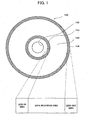
- FIG. 1 shows the structure of the optical disc having a plurality of areas by using a substantial plan view on the upper part, as well as relating it to the area structure in its radial direction by using a schematic diagram on the lower part.
- An optical disc 100 is a reproduce only disc. Alternatively, it is recordable (or writable) many times or only once in various recording methods, such as the magneto-optical method and the phase change method.
- the optical disc 100 has a recording surface on the disc main body with a diameter of about 12 cm, as is a DVD. On the recording surface, as shown in FIG. 1, the optical disc 100 is provided with: a lead-in area 104; a data area 106; and a lead-out area 108, in this order from the inner to the outer circumference, with a center hole 102 as the center.
- each area spirally or concentrically with the center hole 102 as the center, reproduction tracks formed of pit rows are placed in the case of the reproduce only disc, and groove tracks and land tracks are placed alternately in the case of the recordable disc, for example.
- the groove tracks may be wobbled.
- pre-pits may be formed on either one of or both groove and land tracks.
- the present invention is not specially limited to an optical disc having these three areas. For example, even if the lead-in area 104 and the lead-out area 108 do not exist, a file structure explained below can be constructed.
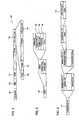
- FIG. 2 is a schematic diagram showing a data structure recorded on the optical disc 100.
- FIG. 3 is a schematic diagram showing the detail of a data structure in a Video Manager 2 (VMG2) shown in FIG. 2.
- FIG. 4 is a schematic diagram showing the detail of a data structure in a Video Manager Manu 2 Program Chain Information Unit Table (VMGM2_PGCI_UT) shown in FIG. 3.
- FIG. 5 is a schematic diagram showing the detail of a data structure in a Video Manager Menu 2 Cell Address Table (VMGM2_C_ADT) shown in FIG. 3.
- FIG. 3 is a schematic diagram showing the detail of a data structure in a Video Manager Menu 2 Cell Address Table (VMGM2_C_ADT) shown in FIG. 3.
- VMG2 Video Manager 2
- FIG. 4 is a schematic diagram showing the detail of a data structure in a Video Manager Manu 2 Program Chain Information Unit Table (VMGM2_PGCI_UT) shown in FIG. 3.
- FIG. 5 is a schematic diagram showing the detail of
- FIG. 6 is a schematic diagram showing the detail of a data structure in a Title Search Pointer Table 2 (TT_SRPT2) shown in FIG. 3.
- FIG. 7 is a schematic diagram showing the detail of a data structure in a Video Title Set 2 (VTS2) shown in FIG. 2.
- FIG. 8 is a schematic diagram showing the detail of a data structure in a Video Title Set Menu 2 Program Chain Information Unit Table (VTSM2_PGCI_UT) shown in FIG. 7.
- FIG. 9 is a schematic diagram showing the detail of a data structure in a Video Title Set 2 Program Chain Information Table (VTS2_PGCIT) shown in FIG. 7.
- FIG. 10 is a schematic diagram showing the detail of a data structure in a Video Title Set Menu 2 Cell Address Table (YTSM2_C_ADT) shown in FIG. 7.
- FIG. 11 is a schematic diagram showing the detail of a data structure in a Video Title Set 2 Cell Address Table (VTS2_C_ADT) shown in FIG. 7.
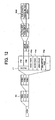
- FIG. 12 is a schematic diagram showing the detail of a data structure in a Video Object (VOB).
- VOB Video Object
- the optical disc 100 is provided with: a file system 101; a "VMG" 110; a plurality of VTS(s) 111 (i.e. VTS#1, VTS#2, ..., VTS#n); and a DVD other zone 112, as a logical structure.
- the file system 101 includes information (e.g. data, a data list, a data file, or a data table) for managing physical recording areas of various files recorded on the optical disc 100.
- Each VTS#i 111 is one example of "the first entity information" of the present invention and is information (e.g. data, a data list, a data file, or a data table) compressed and encoded by MPEG 1 or MPEG 2.
- the VTS#i 111 is a set (or a group) of relating Titles (i.e. Titles which have the same numbers of audio information and sub picture information included therein, the same specification, the same attribute, such as a corresponding language, or the like).
- a first video zone having the same data structure as that of a conventional DVD Version 1.X (Ver1.X) is constructed on the optical disc 100 by the "VMG" 110 and the VTS#i 111.
- contents information based on the SD standard is recorded as the VTS#i 111.
- This VTS#i 111 is managed and controlled by the "VMG" 110.
- the optical disc 100 is further provided with: a "VMG2" 120; a plurality of "VTS2(s)” 121 (i.e. VTS2#1, VTS2#2, ..., VTS2#m); and a DVD other zone 122, in the DVD other zone 112.
- Each VTS2#j 121 is one example of "the second entity information” of the present invention and is information (e.g. data, a data list, a data file, or a data table) compressed and encoded by MPEG 4, which is a compressing and encoding method different from that in the first video zone.
- the VTS2#j 121 is a set (or a group) of relating Titles (i.e. Titles which have the same numbers of audio information and sub picture information included therein, the same specification, the same attribute, such as a corresponding language, or the like).
- contents information based on the HD standard or High Vision contents information which is different from the information in the first video zone, and contents information based on the SD standard, which is the same as the information in the first video zone, is recorded as the VTS2#j 121.
- This VTS2#j 121 is managed and controlled by the "VMG2" 120.
- This embodiment is constructed such that the "VMG2" 120 manages and controls not only the VTS2#j 121 as being one example of the second entity information but also the VTS#i 111 as being one example of the first entity information. Namely, upon reproducing the optical disc 100, a DVD player compatible with Ver2.0 (e.g. a DVD player compatible with MPEG 4), which can reproduce the VTS2#j 121, enables the appropriate reproduction of not only the VTS2#j 121 but also the VTS#i 111, by referring to the "VMG2" 120 without any necessity to refer to the "VMG" 110.
- Ver2.0 e.g. a DVD player compatible with MPEG 4
- the "VMG2" 120 has therein information for managing the "VTS” 111 in addition to information for managing the "VTS2" 121. It is possible to manage and control the "VTS” 111 by referring to the "VMG2" 120 without referring to the "VMG” 110.
- a DVD player compatible with Ver1.X (e.g. a DVD player compatible with MPEG 2), which cannot reproduce the VTS2#j 121 but which can reproduce the VTS#i 111, enables the conventional appropriate reproduction of the VTS#i 111, by referring to the "VMG" 110 without reference to the VTS2#j 121 nor the "VMG2" 120.
- Video Object Set for Video Manager Menu included in the "VMG” 110
- Video Object Set for Video Manager Menu 2 included in the "VMG2” 120.
- VMGM_VOBS Video Object Set for Video Manager Menu
- VMGM2_VOBS Video Object Set for Video Manager Menu 2
- Video Object for Video Title Set Menu 2 (VTSM2_VOB) included in each "VTS2" 121, and it is possible to divert information about Video Object for Video Title Set Menu (VTSM_VOB) included in the "VTS” 111.
- VTSM_VOB Video Object for Video Title Set Menu
- the VMGM2_VOBS, the VMGM_VOBS, the VTSM2_VOB, and the VTSM_VOB will be described later.
- VMG2 120 shown in FIG. 2 includes: Video Manager 2 Informaiton (VMG2I); Video Object Set for Video Manager Menu 2 (VMGM2_VOBS); and Backup of Video Manager 2 Information (VMG2I_BUP).
- VMG2I Video Manager 2 Informaiton
- VMGM2_VOBS Video Object Set for Video Manager Menu 2
- VMG2I_BUP Backup of Video Manager 2 Information
- the "VMG2I” is various logical information (e.g. a data, a data list, a data file, or a data table) about whole of the "VMG2" 120.
- the "VMGM2_VOBS” is object information or entity information (e.g. a data, a data list, a data file, or a data table) including video information or the like for displaying a menu screen, such as a disc menu, regarding all of the VTS2#j 121 (refer to FIG. 2) managed and controlled by the "VMG2" 120. Namely, this embodiment is constructed such that the reproduction of a disc menu or an entire menu about the whole optical disc 100 can be controlled even with the "VMG2" as being one example of the second management information.
- the "VMGI2_BUP" is backup information of the VMG2I (e.g. a data, a data list, a data file, or a data table) recorded in view of the importance of the VMG2I.
- This VMGI2_BUP can prevent from interfering with the reproduction of the VTS2#j 121 even if the VMG2I is destroyed.
- the first attribute information which is recorded as flag information in an empty or reserved area in a predetermined recording area as descried later, indicates the compressing and encoding method of the VMGM2_VOBS related to this embodiment, for example.
- the "VMG” 110 also includes the VMGI, the VMGM_VOBS, and the VMGI_BUP (which are not illustrated), as in the case of the "VMG2" 120 as described above.
- VMG2I has: a Video Manager 2 Information Management Table (VMG2I_MAT); a Video Manager Menu 2 Program Chain Information Unit Table (VMGM2_PGCI_UT) 123; a Video Manager Menu 2 Cell Address Table (VMGM2_C_ADT) 124; a Title Search Pointer Table 2 (TT_SRPT2) 125; and other information.
- VMG2I_MAT Video Manager 2 Information Management Table
- VMGM2_PGCI_UT Program Chain Information Unit Table
- VGM2_C_ADT Video Manager Menu 2 Cell Address Table
- TT_SRPT2 Title Search Pointer Table 2
- the "VMG21_MAT” is a table including various logical information tables about the "VMG2" 120.
- the "VMGM2_PGCI_UT" 123 shown in FIG. 3 is a table written in each language for indicating information about Program Chain Information (PGCI) which defines a Program Chain (PGC) that is a logical division made by combining a plurality of Cells constituting the VMGM2_VOBS (refer to FIG. 3), for example.
- PGCI Program Chain Information
- PLC Program Chain
- Video Manager Menu 2 Program Chain Information Unit Table Information (VMGM2_PGCI_UTI) for indicating various logical information about the "VMGM2_PGCI_UT" 123; and Video Manager Menu 2 Language Unit (VMGM2_LU) #1, ..., and VMGM2_LU #p, for indicating unit information of Video Manager Menu 2 Program Chain Information (VMGM2_PGCI) which is grouped for each language.
- VMGM2_PGCI Video Manager Menu 2 Program Chain Information Unit Table Information
- VMGM2_LUI Video Manager Menu 2 Language Unit Information
- VMGM2_PGCI_SRP VMGM2_PCGI Search Pointer
- FIG.4 VMGM2_PGCI_SRP
- the VMGM2_PGC_CAT includes: a Video Object Version Flag ("VOB_VERN_FLG") 301 as being one example of the empty area in which "the first attribute information" related to the present invention is recorded; and other areas, as shown in FIG. 4.
- VOB_VERN_FLG Video Object Version Flag
- a 1-bit area is assigned to the "VOB_VERN_FLG” 301. If e.g. "0b” is recorded as the flag information in this area, this means that out of the VMGM2_VOBS as being one example of "the entity information for the first menu" of the present invention, video data which is reproduced according to the PGC is compressed and encoded with the data structure of Ver1.X, i.e. in accordance with MPEG 1 or 2. Alternatively, if e.g. "1b” is recorded, this means that the video data is compressed and encoded with the data structure of Ver2.0, i,e. in accordance with MPEG 4. Incidentally, the mark “b” in the "0b” and the "1b” indicates that "0" or "1" is binary data.
- the "VMGM2_C_ADT" 124 shown in FIG. 3 has tables including a plurality of Cells constituting the VMGM2_VOBS or a start address or end address of an interleaved unit.
- the interleaved unit is a unit of data in which a plurality of video information corresponding to the relative Angles are stored in a nesting structure to allow the seamless reproduction of video from different viewpoints (i.e. so-called "Angle reproduction").
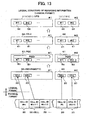
- Video Manager Menu 2 Cell Address Table Information (VMGM2_C_ADTI) for indicating various logical information about the "VMGM2_C_ADT) 124; Video Manager Menu 2 Cell Piece Information (VMGM2_CPI) #1, ..., and VMGM2_CPI #r, for indicating relative information of a plurality of Cells constituting the VMGM2_VOBS. Incidentally, the Cells will be described later (refer to FIG. 12 and FIG. 13).
- the VMGM2_VOB_VERN includes: a Video Object Version Flag (" VOB_VERN_FLG") 302 as being another example of the empty area in which "the first attribute information" related to the present invention is recorded; and other areas, as shown in FIG. 5
- a 1-bit area is assigned to the "VOB_VERN_FLG" 302. If e.g. "0b" is recorded as the flag information in this area, this means that out of the VMGM2_VOBS as being an example of "the entity information for the first menu" of the present invention, video data included in the Cells is compressed and encoded with the data structure of Ver1.X, i.e. in accordance with MPEG 1 or 2. Alternatively, if e.g. "1b” is recorded, this means at the video data is compressed and encoded with the data structure of Ver2.0, i.e. in accordance with MPEG 4.
- the "TT_SRPT2" 125 shown in FIG. 3 is a management information table for accessing each Title managed by the "VMG2" 120.
- the "TT_SRPT2" 125 includes: Title Search Pointer Table 2 Information (TT_SRPT2I), which is various logical information about the "TT_SRPT2" 125; and Title Search Pointer 2 (TT_SRP2) #1, ..., and TT_SRP2#s, each of which is management information provided for the relative one of Titles.
- TT_SRPT2I Title Search Pointer Table 2 Information
- TT_SRP2#s Title Search Pointer 2
- TT_PB_TY2 Title Playback Type 2
- the TT_PB_TY2 includes: a Video Object Version Flag (" VOB_VERN_FLG”) 303 as being another example of the empty area in which "the third attribute information" related to the present invention is recorded; and other areas, as shown in FIG. 6.
- VOB_VERN_FLG Video Object Version Flag
- a 1-bit area is assigned to the "VOB_VERN_FLG" 303. If e.g. "0b" is recorded as the flag information in this area, this means that out of the VTS2_VOB as being an example of "the second entity information" of the present invention, video data related to a Title of interest is compressed and encoded with the data structure of Ver1.X, i.e, in accordance with MPEG 1 or 2. Alternatively, if e.g. "1b" is recorded, this means that the video data is compressed and encoded with the data structure of Ver2.0, i e. in accordance with MPEG 4.
- VTS2I Video Title Set 2 Information
- VTSM2_VOB Video Object Set for Video Title Set Menu 2
- VTS2_VOB Video Object Set for Video Title Set 2
- VTS2I_BUP Backup of Video Title Set 2 Information
- VTS2I includes: a Video Title Set 2 Informaiton Management Table (VTS2I_MAT); a Video Title Set Menu 2 Program Chain Information Unit Table (VTSM2_PGCI_UT) 127; a Video Title Set 2 Program Chain Information Table (VTS2_PGCIT) 128; a Video Title Set Menu 2 Cell Address Table (VTSM2_C_ADT) 129; a Video Title Set 2 Cell Address Table (VTS2_C_ADT) 130; other information; and VTS2 Inside information.
- VTS2I_MAT Video Title Set 2 Informaiton Management Table
- VTS2_PGCI_UT Video Title Set Menu 2 Program Chain Information Unit Table
- VTS2_PGCIT Video Title Set Menu 2 Program Chain Information Table
- VTS2_C_ADT Video Title Set Menu 2 Cell Address Table
- VTS2_C_ADT Video Title Set 2 Cell Address Table
- Program Chain Information which is various information about a Program Chain, that is, a logical division made by combining a plurality of Cells (which will be described later), or similar information, is recorded as the VTS2 Inside information or as the other information, as in the case of the VTSI.
- VTS2_VOB 126 the entity part of video information and audio information is recorded in addition to various control information. The Cells and the PGCI will be described later (refer to FIG. 12 and FIG. 13).
- object information or entity information e.g. a data, a data list, a data file, or a data table
- the second attribute information which is recorded in an empty area in a predetermined recording area as descried later, indicates the compressing and encoding method of the VTSM2_VOB related to this embodiment, for example.
- VTS2I_BUP is backup information of the VTS2I (e.g. a data, a data list, a data file, or a data table) recorded in view of the importance of the VTS2I.
- VTS 111 also includes the VTSI, the VTSM_VOBS, and the VTS2I_BUP (which are not illustrated), as in the case of the "VTS2" 121 as described above.
- the "VTSM2_PGCI_UT" 127 shown in FIG. 7 is a table written in each language for indicating information about the PGCI which defines the Program Chain that is a logical division made by combining a plurality of Cells constituting the VTSM2_VOB (refer to FIG. 7), for example.
- Video Title Set Menu 2 Program Chain Information Unit Table Information (VTSM2_PGCI_UTI) for indicating various logical information about the "VTSM2_PGCI_UT" 127; and Video Title Set Menu 2 Language Unit (VTSM2_LU) #1, ..., and VTSM2_LU #t, for indicating unit information of Video Title Set Menu 2 Program Chain Information (VTSM2_PGCI) which is grouped for each language.
- VTSM2_PGCI Video Title Set Menu 2 Program Chain Information
- Video Title Set Menu 2 Language Unit Information (VTSM2_LUI) for indicating various logical information about the VTSM2_LU #l
- Video Title Set Menu 2 Program Chain Infomration Search Pointer (VTSM2_PGCI_SRP) #1, ..., and VMGM2_PGCI_SRP #u for indicating management information for accessing the VTSM2_PGCI, as shown in FIG. 8.
- the VTSM2_PGC_CAT includes: a Video Object Version Flag ("VOB_VERN_FLG") 304 as being another example of the empty area in which "the second attribute information" related to the present invention is recorded; and other areas, as shown in FIG. 8.
- VOB_VERN_FLG Video Object Version Flag
- a 1-bit area is assigned to the "VOB_VERN_FLG” 304. If e.g. "0b" is recorded as the flag information in this area, this means that out of the VTSM2_VOB as being an example of "the entity information for the second menu" of the present invention, video data which is reproduced according to the PGC is compressed and encoded with the data structure of Ver1.X, i.e. in accordance with MPEG 1 or 2. Alternatively, if e.g. "1b” is recorded, this means that the video data is compressed and encoded with the data structure of Ver2.0, i.e. in accordance with MPEG 4.
- the "VTS2_PGCIT" 128 shown in FIG. 7 is a table written in various languages for indicating information about the PGCI which defines the Program Chain that is a logical division made by combining a plurality of Cells constituting the VTS2_VOB (refer to FIG. 7), for example. Specifically, it includes: Video Title Set 2 Program Chain Information Table Information (VTS2_PGCITI) for indicating various logical information about the "VTS2_PGCIT" 128; and Video Title Set 2 Program Chain Information Search Pointer (VTS2_PGCI_SRP) #1, ..., and VTS2_PGCI_SRP #w, for indicating management information for accessing Video Title Set 2 Program Chain Information (VTS2_PGCI).
- VTS2_PGCITI Video Title Set 2 Program Chain Information Table Information
- VTS2_PGCI_SRP Video Title Set 2 Program Chain Information Search Pointer
- VTS2_PGCI_SRP #w Video Title Set 2 Program Chain Information
- the VTS2_PGC_CAT includes: a Video Object Version Flag ("VOB_VERN_FLG") 305 as being another example of the empty area in which "the third attribute information" related to the present invention is recorded; and other areas, as shown in FIG. 9.
- VB_VERN_FLG Video Object Version Flag
- a . 1-bit area is assigned to the "VOB_VERN_FLG" 305. If e.g. "0b" is recorded as the flag information in this area, this means that out of the VTS2_VOB as being an example of "the second entity information" of the present invention, video data which is reproduced according to the PGC is compressed and encoded with the data structure of Ver1.X, i.e. in accordance with MPEG 1 or 2. Alternatively, if e.g. "1b” is recorded, this means that the video data is compressed and encoded with the data structure of Ver2.0, i.e. in accordance with MPEG 4.
- the "VTSM2_C_ADT" 129 shown in FIG. 7 has tables including a plurality of Cells constituting the VTSM2_VOB or a start address or end address of an interleaved unit. Specifically, it includes: Video Title Set Menu 2 Cell Address Table Information (VTSM2_C_ADTI) for indicating various logical information about the "VTSM2_C_ADT" 129; Video Title Set Menu 2 Cell Piece Information (VTSM2_CPI) #1, ..., and VTSM2_CPI #x, for indicating relative information of a plurality of Cells constituting the VTSM2_VOB. Incidentally, the Cells will be described later (refer to FIG. 12 and FIG. 13).
- VTSM2_C_ADTI Video Title Set Menu 2 Cell Address Table Information
- VTSM2_CPI Video Title Set Menu 2 Cell Piece Information
- VTSM2_CPI #x for indicating relative information of a plurality of Cells constituting the VTSM2_VOB. Inc
- the VTSM2_VOB_VERN includes: a Video Object Version Flag ("VOB_VERN_FLG") 306 as being one example of the empty area in which "the second attribute information" related to the present invention is recorded; and other areas, as shown in FIG. 10.
- VB_VERN_FLG Video Object Version Flag
- a 1-bit area is assigned to the "VOB_VERN_ FLG” 306. If e.g. "0b" is recorded as the flag information in this area, this means that out of the VTSM2_VOB as being an example of "the entity information for the second menu" of the present invention, video data included in the Cells is compressed and encoded with the data structure of Ver1.X, i.e. in accordance with MPEG 1 or 2. Alternatively, if e.g. "1b” is recorded, this means that the video data is compressed and encoded with the data structure of Ver2,0, i.e. in accordance with MPEG 4,
- the "VTS2_C_ADT" 130 shown in FIG. 7 has tables including a plurality of Cells (which will be described later) constituting the VTS2_VOB or a start address or end address of an interleaved unit. Specifically, it includes: Video Title Set 2 Cell Address Table Information (VTS2_C_ADTI) for indicating various logical information about the "VTS2_C_ADT" 130; Video Title Set 2 Cell Piece Information (VTS2_CPI) #1, ..., and VTS2_CPI #y, for indicating relative information of a plurality of Cells constituting the VTS2_VOB.
- VTS2_C_ADTI Video Title Set 2 Cell Address Table Information
- VTS2_CPI Video Title Set 2 Cell Piece Information
- VTS2_CPI #y for indicating relative information of a plurality of Cells constituting the VTS2_VOB.
- the VTS2_VOB_VERN includes: a Video Object Version Flag ("VOB_VERN_FLG") 307 as being one example of the empty area in which "the third attribute information" related to the present invention is recorded; and other areas, as shown in FIG. 11.
- VB_VERN_FLG Video Object Version Flag
- a 1-bit area is assigned to the "VOB_VERN_FLG” 307. If e.g. "0b" is recorded as the flag information in this area, this means that out of the VTS2_VOB as being an example of "the second entity information" of the present invention, video data included in the Cells is compressed and encoded with the data structure of Ver1.X, i.e. in accordance with MPEG 1 or 2. Alternatively, if e.g. "1b" is recorded, this means that the video data is compressed and encoded with the data structure of Ver2.0, i.e. in accordance with MPEG 4.
- each VOB has its own identification number (VOBID#1, #2, ...), such as the above-described VMGM2_VOB_IDN (refer to FIG. 5), VTSM2_VOB_IDN (refer to FIG. 10), or VTS2_VOB_IDN (refer to FIG. 11).
- Each VOB is constructed from a plurality of Cells 20, each of which has its own ID number (i.e. an ID number unique to the Cell).
- the Cell 20 is one processing unit as the physical format of the optical disc 100.
- One of the Cells 20 is constructed from a plurality of VOB Units (VOBU), each of which has its own ID number (i.e. an ID number unique to the VOB).
- VOBU Video Object Unit
- the "VOBU (Video Object Unit)” includes any one of video information, audio information, and sub-picture information (which is information about sub-pictures, such as subtitles in a movie). Alternatively, it may include only a Navi Pack (NV_PCK) 41, which is described in detail later.
- the VOBU is one information unit accessible by using an information reproducing apparatus.
- One VOBU includes the NV_PCK 41, which stores therein control information whose control object is the video information or the like included in the VOBU.
- One VOBU may stores therein contents information packed in the entity information. Specifically it includes at least one of a Video Pack 42p including video data as the video information; an Audio Pack 43p including audio data as the audio information; and a Sub Picture Pack 44p including sub picture data as the sub picture information. It may include only the NV_PCK 41, as described above.
- a reading start time point which is referred to as System Clock Reference (SCR)
- SCR System Clock Reference
- start code for indicating the start of the Pack, or the like are recorded in the pack header.
- the data length of each Pack may be either variable or fixed.
- the NV_PCK 41 includes: Data Search Information (DSI), which is search information for searching for video or audio desired to reproduce and display; and Presentation Control Information (PCI) data 50, which is information about reproduction and display control upon reproducing and displaying the video or audio searched for on the basis of the DSI.
- DSI Data Search Information
- PCI Presentation Control Information
- the DSI includes: DSI General Information (DSI_GI), which is various logical information about the DSI; and other areas.
- DSI_GI DSI General Information
- the DSI_GI includes: NV_PCK_SCR; a Video Object Unit Adaptation Identifier (VOBU_ADP_ID); and other areas.
- the NV_PCK_SCR indicates the low 32 bits of a System Clock Reference (SCR) indicated in the NV_PCK. Namely, it indicates the basis bit or start bit of the SCR.
- the VOBU_ADP_ID indicates the type of a disc to which predetermined specifications (video specification) are applied.
- the VOBU_ADP_ID includes: a Video Object Version Flag ("VOB_VERN_FLG”) 308 as being another example of the empty area in which at least one of "the first, second, and third attribute information" related to the present invention is recorded; and other areas,
- a 1-bit area is assigned to the ''VOB_VERN_FLG" 308. If e.g. "0b" is recorded as the flag information in this area, this means that the VOBU including the "VOB_VERN_FLG" 308 as being an example of "the entity information for the first menu, the entity information for the second menu, or the second entity information" of the present invention is compressed and encoded with the data structure of Ver1.X, i.e. in accordance with MPEG 1 or 2. Alternatively, if e.g. "1b” is recorded, this means that the VOBU is compressed and encoded with the data structure of Ver2.0, i.e. in accordance with MPEG 4.
- the third attribute information of the present invention is recorded in the "VOB_VERN_FLG" 308, thereby to indicate each compressing and encoding method for relative one of the VOBU.
- the third attribute information which allows the mixture in the same VTS2 of the compressing and encoding methods, does not have to be written in each VOBU directly.
- the third attribute information may be constructed from information for indicating the compressing and encoding method for each VOBU in a table form.
- the information unit with which the third attribute information indicates each compressing and encoding method is also not limited to the VOBU. It may be an information unit of a Cell unit constructed from a plurality of VOBU, or of a pack unit made by segmentalizing the VOBU, or the like, In any case, the indication of the compressing and encoding method by the third attribute information allows the mixture of the compressing and encoding methods in the plurality of contents information and allows its reproduction.
- the first attribute information for indicating the compressing and encoding method of the VMGM2, such as a disc menu, and the second attribute information for indicating the compressing and encoding method of the VTSM2, such as a Title menu can be also recorded in the VOBU as described above.
- the flag information for indicating the compressing and encoding method of the VMGM2_VOBS for displaying and outputting a disc menu is recorded in the VOB_VERN_FLGs 301 and 302, and the VOB_VERN_FLG 308 in the VMGM2_VOBS, for example. Therefore, by an information reproducing apparatus, such as a DVD player, accessing the flag information, it can be judged whether the VMGM2_VOBS is the entity information newly made in accordance with MPEG 4 or the entity information included in the existing VMGM_VOBS constructed in accordance with MPEG 1 or 2.
- the flag information for indicating the compressing and encoding method of the VTSM2_VOB for displaying and outputting a Title menu is recorded in the VOB_VERN_FLGs 304 and 306, and the VOB_VERN_FLG 308 in the VTSM2_VOB, for example. Therefore, by an information reproducing apparatus, such as a DVD player, accessing the flag information, it can be judged whether the VTSM2_VOB is the entity information newly made in accordance with MPEG 4 or the entity information included in the existing VMGM_VOBS constructed in accordance with MPEG 1 or 2.
- the VT52_VOB for displaying and outputting video contents which includes: a plurality of VOBU compressed and encoded in accordance with MPEG 1 or 2; and a plurality of VOBU compressed and encoded in accordance with MPEG 4, by virtue of the VOB_VERN_FLGs 303, 305, and 307 and the VOB_VERN_FLG 308 in the VTS2_VOB.
- the VTS2_VOB can be reproduced in units of the VOBU corresponding to the identical compressing and encoding method or in units of the PGC described later, by referring to the flag information.
- the plurality of flag information for indicating the compressing and encoding methods has been explained above; however, at minimum, one type out of a plurality of types of the flag information may be recorded in order to reproduce it. Alternatively, a plurality of types of or all types of the flag information may be recorded in order to identify the compressing and encoding method quickly.
- the reference to the flag information enables the identification of the compressing and encoding method upon the reproduction, even when the VOBU is directly accessed without referring to the "VMG" 110 and the "VMG2" 120 in the upper layer (refer to FIG. 2 etc.), e.g., in application of directly reading the VOBU in a Personal Computer (PC) environment or the like.
- PC Personal Computer
- one DSI in the NV_PCK 41 is included in the VOBU, so that it can be used as an identifier.
- the reading of only the VMGMZ or VTSM2 in the upper layer of the VOBU enables the identification of the compressing and encoding method of the VOBU in the lower layer upon the reproduction.
- the compressing and encoding method can be identified without directly reading the VOBU at each time.
- the compressing and encoding method can be identified correspondingly to the VOB_IDN.
- the reference to the flag information for indicating the compressing and encoding method given to each Title enables the identification of the compressing and encoding method of the VOBU which is used for the Title upon the reproduction. If a rule is made in which a plurality of compressing and encoding methods are not mixed in the same Title, these flag information is effective.
- the reference to the flag information for indicating the compressing and encoding method given to each PGC enables the identification of the compressing and encoding method of the VOBU which is used for the PGC upon the reproduction. If a rule is made in which a plurality of compressing and encoding methods are not mixed in the same PGC, these flag information is effective.
- FIG. 13 is a schematic diagram showing a logical structure (logical format) in the optical disc related to the embodiment.
- One program 60 is logically constructed by selecting and combining a plurality of Cells 20 out of the above-described physical structure constructed from the Cells 20 (refer to FIG. 12).
- an author or producer can define one program 60 or a combination of a plurality of the programs 60 as the smallest unit that an audience can freely select and watch or listen to. This unit is referred to as Part of Title (PTT).
- One Program Chain (PGC) 61 is logically constructed by combining a plurality of programs 60. The above-described PGCI is defined with this PGC 61 unit.
- the PGCI includes: a reproduction order of the Cells 20 in each program 60 upon reproducing each program 60; an address of each Cell 20, which is a recording position on the optical disc 100; a head Cell number of a head Cell 20 to be reproduced in one program 60; and so on.
- One PGC 61 includes data, such as substantive video and audio, as a combination of the programs 60 (which is, in other words, a combination of the Cells 20) in addition to the above-described PGCI.
- One Title 62 is logically constructed by combining one or a plurality of PGC 61.
- VOB_VERN_FLGs 301 to 308 the flag information (i.e. the VOB_VERN_FLGs 301 to 308) in the following timing: e.g., when the Title to be reproduced is specified, when the PGC to be reproduced is specified, when the Cell to be reproduced is specified, when the VOBU to be reproduced is specified, after the VOBU to be reproduced is accessed, or the like. This allows the reproduction of video data.
- the present invention enables an information reproducing apparatus, such as a DVD player, to divert the existing entity information (i.e. the VMGM_VOBS or VTSM_VOB) and to display and output a menu screen by referring to the flag information and by switching decoders as occasion demands.
- the apparatus enables the apparatus to select a Title including the information unit (e.g. the VOBU) compressed and encoded by different compressing and encoding methods for each information unit whose compressing and encoding method is common, and it enables the apparatus to appropriately reproduce the Title.
- the information unit e.g. the VOBU
- FIG. 14 is a block diagram in the embodiment of the information reproducing apparatus.
- the information reproducing apparatus is constructed as a DVD player.
- the information reproducing apparatus is provided with: an optical pickup 80; a demodulation correction device 81; stream switches 82 and 84; a track buffer 83; a system buffer 85; a demultiplexer 86; a Video Buffer Verifier (VBV) buffer 87; a video decoder 88; a sub picture buffer 89; a sub picture decoder 90; a mixer 91; an audio buffer 92; an audio decoder 93; an input device 98; a display 99; a system controller 200; a drive controller 201; a spindle motor 202; and a slider motor 203.
- VBV Video Buffer Verifier
- the video decoder 88 is particularly provided with: a MPEG 1/2 decoder 88a; a MPEG 4 decoder 88b; and a select switch 88c for selecting the input of a video signal Sc to the both decoders.
- the select switch 88c is select-controlled in response to a control signal Scvd generated and outputted by the system controller 200.
- FIG. 14 is only a part regarding the reproduction of video and audio out of the structure of the information reproducing apparatus constructed as the video DVD player.
- a servo circuit or the like for servo-controlling the pickup 80, the spindle motor 202, the slider motor 203, or the like is the same as that in the related art, so that the description and detailed explanation thereof are omitted.
- the pickup 80 includes a laser diode, a beam splitter, an object lens, a photodetector, and so on, which are not illustrated.
- the pickup 80 irradiates a light beam B as reproduction light onto the optical disc 100 and receives reflected light of the light beam B from the optical disc 100. Then, it outputs a detected signal Sp corresponding to the information pits formed on the optical disc 100.
- tracking servo control and focus servo control are performed by the same manner as that in the related art with respect to the not-illustrated object lens so that the light beam B is irradiated accurately onto information tracks on the optical disc 100 and that it is accurately focused on the information recording surface on the optical disc 100.
- the detected signal Sp outputted from the pickup 80 is inputted to the demodulation correction device 81. Then, demodulation and error correction are performed to generate a demodulated signal Sdm.
- the demodulated signal Sdm is outputted to the stream switch 82 and the system buffer 85.
- the stream switch 82 to which the demodulated signal Sdm is inputted is controlled regarding its opening and closing by a switch signal Ssw1 from the drive controller 201. In closing, the stream switch 82 lets the inputted demodulated signal Sdm go through as it is and outputs it to the track buffer 83. In contrast to this, in opening of the stream switch 82, it does not output the demodulated signal Sdm, so that unnecessary control information (signal) for decoding is not inputted to the track buffer 83.
- the track buffer 83 to which the demodulated signal Sdm is inputted is constructed of a First In First Out (FIFO) memory or the like.
- the track buffer 83 memorizes the inputted demodulated signal Sdm temporarily, and it outputs the memorized demodulated signal Sdm continuously when the stream switch 84 is closed.
- FIFO First In First Out
- the stream switch 84 to which the demodulated signal Sdm is inputted continuously is controlled regarding its opening and closing by a switch signal Ssw2 from the system controller 200 so that various buffers described later do not overflow in separation processing at the demultiplexer 86, or adversely that they do not stop decoding because of its emptiness.
- the system buffer 85 to which the demodulated signal Sdm is inputted in addition to the track buffer 83, accumulates management information about whole of the information recorded on the optical disc 100 or the like (i.e. the VMG, the VMG2, or the like), which is firstly detected when the optical disc 100 is loaded. Then, it outputs the accumulated management information as control information Sc to the system controller 200.
- the system buffer 85 also accumulates the DSI data 51 for each Navi Pack 41 temporarily during reproduction and outputs it as control information Sc to the system controller 200.
- the demultiplexer 86 to which the demodulated signal Sdm is inputted continuously through the stream switch 84 extracts the video data, the sub picture data, and the audio data for the relative Packs, and it extracts the PCI data for the Navi Pack. Then, the demultiplexer 86 outputs them as a video signal Sv, a sub picture signal Ssp, an audio signal Sad, and a PCI signal Spc to the VBV buffer 87, the sub picture buffer 89, the audio buffer 92, and the system controller 200, respectively.
- the VBV buffer 87 to which the video signal Sv is inputted is constructed of the FIFO memory or the like. It accumulates the video signal Sv temporarily and outputs it to the video decoder 88.
- the VBV buffer 87 is intended to compensate variation in the amount of data for each video in the video signal Sc, which is compressed by e.g. the MPEG 2 method or the like.
- the video signal Sv in which the variation in the amount of data is compensated is inputted to the video decoder 88.
- the select switch 88c is switched by the control signal Scvd under the control of the system controller 200 based on the above-described first, second, or third attribute information, and the MPEG 1/2 decoder 88a is used. Then, the decoding of the video signal Sv based on MPEG 1 or MPEG 2 is performed appropriately, and it is outputted as a decoded video signal Svd to the mixer 91.
- the select switch 88c is switched by the control signal Scvd under the control of the system controller 200 based on the above-described first, second, or third attribute information, and the MPEG 4 decoder 88b is used. Then, the decoding of the video signal Sv based on MPEG 4 is performed appropriately, and it is outputted as a decoded video signal Svd to the mixer 91.
- the sub picture buffer 89 to which the sub picture signal Ssp is inputted accumulates the inputted sub picture signal Ssp temporarily and outputs it to the sub picture decoder 90.
- the sub picture buffer 89 is intended to synchronize the sub picture data in the Sub Picture Pack 44 included in the sub picture signal Ssp with the video data in the Video Pack 42 corresponding to the sub picture data and to output it.
- the sub picture signal Ssp synchronized with the video data is inputted to the sub picture decoder 90.
- decoding is performed on the basis of a control signal Sch outputted from the system controller 200, and it is outputted as a decoded sub picture signal Sspd to the mixer 91.
- the decoded video signal Svd outputted from the video decoder 88 and the decoded sub picture signal Sspd outputted from the sub picture decoder 90 are mixed by the mixer 91.
- the mixed signal is outputted to a display device, such as a Cathode Ray Tube (CRT), a Liquid Crystal Display (LCD), and a Plasma Display (PDP), as a final video signal Svp to be displayed.
- a display device such as a Cathode Ray Tube (CRT), a Liquid Crystal Display (LCD), and a Plasma Display (PDP), as a final video signal Svp to be displayed.
- CTR Cathode Ray Tube
- LCD Liquid Crystal Display
- PDP Plasma Display
- the audio buffer 92 to which the audio signal Sad is inputted is constructed of the FIFO memory or the like.
- the audio buffer 92 accumulates the inputted audio signal Sad temporarily and outputs it to the audio decoder 93.
- the audio buffer 92 is intended to synchronize the audio signal Sad with the video signal Sv or sub picture signal Ssp including corresponding video information and to output it.
- the audio buffer 92 delays the audio signal Sad depending on an output state of the corresponding video information.
- the audio signal Sad which is time-adjusted so as to synchronize it with the corresponding video information, is outputted to the audio decoder 93.
- PCM Pulse Code Modulation
- FIG. 15 is a flowchart showing a reproduction operation of reproducing by switching the decoders on the basis of the first attribute information.
- FIG. 16 is a flowchart showing a reproduction operation of reproducing by switching the decoders on the basis of the second attribute information.
- FIG. 17 is a flowchart showing a reproduction operation of reproducing Titles by switching the decoders on the basis of the third attribute information.
- the first attribute information is recorded in the "VMG2" 120 (refer to FIG. 2 and FIG. 3) as the "VOB_VERN_FIG” 301 (refer to FIG. 4) or the “VOB_VERN_FLG” 302 (refer to FIG. 5), both of which are 1-bit flag information.
- the first attribute information indicates the compressing and encoding method of the VMGM2_VOBS (refer to FIG. 3) as being one example of the entity information for the first menu.
- the reproduction control processing described below is performed mostly by the system controller 200 (refer to FIG. 14) which functions in accordance with a computer program for controlling reproduction loaded from a recording medium or downloaded through a communication line out of the information reproducing apparatus.
- the optical disc 100 is set by a user in the information reproducing apparatus (refer to FIG. 14), for example, and the reproduction processing of the disc 100 is started (step S11).
- the reproduction processing of the disc menu is started as preprocessing by inputting a reproduction start command or the like, or without waiting the input of the reproduction start command.
- such disc menu reproduction processing may be performed when a predetermined condition is satisfied as a sub-routine in a control program for reproducing actual contents, or it may be performed regularly or irregularly. Alternatively, it may be selectively performed according to a menu display command or the like.
- the "VMG2" 120 (refer to FIG. 3) recorded on the optical disc 100 is read (step S12).
- the first attribute information recorded as the "VOB_VERN_FLG” 301 (refer to FIG. 4) or the “VOB_VERN_ FLG” 302 (refer to FIG. 5) is read, and it is judged whether or not the compressing and encoding method of the VMGM2_VOBS is MPEG 4 (step S13).
- the select switch 88c is switched by the control signal Scvd to the side of the MPEG 4 decoder 88b under the control of the system controller 200 (refer to FIG. 14). Then, the VMGM2_VOBS is decoded by the MPEG 4 decoder 88b (step S14), and the menu screen is displayed and outputted (step S16).
- the select switch 88c is switched by the control signal Scvd to the side of the MPEG 1/2 decoder 88a under the control of the system controller 200 (refer to FIG. 14). Then, the VMGM2_VOBS is decoded by the MPEG 1/2 decoder 88a (step S15), and the menu screen is displayed and outputted (the step S16).
- the system controller 200 may always confirm whether the "VOB_VERN_FLG" 308 included in the NV_PCK 41 of the VMGM2_VOBS corresponds to the previously read “VOB_VERN_FLG” 301 (refer to FIG 4) or "VOB_VERN_FLG” 302 (refer to FIG. 5). If they are different, the system controller 200 may control the select switch 88c in accordance with the "VOB_VERN_FLG" 308.
- the second attribute information is recorded in the "VTS2" 121 (refer to FIG. 2 and FIG. 7) as the "VOB_VERN_FLG” 304 (refer to FIG. 8) or the “VOB_VERN_FLG” 306 (refer to FIG. 10), both of which are 1-bit flag information.
- the second attribute information indicates the compressing and encoding method of the VTSM2_VOBS (refer to FIG. 7) as being one example of the entity information for the second menu.
- the reproduction control processing described below is performed mostly by the system controller 200 (refer to FIG. 14) which functions in accordance with a computer program for reproduction control loaded from a recording medium or downloaded through a communication line out of the information reproducing apparatus.
- the optical disc 100 is set by a user in the information reproducing apparatus (refer to FIG. 14), for example, and the reproduction processing of the disc 100 is started (the step S11).
- the "VTS2" 121 (refer to FIG. 7) recorded on the optical disc 100 is read (step S22).
- the second attribute information recorded as the "VOB_VERN_FZG” 304 (refer to FIG. 8) or the “VOB_VERN_FLG” 306 (refer to FIG. 10) is read, and it is judged whether or not the compressing and encoding method of the VTSM2_VOB is MPEG 4 (step S23).
- the select switch 88c is switched by the control signal Scvd to the side of the MPEG 4 decoder 88b under the control of the system controller 200 (refer to FIG. 14). Then, the VTSM2_VOB is decoded by the MPEG 4 decoder 88b (step S24), and the menu screen is displayed and outputted (step S26).
- the select switch 88c is switched by the control signal Scvd to the side of the MPEG 1/2 decoder 88a under the control of the system controller 200 (refer to FIG. 14). Then, the VTSM2_VOB is decoded by the MPEG 1/2 decoder 88a (step S25), and the menu screen is displayed and outputted (the step S26). Incidentally, during the display and output of the menu screen, the system controller 200 may always confirm whether the "VOB_VERN_FLG" 308 (refer to FIG.
- NV_PCK 41 of the VTSM2_VOB corresponds to the previously read "VOB_VERN_FLG” 304 (refer to FIG 8) or "VOB_VERN_FLG” 306 (refer to FIG. 10). If they are different, the system controller 200 may control the select switch 88c in accordance with the "VOB_VERN_FLG" 308.
- the third attribute information is recorded in each "VOBU” (refer to FIG, 12) as the "VOB_VERN_FLG” 308 (refer to FIG. 12), which is 1-bit flag information.
- the third attribute information indicates the compressing and encoding method of the VOBU constituting the VTS2_VOB (refer to FIG. 7) as being one example of the second entity information.
- the compressing and encoding method does not have to be changed in units of the VOBU, but it may be changed in units of a larger information unit, such as the Cell, VOB, PGC, Title, or the like. Alternatively, it maybe changed in units of a smaller information unit, such as the Pack. If the changeable information unit is previously set on a rule, it is possible to identify the compressing and encoding method upon the reproduction by recording the third attribute information by at least one point with respect to the known changeable information unit.
- the third attribute information may be recorded redundantly to some extent, which is sometimes desirable from the viewpoint of simplifying the reproduction processing.
- the third attribute information is recorded in each VOBU as shown in FIG. 12, and on the basis of this, the reproduction control as described below is performed.
- the third attribute information recorded in each VOBU is referred in real-time, and the reproduction is performed while identifying the compressing and encoding method of each VOBU. It is also possible to identify the compressing and encoding method of each VOBU before the reproduction of each VOBU by recording the third attribute information for indicating the compressing and encoding method for each VOBU in an area except the VOBU, e.g., in the "VMG2" 120 (refer to FIG. 2 and FIG. 3) as the "VOB_VERN_FLG” 303 (refer to FIG. 6) which is 1-bit flag infoarmtion, or in the "VTS2" 121 (refer to FIG. 2 and FIG. 7) as the "VOB_VERN_FLG” 305 (refer to FIG. 9) or the “VOB_VERN_FLG” 307 (refer to FIG. 11).
- the reproduction control processing described below is performed mostly by the system controller 200 (refer to FIG. 14) which functions in accordance with a computer program for reproduction control loaded from a recording medium or downloaded through a communication line out of the information reproducing apparatus.
- the optical disc 100 is set by a user in the information reproducing apparatus (refer to FIG. 14), for example. Then, predetermined processing according to the display of a menu, such as selection of Title (refer to FIG. 15 and FIG. 16), is performed. Then, the reproduction processing is started in units of the VOB or Cell constituting the Title as being a reproduction object (step S31).
- the VOBU packed and recorded is read (step S32).
- the third attribute information recorded as the "VOB_VERN_FLG" 308 (refer to FIG. 12) is read, and it is judged whether or not the compressing and encoding method of the VTSM2_VOB is MPEG 4 (step S33).
- the select switch 88c is switched by the control signal Scvd to the side of the MPEG 4 decoder 88b under the control of the system controller 200 (refer to FIG. 14).
- the corresponding VOBU is decoded by the MPEG 4 decoder 88b (step S34), and video contents to be reproduced is displayed and outputted by reproducing the VOBU (step S36).
- the select switch 88c is switched by the control signal Scvd to the side of the MPEG 1/2 decoder 88a under the control of the system controller 200 (refer to FIG. 14). Then, the corresponding VOBU is decoded by the MPEG 1/2 decoder 88a (step S35), and video contents to be reproduced is displayed and outputted by reproducing the VOBU (the step S36).
- step S37 it is judged whether or not there is a next VOBU to be reproduced in order to continuously display and output the video contents to be reproduced. It there is (the step S37: Yes), the operational flow returns to the step S32 and the processing after the reading of the VOBU is repeatedly performed.
- the VOBU reproduction in the step S36 allows the continuous display and output of the video contents as moving pictures or still pictures.
- step S37 determines whether or not the reproduction of the VOB or Cell (refer to FIG. 13) constituting the Title to be reproduced is all ended (step S38). If it is not ended (the step S38: No), the operational flow returns to the step S31, and the processing after the reading of the VOB or Cell is repeatedly performed. The display and output of the Title to be reproduced is continued.
- step S32 to the S37 the processing in which the VOBU is read one by one and reproduced is shown in time-series order for the convenience of explanation.
- the processing in which the VOBU is read one by one and reproduced is shown in time-series order for the convenience of explanation.
- the embodiment can be constructed so as to continuously extract only the VOBU having the same compressing and encoding method in real-time (i.e. so as to destroy the VOBU having the compressing and encoding method not to be reproduced) by referring to the "VOB_VERN_FLG" 308 (refer to FIG. 12), which indicates the compressing and encoding method of each VOBU, upon reproducing each VOBU.
- it can be constructed so as to display and output the video contents as moving pictures or still pictures from the plurality of VOBU extracted during the above extraction.
- the information reproducing apparatus of the present invention when the information reproducing apparatus of the present invention (refer to FIG. 14) reproduces and outputs the entity information about the disc menu, the Title menu, or the Title (e.g. video data), it can switch the decoders as occasion demands by referring to the flag information constituting one example of the first, second, or third attribute information. Therefore, in the optical disc 100 including Titles based on MPEG 4, such as the above-described VTS2, it is possible to divert the existing menu information based on MPEG 1 or 2 (i.e. the VMGM_VOBS or the VTSM_VOB) to the entity information of the disc menu stored in the above-described "VMG2" 120 (i.e.
- the VMGM2_VOBS or to the entity information of the Title menu stored in the above-described "VTS2" 121 (i.e. the VTSM2_VOB). Namely, even in the optical disc 100 including the "VMG2" 120 and the “VTS2" 121 newly made in accordance with MPEG 4, it is not necessary to newly make the VMGM2_VOBS or the VTSM2_VOB in accordance with MPEG 4. This is extremely useful in practice for contents makers.
- the optical disc 100 is explained as one example of the information recording medium, and a player related to the optical disc 100 is explained as the one example of the information reproducing apparatus.
- the present invention is not limited to the optical disc 100 and the player. It can be applied to various information recording media for high-density recording or high transfer rate, and to the player for the media.
Landscapes
- Engineering & Computer Science (AREA)
- Chemical & Material Sciences (AREA)
- Multimedia (AREA)
- Signal Processing (AREA)
- Organic Chemistry (AREA)
- Chemical Kinetics & Catalysis (AREA)
- Life Sciences & Earth Sciences (AREA)
- Hydrology & Water Resources (AREA)
- Environmental & Geological Engineering (AREA)
- Water Supply & Treatment (AREA)
- General Chemical & Material Sciences (AREA)
- Management Or Editing Of Information On Record Carriers (AREA)
- Signal Processing For Digital Recording And Reproducing (AREA)
- Television Signal Processing For Recording (AREA)
- Indexing, Searching, Synchronizing, And The Amount Of Synchronization Travel Of Record Carriers (AREA)
Abstract
Description
Claims (20)
- An information recording medium (100) characterized in that, on said information recording medium, there are recorded:one or a plurality of first entity information (VTS_VOB), which is compressed and encoded by a first compressing and encoding method, for individually constituting Titles, each of which is a logical combination of contents including at least video;first management information (VMG) for managing and controlling said first entity information;one or a plurality of second entity information (VTS2_VOB), which is compressed and encoded by a second compressing and encoding method, which is different from the first compressing and encoding method, for individually constituting Titles, each of which is a logical combination of contents same as or different from the contents of said first entity information;second management information (VMG2) for managing and controlling said first and second entity information;entity information for a first menu (VMGM2_VOBS), which is compressed and encoded by the first or second compressing and encoding method, for constituting the first menu related to said first and second entity information; andfirst attribute information (VOB_VERN_FLG) for indicating the first or second compressing and encoding method of compressing and encoding said entity information for the first menu.
- The information recording medium (100) according to claim 1, characterized in that
the first compressing and encoding method has lower compressibility than that of the second compressing and encoding method, and
said entity information for the first menu (VMGM2_VOBS) is compressed and encoded by the first compressing and encoding method. - An information recording medium (100) characterized in that, on said information recording medium, there are recorded:whereinone or a plurality of second entity information (VTS2_VOB), which is compressed and encoded by a second compressing and encoding method, which is different from a first compressing and encoding method, for individually constituting Titles, each of which is a logical combination of contents same as or different from the contents of a first entity information (VTS_VOB), in addition to or in place of one or a plurality of said first entity information, which is compressed and encoded by the first compressing and encoding method, for individually constituting Titles, each of which is a logical combination of contents including at least video;second management information (VMG2) for managing and controlling at least said second entity information out of said first and second entity information, in addition to or in place of first management information (VMG) for managing and controlling said first entity information;entity information for a first menu (VMGM2_VOBS), which is compressed and encoded by the first compressing and encoding method, for constituting the first menu related to at least said second entity information out of said first and second entity information; andfirst attribute information (VOB_VERN_FLG) for indicating the first compressing and encoding method as a compressing and encoding method of compressing and encoding said entity information for the first menu,
the first compressing and encoding method has lower compressibility than that of the second compressing and encoding method. - The information recording medium (100) according to any one of claims 1 to 3, characterized in that
said second management information (VMG2) has first entire logical information about whole of said second management information, and
said first attribute information (VOB_VERN_FLG) comprises n-bit flag information (n: natural number, n ≧ 1) recorded in management information (VMGM2_PGCI_SRP) for accessing Program Chain Information which defines a Program Chain which is a logical division made by combining a plurality of Cells constituting said entity information for the first menu, the management information being included in said first entire logical information,. - The information recording medium (100) according to any one of claims 1 to 3, characterized in that
said second management information (VMG2) has first entire logical information about whole of said second management information, and
said first attribute information (VOB_VERN_FLG) comprises n-bit flag information (n: natural number, n≧1) recorded in one or a plurality of Cell information (VMGM2_CPI) about a plurality of Cells constituting said entity information for the first menu, the Cell information being included in said first entire logical information,. - The information recording medium (100) according to any one of claims 1 to 5, characterized in that, on said information recording medium, there are recorded:entity information for a second menu (VTSM2_VOB), which is compressed and encoded by the first or second compressing and encoding method, for constituting the second menu related to said second entity information (VTS2_VOB); andsecond attribute information (VOB_VERN_FLG) for indicating the first or second compressing and encoding method of compressing and encoding said entity information for the second menu.
- The information recording medium (100) according to claim 6, characterized in that
said second entity information (VTS2_VOB) has second entire logical information about whole of said second entity information, and
said second attribute information (VOB_VERN_FLG) comprises n-bit flag information (n: natural number, n≧1) recorded in management information for accessing Program Chain Information which defines a Program Chain which is a logical division made by combining a plurality of Cells constituting said entity information for the second menu, the management information being included in said second entire logical information. - The information recording medium (100) according to claim 6, characterized in that
said second entity information (VTS2_VOB) has second entire logical information about whole of said second entity information, and
said second attribute information (VOB_VERN_FLG) comprises n-bit flag information (n: natural number, n ≧ 1) recorded in one or a plurality of Cell information about a plurality of Cells constituting said entity information for the second menu, the Cell information being included in said second entire logical information. - An information recording medium (100) characterized in that, on said information recording medium, there are recorded:one or a plurality of first entity information (VTS_VOB), which is compressed and encoded by a first compressing and encoding method, for individually constituting Titles, each of which is a logical combination of contents including at least video;first management information (VMG) for managing and controlling said first entity information;one or a plurality of second entity information (VTS2_VOB), in which (i) a first portion comprising one or a plurality of unit information compressed and encoded by a second compressing and encoding method different from the first compressing and encoding method and (ii) a second portion comprising one or a plurality of unit information compressed and encoded by the first compressing and encoding method are mixed, for individually constituting Titles, each of which is a logical combination of contents same as or different from the contents of said first entity information;second management information (VMG2) for managing and controlling said first and second entity information;entity information for a first menu (VMGM2_VOBS), which is compressed and encoded by the first or second compressing and encoding method, for constituting a first menu related to said first and second entity information;first attribute information (VOB_VERN_FLG) for indicating the first or second compressing and encoding method of compressing and encoding said entity information for the first menu; andthird attribute information (VOB_VERN_FLG) for indicating the first or second compressing and encoding method of compressing and encoding said second entity information for each of the first and second portions.
- The information recording medium (100) according to claim 9, characterized in that
said second entity information (VTS2_VOB) has second entire logical information about whole of said second entity information, and
said third attribute information (VOB_VERN_FLG) comprises n-bit flag information (n: natural number, n ≧ 1) recorded in management information for accessing Program Chain Information which defines a Program Chain which is a logical division made by combining a plurality of Cells constituting said second entity information, the management information being included in said second entire logical information. - The information recording medium (100) according to claim 9, characterized in that
said second entity information (VTS2_VOB) has second entire logical information about whole of said second entity information, and
said third attribute information (VOB_VERN_FLG) comprises n-bit flag information (n: natural number, n≧ 1) recorded in one or a plurality of Cell information about a plurality of Cells constituting said second entity information, the Cell information being included in said second entire logical information. - The information recording medium (100) according to claim 9, characterized in that
said second management information (VMG2) has first entire logical information about whole of said second management information, and
said third attribute information (VOB_VERN_FLG) comprises n-bit flag information (n: natural number, n ≧1) recorded in a management information table for accessing each of the Titles managed by said second management information, the management information table being included in said first entire logical information. - The information recording medium (100) according to any one of claims 1 to 12, characterized in that at least one of said first, second, and third attribute information (VOB_VERN_FLG) comprises n-bit flag information (n: natural number, n≧ 1) recorded in an empty area in the recording area of said entity information for the first menu, said entity information for the second menu, or said second entity information (VTS2_VOB), respectively.
- The information recording medium (100) according to claim 13, characterized in that
said entity information for the first menu, said entity information for the second menu, or said second entity information (VTS2_VOB) is packed to be an physically accessible information unit and has a Navi Pack made by packing navigation information for reproducing and controlling the packed information unit, and
at least one of said first, second, and third attribute information (VOB_VERN_FLG) comprises n-bit flag information (n: natural number, n ≧ 1) recorded in control information for data searching, which is placed in the Navi Pack. - An information reproducing apparatus for reproducing the information recording medium (100) according to anyone of claims 1 to 8, characterized in that said apparatus comprises:a reading device (80) for reading out information from the information recording medium;a judgment device (200) for judging whether said entity information for the first menu is compressed and encoded by the first compressing and encoding method or by the second compressing and encoding method, on the basis of said first attribute information (VOB_VERN_FLG) out of the read information; anda decoding device (88) (i) for decoding said entity information for the first menu by the first compressing and encoding method if it is judged by said judgment device that said entity information for the first menu is compressed and encoded by the first compressing and encoding method and (ii) for decoding said entity information for the first menu by the second compressing and encoding method if it is judged by said judgment device that said entity information for the first menu is compressed and encoded by the second compressing and encoding method.
- An information reproducing apparatus for reproducing the information recording medium (100) according to any one of claims 9 to 12, characterized in that said apparatus comprises:a reading device (80) for reading out information from the information recording medium;a first judgment device (200) for judging whether said entity information for the first menu is compressed and encoded by the first compressing and encoding method or by the second compressing and encoding method, on the basis of said first attribute information (VOB_VERN_FLG) out of the read information;a second judgment device (200) for judging whether said second entity information (VTS2_VOB) is the first portion compressed and encoded by the second compressing and encoding method or the second portion compressed and encoded by the first compressing and encoding method, on the basis of said third attribute information out of the read information; anda decoding device (88) (i) for decoding said entity information for the first menu by the first compressing and encoding method if it is judged by said first judgment device that said entity information for the first menu is compressed and encoded by the first compressing and encoding method, (ii) for decoding said entity information for the first menu by the second compressing and encoding method if it is judged by said first judgment device that said entity information for the first menu is compressed and encoded by the second compressing and encoding method, (iii) for decoding the first portion by the second compressing and encoding method if it is judged by said second judgment device that said second entity information is the first portion compressed and encoded by the second compressing and encoding method, and (iv) for decoding the second portion by the first compressing and encoding method if it is judged by said second judgment device that said second entity information is the second portion compressed and encoded by the first compressing and encoding method.
- The information reproducing apparatus according to claim 15 or 16, characterized in that said decoding device (88) includes a first decoder corresponding to the first compressing and encoding method and a second decoder corresponding to the second compressing and encoding method.
- An information reproducing method of reproducing the information recording medium (100) according to any one of claims 1 to 8, characterized in that said method comprises:a reading process of reading out information from the information recording medium;a judgment process of judging whether said entity information for the first menu is compressed and encoded by the first compressing and encoding method or by the second compressing and encoding method, on the basis of the information read by said reading process; anda decoding process (i) of decoding said entity information for the first menu by the first compressing and encoding method if it is judged by said judgment process that said entity information for the first menu is compressed and encoded by the first compressing and encoding method and (ii) of decoding said entity information for the first menu by the second compressing and encoding method if it is judged by said judgment process that said entity information for the first menu is compressed and encoded by the second compressing and encoding method.
- An information reproducing method of reproducing the information recording medium (100) according to any one of claims 9 to 12, characterized in that said method comprises:a reading process of reading out information from the information recording medium;a first judgment process of judging whether said entity information for the first menu is compressed and encoded by the first compressing and encoding method or by the second compressing and encoding method, on the basis of the information read by said reading process;a first decoding process (i) of decoding said entity information for the first menu by the first compressing and encoding method if it is judged by said first judgment process that said entity information for the first menu is compressed and encoded by the first compressing and encoding method and (ii) of decoding said entity information for the first menu by the second compressing and encoding method if it is judged by said first judgment process that said entity information for the first menu is compressed and encoded by the second compressing and encoding method;a second judgment process of judging whether said second entity information (VTS2_VOB) is the first portion compressed and encoded by the second compressing and encoding method or the second portion compressed and encoded by the first compressing and encoding method, on the basis of said third attribute information (VOB_VERN_FLG) out of the read information; anda second decoding process (iii) of decoding the first portion by the second compressing and encoding method if it is judged by said second judgment process that said second entity information is the first portion compressed and encoded by the second compressing and encoding method and (iv) of decoding the second portion by the first compressing and encoding method if it is judged by said second judgment process that said second entity information is the second portion compressed and encoded by the first compressing and encoding method.
- A computer program characterized in that said computer program tangibly embodies a program of instructions executable by a computer to make the computer function as the information reproducing apparatus according to any one of claims 15 to 17.
Applications Claiming Priority (2)
| Application Number | Priority Date | Filing Date | Title |
|---|---|---|---|
| JP2003001542A JP2004215111A (en) | 2003-01-07 | 2003-01-07 | Information recording medium, information reproducing apparatus and method, and computer program |
| JP2003001542 | 2003-01-07 |
Publications (2)
| Publication Number | Publication Date |
|---|---|
| EP1437737A2 true EP1437737A2 (en) | 2004-07-14 |
| EP1437737A3 EP1437737A3 (en) | 2005-05-04 |
Family
ID=32501198
Family Applications (1)
| Application Number | Title | Priority Date | Filing Date |
|---|---|---|---|
| EP04250020A Withdrawn EP1437737A3 (en) | 2003-01-07 | 2004-01-05 | Information recording medium, information reproducing apparatus and method, and computer program |
Country Status (6)
| Country | Link |
|---|---|
| US (1) | US20040260918A1 (en) |
| EP (1) | EP1437737A3 (en) |
| JP (1) | JP2004215111A (en) |
| KR (1) | KR20040063832A (en) |
| CN (1) | CN1523603A (en) |
| TW (1) | TW200416699A (en) |
Cited By (11)
| Publication number | Priority date | Publication date | Assignee | Title |
|---|---|---|---|---|
| WO2006019261A1 (en) * | 2004-08-17 | 2006-02-23 | Lg Electronics Inc. | Recording medium, and method and apparatus for reproducing data from the recording medium |
| US7599611B2 (en) | 2004-09-13 | 2009-10-06 | Lg Electronics Co. | Recording medium, and method and apparatus of reproducing data recorded on the same |
| US7609945B2 (en) | 2004-08-17 | 2009-10-27 | Lg Electronics Inc. | Recording medium, and method and apparatus for reproducing data from the recording medium |
| US7609939B2 (en) | 2004-08-17 | 2009-10-27 | Lg Electronics Inc. | Method and apparatus of reproducing data recorded on recording medium and local storage |
| US7613384B2 (en) | 2004-08-17 | 2009-11-03 | Lg Electronics Inc. | Method for configuring composite file structure for data reproduction, and method and apparatus for reproducing data using the composite file structure |
| US7725010B2 (en) | 2004-08-17 | 2010-05-25 | Lg Electronics, Inc. | Method and apparatus of reproducing data recorded on recording medium and local storage |
| US7761422B2 (en) | 2005-01-07 | 2010-07-20 | Lg Electronics, Inc. | Method and apparatus for reproducing data from recording medium using local storage |
| US7764866B2 (en) | 2004-12-10 | 2010-07-27 | Lg Electronics, Inc. | Recording medium, method for searching for content data from the recording medium, and method and apparatus for reproducing data from the recording medium |
| US7783161B2 (en) | 2004-11-08 | 2010-08-24 | Lg Electronics Inc. | Method and apparatus for reproducing data from recording medium using local storage |
| US7783172B2 (en) | 2004-12-03 | 2010-08-24 | Lg Electronics Inc. | Method and apparatus for reproducing data from recording medium using local storage |
| US7792418B2 (en) | 2004-10-12 | 2010-09-07 | Lg Electronics, Inc. | Method and apparatus for reproducing data from recording medium using local storage |
Families Citing this family (2)
| Publication number | Priority date | Publication date | Assignee | Title |
|---|---|---|---|---|
| JP2004187051A (en) * | 2002-12-04 | 2004-07-02 | Pioneer Electronic Corp | Information recording medium, information reproducing apparatus and method, and computer program |
| US11803593B2 (en) | 2020-02-14 | 2023-10-31 | Coupang Corp. | Systems and methods for receiving and propagating efficient search updates in real time |
Family Cites Families (8)
| Publication number | Priority date | Publication date | Assignee | Title |
|---|---|---|---|---|
| JP3719758B2 (en) * | 1996-03-19 | 2005-11-24 | パイオニア株式会社 | Information recording apparatus and method, and information reproducing apparatus and method |
| JP3437426B2 (en) * | 1997-11-28 | 2003-08-18 | パイオニア株式会社 | Information recording medium, information reproducing apparatus and information reproducing method |
| KR100491340B1 (en) * | 1997-12-15 | 2005-05-24 | 마츠시타 덴끼 산교 가부시키가이샤 | Optical disc reproducing apparatus, and optical disc reproducing method for reproducing audio streams |
| JPH11265563A (en) * | 1998-03-16 | 1999-09-28 | Pioneer Electron Corp | Information recording medium and information reproducing device |
| JPH11296997A (en) * | 1998-04-10 | 1999-10-29 | Pioneer Electron Corp | Information recording medium and reproducing apparatus |
| JP4051776B2 (en) * | 1998-08-04 | 2008-02-27 | 株式会社日立製作所 | Video information recording apparatus and video information reproducing apparatus |
| JP3992419B2 (en) * | 2000-03-27 | 2007-10-17 | パイオニア株式会社 | Information playback device |
| JP2004187051A (en) * | 2002-12-04 | 2004-07-02 | Pioneer Electronic Corp | Information recording medium, information reproducing apparatus and method, and computer program |
-
2003
- 2003-01-07 JP JP2003001542A patent/JP2004215111A/en active Pending
-
2004
- 2004-01-05 EP EP04250020A patent/EP1437737A3/en not_active Withdrawn
- 2004-01-07 KR KR1020040000955A patent/KR20040063832A/en not_active Withdrawn
- 2004-01-07 US US10/752,215 patent/US20040260918A1/en not_active Abandoned
- 2004-01-07 TW TW093100330A patent/TW200416699A/en unknown
- 2004-01-07 CN CNA2004100014142A patent/CN1523603A/en active Pending
Cited By (11)
| Publication number | Priority date | Publication date | Assignee | Title |
|---|---|---|---|---|
| WO2006019261A1 (en) * | 2004-08-17 | 2006-02-23 | Lg Electronics Inc. | Recording medium, and method and apparatus for reproducing data from the recording medium |
| US7609945B2 (en) | 2004-08-17 | 2009-10-27 | Lg Electronics Inc. | Recording medium, and method and apparatus for reproducing data from the recording medium |
| US7609939B2 (en) | 2004-08-17 | 2009-10-27 | Lg Electronics Inc. | Method and apparatus of reproducing data recorded on recording medium and local storage |
| US7613384B2 (en) | 2004-08-17 | 2009-11-03 | Lg Electronics Inc. | Method for configuring composite file structure for data reproduction, and method and apparatus for reproducing data using the composite file structure |
| US7725010B2 (en) | 2004-08-17 | 2010-05-25 | Lg Electronics, Inc. | Method and apparatus of reproducing data recorded on recording medium and local storage |
| US7599611B2 (en) | 2004-09-13 | 2009-10-06 | Lg Electronics Co. | Recording medium, and method and apparatus of reproducing data recorded on the same |
| US7792418B2 (en) | 2004-10-12 | 2010-09-07 | Lg Electronics, Inc. | Method and apparatus for reproducing data from recording medium using local storage |
| US7783161B2 (en) | 2004-11-08 | 2010-08-24 | Lg Electronics Inc. | Method and apparatus for reproducing data from recording medium using local storage |
| US7783172B2 (en) | 2004-12-03 | 2010-08-24 | Lg Electronics Inc. | Method and apparatus for reproducing data from recording medium using local storage |
| US7764866B2 (en) | 2004-12-10 | 2010-07-27 | Lg Electronics, Inc. | Recording medium, method for searching for content data from the recording medium, and method and apparatus for reproducing data from the recording medium |
| US7761422B2 (en) | 2005-01-07 | 2010-07-20 | Lg Electronics, Inc. | Method and apparatus for reproducing data from recording medium using local storage |
Also Published As
| Publication number | Publication date |
|---|---|
| JP2004215111A (en) | 2004-07-29 |
| EP1437737A3 (en) | 2005-05-04 |
| KR20040063832A (en) | 2004-07-14 |
| TW200416699A (en) | 2004-09-01 |
| US20040260918A1 (en) | 2004-12-23 |
| CN1523603A (en) | 2004-08-25 |
Similar Documents
| Publication | Publication Date | Title |
|---|---|---|
| KR100293372B1 (en) | Method of reproducing information from a large capacity recording medium, a large capacity recording medium and its reproducing apparatus and method of recording to a large capacity recording medium and the recording device | |
| KR100262804B1 (en) | Information holding/transmitting medium employing parental control | |
| EP1050049B1 (en) | Method and device for recording real-time information | |
| JP3607486B2 (en) | Information recording / reproducing device | |
| JP3816571B2 (en) | Information recording apparatus, information recording method, information reproducing apparatus, and information reproducing method | |
| US20070116434A1 (en) | Information record medium, and apparatus for and method of reproducing the same | |
| WO2000075928A1 (en) | Opitical disk, and method and device for recording/reproducing data on/from optical disk | |
| US6085021A (en) | Information recording medium apparatus for recording the same and apparatus for reproducing the same | |
| EP1426961A1 (en) | Information recording medium, information reproducing apparatus, information reproducing method, and computer program. | |
| EP1437737A2 (en) | Information recording medium, information reproducing apparatus and method, and computer program | |
| KR20040085173A (en) | Recording medium having data structure for managing reproduction of multiple audio streams recorded thereon and recording and reproducing methods and apparatuses | |
| KR20020013816A (en) | Information recording apparatus, information recording method and information recording medium in which recording controlling program is recorded | |
| JP2875797B2 (en) | optical disk | |
| JP2857126B2 (en) | Method and apparatus for recording reproduced data on optical disc | |
| JP2000113652A (en) | Method for reproducing information | |
| HK1077670B (en) | Information record medium, and apparatus/method for reproducing/recording the same | |
| JP2005190658A (en) | Recording medium and playback apparatus therefor | |
| JP2006059526A (en) | Replica disk and information recording medium |
Legal Events
| Date | Code | Title | Description |
|---|---|---|---|
| PUAI | Public reference made under article 153(3) epc to a published international application that has entered the european phase |
Free format text: ORIGINAL CODE: 0009012 |
|
| AK | Designated contracting states |
Kind code of ref document: A2 Designated state(s): AT BE BG CH CY CZ DE DK EE ES FI FR GB GR HU IE IT LI LU MC NL PT RO SE SI SK TR |
|
| AX | Request for extension of the european patent |
Extension state: AL LT LV MK |
|
| PUAL | Search report despatched |
Free format text: ORIGINAL CODE: 0009013 |
|
| AK | Designated contracting states |
Kind code of ref document: A3 Designated state(s): AT BE BG CH CY CZ DE DK EE ES FI FR GB GR HU IE IT LI LU MC NL PT RO SE SI SK TR |
|
| AX | Request for extension of the european patent |
Extension state: AL LT LV MK |
|
| RIC1 | Information provided on ipc code assigned before grant |
Ipc: 7G 11B 27/32 A |
|
| 17P | Request for examination filed |
Effective date: 20051024 |
|
| AKX | Designation fees paid |
Designated state(s): DE FR GB |
|
| 17Q | First examination report despatched |
Effective date: 20071217 |
|
| STAA | Information on the status of an ep patent application or granted ep patent |
Free format text: STATUS: THE APPLICATION IS DEEMED TO BE WITHDRAWN |
|
| 18D | Application deemed to be withdrawn |
Effective date: 20080429 |