EP1435946B1 - Linked biaryl compounds - Google Patents
Linked biaryl compounds Download PDFInfo
- Publication number
- EP1435946B1 EP1435946B1 EP02773386.4A EP02773386A EP1435946B1 EP 1435946 B1 EP1435946 B1 EP 1435946B1 EP 02773386 A EP02773386 A EP 02773386A EP 1435946 B1 EP1435946 B1 EP 1435946B1
- Authority
- EP
- European Patent Office
- Prior art keywords
- compound
- group
- compounds
- disease
- cancer
- Prior art date
- Legal status (The legal status is an assumption and is not a legal conclusion. Google has not performed a legal analysis and makes no representation as to the accuracy of the status listed.)
- Expired - Lifetime
Links
- 0 C*c1c(C)c(NNNc2c(*)c(*)c(*c3c(*)c(*)c(*C(*)(*)C(O)=O)c(*)c3*)c(*)c2*)c(*)c(*)c1* Chemical compound C*c1c(C)c(NNNc2c(*)c(*)c(*c3c(*)c(*)c(*C(*)(*)C(O)=O)c(*)c3*)c(*)c2*)c(*)c(*)c1* 0.000 description 4
- BJYIANZOVKYQNL-UHFFFAOYSA-N CCOC(COc(cc1)c(CCCC2)c2c1Sc1ccc(C=O)cc1[ClH]C)=O Chemical compound CCOC(COc(cc1)c(CCCC2)c2c1Sc1ccc(C=O)cc1[ClH]C)=O BJYIANZOVKYQNL-UHFFFAOYSA-N 0.000 description 2
- NRNCXOKJQJCJJN-UHFFFAOYSA-N Cc(cc(CNc1ccc(C(F)(F)F)cc1)cc1)c1Sc(cc1)c(CCCC2)c2c1OCC(O)=O Chemical compound Cc(cc(CNc1ccc(C(F)(F)F)cc1)cc1)c1Sc(cc1)c(CCCC2)c2c1OCC(O)=O NRNCXOKJQJCJJN-UHFFFAOYSA-N 0.000 description 2
- HWXAWNNYVVBKAH-UHFFFAOYSA-N CCCc(cc(cc1)S(CCC)(=O)=O)c1OCC(OCC)=O Chemical compound CCCc(cc(cc1)S(CCC)(=O)=O)c1OCC(OCC)=O HWXAWNNYVVBKAH-UHFFFAOYSA-N 0.000 description 1
- PRPYPKSGAFJIMU-UHFFFAOYSA-N CCOC(COc(cc1)c(CCCC2)c2c1S)=O Chemical compound CCOC(COc(cc1)c(CCCC2)c2c1S)=O PRPYPKSGAFJIMU-UHFFFAOYSA-N 0.000 description 1
- HGJALELWPLHSOC-UHFFFAOYSA-N CCOC(COc(cc1)c(CCCC2)c2c1Sc1ccc(CNc2ccc(C(F)(F)F)cc2)cc1[ClH]C)=O Chemical compound CCOC(COc(cc1)c(CCCC2)c2c1Sc1ccc(CNc2ccc(C(F)(F)F)cc2)cc1[ClH]C)=O HGJALELWPLHSOC-UHFFFAOYSA-N 0.000 description 1
- AFXMYZQKXNVBRT-UHFFFAOYSA-N CN1C(CI)=CC=CC1 Chemical compound CN1C(CI)=CC=CC1 AFXMYZQKXNVBRT-UHFFFAOYSA-N 0.000 description 1
- RFWMZALALONXMC-UHFFFAOYSA-N Cc1cc(CNc2ccc(C(F)(F)F)cc2)ccc1Sc(cc1)c(C)c(C)c1OCC(O)=O Chemical compound Cc1cc(CNc2ccc(C(F)(F)F)cc2)ccc1Sc(cc1)c(C)c(C)c1OCC(O)=O RFWMZALALONXMC-UHFFFAOYSA-N 0.000 description 1
Images

Classifications
-
- C—CHEMISTRY; METALLURGY
- C07—ORGANIC CHEMISTRY
- C07C—ACYCLIC OR CARBOCYCLIC COMPOUNDS
- C07C321/00—Thiols, sulfides, hydropolysulfides or polysulfides
- C07C321/24—Thiols, sulfides, hydropolysulfides, or polysulfides having thio groups bound to carbon atoms of six-membered aromatic rings
- C07C321/28—Sulfides, hydropolysulfides, or polysulfides having thio groups bound to carbon atoms of six-membered aromatic rings
- C07C321/30—Sulfides having the sulfur atom of at least one thio group bound to two carbon atoms of six-membered aromatic rings
-
- C—CHEMISTRY; METALLURGY
- C07—ORGANIC CHEMISTRY
- C07C—ACYCLIC OR CARBOCYCLIC COMPOUNDS
- C07C317/00—Sulfones; Sulfoxides
- C07C317/16—Sulfones; Sulfoxides having sulfone or sulfoxide groups and singly-bound oxygen atoms bound to the same carbon skeleton
- C07C317/22—Sulfones; Sulfoxides having sulfone or sulfoxide groups and singly-bound oxygen atoms bound to the same carbon skeleton with sulfone or sulfoxide groups bound to carbon atoms of six-membered aromatic rings of the carbon skeleton
-
- A—HUMAN NECESSITIES
- A61—MEDICAL OR VETERINARY SCIENCE; HYGIENE
- A61P—SPECIFIC THERAPEUTIC ACTIVITY OF CHEMICAL COMPOUNDS OR MEDICINAL PREPARATIONS
- A61P1/00—Drugs for disorders of the alimentary tract or the digestive system
-
- A—HUMAN NECESSITIES
- A61—MEDICAL OR VETERINARY SCIENCE; HYGIENE
- A61P—SPECIFIC THERAPEUTIC ACTIVITY OF CHEMICAL COMPOUNDS OR MEDICINAL PREPARATIONS
- A61P11/00—Drugs for disorders of the respiratory system
-
- A—HUMAN NECESSITIES
- A61—MEDICAL OR VETERINARY SCIENCE; HYGIENE
- A61P—SPECIFIC THERAPEUTIC ACTIVITY OF CHEMICAL COMPOUNDS OR MEDICINAL PREPARATIONS
- A61P11/00—Drugs for disorders of the respiratory system
- A61P11/06—Antiasthmatics
-
- A—HUMAN NECESSITIES
- A61—MEDICAL OR VETERINARY SCIENCE; HYGIENE
- A61P—SPECIFIC THERAPEUTIC ACTIVITY OF CHEMICAL COMPOUNDS OR MEDICINAL PREPARATIONS
- A61P13/00—Drugs for disorders of the urinary system
- A61P13/08—Drugs for disorders of the urinary system of the prostate
-
- A—HUMAN NECESSITIES
- A61—MEDICAL OR VETERINARY SCIENCE; HYGIENE
- A61P—SPECIFIC THERAPEUTIC ACTIVITY OF CHEMICAL COMPOUNDS OR MEDICINAL PREPARATIONS
- A61P13/00—Drugs for disorders of the urinary system
- A61P13/12—Drugs for disorders of the urinary system of the kidneys
-
- A—HUMAN NECESSITIES
- A61—MEDICAL OR VETERINARY SCIENCE; HYGIENE
- A61P—SPECIFIC THERAPEUTIC ACTIVITY OF CHEMICAL COMPOUNDS OR MEDICINAL PREPARATIONS
- A61P15/00—Drugs for genital or sexual disorders; Contraceptives
-
- A—HUMAN NECESSITIES
- A61—MEDICAL OR VETERINARY SCIENCE; HYGIENE
- A61P—SPECIFIC THERAPEUTIC ACTIVITY OF CHEMICAL COMPOUNDS OR MEDICINAL PREPARATIONS
- A61P19/00—Drugs for skeletal disorders
- A61P19/02—Drugs for skeletal disorders for joint disorders, e.g. arthritis, arthrosis
-
- A—HUMAN NECESSITIES
- A61—MEDICAL OR VETERINARY SCIENCE; HYGIENE
- A61P—SPECIFIC THERAPEUTIC ACTIVITY OF CHEMICAL COMPOUNDS OR MEDICINAL PREPARATIONS
- A61P25/00—Drugs for disorders of the nervous system
-
- A—HUMAN NECESSITIES
- A61—MEDICAL OR VETERINARY SCIENCE; HYGIENE
- A61P—SPECIFIC THERAPEUTIC ACTIVITY OF CHEMICAL COMPOUNDS OR MEDICINAL PREPARATIONS
- A61P25/00—Drugs for disorders of the nervous system
- A61P25/06—Antimigraine agents
-
- A—HUMAN NECESSITIES
- A61—MEDICAL OR VETERINARY SCIENCE; HYGIENE
- A61P—SPECIFIC THERAPEUTIC ACTIVITY OF CHEMICAL COMPOUNDS OR MEDICINAL PREPARATIONS
- A61P29/00—Non-central analgesic, antipyretic or antiinflammatory agents, e.g. antirheumatic agents; Non-steroidal antiinflammatory drugs [NSAID]
-
- A—HUMAN NECESSITIES
- A61—MEDICAL OR VETERINARY SCIENCE; HYGIENE
- A61P—SPECIFIC THERAPEUTIC ACTIVITY OF CHEMICAL COMPOUNDS OR MEDICINAL PREPARATIONS
- A61P3/00—Drugs for disorders of the metabolism
-
- A—HUMAN NECESSITIES
- A61—MEDICAL OR VETERINARY SCIENCE; HYGIENE
- A61P—SPECIFIC THERAPEUTIC ACTIVITY OF CHEMICAL COMPOUNDS OR MEDICINAL PREPARATIONS
- A61P3/00—Drugs for disorders of the metabolism
- A61P3/04—Anorexiants; Antiobesity agents
-
- A—HUMAN NECESSITIES
- A61—MEDICAL OR VETERINARY SCIENCE; HYGIENE
- A61P—SPECIFIC THERAPEUTIC ACTIVITY OF CHEMICAL COMPOUNDS OR MEDICINAL PREPARATIONS
- A61P3/00—Drugs for disorders of the metabolism
- A61P3/06—Antihyperlipidemics
-
- A—HUMAN NECESSITIES
- A61—MEDICAL OR VETERINARY SCIENCE; HYGIENE
- A61P—SPECIFIC THERAPEUTIC ACTIVITY OF CHEMICAL COMPOUNDS OR MEDICINAL PREPARATIONS
- A61P3/00—Drugs for disorders of the metabolism
- A61P3/08—Drugs for disorders of the metabolism for glucose homeostasis
- A61P3/10—Drugs for disorders of the metabolism for glucose homeostasis for hyperglycaemia, e.g. antidiabetics
-
- A—HUMAN NECESSITIES
- A61—MEDICAL OR VETERINARY SCIENCE; HYGIENE
- A61P—SPECIFIC THERAPEUTIC ACTIVITY OF CHEMICAL COMPOUNDS OR MEDICINAL PREPARATIONS
- A61P31/00—Antiinfectives, i.e. antibiotics, antiseptics, chemotherapeutics
- A61P31/04—Antibacterial agents
-
- A—HUMAN NECESSITIES
- A61—MEDICAL OR VETERINARY SCIENCE; HYGIENE
- A61P—SPECIFIC THERAPEUTIC ACTIVITY OF CHEMICAL COMPOUNDS OR MEDICINAL PREPARATIONS
- A61P35/00—Antineoplastic agents
-
- A—HUMAN NECESSITIES
- A61—MEDICAL OR VETERINARY SCIENCE; HYGIENE
- A61P—SPECIFIC THERAPEUTIC ACTIVITY OF CHEMICAL COMPOUNDS OR MEDICINAL PREPARATIONS
- A61P37/00—Drugs for immunological or allergic disorders
-
- A—HUMAN NECESSITIES
- A61—MEDICAL OR VETERINARY SCIENCE; HYGIENE
- A61P—SPECIFIC THERAPEUTIC ACTIVITY OF CHEMICAL COMPOUNDS OR MEDICINAL PREPARATIONS
- A61P9/00—Drugs for disorders of the cardiovascular system
-
- A—HUMAN NECESSITIES
- A61—MEDICAL OR VETERINARY SCIENCE; HYGIENE
- A61P—SPECIFIC THERAPEUTIC ACTIVITY OF CHEMICAL COMPOUNDS OR MEDICINAL PREPARATIONS
- A61P9/00—Drugs for disorders of the cardiovascular system
- A61P9/10—Drugs for disorders of the cardiovascular system for treating ischaemic or atherosclerotic diseases, e.g. antianginal drugs, coronary vasodilators, drugs for myocardial infarction, retinopathy, cerebrovascula insufficiency, renal arteriosclerosis
-
- C—CHEMISTRY; METALLURGY
- C07—ORGANIC CHEMISTRY
- C07C—ACYCLIC OR CARBOCYCLIC COMPOUNDS
- C07C317/00—Sulfones; Sulfoxides
- C07C317/44—Sulfones; Sulfoxides having sulfone or sulfoxide groups and carboxyl groups bound to the same carbon skeleton
-
- C—CHEMISTRY; METALLURGY
- C07—ORGANIC CHEMISTRY
- C07C—ACYCLIC OR CARBOCYCLIC COMPOUNDS
- C07C323/00—Thiols, sulfides, hydropolysulfides or polysulfides substituted by halogen, oxygen or nitrogen atoms, or by sulfur atoms not being part of thio groups
- C07C323/10—Thiols, sulfides, hydropolysulfides or polysulfides substituted by halogen, oxygen or nitrogen atoms, or by sulfur atoms not being part of thio groups containing thio groups and singly-bound oxygen atoms bound to the same carbon skeleton
- C07C323/18—Thiols, sulfides, hydropolysulfides or polysulfides substituted by halogen, oxygen or nitrogen atoms, or by sulfur atoms not being part of thio groups containing thio groups and singly-bound oxygen atoms bound to the same carbon skeleton having the sulfur atom of at least one of the thio groups bound to a carbon atom of a six-membered aromatic ring of the carbon skeleton
- C07C323/20—Thiols, sulfides, hydropolysulfides or polysulfides substituted by halogen, oxygen or nitrogen atoms, or by sulfur atoms not being part of thio groups containing thio groups and singly-bound oxygen atoms bound to the same carbon skeleton having the sulfur atom of at least one of the thio groups bound to a carbon atom of a six-membered aromatic ring of the carbon skeleton with singly-bound oxygen atoms bound to carbon atoms of the same non-condensed six-membered aromatic ring
-
- C—CHEMISTRY; METALLURGY
- C07—ORGANIC CHEMISTRY
- C07C—ACYCLIC OR CARBOCYCLIC COMPOUNDS
- C07C323/00—Thiols, sulfides, hydropolysulfides or polysulfides substituted by halogen, oxygen or nitrogen atoms, or by sulfur atoms not being part of thio groups
- C07C323/10—Thiols, sulfides, hydropolysulfides or polysulfides substituted by halogen, oxygen or nitrogen atoms, or by sulfur atoms not being part of thio groups containing thio groups and singly-bound oxygen atoms bound to the same carbon skeleton
- C07C323/18—Thiols, sulfides, hydropolysulfides or polysulfides substituted by halogen, oxygen or nitrogen atoms, or by sulfur atoms not being part of thio groups containing thio groups and singly-bound oxygen atoms bound to the same carbon skeleton having the sulfur atom of at least one of the thio groups bound to a carbon atom of a six-membered aromatic ring of the carbon skeleton
- C07C323/21—Thiols, sulfides, hydropolysulfides or polysulfides substituted by halogen, oxygen or nitrogen atoms, or by sulfur atoms not being part of thio groups containing thio groups and singly-bound oxygen atoms bound to the same carbon skeleton having the sulfur atom of at least one of the thio groups bound to a carbon atom of a six-membered aromatic ring of the carbon skeleton with the sulfur atom of the thio group bound to a carbon atom of a six-membered aromatic ring being part of a condensed ring system
-
- C—CHEMISTRY; METALLURGY
- C07—ORGANIC CHEMISTRY
- C07C—ACYCLIC OR CARBOCYCLIC COMPOUNDS
- C07C323/00—Thiols, sulfides, hydropolysulfides or polysulfides substituted by halogen, oxygen or nitrogen atoms, or by sulfur atoms not being part of thio groups
- C07C323/23—Thiols, sulfides, hydropolysulfides or polysulfides substituted by halogen, oxygen or nitrogen atoms, or by sulfur atoms not being part of thio groups containing thio groups and nitrogen atoms, not being part of nitro or nitroso groups, bound to the same carbon skeleton
-
- C—CHEMISTRY; METALLURGY
- C07—ORGANIC CHEMISTRY
- C07C—ACYCLIC OR CARBOCYCLIC COMPOUNDS
- C07C2602/00—Systems containing two condensed rings
- C07C2602/02—Systems containing two condensed rings the rings having only two atoms in common
- C07C2602/04—One of the condensed rings being a six-membered aromatic ring
- C07C2602/10—One of the condensed rings being a six-membered aromatic ring the other ring being six-membered, e.g. tetraline
Definitions
- the present invention relates to compounds that are useful in the diagnosis and treatment of metabolic disorders, inflammatory diseases and neoplastic diseases, and complications thereof.
- HMG CoA reductase inhibitors e.g., statins
- statins HMG CoA reductase inhibitors
- Targets for the development of therapeutic agents for cardiovascular disease, diseases associated with cardiovascular disease, such as syndrome X (including metabolic syndrome), and other pathologies such as, diabetes, obesity and cancer include transcription factors involved in regulating lipid metabolism and homeostasis.
- the peroxisome proliferator-activated receptors are transducer proteins belonging to the steroid/thyroid/retinoid receptor superfamily.
- the PPARs were originally identified as orphan receptors, without known ligands, but were named for their ability to mediate the pleiotropic effects of fatty acid peroxisome proliferators.
- Three mammalian PPARs have been isolated: PPAR ⁇ , PPAR ⁇ and PPAR ⁇ (PPAR ⁇ , NUC1). These receptors function as ligand-regulated transcription factors that control the expression of target genes by binding to their responsive DNA sequence as heterodimers with RXR.
- the target genes encode enzymes involved in lipid metabolism and differentiation of adipocytes.
- PPAR ⁇ has been shown to be expressed in an adipose tissue-specific manner. Its expression is induced early during the course of differentiation of several preadipocyte cell lines. Additional research has now demonstrated that PPAR ⁇ plays a pivotal role in the adipogenic signaling cascade. PPAR ⁇ also regulates the ob/leptin gene which is involved in regulating energy homeostasis and adipocyte differentiation, which has been shown to be a critical step to be targeted for anti-obesity and diabetic conditions.
- PPAR ⁇ activators In an effort to understand the role of PPAR ⁇ in adipocyte differentiation, several investigators have focused on the identification of PPAR ⁇ activators.
- Activators of PPAR ⁇ have been shown in the clinic to enhance insulin action, reduce serum glucose and have small but significant effects on reducing serum triglyceride levels in patients with NIDDM diabetes. See, for example, Kelly et al. (1998) Curr. Opin. Endocrinol. Diabetes 5(2):90-96 , Johnson et al. (1997) Ann. Pharmacother. 32(3):337-348 and quenegger et al. (1997) Curr. Ther. Res. 58(7):403-416 .
- the mechanism for this triglyceride lowering effect appears to be predominantly increased clearance of very low density lipoproteins (VLDL) through induction of lipoprotein lipase (LPL) gene expression.
- VLDL very low density lipoproteins
- LPL lipoprotein lipase
- Fibrates are a class of drugs which may lower serum triglycerides by 20-50%, lower LDL cholesterol by10-15%, shift the LDL particle size from the more atherogenic small dense to normal dense LDL, and increase HDL cholesterol by 10-15%.
- Experimental evidence indicates that the effects of fibrates on serum lipids are mediated through activation of PPAR ⁇ . See, for example, Staels et al. (1997) Pharm. Des. 3(1):1-14 .
- Activation of PPAR ⁇ results in transcription of enzymes that increase fatty acid catabolism and decrease de novo fatty acid synthesis in the liver resulting in decreased triglyceride synthesis and VLDL production/secretion.
- PPAR ⁇ activation decreases production of apoC-III.
- PPAR ⁇ also controls the peroxisomal beta-oxidation pathway of fatty acids.
- Activators of PPAR ⁇ have been shown to promote reverse cholesterol transport, which can raise HDL cholesterol levels. See, Oliver et al. (2001) Proc. Natl. Acad. Sci. USA 98(9):5306-5311 . It has also been shown that PPAR ⁇ activators inhibit the formation of the inflammatory mediator's inducible nitric oxide synthase (iNOS) and tumor necrosis factor (TNF).
- iNOS inducible nitric oxide synthase
- TNF tumor necrosis factor
- PPAR ⁇ unlike PPAR ⁇ or PPAR ⁇ , represents a ⁇ -catenin/Tcf-4 target with particular importance for chemoprevention ( He et al. (1999) Cell 99:335-345 ).
- the identification of compounds which modulate PPAR ⁇ provides an opportunity to probe PPAR ⁇ -mediated processes and discover new therapeutic agents for conditions and diseases associated therewith, such as cardiovascular disease, atherosclerosis, diabetes, obesity, syndrome X and malignant diseases.
- WO 01/00603 A1 describes compounds of the following formula, and states that the compounds are selective activators of human PPAR delta: wherein
- the present invention provides compounds which are useful in the treatment of metabolic disorders, cardiovascular diseases, inflammatory conditions and neoplastic diseases. While a complete understanding of the compounds' mechanism of action is not required in order to practice the present invention, the compounds have been shown to exert their effect through modulation of PPAR ⁇ .
- the invention also provides pharmaceutical compositions comprising these compounds and compositions for the treatment of metabolic disorders, cardiovascular disease, inflammatory conditions or neoplastic diseases.
- the present invention also provides pharmaceutically acceptable salts of these compounds, pharmaceutical compositions comprising a compound of the invention or a pharmaceutically acceptable salt thereof and a pharmaceutically acceptable carrier, excipient or diluent, as well as the use of the compounds of the invention or a pharmaceutically acceptable salt thereof for the manufacture of a medicament for treating a metabolic disorder, cardiovascular disease, an inflammatory condition, a neoplastic disease, an immune disorder, a shock state, a disorder of gastrointestinal motility or a disease of the central nervous system.
- terapéuticaally effective amount refers to that amount of the compound being administered sufficient to prevent development of or alleviate to some extent one or more of the symptoms of the condition or disorder being treated as well as to alleviate or eradicate the cause of the disease itself.
- modulate refers to the ability of a compound to increase or decrease the function and/or expression of PPAR ⁇ , where PPAR ⁇ function may include transcription regulatory activity and/or protein-binding. Modulation may occur in vitro or in vivo. Modulation, as described herein, includes antagonism, agonism, partial antagonism and/or partial agonism of a function or characteristic associated with PPAR ⁇ , either directly or indirectly, and/or the upregulation or downregulation of PPAR ⁇ expression, either directly or indirectly.
- Agonists are compounds that, e.g., bind to, stimulate, increase, open, activate, facilitate, enhance activation, activate, sensitize or upregulate signal transduction.
- Antagonists are compounds that, e.g., bind to, partially or totally block stimulation, decrease, prevent, inhibit, delay activation, inactivate, desensitize, or downregulate signal transduction.
- a modulator preferably inhibits PPAR ⁇ function and/or downregulates PPAR ⁇ expression. More preferably, a modulator inhibits or activates PPAR ⁇ function and/or downregulates or upregulates PPAR ⁇ expression. Most preferably, a modulator activates PPAR ⁇ function and/or upregulates PPAR ⁇ expression.
- the modulation is direct. The ability of a compound to inhibit PPAR ⁇ function can be demonstrated in a binding assay or a cell-based assay, e.g ., a transient transfection assay.
- diabetes refers to type I diabetes mellitus (juvenile onset diabetes, insulin dependent-diabetes mellitus or IDDM) or type II diabetes mellitus (non-insulin-dependent diabetes mellitus or NIDDM), preferably, NIDDM.
- IDDM insulin dependent-diabetes mellitus
- NIDDM non-insulin-dependent diabetes mellitus
- Syndrome X refers to a collection of abnormalities including hyperinsulinemia, obesity, elevated levels of triglycerides, uric acid, fibrinogen, small dense LDL particles and plasminogen activator inhibitor 1 (PAI-1), and decreased levels of HDL cholesterol. Syndrome X is further meant to include metabolic syndrome.
- eating disorder refers to an emotional and/or behavioral disturbance associated with an excessive decrease in body weight and/or inappropriate efforts to avoid weight gain, e.g ., fasting, self-induced vomiting, laxative or diuretic abuse.
- eating disorders include anorexia nervosa and bulimia.
- the term "obesity” refers to the excessive accumulation of body fat.
- Obesity may have genetic, environmental (e.g ., expending less energy than is consumed) and regulatory determinants.
- Obesity includes exogenous, hyperinsulinar, hyperplasmic, hypothyroid, hypothalamic, symptomatic, infantile, upper body, alimentary, hypogonadal, simple and central obesity, hypophyseal adiposity and hyperphagia.
- Cardiovascular disorders such as hypertension and coronary artery disease, and metabolic disorders, such as hyperlidemia and diabetes, are commonly associated with obesity.
- PPAR ⁇ -responsive condition or disorder refers to a condition or disorder that responds favorably to modulation of PPAR ⁇ activity.
- Favorable responses to PPAR ⁇ modulation include alleviation or abrogation of the disease and/or its attendant symptoms, inhibition of the disease, i.e ., arrest or reduction of the development of the disease, or its clinical symptoms, and regression of the disease or its clinical symptoms.
- a PPAR ⁇ -responsive condition or disease may be completely or partially responsive to PPAR ⁇ -modulation.
- a PPAR ⁇ -responsive condition or disorder may be associated with inappropriate, e.g ., less than or greater than normal, PPAR ⁇ -activity.
- a PPAR ⁇ -responsive condition or disease may include a PPAR ⁇ -mediated condition or disease.
- PPAR ⁇ -mediated condition or disorder and related terms and phrases refer to a condition or disorder characterized by inappropriate, e.g ., less than or greater than normal, PPAR ⁇ activity. Inappropriate PPAR ⁇ functional activity might arise as the result of PPAR ⁇ expression in cells which normally do not express PPAR ⁇ , decreased PPAR ⁇ expression (leading to, e.g ., metabolic and inflammatory disorders and diseases) or increased PPAR ⁇ expression.
- a PPAR ⁇ -mediated condition or disease may be completely or partially mediated by inappropriate PPAR ⁇ functional activity.
- a PPAR ⁇ -mediated condition or disease is one in which modulation of PPAR ⁇ results in some effect on the underlying condition or disorder (e.g ., a PPAR ⁇ agonist results in some improvement in patient well-being in at least some patients).
- iNOS-responsive condition or disorder refers to a condition or disorder that responds favorably to modulation of iNOS or TNF activity, respectively.
- iNOS or TNF modulation include alleviation or abrogation of the disease and/or its attendant symptoms, inhibition of the disease, i.e ., arrest or reduction of the development of the disease, or its clinical symptoms, and regression of the disease or its clinical symptoms.
- An iNOS- or TNF-responsive condition or disease may be completely or partially responsive to iNOS or TNF modulation.
- An iNOS or TNF-responsive condition or disorder may be associated with inappropriate, e.g ., less than or greater than normal, iNOS or TNF activity. Inappropriate iNOS or TNF functional activity might arise as the result of overproduction of nitric oxide (NO), iNOS or TNF expression in cells which normally do not express iNOS or TNF, decreased iNOS or TNF expression (leading to, e.g ., lipid and metabolic disorders and diseases) or increased iNOS or TNF expression.
- An iNOS- or TNF-responsive condition or disease may include an iNOS- or TNF-mediated condition or disease.
- iNOS-mediated condition or disorder refers to a condition or disorder characterized by inappropriate, e.g ., less than or greater than normal, iNOS or TNF activity, respectively. Inappropriate iNOS or TNF functional activity might arise as the result of overproduction of NO by iNOS, iNOS or TNF expression in cells which normally do not express iNOS or TNF, decreased iNOS or TNF expression, increased iNOS or TNF expression.
- An iNOS- or TNF-mediated condition or disease may be completely or partially mediated by inappropriate iNOS or TNF functional activity.
- an iNOS- or TNF-mediated condition or disease is one in which modulation of iNOS or TNF results in some effect on the underlying condition or disorder (e.g ., an iNOS or TNF inhibitor results in some improvement in patient well-being in at least some patients).
- alkyl by itself or as part of another substituent, means, unless otherwise stated, a fully saturated straight or branched chain hydrocarbon radical, having the number of carbon atoms designated (i.e. C 1 -C 10 means one to ten carbons).
- saturated hydrocarbon radicals include groups such as methyl, ethyl, n-propyl, isopropyl, n-butyl, t-butyl, isobutyl, sec-butyl, homologs and isomers of, for example, n-pentyl, n-hexyl, n-heptyl, n-octyl, and the like.
- alkylene by itself or as part of another substituent means a divalent radical derived from an alkane, as exemplified by-CH 2 CH 2 CH 2 CH 2 -.
- an alkyl group will have from 1 to 24 carbon atoms, with those groups having 10 or fewer carbon atoms being preferred in the present invention.
- a “lower alkyl”or “lower alkylene” is a shorter chain alkyl or alkylene group, generally having eight or fewer carbon atoms.
- heteroalkyl by itself or in combination with another term, means, unless otherwise stated, a stable straight or branched chain, or cyclic hydrocarbon radical, or combinations thereof, consisting of the stated number of carbon atoms and from one to three heteroatoms selected from the group consisting of O, N, Si and S, and wherein the nitrogen and sulfur atoms may optionally be oxidized and the nitrogen heteroatom may optionally be quaternized.
- the heteroatom(s) O, N and S may be placed at any interior position of the heteroalkyl group.
- the heteroatom Si may be placed at any position of the heteroalkyl group, including the position at which the alkyl group is attached to the remainder of the molecule.
- heteroalkyl Up to two heteroatoms may be consecutive, such as, for example, -CH 2 -NH-OCH 3 and -CH 2 -O-Si(CH 3 ) 3 .
- heteroalkyl also included in the term “heteroalkyl” are those radicals described in more detail below as “heteroalkylene” and “heterocycloalkyl.”
- the term “heteroalkylene” by itself or as part of another substituent means a divalent radical derived from heteroalkyl, as exemplified by -CH 2 -CH 2 -S-CH 2 CH 2 - and -CH 2 -S-CH 2 -CH 2 -NH-CH 2 -.
- heteroatoms can also occupy either or both of the chain termini. Still further, for alkylene and heteroalkylene linking groups, no orientation of the linking group is implied.
- cycloalkyl and heterocycloalkyl represent, unless otherwise stated, cyclic versions of “alkyl” and “heteroalkyl”, respectively.
- cycloalkyl and heterocycloalkyl are meant to be included in the terms “alkyl” and “heteroalkyl”, respectively.
- a heteroatom can occupy the position at which the heterocycle is attached to the remainder of the molecule. Examples of cycloalkyl include cyclopentyl, cyclohexyl, cycloheptyl, and the like.
- heterocycloalkyl examples include 1-(1,2,5,6-tetrahydropyridyl), 1-piperidinyl, 2-piperidinyl, 3-piperidinyl, 4-morpholinyl, 3-morpholinyl, tetrahydrofuran-2-yl, tetrahydrofuran-3-yl, tetrahydrothien-2-yl, tetrahydrothien-3-yl, 1-piperazinyl, 2-piperazinyl, and the like.
- halo or halogen
- substituents mean, unless otherwise stated, a fluorine, chlorine, bromine, or iodine atom.
- terms such as “haloalkyl” are meant to include alkyl substituted with halogen atoms which can be the same or different, in a number ranging from one to (2m'+1), where m' is the total number of carbon atoms in the alkyl group.
- halo(C 1 -C 4 )alkyl is meant to include trifluoromethyl, 2,2,2-trifluoroethyl, 4-chlorobutyl, 3-bromopropyl, and the like.
- haloalkyl includes monohaloalkyl (alkyl substituted with one halogen atom) and polyhaloalkyl (alkyl substituted with halogen atoms in a number ranging from two to (2m'+1) halogen atoms, where m' is the total number of carbon atoms in the alkyl group).
- perhaloalkyl means, unless otherwise stated, alkyl substituted with (2m'+1) halogen atoms, where m' is the total number of carbon atoms in the alkyl group.
- perhalo(C 1 -C 4 )alkyl is meant to include trifluoromethyl, pentachloroethyl, 1,1,1-trifluoro-2-bromo-2-chloroethyl, and the like.
- aryl employed alone or in combination with other terms (e.g ., aryloxy, arylthioxy, arylalkyl) means, unless otherwise stated, an aromatic substituent which can be a single ring or multiple rings (up to three rings) which are fused together or linked covalently.
- the rings may each contain from zero to four heteroatoms selected from N, O, and S, wherein the nitrogen and sulfur atoms are optionally oxidized, and the nitrogen atom(s) are optionally quaternized.
- aryl groups that contain heteroatoms may be referred to as "heteroaryl” and can be attached to the remainder of the molecule through a heteroatom
- aryl groups include phenyl, 1-naphthyl, 2-naphthyl, 4-biphenyl, 1-pyrrolyl, 2-pyrrolyl, 3-pyrrolyl, 3-pyrazolyl, 2-imidazolyl, 4-imidazolyl, pyrazinyl, 2-oxazolyl, 4-oxazolyl, 2-phenyl-4-oxazolyl, 5-oxazolyl, 3-isoxazolyl, 4-isoxazolyl, 5-isoxazolyl, 2-thiazolyl, 4-thiazolyl, 5-thiazolyl, 2-furyl, 3-furyl, 2-thienyl, 3-thienyl, 2-pyridyl, 3-pyridyl, 4-pyridyl, 2-pyrimidyl, 4-pyrimidyl, 2-pyr
- arylalkyl is meant to include those radicals in which an aryl group is attached to an alkyl group (e.g ., benzyl, phenethyl, pyridylmethyl and the like) or a heteroalkyl group (e.g ., phenoxymethyl, 2-pyridyloxymethyl, 3-(1-naphthyloxy)propyl, and the like).
- heteroatom is meant to include oxygen (O), nitrogen (N), sulfur (S) and silicon (Si).
- salts are meant to include salts of the active compounds which are prepared with relatively nontoxic acids or bases, depending on the particular substituents found on the compounds described herein.
- base addition salts can be obtained by contacting the neutral form of such compounds with a sufficient amount of the desired base, either neat or in a suitable inert solvent.
- pharmaceutically acceptable base addition salts include sodium, potassium, calcium, ammonium, organic amino, or magnesium salt, or a similar salt.
- acid addition salts can be obtained by contacting the neutral form of such compounds with a sufficient amount of the desired acid, either neat or in a suitable inert solvent.
- Examples of pharmaceutically acceptable acid addition salts include those derived from inorganic acids like hydrochloric, hydrobromic, nitric, carbonic, monohydrogencarbonic, phosphoric, monohydrogenphosphoric, dihydrogenphosphoric, sulfuric, monohydrogensulfuric, hydriodic, or phosphorous acids and the like, as well as the salts derived from relatively nontoxic organic acids like acetic, propionic, isobutyric, oxalic, maleic, malonic, benzoic, succinic, suberic, fumaric, mandelic, phthalic, benzenesulfonic, p-tolylsulfonic, citric, tartaric, methanesulfonic, and the like.
- inorganic acids like hydrochloric, hydrobromic, nitric, carbonic, monohydrogencarbonic, phosphoric, monohydrogenphosphoric, dihydrogenphosphoric, sulfuric, monohydrogensulfuric, hydriodic, or phospho
- salts of amino acids such as arginate and the like, and salts of organic acids like glucuronic or galactunoric acids and the like (see, for example, Berge et al. (1977) J. Pharm. Sci. 66:1-19 ).
- Certain specific compounds of the present invention contain both basic and acidic functionalities that allow the compounds to be converted into either base or acid addition salts.
- the neutral forms of the compounds may be regenerated by contacting the salt with a base or acid and isolating the parent compound in the conventional manner.
- the parent form of the compound differs from the various salt forms in certain physical properties, such as solubility in polar solvents, but otherwise the salts are equivalent to the parent form of the compound for the purposes of the present invention.
- Prodrugs of the compounds described herein are those compounds that readily undergo chemical changes under physiological conditions to provide the compounds of the present invention. Additionally, prodrugs can be converted to the compounds of the present invention by chemical or biochemical methods in an ex vivo environment. For example, prodrugs can be slowly converted to the compounds of the present invention when placed in a transdermal patch reservoir with a suitable enzyme or chemical reagent. Hydrolizable esters are particularly preferred prodrugs.
- Certain compounds of the present invention can exist in unsolvated forms as well as solvated forms, including hydrated forms. In general, the solvated forms are equivalent to unsolvated forms and are intended to be encompassed within the scope of the present invention. Certain compounds of the present invention may exist in multiple crystalline or amorphous forms. In general, all physical forms are equivalent for the uses contemplated by the present invention and are intended to be within the scope of the present invention.
- Certain compounds of the present invention possess asymmetric carbon atoms (optical centers) or double bonds; the racemates, enantiomers, diastereomers, geometric isomers and individual isomers are all intended to be encompassed within the scope of the present invention.
- These isomers can be resolved or asymmetrically synthesized using conventional methods to render the isomers "optically pure” i.e., substantially free of its other isomers; preferably, 85%, 90%, 95% or 97% ee.
- the compounds of the present invention may also contain unnatural proportions of atomic isotopes at one or more of the atoms that constitute such compounds.
- the compounds may be radiolabeled with radioactive isotopes, such as for example tritium ( 3 H), iodine-125 ( 125 I) or carbon-14 ( 14 C).
- Radiolabeled compounds are useful as therapeutic agents, e.g ., cancer therapeutic agents, research reagents, e.g ., assay reagents, and diagnostic agents, e.g ., in vivo imaging agents. All isotopic variations of the compounds of the present invention, whether radioactive or not, are intended to be encompassed within the scope of the present invention.
- a class of compounds that interact with PPAR ⁇ has been discovered. Depending on the biological environment (e.g ., cell type, pathological condition of the host, etc .), these compounds can activate or block the actions of PPAR ⁇ . By activating the PPAR ⁇ receptor, the compounds will find use as therapeutic agents capable of modulating conditions and disorders mediated by PPAR ⁇ or responsive to PPAR ⁇ modulation. As noted above, examples of such diseases and disorders include metabolic disorders, cardiovascular diseases, inflammatory conditions and neoplastic diseases. Additionally, the compounds are useful for the treatment of complications of these diseases and disorders (e.g ., neuropathy, retinopathy and glomerulosclerosis).
- the compounds of the present invention are believed to exert their effect through modulation of PPAR ⁇ , the mechanism of action by which the compounds act is not a limitation of all embodiments of the present invention.
- the compounds of the invention may interact with other PPAR receptor isotypes, e.g ., PPAR ⁇ .
- the present invention provides compounds having the formula ( Ia ): R 1 O 2 C-CR a R b -Y-Ar 1 -X-Ar 2 -Z 1 -Z 2 -Ar 3 Ia or a pharmaceutically acceptable salt thereof, wherein X is S(O) m . Y is O.
- Ar 3 is phenyl, substituted by at least one fluoro(C 1 -C 4 )alkyl.
- Examples of Ar 3 include, but are not limited to, 2-trifluoromethylphenyl, 3-trifluoromethylphenyl, and 4-trifluoromethylphenyl.
- R 1 is hydrogen
- R a and R b are hydrogen.
- Ar 1 and Ar 2 are independently benzene-1,4-diyl which is unsubstituted or substituted with 1 or 2 substituents selected independently from the group consisting of halogen, or (C 1 -C 4 )alkyl, or with two adjacent substituents which, together with the carbon atoms to which they are attacted, form a fused aromatic or cycloalkane ring.
- R 2 , R 3 , R 4 , R 5 , R 6 , R 7 , R 8 and R 9 are independently selected from hydrogen, halogen, and (C 1 -C 4 )akyl, or any two adjacent R groups selected from R 2 , R 3 , R 4 , R 5 , R 6 , R 7 , R 8 and R 9 ( e.g ., R 2 and R 3 , R 4 and R 5 , R 6 and R 7 or R 8 and R 9 ) may be combined with the carbon atoms to which they are attached to form a fused aromatic or cycloalkane ring.
- X is S.
- -Z 1 -Z 2 - is -O-CH 2 -, -O-(CH 2 ) 2 -, -CH 2 -O-, (CH 2 ) 2 -O-, -CH 2 -NH-, -CH 2 -N(CH 3 )-, -(CH 2 ) 2 -NH-, -(CH 2 ) 2 -N(CH 3 )-, -(CH 2 ) 2 -N(CH 2 CH 3 )-, -NH-CH 2 -, -N(CH 3 )-CH 2 -, -NH-(CH 2 ) 2 - or -N(CH 3 )-(CH 2 ) 2 -.
- one group of particularly preferred embodiments is represented by the formula ( II ): wherein R 1' , R 2' , R 3' , R 4' and R 5' are independently selected from hydrogen and, fluoro(C 1 -C 4 )alkyl, wherein at least one of R 1' , R 2' , R 3' , R 4' and R 5' is fluoro(C 1 -C 4 )alkyl.
- R 3' is CF 3
- R 4' is CF 3 or R 5' is CF 3 .
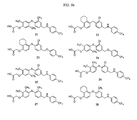
- Exemplary preferred compounds are provided in FIG. 1 .
- the invention encompasses novel compounds, and/or novel pharmaceutical compositions. While some compounds disclosed herein are available from commercial sources, the pharmaceutical compositions are novel. Unless otherwise indicated, it is to be understood that the invention includes those compounds that are novel, as well as pharmaceutical compositions which include both the novel compounds of the invention and compounds that are commercially available.
- Schemes 1-7 and 13 below provide exemplary synthetic methods for the preparation of the compounds of the present invention.
- One of skill in the art will understand that additional methods are also useful.
- the compounds of the invention can be made using conventional organic synthesis using starting materials, reagents and reactions well known in the art.
- head group and "tail group”, as used herein, refer to the indicated regions of compounds of formulas Ia and Ib:
- Certain compounds of the invention may be conveniently prepared by a general process, outlined in Scheme 1, wherein a bis-phenol A is successively alkylated with an ⁇ -halo ester B in the presence of a non-nucleophilic base, such as K 2 CO 3 , Cs 2 CO 3 , NaH or Et 3 N or other amine base, and with an aryl(C 1 -C 4 )alkyl halide D.
- a non-nucleophilic base such as K 2 CO 3 , Cs 2 CO 3 , NaH or Et 3 N or other amine base
- alkylation can be accomplished via Mitsunobu reaction of the corresponding alcohols in place of halides B and D.
- the esters E can be easily saponified to the carboxylic acid, if desired.
- Phenol C wherein R c is tert-butyl
- R c is tert-butyl
- the second alkylation can be carried out using polymer supported TBD (1,5,7-triazabicyclo[4.4.0]dec-5-ene) as the base.
- the tert-butyl ester can be cleaved by treatment with TFA and excess reagents can be removed by treatment with N-(2-mercaptoethyl)aminomethyl polystyrene and MP-carbonate resins.
- Advantages of this variation for library synthesis include the easy removal of byproducts by filtration or evaporation under reduced pressure.
- a number of symmetrical bis -phenols of formula A i.e ., bis-phenols wherein R c and R d are the same, are commercially available.
- compounds of the invention can be prepared according to Scheme 3 below.
- An aryloxyacetic acid head group can be generated by alkylation of a suitably substituted aryl alcohol F. Chlorosulfonation followed by reduction of the sulfonyl chloride moiety generates thiophenol H.
- Thiophenols of formula H are useful for generating a variety of compounds of the invention.
- the tail group can also be derived from alkylation of a suitably substituted aryl alcohol I (see Scheme 4).
- the resulting ether J can be directly coupled to the thiol generated using [bis(trifluoroacetoxy)iodo]benzene in hexafluoroisopropanol ( Kita et al. (1995) J. Org. Chem. 60:7144-7148 ).
- R a is a suitable halogen (e.g ., Br, I)
- diaryl sulfides K can be prepared by a copper-catalyzed Ullmann-type process ( Palomo et al. (2000) Tetrahedron Lett. 41:1283-1286 ).
- Scheme 6 exemplifies the preparation of compounds which incorporate alkylene in the head group from aldehyde R via reaction with diethylphosphonoacetic acid ester and subsequent reduction by Mg.
- Scheme 7 exemplifies the preparation of compounds which incorporate alkylene in the tail group from aldehyde N via reaction with diethyl benzylphosphonate.
- Scheme 13 exemplifies the preparation of compounds which contain aminomethyl linkage in the tail group. Reductive amination of aldehyde N ( see Scheme 5) with a substituted aniline followed by ester hydrolysis generates these types of compound.
- R c , R d and R e indicate, in a very general sense, substituents on the aryl groups.
- R c , R d and R e can be the same or different.
- R c , R d and R e can represent a single substituent or multiple substituents.
- R c , R d and/or R e represent multiple substituents, each R c , R d and R e can be the same or different.
- each group O-P and L indicates, in a general sense, a carboxyl protecting group that can be removed under basic conditions (e.g ., alkyl ester), see, e.g ., Greene et al. (1991) Protective Groups in Organic Synthesis, 2nd Edition, New York : Wiley and Kocienski (1994) Protecting Groups, New York: Thieme, pp.224-276 , and a leaving group (e.g ., halogen, sulfonate, and the like), respectively.
- a carboxyl protecting group that can be removed under basic conditions (e.g ., alkyl ester)
- a leaving group e.g ., halogen, sulfonate, and the like
- the present invention provides pharmaceutical compositions comprising a pharmaceutically acceptable carrier, excipient or diluent and one or more compounds of the present invention.
- compositions are sterile, particularly when used for parenteral delivery. However, oral unit dosage forms need not be sterile.
- Useful carriers include water soluble and water insoluble solids, fatty acids, micelles, inverse micelles, liposomes and semi-solid or liquid media, including aqueous solutions and non-toxic organic solvents. All of the above formulations may be treated with ultrasounds, stirred, mixed, high-shear mixed, heated, ground, milled, aerosolized, pulverized, lyophilized, etc., to form pharmaceutically acceptable compositions.
- pharmaceutically acceptable carriers can be either solid or liquid.
- Solid form preparations include powders, tablets, pills, capsules, cachets, suppositories, and dispersible granules.
- a solid carrier can be one or more substances which may also act as diluents, flavoring agents, binders, preservatives, tablet disintegrating agents, or an encapsulating material.
- the carrier is a finely divided solid which is in a mixture with the finely divided active component.
- the active component is mixed with the carrier having the necessary binding properties in suitable proportions and compacted in the shape and size desired.
- the powders and tablets preferably contain from 5% or 10% to 70% of the active compound.
- Suitable carriers are magnesium carbonate, magnesium stearate, talc, sugar, lactose, pectin, dextrin, starch, gelatin, tragacanth, methylcellulose, sodium carboxymethylcellulose, a low melting wax, cocoa butter, and the like.
- the term "preparation" is intended to include the formulation of the active compound with encapsulating material as a carrier providing a capsule in which the active component with or without other carriers, is surrounded by a carrier, which is thus in association with it.
- cachets and lozenges are included. Tablets, powders, capsules, pills, cachets, and lozenges can be used as solid dosage forms suitable for oral administration.
- a low melting wax such as a mixture of fatty acid glycerides or cocoa butter
- the active component is dispersed homogeneously therein, as by stirring.
- the molten homogeneous mixture is then poured into convenient sized molds, allowed to cool, and thereby to solidify.
- Liquid form preparations include solutions, suspensions, and emulsions, for example, water or water/propylene glycol solutions.
- liquid preparations can be formulated in solution in aqueous polyethylene glycol solution.
- Aqueous solutions suitable for oral use can be prepared by dissolving the active component in water and adding suitable colorants, flavors, stabilizers, and thickening agents as desired.
- Aqueous suspensions suitable for oral use can be made by dispersing the finely divided active component in water with viscous material, such as natural or synthetic gums, resins, methylcellulose, sodium carboxymethylcellulose, and other well-known suspending agents.
- solid form preparations which are intended to be converted, shortly before use, to liquid form preparations for oral administration.
- liquid forms include solutions, suspensions, and emulsions.
- These preparations may contain, in addition to the active component, colorants, flavors, stabilizers, buffers, artificial and natural sweeteners, dispersants, thickeners, solubilizing agents, and the like.
- the pharmaceutical preparation is preferably in unit dosage form.
- the preparation is subdivided into unit doses containing appropriate quantities of the active component.
- the unit dosage form can be a packaged preparation, the package containing discrete quantities of preparation, such as packeted tablets, capsules, and powders in vials or ampoules.
- the unit dosage form can be a capsule, tablet, cachet, or lozenge itself, or it can be the appropriate number of any of these in packaged form.
- the quantity of active component in a unit dose preparation may be varied or adjusted from 0.1 mg to 1000 mg, preferably 1.0 mg to 100 mg according to the particular application and the potency of the active component.
- the composition can, if desired, also contain other compatible therapeutic agents.
- compositions and methods of the present invention may further comprise other therapeutically active compounds, as noted herein, useful in the treatment of metabolic disorders, cardiovascular diseases, inflammatory conditions or neoplastic diseases and pathologies associated therewith (e.g ., diabetic neuropathy) or other adjuvant.
- compositions which include a compound of the invention and an alternative agent have additive or synergistic effects when administered.
- the present invention provides the compounds and pharmaceutical compositions for use in methods for treating a metabolic disorder, cardiovascular disease, an inflammatory condition or a neoplastic disease, comprising administering to a subject in need thereof a therapeutically effective amount of at least one compound of the present invention.
- the present invention provides the compounds and pharmaceutical compositions for use in methods of treating a condition or disorder mediated by PPAR ⁇ . These methods comprise administering to a subject in need thereof, a therapeutically effective amount of a compound of the present invention.
- the "subject” is defined herein to include animals such as mammals, including, but not limited to, primates ( e.g ., humans), cows, sheep, goats, horses, dogs, cats, rabbits, rats, mice and the like.
- the invention provides the compounds and pharmaceutical compositions for use in methods for treating a condition or disorder responsive to PPAR ⁇ modulation, comprising administering to a subject in need thereof, a therapeutically effective amount of a compound of the present invention.
- the present invention also provides the compounds and pharmaceutical compositions for use in methods of elevating HDL cholesterol levels, methods of reducing LDL cholesterol levels and methods of reducing triglyceride levels, each comprising administering to a subject in need thereof, a therapeutically effective amount of a compound of the present invention.
- the invention further provides the compounds and pharmaceutical compositions for use in methods of modulating PPAR ⁇ , comprising contacting a cell with a compound of the present invention.
- the compound is an agonist of PPAR ⁇ .
- diseases or conditions associated with lipid metabolism, inflammation and cell proliferation can be treated with the present compounds and compositions.
- diseases or conditions including chronic diseases, of humans or other species can be treated with activators of PPAR ⁇ function.
- diseases or conditions include: (1) metabolic disorders, such as hypercholesterolemia, hyperlipidemia, dyslipidemia (e.g ., elevated LDL cholesterol, elevated total cholesterol, low HDL cholesterol), mixed dyslipidemia, hypertriglyceridemia, hyperglycemia, diabetes, obesity, syndrome X, eating disorders, insulin resistance and hyperinsulinemia, (2) cardiovascular diseases, including, but not limited to, aneurysm, atherosclerosis, arteriosclerosis, cardiomyopathy, congestive heart failure, coronary artery disease, hypertension, ischemia/reperfusion, restenosis and vascular stenosis, (3) inflammatory conditions or diseases such as atherosclerosis, rheumatoid arthritis, osteoarthritis, prosthetic joint failure, allergic diseases (e.g ., systemic an
- Activators of PPAR ⁇ function can also be used to treat diseases or conditions responsive to iNOS or TNF modulation or mediated by iNOS or TNF, including (1) inflammatory conditions and immune disorders, e.g ., rheumatoid arthritis, osteoarthritis, prosthetic joint failure, ulcerative colitis, Crohn's disease and other inflammatory bowel diseases, gastritis and mucosal inflammation resulting from infection, enteropathy provoked by non-steroidal antiinflammatory drugs, adult respiratory distress syndrome, asthma, cystic fibrosis, or chronic obstructive pulmonary disease, myocarditis, multiple sclerosis, diabetes melitus and complications thereof, glomerulonephritis, dermatitis, psoriasis, eczema, urticaria, glaucoma, organ transplant rejection, systemic lupus erythematosis, inflammatory sequelae of viral or bacterial infections, atherosclerosis, injury following hypoxic or ischemic insults (
- the compounds and compositions of the present invention may be administered by oral, parenteral (e.g ., intramuscular, intraperitoneal, intravenous, intraduodenal, ICV, intracisternal injection or infusion, subcutaneous injection or implant), inhalation, nasal, vaginal, rectal, sublingual, transdermal or topical routes of administration and may be formulated, alone or together, in suitable dosage unit formulations containing conventional non-toxic pharmaceutically acceptable carriers, adjuvants and vehicles appropriate for each route of administration.
- the present invention also contemplates administration of the compounds of the present invention in a depot formulation, in which the active ingredient is released over a defined time period.
- the compounds utilized in the pharmaceutical method of the invention may be administered at the initial dosage of about 0.001 mg/kg to about 100 mg/kg daily.
- a daily dose range of about 0.1 mg/kg to about 10 mg/kg is preferred.
- the dosages may be varied depending upon the requirements of the patient, the severity of the condition being treated, and the compound being employed. Determination of the proper dosage for a particular situation is within the skill of the practitioner. Generally, treatment is initiated with smaller dosages which are less than the optimum dose of the compound. Thereafter, the dosage is increased by small increments until the optimum effect under circumstances is reached. For convenience, the total daily dosage may be divided and administered in portions during the day, if desired.
- the foregoing compounds and compositions may be advantageously combined with the carbon atoms to which they are attached and/or used in combination with agents useful in the treatment of metabolic disorders, cardiovascular diseases, inflammatory conditions, neoplastic diseases, immune disorders, shock states, gastrointestinal motility disorders or CNS diseases and pathologies associated therewith (e.g ., diabetic neuropathy).
- agents useful in the treatment of metabolic disorders, cardiovascular diseases, inflammatory conditions, neoplastic diseases, immune disorders, shock states, gastrointestinal motility disorders or CNS diseases and pathologies associated therewith e.g ., diabetic neuropathy.
- administration of the subject compounds or compositions in conjunction with these alternative agents enhances the efficacy of such agents.
- the present compounds and compositions when combined with the carbon atoms to which they are attached or administered in combination with, e.g ., antidiabetic agents, can be used in dosages which are less than the expected amounts when used alone, or less than the calculated amounts for combination therapy.
- the present compounds may be used in conjunction with an antiinflammatory or analgesic agent such as an opiate agonist, a lipoxygenase inhibitor, such as an inhibitor of 5-lipoxygenase, a cyclooxygenase inhibitor, such as a cyclooxygenase-2 inhibitor, an interleukin receptor antagonist, such as an interleukin-1 receptor antagonist, an NMDA receptor antagonist, an inhibitor of nitric oxide or an inhibitor of the synthesis of nitric oxide, a non-steroidal antiinflammatory agent, or a cytokine-suppressing antiinflammatory agent, for example with a compound such as acetaminophen, aspirin, codeine, fentanyl, ibuprofen, indomethacin, ketorolac, morphine, naproxen, phenacetin, piroxicam, a steroidal analgesic, sufentanyl, sulindac, tenidap,
- the instant compounds may be administered with a pain reliever; a potentiator such as caffeine, an H2-antagonist, simethicone, aluminum or magnesium hydroxide; a decongestant such as phenylephrine, phenylpropanolamine, pseudophedrine, oxymetazoline, epinephrine, naphazoline, xylometazoline, propylhexedrine, or levo-desoxy-ephedrine; an antitussive such as codeine, hydrocodone, caramiphen, carbetapentane, or dextramethorphan; a diuretic; and a sedating or non-sedating antihistamine.
- a pain reliever such as caffeine, an H2-antagonist, simethicone, aluminum or magnesium hydroxide
- a decongestant such as phenylephrine, phenylpropanolamine, pseudophedrine, oxymetazoline, epinep
- each of the above agents may be administered, by a route and in an amount commonly used therefor, contemporaneously or sequentially with a compound of the present invention.
- a pharmaceutical composition containing such other drugs in addition to the compound of the present invention may be preferred.
- the pharmaceutical compositions of the present invention include those that also contain one or more other active ingredients, in addition to a compound of the present invention.
- Examples of other active ingredients that may be combined with the carbon atoms to which they are attached with a compound of the present invention, either administered separately or in the same pharmaceutical compositions include, but are not limited to: (a) VLA-4 antagonists, (b) corticosteroids, such as beclomethasone, methylprednisolone, betamethasone, prednisone, prednisolone, dexamethasone, fluticasone and hydrocortisone, and corticosteroid analogs such as budesonide; (c) immunosuppressants such as cyclosporine (cyclosporine A, Sandimmune ®, Neoral ®), tacrolimus (FK-506, Prograf®), rapamycin (sirolimus, Rapamune ®) and other FK-506 type immunosuppressants, and mycophenolate, e.g ., mycophenolate mofetil ( CellCept ®); (d) antihistamines (H1-histamine antagonist
- DNA synthesis inhibitors such as hydroxyurea, DNA cross-linking agents, e.g. , mitomycin C, (s) hormone therapy (e.g., tamoxifen, and flutamide), (t) a nitric oxide synthase (NOS) inhibitor (e.g. , an iNOS or an nNOS inhibitor), and (u) an inhibitor of the release, or action, of tumor necrosis factor ⁇ (TNF ⁇ ).
- the weight ratio of the compound of the present invention to the second active ingredient may be varied and will depend upon the effective dose of each ingredient. Generally, an effective dose of each will be used.
- the weight ratio of the compound of the present invention to the NSAID will generally range from about 1000:1 to about 1:1000, preferably about 200:1 to about 1:200.
- Combinations of a compound of the present invention and other active ingredients will generally also be within the aforementioned range, but in each case, an effective dose of each active ingredient should be used.
- Reagents and solvents used below can be obtained from commercial sources such as Aldrich Chemical Co. (Milwaukee, Wisconsin, USA). 1 H-NMR spectra were recorded on a Bruker DPX 300 MHz NMR spectrometer, a JEOL JNM-A 300 MHz WB NMR spectrometer, a Varian Gemini 400 MHz NMR spectrometer, a Bruker ARX 400 MHz NMR spectrometer or a Varian INNOVA 400 MHz NMR spectrometer.
- Electron Ionization (EI) mass spectra were recorded on a Hewlett Packard 5989A mass spectrometer. Mass spectrometry results are reported as the ratio of mass over charge, followed by the relative abundance of each ion (in parentheses). In tables, a single m/e value is reported for the M+H (or as noted M-H) ion containing the most common atomic isotopes. Isotope patterns correspond to the expected formula in all cases.
- Electrospray ionization (ESI) mass spectrometry analysis was conducted on a Hewlett-Packard 1100 MSD electrospray mass spectrometer using the HP 1100 HPLC for sample delivery. Normally the analyte was dissolved in methanol at 0.1 mg/mL and 1 microliter ( ⁇ L) was infused with the delivery solvent into the mass spectrometer which scanned from 100 to 1500 daltons. All compounds could be analyzed in the positive ESI mode, using 1:1 acetonitrile/water with 1% acetic acid as the delivery solvent. The compounds provided below could also be analyzed in the negative ESI mode, using 2mM NH 4 OAc in acetonitrile/water as delivery solvent. LCMS was conducted on an Agilent 1100 series LC/MSD.
- This example illustrates the preparation of ⁇ 2-methyl-4-[3-methyl-4-(4-trifluoromethyl-benzyloxy)-phenylsulfanyl]-phenoxy ⁇ -acetic acid (1) .
- the reaction was poured into 500 mL of water and extracted with 3 x 50 mL of methylene chloride. The combined organics were washed with 2 x 150 mL of water, dried over Na 2 SO 4 , and concentrated to a slightly yellow oil. The mixture was then purified by flash chromatography (SiO 2 gel 60, eluted with 10% hexanes in DCM--5% hexanes in DCM--100% DCM). The fractions containing only desired product 1.1 were combined and concentrated to a white solid (3.5 g). The mixed fractions were combined, concentrated, and resubj ected to the same chromatography conditions to yield an additional 2.0 g of pure 1.1.
- This example illustrates the preparation of 4-[[3-methyl-4-(4-trifluoromethyl-benzyloxy)phenyl]sulfanyl]-2-propylphenoxy-acetic acid (4) .
- 2-Propylphenoxy-acetic acid ethyl ester (4.2).
- 2-Propylphenol (15.0 g, 110 mmol) was dissolved in DMF (70 mL), and stirred at 0 °C.
- K 2 CO 3 (30.43 g, 220.2 mmol)
- ethyl 2-bromoacetate 13.43 mL, 121.1 mmol
- the reaction was stirred at room temperature for 3.5 h.
- the reaction was diluted with water, and the product was extracted with EtOAc twice. The organic layer was washed with water, brine, dried over Na 2 SO 4 , and concentrated in vacuo to give residue.
- This example illustrates the preparation of 4-[[2-methyl-4-(4-trifluoromethyl-benzyloxy)phenyl]sulfonyl]-2-methylphenoxy-acetic acid (5).
- This example illustrates the preparation of 4-[[4-[(4-trifluoromethylphenoxy)methyl]phenyl]sulfanyl]-2-methylphenoxy-acetic acid (7).
- This example illustrates the preparation of 4-[[2-chloro-4-[(4-trifluoromethylphenoxy)methyl]phenyl]sulfanyl]-2-methylphenoxy-acetic acid (10).
- reaction mixture was poured into 468 mL of ice-water and extracted with 3 x 200 mL of AcOEt.
- the combined organics were sequentially washed with 2 x 200 mL of water and 100 mL of brine, dried over Na 2 SO 4 , and concentrated to a yellow oil, which was then purified by flash chromatography (SiO 2 gel 60 N, eluted with 10% AcOEt/hexane - 20% AcOEt/hexane).
- the fractions containing only desired product were combined and concentrated to a slightly yellow oil (34.9 g).
- reaction mixture was concentrated and purified by flash chromatography (SiO 2 gel 60 N, eluted with 10% AcOEt/hexanes -15% AcOEt/hexane - 20% AcOEt/hexane). The fractions containing only desired product were combined and concentrated to a slightly yellow oil (43.4 g).
- This example illustrates the preparation of 2,5-dimethyl-4-[[2-methyl-4-[(4-trifluoromethyl-phenylamino)methyl]phenyl]sulfanyl]phenoxy-acetic acid (21).
- the reaction mixture was poured into 150 mL of ice-water and the product was extracted with 2 x 50 mL CHCl 3 .
- the organics were sequentially washed with 150 mL aqueous NaHCO 3 and 150 mL brine, dried over MgSO 4 , and concentrated to a yellow oil, which was purified with flash chromatography (SiO 2 gel 60 N, eluted with 10% EtOAc/hexanes - 20% EtOAc/hexanes).
- the fractions containing the desired product were combined and concentrated to yield a colorless solid (18.7 g).
- This example illustrates the preparation of (4- ⁇ 2-chloro-4-[(4-trifluoromethyl-phenylamino)-methyl]-phenylsulfanyl ⁇ -5,6,7,8-tetrahydro-naphthalen-1-yloxy)-acetic acid (22).
- This example illustrates the preparation of ⁇ 4-[2-chloro-4-(4-trifluoromethyl-phenoxymethyl)-phenylsulfanyl]-5,6,7,8-tetrahydro-naphthalen-1-yloxy ⁇ -acetic acid (23) .
- This example illustrates the preparation of ⁇ 4-[2-chloro-4-(4-trifluoromethyl-phenoxymethyl)-phenylsulfanyl]-2,5-dimethyl-phenoxy ⁇ -acetic acid (24).
- This example describes in vitro assays that were used or can be used to evaluate compounds of the invention.
- CV-1 cells were plated in DME medium supplemented with 10% charcoal stripped calf serum (HyClone) at a density of 24,000 cells per well in a 96-well plate (Costar) 16-24 h before transfection.
- OptiME medium 10 ⁇ L of OptiME medium and 0.7 ⁇ L of LipoFectamine (GIBCO BRL). After incubation for 30 min, an additional 80 ⁇ L of OptiME medium was added and the resulting solution was then applied to the cells. After 16 h the medium was exchanged to DME medium supplemented with 10% dilipidated fetal calf serum (Sigma) and test compound [concentrations ranging from 10 ⁇ M to 0.1 nM]. After incubation for an additional 24 h, the cells were lysed and both luciferase and ⁇ -galactosidase activity were measured. Luciferase activity was normalized for transfection efficiency by using ⁇ -galactosidase derived from the cotransfected pCMV ⁇ plasmid as internal standard.
- DR1 3X tk-luc reporter plasmids contain three copies of the consensus direct repeat 1 (DR1) PPAR response element [TATCA AGGTCA A AGGTCA TCTAG] inserted upstream of minimal herpes simplex thymidine kinase promoter in the pGL3 firefly luciferase reporter plasmid (Invitrogen).
- DR1 PPAR response element [TATCA AGGTCA A AGGTCA TCTAG] inserted upstream of minimal herpes simplex thymidine kinase promoter in the pGL3 firefly luciferase reporter plasmid (Invitrogen).
- G5 tk-luc contains 5 copies of the GAL4 binding site inserted upstream of minimal herpes simplex thymidine kinase promoter in the pGL3 firefly luciferase reporter plasmid.
- pSG5huPPAR ⁇ and pSG5muPPAR ⁇ contain the nucleotide sequences for the human and murine PPAR ⁇ gene inserted into the expression vector pSG5 (Stratagene).
- Plasmids containing nucleotide sequences encoding the ligand binding domains of human PPAR ⁇ , and human PPAR ⁇ inserted C-terminal to the GAL4 DNA binding domain of a suitable GAL4 DNA binding domain cloning vector can be prepared using conventional techniques.
- SPA Scintillation Proximity Assay
- GST-PPAR protein To the bead slurry, 80-280 ng of GST-PPAR protein can be added and the mixture incubated for 2 h at 4 °C.
- the 40 ⁇ L of bead slurry can be added to 10 ⁇ L of test compound solution (concentrations ranging from 10 ⁇ M to 0.1 nM).
- 50 ⁇ L of a 20-40 nM radioligand solution in assay buffer can be added.
- the assay mix After incubation for an additional 1 h at room temperature the assay mix can be quantitated using a Topcount (Packard).
- radiolabeled 2-(4-(3-(1-((2-chloro-6-fluoro-phenyl)ethyl)-3-(2,3-dichlorophenyl)ureido)propenyl)phenoxy)-2-methylpropionic acid Brown et al. (1997) Chem. Biol. 12:909-918 ) can be used.
- radiolabeled 5- ⁇ 4-[2-(methyl-pyridine-2-yl-amino)-ethoxy]-benzyl ⁇ -thiazolidine-2,4-dione (described in U.S. Patent No. 5,902,726 ) can be used.
- cDNAs encoding amino acids 167-468 of PPAR ⁇ and amino acids 175 to 475 of PPAR ⁇ , respectively, can be inserted into the bacterial expression vector pGEX 2T (Pharmacia).
- cDNA encoding amino acids 138-440 can be inserted into the bacterial expression vector pGEX 6P-1 (Pharmacia).
- GST-PPAR ligand binding domain protein can be expressed in BL21 (DE3) cells (Stratagene).
- LPS lipopolysaccharide
- LPS-induced iNOS activity can be measured using the following assay conditions: J774 cells are seeded at a density of 35000-50000 thousand cells per well, in a black, clear-bottomed, 96-well plate, 24 h prior to use. The cell culture and the drug dilutions are carried out in complete media, which consists of DMEM (Dulbecco's modification of Eagle's medium) containing fetal calf serum (10%), glutamine (2 mM), penicillin (100 u/mL) and streptomycin (100 ⁇ g/mL). The J774 cells are pre-treated with PPAR ⁇ activators or vehicle, for 6 h prior to, and for 24 h subsequent to, the addition of LPS.
- DMEM Dynamic fetal calf serum
- glutamine 2 mM
- penicillin 100 u/mL
- streptomycin 100 ⁇ g/mL
- iNOS activity is measured using the following method: The cell culture media/drug dilutions are removed and the cells washed with D-PBS (Dulbecco's modification of phosphate-buffered saline). The D-PBS is then removed, and replaced with D-PBS containing DAF-2 (4,5-diaminofluorescein; 5 ⁇ M) and L-arginine (500 ⁇ M). After incubation at 37 °C for 3 h, fluorescence from each well is measured at an excitation wavelength of 485 nm and an emission wavelength of 530 nm. The ability of LPS to induce iNOS activity, in the presence and absence of a PPAR ⁇ activator, can then be calculated.
- D-PBS Dulbecco's modification of phosphate-buffered saline
- DAF-2 4,5-diaminofluorescein
- L-arginine 500 ⁇ M
- LPS-induced expression of iNOS mRNA can be measured using the following assay conditions: J774 cells can be plated in 6-well plates (10 6 cells/well), 24 h prior to use. The cells can be pre-treated with PPAR ⁇ activator control media for 6 h, prior to addition of LPS, which can be co-incubated with the PPAR ⁇ activator/control for a further 24 h. At the end of this incubation period, the culture medium can be removed by aspirating and the cells washed with D-PBS. Following removal of the D-PBS, total cellular RNA can be isolated from each sample using a commercially available RNA isolation kit. First strand cDNA synthesis can be carried out as per instructions supplied with the AMV reverse transcription (RT) system.
- RT AMV reverse transcription
- RNA can be added to a mixture which contains (final concentrations) MgCl 2 (5 mM), Tris-HCl (10 mM; pH 8.8), KCl (50 mM), Triton X-100 (0.1%), dNTP (1 mM), rRNasin (1 U/ ⁇ L), AMV reverse transcriptase (0.75 U/ ⁇ L), oligo(dT) 15 (25 ng/ ⁇ L).
- the resulting mixture can be incubated in a thermal cycler at 42 °C for 30 min, followed by 95 °C for 15 min, and, finally, 4 °C, until being transferred to a freezer (-20 °C) for storage.
- mouse iNOS sense For use in PCR, mouse iNOS sense, mouse iNOS anti-sense, mouse GAPDH sense and mouse GAPDH anti-sense primer sets, such as those used in International Publication No. WO 02/28434 to Buchan et al. , can be used.
- PCR can be undertaken in a 50- ⁇ L reaction volume containing 5 ⁇ L of the RT reaction, sense and anti-sense primers for iNOS/GAPDH (0.4 pmol/ ⁇ L), dNTPs (160 mM), KCl (50 mM), Tris-HCl (10 mM; pH 9.0), Triton X-100 (0.1%), MgCl 2 (2 mM) and Taq DNA polymerase (0.04 U/ ⁇ L) (final concentrations).
- the PCR can be carried out in a thermal cycler using the following conditions: 95 °C for 60 s, followed by 28 cycles of 94 °C for 30 s, 55 °C for 60 s, 72 °C for 90 s.
- the samples can be maintained at 4 °C until analyzed on an agarose gel.
- Analysis of sybr-green-stained gels, by densitometry, can be carried out using a Storm fluorimager system (Molecular Devices).
- LPS-induced iNOS activity and expression of TNF can be measured using the following assay conditions: J774 cells can be seeded at a density of 35000-50000 thousand cells per well, in black, clear-bottomed, 96-well plates. The cell culture and the drug dilutions can be carried out in complete media, which consists of DMEM (Dulbecco's modification of Eagle's medium) containing fetal calf serum (10%), glutamine (2 mM), penicillin (100 u/mL) and streptomycin (100 ⁇ g/mL). The J774 cells can be pre-treated with PPAR ⁇ activators, or vehicle, for 6 h prior to, and for 24 h subsequent to the addition of LPS.
- iNOS activity can be measured by the following method: The cell culture media/drug dilutions can be removed for measurement of TNF concentrations, and quantified using a commercially available ELISA system. The cells can be washed with D-PBS. The D-PBS can then be removed, and replaced with D-PBS containing DAF-2 (4,5-diaminofluorescein; 5 ⁇ M) and L-arginine (500 ⁇ M). INOS activity can then be measured as described above.
- DAF-2 4,5-diaminofluorescein; 5 ⁇ M
- L-arginine 500 ⁇ M
- This example describes an in vivo assay used to evaluate compounds of the invention.
- Test compounds Male Sprague-Dawley rats (BW: 100-120 g) were fed a high cholesterol diet (1.25% cholesterol, 0.5% cholic acid and 10% coconut oil) for 14 days. The animals were orally dosed with test compounds suspended to 0.5% methylcellulose solution once a day over the final 7 days. Typical doses of test compounds were 1-30 mg/kg/day.
- Serum HDL cholesterol level refers to the rate of HDL increase relative to the vehicle and was calculated as follows: test compound HDL cholesterol mg / dl - vehicle HDL cholesterol mg / dl vehicle HDL cholesterol mg / dl x 100
Landscapes
- Health & Medical Sciences (AREA)
- Organic Chemistry (AREA)
- Chemical & Material Sciences (AREA)
- Life Sciences & Earth Sciences (AREA)
- Animal Behavior & Ethology (AREA)
- Veterinary Medicine (AREA)
- Public Health (AREA)
- General Health & Medical Sciences (AREA)
- Pharmacology & Pharmacy (AREA)
- Chemical Kinetics & Catalysis (AREA)
- General Chemical & Material Sciences (AREA)
- Medicinal Chemistry (AREA)
- Nuclear Medicine, Radiotherapy & Molecular Imaging (AREA)
- Engineering & Computer Science (AREA)
- Bioinformatics & Cheminformatics (AREA)
- Diabetes (AREA)
- Obesity (AREA)
- Hematology (AREA)
- Pulmonology (AREA)
- Urology & Nephrology (AREA)
- Cardiology (AREA)
- Neurosurgery (AREA)
- Endocrinology (AREA)
- Heart & Thoracic Surgery (AREA)
- Immunology (AREA)
- Rheumatology (AREA)
- Pain & Pain Management (AREA)
- Biomedical Technology (AREA)
- Neurology (AREA)
- Child & Adolescent Psychology (AREA)
- Reproductive Health (AREA)
- Vascular Medicine (AREA)
- Communicable Diseases (AREA)
- Orthopedic Medicine & Surgery (AREA)
- Physical Education & Sports Medicine (AREA)
- Emergency Medicine (AREA)
- Oncology (AREA)
- Pharmaceuticals Containing Other Organic And Inorganic Compounds (AREA)
- Pyridine Compounds (AREA)
- Acyclic And Carbocyclic Compounds In Medicinal Compositions (AREA)
Description
- The present invention relates to compounds that are useful in the diagnosis and treatment of metabolic disorders, inflammatory diseases and neoplastic diseases, and complications thereof.
- Several independent risk factors have been associated with cardiovascular disease. These include hypertension, increased fibrinogen levels, high levels of triglycerides, elevated low density lipoprotein (LDL) cholesterol, elevated total cholesterol, and low levels of high density lipoprotein (HDL) cholesterol. HMG CoA reductase inhibitors (e.g., statins) are useful for treating conditions characterized by high LDL cholesterol levels. It has been shown that lowering LDL cholesterol is not sufficient for reducing the risk of cardiovascular disease in some patients, particularly those with normal LDL cholesterol levels. This population pool is identified by the independent risk factor of low HDL cholesterol. The increased risk of cardiovascular disease associated with low HDL cholesterol levels has not yet been successfully addressed by drug therapy (i.e., currently there are no drugs on the market that are useful for raising HDL cholesterol). See, e.g., Bisgaier et al. (1998) Curr. Pharm. Des. 4:53-70.
- Targets for the development of therapeutic agents for cardiovascular disease, diseases associated with cardiovascular disease, such as syndrome X (including metabolic syndrome), and other pathologies such as, diabetes, obesity and cancer include transcription factors involved in regulating lipid metabolism and homeostasis.
- The peroxisome proliferator-activated receptors (PPARs) are transducer proteins belonging to the steroid/thyroid/retinoid receptor superfamily. The PPARs were originally identified as orphan receptors, without known ligands, but were named for their ability to mediate the pleiotropic effects of fatty acid peroxisome proliferators. Three mammalian PPARs have been isolated: PPARγ, PPARα and PPARδ (PPARβ, NUC1). These receptors function as ligand-regulated transcription factors that control the expression of target genes by binding to their responsive DNA sequence as heterodimers with RXR. The target genes encode enzymes involved in lipid metabolism and differentiation of adipocytes.
- PPARγ has been shown to be expressed in an adipose tissue-specific manner. Its expression is induced early during the course of differentiation of several preadipocyte cell lines. Additional research has now demonstrated that PPARγ plays a pivotal role in the adipogenic signaling cascade. PPARγ also regulates the ob/leptin gene which is involved in regulating energy homeostasis and adipocyte differentiation, which has been shown to be a critical step to be targeted for anti-obesity and diabetic conditions.
- In an effort to understand the role of PPARγ in adipocyte differentiation, several investigators have focused on the identification of PPARγ activators. One class of compounds, the thiazolidinediones, which were known to have adipogenic effects on preadipocyte and mesenchymal stem cells in vitro, and antidiabetic effects in animal models of non-insulin-dependent diabetes mellitus (NIDDM), were also demonstrated to be PPARγ-selective ligands (Lehmann et al. (1995) J. Biol. Chem. 270:12953-12956). More recently, compounds that selectively activate murine PPARγ were shown to possess in vivo anti-diabetic activity in mice.
- Activators of PPARγ, such as troglitazone, have been shown in the clinic to enhance insulin action, reduce serum glucose and have small but significant effects on reducing serum triglyceride levels in patients with NIDDM diabetes. See, for example, Kelly et al. (1998) Curr. Opin. Endocrinol. Diabetes 5(2):90-96, Johnson et al. (1997) Ann. Pharmacother. 32(3):337-348 and Leutenegger et al. (1997) Curr. Ther. Res. 58(7):403-416. The mechanism for this triglyceride lowering effect appears to be predominantly increased clearance of very low density lipoproteins (VLDL) through induction of lipoprotein lipase (LPL) gene expression. See, for example, B. Staels et al. (1997) Arterioscler. Thromb. Vasc. Biol. 17(9):1756-1764.
- Fibrates are a class of drugs which may lower serum triglycerides by 20-50%, lower LDL cholesterol by10-15%, shift the LDL particle size from the more atherogenic small dense to normal dense LDL, and increase HDL cholesterol by 10-15%. Experimental evidence indicates that the effects of fibrates on serum lipids are mediated through activation of PPARα. See, for example, Staels et al. (1997) Pharm. Des. 3(1):1-14. Activation of PPARα results in transcription of enzymes that increase fatty acid catabolism and decrease de novo fatty acid synthesis in the liver resulting in decreased triglyceride synthesis and VLDL production/secretion. In addition, PPARα activation decreases production of apoC-III. Reduction in apoC-III, an inhibitor of LPL activity, increases clearance of VLDL. See, for example, Auwerx et al. (1996) Atherosclerosis, (Shannon, Irel.)124(Suppl.):S29-S37.
- Evidence suggests that PPARδ also controls the peroxisomal beta-oxidation pathway of fatty acids. Activators of PPARδ have been shown to promote reverse cholesterol transport, which can raise HDL cholesterol levels. See, Oliver et al. (2001) Proc. Natl. Acad. Sci. USA 98(9):5306-5311. It has also been shown that PPARδ activators inhibit the formation of the inflammatory mediator's inducible nitric oxide synthase (iNOS) and tumor necrosis factor (TNF). See, International Publication No.
WO 02/28434 to Buchan et al. - The identification of compounds which modulate PPARδ provides an opportunity to probe PPARδ-mediated processes and discover new therapeutic agents for conditions and diseases associated therewith, such as cardiovascular disease, atherosclerosis, diabetes, obesity, syndrome X and malignant diseases.
-
WO 01/00603 A1 
- X represents a COOH (or a hydrolysable ester thereof) or tetrazole group;
- X1 represents NH, NCH3, O, S, a bond (i.e. is absent), CH2, or CH where the dashed line indicates that when X1 is CH the depicted bond is a double bond;
- X2 represents O or S;
- R1 and R2 independently represent H, CH3, OCH3, or halogen;
- n is 1 or 2;
- one of Y and Z is N and the other is S or O:
- y is 0, 1, 2, 3, 4 or 5;
- Each R3 independently represents CF3 or halogen.
- The present invention provides compounds which are useful in the treatment of metabolic disorders, cardiovascular diseases, inflammatory conditions and neoplastic diseases. While a complete understanding of the compounds' mechanism of action is not required in order to practice the present invention, the compounds have been shown to exert their effect through modulation of PPARδ. The invention also provides pharmaceutical compositions comprising these compounds and compositions for the treatment of metabolic disorders, cardiovascular disease, inflammatory conditions or neoplastic diseases.
- The compounds provided herein have the formula (Ia):
R1O2C-CRaRb-Y-Ar1-X-Ar2-Z1-Z2-Ar3 Ia
wherein - X is S(O)m;
- Y is O;
- -Z1-Z2- is -O-CH2-, -O-(CH2)2-, -CH2-O-, -(CH2)2-O-, -CH2-NH-, -CH2-N(CH3)-, -(CH2)2-NH-, -(CH2)2-N(CH3)-, -(CH2)2-N(CH2CH3)-, -NH-CH2-, -N(CH3)-CH2-, -NH-(CH2)2- or -N(CH3)-(CH2)2-;
- Ar1 and Ar2 are independently benzene-1,4-diyl, unsubstituted or substituted with 1 or 2 substituents selected independently from halogen or C1-4 alkyl, or with two adjacent substituents which, together with the carbon atoms to which they are attached, form a fused aromatic or cycloalkane ring;
- Ar3 is phenyl substituted by at least one fluoro(C1-C4)alkyl;
- R1 is hydrogen;
- Ra and Rb are each hydrogen; and
- the subscript m is an integer from 0 to 2.
- Also provided herein are compounds having the formula (Ib):

- R2, R3, R4, R5, R6, R7, R8 and R9 are independently selected from the group consisting of hydrogen, halogen, and (C1-C4)alkyl; and
- optionally, any two adjacent R groups selected from the group consisting of R2, R3, R4, R5, R6, R7, R8 and R9 may be combined with the carbon atoms to which they are attached to form a fused aromatic or cycloalkane ring.
- Further disclosed are compounds of formula (II):

- R1', R2', R3', R4' and R5' are independently selected from the group
- consisting of hydrogen and fluoro(C1-4)alkyl, wherein at least one of R1', R2', R3', R4' and R5' is fluoro(C1-4)alkyl.
- The present invention also provides pharmaceutically acceptable salts of these compounds, pharmaceutical compositions comprising a compound of the invention or a pharmaceutically acceptable salt thereof and a pharmaceutically acceptable carrier, excipient or diluent, as well as the use of the compounds of the invention or a pharmaceutically acceptable salt thereof for the manufacture of a medicament for treating a metabolic disorder, cardiovascular disease, an inflammatory condition, a neoplastic disease, an immune disorder, a shock state, a disorder of gastrointestinal motility or a disease of the central nervous system.
-
-
FIGS. 1a and1b provide exemplary structures of preferred compounds of the invention. - The abbreviations used herein are conventional, unless otherwise defined.
- The terms "treat", "treating" and "treatment", as used herein, are meant to include:
- (1) alleviating or abrogating a disease and/or its attendant symptoms;
- (2) barring a subject from acquiring a disease;
- (3) reducing a subject's risk of acquiring a disease;
- (4) decreasing the probability or eliminating the possibility that a disease will be contracted;
- (5) preventing the disease, i.e., causing the clinical symptoms of the disease not to develop in a mammal that may be exposed to or predisposed to the disease but does not yet experience or display symptoms of the disease;
- (6) inhibiting the disease, i.e., arresting or reducing the development of the disease or its clinical symptoms; or
- (7) relieving the disease, i.e., causing regression of the disease or its clinical symptoms.
- The term "therapeutically effective amount" refers to that amount of the compound being administered sufficient to prevent development of or alleviate to some extent one or more of the symptoms of the condition or disorder being treated as well as to alleviate or eradicate the cause of the disease itself.
- The term "modulate" refers to the ability of a compound to increase or decrease the function and/or expression of PPARδ, where PPARδ function may include transcription regulatory activity and/or protein-binding. Modulation may occur in vitro or in vivo. Modulation, as described herein, includes antagonism, agonism, partial antagonism and/or partial agonism of a function or characteristic associated with PPARδ, either directly or indirectly, and/or the upregulation or downregulation of PPARδ expression, either directly or indirectly. Agonists are compounds that, e.g., bind to, stimulate, increase, open, activate, facilitate, enhance activation, activate, sensitize or upregulate signal transduction. Antagonists are compounds that, e.g., bind to, partially or totally block stimulation, decrease, prevent, inhibit, delay activation, inactivate, desensitize, or downregulate signal transduction. A modulator preferably inhibits PPARδ function and/or downregulates PPARδ expression. More preferably, a modulator inhibits or activates PPARδ function and/or downregulates or upregulates PPARδ expression. Most preferably, a modulator activates PPARδ function and/or upregulates PPARδ expression. In addition, in a preferred embodiment, the modulation is direct. The ability of a compound to inhibit PPARδ function can be demonstrated in a binding assay or a cell-based assay, e.g., a transient transfection assay.
- As used herein, "diabetes" refers to type I diabetes mellitus (juvenile onset diabetes, insulin dependent-diabetes mellitus or IDDM) or type II diabetes mellitus (non-insulin-dependent diabetes mellitus or NIDDM), preferably, NIDDM.
- As used herein, "syndrome X" refers to a collection of abnormalities including hyperinsulinemia, obesity, elevated levels of triglycerides, uric acid, fibrinogen, small dense LDL particles and plasminogen activator inhibitor 1 (PAI-1), and decreased levels of HDL cholesterol. Syndrome X is further meant to include metabolic syndrome.
- As used herein, the term "eating disorder" refers to an emotional and/or behavioral disturbance associated with an excessive decrease in body weight and/or inappropriate efforts to avoid weight gain, e.g., fasting, self-induced vomiting, laxative or diuretic abuse. Exemplary eating disorders include anorexia nervosa and bulimia.
- As used herein, the term "obesity" refers to the excessive accumulation of body fat. Obesity may have genetic, environmental (e.g., expending less energy than is consumed) and regulatory determinants. Obesity includes exogenous, hyperinsulinar, hyperplasmic, hypothyroid, hypothalamic, symptomatic, infantile, upper body, alimentary, hypogonadal, simple and central obesity, hypophyseal adiposity and hyperphagia. Cardiovascular disorders, such as hypertension and coronary artery disease, and metabolic disorders, such as hyperlidemia and diabetes, are commonly associated with obesity.
- As used herein, the term "PPARδ-responsive condition or disorder" refers to a condition or disorder that responds favorably to modulation of PPARδ activity. Favorable responses to PPARδ modulation include alleviation or abrogation of the disease and/or its attendant symptoms, inhibition of the disease, i.e., arrest or reduction of the development of the disease, or its clinical symptoms, and regression of the disease or its clinical symptoms. A PPARδ-responsive condition or disease may be completely or partially responsive to PPARδ-modulation. A PPARδ-responsive condition or disorder may be associated with inappropriate, e.g., less than or greater than normal, PPARδ-activity. Inappropriate PPARδ functional activity might arise as the result of PPARδ expression in cells which normally do not express PPARδ, decreased PPARδ expression (leading to, e.g., lipid and metabolic disorders and diseases) or increased PPARδ expression. A PPARδ-responsive condition or disease may include a PPARδ-mediated condition or disease.
- As used herein, the term "PPARδ-mediated condition or disorder "and related terms and phrases refer to a condition or disorder characterized by inappropriate, e.g., less than or greater than normal, PPARδ activity. Inappropriate PPARδ functional activity might arise as the result of PPARδ expression in cells which normally do not express PPARδ, decreased PPARδ expression (leading to, e.g., metabolic and inflammatory disorders and diseases) or increased PPARδ expression. A PPARδ-mediated condition or disease may be completely or partially mediated by inappropriate PPARδ functional activity. However, a PPARδ -mediated condition or disease is one in which modulation of PPARδ results in some effect on the underlying condition or disorder (e.g., a PPARδ agonist results in some improvement in patient well-being in at least some patients).
- As used herein, the terms "iNOS-responsive condition or disorder", "TNF-responsive condition or disorder" and related terms and phrases refer to a condition or disorder that responds favorably to modulation of iNOS or TNF activity, respectively. Favorable responses to iNOS or TNF modulation include alleviation or abrogation of the disease and/or its attendant symptoms, inhibition of the disease, i.e., arrest or reduction of the development of the disease, or its clinical symptoms, and regression of the disease or its clinical symptoms. An iNOS- or TNF-responsive condition or disease may be completely or partially responsive to iNOS or TNF modulation. An iNOS or TNF-responsive condition or disorder may be associated with inappropriate, e.g., less than or greater than normal, iNOS or TNF activity. Inappropriate iNOS or TNF functional activity might arise as the result of overproduction of nitric oxide (NO), iNOS or TNF expression in cells which normally do not express iNOS or TNF, decreased iNOS or TNF expression (leading to, e.g., lipid and metabolic disorders and diseases) or increased iNOS or TNF expression. An iNOS- or TNF-responsive condition or disease may include an iNOS- or TNF-mediated condition or disease.
- As used herein, the terms "iNOS-mediated condition or disorder", "TNF-mediated condition or disorder" and related terms and phrases refer to a condition or disorder characterized by inappropriate, e.g., less than or greater than normal, iNOS or TNF activity, respectively. Inappropriate iNOS or TNF functional activity might arise as the result of overproduction of NO by iNOS, iNOS or TNF expression in cells which normally do not express iNOS or TNF, decreased iNOS or TNF expression, increased iNOS or TNF expression. An iNOS- or TNF-mediated condition or disease may be completely or partially mediated by inappropriate iNOS or TNF functional activity. However, an iNOS- or TNF-mediated condition or disease is one in which modulation of iNOS or TNF results in some effect on the underlying condition or disorder (e.g., an iNOS or TNF inhibitor results in some improvement in patient well-being in at least some patients).
- The term "alkyl," by itself or as part of another substituent, means, unless otherwise stated, a fully saturated straight or branched chain hydrocarbon radical, having the number of carbon atoms designated (i.e. C1-C10 means one to ten carbons). Examples of saturated hydrocarbon radicals include groups such as methyl, ethyl, n-propyl, isopropyl, n-butyl, t-butyl, isobutyl, sec-butyl, homologs and isomers of, for example, n-pentyl, n-hexyl, n-heptyl, n-octyl, and the like. The term "alkylene" by itself or as part of another substituent means a divalent radical derived from an alkane, as exemplified by-CH2CH2CH2CH2-. Typically, an alkyl group will have from 1 to 24 carbon atoms, with those groups having 10 or fewer carbon atoms being preferred in the present invention. A "lower alkyl"or "lower alkylene" is a shorter chain alkyl or alkylene group, generally having eight or fewer carbon atoms.
- The term "heteroalkyl," by itself or in combination with another term, means, unless otherwise stated, a stable straight or branched chain, or cyclic hydrocarbon radical, or combinations thereof, consisting of the stated number of carbon atoms and from one to three heteroatoms selected from the group consisting of O, N, Si and S, and wherein the nitrogen and sulfur atoms may optionally be oxidized and the nitrogen heteroatom may optionally be quaternized. The heteroatom(s) O, N and S may be placed at any interior position of the heteroalkyl group. The heteroatom Si may be placed at any position of the heteroalkyl group, including the position at which the alkyl group is attached to the remainder of the molecule. Examples include -CH2-CH2-O-CH3, -CH2-CH2-NH-CH3, -CH2-CH2-N(CH3)-CH3, -CH2-S-CH2-C3, -CH2-CH2-S(O)-CH3, -CH2-CH2-S(O)2-CH3, -CH=CH-O-CH3, -Si(CH3)3, -CH2CH=N-OCH3, and -CH=CH N(CH3)-CH3. Up to two heteroatoms may be consecutive, such as, for example, -CH2-NH-OCH3 and -CH2-O-Si(CH3)3. Also included in the term "heteroalkyl" are those radicals described in more detail below as "heteroalkylene" and "heterocycloalkyl." The term "heteroalkylene" by itself or as part of another substituent means a divalent radical derived from heteroalkyl, as exemplified by -CH2-CH2-S-CH2CH2- and -CH2-S-CH2-CH2-NH-CH2-. For heteroalkylene groups, heteroatoms can also occupy either or both of the chain termini. Still further, for alkylene and heteroalkylene linking groups, no orientation of the linking group is implied.
- The terms "cycloalkyl" and "heterocycloalkyl", by themselves or in combination with other terms, represent, unless otherwise stated, cyclic versions of "alkyl" and "heteroalkyl", respectively. Thus, the terms "cycloalkyl" and "heterocycloalkyl" are meant to be included in the terms "alkyl" and "heteroalkyl", respectively. Additionally, for heterocycloalkyl, a heteroatom can occupy the position at which the heterocycle is attached to the remainder of the molecule. Examples of cycloalkyl include cyclopentyl, cyclohexyl, cycloheptyl, and the like. Examples of heterocycloalkyl include 1-(1,2,5,6-tetrahydropyridyl), 1-piperidinyl, 2-piperidinyl, 3-piperidinyl, 4-morpholinyl, 3-morpholinyl, tetrahydrofuran-2-yl, tetrahydrofuran-3-yl, tetrahydrothien-2-yl, tetrahydrothien-3-yl, 1-piperazinyl, 2-piperazinyl, and the like.
- The terms "halo" or "halogen," by themselves or as part of another substituent, mean, unless otherwise stated, a fluorine, chlorine, bromine, or iodine atom. Additionally, terms such as "haloalkyl", are meant to include alkyl substituted with halogen atoms which can be the same or different, in a number ranging from one to (2m'+1), where m' is the total number of carbon atoms in the alkyl group. For example, the term "halo(C1-C4)alkyl" is meant to include trifluoromethyl, 2,2,2-trifluoroethyl, 4-chlorobutyl, 3-bromopropyl, and the like. Thus, the term "haloalkyl" includes monohaloalkyl (alkyl substituted with one halogen atom) and polyhaloalkyl (alkyl substituted with halogen atoms in a number ranging from two to (2m'+1) halogen atoms, where m' is the total number of carbon atoms in the alkyl group). The term "perhaloalkyl" means, unless otherwise stated, alkyl substituted with (2m'+1) halogen atoms, where m' is the total number of carbon atoms in the alkyl group. For example, the term "perhalo(C1-C4)alkyl", is meant to include trifluoromethyl, pentachloroethyl, 1,1,1-trifluoro-2-bromo-2-chloroethyl, and the like.
- The term "aryl," employed alone or in combination with other terms (e.g., aryloxy, arylthioxy, arylalkyl) means, unless otherwise stated, an aromatic substituent which can be a single ring or multiple rings (up to three rings) which are fused together or linked covalently. The rings may each contain from zero to four heteroatoms selected from N, O, and S, wherein the nitrogen and sulfur atoms are optionally oxidized, and the nitrogen atom(s) are optionally quaternized. The aryl groups that contain heteroatoms may be referred to as "heteroaryl" and can be attached to the remainder of the molecule through a heteroatom Non-limiting examples of aryl groups include phenyl, 1-naphthyl, 2-naphthyl, 4-biphenyl, 1-pyrrolyl, 2-pyrrolyl, 3-pyrrolyl, 3-pyrazolyl, 2-imidazolyl, 4-imidazolyl, pyrazinyl, 2-oxazolyl, 4-oxazolyl, 2-phenyl-4-oxazolyl, 5-oxazolyl, 3-isoxazolyl, 4-isoxazolyl, 5-isoxazolyl, 2-thiazolyl, 4-thiazolyl, 5-thiazolyl, 2-furyl, 3-furyl, 2-thienyl, 3-thienyl, 2-pyridyl, 3-pyridyl, 4-pyridyl, 2-pyrimidyl, 4-pyrimidyl, 5-benzothiazolyl, purinyl, 2-benzimidazolyl, 5-indolyl, 1-isoquinolyl, 5-isoquinolyl, 2-quinoxalinyl, 5-quinoxalinyl, 3-quinolyl, and 6-quinolyl. Substituents for each of the above noted aryl ring systems are selected from the group of acceptable substituents described below.
- The term "arylalkyl" is meant to include those radicals in which an aryl group is attached to an alkyl group (e.g., benzyl, phenethyl, pyridylmethyl and the like) or a heteroalkyl group (e.g., phenoxymethyl, 2-pyridyloxymethyl, 3-(1-naphthyloxy)propyl, and the like).
- As used herein, the term "heteroatom" is meant to include oxygen (O), nitrogen (N), sulfur (S) and silicon (Si).
- The term "pharmaceutically acceptable salts" is meant to include salts of the active compounds which are prepared with relatively nontoxic acids or bases, depending on the particular substituents found on the compounds described herein. When compounds of the present invention contain relatively acidic functionalities, base addition salts can be obtained by contacting the neutral form of such compounds with a sufficient amount of the desired base, either neat or in a suitable inert solvent. Examples of pharmaceutically acceptable base addition salts include sodium, potassium, calcium, ammonium, organic amino, or magnesium salt, or a similar salt. When compounds of the present invention contain relatively basic functionalities, acid addition salts can be obtained by contacting the neutral form of such compounds with a sufficient amount of the desired acid, either neat or in a suitable inert solvent. Examples of pharmaceutically acceptable acid addition salts include those derived from inorganic acids like hydrochloric, hydrobromic, nitric, carbonic, monohydrogencarbonic, phosphoric, monohydrogenphosphoric, dihydrogenphosphoric, sulfuric, monohydrogensulfuric, hydriodic, or phosphorous acids and the like, as well as the salts derived from relatively nontoxic organic acids like acetic, propionic, isobutyric, oxalic, maleic, malonic, benzoic, succinic, suberic, fumaric, mandelic, phthalic, benzenesulfonic, p-tolylsulfonic, citric, tartaric, methanesulfonic, and the like. Also included are salts of amino acids such as arginate and the like, and salts of organic acids like glucuronic or galactunoric acids and the like (see, for example, Berge et al. (1977) J. Pharm. Sci. 66:1-19). Certain specific compounds of the present invention contain both basic and acidic functionalities that allow the compounds to be converted into either base or acid addition salts.
- The neutral forms of the compounds may be regenerated by contacting the salt with a base or acid and isolating the parent compound in the conventional manner. The parent form of the compound differs from the various salt forms in certain physical properties, such as solubility in polar solvents, but otherwise the salts are equivalent to the parent form of the compound for the purposes of the present invention.
- Prodrugs of the compounds described herein are those compounds that readily undergo chemical changes under physiological conditions to provide the compounds of the present invention. Additionally, prodrugs can be converted to the compounds of the present invention by chemical or biochemical methods in an ex vivo environment. For example, prodrugs can be slowly converted to the compounds of the present invention when placed in a transdermal patch reservoir with a suitable enzyme or chemical reagent. Hydrolizable esters are particularly preferred prodrugs.
- Certain compounds of the present invention can exist in unsolvated forms as well as solvated forms, including hydrated forms. In general, the solvated forms are equivalent to unsolvated forms and are intended to be encompassed within the scope of the present invention. Certain compounds of the present invention may exist in multiple crystalline or amorphous forms. In general, all physical forms are equivalent for the uses contemplated by the present invention and are intended to be within the scope of the present invention.
- Certain compounds of the present invention possess asymmetric carbon atoms (optical centers) or double bonds; the racemates, enantiomers, diastereomers, geometric isomers and individual isomers are all intended to be encompassed within the scope of the present invention. These isomers can be resolved or asymmetrically synthesized using conventional methods to render the isomers "optically pure" i.e., substantially free of its other isomers; preferably, 85%, 90%, 95% or 97% ee.
- The compounds of the present invention may also contain unnatural proportions of atomic isotopes at one or more of the atoms that constitute such compounds. For example, the compounds may be radiolabeled with radioactive isotopes, such as for example tritium (3H), iodine-125 (125I) or carbon-14 (14C). Radiolabeled compounds are useful as therapeutic agents, e.g., cancer therapeutic agents, research reagents, e.g., assay reagents, and diagnostic agents, e.g., in vivo imaging agents. All isotopic variations of the compounds of the present invention, whether radioactive or not, are intended to be encompassed within the scope of the present invention.
- A class of compounds that interact with PPARδ has been discovered. Depending on the biological environment (e.g., cell type, pathological condition of the host, etc.), these compounds can activate or block the actions of PPARδ. By activating the PPARδ receptor, the compounds will find use as therapeutic agents capable of modulating conditions and disorders mediated by PPARδ or responsive to PPARδ modulation. As noted above, examples of such diseases and disorders include metabolic disorders, cardiovascular diseases, inflammatory conditions and neoplastic diseases. Additionally, the compounds are useful for the treatment of complications of these diseases and disorders (e.g., neuropathy, retinopathy and glomerulosclerosis). While the compounds of the present invention are believed to exert their effect through modulation of PPARδ, the mechanism of action by which the compounds act is not a limitation of all embodiments of the present invention. For example, the compounds of the invention may interact with other PPAR receptor isotypes, e.g., PPARα.
- In one aspect, the present invention provides compounds having the formula (Ia):
R1O2C-CRaRb-Y-Ar1-X-Ar2-Z1-Z2-Ar3 Ia
or a pharmaceutically acceptable salt thereof, wherein X is S(O)m. Y is O. - Ar3 is phenyl, substituted by at least one fluoro(C1-C4)alkyl. Examples of Ar3 include, but are not limited to, 2-trifluoromethylphenyl, 3-trifluoromethylphenyl, and 4-trifluoromethylphenyl.
- R1 is hydrogen.
- Ra and Rb are hydrogen.
- Ar1 and Ar2 are independently benzene-1,4-diyl which is unsubstituted or substituted with 1 or 2 substituents selected independently from the group consisting of halogen, or (C1-C4)alkyl, or with two adjacent substituents which, together with the carbon atoms to which they are attacted, form a fused aromatic or cycloalkane ring.
- One group of preferred embodiments is represented by the formula (Ib):

- Preferably, X is S.
- -Z1-Z2- is -O-CH2-, -O-(CH2)2-, -CH2-O-, (CH2)2-O-, -CH2-NH-, -CH2-N(CH3)-, -(CH2)2-NH-, -(CH2)2-N(CH3)-, -(CH2)2-N(CH2CH3)-, -NH-CH2-, -N(CH3)-CH2-, -NH-(CH2)2- or -N(CH3)-(CH2)2-.
- Also particularly preferred are those embodiments that combine each of these preferred groups. Accordingly, one group of particularly preferred embodiments is represented by the formula (II):

- Exemplary preferred compounds are provided in
FIG. 1 . - In sum, the invention encompasses novel compounds, and/or novel pharmaceutical compositions. While some compounds disclosed herein are available from commercial sources, the pharmaceutical compositions are novel. Unless otherwise indicated, it is to be understood that the invention includes those compounds that are novel, as well as pharmaceutical compositions which include both the novel compounds of the invention and compounds that are commercially available.
- Schemes 1-7 and 13 below provide exemplary synthetic methods for the preparation of the compounds of the present invention. One of skill in the art will understand that additional methods are also useful. In other words, the compounds of the invention can be made using conventional organic synthesis using starting materials, reagents and reactions well known in the art.
- The terms "head group" and "tail group", as used herein, refer to the indicated regions of compounds of formulas Ia and Ib:

- Certain compounds of the invention may be conveniently prepared by a general process, outlined in Scheme 1, wherein a bis-phenol A is successively alkylated with an α-halo ester B in the presence of a non-nucleophilic base, such as K2CO3, Cs2CO3, NaH or Et3N or other amine base, and with an aryl(C1-C4)alkyl halide D. Alternatively, alkylation can be accomplished via Mitsunobu reaction of the corresponding alcohols in place of halides B and D. The esters E can be easily saponified to the carboxylic acid, if desired.


- A variant of the above scheme is useful for generation of a library of compounds of the invention. Phenol C, wherein Rc is tert-butyl, can be generated as in Scheme 1. The second alkylation can be carried out using polymer supported TBD (1,5,7-triazabicyclo[4.4.0]dec-5-ene) as the base. The tert-butyl ester can be cleaved by treatment with TFA and excess reagents can be removed by treatment with N-(2-mercaptoethyl)aminomethyl polystyrene and MP-carbonate resins. Advantages of this variation for library synthesis include the easy removal of byproducts by filtration or evaporation under reduced pressure.

- A number of symmetrical bis-phenols of formula A, i.e., bis-phenols wherein Rc and Rd are the same, are commercially available. For unsymmetrical bis-phenols, i.e., bis-phenols wherein Rc and Rd are different, compounds of the invention can be prepared according to
Scheme 3 below. An aryloxyacetic acid head group can be generated by alkylation of a suitably substituted aryl alcohol F. Chlorosulfonation followed by reduction of the sulfonyl chloride moiety generates thiophenol H. Thiophenols of formula H are useful for generating a variety of compounds of the invention.
- The tail group can also be derived from alkylation of a suitably substituted aryl alcohol I (see Scheme 4). The resulting ether J can be directly coupled to the thiol generated using [bis(trifluoroacetoxy)iodo]benzene in hexafluoroisopropanol (Kita et al. (1995) J. Org. Chem. 60:7144-7148). If Ra is a suitable halogen (e.g., Br, I), diaryl sulfides K can be prepared by a copper-catalyzed Ullmann-type process (Palomo et al. (2000) Tetrahedron Lett. 41:1283-1286). The skilled practitioner will recognize that a variety of palladium, nickel or copper catalyzed couplings are useful for preparing linked biaryl intermediates such as K (Scheme 4) or A (Scheme 1); see, Hartwig (1998) Acc. Chem. Res. 31:852-860 and references therein. After coupling, the ester K can be saponified to the carboxylic acid L.

- Compounds of the invention not accessed through bis-phenol intermediates such as A can be assembled by nucleophilic aromatic substitution employing sulfide H. Reaction of H (see Scheme 5) with a suitably substituted aromatic aldehyde (M) under basic conditions in a dipolar, aprotic solvent leads to the diaryl sulfide N. The aldehyde can be reduced and the tail group attached by a Mitsunobu reaction (Mitsunobu (1981) Synthesis 1-28 ).

-
Scheme 6 exemplifies the preparation of compounds which incorporate alkylene in the head group from aldehyde R via reaction with diethylphosphonoacetic acid ester and subsequent reduction by Mg.
-
Scheme 7 exemplifies the preparation of compounds which incorporate alkylene in the tail group from aldehyde N via reaction with diethyl benzylphosphonate.
- Scheme 13 exemplifies the preparation of compounds which contain aminomethyl linkage in the tail group. Reductive amination of aldehyde N (see Scheme 5) with a substituted aniline followed by ester hydrolysis generates these types of compound.

- Moreover, it will be appreciated that the groups Rc, Rd and Re indicate, in a very general sense, substituents on the aryl groups. Rc, Rd and Re can be the same or different. Rc, Rd and Re can represent a single substituent or multiple substituents. When Rc, Rd and/or Re represent multiple substituents, each Rc, Rd and Re can be the same or different.
- It will also be appreciated that each group O-P and L indicates, in a general sense, a carboxyl protecting group that can be removed under basic conditions (e.g., alkyl ester), see, e.g., Greene et al. (1991) Protective Groups in Organic Synthesis, 2nd Edition, New York: Wiley and Kocienski (1994) Protecting Groups, New York: Thieme, pp.224-276, and a leaving group (e.g., halogen, sulfonate, and the like), respectively.
- The exemplary methods and the examples described herein are illustrative of the present invention and are not to be construed as limiting the scope thereof.
- In another aspect, the present invention provides pharmaceutical compositions comprising a pharmaceutically acceptable carrier, excipient or diluent and one or more compounds of the present invention.
- One embodiment provides the subject compounds combined with a pharmaceutically acceptable excipient such as sterile saline, methylcellulose solutions, detergent solutions or other medium, water, gelatin, oils, etc. The compounds or compositions may be administered alone or in combination with any convenient carrier, diluent, etc., and such administration may be provided in single or multiple dosages. The compositions are sterile, particularly when used for parenteral delivery. However, oral unit dosage forms need not be sterile. Useful carriers include water soluble and water insoluble solids, fatty acids, micelles, inverse micelles, liposomes and semi-solid or liquid media, including aqueous solutions and non-toxic organic solvents. All of the above formulations may be treated with ultrasounds, stirred, mixed, high-shear mixed, heated, ground, milled, aerosolized, pulverized, lyophilized, etc., to form pharmaceutically acceptable compositions.
- For preparing pharmaceutical compositions from the compounds of the present invention, pharmaceutically acceptable carriers can be either solid or liquid. Solid form preparations include powders, tablets, pills, capsules, cachets, suppositories, and dispersible granules. A solid carrier can be one or more substances which may also act as diluents, flavoring agents, binders, preservatives, tablet disintegrating agents, or an encapsulating material.
- In powders, the carrier is a finely divided solid which is in a mixture with the finely divided active component. In tablets, the active component is mixed with the carrier having the necessary binding properties in suitable proportions and compacted in the shape and size desired.
- The powders and tablets preferably contain from 5% or 10% to 70% of the active compound. Suitable carriers are magnesium carbonate, magnesium stearate, talc, sugar, lactose, pectin, dextrin, starch, gelatin, tragacanth, methylcellulose, sodium carboxymethylcellulose, a low melting wax, cocoa butter, and the like. The term "preparation" is intended to include the formulation of the active compound with encapsulating material as a carrier providing a capsule in which the active component with or without other carriers, is surrounded by a carrier, which is thus in association with it. Similarly, cachets and lozenges are included. Tablets, powders, capsules, pills, cachets, and lozenges can be used as solid dosage forms suitable for oral administration.
- For preparing suppositories, a low melting wax, such as a mixture of fatty acid glycerides or cocoa butter, is first melted and the active component is dispersed homogeneously therein, as by stirring. The molten homogeneous mixture is then poured into convenient sized molds, allowed to cool, and thereby to solidify.
- Liquid form preparations include solutions, suspensions, and emulsions, for example, water or water/propylene glycol solutions. For parenteral injection, liquid preparations can be formulated in solution in aqueous polyethylene glycol solution.
- Aqueous solutions suitable for oral use can be prepared by dissolving the active component in water and adding suitable colorants, flavors, stabilizers, and thickening agents as desired. Aqueous suspensions suitable for oral use can be made by dispersing the finely divided active component in water with viscous material, such as natural or synthetic gums, resins, methylcellulose, sodium carboxymethylcellulose, and other well-known suspending agents.
- Also included are solid form preparations which are intended to be converted, shortly before use, to liquid form preparations for oral administration. Such liquid forms include solutions, suspensions, and emulsions. These preparations may contain, in addition to the active component, colorants, flavors, stabilizers, buffers, artificial and natural sweeteners, dispersants, thickeners, solubilizing agents, and the like.
- The pharmaceutical preparation is preferably in unit dosage form. In such form the preparation is subdivided into unit doses containing appropriate quantities of the active component. The unit dosage form can be a packaged preparation, the package containing discrete quantities of preparation, such as packeted tablets, capsules, and powders in vials or ampoules. Also, the unit dosage form can be a capsule, tablet, cachet, or lozenge itself, or it can be the appropriate number of any of these in packaged form.
- The quantity of active component in a unit dose preparation may be varied or adjusted from 0.1 mg to 1000 mg, preferably 1.0 mg to 100 mg according to the particular application and the potency of the active component. The composition can, if desired, also contain other compatible therapeutic agents.
- The pharmaceutical compositions and methods of the present invention may further comprise other therapeutically active compounds, as noted herein, useful in the treatment of metabolic disorders, cardiovascular diseases, inflammatory conditions or neoplastic diseases and pathologies associated therewith (e.g., diabetic neuropathy) or other adjuvant. In many instances, compositions which include a compound of the invention and an alternative agent have additive or synergistic effects when administered.
- In another aspect, the present invention provides the compounds and pharmaceutical compositions for use in methods for treating a metabolic disorder, cardiovascular disease, an inflammatory condition or a neoplastic disease, comprising administering to a subject in need thereof a therapeutically effective amount of at least one compound of the present invention.
- In another aspect, the present invention provides the compounds and pharmaceutical compositions for use in methods of treating a condition or disorder mediated by PPARδ. These methods comprise administering to a subject in need thereof, a therapeutically effective amount of a compound of the present invention. The "subject" is defined herein to include animals such as mammals, including, but not limited to, primates (e.g., humans), cows, sheep, goats, horses, dogs, cats, rabbits, rats, mice and the like.
- In another aspect, the invention provides the compounds and pharmaceutical compositions for use in methods for treating a condition or disorder responsive to PPARδ modulation, comprising administering to a subject in need thereof, a therapeutically effective amount of a compound of the present invention.
- The present invention also provides the compounds and pharmaceutical compositions for use in methods of elevating HDL cholesterol levels, methods of reducing LDL cholesterol levels and methods of reducing triglyceride levels, each comprising administering to a subject in need thereof, a therapeutically effective amount of a compound of the present invention.
- The invention further provides the compounds and pharmaceutical compositions for use in methods of modulating PPARδ, comprising contacting a cell with a compound of the present invention. Preferably, the compound is an agonist of PPARδ.
- Diseases and conditions associated with lipid metabolism, inflammation and cell proliferation can be treated with the present compounds and compositions. In one group of embodiments, diseases or conditions, including chronic diseases, of humans or other species can be treated with activators of PPARδ function. These diseases or conditions include: (1) metabolic disorders, such as hypercholesterolemia, hyperlipidemia, dyslipidemia (e.g., elevated LDL cholesterol, elevated total cholesterol, low HDL cholesterol), mixed dyslipidemia, hypertriglyceridemia, hyperglycemia, diabetes, obesity, syndrome X, eating disorders, insulin resistance and hyperinsulinemia, (2) cardiovascular diseases, including, but not limited to, aneurysm, atherosclerosis, arteriosclerosis, cardiomyopathy, congestive heart failure, coronary artery disease, hypertension, ischemia/reperfusion, restenosis and vascular stenosis, (3) inflammatory conditions or diseases such as atherosclerosis, rheumatoid arthritis, osteoarthritis, prosthetic joint failure, allergic diseases (e.g., systemic anaphylaxis or hypersensitivity responses, drug allergies, insect sting allergies and food allergies), inflammatory bowel diseases (e.g., Crohn's disease, ulcerative colitis, ileitis, enteritis, gastritis and mucosal inflammation resulting from infection, the enteropathy provoked by non-steroidal anti-inflammatory drugs), vaginitis, psoriasis and inflammatory dermatoses (e.g., dermatitis, eczema, atopic dermatitis, allergic contact dermatitis, urticaria and bum injury), vasculitis, spondyloarthropathies, scleroderma, asthma and respiratory allergic diseases (e.g., allergic rhinitis, hypersensitivity lung diseases, adult respiratory distress syndrome, cystic fibrosis, and the like), (4) autoimmune diseases, (e.g., rheumatoid arthritis, psoriatic arthritis, multiple sclerosis, systemic lupus erythematosus, type I diabetes, glomerulonephritis, and the like), (5) graft rejection (including allograft rejection and graft-v-host disease) and conditions associated therewith, (6) inflammatory sequelae of viral or bacterial infections, including septic shock, (7) other diseases in which undesired inflammatory responses are to be inhibited, e.g., atherosclerosis, myositis, neurodegenerative diseases (e.g., Alzheimer's disease), encephalitis, meningitis, hepatitis, nephritis, sepsis, sarcoidosis, conjunctivitis, otitis, chronic obstructive pulmonary disease, sinusitis, myocarditis, glaucoma and Behcet's syndrome, (8) neoplastic diseases such as solid tumors, skin cancer, melanoma, lymphoma and endothelial cancers, e.g., breast cancer, lung cancer, colorectal cancer, prostate cancer, kidney cancer, liver cancer, stomach cancer, bladder cancer, ovarian cancer and cancer of the gastrointestinal tract, and (9) other conditions and diseases that are sensitive or responsive to modulation of PPARδ function.
- Activators of PPARδ function can also be used to treat diseases or conditions responsive to iNOS or TNF modulation or mediated by iNOS or TNF, including (1) inflammatory conditions and immune disorders, e.g., rheumatoid arthritis, osteoarthritis, prosthetic joint failure, ulcerative colitis, Crohn's disease and other inflammatory bowel diseases, gastritis and mucosal inflammation resulting from infection, enteropathy provoked by non-steroidal antiinflammatory drugs, adult respiratory distress syndrome, asthma, cystic fibrosis, or chronic obstructive pulmonary disease, myocarditis, multiple sclerosis, diabetes melitus and complications thereof, glomerulonephritis, dermatitis, psoriasis, eczema, urticaria, glaucoma, organ transplant rejection, systemic lupus erythematosis, inflammatory sequelae of viral or bacterial infections, atherosclerosis, injury following hypoxic or ischemic insults (with or without reperfusion), for example, cerebral or cardiac, (2) shock states, e.g., septic shock, hemorrhagic shock, traumatic shock, or shock caused by fulminant hepatic failure or by therapy with cytokines such as TNF, IL-1 and IL-2 or therapy with cytokine-inducing agents, for example 5,6-dimethylxanthenone acetic acid, (3) disorders of gastrointestinal motility, e.g., ileus, and (4) diseases of the central nervous system (CNS), e.g., migraine, psychosis, anxiety, schizophrenia, sleep disorders, cerebral ischemia, CNS trauma, epilepsy, multiple sclerosis, AIDS dementia, chronic neurodegenerative disease such as Lewy Body Dementia, Huntington's disease, Parkinson's disease or Alzheimer's disease, acute and chronic pain and conditions in which non-adrenergic non-cholinergic nerves may be implicated, such as priapism, obesity and hyperphagia.
- Depending on the disease to be treated and the subject's condition, the compounds and compositions of the present invention may be administered by oral, parenteral (e.g., intramuscular, intraperitoneal, intravenous, intraduodenal, ICV, intracisternal injection or infusion, subcutaneous injection or implant), inhalation, nasal, vaginal, rectal, sublingual, transdermal or topical routes of administration and may be formulated, alone or together, in suitable dosage unit formulations containing conventional non-toxic pharmaceutically acceptable carriers, adjuvants and vehicles appropriate for each route of administration. The present invention also contemplates administration of the compounds of the present invention in a depot formulation, in which the active ingredient is released over a defined time period.
- In therapeutic use for the treatment of metabolic disorders, cardiovascular diseases, inflammatory conditions, neoplastic diseases, immune disorders, shock states, disorders of gastrointestinal motility or CNS diseases described herein, the compounds utilized in the pharmaceutical method of the invention may be administered at the initial dosage of about 0.001 mg/kg to about 100 mg/kg daily. A daily dose range of about 0.1 mg/kg to about 10 mg/kg is preferred. The dosages, however, may be varied depending upon the requirements of the patient, the severity of the condition being treated, and the compound being employed. Determination of the proper dosage for a particular situation is within the skill of the practitioner. Generally, treatment is initiated with smaller dosages which are less than the optimum dose of the compound. Thereafter, the dosage is increased by small increments until the optimum effect under circumstances is reached. For convenience, the total daily dosage may be divided and administered in portions during the day, if desired.
- The foregoing compounds and compositions may be advantageously combined with the carbon atoms to which they are attached and/or used in combination with agents useful in the treatment of metabolic disorders, cardiovascular diseases, inflammatory conditions, neoplastic diseases, immune disorders, shock states, gastrointestinal motility disorders or CNS diseases and pathologies associated therewith (e.g., diabetic neuropathy). In many instances, administration of the subject compounds or compositions in conjunction with these alternative agents enhances the efficacy of such agents. Accordingly, in some instances, the present compounds and compositions, when combined with the carbon atoms to which they are attached or administered in combination with, e.g., antidiabetic agents, can be used in dosages which are less than the expected amounts when used alone, or less than the calculated amounts for combination therapy.
- For example, in the treatment of inflammation, the present compounds may be used in conjunction with an antiinflammatory or analgesic agent such as an opiate agonist, a lipoxygenase inhibitor, such as an inhibitor of 5-lipoxygenase, a cyclooxygenase inhibitor, such as a cyclooxygenase-2 inhibitor, an interleukin receptor antagonist, such as an interleukin-1 receptor antagonist, an NMDA receptor antagonist, an inhibitor of nitric oxide or an inhibitor of the synthesis of nitric oxide, a non-steroidal antiinflammatory agent, or a cytokine-suppressing antiinflammatory agent, for example with a compound such as acetaminophen, aspirin, codeine, fentanyl, ibuprofen, indomethacin, ketorolac, morphine, naproxen, phenacetin, piroxicam, a steroidal analgesic, sufentanyl, sulindac, tenidap, and the like. Similarly, the instant compounds may be administered with a pain reliever; a potentiator such as caffeine, an H2-antagonist, simethicone, aluminum or magnesium hydroxide; a decongestant such as phenylephrine, phenylpropanolamine, pseudophedrine, oxymetazoline, epinephrine, naphazoline, xylometazoline, propylhexedrine, or levo-desoxy-ephedrine; an antitussive such as codeine, hydrocodone, caramiphen, carbetapentane, or dextramethorphan; a diuretic; and a sedating or non-sedating antihistamine. Each of the above agents may be administered, by a route and in an amount commonly used therefor, contemporaneously or sequentially with a compound of the present invention. When a compound of the present invention is used contemporaneously with one or more other drugs, in some cases a pharmaceutical composition containing such other drugs in addition to the compound of the present invention may be preferred. Accordingly, the pharmaceutical compositions of the present invention include those that also contain one or more other active ingredients, in addition to a compound of the present invention. Examples of other active ingredients that may be combined with the carbon atoms to which they are attached with a compound of the present invention, either administered separately or in the same pharmaceutical compositions, include, but are not limited to: (a) VLA-4 antagonists, (b) corticosteroids, such as beclomethasone, methylprednisolone, betamethasone, prednisone, prednisolone, dexamethasone, fluticasone and hydrocortisone, and corticosteroid analogs such as budesonide; (c) immunosuppressants such as cyclosporine (cyclosporine A, Sandimmune®, Neoral®), tacrolimus (FK-506, Prograf®), rapamycin (sirolimus, Rapamune®) and other FK-506 type immunosuppressants, and mycophenolate, e.g., mycophenolate mofetil (CellCept®); (d) antihistamines (H1-histamine antagonists) such as bromopheniramine, chlorpheniramine, dexchlorphenramine, triprolidine, clemastine, diphenhydramine, diphenylpyraline, tripelennamine, hydroxyzine, methdilazine, promethazine, trimeprazine, azatadine, cyproheptadine, antazoline, pheniramine, pyrilamine, astemizole, terfenadine, loratadine, cetirizine, fexofenadine, descarboethoxyloratadine, and the like; (e) non-steroidal anti-asthmatics such as β2-agonist (e.g., terbutaline, metaproterenol, fenoterol, isoetharine, albuterol, bitolterol and pirbuterol), theophylline, cromolyn sodium, atropine, ipratropium bromide, leukotriene antagonists (e.g., zafirlukast, montelukast, pranlukast, iralukast, pobilukast and SKB-106,203), leukotriene biosynthesis inhibitors (zileuton, BAY-1005); (f) non-steroidal antiinflammatory agents (NSAIDs) such as propionic acid derivatives (e.g., alminoprofen, benoxaprofen, bucloxic acid, carprofen, fenbufen, fenoprofen, fluprofen, flurbiprofen, ibuprofen, indoprofen, ketoprofen, miroprofen, naproxen, oxaprozin, pirprofen, pranoprofen, suprofen, tiaprofenic acid and tioxaprofen), acetic acid derivatives (e.g., indomethacin, acemetacin, alclofenac, clidanac, diclofenac, fenclofenac, fenclozic acid, fentiazac, furofenac, ibufenac, isoxepac, oxpinac, sulindac, tiopinac, tolmetin, zidometacin and zomepirac), fenamic acid derivatives (e.g., flufenamic acid, meclofenamic acid, mefenamic acid, niflumic acid and tolfenamic acid), biphenylcarboxylic acid derivatives (e.g., diflunisal and flufenisal), oxicams (e.g., isoxicam, piroxicam, sudoxicam and tenoxicam), salicylates (e.g., acetyl salicylic acid and sulfasalazine) and the pyrazolones (e.g., apazone, bezpiperylon, feprazone, mofebutazone, oxyphenbutazone and phenylbutazone); (g) cyclooxygenase-2 (coax-2) inhibitors such as celecoxib (Celebrex®) and rofecoxib (Vioxx®); (h) inhibitors of phosphodiesterase type IV (PDE-IV); (i) other agonists of the PPARs, especially PPARα and PPARγ; (j) cholesterol lowering agents such as HMG-CoA reductase inhibitors (lovastatin, simvastatin, pravastatin, fluvastatin, atorvastatin and other statins), bile acid sequestrants (e.g., cholestyramine and colestipol), nicotinic acid (niacin), fibric acid derivatives (gemfibrozil, clofibrate, fenofibrate and benzafibrate), probucol and nitroglycerin; (k) anti-diabetic agents such as insulin, sulfonylureas (e.g., glyburide, meglinatide), biguanides, e.g., metformin (Glucophage®), α-glucosidase inhibitors (acarbose), thiazolidindione compounds, e.g., rosiglitazone (Avandia®), troglitazone (Rezulin®), ciglitazone, pioglitazone (Actos®) and englitazone; (1) preparations of interferon beta (interferon β-1 a, interferon β-1β); (m) etanercept, (n) antibody therapies such as orthoclone (OKT3), daclizumab (Zenapax®), basiliximab (Simulect®) and infliximab (Retraicade®), (o) multiple sclerosis therapeutic agents such as interferon β-1β (Betaseron®), interferon β-1α (Avonex®), azathioprine (Imurek®, Imuran®), glatiramer acetate (Capoxone®), a glucocorticoid (e.g., prednisolone) and cyclophosphamide, (p) β3 adrenergic receptor agonists, leptin or derivatives thereof, and neuropeptide Y (e.g., NPY5) antagonists; (q) other compounds such as 5-aminosalicylic acid and prodrugs thereof, (r) chemotherapeutic agents such as DNA-alkylating agents (e.g., cyclophosphamide, ifosfamide), antimetabolites (e.g., azathioprene, 6-mercaptopurine, methotrexate, a folate antagonist, and 5-fluorouracil, a pyrimidine antagonist), microtubule disruptors (e.g., vincristine, vinblastine, paclitaxel, docetaxel, colchicine, nocodazole and vinorelbine), DNA intercalators (e.g., doxorubicin, daunomycin and cisplatin), DNA synthesis inhibitors such as hydroxyurea, DNA cross-linking agents, e.g., mitomycin C, (s) hormone therapy (e.g., tamoxifen, and flutamide), (t) a nitric oxide synthase (NOS) inhibitor (e.g., an iNOS or an nNOS inhibitor), and (u) an inhibitor of the release, or action, of tumor necrosis factor α (TNF α). The weight ratio of the compound of the present invention to the second active ingredient may be varied and will depend upon the effective dose of each ingredient. Generally, an effective dose of each will be used. Thus, for example, when a compound of the present invention is combined with the carbon atoms to which they are attached with an NSAID the weight ratio of the compound of the present invention to the NSAID will generally range from about 1000:1 to about 1:1000, preferably about 200:1 to about 1:200. Combinations of a compound of the present invention and other active ingredients will generally also be within the aforementioned range, but in each case, an effective dose of each active ingredient should be used.
- The following examples are offered by way of illustration and are not intended to limit the scope of the invention.
- Reagents and solvents used below can be obtained from commercial sources such as Aldrich Chemical Co. (Milwaukee, Wisconsin, USA). 1H-NMR spectra were recorded on a Bruker DPX 300 MHz NMR spectrometer, a JEOL JNM-A 300 MHz WB NMR spectrometer, a Varian Gemini 400 MHz NMR spectrometer, a Bruker ARX 400 MHz NMR spectrometer or a Varian INNOVA 400 MHz NMR spectrometer. Significant peaks are tabulated in the order: number of protons, multiplicity (s, singlet; d, doublet; t, triplet; q, quartet; m, multiplet; br s, broad singlet) and coupling constant(s) in Hertz (Hz). Electron Ionization (EI) mass spectra were recorded on a Hewlett Packard 5989A mass spectrometer. Mass spectrometry results are reported as the ratio of mass over charge, followed by the relative abundance of each ion (in parentheses). In tables, a single m/e value is reported for the M+H (or as noted M-H) ion containing the most common atomic isotopes. Isotope patterns correspond to the expected formula in all cases. Electrospray ionization (ESI) mass spectrometry analysis was conducted on a Hewlett-Packard 1100 MSD electrospray mass spectrometer using the HP 1100 HPLC for sample delivery. Normally the analyte was dissolved in methanol at 0.1 mg/mL and 1 microliter (µL) was infused with the delivery solvent into the mass spectrometer which scanned from 100 to 1500 daltons. All compounds could be analyzed in the positive ESI mode, using 1:1 acetonitrile/water with 1% acetic acid as the delivery solvent. The compounds provided below could also be analyzed in the negative ESI mode, using 2mM NH4OAc in acetonitrile/water as delivery solvent. LCMS was conducted on an Agilent 1100 series LC/MSD.
- This example illustrates the preparation of {2-methyl-4-[3-methyl-4-(4-trifluoromethyl-benzyloxy)-phenylsulfanyl]-phenoxy}-acetic acid (1).

- [4-(4-Hydroxy-3-methyl-phenylsulfanyl)-2-methyl-phenoxy]-acetic acid tert-butyl ester (1.1). An oven-dried 100 mL round-bottomed flask was charged with bis-(4-hydroxy-3-methylphenyl)-sulfide (8.6 g, 34.9 mmol), finely powdered Cs2CO3 (11.9 g, 36.7 mmol), and anhydrous DMF (35 mL). Next, tert-butyl bromoacetate (5.2 mL, 34.9 mmol, Aldrich) was added dropwise, and the reaction was stirred vigorously overnight at room temperature. The reaction was poured into 500 mL of water and extracted with 3 x 50 mL of methylene chloride. The combined organics were washed with 2 x 150 mL of water, dried over Na2SO4, and concentrated to a slightly yellow oil. The mixture was then purified by flash chromatography (SiO2 gel 60, eluted with 10% hexanes in DCM--5% hexanes in DCM--100% DCM). The fractions containing only desired product 1.1 were combined and concentrated to a white solid (3.5 g). The mixed fractions were combined, concentrated, and resubj ected to the same chromatography conditions to yield an additional 2.0 g of pure 1.1. 1H NMR (400 MHz) (CDCl3) δ 7.13 (2H, m); 7.06 (2H, m); 6.70 (1H, d, J=8.3 Hz); 6.59 (1H, d, J=8.4 Hz); 4.50 (2H, s); 2.23 (3H, s); 2.20 (3H, s); 1.48 (9H, s).

- {2-Methyl-4-[3-methyl-4-(4-trifluoromethyl-benzyloxy)-phenylsulfanyl]-phenoxy}-acetic acid (1). An oven-dried 100 mL round-bottomed flask was charged with compound 1.1 (400 mg, 1.1 mmol), finely powdered Cs2CO3 (405 mg, 1.2 mmol), and anhydrous DMF (2 mL). 4-(Trifluoromethyl)benzyl bromide (298 mg, 1.1 mmol, Aldrich) was added, and the reaction was stirred vigorously overnight at room temperature. The reaction mixture was poured into 60 mL of water and extracted with 3 x 20 mL of methylene chloride. The combined organics were washed with 2 x 50 mL of water, dried over Na2SO4, and concentrated to a slightly yellow oil (422 mg). This crude material was dissolved in methylene chloride (2.5 mL), and trifluoroacetic acid (1.2 mL) was slowly added. The reaction was stirred for 4 h, after which the volatile components were removed in vacuo to reveal a crude pink oil. The crude pink oil was purified using flash chromatography (SiO2 gel 60, eluted with 60% EtOAc/hexanes), and the resulting white solid was recrystallized from methylene chloride/hexanes to give fine white crystals (213 mg). MS ESI m/e: 461.1 (M - H). 1H NMR (400 MHz) (CDCl3) δ 7.65 (2H, d, J=8.4 Hz); 7.54 (2H, d, J=8.4 Hz); 7.20 (1H, s); 7.17-7.14 (2H, d, m); 7.10 (1H, dd, J=13.0, 2.4 Hz); 6.77 (1H, d, J=8.4 Hz); 6.65 (1H, d, J=8.4 Hz); 5.12 (2H, s); 4.66 (2H, s); 2.25 (3H, s); 2.24 (3H, s).
- This example illustrates the preparation of 4-[[3-methyl-4-(4-trifluoromethyl-benzyloxy)phenyl]sulfanyl]-2-propylphenoxy-acetic acid (4).

- 2-Methyl-1-(4-trifluoromethylbenzyloxy)benzene (4.1). 2-Methylphenol (12.53 g, 115.9 mmol) was dissolved in DMF (60 mL), and stirred at 0 °C. To the solution was added K2CO3 (24.03 g, 173.9 mmol) and 4-trifluoromethylbenzyl bromide (23.08 g, 96.6mmol), and the reaction was stirred at room temperature for 2 h. Water was added to the reaction, and the product was extracted with EtOAc twice. The organic layer was washed with water and brine, dried over Na2SO4, and concentrated in vacuo to give a crude residue. The crude residue was purified using silica gel column chromatography (hexane/EtOAc = 30/1) to give 4.1 (25.1 g). 1H NMR (400 MHz) (CDCl3) δ 7.64 (2H, d, J=8.2 Hz); 7.56 (2H, d, J=8.2 Hz); 7.18-7.08 (2H, m); 6.90 (1H, t, J=7.2 Hz); 6.84 (1H, d, J=8.1 Hz); 5.14 (2H, s); 2.30 (3H, s).

- 2-Propylphenoxy-acetic acid ethyl ester (4.2). 2-Propylphenol (15.0 g, 110 mmol) was dissolved in DMF (70 mL), and stirred at 0 °C. To the solution was added K2CO3 (30.43 g, 220.2 mmol) and ethyl 2-bromoacetate (13.43 mL, 121.1 mmol), and the reaction was stirred at room temperature for 3.5 h. The reaction was diluted with water, and the product was extracted with EtOAc twice. The organic layer was washed with water, brine, dried over Na2SO4, and concentrated in vacuo to give residue. The residue was purified using silica gel column chromatography (hexane/EtOAc= 30/1) to give 4.2 (25.4 g). 1H NMR (400 MHz) (CDCl3) δ 7.18-7.08 (2H, m); 6.91 (1H, t, J=7.4 Hz); 6.71 (1H, d, J=8.1 Hz); 4.62 (2H, s); 4.25 (2H, q, J=7.1 Hz); 2.68-2.57 (2H, m); 1.70-1.60 (2H, m); 1.29 (3H, t, J=7.1 Hz); 0.95 (3H, t, J=7.4 Hz).

- 4-Chlorosulfonyl-2-propylphenoxy-acetic acid ethyl ester (4.3). Chlorosulfonic acid (36.59 mL, 550.5 mmol) was cooled to 0 °C under argon atmosphere. The cooled chlorosulfonic acid was added dropwise to compound 4.2 (24.5 g, 110.1 mmol) using a dropping funnel. The reaction was stirred at 0 °C for 30 min. and at room temperature for 4 h. The reaction mixture was poured into ice-water and stirred slowly at 0 °C for 20 min. The precipitated crystals were collected and dried in vacuo using oven at 40 °C to give 4.3 (30.8 g) as pale-yellow crystals. 1H NMR (300 MHz) (CDCl3) δ 7.90-7.79 (2H, m); 6.81 (1H, d, J=8.4 Hz); 4.75 (2H, s); 4.28 (2H, q, J=7.1 Hz); 2.79-2.67 (2H, m); 1.77-1.60 (2H, m); 1.30 (3H, t, J=7.1 Hz); 0.97 (3H, t, J=7.3 Hz).

- 4-Mercapto-2-propylphenoxy-acetic acid ethyl ester (4.4). Compound 4.3 (43.27 g, 134.9 mmol) was dissolved in ethanol (168.6 mL). To the solution was added tin (80.1 g, 674.5mmol) and the reaction was stirred at room temperature for 15 min., then cooled to 0 °C. To the reaction was added 4N HCl/dioxane solution (168.6 mL, 674.5 mmol) dropwise at 0 °C. Then the reaction was refluxed for 3.5 h. After cooling to room temperature, the reaction mixture was concentrated in vacuo and filtered to remove insoluble materials and the filtrate was concentrated in vacuo to give the residue. The resulting residue was purified using silica gel column chromatography (hexane/EtOAc= 10/1) to give 4.4 (27.2 g). 1H NMR (400 MHz) (CDCl3) δ 7.13 (1H, d, J=2.3 Hz); 7.09 (1H, dd, J=2.4, 8.4 Hz); 6.60 (1H, d, J=8.4 Hz); 4.59 (2H, s); 4.25 (2H, q, J=7.1 Hz); 3.32 (1H, s); 2.63-2.55 (2H, m); 1.68-1.57 (2H, m); 1.28 (3H, t, J=7.1 Hz); 0.95 (3H, t, J=7.4 Hz).

- 4-[[3-Methyl-4-(4-trifluoromethylbenzyloxy)phenyl]sulfanyl]-2-propylphenoxy-acetic acid ethyl ester (4.5). Compound 4.4 (5.0 g, 19.66 mmol) was dissolved in 1,1,1,3,3,3-hexafluoro-2-propanol (30 mL) under argon atmosphere. To the solution was added compound 4.1 (5.23 g, 19.66 mmol) and [bis(trifluoroacetoxy)iodo]benzene (10.14 g, 23.59 mmol) slowly, while maintaining the reaction temperature between 10 °C and 17 °C. After stirring for 15 min, the reaction mixture was concentrated in vacuo to give a residue which was purified using silica gel column chromatography (hexane/EtOAc = 20/1) to give 4.5 (6.11 g). 1H NMR (400 MHz) (CDCl3) δ 7.64 (2H, d, J=8.2 Hz); 7.54 (2H, d, J=8.1 Hz); 7.20-7.06 (4H, m); 6.76 (1H, d, J=8.4 Hz); 6.62 (1H, d, J=8.4 Hz); 5.11 (2H, s); 4.60 (2H, s); 4.25 (2H, q, J=7.1 Hz); 2.63-2.56 (2H, m); 2.24 (3H, s); 1.67-1.55 (2H, m); 1.28 (3H, t, J=7.1 Hz); 0.92 (3H, t, J=7.4 Hz).

- 4-[[3-Methyl-4-(4-trifluoromethyl-benzyloxy)phenyl]sulfanyl]-2-propylphenoxy-acetic acid (4). Compound 4.5 (32.7 g, 63.0mmol) was dissolved in THF (250 mL). To the solution was added 4N LiOH (31.5 mL, 126 mmol) and the reaction was stirred at room temperature for 1h, after which time water (31.5mL) was added, and the reaction mixture was stirred for 30 min. 2N HCl (70 mL) was then added to the reaction and the THF was removed in vacuo. The residue was diluted with hexane (250 mL) with stirring, and the deposited crystals were collected by filtration and recrystallized from EtOAc - hexane to provide 4 (24.12 g). MS APSI m/e: 489 (M-H). 1H NMR (400 MHz) (DMSO-d6) δ 12.90 (1H, brs); 7.76 (2H, d, J=8.2 Hz); 7.67 (2H, d, J=8.2 Hz); 7.20-7.05 (4H, m); 6.99 (1H, d, J=8.6 Hz); 6.81 (1H, d, J=8.4 Hz); 5.23 (2H, s); 4.68 (2H, s); 2.56-2.47 (2H, m); 2.18 (3H, s); 1.60-1.47 (2H, m); 0.85 (3H, t, J=7.4 Hz).
- This example illustrates the preparation of 4-[[2-methyl-4-(4-trifluoromethyl-benzyloxy)phenyl]sulfonyl]-2-methylphenoxy-acetic acid (5).

- 4-[[2-methyl-4-(4-trifluoromethyl-benzyloxy)phenyl]sulfonyl]-2-methylphenoxy-acetic acid ethyl ester (5). Compound 5.1 (90 mg, 0.18 mmol), prepared in a similar manner as described for compound 4.5 (see Example 4, above), was dissolved in dichloromethane (2.0 mL). To the solution was added 70 - 75 % m-chloroperbenzoic acid (100 mg, 41 - 44 mmol) at 0 °C and the reaction mixture was stirred overnight at room temperature. Saturated NaHCO3 solution (5.0 mL) and NaS2O3 (100 mg) were added to the mixture, which was stirred at room temperature for 1 h. The product was extracted with dichloromethane (5.0 mL), and the organic extracts were successively washed with 1N NaOH solution (5.0 mL) and brine (5.0 mL), dried over Na2SO4, and concentrated in vacuo to give a residue which was purified using silica gel column chromatography (eluted with 0 - 30 % AcOEt/hexane) to give 5.2 (86 mg). 1H NMR (400 MHz) (CDCl3) δ 8.12 (1H, m, J=8.8 Hz), 7,70-7.60 (3H, m), 7.60 (1H, s), 7.52 (2H, d, J=8.0 Hz), 6.89 (1H, dd, J=2.5, 8.8 Hz), 6.79 (1H, d, J=2.2 Hz), 6.71 (1H, d, J=8.6 Hz), 5.15 (2H, s), 4.68 (2H, s), 4.25 (2H, q, J=7.1 Hz), 2.42 (3H, s), 2.28 (3H, s), 1.28 (3H, t, J=7.1 Hz).

- 4-[[2-methyl-4-(4-trifluoromethyl-benzyloxy)phenyl]sulfonyl]-2-methylphenoxy-acetic acid (5). Compound 5.2 (82 mg) was saponified in a similar manner as described for compound 4 (see Example 4, above) to give 5 (68 mg). MS APSI m/e: 493 (M-H). 1H NMR (400 MHz) (DMSO-d6) δ 13.00 (1H, brs); 8.02 (2H, d, J=8.8 Hz); 7.76 (2H, d, J=8.2 Hz); 7.67-7.59 (4H, m); 7.10 (1H, dd, J=2.6, 8.8 Hz); 7.02-7.00 (2H, m); 5.29 (2H, s); 4.81 (2H, s); 2.36 (3H, s); 2.22 (3H, s)
- This example illustrates the preparation of 4-[[4-[(4-trifluoromethylphenoxy)methyl]phenyl]sulfanyl]-2-methylphenoxy-acetic acid (7).

- 4-[(4-Formylphenyl)sulfanyl]-2-methylphenoxy-acetic acid ethyl ester (7.1). Compound 10.3 (17.6 g, 77.8 mmol) and 4-fluorobenzaldehyde (10.6 g, 85.4 mmol) were coupled in a similar manner as described for compound 10.4 (see Example 10, below). The crude material was purified by flash chromatography (SiO2 gel 60 N, eluted with AcOEt/hexane = 1/4). The fractions containing only desired product were combined and concentrated to a slightly yellow oil (19.4 g). 1H NMR (400 MHz) (CDCl3) δ 9.89 (1H, s); 7.69 (2H, d, J=8.3 Hz); 7.40-7.30 (2H, m); 7.15 (2H, d, J=8.3 Hz); 6.74 (1H, d, J=8.2 Hz); 4.69 (2H, s); 4.28 (2H, q, J=7.1 Hz); 2.31 (3H, s); 1.30 (3H, t, J=7.1 Hz).

- 4-[(4-Hydoxymethylphenyl)sulfanyl]-2-methylphenoxy-acetic acid ethyl ester (7.2). Compound 7.1 (32.9 g, 99.6 mmol) was reduced in a similar manner as described for compound 10.5 (see Example 10, below). The crude material was purified by flash chromatography (SiO2 gel 60 N, eluted with AcOEt/hexane = 1/2). The fractions containing only desired product were combined and concentrated to a slightly yellow oil (30.0 g). 1H NMR (400 MHz) (CDCl3) δ 7.30-7.20 (4H, m); 7.18 (2H, d, J=8.2 Hz); 6.67 (1H, d, J=8.4 Hz); 4.64 (2H, s); 4.63 (2H, d, J=5.9 Hz); 4.26 (2H, q, J=7.1 Hz); 2.26 (3H, s); 1.61 (1H, t, J=5.9 Hz); 1.30 (3H, t, J=7.1 Hz).

- 4-[(4-Chloromethylphenyl)sulfanyl]-2-methylphenoxy-acetic acid ethyl ester (7.3). An oven-dried 1 L round-bottomed flask was charged with compound 7.2 (30.0 g, 90.2 mmol) and chloroform (300 mL) and the mixture was cooled to 0 °C. Thionyl chloride (7.90 mL, 107 mmol) was added dropwise at 0 °C, and the reaction was stirred at room temperature for 1 h. The reaction mixture was concentrated in vacuo to give 7.3 as a slightly yellow oil (33.5 g), which was used in the next step without further purification. 1H NMR (400 MHz) (CDCl3) δ 7.30-7.20 (4H, m); 7.12 (2H, d, J=8.3 Hz); 6.68 (1H, d, J=8.4 Hz); 4.65 (2H, s) ; 4.53 (2H, s); 4.27 (2H, q, J=7.1 Hz); 2.27 (3H, s); 1.30 (3H, t, J=7.1 Hz).

- 4-[[4-[(4-Trifluoromethylphenoxy)methyl]phenyl]sulfanyl]-2-methylphenoxy-acetic acid ethyl ester (7.4). An oven-dried 500 mL round-bottomed flask was charged with crude 7.3 (prepared from 7.2 (30.0 g, 90.2 mmol)) and DMF (200 mL) and cooled to 0 °C.. Next, 4-hydroxybenzotrifluoride (17.5 g, 108 mmol) and K2CO3 (24.9 g, 180 mmol) were added at 0 °C, and the reaction heated to 70 - 80 °C and stirred for 2 h. The reaction mixture was poured into ice-water (400 mL), and the product was extracted with toluene (400 mL). The organic layer was successively washed with water (2 x 300 mL) and brine (400 mL), dried over MgSO4, and concentrated to give a slightly yellow oil which was purified by flash chromatography (SiO2 gel 60 N, eluted with AcOEt/hexane = 1/6). The fractions containing only desired product were combined and concentrated to a slightly yellow oil (40.9 g). 1H NMR (400 MHz) (CDCl3) δ 7.53 (2H, d, J=8.6 Hz); 7.30-7.20 (4H, m); 7.17 (2H, d, J=8.4 Hz); 7.00 (2H, d, J=8.7 Hz); 6.68 (1H, d, J=8.4 Hz); 5.04 (2H, s); 4.66 (2H, s); 4.27 (2H, q, J=7.1 Hz); 2.27 (3H, s); 1.30 (3H, t, J=7.1 Hz).

- 4-[[4-[(4-Trifluoromethylphenoxy)methyl]phenyl]sulfanyl]-2-methylphenoxy-acetic acid (7). A 1 L round-bottomed flask was charged with compound 7.4 (40.9 g, 85.8 mmol), THF (100 mL) and MeOH (100 mL). Next, 2 N NaOH (86 mL, 172 mmol) was added dropwise, and the reaction was stirred at room temperature for 1 h. The solution was neutralized with 2 N HCl (86 mL) and the organic solvent was evaporated to give an aqueous solution and an insoluble oil. The residue was diluted with AcOEt (300 mL) and 1N HCl (300 mL), and partitioned. The organic phase was successively washed with water (400 mL) and brine (400 mL), dried over MgSO4, and concentrated to give white crystals. Recrystallization from 520 mL of AcOEt/hexane (3/10) gave compound 7 (33.4 g) as white crystals. MS APSI m/e: 447 (M-H). 1H NMR (400 MHz) (DMSO-d6) δ 13.0 (1H, brs); 7.64 (2H, d, J=8.8 Hz); 7.38 (2H, d, J=8.3 Hz); 7.30-7.20 (2H, m); 7.16 (4H, d, J=8.3 Hz); 6.89 (1H, d, J=8.5 Hz); 5.14 (2H, s); 4.74 (2H, s); 2.19 (3H, s).
-

-
Compound 8 was prepared from compound 10.3 and 4-trifluoromethylbenzyloxybenzene according to the method of Example 4. MS APSI m/e: 447 (M-H). 1H NMR (300 MHz) (DMSO-d6) δ 13.11 (1H, brs); 7.76 (2H, d, J=8.2 Hz); 7.66 (2H, d, J=8.2 Hz); 7.25 (2H, d, J=8.8 Hz); 7.17 (1H, d, J=2.0 Hz); 7.11 (1H, dd, J=2.0, 8.4 Hz); 7.01 (2H, d, J=8.8 Hz); 6.81 (1H, d, J=8.4 Hz); 5.21 (2H, s); 4.69 (2H, s); 2.15 (3H, s). -

-
Compound 9 was prepared according to the method of Example 4. MS APSI m/e: 497 (M-H). 1H NMR (400 MHz) (DMSO-d6) δ 13.12 (1H, brs); 8.28 (2H, t, J=8.9 Hz); 7.75 (2H, d, J=8.2 Hz); 7.65-7.60 (5H, m); 7.13 (1H, d, J=2.0 Hz); 6.98 (1H, dd, J=2.0, 8.6 Hz); 6.92 (2H, dd, J=2.0, 8.2 Hz); 5.18 (2H, s); 4.93 (2H, s); 2.14 (3H, s). - This example illustrates the preparation of 4-[[2-chloro-4-[(4-trifluoromethylphenoxy)methyl]phenyl]sulfanyl]-2-methylphenoxy-acetic acid (10).

- 2-Methylphenoxy-acetic acid ethyl ester (10.1). An oven-dried 300mL round-bottomed flask was charged with 2-methylphenol (15.0 g, 139 mmol), finely powdered K2CO3 (38.3 g, 277 mmol), and anhydrous DMF (60 mL) and the resulting solution was cooled to 0 °C. Next, ethyl bromoacetate (18.5 mL, 167 mmol) was added dropwise at 0 °C, and the reaction was stirred vigorously at room temperature for 1 h. The reaction mixture was cooled using an ice-water bath, water (180 mL) was added and the product was extracted twice with AcOEt (200 mL and 100 mL). The combined organics were sequentially washed with 2 x 100 mL of water and 100 mL of brine, dried over Na2SO4, and concentrated to a slightly yellow oil which was then purified by flash chromatography (SiO2 gel 60 N, eluted with 5% AcOEt/hexane -10% AcOEt/hexane). The fractions containing only desired product were combined and concentrated to provide compound 10.1 as a colorless oil (29.3 g). 1H NMR (300 MHz) (CDCl3) δ 7.26-7.13 (2H, m); 6.90 (1H, t, J=7.3 Hz); 6.71 (1H, d, J=8.0 Hz); 4.63 (2H, s); 4.27 (2H, q, J=6.9 Hz); 2.30 (3H, s); 1.30 (3H, t, J=6.9 Hz).

- 4-Chlorosulfonyl-2-methylphenoxy-acetic acid ethyl ester (10.2). An oven-dried 200mL round-bottomed flask was charged with chlorosulfonic acid (18.5 mL, 167mmol). Under N2 flow, compound 10.1 (29.3 g, 139 mmol) was added dropwise using a cannula tube at 0 °C, and the reaction was stirred at room temperature for 1.5 h. The reaction mixture was poured into 300mL of ice-water. Deposited crystals were collected, washed with 3 x 100 mL of ice-water, and dried in vacuo affording the title compound 10.2 (37.3 g). 1H NMR (300 MHz) (CDCl3) δ 7.86-7.84 (2H, m); 6.80 (1H, t, J=9.5 Hz); 4.76 (2H, s); 4.29 (2H, q, J=7.1 Hz); 2.37 (3H, s); 1.31 (3H, t, J=7.1 Hz).

- 4-Mercapto-2-methylphenoxy-acetic acid ethyl ester (10.3). An oven-dried 1 L round-bottomed flask was charged with compound 10.2 (37.3 g, 127 mmol), finely powdered tin (74.3 g, 626 mmol), and EtOH (157 mL) and the solution was cooled to 0 °C. Next, 4 N HCl/dioxane (157 mL, 628 mmol) was added dropwise at 0 °C, and the reaction was refluxed for 2.5 h. The reaction mixture was concentrated, and the formed precipitate was filtered off and washed with 300 mL of chloroform. The combined filtrate and washing were concentrated to a slightly yellow oil, which was then purified by flash chromatography (SiO2 gel 60 N, eluted with 10% AcOEt/hexane - 20% AcOEt/hexane). The fractions containing only desired product were combined and concentrated to a colorless oil 10.3 (26.1 g). 1H NMR (400 MHz) (CDCl3) δ 7.14 (1H, d, J=1.8 Hz); 7.09 (1H, dd, J=2.3, 8.5 Hz); 6.59 (1H, d, J=8.4 Hz); 4.59 (2H, s); 4.25 (2H, q, J=7.1 Hz); 3.32(1H, s); 2.24 (3H, s); 1.29 (3H, t, J=7.1 Hz).

- 4-[(2-Chloro-4-formylphenyl)sulfanyl]-2-methylphenoxy-acetic acid ethyl ester (10.4). An oven-dried 500mL round-bottomed flask was charged with finely powdered K2CO3 (31.8 g, 230 mmol) and anhydrous DMF (104 mL). Next, a solution of compound 10.3 (26.1 g, 115 mmol) and 3,4-dichlorobenzaldehyde (21.0 g, 120 mmol) in anhydrous DMF (52 mL) was added dropwise at 90 °C, and the reaction was vigorously stirred at same temperature for 1 h. The reaction mixture was poured into 468 mL of ice-water and extracted with 3 x 200 mL of AcOEt. The combined organics were sequentially washed with 2 x 200 mL of water and 100 mL of brine, dried over Na2SO4, and concentrated to a yellow oil, which was then purified by flash chromatography (SiO2 gel 60 N, eluted with 10% AcOEt/hexane - 20% AcOEt/hexane). The fractions containing only desired product were combined and concentrated to a slightly yellow oil (34.9 g). 1H NMR (300 MHz) (CDCl3) δ 9.85 (1H, s); 7.81 (1H, d, J=1.5 Hz); 7.50 (1H, dd, J=1.8, 8.1 Hz); 7.37-7.35 (2H, m); 6.80-6.74 (2H, m); 4.71 (2H, s); 4.30 (2H, q, J=7.2 Hz); 2.32 (3H, s); 1.32 (3H, t, J=7.2 Hz).

- 4-[(2-Chloro-4-hydroxymethylphenyl)sulfanyl]-2-methylphenoxy-acetic acid ethyl ester (10.5). An oven-dried 500mL round-bottomed flask was charged with compound 10.4 (34.9 g, 95.7 mmol), EtOH (175 mL) and THF (17.5 mL). Next, sodium borohydride (1.10 g, 29.1 mmol) was added in 3 portions at 0 °C, and the reaction was vigorously stirred at 0 °C for 1 h. The reaction mixture was poured into 463 mL of 0.25 N HCl at 0 °C and the product was extracted with 3 x 200 mL of AcOEt. The combined organics were washed sequentially with 2 x 200 mL of water and 100 mL of brine, dried over Na2SO4, and concentrated to a yellow oil, which was then purified by flash chromatography (SiO2 gel 60 N, eluted with 20% AcOEt/hexane - 30% AcOEtlhexane). The fractions containing only desired product were combined and concentrated to a slightly yellow oil (33.5 g). 1H NMR (400 MHz) (CDCl3) δ 7.37 (1H, d, J=1.5 Hz); 7.31-7.28 (2H, m); 7.05 (1H, dd, J=1.8, 8.2 Hz); 6.77 (1H, d, J=8.2 Hz); 6.72 (1H, d, J=8.3 Hz); 4.67 (2H, s); 4.61 (2H, d, J=5.9 Hz); 4.28 (2H, q, J=7.2 Hz); 2.29 (3H, s); 1.66 (1H, t, J=5.9 Hz); 1.31 (3H, t, J=7.2 Hz).

- 4-[[2-Chloro-4-[(4-trifluoromethylphenoxy)methyl]phenyl]sulfanyl]-2-methylphenoxy-acetic acid ethyl ester (10.6). An oven-dried 1 L round-bottomed flask was charged with compound 10.5 (33.5 g, 91.3 mmol), 4-hydroxybenzotrifluoride (16.3 g, 101 mmol), triphenylphosphine (28.7 g, 109 mmol) and THF (335 mL). Next, diethyl azodicarboxylate (17.0 mL, 110 mmol) was added dropwise at 0 °C, and the reaction was stirred at room temperature for 30 min. The reaction mixture was concentrated and purified by flash chromatography (SiO2 gel 60 N, eluted with 10% AcOEt/hexanes -15% AcOEt/hexane - 20% AcOEt/hexane). The fractions containing only desired product were combined and concentrated to a slightly yellow oil (43.4 g). 1H NMR (400 MHz) (CDCl3) δ 7.54 (2H, d, J=8.8 Hz); 7.42 (1H, d, J=1.6 Hz); 7.34-7.30 (2H, m); 7.09 (1H, dd, J=1.8, 8.2 Hz); 6.99 (2H, d, J=8.8 Hz); 6.76-6.72 (2H, m); 5.00 (2H, s); 4.68 (2H, s); 4.28 (2H, q, J=7.1 Hz); 2.29 (3H, s); 1.31 (3H, t, J=7.2 Hz).

- 4-[[2-Chloro-4-[(4-trifluoromethylphenoxy)methyl]phenyl]sulfanyl]-2-methylphenoxy-acetic acid (10). A 1 L round-bottomed flask was charged with compound 10.6 (43.4 g, 84.9 mmol) and EtOH (386 mL). Next, 4 N NaOH (42 mL, 168 mmol) was added dropwise, and the reaction was stirred at room temperature for 30 min. The reaction was then neutralized using 343 mL of 0.5 N HCl, deposited crystals were collected, washed with 2 x 100 mL of water, and dried in vacuo. Recrystallization from 508 mL of AcOEt/hexanes (2/8) furnished the title compound 10 (31.1 g) as white crystals. MS APSI m/e: 481 (M-H). 1H NMR (400 MHz) (DMSO-d6) δ 12.98 (1H, brs); 7.65 (2H, d, J=8.7 Hz); 7.58 (1H, s); 7.36-7.29 (3H, m); 7.17 (2H, d, J=8.6 Hz); 6.96 (1H, d, J=8.4 Hz); 6.74 (1H, d, J=8.2Hz); 5.14 (2H, s); 4.77 (2H, s); 2.21 (3H, s).
-

-
Compound 11 was prepared according to the method of Example 10. MS APSI m/e: 461(M-H). 1H NMR (400 MHz) (DMSO-d6) δ 12.94 (1H, brs); 7.64 (2H, d, J=8.7 Hz); 7.33 (1H, s); 7.27 (1H, d, J=8.5 Hz); 7.20-7.10 (3H, m); 6.98 (1H, d, J=2.8 Hz); 6.82 (1H, dd, J=2.8, 8.5 Hz); 6.66 (1H, d, J=8.0 Hz); 5.10 (2H, s); 4.70 (2H, s); 2.34 (3H, s); 2.26 (3H, s). - The following compounds were prepared by methods similar to those described in Examples 1, 4 and 5.

Table 1 Compound R2 R3 R4 X R6 R7 R1' 13.1 * Me H H S H 
3-CF3 13.2 Me H H SO2 H H 4-CF3 13.3 * Me H H S H H H 13.4 Me H H S -CH=CH-CH=CH- 4-CF3 13.5 * Me H H S H Me 
13.6 * Me H H SO2 H Me 
13.7 * 
H H S H Me 4-CF3 13.8 Me H H S H n-Pr 4-CF3 13.9 H Me H S H Me 4-CF3 13.10 i-Pr H H S H Me 4-CF3 13.11 Me H H S H i-Pr 4-CF3 13.12 Me H H S H Ph 4-CF3 13.13 Me H H S H Bn 4-CF3 13.14 H i-Pr H S H Me 4-CF3 13.15 H Me Me S H Me 4-CF3 13.16 -(CH2)4- H S H H 4-CF3 13.17 -(CH2)4- H S H Me 4-CF3 * Reference Compound - not part of the invention - The following compounds were prepared by methods similar to those described in Example 1 and 4.

Table 2 Compound R2 R3 R4 R6 R7 R1' 14.1 i-Pr H H H Me 4-CF3 14.2 n-Pr H H H Me 4-CF3 14.3 -CH=CH-CH=CH- H H Me 4-CF3 - The following compounds were prepared by methods similar to those described in Examples 7 and 10.

Table 3 Compounds R2 R3 R4 R6 R7 R1' 15.1 * Me H H H H H 15.2 * Me H H H H 2,6-Me2 15.3 * Me H H H H 2,6-Cl2 15.4 Me H H Me H 4-CF3 15.5 Me H H Cl H 3-CF3 15.6 H Me H H H 4-CF3 15.7 -(CH2)4- H H H 4-CF3 15.8 i-Pr H H H H 4-CF3 15.9 n-Pr H H H H 4-CF3 15.10 Et H H H H 4-CF3 15.11 n-Pr H H Cl H 4-CF3 15.12 * Me H H H H 4-Me 15.13 * Me H H H H 4-Et 15.14 * Me H H H H 4-n-Pr 15.15 * Me H H H H 4-Ph 15.16 * Me H H H H 4-Ac 15.17 * Me H H H H 4-i-Pr 15.18 * Me H H H H 4-t-Bu 15.19 * Me H H H H 4-t-Pen 15.20 -CH=CH-CH=CH- H H H 4-CF3 15.21 H H H H H 4-CF3 15.22 H Me Me H H 4-CF3 15.23 H Me H Me H 3-CF3 15.24 Me Me H H H 4-CF3 15.25 Me Me H H H 3-CF3 15.26 Me H Me H H 4-CF3 15.27 Me H Me H H 3-CF3 15.28 Me H Me Cl H 4-CF3 15.29 Me H Me Cl H 3-CF3 15.30 * Me H H H H 3,4-Cl2 15.31 * Me H H H H 2,4-Cl2 15.32 Me H H H H 3-CF3 15.33 Me H H H H 2-CF3 15.34 * Me H H H H 4-CN 15.35 * Me H H H H 4-NO2 15.36 * Me H H H H 4-Cl * Reference Compound - not part of the invention - The following compounds were prepared by methods similar to those described in Examples 7 and 10.

Table 4 Compound R2 R3 R4 R6 R7 R1' 16.1 * Me H H H H 4-Cl 16.2 * Me H H H H 
* Reference Coumpound - not part of the invention - The following compounds were prepared by methods similar to those described in Example 7 and outlined in
Schemes 
Table 7 Compound Y R2 R3 R6 R7 Z1 Z2 R1' 19.1 CH2 H H H H O CH2 4-CF3 19.2 O Me H H Me -CH=CH- 4-CF3 19.3 CH2 Me H H H O CH2 4-CF3 19.4 * O Me H H H CH2 S H * Reference Compound - not part of the invention - This example illustrates the preparation of 2,5-dimethyl-4-[[2-methyl-4-[(4-trifluoromethyl-phenylamino)methyl]phenyl]sulfanyl]phenoxy-acetic acid (21).

- 2,5-Dimethylphenoxy-acetic acid ethyl ester (21.1). The title compound was prepared according to the method described for preparing compound 10.1, using 2,5-dimethylphenol as the starting material. 1H NMR (400 MHz) (CDCl3) δ 7.03 (1H, d, J=7.5 Hz); 6.72 (1H, d, J=7.5 Hz); 6.52 (1H, s); 4.62 (2H, s); 4.27 (2H, q, J=7.1 Hz); 2.30 (3H, s); 2.25 (3H,s); 1.30 (3H, t, J=7.1 Hz).

- 4-Chlorosulfonyl-2,5-dimethylphenoxy-acetic acid ethyl ester (21.2). The title compound was prepared according to the method described for preparing compound 10.2, using compound 21.1 as the starting material. 1H NMR (400 MHz) (CDCl3) δ 7.86 (1H, s); 6.61 (1H, s); 4.74 (2H, s); 4.30 (2H, q, J=7.1 Hz); 2.71 (3H, s); 2.31 (3H, s); 1.32 (3H, t, J=7.1 Hz).

- 2,5-Dimethyl-4-mercaptophenoxy-acetic acid ethyl ester (21.3). The title compound was prepared according to the method described for preparing compound 10.3, using compound 21.2 as the starting material. 1H NMR (300 MHz) (CDCl3) δ 7.11 (1H, s); 6.54 (1H, s); 4.59 (2H, s); 4.26 (2H, q, J=7.2 Hz); 3.10(1H, s); 2.29 (3H, s); 2.21 (3H, s); 1.30 (3H, t, J=7.2 Hz).

- 4-[(4-Formyl-2-methylphenyl)sulfanyl]-2,5-dimethylphenoxy-acetic acid ethyl ester (21.4). The title compound was prepared according to the method described for preparing compound 7.1, using compound 21.3 and 4-chloro-3-methylbenzaldehyde as the starting materials. 1H NMR (400 MHz) (CDCl3) δ 9.86 (1H, s); 7.62 (1H, s); 7.44 (1H, d, J=8.1 Hz); 7.33(1H, s); 6.70 (1H, s); 6.62 (1H, d, J=8.1 Hz);4.68 (2H, s); 4.29 (2H, q, J=7.1 Hz); 2.46 (3H, s); 2.29 (3H, s); 2.26 (3H, s); 1.32 (3H, t, J=7.1 Hz).

- 2,5-Dimethyl-4-[[2-methyl-4-[(4-trifluoromethyl-phenylamino)methyl]phenyl]sulfanyl]-phenoxy-acetic acid ethyl ester (21.5). To a stirred solution of compound 21.4 (13.5 g, 37.7 mmol) in CHCl3 (135 mL) was successively added 4-(trifluoromethyl)aniline (6.07 g, 37.7 mmol) and AcOH (3.24 mL). After stirring at room temperature for 30 min, the reaction was cooled to 0 °C, sodium triacetoxyborohydride (12.0 g, 56.6 mmol) was added, and the reaction was stirred at room temperature for 3 h. The reaction mixture was poured into 150 mL of ice-water and the product was extracted with 2 x 50 mL CHCl3. The organics were sequentially washed with 150 mL aqueous NaHCO3 and 150 mL brine, dried over MgSO4, and concentrated to a yellow oil, which was purified with flash chromatography (SiO2 gel 60 N, eluted with 10% EtOAc/hexanes - 20% EtOAc/hexanes). The fractions containing the desired product were combined and concentrated to yield a colorless solid (18.7 g). 1H NMR (400 MHz) (CDCl3) δ 7.38 (2H, d, J=8.5 Hz); 7.20 (1H, s); 7.14 (1H, s); 6.97 (1H, d, J=8.1 Hz); 6.70-6.50 (4H, m); 4.66 (2H, s); 4.40-4.20 (5H, m); 2.38 (3H, s); 2.30 (3H, s); 2.22 (3H, s); 1.31 (3H, t, J=7.1 Hz).

- 2,5-Dimethyl-4-[[2-methyl-4-[(4-trifluoromethyl-phenylamino)methyl]phenyl]sulfanyl]-phenoxy-acetic acid (21). The title compound was prepared according to the method described for preparing
compound 7, using compound 21.5 as starting material. MS APSI m/e: 474 (M-H). 1H NMR (400 MHz) (DMSO-d6) δ 12.86 (1H, brs); 7.33 (2H, d, J=8.6 Hz); 7.21 (1H, s); 7.12 (1H, s); 7.05 (1H, d, J=8.1 Hz); 6.87 (1H, s); 6.85 (1H, t, J=5.6 Hz); 6.65 (2H, d, J=8.6 Hz); 6.62 (1H, d, J=8.1 Hz); 4.72 (2H, s); 4.22 (2H, d, J=5.6 Hz); 2.30 (3H, s); 2.23 (3H, s); 2.11 (3H, s). - This example illustrates the preparation of (4-{2-chloro-4-[(4-trifluoromethyl-phenylamino)-methyl]-phenylsulfanyl}-5,6,7,8-tetrahydro-naphthalen-1-yloxy)-acetic acid (22).

- (5,6,7,8-Tetrahydro-naphthalen-1-yloxy)-acetic acid ethyl ester (22.1). The title compound was prepared according to the method described for preparing compound 10.1, using 5,6,7,8-tetrahydro-1-naphthol as the starting material. 1H NMR (300 MHz) (CDCl3) δ 7.02 (1H, t, J=7.7 Hz); 6.73 (1H, d, J=7.3 Hz); 6.51 (1H, d, J=8.1 Hz); 4.61 (2H, s); 4.26 (2H, q, J=7.3 Hz); 2.77-2.73 (4H, m); 1.81-1.76 (4H,m); 1.30 (3H, t, J=7.3 Hz).

- (4-Chlorosulfonyl-5,6,7,8-tetrahydro-naphthalen-1-yloxy)-acetic acid ethyl ester (22.2). The title compound was prepared according to the method described for preparing compound 10.2, using compound 22.1 as the starting material. 1H NMR (400 MHz) (CDCl3) δ 7.93 (1H, d, J=8.9 Hz); 6.62 (1H, d, J=9.0 Hz); 4.73 (2H, s); 4.29 (2H, q, J=7.1 Hz); 3.27-3.24 (2H, m); 2.81-2.78 (2H, m); 1.85-1.82 (4H, m); 1.32 (3H, t, J=7.2 Hz).

- (4-Mercapto-5,6,7,8-tetrahydro-naphthalen-1-yloxy)-acetic acid ethyl ester (22.3). The title compound was prepared according to the method described for preparing compound 10.3, using compound 22.2 as the starting material. 1H NMR (300 MHz) (CDCl3) δ 7.11 (1H, d, J=8.5 Hz); 6.46 (1H, d, J=8.4 Hz); 4.59 (2H, s); 4.26 (2H, q, J=7.1 Hz); 3.10 (1H, s); 2.76-2.65 (4H, m); 1.82-1.74 (4H, m); 1.30 (3H, t, J=7.1 Hz).

- [4-(2-Chloro-4-formyl-phenylsulfanyl)-5,6,7,8-tetrahydro-naphthalen-1-yloxy]-acetic acid ethyl ester (22.4). The title compound was prepared according to the method described for preparing compound 10.4, using compound 22.3 and 3,4-dichlorobenzaldehyde as the starting materials. 1H NMR (300 MHz) (CDCl3) δ 9.84 (1H, s); 7.82 (1H, d, J=1.8 Hz); 7.49 (1H, dd, J=1.8, 8.4 Hz); 7.40 (1H, d, J=8.4 Hz); 6.63 (1H, d, J=8.4 Hz); 6.59 (1H, d, J=8.0 Hz); 4.70 (2H, s); 4.30 (2H, q, J=7.0 Hz); 2.82-2.70 (4H, m); 1.77-1.70 (4H, m); 1.32 (3H, t, J=7.0 Hz).
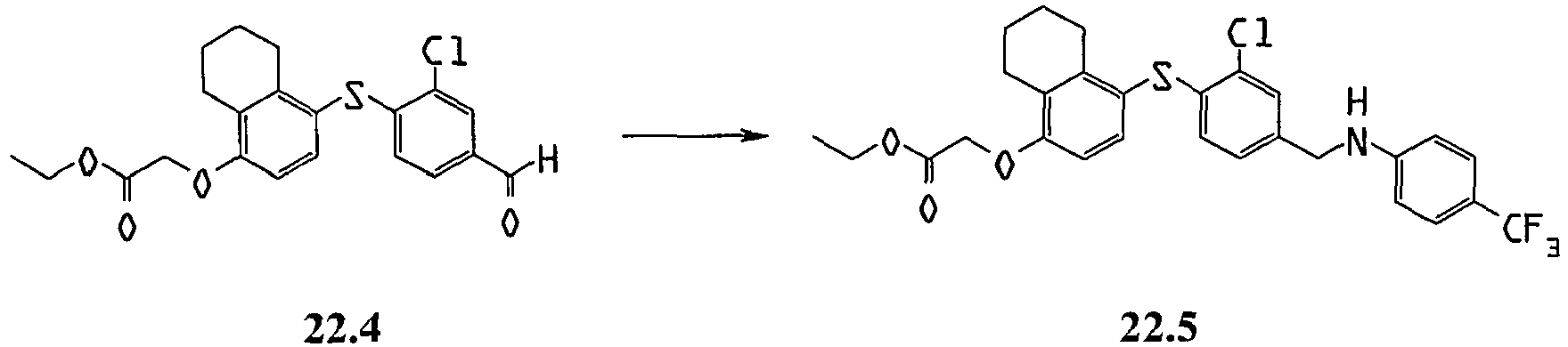
- (4-{2-Chloro-4-[(4-trifluoromethyl-phenylamino)-methyl]-phenylsulfanyl}-5,6,7,8-tetrahydro-naphthalen-1-yloxy)-acetic acid ethyl ester (22.5). The title compound was prepared according to the method described for preparing compound 21.5, using compound 22.4 as the starting material. 1H NMR (300 MHz) (CDCl3) δ 7.38 (2H, d, J=8.6 Hz); 7.34 (1H, d, J=8.6 Hz); 7.33 (1H, s); 6.99 (1H, dd, J=1.5, 7.9 Hz); 6.58 (3H, d, J=7.1 Hz); 6.49 (1H, d, J=8.2 Hz); 4.67 (2H, s); 4.37 (1H, brt); 4.28 (2H, q, J=7.2 Hz); 4.28 (2H, d, J=4.5 Hz); 2.78-2.74 (4H, m); 1.74-1.72 (4H, m); 1.31 (3H, t, J=7.1 Hz).

- (4-{2-Chloro-4-[(4-trifluoromethyl-phenylamino)-methyl]-phenylsulfanyl}-5,6,7,8-tetrahydro-naphthalen-1-yloxy)-acetic acid (22). The title compound was prepared according to the method described for preparing
compound 7, using compound 22.5 as the starting material. MS APSI m/e: 520 (M-H). 1H NMR (400 MHz) (DMSO-d6) δ 13.03 (1H, brs); 7.43 (1H, s); 7.35 (2H, d, J=8.6 Hz); 7.31 (1H, d, J=8.5 Hz); 7.16 (1H, d, J=8.2 Hz); 6.98 (1H, t, J=6.0 Hz); 6.78 (1H, d, J=8.6 Hz); 6.64 (2H, d, J=8.6 Hz); 6.48 (1H, d, J=8.2 Hz); 4.75 (2H, s); 4.26 (2H, d, J=5.9 Hz); 2.66-2.63 (4H, m); 1.66-1.65 (4H, m). - This example illustrates the preparation of {4-[2-chloro-4-(4-trifluoromethyl-phenoxymethyl)-phenylsulfanyl]-5,6,7,8-tetrahydro-naphthalen-1-yloxy}-acetic acid (23).

- [4-(2-Chloro-4-hydroxymethyl-phenylsulfanyl)-5,6,7,8-tetrahydro-naphthalen-1-yloxy]-acetic acid ethyl ester (23.1). The title compound was prepared according to the method described for preparing compound 10.5, using compound 23.4 as the starting material. 1H NMR (400 MHz) (CDCl3) δ 7.37 (1H, d, J=1.6 Hz); 7.35 (1H, d, J=8.4 Hz); 7.02 (1H, dd, J=1.6, 8.2 Hz); 6.59 (1H, d, J=8.4 Hz); 6.52 (1H, d, J=8.2 Hz); 4.67 (2H, s); 4.60 (2H, s); 4.29 (2H, q, J=7.1 Hz); 2.80-2.72 (4H, m); 1.75-1.69 (4H, m); 1.32 (3H, t, J=7.1 Hz).

- {4-[2-Chloro-4-(4-trifluoromethyl-phenoxymethyl)-phenylsulfanyl]-5,6,7,8-tetrahydro-naphthalen-1-yloxyl-acetic acid ethyl ester (23.2). The title compound was prepared according to the method described for preparing compound 10.6, using compound 23.1 as the starting material. 1H NMR (400 MHz) (CDCl3) δ 7.54 (2H, d, J=8.7 Hz); 7.42 (1H, d, J=1.7 Hz); 7.37 (1H, d, J=8.5 Hz); 7.06 (1H, dd, J=1.8, 8.2 Hz); 6.99 (2H, d, J=8.7 Hz); 6.59 (1H, d, J=8.5 Hz); 6.52 (1H, d, J=8.2 Hz); 4.99 (2H, s); 4.68 (2H, s); 4.29 (2H, q, J=7.1 Hz); 2.80-2.73 (4H, m); 1.76-1.70 (4H, m); 1.32 (3H, t, J=7.2 Hz).

- {4-[2-Chloro-4-(4-trifluoromethyl-phenoxymethyl)-phenylsulfanyl]-5,6,7,8-tetrahydro-naphthalen-1-yloxy}-acetic acid (23). The title compound was prepared according to the method described for preparing
compound 7, using compound 23.2 as the starting material. MS APSI m/e: 521 (M-H). 1H NMR (400 MHz) (DMSO-d6) δ 13.04 (1H, brs); 7.66 (2H, d, J=8.8 Hz); 7.59 (1H, d, J=1.6 Hz); 7.37 (1H, d, J=8.5 Hz); 7.29 (1H, dd, J=1.6, 8.2 Hz); 7.17 (2H, d, J=8.6 Hz); 6.81 (1H, d, J=8.6 Hz); 6.51 (1H, d, J=8.2 Hz); 5.12 (2H, s); 4.77 (2H, s); 2.67-2.64 (4H, m); 1.67-1.66 (4H, m). - This example illustrates the preparation of {4-[2-chloro-4-(4-trifluoromethyl-phenoxymethyl)-phenylsulfanyl]-2,5-dimethyl-phenoxy}-acetic acid (24).


- [4-(2-Chloro-4-formyl-phenylsulfanyl)-2,5-dimethyl-phenoxy]-acetic acid ethyl ester (24.1). The title compound was prepared according to the method described for preparing compound 10.4, using compound 22.3 and 3,4-dichlorobenzaldehyde as the starting materials. 1H NMR (400 MHz) (CDCl3) δ 9.85 (1H, s); 7.82 (1H, d, J=1.7 Hz); 7.49 (1H, dd, J=1.7, 8.2 Hz); 7.36 (1H, s); 6.70 (1H, s); 6.58 (1H, d, J=8.2 Hz); 4.71 (2H, s); 4.31 (2H, q, J=7.1 Hz); 2.31 (3H, s); 2.27 (3H, s); 1.33 (3H, t, J=7.1 Hz).

- [4-(2-Chloro-4-hydroxymethyl-phenylsulfanyl)-2,5-dimethyl-phenoxy]-acetic acid ethyl ester (24.2). The title compound was prepared according to the method described for preparing compound 10.5, using compound 24.1 as the starting material. 1H NMR (400 MHz) (CDCl3) δ 7.36 (1H, d, J=1.6 Hz); 7.33 (1H, s); 7.01 (1H, dd, J=1.9, 8.1 Hz); 6.67 (1H, s); 6.50 (1H, d, J=8.2 Hz); 4.68 (2H, s); 4.60 (2H, s); 4.30 (2H, q, J=7.2 Hz); 2.31 (3H, s); 2.25 (3H, s); 1.67 (1H, brs); 1.32 (3H, t, J=7.2 Hz).

- {4-[2-Chloro-4-(4-trifluoromethyl-phenoxymethyl)-phenylsulfanyl]-2,5-dimethyl-phenoxy}-acetic acid ethyl ester (24.3). The title compound was prepared according to the method described for preparing compound 10.6, using compound 24.2 as the starting material. 1H NMR (400 MHz) (CDCl3) δ 7.54 (2H, d, J=8.8 Hz); 7.42 (1H, d, J=1.6 Hz); 7.34 (1H, s); 7.06 (1H, dd, J=1.8, 8.2 Hz); 6.99 (2H, d, J=8.7 Hz); 6.67 (1H, s); 6.51 (1H, d, J=8.2 Hz); 4.99 (2H, s); 4.68 (2H, s); 4.30 (2H, q, J=7.1 Hz); 2.31 (3H, s); 2.25 (3H, s); 1.32 (3H, t, J=7.2 Hz).

- {4-[2-Chloro-4-(4-trifluoromethyl-phenoxymethyl)-phenylsulfanyl]-2,5-dimethyl-phenoxy}-acetic acid (24). The title compound was prepared according to the method described for preparing
compound 7, using compound 24.3 as the starting material. MS APSI m/e: 495 (M-H). 1H NMR (400 MHz) (DMSO-d6) δ 12.97 (1H, brs); 7.66 (2H, d, J=8.8 Hz); 7.59 (1H, d, J=1.5 Hz); 7.35 (1H, s); 7.28 (1H, dd, J=1.4, 8.0 Hz); 7.17 (2H, d, J=8.8 Hz); 6.97 (1H, s); 6.49 (1H, d, J=8.0 Hz); 5.12 (2H, s); 4.78 (2H, s); 2.24 (3H, s); 2.17 (3H, s). - This example describes in vitro assays that were used or can be used to evaluate compounds of the invention.
- CV-1 cells were plated in DME medium supplemented with 10% charcoal stripped calf serum (HyClone) at a density of 24,000 cells per well in a 96-well plate (Costar) 16-24 h before transfection. Approximately 16 ng of luciferase reporter plasmid, 8 ng of a control β-galactosidase expression vector (pCMVβ, Clontech), and 2-8 ng of PPAR expression plasmid were mixed with carrier DNA (pBluescript, Stratagene) to a total of 80 ng per well in a volume of 10 µL of OptiME medium (GIBCO BRL). To this mixture was added a second mix containing 10 µL of OptiME medium and 0.7 µL of LipoFectamine (GIBCO BRL). After incubation for 30 min, an additional 80 µL of OptiME medium was added and the resulting solution was then applied to the cells. After 16 h the medium was exchanged to DME medium supplemented with 10% dilipidated fetal calf serum (Sigma) and test compound [concentrations ranging from 10 µM to 0.1 nM]. After incubation for an additional 24 h, the cells were lysed and both luciferase and β-galactosidase activity were measured. Luciferase activity was normalized for transfection efficiency by using β-galactosidase derived from the cotransfected pCMVβ plasmid as internal standard.
- DR1 3X tk-luc reporter plasmids contain three copies of the consensus direct repeat 1 (DR1) PPAR response element [TATCA AGGTCA A AGGTCA TCTAG] inserted upstream of minimal herpes simplex thymidine kinase promoter in the pGL3 firefly luciferase reporter plasmid (Invitrogen).
- G5 tk-luc contains 5 copies of the GAL4 binding site inserted upstream of minimal herpes simplex thymidine kinase promoter in the pGL3 firefly luciferase reporter plasmid.
- pSG5huPPARδ and pSG5muPPARδ contain the nucleotide sequences for the human and murine PPARδ gene inserted into the expression vector pSG5 (Stratagene).
- Plasmids containing nucleotide sequences encoding the ligand binding domains of human PPARα, and human PPARγ inserted C-terminal to the GAL4 DNA binding domain of a suitable GAL4 DNA binding domain cloning vector can be prepared using conventional techniques.
- Compounds can be tested for their ability to bind to PPARα, PPARγ or PPARδ using a Scintillation Proximity Assay (SPA). Polylysine coated yttrium silicate SPA beads (Amersham) can be reconstituted by adding 200 ng beads to 40 µL assay buffer [20 mM phosphate buffer pH 7.1, 50 mM sodium chloride, 2 mM EDTA, 10% (v/v) glycerol, and 2 mM 3-[(3-cholamidopropyl)-dimethylammonio]-1-propanesulfonate (CHAPS)]. To the bead slurry, 80-280 ng of GST-PPAR protein can be added and the mixture incubated for 2 h at 4 °C. The 40 µL of bead slurry can be added to 10 µL of test compound solution (concentrations ranging from 10 µM to 0.1 nM). Following incubation for 1 h at room temperature, 50 µL of a 20-40 nM radioligand solution in assay buffer can be added. After incubation for an additional 1 h at room temperature the assay mix can be quantitated using a Topcount (Packard).
- For PPARδ and PPARα binding assays, radiolabeled 2-(4-(3-(1-((2-chloro-6-fluoro-phenyl)ethyl)-3-(2,3-dichlorophenyl)ureido)propenyl)phenoxy)-2-methylpropionic acid (Brown et al. (1997) Chem. Biol. 12:909-918) can be used. For PPARγ binding assay radiolabeled 5-{4-[2-(methyl-pyridine-2-yl-amino)-ethoxy]-benzyl}-thiazolidine-2,4-dione (described in
U.S. Patent No. 5,902,726 ) can be used. - For GST-PPARα and GST-PPARγ, cDNAs encoding amino acids 167-468 of PPARα and amino acids 175 to 475 of PPARγ, respectively, can be inserted into the bacterial expression vector pGEX 2T (Pharmacia). For GST-PPARδ, cDNA encoding amino acids 138-440 can be inserted into the bacterial expression vector pGEX 6P-1 (Pharmacia). GST-PPAR ligand binding domain protein can be expressed in BL21 (DE3) cells (Stratagene).
- Compounds can be tested for their ability to inhibit the activity and/or expression of iNOS using lipopolysaccharide (LPS) to induce iNOS expression in the mouse macrophage cell line, J774. See, for example, International Publication No.
WO 02/28434 to Buchan et al. - LPS-induced iNOS activity can be measured using the following assay conditions: J774 cells are seeded at a density of 35000-50000 thousand cells per well, in a black, clear-bottomed, 96-well plate, 24 h prior to use. The cell culture and the drug dilutions are carried out in complete media, which consists of DMEM (Dulbecco's modification of Eagle's medium) containing fetal calf serum (10%), glutamine (2 mM), penicillin (100 u/mL) and streptomycin (100 µg/mL). The J774 cells are pre-treated with PPARδ activators or vehicle, for 6 h prior to, and for 24 h subsequent to, the addition of LPS. Twenty-four hours after the addition of LPA, iNOS activity is measured using the following method: The cell culture media/drug dilutions are removed and the cells washed with D-PBS (Dulbecco's modification of phosphate-buffered saline). The D-PBS is then removed, and replaced with D-PBS containing DAF-2 (4,5-diaminofluorescein; 5 µM) and L-arginine (500 µM). After incubation at 37 °C for 3 h, fluorescence from each well is measured at an excitation wavelength of 485 nm and an emission wavelength of 530 nm. The ability of LPS to induce iNOS activity, in the presence and absence of a PPARδ activator, can then be calculated.
- LPS-induced expression of iNOS mRNA can be measured using the following assay conditions: J774 cells can be plated in 6-well plates (106 cells/well), 24 h prior to use. The cells can be pre-treated with PPARδ activator control media for 6 h, prior to addition of LPS, which can be co-incubated with the PPARδ activator/control for a further 24 h. At the end of this incubation period, the culture medium can be removed by aspirating and the cells washed with D-PBS. Following removal of the D-PBS, total cellular RNA can be isolated from each sample using a commercially available RNA isolation kit. First strand cDNA synthesis can be carried out as per instructions supplied with the AMV reverse transcription (RT) system. An aliquot (100 ng) of the RNA can be added to a mixture which contains (final concentrations) MgCl2 (5 mM), Tris-HCl (10 mM; pH 8.8), KCl (50 mM), Triton X-100 (0.1%), dNTP (1 mM), rRNasin (1 U/µL), AMV reverse transcriptase (0.75 U/µL), oligo(dT)15(25 ng/µL). The resulting mixture can be incubated in a thermal cycler at 42 °C for 30 min, followed by 95 °C for 15 min, and, finally, 4 °C, until being transferred to a freezer (-20 °C) for storage.
- For use in PCR, mouse iNOS sense, mouse iNOS anti-sense, mouse GAPDH sense and mouse GAPDH anti-sense primer sets, such as those used in International Publication No.
WO 02/28434 to Buchan et al. - LPS-induced iNOS activity and expression of TNF can be measured using the following assay conditions: J774 cells can be seeded at a density of 35000-50000 thousand cells per well, in black, clear-bottomed, 96-well plates. The cell culture and the drug dilutions can be carried out in complete media, which consists of DMEM (Dulbecco's modification of Eagle's medium) containing fetal calf serum (10%), glutamine (2 mM), penicillin (100 u/mL) and streptomycin (100 µg/mL). The J774 cells can be pre-treated with PPARδ activators, or vehicle, for 6 h prior to, and for 24 h subsequent to the addition of LPS. Twenty-four hours after the addition of LPS, iNOS activity can be measured by the following method: The cell culture media/drug dilutions can be removed for measurement of TNF concentrations, and quantified using a commercially available ELISA system. The cells can be washed with D-PBS. The D-PBS can then be removed, and replaced with D-PBS containing DAF-2 (4,5-diaminofluorescein; 5 µM) and L-arginine (500 µM). INOS activity can then be measured as described above.
- This example describes an in vivo assay used to evaluate compounds of the invention.
- Male Sprague-Dawley rats (BW: 100-120 g) were fed a high cholesterol diet (1.25% cholesterol, 0.5% cholic acid and 10% coconut oil) for 14 days. The animals were orally dosed with test compounds suspended to 0.5% methylcellulose solution once a day over the final 7 days. Typical doses of test compounds were 1-30 mg/kg/day.
- After 7 days of treatment, serum HDL cholesterol concentration was determined from blood obtained by tail bleeds. HDL cholesterol determination was performed on a Hitachi 7170 automatic analyzer. Data for selected compounds of the invention are summarized in Table 9.
Table 9. Serum HDL cholesterol levels (% of increase) determined for selected compounds of the invention. Compound % of increase at 30 mg/kg 1 ++ 2 ++ 3 + 4 ++ 5 + 6 ++ 7 + 8 ++ 9 + 10 + 11 ++ 21 ++ 22 + 25 ++ 26 + 27 + ++ denotes greater than 100%
+ denotes 100% or less - Serum HDL cholesterol level (% of increase) refers to the rate of HDL increase relative to the vehicle and was calculated as follows:

Claims (21)
- A compound having the formula (Ia):
R1O2C-CRaRb-Y-Ar1-X-Ar2-Z1-Z2-Ar3 Ia
or a pharmaceutically acceptable salt thereof, wherein
X is S(O)m;
YisO;
-Z1-Z2- is -O-CH2-, -O-(-CH2)2-, -CH2-O-, -(CH2)2-O-, -CH2-NH-, -CH2-N(CH3)-, -(CH2)2-NH-, -(CH2)2-N(CH3)-, -(CH2)2-N(CH2CH3)-, -NH-CH2-, -N(CH3)-CH2-, -NH-(CH2)2- or -N(CH3)-(CH2)2-;
Ar1 and Ar2 are independently benzene-1,4-diyl, unsubstituted or substituted with 1 or 2 substituents selected independently from halogen or C1-4 alkyl, or with two adjacent
substituents which, together with the carbon atoms to which they are attached, form a fused aromatic or cycloalkane ring;
Ar3 is phenyl substituted by at least one fluoro(C1-C4)alkyl;
R1 is hydrogen;
Ra and Rb are each hydrogen; and
the subscript m is an integer from 0 to 2. - A pharmaceutical composition comprising a pharmaceutically acceptable carrier, excipient, or diluent and a compound of claim 1.
- The use of a compound of claim 1 for the manufacture of a medicament for treating a metabolic disorder, cardiovascular disease, an inflammatory
condition, a neoplastic disease, an immune disorder, a shock state, a disorder of gastrointestinal motility or a disease of the central nervous system. - The compound of Claim 1 or the pharmaceutical composition of Claim 2 or the use of Claim 3, wherein Ar1 and Ar2 are benzene.
- The compound of Claim 1 or the pharmaceutical composition of Claim 2 or the use of Claim 3, wherein the compound has formula (Ib):

R2, R3, R4, R5, R6, R7, R8 and R9 are independently selected from the group consisting of hydrogen, halogen, and (C1-C4)alkyl; and
optionally, any two adjacent R groups selected from the group consisting of R2, R3, R4, R5, R6, R7, R8 and R9 may be combined with the carbon atoms to which they are attached to form a fused aromatic or cycloalkane ring. - The compound of Claim 5 or the pharmaceutical composition of Claim 5 or the use of Claim 5, wherein the compound has formula (II):

R1', R2', R3', R4' and R5' are independently selected from the group
consisting of hydrogen and fluoro(C1-4)alkyl, wherein at least one of R1', R2', R3', R4' and R5' is fluoro(C1-4)alkyl. - The compound of Claim 6 or the pharmaceutical composition of Claim 6 or the use of Claim 6, wherein R3' is CF3 or wherein R4' is CF3 or wherein R5' is CF3.
- The compound of Claim 5 or the pharmaceutical composition of Claim 5 or the use of Claim 5, wherein X is S.
- The compound of Claim 5 or the pharmaceutical composition of Claim 5 or the use of Claim 5, wherein -Z1-Z2- is -O-CH2-, -O-(CH2)2-, -CH2-O- or -(CH2)2-O-.
- The compound of Claim 8, wherein -Z1-Z2- is -CH2-NH-, -CH2-N(CH3)-, -(CH2)2-NH-, -(CH2)2-N(CH3)-, -(CH2)2-N(CH2CH3)-, -NH-CH2-, -N(CH3)-CH2-, -NH-(CH2)2- or -N(CH3)-(CH2)2-.
- The compound of Claim 8, wherein -Z1-Z2- is -O-CH2- or -O-(CH2)2-.
- The compound of Claim 5, or a pharmaceutically acceptable salt thereof, wherein said compound is selected from the group consisting of:



- The compound of Claim 8, wherein -Z1-Z2- is -CH2-O- or -(-CH2)2-O-.
- The compound of Claim 13, or a pharmaceutically acceptable salt thereof, wherein said compound is selected from the group consisting of:


- The compound of Claim 8, wherein -Z1-Z2- is -CH2-NH-, -CH2-N(CH3)-, -(CH2)2-NH-, -(CH2)2-N(CH3)-, or -(CH2)2-N(CH2CH3)-.
- The compound of Claim 15, or a pharmaceutically acceptable salt thereof, wherein said compound is selected from the group consisting of:


- The compound of Claim 5, wherein
X is selected from the group consisting of S and SO2; -Z1-Z2- is selected from the group consisting of -O-CH2-, -O-(-CH2)2-, -CH2-O-, -NH-CH2-, and -CH2-NH-;
Ar3 is selected from the group consisting of 2-trifluoromethylphenyl, 3-trifluoromethylphenyl, and 4-trifluoromethylphenyl;
R2, R3, R4, R6 and R7 are independently selected from the group consisting of hydrogen, chlorine, methyl, ethyl, n-propyl, and isopropyl;
optionally, R2 and R3 are combined with the carbon atoms to which they are attached to form a fused benzene or cyclohexane ring;
optionally, R6 and R7 are combined with the carbon atoms to which they are attached to form a fused benzene ring; and
R5, R8 and R9 are each hydrogen. - The use of Claim 3, wherein said metabolic disorder is selected from the group consisting of hypercholesterolemia, hyperlipidemia, dyslipidemia, hypertriglyceridemia, hyperglycemia, diabetes, obesity, syndrome X, insulin resistance, hyperinsulinemia and an eating disorder;
or wherein said cardiovascular disease is atherosclerosis;
or wherein said inflammatory condition is atherosclerosis or rheumatoid arthritis;
or wherein said neoplastic disease is a cancer selected from the group consisting of breast cancer, lung cancer, colorectal cancer, prostate cancer, kidney cancer, stomach cancer, bladder cancer, ovarian cancer and cancer of the gastrointestinal tract;
or wherein said immune disorder is arthritis or asthma;
or wherein said shock state is septic shock;
or wherein said disorder of gastrointestinal motility is ileus;
or wherein said disease of the central nervous system is migraine. - The use of Claim 3, wherein said compound elevates HDL cholesterol levels;
or wherein said compound reduces LDL cholesterol levels;
or wherein said compound reduces triglyceride levels;
or wherein said compound is administered in combination with an antidiabetic agent, an antiinflammatory agent, a cholesterol lowering agent, a chemotherapeutic agent or hormone therapy. - The use of Claim 3, wherein the medicament is a medicament for a human.
- The use of Claim 3, wherein said compound modulates PPARδ;
or wherein said compound activates PEARδ;
or wherein said compound inhibits iNOS or TNF.
Applications Claiming Priority (9)
| Application Number | Priority Date | Filing Date | Title |
|---|---|---|---|
| US32255601P | 2001-09-14 | 2001-09-14 | |
| US322556P | 2001-09-14 | ||
| US33543401P | 2001-11-30 | 2001-11-30 | |
| US335434P | 2001-11-30 | ||
| US37862702P | 2002-05-07 | 2002-05-07 | |
| US378627P | 2002-05-07 | ||
| US38683302P | 2002-06-06 | 2002-06-06 | |
| US386833P | 2002-06-06 | ||
| PCT/US2002/029232 WO2003024395A2 (en) | 2001-09-14 | 2002-09-13 | Linked biaryl compounds |
Publications (4)
| Publication Number | Publication Date |
|---|---|
| EP1435946A2 EP1435946A2 (en) | 2004-07-14 |
| EP1435946A4 EP1435946A4 (en) | 2006-02-01 |
| EP1435946B1 true EP1435946B1 (en) | 2013-11-06 |
| EP1435946B8 EP1435946B8 (en) | 2013-12-18 |
Family
ID=27502245
Family Applications (1)
| Application Number | Title | Priority Date | Filing Date |
|---|---|---|---|
| EP02773386.4A Expired - Lifetime EP1435946B8 (en) | 2001-09-14 | 2002-09-13 | Linked biaryl compounds |
Country Status (13)
| Country | Link |
|---|---|
| US (2) | US6869975B2 (en) |
| EP (1) | EP1435946B8 (en) |
| JP (1) | JP4269052B2 (en) |
| KR (1) | KR20040063897A (en) |
| CN (1) | CN1585638A (en) |
| AU (1) | AU2002336532C1 (en) |
| BR (1) | BR0212512A (en) |
| CA (1) | CA2460313C (en) |
| ES (1) | ES2443642T3 (en) |
| IL (1) | IL160845A0 (en) |
| MX (1) | MXPA04002330A (en) |
| NZ (1) | NZ531917A (en) |
| WO (1) | WO2003024395A2 (en) |
Families Citing this family (67)
| Publication number | Priority date | Publication date | Assignee | Title |
|---|---|---|---|---|
| US20040229781A1 (en) * | 2000-05-10 | 2004-11-18 | Marks Andrew Robert | Compounds and methods for treating and preventing exercise-induced cardiac arrhythmias |
| US20040048780A1 (en) * | 2000-05-10 | 2004-03-11 | The Trustees Of Columbia University In The City Of New York | Method for treating and preventing cardiac arrhythmia |
| US7718644B2 (en) * | 2004-01-22 | 2010-05-18 | The Trustees Of Columbia University In The City Of New York | Anti-arrhythmic and heart failure drugs that target the leak in the ryanodine receptor (RyR2) and uses thereof |
| US8022058B2 (en) | 2000-05-10 | 2011-09-20 | The Trustees Of Columbia University In The City Of New York | Agents for preventing and treating disorders involving modulation of the RyR receptors |
| US20060293266A1 (en) * | 2000-05-10 | 2006-12-28 | The Trustees Of Columbia | Phosphodiesterase 4D in the ryanodine receptor complex protects against heart failure |
| US7879840B2 (en) * | 2005-08-25 | 2011-02-01 | The Trustees Of Columbia University In The City Of New York | Agents for preventing and treating disorders involving modulation of the RyR receptors |
| US6489125B1 (en) * | 2000-05-10 | 2002-12-03 | The Trustees Of Columbia University In The City Of New York | Methods for identifying chemical compounds that inhibit dissociation of FKBP12.6 binding protein from type 2 ryanodine receptor |
| US7393652B2 (en) * | 2000-05-10 | 2008-07-01 | The Trustees Of Columbia University In The City Of New York | Methods for identifying a chemical compound that directly enhances binding of FKBP12.6 to PKA-phosphorylated type 2 ryanodine receptor (RyR2) |
| US6869975B2 (en) | 2001-09-14 | 2005-03-22 | Tularik Inc. | Linked biaryl compounds |
| US6833380B2 (en) | 2002-03-07 | 2004-12-21 | Warner-Lambert Company, Llc | Compounds that modulate PPAR activity and methods of preparation |
| CA2477604A1 (en) | 2002-03-13 | 2003-09-25 | Signum Biosciences, Inc. | Modulation of protein methylation and phosphoprotein phosphate |
| US6875780B2 (en) | 2002-04-05 | 2005-04-05 | Warner-Lambert Company | Compounds that modulate PPAR activity and methods for their preparation |
| US7544678B2 (en) * | 2002-11-05 | 2009-06-09 | The Trustees Of Columbia University In The City Of New York | Anti-arrythmic and heart failure drugs that target the leak in the ryanodine receptor (RyR2) |
| AU2004220548A1 (en) | 2003-03-07 | 2004-09-23 | The Trustees Of Columbia University, In The City Of New York | Type 1 ryanodine receptor-based methods |
| WO2004092117A1 (en) * | 2003-04-07 | 2004-10-28 | Kalypsys, Inc. | Para-sulfonyl substituted phenyl compounds as modulators of ppars |
| US7244763B2 (en) | 2003-04-17 | 2007-07-17 | Warner Lambert Company Llc | Compounds that modulate PPAR activity and methods of preparation |
| WO2005012221A1 (en) * | 2003-08-04 | 2005-02-10 | Ono Pharmaceutical Co., Ltd. | Diphenyl ether compound, process for producing the same, and use |
| US8710045B2 (en) * | 2004-01-22 | 2014-04-29 | The Trustees Of Columbia University In The City Of New York | Agents for preventing and treating disorders involving modulation of the ryanodine receptors |
| US20080125403A1 (en) | 2004-04-02 | 2008-05-29 | Merck & Co., Inc. | Method of Treating Men with Metabolic and Anthropometric Disorders |
| EP1745014B1 (en) * | 2004-05-05 | 2011-07-06 | High Point Pharmaceuticals, LLC | Novel compounds, their preparation and use |
| ES2347578T3 (en) * | 2004-05-05 | 2010-11-02 | High Point Pharmaceuticals, Llc | DERIVATIVES OF THE PHENOXYACETIC ACID AS PPAR AGONISTS. |
| JP2007536343A (en) * | 2004-05-05 | 2007-12-13 | ノボ ノルディスク アクティーゼルスカブ | Phenoxyacetic acid derivatives as PPAR agonists |
| ES2343640T3 (en) * | 2004-08-12 | 2010-08-05 | Amgen Inc. | BISARIL-SULFONAMIDS. |
| EP1650183A1 (en) * | 2004-10-21 | 2006-04-26 | Cellzome Ag | (Benzyloxy-biphenyl) acetic acids and derivatives thereof and their use in therapy |
| JP2008521831A (en) * | 2004-11-30 | 2008-06-26 | プレキシコン,インコーポレーテッド | PPAR active compounds |
| US7531568B2 (en) * | 2004-11-30 | 2009-05-12 | Plexxikon, Inc. | PPAR active compounds |
| FR2880886B1 (en) * | 2005-01-14 | 2007-04-06 | Merck Sante Soc Par Actions Si | 6-PHENYLHEX-5-ENOIC ACID DERIVATIVES, PROCESSES FOR THEIR PREPARATION, PHARMACEUTICAL COMPOSITIONS CONTAINING SAME, AND THERAPEUTIC APPLICATIONS |
| EP1856053A1 (en) | 2005-01-14 | 2007-11-21 | Millennium Pharmaceuticals, Inc. | Cinnamide and hydrocinnamide derivatives with raf-kinase inhibitory activity |
| US7923041B2 (en) | 2005-02-03 | 2011-04-12 | Signum Biosciences, Inc. | Compositions and methods for enhancing cognitive function |
| WO2006084033A1 (en) * | 2005-02-03 | 2006-08-10 | Signum Biosciences, Inc. | Compositions and methods for enhancing cognitive function |
| DE102005020229A1 (en) * | 2005-04-30 | 2006-11-09 | Bayer Healthcare Ag | Use of indoline-phenylsulfonamide derivatives |
| DE102005020230A1 (en) * | 2005-04-30 | 2006-11-09 | Bayer Healthcare Ag | Use of indoline-phenylsulfonamide derivatives |
| US20090118337A1 (en) * | 2005-06-03 | 2009-05-07 | Davis Pamela B | Methods and compositions for treating inflammation |
| US7943669B2 (en) | 2005-06-30 | 2011-05-17 | High Point Pharmaceuticals, Llc | Phenoxy acetic acids as PPAR delta activators |
| EP1911738A4 (en) * | 2005-07-29 | 2009-12-16 | Takeda Pharmaceutical | PHENOXYALKANSÄUREVERBINDUNG |
| US7704990B2 (en) * | 2005-08-25 | 2010-04-27 | The Trustees Of Columbia University In The City Of New York | Agents for preventing and treating disorders involving modulation of the RyR receptors |
| AU2006287528A1 (en) * | 2005-09-07 | 2007-03-15 | Plexxikon, Inc. | 1 , 4 and 1 , 5-disubstituted indole derivatives for use as PPAR active compounds |
| EP1940767A2 (en) * | 2005-09-07 | 2008-07-09 | Plexxikon, Inc. | Pparactive compounds |
| AU2006287513A1 (en) * | 2005-09-07 | 2007-03-15 | Plexxikon, Inc. | 1, 3-disubstituted indole derivatives for use as PPAR modulators |
| EA201101084A1 (en) | 2005-12-22 | 2012-04-30 | ХАЙ ПОЙНТ ФАРМАСЬЮТИКАЛЗ, ЭлЭлСи | PHENOXYACIC ACIDS AS PPAR DELTA ACTIVATORS |
| EP1976828B1 (en) | 2005-12-29 | 2016-12-21 | Celtaxsys, Inc. | Diamine derivatives as inhibitors of leukotriene a4 hydrolase |
| JP2009529512A (en) | 2006-03-09 | 2009-08-20 | ハイ ポイント ファーマシューティカルズ,リミティド ライアビリティ カンパニー | Novel compounds, methods for their production and use |
| US20080114021A1 (en) * | 2006-11-09 | 2008-05-15 | University Of Maryland Baltimore | Use Of 5,6-Dimethylxanthenone-4-Acetic Acid as an Antimicrobial Agent |
| PE20090159A1 (en) * | 2007-03-08 | 2009-02-21 | Plexxikon Inc | INDOL-PROPIONIC ACID DERIVED COMPOUNDS AS PPARs MODULATORS |
| WO2009078981A2 (en) * | 2007-12-13 | 2009-06-25 | Sri International | Ppar-delta ligands and methods of their use |
| CN102014897B (en) | 2008-04-21 | 2015-08-05 | 西格纳姆生物科学公司 | Compound, compositions and its preparation method |
| EP2348857B1 (en) | 2008-10-22 | 2016-02-24 | Merck Sharp & Dohme Corp. | Novel cyclic benzimidazole derivatives useful anti-diabetic agents |
| JP5557845B2 (en) | 2008-10-31 | 2014-07-23 | メルク・シャープ・アンド・ドーム・コーポレーション | Novel cyclic benzimidazole derivatives useful as antidiabetic agents |
| JP2013516475A (en) * | 2010-01-06 | 2013-05-13 | アミラ ファーマシューティカルズ,インク. | DP2 antagonists and uses thereof |
| AU2011218830B2 (en) | 2010-02-25 | 2014-07-24 | Merck Sharp & Dohme Corp. | Novel cyclic benzimidazole derivatives useful anti-diabetic agents |
| US20130156720A1 (en) | 2010-08-27 | 2013-06-20 | Ironwood Pharmaceuticals, Inc. | Compositions and methods for treating or preventing metabolic syndrome and related diseases and disorders |
| MX348131B (en) | 2011-02-25 | 2017-05-26 | Merck Sharp & Dohme | Novel cyclic azabenzimidazole derivatives useful as anti-diabetic agents. |
| WO2014022528A1 (en) | 2012-08-02 | 2014-02-06 | Merck Sharp & Dohme Corp. | Antidiabetic tricyclic compounds |
| WO2014130608A1 (en) | 2013-02-22 | 2014-08-28 | Merck Sharp & Dohme Corp. | Antidiabetic bicyclic compounds |
| ES2864862T3 (en) | 2013-03-12 | 2021-10-14 | Celltaxis Llc | Leukotriene A4 hydrolase inhibition methods |
| MX2015011678A (en) | 2013-03-14 | 2016-07-08 | Celtaxsys Inc | Inhibitors of leukotriene a4 hydrolase. |
| WO2014139388A1 (en) | 2013-03-14 | 2014-09-18 | Merck Sharp & Dohme Corp. | Novel indole derivatives useful as anti-diabetic agents |
| MX2015011677A (en) | 2013-03-14 | 2016-07-08 | Celtaxsys Inc | Inhibitors of leukotriene a4 hydrolase. |
| CA2906086A1 (en) | 2013-03-14 | 2014-09-25 | Celtaxsys, Inc. | Inhibitors of leukotriene a4 hydrolase |
| ES2811087T3 (en) | 2013-09-09 | 2021-03-10 | Vtv Therapeutics Llc | Use of PPAR-delta agonists to treat muscle atrophy |
| WO2015051496A1 (en) | 2013-10-08 | 2015-04-16 | Merck Sharp & Dohme Corp. | Antidiabetic tricyclic compounds |
| US11072602B2 (en) | 2016-12-06 | 2021-07-27 | Merck Sharp & Dohme Corp. | Antidiabetic heterocyclic compounds |
| EP3558298B1 (en) | 2016-12-20 | 2026-03-11 | Merck Sharp & Dohme LLC | Antidiabetic spirochroman compounds |
| US10898484B2 (en) | 2018-05-31 | 2021-01-26 | Celltaxis, Llc | Method of reducing pulmonary exacerbations in respiratory disease patients |
| CN113912547B (en) | 2020-07-10 | 2024-04-30 | 成都凡诺西生物医药科技有限公司 | Substituted benzoimidazole derivatives and their applications |
| CA3185909A1 (en) | 2020-07-22 | 2022-01-27 | Reneo Pharmaceuticals, Inc. | Crystalline ppar-delta agonist |
| WO2023147309A1 (en) | 2022-01-25 | 2023-08-03 | Reneo Pharmaceuticals, Inc. | Use of ppar-delta agonists in the treatment of disease |
Citations (4)
| Publication number | Priority date | Publication date | Assignee | Title |
|---|---|---|---|---|
| US4443536A (en) * | 1981-08-25 | 1984-04-17 | Eastman Kodak Company | Nondiffusible photographic couplers and photographic elements and processes employing same |
| EP0359169A2 (en) * | 1988-09-14 | 1990-03-21 | Eastman Kodak Company | Photographic recording material comprising magenta coupler and a chalcogenazolium salt |
| WO2001000603A1 (en) * | 1999-06-25 | 2001-01-04 | Glaxo Group Limited | Thiazole and oxazole derivatives and their pharmaceutical use |
| EP1431284A1 (en) * | 2001-09-27 | 2004-06-23 | Kyorin Pharmaceutical Co., Ltd. | Diaryl sulfide derivative, addition salt thereof, and immunosuppressant |
Family Cites Families (40)
| Publication number | Priority date | Publication date | Assignee | Title |
|---|---|---|---|---|
| US3038934A (en) * | 1959-03-17 | 1962-06-12 | Smith Kline French Lab | Iodinated 4-(4'-alkoxyphenoxy)phenylpropionic acids |
| US4466902A (en) | 1982-01-31 | 1984-08-21 | Ipposha Oil Industries, Co., Ltd. | Rust inhibitor |
| AU2952695A (en) | 1994-07-01 | 1996-01-25 | Salk Institute For Biological Studies, The | Mammalian peroxisome proliferator-activated receptors and uses thereof |
| AU1856997A (en) | 1996-02-02 | 1997-08-22 | Merck & Co., Inc. | Method for raising hdl cholesterol levels |
| DE69723680T9 (en) | 1996-02-02 | 2004-11-04 | Merck & Co., Inc. | ANTIDIABETIC AGENTS |
| US5859051A (en) | 1996-02-02 | 1999-01-12 | Merck & Co., Inc. | Antidiabetic agents |
| ES2217392T3 (en) | 1996-02-02 | 2004-11-01 | MERCK & CO., INC. | ANTIDIABETIC AGENTS. |
| ATE236137T1 (en) | 1996-02-02 | 2003-04-15 | Merck & Co Inc | HETEROCYCLIC COMPOUNDS AS ANTIDIABETIC AGENTS AND FOR THE TREATMENT OF OBESITY |
| US5847008A (en) | 1996-02-02 | 1998-12-08 | Merck & Co., Inc. | Method of treating diabetes and related disease states |
| US6090839A (en) | 1996-12-23 | 2000-07-18 | Merck & Co., Inc. | Antidiabetic agents |
| CA2285553A1 (en) * | 1997-03-27 | 1998-10-08 | Taisho Pharmaceutical Co., Ltd. | 2-phenoxyaniline derivatives |
| ES2320181T3 (en) | 1997-07-24 | 2009-05-19 | Astellas Pharma Inc. | PHARMACEUTICAL COMPOSITIONS THAT HAVE A REDUCING EFFECT OF CHOLESTEROL. |
| WO1999033845A1 (en) | 1997-12-23 | 1999-07-08 | Commonwealth Scientific And Industrial Research Organisation | Boronic compounds |
| US6583157B2 (en) * | 1998-01-29 | 2003-06-24 | Tularik Inc. | Quinolinyl and benzothiazolyl modulators |
| WO1999038845A1 (en) | 1998-01-29 | 1999-08-05 | Tularik Inc. | Ppar-gamma modulators |
| US6649656B1 (en) * | 1998-07-24 | 2003-11-18 | Teijin Limited | Anthranilic acid derivatives |
| WO2000072812A1 (en) | 1999-06-01 | 2000-12-07 | The University Of Texas Southwestern Medical Center | Method of treating hair loss using diphenylether derivatives |
| CA2376919C (en) | 1999-06-18 | 2008-11-04 | Merck & Co., Inc. | Arylthiazolidinedione and aryloxazolidinedione derivatives |
| DK1192137T3 (en) | 1999-06-30 | 2013-11-11 | Amgen Inc | Compounds for modulating PPAR gamma activity |
| DK1206457T3 (en) | 1999-08-27 | 2004-02-16 | Lilly Co Eli | Biaryl-oxa (thia) zole derivatives and their use as modulators PPAPs |
| ATE260912T1 (en) | 1999-09-08 | 2004-03-15 | Glaxo Group Ltd | OXAZOLE PPAR ANTAGONISTS |
| EP1259494A4 (en) | 2000-02-18 | 2004-09-15 | Merck & Co Inc | ARYLOXY ACETIC ACIDS FOR DIABETES AND LIPID DISEASES |
| JP2001354671A (en) | 2000-04-14 | 2001-12-25 | Nippon Chemiphar Co Ltd | Activator of peroxisome proliferator-activated receptor δ |
| WO2001082916A2 (en) | 2000-05-03 | 2001-11-08 | Tularik Inc. | Combination therapeutic compositions and methods of use |
| US20020013334A1 (en) | 2000-06-15 | 2002-01-31 | Robl Jeffrey A. | HMG-CoA reductase inhibitors and method |
| US20020028826A1 (en) | 2000-06-15 | 2002-03-07 | Robl Jeffrey A. | HMG-CoA reductase inhibitors and method |
| SK288236B6 (en) | 2000-06-28 | 2015-01-07 | Amgen Inc. | Quinolinyl phenyl sulfonamide compound, its use as medicament and pharmaceutical preparation comprising it |
| JP2004513076A (en) | 2000-07-25 | 2004-04-30 | メルク エンド カムパニー インコーポレーテッド | N-substituted indoles useful in the treatment of diabetes |
| EP1310494B1 (en) | 2000-08-11 | 2012-01-25 | Nippon Chemiphar Co., Ltd. | PPAR (delta) ACTIVATORS |
| GB0024361D0 (en) | 2000-10-05 | 2000-11-22 | Glaxo Group Ltd | Medicaments |
| GB0024362D0 (en) | 2000-10-05 | 2000-11-22 | Glaxo Group Ltd | Medicaments |
| GB0031109D0 (en) | 2000-12-20 | 2001-01-31 | Glaxo Group Ltd | Chemical compounds |
| EP1357914A2 (en) | 2001-02-02 | 2003-11-05 | SmithKline Beecham Corporation | Treatment of ppar mediated diseases |
| WO2002064550A1 (en) * | 2001-02-14 | 2002-08-22 | Abbott Laboratories | Glucocorticoid receptor modulators |
| US6777442B2 (en) * | 2001-03-12 | 2004-08-17 | Bayer Aktiengesellschaft | Diphenyl derivatives |
| EP1371650A4 (en) | 2001-03-23 | 2005-05-04 | Nippon Chemiphar Co | Activator for peroxisome proliferator-activated receptor |
| IL159006A0 (en) * | 2001-08-24 | 2004-05-12 | Karobio Ab | Phenoxy-phenyl derivatives and pharmaceutical compositions containing the same |
| US6869975B2 (en) | 2001-09-14 | 2005-03-22 | Tularik Inc. | Linked biaryl compounds |
| EP1471049A4 (en) * | 2002-01-30 | 2006-08-16 | Kissei Pharmaceutical | Novel thyroid hormone receptor ligand, medicinal compositions containing the same and use thereof |
| US6875780B2 (en) | 2002-04-05 | 2005-04-05 | Warner-Lambert Company | Compounds that modulate PPAR activity and methods for their preparation |
-
2002
- 2002-09-13 US US10/244,063 patent/US6869975B2/en not_active Expired - Fee Related
- 2002-09-13 IL IL16084502A patent/IL160845A0/en unknown
- 2002-09-13 BR BR0212512-9A patent/BR0212512A/en not_active IP Right Cessation
- 2002-09-13 WO PCT/US2002/029232 patent/WO2003024395A2/en not_active Ceased
- 2002-09-13 EP EP02773386.4A patent/EP1435946B8/en not_active Expired - Lifetime
- 2002-09-13 MX MXPA04002330A patent/MXPA04002330A/en active IP Right Grant
- 2002-09-13 AU AU2002336532A patent/AU2002336532C1/en not_active Ceased
- 2002-09-13 ES ES02773386.4T patent/ES2443642T3/en not_active Expired - Lifetime
- 2002-09-13 CA CA2460313A patent/CA2460313C/en not_active Expired - Fee Related
- 2002-09-13 NZ NZ531917A patent/NZ531917A/en unknown
- 2002-09-13 CN CNA028223241A patent/CN1585638A/en active Pending
- 2002-09-13 KR KR10-2004-7003851A patent/KR20040063897A/en not_active Withdrawn
- 2002-09-13 JP JP2003528493A patent/JP4269052B2/en not_active Expired - Fee Related
-
2004
- 2004-08-20 US US10/939,918 patent/US7645779B2/en not_active Expired - Fee Related
Patent Citations (4)
| Publication number | Priority date | Publication date | Assignee | Title |
|---|---|---|---|---|
| US4443536A (en) * | 1981-08-25 | 1984-04-17 | Eastman Kodak Company | Nondiffusible photographic couplers and photographic elements and processes employing same |
| EP0359169A2 (en) * | 1988-09-14 | 1990-03-21 | Eastman Kodak Company | Photographic recording material comprising magenta coupler and a chalcogenazolium salt |
| WO2001000603A1 (en) * | 1999-06-25 | 2001-01-04 | Glaxo Group Limited | Thiazole and oxazole derivatives and their pharmaceutical use |
| EP1431284A1 (en) * | 2001-09-27 | 2004-06-23 | Kyorin Pharmaceutical Co., Ltd. | Diaryl sulfide derivative, addition salt thereof, and immunosuppressant |
Also Published As
| Publication number | Publication date |
|---|---|
| MXPA04002330A (en) | 2005-04-08 |
| WO2003024395A3 (en) | 2003-12-11 |
| US6869975B2 (en) | 2005-03-22 |
| IL160845A0 (en) | 2004-08-31 |
| BR0212512A (en) | 2004-10-26 |
| US7645779B2 (en) | 2010-01-12 |
| AU2002336532B2 (en) | 2007-10-18 |
| KR20040063897A (en) | 2004-07-14 |
| US20030149108A1 (en) | 2003-08-07 |
| JP2005508318A (en) | 2005-03-31 |
| JP4269052B2 (en) | 2009-05-27 |
| WO2003024395A2 (en) | 2003-03-27 |
| CA2460313C (en) | 2011-03-08 |
| AU2002336532C1 (en) | 2008-10-16 |
| EP1435946A2 (en) | 2004-07-14 |
| EP1435946B8 (en) | 2013-12-18 |
| ES2443642T3 (en) | 2014-02-20 |
| NZ531917A (en) | 2006-01-27 |
| CA2460313A1 (en) | 2003-03-27 |
| CN1585638A (en) | 2005-02-23 |
| WO2003024395A8 (en) | 2004-01-22 |
| EP1435946A4 (en) | 2006-02-01 |
| US20080161351A1 (en) | 2008-07-03 |
Similar Documents
| Publication | Publication Date | Title |
|---|---|---|
| US7645779B2 (en) | Linked biaryl compounds | |
| AU2002336532A1 (en) | Linked biaryl compounds | |
| US7541383B2 (en) | Asthma and allergic inflammation modulators | |
| US7893077B2 (en) | Bisaryl-sulfonamides | |
| JP5537417B2 (en) | Compounds as CRTH2 and / or PGD2 receptor modulators and their use to treat asthma and allergic inflammation | |
| US7439242B2 (en) | PPARγ modulators | |
| CN102149677A (en) | Biarylaminotetralins | |
| JP2010059169A (en) | Cannabinoid receptor ligand | |
| US20050038070A1 (en) | Asthma and allergic inflammation modulators | |
| WO2008018529A1 (en) | Novel pyrimidine compound having benzyl(pyridylmethyl)amine structure and pharmaceutical comprising the compound | |
| RU2297409C2 (en) | Diaryl compounds with bridge bond | |
| ZA200402021B (en) | Linked biaryl compounds. | |
| WO2004108094A2 (en) | Sulfonamide-substituted chalcone derivatives and their use to treat diseases |
Legal Events
| Date | Code | Title | Description |
|---|---|---|---|
| PUAI | Public reference made under article 153(3) epc to a published international application that has entered the european phase |
Free format text: ORIGINAL CODE: 0009012 |
|
| 17P | Request for examination filed |
Effective date: 20040407 |
|
| AK | Designated contracting states |
Kind code of ref document: A2 Designated state(s): AT BE BG CH CY CZ DE DK EE ES FI FR GB GR IE IT LI LU MC NL PT SE SK TR |
|
| AX | Request for extension of the european patent |
Extension state: AL LT LV MK RO SI |
|
| REG | Reference to a national code |
Ref country code: HK Ref legal event code: DE Ref document number: 1070557 Country of ref document: HK |
|
| A4 | Supplementary search report drawn up and despatched |
Effective date: 20051220 |
|
| 17Q | First examination report despatched |
Effective date: 20070601 |
|
| RAP1 | Party data changed (applicant data changed or rights of an application transferred) |
Owner name: JAPAN TOBACCO INC. Owner name: AMGEN INC. |
|
| REG | Reference to a national code |
Ref country code: HK Ref legal event code: WD Ref document number: 1070557 Country of ref document: HK |
|
| GRAP | Despatch of communication of intention to grant a patent |
Free format text: ORIGINAL CODE: EPIDOSNIGR1 |
|
| INTG | Intention to grant announced |
Effective date: 20130603 |
|
| GRAS | Grant fee paid |
Free format text: ORIGINAL CODE: EPIDOSNIGR3 |
|
| GRAA | (expected) grant |
Free format text: ORIGINAL CODE: 0009210 |
|
| AK | Designated contracting states |
Kind code of ref document: B1 Designated state(s): AT BE BG CH CY CZ DE DK EE ES FI FR GB GR IE IT LI LU MC NL PT SE SK TR |
|
| REG | Reference to a national code |
Ref country code: GB Ref legal event code: FG4D |
|
| REG | Reference to a national code |
Ref country code: CH Ref legal event code: NV Representative=s name: NOVAGRAAF INTERNATIONAL SA, CH Ref country code: CH Ref legal event code: EP |
|
| RAP2 | Party data changed (patent owner data changed or rights of a patent transferred) |
Owner name: JAPAN TOBACCO INC. Owner name: AMGEN INC. |
|
| REG | Reference to a national code |
Ref country code: AT Ref legal event code: REF Ref document number: 638945 Country of ref document: AT Kind code of ref document: T Effective date: 20131215 |
|
| REG | Reference to a national code |
Ref country code: IE Ref legal event code: FG4D |
|
| REG | Reference to a national code |
Ref country code: DE Ref legal event code: R096 Ref document number: 60245739 Country of ref document: DE Effective date: 20140102 |
|
| REG | Reference to a national code |
Ref country code: ES Ref legal event code: FG2A Ref document number: 2443642 Country of ref document: ES Kind code of ref document: T3 Effective date: 20140220 |
|
| REG | Reference to a national code |
Ref country code: NL Ref legal event code: VDEP Effective date: 20131106 |
|
| REG | Reference to a national code |
Ref country code: AT Ref legal event code: MK05 Ref document number: 638945 Country of ref document: AT Kind code of ref document: T Effective date: 20131106 |
|
| PG25 | Lapsed in a contracting state [announced via postgrant information from national office to epo] |
Ref country code: NL Free format text: LAPSE BECAUSE OF FAILURE TO SUBMIT A TRANSLATION OF THE DESCRIPTION OR TO PAY THE FEE WITHIN THE PRESCRIBED TIME-LIMIT Effective date: 20131106 Ref country code: FI Free format text: LAPSE BECAUSE OF FAILURE TO SUBMIT A TRANSLATION OF THE DESCRIPTION OR TO PAY THE FEE WITHIN THE PRESCRIBED TIME-LIMIT Effective date: 20131106 Ref country code: SE Free format text: LAPSE BECAUSE OF FAILURE TO SUBMIT A TRANSLATION OF THE DESCRIPTION OR TO PAY THE FEE WITHIN THE PRESCRIBED TIME-LIMIT Effective date: 20131106 |
|
| PG25 | Lapsed in a contracting state [announced via postgrant information from national office to epo] |
Ref country code: AT Free format text: LAPSE BECAUSE OF FAILURE TO SUBMIT A TRANSLATION OF THE DESCRIPTION OR TO PAY THE FEE WITHIN THE PRESCRIBED TIME-LIMIT Effective date: 20131106 Ref country code: BE Free format text: LAPSE BECAUSE OF FAILURE TO SUBMIT A TRANSLATION OF THE DESCRIPTION OR TO PAY THE FEE WITHIN THE PRESCRIBED TIME-LIMIT Effective date: 20131106 |
|
| PG25 | Lapsed in a contracting state [announced via postgrant information from national office to epo] |
Ref country code: PT Free format text: LAPSE BECAUSE OF FAILURE TO SUBMIT A TRANSLATION OF THE DESCRIPTION OR TO PAY THE FEE WITHIN THE PRESCRIBED TIME-LIMIT Effective date: 20140306 |
|
| PG25 | Lapsed in a contracting state [announced via postgrant information from national office to epo] |
Ref country code: EE Free format text: LAPSE BECAUSE OF FAILURE TO SUBMIT A TRANSLATION OF THE DESCRIPTION OR TO PAY THE FEE WITHIN THE PRESCRIBED TIME-LIMIT Effective date: 20131106 |
|
| REG | Reference to a national code |
Ref country code: DE Ref legal event code: R097 Ref document number: 60245739 Country of ref document: DE |
|
| PG25 | Lapsed in a contracting state [announced via postgrant information from national office to epo] |
Ref country code: CZ Free format text: LAPSE BECAUSE OF FAILURE TO SUBMIT A TRANSLATION OF THE DESCRIPTION OR TO PAY THE FEE WITHIN THE PRESCRIBED TIME-LIMIT Effective date: 20131106 Ref country code: SK Free format text: LAPSE BECAUSE OF FAILURE TO SUBMIT A TRANSLATION OF THE DESCRIPTION OR TO PAY THE FEE WITHIN THE PRESCRIBED TIME-LIMIT Effective date: 20131106 |
|
| PLBE | No opposition filed within time limit |
Free format text: ORIGINAL CODE: 0009261 |
|
| PG25 | Lapsed in a contracting state [announced via postgrant information from national office to epo] |
Ref country code: DK Free format text: LAPSE BECAUSE OF FAILURE TO SUBMIT A TRANSLATION OF THE DESCRIPTION OR TO PAY THE FEE WITHIN THE PRESCRIBED TIME-LIMIT Effective date: 20131106 |
|
| 26N | No opposition filed |
Effective date: 20140807 |
|
| REG | Reference to a national code |
Ref country code: DE Ref legal event code: R097 Ref document number: 60245739 Country of ref document: DE Effective date: 20140807 |
|
| PGFP | Annual fee paid to national office [announced via postgrant information from national office to epo] |
Ref country code: IT Payment date: 20140912 Year of fee payment: 13 |
|
| REG | Reference to a national code |
Ref country code: DE Ref legal event code: R119 Ref document number: 60245739 Country of ref document: DE |
|
| PG25 | Lapsed in a contracting state [announced via postgrant information from national office to epo] |
Ref country code: MC Free format text: LAPSE BECAUSE OF FAILURE TO SUBMIT A TRANSLATION OF THE DESCRIPTION OR TO PAY THE FEE WITHIN THE PRESCRIBED TIME-LIMIT Effective date: 20131106 Ref country code: LU Free format text: LAPSE BECAUSE OF FAILURE TO SUBMIT A TRANSLATION OF THE DESCRIPTION OR TO PAY THE FEE WITHIN THE PRESCRIBED TIME-LIMIT Effective date: 20140913 |
|
| REG | Reference to a national code |
Ref country code: CH Ref legal event code: PL |
|
| GBPC | Gb: european patent ceased through non-payment of renewal fee |
Effective date: 20140913 |
|
| REG | Reference to a national code |
Ref country code: IE Ref legal event code: MM4A |
|
| REG | Reference to a national code |
Ref country code: DE Ref legal event code: R119 Ref document number: 60245739 Country of ref document: DE Effective date: 20150401 |
|
| REG | Reference to a national code |
Ref country code: FR Ref legal event code: ST Effective date: 20150529 |
|
| PG25 | Lapsed in a contracting state [announced via postgrant information from national office to epo] |
Ref country code: CH Free format text: LAPSE BECAUSE OF NON-PAYMENT OF DUE FEES Effective date: 20140930 Ref country code: DE Free format text: LAPSE BECAUSE OF NON-PAYMENT OF DUE FEES Effective date: 20150401 Ref country code: LI Free format text: LAPSE BECAUSE OF NON-PAYMENT OF DUE FEES Effective date: 20140930 Ref country code: GB Free format text: LAPSE BECAUSE OF NON-PAYMENT OF DUE FEES Effective date: 20140913 |
|
| PG25 | Lapsed in a contracting state [announced via postgrant information from national office to epo] |
Ref country code: FR Free format text: LAPSE BECAUSE OF NON-PAYMENT OF DUE FEES Effective date: 20140930 Ref country code: IE Free format text: LAPSE BECAUSE OF NON-PAYMENT OF DUE FEES Effective date: 20140913 |
|
| PG25 | Lapsed in a contracting state [announced via postgrant information from national office to epo] |
Ref country code: IT Free format text: LAPSE BECAUSE OF NON-PAYMENT OF DUE FEES Effective date: 20150913 |
|
| REG | Reference to a national code |
Ref country code: ES Ref legal event code: FD2A Effective date: 20160429 |
|
| PG25 | Lapsed in a contracting state [announced via postgrant information from national office to epo] |
Ref country code: BG Free format text: LAPSE BECAUSE OF FAILURE TO SUBMIT A TRANSLATION OF THE DESCRIPTION OR TO PAY THE FEE WITHIN THE PRESCRIBED TIME-LIMIT Effective date: 20131106 |
|
| PG25 | Lapsed in a contracting state [announced via postgrant information from national office to epo] |
Ref country code: GR Free format text: LAPSE BECAUSE OF FAILURE TO SUBMIT A TRANSLATION OF THE DESCRIPTION OR TO PAY THE FEE WITHIN THE PRESCRIBED TIME-LIMIT Effective date: 20140207 Ref country code: CY Free format text: LAPSE BECAUSE OF FAILURE TO SUBMIT A TRANSLATION OF THE DESCRIPTION OR TO PAY THE FEE WITHIN THE PRESCRIBED TIME-LIMIT Effective date: 20131106 |
|
| PG25 | Lapsed in a contracting state [announced via postgrant information from national office to epo] |
Ref country code: TR Free format text: LAPSE BECAUSE OF FAILURE TO SUBMIT A TRANSLATION OF THE DESCRIPTION OR TO PAY THE FEE WITHIN THE PRESCRIBED TIME-LIMIT Effective date: 20131106 Ref country code: ES Free format text: LAPSE BECAUSE OF NON-PAYMENT OF DUE FEES Effective date: 20140914 |