EP1434226A1 - Data reproduction apparatus - Google Patents
Data reproduction apparatus Download PDFInfo
- Publication number
- EP1434226A1 EP1434226A1 EP03025025A EP03025025A EP1434226A1 EP 1434226 A1 EP1434226 A1 EP 1434226A1 EP 03025025 A EP03025025 A EP 03025025A EP 03025025 A EP03025025 A EP 03025025A EP 1434226 A1 EP1434226 A1 EP 1434226A1
- Authority
- EP
- European Patent Office
- Prior art keywords
- title
- play list
- information
- titles
- recorded
- Prior art date
- Legal status (The legal status is an assumption and is not a legal conclusion. Google has not performed a legal analysis and makes no representation as to the accuracy of the status listed.)
- Withdrawn
Links
Images



Classifications
-
- G—PHYSICS
- G11—INFORMATION STORAGE
- G11B—INFORMATION STORAGE BASED ON RELATIVE MOVEMENT BETWEEN RECORD CARRIER AND TRANSDUCER
- G11B27/00—Editing; Indexing; Addressing; Timing or synchronising; Monitoring; Measuring tape travel
- G11B27/02—Editing, e.g. varying the order of information signals recorded on, or reproduced from, record carriers
- G11B27/031—Electronic editing of digitised analogue information signals, e.g. audio or video signals
- G11B27/034—Electronic editing of digitised analogue information signals, e.g. audio or video signals on discs
-
- G—PHYSICS
- G11—INFORMATION STORAGE
- G11B—INFORMATION STORAGE BASED ON RELATIVE MOVEMENT BETWEEN RECORD CARRIER AND TRANSDUCER
- G11B27/00—Editing; Indexing; Addressing; Timing or synchronising; Monitoring; Measuring tape travel
- G11B27/10—Indexing; Addressing; Timing or synchronising; Measuring tape travel
- G11B27/102—Programmed access in sequence to addressed parts of tracks of operating record carriers
- G11B27/105—Programmed access in sequence to addressed parts of tracks of operating record carriers of operating discs
-
- G—PHYSICS
- G11—INFORMATION STORAGE
- G11B—INFORMATION STORAGE BASED ON RELATIVE MOVEMENT BETWEEN RECORD CARRIER AND TRANSDUCER
- G11B27/00—Editing; Indexing; Addressing; Timing or synchronising; Monitoring; Measuring tape travel
- G11B27/10—Indexing; Addressing; Timing or synchronising; Measuring tape travel
- G11B27/19—Indexing; Addressing; Timing or synchronising; Measuring tape travel by using information detectable on the record carrier
- G11B27/28—Indexing; Addressing; Timing or synchronising; Measuring tape travel by using information detectable on the record carrier by using information signals recorded by the same method as the main recording
- G11B27/32—Indexing; Addressing; Timing or synchronising; Measuring tape travel by using information detectable on the record carrier by using information signals recorded by the same method as the main recording on separate auxiliary tracks of the same or an auxiliary record carrier
- G11B27/327—Table of contents
- G11B27/329—Table of contents on a disc [VTOC]
-
- G—PHYSICS
- G11—INFORMATION STORAGE
- G11B—INFORMATION STORAGE BASED ON RELATIVE MOVEMENT BETWEEN RECORD CARRIER AND TRANSDUCER
- G11B27/00—Editing; Indexing; Addressing; Timing or synchronising; Monitoring; Measuring tape travel
- G11B27/10—Indexing; Addressing; Timing or synchronising; Measuring tape travel
- G11B27/34—Indicating arrangements
-
- G—PHYSICS
- G11—INFORMATION STORAGE
- G11B—INFORMATION STORAGE BASED ON RELATIVE MOVEMENT BETWEEN RECORD CARRIER AND TRANSDUCER
- G11B2220/00—Record carriers by type
- G11B2220/20—Disc-shaped record carriers
- G11B2220/21—Disc-shaped record carriers characterised in that the disc is of read-only, rewritable, or recordable type
- G11B2220/215—Recordable discs
- G11B2220/216—Rewritable discs
-
- G—PHYSICS
- G11—INFORMATION STORAGE
- G11B—INFORMATION STORAGE BASED ON RELATIVE MOVEMENT BETWEEN RECORD CARRIER AND TRANSDUCER
- G11B2220/00—Record carriers by type
- G11B2220/20—Disc-shaped record carriers
- G11B2220/21—Disc-shaped record carriers characterised in that the disc is of read-only, rewritable, or recordable type
- G11B2220/215—Recordable discs
- G11B2220/218—Write-once discs
-
- G—PHYSICS
- G11—INFORMATION STORAGE
- G11B—INFORMATION STORAGE BASED ON RELATIVE MOVEMENT BETWEEN RECORD CARRIER AND TRANSDUCER
- G11B2220/00—Record carriers by type
- G11B2220/20—Disc-shaped record carriers
- G11B2220/25—Disc-shaped record carriers characterised in that the disc is based on a specific recording technology
- G11B2220/2508—Magnetic discs
- G11B2220/2516—Hard disks
-
- G—PHYSICS
- G11—INFORMATION STORAGE
- G11B—INFORMATION STORAGE BASED ON RELATIVE MOVEMENT BETWEEN RECORD CARRIER AND TRANSDUCER
- G11B2220/00—Record carriers by type
- G11B2220/20—Disc-shaped record carriers
- G11B2220/25—Disc-shaped record carriers characterised in that the disc is based on a specific recording technology
- G11B2220/2537—Optical discs
- G11B2220/2562—DVDs [digital versatile discs]; Digital video discs; MMCDs; HDCDs
-
- G—PHYSICS
- G11—INFORMATION STORAGE
- G11B—INFORMATION STORAGE BASED ON RELATIVE MOVEMENT BETWEEN RECORD CARRIER AND TRANSDUCER
- G11B2220/00—Record carriers by type
- G11B2220/20—Disc-shaped record carriers
- G11B2220/25—Disc-shaped record carriers characterised in that the disc is based on a specific recording technology
- G11B2220/2537—Optical discs
- G11B2220/2562—DVDs [digital versatile discs]; Digital video discs; MMCDs; HDCDs
- G11B2220/2575—DVD-RAMs
-
- G—PHYSICS
- G11—INFORMATION STORAGE
- G11B—INFORMATION STORAGE BASED ON RELATIVE MOVEMENT BETWEEN RECORD CARRIER AND TRANSDUCER
- G11B2220/00—Record carriers by type
- G11B2220/40—Combinations of multiple record carriers
- G11B2220/45—Hierarchical combination of record carriers, e.g. HDD for fast access, optical discs for long term storage or tapes for backup
- G11B2220/455—Hierarchical combination of record carriers, e.g. HDD for fast access, optical discs for long term storage or tapes for backup said record carriers being in one device and being used as primary and secondary/backup media, e.g. HDD-DVD combo device, or as source and target media, e.g. PC and portable player
Definitions
- the present invention relates to a data reproduction apparatus which read recorded data from a recording medium, e.g., a DVD (Digital Versatile Disk) and reproduce the data, and more particularly to an apparatus which facilitate play list editing operation.
- a recording medium e.g., a DVD (Digital Versatile Disk)
- DVD Digital Versatile Disk
- the above-described data reproduction apparatus is provided with a so-called play list reproduction function which automatically reproduces preset titles in a predetermined order among a plurality of titles recorded on an optical disk.
- Jpn. Pat. Appln. KOKAI Publication No. 2001-167559 discloses a structure which is a method for adding information of a video object determining a difference value between recording time information and display start time information as identification information, and which can specify a video object without being affected by deletion of time information.
- Jpn. Pat. Appln. KOKAI Publication No. 2002-150750 discloses a structure which controls a reserved recording operation based on information concerning recording reservation and information indicating whether this information is valid or invalid.
- Jpn. Pat. Appln. KOKAI Publication No. 2002-84495 discloses a structure which changes original management information of a video stream recorded on a recording medium into new management information based on editing information input by a user.
- a data reproduction apparatus comprising: a condition setting portion configured to set a condition used to select titles to be registered in a play list; a retrieval portion configured to retrieve titles corresponding to the condition set by the condition setting portion by making reference to management information recorded on the recording medium; and a registration portion configured to register the titles retrieved by the retrieval portion in the play list.
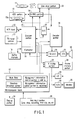
- FIG. 1 shows a data recording/reproducing apparatus which will be described in connection with this embodiment.
- This data recording/reproducing apparatus can process both a DVD-RAM (Random Access Memory) and a hard disk as a recording medium but, e.g., a semiconductor memory can also be used as a recording medium.
- DVD-RAM Random Access Memory
- a hard disk e.g., a hard disk
- a semiconductor memory can also be used as a recording medium.
- a main block on a recording side exists on the left side in the drawing
- a main block on a reproduction side exists on the right side in the drawing
- a main block on a control side exists on the lower side in the drawing.
- this data recording/reproducing apparatus has two types of disk drive portions. First, it has a disk drive portion 12 which drives to rotate an optical disk 11 which is a first medium as an information recording medium which can constitute a video file, and executes reading/writing of information. Further, this data recording/reproducing apparatus has a hard disk drive portion 13 which drives a hard disk 13a as a second medium.
- a data processor portion 14 can supply recording data to the disk drive portion 12 and the hard disk drive portion 13, and receive a signal reproduced by the disk drive portion 12 or the hard disk drive portion 13.
- the disk drive portion 12 has a rotation control system with respect to the optical disk 11, a laser drive system, an optical system and others.
- the data processor portion 14 deals with data in recording or reproduction unit, and includes a buffer circuit, a modulation/demodulation circuit, an error correction portion and others.
- this data recording/reproducing apparatus has as main constituent elements an encoder portion 15 which constitutes the recording side, a decoder portion 16 which constitutes the reproduction side, and a microcomputer block 17 which controls an operation of an apparatus main body.
- the encoder portion 15 includes a video and audio analog digital converter which digitalizes an analog video signal and an analog audio signal input thereto, a video. encoder, and an audio encoder. Moreover, it also includes a sub-video encoder.
- An output from the encoder portion 15 is converted into a predetermined DVD-RAM format by a formatter 19 including a buffer memory 18, and supplied to the data processor portion 14.
- an external analog video signal and an external analog audio signal obtained from an A/V (Audio Video) input portion 20 or an analog video signal and an analog audio signal obtained from a TV (Television) tuner portion 21.
- the encoder portion 15 can directly supply the compressed digital video signal and digital audio signal to the formatter 19. Additionally, the encoder portion 15 can directly supply analog-to-digital-converted digital video signal and audio signal to a V (Video) mixing portion 22 and an audio selector 23.
- V Video
- the digital video signal is converted into a digital video signal compressed by using a variable bit rate based on the MPEG (Moving Picture Experts Group) 2 or MPEG 1 standard.
- the digital audio signal is converted into a digital audio signal compressed by using a fixed bit rate or a linear PCM (Pulse Code Modulation) digital audio signal based on the MPEG or AC (Audio Compression) -3 standard.
- a sub-video signal is input from the A/V input portion 20 (e.g., a signal or the like from a DVD video player with an independent output terminal for a sub-video signal) or when a DVD video signal having such a structure is broadcast and received by the TV tuner portion 21, the sub-video signal in the DVD video signal is encoded (run-length-encoded) by the sub-video encoder, which results in a sub-video bitmap.
- the sub-video signal in the DVD video signal is encoded (run-length-encoded) by the sub-video encoder, which results in a sub-video bitmap.
- the encoded digital video signal, digital audio signal and sub-video data are packed by the formatter 19, resulting in a video pack, an audio pack and a sub-video pack. Further, they are collected and converted into a format defined by a DVD-recording standard [standard to record on, e.g., a DVD-RAM, a DVD-R (Recordable), a DVD-RW (rewritable) and others].
- a DVD-recording standard standard to record on, e.g., a DVD-RAM, a DVD-R (Recordable), a DVD-RW (rewritable) and others.
- the data recording/reproducing apparatus depicted in FIG. 1 can supply information (packs of the video, the audio, the sub-video and others) formatted by the formatter 19 and created management information to the hard disk drive portion 13 or the disk drive portion 12 through the data processor portion 14, and record them on the hard disk 13a or the optical disk 11.
- this data recording/reproducing apparatus can record information recorded on the hard disk 13a onto the optical disk 11 through the hard disk drive portion 13, the data processor portion 14 and the disk drive portion 12.
- this data recording/reproducing apparatus can record information recorded on the optical disk 11 onto the hard disk 13a through the disk drive portion 12, the data processor portion 14 and the hard disk drive portion 13.
- it can perform editing processing, e.g., partially deleting video objects of a plurality of programs recorded on the hard disk 13a or the optical disk 11, connecting an object of a different program, and others. That is because the format described in connection with this embodiment defines a data unit to be processed and facilitates edition.
- the microcomputer block 17 includes an MPU (Micro Processing Unit) or a CPU (Central Processing Unit), a ROM (Read Only Memory) in which a control program and others are written, and a RAM used to provide a work area required to execute a program.
- MPU Micro Processing Unit
- CPU Central Processing Unit
- ROM Read Only Memory
- the MPU in the microcomputer block 17 executes defect position detection, unrecorded area detection, recording information recording position setting, UDF (Universal Disk Format) recording, AV address setting and others by using the RAM as a work area based on the control program stored in the ROM.
- defect position detection unrecorded area detection
- recording information recording position setting recording information recording position setting
- UDF Universal Disk Format
- the microcomputer block 17 has an information processing portion required to control the entire system, and includes a work RAM, a directory detection portion, a VMG (entire video management information) information creation portion, a copy relevant information detection portion, a copy and scrambling information processing portion (RDI processing portion), a packet header processing portion, a sequence header processing portion, an aspect ratio information processing portion and others.
- the MPU Of execution results by the MPU, content which should be informed to a user is displayed in a display portion 24 of the data recording/reproducing apparatus, or it is OSD(On Screen Display)-displayed in a monitor display 25. Furthermore, the microcomputer block 17 has a key input portion 26 which gives an operation signal used to operate this apparatus.
- a timing with which the microcomputer block 17 controls the disk drive portion 12, the hard disk drive portion 13, the data processor portion 14, the encoder portion 15, the decoder portion 16 and the like can be stipulated based on time data from an STC (System Time Clock) 27.
- STC System Time Clock
- a recording or reproducing operation is usually executed in synchronization with a time clock from the STC 27, any other processing may be executed with a timing independent from the time clock from the STC 27.
- the decoder portion 16 has a separator which separates and takes out each pack from the DVD format signal having a pack structure, a memory which is used at the time of pack separation and execution of any other signal processing, a V decoder which decodes main video data (content of a video pack) separated by the separator, an SP (Sub Picture) decoder which decodes sub-video data (content of a sub-video pack) separated by the separator, and an A (Audio) decoder which decodes audio data (content of an audio pack) separated by the separator. Moreover, it also includes a video processor which appropriately combines a decoded sub-video with a decoded main video, superimposes a menu, a highlight button, a subtitle and any other video on the main video and outputs a result.
- a video processor which appropriately combines a decoded sub-video with a decoded main video, superimposes a menu, a highlight button, a subtitle and any other video on the main video and outputs
- An output video signal from the decoder portion 16 is input to the V mixing portion 22.
- V mixing portion 22 combination of text data is performed. Additionally, to the V mixing portion 22 is also connected to a line which directly fetches a signal from the TV tuner portion 21 or the A/V input portion 20.
- V mixing portion 22 To the V mixing portion 22 is connected a frame memory portion 28 used as a buffer. When an output from the V mixing portion 22 is an analog output, it is output to the outside through an I/F (Interface) 29. When the same is a digital output, it is output to the external monitor display 25 through a digital/analog converter 30.
- I/F Interface
- An output audio signal from the decoder portion 16 is analog-converted by the digital/analog converter 31 through a selector 23, and output to an external speaker 32.
- the selector 23 is controlled by a select signal from the microcomputer block 17. As a result, the selector 23 can directly select a signal transmitted through the encoder portion 15 when directly monitoring the digital signal from the TV tuner portion 21 or the A/V input portion 20.
- the formatter 19 of the encoder portion 15 creates each cut information during recording, and periodically supplies it to the MPU of the microcomputer block 17 [information at the time of, e.g., GOP (Group of Picture) top interruption and the like]
- the cut information there are a pack number of a VOBU (Video Object Unit), an end address of an I (Intra) picture from the top of the VOBU, a reproduction time of the VOBU and others.
- VOBU Video Object Unit
- the MPU when starting recording, and the MPU creates VOB (Video Object) stream information STI.
- VOB Video Object
- the STI saves resolution data, aspect data and others, and each decoder portion performs initial setting based on this information during reproduction.
- this data recording/reproducing apparatus determines a video file as one file in one disk. Further, when data is accessed (sought), a minimum continuous information unit (size) is determined in order to continue reproduction without interruption. This unit is referred to as a CDA (Contiguous Data Area).
- a CDA size is a multiple number of an ECC (error correction code) block (16 sectors), and recording is performed in this CDA unit in the file system.
- the data processor portion 14 receives data in the VOBU unit from the formatter 19 of the encoder portion 15, and supplies the data in the CDA unit to the disk drive portion 12 or the hard disk drive portion 13. Further, the MPU of the microcomputer block 17 creates management information required to reproduce recorded data, and supplies the created management information to the data processor portion 14 upon recognizing a data recording end command. As a result, the management information is recorded on the optical disk 11.
- the MPU of the microcomputer block 17 receives information in data units (cut information and the like) from the encoder portion 15. Furthermore, the MPU of the microcomputer block 17 recognizes the management information (file system) read from the optical disk 11 and the hard disk 13a when starting recording, recognizes an unrecorded area in each disk, and sets a recording area on the data is set to the disk through the data processor portion 14.
- the management information file system
- the video file has a hierarchical structure, one file is constituted by one or a plurality of VOBs, one VOB is constituted by one or a plurality of video object units VOBUs, and one VOBU is constituted by a plurality of packs.
- a plurality of the packs there are an RDI pack, a V (video) pack, an A (audio) pack, an SP (sub-video) pack and others.
- the RDI pack is referred to as a unit control information pack, a navigation information pack or a real time data information pack RDI_PCK.
- This pack includes information indicative of a start time at which a first field of the VOBU to which this back belongs is reproduced, information indicative of a recording time of the VOBU, manufacturer information MNFI and others.
- it also includes display control information DCI and copy control information CCI.
- This display control information indicates aspect ratio information, subtitle mode information, and film camera mode information.
- the copy control information includes copy permission information or copy inhibition (non-permission) information.
- the V pack is obtained by compressing the video data based on the MPEG 2 mode, and it is constituted by a pack header, a packet header and a video data portion.
- the A pack is obtained by processing the audio data based on the mode of, e.g., linear PCM, MPEG or AC-3, and it is constituted by a pack header, a packet header and an audio data portion.
- the management information is referred to as a video manager VMG, and a program chain PGC which manages a data reproduction order is defined in this information.
- a program chain PGC which manages a data reproduction order is defined in this information.
- a cell is defined.
- the cell is linked with video object information VOBI which is information concerning the video object VOB as a reproduction target.
- a part in which concrete information of the PGC is recorded is program chain information PGCI.
- PGCI program chain information
- ORG_PGCI original PGCI
- UD_PGCI user defined program chain information
- the original PGC is created.
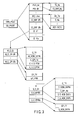
- the user defined PGCI does not have its own video object and, as shown in FIG. 2, it is created as a play list by editing (deleting, adding) a user defined cell UD_Cell linked with the video object information VOBI of the original PGC.
- a time map TMAP is described in the VOBI, and this TMAP specifies the VOBU constituting the VOB corresponding to the VOBI. Linking from the cell to the VOBI is specified by a logic address. Additionally, linking from the TMAP information to the VOB and the VOBU is carried out based on a stream number of the VOB, the number of VOBUs in this VOB, an entry number relative to each VOBU, and a logic address to each target VOBU.
- a hierarchy of the program chain information PGCI in the management information will now be described.
- the program chain information there are two types, i.e., the original program chain information ORG_PGCI and a user defined program chain information table UD_PGCIT.
- the ORG_PGCI is management information which is automatically created when the original program is recorded by the data recording/reproducing apparatus, and one type of this information exists in one disk.
- the UD_PGCI is management information as a play list created by arbitrarily specifying some of a plurality of recorded original programs by a user and setting their reproduction order. Therefore, a plurality of the UD_PGCIs can be set.
- FIG. 3 shows a hierarchical structure of the original program chain information ORG_PGCI.
- the original program chain information ORG_PGCI includes program chain general information PGC_GI, program information PGI, a cell information search pointer CI_SRP, and cell information CI.
- the program number PG_Ns indicating how many programs to be reproduced by the program chain exist
- a cell search pointer number CI_SRP_Ns indicating how many cell search pointers exist.
- program information PGI #1 to PGI #m exist, and each one PGI corresponds to a program as an original title.
- the cell search pointers CI_SRP #1 to CI_SRP #n exist.
- the program information PGI includes a program type PG_TY, a cell number C_Ns of this program, and representative picture information REP_PICTI of this program.
- REP_PICTI are described a cell number of a representative picture and a picture point in this cell.
- the cell search pointer CI_SRP indicates a descriptive address of corresponding cell information CI. A description content of the cell information CI will be explained in case of a movie cell and in case of a still cell.
- the cell information includes movie cell general information M_C_GI and movie cell entry information M_C_EPI.
- movie cell general information M_C_GI are described a cell type C_TY indicating whether a cell is a movie type or a still type, M_VOBI_SRPN used to indicate a VOB specified by this cell, and a cell entry point information number C_EPI_Ns indicating how many cell entry points exist.
- C_V_S_PTM indicative of a time at which a video corresponding to this cell starts and C_V_E_PTM indicative of an end time are also described.
- the movie cell entry point information M_C_EPI an entry point type EP_TY and an entry point presentation time EP_PTM are described.
- a described content is substantially the same as that of the movie cell.
- the still cell since a VOB group VOG including at least one VOB and the cell are linked with each other, the still cell is expressed as S_VOGI_SRPN.
- S_S_VOB_ENTN indicative of a start VOB number of a VOB group VOG corresponding to this still cell
- E_S_VOB_ENTN indicative of an end VOB number.
- S_C_EPI a still VOB entry number S_VOB_ENTN is likewise described in place of PMT.
- the program representative picture information REP_PICTI when the movie cell is specified as a cell in which a representative picture exists, the PTM is described as a picture point in the cell.
- the still VOB entry number S_VOB_ENTN is described as a picture point in the cell.
- FIG. 4 shows a hierarchical structure of the user defined program chain information table UD_PGCIT.
- the user defined program chain information table UD_PGCIT includes user defined program chain information table information UD_PGCITI, a user defined program chain information search pointer UD_PGCI_SRP, and user defined program chain information UD_PGCI.
- UD_PGCITI In the UD_PGCITI is described a search pointer number (which will be abbreviated as UD_PGCI_SRP_Ns although not shown in FIG. 4) indicating how many user defined program chain information search pointers exist.
- the user defined program chain information search pointer UD_PGCI_SRP indicates a descriptive address of corresponding user defined program chain information UD_PGCI.
- the user defined program chain information UD_PGCI #1 to UD_PGCI #m exist.
- play list information is described at a position different from that of the program chain information in a video manager VMG which is management information.
- a number PGCN of the user defined program chain information search pointer UD_PGCI_SRP linked with the play list is described. Therefore, as to the program chain information, each UD_PGCI corresponds to the play list.
- a format of this user defined program chain information UD_PGCI is substantially the same as that of the original program chain information ORG_PGCI mentioned above in conjunction with FIG. 3. However, since the UD_PGCI is constituted by combining an arbitrary part of the original program, the above-described program information PGI does not exist in the UD_PGCI.
- a play list type PL_TY and a representative picture information REP_PICTI of the play list are described in the play list information which is described at a position different from that of the above-described program chain information. In this embodiment, therefore, this play list type and the representative picture information of the play list are used. Since the cell information has the same format as the ORG_PGCI, its explanation will be eliminated here.
- FIGS. 5A and 5B respectively show entry point information based on a DVD-VR (Video Recorder) standard.
- the entry point information there are two types, i.e., a Type A shown in FIG. 5A and a Type B depicted in FIG. 5B.
- An entry point of the Type A is constituted by EP_TY indicative of a type of the entry point and EP_PTM in which a PTM indicated by the entry point is recorded.
- PRM_TXTI is defined by 128 bytes, and constituted by 64 bytes of a first field and 64 bytes of a second field.
- An ASCII (American Standard Code for Information Interchange) code must be set in the first field, and a character set specified in the VMGI_MAT must be used to carry out description in the second field.
- FIG. 6 shows a flowchart summing up a play list editing operation.
- the microcomputer block 17 receives from a user a condition specification of a title as a target to be recorded in a play list among a plurality of titles recorded on the optical disk 11 or the hard disk 13a at a step S2.
- the microcomputer block 17 judges whether setting of an upper limit value of registration number of the titles to be registered in the play list under the above-described condition is requested at a step S3, and receives a specification of the upper limit value from a user at a step S4 when it is determined that setting is requested (YES).
- the microcomputer block 17 retrieves all the titles satisfying the above-described condition from a plurality of the titles recorded on the optical disk 11 or the hard disk 13a at a step S5.
- the microcomputer block 17 judges whether end of processing is requested at a step S6. When it is determined that end of processing is not requested (NO) and resetting is requested at a step S7, this block is shifted to processing at a step S2.
- the microcomputer block 17 registers the retrieved titles in the play list so as not to exceed the upper limit value if the upper limit value is set at the step S8, and terminates the processing (step S9).
- a title e.g., a serial drama recorded at the same time every week is automatically selected as a title to be registered in the play list, thereby facilitating the play list editing operation.
- title name of a program when a title name of a program can be directly obtained, this title name can be determined as a condition for selection.
- program information obtained from EPG (Electronic Program Guide), title information input to the apparatus by a user, a title information included in XDS and teletext information, or the like.
- channel information may be set as a condition. According to this condition, titles received through the same channel can be retrieved. Further, information or the like obtained at the time of copying (e.g., from the DVD-RAM to the hard disk) from another medium can be determined as a condition. Furthermore, information arbitrarily set by a user can be set as a condition.
- CS Common Satellite
- FIGS. 7A and 7B respectively illustrate the play list editing operation when an upper limit value is set to the number of titles to be registered as the play list.
- FIG. 7A it is assumed that six titles satisfying the condition are retrieved when an upper limit value "4" is set to the number of titles selected as a target of play list edition as indicated by processing 1.
- the microcomputer block 17 controls to register in the play list four titles 1 to 4 in the retrieved order (recorded order) with the title 1 which was first retrieved in terms of time (title first recorded in terms of time) being determined as a top as indicated by processing 2, and check off the other titles 5 and 6 from the play list target.
- FIG. 7B it is assumed that four titles satisfying the condition are retrieved when an upper limit value "5" is set to the number of titles selected as a target of play list edition as indicated by the processing 1.
- the four retrieved titles 1 to 4 can be all registered in the play list, a user can select a title which is first reproduced at the time of reproduction.
- the title 2 which was retrieved at second in terms of time is selected as a title which is reproduced at first in play list reproduction.
- the microcomputer block 17 controls to register the three titles 2 to 4 in the play list in the retrieved order with the selected title 2 being determined as a top. That is, the title 1 is controlled so as not to be registered even if it satisfies the condition.
- the play list can become further practical for the user.
Landscapes
- Engineering & Computer Science (AREA)
- Multimedia (AREA)
- Management Or Editing Of Information On Record Carriers (AREA)
- Indexing, Searching, Synchronizing, And The Amount Of Synchronization Travel Of Record Carriers (AREA)
- Television Signal Processing For Recording (AREA)
Abstract
The present invention includes a condition setting portion (17, 26, S2) configured to set a condition used to select titles to be registered in a play list among a plurality of titles recorded on a recording medium (11, 13a), a retrieval portion (17, S5) configured to retrieve titles corresponding to a set condition by making reference to management information recorded on the recording medium (11, 13a), and a registration portion (17, S8) configured to register retrieved titles in the play list. <IMAGE>
Description
The present invention relates to a data
reproduction apparatus which read recorded data from
a recording medium, e.g., a DVD (Digital Versatile
Disk) and reproduce the data, and more particularly to
an apparatus which facilitate play list editing
operation.
As is well known, the above-described data
reproduction apparatus is provided with a so-called
play list reproduction function which automatically
reproduces preset titles in a predetermined order among
a plurality of titles recorded on an optical disk.
When performing this play list reproduction, there
is required a play list editing operation which selects
titles to be registered in a play list from a plurality
of titles recorded on an optical disk.
As this play list editing operation, there is a
technique to select required titles while grasping the
content of each title by reproducing an optical disk,
and a technique to select required titles while making
reference to management information of individual
titles.
In short, when performing the play list editing,
there is required an operation to reproduce titles
recorded on an optical disk or an operation to make
reference to management information of titles.
In such a play list editing operation, however,
when the number of titles recorded on the optical disk
is increased, there occurs a problem that the operation
to select required titles becomes troublesome and
handling is inconvenient for users.
Further, when the title selection operation
becomes troublesome in this way, there also occurs an
inconvenience that a title which should be selected is
passed over and a requested title is not registered in
a play list.
It is to be noted that Jpn. Pat. Appln. KOKAI
Publication No. 2001-167559 discloses a structure which
is a method for adding information of a video object
determining a difference value between recording time
information and display start time information as
identification information, and which can specify
a video object without being affected by deletion of
time information.
Furthermore, Jpn. Pat. Appln. KOKAI Publication
No. 2002-150750 discloses a structure which controls
a reserved recording operation based on information
concerning recording reservation and information
indicating whether this information is valid or
invalid.
Moreover, Jpn. Pat. Appln. KOKAI Publication
No. 2002-84495 discloses a structure which changes
original management information of a video stream
recorded on a recording medium into new management
information based on editing information input by
a user.
However, these publications do not mention
facilitation of an operation to select titles to be
registered in a play list from a plurality of titles
recorded on an optical disk.
It is an object of an embodiment according to the
present invention to provide a data reproduction
apparatus which facilitate a play list editing
operation to select titles to be registered in a play
list from a plurality of titles recorded on a recording
medium, that are practical and that make handling
convenient for users.
According to one aspect of the present invention,
there is provided a data reproduction apparatus
comprising: a condition setting portion configured to
set a condition used to select titles to be registered
in a play list; a retrieval portion configured to
retrieve titles corresponding to the condition set by
the condition setting portion by making reference to
management information recorded on the recording
medium; and a registration portion configured to
register the titles retrieved by the retrieval portion
in the play list.
This summary of the invention does not necessarily
describe all necessary features so that the invention
may also be a sub-combination of these described
features.
The invention can be more fully understood from
the following detailed description when taken in
conjunction with the accompanying drawings, in which:
An embodiment according to the present invention
will now be described in detail hereinafter with
reference to the accompanying drawings. FIG. 1 shows
a data recording/reproducing apparatus which will be
described in connection with this embodiment. This
data recording/reproducing apparatus can process both
a DVD-RAM (Random Access Memory) and a hard disk as
a recording medium but, e.g., a semiconductor memory
can also be used as a recording medium.
That is, in the data recording/reproducing
apparatus depicted in FIG. 1, roughly, a main block on
a recording side exists on the left side in the
drawing, a main block on a reproduction side exists on
the right side in the drawing, and a main block on
a control side exists on the lower side in the drawing.
Additionally, this data recording/reproducing
apparatus has two types of disk drive portions. First,
it has a disk drive portion 12 which drives to rotate
an optical disk 11 which is a first medium as
an information recording medium which can constitute
a video file, and executes reading/writing of
information. Further, this data recording/reproducing
apparatus has a hard disk drive portion 13 which drives
a hard disk 13a as a second medium.
A data processor portion 14 can supply recording
data to the disk drive portion 12 and the hard disk
drive portion 13, and receive a signal reproduced by
the disk drive portion 12 or the hard disk drive
portion 13.
The disk drive portion 12 has a rotation control
system with respect to the optical disk 11, a laser
drive system, an optical system and others. The data
processor portion 14 deals with data in recording or
reproduction unit, and includes a buffer circuit,
a modulation/demodulation circuit, an error correction
portion and others.
Furthermore, this data recording/reproducing
apparatus has as main constituent elements an encoder
portion 15 which constitutes the recording side,
a decoder portion 16 which constitutes the reproduction
side, and a microcomputer block 17 which controls
an operation of an apparatus main body.
The encoder portion 15 includes a video and audio
analog digital converter which digitalizes an analog
video signal and an analog audio signal input thereto,
a video. encoder, and an audio encoder. Moreover, it
also includes a sub-video encoder.
An output from the encoder portion 15 is converted
into a predetermined DVD-RAM format by a formatter 19
including a buffer memory 18, and supplied to the data
processor portion 14.
To the encoder portion 15 are input an external
analog video signal and an external analog audio signal
obtained from an A/V (Audio Video) input portion 20, or
an analog video signal and an analog audio signal
obtained from a TV (Television) tuner portion 21.
It is to be noted that, when compressed digital
video signal and digital audio signal are directly
input to the encoder portion 15, the encoder portion 15
can directly supply the compressed digital video signal
and digital audio signal to the formatter 19.
Additionally, the encoder portion 15 can directly
supply analog-to-digital-converted digital video signal
and audio signal to a V (Video) mixing portion 22 and
an audio selector 23.
In the video encoder included in the encoder
portion 15, the digital video signal is converted into
a digital video signal compressed by using a variable
bit rate based on the MPEG (Moving Picture Experts
Group) 2 or MPEG 1 standard. The digital audio signal
is converted into a digital audio signal compressed by
using a fixed bit rate or a linear PCM (Pulse Code
Modulation) digital audio signal based on the MPEG or
AC (Audio Compression) -3 standard.
When a sub-video signal is input from the A/V
input portion 20 (e.g., a signal or the like from a DVD
video player with an independent output terminal for a
sub-video signal) or when a DVD video signal having
such a structure is broadcast and received by the TV
tuner portion 21, the sub-video signal in the DVD video
signal is encoded (run-length-encoded) by the sub-video
encoder, which results in a sub-video bitmap.
The encoded digital video signal, digital audio
signal and sub-video data are packed by the formatter
19, resulting in a video pack, an audio pack and a sub-video
pack. Further, they are collected and converted
into a format defined by a DVD-recording standard
[standard to record on, e.g., a DVD-RAM, a DVD-R
(Recordable), a DVD-RW (rewritable) and others].
Here, the data recording/reproducing apparatus
depicted in FIG. 1 can supply information (packs of the
video, the audio, the sub-video and others) formatted
by the formatter 19 and created management information
to the hard disk drive portion 13 or the disk drive
portion 12 through the data processor portion 14,
and record them on the hard disk 13a or the optical
disk 11.
Furthermore, this data recording/reproducing
apparatus can record information recorded on the hard
disk 13a onto the optical disk 11 through the hard disk
drive portion 13, the data processor portion 14 and the
disk drive portion 12.
Moreover, this data recording/reproducing
apparatus can record information recorded on the
optical disk 11 onto the hard disk 13a through the disk
drive portion 12, the data processor portion 14 and the
hard disk drive portion 13.
Additionally, it can perform editing processing,
e.g., partially deleting video objects of a plurality
of programs recorded on the hard disk 13a or the
optical disk 11, connecting an object of a different
program, and others. That is because the format
described in connection with this embodiment defines
a data unit to be processed and facilitates edition.
The microcomputer block 17 includes an MPU (Micro
Processing Unit) or a CPU (Central Processing Unit),
a ROM (Read Only Memory) in which a control program and
others are written, and a RAM used to provide a work
area required to execute a program.
The MPU in the microcomputer block 17 executes
defect position detection, unrecorded area detection,
recording information recording position setting, UDF
(Universal Disk Format) recording, AV address setting
and others by using the RAM as a work area based on
the control program stored in the ROM.
Further, the microcomputer block 17 has
an information processing portion required to control
the entire system, and includes a work RAM, a directory
detection portion, a VMG (entire video management
information) information creation portion, a copy
relevant information detection portion, a copy and
scrambling information processing portion (RDI
processing portion), a packet header processing
portion, a sequence header processing portion,
an aspect ratio information processing portion and
others.
Of execution results by the MPU, content which
should be informed to a user is displayed in a display
portion 24 of the data recording/reproducing apparatus,
or it is OSD(On Screen Display)-displayed in a monitor
display 25. Furthermore, the microcomputer block 17
has a key input portion 26 which gives an operation
signal used to operate this apparatus.
It is to be noted that a timing with which
the microcomputer block 17 controls the disk drive
portion 12, the hard disk drive portion 13, the data
processor portion 14, the encoder portion 15, the
decoder portion 16 and the like can be stipulated based
on time data from an STC (System Time Clock) 27.
Although a recording or reproducing operation is
usually executed in synchronization with a time clock
from the STC 27, any other processing may be executed
with a timing independent from the time clock from the
STC 27.
The decoder portion 16 has a separator which
separates and takes out each pack from the DVD format
signal having a pack structure, a memory which is used
at the time of pack separation and execution of any
other signal processing, a V decoder which decodes main
video data (content of a video pack) separated by the
separator, an SP (Sub Picture) decoder which decodes
sub-video data (content of a sub-video pack) separated
by the separator, and an A (Audio) decoder which
decodes audio data (content of an audio pack) separated
by the separator. Moreover, it also includes a video
processor which appropriately combines a decoded
sub-video with a decoded main video, superimposes
a menu, a highlight button, a subtitle and any other
video on the main video and outputs a result.
An output video signal from the decoder portion 16
is input to the V mixing portion 22. In the V mixing
portion 22, combination of text data is performed.
Additionally, to the V mixing portion 22 is also
connected to a line which directly fetches a signal
from the TV tuner portion 21 or the A/V input
portion 20.
To the V mixing portion 22 is connected a frame
memory portion 28 used as a buffer. When an output
from the V mixing portion 22 is an analog output, it is
output to the outside through an I/F (Interface) 29.
When the same is a digital output, it is output to the
external monitor display 25 through a digital/analog
converter 30.
An output audio signal from the decoder portion 16
is analog-converted by the digital/analog converter 31
through a selector 23, and output to an external
speaker 32. The selector 23 is controlled by a select
signal from the microcomputer block 17. As a result,
the selector 23 can directly select a signal
transmitted through the encoder portion 15 when
directly monitoring the digital signal from the TV
tuner portion 21 or the A/V input portion 20.
It is to be noted that the formatter 19 of the
encoder portion 15 creates each cut information during
recording, and periodically supplies it to the MPU of
the microcomputer block 17 [information at the time of,
e.g., GOP (Group of Picture) top interruption and
the like] As the cut information, there are a pack
number of a VOBU (Video Object Unit), an end address of
an I (Intra) picture from the top of the VOBU,
a reproduction time of the VOBU and others.
At the same time, information from the aspect
ratio information processing portion is supplied to the
MPU when starting recording, and the MPU creates VOB
(Video Object) stream information STI. Here, the STI
saves resolution data, aspect data and others, and each
decoder portion performs initial setting based on this
information during reproduction.
Additionally, this data recording/reproducing
apparatus determines a video file as one file in one
disk. Further, when data is accessed (sought),
a minimum continuous information unit (size) is
determined in order to continue reproduction without
interruption. This unit is referred to as a CDA
(Contiguous Data Area). A CDA size is a multiple
number of an ECC (error correction code) block
(16 sectors), and recording is performed in this CDA
unit in the file system.
The data processor portion 14 receives data in
the VOBU unit from the formatter 19 of the encoder
portion 15, and supplies the data in the CDA unit to
the disk drive portion 12 or the hard disk drive
portion 13. Further, the MPU of the microcomputer
block 17 creates management information required to
reproduce recorded data, and supplies the created
management information to the data processor portion 14
upon recognizing a data recording end command.
As a result, the management information is recorded on
the optical disk 11.
Therefore, when encoding is carried out, the MPU
of the microcomputer block 17 receives information in
data units (cut information and the like) from the
encoder portion 15. Furthermore, the MPU of the
microcomputer block 17 recognizes the management
information (file system) read from the optical disk 11
and the hard disk 13a when starting recording,
recognizes an unrecorded area in each disk, and sets
a recording area on the data is set to the disk through
the data processor portion 14.
Referring to FIG. 2, a relationship between the
management information of the real time DVD and the
video object as a content will now be briefly
described.
In FIG. 2, first, the video object VOB will be
explained. This VOB is referred to as a VR_MOVIE.VRO
file in a directory. The video file has a hierarchical
structure, one file is constituted by one or
a plurality of VOBs, one VOB is constituted by one or
a plurality of video object units VOBUs, and one VOBU
is constituted by a plurality of packs. As a plurality
of the packs, there are an RDI pack, a V (video) pack,
an A (audio) pack, an SP (sub-video) pack and others.
The RDI pack is referred to as a unit control
information pack, a navigation information pack or
a real time data information pack RDI_PCK. This pack
includes information indicative of a start time at
which a first field of the VOBU to which this back
belongs is reproduced, information indicative of
a recording time of the VOBU, manufacturer information
MNFI and others. Moreover, it also includes display
control information DCI and copy control information
CCI. This display control information indicates aspect
ratio information, subtitle mode information, and film
camera mode information. The copy control information
includes copy permission information or copy inhibition
(non-permission) information.
The V pack is obtained by compressing the video
data based on the MPEG 2 mode, and it is constituted by
a pack header, a packet header and a video data
portion. The A pack is obtained by processing the
audio data based on the mode of, e.g., linear PCM, MPEG
or AC-3, and it is constituted by a pack header,
a packet header and an audio data portion.
The management information is referred to as
a video manager VMG, and a program chain PGC which
manages a data reproduction order is defined in this
information. In this program chain PGC, a cell is
defined. The cell is linked with video object
information VOBI which is information concerning
the video object VOB as a reproduction target.
A part in which concrete information of the PGC is
recorded is program chain information PGCI. There are
two types of PGCI, and one is an original PGCI
(ORG_PGCI) and the other is user defined program chain
information (UD_PGCI).
Usually, in recording, the original PGC is
created. The user defined PGCI does not have its own
video object and, as shown in FIG. 2, it is created as
a play list by editing (deleting, adding) a user
defined cell UD_Cell linked with the video object
information VOBI of the original PGC.
A time map TMAP is described in the VOBI, and
this TMAP specifies the VOBU constituting the VOB
corresponding to the VOBI. Linking from the cell
to the VOBI is specified by a logic address.
Additionally, linking from the TMAP information to
the VOB and the VOBU is carried out based on a stream
number of the VOB, the number of VOBUs in this VOB,
an entry number relative to each VOBU, and a logic
address to each target VOBU.
A hierarchy of the program chain information PGCI
in the management information will now be described.
As described above, as the program chain information,
there are two types, i.e., the original program chain
information ORG_PGCI and a user defined program chain
information table UD_PGCIT.
The ORG_PGCI is management information which is
automatically created when the original program is
recorded by the data recording/reproducing apparatus,
and one type of this information exists in one disk.
On the contrary, the UD_PGCI is management information
as a play list created by arbitrarily specifying some
of a plurality of recorded original programs by a user
and setting their reproduction order. Therefore,
a plurality of the UD_PGCIs can be set.
FIG. 3 shows a hierarchical structure of the
original program chain information ORG_PGCI. The
original program chain information ORG_PGCI includes
program chain general information PGC_GI, program
information PGI, a cell information search pointer
CI_SRP, and cell information CI.
In the PGC_GI are described the program number
PG_Ns indicating how many programs to be reproduced by
the program chain exist, and a cell search pointer
number CI_SRP_Ns indicating how many cell search
pointers exist. In the example of FIG. 3, program
information PGI # 1 to PGI #m exist, and each one PGI
corresponds to a program as an original title.
Further, the cell search pointers CI_SRP # 1 to CI_SRP
#n exist.
The program information PGI includes a program
type PG_TY, a cell number C_Ns of this program,
and representative picture information REP_PICTI of
this program. In the representative picture
information REP_PICTI are described a cell number of
a representative picture and a picture point in this
cell.
The cell search pointer CI_SRP indicates
a descriptive address of corresponding cell
information CI. A description content of the cell
information CI will be explained in case of a movie
cell and in case of a still cell.
First, in case of a movie cell, the cell
information includes movie cell general information
M_C_GI and movie cell entry information M_C_EPI. In
the movie cell general information M_C_GI are described
a cell type C_TY indicating whether a cell is a movie
type or a still type, M_VOBI_SRPN used to indicate
a VOB specified by this cell, and a cell entry point
information number C_EPI_Ns indicating how many cell
entry points exist.
Furthermore, C_V_S_PTM indicative of a time at
which a video corresponding to this cell starts and
C_V_E_PTM indicative of an end time are also described.
Moreover, as the movie cell entry point information
M_C_EPI, an entry point type EP_TY and an entry point
presentation time EP_PTM are described.
In case of a still cell, a described content is
substantially the same as that of the movie cell. In
case of the still cell, however, since a VOB group VOG
including at least one VOB and the cell are linked with
each other, the still cell is expressed as S_VOGI_SRPN.
Moreover, in place of the presentation time PTM,
S_S_VOB_ENTN indicative of a start VOB number of a VOB
group VOG corresponding to this still cell and
E_S_VOB_ENTN indicative of an end VOB number are
described. In the still cell entry point information
S_C_EPI, a still VOB entry number S_VOB_ENTN is
likewise described in place of PMT.
According to this, in the description of the
program representative picture information REP_PICTI,
when the movie cell is specified as a cell in which a
representative picture exists, the PTM is described as
a picture point in the cell. When the still cell is
specified, the still VOB entry number S_VOB_ENTN is
described as a picture point in the cell.
FIG. 4 shows a hierarchical structure of the user
defined program chain information table UD_PGCIT. The
user defined program chain information table UD_PGCIT
includes user defined program chain information table
information UD_PGCITI, a user defined program chain
information search pointer UD_PGCI_SRP, and user
defined program chain information UD_PGCI.
In the UD_PGCITI is described a search pointer
number (which will be abbreviated as UD_PGCI_SRP_Ns
although not shown in FIG. 4) indicating how many user
defined program chain information search pointers
exist.
The user defined program chain information search
pointer UD_PGCI_SRP indicates a descriptive address of
corresponding user defined program chain information
UD_PGCI. In the example depicted in FIG. 4, the user
defined program chain information UD_PGCI # 1 to UD_PGCI
#m exist.
It is to be noted that play list information is
described at a position different from that of the
program chain information in a video manager VMG which
is management information. In each play list
information, a number PGCN of the user defined program
chain information search pointer UD_PGCI_SRP linked
with the play list is described. Therefore, as to the
program chain information, each UD_PGCI corresponds to
the play list.
A format of this user defined program chain
information UD_PGCI is substantially the same as that
of the original program chain information ORG_PGCI
mentioned above in conjunction with FIG. 3. However,
since the UD_PGCI is constituted by combining
an arbitrary part of the original program, the
above-described program information PGI does not exist
in the UD_PGCI.
Therefore, a play list type PL_TY and
a representative picture information REP_PICTI of the
play list are described in the play list information
which is described at a position different from that of
the above-described program chain information. In this
embodiment, therefore, this play list type and the
representative picture information of the play list are
used. Since the cell information has the same format
as the ORG_PGCI, its explanation will be eliminated
here.
FIGS. 5A and 5B respectively show entry point
information based on a DVD-VR (Video Recorder)
standard. As the entry point information, there are
two types, i.e., a Type A shown in FIG. 5A and a Type B
depicted in FIG. 5B. An entry point of the Type A is
constituted by EP_TY indicative of a type of the entry
point and EP_PTM in which a PTM indicated by the entry
point is recorded.
Besides the entry point of the Type B, primary
text information PRM_TXTI exists. The PRM_TXTI is
defined by 128 bytes, and constituted by 64 bytes of a
first field and 64 bytes of a second field. An ASCII
(American Standard Code for Information Interchange)
code must be set in the first field, and a character
set specified in the VMGI_MAT must be used to carry out
description in the second field.
Here, FIG. 6 shows a flowchart summing up a play
list editing operation. First, when started (step S1),
the microcomputer block 17 receives from a user a
condition specification of a title as a target to be
recorded in a play list among a plurality of titles
recorded on the optical disk 11 or the hard disk 13a at
a step S2.
Then, the microcomputer block 17 judges whether
setting of an upper limit value of registration number
of the titles to be registered in the play list under
the above-described condition is requested at a step
S3, and receives a specification of the upper limit
value from a user at a step S4 when it is determined
that setting is requested (YES).
Subsequently, after the step S4, or when it is
determined that setting of the upper limit value is
not requested (NO) at the step S3, the microcomputer
block 17 retrieves all the titles satisfying the
above-described condition from a plurality of the
titles recorded on the optical disk 11 or the hard disk
13a at a step S5.
Thereafter, the microcomputer block 17 judges
whether end of processing is requested at a step S6.
When it is determined that end of processing is not
requested (NO) and resetting is requested at a step S7,
this block is shifted to processing at a step S2.
Furthermore, when it is determined that end of
processing is requested (YES) at the step S6, the
microcomputer block 17 registers the retrieved titles
in the play list so as not to exceed the upper limit
value if the upper limit value is set at the step S8,
and terminates the processing (step S9).
Here, as to the conditions of the titles to be
registered in the play list, for example, when a date
and time at which the titles are recorded, a day,
recording start time, a reception channel and others
are appropriately set, a title (e.g., a serial drama)
recorded at the same time every week is automatically
selected as a title to be registered in the play list,
thereby facilitating the play list editing operation.
Moreover, when a title name of a program can be
directly obtained, this title name can be determined as
a condition for selection. As the title name of
a program, there is used program information obtained
from EPG (Electronic Program Guide), title information
input to the apparatus by a user, a title information
included in XDS and teletext information, or the like.
Additionally, when there is a dedicated channel
like CS (Communication Satellite) broadcasting, channel
information may be set as a condition. According to
this condition, titles received through the same
channel can be retrieved. Further, information or the
like obtained at the time of copying (e.g., from the
DVD-RAM to the hard disk) from another medium can be
determined as a condition. Furthermore, information
arbitrarily set by a user can be set as a condition.
FIGS. 7A and 7B respectively illustrate the play
list editing operation when an upper limit value is set
to the number of titles to be registered as the play
list. In FIG. 7A, it is assumed that six titles
satisfying the condition are retrieved when an upper
limit value "4" is set to the number of titles selected
as a target of play list edition as indicated by
processing 1.
Then, the microcomputer block 17 controls to
register in the play list four titles 1 to 4 in the
retrieved order (recorded order) with the title 1 which
was first retrieved in terms of time (title first
recorded in terms of time) being determined as a top as
indicated by processing 2, and check off the other
titles 5 and 6 from the play list target.
For example, since a serial program or the like
recorded at the same time every week is changed every
cours, setting the number of titles with which that
program is recorded can prevent a program recorded
in a next cours from being registered in the same
play list.
Furthermore, in FIG. 7B, it is assumed that four
titles satisfying the condition are retrieved when an
upper limit value "5" is set to the number of titles
selected as a target of play list edition as indicated
by the processing 1. In this case, although the four
retrieved titles 1 to 4 can be all registered in the
play list, a user can select a title which is first
reproduced at the time of reproduction.
In the processing 1 depicted in FIG. 7B, of the
four retrieved titles 1 to 4, the title 2 which was
retrieved at second in terms of time is selected as
a title which is reproduced at first in play list
reproduction.
In this case, as indicated by the processing 2,
the microcomputer block 17 controls to register the
three titles 2 to 4 in the play list in the retrieved
order with the selected title 2 being determined as
a top. That is, the title 1 is controlled so as not to
be registered even if it satisfies the condition.
As described above, by enabling a user to
arbitrary select a title which is reproduced at first
in play list reproduction from a plurality of the
retrieved titles, the play list can become further
practical for the user.
It is to be noted that the present invention is
not restricted to the foregoing embodiment, and
constituent elements can be modified and embodied in
many ways without departing from the scope of the
invention on an embodying stage. Moreover,
appropriately combining a plurality of constituent
elements disclosed in the foregoing embodiment can form
various kinds of inventions. For example, some
constituent elements can be eliminated from all the
constituent elements disclosed in the embodiment.
Claims (10)
- A data reproduction apparatus characterized by comprising:a condition setting portion (17, 26, S2) configured to set a condition used to select a title to be registered in a play list among a plurality of titles recorded on a recording medium (11, 13a);a retrieval portion (17, S5) configured to retrieve a title corresponding to a condition set by the condition setting portion (17, 26, S2) by making reference to management information recorded on the storage medium (11, 13a); anda registration portion (17, S8) configured to register a title retrieved by the retrieval portion (17, S5) in the play list.
- A data reproduction apparatus according to claim 1, characterized by further comprising:wherein the registration portion (17, S8) restricts the number of titles to be registered in the play list based on the upper limit value set by the upper limit setting portion (17, 26, S4).an upper limit value setting portion (17, 26, S4) configured to set an upper limit value of the number of titles to be registered in the play list,
- A data reproduction apparatus according to claim 2, characterized in that the registration portion (17, S8) selects titles retrieved by the retrieval portion (17, S5) in a recorded order and registers them in the play list, the number of which titles does not exceed the upper limit value.
- A data reproduction apparatus according to claim 2, characterized by further comprising:wherein the registration portion (17, S8) selects titles retrieved by the retrieval portion (17, S5) in a recorded order, the number of which titles does not exceed the upper limit, from titles set by the title setting portion, and registers them in the play list.a title setting portion (17, 26) configured to set a title which is reproduced at first in play list reproduction among titles retrieved by the retrieval portion (17, S5),
- A data reproduction apparatus according to claim 1, characterized in that the condition setting portion (17, 26, S2) can set a date and time at which a title is recorded on the recording medium (11, 13a) as a condition used to select a title to be registered in the play list.
- A data reproduction apparatus according to claim 1, characterized in that the condition setting portion (17, 26, S2) can set a day on which a title is recorded on the recording medium (11, 13a) as a condition used to select a title to be registered in the play list.
- A date reproduction apparatus according to claim 1, characterized in that the condition setting portion (17, 26, S2) can set a time at which a title is recorded on the recording medium (11, 13a) as a condition used to select a title to be registered in the play list.
- A data reproduction apparatus according to claim 1, characterized in that the condition setting portion (17, 26, S2) can set a channel through which a title is broadcast as a condition used to select a title to be registered in the play list.
- A data reproduction apparatus according to claim 1, characterized in that the condition setting portion (17, 26, S2) can set a title name as a condition used to select a title to be registered in the play list.
- A data reproduction apparatus according to claim 1, characterized in that the condition setting portion (17, 26, S2) can set arbitrary information for each title as a condition used to select a title to be registered in the play list.
Applications Claiming Priority (2)
| Application Number | Priority Date | Filing Date | Title |
|---|---|---|---|
| JP2002378644 | 2002-12-26 | ||
| JP2002378644A JP3764417B2 (en) | 2002-12-26 | 2002-12-26 | Data reproducing apparatus and data reproducing method |
Publications (1)
| Publication Number | Publication Date |
|---|---|
| EP1434226A1 true EP1434226A1 (en) | 2004-06-30 |
Family
ID=32463609
Family Applications (1)
| Application Number | Title | Priority Date | Filing Date |
|---|---|---|---|
| EP03025025A Withdrawn EP1434226A1 (en) | 2002-12-26 | 2003-10-30 | Data reproduction apparatus |
Country Status (3)
| Country | Link |
|---|---|
| US (1) | US7263038B2 (en) |
| EP (1) | EP1434226A1 (en) |
| JP (1) | JP3764417B2 (en) |
Families Citing this family (5)
| Publication number | Priority date | Publication date | Assignee | Title |
|---|---|---|---|---|
| KR20060030608A (en) * | 2004-10-06 | 2006-04-11 | 엘지전자 주식회사 | Recording medium, method of playing back and recording device |
| WO2007105265A1 (en) * | 2006-03-10 | 2007-09-20 | Fujitsu Limited | Reproduction device, reproduction device control method, program, and computer-readable recording medium |
| JP2008072312A (en) * | 2006-09-13 | 2008-03-27 | Sony Corp | Data processing apparatus, data processing method, and computer program |
| JP5164534B2 (en) * | 2007-11-19 | 2013-03-21 | アルパイン株式会社 | Content data playback device |
| JP5094442B2 (en) * | 2008-01-23 | 2012-12-12 | アルパイン株式会社 | Playback apparatus and playlist update method |
Citations (7)
| Publication number | Priority date | Publication date | Assignee | Title |
|---|---|---|---|---|
| WO2001067753A1 (en) * | 2000-03-08 | 2001-09-13 | Phatnoise, Inc. | Play list manager |
| WO2002001868A1 (en) * | 2000-06-26 | 2002-01-03 | Matsushita Electric Industrial Co., Ltd. | Edit apparatus, reproduction apparatus, edit method, reproduction method, edit program, reproduction program, and digital record medium |
| JP2002023771A (en) * | 2000-07-06 | 2002-01-25 | Alpine Electronics Inc | Audio player |
| US20020045960A1 (en) * | 2000-10-13 | 2002-04-18 | Interactive Objects, Inc. | System and method for musical playlist selection in a portable audio device |
| US6421499B1 (en) * | 1998-09-05 | 2002-07-16 | Lg Electronics Inc. | Method of creating and recording presentation order information management information for a rewritable recording medium |
| JP2002313070A (en) * | 2001-04-18 | 2002-10-25 | Matsushita Electric Ind Co Ltd | Recording and playback device |
| WO2003058625A1 (en) * | 2002-01-04 | 2003-07-17 | Thomson Licensing S.A. | Method and apparatus for creating and editing audio playlists in a digital audio player |
Family Cites Families (12)
| Publication number | Priority date | Publication date | Assignee | Title |
|---|---|---|---|---|
| JPH03144947A (en) | 1989-10-31 | 1991-06-20 | Sanyo Electric Co Ltd | Video tape recorder |
| JP3082205B2 (en) | 1990-01-21 | 2000-08-28 | ソニー株式会社 | Program reservation device |
| JP2983612B2 (en) | 1990-11-08 | 1999-11-29 | 三洋電機株式会社 | Video tape recorder |
| US5473584A (en) * | 1992-01-29 | 1995-12-05 | Matsushita Electric Industrial Co., Ltd. | Recording and reproducing apparatus |
| JPH11213627A (en) | 1998-01-21 | 1999-08-06 | Toshiba Corp | Recording medium and recording / reproducing apparatus capable of recording / reproducing recording reservation information |
| JP2001167559A (en) | 1999-12-06 | 2001-06-22 | Matsushita Electric Ind Co Ltd | Optical disc, recording device, reproduction device, computer-readable recording medium recording recording or reproduction program |
| JP2001266459A (en) | 2000-03-17 | 2001-09-28 | Hitachi Ltd | Apparatus and method for reproducing storage medium |
| JP2001266457A (en) | 2000-03-21 | 2001-09-28 | Aiwa Co Ltd | Recorder |
| JP2002084495A (en) | 2000-06-26 | 2002-03-22 | Matsushita Electric Ind Co Ltd | Editing device, playback device, editing method, playback method, editing program, playback program, and digital recording medium |
| JP2002354425A (en) | 2001-05-28 | 2002-12-06 | Canon Inc | Recording apparatus and method |
| JP2002150750A (en) | 2001-09-19 | 2002-05-24 | Toshiba Corp | Recording / reproducing apparatus using recording reservation information recorded on a recording medium |
| JP2003178088A (en) | 2001-12-07 | 2003-06-27 | Sharp Corp | Playlist creation device and playlist creation method, information playback device, and program recording medium |
-
2002
- 2002-12-26 JP JP2002378644A patent/JP3764417B2/en not_active Expired - Fee Related
-
2003
- 2003-10-30 EP EP03025025A patent/EP1434226A1/en not_active Withdrawn
- 2003-11-04 US US10/699,872 patent/US7263038B2/en not_active Expired - Fee Related
Patent Citations (8)
| Publication number | Priority date | Publication date | Assignee | Title |
|---|---|---|---|---|
| US6421499B1 (en) * | 1998-09-05 | 2002-07-16 | Lg Electronics Inc. | Method of creating and recording presentation order information management information for a rewritable recording medium |
| WO2001067753A1 (en) * | 2000-03-08 | 2001-09-13 | Phatnoise, Inc. | Play list manager |
| WO2002001868A1 (en) * | 2000-06-26 | 2002-01-03 | Matsushita Electric Industrial Co., Ltd. | Edit apparatus, reproduction apparatus, edit method, reproduction method, edit program, reproduction program, and digital record medium |
| EP1311121A1 (en) * | 2000-06-26 | 2003-05-14 | Matsushita Electric Industrial Co., Ltd. | Edit apparatus, reproduction apparatus, edit method, reproduction method, edit program, reproduction program, and digital record medium |
| JP2002023771A (en) * | 2000-07-06 | 2002-01-25 | Alpine Electronics Inc | Audio player |
| US20020045960A1 (en) * | 2000-10-13 | 2002-04-18 | Interactive Objects, Inc. | System and method for musical playlist selection in a portable audio device |
| JP2002313070A (en) * | 2001-04-18 | 2002-10-25 | Matsushita Electric Ind Co Ltd | Recording and playback device |
| WO2003058625A1 (en) * | 2002-01-04 | 2003-07-17 | Thomson Licensing S.A. | Method and apparatus for creating and editing audio playlists in a digital audio player |
Non-Patent Citations (2)
| Title |
|---|
| PATENT ABSTRACTS OF JAPAN vol. 2002, no. 05 3 May 2002 (2002-05-03) * |
| PATENT ABSTRACTS OF JAPAN vol. 2003, no. 02 5 February 2003 (2003-02-05) * |
Also Published As
| Publication number | Publication date |
|---|---|
| JP3764417B2 (en) | 2006-04-05 |
| US7263038B2 (en) | 2007-08-28 |
| JP2004213713A (en) | 2004-07-29 |
| US20040125705A1 (en) | 2004-07-01 |
Similar Documents
| Publication | Publication Date | Title |
|---|---|---|
| US6519413B1 (en) | Optical disc for storing moving pictures with text information and apparatus using the disc | |
| US6556777B2 (en) | Optical disc for storing moving pictures with text information and apparatus using the disc | |
| US7136573B2 (en) | Recording rate automatic setting recording device and recording rate automatic setting recording method | |
| US6819864B2 (en) | Multi controller | |
| JP3680007B2 (en) | Video data playback method and playback apparatus having editing function | |
| JP2002109831A (en) | Recording and playback device | |
| JP3688573B2 (en) | Recording / playback device | |
| US7263038B2 (en) | Data reproduction apparatus and data reproduction method | |
| EP1206133A2 (en) | Recording device which handles recording reservations and recording method which handles recording reservations | |
| JP2002279765A (en) | Information recording / reproducing method and apparatus with playlist editing function | |
| JP2001167559A (en) | Optical disc, recording device, reproduction device, computer-readable recording medium recording recording or reproduction program | |
| JP2004120473A (en) | Video recording apparatus and method | |
| JP2005025834A (en) | Data recording / reproducing apparatus and data recording / reproducing method | |
| JP4005989B2 (en) | DVD recording / reproducing method | |
| JP2007081835A (en) | Video editing apparatus and video editing method | |
| JP2004357127A (en) | Video recording apparatus and video recording method |
Legal Events
| Date | Code | Title | Description |
|---|---|---|---|
| PUAI | Public reference made under article 153(3) epc to a published international application that has entered the european phase |
Free format text: ORIGINAL CODE: 0009012 |
|
| 17P | Request for examination filed |
Effective date: 20031030 |
|
| AK | Designated contracting states |
Kind code of ref document: A1 Designated state(s): AT BE BG CH CY CZ DE DK EE ES FI FR GB GR HU IE IT LI LU MC NL PT RO SE SI SK TR |
|
| AX | Request for extension of the european patent |
Extension state: AL LT LV MK |
|
| AKX | Designation fees paid |
Designated state(s): DE FR GB |
|
| 17Q | First examination report despatched |
Effective date: 20070212 |
|
| STAA | Information on the status of an ep patent application or granted ep patent |
Free format text: STATUS: THE APPLICATION IS DEEMED TO BE WITHDRAWN |
|
| 18D | Application deemed to be withdrawn |
Effective date: 20100501 |