EP1433856A1 - Process for producing alcohol with the use of microorganism - Google Patents
Process for producing alcohol with the use of microorganism Download PDFInfo
- Publication number
- EP1433856A1 EP1433856A1 EP02799459A EP02799459A EP1433856A1 EP 1433856 A1 EP1433856 A1 EP 1433856A1 EP 02799459 A EP02799459 A EP 02799459A EP 02799459 A EP02799459 A EP 02799459A EP 1433856 A1 EP1433856 A1 EP 1433856A1
- Authority
- EP
- European Patent Office
- Prior art keywords
- alcohol
- alkane
- microorganism
- methane
- producing
- Prior art date
- Legal status (The legal status is an assumption and is not a legal conclusion. Google has not performed a legal analysis and makes no representation as to the accuracy of the status listed.)
- Withdrawn
Links
- LFQSCWFLJHTTHZ-UHFFFAOYSA-N Ethanol Chemical compound CCO LFQSCWFLJHTTHZ-UHFFFAOYSA-N 0.000 title claims abstract description 55
- 244000005700 microbiome Species 0.000 title claims abstract description 49
- 238000000034 method Methods 0.000 title description 27
- VNWKTOKETHGBQD-UHFFFAOYSA-N methane Chemical compound C VNWKTOKETHGBQD-UHFFFAOYSA-N 0.000 claims abstract description 70
- 150000001335 aliphatic alkanes Chemical class 0.000 claims abstract description 46
- 108090000417 Oxygenases Proteins 0.000 claims abstract description 14
- 102000004020 Oxygenases Human genes 0.000 claims abstract description 12
- 230000009466 transformation Effects 0.000 claims abstract description 5
- OKKJLVBELUTLKV-UHFFFAOYSA-N Methanol Chemical compound OC OKKJLVBELUTLKV-UHFFFAOYSA-N 0.000 claims description 102
- 238000004519 manufacturing process Methods 0.000 claims description 30
- 241000589346 Methylococcus capsulatus Species 0.000 claims description 18
- 238000007254 oxidation reaction Methods 0.000 claims description 11
- 230000003647 oxidation Effects 0.000 claims description 9
- 241000588722 Escherichia Species 0.000 claims description 7
- 102000004316 Oxidoreductases Human genes 0.000 claims description 6
- 108090000854 Oxidoreductases Proteins 0.000 claims description 6
- 125000004432 carbon atom Chemical group C* 0.000 claims description 5
- 238000012258 culturing Methods 0.000 claims description 4
- 101710096763 Methane monooxygenase component A alpha chain Proteins 0.000 claims description 3
- 101710111912 Methane monooxygenase component A beta chain Proteins 0.000 claims description 3
- 101710166008 Methane monooxygenase component A gamma chain Proteins 0.000 claims description 3
- 101710162120 Methane monooxygenase component C Proteins 0.000 claims description 3
- 241001037822 Bacillus bacterium Species 0.000 claims description 2
- 241000186254 coryneform bacterium Species 0.000 claims description 2
- 108090000623 proteins and genes Proteins 0.000 description 50
- 108020004414 DNA Proteins 0.000 description 42
- 210000004027 cell Anatomy 0.000 description 32
- 239000012634 fragment Substances 0.000 description 26
- 239000007789 gas Substances 0.000 description 15
- 239000013612 plasmid Substances 0.000 description 14
- 241000894006 Bacteria Species 0.000 description 12
- 241000588724 Escherichia coli Species 0.000 description 12
- 238000009396 hybridization Methods 0.000 description 12
- 238000003752 polymerase chain reaction Methods 0.000 description 12
- 239000013598 vector Substances 0.000 description 12
- 239000013611 chromosomal DNA Substances 0.000 description 11
- 239000000523 sample Substances 0.000 description 11
- 238000006243 chemical reaction Methods 0.000 description 10
- 235000018102 proteins Nutrition 0.000 description 10
- 102000004169 proteins and genes Human genes 0.000 description 10
- 108010074633 Mixed Function Oxygenases Proteins 0.000 description 9
- 102000008109 Mixed Function Oxygenases Human genes 0.000 description 9
- 108091008146 restriction endonucleases Proteins 0.000 description 9
- 230000000694 effects Effects 0.000 description 8
- 230000015572 biosynthetic process Effects 0.000 description 7
- 239000000047 product Substances 0.000 description 7
- 239000011541 reaction mixture Substances 0.000 description 7
- 238000003786 synthesis reaction Methods 0.000 description 7
- CSCPPACGZOOCGX-UHFFFAOYSA-N Acetone Chemical compound CC(C)=O CSCPPACGZOOCGX-UHFFFAOYSA-N 0.000 description 6
- 102000004190 Enzymes Human genes 0.000 description 6
- 108090000790 Enzymes Proteins 0.000 description 6
- WSFSSNUMVMOOMR-UHFFFAOYSA-N Formaldehyde Chemical compound O=C WSFSSNUMVMOOMR-UHFFFAOYSA-N 0.000 description 6
- 108091034117 Oligonucleotide Proteins 0.000 description 6
- JLCPHMBAVCMARE-UHFFFAOYSA-N [3-[[3-[[3-[[3-[[3-[[3-[[3-[[3-[[3-[[3-[[3-[[5-(2-amino-6-oxo-1H-purin-9-yl)-3-[[3-[[3-[[3-[[3-[[3-[[5-(2-amino-6-oxo-1H-purin-9-yl)-3-[[5-(2-amino-6-oxo-1H-purin-9-yl)-3-hydroxyoxolan-2-yl]methoxy-hydroxyphosphoryl]oxyoxolan-2-yl]methoxy-hydroxyphosphoryl]oxy-5-(5-methyl-2,4-dioxopyrimidin-1-yl)oxolan-2-yl]methoxy-hydroxyphosphoryl]oxy-5-(6-aminopurin-9-yl)oxolan-2-yl]methoxy-hydroxyphosphoryl]oxy-5-(6-aminopurin-9-yl)oxolan-2-yl]methoxy-hydroxyphosphoryl]oxy-5-(6-aminopurin-9-yl)oxolan-2-yl]methoxy-hydroxyphosphoryl]oxy-5-(6-aminopurin-9-yl)oxolan-2-yl]methoxy-hydroxyphosphoryl]oxyoxolan-2-yl]methoxy-hydroxyphosphoryl]oxy-5-(5-methyl-2,4-dioxopyrimidin-1-yl)oxolan-2-yl]methoxy-hydroxyphosphoryl]oxy-5-(4-amino-2-oxopyrimidin-1-yl)oxolan-2-yl]methoxy-hydroxyphosphoryl]oxy-5-(5-methyl-2,4-dioxopyrimidin-1-yl)oxolan-2-yl]methoxy-hydroxyphosphoryl]oxy-5-(5-methyl-2,4-dioxopyrimidin-1-yl)oxolan-2-yl]methoxy-hydroxyphosphoryl]oxy-5-(6-aminopurin-9-yl)oxolan-2-yl]methoxy-hydroxyphosphoryl]oxy-5-(6-aminopurin-9-yl)oxolan-2-yl]methoxy-hydroxyphosphoryl]oxy-5-(4-amino-2-oxopyrimidin-1-yl)oxolan-2-yl]methoxy-hydroxyphosphoryl]oxy-5-(4-amino-2-oxopyrimidin-1-yl)oxolan-2-yl]methoxy-hydroxyphosphoryl]oxy-5-(4-amino-2-oxopyrimidin-1-yl)oxolan-2-yl]methoxy-hydroxyphosphoryl]oxy-5-(6-aminopurin-9-yl)oxolan-2-yl]methoxy-hydroxyphosphoryl]oxy-5-(4-amino-2-oxopyrimidin-1-yl)oxolan-2-yl]methyl [5-(6-aminopurin-9-yl)-2-(hydroxymethyl)oxolan-3-yl] hydrogen phosphate Polymers Cc1cn(C2CC(OP(O)(=O)OCC3OC(CC3OP(O)(=O)OCC3OC(CC3O)n3cnc4c3nc(N)[nH]c4=O)n3cnc4c3nc(N)[nH]c4=O)C(COP(O)(=O)OC3CC(OC3COP(O)(=O)OC3CC(OC3COP(O)(=O)OC3CC(OC3COP(O)(=O)OC3CC(OC3COP(O)(=O)OC3CC(OC3COP(O)(=O)OC3CC(OC3COP(O)(=O)OC3CC(OC3COP(O)(=O)OC3CC(OC3COP(O)(=O)OC3CC(OC3COP(O)(=O)OC3CC(OC3COP(O)(=O)OC3CC(OC3COP(O)(=O)OC3CC(OC3COP(O)(=O)OC3CC(OC3COP(O)(=O)OC3CC(OC3COP(O)(=O)OC3CC(OC3COP(O)(=O)OC3CC(OC3COP(O)(=O)OC3CC(OC3CO)n3cnc4c(N)ncnc34)n3ccc(N)nc3=O)n3cnc4c(N)ncnc34)n3ccc(N)nc3=O)n3ccc(N)nc3=O)n3ccc(N)nc3=O)n3cnc4c(N)ncnc34)n3cnc4c(N)ncnc34)n3cc(C)c(=O)[nH]c3=O)n3cc(C)c(=O)[nH]c3=O)n3ccc(N)nc3=O)n3cc(C)c(=O)[nH]c3=O)n3cnc4c3nc(N)[nH]c4=O)n3cnc4c(N)ncnc34)n3cnc4c(N)ncnc34)n3cnc4c(N)ncnc34)n3cnc4c(N)ncnc34)O2)c(=O)[nH]c1=O JLCPHMBAVCMARE-UHFFFAOYSA-N 0.000 description 6
- 239000000284 extract Substances 0.000 description 6
- 229930027945 nicotinamide-adenine dinucleotide Natural products 0.000 description 6
- 238000002835 absorbance Methods 0.000 description 5
- 238000006911 enzymatic reaction Methods 0.000 description 5
- 239000002773 nucleotide Substances 0.000 description 5
- 125000003729 nucleotide group Chemical group 0.000 description 5
- 102100039702 Alcohol dehydrogenase class-3 Human genes 0.000 description 4
- 108010025188 Alcohol oxidase Proteins 0.000 description 4
- IJGRMHOSHXDMSA-UHFFFAOYSA-N Atomic nitrogen Chemical compound N#N IJGRMHOSHXDMSA-UHFFFAOYSA-N 0.000 description 4
- OKTJSMMVPCPJKN-UHFFFAOYSA-N Carbon Chemical compound [C] OKTJSMMVPCPJKN-UHFFFAOYSA-N 0.000 description 4
- 108010048916 alcohol dehydrogenase (acceptor) Proteins 0.000 description 4
- 238000011088 calibration curve Methods 0.000 description 4
- 229910052799 carbon Inorganic materials 0.000 description 4
- 230000002759 chromosomal effect Effects 0.000 description 4
- 108010051015 glutathione-independent formaldehyde dehydrogenase Proteins 0.000 description 4
- BOPGDPNILDQYTO-NNYOXOHSSA-N nicotinamide-adenine dinucleotide Chemical compound C1=CCC(C(=O)N)=CN1[C@H]1[C@H](O)[C@H](O)[C@@H](COP(O)(=O)OP(O)(=O)OC[C@@H]2[C@H]([C@@H](O)[C@@H](O2)N2C3=NC=NC(N)=C3N=C2)O)O1 BOPGDPNILDQYTO-NNYOXOHSSA-N 0.000 description 4
- 239000008057 potassium phosphate buffer Substances 0.000 description 4
- QGZKDVFQNNGYKY-UHFFFAOYSA-N Ammonia Chemical compound N QGZKDVFQNNGYKY-UHFFFAOYSA-N 0.000 description 3
- 241000193830 Bacillus <bacterium> Species 0.000 description 3
- 244000063299 Bacillus subtilis Species 0.000 description 3
- 235000014469 Bacillus subtilis Nutrition 0.000 description 3
- LVZWSLJZHVFIQJ-UHFFFAOYSA-N Cyclopropane Chemical compound C1CC1 LVZWSLJZHVFIQJ-UHFFFAOYSA-N 0.000 description 3
- PEDCQBHIVMGVHV-UHFFFAOYSA-N Glycerine Chemical compound OCC(O)CO PEDCQBHIVMGVHV-UHFFFAOYSA-N 0.000 description 3
- 108091028043 Nucleic acid sequence Proteins 0.000 description 3
- KWYUFKZDYYNOTN-UHFFFAOYSA-M Potassium hydroxide Chemical compound [OH-].[K+] KWYUFKZDYYNOTN-UHFFFAOYSA-M 0.000 description 3
- 108020004511 Recombinant DNA Proteins 0.000 description 3
- 239000003054 catalyst Substances 0.000 description 3
- KRKNYBCHXYNGOX-UHFFFAOYSA-N citric acid Chemical compound OC(=O)CC(O)(C(O)=O)CC(O)=O KRKNYBCHXYNGOX-UHFFFAOYSA-N 0.000 description 3
- 230000029087 digestion Effects 0.000 description 3
- 239000013613 expression plasmid Substances 0.000 description 3
- 239000013604 expression vector Substances 0.000 description 3
- 108091008053 gene clusters Proteins 0.000 description 3
- 239000001257 hydrogen Substances 0.000 description 3
- 229910052739 hydrogen Inorganic materials 0.000 description 3
- 239000012528 membrane Substances 0.000 description 3
- 239000013600 plasmid vector Substances 0.000 description 3
- 238000002360 preparation method Methods 0.000 description 3
- 108090000765 processed proteins & peptides Proteins 0.000 description 3
- 238000011144 upstream manufacturing Methods 0.000 description 3
- NLXLAEXVIDQMFP-UHFFFAOYSA-N Ammonia chloride Chemical compound [NH4+].[Cl-] NLXLAEXVIDQMFP-UHFFFAOYSA-N 0.000 description 2
- 241000186031 Corynebacteriaceae Species 0.000 description 2
- 241000186226 Corynebacterium glutamicum Species 0.000 description 2
- VZCYOOQTPOCHFL-OWOJBTEDSA-N Fumaric acid Chemical compound OC(=O)\C=C\C(O)=O VZCYOOQTPOCHFL-OWOJBTEDSA-N 0.000 description 2
- UFHFLCQGNIYNRP-UHFFFAOYSA-N Hydrogen Chemical compound [H][H] UFHFLCQGNIYNRP-UHFFFAOYSA-N 0.000 description 2
- CSNNHWWHGAXBCP-UHFFFAOYSA-L Magnesium sulfate Chemical compound [Mg+2].[O-][S+2]([O-])([O-])[O-] CSNNHWWHGAXBCP-UHFFFAOYSA-L 0.000 description 2
- BAWFJGJZGIEFAR-NNYOXOHSSA-N NAD zwitterion Chemical compound NC(=O)C1=CC=C[N+]([C@H]2[C@@H]([C@H](O)[C@@H](COP([O-])(=O)OP(O)(=O)OC[C@@H]3[C@H]([C@@H](O)[C@@H](O3)N3C4=NC=NC(N)=C4N=C3)O)O2)O)=C1 BAWFJGJZGIEFAR-NNYOXOHSSA-N 0.000 description 2
- 108700026244 Open Reading Frames Proteins 0.000 description 2
- 108010009736 Protein Hydrolysates Proteins 0.000 description 2
- FAPWRFPIFSIZLT-UHFFFAOYSA-M Sodium chloride Chemical compound [Na+].[Cl-] FAPWRFPIFSIZLT-UHFFFAOYSA-M 0.000 description 2
- 125000000539 amino acid group Chemical group 0.000 description 2
- 150000001413 amino acids Chemical class 0.000 description 2
- 238000000137 annealing Methods 0.000 description 2
- 238000005119 centrifugation Methods 0.000 description 2
- 238000010367 cloning Methods 0.000 description 2
- 238000010276 construction Methods 0.000 description 2
- 238000012217 deletion Methods 0.000 description 2
- 230000037430 deletion Effects 0.000 description 2
- 238000004925 denaturation Methods 0.000 description 2
- 230000036425 denaturation Effects 0.000 description 2
- 230000008021 deposition Effects 0.000 description 2
- 238000005194 fractionation Methods 0.000 description 2
- 230000014509 gene expression Effects 0.000 description 2
- -1 glycerol or sorbitol Chemical class 0.000 description 2
- 125000004435 hydrogen atom Chemical class [H]* 0.000 description 2
- JORABGDXCIBAFL-UHFFFAOYSA-M iodonitrotetrazolium chloride Chemical compound [Cl-].C1=CC([N+](=O)[O-])=CC=C1N1[N+](C=2C=CC(I)=CC=2)=NC(C=2C=CC=CC=2)=N1 JORABGDXCIBAFL-UHFFFAOYSA-M 0.000 description 2
- BPHPUYQFMNQIOC-NXRLNHOXSA-N isopropyl beta-D-thiogalactopyranoside Chemical compound CC(C)S[C@@H]1O[C@H](CO)[C@H](O)[C@H](O)[C@H]1O BPHPUYQFMNQIOC-NXRLNHOXSA-N 0.000 description 2
- 238000002372 labelling Methods 0.000 description 2
- 239000007788 liquid Substances 0.000 description 2
- 238000005259 measurement Methods 0.000 description 2
- BDAGIHXWWSANSR-UHFFFAOYSA-N methanoic acid Natural products OC=O BDAGIHXWWSANSR-UHFFFAOYSA-N 0.000 description 2
- 239000000203 mixture Substances 0.000 description 2
- 229950006238 nadide Drugs 0.000 description 2
- 229910052757 nitrogen Inorganic materials 0.000 description 2
- 102000004196 processed proteins & peptides Human genes 0.000 description 2
- 238000000746 purification Methods 0.000 description 2
- 238000011002 quantification Methods 0.000 description 2
- UCSJYZPVAKXKNQ-HZYVHMACSA-N streptomycin Chemical compound CN[C@H]1[C@H](O)[C@@H](O)[C@H](CO)O[C@H]1O[C@@H]1[C@](C=O)(O)[C@H](C)O[C@H]1O[C@@H]1[C@@H](NC(N)=N)[C@H](O)[C@@H](NC(N)=N)[C@H](O)[C@H]1O UCSJYZPVAKXKNQ-HZYVHMACSA-N 0.000 description 2
- 239000000126 substance Substances 0.000 description 2
- 238000006467 substitution reaction Methods 0.000 description 2
- KDYFGRWQOYBRFD-UHFFFAOYSA-N succinic acid Chemical compound OC(=O)CCC(O)=O KDYFGRWQOYBRFD-UHFFFAOYSA-N 0.000 description 2
- 238000011426 transformation method Methods 0.000 description 2
- LWIHDJKSTIGBAC-UHFFFAOYSA-K tripotassium phosphate Chemical compound [K+].[K+].[K+].[O-]P([O-])([O-])=O LWIHDJKSTIGBAC-UHFFFAOYSA-K 0.000 description 2
- 238000002525 ultrasonication Methods 0.000 description 2
- OSWFIVFLDKOXQC-UHFFFAOYSA-N 4-(3-methoxyphenyl)aniline Chemical compound COC1=CC=CC(C=2C=CC(N)=CC=2)=C1 OSWFIVFLDKOXQC-UHFFFAOYSA-N 0.000 description 1
- 241000186361 Actinobacteria <class> Species 0.000 description 1
- GUBGYTABKSRVRQ-XLOQQCSPSA-N Alpha-Lactose Chemical compound O[C@@H]1[C@@H](O)[C@@H](O)[C@@H](CO)O[C@H]1O[C@@H]1[C@@H](CO)O[C@H](O)[C@H](O)[C@H]1O GUBGYTABKSRVRQ-XLOQQCSPSA-N 0.000 description 1
- VHUUQVKOLVNVRT-UHFFFAOYSA-N Ammonium hydroxide Chemical compound [NH4+].[OH-] VHUUQVKOLVNVRT-UHFFFAOYSA-N 0.000 description 1
- 239000004254 Ammonium phosphate Substances 0.000 description 1
- 241000186146 Brevibacterium Species 0.000 description 1
- UXVMQQNJUSDDNG-UHFFFAOYSA-L Calcium chloride Chemical compound [Cl-].[Cl-].[Ca+2] UXVMQQNJUSDDNG-UHFFFAOYSA-L 0.000 description 1
- UGFAIRIUMAVXCW-UHFFFAOYSA-N Carbon monoxide Chemical compound [O+]#[C-] UGFAIRIUMAVXCW-UHFFFAOYSA-N 0.000 description 1
- 241000186216 Corynebacterium Species 0.000 description 1
- FBPFZTCFMRRESA-FSIIMWSLSA-N D-Glucitol Natural products OC[C@H](O)[C@H](O)[C@@H](O)[C@H](O)CO FBPFZTCFMRRESA-FSIIMWSLSA-N 0.000 description 1
- FBPFZTCFMRRESA-JGWLITMVSA-N D-glucitol Chemical compound OC[C@H](O)[C@@H](O)[C@H](O)[C@H](O)CO FBPFZTCFMRRESA-JGWLITMVSA-N 0.000 description 1
- 241001646716 Escherichia coli K-12 Species 0.000 description 1
- 241000701959 Escherichia virus Lambda Species 0.000 description 1
- 229930091371 Fructose Natural products 0.000 description 1
- RFSUNEUAIZKAJO-ARQDHWQXSA-N Fructose Chemical compound OC[C@H]1O[C@](O)(CO)[C@@H](O)[C@@H]1O RFSUNEUAIZKAJO-ARQDHWQXSA-N 0.000 description 1
- 239000005715 Fructose Substances 0.000 description 1
- 108700039691 Genetic Promoter Regions Proteins 0.000 description 1
- WQZGKKKJIJFFOK-GASJEMHNSA-N Glucose Natural products OC[C@H]1OC(O)[C@H](O)[C@@H](O)[C@@H]1O WQZGKKKJIJFFOK-GASJEMHNSA-N 0.000 description 1
- GUBGYTABKSRVRQ-QKKXKWKRSA-N Lactose Natural products OC[C@H]1O[C@@H](O[C@H]2[C@H](O)[C@@H](O)C(O)O[C@@H]2CO)[C@H](O)[C@@H](O)[C@H]1O GUBGYTABKSRVRQ-QKKXKWKRSA-N 0.000 description 1
- 241001003008 Methylococcus capsulatus str. Bath Species 0.000 description 1
- 108010001267 Protein Subunits Proteins 0.000 description 1
- 102000002067 Protein Subunits Human genes 0.000 description 1
- 240000004808 Saccharomyces cerevisiae Species 0.000 description 1
- 238000002105 Southern blotting Methods 0.000 description 1
- 108010073771 Soybean Proteins Proteins 0.000 description 1
- 229920002472 Starch Polymers 0.000 description 1
- CZMRCDWAGMRECN-UGDNZRGBSA-N Sucrose Chemical compound O[C@H]1[C@H](O)[C@@H](CO)O[C@@]1(CO)O[C@@H]1[C@H](O)[C@@H](O)[C@H](O)[C@@H](CO)O1 CZMRCDWAGMRECN-UGDNZRGBSA-N 0.000 description 1
- 229930006000 Sucrose Natural products 0.000 description 1
- 238000009825 accumulation Methods 0.000 description 1
- 230000002378 acidificating effect Effects 0.000 description 1
- 238000007792 addition Methods 0.000 description 1
- 150000001298 alcohols Chemical class 0.000 description 1
- 125000003275 alpha amino acid group Chemical group 0.000 description 1
- WQZGKKKJIJFFOK-PHYPRBDBSA-N alpha-D-galactose Chemical compound OC[C@H]1O[C@H](O)[C@H](O)[C@@H](O)[C@H]1O WQZGKKKJIJFFOK-PHYPRBDBSA-N 0.000 description 1
- 229910052782 aluminium Inorganic materials 0.000 description 1
- XAGFODPZIPBFFR-UHFFFAOYSA-N aluminium Chemical compound [Al] XAGFODPZIPBFFR-UHFFFAOYSA-N 0.000 description 1
- 235000019270 ammonium chloride Nutrition 0.000 description 1
- 229910000148 ammonium phosphate Inorganic materials 0.000 description 1
- 235000019289 ammonium phosphates Nutrition 0.000 description 1
- 150000003863 ammonium salts Chemical class 0.000 description 1
- BFNBIHQBYMNNAN-UHFFFAOYSA-N ammonium sulfate Chemical compound N.N.OS(O)(=O)=O BFNBIHQBYMNNAN-UHFFFAOYSA-N 0.000 description 1
- 229910052921 ammonium sulfate Inorganic materials 0.000 description 1
- 235000011130 ammonium sulphate Nutrition 0.000 description 1
- 230000003698 anagen phase Effects 0.000 description 1
- QVGXLLKOCUKJST-UHFFFAOYSA-N atomic oxygen Chemical compound [O] QVGXLLKOCUKJST-UHFFFAOYSA-N 0.000 description 1
- WQZGKKKJIJFFOK-VFUOTHLCSA-N beta-D-glucose Chemical compound OC[C@H]1O[C@@H](O)[C@H](O)[C@@H](O)[C@@H]1O WQZGKKKJIJFFOK-VFUOTHLCSA-N 0.000 description 1
- 230000005587 bubbling Effects 0.000 description 1
- 239000000872 buffer Substances 0.000 description 1
- 239000001110 calcium chloride Substances 0.000 description 1
- 229910001628 calcium chloride Inorganic materials 0.000 description 1
- 229940041514 candida albicans extract Drugs 0.000 description 1
- 150000001720 carbohydrates Chemical class 0.000 description 1
- 229910002091 carbon monoxide Inorganic materials 0.000 description 1
- 210000000349 chromosome Anatomy 0.000 description 1
- 238000012790 confirmation Methods 0.000 description 1
- 150000001924 cycloalkanes Chemical class 0.000 description 1
- 150000001942 cyclopropanes Chemical class 0.000 description 1
- 238000001514 detection method Methods 0.000 description 1
- MNNHAPBLZZVQHP-UHFFFAOYSA-N diammonium hydrogen phosphate Chemical compound [NH4+].[NH4+].OP([O-])([O-])=O MNNHAPBLZZVQHP-UHFFFAOYSA-N 0.000 description 1
- 238000004520 electroporation Methods 0.000 description 1
- 238000005516 engineering process Methods 0.000 description 1
- 230000001747 exhibiting effect Effects 0.000 description 1
- 235000013305 food Nutrition 0.000 description 1
- 238000005755 formation reaction Methods 0.000 description 1
- 235000019253 formic acid Nutrition 0.000 description 1
- 239000001530 fumaric acid Substances 0.000 description 1
- 229930182830 galactose Natural products 0.000 description 1
- 239000008103 glucose Substances 0.000 description 1
- 230000012010 growth Effects 0.000 description 1
- 229910052736 halogen Inorganic materials 0.000 description 1
- 150000002367 halogens Chemical class 0.000 description 1
- 239000001307 helium Substances 0.000 description 1
- 229910052734 helium Inorganic materials 0.000 description 1
- SWQJXJOGLNCZEY-UHFFFAOYSA-N helium atom Chemical compound [He] SWQJXJOGLNCZEY-UHFFFAOYSA-N 0.000 description 1
- 210000003000 inclusion body Anatomy 0.000 description 1
- 239000004615 ingredient Substances 0.000 description 1
- 230000002401 inhibitory effect Effects 0.000 description 1
- 229910001410 inorganic ion Inorganic materials 0.000 description 1
- 238000003780 insertion Methods 0.000 description 1
- 230000037431 insertion Effects 0.000 description 1
- XEEYBQQBJWHFJM-UHFFFAOYSA-N iron Substances [Fe] XEEYBQQBJWHFJM-UHFFFAOYSA-N 0.000 description 1
- 229910052742 iron Inorganic materials 0.000 description 1
- 238000002955 isolation Methods 0.000 description 1
- 239000008101 lactose Substances 0.000 description 1
- 229910052943 magnesium sulfate Inorganic materials 0.000 description 1
- 235000019341 magnesium sulphate Nutrition 0.000 description 1
- 229910001437 manganese ion Inorganic materials 0.000 description 1
- 229910052751 metal Inorganic materials 0.000 description 1
- 239000002184 metal Substances 0.000 description 1
- 108010009977 methane monooxygenase Proteins 0.000 description 1
- WSFSSNUMVMOOMR-NJFSPNSNSA-N methanone Chemical compound O=[14CH2] WSFSSNUMVMOOMR-NJFSPNSNSA-N 0.000 description 1
- 238000002156 mixing Methods 0.000 description 1
- 101150063217 mmoB gene Proteins 0.000 description 1
- 101150006494 mmoC gene Proteins 0.000 description 1
- 101150004571 mmoX gene Proteins 0.000 description 1
- 101150066671 mmoY gene Proteins 0.000 description 1
- 101150009934 mmoZ gene Proteins 0.000 description 1
- 238000010369 molecular cloning Methods 0.000 description 1
- 235000015097 nutrients Nutrition 0.000 description 1
- TVMXDCGIABBOFY-UHFFFAOYSA-N octane Chemical compound CCCCCCCC TVMXDCGIABBOFY-UHFFFAOYSA-N 0.000 description 1
- 150000007524 organic acids Chemical class 0.000 description 1
- 235000005985 organic acids Nutrition 0.000 description 1
- 125000001477 organic nitrogen group Chemical group 0.000 description 1
- 230000001590 oxidative effect Effects 0.000 description 1
- 239000001301 oxygen Substances 0.000 description 1
- 229910052760 oxygen Inorganic materials 0.000 description 1
- 230000035699 permeability Effects 0.000 description 1
- 229910000160 potassium phosphate Inorganic materials 0.000 description 1
- 235000011009 potassium phosphates Nutrition 0.000 description 1
- 208000019585 progressive encephalomyelitis with rigidity and myoclonus Diseases 0.000 description 1
- 239000003531 protein hydrolysate Substances 0.000 description 1
- 210000001938 protoplast Anatomy 0.000 description 1
- 239000002994 raw material Substances 0.000 description 1
- 238000002407 reforming Methods 0.000 description 1
- 238000011160 research Methods 0.000 description 1
- 150000003839 salts Chemical class 0.000 description 1
- 239000011780 sodium chloride Substances 0.000 description 1
- 239000000600 sorbitol Substances 0.000 description 1
- 235000019710 soybean protein Nutrition 0.000 description 1
- 238000001228 spectrum Methods 0.000 description 1
- 230000000087 stabilizing effect Effects 0.000 description 1
- 239000008107 starch Substances 0.000 description 1
- 235000019698 starch Nutrition 0.000 description 1
- 229960005322 streptomycin Drugs 0.000 description 1
- 125000001424 substituent group Chemical group 0.000 description 1
- 239000000758 substrate Substances 0.000 description 1
- 239000001384 succinic acid Substances 0.000 description 1
- 239000005720 sucrose Substances 0.000 description 1
- 239000000725 suspension Substances 0.000 description 1
- 238000001308 synthesis method Methods 0.000 description 1
- 230000002194 synthesizing effect Effects 0.000 description 1
- DPJRMOMPQZCRJU-UHFFFAOYSA-M thiamine hydrochloride Chemical compound Cl.[Cl-].CC1=C(CCO)SC=[N+]1CC1=CN=C(C)N=C1N DPJRMOMPQZCRJU-UHFFFAOYSA-M 0.000 description 1
- VZCYOOQTPOCHFL-UHFFFAOYSA-N trans-butenedioic acid Natural products OC(=O)C=CC(O)=O VZCYOOQTPOCHFL-UHFFFAOYSA-N 0.000 description 1
- 238000013518 transcription Methods 0.000 description 1
- 230000035897 transcription Effects 0.000 description 1
- 230000001131 transforming effect Effects 0.000 description 1
- 239000011691 vitamin B1 Substances 0.000 description 1
- 238000005406 washing Methods 0.000 description 1
- 239000012138 yeast extract Substances 0.000 description 1
Images

Classifications
-
- C—CHEMISTRY; METALLURGY
- C12—BIOCHEMISTRY; BEER; SPIRITS; WINE; VINEGAR; MICROBIOLOGY; ENZYMOLOGY; MUTATION OR GENETIC ENGINEERING
- C12P—FERMENTATION OR ENZYME-USING PROCESSES TO SYNTHESISE A DESIRED CHEMICAL COMPOUND OR COMPOSITION OR TO SEPARATE OPTICAL ISOMERS FROM A RACEMIC MIXTURE
- C12P7/00—Preparation of oxygen-containing organic compounds
- C12P7/02—Preparation of oxygen-containing organic compounds containing a hydroxy group
- C12P7/04—Preparation of oxygen-containing organic compounds containing a hydroxy group acyclic
- C12P7/06—Ethanol, i.e. non-beverage
-
- C—CHEMISTRY; METALLURGY
- C12—BIOCHEMISTRY; BEER; SPIRITS; WINE; VINEGAR; MICROBIOLOGY; ENZYMOLOGY; MUTATION OR GENETIC ENGINEERING
- C12P—FERMENTATION OR ENZYME-USING PROCESSES TO SYNTHESISE A DESIRED CHEMICAL COMPOUND OR COMPOSITION OR TO SEPARATE OPTICAL ISOMERS FROM A RACEMIC MIXTURE
- C12P7/00—Preparation of oxygen-containing organic compounds
- C12P7/02—Preparation of oxygen-containing organic compounds containing a hydroxy group
-
- C—CHEMISTRY; METALLURGY
- C12—BIOCHEMISTRY; BEER; SPIRITS; WINE; VINEGAR; MICROBIOLOGY; ENZYMOLOGY; MUTATION OR GENETIC ENGINEERING
- C12P—FERMENTATION OR ENZYME-USING PROCESSES TO SYNTHESISE A DESIRED CHEMICAL COMPOUND OR COMPOSITION OR TO SEPARATE OPTICAL ISOMERS FROM A RACEMIC MIXTURE
- C12P7/00—Preparation of oxygen-containing organic compounds
- C12P7/02—Preparation of oxygen-containing organic compounds containing a hydroxy group
- C12P7/04—Preparation of oxygen-containing organic compounds containing a hydroxy group acyclic
- C12P7/06—Ethanol, i.e. non-beverage
- C12P7/065—Ethanol, i.e. non-beverage with microorganisms other than yeasts
-
- Y—GENERAL TAGGING OF NEW TECHNOLOGICAL DEVELOPMENTS; GENERAL TAGGING OF CROSS-SECTIONAL TECHNOLOGIES SPANNING OVER SEVERAL SECTIONS OF THE IPC; TECHNICAL SUBJECTS COVERED BY FORMER USPC CROSS-REFERENCE ART COLLECTIONS [XRACs] AND DIGESTS
- Y02—TECHNOLOGIES OR APPLICATIONS FOR MITIGATION OR ADAPTATION AGAINST CLIMATE CHANGE
- Y02E—REDUCTION OF GREENHOUSE GAS [GHG] EMISSIONS, RELATED TO ENERGY GENERATION, TRANSMISSION OR DISTRIBUTION
- Y02E50/00—Technologies for the production of fuel of non-fossil origin
- Y02E50/10—Biofuels, e.g. bio-diesel
Definitions
- the present invention relates to a method for producing an alcohol such as methanol by utilizing a microorganism. More specifically, the present invention relates to a method for converting an alkane into an alcohol under extremely mild conditions of biochemical oxidation using a microorganism.
- the currently used process for producing methanol comprises a "synthesis gas production step” for reforming methane as the raw material into a mixed gas of carbon monoxide and hydrogen, and a “methanol synthesis step” for reacting the synthesis gas in the presence of a catalyst to convert the gas into methanol.
- the synthesis gas production step and the methanol synthesis step are carried out at a high temperature and high pressure, i.e., the synthesis gas production step is carried out at 850 to 880°C, and the methanol synthesis step is carried out at 50 to 100 atm. Therefore, a methanol synthesis method that can be carried out under milder conditions is desirable, and has been studied.
- MMO methane monooxygenase enzyme
- methanol can be directly synthesized from methane at an ordinary temperature and ordinary pressure.
- MMO methane monooxygenase enzyme
- the soluble-type MMO enzyme is a complex protein consisting of three components: hydroxylase, Component B and reductase (Component C).
- the oxidation reaction is carried out by the hydroxylase among the components, and it has been reported that if this hydroxylase is chemically reduced instead of using a reductase, the oxidation reaction can be catalyzed by the hydroxylase alone (J. Biol. Chem., 264 (17) 10023-10033, 1989).
- the hydroxylase is also called Component A, and consists of three kinds of protein subunits, ⁇ , ⁇ and ⁇ .
- U.S. Patent No. 5,190,870 discloses an enzymatic method for producing an alkanol utilizing a hydroxylase purified from a methane-utilizing bacterium.
- the method for purifying this hydroxylase is complicated, and a decrease in the activity of the enzyme is significant after isolation thereof, which results in an unstable activity of the enzyme.
- U.S. Patent No. 5,192,672 discloses a method for stabilizing an activity of hydroxylase after purification, the fundamental problem of the complicated purification method is still unsolved.
- the method is extremely complicated, i.e., it comprises substitution of cyclopropane for aerial phase in a suspension of cells containing MMO, subsequent removal of the cyclopropane with helium etc., and the method also suffers from the problem that the methanol dehydrogenase may not be sufficiently inactivated with cyclopropane.
- MMO activity could be successfully expressed by expressing Component B and reductase of the soluble-type MMO derived from Methylococcus capsulatus (Bath) in Escherichia coli and mixing them with a natural hydroxylase. Furthermore, in Arch. Microbiol. (1999) 171:364-370, it is reported that the MMO activity could be successfully expressed by introducing a gene of soluble-type MMO into a methane-utilizing bacterium having only the membrane-bound-type MMO. However, there is no example of expressing the activities of all of the components of MMO in a microorganism that does not utilize methane or methanol, and therefore, it is desirable to express the complicated enzyme complex in a heterogenous organism.
- An object of the present invention is to express all of the components of soluble-type MMO (henceforth also abbreviated as "sMMO”) in a microorganism that does not utilize methane and methanol and thereby produce active sMMO, and to provide a method for producing an alcohol from an alkane by utilizing such a microorganism.
- sMMO soluble-type MMO
- the inventors of the present invention originally attempted to introduce a gene cluster encoding the soluble-type MMO into a microorganism which lacked any enzyme that oxidizes methanol such as methanol dehydrogenase, i.e., a microorganism that does not utilize methane or methanol, to construct a microorganism that expresses the gene cluster as active proteins and thereby provide a method for producing methanol from methane by utilizing the microorganism.
- sMMO is a complex protein consisting of 5 subunits, and therefore it is not easy to express it in an active form, in particular, in a heterogenous microorganism.
- the present invention provides the followings.
- the microorganism used for the present invention is a microorganism which does not inherently utilize an alkane and an alcohol which is generated by oxidation of the alkane, but the microorganism has acquired an ability to convert the alkane into the alcohol because it has been transformed with a DNA encoding sMMO.
- the microorganism used for the present invention does not utilize an alcohol, whether the microorganism converts an alkane into an alcohol or not is not essential, whereas it is preferred that the microorganism should not utilize the alcohol for accumulation of the produced alcohol.
- the microorganism which does not inherently utilize an alkane and an alcohol which is generated by oxidation of the alkane is not particularly limited so long as it is a microorganism that can acquire an ability to convert the alkane to the alcohol.
- Escherichia bacteria such as Escherichia coli
- coryneform bacteria such as and Brevibacterium lactofermentum ( Corynebacterium glutamicum )
- Bacillus bacteria such as Bacillus subtilis and so forth.
- the DNA encoding a methane oxygenase is preferably a DNA encoding a soluble-type MMO (sMMO).
- sMMO consists of Component A (methane hydroxylase), Component B and Component C (reductase).
- Component A consists of the subunits ⁇ , ⁇ and ⁇ .
- these components may be separately introduced into the microorganism, they are preferably introduced by using a single vector containing a DNA encoding all of the components.
- a gene cluster encoding all of the components of sMMO is referred to as a sMMO gene for convenience.
- the sMMO gene can be obtained from a chromosomal DNA of a methane-utilizing bacterium, for example, the Methylococcus capsulatus NCIMB 11132 strain. This strain can be obtained from NCIMB (The National Collections of Industrial, Food and Marine Bacteria Ltd., 23 St. Machar Drive, Aberdeen AB2 1RY, Scotland, UK).
- the medium used for culturing Methylococcus capsulatus may be any medium in which the bacterium can sufficiently proliferate.
- An example of a preferred medium includes the medium of Whittenbury et al. (J. Gen. Microbiol., 61, 205-208, 1970). Any space in a culture vessel containing the medium is replaced with a mixed gas of methane and an oxygen-containing gas (air etc.), and Methylococcus capsulatus is inoculated into the medium in contact with the gas.
- Methylococcus capsulatus is an aerobic bacterium, and the culture may be performed at 20 to 50°C under an aerobic condition as batch culture or continuous culture.
- a DNA fragment containing the sMMO gene can be separated and obtained by the hybridization method in the manner described below from a DNA library derived from chromosomes of a Methylococcus capsulatus strain using, as a probe, a DNA fragment containing a part of the sMMO gene obtained through PCR (polymerase chain reaction) using oligonucleotides prepared based on the known nucleotide sequence of the sMMO gene (GenBank Accession M90050 M32314 M58498 M58499, Stainthorpe, A.C., et al., Gene, 91 (1), 27-34, 1990, SEQ ID NO: 5) as primers and a chromosomal DNA of Methylococcus capsulatus as a template.
- the open reading frames contained in the sMMO gene are designated mmoX, mmoY, mmoB, mmoZ, OrfY and mmoC in this order from the 5' end
- the chromosomal DNA can be extracted from culture broth of the Methylococcus capsulatus NCIMB 11132 strain by a usually used method known per se (e.g., the method described in Biochem. Biophys. Acta., 72, 619 (1963) etc.).
- the DNA library can be prepared by decomposing the chromosomal DNA using a suitable restriction enzyme such as BamHI, ligating the obtained DNA fragments of various sizes with a plasmid vector such as pUC18 (produced by Takara Shuzo) and transforming a suitable host such as Escherichia coli JM109 with the ligation reaction mixture.
- a suitable restriction enzyme such as BamHI
- ligating the obtained DNA fragments of various sizes with a plasmid vector such as pUC18 (produced by Takara Shuzo) and transforming a suitable host such as Escherichia coli JM109 with the ligation reaction mixture.
- the probe for selecting a clone having a DNA fragment containing the sMMO gene by hybridization can be obtained by PCR using oligonucleotides suitably designed based on the known nucleotide sequence of the sMMO gene, for example, the nucleotide sequences shown as SEQ ID NOS: 1 and 2, as primers and a chromosomal DNA of Methylococcus capsulatus as a template.
- Colony hybridization is performed for a chromosomal DNA library of the Methylococcus capsulatus NCIMB 11132 strain by using the probe obtained as described above.
- a DNA fragment containing the sMMO gene or a part thereof can be obtained by extracting a plasmid DNA from a clone that hybridized with the partial DNA fragment of the sMMO gene used as the probe in the hybridization and obtaining the inserted fragment through digestion of the plasmid DNA with a suitable restriction enzyme.
- the other region can be obtained by the PCR method, hybridization method or the like.
- the upstream region of the cloned fragment can be obtained by the 5'-RACE method.
- the upstream region of the sMMO gene can also be obtained by PCR using the oligonucleotides shown as SEQ ID NOS: 3 and 4 as primers and the chromosomal DNA of the NCIMB 11132 strain as a template. The obtained DNA fragment can be ligated to the previously obtained sMMO gene fragment to obtain the full length sMMO.
- each component or subunit of sMMO may have an amino acid sequence which includes substitution, deletion, insertion or addition of one or several amino acid residues, as long as the function of each component or subunit is not degraded.
- the number of "several" amino acids referred to herein differs depending on position of amino acid residues in a three-dimensional structure of a protein or type of amino acids, it may be preferably between 2 to 10, more preferably between 2 to 5, most between preferably 2 to 3.
- the DNA encoding a protein or peptide substantially identical to the sMMO described above include a DNA that is hybridizable with an open reading frame in the nucleotide sequence shown as SEQ ID NO: 4 or a probe that can be produced from the nucleotide sequence under stringent conditions and codes for a protein that can constitute an active sMMO.
- stringent conditions include conditions under which a so-called specific hybrid is formed, and a non-specific hybrid is not formed. It is difficult to clearly express this condition by using any numerical value.
- the stringent conditions include conditions under which DNAs having high homology, for example, DNAs having homology of 50% or more hybridize with each other, but DNAs having homology lower than the above do not hybridize with each other.
- the stringent conditions include conditions whereby DNAs hybridize with each other at a salt concentration corresponding to a typical washing conditions of Southern hybridization, i.e., 1 x SSC, 0.1% SDS, preferably 0.1 x SSC, 0.1% SDS, at 60°C.
- the vector used for introducing the sMMO gene into a host microorganism may be any vector autonomously replicable in a cell of the host microorganism, and specific examples include, for Escherichia coli, plasmid vectors pUC19, pUC18, pBR322, pHSG299, pHSG298, pHSG399, pHSG398, RSF1010, pMW119, pMW118, pMW219, pMW218 and so forth.
- vectors for coryneform bacteria include pAM330 (refer to Japanese Patent Laid-open Publication No. 58-67699), pHM1519 (refer to Japanese Patent Laid-open Publication No.
- vectors for Bacillus bacteria include pUB110, pHY300PLK, pHV1248, pE194, pC194, pBC16, pSA0501, pSA2100, pAM77, pT181, pBD6, pBD8 and pBD64, pHV14 and so forth.
- the promoter of the sMMO gene may be replaced with a suitable promoter depending on the microorganism into which the gene is introduced.
- suitable promoters include lac promoter, trp promoter, trc promoter, tac promoter, P R promoter and P L promoter of lambda phage, tet promoter, amyE promoter and so forth.
- an expression vector containing a promoter is used as the vector, ligation of the sMMO gene, vector and promoter can be attained by a single ligation operation.
- examples of such vectors include pKK233-3 containing the tac promoter (produced by Pharmacia) and so forth.
- transformation method for introducing a vector incorporated with the sMMO gene into an objective microorganism include, for example, a method of treating recipient cells with calcium chloride so as to increase the permeability of the cells for DNA, which has been reported for Escherichia coli K-12 (Mandel, M. and Higa, A., J. Mol. Biol., 53, 159 (1970)), and a method of preparing competent cells from cells which are at the growth phase followed by introducing the DNA thereinto, which has been reported for Bacillus subtilis (Duncan, C.H., Wilson, G.A. and Young, F.E., Gene, 1, 153 (1977)) can be used.
- a method of making DNA-recipient cells into protoplasts or spheroplasts which can easily take up recombinant DNA, followed by introducing the recombinant DNA into the DNA-acceptor cells, which is known to be applicable to Bacillus subtilis, actinomycetes and yeasts (Chang, S. and Choen, S.N., Molec. Gen. Genet., 168, 111 (1979); Bibb, M.J., Ward, J.M. and Hopwood, O.A., Nature, 274, 398 (1978); Hinnen, A., Hicks, J.B. and Fink, G.R., Proc. Natl. Sci., USA, 75, 1929 (1978)) can also be applicable.
- the transformation method can be appropriately selected from these methods depending on the cell used as the host. Furthermore, the recombinant DNA can be introduced into a recipient bacterium belonging to Brevibacterium or Corynebacterium bacteria by the electroporation method (Sugimoto et al., Japanese Patent Laid-open No. 2-207791) (OP199).
- the E. coli JM109 strain transformed with an expression vector pRSsMMOTB containing the sMMO gene obtained as described above was deposited at the independent administrative agency, National Institute of Advanced Industrial Science and Technology, International Patent Organism Depository (postal code 305-5466, Tsukuba Central 6, 1-1 Higashi 1-Chome, Tsukuba-shi, Ibaraki-ken, Japan) on August 2, 2001 and given an accession number of PERM P-18446. Then, the deposition was converted into an international deposition under the provisions of the Budapest Treaty on August 19, 2002 and given with an accession number of FERM BP-8153.
- the alcohol By culturing a microorganism which acquired an ability to convert an alkane into an alcohol by transformation with a DNA encoding a DNA containing the sMMO gene and allowing the obtained culture or cells isolated from the culture to exist with the alkane to produce the alcohol, the alcohol can be produced.
- the medium used for the culture of the microorganism introduced with the sMMO gene may be appropriately selected depending on the microorganism used. For example, it may be a typical medium that contains a carbon source, nitrogen source, inorganic ions, and other organic ingredients as required.
- the carbon source there can be used saccharides such as glucose, sucrose, lactose, galactose, fructose or starch hydrolysate, alcohols such as glycerol or sorbitol, or organic acids such as fumaric acid, citric acid or succinic acid.
- saccharides such as glucose, sucrose, lactose, galactose, fructose or starch hydrolysate, alcohols such as glycerol or sorbitol, or organic acids such as fumaric acid, citric acid or succinic acid.
- the nitrogen source there can be used inorganic ammonium salts such as ammonium sulfate, ammonium chloride or ammonium phosphate, organic nitrogen such as soybean protein hydrolysate, ammonia gas, aqueous ammonia and so forth.
- inorganic ammonium salts such as ammonium sulfate, ammonium chloride or ammonium phosphate
- organic nitrogen such as soybean protein hydrolysate, ammonia gas, aqueous ammonia and so forth.
- the culture is preferably carried out under an aerobic condition for 16 to 72 hours.
- the culture temperature is preferably controlled to be 25°C to 45°C, and pH is preferably controlled to be 5 to 8 during the culture.
- Inorganic or organic, acidic or alkaline substances as well as ammonia gas and so forth can be used for adjustment of pH.
- the culture is preferably performed at 20 to 30°C in order to produce the subunits constituting sMMO as soluble peptides.
- a processed product of the cells may also be used.
- the processed product of cells may be cells treated with acetone, lyophilized cells, cell-free extract prepared from the acetone-treated or lyophilized cells or live cells, fractionation product such as membrane fraction fractionated from the cell-free extract, and immobilized product of the cells, cell-free extract or fractionation product.
- the alkane can be added to the medium used for the culture of the microorganism to simultaneously perform the culture of the microorganism and production of the alcohol.
- the alkane can be introduced into the medium by adding it into a gas phase in contact with the medium or bubbling the medium with the alkane.
- a microorganism exhibiting strong reducing power such as Escherichia bacteria as the microorganism used for the present invention or by adding NADH to the reaction mixture, the reaction catalyzed by sMMO can be efficiently advanced.
- the alkane to which the present invention is applied is preferably an alkane having between 1 to 8 carbon atoms, more preferably 1 to 6 carbon atoms, particularly preferably 1 to 5 carbon atoms. Especially, methane is the most preferred. Furthermore, the position of hydrogen atom in the alkane oxidized by sMMO is not particularly limited, and it may be hydrogen binding to an end carbon or hydrogen binding to a carbon to which two or more carbons bind.
- the alkane may be a linear, branched or cyclic alkane.
- the alkane may have a substituent such as a halogen.
- the substrate specificity of sMMO derived from the Methylococcus capsulatus Bath strain has been studied, and it has been revealed that the strain has an ability to oxidizing alkanes, including at least methane to octane to produce an alcohol.
- Fig. 1 shows calibration curves prepared by plotting the methanol concentration (mM) in abscissa and the absorbance in ordinate.
- the results for E. coli JM109/pRS are indicated with ⁇ , and the results for E. coli JM109/pRSsMMOTB (AJ13852) are indicated with ⁇ .
- a space in a culture vessel containing the medium of Whittenbury et al. (J. Gen. Microbiol., 61, 205-208, 1970) was replaced with a mixed gas of methane and air.
- the methane-utilizing bacterium Methylococcus capsulatus NCIMB 11132 strain, was inoculated into the medium in contact with the gas and cultured under aerobic conditions as batch culture while gas replacement was continued.
- Chromosomal DNAs were extracted from the cells of the Methylococcus capsulatus NCIMB 11132 cultured as described above by the method described in Biochem. Biophys. Acta., 72, 619 (1963).
- the chromosomal DNAs were fully digested by using the restriction enzyme BamHI.
- the obtained DNA fragments of various sizes were inserted into a plasmid vector pUC18 (produced by Takara Shuzo) at the BamHI site.
- Escherichia coli JM109 was transformed with the obtained recombinant plasmids to prepare a chromosomal DNA library.
- a clone containing a sMMO gene fragment was selected from the aforementioned chromosomal DNA library by colony hybridization.
- a hybridization probe was prepared by amplifying the sMMO gene fragment by the PCR method.
- the nucleotide sequence of the sMMO gene of Methylococcus capsulatus was has been reported (Gene, 91, 27-34 (1990)), and the oligonucleotides having the nucleotide sequences shown as SEQ ID NOS: 1 and 2 were synthesized based on that sequence.
- chromosomal DNAs of Methylococcus capsulatus prepared as described above was used as the template, and the aforementioned oligonucleotides were used as primers to perform PCR.
- a cycle consisting of a denaturation step (94°C, 10 seconds), an annealing step (55°C, 30 seconds) and an extension step (72°C, 1 minute and 30 seconds) were performed for 30 cycles.
- Colony hybridization was performed for the aforementioned chromosomal DNA library by using the partial fragment of the sMMO gene amplified as described above as a probe. Labeling of the probe and the hybridization reaction were performed by using DIG-High Prime DNA Labeling & Detection Kit I (purchased from Boehringer Mannheim) according to the attached protocol.
- Recombinant plasmid DNAs were extracted from the clones that showed positive results for hybridization, and the plasmid DNAs were digested with the restriction enzyme BamHI to confirm the inserted fragments.
- the restriction enzyme BamHI the restriction enzyme
- This inserted DNA was digested with various restriction enzymes to confirm that it was a fragment containing a large part of the objective sMMO gene. As a result, it became clear that a part of a gene encoding the ⁇ subunit constituting sMMO was deleted in the aforementioned fragment.
- the recombinant plasmid containing this inserted DNA fragment of about 6 kbp was designated pUC6K.
- an upstream region of the sMMO gene including deletion was obtained by PCR as described below.
- the nucleotide sequences of the synthesized primers are shown in Sequence Listing as SEQ ID NO: 3 and 4.
- the chromosomal DNAs of the NCIMB 11132 strain were used as a template together with the aforementioned oligonucleotides as primers to perform PCR.
- a cycle consisting of a denaturation step (98°C, 10 seconds), an annealing step (60°C, 30 seconds) and an extension step (72°C, 180 seconds) were performed for 30 cycles.
- the obtained amplified DNA fragment of about 1.5 kbp was digested with the restriction enzymes EcoRI and BamHI and ligated to the multi-cloning site of pUC118.
- a fragment of about 6 kbp excised from pUC6K with BamHI was incorporated into the BamHI site of the aforementioned plasmid to obtain a plasmid pUCsMMO containing the sMMO gene of the full length.
- the sMMO gene region was excised from the aforementioned plasmid pUCsMMO using the restriction enzymes EcoRI and HindIII and incorporated into an expression vector pKK233-3 (produced by Pharmacia) downstream from the tac promoter to obtain an expression plasmid pKKsMMO which was constructed so that transcription from the tac promoter should proceed to the sMMO gene.
- the smmo gene including the tac promoter region derived from pKK3-233 was excised from pKKsMMO by digestion with the restriction enzymes NdeI and DraI, blunt-ended, digested with the restriction enzyme PstI, and then ligated to a blunt-ended broad host spectrum vector pRS (described in International Patent Publication in Japanese (Kohyo) No. 3-501682) to obtain a sMMO expression plasmid pRSsMMOTB.
- pRS broad host spectrum vector
- the AJ13852 strain was inoculated into the LB liquid medium containing 20 mg/ml of streptomycin, precultured overnight at 25°C, then inoculated into a similarly prepared liquid medium in an amount of 1% (v/v), and cultured at 25°C as the main culture.
- OD660 0.6
- IPTG isopropyl- ⁇ -D-thiogalactopyranoside
- the cells obtained with the aforementioned culture conditions were disrupted by ultrasonication and fractionated into a soluble fraction and insoluble fraction by centrifugation.
- the AJ13852 strain was cultured in the same manner as described above by using 100 ml of the medium (temperature was 25°C), and the cells were collected and then washed with 50 mM potassium phosphate buffer (pH 7.0). Then, the cells were suspended in the same buffer (pH 7.0), and a cell-free extract was obtained by ultrasonication. The total protein concentration of the cell-free extract was adjusted to 15 mg/ml. In a volume of 1 ml of the aforementioned cell-free extract was introduced into a 5-ml volume aluminum seal vial, mixed with NADH (reduced nicotinamide adenine dinucleotide) to a final concentration of 1 mM and sealed.
- NADH reduced nicotinamide adenine dinucleotide
- the methanol concentration was quantified using a quantification system having three steps of enzymatic reactions.
- the compositions of reaction mixtures are shown in Table 1. First, 600 ⁇ l of the reaction mixture after the aforementioned methanol formation reaction was taken, mixed with 50 ⁇ l of 5 N potassium hydroxide, sufficiently stirred and left for 5 minutes. Then, the reaction mixture was mixed with 50 ⁇ l of 5 M sodium chloride and adjusted to pH 7.5 with 1 M potassium phosphate buffer. Thereafter, each reaction mixture was used for the following enzymatic reaction after denatured proteins were removed by centrifugation.
- the enzymatic reaction was performed according to the following procedures. Methanol was converted into formaldehyde with the alcohol oxidase, and formic acid was produced from formaldehyde with the formaldehyde dehydrogenase. NADH produced in the above reaction was quantified using the color reaction of the diaphorase as absorbance at 550 nm.
- the alcohol oxidase and formaldehyde dehydrogenase were purchased from Sigma, diaphorase was purchased from Toyobo, and iodonitrotetrazolium was purchased from Nakalai Tesque.
- the reaction mixtures obtained using the AJ13852 strain and E. coli JM109/pRS which was introduced only with the vector pRS without enclosing methane were subjected to the aforementioned three-step enzymatic reaction, and the measured absorbance values were considered to correspond to a methanol concentration of 0 M.
- methanol was added to the aforementioned quantification system at various concentrations, and the methanol amounts were plotted against absorbance values to prepare calibration curves (Fig. 1). As a result, it was found that the methanol concentration value linearly corresponded to the absorbance value in the methanol concentration range of 200 to 1000 ⁇ M in this measurement system.
- the methanol production amount for each kind of cell was quantified using the aforementioned calibration curves. As a result, production of methanol was not detected for E. coli JM109/pRS, whereas production of methanol was detected for the AJ13852 strain, and the concentration was 240 ⁇ M. The specific activity in this reaction was 0.33 nmol/minute/1 mg protein in the enzyme solution.
- an ability to convert an alkane into an alcohol can be imparted to a microorganism which does not inherently utilize the alkane, and an alcohol which is generated by oxidation of the alkane, and the alcohol can be produced from the alkane using the obtained microorganism.
Landscapes
- Organic Chemistry (AREA)
- Chemical & Material Sciences (AREA)
- Engineering & Computer Science (AREA)
- Zoology (AREA)
- Life Sciences & Earth Sciences (AREA)
- Wood Science & Technology (AREA)
- Chemical Kinetics & Catalysis (AREA)
- Microbiology (AREA)
- General Chemical & Material Sciences (AREA)
- Biotechnology (AREA)
- Health & Medical Sciences (AREA)
- Biochemistry (AREA)
- Bioinformatics & Cheminformatics (AREA)
- General Engineering & Computer Science (AREA)
- General Health & Medical Sciences (AREA)
- Genetics & Genomics (AREA)
- Preparation Of Compounds By Using Micro-Organisms (AREA)
- Micro-Organisms Or Cultivation Processes Thereof (AREA)
Abstract
A recombinant of a microorganism that does not
inherently utilize an alkane and an alcohol, which
recombinant has acquired an ability to convert the alkane
into the alcohol because of transformation with a DNA
encoding a methane oxygenase, is cultured, and the
obtained culture, cells isolated from the culture or
processed product of the cells is allowed to exist with
the alkane to produce the alcohol.
Description
The present invention relates to a method for
producing an alcohol such as methanol by utilizing a
microorganism. More specifically, the present invention
relates to a method for converting an alkane into an
alcohol under extremely mild conditions of biochemical
oxidation using a microorganism.
The currently used process for producing methanol
comprises a "synthesis gas production step" for reforming
methane as the raw material into a mixed gas of carbon
monoxide and hydrogen, and a "methanol synthesis step" for
reacting the synthesis gas in the presence of a catalyst
to convert the gas into methanol. The synthesis gas
production step and the methanol synthesis step are
carried out at a high temperature and high pressure, i.e.,
the synthesis gas production step is carried out at 850 to
880°C, and the methanol synthesis step is carried out at
50 to 100 atm. Therefore, a methanol synthesis method that
can be carried out under milder conditions is desirable,
and has been studied. Although a method of synthesizing
methanol from methane with high yield by using a
comparatively thermostable metal complex-type catalyst has
been reported recently (Science, Vol. 280, 24, 560-563,
April, 1998), this method still requires a temperature of
100° C or higher.
Meanwhile, if a methane monooxygenase enzyme
(hereinafter abbreviated as "MMO") of a methane-utilizing
bacterium is used, methanol can be directly synthesized
from methane at an ordinary temperature and ordinary
pressure. It is known that there is soluble-type MMO and a
membrane-bound-type MMO. The soluble-type MMO enzyme is a
complex protein consisting of three components:
hydroxylase, Component B and reductase (Component C). The
oxidation reaction is carried out by the hydroxylase among
the components, and it has been reported that if this
hydroxylase is chemically reduced instead of using a
reductase, the oxidation reaction can be catalyzed by the
hydroxylase alone (J. Biol. Chem., 264 (17) 10023-10033,
1989). The hydroxylase is also called Component A, and
consists of three kinds of protein subunits, α, β and γ.
U.S. Patent No. 5,190,870 discloses an enzymatic
method for producing an alkanol utilizing a hydroxylase
purified from a methane-utilizing bacterium. However, the
method for purifying this hydroxylase is complicated, and
a decrease in the activity of the enzyme is significant
after isolation thereof, which results in an unstable
activity of the enzyme. Furthermore, although U.S. Patent
No. 5,192,672 discloses a method for stabilizing an
activity of hydroxylase after purification, the
fundamental problem of the complicated purification method
is still unsolved.
Furthermore, a method of microbiologically producing
methanol using a methane-utilizing bacterium itself is
also known. However, cells having MMO also have a methanol
dehydrogenase etc., and therefore the problem exists that
methanol produced by the oxidation of methane is
immediately oxidized and thereby converted into
formaldehyde, i.e., the methanol is metabolized in the
cells. Japanese Patent Laid-open (KOKAI) No. 3-43090
discloses a method of selectively inhibiting a methanol
dehydrogenase with cyclopropane. However, the method is
extremely complicated, i.e., it comprises substitution of
cyclopropane for aerial phase in a suspension of cells
containing MMO, subsequent removal of the cyclopropane
with helium etc., and the method also suffers from the
problem that the methanol dehydrogenase may not be
sufficiently inactivated with cyclopropane.
In the Journal of General Microbiology (1992), 138,
1301-1307, it is described that MMO activity could be
successfully expressed by expressing Component B and
reductase of the soluble-type MMO derived from
Methylococcus capsulatus (Bath) in Escherichia coli and
mixing them with a natural hydroxylase. Furthermore, in
Arch. Microbiol. (1999) 171:364-370, it is reported that
the MMO activity could be successfully expressed by
introducing a gene of soluble-type MMO into a methane-utilizing
bacterium having only the membrane-bound-type
MMO. However, there is no example of expressing the
activities of all of the components of MMO in a
microorganism that does not utilize methane or methanol,
and therefore, it is desirable to express the complicated
enzyme complex in a heterogenous organism.
An object of the present invention is to express all
of the components of soluble-type MMO (henceforth also
abbreviated as "sMMO") in a microorganism that does not
utilize methane and methanol and thereby produce active
sMMO, and to provide a method for producing an alcohol
from an alkane by utilizing such a microorganism.
The inventors of the present invention originally
attempted to introduce a gene cluster encoding the
soluble-type MMO into a microorganism which lacked any
enzyme that oxidizes methanol such as methanol
dehydrogenase, i.e., a microorganism that does not utilize
methane or methanol, to construct a microorganism that
expresses the gene cluster as active proteins and thereby
provide a method for producing methanol from methane by
utilizing the microorganism. However, sMMO is a complex
protein consisting of 5 subunits, and therefore it is not
easy to express it in an active form, in particular, in a
heterogenous microorganism. Therefore, they conducted
various research on types of plasmid and promoter used for
a plasmid for expressing the soluble-type MMO and culture
conditions. As a result, they succeeded in expressing sMMO
in cells of a heterogenous microorganism while maintaining
the activity thereof. Furthermore, they also succeeded in
producing methanol from methane by using the obtained
microorganism, and thus accomplished the present invention.
The present invention provides the followings.
Hereinafter, the present invention will be explained
in detail.
The microorganism used for the present invention is
a microorganism which does not inherently utilize an
alkane and an alcohol which is generated by oxidation of
the alkane, but the microorganism has acquired an ability
to convert the alkane into the alcohol because it has been
transformed with a DNA encoding sMMO. As for the
characteristic that the microorganism used for the present
invention does not utilize an alcohol, whether the
microorganism converts an alkane into an alcohol or not is
not essential, whereas it is preferred that the
microorganism should not utilize the alcohol for
accumulation of the produced alcohol.
The microorganism which does not inherently utilize
an alkane and an alcohol which is generated by oxidation
of the alkane is not particularly limited so long as it is
a microorganism that can acquire an ability to convert the
alkane to the alcohol. Specific examples include
Escherichia bacteria such as Escherichia coli, coryneform
bacteria such as and Brevibacterium lactofermentum
(Corynebacterium glutamicum), and Bacillus bacteria such
as Bacillus subtilis and so forth.
The DNA encoding a methane oxygenase is preferably a
DNA encoding a soluble-type MMO (sMMO). sMMO consists of
Component A (methane hydroxylase), Component B and
Component C (reductase). Component A consists of the
subunits α, β and γ. Although these components may be
separately introduced into the microorganism, they are
preferably introduced by using a single vector containing
a DNA encoding all of the components. Hereinafter, a gene
cluster encoding all of the components of sMMO is referred
to as a sMMO gene for convenience.
The sMMO gene can be obtained from a chromosomal DNA
of a methane-utilizing bacterium, for example, the
Methylococcus capsulatus NCIMB 11132 strain. This strain
can be obtained from NCIMB (The National Collections of
Industrial, Food and Marine Bacteria Ltd., 23 St. Machar
Drive, Aberdeen AB2 1RY, Scotland, UK).
An example of a method for preparing a fragment
containing the sMMO gene from Methylococcus capsulatus as
a methane-utilizing bacillus is described below. However,
such a fragment can also be obtained from other methane-utilizing
bacteria in a similar manner.
First, the medium used for culturing Methylococcus
capsulatus may be any medium in which the bacterium can
sufficiently proliferate. An example of a preferred medium
includes the medium of Whittenbury et al. (J. Gen.
Microbiol., 61, 205-208, 1970). Any space in a culture
vessel containing the medium is replaced with a mixed gas
of methane and an oxygen-containing gas (air etc.), and
Methylococcus capsulatus is inoculated into the medium in
contact with the gas. Methylococcus capsulatus is an
aerobic bacterium, and the culture may be performed at 20
to 50°C under an aerobic condition as batch culture or
continuous culture.
A DNA fragment containing the sMMO gene can be
separated and obtained by the hybridization method in the
manner described below from a DNA library derived from
chromosomes of a Methylococcus capsulatus strain using, as
a probe, a DNA fragment containing a part of the sMMO gene
obtained through PCR (polymerase chain reaction) using
oligonucleotides prepared based on the known nucleotide
sequence of the sMMO gene (GenBank Accession M90050 M32314
M58498 M58499, Stainthorpe, A.C., et al., Gene, 91 (1),
27-34, 1990, SEQ ID NO: 5) as primers and a chromosomal
DNA of Methylococcus capsulatus as a template. The open
reading frames contained in the sMMO gene are designated
mmoX, mmoY, mmoB, mmoZ, OrfY and mmoC in this order from
the 5' end.
The chromosomal DNA can be extracted from culture
broth of the Methylococcus capsulatus NCIMB 11132 strain
by a usually used method known per se (e.g., the method
described in Biochem. Biophys. Acta., 72, 619 (1963) etc.).
The DNA library can be prepared by decomposing the
chromosomal DNA using a suitable restriction enzyme such
as BamHI, ligating the obtained DNA fragments of various
sizes with a plasmid vector such as pUC18 (produced by
Takara Shuzo) and transforming a suitable host such as
Escherichia coli JM109 with the ligation reaction mixture.
The probe for selecting a clone having a DNA
fragment containing the sMMO gene by hybridization can be
obtained by PCR using oligonucleotides suitably designed
based on the known nucleotide sequence of the sMMO gene,
for example, the nucleotide sequences shown as SEQ ID NOS:
1 and 2, as primers and a chromosomal DNA of Methylococcus
capsulatus as a template.
Colony hybridization is performed for a chromosomal
DNA library of the Methylococcus capsulatus NCIMB 11132
strain by using the probe obtained as described above. A
DNA fragment containing the sMMO gene or a part thereof
can be obtained by extracting a plasmid DNA from a clone
that hybridized with the partial DNA fragment of the sMMO
gene used as the probe in the hybridization and obtaining
the inserted fragment through digestion of the plasmid DNA
with a suitable restriction enzyme.
When the fragment of the clone obtained as described
above contains a part of the sMMO gene, the other region
can be obtained by the PCR method, hybridization method or
the like. For example, when the cloned fragment does not
have the 5' side region of the sMMO gene, the upstream
region of the cloned fragment can be obtained by the 5'-RACE
method. Moreover, the upstream region of the sMMO
gene can also be obtained by PCR using the
oligonucleotides shown as SEQ ID NOS: 3 and 4 as primers
and the chromosomal DNA of the NCIMB 11132 strain as a
template. The obtained DNA fragment can be ligated to the
previously obtained sMMO gene fragment to obtain the full
length sMMO.
Other than wild-type proteins, each component or subunit of sMMO may have an amino acid sequence which includes substitution, deletion, insertion or addition of one or several amino acid residues, as long as the function of each component or subunit is not degraded. Although the number of "several" amino acids referred to herein differs depending on position of amino acid residues in a three-dimensional structure of a protein or type of amino acids, it may be preferably between 2 to 10, more preferably between 2 to 5, most between preferably 2 to 3.
Other than wild-type proteins, each component or subunit of sMMO may have an amino acid sequence which includes substitution, deletion, insertion or addition of one or several amino acid residues, as long as the function of each component or subunit is not degraded. Although the number of "several" amino acids referred to herein differs depending on position of amino acid residues in a three-dimensional structure of a protein or type of amino acids, it may be preferably between 2 to 10, more preferably between 2 to 5, most between preferably 2 to 3.
The DNA encoding a protein or peptide substantially
identical to the sMMO described above include a DNA that
is hybridizable with an open reading frame in the
nucleotide sequence shown as SEQ ID NO: 4 or a probe that
can be produced from the nucleotide sequence under
stringent conditions and codes for a protein that can
constitute an active sMMO. The aforementioned "stringent
conditions" include conditions under which a so-called
specific hybrid is formed, and a non-specific hybrid is
not formed. It is difficult to clearly express this
condition by using any numerical value. However, for
example, the stringent conditions include conditions under
which DNAs having high homology, for example, DNAs having
homology of 50% or more hybridize with each other, but
DNAs having homology lower than the above do not hybridize
with each other. Alternatively, the stringent conditions
include conditions whereby DNAs hybridize with each other
at a salt concentration corresponding to a typical washing
conditions of Southern hybridization, i.e., 1 x SSC, 0.1%
SDS, preferably 0.1 x SSC, 0.1% SDS, at 60°C.
The vector used for introducing the sMMO gene into a
host microorganism may be any vector autonomously
replicable in a cell of the host microorganism, and
specific examples include, for Escherichia coli, plasmid
vectors pUC19, pUC18, pBR322, pHSG299, pHSG298, pHSG399,
pHSG398, RSF1010, pMW119, pMW118, pMW219, pMW218 and so
forth. Furthermore, vectors for coryneform bacteria
include pAM330 (refer to Japanese Patent Laid-open
Publication No. 58-67699), pHM1519 (refer to Japanese
Patent Laid-open Publication No. 58-77895), pAJ655, pAJ611,
pAJ1844 (refer to Japanese Patent Laid-open No. 58-192900
for these), pCG1 (refer to Japanese Patent Laid-open No.
57-134500), pCG2 (refer to Japanese Patent Laid-open No.
58-35197), pCG4, pCG11 (refer to Japanese Patent Laid-open
No. 57-183799 for these), pHK4 (refer to Japanese Patent.
Laid-open No. 5-7491) and so forth. Furthermore, vectors
for Bacillus bacteria include pUB110, pHY300PLK, pHV1248,
pE194, pC194, pBC16, pSA0501, pSA2100, pAM77, pT181, pBD6,
pBD8 and pBD64, pHV14 and so forth.
The promoter of the sMMO gene may be replaced with a
suitable promoter depending on the microorganism into
which the gene is introduced. Examples of such promoters
include lac promoter, trp promoter, trc promoter, tac
promoter, PR promoter and PL promoter of lambda phage, tet
promoter, amyE promoter and so forth. If an expression
vector containing a promoter is used as the vector,
ligation of the sMMO gene, vector and promoter can be
attained by a single ligation operation. Examples of such
vectors include pKK233-3 containing the tac promoter
(produced by Pharmacia) and so forth.
As the transformation method for introducing a
vector incorporated with the sMMO gene into an objective
microorganism include, for example, a method of treating
recipient cells with calcium chloride so as to increase
the permeability of the cells for DNA, which has been
reported for Escherichia coli K-12 (Mandel, M. and Higa,
A., J. Mol. Biol., 53, 159 (1970)), and a method of
preparing competent cells from cells which are at the
growth phase followed by introducing the DNA thereinto,
which has been reported for Bacillus subtilis (Duncan,
C.H., Wilson, G.A. and Young, F.E., Gene, 1, 153 (1977))
can be used. Alternatively, a method of making DNA-recipient
cells into protoplasts or spheroplasts, which
can easily take up recombinant DNA, followed by
introducing the recombinant DNA into the DNA-acceptor
cells, which is known to be applicable to Bacillus
subtilis, actinomycetes and yeasts (Chang, S. and Choen,
S.N., Molec. Gen. Genet., 168, 111 (1979); Bibb, M.J.,
Ward, J.M. and Hopwood, O.A., Nature, 274, 398 (1978);
Hinnen, A., Hicks, J.B. and Fink, G.R., Proc. Natl. Sci.,
USA, 75, 1929 (1978)) can also be applicable. The
transformation method can be appropriately selected from
these methods depending on the cell used as the host.
Furthermore, the recombinant DNA can be introduced into a
recipient bacterium belonging to Brevibacterium or
Corynebacterium bacteria by the electroporation method
(Sugimoto et al., Japanese Patent Laid-open No. 2-207791)
(OP199).
Methods for preparation of genomic DNA library,
hybridization, PCR, preparation of plasmid DNA, digestion
and ligation of DNA, transformation etc. are described in
Sambrook, J., Fritsch, E.F., Maniatis, T., Molecular
Cloning, Cold Spring Harbor Laboratory Press, 1.21 (1989).
The E. coli JM109 strain transformed with an
expression vector pRSsMMOTB containing the sMMO gene
obtained as described above was deposited at the
independent administrative agency, National Institute of
Advanced Industrial Science and Technology, International
Patent Organism Depository (postal code 305-5466, Tsukuba
Central 6, 1-1 Higashi 1-Chome, Tsukuba-shi, Ibaraki-ken,
Japan) on August 2, 2001 and given an accession number of
PERM P-18446. Then, the deposition was converted into an
international deposition under the provisions of the
Budapest Treaty on August 19, 2002 and given with an
accession number of FERM BP-8153.
By culturing a microorganism which acquired an
ability to convert an alkane into an alcohol by
transformation with a DNA encoding a DNA containing the
sMMO gene and allowing the obtained culture or cells
isolated from the culture to exist with the alkane to
produce the alcohol, the alcohol can be produced.
The medium used for the culture of the microorganism
introduced with the sMMO gene may be appropriately
selected depending on the microorganism used. For example,
it may be a typical medium that contains a carbon source,
nitrogen source, inorganic ions, and other organic
ingredients as required.
As the carbon source, there can be used saccharides
such as glucose, sucrose, lactose, galactose, fructose or
starch hydrolysate, alcohols such as glycerol or sorbitol,
or organic acids such as fumaric acid, citric acid or
succinic acid.
As the nitrogen source, there can be used inorganic
ammonium salts such as ammonium sulfate, ammonium chloride
or ammonium phosphate, organic nitrogen such as soybean
protein hydrolysate, ammonia gas, aqueous ammonia and so
forth.
It is desirable to add required substances such as
vitamin B1, yeast extract and so forth to the medium in
appropriate amounts as organic trace nutrients. Other than
the above, potassium phosphate, magnesium sulfate, iron
ions, manganese ions and so forth are added in small
amounts as required.
The culture is preferably carried out under an
aerobic condition for 16 to 72 hours. The culture
temperature is preferably controlled to be 25°C to 45°C,
and pH is preferably controlled to be 5 to 8 during the
culture. Inorganic or organic, acidic or alkaline
substances as well as ammonia gas and so forth can be used
for adjustment of pH.
When an Escherichia bacterium such as Escherichia
coli is used as the host microorganism, the culture is
preferably performed at 20 to 30°C in order to produce the
subunits constituting sMMO as soluble peptides.
As the catalyst for conversion of an alkane to an
alcohol, besides cells and culture containing cells, a
processed product of the cells may also be used. The
processed product of cells may be cells treated with
acetone, lyophilized cells, cell-free extract prepared
from the acetone-treated or lyophilized cells or live
cells, fractionation product such as membrane fraction
fractionated from the cell-free extract, and immobilized
product of the cells, cell-free extract or fractionation
product. By bringing such cells or processed product of
cells into contact with an alkane and allowing a reaction,
an alcohol can be produced in the reaction solution. The
microorganism used may consist of one kind of
microorganism or a mixture of two or more kinds of
arbitrary microorganisms. If the alkane does not inhibit
growth of the microorganism, the alkane can be added to
the medium used for the culture of the microorganism to
simultaneously perform the culture of the microorganism
and production of the alcohol. In such a case, the alkane
can be introduced into the medium by adding it into a gas
phase in contact with the medium or bubbling the medium
with the alkane. Furthermore, by using a microorganism
exhibiting strong reducing power such as Escherichia
bacteria as the microorganism used for the present
invention or by adding NADH to the reaction mixture, the
reaction catalyzed by sMMO can be efficiently advanced.
The alkane to which the present invention is applied
is preferably an alkane having between 1 to 8 carbon atoms,
more preferably 1 to 6 carbon atoms, particularly
preferably 1 to 5 carbon atoms. Especially, methane is the
most preferred. Furthermore, the position of hydrogen atom
in the alkane oxidized by sMMO is not particularly limited,
and it may be hydrogen binding to an end carbon or
hydrogen binding to a carbon to which two or more carbons
bind. The alkane may be a linear, branched or cyclic
alkane. The alkane may have a substituent such as a
halogen.
The substrate specificity of sMMO derived from the
Methylococcus capsulatus Bath strain has been studied, and
it has been revealed that the strain has an ability to
oxidizing alkanes, including at least methane to octane to
produce an alcohol.
Fig. 1 shows calibration curves prepared by plotting
the methanol concentration (mM) in abscissa and the
absorbance in ordinate. The results for E. coli JM109/pRS
are indicated with ◆, and the results for E. coli
JM109/pRSsMMOTB (AJ13852) are indicated with ▪.
Hereinafter, the present invention will be explained
more specifically with reference to the following examples.
A space in a culture vessel containing the medium of
Whittenbury et al. (J. Gen. Microbiol., 61, 205-208, 1970)
was replaced with a mixed gas of methane and air. The
methane-utilizing bacterium, Methylococcus capsulatus
NCIMB 11132 strain, was inoculated into the medium in
contact with the gas and cultured under aerobic conditions
as batch culture while gas replacement was continued.
Chromosomal DNAs were extracted from the cells of
the Methylococcus capsulatus NCIMB 11132 cultured as
described above by the method described in Biochem.
Biophys. Acta., 72, 619 (1963). The chromosomal DNAs were
fully digested by using the restriction enzyme BamHI. The
obtained DNA fragments of various sizes were inserted into
a plasmid vector pUC18 (produced by Takara Shuzo) at the
BamHI site. Escherichia coli JM109 was transformed with
the obtained recombinant plasmids to prepare a chromosomal
DNA library.
A clone containing a sMMO gene fragment was selected
from the aforementioned chromosomal DNA library by colony
hybridization. A hybridization probe was prepared by
amplifying the sMMO gene fragment by the PCR method. The
nucleotide sequence of the sMMO gene of Methylococcus
capsulatus was has been reported (Gene, 91, 27-34 (1990)),
and the oligonucleotides having the nucleotide sequences
shown as SEQ ID NOS: 1 and 2 were synthesized based on
that sequence.
The chromosomal DNAs of Methylococcus capsulatus
prepared as described above was used as the template, and
the aforementioned oligonucleotides were used as primers
to perform PCR. For PCR, a cycle consisting of a
denaturation step (94°C, 10 seconds), an annealing step
(55°C, 30 seconds) and an extension step (72°C, 1 minute
and 30 seconds) were performed for 30 cycles.
Colony hybridization was performed for the
aforementioned chromosomal DNA library by using the
partial fragment of the sMMO gene amplified as described
above as a probe. Labeling of the probe and the
hybridization reaction were performed by using DIG-High
Prime DNA Labeling & Detection Kit I (purchased from
Boehringer Mannheim) according to the attached protocol.
Recombinant plasmid DNAs were extracted from the
clones that showed positive results for hybridization, and
the plasmid DNAs were digested with the restriction enzyme
BamHI to confirm the inserted fragments. As a result, in
addition to a DNA fragment having a length of about 2.3 kb
corresponding to the length of the plasmid pUC18, an
inserted DNA fragment having a size of about 6 kb was
confirmed.
This inserted DNA was digested with various
restriction enzymes to confirm that it was a fragment
containing a large part of the objective sMMO gene. As a
result, it became clear that a part of a gene encoding the
α subunit constituting sMMO was deleted in the
aforementioned fragment. The recombinant plasmid
containing this inserted DNA fragment of about 6 kbp was
designated pUC6K.
Then, an upstream region of the sMMO gene including
deletion was obtained by PCR as described below. The
nucleotide sequences of the synthesized primers are shown
in Sequence Listing as SEQ ID NO: 3 and 4. The chromosomal
DNAs of the NCIMB 11132 strain were used as a template
together with the aforementioned oligonucleotides as
primers to perform PCR. For PCR, a cycle consisting of a
denaturation step (98°C, 10 seconds), an annealing step
(60°C, 30 seconds) and an extension step (72°C, 180
seconds) were performed for 30 cycles. The obtained
amplified DNA fragment of about 1.5 kbp was digested with
the restriction enzymes EcoRI and BamHI and ligated to the
multi-cloning site of pUC118. A fragment of about 6 kbp
excised from pUC6K with BamHI was incorporated into the
BamHI site of the aforementioned plasmid to obtain a
plasmid pUCsMMO containing the sMMO gene of the full
length.
Then, the sMMO gene region was excised from the
aforementioned plasmid pUCsMMO using the restriction
enzymes EcoRI and HindIII and incorporated into an
expression vector pKK233-3 (produced by Pharmacia)
downstream from the tac promoter to obtain an expression
plasmid pKKsMMO which was constructed so that
transcription from the tac promoter should proceed to the
sMMO gene.
The smmo gene including the tac promoter region
derived from pKK3-233 was excised from pKKsMMO by
digestion with the restriction enzymes NdeI and DraI,
blunt-ended, digested with the restriction enzyme PstI,
and then ligated to a blunt-ended broad host spectrum
vector pRS (described in International Patent Publication
in Japanese (Kohyo) No. 3-501682) to obtain a sMMO
expression plasmid pRSsMMOTB.
The AJ13852 strain was inoculated into the LB liquid
medium containing 20 mg/ml of streptomycin, precultured
overnight at 25°C, then inoculated into a similarly
prepared liquid medium in an amount of 1% (v/v), and
cultured at 25°C as the main culture. During the main
culture, when OD660 reached 0.6, IPTG (isopropyl-β-D-thiogalactopyranoside)
was added to the medium at a final
concentration of 1 mM, and the cells were further cultured
for 2.5 hours. The cells obtained with the aforementioned
culture conditions were disrupted by ultrasonication and
fractionated into a soluble fraction and insoluble
fraction by centrifugation. Each fraction was analyzed by
using antibodies directed to each of the component
peptides constituting sMMO. As a result, it was confirmed
that all of the subunits, α, β and γ and both of Components
B and C of sMMO existed in the soluble fraction.
When all of the aforementioned culture steps were
performed at 37°C, the α subunit completely formed
inclusion bodies and did not exist in the soluble fraction.
Furthermore, most of the β and γ subunits were also
insoluble. Moreover, when the culture was performed at
30°C, the amount of the α subunit existing in the soluble
fraction became smaller as compared with the case where
the culture was performed at 25°C.
The AJ13852 strain was cultured in the same manner
as described above by using 100 ml of the medium
(temperature was 25°C), and the cells were collected and
then washed with 50 mM potassium phosphate buffer (pH 7.0).
Then, the cells were suspended in the same buffer (pH 7.0),
and a cell-free extract was obtained by ultrasonication.
The total protein concentration of the cell-free extract
was adjusted to 15 mg/ml. In a volume of 1 ml of the
aforementioned cell-free extract was introduced into a 5-ml
volume aluminum seal vial, mixed with NADH (reduced
nicotinamide adenine dinucleotide) to a final
concentration of 1 mM and sealed. Then, 5 ml (volume under
1 atm) of methane was enclosed in the vial, and a reaction
was allowed. The reaction was allowed at 37°C for 60
minutes with shaking. Furthermore, the AJ13852 strain and
E. coli JM109/pRS introduced only with the vector pRS were
also cultured in the same manner as described above except
that methane was not enclosed.
The methanol concentration was quantified using a
quantification system having three steps of enzymatic
reactions. The compositions of reaction mixtures are shown
in Table 1. First, 600 µl of the reaction mixture after
the aforementioned methanol formation reaction was taken,
mixed with 50 µl of 5 N potassium hydroxide, sufficiently
stirred and left for 5 minutes. Then, the reaction mixture
was mixed with 50 µl of 5 M sodium chloride and adjusted
to pH 7.5 with 1 M potassium phosphate buffer. Thereafter,
each reaction mixture was used for the following enzymatic
reaction after denatured proteins were removed by
centrifugation.
| Calibration curve | |
| MeOH (0 to 1000 mM) | 20 µl |
| Oxidized nicotinamide adenine dinucleotide (final | 2 µl |
| concentration: 1 mM) | |
| Alcohol oxidase (1 mg/ml) | 7 µl |
| Formaldehyde dehydrogenase (1 mg/ml) | 17 µl |
| Diaphorase (final concentration: 2 U/ml) | 20 µl |
| Iodonitrotetrazolium (final concentration: 1 mM) | 20 µl |
| Sample (without methane gas) | 20 µl |
| 25 mM Potassium phosphate buffer | 94 |
| Total | |
| 200 µl |
| Measurement sample | |
| Oxidized nicotinamide adenine dinucleotide (final | 2 µl |
| concentration: 1 mM) | |
| Alcohol oxidase (1 mg/ml) | 7 µl |
| Formaldehyde dehydrogenase (1 mg/ml) | 17 µl |
| Diaphorase (final concentration: 2 U/ml) | 20 µl |
| Todonitrotetrazolium (final concentration: 1 mM) | 20 µl |
| Sample (with methane gas) | 20 µl |
| 25 mM Potassium phosphate buffer | 114 |
| Total | |
| 200 µl |
The enzymatic reaction was performed according to
the following procedures. Methanol was converted into
formaldehyde with the alcohol oxidase, and formic acid was
produced from formaldehyde with the formaldehyde
dehydrogenase. NADH produced in the above reaction was
quantified using the color reaction of the diaphorase as
absorbance at 550 nm. The alcohol oxidase and formaldehyde
dehydrogenase were purchased from Sigma, diaphorase was
purchased from Toyobo, and iodonitrotetrazolium was
purchased from Nakalai Tesque.
The reaction mixtures obtained using the AJ13852
strain and E. coli JM109/pRS which was introduced only
with the vector pRS without enclosing methane were
subjected to the aforementioned three-step enzymatic
reaction, and the measured absorbance values were
considered to correspond to a methanol concentration of 0
M. On the basis of these values, methanol was added to the
aforementioned quantification system at various
concentrations, and the methanol amounts were plotted
against absorbance values to prepare calibration curves
(Fig. 1). As a result, it was found that the methanol
concentration value linearly corresponded to the
absorbance value in the methanol concentration range of
200 to 1000 µM in this measurement system.
The methanol production amount for each kind of cell
was quantified using the aforementioned calibration curves.
As a result, production of methanol was not detected for E.
coli JM109/pRS, whereas production of methanol was
detected for the AJ13852 strain, and the concentration was
240 µM. The specific activity in this reaction was 0.33
nmol/minute/1 mg protein in the enzyme solution.
According to the present invention, an ability to
convert an alkane into an alcohol can be imparted to a
microorganism which does not inherently utilize the alkane,
and an alcohol which is generated by oxidation of the
alkane, and the alcohol can be produced from the alkane
using the obtained microorganism.

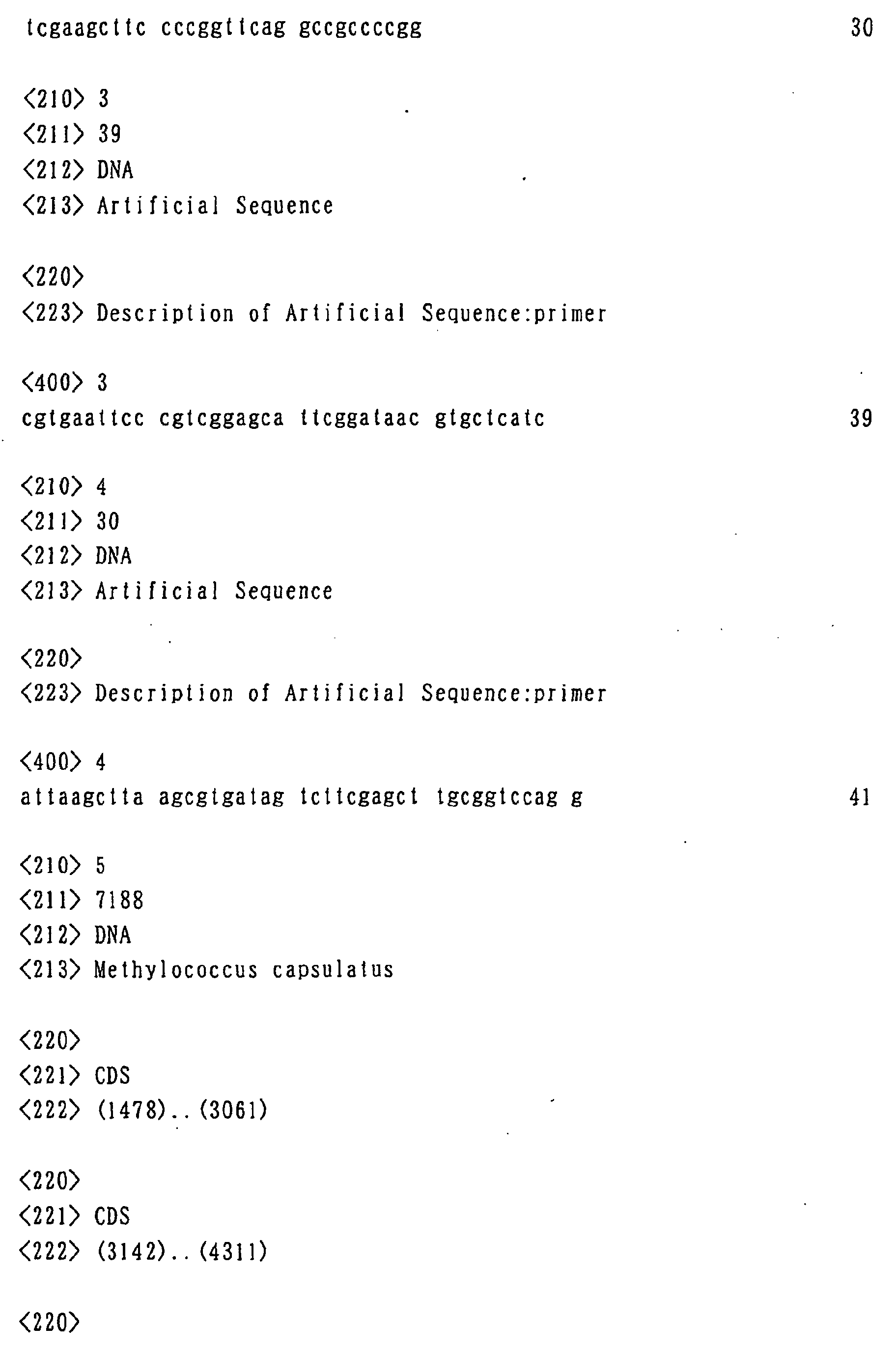

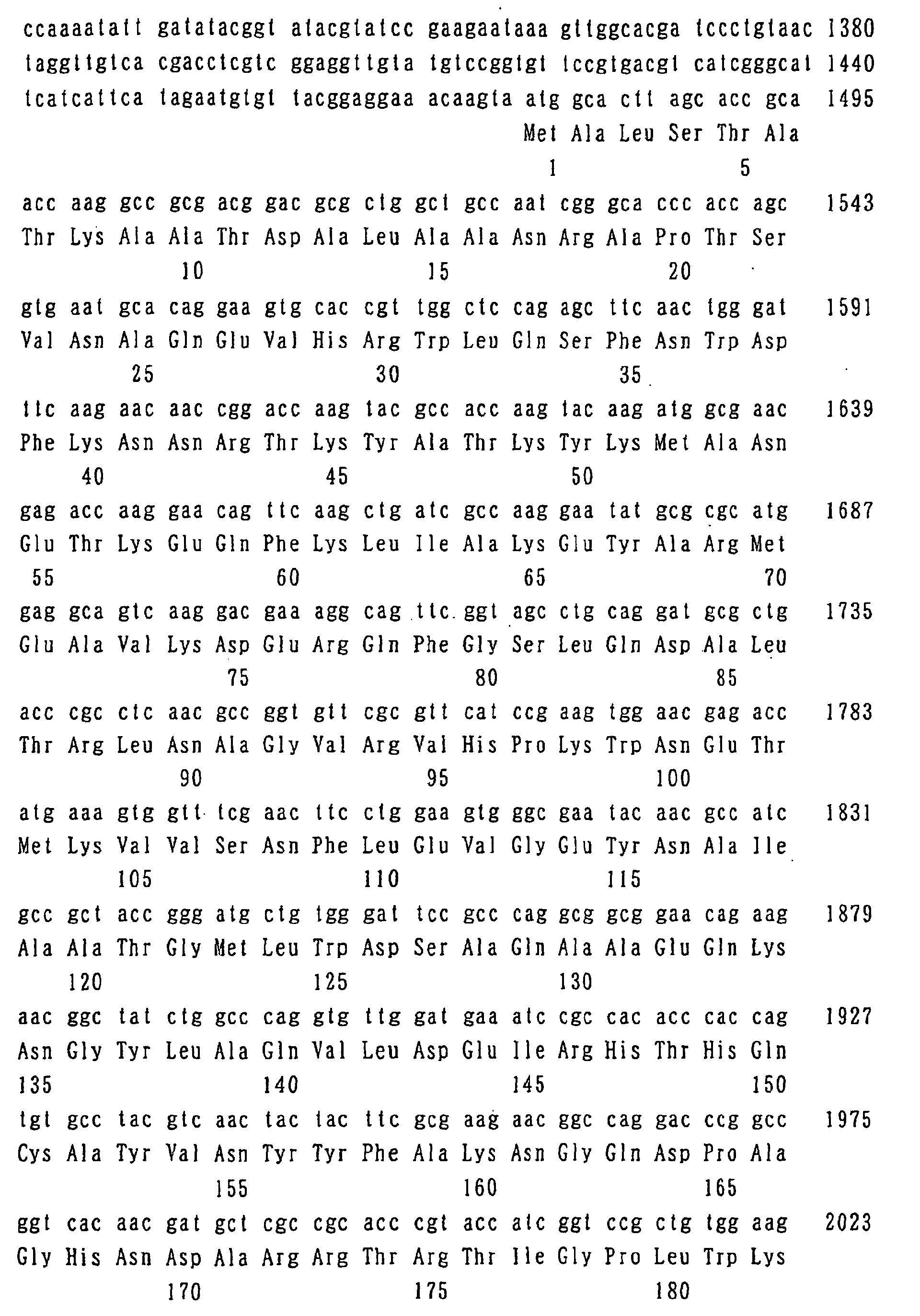
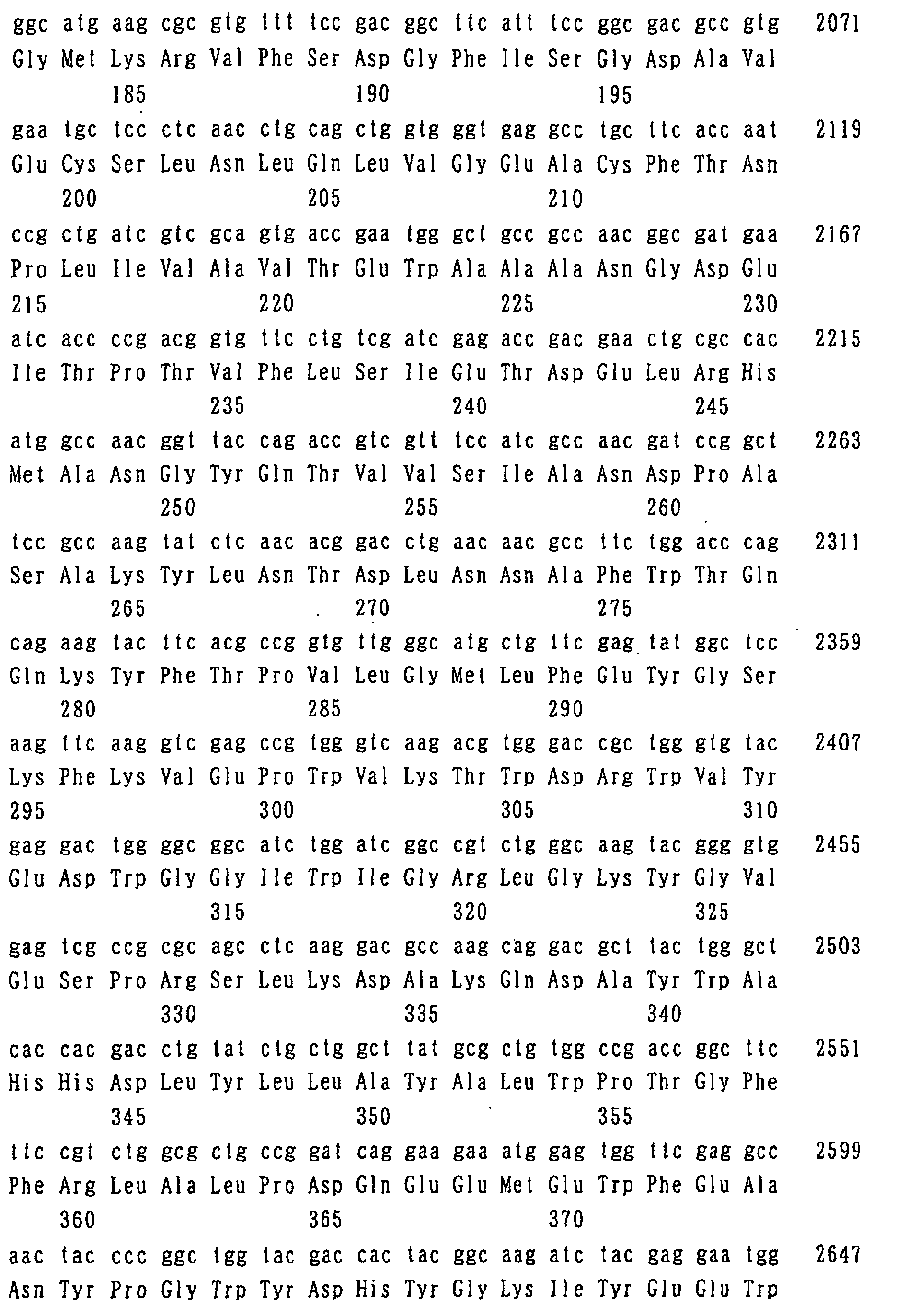

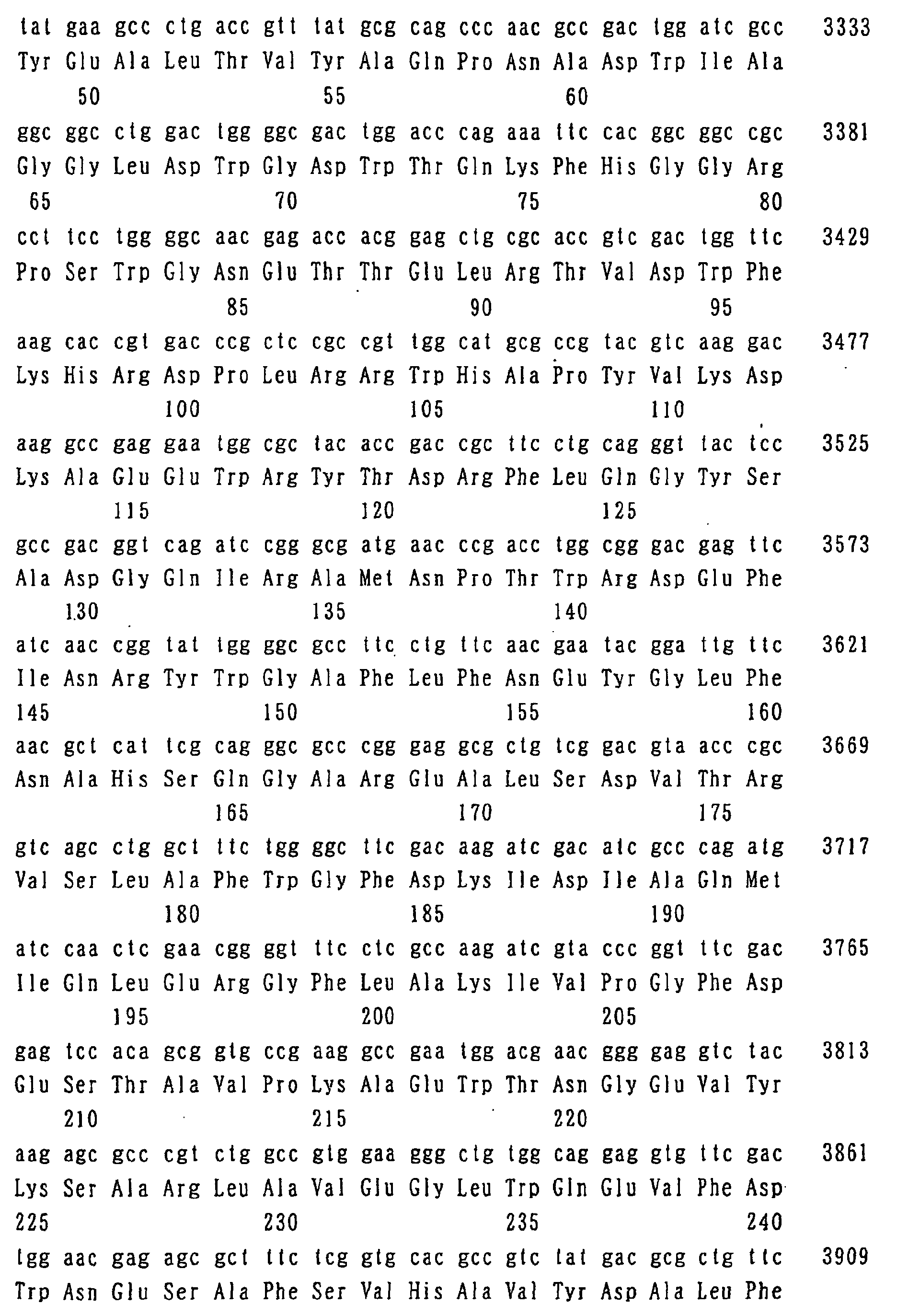

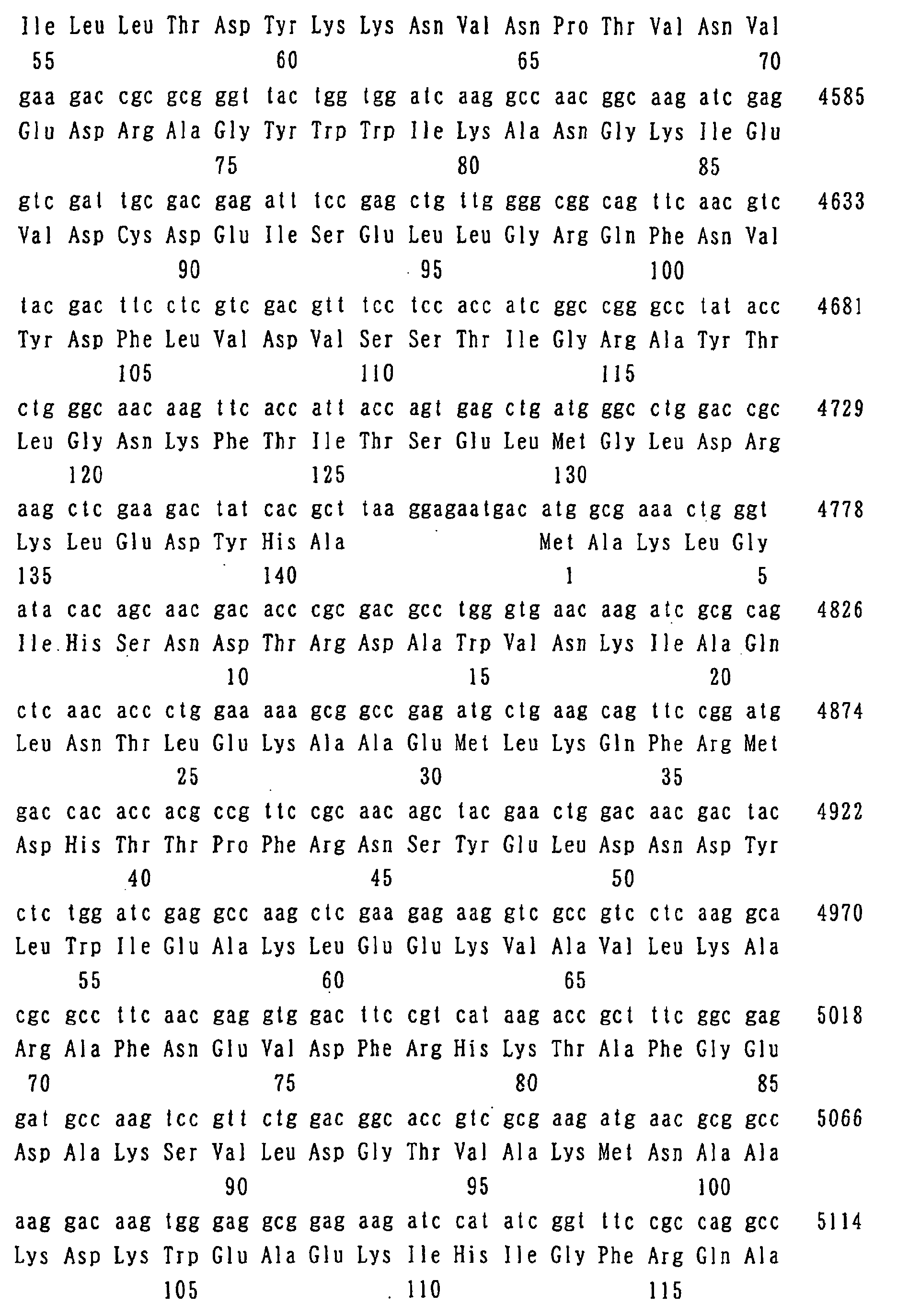

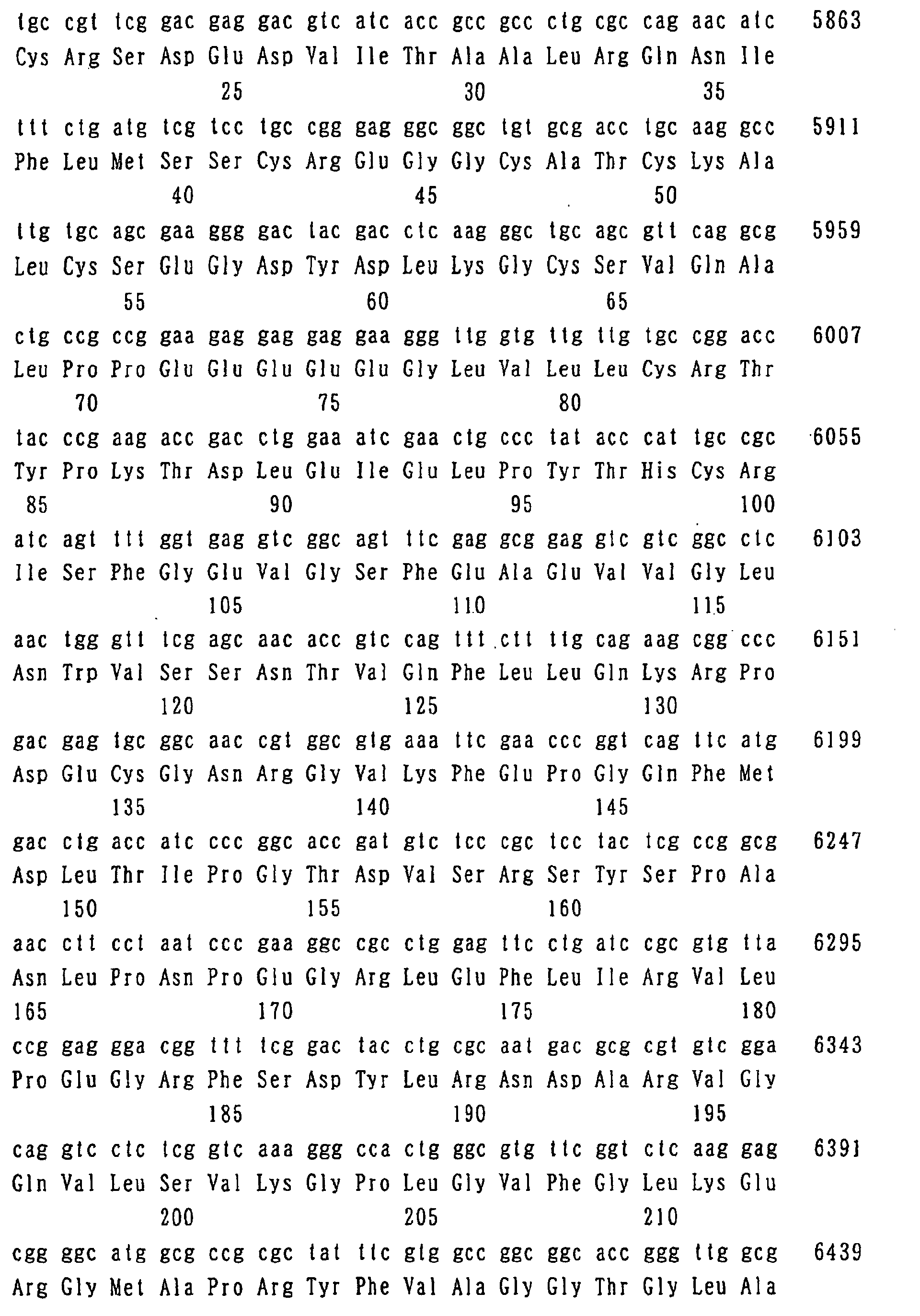
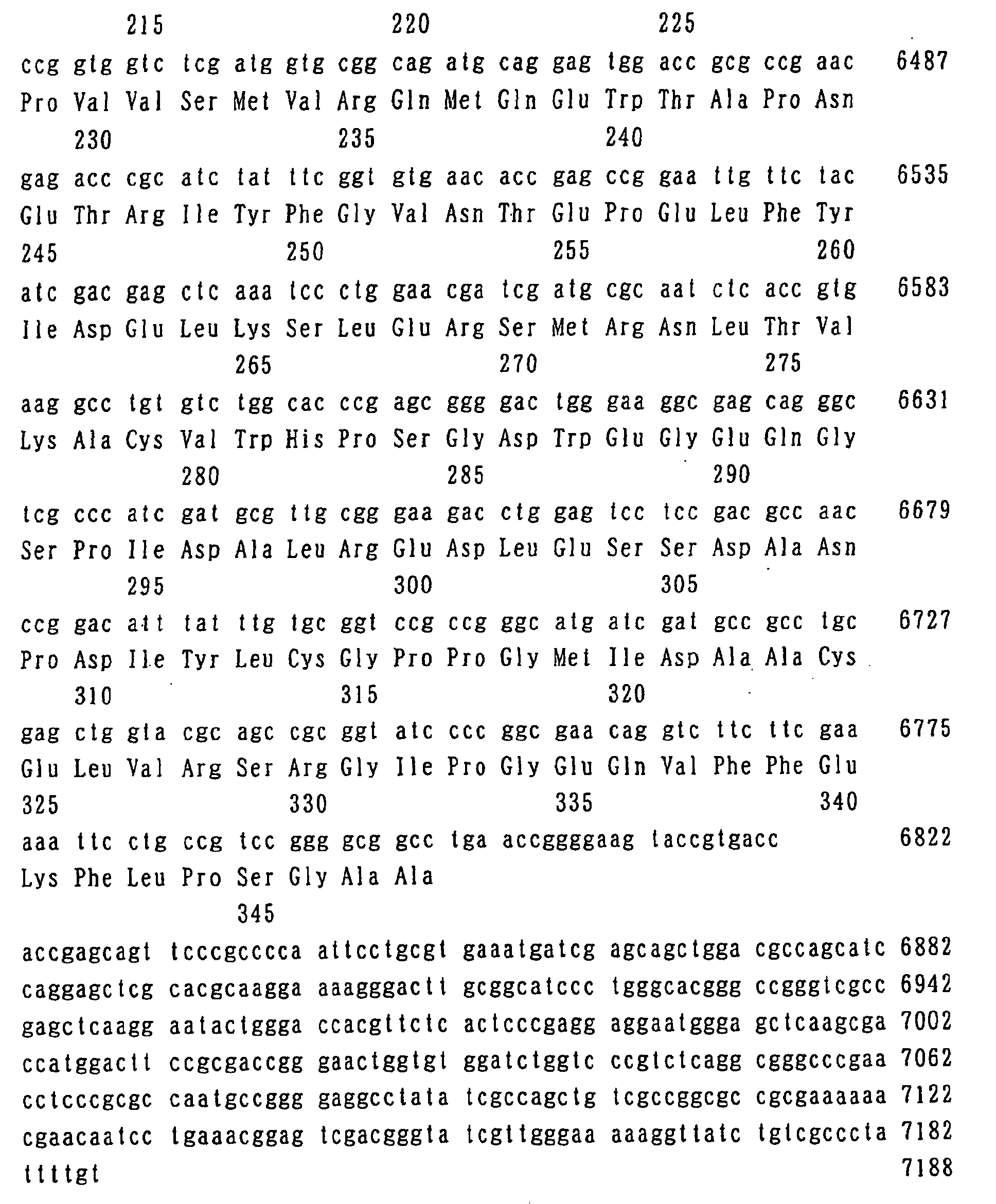
Claims (9)
- A method for producing an alcohol, comprising culturing a recombinant of a microorganism that does not inherently utilize an alkane, and an alcohol which is generated by oxidation of an alkane, whereby said recombinant has acquired an ability to convert the alkane into the alcohol due to transformation with a DNA encoding a methane oxygenase, and allowing the obtained culture, cells isolated from the culture, or processed product of said cells to exist with the alkane to produce the alcohol.
- The method for producing an alcohol according to claim 1, wherein said methane oxygenase is a soluble-type methane oxygenase.
- The method for producing an alcohol according to claim 2, wherein said methane oxygenase consists of a methane hydroxylase, Component B and reductase.
- The method for producing an alcohol according to any one of claims 1 to 3, wherein said DNA encoding the methane oxygenase is a soluble-type methane oxygenase gene of Methylococcus capsulatus.
- The method for producing an alcohol according to any one of claims 1 to 4, wherein said microorganism is an Escherichia bacterium, coryneform bacterium or Bacillus bacterium.
- The method for producing an alcohol according to claim 5, wherein said microorganism is an Escherichia bacterium.
- The method for producing an alcohol according to claim 6, wherein said microorganism is cultured at 20 to 30° C.
- The method for producing an alcohol according to any one of claims 1 to 7, wherein said alkane is an alkane having between 1 to 8 carbon atoms, and said alcohol is an alcohol which is generated by oxidation of the alkane.
- The method for producing an alcohol according to claim 8, wherein said alkane is methane, and said alcohol is methanol.
Applications Claiming Priority (3)
| Application Number | Priority Date | Filing Date | Title |
|---|---|---|---|
| JP2001270903 | 2001-09-06 | ||
| JP2001270903 | 2001-09-06 | ||
| PCT/JP2002/009029 WO2003027301A1 (en) | 2001-09-06 | 2002-09-05 | Process for producing alcohol with the use of microorganism |
Publications (2)
| Publication Number | Publication Date |
|---|---|
| EP1433856A1 true EP1433856A1 (en) | 2004-06-30 |
| EP1433856A4 EP1433856A4 (en) | 2009-09-23 |
Family
ID=19096495
Family Applications (1)
| Application Number | Title | Priority Date | Filing Date |
|---|---|---|---|
| EP02799459A Withdrawn EP1433856A4 (en) | 2001-09-06 | 2002-09-05 | Process for producing alcohol with the use of microorganism |
Country Status (5)
| Country | Link |
|---|---|
| EP (1) | EP1433856A4 (en) |
| JP (1) | JPWO2003027301A1 (en) |
| RU (1) | RU2294370C2 (en) |
| WO (1) | WO2003027301A1 (en) |
| ZA (1) | ZA200401750B (en) |
Cited By (15)
| Publication number | Priority date | Publication date | Assignee | Title |
|---|---|---|---|---|
| WO2014100722A1 (en) * | 2012-12-21 | 2014-06-26 | Greenlight Biosciences, Inc. | Cell-free system for converting methane into fuel, pyruvate or isobutanol |
| US8916358B2 (en) | 2010-08-31 | 2014-12-23 | Greenlight Biosciences, Inc. | Methods for control of flux in metabolic pathways through protease manipulation |
| US8956833B2 (en) | 2010-05-07 | 2015-02-17 | Greenlight Biosciences, Inc. | Methods for control of flux in metabolic pathways through enzyme relocation |
| US20150232888A1 (en) * | 2012-10-15 | 2015-08-20 | Calysta Inc. | Genetically engineered microorganisms for biological oxidation of hydrocarbons |
| US9469861B2 (en) | 2011-09-09 | 2016-10-18 | Greenlight Biosciences, Inc. | Cell-free preparation of carbapenems |
| CN106139887A (en) * | 2015-05-13 | 2016-11-23 | 三星电子株式会社 | Comprise the method for methyl fluoride concentration in its reduction sample of microorganism and use of the gene encoding the protein with hydroxylase activity |
| US9637746B2 (en) | 2008-12-15 | 2017-05-02 | Greenlight Biosciences, Inc. | Methods for control of flux in metabolic pathways |
| US9688977B2 (en) | 2013-08-05 | 2017-06-27 | Greenlight Biosciences, Inc. | Engineered phosphoglucose isomerase proteins with a protease cleavage site |
| US10150080B2 (en) | 2015-10-23 | 2018-12-11 | Samsung Electronics Co., Ltd. | Microorganism including gene encoding protein having dehalogenase activity and method of reducing concentration of fluorinated methane in sample using the same |
| US10358632B2 (en) | 2015-12-07 | 2019-07-23 | Samsung Electronics Co., Ltd. | Bacterial cytochrome P450 protein variant and method of reducing concentration of fluorinated methane in sample using the same |
| EP3377612A4 (en) * | 2015-11-18 | 2019-07-24 | Industrial Microbes, Inc. | FUNCTIONAL EXPRESSION OF MONOOXYGENASES AND METHODS OF USE |
| US10689674B2 (en) | 2014-04-15 | 2020-06-23 | Industrial Microbes, Inc. | Synthetic methanotrophic and methylotrophic microorganism and method thereof |
| US10858385B2 (en) | 2017-10-11 | 2020-12-08 | Greenlight Biosciences, Inc. | Methods and compositions for nucleoside triphosphate and ribonucleic acid production |
| US10954541B2 (en) | 2016-04-06 | 2021-03-23 | Greenlight Biosciences, Inc. | Cell-free production of ribonucleic acid |
| US11274284B2 (en) | 2015-03-30 | 2022-03-15 | Greenlight Biosciences, Inc. | Cell-free production of ribonucleic acid |
Families Citing this family (4)
| Publication number | Priority date | Publication date | Assignee | Title |
|---|---|---|---|---|
| EP2607479A1 (en) * | 2011-12-22 | 2013-06-26 | Evonik Industries AG | Biotechnological production of alcohols and derivatives thereof |
| CA2936848A1 (en) | 2014-01-16 | 2015-07-23 | Calysta, Inc. | Compositions and methods for recovery of stranded gas and oil |
| KR101664665B1 (en) * | 2015-03-06 | 2016-10-12 | 서강대학교산학협력단 | Method for enhancing mass transfer coefficient of methane in water by using mesoporous materials |
| KR102574959B1 (en) * | 2021-04-30 | 2023-09-04 | 고려대학교 산학협력단 | New protein capable with methane oxidation activity |
Family Cites Families (3)
| Publication number | Priority date | Publication date | Assignee | Title |
|---|---|---|---|---|
| US4266034A (en) * | 1978-04-14 | 1981-05-05 | Exxon Research And Engineering Company | Method for producing microbial cells and use thereof to produce oxidation products |
| RU2057745C1 (en) * | 1993-07-12 | 1996-04-10 | Арутюнов Владимир Сергеевич | Method for preparing methanol |
| JP2000166584A (en) * | 1998-12-08 | 2000-06-20 | Osaka Gas Co Ltd | Alkanol production reactor |
-
2002
- 2002-09-05 JP JP2003530866A patent/JPWO2003027301A1/en active Pending
- 2002-09-05 EP EP02799459A patent/EP1433856A4/en not_active Withdrawn
- 2002-09-05 WO PCT/JP2002/009029 patent/WO2003027301A1/en not_active Ceased
- 2002-09-05 RU RU2004110229/13A patent/RU2294370C2/en not_active IP Right Cessation
-
2004
- 2004-03-03 ZA ZA200401750A patent/ZA200401750B/en unknown
Cited By (27)
| Publication number | Priority date | Publication date | Assignee | Title |
|---|---|---|---|---|
| US9637746B2 (en) | 2008-12-15 | 2017-05-02 | Greenlight Biosciences, Inc. | Methods for control of flux in metabolic pathways |
| US8956833B2 (en) | 2010-05-07 | 2015-02-17 | Greenlight Biosciences, Inc. | Methods for control of flux in metabolic pathways through enzyme relocation |
| US10006062B2 (en) | 2010-05-07 | 2018-06-26 | The Board Of Trustees Of The Leland Stanford Junior University | Methods for control of flux in metabolic pathways through enzyme relocation |
| US8916358B2 (en) | 2010-08-31 | 2014-12-23 | Greenlight Biosciences, Inc. | Methods for control of flux in metabolic pathways through protease manipulation |
| US10036001B2 (en) | 2010-08-31 | 2018-07-31 | The Board Of Trustees Of The Leland Stanford Junior University | Recombinant cellular iysate system for producing a product of interest |
| US9469861B2 (en) | 2011-09-09 | 2016-10-18 | Greenlight Biosciences, Inc. | Cell-free preparation of carbapenems |
| US10480016B2 (en) * | 2012-10-15 | 2019-11-19 | Calysta, Inc. | Genetically engineered microorganisms for biological oxidation of hydrocarbons |
| US20150232888A1 (en) * | 2012-10-15 | 2015-08-20 | Calysta Inc. | Genetically engineered microorganisms for biological oxidation of hydrocarbons |
| CN104955955A (en) * | 2012-12-21 | 2015-09-30 | 绿光生物科学公司 | Cell-free system for converting methane to fuel, pyruvate, or isobutanol |
| US9611487B2 (en) | 2012-12-21 | 2017-04-04 | Greenlight Biosciences, Inc. | Cell-free system for converting methane into fuel and chemical compounds |
| WO2014100722A1 (en) * | 2012-12-21 | 2014-06-26 | Greenlight Biosciences, Inc. | Cell-free system for converting methane into fuel, pyruvate or isobutanol |
| US10421953B2 (en) | 2013-08-05 | 2019-09-24 | Greenlight Biosciences, Inc. | Engineered proteins with a protease cleavage site |
| US9688977B2 (en) | 2013-08-05 | 2017-06-27 | Greenlight Biosciences, Inc. | Engineered phosphoglucose isomerase proteins with a protease cleavage site |
| US10689674B2 (en) | 2014-04-15 | 2020-06-23 | Industrial Microbes, Inc. | Synthetic methanotrophic and methylotrophic microorganism and method thereof |
| US11274284B2 (en) | 2015-03-30 | 2022-03-15 | Greenlight Biosciences, Inc. | Cell-free production of ribonucleic acid |
| US10344286B2 (en) | 2015-05-13 | 2019-07-09 | Samsung Electronics Co., Ltd. | Microorganism including gene encoding protein having hydroxylase activity and method of reducing concentration of fluorinated methane in sample using the same |
| EP3093337A3 (en) * | 2015-05-13 | 2017-03-15 | Samsung Electronics Co., Ltd. | Microorganism including gene encoding protein having hydroxylase activity and method of reducing concentration of fluorinated methane in sample using the same |
| CN106139887A (en) * | 2015-05-13 | 2016-11-23 | 三星电子株式会社 | Comprise the method for methyl fluoride concentration in its reduction sample of microorganism and use of the gene encoding the protein with hydroxylase activity |
| US10150080B2 (en) | 2015-10-23 | 2018-12-11 | Samsung Electronics Co., Ltd. | Microorganism including gene encoding protein having dehalogenase activity and method of reducing concentration of fluorinated methane in sample using the same |
| US10894951B2 (en) | 2015-11-18 | 2021-01-19 | Industrial Microbes, Inc. | Heterologous expression of short-chain monooxygenases in microorganisms |
| EP3377612A4 (en) * | 2015-11-18 | 2019-07-24 | Industrial Microbes, Inc. | FUNCTIONAL EXPRESSION OF MONOOXYGENASES AND METHODS OF USE |
| AU2016358063B2 (en) * | 2015-11-18 | 2022-08-11 | Industrial Microbes, Inc. | Functional expression of monooxygenases and methods of use |
| US11692177B2 (en) | 2015-11-18 | 2023-07-04 | Industrial Microbes, Inc. | Method for producing a chemical with synthetic microorganism encoding a monooxygenase |
| US12448609B2 (en) | 2015-11-18 | 2025-10-21 | Industrial Microbes, Inc. | Heterologous expression of short-chain monooxygenases in microorganisms |
| US10358632B2 (en) | 2015-12-07 | 2019-07-23 | Samsung Electronics Co., Ltd. | Bacterial cytochrome P450 protein variant and method of reducing concentration of fluorinated methane in sample using the same |
| US10954541B2 (en) | 2016-04-06 | 2021-03-23 | Greenlight Biosciences, Inc. | Cell-free production of ribonucleic acid |
| US10858385B2 (en) | 2017-10-11 | 2020-12-08 | Greenlight Biosciences, Inc. | Methods and compositions for nucleoside triphosphate and ribonucleic acid production |
Also Published As
| Publication number | Publication date |
|---|---|
| RU2004110229A (en) | 2005-04-20 |
| RU2294370C2 (en) | 2007-02-27 |
| JPWO2003027301A1 (en) | 2005-01-06 |
| ZA200401750B (en) | 2005-03-03 |
| WO2003027301A1 (en) | 2003-04-03 |
| EP1433856A4 (en) | 2009-09-23 |
Similar Documents
| Publication | Publication Date | Title |
|---|---|---|
| US20050176121A1 (en) | Method for producing alcohol by using microorganism | |
| RU2294370C2 (en) | Method for producing alcohol using microorganism | |
| EP1262550A2 (en) | (R)-2,3-butanediol dehydrogenase, methods for producing same, and methods for producing optically active alcohol using the dehydrogenase | |
| US7211421B2 (en) | Gene encoding dihydrodipicolinate reductase from Bacillus methanolicus | |
| KR19990022521A (en) | Method of Making L-Lysine | |
| KR100869623B1 (en) | Process for producing hydroxycarboxylic acid | |
| KR20110049907A (en) | Method for preparing optically active amine derivatives | |
| EP1710313B1 (en) | Gene for a heat resistant enzyme of amino acid biosynthetic pathway derived from thermophilic Coryneform bacteria | |
| EP2374882B1 (en) | Novel amino acid dehydrogenase, and process for producing l-amino acid, 2-oxo acid or d-amino acid | |
| US20150037850A1 (en) | Recombinant microorganism producing quinolinic acid and a method for producing quinolinic acid using the same | |
| EP1918375B1 (en) | D-amino acid oxidase, and method for production of l-amino acid, 2-oxo acid or cyclic imine | |
| KR102129379B1 (en) | A recombinant microorganism into which a high activity malate dehydrogenase for producing succinic acid and a method for producing succinic acid using the same | |
| US7575910B2 (en) | Method for producing L-fuculose and method for producing L-fucose | |
| EP0984066B1 (en) | Activator for methanol dehydrogenase and gene thereof | |
| EP1236796B1 (en) | Novel enone reductases isolated from Kluyveromyces lactis, methods for producing same, and methods for selectively reducing a carbon-carbon double bond of an Alpha, Beta-unsaturated ketone using the reductases | |
| JP6414410B2 (en) | Method for producing xanthine oxidase | |
| US7329523B2 (en) | Phosphoserine phosphatase of coryneform bacteria and variants thereof | |
| JP2009165417A (en) | Novel hydrogen peroxide-generating NADH oxidase and DNA encoding the same | |
| EP3519579B1 (en) | Processes to prepare elongated 2-ketoacids and c-5-c10 compounds therefrom via genetic modifications to microbial metabolic pathways | |
| US20050239180A1 (en) | Nucleotide sequence coding for a mannitol-2 dehydrogenase and method for the production of d-mannitol | |
| CN1303928A (en) | cytochrome c oxidase complex | |
| WO2005123921A1 (en) | Novel glycerol dehydrogenase, gene therefor, and method of utilizing the same | |
| CN120174027A (en) | A method for preparing (S)-1-phenylethanol by enzymatic method | |
| JP2006246701A (en) | Acetic acid bacterium having enhanced enzyme activity of central metabolic system and method for producing vinegar using the acetic acid bacterium | |
| US20060194278A1 (en) | Process for producing glucose dehydrogenase |
Legal Events
| Date | Code | Title | Description |
|---|---|---|---|
| PUAI | Public reference made under article 153(3) epc to a published international application that has entered the european phase |
Free format text: ORIGINAL CODE: 0009012 |
|
| 17P | Request for examination filed |
Effective date: 20040324 |
|
| AK | Designated contracting states |
Kind code of ref document: A1 Designated state(s): AT BE BG CH CY CZ DE DK EE ES FI FR GB GR IE IT LI LU MC NL PT SE SK TR |
|
| AX | Request for extension of the european patent |
Extension state: AL LT LV MK RO SI |
|
| A4 | Supplementary search report drawn up and despatched |
Effective date: 20090824 |
|
| STAA | Information on the status of an ep patent application or granted ep patent |
Free format text: STATUS: THE APPLICATION HAS BEEN WITHDRAWN |
|
| 18W | Application withdrawn |
Effective date: 20091029 |