EP1431556A2 - Fuel injection controller for in-cylinder direct injection engine - Google Patents
Fuel injection controller for in-cylinder direct injection engine Download PDFInfo
- Publication number
- EP1431556A2 EP1431556A2 EP04000784A EP04000784A EP1431556A2 EP 1431556 A2 EP1431556 A2 EP 1431556A2 EP 04000784 A EP04000784 A EP 04000784A EP 04000784 A EP04000784 A EP 04000784A EP 1431556 A2 EP1431556 A2 EP 1431556A2
- Authority
- EP
- European Patent Office
- Prior art keywords
- fuel
- injection mode
- engine
- amount
- intake stroke
- Prior art date
- Legal status (The legal status is an assumption and is not a legal conclusion. Google has not performed a legal analysis and makes no representation as to the accuracy of the status listed.)
- Granted
Links
Images


Classifications
-
- F—MECHANICAL ENGINEERING; LIGHTING; HEATING; WEAPONS; BLASTING
- F02—COMBUSTION ENGINES; HOT-GAS OR COMBUSTION-PRODUCT ENGINE PLANTS
- F02D—CONTROLLING COMBUSTION ENGINES
- F02D41/00—Electrical control of supply of combustible mixture or its constituents
- F02D41/30—Controlling fuel injection
- F02D41/3011—Controlling fuel injection according to or using specific or several modes of combustion
- F02D41/3064—Controlling fuel injection according to or using specific or several modes of combustion with special control during transition between modes
- F02D41/307—Controlling fuel injection according to or using specific or several modes of combustion with special control during transition between modes to avoid torque shocks
-
- F—MECHANICAL ENGINEERING; LIGHTING; HEATING; WEAPONS; BLASTING
- F02—COMBUSTION ENGINES; HOT-GAS OR COMBUSTION-PRODUCT ENGINE PLANTS
- F02D—CONTROLLING COMBUSTION ENGINES
- F02D41/00—Electrical control of supply of combustible mixture or its constituents
- F02D41/02—Circuit arrangements for generating control signals
- F02D41/04—Introducing corrections for particular operating conditions
- F02D41/047—Taking into account fuel evaporation or wall wetting
-
- F—MECHANICAL ENGINEERING; LIGHTING; HEATING; WEAPONS; BLASTING
- F02—COMBUSTION ENGINES; HOT-GAS OR COMBUSTION-PRODUCT ENGINE PLANTS
- F02D—CONTROLLING COMBUSTION ENGINES
- F02D41/00—Electrical control of supply of combustible mixture or its constituents
- F02D41/02—Circuit arrangements for generating control signals
- F02D41/04—Introducing corrections for particular operating conditions
- F02D41/06—Introducing corrections for particular operating conditions for engine starting or warming up
- F02D41/062—Introducing corrections for particular operating conditions for engine starting or warming up for starting
-
- F—MECHANICAL ENGINEERING; LIGHTING; HEATING; WEAPONS; BLASTING
- F02—COMBUSTION ENGINES; HOT-GAS OR COMBUSTION-PRODUCT ENGINE PLANTS
- F02D—CONTROLLING COMBUSTION ENGINES
- F02D41/00—Electrical control of supply of combustible mixture or its constituents
- F02D41/02—Circuit arrangements for generating control signals
- F02D41/04—Introducing corrections for particular operating conditions
- F02D41/06—Introducing corrections for particular operating conditions for engine starting or warming up
- F02D41/062—Introducing corrections for particular operating conditions for engine starting or warming up for starting
- F02D41/064—Introducing corrections for particular operating conditions for engine starting or warming up for starting at cold start
-
- F—MECHANICAL ENGINEERING; LIGHTING; HEATING; WEAPONS; BLASTING
- F02—COMBUSTION ENGINES; HOT-GAS OR COMBUSTION-PRODUCT ENGINE PLANTS
- F02D—CONTROLLING COMBUSTION ENGINES
- F02D41/00—Electrical control of supply of combustible mixture or its constituents
- F02D41/02—Circuit arrangements for generating control signals
- F02D41/04—Introducing corrections for particular operating conditions
- F02D41/06—Introducing corrections for particular operating conditions for engine starting or warming up
- F02D41/068—Introducing corrections for particular operating conditions for engine starting or warming up for warming-up
-
- F—MECHANICAL ENGINEERING; LIGHTING; HEATING; WEAPONS; BLASTING
- F02—COMBUSTION ENGINES; HOT-GAS OR COMBUSTION-PRODUCT ENGINE PLANTS
- F02D—CONTROLLING COMBUSTION ENGINES
- F02D41/00—Electrical control of supply of combustible mixture or its constituents
- F02D41/30—Controlling fuel injection
- F02D41/3011—Controlling fuel injection according to or using specific or several modes of combustion
- F02D41/3017—Controlling fuel injection according to or using specific or several modes of combustion characterised by the mode(s) being used
- F02D41/3023—Controlling fuel injection according to or using specific or several modes of combustion characterised by the mode(s) being used a mode being the stratified charge spark-ignited mode
-
- F—MECHANICAL ENGINEERING; LIGHTING; HEATING; WEAPONS; BLASTING
- F02—COMBUSTION ENGINES; HOT-GAS OR COMBUSTION-PRODUCT ENGINE PLANTS
- F02D—CONTROLLING COMBUSTION ENGINES
- F02D41/00—Electrical control of supply of combustible mixture or its constituents
- F02D41/30—Controlling fuel injection
- F02D41/3011—Controlling fuel injection according to or using specific or several modes of combustion
- F02D41/3017—Controlling fuel injection according to or using specific or several modes of combustion characterised by the mode(s) being used
- F02D41/3023—Controlling fuel injection according to or using specific or several modes of combustion characterised by the mode(s) being used a mode being the stratified charge spark-ignited mode
- F02D41/3029—Controlling fuel injection according to or using specific or several modes of combustion characterised by the mode(s) being used a mode being the stratified charge spark-ignited mode further comprising a homogeneous charge spark-ignited mode
-
- F—MECHANICAL ENGINEERING; LIGHTING; HEATING; WEAPONS; BLASTING
- F02—COMBUSTION ENGINES; HOT-GAS OR COMBUSTION-PRODUCT ENGINE PLANTS
- F02D—CONTROLLING COMBUSTION ENGINES
- F02D41/00—Electrical control of supply of combustible mixture or its constituents
- F02D41/30—Controlling fuel injection
- F02D41/3011—Controlling fuel injection according to or using specific or several modes of combustion
- F02D41/3076—Controlling fuel injection according to or using specific or several modes of combustion with special conditions for selecting a mode of combustion, e.g. for starting, for diagnosing
-
- F—MECHANICAL ENGINEERING; LIGHTING; HEATING; WEAPONS; BLASTING
- F02—COMBUSTION ENGINES; HOT-GAS OR COMBUSTION-PRODUCT ENGINE PLANTS
- F02D—CONTROLLING COMBUSTION ENGINES
- F02D41/00—Electrical control of supply of combustible mixture or its constituents
- F02D41/30—Controlling fuel injection
- F02D41/38—Controlling fuel injection of the high pressure type
- F02D2041/389—Controlling fuel injection of the high pressure type for injecting directly into the cylinder
-
- F—MECHANICAL ENGINEERING; LIGHTING; HEATING; WEAPONS; BLASTING
- F02—COMBUSTION ENGINES; HOT-GAS OR COMBUSTION-PRODUCT ENGINE PLANTS
- F02D—CONTROLLING COMBUSTION ENGINES
- F02D2200/00—Input parameters for engine control
- F02D2200/02—Input parameters for engine control the parameters being related to the engine
- F02D2200/023—Temperature of lubricating oil or working fluid
-
- F—MECHANICAL ENGINEERING; LIGHTING; HEATING; WEAPONS; BLASTING
- F02—COMBUSTION ENGINES; HOT-GAS OR COMBUSTION-PRODUCT ENGINE PLANTS
- F02D—CONTROLLING COMBUSTION ENGINES
- F02D2200/00—Input parameters for engine control
- F02D2200/02—Input parameters for engine control the parameters being related to the engine
- F02D2200/04—Engine intake system parameters
- F02D2200/0414—Air temperature
-
- F—MECHANICAL ENGINEERING; LIGHTING; HEATING; WEAPONS; BLASTING
- F02—COMBUSTION ENGINES; HOT-GAS OR COMBUSTION-PRODUCT ENGINE PLANTS
- F02D—CONTROLLING COMBUSTION ENGINES
- F02D2200/00—Input parameters for engine control
- F02D2200/02—Input parameters for engine control the parameters being related to the engine
- F02D2200/06—Fuel or fuel supply system parameters
- F02D2200/0602—Fuel pressure
-
- F—MECHANICAL ENGINEERING; LIGHTING; HEATING; WEAPONS; BLASTING
- F02—COMBUSTION ENGINES; HOT-GAS OR COMBUSTION-PRODUCT ENGINE PLANTS
- F02D—CONTROLLING COMBUSTION ENGINES
- F02D37/00—Non-electrical conjoint control of two or more functions of engines, not otherwise provided for
- F02D37/02—Non-electrical conjoint control of two or more functions of engines, not otherwise provided for one of the functions being ignition
-
- Y—GENERAL TAGGING OF NEW TECHNOLOGICAL DEVELOPMENTS; GENERAL TAGGING OF CROSS-SECTIONAL TECHNOLOGIES SPANNING OVER SEVERAL SECTIONS OF THE IPC; TECHNICAL SUBJECTS COVERED BY FORMER USPC CROSS-REFERENCE ART COLLECTIONS [XRACs] AND DIGESTS
- Y02—TECHNOLOGIES OR APPLICATIONS FOR MITIGATION OR ADAPTATION AGAINST CLIMATE CHANGE
- Y02T—CLIMATE CHANGE MITIGATION TECHNOLOGIES RELATED TO TRANSPORTATION
- Y02T10/00—Road transport of goods or passengers
- Y02T10/10—Internal combustion engine [ICE] based vehicles
- Y02T10/40—Engine management systems
Definitions
- the present invention relates to a fuel injection controller, and more particularly, to a fuel injection controller for a cylinder injection engine that injects fuel directly into a combustion chamber.
- Japanese Unexamined Patent Publication No. 10-30468 describes a controller for a cylinder injection engine, which injects fuel directly into a combustion chamber.
- the controller controls fuel injection in accordance with the operating state of the engine and selectively injects fuel in the intake stroke (intake stroke injection mode) and the compression stroke (compression stroke injection mode).
- intake stroke injection mode the intake stroke injection mode
- compression stroke injection mode the time provided for vaporizing the fuel is short.
- the fuel is not vaporized as desired. This affects combustion and increases the amount of unburned gases in the emissions.
- the time for vaporizing the injected fuel is lengthened by injecting fuel during the intake stroke.
- intake stroke injection and compression stroke injection are controlled without taking into consideration the deposition of the fuel on the surfaces of the combustion chamber when the engine is cool. This hinders combustion thereby producing undesirable exhaust gas emissions and lower performance.
- the present invention provides a fuel injection controller of a cylinder injection engine that selects an injection mode from various fuel injection modes including an intake stroke injection mode, in which fuel is injected during an intake stroke, and a compression stroke injection mode, in which fuel is injected during a compression stroke.
- the controller includes a selection means for selecting the compression stroke injection mode when the engine is cool if the temperature of the engine when the engine is started is within a predetermined temperature range and for selecting the intake stroke injection mode when the engine is cool if the temperature of the engine when the engine is started is higher than the predetermined temperature range.
- a further aspect of the present invention provides a method for controlling fuel injection in a cylinder injection engine that selects an injection mode from various fuel injection modes including an intake stroke injection mode, in which fuel is injected during an intake stroke, and a compression stroke injection mode, in which fuel is injected during a compression stroke.
- the method includes selecting the compression stroke injection mode when the engine is cool if the temperature of the engine when the engine is started is within a predetermined temperature range, and selecting the intake stroke injection mode when the engine is cool if the temperature of the engine when the engine is started is higher than the predetermined temperature range.
- Fig. 1 is a schematic view showing an engine 10 incorporating an electronic control unit (ECU 40) functioning as a fuel injection controller according to a first embodiment of the present invention.
- ECU 40 electronice control unit
- the engine 10 includes a cylinder head 11 and a cylinder block 13, which has a plurality of cylinders 12 (only one shown in Fig. 1). Each cylinder 12 accommodates a reciprocal piston 14.
- the piston 14, the wall of the cylinder 12, and the cylinder head 11 define a combustion chamber 15.
- Intake air is supplied to the combustion chamber 15 via an intake passage 16.
- An intake air temperature sensor (not shown) is arranged in the intake passage 16 to detect the temperature of the intake air.
- a fuel injection valve 20, which injects fuel directly into the combustion chamber 15, and a spark plug 22, which ignites the air fuel mixture in the combustion chamber 15, are provided for each cylinder 12 on the cylinder head 11.
- the fuel injection valve 20 is connected to a delivery pipe 34 via a supply passage 35. Fuel is supplied to the fuel injection valve 20 from the delivery pipe 34. Fuel is supplied from a fuel tank 37 to the delivery pipe 34 by a fuel pump 36.
- a fuel pressure sensor 38 is arranged in the delivery pipe 34 to detect the fuel pressure in the delivery pipe 34.
- the engine 10 is provided with sensors used to detect the operating state of the engine 10, such as a crank angle sensor 30, a cam angle sensor 31, and a coolant temperature sensor 32.
- the crank angle sensor 30 and the cam angle sensor 31 are arranged near a crankshaft and a cam shaft (neither shown) to detect the rotating speed (engine speed) and rotational phase (crank angle CA) of the crankshaft.
- the coolant temperature sensor 32 is arranged in the cylinder block 13 to detect the temperature of the engine coolant (coolant temperature THW).
- the ECU 40 receives detection signals from various sensors including the sensors 30-32, 38. In accordance with the detection signals, the ECU 40 drives each of the fuel injection valves 20 to perform fuel injection control and a predetermined ignition control.
- the ECU 40 functions as a selecting means and a compensating means. Further, the ECU 40 includes a memory 41, which stores programs for controlling fuel injection and ignition, computation maps, and data obtained when performing the controls.
- the ECU 40 changes the fuel injection mode between an intake stroke injection mode, in which fuel is injected during the intake stroke, and a compression stroke injection mode, in which fuel is injected during the compression stroke.
- the ECU 40 sets the fuel injection mode to the intake stroke injection mode and controls the fuel injection valves 20 so that fuel is injected during the intake stroke.
- the ECU 40 By injecting fuel during the intake stroke when the engine 10 is started, sufficient time exists for vaporizing the fuel injected into the combustion chambers 15. This stabilizes ignition and combustion and guarantees that the engine 10 will start.
- the ECU 40 sets the injection mode to the compression stroke.
- the ECU 40 sets the injection mode to the intake stroke injection mode when the engine temperature is not within the predetermined temperature range.
- the starting time coolant temperature may have three ranges, for example, a first temperature range R1, in which the temperature is lower than 15°C, a second temperature range R2, in which the temperature is from 15°C to 40°C, and a third temperature range R3, in which the temperature is between 40°C and a temperature indicating that the engine 10 has been started (e.g., 80°C).
- a first temperature range R1 in which the temperature is lower than 15°C
- a second temperature range R2 in which the temperature is from 15°C to 40°C
- the ECU 40 switches the injection mode from the injection stroke injection mode to the compression stroke injection mode.
- the ECU 40 maintains the injection mode in the intake stroke injection mode.
- the injection mode is switched to the compression stroke injection mode when the engine starting time coolant temperature THWST is in the relatively high second temperature range R2.
- the amount of fuel deposited on the walls of the combustion chambers 15 is substantially null regardless of whether the injection mode is in the intake stroke injection mode or the compression stroke injection mode. In this embodiment, however, the injection mode is maintained in the intake stroke injection mode when the starting time coolant temperature THWST is in the third temperature range R3. This is because, although the amount of unburned gases in the emissions is small during the compression stroke injection mode, the amount of unvaporized injected fuel, or the amount of unburned gases in the emissions, is more in comparison to that of the intake stroke injection mode.
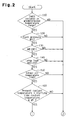
- Figs. 2 and 3 show a flowchart representing the fuel injection control procedure.
- the ECU 40 performs the procedure illustrated by the flowchart in cyclic interrupts at every predetermined crank angle.
- the fuel injection mode is set in accordance with the engine starting time coolant temperature THWST (engine temperature). Fuel is injected from the fuel injection valves 20 in accordance with the fuel injection mode.
- the intake stroke injection mode is set and fuel is injected during the intake stroke from the fuel injection valves 20.
- the time required for vaporizing the fuel injected in the combustion chambers 15 is available. This stabilizes ignition and combustion.
- the ECU 40 determines whether or not the starting time coolant temperature THWST is within the second temperature range R2 (15°C to 40°C). If the starting time coolant temperature THWST is not in the second temperature range R2, that is, if the starting time coolant temperature THWST is in the first temperature range R1 (lower than 15°C) or the third temperature range R3 (40°C or higher), the ECU 40 proceeds to step 200 and sets the injection mode to the intake stroke injection mode. If the starting time coolant temperature THWST is within the second temperature range R2, the ECU 40 proceeds to step 120.
- the ECU 40 determines whether or not the fuel pressure is greater than or equal to a predetermined pressure P1.
- the predetermined pressure P1 is the pressure required to inject fuel during the compression stroke. If the fuel pressure is lower than the predetermined pressure P1, the injection of fuel during the compression stroke is prohibited. In this case, the ECU 40 proceeds to step 200. If the fuel pressure is greater than or equal to the predetermined pressure P1, the ECU 40 determines that fuel may be injected during the compression stroke and proceeds to step 130.
- the ECU 40 determines whether or not the engine speed NE is lower than a predetermined engine speed NE1.
- the engine speed NE1 is the maximum engine idling speed.
- the ECU 40 proceeds to step 200 and sets the injection mode to the intake stroke injection mode. If the engine speed NE is lower than the predetermined engine speed NE1, the ECU 40 determines that fuel may be injected during the compression stroke and proceeds to step 140.
- the ECU 40 determines whether or not a large load is being applied to the engine 10 based on, for example, the acceleration pedal position.
- a large load is applied to the engine 10
- a large amount of fuel is injected.
- the ECU 40 proceeds to step 200 and sets the injection mode to the intake stroke injection mode. If a large load is not being applied to the engine 10, the ECU 40 determines that fuel may be injected during the compression stroke and proceeds to step 150.
- the ECU 40 determines whether or not the temperature of the intake air, which is detected by an intake air temperature sensor (not shown), is higher than or equal to a predetermined temperature TH0. If the intake temperature is lower than the predetermined temperature TH0, the ECU 40 proceeds to step 200 and sets the injection mode to the intake stroke injection mode regardless of the starting time coolant temperature. This is because, if the fuel is injected during the compression stroke when the intake air temperature is lower than the predetermined temperature TH0, the fuel does not have time to fully vaporize, which increases the amount of unburned gases in the emissions. If the intake air temperature is higher than or equal to the predetermined temperature TH0, the ECU 40 determines that fuel may be injected during the compression stroke and proceeds to step 160.
- step 160 determines whether or not the present coolant temperature is lower than the sum of the starting time coolant temperature THWST and ⁇ . Alpha is greater than zero and set, for example, at 10°C in this embodiment. If the present coolant temperature is higher than or equal to the sum of the starting time coolant temperature THWST and ⁇ , the ECU 40 proceeds to step 200 and sets the injection mode to the intake stroke injection mode. As the engine 10 starts to run and the coolant temperature rises by ⁇ °C from the starting time coolant temperature THWST, the temperature of the walls of the combustion chambers 15 rises. The amount of fuel deposited on the walls of the combustion chambers 15 is thus substantially null in both intake stroke and compression stroke combustion modes.
- the injection mode is set to the intake stroke injection mode when the current coolant temperature is higher than or equal to the sum of the starting time coolant temperature THWST and ⁇ . If the current coolant temperature is lower than the sum of the starting time coolant temperature THWST and ⁇ , the ECU 40 proceeds to step 170 and sets the injection mode to the compression stroke mode.
- the ECU 40 determines whether or not the time that has elapsed from the commencement of the compression stroke injection mode is less than or equal to a predetermined time Ts. If the elapsed time is longer than the predetermined time Ts (if the outcome of step 180 is negative), an amount of fuel corresponding to the engine load and the coolant temperature is injected during the compression stroke. The ECU 40 then temporarily terminates the routine.
- step 180 If it is determined that the elapsed time is shorter than or equal to the predetermined time Ts in step 180 (if the outcome of step 180 is positive), the ECU 40 proceeds to step 190 and corrects the fuel injection amount that corresponds to the engine load and the coolant temperature by adding a compensation amount to the fuel injection amount. The corrected amount of fuel is injected during the compression stroke. The ECU 40 then temporarily terminates the routine.
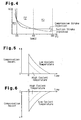
- the compensation amount is set in accordance with the coolant temperature as shown in Fig. 5. The compensation amount increases as the coolant temperature decreases and decreases as the coolant temperature increases. Further, the compensation amount decreases gradually as the elapsed time from the commencement of the compression stroke injection mode increases.
- the ECU 40 adds the compensation amount to the fuel injection amount to compensate for the decreased burnable fuel amount. This prevents a decrease in the burnable fuel amount and prevents the torque from being stepped. Further, when the injection mode is switched from the intake stroke injection mode to the compression stroke injection mode, the amount of fuel deposited on the tops of the pistons 14 varies in accordance with the engine temperature (coolant temperature).
- the ECU 40 thus compensates for the fuel deposited in accordance with the engine temperature by adding an appropriate compensation amount to the fuel injection amount.
- the fuel deposited on the tops of the pistons 14 also decreases as time elapses.
- the ECU 40 thus compensates for the fuel deposited in accordance with the elapsed time by adding an appropriate compensation amount to the fuel injection amount.
- the ECU 40 functions as a compensating means.
- the ECU 40 sets the injection mode to the intake stroke injection mode.
- the ECU 40 determines whether the time elapsed from the completion of the compression stroke injection mode is less than or equal to a predetermined time Te. If the elapsed time is greater than the predetermined time Te, a fuel injection amount that corresponds to the engine load and the coolant temperature is injected during the intake stroke. The ECU 40 then temporarily terminates the routine.
- step 210 if the elapsed time is less than or equal to the predetermined time Te, the ECU 40 proceeds to step 220 and corrects the fuel injection amount by subtracting a compensation amount from the fuel injection amount that corresponds to the engine load and the coolant temperature.
- the corrected amount of fuel is injected during the intake stroke.
- the ECU 40 then temporarily terminates the routine.
- the compensation amount is set in accordance with the coolant temperature as shown in Fig. 6.
- the absolute value of the compensation amount increases as the coolant temperature decreases and decreases as the coolant temperature increases. Further, the absolute value of the compensation amount decreases gradually as the elapsed time from the completion of the compression stroke injection mode increases.
- the ECU 40 subtracts the compensation amount from the fuel injection amount to compensate for the increased burnable fuel amount. This compensates for the increase in the amount of burnable fuel and prevents the torque from being stepped. Further, when the injection mode is switched from the compression stroke injection mode to the intake stroke injection mode, the amount of fuel deposited on the top of the pistons 14 varies in accordance with the engine temperature (coolant temperature).
- the ECU 40 thus compensates for the fuel deposited on the pistons 14 in accordance with the engine temperature by subtracting the appropriate compensation amount from the fuel injection amount.
- the vaporized amount of the fuel deposited on the tops of the pistons 14 also decreases as time elapses when the injection mode is switched from the compression stroke injection mode to the intake stroke injection mode.
- the ECU 40 thus compensates for the vaporized fuel amount in accordance with the elapsed time by subtracting the appropriate compensation amount from the fuel injection amount.
- the ECU 40 functions as a compensating means.
- the present embodiment has the advantages described below.
- the ECU 40 resets the injection mode to the intake stroke injection mode from the compression stroke injection mode based on whether or not the coolant temperature has increased from the starting time coolant temperature THWST by ⁇ ° or more.
- the ECU 40 may reset the injection mode to the intake stroke injection mode from the compression stroke injection mode when a temperature detected directly from the walls of the combustion chambers 15 becomes higher than or equal to a predetermined temperature.
- a fuel injection controller (40) of a cylinder injection engine (10) selects a fuel injection mode from various fuel injection modes in accordance with the operating state of the engine.
- the modes include an intake stroke injection mode, in which fuel is injected during an intake stroke, and a compression stroke injection mode, in which fuel is injected during a compression stroke.
- the controller comprises a compensating means for performing a compensation, which decreases the amount of fuel injected in the intake stroke injection mode, when the fuel injection mode is changed to the intake stroke injection mode from the compression stroke injection mode when the engine is cool. The compensation continues for a predetermined time from when the fuel injection mode is changed to the intake stroke injection mode.
Landscapes
- Engineering & Computer Science (AREA)
- Chemical & Material Sciences (AREA)
- Combustion & Propulsion (AREA)
- Mechanical Engineering (AREA)
- General Engineering & Computer Science (AREA)
- Electrical Control Of Air Or Fuel Supplied To Internal-Combustion Engine (AREA)
Abstract
Description
Claims (6)
- A fuel injection controller (40) of a cylinder injection engine (10) that selects a fuel injection mode from various fuel injection modes in accordance with the operating state of the engine, wherein the modes include an intake stroke injection mode, in which fuel is injected during an intake stroke, and a compression stroke injection mode, in which fuel is injected during a compression stroke, the controller characterized by:a compensating means for performing a compensation, which decreases the amount of fuel injected in the intake stroke injection mode, when the fuel injection mode is changed to the intake stroke injection mode from the compression stroke injection mode when the engine is cool, wherein the compensation continues for a predetermined time from when the fuel injection mode is changed to the intake stroke injection mode.
- The fuel injection controller according to claim 1,
characterized in that
the compensating means varies the amount fuel injected in accordance with the temperature of the engine. - The fuel injection controller according to any one of claims 1 and 2,
characterized in that
the compensating means gradually decreases the compensation amount in accordance with the elapsed time. - A method for controlling fuel injection in a cylinder injection engine (10) that selects a fuel injection mode from various fuel injection modes in accordance with the operating state of the engine, if the compression stroke injection mode is selected, wherein the modes include an intake stroke injection mode, in which fuel is injected during an intake stroke, and a compression stroke injection mode, in which fuel is injected during a compression stroke, the method characterized by the steps of:changing the fuel injection mode to the intake stroke injection mode; andreducing the amount of fuel injected in the intake stroke injection mode for a predetermined time from when the fuel injection mode is changed to the intake stroke injection mode when the engine is cool.
- The method according to claim 4,
characterized in that
the method includes varying the amount by which the amount of fuel injected is reduced in accordance with the temperature of the engine. - The method according to any one of claims 4 and 5,
characterized in that
the amount by which the fuel injection amount is reduced decreases as the time from when the fuel injection mode is changed to the intake stroke injection mode increases.
Applications Claiming Priority (3)
| Application Number | Priority Date | Filing Date | Title |
|---|---|---|---|
| JP25617399A JP4019570B2 (en) | 1999-09-09 | 1999-09-09 | Fuel injection control device for in-cylinder internal combustion engine |
| JP25617399 | 1999-09-09 | ||
| EP00119611A EP1083327B1 (en) | 1999-09-09 | 2000-09-07 | Fuel injection controller for in-cylinder injection engine |
Related Parent Applications (1)
| Application Number | Title | Priority Date | Filing Date |
|---|---|---|---|
| EP00119611A Division EP1083327B1 (en) | 1999-09-09 | 2000-09-07 | Fuel injection controller for in-cylinder injection engine |
Publications (3)
| Publication Number | Publication Date |
|---|---|
| EP1431556A2 true EP1431556A2 (en) | 2004-06-23 |
| EP1431556A3 EP1431556A3 (en) | 2004-09-15 |
| EP1431556B1 EP1431556B1 (en) | 2005-07-20 |
Family
ID=17288934
Family Applications (3)
| Application Number | Title | Priority Date | Filing Date |
|---|---|---|---|
| EP04000785A Expired - Lifetime EP1408223B1 (en) | 1999-09-09 | 2000-09-07 | Fuel injection controller for direct injection engine |
| EP00119611A Expired - Lifetime EP1083327B1 (en) | 1999-09-09 | 2000-09-07 | Fuel injection controller for in-cylinder injection engine |
| EP04000784A Expired - Lifetime EP1431556B1 (en) | 1999-09-09 | 2000-09-07 | Fuel injection controller for in-cylinder direct injection engine |
Family Applications Before (2)
| Application Number | Title | Priority Date | Filing Date |
|---|---|---|---|
| EP04000785A Expired - Lifetime EP1408223B1 (en) | 1999-09-09 | 2000-09-07 | Fuel injection controller for direct injection engine |
| EP00119611A Expired - Lifetime EP1083327B1 (en) | 1999-09-09 | 2000-09-07 | Fuel injection controller for in-cylinder injection engine |
Country Status (4)
| Country | Link |
|---|---|
| US (1) | US6374798B1 (en) |
| EP (3) | EP1408223B1 (en) |
| JP (1) | JP4019570B2 (en) |
| DE (3) | DE60018314T2 (en) |
Families Citing this family (21)
| Publication number | Priority date | Publication date | Assignee | Title |
|---|---|---|---|---|
| JP2002013428A (en) * | 2000-06-30 | 2002-01-18 | Mitsubishi Motors Corp | In-cylinder injection internal combustion engine |
| JP4158328B2 (en) | 2000-10-19 | 2008-10-01 | トヨタ自動車株式会社 | Fuel injection control device for in-cylinder internal combustion engine |
| DE10052344A1 (en) * | 2000-10-21 | 2002-05-02 | Bosch Gmbh Robert | Method for starting an internal combustion engine |
| JP2002130013A (en) | 2000-10-23 | 2002-05-09 | Toyota Motor Corp | Control device for in-cylinder injection internal combustion engine |
| JP3899824B2 (en) | 2001-01-31 | 2007-03-28 | トヨタ自動車株式会社 | In-cylinder injection internal combustion engine control device |
| JP3941441B2 (en) * | 2001-09-11 | 2007-07-04 | トヨタ自動車株式会社 | Control device for start of internal combustion engine |
| DE10205494A1 (en) * | 2002-02-09 | 2003-08-28 | Bosch Gmbh Robert | Method, computer program, control and / or regulating device for operating an internal combustion engine, and internal combustion engine |
| JP3867672B2 (en) * | 2003-01-27 | 2007-01-10 | トヨタ自動車株式会社 | Combustion control device for in-cylinder internal combustion engine |
| DE10359168B4 (en) * | 2003-02-10 | 2013-10-02 | Robert Bosch Gmbh | Method and device for starting an internal combustion engine |
| JP4085901B2 (en) * | 2003-07-08 | 2008-05-14 | 日産自動車株式会社 | Start control device for in-cylinder internal combustion engine |
| JP4085900B2 (en) * | 2003-07-08 | 2008-05-14 | 日産自動車株式会社 | Fuel injection control device for in-cylinder direct injection spark ignition engine |
| JP4269825B2 (en) * | 2003-07-30 | 2009-05-27 | 日産自動車株式会社 | Fuel injection control device for in-cylinder direct injection engine |
| JP2006336509A (en) * | 2005-05-31 | 2006-12-14 | Hitachi Ltd | Control device for fuel injection type internal combustion engine |
| JP5423924B2 (en) | 2011-03-23 | 2014-02-19 | トヨタ自動車株式会社 | Fuel injection control device for internal combustion engine |
| US8997714B2 (en) | 2013-03-28 | 2015-04-07 | Ford Global Technologies, Llc | Method for operating a direct fuel injector |
| US9382857B2 (en) | 2013-12-18 | 2016-07-05 | Ford Global Technologies, Llc | Post fuel injection of gaseous fuel to reduce exhaust emissions |
| MX364575B (en) * | 2015-04-14 | 2019-05-02 | Nissan Motor | Engine control device and engine control method. |
| WO2016166859A1 (en) * | 2015-04-16 | 2016-10-20 | 日産自動車株式会社 | Engine control apparatus, and engine control method |
| JP2020180550A (en) * | 2017-07-18 | 2020-11-05 | 本田技研工業株式会社 | Internal combustion engine control device |
| JP7047597B2 (en) * | 2018-05-25 | 2022-04-05 | トヨタ自動車株式会社 | Internal combustion engine |
| CN111520245B (en) * | 2020-03-20 | 2022-08-30 | 浙江吉利汽车研究院有限公司 | Engine combustion control method and system |
Family Cites Families (13)
| Publication number | Priority date | Publication date | Assignee | Title |
|---|---|---|---|---|
| JP2987925B2 (en) | 1990-11-20 | 1999-12-06 | トヨタ自動車株式会社 | In-cylinder direct injection spark ignition engine |
| JP2934991B2 (en) * | 1991-05-15 | 1999-08-16 | 本田技研工業株式会社 | Fuel injection control device for internal combustion engine |
| JPH1030468A (en) * | 1996-07-15 | 1998-02-03 | Fuji Heavy Ind Ltd | Combustion controller of cylinder injection engine |
| EP0824188B1 (en) * | 1996-08-09 | 2003-06-04 | Mitsubishi Jidosha Kogyo Kabushiki Kaisha | Control apparatus for an in-cylinder injection internal combustion engine |
| JP3478318B2 (en) * | 1996-08-27 | 2003-12-15 | 三菱自動車工業株式会社 | Control device for in-cylinder injection spark ignition internal combustion engine |
| JPH10176574A (en) * | 1996-12-19 | 1998-06-30 | Toyota Motor Corp | Fuel injection control device for internal combustion engine |
| JP3337931B2 (en) * | 1997-01-30 | 2002-10-28 | マツダ株式会社 | In-cylinder injection engine |
| AT1922U3 (en) * | 1997-03-14 | 1998-06-25 | Avl List Gmbh | METHOD FOR INPUTING FUEL INTO THE COMBUSTION CHAMBER OF A DIRECTLY INJECTING OTTO INTERNAL COMBUSTION ENGINE |
| JPH1122534A (en) * | 1997-06-30 | 1999-01-26 | Unisia Jecs Corp | Control unit for direct injection gasoline engine |
| JP3536606B2 (en) * | 1997-08-21 | 2004-06-14 | 日産自動車株式会社 | Fuel injection control device for direct injection spark ignition type internal combustion engine |
| JP3693211B2 (en) * | 1997-09-01 | 2005-09-07 | スズキ株式会社 | In-cylinder injection engine |
| DE19743492B4 (en) * | 1997-10-01 | 2014-02-13 | Robert Bosch Gmbh | Method for starting an internal combustion engine, in particular of a motor vehicle |
| JPH11294228A (en) * | 1998-04-10 | 1999-10-26 | Isuzu Motors Ltd | Fuel injection control device for diesel engine |
-
1999
- 1999-09-09 JP JP25617399A patent/JP4019570B2/en not_active Expired - Fee Related
-
2000
- 2000-09-07 EP EP04000785A patent/EP1408223B1/en not_active Expired - Lifetime
- 2000-09-07 EP EP00119611A patent/EP1083327B1/en not_active Expired - Lifetime
- 2000-09-07 DE DE60018314T patent/DE60018314T2/en not_active Expired - Lifetime
- 2000-09-07 EP EP04000784A patent/EP1431556B1/en not_active Expired - Lifetime
- 2000-09-07 DE DE60021436T patent/DE60021436T2/en not_active Expired - Lifetime
- 2000-09-07 US US09/657,136 patent/US6374798B1/en not_active Expired - Lifetime
- 2000-09-07 DE DE60024015T patent/DE60024015T2/en not_active Expired - Lifetime
Also Published As
| Publication number | Publication date |
|---|---|
| DE60021436T2 (en) | 2006-04-20 |
| EP1083327B1 (en) | 2005-11-16 |
| US6374798B1 (en) | 2002-04-23 |
| EP1408223B1 (en) | 2005-02-23 |
| JP4019570B2 (en) | 2007-12-12 |
| DE60018314D1 (en) | 2005-03-31 |
| DE60021436D1 (en) | 2005-08-25 |
| DE60024015D1 (en) | 2005-12-22 |
| DE60018314T2 (en) | 2006-04-13 |
| JP2001082216A (en) | 2001-03-27 |
| EP1431556A3 (en) | 2004-09-15 |
| EP1083327A3 (en) | 2003-06-18 |
| EP1431556B1 (en) | 2005-07-20 |
| EP1408223A1 (en) | 2004-04-14 |
| EP1083327A2 (en) | 2001-03-14 |
| DE60024015T2 (en) | 2006-07-27 |
Similar Documents
| Publication | Publication Date | Title |
|---|---|---|
| EP1431556B1 (en) | Fuel injection controller for in-cylinder direct injection engine | |
| EP1199460B1 (en) | Fuel injection control apparatus and fuel injection control method for direct injection engine | |
| EP1859145B1 (en) | Control apparatus for internal combustion engine | |
| US6631704B2 (en) | Control system and method and engine control unit for internal combustion engine | |
| US10202912B2 (en) | System and method for reducing variable compression ratio engine shutdown shake | |
| JP4415876B2 (en) | Control device for internal combustion engine | |
| JP2006152817A (en) | Control device for internal combustion engine | |
| EP1201901B1 (en) | Control apparatus and control method for direct injection engine | |
| JP4477249B2 (en) | In-cylinder injection internal combustion engine control device | |
| US6557525B2 (en) | Control system and method and engine control unit for internal combustion engine | |
| US6647952B2 (en) | Control apparatus for cylinder injection type internal combustion engine | |
| JP4991589B2 (en) | Fuel injection control device for internal combustion engine | |
| US6499469B2 (en) | Fuel injection control system and method and engine control unit for internal combustion engine | |
| JP2005504213A (en) | Method for avoiding carbon adhesion inside injection hole of injection valve | |
| CN100520025C (en) | Internal combustion engine stop and start method, vehicle and system comprising internal combustion engines | |
| JP4200963B2 (en) | Control device for internal combustion engine | |
| KR100411063B1 (en) | A driving mode determining method of gasoline direct injection engine, an electronic management system and method using the driving method | |
| JP2000186597A (en) | In-cylinder injection internal combustion engine | |
| KR100241042B1 (en) | Control device for cylinder injection type internal-combustion engine | |
| JP2008133794A (en) | Fuel injection amount control device |
Legal Events
| Date | Code | Title | Description |
|---|---|---|---|
| PUAI | Public reference made under article 153(3) epc to a published international application that has entered the european phase |
Free format text: ORIGINAL CODE: 0009012 |
|
| 17P | Request for examination filed |
Effective date: 20040317 |
|
| AC | Divisional application: reference to earlier application |
Ref document number: 1083327 Country of ref document: EP Kind code of ref document: P |
|
| AK | Designated contracting states |
Kind code of ref document: A2 Designated state(s): AT BE CH CY DE DK ES FI FR GB GR IE IT LI LU MC NL PT SE |
|
| AX | Request for extension of the european patent |
Extension state: AL LT LV MK |
|
| PUAL | Search report despatched |
Free format text: ORIGINAL CODE: 0009013 |
|
| AK | Designated contracting states |
Kind code of ref document: A3 Designated state(s): AT BE CH CY DE DK ES FI FR GB GR IE IT LI LU MC NL PT SE |
|
| AX | Request for extension of the european patent |
Extension state: AL LT LV MK |
|
| GRAP | Despatch of communication of intention to grant a patent |
Free format text: ORIGINAL CODE: EPIDOSNIGR1 |
|
| GRAS | Grant fee paid |
Free format text: ORIGINAL CODE: EPIDOSNIGR3 |
|
| AKX | Designation fees paid |
Designated state(s): DE FR GB |
|
| GRAA | (expected) grant |
Free format text: ORIGINAL CODE: 0009210 |
|
| AC | Divisional application: reference to earlier application |
Ref document number: 1083327 Country of ref document: EP Kind code of ref document: P |
|
| AK | Designated contracting states |
Kind code of ref document: B1 Designated state(s): DE FR GB |
|
| REG | Reference to a national code |
Ref country code: GB Ref legal event code: FG4D |
|
| REF | Corresponds to: |
Ref document number: 60021436 Country of ref document: DE Date of ref document: 20050825 Kind code of ref document: P |
|
| ET | Fr: translation filed | ||
| PLBE | No opposition filed within time limit |
Free format text: ORIGINAL CODE: 0009261 |
|
| STAA | Information on the status of an ep patent application or granted ep patent |
Free format text: STATUS: NO OPPOSITION FILED WITHIN TIME LIMIT |
|
| 26N | No opposition filed |
Effective date: 20060421 |
|
| REG | Reference to a national code |
Ref country code: GB Ref legal event code: 746 Effective date: 20091103 |
|
| PGFP | Annual fee paid to national office [announced via postgrant information from national office to epo] |
Ref country code: DE Payment date: 20130904 Year of fee payment: 14 |
|
| PGFP | Annual fee paid to national office [announced via postgrant information from national office to epo] |
Ref country code: FR Payment date: 20130910 Year of fee payment: 14 Ref country code: GB Payment date: 20130904 Year of fee payment: 14 |
|
| REG | Reference to a national code |
Ref country code: DE Ref legal event code: R119 Ref document number: 60021436 Country of ref document: DE |
|
| GBPC | Gb: european patent ceased through non-payment of renewal fee |
Effective date: 20140907 |
|
| REG | Reference to a national code |
Ref country code: DE Ref legal event code: R119 Ref document number: 60021436 Country of ref document: DE Effective date: 20150401 |
|
| REG | Reference to a national code |
Ref country code: FR Ref legal event code: ST Effective date: 20150529 |
|
| PG25 | Lapsed in a contracting state [announced via postgrant information from national office to epo] |
Ref country code: DE Free format text: LAPSE BECAUSE OF NON-PAYMENT OF DUE FEES Effective date: 20150401 Ref country code: GB Free format text: LAPSE BECAUSE OF NON-PAYMENT OF DUE FEES Effective date: 20140907 |
|
| PG25 | Lapsed in a contracting state [announced via postgrant information from national office to epo] |
Ref country code: FR Free format text: LAPSE BECAUSE OF NON-PAYMENT OF DUE FEES Effective date: 20140930 |