EP1430890A1 - Thrombus/thrombogenesis inhibitors - Google Patents
Thrombus/thrombogenesis inhibitors Download PDFInfo
- Publication number
- EP1430890A1 EP1430890A1 EP02772928A EP02772928A EP1430890A1 EP 1430890 A1 EP1430890 A1 EP 1430890A1 EP 02772928 A EP02772928 A EP 02772928A EP 02772928 A EP02772928 A EP 02772928A EP 1430890 A1 EP1430890 A1 EP 1430890A1
- Authority
- EP
- European Patent Office
- Prior art keywords
- thrombus
- thrombogenesis
- group
- inhibitor
- hydrogen atom
- Prior art date
- Legal status (The legal status is an assumption and is not a legal conclusion. Google has not performed a legal analysis and makes no representation as to the accuracy of the status listed.)
- Withdrawn
Links
Classifications
-
- A—HUMAN NECESSITIES
- A61—MEDICAL OR VETERINARY SCIENCE; HYGIENE
- A61K—PREPARATIONS FOR MEDICAL, DENTAL OR TOILETRY PURPOSES
- A61K31/00—Medicinal preparations containing organic active ingredients
- A61K31/60—Salicylic acid; Derivatives thereof
-
- A—HUMAN NECESSITIES
- A61—MEDICAL OR VETERINARY SCIENCE; HYGIENE
- A61K—PREPARATIONS FOR MEDICAL, DENTAL OR TOILETRY PURPOSES
- A61K31/00—Medicinal preparations containing organic active ingredients
- A61K31/13—Amines
- A61K31/135—Amines having aromatic rings, e.g. ketamine, nortriptyline
- A61K31/138—Aryloxyalkylamines, e.g. propranolol, tamoxifen, phenoxybenzamine
-
- A—HUMAN NECESSITIES
- A61—MEDICAL OR VETERINARY SCIENCE; HYGIENE
- A61K—PREPARATIONS FOR MEDICAL, DENTAL OR TOILETRY PURPOSES
- A61K38/00—Medicinal preparations containing peptides
- A61K38/16—Peptides having more than 20 amino acids; Gastrins; Somatostatins; Melanotropins; Derivatives thereof
- A61K38/43—Enzymes; Proenzymes; Derivatives thereof
- A61K38/46—Hydrolases (3)
- A61K38/48—Hydrolases (3) acting on peptide bonds (3.4)
- A61K38/49—Urokinase; Tissue plasminogen activator
-
- A—HUMAN NECESSITIES
- A61—MEDICAL OR VETERINARY SCIENCE; HYGIENE
- A61P—SPECIFIC THERAPEUTIC ACTIVITY OF CHEMICAL COMPOUNDS OR MEDICINAL PREPARATIONS
- A61P43/00—Drugs for specific purposes, not provided for in groups A61P1/00-A61P41/00
-
- A—HUMAN NECESSITIES
- A61—MEDICAL OR VETERINARY SCIENCE; HYGIENE
- A61P—SPECIFIC THERAPEUTIC ACTIVITY OF CHEMICAL COMPOUNDS OR MEDICINAL PREPARATIONS
- A61P7/00—Drugs for disorders of the blood or the extracellular fluid
- A61P7/02—Antithrombotic agents; Anticoagulants; Platelet aggregation inhibitors
-
- A—HUMAN NECESSITIES
- A61—MEDICAL OR VETERINARY SCIENCE; HYGIENE
- A61P—SPECIFIC THERAPEUTIC ACTIVITY OF CHEMICAL COMPOUNDS OR MEDICINAL PREPARATIONS
- A61P9/00—Drugs for disorders of the cardiovascular system
-
- A—HUMAN NECESSITIES
- A61—MEDICAL OR VETERINARY SCIENCE; HYGIENE
- A61P—SPECIFIC THERAPEUTIC ACTIVITY OF CHEMICAL COMPOUNDS OR MEDICINAL PREPARATIONS
- A61P9/00—Drugs for disorders of the cardiovascular system
- A61P9/10—Drugs for disorders of the cardiovascular system for treating ischaemic or atherosclerotic diseases, e.g. antianginal drugs, coronary vasodilators, drugs for myocardial infarction, retinopathy, cerebrovascula insufficiency, renal arteriosclerosis
Definitions
- This invention relates to a thrombus/thrombogenesis inhibitor.
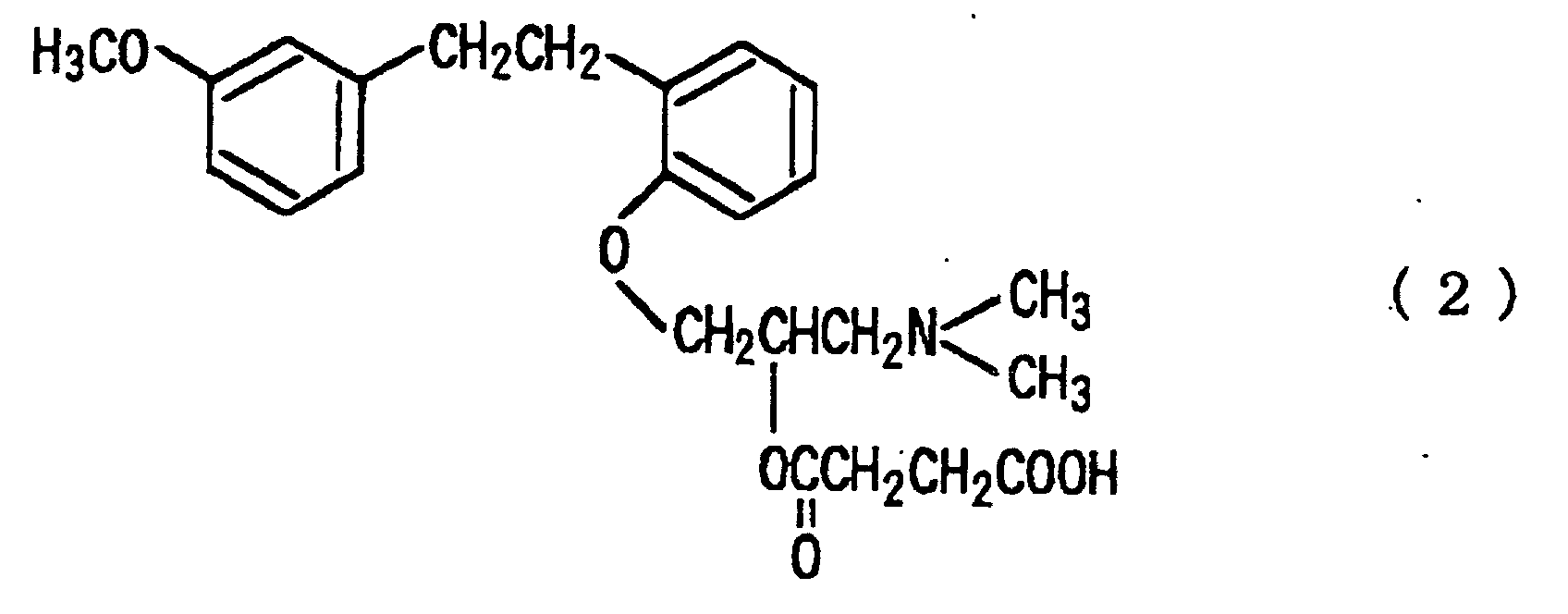
- aminopropoxybibenzyls having specific structures typified by sarpogrelate hydrochloride represented by the following formula (2): are effective as serotonin antagonists for improving various microcirculation disorders caused by thrombolic or vasoconstriction found in disorders of cerebral circulation failures, ischemic heart diseases or peripheral circulation failures and the like (Japanese Patent Unexamined Publication (Kokai) No. Hei 2-304022).
- TIA transient cerebral ischemic attack
- clopidogrel as the platelet antiaggregation agent is effective for preventing the recurrence of ischemic cerebrovascular failures (U.S. Patent No. 5576328).
- BMJ, 308, 81, 1994 reported that the reduction ratio of odds concerning stroke, myocardial infarction and vascular death against the control group in 142 trials is 27% (aspirin administration group: 25%; ticlopidine administration group: 33%; combination group of aspirin and ticlopidine: 28% and the like) in the whole group of administration of platelet antiaggregation agents, and among them, the reduction ratio of odds concerning non-fatal stroke against the control group in 18 trials performed subject to TIA patients or stroke patients is 23% according to Meta-Analysis by Antiplatelet Trialist (APT) Collaboration. Consequently, there is a limit to the efficacy (ratio of risk reduction)
- sarpogrelate hydrochloride binds selectively 5-HT2 serotonergic receptor (sometimes hereinafter referred to as receptor) in platelet and vascular smooth muscle, inhibits platelet aggregation, particularly platelet aggregation induced by serotonin (Thromb. Haemostas., 65, 415, 1991 and Jpn. Pharmacol. Ther., 19, S-593, 1991), inhibits serotonin-mediated vasoconstriction and vasoconstriction accompanied with platelet aggregation (Jpn. Pharmacol.
- sarpogrelate hydrochloride can be expected to exhibit the inhibitory effect against thrombus/thrombogenesis in the ischemic cerebrovascular failures selected from TIA and cerebral infarction by the different mode of action compared to aspirin exhibiting cyclooxygenase inhibitory activity as the main mode of action, and ticlopidine or clopidogrel exhibiting inhibitory activity against the suppression of adenylate cyclase or activating activity of adenylate cyclase as the main mode of action.
- the purpose of the present invention is to provide to new drugs for inhibiting thrombus/thrombogenesis.
- aminopropoxybibenzyls having specific structures known as 5-HT2 receptor antagonists are useful for inhibiting thrombus/thrombogenesis, especially efficacious for inhibiting thrombus/thrombogenesis in ischemic cerebrovascular failures such as TIA and cerebral infarction and the like, and completed the present invention.
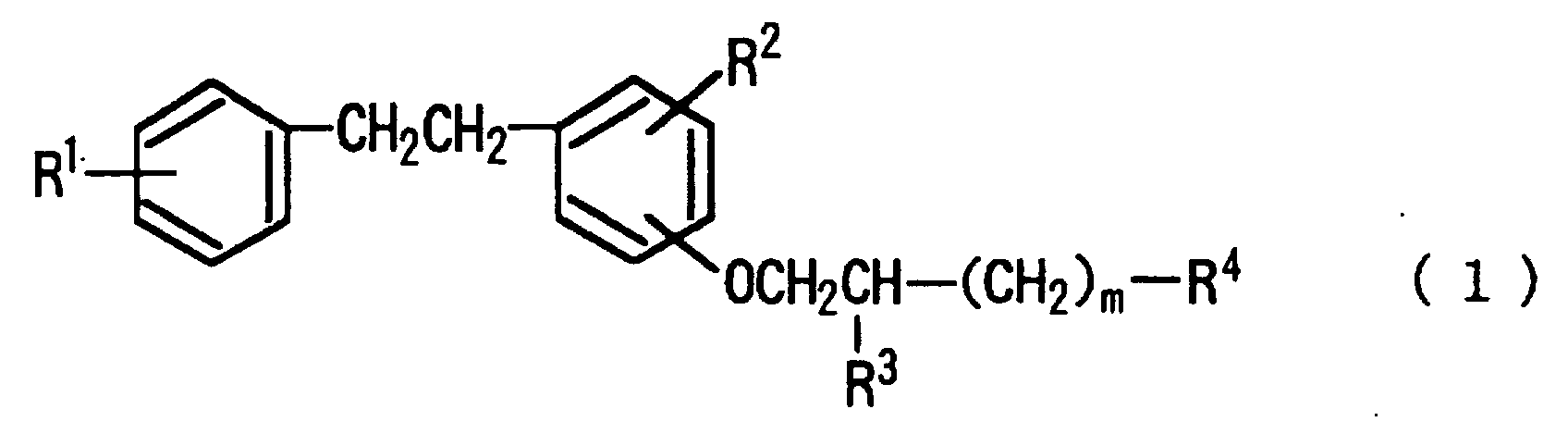
- the gist of the present lies in inhibitors of thrombus/thrombogenesis comprising as the active ingredient aminoalkoxybibenzyls represented by the following formula (1), pharmaceutically acceptable salts thereof and solvates thereof: wherein R 1 represents hydrogen atom, a halogen atom, a C 1 to C 5 alkoxy group or a C 2 to C 6 dialkylamino group; R 2 represents hydrogen atom, a halogen atom or a C 1 to C 5 alkoxy group; R 3 represents hydrogen atom, hydroxy group, -O-(CH 2 ) n -COOH, wherein n represents an integer of from 1 to 5, or -O-CO-(CH 2 ) l -COOH, wherein l represents an integer of from 1 to 3; R 4 represents -N(R 5 )(R 6 ), wherein R 5 and R 6 represent each independently hydrogen atom or a C 1 to C 8 alkyl group; or wherein A is a C 3 to C 5 alkylene
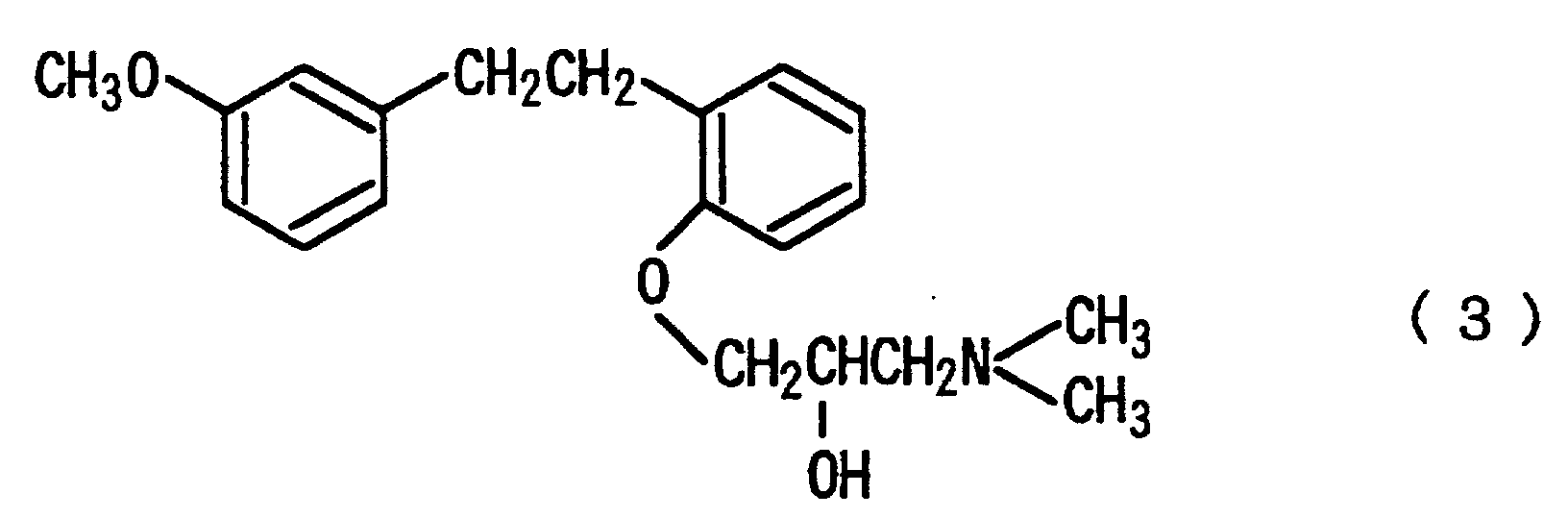
- the compounds represented by the formula (1) is selected from the compounds represented by the following formula (2), salts thereof and solvates thereof: that the salt is hydrochloride; that the compounds represented by the formula (1) is selected from the compounds represented by the following formula (3), salts thereof and solvates thereof: that inhibition of thrombus/thrombogenesis is the inhibition of thrombus/thrombogenesis in the diseases selected from angina pectoris, myocardial infaction and ischemic cerebrovascular failures; that the ischemic cerebrovascular failures are selected from transient cerebral ischemic attack and cerebral infarction; that angina pectoris is selected from transient chronic stable angina pectoris and unstable angina pectoris; that inhibitors of the present invention are combinedly administered to the patients already administered the drugs selected from platelet antiaggregation agents, anticoagulants and brain circulation metabolic stimulants; and that the inhibitors are administered to the patients administered the drugs selected from platelet antiaggregation agents, anticoagulants and cerebral circulation metabolism improving agents after discontinuation
- the gist of the present invention lies in improving agents for intermittent claudication which comprise administering drugs containing as the active ingredient aminoalkoxybibenzyls represented by the aforementioned formula (1), pharmaceutically acceptable salts thereof and solvates thereof and drugs selected from platelet antiaggregation agents other than the aforementioned drugs, anticoagulants and cerebral circulation metabolism improving agents.
- the preferable embodiments include that the compounds represented by the aforementioned formula (1) is the compound selected from the compound represented by the aforementioned formula (2), salts thereof and solvates thereof; that the salt is hydrochloride; that the compound represented by the aforementioned formula (1) is the compound selected the compounds represented by the aforementioned formula (3), salts thereof and solvates thereof; that the platelet antiaggregation agent is aspirin formulations or ticlopidine hydrochloride; and that the anticoagulant is warfarin potassium or urokinase
- the inhibitors of thrombus/thrombogenesis comprise as the active ingredient the aminoalkoxybibenzyls represented by the aforementioned formula (1) and pharmaceutically acceptable salts and solvates thereof.
- the salts encompass the broad meanings including esters.
- the compounds represented by the aforementioned formula (1) are effective for the improvement of various microcirculation disorders caused by thrombogenesis or vasoconstriction found in disorders of cerebral circulation failures, ischemic heart diseases or peripheral circulation failures and the like (Japanese Patent Unexamined Publication (Kokai) No. Hei 2-304022).
- Japanese Patent Unexamined Publication (Kokai) No. Hei 2-304022 Japanese Patent Unexamined Publication (Kokai) No. Hei 2-304022
- the compounds are useful for the inhibition of thrombus/thrombogenesis, particularly the inhibition of thrombus/thrombogenesis found in ischemic cerebrovascular failures such as TIA and cerebral infarction and the like.
- R 1 represents hydrogen atom; a halogen atom such as chlorine atom, fluorine atom and the like; a C 1 to C 5 alkoxy group such as methoxy group, ethoxy group, butoxy group and the like; or a C 2 to C 6 dialkylamino group such as dimethylamino group, diethylamino group, methylethylamino group and the like.
- R 2 represents hydrogen atom; a halogen atom such as chlorine atom, fluorine atom and the like; or a C 1 to C 5 alkoxy group such as methoxy group, ethoxy group, butoxy group and the like.
- R 3 represents hydrogen atom, hydroxy group, -O-(CH 2 ) n -COOH (wherein n represents an integer of from 1 to 5) such as -O-(CH 2 ) 2 -COOH or -O-(CH 2 ) 3 -COOH, or -O-CO-(CH 2 ) 1 -COOH (wherein l represents an integer of from 1 to 3) such as -O-CO-(CH 2 ) 2 -COOH or -O-CO-(CH 2 ) 3 -COOH.
- R 4 represents amino group or an amino group having 1 to 2 alkyl groups having 1 to 8 carbon atoms such as methylamino group, ethylamino group, butylamino group, hexylamino group, heptylamino group, dimethylamino group, diethylamino group, methylethylamino group and the like; or a 4 to 6 membered polymethyleneamino group which may be substituted by carboxyl group on the ring such as trimethyleneamino group, pentamethyleneamino group, 3-carboxypentamethyleneamino group and the like.
- the compounds wherein the aminoalkoxy group of -OCH 2 C(R 3 )H-(CH 2 ) m -R 4 binds to the 2-position of the phenyl group are preferable.
- R 1 is hydrogen atom, a C 1 to C 5 alkoxy group or a C 2 to C 6 dialkylamino group
- preferable R 2 is hydrogen atom
- preferable R 4 is an amino group having at least one alkyl group having 1 to 8 carbon atoms or a 4 to 6 membered polymethleneamino group of from trimethylene group to pentamethylene group
- m is an integer of 0 to 2.
- Particularly preferred compounds are Compound No. 15 (hereinafter referred to as M-1) wherein R 1 is methoxy group, R 2 is hydrogen atom, R 3 is hydroxyl group and R 4 is dimethylamino group, and the corresponding succinic acid ester (Compound No. 14).
- salts of the compounds represented by the formula (1) can also be used.
- Such salts forming acids include, for example, hydrochloric acid, hydrobromic acid, sulfuric acid, phosphoric acid, nitric acid, acetic acid, succinic acid, adipic acid, propionic acid, tartaric acid, maleic acid, oxalic acid, citric acid, benzoic acid, toluenesulfonic acid, methanesulfonic acid and the like.
- the solvates for example hydrates of the compounds represented by the formula (1) and salts thereof can be used.
- the particularly preferable compound is ( ⁇ )-1-[O-[2-(m-methoxyphenyl)ethyl]phenoxy]-3-(dimethylamino)-2-propyl hydrogensuccinate hydrochloride (optionally hereinafter referred to as sarpogrelate hydrochloride) represented by the following formula (4):
- the aminoalkoxybibenzyls of formula (1) used in the present invention are known compounds as mentioned above, and can easily be synthesized in accordance with the methods described in Japanese Unexamined Patent Publication (Kokai) No. Sho 58-32847 or other similar methods thereto.
- the compound of the aforementioned formula (4) is sold as the brand name of Anplag (registered trade mark) and Anplag per se can be used in the present invention.
- the aforementioned compounds use to the inhibition of thrombus/thrombogenesis.
- the aforementioned compounds are useful for the inhibition of thrombus/thrombogenesis in angina pectoris selected from chronic stable angina pectoris, unstable angina pectoris and the like, myocardial infarction, ischemic cerebrovascular failures such as TIA, cerebral infarction and the like.
- the drugs of the present invention can be combinedly administered to the patients who already administered drugs selected from platelet antiaggregation agents, anticoagulants and brain circulation metabolic stimulants and the drugs of the present invention can be administered to the patients who administered the drugs selected from platelet antiaggregation agents, anticoagulants and cerebral circulation metabolism improving agents after discontinuation of the administration of said drugs.
- the above mentioned platelet antiaggregation agents include an aspirin formulation (e.g. Bufferin or Bayaspirin), ticlopidine (e.g. Panaldine), cilostazol (e.g. Pletaal), dipyridamole (e.g. Persantin or Anginal), sodium ozagrel (e.g. Cataclot or Xanbon), ozagrel hydrochloride (e.g. Vega or Domenan), ethyl icosapentate (e.g. Epadel), beraprost sodium (e.g. Dorner or Procylin), an alprostadil formulation (e.g.
- aspirin formulation e.g. Bufferin or Bayaspirin
- ticlopidine e.g. Panaldine
- cilostazol e.g. Pletaal
- dipyridamole e.g. Persantin or Anginal
- sodium ozagrel e
- anticoagulants include warfarin potassium (e.g. Warfarin), argatroban (e.g. Novastan or Slonnon), a heparin formulation (e.g. Fragmin or Heparin sodium) and the like; fibrin solubilizing agents include urokinase (e.g. urokinase), nasaruplase (e.g. Thrombolyse), alteplase (e.g. Grtpa), tisokinase (e.g. Plasvata), nateplase (Milyzer), pamiteplase (Solinase), monteplase (Cleactor) and the like.
- warfarin potassium e.g. Warfarin
- argatroban e.g. Novastan or Slonnon
- a heparin formulation e.g. Fragmin or Heparin sodium
- fibrin solubilizing agents include urokinase (e.g.
- the brain circulation metabolic stimulants include citicoline (e.g. Ensign), adenosine triphosphate disodium (e.g.. Adetphos), cytochrome C (e.g. Cytochron-S), a combined formulation of cytochrome C (Cardiocrome), ⁇ -aminobutyric acid (Gammalon), TRH (Hirtonin), calcium hopantenate (Hopate), meclofenoxate hydrochloride (Lucidril), amantadine hydrochloride (Symmetrel), tiapride hydrochloride (Gramalil), sulpride (e.g.
- the compounds represented by the aforementioned formula (1) are known to be efficacious for improving the intermittent claudication (Japanese Patent Unexamined Publication (Kokai) No. Hei 9-286722). Further, the combination with platelet antiaggregation agents, anticoagulants and cerebral circulation metabolic stimulants is possible for inhibition of thrombus/thrombogenesis as mentioned above. Accordingly, is can be easily thought that the drugs comprising as the active ingredients the compounds represented by the aforementioned formula (1) are combinedly used with the drugs selected from platelet antiaggregation agents other than said drugs, anticoagulants and cerebral circulation metabolic stimulants.
- the preferable platelet antiaggregation agents other than said drugs to be combinedly used include aspirin formulations, ticlopidine hydrochloride and the like and the preferable anticoagulants include warfarin potassium, urokinase and the like.
- Any methods for administering the inhibitors of thrombus/thrombogenesis of the present invention can be employed.
- parenteral administration such as subcutaneous injection, intraveneous injection, intramuscular injection, intraperitoneal injection and the like, and also oral administration can be applied.
- the dose can be determined based on the age, condition of health, body weight of the patients, and, if treated simultaneously by other drugs, the type of such drugs, frequency of the treatment, the nature of the desired efficacy and the like.
- the daily dose of the active ingredient is 0.5 to 50 mg/kg of body weight, usually 1 to 30 mg/kg of body weight, and administered once or more.
- the compounds of the present invention are applied in the form of tablets, capsules, powders, liquid, elixir and the like, and for the parenteral administration, in the form of sterilized liquid forms such as liquids or suspensions or the like.
- sterilized liquid forms such as liquids or suspensions or the like.
- Conventional gelatin-type capsule can be used as the example of the solid carrier. Further, the active ingredients can be used with or without auxiliaries to form tablets or package powders.
- capsules, tablets and powders generally contain 5 to 95%, preferably, 5 to 90% by weight of the active ingredient.
- these dosage forms contain 5 to 500 mg, preferably 25 to 250 mg of the active ingredient per dose.
- Liquid carriers include water or oils originated from animals or vegetables such as petroleum, peanut oil, soybean oil, mineral oil, sesame oil and so on, or synthetic oils.
- liquid carrier saline, dextrose or similar sucrose, or glycols such as ethylene glycol, propylene glycol or polyethylene glycol are preferably used and particularly an injection using saline contains generally 0.5 to 20%, preferably, 1 to 10% by weight of the active ingredient.
- a 73-year-old female She occurred cerebral infarction and, ten months after the occurrence of TIA. She had not been treated with a drug after the onset of TIA. From about one month after the onset of TIA, administration of 300 mg/day of sarpogrelate hydrochloride was started. It was continued for 337 days and during this term, recurrence of TIA and cerebral infarction was not observed. Side effects also were not observed.
- Panaldine (Daiichi Pharmaceutical Co., Ltd.) was continued for about 5 months after recurrence until it was replaced with the administration of 150 mg/day of sarpogrelate hydrochloride. The administration was continued for 496 days and during this term, recurrence of TIA and cerebral infarction was not observed. Side effects also were not observed.
- the present invention can provide thrombus/thrombogenesis inhibitors, particularly thrombus/thrombogenesis inhibitors found in ischemic cerebrovascular failures selected from transient cerebral ischemic attack and cerebral infarction
Landscapes
- Health & Medical Sciences (AREA)
- Life Sciences & Earth Sciences (AREA)
- Veterinary Medicine (AREA)
- Chemical & Material Sciences (AREA)
- Public Health (AREA)
- Medicinal Chemistry (AREA)
- General Health & Medical Sciences (AREA)
- Animal Behavior & Ethology (AREA)
- Pharmacology & Pharmacy (AREA)
- Engineering & Computer Science (AREA)
- Bioinformatics & Cheminformatics (AREA)
- Epidemiology (AREA)
- General Chemical & Material Sciences (AREA)
- Organic Chemistry (AREA)
- Nuclear Medicine, Radiotherapy & Molecular Imaging (AREA)
- Chemical Kinetics & Catalysis (AREA)
- Gastroenterology & Hepatology (AREA)
- Cardiology (AREA)
- Biomedical Technology (AREA)
- Heart & Thoracic Surgery (AREA)
- Immunology (AREA)
- Proteomics, Peptides & Aminoacids (AREA)
- Urology & Nephrology (AREA)
- Vascular Medicine (AREA)
- Diabetes (AREA)
- Hematology (AREA)
- Acyclic And Carbocyclic Compounds In Medicinal Compositions (AREA)
- Pharmaceuticals Containing Other Organic And Inorganic Compounds (AREA)
Abstract
The inhibitors of thrombus/thrombogenesis comprising as the active ingredient
aminoalkoxybibenzyls represented by the following formula (I), pharmaceutically
acceptable salts thereof or solvates thereof.
 wherein R1, R2 and R3 represent each hydrogen, etc.; R4 represents -N(R5)(R6); and m is
an integer of from 0 to 5. The above drugs are particularly efficacious for inhibiting
thrombus/thrombogenesis in ischemic cerebrovascular failures selected from transient
cerebral ischemic attack and cerebral infaction.
wherein R1, R2 and R3 represent each hydrogen, etc.; R4 represents -N(R5)(R6); and m is
an integer of from 0 to 5. The above drugs are particularly efficacious for inhibiting
thrombus/thrombogenesis in ischemic cerebrovascular failures selected from transient
cerebral ischemic attack and cerebral infaction.
Description
This invention relates to a thrombus/thrombogenesis inhibitor.
It is known that aminopropoxybibenzyls having specific structures typified by
sarpogrelate hydrochloride represented by the following formula (2):
 are effective as serotonin antagonists for improving various microcirculation disorders
caused by thrombolic or vasoconstriction found in disorders of cerebral circulation
failures, ischemic heart diseases or peripheral circulation failures and the like
(Japanese Patent Unexamined Publication (Kokai) No. Hei 2-304022). However, it has
not been reported that these compounds are useful for the inhibition of
thrombus/thrombogenesis, particularly transient cerebral ischemic attack (optionally
hereinafter referred to as "TIA") as far as the present inventors know.
are effective as serotonin antagonists for improving various microcirculation disorders
caused by thrombolic or vasoconstriction found in disorders of cerebral circulation
failures, ischemic heart diseases or peripheral circulation failures and the like
(Japanese Patent Unexamined Publication (Kokai) No. Hei 2-304022). However, it has
not been reported that these compounds are useful for the inhibition of
thrombus/thrombogenesis, particularly transient cerebral ischemic attack (optionally
hereinafter referred to as "TIA") as far as the present inventors know.
On the contrary, clopidogrel as the platelet antiaggregation agent is effective
for preventing the recurrence of ischemic cerebrovascular failures (U.S. Patent No.
5576328). However, while there have been many reports on the preventive effects on
the onset of ischemic cerebrovascular failures by platelet antiaggregation agents, BMJ,
308, 81, 1994 reported that the reduction ratio of odds concerning stroke, myocardial
infarction and vascular death against the control group in 142 trials is 27% (aspirin
administration group: 25%; ticlopidine administration group: 33%; combination group of
aspirin and ticlopidine: 28% and the like) in the whole group of administration of
platelet antiaggregation agents, and among them, the reduction ratio of odds
concerning non-fatal stroke against the control group in 18 trials performed subject to
TIA patients or stroke patients is 23% according to Meta-Analysis by Antiplatelet
Trialist (APT) Collaboration. Consequently, there is a limit to the efficacy (ratio of risk
reduction) of the platelet antiaggregation agents against the prevention of onset
(recurrence) of ischemic cerebrovascular failures.
It is reported that sarpogrelate hydrochloride binds selectively 5-HT2
serotonergic receptor (sometimes hereinafter referred to as receptor) in platelet and
vascular smooth muscle, inhibits platelet aggregation, particularly platelet aggregation
induced by serotonin (Thromb. Haemostas., 65, 415, 1991 and Jpn. Pharmacol. Ther., 19,
S-593, 1991), inhibits serotonin-mediated vasoconstriction and vasoconstriction
accompanied with platelet aggregation (Jpn. Pharmacol. Ther., 19, S-611, 1991),
exhibits the improving effect on the deformability of red blood (Clinical Hemorheology,
12, 267, 1992) and exhibits improving effect peripheral circulation (J. Clin. Therap.
Med., 7, 1205, 1991 and J. Clin. Therap. Med., 7, 1747, 1991).
Namely, sarpogrelate hydrochloride can be expected to exhibit the inhibitory
effect against thrombus/thrombogenesis in the ischemic cerebrovascular failures
selected from TIA and cerebral infarction by the different mode of action compared to
aspirin exhibiting cyclooxygenase inhibitory activity as the main mode of action, and
ticlopidine or clopidogrel exhibiting inhibitory activity against the suppression of
adenylate cyclase or activating activity of adenylate cyclase as the main mode of action.
Consequently, the purpose of the present invention is to provide to new drugs
for inhibiting thrombus/thrombogenesis.
As a result that the present inventors have made intensive investigations to
solve the aforementioned problems, they have found that aminopropoxybibenzyls
having specific structures known as 5-HT2 receptor antagonists are useful for inhibiting
thrombus/thrombogenesis, especially efficacious for inhibiting
thrombus/thrombogenesis in ischemic cerebrovascular failures such as TIA and cerebral
infarction and the like, and completed the present invention.
Namely, the gist of the present lies in inhibitors of thrombus/thrombogenesis
comprising as the active ingredient aminoalkoxybibenzyls represented by the following
formula (1), pharmaceutically acceptable salts thereof and solvates thereof:
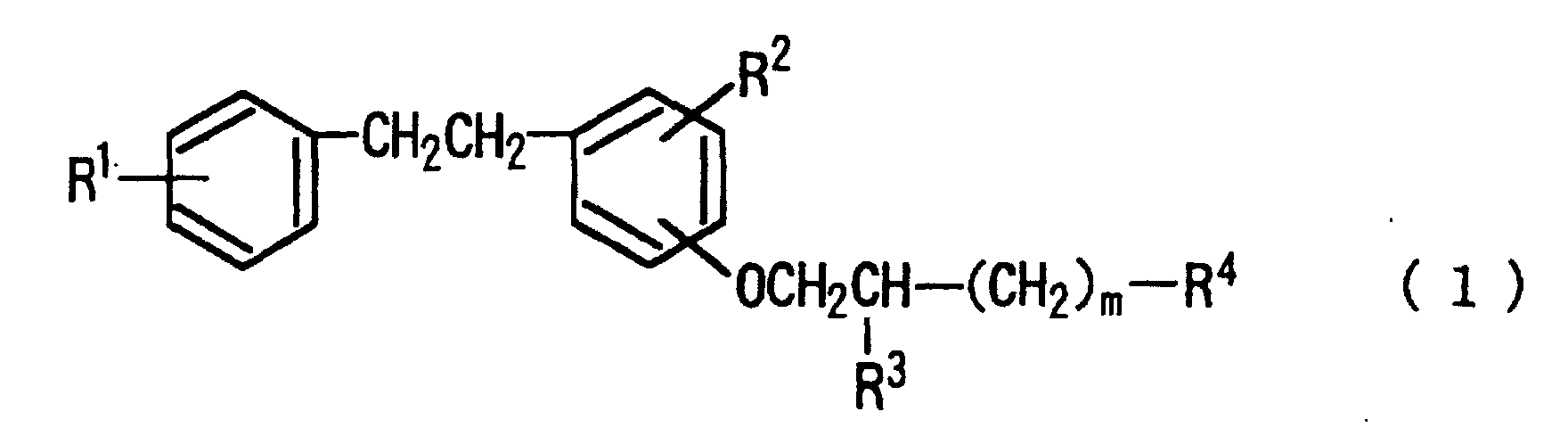 wherein R1 represents hydrogen atom, a halogen atom, a C1 to C5 alkoxy group or a C2
to C6 dialkylamino group; R2 represents hydrogen atom, a halogen atom or a C1 to C5
alkoxy group; R3 represents hydrogen atom, hydroxy group, -O-(CH2)n-COOH, wherein
n represents an integer of from 1 to 5, or -O-CO-(CH2)l-COOH, wherein l represents an
integer of from 1 to 3; R4 represents -N(R5)(R6), wherein R5 and R6 represent each
independently hydrogen atom or a C1 to C8 alkyl group; or
wherein R1 represents hydrogen atom, a halogen atom, a C1 to C5 alkoxy group or a C2
to C6 dialkylamino group; R2 represents hydrogen atom, a halogen atom or a C1 to C5
alkoxy group; R3 represents hydrogen atom, hydroxy group, -O-(CH2)n-COOH, wherein
n represents an integer of from 1 to 5, or -O-CO-(CH2)l-COOH, wherein l represents an
integer of from 1 to 3; R4 represents -N(R5)(R6), wherein R5 and R6 represent each
independently hydrogen atom or a C1 to C8 alkyl group; or
 wherein A is a C3 to C5 alkylene group which may be substituted by carboxyl group; m
represents an integer of from 0 to 5.
wherein A is a C3 to C5 alkylene group which may be substituted by carboxyl group; m
represents an integer of from 0 to 5.
As the preferably embodiment of the present invention, there includes that the
compounds represented by the formula (1) is selected from the compounds represented
by the following formula (2), salts thereof and solvates thereof:
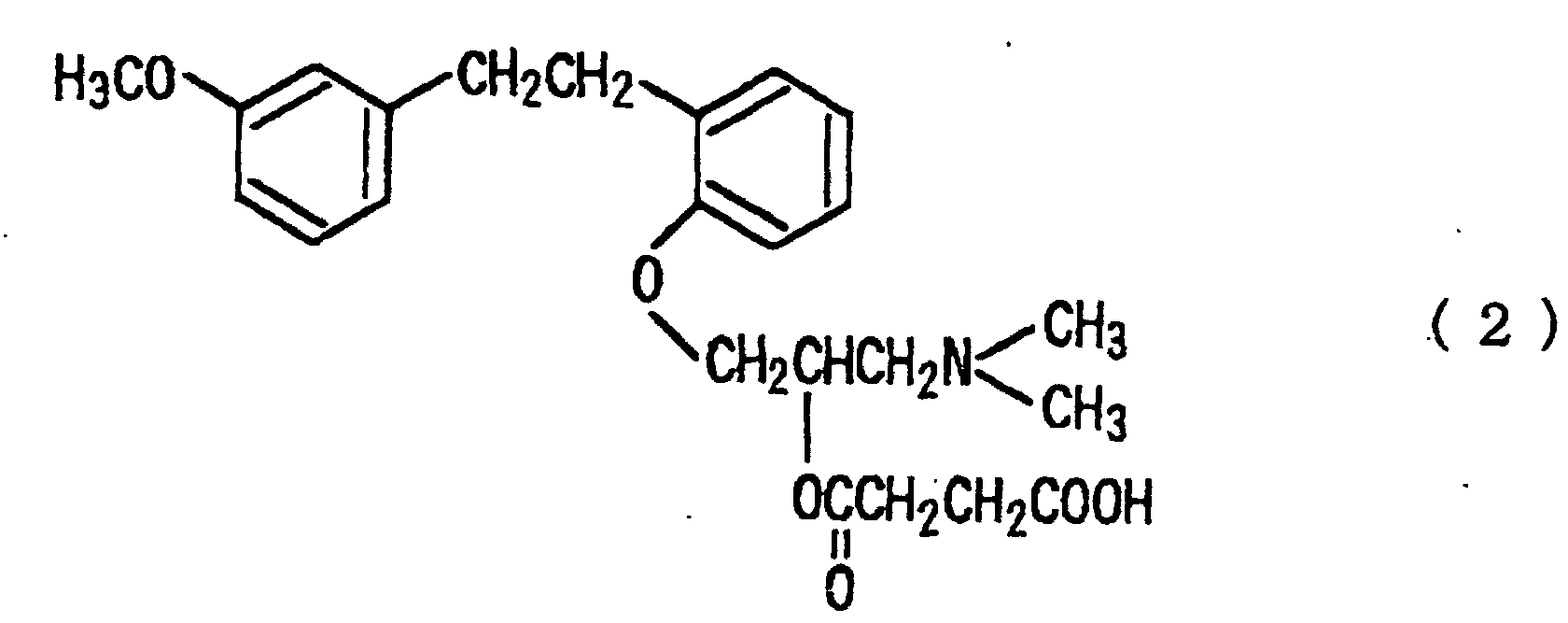 that the salt is hydrochloride; that the compounds represented by the formula (1) is
selected from the compounds represented by the following formula (3), salts thereof and
solvates thereof:
that the salt is hydrochloride; that the compounds represented by the formula (1) is
selected from the compounds represented by the following formula (3), salts thereof and
solvates thereof:
 that inhibition of thrombus/thrombogenesis is the inhibition of
thrombus/thrombogenesis in the diseases selected from angina pectoris, myocardial
infaction and ischemic cerebrovascular failures; that the ischemic cerebrovascular
failures are selected from transient cerebral ischemic attack and cerebral infarction;
that angina pectoris is selected from transient chronic stable angina pectoris and
unstable angina pectoris; that inhibitors of the present invention are combinedly
administered to the patients already administered the drugs selected from platelet
antiaggregation agents, anticoagulants and brain circulation metabolic stimulants; and
that the inhibitors are administered to the patients administered the drugs selected
from platelet antiaggregation agents, anticoagulants and cerebral circulation
metabolism improving agents after discontinuation of the administration of said drugs.
that inhibition of thrombus/thrombogenesis is the inhibition of
thrombus/thrombogenesis in the diseases selected from angina pectoris, myocardial
infaction and ischemic cerebrovascular failures; that the ischemic cerebrovascular
failures are selected from transient cerebral ischemic attack and cerebral infarction;
that angina pectoris is selected from transient chronic stable angina pectoris and
unstable angina pectoris; that inhibitors of the present invention are combinedly
administered to the patients already administered the drugs selected from platelet
antiaggregation agents, anticoagulants and brain circulation metabolic stimulants; and
that the inhibitors are administered to the patients administered the drugs selected
from platelet antiaggregation agents, anticoagulants and cerebral circulation
metabolism improving agents after discontinuation of the administration of said drugs.
Further, the gist of the present invention lies in improving agents for
intermittent claudication which comprise administering drugs containing as the active
ingredient aminoalkoxybibenzyls represented by the aforementioned formula (1),
pharmaceutically acceptable salts thereof and solvates thereof and drugs selected from
platelet antiaggregation agents other than the aforementioned drugs, anticoagulants
and cerebral circulation metabolism improving agents. The preferable embodiments
include that the compounds represented by the aforementioned formula (1) is the
compound selected from the compound represented by the aforementioned formula (2),
salts thereof and solvates thereof; that the salt is hydrochloride; that the compound
represented by the aforementioned formula (1) is the compound selected the compounds
represented by the aforementioned formula (3), salts thereof and solvates thereof; that
the platelet antiaggregation agent is aspirin formulations or ticlopidine hydrochloride;
and that the anticoagulant is warfarin potassium or urokinase
The present invention will be explained in more detail as follows:
The inhibitors of thrombus/thrombogenesis comprise as the active ingredient
the aminoalkoxybibenzyls represented by the aforementioned formula (1) and
pharmaceutically acceptable salts and solvates thereof. The salts encompass the broad
meanings including esters.
It is known that the compounds represented by the aforementioned formula (1)
are effective for the improvement of various microcirculation disorders caused by
thrombogenesis or vasoconstriction found in disorders of cerebral circulation failures,
ischemic heart diseases or peripheral circulation failures and the like (Japanese Patent
Unexamined Publication (Kokai) No. Hei 2-304022). However, it is surprisingly
unexpected results that the compounds are useful for the inhibition of
thrombus/thrombogenesis, particularly the inhibition of thrombus/thrombogenesis
found in ischemic cerebrovascular failures such as TIA and cerebral infarction and the
like.
The aforementioned formula (1) will further explained in more detail. In the
formula, R1 represents hydrogen atom; a halogen atom such as chlorine atom, fluorine
atom and the like; a C1 to C5 alkoxy group such as methoxy group, ethoxy group, butoxy
group and the like; or a C2 to C6 dialkylamino group such as dimethylamino group,
diethylamino group, methylethylamino group and the like. R2 represents hydrogen
atom; a halogen atom such as chlorine atom, fluorine atom and the like; or a C1 to C5
alkoxy group such as methoxy group, ethoxy group, butoxy group and the like. R3
represents hydrogen atom, hydroxy group, -O-(CH2)n-COOH (wherein n represents an
integer of from 1 to 5) such as -O-(CH2)2-COOH or -O-(CH2)3-COOH, or
-O-CO-(CH2)1-COOH (wherein l represents an integer of from 1 to 3) such as
-O-CO-(CH2)2-COOH or -O-CO-(CH2)3-COOH. R4 represents amino group or an amino
group having 1 to 2 alkyl groups having 1 to 8 carbon atoms such as methylamino group,
ethylamino group, butylamino group, hexylamino group, heptylamino group,
dimethylamino group, diethylamino group, methylethylamino group and the like; or a 4
to 6 membered polymethyleneamino group which may be substituted by carboxyl group
on the ring such as trimethyleneamino group, pentamethyleneamino group,
3-carboxypentamethyleneamino group and the like.
The preferable compounds used in the present invention among the compounds
of the aforementioned formula (1) are shown in Table 1:

Particularly, the compounds wherein the aminoalkoxy group of
-OCH2C(R3)H-(CH2)m-R4 binds to the 2-position of the phenyl group are preferable.
Preferable R1 is hydrogen atom, a C1 to C5 alkoxy group or a C2 to C6 dialkylamino
group, preferable R2 is hydrogen atom, preferable R4 is an amino group having at least
one alkyl group having 1 to 8 carbon atoms or a 4 to 6 membered polymethleneamino
group of from trimethylene group to pentamethylene group, and m is an integer of 0 to 2.
Particularly preferred compounds are Compound No. 15 (hereinafter referred
to as M-1) wherein R1 is methoxy group, R2 is hydrogen atom, R3 is hydroxyl group and
R4 is dimethylamino group, and the corresponding succinic acid ester (Compound No.
14).
In the present invention, pharmaceutically acceptable salts of the compounds
represented by the formula (1) can also be used. Such salts forming acids include, for
example, hydrochloric acid, hydrobromic acid, sulfuric acid, phosphoric acid, nitric acid,
acetic acid, succinic acid, adipic acid, propionic acid, tartaric acid, maleic acid, oxalic
acid, citric acid, benzoic acid, toluenesulfonic acid, methanesulfonic acid and the like.
Further, the solvates, for example hydrates of the compounds represented by the
formula (1) and salts thereof can be used. Among them, the particularly preferable
compound is (±)-1-[O-[2-(m-methoxyphenyl)ethyl]phenoxy]-3-(dimethylamino)-2-propyl
hydrogensuccinate hydrochloride (optionally hereinafter referred to as sarpogrelate
hydrochloride) represented by the following formula (4):

The aminoalkoxybibenzyls of formula (1) used in the present invention are
known compounds as mentioned above, and can easily be synthesized in accordance
with the methods described in Japanese Unexamined Patent Publication (Kokai) No.
Sho 58-32847 or other similar methods thereto. The compound of the aforementioned
formula (4) is sold as the brand name of Anplag (registered trade mark) and Anplag per
se can be used in the present invention.
In the present invention, the aforementioned compounds use to the inhibition
of thrombus/thrombogenesis. In the present invention, it has found that the
aforementioned compounds are useful for the inhibition of thrombus/thrombogenesis in
angina pectoris selected from chronic stable angina pectoris, unstable angina pectoris
and the like, myocardial infarction, ischemic cerebrovascular failures such as TIA,
cerebral infarction and the like. Further, in the present invention, the drugs of the
present invention can be combinedly administered to the patients who already
administered drugs selected from platelet antiaggregation agents, anticoagulants and
brain circulation metabolic stimulants and the drugs of the present invention can be
administered to the patients who administered the drugs selected from platelet
antiaggregation agents, anticoagulants and cerebral circulation metabolism improving
agents after discontinuation of the administration of said drugs.
The above mentioned platelet antiaggregation agents include an aspirin
formulation (e.g. Bufferin or Bayaspirin), ticlopidine (e.g. Panaldine), cilostazol (e.g.
Pletaal), dipyridamole (e.g. Persantin or Anginal), sodium ozagrel (e.g. Cataclot or
Xanbon), ozagrel hydrochloride (e.g. Vega or Domenan), ethyl icosapentate (e.g. Epadel),
beraprost sodium (e.g. Dorner or Procylin), an alprostadil formulation (e.g. Liple, Palux
or Prostandin) and the like; anticoagulants include warfarin potassium (e.g. Warfarin),
argatroban (e.g. Novastan or Slonnon), a heparin formulation (e.g. Fragmin or Heparin
sodium) and the like; fibrin solubilizing agents include urokinase (e.g. urokinase),
nasaruplase (e.g. Thrombolyse), alteplase (e.g. Grtpa), tisokinase (e.g. Plasvata),
nateplase (Milyzer), pamiteplase (Solinase), monteplase (Cleactor) and the like. The
brain circulation metabolic stimulants include citicoline (e.g. Ensign), adenosine
triphosphate disodium (e.g.. Adetphos), cytochrome C (e.g. Cytochron-S), a combined
formulation of cytochrome C (Cardiocrome), γ-aminobutyric acid (Gammalon), TRH
(Hirtonin), calcium hopantenate (Hopate), meclofenoxate hydrochloride (Lucidril),
amantadine hydrochloride (Symmetrel), tiapride hydrochloride (Gramalil), sulpride (e.g.
Abilit or Dogmatyl), blood of young cattle-activated-substances (Solcoseryl), ifenprodil
tartrate (Aponol or Cerocral), Vinpocetine (Caran), Nicergoline (Sermion), ibudilast
(Ketas), dihydroergotoxine mesilate (e.g. Epos), nizofenone fumarate (Ekonal), fasudil
hydrochloride (Eril) and the like.
The compounds represented by the aforementioned formula (1) are known to be
efficacious for improving the intermittent claudication (Japanese Patent Unexamined
Publication (Kokai) No. Hei 9-286722). Further, the combination with platelet
antiaggregation agents, anticoagulants and cerebral circulation metabolic stimulants is
possible for inhibition of thrombus/thrombogenesis as mentioned above. Accordingly,
is can be easily thought that the drugs comprising as the active ingredients the
compounds represented by the aforementioned formula (1) are combinedly used with
the drugs selected from platelet antiaggregation agents other than said drugs,
anticoagulants and cerebral circulation metabolic stimulants. The preferable platelet
antiaggregation agents other than said drugs to be combinedly used include aspirin
formulations, ticlopidine hydrochloride and the like and the preferable anticoagulants
include warfarin potassium, urokinase and the like.
Any methods for administering the inhibitors of thrombus/thrombogenesis of
the present invention can be employed.
Namely, parenteral administration such as subcutaneous injection,
intraveneous injection, intramuscular injection, intraperitoneal injection and the like,
and also oral administration can be applied.
The dose can be determined based on the age, condition of health, body weight
of the patients, and, if treated simultaneously by other drugs, the type of such drugs,
frequency of the treatment, the nature of the desired efficacy and the like.
In general, the daily dose of the active ingredient is 0.5 to 50 mg/kg of body
weight, usually 1 to 30 mg/kg of body weight, and administered once or more.
For the oral administration, the compounds of the present invention are
applied in the form of tablets, capsules, powders, liquid, elixir and the like, and for the
parenteral administration, in the form of sterilized liquid forms such as liquids or
suspensions or the like. When the above forms are applied, non-toxic pharmaceutical
carries of solids or liquids can be contained in the composition.
Conventional gelatin-type capsule can be used as the example of the solid
carrier. Further, the active ingredients can be used with or without auxiliaries to form
tablets or package powders.
These capsules, tablets and powders generally contain 5 to 95%, preferably, 5 to
90% by weight of the active ingredient.
That is, these dosage forms contain 5 to 500 mg, preferably 25 to 250 mg of the
active ingredient per dose.
Liquid carriers include water or oils originated from animals or vegetables
such as petroleum, peanut oil, soybean oil, mineral oil, sesame oil and so on, or
synthetic oils.
As the liquid carrier, saline, dextrose or similar sucrose, or glycols such as
ethylene glycol, propylene glycol or polyethylene glycol are preferably used and
particularly an injection using saline contains generally 0.5 to 20%, preferably, 1 to 10%
by weight of the active ingredient.
The present invention will be explained according to the following examples in
more detail. However, the scope of the invention is not limited to these examples. In
the following example, sarpogrelate hydrochloride used in the followings is applied
Anplag (registered trademark) sold by Mitsubishi Pharma Corporation.
A 69-year-old female. She occurred transient cerebral ischemic attack (TIA).
From three days after the onset, treatment with 160 mg/day of Cataclot (Ono
Pharmaceutical Co., Ltd.) was started and it was continued for 2 weeks. Nine days
after the completion of the administration of Cataclot (Ono Pharmaceutical Co., Ltd.),
administration of 75 mg/day of sarpogrelate hydrochloride was started. The
administration was continued for 337 days and during this term, neither recurrence of
TIA nor onset of cerebral infarction was observed. Side effects also were not observed.
A 42-year-old male. He occurred TIA. He had not been treated with a drug
after the onset, but administration of 150 mg/day of sarpogrelate hydrochloride was
started from 20 days after the onset. The administration was continued for 337 days
and during this term, neither recurrence of TIA nor onset of cerebral infarction was
observed. Side effects also were not observed.
A 57-year-old female. She occurred TIA. From three days after the onset,
treatment with 81 mg/day of Kids Bufferin (Lion Corporation) was started and this
treatment was continued for about one month. The drug was then replaced with 300
mg/day of sarpogrelate hydrochloride and administration was continued for 337 days.
During this term, neither recurrence of TIA nor onset of cerebral infarction was
observed. Side effects also were not observed.
A 57-year-old male. He occurred cerebral infarction. From the day after the
onset, he had been treated with 200 mg/day of Panaldine (Daiichi Pharmaceutical Co.,
Ltd.), 60 mg/day of Sabromin (Sankyo Co., Ltd.) and 600 mg/day of Comelian (Kowa Co.,
Ltd.). About 6 years after the onset of cerebral infarction, he occurred TIA and
administration of the above-described three drugs was terminated. From 15 days after
the onset of TIA, administration of 150 mg/day of sarpogrelate hydrochloride was
started. It was continued for 337 days and during this term, neither recurrence of TIA
nor onset of cerebral infarction was observed. Side effects also were not observed.
A 73-year-old female. She occurred cerebral infarction and, ten months after
the occurrence of TIA. She had not been treated with a drug after the onset of TIA.
From about one month after the onset of TIA, administration of 300 mg/day of
sarpogrelate hydrochloride was started. It was continued for 337 days and during this
term, recurrence of TIA and cerebral infarction was not observed. Side effects also
were not observed.
A 73-year-old male. He occurred cerebral infarction. He had been treated
with 200 mg/day of Panaldine (Daiichi Pharmaceutical Co., Ltd.), but administration of
Panaldine (Daiichi Pharmaceutical Co., Ltd.) was stopped because he occurred TIA
about 4 years and 7 months after the onset of cerebral infarction. On that day of the
onset of TIA, the drug was replaced with 150 mg/day of sarpogrelate hydrochloride.
The administration was continued for 337 days and during this term, recurrence of TIA
and cerebral infarction was not observed. Side effects also were not observed.
A 68-year-old male. He occurred cerebral infarction. Although he had been
treated with 300 mg/day of Panaldine (Daiichi Pharmaceutical Co., Ltd.), he occurred
TIA three years after the onset of cerebral infarction. From that day of the onset of
TIA, he was hospitalized for one week and subjected to intravenous drip containing 1 g
of Nicholin H (Takeda Chemical Industries, Ltd.) and administration of 300 mg/day of
Panaldine (Daiichi Pharmaceutical Co., Ltd.). The drug was then replaced with 75
mg/day of sarpogrelate hydrochloride and the administration was continued for 337
days. During this term, recurrence of TIA and cerebral infarction was not observed.
Side effects also were not observed.
A 44-year-old male. He occurred cerebral infarction. He had been treated
with 200 mg/day of Panaldine (Daiichi Pharmaceutical Co., Ltd.). He occurred TIA two
years after the onset of cerebral infarction. From that day of the onset of TIA,
administration of 200 mg/day of Panaldine (Daiichi Pharmaceutical Co., Ltd.) and, in
addition, 162 mg/day of Kids Bufferin (Lion Corporation) was started. From about 2
months after the onset of TIA, the administration was replaced with that of 75 mg/day
of sarpogrelate hydrochloride. The administration was continued for 337 days and
during this term, recurrence of TIA and cerebral infarction was not observed. Side
effects also were not observed.
A 73-year-old male. He occurred cerebral infarction. He had been treated
with an antihypertensive and Warfarin (Eisai Co., Ltd.). From eight years after the
onset, the drug was replaced with 300 mg/day of Panaldine (Daiichi Pharmaceutical Co.,
Ltd.), but about 10 months after the administration of Panaldine (Daiichi
Pharmaceutical Co., Ltd.), cerebral infarction recurred. Immediately after the
recurrence, he was treated with fluid for supplementation, urokinase and 300 mg/day of
Panaldine (Daiichi Pharmaceutical Co., Ltd.). Administration of 300 mg of Panaldine
(Daiichi Pharmaceutical Co., Ltd.) was continued for about 5 months after recurrence
until it was replaced with the administration of 150 mg/day of sarpogrelate
hydrochloride. The administration was continued for 496 days and during this term,
recurrence of TIA and cerebral infarction was not observed. Side effects also were not
observed.
The present invention can provide thrombus/thrombogenesis inhibitors,
particularly thrombus/thrombogenesis inhibitors found in ischemic cerebrovascular
failures selected from transient cerebral ischemic attack and cerebral infarction
The present application was filed with claiming the conventional priority based
on Japanese Patent Application No. 2001-292855.
Claims (15)
- An inhibitor of thrombus/thrombogenesis which comprises as an active ingredient an aminoalkoxybibenzyl represented by the following formula (1) or a pharmaceutically acceptable salt thereof and a solvate thereof:wherein R1 represents hydrogen atom, a halogen atom, a C1 to C5 alkoxy group or a C2 to C6 dialkylamino group; R2 represents hydrogen atom, a halogen atom or a C1 to C5 alkoxy group; R3 represents hydrogen atom, hydroxy group, -O-(CH2)n-COOH, wherein n represents an integer of from 1 to 5, or -O-CO-(CH2)l-COOH, wherein l represents an integer of from 1 to 3; R4 represents -N(R5)(R6), wherein R5 and R6 represent each independently hydrogen atom or a C1 to C8 alkyl group; or
 wherein A is a C3 to C5 alkylene group which may be substituted by carboxyl group; m represents an integer of from 0 to 5.
- The inhibitor of thrombus/thrombogenesis according to Claim 1, wherein the compounds represented by the formula (1) is the compound selected from the compound represented by the formula (2), salts thereof and solvates thereof.
- The inhibitor of thrombus/thrombogenesis according to Claim 2, wherein the salt is hydrochloride.
- The inhibitor of thrombus/thrombogenesis according to any one of Claims 1 to 3, wherein the compound represented by the formula (1) is the compound selected the compounds represented by the following formula (3), salts thereof and solvates thereof.

- The inhibitor of thrombus/thrombogenesis according to any one of Claims 1 to 4, wherein the inhibition of thrombus/thrombogenesis is the inhibition of thrombus/thrombogenesis in the diseases selected from angina pectoris, and myocardial infaction and ischemic cerebrovascular failures.
- The inhibitor of thrombus/thrombogenesis according to Claim 5, wherein the ischemic cerebrovascular failures are selected from transient cerebral ischemic attack and cerebral infarction.
- The inhibitor of thrombus/thrombogenesis according to Claim 5, wherein angina pectoris is selected from transient chronic stable angina pectoris and unstable angina pectoris.
- The inhibitor of thrombus/thrombogenesis according to any one of Claims 1 to 7, wherein said inhibitors are combinedly administered to the patients already administered the drugs selected from platelet antiaggregation agents, anticoagulants and brain circulation metabolic stimulants.
- The inhibitor of thrombus/thrombogenesis according to any one of Claims 1 to 7, wherein said inhibitors are administered to the patients administered the drugs selected from platelet antiaggregation agents, anticoagulants and cerebral circulation metabolism improving agents after discontinuation of the administration of said drugs.
- An improving agent for intermittent claudication which comprises administering drugs containing as the active ingredient aminoaloxybibenzyls represented by the following formula (1), pharmaceutically acceptable salts thereof and solvates thereof and drugs selected from platelet antiaggregation agents other than the aforementioned drugs, anticoagulants and cerebral circulation metabolism improving agents.wherein R1 represents hydrogen atom, a halogen atom, a C1 to C5 alkoxy group or a C2 to C6 dialkylamino group; R2 represents hydrogen atom, a halogen atom or a C1 to C5 alkoxy group; R3 represents hydrogen atom, hydroxy group, -O-(CH2)n-COOH, wherein n represents an integer of from 1 to 5, or -O-CO-(CH2)l-COOH, wherein l represents an integer of from 1 to 3; R4 represents -N(R5)(R6), wherein R5 and R6 represent each independently hydrogen atom or a C1 to C8 alkyl group; or
 wherein A is a C3 to C5 alkylene group which may be substituted by carboxyl group; m represents an integer of from 0 to 5.
- The improving agent for intermittent claudication according to Claim 10, wherein the compounds represented by the formula (1) is the compound selected from the compound represented by the following formula (2), salts thereof and solvates thereof.

- The improving agent for intermittent claudication according to Claim 11, wherein the salt is hydrochloride.
- The improving agent for intermittent claudication according to any one of Claims 10 to 12, wherein the compound represented by the formula (1) is the compound selected the compounds represented by the following formula (3), salts thereof and solvates thereof.
- The improving agent for intermittent claudication according to any one of Claims 10 to 13, wherein the platelet antiaggregation agent is aspirin or ticlopidine hydrocholide.
- The improving agent for intermittent claudication according to any one of Claims 10 to 13, wherein the anticoagulant is warfarin potassium or urokinase
Applications Claiming Priority (3)
| Application Number | Priority Date | Filing Date | Title |
|---|---|---|---|
| JP2001292855 | 2001-09-26 | ||
| JP2001292855 | 2001-09-26 | ||
| PCT/JP2002/009937 WO2003026636A1 (en) | 2001-09-26 | 2002-09-26 | Thrombus/thrombogenesis inhibitors |
Publications (2)
| Publication Number | Publication Date |
|---|---|
| EP1430890A1 true EP1430890A1 (en) | 2004-06-23 |
| EP1430890A4 EP1430890A4 (en) | 2007-01-17 |
Family
ID=19114744
Family Applications (1)
| Application Number | Title | Priority Date | Filing Date |
|---|---|---|---|
| EP02772928A Withdrawn EP1430890A4 (en) | 2001-09-26 | 2002-09-26 | THROMBUS / THROMBOGENESIS INHIBITORS |
Country Status (5)
| Country | Link |
|---|---|
| US (1) | US20040242687A1 (en) |
| EP (1) | EP1430890A4 (en) |
| JP (1) | JPWO2003026636A1 (en) |
| CA (1) | CA2460777A1 (en) |
| WO (1) | WO2003026636A1 (en) |
Cited By (1)
| Publication number | Priority date | Publication date | Assignee | Title |
|---|---|---|---|---|
| FR2873294A1 (en) * | 2004-07-26 | 2006-01-27 | Greenpharma Sa Sa | ASSOCIATION OF DRUGS |
Families Citing this family (4)
| Publication number | Priority date | Publication date | Assignee | Title |
|---|---|---|---|---|
| JP2005053890A (en) * | 2003-07-22 | 2005-03-03 | Mitsubishi Pharma Corp | A preventive and / or therapeutic agent for diseases caused by adiponectin concentration decrease and / or C-reactive protein concentration increase and / or IL-18 concentration increase. |
| WO2005072724A1 (en) * | 2004-02-02 | 2005-08-11 | Mitsubishi Pharma Corporation | Preventive and/or therapeutic agent for chronic cerebral circulatory failure |
| ES2524320T3 (en) * | 2007-01-17 | 2014-12-05 | Mochida Pharmaceutical Co., Ltd. | Composition for the prevention or treatment of disease associated with thrombus or embolus |
| CN104739819A (en) * | 2007-11-09 | 2015-07-01 | 田边三菱制药株式会社 | Novel Preparation |
Family Cites Families (7)
| Publication number | Priority date | Publication date | Assignee | Title |
|---|---|---|---|---|
| JPS5832847A (en) * | 1981-08-20 | 1983-02-25 | Mitsubishi Chem Ind Ltd | (3-aminopropoxy)bibenzyls |
| JPH02304022A (en) * | 1989-05-18 | 1990-12-17 | Mitsubishi Kasei Corp | Serotonin antagonistic agent |
| DE69502539T2 (en) * | 1994-03-18 | 1998-10-01 | Senju Pharma Co | Sarpogrelate-containing ophthalmic preparations for lowering intraocular pressure |
| JP4063341B2 (en) * | 1994-07-06 | 2008-03-19 | メイ株式会社 | Glaucoma treatment and intraocular pressure-lowering agent |
| JP4568385B2 (en) * | 1996-04-18 | 2010-10-27 | 三菱化学株式会社 | Intermittent claudication |
| DE69710258T2 (en) * | 1996-06-17 | 2002-08-22 | Mitsubishi Chemical Corp., Tokio/Tokyo | Agent for accelerating the flow of tears containing a serotonin ligand, in particular aminoalkoxybibenzyls |
| JP2000247882A (en) * | 1999-02-26 | 2000-09-12 | Ajinomoto Co Inc | Intermittent claudication-treating agent |
-
2002
- 2002-09-26 CA CA002460777A patent/CA2460777A1/en not_active Abandoned
- 2002-09-26 EP EP02772928A patent/EP1430890A4/en not_active Withdrawn
- 2002-09-26 WO PCT/JP2002/009937 patent/WO2003026636A1/en not_active Ceased
- 2002-09-26 US US10/489,822 patent/US20040242687A1/en not_active Abandoned
- 2002-09-26 JP JP2003530273A patent/JPWO2003026636A1/en not_active Withdrawn
Cited By (2)
| Publication number | Priority date | Publication date | Assignee | Title |
|---|---|---|---|---|
| FR2873294A1 (en) * | 2004-07-26 | 2006-01-27 | Greenpharma Sa Sa | ASSOCIATION OF DRUGS |
| WO2006018538A1 (en) * | 2004-07-26 | 2006-02-23 | Greenpharma | Medicament for the treatment of central nervous system disorders |
Also Published As
| Publication number | Publication date |
|---|---|
| US20040242687A1 (en) | 2004-12-02 |
| EP1430890A4 (en) | 2007-01-17 |
| JPWO2003026636A1 (en) | 2005-01-06 |
| WO2003026636A1 (en) | 2003-04-03 |
| CA2460777A1 (en) | 2003-04-03 |
Similar Documents
| Publication | Publication Date | Title |
|---|---|---|
| US5977099A (en) | Pharmaceutical composition comprising mirtazapine and one or more selective serotonin reuptake inhibitors | |
| PT660707E (en) | AMANTADINE AND RELATED COMPOUNDS FOR USE IN THE TREATMENT OF PERIPHERAL NEUROPATHY | |
| AU2007304588A1 (en) | Use of hypothermia inducing drugs to treat ischemia | |
| US12527766B2 (en) | Methods of treating acute coronary syndrome using 3,3′-diindolylmethane | |
| EA015122B1 (en) | New pharmaceutical compositions for treatment of thrombosis | |
| CA2413705A1 (en) | Use of meloxicam in combination with an antiplatelet agent for treatment of acute coronary syndrome and related conditions | |
| KR20160043117A (en) | Compositions and therapeutic methods for accelerated plaque regression | |
| WO2009124552A2 (en) | Use of a combination of hypothermia inducing drugs | |
| KR20200026925A (en) | Statin Compositions and Methods Used to Treat Synuclein Lesions | |
| US20040242687A1 (en) | Thrombus/thrombogenesis inhibitors | |
| EP4335516A2 (en) | Acyl sulfonamides that are bcl family antagonists for use in clinical management of conditions caused or mediated by senescent cells and for treating cancer | |
| KR20010041605A (en) | Pharmaceutical Composition For Prophylaxis and Therapy of Diseases Associated with Ocular Fundus Tissue Cytopathy | |
| CN100577170C (en) | Application of pyrazolopyrimidine Src family tyrosine kinase inhibitors in the preparation of drugs for the treatment of myocardial infarction | |
| US20060160793A1 (en) | Use of meloxicam in combination with an antiplatelet agent for treatment of acute coronary syndrome and related conditions | |
| ES2950461T3 (en) | Preventive and/or therapeutic agent containing a pyridylaminoacetic acid compound for the treatment of a disease involving very high intraocular pressure | |
| JP2005206590A (en) | Sodium channel site 2 selective inhibitor | |
| KR102194015B1 (en) | Intravenous antiviral treatments | |
| EP0813873A1 (en) | Pharmaceutical composition comprising mirtazapine and one or more selective serotonin reuptake inhibitors | |
| KR20040004431A (en) | Use of melagatran for manufacture of a medicament for the treatment of ischemic disorders | |
| US20050267076A1 (en) | Method for improving cognitive function | |
| JP2004250441A (en) | Platelet large aggregate formation inhibitor | |
| JP4672368B2 (en) | Use of epothilone derivatives for the treatment of hyperparathyroidism | |
| BR112020012521A2 (en) | therapeutic agent for glaucoma comprising fp agonist and beta-blocker | |
| MX2008013140A (en) | Intramuscular antiviral treatments. | |
| JP2007238609A (en) | Medicament for prevention of ischemic disease in diabetic patients |
Legal Events
| Date | Code | Title | Description |
|---|---|---|---|
| PUAI | Public reference made under article 153(3) epc to a published international application that has entered the european phase |
Free format text: ORIGINAL CODE: 0009012 |
|
| 17P | Request for examination filed |
Effective date: 20040316 |
|
| AK | Designated contracting states |
Kind code of ref document: A1 Designated state(s): AT BE BG CH CY CZ DE DK EE ES FI FR GB GR IE IT LI LU MC NL PT SE SK TR |
|
| AX | Request for extension of the european patent |
Extension state: AL LT LV MK RO SI |
|
| A4 | Supplementary search report drawn up and despatched |
Effective date: 20061214 |
|
| STAA | Information on the status of an ep patent application or granted ep patent |
Free format text: STATUS: THE APPLICATION HAS BEEN WITHDRAWN |
|
| 18W | Application withdrawn |
Effective date: 20070130 |