EP1428526A1 - Formulation for fast dissolution of lipophilic compounds - Google Patents
Formulation for fast dissolution of lipophilic compounds Download PDFInfo
- Publication number
- EP1428526A1 EP1428526A1 EP02080260A EP02080260A EP1428526A1 EP 1428526 A1 EP1428526 A1 EP 1428526A1 EP 02080260 A EP02080260 A EP 02080260A EP 02080260 A EP02080260 A EP 02080260A EP 1428526 A1 EP1428526 A1 EP 1428526A1
- Authority
- EP
- European Patent Office
- Prior art keywords
- sugar
- pharmaceutical composition
- composition according
- lipophilic compound
- mixture
- Prior art date
- Legal status (The legal status is an assumption and is not a legal conclusion. Google has not performed a legal analysis and makes no representation as to the accuracy of the status listed.)
- Withdrawn
Links
Images

Classifications
-
- A—HUMAN NECESSITIES
- A61—MEDICAL OR VETERINARY SCIENCE; HYGIENE
- A61K—PREPARATIONS FOR MEDICAL, DENTAL OR TOILETRY PURPOSES
- A61K31/00—Medicinal preparations containing organic active ingredients
- A61K31/33—Heterocyclic compounds
- A61K31/395—Heterocyclic compounds having nitrogen as a ring hetero atom, e.g. guanethidine or rifamycins
- A61K31/435—Heterocyclic compounds having nitrogen as a ring hetero atom, e.g. guanethidine or rifamycins having six-membered rings with one nitrogen as the only ring hetero atom
- A61K31/44—Non condensed pyridines; Hydrogenated derivatives thereof
- A61K31/4422—1,4-Dihydropyridines, e.g. nifedipine, nicardipine
-
- A—HUMAN NECESSITIES
- A61—MEDICAL OR VETERINARY SCIENCE; HYGIENE
- A61K—PREPARATIONS FOR MEDICAL, DENTAL OR TOILETRY PURPOSES
- A61K31/00—Medicinal preparations containing organic active ingredients
- A61K31/33—Heterocyclic compounds
- A61K31/395—Heterocyclic compounds having nitrogen as a ring hetero atom, e.g. guanethidine or rifamycins
- A61K31/55—Heterocyclic compounds having nitrogen as a ring hetero atom, e.g. guanethidine or rifamycins having seven-membered rings, e.g. azelastine, pentylenetetrazole
- A61K31/551—Heterocyclic compounds having nitrogen as a ring hetero atom, e.g. guanethidine or rifamycins having seven-membered rings, e.g. azelastine, pentylenetetrazole having two nitrogen atoms, e.g. dilazep
- A61K31/5513—1,4-Benzodiazepines, e.g. diazepam or clozapine
-
- A—HUMAN NECESSITIES
- A61—MEDICAL OR VETERINARY SCIENCE; HYGIENE
- A61K—PREPARATIONS FOR MEDICAL, DENTAL OR TOILETRY PURPOSES
- A61K9/00—Medicinal preparations characterised by special physical form
- A61K9/20—Pills, tablets, discs, rods
- A61K9/2095—Tabletting processes
-
- A—HUMAN NECESSITIES
- A61—MEDICAL OR VETERINARY SCIENCE; HYGIENE
- A61K—PREPARATIONS FOR MEDICAL, DENTAL OR TOILETRY PURPOSES
- A61K9/00—Medicinal preparations characterised by special physical form
- A61K9/14—Particulate form, e.g. powders, Processes for size reducing of pure drugs or the resulting products, Pure drug nanoparticles
- A61K9/141—Intimate drug-carrier mixtures characterised by the carrier, e.g. ordered mixtures, adsorbates, solid solutions, eutectica, co-dried, co-solubilised, co-kneaded, co-milled, co-ground products, co-precipitates, co-evaporates, co-extrudates, co-melts; Drug nanoparticles with adsorbed surface modifiers
- A61K9/145—Intimate drug-carrier mixtures characterised by the carrier, e.g. ordered mixtures, adsorbates, solid solutions, eutectica, co-dried, co-solubilised, co-kneaded, co-milled, co-ground products, co-precipitates, co-evaporates, co-extrudates, co-melts; Drug nanoparticles with adsorbed surface modifiers with organic compounds
-
- A—HUMAN NECESSITIES
- A61—MEDICAL OR VETERINARY SCIENCE; HYGIENE
- A61K—PREPARATIONS FOR MEDICAL, DENTAL OR TOILETRY PURPOSES
- A61K9/00—Medicinal preparations characterised by special physical form
- A61K9/14—Particulate form, e.g. powders, Processes for size reducing of pure drugs or the resulting products, Pure drug nanoparticles
- A61K9/141—Intimate drug-carrier mixtures characterised by the carrier, e.g. ordered mixtures, adsorbates, solid solutions, eutectica, co-dried, co-solubilised, co-kneaded, co-milled, co-ground products, co-precipitates, co-evaporates, co-extrudates, co-melts; Drug nanoparticles with adsorbed surface modifiers
- A61K9/146—Intimate drug-carrier mixtures characterised by the carrier, e.g. ordered mixtures, adsorbates, solid solutions, eutectica, co-dried, co-solubilised, co-kneaded, co-milled, co-ground products, co-precipitates, co-evaporates, co-extrudates, co-melts; Drug nanoparticles with adsorbed surface modifiers with organic macromolecular compounds
-
- A—HUMAN NECESSITIES
- A61—MEDICAL OR VETERINARY SCIENCE; HYGIENE
- A61K—PREPARATIONS FOR MEDICAL, DENTAL OR TOILETRY PURPOSES
- A61K9/00—Medicinal preparations characterised by special physical form
- A61K9/20—Pills, tablets, discs, rods
- A61K9/2004—Excipients; Inactive ingredients
- A61K9/2013—Organic compounds, e.g. phospholipids, fats
- A61K9/2018—Sugars, or sugar alcohols, e.g. lactose, mannitol; Derivatives thereof, e.g. polysorbates
-
- A—HUMAN NECESSITIES
- A61—MEDICAL OR VETERINARY SCIENCE; HYGIENE
- A61K—PREPARATIONS FOR MEDICAL, DENTAL OR TOILETRY PURPOSES
- A61K9/00—Medicinal preparations characterised by special physical form
- A61K9/20—Pills, tablets, discs, rods
- A61K9/2004—Excipients; Inactive ingredients
- A61K9/2022—Organic macromolecular compounds
- A61K9/205—Polysaccharides, e.g. alginate, gums; Cyclodextrin
Definitions
- the present invention relates to a pharmaceutical formulation for fast release of lipophilic compounds.
- lipophilic drugs exhibit a low and irregular bioavailability when they are administered orally. This is caused by their poor water solubility, which results in slow dissolution in the aqueous gut lumen. Because of their manufacturing difficulties and stability problems, only few formulations that tackle this problem have been brought to the market. However, the need for formulations containing lipophilic compounds has increased drastically during the last decade, mainly due to the scanning methods for finding new chemical entities with biological activity. Therefore, one of the most active areas in pharmaceutical engineering is the development of a formulation with a high and reproducible absorption into the human or animal body.
- Solid dispersions of lipophilic compounds typically consist of a water-soluble matrix that incorporates very small amorphous particles or even separate molecules of the lipophilic compound.
- a technique to make solid dispersions is the fusion technique wherein both the matrix material (carrier) and drug are heated. The drug is dissolved in or melted together with the matrix material. Because miscibility of drug and matrix material is often problematic, the mixture often tends to phase separate.( Greenhalgh, D.J.; Williams, A.C.; Timmins, P.; York, P., J. of Pharmaceutical Sciences, 1999, 88, 1182-1190). E.g. during cooling the melt bears the risk of phase separation to yield two liquid phases or crystals of drug, carrier or both.
- Surfactants like Gelucire® can be used to overcome this problem (Damian, F.; Blaton, N.;Kinget, R.; Van den Mooter, G., International J. of Pharmaceutics, 2002,, 244, 87-98).
- fusion techniques only apply to heat stable materials, for example for sugar matrices heat-stability at temperatures of about 170 °C or higher has been found to be required.
- the solvent technique requires dissolution of both drug and carrier in one solution followed by drying, e.g. spray drying, vacuum drying, super critical drying or freeze drying.
- drying e.g. spray drying, vacuum drying, super critical drying or freeze drying.
- Solubilisers like cyclodextrins or surfactants may be used to increase the aqueous solubility of the drug significantly, however a high amount of solubilisers is generally required. This results in solid dispersions that mainly consist of solubilisers and hence largely affect the physical properties of the matrix. Besides solubilisers are not always tolerated well in the body or may even be toxic.
- Chloroform Betageri, G.V.; Makarla, K.R., International J. of Pharmaceutics, 1995, 126 , 155-160 or dichloromethane are frequently used to dissolve both drug and matrix (in particular poly(vinyl-pyrrolidone) (PVP)) simultaneously.
- PVP poly(vinyl-pyrrolidone)
- These solvents are impractical for freeze drying and commonly used in vacuum drying, preferably at elevated temperatures. With this drying method there is an increased risk for phase separation.
- these solvents only dissolve matrix materials of a relatively low polarity very well, which limits the number of matrix materials that can be used with these solvents. Besides, due to their toxicity, problems can be expected with residual solvents still present after drying.
- the present invention relates to a pharmaceutical composition
- a pharmaceutical composition comprising at least one lipophilic compound and at least one glass of a sugar, a sugar alcohol, a mixture of sugars, a mixture of sugar alcohols or a mixture of at least one sugar and at least one sugar alcohol, wherein the lipophilic compound is incorporated in the sugar glass.
- a lipophilic compound in a composition according to the invention has further been found to have a good stability against degradation, e.g. by oxidation, and/or isomerisation.
- a lipophilic compound as used herein is defined as a hydrophobic compound - more in particular a hydrophobic organic compound - having a solubility in an aqueous environment at 37 °C of less than 33 g/L.
- the term lipophilic compound is used to describe a compound that has a solubility of less than 33 g/L under the conditions, in particular the pH, at the site in vivo (e.g. in the stomach, in the intestines, subcutaneous) where the compound is intended to become available to the body (in particular where the compound is dissolved to be absorbed by the body).
- a lipophilic compound intended to dissolve in the stomach has a solubility below 33 g/l in gastric fluid (pH of about 1-3) and a lipophilic compound to be dissolved in the intestines has a solubility below 33 g/l in intestinal fluid (typically up to about pH 7.4).
- the incorporation is preferably such that the lipophilic compound is mono-molecularly distributed over the matrix or dispersed in nano- or microparticles.
- the lipohilic compound is typically present in an amorphous state.
- a micro- or nano-particle of the lipophilic compound may be solid, such as crystalline or amorphous.
- sugar as used hereafter is intended to include oligo-sugars, poly-sugars and sugar alcohols (also known as polyols).
- the sugar glass serves as a matrix for the lipophilic compound or compounds.
- the sugar glass can comprise any amorphous pharmaceutically acceptable sugar and/or derivative thereof. Suitable are for example oligo- and polysaccharides, including sugar alcohols thereof. Examples of such oligo- and polysaccharides are oligo- and polysaccharides based upon glucose units (e.g. dextran, maltodextrin) fructose units (e.g. inulin, levan), mannose units (e.g.
- mannan and oligo- and polysaccharides based upon galactose units (e.g. galactan).
- galactose units e.g. galactan
- any processable sugar material can be used as a matrix. It has however been found by the inventors that it is favourable when the sugar has a relatively low dissolution rate in water, in comparison to trehalose and to sucrose. It has been found that when compositions wherein the matrix (mainly) consists of relatively fast dissolving sugars, at least a partial crystallisation of the lipophilic compound occurs. After this lipophilic compound is crystallised, dissolution of the crystals has been found to be very slow. It has also been found that this in turn may be detrimental to the effective uptake in the body.
- the inventors found that the lipophilic compound in a pharmaceutical composition according to the invention is solubilised more effectively when the sugar dissolves relatively slow. Furthermore, thus the absorption of the lipophilic compound in the body can be improved.
- the effective dissolution rate of a lipophilic compound is very well in an aqueous medium, in case the dissolving time of a matrix material is at least 2 min, preferably at least 5 min. Very good results have been achieved with a matrix material that has a dissolving time of 30 min of less.
- the dissolving time for the matrix material as used herein is the time as determined by a standard dissolution test on a Prolabo dissolution apparatus (as indicated in Example 1: in 1000 ml water at 37 °C, 100 rpm, with a tablet with a 9 mm diameter and 1.3-1.5 mm thickness, porosity of 20-25%).
- the dynamic viscosity in the boundary layer of the tablet during dissolution is at least 60 mPa ⁇ s, as measured by Brookfield rotation viscosimetry.
- the number average degree of polymerisation (DP)of the sugar molecules of the sugar glass is preferably at least 5, more preferably at least 6, even more preferably at least 10.
- the DP is readily determinable by HPLC.
- the DP will generally be less than 1000. Good results have been achieved with a composition wherein the sugar molecules of the sugar glass have a DP of 60 or less, preferably 30 or less, more preferably 25 or less. Very good results have been achieved with a composition wherein the sugar molecules of the sugar glass have a DP of 11-24.
- a sugar having a glass transition temperature of at least 40 °C more in particular a sugar having a glass transition temperature of at least 40 °C after being saturated with moisture (after exposure to a humid environment).
- the upper limit for the glass temperature is not particularly critical and depends inter alia on the type of sugar and the DP.
- sugar glasses such as fructans typically have a Tg of up to about 170 °C, although it is within the scope of the invention to that the sugar-glass has a higher Tg, e.g. of 200 °C or even higher.
- a lipophilic compound in a composition according to the invention can be a natural or a synthetic compound.
- the present invention has been found particularly suitable for providing a pharmaceutical composition comprising a synthetic lipophilic compound.
- the present invention has been found particular suitable for providing a pharmaceutical composition comprising a crystallisable lipophilic compound, in particular a compound that is capable of forming crystals when precipitating from a polar solution such as an aqueous solution, using a conventional technique.
- a pharmaceutical composition comprising a crystallisable lipophilic compound, in particular a compound that is capable of forming crystals when precipitating from a polar solution such as an aqueous solution, using a conventional technique.
- a pharmaceutical composition comprising a crystallisable lipophilic compound, it has been found that the dissolution rate is negatively affected due to the formation a crystallised lipophilic compound phase during dissolution of the composition.
- a pharmaceutical compound only comprising one or more non-crystallisable lipophilic compounds - such as cannabinoids, in particular such as ⁇ 9 -tetrahydrocannabinol (THC) - as the lipophilic compound(s) incorporated in the sugar glass.
- cannabinoids in particular such as ⁇ 9 -tetrahydrocannabinol (THC) - as the lipophilic compound(s) incorporated in the sugar glass.
- THC has been reported to be non-crystalisable in Goani, Y.; Mechoulam, R., J. of the American Chemical Society, 1971, 93 , 217-224).
- a lipophilic compound in a composition according to the invention is preferably a biologically active compound.
- Suitable examples thereof are antipsychotic drugs, preferably haloperidol, triflapromazine, flufenazine, olanzapine, clozapine or a functional derivative thereof; benzodiazepines, preferably lorazepam, flurazepam, triazolam, clonazepam, chlordiazepoxide, temazepam, oxazepam, clorazepate, diazepam, alprazolam, prazepam, loprazolam, lormetazepam, nitrazepam, triazolam or a functional derivative thereof; calcium antagonists, preferably barnidipine, nifedipine or a functional derivative thereof; corticosteroids, preferably methyl prednisolon, triamcinolon, budesonide, flixotide and dexametha
- the amount of lipohilic compound(s) in a composition according to the present invention is preferably up to 63 wt. % based upon the weight of sugar glass and lipophilic compound(s), more preferably up to 50 wt. %.
- the amount of lipophilic compound(s) is preferably at least 0.0001 wt. %, more preferably at least 0.001 wt %.
- compositions according to the invention may further comprise one or more additives such as flavouring agents, colourants, binders, fillers, filler-binders, lubricants, desintegration aids and/or other pharmaceutically acceptable additives.
- additives such as flavouring agents, colourants, binders, fillers, filler-binders, lubricants, desintegration aids and/or other pharmaceutically acceptable additives.
- the total amount of additives is for practical reasons preferably less than 99.95 wt. % based upon the total weight of the composition.
- desintegration aids, fillers, filler-binders and/or binders in a formulation according to the invention may be advantageous.
- composition according to the invention essentially consisting of the sugar glass and lipophilic compound(s).
- a pharmaceutical composition according to the present invention may be processed into any form, in particular into any solid form.
- a composition according to the invention is a tablet such as a normal oral tablet, a sublingual tablet, a buccal tablet or an orally disintegrating or dissolving tablet, a capsule, a lozenge, an enema, a suppository, a product for transdermal administration, a powder for pulmonary administration, or a rod or suspension for subcutaneous or intramuscular administration.
- a composition according to the invention can in principle be made in any way.
- the sugar and lipophilic compound are dissolved in a solvent (simultaneously or by first dissolving the separate compounds and thereafter mixing the solutions), and then dried.
- a preferred technique for preparation of a composition according to the invention is the so-called co-solvent technique, wherein sugar and lipophilic compound are first dissolved in separate solvents, which solvents are then mixed, whereafter the mixture is dried, e.g. by freeze-drying, spray drying, vacuum drying or super critical drying.
- An advantage of the co-solvent technique is the possibility to prepare a preparation with a high load of lipophilic compound in comparison to a single solvent technique, such as a technique wherein water is used as the solvent.
- the solvent for the sugar can be any solvent in which the sugar dissolves to a sufficient degree and is miscible with the co-solvent.
- the solvent preferably has a high vapour pressure and in case of freeze-drying as the drying technique preferably a high melting point.
- matrix-solvents are dimethylsulfoxide and water. Water is particularly preferred, inter alia since it exhibits a high vapour pressure and allows a fast drying time.
- the lipophilic compound is preferably dissolved in a different solvent (the co-solvent) than the solvent used for the sugar.
- a suitable co-solvent should therefore be capable of dissolving the drug of interest, it should preferably be miscible with the matrix-solvent (such as water) and preferably exhibit a high vapour pressure. In case the drying technique is freeze-drying it is further practical that the co-solvent has a high melting point.
- suitable solvents are for example co-solvents selected from the group consisting of dimethylsulfoxide, N,N-dimethylformamide, acetonitrile, ethyl acetates and C1-C6 alcohols. Highly preferred are C2-C4 alcohols, e.g. ethanol, n-propyl alcohol and tertiary butyl alcohol, of which tertiary butyl alcohol (TBA) is particularly preferred.
- the sugar in the solvent for the matrix and the lipophilic compound in co-solvent are then mixed, after which the solvents are evaporated to obtain a sugar glass with the lipophilic compound incorporated therein.
- the ratios between the lipophilic compound, the solvent, water and the sugar should be chosen in such a way that a sufficiently stable solution is obtained, the skilled person will know how to choose such conditions on the basis of common general knowledge.
- a surfactant e.g. Tween® 80 and/or solubiliser (e.g. a cyclodextrin or gelucire®) may be added, but highly satisfactory results have been obtained in the absence of a surfactant and a solubiliser.
- a solution is considered to be sufficiently stable if no clouding is visible in the solution within the time of processing, e.g. within 10 min, in case of freeze-drying.
- the solution is preferably clear until frozen.
- the maximum water content after drying is preferably less than 3 wt %.
- Freeze drying is highly preferred, inter alia because it has been found to be suitable for preparing a composition with a very good stability, in combination with a desirable release of lipophilic compound(s).
- the freeze drying is carried out below the Tg' of the freeze concentrated fraction (as indicated in D.L. Teagarden, Eur. J. Pharm Sci, 15, 115-133, 2002).
- Tg' the freeze concentrated fraction
- Additives other than the surfactant/solubiliser, which may optionally be present in a pharmaceutical composition according to the invention are preferably added to the composition after the composition has been dried.
- the present invention further relates to the use of a sugar glass in the manufacture of a medicament in solid form, comprising as active agent a lipophilic compound for increasing the bioavailability or dissolution rate of the active agent.
- a sugar glass in the manufacture of a medicament in solid form, comprising as active agent a lipophilic compound for increasing the bioavailability or dissolution rate of the active agent.
- Preferred sugar glasses and preferred lipophilic compounds are those described herein.
- sucrose, trehalose, and two inulins with degrees of polymerization (DP) of 11 respectively 24 containing diazepam or nifedipine as lipophilic compounds Dissolution of sugar glass dispersions with sucrose, trehalose, and two inulins with degrees of polymerization (DP) of 11 respectively 24 containing diazepam or nifedipine as lipophilic compounds.
- DP degrees of polymerization
- TSA tertiary butanol
- Diazepam Diazepam
- Nifedipine trehalose
- sucrose Poly-(oxyethylene sorbitan) Tween®80
- Anthrone reagent Two Inulins, type TEX 803! and HD001111, having a degree of polymerization (DP) of 24 and 11, respectively, were provided by Sensus, Roosendaal, The Netherlands.
- the water used was demineralised in all cases.
- the frozen solutions were lyophilized (condensor temperature - 53°C) at a shelf temperature of -35°C and a pressure of 0.220 mbar for 1 day. Subsequently, the shelf temperature was gradually raised to 20°C while the pressure was decreased to 0.05 mbar for another day. After removing the samples from the freeze drier, they were placed in a vacuum desiccator at room temperature for 1 day.
- Dissolution was performed on a Prolabo dissolution apparatus, Rowa Techniek B.V.. All experiments were conducted at 37°C in 1000 mL under constant stirring with 100 rpm. Tablets prepared from physical mixtures and solid dispersions were analysed in triplicate. Diazepam tablets were dissolved in water. Nifedipine tablets were dissolved in 1%w/v Tween80 in water to ensure sink conditions.
- Diazepam and Nifedipine were analysed spectrophotometrically at 230 nm and 340 nm respectively.
- the Anthrone assay was used. (Scott et al. 1953) Samples were taken at appropriate intervals during the dissolution. During diazepam experiments 1.00mL was taken from the dissolution medium mixed with 2.00 mL Anthrone reagent 0.1%w/v in sulfuric acid. Due to the enthalpy of mixing, the sample was heated to its boiling point. The boiling mixture was then cooled to room temperature. After 45 minutes the sample was vortexed and 200 mL of sample was analysed in the plate reader at 630 nm. Nifedipine samples of 0.25 mL were diluted with 0.75mL water before they were submitted to the Anthrone assay. In every Anthrone assay a calibration curve of the appropriate sugar in the appropriate medium was established.
- TEX refers to inulin with a DP of 24, "HD” to inulin with a DP of 11, “SD” to the solid dispersion and "PM” to the physical mixture.
- Both inulins show fast release of diazepam from the solid dispersions.
- the inulins dissolve in the same rate as the diazepam.
- the diazepam is dissolved slower.
- the inulin DP24 dissolution seems to be accelerated in case of a solid dispersion.
Landscapes
- Health & Medical Sciences (AREA)
- Chemical & Material Sciences (AREA)
- Medicinal Chemistry (AREA)
- Pharmacology & Pharmacy (AREA)
- Epidemiology (AREA)
- Life Sciences & Earth Sciences (AREA)
- Animal Behavior & Ethology (AREA)
- General Health & Medical Sciences (AREA)
- Public Health (AREA)
- Veterinary Medicine (AREA)
- Pharmaceuticals Containing Other Organic And Inorganic Compounds (AREA)
- Medicinal Preparation (AREA)
Abstract
The present invention relates to a pharmaceutical composition
comprising at least one lipophilic compound and at least one glass of a sugar, a
sugar alcohol, a mixture of sugars, a mixture of sugar alcohols or a mixture of
at least one sugar and at least one sugar alcohol, wherein the lipophilic
compound is incorporated in the sugar glass. The present invention further
relates to a method for manufacturing such a pharmaceutical composition.
Description
The present invention relates to a pharmaceutical formulation for
fast release of lipophilic compounds.
Many lipophilic drugs exhibit a low and irregular bioavailability
when they are administered orally. This is caused by their poor water
solubility, which results in slow dissolution in the aqueous gut lumen. Because
of their manufacturing difficulties and stability problems, only few
formulations that tackle this problem have been brought to the market.
However, the need for formulations containing lipophilic compounds has
increased drastically during the last decade, mainly due to the scanning
methods for finding new chemical entities with biological activity. Therefore,
one of the most active areas in pharmaceutical engineering is the development
of a formulation with a high and reproducible absorption into the human or
animal body.
It has been suggested to use solid dispersions of lipophilic
compounds. Solid dispersions typically consist of a water-soluble matrix that
incorporates very small amorphous particles or even separate molecules of the
lipophilic compound.
A technique to make solid dispersions is the fusion technique
wherein both the matrix material (carrier) and drug are heated. The drug is
dissolved in or melted together with the matrix material. Because miscibility
of drug and matrix material is often problematic, the mixture often tends to
phase separate.( Greenhalgh, D.J.; Williams, A.C.; Timmins, P.; York, P., J. of
Pharmaceutical Sciences, 1999, 88, 1182-1190). E.g. during cooling the melt
bears the risk of phase separation to yield two liquid phases or crystals of
drug, carrier or both. Surfactants like Gelucire® can be used to overcome this
problem (Damian, F.; Blaton, N.;Kinget, R.; Van den Mooter, G., International
J. of Pharmaceutics, 2002,, 244, 87-98). Furthermore, fusion techniques only
apply to heat stable materials, for example for sugar matrices heat-stability at
temperatures of about 170 °C or higher has been found to be required.
Another technique to produce solid dispersions is the solvent
technique. The solvent technique requires dissolution of both drug and carrier
in one solution followed by drying, e.g. spray drying, vacuum drying, super
critical drying or freeze drying. Several strategies can be distinguished. The
use of extremely low drug concentrations is a way to dissolve both carrier and
drug in water, but requires the evaporation of tremendous amounts of solvent,
making the process uneconomic and impractical. Solubilisers like cyclodextrins
or surfactants may be used to increase the aqueous solubility of the drug
significantly, however a high amount of solubilisers is generally required. This
results in solid dispersions that mainly consist of solubilisers and hence largely
affect the physical properties of the matrix. Besides solubilisers are not always
tolerated well in the body or may even be toxic.
Another strategy is to use one solvent in which both drug and carrier
are dissolved. Chloroform Betageri, G.V.; Makarla, K.R., International J. of
Pharmaceutics, 1995, 126, 155-160 or dichloromethane (Damian et al. 2002,
vide supra) are frequently used to dissolve both drug and matrix (in particular
poly(vinyl-pyrrolidone) (PVP)) simultaneously. These solvents are impractical
for freeze drying and commonly used in vacuum drying, preferably at elevated
temperatures. With this drying method there is an increased risk for phase
separation. Furthermore, these solvents only dissolve matrix materials of a
relatively low polarity very well, which limits the number of matrix materials
that can be used with these solvents. Besides, due to their toxicity, problems
can be expected with residual solvents still present after drying.
Another strategy is the use of supercritical solvent, which involves a
complicated procedure.
Another strategy for the dissolution of both drug and carrier is the
use of a co-solvent. Water and ethanol, or methylene chloride and ethanol are
examples encountered in literature. However, because of the low melting
temperature of ethanol, mixtures with ethanol are in practice not considered to
be suitable for normal freeze drying. Again, other drying methods bear the risk
of phase separation in the co-solvent mixture, because the two solvents will in
general evaporate not equally fast.
It is an object of the present invention to provide a pharmaceutical
composition, in particular a solid composition, comprising a lipophilic
compound, which is adequatily solubilised in an aqueous solution, preferably
in such a way that this compound is rapidly dissolved in an aqueous solution,
in particular in such a way that it is rapidly dissolved in vivo. It is in
particular an object to provide such a formulation comprising a crystallisable
lipophilic compound.
Accordingly, the present invention relates to a pharmaceutical
composition comprising at least one lipophilic compound and at least one glass
of a sugar, a sugar alcohol, a mixture of sugars, a mixture of sugar alcohols or
a mixture of at least one sugar and at least one sugar alcohol, wherein the
lipophilic compound is incorporated in the sugar glass.
Thus it has been found possible to provide a formulation with a
desirable release pattern, resulting in a very good absorption after application
to a human or animal.
A lipophilic compound in a composition according to the invention
has further been found to have a good stability against degradation, e.g. by
oxidation, and/or isomerisation.
A lipophilic compound as used herein is defined as a hydrophobic
compound - more in particular a hydrophobic organic compound - having a
solubility in an aqueous environment at 37 °C of less than 33 g/L. In
particular, the term lipophilic compound is used to describe a compound that
has a solubility of less than 33 g/L under the conditions, in particular the pH,
at the site in vivo (e.g. in the stomach, in the intestines, subcutaneous) where
the compound is intended to become available to the body (in particular where
the compound is dissolved to be absorbed by the body). Thus, for example a
lipophilic compound intended to dissolve in the stomach, has a solubility below
33 g/l in gastric fluid (pH of about 1-3) and a lipophilic compound to be
dissolved in the intestines has a solubility below 33 g/l in intestinal fluid
(typically up to about pH 7.4).
The incorporation is preferably such that the lipophilic compound is
mono-molecularly distributed over the matrix or dispersed in nano- or microparticles.
In case of mono-molecular distribution the lipohilic compound is
typically present in an amorphous state. A micro- or nano-particle of the
lipophilic compound may be solid, such as crystalline or amorphous.
The term sugar as used hereafter is intended to include oligo-sugars,
poly-sugars and sugar alcohols (also known as polyols). The sugar glass serves
as a matrix for the lipophilic compound or compounds. In principle, the sugar
glass can comprise any amorphous pharmaceutically acceptable sugar and/or
derivative thereof. Suitable are for example oligo- and polysaccharides,
including sugar alcohols thereof. Examples of such oligo- and polysaccharides
are oligo- and polysaccharides based upon glucose units (e.g. dextran,
maltodextrin) fructose units (e.g. inulin, levan), mannose units (e.g. mannan)
and oligo- and polysaccharides based upon galactose units (e.g. galactan).
Particularly suitable are non-reducing sugars. Preferred are fructans, such as
those mainly containing β-1, 2 bonds as in inulin or mainly containing β-2,6
bonds as in levan. Suitable fructans are e.g. those referred to in WO 00/78817.
In principle any processable sugar material can be used as a matrix.
It has however been found by the inventors that it is favourable when the
sugar has a relatively low dissolution rate in water, in comparison to trehalose
and to sucrose. It has been found that when compositions wherein the matrix
(mainly) consists of relatively fast dissolving sugars, at least a partial
crystallisation of the lipophilic compound occurs. After this lipophilic
compound is crystallised, dissolution of the crystals has been found to be very
slow. It has also been found that this in turn may be detrimental to the
effective uptake in the body.
Accordingly, the inventors found that the lipophilic compound in a
pharmaceutical composition according to the invention is solubilised more
effectively when the sugar dissolves relatively slow. Furthermore, thus the
absorption of the lipophilic compound in the body can be improved.
As a result, it has been found possible to improve the dissolution
rate of a lipophilic compound by selecting a matrix material based upon the
solubility of the lipophilic compound. In particular, it has been found that the
effective dissolution rate of a lipophilic compound is very well in an aqueous
medium, in case the dissolving time of a matrix material is at least 2 min,
preferably at least 5 min. Very good results have been achieved with a matrix
material that has a dissolving time of 30 min of less. The dissolving time for
the matrix material as used herein is the time as determined by a standard
dissolution test on a Prolabo dissolution apparatus (as indicated in Example 1:
in 1000 ml water at 37 °C, 100 rpm, with a tablet with a 9 mm diameter and
1.3-1.5 mm thickness, porosity of 20-25%).
Further it has been found advantageous to provide a composition
with a matrix that exhibits a high viscosity both inside the tablet and/or in the
boundary layer around the tablet during dissolving. Preferably, the dynamic
viscosity in the boundary layer of the tablet during dissolution (at 37 °C) is at
least 60 mPa·s, as measured by Brookfield rotation viscosimetry.
Very good results with respect to the effective solubilisation of the
lipophilic compound, such that its absorption is well, have been achieved with
a composition wherein the lipophilic compound is incorporated in a glass of a
poly-saccharide. A polysascharide has been found particularly suitable to serve
as the sugar glass in a fast release formulation. Very good results have been
obtained with a fructan, in particular an inulin, as the polysaccharide.
The number average degree of polymerisation (DP)of the sugar
molecules of the sugar glass is preferably at least 5, more preferably at least 6,
even more preferably at least 10. The DP is readily determinable by HPLC.
In practice, the DP will generally be less than 1000. Good results
have been achieved with a composition wherein the sugar molecules of the
sugar glass have a DP of 60 or less, preferably 30 or less, more preferably 25
or less. Very good results have been achieved with a composition wherein the
sugar molecules of the sugar glass have a DP of 11-24.
With respect to stability it has been found advantageous to choose a
sugar having a glass transition temperature of at least 40 °C, more in
particular a sugar having a glass transition temperature of at least 40 °C after
being saturated with moisture (after exposure to a humid environment). The
upper limit for the glass temperature is not particularly critical and depends
inter alia on the type of sugar and the DP. For examples sugar glasses such as
fructans typically have a Tg of up to about 170 °C, although it is within the
scope of the invention to that the sugar-glass has a higher Tg, e.g. of 200 °C or
even higher.
A lipophilic compound in a composition according to the invention
can be a natural or a synthetic compound. The present invention has been
found particularly suitable for providing a pharmaceutical composition
comprising a synthetic lipophilic compound.
The present invention has been found particular suitable for
providing a pharmaceutical composition comprising a crystallisable lipophilic
compound, in particular a compound that is capable of forming crystals when
precipitating from a polar solution such as an aqueous solution, using a
conventional technique. Of known pharmaceutical compositions comprising a
crystallisable lipophilic compound, it has been found that the dissolution rate
is negatively affected due to the formation a crystallised lipophilic compound
phase during dissolution of the composition.
Accordingly, in a preferred aspect of the present invention is
distinguished from a pharmaceutical compound only comprising one or more
non-crystallisable lipophilic compounds - such as cannabinoids, in particular
such as Δ9-tetrahydrocannabinol (THC) - as the lipophilic compound(s)
incorporated in the sugar glass. (THC has been reported to be non-crystalisable
in Goani, Y.; Mechoulam, R., J. of the American Chemical
Society, 1971, 93 , 217-224).
A lipophilic compound in a composition according to the invention is
preferably a biologically active compound. Suitable examples thereof are
antipsychotic drugs, preferably haloperidol, triflapromazine, flufenazine,
olanzapine, clozapine or a functional derivative thereof; benzodiazepines,
preferably lorazepam, flurazepam, triazolam, clonazepam, chlordiazepoxide,
temazepam, oxazepam, clorazepate, diazepam, alprazolam, prazepam,
loprazolam, lormetazepam, nitrazepam, triazolam or a functional derivative
thereof; calcium antagonists, preferably barnidipine, nifedipine or a functional
derivative thereof; corticosteroids, preferably methyl prednisolon,
triamcinolon, budesonide, flixotide and dexamethason or a functional
derivative thereof; diaretica, preferably flurosemide, spironolacton or a
functional derivative thereof; heart glycosides, preferably digoxine, digitoxine
or a functional derivative thereof; hormones, preferably progesterone,
testosteron or a functional derivative thereof; lipophilic alkaloids, preferably
codein or a functional derivative thereof; lipophilic antibiotics, preferably
eryrthromycin lauryl sulfate, metronidazole, rifampin, minocycline,
doxycycline, or a functional derivative thereof; lipophilic polypeptides,
preferably cyclosporine or a functional derivative thereof; non steroidal antiinflammatory
drugs, preferably diclofenac, piroxican, indomethacin,
paracetamol or a functional derivative thereof, vitamins, preferably vitamin D,
vitamin A, vitamin E or vitamin K, griseofulvin; lidocaine; ondansetron.HCl;
methyl butazone and theophilline.
Very good results have been achieved with benzodiazepines in
particular with diazepam and with calcium antagonists, in particular with
nifedipine.
The amount of lipohilic compound(s) in a composition according to
the present invention is preferably up to 63 wt. % based upon the weight of
sugar glass and lipophilic compound(s), more preferably up to 50 wt. %. For
practical reasons the amount of lipophilic compound(s) is preferably at least
0.0001 wt. %, more preferably at least 0.001 wt %.
Besides sugar glass and lipophilic compound a composition
according to the invention may further comprise one or more additives such as
flavouring agents, colourants, binders, fillers, filler-binders, lubricants,
desintegration aids and/or other pharmaceutically acceptable additives. The
total amount of additives is for practical reasons preferably less than 99.95 wt.
% based upon the total weight of the composition. In particular the use of
desintegration aids, fillers, filler-binders and/or binders in a formulation
according to the invention may be advantageous.
Very good results have been achieved with a composition according
to the invention essentially consisting of the sugar glass and lipophilic
compound(s).
A pharmaceutical composition according to the present invention
may be processed into any form, in particular into any solid form.
Preferably a composition according to the invention is a tablet such
as a normal oral tablet, a sublingual tablet, a buccal tablet or an orally
disintegrating or dissolving tablet, a capsule, a lozenge, an enema, a
suppository, a product for transdermal administration, a powder for
pulmonary administration, or a rod or suspension for subcutaneous or
intramuscular administration.
A composition according to the invention, can in principle be made in
any way. Typically, the sugar and lipophilic compound are dissolved in a
solvent (simultaneously or by first dissolving the separate compounds and
thereafter mixing the solutions), and then dried.
In principle it is possible to dissolve sugar and lipophilic compound
in the same solvent, for example water.
A preferred technique for preparation of a composition according to
the invention is the so-called co-solvent technique, wherein sugar and
lipophilic compound are first dissolved in separate solvents, which solvents are
then mixed, whereafter the mixture is dried, e.g. by freeze-drying, spray
drying, vacuum drying or super critical drying. An advantage of the co-solvent
technique, is the possibility to prepare a preparation with a high load of
lipophilic compound in comparison to a single solvent technique, such as a
technique wherein water is used as the solvent.
The solvent for the sugar (matrix-solvent) can be any solvent in
which the sugar dissolves to a sufficient degree and is miscible with the co-solvent.
The solvent preferably has a high vapour pressure and in case of
freeze-drying as the drying technique preferably a high melting point.
Examples of possible matrix-solvents are dimethylsulfoxide and water. Water
is particularly preferred, inter alia since it exhibits a high vapour pressure and
allows a fast drying time.
The lipophilic compound is preferably dissolved in a different solvent
(the co-solvent) than the solvent used for the sugar. A suitable co-solvent
should therefore be capable of dissolving the drug of interest, it should
preferably be miscible with the matrix-solvent (such as water) and preferably
exhibit a high vapour pressure. In case the drying technique is freeze-drying it
is further practical that the co-solvent has a high melting point. A skilled
person will know how to choose suitable solvents. Particular suitable co-solvents
are for example co-solvents selected from the group consisting of
dimethylsulfoxide, N,N-dimethylformamide, acetonitrile, ethyl acetates and
C1-C6 alcohols. Highly preferred are C2-C4 alcohols, e.g. ethanol, n-propyl
alcohol and tertiary butyl alcohol, of which tertiary butyl alcohol (TBA) is
particularly preferred.
The sugar in the solvent for the matrix and the lipophilic compound
in co-solvent are then mixed, after which the solvents are evaporated to obtain
a sugar glass with the lipophilic compound incorporated therein. The ratios
between the lipophilic compound, the solvent, water and the sugar should be
chosen in such a way that a sufficiently stable solution is obtained, the skilled
person will know how to choose such conditions on the basis of common
general knowledge. Optionally a surfactant (e.g. Tween® 80 and/or solubiliser
(e.g. a cyclodextrin or gelucire®) may be added, but highly satisfactory results
have been obtained in the absence of a surfactant and a solubiliser. A solution
is considered to be sufficiently stable if no clouding is visible in the solution
within the time of processing, e.g. within 10 min, in case of freeze-drying. In a
freeze-drying process the solution is preferably clear until frozen. The
maximum water content after drying is preferably less than 3 wt %.
Freeze drying is highly preferred, inter alia because it has been
found to be suitable for preparing a composition with a very good stability, in
combination with a desirable release of lipophilic compound(s). Preferably the
freeze drying is carried out below the Tg' of the freeze concentrated fraction (as
indicated in D.L. Teagarden, Eur. J. Pharm Sci, 15, 115-133, 2002). Thus it
has been found possible to form a porous cake of the pharmaceutical
composition, that can be processed very suitably into a end-product.
Additives (other than the surfactant/solubiliser), which may
optionally be present in a pharmaceutical composition according to the
invention are preferably added to the composition after the composition has
been dried.
The present invention further relates to the use of a sugar glass in
the manufacture of a medicament in solid form, comprising as active agent a
lipophilic compound for increasing the bioavailability or dissolution rate of the
active agent. Preferred sugar glasses and preferred lipophilic compounds are
those described herein.
The invention is now further illustrated by the following example.
Dissolution of sugar glass dispersions with sucrose, trehalose, and
two inulins with degrees of polymerization (DP) of 11 respectively 24
containing diazepam or nifedipine as lipophilic compounds.
The following materials were used as supplied: tertiary butanol
(TBA), Diazepam, Nifedipine, trehalose, sucrose, Poly-(oxyethylene sorbitan)
Tween® 80 and Anthrone reagent. Two Inulins, type TEX 803! and HD001111,
having a degree of polymerization (DP) of 24 and 11, respectively, were
provided by Sensus, Roosendaal, The Netherlands. The water used was
demineralised in all cases.
To produce a solid dispersion with 10%w/w drug, 1.20 mL of a
150mg/mL sugar in water solution was added to 0.80 mL of a 25 mg/mL drug
solution in TBA and mixed in a 20 mL vial. This results in a concentration of
90mg/mL of sugar and 10mg/mL of drug in a solvent that consists of 40%v/v
TBA. The vial was shaken manually before the solution was immersed in
liquid nitrogen for a few minutes. After that, the vials were freeze dried using
a Christ model Alpha 2-4 lyophilizer, Salm and Kipp, Breukelen, The
Netherlands. The frozen solutions were lyophilized (condensor temperature -
53°C) at a shelf temperature of -35°C and a pressure of 0.220 mbar for 1 day.
Subsequently, the shelf temperature was gradually raised to 20°C while the
pressure was decreased to 0.05 mbar for another day. After removing the
samples from the freeze drier, they were placed in a vacuum desiccator at room
temperature for 1 day.
Physical mixtures were prepared of both diazepam and nifedipine
with sucrose, trehalose, inulin (DP11) or inulin (DP24). All sugars were freeze
dried from TBA/water mixtures of 40%v/v TBA, without any drug. Drug and
sugar were gently mixed with a spoon in a mortar to yield a physical mixture
of 10%w/w drug. After that the mixtures were stored in a desiccator over
silicagel.
Both the solid dispersions as well as the physical mixtures
containing nifedipine or diazepam were compressed to tablets (thickness of 1.3-1.5
mm, porosity of 20-25 %) of 200mg (13 mm diameter) or 100mg (9 mm
diameter) respectively on a ESH compaction apparatus, ESH testing limited.
The maximum force of 5 kN was reached in 1 second. After compaction the
tablets were weighed and subsequently submitted to dissolution experiments.
Dissolution was performed on a Prolabo dissolution apparatus, Rowa
Techniek B.V.. All experiments were conducted at 37°C in 1000 mL under
constant stirring with 100 rpm. Tablets prepared from physical mixtures and
solid dispersions were analysed in triplicate. Diazepam tablets were dissolved
in water. Nifedipine tablets were dissolved in 1%w/v Tween80 in water to
ensure sink conditions.
Diazepam and Nifedipine were analysed spectrophotometrically at
230 nm and 340 nm respectively. To determine the sugar concentrations the
Anthrone assay was used. (Scott et al. 1953) Samples were taken at
appropriate intervals during the dissolution. During diazepam experiments
1.00mL was taken from the dissolution medium mixed with 2.00 mL Anthrone
reagent 0.1%w/v in sulfuric acid. Due to the enthalpy of mixing, the sample
was heated to its boiling point. The boiling mixture was then cooled to room
temperature. After 45 minutes the sample was vortexed and 200 mL of sample
was analysed in the plate reader at 630 nm. Nifedipine samples of 0.25 mL
were diluted with 0.75mL water before they were submitted to the Anthrone
assay. In every Anthrone assay a calibration curve of the appropriate sugar in
the appropriate medium was established.
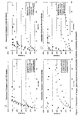
The dissolution of diazepam from sugar glass dispersions with the
four different sugars is depicted in Figure 1A-D. In the legends to the figures:
"TEX" refers to inulin with a DP of 24, "HD" to inulin with a DP of 11, "SD" to
the solid dispersion and "PM" to the physical mixture.
Both inulins show fast release of diazepam from the solid
dispersions. The inulins dissolve in the same rate as the diazepam. For the
physical mixtures of the inulins with diazepam, the diazepam is dissolved
slower. The inulin DP24 dissolution seems to be accelerated in case of a solid
dispersion.
A complete different behaviour can be observed with both sucrose
and trehalose. The release of diazepam from a physical mixture is fast
compared to the solid dispersions. It is clear from these graphs that both
sucrose and trehalose dissolve faster compared to the inulins especially for
physical mixtures. As can be seen form Figure 2A-D, similar results were
obtained with nifedipine.
In all dissolution experiments with solid dispersions containing
sucrose or trehalose, crystallisation was observed visually. After about thirty
minutes when the sugar was completely dissolved, a porous structure was still
visible in the dissolution beaker. This porous structure was gently taken out of
the beaker and calorimetrically analysed. It turned out that the material
consisted of pure crystalline drug.
Claims (13)
- A pharmaceutical composition comprising at least one lipophilic compound and at least one glass of a sugar, a sugar alcohol, a mixture of sugars, a mixture of sugar alcohols or a mixture of at least one sugar and at least one sugar alcohol, wherein the lipophilic compound is incorporated in the sugar glass.
- A pharmaceutical composition according to claim 1, wherein said sugar or sugar alcohol is an oligosaccharide, an oligosaccharide alcohol, a polysaccharide or a polysaccharide alcohol.
- A pharmaceutical composition according to claim 2, wherein the sugar is a fructan.
- A pharmaceutical composition according to claim 3, wherein the fructan is an inulin.
- A pharmaceutical composition according to any one of the claims 2-4, wherein the number average degree of polymerisation is at least 5, preferably 6-30, more preferably 10-25.
- A pharmaceutical composition according to any one of the preceding claims, comprising a crystallisable lipophilic compound.
- A pharmaceutical composition according to any one of the preceding claims, comprising a lipophilic compound having a solubility in an aqueous environment at 37 °C of less than 33 g/L.
- A pharmaceutical composition according to any one of the preceding claims, comprising at least one lipophilic compound, selected from the group consisting of antipsychotic drugs (such as haloperidol, triflapromazine, flufenazine, olanzapine and clozapine), benzodiazepines (such as lorazepam, flurazepam, triazolam, clonazepam, chlordiazepoxide, temazepam, oxazepam, clorazepate, diazepam, alprazolam, prazepam, loprazolam, lormetazepam, nitrazepam and triazolam) calcium antagonists (such as barnidipine and nifedipine), corticosteroids (such as methyl prednisolon, triamcinolon, budesonide, flixotide and dexamethason), diaretica (such as flurosemide and spironolacton), heart glycosides (such as digoxine and digitoxine), hormones (such as progesterone and testosteron), lipophilic alkaloids (such as codein), lipophilic antibiotics (such as eryrthromycin lauryl sulfate, metronidazole, rifampin, minocycline and doxycycline), lipophilic polypeptides (such as cyclosporine), non steroidal anti inflamatory drugs (such as diclofenac, piroxican, indomethacin and paracetamol), vitamins (such as vitamin D, vitamin A, vitamin E and vitamin K), griseofulvin, lidocaine, ondansetron.HCl, methyl butazone and theophilline.
- A pharmaceutical composition according to any one of the preceding claims, in the form of a tablet (such as a normal oral tablet, a sublingual tablet, a buccal tablet or an orally desintegrating or dissolving tablet), a capsule, a lozenge, an enema, a suppository, a product for transdermal administration, a powder for pulmonary administration, or a rod or suspension for subcutaneous or intramuscular administration.
- A pharmaceutical composition according to any of the preceding claims, comprising more than 37 wt. % and less than 100 wt. % sugar glass, based upon the total weight of sugar glass and lipophilic compounds.
- A method for preparing a pharmaceutical composition according to any of the preceding claims, wherein a solution of the sugar, sugar alcohol, mixture of sugars, mixture of sugar alcohols or mixture of at least one sugar and at least one sugar alcohol and the lipophilic compound is dried, preferably by freeze drying, to form the sugar glass wherein the lipophilic compound is incorporated.
- A method for preparing a pharmaceutical composition according to claim 11, wherein the sugar, sugar alcohol, mixture of sugars, mixture of sugar alcohols or mixture of at least one sugar and at least one sugar alcohol is dissolved in a first solvent, preferably water, and said lipophilic compound is dissolved in a co-solvent, preferably a C1-C6 alcohol, next the first solvent and the co-solvent are mixed, and thereafter the resultant mixture is dried.
- Use of a sugar glass in the manufacture of a medicament in solid form, comprising as active agent a lipophilic compound for increasing the bioavailability or dissolution rate of the active agent.
Priority Applications (9)
| Application Number | Priority Date | Filing Date | Title |
|---|---|---|---|
| EP02080260A EP1428526A1 (en) | 2002-12-13 | 2002-12-13 | Formulation for fast dissolution of lipophilic compounds |
| DE60327552T DE60327552D1 (en) | 2002-12-13 | 2003-11-28 | FORMULATION FOR RAPID RESOLUTION LIPOPHILER COMPOUNDS |
| EP03779041A EP1572157B1 (en) | 2002-12-13 | 2003-11-28 | Formulation for fast dissolution of lipophilic compounds |
| AT03779041T ATE430560T1 (en) | 2002-12-13 | 2003-11-28 | FORMULATION FOR RAPID DISSOLUTION OF LIPOPHILIC COMPOUNDS |
| ES03779041T ES2327037T3 (en) | 2002-12-13 | 2003-11-28 | FORMULATION FOR THE FAST DISSOLUTION OF LIPOFILIC COMPOUNDS. |
| JP2004560706A JP2006511549A (en) | 2002-12-13 | 2003-11-28 | Formulation for fast dissolution of lipophilic compounds |
| AU2003285820A AU2003285820A1 (en) | 2002-12-13 | 2003-11-28 | Formulation for fast dissolution of lipophilic compounds |
| PCT/NL2003/000847 WO2004054546A1 (en) | 2002-12-13 | 2003-11-28 | Formulation for fast dissolution of lipophilic compounds |
| US11/149,930 US20050266088A1 (en) | 2002-12-13 | 2005-06-10 | Formulation for fast dissolution of lipophilic compounds |
Applications Claiming Priority (1)
| Application Number | Priority Date | Filing Date | Title |
|---|---|---|---|
| EP02080260A EP1428526A1 (en) | 2002-12-13 | 2002-12-13 | Formulation for fast dissolution of lipophilic compounds |
Publications (1)
| Publication Number | Publication Date |
|---|---|
| EP1428526A1 true EP1428526A1 (en) | 2004-06-16 |
Family
ID=32319655
Family Applications (2)
| Application Number | Title | Priority Date | Filing Date |
|---|---|---|---|
| EP02080260A Withdrawn EP1428526A1 (en) | 2002-12-13 | 2002-12-13 | Formulation for fast dissolution of lipophilic compounds |
| EP03779041A Expired - Lifetime EP1572157B1 (en) | 2002-12-13 | 2003-11-28 | Formulation for fast dissolution of lipophilic compounds |
Family Applications After (1)
| Application Number | Title | Priority Date | Filing Date |
|---|---|---|---|
| EP03779041A Expired - Lifetime EP1572157B1 (en) | 2002-12-13 | 2003-11-28 | Formulation for fast dissolution of lipophilic compounds |
Country Status (8)
| Country | Link |
|---|---|
| US (1) | US20050266088A1 (en) |
| EP (2) | EP1428526A1 (en) |
| JP (1) | JP2006511549A (en) |
| AT (1) | ATE430560T1 (en) |
| AU (1) | AU2003285820A1 (en) |
| DE (1) | DE60327552D1 (en) |
| ES (1) | ES2327037T3 (en) |
| WO (1) | WO2004054546A1 (en) |
Cited By (14)
| Publication number | Priority date | Publication date | Assignee | Title |
|---|---|---|---|---|
| WO2011120903A3 (en) * | 2010-03-29 | 2012-05-03 | Ferring B.V. | A fast dissolving pharmaceutical composition |
| WO2011120904A3 (en) * | 2010-03-29 | 2012-05-10 | Ferring B.V. | A fast dissolving pharmaceutical composition |
| US8324192B2 (en) | 2005-11-12 | 2012-12-04 | The Regents Of The University Of California | Viscous budesonide for the treatment of inflammatory diseases of the gastrointestinal tract |
| WO2013037708A1 (en) * | 2011-09-16 | 2013-03-21 | Ferring B.V. | A fast dissolving pharmaceutical composition |
| US8497258B2 (en) | 2005-11-12 | 2013-07-30 | The Regents Of The University Of California | Viscous budesonide for the treatment of inflammatory diseases of the gastrointestinal tract |
| US8679545B2 (en) | 2005-11-12 | 2014-03-25 | The Regents Of The University Of California | Topical corticosteroids for the treatment of inflammatory diseases of the gastrointestinal tract |
| US8865692B2 (en) | 2007-11-13 | 2014-10-21 | Meritage Pharma, Inc | Compositions for the treatment of gastrointestinal inflammation |
| AU2013263795B2 (en) * | 2010-03-29 | 2015-09-17 | Ferring B.V. | A fast dissolving pharmaceutical composition |
| CN107854440A (en) * | 2017-11-07 | 2018-03-30 | 广东药科大学 | A kind of Leponex orally disintegrating tablet prepared using 3D printing and preparation method thereof |
| US9974826B2 (en) | 2008-05-21 | 2018-05-22 | Ferring B.V. | Methods comprising desmopressin |
| CN108379238A (en) * | 2018-01-17 | 2018-08-10 | 南昌大学 | A kind of cyclosporine solid lipid nano granule and preparation method thereof that storage physical stability is good |
| US10137167B2 (en) | 2008-05-21 | 2018-11-27 | Ferring B.V. | Methods comprising desmopressin |
| US10293052B2 (en) | 2007-11-13 | 2019-05-21 | Meritage Pharma, Inc. | Compositions for the treatment of gastrointestinal inflammation |
| US11963995B2 (en) | 2008-05-21 | 2024-04-23 | Ferring B.V. | Methods comprising desmopressin |
Families Citing this family (25)
| Publication number | Priority date | Publication date | Assignee | Title |
|---|---|---|---|---|
| TW200621310A (en) * | 2004-11-10 | 2006-07-01 | Univ Groningen | A process for preparing formulations of lypophilic active substances by spray freeze drying |
| US7811604B1 (en) | 2005-11-14 | 2010-10-12 | Barr Laboratories, Inc. | Non-effervescent, orally disintegrating solid pharmaceutical dosage forms comprising clozapine and methods of making and using the same |
| US8216495B2 (en) * | 2008-03-25 | 2012-07-10 | Formac Pharmaceuticals N.V. | Preparation method for solid dispersions |
| RU2497679C2 (en) | 2008-10-02 | 2013-11-10 | Милан Инк. | Method of making multilayer adhesive laminated material |
| CN102470118B (en) * | 2009-07-24 | 2014-12-17 | 21世纪国际新技术株式会社 | External preparation containing NSAIDs and method for producing same |
| RS62297B1 (en) | 2011-11-23 | 2021-09-30 | Therapeuticsmd Inc | Natural combination hormone replacement formulations and therapies |
| US9301920B2 (en) | 2012-06-18 | 2016-04-05 | Therapeuticsmd, Inc. | Natural combination hormone replacement formulations and therapies |
| US10806740B2 (en) | 2012-06-18 | 2020-10-20 | Therapeuticsmd, Inc. | Natural combination hormone replacement formulations and therapies |
| US10806697B2 (en) | 2012-12-21 | 2020-10-20 | Therapeuticsmd, Inc. | Vaginal inserted estradiol pharmaceutical compositions and methods |
| US20150196640A1 (en) | 2012-06-18 | 2015-07-16 | Therapeuticsmd, Inc. | Progesterone formulations having a desirable pk profile |
| US20130338122A1 (en) | 2012-06-18 | 2013-12-19 | Therapeuticsmd, Inc. | Transdermal hormone replacement therapies |
| EP3275466A1 (en) * | 2012-07-12 | 2018-01-31 | Ferring B.V. | Diclofenac formulations |
| US10471072B2 (en) | 2012-12-21 | 2019-11-12 | Therapeuticsmd, Inc. | Vaginal inserted estradiol pharmaceutical compositions and methods |
| US11266661B2 (en) | 2012-12-21 | 2022-03-08 | Therapeuticsmd, Inc. | Vaginal inserted estradiol pharmaceutical compositions and methods |
| US10568891B2 (en) | 2012-12-21 | 2020-02-25 | Therapeuticsmd, Inc. | Vaginal inserted estradiol pharmaceutical compositions and methods |
| US9180091B2 (en) | 2012-12-21 | 2015-11-10 | Therapeuticsmd, Inc. | Soluble estradiol capsule for vaginal insertion |
| US10537581B2 (en) | 2012-12-21 | 2020-01-21 | Therapeuticsmd, Inc. | Vaginal inserted estradiol pharmaceutical compositions and methods |
| US11246875B2 (en) | 2012-12-21 | 2022-02-15 | Therapeuticsmd, Inc. | Vaginal inserted estradiol pharmaceutical compositions and methods |
| JP6524744B2 (en) * | 2014-03-25 | 2019-06-05 | 三菱ケミカルフーズ株式会社 | Method of producing solid dispersion containing poorly water-soluble substance |
| RU2016143081A (en) | 2014-05-22 | 2018-06-26 | Терапьютиксмд, Инк. | NATURAL COMBINED HORMONE SUBSTITUTION COMPOSITIONS AND THERAPIES |
| US9855234B2 (en) | 2014-07-08 | 2018-01-02 | Insys Development Company, Inc. | Diclofenac sublingual spray |
| US10328087B2 (en) | 2015-07-23 | 2019-06-25 | Therapeuticsmd, Inc. | Formulations for solubilizing hormones |
| US9931349B2 (en) | 2016-04-01 | 2018-04-03 | Therapeuticsmd, Inc. | Steroid hormone pharmaceutical composition |
| US10286077B2 (en) | 2016-04-01 | 2019-05-14 | Therapeuticsmd, Inc. | Steroid hormone compositions in medium chain oils |
| US12364696B2 (en) | 2019-02-27 | 2025-07-22 | Jak Slave Pty Ltd | Treatment of autoimmune disease |
Citations (5)
| Publication number | Priority date | Publication date | Assignee | Title |
|---|---|---|---|---|
| WO1996003978A1 (en) * | 1994-08-04 | 1996-02-15 | Quadrant Holdings Cambridge Limited | Solid delivery systems for controlled release of molecules incorporated therein and methods of making same |
| WO1996040077A2 (en) * | 1995-06-07 | 1996-12-19 | Quadrant Holdings Cambridge Limited | Methods for stably incorporating substances within dry, foamed glass matrices and compositions obtained thereby |
| WO1999001463A2 (en) * | 1997-07-03 | 1999-01-14 | Quadrant Holdings Cambridge Limited | Modified glycosides, compositions comprised thereof and methods of use thereof |
| US5965162A (en) * | 1993-09-10 | 1999-10-12 | Fuisz Technologies Ltd. | Process for forming chewable quickly dispersing multi-vitamin preparation and product therefrom |
| US20020127303A1 (en) * | 1999-07-06 | 2002-09-12 | Roche Vitamins Inc. | Compositions comprising fat soluble substances in a glassy carbohydrate matrix |
Family Cites Families (5)
| Publication number | Priority date | Publication date | Assignee | Title |
|---|---|---|---|---|
| US5118493A (en) * | 1986-05-02 | 1992-06-02 | Brigham And Women's Hospital | Composition having reduced nephrotoxocity comprising a fatty acid containing component and cyclosporine |
| NL1012300C2 (en) * | 1999-06-11 | 2000-12-12 | Rijksuniversiteit | Stabilizer for pharmaceuticals. |
| UA79281C2 (en) * | 2002-04-03 | 2007-06-11 | Solvay Pharm Bv | Stabilized composition comprising a natural cannabinoid compound and process for the preparation thereof |
| PL209134B1 (en) * | 2002-04-03 | 2011-07-29 | Solvay Pharm Bv | Stabilized natural cannabinoid formulation |
| JP2006508132A (en) * | 2002-11-12 | 2006-03-09 | マリンクロッド・インコーポレイテッド | Cannabinoid crystalline derivatives and cannabinoid purification method |
-
2002
- 2002-12-13 EP EP02080260A patent/EP1428526A1/en not_active Withdrawn
-
2003
- 2003-11-28 ES ES03779041T patent/ES2327037T3/en not_active Expired - Lifetime
- 2003-11-28 AU AU2003285820A patent/AU2003285820A1/en not_active Abandoned
- 2003-11-28 EP EP03779041A patent/EP1572157B1/en not_active Expired - Lifetime
- 2003-11-28 DE DE60327552T patent/DE60327552D1/en not_active Expired - Lifetime
- 2003-11-28 JP JP2004560706A patent/JP2006511549A/en not_active Ceased
- 2003-11-28 WO PCT/NL2003/000847 patent/WO2004054546A1/en not_active Ceased
- 2003-11-28 AT AT03779041T patent/ATE430560T1/en not_active IP Right Cessation
-
2005
- 2005-06-10 US US11/149,930 patent/US20050266088A1/en not_active Abandoned
Patent Citations (5)
| Publication number | Priority date | Publication date | Assignee | Title |
|---|---|---|---|---|
| US5965162A (en) * | 1993-09-10 | 1999-10-12 | Fuisz Technologies Ltd. | Process for forming chewable quickly dispersing multi-vitamin preparation and product therefrom |
| WO1996003978A1 (en) * | 1994-08-04 | 1996-02-15 | Quadrant Holdings Cambridge Limited | Solid delivery systems for controlled release of molecules incorporated therein and methods of making same |
| WO1996040077A2 (en) * | 1995-06-07 | 1996-12-19 | Quadrant Holdings Cambridge Limited | Methods for stably incorporating substances within dry, foamed glass matrices and compositions obtained thereby |
| WO1999001463A2 (en) * | 1997-07-03 | 1999-01-14 | Quadrant Holdings Cambridge Limited | Modified glycosides, compositions comprised thereof and methods of use thereof |
| US20020127303A1 (en) * | 1999-07-06 | 2002-09-12 | Roche Vitamins Inc. | Compositions comprising fat soluble substances in a glassy carbohydrate matrix |
Non-Patent Citations (2)
| Title |
|---|
| DATABASE EMBASE [online] ELSEVIER SCIENCE PUBLISHERS, AMSTERDAM, NL; 1990, KU Y S ET AL: "The effect on the dissolution rate of sulfamerazine from sugar glass dispersion system", XP009012084, Database accession no. EMB-1990360635 * |
| YAKHAK HOEJI 1990 SOUTH KOREA, vol. 34, no. 3, 1990, pages 192 - 198, ISSN: 0513-4242 * |
Cited By (45)
| Publication number | Priority date | Publication date | Assignee | Title |
|---|---|---|---|---|
| US8679545B2 (en) | 2005-11-12 | 2014-03-25 | The Regents Of The University Of California | Topical corticosteroids for the treatment of inflammatory diseases of the gastrointestinal tract |
| US9119863B2 (en) | 2005-11-12 | 2015-09-01 | The Regents Of The University Of California | Viscous budesonide for the treatment of inflammatory diseases of the gastrointestinal tract |
| US8324192B2 (en) | 2005-11-12 | 2012-12-04 | The Regents Of The University Of California | Viscous budesonide for the treatment of inflammatory diseases of the gastrointestinal tract |
| US11413296B2 (en) | 2005-11-12 | 2022-08-16 | The Regents Of The University Of California | Viscous budesonide for the treatment of inflammatory diseases of the gastrointestinal tract |
| US9782347B2 (en) | 2005-11-12 | 2017-10-10 | The Regents Of The University Of California | Topical corticosteroids for the treatment of inflammatory diseases of the gastrointestinal tract |
| US11197822B2 (en) | 2005-11-12 | 2021-12-14 | The Regents Of The University Of California | Topical corticosteroids for the treatment of inflammatory diseases of the gastrointestinal tract |
| US8975243B2 (en) | 2005-11-12 | 2015-03-10 | The Regents Of The University Of California | Viscous budesonide for the treatment of inflammatory diseases of the gastrointestinal tract |
| US8497258B2 (en) | 2005-11-12 | 2013-07-30 | The Regents Of The University Of California | Viscous budesonide for the treatment of inflammatory diseases of the gastrointestinal tract |
| US10272037B2 (en) | 2005-11-12 | 2019-04-30 | The Regents Of The University Of California | Topical corticosteroids for the treatment of inflammatory diseases of the gastrointestinal tract |
| US10293052B2 (en) | 2007-11-13 | 2019-05-21 | Meritage Pharma, Inc. | Compositions for the treatment of gastrointestinal inflammation |
| US9050368B2 (en) | 2007-11-13 | 2015-06-09 | Meritage Pharma, Inc. | Corticosteroid compositions |
| US8865692B2 (en) | 2007-11-13 | 2014-10-21 | Meritage Pharma, Inc | Compositions for the treatment of gastrointestinal inflammation |
| US11357859B2 (en) | 2007-11-13 | 2022-06-14 | Viropharma Biologics Llc | Compositions for the treatment of gastrointestinal inflammation |
| US10137167B2 (en) | 2008-05-21 | 2018-11-27 | Ferring B.V. | Methods comprising desmopressin |
| US9974826B2 (en) | 2008-05-21 | 2018-05-22 | Ferring B.V. | Methods comprising desmopressin |
| US11020448B2 (en) | 2008-05-21 | 2021-06-01 | Ferring B.V. | Methods comprising desmopressin |
| US11963995B2 (en) | 2008-05-21 | 2024-04-23 | Ferring B.V. | Methods comprising desmopressin |
| RU2566269C2 (en) * | 2010-03-29 | 2015-10-20 | Ферринг Б.В. | Fast-dissolving pharmaceutical composition |
| CN102821755A (en) * | 2010-03-29 | 2012-12-12 | 辉凌公司 | Fast dissolving pharmaceutical composition |
| CN104606128A (en) * | 2010-03-29 | 2015-05-13 | 辉凌公司 | A fast dissolving pharmaceutical composition |
| TWI498132B (en) * | 2010-03-29 | 2015-09-01 | Ferring Bv | A fast dissolving pharmaceutical composition |
| AU2013263795B2 (en) * | 2010-03-29 | 2015-09-17 | Ferring B.V. | A fast dissolving pharmaceutical composition |
| WO2011120903A3 (en) * | 2010-03-29 | 2012-05-03 | Ferring B.V. | A fast dissolving pharmaceutical composition |
| RU2566270C2 (en) * | 2010-03-29 | 2015-10-20 | Ферринг Б.В. | Fast-dissolving pharmaceutical composition |
| TWI513477B (en) * | 2010-03-29 | 2015-12-21 | Ferring Bv | A fast dissolving pharmaceutical composition |
| WO2011120904A3 (en) * | 2010-03-29 | 2012-05-10 | Ferring B.V. | A fast dissolving pharmaceutical composition |
| US9096335B2 (en) | 2010-03-29 | 2015-08-04 | Ferring B.V. | Fast dissolving pharmaceutical composition |
| CN102834091A (en) * | 2010-03-29 | 2012-12-19 | 辉凌公司 | A fast-dissolving pharmaceutical composition |
| CN102834091B (en) * | 2010-03-29 | 2015-04-22 | 辉凌公司 | A fast-dissolving pharmaceutical composition |
| KR20130008588A (en) * | 2010-03-29 | 2013-01-22 | 훼링 비.브이. | A fast dissolving pharmaceutical composition |
| US10512695B2 (en) | 2010-03-29 | 2019-12-24 | Ferring B.V. | Fast dissolving pharmaceutical composition |
| US8946153B2 (en) | 2010-03-29 | 2015-02-03 | Ferring B.V. | Fast dissolving pharmaceutical composition |
| US10023335B2 (en) | 2010-03-29 | 2018-07-17 | Ferring B.V. | Fast dissolving pharmaceutical composition |
| AU2011234637B2 (en) * | 2010-03-29 | 2013-08-29 | Ferring B.V. | A fast dissolving pharmaceutical composition |
| US10086078B2 (en) | 2010-03-29 | 2018-10-02 | Ferring B.V. | Fast dissolving pharmaceutical composition |
| AU2011234636B2 (en) * | 2010-03-29 | 2015-01-15 | Ferring B.V. | A fast dissolving pharmaceutical composition |
| CN103781467A (en) * | 2011-09-16 | 2014-05-07 | 辉凌公司 | Fast dissolving pharmaceutical composition |
| WO2013037708A1 (en) * | 2011-09-16 | 2013-03-21 | Ferring B.V. | A fast dissolving pharmaceutical composition |
| RU2633640C2 (en) * | 2011-09-16 | 2017-10-16 | Ферринг Б.В. | Quick-soluble pharmaceutical composition |
| US9731018B2 (en) | 2011-09-16 | 2017-08-15 | Ferring B.V. | Fast dissolving pharmaceutical composition |
| AU2012307530B2 (en) * | 2011-09-16 | 2016-12-08 | Ferring B.V. | A fast dissolving pharmaceutical composition |
| CN103781467B (en) * | 2011-09-16 | 2016-08-31 | 辉凌公司 | A fast-dissolving pharmaceutical composition |
| CN107854440A (en) * | 2017-11-07 | 2018-03-30 | 广东药科大学 | A kind of Leponex orally disintegrating tablet prepared using 3D printing and preparation method thereof |
| CN108379238A (en) * | 2018-01-17 | 2018-08-10 | 南昌大学 | A kind of cyclosporine solid lipid nano granule and preparation method thereof that storage physical stability is good |
| CN108379238B (en) * | 2018-01-17 | 2020-07-14 | 南昌大学 | Cyclosporin solid lipid nanoparticle with good storage physical stability and preparation method thereof |
Also Published As
| Publication number | Publication date |
|---|---|
| WO2004054546A1 (en) | 2004-07-01 |
| US20050266088A1 (en) | 2005-12-01 |
| AU2003285820A1 (en) | 2004-07-09 |
| DE60327552D1 (en) | 2009-06-18 |
| EP1572157B1 (en) | 2009-05-06 |
| JP2006511549A (en) | 2006-04-06 |
| EP1572157A1 (en) | 2005-09-14 |
| ES2327037T3 (en) | 2009-10-23 |
| ATE430560T1 (en) | 2009-05-15 |
Similar Documents
| Publication | Publication Date | Title |
|---|---|---|
| EP1572157B1 (en) | Formulation for fast dissolution of lipophilic compounds | |
| Kalia et al. | Solid dispersions: an approach towards enhancing dissolution rate | |
| Sharma et al. | Solid dispersion: A promising technique to enhance solubility of poorly water soluble drug | |
| KR101434334B1 (en) | Micellar nanoparticles of chemical substances | |
| KR20030041577A (en) | Solid dispersions containing substituted cyclodextrin and insoluble drug and their preparations | |
| Singh et al. | Review on various techniques of solubility enhancement of poorly soluble drugs with special emphasis on solid dispersion | |
| JP2010525082A (en) | Solid dosage form | |
| EP3419671B1 (en) | High bioavailability oromucosal pharmaceutical preparations based on cyclodextrin and sucralose | |
| Visser et al. | Inulin solid dispersion technology to improve the absorption of the BCS Class IV drug TMC240 | |
| TW201311236A (en) | Celecoxib solid dispersion and its preparation method | |
| Weerapol et al. | Improved dissolution of Kaempferia parviflora extract for oral administration by preparing solid dispersion via solvent evaporation | |
| CN114209707A (en) | Celecoxib oral composition for treating pain | |
| JP6666352B2 (en) | Dutasteride-containing solid dispersion and composition containing the same | |
| EP1299089B1 (en) | Drug delivery system for poorly water soluble drugs | |
| Dukić-Ott et al. | In-vitro and in-vivo evaluation of enteric-coated starch-based pellets prepared via extrusion/spheronisation | |
| Lee et al. | Montelukast microsuspension with hypromellose for improved stability and oral absorption | |
| Vadlamudi et al. | Disparate practical way of doing solubility enhancement study to improve the bioavailability of poorly soluble drugs | |
| CN105828827A (en) | Solid preparation comprising tofogliflozin and method for producing same | |
| Roblegg et al. | Development of lipophilic calcium stearate pellets using ibuprofen as model drug | |
| EP3903769A1 (en) | Solid and liquisolid formulations of corallopyronin a | |
| Saini et al. | Recent patents on solid dispersions emphasize promising benefits in solubility enhancement of poorly water-soluble drugs | |
| KR100487083B1 (en) | Formulation of Amphiphilic Heparin Derivatives for Enhancing Mucosal Absorption | |
| BR112017019364B1 (en) | SOLID DISPERSSIONS AND DRUG DOSAGE FORM | |
| TW200824711A (en) | Embedded micellar nanoparticles | |
| JP7535520B2 (en) | Sustained release compositions containing methylcellulose |
Legal Events
| Date | Code | Title | Description |
|---|---|---|---|
| PUAI | Public reference made under article 153(3) epc to a published international application that has entered the european phase |
Free format text: ORIGINAL CODE: 0009012 |
|
| AK | Designated contracting states |
Kind code of ref document: A1 Designated state(s): AT BE BG CH CY CZ DE DK EE ES FI FR GB GR IE IT LI LU MC NL PT SE SI SK TR |
|
| AX | Request for extension of the european patent |
Extension state: AL LT LV MK RO |
|
| STAA | Information on the status of an ep patent application or granted ep patent |
Free format text: STATUS: THE APPLICATION IS DEEMED TO BE WITHDRAWN |
|
| 18D | Application deemed to be withdrawn |
Effective date: 20040414 |