EP1426765A2 - Method for examining the risk of dental caries - Google Patents
Method for examining the risk of dental caries Download PDFInfo
- Publication number
- EP1426765A2 EP1426765A2 EP03026551A EP03026551A EP1426765A2 EP 1426765 A2 EP1426765 A2 EP 1426765A2 EP 03026551 A EP03026551 A EP 03026551A EP 03026551 A EP03026551 A EP 03026551A EP 1426765 A2 EP1426765 A2 EP 1426765A2
- Authority
- EP
- European Patent Office
- Prior art keywords
- ala
- identified
- genotype
- drb1
- antibody
- Prior art date
- Legal status (The legal status is an assumption and is not a legal conclusion. Google has not performed a legal analysis and makes no representation as to the accuracy of the status listed.)
- Granted
Links
Images
Classifications
-
- C—CHEMISTRY; METALLURGY
- C07—ORGANIC CHEMISTRY
- C07K—PEPTIDES
- C07K14/00—Peptides having more than 20 amino acids; Gastrins; Somatostatins; Melanotropins; Derivatives thereof
- C07K14/195—Peptides having more than 20 amino acids; Gastrins; Somatostatins; Melanotropins; Derivatives thereof from bacteria
- C07K14/315—Peptides having more than 20 amino acids; Gastrins; Somatostatins; Melanotropins; Derivatives thereof from bacteria from Streptococcus (G), e.g. Enterococci
-
- G—PHYSICS
- G01—MEASURING; TESTING
- G01N—INVESTIGATING OR ANALYSING MATERIALS BY DETERMINING THEIR CHEMICAL OR PHYSICAL PROPERTIES
- G01N33/00—Investigating or analysing materials by specific methods not covered by groups G01N1/00 - G01N31/00
- G01N33/48—Biological material, e.g. blood, urine; Haemocytometers
- G01N33/50—Chemical analysis of biological material, e.g. blood, urine; Testing involving biospecific ligand binding methods; Immunological testing
- G01N33/53—Immunoassay; Biospecific binding assay; Materials therefor
- G01N33/569—Immunoassay; Biospecific binding assay; Materials therefor for microorganisms, e.g. protozoa, bacteria, viruses
- G01N33/56966—Animal cells
- G01N33/56977—HLA or MHC typing
-
- G—PHYSICS
- G01—MEASURING; TESTING
- G01N—INVESTIGATING OR ANALYSING MATERIALS BY DETERMINING THEIR CHEMICAL OR PHYSICAL PROPERTIES
- G01N33/00—Investigating or analysing materials by specific methods not covered by groups G01N1/00 - G01N31/00
- G01N33/48—Biological material, e.g. blood, urine; Haemocytometers
- G01N33/50—Chemical analysis of biological material, e.g. blood, urine; Testing involving biospecific ligand binding methods; Immunological testing
- G01N33/68—Chemical analysis of biological material, e.g. blood, urine; Testing involving biospecific ligand binding methods; Immunological testing involving proteins, peptides or amino acids
- G01N33/6854—Immunoglobulins
-
- G—PHYSICS
- G01—MEASURING; TESTING
- G01N—INVESTIGATING OR ANALYSING MATERIALS BY DETERMINING THEIR CHEMICAL OR PHYSICAL PROPERTIES
- G01N2333/00—Assays involving biological materials from specific organisms or of a specific nature
- G01N2333/435—Assays involving biological materials from specific organisms or of a specific nature from animals; from humans
- G01N2333/705—Assays involving receptors, cell surface antigens or cell surface determinants
- G01N2333/70503—Immunoglobulin superfamily, e.g. VCAMs, PECAM, LFA-3
- G01N2333/70539—MHC-molecules, e.g. HLA-molecules
-
- G—PHYSICS
- G01—MEASURING; TESTING
- G01N—INVESTIGATING OR ANALYSING MATERIALS BY DETERMINING THEIR CHEMICAL OR PHYSICAL PROPERTIES
- G01N2469/00—Immunoassays for the detection of microorganisms
- G01N2469/20—Detection of antibodies in sample from host which are directed against antigens from microorganisms
Definitions
- the present invention relates to a method for examining a caries risk by using a human gene diagnosis.
- mutans streptococci is the general term of Streptococcus mutans and Streptococcus sobrinus (hereinafter, they are referred to as "S. mutans” and “S. sobrinus” respectively) as strains existing in human saliva.
- PAc Protein Antigen cerotype C
- Senpuku being one of the present inventors et al. solved what was the most important sequence in the A area of the PAc (refer to nonpatent literature 1, Senpuku H, et al, "An antigenic peptide inducing cross-reacting antibodies inhibiting the interaction of Streptococcus mutans PAc with human salivary components" Infect Immun (USA) , Baltimore Md. American Association of Immunologists, 1995, 63, p.4695-4703).
- the present inventors investigated that the examination of the caries risk could be accurately carried out by using the PAc (361-386), which is the amino acid sequence, as the antigen, and measuring an antibody value of a secretory immunoglobulin antibody A (sIgA) secreted from a human oral cavity mucosa, which was working to inhibit the adhesion of the mutans streptococci to the tooth surface.
- PAc secretory immunoglobulin antibody A
- the present invention has the object to provide the method for examining the caries risk capable of making all people into a sample irrespective of age and the salivary quantity.
- the present inventors made wholeheartedly investigations in order to solve the above problems, and as the result, they paid attention to a major histocompatibility complex (hereinafter, it is sometimes referred to as only MHC) for examining the caries risk irrespective of the age and the salivary quantity.
- MHC major histocompatibility complex
- HLA human leukocyte antigen
- HLA human leukocyte antigen
- the present inventors investigated that it was possible to examine the caries risk by specifying an individual genotype, and if a human genotype was specified beforehand by high or low of the caries risk, that is, high or low of the antibody value of the secretory immunoglobulin antibody A secreted in the saliva, it was possible to carry out the method for examining the caries risk capable of targeting at all persons by only identifying the gene. Then, the present invention was completed.
- the present invention is the method for examining the caries risk with the characteristic of identifying the genotype of DRB1* of a DR locus in a class II type of the HLA genes group. More particularly, the present invention is the method for examining the caries risk with the characteristics of identifying the genotype of DRB1* in the class II type of the HLA genes group, wherein the identified genotype is compared with caries risk, which is identified beforehand, derived from the antibody value of the secretory immunoglobulin A in the human saliva against antigen, in which a synthetic protein having an amino acid sequence composed of the following formula is used as the antigen.
- the HLA genes group there are the class I type and the class II type, and these whole molecular structures closely resemble.
- the antigen presented on a T cell bonds with an amino acid end domain, which has a membrane penetration type hetero dimer and comes out from the cells.
- the class II type exists in the limited cell, such as a B cell or an antigen presenting cell, and has the mechanism for promoting antibody production by the B cell thorough the T cell.
- the class II type gene group of the HLA genes group is especially used.
- the class II type HLA kinds of HLA-DR, DQ, DP and the likes have been known, and further, said HLA is composed of four domains of ⁇ 1, ⁇ 2, ⁇ 1 and ⁇ 2.
- the HLA is specified by the HLA genes on sixth chromosome monobrachius, and has high polymorphism. Especially, it has been known that a ⁇ chain of the class II type DR gene (DRB1, DRB3, DRB4, DRB5) is further excellent in polymorphism, and recently, it has been known that these polymorphism genes are correlated with various diseases.
- the method for examining the caries risk of the present invention first, cells of a subject are collected, and the DNA in said cells is extracted to specify the HLA genes group on the sixth chromosome monobrachius.
- the caries risk is evaluated, by comparing the specified HLA genes group with the HLA genes group having high (or low) antibody value of the secretory immunoglobulin antibody A secreted in the saliva against the PAc (361-386), which is produced beforehand by the investigation.
- the cell at any part of the person can be used as a sample.
- a human oral cavity mucosa cell which is the easiest to be collected, is used preferably.
- the cells may be collected by scratching the mucosa with a spoon.
- the general method for extracting the DNA from animal cells can be used.
- a phenol chloroform method is preferable and various commercial kits can be used.
- PCR-RFLP polymerase chain reaction - restriction fragment length polymorphism
- PCR-SSO polymerase chain reaction - sequence specific oligonucleotide
- PCR-SSP polymerase chain reaction - sequence specific priming
- the caries risk is evaluated, by comparing the specified HLA genes group with the HLA genes group having high (or low) antibody value of the secretory immunoglobulin antibody A secreted in the saliva against the PAc (361-386), which is produced beforehand by the investigation.
- the genotype having the high caries risk that is, having the low antibody value of the secretory immunoglobulin antibody A
- the case of the genotype having DRB1*0101, DRB1*0405, DRB1*0803, DRB1*1302, DRB1*1502 and DRB1*0410 at one side of the dimer has been identified.
- the genotype having the low caries risk that is, having the high antibody value of the secretory immunoglobulin antibody A
- the case of the genotype having DRB1*0403, DRB1*0406, DRB1*0401, DRB1*0802, DRB1*0901, DRB1*1202, DRB1*1401, DRB1*1405, DRB1*1501 and DRB1*1602 at one side of the dimer has been identified.
- the combinations of all dimers are solved by the future research, the caries risk can be evaluated more accurately.
- PAc (361-386) being used in the present invention, although the method is not limited if the amino acid sequence of said PAc (361-386) can be obtained by said method, it is convenient to use an amino acid synthesizer in general.
- the method for measuring the antibody value of the secretory immunoglobulin antibody A being used in the method for examining the caries risk of the present invention, even if a conventional enzyme immunohistochemistry method, i.e., Enzyme Linked Immunosorbent Assay, which is referred to as "ELISA" hereinafter, being one of an antibody value measuring technique against the mutans streptococci, is used, sufficiently usable sensitivity can be obtained.
- the measurement sensitivity at the time of the determination can be increased by the technique being conventionally used for improving the sensitivity of the measured value obtained by the antigen antibody reaction, for example, the technique of reacting once the secretory immunoglobulin A in the saliva with a biotin anti-human immunoglobulin A etc. So, the technique based on the general antigen antibody reaction can be applied as it is.
- each technique of an immuno-chromatography, an immuno-concentration, and a latex agglutination etc. can be used suitably.
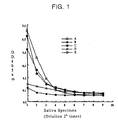
- Figure 1 shows the results of measuring the antibody values of the immunoglobulin A in saliva of 5 subjects (A, B, C, D, E) against the PAc (361-386) with the ELISA.
- the oral cavity mucosa cell was collected, by rubbing a part of cheek in the oral cavity with the use of a swab (the product name was C. E. P. Swab, produced by Lifetech Oriental Co. Ltd.). The extraction of the DNA was carried out immediately after the collection.
- the collected oral cavity mucosa cell was added to a 1.5 mL tube, which was added with 500 ⁇ L of a DNAzol reagent (produced by Lifetech Oriental Co. Ltd.), and after homogenizing, was precipitated and washed with ethanol. Then, the DNA was extracted. The DNA concentration was identified with the absorbance of O. D. 260 nm wavelength light, and the extraction purity was identified with the absorbance of O. D. 260 nm / O. D. 280 nm wavelength light.
- the extracted DNA was suspended in TE buffer, comprising tris (hydroxymethyl) aminomethane 10 mM, ethylene diamine tetraacetic acid (EDTA) 1 mM with pH 8.0. Then the following operation was carried out.
- DRB1* The determination of the genotype of DRB1* was carried out by using the following PCR-RFLP, in accordance with "PCR-RFLP typing detects new HLA-DRB1 alleles : DRB1*13022, DRB1*1336 and DRB1*1435" (European Journal of Immunogenetics, 28, 441-447) by Trejaut J. et al.
- the conditions of the PCR were as follows.
- the above-described purified DNA 100 to 500 ng MgCl 2 1.5 mM dNTPs 40 ⁇ M Dimethyl sulfoxide (DMSO) 3 % by weight
- DMSO Dimethyl sulfoxide
- the specific gene sequence was amplified, by using a thermal cycler (the product name was GeneAmp PCR System 9700 Thermal Cycler, produced by PE Biosystems Company).
- the operations of the thermal cycler program the operations were carried out at 95 degree C for 2 minutes, at 94 degree C for 30 seconds, at 60 degree C for 30 seconds, and at 72 degree C for 30 seconds and these operations were repeated 30 times. After that, the operation was carried out at 72 degree C for 10 minutes.
- amplification sequence 5 ⁇ L of the above-described PCR product was electrophoresed in an agarose gel, which was 2% of 1 ⁇ TAE (tris (hydroxymethyl) aminomethane was 0.04 M, acetate was 0.04 M, EDTA was 0.001 M) containing 0.2 ⁇ g / mL of ethylene bromide, by using an electrophoresis device (the product name was Mupid 2, produced by Cosmobio Co. Ltd.).
- an amplification product was identified by using a UV - Transilluminator (produced by Funakoshi Co. Ltd.).
- restriction enzyme treatment was carried out. That is, BseRI (4 Unit), BsaJI (3 Unit), RsaI (5 Unit) and Sau96I (5 Unit) , (all produced by New England Biolabs Company), were used.
- the restriction enzyme treatment the treatment was carried out at 37 degree C for one night, by using said enzyme and refined water, in which a 1 ⁇ buffer solution (provided together with the enzyme) was used to 10 ⁇ L of the PCR product.
- a 1 ⁇ buffer solution provided together with the enzyme
- the treatment was carried out at 60 degree C for one night.
- the restriction treated sample was electrophorsed with the conditions of 500 V for one hour, by using 10 % polyacrylamide gel, which is prepared with 1 ⁇ TBE (tris (hydroxymethyl) aminomethane was 0.089 M, boron was 0.089 M, EDTA was 0.02 M).
- a 100bpDNA produced by Takara Shuzo Co. Ltd.
- the gel was removed from a glass board, and immersed in and dyed with the solution, in which 0.8 ⁇ g / mL ethidium bromide was dissolved with 1 ⁇ TBE.
- the identification of the gel was carried out by taking a photograph using the UV - Transilluminator (produced by Funakoshi Co. Ltd.) and a gel movie camera (the product name was Funaroid Camera FR6000, produced by Funakoshi Co. Ltd.).
- the genotype of DRB1 was determined in accordance with the above-described method.
- the peptide having the amino acid sequence of PAc (361-386) was made by a stepwise solid-phase peptide synthesis method. Model 350 Multiple Peptide Synthesizer (the product name was Advanced Chemitech, produced by Louisville Company), was used as a synthesizer. The examination of the synthetic peptide was carried out by the high-performance reverse phase liquid chromatograph using TSK-GEL column (30 ⁇ 1), i.e., 10-45 % acetonitrile was used as a column and gradient was 0.1 % TFA. The last refining degree was more than 95 %.
- the PAc (361-386) synthesized by the above process was diluted with a 50mM sodium carbonate buffered solution having pH of 9.6, and this diluted PAc (361-386) was added to each well of a 96 hole microplate (produced by Sumitomo Bakelite Company) so as to become 100 ⁇ L. The added PAc (361-386) was kept quietly overnight at 4 degree C to bind with the well.
- the microplate with the solid phase being formed by the above process was washed three times with a liquid (referred to as PBST hereinafter), in which 0.05 % by weight neutral interfacial active agent (the product name was TWEEN20 produced by SIGMA Company) was contained in a PBS (Phosphate Buffered Saline having pH of 7.4), by using a microplate washer (the product name was Model 1575 produced by Bio-Rat Company). After the washing, the PBS containing the 1 % skim milk was injected by 200 ⁇ L per each well, and blocking was carried out at 37 degree C for one hour. After the blocking, washing was carried out three times by the PBST to wash an excessive blocking agent.
- PBST a liquid
- the stimulus saliva secreted by biting a paraffin wax for 3 minutes was used as the specimen. After obtaining, the salivary specimen was preserved in ice until starting the measurement. In the experiment, the saliva was prepared by diluting 2, 4, 8, 16, 32, 64, 128, 256, 512, and 1024 times with the PBST containing 0.5 % skim milk. Each of the saliva was added by 100 ⁇ L to said plate. After adding, the plate was kept quietly at 37 degree C for one hour and washed with the PBST.
- the anti-human IgA antibody labeled with an alkaline phosphatase (the product name was Anti-Human-IgA, produced by Chemicon International Company), was prepared with the PBST containing 0.5 % by weight of skim milk so as to be 0.3 ⁇ g / mL. 100 ⁇ L of the prepared label was added to the each well and reacted at 37 degree C for one hour.
- the antibody values of the immunoglobulin A in the saliva of five subjects (A, B, C, D, E) against the PAc (361-386) were measured with the ELISA, and these results were shown in Figure 1.
- grouping was made into two, i.e., the high antibody value group (in this case, A, C, E) and the low antibody value group (in this case, B, D).
- the accuracy of the method for examining the caries risk was identified between the actual quantity of the mutans streptococcus in the oral cavity and the groups of the antibody value being high and low.
- the genotypes of HLA-DRB1* of each person were identified with the oral cavity mucosa cells of the above subjects (A, B, C, D, E) by the above process, and the correlation between the genotypes and the antibody value of the secretory immunoglobulin A in the saliva against the PAc (361-386) was identified. These results were shown Table 1. By setting such condition, the genotypes respectively corresponding to the above two groups, i.e., the high antibody value group (A, C, E) and the low antibody value group (B, D), was identified beforehand by using a plurality of subjects as the sample. In addition, it was identified that the genotype of HLA-DRB1* was correlated with the antibody value.
- Antibody Value O.D. 405 nm
- Subjects Genotype of DRB1* in Class II Type of HLA gene Group High A 0403, 0405 C 1501, 0410 E 1602, 1405 Low B 0101, 1502 D 0803, 0803
- the caries risk is examined, by comparing the genotype relating to high or low of the caries risk derived from high or low of the antibody value of the secretory immunoglobulin A in the human saliva against the antigen, with the genotype identified with the subject.
- the method for examining the caries risk of the present invention is the method capable of subjecting all people to examination irrespective of the age and the salivary quantity as compared with a conventional immunity method.
- this method since caries risk can be more accurately and widely examined by the present invention, this method has the great value for contributing to dental medicine.
Landscapes
- Health & Medical Sciences (AREA)
- Life Sciences & Earth Sciences (AREA)
- Immunology (AREA)
- Chemical & Material Sciences (AREA)
- Engineering & Computer Science (AREA)
- Molecular Biology (AREA)
- Biomedical Technology (AREA)
- Urology & Nephrology (AREA)
- Hematology (AREA)
- General Health & Medical Sciences (AREA)
- Cell Biology (AREA)
- Biochemistry (AREA)
- Medicinal Chemistry (AREA)
- Analytical Chemistry (AREA)
- Food Science & Technology (AREA)
- Physics & Mathematics (AREA)
- Microbiology (AREA)
- Biotechnology (AREA)
- Proteomics, Peptides & Aminoacids (AREA)
- General Physics & Mathematics (AREA)
- Pathology (AREA)
- Organic Chemistry (AREA)
- Biophysics (AREA)
- Genetics & Genomics (AREA)
- Gastroenterology & Hepatology (AREA)
- Zoology (AREA)
- Tropical Medicine & Parasitology (AREA)
- Virology (AREA)
- Investigating Or Analysing Biological Materials (AREA)
- Peptides Or Proteins (AREA)
- Measuring Or Testing Involving Enzymes Or Micro-Organisms (AREA)
- Dental Tools And Instruments Or Auxiliary Dental Instruments (AREA)
Abstract
Description
- The present invention relates to a method for examining a caries risk by using a human gene diagnosis.
- It has been known that there are close relation between existence of mutans streptococci in a human oral cavity and generation of caries, and many researches have been reported thereof, for example, Anders Thylstrup and Ole Fejerskov, "Textbook of clinical caliology" (Denmark), Munksgaard Corporation, 1996, 2nd edition, p.405. The mutans streptococci is the general term of Streptococcus mutans and Streptococcus sobrinus (hereinafter, they are referred to as "S. mutans" and "S. sobrinus" respectively) as strains existing in human saliva.
- Since the new caries may be generated further in the future if there is much quantity of the mutans streptococci existing in the human saliva, many trials for easily determining the quantity of the mutans streptococci in the saliva have been carried out. For example, there are the methods proposed in Japanese Patent Laid-Open No. 02177898 and Japanese Patent Laid-Open No. 10036400, in which the mutans streptococci quantity is determined by applying monoclonal antibody specifically reacted with the S. mutans, and the method proposed in United States Patent No. 5,374,538 , in which the quantity of bacterial cells themselves grown in a simplified culturing kit is determined by visual observation. However, in order to examine a caries risk by measuring the quantity of the mutans streptococci existing in saliva, there are problems that the mutans streptococci should actually exist in the oral cavity and caries has been already generated in many cases at the time of judging that there is a high caries risk.
- On the other hand, it has been known that an increasing process of the quantity of the mutans streptococci is varied with persons, and if the difference of said increasing processes can be examined beforehand, the caries risk can be known irrespective of the actual increasing or quantity of the mutans streptococci. Then, as the method for examining the caries risk capable of measuring the quantity of the mutans streptococci before infecting with said mutans streptococci, an attention have been attracted to the process, in which the antibody caused from a specific infection source exsisting in a human body is examined for judging whether a person is infected with a specific infection or not.
- In a surface layer substance of the bacterial cell of the S. mutans being a kind of the mutans streptococci, it was identified that a protein antigen called as PAc (Protein Antigen cerotype C) with about 190000 molecular weight related with an initial adhesion of the mutans streptococci to a tooth surface in the research using the monoclonal antibody in which said protein antigen was used as the antigen. Moreover, a research for specifying a certain part in the PAc, which purely related with the initial adhesion of the mutans streptococci to the tooth surface, had been advanced, and it was identified that an A area having a α spiral structure in the PAc (a part of the amino acid sequence 216-464) strongly influenced colonization and adhesion on the tooth surface by the S. mutans, by Takahashi I. et al, "Immunogenicity and protective effect against oral colonization by Streptococcus mutans of synthetic peptides of a streptococcal surface protein antigen", J. Immunol, (USA), 1991, 146, p.332-6, by Takahashi I. Infect Immun (USA), Baltimore Md. American Association of Immunologists, 1992, 60, p.623-629, or by Okahashi N, et al, Mol. Microbiol. (USA) , Blackwell Scientific Publications, 1993, 3, p.221-228. Furthermore, Senpuku being one of the present inventors et al. solved what was the most important sequence in the A area of the PAc (refer to
nonpatent literature 1, Senpuku H, et al, "An antigenic peptide inducing cross-reacting antibodies inhibiting the interaction of Streptococcus mutans PAc with human salivary components" Infect Immun (USA) , Baltimore Md. American Association of Immunologists, 1995, 63, p.4695-4703). After that, it was identified that the sequence strongly acting on an human immune system as the antigen in the A area of the PAc was Y---L--Y, which was human B-cell epitope, and L--V-K--A, which was a part reacting with various human HLA-DR molecules, [refer tononpatent literature 2, Senpuku et al, "Identification of Streptococcus mutans Pac peptide motif binding with human MHC class II molecules (DRBI * 0802, * 1101, * 1401, and * 1405) Immunology (England), Blackwell Scientific Publications, 1998, 95, p.322-330, andnonpatent literature 3, Senpuku et al, "Inhibitory Effects of MoAbs against a Surface Protein Antigen in Real-Time Adherence In vitro and Recolonization In vivo of Streptococcus mutans" Scand. J. Immunol. (England), Oxford Blackwell Scientific Publications, 2001, 54, p.109-116]. From these results, the specific amino acid sequence in the PAc, i.e., [NAKATYEAALKQYEADLAAVKKANAA (PAc(361-386))] was derived. The details of the amino acid sequence is indicated in the following formula.
- As the result, the present inventors investigated that the examination of the caries risk could be accurately carried out by using the PAc (361-386), which is the amino acid sequence, as the antigen, and measuring an antibody value of a secretory immunoglobulin antibody A (sIgA) secreted from a human oral cavity mucosa, which was working to inhibit the adhesion of the mutans streptococci to the tooth surface.
- However, as for measuring the antibody value of the secretory immunoglobulin antibody A against the PAc (361-386) secreted in the saliva, an infant of less than about 6 years old not having a completed immune function could not be examined, and since a saliva secretory quantity was varied with persons, the measured antibody value of the secretory immunoglobulin antibody A could not be accurately reflected between a person having a high quantity of the saliva and a person having a low quantity of the saliva. Furthermore, there were also problems that said measuring could not be applied to a patient infected with xerostomia, who has the remarkably low salivary secretion quantity, and an aged person weakened in his salivary secretion.
- Then, the present invention has the object to provide the method for examining the caries risk capable of making all people into a sample irrespective of age and the salivary quantity.
- The present inventors made wholeheartedly investigations in order to solve the above problems, and as the result, they paid attention to a major histocompatibility complex (hereinafter, it is sometimes referred to as only MHC) for examining the caries risk irrespective of the age and the salivary quantity. Although the MHC is found in cells of all higher vertebrates, since the MHC was first proved in leukocyte in the case of human, the MHC is called as a human histocompatibility leukocyte antigen or a human leukocyte antigen (hereinafter, it is referred to as HLA). It has been known that this HLA genes group has a remarkably important role in an immune system and functions as the antigen recognizing the non-itself.
- Since a mechanism secreting the antibody against said PAc (361-386) naturally related to an immune system gene, the difference of the antibody value of the secretory immunoglobulin antibody A secreted in the saliva was determined with a specific genotype relating to the secretion of a human secretory immunoglobulin antibody A. Therefore, the present inventors investigated that it was possible to examine the caries risk by specifying an individual genotype, and if a human genotype was specified beforehand by high or low of the caries risk, that is, high or low of the antibody value of the secretory immunoglobulin antibody A secreted in the saliva, it was possible to carry out the method for examining the caries risk capable of targeting at all persons by only identifying the gene. Then, the present invention was completed.
- The present invention is the method for examining the caries risk with the characteristic of identifying the genotype of DRB1* of a DR locus in a class II type of the HLA genes group. More particularly, the present invention is the method for examining the caries risk with the characteristics of identifying the genotype of DRB1* in the class II type of the HLA genes group, wherein the identified genotype is compared with caries risk, which is identified beforehand, derived from the antibody value of the secretory immunoglobulin A in the human saliva against antigen, in which a synthetic protein having an amino acid sequence composed of the following formula is used as the antigen.

- In the HLA genes group, there are the class I type and the class II type, and these whole molecular structures closely resemble. In both of said classes, the antigen presented on a T cell bonds with an amino acid end domain, which has a membrane penetration type hetero dimer and comes out from the cells. The class II type exists in the limited cell, such as a B cell or an antigen presenting cell, and has the mechanism for promoting antibody production by the B cell thorough the T cell. In the present invention, the class II type gene group of the HLA genes group is especially used. As the class II type HLA, kinds of HLA-DR, DQ, DP and the likes have been known, and further, said HLA is composed of four domains of
α 1, α2, β1 and β2. The HLA is specified by the HLA genes on sixth chromosome monobrachius, and has high polymorphism. Especially, it has been known that a β chain of the class II type DR gene (DRB1, DRB3, DRB4, DRB5) is further excellent in polymorphism, and recently, it has been known that these polymorphism genes are correlated with various diseases. - According to the method for examining the caries risk of the present invention, first, cells of a subject are collected, and the DNA in said cells is extracted to specify the HLA genes group on the sixth chromosome monobrachius. The caries risk is evaluated, by comparing the specified HLA genes group with the HLA genes group having high (or low) antibody value of the secretory immunoglobulin antibody A secreted in the saliva against the PAc (361-386), which is produced beforehand by the investigation.
- Since the HLA genes group is existed in all cells of a person, the cell at any part of the person can be used as a sample. In said cells, for easily examining the caries risk in a dental clinic room, a human oral cavity mucosa cell, which is the easiest to be collected, is used preferably. As the method for collecting the oral cavity mucosa cell, the cells may be collected by scratching the mucosa with a spoon.
- As the method for extracting the DNA from the collected cells, the general method for extracting the DNA from animal cells can be used. For example, a phenol chloroform method is preferable and various commercial kits can be used.
- As the method for specifying the genotype, PCR-RFLP (polymerase chain reaction - restriction fragment length polymorphism), PCR-SSO (polymerase chain reaction - sequence specific oligonucleotide) , PCR-SSP (polymerase chain reaction - sequence specific priming) or the likes can be used. However, as the method for specifying the gene, which is used in the method for examining the caries risk of the present invention, if there is any suitable method other than the above methods, it can be used.
- The caries risk is evaluated, by comparing the specified HLA genes group with the HLA genes group having high (or low) antibody value of the secretory immunoglobulin antibody A secreted in the saliva against the PAc (361-386), which is produced beforehand by the investigation. For example, in the genotypes having been identified now, as the genotype having the high caries risk, that is, having the low antibody value of the secretory immunoglobulin antibody A, the case of the genotype having DRB1*0101, DRB1*0405, DRB1*0803, DRB1*1302, DRB1*1502 and DRB1*0410 at one side of the dimer, has been identified. Moreover, as the genotype having the low caries risk, that is, having the high antibody value of the secretory immunoglobulin antibody A, the case of the genotype having DRB1*0403, DRB1*0406, DRB1*0401, DRB1*0802, DRB1*0901, DRB1*1202, DRB1*1401, DRB1*1405, DRB1*1501 and DRB1*1602 at one side of the dimer, has been identified. In addition, if the combinations of all dimers are solved by the future research, the caries risk can be evaluated more accurately.
- In order to obtain the PAc (361-386) being used in the present invention, although the method is not limited if the amino acid sequence of said PAc (361-386) can be obtained by said method, it is convenient to use an amino acid synthesizer in general.
- As the method for measuring the antibody value of the secretory immunoglobulin antibody A being used in the method for examining the caries risk of the present invention, even if a conventional enzyme immunohistochemistry method, i.e., Enzyme Linked Immunosorbent Assay, which is referred to as "ELISA" hereinafter, being one of an antibody value measuring technique against the mutans streptococci, is used, sufficiently usable sensitivity can be obtained. However, the measurement sensitivity at the time of the determination can be increased by the technique being conventionally used for improving the sensitivity of the measured value obtained by the antigen antibody reaction, for example, the technique of reacting once the secretory immunoglobulin A in the saliva with a biotin anti-human immunoglobulin A etc. So, the technique based on the general antigen antibody reaction can be applied as it is. In addition to said technique, each technique of an immuno-chromatography, an immuno-concentration, and a latex agglutination etc. can be used suitably.
- Figure 1 shows the results of measuring the antibody values of the immunoglobulin A in saliva of 5 subjects (A, B, C, D, E) against the PAc (361-386) with the ELISA.
- Hereinafter, the method for examining the caries risk of the present invention will be explained concretely with the examples, but is not limited to the following examples. The operation was carried out at room temperature unless specifically described and pH is the value at 20 to 25 degree C. A concentration of protein quantity is calculated with absorbance of 280 nm wavelength light.
- The oral cavity mucosa cell was collected, by rubbing a part of cheek in the oral cavity with the use of a swab (the product name was C. E. P. Swab, produced by Lifetech Oriental Co. Ltd.). The extraction of the DNA was carried out immediately after the collection.
- The collected oral cavity mucosa cell was added to a 1.5 mL tube, which was added with 500µL of a DNAzol reagent (produced by Lifetech Oriental Co. Ltd.), and after homogenizing, was precipitated and washed with ethanol. Then, the DNA was extracted. The DNA concentration was identified with the absorbance of O. D. 260 nm wavelength light, and the extraction purity was identified with the absorbance of O. D. 260 nm / O. D. 280 nm wavelength light. The extracted DNA was suspended in TE buffer, comprising tris (hydroxymethyl) aminomethane 10 mM, ethylene diamine tetraacetic acid (EDTA) 1 mM with pH 8.0. Then the following operation was carried out.
- The determination of the genotype of DRB1* was carried out by using the following PCR-RFLP, in accordance with "PCR-RFLP typing detects new HLA-DRB1 alleles : DRB1*13022, DRB1*1336 and DRB1*1435" (European Journal of Immunogenetics, 28, 441-447) by Trejaut J. et al. The conditions of the PCR were as follows.
The above-described purified DNA 100 to 500 ng MgCl2 1.5 mM dNTPs 40µM Dimethyl sulfoxide (DMSO) 3 % by weight The following primer 50 pM AmpliTaq (PE Biosystems, Foster City, CA, USA) 1 unit - As the primer,and
 were used to DRB1*03, 08, 11, 12,13,14. After amplification, an amplified fragment of 266 bp was obtained from
exons 2. In addition, as for DRB1*1122, 1410, DR4-like was used instead of the primer DR3 in 5'-side, and as for DRB1*1130, DR4-like was also used. (refer to Marsh, S. G. E., HLA class II region sequence 1998, Tissue Antigen : 51, 467-507.) - As for the prepared sample, the specific gene sequence was amplified, by using a thermal cycler (the product name was GeneAmp PCR System 9700 Thermal Cycler, produced by PE Biosystems Company). As for the operations of the thermal cycler program, the operations were carried out at 95 degree C for 2 minutes, at 94 degree C for 30 seconds, at 60 degree C for 30 seconds, and at 72 degree C for 30 seconds and these operations were repeated 30 times. After that, the operation was carried out at 72 degree C for 10 minutes. As for identifying the amplification sequence, 5µL of the above-described PCR product was electrophoresed in an agarose gel, which was 2% of 1 × TAE (tris (hydroxymethyl) aminomethane was 0.04 M, acetate was 0.04 M, EDTA was 0.001 M) containing 0.2µg / mL of ethylene bromide, by using an electrophoresis device (the product name was
Mupid 2, produced by Cosmobio Co. Ltd.). As for the electrophorsed product, an amplification product was identified by using a UV - Transilluminator (produced by Funakoshi Co. Ltd.). - After the electrophoresis, restriction enzyme treatment was carried out. That is, BseRI (4 Unit), BsaJI (3 Unit), RsaI (5 Unit) and Sau96I (5 Unit) , (all produced by New England Biolabs Company), were used. As for the restriction enzyme treatment, the treatment was carried out at 37 degree C for one night, by using said enzyme and refined water, in which a 1×buffer solution (provided together with the enzyme) was used to 10µL of the PCR product. However, as for only the BsaJI, the treatment was carried out at 60 degree C for one night. The restriction treated sample was electrophorsed with the conditions of 500 V for one hour, by using 10 % polyacrylamide gel, which is prepared with 1 × TBE (tris (hydroxymethyl) aminomethane was 0.089 M, boron was 0.089 M, EDTA was 0.02 M). As for the electrophoresis, a 100bpDNA (produced by Takara Shuzo Co. Ltd.) was used as a size marker by feeding to a 1 lane and the electrophorsed product was identified. After the electrophoresis, the gel was removed from a glass board, and immersed in and dyed with the solution, in which 0.8µg / mL ethidium bromide was dissolved with 1 × TBE. The identification of the gel was carried out by taking a photograph using the UV - Transilluminator (produced by Funakoshi Co. Ltd.) and a gel movie camera (the product name was Funaroid Camera FR6000, produced by Funakoshi Co. Ltd.).
- The genotype of DRB1 was determined in accordance with the above-described method.
- The peptide having the amino acid sequence of PAc (361-386) was made by a stepwise solid-phase peptide synthesis method. Model 350 Multiple Peptide Synthesizer (the product name was Advanced Chemitech, produced by Louisville Company), was used as a synthesizer. The examination of the synthetic peptide was carried out by the high-performance reverse phase liquid chromatograph using TSK-GEL column (30 × 1), i.e., 10-45 % acetonitrile was used as a column and gradient was 0.1 % TFA. The last refining degree was more than 95 %.
- The PAc (361-386) synthesized by the above process was diluted with a 50mM sodium carbonate buffered solution having pH of 9.6, and this diluted PAc (361-386) was added to each well of a 96 hole microplate (produced by Sumitomo Bakelite Company) so as to become 100µL. The added PAc (361-386) was kept quietly overnight at 4 degree C to bind with the well.
- The microplate with the solid phase being formed by the above process was washed three times with a liquid (referred to as PBST hereinafter), in which 0.05 % by weight neutral interfacial active agent (the product name was TWEEN20 produced by SIGMA Company) was contained in a PBS (Phosphate Buffered Saline having pH of 7.4), by using a microplate washer (the product name was Model 1575 produced by Bio-Rat Company). After the washing, the PBS containing the 1 % skim milk was injected by 200µL per each well, and blocking was carried out at 37 degree C for one hour. After the blocking, washing was carried out three times by the PBST to wash an excessive blocking agent.
- The stimulus saliva secreted by biting a paraffin wax for 3 minutes was used as the specimen. After obtaining, the salivary specimen was preserved in ice until starting the measurement. In the experiment, the saliva was prepared by diluting 2, 4, 8, 16, 32, 64, 128, 256, 512, and 1024 times with the PBST containing 0.5 % skim milk. Each of the saliva was added by 100 µL to said plate. After adding, the plate was kept quietly at 37 degree C for one hour and washed with the PBST.
- The anti-human IgA antibody labeled with an alkaline phosphatase (the product name was Anti-Human-IgA, produced by Chemicon International Company), was prepared with the PBST containing 0.5 % by weight of skim milk so as to be 0.3µg / mL. 100 µL of the prepared label was added to the each well and reacted at 37 degree C for one hour.
- After washing with the PBST, 100µm of a diethanolamine buffer containing 0.1 % by weight of P-nitrophenol disodium phosphate hexahydrate, which is a coloring substrate of alkaline phosphatase was added to each well and kept quietly at 37 degree C for 30 minutes. Then, the absorbance of 405 nm wavelength light was measured. These results were shown in Table 1. In this case, the diethanolamine buffer was prepared with the following prescription.
- Diethanolamine : 48.5 mL,
- MgCl2·6H2O : 50.0 mg,
- Na3N : 100 mg,
- H2O : 400 mL, After preparing the final pH to 9.8, water was added to the diethanolamine buffer to be 500 mL.
-
- The antibody values of the immunoglobulin A in the saliva of five subjects (A, B, C, D, E) against the PAc (361-386) were measured with the ELISA, and these results were shown in Figure 1. As the result, grouping was made into two, i.e., the high antibody value group (in this case, A, C, E) and the low antibody value group (in this case, B, D). In addition, the accuracy of the method for examining the caries risk was identified between the actual quantity of the mutans streptococcus in the oral cavity and the groups of the antibody value being high and low.
- The genotypes of HLA-DRB1* of each person were identified with the oral cavity mucosa cells of the above subjects (A, B, C, D, E) by the above process, and the correlation between the genotypes and the antibody value of the secretory immunoglobulin A in the saliva against the PAc (361-386) was identified. These results were shown Table 1. By setting such condition, the genotypes respectively corresponding to the above two groups, i.e., the high antibody value group (A, C, E) and the low antibody value group (B, D), was identified beforehand by using a plurality of subjects as the sample. In addition, it was identified that the genotype of HLA-DRB1* was correlated with the antibody value.
Antibody Value (O.D. 405 nm) Subjects Genotype of DRB1* in Class II Type of HLA gene Group High A 0403, 0405 C 1501, 0410 E 1602, 1405 Low B 0101, 1502 D 0803, 0803 - As for the actual method for examining the caries risk, when the above-described PAc (361-386) being identified beforehand is used as the antigen, the caries risk is examined, by comparing the genotype relating to high or low of the caries risk derived from high or low of the antibody value of the secretory immunoglobulin A in the human saliva against the antigen, with the genotype identified with the subject.
- As described above, the method for examining the caries risk of the present invention is the method capable of subjecting all people to examination irrespective of the age and the salivary quantity as compared with a conventional immunity method. In addition, since caries risk can be more accurately and widely examined by the present invention, this method has the great value for contributing to dental medicine.
Claims (2)
- A method for examining a caries risk characterized by identifying a genotype of DRB1* in a class II type of a HLA gene group.
- The method for examining the caries risk characterized by
identifying the genotype of DRB1* in the class II type of the HLA gene group according to Claim 1,
wherein the identified genotype is compared with the caries risk, which is identified beforehand, derived from an antibody value of a secretory immunoglobulin A in human saliva against an antigen, in which a synthetic protein having an amino acid sequence composed of a following formula is used as the antigen.
Applications Claiming Priority (2)
| Application Number | Priority Date | Filing Date | Title |
|---|---|---|---|
| JP2002352466 | 2002-12-04 | ||
| JP2002352466A JP2004184266A (en) | 2002-12-04 | 2002-12-04 | Dental decay risk examination method |
Publications (3)
| Publication Number | Publication Date |
|---|---|
| EP1426765A2 true EP1426765A2 (en) | 2004-06-09 |
| EP1426765A3 EP1426765A3 (en) | 2004-07-07 |
| EP1426765B1 EP1426765B1 (en) | 2006-03-29 |
Family
ID=32310719
Family Applications (1)
| Application Number | Title | Priority Date | Filing Date |
|---|---|---|---|
| EP03026551A Expired - Lifetime EP1426765B1 (en) | 2002-12-04 | 2003-11-18 | Method for examining the risk of dental caries |
Country Status (8)
| Country | Link |
|---|---|
| US (1) | US20040132071A1 (en) |
| EP (1) | EP1426765B1 (en) |
| JP (1) | JP2004184266A (en) |
| CN (1) | CN1504581A (en) |
| AT (1) | ATE322012T1 (en) |
| AU (1) | AU2003264613A1 (en) |
| DE (1) | DE60304272T2 (en) |
| ES (1) | ES2261853T3 (en) |
Families Citing this family (1)
| Publication number | Priority date | Publication date | Assignee | Title |
|---|---|---|---|---|
| JP6143174B2 (en) * | 2013-05-31 | 2017-06-07 | 公益財団法人ヒューマンサイエンス振興財団 | Predictive test method for drug-induced proteinuria and human leukocyte antigen marker for predictive test |
-
2002
- 2002-12-04 JP JP2002352466A patent/JP2004184266A/en active Pending
-
2003
- 2003-11-18 ES ES03026551T patent/ES2261853T3/en not_active Expired - Lifetime
- 2003-11-18 AT AT03026551T patent/ATE322012T1/en not_active IP Right Cessation
- 2003-11-18 US US10/714,852 patent/US20040132071A1/en not_active Abandoned
- 2003-11-18 DE DE60304272T patent/DE60304272T2/en not_active Expired - Fee Related
- 2003-11-18 EP EP03026551A patent/EP1426765B1/en not_active Expired - Lifetime
- 2003-11-27 AU AU2003264613A patent/AU2003264613A1/en not_active Abandoned
- 2003-12-04 CN CNA200310119573A patent/CN1504581A/en active Pending
Non-Patent Citations (5)
| Title |
|---|
| ACTON RONALD T ET AL: "Associations of MHC genes with levels of caries-inducing organisms and caries severity in African-American women" HUMAN IMMUNOLOGY, vol. 60, no. 10, October 1999 (1999-10), pages 984-989, XP002272026 ISSN: 0198-8859 * |
| OZAWA Y ET AL: "HLA class II alleles and salivary numbers of mutans streptococci and lactobacilli among young adults in Japan." ORAL MICROBIOLOGY AND IMMUNOLOGY. DENMARK DEC 2001, vol. 16, no. 6, December 2001 (2001-12), pages 353-357, XP002272025 ISSN: 0902-0055 * |
| SENPUKU H ET AL: "Identification of Streptococcus mutans PAc peptide motif binding with human MHC class II molecules (DRBI*0802, *1101, *1401 and *1405)" IMMUNOLOGY, vol. 95, no. 3, November 1998 (1998-11), pages 322-330, XP008028150 ISSN: 0019-2805 * |
| SENPUKU H ET AL: "Inhibitory effects of MoAbs against a surface protein antigen in real-time adherence in vitro and recolonization in vivo of Streptococcus mutans" SCANDINAVIAN JOURNAL OF IMMUNOLOGY, vol. 54, no. 1-2, July 2001 (2001-07), pages 109-116, XP002272027 ISSN: 0300-9475 * |
| WALLENGREN M L L ET AL: "HLA-DR4 and salivary immunoglobulin A reactions to oral streptococci" ORAL MICROBIOLOGY AND IMMUNOLOGY, vol. 16, no. 1, February 2001 (2001-02), pages 45-53, XP002272109 ISSN: 0902-0055 * |
Also Published As
| Publication number | Publication date |
|---|---|
| EP1426765B1 (en) | 2006-03-29 |
| EP1426765A3 (en) | 2004-07-07 |
| ES2261853T3 (en) | 2006-11-16 |
| AU2003264613A1 (en) | 2004-06-24 |
| DE60304272D1 (en) | 2006-05-18 |
| CN1504581A (en) | 2004-06-16 |
| US20040132071A1 (en) | 2004-07-08 |
| ATE322012T1 (en) | 2006-04-15 |
| JP2004184266A (en) | 2004-07-02 |
| DE60304272T2 (en) | 2006-11-09 |
Similar Documents
| Publication | Publication Date | Title |
|---|---|---|
| Dean et al. | Comparison of the Major Outer Membrane Protein Variant Sequence Regions-of B/Ba Isolates: A Molecular Epidemiologic Approach to Chlamydia trachomatis Infections | |
| TWI231299B (en) | Antibody for the detection of microorganism | |
| US20170038396A1 (en) | ELISA for a Naturally-Occurring Soluble Truncated Form of IL-23 Receptor | |
| CN101668853A (en) | Cancer antigen-specific T cell receptor gene, peptide encoded by the gene, and use thereof | |
| CN1322127C (en) | BASB029 polynucleotide(s) and polypeptides from i(neisseria meningitidis) | |
| Huey et al. | Associations of HLA-DR and HLA-DQ types with anti-GBM nephritis by sequence-specific oligonucleotide probe hybridization | |
| Muto et al. | Significance of antibodies to streptococcal M protein in psoriatic arthritis and their association with HLA‐A* 0207 | |
| JP3098540B2 (en) | Methods for describing the repertoire of antibodies (Abs) and T cell receptors (TcRs) of an individual's immune system | |
| Centurion-Lara et al. | Conservation of the 15-kilodalton lipoprotein among Treponema pallidum subspecies and strains and other pathogenic treponemes: genetic and antigenic analyses | |
| TW201018486A (en) | Compositions and methods for detection of antibodies specific for anaplasma phagocytophilum (APH) and anaplasma platys (APL) | |
| Limbach et al. | Treatment resistant Lyme arthritis caused byBorrelia garinii | |
| Clarke et al. | Analysis of PorA variable region 3 in meningococci: implications for vaccine policy? | |
| EP1426765B1 (en) | Method for examining the risk of dental caries | |
| Lichtenwalner et al. | Evidence of genetic susceptibility to Chlamydia trachomatis-induced pelvic inflammatory disease in the pig-tailed macaque | |
| TWI282368B (en) | Antibody for detecting mycoplasma pneumoniae | |
| Marsh et al. | Molecular genetics of human immune responsiveness to allergens | |
| KR101789910B1 (en) | Use of SIGLEC5 as a marker for the diagnosis of Sjogren's syndrome | |
| JPH05509233A (en) | Nucleotide and amino acid sequences of Mycobacterium tuberculosis protein MTP40 and synthetic peptides derived therefrom | |
| KR100734994B1 (en) | Chlamydia pneumoniae detection antibody | |
| Brieske et al. | Human antibody responses to A and C capsular polysaccharides, IgA1 protease and transferrin–binding protein complex stimulated by infection with Neisseria meningitidis of subgroup IV-1 or ET-37 complex | |
| EP1400809A1 (en) | Test for caries susceptibility: detection of the IgA levels in saliva specimens | |
| Kashtan et al. | Gene mapping in Alport families with different basement membrane antigenic phenotypes | |
| Parham | Functional sites of human class I MHC molecules: paradigms a dozen? | |
| US8088592B2 (en) | Use of the 7F4 protein in the in vitro diagnosis of Mycoplasma pneumoniae infections | |
| Wallace et al. | Practical Atlas of Transplant Pathology |
Legal Events
| Date | Code | Title | Description |
|---|---|---|---|
| PUAI | Public reference made under article 153(3) epc to a published international application that has entered the european phase |
Free format text: ORIGINAL CODE: 0009012 |
|
| PUAL | Search report despatched |
Free format text: ORIGINAL CODE: 0009013 |
|
| AK | Designated contracting states |
Kind code of ref document: A2 Designated state(s): AT BE BG CH CY CZ DE DK EE ES FI FR GB GR HU IE IT LI LU MC NL PT RO SE SI SK TR |
|
| AX | Request for extension of the european patent |
Extension state: AL LT LV MK |
|
| AK | Designated contracting states |
Kind code of ref document: A3 Designated state(s): AT BE BG CH CY CZ DE DK EE ES FI FR GB GR HU IE IT LI LU MC NL PT RO SE SI SK TR |
|
| AX | Request for extension of the european patent |
Extension state: AL LT LV MK |
|
| 17P | Request for examination filed |
Effective date: 20040812 |
|
| 17Q | First examination report despatched |
Effective date: 20050121 |
|
| AKX | Designation fees paid |
Designated state(s): AT BE BG CH CY CZ DE DK EE ES FI FR GB GR HU IE IT LI LU MC NL PT RO SE SI SK TR |
|
| GRAP | Despatch of communication of intention to grant a patent |
Free format text: ORIGINAL CODE: EPIDOSNIGR1 |
|
| GRAS | Grant fee paid |
Free format text: ORIGINAL CODE: EPIDOSNIGR3 |
|
| GRAA | (expected) grant |
Free format text: ORIGINAL CODE: 0009210 |
|
| AK | Designated contracting states |
Kind code of ref document: B1 Designated state(s): AT BE BG CH CY CZ DE DK EE ES FI FR GB GR HU IE IT LI LU MC NL PT RO SE SI SK TR |
|
| PG25 | Lapsed in a contracting state [announced via postgrant information from national office to epo] |
Ref country code: IT Free format text: LAPSE BECAUSE OF FAILURE TO SUBMIT A TRANSLATION OF THE DESCRIPTION OR TO PAY THE FEE WITHIN THE PRESCRIBED TIME-LIMIT;WARNING: LAPSES OF ITALIAN PATENTS WITH EFFECTIVE DATE BEFORE 2007 MAY HAVE OCCURRED AT ANY TIME BEFORE 2007. THE CORRECT EFFECTIVE DATE MAY BE DIFFERENT FROM THE ONE RECORDED. Effective date: 20060329 Ref country code: CH Free format text: LAPSE BECAUSE OF FAILURE TO SUBMIT A TRANSLATION OF THE DESCRIPTION OR TO PAY THE FEE WITHIN THE PRESCRIBED TIME-LIMIT Effective date: 20060329 Ref country code: SK Free format text: LAPSE BECAUSE OF FAILURE TO SUBMIT A TRANSLATION OF THE DESCRIPTION OR TO PAY THE FEE WITHIN THE PRESCRIBED TIME-LIMIT Effective date: 20060329 Ref country code: NL Free format text: LAPSE BECAUSE OF FAILURE TO SUBMIT A TRANSLATION OF THE DESCRIPTION OR TO PAY THE FEE WITHIN THE PRESCRIBED TIME-LIMIT Effective date: 20060329 Ref country code: SI Free format text: LAPSE BECAUSE OF FAILURE TO SUBMIT A TRANSLATION OF THE DESCRIPTION OR TO PAY THE FEE WITHIN THE PRESCRIBED TIME-LIMIT Effective date: 20060329 Ref country code: RO Free format text: LAPSE BECAUSE OF FAILURE TO SUBMIT A TRANSLATION OF THE DESCRIPTION OR TO PAY THE FEE WITHIN THE PRESCRIBED TIME-LIMIT Effective date: 20060329 Ref country code: AT Free format text: LAPSE BECAUSE OF FAILURE TO SUBMIT A TRANSLATION OF THE DESCRIPTION OR TO PAY THE FEE WITHIN THE PRESCRIBED TIME-LIMIT Effective date: 20060329 Ref country code: LI Free format text: LAPSE BECAUSE OF FAILURE TO SUBMIT A TRANSLATION OF THE DESCRIPTION OR TO PAY THE FEE WITHIN THE PRESCRIBED TIME-LIMIT Effective date: 20060329 |
|
| REG | Reference to a national code |
Ref country code: GB Ref legal event code: FG4D |
|
| REG | Reference to a national code |
Ref country code: CH Ref legal event code: EP |
|
| REG | Reference to a national code |
Ref country code: IE Ref legal event code: FG4D |
|
| REF | Corresponds to: |
Ref document number: 60304272 Country of ref document: DE Date of ref document: 20060518 Kind code of ref document: P |
|
| REG | Reference to a national code |
Ref country code: SE Ref legal event code: TRGR |
|
| PG25 | Lapsed in a contracting state [announced via postgrant information from national office to epo] |
Ref country code: BG Free format text: LAPSE BECAUSE OF FAILURE TO SUBMIT A TRANSLATION OF THE DESCRIPTION OR TO PAY THE FEE WITHIN THE PRESCRIBED TIME-LIMIT Effective date: 20060629 Ref country code: DK Free format text: LAPSE BECAUSE OF FAILURE TO SUBMIT A TRANSLATION OF THE DESCRIPTION OR TO PAY THE FEE WITHIN THE PRESCRIBED TIME-LIMIT Effective date: 20060629 |
|
| PG25 | Lapsed in a contracting state [announced via postgrant information from national office to epo] |
Ref country code: PT Free format text: LAPSE BECAUSE OF FAILURE TO SUBMIT A TRANSLATION OF THE DESCRIPTION OR TO PAY THE FEE WITHIN THE PRESCRIBED TIME-LIMIT Effective date: 20060829 |
|
| REG | Reference to a national code |
Ref country code: CH Ref legal event code: PL |
|
| NLV1 | Nl: lapsed or annulled due to failure to fulfill the requirements of art. 29p and 29m of the patents act | ||
| ET | Fr: translation filed | ||
| REG | Reference to a national code |
Ref country code: ES Ref legal event code: FG2A Ref document number: 2261853 Country of ref document: ES Kind code of ref document: T3 |
|
| PG25 | Lapsed in a contracting state [announced via postgrant information from national office to epo] |
Ref country code: IE Free format text: LAPSE BECAUSE OF NON-PAYMENT OF DUE FEES Effective date: 20061120 |
|
| PG25 | Lapsed in a contracting state [announced via postgrant information from national office to epo] |
Ref country code: MC Free format text: LAPSE BECAUSE OF NON-PAYMENT OF DUE FEES Effective date: 20061130 |
|
| PLBE | No opposition filed within time limit |
Free format text: ORIGINAL CODE: 0009261 |
|
| STAA | Information on the status of an ep patent application or granted ep patent |
Free format text: STATUS: NO OPPOSITION FILED WITHIN TIME LIMIT |
|
| 26N | No opposition filed |
Effective date: 20070102 |
|
| PG25 | Lapsed in a contracting state [announced via postgrant information from national office to epo] |
Ref country code: CZ Free format text: LAPSE BECAUSE OF FAILURE TO SUBMIT A TRANSLATION OF THE DESCRIPTION OR TO PAY THE FEE WITHIN THE PRESCRIBED TIME-LIMIT Effective date: 20060329 Ref country code: GR Free format text: LAPSE BECAUSE OF FAILURE TO SUBMIT A TRANSLATION OF THE DESCRIPTION OR TO PAY THE FEE WITHIN THE PRESCRIBED TIME-LIMIT Effective date: 20060630 |
|
| PG25 | Lapsed in a contracting state [announced via postgrant information from national office to epo] |
Ref country code: EE Free format text: LAPSE BECAUSE OF FAILURE TO SUBMIT A TRANSLATION OF THE DESCRIPTION OR TO PAY THE FEE WITHIN THE PRESCRIBED TIME-LIMIT Effective date: 20060329 |
|
| PG25 | Lapsed in a contracting state [announced via postgrant information from national office to epo] |
Ref country code: HU Free format text: LAPSE BECAUSE OF FAILURE TO SUBMIT A TRANSLATION OF THE DESCRIPTION OR TO PAY THE FEE WITHIN THE PRESCRIBED TIME-LIMIT Effective date: 20060930 Ref country code: TR Free format text: LAPSE BECAUSE OF FAILURE TO SUBMIT A TRANSLATION OF THE DESCRIPTION OR TO PAY THE FEE WITHIN THE PRESCRIBED TIME-LIMIT Effective date: 20060329 Ref country code: LU Free format text: LAPSE BECAUSE OF NON-PAYMENT OF DUE FEES Effective date: 20061118 |
|
| PG25 | Lapsed in a contracting state [announced via postgrant information from national office to epo] |
Ref country code: CY Free format text: LAPSE BECAUSE OF FAILURE TO SUBMIT A TRANSLATION OF THE DESCRIPTION OR TO PAY THE FEE WITHIN THE PRESCRIBED TIME-LIMIT Effective date: 20060329 |
|
| PGFP | Annual fee paid to national office [announced via postgrant information from national office to epo] |
Ref country code: DE Payment date: 20081127 Year of fee payment: 6 |
|
| PGFP | Annual fee paid to national office [announced via postgrant information from national office to epo] |
Ref country code: ES Payment date: 20081110 Year of fee payment: 6 Ref country code: FI Payment date: 20081106 Year of fee payment: 6 |
|
| PGFP | Annual fee paid to national office [announced via postgrant information from national office to epo] |
Ref country code: SE Payment date: 20081112 Year of fee payment: 6 Ref country code: BE Payment date: 20081027 Year of fee payment: 6 |
|
| PGFP | Annual fee paid to national office [announced via postgrant information from national office to epo] |
Ref country code: FR Payment date: 20081113 Year of fee payment: 6 |
|
| PGFP | Annual fee paid to national office [announced via postgrant information from national office to epo] |
Ref country code: GB Payment date: 20081112 Year of fee payment: 6 |
|
| BERE | Be: lapsed |
Owner name: *GC CORP. Effective date: 20091130 |
|
| EUG | Se: european patent has lapsed | ||
| GBPC | Gb: european patent ceased through non-payment of renewal fee |
Effective date: 20091118 |
|
| REG | Reference to a national code |
Ref country code: FR Ref legal event code: ST Effective date: 20100730 |
|
| PG25 | Lapsed in a contracting state [announced via postgrant information from national office to epo] |
Ref country code: FI Free format text: LAPSE BECAUSE OF NON-PAYMENT OF DUE FEES Effective date: 20091118 |
|
| PG25 | Lapsed in a contracting state [announced via postgrant information from national office to epo] |
Ref country code: BE Free format text: LAPSE BECAUSE OF NON-PAYMENT OF DUE FEES Effective date: 20091130 Ref country code: FR Free format text: LAPSE BECAUSE OF NON-PAYMENT OF DUE FEES Effective date: 20091130 |
|
| PG25 | Lapsed in a contracting state [announced via postgrant information from national office to epo] |
Ref country code: DE Free format text: LAPSE BECAUSE OF NON-PAYMENT OF DUE FEES Effective date: 20100601 |
|
| PG25 | Lapsed in a contracting state [announced via postgrant information from national office to epo] |
Ref country code: GB Free format text: LAPSE BECAUSE OF NON-PAYMENT OF DUE FEES Effective date: 20091118 |
|
| REG | Reference to a national code |
Ref country code: ES Ref legal event code: FD2A Effective date: 20110325 |
|
| PG25 | Lapsed in a contracting state [announced via postgrant information from national office to epo] |
Ref country code: SE Free format text: LAPSE BECAUSE OF NON-PAYMENT OF DUE FEES Effective date: 20091119 |
|
| PG25 | Lapsed in a contracting state [announced via postgrant information from national office to epo] |
Ref country code: ES Free format text: LAPSE BECAUSE OF NON-PAYMENT OF DUE FEES Effective date: 20110314 |
|
| PG25 | Lapsed in a contracting state [announced via postgrant information from national office to epo] |
Ref country code: ES Free format text: LAPSE BECAUSE OF NON-PAYMENT OF DUE FEES Effective date: 20091119 |