EP1426387A2 - Process for production of high-isoprene butyl rubber - Google Patents
Process for production of high-isoprene butyl rubber Download PDFInfo
- Publication number
- EP1426387A2 EP1426387A2 EP03027010A EP03027010A EP1426387A2 EP 1426387 A2 EP1426387 A2 EP 1426387A2 EP 03027010 A EP03027010 A EP 03027010A EP 03027010 A EP03027010 A EP 03027010A EP 1426387 A2 EP1426387 A2 EP 1426387A2
- Authority
- EP
- European Patent Office
- Prior art keywords
- alcl
- monomer
- multiolefin
- mol
- nitro compound
- Prior art date
- Legal status (The legal status is an assumption and is not a legal conclusion. Google has not performed a legal analysis and makes no representation as to the accuracy of the status listed.)
- Granted
Links
Images

Classifications
-
- C—CHEMISTRY; METALLURGY
- C08—ORGANIC MACROMOLECULAR COMPOUNDS; THEIR PREPARATION OR CHEMICAL WORKING-UP; COMPOSITIONS BASED THEREON
- C08F—MACROMOLECULAR COMPOUNDS OBTAINED BY REACTIONS ONLY INVOLVING CARBON-TO-CARBON UNSATURATED BONDS
- C08F210/00—Copolymers of unsaturated aliphatic hydrocarbons having only one carbon-to-carbon double bond
- C08F210/04—Monomers containing three or four carbon atoms
- C08F210/08—Butenes
- C08F210/10—Isobutene
- C08F210/12—Isobutene with conjugated diolefins, e.g. butyl rubber
Definitions
- the present invention relates to a process for producing polymers comprising repeating units derived from at least one isoolefin monomer, at least one multiolefin monomer and optionally further copolymerizable monomers in the presence of at least one organic nitro compound and AlCl 3 /water wherein the process is conducted in the absence of compounds selected from the group consisting of vanadium compounds, zirconium halogenid, hafnium halogenides.
- the polymers have a multiolefin content of greater than 2.5 mol%, and a molecular weight M w of greater than 240 kg/mol.
- Butyl rubber is understood to be a copolymer of an isoolefin and one or more, preferably conjugated, multiolefins as comonomers.
- Commercial butyl comprise a major portion of isoolefin and a minor amount, not more than 2.5 wt%, of a conjugated multiolefin.
- the preferred isoolefin is isobutylene.
- this invention also covers polymers optionally comprising additional copolymerizable comonomers.
- Butyl rubber or butyl polymer is generally prepared in a slurry process using methyl chloride as a vehicle and a Friedel-Crafts catalyst as the polymerization initiator.
- the methyl chloride offers the advantage that AlCl 3 a relatively inexpensive Friedel-Crafts catalyst is soluble in it, as are the isobutylene and isoprene comonomers. Additionally, the butyl rubber polymer is insoluble in the methyl chloride and percipitates out of solution as fine particles.
- the polymerization is generally carried out at temperatures of about -90°C to -100°C. See U.S. Patent No. 2,356,128 and Ullmanns Encyclopedia of Industrial Chemistry, volume A 23, 1993, pages 288-295. The low polymerization temperatures are required in order to achieve molecular weights which are sufficiently high for rubber applications.
- Raising the reaction temperature or increasing the quantity of isoprene in the monomer feed results in poorer product properties, in particular, in lower molecular weights.
- a higher degree of unsaturation would be desirable for more efficient crosslinking with other, highly unsaturated diene rubbers (BR; NR or SBR).
- the molecular weight depressing effect of diene comonomers may, in principle, be offset by still lower reaction temperatures. However, in this case the secondary reactions, which result in gelation occur to a greater extent and these processes are more costly. Gelation at reaction temperatures of around -120°C and possible options for the reduction thereof have been described ( c . f . W.A. Thaler, D.J. Buckley Sr., Meeting of the Rubber Division, ACS, Cleveland, Ohio, May 6-9, 1975, published in Rubber Chemistry & Technology 49, 960-966 (1976)).
- the auxiliary solvents such as CS 2 required for this purpose are not only difficult to handle, but must also be used at relatively high concentrations.
- US-2,568,656 discloses copolymers of isobutene and 1-vinyl-cyclo-3-hexene. The document is silent about water and multiolefins.
- This invention operates in the absence of vanadium-, zirconium- and/or hafnium compounds.
- Halogenated butyls are well known in the art, and possess outstanding properties such as oil and ozone resistance and improved impermeability to air.
- Commercial halobutyl rubber is a halogenated copolymer of isobutylene and up to about 2.5 wt% of isoprene.
- the present invention a process for producing polymers comprising repeating units derived from at least one isoolefin monomer, at least one multiolefin monomer and optionally further copolymerizable monomers in the presence of at least one organic nitro compound and AlCl 3 /water wherein the process is conducted in the absence of compounds selected from the group consisting of vanadium compounds, zirconium halogenid, hafnium halogenides.
- the present invention provides a process for producing polymers with a multiolefin content of greater than 2.5 mol% comprising repeating units derived from at least one isoolefin monomer, at least one multiolefin monomer and optionally further copolymerizable monomers in the presence of at least one organic nitro compound and AlCl 3 /water wherein the process is conducted in the absence of compounds selected from the group consisting of vanadium compounds, zirconium halogenid, hafnium halogenides.
- the present invention provides a process for producing polymers with a molecular weight M w of greater than 240 kg/mol comprising repeating units derived from at least one isoolefin monomer, at least one multiolefin monomer and optionally further copolymerizable monomers in the presence of at least one organic nitro compound and AlCl 3 /water wherein the process is conducted in the absence of compounds selected from the group consisting of vanadium compounds, zirconium halogenid, hafnium halogenides.
- the present invention provides a process for producing polymers with a multiolefin content of greater than 2.5 mol% and a molecular weight M w of greater than 240 kg/mol comprising repeating units derived from at least one isoolefin monomer, at least one multiolefin monomer and optionally further copolymerizable monomers in the presence of at least one organic nitro compound and AlCl 3 /water wherein the process is conducted in the absence of compounds selected from the group consisting of vanadium compounds, zirconium halogenid, hafnium halogenides.
- the present invention provides a process for producing polymers with a multiolefin content of greater than 2.5 mol% and a molecular weight M w of greater than 240 kg/mol comprising repeating units derived from isobutene, isoprene and optionally further monomers in the presence of at least one organic nitro compound and AlCl 3 /water wherein the process is conducted in the absence of compounds selected from the group consisting of vanadium compounds, zirconium halogenid, hafnium halogenides.
- the invention is not limited to a special isoolefin.
- isoolefins with in the range of from 4 to 16 carbon atoms, in particular 4-7 carbon atoms, such as isobutene, 2-methyl-1-butene, 3-methyl-1-butene, 2-methyl-2-butene, 4-methyl-1-pentene and mixtures thereof are preferred. Most preferred isobutene.
- the invention is not limited to a special multiolefin. Every multiolefin copolymerizable with the isoolefin known by the skilled in the art can be used. However, multiolefins with in the range of from 4-14 carbon atoms, such as isoprene, butadiene, 2-methylbutadiene, 2,4-dimethylbutadiene, piperyline, 3-methyl-1,3-pentadiene, 2,4-hexadiene, 2-neopentylbutadiene, 2-methly-1,5-hexadiene, 2,5-dimethly-2,4-hexadiene, 2-methyl-1,4-pentadiene, 2-methyl-1,6-heptadiene, cyclopenta-diene, methylcyclopentadiene, cyclohexadiene, 1-vinyl-cyclohexadiene and mixtures thereof, in particular conjugated dienes, are preferabely used. Isoprene and
- Every monomer copolymerizable with the isoolefins and/or dienes known by the skilled in the art can be used.
- ⁇ -methyl styrene, ⁇ -methyl styrene, chlorostyrene, cyclopentadiene and methylcyclopentadiene are preferably used.
- the multiolefin content is preferably greater than 2.5 mol%, more preferably greater than 3.5 mol%, even more preferably greater than 5 mol%, yet even more preferably greater than 7 mol%.
- the monomer mixture comprises in the range of from 80% to 99% by weight of at least one isoolefin monomer and in the range of from 1.0% to 20% by weight of at least one multiolefin monomer including ⁇ -pinene. More preferably, the monomer mixture comprises in the range of from 85% to 99% by weight of at least one isoolefin monomer and in the range of from 1.0% to 10% by weight of a multiolefin monomer or ⁇ -pinene.
- the monomer mixture comprises in the range of from 95% to 99% by weight of at least one isoolefin monomer and in the range of from 1.0% to 5.0% by weight of at least one multiolefin monomer, including ⁇ -pinene.
- the molecular weight M w is preferably greater than 240 kg/mol, more preferably greater than 300 kg/mol, even more preferably greater than 350 kg/mol, yet even more preferably greater than 400 kg/mol.
- the gel content is preferably less than 1.2 wt.%, more preferably less than 1 wt%, even more preferably less than 0.8 wt%, yet even more preferably less than 0.7 wt%.
- the polymerization is performed in the presence of at least one organic nitro compound and AlCl 3 /water.
- the preferred ratio of AlCl 3 to water is between 30:1 to 50:1 by weight, more preferred between 50:1 and 100:1 by weight, and even more preferably from 100:1 to 150:1 by weight. It might be advantageous to further introduce from AlCl 3 deriveable catalyst systems, diethylaluminium chloride, ethylaluminium chloride, titanium tetrachloride, stannous tetrachloride, boron trifluoride, boron trichloride, or methylalumoxane.
- the organic nitro compounds used in this process are widely known and generally available.
- the nitro compounds preferably used according to the invention are disclosed in copending DE 100 42 118.0 which is incorporated by reference herein for the purpose of jurisdictions allowing for this procedure and are defined by the general formula (I) R-NO 2 wherein R is selected from the group H, C 1 -C 18 alkyl, C 3 -C 18 cycloalkyl or C 6 -C 24 cycloaryl.
- C 1 -C 18 alkyl is taken to mean any linear or branched alkyl residues with 1 to 18 C atoms known to the person skilled in the art, such as methyl, ethyl, n-propyl, i-propyl, n-butyl, i-butyl, t-butyl, n-pentyl, i-pentyl, neopentyl, hexyl and further homologues, which may themselves in turn be substituted, such as benzyl.
- Substituents which may be considered in this connection, are in particular alkyl or alkoxy and cycloalkyl or aryl, such benzoyl, trimethylphenyl, ethylphenyl. Methyl, ethyl and benzyl are preferred.
- C 6 -C 24 aryl means any mono- or polycyclic aryl residues with 6 to 24 C atoms known to the person skilled in the art, such as phenyl, naphthyl, anthracenyl, phenanthracenyl and fluorenyl, which may themselves in turn be substituted.
- Substituents which may in particular be considered in this connection are alkyl or alkoxyl, and cycloalkyl or aryl, such as toloyl and methylfluorenyl. Phenyl is preferred.
- C 3 -C 18 cycloalkyl means any mono- or polycyclic cycloalkyl residues with 3 to 18 C atoms, such as cyclopropyl, cyclobutyl, cyclopentyl, cyclohexyl, cycloheptyl, cyclooctyl and further homologues, which may themselves, in turn, be substituted.
- Substituents which may, in particular, be considered in this connection are alkvl or alkoxy, and cycloalkyl or aryl, such as benzoyl, trimethylphenyl, ethylphenyl. Cyclohexyl and cyclopentyl are preferred.
- the polymerization is preferably performed in a suitable solvent, such as chloroalkanes, in such a manner that the organic nitro compound(s) are added to the monomer mixture directly and not as a AlCl 3 -adduct.
- a suitable solvent such as chloroalkanes
- the concentration of the organic nitro compound in the reaction medium is preferably in the range from 1 to 15000 ppm, more preferably in the range from 5 to 500 ppm.
- the ratio of nitro compound to aluminum is preferably in the range of 1:1 to 1:50 by weight and most preferably in the range from 1:3 to 1:25 by weight.
- the monomers are generally polymerized cationically, preferably at temperatures in the range from -120°C to +20°C, preferably in the range from -100°C to -20°C, and pressures in the range from 0.1 to 4 bar.
- solvents or diluents known to the person skilled in the art for butyl polymerization may be considered as the solvents or diluents (reaction medium).
- solvents or diluents comprise alkanes, chloroalkanes, cycloalkanes or aromatics, which are frequently also mono- or polysubstituted with halogens.
- Hexane/chloroalkane mixtures, methyl chloride, dichloromethane or the mixtures thereof may be mentioned in particular.
- Chloroalkanes are preferably used in the process according to the present invention.
- Polymerization may be performed both continuously and discontinuously.
- the process is preferably performed with the following three feed streams:
- the process may, for example, be performed as follows:
- the reactor precooled to the reaction temperature, is charged with solvent or diluent, the monomers and with the nitro compound.
- the AlCl 3 is then pumped in the form of a dilute solution in such a manner that the heat of polymerization may be dissipated without problem.
- the course of the reaction may be monitored by means of the evolution of heat.
- phenolic antioxidant such as, for example, 2,2'-methylenebis(4-methyl-6-tert.-butylphenol), dissolved in ethanol.
- This process provides isoolefin copolymers with a comonomer content of greater than 2.5 mol%, a molecular weight M w of greater than 240 kg/mol and a gel content of less than 1.2 wt.%.
- copolymers may be the starting material for a halogenation process in order to produce halo-butyl polymers.
- the copolymers presented in this invention are ideally suitable for the production of moldings of all kinds, in particular tyre components and industrial rubber articles, such as bungs, damping elements, profiles, films, coatings.
- the polymers are used to this end in pure form or as a mixture with other rubbers, such as NR, BR, HNBR, NBR, SBR, EPDM or fluororubbers.
- the preparation of these compounds is known to the skilled in the art. In most cases carbon black is added as filler and a sulfur based curing system is used.
- For the compounding and vulcanization it is referred to Encyclopedia of Polymer Science and Engineering, Vol. 4, S. 66 et seq. (Compounding) and Vol. 17, S. 666 et seq. (Vulcanization).
- the vulcanization of the compounds is usually effected at temperatures in the range of 100 to 200°C, preferred 130 to 180°C (optionally under pressure in the range of 10 to 200 bar).
- GPC analysis was performed by a combination of four, 30 cm long columns from the company Polymer Laboratories (PL-Mixed A). The internal diameter of the columns was 0.75 cm). Injection volume was 100 ⁇ l. Elution with THF was performed at 0.8 ml/min. Detection was performed with a UV detector (260 nm) and a refractometer.
- Isobutene (Praxair) was purified by purging through a column filled with sodium on aluminum oxide (Na-content 10 %).
- Isoprene was purified by purging through a column filled with dried aluminum oxide, and destilled under nitrogen over calcium hydride. The water content was ⁇ 10 ppm.
- Methyl chloride was purified by purging through a column filled with active carbon black and another column with Sicapent.
- Nitromethane (Fa. Aldrich, 96 %) was stirred for 2 hours over phosphorous pentoxide, during this stirring nitrogen was purged through the mixture. Then the nitromethane was destilled in vacuo (about 20 mbar).
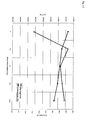
- Figure 1 shows the dependance of M w on CH 3 NO 2 addition.
- Figure 2 compares the novel AlCl 3 /CH 3 NO 2 system with other catalyst systems.
- the AlCl 3 /CH 3 NO 2 system was found to be as effective in the production of high IP IIR as was the previously described ZrCl 4 /CH 3 NO 2 system. Importantly, this system has the added advantage of utilizing a more cost effective Lewis Acid (cf. ZrCl 4 ) while at the same time not requiring prolonged catalyst dissolution times (as was observed in the ZrCl 4 system) which makes it more feasible to incorporate the inventive AlCl 3 /CH 3 NO 2 system into exisiting plant environments.
- the optimized AlCl 3 /CH 3 NO 2 system was found to perform as well as the ZrCl 4 /CH 3 NO 2 system in terms of molecular weight and IP incorporation and superior to the latter system with respect to catalyst activity (g/g). Also depicted in Figure 2 is the apparent improvement in molecular weight observed for the AlCl 3 /CH 3 NO 2 as compared to the previously studied ZrCl 4 /CH 3 (CO)Cl system and the AlCl 3 control system.
Landscapes
- Chemical & Material Sciences (AREA)
- Health & Medical Sciences (AREA)
- Chemical Kinetics & Catalysis (AREA)
- Medicinal Chemistry (AREA)
- Polymers & Plastics (AREA)
- Organic Chemistry (AREA)
- Addition Polymer Or Copolymer, Post-Treatments, Or Chemical Modifications (AREA)
- Polymerization Catalysts (AREA)
- Transition And Organic Metals Composition Catalysts For Addition Polymerization (AREA)
Abstract
Description
| AlCl3/CH3NO2 Polymerization Details. | ||||
| Example | Isobutylene (mL) | Isoprene (mL) | Amount AlCl3 (mg) | CH3NO2 Amount (mg) |
| 1 | 20.0 | 3.0 | 35 | 0.0 |
| 2 | 20.0 | 3.0 | 35 | 1.6 |
| 3 | 20.0 | 3.0 | 35 | 4.7 |
| 4 | 20.0 | 3.0 | 35 | 7.8 |
| 5 | 20.0 | 3.0 | 35 | 10.9 |
Claims (5)
- A process for producing polymers comprising repeating units derived from at least one isoolefin monomer, at least one multiolefin monomer and optionally further copolymerizable monomers in the presence of at least one organic nitro compound and AlCl3/water wherein the process is conducted in the absence of compounds selected from the group consisting of vanadium compounds, zirconium halogenid, hafnium halogenides.
- A process according to Claim 1, wherein said organic nitro compound is of the general formula (I)
- A process according to Claim 1 or 2, wherein the concentration of said organic nitro compound in the reaction medium is in the range from 5 to 500 ppm.
- A process according to any of the claims 1-3, wherein said isoolefin is isobutene.
- A process according to any of the claims 1-4, wherein said multiolefin is isoprene.
Applications Claiming Priority (2)
| Application Number | Priority Date | Filing Date | Title |
|---|---|---|---|
| CA2413611 | 2002-12-05 | ||
| CA2413611A CA2413611C (en) | 2002-12-05 | 2002-12-05 | Process for production of high-isoprene butyl rubber |
Publications (3)
| Publication Number | Publication Date |
|---|---|
| EP1426387A2 true EP1426387A2 (en) | 2004-06-09 |
| EP1426387A3 EP1426387A3 (en) | 2004-07-21 |
| EP1426387B1 EP1426387B1 (en) | 2008-04-02 |
Family
ID=32304019
Family Applications (1)
| Application Number | Title | Priority Date | Filing Date |
|---|---|---|---|
| EP03027010A Expired - Lifetime EP1426387B1 (en) | 2002-12-05 | 2003-11-22 | Process for production of high-isoprene butyl rubber |
Country Status (7)
| Country | Link |
|---|---|
| US (2) | US7256244B2 (en) |
| EP (1) | EP1426387B1 (en) |
| JP (1) | JP4925560B2 (en) |
| CN (1) | CN1310980C (en) |
| CA (1) | CA2413611C (en) |
| DE (1) | DE60320079T2 (en) |
| RU (1) | RU2337111C2 (en) |
Families Citing this family (7)
| Publication number | Priority date | Publication date | Assignee | Title |
|---|---|---|---|---|
| CA2418884C (en) * | 2003-02-14 | 2010-07-20 | Bayer Inc. | Process for production of high-isoprene butyl rubber |
| WO2007022618A1 (en) * | 2005-08-26 | 2007-03-01 | Lanxess Inc. | Process for production of peroxide curable high multiolefin halobutyl ionomers |
| CN101253240B (en) * | 2005-08-26 | 2012-04-25 | 朗盛公司 | Peroxide curable rubber compound containing high multiolefin halobutyl ionomer |
| US20100010140A1 (en) * | 2005-08-26 | 2010-01-14 | Lanxess Inc. | Peroxide curable rubber compound containing high multiolefin halobutyl ionomers |
| SG10201800933XA (en) * | 2014-06-30 | 2018-03-28 | Arlanxeo Singapore Pte Ltd | Novel anti-agglomerants for the rubber industry |
| CN105754024B (en) * | 2014-12-15 | 2019-01-18 | 中国石油天然气股份有限公司 | A kind of synthetic method of high isoprene content butyl rubber |
| GB2538559B (en) | 2015-05-22 | 2020-02-12 | William Blythe Ltd | Provision of inorganic powders with reduced hazard |
Family Cites Families (19)
| Publication number | Priority date | Publication date | Assignee | Title |
|---|---|---|---|---|
| GB600317A (en) * | 1944-11-14 | 1948-04-06 | Standard Oil Dev Co | Improved process for the low temperature polymerisation of olefinic materials |
| US2076201A (en) * | 1931-04-07 | 1937-04-06 | Shell Dev | Process for the polymerization of unsaturated hydrocarbons |
| US2356128A (en) | 1939-10-20 | 1944-08-22 | Jasco Inc | Mixed olefinic polymerization process and product |
| US2433025A (en) * | 1943-12-16 | 1947-12-23 | Standard Oil Dev Co | Low temperature polymerization process |
| US2568656A (en) | 1946-03-02 | 1951-09-18 | Goodrich Co B F | Copolymers of an isoolefin and a vinyl cycloolefin |
| US3928297A (en) * | 1971-06-08 | 1975-12-23 | Exxon Research Engineering Co | High molecular weight, high unsaturation isobutylene-conjugated diene copolymers |
| IT953490B (en) * | 1972-03-11 | 1973-08-10 | Snam Progetti | PROCEDURE FOR THE POLYMERIZATION AND COPOLYMERIZATION OF ISOBU TILENE |
| JPS5690020A (en) * | 1979-12-24 | 1981-07-21 | Nissan Chem Ind Ltd | Removal of isobutene |
| IL79052A0 (en) * | 1986-06-06 | 1986-11-30 | Univ Ramot | Device and process for production of alginate-shell beads containing biologically active material |
| JPH0651752B2 (en) * | 1987-02-20 | 1994-07-06 | 鐘淵化学工業株式会社 | Process for producing isobutylene-based polymer having functional end |
| US5012030A (en) * | 1989-10-10 | 1991-04-30 | Amoco Corporation | Process for preparing polybutenes with increased reactivity |
| RU2026307C1 (en) * | 1991-02-04 | 1995-01-09 | Институт теоретических проблем химической технологии АН Республики Азербайджан | Process for preparing isobutylene-polar vinyl monomer copolymers |
| DE19627529A1 (en) | 1996-07-09 | 1998-01-15 | Bayer Ag | New initiator systems containing vanadium for the (co) polymerization of isoolefins |
| DE19825334A1 (en) * | 1998-06-05 | 1999-12-09 | Basf Ag | Process for the production of highly reactive polyisobutenes |
| JP2000017020A (en) * | 1998-06-29 | 2000-01-18 | Bridgestone Corp | Preparation of isobutylene-based copolymer |
| US6252021B1 (en) * | 1998-11-23 | 2001-06-26 | Korea Kumho Petrochemical Co., Ltd. | Process for producing polyisobutene using a catalytic system comprising transition metal-benzene derivative compound-methylaluminoxane |
| DE10004048A1 (en) * | 2000-01-31 | 2001-08-02 | Bayer Ag | High molecular weight gel-free isobutene copolymers with high double bond contents |
| DE10042118A1 (en) * | 2000-08-28 | 2002-03-14 | Bayer Ag | Process for the preparation of isoolefin copolymers |
| CA2390046A1 (en) * | 2002-06-28 | 2003-12-28 | Bayer Inc. | Method for improving the processability of butyl polymers |
-
2002
- 2002-12-05 CA CA2413611A patent/CA2413611C/en not_active Expired - Fee Related
-
2003
- 2003-11-22 EP EP03027010A patent/EP1426387B1/en not_active Expired - Lifetime
- 2003-11-22 DE DE60320079T patent/DE60320079T2/en not_active Expired - Lifetime
- 2003-12-03 US US10/726,455 patent/US7256244B2/en not_active Expired - Fee Related
- 2003-12-04 RU RU2003135266/04A patent/RU2337111C2/en not_active IP Right Cessation
- 2003-12-05 JP JP2003406946A patent/JP4925560B2/en not_active Expired - Fee Related
- 2003-12-05 CN CNB2003101248241A patent/CN1310980C/en not_active Expired - Fee Related
-
2007
- 2007-07-09 US US11/825,723 patent/US20090030169A1/en not_active Abandoned
Also Published As
| Publication number | Publication date |
|---|---|
| DE60320079D1 (en) | 2008-05-15 |
| CN1310980C (en) | 2007-04-18 |
| EP1426387A3 (en) | 2004-07-21 |
| DE60320079T2 (en) | 2009-06-18 |
| JP2004182990A (en) | 2004-07-02 |
| US20090030169A1 (en) | 2009-01-29 |
| US7256244B2 (en) | 2007-08-14 |
| US20040220328A1 (en) | 2004-11-04 |
| RU2337111C2 (en) | 2008-10-27 |
| RU2003135266A (en) | 2005-05-20 |
| JP4925560B2 (en) | 2012-04-25 |
| CN1511854A (en) | 2004-07-14 |
| CA2413611A1 (en) | 2004-06-05 |
| EP1426387B1 (en) | 2008-04-02 |
| CA2413611C (en) | 2012-11-13 |
Similar Documents
| Publication | Publication Date | Title |
|---|---|---|
| EP1449859B1 (en) | Process for production of high-isoprene butyl rubber | |
| US20090030169A1 (en) | Process for production of high-isoprene butyl rubber | |
| US20090182095A1 (en) | Process for production of peroxide curable high multiolefin halobutyl ionomers | |
| EP1215220B1 (en) | Halogenated, high molecular weight, gel-free isobutene copolymers with elevated double bond contents | |
| EP1506978B1 (en) | Peroxide curable butyl formulations | |
| US20010014726A1 (en) | High molecular weight, gel-free isobutene copolymers with elevated double bond contents | |
| EP1215241B1 (en) | Process for the preparation of isobutene/isoprene copolymers | |
| US20040054109A1 (en) | Method for improving the process processability of butyl polymers | |
| EP1516883B1 (en) | Process for production of butyl rubber | |
| HK1067648A (en) | Process for production of high-isoprene butyl rubber | |
| EP1834964B1 (en) | Polymerization process using zinc halide initiators | |
| CA2438931A1 (en) | Method of improving reversion resistance | |
| HK1081564B (en) | Process for production of butyl rubber | |
| HK1146288A (en) | Process for production of high-isoprene butyl rubber | |
| HK1069406B (en) | Process for production of high-isoprene butyl rubber |
Legal Events
| Date | Code | Title | Description |
|---|---|---|---|
| PUAI | Public reference made under article 153(3) epc to a published international application that has entered the european phase |
Free format text: ORIGINAL CODE: 0009012 |
|
| PUAL | Search report despatched |
Free format text: ORIGINAL CODE: 0009013 |
|
| AK | Designated contracting states |
Kind code of ref document: A2 Designated state(s): AT BE BG CH CY CZ DE DK EE ES FI FR GB GR HU IE IT LI LU MC NL PT RO SE SI SK TR |
|
| AX | Request for extension of the european patent |
Extension state: AL LT LV MK |
|
| AK | Designated contracting states |
Kind code of ref document: A3 Designated state(s): AT BE BG CH CY CZ DE DK EE ES FI FR GB GR HU IE IT LI LU MC NL PT RO SE SI SK TR |
|
| AX | Request for extension of the european patent |
Extension state: AL LT LV MK |
|
| 17P | Request for examination filed |
Effective date: 20050121 |
|
| AKX | Designation fees paid |
Designated state(s): DE FR GB IT |
|
| 17Q | First examination report despatched |
Effective date: 20050518 |
|
| RAP1 | Party data changed (applicant data changed or rights of an application transferred) |
Owner name: LANXESS INC. Owner name: BAYER AKTIENGESELLSCHAFT |
|
| RAP1 | Party data changed (applicant data changed or rights of an application transferred) |
Owner name: LANXESS INC. |
|
| GRAP | Despatch of communication of intention to grant a patent |
Free format text: ORIGINAL CODE: EPIDOSNIGR1 |
|
| GRAS | Grant fee paid |
Free format text: ORIGINAL CODE: EPIDOSNIGR3 |
|
| GRAA | (expected) grant |
Free format text: ORIGINAL CODE: 0009210 |
|
| AK | Designated contracting states |
Kind code of ref document: B1 Designated state(s): DE FR GB IT |
|
| REG | Reference to a national code |
Ref country code: GB Ref legal event code: FG4D |
|
| REF | Corresponds to: |
Ref document number: 60320079 Country of ref document: DE Date of ref document: 20080515 Kind code of ref document: P |
|
| ET | Fr: translation filed | ||
| PLBE | No opposition filed within time limit |
Free format text: ORIGINAL CODE: 0009261 |
|
| STAA | Information on the status of an ep patent application or granted ep patent |
Free format text: STATUS: NO OPPOSITION FILED WITHIN TIME LIMIT |
|
| 26N | No opposition filed |
Effective date: 20090106 |
|
| PGFP | Annual fee paid to national office [announced via postgrant information from national office to epo] |
Ref country code: DE Payment date: 20101117 Year of fee payment: 8 |
|
| PGFP | Annual fee paid to national office [announced via postgrant information from national office to epo] |
Ref country code: GB Payment date: 20101117 Year of fee payment: 8 |
|
| PGFP | Annual fee paid to national office [announced via postgrant information from national office to epo] |
Ref country code: FR Payment date: 20121130 Year of fee payment: 10 |
|
| PGFP | Annual fee paid to national office [announced via postgrant information from national office to epo] |
Ref country code: IT Payment date: 20121116 Year of fee payment: 10 |
|
| GBPC | Gb: european patent ceased through non-payment of renewal fee |
Effective date: 20121122 |
|
| REG | Reference to a national code |
Ref country code: DE Ref legal event code: R119 Ref document number: 60320079 Country of ref document: DE Effective date: 20130601 |
|
| PG25 | Lapsed in a contracting state [announced via postgrant information from national office to epo] |
Ref country code: DE Free format text: LAPSE BECAUSE OF NON-PAYMENT OF DUE FEES Effective date: 20130601 |
|
| PG25 | Lapsed in a contracting state [announced via postgrant information from national office to epo] |
Ref country code: GB Free format text: LAPSE BECAUSE OF NON-PAYMENT OF DUE FEES Effective date: 20121122 |
|
| REG | Reference to a national code |
Ref country code: FR Ref legal event code: ST Effective date: 20140731 |
|
| PG25 | Lapsed in a contracting state [announced via postgrant information from national office to epo] |
Ref country code: IT Free format text: LAPSE BECAUSE OF NON-PAYMENT OF DUE FEES Effective date: 20131122 |
|
| PG25 | Lapsed in a contracting state [announced via postgrant information from national office to epo] |
Ref country code: FR Free format text: LAPSE BECAUSE OF NON-PAYMENT OF DUE FEES Effective date: 20131202 |