EP1424840A1 - System and method of automatically answering calls in a wireless communication device - Google Patents
System and method of automatically answering calls in a wireless communication device Download PDFInfo
- Publication number
- EP1424840A1 EP1424840A1 EP03104370A EP03104370A EP1424840A1 EP 1424840 A1 EP1424840 A1 EP 1424840A1 EP 03104370 A EP03104370 A EP 03104370A EP 03104370 A EP03104370 A EP 03104370A EP 1424840 A1 EP1424840 A1 EP 1424840A1
- Authority
- EP
- European Patent Office
- Prior art keywords
- wireless communication
- communication device
- portable wireless
- speed
- controller
- Prior art date
- Legal status (The legal status is an assumption and is not a legal conclusion. Google has not performed a legal analysis and makes no representation as to the accuracy of the status listed.)
- Withdrawn
Links
- 238000004891 communication Methods 0.000 title claims abstract description 143
- 238000000034 method Methods 0.000 title claims description 59
- 230000008569 process Effects 0.000 description 32
- 230000001413 cellular effect Effects 0.000 description 8
- 238000010586 diagram Methods 0.000 description 5
- 230000010267 cellular communication Effects 0.000 description 2
- 230000007246 mechanism Effects 0.000 description 2
- 238000012986 modification Methods 0.000 description 2
- 230000004048 modification Effects 0.000 description 2
- 238000011022 operating instruction Methods 0.000 description 2
- 238000012546 transfer Methods 0.000 description 2
- 239000004165 Methyl ester of fatty acids Substances 0.000 description 1
- 230000009471 action Effects 0.000 description 1
- 238000005516 engineering process Methods 0.000 description 1
- 230000006870 function Effects 0.000 description 1
- 230000003993 interaction Effects 0.000 description 1
- 238000005259 measurement Methods 0.000 description 1
- 230000002093 peripheral effect Effects 0.000 description 1
- 238000012545 processing Methods 0.000 description 1
Images


Classifications
-
- H—ELECTRICITY
- H04—ELECTRIC COMMUNICATION TECHNIQUE
- H04M—TELEPHONIC COMMUNICATION
- H04M1/00—Substation equipment, e.g. for use by subscribers
- H04M1/60—Substation equipment, e.g. for use by subscribers including speech amplifiers
- H04M1/6033—Substation equipment, e.g. for use by subscribers including speech amplifiers for providing handsfree use or a loudspeaker mode in telephone sets
- H04M1/6041—Portable telephones adapted for handsfree use
- H04M1/6075—Portable telephones adapted for handsfree use adapted for handsfree use in a vehicle
- H04M1/6083—Portable telephones adapted for handsfree use adapted for handsfree use in a vehicle by interfacing with the vehicle audio system
-
- H—ELECTRICITY
- H04—ELECTRIC COMMUNICATION TECHNIQUE
- H04M—TELEPHONIC COMMUNICATION
- H04M1/00—Substation equipment, e.g. for use by subscribers
- H04M1/60—Substation equipment, e.g. for use by subscribers including speech amplifiers
- H04M1/6033—Substation equipment, e.g. for use by subscribers including speech amplifiers for providing handsfree use or a loudspeaker mode in telephone sets
- H04M1/6041—Portable telephones adapted for handsfree use
- H04M1/605—Portable telephones adapted for handsfree use involving control of the receiver volume to provide a dual operational mode at close or far distance from the user
-
- H—ELECTRICITY
- H04—ELECTRIC COMMUNICATION TECHNIQUE
- H04M—TELEPHONIC COMMUNICATION
- H04M1/00—Substation equipment, e.g. for use by subscribers
- H04M1/66—Substation equipment, e.g. for use by subscribers with means for preventing unauthorised or fraudulent calling
Definitions
- This invention in general relates to hands-free communication systems for portable wireless communication devices and, more particularly, to a system and method of automatically answering calls in a wireless communication device while the device is in motion.
- a user may still be required to push a button or perform some physical act before establishing a wireless communication link for an incoming voice call. If the user is operating a vehicle during that time, the user may not be able to push a button or perform some physical act to initiate a voice call. Accordingly, an incoming phone call may go unanswered.
- a portable wireless communication device comprising a transceiver, a positioning unit, and a controller.
- the transceiver is capable of receiving an incoming call.
- the positioning unit is used to determine a geographic position of the portable wireless communication device.
- the controller receives the geographic position and/or a speed of the portable wireless communication device from the positioning unit and is capable of operating the portable wireless communication device in a private mode and a speakerphone mode.
- the controller is further programmed to automatically answer the incoming call when it is determined that a speed of the portable wireless communication device is faster than a predetermined threshold.
- the speed may be determined from at least two sequential geographic positions received from the positioning unit over a predetermined time period. Alternatively, the speed may be determined by the positioning unit and provided to the controller.
- the controller may be further programmed to operate the portable wireless communication device in the speakerphone mode when it is determined that the speed of the portable wireless communication device is faster than the predetermined threshold.
- the controller may be further programmed to determine whether a user has previously selected an automatically call forward feature in the portable wireless communication device. If so, the controller forwards the incoming call to a vehicle transceiver within the vehicle when it is determined that the user has previously selected the automatic call forward feature and the speed of the portable wireless communication device is faster than the predetermined threshold.
- the portable wireless communication device may further comprise a user interface.
- the user interface may be used in a variety of ways but, in one embodiment of the present invention, the user of the device may use the interface to configure the predetermined threshold related to the acceptable speed for automatically answering an incoming call.
- the controller may further be programmed to determine a level of uncertainty with relation to the two geographic positions received from the positioning unit. The level of uncertainty may be used by the controller in a determination of whether to automatically answer the incoming call.
- a system for automatically answering incoming calls in a portable wireless communication device comprises a cellular transceiver, a positioning unit, and a controller.
- the cellular transceiver is capable of receiving an incoming call.
- the positioning unit is used to determine a first geographic position of the portable wireless communication device at a first time and a second geographic position of the portable wireless communication device at a second time. The first time and the second time being separated by a predetermined time period.
- the controller is programmed to determine a speed of the portable wireless communication device from the first geographic position, the second geographic position, and the predetermined time period.
- the controller is further programmed to automatically answer the incoming call when it is determined that the speed of the portable wireless communication device is above a predetermined threshold.
- a method in a portable wireless communication device that includes the steps of: determining whether an incoming call is being directed to the portable wireless communication device; determining a first geographic position of the portable wireless communication device at a first time; determining a second geographic position of the portable wireless communication device at a second time, the first time and the second time being separated by a predetermined time period; determining a speed of the portable wireless communication device from the first geographic position, the second geographic position, and the predetermined time period; determining whether the speed of the portable wireless communication device is above a predetermined threshold; and automatically answering the incoming call when it is determined that the speed of the portable wireless communication device is above the predetermined threshold.
- the step of automatically answering the incoming call may further include the step of operating the portable wireless communication device in a speakerphone mode when it is determined that the speed of the portable wireless communication device is above the predetermined threshold.
- the step of automatically answering the incoming call may further include the step of forwarding the incoming call to a vehicle transceiver within a vehicle when it is determined that the speed of the portable wireless communication device is above the predetermined threshold.
- the method may further include a step of determining whether a user has previously selected an automatic call answer feature in the portable wireless communication device prior to automatically answering the incoming call.
- the method may also include a step of determining a level of uncertainty with relation to the first and second geographic positions prior to automatically answering the incoming call.
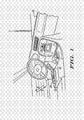
- FIG. 1 is a perspective view of the cabin of a vehicle 20.
- a portable wireless communication device 22 Within the cabin of the vehicle 20 is a portable wireless communication device 22.
- the portable wireless communication device 22 shown in these figures include a handheld wireless phone that includes a transceiver that allows a user to establish a wireless voice communication through the internal microphone 24 and at least one device internal speaker 26.
- a portable wireless communication device in the form of a cellular phone will be used.
- the present invention is not limited to cellular phones and the portable wireless communication device 22 could be in other forms such as a personal digital assistant (PDA), a two-way radio, a portable computer, and other wireless devices.
- PDA personal digital assistant
- the portable wireless communication device 22 includes a single internal speaker 26 that is configured to operate in two modes: private mode and speakerphone mode.
- the private mode plays the speaker at a volume suitable for a user to hold the portable wireless communication device 22 to the user's ear while engaging in a call.
- the speakerphone mode plays the speaker at a louder volume to allow the user to hear information while the portable wireless communication device is away from the user's ear.
- the portable wireless communication device 22 could have two separate speakers, each operating at a different volume. One of the two speakers could be used for private mode and the other speaker could be used for the speakerphone mode.
- a remote third party who desires to establish a wireless communication link with the wireless communication device 22 dials a specific number associated with the wireless communication device 22.
- a wireless network (not shown) associated with the portable wireless communication device 22 routes the incoming call from the remote third party to the device. When a wireless communication link is eventually established, the portable wireless communication device 22 may then receive downlink and transmit uplink wireless communications A and B.
- the portable wireless communication device 22 may include a microphone 24, at least one speaker 26, 28, a controller 30, a transceiver 32, a positioning unit 34, a user interface 36, and a power supply 38.
- the portable wireless communication device 22 may further include other circuitry for interconnecting various components within the device such as circuitry for the audio input 40 and the audio output 42.
- the operation of the microphone 24 and speakers 26, 28 have been described above.
- the audio input 40 and audio output 42 contain circuitry to enable the microphone 24 and speakers 26, 28 to operate in either the private mode or the speakerphone mode.
- the portable wireless communication device 22 may have one speaker 26 that can operate at two different volumes.
- the portable wireless communication device 22 may include at least two speakers 26, 28 that each operate at different volumes.
- the transceiver 32 is capable of establishing and accepting voice calls over a wireless communication link A and B with a remote station.
- the transceiver 32 may be a cellular transceiver and operate according to an analog wireless communication protocol such as the Advanced Mobile Phone System (AMPS) or operate according to a digital wireless communication protocol such as a Code Division Multiple Access (CDMA) protocol or a Time Division Multiple Access (TDMA) protocol.
- AMPS Advanced Mobile Phone System
- CDMA Code Division Multiple Access
- TDMA Time Division Multiple Access
- the positioning unit 34 is a unit that is capable of determining the geographic position (longitude and latitude) of the wireless communication device 22.
- the positioning unit 34 could be a location unit in accordance with the recent governmental location tracking, or E911, mandates.
- the positioning unit 34 may include a global positioning system (GPS) receiver.
- GPS global positioning system
- a plurality of satellites that orbit the earth transmit radio signals to the GPS receiver.
- the radio signals are pseudo-random signals that contain information modulated by a pseudo-random code.
- the GPS receiver in the positioning unit 34 is able to receive and process the satellite radio signals to calculate position and time. Conventional GPS receivers need to track at least four satellites of the GPS constellation in order to compute a GPS receiver's position and time.
- An almanac is stored in the positioning unit 34 to help identify visible satellites and to track satellite orbits.
- Locally generated pseudorandom noise codes are generated within the positioning unit 34 and compared to the received satellite signals. From the compared signals, the positioning unit 34 generates measurement data that reflects travel times of the received satellite signals. Knowing the travel times of the satellite signals allows the positioning unit 34 to compute distances between each satellite and the positioning unit 34. The positioning unit 34 may then compute a position solution that can be reported to the controller 30.
- the receiver may further be configured to determine a velocity or speed of the device that can be reported to the controller 30.
- the controller 30 is the heart of the wireless communication device 22.
- a suitable controller 30 for the present invention may include a digital signal processor (DSP) controller with memory.
- DSP digital signal processor
- the controller 30 of the present invention preferably executes a number of functional steps. These functional steps may be microcoded signal processing steps that are programmed as operating instructions in the controller 30.
- the operating instructions may be stored in a computer-readable medium in the controller 30.
- the controller 30 may contain instructions for determining whether to automatically answer an incoming call.
- the controller 30 receives position data from the positioning unit 34 at two different times over a predetermined time period.
- the position data received from the positioning unit 34 relates to a geographic location of the wireless communication device 22.
- the controller 30 can determine whether an incoming voice call should be automatically answered through the transceiver 32.
- the positioning unit 34 may provide a velocity or speed to the controller 30. The determination of whether to automatically answer an incoming call may be done for each incoming voice call if the user has selected an automatic call answer feature through the user interface 36.
- the controller 30 may contain a program or other microcoded instructions to cooperate with the user interface 36 to accept user preferences related to whether an incoming voice call should be automatically answered by the device and, if so, the criteria for automatically answering an incoming voice call.
- the memory in the controller 30 of the portable wireless communication device 22 may be used to store user preferences and user selected features and variables.
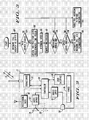
- FIG. 3 shows a flow diagram illustrating one embodiment of a method that may be performed by the wireless communication device 22 in determining whether to answer an incoming voice call.
- the method includes a process block 102 that determines that an incoming voice call has arrived and directed to the wireless communication device 22. The process then proceeds to decision block 104.
- the information on whether the user has enabled such a feature could be stored in memory of the controller 30 after the feature is enabled or disabled by the user through the user interface 36. If it is determined that the user had not enabled the automatic call answer feature, then the process may proceed to process block 106 where the wireless communication device 22 may handle the incoming voice call according to a default configuration. For instance, the default configuration may be an alarm or other notification to the user of an incoming call and waiting for the user to press a button to accept the incoming call. If it is determined, however, that the user has enabled the automatic call answer feature, then the process may continue to process block 108.
- the controller 30 obtains two sequential position solutions from the positioning unit 34 over a predetermined time period.
- the predetermined time period may be set so that the two sequential position solutions are obtained between one or two seconds.
- the controller 30 uses the obtained sequential position solutions and the predetermined time period to determine the speed of the wireless communication device 22. This may be accomplished by determining the distance between the two sequential position solutions and then dividing the distance by the predetermined time period. The process may then proceed to process block 112.
- the controller 30 may compute or otherwise determine the uncertainty of the two sequential position solutions or the uncertainty of the speed determined from the position solutions. There will be some level of uncertainty in the position data derived from the positioning unit 34. The level of uncertainty may depend on several factors including the type of technology, hardware, and algorithms being used. The type of uncertainty used is implementation specific but well known to those of ordinary skill in the art.
- the wireless communication device 22 could be configured to accept a predetermined limit or threshold of uncertainty that would be acceptable to a user of the device. If a limit or threshold is used, the method could further include a decision block 114. At decision block 114, the controller 30 could determine whether the computed level of uncertainty in the two obtained position solutions or determined speed is within an acceptable limit or above a certain predetermined threshold. If it is determined that the obtained positions or speed are not within an acceptable limit or not above a certain threshold, then the process may proceed to process block 106 where the wireless communication device 22 may handle the incoming voice call according to the default configuration. If it is determined, however, that the obtained positions or speed are within an acceptable limit or above a threshold, then the process may continue to process block 116.
- the positioning unit 34 may provide a velocity or speed to the controller 30. The determination of velocity or speed would then be done by the positioning unit 34 and any determination of uncertainty could be performed within that unit.
- the controller 30 determines whether the determined speed of the wireless communication device 22 is above a predetermined threshold.
- the wireless communication device 22 may be configured to receive the predetermined threshold from the user over the user interface 36 and store the predetermined threshold in memory of the controller 30. For instance, a user of the wireless communication device 22 may wish to configure the predetermined threshold to a speed of 10 miles/hour (14.67 feet/sec) so that the wireless communication device 22 will automatically answer calls when the device is traveling above that speed. If it is determined that the speed of the wireless communication device 22 is not above the threshold, then the process may proceed to process block 106 where the wireless communication device 22 may handle the incoming voice call according to the default configuration. If it is determined, however, that the speed of the wireless communication device 22 is above a threshold, then the process may continue to process block 118.
- the wireless communication device 22 will automatically answer the incoming voice call via the speakerphone mode.
- the controller 30 configures the audio input 40 and audio output 42 circuitry to act in a mode that enables the user to communicate during the voice call so that the wireless communication device 22 does not have to be next to the user's head (i.e. hands-free). This may include adjusting the volume and reception of the speaker 26 and microphone 24. Alternatively, this may also include switching to a different set of hardware that plays at a different volume such as switching the audio output to play on a louder speaker 28.
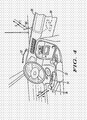
- the controller 30 of the wireless communication device 22 may have a mechanism for detecting whether the user would like an incoming voice call to be automatically forwarded to a separate embedded transceiver located in a Telematics unit 50 in the vehicle 20.
- Telematics systems for vehicles include an embedded transceiver to transmit and receive audio and data through an external antenna 60 over a wireless communication link C and D. These systems provide hands-free personal communications through an embedded microphone 52 and speaker 54 in the vehicle 20.
- the OnStar® system by General Motors is an example of such a hands-free system.
- An outside party may establish a wireless communication link C and D with the vehicle 20 by dialing a phone number associated with the vehicle's embedded transceiver.
- the wireless communication device 22 may forward an incoming call to a phone number corresponding to the embedded transceiver located in the Telematics unit 50 of the vehicle 20.
- FIG. 5 illustrates a portable wireless communication device 22 in the form of a cellular phone capable of receiving downlink and transmitting uplink cellular voice communications A and B.
- the portable wireless communication device 22 in FIG. 5 includes a microphone 24, at least one speaker 26, 28, a controller 30, a transceiver 32, a positioning unit 34, a user interface 36, a power supply 38, an audio input 40, and an audio output 42.
- the operation of these components is similar to the ones described in relation to FIG. 2 except that the controller 30 may have a further function of forwarding an incoming call to an embedded transceiver 56 in the vehicle 20.
- the Telematics unit 50 may include the embedded transceiver 56, a controller 58, and a plurality of switches 68A, 68B, 68C, 68D or other circuitry logic.
- the controller 58 may be connected to a switch 68A to provide the ability to switch, transfer, or otherwise route the audio for uplink wireless communications D from the vehicle microphone 52 to the vehicle's embedded transceiver 56.
- the controller 58 may be further connected to a switch 68B to provide the ability to switch, transfer, or otherwise route the audio of downlink wireless communications C from the vehicle's embedded transceiver 56 to the vehicle speakers 54.
- the Telematics unit 50 may further be connected to peripheral input devices of the radio system of the vehicle 20 such as a radio tuner 62 and a CD player 64 through switches 68C, 68D. This allows the Telematics unit 50 to mute the input devices during a phone conversation over the radio system.
- the Telematics unit 50 may also be connected to a user interface 66 to receive information such as whether to initiate an emergency call (E-Call) or an information call (I-Call).
- the Telematics unit 50 may further include other components such as a positioning unit (not shown) to provide positioning information for other Telematics applications for the vehicle 20.
- the controller 30 in the wireless communication device 22 may be programmed to forward an incoming call to the vehicle's embedded transceiver 56. This may be accomplished, in one embodiment, by sending a message to the wireless network associated with the wireless communication device 22. The message would include an instruction to forward incoming calls as well as the phone number associated with the vehicle transceiver 56. The phone number associated with the vehicle transceiver 56 could be stored in memory of the controller 30 after being entered by the user through the user interface 36.
- the controller 30 in the wireless communication device 22 is configured according to known methods to monitor the transceiver 32 for pending incoming cellular voice communications. Upon receiving a pending voice communication, the controller 30 would make a determination whether the device is moving faster than a predetermined speed. In one embodiment, the controller 30 makes this determination from sequential position solutions obtained from the positioning unit 34 over a predetermined time period. If the wireless communication device 22 is moving faster than a predetermined speed, then the device would forward the incoming voice call to the vehicle's embedded transceiver 56. If the wireless communication device is not moving faster than a predetermined speed, then the controller 30 can answer the incoming call according to a default setting that does not automatically answer the incoming call.
- the portable wireless communication device 22 includes a controller 30 having a processor that implements software or other microcoded instructions stored in memory.
- FIG. 6 illustrates another embodiment of a method according to the present invention.
- the method uses the same process and decision blocks 102-118 but adds decision block 120 and process block 122.
- a determination is made at decision block 116 on whether the speed of the wireless communication device 22 is above a predetermined threshold. If it is determined that the speed of the wireless communication device 22 is not above the threshold, then the process may proceed to process block 106 where the wireless communication device 22 may handle the incoming voice call according to the default configuration. If it is determined, however, that the speed of the wireless communication device 22 is above a threshold, then the process may continue to decision block 120.
- the information on whether the user has enabled such a feature could be stored in memory of the controller 30 after the feature is enabled or disabled by the user through the user interface 36. This determination step is attractive to those users who may not wish to have all incoming calls forwarded to their in-vehicle Telematics system. If it is determined that the user had not enabled the automatic call forward feature, then the process may proceed to process block 118 where the wireless communication device 22 automatically answer the incoming voice call through the device's speaker phone mode through speakers 26, 28 and microphone 24. If it is determined, however, that the user has enabled the automatic call forward feature, then the process may continue to process block 122.
- the process includes a step of forwarding the incoming call to the vehicle transceiver 56.
- this can be done by sending a message to a network associated with the portable wireless communication device 22.
- the message would include an instruction to forward the incoming call and data regarding the phone number that the call should be forwarded.
- the data regarding the phone number of the vehicle transceiver 56 may be stored in memory of the controller 30 after being inputted by the user through the user interface 36.
- the system and method further includes a mechanism for forwarding calls to a vehicle's embedded transceiver when the device is moving faster than a predetermined threshold speed.
- the system and method reduces the complexity and the number of distractions when answering or establishing a cellular communication.
- the system and method also increases the usefulness of the device while enabling calls to be received while in motion without operator action.
Landscapes
- Engineering & Computer Science (AREA)
- Multimedia (AREA)
- Signal Processing (AREA)
- Mobile Radio Communication Systems (AREA)
- Telephone Function (AREA)
Abstract
Description
- The present application claims priority from provisional application, Serial No. 60/429,617, entitled "SYSTEM AND METHOD OF AUTOMATICALLY ANSWERING CALLS IN A WIRELESS COMMUNICATION DEVICE," filed November 27, 2002, which is commonly owned and incorporated herein by reference in its entirety.
- This invention in general relates to hands-free communication systems for portable wireless communication devices and, more particularly, to a system and method of automatically answering calls in a wireless communication device while the device is in motion.
- Today, many people use portable wireless communication devices in their vehicles. The industry is focused on providing hands-free features to people who use portable devices in their vehicle. Some portable devices have a speakerphone feature that allows a user to communicate without requiring that the device be located next to the user's ear and mouth. Other portable devices have vehicle connections that allow the audio output of the device to be routed to a radio system in the vehicle.
- There is a continuing need, however, for more efficient use of a portable wireless communication device in a vehicle and, more particularly, in answering incoming voice calls. For instance, in conventional hands-free systems, a user may still be required to push a button or perform some physical act before establishing a wireless communication link for an incoming voice call. If the user is operating a vehicle during that time, the user may not be able to push a button or perform some physical act to initiate a voice call. Accordingly, an incoming phone call may go unanswered.
- It is, therefore, desirable to provide an improved hands-free cellular communication system and method for answering a portable wireless communication device to overcome or minimize most, if not all, of the preceding problems.
-
- FIG. 1 is a perspective view of a portable wireless communication device in a vehicle according to one embodiment of the present invention;
- FIG. 2 is a block diagram of a portable wireless communication device according to one embodiment of the present invention;
- FIG. 3 is a flow diagram of one method to automatically answer incoming calls directed to a portable wireless communication device.
- FIG. 4 is a perspective view of a portable wireless communication device and a Telematics unit in a vehicle according to another embodiment of the present invention;
- FIG. 5 is a block diagram of a portable wireless communication device and a Telematics unit in a vehicle according to another embodiment of the present invention; and
- FIG. 6 is a flow diagram of another method to automatically answer incoming calls directed to a portable wireless communication device.
-
- While the invention is susceptible to various modifications and alternative forms, specific embodiments have been shown by way of example in the drawings and will be described in detail herein. However, it should be understood that the invention is not intended to be limited to the particular forms disclosed. Rather, the invention is to cover all modifications, equivalents and alternatives falling within the spirit and scope of the invention as defined by the appended claims.
- What is described is a system and method of automatically answering calls directed to a portable wireless communication device. The system and method reduces the complexity and the number of distractions in answering and using existing hands-free systems. To this end, in one embodiment, there is a portable wireless communication device comprising a transceiver, a positioning unit, and a controller. The transceiver is capable of receiving an incoming call. The positioning unit is used to determine a geographic position of the portable wireless communication device. The controller receives the geographic position and/or a speed of the portable wireless communication device from the positioning unit and is capable of operating the portable wireless communication device in a private mode and a speakerphone mode. The controller is further programmed to automatically answer the incoming call when it is determined that a speed of the portable wireless communication device is faster than a predetermined threshold. The speed may be determined from at least two sequential geographic positions received from the positioning unit over a predetermined time period. Alternatively, the speed may be determined by the positioning unit and provided to the controller.
- In one embodiment, the controller may be further programmed to operate the portable wireless communication device in the speakerphone mode when it is determined that the speed of the portable wireless communication device is faster than the predetermined threshold. In another embodiment, the controller may be further programmed to determine whether a user has previously selected an automatically call forward feature in the portable wireless communication device. If so, the controller forwards the incoming call to a vehicle transceiver within the vehicle when it is determined that the user has previously selected the automatic call forward feature and the speed of the portable wireless communication device is faster than the predetermined threshold.
- The portable wireless communication device may further comprise a user interface. The user interface may be used in a variety of ways but, in one embodiment of the present invention, the user of the device may use the interface to configure the predetermined threshold related to the acceptable speed for automatically answering an incoming call. The controller may further be programmed to determine a level of uncertainty with relation to the two geographic positions received from the positioning unit. The level of uncertainty may be used by the controller in a determination of whether to automatically answer the incoming call.
- In another embodiment, there is a system for automatically answering incoming calls in a portable wireless communication device. The system comprises a cellular transceiver, a positioning unit, and a controller. The cellular transceiver is capable of receiving an incoming call. The positioning unit is used to determine a first geographic position of the portable wireless communication device at a first time and a second geographic position of the portable wireless communication device at a second time. The first time and the second time being separated by a predetermined time period. The controller is programmed to determine a speed of the portable wireless communication device from the first geographic position, the second geographic position, and the predetermined time period. The controller is further programmed to automatically answer the incoming call when it is determined that the speed of the portable wireless communication device is above a predetermined threshold.
- There is also a method in a portable wireless communication device that includes the steps of: determining whether an incoming call is being directed to the portable wireless communication device; determining a first geographic position of the portable wireless communication device at a first time; determining a second geographic position of the portable wireless communication device at a second time, the first time and the second time being separated by a predetermined time period; determining a speed of the portable wireless communication device from the first geographic position, the second geographic position, and the predetermined time period; determining whether the speed of the portable wireless communication device is above a predetermined threshold; and automatically answering the incoming call when it is determined that the speed of the portable wireless communication device is above the predetermined threshold. The step of automatically answering the incoming call may further include the step of operating the portable wireless communication device in a speakerphone mode when it is determined that the speed of the portable wireless communication device is above the predetermined threshold. Alternatively, the step of automatically answering the incoming call may further include the step of forwarding the incoming call to a vehicle transceiver within a vehicle when it is determined that the speed of the portable wireless communication device is above the predetermined threshold.
- The method may further include a step of determining whether a user has previously selected an automatic call answer feature in the portable wireless communication device prior to automatically answering the incoming call. The method may also include a step of determining a level of uncertainty with relation to the first and second geographic positions prior to automatically answering the incoming call.
- Now, turning to the drawings, FIG. 1 is a perspective view of the cabin of a
vehicle 20. Within the cabin of thevehicle 20 is a portablewireless communication device 22. The portablewireless communication device 22 shown in these figures include a handheld wireless phone that includes a transceiver that allows a user to establish a wireless voice communication through theinternal microphone 24 and at least one deviceinternal speaker 26. For the purposes of illustration and description, an example of a portable wireless communication device in the form of a cellular phone will be used. However, the present invention is not limited to cellular phones and the portablewireless communication device 22 could be in other forms such as a personal digital assistant (PDA), a two-way radio, a portable computer, and other wireless devices. - As will be explained in more detail below, in one embodiment, the portable
wireless communication device 22 includes a singleinternal speaker 26 that is configured to operate in two modes: private mode and speakerphone mode. The private mode plays the speaker at a volume suitable for a user to hold the portablewireless communication device 22 to the user's ear while engaging in a call. The speakerphone mode plays the speaker at a louder volume to allow the user to hear information while the portable wireless communication device is away from the user's ear. Alternatively, the portablewireless communication device 22 could have two separate speakers, each operating at a different volume. One of the two speakers could be used for private mode and the other speaker could be used for the speakerphone mode. - A remote third party (not shown) who desires to establish a wireless communication link with the
wireless communication device 22 dials a specific number associated with thewireless communication device 22. A wireless network (not shown) associated with the portablewireless communication device 22 routes the incoming call from the remote third party to the device. When a wireless communication link is eventually established, the portablewireless communication device 22 may then receive downlink and transmit uplink wireless communications A and B. - Referring to FIG. 2, in one embodiment of the present invention, the portable
wireless communication device 22 may include amicrophone 24, at least onespeaker controller 30, atransceiver 32, apositioning unit 34, auser interface 36, and apower supply 38. The portablewireless communication device 22 may further include other circuitry for interconnecting various components within the device such as circuitry for theaudio input 40 and theaudio output 42. - The operation of the
microphone 24 andspeakers audio input 40 andaudio output 42 contain circuitry to enable themicrophone 24 andspeakers wireless communication device 22 may have onespeaker 26 that can operate at two different volumes. Alternatively, the portablewireless communication device 22 may include at least twospeakers - The
transceiver 32 is capable of establishing and accepting voice calls over a wireless communication link A and B with a remote station. For instance, thetransceiver 32 may be a cellular transceiver and operate according to an analog wireless communication protocol such as the Advanced Mobile Phone System (AMPS) or operate according to a digital wireless communication protocol such as a Code Division Multiple Access (CDMA) protocol or a Time Division Multiple Access (TDMA) protocol. - The
positioning unit 34 is a unit that is capable of determining the geographic position (longitude and latitude) of thewireless communication device 22. Thepositioning unit 34 could be a location unit in accordance with the recent governmental location tracking, or E911, mandates. In another embodiment, thepositioning unit 34 may include a global positioning system (GPS) receiver. In that case, a plurality of satellites that orbit the earth transmit radio signals to the GPS receiver. The radio signals are pseudo-random signals that contain information modulated by a pseudo-random code. The GPS receiver in thepositioning unit 34 is able to receive and process the satellite radio signals to calculate position and time. Conventional GPS receivers need to track at least four satellites of the GPS constellation in order to compute a GPS receiver's position and time. An almanac is stored in thepositioning unit 34 to help identify visible satellites and to track satellite orbits. Locally generated pseudorandom noise codes are generated within thepositioning unit 34 and compared to the received satellite signals. From the compared signals, thepositioning unit 34 generates measurement data that reflects travel times of the received satellite signals. Knowing the travel times of the satellite signals allows thepositioning unit 34 to compute distances between each satellite and thepositioning unit 34. Thepositioning unit 34 may then compute a position solution that can be reported to thecontroller 30. The receiver may further be configured to determine a velocity or speed of the device that can be reported to thecontroller 30. - The
controller 30 is the heart of thewireless communication device 22. Asuitable controller 30 for the present invention may include a digital signal processor (DSP) controller with memory. As described in more detail below, thecontroller 30 of the present invention preferably executes a number of functional steps. These functional steps may be microcoded signal processing steps that are programmed as operating instructions in thecontroller 30. The operating instructions may be stored in a computer-readable medium in thecontroller 30. - For instance, the
controller 30 may contain instructions for determining whether to automatically answer an incoming call. In one embodiment, thecontroller 30 receives position data from thepositioning unit 34 at two different times over a predetermined time period. The position data received from thepositioning unit 34 relates to a geographic location of thewireless communication device 22. Depending on the movement of thewireless communication device 22 over the predetermined time period, thecontroller 30 can determine whether an incoming voice call should be automatically answered through thetransceiver 32. Alternatively, thepositioning unit 34 may provide a velocity or speed to thecontroller 30. The determination of whether to automatically answer an incoming call may be done for each incoming voice call if the user has selected an automatic call answer feature through theuser interface 36. - Accordingly, the
controller 30 may contain a program or other microcoded instructions to cooperate with theuser interface 36 to accept user preferences related to whether an incoming voice call should be automatically answered by the device and, if so, the criteria for automatically answering an incoming voice call. The memory in thecontroller 30 of the portablewireless communication device 22 may be used to store user preferences and user selected features and variables. - FIG. 3 shows a flow diagram illustrating one embodiment of a method that may be performed by the
wireless communication device 22 in determining whether to answer an incoming voice call. In one embodiment, the method includes aprocess block 102 that determines that an incoming voice call has arrived and directed to thewireless communication device 22. The process then proceeds todecision block 104. - At
decision block 104, a determination is made whether the user has enabled an automatic call answer feature in thewireless communication device 22. The information on whether the user has enabled such a feature could be stored in memory of thecontroller 30 after the feature is enabled or disabled by the user through theuser interface 36. If it is determined that the user had not enabled the automatic call answer feature, then the process may proceed to process block 106 where thewireless communication device 22 may handle the incoming voice call according to a default configuration. For instance, the default configuration may be an alarm or other notification to the user of an incoming call and waiting for the user to press a button to accept the incoming call. If it is determined, however, that the user has enabled the automatic call answer feature, then the process may continue to process block 108. - At
process block 108, in one embodiment, thecontroller 30 obtains two sequential position solutions from thepositioning unit 34 over a predetermined time period. The predetermined time period may be set so that the two sequential position solutions are obtained between one or two seconds. - At
process block 110, thecontroller 30 uses the obtained sequential position solutions and the predetermined time period to determine the speed of thewireless communication device 22. This may be accomplished by determining the distance between the two sequential position solutions and then dividing the distance by the predetermined time period. The process may then proceed to process block 112. - At
process block 112, depending on the implementation, thecontroller 30 may compute or otherwise determine the uncertainty of the two sequential position solutions or the uncertainty of the speed determined from the position solutions. There will be some level of uncertainty in the position data derived from thepositioning unit 34. The level of uncertainty may depend on several factors including the type of technology, hardware, and algorithms being used. The type of uncertainty used is implementation specific but well known to those of ordinary skill in the art. - Depending on the specific implementation and accuracy needed, in one embodiment, the
wireless communication device 22 could be configured to accept a predetermined limit or threshold of uncertainty that would be acceptable to a user of the device. If a limit or threshold is used, the method could further include adecision block 114. Atdecision block 114, thecontroller 30 could determine whether the computed level of uncertainty in the two obtained position solutions or determined speed is within an acceptable limit or above a certain predetermined threshold. If it is determined that the obtained positions or speed are not within an acceptable limit or not above a certain threshold, then the process may proceed to process block 106 where thewireless communication device 22 may handle the incoming voice call according to the default configuration. If it is determined, however, that the obtained positions or speed are within an acceptable limit or above a threshold, then the process may continue to process block 116. - In an alternative embodiment, the
positioning unit 34 may provide a velocity or speed to thecontroller 30. The determination of velocity or speed would then be done by thepositioning unit 34 and any determination of uncertainty could be performed within that unit. - At
decision block 116, thecontroller 30 determines whether the determined speed of thewireless communication device 22 is above a predetermined threshold. Thewireless communication device 22 may be configured to receive the predetermined threshold from the user over theuser interface 36 and store the predetermined threshold in memory of thecontroller 30. For instance, a user of thewireless communication device 22 may wish to configure the predetermined threshold to a speed of 10 miles/hour (14.67 feet/sec) so that thewireless communication device 22 will automatically answer calls when the device is traveling above that speed. If it is determined that the speed of thewireless communication device 22 is not above the threshold, then the process may proceed to process block 106 where thewireless communication device 22 may handle the incoming voice call according to the default configuration. If it is determined, however, that the speed of thewireless communication device 22 is above a threshold, then the process may continue to process block 118. - At
process block 118, thewireless communication device 22 will automatically answer the incoming voice call via the speakerphone mode. In one embodiment, thecontroller 30 configures theaudio input 40 andaudio output 42 circuitry to act in a mode that enables the user to communicate during the voice call so that thewireless communication device 22 does not have to be next to the user's head (i.e. hands-free). This may include adjusting the volume and reception of thespeaker 26 andmicrophone 24. Alternatively, this may also include switching to a different set of hardware that plays at a different volume such as switching the audio output to play on alouder speaker 28. - Referring to FIG. 4, in a further embodiment of the present invention, the
controller 30 of thewireless communication device 22 may have a mechanism for detecting whether the user would like an incoming voice call to be automatically forwarded to a separate embedded transceiver located in aTelematics unit 50 in thevehicle 20. For instance, several types of Telematics systems for vehicles include an embedded transceiver to transmit and receive audio and data through anexternal antenna 60 over a wireless communication link C and D. These systems provide hands-free personal communications through an embeddedmicrophone 52 andspeaker 54 in thevehicle 20. The OnStar® system by General Motors is an example of such a hands-free system. An outside party may establish a wireless communication link C and D with thevehicle 20 by dialing a phone number associated with the vehicle's embedded transceiver. - In one embodiment of the present invention, when the
wireless communication device 22 determines that the device is moving above a certain speed and a call forwarding feature is enabled in the device, then thewireless communication device 22 may forward an incoming call to a phone number corresponding to the embedded transceiver located in theTelematics unit 50 of thevehicle 20. - The interaction between the portable
wireless communication device 22 and thevehicle 20 will now be explained in the context of FIG. 5. FIG. 5 illustrates a portablewireless communication device 22 in the form of a cellular phone capable of receiving downlink and transmitting uplink cellular voice communications A and B. Similar to the embodiment shown in FIG. 2, the portablewireless communication device 22 in FIG. 5 includes amicrophone 24, at least onespeaker controller 30, atransceiver 32, apositioning unit 34, auser interface 36, apower supply 38, anaudio input 40, and anaudio output 42. The operation of these components is similar to the ones described in relation to FIG. 2 except that thecontroller 30 may have a further function of forwarding an incoming call to an embeddedtransceiver 56 in thevehicle 20. - Generally, in one embodiment, the
Telematics unit 50 may include the embeddedtransceiver 56, acontroller 58, and a plurality ofswitches controller 58 may be connected to aswitch 68A to provide the ability to switch, transfer, or otherwise route the audio for uplink wireless communications D from thevehicle microphone 52 to the vehicle's embeddedtransceiver 56. Thecontroller 58 may be further connected to aswitch 68B to provide the ability to switch, transfer, or otherwise route the audio of downlink wireless communications C from the vehicle's embeddedtransceiver 56 to thevehicle speakers 54. - The
Telematics unit 50 may further be connected to peripheral input devices of the radio system of thevehicle 20 such as aradio tuner 62 and aCD player 64 throughswitches 68C, 68D. This allows theTelematics unit 50 to mute the input devices during a phone conversation over the radio system. TheTelematics unit 50 may also be connected to auser interface 66 to receive information such as whether to initiate an emergency call (E-Call) or an information call (I-Call). TheTelematics unit 50 may further include other components such as a positioning unit (not shown) to provide positioning information for other Telematics applications for thevehicle 20. - Once it is determined that that the portable
wireless communication device 22 is moving above a predetermined speed, thecontroller 30 in thewireless communication device 22 may be programmed to forward an incoming call to the vehicle's embeddedtransceiver 56. This may be accomplished, in one embodiment, by sending a message to the wireless network associated with thewireless communication device 22. The message would include an instruction to forward incoming calls as well as the phone number associated with thevehicle transceiver 56. The phone number associated with thevehicle transceiver 56 could be stored in memory of thecontroller 30 after being entered by the user through theuser interface 36. - The
controller 30 in thewireless communication device 22 is configured according to known methods to monitor thetransceiver 32 for pending incoming cellular voice communications. Upon receiving a pending voice communication, thecontroller 30 would make a determination whether the device is moving faster than a predetermined speed. In one embodiment, thecontroller 30 makes this determination from sequential position solutions obtained from thepositioning unit 34 over a predetermined time period. If thewireless communication device 22 is moving faster than a predetermined speed, then the device would forward the incoming voice call to the vehicle's embeddedtransceiver 56. If the wireless communication device is not moving faster than a predetermined speed, then thecontroller 30 can answer the incoming call according to a default setting that does not automatically answer the incoming call. - As mentioned above, in one embodiment, the portable
wireless communication device 22 includes acontroller 30 having a processor that implements software or other microcoded instructions stored in memory. FIG. 6 illustrates another embodiment of a method according to the present invention. In this embodiment, the method uses the same process and decision blocks 102-118 but addsdecision block 120 andprocess block 122. In particular, as described above, a determination is made atdecision block 116 on whether the speed of thewireless communication device 22 is above a predetermined threshold. If it is determined that the speed of thewireless communication device 22 is not above the threshold, then the process may proceed to process block 106 where thewireless communication device 22 may handle the incoming voice call according to the default configuration. If it is determined, however, that the speed of thewireless communication device 22 is above a threshold, then the process may continue todecision block 120. - At
decision block 120, a determination is made whether the user has enabled an automatic call forward feature in thewireless communication device 22. The information on whether the user has enabled such a feature could be stored in memory of thecontroller 30 after the feature is enabled or disabled by the user through theuser interface 36. This determination step is attractive to those users who may not wish to have all incoming calls forwarded to their in-vehicle Telematics system. If it is determined that the user had not enabled the automatic call forward feature, then the process may proceed to process block 118 where thewireless communication device 22 automatically answer the incoming voice call through the device's speaker phone mode throughspeakers microphone 24. If it is determined, however, that the user has enabled the automatic call forward feature, then the process may continue to process block 122. - At
process block 122, the process includes a step of forwarding the incoming call to thevehicle transceiver 56. In one embodiment, this can be done by sending a message to a network associated with the portablewireless communication device 22. The message would include an instruction to forward the incoming call and data regarding the phone number that the call should be forwarded. Again the data regarding the phone number of thevehicle transceiver 56 may be stored in memory of thecontroller 30 after being inputted by the user through theuser interface 36. - What has been described is a system and method for automatically answering incoming calls to a portable wireless communication device when the device is moving faster than a predetermined threshold speed. The system and method further includes a mechanism for forwarding calls to a vehicle's embedded transceiver when the device is moving faster than a predetermined threshold speed. The system and method reduces the complexity and the number of distractions when answering or establishing a cellular communication. The system and method also increases the usefulness of the device while enabling calls to be received while in motion without operator action. The above description of the present invention is intended to be exemplary only and is not intended to limit the scope of any patent issuing from this application. The present invention is intended to be limited only by the broad scope of the following claims.
Claims (10)
- A portable wireless communication device (22) with a transceiver (32) capable of receiving an incoming call and a positioning unit (34) for determining a geographic position of the portable wireless communication device, the device (22) characterized by:wherein the controller (30) is programmed to automatically answer the incoming call when it is determined that a speed of the portable wireless communication device (22) is faster than a predetermined threshold, the speed determined from at least two sequential geographic positions received from the positioning unit (34) over a predetermined time period.a controller (30) for receiving the geographic position of the portable wireless communication device (22) from the positioning unit (34) and for operating the portable wireless communication device in a private mode and a speakerphone mode;
- The portable wireless communication device (22) in claim 1, wherein the controller (30) is further programmed to operate the portable wireless communication device (22) in the speakerphone mode when it is determined that the speed of the portable wireless communication device (22) is faster than the predetermined threshold.
- The portable wireless communication device (22) in claim 1, wherein the controller (30) is further programmed to forward the incoming call to a vehicle transceiver (56) when it is determined that the user has previously selected to automatically forward the call and the speed of the portable wireless communication device (22) is faster than a predetermined threshold.
- The portable wireless communication device (22) in claim 3, wherein the programming of the controller (30) to forward the incoming call includes sending a message to a network associated with the portable wireless communication device (22), the message including a telephone number of the vehicle transceiver (56).
- A system for automatically answering incoming calls using the portable wireless communication device (22) of claim 1.
- A method for automatically answering incoming calls in a portable wireless communication device, the method characterized by the steps of:determining (102) whether an incoming call is being directed to the portable wireless communication device;determining (108) a first geographic position of the portable wireless communication device at a first time;determining (108) a second geographic position of the portable wireless communication device at a second time, the first time and the second time being separated by a predetermined time period;determining (110) a speed of the portable wireless communication device from the first geographic position, the second geographic position, and the predetermined time period;determining (116) whether the speed of the portable wireless communication device is above a predetermined threshold; andautomatically answering (118) the incoming call when it is determined that the speed of the portable wireless communication device is above the predetermined threshold.
- The method in claim 6 wherein the step of automatically answering (118) the incoming call further includes a step of operating the portable wireless communication device in a speakerphone mode when it is determined that the speed of the portable wireless communication device is above the predetermined threshold.
- The method in claim 6 further characterized by a step of forwarding (122) the incoming call to a vehicle transceiver within a vehicle when it is determined that the speed of the portable wireless communication device is above the predetermined threshold.
- The method in claim 6 further characterized by a step of determining (120) whether a user has previously selected an automatic call answer feature in the portable wireless communication device prior to automatically answering the incoming call.
- The method in claim 6 further characterized by a step of determining (114) a level of uncertainty with relation to the first and second geographic positions prior to automatically answering the incoming call.
Applications Claiming Priority (4)
| Application Number | Priority Date | Filing Date | Title |
|---|---|---|---|
| US42961702P | 2002-11-27 | 2002-11-27 | |
| US429617P | 2002-11-27 | ||
| US10/341,685 US20040198332A1 (en) | 2002-11-27 | 2003-01-14 | System and method of automatically answering calls in a wireless communication device |
| US341685 | 2003-11-14 |
Publications (1)
| Publication Number | Publication Date |
|---|---|
| EP1424840A1 true EP1424840A1 (en) | 2004-06-02 |
Family
ID=32302302
Family Applications (1)
| Application Number | Title | Priority Date | Filing Date |
|---|---|---|---|
| EP03104370A Withdrawn EP1424840A1 (en) | 2002-11-27 | 2003-11-25 | System and method of automatically answering calls in a wireless communication device |
Country Status (2)
| Country | Link |
|---|---|
| US (1) | US20040198332A1 (en) |
| EP (1) | EP1424840A1 (en) |
Cited By (2)
| Publication number | Priority date | Publication date | Assignee | Title |
|---|---|---|---|---|
| WO2008062403A1 (en) * | 2006-11-20 | 2008-05-29 | Shmuel Sadovsky | Method and system for reducing distraction during driving |
| CN101772211B (en) * | 2008-12-30 | 2013-08-21 | 宏达国际电子股份有限公司 | Method and system for automatically changing the operating mode of a mobile device |
Families Citing this family (75)
| Publication number | Priority date | Publication date | Assignee | Title |
|---|---|---|---|---|
| US6751463B1 (en) | 1999-10-04 | 2004-06-15 | Telecommunication Systems, Inc. | Intelligent queue for information teleservice messages with superceding updates |
| US8290505B2 (en) | 2006-08-29 | 2012-10-16 | Telecommunications Systems, Inc. | Consequential location derived information |
| US8918073B2 (en) | 2002-03-28 | 2014-12-23 | Telecommunication Systems, Inc. | Wireless telecommunications location based services scheme selection |
| US7426380B2 (en) | 2002-03-28 | 2008-09-16 | Telecommunication Systems, Inc. | Location derived presence information |
| US9154906B2 (en) | 2002-03-28 | 2015-10-06 | Telecommunication Systems, Inc. | Area watcher for wireless network |
| US7260186B2 (en) | 2004-03-23 | 2007-08-21 | Telecommunication Systems, Inc. | Solutions for voice over internet protocol (VoIP) 911 location services |
| US20050193092A1 (en) * | 2003-12-19 | 2005-09-01 | General Motors Corporation | Method and system for controlling an in-vehicle CD player |
| US20080090546A1 (en) | 2006-10-17 | 2008-04-17 | Richard Dickinson | Enhanced E911 network access for a call center using session initiation protocol (SIP) messaging |
| US20080126535A1 (en) | 2006-11-28 | 2008-05-29 | Yinjun Zhu | User plane location services over session initiation protocol (SIP) |
| US20060079207A1 (en) * | 2004-10-07 | 2006-04-13 | General Motors Corporation | Method for configuring hold entertainment |
| US20060099940A1 (en) * | 2004-11-10 | 2006-05-11 | Pfleging Gerald W | Method for changing the status of a mobile apparatus |
| US7353034B2 (en) | 2005-04-04 | 2008-04-01 | X One, Inc. | Location sharing and tracking using mobile phones or other wireless devices |
| US8913983B2 (en) | 2005-05-27 | 2014-12-16 | Telecommunication Systems, Inc. | Voice over internet protocol (VoIP) E911 metro street address guide (MSAG) validation |
| US7945026B2 (en) | 2005-05-27 | 2011-05-17 | Telecommunications Systems, Inc. | Voice over internet protocol (VoIP) E911 metro street address guide (MSAG) validation |
| US8660573B2 (en) | 2005-07-19 | 2014-02-25 | Telecommunications Systems, Inc. | Location service requests throttling |
| US7933385B2 (en) | 2005-08-26 | 2011-04-26 | Telecommunication Systems, Inc. | Emergency alert for voice over internet protocol (VoIP) |
| US9282451B2 (en) | 2005-09-26 | 2016-03-08 | Telecommunication Systems, Inc. | Automatic location identification (ALI) service requests steering, connection sharing and protocol translation |
| US7907551B2 (en) | 2005-10-06 | 2011-03-15 | Telecommunication Systems, Inc. | Voice over internet protocol (VoIP) location based 911 conferencing |
| US7626951B2 (en) | 2005-10-06 | 2009-12-01 | Telecommunication Systems, Inc. | Voice Over Internet Protocol (VoIP) location based conferencing |
| US8467320B2 (en) | 2005-10-06 | 2013-06-18 | Telecommunication Systems, Inc. | Voice over internet protocol (VoIP) multi-user conferencing |
| US9161189B2 (en) * | 2005-10-18 | 2015-10-13 | Telecommunication Systems, Inc. | Automatic call forwarding to in-vehicle telematics system |
| US9258386B2 (en) | 2005-11-18 | 2016-02-09 | Telecommunication Systems, Inc. | Voice over internet protocol (VoIP) mobility detection |
| US20070152844A1 (en) * | 2006-01-03 | 2007-07-05 | Hartley Joel S | Traffic condition monitoring devices and methods |
| US8150363B2 (en) | 2006-02-16 | 2012-04-03 | Telecommunication Systems, Inc. | Enhanced E911 network access for call centers |
| US8059789B2 (en) | 2006-02-24 | 2011-11-15 | Telecommunication Systems, Inc. | Automatic location identification (ALI) emergency services pseudo key (ESPK) |
| US8045976B2 (en) | 2006-04-04 | 2011-10-25 | Aegis Mobility, Inc. | Mobility call management |
| US8208605B2 (en) | 2006-05-04 | 2012-06-26 | Telecommunication Systems, Inc. | Extended efficient usage of emergency services keys |
| WO2008057477A2 (en) | 2006-11-03 | 2008-05-15 | Telecommunication Systems, Inc. | Roaming gateway enabling location based services (lbs) roaming for user plane in cdma networks without requiring use of a mobile positioning center (mpc) |
| US7856297B2 (en) | 2006-11-17 | 2010-12-21 | General Motors Llc | Method and system for informing a vehicle telematics user of a connection status |
| US8223961B2 (en) * | 2006-12-14 | 2012-07-17 | Motorola Mobility, Inc. | Method and device for answering an incoming call |
| US8050386B2 (en) | 2007-02-12 | 2011-11-01 | Telecommunication Systems, Inc. | Mobile automatic location identification (ALI) for first responders |
| US8160560B2 (en) | 2007-03-02 | 2012-04-17 | Aegis Mobility, Inc. | Management of mobile device communication sessions to reduce user distraction |
| US8224353B2 (en) | 2007-09-20 | 2012-07-17 | Aegis Mobility, Inc. | Disseminating targeted location-based content to mobile device users |
| US8670545B2 (en) | 2007-09-28 | 2014-03-11 | Ringcentral, Inc. | Inbound call identification and management |
| US8600391B2 (en) | 2008-11-24 | 2013-12-03 | Ringcentral, Inc. | Call management for location-aware mobile devices |
| US8631358B2 (en) * | 2007-10-10 | 2014-01-14 | Apple Inc. | Variable device graphical user interface |
| US7929530B2 (en) | 2007-11-30 | 2011-04-19 | Telecommunication Systems, Inc. | Ancillary data support in session initiation protocol (SIP) messaging |
| US9130963B2 (en) | 2011-04-06 | 2015-09-08 | Telecommunication Systems, Inc. | Ancillary data support in session initiation protocol (SIP) messaging |
| US8676224B2 (en) | 2008-02-19 | 2014-03-18 | Apple Inc. | Speakerphone control for mobile device |
| JP5170238B2 (en) * | 2008-03-25 | 2013-03-27 | 株式会社村田製作所 | Piezoelectric fan device and air cooling device using this piezoelectric fan device |
| US8965394B2 (en) * | 2008-06-19 | 2015-02-24 | John L. Rogitz | Disabling wireless telephone use while in vehicle |
| US8068587B2 (en) | 2008-08-22 | 2011-11-29 | Telecommunication Systems, Inc. | Nationwide table routing of voice over internet protocol (VOIP) emergency calls |
| EP2327253A4 (en) * | 2008-09-05 | 2013-04-03 | Aegis Mobility Inc | Bypassing enhanced services |
| WO2010062981A2 (en) | 2008-11-26 | 2010-06-03 | Ringcentral, Inc. | Centralized status server for call management of location-aware mobile devices |
| MX2011010642A (en) * | 2009-04-09 | 2012-03-26 | Aegis Mobility Inc | Context based data mediation. |
| US9301191B2 (en) | 2013-09-20 | 2016-03-29 | Telecommunication Systems, Inc. | Quality of service to over the top applications used with VPN |
| US9386447B2 (en) | 2009-07-21 | 2016-07-05 | Scott Ferrill Tibbitts | Method and system for controlling a mobile communication device |
| US8761821B2 (en) | 2009-07-21 | 2014-06-24 | Katasi Llc | Method and system for controlling a mobile communication device in a moving vehicle |
| US9615213B2 (en) | 2009-07-21 | 2017-04-04 | Katasi Llc | Method and system for controlling and modifying driving behaviors |
| CN102104653B (en) * | 2009-12-17 | 2015-02-04 | 深圳富泰宏精密工业有限公司 | Communication equipment and method for safely answering call in driving mode for communication equipment |
| WO2011142807A1 (en) | 2010-05-10 | 2011-11-17 | Telecommunication Systems, Inc. | Cell-id translation in a location based system (lbs) |
| US8942743B2 (en) | 2010-12-17 | 2015-01-27 | Telecommunication Systems, Inc. | iALERT enhanced alert manager |
| US8688087B2 (en) | 2010-12-17 | 2014-04-01 | Telecommunication Systems, Inc. | N-dimensional affinity confluencer |
| WO2012087353A1 (en) | 2010-12-22 | 2012-06-28 | Telecommunication Systems, Inc. | Area event handling when current network does not cover target area |
| TW201230757A (en) * | 2011-01-14 | 2012-07-16 | Fih Hong Kong Ltd | System and method for processing the calls |
| US8682321B2 (en) | 2011-02-25 | 2014-03-25 | Telecommunication Systems, Inc. | Mobile internet protocol (IP) location |
| US9479344B2 (en) | 2011-09-16 | 2016-10-25 | Telecommunication Systems, Inc. | Anonymous voice conversation |
| WO2013048551A1 (en) | 2011-09-30 | 2013-04-04 | Telecommunication Systems, Inc. | Unique global identifier for minimizing prank 911 calls |
| US9313637B2 (en) | 2011-12-05 | 2016-04-12 | Telecommunication Systems, Inc. | Wireless emergency caller profile data delivery over a legacy interface |
| US8984591B2 (en) | 2011-12-16 | 2015-03-17 | Telecommunications Systems, Inc. | Authentication via motion of wireless device movement |
| US9384339B2 (en) | 2012-01-13 | 2016-07-05 | Telecommunication Systems, Inc. | Authenticating cloud computing enabling secure services |
| US8688174B2 (en) | 2012-03-13 | 2014-04-01 | Telecommunication Systems, Inc. | Integrated, detachable ear bud device for a wireless phone |
| US9307372B2 (en) | 2012-03-26 | 2016-04-05 | Telecommunication Systems, Inc. | No responders online |
| US9544260B2 (en) | 2012-03-26 | 2017-01-10 | Telecommunication Systems, Inc. | Rapid assignment dynamic ownership queue |
| US9338153B2 (en) | 2012-04-11 | 2016-05-10 | Telecommunication Systems, Inc. | Secure distribution of non-privileged authentication credentials |
| WO2014028712A1 (en) | 2012-08-15 | 2014-02-20 | Telecommunication Systems, Inc. | Device independent caller data access for emergency calls |
| US9208346B2 (en) | 2012-09-05 | 2015-12-08 | Telecommunication Systems, Inc. | Persona-notitia intellection codifier |
| US9456301B2 (en) | 2012-12-11 | 2016-09-27 | Telecommunication Systems, Inc. | Efficient prisoner tracking |
| US8983047B2 (en) | 2013-03-20 | 2015-03-17 | Telecommunication Systems, Inc. | Index of suspicion determination for communications request |
| CN104135555A (en) * | 2013-05-03 | 2014-11-05 | 中兴通讯股份有限公司 | Method, device and touch screen terminal suitable for processing incoming call under driving state |
| US9408034B2 (en) | 2013-09-09 | 2016-08-02 | Telecommunication Systems, Inc. | Extended area event for network based proximity discovery |
| US9516104B2 (en) | 2013-09-11 | 2016-12-06 | Telecommunication Systems, Inc. | Intelligent load balancer enhanced routing |
| US9479897B2 (en) | 2013-10-03 | 2016-10-25 | Telecommunication Systems, Inc. | SUPL-WiFi access point controller location based services for WiFi enabled mobile devices |
| US9699301B1 (en) | 2015-05-31 | 2017-07-04 | Emma Michaela Siritzky | Methods, devices and systems supporting driving and studying without distraction |
| US10136271B2 (en) * | 2015-12-11 | 2018-11-20 | T-Mobile Usa, Inc. | Automatically answering an incoming voice-call on a mobile device with no-touch user interface interaction |
Citations (5)
| Publication number | Priority date | Publication date | Assignee | Title |
|---|---|---|---|---|
| EP0851699A2 (en) * | 1996-12-26 | 1998-07-01 | Matsushita Electric Industrial Co., Ltd. | A mobile communication apparatus with a security function and a method of communicating with a base station with security |
| US6108532A (en) * | 1997-02-06 | 2000-08-22 | Kabushiki Kaisha Toshiba | Incoming call control based on the moving speed of a radio communications apparatus |
| EP1071297A2 (en) * | 1999-07-21 | 2001-01-24 | Nokia Mobile Phones Ltd. | Operational modes determination of a controlled device |
| US6311078B1 (en) * | 1998-11-20 | 2001-10-30 | Avaya Technology Corp. | Automatic shutoff for wireless endpoints in motion |
| US6393301B1 (en) * | 1997-12-03 | 2002-05-21 | Nec Corporation | Radio telephone system within a vehicle with enhanced safety features |
Family Cites Families (15)
| Publication number | Priority date | Publication date | Assignee | Title |
|---|---|---|---|---|
| US4989230A (en) * | 1988-09-23 | 1991-01-29 | Motorola, Inc. | Cellular cordless telephone |
| US5636365A (en) * | 1993-10-05 | 1997-06-03 | Nec Corporation | Hierarchical buffer memories for selectively controlling data coherence including coherence control request means |
| US5588041A (en) * | 1995-01-05 | 1996-12-24 | Motorola, Inc. | Cellular speakerphone and method of operation thereof |
| US5933784A (en) * | 1996-06-28 | 1999-08-03 | Synacom Technology, Inc. | Signaling gateway system and method |
| JP2868481B2 (en) * | 1996-10-24 | 1999-03-10 | 埼玉日本電気株式会社 | Radio with automatic response function |
| US6104808A (en) * | 1998-08-31 | 2000-08-15 | Motorola, Inc. | Portable communication device with speakerphone operation |
| US6456858B1 (en) * | 1998-12-21 | 2002-09-24 | Verizon Wireless | System and methods in a dual mode wireless system for transmitting rescan command based on detected network conditions |
| US6138400A (en) * | 1999-05-07 | 2000-10-31 | Gervae; Todd A. | Submersible bait dispenser |
| US6441778B1 (en) * | 1999-06-18 | 2002-08-27 | Jennifer Durst | Pet locator |
| EP2094058B1 (en) * | 2000-03-27 | 2013-01-16 | LGC Wireless, LLC | A radio frequency signal distribution system |
| GB2370451A (en) * | 2000-12-19 | 2002-06-26 | Nokia Mobile Phones Ltd | Diverting calls between different telephones |
| SE523692C2 (en) * | 2001-02-28 | 2004-05-11 | Followit Ab C O Elander Invest | Procedure for dynamic control of functions of a modular transponder for positioning objects, as well as modular transponder for the purpose |
| US6496709B2 (en) * | 2001-03-02 | 2002-12-17 | Motorola, Inc. | Apparatus and method for speed sensitive operation in a wireless communication device |
| US20030003909A1 (en) * | 2001-06-29 | 2003-01-02 | Nokia Corporation | System and method for identifying service provider initiated location-dependent services in a mobile communication system |
| US6792296B1 (en) * | 2002-10-01 | 2004-09-14 | Motorola, Inc. | Portable wireless communication device and methods of configuring same when connected to a vehicle |
-
2003
- 2003-01-14 US US10/341,685 patent/US20040198332A1/en not_active Abandoned
- 2003-11-25 EP EP03104370A patent/EP1424840A1/en not_active Withdrawn
Patent Citations (5)
| Publication number | Priority date | Publication date | Assignee | Title |
|---|---|---|---|---|
| EP0851699A2 (en) * | 1996-12-26 | 1998-07-01 | Matsushita Electric Industrial Co., Ltd. | A mobile communication apparatus with a security function and a method of communicating with a base station with security |
| US6108532A (en) * | 1997-02-06 | 2000-08-22 | Kabushiki Kaisha Toshiba | Incoming call control based on the moving speed of a radio communications apparatus |
| US6393301B1 (en) * | 1997-12-03 | 2002-05-21 | Nec Corporation | Radio telephone system within a vehicle with enhanced safety features |
| US6311078B1 (en) * | 1998-11-20 | 2001-10-30 | Avaya Technology Corp. | Automatic shutoff for wireless endpoints in motion |
| EP1071297A2 (en) * | 1999-07-21 | 2001-01-24 | Nokia Mobile Phones Ltd. | Operational modes determination of a controlled device |
Cited By (2)
| Publication number | Priority date | Publication date | Assignee | Title |
|---|---|---|---|---|
| WO2008062403A1 (en) * | 2006-11-20 | 2008-05-29 | Shmuel Sadovsky | Method and system for reducing distraction during driving |
| CN101772211B (en) * | 2008-12-30 | 2013-08-21 | 宏达国际电子股份有限公司 | Method and system for automatically changing the operating mode of a mobile device |
Also Published As
| Publication number | Publication date |
|---|---|
| US20040198332A1 (en) | 2004-10-07 |
Similar Documents
| Publication | Publication Date | Title |
|---|---|---|
| EP1424840A1 (en) | System and method of automatically answering calls in a wireless communication device | |
| US7215965B2 (en) | Facility and method for wireless transmission of location data in a voice channel of a digital wireless telecommunications network | |
| EP1738474B1 (en) | Conversion of calls from an ad hoc communication network | |
| US6049718A (en) | Telephone system and method with background location response capability | |
| EP2097717B1 (en) | Local caching of map data based on carrier coverage data | |
| US20030191646A1 (en) | Method of setting voice processing parameters in a communication device | |
| KR100796714B1 (en) | Mobile phones restricting calls while driving | |
| KR100682215B1 (en) | Portable telephone | |
| EP1298954A1 (en) | Method for automatically selecting the alert type for a mobile communications device | |
| US20050222752A1 (en) | Method for enabling communications dependent on user location, user-specified location or orientation | |
| JP2001285926A (en) | Base station positioning system im wireless communication system, and method for enhancing accuracy of received navigation satellite signal in cellular phone handset, and navigation system | |
| US8150389B2 (en) | Portable communication terminal device and response message transmitting method | |
| JP3806642B2 (en) | Mobile communication device and communication method | |
| KR20020054583A (en) | Mobile communication terminal for couple of his having gps function | |
| US20050221852A1 (en) | Methods for controlling processing of inputs to a vehicle wireless communication interface | |
| KR20060033227A (en) | Automatic mode change of portable terminal according to schedule and location information | |
| KR101025414B1 (en) | Incoming automatic connection system between internal terminal and external terminal of telematics device and method | |
| KR20050088597A (en) | Device and method for positioning of wireless terminal | |
| US7146173B2 (en) | Method and network for answering calls to mobile terminals according to user-defined response modes | |
| JPH10313484A (en) | Control method of handsfree device | |
| JP2009055181A (en) | Communication terminal device | |
| CN100542183C (en) | System and method for internal terminal and incoming call automatic transfer in vehicle information system | |
| JP3070847B1 (en) | Emergency call system terminal equipment and emergency call system | |
| JPH10155175A (en) | Portable communication equipment | |
| JP2006180409A (en) | Wireless navigation system, wireless control apparatus, wireless navigation method and wireless navigation program |
Legal Events
| Date | Code | Title | Description |
|---|---|---|---|
| PUAI | Public reference made under article 153(3) epc to a published international application that has entered the european phase |
Free format text: ORIGINAL CODE: 0009012 |
|
| AK | Designated contracting states |
Kind code of ref document: A1 Designated state(s): AT BE BG CH CY CZ DE DK EE ES FI FR GB GR HU IE IT LI LU MC NL PT RO SE SI SK TR |
|
| AX | Request for extension of the european patent |
Extension state: AL LT LV MK |
|
| 17P | Request for examination filed |
Effective date: 20041202 |
|
| AKX | Designation fees paid |
Designated state(s): AT BE BG CH CY CZ DE DK EE ES FI FR GB GR HU IE IT LI LU MC NL PT RO SE SI SK TR |
|
| STAA | Information on the status of an ep patent application or granted ep patent |
Free format text: STATUS: THE APPLICATION IS DEEMED TO BE WITHDRAWN |
|
| 18D | Application deemed to be withdrawn |
Effective date: 20061013 |