EP1424790B1 - Synchronising base stations in cellular communication systems - Google Patents
Synchronising base stations in cellular communication systems Download PDFInfo
- Publication number
- EP1424790B1 EP1424790B1 EP02425740A EP02425740A EP1424790B1 EP 1424790 B1 EP1424790 B1 EP 1424790B1 EP 02425740 A EP02425740 A EP 02425740A EP 02425740 A EP02425740 A EP 02425740A EP 1424790 B1 EP1424790 B1 EP 1424790B1
- Authority
- EP
- European Patent Office
- Prior art keywords
- base station
- synchronisation
- sync
- code
- slave
- Prior art date
- Legal status (The legal status is an assumption and is not a legal conclusion. Google has not performed a legal analysis and makes no representation as to the accuracy of the status listed.)
- Expired - Lifetime
Links
Images


Classifications
-
- H—ELECTRICITY
- H04—ELECTRIC COMMUNICATION TECHNIQUE
- H04W—WIRELESS COMMUNICATION NETWORKS
- H04W56/00—Synchronisation arrangements
- H04W56/0055—Synchronisation arrangements determining timing error of reception due to propagation delay
- H04W56/0065—Synchronisation arrangements determining timing error of reception due to propagation delay using measurement of signal travel time
- H04W56/007—Open loop measurement
- H04W56/0075—Open loop measurement based on arrival time vs. expected arrival time
- H04W56/0085—Open loop measurement based on arrival time vs. expected arrival time detecting a given structure in the signal
-
- H—ELECTRICITY
- H04—ELECTRIC COMMUNICATION TECHNIQUE
- H04B—TRANSMISSION
- H04B7/00—Radio transmission systems, i.e. using radiation field
- H04B7/24—Radio transmission systems, i.e. using radiation field for communication between two or more posts
- H04B7/26—Radio transmission systems, i.e. using radiation field for communication between two or more posts at least one of which is mobile
- H04B7/2662—Arrangements for Wireless System Synchronisation
- H04B7/2671—Arrangements for Wireless Time-Division Multiple Access [TDMA] System Synchronisation
- H04B7/2678—Time synchronisation
- H04B7/2687—Inter base stations synchronisation
- H04B7/269—Leader-follower synchronisation
Definitions
- the present invention relates to techniques for synchronising base stations in cellular communication systems, as generally disclosed e.g. in "3GPP TR 25.928 : 3rd Generation Partnership Project; Technical Specification Group (TSG); Radio Access Network (RAN); 1.28 Mcps functionality for UTRA TDD Physical Layer (Release 4)"3GPP TR 25.928 V4.0.1 March 2001 (2001 03), page 1,14-16,67, XP002236894 , after which the preamble of Claim 1 was patterned.
- EP-A-1 041 746 which describes a process for synchronising base stations in a wireless communication network is of interest for the invention.
- TDD Time Division Duplex
- FIG. 1 a frame structure adopted in such a telecommunication system is depicted. It consists of several time slots, TS0,...,TS6 some of which, for example the slots TS0, TS3, TS4, TS5, and TS6, are intended for conveying data in the downlink direction (base station to mobile terminal) while others, such as slots TS1 and TS2, are intended for conveying data in the uplink direction (mobile station to base station).
- a traffic active slot for example TS0
- data are transmitted in the form of sequences of symbols D.
- the slot TS0 also includes a midamble sequence t comprising pilot symbols enabling the channel to be estimated and a guard period GP2.
- the same frequency can be used both in the uplink direction and in the downlink direction, it is essential to ensure synchronisation of the base stations. This is because, if such were not the case, a first mobile terminal transmitting at high power in an uplink channel in a given adjacent cell could interfere with a second mobile terminal, close to the first, receiving data over a downlink channel.
- the synchronisation constraint imposed between adjacent base stations is typically around a few microseconds.
- an initial phase is provided, for example during the setting up the network or a new base station, where an approximate synchronisation is provided by the network, or more precisely by the radio access controller RNC controlling several adjacent base stations.
- a fine synchronisation is then effected regularly by the radio interface between adjacent base stations.
- the purpose of this fine synchronisation is notably to correct any difference in the sequencing clocks between adjacent base stations.
- certain time slots are reserved for the transmission and reception of a synchronisation signal, specifically a downlink pilot time slot DwPTS, an uplink pilot time slot UpPTS and a protection time slot GP1 are provided in the frame structure.
- a time slot dedicated to synchronisation comprises essentially a synchronisation sequence or synchronisation code s and a guard period GP.
- Synchronisation is obtained, in a manner known per se, by correlating the received sequence with a sequence which is a replica of the transmitted sequence.
- the correlation is effected over a time window with a length given by the margin of accuracy of the approximate synchronisation.
- the object of the present invention is thus to overcome the drawbacks of the prior art arrangements considered in the foregoing while providing an improved solution for synchronising base stations in digital cellular communication systems.
- the invention also relates to a corresponding communication system and a corresponding computer program product directly loadable in the memory of a digital computer and comprising software code portions for performing the method of the invention when the product is run on a computer.
- the basic concept underlying the presently preferred embodiment of the invention is a difference method that makes use of two pilot channels, specifically a synchronisation code s and a midamble sequence t, having with a fixed mutual position, i.e. a fixed time difference, in the frame structure.
- TDD digital cellular communication system (of a known type and therefore not shown in the drawings) including a plurality of base stations intended to support communication of a plurality of mobile terminals. Operation of each base station is supervised in a known matter by a base station controller BSC.
- the slave base station is defined as a base station intended to be synchronised to a selected reference base station.
- the method disclosed herein is preferably applied in the initial phase of the synchronisation procedure where the slave base station does not support traffic and performs measurements over a frame time period. Also it will be assumed that the reference base station is already known, i.e. "assigned" to the slave base station.
- the slave base station is thus in a position to decode, within the frame structure shown in figure 1, the synchronisation code s and the midamble sequence t of the reference base station.
- the slave base station calculates all possible difference values among the positions of the best correlation peaks corresponding for both pilot channels.
- the slave base station verifies if at least one expected difference value exists representing the distance between the position of the synchronisation code s and the midamble sequence code on the frame structure,e.g. 544 chips in length.
- the slave base station calculates the position of the synchronisation code s and of the midamble sequence code t to derive a parameter T OFF (Frame_Offset_Slave), that is the time difference between the reference base station frame timing as received at the slave base station and the slave base station own frame timing.
- T OFF Fre_Offset_Slave
- the base station controller calculates the actual timing offset ⁇ T sync , (Timing Adjustment) that represents the timing offset between the slave base station frame boundary and the reference base station frame boundary.
- the actual timing offset ⁇ T sync is derived from T OFF by taking into account the propagation delay T delay between the slave base station and the reference base station.
- TD-SCDMA Synchronous Time Division Code Division Multiple Access
- the midamble sequence t of the P-CCPCH channel (Primary Common Control Physical Channel), carried in the first time slot TS0 of the frame, is calculated as a shifted version of the basic midamble code.
- the midamble sequence t associated to the P-CCPCH channel is maintained always the same in the TD-SCDMA frame structure, already shown in figure 1.
- the operation performed by the slave base station is the correlation with the synchronisation sequence s and with the midamble sequence t associated to the P-CCPCH channel.
- the correlation procedure is realized processing the received signal over the frame time period (6400 chips).
- w ⁇ [1, 6400] and the operations considered are in the complex field, while s n * and t n * are the complex conjugate of s n and t n respectively.
- are used to detect the positions of the best correlation peaks for the two synchronisation sequences.
- the slave base station stores the correlation results (e.g. 6400 amplitude values) for the synchronisation code s in a i th buffer b ⁇ i sync and for the midamble sequence code t in a i th buffer b ⁇ i t ⁇ s .
- the slave base station verifies if at least one difference value exists which is equal to the actual distance (544 chips, in the example considered) between the synchronisation code s and the midamble sequence code t of the P-CCPCH channel.
- the slave base station performs a new measurement cycle, i.e. the measurement cycle is repeated.
- the slave base station chooses the difference that (among all) maximizes the power content of the correlation signal (corresponding to the maximum peak value of the midamble sequence code t).
- the slave base station calculates the position in time of the synchronisation code s and eventually the values of T OFF and ⁇ T sync so that the slave base station synchronizes its timing offset to the reference base station.
- the method for on-air synchronising base stations in a TDDcommunication system just described provides evident advantages over the conventional methods, that use of a single synchronisation sequence only.
- the difference success rate parameter corresponds to the probability to obtain an expected difference d (i.e. 544 chips) among all those calculated.
- the selected difference corresponds to the maximum peak value of the midamble sequence t, which maximizes the power content of the correlation signal.
- the synchronisation success rate parameter corresponds to the probability to match the expected position of the synchronisation code s, as received by the slave base station, whenever at least a difference is correct (i.e. equals 544 chips).
- N d ij 544 is the number of times in which at least one difference d ij (among all possible) corresponds to the expected value (i.e 544 chips).
- SYNC method Such a earlier method will be referred to in the following as SYNC method.
- the synchronisation success rate can be calculated as the probability to obtain the expected position of the synchronisation code s by means of the position of the main peak, after having correlated with the only synchronisation code s.
- N F 10
- N F 10
- Table 3 hereinbelow illustrates maximum measuring error
- max value has not been considered increasing the N sync and N ts values, since in these cases this result is kept.
- N F 10
- TD-SCDMA Radio System like TSM (TD-SDCMA System for Mobile Communications) or TDD-LCR (TDD Low Chip Rate), where two synchronisation sequences, i.e. two pilot channels with fixed position in the frame structure are present.
- TSM TD-SDCMA System for Mobile Communications
- TDD-LCR TDD Low Chip Rate
Landscapes
- Engineering & Computer Science (AREA)
- Computer Networks & Wireless Communication (AREA)
- Signal Processing (AREA)
- Mobile Radio Communication Systems (AREA)
Abstract
Description
- The present invention relates to techniques for synchronising base stations in cellular communication systems, as generally disclosed e.g. in "3GPP
TR 25.928 TR 25.928 page 1,14-16,67,XP002236894 Claim 1 was patterned.EP-A-1 041 746 , which describes a process for synchronising base stations in a wireless communication network is of interest for the invention. - Communication systems employing TDD (Time Division Duplex) transmission schemes are widely known, in particular for application to digital cellular communication systems.
- In Figure 1 a frame structure adopted in such a telecommunication system is depicted. It consists of several time slots, TS0,...,TS6 some of which, for example the slots TS0, TS3, TS4, TS5, and TS6, are intended for conveying data in the downlink direction (base station to mobile terminal) while others, such as slots TS1 and TS2, are intended for conveying data in the uplink direction (mobile station to base station).
- During a traffic active slot, for example TS0, data are transmitted in the form of sequences of symbols D. The slot TS0 also includes a midamble sequence t comprising pilot symbols enabling the channel to be estimated and a guard period GP2.
- In such a system, several mobile terminals or base stations can simultaneously transmit or receive data in the same time slot. The connections are differentiated by code division multiplexing or CDMA(Code Division Multiple Access).
- Since the same frequency can be used both in the uplink direction and in the downlink direction, it is essential to ensure synchronisation of the base stations. This is because, if such were not the case, a first mobile terminal transmitting at high power in an uplink channel in a given adjacent cell could interfere with a second mobile terminal, close to the first, receiving data over a downlink channel. The synchronisation constraint imposed between adjacent base stations is typically around a few microseconds.
- In a known synchronisation method (see e.g.
EP-A-1 195 924 ) an initial phase is provided, for example during the setting up the network or a new base station, where an approximate synchronisation is provided by the network, or more precisely by the radio access controller RNC controlling several adjacent base stations. A fine synchronisation is then effected regularly by the radio interface between adjacent base stations. The purpose of this fine synchronisation is notably to correct any difference in the sequencing clocks between adjacent base stations. In order to do this, certain time slots are reserved for the transmission and reception of a synchronisation signal, specifically a downlink pilot time slot DwPTS, an uplink pilot time slot UpPTS and a protection time slot GP1 are provided in the frame structure. - A time slot dedicated to synchronisation comprises essentially a synchronisation sequence or synchronisation code s and a guard period GP.
- Synchronisation is obtained, in a manner known per se, by correlating the received sequence with a sequence which is a replica of the transmitted sequence. The correlation is effected over a time window with a length given by the margin of accuracy of the approximate synchronisation. Thus, when a base station receives a synchronisation sequence and detects a correlation peak in this window, it can properly synchronise with the adjoining base stations.
- This prior art method essentially suffers from poor reliability and accuracy in the calculation of the timing offset.
- The object of the present invention is thus to overcome the drawbacks of the prior art arrangements considered in the foregoing while providing an improved solution for synchronising base stations in digital cellular communication systems.
- According to the invention such an obiect is achieved by means of a method having the features set forth the annexed claims, which form an integral part of the description herein. The invention also relates to a corresponding communication system and a corresponding computer program product directly loadable in the memory of a digital computer and comprising software code portions for performing the method of the invention when the product is run on a computer.
- Further objects, features and advantages of the present invention will become apparent from the following detailed description and annexed drawings, which are provided by way of non limiting example, wherein:
- figure 1, already partly referred in the foregoing, shows a basic diagram of a radio frame used in Time Division Duplex (TDD) digital cellular communication Systems;
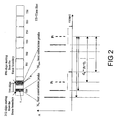
- figure 2 shows a basic diagram of an embodiment of the method of the invention;
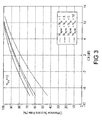
- figures 3, 4 and 5 show comparison diagrams between the performances of the method of the invention and a method according the prior art.
- The basic concept underlying the presently preferred embodiment of the invention is a difference method that makes use of two pilot channels, specifically a synchronisation code s and a midamble sequence t, having with a fixed mutual position, i.e. a fixed time difference, in the frame structure.
- In describing a preferred embodiment of the invention, reference will be generally made to a TDD digital cellular communication system (of a known type and therefore not shown in the drawings) including a plurality of base stations intended to support communication of a plurality of mobile terminals. Operation of each base station is supervised in a known matter by a base station controller BSC.
- In the following, two base stations will be considered and referred to as "reference" base station and "slave" base station respectively. Specifically, the slave base station is defined as a base station intended to be synchronised to a selected reference base station.
- The method disclosed herein is preferably applied in the initial phase of the synchronisation procedure where the slave base station does not support traffic and performs measurements over a frame time period. Also it will be assumed that the reference base station is already known, i.e. "assigned" to the slave base station.
- The slave base station is thus in a position to decode, within the frame structure shown in figure 1, the synchronisation code s and the midamble sequence t of the reference base station.
- This is currently effected by means of a known correlation process repeated over a chosen number NF of consecutive frames, and then all collected frame measurements are used to extract one single averaged measurement for both pilot channels, comprised of the synchronisation code s and the midamble sequence t.
- At this point, the slave base station calculates all possible difference values among the positions of the best correlation peaks corresponding for both pilot channels.
- Among these, the slave base station verifies if at least one expected difference value exists representing the distance between the position of the synchronisation code s and the midamble sequence code on the frame structure,e.g. 544 chips in length.
- From the expected difference value, the slave base station calculates the position of the synchronisation code s and of the midamble sequence code t to derive a parameter TOFF (Frame_Offset_Slave), that is the time difference between the reference base station frame timing as received at the slave base station and the slave base station own frame timing.
- From the measured value of TOFF, the base station controller (BSC) calculates the actual timing offset ΔTsync , (Timing Adjustment) that represents the timing offset between the slave base station frame boundary and the reference base station frame boundary.
- The actual timing offset ΔTsync is derived from TOFF by taking into account the propagation delay Tdelay between the slave base station and the reference base station. Tdelay is estimated in a known manner and generally ΔTsync= TOFF - Tdelay
- Referring to a TD-SCDMA (Synchronous Time Division Code Division Multiple Access) radio system, the difference method disclosed herein exploits two synchronisation sequences:
- the synchronisation sequence or synchronisation code SYNC;
- the basic midamble code.;
- The midamble sequence t of the P-CCPCH channel (Primary Common Control Physical Channel), carried in the first time slot TS0 of the frame, is calculated as a shifted version of the basic midamble code.
- Among all possible shifted versions of the basic midamble code, the midamble sequence t associated to the P-CCPCH channel is maintained always the same in the TD-SCDMA frame structure, already shown in figure 1.
- The operation performed by the slave base station is the correlation with the synchronisation sequence s and with the midamble sequence t associated to the P-CCPCH channel.
- The correlation procedure is realized processing the received signal over the frame time period (6400 chips).
- The synchronisation code s vector of the reference base station is defined as:

where sj is a complex QPSK symbol. - The basic midamble code vector is defined as:

- The midamble sequence code t vector of the P-CCPCH channel is expressed as follows:

where mi and ti are complex symbols in the set {+1, -1, +j, - j}. - The complex vector related to the signal received by the slave base station referring to reference base station is expressed as follows:

- Correspondingly, the correlation vectors of the received data frame with the synchronisation code s and midamble sequence code t can be expressed as:

and
- Also, w∈ [1, 6400] and the operations considered are in the complex field, while sn* and tn* are the complex conjugate of sn and tn respectively.
- The correlation amplitude values with the sync code s ||corrw ( y, s )|| and with the midamble sequence t ||corrw ( y,t )|| are used to detect the positions of the best correlation peaks for the two synchronisation sequences.
- The difference method applied over a number NF of consecutive frames), which allows synchronizing the slave base station to the reference base station is described as follows:
- The slave base station receives a data frame and calculates the set of 6400 correlation amplitude values (e.g. 6400 values) for the synchronisation code s and the midamble sequence code t respectively (ith measurement, I = 1,... NF )
- The slave base station stores the correlation results (e.g. 6400 amplitude values) for the synchronisation code s in a ith buffer


- The slave base station then adds the elements stored in the buffers to produce averaged measurement, such that:

where the summation extends for i = 1,..., NF. - The position values of best correlation peaks (in a decreasing order) for the zynchronization code s and the midamble sequence code t are indicated respectively as:

where Nsync and Nts values are the number of the best correlation peaks for the synchronisation code s and the midamble sequence code t respectively. - The slave base station subsequently constructs the matrix of differences containing all possible differences, as follows:

where
- Increasing the number of the best correlation peaks, performance is improved in terms of reliability and accuracy.
- By exploring the matrix elements, the slave base station verifies if at least one difference value exists which is equal to the actual distance (544 chips, in the example considered) between the synchronisation code s and the midamble sequence code t of the P-CCPCH channel.
- If any value is equal to 544 chips, the slave base station performs a new measurement cycle, i.e. the measurement cycle is repeated.
- If more than one difference exists which is equal to 544 chips, the slave base station chooses the difference that (among all) maximizes the power content of the correlation signal (corresponding to the maximum peak value of the midamble sequence code t).
- From the expected difference value
d , the slave base station calculates the position in time of the synchronisation code s and eventually the values of TOFF and ΔTsync so that the slave base station synchronizes its timing offset to the reference base station. - The method for on-air synchronising base stations in a TDDcommunication system just described provides evident advantages over the conventional methods, that use of a single synchronisation sequence only.
- By using two synchronisation sequences with a fixed position in the frame allows a mutual reference in the detection of the position of the best correlation peaks, this resulting in improved reliability and accuracy in the calculation of the timing offset.
- Some comparative results are shown in figures 3 to 5.
- Specifically, to characterise the performance evaluation of the method of the invention, the following parameters are introduced:
- difference success rate
- synchronisation success rate
- The difference success rate parameter corresponds to the probability to obtain an expected difference
d (i.e. 544 chips) among all those calculated. This probability is expressed as it follows:
where Ndij =544 is the number of times in which at least one difference dij (among all possible)) corresponds to the expected value (i.e 544 chips) and N is the number of measurements on which the difference success rate values are performed (e.g. 1000); - For each measurement if more than one value for Nd
ij =544 exists, the selected difference corresponds to the maximum peak value of the midamble sequence t, which maximizes the power content of the correlation signal. - Experimental results show that the performance, in terms of the difference success rate value, improves when the number Nsync and Nts of best correlation peaks for a fixed number NF of frames is increased.
- Figure 3 shows the performance improvement achieved by selecting NF =10.
- The synchronisation success rate parameter corresponds to the probability to match the expected position of the synchronisation code s, as received by the slave base station, whenever at least a difference is correct (i.e. equals 544 chips).
- Without taking into account propagation delay, the expected position of the synchronisation code s in chips is equal to 896, starting from the frame boundary. So, this probability is expressed as it follows:

where Npi ,=896,dij =544 is the number of times in which one position among the position values of the best correlation peaks is correct (i.e 896 chips), whenever at least one difference di,j corresponds to the expected value(i.e. 544 chips); Ndij =544 is the number of times in which at least one difference dij (among all possible) corresponds to the expected value (i.e 544 chips). - To illustrate and describe the advantages and benefits of the solution described herein, comparisons were performed with the method previously described in discussing the prior art, i.e. using the correlation with only one synchronisation sequence in terms of synchronisation success rate values.
- Such a earlier method will be referred to in the following as SYNC method.
- For example, the synchronisation success rate can be calculated as the probability to obtain the expected position of the synchronisation code s by means of the position of the main peak, after having correlated with the only synchronisation code s.
- Said probability, indicated with Prob{p=896} is expressed as follows:

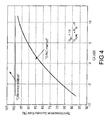
where Np=896 is the number of times in which the position of the main correlation peak corresponds to the expected value(896 chips from the frame boundary); N is the number of measurements on which Prob{p=896} values have been performed (e.g.1000). - Performance comparison, between the SYNC method and the difference method disclosed herein in terms of reliability are shown in Figure 4 and Figure 5, that correspond to Table 1 and Table 2 shown hereinbelow respectively, increasing the number of correlation best peaks Nsync and Nts and for a fixed NF value (=10). In these Figures the synchronisation success rate vs carrier to interference ratio C/I values is plotted.
NF = 10, Nsync = Nts=1 C/I
(dB)Difference method SYNC method -7.94 99.2 57.8 -3.97 99.2 69.8 0.015 99.2 79.5 4.01 99.3 89.3 8.01 99.4 94.6 12.01 99.5 97.6 NF = 10 , Nsync = Nts =3, 5, 10 C/I
(dB)Difference method SYNC method -7.94 99.6 57.8 -3.97 99.6 69.8 0.015 99.6 79.5 4.01 99.7 89.3 8.01 99.7 94.6 12.01 99.8 97.6 - It is worth to underline that the reliability approaches to the 100% value as soon as the number of peaks Nsync and Nts are equal to 3. This result is maintained also for Nsync and Nts values equal to 5, 10. The same trend can be obtained considering different values for the number of frames NF.
- Moreover, by considering the maximum measuring error |te|max corresponding to this initial synchronisation phase, the performance in terms of accuracy obtained with the difference method of the invention is much better than the SYNC method.
- Table 3 hereinbelow illustrates maximum measuring error |te|max values vs a set of C/I values, for fixed Nsync and Nts values (=1) and for a fixed NF value (=10). The |te|max value has not been considered increasing the Nsync and Nts values, since in these cases this result is kept..
NF = 10, Nsync = Nts =1 C/I
(dB)|te|max (chips) "Difference method" |te|max (chips) "SYNC method" -7.94 1 5425 -3.97 1 5342 0.015 1 4994 4.01 1 4994 8.01 1 4994 12.01 1 4994 - Without prejudice to the underlying principle of the invention, the details and embodiment may vary also significantly, with respect to what has been discussed just by way of example without departing from the scope of the invention, as defined by the claims that follow.
- For instance the solution described herein can be applied to all TD-SCDMA Radio System, like TSM (TD-SDCMA System for Mobile Communications) or TDD-LCR (TDD Low Chip Rate), where two synchronisation sequences, i.e. two pilot channels with fixed position in the frame structure are present.
Claims (10)
- A method of synchronising stations in a cellular communication system, wherein said stations transmit data frames that contain synchronisation sequences (s,t), the method including the steps of:- detecting at a first station at least one synchronisation sequence (s, t) transmitted from a second, reference base station in the system, and- synchronising the timing of said first station with respect to the timing of said reference base station on the basis of said at least one synchronisation sequence (s,t),the method including the steps of:- including in said data frames transmitted from said reference base station first (s) and second (t) synchronisation sequences with a fixed mutual position in said data frame transmitted from said reference base station, and- synchronising the timing of said first station on the basis of said mutual position of said first (s) and second (t) synchronisation sequences in said data frames transmitted from said reference base station,characterised in that:- said first station is a slave base station, and- the method includes the steps of:- detecting said first (s) and second (t) synchronisation sequences at said slave base station by generating respective correlation peaks,- determining all possible difference values ( d ) between the correlation peaks (pi sync, pj ts) in said first (s) and second (t) synchronisation sequences;- deriving from said possible differences an expected difference value (
d );- determining from said expected difference value (d ) the position of at least one of said first (s) and second (t) synchronisation sequences; and- synchronising said slave base station with respect to said reference base station on the basis of said position of at least one of said first (s) and second (t) synchronisation sequences. - The method of claim 1, characterised in that the first (s) and the second (t) synchronisation sequence are a synchronisation code (s) and a midamble sequence (t) transmitted by said reference base station, respectively.
- The method of either claims 1 or 2, characterised in that it includes the steps of:- detecting, at said slave base station, said first (s) and second (t) synchronisation sequences over a number (NF) of frames to obtain respective detected values,- processing said values detected over said number (NF) of frames to obtain a best value for said mutual position, and- synchronising the timing of said slave station on the basis of said best value for said mutual position.
- The method of claims 2 and 3, characterised in that it includes the steps of generating averaged values over said number (NF) of frames for said respective correlation peaks and the step of storing the correlation results, for the synchronisation code s in a ith buffer


- _The method of claim 1, characterised in that includes the steps of constructing a matrix ( d ) of differences containing all said possible differences, where the element i, j of the matrix

- The method of claim 5, characterised in that it includes the steps of:- verifying if in said matrix ( d ) of differences at least a difference value exists which is equal to a predetermined distance indicative of the mutual position of said synchronisation code (s) and said midamble sequence code on the frame structure, and- if no value is equal to said predetermined distance, performing a new measurement cycle at the slave base station, and- if more than one difference exists that is equal to said predetermined distance, choosing the difference that maximizes the power content of the correlation signal.
- The method of any of the previous claims, characterised in that synchronising the timing of said slave base station is effected by determining the actual timing offset (ΔTsync ) between the slave base station frame boundary and the reference base station frame boundary.
- The method-of claim 7, characterised in that said actual timing offset (ΔTsync ) is determined by taking into account the propagation delay (Tdelay ) between said slave base station and said reference base station.
- A cellular communications system including a plurality of base stations, said plurality of base stations including at least a first and a second base station configured to operate as said reference base station and said base station, respectively, in the method of any of the claims 1 to 8.
- A computer program product directly loadable in the memory of a digital computer and comprising software code portion for performing the method of any of the claims 1 to 8 when the product is run on a computer.
Priority Applications (4)
| Application Number | Priority Date | Filing Date | Title |
|---|---|---|---|
| DE60221992T DE60221992T2 (en) | 2002-11-29 | 2002-11-29 | Synchronization of base stations in a cellular communication system |
| EP02425740A EP1424790B1 (en) | 2002-11-29 | 2002-11-29 | Synchronising base stations in cellular communication systems |
| AT02425740T ATE371308T1 (en) | 2002-11-29 | 2002-11-29 | SYNCHRONIZATION OF BASE STATIONS IN A CELLULAR COMMUNICATIONS SYSTEM |
| CNB2003101024537A CN100531008C (en) | 2002-11-29 | 2003-10-21 | Cellular communication systems and process for synchronising base stations |
Applications Claiming Priority (1)
| Application Number | Priority Date | Filing Date | Title |
|---|---|---|---|
| EP02425740A EP1424790B1 (en) | 2002-11-29 | 2002-11-29 | Synchronising base stations in cellular communication systems |
Publications (2)
| Publication Number | Publication Date |
|---|---|
| EP1424790A1 EP1424790A1 (en) | 2004-06-02 |
| EP1424790B1 true EP1424790B1 (en) | 2007-08-22 |
Family
ID=32241392
Family Applications (1)
| Application Number | Title | Priority Date | Filing Date |
|---|---|---|---|
| EP02425740A Expired - Lifetime EP1424790B1 (en) | 2002-11-29 | 2002-11-29 | Synchronising base stations in cellular communication systems |
Country Status (4)
| Country | Link |
|---|---|
| EP (1) | EP1424790B1 (en) |
| CN (1) | CN100531008C (en) |
| AT (1) | ATE371308T1 (en) |
| DE (1) | DE60221992T2 (en) |
Families Citing this family (5)
| Publication number | Priority date | Publication date | Assignee | Title |
|---|---|---|---|---|
| KR100548416B1 (en) * | 2003-10-28 | 2006-02-02 | 엘지전자 주식회사 | Wireless frame sync method |
| JP4527115B2 (en) * | 2004-06-25 | 2010-08-18 | 三菱電機株式会社 | Inter-base station time synchronization method, base station, and timing master device |
| GB2441372A (en) * | 2006-08-29 | 2008-03-05 | Ubiquisys Ltd | Syncronising basestations |
| US7916710B2 (en) | 2006-11-02 | 2011-03-29 | Nokia Corporation | Method, device, system and software product for alternative time division duplex frame structure optimization |
| CN102111868A (en) * | 2009-12-29 | 2011-06-29 | 电信科学技术研究院 | Null interface synchronization method and base station |
Family Cites Families (2)
| Publication number | Priority date | Publication date | Assignee | Title |
|---|---|---|---|---|
| ES2207129T3 (en) * | 1999-03-29 | 2004-05-16 | Cit Alcatel | PROCEDURE FOR SYNCHRONIZING BASE STATIONS IN A WIRELESS COMMUNICATIONS NETWORK. |
| AU2001265814A1 (en) * | 2000-05-23 | 2001-12-03 | Siemens Aktiengesellschaft | Method for synchronizing a receiver with a transmitter |
-
2002
- 2002-11-29 DE DE60221992T patent/DE60221992T2/en not_active Expired - Lifetime
- 2002-11-29 EP EP02425740A patent/EP1424790B1/en not_active Expired - Lifetime
- 2002-11-29 AT AT02425740T patent/ATE371308T1/en not_active IP Right Cessation
-
2003
- 2003-10-21 CN CNB2003101024537A patent/CN100531008C/en not_active Expired - Lifetime
Also Published As
| Publication number | Publication date |
|---|---|
| DE60221992T2 (en) | 2008-05-15 |
| CN100531008C (en) | 2009-08-19 |
| CN1505419A (en) | 2004-06-16 |
| ATE371308T1 (en) | 2007-09-15 |
| EP1424790A1 (en) | 2004-06-02 |
| DE60221992D1 (en) | 2007-10-04 |
Similar Documents
| Publication | Publication Date | Title |
|---|---|---|
| KR100790922B1 (en) | Method and apparatus for detecting sync code in wireless communication system | |
| WO1999008451A3 (en) | Synchronous wireless access protocol method and apparatus | |
| WO2002001742A1 (en) | Apparatus and method for synchronization of uplink synchronous transmission scheme in a cdma communication system | |
| EP1273112A1 (en) | Synchronization of timing advance and deviation | |
| US20050053048A1 (en) | Synchronisation of mobile equipment in time division duplex cdma system | |
| AU732620B2 (en) | Method, mobile station and base station for frequency synchronization for a mobile station in a radio communications system | |
| WO2001067620A2 (en) | Uplink synchronization signal transmission in tdd systems | |
| EP1424790A1 (en) | Synchronising base stations in cellular communication systems | |
| CN1319296C (en) | Method for transferring synchronous signal in synchronous time gap of time division complexing radio communication system | |
| EP2009817B1 (en) | Wireless communication system, base station, and wireless communication method | |
| WO2006067657A1 (en) | Method and apparatus for cell search in wireless communication system | |
| US6925311B2 (en) | Methods for synchronizing between a base station and a mobile station in a cell-based mobile communications system | |
| KR100379698B1 (en) | A method for determining reference time of scrambling code to support USTS in W-CDMA system | |
| KR20050032809A (en) | Apparatus andmethod for beamforming in nb-tdd system | |
| WO2005074180A1 (en) | Wireless access system | |
| JP2005260433A (en) | Reception timing detection apparatus and reception timing detection method |
Legal Events
| Date | Code | Title | Description |
|---|---|---|---|
| PUAI | Public reference made under article 153(3) epc to a published international application that has entered the european phase |
Free format text: ORIGINAL CODE: 0009012 |
|
| AK | Designated contracting states |
Kind code of ref document: A1 Designated state(s): AT BE BG CH CY CZ DE DK EE ES FI FR GB GR IE IT LI LU MC NL PT SE SK TR |
|
| AX | Request for extension of the european patent |
Extension state: AL LT LV MK RO SI |
|
| 17P | Request for examination filed |
Effective date: 20041201 |
|
| AKX | Designation fees paid |
Designated state(s): AT BE BG CH CY CZ DE DK EE ES FI FR GB GR IE IT LI LU MC NL PT SE SK TR |
|
| 17Q | First examination report despatched |
Effective date: 20060822 |
|
| RAP1 | Party data changed (applicant data changed or rights of an application transferred) |
Owner name: SIEMENS S.P.A. |
|
| GRAP | Despatch of communication of intention to grant a patent |
Free format text: ORIGINAL CODE: EPIDOSNIGR1 |
|
| GRAS | Grant fee paid |
Free format text: ORIGINAL CODE: EPIDOSNIGR3 |
|
| GRAA | (expected) grant |
Free format text: ORIGINAL CODE: 0009210 |
|
| AK | Designated contracting states |
Kind code of ref document: B1 Designated state(s): AT BE BG CH CY CZ DE DK EE ES FI FR GB GR IE IT LI LU MC NL PT SE SK TR |
|
| REG | Reference to a national code |
Ref country code: GB Ref legal event code: FG4D |
|
| REG | Reference to a national code |
Ref country code: CH Ref legal event code: EP |
|
| REG | Reference to a national code |
Ref country code: IE Ref legal event code: FG4D |
|
| REF | Corresponds to: |
Ref document number: 60221992 Country of ref document: DE Date of ref document: 20071004 Kind code of ref document: P |
|
| PG25 | Lapsed in a contracting state [announced via postgrant information from national office to epo] |
Ref country code: ES Free format text: LAPSE BECAUSE OF FAILURE TO SUBMIT A TRANSLATION OF THE DESCRIPTION OR TO PAY THE FEE WITHIN THE PRESCRIBED TIME-LIMIT Effective date: 20071203 Ref country code: NL Free format text: LAPSE BECAUSE OF FAILURE TO SUBMIT A TRANSLATION OF THE DESCRIPTION OR TO PAY THE FEE WITHIN THE PRESCRIBED TIME-LIMIT Effective date: 20070822 Ref country code: BG Free format text: LAPSE BECAUSE OF FAILURE TO SUBMIT A TRANSLATION OF THE DESCRIPTION OR TO PAY THE FEE WITHIN THE PRESCRIBED TIME-LIMIT Effective date: 20071122 |
|
| NLV1 | Nl: lapsed or annulled due to failure to fulfill the requirements of art. 29p and 29m of the patents act | ||
| PG25 | Lapsed in a contracting state [announced via postgrant information from national office to epo] |
Ref country code: CH Free format text: LAPSE BECAUSE OF FAILURE TO SUBMIT A TRANSLATION OF THE DESCRIPTION OR TO PAY THE FEE WITHIN THE PRESCRIBED TIME-LIMIT Effective date: 20070822 Ref country code: LI Free format text: LAPSE BECAUSE OF FAILURE TO SUBMIT A TRANSLATION OF THE DESCRIPTION OR TO PAY THE FEE WITHIN THE PRESCRIBED TIME-LIMIT Effective date: 20070822 Ref country code: AT Free format text: LAPSE BECAUSE OF FAILURE TO SUBMIT A TRANSLATION OF THE DESCRIPTION OR TO PAY THE FEE WITHIN THE PRESCRIBED TIME-LIMIT Effective date: 20070822 |
|
| PGFP | Annual fee paid to national office [announced via postgrant information from national office to epo] |
Ref country code: FI Payment date: 20071115 Year of fee payment: 6 |
|
| REG | Reference to a national code |
Ref country code: CH Ref legal event code: PL |
|
| PG25 | Lapsed in a contracting state [announced via postgrant information from national office to epo] |
Ref country code: BE Free format text: LAPSE BECAUSE OF FAILURE TO SUBMIT A TRANSLATION OF THE DESCRIPTION OR TO PAY THE FEE WITHIN THE PRESCRIBED TIME-LIMIT Effective date: 20070822 |
|
| ET | Fr: translation filed | ||
| PG25 | Lapsed in a contracting state [announced via postgrant information from national office to epo] |
Ref country code: DK Free format text: LAPSE BECAUSE OF FAILURE TO SUBMIT A TRANSLATION OF THE DESCRIPTION OR TO PAY THE FEE WITHIN THE PRESCRIBED TIME-LIMIT Effective date: 20070822 Ref country code: GR Free format text: LAPSE BECAUSE OF FAILURE TO SUBMIT A TRANSLATION OF THE DESCRIPTION OR TO PAY THE FEE WITHIN THE PRESCRIBED TIME-LIMIT Effective date: 20071123 |
|
| PG25 | Lapsed in a contracting state [announced via postgrant information from national office to epo] |
Ref country code: PT Free format text: LAPSE BECAUSE OF FAILURE TO SUBMIT A TRANSLATION OF THE DESCRIPTION OR TO PAY THE FEE WITHIN THE PRESCRIBED TIME-LIMIT Effective date: 20080122 Ref country code: CZ Free format text: LAPSE BECAUSE OF FAILURE TO SUBMIT A TRANSLATION OF THE DESCRIPTION OR TO PAY THE FEE WITHIN THE PRESCRIBED TIME-LIMIT Effective date: 20070822 Ref country code: SK Free format text: LAPSE BECAUSE OF FAILURE TO SUBMIT A TRANSLATION OF THE DESCRIPTION OR TO PAY THE FEE WITHIN THE PRESCRIBED TIME-LIMIT Effective date: 20070822 |
|
| PLBE | No opposition filed within time limit |
Free format text: ORIGINAL CODE: 0009261 |
|
| STAA | Information on the status of an ep patent application or granted ep patent |
Free format text: STATUS: NO OPPOSITION FILED WITHIN TIME LIMIT |
|
| PG25 | Lapsed in a contracting state [announced via postgrant information from national office to epo] |
Ref country code: SE Free format text: LAPSE BECAUSE OF FAILURE TO SUBMIT A TRANSLATION OF THE DESCRIPTION OR TO PAY THE FEE WITHIN THE PRESCRIBED TIME-LIMIT Effective date: 20071122 Ref country code: MC Free format text: LAPSE BECAUSE OF NON-PAYMENT OF DUE FEES Effective date: 20071130 |
|
| 26N | No opposition filed |
Effective date: 20080526 |
|
| PG25 | Lapsed in a contracting state [announced via postgrant information from national office to epo] |
Ref country code: IE Free format text: LAPSE BECAUSE OF NON-PAYMENT OF DUE FEES Effective date: 20071129 |
|
| PG25 | Lapsed in a contracting state [announced via postgrant information from national office to epo] |
Ref country code: EE Free format text: LAPSE BECAUSE OF FAILURE TO SUBMIT A TRANSLATION OF THE DESCRIPTION OR TO PAY THE FEE WITHIN THE PRESCRIBED TIME-LIMIT Effective date: 20070822 |
|
| PG25 | Lapsed in a contracting state [announced via postgrant information from national office to epo] |
Ref country code: CY Free format text: LAPSE BECAUSE OF FAILURE TO SUBMIT A TRANSLATION OF THE DESCRIPTION OR TO PAY THE FEE WITHIN THE PRESCRIBED TIME-LIMIT Effective date: 20070822 Ref country code: FI Free format text: LAPSE BECAUSE OF NON-PAYMENT OF DUE FEES Effective date: 20081129 |
|
| PG25 | Lapsed in a contracting state [announced via postgrant information from national office to epo] |
Ref country code: LU Free format text: LAPSE BECAUSE OF NON-PAYMENT OF DUE FEES Effective date: 20071129 |
|
| REG | Reference to a national code |
Ref country code: GB Ref legal event code: 732E Free format text: REGISTERED BETWEEN 20120719 AND 20120725 |
|
| REG | Reference to a national code |
Ref country code: DE Ref legal event code: R081 Ref document number: 60221992 Country of ref document: DE Owner name: NOKIA SIEMENS NETWORKS ITALIA S.P.A., IT Free format text: FORMER OWNER: SIEMENS S.P.A., MAILAND/MILANO, IT Effective date: 20130620 Ref country code: DE Ref legal event code: R081 Ref document number: 60221992 Country of ref document: DE Owner name: NOKIA SOLUTIONS AND NETWORKS ITALIA S.P.A., IT Free format text: FORMER OWNER: SIEMENS S.P.A., MAILAND/MILANO, IT Effective date: 20130620 Ref country code: DE Ref legal event code: R081 Ref document number: 60221992 Country of ref document: DE Owner name: BEIJING XIAOMI MOBILE SOFTWARE CO., LTD., CN Free format text: FORMER OWNER: SIEMENS S.P.A., MAILAND/MILANO, IT Effective date: 20130620 |
|
| REG | Reference to a national code |
Ref country code: FR Ref legal event code: PLFP Year of fee payment: 14 |
|
| REG | Reference to a national code |
Ref country code: FR Ref legal event code: TP Owner name: NOKIA SIEMENS NETWORKS ITALIA S.P.A., IT Effective date: 20151130 |
|
| REG | Reference to a national code |
Ref country code: FR Ref legal event code: PLFP Year of fee payment: 15 |
|
| PGFP | Annual fee paid to national office [announced via postgrant information from national office to epo] |
Ref country code: GB Payment date: 20161122 Year of fee payment: 15 Ref country code: FR Payment date: 20161118 Year of fee payment: 15 |
|
| PGFP | Annual fee paid to national office [announced via postgrant information from national office to epo] |
Ref country code: IT Payment date: 20161123 Year of fee payment: 15 |
|
| PGFP | Annual fee paid to national office [announced via postgrant information from national office to epo] |
Ref country code: TR Payment date: 20161115 Year of fee payment: 15 |
|
| REG | Reference to a national code |
Ref country code: DE Ref legal event code: R081 Ref document number: 60221992 Country of ref document: DE Owner name: NOKIA SOLUTIONS AND NETWORKS ITALIA S.P.A., IT Free format text: FORMER OWNER: NOKIA SIEMENS NETWORKS ITALIA S.P.A., CASSINA DE PECCHI, IT Ref country code: DE Ref legal event code: R081 Ref document number: 60221992 Country of ref document: DE Owner name: BEIJING XIAOMI MOBILE SOFTWARE CO., LTD., CN Free format text: FORMER OWNER: NOKIA SIEMENS NETWORKS ITALIA S.P.A., CASSINA DE PECCHI, IT |
|
| REG | Reference to a national code |
Ref country code: DE Ref legal event code: R081 Ref document number: 60221992 Country of ref document: DE Owner name: BEIJING XIAOMI MOBILE SOFTWARE CO., LTD., CN Free format text: FORMER OWNER: NOKIA SOLUTIONS AND NETWORKS ITALIA S.P.A., CASSINA DE' PECCHI, MILANO, IT |
|
| GBPC | Gb: european patent ceased through non-payment of renewal fee |
Effective date: 20171129 |
|
| REG | Reference to a national code |
Ref country code: FR Ref legal event code: ST Effective date: 20180731 |
|
| PG25 | Lapsed in a contracting state [announced via postgrant information from national office to epo] |
Ref country code: IT Free format text: LAPSE BECAUSE OF NON-PAYMENT OF DUE FEES Effective date: 20171129 Ref country code: FR Free format text: LAPSE BECAUSE OF NON-PAYMENT OF DUE FEES Effective date: 20171130 |
|
| PG25 | Lapsed in a contracting state [announced via postgrant information from national office to epo] |
Ref country code: GB Free format text: LAPSE BECAUSE OF NON-PAYMENT OF DUE FEES Effective date: 20171129 |
|
| PGFP | Annual fee paid to national office [announced via postgrant information from national office to epo] |
Ref country code: DE Payment date: 20211118 Year of fee payment: 20 |
|
| PG25 | Lapsed in a contracting state [announced via postgrant information from national office to epo] |
Ref country code: TR Free format text: LAPSE BECAUSE OF NON-PAYMENT OF DUE FEES Effective date: 20171129 |
|
| REG | Reference to a national code |
Ref country code: DE Ref legal event code: R071 Ref document number: 60221992 Country of ref document: DE |