EP1424695A2 - Content management method, recording and/or reproducing apparatus, and recording medium - Google Patents
Content management method, recording and/or reproducing apparatus, and recording medium Download PDFInfo
- Publication number
- EP1424695A2 EP1424695A2 EP03026875A EP03026875A EP1424695A2 EP 1424695 A2 EP1424695 A2 EP 1424695A2 EP 03026875 A EP03026875 A EP 03026875A EP 03026875 A EP03026875 A EP 03026875A EP 1424695 A2 EP1424695 A2 EP 1424695A2
- Authority
- EP
- European Patent Office
- Prior art keywords
- key
- encrypted
- recording medium
- keys
- enc
- Prior art date
- Legal status (The legal status is an assumption and is not a legal conclusion. Google has not performed a legal analysis and makes no representation as to the accuracy of the status listed.)
- Granted
Links
Images




Classifications
-
- G—PHYSICS
- G11—INFORMATION STORAGE
- G11B—INFORMATION STORAGE BASED ON RELATIVE MOVEMENT BETWEEN RECORD CARRIER AND TRANSDUCER
- G11B20/00—Signal processing not specific to the method of recording or reproducing; Circuits therefor
- G11B20/10—Digital recording or reproducing
-
- G—PHYSICS
- G11—INFORMATION STORAGE
- G11B—INFORMATION STORAGE BASED ON RELATIVE MOVEMENT BETWEEN RECORD CARRIER AND TRANSDUCER
- G11B20/00—Signal processing not specific to the method of recording or reproducing; Circuits therefor
- G11B20/00086—Circuits for prevention of unauthorised reproduction or copying, e.g. piracy
- G11B20/0021—Circuits for prevention of unauthorised reproduction or copying, e.g. piracy involving encryption or decryption of contents recorded on or reproduced from a record carrier
-
- G—PHYSICS
- G11—INFORMATION STORAGE
- G11B—INFORMATION STORAGE BASED ON RELATIVE MOVEMENT BETWEEN RECORD CARRIER AND TRANSDUCER
- G11B20/00—Signal processing not specific to the method of recording or reproducing; Circuits therefor
- G11B20/00086—Circuits for prevention of unauthorised reproduction or copying, e.g. piracy
-
- G—PHYSICS
- G11—INFORMATION STORAGE
- G11B—INFORMATION STORAGE BASED ON RELATIVE MOVEMENT BETWEEN RECORD CARRIER AND TRANSDUCER
- G11B20/00—Signal processing not specific to the method of recording or reproducing; Circuits therefor
- G11B20/00086—Circuits for prevention of unauthorised reproduction or copying, e.g. piracy
- G11B20/0021—Circuits for prevention of unauthorised reproduction or copying, e.g. piracy involving encryption or decryption of contents recorded on or reproduced from a record carrier
- G11B20/00217—Circuits for prevention of unauthorised reproduction or copying, e.g. piracy involving encryption or decryption of contents recorded on or reproduced from a record carrier the cryptographic key used for encryption and/or decryption of contents recorded on or reproduced from the record carrier being read from a specific source
- G11B20/00246—Circuits for prevention of unauthorised reproduction or copying, e.g. piracy involving encryption or decryption of contents recorded on or reproduced from a record carrier the cryptographic key used for encryption and/or decryption of contents recorded on or reproduced from the record carrier being read from a specific source wherein the key is obtained from a local device, e.g. device key initially stored by the player or by the recorder
-
- G—PHYSICS
- G11—INFORMATION STORAGE
- G11B—INFORMATION STORAGE BASED ON RELATIVE MOVEMENT BETWEEN RECORD CARRIER AND TRANSDUCER
- G11B20/00—Signal processing not specific to the method of recording or reproducing; Circuits therefor
- G11B20/00086—Circuits for prevention of unauthorised reproduction or copying, e.g. piracy
- G11B20/0021—Circuits for prevention of unauthorised reproduction or copying, e.g. piracy involving encryption or decryption of contents recorded on or reproduced from a record carrier
- G11B20/00217—Circuits for prevention of unauthorised reproduction or copying, e.g. piracy involving encryption or decryption of contents recorded on or reproduced from a record carrier the cryptographic key used for encryption and/or decryption of contents recorded on or reproduced from the record carrier being read from a specific source
- G11B20/00253—Circuits for prevention of unauthorised reproduction or copying, e.g. piracy involving encryption or decryption of contents recorded on or reproduced from a record carrier the cryptographic key used for encryption and/or decryption of contents recorded on or reproduced from the record carrier being read from a specific source wherein the key is stored on the record carrier
- G11B20/00282—Circuits for prevention of unauthorised reproduction or copying, e.g. piracy involving encryption or decryption of contents recorded on or reproduced from a record carrier the cryptographic key used for encryption and/or decryption of contents recorded on or reproduced from the record carrier being read from a specific source wherein the key is stored on the record carrier the key being stored in the content area, e.g. program area, data area or user area
-
- G—PHYSICS
- G11—INFORMATION STORAGE
- G11B—INFORMATION STORAGE BASED ON RELATIVE MOVEMENT BETWEEN RECORD CARRIER AND TRANSDUCER
- G11B20/00—Signal processing not specific to the method of recording or reproducing; Circuits therefor
- G11B20/00086—Circuits for prevention of unauthorised reproduction or copying, e.g. piracy
- G11B20/0021—Circuits for prevention of unauthorised reproduction or copying, e.g. piracy involving encryption or decryption of contents recorded on or reproduced from a record carrier
- G11B20/00217—Circuits for prevention of unauthorised reproduction or copying, e.g. piracy involving encryption or decryption of contents recorded on or reproduced from a record carrier the cryptographic key used for encryption and/or decryption of contents recorded on or reproduced from the record carrier being read from a specific source
- G11B20/00253—Circuits for prevention of unauthorised reproduction or copying, e.g. piracy involving encryption or decryption of contents recorded on or reproduced from a record carrier the cryptographic key used for encryption and/or decryption of contents recorded on or reproduced from the record carrier being read from a specific source wherein the key is stored on the record carrier
- G11B20/00347—Circuits for prevention of unauthorised reproduction or copying, e.g. piracy involving encryption or decryption of contents recorded on or reproduced from a record carrier the cryptographic key used for encryption and/or decryption of contents recorded on or reproduced from the record carrier being read from a specific source wherein the key is stored on the record carrier wherein the medium identifier is used as a key
-
- G—PHYSICS
- G11—INFORMATION STORAGE
- G11B—INFORMATION STORAGE BASED ON RELATIVE MOVEMENT BETWEEN RECORD CARRIER AND TRANSDUCER
- G11B20/00—Signal processing not specific to the method of recording or reproducing; Circuits therefor
- G11B20/00086—Circuits for prevention of unauthorised reproduction or copying, e.g. piracy
- G11B20/0021—Circuits for prevention of unauthorised reproduction or copying, e.g. piracy involving encryption or decryption of contents recorded on or reproduced from a record carrier
- G11B20/00485—Circuits for prevention of unauthorised reproduction or copying, e.g. piracy involving encryption or decryption of contents recorded on or reproduced from a record carrier characterised by a specific kind of data which is encrypted and recorded on and/or reproduced from the record carrier
- G11B20/00492—Circuits for prevention of unauthorised reproduction or copying, e.g. piracy involving encryption or decryption of contents recorded on or reproduced from a record carrier characterised by a specific kind of data which is encrypted and recorded on and/or reproduced from the record carrier wherein content or user data is encrypted
- G11B20/00528—Circuits for prevention of unauthorised reproduction or copying, e.g. piracy involving encryption or decryption of contents recorded on or reproduced from a record carrier characterised by a specific kind of data which is encrypted and recorded on and/or reproduced from the record carrier wherein content or user data is encrypted wherein each title is encrypted with a separate encryption key for each title, e.g. title key for movie, song or data file
-
- G—PHYSICS
- G11—INFORMATION STORAGE
- G11B—INFORMATION STORAGE BASED ON RELATIVE MOVEMENT BETWEEN RECORD CARRIER AND TRANSDUCER
- G11B20/00—Signal processing not specific to the method of recording or reproducing; Circuits therefor
- G11B20/00086—Circuits for prevention of unauthorised reproduction or copying, e.g. piracy
- G11B20/0021—Circuits for prevention of unauthorised reproduction or copying, e.g. piracy involving encryption or decryption of contents recorded on or reproduced from a record carrier
- G11B20/00485—Circuits for prevention of unauthorised reproduction or copying, e.g. piracy involving encryption or decryption of contents recorded on or reproduced from a record carrier characterised by a specific kind of data which is encrypted and recorded on and/or reproduced from the record carrier
- G11B20/00492—Circuits for prevention of unauthorised reproduction or copying, e.g. piracy involving encryption or decryption of contents recorded on or reproduced from a record carrier characterised by a specific kind of data which is encrypted and recorded on and/or reproduced from the record carrier wherein content or user data is encrypted
- G11B20/00536—Circuits for prevention of unauthorised reproduction or copying, e.g. piracy involving encryption or decryption of contents recorded on or reproduced from a record carrier characterised by a specific kind of data which is encrypted and recorded on and/or reproduced from the record carrier wherein content or user data is encrypted wherein encrypted content data is subjected to a further, iterated encryption, e.g. interwoven encryption
-
- G—PHYSICS
- G11—INFORMATION STORAGE
- G11B—INFORMATION STORAGE BASED ON RELATIVE MOVEMENT BETWEEN RECORD CARRIER AND TRANSDUCER
- G11B20/00—Signal processing not specific to the method of recording or reproducing; Circuits therefor
- G11B20/00086—Circuits for prevention of unauthorised reproduction or copying, e.g. piracy
- G11B20/00666—Circuits for prevention of unauthorised reproduction or copying, e.g. piracy involving a step of erasing or nullifying data, e.g. data being overwritten with a random string
-
- G—PHYSICS
- G11—INFORMATION STORAGE
- G11B—INFORMATION STORAGE BASED ON RELATIVE MOVEMENT BETWEEN RECORD CARRIER AND TRANSDUCER
- G11B20/00—Signal processing not specific to the method of recording or reproducing; Circuits therefor
- G11B20/00086—Circuits for prevention of unauthorised reproduction or copying, e.g. piracy
- G11B20/00666—Circuits for prevention of unauthorised reproduction or copying, e.g. piracy involving a step of erasing or nullifying data, e.g. data being overwritten with a random string
- G11B20/00673—Circuits for prevention of unauthorised reproduction or copying, e.g. piracy involving a step of erasing or nullifying data, e.g. data being overwritten with a random string wherein the erased or nullified data include a cryptographic key
-
- G—PHYSICS
- G11—INFORMATION STORAGE
- G11B—INFORMATION STORAGE BASED ON RELATIVE MOVEMENT BETWEEN RECORD CARRIER AND TRANSDUCER
- G11B20/00—Signal processing not specific to the method of recording or reproducing; Circuits therefor
- G11B20/10—Digital recording or reproducing
- G11B20/12—Formatting, e.g. arrangement of data block or words on the record carriers
- G11B20/1217—Formatting, e.g. arrangement of data block or words on the record carriers on discs
Definitions
- the present invention relates to a content management method for managing content data and a recording and/or reproducing apparatus using the management method; and a recording medium having content data or the like recorded therein by the apparatus. More particularly, the present invention relates to a content management method, a recording and/or reproducing apparatus which enable predetermined movement of content data while preventing unlimited illegal copy; and a recording medium for the method and apparatus.
- a medium for recording digitized information such as a document, a voice, an image, or a program, for example
- a compact disk or a laser disk is used for a medium for recording a voice or an image.
- a floppy disk or a hard disk is used for a medium for recording a program or data in a computer or the like.
- a DVD Digital Versatile Disk which is a large capacity recording medium is developed.
- digital data including compressed or encoded data which can be decoded
- recorded data can be copied from one medium to another medium easily and without losing a sound loss or an image quality, for example. Therefore, in these digital recording mediums, there is a problem that a large amount of copies can be produced, causing infringement of copyrights.
- a content management method comprising: encrypting content data by a first key (TK); encrypting the first key by predetermined plural types of second keys (MUK); multiply encrypting the encrypted first key (Enc-TK) by a third key (MM); encrypting the third key by a predetermined fourth key (MMK); recording in a recording medium content data (Enc-Contents) encrypted by the first key, the first key (Enc-TK) encrypted by the predetermined plural types of second keys, and the first key (Enc2-TK) obtained by multiply encrypting the encrypted first key (Enc-TK) by the third key (MM), and recording the third key (Enc-MM) encrypted by the fourth key in a security region of the recording medium.
- a multiply encrypted first key (Enc2-TK) which is a move key (Move-Key) being an encryption key for controlling movement of contents, and which is a title key obtained by multiply encrypting an encryption key for contents by second and third keys.
- a medium key (Enc-TK) which is a medium bound title key having a title key (TK) encrypted by the second key (MKB, M-ID) only one time is also recorded in a different region in order to enable contents to be reproduced by the conventional general-purpose machine.
- reproduction by the general-purpose machine is enabled by the medium key (Enc-TK), and movement of contents is enabled by the move key (Move-Key) while the spread of content data is prevented.
- a content management method wherein, in the case where content data is recorded in a first recording medium (D1) from a content data source (S) having stored therein content data when movement between recording mediums has been permitted, there are recorded (flow 1) in a first recording medium (D1): content data (Enc-Contents) encrypted by a first key (TK); a first key (Enc-TK) encrypted by a second key which is a content encryption key (MB-KEY) bound to a recording medium; and a content movement control encryption key (Enc2-TK) multiply encrypted by second and third keys; and in the case where content data is moved from the first recording medium (D1) to a second recording medium (D2), the content data is re-encrypted after decrypted, and a content movement control encryption key recorded in the first recording medium is deleted (flow 2).
- the content management method is characterized in that an scheme for moving contents is specified, and, when content data is recorded from a content data source (S) to a first disk (D1) with respect to the above described two keys, i.e., the medium key (Enc-TK) for general-purpose machine reproduction and the move key (Move-Key) for moving contents, the two keys are recorded, thereby enabling further movement of contents, and at the same time, coping with reproduction by a general-purpose machine other than a dedicated machine.
- the move key (Move-Key) is deleted from the first disk (D1), and only the medium key (Enc-TK) for general-purpose machine reproduction is left.
- the content management method provides a content management method, a recording and/or reproducing apparatus, and a recording medium which enable reproduction or movement of content data by the above described first disk recording scheme and the subsequent moving scheme; which enable movement of content data while preventing the spread of content data; and further, enable reproduction in the conventional general-purpose machine as well as in the dedicated machine.
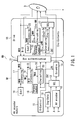
- FIG. 1 is a block diagram depicting an example of encrypting by a content management method according to the present invention.
- FIG. 2 and FIG. 3 are block diagrams each showing an example of decrypting by a general method for the encrypted contents.
- FIG. 4 shows an example of a recording medium having recorded therein the encrypted contents.
- FIG. 5 is an illustrative view illustrating an example of move of a move key (Move Key: Enc2-TK) and a medium key (MB-Key: Enc-TK) by the content management method according to the present invention.
- the content management method according to the present invention is featured in that there are recorded in a recording medium: a move key (Move-Key: Enc2-TK) which assures movement of content data; and a medium key (MB-Key: Enc-TK) which assures reproduction by a reproducing apparatus, together with encrypted content data.
- a move key Move-Key: Enc2-TK
- MB-Key Enc-TK
- An scheme for encrypting and/or recording content data in the content management method according to the present invention can be described by working of an AV encoder module M1 and working of a drive V1.
- a visual (V) or audio (A) signal is encoded in a DVD format by means of an encoder 12, and the encoded signal is selected together with digital data 11 by means of a selector 13. Then, the selected signal is subjected to scramble (encryption) processing in a scramble circuit 14 by means of a title key (TK), and the processed signal is recorded as (Enc-Contents) in a disk D.
- the title key (TK) is generated by means of a random number generator 18.
- the decrypted key TK is decrypted in a decoder circuit 20 by means of a decryption key (MUK), and the decrypted title key (Enc-TK) is generated.
- the encrypted key (MUK) having the encrypted title key (TK) is obtained as follows.
- a device key K1 (DvK116) is MKB-processed by using (MKB) data read out from a recording medium to generate a medium key (MMK), and further, the resultant key is generated after MID-processed by means of a MID processor 19.
- an encryption title key (Enc-TK) is multiply encrypted by means of a security key (MM), and a multiply encryption title key (Enc2-TK) is generated, and then, supplied to a selector 27 as with an encryption title key (Enc-TK).
- the security key (MM) is supplied by means of a random number generator 24.
- a device key (DvK2) specific to a drive V1 is subjected to MKB processing by means of an MKB processor 23 according to a given MKB from a recording medium.
- This security key (MM) is encrypted by means of the obtained encryption key (MMK), and an encrypted encryption key (Enc-MM) is obtained.
- both of the move key (Move-Key; Enc2-TK) and the medium key (MB-Key; Enc-TK) are recorded into the optical disk D via a selector 27 according to a control signal from an R-Control 15 which is a recording processing control portion.
- MK identical key information
- Dvk device keys
- M-ID medium specific information
- two encryption keys i.e., the move key (Move-Key; Enc2-TK) and the medium key (MB-Key; Enc-TK) are selectively recorded in the optical disk D, thereby enabling reproduction by a general-purpose machine under a predetermined condition or processing for moving restrictive content data.
- an optical disk D having at least a medium key (MB-Key; End-TK) recorded therein can be reproduced by means of a conventional general-purpose optical disk reproducing apparatus. Further, an optical disk D having only the move key (Move-Key; Enc2-TK) recorded therein is reproduced by means of only the optical disk reproducing apparatus in which the content management method according to the present invention is carried out.
- MB-Key medium key
- Enc2-TK move key
- FIG. 2 is a view showing a decrypting process carried out by using only the medium key (MB-Key; Enc-TK) according to the present invention with a reproducing apparatus which is a conventional general-purpose machine.
- an optical disk D having at least a medium key (MB-Key; Enc-TK) recorded therein, the medium key block information (MKB) and medium specific information (M-ID) recorded in advance in a medium; and a medium key (MB-Key; Enc-TK) are supplied to an AV decoder module M2 via a bus authentication 21.
- Enc-Contents are supplied to an AV decoder module M2.
- the encrypted content data are processed to be de-scrambled (decryption) by means of a title key (TK) in a de-scrambler 29, and the resultant data is reproduced after supplied to an AV decoder 30.
- the title key (TK) is obtained by an encryption title key (Enc-TK) being read out from the disk D, sent to a decrypting portion 28, and decrypted by an encryption key (MUK).
- the encryption key (MUK) is acquired by means of the MKB processor 17 and MID processor 19 based on medium key block information (MKB) and medium specific information (M-ID).
- the content data contained in the optical disk D having the medium key (MB-Key; Enc-TK) recorded therein can be reproduced.
- a drive V1 to which medium key block information (MKB), an encryption title key (Enc-MM), a multiply encryption title key (Enc-2-TK), and encrypted contents (Enc-Contents) are assigned from an optical disk unit obtains a security key (MM) by decrypting it by a decrypting portion 31 using a key (MMK) obtained by subjecting it to an MKB process 23 by a device key (DvK2) specific to the drive V1.
- the multiply encryption title key (Enc2-TK) is decrypted into an encryption title key (Enc-TK), and is supplied to a module M2 via the bus authentication 21.
- a device key (DvK) specific to the module M2 is subjected to an MKB process 17 based on the medium key block information (MKB), and the encrypted title (Enc-TK) is decrypted at a decrypting portion 28 by means of the encryption key (MUK) obtained by subjecting it to an MID process 19 based on medium specific information (M-ID), thereby obtaining a title key (TK).
- DvK device key
- Enc-TK encrypted title
- the encrypted content data (Enc-Contents) is decrypted by means of a de-scramble portion 29, whereby the content data can be supplied to an AV decoder 30.
- a medium key (MB-Key) and a move key (Move-Key) there exist three types of recording mediums such as an optical disk, "a medium key (MB-Key) and a move key (Move-Key)", “only a medium key (MB-Key)”, and “only a move key (Move-Key)”.
- a description of content data or the like is eliminated, and only the two keys, i.e., the medium key and move key, will be generally described.
- a medium key (MB-Key) and a move key (Move-Key) are assigned to a first disk D1 (recording medium).
- MB-Key medium key
- Move-Key move key
- the move key (Move-Key) is deleted from the disk D1, and a disk D1' having only the medium key (MB-Key) is obtained. Only the move key (Move-Key) is recorded in the new disk D2. In this manner, the disk D1' can be reproduced by the general reproducing apparatus only. In addition, the disk D2 cannot be reproduced by the general reproducing apparatus. This disk can be reproduced or processed to be moved by only the recording and/or reproducing apparatus according to the present invention.
- the move key (Move-Key) of the optical disk D2 is deleted by means of the reproducing apparatus according to the present invention, and cannot be reproduced again. Only the move key (Move-Key) is recorded in the optical disk D3, and the disk can be reproduced or processed to be moved by only the recording and/or reproducing apparatus according to the present invention.
- the target is not limited to the optical disk.
- a general digital recording medium such as an SD (Secure Digital) is also targeted to be moved.
- the move key (Move-Key) can be moved from the optical disk D3 to the SD (Secure Digital) card D4.
- the move key (Move-Key) is deleted from the optical disk D3, and cannot be reproduced.
- Only the move key (Move-Key) is recorded in the SD (Secure Digital) card D4, and the disk can be reproduced or processed to be moved by only the recording and/or reproducing apparatus according to the present invention.
- FIG. 6 is a block diagram depicting an example of a structure of a recording and/or reproducing apparatus to which the content management method according to the present invention is applied.
- FIG. 7 is a block diagram illustrating a detailed example of a decrypting scheme in the case where the scheme is applied to the recording and/or reproducing apparatus.
- FIG. 8 is a block diagram illustrating a detailed example of a decrypting scheme.
- FIG. 6 shows an optical disk recording and/or reproducing apparatus A to which the content management method according to the present invention is applied.
- the optical disk recording and/or reproducing apparatus A has a control portion consisting of: a system control portion 162 which governs the entire operation; a RAM 161 serving as a work area; a ROM 160; and a servo control portion 152. Further, this apparatus has an optical pickup 154 which irradiates laser beam to an optical disk D; and a signal processing portion 156 which receives a detection signal for reproduction or supplies a signal for recording, thereby carrying out ECC processing or the like.
- the apparatus A has a bus authenticating portion 21 described previously in FIG. 1 or the like.
- the apparatus has a bus authenticating portion 21 provided via a cable similarly, and has a data processing portion 158 which carries out encoding or decoding and the like.
- a medium reader and/or writer 166 which is an interface for a recording medium such as an SD card is connected to the signal processing portion 156.
- An interface 165 which carries out signal input or output with a RAM 159 or an external device is connected to the data processing portion 158.
- the apparatus A has: servo control system processor circuits 155 connected to the above described servo control portion 152; an actuator driver 153 connected thereto; and a disk motor 151.
- the system control portion 162 uses the RAM 161 as a work area, and carries out predetermined operation in accordance with a program including the present invention, the program being recorded in the ROM 160.
- the laser beam outputted from the optical pickup 154 is irradiated on an optical disk D.
- the reflection light from the optical disk D is converted into an electrical signal by means of a head amplifier. This electrical signal is inputted to the signal processing portion 156.
- An RF amplifier or the like is included in the signal processing portion 156.
- the data processing portion 158 assigns an error detecting code (EDC) or ID to content data sent via the interface 165 by using a write clock produced via a write channel circuit (not shown), and applies data scramble processing using the above described encoding. Further, this data processing portion assigns an error correcting code (ECC), assigns a synchronizing signal, modulates a signal other than the synchronizing signal, and records a signal in the optical disk D by using the laser beam controlled by right strategy optimal to a compatible medium.
- EDC error detecting code
- the decoding process described in detail with reference to FIG. 2 and FIG. 3 is applied to content data, and reproduction processing of the content data stored in the optical disk D is carried out.
- the RF signal read out from the head amplifier of the optical pickup 154 is sent to a PLL circuit (not shown) in the signal processing portion 156 through an optimal equalizer.
- Channel data is read out by a read clock produced by a PLL circuit.
- the decrypting process using the above described decrypting is applied to the read data. Further, the decrypted data is synchronized by means of the data processing portion 158, and symbol data is read out. Then, a de-scramble process using error correction or the above described decrypting process is carried out, and the de-scrambled data is transferred to the outside through the interface 165.
- each bus authenticating portion 21 has a random number generator (not shown). In this manner, this generator generates the same encryption key, encrypts transmission information, and transmits it to the remote party.
- the remote device having received transmission signal decrypts the encrypted transmission information by the same encryption key which has been locally generated. This encryption key is changed and generated according to a predetermined time, thus making it difficult for the third person to reproduce it. As long as the encryption key at this time cannot be reproduced, even if a signal is extracted by cable disconnection, illegal copy of content data or the like cannot be made.
- a security process for encryption key information having applied thereto an operation of a modulator and/or demodulator circuit carried out by the signal processor circuit 156 will be described here.
- an AV encoder module M1 is identical to that shown in FIG. 1.
- an AV decoder module M2 is identical to that shown in FIG. 3.
- a duplicate description is omitted here.
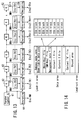
- an ECC circuit or the like is shown at a drive portion V3 of FIG. 7, in addition to a configuration of the drive V1 of FIG. 1, an ECC circuit or the like is shown. That is, a signal from a content scramble 14 which is main data is modulated by means of a modulator circuit 44 when an error correcting signal is assigned by means of an ECC circuit 43. Further, an encrypted security key (Enc-MM) as well is subjected to error correction encoding by means of an ECC circuit 47, and the encrypted key is modulated by means of a second modulator circuit 48. Then, the modulated key is replaced with part of the main data by means of a selector 45, and is recorded in a storage region of the optical disk D by means of a write channel circuit 46.
- Enc-MM encrypted security key
- FIG. 9 is a flow chart showing an operation for recording into a recording medium D1 the contents and key information encrypted by the content management method according to the present invention.
- FIG. 10 is a flow chart showing an operation in the case where contents are moved from the recording medium D1 to another recording medium D2.
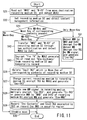
- FIG. 11 is a flow chart showing an operation in the case where contents are moved from the recording medium D2 to another recording medium D3.
- FIG. 12 is a flow chart showing an operation in the case where this moving is carried out with channel down.
- the content management method according to the present invention is achieved with a configuration of the signal processing portion 156 and data processing portion 158 in the optical disk recording and/or reproducing apparatus, as described above. These processes can be carried out even by means of a program or the like describing procedures for applying the content management method to detection information.
- the content management method according to the present invention will be described in detail by way of flow chart.
- medium key block information (MKB) for generating key information (MK); and medium specific information (M-ID) are read out from the recording medium D1, and these items of information are transferred to an AV encoder portion M1 (S11).
- key information (MK) is extracted from the medium key block information (MKB) by using a device specific decryption key (DvK1) 16.
- DvK1 device specific decryption key
- MUK encryption key
- a title key (TK) is generated by means of a random number generating process. Then, the content data for which copyright protection has been specified is scramble-encrypted by means of the title key (TK) (S13). Then, the title key (TK) is encrypted by means of a key (MUK) for encrypting a title key, and the encryption title key (Enc-TK) is generated (S13). Then, the encrypted contents (Enc-Contents) and encryption title key (Enc-TK) are transferred to the drive V1 via a bus authenticating portion (S14).
- an encryption key (MMK) is detected based on medium key block information (MKB).
- MKB medium key block information
- a security key (MM) is encrypted by means of the encryption key (MMK), and an encrypted encryption key (Enc-MM) is generated (S17). Then, a signal of the encrypted encryption key (Enc-MM) is recorded in a security region (S18).
- a medium key (MB-Key) for encrypted contents (Enc-Contents) and a group of encryption title keys (Enc-TK) is recorded in the recording medium D1 (S19).
- content data is encrypted, and both of the move key (Move-Key; Enc2-TK) and the medium key (MB-Key; Enc-TK) or only the medium key, which are features of the content management method according to the present invention, are/is recorded in the optical disk D1.
- MKB medium key block information
- M-ID medium specific information
- MUK2 encryption key
- an encryption key (MMK) is detected by using medium key block information (MKB) and a device key (DvK2). Then, an encrypted encryption key (Enc-MM) is decrypted, and a security key (MM) is detected. Then, a multiply encryption title key (Enc2-TK2) is decrypted by means of a security key (MM), and an encryption title key (Enc-TK) is generated (S31).
- the medium key block information (MKB) in the recording medium D1 and medium specific information (M-ID) are transferred through bus authentication, and an encryption key (MUK) is detected by means of a device specific encryption key (DvK1) (S24). Further, an encryption title key (Enc-TK) is decrypted by means of an encryption key (MUK), and a title key (TK) is generated. Furthermore, encrypted contents are read out from the recording medium D1, and the read out contents are decrypted by means of a title key (TK).
- the decrypted contents are re-scrambled (encrypted) by means of a title key (TK2) generated by a new random number generator, and the encrypted contents are temporarily recorded (S25).
- a multiply encryption title key (End2-TK) which is a move key (Move-Key) of the corresponding contents of the recording medium D1 is deleted (S26).
- the current recording medium is changed to a recording medium D2; a title key (TK2) is encrypted by means of an encryption key (MUK2); and an encryption title key (Enc-TK2) is generated (S27).
- a new security key (MM2) in a recording drive is generated; an encryption title key (Enc-TK2) is multiply encrypted; and a multiply encryption title key (Enc2-TK2) is generated.
- an encryption key (MMK) is generated by using the medium key block information (MKB) in the recording medium D2; and the device key (DvK2); a security key (MM2) is encrypted; and an encrypted encryption key (Enc-MM2) is generated (S28).
- the encrypted contents (Enc-Contents) encrypted by the title key (TK2) and the multiply encryption title key (Enc2-TK2) are recorded in the recording medium D2. Further, the encrypted encryption key (Enc-MM2) is recorded in a security region (S29).
- the move key (Move-Key) is deleted from the move source recording medium D1, and only the medium key (MB-Key) is obtained. Then, moving of content data is disabled. As a result, reproduction can be carried out by means of a reproducing apparatus which is a conventional general-purpose machine, but moving of the content data is disabled. On the other hand, only the move key (Move-Key) is present in the move destination recording medium D2. Reproduction and further moving are enabled with only a dedicated machine capable of implementing the content management method according to the present invention.
- MKB medium key block information
- M-ID medium specific information
- MUK2 encryption key
- the recording medium D2 is set, and content management information is detected (S22). Then, it is determined whether or not the corresponding content medium key (MB-Key) and move key (Move-Key) are present (S23).
- Moving content data is disabled (S30).
- an encryption key (MMK) is extracted by using medium key block information (MKB) and a device key (DvK2). Then, an encrypted encryption key (Enc-MM is decrypted), and a security key (MM) is detected. Then, a multiply encryption title key (Enc2-TK2) is decrypted by means of a security key (MM), and an encryption title key (Enc-TK2) is generated (S31).
- the medium key (MB-Key) and move key (Move-Key) are present in the step S23, the medium key block information in the recording medium D2 and the medium specific information (M-ID) are transferred through bus authentication. Then, an encryption key (MUK2) for a title key is detected by means of a device specific decryption key (DvK1) (S42). Next, an encryption title key (Enc-TK) is decrypted by means of a decryption key (MUK2) for a title key, and a title key (TK2) is detected. Then, encrypted contents (EC-Contents) are read out from the recording medium D2, and the read out contents are temporarily stored (S43). Then, a multiply encryption title key (Enc2-TK2) which is a move key (Move-Key) for the corresponding contents of the recording medium D2 is deleted (S26).
- the current recording medium is changed to a recording medium D3; a title key (TK2) is encrypted by means of an encryption key (MUK2); and an encryption title key (Enc-TK3) is generated (S27).
- a new security key (MM3) in the recording drive is generated; an encryption title key (Enc-TK3) is multiply encrypted; and a multiply encryption title key (Enc2-TK3) is generated.
- an encryption key (MMK) is generated by using the medium key block information (MKB) in the recording medium D3 and the device key (DvK2); a security key (MM3) is encrypted; and an encrypted encryption key (Enc-MM3) is generated (S28).
- the encryption title key (Enc-TK3) in the flow chart 3 of FIG. 11 includes a plenty of the steps common to the flow chart 2 of FIG. 10, but is different therefrom in that, in the steps S42 and S43, the title key (TK2) is encrypted by means of the encryption key (MUK2), and the encryption title key (Enc-TK3) is generated.
- the move key (Move-Key) is deleted, thus making it impossible to move or reproduce content data.
- the move destination recording medium D3 only the move key (Move-Key) is obtained, thus enabling reproduction and further moving by only the dedicated machine capable of implementing the content management method according to the present invention.
- a recording medium targeted by the content management method according to the present invention is not limited to an optical disk, and can include a general digital recording medium such as an SD (Secure Digital) card D4 or the like, as shown in FIG. 5.
- SD Secure Digital
- step S42 and step S43 in the flow chart of FIG/ 11 are carried out by means of a process substituted for the step S44.
- an encryption title key (Enc-TK) is decrypted by means of an encryption key (MUK2), and a title key (TK2) is generated.
- Enc-Contents encrypted contents
- MUK2 an encryption key
- TK2 title key
- encrypted contents (Enc-Contents) are read out from the recording medium D2, and the read out contents are decrypted by means of a title key (TK2).
- multi-channel audio source data is reduced down to 2 channels; the data is scrambled (encrypted) again by means of a title key (TK3) generated by a random number generator, and the encrypted data is temporarily recorded (S44).
- content data targeted by the content management method according to the present invention can take a form of a plurality of voice files as music information on a plurality of music items, for example.
- a plurality of information may be stored in a visual image file or an image file, for example.
- a description will be given by way of example of voice file.
- different title keys (TK) supplied by a random number generator 18 shown in FIG. 1 are provided on a file by file basis, and each of these keys is encrypted, thereby enabling move to another recording medium for each music item of music information. In this manner, the degree of freedom for user's content utilization can be improved very remarkably.
- security keys MM
- the security keys (MM) are provided by the number of music items, and then, all of these keys are stored in a security region of an optical disk D, it is not preferable since the security region requires a large storage capacity, causing an increase in storage capacity.
- a security information recording system using the above modulation and/or demodulation process, while part of the main data is damaged, and security information is recorded. This situation is not preferable in reproduction processing of the main data, and thus, it is desirable to reduce security information to the minimum.
- a plurality of keys are increased in accordance with predetermined procedures based on a security key (MM); the increased keys are used for encryption; and only the security key (MM) which is a source of increase is stored in the security region, thereby making it possible to manage a plurality of files, while reducing the storage capacity of the security region.
- MM security key
- FIG. 13 is a view showing a scheme for generating a security key (MM) in the content management method according to the present invention.
- a security key (MM1) is generated based on key source data (MM) generated from a random number G61, and then, a specific function K is multiplied by a content data identification code or the number determined by order numbers or the like, whereby new security keys (MM2 to MMn) are generated.
- MM2 to MMn By using a plurality of these security keys (MM2 to MMn), a plurality of encryption title keys (Enc-TK1 to Enc-TKn) 63-1 to n are subjected to encryption 64.
- Enc-MM encrypted encryption key
- MM key source data
- reproduction or moving of content data is managed by means of a move key (Move-Key) and a medium key (MB-key).
- these encryption key files are especially important data as is the case with encrypted contents. That is, if an encrypted encryption key cannot be decrypted, the encrypted contents cannot be decrypted or reproduced, either. Because of this, as shown in FIG. 14, in a data area of a recording medium (for example, an optical disk), a move key (Move-Key) file and a medium key (MB-Key) file are provided in different file regions. Then, one table is allocated in each ECC block, and each table is written in quadruple in 4 ECC blocks, thereby improving data reliability.
- a move key Move-Key
- MB-key medium key
- a table of these files is shown in FIG. 15. That is, in a recording medium, there exist three types of keys, "a medium key (MB-Key) and a move key (Move-Key)", “only a medium key (MB-Key)", and “only a move key (Move-key)". In addition, in the case where a large number of content files exist, it is required to easily read out a relationship between the medium key (MB-Key) and move key (Move-Key) relevant to a respective one of the content encryption keys from individual management. Because of this, in the move key (Move-Key) table and the medium key (MB-Key) table shown in FIG.
- these tables are configured by providing a pair of information, i.e., information indicating the presence or absence of an encryption key associated with a respective one of the encrypted encryption keys and information utilized in the case where the method for generating the security key (MM) shown in FIG. 13 is employed. By listing these tables, it becomes possible to easily determine whether moving contents is enabled with respect to the respective content data.
- a region for recording and/or reproducing security information may be associated with a recording and/or reproducing area other than main data.
- the main data does not include an error component, and thus, the reliability of content data is not lost.
- the move key (Move-key: Enc2-TK) for assuring movement of content data and the medium key (MB-Key: Enc-TK) for assuring reproduction by a reproducing apparatus which is a conventional general-purpose machine (such as an optical disk, for example) are recorded in a recording medium together with encrypted content data.
- a reproducing apparatus capable of decrypting a security key stored in a security region
- reproduction or moving by the move key (Move-Key) is enabled.
- reproduction by the medium key (MB-Key) is assured. In this manner, a moving process by a dedicated machine is enabled while the spread of content data is prevented.
- reproduction of content data by the conventional machine is enabled.
Landscapes
- Engineering & Computer Science (AREA)
- Signal Processing (AREA)
- Computer Security & Cryptography (AREA)
- Signal Processing For Digital Recording And Reproducing (AREA)
- Storage Device Security (AREA)
Abstract
Description
The reflection light from the optical disk D is converted into an electrical signal by means of a head amplifier. This electrical signal is inputted to the
Further, this data processing portion assigns an error correcting code (ECC), assigns a synchronizing signal, modulates a signal other than the synchronizing signal, and records a signal in the optical disk D by using the laser beam controlled by right strategy optimal to a compatible medium.
Then, the encrypted contents (Enc-Contents) and encryption title key (Enc-TK) are transferred to the drive V1 via a bus authenticating portion (S14).
Claims (20)
- A content management method, characterized by comprising:encrypting content data by a first key (TK);encrypting the first key by predetermined plural types of second keys (MUK);multiply encrypting the encrypted first key (Enc-TK) by a third key (MM);encrypting the third key by a predetermined fourth key (MMK); andrecording in a recording medium content data (Enc-Contents) encrypted by the first key, the first key (Enc-TK) encrypted by the predetermined plural types of second keys, and the first key (Enc2-TK) obtained by multiply encrypting the encrypted first key (Enc-TK) by the second and third keys (MM), and recording the third key (Enc-MM) encrypted by the fourth key in a security region of the recording medium.
- A content management method according to claim 1, characterized in that the first key (TK) is provided in plurality, the content data is provided in plurality, each of which is encrypted separately, and the encrypted first key (Enc-TK) is generated in plurality.
- A content management method according to claim 1, characterized in that the third key (MM) is provided in plurality according to the number of the plurality of first keys provided according to the number of the plurality of content data, and the plurality of encrypted first keys (Enc-TK) are recorded to be multiply encrypted individually by a plurality of third keys (MM).
- A content management method according to claim 1, characterized in that a recording medium having recorded therein the encrypted content data (Enc-Contents), the first key (Enc-TK) encrypted by the second key, and the first key (Enc2-TK) multiply encoded by the second and third keys is identical to a recording medium in which there exists a security region in which the third key (Enc-MM) encrypted by the fourth key is recorded.
- A content management method according to claim 1, characterized in that one of the second keys (MUK) is specific information of the recording medium.
- A content management method according to claim 1, characterized in that the content management method is implemented in a recording apparatus having an encoder module and a drive communicated therewith via an authentication process, and the third key (MM) is a key generated only in the drive.
- A content management method according to claim 1, characterized in that the first key (Enc-TK) encrypted by the second key and the first key (Enc2-TK) multiply encoded by the second and third keys are recorded in a different recording area of the recording medium.
- A content management method according to claim 1, characterized in that, in the case where content data is moved from the first recording medium (D1) to a second recording medium (D2), the content data is re-encrypted after being decrypted, the encrypted content data and only the encryption key for controlling movement of content are recorded in the second recording medium, and an encryption key for control movement of contents recorded in the first recording medium is deleted.
- A content management method according to claim 8, characterized in that, in the case where content data is moved to a third recording medium (D3) from the second recording medium (D2) having recorded therein only the encryption key for controlling movement of contents, the content data is re-encrypted after being decrypted, the encrypted content data and the encryption key for controlling movement of contents are recorded in the third recording medium, and the encryption key for controlling movement of contents of the second recording medium is deleted, thereby carrying out processing for moving contents between the recording mediums.
- A content management method according to claim 1, characterized by further comprising:generating key source data by a specific random number generator (24);multiplying a specific function based on information for specifying the plurality of content data to generate a plurality of third keys (MM1 to MMn) (FIG. 13);recording the plurality of third keys as the multiply encrypted key of a plurality of encrypted first keys, with a plurality of encrypted content data and a multiply encrypted first key in a recording medium; andencrypting the key source data generated by the random number generator by means of a predetermined encryption key, and then, recording the encrypted data in a security region of the recording medium.
- A content management method according to claim 1, characterized by further comprising:in the case where the first key encrypted by the second key and the first key multiply encoded by the second and third keys each are recorded as independent file data in an independent recording area, providing an encrypted encryption key file (FIG. 15) having identification information indicating whether file key data is the first key encrypted by the second key or the first key multiply encoded by the second and third keys at the beginning of the key file of the storage area or at a predetermined position and identification information indicating whether a respective counterpart key file exists or not.
- A content management method according to claim 11, characterized in that the encrypted encryption key file is multiply written a plurality of times.
- A content management method according to claim 1, characterized by further comprising:in a reproduction process of the first recording medium (D1) and a second recording medium having recorded therein a security region the encrypted content data, the first key (Enc2-TK) multiply encoded by the second and third keys, and the third key encrypted by the fourth key,in the first recording medium, reading out the first key (Enc-TK) encrypted by the second key, decrypting (TK) the first key encrypted by predetermined plural types of second keys (MKB, M-ID), reading out the encrypted content data (Enc-Contents), and decrypting content data by the decrypted first key, thereby carrying out reproduction, andin the second recording medium, reading out the third key (Enc-MM) encrypted from the security region, decrypting the third key encrypted by predetermined plural types of fourth keys (MMK), reading out the second key (Enc2-TK) multiply encoded by the second and third keys to detect the first key (Enc-TK) decrypted by the third key (MM) and encrypted by the second key, decrypting the first key encrypted by the predetermined plural types of second keys (MUK), and decrypting the encrypted content data (End-Contents) by the decrypted first key (TK), thereby carrying out reproduction.
- A recording apparatus characterized by comprising:an encrypting portion (158) which encrypts assigned content data by a first key (TK), encrypts the first key by predetermined plural types of second keys (MUK), multiply encrypts the encrypted first key (Enc-TK) by a third key (MM), and encrypts the third key by a predetermined fourth key (MMK); andrecording portions (154, 156) which records in a first recording medium the content data (Enc-Contents) encrypted at the encrypting portion, the first key (Enc-TK) encrypted by the second key, and the first key (Enc2-TK) multiply encoded by the second and third keys, and records the third key (Enc-MM) encrypted by the fourth key in a security region.
- A recording apparatus according to claim 14, characterized by further comprising:processing portions (154, 156) which, in the case where content data is moved from the first recording medium (D1) to a second recording medium (D2), encrypts the content data after being decrypted, records only an encrypted content data and an encryption key for controlling movement of contents in the second recording medium, and deletes the encryption key for controlling movement of contents recorded in the first recording medium, and;in the case where content data is moved to a third recording medium (D3) from a recording medium having recorded therein only the encryption key for controlling movement of contents as in the second recording medium (D2), re-encrypts content data after being decrypted, recording the encrypted content data and the encryption key for controlling movement of contents in the third recording medium, and deletes the encryption key for controlling movement of contents of the second recording medium which is a source medium, thereby carrying out processing for moving content data between the recording mediums.
- A recording apparatus according to claim 14, characterized by further comprising:processing portions (154, 156) which encrypts a plurality of content data individually by a plurality of first keys, encrypts the plurality of first keys by predetermined plural types of second keys,and in the case where the processing portion encrypts the encrypted first keys by a plurality of third encryption keys, which generates key source data by a specific random number generator (24), and which multiplies a specific function based on information for specifying the plurality of content data to generate a plurality of third keys (MM1 to MMn) (FIG. 13),and the processing portions records the plurality of third keys as a plurality of encrypted first keys, records in a recording medium, with a plurality of encrypted content data and multiply encrypted first key,and the processing encrypts the key source data generated by the random number generator by a predetermined encryption key, and records the encrypted data in a security region of the recording medium.
- A recording apparatus according to claim 14, characterized by further comprising:processing portions (154, 156) which, in the case where the first key encrypted by the second key and the first key multiply encoded by the second and third keys are recorded as independent file data, respectively, in an independent recording area of the first recording medium,records an encrypted encryption key file (FIG. 15) having identification information indicating whether file key data is the first key encrypted by the second key or the first key multiply encoded by the second and third keys at the beginning of the key file or at a predetermined position and identification information indicating whether a respective one of the counterpart keys file exists.
- A recording medium having stored the following in a storage region of a first recording medium (D1):content data (Enc-Contents) encrypted by a first key (TK);a first key (Enc-TK) encrypted by encrypting the first key by predetermined plural types of second keys (MUK);a first key (Enc2-TK) obtained by multiply encrypting the encrypted first key (Enc-TK) by a third key (MM); anda third key (Enc-TK) obtained by encrypting the third key by a predetermined fourth key (MMK).
- A recording medium according to claim 18, characterized by further comprising, second and third recording mediums (D2, D3) which is different from the first recording medium and have recorded therein the content data (Enc-Contents) encrypted by the first key and the encryption key (Enc2-TK) for controlling movement of contents obtained by multiply encrypting the first key.
- A recording medium according to claim 18, characterized in that the first recording medium generates key source data (MM1) by a specific random number generator (24); and multiplies a specific function by an identification code of content data or the number determined by order numbers or the like, thereby generating the plurality of third keys (MM1 to MMn) (FIG. 13); and wherein these keys are employed as a multiply encrypted key of a plurality of the encrypted first keys, a plurality of encrypted content data and multiply encrypted first key are recorded, and further, the key source data generated by the random number generator is encrypted by a predetermined encryption key, and is recorded in a security region.
Applications Claiming Priority (2)
| Application Number | Priority Date | Filing Date | Title |
|---|---|---|---|
| JP2002348925A JP3878542B2 (en) | 2002-11-29 | 2002-11-29 | Recording device |
| JP2002348925 | 2002-11-29 |
Publications (3)
| Publication Number | Publication Date |
|---|---|
| EP1424695A2 true EP1424695A2 (en) | 2004-06-02 |
| EP1424695A3 EP1424695A3 (en) | 2004-07-14 |
| EP1424695B1 EP1424695B1 (en) | 2006-08-09 |
Family
ID=32290509
Family Applications (1)
| Application Number | Title | Priority Date | Filing Date |
|---|---|---|---|
| EP03026875A Expired - Lifetime EP1424695B1 (en) | 2002-11-29 | 2003-11-24 | Content management by encryption method, recording and/or reproducing apparatus, and recording medium. |
Country Status (7)
| Country | Link |
|---|---|
| US (1) | US7536727B2 (en) |
| EP (1) | EP1424695B1 (en) |
| JP (1) | JP3878542B2 (en) |
| KR (1) | KR100584710B1 (en) |
| CN (1) | CN1300710C (en) |
| DE (1) | DE60307402T2 (en) |
| TW (1) | TWI241816B (en) |
Cited By (5)
| Publication number | Priority date | Publication date | Assignee | Title |
|---|---|---|---|---|
| EP1643502A3 (en) * | 2004-09-30 | 2006-04-19 | Kabushiki Kaisha Toshiba | Content management method and recording medium |
| EP2009639A1 (en) * | 2007-06-28 | 2008-12-31 | THOMSON Licensing | Video copy prevention if the difference betweeen the fingerprints before and after its modification is above a threshold |
| EP1922839A4 (en) * | 2005-09-08 | 2010-01-20 | Findaway World Inc | Personal media player apparatus and method |
| EP2184739A3 (en) * | 2008-07-29 | 2011-03-16 | Hitachi Ltd. | Copy control method |
| EP2571025A3 (en) * | 2011-09-15 | 2013-09-18 | Sony Corporation | Information processing apparatus, information processing method and program |
Families Citing this family (36)
| Publication number | Priority date | Publication date | Assignee | Title |
|---|---|---|---|---|
| DE60220959T2 (en) * | 2002-09-17 | 2008-02-28 | Errikos Pitsos | Method and apparatus for providing a list of public keys in a public key system |
| JP4525350B2 (en) * | 2003-01-15 | 2010-08-18 | ソニー株式会社 | Signal processing system |
| EP1710950A4 (en) * | 2004-01-29 | 2009-04-29 | Sony Corp | DEVICE AND METHOD FOR PROCESSING INFORMATION sb / sb |
| US7091887B2 (en) * | 2004-04-28 | 2006-08-15 | Kabushiki Kaisha Toshiba | Modulator, modulation method, and method of manufacturing an optical recordable medium with enhanced security for confidential information |
| JP2006014035A (en) * | 2004-06-28 | 2006-01-12 | Toshiba Corp | Storage medium processing method, storage medium processing apparatus, and program |
| JP2006020154A (en) * | 2004-07-02 | 2006-01-19 | Toshiba Corp | Content management method, content management program, and electronic device |
| WO2006008986A1 (en) | 2004-07-23 | 2006-01-26 | Sharp Kabushiki Kaisha | Storage device, storage method, and image display device |
| CN101032163B (en) * | 2004-09-29 | 2012-04-18 | 夏普株式会社 | Recording device and method |
| JP4755189B2 (en) * | 2004-10-12 | 2011-08-24 | 韓国科学技術院 | Content encryption method, network content providing system and method using the same |
| TWI277870B (en) * | 2004-11-22 | 2007-04-01 | Toshiba Corp | Copyright management method, information recording/reproducing method and device, and information recording medium and method of manufacturing the medium |
| KR20060066627A (en) * | 2004-12-13 | 2006-06-16 | 엘지전자 주식회사 | Method and apparatus for recording and using keys for encryption / decryption of content and recording media having keys recorded by the methods |
| CN101116143A (en) * | 2005-02-07 | 2008-01-30 | 松下电器产业株式会社 | Recording device, reproducing device, integrated circuit and control program |
| JP4675644B2 (en) * | 2005-02-28 | 2011-04-27 | 株式会社東芝 | Content transmission device, content reception device, and content processing method |
| JP4751111B2 (en) * | 2005-06-28 | 2011-08-17 | 株式会社東芝 | Content recording apparatus, content reproducing apparatus, content recording method, and content recording program |
| JP4589963B2 (en) * | 2005-07-29 | 2010-12-01 | パナソニック株式会社 | Recording device |
| JP4923582B2 (en) * | 2006-01-19 | 2012-04-25 | Kddi株式会社 | Device bound content delivery method, content storage device, and program |
| JP4768523B2 (en) * | 2006-06-12 | 2011-09-07 | 株式会社東芝 | Information recording / reproducing apparatus and method |
| JP4327865B2 (en) | 2007-03-29 | 2009-09-09 | 株式会社東芝 | Content processing apparatus, encryption processing method, and program |
| KR100891564B1 (en) * | 2007-04-09 | 2009-04-06 | 노키아 코포레이션 | Method and apparatus for dealing with proprietary data format content |
| EP2001023A3 (en) * | 2007-06-06 | 2009-03-25 | Hitachi Ltd. | Control method, recording device and recording and reproducing device |
| WO2009086669A1 (en) * | 2007-12-29 | 2009-07-16 | Thomson Licensing | System and method for data transmission |
| KR100965888B1 (en) * | 2008-02-19 | 2010-06-24 | 삼성전자주식회사 | Method of providing or recording content and apparatus for performing the method |
| US9240883B2 (en) | 2008-09-04 | 2016-01-19 | Intel Corporation | Multi-key cryptography for encrypting file system acceleration |
| TW201013398A (en) * | 2008-09-25 | 2010-04-01 | Walton Advanced Eng Inc | Method for applying USB record carriers and module assembled for the method |
| US8571209B2 (en) * | 2009-01-19 | 2013-10-29 | International Business Machines | Recording keys in a broadcast-encryption-based system |
| US20190108366A1 (en) * | 2010-01-28 | 2019-04-11 | International Business Machines Corporation | Secure data transmission utilizing distributed storage |
| US8885821B2 (en) | 2010-01-28 | 2014-11-11 | Cleversafe, Inc. | Sequencing encoded data slices |
| CN102739604B (en) * | 2011-03-31 | 2016-09-28 | 中兴通讯股份有限公司 | The method and system of secure transmission of media information |
| US8886963B2 (en) * | 2011-09-15 | 2014-11-11 | Apple Inc. | Secure relocation of encrypted files |
| US9596344B2 (en) | 2013-03-15 | 2017-03-14 | Genesys Telecommunications Laboratories, Inc. | System and method for encrypting and recording media for a contact center |
| US10277559B2 (en) * | 2014-05-21 | 2019-04-30 | Excalibur Ip, Llc | Methods and systems for data traffic control and encryption |
| CN106549927B (en) * | 2015-09-23 | 2020-11-13 | 阿里巴巴集团控股有限公司 | Key storage and acquisition method and device |
| JP6597248B2 (en) * | 2015-12-04 | 2019-10-30 | ヤマハ株式会社 | System and control method |
| CN108989015B (en) * | 2017-05-31 | 2021-11-02 | 北京京东尚科信息技术有限公司 | An encryption method and device |
| US10374801B2 (en) * | 2017-07-14 | 2019-08-06 | Bank Of America Corporation | File security tool |
| CN110750799A (en) * | 2019-09-30 | 2020-02-04 | 北京智明星通科技股份有限公司 | Information encryption method and device, electronic equipment and computer readable storage medium |
Family Cites Families (27)
| Publication number | Priority date | Publication date | Assignee | Title |
|---|---|---|---|---|
| NO302388B1 (en) * | 1995-07-13 | 1998-02-23 | Sigurd Sigbjoernsen | Procedure and apparatus for protecting software against unauthorized use |
| US6516064B1 (en) * | 1995-07-25 | 2003-02-04 | Sony Corporation | Signal recording apparatus, signal record medium and signal reproducing apparatus |
| JPH09136709A (en) | 1995-11-13 | 1997-05-27 | Koyo Rindobaagu Kk | Ceramic conveyor |
| JP3093678B2 (en) * | 1996-06-28 | 2000-10-03 | 株式会社東芝 | Encryption method, decryption method, recording / reproducing device, decryption device, decryption unit device and recording medium manufacturing method |
| JPH10303880A (en) * | 1997-05-01 | 1998-11-13 | Digital Vision Lab:Kk | Service provision system |
| US5923754A (en) * | 1997-05-02 | 1999-07-13 | Compaq Computer Corporation | Copy protection for recorded media |
| US6134660A (en) * | 1997-06-30 | 2000-10-17 | Telcordia Technologies, Inc. | Method for revoking computer backup files using cryptographic techniques |
| US6118873A (en) * | 1998-04-24 | 2000-09-12 | International Business Machines Corporation | System for encrypting broadcast programs in the presence of compromised receiver devices |
| US6834346B1 (en) * | 1998-07-30 | 2004-12-21 | Sony Corporation | Content processing system |
| JP4206529B2 (en) | 1998-09-17 | 2009-01-14 | ソニー株式会社 | Content management method and content storage system |
| CN100405247C (en) * | 1999-03-03 | 2008-07-23 | 索尼公司 | Terminal, data processing device and method, transmission method of data processing device |
| US6601046B1 (en) | 1999-03-25 | 2003-07-29 | Koninklijke Philips Electronics N.V. | Usage dependent ticket to protect copy-protected material |
| JP2001022859A (en) | 1999-04-27 | 2001-01-26 | Victor Co Of Japan Ltd | Method and device for recording and recording/ reproducing contents information, and medium |
| JP4177517B2 (en) | 1999-05-21 | 2008-11-05 | 株式会社東芝 | Content processing system and content protection method |
| KR100721078B1 (en) * | 1999-07-06 | 2007-05-22 | 소니 가부시끼 가이샤 | Data processing device, data providing system, and data providing method |
| WO2001016776A1 (en) * | 1999-08-27 | 2001-03-08 | Sony Corporation | Information transmission system, transmitter, and transmission method as well as information reception system, receiver and reception method |
| JP2001076348A (en) | 1999-09-08 | 2001-03-23 | Matsushita Electric Ind Co Ltd | Optical disk and optical disk device |
| CN100393030C (en) * | 1999-11-30 | 2008-06-04 | 三洋电机株式会社 | recording device |
| JP2001351323A (en) | 2000-04-04 | 2001-12-21 | Sony Corp | Information recording apparatus, information reproducing apparatus, information recording method, information reproducing method, and program providing medium |
| WO2001099332A1 (en) | 2000-06-21 | 2001-12-27 | Sony Corporation | Information recording/reproducing apparatus and method |
| WO2002044970A1 (en) * | 2000-11-28 | 2002-06-06 | Sanyo Electric Co., Ltd. | Data terminal for managing ciphered content data and license acquired by software |
| JP4219680B2 (en) * | 2000-12-07 | 2009-02-04 | サンディスク コーポレイション | System, method and device for playing recorded audio, video or other content from non-volatile memory cards, compact discs or other media |
| US7111175B2 (en) * | 2000-12-28 | 2006-09-19 | Intel Corporation | Method and apparatus for verifying the integrity of a media key block |
| JP2002229859A (en) | 2001-01-31 | 2002-08-16 | Toshiba Corp | Disk storage device and authentication method applied to the same |
| JP2002328846A (en) * | 2001-02-20 | 2002-11-15 | Sony Computer Entertainment Inc | Copy management system, computer readable storage medium in which information processing program of client terminal is stored, computer readable storage medium in which information processing program of management server is stored, information processing program of client terminal, information processing program of management server, copy managing method, information processing method of client terminal and information processing method of managing server |
| KR20040029957A (en) * | 2001-09-14 | 2004-04-08 | 소니 가부시끼 가이샤 | Recording medium reproduction method and reproduction apparatus and recording medium recording method and recording apparatus |
| JP3779580B2 (en) * | 2001-09-27 | 2006-05-31 | 株式会社東芝 | Signal processing method and apparatus, signal reproduction method and apparatus, and recording medium |
-
2002
- 2002-11-29 JP JP2002348925A patent/JP3878542B2/en not_active Expired - Fee Related
-
2003
- 2003-11-24 EP EP03026875A patent/EP1424695B1/en not_active Expired - Lifetime
- 2003-11-24 DE DE60307402T patent/DE60307402T2/en not_active Expired - Lifetime
- 2003-11-28 TW TW092133605A patent/TWI241816B/en not_active IP Right Cessation
- 2003-11-28 CN CNB2003101186781A patent/CN1300710C/en not_active Expired - Fee Related
- 2003-11-28 US US10/722,487 patent/US7536727B2/en not_active Expired - Fee Related
- 2003-11-29 KR KR1020030085957A patent/KR100584710B1/en not_active Expired - Fee Related
Cited By (7)
| Publication number | Priority date | Publication date | Assignee | Title |
|---|---|---|---|---|
| EP1643502A3 (en) * | 2004-09-30 | 2006-04-19 | Kabushiki Kaisha Toshiba | Content management method and recording medium |
| EP1922839A4 (en) * | 2005-09-08 | 2010-01-20 | Findaway World Inc | Personal media player apparatus and method |
| EP2009639A1 (en) * | 2007-06-28 | 2008-12-31 | THOMSON Licensing | Video copy prevention if the difference betweeen the fingerprints before and after its modification is above a threshold |
| EP2009638A1 (en) * | 2007-06-28 | 2008-12-31 | THOMSON Licensing | Video copy prevention if the difference betweeen the fingerprints before and after its modification is above a threshold |
| US8453248B2 (en) | 2007-06-28 | 2013-05-28 | Thomson Licensing | Method and devices for video processing rights enforcement |
| EP2184739A3 (en) * | 2008-07-29 | 2011-03-16 | Hitachi Ltd. | Copy control method |
| EP2571025A3 (en) * | 2011-09-15 | 2013-09-18 | Sony Corporation | Information processing apparatus, information processing method and program |
Also Published As
| Publication number | Publication date |
|---|---|
| CN1300710C (en) | 2007-02-14 |
| DE60307402D1 (en) | 2006-09-21 |
| KR100584710B1 (en) | 2006-05-30 |
| DE60307402T2 (en) | 2007-03-29 |
| EP1424695B1 (en) | 2006-08-09 |
| TWI241816B (en) | 2005-10-11 |
| JP3878542B2 (en) | 2007-02-07 |
| US20040172549A1 (en) | 2004-09-02 |
| KR20040048352A (en) | 2004-06-09 |
| TW200423668A (en) | 2004-11-01 |
| US7536727B2 (en) | 2009-05-19 |
| EP1424695A3 (en) | 2004-07-14 |
| CN1505029A (en) | 2004-06-16 |
| JP2004186825A (en) | 2004-07-02 |
Similar Documents
| Publication | Publication Date | Title |
|---|---|---|
| EP1424695B1 (en) | Content management by encryption method, recording and/or reproducing apparatus, and recording medium. | |
| US7010124B1 (en) | Location dependent key for decrypting copy protected material on a recording medium | |
| KR100307122B1 (en) | Data reproducing method and apparatus, data encoding method, data writing method and apparatus, certifying method, and semiconductor chip | |
| US6438692B2 (en) | Copy protection apparatus and information recording medium used in this copy protection apparatus | |
| EP1134964A2 (en) | Encrypted data signal, data storage medium, data signal playback apparatus, and data signal recording apparatus | |
| JP3779580B2 (en) | Signal processing method and apparatus, signal reproduction method and apparatus, and recording medium | |
| JPWO2004064314A1 (en) | Signal processing system | |
| JP2006524409A (en) | Copying prevention information management method for recording media | |
| KR100673650B1 (en) | Data recording method and apparatus, data reproducing method and apparatus, and data recording and reproducing system | |
| EP2270786B1 (en) | Information recording processing apparatus, information reproduction processing apparatus, information recording processing method, and information reproduction processing method | |
| JP3516142B2 (en) | Recording medium recording apparatus and recording method, recording medium reproduction apparatus and reproduction method, data output method and data decoding method, | |
| KR20040097147A (en) | Information recording medium, usage management method, and usage management apparatus | |
| JP3794439B2 (en) | Encryption method and apparatus, and decryption method and apparatus | |
| RU2361292C2 (en) | Method of managing information for record medium copyprotection | |
| JP2000003559A (en) | Data reproduction method bubble data reproduction apparatus, data encoding method bubble data recording method bubble data recording apparatus, authentication method and semiconductor chip | |
| US20040213111A1 (en) | Method for managing copy protection information of recording medium | |
| JP4211174B2 (en) | Data recording / playback system | |
| JP2006211710A (en) | Content management method | |
| JP2001155421A (en) | Recording device and method, reproducing device and method and recording medium | |
| JP2001236729A (en) | Data reproduction method, data reproduction device, data encoding method, data recording method, data recording device, authentication method, and semiconductor chip | |
| JP2003157617A (en) | Data recording apparatus and method and data reproducing apparatus and method | |
| JP2000195158A (en) | Digital data reproduction device | |
| JP2006197606A (en) | Signal processing method and apparatus, signal reproduction method and apparatus, and recording medium |
Legal Events
| Date | Code | Title | Description |
|---|---|---|---|
| PUAI | Public reference made under article 153(3) epc to a published international application that has entered the european phase |
Free format text: ORIGINAL CODE: 0009012 |
|
| PUAL | Search report despatched |
Free format text: ORIGINAL CODE: 0009013 |
|
| 17P | Request for examination filed |
Effective date: 20031124 |
|
| AK | Designated contracting states |
Kind code of ref document: A2 Designated state(s): AT BE BG CH CY CZ DE DK EE ES FI FR GB GR HU IE IT LI LU MC NL PT RO SE SI SK TR |
|
| AX | Request for extension of the european patent |
Extension state: AL LT LV MK |
|
| AK | Designated contracting states |
Kind code of ref document: A3 Designated state(s): AT BE BG CH CY CZ DE DK EE ES FI FR GB GR HU IE IT LI LU MC NL PT RO SE SI SK TR |
|
| AX | Request for extension of the european patent |
Extension state: AL LT LV MK |
|
| AKX | Designation fees paid |
Designated state(s): DE FR GB |
|
| 17Q | First examination report despatched |
Effective date: 20050324 |
|
| GRAP | Despatch of communication of intention to grant a patent |
Free format text: ORIGINAL CODE: EPIDOSNIGR1 |
|
| RTI1 | Title (correction) |
Free format text: CONTENT MANAGEMENT BY ENCRYPTION METHOD, RECORDING AND/OR REPRODUCING APPARATUS, AND RECORDING MEDIUM. |
|
| GRAS | Grant fee paid |
Free format text: ORIGINAL CODE: EPIDOSNIGR3 |
|
| GRAA | (expected) grant |
Free format text: ORIGINAL CODE: 0009210 |
|
| AK | Designated contracting states |
Kind code of ref document: B1 Designated state(s): DE FR GB |
|
| REG | Reference to a national code |
Ref country code: GB Ref legal event code: FG4D |
|
| REF | Corresponds to: |
Ref document number: 60307402 Country of ref document: DE Date of ref document: 20060921 Kind code of ref document: P |
|
| ET | Fr: translation filed | ||
| PLBE | No opposition filed within time limit |
Free format text: ORIGINAL CODE: 0009261 |
|
| STAA | Information on the status of an ep patent application or granted ep patent |
Free format text: STATUS: NO OPPOSITION FILED WITHIN TIME LIMIT |
|
| 26N | No opposition filed |
Effective date: 20070510 |
|
| PGFP | Annual fee paid to national office [announced via postgrant information from national office to epo] |
Ref country code: DE Payment date: 20101117 Year of fee payment: 8 |
|
| PGFP | Annual fee paid to national office [announced via postgrant information from national office to epo] |
Ref country code: GB Payment date: 20101124 Year of fee payment: 8 |
|
| PGFP | Annual fee paid to national office [announced via postgrant information from national office to epo] |
Ref country code: FR Payment date: 20111118 Year of fee payment: 9 |
|
| GBPC | Gb: european patent ceased through non-payment of renewal fee |
Effective date: 20121124 |
|
| REG | Reference to a national code |
Ref country code: FR Ref legal event code: ST Effective date: 20130731 |
|
| REG | Reference to a national code |
Ref country code: DE Ref legal event code: R119 Ref document number: 60307402 Country of ref document: DE Effective date: 20130601 |
|
| PG25 | Lapsed in a contracting state [announced via postgrant information from national office to epo] |
Ref country code: DE Free format text: LAPSE BECAUSE OF NON-PAYMENT OF DUE FEES Effective date: 20130601 |
|
| PG25 | Lapsed in a contracting state [announced via postgrant information from national office to epo] |
Ref country code: GB Free format text: LAPSE BECAUSE OF NON-PAYMENT OF DUE FEES Effective date: 20121124 Ref country code: FR Free format text: LAPSE BECAUSE OF NON-PAYMENT OF DUE FEES Effective date: 20121130 |