EP1424325A1 - Indole derivatives, process for producing the same and drugs containing the same as the active ingredient - Google Patents
Indole derivatives, process for producing the same and drugs containing the same as the active ingredient Download PDFInfo
- Publication number
- EP1424325A1 EP1424325A1 EP02798037A EP02798037A EP1424325A1 EP 1424325 A1 EP1424325 A1 EP 1424325A1 EP 02798037 A EP02798037 A EP 02798037A EP 02798037 A EP02798037 A EP 02798037A EP 1424325 A1 EP1424325 A1 EP 1424325A1
- Authority
- EP
- European Patent Office
- Prior art keywords
- methyl
- indol
- ylmethoxy
- benzoyl
- dihydro
- Prior art date
- Legal status (The legal status is an assumption and is not a legal conclusion. Google has not performed a legal analysis and makes no representation as to the accuracy of the status listed.)
- Withdrawn
Links
- 0 C**Cc1cccc2c1CC*2C(C(C=CC=C1)=CC1(C)O*=C)=O Chemical compound C**Cc1cccc2c1CC*2C(C(C=CC=C1)=CC1(C)O*=C)=O 0.000 description 14
- AFIGGMKTPFOMLO-VOTSOKGWSA-N CN(C1)c(c(F)ccc2)c2O/C1=C/O Chemical compound CN(C1)c(c(F)ccc2)c2O/C1=C/O AFIGGMKTPFOMLO-VOTSOKGWSA-N 0.000 description 1
- NIFVBDAGWQSHBT-AWEZNQCLSA-N Cc(cc1)ccc1S(OC[C@H]1Oc(cccc2)c2N(C)C1)(=O)=O Chemical compound Cc(cc1)ccc1S(OC[C@H]1Oc(cccc2)c2N(C)C1)(=O)=O NIFVBDAGWQSHBT-AWEZNQCLSA-N 0.000 description 1
- WHBRKXRFWYFBAO-NRFANRHFSA-N Cc1cc(OC[C@H]2Oc(cccc3)c3N(C)C2)ccc1C(N1c2cccc(CC(O)=O)c2CC1)=O Chemical compound Cc1cc(OC[C@H]2Oc(cccc3)c3N(C)C2)ccc1C(N1c2cccc(CC(O)=O)c2CC1)=O WHBRKXRFWYFBAO-NRFANRHFSA-N 0.000 description 1
- ZXSBQSQCMJEFKO-AATRIKPKSA-N Cc1cc2c(/C=C/C(O)=O)cccc2[n]1C(C1=CC=[I]C=C1)=O Chemical compound Cc1cc2c(/C=C/C(O)=O)cccc2[n]1C(C1=CC=[I]C=C1)=O ZXSBQSQCMJEFKO-AATRIKPKSA-N 0.000 description 1
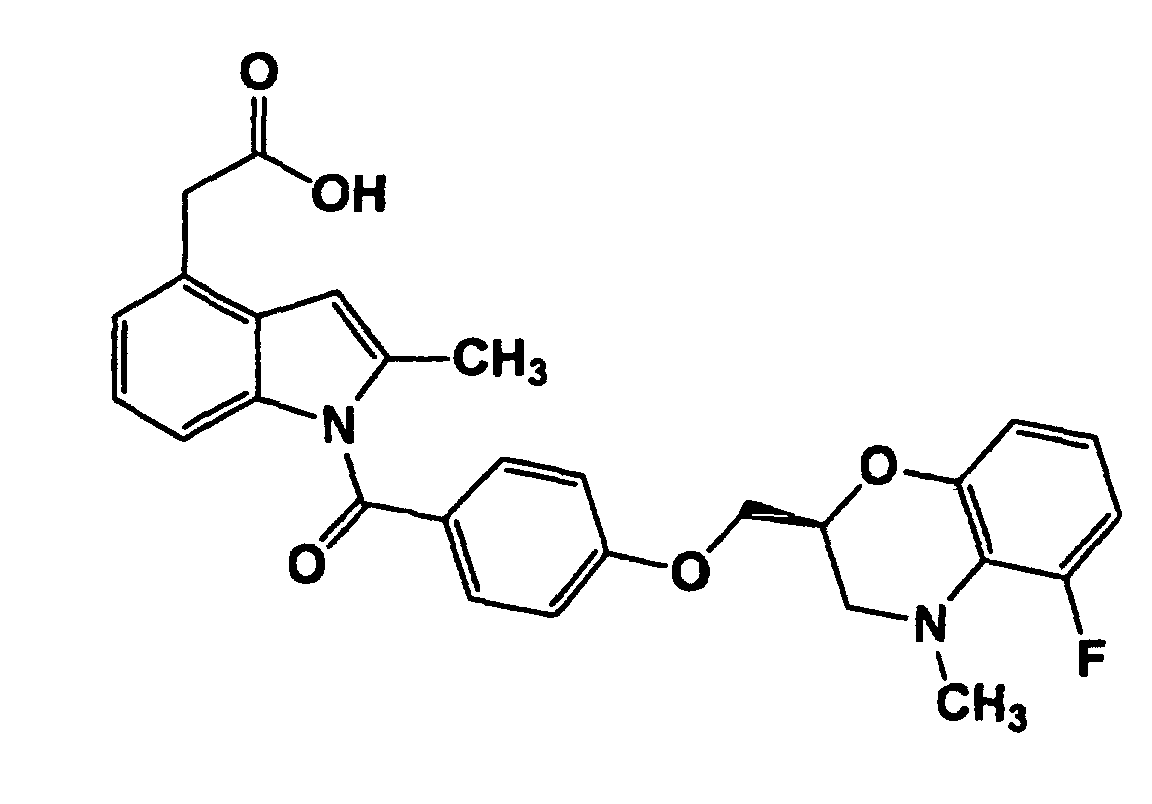
- RSKADZGSKAUIHW-FQEVSTJZSA-N Cc1cc2c(CC(O)=O)cccc2[n]1C(c(cc1)ccc1OC[C@@H](COc1ccc2)Oc1c2F)=O Chemical compound Cc1cc2c(CC(O)=O)cccc2[n]1C(c(cc1)ccc1OC[C@@H](COc1ccc2)Oc1c2F)=O RSKADZGSKAUIHW-FQEVSTJZSA-N 0.000 description 1
- BVLQPGSSBKUESB-QHCPKHFHSA-N Cc1cc2c(CC(O)=O)cccc2[n]1C(c(cc1)ccc1OC[C@H]1Oc(cc(cc2)OC)c2N(C)C1)=O Chemical compound Cc1cc2c(CC(O)=O)cccc2[n]1C(c(cc1)ccc1OC[C@H]1Oc(cc(cc2)OC)c2N(C)C1)=O BVLQPGSSBKUESB-QHCPKHFHSA-N 0.000 description 1
- YNBFDPBYEWCIBM-HXUWFJFHSA-N Cc1cc2c(CC(O)=O)cccc2[n]1C(c(cc1)ccc1OC[C@H]1Oc2cccc(F)c2OC1)=O Chemical compound Cc1cc2c(CC(O)=O)cccc2[n]1C(c(cc1)ccc1OC[C@H]1Oc2cccc(F)c2OC1)=O YNBFDPBYEWCIBM-HXUWFJFHSA-N 0.000 description 1
- RGWJLTVSSDJWIX-QFIPXVFZSA-N Cc1cc2c(CC(O)=O)cccc2[n]1C(c(cc1)ccc1OC[C@H]1Oc2cccc(OC)c2N(C)C1)=O Chemical compound Cc1cc2c(CC(O)=O)cccc2[n]1C(c(cc1)ccc1OC[C@H]1Oc2cccc(OC)c2N(C)C1)=O RGWJLTVSSDJWIX-QFIPXVFZSA-N 0.000 description 1
- UBJVBXKPUVQJGZ-LJQANCHMSA-N Cc1cc2c(CC(O)=O)cccc2[n]1C(c(cc1)ccc1OC[C@H]1c2cc(F)ccc2OC1)=O Chemical compound Cc1cc2c(CC(O)=O)cccc2[n]1C(c(cc1)ccc1OC[C@H]1c2cc(F)ccc2OC1)=O UBJVBXKPUVQJGZ-LJQANCHMSA-N 0.000 description 1
- GGWPKPQNMFSRCY-QFIPXVFZSA-N Cc1cc2c(CC(O)=O)cccc2[n]1C(c(cc1)ccc1O[IH][C@@H]1c2ccccc2OC1)=O Chemical compound Cc1cc2c(CC(O)=O)cccc2[n]1C(c(cc1)ccc1O[IH][C@@H]1c2ccccc2OC1)=O GGWPKPQNMFSRCY-QFIPXVFZSA-N 0.000 description 1
Classifications
-
- C—CHEMISTRY; METALLURGY
- C07—ORGANIC CHEMISTRY
- C07D—HETEROCYCLIC COMPOUNDS
- C07D405/00—Heterocyclic compounds containing both one or more hetero rings having oxygen atoms as the only ring hetero atoms, and one or more rings having nitrogen as the only ring hetero atom
- C07D405/02—Heterocyclic compounds containing both one or more hetero rings having oxygen atoms as the only ring hetero atoms, and one or more rings having nitrogen as the only ring hetero atom containing two hetero rings
- C07D405/12—Heterocyclic compounds containing both one or more hetero rings having oxygen atoms as the only ring hetero atoms, and one or more rings having nitrogen as the only ring hetero atom containing two hetero rings linked by a chain containing hetero atoms as chain links
-
- A—HUMAN NECESSITIES
- A61—MEDICAL OR VETERINARY SCIENCE; HYGIENE
- A61K—PREPARATIONS FOR MEDICAL, DENTAL OR TOILETRY PURPOSES
- A61K31/00—Medicinal preparations containing organic active ingredients
- A61K31/33—Heterocyclic compounds
- A61K31/395—Heterocyclic compounds having nitrogen as a ring hetero atom, e.g. guanethidine or rifamycins
- A61K31/40—Heterocyclic compounds having nitrogen as a ring hetero atom, e.g. guanethidine or rifamycins having five-membered rings with one nitrogen as the only ring hetero atom, e.g. sulpiride, succinimide, tolmetin, buflomedil
- A61K31/403—Heterocyclic compounds having nitrogen as a ring hetero atom, e.g. guanethidine or rifamycins having five-membered rings with one nitrogen as the only ring hetero atom, e.g. sulpiride, succinimide, tolmetin, buflomedil condensed with carbocyclic rings, e.g. carbazole
- A61K31/404—Indoles, e.g. pindolol
- A61K31/405—Indole-alkanecarboxylic acids; Derivatives thereof, e.g. tryptophan, indomethacin
-
- A—HUMAN NECESSITIES
- A61—MEDICAL OR VETERINARY SCIENCE; HYGIENE
- A61K—PREPARATIONS FOR MEDICAL, DENTAL OR TOILETRY PURPOSES
- A61K31/00—Medicinal preparations containing organic active ingredients
- A61K31/33—Heterocyclic compounds
- A61K31/395—Heterocyclic compounds having nitrogen as a ring hetero atom, e.g. guanethidine or rifamycins
- A61K31/535—Heterocyclic compounds having nitrogen as a ring hetero atom, e.g. guanethidine or rifamycins having six-membered rings with at least one nitrogen and one oxygen as the ring hetero atoms, e.g. 1,2-oxazines
- A61K31/5375—1,4-Oxazines, e.g. morpholine
- A61K31/538—1,4-Oxazines, e.g. morpholine ortho- or peri-condensed with carbocyclic ring systems
-
- A—HUMAN NECESSITIES
- A61—MEDICAL OR VETERINARY SCIENCE; HYGIENE
- A61P—SPECIFIC THERAPEUTIC ACTIVITY OF CHEMICAL COMPOUNDS OR MEDICINAL PREPARATIONS
- A61P1/00—Drugs for disorders of the alimentary tract or the digestive system
-
- A—HUMAN NECESSITIES
- A61—MEDICAL OR VETERINARY SCIENCE; HYGIENE
- A61P—SPECIFIC THERAPEUTIC ACTIVITY OF CHEMICAL COMPOUNDS OR MEDICINAL PREPARATIONS
- A61P1/00—Drugs for disorders of the alimentary tract or the digestive system
- A61P1/04—Drugs for disorders of the alimentary tract or the digestive system for ulcers, gastritis or reflux esophagitis, e.g. antacids, inhibitors of acid secretion, mucosal protectants
-
- A—HUMAN NECESSITIES
- A61—MEDICAL OR VETERINARY SCIENCE; HYGIENE
- A61P—SPECIFIC THERAPEUTIC ACTIVITY OF CHEMICAL COMPOUNDS OR MEDICINAL PREPARATIONS
- A61P1/00—Drugs for disorders of the alimentary tract or the digestive system
- A61P1/16—Drugs for disorders of the alimentary tract or the digestive system for liver or gallbladder disorders, e.g. hepatoprotective agents, cholagogues, litholytics
-
- A—HUMAN NECESSITIES
- A61—MEDICAL OR VETERINARY SCIENCE; HYGIENE
- A61P—SPECIFIC THERAPEUTIC ACTIVITY OF CHEMICAL COMPOUNDS OR MEDICINAL PREPARATIONS
- A61P11/00—Drugs for disorders of the respiratory system
-
- A—HUMAN NECESSITIES
- A61—MEDICAL OR VETERINARY SCIENCE; HYGIENE
- A61P—SPECIFIC THERAPEUTIC ACTIVITY OF CHEMICAL COMPOUNDS OR MEDICINAL PREPARATIONS
- A61P11/00—Drugs for disorders of the respiratory system
- A61P11/02—Nasal agents, e.g. decongestants
-
- A—HUMAN NECESSITIES
- A61—MEDICAL OR VETERINARY SCIENCE; HYGIENE
- A61P—SPECIFIC THERAPEUTIC ACTIVITY OF CHEMICAL COMPOUNDS OR MEDICINAL PREPARATIONS
- A61P11/00—Drugs for disorders of the respiratory system
- A61P11/06—Antiasthmatics
-
- A—HUMAN NECESSITIES
- A61—MEDICAL OR VETERINARY SCIENCE; HYGIENE
- A61P—SPECIFIC THERAPEUTIC ACTIVITY OF CHEMICAL COMPOUNDS OR MEDICINAL PREPARATIONS
- A61P11/00—Drugs for disorders of the respiratory system
- A61P11/08—Bronchodilators
-
- A—HUMAN NECESSITIES
- A61—MEDICAL OR VETERINARY SCIENCE; HYGIENE
- A61P—SPECIFIC THERAPEUTIC ACTIVITY OF CHEMICAL COMPOUNDS OR MEDICINAL PREPARATIONS
- A61P17/00—Drugs for dermatological disorders
-
- A—HUMAN NECESSITIES
- A61—MEDICAL OR VETERINARY SCIENCE; HYGIENE
- A61P—SPECIFIC THERAPEUTIC ACTIVITY OF CHEMICAL COMPOUNDS OR MEDICINAL PREPARATIONS
- A61P17/00—Drugs for dermatological disorders
- A61P17/02—Drugs for dermatological disorders for treating wounds, ulcers, burns, scars, keloids, or the like
-
- A—HUMAN NECESSITIES
- A61—MEDICAL OR VETERINARY SCIENCE; HYGIENE
- A61P—SPECIFIC THERAPEUTIC ACTIVITY OF CHEMICAL COMPOUNDS OR MEDICINAL PREPARATIONS
- A61P17/00—Drugs for dermatological disorders
- A61P17/04—Antipruritics
-
- A—HUMAN NECESSITIES
- A61—MEDICAL OR VETERINARY SCIENCE; HYGIENE
- A61P—SPECIFIC THERAPEUTIC ACTIVITY OF CHEMICAL COMPOUNDS OR MEDICINAL PREPARATIONS
- A61P17/00—Drugs for dermatological disorders
- A61P17/06—Antipsoriatics
-
- A—HUMAN NECESSITIES
- A61—MEDICAL OR VETERINARY SCIENCE; HYGIENE
- A61P—SPECIFIC THERAPEUTIC ACTIVITY OF CHEMICAL COMPOUNDS OR MEDICINAL PREPARATIONS
- A61P19/00—Drugs for skeletal disorders
- A61P19/02—Drugs for skeletal disorders for joint disorders, e.g. arthritis, arthrosis
-
- A—HUMAN NECESSITIES
- A61—MEDICAL OR VETERINARY SCIENCE; HYGIENE
- A61P—SPECIFIC THERAPEUTIC ACTIVITY OF CHEMICAL COMPOUNDS OR MEDICINAL PREPARATIONS
- A61P25/00—Drugs for disorders of the nervous system
-
- A—HUMAN NECESSITIES
- A61—MEDICAL OR VETERINARY SCIENCE; HYGIENE
- A61P—SPECIFIC THERAPEUTIC ACTIVITY OF CHEMICAL COMPOUNDS OR MEDICINAL PREPARATIONS
- A61P25/00—Drugs for disorders of the nervous system
- A61P25/06—Antimigraine agents
-
- A—HUMAN NECESSITIES
- A61—MEDICAL OR VETERINARY SCIENCE; HYGIENE
- A61P—SPECIFIC THERAPEUTIC ACTIVITY OF CHEMICAL COMPOUNDS OR MEDICINAL PREPARATIONS
- A61P25/00—Drugs for disorders of the nervous system
- A61P25/20—Hypnotics; Sedatives
-
- A—HUMAN NECESSITIES
- A61—MEDICAL OR VETERINARY SCIENCE; HYGIENE
- A61P—SPECIFIC THERAPEUTIC ACTIVITY OF CHEMICAL COMPOUNDS OR MEDICINAL PREPARATIONS
- A61P27/00—Drugs for disorders of the senses
-
- A—HUMAN NECESSITIES
- A61—MEDICAL OR VETERINARY SCIENCE; HYGIENE
- A61P—SPECIFIC THERAPEUTIC ACTIVITY OF CHEMICAL COMPOUNDS OR MEDICINAL PREPARATIONS
- A61P27/00—Drugs for disorders of the senses
- A61P27/02—Ophthalmic agents
-
- A—HUMAN NECESSITIES
- A61—MEDICAL OR VETERINARY SCIENCE; HYGIENE
- A61P—SPECIFIC THERAPEUTIC ACTIVITY OF CHEMICAL COMPOUNDS OR MEDICINAL PREPARATIONS
- A61P27/00—Drugs for disorders of the senses
- A61P27/02—Ophthalmic agents
- A61P27/12—Ophthalmic agents for cataracts
-
- A—HUMAN NECESSITIES
- A61—MEDICAL OR VETERINARY SCIENCE; HYGIENE
- A61P—SPECIFIC THERAPEUTIC ACTIVITY OF CHEMICAL COMPOUNDS OR MEDICINAL PREPARATIONS
- A61P27/00—Drugs for disorders of the senses
- A61P27/02—Ophthalmic agents
- A61P27/14—Decongestants or antiallergics
-
- A—HUMAN NECESSITIES
- A61—MEDICAL OR VETERINARY SCIENCE; HYGIENE
- A61P—SPECIFIC THERAPEUTIC ACTIVITY OF CHEMICAL COMPOUNDS OR MEDICINAL PREPARATIONS
- A61P27/00—Drugs for disorders of the senses
- A61P27/16—Otologicals
-
- A—HUMAN NECESSITIES
- A61—MEDICAL OR VETERINARY SCIENCE; HYGIENE
- A61P—SPECIFIC THERAPEUTIC ACTIVITY OF CHEMICAL COMPOUNDS OR MEDICINAL PREPARATIONS
- A61P29/00—Non-central analgesic, antipyretic or antiinflammatory agents, e.g. antirheumatic agents; Non-steroidal antiinflammatory drugs [NSAID]
-
- A—HUMAN NECESSITIES
- A61—MEDICAL OR VETERINARY SCIENCE; HYGIENE
- A61P—SPECIFIC THERAPEUTIC ACTIVITY OF CHEMICAL COMPOUNDS OR MEDICINAL PREPARATIONS
- A61P31/00—Antiinfectives, i.e. antibiotics, antiseptics, chemotherapeutics
-
- A—HUMAN NECESSITIES
- A61—MEDICAL OR VETERINARY SCIENCE; HYGIENE
- A61P—SPECIFIC THERAPEUTIC ACTIVITY OF CHEMICAL COMPOUNDS OR MEDICINAL PREPARATIONS
- A61P37/00—Drugs for immunological or allergic disorders
- A61P37/08—Antiallergic agents
-
- A—HUMAN NECESSITIES
- A61—MEDICAL OR VETERINARY SCIENCE; HYGIENE
- A61P—SPECIFIC THERAPEUTIC ACTIVITY OF CHEMICAL COMPOUNDS OR MEDICINAL PREPARATIONS
- A61P43/00—Drugs for specific purposes, not provided for in groups A61P1/00-A61P41/00
-
- A—HUMAN NECESSITIES
- A61—MEDICAL OR VETERINARY SCIENCE; HYGIENE
- A61P—SPECIFIC THERAPEUTIC ACTIVITY OF CHEMICAL COMPOUNDS OR MEDICINAL PREPARATIONS
- A61P7/00—Drugs for disorders of the blood or the extracellular fluid
-
- A—HUMAN NECESSITIES
- A61—MEDICAL OR VETERINARY SCIENCE; HYGIENE
- A61P—SPECIFIC THERAPEUTIC ACTIVITY OF CHEMICAL COMPOUNDS OR MEDICINAL PREPARATIONS
- A61P7/00—Drugs for disorders of the blood or the extracellular fluid
- A61P7/02—Antithrombotic agents; Anticoagulants; Platelet aggregation inhibitors
-
- A—HUMAN NECESSITIES
- A61—MEDICAL OR VETERINARY SCIENCE; HYGIENE
- A61P—SPECIFIC THERAPEUTIC ACTIVITY OF CHEMICAL COMPOUNDS OR MEDICINAL PREPARATIONS
- A61P9/00—Drugs for disorders of the cardiovascular system
-
- A—HUMAN NECESSITIES
- A61—MEDICAL OR VETERINARY SCIENCE; HYGIENE
- A61P—SPECIFIC THERAPEUTIC ACTIVITY OF CHEMICAL COMPOUNDS OR MEDICINAL PREPARATIONS
- A61P9/00—Drugs for disorders of the cardiovascular system
- A61P9/08—Vasodilators for multiple indications
-
- A—HUMAN NECESSITIES
- A61—MEDICAL OR VETERINARY SCIENCE; HYGIENE
- A61P—SPECIFIC THERAPEUTIC ACTIVITY OF CHEMICAL COMPOUNDS OR MEDICINAL PREPARATIONS
- A61P9/00—Drugs for disorders of the cardiovascular system
- A61P9/10—Drugs for disorders of the cardiovascular system for treating ischaemic or atherosclerotic diseases, e.g. antianginal drugs, coronary vasodilators, drugs for myocardial infarction, retinopathy, cerebrovascula insufficiency, renal arteriosclerosis
-
- C—CHEMISTRY; METALLURGY
- C07—ORGANIC CHEMISTRY
- C07D—HETEROCYCLIC COMPOUNDS
- C07D209/00—Heterocyclic compounds containing five-membered rings, condensed with other rings, with one nitrogen atom as the only ring hetero atom
- C07D209/02—Heterocyclic compounds containing five-membered rings, condensed with other rings, with one nitrogen atom as the only ring hetero atom condensed with one carbocyclic ring
- C07D209/04—Indoles; Hydrogenated indoles
- C07D209/08—Indoles; Hydrogenated indoles with only hydrogen atoms or radicals containing only hydrogen and carbon atoms, directly attached to carbon atoms of the hetero ring
-
- C—CHEMISTRY; METALLURGY
- C07—ORGANIC CHEMISTRY
- C07D—HETEROCYCLIC COMPOUNDS
- C07D209/00—Heterocyclic compounds containing five-membered rings, condensed with other rings, with one nitrogen atom as the only ring hetero atom
- C07D209/02—Heterocyclic compounds containing five-membered rings, condensed with other rings, with one nitrogen atom as the only ring hetero atom condensed with one carbocyclic ring
- C07D209/04—Indoles; Hydrogenated indoles
- C07D209/10—Indoles; Hydrogenated indoles with substituted hydrocarbon radicals attached to carbon atoms of the hetero ring
- C07D209/12—Radicals substituted by oxygen atoms
-
- C—CHEMISTRY; METALLURGY
- C07—ORGANIC CHEMISTRY
- C07D—HETEROCYCLIC COMPOUNDS
- C07D411/00—Heterocyclic compounds containing two or more hetero rings, at least one ring having oxygen and sulfur atoms as the only ring hetero atoms
- C07D411/02—Heterocyclic compounds containing two or more hetero rings, at least one ring having oxygen and sulfur atoms as the only ring hetero atoms containing two hetero rings
- C07D411/12—Heterocyclic compounds containing two or more hetero rings, at least one ring having oxygen and sulfur atoms as the only ring hetero atoms containing two hetero rings linked by a chain containing hetero atoms as chain links
-
- C—CHEMISTRY; METALLURGY
- C07—ORGANIC CHEMISTRY
- C07D—HETEROCYCLIC COMPOUNDS
- C07D413/00—Heterocyclic compounds containing two or more hetero rings, at least one ring having nitrogen and oxygen atoms as the only ring hetero atoms
- C07D413/02—Heterocyclic compounds containing two or more hetero rings, at least one ring having nitrogen and oxygen atoms as the only ring hetero atoms containing two hetero rings
- C07D413/12—Heterocyclic compounds containing two or more hetero rings, at least one ring having nitrogen and oxygen atoms as the only ring hetero atoms containing two hetero rings linked by a chain containing hetero atoms as chain links
Definitions
- the present invention relates to indole derivatives.
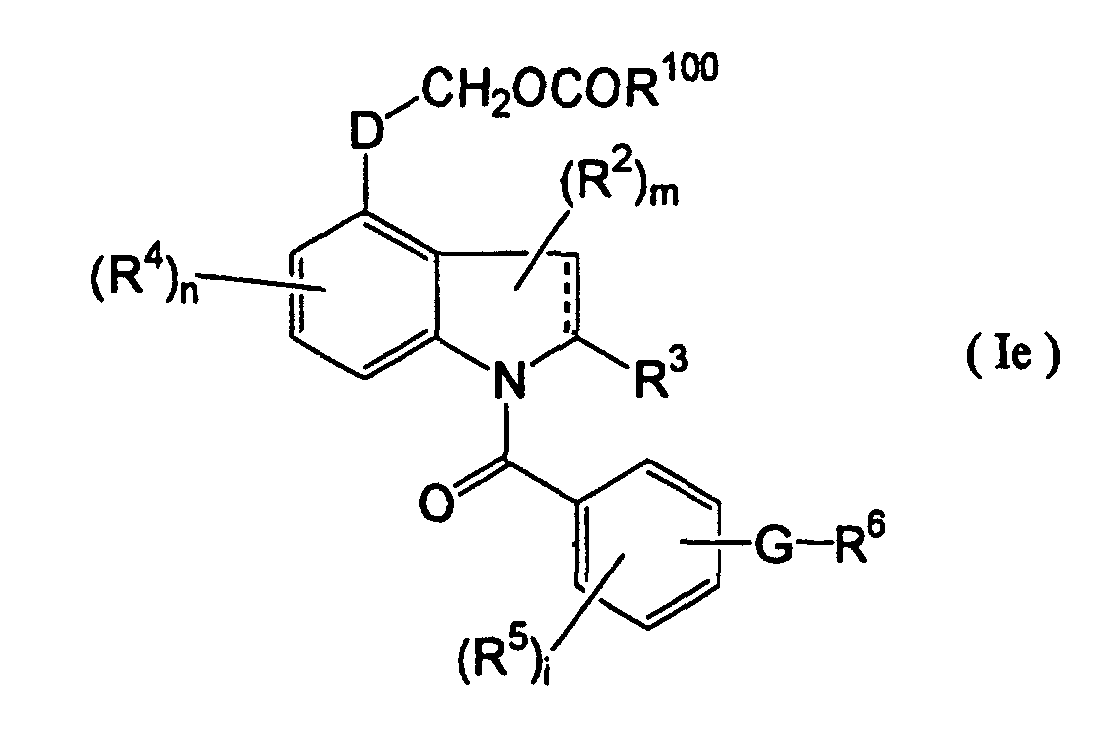
- the present invention relates to indole derivatives represented by formula (I): wherein all symbols have the same meanings as described below), the non-toxic salts, (2) productin methods, and (3) medicines comprising them as an active ingredient.
- Prostaglandin D 2 (hereinafter referred to as "PGD 2 ”) are known as a metabolite in the arachidonic acid cascade, and are thought to be one of chemical transmitters that take part in allergic disease, for example, allergic rhinitis, bronchial asthma, and conjunctivitis allergic. It has been known that PGD 2 is produced from mast cells and free PGD 2 shows bronchoconstriction, permeability accentuation, vasodilation or shrinkage, mucus secretion promotion, and platelet aggregation inhibitory effect.
- PGD 2 shows its effects by binding to DP receptor which is one of receptor thereof.
- a DP receptor antagonist binds and is antagonistic to its receptor so that it can inhibit the function. Accordingly, it is considered to be useful for the prevention and/or treatment of diseases, for example, allergic diseases (allergic rhinitis, allergic conjunctivitis, atopic dermatitis, bronchial asthma, food allergy, etc.) , systemic mastocytosis, disorders due to systemic mastocyte activation, anaphylactic shock, bronchoconstriction, urticaria, eczema, psoriasis, allergic bronchopulmonary aspergillosis, paranasal sinusitis, migraine, nasal polyp, hypersensitive angitis, eosinophilia, contact dermatitis, diseases accompanied with itching (such as atopic dermatitis, urticaria, allergic conjunctivitis, allergic rhinitis, contact dermatitis, etc.), secondary diseases
- PGD 2 binds with chemoattractant receptor-homologous molecule expressed on Th2 cells (CRTH2 besides DP receptor, and has the migration action on Th 2 cell, eosinophil, and basophil(J. Exp. Med., 193 , 255-261 (2001), Blood, 98 , 1942-1948 (2001)). Since PGD 2 is a ligand to both of DP and CRTH2 receptors in Th2 cells, eosinophils, and basophils in vivo, DP receptor antagonists are expected to bind with CRTH2 receptor, and to antagonize the biological activity.
- allergic diseases for example, allergic rhinitis, allergic conjunctivitis, atopic dermatitis, bronchial asthma, food allergy, etc.
- systemic mastocytosis disorders due to systemic mastocyte activation, anaphylactic shock, bronchoconstriction, urticaria, eczema, allergic bronchopulmonary aspergillosis, paranasal sinusitis, migraine, nasal polyp, hypersensitive angitis, eosinophilia, contact dermatitis, diseases accompanied with itching such as atopic dermatitis, urticaria, allergic conjunctivitis, allergic rhinitis, contact dermatitis, etc.
- secondary diseases such as cataracta, retinodialysis, inflammation, infection, dysgryphia, etc. generated by behaviors caused by itching (scratching behaviors, beating, etc. ), inflammation, chronic obstructive pulmonary disease, ischemic reperfusion disorder, cerebrovascular disorder, pleuritis complicated by rheumatoid arthritis, ulcerative colitis and the like.
- BW-A868C represented by the following formula (A) is considered to be the most selective:
- PGD 2 receptor antagonists comprising thromboxane derivatives have been published in WO 98/25915, WO 98/25919, WO 97/00853, WO 98/15502 and the like.
- prostaglandin receptors As prostaglandin receptors, a lot of receptor including the subtype exist and the pharmacological action is respectively different. Then, if a new compound that weakly binds to other prostaglandin receptors and specifically binds to PGD 2 receptor, especially DP receptor can be found, there is a possibility to become a medicine having a little side effect because of disappear of other actions, and discovery of such a medicine is necessary.
- the present inventors intensively studied to find a compound which specifically binds to PGD 2 receptor, especially DP receptor and show an antagonistic activity and found that the object could be attained by indole derivatives represented by formula (I), and thus the present invention has been completed.
- the present invention relates to indole derivatives represented by formula (I): wherein R represents -COR 1 , -CH 2 OR 0 , or -COOR 20 , R 0 represents a hydrogen atom or C2-6 acyl group, R 1 represents a hydroxyl group, C1-6 alkoxy group, -NR 8 R 9 wherein R 8 and R 9 represent a hydrogen atom, C1-6 alkyl group, -SO 2 R 13 (R 13 represents C1-6 alkyl group, C3-15 saturated or unsaturated carbocyclic ring, or 4 to 15-membered heterocycle containing 1 to 5 of nitrogen atom(s) sulfur atom(s), and/or oxygen atom(s).), R 20 represents allyl or benzyl group.), R 2 represents a hydrogen atom, C1-6 alkyl, C1-6 alkoxy, C2-6 alkoxyalkyl, a halogen atom, amino, trihalomethyl, cyano, hydroxyl, benzyl,
- methyl, ethyl, propyl, butyl, pentyl, hexyl, heptyl, octyl, nonyl, decyl, undecyl, dodecyl, tridecyl, tetradecyl, pentadecyl, and these isomers are included.
- the C1-15 alkyl group that may be replaced by 1 to 5 of oxygen atom(s) and/or sulfur atom(s) represents the one which 1 to 5 of arbitrary carbon atom(s) of the above alkyl was/were replaced by oxygen atoms and/or sulfur atoms.
- C2-15 alkenyl group in this specification ethenyl, propenyl, butenyl, pentenyl, hexenyl, heptenyl, octenyl, nonenyl, decenyl, undecenyl, dodecenyl, tridecenyl, tetradecenyl, pentadecenyl, and these isomers are included.
- the C2-15 alkenyl group that may be replaced by 1 to 5 of oxygen atom(s) and/or sulfur atom(s) represents the one which 1 to 5 of arbitrary saturated carbon atom(s) of the above alkenyl group was/were replaced by oxygen atoms and/or sulfur atoms.
- C2-15 alkynyl group in this specification ethynyl, propynyl, butynyl, pentinyl, hexynyl, heptynyl, octynyl, nonynyl, decynyl, undecynyl, dodecynyl, tridecynyl, tetradecynyl, pentadecynyl, and these isomers are included.
- the C2-15 alkynyl group that may be replaced by 1 to 5 of oxygen atom(s) and/or sulfur atom(s) represents the one which 1 to 5 of arbitrary saturated carbon atom(s) of the above alkynyl group was/were replaced by oxygen atoms and/or sulfur atoms.
- C1-6 alkylene group in this specification methylene, ethylene, trimethylene, tetramethylene, pentamethylene, hexamethylene, and these isomers are included.
- C1-4 alkylene group in this specification methylene, ethylene, trimethylene, tetramethylene, and these isomers are included.
- C2-6 alkenylene group in this specification ethenylene, propenylene, butenylene, pentenylene, hexenylene, and these isomers are included.
- the groups which arbitrary carbon atoms of the above C1-6 alkylene group was replaced by oxygen atoms and/or sulfur atoms, are included.
- the groups, which arbitrary saturated carbon atoms of the above C2-6 alkenylene group was replaced by oxygen atoms and/or the sulfur atoms, are included.
- halogen atom in this specification represents fluorine, chlorine, bromide, or iodine.
- the trihalomethyl group in this specification represents trifluoromethyl, trichloromethyl, tribromomethyl, or triiodomethyl.
- the trihalomethoxy group in this specification represents trifluoromethoxy, trichloromethoxy, tribromomethoxy, or triiodomethoxy.
- carbocyclic ring having 3 to 15 of carbons in this specification, monocyclic, dicyclic, or tricycle unsaturated or saturated carbocyclic ring having 3 to 15 of carbons is included.
- the monocyclic, dicyclic, or tricycle unsaturated or saturated carbocyclic ring having 3 to 15 of carbons cyclopropane, cyclobutane, cyclopentane, cyclohexane, cycloheptane, cyclooctane, cyclopentene, cyclohexane, cyclopentadiene, cyclohexadiene, benzene, pentalene, indene, naphthalene, azulene, perhydropentalene, perhydroindene, dihydronaphthalene, tetrahydronaphthalene, perhydronaphthalene, perhydroazulene, heptalene, biphenylene, fluorene, phenanthrene, anthracene, dihydroanthracene, tetrahydroanthracene, perhydroanthracene, fluorene, dihydro fluorene, cycl
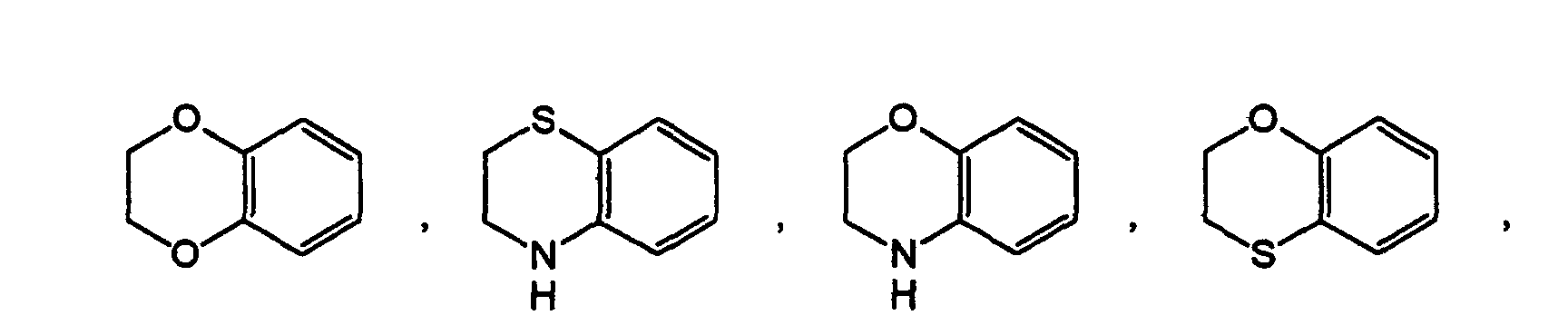
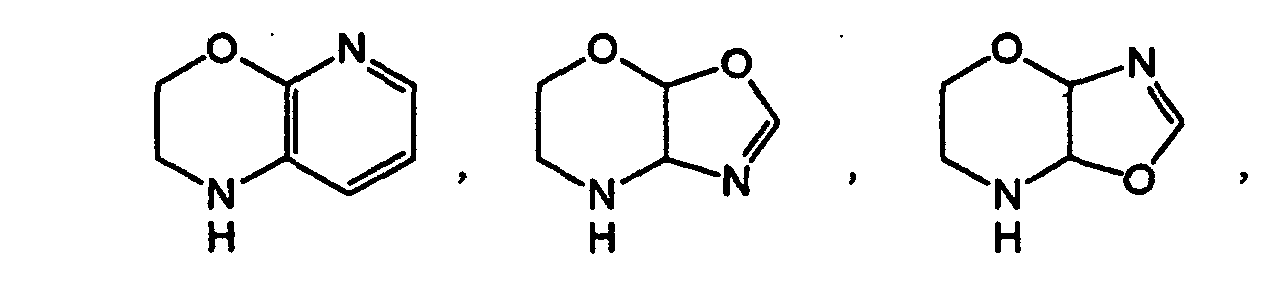
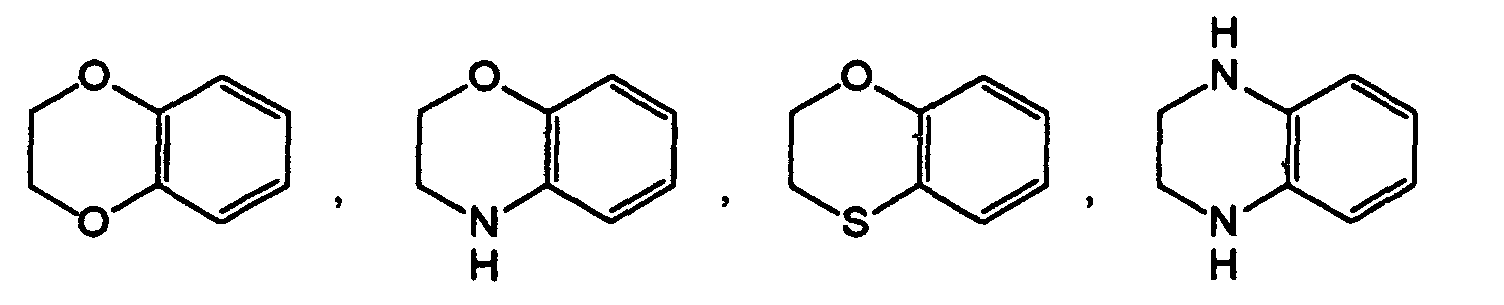
- the 4 to 15-membered heterocycle that contains 1 to 5 of nitrogen, sulfur, and oxygen atom(s) in this specification may be saturated or unsaturated, and for example, the groups represented by the following formulas are included.
- R 0 in formula (I) a hydrogen atom or C2-6 acyl group is suitable, and a hydrogen atom is more suitable.
- hydroxyl or C1-6 alkoxy group is suitable, and hydroxyl or C1-4 alkoxy group is more suitable.
- a hydrogen atom, C1-6 alkyl, or C1-6 alkoxyalkyl group is suitable, and a hydrogen atom, C1-2 alkyl, or C1-2 alkoxyalkyl group is more suitable.
- R 3 in formula (I) a hydrogen atom or C1-6 alkyl group is suitable.
- a hydrogen atom or C1-6 alkyl group is suitable, and a hydrogen atom or C1-2 alkyl group is more suitable.
- a hydrogen atom or C1-6 alkyl group is suitable, and a hydrogen atom or C1-2 alkyl group is more suitable.
- a single bond or C1-6 alkylene group is suitable, and a single bond or C1-2 alkylene group is more suitable.
- C1-6 alkylene group that may be replaced by 1 or 2 of oxygen atom(s) is suitable, and C1-2 alkylene group that may be replaced by an oxygen atom is more suitable.
- C5-10 carbocyclic ring wherein substituents are arbitrarily included, or monocyclic or 5 to 10-membered bicyclic heterocycles containing 1 to 3 of nitrogen atom(s), oxygen atom(s), and/or sulfur atom(s) are suitable, 9 to 10-membered bicyclic heterocycles containing 1 to 3 of nitrogen atom(s), oxygen atom(s), and/or sulfur atom(s), which arbitrarily contain substituents, are more suitable, and the heterocycles represented by the following, which arbitrarily contain substituents, are further suitable.
- alkyl, alkoxy and alkylene group includes straight or branched ones.
- isomers on double bond, ring, fused ring (E-, Z-, cis-, trans-isomer), isomers generated from asymmetric carbon atom(s) (R-, S-, ⁇ -, ⁇ -isomer, enantiomer, diastereomer), optically active isomers (D-, L-, d-, l-isomer), polar compounds generated by -chromatographic separation (more polar compound, less polar compound), equilibrium compounds, rotamer, mixtures thereof at voluntary ratios and racemic mixtures are also included in the present invention.
- symbol indicates that it is bound to the opposite side of the sheet (namely ⁇ -configuration)
- symbol indicates that it is bound to the front side of the sheet (namely ⁇ -configuration)
- symbol indicates that it is a mixture of ⁇ -configuration and ⁇ -configuration.
- PGD 2 receptor in this specification represents receptors that PGD 2 binds, not only the one found by present, but also the one that will be found in the future is included in the receptor.
- the desirable one is DP receptor or CRTH2 receptor, and more desirably DP receptor.
- the compounds represented by formula (I) in the present invention may be converted into the non-toxic salts by a well-known method.
- the non-toxic salts are suitable to be allowed in pharmacology, and water-soluble.
- the non-toxic salts of the compounds represented by formula (I) in the present invention include, for example, alkali metal salts (potassium, sodium, lithium, etc.), alkaline earth metal salts (calcium, magnesium, etc.), ammonium salts (tetramethylammonium, tetrabutylammmonium, etc.), organic amine salts (triethylamine, methylamine, dimethylamine, cyclopentylamine, benzylamine, phenethylamine, piperidine, monoethanolamine, diethanolamine, tris(hydroxymethyl)methylamine, lysine, arginine, N-methyl-D-glucamine, etc.), acid-addition salts (inorganic acid salts (hydrochloride, hydrobromate, hydroiodate, sulfate, phosphate, and nitrate, etc.), organic acid salts (acetate, trifluoroacetate, lactate, tartrate, oxalate, fumarate, maleate
- non-toxic salts of the compounds represented by formula (I) in the present invention solvates thereof, or solvates of alkali dearth) metal salts, ammonium salts, organic amine salts, and acid-addition salts of the above compound in the present invention, are included.
- solvates are preferably non-toxic and water-soluble.
- Appropriate solvates for example, solvates such as water, alcohol solvents (ethanol, etc.), etc. are included.
- the compounds of the present invention represented by formula (I) may be prepared by the following processes and the processes represented in examples.
- the method described in (4) using acid anhydride is carried out by subjecting acid anhydride to react with alcohol at 0-40°C, for example, in organic solvent (chloroform, dichloromethane, diethyl ether, and tetrahydrofuran, etc.) or without solvents, under the presence of tertiary amine (pyridine, triethylamine, dimethylaniline, and dimethylaminopyridine, etc.).
- organic solvent chloroform, dichloromethane, diethyl ether, and tetrahydrofuran, etc.
- tertiary amine pyridine, triethylamine, dimethylaniline, and dimethylaminopyridine, etc.
- reaction described in (1), (2), (3), and (4) may be carried out under an inert gas (argon and nitrogen, etc.) and water free condition.
- inert gas argon and nitrogen, etc.
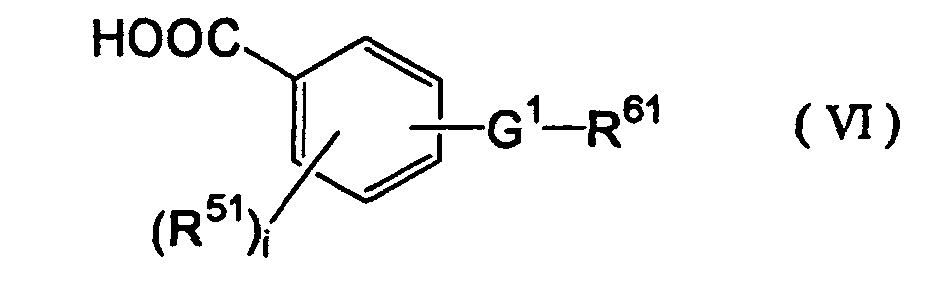
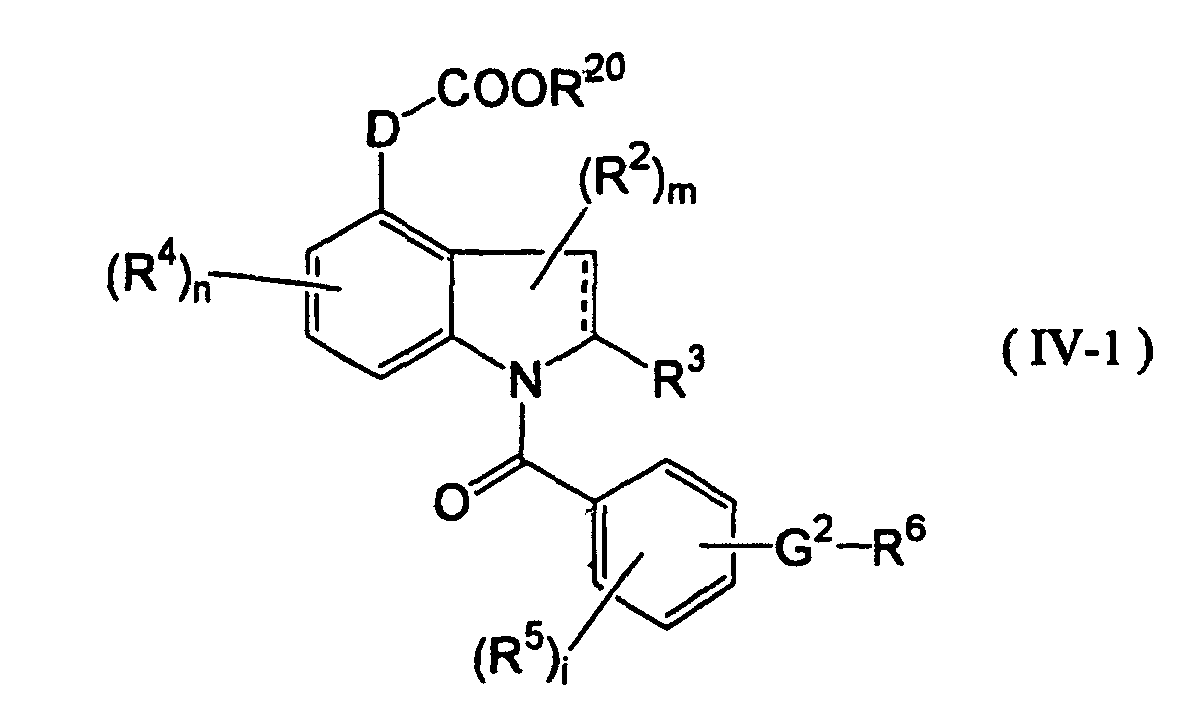
- a compound represented by formula (IV) may be prepared by subjecting a compound represented by formula (V); wherein R 21 , R 31 , and R 41 represent the same meaning as R 2 , R 3 , and R 4 , respectively; however, they are protected by the protecting group when they represent amino or hydroxyl group, and other symbols represent the same meaning as the described above and a compound represented by formula (VI); wherein R 51 represents the same meaning as R 5 ; however, they are protected by the protecting group when they represent amino or hydroxyl group, and G 1 and R 61 represent the same meaning as G and R 6 , respectively; however, they are protected by the protecting group when they contain amino or hydroxyl group to the amidification reaction, and further, the deprotection reaction optionally.
- the amidification reaction is carried out by the above method.
- Deprotection reaction of the protecting group may be carried out by the following methods.
- protecting groups of hydroxyl group for example, methoxymethyl, 2-tetrahydropyranyl, tert-butyl dimethylsilyl, tert-butyl diphenyl silyl, acetyl, benzyl, and 4-methoxybenzyl group, etc. are included.
- protecting groups of amino group for example, benzyloxycarbonyl, t-butoxycarbonyl, trifluoroacetyl, and 9-fluorenylmethoxycarbonyl group, etc. are included.
- the aimed compound of the present invention can be easily prepared by using these deprotection reactions properly.
- a compound wherein G represents -O-CH 2 - that is, the compound represented by formula (IV-1) wherein G 2 represents -O-CH 2 -, and other symbols represent the same meaning as the described above may be prepared by subjecting a compound represented by formula (VII) wherein R 22 , R 32 , R 42 ,and R 62 represent the same meaning as R 2 , R 3 , R 4 , and R 5 , respectively, if they represent amino or hydroxyl group, they are necessary to be protected by the protecting group, and other symbols represent the same meaning as the described above and a compound represented by formula (VIII) HO ⁇ J ⁇ R 62 wherein R 62 represents the same meaning as R 6 , if amino or hydroxyl group is included in them, they are necessary to be protected by the protecting group and J represents -CH 2 - to the etherification, and then, the deprotection optionally.
- the etherification which is well-known, is carried out by subjecting to react with a corresponding alcoholic compound at 0-60°C, for example, in an organic solvent (dichloromethane, diethyl ether, tetrahydrofuran, acetonitrile, benzene, and toluene, etc.), under the existence of azo-compounds (diethyl azodicarboxylate, diisopropyl azodicarboxylate, 1, 1'-(azodicarbonyl)dipiperidine, 1, 1'-azobis(N,N-dimethylformamide), etc.) and phosphine compounds (triphenylphosphine, tributylphosphine, and trimethylphosphine, etc.).
- organic solvent dichloromethane, diethyl ether, tetrahydrofuran, acetonitrile, benzene, and toluene, etc.
- azo-compounds die
- the deprotection reaction of the protecting group may be carried out by the method similar to the above.
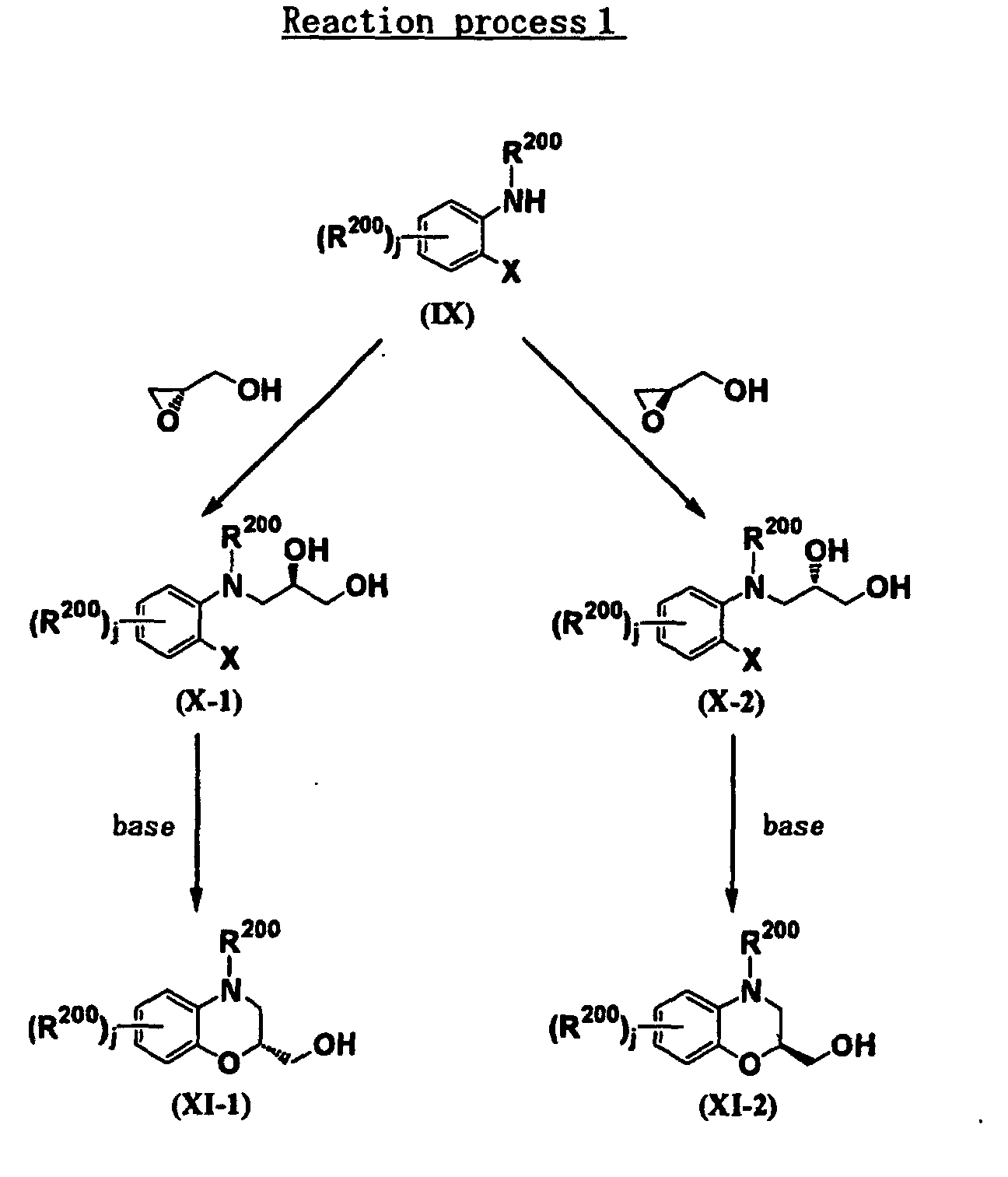
- a compound wherein R62 represents -3,4-dihydro-2H-1,4-benzoxazine may be prepared by the method shown by the following reaction process 1.
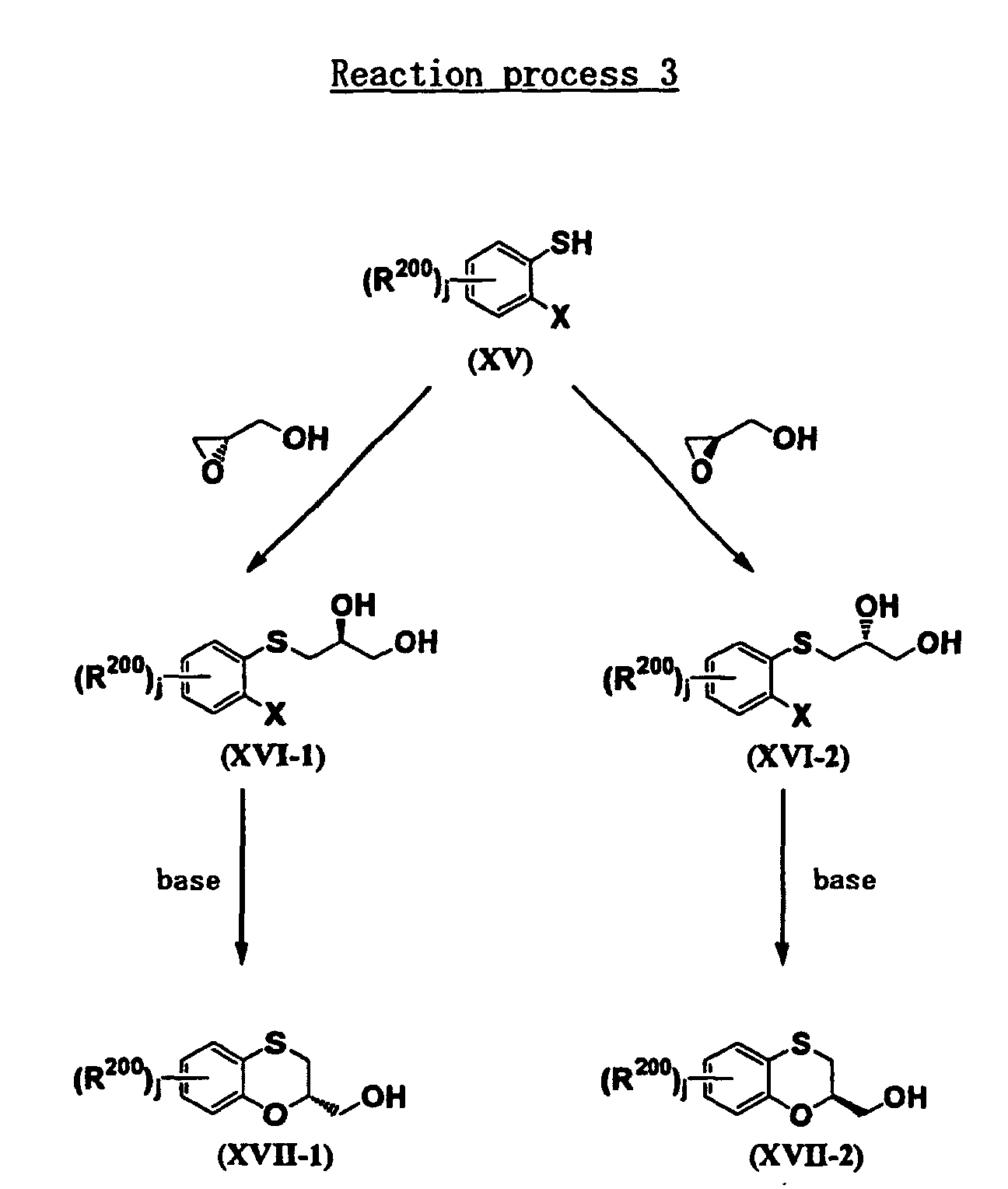
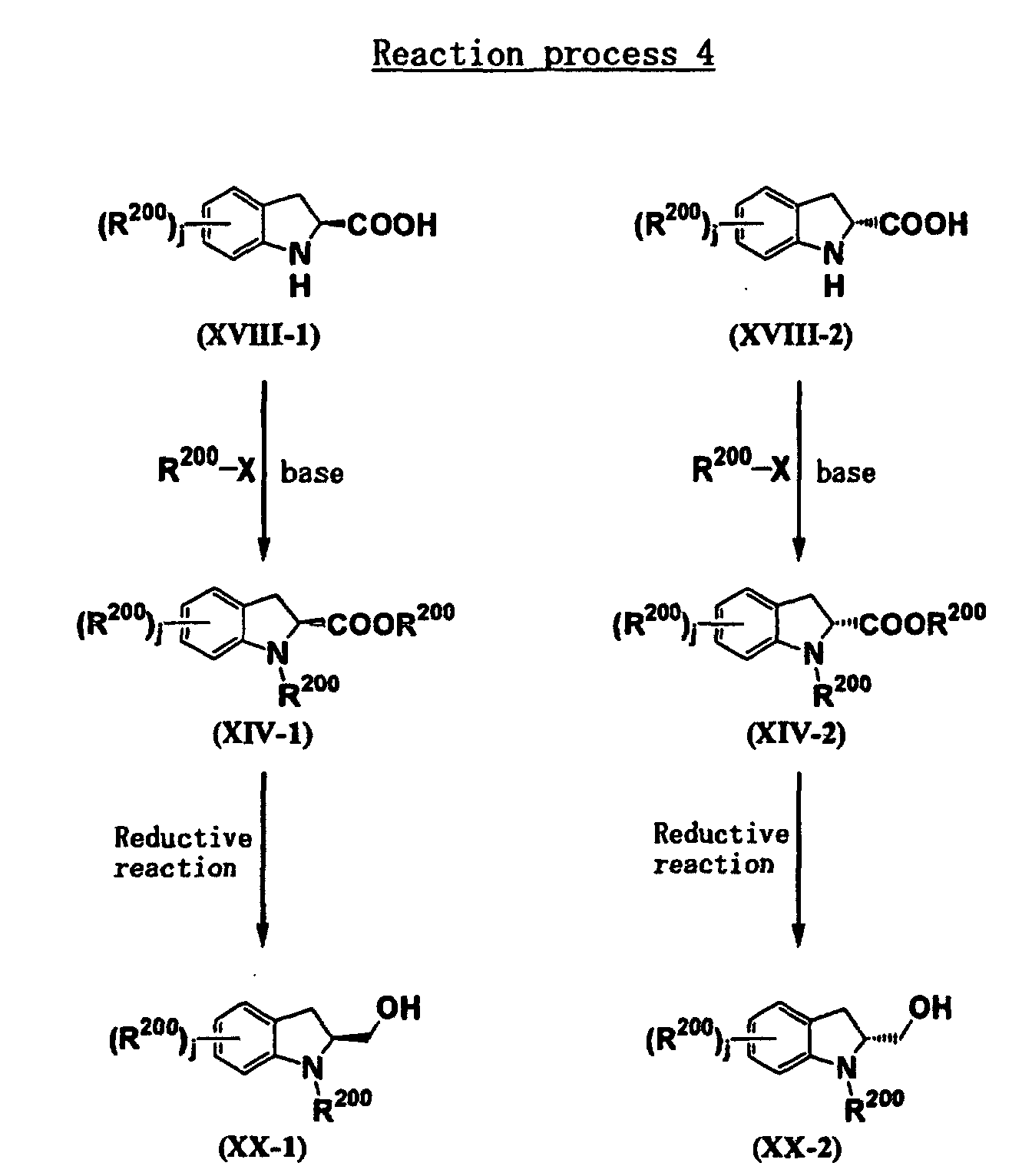
- R 200 represents the group selected from C1-6 alkyl, C1-10 alkoxy, C2-6 alkoxyalkyl group, a halogen atom, hydroxyl, trihalomethyl, nitro, amino, phenyl, phenoxy, C2-6 acyl, C1-6 alkanesulfonyl, and cyano group and j represents the integer from 0 or 1 to 4,
- X represents a leaving group (for example, a halogen atom, methanesulfonyloxy, p-toluenesulfonyloxy, 3-nitrobenzenesulfonyloxy group, etc.), and other symbols represents the same meaning as the described above.
- a compound wherein R 62 represents -2,3-dihydrobenzofuran may be manufactured according to the method represented by the following reaction process 2.
- halo represents a halogen atom and other symbols represent the same meaning as the described above.
- the compound wherein R 62 represents -1,4-benzoxathiane may be manufactured according to the method represented by the following reaction process 3.
- the compound wherein R 62 represents indoline may be manufactured according to the method represented by the following reaction process 4.
- the compound (VI-1) wherein G 1 represents -OCH 2 - may be manufactured according to the method represented by the following reaction process 5.
- the reaction product may be purified by usual purification methods, for example, distillation and silicagel under normal or reduced pressure, high performance liquid chromatography, thin layer chromatography or column chromatography that used magnesium trisilicate, or wash and recrystallization, etc.
- the purification may be carried out at each reaction or after some reactions.
- the compound of the present invention represented by formula (I) potently binds to a DP receptor and shows an antagonistic activity. This effect was confirmed by the following receptor binding test using prostanoid receptor-expressing cells.
- CHO cells expressing mouse DP receptors were prepared according to the method of Hirata et al. ( Proc. Natl Acad Sci. , 91 , 11192-11196 (1994)) and used as a membrane standard.
- reaction solution 200 ⁇ L containing the prepared membrane standard (30-166 ⁇ g) and 3 H-PGD 2 was incubated at room temperature for 20 minutes. The reaction was stopped with an ice-cold buffer (1 mL) and the binding 3 H-PGD 2 was trapped in on a glass filter by immediate aspiration-filtration under a reduced pressure, and its binding radioactivity was measured using a liquid scintillation counter.
- DP antagonistic activity assay using prostanoid DP receptor-expressing cells may be examinated by the following method.
- CHO cells expressing mouse DP receptor were prepared, inoculated onto a 24-well microplate at 10 5 cells/well, followed by culturing for 2 days, and used for the assay. Each well was washed with 500 ⁇ L of MEM (minimum essential medium), and 450 ⁇ L of assay medium (MEM containing 1 mmol/L IBMX, 2 ⁇ mol/L diclofenac and 0.1 or 1% BSA), followed by incubation at 37°C for 10 minutes.
- MEM minimum essential medium
- assay medium MEM containing 1 mmol/L IBMX, 2 ⁇ mol/L diclofenac and 0.1 or 1% BSA
- an assay medium 50 ⁇ L containing PGD 2 alone or PGD 2 with a compound of the present invention was added thereto to start the reaction, and after the reaction at 37°C for 10 minutes, 500 ⁇ L of ice-cold trichloroacetatic acid (TCA) (10% w/v) was added thereto to stop the reaction.
- TCA ice-cold trichloroacetatic acid
- the reaction solution was frozen once (-80 °C) and thawed, and cells were peeled using a scraper, followed by centrifugation at 13,000 rpm for 3 minutes.
- the cAMP concentration was measured with a cAMP assay kit using the resulting supernatant.
- [ 125 I]-cAMP assay kit buffer was added to 125 ⁇ L of the supernatant to give a total amount of 500 ⁇ L, and the resulting mixture was mixed with 1 mL of a chloroform solution of 0.5 mol/L tri-n-octylamine. Trichloroacetic acid (TCA) was extracted to the chloroform layer and removed, the cAMP amount in a sample was determined using the aqueous layer as the sample according to the method described in the [ 125 I]cAMP assay kit.
- TCA tri-n-octylamine
- the IC 50 value was calculated as an inhibition rate based on the reaction at 100 nM which was a concentration showing submaximal cAMP production by PGD 2 alone.
- the toxicity of the compound represented by formula (I) of the present invention is very low so that it is confirmed that the compound is sufficiently safe for using as a pharmaceutical.
- the compound represented by formula (I) in the present invention binds and is antagonistic to PGD 2 receptor, especially DP receptor, it is considered to be useful for the prevention and/or treatment of diseases, for example, allergic diseases (allergic rhinitis, allergic conjunctivitis, atopic dermatitis, bronchial asthma, food allergy, etc.
- allergic diseases allergic rhinitis, allergic conjunctivitis, atopic dermatitis, bronchial asthma, food allergy, etc.
- systemic mastocytosis disorders due to systemic mastocyte activation, anaphylactic shock, bronchoconstriction, urticaria, eczema, psoriasis, allergic bronchopulmonary aspergillosis, paranasal sinusitis, migraine, nasal polyp, hypersensitive angitis, eosinophilia, contact dermatitis, diseases accompanied with itching (such as atopic dermatitis, urticaria, allergic conjunctivitis, allergic rhinitis, contact dermatitis, etc. ), secondary diseases ⁇ such as cataracta, retinodialysis, inflammation, infection, dysgryphia, etc.
- the compound represented by formura (I) in the present invention binds to CRTH2 receptor and it expected to be antagonistic to the biological activity, it is considered to be useful for the prevention and/or treatment of diseases, allergic diseases (allergic rhinitis, allergic conjunctivitis, atopic dermatitis, bronchial asthma, food allergy, etc.
- systemic mastocytosis disorders due to systemic mastocyte activation, anaphylactic shock, bronchoconstriction, urticaria, eczema, psoriasis, allergic bronchopulmonary aspergillosis, paranasal sinusitis, migraine, nasal polyp, hypersensitive angitis, eosinophilia, contact dermatitis, diseases accompanied with itching (such as atopic dermatitis, urticaria, allergic conjunctivitis, allergic rhinitis, contact dermatitis, etc. ), secondary diseases-(such as cataracta, retinodialysis, inflammation, infection, dysgryphia, etc.
- the compound represented by formula (I) may be administered as other concomitant drug combining with other medicines, in order to
- a combind drug with the compound represented by formula (I) and other medicine may be administered in the compounding agent that mixes both elements in a formulation or in the form administered as separate formulation.
- the different and simultaneous administration are included.
- the compound represented by formula (I) may be previously administered, followed by other medicines, or other medicines may be previously administered, followed by the compound represented by formula (I).
- Each medication method may be different or same.
- antihistamine agents for example, antihistamine agents, mediator release inhibitors, thromboxane synthesis enzyme inhibitors, thromboxane A2 receptor antagonists, leukotriene receptor antagonists, steroid drugs, alpha-adrenergic receptor agonists, xanthine derivatives, cholinergic-blocking agents, and nitric oxide synthase inhibitors, etc. are included.
- antihistamine agents for example, ketotifen fumarate, mequitazine, azelastine hydrochloride, oxatomide, terfenadine, emedastine fumarate, epinastine hydrochloride, astemizole, ebastine, cetirizine hydrochloride, bepotastine, fexofenadine, lolatadine, desloratadine, olopatadine hydrochloride, TAK-427, ZCR-2060, NIP-530, mometasone furoate, mizolastine, BP-294, andolast, auranofine, and acribastin, etc. are included.
- mediator release inhibitors for example, tranilast, sodium cromoglycate, amlexanox, repirinast, ibudilast, tazanolast, and pemirolast potassium, etc. are included.
- thromboxane synthesis enzyme inhibitors for example, ozagrel hydrochloride and imitrodast sodium, etc. are included.
- thromboxane A2 receptor antagonists for example, seratrodast, ramatroban, domitroban calcium hydrate, and KT-2-982, etc. are included.
- leukotriene receptor antagonist for example, pranlukast hydrate, montelukast, zafirlukast, MCC-847, KCA-757, CS-615, YM-158, L-740515, CP-195494, LM-1484, RS-635, A-93178, S-36496, BIIL-284, and ONO-4057, etc. are included.
- clobetasol propionate for example, as drugs for external use, clobetasol propionate, diflorazone diacetate, fluocinonide, mometasone furancarboxylate, betamethasone dipropionate, betamethasone butyrate propionate, betamethasone valerate, difluprednate, budesonid, diflucortolone valerate, amcinonide, halcinonide, dexamethasone, dexamethasone propionate, dexamethason valerate, dexamethasone acetate, hydrocortisone acetate, hydrocortisone butyrate, hydrocortisone butyrate propionate, deprodone propionate, prednisolone valerate-acetate, fluocinolone acetonide, beclometasone dipropionate, triamcinolone acetonide, flumetasone pivalate, alclometa
- cortisone acetate, hydrocortisone, hydrocortisone sodium phosphate, hydrocortisone sodium succinate, fludrocortisone acetate, prednisolone, prednisolone acetate, prednisolone sodium succinate, prednisolone butylacetate, prednisolone sodium phosphate, halopredone acetate, methylprednisolone, methylprednisolone acetate, sodium methylprednisolone succinate, triamcinolone, triamcinolone diacetate, triamcinolone acetonide, dexamethasone, dexamethasone acetate, dexamethasone sodium phosphate, dexamethasone palmitate, paramethasone acetate, and betamethasone, etc. are included.
- beclometasone dipropionate fluticasone propionate
- budesonide flunisolide
- triamcinolone ST-126P
- ciclesonide dexamethasone palmitate
- mometasone furancarboxylate prasterone sulfonate
- deflazacort methylprednisolone suleptanate
- methylprednisolone sodium succinate etc.
- xanthine derivatives for example, aminophylline, theophylline, doxophylline, cipamfylline, and diprophylline, etc. are included.
- ipratropium bromide for example, ipratropium bromide, oxitropium bromide, flutropium bromde, cimetropium bromide, temiverine, tiotropium bromide, and revatropate(UK-112166), etc. are included.
- non-steroidal anti-inflammatory drugs for example, sasapyrine, sodiumsalicylate, aspirin, aspirin dialuminates combination, diflunisal, indomethacin, suprofen, ufenamate, dimethylisopropylazulene, bufexamac, felbinac, diclofenac, tolmetin sodium, clinoril, fenbufen, nabumetone, puroglumetacine, indomethacin farnesyl, acemetacin, proglumetacin maleate, amfenac sodium, mofezolac, etodolac, ibuprofen, ibuprofen piconol, naproxen, flurbiprofen, flurbiprofen axetil, ketoprofen, fenoprofen calcium, tiaprofen, oxaprozin, pranoprofen, loxoprofen sodium,
- prostaglandins hereafter, abbreviated with PG
- PG receptor agonists As prostaglandins (hereafter, abbreviated with PG), PG receptor agonists and PG receptor antagonist, etc. are included.
- PGE receptor EP1, EP2, EP3, EP4
- PGD receptor DP, CRTH2
- PGF receptor FP
- PGI receptor IP
- TX receptor TX receptor
- Mass ratio of the compound represented by formula (I) to other medicine is not especially limited.
- the dosage is determined depending on age, body weight, symptom, therapeutic effect, administration route, duration of the treatment and the like. Generally, 1mg to 1000mg per adult is orally administered once to several times per day, or 1mg to 100mg per adult is parenterally administered (preferably, nose drop, ophthalmic solution, ointment) once to several times per day, or intravenously administered for 1 to 24 hours per day, continuously.
- the compound represented by the formula (I) or the combind drug containing it and other medicines are administered, they are used as solid medicines, liquid medicines, and other compositions for internal use, and injections, external preparations, and suppositoriums, etc. for parenteral administration.
- compositions for oral administration include compressed tablets, pills, capsules, dispersing powders, granules, etc.
- the capsules include hard capsules and soft capsules.
- one or more active compound(s) is/are mixed with at least one inert diluent such as lactose, mannitol, glucose, hydroxypropyl cellulose, microcrystalline cellulose, starch, polyvinyl pyrrolidone or magnesium metasilicate aluminate.
- the compositions may also contain additional substances other than inert diluents, for example, lubricating agents such as magnesium stearate, disintegrating agents such as cellulose calcium glycolate, stabilizers such as lactose and solubilizers such as glutamic acid or asparatic acid according to usual methods.
- the tablets or pills may, if desired, be coated with film of gastric or enteric coating agents such as sugar, gelatin, hydroxypropyl cellulose or hydroxypropyl cellulose phthalate, or be coated with two or more films.
- film of gastric or enteric coating agents such as sugar, gelatin, hydroxypropyl cellulose or hydroxypropyl cellulose phthalate, or be coated with two or more films.
- capsules of absorbable materials such as gelatin are included.
- the liquid compositions for oral administration include pharmaceutically acceptable emulsions, solutions, syrups and elixirs.
- one or more active compound(s) is/are contained in inert diluents commonly used (purified water and ethanol, etc.).
- these compositions may also contain wetting agents, adjuvants such as suspending agents, sweetening agents, flavoring agents, perfuming agents, and preserving agents besides inert diluents.
- compositions for oral administration include sprays that are prepared by known methods, and one or more active compound(s). These compositions may contain stabilizing agents such as sodium hydrogen sulfate, buffers to give isotonicity, and isotonic solutions such as sodium chloride, sodium citrate or citric acid besides inert diluents. Processes for preparing the sprays have been described in U.S. Patents 2,868,691 and 3,095,355.
- the injections for parenteral administration include sterile aqueous and/or non-aqueous solutions, suspensions and emulsions.
- the aqueous solutions or suspensions include, for example, distilled water for injection and a physiological salt solution.
- the non-aqueous solutions or suspensions include propylene glycol, polyethylene glycol, plant oil such as olive oil, alcohol such as ethanol, POLYSORBATE 80 (registered trade mark), and the like. They may be used mixing sterile aqueous or non-aqueous solutions, suspensions and emulsions.
- compositions may contain preserving agents, wetting agents, emulsifying agents, dispersing agents, stabilizing agents (for example, lactose), and adjuvants such as solubilizer (glutamic acid and aspartic acid, etc.). These may be sterilized by filtrating through a bacteria-retaining filter, mixing with antimicrobial agents, or irradiation. These may also be manufactured, for example, by making to be aseptic or dissolving to aseptic distilled water for injection or other solvents before use of sterile solid compositions.
- ophthalmic solutions As dosage forms of the ophthalmic solution for parenteral administration, ophthalmic solutions, ophthalmic suspensions, ophthalmic emulsions, ophthalmic solutions dissolved time of use, and ophthalmic ointment are included.
- ophthalmic solutions are manufactured based on a well-known method.
- the ophthalmic solutions are made with tonicity agents (sodium chloride and concentrated glycerin, etc.), buffers (sodium phosphate and sodium acetate, etc.), surfactants (polysorbate 80 (trade name), polyoxyl 40 stearate, and polyoxyethylene hydrogenated castor oil, etc.), stabilizers (sodium citrate and disodium edetate, etc.), and preservatives (benzalkonium chloride and paraben, etc.), etc., which are properly selected optionally.
- tonicity agents sodium chloride and concentrated glycerin, etc.
- buffers sodium phosphate and sodium acetate, etc.
- surfactants polysorbate 80 (trade name), polyoxyl 40 stearate, and polyoxyethylene hydrogenated castor oil, etc.
- stabilizers sodium citrate and disodium edetate, etc.
- preservatives benzalkonium chloride
- Inhalants for parenteral administration may include aerosol agents, inhalant powders or inhalant liquids, which may be used by being dissolved or suspended in water or other suitable media before using.
- the inhalants are manufactured according to a well-known method.
- inhalant liquids are prepared properly selecting, if necessary, preservatives (benzalkonium chloride and paraben, etc.), coloring agents, buffers (sodium phosphate and sodium acetate, etc.), tonicity agents(sodium chloride and concentrated glycerin, etc.), thickeners (carboxyvinyl polymer, etc.), and absorption enhancers, etc.
- Inhalant powders are prepared properly selecting, if necessary, lubricants (stearic acid and the salt, etc.), binders (starch and dextrin, etc.), fillers (lactose and cellulose, etc.), coloring agents, preservatives (benzalkonium chloride and paraben, etc.), and absorption enhancers, etc.
- lubricants stearic acid and the salt, etc.
- binders starch and dextrin, etc.
- fillers lactose and cellulose, etc.
- coloring agents benzalkonium chloride and paraben, etc.
- preservatives benzalkonium chloride and paraben, etc.
- absorption enhancers etc.
- sprayers atomizer and nebulizer
- an inhalation administering machine for powder is usually used.
- compositions for parenteral administration liquids for external use, ointments, liniments, suppositories for intrarectal administration, and pessaries for administering in vagina, which contain one or more activators and are prescribed with common procedure, are included.
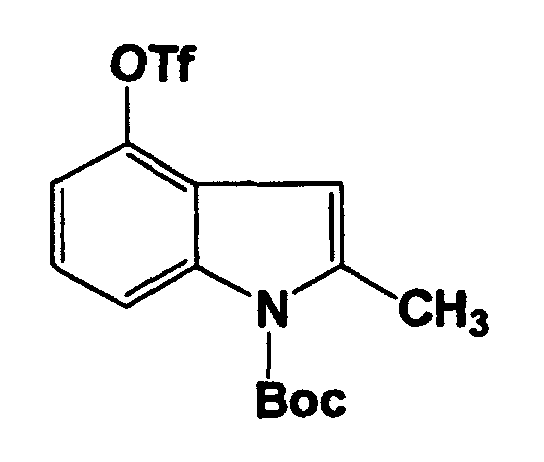
- Tf represents trifluoromethanesulfonyl group
- Boc represents tert-butoxycarbonyl group
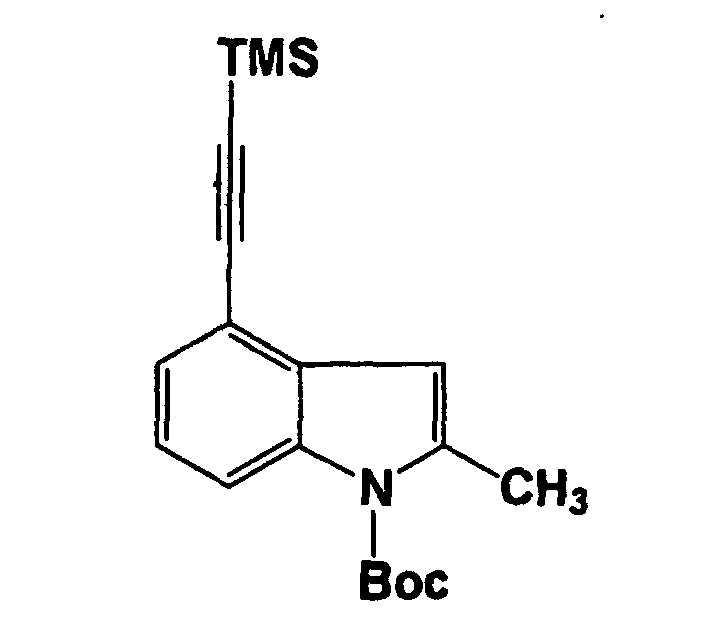
- TMS represents trimethylsilyl group
- the solvents in the parentheses in chromatographic separations or TLC show the developing or eluting solvents and the ratio shows volume ratio.
- Trimethylsilylacetylene 11ml was added to N, N-dimethylformamide (180ml) solution containing the compound (17.9g) prepared according to reference example 2, dichloridebis (triphenylphosphine) palladium (II) (1.6g), copper iodide (0.88g), and tetrabutylammonium (3.4g), and the mixture was stirred at 65°C for 2 hours. Further, 0.5N hydrochloric acid-ethyl acetate was added to the reactive mixture, and the insoluble matter was filtered through celite (registered trademark) and removed. The organic layer was sequentially washed with water (twice) and saturated brine and dried, and then concentrated by vacuum concentration.
- Tetrahydrofuran (160ml) solution containing cyclohexane (16.1ml) was cooled to -10°C and borane tetrahydrofuran complex (1M, 80ml) was dropped to the mixture, which was stirred at 0°C for 1 hour.
- Tetrahydrofuran (60ml) solution containing the compound (13.1g) prepared according to reference example 3 was dropped to this solution, which was stirred at room temperature for 1 hour. Further, 3N sodium hydroxide solution (40ml) and 30% hydrogen peroxide (45ml) were sequentially dropped to the reaction solution, which was stirred for 12 hours.
- the reactive mixture was extracted by water-diethyl ether, and the water layer was acidified with hydrochloric acid and extracted by ethyl acetate. The organic layer was sequentially washed with water and saturated brine and dried, and concentrated by vacuum concentration to give a title compound (10.4g; crude product).
- the compound (500mg) prepared according to reference example 7 was dissolved to dichloromethane (5ml) solution, and piperidine (0.22ml) was added, and then the solution was stirred for 1 hour.
- borane tetrahydrofuran complex (1M tetrahydrofuran solution, 125ml) was added to anhydrous tetrahydrofuran (25ml) solution containing the compound (7g) prepared according to reference example 9 at 0°C, which was stirred at 50°C for 2 hours.
- the reaction solution was left up to room temperature and cold methanol (30ml) was added.
- 4N hydrogen chloride dioxane solution (10ml) was added to the reaction solution, which was stirred at 60°C for 1 hour.
- the reaction solution was concentrated and poured into 2N sodium hydroxide solution, and extracted by ethyl acetate. The organic layer was washed with saturated brine and dried by sulfuric anhydride sodium.
- the compound(33.0g) prepared according to reference example 12 and triphenylphosphine(44.8g) were added to tetrahydrofuran(300ml) solution contaning the compound(65.0g) prepared according to reference example 8, and then diethyl azodicarbonate (40% toluene solution; 74.6ml) was added to the solution, which was stirred at room temperature for 1 hour.
- the compound (910mg) prepared according to reference example 18 was suspended to tetrahydrofuran(2ml), and oxalylchloride(0.29ml) was added to the mixture, which was stirred for 1.5 hours at 40°C. The reaction solution was cooled up to room temperature.
- the compound (559mg) prepared according to reference example 6 was dissolved to a mixture of acetonitrile (1ml) and ethyl acetate (1ml), and then triethylamine (1.7ml) and N, N-dimethylaminopyridine (73mg) were added to the mixture, which was cooled.
- Acrylic methylester (2.24ml), diisopropyl ethylamine (5.9ml, and bis(triphenylphosphine) palladium (II) dichloride (238mg) were added to N, N-dimethylformamide (50ml) solution containing the compound (3.2g) prepared according to reference example 1, which was stirred for 2 days at 95°C.
- Water and ethyl acetate were added to the reaction solution, and separated. The water layer is extracted by ethyl acetate, the mixed organic layer was sequentially washed with water and saturated brine and dried, and then concentrated by vacuum concentration.
- the compound (3.06g) prepared according to reference example 12 was dissolved to tetrahydrofuran (9ml), and triethylamine (5ml) was added. Tetrahydrofuran (9ml) solution containing p-toluenesulfonic acid chloride (3.42g), and N, N-dimethylaminopyridine (209mg) were added to the reaction solution, which was stirred for 4 hours at room temperature. After adding water, to the reaction solution was extracted by the tert-butyl methyl ether. The organic layer was concentrated and the obtained residue was solidified by adding isopropyl alcohol.
- the compound (420mg) prepared according to reference example 17 was dissolved to the mixture of tetrahydrofuran (1.2ml) and isopropyl alcohol (1.2ml), 4N sodium hydroxide solution (0.67ml) was added to the mixture, which was stirred for 3.5 hours at 80°C. Concentrated hydrochloric acid was added to the reaction solution, and then water was added. Further, the extracted solid was obtained by the filtration and washed by water, and then dried to give a title compound (326mg) having the following physical properties values.
- tetrakis(triphenylphosphine) palladium (0) (79mg) was added to tetrahydrofuran (5ml) solution containing the compound (375mg) prepared according to reference example 20, which was stirred for 10 minutes.
- Morpholine (0.30ml) was added to the reaction solution, which was stirred for 1.5 hours at room temperature.
- 1N hydrochloric acid was added to the reactive mixture, which was extracted by ethyl acetate. The organic layer was sequentially washed with water and saturated brine, and then dried by anhydrous sodium sulfate.
- the compound (230mg) prepared according to example 4 was dissolved to the mixture of ethyl acetate (7ml) and methanol (7ml), and 10% palladium carbon (90mg) was added to it, which was stirred for 1.5 hours under hydrogen gas.
- the reaction solution was filtered through celite (registered trademark), and the filtrate was concentrated. The obtained residue was recrystallized by methanol-water to give a title compound (90mg) having the following physical properties.
- Triethylamine (6.3ml) and tetrakis(triphenylphosphine) palladium (0) (2.6g) were added to methanol (33.43ml)-N, N-dimethyl formamide (200ml) solution containing the compound (6.32g) prepared according to reference example 1.
- the reactor was filled with carbon monoxide, and the reaction solution was stirred at 60°C over night. Water and ethyl acetate was added to the reaction solution, which was extracted. The water layer was extracted by ethyl acetate and the mixed organic layer was sequentially washed with water and saturated brine and dried, and then concentrated by vacuum concentration.
- the compound (0.67g) prepared according to example 10 was dissolved to ethyl acetate (5ml) and hydroxide palladium (500mg) were added to the mixture, which was stirred for 2 days at room temperature under hydrate gas.
- the reaction solution was filtered through celite (registered trademark), and the filtrate was concentrated.
- the compound (420mg) prepared according to example 2 was dissolved to tetrahydrofuran (20ml), cold borane-tetrahydrofuran complex (1M, 2.7ml) was added to the mixture, which was stirred at 10°C for 2 hours.
- the reaction solution was poured into ice, and 1N hydrochloric acid added to the solution, which was extracted by ethyl acetate.
- the organic layer was sequentially washed with water and saturated brine, and then dried by anhydrous sodium sulfate.
- the compound (49.3mg) prepared according to example 14 was dissolved to pyridine (3ml), and cold acetyl chloride (38 ⁇ l) was added to the mixture, which was stirred for 1.5 hours at 0°C. Water is added to the reaction solution, which was extracted by ethyl acetate. The organic layer was sequentially washed with saturated sodium bicarbonate solution, 1N hydrochloric acid, water, and saturated brine and dried by anhydrous sodium sulfate. After removal of the solvent, a title compound (54mg) having the following physical properties was obtained.
- the compound (1.00g) prepared according to reference example 24 was dissolved to anhydrous tetrahydrofuran (10ml), and n-butyllithium (1.59M hexane solution, 2.28ml) was added at -78°C, and then the mixture was stirred at the same temperature for 1 hour.
- the reactive mixture was risen up to room temperature, where 1N hydrochloric acid was added.
- the reactive mixture was extracted by ethyl acetate, and the organic layer was sequentially washed with water and saturated brine and dried by anhydrous sodium sulfate.
Landscapes
- Health & Medical Sciences (AREA)
- Chemical & Material Sciences (AREA)
- Organic Chemistry (AREA)
- General Health & Medical Sciences (AREA)
- Medicinal Chemistry (AREA)
- Pharmacology & Pharmacy (AREA)
- Life Sciences & Earth Sciences (AREA)
- Animal Behavior & Ethology (AREA)
- Public Health (AREA)
- Veterinary Medicine (AREA)
- Chemical Kinetics & Catalysis (AREA)
- General Chemical & Material Sciences (AREA)
- Nuclear Medicine, Radiotherapy & Molecular Imaging (AREA)
- Bioinformatics & Cheminformatics (AREA)
- Engineering & Computer Science (AREA)
- Pulmonology (AREA)
- Ophthalmology & Optometry (AREA)
- Dermatology (AREA)
- Epidemiology (AREA)
- Biomedical Technology (AREA)
- Neurology (AREA)
- Cardiology (AREA)
- Heart & Thoracic Surgery (AREA)
- Neurosurgery (AREA)
- Diabetes (AREA)
- Pain & Pain Management (AREA)
- Immunology (AREA)
- Hematology (AREA)
- Rheumatology (AREA)
- Otolaryngology (AREA)
- Anesthesiology (AREA)
- Vascular Medicine (AREA)
- Urology & Nephrology (AREA)
- Oncology (AREA)
- Gastroenterology & Hepatology (AREA)
- Communicable Diseases (AREA)
- Orthopedic Medicine & Surgery (AREA)
- Physical Education & Sports Medicine (AREA)
- Pharmaceuticals Containing Other Organic And Inorganic Compounds (AREA)
- Plural Heterocyclic Compounds (AREA)
Abstract

Description

(2) productin methods, and
(3) medicines comprising them as an active ingredient.

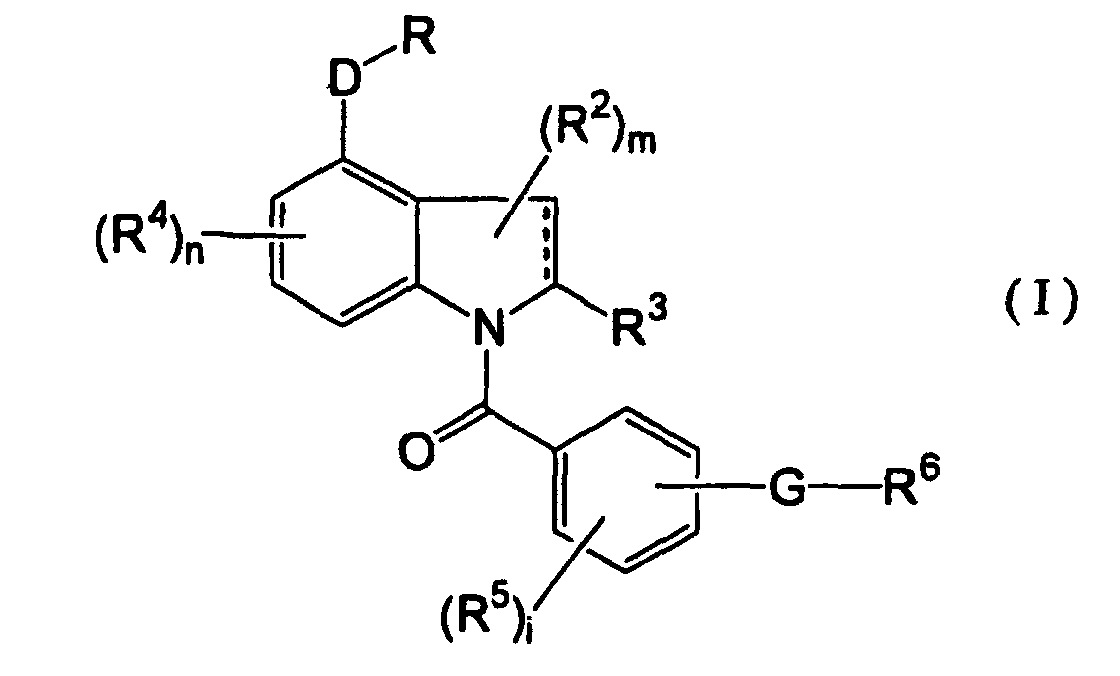
R2 represents a hydrogen atom, C1-6 alkyl, C1-6 alkoxy, C2-6 alkoxyalkyl, a halogen atom, amino, trihalomethyl, cyano, hydroxyl, benzyl, or 4-methoxybenzyl group,
R3 represents a hydrogen atom, C1-6 alkyl, C1-6 alkoxy, a halogen atom, trihalomethyl, cyano, or hydroxyl group,
R4 and R5 represent a hydrogen atom, C1-6 alkyl, C1-6 alkoxy, C2-6 alkoxyalkyl group, a halogen atom, nitro, amino, trihalomethyl, trihalomethoxy, cyano or hydroxyl group, respectively,
D represents a single bond, C1-6 alkylene, C2-6 alkenylene, or C1-6 oxyalkylene group,
-G-R6 represents
R6 represents C3-15 saturated or unsaturated carbocyclic ring, or 4 to 15-membered heterocycle containing 1 to 5 of nitrogen atom(s) sulfur atom(s), and/or oxygen atom(s)(these rings may be substituted by 1 to 5 group(s) selected from C1-6 alkyl, C1-10 alkoxy, C2-6 alkoxyalkyl, a halogen atom, hydroxyl, trihalomethyl, nitro, amino, phenyl, phenoxy, oxo, C2-6 acyl, C1-6 alkane sulphonyl, and cyano group.), or
n represents 1 to 3,
m represents 1 to 3,
i represents 1 to 4,
----- represents a single bond or a double bond.), or non-toxic salts thereof,















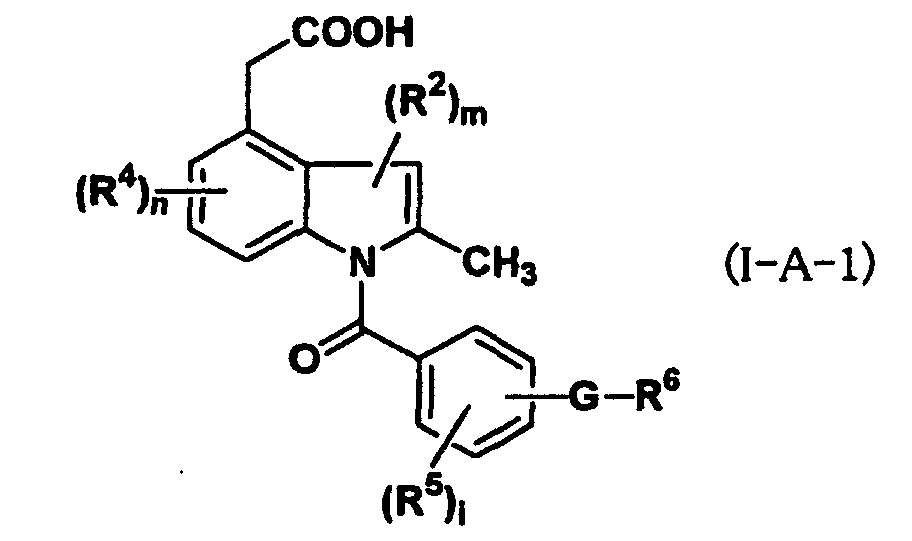
a compound represented by formula (I-A-2);

a compound represented by formula (I-A-3);

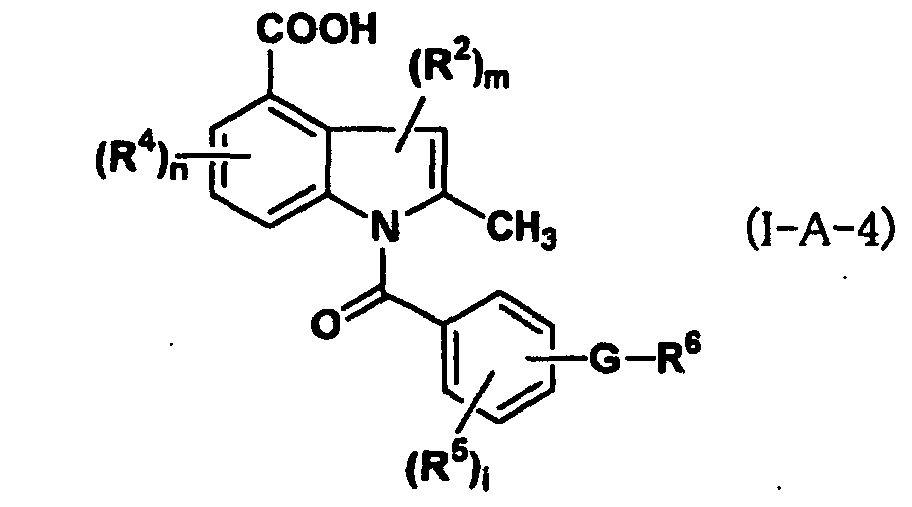

a compound represented by formula (I-A-6);
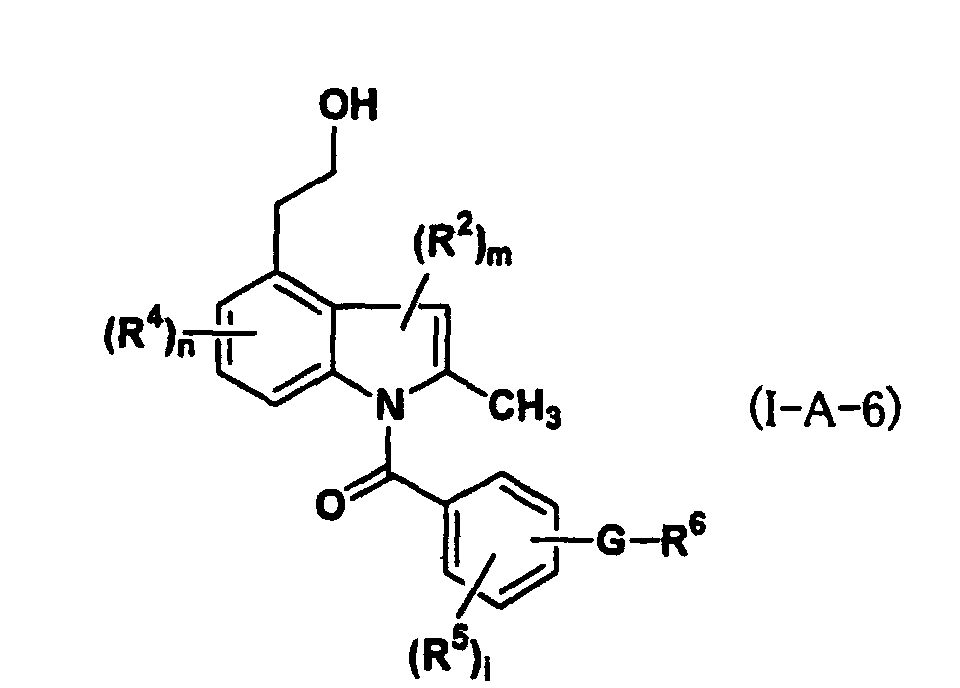
a compound represented by formula (I-A-7);
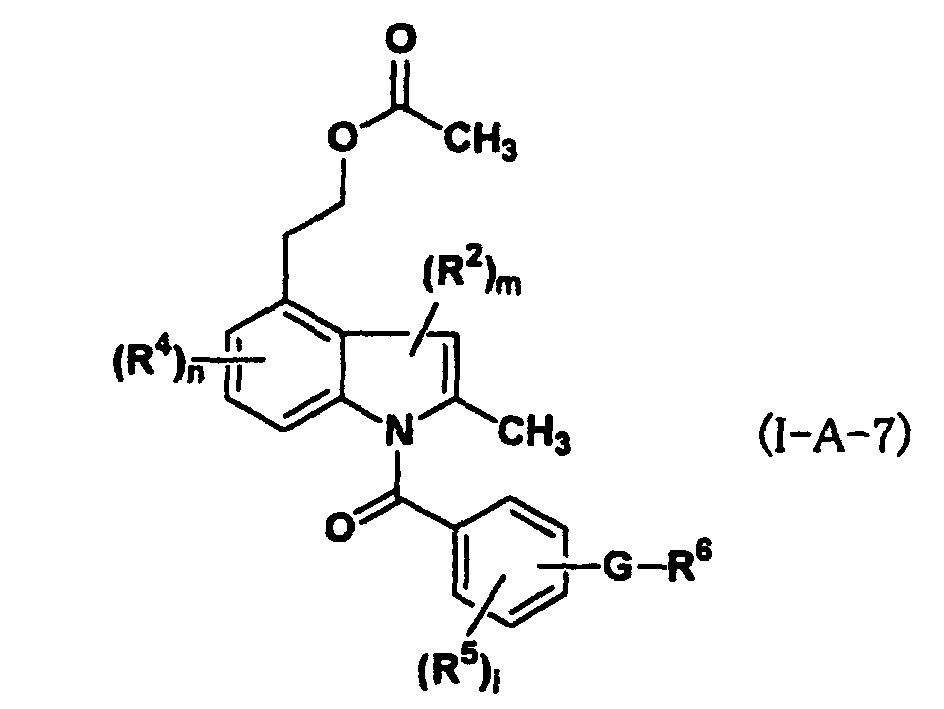
a compound represented by formula (I-B-1);
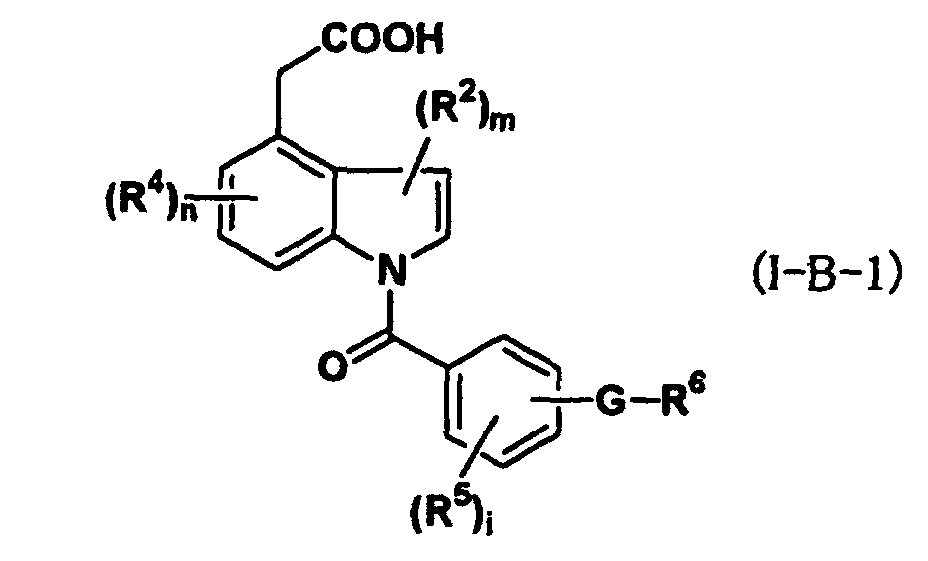
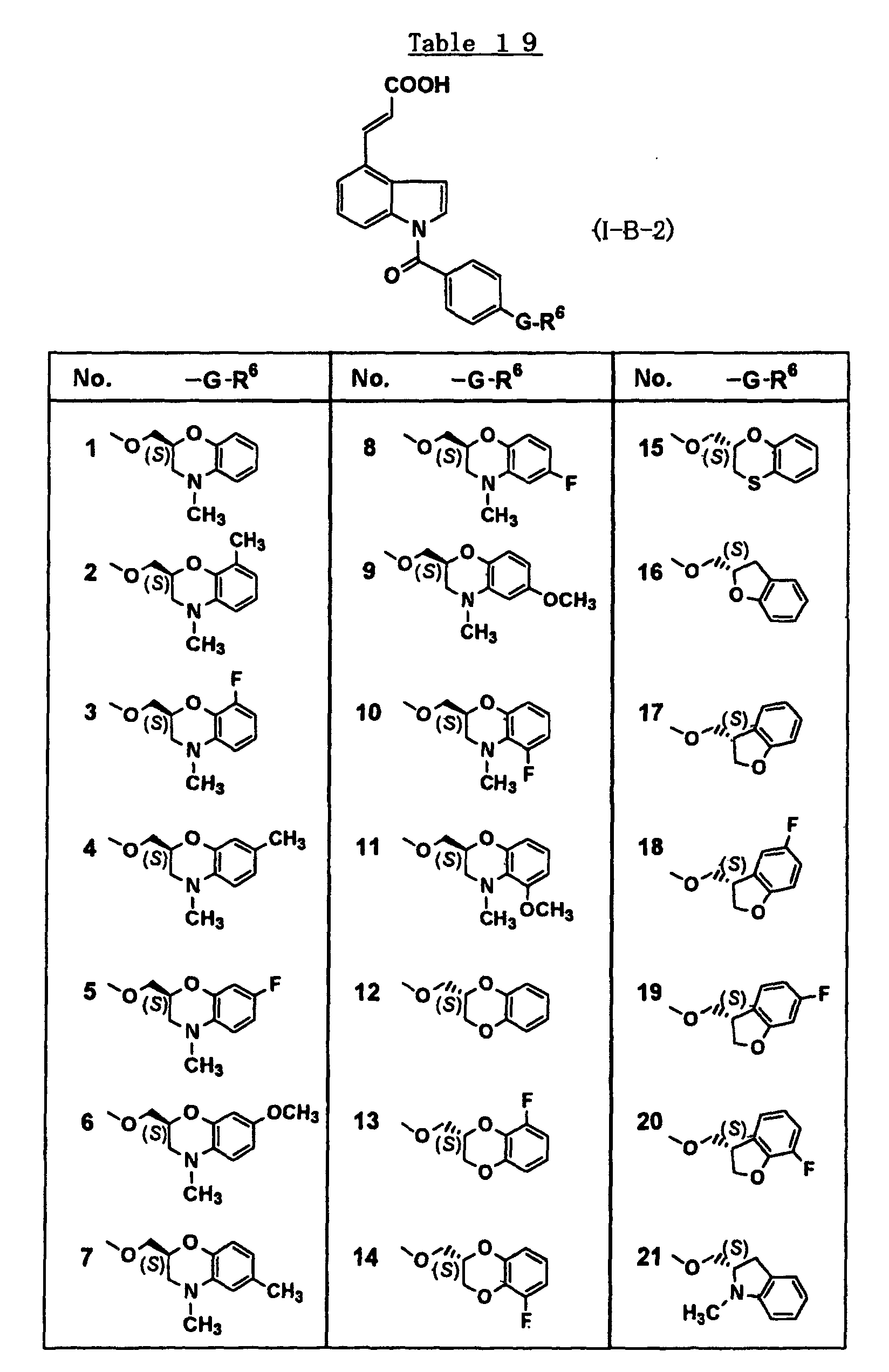
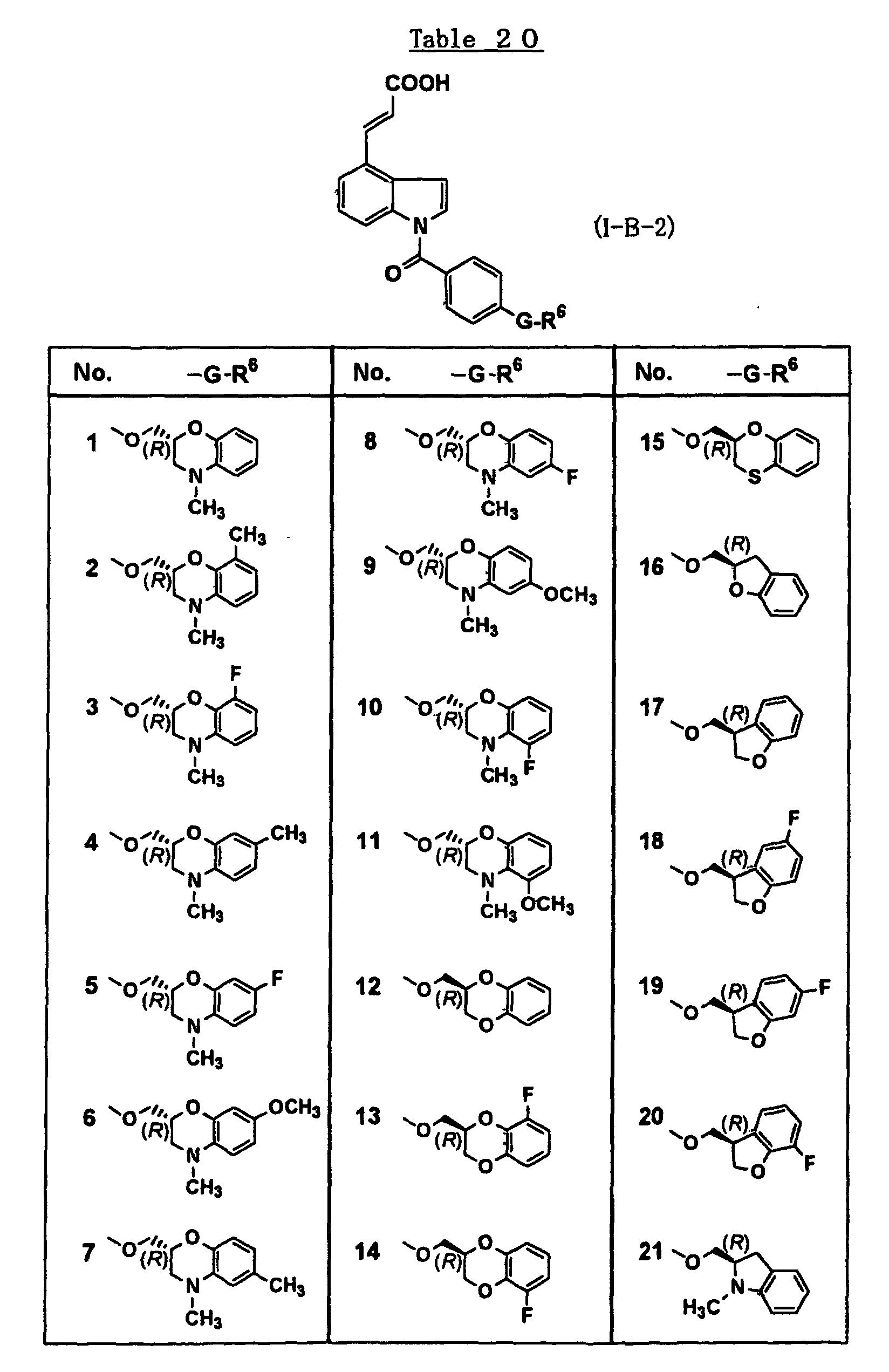
a compound represented by formula (I-B-2);

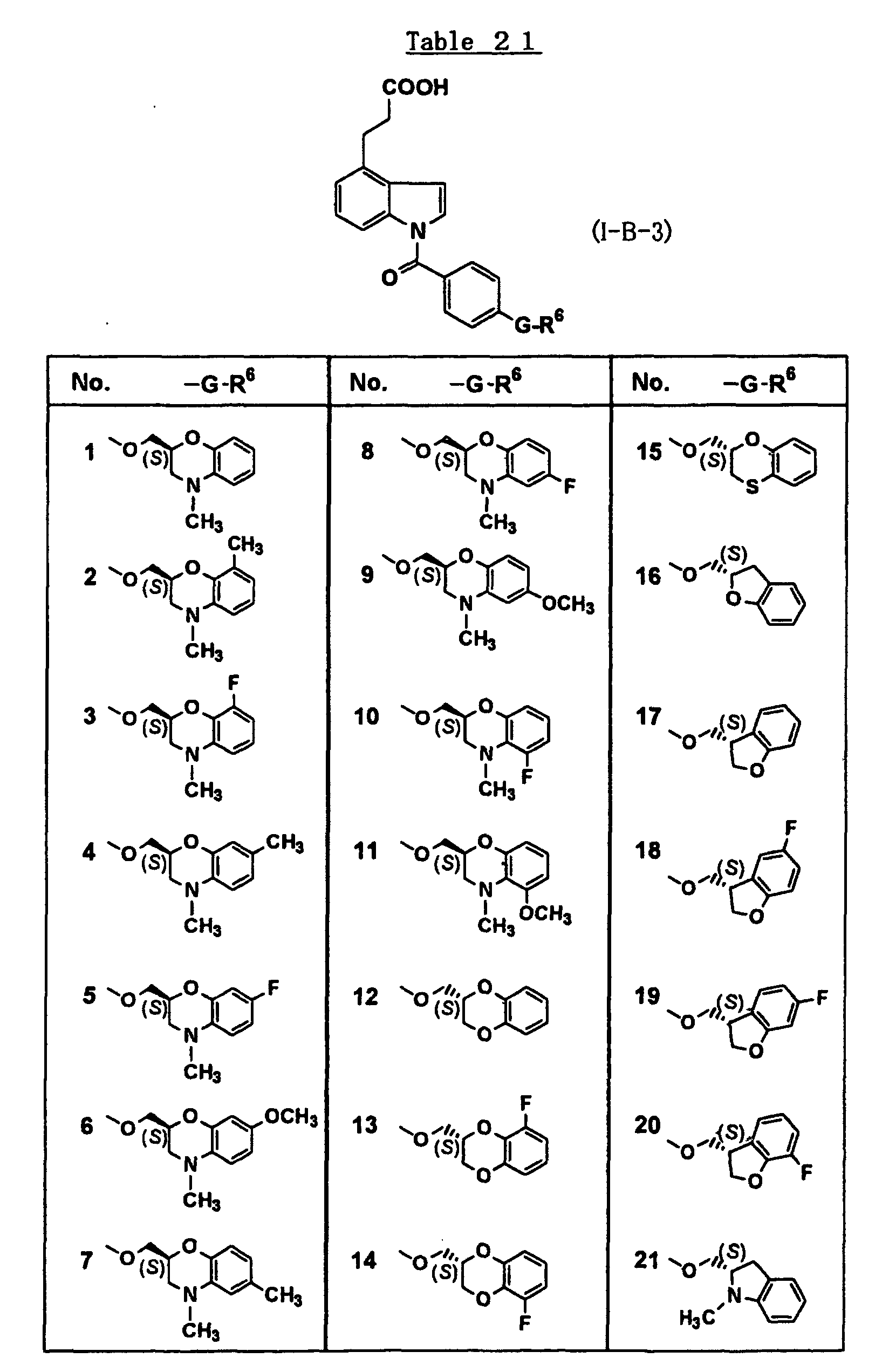
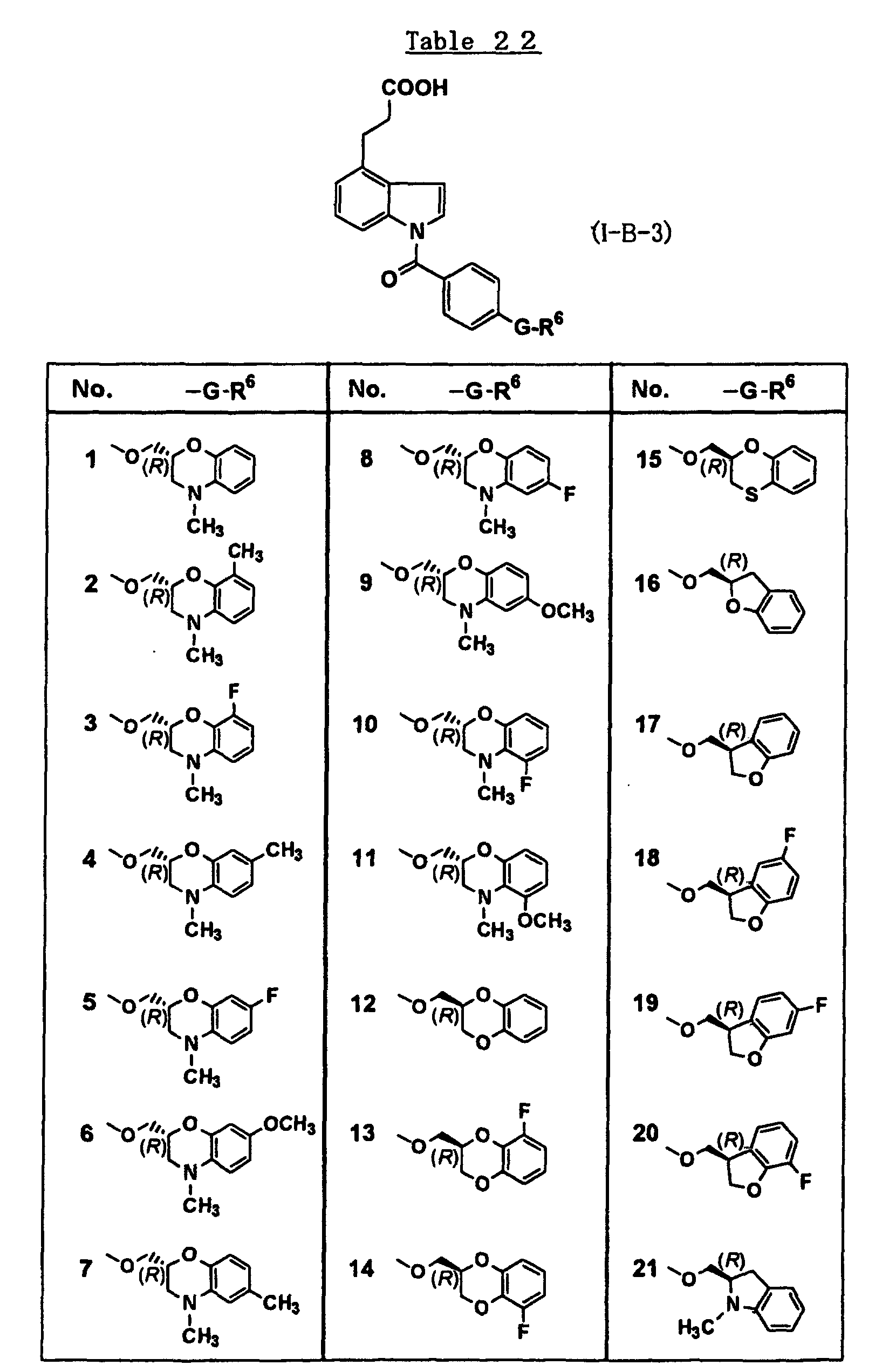
a compound represented by formula (I-B-3);

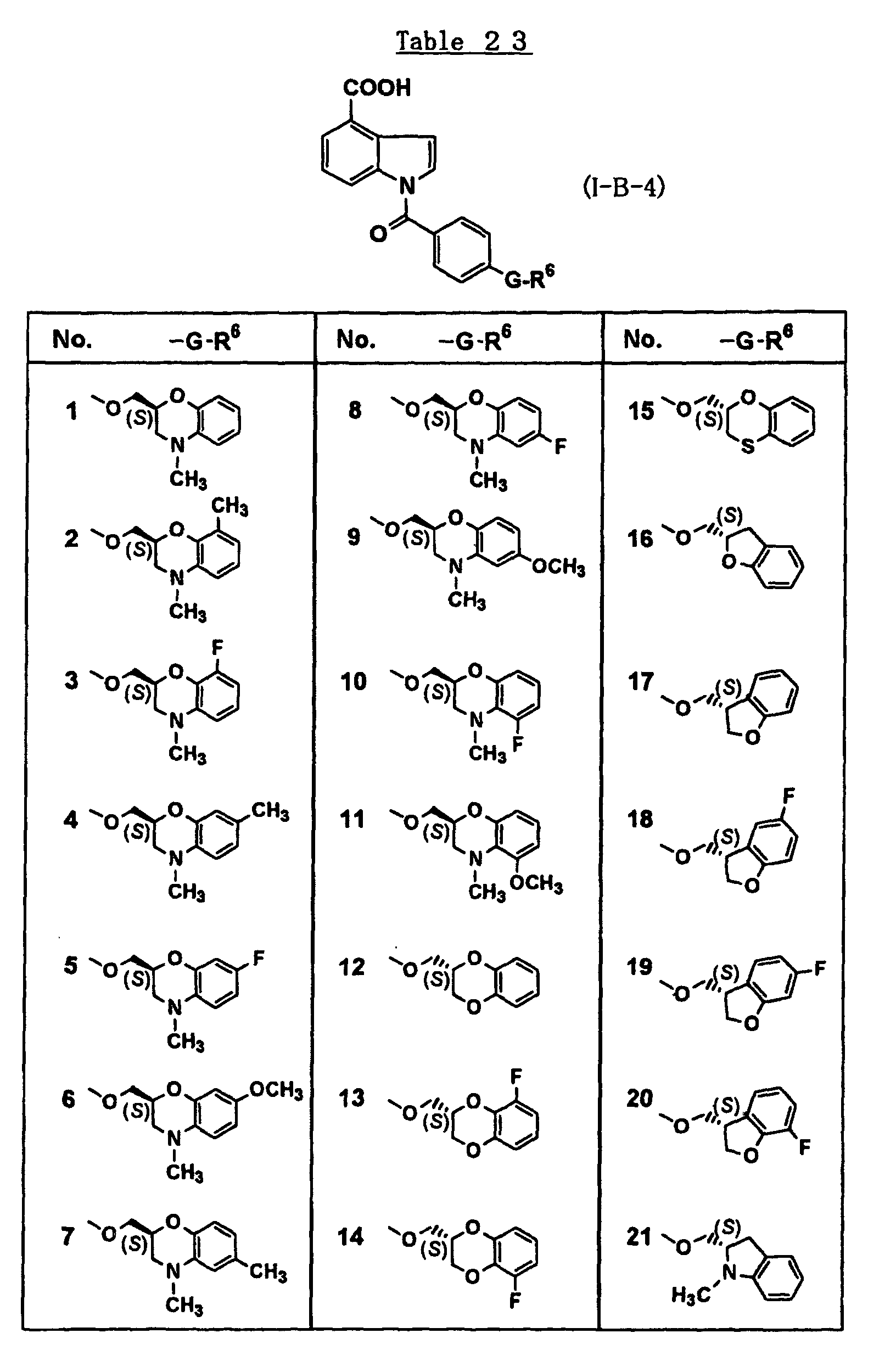
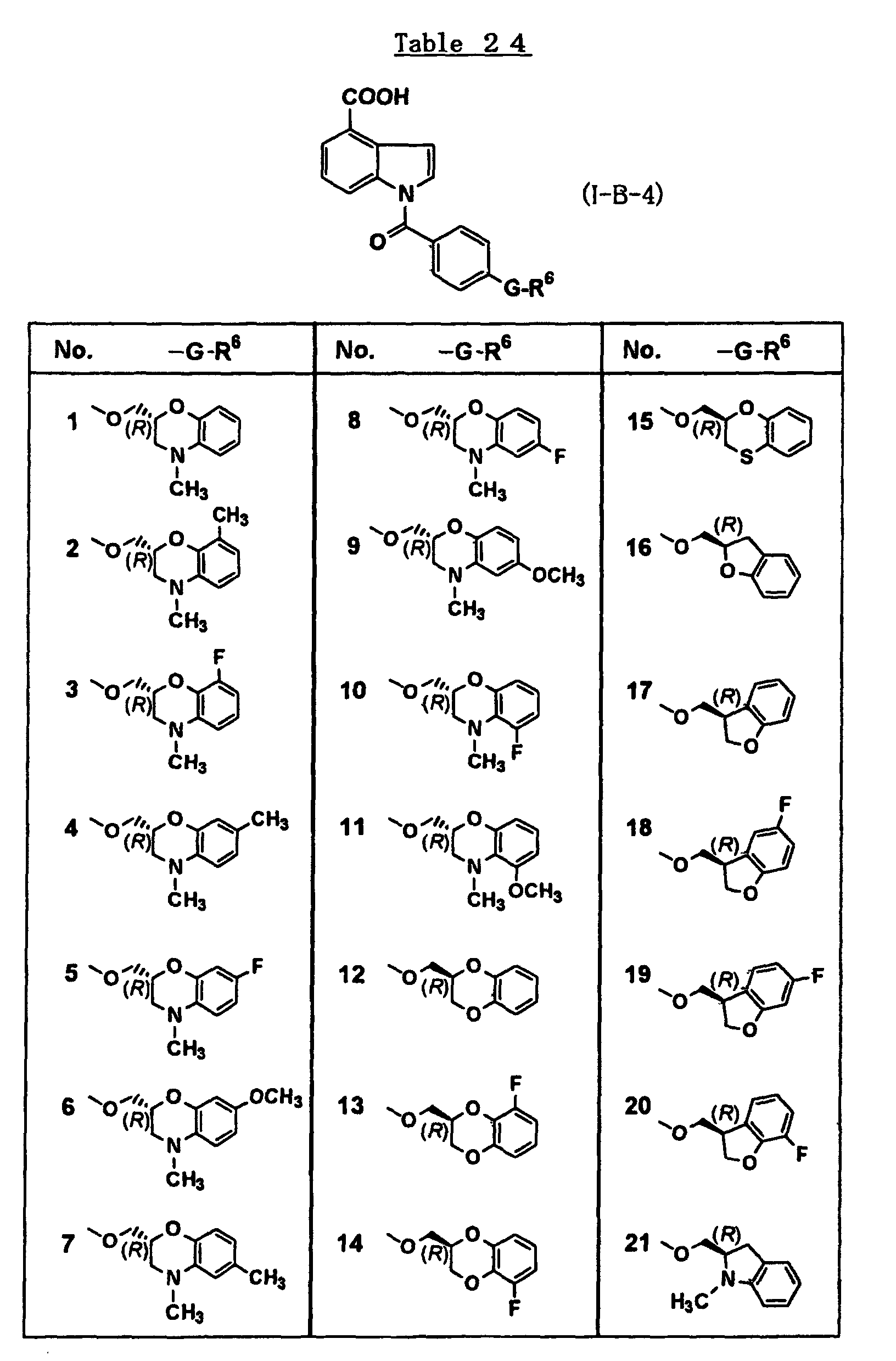
a compound represented by formula (I-B-4);

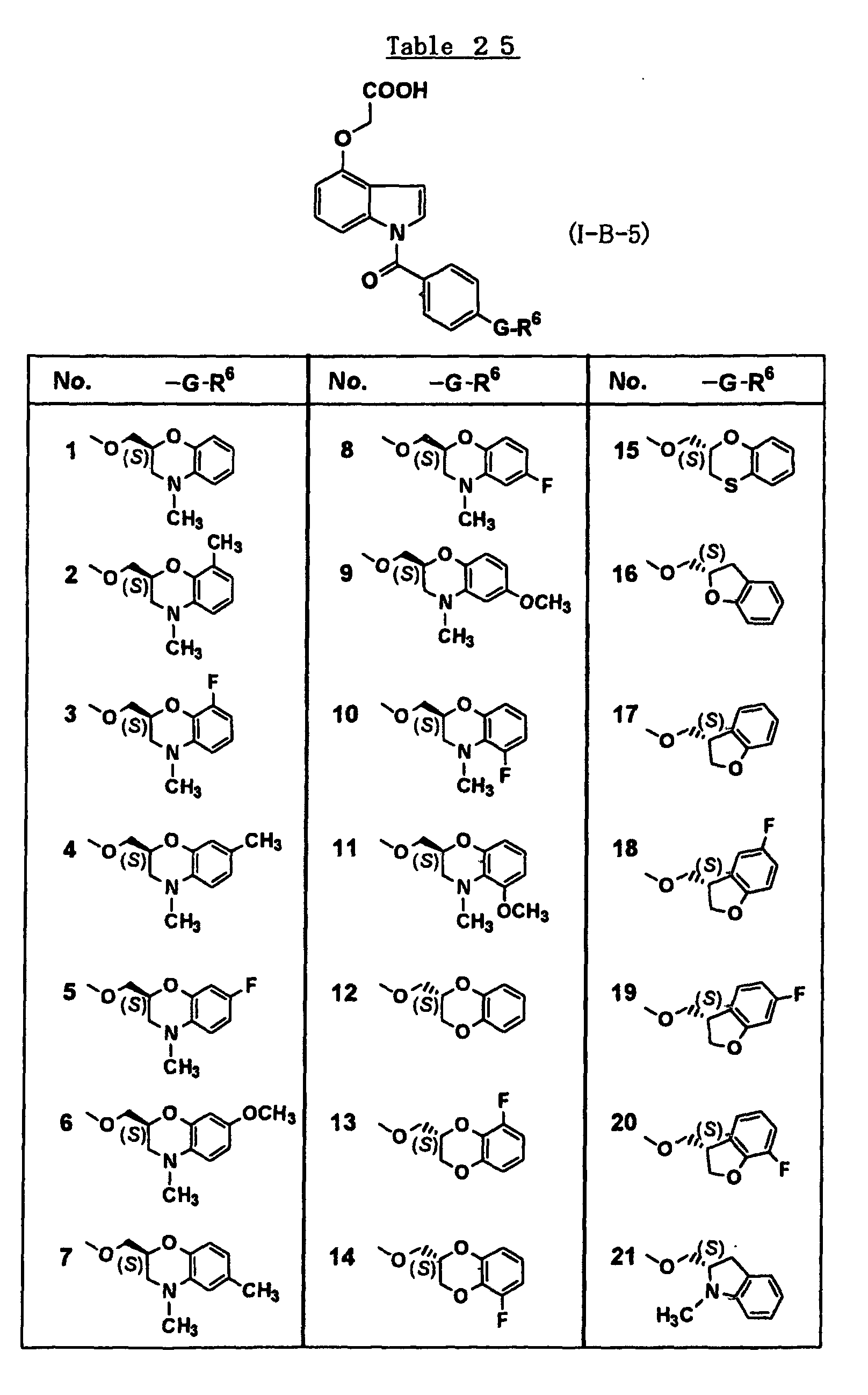
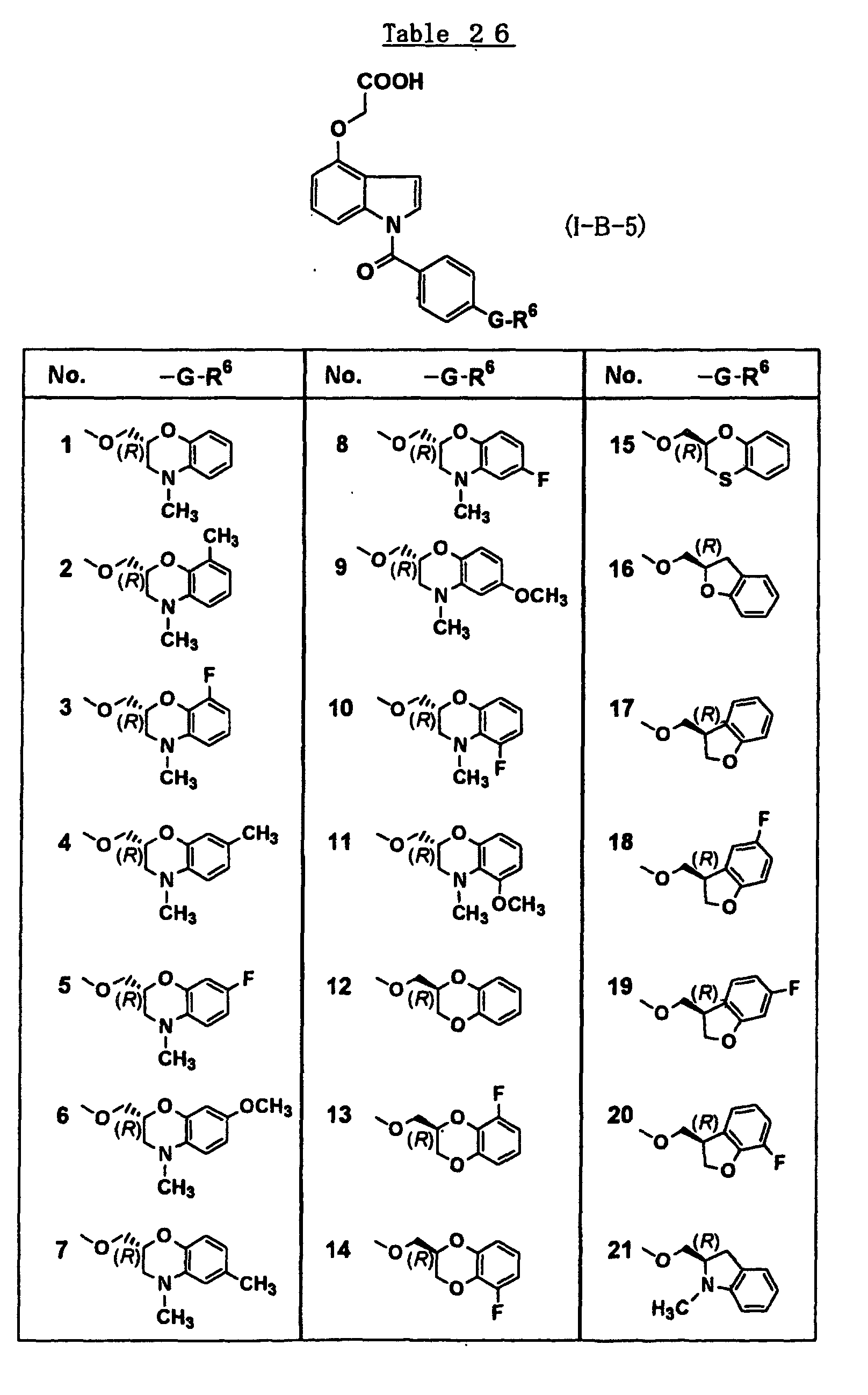
a compound represented by formula (I-B-5):
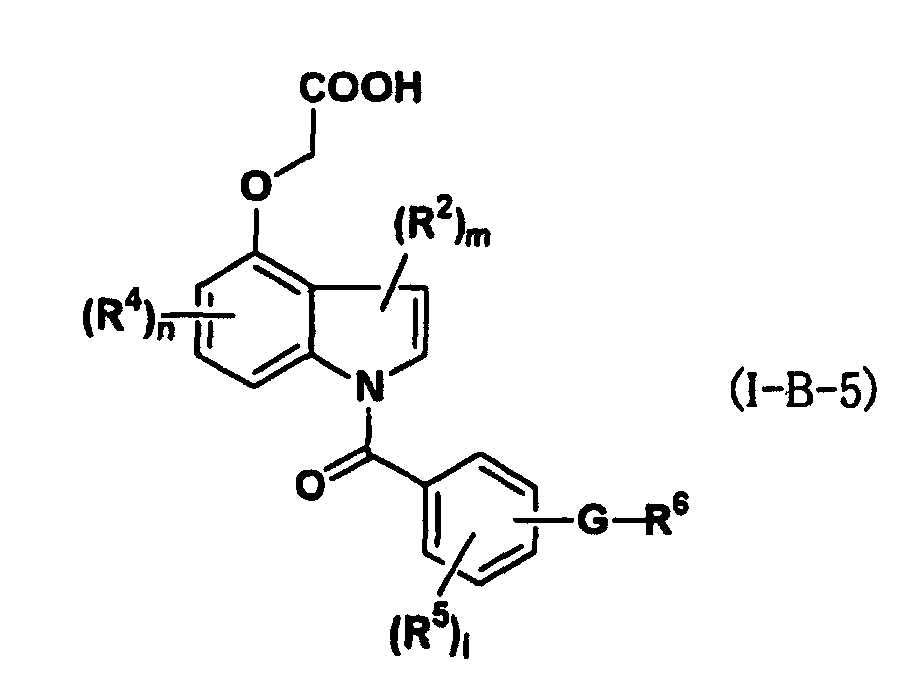
a compound represented by formula (I-B-6);
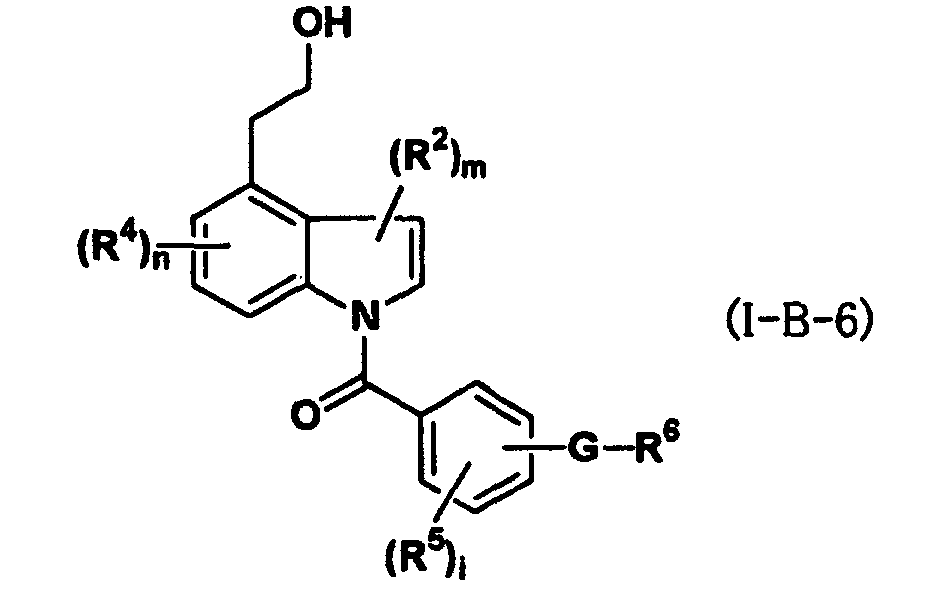
a compound represented by formula (I-B-7);

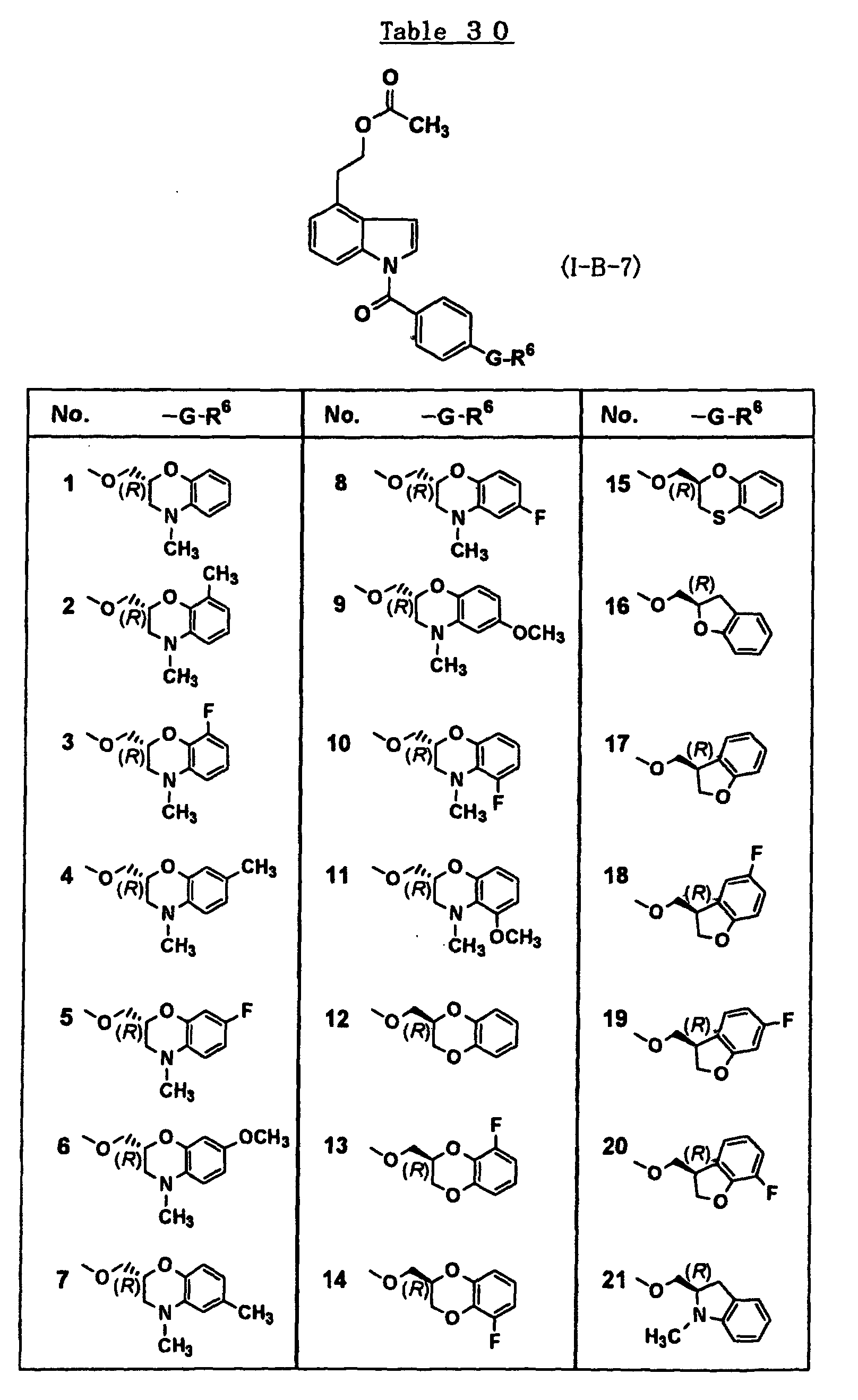
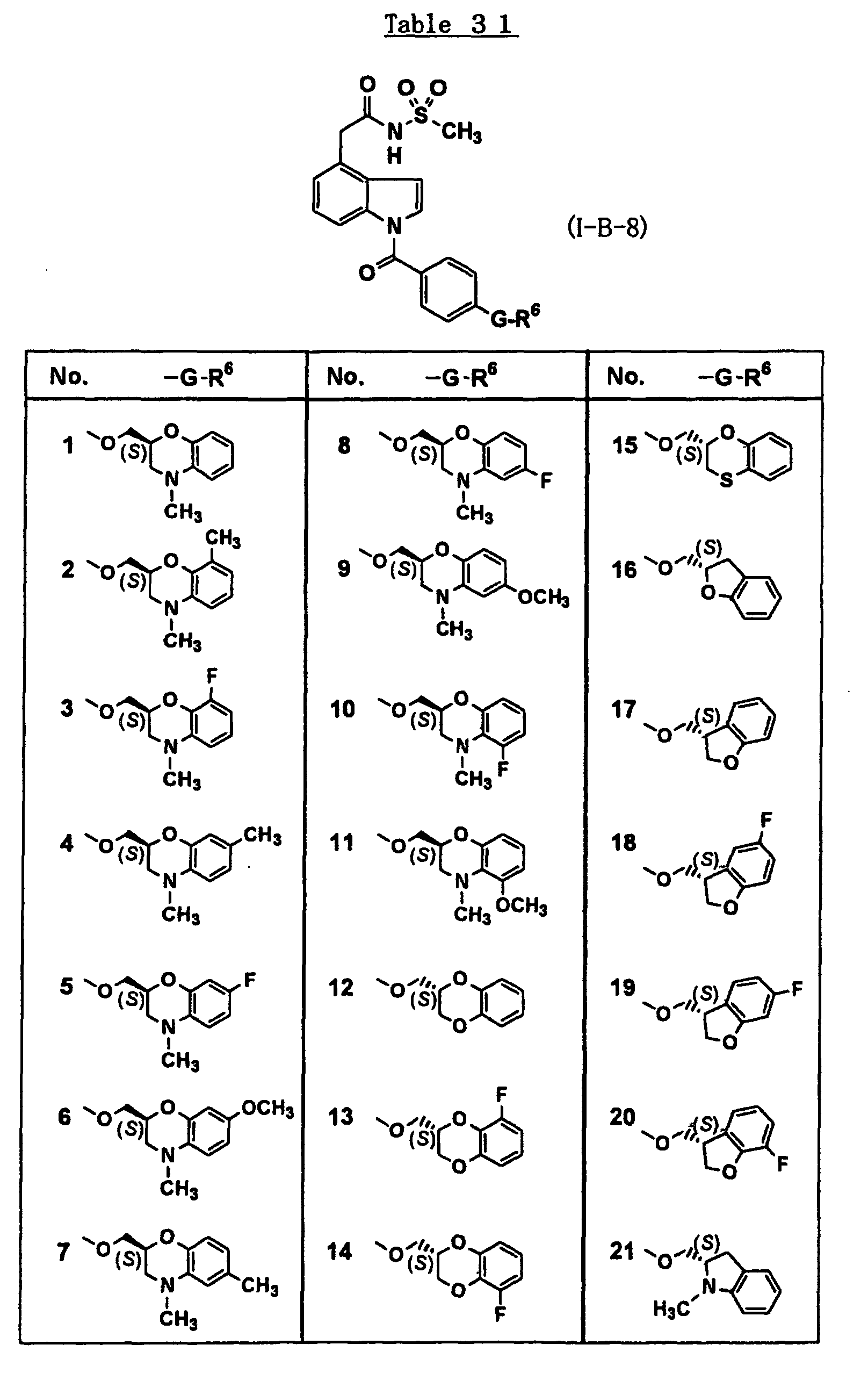
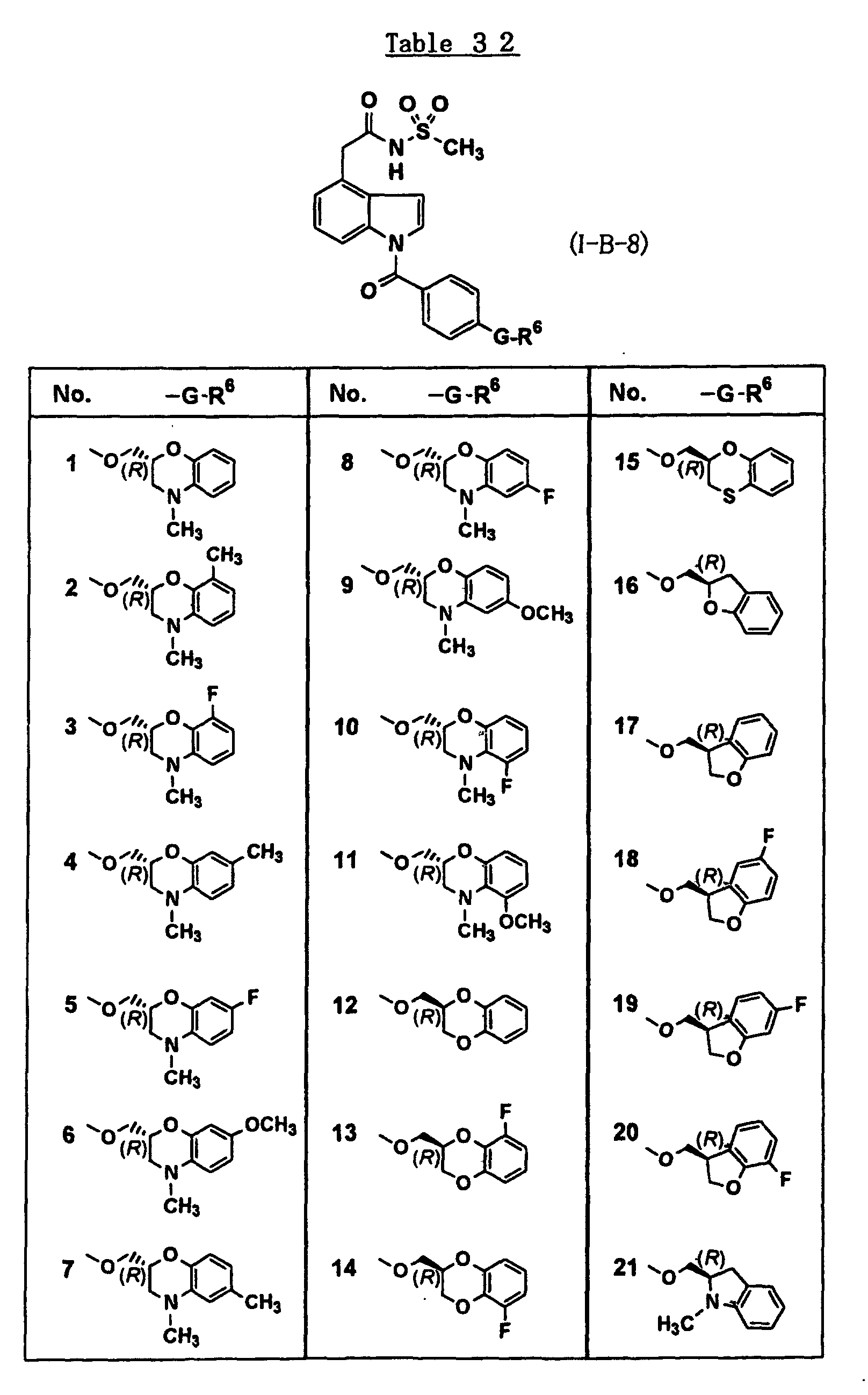
a compound represented by formula (I-B-8);
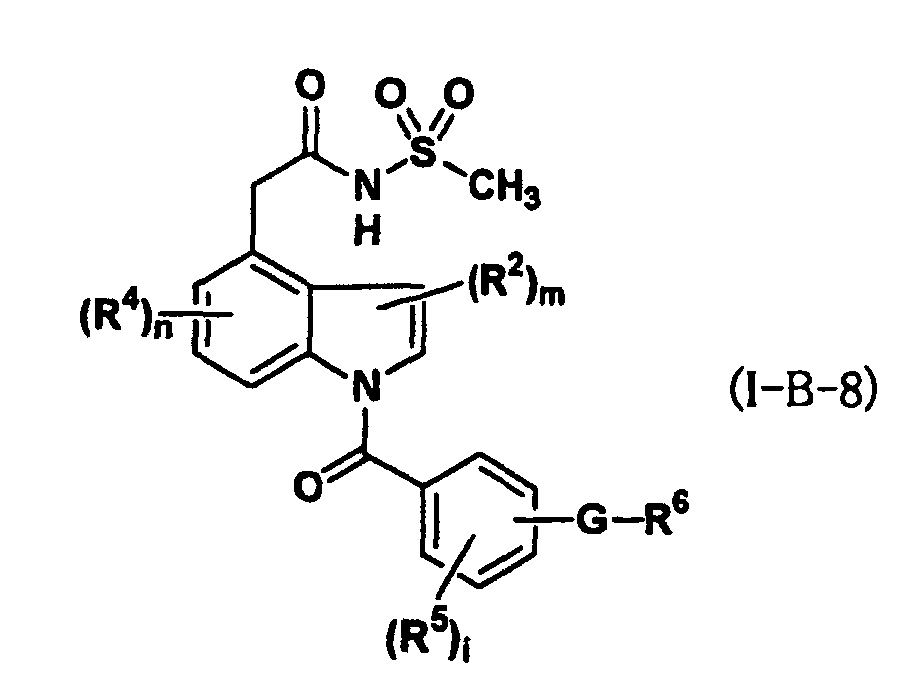
a compound represented by formula (I-C-1);
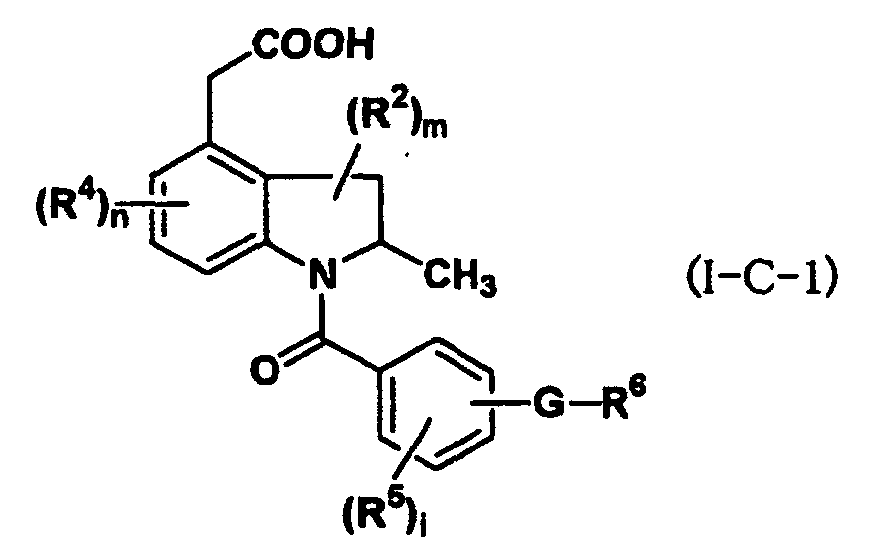
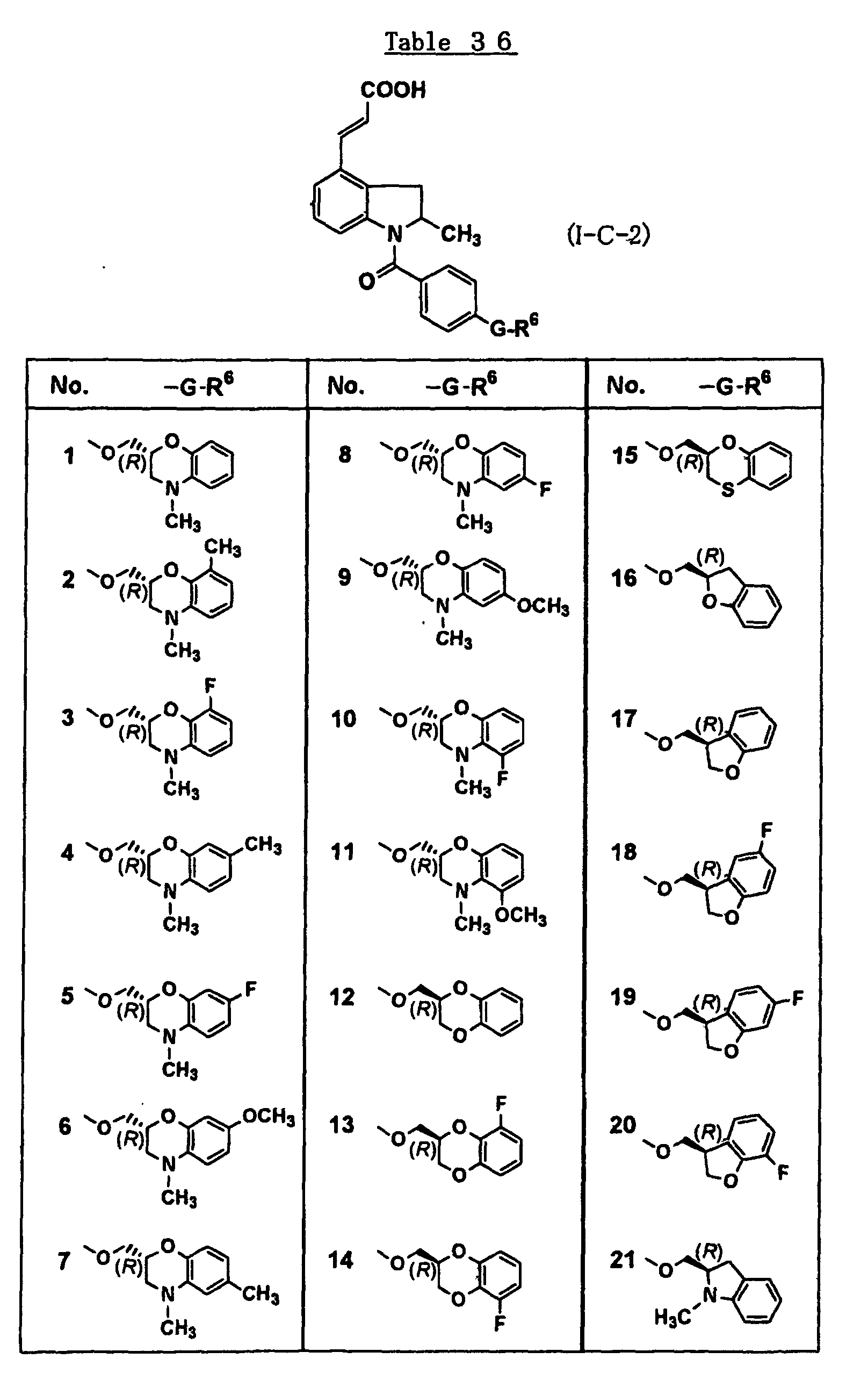
a compound represented by formula (I-C-2);
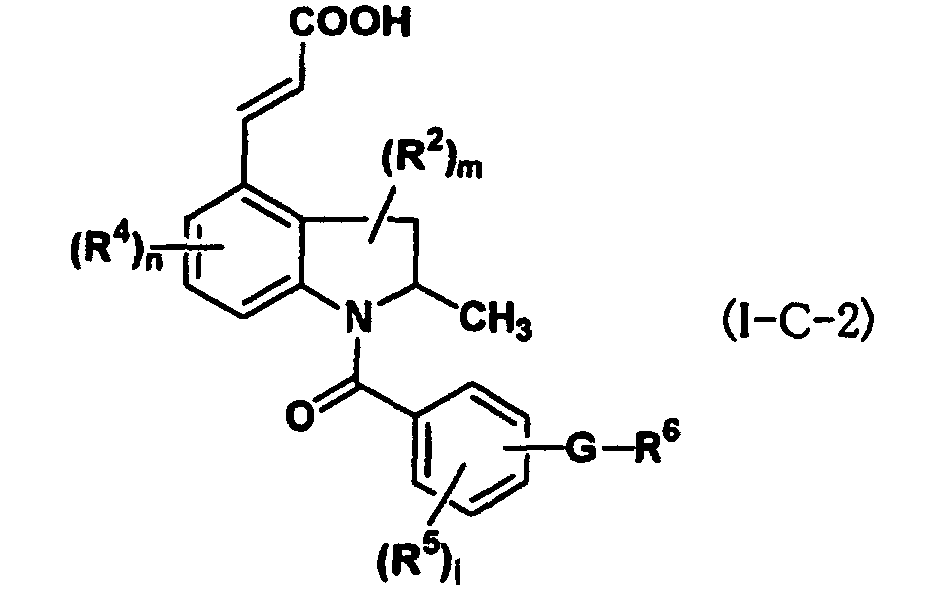
a compound represented by formula (I-C-3);
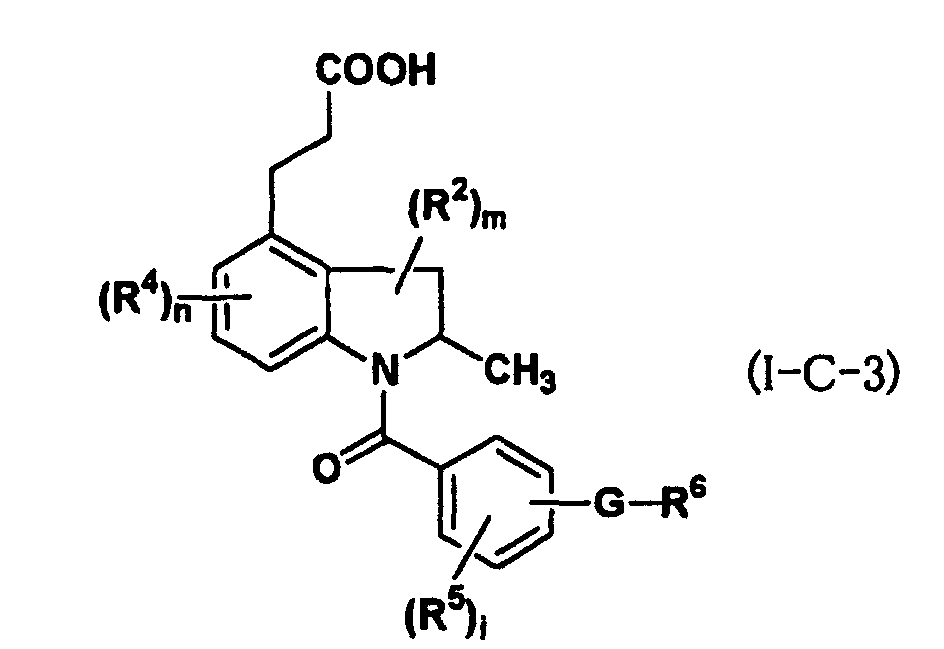
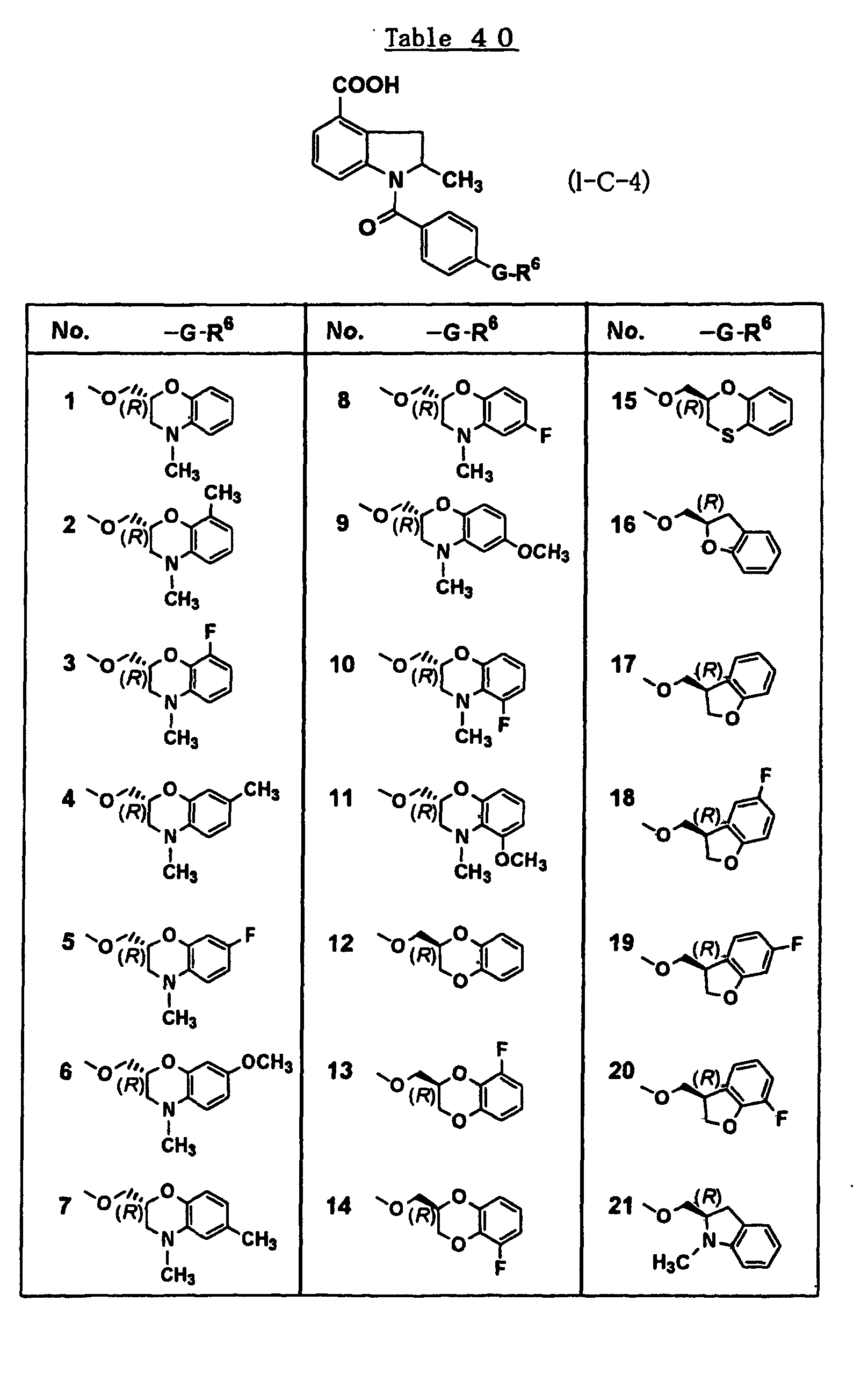
a compound represented by formula (I-C-4);

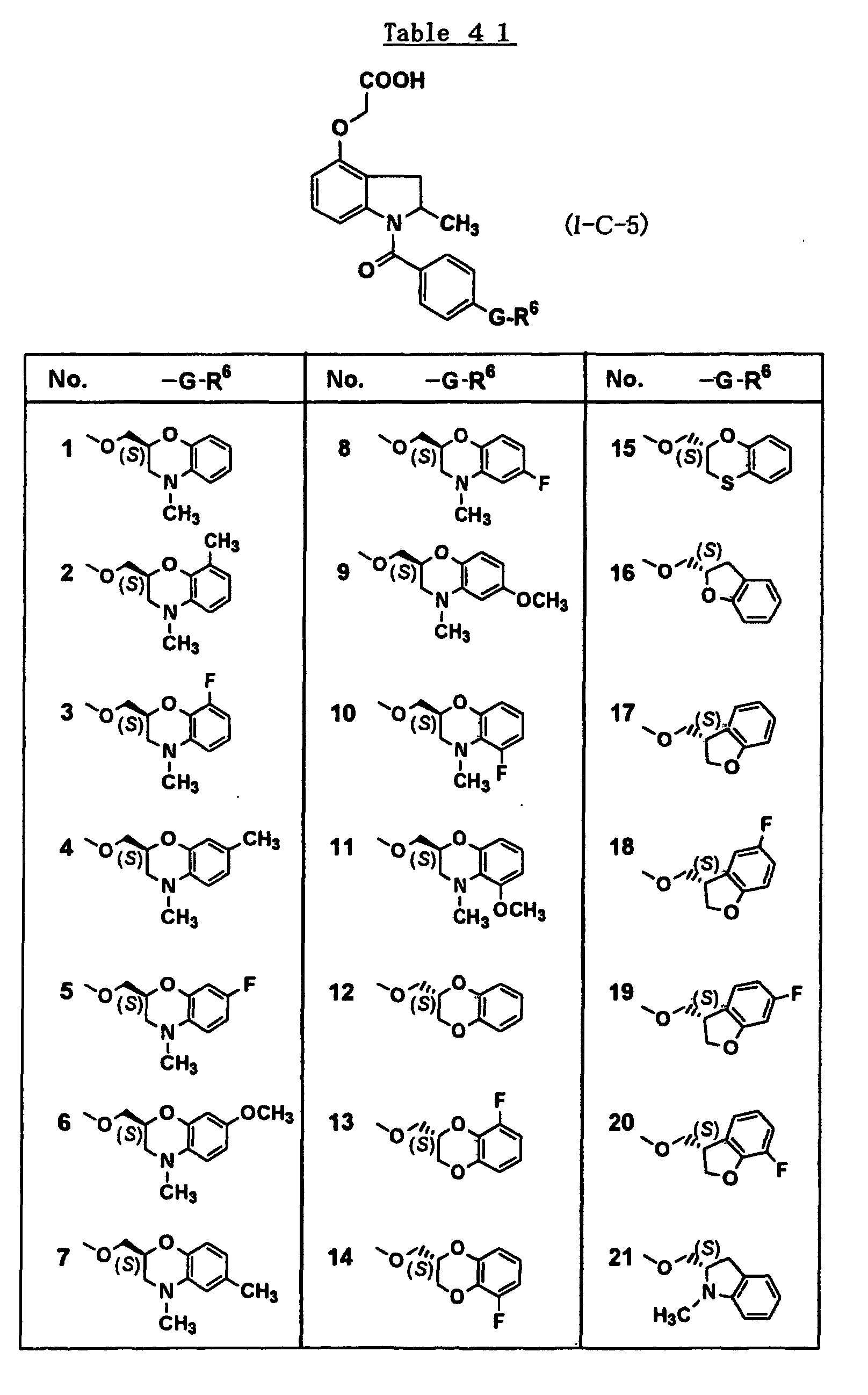
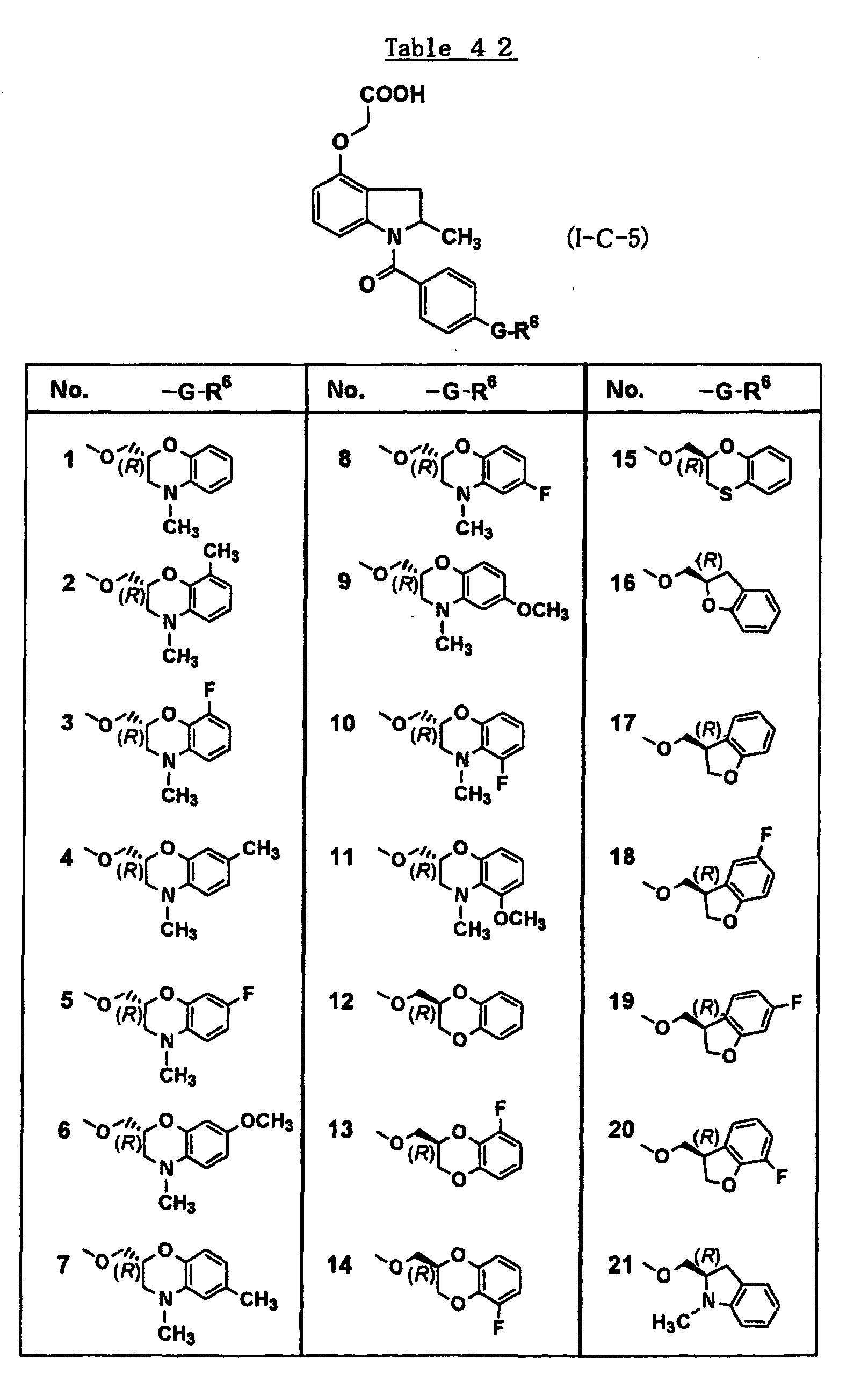
a compound represented by formula (I-C-5);

a compound represented by formula (I-C-6);

a compound represented by formula (I-C-7);
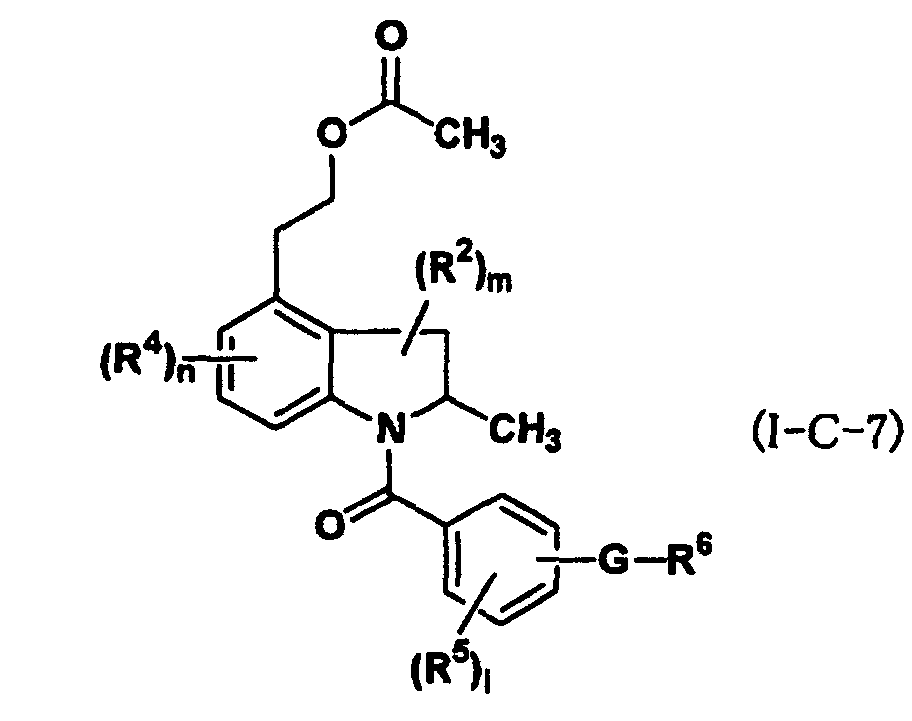
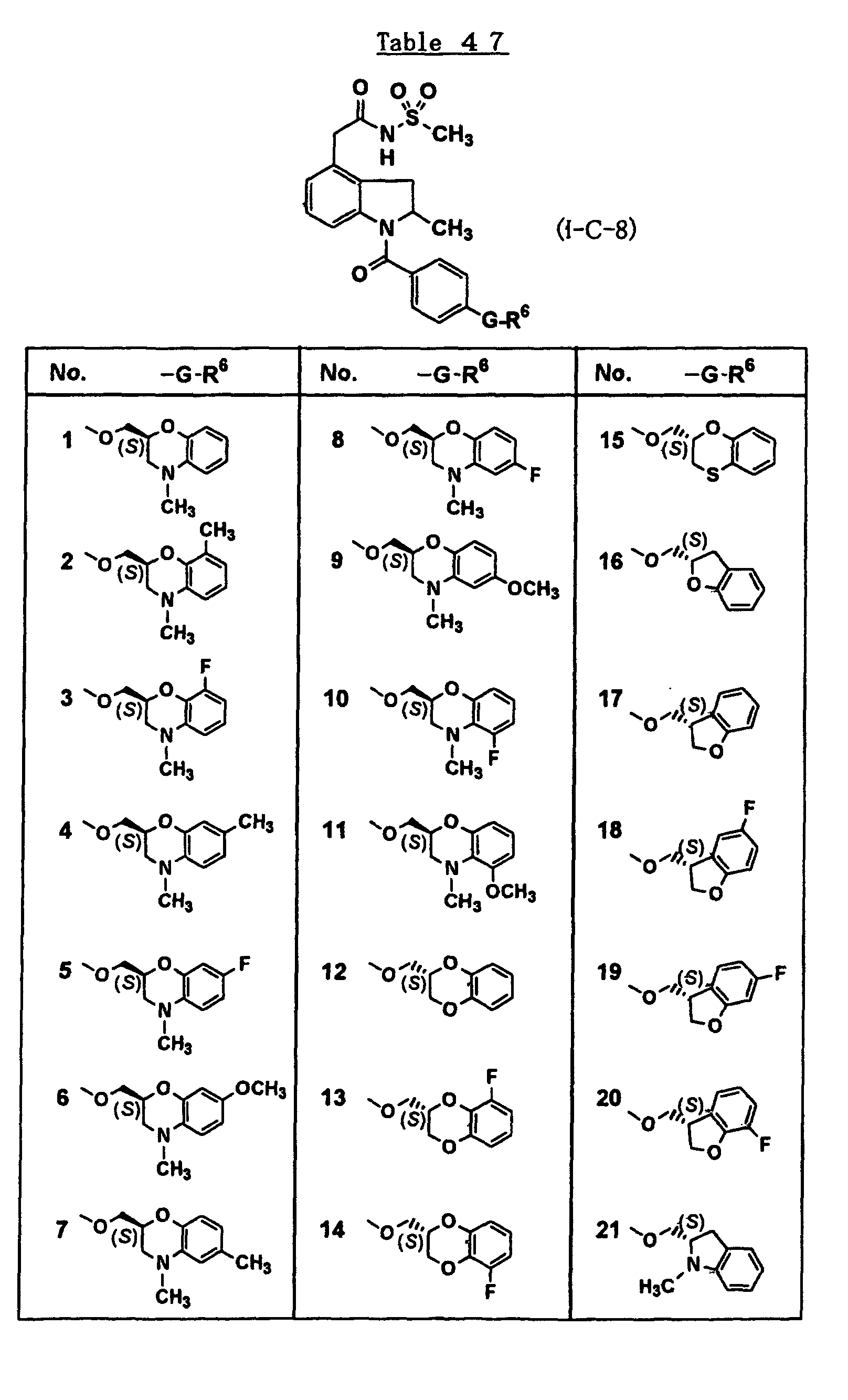
a compound represented by formula (I-C-8);

a compound represented by formula (I-D-1);

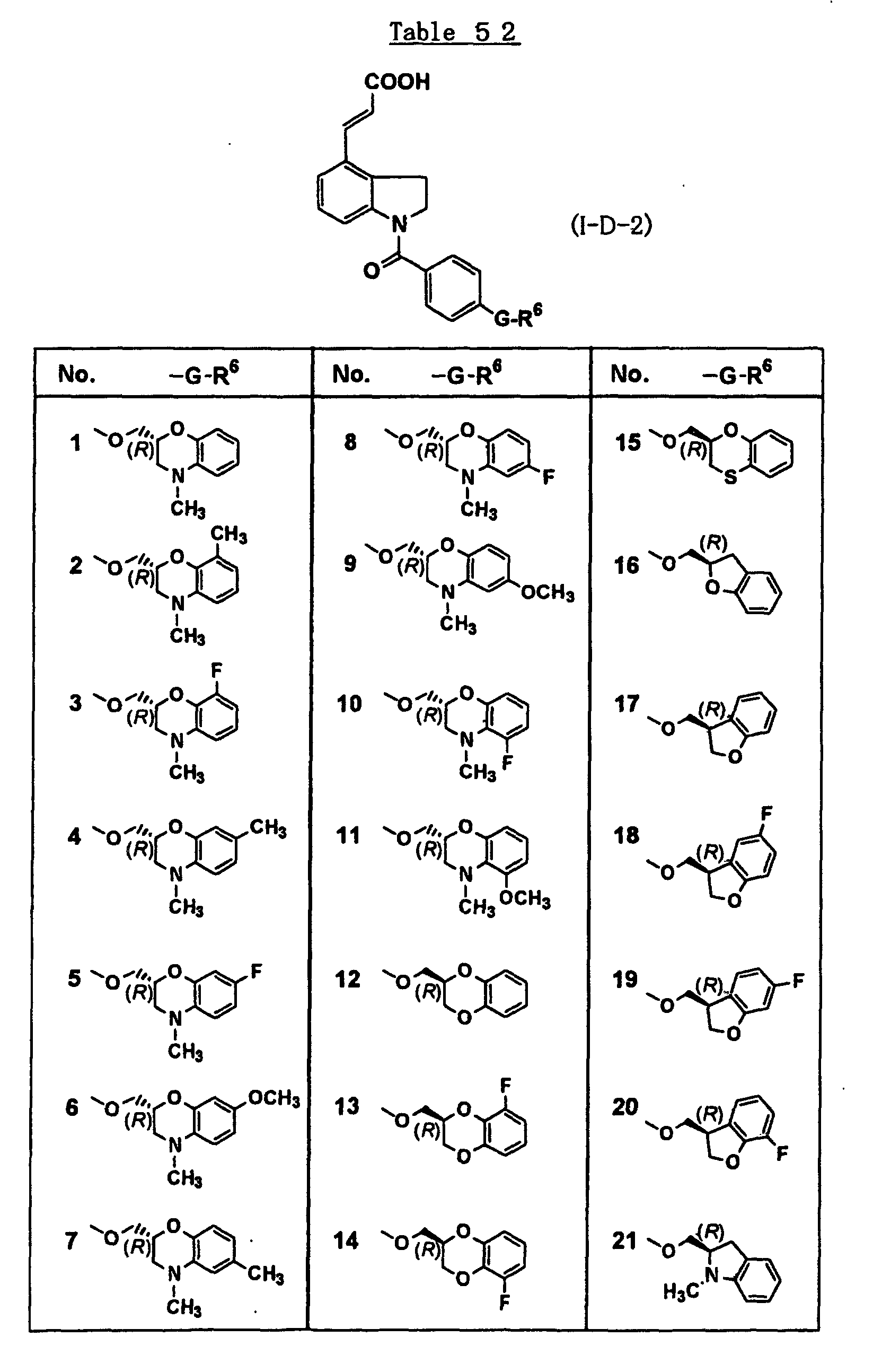
a compound represented by formula (I-D-2);
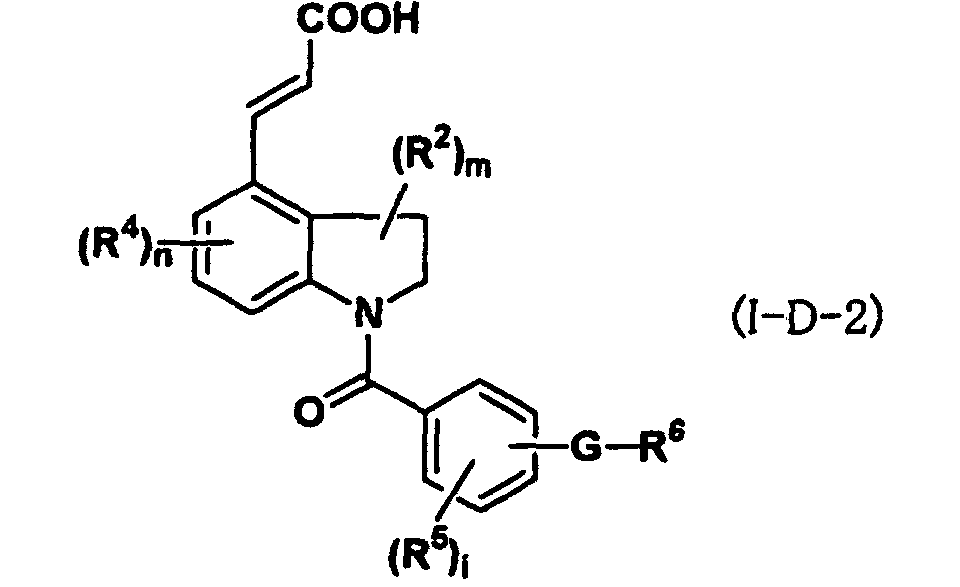
a compound represented by formula (I-D-3);
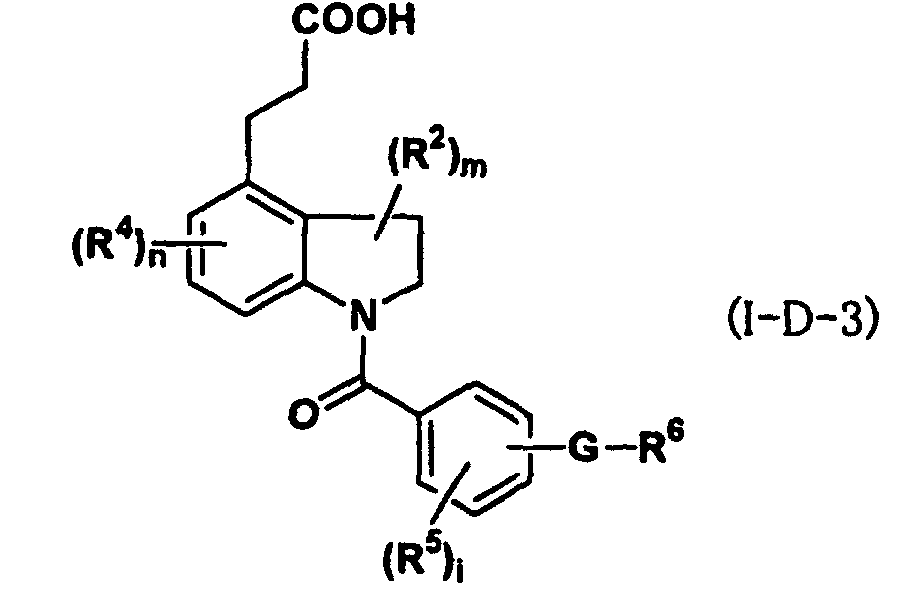
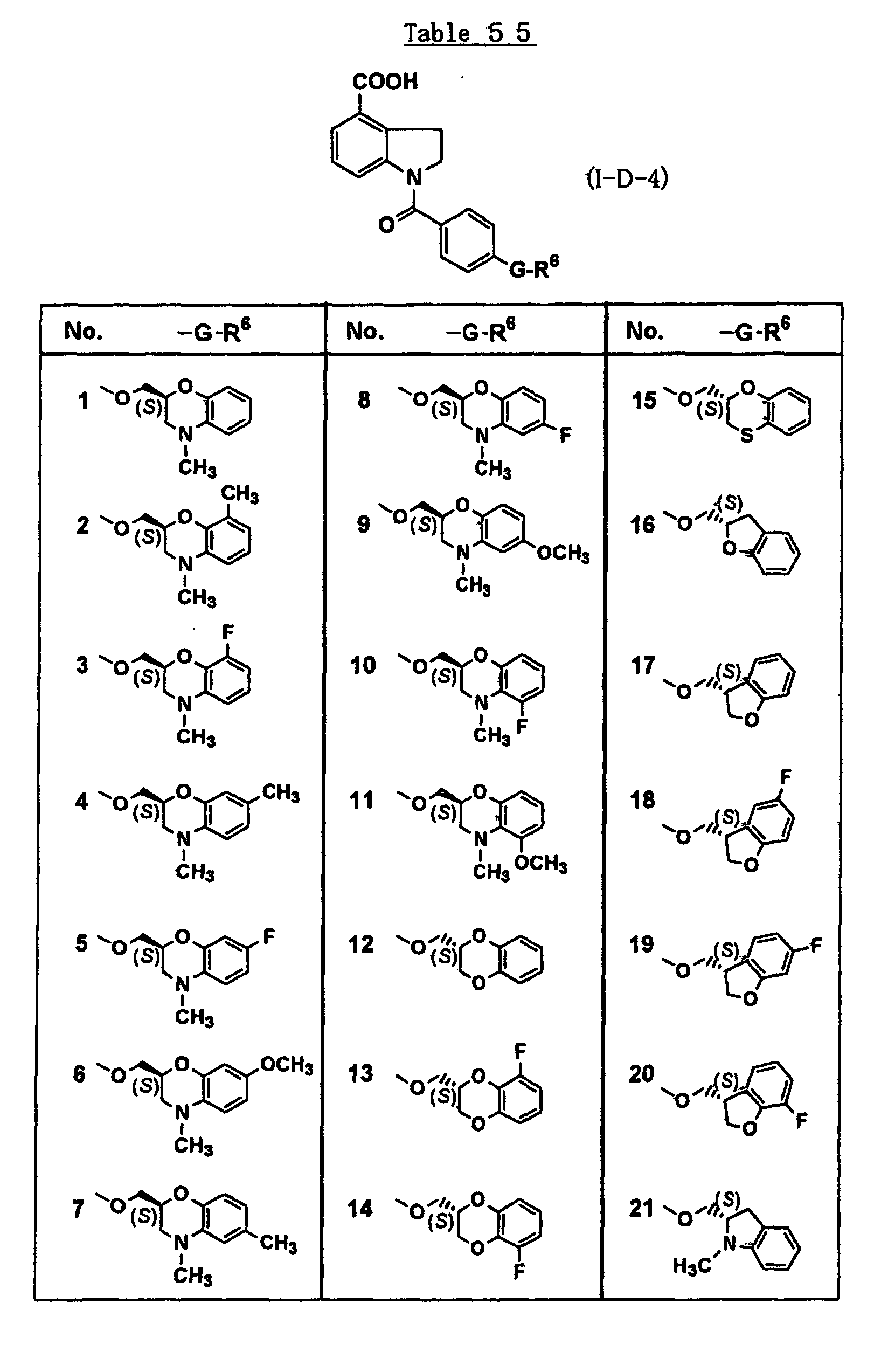
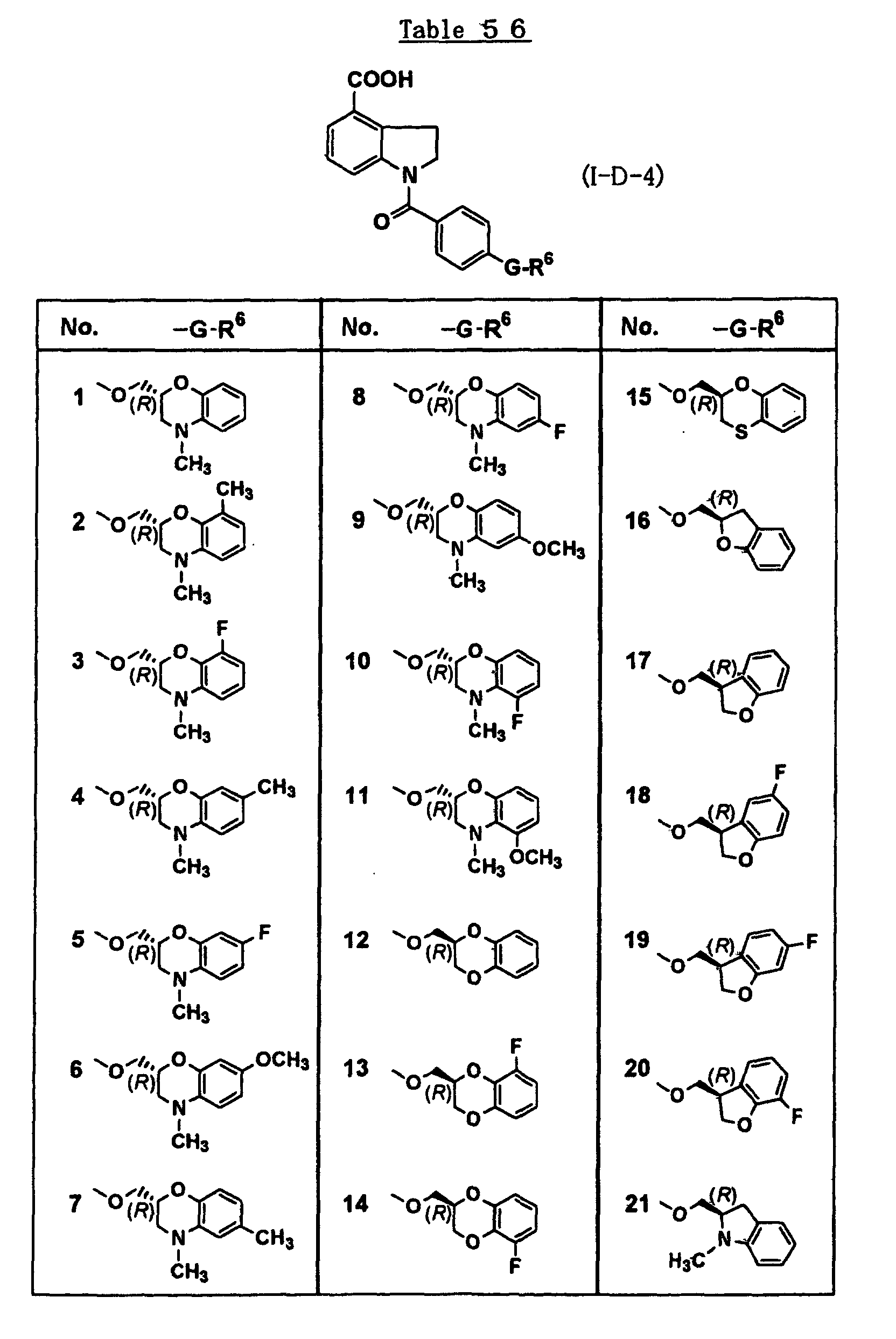
a compound represented by formula (I-D-4);

a compound represented by formula (I-D-5);

a compound represented by formula (I-D-6);
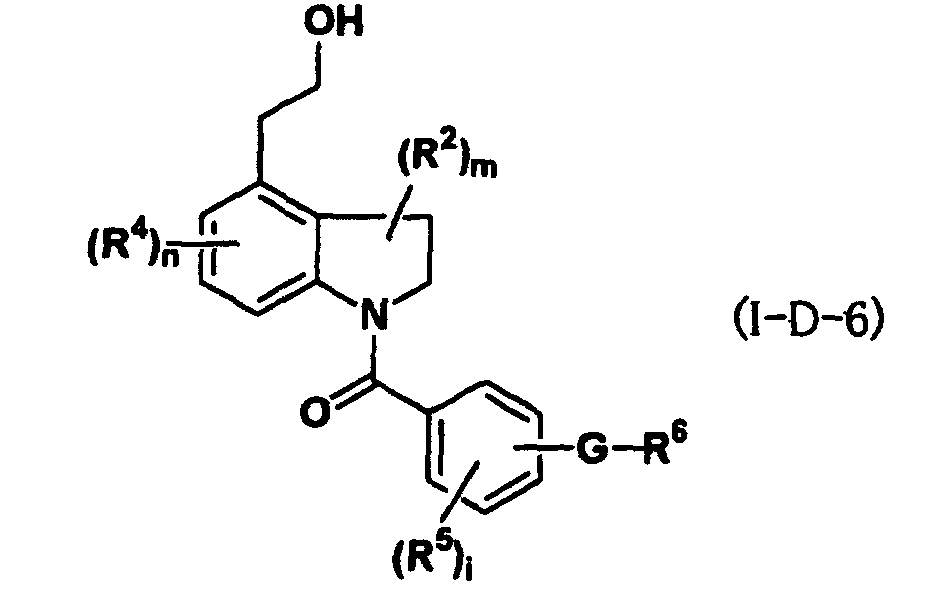
a compound represented by formula (I-D-7);
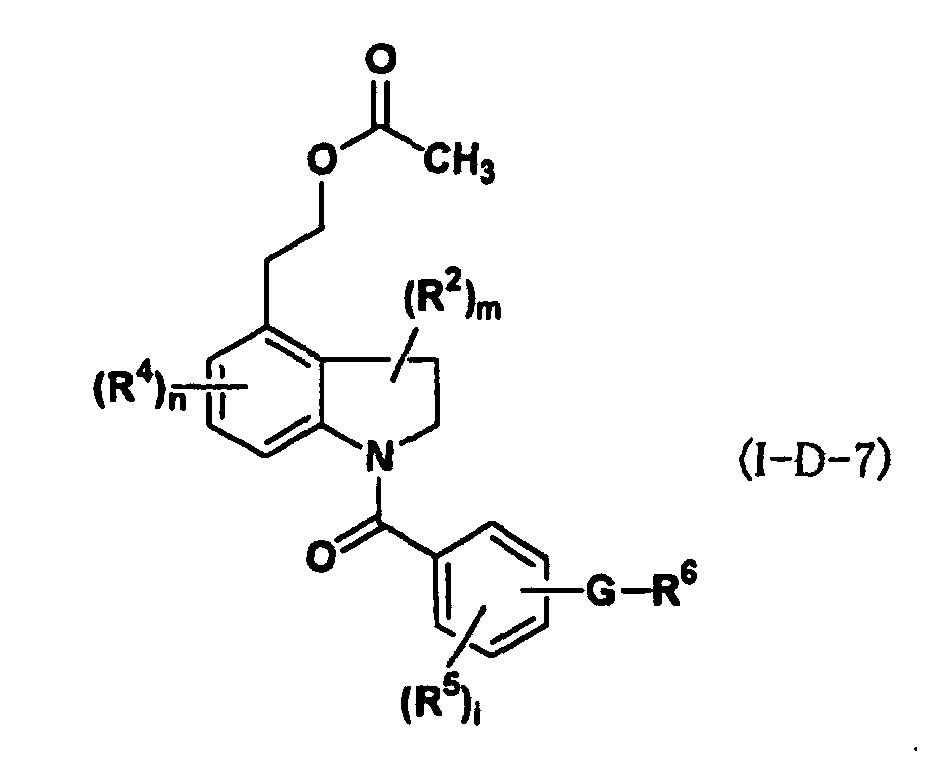
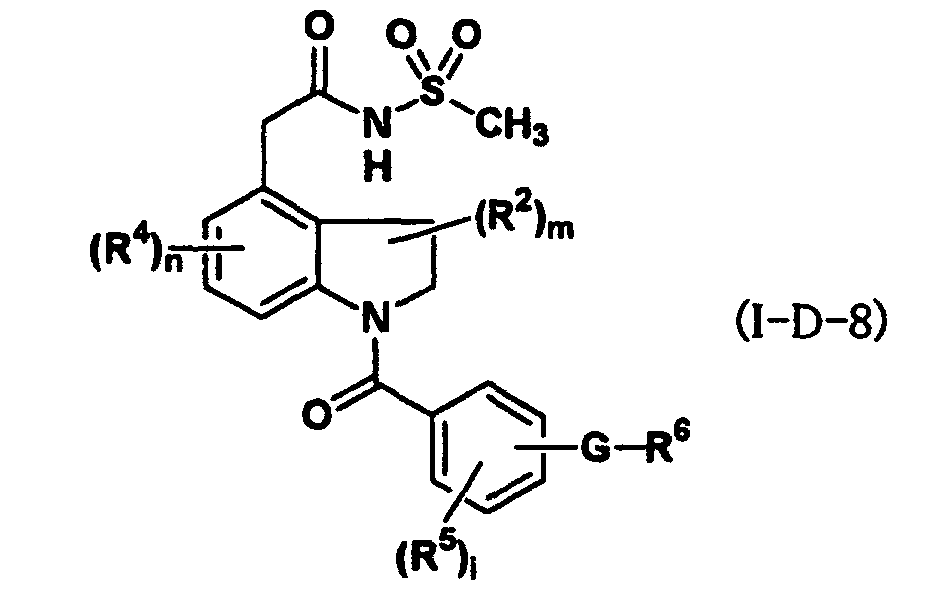
a compound represented by formula (I-D-8);
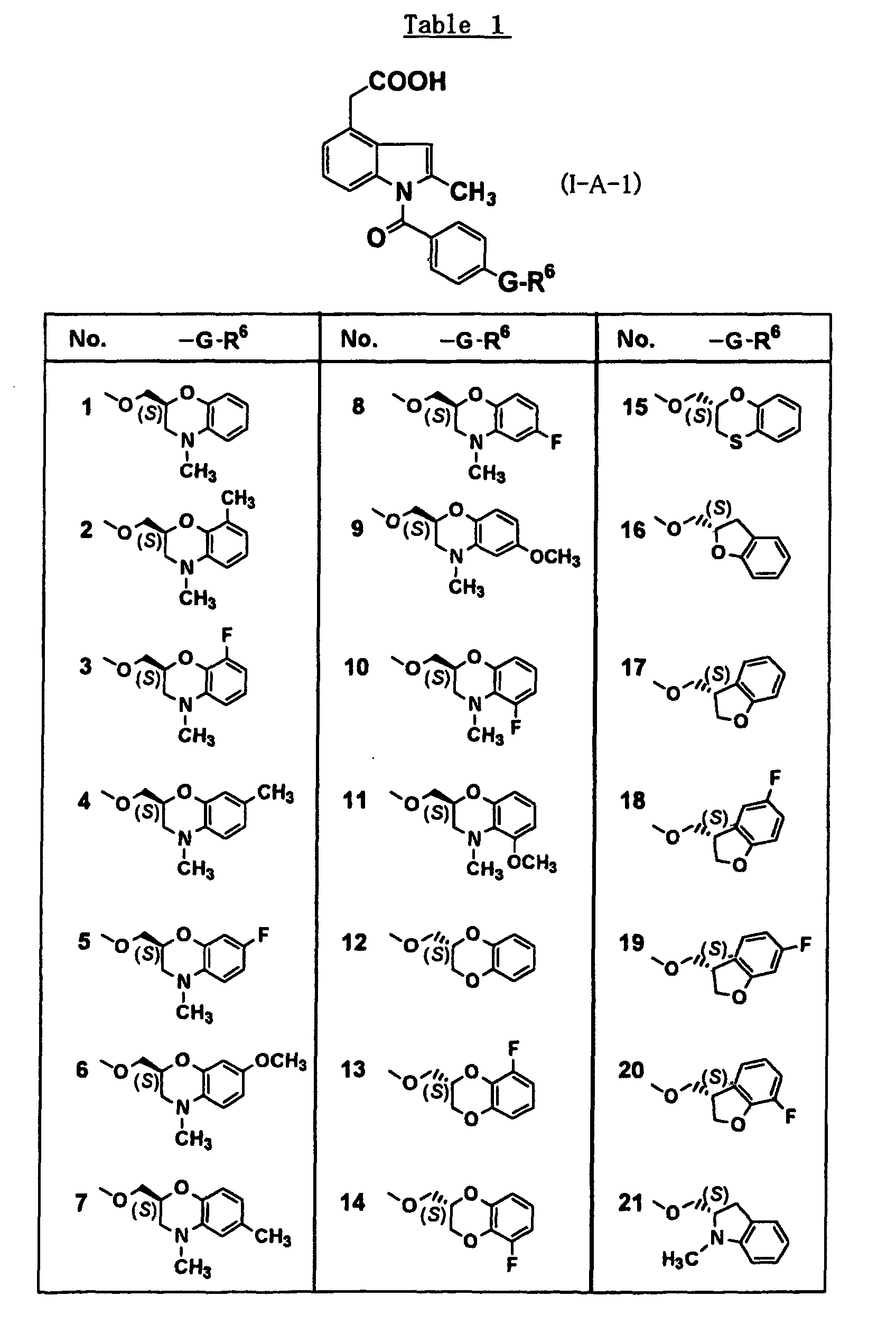
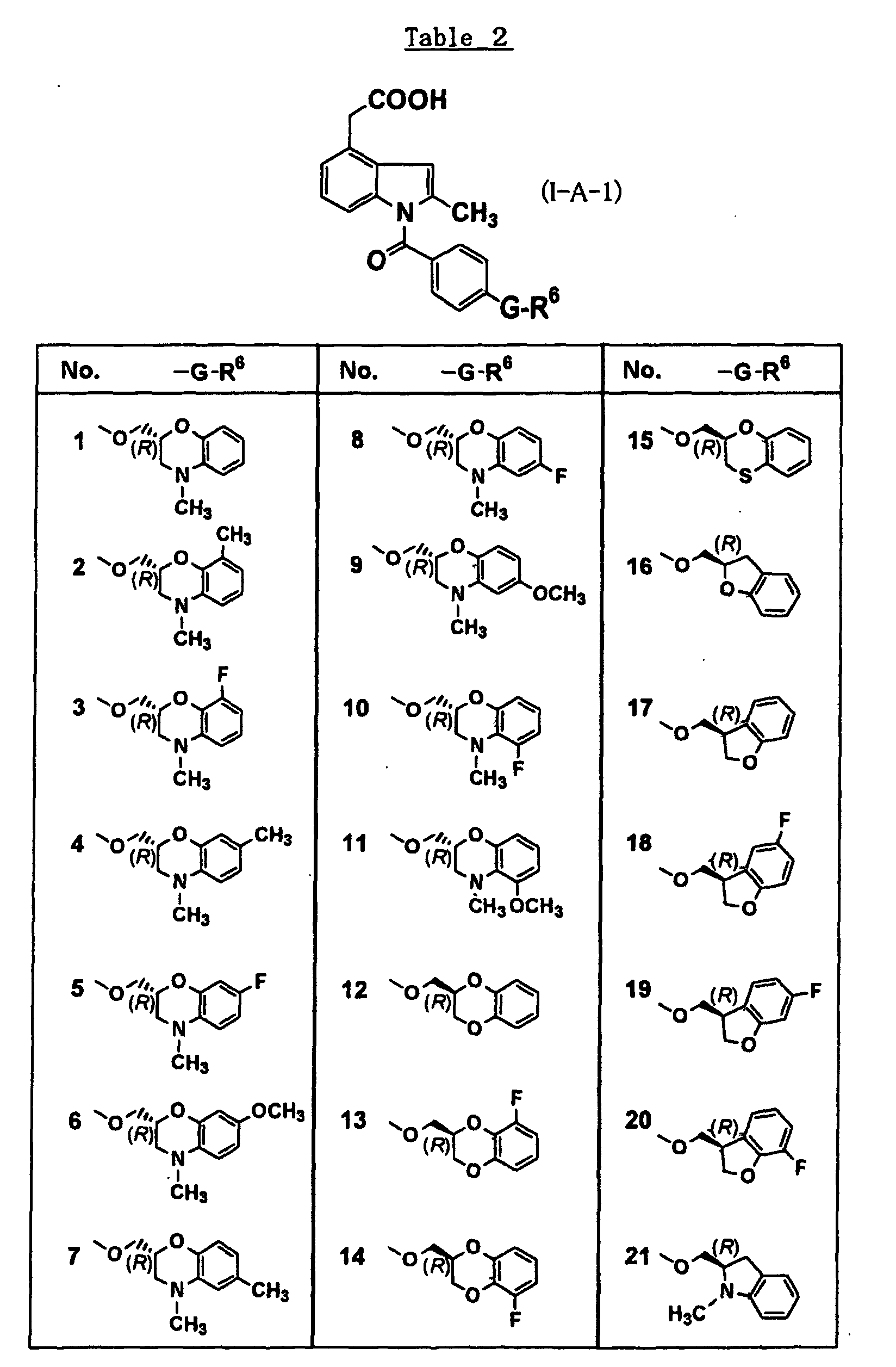

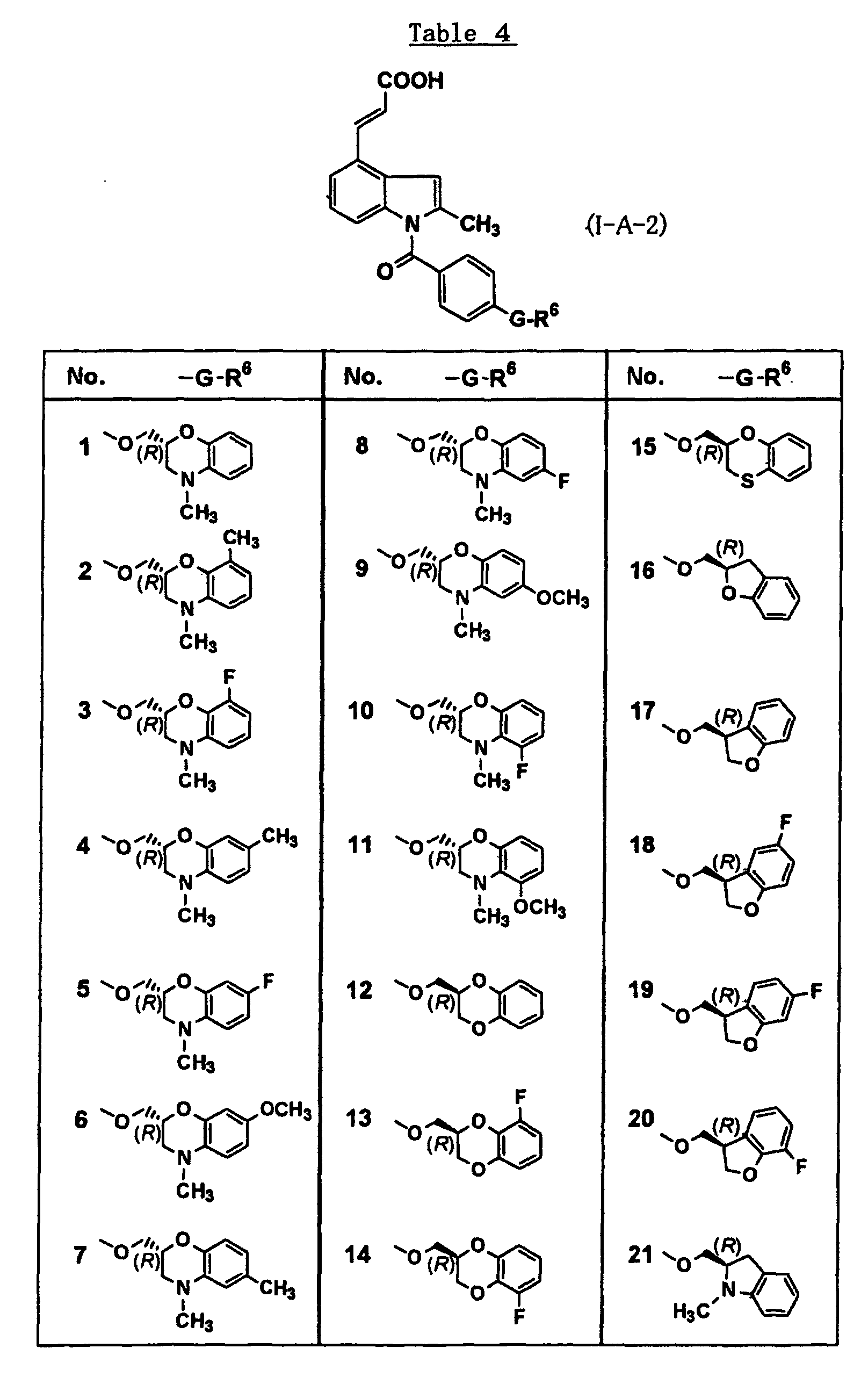
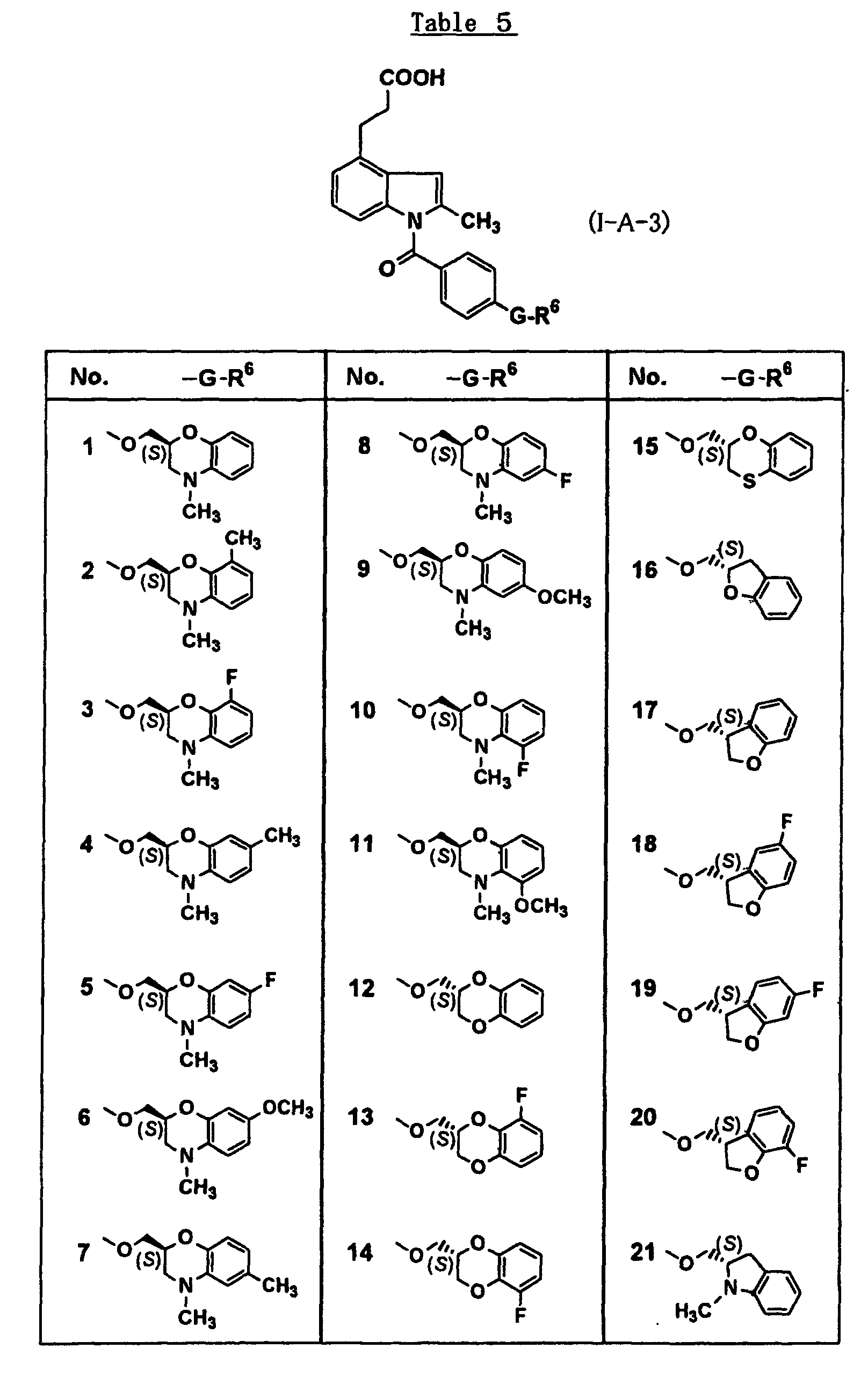
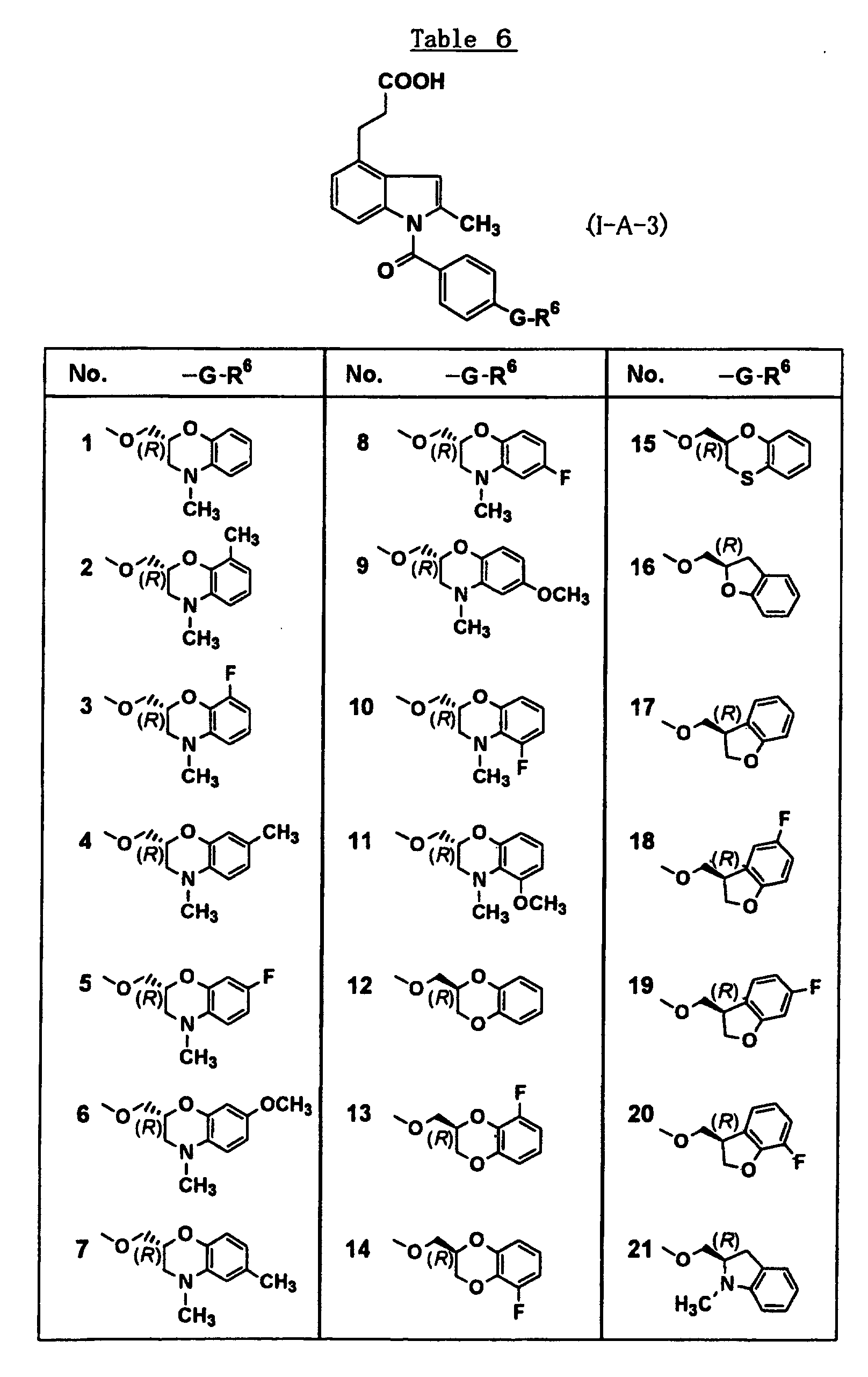


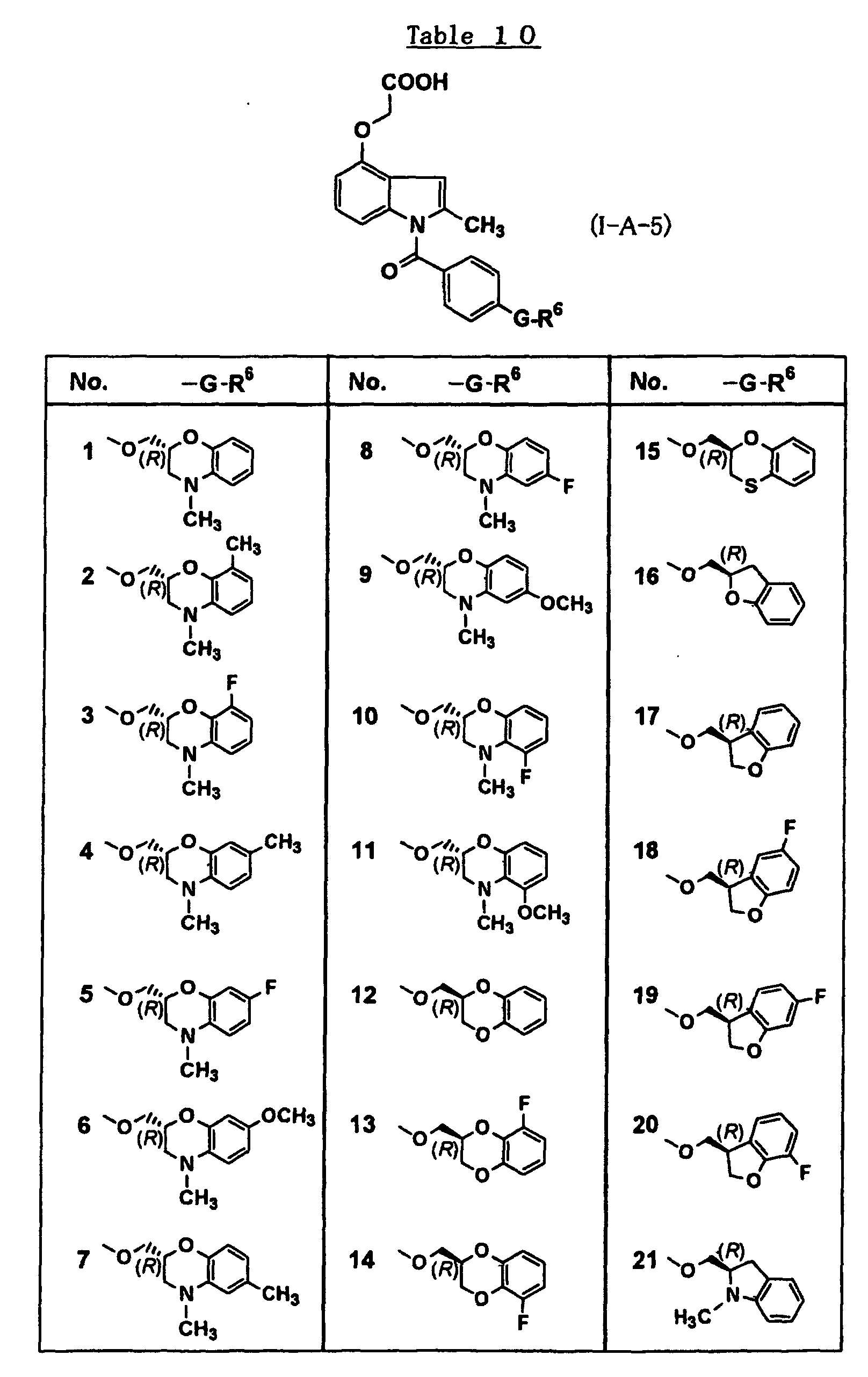


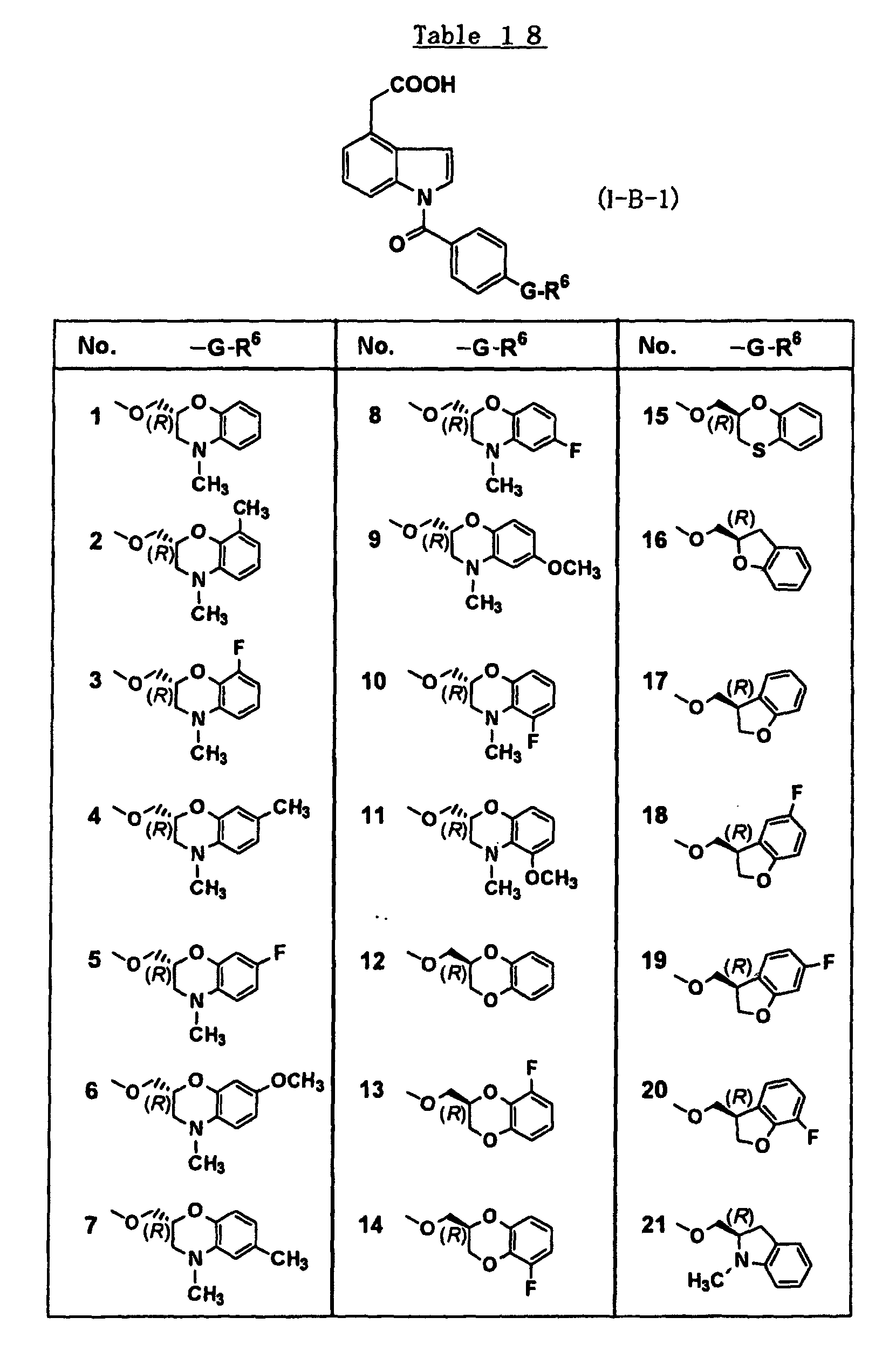








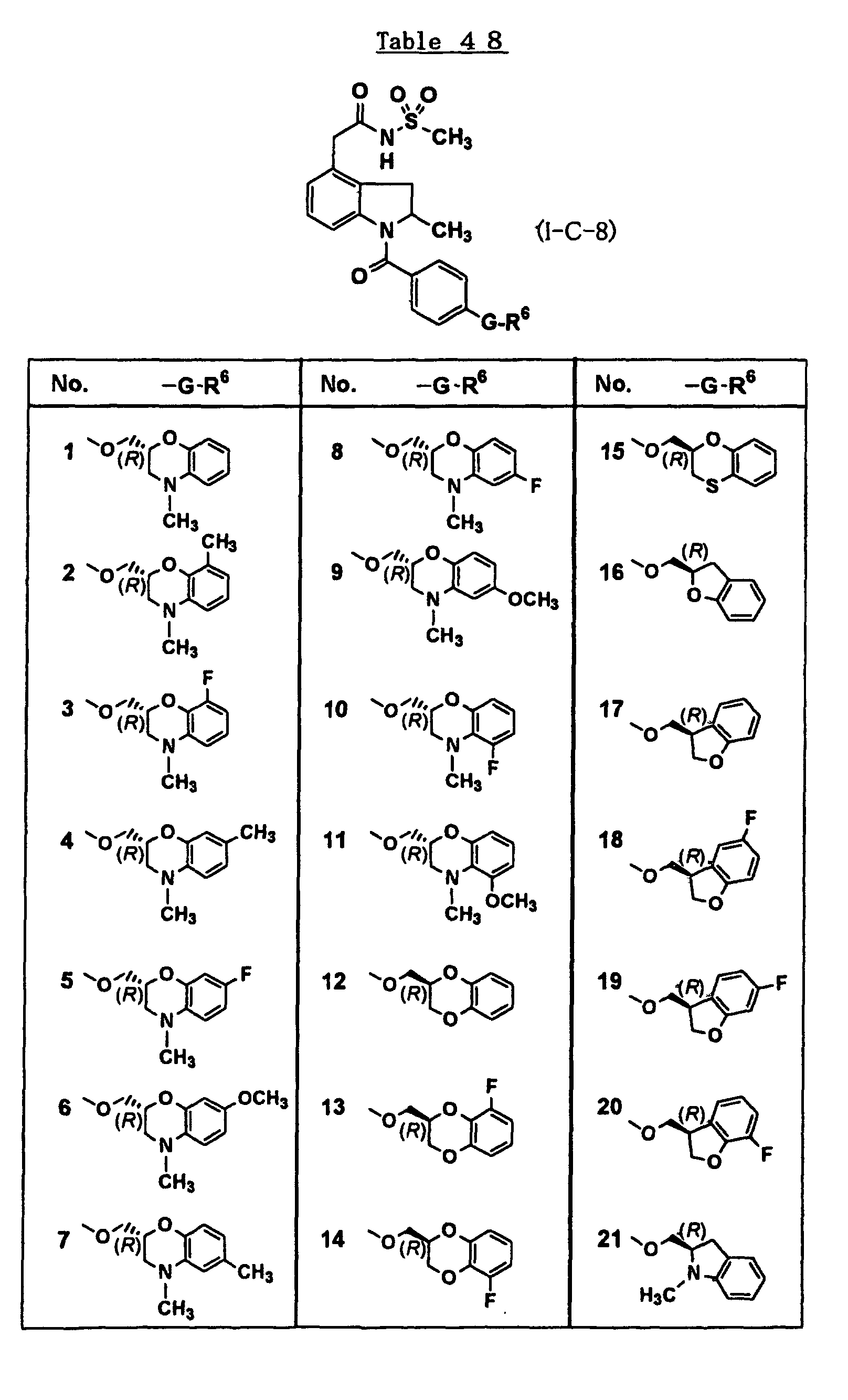
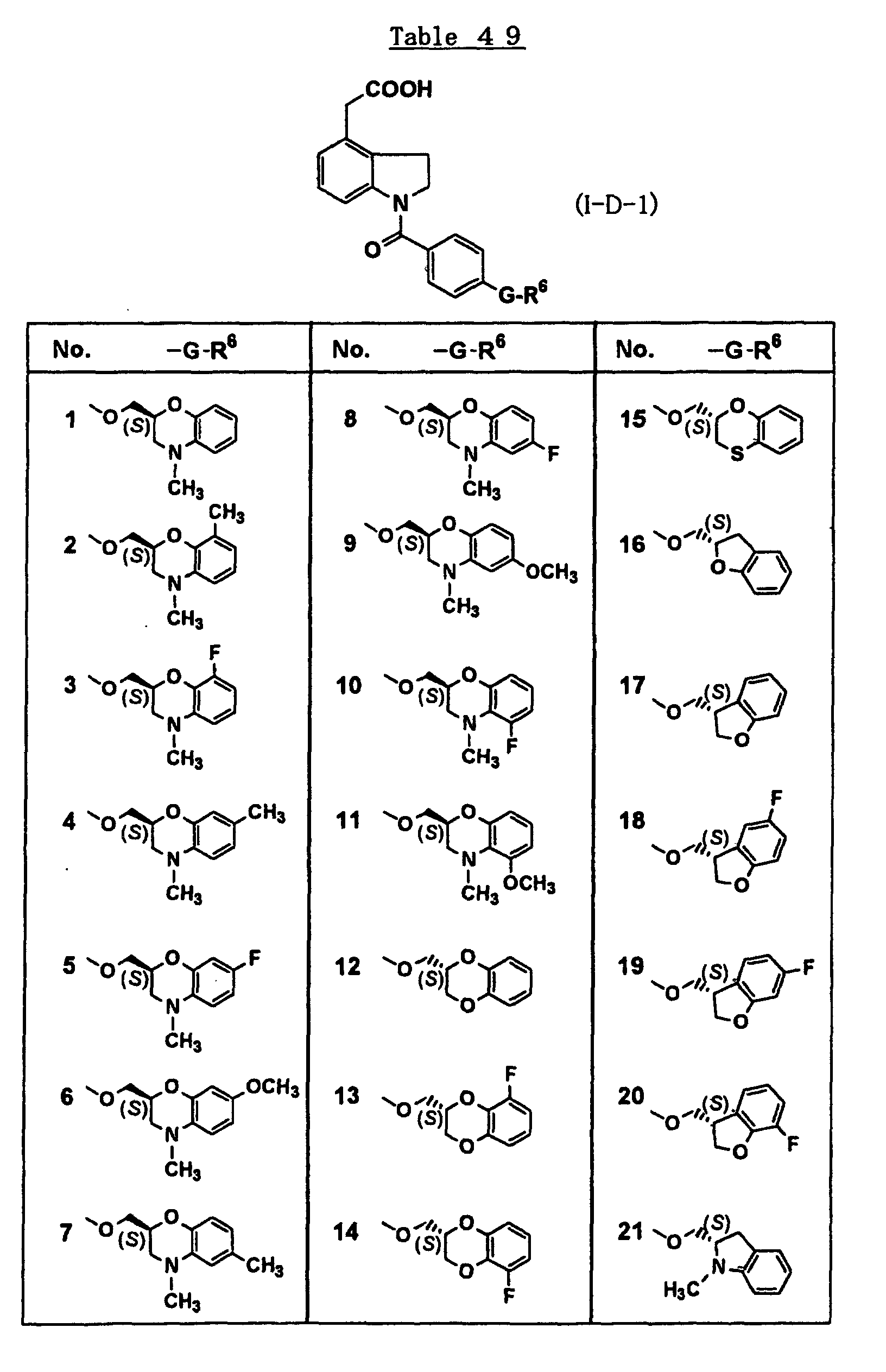
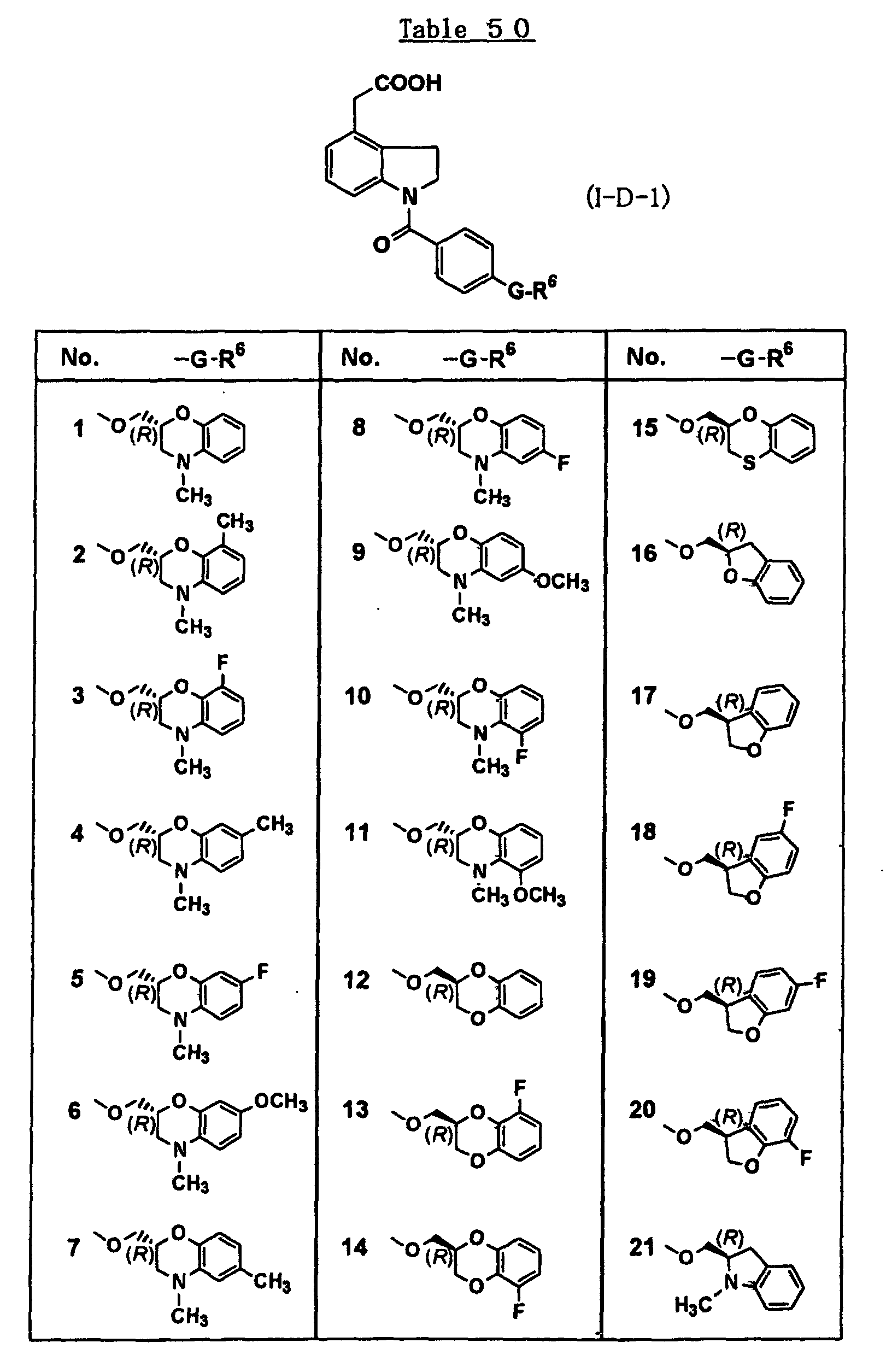
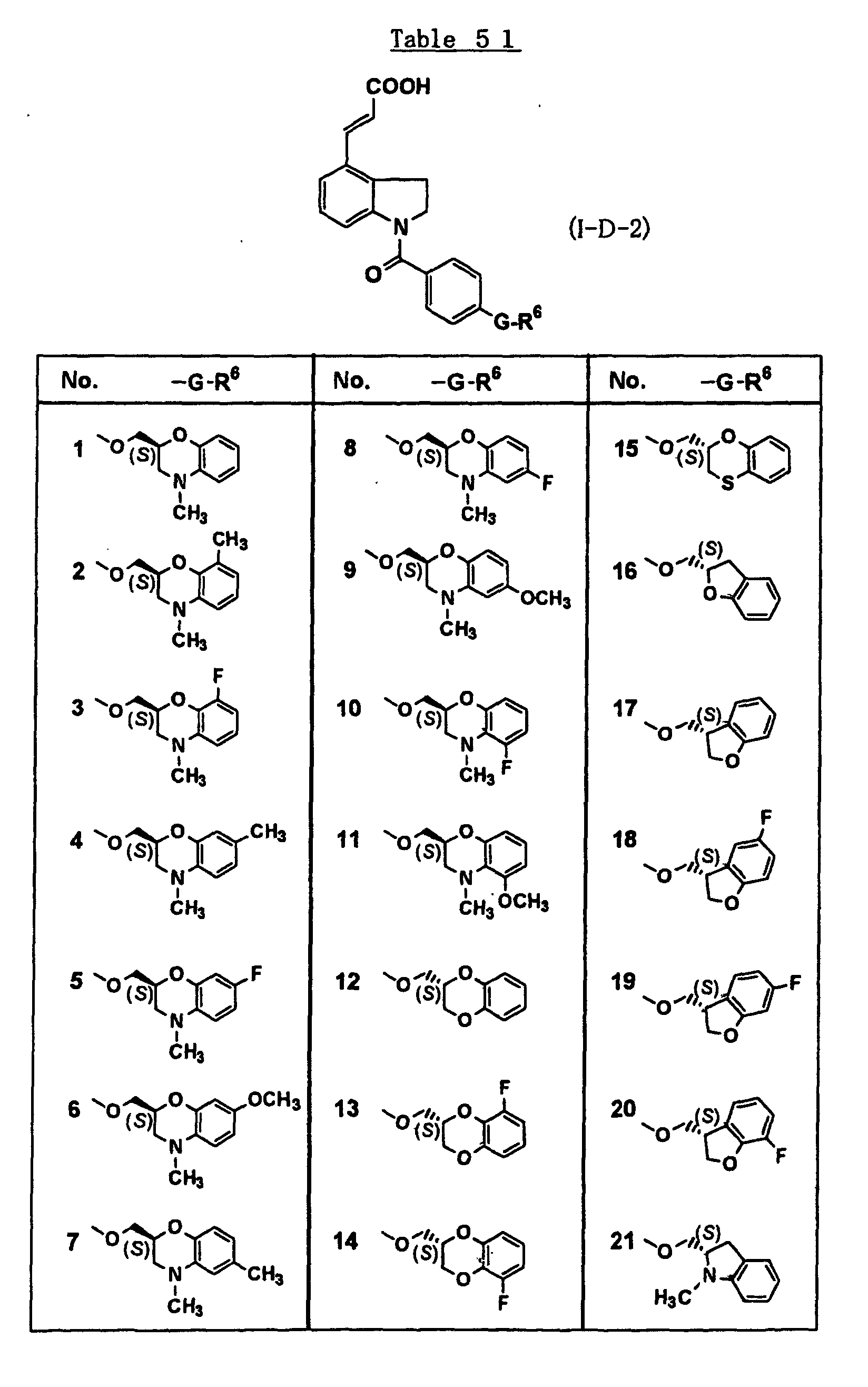




- (1) The method using acyl halide may be carried out, for example, by reacting carboxylic acid with acyl halide (oxalyl chloride or thionyl chloride, etc.) in an organic solvent (chloroform, methylene chloride, diethyl ether or tetrahydrofuran, etc.) or without a solvent at 20°C to reflux temperature and then reacting the obtained acyl halide with alcohol in an inactive organic solvent (chloroform, methylene chloride, diethyl ether or tetrahydrofuran, etc.), under the presence of a tertiary amine (pyridine, triethyl amine, dimethyl aniline, dimethylaminopyridine or diisopropylethylamine, etc.) at 0-40°C. The method may be carried out by reacting with acyl halide in an organic solvent (dioxane, tetrahydrofuran) using an alkaline solution (sodium bicarbonate, sodium hydroxide, etc.) at 0-40°C.
- (2) The method using mixed acid anhydride may be carried out, for example, by reacting carboxylic acid with acyl halide (epivaloyl chloride, tosyl chloride, mesyl chloride, etc.), or an acid derivative (ethyl chloroformate or isobutyl chloroformate, etc.) in an organic solvent (chloroform, methylene chloride, diethyl ether, tetrahydrofuran, etc.) or without a solvent, under the presence of a tertiary amine (pyridine, triethylamine, dimethylaniline, dimethylaminopyridine or diisopropylethylamine, etc.) at 0-40°C, and then reacting the obtained mixed acid anhydride with alcohol in an organic solvent (chloroform, methylene chloride, diethyl ether or tetrahydrofuran, etc.) at 0-40°C.
- (3) The method using a condensing agent may be carried out, for example, by reacting carboxylic acid with alcohol in an organic solvent (chloroform, methylene chloride, dimethylformamide, diethyl ether or tetrahydrofuran, etc.), these mixed solvents, or without a solvent, under the presence or absence of a tertiary amine (pyridine, triethylamine, dimethylaniline or dimethylaminopyridine, etc.), using a condensing agent(1, 3-dicyclohexyl carbodiimide (DCC), 1-ethyl-3-[3-(dimethylamino)propyl] carbodiimide (EDC), 1, 1'-carbodiimidazole (CDI), 2-chloro-1-methylpyridinium iodide, methanesulphonyloxybenzotriazole, 3-methyl-2-fluoropyridinium tosilate methyl or 1-propanephosphonic acid cyclic anhydride;PPA, etc.), with or without 1-hydroxybenzotiazole (HOBt), at 0-40°C.

- (1) The method using an acyl halide may be carried out, for example, by reacting carboxylic acid with acyl halide (oxalyl chloride or thionyl chloride, etc.) in an organic solvent(chloroform, methylene chloride, diethyl ether or tetrahydrofuran, etc.) or without a solvent at -20°C to reflux temperature and then reacting the obtained acyl halide with amine in an inactive organic solvent(chloroform, methylene chloride, diethyl ether, tetrahydrofuran, ethyl acetate, or acetonitrile, etc.), under the presence of tertiary amine(pyridine, triethyl amine, dimethyl aniline, dimethylaminopyridine or diisopropylethylamine, etc.) at 0-40°C. The method may be carried out by reacting with the acyl halide in an organic solvent (dioxane, tetrahydrofuran, toluene, or dimethoxyethane, etc.) using an alkaline solution (sodium bicarbonate, sodium hydroxide, etc.) at 0-40°C.
- (2) The method using a mixed acid anhydride may be carried out, for example, by reacting carboxylic acid with acyl halide (epivaloyl chloride, tosyl chloride, mesyl chloride, etc.), or an acid derivative (ethyl chloroformate or isobutyl chloroformate, etc.) in an organic solvent (chloroform, methylene chloride, diethyl ether, tetrahydrofuran, etc.) or without a solvent, under the presence of a tertiary amine (pyridine, triethylamine, dimethylaniline, dimethylaminopyridine or diisopropylethylamine, etc.) at 0-40°C, and then reacting the obtained mixed acid anhydride with amine in an organic solvent (chloroform, methylene chloride, diethyl ether or tetrahydrofuran, etc.) at 0-40°C.
- (3) The method using a condensing agent may be carried out, for example, by reacting carboxylic acid with amine in an organic solvent (chloroform, methylene chloride, dimethylformamide, diethyl ether or tetrahydrofuran, etc.) or without a solvent, under the presence or absence of a tertiary amine (pyridine, triethylamine, dimethylaniline or dimethylaminopyridine, etc.), using a condensing agent(1, 3-dicyclohexyl carbodiimide (DCC), 1-ethyl-3-[3-(dimethylamino)propyl] carbodiimide (EDC), 1, 1'-carbodiimidazole (CDI), 2-chloro-1-methylpyridinium iodide, methanesulphonyloxybenzotriazole, or 1-propanephosphonic acid cyclic anhydride; PPA, etc.), with or without 1-hydroxybenzotiazole (HOBt), at 0-40°C.






Incubation buffer:
- Tris-HCl (10 mmol/L, pH 7.5)
- NaCl (0.1 mol/L)
- Bovine serum albumin (0.01%)
| Example Num | DP Ki (µM) |
| 2 (16) | 0.031 |

TLC: Rf 0.57 (hexane: ethyl acetate=7:3)
TLC: Rf 0.50 (hexane: ethyl acetate=1:1)
NMR (CDCl3): δ 8.09-8.05 (d, J = 8.5 Hz, 1H), 7.32-7.89 (m, 1H), 7.17-7.08 (m, 1H), 6.49 (s, 1H), 2.61 (s, 3H), 0.29 (s, 9H).
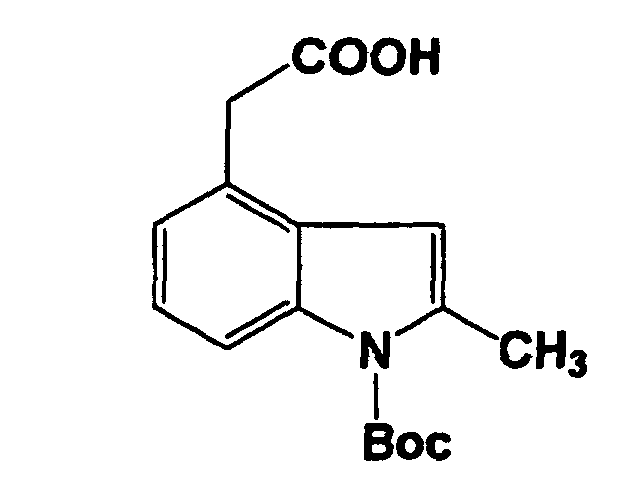

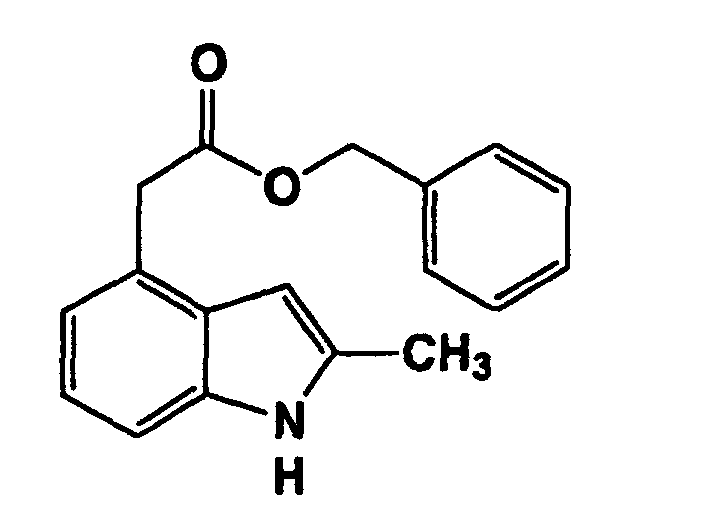
TLC: Rf 0.85 (hexane: ethyl acetate=1:1)
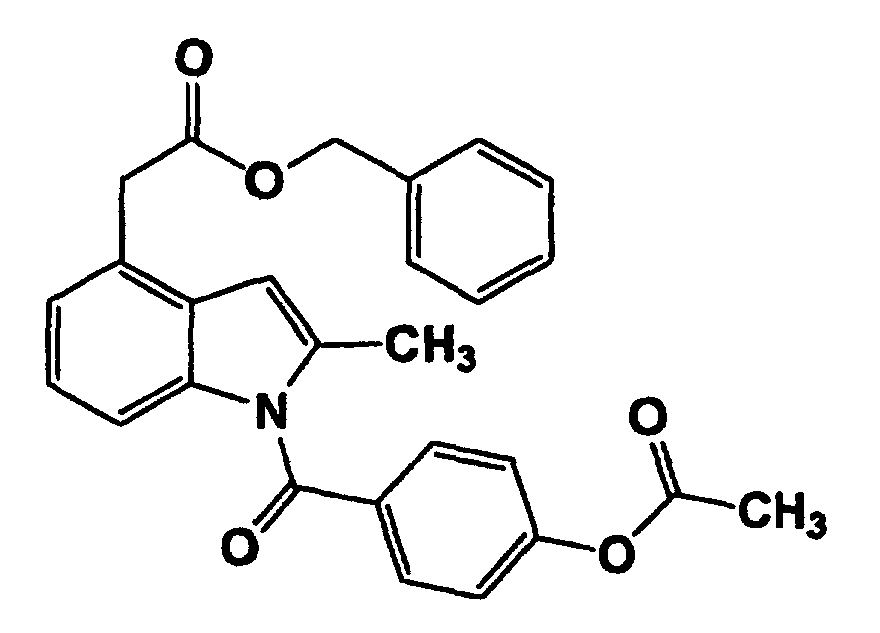
TLC: Rf 0.34 (hexane: ethyl acetate=7:3)
NMR (CDCl3): δ 7.76 (d, J = 8.7 Hz, 2H), 7.40-7.20 (m, 7H), 7.08-6.92 (m, 3H), 6.47 (s, 1H), 5.15 (s, 2H), 3.88 (s, 2H), 2.40 (s, 3H), 2.35 (s, 3H).

TLC: Rf 0.61 (chloroform: methanol=9:1)
NMR(CDCl3): δ 7.72 (m, 2H), 7.44-7.26 (m, 5H), 7.08-6.84 (m, 5H), 6.45 (s, 1H), 5.83 (brs, 1H), 5.15 (s, 2H), 3.88 (s, 2H), 2.42 (s, 3H).

TLC: Rf 0.70 (hexane: ethyl acetate=2:1)

TLC: Rf 0.85 (hexane: ethyl acetate=5: 1)
NMR(CDCl3):δ 7.00-6.91 (m, 2H), 6.80-6.55 (m, 2H), 3.90 (br.s, 1H), 2.82 (s, 3H).

TLC: Rf 0.40 (hexane: ethyl acetate=1:1)

TLC: Rf 0.35 (hexane: ethyl acetate=2:1)
NMR(CDCl3):δ 7.90-6.79 (m, 2H), 6.70-6.60 (m, 2H), 4.33 (m, 1H), 3.82 (dd, J = 13.0, 4.2 Hz, 1H) , 3.79 (dd, J = 13.0, 4.2 Hz, 1H), 3.19 (dd, J = 10.2, 2.1 Hz, 1H), 3.17 (dd, J = 11.4, 5.4 Hz, 1H), 2.86 (s, 3H).
The optical purity of this title compound was decided by using high performance liquid chromatography (HPLC).
Column: CHIRALCEL OD (Daicel Chemical Industries Ltd.)
0.46cmϕ×25cm
Flow rate: 1ml/minute
Solvent: hexane: 2-propanol = 93:7
Detected wave-length: 254nm
Retention time: 30.70 minutes
Temperature: 24°C.
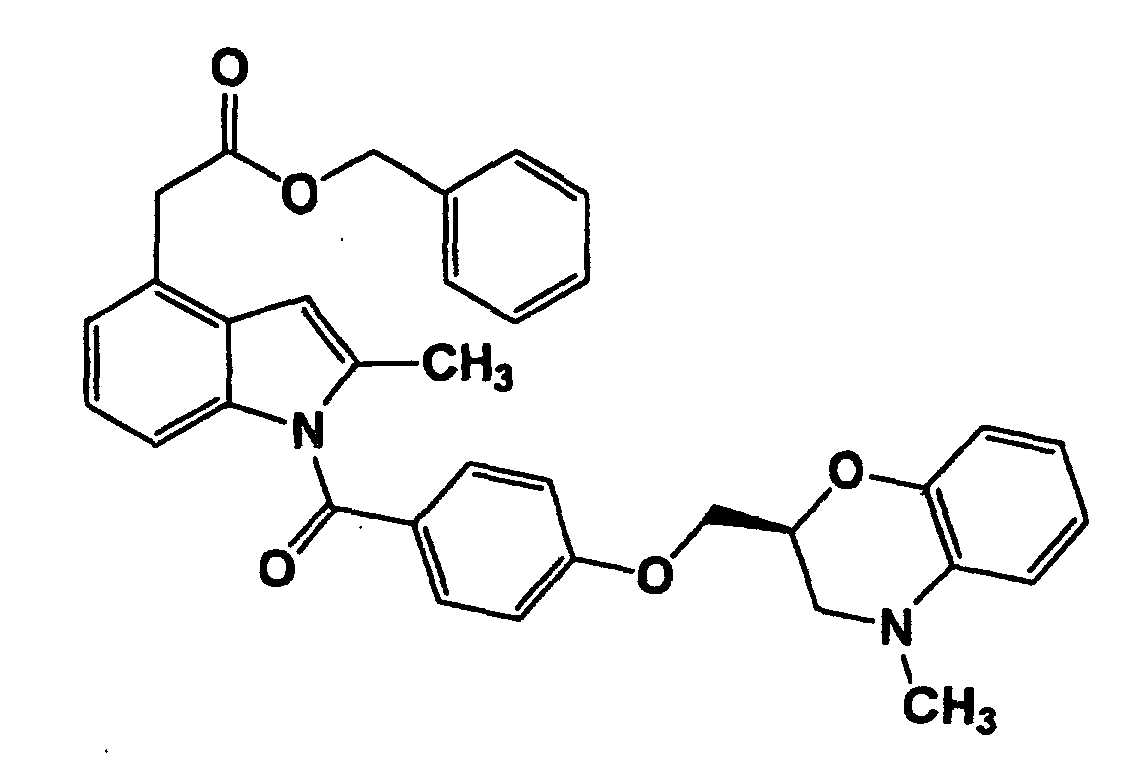
TLC: Rf 0.25 (ethyl acetate: hexane=1:3)
NMR(CDCl3):δ 7.71 (d, J = 8.8 Hz, 2H), 7.43-7.18 (m, 4H), 7.08-6.80 (m, 8H), 6.80-6.65 (m, 2H), 6.46 (s, 1H), 5.15 (s, 2H), 4.68 (m, 1H), 4.31 (dd, J = 9.8, 5.0 Hz, 1H), 4.21 (dd, J = 9.8, 6.2 Hz, 1H), 3.88 (s, 2H), 3.41 (dd, J = 11.4, 3.0 Hz, 1H), 3.28 (dd, J = 11.4, 6.4 Hz, 1H), 2.92 (s, 3H), 2.42 (s, 3H).
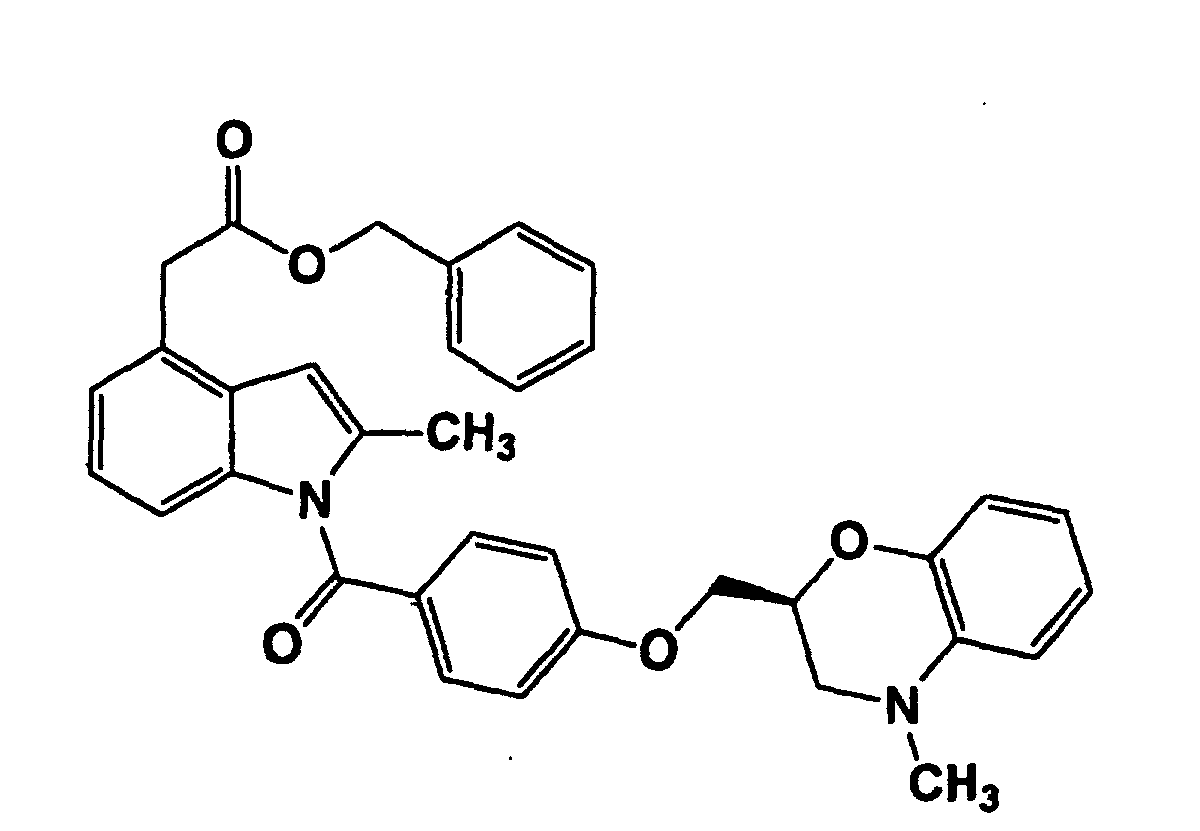
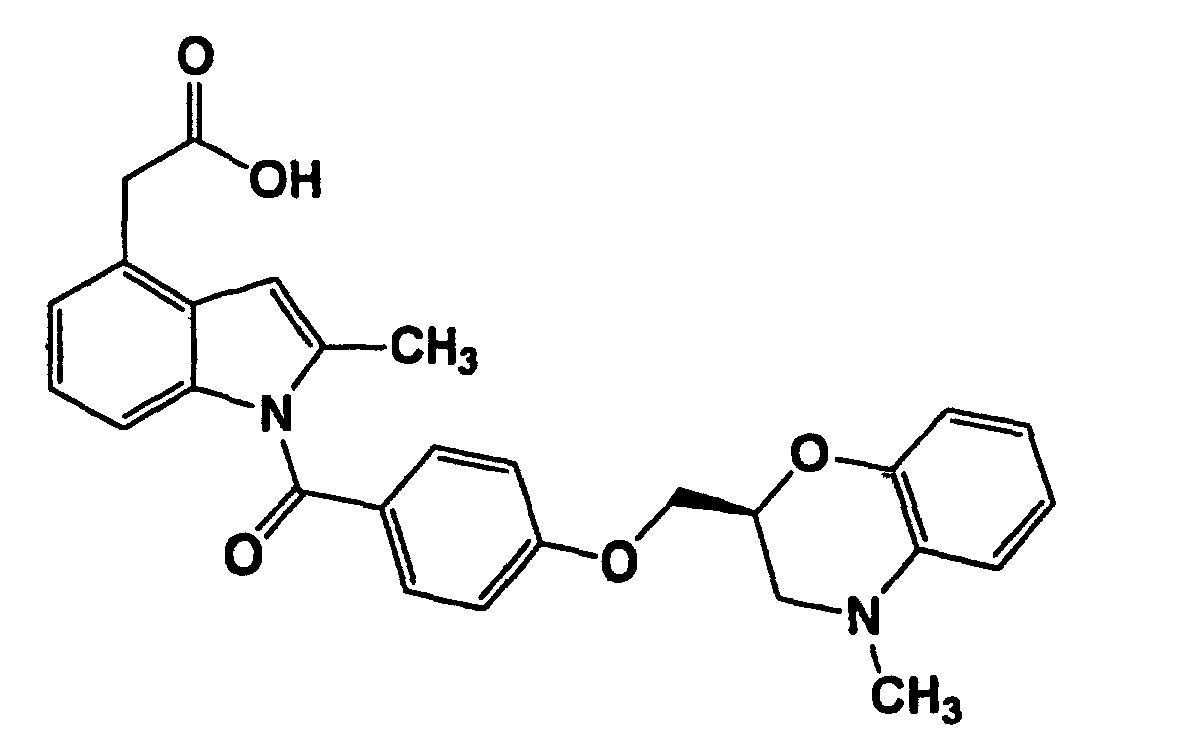
Free boby;
TLC:Rf 0.26 (methanol:chloroform=1:10);
NMR(CDCl3):δ 7.71 (d, J = 9.0 Hz, 2H), 7.20-6.78 (m, 7H), 6.78-6.64 (m, 2H), 6.49 (s, 1H), 4.68 (m, 1H), 4.30 (dd, J = 9.9. 5.4 Hz, 1H), 4.21 (dd, J = 9.9, 6.0 Hz, 1H), 3.86 (s, 2H), 3.40 (dd, J = 11.4,2.7 Hz, 1H), 3.27 (dd, J = 11.4, 6.6 Hz, 1H), 2.92 (s, 3H), 2.44 (s, 3H).
The optical purity of this title compound was decided by using high performance liquid chromatography (HPLC).
Column: CHIRALCEL OD (Daicel Chemical Industries Ltd.)
0.46cmϕ×25cm
Flow rate: 0.5ml/minute
Solvent: acetonitrile: 1.0N sodium perchlorate solution= 85:15
Detected wave-length: 262nm
Retention time: 14.38 minutes
Temperature: 25°C.
Sodium trihydrate:
TLC:Rf 0.37 (chloroform:methanol=10:1);
NMR(CDCl3+CD3OD):δ 7.68 (d, J = 8.8 Hz, 2H), 7.35-6.77 (m, 7H), 6.77-6.60 (m, 2H), 6.54 (s, 1H), 4.72-4.60 (m, 1H), 4.29 (dd, J = 9.6, 5.0 Hz, 1H), 4.25-4.20 (dd, 9.6, 5.8 Hz, 1H), 3.71 (s, 2H), 3.40 (dd, J = 11.6, 2.8 Hz, 1H), 3.28 (dd, J = 11.6, 6.4 Hz, 1H), 2.91 (s, 3H), 2.39 (s, 3H).

NMR(CDCl3):δ 7.75-7.70 (m, 2H), 7.07-6.86 (m, 9H), 6.49 (m, 1H), 4.61 (m, 1H), 4.42 (dd, J =11.4, 2.1 Hz, 1H), 4.33 (dd, J = 10.2, 5.1 Hz, 1H), 4.26 (dd, J = 11.4, 6.3 Hz, 1H), 4.25 (dd, J = 10.2, 6.0 Hz, 1H), 3.87 (s, 2H), 2.44 (d, J = 1.2 Hz, 3H).

NMR (CDCl3) : δ 7.75-7.70 (m, 2H), 7.07-6.86 (m, 9H), 6.50 (m, 1H), 4.61 (m, 1H), 4.42 (dd, J = 11.4, 2.4 Hz, 1H), 4.33 (dd, J = 9.9, 5.1 Hz, 1H), 4.26 (dd, J = 11.4, 6.6 Hz, 1H), 4.25 (dd, J = 9.9, 6.0 Hz, 1H), 3.87 (s, 2H), 2.44 (d, J = 1.2 Hz, 3H).

NMR(CDCl3):δ 7.76-7.66 (m, 2H), 7.20-6.46 (m, 10H), 5.00-2.80 (m, 5H), 3.87 (s, 2H), 2.94 and 2.91 (each s, total 3H), 2.45 (s, 3H).
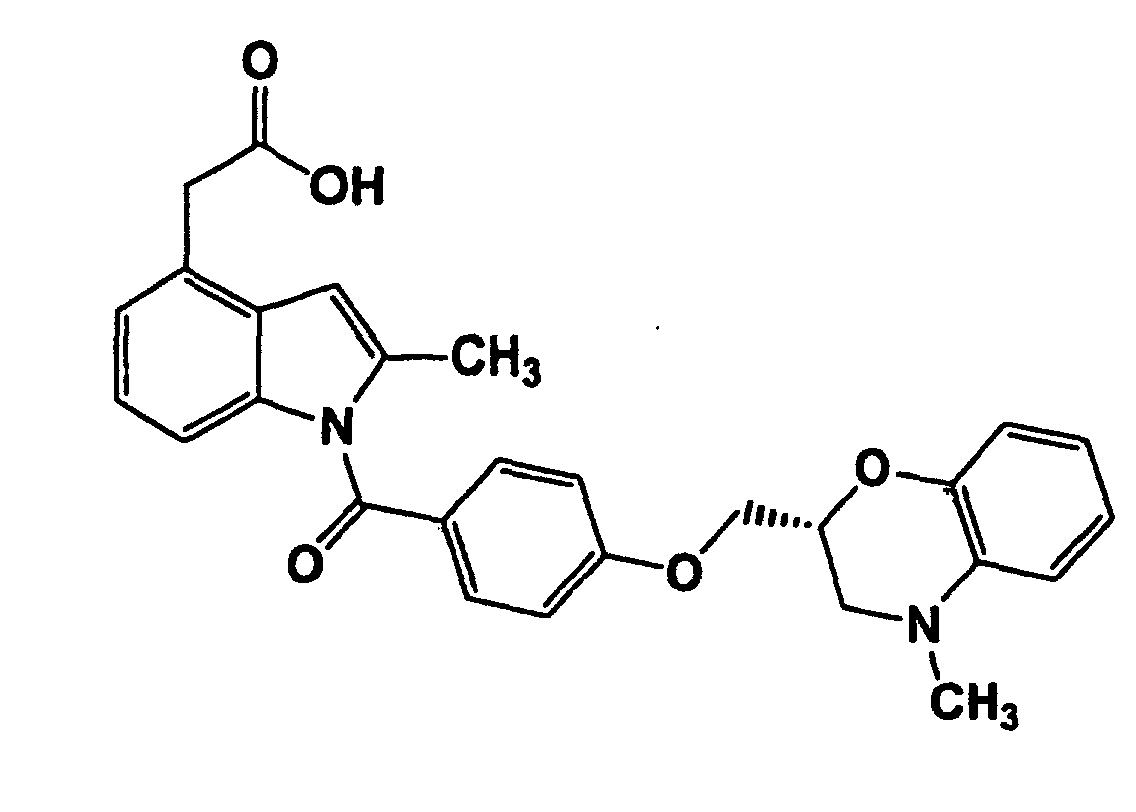
NMR(CDCl3):δ 7.72 (d, J = 8.8 Hz, 2H), 7.12-6.79 (m, 7H), 6.72 (d, J = 7.4 Hz, 2H), 6.49 (s, 1H), 4.68 (m, 1H), 4.31 (dd, J = 9.6, 5.2 Hz, 1H), 4.20 (dd, J = 9.6, 6.2 Hz, 1H), 3.87 (s, 2H), 3.40 (dd, J = 11.6, 2.8 Hz, 1H), 3.28 (dd, J = 11.6, 6.2 Hz, 1H), 2.92 (s, 3H), 2.45 (s, 3H).
The optical purity of this title compound was decided by using high performance liquid chromatography (HPLC).
Column: CHIRALCEL OD (Daicel Chemical Industries Ltd.)
0.46cmϕ×25cm
Flow rate: 0.5ml/minute
Solvent: acetonitrile: 1.0N sodium perchlorate solution= 85:15
Detected wave-length: 262nm
Retention time: 16.88 minutes
Temperature: 25°C.
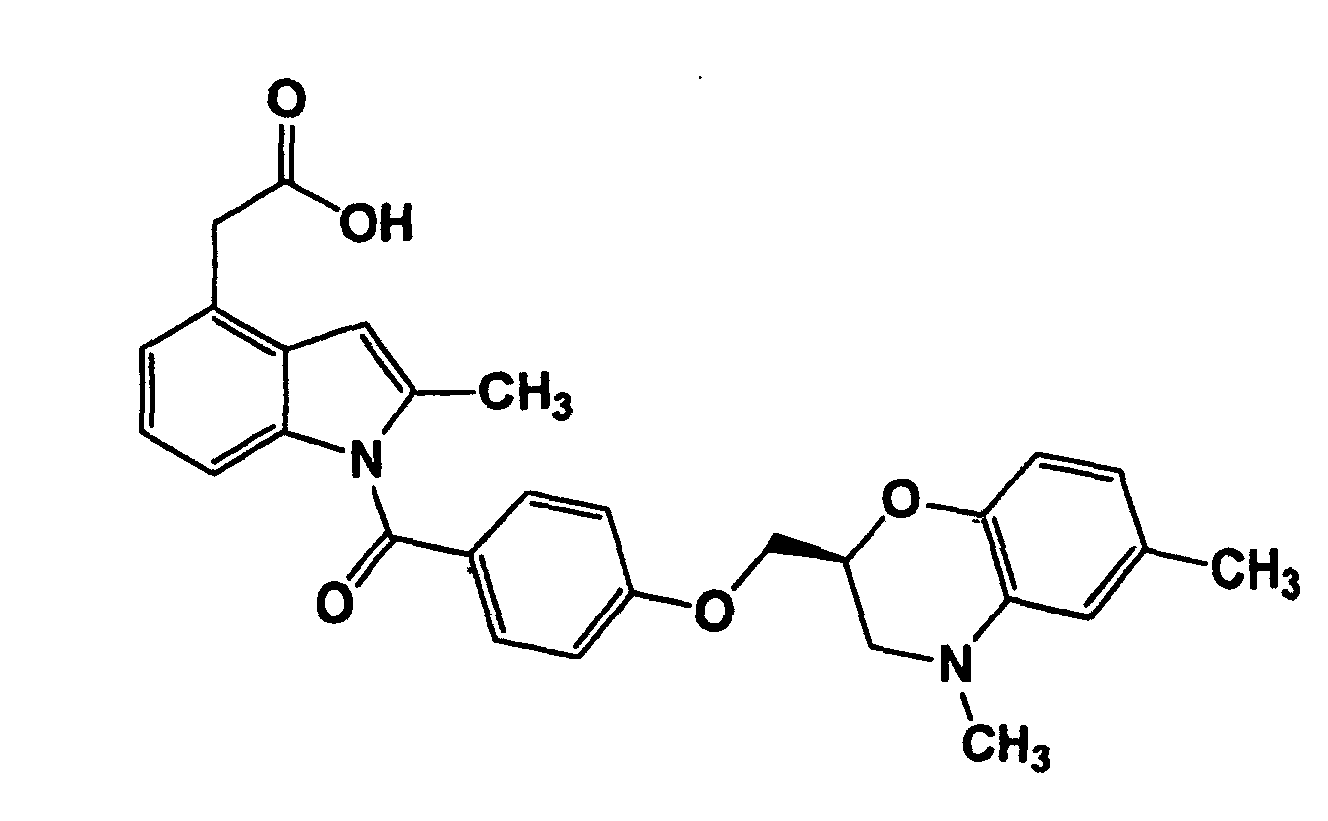
TLC:Rf 0.37 (chloroform: methanol=10:1);
NMR(CDCl3):δ 7.74-7.69 (m, 2H), 7.06-6.82 (m, 5H), 6.73 (d, J = 8.1 Hz, 1H), 6.54-6.47 (m, 3H), 4.64 (m, 1H), 4.30 (dd, J = 9.9, 5.1 Hz, 1H), 4.20 (dd, J = 9.9, 6.3 Hz, 1H), 3.87 (s, 2H), 3.39 (dd, J = 11.4, 2.7 Hz, 1H), 3.26 (dd, J = 11.4, 6.6 Hz, 1H), 2.90 (s, 3H), 2.45 (d, J = 0.9 Hz, 3H), 2.28 (s, 3H).
Hydrochloride:
TLC:Rf 0.45 (chloroform: methanol=9:1);
NMR(CDCl3):δ 7.72 (d, J = 8.4 Hz, 1H), 7.10-6.87 (m, 8H), 6.50 (s, 1H), 4.85 (m, 1H), 4.35 (m, 2H), 3.86 (s, 2H), 3.75 (m, 1H), 3.55 (m, 1H), 3.18 (s, 3H), 2.44 (s, 3H), 2.32 (s, 3H).
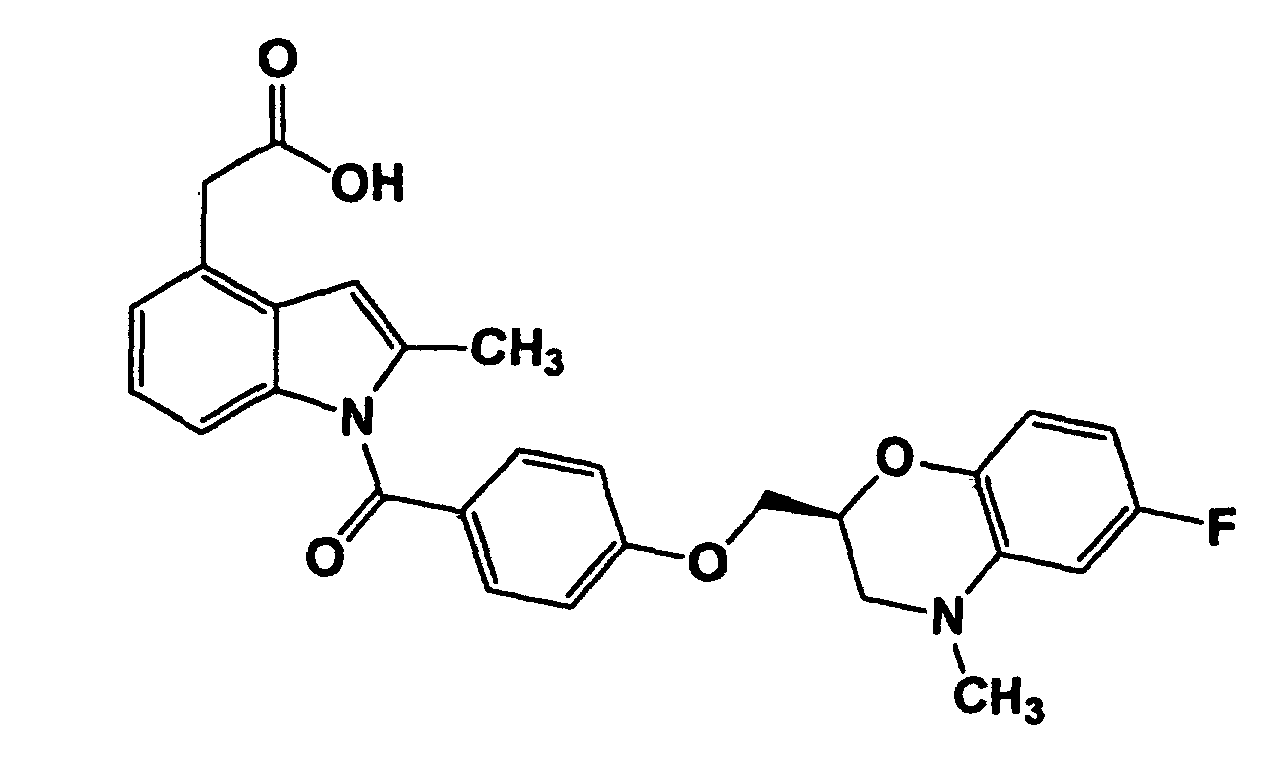
NMR(CDCl3):δ 7.72 (d, J = 8.7 Hz, 2H), 7.07-6.90 (m, 5H), 6.74 (dd, J = 9.0,5.7 Hz, 1H), 6.49 (s, 1H), 6.45-6.30 (m, 2H), 4.66-4.53 (m, 1H), 4.29 (dd, J = 9.6, 4.8 Hz, 1H), 4.18 (dd, J = 9.6, 6.3 Hz, 1H), 3.87 (s, 2H), 3.40 (dd, J = 12.0, 3.0 Hz, 1H), 3.30 (dd, J = 12.0, 6.9 Hz, 1H), 2.91 (s, 3H), 2.45 (s, 3H).
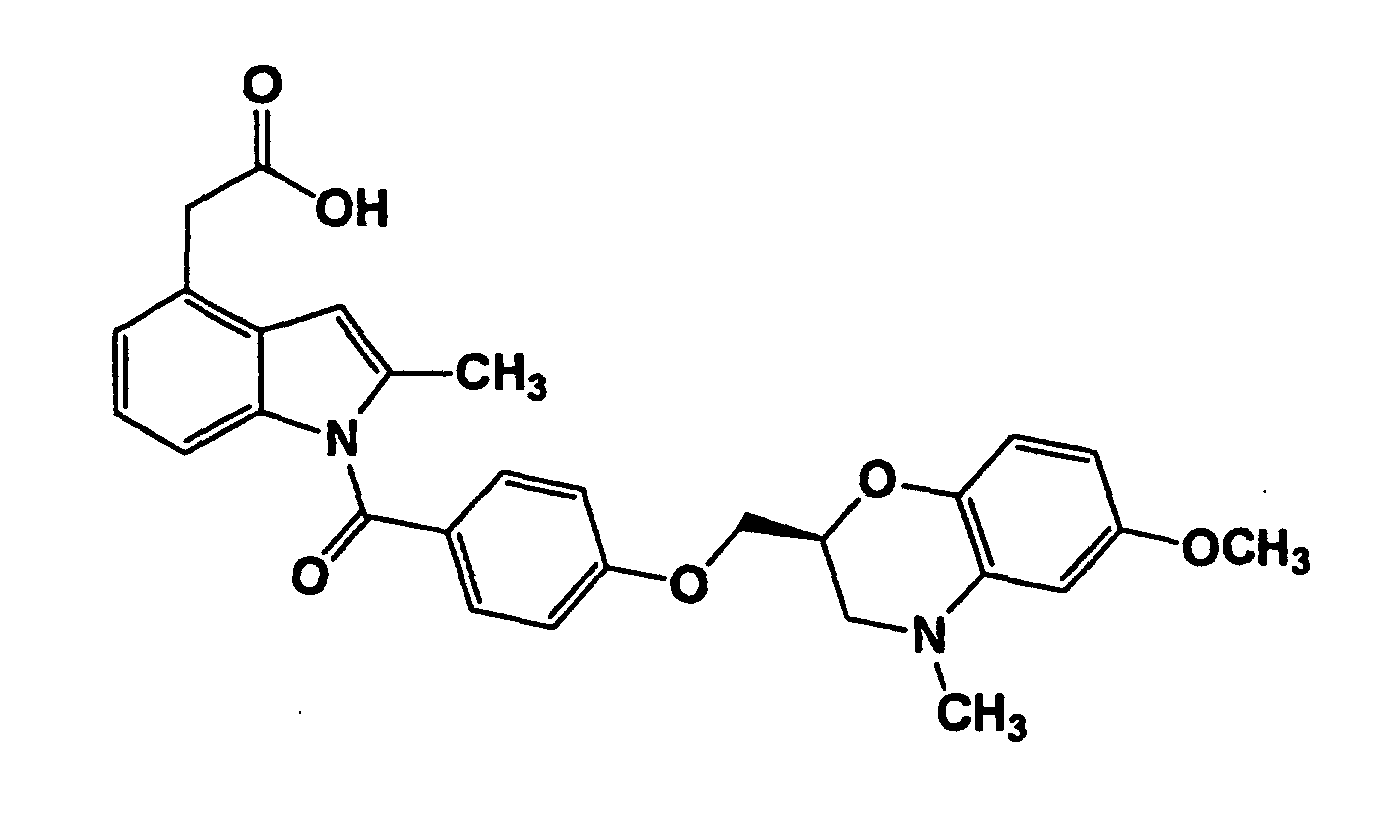
NMR(CDCl3):δ 7.74-7.69 (m, 2H), 7.06-6.92 (m, 5H), 6.74 (d, J = 8.4 Hz, 1H), 6.49 (m, 1H), 6.29 (d, J = 3.0 Hz, 1H), 6.23 (dd, J = 8.4, 3.0 Hz, 1H), 4.68 (m, 1H), 4.29 (dd, J = 9.9, 4.8 Hz, 1H), 4.18 (dd, J = 9.9, 6.3 Hz, 1H), 3.85 (s, 2H), 3.76 (s, 3H), 3.39 (dd, J = 11.4, 2.7 Hz, 1H), 3.28 (dd, J = 11.4, 6.6 Hz, 1H), 2.90 (s, 3H), 2.44 (d, J = 0.9 Hz, 3H).

NMR(CDCl3):δ 7.72 (d, J = 9.0 Hz, 2H), 7.08-6.90 (m, 5H), 6.69-6.62 (m, 1H), 6.52-6.43 (m, 3H), 4.75-4.64 (m, 1H), 4.31 (dd, J = 9.9, 5.1 HZ, 1H), 4.22 (dd, J = 9.9, 6.0 Hz, 1H), 3.87 (s, 2H), 3.74 (s, 3H), 3.33 (dd, J = 11.7, 2.7 Hz, 1H), 3.18 (dd, J = 11.7, 6.9 Hz, 1H), 2.86 (s, 3H), 2.45 (s, 3H).
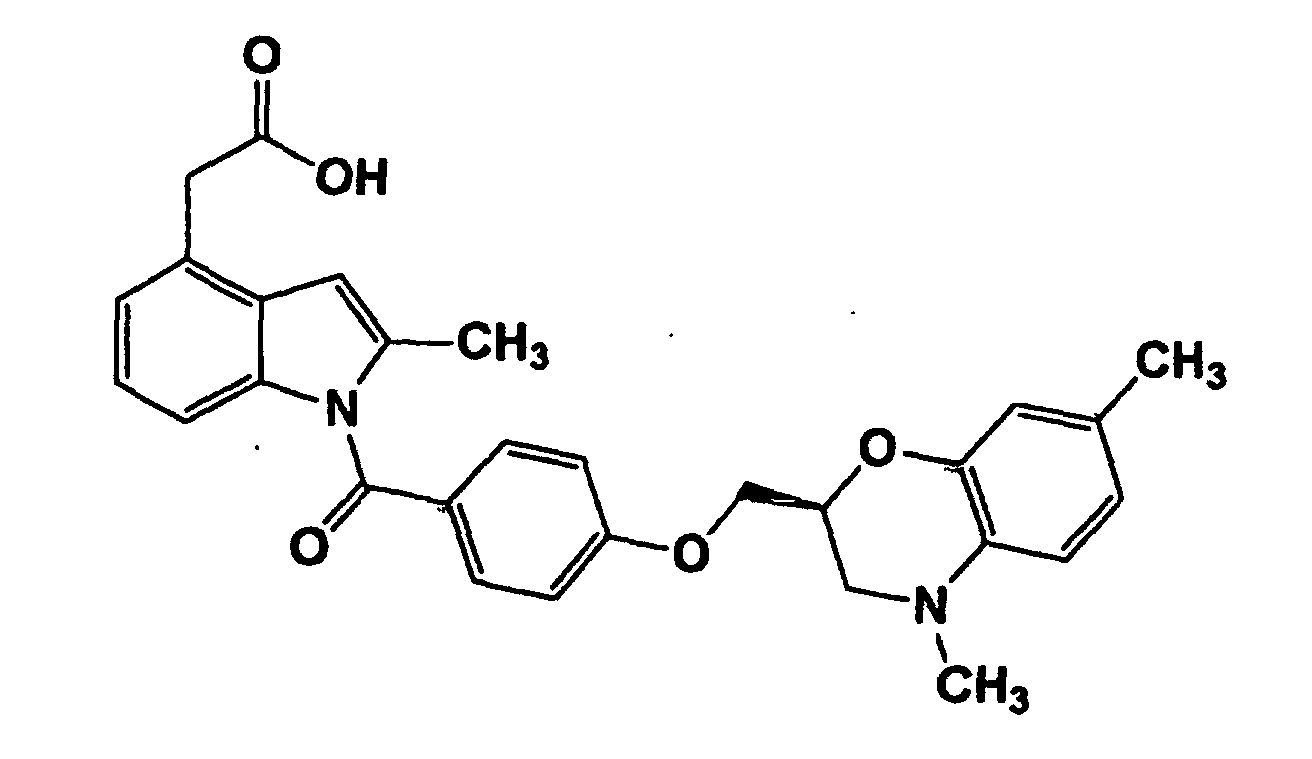
NMR(CDCl3):δ 7.71 (d, J = 9.0 Hz, 2H), 7.08-6.85 (m, 5H), 6.73-6.59 (m, 3H), 6.50 (s, 1H), 4.73-4.62 (m, 1H), 4.30 (dd, J = 9.9, 5.1 HZ, 1H), 4.21 (dd, J = 9.9, 6.3 Hz, 1H), 3.87 (s, 2H), 3.36 (dd, J = 11.7, 3.0 Hz, 1H), 3.22 (dd, J = 11.7, 6.3 Hz, 1H), 2.88 (s, 3H), 2.45 (s, 3H), 2.23 (s, 3H).

NMR(CDCl3):δ 7.72 (d, J = 9.0 Hz, 2H), 7.09-6.92 (m, 5H), 6.60 (d, J =8.1 Hz, 3H), 6.50 (s, 1H), 4.75-4.65 (m, 1H), 4.36-4.17 (m, 2H), 3.87 (s, 2H), 3.39-3.18 (m, 2H), 2.88 (s, 3H), 2.45 (s, 3H).
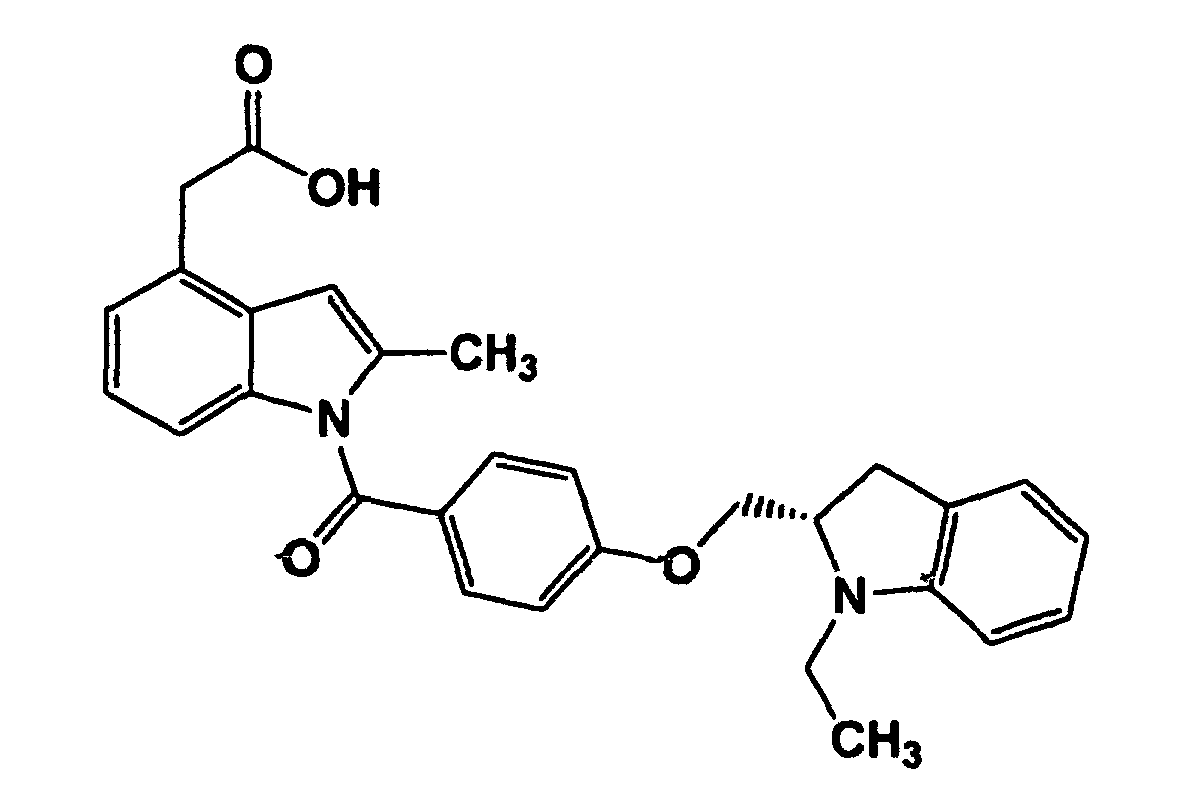
NMR(CDCl3):δ 7.72 (dd, J = 9.0,1.2 Hz, 2H), 7.17-6.82 (m, 7H), 6.70-6.80 (m) and 6.53-6.43 (m) total 3H, 4.97-4.84 (m) and 4.33-4.03 (m) total 2H, 3.86 (s, 2H), 3.58-3.15 (m) and 3.07-2.83 (m) total 5H, 2.44 (s, 3H), 1.21-1.10 (m, 3H).

NMR(CDCl3):δ 7.74-7.69 (m, 2H), 7.08-6.93 (m, 5H), 6.78 (dd, J = 8.1, 7.5 Hz, 1H), 6.58 (d, J = 8.1 Hz, 1H), 6.58 (d, J = 7.5 Hz, 1H), 6.49 (m, 1H), 4.68 (m, 1H), 4.32 (dd, J = 9.9, 4.8 Hz, 1H), 4.23 (dd, J = 9.9, 6.6 Hz, 1H), 3.86 (s, 2H), 3.40 (dd, J = 11.4, 2.7 Hz, 1H), 3.25 (dd, J = 11.4, 6.6 Hz, 1H), 2.90 (s, 3H), 2.44 (d, J = 1.2 Hz, 3H), 2.18 (s, 3H).

NMR(CDCl3):δ 7.72 (d, J = 8.4 Hz, 2H), 7.10-6.86 (m, 6H), 6.60 (dd, J = 8.4, 1.5 Hz, 1H), 6.55-6.45 (m, 2H), 4-4,6-4.31 (m, 2H), 4.27-4.17 (m, 1H), 3.90 (s, 3H), 3.85 (s, 2H), 3.28 (dd, J = 13.5, 2.1 Hz, 1H), 3 .13 (dd, J = 13.5,9.3 Hz, 1H), 2.90 (s, 3H), 2.44 (s, 3H).
NMR(CDCl3):δ 7.73 (d, J = 9.0 Hz, 2H), 7.09-6.92 (m, 5H), 6.81-6.62 (m, 3H), 6.49 (s, 1H), 4.49-4.40 (m, 1H), 4.38-4.18 (m, 2H), 3.87 (s, 2H), 3.38-3.15 (m, 2H), 3.00 (d, J = 1.8 Hz, 3H), 2.45 (s, 3H).
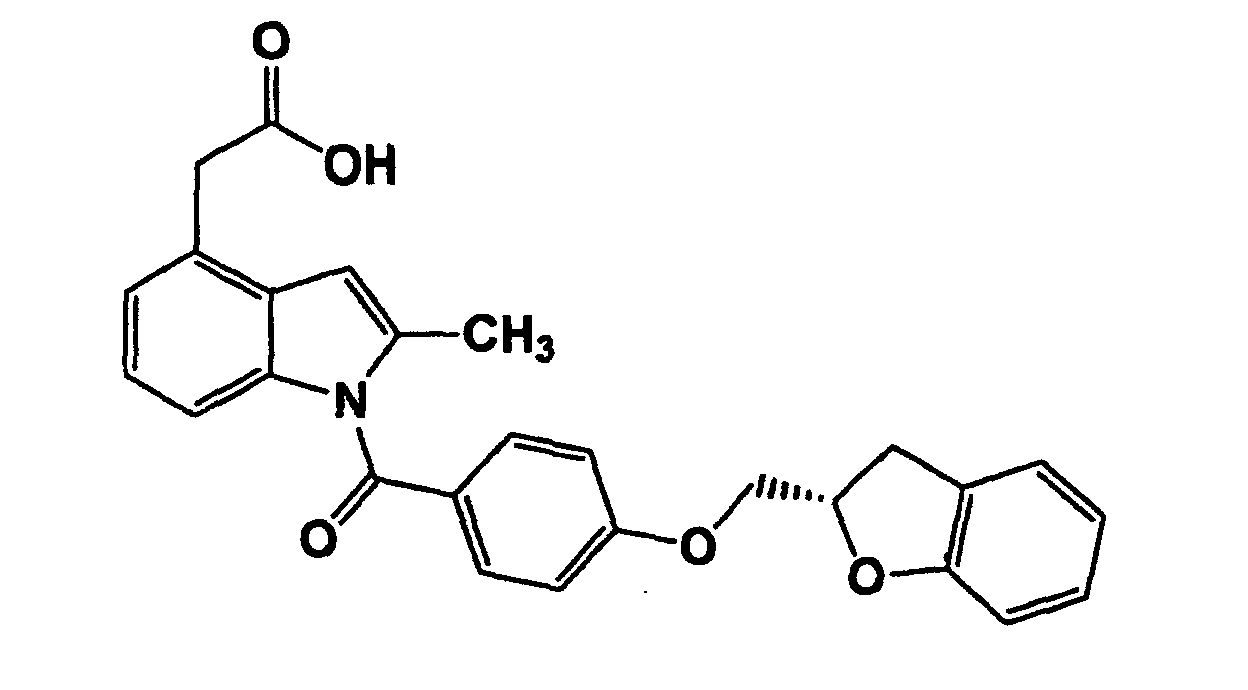
NMR(CDCl3):δ 7.71 (d, J = 8.7 Hz, 2H), 7.21 (d, J = 7.2 Hz, 1H), 7.15 (t, J = 7.2 Hz, 1H), 7.08-6.81 (m, 7H), 6.49 (s, 1H), 5.25-5.14 (m, 1H), 4.29 (dd, J = 10.2, 6.3 Hz, 1H), 4.21 (dd, J = 10.2, 4.2 Hz, 1H), 3.87 (s, 2H), 3.43 (dd, J = 15.9, 9.6 Hz, 1H), 3.17 (dd, J = 15.9, 7.2 Hz, 1H), 2.45 (s, 3H).
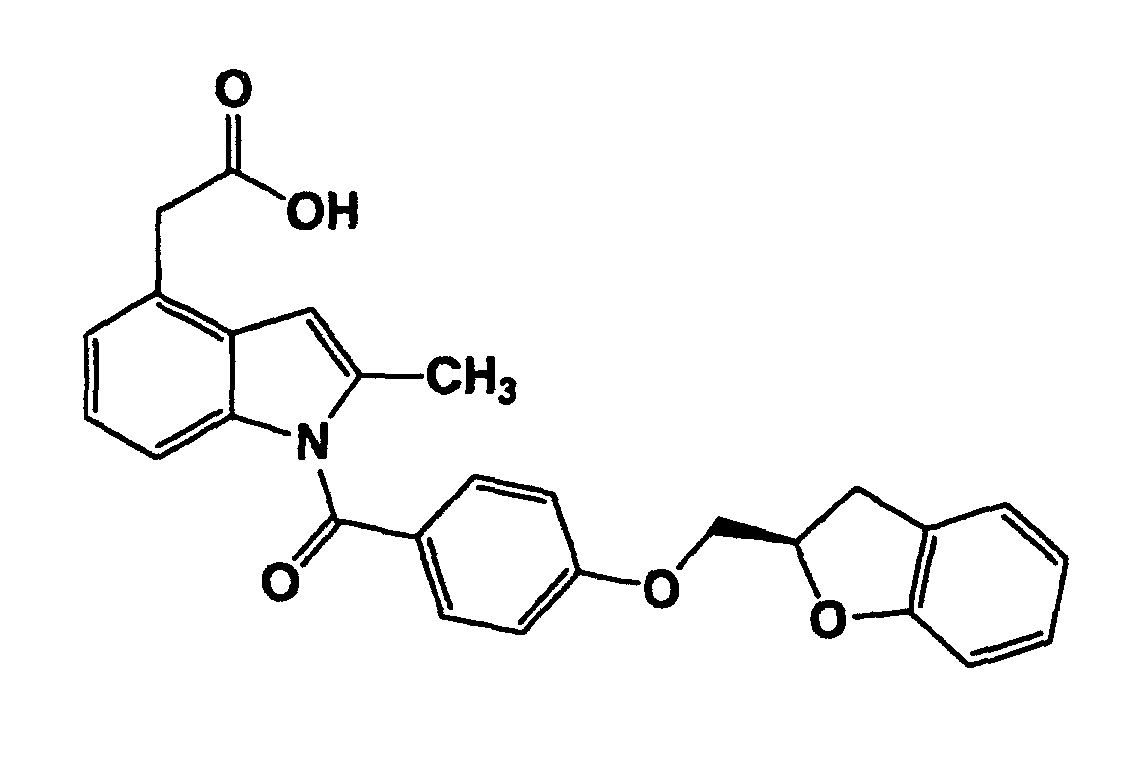
NMR(CDCl3):δ 7.71 (d, J = 8.7 Hz, 2H), 7.21 (d, J = 7.2 Hz, 1H), 7.15 (t, J = 7.2 Hz, 1H), 7.08-6.81 (m, 7H), 6.49 (s, 1H), 5.25-5.14 (m, 1H), 4.29 (dd, J = 10.2, 6.3 Hz, 1H), 4.21 (dd, J = 10.2, 4.2 Hz, 1H), 3.87 (s, 2H), 3.43 (dd, J = 15.9, 9.6 Hz, 1H), 3.17 (dd, J = 15.9, 7.2 Hz, 1H), 2.45 (s, 3H).
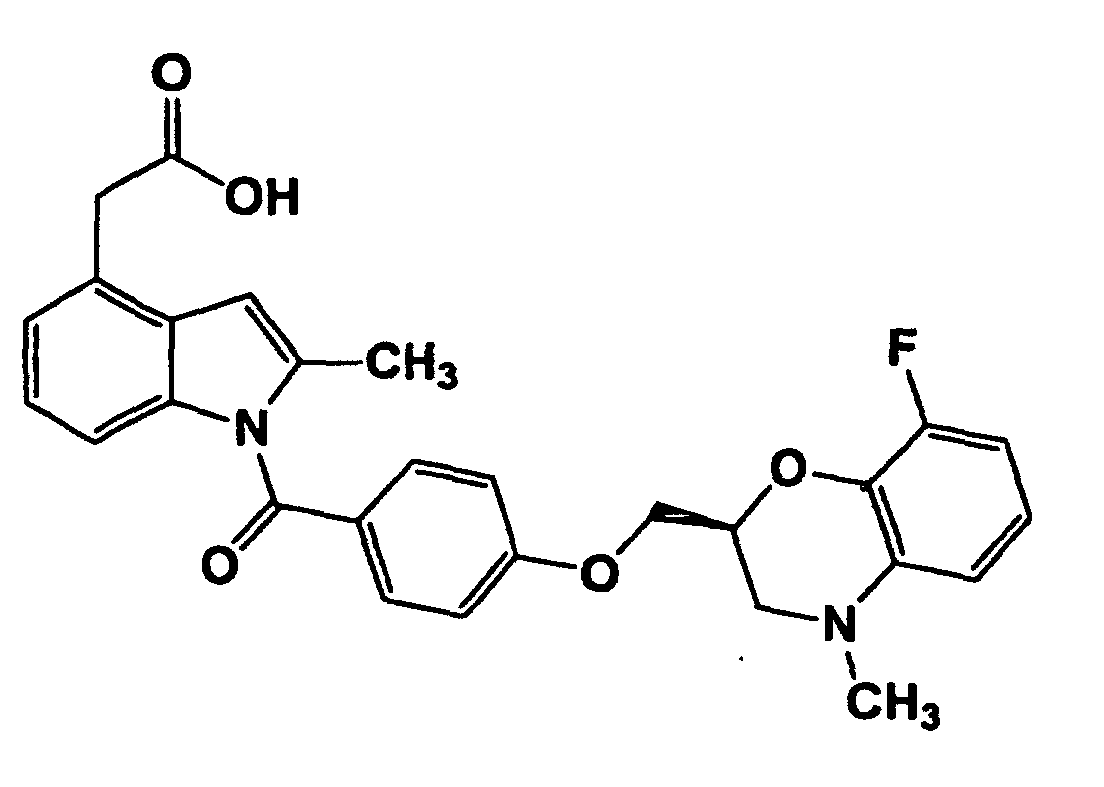
NMR(CDCl3):δ 7.72 (d, J = 8.7 Hz, 2H), 7.09-6.90 (m, 5H), 6.83-6.72 (m, 1H), 6:59-6.40 (m, 3H), 4.78-4.65 (m, 1H), 4.40-4.20 (m, 2H), 3.87 (s, 2H), 3.50-3.30 (m, 2H), 2.94 (s, 3H), 2.44 (s, 3H).
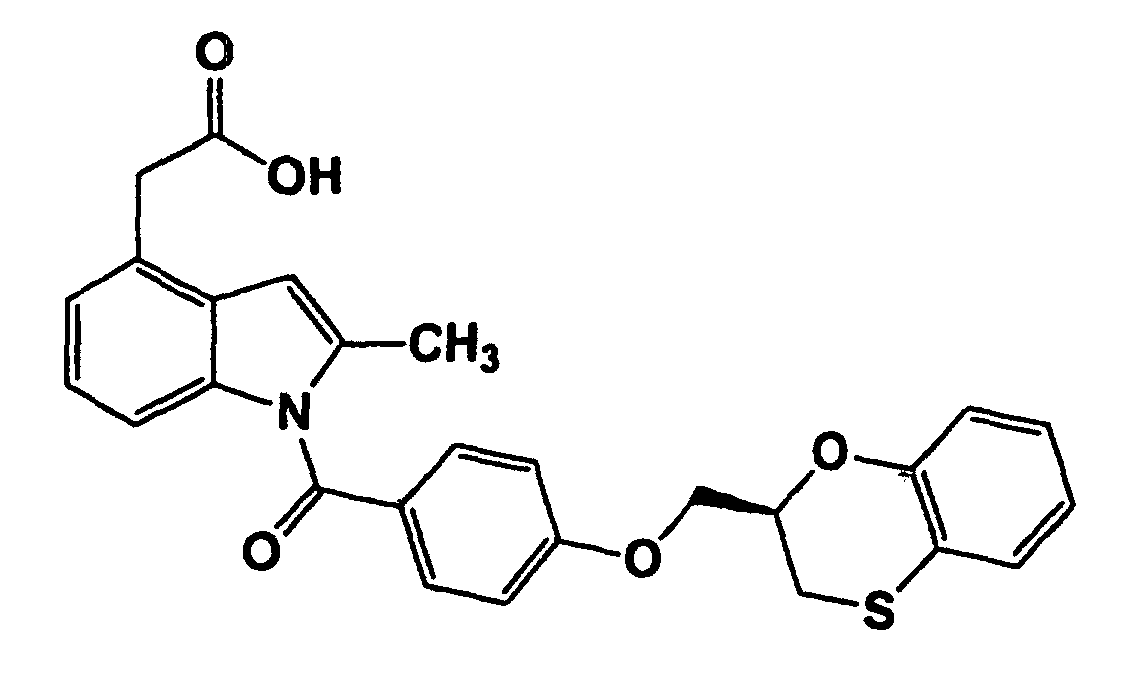
NMR(CDCl3):δ 7.75-7.69 (m, 2H), 7.10-6.86 (m, 9H), 6.50 (s, 1H), 4.72- 7.65 (m, 1H), 4.40-4.22 (m, 2H), 3.87 (s, 2H), 3-2,3-3.21 (m, 2H), 2.45 (s, 3H).
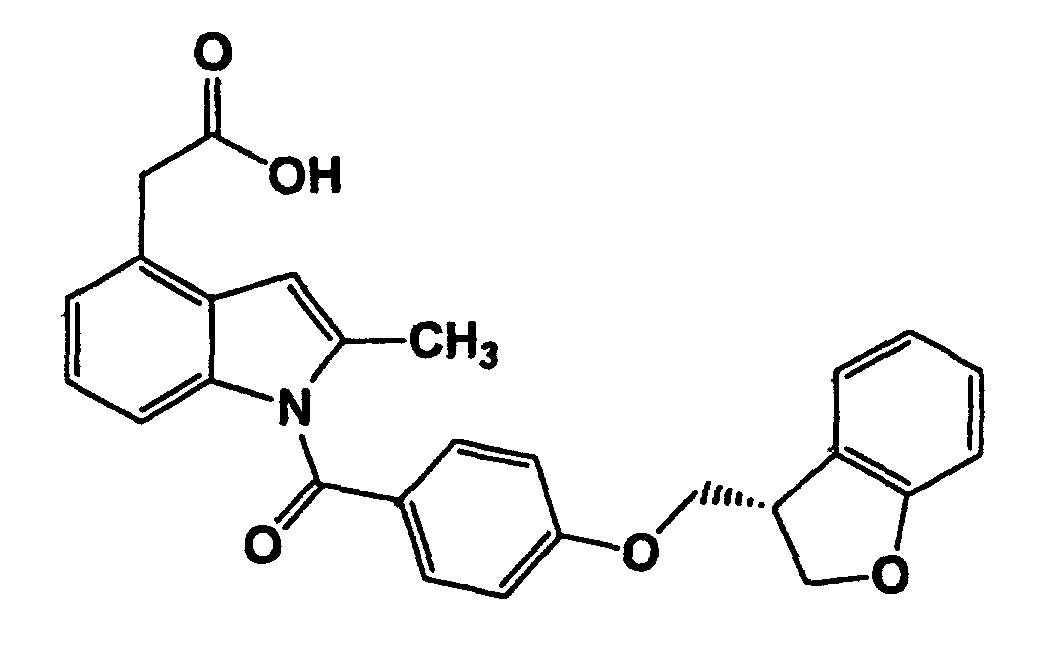
NMR(CDCl3):δ 7.71 (d, J = 8.7 Hz, 2H), 7.31 (d, J = 7.5 Hz, 1H), 7-2,3-7.17 (m, 1H), 7.07-6.84 (m, 7H), 6.49 (s, 1H), 4.73 (t, J = 9.0 Hz, 1H), 4.55 (dd, J = 9.0, 4.8 Hz, 1H), 4.23 (dd, J = 8.7, 5.4 Hz, 1H), 4.10 (t, J = 8.7 Hz, 1H), 4.02-3.93 (m, 1H), 3.86 (s, 2H), 2.44 (s, 3H).
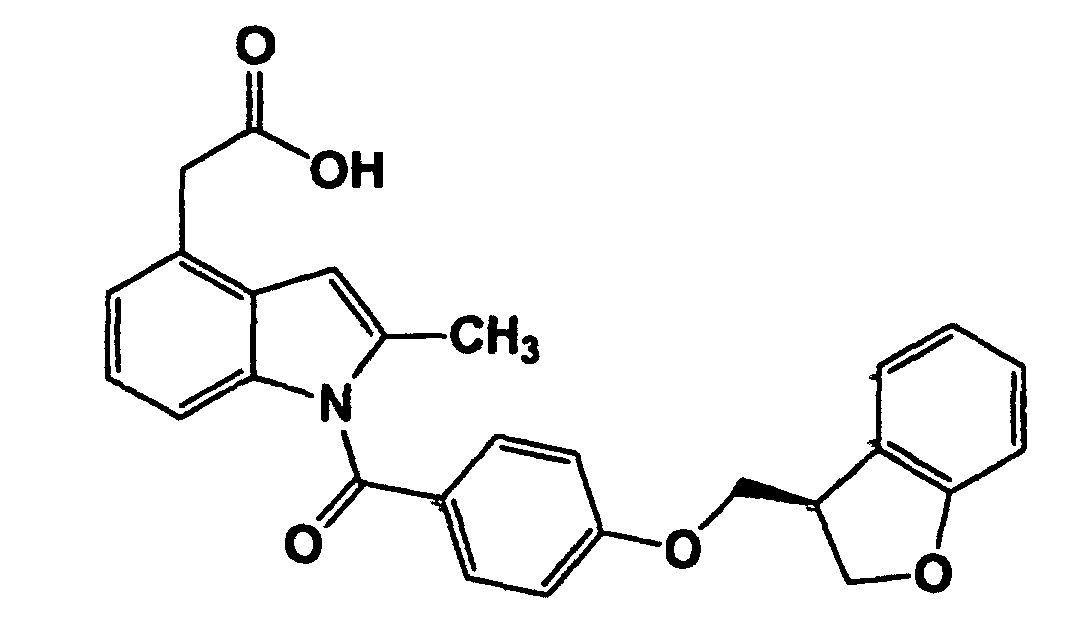
NMR(CDCl3):δ 7.71 (d, J = 8.7 Hz, 2H), 7.31 (d, J = 7.5 Hz, 1H), 7-2,3-7.17 (m, 1H), 7.07-6.84 (m, 7H), 6.49 (s, 1H), 4.73 (t, J = 9.0 Hz, 1H), 4.55 (dd, J = 9.0, 4.8 Hz, 1H), 4.23 (dd, J = 8.7, 5.4 Hz, 1H), 4.10 (t, J = 8.7 Hz, 1H), 4.02-3.93 (m, 1H), 3.86 (s, 2H), 2.44 (s, 3H).
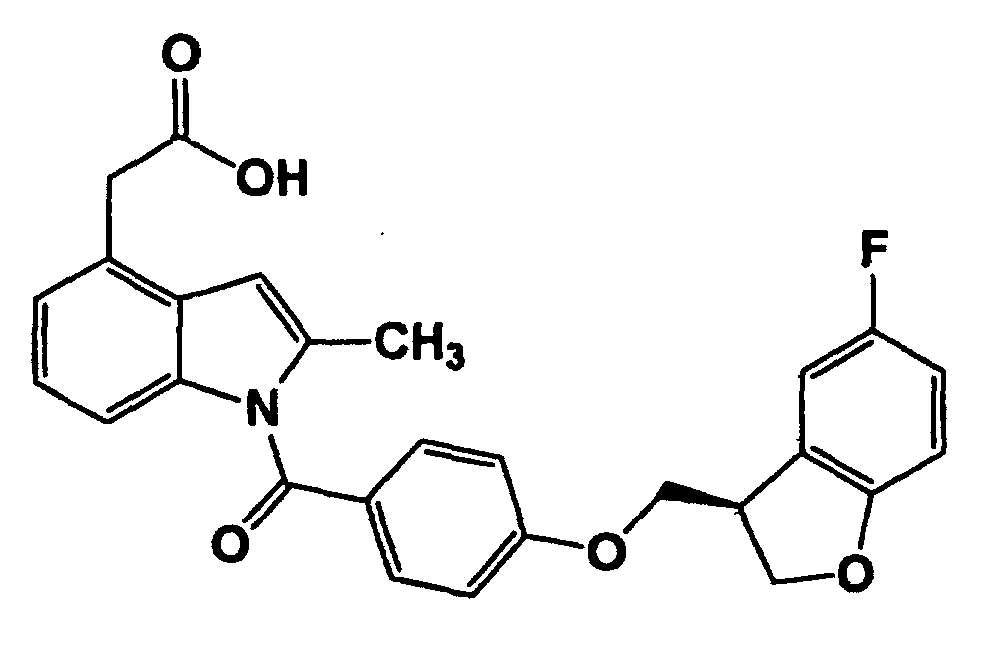
NMR(CDCl3):δ 7.71 (d, J = 9.0 Hz, 2H), 7.22-7.10 (m, 1H), 7.10-6.85 (m, 5H), 6.75-6.55 (m, 2H), 6.48 (s, 1H), 4.82-4.60 (m, 2H), 4.50-4.33 (m, 1H), 4.20-4.00 (m, 2H), 3.85 (s, 2H), 2.44 (s, 3H).

NMR(CDCl3):δ 7.71 (d, J = 9.0 Hz, 2H), 7.10 (s, 1H), 7.07-6.87 (m, 4H), 6.73 (d, J = 8.4 Hz, 2H), 6.49 (s, 1H), 4.70 (t, J = 9.0 Hz, 1H), 4.70 (t, J = 9.0 Hz, 1H), 4.53 (dd, J = 9.0, 4.8 Hz, 1H), 4.22 (dd, J = 8.7,5.4 Hz, 1H), 4.08 (t, J = 8.7 Hz, 1H), 3.92 (m, 1H), 3.86 (s, 2H), 2.44 (s, 3H), 2.30 (s, 3H).
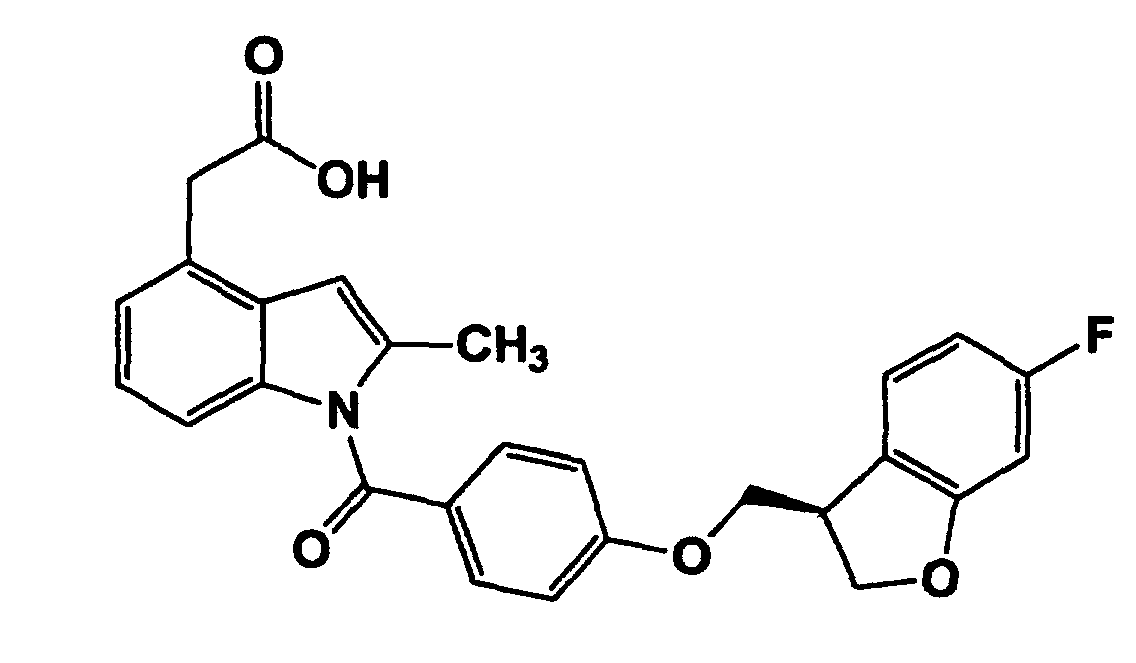
NMR(CDCl3):δ 7.70 (dd, J = 6.9,1.8 Hz, 2H), 7.20-7.10 (m, 1H), 7.05-6.90 (m, 5H), 6.70-6.55 (m, 2H), 6.48 (s, 1H), 4.75 (dd, J = 9.3, 8.1 Hz, 1H), 4.65 (dd, J = 9.3, 4.5 Hz, 1H), 4.41 (m, 1H), 4.18-4.08 (m, 2H), 3.84 (s, 2H), 2.43 (s, 3H).

NMR(CDCl3):δ 7.70 (d, J = 8.7 Hz, 2H), 7.12 (d, J = 6.9 Hz, 1H), 7.03-6.93 (m, 6H), 6.81 (t, J = 7.2 Hz, 1H), 6.47 (s, 1H), 4.71 (dd, J = 9.6, 8.7 Hz, 1H), 4.54 (dd, J = 9.6, 5.1 Hz, 1H), 4.21 (dd, J = 9.3, 5.7 Hz, 1H), 4.08 (dd, J = 9.3, 9.1 Hz, 1H), 3.97 (m, 1 H), 3.84 (s, 2H), 2.43 (s, 3H), 2.23 (s, 3H).

NMR(CDCl3):δ 7.72 (d, J = 8.7 Hz, 2H), 7.13-6.88 (m, 5H), 6.85-6.65 (m, 3H), 6.49 (s, 1H), 4.68-4.59 (m, 1H), 4.48 (dd, J = 11.4, 2.4 Hz, 1H), 4.42-4.22 (m, 3H), 3.85 (s, 2H), 2.44 (s, 3H).
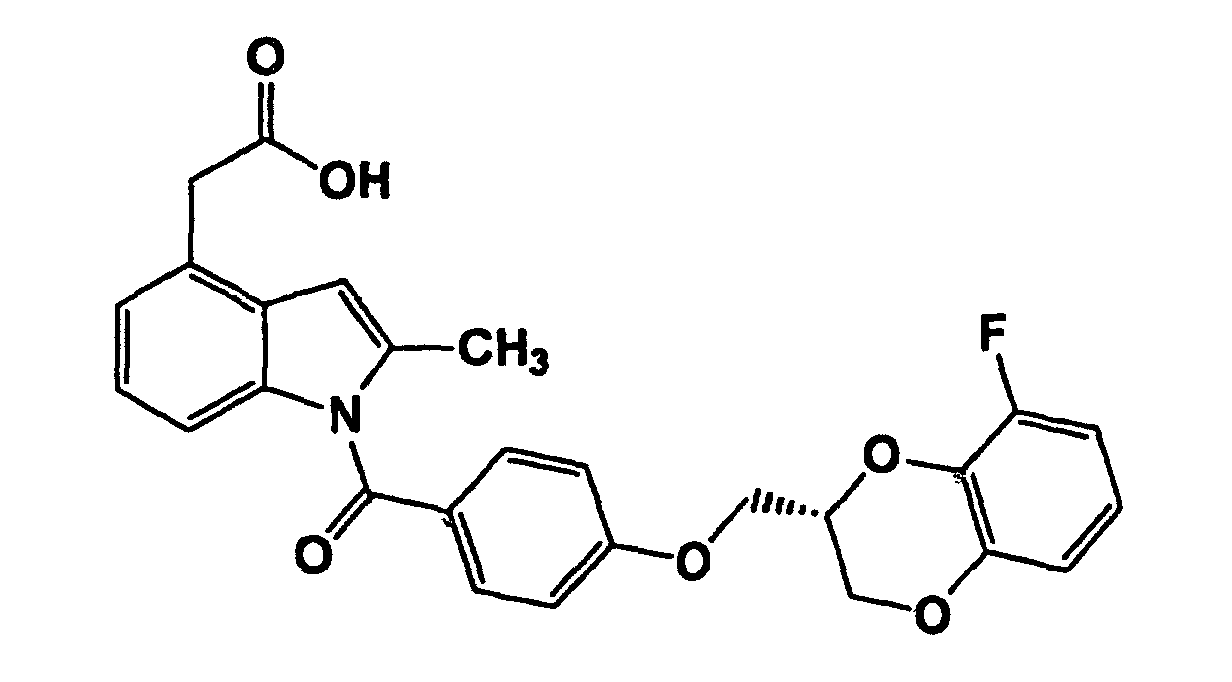
NMR(CDCl3):δ 7.71 (d, J = 8.4 Hz, 2H), 7.13-6.87 (m, 5H), 6.87-6.60 (m, 3H), 6.49 (s, 1H), 4.71-4.59 (m, 1H), 4.53-4.22 (m, 4H), 3.85 (s, 2H), 2.44 (s, 3H).
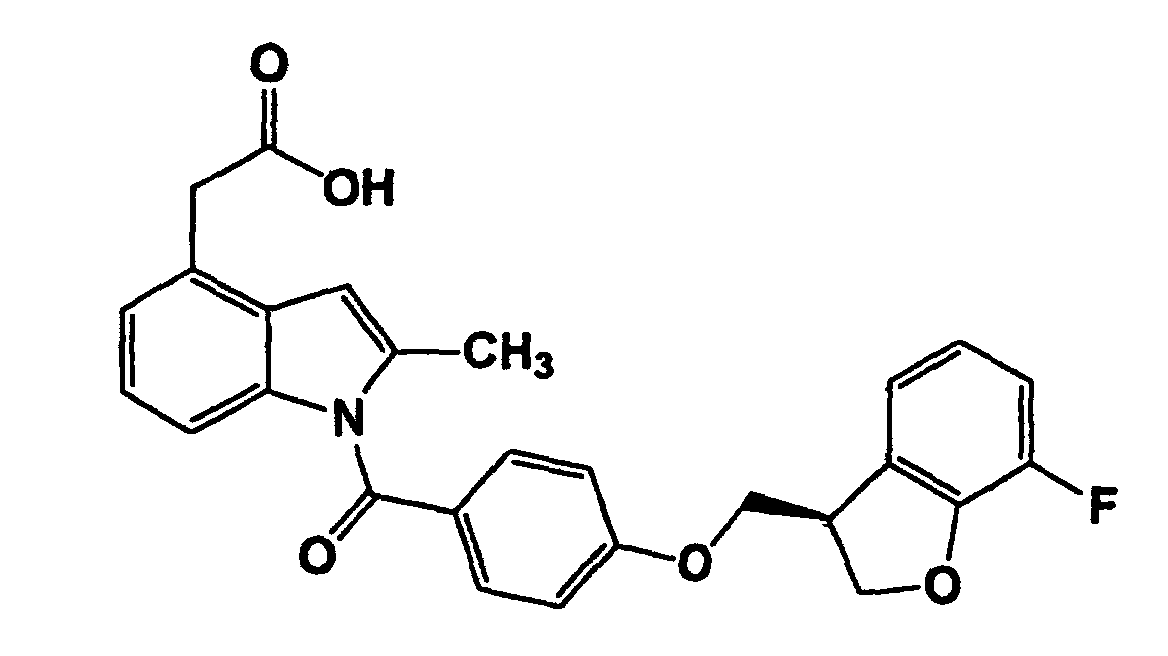
NMR(CDCl3):δ 7.70 (dd, J = 6.9, 2.1 Hz, 2H), 7.09-6.93 (m, 7H), 6.84 (m, 1H), 6.48 (s, 1H), 4.82 (t, J = 9.3 Hz, 1H), 4.64 (dd, J = 9.3, 5.4 Hz, 1H), 4.23 (dd, J = 8.7, 5.7 Hz, 1H), 4.15-4.08 (m, 1H), 4.01 (m, 1H), 3.84 (s, 2H), 2.43 (s, 3H).
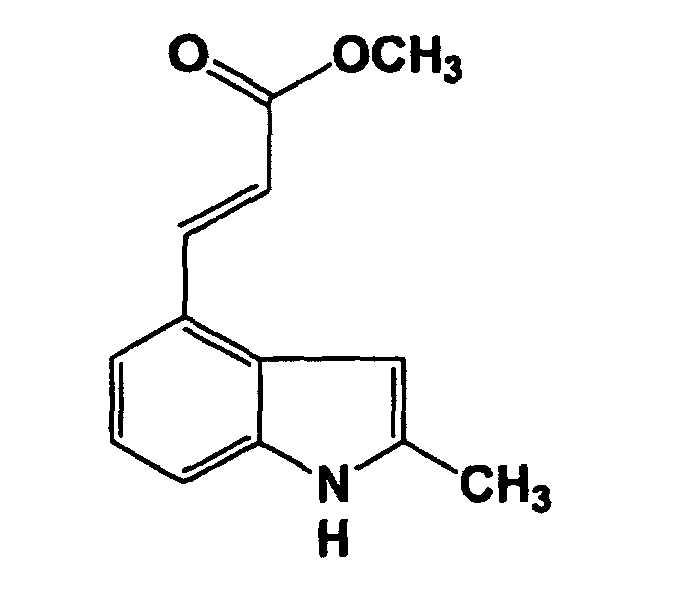
TLC:Rf 0.50 (hexane:ethyl acetate=8:2);
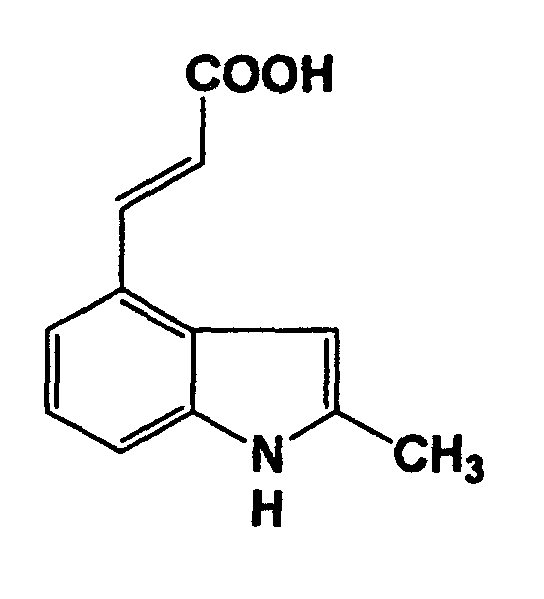
TLC:Rf 0.54 (chloroform: methanol=9:1);
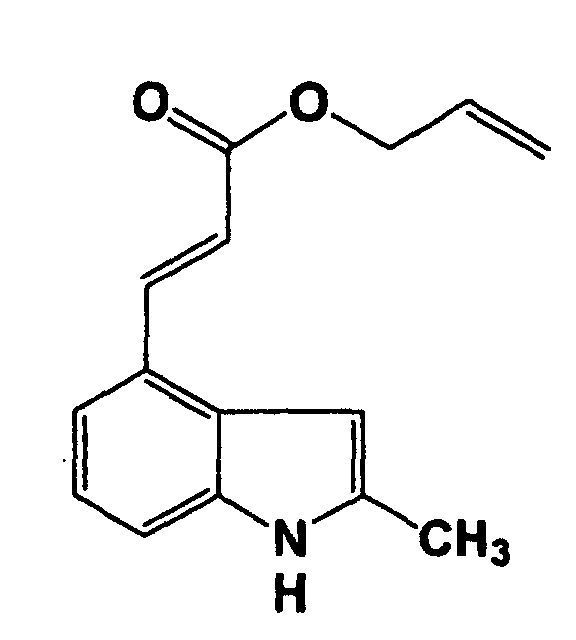
TLC:Rf 0.29 (hexane:ethyl acetate=4:1);
NMR(CDCl3):δ 8.13-8.00 (m, 2H), 7.37-7.29 (m, 2H), 7.12 (t, J = 8.1 Hz, 1H), 6.61 (d, J = 15.9 Hz, 1H), 6.53 (brs, 1H), 6.10-5.95 (m, 1H), 5.45-5.35 (m, 1H), 5.33-5.25 (m, 1H), 4.74 (d, J = 5.7 Hz, 2H), 2.50 (s, 3H).
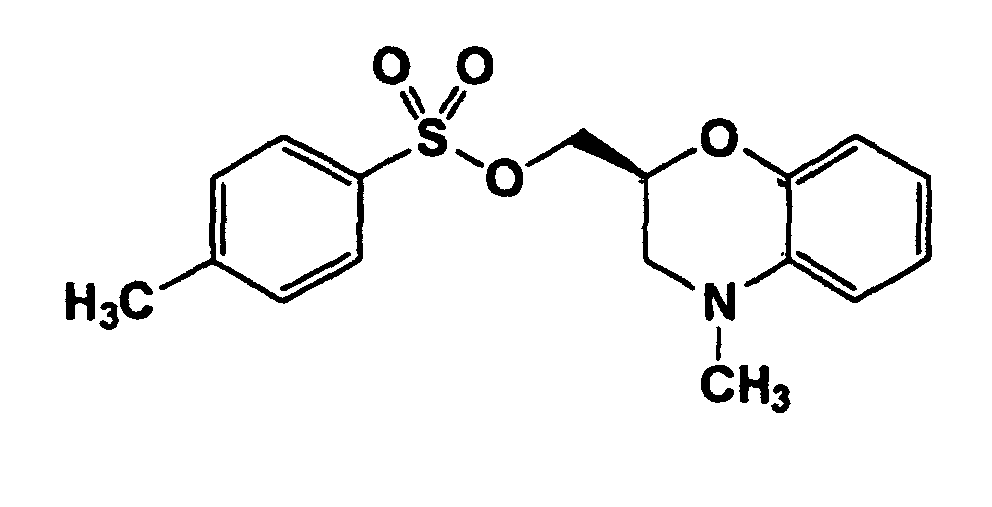
TLC:Rf 0.81 (hexane:ethyl acetate=1:1);
NMR(CDCl3):δ 7.80 (d, J = 8.2 Hz, 2H), 7.34 (d, J = 8.2 Hz, 2H), 7.25-7.15 (m, 1H), 6.83 (m, 1H), 6.67-6.61 (m, 2H), 4.45 (m, 1H), 4.19-4.15 (m, 2H), 3.24 (dd, J = 11.6, 2.8 Hz, 1H), 3.08 (dd, J = 11.6, 6.0 Hz, 1H), 2.82 (s, 3H), 2.45 (s, 3H).

TLC:Rf 0.62 (hexane:ethyl acetate--2:1);
NMR(CDCl3):δ 7.99 (d, J = 9.0 Hz, 2H), 6.96 (d, J = 9.0 Hz, 2H), 6.94-6.79 (m, 2H), 6.70 (d, J = 7.5 Hz, 1H), 6.68 (t, J = 7.5 Hz, 1H), 4.65 (m, 1H), 4.27 (dd, J = 9.9, 4.8 Hz, 1H), 4.17 (dd, J = 9.9, 6.6 Hz, 1H), 3.89 (s, 3H), 3.39 (dd, J = 11.7, 2.7 Hz, 1H), 3.25 (dd, J = 11.7, 6.6 Hz, 1H), 2.90 (s, 3H).

TLC:Rf 0.13 (ethyl acetate:hexane=1:2);
NMR(DMSO-d6):δ 7.89 (d, J = 8.7 Hz, 2H), 7.05 (d, J = 8.7 Hz, 2H), 6.78 (t, J = 7.2 Hz, 1H), 6.70-6.68 (m, 2H), 6.58 (t, J = 7.2 Hz, 1H), 4.57 (m, 1H), 4.23 (d, J = 5.4 Hz, 2H), 3.35 (dd, J = 11.7, 2.7 Hz, 1H), 3.16 (dd, J = 11.7, 7.5 Hz, 1H), 2.82 (s, 3H).

TLC:Rf 0.55 (toluene: ethyl acetate=9:1);
NMR(CDCl3):δ 8.07 (d, J = 15.9 Hz, 1H), 7.72 (d, J = 9.0 Hz, 2H), 7.45-6.80 (m, 7H), 6.75-6.65 (m, 3H), 6.59 (d, J = 15.9 Hz, 1H), 6.10-5.95 (m, 1H), 5.45-5.35 (m, 1H), 5.33-5.25 (m, 1H), 4.75 (d, J = 5.7 Hz, 2H), 4.73-4.63(in, 1H), 4.32 (dd, J = 9.6, 5.1 Hz, 1H), 4.22 (dd, J = 9.6, 6.3 Hz, 1H), 3.41 (dd, J = 11.7, 2.7 Hz, 1H), 3.28 (dd, J = 11.7, 6.6 Hz, 1H), 2.92 (s, 3H), 2.47 (s, 3H).
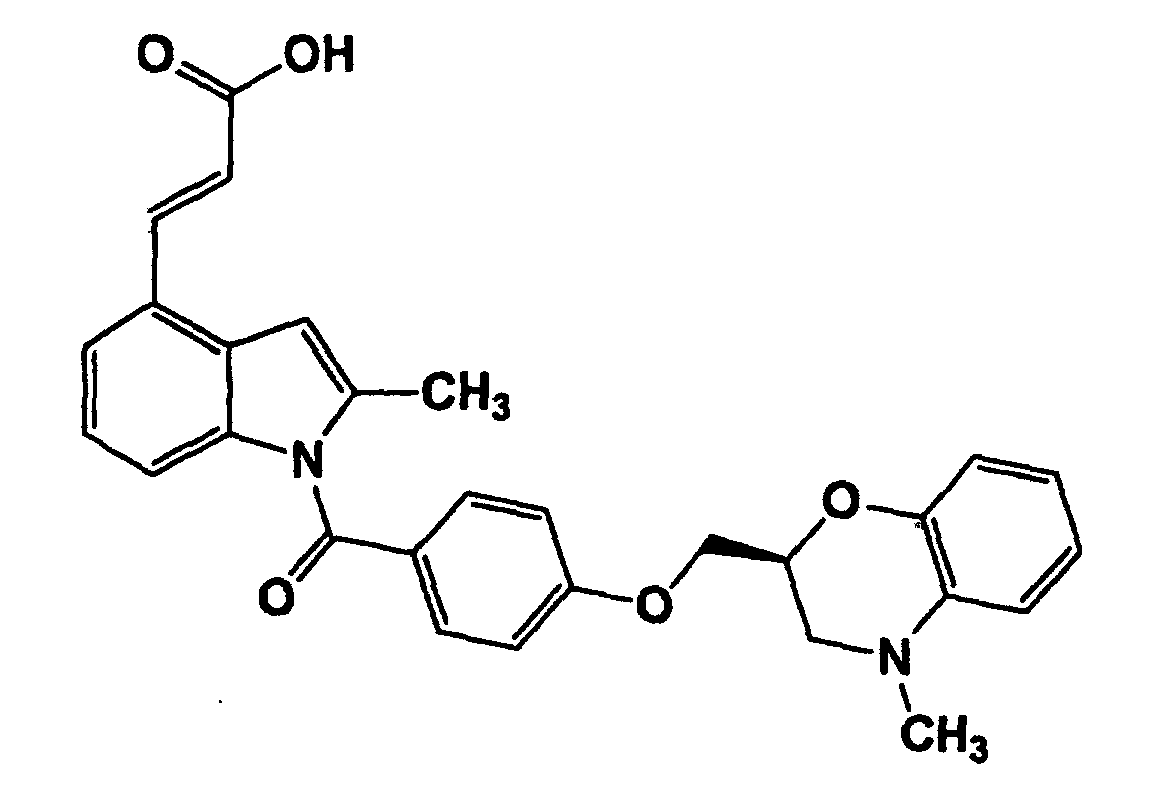
TLC:Rf 0.37 (chloroform: methanol=9:1);
NMR(CDCl3):δ 8.13 (d, J = 15.9 Hz, 1H), 7.72 (d, J = 9.0 Hz, 2H), 7.43 (dd, J =6.9, 1.8 Hz, 1H), 7.13-6.98 (m, 4H), 6.94-6.82 (m, 2H), 6.76-6:67 (m, 3H), 6.58 (d, J = 15.9 Hz, 1H), 4.74-4.64 (m, 1H), 4.32 (dd, J = 9.9, 5.4 Hz, 1H), 4.22 (dd, J = 9.9, 6.0 Hz, 1H), 3.41 (dd, J = 11.7, 2.7 Hz, 1H), 3.29 (dd, J = 11.7, 6.6 Hz, 1H), 2.92 (s, 3H), 2.48 (s, 3H).
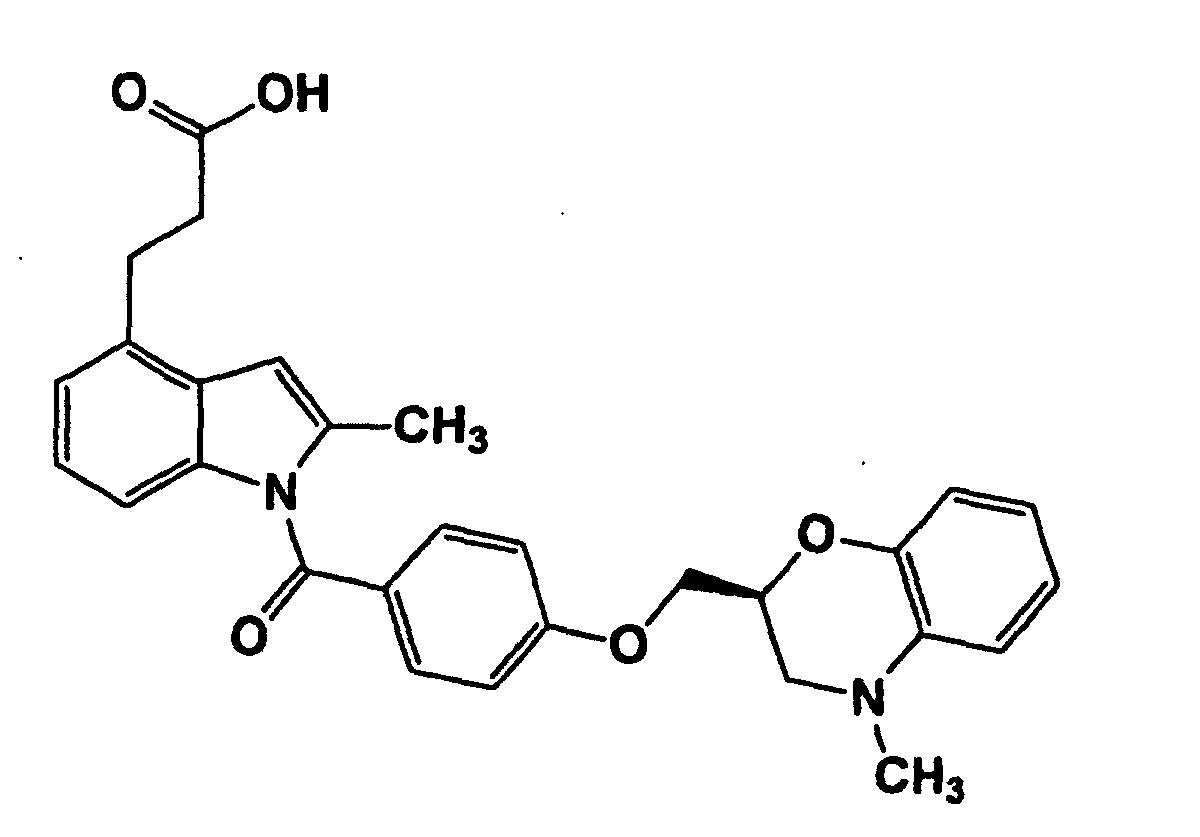
TLC:Rf 0.43 (chloroform: methanol=9:1);
NMR(CDCl3):δ 7.72 (d, J = 8.7 Hz, 2H), 7.05-6.80 (m, 7H), 6.76-6.66 (m, 2H), 6.49 (s, 1H), 4.74-4.64 (m, 1H), 4.31 (dd, J = 9.6, 4.8 Hz, 1H), 4.21 (dd, J = 9.6, 6.0 Hz, 1H), 3.41 (dd, J = 12.0, 3.0 Hz, 1H), 3.28 (dd, J = 12.0, 6.6 Hz, 1H), 3.19 (t, J = 8.1 Hz, 2H), 2.92 (s, 3H), 2.78 (t, J = 8.1 Hz, 2H), 2.45 (s, 3H).

TLC:Rf 0.45 (hexane: ethyl acetate=7:3);
NMR(CDCl3):δ 7.87 (brs, 1H), 7.40-7.30 (m, 5H), 7.01-6.94 (m, 2H), 6.44-6.36 (m, 2H), 5.25 (s, 2H), 4.80 (s, 2H), 2.43 (s, 3H).

TLC:Rf 0.60 (toluene: ethyl acetate=9:1);
NMR(CDCl3):δ 7.71 (d, J=9.0 Hz, 2H), 7.40-7.30 (m, 5H), 7.30-6.60 (m, 10H), 5.25 (s, 2H), 4.79 (s, 2H), 4.75-4.65 (m, 1H), 4.31 (dd, J = 9.9, 5.4 Hz, 1H), 4.21 (dd, J = 9.6, 6.3 Hz, 1H), 3.41 (dd, J = 11.4, 2.7 Hz, 1H), 3.28 (dd, J = 11.4, 6.6 Hz, 1H), 2.92 (s, 3H), 2.42 (s, 3H).

TLC:Rf 0.23 (chloroform: methanol=9:1);
NMR(CDCl3):δ 7.71 (d, J = 8.7 Hz, 2H), 7.06-6.81 (m, 5H), 6.76-6.66 (m, 3H), 6.59 (s, 1H), 6.52 (d, J = 8.1 Hz, 1H), 4.80 (s, 2H), 4.73-4.62 (m, 1H), 4.31 (dd, J = 9.9, 5.1 Hz, 1H), 4.21 (dd, J = 9.9, 6.3 Hz, 1H), 3.41 (dd, J = 11.4,2.7 Hz, 1H), 3.28 (dd, J = 11.4, 6.3 Hz, 1H), 2.92 (s, 3H), 2.43 (s, 3H).

TLC:Rf 0.18 (toluene);

TLC:Rf0.48 (chloroform: methanol=9:1);
NMR(CDCl3):δ 8-1,4-8.04 (br, 1H), 7.94 (dd, J = 7.5, 0.9 Hz, 1H), 7.52 (m, 1H), 7.18 (t, J = 7.5 Hz, 1H), 6.94 (m, 1H), 2.52 (s, 3H).
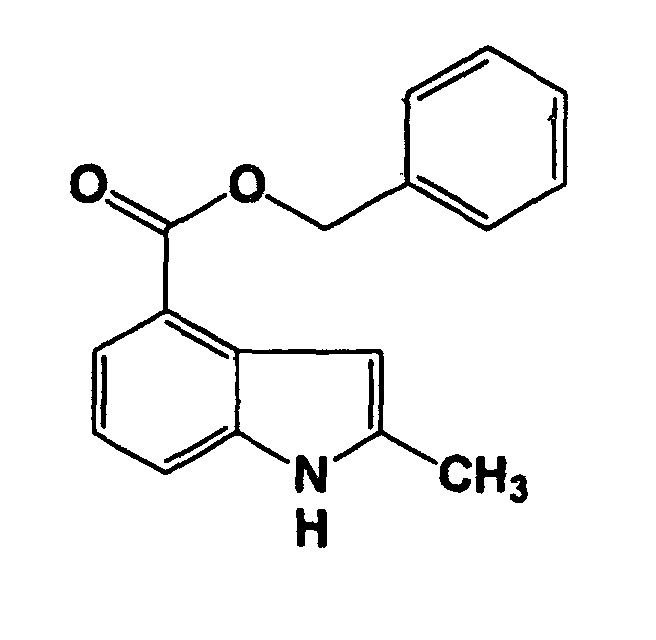
TLC:Rf 0.44 (hexane:ethyl acetate=8:2);
NMR(CDCl3):δ 8.05 (brs, 1H), 7.91 (d, J = 7.5 Hz, 1H), 7.54-7.10 (m, 7H), 6.88 (s, 1H), 5.44 (s, 2H), 2.48 (s, 3H).
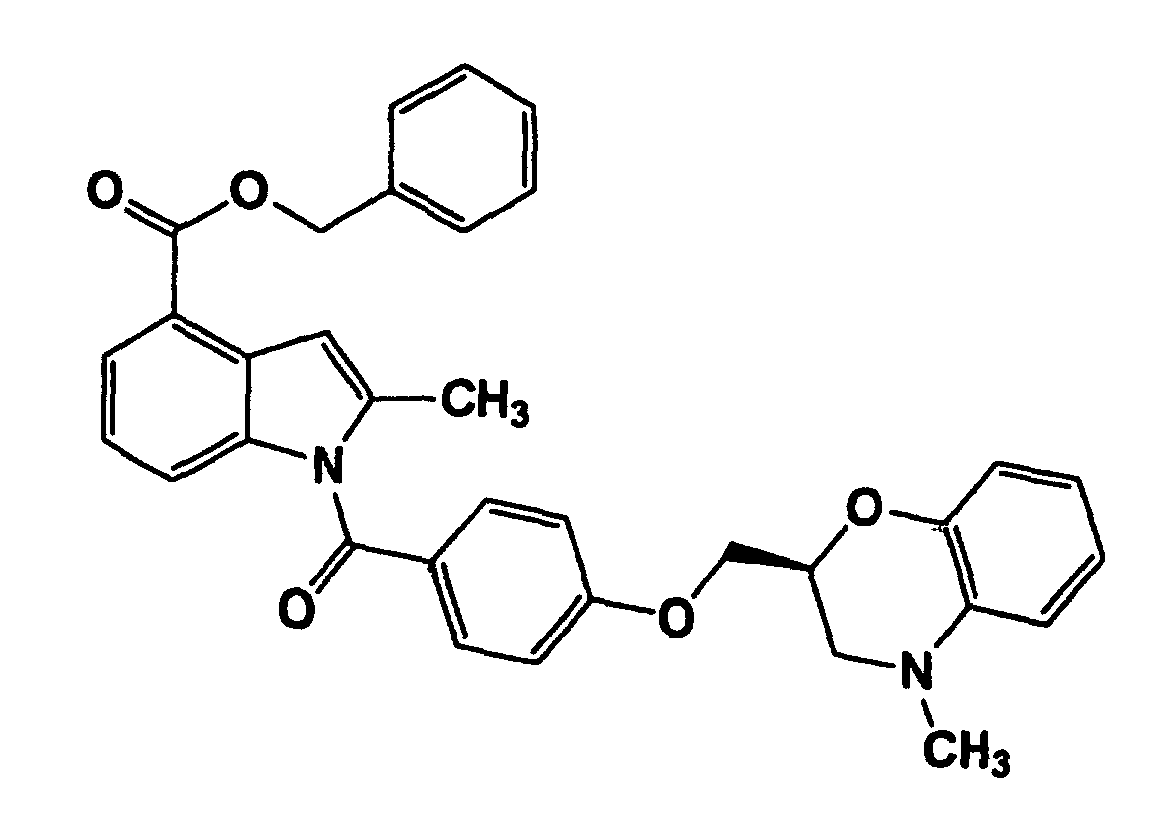
TLC:Rf 0.58 (hexane:ethyl acetate=7:3);
NMR(CDCl3):δ 7.93 (d, J = 8.1 Hz, 1H), 7.69 (d, J=8.7Hz, 2H), 7.54-7.24 (m, 6H), 7.12-6.96 (m, 4H), 6.92-6.80 (m, 2H), 6.74-6.66 (m, 2H), 5.44 (s, 2H), 4.74-4.62 (m, 1H), 4.31 (dd, J = 9.9, 5.1 Hz, 1H), 4.21 (dd, J = 9.9, 6.0 Hz, 1H), 3.37 (dd, J = 11.7, 3.0 Hz, 1H), 3.28 (dd, J = 11.7, 6.6 Hz, 1H), 2.92 (s, 3H), 2.43 (s, 3H).

TLC:Rf 0.55 (chloroform: methanol=9:1);
NMR(CDCl3):δ 7.97 (d, J = 7.8 Hz, 1H), 7.71 (d, J = 8.7 Hz, 2H), 7.34 (d, J = 7.8 Hz, 1H), 7.20 (s, 1H), 7.12 (t, J = 7.8 Hz, 1H), 7.02 (d, J = 8.7 Hz, 2H), 6.95-6.80 (m, 2H), 6.75-6.65 (m, 2H), 4.75-4.65 (m, 1H), 4.32 (dd, J = 9.6, 4.8 Hz, 1H), 4.23 (dd, J = 9.6, 6.3 Hz, 1H), 3.41 (dd, J = 11.7, 3.0 Hz, 1H), 3.29 (dd, J = 11.7,6.6 Hz, 1H), 2.92 (s, 3H), 2.47 (s, 3H).

TLC:Rf 0.22 (hexane: ethyl acetate=3:1);
NMR(CDCl3):δ 8.26 (d, J = 8.1 Hz, 1H), 7.74 (d, J = 9.0 Hz, 2H), 7.40-7.25 (m, 7H), 7.21 (d, J = 8.1 Hz, 1H), 7.05 (d, J = 9.0 Hz, 2H), 7.25-7.00 (m, 2H), 6.75-6.64 (m, 3H), 5.13 (s, 2H), 4.68 (m, 1H), 4.32 (dd, J = 9.9, 4.8 Hz, 1H), 4.21 (dd, J = 9.9, 6.3 Hz, 1H), 3.93 (s, 2H), 3.41 (dd, J = 11.7, 3.0 Hz, 1H), 3.28 (dd, J = 11.7, 6.6 Hz, 1H), 2.92 (s, 3H).
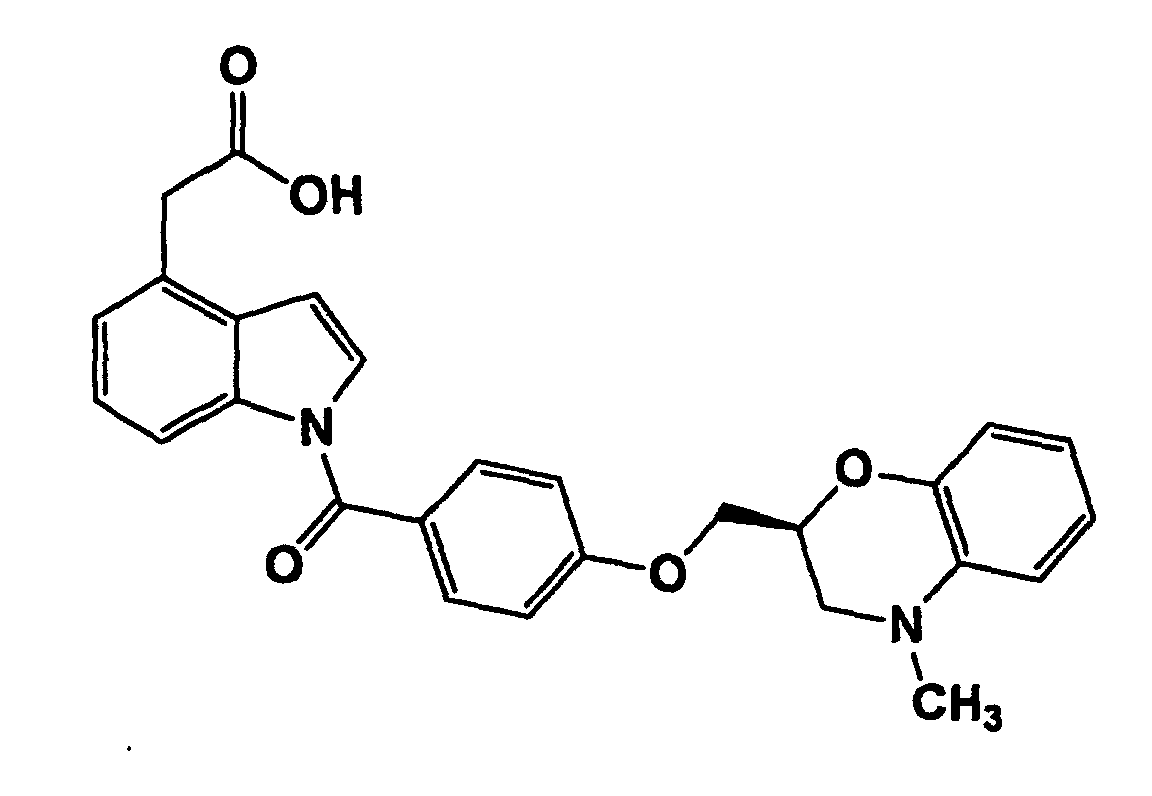
TLC:Rf 0.33 (ethyl acetate: hexane=2:1);
NMR(CDCl3):δ 8.27 (d, J = 8.1 Hz, 2H), 7.73 (d, J = 8.7 Hz, 2H), 7.37 (d, J = 3.9 Hz, 1H), 7.33 (t, J = 7.8 Hz, 1H), 7.21 (d, J = 6.6 Hz, 1H), 7.05 (d, J = 8.7 Hz, 2H), 6.93-6.80 (m, 2H), 6.77-6.63 (m, 3H), 4.73-4.63 (m, 1H), 4.31 (dd, J = 9.9, 5.1 Hz, 1H), 4.21 (dd, J = 9.9, 6.0 Hz, 1H), 3.90 (s, 2H), 3.40 (dd, J = 11.7, 2.7 Hz, 1H), 3.28 (dd, J = 11.7, 6.6 Hz, 1H), 2.92 (s, 3H).

TLC:Rf 0.10 (ethyl acetate: hexane=2:1);
NMR(DMSO-d6):δ 7.88-7.25 (m, 3H), 7.20-6.96 (m, 3H), 6.90 (d, J = 7.2 Hz, 1H), 6.84-6.67 (m, 3H), 6.61 (td, J = 6.9, 1.8 Hz, 1H), 4.60 (m, 1H), 4.26 (d, J = 4.8 Hz, 2H), 4.05 (t, J = 8.4 Hz, 2H), 3.54 (s, 2H), 3.50-3.10 (m, 4H), 3.02 (t, J = 8.4 Hz, 2H), 2.85 (s, 3H).

TLC:Rf 0.41 (chloroform: methanol=9:1);
NMR(CDCl3):δ 7.49 (d, J = 8.4 Hz, 2H), 7.08-6.80 (m, 7H), 6.76-6.66 (m, 2H), 4.84-4.70 (m, 1H), 4.70-4.60 (m, 1H), 4.29 (dd, J = 9.6, 5.1 Hz, 1H), 4.15 (dd, J = 9.6, 6.6 Hz, 1H), 3.61 (s, 2H), 3.44-3.22 (m, 3H), 2.91 (s, 3H), 2.65 (dd, J = 15.9, 2.1 Hz, 1H), 1.30-1.20 (m, 3H).
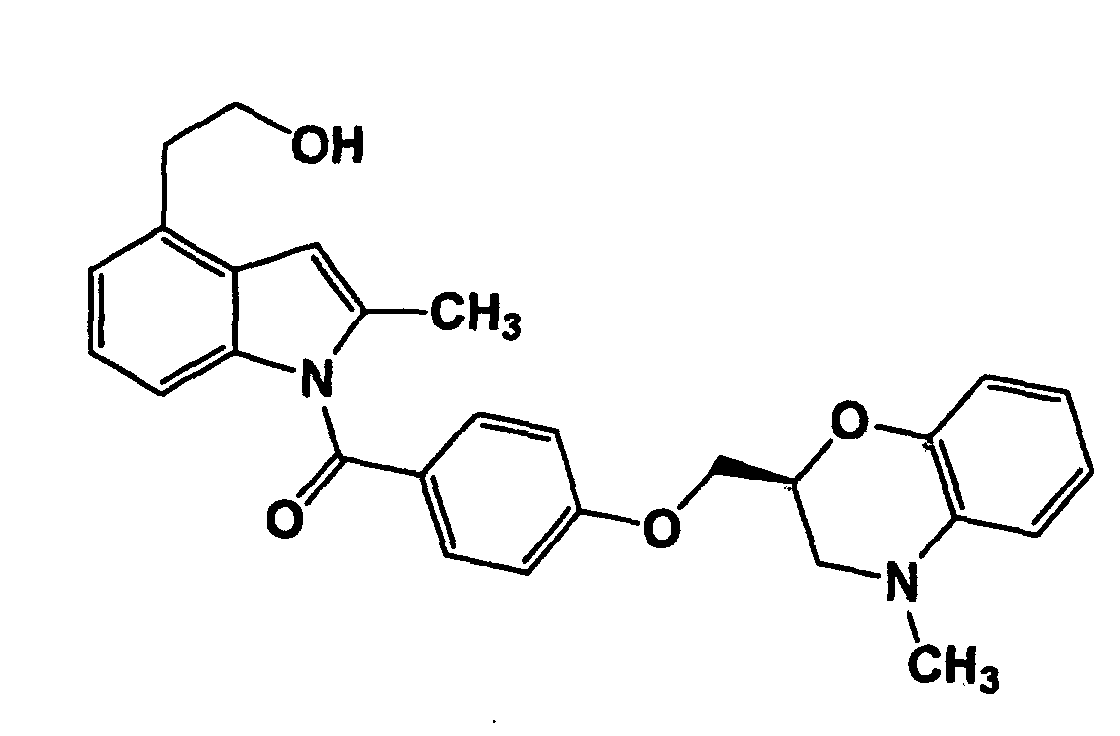
TLC:Rf 0.41 (ethyl acetate: hexane=2:1);
NMR(CDCl3):δ 7.72 (d, J = 8.7 Hz, 2H), 7.04-6.77 (m, 7H), 6.77-6.60 (m, 2H), 6.50 (s, 1H), 4.72-4.60 (m, 1H), 4.31 (dd, J = 9.9, 5.1 Hz, 1H), 4.25-4.10 (m, 1H), 3.95 (t, J = 6.3 Hz, 2H), 3.40 (dd, J = 11.7,2.7 Hz, 1H), 3.28 (dd, J = 11.7, 6.6 Hz, 1H), 3.10 (t, J = 6.3 Hz, 2H), 2.92 (s, 3H), 2.45 (s, 3H).
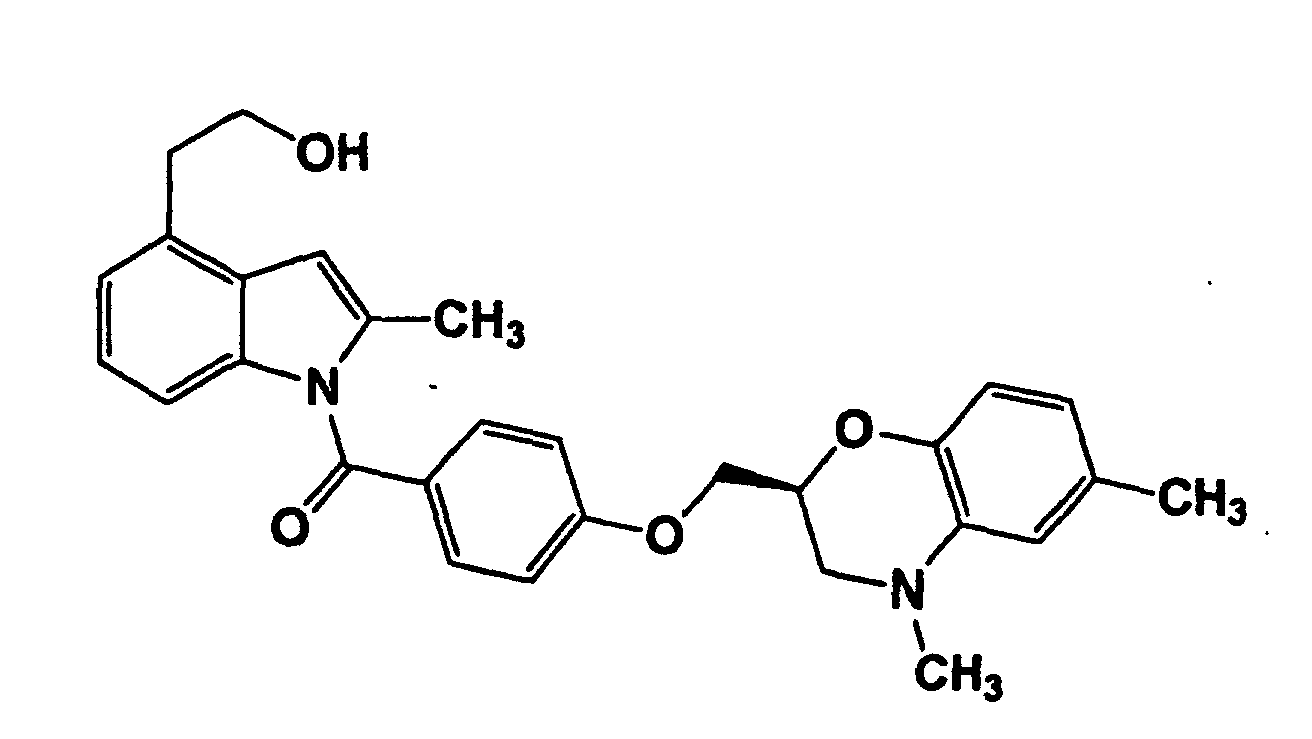
NMR(CDCl3):δ 7.72 (d, J = 9.0 Hz, 2H), 7.05-6.85 (m, 5H), 6.73 (d, J = 7.5 Hz, 1H), 6.56-6.44 (m, 3H), 4.70-4.60 (m, 1H), 4.30 (dd, J = 9.9, 5.4 Hz, 1H), 4.20 (dd, J = 9.9, 6.3 Hz, 1H), 4.00-3.90 (m, 2H), 3.39 (dd, J = 11.4, 2.7 Hz, 1H), 3.26 (dd, J = 11.4, 6.6 Hz, 1H), 3.10 (t, J = 6.3 Hz, 2H), 2.90 (s, 3H), 2.45 (s, 3H), 2,28 (s, 3H), 1.48-1.38 (m, 1H).
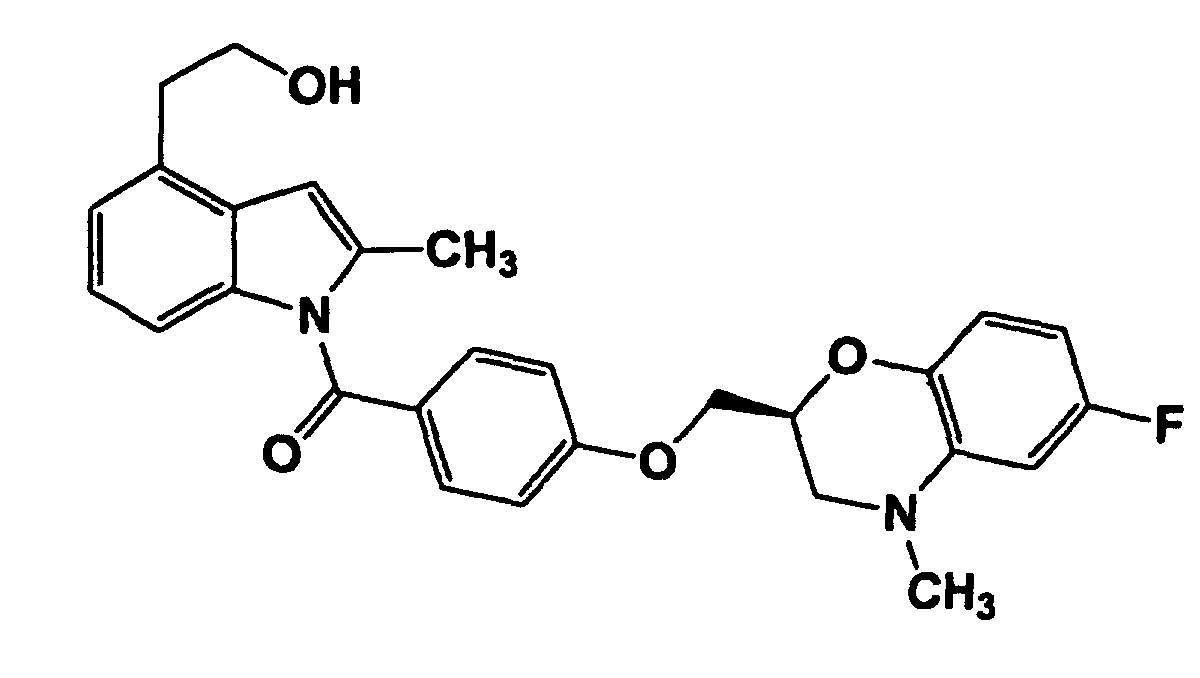
NMR(CDCl3):δ 7.72 (d, J = 8.1 Hz, 2H), 7.04-6.86 (m, 5H), 6.74 (dd, J = 8.4, 5.4 Hz, 1H), 6.50 (s, 1H), 6.45-6.30 (m, 2H), 4.66-4.56 (m, 1H), 4.30 (dd, J = 9.9, 5.1 Hz, 1H), 4.19 (dd, J = 9.9, 6.3 Hz, 1H), 4.00-3.90 (m, 2H), 3.41 (dd, J = 11.4, 2.7 Hz, 1H), 3.30 (dd, J = 11.4, 6.9 Hz, 1H), 3.10 (t, J = 6.3 Hz, 2H), 2.91 (s, 3H), 2.45 (s, 3H), 1.50-1.40 (m, 1H).

NMR(CDCl3):δ 7.73 (d, J = 9.0 Hz, 2H), 7.05-6.88 (m, 5H), 6.65-6.58 (m, 3H), 6.50 (s, 1H), 4.75-4.65 (m, 1H), 4.30 (dd, J = 9.9, 5.1 Hz, 1H), 4.21 (dd, J = 9.9, 6.0 Hz, 1H), 4.00-3.90 (m, 2H), 3.36 (dd, J = 11.4, 2.7 Hz, 1H), 3.22 (dd, J = 11.4, 6.6 Hz, 1H), 3.10 (t, J = 6.3 Hz, 2H), 2.88 (s, 3H), 2.45 (s, 3H), 1.50-1.40 (m, 1H).
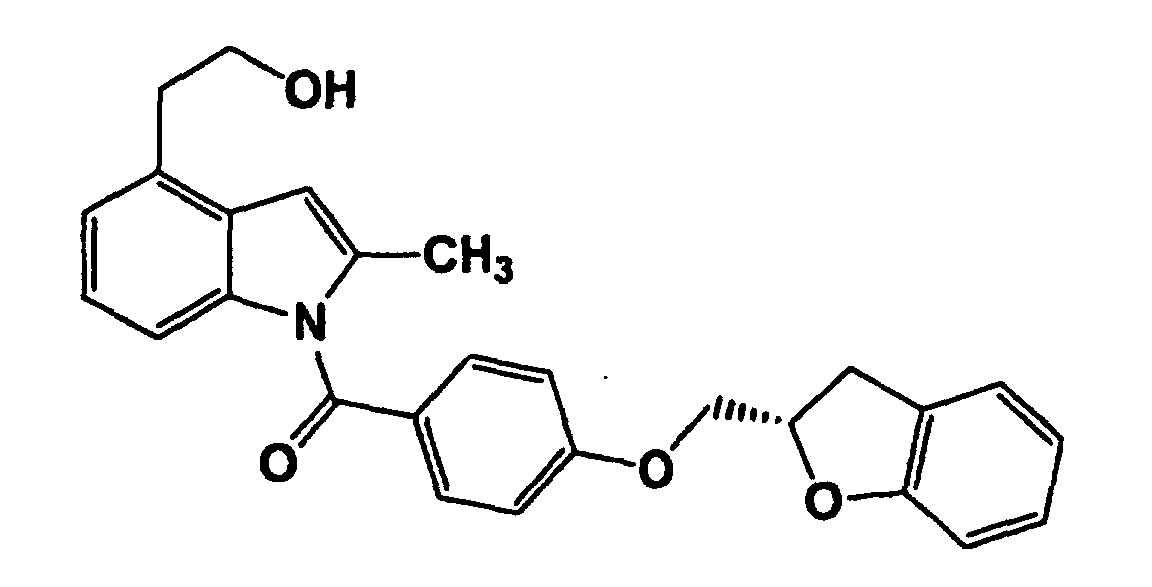
NMR(CDCl3):δ 7.71 (d, J = 9.3 Hz, 2H), 7.30-7.10 (m, 2H), 7.05-6.80-(m, 7H), 6.49 (s, 1H), 5.25-5.15 (m, 1H), 4.30 (dd, J = 10.2, 6.3 Hz, 1H), 4.21 (dd, J = 10.2, 4.8 Hz, 1H), 3.95 (brq, J = 5.4 Hz, 2H), 3.43 (dd, J = 15.6,9.6 Hz, 1H), 3.17 (dd, J = 15.6, 7.2 Hz, 1H), 3.10 (t, J = 6.3 Hz, 2H), 2.45 (s, 3H), 1.50-1.40 (m, 1H).
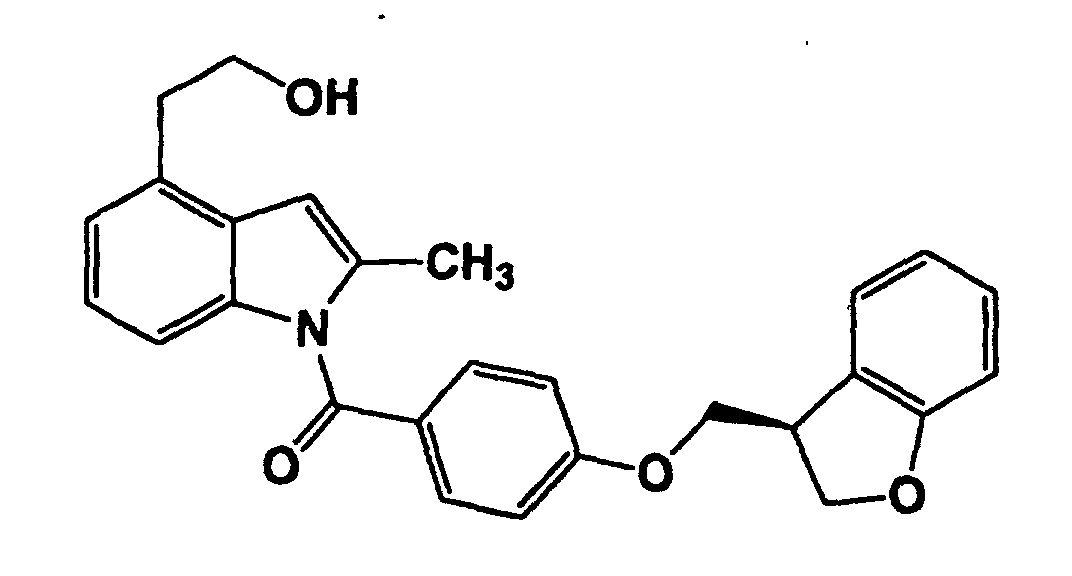
NMR(CDCl3):δ 7.72 (d, J = 9.0 Hz, 2H), 7.35-7.15 (m, 2H), 7.05-6.85 (m, 7H), 6.50 (s, 1H), 4.73 (t, J = 9.0 Hz, 1H), 4.55 (dd, J = 9.0, 5.1 Hz, 1H), 4.24 (dd, J = 9.0, 5.7 Hz, 1H), 4.11 (t, J = 9.0 Hz, 1H), 4.05-3.90 (m, 3H), 3.10 (t, J = 6.6 Hz, 2H), 2.45 (s, 3H), 1:50-1.40 (m, 1H).

TLC:Rf 0.40 (chloroform: methanol= 10: 1);
NMR(CDCl3):δ 7.77-7.73 (m, 2H), 7.07-7.00 (m, 5H), 6.92-6.82 (m, 2H), 6.72 (d, J = 7.5 Hz, 2H), 6.43 (s, 1H), 4.69 (m, 1H), 4.33 (dd, J = 9.9, 5.4 Hz, 1H), 4.23 (dd, J = 9.9, 6.0 Hz, 1H), 3.92 (s, 2H), 3.41 (dd, J = 11.4, 2.7 Hz, 1H), 3.29 (dd, J = 11.4, 6.6 Hz, 1H), 3.27 (s, 3H), 2.92 (s, 3H), 2.46 (d, J = 0.9 Hz, 3H).

TLC:Rf 0.58 (chloroform: methanol=9:1);
NMR(CDCl3):δ 7.98-7.58 (m, 6H), 7.56-7.46 (m, 2H), 7.08-6.80 (m, 7H), 6.76-6.66 (m, 2H), 6.16 (s, 1H), 4.74-4.64 (m, 1H), 4.33 (dd, J = 9.6, 5.1 Hz, 1H), 4.23 (dd, J = 9.6, 6.3 Hz, 1H), 3.79 (s, 2H), 3.41 (dd, J = 11.4, 2.7 Hz, 1H), 3.29 (dd, J = 11.4, 6.6 Hz, 1H), 2.92 (s, 3H), 2.38 (s, 3H).

TLC:Rf 0.33 (ethyl acetate: hexane=1:2);
NMR(CDCl3):δ 7.72 (d, J = 8.7 Hz, 2H), 7.04-6.82 (m, 7H), 6.75-6.67 (m, 2H), 6.52 (s, 1H), 4.75-4.65 (m, 1H), 4.36 (t, J = 7.2 Hz, 2H), 4.32(dd, J = 9.9, 5.1 Hz, 1H), 4.21 (dd, J = 9.9, 6.0 Hz, 1H), 3.41 (dd, J = 11.4, 3.0 Hz, 1H), 3.28 (dd, J = 11.4, 6.6 Hz, 1H), 3.16 (t, J = 7.2 Hz, 2H), 2.92 (s, 3H), 2.45 (s, 3H), 2.06 (s, 3H).

NMR(CDCl3):δ 6.89 (t, J = 8.4 Hz, 1H), 6.57 (dd, J = 8.4, 1.5 Hz, 1H), 6.49 (dd, J = 8.4, 1.5 Hz, 1H), 4.16-4.06 (m, 1H), 3.89 (s, 3H), 3.97-3.75 (m, 2H), 3.13-2.98 (m, 2H), 2.85 (s, 3H).

NMR(CDCl3):δ 7.00 -6.60 (m, 4H), 4.35 (m, 1H), 4.00-3.70 (m, 2H), 3.33-3.10 (m, 2H), 2.88 (s, 3H), 2.01 (m, 1H).
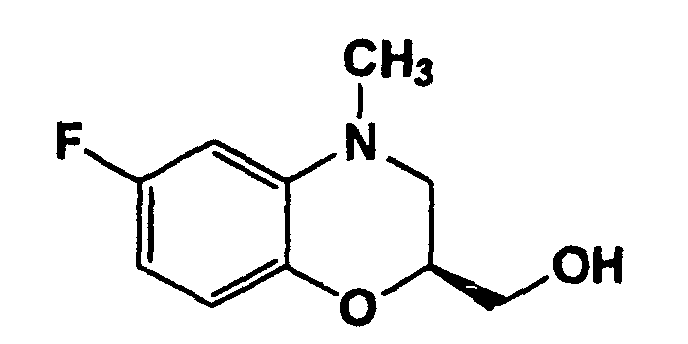
NMR(CDCl3):δ 6.75-6.65 (m, 1H), 6.42-6.26 (m, 2H), 4.30-4.20 (m, 1H), 3.90-3.72 (m, 2H), 3.21 (d, J = 5.4 Hz, 2H), 2.87 (s, 3H), 2.05-1.95 (m, 1H).

NMR(CDCl3):δ 6.70 (d, J = 7.8 Hz, 1H), 6.50-6.46 (m, 2H), 4.30 (m, 1H), 3.90-3.75 (m, 2H), 3-2,3-3.13 (m, 2H), 2.87 (s, 3H), 2.26 (s, 3H), 2.03 (brs, 1H).
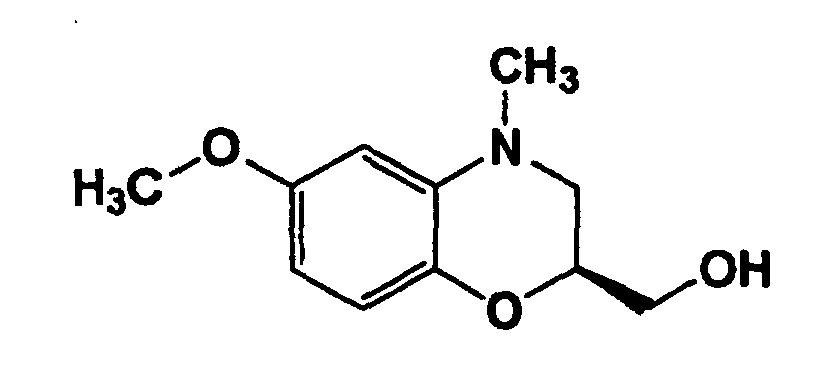
NMR(CDCl3):δ 6.72 (d, J = 8.4 Hz, 1H), 6.26 (d, J = 2.7 Hz, 1H), 6.20 (dd, J = 8.4, 2.7 Hz, 1H), 4.26 (m, 1H), 3.88-3.76 (m, 2H), 3.76 (s, 3H), 3.19 (d, J = 5.4 Hz, 2H), 2.87 (s, 3H), 2.00 (t, J = 6.3 Hz, 1H).

NMR(CDCl3):δ 6.76 (dd, J = 7.8, 7.5 Hz, 1H), 6.56 (d, J = 7.8 Hz, 1H), 6.56 (d, J = 7.5 Hz, 1H), 4.36 (m, 1H), 3.92-3.76 (m, 2H), 3.22 (dd, J = 11.1, 3.3 Hz, 1H), 3.16 (dd, J = 11.1, 6.9 Hz, 1H), 2.87 (s, 3H), 2.19 (s, 3H), 2.03 (brs, 1H).

NMR(CDCl3):δ 6.67-6.61 and 6.49-6.43 (m, total 3H), 4.42-4.33 (m, 1H), 3.94-3.75 (m, 2H), 3.73 (s, 3H), 3.16 (dd, J = 11.4, 3.0 Hz, 1H), 3.08 (dd, J = 11.4, 4.6 Hz, 1H), 2.82 (s, 3H).

NMR(CDCl3):δ 6.70-6.57 (m, 3H), 4.38-4:30 (m, 1H), 3.85 (dd, J = 11.7, 4.2 Hz, 1H), 3.79 (dd, J =11.7, 5.7 Hz, 1H), 3.18 (dd, J = 11.7, 3.9 Hz, 1H), 3.11 (dd, J = 11.7, 7.2 Hz, 1H), 2.84 (s, 3H), 2.22 (s, 3H).
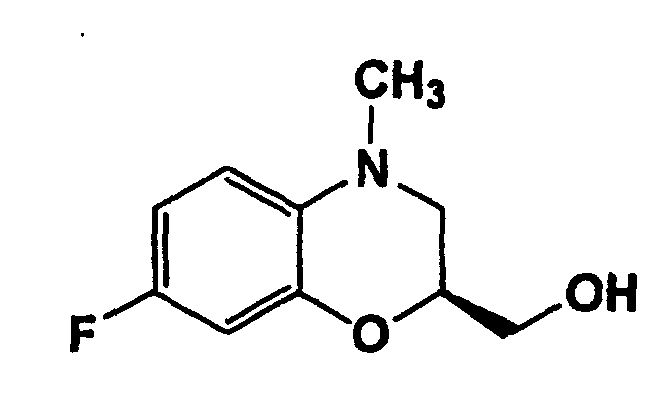
NMR(CDCl3):δ 6.59 and 6.57 (each m, total 3H), 4.41-4.31 (m, 1H), 3.86 (dd, J = 12.0, 4.2 Hz, 1H), 3.80 (dd, J = 12.0, 5.4 Hz, 1H), 3.19 (dd, J = 11.4, 3.0 Hz, 1H), 3.12 (dd, J = 11.4, 7.2 Hz, 1H), 2.84 (s, 3H).

NMR(CDCl3):δ 6.80-6.60 (m, 3H), 4.17-4.05 (m, 1H), 3.97-3.77 (m, 2H), 3.18-3.03 (m, 2H), 2.94 (d, J = 1.8 Hz, 3H), 2.02-1.92 (m, 1H).
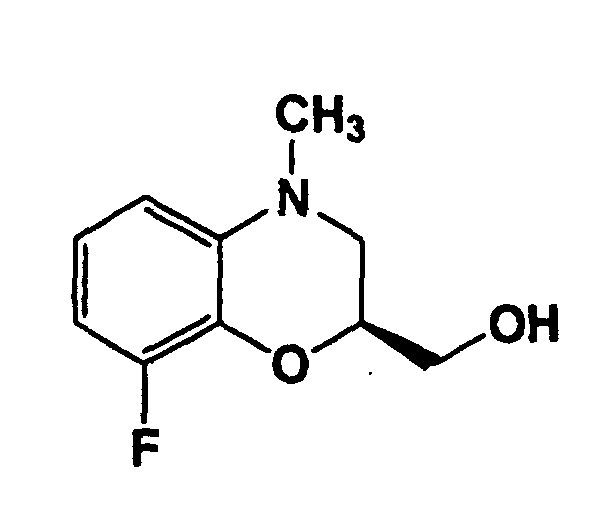
NMR(CDCl3):δ6.80-6.62 (m, 1H), 6.55-6.41 (m, 2H), 4.40-4.28 (m, 1H), 3.95-3.79 (m, 2H), 3.25 (d, J = 5.1 Hz, 2H), 2.90 (s, 3H).

TLC:Rf 0.35 (hexane: ethyl acetate=1:5);
NMR(CDCl3):δ7.78 (dd, J = 7.5, 1.5 Hz, 1H), 7.32-7.27 (m, 1H), 6.85 (dd, J = 8.1, 1.2 Hz, 1H), 6.74 (dt, J = 1.2, 7.5 Hz, 1H), 4.29 (dd, J = 11.1, 3.0 Hz, 1H), 4.07 (dd, J = 4.8, 3.0 Hz, 1H), 3.43-3.38 (m, 1H), 2.95-2.89 (m, 2H).
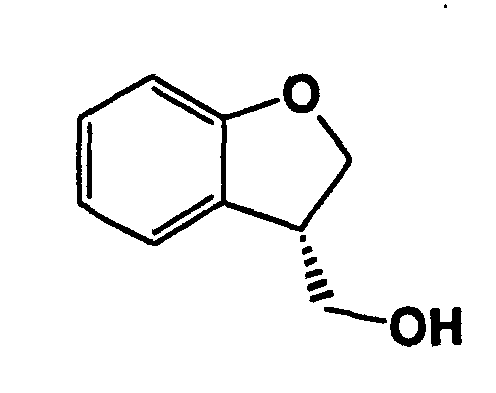
TLC:Rf 0.35 (hexane: ethyl acetate=3:2);
NMR(CDCl3):δ 7.26-7.14 (m, 2H), 6.90-6.80 (m, 2H), 4.64 (t, J = 9.0 Hz, 1H), 4.48 (dd, J = 9.0, 5.4 Hz, 1H), 3.82-3.80 (m, 2H), 3.69-3.60 (m, 1H).
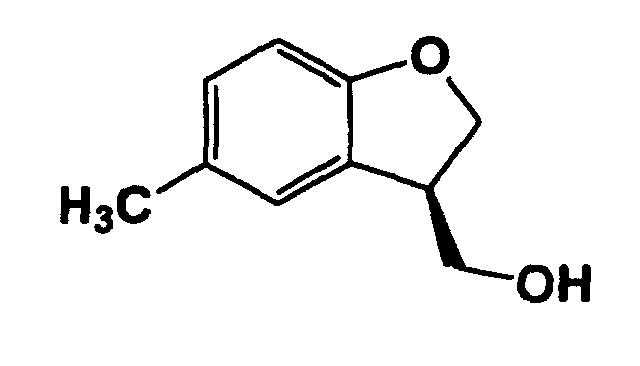
NMR(CDCl3):δ 7.03 (s, 1H), 6.96 (m, 1H), 6.70 (d, J = 8.4 Hz, 1H), 4.62 (t, J = 9.0 Hz, 1H), 4.45 (dd, J = 9.0, 5.1 Hz, 1H), 3.86-3.73 (m, 2H), 3.67-3.53 (m, 1H), 2.29 (s, 3H).

NMR(CDCl3):δ 7.10 (dd, J = 8.1, 6.0 Hz, 1H), 6.63-6.53 (m, 2H), 4.67 (t, J = 9.0 Hz, 1H), 4.59 (dd, J = 9.0,5.1 Hz, 1H), 4.00-3.74 (m, 3H).

NMR(CDCl3):δ 7.26-7.14 (m, 2H), 6.90-6.80 (m, 2H), 4.64 (t, J = 9.0 Hz, 1H), 4.48 (dd, J = 9.0, 5.4 Hz, 1H), 3.82-3.80 (m, 2H), 3.69-3.60 (m, 1H).

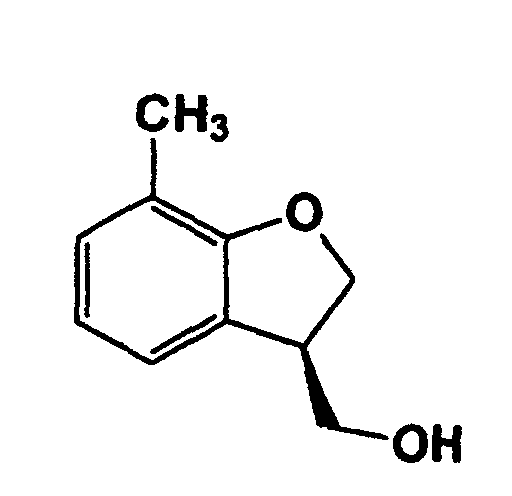
NMR(CDCl3):δ7.05 (d, J = 7.5 Hz, 1H), 6.98 (d, J = 7.5 Hz, 1H),6.78 (t, J = 7.5 Hz, 1H), 4.64 (t, J = 9.0 Hz, 1H), 4.48 (dd, J = 9.0, 5.7 Hz, 1H), 3.85-3.72 (m, 2H), 3.70-3.60 (m, 1H), 2.21 (s, 3H).
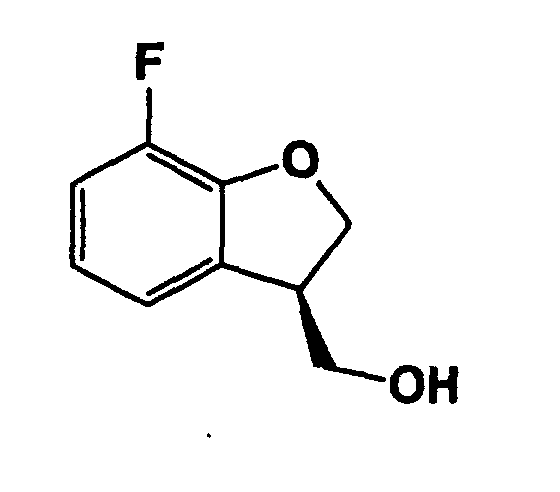
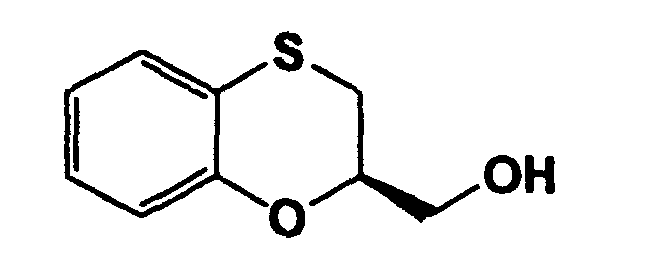
NMR(CDCl3):δ 7.10-,6.80 (m, 4H), 4.28 (m, 1H), 4.00-3.75 (m, 2H), 3.13 (dd, J = 13.2, 8.8 Hz, 1H), 2.95 (dd, J = 13.2, 2.2 Hz, 1H).

TLC:Rf 0.70 (hexane: ethyl acetate=7:3);
NMR(CDCl3):δ 7.11 (t, J = 7.5 Hz, 1H), 7.05 (d, J = 7.5 Hz, 1H), 6.70 (t, J = 7.5 Hz, 1H), 6.51 (d, J = 7.5 Hz, 1H), 4.05 (t, J = 9.6 Hz, 1H), 3.80 (s, 3H), 3.34 (dd, J = 15.6, 9.6 Hz, 1H), 3.13 (dd, J = 15.6, 9.6 Hz, 1H), 2.84 (s, 3H).

TLC:Rf 0.30 (hexane: ethyl acetate=7:3);
NMR(CDCl3):δ 7.16-7.05 (m, 2H), 6.73 (t, J = 7.5 Hz, 1H), 6.55 (d, J = 7.5 Hz, 1H), 3.95 (dd, J = 11.7, 3.6 Hz, 1H), 3.74-3.60 (m, 1H), 3.56-3.44 (m, 1H), 3.16-2.96 (m, 2H), 2.77 (s, 3H), 1.94-1.76 (m, 1H).

TLC:Rf 0.35 (hexane: ethyl acetate=7:3);
NMR(CDCl3):δ 7.08 (t, J = 7.5 Hz, 1H), 7.06 (d, J = 7.5 Hz, 1H), 6.69 (t, J = 7.5 Hz, 1H), 6.51 (d, J = 7.5 Hz, 1H), 3.88 (dd, J = 11.4, 3.6 Hz, 1H), 3.78 (m, 1H), 3.64 (brd, J = 11.4 Hz, 1H), 3.40-3.10 (m, 2H), 3.06 (dd, J = 8.7, 2.7 Hz, 2H), 1.98 (brs, 1H), 1.13 (t, J = 7.2 Hz, 3H).

TLC:Rf 0.44 (hexane: ethyl acetate=7:3);
NMR(CDCl3):δ 7.40-7.20 (m, 6H), 7.10-6.76 (m, 7H), 6.75-6.66 (m, 2H), 6.43 (brs, 1H), 5.14 (s, 2H), 4.72-4.62 (m, 1H), 4.29 (dd, J = 9.6, 4.8 Hz, 1H), 4.18 (dd, J = 9.6, 6.3 Hz, 1H), 3.86 (s, 2H), 3.41 (dd, J = 11.7, 2.7 Hz, 1H), 3.28 (dd, J = 11.7,6.6 Hz, 1H), 2.92 (s, 3H), 2.32 (s, 3H), 2.31 (s, 3H).

TLC:Rf 0.36 (hexane: ethyl acetate=9:1);
NMR(CDCl3):δ 8.26 (d, J = 8.7 Hz, 1H), 7.38-7.20 (m, 8H), 7.11 (d, J = 3.6 Hz, 1H), 6.93-6.82 (m, 2H), 6.63 (d, J = 3.6 Hz, 1H), 5.13 (s, 2H), 4.73-4.63 (m, 1H), 4.29 (dd, J = 9.6, 5.1 Hz, 1H), 4.18 (dd, J = 9.6, 6.6 Hz, 1H), 3.92 (s, 2H), 3.41 (dd, J = 11.7, 3.0 Hz, 1H), 3.28 (dd, J = 11.7, 6.6 Hz, 1H), 2.93 (s, 3H), 2.34 (s, 3H), 2.05 (s, 3H).

TLC=Rf 0.53 (chloroform: methanol=9:1);
NMR(CDCl3):δ 7.31 (d, J = 8.7 Hz, 1H), 7.10-6.98 (m, 3H), 6.92-6.76 (m, 4H), 6.75-6.67 (m, 2H), 6.47 (s, 1H), 4.72-4.62 (m, 1H), 4.28 (dd, J = 9.9, 5.4 Hz, 1H), 4.18 (dd, J = 9.9, 6.3 Hz, 1H), 3.85 (s, 2H), 3.41 (dd, J = 11.4, 2.7 Hz, 1H), 3.27 (dd, J = 11.4, 6.6 Hz, 1H), 2.92 (s, 3H), 2.35 (s, 3H), 2.32 (s, 3H).

TLC:Rf 0.43 (chloroform: methanol=9:1);
NMR(CDCl3):δ 8.27 (d, J = 8.1 Hz, 1H), 7.38-7.30 (m, 2H), 7.28-7.18 (m, 1H), 7.14 (d, J = 3.9 Hz, 1H), 6.94-6.80 (m, 4H), 6.76-6.67 (m, 2H), 6.64 (d, J = 3.9 Hz, 1H), 4.72-4.62 (m, 1H), 4.29 (dd, J = 9.9, 4.8 Hz, 1H), 4.18 (dd, J = 9.9, 6.6 Hz, 1H), 3.90 (s, 2H), 3.41 (dd, J = 11.7, 2.7 Hz, 1H), 3.28 (dd, J = 11.7,6.6 Hz, 1H), 2.92 (s, 3H), 2.34 (s, 3H).
- 1-(4-((2R)-2,3-dihydrobenzofuran-2-ylmethoxy)benzoyl)-2-methyl-1H-indol-4-yl acetic acid 500mg
- Carboxymethyl cellulose calcium (disintegrator) 200mg
- Magnesium stearate (lubricant) 100mg
- Microcrystalline cellulose 9.2g
Claims (13)
- An indole derivative represented by formula (I):wherein R represents -COR1, -CH2OR0, or -COOR20, R0 represents a hydrogen atom or C2-6 acyl group, R1 represents a hydroxyl group, C1-6 alkoxy group, -NR8R9 wherein R8 and R9 each represents hydrogen atom, C1-6 alkyl group, -SO2R13 wherein R13 represents C1-6 alkyl group, C3-15 saturated or unsaturated carbocyclic ring, or 4 to 15-membered heterocycle containing 1 to 5 of nitrogen atom(s) sulfur atom(s) and/or oxygen atom(s)., R20 represents allyl or benzyl group,
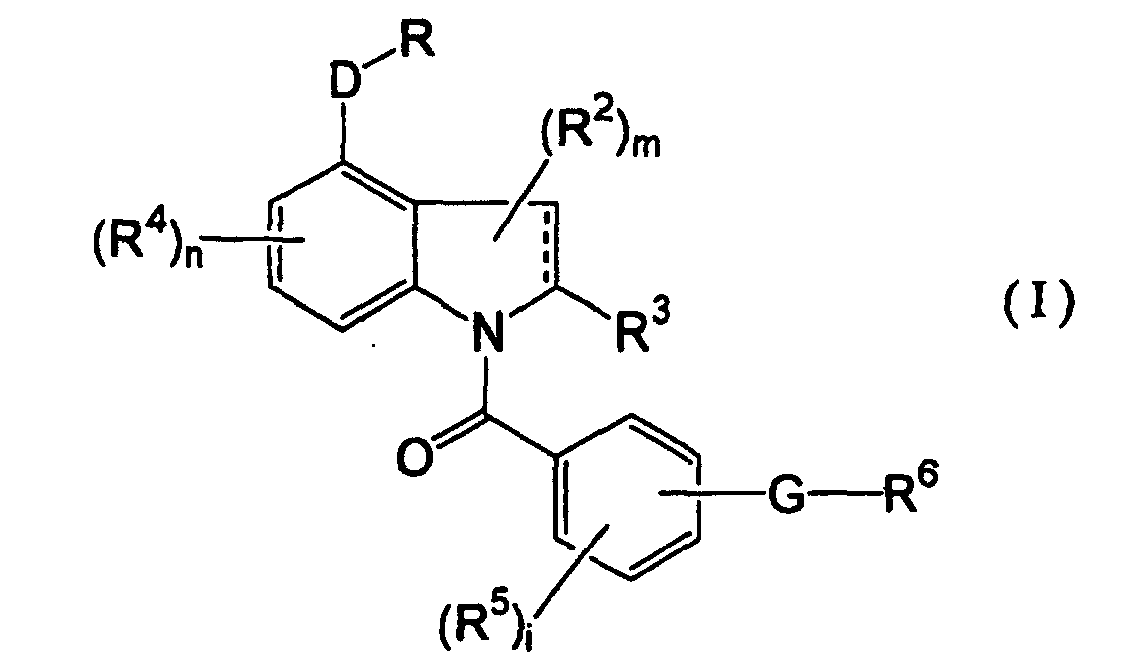
R2 represents a hydrogen atom, C1-6 alkyl, C1-6 alkoxy, C2-6 alkoxyalkyl, a halogen atom, amino, trihalomethyl, cyano, hydroxyl, benzyl, or 4-methoxybenzyl group,
R3 represents a hydrogen atom, C1-6 alkyl, C1-6 alkoxy, a halogen atom, trihalomethyl, cyano, or hydroxyl group,
R4 and R5 each represents a hydrogen atom, C1-6 alkyl, C1-6 alkoxy, C2-6 alkoxyalkyl group, a halogen atom, nitro, amino, trihalomethyl, trihalomethoxy, cyano or hydroxyl group,
D represents a single bond, C1-6 alkylene, C2-6 alkenylene, or C1-6 oxyalkylene group,
-G-R6 representsR6 represents C3-15 saturated or unsaturated carbocyclic ring, or a 4 to 15-membered heterocycle containing 1 to 5 of nitrogen atom(s) sulfur atom(s), and/or oxygen atom(s), wherein the rings may be substituted by 1 to 5 group(s) selected from C1-6 alkyl, C1-10 alkoxy, C2-6 alkoxyalkyl, a halogen atom, hydroxyl, trihalomethyl, nitro, amino, phenyl, phenoxy, oxo, C2-6 acyl, C1-6 alkane sulphonyl, and cyano group, or1) G represents C1-6 alkylene that may be replaced by 1 or 2 of oxygen atom(s) and/or sulfur atom(s), C2-6 alkenylene that may be replaced by lor 2 of oxygen atom(s) and/or sulfur atom(s), wherein the alkylene and alkenylene groups may be substituted by hydroxyl or C1-4 alkoxy group, -C(O)NH-, -NHC(O)-, -SO2NH-, -NHSO2-, or diazo group,n represents 1 to 3,2) together with G and R6,(i) C1-15 alkyl group that may be replaced by 1 to 5 of oxygen atom(s) and/or sulfur atom(s),(ii) C2-15 alkenyl group that may be replaced by 1 to 5 of oxygen atom(s) and/or sulfur atom(s), wherein the alkyl, alkenyl, and alkynyl groups may be substituted by 1 to 12 of groups selected from C1-6 alkoxy, a halogen atom, hydroxyl, cyano, oxo groups, and -NR11R12 wherein R11 and R12 represent hydrogen atoms, C1-6 alkyl, C2-6 alkenyl, phenyl, benzoyl, naphthyl, phenyl groups substituted with C1-6 alkyl group, or C1-6 alkyl group substituted by phenyl or cyano group, respectively,
m represents 1 to 3,
i represents 1 to 4,
----- represents a single bond or a double bond, or non-toxic salts thereof. - The indole derivative of claim 1, which is represented by formula (I-E):wherein R6-E represents the same meaning as R6 of claim 1; and wherein, the carbon atom with which R6-E binds is saturated and the configuration of the carbon atom is S arrangement, other symbols represent the same meaning as that of claim 1, or a non-toxic salt thereof.

- The indole derivative of claim 1, which is represented by formula (I-E):wherein R6-E represents the same meaning as R6 of claim 1, and wherein the carbon atom with which R6-E binds is saturated and the configuration of the carbon atom is R arrangement, and other symbols represent the same meaning as that of claim 1, or a non-toxic salt thereof.

- The indole derivative of claim 1, wherein R represents -CH2OR0, wherein R0 represents the same meaning as that of claim 1 in formula (I), or a non-toxic salt thereof.
- The indole derivative of claim 2 or 3, wherein R represents -COOR20, wherein R20 represents the same meaning as that of claim 1 in formula (I), or non-toxic salts thereof.
- The indole derivative of claim 1, which is a compound selected fromor a non-toxic salts thereof.(1) 1-(4-((2S)-4-methyl-3,4-dihydro-2H-1,4-benzoxazin-2-ylmethoxy)benzoyl)-2-methyl-1H-indol-4-yl acetic acid benzyl ester,(2) 1-(4-((2S)-4-methyl-3,4-dihydro-2H-1,4-benzoxazin-2-ylmethoxy)benzoyl)-2-methyl-1H-indol-4-yl acetic acid,(3) 1-(4-((2R)-1,4-benzodioxan-2-ylmethoxy)benzoyl)-2-methyl-1H-indol-4-yl acetic acid,(4) 1-(4-((2S)-1,4-benzodioxan-2-ylmethoxy)benzoyl)-2-methyl-1H-indole-4-yl acetic acid,(5) 1-(4-((2S)-1-methylindolin-2-ylmethoxy)benzoyl)-2-methyl-1H-indol-4-yl acetic acid,(6) 1-(4-((2R)-4-methyl-3,4-dihydro-2H-1,4-benzoxazin-2-ylmethoxy)benzoyl)-2-methyl-1H-indol-4-yl acetic acid,(7) 1-(4-((2S)-4,6-dimethyl-3,4-dihydro-2H-1,4-benzoxazin-2-ylmethoxy)benzoyl)-2-methyl-1H-indol-4-yl acetic acid,(8) 1-(4-((2S)-6-fluoro-4-methyl-3,4-dihydro-2H-1,4-benzoxazin-2-ylmethoxy)benzoyl)-2-methyl-1H-indol-4-yl acetic acid,(9) 1-(4-((2S)-6-methoxy-4-methyl-3,4-dihydro-2H-1,4-benzoxazin-2-ylmethoxy)benzoyl)-2-methyl-1H-indol-4-yl acetic acid,(10) 1-(4-((2S)-7-methoxy-4-methyl-3,4-dihydro-2H-1,4-benzoxazin-2-ylmethoxy)benzoyl)-2-methyl-1H-indol-4-yl acetic acid,(11) 1-(4-((2S)-4, 7-dimethyl-3,4-dihydro-2H-1,4-benzoxazin-2-ylmethoxy)benzoyl)-2-methyl-1H-indol-4-yl acetic acid,(12) 1-(4-((2S)-7-fluoro-4-methyl-3,4-dihydro-2H-1,4-benzoxazin-2-ylmethoxy)benzoyl)-2-methyl-1H-indol-4-yl acetic acid,(13) 1-(4-((2S)-1-ethylindolin-2-ylmethoxy)benzoyl)-2-methyl-1H-indol-4-yl acetic acid,(14) 1-(4-((2S)-4, 8-dimethyl-3,4-dihydro-2H-1,4-benzoxazin-2-ylmethoxy)benzoyl)-2-methyl-1H-indol-4-yl acetic acid,(15) 1-(4-((2S)-5-methoxy-4-methyl-3,4-dihydro-2H-1,4-benzoxazin-2-ylmethoxy)benzoyl)-2-methyl-1H-indol-4-yl acetic acid,(16) 1-(4-((2S)-5-fluoro-4-methyl-3,4-dihydro-2H-1,4-benzoxazin-2-ylmethoxy)benzoyl)-2-methyl-1H-indol-4-yl acetic acid,(17) 1-(4-((2S)-2,3-dihydrobenzofuran-2-ylmethoxy)benzoyl)-2-methyl-1H-indol-4-yl acetic acid,(18) 1-(4-((2R)-2,3-dihydrobenzofuran-2-ylmethoxy)benzoyl)-2-methyl-1H-indol-4-yl acetic acid,(19) 1-(4-((2S)-8-fluoro-4-methyl-3,4-dihydro-2H-1,4-benzoxazin-2-ylmethoxy)benzoyl)-2-methyl-1H-indol-4-yl acetic acid,(20) 1-(4-((2R)-1,4-benzoxathian-2-ylmethoxy)benzoyl)-2-methyl-1H-indol-4-yl acetic acid,(21) 1-(4-((3S)-2,3-dihydrobenzofuran-3-ylmethoxy)benzoyl)-2-methyl-1H-indol-4-yl acetic acid,(22) 1-(4-((3R)-2,3-dihydrobenzofuran-3-ylmethoxy)benzoyl)-2-methyl-1H-indol-4-yl acetic acid,(23) 1-(4-((3R)-5-fluoro-2,3-dihydrobenzofuran-3-ylmethoxy)benzoyl)-2-methyl-1H-indol-4-yl acetic acid,(24) 1-(4-((3R)-5-methyl-2,3-dihydrobenzofuran-3-ylmethoxy)benzoyl)-2-methyl-1H-indol-4-yl acetic acid,(25) 1-(4-((3R)-6-fluoro-2,3-dihydrobenzofuran-3-ylmethoxy)benzoyl)-2-methyl-1H-indol-4-yl acetic acid,(26) 1-(4-((3R)-7-methyl-2,3-dihydrobenzofuran-3-ylmethoxy)benzoyl)-2-methyl-1H-indol-4-yl acetic acid,(27) 1-(4-((2R)-5-fluoro-1,4-benzodioxan-2-ylmethoxy)benzoyl)-2-methyl-1H-indol-4-yl acetic acid,(28) 1-(4-((2S)-8-fluoro-1,4-benzodioxan-2-ylmethoxy)benzoyl)-2-methyl-1H-indol-4-yl acetic acid,(29) 1-(4-((3R)-7-fluoro-2,3-dihydrobenzofuran-3-ylmethoxy)benzoyl)-2-methyl-1H-indol-4-yl acetic acid,(30) 3-(1-(4-((2S)-4-methyl-3,4-dihydro-2H-1,4-benzoxazin-2-ylmethoxy)benzoyl)-2-methyl-1H-indol-4-yl)acrylic acid allyl ester,(31) 3-(1-(4-((2S)-4-methyl-3,4-dihydro-2H-1,4-benzoxazin-2-ylmethoxy)benzoyl)-2-methyl-1H-indol-4-yl)acrylic acid,(32) 3-(1-(4-((2S)-4-methyl-3,4-dihydro-2H-1,4-benzoxazin-2-ylmethoxy)benzoyl)-2-methyl-1H-indol-4-yl)propanoic acid,(33) (1-(4-((2S)-4-methyl-3,4-dihydro-2H-1,4-benzoxazin-2-ylmethoxy)benzoyl)-2-methyl-1H-indol-4-yl)oxyacetic acid benzyl ester,(34) (1-(4-((2S)-4-methyl-3,4-dihydro-2H-1,4-benzoxazin-2-ylmethoxy)benzoyl)-2-methyl-1H-indol-4-yl)oxyacetic acid,(35) 1-(4-((2S)-4-methyl-3,4-dihydro-2H-1,4-benzoxazin-2-ylmethoxy)benzoyl)-2-methyl-1H-indol-4-carboxylic acid benzyl ester,(36) 1-(4-((2S)-4-methyl-3,4-dihydro-2H-1,4-benzoxazin-2-ylmethoxy)benzoyl)-2-methyl-1H-indol-4-carboxylic acid,(37) 1-(4-((2S)-4-methyl-3,4-dihydro-2H-1,4-benzoxazin-2-ylmethoxy)benzoyl)-1H-indol-4-yl acetic acid benzyl ester,(38) 1-(4-((2S)-4-methyl-3,4-dihydro-2H-1,4-benzoxazin-2-ylmethoxy)benzoyl)-1H-indol-4-yl acetic acid,(39) 1-(4-((2S)-4-methyl-3,4-dihydro-2H-1,4-benzoxazin-2-ylmethoxy)benzoyl)-2,3-dihydro-1H-indol-4-yl acetic acid,(40) 1-(4-((2S)-4-methyl-3,4-dihydro-2H-1,4-benzoxazin-2-ylmethoxy)benzoyl)-2-methyl-2,3-dihydro-1H-indol-4-yl acetic acid,(41) 2-(1-(4-((2S)-4-methyl-3,4-dihydro-2H-1,4-benzoxazin-2-ylmethoxy)benzoyl)-2-methyl-1H-indol-4-yl)ethanol,(42) 2-(1-(4-((2S)-4,6-dimethyl-3,4-dihydro-2H-1,4-benzoxazin-2-ylmethoxy)benzoyl)-2-methyl-1H-indol-4-yl)ethanol,(43) 2-(1-(4-((2S)-6-fluoro-4-methyl-3,4-dihydro-2H-1,4-benzoxazin-2-ylmethoxy)benzoyl)-2-methyl-1H-indol-4-yl)ethanol,(44) 2-(1-(4-((2S)-7-fluoro-4-methyl-3,4-dihydro-2H-1,4-benzoxazin-2-ylmethoxy)benzoyl)-2-methyl-1H-indol-4-yl)ethanol,(45) 2-(1-(4-((2S)-2,3-dihydrobenzofuran-2-ylmethoxy)benzoyl)-2-methyl-1H-indol-4-yl)ethanol,(46) 2-(1-(4-((3R)-2,3-dihydrobenzofuran-3-ylmethoxy)benzoyl)-2-methyl-1H-indol-4-yl)ethanol,(47) N-methylsulfonyl-(1-(4-((2S)-4-methyl-3,4-dihydro-2H-1,4-benzoxazin-2-ylmethoxy)benzoyl)-2-methyl-1H-indol-4-yl)acetamide,(48) N-phenylsulfonyl-(1-(4-((2S)-4-methyl-3,4-dihydro-2H-1,4-benzoxazin-2-ylmethoxy)benzoyl)-2-methyl-1H-indol-4-yl)acetamide,(49) 2-(1-(4-((2S)-4-methyl-3,4-dihydro-2H-1,4-benzoxazin-2-ylmethoxy)benzoyl)-2-methyl-1H-indol-4-yl)ethyl acetate,(50) 1-(4-((2S)-4-methyl-3,4-dihydro-2H-1,4-benzoxazin-2-ylmethoxy)-2-methylbenzoyl)-2-methyl-1H-indol-4-yl acetic acid benzyl ester,(51) 1-(4-((2S)-4-methyl-3,4-dihydro-2H-1,4-benzoxazin-2-ylmethoxy)-2-methylbenzoyl)-1H-indol-4-yl acetic acid benzyl ester,(52) 1-(4-((2S)-4-methyl-3,4-dihydro-2H-1,4-benzoxazin-2-ylmethoxy)-2-methylbenzoyl)-2-methyl-1H-indol-4-yl acetic acid, and(53) 1-(4-((2S)-4-methyl-3,4-dihydro-2H-1,4-benzoxazin-2-ylmethoxy)-2-methylbenzoyl)-1H-indol-4-yl acetic acid or a non-toxic salt thereof,
- A production method of a compound represented by formula (IV)wherein R20 represents aryl or benzyl group, and other symbols represent the same meaning as that of claim 1, which comprises subjecting a compound represented by formula (V)
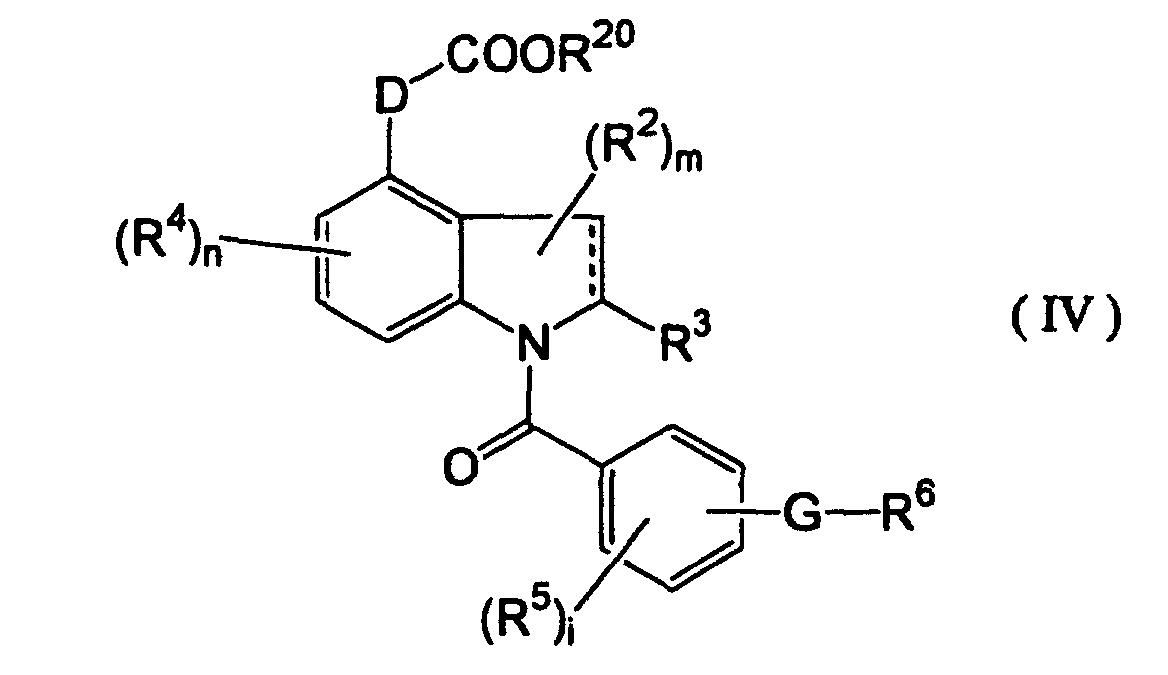 wherein R20 represents aryl or benzyl group and R21, R31, and R41 represent the same meaning as R2, R3, and R4 of claim 1 respectively; and wherein they are protected by protecting groups when they represent amino or hydroxyl group, and other symbols represent the same meaning as that of claim 1 and a compound represented by formula (VI)
 wherein R51 represents the same meaning as R5 of claim 1; and wherein they are protected by protecting groups when R51 represents amino or hydroxyl group, and G1 and R61 represent the same meaning as G and R6 of claim 1, respectively; and wherein they are protected by protecting groups when they contain amino or hydroxyl group to amidation reaction, followed by deprotection reaction optionally.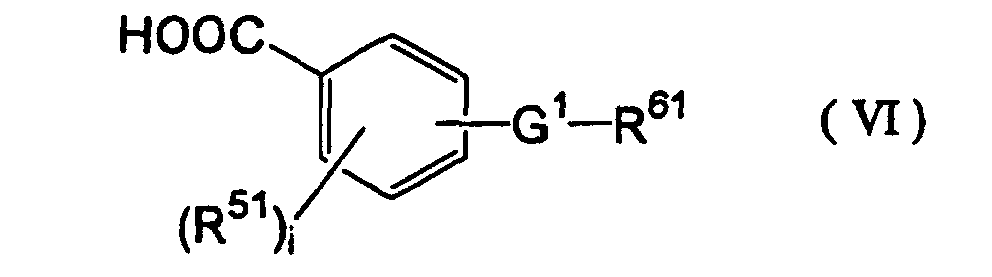
- A production method of a compound represented by formula (IV)wherein R20 represents aryl or benzyl group, and other symbols represent the same meaning as that of claim 1, which comprises by subjecting a compound represented by formula (VII)
 wherein R52 represents the same meaning as R2, R3, R4, and R5 of claim 1 respectively; and wherein they are protected by protecting groups when they represent amino or hydroxyl group, and other symbols represent the same meaning as claim 1. and a compound represented by formula (VIII)
- A production method of a compound represented by formula (Ia)wherein all symbols represent the same as that of claim 1, which comprises subjecting a compound represented by formula (IV)
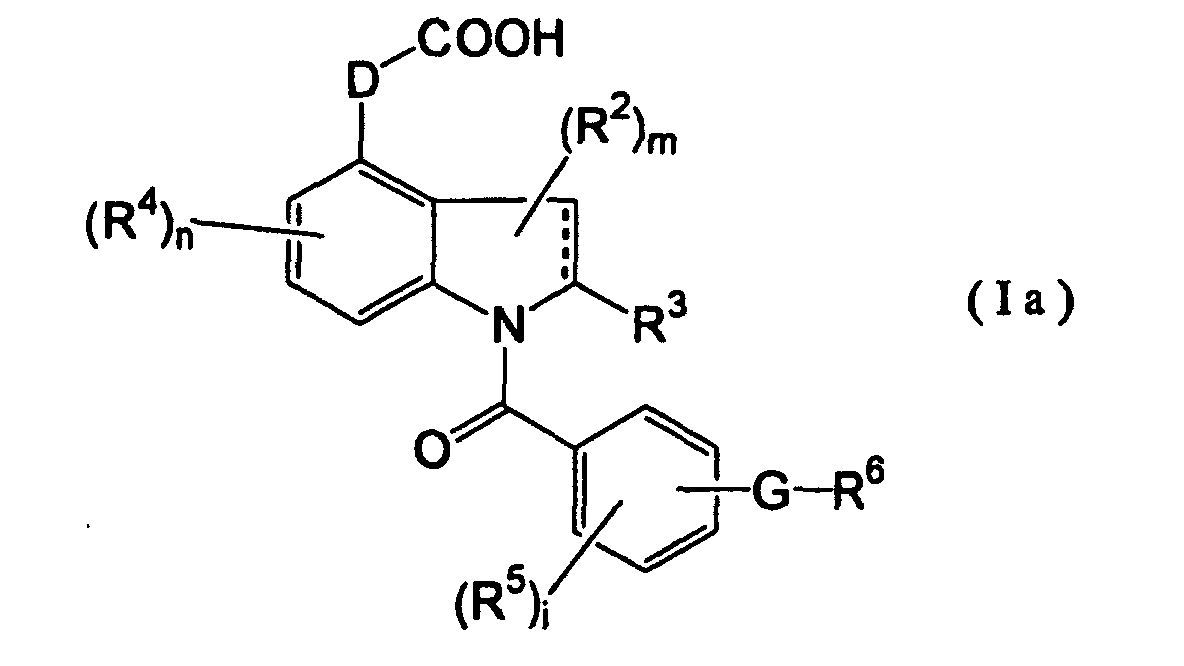 wherein R20 represents aryl or benzyl group, and other symbols represent the same meaning as that of claim 1 to deprotection reaction of allyl ester or benzyl ester.
- A medicinal composition comprising the indole derivative compound represent by formula (I) of claim 1 or a non-toxic salt thereof as an active ingredient.
- A PGD2 receptor antagonist comprising the indole derivative compound represent by formula (I) of claim 1 or a non-toxic salt thereof as an active ingredient.
- The antagonist of claim 11, wherein PGD2 receptor is DP receptor.
- A preventive and/or treatment medicine for allergic diseases (allergic rhinitis, allergic conjunctivitis, atopic dermatitis, bronchial asthma, food allergy, etc.), systemic mastocytosis, disorders due to systemic mastocyte activation, anaphylactic shock, bronchoconstriction, urticaria, eczema, psoriasis, allergic bronchopulmonary aspergillosis, paranasal sinusitis, migraine, nasal polyp, hypersensitive angitis, eosinophilia, contact dermatitis, diseases accompanied with itching (such as atopic dermatitis, urticaria, allergic conjunctivitis, allergic rhinitis, contact dermatitis, etc.), secondary diseases (such as cataracta, retinodialysis, inflammation, infection, dysgryphia, etc.) generated by behaviors caused by itching (scratching behaviors, beating, etc.), inflammation, chronic obstructive pulmonary disease, ischemic reperfusion disorder, cerebrovascular disorder, brain damage, hepatopathy, graft rejection, autoimmune disease, rheumatoid arthritis, pleuritis complicated by rheumatoid arthritis, osteoarthritis, crohn's disease, ulcerative colitis, or pain, comprising the indole derivative compound represent by formula (I) of claim 1 or a non-toxic salt thereof as an active ingredient.
Applications Claiming Priority (3)
| Application Number | Priority Date | Filing Date | Title |
|---|---|---|---|
| JP2001271281 | 2001-09-07 | ||
| JP2001271281 | 2001-09-07 | ||
| PCT/JP2002/009077 WO2003022813A1 (en) | 2001-09-07 | 2002-09-06 | Indole derivatives, process for producing the same and drugs containing the same as the active ingredient |
Publications (2)
| Publication Number | Publication Date |
|---|---|
| EP1424325A1 true EP1424325A1 (en) | 2004-06-02 |
| EP1424325A4 EP1424325A4 (en) | 2005-12-21 |
Family
ID=19096809
Family Applications (1)
| Application Number | Title | Priority Date | Filing Date |
|---|---|---|---|
| EP02798037A Withdrawn EP1424325A4 (en) | 2001-09-07 | 2002-09-06 | Indole derivatives, process for producing the same and drugs containing the same as the active ingredient |
Country Status (4)
| Country | Link |
|---|---|
| US (1) | US7153852B2 (en) |
| EP (1) | EP1424325A4 (en) |
| JP (1) | JP4292402B2 (en) |
| WO (1) | WO2003022813A1 (en) |
Cited By (11)
| Publication number | Priority date | Publication date | Assignee | Title |
|---|---|---|---|---|
| WO2005123731A3 (en) * | 2004-06-17 | 2006-05-04 | Novartis Ag | Pyrrolopyridine derivatives and their use as crth2 antagonists |
| US7186746B2 (en) | 2002-08-29 | 2007-03-06 | Merck & Co., Inc. | Indoles having anti-diabetic activity |
| WO2007030574A3 (en) * | 2005-09-07 | 2007-05-10 | Plexxikon Inc | 1 , 4 and 1 , 5-disubstituted indole derivatives for use as ppar active compounds |
| US7393960B2 (en) | 2002-08-29 | 2008-07-01 | Merck & Co., Inc. | Indoles having anti-diabetic activity |
| US7531569B2 (en) | 2003-12-02 | 2009-05-12 | Sanofi-Aventis Deutschland Gmbh | Process for preparing (3-oxo-2,3-dihydro-1H-isoindol-1-yl) acetylguanidine derivatives |
| US7534806B2 (en) | 2004-12-06 | 2009-05-19 | Avigen, Inc. | Method for treating neuropathic pain and associated syndromes |
| US7842692B2 (en) | 2005-07-22 | 2010-11-30 | Shionogi & Co., Ltd. | Azaindole derivative having PGD2 receptor antagonistic activity |
| US7956082B2 (en) | 2005-07-22 | 2011-06-07 | Shionogi & Co., Ltd | Indole derivative having PGD2 receptor antagonist activity |
| US8143285B2 (en) | 2005-09-06 | 2012-03-27 | Shionogi & Co., Ltd. | Indolecarboxylic acid derivative having PGD2 receptor antagonistic activity |
| EP2570125A1 (en) * | 2011-09-16 | 2013-03-20 | Almirall, S.A. | Ep1 receptor ligands |
| US8431703B2 (en) | 2005-12-09 | 2013-04-30 | Novartis Ag | Pyrrolopyridine compounds and their use in treating disease |
Families Citing this family (35)
| Publication number | Priority date | Publication date | Assignee | Title |
|---|---|---|---|---|
| JPWO2004078719A1 (en) * | 2003-03-06 | 2006-06-08 | 小野薬品工業株式会社 | Indole derivative compounds and drugs containing the compounds as active ingredients |
| US7435837B2 (en) | 2003-10-24 | 2008-10-14 | Wyeth | Dihydrobenzofuranyl alkanamine derivatives and methods for using same |
| US7728155B2 (en) | 2003-10-24 | 2010-06-01 | Wyeth Llc | Dihydrobenzofuranyl alkanamines and methods for using same as cns agents |
| WO2006068162A1 (en) * | 2004-12-24 | 2006-06-29 | Shionogi & Co., Ltd. | Therapeutic agent for chronic obstructive pulmonary disease |
| US7977359B2 (en) | 2005-11-04 | 2011-07-12 | Amira Pharmaceuticals, Inc. | 5-lipdxygenase-activating protein (FLAP) inhibitors |
| GB2431927B (en) | 2005-11-04 | 2010-03-17 | Amira Pharmaceuticals Inc | 5-Lipoxygenase-activating protein (FLAP) inhibitors |
| US8399666B2 (en) | 2005-11-04 | 2013-03-19 | Panmira Pharmaceuticals, Llc | 5-lipoxygenase-activating protein (FLAP) inhibitors |
| EP2036887A1 (en) * | 2006-06-28 | 2009-03-18 | Sanwa Kagaku Kenkyusho Co., Ltd | Novel 6-5 bicycic heterocyclic derivative and medical use thereof |
| GB2443161B (en) * | 2006-10-28 | 2011-03-23 | Nupharm Lab Ltd | Clobetasol spray |
| EP2131841B1 (en) * | 2007-01-30 | 2012-08-01 | Avigen, Inc. | Methods for treating acute pain |
| WO2008137012A1 (en) * | 2007-05-03 | 2008-11-13 | Avigen, Inc. | Use of a glial attenuator to prevent amplified pain responses caused by glial priming |
| NZ585888A (en) | 2007-12-14 | 2012-02-24 | Pulmagen Therapeutics Asthma Ltd | Indoles and their therapeutic use |
| CN102137858B (en) | 2008-05-23 | 2014-07-23 | 潘米拉制药有限责任公司 | 5-lipoxygenase-activating protein inhibitor |
| US8546431B2 (en) | 2008-10-01 | 2013-10-01 | Panmira Pharmaceuticals, Llc | 5-lipoxygenase-activating protein (FLAP) inhibitors |
| US8674115B2 (en) | 2009-12-23 | 2014-03-18 | Ironwood Pharmaceuticals, Inc. | CRTH2 modulators |
| US20130178475A1 (en) | 2010-03-17 | 2013-07-11 | Ironwood Pharmaceuticals, Inc. | sGC STIMULATORS |
| WO2012003405A1 (en) | 2010-06-30 | 2012-01-05 | Ironwood Pharmaceuticals, Inc. | Sgc stimulators |
| WO2012009137A1 (en) | 2010-07-12 | 2012-01-19 | Ironwood Pharmaceuticals, Inc. | Crth2 modulators |
| US20130259830A1 (en) | 2010-07-12 | 2013-10-03 | Ironwood Pharmaceuticals, Inc. | Crth2 modulators |
| NZ609955A (en) | 2010-11-09 | 2015-05-29 | Ironwood Pharmaceuticals Inc | Sgc stimulators |
| CN104066731B (en) | 2011-12-27 | 2016-06-15 | 铁木医药有限公司 | 2-Benzyl, 3-(pyrimidin-2-yl)-substituted pyrazoles useful as SGC stimulators |
| US9309235B2 (en) | 2012-09-18 | 2016-04-12 | Ironwood Pharmaceuticals, Inc. | SGC stimulators |
| US9487508B2 (en) | 2012-09-19 | 2016-11-08 | Ironwood Pharmaceuticals, Inc. | SGC stimulators |
| CN103044311B (en) * | 2012-12-26 | 2015-04-22 | 山东大学 | Multi-substituted indole compounds and preparation method and application thereof |
| SI2970243T1 (en) | 2013-03-15 | 2020-04-30 | Cyclerion Therapeutics, Inc. | Sgc stimulators |
| US9198898B2 (en) | 2013-06-24 | 2015-12-01 | Tigercat Pharma, Inc. | Use of NK-1 receptor antagonists in pruritus |
| US8906951B1 (en) | 2013-06-24 | 2014-12-09 | Tigercat Pharma, Inc. | Use of NK-1 receptor antagonists in pruritus |
| EP3092231B1 (en) | 2013-12-11 | 2018-06-27 | Ironwood Pharmaceuticals, Inc. | Sgc stimulators |
| EP3094327A1 (en) | 2014-01-13 | 2016-11-23 | Ironwood Pharmaceuticals, Inc. | USE OF sGC STIMULATORS FOR THE TREATMENT OF NEUROMUSCULAR DISORDERS |
| CA2961489A1 (en) | 2014-09-17 | 2016-03-24 | Glen Robert RENNIE | Sgc stimulators |
| CA2959757A1 (en) | 2014-09-17 | 2016-03-24 | Ironwood Pharmaceuticals, Inc. | Pyrazole derivatives as sgc stimulators |
| US20170298055A1 (en) | 2014-09-17 | 2017-10-19 | Ironwood Pharmaceuticals, Inc. | sGC STIMULATORS |
| BR112019000293A2 (en) | 2016-07-07 | 2019-04-16 | Ironwood Pharmaceuticals, Inc. | solid forms of an sgc stimulator |
| KR102513343B1 (en) | 2016-07-07 | 2023-03-22 | 사이클리온 테라퓨틱스, 인크. | Phosphorus prodrugs of sGC stimulators |
| CN106875847B (en) * | 2017-03-17 | 2019-06-25 | 联想(北京)有限公司 | A kind of flexible electronic devices |
Family Cites Families (9)
| Publication number | Priority date | Publication date | Assignee | Title |
|---|---|---|---|---|
| US5234942A (en) * | 1984-10-19 | 1993-08-10 | Ici Americas Inc. | Heterocyclic amides and leucotriene antagonistic use thereof |
| GB9011589D0 (en) * | 1990-05-24 | 1990-07-11 | Wellcome Found | Amino bicyclic compounds |
| EP0458342A1 (en) | 1990-05-25 | 1991-11-27 | Idemitsu Petrochemical Company Limited | Method for preparation of diamond film-coated body |
| JPH0764841B2 (en) * | 1990-10-03 | 1995-07-12 | ファイザー製薬株式会社 | Indole derivative and its use |
| US5214038A (en) * | 1991-04-15 | 1993-05-25 | Hoechst-Roussel Pharmaceuticals Inc. | 1-(pyrido[3,4-b]-1,4-oxazinyl-4-yl)-1H-indoles and intermediates for the preparation thereof |
| JPH09176162A (en) * | 1995-12-22 | 1997-07-08 | Toubishi Yakuhin Kogyo Kk | Thiazolidinedione derivative, its production and medicinal composition containing the same |
| US6743793B2 (en) * | 2000-03-09 | 2004-06-01 | Ono Pharmaceutical Co., Ltd. | Indole derivatives, process for preparation of the same and use thereof |
| US7135495B2 (en) * | 2000-03-09 | 2006-11-14 | Ono Pharmaceutical Co., Ltd. | Indole derivatives |
| GB0224557D0 (en) * | 2002-10-22 | 2002-11-27 | Glaxo Group Ltd | Novel compounds |
-
2002
- 2002-09-06 JP JP2003526889A patent/JP4292402B2/en not_active Expired - Fee Related
- 2002-09-06 WO PCT/JP2002/009077 patent/WO2003022813A1/en not_active Ceased
- 2002-09-06 US US10/488,834 patent/US7153852B2/en not_active Expired - Fee Related
- 2002-09-06 EP EP02798037A patent/EP1424325A4/en not_active Withdrawn
Cited By (24)
| Publication number | Priority date | Publication date | Assignee | Title |
|---|---|---|---|---|
| US7186746B2 (en) | 2002-08-29 | 2007-03-06 | Merck & Co., Inc. | Indoles having anti-diabetic activity |
| US7345085B2 (en) | 2002-08-29 | 2008-03-18 | Merck & Co., Inc. | Indoles having anti-diabetic activity |
| US7393960B2 (en) | 2002-08-29 | 2008-07-01 | Merck & Co., Inc. | Indoles having anti-diabetic activity |
| US7531569B2 (en) | 2003-12-02 | 2009-05-12 | Sanofi-Aventis Deutschland Gmbh | Process for preparing (3-oxo-2,3-dihydro-1H-isoindol-1-yl) acetylguanidine derivatives |
| US8283374B2 (en) | 2003-12-02 | 2012-10-09 | Sanofi-Aventis Deutschland Gmbh | Process for preparing (3-oxo-2,3-dihydro-1H-isoindol-1-yl) acetylguanidine derivatives |
| US8455645B2 (en) | 2004-06-17 | 2013-06-04 | Novartis Ag | Pyrrolopyridine derivatives and their use as CRTH2 antagonists |
| NO338319B1 (en) * | 2004-06-17 | 2016-08-08 | Novartis Ag | Organic compounds |
| WO2005123731A3 (en) * | 2004-06-17 | 2006-05-04 | Novartis Ag | Pyrrolopyridine derivatives and their use as crth2 antagonists |
| US7666878B2 (en) | 2004-06-17 | 2010-02-23 | Novartis Ag | Pyrrolopyridine derivatives and their use as Crth2 antagonists |
| US9169251B2 (en) | 2004-06-17 | 2015-10-27 | Novartis Ag | Pyrrolopyridine derivatives and their use as CRTH2 antagonists |
| US8791256B2 (en) | 2004-06-17 | 2014-07-29 | Novartis Ag | Pyrrolopyridine derivatives and their use as CRTH2 antagonists |
| US8470848B2 (en) | 2004-06-17 | 2013-06-25 | Novartis Ag | Organic compounds |
| US7534806B2 (en) | 2004-12-06 | 2009-05-19 | Avigen, Inc. | Method for treating neuropathic pain and associated syndromes |
| US7956082B2 (en) | 2005-07-22 | 2011-06-07 | Shionogi & Co., Ltd | Indole derivative having PGD2 receptor antagonist activity |
| US7842692B2 (en) | 2005-07-22 | 2010-11-30 | Shionogi & Co., Ltd. | Azaindole derivative having PGD2 receptor antagonistic activity |
| US8143285B2 (en) | 2005-09-06 | 2012-03-27 | Shionogi & Co., Ltd. | Indolecarboxylic acid derivative having PGD2 receptor antagonistic activity |
| US8623903B2 (en) | 2005-09-06 | 2014-01-07 | Shionogi & Co., Ltd. | Indolecarboxylic acid derivative having PGD2 receptor antagonistic activity |
| WO2007030574A3 (en) * | 2005-09-07 | 2007-05-10 | Plexxikon Inc | 1 , 4 and 1 , 5-disubstituted indole derivatives for use as ppar active compounds |
| US8431703B2 (en) | 2005-12-09 | 2013-04-30 | Novartis Ag | Pyrrolopyridine compounds and their use in treating disease |
| WO2013037960A1 (en) * | 2011-09-16 | 2013-03-21 | Laboratorios Del Dr. Esteve, S.A. | Ep1 receptor ligands |
| EP2570125A1 (en) * | 2011-09-16 | 2013-03-20 | Almirall, S.A. | Ep1 receptor ligands |
| CN104220422A (en) * | 2011-09-16 | 2014-12-17 | 埃斯特韦实验室有限公司 | Ep1 receptor ligands |
| US9518015B2 (en) | 2011-09-16 | 2016-12-13 | Laboratorios Del Dr. Esteve, S.A. | EP1 receptor ligands |
| CN104220422B (en) * | 2011-09-16 | 2017-11-07 | 埃斯特韦实验室有限公司 | EP1 receptors ligands |
Also Published As
| Publication number | Publication date |
|---|---|
| US20050004096A1 (en) | 2005-01-06 |
| EP1424325A4 (en) | 2005-12-21 |
| WO2003022813A1 (en) | 2003-03-20 |
| JPWO2003022813A1 (en) | 2004-12-24 |
| JP4292402B2 (en) | 2009-07-08 |
| US7153852B2 (en) | 2006-12-26 |
Similar Documents
| Publication | Publication Date | Title |
|---|---|---|
| US7153852B2 (en) | Indole compounds, process for producing the same and drugs containing the same as the active ingredient | |
| US7291644B2 (en) | Indole derivatives | |
| JP5168315B2 (en) | Carboxylic acid compound and drug containing the compound as an active ingredient | |
| CA2695757C (en) | Phenylacetic acid compound | |
| US7135495B2 (en) | Indole derivatives | |
| JPWO2004078719A1 (en) | Indole derivative compounds and drugs containing the compounds as active ingredients | |
| JP4919143B2 (en) | Carboxylic acid compounds and pharmaceutical compositions containing them as active ingredients | |
| JP3902552B2 (en) | Piperidine derivative compound and drug containing the compound as an active ingredient | |
| JPWO2003066591A1 (en) | Piperidine derivative compounds and drugs containing the compounds as active ingredients |
Legal Events
| Date | Code | Title | Description |
|---|---|---|---|
| PUAI | Public reference made under article 153(3) epc to a published international application that has entered the european phase |
Free format text: ORIGINAL CODE: 0009012 |
|
| 17P | Request for examination filed |
Effective date: 20040303 |
|
| AK | Designated contracting states |
Kind code of ref document: A1 Designated state(s): AT BE BG CH CY CZ DE DK EE ES FI FR GB GR IE IT LI LU MC NL PT SE SK TR |
|
| AX | Request for extension of the european patent |
Extension state: AL LT LV MK RO SI |
|
| A4 | Supplementary search report drawn up and despatched |
Effective date: 20051107 |
|
| 17Q | First examination report despatched |
Effective date: 20070323 |
|
| GRAP | Despatch of communication of intention to grant a patent |
Free format text: ORIGINAL CODE: EPIDOSNIGR1 |
|
| STAA | Information on the status of an ep patent application or granted ep patent |
Free format text: STATUS: THE APPLICATION IS DEEMED TO BE WITHDRAWN |
|
| 18D | Application deemed to be withdrawn |
Effective date: 20090603 |