EP1423704B1 - Diagnostic and therapeutic use of f-box proteins for alzheimer's disease and related neurodegenerative disorders - Google Patents
Diagnostic and therapeutic use of f-box proteins for alzheimer's disease and related neurodegenerative disorders Download PDFInfo
- Publication number
- EP1423704B1 EP1423704B1 EP02797965A EP02797965A EP1423704B1 EP 1423704 B1 EP1423704 B1 EP 1423704B1 EP 02797965 A EP02797965 A EP 02797965A EP 02797965 A EP02797965 A EP 02797965A EP 1423704 B1 EP1423704 B1 EP 1423704B1
- Authority
- EP
- European Patent Office
- Prior art keywords
- disease
- fbl2
- alzheimer
- subject
- gene
- Prior art date
- Legal status (The legal status is an assumption and is not a legal conclusion. Google has not performed a legal analysis and makes no representation as to the accuracy of the status listed.)
- Expired - Lifetime
Links
- 208000024827 Alzheimer disease Diseases 0.000 title claims abstract description 65
- 108010066805 F-Box Proteins Proteins 0.000 title abstract description 64
- 102000018700 F-Box Proteins Human genes 0.000 title abstract description 64
- 230000001225 therapeutic effect Effects 0.000 title abstract description 14
- 208000015122 neurodegenerative disease Diseases 0.000 title abstract description 8
- 108090000623 proteins and genes Proteins 0.000 claims abstract description 129
- 101001026881 Homo sapiens F-box/LRR-repeat protein 2 Proteins 0.000 claims abstract description 70
- 101000862163 Homo sapiens F-box/LRR-repeat protein 20 Proteins 0.000 claims abstract description 67
- 238000000034 method Methods 0.000 claims abstract description 56
- 102100027747 F-box/LRR-repeat protein 20 Human genes 0.000 claims abstract description 48
- 238000012216 screening Methods 0.000 claims abstract description 11
- 102000004169 proteins and genes Human genes 0.000 claims description 40
- 238000013519 translation Methods 0.000 claims description 39
- 150000001875 compounds Chemical class 0.000 claims description 38
- 208000037265 diseases, disorders, signs and symptoms Diseases 0.000 claims description 30
- 201000010099 disease Diseases 0.000 claims description 28
- 239000000126 substance Substances 0.000 claims description 25
- 238000012360 testing method Methods 0.000 claims description 24
- 238000013518 transcription Methods 0.000 claims description 22
- 230000035897 transcription Effects 0.000 claims description 22
- 210000005013 brain tissue Anatomy 0.000 claims description 20
- 241001465754 Metazoa Species 0.000 claims description 19
- 238000003556 assay Methods 0.000 claims description 12
- 230000001575 pathological effect Effects 0.000 claims description 9
- 239000003153 chemical reaction reagent Substances 0.000 claims description 8
- 230000003862 health status Effects 0.000 claims description 8
- 238000010186 staining Methods 0.000 claims description 8
- 230000002163 immunogen Effects 0.000 claims description 7
- 230000004075 alteration Effects 0.000 claims description 6
- 238000010171 animal model Methods 0.000 claims description 6
- 238000012544 monitoring process Methods 0.000 claims description 6
- 238000012760 immunocytochemical staining Methods 0.000 claims description 4
- 208000024891 symptom Diseases 0.000 claims description 4
- 208000031124 Dementia Alzheimer type Diseases 0.000 claims description 3
- 230000022532 regulation of transcription, DNA-dependent Effects 0.000 claims description 3
- 208000035475 disorder Diseases 0.000 claims description 2
- 108010006444 Leucine-Rich Repeat Proteins Proteins 0.000 abstract description 43
- 210000004556 brain Anatomy 0.000 abstract description 18
- 230000014509 gene expression Effects 0.000 abstract description 17
- 230000004770 neurodegeneration Effects 0.000 abstract description 10
- 230000000069 prophylactic effect Effects 0.000 abstract 1
- 210000004027 cell Anatomy 0.000 description 48
- 239000000523 sample Substances 0.000 description 28
- 239000012634 fragment Substances 0.000 description 26
- 239000013615 primer Substances 0.000 description 21
- 230000000694 effects Effects 0.000 description 20
- 150000007523 nucleic acids Chemical class 0.000 description 18
- 108090000765 processed proteins & peptides Proteins 0.000 description 14
- 102000004196 processed proteins & peptides Human genes 0.000 description 13
- 230000002123 temporal effect Effects 0.000 description 13
- 239000002299 complementary DNA Substances 0.000 description 12
- 229920001184 polypeptide Polymers 0.000 description 12
- 108091032973 (ribonucleotides)n+m Proteins 0.000 description 11
- 108020004414 DNA Proteins 0.000 description 11
- 239000003795 chemical substances by application Substances 0.000 description 11
- 238000009396 hybridization Methods 0.000 description 11
- 102000004190 Enzymes Human genes 0.000 description 10
- 108090000790 Enzymes Proteins 0.000 description 10
- TWRXJAOTZQYOKJ-UHFFFAOYSA-L Magnesium chloride Chemical compound [Mg+2].[Cl-].[Cl-] TWRXJAOTZQYOKJ-UHFFFAOYSA-L 0.000 description 10
- 125000003275 alpha amino acid group Chemical group 0.000 description 10
- 210000005153 frontal cortex Anatomy 0.000 description 10
- 108020004707 nucleic acids Proteins 0.000 description 10
- 102000039446 nucleic acids Human genes 0.000 description 10
- 238000001514 detection method Methods 0.000 description 8
- 239000003446 ligand Substances 0.000 description 8
- 108020004999 messenger RNA Proteins 0.000 description 8
- 102100040283 Peptidyl-prolyl cis-trans isomerase B Human genes 0.000 description 7
- 108090000848 Ubiquitin Proteins 0.000 description 7
- 102000044159 Ubiquitin Human genes 0.000 description 7
- 238000004458 analytical method Methods 0.000 description 7
- 108010048032 cyclophilin B Proteins 0.000 description 7
- 239000000203 mixture Substances 0.000 description 7
- 210000002569 neuron Anatomy 0.000 description 7
- 239000002773 nucleotide Substances 0.000 description 7
- 125000003729 nucleotide group Chemical group 0.000 description 7
- 108010044156 peptidyl-prolyl cis-trans isomerase b Proteins 0.000 description 7
- 102000006275 Ubiquitin-Protein Ligases Human genes 0.000 description 6
- 108010083111 Ubiquitin-Protein Ligases Proteins 0.000 description 6
- 239000000539 dimer Substances 0.000 description 6
- 238000005516 engineering process Methods 0.000 description 6
- 238000011880 melting curve analysis Methods 0.000 description 6
- 230000008569 process Effects 0.000 description 6
- 108700019146 Transgenes Proteins 0.000 description 5
- 239000011543 agarose gel Substances 0.000 description 5
- 230000000692 anti-sense effect Effects 0.000 description 5
- 210000003169 central nervous system Anatomy 0.000 description 5
- 238000003745 diagnosis Methods 0.000 description 5
- 239000003814 drug Substances 0.000 description 5
- 238000000338 in vitro Methods 0.000 description 5
- 229910001629 magnesium chloride Inorganic materials 0.000 description 5
- 239000000758 substrate Substances 0.000 description 5
- 238000002560 therapeutic procedure Methods 0.000 description 5
- 210000001519 tissue Anatomy 0.000 description 5
- 238000001890 transfection Methods 0.000 description 5
- 108020004635 Complementary DNA Proteins 0.000 description 4
- 102100037338 F-box/LRR-repeat protein 5 Human genes 0.000 description 4
- 101001026853 Homo sapiens F-box/LRR-repeat protein 5 Proteins 0.000 description 4
- 230000003321 amplification Effects 0.000 description 4
- 238000013459 approach Methods 0.000 description 4
- 230000015572 biosynthetic process Effects 0.000 description 4
- 230000001413 cellular effect Effects 0.000 description 4
- 229940079593 drug Drugs 0.000 description 4
- 230000002255 enzymatic effect Effects 0.000 description 4
- 102000037865 fusion proteins Human genes 0.000 description 4
- 108020001507 fusion proteins Proteins 0.000 description 4
- 239000006194 liquid suspension Substances 0.000 description 4
- 238000003199 nucleic acid amplification method Methods 0.000 description 4
- 238000011002 quantification Methods 0.000 description 4
- 230000001105 regulatory effect Effects 0.000 description 4
- 239000013598 vector Substances 0.000 description 4
- 239000003155 DNA primer Substances 0.000 description 3
- WSFSSNUMVMOOMR-UHFFFAOYSA-N Formaldehyde Chemical compound O=C WSFSSNUMVMOOMR-UHFFFAOYSA-N 0.000 description 3
- 102100031181 Glyceraldehyde-3-phosphate dehydrogenase Human genes 0.000 description 3
- 101000613958 Homo sapiens Lysine-specific demethylase 2A Proteins 0.000 description 3
- 102100040598 Lysine-specific demethylase 2A Human genes 0.000 description 3
- 238000000636 Northern blotting Methods 0.000 description 3
- 108091028043 Nucleic acid sequence Proteins 0.000 description 3
- 102000004282 Ribosomal protein S9 Human genes 0.000 description 3
- 108090000878 Ribosomal protein S9 Proteins 0.000 description 3
- HEMHJVSKTPXQMS-UHFFFAOYSA-M Sodium hydroxide Chemical compound [OH-].[Na+] HEMHJVSKTPXQMS-UHFFFAOYSA-M 0.000 description 3
- 230000004071 biological effect Effects 0.000 description 3
- 230000015556 catabolic process Effects 0.000 description 3
- 230000000295 complement effect Effects 0.000 description 3
- 238000006731 degradation reaction Methods 0.000 description 3
- 238000011161 development Methods 0.000 description 3
- 230000018109 developmental process Effects 0.000 description 3
- 238000001415 gene therapy Methods 0.000 description 3
- 108020004445 glyceraldehyde-3-phosphate dehydrogenase Proteins 0.000 description 3
- 230000001939 inductive effect Effects 0.000 description 3
- 230000001404 mediated effect Effects 0.000 description 3
- 230000008506 pathogenesis Effects 0.000 description 3
- 238000004393 prognosis Methods 0.000 description 3
- 238000003757 reverse transcription PCR Methods 0.000 description 3
- 238000012546 transfer Methods 0.000 description 3
- 230000006663 ubiquitin-proteasome pathway Effects 0.000 description 3
- 102100022900 Actin, cytoplasmic 1 Human genes 0.000 description 2
- 108010085238 Actins Proteins 0.000 description 2
- 108020005544 Antisense RNA Proteins 0.000 description 2
- 101710095339 Apolipoprotein E Proteins 0.000 description 2
- 102100029470 Apolipoprotein E Human genes 0.000 description 2
- 108091026890 Coding region Proteins 0.000 description 2
- 101001026867 Homo sapiens F-box/LRR-repeat protein 4 Proteins 0.000 description 2
- 108091034117 Oligonucleotide Proteins 0.000 description 2
- 238000010222 PCR analysis Methods 0.000 description 2
- 238000012228 RNA interference-mediated gene silencing Methods 0.000 description 2
- 238000010240 RT-PCR analysis Methods 0.000 description 2
- 101100120865 Rattus norvegicus Fbxl20 gene Proteins 0.000 description 2
- 108010055623 S-Phase Kinase-Associated Proteins Proteins 0.000 description 2
- 102000000341 S-Phase Kinase-Associated Proteins Human genes 0.000 description 2
- 108010006785 Taq Polymerase Proteins 0.000 description 2
- 108010033576 Transferrin Receptors Proteins 0.000 description 2
- 102100026144 Transferrin receptor protein 1 Human genes 0.000 description 2
- 102000003431 Ubiquitin-Conjugating Enzyme Human genes 0.000 description 2
- 108060008747 Ubiquitin-Conjugating Enzyme Proteins 0.000 description 2
- 210000004504 adult stem cell Anatomy 0.000 description 2
- 238000000246 agarose gel electrophoresis Methods 0.000 description 2
- 239000000556 agonist Substances 0.000 description 2
- 230000000890 antigenic effect Effects 0.000 description 2
- 230000001580 bacterial effect Effects 0.000 description 2
- 230000008901 benefit Effects 0.000 description 2
- 210000001124 body fluid Anatomy 0.000 description 2
- 239000010839 body fluid Substances 0.000 description 2
- 238000010804 cDNA synthesis Methods 0.000 description 2
- 238000004364 calculation method Methods 0.000 description 2
- 230000033077 cellular process Effects 0.000 description 2
- 210000001638 cerebellum Anatomy 0.000 description 2
- 230000008859 change Effects 0.000 description 2
- 238000006243 chemical reaction Methods 0.000 description 2
- 239000003184 complementary RNA Substances 0.000 description 2
- 238000012790 confirmation Methods 0.000 description 2
- 238000010276 construction Methods 0.000 description 2
- 230000003412 degenerative effect Effects 0.000 description 2
- 238000002405 diagnostic procedure Methods 0.000 description 2
- 210000001671 embryonic stem cell Anatomy 0.000 description 2
- 239000003623 enhancer Substances 0.000 description 2
- 238000002474 experimental method Methods 0.000 description 2
- 230000006870 function Effects 0.000 description 2
- 230000009368 gene silencing by RNA Effects 0.000 description 2
- 210000001320 hippocampus Anatomy 0.000 description 2
- 238000003018 immunoassay Methods 0.000 description 2
- 230000005764 inhibitory process Effects 0.000 description 2
- 238000003780 insertion Methods 0.000 description 2
- 230000037431 insertion Effects 0.000 description 2
- 230000003834 intracellular effect Effects 0.000 description 2
- 238000002372 labelling Methods 0.000 description 2
- 238000004519 manufacturing process Methods 0.000 description 2
- 239000000463 material Substances 0.000 description 2
- 238000005259 measurement Methods 0.000 description 2
- 238000002493 microarray Methods 0.000 description 2
- 238000000520 microinjection Methods 0.000 description 2
- 238000010369 molecular cloning Methods 0.000 description 2
- 238000007857 nested PCR Methods 0.000 description 2
- 210000001178 neural stem cell Anatomy 0.000 description 2
- 239000002751 oligonucleotide probe Substances 0.000 description 2
- 230000017854 proteolysis Effects 0.000 description 2
- 230000002285 radioactive effect Effects 0.000 description 2
- 230000001177 retroviral effect Effects 0.000 description 2
- 238000007423 screening assay Methods 0.000 description 2
- 101150117735 sel-10 gene Proteins 0.000 description 2
- 210000000130 stem cell Anatomy 0.000 description 2
- 238000003786 synthesis reaction Methods 0.000 description 2
- 210000003478 temporal lobe Anatomy 0.000 description 2
- 238000002054 transplantation Methods 0.000 description 2
- 239000013603 viral vector Substances 0.000 description 2
- 102000040650 (ribonucleotides)n+m Human genes 0.000 description 1
- QKNYBSVHEMOAJP-UHFFFAOYSA-N 2-amino-2-(hydroxymethyl)propane-1,3-diol;hydron;chloride Chemical compound Cl.OCC(N)(CO)CO QKNYBSVHEMOAJP-UHFFFAOYSA-N 0.000 description 1
- 108010022579 ATP dependent 26S protease Proteins 0.000 description 1
- 241000251468 Actinopterygii Species 0.000 description 1
- 108700028369 Alleles Proteins 0.000 description 1
- 208000037259 Amyloid Plaque Diseases 0.000 description 1
- 102000013455 Amyloid beta-Peptides Human genes 0.000 description 1
- 108010090849 Amyloid beta-Peptides Proteins 0.000 description 1
- 208000014644 Brain disease Diseases 0.000 description 1
- CURLTUGMZLYLDI-UHFFFAOYSA-N Carbon dioxide Chemical compound O=C=O CURLTUGMZLYLDI-UHFFFAOYSA-N 0.000 description 1
- 108090000994 Catalytic RNA Proteins 0.000 description 1
- 102000053642 Catalytic RNA Human genes 0.000 description 1
- 108050006400 Cyclin Proteins 0.000 description 1
- 102000016736 Cyclin Human genes 0.000 description 1
- 102100038254 Cyclin-F Human genes 0.000 description 1
- AHCYMLUZIRLXAA-SHYZEUOFSA-N Deoxyuridine 5'-triphosphate Chemical compound O1[C@H](COP(O)(=O)OP(O)(=O)OP(O)(O)=O)[C@@H](O)C[C@@H]1N1C(=O)NC(=O)C=C1 AHCYMLUZIRLXAA-SHYZEUOFSA-N 0.000 description 1
- SHIBSTMRCDJXLN-UHFFFAOYSA-N Digoxigenin Natural products C1CC(C2C(C3(C)CCC(O)CC3CC2)CC2O)(O)C2(C)C1C1=CC(=O)OC1 SHIBSTMRCDJXLN-UHFFFAOYSA-N 0.000 description 1
- 238000002965 ELISA Methods 0.000 description 1
- 241000588724 Escherichia coli Species 0.000 description 1
- 108700039887 Essential Genes Proteins 0.000 description 1
- 108700024394 Exon Proteins 0.000 description 1
- 102100037343 F-box/LRR-repeat protein 6 Human genes 0.000 description 1
- 229920001917 Ficoll Polymers 0.000 description 1
- 206010064571 Gene mutation Diseases 0.000 description 1
- 101000884183 Homo sapiens Cyclin-F Proteins 0.000 description 1
- 101001026868 Homo sapiens F-box/LRR-repeat protein 3 Proteins 0.000 description 1
- 101001026845 Homo sapiens F-box/LRR-repeat protein 6 Proteins 0.000 description 1
- 101001004863 Homo sapiens Leucine-rich repeat-containing protein 29 Proteins 0.000 description 1
- 101000614013 Homo sapiens Lysine-specific demethylase 2B Proteins 0.000 description 1
- 101000709370 Homo sapiens S-phase kinase-associated protein 2 Proteins 0.000 description 1
- 108091092195 Intron Proteins 0.000 description 1
- ROHFNLRQFUQHCH-YFKPBYRVSA-N L-leucine Chemical compound CC(C)C[C@H](N)C(O)=O ROHFNLRQFUQHCH-YFKPBYRVSA-N 0.000 description 1
- ROHFNLRQFUQHCH-UHFFFAOYSA-N Leucine Natural products CC(C)CC(N)C(O)=O ROHFNLRQFUQHCH-UHFFFAOYSA-N 0.000 description 1
- 102100025967 Leucine-rich repeat-containing protein 29 Human genes 0.000 description 1
- 102100040584 Lysine-specific demethylase 2B Human genes 0.000 description 1
- 241000124008 Mammalia Species 0.000 description 1
- 108010085220 Multiprotein Complexes Proteins 0.000 description 1
- 102000007474 Multiprotein Complexes Human genes 0.000 description 1
- 101100227986 Mus musculus Fbxl12 gene Proteins 0.000 description 1
- 101100446325 Mus musculus Fbxl8 gene Proteins 0.000 description 1
- 239000004677 Nylon Substances 0.000 description 1
- 238000012408 PCR amplification Methods 0.000 description 1
- 229930040373 Paraformaldehyde Natural products 0.000 description 1
- 102100022033 Presenilin-1 Human genes 0.000 description 1
- 108010036933 Presenilin-1 Proteins 0.000 description 1
- 102100022036 Presenilin-2 Human genes 0.000 description 1
- 108010036908 Presenilin-2 Proteins 0.000 description 1
- 108090000708 Proteasome Endopeptidase Complex Proteins 0.000 description 1
- 102000004245 Proteasome Endopeptidase Complex Human genes 0.000 description 1
- 108010029485 Protein Isoforms Proteins 0.000 description 1
- 102000001708 Protein Isoforms Human genes 0.000 description 1
- 108010076504 Protein Sorting Signals Proteins 0.000 description 1
- 102100027753 Putative F-box/LRR-repeat protein 21 Human genes 0.000 description 1
- 238000002123 RNA extraction Methods 0.000 description 1
- 239000013614 RNA sample Substances 0.000 description 1
- 108091036333 Rapid DNA Proteins 0.000 description 1
- 108050007572 S-phase kinase-associated protein 1 Proteins 0.000 description 1
- 102100034374 S-phase kinase-associated protein 2 Human genes 0.000 description 1
- 102000005155 SKP1 Human genes 0.000 description 1
- CGNLCCVKSWNSDG-UHFFFAOYSA-N SYBR Green I Chemical compound CN(C)CCCN(CCC)C1=CC(C=C2N(C3=CC=CC=C3S2)C)=C2C=CC=CC2=[N+]1C1=CC=CC=C1 CGNLCCVKSWNSDG-UHFFFAOYSA-N 0.000 description 1
- 240000004808 Saccharomyces cerevisiae Species 0.000 description 1
- 238000012300 Sequence Analysis Methods 0.000 description 1
- 108700029229 Transcriptional Regulatory Elements Proteins 0.000 description 1
- 206010052779 Transplant rejections Diseases 0.000 description 1
- 101001063550 Trypanosoma brucei brucei Putative adenylate cyclase regulatory protein Proteins 0.000 description 1
- 102000018478 Ubiquitin-Activating Enzymes Human genes 0.000 description 1
- 108010091546 Ubiquitin-Activating Enzymes Proteins 0.000 description 1
- 102000004665 Ubiquitin-Protein Ligase Complexes Human genes 0.000 description 1
- 108010003816 Ubiquitin-Protein Ligase Complexes Proteins 0.000 description 1
- 241000700605 Viruses Species 0.000 description 1
- HCHKCACWOHOZIP-UHFFFAOYSA-N Zinc Chemical compound [Zn] HCHKCACWOHOZIP-UHFFFAOYSA-N 0.000 description 1
- 244000158786 Ziziphus joazeiro Species 0.000 description 1
- 235000001329 Ziziphus joazeiro Nutrition 0.000 description 1
- JLCPHMBAVCMARE-UHFFFAOYSA-N [3-[[3-[[3-[[3-[[3-[[3-[[3-[[3-[[3-[[3-[[3-[[5-(2-amino-6-oxo-1H-purin-9-yl)-3-[[3-[[3-[[3-[[3-[[3-[[5-(2-amino-6-oxo-1H-purin-9-yl)-3-[[5-(2-amino-6-oxo-1H-purin-9-yl)-3-hydroxyoxolan-2-yl]methoxy-hydroxyphosphoryl]oxyoxolan-2-yl]methoxy-hydroxyphosphoryl]oxy-5-(5-methyl-2,4-dioxopyrimidin-1-yl)oxolan-2-yl]methoxy-hydroxyphosphoryl]oxy-5-(6-aminopurin-9-yl)oxolan-2-yl]methoxy-hydroxyphosphoryl]oxy-5-(6-aminopurin-9-yl)oxolan-2-yl]methoxy-hydroxyphosphoryl]oxy-5-(6-aminopurin-9-yl)oxolan-2-yl]methoxy-hydroxyphosphoryl]oxy-5-(6-aminopurin-9-yl)oxolan-2-yl]methoxy-hydroxyphosphoryl]oxyoxolan-2-yl]methoxy-hydroxyphosphoryl]oxy-5-(5-methyl-2,4-dioxopyrimidin-1-yl)oxolan-2-yl]methoxy-hydroxyphosphoryl]oxy-5-(4-amino-2-oxopyrimidin-1-yl)oxolan-2-yl]methoxy-hydroxyphosphoryl]oxy-5-(5-methyl-2,4-dioxopyrimidin-1-yl)oxolan-2-yl]methoxy-hydroxyphosphoryl]oxy-5-(5-methyl-2,4-dioxopyrimidin-1-yl)oxolan-2-yl]methoxy-hydroxyphosphoryl]oxy-5-(6-aminopurin-9-yl)oxolan-2-yl]methoxy-hydroxyphosphoryl]oxy-5-(6-aminopurin-9-yl)oxolan-2-yl]methoxy-hydroxyphosphoryl]oxy-5-(4-amino-2-oxopyrimidin-1-yl)oxolan-2-yl]methoxy-hydroxyphosphoryl]oxy-5-(4-amino-2-oxopyrimidin-1-yl)oxolan-2-yl]methoxy-hydroxyphosphoryl]oxy-5-(4-amino-2-oxopyrimidin-1-yl)oxolan-2-yl]methoxy-hydroxyphosphoryl]oxy-5-(6-aminopurin-9-yl)oxolan-2-yl]methoxy-hydroxyphosphoryl]oxy-5-(4-amino-2-oxopyrimidin-1-yl)oxolan-2-yl]methyl [5-(6-aminopurin-9-yl)-2-(hydroxymethyl)oxolan-3-yl] hydrogen phosphate Polymers Cc1cn(C2CC(OP(O)(=O)OCC3OC(CC3OP(O)(=O)OCC3OC(CC3O)n3cnc4c3nc(N)[nH]c4=O)n3cnc4c3nc(N)[nH]c4=O)C(COP(O)(=O)OC3CC(OC3COP(O)(=O)OC3CC(OC3COP(O)(=O)OC3CC(OC3COP(O)(=O)OC3CC(OC3COP(O)(=O)OC3CC(OC3COP(O)(=O)OC3CC(OC3COP(O)(=O)OC3CC(OC3COP(O)(=O)OC3CC(OC3COP(O)(=O)OC3CC(OC3COP(O)(=O)OC3CC(OC3COP(O)(=O)OC3CC(OC3COP(O)(=O)OC3CC(OC3COP(O)(=O)OC3CC(OC3COP(O)(=O)OC3CC(OC3COP(O)(=O)OC3CC(OC3COP(O)(=O)OC3CC(OC3COP(O)(=O)OC3CC(OC3CO)n3cnc4c(N)ncnc34)n3ccc(N)nc3=O)n3cnc4c(N)ncnc34)n3ccc(N)nc3=O)n3ccc(N)nc3=O)n3ccc(N)nc3=O)n3cnc4c(N)ncnc34)n3cnc4c(N)ncnc34)n3cc(C)c(=O)[nH]c3=O)n3cc(C)c(=O)[nH]c3=O)n3ccc(N)nc3=O)n3cc(C)c(=O)[nH]c3=O)n3cnc4c3nc(N)[nH]c4=O)n3cnc4c(N)ncnc34)n3cnc4c(N)ncnc34)n3cnc4c(N)ncnc34)n3cnc4c(N)ncnc34)O2)c(=O)[nH]c1=O JLCPHMBAVCMARE-UHFFFAOYSA-N 0.000 description 1
- 230000002159 abnormal effect Effects 0.000 description 1
- 230000032683 aging Effects 0.000 description 1
- 150000001413 amino acids Chemical class 0.000 description 1
- AVKUERGKIZMTKX-NJBDSQKTSA-N ampicillin Chemical compound C1([C@@H](N)C(=O)N[C@H]2[C@H]3SC([C@@H](N3C2=O)C(O)=O)(C)C)=CC=CC=C1 AVKUERGKIZMTKX-NJBDSQKTSA-N 0.000 description 1
- 229960000723 ampicillin Drugs 0.000 description 1
- 210000004727 amygdala Anatomy 0.000 description 1
- 239000005557 antagonist Substances 0.000 description 1
- 230000005875 antibody response Effects 0.000 description 1
- 239000000427 antigen Substances 0.000 description 1
- 108091007433 antigens Proteins 0.000 description 1
- 102000036639 antigens Human genes 0.000 description 1
- 230000033228 biological regulation Effects 0.000 description 1
- 210000002459 blastocyst Anatomy 0.000 description 1
- 210000001185 bone marrow Anatomy 0.000 description 1
- 210000004958 brain cell Anatomy 0.000 description 1
- 210000004899 c-terminal region Anatomy 0.000 description 1
- 239000001506 calcium phosphate Substances 0.000 description 1
- 229910000389 calcium phosphate Inorganic materials 0.000 description 1
- 235000011010 calcium phosphates Nutrition 0.000 description 1
- 235000011089 carbon dioxide Nutrition 0.000 description 1
- 230000022131 cell cycle Effects 0.000 description 1
- 210000000170 cell membrane Anatomy 0.000 description 1
- 210000004671 cell-free system Anatomy 0.000 description 1
- 210000001175 cerebrospinal fluid Anatomy 0.000 description 1
- 238000003776 cleavage reaction Methods 0.000 description 1
- 238000010367 cloning Methods 0.000 description 1
- 238000000975 co-precipitation Methods 0.000 description 1
- 230000003920 cognitive function Effects 0.000 description 1
- 230000021615 conjugation Effects 0.000 description 1
- 238000011109 contamination Methods 0.000 description 1
- 230000008878 coupling Effects 0.000 description 1
- 238000010168 coupling process Methods 0.000 description 1
- 238000005859 coupling reaction Methods 0.000 description 1
- 210000000805 cytoplasm Anatomy 0.000 description 1
- 230000003436 cytoskeletal effect Effects 0.000 description 1
- NHVNXKFIZYSCEB-XLPZGREQSA-N dTTP Chemical compound O=C1NC(=O)C(C)=CN1[C@@H]1O[C@H](COP(O)(=O)OP(O)(=O)OP(O)(O)=O)[C@@H](O)C1 NHVNXKFIZYSCEB-XLPZGREQSA-N 0.000 description 1
- 230000007423 decrease Effects 0.000 description 1
- 230000002950 deficient Effects 0.000 description 1
- 230000006735 deficit Effects 0.000 description 1
- 239000003599 detergent Substances 0.000 description 1
- 239000000032 diagnostic agent Substances 0.000 description 1
- 229940039227 diagnostic agent Drugs 0.000 description 1
- 238000007435 diagnostic evaluation Methods 0.000 description 1
- 238000013154 diagnostic monitoring Methods 0.000 description 1
- 230000004069 differentiation Effects 0.000 description 1
- QONQRTHLHBTMGP-UHFFFAOYSA-N digitoxigenin Natural products CC12CCC(C3(CCC(O)CC3CC3)C)C3C11OC1CC2C1=CC(=O)OC1 QONQRTHLHBTMGP-UHFFFAOYSA-N 0.000 description 1
- SHIBSTMRCDJXLN-KCZCNTNESA-N digoxigenin Chemical compound C1([C@@H]2[C@@]3([C@@](CC2)(O)[C@H]2[C@@H]([C@@]4(C)CC[C@H](O)C[C@H]4CC2)C[C@H]3O)C)=CC(=O)OC1 SHIBSTMRCDJXLN-KCZCNTNESA-N 0.000 description 1
- 238000010790 dilution Methods 0.000 description 1
- 239000012895 dilution Substances 0.000 description 1
- UKWLRLAKGMZXJC-QIECWBMSSA-L disodium;[4-chloro-3-[(3r,5s)-1-chloro-3'-methoxyspiro[adamantane-4,4'-dioxetane]-3'-yl]phenyl] phosphate Chemical compound [Na+].[Na+].O1OC2([C@@H]3CC4C[C@H]2CC(Cl)(C4)C3)C1(OC)C1=CC(OP([O-])([O-])=O)=CC=C1Cl UKWLRLAKGMZXJC-QIECWBMSSA-L 0.000 description 1
- 238000002224 dissection Methods 0.000 description 1
- 230000003828 downregulation Effects 0.000 description 1
- 238000007876 drug discovery Methods 0.000 description 1
- 239000003596 drug target Substances 0.000 description 1
- 239000000975 dye Substances 0.000 description 1
- 230000008482 dysregulation Effects 0.000 description 1
- 238000004520 electroporation Methods 0.000 description 1
- 210000001353 entorhinal cortex Anatomy 0.000 description 1
- 230000003628 erosive effect Effects 0.000 description 1
- 238000010195 expression analysis Methods 0.000 description 1
- 239000000284 extract Substances 0.000 description 1
- 239000012530 fluid Substances 0.000 description 1
- 239000007850 fluorescent dye Substances 0.000 description 1
- 230000004927 fusion Effects 0.000 description 1
- 102000034356 gene-regulatory proteins Human genes 0.000 description 1
- 108091006104 gene-regulatory proteins Proteins 0.000 description 1
- 230000009395 genetic defect Effects 0.000 description 1
- 210000004602 germ cell Anatomy 0.000 description 1
- 210000001280 germinal center Anatomy 0.000 description 1
- 230000013595 glycosylation Effects 0.000 description 1
- 238000006206 glycosylation reaction Methods 0.000 description 1
- 230000036541 health Effects 0.000 description 1
- 210000002216 heart Anatomy 0.000 description 1
- 230000001900 immune effect Effects 0.000 description 1
- 238000001727 in vivo Methods 0.000 description 1
- 238000002347 injection Methods 0.000 description 1
- 239000007924 injection Substances 0.000 description 1
- 238000002955 isolation Methods 0.000 description 1
- 210000004901 leucine-rich repeat Anatomy 0.000 description 1
- 238000012417 linear regression Methods 0.000 description 1
- 230000029226 lipidation Effects 0.000 description 1
- 239000002502 liposome Substances 0.000 description 1
- 210000001161 mammalian embryo Anatomy 0.000 description 1
- 230000035800 maturation Effects 0.000 description 1
- 238000002844 melting Methods 0.000 description 1
- 230000008018 melting Effects 0.000 description 1
- 239000012528 membrane Substances 0.000 description 1
- 230000006386 memory function Effects 0.000 description 1
- 210000002901 mesenchymal stem cell Anatomy 0.000 description 1
- 238000012775 microarray technology Methods 0.000 description 1
- 230000010807 negative regulation of binding Effects 0.000 description 1
- 230000001537 neural effect Effects 0.000 description 1
- 230000000626 neurodegenerative effect Effects 0.000 description 1
- 210000002682 neurofibrillary tangle Anatomy 0.000 description 1
- 230000006764 neuronal dysfunction Effects 0.000 description 1
- 230000003961 neuronal insult Effects 0.000 description 1
- 230000002981 neuropathic effect Effects 0.000 description 1
- 230000007171 neuropathology Effects 0.000 description 1
- 230000000324 neuroprotective effect Effects 0.000 description 1
- 229920001778 nylon Polymers 0.000 description 1
- 229940046166 oligodeoxynucleotide Drugs 0.000 description 1
- 210000000056 organ Anatomy 0.000 description 1
- 210000003463 organelle Anatomy 0.000 description 1
- 230000003204 osmotic effect Effects 0.000 description 1
- 201000008968 osteosarcoma Diseases 0.000 description 1
- 210000004681 ovum Anatomy 0.000 description 1
- 229920002866 paraformaldehyde Polymers 0.000 description 1
- 239000004031 partial agonist Substances 0.000 description 1
- 239000002245 particle Substances 0.000 description 1
- 230000007170 pathology Effects 0.000 description 1
- 230000035515 penetration Effects 0.000 description 1
- 230000007030 peptide scission Effects 0.000 description 1
- 230000026731 phosphorylation Effects 0.000 description 1
- 238000006366 phosphorylation reaction Methods 0.000 description 1
- 229920000642 polymer Polymers 0.000 description 1
- 238000003752 polymerase chain reaction Methods 0.000 description 1
- 102000054765 polymorphisms of proteins Human genes 0.000 description 1
- 108091033319 polynucleotide Proteins 0.000 description 1
- 102000040430 polynucleotide Human genes 0.000 description 1
- 239000002157 polynucleotide Substances 0.000 description 1
- 230000002265 prevention Effects 0.000 description 1
- 239000002987 primer (paints) Substances 0.000 description 1
- 238000012545 processing Methods 0.000 description 1
- 208000037821 progressive disease Diseases 0.000 description 1
- 238000003498 protein array Methods 0.000 description 1
- 238000000159 protein binding assay Methods 0.000 description 1
- 230000006916 protein interaction Effects 0.000 description 1
- 230000004850 protein–protein interaction Effects 0.000 description 1
- 238000012372 quality testing Methods 0.000 description 1
- 239000000941 radioactive substance Substances 0.000 description 1
- 239000011535 reaction buffer Substances 0.000 description 1
- 238000003259 recombinant expression Methods 0.000 description 1
- 239000013643 reference control Substances 0.000 description 1
- 230000001172 regenerating effect Effects 0.000 description 1
- 238000010839 reverse transcription Methods 0.000 description 1
- 238000012552 review Methods 0.000 description 1
- 108091092562 ribozyme Proteins 0.000 description 1
- 230000007017 scission Effects 0.000 description 1
- 238000000926 separation method Methods 0.000 description 1
- 238000002864 sequence alignment Methods 0.000 description 1
- 230000019491 signal transduction Effects 0.000 description 1
- 210000002027 skeletal muscle Anatomy 0.000 description 1
- 150000003384 small molecules Chemical class 0.000 description 1
- 239000002904 solvent Substances 0.000 description 1
- 238000010374 somatic cell nuclear transfer Methods 0.000 description 1
- 210000000952 spleen Anatomy 0.000 description 1
- 238000010561 standard procedure Methods 0.000 description 1
- 238000009168 stem cell therapy Methods 0.000 description 1
- 238000009580 stem-cell therapy Methods 0.000 description 1
- 210000004895 subcellular structure Anatomy 0.000 description 1
- 238000006467 substitution reaction Methods 0.000 description 1
- 238000007910 systemic administration Methods 0.000 description 1
- 210000001550 testis Anatomy 0.000 description 1
- 229940124597 therapeutic agent Drugs 0.000 description 1
- 238000005382 thermal cycling Methods 0.000 description 1
- 210000001541 thymus gland Anatomy 0.000 description 1
- 230000000699 topical effect Effects 0.000 description 1
- 238000010361 transduction Methods 0.000 description 1
- 230000026683 transduction Effects 0.000 description 1
- 238000005809 transesterification reaction Methods 0.000 description 1
- 238000011830 transgenic mouse model Methods 0.000 description 1
- QORWJWZARLRLPR-UHFFFAOYSA-H tricalcium bis(phosphate) Chemical compound [Ca+2].[Ca+2].[Ca+2].[O-]P([O-])([O-])=O.[O-]P([O-])([O-])=O QORWJWZARLRLPR-UHFFFAOYSA-H 0.000 description 1
- 238000010798 ubiquitination Methods 0.000 description 1
- 230000034512 ubiquitination Effects 0.000 description 1
- 241001430294 unidentified retrovirus Species 0.000 description 1
- 230000003827 upregulation Effects 0.000 description 1
- 238000012795 verification Methods 0.000 description 1
- 238000001262 western blot Methods 0.000 description 1
- 239000011701 zinc Substances 0.000 description 1
- 229910052725 zinc Inorganic materials 0.000 description 1
Images
Classifications
-
- G—PHYSICS
- G01—MEASURING; TESTING
- G01N—INVESTIGATING OR ANALYSING MATERIALS BY DETERMINING THEIR CHEMICAL OR PHYSICAL PROPERTIES
- G01N33/00—Investigating or analysing materials by specific methods not covered by groups G01N1/00 - G01N31/00
- G01N33/48—Biological material, e.g. blood, urine; Haemocytometers
- G01N33/50—Chemical analysis of biological material, e.g. blood, urine; Testing involving biospecific ligand binding methods; Immunological testing
- G01N33/68—Chemical analysis of biological material, e.g. blood, urine; Testing involving biospecific ligand binding methods; Immunological testing involving proteins, peptides or amino acids
- G01N33/6893—Chemical analysis of biological material, e.g. blood, urine; Testing involving biospecific ligand binding methods; Immunological testing involving proteins, peptides or amino acids related to diseases not provided for elsewhere
- G01N33/6896—Neurological disorders, e.g. Alzheimer's disease
-
- G—PHYSICS
- G01—MEASURING; TESTING
- G01N—INVESTIGATING OR ANALYSING MATERIALS BY DETERMINING THEIR CHEMICAL OR PHYSICAL PROPERTIES
- G01N2800/00—Detection or diagnosis of diseases
- G01N2800/28—Neurological disorders
-
- G—PHYSICS
- G01—MEASURING; TESTING
- G01N—INVESTIGATING OR ANALYSING MATERIALS BY DETERMINING THEIR CHEMICAL OR PHYSICAL PROPERTIES
- G01N2800/00—Detection or diagnosis of diseases
- G01N2800/28—Neurological disorders
- G01N2800/2814—Dementia; Cognitive disorders
- G01N2800/2821—Alzheimer
Definitions
- the present invention relates to methods of diagnosing, prognosticating and monitoring the progression of Alzheimer's disease in a subject. Furthermore, methods of therapy control and screening for modulating agents of Alzheimer's disease are provided.
- AD Alzheimer's disease
- these diseases constitute an enormous health, social, and economic burden.
- AD is the most common age-related neurodegenerative condition affecting about 10 % of the population over 65 years of age and up to 45 % over age 85 (for a recent review see Vickers et al., Progress in Neurobiology 2000, 60:139-165 ).
- Vickers et al., Progress in Neurobiology 2000, 60:139-165 Presently, this amounts to an estimated 12 million cases in the US, Europe, and Japan. This situation will inevitably worsen with the demographic increase in the number of old people ("aging of the baby boomers") in developed countries.
- AD Alzheimer's disease
- amyloid- ⁇ protein amyloid- ⁇ protein
- cytoskeletal changes coinciding with the appearance of abnormal filamentous structures and the formation of neurofibrillary tangles.
- AD is a progressive disease that is associated with early deficits in memory formation and ultimately leads to the complete erosion of higher cognitive function.
- a characteristic feature of the pathogenesis of AD is the selective vulnerability of particular brain regions and subpopulations of nerve cells to the degenerative process. Specifically, the temporal lobe region and the hippocampus are affected early and more severely during the progression of the disease.
- neurons within the frontal cortex, occipital cortex, and the cerebellum remain largely intact and are protected from neurodegeneration ( Terry et al., Annals of Neurology 1981, 10:184-192 ).
- AD apolipoprotein E
- F-box proteins constitute a family of proteins characterized by an approximately 40 amino-acid motif called the F-box.
- the F-box motif was first recognized in the cyclin F protein ( Bai et al., Cell 1996, 86:263-274 ). In subsequent studies, at least 38 human F-box proteins have been identified ( Kipreos and Pagano, Genome Biology 2000, 1:3002.1-3002.7 ; Cenciarelli, et al., Current Biology 1999, 9:1177-1179 ; Winston et al., Current Biology 1999, 9:1180-1182 ).
- F-box proteins may contain further secondary motifs such as leucine zippers, zinc and ring fingers, cyclin domains, and proline-reach regions.
- the F-box is a peptide module acting as a site of protein-protein interactions.
- the F-box domain allows proteins to enter into a complex with Skp1 (S-phase kinase-associated protein 1).
- Skp1 S-phase kinase-associated protein 1
- F-box proteins have been implicated in the control of degradation of cellular regulatory proteins via the ubiquitin-proteasome pathway.
- Protein degradation by the ubiquitin-proteasome pathway is an essential cellular process of selective removal of proteins from the cell and plays a major role in many cellular processes including signal transduction, transcription and the control of the cell cycle ( Hershko et al., Nature Medicine 2000, 6:1073-1081 ; Joazeiro and Hunter, Science 2000, 289:2061 ; Pickart, Nature Cell Biology 2000, 2:139-141 ).
- a key feature of the ubiquitin-proteasome pathway is the covalent attachment of ubiquitin (ubiquitination) by an enzyme complex to a protein destined for removal. Thereby, the ubiquitin-tagged protein is targeted to the 26S proteasome where it becomes proteolytically degraded.
- proteasome-mediated protein degradation is critical for the breakdown and removal of damaged or misfolded cellular proteins ( Alves-Rodrigues et al., Trends Neurosci 1998, 21:516-520 ).
- the linkage of ubiquitin to a substrate is carried out by the ubiquitin ligase complex, generally comprising three classes of enzymes in a sequential reaction.
- Ubiquitin activating enzymes (E1) activate ubiquitin by forming a thioester bond between the E1 enzyme and ubiquitin. Subsequently, a transesterification to a member of the E2 class of enzymes (ubiquitin conjugating enzyme) is carried out.
- E3 ubiquitin ligases are made up of several components. Specifically, F-box proteins are one of the four components of ubiquitin protein ligases ( Deshaies, Annu Rev Cell Dev Biol 1999, 15:435-467 ). The function of F-box proteins within the ubiquitin protein ligase complex may be to specifically recruit substrates for ubiquitin conjugation thus conferring substrate specificity to the degradation process. A possible involvement of the human homolog of the C.elegans F-box protein Sel-10 in Alzheimer's disease has been disclosed recently ( WO 0075328 ).
- Sel-10 belongs to a subfamily of F-box proteins which is characterized by multiple WD-40 repeats. This subfamily of F-box proteins is referred to as "Fbw" (for a detailed discussion of the domain structure of F-box proteins, giving rise to altogether three subfamilies of F-box proteins, refer to Winston et al., Current Biology 1999, 9:1180-1182 ). The subfamily referred to as "Fbx” lacks known protein-interaction domains.
- F-box and leucine-rich repeat proteins The gene coding for the human F-box and leucine-repeat protein FBL2 was independently identified by several groups (patent applications by Harper and Elledge, W09918989 ; Chaiur et al., WO0012679 ; Zhang et al., W00075184 ).
- Exemplary nucleotide sequences of the human FBL2 gene have been deposited in the NCBI Genbank database (accession numbers: NM_012157 (curated version), AF176518 and AF174589 (previous versions)).
- An examplary amino acid sequence of the corresponding FBL2 protein is referenced in the NCBI Genbank database under the accession number NP_036289 (curated version). Further entries into the database for the FBL2 protein can be found under the NCBI Genbank accession numbers AAF04510 and AAF03128.
- the rat homolog of the human FBL2 gene exhibits a high degree of similarity to its human counterpart on the amino-acid sequence level ( Ilyin et al., FEBS Lett 1999, 459:75-79 ).
- the rat FBL2 gene is expressed ubiquitously but with varying amounts among different adult rat tissues. Three different sizes of rat mRNA transcripts were revealed by Northern blot analysis. Whereas the low-sized transcript was predominantly expressed in spleen, thymus and testis, the high molecular weight transcripts were preferably expressed in skeletal muscle, heart and brain.
- a GFP fusion protein of rat FBL2 expressed in human osteosarcoma U-2OS cells could be localized to punctuate foci in the cytoplasm mainly in the vicinity of the nucleus.
- level as used herein is meant to comprise a gage of, or a measure of the amount of, or a concentration of a transcription product, for instance an mRNA, or a translation product, for instance a protein or polypeptide.
- activity shall be understood as a measure for the ability of a transcription product or a translation product to produce a biological effect or a measure for a level of biologically active molecules.
- activity also refers to enzymatic activity.
- level and/or “activity” as used herein further refer to gene expression levels or gene activity. Gene expression can be defined as the utilization of the information contained in a gene by transcription and translation leading to the production of a gene product.
- a gene product comprises either RNA or protein and is the result of expression of a gene.
- the amount of a gene product can be used to measure how active a gene is.
- the term "gene” as used in the present specification and in the claims comprises both coding regions (exons) as well as non-coding regions (e.g. non-coding regulatory elements such as promoters or enhancers, introns, leader and trailer sequences).
- the term “regulatory elements” shall comprise inducible and non-inducible promoters, enhancers, operators, and other elements that drive and regulate gene expression.
- fragment as used herein is meant to comprise e.g. an alternatively spliced, or truncated, or otherwise cleaved transcription product or translation product.
- derivative refers to a mutant, or an RNA-edited, or a chemically modified, or otherwise altered transcription product, or to a mutant, or chemically modified, or otherwise altered translation product.
- a “derivative” may be generated by processes such as altered phosphorylation, or glycosylation, or lipidation, or by altered signal peptide cleavage or other types of maturation cleavage. These processes may occur post-translationally.
- Fragments, derivatives, or variants of the F-box and leucine-rich repeat protein FBL2 may include, but are not limited to, a functional F-box domain or other functional modules, such as leucine-repeat modules, contained within the polypeptide sequence of FBL2.
- modulator refers to a molecule capable of changing or altering the level and/or the activity of a gene, or a transcription product of a gene, or a translation product of a gene.
- a “modulator” is capable of changing or altering the biological activity of a transcription product or a translation product of a gene. Said modulation, for instance, may be an increase or a decrease in enzyme activity, a change in binding characteristics, or any other change or alteration in the biological, functional, or immunological properties of said translation product of a gene.
- agent refers to any substance, chemical, composition, or extract that have a positive or negative biological effect on a cell, tissue, body fluid, or within the context of any biological system, or any assay system examined. They can be agonists, antagonists, partial agonists or inverse agonists of a target. Such agents, reagents, or compounds may be nucleic acids, natural or synthetic peptides or protein complexes, or fusion proteins. They may also be antibodies, organic or anorganic molecules or compositions, small molecules, drugs and any combinations of any of said agents above. They may be used for testing, for diagnostic or for therapeutic purposes.
- oligonucleotide primer or “primer” refer to short nucleic acid sequences which can anneal to a given target polynucleotide by hybridization of the complementary base pairs and can be extended by a polymerase. They may be chosen to be specific to a particular sequence or they may be randomly selected, e.g. they will prime all possible sequences in a mix. The length of primers used herein may vary from 10 nucleotides to 80 nucleotides. "Probes” are short nucleic acid sequences of the nucleic acid sequences described and disclosed herein or sequences complementary therewith. They may comprise full length sequences, or fragments, derivatives, isoforms, or variants of a given sequence.
- variant refers to any polypeptide or protein, in reference to polypeptides and proteins disclosed in the present invention, in which one or more amino acids are added and/or substituted and/or deleted and/or inserted at the N-terminus, and/or the C-terminus, and/or within the native amino acid sequences of the native polypeptides or proteins of the present invention.
- variant shall include any shorter or longer version of a polypeptide or protein.
- “Variants” shall also comprise a sequence that has at least about 80% sequence identity, more preferably at least about 90% sequence identity, and most preferably at least about 95% sequence identity with the amino acid sequences of an F-box and leucine-rich repeat protein, in particular FBL2. "Variants” include, for example, proteins with conservative amino acid substitutions in highly conservative regions. "Proteins and polypeptides” of the present invention include variants, fragments and chemical derivatives of the protein comprising the amino acid sequences of FBL2. They can include proteins and polypeptides which can be isolated from nature or be produced by recombinant and/or synthetic means. Native proteins or polypeptides refer to naturally-occurring truncated or secreted forms, naturally occurring variant forms (e.g.
- the terms "risk”, “susceptibility”, and “predisposition” are tantamount and are used with respect to the probability of developing Alzheimer's disease.
- the term 'AD' shall mean Alzheimer's disease.
- the invention features a method of aiding in diagnosing or prognosticating Alzheimer's disease in a subject, or determining whether a subject is at increased risk of developing said disease, comprising:
- the disclosure also relates to the construction and the use of primers and probes which are unique to the nucleic acid sequences, or fragments, or derivatives, or variants thereof, as disclosed in the present invention.
- Oligonucleotide primers and/or probes can be labeled specifically with fluorescent, bioluminescent, magnetic, or radioactive substances.
- the invention further relates to the detection and the production of said nucleic acid sequences, or fragments, or derivatives, or variants thereof, using said specific oligonucleotide primers in appropriate combinations.
- PCR-analysis a method well known to those skilled in the art, can be performed with said primer combinations to amplify said gene specific nucleic acid sequences from a sample containing nucleic acids. Such sample may be derived either from healthy or diseased subjects. Whether an amplification results in a specific nucleic acid product or not, and whether a fragment of different length can be obtained or not, may be indicative for
- the disclosure provides nucleic acid sequences, oligonucleotide primers, and probes of at least 10 bases in length up to the entire coding and gene sequences, useful for the detection of gene mutations and single nucleotide polymorphisms in a given sample comprising nucleic acid sequences to be examined, which may be associated with Alzheimers disease.
- This feature has utility for developing rapid DNA-based diagnostic tests, preferably also in the format of a kit.
- the invention features a method of aiding in monitoring the progression of Alzheimer's disease in a subject, comprising determining levels of a substance as defined in claim 1 (i) to (iii) in a series of samples obtained from said subject over a period of time, wherein said samples are derived from brain tissue.
- Said level is compared to a reference value representing a known disease or health status. Thereby, the progression of said disease in said subject is monitored.
- the invention features a method of aiding in evaluating a treatment for Alzheimer's disease, comprising determining levels of a substance as defined in claim 1 (i) to (iii) in samples obtained from a subject being treated for said disease before and after treatment, wherein said samples are derived from brain tissue.
- Said levels are compared to a reference value representing a known disease or health status, thereby evaluating the treatment for said disease.
- said gene coding for an F-box and leucine-rich repeat protein is the gene coding for FBL2 (comprising nucleotide sequences referenced under NCBI Genbank accession numbers: NM_012157, AF176518, AF174589), and that said F-box and leucine-rich repeat protein is FBL2 (comprising amino acid sequences referenced under NCBI Genbank accession number: NP_036289).
- nucleotide and amino acid sequences are of examplary nature, and that a gene coding for FBL2, and the corresponding translation products thereof, also comprise fragments, derivatives, and variants of said nucleotide and amino acid sequences.
- the present invention discloses the detection, differential expression and regulation of a gene coding for the F-box and leucine-rich repeat protein FBL2, in specific brain regions of AD patients. Consequently, the gene coding for an F-box and leucine-rich repeat protein FBL2 and its corresponding gene products may have a causative role in the regional selective neuronal degeneration typically observed in AD. Alternatively, a gene coding for an F-box and leucine-rich repeat protein FBL2 and its corresponding gene products may confer a neuroprotective function to the remaining surviving nerve cells. Based on these disclosures, the present invention has utility for the diagnostic evaluation and prognosis as well as for the identification of a predisposition to AD. Furthermore, the present invention provides in vitro methods for the diagnostic monitoring of patients undergoing treatment for such a disease.
- the sample to be analyzed and determined is selected from the group comprising brain tissue.
- the sample can also comprise cerebrospinal fluid.
- the in vitro methods of diagnosis, prognosis, monitoring the progression or evaluating a treatment for a neurodegenerative disease, according to the instant invention are pacticed ex corpore, and such methods relate to samples, for instance, body fluids or cells, removed, collected, or isolated from a subject or patient.
- said reference value is that of a level, or an activity, or both said level and said activity of (i) a transcription product of a gene coding for an F-box and leucine-rich repeat protein FBL2, and/or of (ii) a translation product of a gene coding for an F-box and leucine-rich repeat protein FBL2, and/or of (iii) variant of said transcription or translation product which comprises a sequence that has at least 80% sequence identity with the FBL2 sequence in a sample from a subject not suffering from said disease.
- an alteration in the level and/or activity of a transcription product of a gene coding for an F-box and leucine-rich repeat protein FBL2 and/or a translation product of a gene coding for an F-box and leucine-rich repeat protein FBL2, and or derivative, thereof, in a sample cell, or tissue, or fluid, from said subject relative to a reference value representing a known health status indicates a diagnosis, or prognosis, or increased risk of becoming diseased with Alzheimer's disease.
- measurement of a level of transcription products of a gene coding for an F-box and leucine-rich repeat protein FBL2 is performed in a sample from a subject using a quantitative PCR-analysis with primer combinations to amplify said gene-specific sequences from cDNA obtained by reverse transcription of RNA extracted from a sample of a subject.
- a Northern blot with probes specific for said gene can also be applied. It might further be preferred to measure transcription products by means of chip-based micro-array technologies.
- a level and/or activity of a translation product of a gene coding for an F-box and leucine-rich repeat protein FBL2, and/or fragment, or derivative, or variant of said translation product can be detected using an immunoassay, an activity assay, and/or binding assay.
- immunoassays can measure the amount of binding between said translation product and an anti-protein antibody by the use of enzymatic, chromodynamic, radioactive, magnetic, or luminescent labels which are attached to either the anti-protein antibody or a secondary antibody which binds the anti-protein antibody.
- other high affinity ligands may be used.
- Immunoassays which can be used include e.g.
- an enzymatic activity of a translation product of a gene coding for an F-box and leucine-rich repeat protein FBL2, and/or a fragment, or derivative, or variant of said translation product due to an association of F-box and leucine-rich repeat proteins with the ubiquitin-conjugating system, it might be preferred to determine an enzymatic activity of a translation product of a gene coding for an F-box and leucine-rich repeat protein, and/or a fragment, or derivative, or variant of said translation product in an assay for ubiquitin-conjugating enzyme activity, specifically in an assay for E3 ubiquitin-ligase activity.
- E3 ubiquitin-ligase assays are well known. For instance, such an activity can be determined in a reconstituted system in yeast or in cell-free systems comprising purified or isolated E1 enzyme, E2 enzyme, a translation product of a gene coding for an F-box and leucine-rich repeat protein, and/or a fragment, or derivative, or variant of said translation product, ubiquitin, and an ATP regenerating system ( Feldman et al., Cell, 1997; 91:221 , Sears et al., J Biol Chem, 1998, 273:1409 ; US5976849 , W00175145 ).
- the level, or the activity, or both said level and said activity of (i) a transcription product of a gene coding for an F-box and leucine-rich repeat protein FBL2, and/or of (ii) a translation product of a gene coding for an F-box and leucine-rich repeat protein FBL2, and/or of (iii) a variant of said transcription or translation product which comprises a sequence that has at least 80% sequence identity with the FBL2 sequence in a series of samples taken from said subject over a period of time is compared, in order to monitor the progression of said disease.
- said subject receives a treatment prior to one or more of said sample gatherings.
- said level and/or activity is determined before and after said treatment of said subject.
- the method comprises the application of per se known methods of gene therapy and/or antisense nucleic acid technology to administer said agent or agents.
- gene therapy comprises several approaches: molecular replacement of a mutated gene, addition of a new gene resulting in the synthesis of a therapeutic protein, and modulation of endogenous cellular gene expression by recombinant expression methods or by drugs. Gene-transfer techniques are described in detail (see e.g.
- the disclosure features a method of treating or preventing Alzheimer's disease by means of antisense nucleic acid therapy, i.e. the down-regulation of an inappropriately expressed or defective gene by the introduction of antisense nucleic acids or derivatives thereof into certain critical cells (see e.g. Gillespie, DN&P 1992, 5:389-395 ; Agrawal and Akhtar, Trends Biotechnol 1995, 13:197-199 ; Crooke, Biotechnology 1992, 10:882-6 ).
- ribozymes i.e. RNA molecules that act as enzymes, destroying RNA that carries the message of disease has also been described (see e.g.
- the subject to be treated is a human, and therapeutic antisense nucleic acids or derivatives thereof are directed against a human F-box and leucine-rich repeat protein gene, particularly the FBL2 gene. It is preferred that cells of the central nervous system, preferably the brain, of a subject are treated in such a way. Cell penetration can be performed by known strategies such as coupling of antisense nucleic acids and derivatives thereof to carrier particles, or the above described techniques. Strategies for administering targeted therapeutic oligodeoxynucleotides are known to those of skill in the art (see e.g. Wickstrom, Trends Biotechnol, 1992, 10: 281-287 ).
- RNAi RNA interference
- the method of treatment comprises grafting donor cells into the central nervous system, preferably the brain, of said subject, or donor cells preferably treated so as to minimize or reduce graft rejection, wherein said donor cells are genetically modified by insertion of at least one transgene encoding said agent or agents.
- Said transgene might be carried by a viral vector, in particular a retroviral vector.
- the transgene can be inserted into the donor cells by a nonviral physical transfection of DNA encoding a transgene, in particular by microinjection. Insertion of the transgene can also be performed by electroporation, chemically mediated transfection, in particular calcium phosphate transfection or liposomal mediated transfection.
- said agent for treating and preventing AD is a therapeutic protein which can be administered to said subject, preferably a human, by a process comprising introducing subject cells into said subject, said subject cells having been treated in vitro to insert a DNA segment encoding said therapeutic protein, said subject cells expressing in vivo in said subject a therapeutically effective amount of said therapeutic protein.
- Said DNA segment can be inserted into said cells in vitro by a viral vector, in particular a retroviral vector.
- Said agent, particularly a therapeutic protein can further be administered to said subject by a process comprising the injection or the systemic administration of a fusion protein, said fusion protein being a fusion of a protein transduction domain with said agent.
- Methods of treatment comprise the application of therapeutic cloning, transplantation, and stem cell therapy using embryonic stem cells or embryonic germ cells and neuronal adult stem cells, combined with any of the previously described cell- and gene therapeutic methods.
- Stem cells may be totipotent or pluripotent. They may also be organ-specific.
- Strategies for repairing diseased and/or damaged brain cells or tissue comprise (i) taking donor cells from an adult tissue. Nuclei of those cells are transplanted into unfertilized egg cells from which the genetic material has been removed. Embryonic stem cells are isolated from the blastocyst stage of the cells which underwent somatic cell nuclear transfer.
- stem cells preferably neuronal cells ( Lanza et al., Nature Medicine 1999, 9: 975-977 ), or (ii) purifying adult stem cells, isolated from the central nervous system, or from bone marrow (mesenchymal stem cells), for in vitro expansion and subsequent grafting and transplantation, or (iii) directly inducing endogenous neural stem cells to proliferate, migrate, and differentiate into functional neurons ( Peterson DA, Curr. Opin. Pharmacol. 2002, 2: 34-42 ).
- Adult neural stem cells are of great potential for repairing damaged or diseased brain tissues, as the germinal centers of the adult brain are free of neuronal damage or dysfunction ( Colman A, Drug Discovery World 2001, 7: 66-71 ).
- the subject for treatment or prevention can be a human, an experimental animal, e.g. a mammal, a mouse, a rat, a fish, a fly, or a worm; a domestic animal, or a non-human primate.
- the experimental animal can be an animal model e.g. a transgenic mouse with an AD-type neuropathology.
- Said recombinant, non-human animal comprises a non-native gene sequence coding for the F-box and leucine-rich repeat protein FBL2, or a fragment, or derivative, or variant thereof.
- the invention features an assay for screening for a modulator of AD said method comprising:
- the invention features a method of screening for a modulator of Alzheimer's disease, said method comprising:
- Said test animal and/or said control animal is a recombinant, non-human animal which expresses an F-box and leucine-rich repeat protein FBL2, or a variant of said protein, which comprises a sequence that has at least 80% sequence identity with the FBL2 sequence under the control of a transcriptional regulatory element which is not the native gene transcriptional control regulatory element.
- the present disclosure provides for an assay for testing a compound, preferably for screening a plurality of compounds, for inhibition of binding between a ligand and an F-box and leucine-rich repeat protein FBL2, or a fragment, or derivative, or variant thereof.
- Said screening assay comprises the steps of (i) adding a liquid suspension of said F-box and leucine-rich repeat protein, or a fragment, or derivative, or variant thereof, to a plurality of containers, and (ii) adding a compound, preferably a plurality of compounds, to be screened for said inhibition to said plurality of containers, and (iii) adding detectable ligand, preferably fluorescently detectable ligand, to said containers, and (iv) incubating the liquid suspension of said F-box and leucine-rich repeat protein, or said fragment, or derivative, or variant thereof, and said compounds, and said detectable ligand, and (v) measuring the amounts of detectable ligand or fluorescence associated with said F-box and leucine-rich repeat protein, or with said fragment, or derivative, or variant thereof, and (vi) determining the degree of inhibition by one or more of said compounds of binding of said ligand to said F-box and leucine-rich repeat protein, or said fragment, or derivative, or variant thereof.
- any other detectable label known to the person skilled in the art e.g. radioactive label, and detect it accordingly.
- Said method may be useful for the identification of novel compounds as well as for evaluating compounds which have been improved or otherwise optimized in their ability to inhibit the binding of a ligand to an F-box and leucine-rich repeat protein, or a fragment, or derivative, or variant thereof.
- the invention features an assay for testing a compound, preferably for screening a plurality of compounds, to determine the degree of binding of said compound or compounds to an F-box and leucine-rich repeat protein FBL2, or to a fragment, or derivative, or variant thereof.
- Said screening assay comprises the steps of (i) adding a liquid suspension of said F-box and leucine-rich repeat protein, or a fragment, or derivative, or variant thereof, to a plurality of containers, and (ii) adding a detectable compound, preferably a plurality of detectable compounds, in particular fluorescently detectable compounds, to be screened for said binding to said plurality of containers, and (iii) incubating the liquid suspension of said F-box and leucine-rich repeat protein, or said fragment, or derivative, or variant thereof, and said detectable compound, preferably said plurality of detectable compounds, and (iv) measuring the amounts of detectable compound or fluorescence associated with said F-box and leucine-rich repeat protein, or with said fragment, or derivative, or variant thereof, and (v) determining the degree of binding by one or more of said compounds to said F-box and leucine-rich repeat protein, or said fragment, or derivative, or variant thereof.
- F-box and leucine-rich repeat protein FBL2 is studied and used.
- the present invention features the ex vivo use of a protein molecule, said protein molecule being a translation product of a gene as defined in claim 6, as a diagnostic target for detecting Alzheimer's disease.
- the present invention further features the ex vivo use of a protein molecule, said protein molecule being a translation product of a gene as defined in claim 6, as a screening target for reagents or compounds preventing, or treating, or ameliorating Alzheimer's disease.
- the present invention features the use of an antibody which is specifically immunoreactive with an immunogen, wherein said immunogen is a translation product of a gene coding for an F-box and leucine-rich repeat protein FBL2 as defined above for detecting the pathological state of a cell in a brain tissue sample obtained from a subject, comprising immunocytochemical staining of said cell with said antibody, wherein an altered degree of staining, or an altered staining pattern in said cell compared to a cell representing a known health status indicates a pathological state of said cell, which pathological state relates to Alzheimer's disease.
- said immunogen is a translation product of a gene coding for an F-box and leucine-rich repeat protein FBL2 as defined above for detecting the pathological state of a cell in a brain tissue sample obtained from a subject, comprising immunocytochemical staining of said cell with said antibody, wherein an altered degree of staining, or an altered staining pattern in said cell compared to a cell representing a known health status indicates
- the immunogen may comprise immunogenic or antigenic epitopes or portions of a translation product of said gene, wherein said immunogenic or antigenic portion of a translation product is a polypeptide, and wherein said polypeptide elicits an antibody response in an animal, and wherein said polypeptide is immunospecifically bound by said antibody.
- Methods for generating antibodies are well known in the art (see Harlow et al., Antibodies, A Laboratory Manual, Cold Spring Harbor Laboratory Press, Cold Spring Harbor, New York ).
- antibody encompasses all forms of antibodies known in the art, such as polyclonal, monoclonal, chimeric, recombinatorial, anti-idiotypic, humanized, or single chain antibodies, as well as fragments thereof.
- Antibodies of the present invention are useful, for instance, in a variety of diagnostic and therapeutic methods involving detecting translation products of a gene coding for an F-box and fuse-rich repeat protein.
- Said antibodie is used for detecting the pathological state of a cell in a sample from a subject, comprising immunocytochemical staining of said cell with said antibody, wherein an altered degree of staining, or an altered staining pattern in said cell compared to a cell representing a known health status indicates a pathological state of said cell.
- the pathological state relates to AD.
- Immunocytochemical staining of a cell can be carried out by a number of different experimental methods well known in the art.
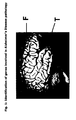
- Figure 1 depicts the brain regions with selective vulnerability to neuronal loss and degeneration in AD.
- neurons within the inferior temporal lobe, the entorhinal cortex, the hippocampus, and the amygdala are subject to degenerative processes in AD ( Terry et al., Annals of Neurology 1981, 10:184-192 ). These brain regions are mostly involved in the processing of learning and memory functions.
- neurons within the frontal cortex, the occipital cortex, and the cerebellum remain largely intact and preserved from neurodegenerative processes in AD.
- Brain tissues from the frontal cortex (F) and the temporal cortex (T) of AD patients and healthy, age-matched control individuals were used for the herein disclosed examples.
- the image of a normal healthy brain was taken from a publication by Strange (Brain Biochemistry and Brain Disorders, Oxford University Press, Oxford, 1992, p.4 ).
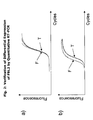
- Figure 2 illustrates the verification of the differential expression of the FBL2 gene by quantitative RT-PCR analysis. Quantification of RT-PCR products from RNA samples collected from the frontal cortex (F) and temporal cortex (T) of healthy, age-matched control individuals ( Fig 2a ) and AD patients ( Fig 2b ) was performed by the LightCycler rapid thermal cycling technique. The data were normalized to the combined average values of a set of standard genes which showed no significant differences in their gene expression levels. Said set of standard genes consisted of genes for the ribosomal protein S9, the transferrin receptor, GAPDH, and beta-actin. The figure depicts the kinetics of amplification by plotting the cycle number against the amount of amplified material as measured by its fluorescence.
- Table 1 lists the gene expression levels in the frontal cortex relative to the temporal cortex for the FBL2 gene in four AD patients (1.84 to 5.44 fold) and four healthy, age-matched control individuals (0.67 to 1.45 fold). The values shown are reciprocal values according to the formula described in present invention.
- Brain tissues from AD patients and age-matched control subjects were collected on average within 5 hours post-mortem and immediately frozen on dry ice. Sample sections from each tissue were fixed in paraformaldehyde for subsequent histopathological confirmation of the diagnosis. Brain areas for differential expression analysis were identified (see Fig. 1 ) and stored at minus 80°C until RNA extractions were performed.
- the quality of the prepared RNA was determined by formaldehyde agarose gel electrophoresis and Northern blotting according to standard procedures ( Sambrook and Russell, Molecular Cloning: A Laboratory Manual, Cold Spring Harbor Laboratory Press, Cold Spring Harbor, New York, 2000 ).
- the accurate RNA concentration and RNA quality were also determined with the DNA LabChip system using the Agilent 2100 Bioanalyzer (Agilent Technologies).
- Agilent 2100 Bioanalyzer Agilent 2100 Bioanalyzer
- For additional quality testing of the prepared RNA i.e. testing for partial degradation and genomic DNA contamination, specifically designed intronic GAPDH oligonucleotides and genomic DNA as reference control were utilized to generate a melting curve with the LightCycler technology as described in the protocol supplied by the manufacturer (Roche).
- first-strand and second-strand cDNA synthesis 2 ⁇ g mRNA each were used for first-strand and second-strand cDNA synthesis.
- hybridization of tester and driver was performed for 8 hours (first hybridization) and 15 hours (second hybridization) at 68°C.
- Two PCR steps were performed to amplify differentially expressed genes (first PCR: 27 cycles of 94°C and 30 sec, 66°C and 30 sec, and 72°C and 1.5 min; nested PCR: 12 cycles of 94°C and 30 sec, 66°C and 30 sec, and 72°C and 1.5 min) using adaptor specific primers (included in the subtraction kit) and 50x Advantage Polymerase Mix (Clontech).
- Inserts were PCR amplified (95°C and 30 sec, 68°C and 3 min for 30 cycles) in a volume of 20 ⁇ l containing 10 mM Tris-HCl pH 9.0, 1.5 mM MgCl 2 , 50 mM KCI, 200 ⁇ M dNTP, 0.5 ⁇ M adaptor specific primers (included in the subtraction kit), 1.5 Units Taq polymerase (Pharmacia Biotech), and 1 ⁇ l of bacterial culture. An aliquot of the mixture (1.5 ⁇ l) containing 3 ⁇ l PCR amplified inserts and 2 ⁇ l 0.3 N NaOH / 15% Ficoll were spotted onto a positively charged nylon membrane (Roche).
- the differential screening step consisted of hybridizations of the subtracted library with itself to minimize background ( Wang and Brown, Proc Natl Acad Sci USA 1991, 88:11505-9 ).
- the probes were made of the nested PCR product of the subtraction following the instructions of the Clontech subtraction kit. Labeling with digoxigenin was performed with the DIG DNA Labeling Kit (Roche). Hybridizations were carried out overnight in DIG Easy HYB (Roche) at 43°C.
- the filters were washed twice in 2 x SSC / 0.5 % SDS at 68°C for 15 min and twice in 0.1 x SSC / 0.5 % SDS at 68°C for 15 min, and subjected to detection using anti-DIG-AP conjugates and CDP-Star as chemiluminescent substrate according to the instructions of the DIG DNA Detection Kit (Roche). Blots were exposed to Kodak Biomax MR chemiluminescent film at room temperature for several minutes.
- the nucleotide sequences of clones of interest were obtained using methods well known to those skilled in the art. For nucleotide sequence analysis, alignments, and homology searches, computer algorithms of the University of Wisconsin Genetics Computer Group (GCG) in conjunction with publicly available nucleotide and protein sequence information (NCBI Genbank and EMBL databases) were employed.
- PCR amplification (95°C and 1 sec, 56°C and 5 sec, and 72°C and 5 sec) was performed in a volume of 20 ⁇ l containing Lightcycler-DNA-Master-SYBR-Green mix (containing Taq DNA polymerase, reaction buffer, dNTP mix with dUTP instead of dTTP, SYBR Green I dye, and 1 mM MgCl 2 , Roche), additionally containing 3 mM MgCl 2 , 0,5 ⁇ M primers, 0,16 ⁇ l TaqStart antibody (Clontech), and 1 ⁇ l of a cDNA dilution series (40, 20, 10, 5, and 1 ng human total brain cDNA, Clontech).
- Lightcycler-DNA-Master-SYBR-Green mix containing Taq DNA polymerase, reaction buffer, dNTP mix with dUTP instead of dTTP, SYBR Green I dye, and 1 mM MgCl 2 , Roche
- the above described PCR protocol (with indicated exceptions) was applied to determine the PCR efficiency of a set of reference genes which were selected as a reference standard for quantification.
- the mean value of five such reference genes was determined: (1) cyclophilin B, using the specific primers 5'-ACTGAAGCACTACGGGCCTG-3' and 5'-AGCCGTTGGTGTCTTTGCC-3', (exception: an additional 1 mM MgCl 2 was added instead of 3 mM).
- Melting curve analysis revealed a single peak at approximately 87 °C with no visible primer dimers.
- Agarose gel analysis of the PCR product showed one single band of the expected size (62 bp).
- a third step the set of reference standard genes was analyzed in parallel to determine the mean average value of the temporal to frontal ratios of expression levels of the reference standard genes for each individual brain sample.
- cyclophilin B was analyzed in step 2 and step 3, and the ratio from one gene to another gene remained constant in different runs, it was possible to normalize FBL2 to the mean average value of the set of reference standard genes instead of normalizing to one single gene alone.
- the calculation was performed by dividing the ratio shown above by the deviation of cyclophilin B from the mean value of all housekeeping genes. The results of one such quantitative RT-PCR analysis for the FBL2 gene are shown in Fig. 2 .
- Table 1 SAMPLE ⁇ (fold) patient 1 (#16) 1.98 patient 2 (#10) 5.44 patient 3 (#11) 2.23 patient 4 (#14) 1.84 control 1 (#10) 0.97 control 2 (#11) 0.94 control 3 (# 5) 1.45 control 4 (# 4) 0.67
Landscapes
- Life Sciences & Earth Sciences (AREA)
- Health & Medical Sciences (AREA)
- Engineering & Computer Science (AREA)
- Biomedical Technology (AREA)
- Hematology (AREA)
- Chemical & Material Sciences (AREA)
- Urology & Nephrology (AREA)
- Molecular Biology (AREA)
- Immunology (AREA)
- Biotechnology (AREA)
- General Health & Medical Sciences (AREA)
- Microbiology (AREA)
- Proteomics, Peptides & Aminoacids (AREA)
- Neurosurgery (AREA)
- Neurology (AREA)
- Food Science & Technology (AREA)
- Medicinal Chemistry (AREA)
- Physics & Mathematics (AREA)
- Analytical Chemistry (AREA)
- Biochemistry (AREA)
- Cell Biology (AREA)
- General Physics & Mathematics (AREA)
- Pathology (AREA)
- Medicines That Contain Protein Lipid Enzymes And Other Medicines (AREA)
- Measuring Or Testing Involving Enzymes Or Micro-Organisms (AREA)
- Investigating Or Analysing Biological Materials (AREA)
- Peptides Or Proteins (AREA)
- Preparation Of Compounds By Using Micro-Organisms (AREA)
- Micro-Organisms Or Cultivation Processes Thereof (AREA)
- Medicines Containing Antibodies Or Antigens For Use As Internal Diagnostic Agents (AREA)
Abstract
Description
- The present invention relates to methods of diagnosing, prognosticating and monitoring the progression of Alzheimer's disease in a subject. Furthermore, methods of therapy control and screening for modulating agents of Alzheimer's disease are provided.
- Neurodegenerative diseases, in particular Alzheimer's disease (AD), have a severely debilitating impact on a patient's life. Furthermore, these diseases constitute an enormous health, social, and economic burden. AD is the most common age-related neurodegenerative condition affecting about 10 % of the population over 65 years of age and up to 45 % over age 85 (for a recent review see Vickers et al., Progress in Neurobiology 2000, 60:139-165). Presently, this amounts to an estimated 12 million cases in the US, Europe, and Japan. This situation will inevitably worsen with the demographic increase in the number of old people ("aging of the baby boomers") in developed countries. The neuropathological hallmarks that occur in the brains of individuals suffering from AD are senile plaques, composed of amyloid-β protein, and profound cytoskeletal changes coinciding with the appearance of abnormal filamentous structures and the formation of neurofibrillary tangles. AD is a progressive disease that is associated with early deficits in memory formation and ultimately leads to the complete erosion of higher cognitive function. A characteristic feature of the pathogenesis of AD is the selective vulnerability of particular brain regions and subpopulations of nerve cells to the degenerative process. Specifically, the temporal lobe region and the hippocampus are affected early and more severely during the progression of the disease. On the other hand, neurons within the frontal cortex, occipital cortex, and the cerebellum remain largely intact and are protected from neurodegeneration (Terry et al., Annals of Neurology 1981, 10:184-192).
- Currently, there is no cure for AD, nor is there an effective treatment to halt the progression of AD or even a method to diagnose AD ante-mortem with high probability. Several risk factors have been identified that predispose an individual to develop AD, among them most prominently the epsilon4 allele of apolipoprotein E (ApoE). Although there are rare examples of early-onset AD which have been attributed to genetic defects in the genes for APP, presenilin-1, and presenilin-2, the prevalent form of late-onset sporadic AD is of hitherto unknown etiologic origin. The late onset and complex pathogenesis of neurodegenerative disorders pose a formidable challenge to the development of therapeutic and diagnostic agents. It is crucial to expand the pool of potential drug targets and diagnostic markers. It is therefore an object of the present invention to provide insight into the pathogenesis of neurodegenerative diseases and to provide methods, materials, and animal models which are suited inter alia for the diagnosis, identification of compounds useful for therapeutic intervention, and development and monitoring of a treatment of these diseases. This object has been solved by the features of the independent claims of the present invention. The subclaims define preferred embodiments.
- F-box proteins constitute a family of proteins characterized by an approximately 40 amino-acid motif called the F-box. The F-box motif was first recognized in the cyclin F protein (Bai et al., Cell 1996, 86:263-274). In subsequent studies, at least 38 human F-box proteins have been identified (Kipreos and Pagano, Genome Biology 2000, 1:3002.1-3002.7; Cenciarelli, et al., Current Biology 1999, 9:1177-1179; Winston et al., Current Biology 1999, 9:1180-1182). Frequently, F-box proteins may contain further secondary motifs such as leucine zippers, zinc and ring fingers, cyclin domains, and proline-reach regions. Functionally, the F-box is a peptide module acting as a site of protein-protein interactions. In specific examples, the F-box domain allows proteins to enter into a complex with Skp1 (S-phase kinase-associated protein 1). F-box proteins have been implicated in the control of degradation of cellular regulatory proteins via the ubiquitin-proteasome pathway. Protein degradation by the ubiquitin-proteasome pathway is an essential cellular process of selective removal of proteins from the cell and plays a major role in many cellular processes including signal transduction, transcription and the control of the cell cycle (Hershko et al., Nature Medicine 2000, 6:1073-1081; Joazeiro and Hunter, Science 2000, 289:2061; Pickart, Nature Cell Biology 2000, 2:139-141). A key feature of the ubiquitin-proteasome pathway is the covalent attachment of ubiquitin (ubiquitination) by an enzyme complex to a protein destined for removal. Thereby, the ubiquitin-tagged protein is targeted to the 26S proteasome where it becomes proteolytically degraded. In the central nervous system, proteasome-mediated protein degradation is critical for the breakdown and removal of damaged or misfolded cellular proteins (Alves-Rodrigues et al., Trends Neurosci 1998, 21:516-520). The linkage of ubiquitin to a substrate is carried out by the ubiquitin ligase complex, generally comprising three classes of enzymes in a sequential reaction. Ubiquitin activating enzymes (E1) activate ubiquitin by forming a thioester bond between the E1 enzyme and ubiquitin. Subsequently, a transesterification to a member of the E2 class of enzymes (ubiquitin conjugating enzyme) is carried out. Finally, ubiquitin is transferred from the E2 enzyme to the substrate protein with the assistance of a (E3) ubiquitin ligase. E3 ubiquitin ligases are made up of several components. Specifically, F-box proteins are one of the four components of ubiquitin protein ligases (Deshaies, Annu Rev Cell Dev Biol 1999, 15:435-467). The function of F-box proteins within the ubiquitin protein ligase complex may be to specifically recruit substrates for ubiquitin conjugation thus conferring substrate specificity to the degradation process. A possible involvement of the human homolog of the C.elegans F-box protein Sel-10 in Alzheimer's disease has been disclosed recently (
WO 0075328 - A clearly distinguishable subfamily of F-box proteins contains a C-terminal leucine-rich repeat region in addition to the N-terminally situated F-box motif. Members of this subfamily of the F-box proteins are referred to as F-box and leucine-rich repeat proteins, "Fbl". The gene coding for the human F-box and leucine-repeat protein FBL2 was independently identified by several groups (patent applications by
Harper and Elledge, W09918989 Chaiur et al., WO0012679 Zhang et al., W00075184 - To date, no experiments have been disclosed that demonstrate a relationship between the dysregulation of expression of a gene coding for an F-box and leucine-rich repeat protein, in particular FBL2, and the pathology of neurodegenerative diseases, in particular AD. Such a link, as disclosed in the present invention, offers new ways, inter alia, for the diagnosis and treatment of these diseases.
- The singular forms "a", "an", and "the" as used herein and in the claims include plural reference unless the context dictates otherwise. For example, "a cell" means as well a plurality of cells, and so forth. The term "and/or" as used in the present specification and in the claims implies that the phrases before and after this term are to be considered either as alternatives or in combination. For instance, the wording "determination of a level and/or an activity" means that either only a level, or only an activity, or both a level and an activity are determined. The term "level" as used herein is meant to comprise a gage of, or a measure of the amount of, or a concentration of a transcription product, for instance an mRNA, or a translation product, for instance a protein or polypeptide. The term "activity" as used herein shall be understood as a measure for the ability of a transcription product or a translation product to produce a biological effect or a measure for a level of biologically active molecules. The term "activity" also refers to enzymatic activity. The terms "level" and/or "activity" as used herein further refer to gene expression levels or gene activity. Gene expression can be defined as the utilization of the information contained in a gene by transcription and translation leading to the production of a gene product. A gene product comprises either RNA or protein and is the result of expression of a gene. The amount of a gene product can be used to measure how active a gene is. The term "gene" as used in the present specification and in the claims comprises both coding regions (exons) as well as non-coding regions (e.g. non-coding regulatory elements such as promoters or enhancers, introns, leader and trailer sequences). The term "regulatory elements" shall comprise inducible and non-inducible promoters, enhancers, operators, and other elements that drive and regulate gene expression. The term "fragment" as used herein is meant to comprise e.g. an alternatively spliced, or truncated, or otherwise cleaved transcription product or translation product. The term "derivative" as used herein refers to a mutant, or an RNA-edited, or a chemically modified, or otherwise altered transcription product, or to a mutant, or chemically modified, or otherwise altered translation product. For instance, a "derivative" may be generated by processes such as altered phosphorylation, or glycosylation, or lipidation, or by altered signal peptide cleavage or other types of maturation cleavage. These processes may occur post-translationally. Fragments, derivatives, or variants of the F-box and leucine-rich repeat protein FBL2 may include, but are not limited to, a functional F-box domain or other functional modules, such as leucine-repeat modules, contained within the polypeptide sequence of FBL2. The term "modulator" as used in the present invention and in the claims refers to a molecule capable of changing or altering the level and/or the activity of a gene, or a transcription product of a gene, or a translation product of a gene. Preferably, a "modulator" is capable of changing or altering the biological activity of a transcription product or a translation product of a gene. Said modulation, for instance, may be an increase or a decrease in enzyme activity, a change in binding characteristics, or any other change or alteration in the biological, functional, or immunological properties of said translation product of a gene. The terms "agent", "reagent", or "compound" refer to any substance, chemical, composition, or extract that have a positive or negative biological effect on a cell, tissue, body fluid, or within the context of any biological system, or any assay system examined. They can be agonists, antagonists, partial agonists or inverse agonists of a target. Such agents, reagents, or compounds may be nucleic acids, natural or synthetic peptides or protein complexes, or fusion proteins. They may also be antibodies, organic or anorganic molecules or compositions, small molecules, drugs and any combinations of any of said agents above. They may be used for testing, for diagnostic or for therapeutic purposes. The terms "oligonucleotide primer" or "primer" refer to short nucleic acid sequences which can anneal to a given target polynucleotide by hybridization of the complementary base pairs and can be extended by a polymerase. They may be chosen to be specific to a particular sequence or they may be randomly selected, e.g. they will prime all possible sequences in a mix. The length of primers used herein may vary from 10 nucleotides to 80 nucleotides. "Probes" are short nucleic acid sequences of the nucleic acid sequences described and disclosed herein or sequences complementary therewith. They may comprise full length sequences, or fragments, derivatives, isoforms, or variants of a given sequence. The identification of hybridization complexes between a "probe" and an assayed sample allows the detection of the presence of other similar sequences within that sample. The term "variant" as used herein refers to any polypeptide or protein, in reference to polypeptides and proteins disclosed in the present invention, in which one or more amino acids are added and/or substituted and/or deleted and/or inserted at the N-terminus, and/or the C-terminus, and/or within the native amino acid sequences of the native polypeptides or proteins of the present invention. Furthermore, the term "variant" shall include any shorter or longer version of a polypeptide or protein. "Variants" shall also comprise a sequence that has at least about 80% sequence identity, more preferably at least about 90% sequence identity, and most preferably at least about 95% sequence identity with the amino acid sequences of an F-box and leucine-rich repeat protein, in particular FBL2. "Variants" include, for example, proteins with conservative amino acid substitutions in highly conservative regions. "Proteins and polypeptides" of the present invention include variants, fragments and chemical derivatives of the protein comprising the amino acid sequences of FBL2. They can include proteins and polypeptides which can be isolated from nature or be produced by recombinant and/or synthetic means. Native proteins or polypeptides refer to naturally-occurring truncated or secreted forms, naturally occurring variant forms (e.g. splice-variants) and naturally occurring allelic variants. In the present invention, the terms "risk", "susceptibility", and "predisposition" are tantamount and are used with respect to the probability of developing Alzheimer's disease. The term 'AD' shall mean Alzheimer's disease.
- In one aspect, the invention features a method of aiding in diagnosing or prognosticating Alzheimer's disease in a subject, or determining whether a subject is at increased risk of developing said disease, comprising:
- determining a level of
- (i) a transcription product of a gene coding for the F-box protein FBL2, and/or
- (ii) a translation product of a gene coding for the F-box protein FBL2, and/or
- (iii) a variant of said transcription or translation product, which comprises a sequence that has at least 80% sequence identity with the FBL2 sequence,
- and comparing said level to a reference value representing a known disease or health status, thereby diagnosing or prognosticating said disease in said subject, or determining whether said subject is at increased risk of developing said Alzheimer's disease.
- The disclosure also relates to the construction and the use of primers and probes which are unique to the nucleic acid sequences, or fragments, or derivatives, or variants thereof, as disclosed in the present invention. Oligonucleotide primers and/or probes can be labeled specifically with fluorescent, bioluminescent, magnetic, or radioactive substances. The invention further relates to the detection and the production of said nucleic acid sequences, or fragments, or derivatives, or variants thereof, using said specific oligonucleotide primers in appropriate combinations. PCR-analysis, a method well known to those skilled in the art, can be performed with said primer combinations to amplify said gene specific nucleic acid sequences from a sample containing nucleic acids. Such sample may be derived either from healthy or diseased subjects. Whether an amplification results in a specific nucleic acid product or not, and whether a fragment of different length can be obtained or not, may be indicative for
- Alzheimer's disease. Thus, the disclosure provides nucleic acid sequences, oligonucleotide primers, and probes of at least 10 bases in length up to the entire coding and gene sequences, useful for the detection of gene mutations and single nucleotide polymorphisms in a given sample comprising nucleic acid sequences to be examined, which may be associated with Alzheimers disease. This feature has utility for developing rapid DNA-based diagnostic tests, preferably also in the format of a kit.
- In a further aspect, the invention features a method of aiding in monitoring the progression of Alzheimer's disease in a subject, comprising determining levels of a substance as defined in claim 1 (i) to (iii) in a series of samples obtained from said subject over a period of time, wherein said samples are derived from brain tissue.
- Said level is compared to a reference value representing a known disease or health status. Thereby, the progression of said disease in said subject is monitored.
- In still a further aspect, the invention features a method of aiding in evaluating a treatment for Alzheimer's disease, comprising determining levels of a substance as defined in claim 1 (i) to (iii) in samples obtained from a subject being treated for said disease before and after treatment, wherein said samples are derived from brain tissue.
- Said levels are compared to a reference value representing a known disease or health status, thereby evaluating the treatment for said disease.
- In the present invention said gene coding for an F-box and leucine-rich repeat protein is the gene coding for FBL2 (comprising nucleotide sequences referenced under NCBI Genbank accession numbers: NM_012157, AF176518, AF174589), and that said F-box and leucine-rich repeat protein is FBL2 (comprising amino acid sequences referenced under NCBI Genbank accession number: NP_036289). It should be understood that, within the scope of the instant invention, the referenced nucleotide and amino acid sequences are of examplary nature, and that a gene coding for FBL2, and the corresponding translation products thereof, also comprise fragments, derivatives, and variants of said nucleotide and amino acid sequences. Further currently known members of the subfamily of human genes coding for F-box and leucine-rich repeat proteins and/or members of the subfamily of human F-box and leucine-rich repeat proteins, and/or fragments thereof, are listed in the following with examplary referencing of their corresponding NCBI Genbank / EMBL accession numbers: FBL1 (Skp2), U33761; FLR1, AF142481; FBL3, AF186273, AK001271; FBL3a, AF129532, FBL3b, AF129533; FBL4, AF174590, AF176699, AF199420; FBL5, AF174591, AF176700, AF199355, BC030656; FBL6, AF174592, AF199356; FBL7, AF174593; FBL9, AF176701; FBL10, AK027692; FBL11, BC001203; human homolog to mouse FBL8, AK002140; human homolog to mouse FBL12, AK000195, BC001586, AK027004; hypothetical 43.3 kDa protein, AL133602; P45SKP2-like protein, AF157323; cDNA FLJ20146, AK000153; cDNA FLJ10576, AK001438; FLJ00115 protein, AK024505; cDNA FLJ22888, AK026541; novel protein BA18114.4, AL121928.
- The present invention discloses the detection, differential expression and regulation of a gene coding for the F-box and leucine-rich repeat protein FBL2, in specific brain regions of AD patients. Consequently, the gene coding for an F-box and leucine-rich repeat protein FBL2 and its corresponding gene products may have a causative role in the regional selective neuronal degeneration typically observed in AD. Alternatively, a gene coding for an F-box and leucine-rich repeat protein FBL2 and its corresponding gene products may confer a neuroprotective function to the remaining surviving nerve cells. Based on these disclosures, the present invention has utility for the diagnostic evaluation and prognosis as well as for the identification of a predisposition to AD. Furthermore, the present invention provides in vitro methods for the diagnostic monitoring of patients undergoing treatment for such a disease.
- The sample to be analyzed and determined is selected from the group comprising brain tissue. The sample can also comprise cerebrospinal fluid. Preferably, the in vitro methods of diagnosis, prognosis, monitoring the progression or evaluating a treatment for a neurodegenerative disease, according to the instant invention, are pacticed ex corpore, and such methods relate to samples, for instance, body fluids or cells, removed, collected, or isolated from a subject or patient.
- In further preferred embodiments, said reference value is that of a level, or an activity, or both said level and said activity of (i) a transcription product of a gene coding for an F-box and leucine-rich repeat protein FBL2, and/or of (ii) a translation product of a gene coding for an F-box and leucine-rich repeat protein FBL2, and/or of (iii) variant of said transcription or translation product which comprises a sequence that has at least 80% sequence identity with the FBL2 sequence in a sample from a subject not suffering from said disease.
- In preferred embodiments, an alteration in the level and/or activity of a transcription product of a gene coding for an F-box and leucine-rich repeat protein FBL2 and/or a translation product of a gene coding for an F-box and leucine-rich repeat protein FBL2, and or derivative, thereof, in a sample cell, or tissue, or fluid, from said subject relative to a reference value representing a known health status indicates a diagnosis, or prognosis, or increased risk of becoming diseased with Alzheimer's disease.
- In preferred embodiments, measurement of a level of transcription products of a gene coding for an F-box and leucine-rich repeat protein FBL2 is performed in a sample from a subject using a quantitative PCR-analysis with primer combinations to amplify said gene-specific sequences from cDNA obtained by reverse transcription of RNA extracted from a sample of a subject. A Northern blot with probes specific for said gene can also be applied. It might further be preferred to measure transcription products by means of chip-based micro-array technologies. These techniques are known to those of ordinary skill in the art (see Sambrook and Russell, Molecular Cloning: A Laboratory Manual, Cold Spring Harbor Laboratory Press, Cold Spring Harbor, New York, 2000).
- Furthermore, a level and/or activity of a translation product of a gene coding for an F-box and leucine-rich repeat protein FBL2, and/or fragment, or derivative, or variant of said translation product, can be detected using an immunoassay, an activity assay, and/or binding assay. These assays can measure the amount of binding between said translation product and an anti-protein antibody by the use of enzymatic, chromodynamic, radioactive, magnetic, or luminescent labels which are attached to either the anti-protein antibody or a secondary antibody which binds the anti-protein antibody. In addition, other high affinity ligands may be used. Immunoassays which can be used include e.g. ELISAs, Western blots and other techniques known to those of ordinary skill in the art (see Harlow and Lane, Antibodies: A Laboratory Manual, Cold Spring Harbor Laboratory Press, Cold Spring Harbor, New York, 1999). All these detection techniques may also be employed in the format of microarrays, protein-arrays, antibody microarrays, or protein-chip based technologies.
- In one embodiment of the present invention, it might be preferred to determine an enzymatic activity of a translation product of a gene coding for an F-box and leucine-rich repeat protein FBL2, and/or a fragment, or derivative, or variant of said translation product. Specifically, due to an association of F-box and leucine-rich repeat proteins with the ubiquitin-conjugating system, it might be preferred to determine an enzymatic activity of a translation product of a gene coding for an F-box and leucine-rich repeat protein, and/or a fragment, or derivative, or variant of said translation product in an assay for ubiquitin-conjugating enzyme activity, specifically in an assay for E3 ubiquitin-ligase activity. E3 ubiquitin-ligase assays are well known. For instance, such an activity can be determined in a reconstituted system in yeast or in cell-free systems comprising purified or isolated E1 enzyme, E2 enzyme, a translation product of a gene coding for an F-box and leucine-rich repeat protein, and/or a fragment, or derivative, or variant of said translation product, ubiquitin, and an ATP regenerating system (Feldman et al., Cell, 1997; 91:221, Sears et al., J Biol Chem, 1998, 273:1409;
US5976849 ,W00175145 - In a preferred embodiment, the level, or the activity, or both said level and said activity of (i) a transcription product of a gene coding for an F-box and leucine-rich repeat protein FBL2, and/or of (ii) a translation product of a gene coding for an F-box and leucine-rich repeat protein FBL2, and/or of (iii) a variant of said transcription or translation product which comprises a sequence that has at least 80% sequence identity with the FBL2 sequence in a series of samples taken from said subject over a period of time is compared, in order to monitor the progression of said disease. In further preferred embodiments, said subject receives a treatment prior to one or more of said sample gatherings. In yet another preferred embodiment, said level and/or activity is determined before and after said treatment of said subject.
- In another aspect of the disclosure, the method comprises the application of per se known methods of gene therapy and/or antisense nucleic acid technology to administer said agent or agents. In general, gene therapy comprises several approaches: molecular replacement of a mutated gene, addition of a new gene resulting in the synthesis of a therapeutic protein, and modulation of endogenous cellular gene expression by recombinant expression methods or by drugs. Gene-transfer techniques are described in detail (see e.g. Behr, Acc Chem Res 1993, 26:274-278 and Mulligan, Science, 1993, 260: 926-931) and include direct gene-transfer techniques such as mechanical microinjection of DNA into a cell as well as indirect techniques employing biological vectors (like recombinant viruses, especially retroviruses) or model liposomes, or techniques based on transfection with DNA coprecipitation with polycations, cell membrane pertubation by chemical (solvents, detergents, polymers, enzymes) or physical means (mechanic, osmotic, thermic, electric shocks). The postnatal gene transfer into the central nervous system has been described in detail (see e.g. Wolff, Curr Opin Neurobiol 1993, 3:743-748).
- In particular, the disclosure features a method of treating or preventing Alzheimer's disease by means of antisense nucleic acid therapy, i.e. the down-regulation of an inappropriately expressed or defective gene by the introduction of antisense nucleic acids or derivatives thereof into certain critical cells (see e.g. Gillespie, DN&P 1992, 5:389-395; Agrawal and Akhtar, Trends Biotechnol 1995, 13:197-199; Crooke, Biotechnology 1992, 10:882-6). Apart from hybridization strategies, the application of ribozymes, i.e. RNA molecules that act as enzymes, destroying RNA that carries the message of disease has also been described (see e.g. Barinaga, Science 1993, 262:1512-1514). In preferred embodiments, the subject to be treated is a human, and therapeutic antisense nucleic acids or derivatives thereof are directed against a human F-box and leucine-rich repeat protein gene, particularly the FBL2 gene. It is preferred that cells of the central nervous system, preferably the brain, of a subject are treated in such a way. Cell penetration can be performed by known strategies such as coupling of antisense nucleic acids and derivatives thereof to carrier particles, or the above described techniques. Strategies for administering targeted therapeutic oligodeoxynucleotides are known to those of skill in the art (see e.g. Wickstrom, Trends Biotechnol, 1992, 10: 281-287). In some cases, delivery can be performed by mere topical application. Further approaches are directed to intracellular expression of antisense RNA. In this strategy, cells are transformed ex vivo with a recombinant gene that directs the synthesis of an RNA that is complementary to a region of target nucleic acid. Therapeutical use of intracellularly expressed antisense RNA is procedurally similar to gene therapy. A recently developed method of regulating the intracellular expression of genes by the use of double-stranded RNA, known variously as RNA interference (RNAi), can be another effective approach for nucleic acid therapy (Hannon, Nature 2002, 418:244-251).
- In further aspects of the disclosure, the method of treatment comprises grafting donor cells into the central nervous system, preferably the brain, of said subject, or donor cells preferably treated so as to minimize or reduce graft rejection, wherein said donor cells are genetically modified by insertion of at least one transgene encoding said agent or agents. Said transgene might be carried by a viral vector, in particular a retroviral vector. The transgene can be inserted into the donor cells by a nonviral physical transfection of DNA encoding a transgene, in particular by microinjection. Insertion of the transgene can also be performed by electroporation, chemically mediated transfection, in particular calcium phosphate transfection or liposomal mediated transfection.
- In the disclosure, said agent for treating and preventing AD is a therapeutic protein which can be administered to said subject, preferably a human, by a process comprising introducing subject cells into said subject, said subject cells having been treated in vitro to insert a DNA segment encoding said therapeutic protein, said subject cells expressing in vivo in said subject a therapeutically effective amount of said therapeutic protein. Said DNA segment can be inserted into said cells in vitro by a viral vector, in particular a retroviral vector. Said agent, particularly a therapeutic protein, can further be administered to said subject by a process comprising the injection or the systemic administration of a fusion protein, said fusion protein being a fusion of a protein transduction domain with said agent.
- Methods of treatment, according to the present disclosure, comprise the application of therapeutic cloning, transplantation, and stem cell therapy using embryonic stem cells or embryonic germ cells and neuronal adult stem cells, combined with any of the previously described cell- and gene therapeutic methods. Stem cells may be totipotent or pluripotent. They may also be organ-specific. Strategies for repairing diseased and/or damaged brain cells or tissue comprise (i) taking donor cells from an adult tissue. Nuclei of those cells are transplanted into unfertilized egg cells from which the genetic material has been removed. Embryonic stem cells are isolated from the blastocyst stage of the cells which underwent somatic cell nuclear transfer. Use of differentiation factors then leads to a directed development of the stem cells to specialized cell types, preferably neuronal cells (Lanza et al., Nature Medicine 1999, 9: 975-977), or (ii) purifying adult stem cells, isolated from the central nervous system, or from bone marrow (mesenchymal stem cells), for in vitro expansion and subsequent grafting and transplantation, or (iii) directly inducing endogenous neural stem cells to proliferate, migrate, and differentiate into functional neurons (Peterson DA, Curr. Opin. Pharmacol. 2002, 2: 34-42). Adult neural stem cells are of great potential for repairing damaged or diseased brain tissues, as the germinal centers of the adult brain are free of neuronal damage or dysfunction (Colman A, Drug Discovery World 2001, 7: 66-71).
- In preferred aspects, the subject for treatment or prevention, according to the present disclosure, can be a human, an experimental animal, e.g. a mammal, a mouse, a rat, a fish, a fly, or a worm; a domestic animal, or a non-human primate. The experimental animal can be an animal model e.g. a transgenic mouse with an AD-type neuropathology.
- Strategies and techniques for the generation and construction of such an animal are known to those of ordinary skill in the art (see e.g. Capecchi, Science, 1989, 244:1288-1292 and Hogan et al., 1994, Manipulating the Mouse Embryo: A Laboratory Manual, Cold Spring Harbor Laboratory Press, Cold Spring Harbor, New York). It is preferred to make use of such a recombinant non-human animal as an animal model for investigating AD.
- Said recombinant, non-human animal comprises a non-native gene sequence coding for the F-box and leucine-rich repeat protein FBL2, or a fragment, or derivative, or variant thereof.
- In another aspect, the invention features an assay for screening for a modulator of AD said method comprising:
- (a) contacting a cell with a test compound;
- (b) measuring the level of one or more substances selected from the group consisting of
- (i) a gene coding for the F-box protein FBL2, and/or
- (ii) a transcription product of a gene coding for the F-box protein FBL2, and/or
- (iii) a translation product of a gene coding for the F-box protein FBL2, and /or
- (iv) a variant of (i) to (iii), which comprises a sequence that has at least 80% sequence identity with the FBL2 sequence;
- (c) measuring the level of one or more substances recited in (i) to (iv) in a control cell not contacted with said test compound; and
- (d) comparing the levels of the substance in the cells of step (b) and (c), wherein an alteration in the level of substances in the contacted cells indicates that the test compound is a modulator of said diseases or disorders.
- In another aspect, the invention features a method of screening for a modulator of Alzheimer's disease, said method comprising:
- (a) taking a non-human test animal which is predisposed to developing or has already developed symptoms of Alzheimer's disease to which a test compound has been administered
- (b) measuring the level of one or more substances recited in (i) to (iv) in claim 7 in a sample obtained from said animal, wherein said sample is derived from brain tissue in said non-human test animal;
- (c) measuring the level of one or more substances recited in (i) to (iv) in claim 7 in a matched non-human control animal which is predispose to developing or has already developed symptoms of Alzheimer's disease and to which non-human animal no such test compound has been administered in a sample obtained from said animal, wherein said sample is derived from brain tissue; and
- (d) comparing the level of the substance in the non-human animals of step (b) and (c), wherein an alteration in the level of substances in the non-human test animal indicates that the test compound is a modulator of said disease.
- Said test animal and/or said control animal is a recombinant, non-human animal which expresses an F-box and leucine-rich repeat protein FBL2, or a variant of said protein, which comprises a sequence that has at least 80% sequence identity with the FBL2 sequence under the control of a transcriptional regulatory element which is not the native gene transcriptional control regulatory element.
- In another aspect, the present disclosure provides for an assay for testing a compound, preferably for screening a plurality of compounds, for inhibition of binding between a ligand and an F-box and leucine-rich repeat protein FBL2, or a fragment, or derivative, or variant thereof. Said screening assay comprises the steps of (i) adding a liquid suspension of said F-box and leucine-rich repeat protein, or a fragment, or derivative, or variant thereof, to a plurality of containers, and (ii) adding a compound, preferably a plurality of compounds, to be screened for said inhibition to said plurality of containers, and (iii) adding detectable ligand, preferably fluorescently detectable ligand, to said containers, and (iv) incubating the liquid suspension of said F-box and leucine-rich repeat protein, or said fragment, or derivative, or variant thereof, and said compounds, and said detectable ligand, and (v) measuring the amounts of detectable ligand or fluorescence associated with said F-box and leucine-rich repeat protein, or with said fragment, or derivative, or variant thereof, and (vi) determining the degree of inhibition by one or more of said compounds of binding of said ligand to said F-box and leucine-rich repeat protein, or said fragment, or derivative, or variant thereof. Instead of utilizing a fluorescently detectable label, it might in some aspects be preferred to use any other detectable label known to the person skilled in the art, e.g. radioactive label, and detect it accordingly. Said method may be useful for the identification of novel compounds as well as for evaluating compounds which have been improved or otherwise optimized in their ability to inhibit the binding of a ligand to an F-box and leucine-rich repeat protein, or a fragment, or derivative, or variant thereof.
- In another aspect, the invention features an assay for testing a compound, preferably for screening a plurality of compounds, to determine the degree of binding of said compound or compounds to an F-box and leucine-rich repeat protein FBL2, or to a fragment, or derivative, or variant thereof. Said screening assay comprises the steps of (i) adding a liquid suspension of said F-box and leucine-rich repeat protein, or a fragment, or derivative, or variant thereof, to a plurality of containers, and (ii) adding a detectable compound, preferably a plurality of detectable compounds, in particular fluorescently detectable compounds, to be screened for said binding to said plurality of containers, and (iii) incubating the liquid suspension of said F-box and leucine-rich repeat protein, or said fragment, or derivative, or variant thereof, and said detectable compound, preferably said plurality of detectable compounds, and (iv) measuring the amounts of detectable compound or fluorescence associated with said F-box and leucine-rich repeat protein, or with said fragment, or derivative, or variant thereof, and (v) determining the degree of binding by one or more of said compounds to said F-box and leucine-rich repeat protein, or said fragment, or derivative, or variant thereof. In this type of assay it might be preferred to use a fluorescent label. However, any other type of detectable label might also be employed. Said method may be useful for the identification of novel compounds as well as for evaluating compounds which have been improved or otherwise optimized in their ability to bind to the F-box and leucine-rich repeat protein FBL2.
- In all types of assays disclosed herein, the F-box and leucine-rich repeat protein FBL2 is studied and used.
- The present invention features the ex vivo use of a protein molecule, said protein molecule being a translation product of a gene as defined in claim 6, as a diagnostic target for detecting Alzheimer's disease.
- The present invention further features the ex vivo use of a protein molecule, said protein molecule being a translation product of a gene as defined in claim 6, as a screening target for reagents or compounds preventing, or treating, or ameliorating Alzheimer's disease.
- The present invention features the use of an antibody which is specifically immunoreactive with an immunogen, wherein said immunogen is a translation product of a gene coding for an F-box and leucine-rich repeat protein FBL2 as defined above for detecting the pathological state of a cell in a brain tissue sample obtained from a subject, comprising immunocytochemical staining of said cell with said antibody, wherein an altered degree of staining, or an altered staining pattern in said cell compared to a cell representing a known health status indicates a pathological state of said cell, which pathological state relates to Alzheimer's disease. The immunogen may comprise immunogenic or antigenic epitopes or portions of a translation product of said gene, wherein said immunogenic or antigenic portion of a translation product is a polypeptide, and wherein said polypeptide elicits an antibody response in an animal, and wherein said polypeptide is immunospecifically bound by said antibody. Methods for generating antibodies are well known in the art (see Harlow et al., Antibodies, A Laboratory Manual, Cold Spring Harbor Laboratory Press, Cold Spring Harbor, New York). The term "antibody", as employed in the present invention, encompasses all forms of antibodies known in the art, such as polyclonal, monoclonal, chimeric, recombinatorial, anti-idiotypic, humanized, or single chain antibodies, as well as fragments thereof. Antibodies of the present invention are useful, for instance, in a variety of diagnostic and therapeutic methods involving detecting translation products of a gene coding for an F-box and feucine-rich repeat protein.
- Said antibodie is used for detecting the pathological state of a cell in a sample from a subject, comprising immunocytochemical staining of said cell with said antibody, wherein an altered degree of staining, or an altered staining pattern in said cell compared to a cell representing a known health status indicates a pathological state of said cell. The pathological state relates to AD. Immunocytochemical staining of a cell can be carried out by a number of different experimental methods well known in the art. It might be preferred, however, to apply an automated method for the detection of antibody binding, wherein the determination of the degree of staining of a cell, or the determination of the cellular or subcellular staining pattern of a cell, or the topological distribution of an antigen on the cell surface or among organelles and other subcellular structures within the cell, are carried out according to the method described in
US patent 6150173 . - Other features and advantages of the invention will be apparent from the following description of figures and examples which are illustrative only and not intended to limit the remainder of the disclosure in any way.
-
Figure 1 depicts the brain regions with selective vulnerability to neuronal loss and degeneration in AD. Primarily, neurons within the inferior temporal lobe, the entorhinal cortex, the hippocampus, and the amygdala are subject to degenerative processes in AD (Terry et al., Annals of Neurology 1981, 10:184-192). These brain regions are mostly involved in the processing of learning and memory functions. In contrast, neurons within the frontal cortex, the occipital cortex, and the cerebellum remain largely intact and preserved from neurodegenerative processes in AD. Brain tissues from the frontal cortex (F) and the temporal cortex (T) of AD patients and healthy, age-matched control individuals were used for the herein disclosed examples. For illustrative purposes, the image of a normal healthy brain was taken from a publication by Strange (Brain Biochemistry and Brain Disorders, Oxford University Press, Oxford, 1992, p.4). -
Figure 2 illustrates the verification of the differential expression of the FBL2 gene by quantitative RT-PCR analysis. Quantification of RT-PCR products from RNA samples collected from the frontal cortex (F) and temporal cortex (T) of healthy, age-matched control individuals (Fig 2a ) and AD patients (Fig 2b ) was performed by the LightCycler rapid thermal cycling technique. The data were normalized to the combined average values of a set of standard genes which showed no significant differences in their gene expression levels. Said set of standard genes consisted of genes for the ribosomal protein S9, the transferrin receptor, GAPDH, and beta-actin. The figure depicts the kinetics of amplification by plotting the cycle number against the amount of amplified material as measured by its fluorescence. The amplification kinetics of FBL2 cDNA from both the frontal and temporal cortices of a normal control individual during the exponential phase of the reaction overlap, whereas in Alzheimer's disease there is a significant separation of the curves for the samples derived from frontal and temporal cortex, which is indicative of an up-regulation of FBL2 gene expression in frontal cortex relative to temporal cortex. - Table 1 lists the gene expression levels in the frontal cortex relative to the temporal cortex for the FBL2 gene in four AD patients (1.84 to 5.44 fold) and four healthy, age-matched control individuals (0.67 to 1.45 fold). The values shown are reciprocal values according to the formula described in present invention.
- Brain tissues from AD patients and age-matched control subjects were collected on average within 5 hours post-mortem and immediately frozen on dry ice. Sample sections from each tissue were fixed in paraformaldehyde for subsequent histopathological confirmation of the diagnosis. Brain areas for differential expression analysis were identified (see
Fig. 1 ) and stored at minus 80°C until RNA extractions were performed. - Total RNA was extracted from post-mortem brain tissue by using the RNeasy kit (Qiagen) according to the manufacturer's protocol. The quality of the prepared RNA was determined by formaldehyde agarose gel electrophoresis and Northern blotting according to standard procedures (Sambrook and Russell, Molecular Cloning: A Laboratory Manual, Cold Spring Harbor Laboratory Press, Cold Spring Harbor, New York, 2000). The accurate RNA concentration and RNA quality were also determined with the DNA LabChip system using the Agilent 2100 Bioanalyzer (Agilent Technologies). For additional quality testing of the prepared RNA, i.e. testing for partial degradation and genomic DNA contamination, specifically designed intronic GAPDH oligonucleotides and genomic DNA as reference control were utilized to generate a melting curve with the LightCycler technology as described in the protocol supplied by the manufacturer (Roche).
- (iii) cDNA synthesis and identification of differentially expressed genes by suppressive subtractive hybridization: This technique compares two populations of mRNA and provides clones of genes that are expressed in one population but not in the other. The applied technique was described in detail by Diatchenko et al. (Proc Natl Acad Sci USA 1996, 93:6025-30). In the present invention, mRNA populations derived from different brain regions of AD patients were compared. Specifically, mRNA of the frontal cortex was subtracted from mRNA of the inferior temporal cortex. The necessary reagents were taken from the PCR-Select cDNA subtraction kit (Clontech), and all steps were performed as described in the manufacturer's protocol. Specifically, 2µg mRNA each were used for first-strand and second-strand cDNA synthesis. After Rsal-digestion and adaptor ligation, hybridization of tester and driver was performed for 8 hours (first hybridization) and 15 hours (second hybridization) at 68°C. Two PCR steps were performed to amplify differentially expressed genes (first PCR: 27 cycles of 94°C and 30 sec, 66°C and 30 sec, and 72°C and 1.5 min; nested PCR: 12 cycles of 94°C and 30 sec, 66°C and 30 sec, and 72°C and 1.5 min) using adaptor specific primers (included in the subtraction kit) and 50x Advantage Polymerase Mix (Clontech). Efficiencies of Rsal-digestions, adaptor ligations and subtractive hybridizations were checked as recommended in the kit. Subtracted cDNAs were inserted into the pCR-vector and transformed into E.coli INVαF' cells (Invitrogen). To isolate individual cDNAs of the subtracted library, single bacterial transformants were incubated in 100 µl LB (with 50 µg/ml ampicillin) at 37°C for at least 4 hours. Inserts were PCR amplified (95°C and 30 sec, 68°C and 3 min for 30 cycles) in a volume of 20 µl containing 10 mM Tris-HCl pH 9.0, 1.5 mM MgCl2, 50 mM KCI, 200 µM dNTP, 0.5 µM adaptor specific primers (included in the subtraction kit), 1.5 Units Taq polymerase (Pharmacia Biotech), and 1µl of bacterial culture. An aliquot of the mixture (1.5 µl) containing 3 µl PCR amplified inserts and 2 µl 0.3 N NaOH / 15% Ficoll were spotted onto a positively charged nylon membrane (Roche). In this way, hundreds of spots were arrayed on duplicate filters for subsequent hybridization. The differential screening step consisted of hybridizations of the subtracted library with itself to minimize background (Wang and Brown, Proc Natl Acad Sci USA 1991, 88:11505-9). The probes were made of the nested PCR product of the subtraction following the instructions of the Clontech subtraction kit. Labeling with digoxigenin was performed with the DIG DNA Labeling Kit (Roche). Hybridizations were carried out overnight in DIG Easy HYB (Roche) at 43°C. The filters were washed twice in 2 x SSC / 0.5 % SDS at 68°C for 15 min and twice in 0.1 x SSC / 0.5 % SDS at 68°C for 15 min, and subjected to detection using anti-DIG-AP conjugates and CDP-Star as chemiluminescent substrate according to the instructions of the DIG DNA Detection Kit (Roche). Blots were exposed to Kodak Biomax MR chemiluminescent film at room temperature for several minutes. The nucleotide sequences of clones of interest were obtained using methods well known to those skilled in the art. For nucleotide sequence analysis, alignments, and homology searches, computer algorithms of the University of Wisconsin Genetics Computer Group (GCG) in conjunction with publicly available nucleotide and protein sequence information (NCBI Genbank and EMBL databases) were employed.
- Positive corroboration of differential expression of the FBL2 gene was performed using the LightCycler technology (Roche). This technique features rapid thermal cyling for the polymerase chain reaction as well as real-time measurement of fluorescent signals during amplification and therefore allows for highly accurate quantification of RT-PCR products by using a kinetic rather than an endpoint approach. The ratio of FBL2 cDNA from the frontal cortex versus temporal cortex was determined (relative quantification). First, a standard curve was generated to determine the efficiency of the PCR with specific primers for FBL2 (5'-TACTGGGTGGAGCAGGGTCTT-3' and 5'-GGTCCCTGGAGGTGTATATGACA-3'). PCR amplification (95°C and 1 sec, 56°C and 5 sec, and 72°C and 5 sec) was performed in a volume of 20 µl containing Lightcycler-DNA-Master-SYBR-Green mix (containing Taq DNA polymerase, reaction buffer, dNTP mix with dUTP instead of dTTP, SYBR Green I dye, and 1 mM MgCl2, Roche), additionally containing 3 mM MgCl2, 0,5 µM primers, 0,16 µl TaqStart antibody (Clontech), and 1 µl of a cDNA dilution series (40, 20, 10, 5, and 1 ng human total brain cDNA, Clontech). Melting curve analysis revealed a single peak at approximately 83°C with no visible primer dimers. Quality and size of the PCR product were determined by agarose gel electrophoresis and DNA LabChip analysis (Agilent 2100 Bioanalyzer, Agilent Technologies). A single band of the expected size 66 bp was observed.
- In an analogous manner, the above described PCR protocol (with indicated exceptions) was applied to determine the PCR efficiency of a set of reference genes which were selected as a reference standard for quantification. In the present invention, the mean value of five such reference genes was determined: (1) cyclophilin B, using the specific primers 5'-ACTGAAGCACTACGGGCCTG-3' and 5'-AGCCGTTGGTGTCTTTGCC-3', (exception: an additional 1 mM MgCl2 was added instead of 3 mM). Melting curve analysis revealed a single peak at approximately 87 °C with no visible primer dimers. Agarose gel analysis of the PCR product showed one single band of the expected size (62 bp). (2) Ribosomal protein S9 (RPS9), using the specific primers 5'-GGTCAAATTTACCCTGGCCA-3' and 5'-TCTCATCAAGCGTCAGCAGTTC-3' (exception: an additional 1 mM MgCl2 was added instead of 3 mM). Melting curve analysis revealed a single peak at approximately 85°C with no visible primer dimers. Agarose gel analysis of the PCR product showed one single band with the expected size (62 bp). (3) beta-actin, using the specific primers 5'- TGGAACGGTGAAGGTGACA-3' and 5'- GGCAAGGGACTTCCTGTAA-3'. Melting curve analysis revealed a single peak at approximately 87°C with no visible primer dimers. Agarose gel analysis of the PCR product showed one single band with the expected size (142 bp). (4) GAPDH, using the specific primers 5'-CGTCATGGGTGTGAACCATG-3' and 5'-GCTAAGCAGTTGGTGGTGCAG-3'. Melting curve analysis revealed a single peak at approximately 83°C with no visible primer dimers. Agarose gel analysis of the PCR product showed one single band with the expected size (81 bp). (5) Transferrin receptor TRR, using the specific primers 5'- GTCGCTGGTCAGTTCGTGATT-3' and 5'-AGCAGTTGGCTGTTGTACCTCTC-3'. Melting curve analysis revealed a single peak at approximately 83°C with no visible primer dimers. Agarose gel analysis of the PCR product showed one single band with the expected size (80 bp).
- For calculation of the values, first the logarithm of the cDNA concentration was plotted against the threshold cycle number Ct for FBL2 and the five reference standard genes. The slopes and the intercepts of the standard curves (i.e. linear regressions) were calculated for all genes. In a second step, cDNAs from temporal cortex and frontal cortex were analyzed in parallel and normalized to cyclophilin B. The Ct values were measured and converted to ng total brain cDNA using the corresponding standard curves:

- The values of temporal and frontal cortex FBL2 cDNAs were normalized to cyclophilin B, and the ratio was calculated using the following formula:

- In a third step, the set of reference standard genes was analyzed in parallel to determine the mean average value of the temporal to frontal ratios of expression levels of the reference standard genes for each individual brain sample. As cyclophilin B was analyzed in step 2 and step 3, and the ratio from one gene to another gene remained constant in different runs, it was possible to normalize FBL2 to the mean average value of the set of reference standard genes instead of normalizing to one single gene alone. The calculation was performed by dividing the ratio shown above by the deviation of cyclophilin B from the mean value of all housekeeping genes. The results of one such quantitative RT-PCR analysis for the FBL2 gene are shown in
Fig. 2 .Table 1: SAMPLE Δ (fold) patient 1 (#16) 1.98 patient 2 (#10) 5.44 patient 3 (#11) 2.23 patient 4 (#14) 1.84 control 1 (#10) 0.97 control 2 (#11) 0.94 control 3 (# 5) 1.45 control 4 (# 4) 0.67
Claims (12)
- A method of aiding in diagnosing or prognosticating Alzheimer's disease in a subject, or determining whether a subject is at increased risk of developing said disease, comprising:determining a level of(i) a transcription product of a gene coding for the F-box protein FBL2, and/or(ii) a translation product of a gene coding for the F-box protein FBL2, and/or(iii) a variant of said transcription or translation product, which comprises a sequence that has at least 80% sequence identity with the FBL2 sequence,in a sample obtained from said subject, wherein said sample is derived from brain tissue,comparing said level to a reference value representing a known disease or health status, and therebydiagnosing or prognosticating said disease,whether or determining said subject is at increased risk of developing said disease,
- A method of aiding in monitoring the progression of Alzheimer's disease in a subject, comprising determining levels of a substance as defined in claim 1 (i) to (iii)
in a series of samples obtained from said subject over a period of time, wherein said samples are derived from brain tissue,
comparing said levels, and thereby
monitoring the progression of said disease in said subject. - A method of aiding in evaluating a treatment for Alzheimer's disease, comprising determining levels of a substance as defined in claim 1(i) to (iii)
in samples obtained from a subject being treated for said disease before and after treatment, wherein said samples are derived from brain tissue,
comparing said levels, and thereby
evaluating said treatment for said disease. - The method according to any of claims 1 to 3 wherein said reference value is that of a level of a substance as defined in claim 1 (i) to (iii) in a sample obtained from a subject not suffering from Alzheimer's disease, wherein said sample is derived from brain tissue.
- Ex vivo Use of at least one reagent which is selected from the group consisting of (i) reagents that selectively detect a transcription product of a gene coding for the F-box protein FBL2 and (ii)
reagents that selectively detect a translation product of a gene coding for the F-box protein FBL2, for diagnosing or prognosticating Alzheimer's disease, in a subject, or determining the propensity or predisposition of a subject to develop such disease. - Use of a recombinant, non-human animal comprising a non-native gene sequence coding for the F-box protein FBL2, or a variant of said protein, which comprises a sequence that has at least 80% sequence identity with the FBL2 sequence, as an animal model for investigating Alzheimer's disease.
- An assay for screening for a modulator of Alzheimer's disease, said method comprising:(a) contacting a cell with a test compound;(b) measuring the level of one or more substances selected from the group consisting of(i) a gene coding for the F-box protein FBL2, and/or(ii) a transcription product of a gene coding for the F-box protein FBL2, and/or(iii) a translation product of a gene coding for the F-box protein FBL2, and /or(iv) a variant of (i) to (iii), which comprises a sequence that has at least 80% sequence identity with the FBL2 sequence;(c) measuring the level of one or more substances recited in (i) to (iv) in a control cell not contacted with said test compound; and(d) comparing the levels of the substance in the cells of step (b) and (c), wherein an alteration in the level of substances in the contacted cells indicates that the test compound is a modulator of said diseases or disorders.
- A method of screening for a modulator of Alzheimer's disease, said method comprising(a) taking a non-human test animal which is predisposed to developing or has already developed symptoms of Alzheimer's disease to which a test compound has been administered;(b) measuring the level of one or more substances recited in (i) to (iv) in claim 7 in a sample obtained from said animal, wherein said sample is derived from brain tissue in said non-human test animal;(c) measuring the level of one or more substances recited in (i) to (iv) in claim 7 in a matched non-human control animal which is predisposed to developing or has already developed symptoms of Alzheimer's disease and to which non-human animal no such test compound has been administered in a sample obtained from said animal, wherein said sample is derived from brain tissue; and(d) comparing the level of the substance in the non-human animals of step (b) and (c), wherein an alteration in the level of substances in the non-human test animal indicates that the test compound is a modulator of said disease.
- The method according to claim 8 wherein said test animal and/or said control animal is a recombinant non-human animal which expresses the F-box protein FBL2, or a variant of said protein, which comprises a sequence that has at least 80% sequence identity with the FBL2 sequence, under the control of a transcriptional control element which is not the native gene transcriptional control element.
- Ex vivo Use of a protein molecule, said protein molecule being a translation product of a gene as defined in claim 6, as a diagnostic target for detecting Alzheimer's disease.
- Ex vivo Use of a protein molecule, said protein molecule being a translation product of a gene as defined in claim 6, as a screening target for reagents or compounds preventing, or treating, or ameliorating Alzheimer's disease.
- Use of an antibody immunoreactive with an immunogen, wherein said immunogen is a translation product of a gene as defined in claim 6, for detecting the pathological state of a cell in a brain tissue sample obtained from a subject, comprising immunocytochemical staining of said cell with said antibody, wherein an altered degree of staining, or an altered staining pattern in said cell compared to a cell representing a known health status indicates a pathological state of said cell, which pathological state relates to Alzheimer's disease.
Priority Applications (1)
| Application Number | Priority Date | Filing Date | Title |
|---|---|---|---|
| EP02797965A EP1423704B1 (en) | 2001-09-07 | 2002-09-07 | Diagnostic and therapeutic use of f-box proteins for alzheimer's disease and related neurodegenerative disorders |
Applications Claiming Priority (4)
| Application Number | Priority Date | Filing Date | Title |
|---|---|---|---|
| EP01121442 | 2001-09-07 | ||
| EP01121442 | 2001-09-07 | ||
| PCT/EP2002/010057 WO2003023405A1 (en) | 2001-09-07 | 2002-09-07 | Diagnostic and therapeutic use of f-box proteins for alzheimer's disease and related neurodegenerative disorders |
| EP02797965A EP1423704B1 (en) | 2001-09-07 | 2002-09-07 | Diagnostic and therapeutic use of f-box proteins for alzheimer's disease and related neurodegenerative disorders |
Publications (2)
| Publication Number | Publication Date |
|---|---|
| EP1423704A1 EP1423704A1 (en) | 2004-06-02 |
| EP1423704B1 true EP1423704B1 (en) | 2010-04-14 |
Family
ID=8178573
Family Applications (1)
| Application Number | Title | Priority Date | Filing Date |
|---|---|---|---|
| EP02797965A Expired - Lifetime EP1423704B1 (en) | 2001-09-07 | 2002-09-07 | Diagnostic and therapeutic use of f-box proteins for alzheimer's disease and related neurodegenerative disorders |
Country Status (6)
| Country | Link |
|---|---|
| US (2) | US20040241694A1 (en) |
| EP (1) | EP1423704B1 (en) |
| JP (1) | JP2005502368A (en) |
| AT (1) | ATE464567T1 (en) |
| DE (1) | DE60235996D1 (en) |
| WO (1) | WO2003023405A1 (en) |
Cited By (3)
| Publication number | Priority date | Publication date | Assignee | Title |
|---|---|---|---|---|
| US12227567B2 (en) | 2017-07-25 | 2025-02-18 | Truebinding, Inc. | Treating cancer by blocking the interaction of TIM-3 and its ligand |
| US12281166B2 (en) | 2020-05-26 | 2025-04-22 | Truebinding, Inc. | Methods of treating inflammatory diseases by blocking Galectin-3 |
| US12497458B2 (en) | 2019-01-30 | 2025-12-16 | Truebinding, Inc. | Anti-GAL3 antibodies and uses thereof |
Families Citing this family (5)
| Publication number | Priority date | Publication date | Assignee | Title |
|---|---|---|---|---|
| US20060088846A1 (en) * | 1998-08-28 | 2006-04-27 | Michele Pagano | Methods to identify compounds useful for the treatment of proliferative and differentiative disorders |
| EP1489423A1 (en) * | 2003-06-20 | 2004-12-22 | Universite Louis Pasteur | Use of mitochondrial uncoupling proteins for diagnostic, prevention and treatment of diseases involving neuromuscular affection |
| JP4972538B2 (en) * | 2005-02-07 | 2012-07-11 | 武田薬品工業株式会社 | Preventive and therapeutic agents for neurodegenerative diseases |
| KR102279919B1 (en) * | 2018-11-09 | 2021-07-21 | 순천향대학교 산학협력단 | Screening method of therapeutic agents for neurodegenerative diseases |
| CN110261617B (en) * | 2019-05-14 | 2022-07-01 | 深圳市人民医院 | Peripheral blood markers of cerebral hemorrhage and their applications |
Family Cites Families (7)
| Publication number | Priority date | Publication date | Assignee | Title |
|---|---|---|---|---|
| US6426205B1 (en) * | 1997-10-24 | 2002-07-30 | Mount Sinai Hospital Corporation | Methods and compositions for modulating ubiquitin dependent proteolysis |
| US6730778B2 (en) * | 1997-12-19 | 2004-05-04 | Pharmacia And Upjohn Company | Human sel-10 polypeptides and polynucleotides that encode them |
| US5976849A (en) | 1998-02-05 | 1999-11-02 | Zeneca Limited | Human E3 ubiquitin protein ligase |
| EP1108008A4 (en) * | 1998-08-28 | 2004-12-08 | Univ New York | NEW UBIQUITIN LIGASES AS THERAPEUTIC GOALS |
| US6740495B1 (en) | 2000-04-03 | 2004-05-25 | Rigel Pharmaceuticals, Inc. | Ubiquitin ligase assay |
| US20030235882A1 (en) * | 2000-12-19 | 2003-12-25 | Shimkets Richard A. | Novel nucleic acids and polypeptides and methods of use thereof |
| US20040018970A1 (en) * | 2000-12-19 | 2004-01-29 | Shimkets Richard A. | Novel nucleic acids and polypeptides and methods of use thereof |
-
2002
- 2002-09-07 DE DE60235996T patent/DE60235996D1/en not_active Expired - Lifetime
- 2002-09-07 AT AT02797965T patent/ATE464567T1/en not_active IP Right Cessation
- 2002-09-07 JP JP2003527425A patent/JP2005502368A/en active Pending
- 2002-09-07 US US10/488,776 patent/US20040241694A1/en not_active Abandoned
- 2002-09-07 EP EP02797965A patent/EP1423704B1/en not_active Expired - Lifetime
- 2002-09-07 WO PCT/EP2002/010057 patent/WO2003023405A1/en not_active Ceased
-
2007
- 2007-02-07 US US11/703,215 patent/US20070199080A1/en not_active Abandoned
Cited By (3)
| Publication number | Priority date | Publication date | Assignee | Title |
|---|---|---|---|---|
| US12227567B2 (en) | 2017-07-25 | 2025-02-18 | Truebinding, Inc. | Treating cancer by blocking the interaction of TIM-3 and its ligand |
| US12497458B2 (en) | 2019-01-30 | 2025-12-16 | Truebinding, Inc. | Anti-GAL3 antibodies and uses thereof |
| US12281166B2 (en) | 2020-05-26 | 2025-04-22 | Truebinding, Inc. | Methods of treating inflammatory diseases by blocking Galectin-3 |
Also Published As
| Publication number | Publication date |
|---|---|
| US20040241694A1 (en) | 2004-12-02 |
| WO2003023405A1 (en) | 2003-03-20 |
| US20070199080A1 (en) | 2007-08-23 |
| DE60235996D1 (en) | 2010-05-27 |
| JP2005502368A (en) | 2005-01-27 |
| EP1423704A1 (en) | 2004-06-02 |
| ATE464567T1 (en) | 2010-04-15 |
Similar Documents
| Publication | Publication Date | Title |
|---|---|---|
| US20070199080A1 (en) | Diagnostic and therapeutic use of F-box proteins for Alzheimer's disease and related neurodegenerative disorders | |
| US20040053265A1 (en) | Diagnostic and therapeutic use of a caveolae-associated integral membrane protein for alzheimer's disease and related neurodegenerative disorders | |
| EP1776591B1 (en) | Diagnostic and therapeutic use of a plasma membrane atpase | |
| EP1497661A1 (en) | Diagnostic and therapeutic use of ensadin-0477 gene and protein for neurodegenerative diseases | |
| EP1891241B1 (en) | Diagnostic and therapeutic target adarb2 proteins for neurodegenerative diseases | |
| WO2004001422A2 (en) | Diagnostic and therapeutic use of ras-gtpase-activating sh3-domain-binding protein 2 (g3bp2) for neurodegenerative diseases | |
| EP1188839A1 (en) | Diagnostic and therapeutic use of a caveolae-associated integral membrane protein for alzheimer's disease and related neurodegenerative disorders | |
| US20040157225A1 (en) | Diagnostic and therapeutic use of a nuclear restricted protein for alzheimer's disease and related neurodegenerative disorders | |
| WO2004038411A2 (en) | Diagnostic and therapeutic use of ensadin-0289 gene and protein for neurodegenerative diseases | |
| WO2002022867A2 (en) | Diagnostic and therapeutic use of a phosphoprotein enriched in astrocytes for alzheimer's disease and related neurodegenerative disorders | |
| EP1189060A1 (en) | Diagnostic assays for Alzheimer's disease using phosphoprotein PEA-15 | |
| US20060052280A1 (en) | Diagnostic and therapeutic use of a golgi protein for neurodegenerative diseases | |
| EP1490692A2 (en) | Diagnostic and therapeutic use of caps | |
| EP1485410A1 (en) | Diagnostic and therapeutic use of human maguin proteins and nucleic acids for neurodegenerative diseases | |
| WO2004048979A1 (en) | DIAGNOSTIC AND THERAPEUTIC USE OF H-Rev107 PROTEIN FOR ALZHEIMER DISEASE | |
| WO2004035823A2 (en) | Diagnostic and therapeutic use of the nicotinamide mononucleotide adenylytransferase 2 (nmnat-2) gene and protein for neurodegenerative diseases | |
| US20060073480A1 (en) | Diagnostic and therapeutic use of vault polynucleotides and proteins for neurodegenerative diseases | |
| US20050214763A1 (en) | Diagnostic and therapeutic use of an activator protein for vesicle secretion for neurodegenerative diseases | |
| EP1532276A2 (en) | Diagnostic and therapeutic use of foap-13 polynucleotides and polypeptides for neurodegenerative diseases | |
| US20050153295A1 (en) | Diagnostic and therapeutic use of human maguin proteins and nucleic acids for neurodegenerative diseases | |
| US20060051757A1 (en) | Diagnostic and therapeutic use of ensadin-0477 gene and protein for neurodegenerative diseases | |
| US20050106569A1 (en) | Diagnostic and therapeutic use of ma onconeuronal antigents for neurodegenerative diseases | |
| US20060160728A1 (en) | Diagnostic and therapeutic use of ensandin-0138 gene and protein for neurodegenerative diseases | |
| EP1771578A2 (en) | Diagnostic and therapeutic use of slim3 for neurodegenerative diseases |
Legal Events
| Date | Code | Title | Description |
|---|---|---|---|
| PUAI | Public reference made under article 153(3) epc to a published international application that has entered the european phase |
Free format text: ORIGINAL CODE: 0009012 |
|
| 17P | Request for examination filed |
Effective date: 20040217 |
|
| AK | Designated contracting states |
Kind code of ref document: A1 Designated state(s): AT BE BG CH CY CZ DE DK EE ES FI FR GB GR IE IT LI LU MC NL PT SE SK TR |
|
| AX | Request for extension of the european patent |
Extension state: AL LT LV MK RO SI |
|
| 17Q | First examination report despatched |
Effective date: 20050316 |
|
| RAP1 | Party data changed (applicant data changed or rights of an application transferred) |
Owner name: TAKEDA PHARMACEUTICAL COMPANY LIMITED |
|
| 17Q | First examination report despatched |
Effective date: 20050316 |
|
| GRAP | Despatch of communication of intention to grant a patent |
Free format text: ORIGINAL CODE: EPIDOSNIGR1 |
|
| GRAS | Grant fee paid |
Free format text: ORIGINAL CODE: EPIDOSNIGR3 |
|
| GRAA | (expected) grant |
Free format text: ORIGINAL CODE: 0009210 |
|
| AK | Designated contracting states |
Kind code of ref document: B1 Designated state(s): AT BE BG CH CY CZ DE DK EE ES FI FR GB GR IE IT LI LU MC NL PT SE SK TR |
|
| REG | Reference to a national code |
Ref country code: GB Ref legal event code: FG4D |
|
| REG | Reference to a national code |
Ref country code: CH Ref legal event code: EP |
|
| REG | Reference to a national code |
Ref country code: IE Ref legal event code: FG4D |
|
| REF | Corresponds to: |
Ref document number: 60235996 Country of ref document: DE Date of ref document: 20100527 Kind code of ref document: P |
|
| REG | Reference to a national code |
Ref country code: CH Ref legal event code: NV Representative=s name: BOHEST AG |
|
| REG | Reference to a national code |
Ref country code: NL Ref legal event code: VDEP Effective date: 20100414 |
|
| PG25 | Lapsed in a contracting state [announced via postgrant information from national office to epo] |
Ref country code: NL Free format text: LAPSE BECAUSE OF FAILURE TO SUBMIT A TRANSLATION OF THE DESCRIPTION OR TO PAY THE FEE WITHIN THE PRESCRIBED TIME-LIMIT Effective date: 20100414 Ref country code: ES Free format text: LAPSE BECAUSE OF FAILURE TO SUBMIT A TRANSLATION OF THE DESCRIPTION OR TO PAY THE FEE WITHIN THE PRESCRIBED TIME-LIMIT Effective date: 20100725 Ref country code: SE Free format text: LAPSE BECAUSE OF FAILURE TO SUBMIT A TRANSLATION OF THE DESCRIPTION OR TO PAY THE FEE WITHIN THE PRESCRIBED TIME-LIMIT Effective date: 20100414 |
|
| PG25 | Lapsed in a contracting state [announced via postgrant information from national office to epo] |
Ref country code: AT Free format text: LAPSE BECAUSE OF FAILURE TO SUBMIT A TRANSLATION OF THE DESCRIPTION OR TO PAY THE FEE WITHIN THE PRESCRIBED TIME-LIMIT Effective date: 20100414 Ref country code: FI Free format text: LAPSE BECAUSE OF FAILURE TO SUBMIT A TRANSLATION OF THE DESCRIPTION OR TO PAY THE FEE WITHIN THE PRESCRIBED TIME-LIMIT Effective date: 20100414 |
|
| PG25 | Lapsed in a contracting state [announced via postgrant information from national office to epo] |
Ref country code: CY Free format text: LAPSE BECAUSE OF FAILURE TO SUBMIT A TRANSLATION OF THE DESCRIPTION OR TO PAY THE FEE WITHIN THE PRESCRIBED TIME-LIMIT Effective date: 20100414 Ref country code: GR Free format text: LAPSE BECAUSE OF FAILURE TO SUBMIT A TRANSLATION OF THE DESCRIPTION OR TO PAY THE FEE WITHIN THE PRESCRIBED TIME-LIMIT Effective date: 20100715 |
|
| PG25 | Lapsed in a contracting state [announced via postgrant information from national office to epo] |
Ref country code: EE Free format text: LAPSE BECAUSE OF FAILURE TO SUBMIT A TRANSLATION OF THE DESCRIPTION OR TO PAY THE FEE WITHIN THE PRESCRIBED TIME-LIMIT Effective date: 20100414 Ref country code: DK Free format text: LAPSE BECAUSE OF FAILURE TO SUBMIT A TRANSLATION OF THE DESCRIPTION OR TO PAY THE FEE WITHIN THE PRESCRIBED TIME-LIMIT Effective date: 20100414 Ref country code: PT Free format text: LAPSE BECAUSE OF FAILURE TO SUBMIT A TRANSLATION OF THE DESCRIPTION OR TO PAY THE FEE WITHIN THE PRESCRIBED TIME-LIMIT Effective date: 20100816 |
|
| PLBE | No opposition filed within time limit |
Free format text: ORIGINAL CODE: 0009261 |
|
| STAA | Information on the status of an ep patent application or granted ep patent |
Free format text: STATUS: NO OPPOSITION FILED WITHIN TIME LIMIT |
|
| PG25 | Lapsed in a contracting state [announced via postgrant information from national office to epo] |
Ref country code: CZ Free format text: LAPSE BECAUSE OF FAILURE TO SUBMIT A TRANSLATION OF THE DESCRIPTION OR TO PAY THE FEE WITHIN THE PRESCRIBED TIME-LIMIT Effective date: 20100414 Ref country code: SK Free format text: LAPSE BECAUSE OF FAILURE TO SUBMIT A TRANSLATION OF THE DESCRIPTION OR TO PAY THE FEE WITHIN THE PRESCRIBED TIME-LIMIT Effective date: 20100414 Ref country code: BE Free format text: LAPSE BECAUSE OF FAILURE TO SUBMIT A TRANSLATION OF THE DESCRIPTION OR TO PAY THE FEE WITHIN THE PRESCRIBED TIME-LIMIT Effective date: 20100414 |
|
| 26N | No opposition filed |
Effective date: 20110117 |
|
| PG25 | Lapsed in a contracting state [announced via postgrant information from national office to epo] |
Ref country code: IT Free format text: LAPSE BECAUSE OF FAILURE TO SUBMIT A TRANSLATION OF THE DESCRIPTION OR TO PAY THE FEE WITHIN THE PRESCRIBED TIME-LIMIT Effective date: 20100414 |
|
| PG25 | Lapsed in a contracting state [announced via postgrant information from national office to epo] |
Ref country code: MC Free format text: LAPSE BECAUSE OF NON-PAYMENT OF DUE FEES Effective date: 20100930 |
|
| PG25 | Lapsed in a contracting state [announced via postgrant information from national office to epo] |
Ref country code: IE Free format text: LAPSE BECAUSE OF NON-PAYMENT OF DUE FEES Effective date: 20100907 |
|
| PG25 | Lapsed in a contracting state [announced via postgrant information from national office to epo] |
Ref country code: BG Free format text: LAPSE BECAUSE OF FAILURE TO SUBMIT A TRANSLATION OF THE DESCRIPTION OR TO PAY THE FEE WITHIN THE PRESCRIBED TIME-LIMIT Effective date: 20100414 Ref country code: LU Free format text: LAPSE BECAUSE OF NON-PAYMENT OF DUE FEES Effective date: 20100907 |
|
| PG25 | Lapsed in a contracting state [announced via postgrant information from national office to epo] |
Ref country code: TR Free format text: LAPSE BECAUSE OF FAILURE TO SUBMIT A TRANSLATION OF THE DESCRIPTION OR TO PAY THE FEE WITHIN THE PRESCRIBED TIME-LIMIT Effective date: 20100414 |
|
| PG25 | Lapsed in a contracting state [announced via postgrant information from national office to epo] |
Ref country code: BG Free format text: LAPSE BECAUSE OF FAILURE TO SUBMIT A TRANSLATION OF THE DESCRIPTION OR TO PAY THE FEE WITHIN THE PRESCRIBED TIME-LIMIT Effective date: 20100714 |
|
| PGFP | Annual fee paid to national office [announced via postgrant information from national office to epo] |
Ref country code: CH Payment date: 20130912 Year of fee payment: 12 Ref country code: DE Payment date: 20130904 Year of fee payment: 12 |
|
| PGFP | Annual fee paid to national office [announced via postgrant information from national office to epo] |
Ref country code: FR Payment date: 20130910 Year of fee payment: 12 Ref country code: GB Payment date: 20130904 Year of fee payment: 12 |
|
| REG | Reference to a national code |
Ref country code: CH Ref legal event code: PCAR Free format text: NEW ADDRESS: HOLBEINSTRASSE 36-38, 4051 BASEL (CH) |
|
| REG | Reference to a national code |
Ref country code: DE Ref legal event code: R119 Ref document number: 60235996 Country of ref document: DE |
|
| REG | Reference to a national code |
Ref country code: CH Ref legal event code: PL |
|
| GBPC | Gb: european patent ceased through non-payment of renewal fee |
Effective date: 20140907 |
|
| REG | Reference to a national code |
Ref country code: FR Ref legal event code: ST Effective date: 20150529 |
|
| PG25 | Lapsed in a contracting state [announced via postgrant information from national office to epo] |
Ref country code: LI Free format text: LAPSE BECAUSE OF NON-PAYMENT OF DUE FEES Effective date: 20140930 Ref country code: GB Free format text: LAPSE BECAUSE OF NON-PAYMENT OF DUE FEES Effective date: 20140907 Ref country code: CH Free format text: LAPSE BECAUSE OF NON-PAYMENT OF DUE FEES Effective date: 20140930 Ref country code: DE Free format text: LAPSE BECAUSE OF NON-PAYMENT OF DUE FEES Effective date: 20150401 |
|
| PG25 | Lapsed in a contracting state [announced via postgrant information from national office to epo] |
Ref country code: FR Free format text: LAPSE BECAUSE OF NON-PAYMENT OF DUE FEES Effective date: 20140930 |