EP1423381B1 - 17beta-hydroxysteroid dehydrogenase type 3 inhibitors for the treatment of androgen dependent diseases - Google Patents
17beta-hydroxysteroid dehydrogenase type 3 inhibitors for the treatment of androgen dependent diseases Download PDFInfo
- Publication number
- EP1423381B1 EP1423381B1 EP02761567A EP02761567A EP1423381B1 EP 1423381 B1 EP1423381 B1 EP 1423381B1 EP 02761567 A EP02761567 A EP 02761567A EP 02761567 A EP02761567 A EP 02761567A EP 1423381 B1 EP1423381 B1 EP 1423381B1
- Authority
- EP
- European Patent Office
- Prior art keywords
- group
- lcms
- alkyl
- preparative example
- aryl
- Prior art date
- Legal status (The legal status is an assumption and is not a legal conclusion. Google has not performed a legal analysis and makes no representation as to the accuracy of the status listed.)
- Expired - Lifetime
Links
- 0 CC(C)(C)[C@@](C*(CC1)[C@](C(C=CC)=CC)c2ccc(C(F)(F)F)cc2)N1C(CC(CC1)CCN1C(C)=O)=O Chemical compound CC(C)(C)[C@@](C*(CC1)[C@](C(C=CC)=CC)c2ccc(C(F)(F)F)cc2)N1C(CC(CC1)CCN1C(C)=O)=O 0.000 description 101
- AHTAHRUZZQULNY-UHFFFAOYSA-N CC(C)(C)OC(N(CC1)C(CCOC)CN1C(c1ccccc1)c1ncccc1)=O Chemical compound CC(C)(C)OC(N(CC1)C(CCOC)CN1C(c1ccccc1)c1ncccc1)=O AHTAHRUZZQULNY-UHFFFAOYSA-N 0.000 description 2
- QLUWDPVIYIBOPM-CSMDKSQMSA-N CC(C)(C)[C@@H](CN(CC1)C(c2cc(OC(F)(F)F)ccc2)c2ccccc2)N1C(CC(CC1)CCN1C(N)=O)=O Chemical compound CC(C)(C)[C@@H](CN(CC1)C(c2cc(OC(F)(F)F)ccc2)c2ccccc2)N1C(CC(CC1)CCN1C(N)=O)=O QLUWDPVIYIBOPM-CSMDKSQMSA-N 0.000 description 2
- VOHMQVCOIHEIDY-GWLFDFPQSA-N CC(C)(C)[C@@H](CN(CC1)C(c2ccccc2)c(cc2)ccc2OCC2CC2)N1C(CC(CC1)CCN1C(C)=O)=O Chemical compound CC(C)(C)[C@@H](CN(CC1)C(c2ccccc2)c(cc2)ccc2OCC2CC2)N1C(CC(CC1)CCN1C(C)=O)=O VOHMQVCOIHEIDY-GWLFDFPQSA-N 0.000 description 2
- YCZVCIGPUVGDDS-FDOABKJOSA-N CC(C)(C)[C@@H](CN(CC1)C(c2ccccc2)c(cc2)ccc2OCC2CC2)N1C(CC(CC1)CCN1C(N)=O)=O Chemical compound CC(C)(C)[C@@H](CN(CC1)C(c2ccccc2)c(cc2)ccc2OCC2CC2)N1C(CC(CC1)CCN1C(N)=O)=O YCZVCIGPUVGDDS-FDOABKJOSA-N 0.000 description 2
- BPOALKBWXBBSHY-FDOABKJOSA-N CC(C)(C)[C@@H](CN(CC1)C(c2ccccc2)c(cc2)ccc2S(C)(=O)=O)N1C(CC(CC1)CCN1C(OC(C)(C)C)=O)=O Chemical compound CC(C)(C)[C@@H](CN(CC1)C(c2ccccc2)c(cc2)ccc2S(C)(=O)=O)N1C(CC(CC1)CCN1C(OC(C)(C)C)=O)=O BPOALKBWXBBSHY-FDOABKJOSA-N 0.000 description 2
- HWAZGFNZNSSKHB-KFMIKNBQSA-N CC(C)[C@@H](CN(CC1)C(c2ccccc2)c2ccc(C(F)(F)F)cc2)N1C(CC(CC1)CCN1C(OC(C)(C)C)=O)=O Chemical compound CC(C)[C@@H](CN(CC1)C(c2ccccc2)c2ccc(C(F)(F)F)cc2)N1C(CC(CC1)CCN1C(OC(C)(C)C)=O)=O HWAZGFNZNSSKHB-KFMIKNBQSA-N 0.000 description 2
- NYPYPOZNGOXYSU-UHFFFAOYSA-N Brc1cccnc1 Chemical compound Brc1cccnc1 NYPYPOZNGOXYSU-UHFFFAOYSA-N 0.000 description 1
- NWSXVEMCVVBDRZ-VKNLYSTLSA-N C/C=N\COC(CC1)=CC=C1C(c1ccccc1)N Chemical compound C/C=N\COC(CC1)=CC=C1C(c1ccccc1)N NWSXVEMCVVBDRZ-VKNLYSTLSA-N 0.000 description 1
- RNXXOZXJEWONCH-UHFFFAOYSA-O CC(C(C(c1ccccc1)[NH+](CC1)CC(C(C)(C)C)N1C(CC(CC1)CCN1C(C)=O)=O)C=C1F)C=C1OCC1CC1 Chemical compound CC(C(C(c1ccccc1)[NH+](CC1)CC(C(C)(C)C)N1C(CC(CC1)CCN1C(C)=O)=O)C=C1F)C=C1OCC1CC1 RNXXOZXJEWONCH-UHFFFAOYSA-O 0.000 description 1
- NOXMLVBWLXLVDY-UVQWTNAYSA-N CC(C(CC1)CCN1C(C)=O)C(N(CCN(C1)C(c2ccccc2)c(cc2)ccc2OC(F)(F)F)[C@H]1C(C)(C)C)=O Chemical compound CC(C(CC1)CCN1C(C)=O)C(N(CCN(C1)C(c2ccccc2)c(cc2)ccc2OC(F)(F)F)[C@H]1C(C)(C)C)=O NOXMLVBWLXLVDY-UVQWTNAYSA-N 0.000 description 1
- UWMHEXUMJJINMH-UHFFFAOYSA-N CC(C)(C)C(C1)NCCC1(C(c1ccccc1)c1ccccc1)O Chemical compound CC(C)(C)C(C1)NCCC1(C(c1ccccc1)c1ccccc1)O UWMHEXUMJJINMH-UHFFFAOYSA-N 0.000 description 1
- GSUICNFNRUDJND-UHFFFAOYSA-N CC(C)(C)C(C1)NCCC1C(c1ccccc1)c1ccccc1 Chemical compound CC(C)(C)C(C1)NCCC1C(c1ccccc1)c1ccccc1 GSUICNFNRUDJND-UHFFFAOYSA-N 0.000 description 1
- IITMKKFHRFAHOO-UHFFFAOYSA-N CC(C)(C)C(CC(CC1)C(c2ccccc2)c2ccccc2)N1C(CC(CC1)CCN1C(OC(C)(C)C)=O)=O Chemical compound CC(C)(C)C(CC(CC1)C(c2ccccc2)c2ccccc2)N1C(CC(CC1)CCN1C(OC(C)(C)C)=O)=O IITMKKFHRFAHOO-UHFFFAOYSA-N 0.000 description 1
- CUCZSDZUKZWJKC-UHFFFAOYSA-N CC(C)(C)C(CN(CC1)C(C(CC2)=CC=C2Cl)c2ncccc2)N1C(CC(CC1)CCN1C(N)=O)O Chemical compound CC(C)(C)C(CN(CC1)C(C(CC2)=CC=C2Cl)c2ncccc2)N1C(CC(CC1)CCN1C(N)=O)O CUCZSDZUKZWJKC-UHFFFAOYSA-N 0.000 description 1
- BLBCCJQTVYKRCA-UHFFFAOYSA-N CC(C)(C)C(CN(CC1)C(C(CC=C2Cl)C=C2Cl)C2N=CC=CC2)N1C(CC1CCNCC1)=O Chemical compound CC(C)(C)C(CN(CC1)C(C(CC=C2Cl)C=C2Cl)C2N=CC=CC2)N1C(CC1CCNCC1)=O BLBCCJQTVYKRCA-UHFFFAOYSA-N 0.000 description 1
- FBVVVQSARCDQMD-UHFFFAOYSA-N CC(C)(C)C(CN(CC1)C(C(CCC=C2)=C2F)c(cc2)ccc2F)N1C(CC(CC1)CCN1C(N)=O)=O Chemical compound CC(C)(C)C(CN(CC1)C(C(CCC=C2)=C2F)c(cc2)ccc2F)N1C(CC(CC1)CCN1C(N)=O)=O FBVVVQSARCDQMD-UHFFFAOYSA-N 0.000 description 1
- INBAECYPERHSJN-UHFFFAOYSA-N CC(C)(C)C(CN(CC1)C(C2(C)C=CC(C(F)(F)F)=NC2)c2ccccc2)N1C1(CC(CC2)CCN2C(OC(C)(C)C)=O)OC1 Chemical compound CC(C)(C)C(CN(CC1)C(C2(C)C=CC(C(F)(F)F)=NC2)c2ccccc2)N1C1(CC(CC2)CCN2C(OC(C)(C)C)=O)OC1 INBAECYPERHSJN-UHFFFAOYSA-N 0.000 description 1
- WHBUPRAHYDMVCL-UHFFFAOYSA-N CC(C)(C)C(CN(CC1)C(c(cc2)ccc2F)c(cc2)ccc2F)N1C(CC(CC1)CCN1C(N)=O)=O Chemical compound CC(C)(C)C(CN(CC1)C(c(cc2)ccc2F)c(cc2)ccc2F)N1C(CC(CC1)CCN1C(N)=O)=O WHBUPRAHYDMVCL-UHFFFAOYSA-N 0.000 description 1
- YHYVKJFBHRJWHB-UHFFFAOYSA-N CC(C)(C)C(CN(CC1)C(c(cc2)ccc2F)c(cc2)ccc2F)N1C(CC(CCCC1)CCC1C(N)O)=O Chemical compound CC(C)(C)C(CN(CC1)C(c(cc2)ccc2F)c(cc2)ccc2F)N1C(CC(CCCC1)CCC1C(N)O)=O YHYVKJFBHRJWHB-UHFFFAOYSA-N 0.000 description 1
- LPJCTFIRFFLCNF-UHFFFAOYSA-R CC(C)(C)C(CN(CC12)C(c3ccccc3)c(cc3C)ccc3[OH+]CC3(C)CC3)C1[NH+]2C(CC1CC(CC(C)=[OH+])[NH2+]CC1)=O Chemical compound CC(C)(C)C(CN(CC12)C(c3ccccc3)c(cc3C)ccc3[OH+]CC3(C)CC3)C1[NH+]2C(CC1CC(CC(C)=[OH+])[NH2+]CC1)=O LPJCTFIRFFLCNF-UHFFFAOYSA-R 0.000 description 1
- NPPCEHKNCZGGNO-UHFFFAOYSA-O CC(C)(C)C(CNCC1)[NH+]1C(CC(CC1)CCN1C(OC(C)(C)C)=O)=O Chemical compound CC(C)(C)C(CNCC1)[NH+]1C(CC(CC1)CCN1C(OC(C)(C)C)=O)=O NPPCEHKNCZGGNO-UHFFFAOYSA-O 0.000 description 1
- LZVGOEMHPSRIAJ-UHFFFAOYSA-N CC(C)(C)OC(N(CC1)CCC1(CC(N(CCN(C1)C(c2ccccc2)c2ccccc2)C1=C(C)C)=O)O)=O Chemical compound CC(C)(C)OC(N(CC1)CCC1(CC(N(CCN(C1)C(c2ccccc2)c2ccccc2)C1=C(C)C)=O)O)=O LZVGOEMHPSRIAJ-UHFFFAOYSA-N 0.000 description 1
- KHGPFEZIBVSDFL-JOCHJYFZSA-N CC(C)(C)OC(N1CCC(CC(N2[C@@H](COC)CN(Cc3ccccc3)CC2)=O)CC1)=O Chemical compound CC(C)(C)OC(N1CCC(CC(N2[C@@H](COC)CN(Cc3ccccc3)CC2)=O)CC1)=O KHGPFEZIBVSDFL-JOCHJYFZSA-N 0.000 description 1
- LRFZIPCTFBPFLX-SSDOTTSWSA-N CC(C)(C)[C@@H](C(O)=O)NC(OC(C)(C)C)=O Chemical compound CC(C)(C)[C@@H](C(O)=O)NC(OC(C)(C)C)=O LRFZIPCTFBPFLX-SSDOTTSWSA-N 0.000 description 1
- DAXLHJOCSHCWRL-SCBLGKRXSA-N CC(C)(C)[C@@H](C1)N(C(CC(CC2)CCN2C(C)=O)=O)[IH]CN1C(c1ccccc1)c(cc1)cc(F)c1OCC(F)(F)F Chemical compound CC(C)(C)[C@@H](C1)N(C(CC(CC2)CCN2C(C)=O)=O)[IH]CN1C(c1ccccc1)c(cc1)cc(F)c1OCC(F)(F)F DAXLHJOCSHCWRL-SCBLGKRXSA-N 0.000 description 1
- RTKNFRFABXILDX-AFOYBDOHSA-N CC(C)(C)[C@@H](CN(CC1)/C(/c2ccccc2)=C(/C=C(C(F)(F)F)C=C2C(F)(F)F)\C2=C)N1C(CC(CC1)CCN1C(C)=O)=O Chemical compound CC(C)(C)[C@@H](CN(CC1)/C(/c2ccccc2)=C(/C=C(C(F)(F)F)C=C2C(F)(F)F)\C2=C)N1C(CC(CC1)CCN1C(C)=O)=O RTKNFRFABXILDX-AFOYBDOHSA-N 0.000 description 1
- RNEULANYBYCYDO-SSEXGKCCSA-N CC(C)(C)[C@@H](CN(CC1)C(c(cc2)ccc2C#N)c(cc2)ccc2C#N)N1C(CC(CC1)CCN1C(OC(C)(C)C)=O)=O Chemical compound CC(C)(C)[C@@H](CN(CC1)C(c(cc2)ccc2C#N)c(cc2)ccc2C#N)N1C(CC(CC1)CCN1C(OC(C)(C)C)=O)=O RNEULANYBYCYDO-SSEXGKCCSA-N 0.000 description 1
- RHKBNMCWSHEMRU-KFMIKNBQSA-N CC(C)(C)[C@@H](CN(CC1)C(c(cc2)ccc2OC(F)F)c2c(C)cccc2)N1C(CC(CC1)CCN1C(C)=O)=O Chemical compound CC(C)(C)[C@@H](CN(CC1)C(c(cc2)ccc2OC(F)F)c2c(C)cccc2)N1C(CC(CC1)CCN1C(C)=O)=O RHKBNMCWSHEMRU-KFMIKNBQSA-N 0.000 description 1
- SFHGZGSQPRJKSB-RXVAYIKUSA-N CC(C)(C)[C@@H](CN(CC1)C(c2ccc(C(F)(F)F)[o]2)c2ccccc2)N1C(CC(CC1)CCN1C(OC(C)(C)C)=O)=O Chemical compound CC(C)(C)[C@@H](CN(CC1)C(c2ccc(C(F)(F)F)[o]2)c2ccccc2)N1C(CC(CC1)CCN1C(OC(C)(C)C)=O)=O SFHGZGSQPRJKSB-RXVAYIKUSA-N 0.000 description 1
- CJZBEXLFCYKAMY-SCBLGKRXSA-N CC(C)(C)[C@@H](CN(CC1)C(c2ccccc2)c(cc2)ccc2Br)N1C(CC(CC1)CCN1C(C)=O)=O Chemical compound CC(C)(C)[C@@H](CN(CC1)C(c2ccccc2)c(cc2)ccc2Br)N1C(CC(CC1)CCN1C(C)=O)=O CJZBEXLFCYKAMY-SCBLGKRXSA-N 0.000 description 1
- RVRBJVRDYXTCET-HSLSYKTRSA-N CC(C)(C)[C@@H](CN(CC1)C(c2ccccc2)c(cc2)ccc2C#N)N1C(CC1CCNCC1)=O Chemical compound CC(C)(C)[C@@H](CN(CC1)C(c2ccccc2)c(cc2)ccc2C#N)N1C(CC1CCNCC1)=O RVRBJVRDYXTCET-HSLSYKTRSA-N 0.000 description 1
- BGPVLABTMZWPNV-VETVTEPKSA-N CC(C)(C)[C@@H](CN(CC1)C(c2ccccc2)c(cc2)ccc2NC(C(C)(C)C)=O)N1C(CC(CC1)CCN1C(C)=O)=O Chemical compound CC(C)(C)[C@@H](CN(CC1)C(c2ccccc2)c(cc2)ccc2NC(C(C)(C)C)=O)N1C(CC(CC1)CCN1C(C)=O)=O BGPVLABTMZWPNV-VETVTEPKSA-N 0.000 description 1
- BXSDXBYPDNALRU-KFMIKNBQSA-N CC(C)(C)[C@@H](CN(CC1)C(c2ccccc2)c(cc2)ccc2O)N1C(CC(CC1)CCN1C(OC(C)(C)C)=O)=O Chemical compound CC(C)(C)[C@@H](CN(CC1)C(c2ccccc2)c(cc2)ccc2O)N1C(CC(CC1)CCN1C(OC(C)(C)C)=O)=O BXSDXBYPDNALRU-KFMIKNBQSA-N 0.000 description 1
- IAUWDBMCBCWPDB-SCBLGKRXSA-N CC(C)(C)[C@@H](CN(CC1)C(c2ccccc2)c(cc2)ccc2OC(F)(F)F)N1C(CC(CC1)CCN1C(C)=O)=O Chemical compound CC(C)(C)[C@@H](CN(CC1)C(c2ccccc2)c(cc2)ccc2OC(F)(F)F)N1C(CC(CC1)CCN1C(C)=O)=O IAUWDBMCBCWPDB-SCBLGKRXSA-N 0.000 description 1
- BSBARRRMCXCJSY-FDOABKJOSA-N CC(C)(C)[C@@H](CN(CC1)C(c2ccccc2)c(cc2)ccc2OCC2CC2)N1C(CC1CCNCC1)=O Chemical compound CC(C)(C)[C@@H](CN(CC1)C(c2ccccc2)c(cc2)ccc2OCC2CC2)N1C(CC1CCNCC1)=O BSBARRRMCXCJSY-FDOABKJOSA-N 0.000 description 1
- HJNDNGCLBUJRNR-HTDABEBESA-N CC(C)(C)[C@@H](CN(CC1)C(c2ccccc2)c(cc2)ccc2OCCN2CCCCC2)N1C(CC(CC1)CCN1C(C)=O)=O Chemical compound CC(C)(C)[C@@H](CN(CC1)C(c2ccccc2)c(cc2)ccc2OCCN2CCCCC2)N1C(CC(CC1)CCN1C(C)=O)=O HJNDNGCLBUJRNR-HTDABEBESA-N 0.000 description 1
- HVAPUJDYTHKZNT-GWLFDFPQSA-N CC(C)(C)[C@@H](CN(CC1)C(c2ccccc2)c(cc2)ccc2[O-2]CCN(C)C)N1C(CC(CC1)CCN1C(C)=O)=O Chemical compound CC(C)(C)[C@@H](CN(CC1)C(c2ccccc2)c(cc2)ccc2[O-2]CCN(C)C)N1C(CC(CC1)CCN1C(C)=O)=O HVAPUJDYTHKZNT-GWLFDFPQSA-N 0.000 description 1
- DYIGNYCFANCPHK-GAWVXTGCSA-N CC(C)(C)[C@@H](CN(CC1)C(c2ccccc2)c(cc2F)ccc2OCC2CC2)N1C(CC(CC1)CCN1C(OC(C)(C)C)=O)=O Chemical compound CC(C)(C)[C@@H](CN(CC1)C(c2ccccc2)c(cc2F)ccc2OCC2CC2)N1C(CC(CC1)CCN1C(OC(C)(C)C)=O)=O DYIGNYCFANCPHK-GAWVXTGCSA-N 0.000 description 1
- LFZSYSOXCXTJLD-SCBLGKRXSA-N CC(C)(C)[C@@H](CN(CC1)C(c2ccccc2)c2ccc(C(F)(F)F)cc2)N1C(CC(CC1)CCN1C(C)=O)=O Chemical compound CC(C)(C)[C@@H](CN(CC1)C(c2ccccc2)c2ccc(C(F)(F)F)cc2)N1C(CC(CC1)CCN1C(C)=O)=O LFZSYSOXCXTJLD-SCBLGKRXSA-N 0.000 description 1
- ZCIGLQWXAVJXLV-JMYZALGVSA-N CC(C)(C)[C@@H](CN(CC1)C(c2ccccc2)c2ccc(C(F)(F)F)cc2)N1C(CC(CC1)CCN1C(C)=O)O Chemical compound CC(C)(C)[C@@H](CN(CC1)C(c2ccccc2)c2ccc(C(F)(F)F)cc2)N1C(CC(CC1)CCN1C(C)=O)O ZCIGLQWXAVJXLV-JMYZALGVSA-N 0.000 description 1
- LXCAKLRYRUUDPB-SCBLGKRXSA-N CC(C)(C)[C@@H](CN(CC1)C(c2ccccc2)c2cccc(OC(F)F)c2)N1C(CC(CC1)CCN1C(C)=O)=O Chemical compound CC(C)(C)[C@@H](CN(CC1)C(c2ccccc2)c2cccc(OC(F)F)c2)N1C(CC(CC1)CCN1C(C)=O)=O LXCAKLRYRUUDPB-SCBLGKRXSA-N 0.000 description 1
- YFPQQQWSPCYVCF-AJVXGCDVSA-N CC(C)(C)[C@@H](CN(CC1)C(c2ccccc2)c2cccc(OC(F)[FH+])c2)N1C(CC1=CCNCC1)=O Chemical compound CC(C)(C)[C@@H](CN(CC1)C(c2ccccc2)c2cccc(OC(F)[FH+])c2)N1C(CC1=CCNCC1)=O YFPQQQWSPCYVCF-AJVXGCDVSA-N 0.000 description 1
- IQYRUPAHVMKYHC-RXVAYIKUSA-N CC(C)(C)[C@@H](CN(CC1)[IH]C(c2ccc(C(F)(F)F)[o]2)c2ccccc2)N1C(CC(CC1)CCN1C(OC(C)(C)C)=O)=O Chemical compound CC(C)(C)[C@@H](CN(CC1)[IH]C(c2ccc(C(F)(F)F)[o]2)c2ccccc2)N1C(CC(CC1)CCN1C(OC(C)(C)C)=O)=O IQYRUPAHVMKYHC-RXVAYIKUSA-N 0.000 description 1
- GUKKDRPRVNXBJT-HXUWFJFHSA-N CC(C)(C)[C@@H](CN(Cc(cc1)cc(Cl)c1Cl)CC1)N1C(CC(CC1)CCN1C(N)=O)=O Chemical compound CC(C)(C)[C@@H](CN(Cc(cc1)cc(Cl)c1Cl)CC1)N1C(CC(CC1)CCN1C(N)=O)=O GUKKDRPRVNXBJT-HXUWFJFHSA-N 0.000 description 1
- NPPCEHKNCZGGNO-MRXNPFEDSA-N CC(C)(C)[C@@H](CNCC1)N1C(CC(CC1)CCN1C(OC(C)(C)C)=O)=O Chemical compound CC(C)(C)[C@@H](CNCC1)N1C(CC(CC1)CCN1C(OC(C)(C)C)=O)=O NPPCEHKNCZGGNO-MRXNPFEDSA-N 0.000 description 1
- PPTMFNZZHAZMIR-GWLFDFPQSA-N CC(C)(C)[C@@H](C[N-](CC1)C(c2ccccc2)c(cc2)cc(F)c2OCC2CC2)N1C(CC(CC1)CCN1C(C)=O)=O Chemical compound CC(C)(C)[C@@H](C[N-](CC1)C(c2ccccc2)c(cc2)cc(F)c2OCC2CC2)N1C(CC(CC1)CCN1C(C)=O)=O PPTMFNZZHAZMIR-GWLFDFPQSA-N 0.000 description 1
- YOKGKKIRXBRUNG-PUIQLEJLSA-N CC(C)(C)[C@@H]([C@H](C1C2)/[N+]1=C(\c1ccccc1)/c(cc1)ccc1OC(F)[FH+])[N+2]2C(CC(CC1)CCN1C(C)=O)=O Chemical compound CC(C)(C)[C@@H]([C@H](C1C2)/[N+]1=C(\c1ccccc1)/c(cc1)ccc1OC(F)[FH+])[N+2]2C(CC(CC1)CCN1C(C)=O)=O YOKGKKIRXBRUNG-PUIQLEJLSA-N 0.000 description 1
- WSQKXHCKCIZHRB-UHFFFAOYSA-N CC(C)C(C1)NCCN1C(c1ccccc1)c(cc1)ccc1Cl Chemical compound CC(C)C(C1)NCCN1C(c1ccccc1)c(cc1)ccc1Cl WSQKXHCKCIZHRB-UHFFFAOYSA-N 0.000 description 1
- XRWMVLUIVAIQNZ-UHFFFAOYSA-N CC(C)C(CN(CC1)C(C2=CC=CCC2)c(cc2)ccc2Cl)N1C(CC1CCNCC1)O Chemical compound CC(C)C(CN(CC1)C(C2=CC=CCC2)c(cc2)ccc2Cl)N1C(CC1CCNCC1)O XRWMVLUIVAIQNZ-UHFFFAOYSA-N 0.000 description 1
- QSZLKKXBCOGSIQ-FYLLWHEGSA-N CC(C)[C@@H](CN(CC1)C(C2C=CC(Cl)=CC2)c2c3ncccc3ccc2)N1C(CC(CC1)CCN1C(C)=O)=O Chemical compound CC(C)[C@@H](CN(CC1)C(C2C=CC(Cl)=CC2)c2c3ncccc3ccc2)N1C(CC(CC1)CCN1C(C)=O)=O QSZLKKXBCOGSIQ-FYLLWHEGSA-N 0.000 description 1
- LUFBZHBDIVNCOJ-GWLFDFPQSA-N CC(C)[C@@H](CN(CC1)C(c(cc2)ccc2Cl)c2cccc3c2cccc3)N1C(CC(CC1)CCN1C(C)=O)=O Chemical compound CC(C)[C@@H](CN(CC1)C(c(cc2)ccc2Cl)c2cccc3c2cccc3)N1C(CC(CC1)CCN1C(C)=O)=O LUFBZHBDIVNCOJ-GWLFDFPQSA-N 0.000 description 1
- ZFJMHAMEJJWXBC-RMVMEJTISA-N CC(C)[C@@H](CN(CC1)C(c(cc2)ccc2Cl)c2ncccc2)N1C(CC1CCNCC1)=O Chemical compound CC(C)[C@@H](CN(CC1)C(c(cc2)ccc2Cl)c2ncccc2)N1C(CC1CCNCC1)=O ZFJMHAMEJJWXBC-RMVMEJTISA-N 0.000 description 1
- LZKAUWPTARIHHP-GWLFDFPQSA-N CC(C)[C@@H](CN(CC1)C(c(cc2)ccc2[ClH+])c2c(cccc3)c3ccc2)N1C(CC(CC1)CCN1C(C)=O)=O Chemical compound CC(C)[C@@H](CN(CC1)C(c(cc2)ccc2[ClH+])c2c(cccc3)c3ccc2)N1C(CC(CC1)CCN1C(C)=O)=O LZKAUWPTARIHHP-GWLFDFPQSA-N 0.000 description 1
- KDEJVTIHYUYUPI-OAQYLSRUSA-N CC(C)[C@@H](CN(CC1)C(c2ccc[s]2)c2cccs2)N1C(CC(CC1)CCN1C(C)=O)=O Chemical compound CC(C)[C@@H](CN(CC1)C(c2ccc[s]2)c2cccs2)N1C(CC(CC1)CCN1C(C)=O)=O KDEJVTIHYUYUPI-OAQYLSRUSA-N 0.000 description 1
- HIYGHBUMWZTHEH-SCBLGKRXSA-N CC(C)[C@@H](CN(CC1)C(c2ccccc2)c2ccc(C(F)(F)F)cc2)N1C(CC(CC1)CCN1C(C)=O)=O Chemical compound CC(C)[C@@H](CN(CC1)C(c2ccccc2)c2ccc(C(F)(F)F)cc2)N1C(CC(CC1)CCN1C(C)=O)=O HIYGHBUMWZTHEH-SCBLGKRXSA-N 0.000 description 1
- LGUSFQWVCPMVDO-MUUNZHRXSA-N CC(C)[C@@H](CN(CC1)C(c2ccccc2)c2ccccc2)N1C(CC(CC1)CCN1C(OC(C)(C)C)=O)=O Chemical compound CC(C)[C@@H](CN(CC1)C(c2ccccc2)c2ccccc2)N1C(CC(CC1)CCN1C(OC(C)(C)C)=O)=O LGUSFQWVCPMVDO-MUUNZHRXSA-N 0.000 description 1
- NVSMAKLLNCNDRN-GWLFDFPQSA-N CC(C)[C@@H](CN(CCC1)C(c2c(C)c(cccc3C)c3[s]2)c(cc2)c(C)cc2Cl)N1C(CC(CC1)CCN1C(C)=O)=O Chemical compound CC(C)[C@@H](CN(CCC1)C(c2c(C)c(cccc3C)c3[s]2)c(cc2)c(C)cc2Cl)N1C(CC(CC1)CCN1C(C)=O)=O NVSMAKLLNCNDRN-GWLFDFPQSA-N 0.000 description 1
- LECYCYNAEJDSIL-UHFFFAOYSA-N CC(C)c1ccccc1Br Chemical compound CC(C)c1ccccc1Br LECYCYNAEJDSIL-UHFFFAOYSA-N 0.000 description 1
- FAIBRENSBYYLDD-UHFFFAOYSA-N CC(C1)C(C(c2ccccc2)=O)=CC=C1OCC(F)(F)F Chemical compound CC(C1)C(C(c2ccccc2)=O)=CC=C1OCC(F)(F)F FAIBRENSBYYLDD-UHFFFAOYSA-N 0.000 description 1
- CBOHGJGHOGXEMM-UHFFFAOYSA-N CC(C1)C(C)=CC=C1C(c(cc1)ccc1Cl)N(CC1)CC(C(C)(C)C)N1C(CC(CC1)CCN1C(N)=O)=O Chemical compound CC(C1)C(C)=CC=C1C(c(cc1)ccc1Cl)N(CC1)CC(C(C)(C)C)N1C(CC(CC1)CCN1C(N)=O)=O CBOHGJGHOGXEMM-UHFFFAOYSA-N 0.000 description 1
- DQRJLZFQKAPEOP-ADRSJFJVSA-N CC([C@@H](CN(CC1)C(c(cc2)ccc2Cl)c2cccc3c2cccc3)N1C(CC(CC1)CCN1C(C)=O)=O)I Chemical compound CC([C@@H](CN(CC1)C(c(cc2)ccc2Cl)c2cccc3c2cccc3)N1C(CC(CC1)CCN1C(C)=O)=O)I DQRJLZFQKAPEOP-ADRSJFJVSA-N 0.000 description 1
- YGIYXIHMYJWOOI-UHFFFAOYSA-N CC1C=CC(C(c2ccc(C)cc2)[ClH+])=CC1C Chemical compound CC1C=CC(C(c2ccc(C)cc2)[ClH+])=CC1C YGIYXIHMYJWOOI-UHFFFAOYSA-N 0.000 description 1
- WVDFAQXKMPYCSF-UHFFFAOYSA-N CC1SC(C(C2C=CC(Cl)=CC2)Cl)=CN1 Chemical compound CC1SC(C(C2C=CC(Cl)=CC2)Cl)=CN1 WVDFAQXKMPYCSF-UHFFFAOYSA-N 0.000 description 1
- SSLNDAZHNZJJGI-RXXVIQAVSA-N CCCc1c(C(c(cc2)ccc2OC(F)(F)F)N(C)C[C@H](C(C)(C)C)N(CCI)C(CC(CC2)[C@H](C)CN2C(C)=O)=O)cccc1 Chemical compound CCCc1c(C(c(cc2)ccc2OC(F)(F)F)N(C)C[C@H](C(C)(C)C)N(CCI)C(CC(CC2)[C@H](C)CN2C(C)=O)=O)cccc1 SSLNDAZHNZJJGI-RXXVIQAVSA-N 0.000 description 1
- PUKFOOXWHVLMMN-FDOABKJOSA-N CCOc(cc(C(c1ccccc1)N(CC1)C[C@H](C(C)(C)C)N1C(CC(CC1)CCN1C(C)=O)=O)cc1)c1OC(F)F Chemical compound CCOc(cc(C(c1ccccc1)N(CC1)C[C@H](C(C)(C)C)N1C(CC(CC1)CCN1C(C)=O)=O)cc1)c1OC(F)F PUKFOOXWHVLMMN-FDOABKJOSA-N 0.000 description 1
- HNKZRZPKJFGLFO-UEACTRMWSA-N CCOc1ccc(C(C)(c2ccccc2)N(CC2)C[C@H](C(C)(C)C)N2C(CC(CC2)CCN2C(C)=O)=O)cc1 Chemical compound CCOc1ccc(C(C)(c2ccccc2)N(CC2)C[C@H](C(C)(C)C)N2C(CC(CC2)CCN2C(C)=O)=O)cc1 HNKZRZPKJFGLFO-UEACTRMWSA-N 0.000 description 1
- RZQOPEYTVJKXHF-FDOABKJOSA-N CCOc1ccc(C(c2ccccc2)N(CC2)C[C@H](C(C)(C)C)N2C(CC(CC2)CCN2C(C)=O)=O)cc1 Chemical compound CCOc1ccc(C(c2ccccc2)N(CC2)C[C@H](C(C)(C)C)N2C(CC(CC2)CCN2C(C)=O)=O)cc1 RZQOPEYTVJKXHF-FDOABKJOSA-N 0.000 description 1
- FRHWGVIPGXLDOS-FDOABKJOSA-N CCOc1ccccc1C(c(cc1)ccc1OC(F)(F)F)N(CC1)C[C@H](C(C)(C)C)N1C(CC(CC1)CCN1C(C)=O)=O Chemical compound CCOc1ccccc1C(c(cc1)ccc1OC(F)(F)F)N(CC1)C[C@H](C(C)(C)C)N1C(CC(CC1)CCN1C(C)=O)=O FRHWGVIPGXLDOS-FDOABKJOSA-N 0.000 description 1
- HVRUGFJYCAFAAN-UHFFFAOYSA-N CCc1ccccc1Br Chemical compound CCc1ccccc1Br HVRUGFJYCAFAAN-UHFFFAOYSA-N 0.000 description 1
- NHQCXVKNGUHFMH-UHFFFAOYSA-N CN(CC1)CCC1(CC(O)=O)O Chemical compound CN(CC1)CCC1(CC(O)=O)O NHQCXVKNGUHFMH-UHFFFAOYSA-N 0.000 description 1
- DFPBPVUYPGMGQH-UHFFFAOYSA-N COCC1NCCCC(c2ccccc2)NC1 Chemical compound COCC1NCCCC(c2ccccc2)NC1 DFPBPVUYPGMGQH-UHFFFAOYSA-N 0.000 description 1
- UQMCZRODYZPNDL-LBPRGKRZSA-N COCC[C@@H](C(N(Cc1ccccc1)C1)=O)NC1=O Chemical compound COCC[C@@H](C(N(Cc1ccccc1)C1)=O)NC1=O UQMCZRODYZPNDL-LBPRGKRZSA-N 0.000 description 1
- NSMWYRLQHIXVAP-OLQVQODUSA-N C[C@H]1NC[C@H](C)NC1 Chemical compound C[C@H]1NC[C@H](C)NC1 NSMWYRLQHIXVAP-OLQVQODUSA-N 0.000 description 1
- RIKMMFOAQPJVMX-UHFFFAOYSA-N Cc1c[nH]nc1 Chemical compound Cc1c[nH]nc1 RIKMMFOAQPJVMX-UHFFFAOYSA-N 0.000 description 1
- OCMPEDYNXFGOSI-UHFFFAOYSA-N ClC(C1C=CC(Cl)=CC1)c1cccc2cccnc12 Chemical compound ClC(C1C=CC(Cl)=CC1)c1cccc2cccnc12 OCMPEDYNXFGOSI-UHFFFAOYSA-N 0.000 description 1
- GCUNGWTXFFZZBC-UHFFFAOYSA-N FC(COc1ccc(C2OC2c2ccccc2)cc1)(F)F Chemical compound FC(COc1ccc(C2OC2c2ccccc2)cc1)(F)F GCUNGWTXFFZZBC-UHFFFAOYSA-N 0.000 description 1
- RAEIRWVWGFQNDO-UHFFFAOYSA-N FC1C=CC(C(c(cc2)ccc2F)Cl)=CC1 Chemical compound FC1C=CC(C(c(cc2)ccc2F)Cl)=CC1 RAEIRWVWGFQNDO-UHFFFAOYSA-N 0.000 description 1
- GNFODANOHXAUPE-UHFFFAOYSA-N Fc1ccc(C(c2ccccc2)Cl)cc1 Chemical compound Fc1ccc(C(c2ccccc2)Cl)cc1 GNFODANOHXAUPE-UHFFFAOYSA-N 0.000 description 1
- JNJWXPZHWUOYRZ-UHFFFAOYSA-N N#Cc1ccc(C(c(cc2)ccc2C#N)O)cc1 Chemical compound N#Cc1ccc(C(c(cc2)ccc2C#N)O)cc1 JNJWXPZHWUOYRZ-UHFFFAOYSA-N 0.000 description 1
- ITKSJWDXNHOFBV-UHFFFAOYSA-N NC(c(cc1)ccc1N)c(cc1)ccc1N Chemical compound NC(c(cc1)ccc1N)c(cc1)ccc1N ITKSJWDXNHOFBV-UHFFFAOYSA-N 0.000 description 1
- GKNGLFRVMJPWIL-UHFFFAOYSA-N NC(c(cc1)ccc1O)c(cc1)ccc1O Chemical compound NC(c(cc1)ccc1O)c(cc1)ccc1O GKNGLFRVMJPWIL-UHFFFAOYSA-N 0.000 description 1
- GWLCUBXCRHCHQV-MUUNZHRXSA-N O=C(CC1CCNCC1)N(CCN(C1)C(c(cc2)ccc2Cl)c(cc2)ccc2Cl)[C@H]1c1ccccc1 Chemical compound O=C(CC1CCNCC1)N(CCN(C1)C(c(cc2)ccc2Cl)c(cc2)ccc2Cl)[C@H]1c1ccccc1 GWLCUBXCRHCHQV-MUUNZHRXSA-N 0.000 description 1
- FBDNJCVIQQZPIJ-INIZCTEOSA-N O=C(CN1Cc2ccccc2)N[C@@H](c2ccccc2)C1=O Chemical compound O=C(CN1Cc2ccccc2)N[C@@H](c2ccccc2)C1=O FBDNJCVIQQZPIJ-INIZCTEOSA-N 0.000 description 1
- GGERGLKEDUUSAP-UHFFFAOYSA-N O=Cc(cc1)cc(O2)c1OC2(F)F Chemical compound O=Cc(cc1)cc(O2)c1OC2(F)F GGERGLKEDUUSAP-UHFFFAOYSA-N 0.000 description 1
- XQNVDQZWOBPLQZ-UHFFFAOYSA-N O=Cc(cc1)ccc1OC(F)(F)F Chemical compound O=Cc(cc1)ccc1OC(F)(F)F XQNVDQZWOBPLQZ-UHFFFAOYSA-N 0.000 description 1
- LDWLIXZSDPXYDR-UHFFFAOYSA-N O=Cc1cc(C(F)(F)F)cc(C(F)(F)F)c1 Chemical compound O=Cc1cc(C(F)(F)F)cc(C(F)(F)F)c1 LDWLIXZSDPXYDR-UHFFFAOYSA-N 0.000 description 1
- QYWLEHGQQOGFKQ-UHFFFAOYSA-N OC(CC1CCNCC1)N(CC1)CCC1C(c1ccccc1)(c1ccccc1)O Chemical compound OC(CC1CCNCC1)N(CC1)CCC1C(c1ccccc1)(c1ccccc1)O QYWLEHGQQOGFKQ-UHFFFAOYSA-N 0.000 description 1
- KQJIDWAEIXKITO-UHFFFAOYSA-N OC(c1c[nH]nc1)c(cc1)ccc1Cl Chemical compound OC(c1c[nH]nc1)c(cc1)ccc1Cl KQJIDWAEIXKITO-UHFFFAOYSA-N 0.000 description 1
- IRVZSCOZZYDFLK-UHFFFAOYSA-N OC(c1ccccc1)C(C=C1)=CCC1OCC(F)(F)F Chemical compound OC(c1ccccc1)C(C=C1)=CCC1OCC(F)(F)F IRVZSCOZZYDFLK-UHFFFAOYSA-N 0.000 description 1
- ZEPMFIXFGMVKCX-UHFFFAOYSA-N OC(c1ccccc1)c(cc1)ccc1OCC(F)(F)F Chemical compound OC(c1ccccc1)c(cc1)ccc1OCC(F)(F)F ZEPMFIXFGMVKCX-UHFFFAOYSA-N 0.000 description 1
- WJLDPRSBJYNKRA-UHFFFAOYSA-N OC(c1ccccc1)c(cc1F)ccc1OCC(F)(F)F Chemical compound OC(c1ccccc1)c(cc1F)ccc1OCC(F)(F)F WJLDPRSBJYNKRA-UHFFFAOYSA-N 0.000 description 1
- HJSPWKGEPDZNLK-UHFFFAOYSA-N Oc1ccc(Cc2ccccc2)cc1 Chemical compound Oc1ccc(Cc2ccccc2)cc1 HJSPWKGEPDZNLK-UHFFFAOYSA-N 0.000 description 1
Classifications
-
- C—CHEMISTRY; METALLURGY
- C07—ORGANIC CHEMISTRY
- C07D—HETEROCYCLIC COMPOUNDS
- C07D211/00—Heterocyclic compounds containing hydrogenated pyridine rings, not condensed with other rings
- C07D211/04—Heterocyclic compounds containing hydrogenated pyridine rings, not condensed with other rings with only hydrogen or carbon atoms directly attached to the ring nitrogen atom
- C07D211/06—Heterocyclic compounds containing hydrogenated pyridine rings, not condensed with other rings with only hydrogen or carbon atoms directly attached to the ring nitrogen atom having no double bonds between ring members or between ring members and non-ring members
- C07D211/08—Heterocyclic compounds containing hydrogenated pyridine rings, not condensed with other rings with only hydrogen or carbon atoms directly attached to the ring nitrogen atom having no double bonds between ring members or between ring members and non-ring members with hydrocarbon or substituted hydrocarbon radicals directly attached to ring carbon atoms
- C07D211/18—Heterocyclic compounds containing hydrogenated pyridine rings, not condensed with other rings with only hydrogen or carbon atoms directly attached to the ring nitrogen atom having no double bonds between ring members or between ring members and non-ring members with hydrocarbon or substituted hydrocarbon radicals directly attached to ring carbon atoms with substituted hydrocarbon radicals attached to ring carbon atoms
- C07D211/34—Heterocyclic compounds containing hydrogenated pyridine rings, not condensed with other rings with only hydrogen or carbon atoms directly attached to the ring nitrogen atom having no double bonds between ring members or between ring members and non-ring members with hydrocarbon or substituted hydrocarbon radicals directly attached to ring carbon atoms with substituted hydrocarbon radicals attached to ring carbon atoms with hydrocarbon radicals, substituted by carbon atoms having three bonds to hetero atoms with at the most one bond to halogen, e.g. ester or nitrile radicals
-
- A—HUMAN NECESSITIES
- A61—MEDICAL OR VETERINARY SCIENCE; HYGIENE
- A61P—SPECIFIC THERAPEUTIC ACTIVITY OF CHEMICAL COMPOUNDS OR MEDICINAL PREPARATIONS
- A61P13/00—Drugs for disorders of the urinary system
- A61P13/08—Drugs for disorders of the urinary system of the prostate
-
- A—HUMAN NECESSITIES
- A61—MEDICAL OR VETERINARY SCIENCE; HYGIENE
- A61P—SPECIFIC THERAPEUTIC ACTIVITY OF CHEMICAL COMPOUNDS OR MEDICINAL PREPARATIONS
- A61P15/00—Drugs for genital or sexual disorders; Contraceptives
- A61P15/08—Drugs for genital or sexual disorders; Contraceptives for gonadal disorders or for enhancing fertility, e.g. inducers of ovulation or of spermatogenesis
-
- A—HUMAN NECESSITIES
- A61—MEDICAL OR VETERINARY SCIENCE; HYGIENE
- A61P—SPECIFIC THERAPEUTIC ACTIVITY OF CHEMICAL COMPOUNDS OR MEDICINAL PREPARATIONS
- A61P17/00—Drugs for dermatological disorders
-
- A—HUMAN NECESSITIES
- A61—MEDICAL OR VETERINARY SCIENCE; HYGIENE
- A61P—SPECIFIC THERAPEUTIC ACTIVITY OF CHEMICAL COMPOUNDS OR MEDICINAL PREPARATIONS
- A61P17/00—Drugs for dermatological disorders
- A61P17/10—Anti-acne agents
-
- A—HUMAN NECESSITIES
- A61—MEDICAL OR VETERINARY SCIENCE; HYGIENE
- A61P—SPECIFIC THERAPEUTIC ACTIVITY OF CHEMICAL COMPOUNDS OR MEDICINAL PREPARATIONS
- A61P17/00—Drugs for dermatological disorders
- A61P17/14—Drugs for dermatological disorders for baldness or alopecia
-
- A—HUMAN NECESSITIES
- A61—MEDICAL OR VETERINARY SCIENCE; HYGIENE
- A61P—SPECIFIC THERAPEUTIC ACTIVITY OF CHEMICAL COMPOUNDS OR MEDICINAL PREPARATIONS
- A61P35/00—Antineoplastic agents
-
- A—HUMAN NECESSITIES
- A61—MEDICAL OR VETERINARY SCIENCE; HYGIENE
- A61P—SPECIFIC THERAPEUTIC ACTIVITY OF CHEMICAL COMPOUNDS OR MEDICINAL PREPARATIONS
- A61P43/00—Drugs for specific purposes, not provided for in groups A61P1/00-A61P41/00
-
- A—HUMAN NECESSITIES
- A61—MEDICAL OR VETERINARY SCIENCE; HYGIENE
- A61P—SPECIFIC THERAPEUTIC ACTIVITY OF CHEMICAL COMPOUNDS OR MEDICINAL PREPARATIONS
- A61P5/00—Drugs for disorders of the endocrine system
- A61P5/24—Drugs for disorders of the endocrine system of the sex hormones
- A61P5/26—Androgens
-
- C—CHEMISTRY; METALLURGY
- C07—ORGANIC CHEMISTRY
- C07D—HETEROCYCLIC COMPOUNDS
- C07D211/00—Heterocyclic compounds containing hydrogenated pyridine rings, not condensed with other rings
- C07D211/04—Heterocyclic compounds containing hydrogenated pyridine rings, not condensed with other rings with only hydrogen or carbon atoms directly attached to the ring nitrogen atom
- C07D211/06—Heterocyclic compounds containing hydrogenated pyridine rings, not condensed with other rings with only hydrogen or carbon atoms directly attached to the ring nitrogen atom having no double bonds between ring members or between ring members and non-ring members
- C07D211/36—Heterocyclic compounds containing hydrogenated pyridine rings, not condensed with other rings with only hydrogen or carbon atoms directly attached to the ring nitrogen atom having no double bonds between ring members or between ring members and non-ring members with hetero atoms or with carbon atoms having three bonds to hetero atoms with at the most one bond to halogen, e.g. ester or nitrile radicals, directly attached to ring carbon atoms
- C07D211/40—Oxygen atoms
- C07D211/44—Oxygen atoms attached in position 4
- C07D211/48—Oxygen atoms attached in position 4 having an acyclic carbon atom attached in position 4
-
- C—CHEMISTRY; METALLURGY
- C07—ORGANIC CHEMISTRY
- C07D—HETEROCYCLIC COMPOUNDS
- C07D295/00—Heterocyclic compounds containing polymethylene-imine rings with at least five ring members, 3-azabicyclo [3.2.2] nonane, piperazine, morpholine or thiomorpholine rings, having only hydrogen atoms directly attached to the ring carbon atoms
- C07D295/16—Heterocyclic compounds containing polymethylene-imine rings with at least five ring members, 3-azabicyclo [3.2.2] nonane, piperazine, morpholine or thiomorpholine rings, having only hydrogen atoms directly attached to the ring carbon atoms acylated on ring nitrogen atoms
- C07D295/18—Heterocyclic compounds containing polymethylene-imine rings with at least five ring members, 3-azabicyclo [3.2.2] nonane, piperazine, morpholine or thiomorpholine rings, having only hydrogen atoms directly attached to the ring carbon atoms acylated on ring nitrogen atoms by radicals derived from carboxylic acids, or sulfur or nitrogen analogues thereof
- C07D295/182—Radicals derived from carboxylic acids
- C07D295/185—Radicals derived from carboxylic acids from aliphatic carboxylic acids
-
- C—CHEMISTRY; METALLURGY
- C07—ORGANIC CHEMISTRY
- C07D—HETEROCYCLIC COMPOUNDS
- C07D401/00—Heterocyclic compounds containing two or more hetero rings, having nitrogen atoms as the only ring hetero atoms, at least one ring being a six-membered ring with only one nitrogen atom
- C07D401/02—Heterocyclic compounds containing two or more hetero rings, having nitrogen atoms as the only ring hetero atoms, at least one ring being a six-membered ring with only one nitrogen atom containing two hetero rings
- C07D401/06—Heterocyclic compounds containing two or more hetero rings, having nitrogen atoms as the only ring hetero atoms, at least one ring being a six-membered ring with only one nitrogen atom containing two hetero rings linked by a carbon chain containing only aliphatic carbon atoms
-
- C—CHEMISTRY; METALLURGY
- C07—ORGANIC CHEMISTRY
- C07D—HETEROCYCLIC COMPOUNDS
- C07D401/00—Heterocyclic compounds containing two or more hetero rings, having nitrogen atoms as the only ring hetero atoms, at least one ring being a six-membered ring with only one nitrogen atom
- C07D401/02—Heterocyclic compounds containing two or more hetero rings, having nitrogen atoms as the only ring hetero atoms, at least one ring being a six-membered ring with only one nitrogen atom containing two hetero rings
- C07D401/12—Heterocyclic compounds containing two or more hetero rings, having nitrogen atoms as the only ring hetero atoms, at least one ring being a six-membered ring with only one nitrogen atom containing two hetero rings linked by a chain containing hetero atoms as chain links
-
- C—CHEMISTRY; METALLURGY
- C07—ORGANIC CHEMISTRY
- C07D—HETEROCYCLIC COMPOUNDS
- C07D401/00—Heterocyclic compounds containing two or more hetero rings, having nitrogen atoms as the only ring hetero atoms, at least one ring being a six-membered ring with only one nitrogen atom
- C07D401/14—Heterocyclic compounds containing two or more hetero rings, having nitrogen atoms as the only ring hetero atoms, at least one ring being a six-membered ring with only one nitrogen atom containing three or more hetero rings
-
- C—CHEMISTRY; METALLURGY
- C07—ORGANIC CHEMISTRY
- C07D—HETEROCYCLIC COMPOUNDS
- C07D405/00—Heterocyclic compounds containing both one or more hetero rings having oxygen atoms as the only ring hetero atoms, and one or more rings having nitrogen as the only ring hetero atom
- C07D405/02—Heterocyclic compounds containing both one or more hetero rings having oxygen atoms as the only ring hetero atoms, and one or more rings having nitrogen as the only ring hetero atom containing two hetero rings
- C07D405/12—Heterocyclic compounds containing both one or more hetero rings having oxygen atoms as the only ring hetero atoms, and one or more rings having nitrogen as the only ring hetero atom containing two hetero rings linked by a chain containing hetero atoms as chain links
-
- C—CHEMISTRY; METALLURGY
- C07—ORGANIC CHEMISTRY
- C07D—HETEROCYCLIC COMPOUNDS
- C07D409/00—Heterocyclic compounds containing two or more hetero rings, at least one ring having sulfur atoms as the only ring hetero atoms
- C07D409/02—Heterocyclic compounds containing two or more hetero rings, at least one ring having sulfur atoms as the only ring hetero atoms containing two hetero rings
-
- C—CHEMISTRY; METALLURGY
- C07—ORGANIC CHEMISTRY
- C07D—HETEROCYCLIC COMPOUNDS
- C07D409/00—Heterocyclic compounds containing two or more hetero rings, at least one ring having sulfur atoms as the only ring hetero atoms
- C07D409/02—Heterocyclic compounds containing two or more hetero rings, at least one ring having sulfur atoms as the only ring hetero atoms containing two hetero rings
- C07D409/12—Heterocyclic compounds containing two or more hetero rings, at least one ring having sulfur atoms as the only ring hetero atoms containing two hetero rings linked by a chain containing hetero atoms as chain links
-
- C—CHEMISTRY; METALLURGY
- C07—ORGANIC CHEMISTRY
- C07D—HETEROCYCLIC COMPOUNDS
- C07D409/00—Heterocyclic compounds containing two or more hetero rings, at least one ring having sulfur atoms as the only ring hetero atoms
- C07D409/14—Heterocyclic compounds containing two or more hetero rings, at least one ring having sulfur atoms as the only ring hetero atoms containing three or more hetero rings
-
- C—CHEMISTRY; METALLURGY
- C07—ORGANIC CHEMISTRY
- C07D—HETEROCYCLIC COMPOUNDS
- C07D417/00—Heterocyclic compounds containing two or more hetero rings, at least one ring having nitrogen and sulfur atoms as the only ring hetero atoms, not provided for by group C07D415/00
- C07D417/02—Heterocyclic compounds containing two or more hetero rings, at least one ring having nitrogen and sulfur atoms as the only ring hetero atoms, not provided for by group C07D415/00 containing two hetero rings
- C07D417/12—Heterocyclic compounds containing two or more hetero rings, at least one ring having nitrogen and sulfur atoms as the only ring hetero atoms, not provided for by group C07D415/00 containing two hetero rings linked by a chain containing hetero atoms as chain links
Definitions
- the present invention relates to novel inhibitors of Type 3 17 ⁇ - Hydroxysteroid Dehydrogenase, pharmaceutical compositions containing the compounds and the use of the compounds for the treatment or prevention of androgen dependent diseases.
- Androgen dependent diseases i.e. diseases whose onset or progress is aided by androgenic activity, are well known. These diseases include but are not limited to prostate cancer, benign prostatic hyperplasia, acne, seborrhea, hirsutism, androgenic alopecia, precocious puberty, adrenal hyperlasia and polycystic ovarian syndrome.
- Estrogen dependent diseases i.e. diseases whose onset or progress is aided by estrogenic activity are also well known. These include but are not limited to breast cancer, endometriosis, leiomyoma and precocious puberty.
- Androgenic and estrogenic activity may be suppressed by administering androgen receptor antagonists or estrogen receptor antagonists respectively. See e.g. WO 94/26767 and WO 96/26201. Androgenic and estrogenic activity may also be reduced by suppressing androgen or estrogen biosynthesis using inhibitors of enzymes that catalyze one or more steps of such biosynthesis.
- Type 3 17 ⁇ -Hydroxysteroid Dehydrogenase (17 ⁇ -HSD3) is the primary enzyme that converts androstenedione to testosterone in the testes. Androgenic and estrogenic activity may also be reduced by suppressing ovarian or testicular secretions by known methods. See e.g.
- Type 5 17B-Hydroxysteroid Dehydrogenase is described in WO 97/11162. Novel inhibitors of both Type 3 and Type 5 17B-Hyroxysteroid Dehydrogenase are described in WO 99/46279.
- US Pat. No. 5,665,735 discloses compounds useful in the treatment of asthma, allergy and inflammation, which are of the formula: or a pharmaceutically acceptable salt or solvate thereof, wherein:
- T represents CH, C or N.
- the present invention provides novel compounds represented by Formula (I): or a pharmaceutically acceptable salt or solvate thereof wherein,
- One aspect of the present invention relates to a pharmaceutical composition
- a pharmaceutical composition comprising a compound of formula (I) in combination or association with a pharmaceutically acceptable carrier or diluent.
- Another aspect of the present invention relates to the use of the compound of formula (I),or a pharmaceutically acceptable salt or solvate thereof in the manufacture of a medicine for the use comprising the inhibition of 17 ⁇ -hydroxysteroid dehydrogenase in a mammal, e.g. a human.
- the present invention provides the use of the compound of formula (I), or a pharmaceutically acceptable salt or solvate thereof in the manufacture of a medicine for the use comprising the treatment or prevention of an androgen- or estrogen-dependent disease.
- the present invention provides the use of a compound of formula (I) in the manufacture of a medicine for the use comprising the treatment or prevention of prostate cancer, and other androgen-dependent neoplasms, benign prostatic hyperplasia, prostatic intraepithelial neoplasia, androgenic alopecia (i.e. pattern baldness in both male and female patients), hirsutism, polycystic ovary syndrome and acne in a mammal, e.g. a human.
- a compound of formula (I) in the manufacture of a medicine for the use comprising the treatment or prevention of prostate cancer, and other androgen-dependent neoplasms, benign prostatic hyperplasia, prostatic intraepithelial neoplasia, androgenic alopecia (i.e. pattern baldness in both male and female patients), hirsutism, polycystic ovary syndrome and acne in a mammal, e.g. a human
- the present invention provides the use of the compound of formula (I) in the manufacture of a medicine, which in combination with at least one anti-androgenic agent (i.e. agents that decrease androgen synthesis or activity), is for the use comprising the treatment or prevention of an androgen-dependent disease.
- at least one anti-androgenic agent i.e. agents that decrease androgen synthesis or activity
- This invention also provides the use of the compound of formula (I) in the manufacture of a medicine, which in combination with at least one agent useful in the treatment or prevention of benign prostatic hyperplasia, is for the use comprising the treatment or prevention of benign prostatic hyperplasia.
- This invention further provides the use of the compound of formula (I) in the manufacture of a medicine, which in combination with at least one agent useful in the treatment or prevention of alopecia (e.g., potassium channel agonists or 5 ⁇ -reductase inhibitors), is for the use comprising the treatment or prevention of hair loss.
- at least one agent useful in the treatment or prevention of alopecia e.g., potassium channel agonists or 5 ⁇ -reductase inhibitors
- the present invention also provides the use of the compound of formula (I) in the manufacture of a medicine, which in combination with an effective amount of one or more of a chemotherapeutic agent, biological agent, surgery, (e.g., prostatectomy) or radiation therapy, is for the use comprising the treatment or prevention of proliferative diseases, especially cancers (tumors).
- a mammal in need of treatment or prevention of one or more of the diseases/disorders described above would be administered a therapeutically effective amount of medicine comprising a compound of formula (I), or a pharmaceutically acceptable salt or solvate thereof, alone or in combination with therapeutically effective amounts of other agents or therapies described above.
- a cycloalkylalkyl substituent attaches to a targeted through the latter "alkyl" portion of the substituent (e.g. , Structure-alkyl-cycloalkyl).
- variable e.g. , aryl, R 2
- its definition on each occurrence is independent of its definition at every other occurrence.
- combinations of substituents and/or variables are permissible only if such combinations result in stable compounds.
- Double bonds may be represented by the presence of parentheses around an atom in a chemical formula.
- substituted means the replacement of one or more atoms or radicals, usually hydrogen atoms, in a given structure with an atom or radical selected from a specified group. In the situations where more than one atom or radical may be replaced with a substituent selected from the same specified group, the substituents may be, unless otherwise specified, either the same or different at every position. Radicals of specified groups, such as alkyl, cycloalkyl, heterocycloalkyl, aryl and heteroaryl groups, independently of or together with one another, may be substituents on any of the specified groups, unless otherwise indicated.
- Alkyl represents a straight or branched saturated hydrocarbon chain having the designated number of carbon atoms. Preferrably the number of carbon atoms is 1 to 20, more preferrably 1 to 10, most preferrably the number of carbon atoms is 1 to 6. Where the number of carbon atoms is not specified, 1 to 20 carbons are intended. "Lower alkyl” represents a straight or branched hydrocarbon chain having 1 to 6 carbon atoms.
- cycloalkyl or "cycloalkane,” as used herein, means an unsubstituted or substituted, saturated, stable, non-aromatic, chemically-feasible carbocyclic ring, having, preferably, from three to fifteen carbon atoms, more preferably, from three to eight carbon atoms.
- the cycloalkyl carbon ring radical is saturated and may be fused, for example, benzofused, with one to two cycloalkyl, aromatic, heterocyclic or heteroaromatic rings.
- the cycloalkyl may be attached at any endocyclic carbon atom that results in a stable structure.
- Preferred carbocyclic rings have from five to six carbons. Examples of cycloalkyl radicals include cyclopropyl, cyclobutyl, cyclopentyl, cyclohexyl, cycloheptyl, and the like.
- heterocycloalkyl refers to a cycloalkyl group which has at least one heteroatom.
- halogen or "Halo" (halogen) is intended to include fluorine, chlorine, bromine or iodine.
- alkoxy means an oxygen atom bonded to a hydrocarbon chain, such as an alkyl group (-O-alkyl).
- Representative alkoxy groups include methoxy, ethoxy and isopropoxy groups.
- aryloxy as used herein, means an oxygen atom bonded to an aryl group (-O-aryl).
- fluoroalkyl represents a straight or branched saturated hydrocarbon chain having the designated number of carbon atoms, substituted with one or more fluorine atoms. Where the number of carbon atoms is not specified, 1 to 20 carbons are intended.
- Aryl refers to a mono- or bicyclic ring system having one or two aromatic rings including, but not limited to, phenyl, naphthyl, indenyl, tetrahydronaphthyl, indanyl, anthracenyl, fluorenyl and the like.
- the aryl group can be unsubstituted or substituted with one, two, or three substituents independently selected from lower alkyl, halo, cyano, nitro, haloalkyl, hydroxy, alkoxy, carboxy, carboxyalkyl, carboxamide, mercapto, sulfhydryl, amino, alkylamino, dialkylamino, sulfonyl, sulfonamido, aryl and heteroaryl.
- arylakyl refers to an aryl group bonded directly to a subject structure through an alkyl group.
- heteroatom means a nitrogen, sulfur, or oxygen atom. Multiple heteroatoms in the same group may be the same or different.
- heteroalkyl refers to an alkyl group which has at least one heteroatom.
- heterocycle or “heterocyclic ring” is defined by all non-aromatic, heterocyclic rings of 3-7 atoms containing 1-3 heteroatoms selected from N, O and S, such as oxirane, oxetane, tetrahydrofuran, tetrahydropyran, pyrrolidine, piperidine, piperazine, tetrahydropyridine, tetrahydropyrimidine, tetrahydrothiophene, tetrahydrothiopyran, morpholine, hydantoin, valerolactam, pyrrolidinone, and the like.
- heterocyclic acidic functional group is intended to include groups such as, pyrrole, imidazole, triazole, tetrazole; and the like.
- the heteroaryl group can be unsubstituted or substituted with one, two, or three substituents independently selected from lower alkyl, halo, cyano, nitro, haloalkyl, hydroxy, alkoxy, carboxy, carboxyalkyl, carboxamide, sulfhydryl, amino, alkylamino and dialkylamino.
- Representative heteroaryl groups include thiazoyl, thienyl, pyridyl, benzothienyl and quinolyl.
- heteroarylalkyl refers to a heteroaryl group bonded directly to a subject structure through an alkyl group.
- prodrug represents compounds that are drug precursors which, following administration to a patient, release the drug in vivo via a chemical or physiological process (e.g. , a prodrug on being brought to a physiological pH or through an enzyme action is converted to the desired drug form).
- a chemical or physiological process e.g. , a prodrug on being brought to a physiological pH or through an enzyme action is converted to the desired drug form.
- composition is intended to encompass a product comprising the specified ingredients in the specified amounts, as well as any product which results, directly or indirectly, from combination of the specified ingredients in the specified amounts.
- an effective amount means an amount of a compound or composition which is sufficient enough to significantly and positively modify the symptoms and/or conditions to be treated (e.g. , provide a positive clinical response).
- the effective amount of an active ingredient for use in a pharmaceutical composition will vary with the particular condition being treated, the severity of the condition, the duration of the treatment, the nature of concurrent therapy, the particular active ingredient(s) being employed, the particular pharmaceutically-acceptable excipient(s) / carrier(s) utilized, and like factors within the knowledge and expertise of the attending physician.
- disease is intended to include any abnormal physical or mental condition, including disorders, as well as any symptoms which are subject evidence of a disease or disorder.
- compound having the formula I represents a compound having a chemical structure encompassed by formula I, and includes any and all isomers ( e.g. , enantiomers, stereoisomers, diastereomers, rotomers, tautomers) and prodrugs of the compound. These compounds can be neutral, acidic or alkaline, and further include their corresponding pharmaceutically-acceptable salts, solvates, esters, and the like.
- All isomers of the compounds of the instant invention are contemplated, either in admixture or in pure or substantially pure form.
- the definition of compounds according to the invention embraces all the possible isomers and their mixtures. It very particularly embraces the racemic forms and the isolated optical isomers having the specified activity.
- the racemic forms can be resolved by physical methods, such as, for example, fractional crystallization, separation or crystallization of diastereomeric derivatives or separation by chiral column chromatography.
- inventive compounds designated with a 1 or 2 above the formula correspond to the first and second isomers, respectively, to elute from a chiral chromatography column during separation from a diastereomeric mixture.
- tetrahydrofuran THF
- ethanol EtOH
- methanol MeOH
- acetic acid HOAc or AcOH
- ethyl acetate EtOAc
- N,N-dimethylformamide DMF
- trifluoroacetic acid THF
- trifluoroacetic anhydride THF
- TFAA trifluoroacetic anhydride
- 1-hydroxybenzotriazole HOBT
- MCPBA m-chloroperbenzoic acid
- MCPBA MCPBA
- triethylamine Et 3 N
- diethyl ether Et 2 O
- ethyl chloroformate ClCO 2 Et
- 1-(3-dimethylaminopropyl)-3-ethyl carbodiimide hydrochloride DEC
- t-butoxycarbonyl BOC
- phenyl group Ph
- chemotherapeutic agent examples include: alkylating agents, antimetabolites, natural products and their derivatives, hormones and steroids (including synthetic analogs), and synthetics. Examples of compounds within these classes are given below.
- Alkylating agents including nitrogen mustards, ethylenimine derivatives, alkyl sulfonates, nitrosoureas and triazenes: Uracil mustard, Chlormethine, Cyclophosphamide (Cytoxan ® ), Ifosfamide, Melphalan, Chlorambucil, Pipobroman, Triethylenemelamine, Triethylenethiophosphoramine, Busulfan, Carmustine, Lomustine, Streptozocin, dacarbazine, and Temozolomide.
- Antimetabolites including folic acid antagonists, pyrimidine analogs, purine analogs and adenosine deaminase inhibitors: Methotrexate, 5-Fluorouracil, Floxuridine, Cytarabine, 6-Mercaptopurine, 6-Thioguanine, Fludarabine phosphate, Pentostatine, and Gemcitabine.
- Natural products and their derivatives including vinca alkaloids, antitumor antibiotics, enzymes, lymphokines and epipodophyllotoxins: Vinblastine, Vincristine, Vindesine, Bleomycin, Dactinomycin, Daunorubicin, Doxorubicin, Epirubicin, Idarubicin, paclitaxel (paclitaxel is commercially available as Taxol ® and is described in more detail below in the subsection entitled "Microtubule Affecting Agents”), Mithramycin, Deoxycoformycin, Mitomycin-C, L-Asparaginase, Interferons- ⁇ and ⁇ (especially IFN- ⁇ ), Etoposide, and Teniposide.
- Vinblastine Vincristine
- Vindesine Bleomycin
- Dactinomycin Daunorubicin
- Doxorubicin Doxorubicin
- Epirubicin Idarubicin
- paclitaxel paclitaxel is commercially available
- Hormonal agents and steroids include synthetic analogs: 17 ⁇ -Ethinylestradiol, Diethylstilbestrol, Testosterone, Prednisone, Fluoxymesterone, Dromostanolone propionate, Testolactone, Megestrolacetate, Tamoxifen, Methylprednisolone, Methyltestosterone, Prednisolone, Triamcinolone, Chlorotrianisene, Hydroxyprogesterone, Aminoglutethimide, Estramustine, Medroxyprogesteroneacetate, Leuprolide, Flutamide, Toremifene, goserelin and Zoladex.
- Synthetics including inorganic complexes such as platinum coordination complexes: Cisplatin, Carboplatin, Hydroxyurea, Amsacrine, Procarbazine, Mitotane, Mitoxantrone, Levamisole, Navelbene, CPT-11, Anastrazole, Letrazole, Capecitabine, Ralozifine, Droloxifine and Hexamethylmelamine.
- biological agents useful in the methods of this invention include, but are not limited to, interferon- ⁇ , interferon- ⁇ and gene therapy.
- a microtubule affecting agent is a compound that interferes with cellular mitosis, i.e., having an anti-mitotic effect, by affecting microtubule formation and/or action.
- agents can be, for instance, microtubule stabilizing agents, or agents which disrupt microtubule formation.
- Microtubule affecting agents useful in the invention are well known to those of skill in the art and include, but are not limited to allocolchicine (NSC 406042), Halichondrin B (NSC 609395), colchicine (NSC 757), colchicine derivatives (e.g., NSC 33410), dolastatin 10 (NSC 376128), maytansine (NSC 153858), rhizoxin (NSC 332598), paclitaxel (Taxol ® , NSC 125973), Taxol ® derivatives (e.g., derivatives (e.g., NSC 608832), thiocolchicine (NSC 361792), trityl cysteine (NSC 83265), vinblastine sulfate (NSC 49842), vincristine sulfate (NSC 67574), epothilone A, epothilone, and discodermolide (see Service, (1996) Science, 274:2009)
- microtubule affecting agents are compounds with paclitaxel-like activity. These include, but are not limited to, paclitaxel and paclitaxel derivatives (paclitaxel-like compounds) and analogues. Paclitaxel and its derivatives are available commercially. In addition, methods of making paclitaxel and paclitaxel derivatives and analogues are well known to those of skill in the art (see, e.g., U.S.
- paclitaxel refers to the drug commercially available as Taxol ® (NSC number: 125973). Taxol ® inhibits eukaryotic cell replication by enhancing polymerization of tubulin moieties into stabilized microtubule bundles that are unable to reorganize into the proper structures for mitosis.
- Taxol ® inhibits eukaryotic cell replication by enhancing polymerization of tubulin moieties into stabilized microtubule bundles that are unable to reorganize into the proper structures for mitosis.
- chemotherapeutic drugs paclitaxel has generated interest because of its efficacy in clinical trials against drug-refractory tumors, including ovarian and mammary gland tumors (Hawkins (1992) Oncology, 6: 17-23, Horwitz (1992) Trends Pharmacol. Sci. 13: 134-146, Rowinsky (1990) J. Natl. Canc. Inst. 82: 1247-1259).
- microtubule affecting agents can be assessed using one of many such assays known in the art, e.g., a semiautomated assay which measures the tubulin-polymerizing activity of paclitaxel analogs in combination with a cellular assay to measure the potential of these compounds to block cells in mitosis (see Lopes (1997) Cancer Chemother. Pharmacol. 41:37-47).
- activity of a test compound is determined by contacting a cell with that compound and determining whether or not the cell cycle is disrupted, in particular, through the inhibition of a mitotic event.
- Such inhibition may be mediated by disruption of the mitotic apparatus, e.g., disruption of normal spindle formation.
- Cells in which mitosis is interrupted may be characterized by altered morphology (e.g., microtubule compaction, increased chromosome number, etc.).
- compounds with possible tubulin polymerization activity are screened in vitro.
- the compounds are screened against cultured WR21 cells (derived from line 69-2 wap-ras mice) for inhibition of proliferation and/or for altered cellular morphology, in particular for microtubule compaction.
- In vivo screening of positive-testing compounds can then be performed using nude mice bearing the WR21 tumor cells. Detailed protocols for this screening method are described by Porter (1995) Lab. Anim. Sci., 45(2):145-150.
- the present invention provides the use of a compouond of the invention in the manufacture of a medicine, which in combination with at least one anti-androgenic agent (i.e. agents that decrease androgen synthesis or activity); is for the use comprising the treatment or prevention of an androgen-dependent disease.
- at least one anti-androgenic agent i.e. agents that decrease androgen synthesis or activity
- anti-androgenic agents include but are not limited to: inhibitors of 5 ⁇ -reductase type 1 and/or type 2, e.g. finasteride, SKF105,657, LY191,704 , LY320,236, dutasteride, Flutamide, nicalutamide, bicalutamide, LHRH agonists e.g. leuprolide and zoladex, LHRH antagonists, e.g. abarelix and cetrorelix, inhibitors of 17 ⁇ -hydroxylase/C17-20 lyase, e.g.
- inhibitors of 5 ⁇ -reductase type 1 and/or type 2 e.g. finasteride, SKF105,657, LY191,704 , LY320,236, dutasteride, Flutamide, nicalutamide, bicalutamide, LHRH agonists e.g. leuprolide and zoladex, LHR
- YM116, CB7630 and liarozole inhibitors of 17 ⁇ -Hydroxysterold dehydrogenase type 5 and/or other 17 ⁇ -Hyroxysteroid dehydrogenase/17 ⁇ -oxidoreductase isoenzymes, e.g. EM-1404.
- Types of androgen or estrogen dependent diseases include, but are not limited to, prostate cancer, benign prostatic hyperplasia, prostatic intraepithelial neoplasia, acne, seborrheas, hirsutism, androgenic alopecia, precocious puberty, adrenal hyperplasia, and polycystic ovarian syndrome, breast cancer, endometriosis and leiomyoma.
- This invention also provides the use of a compound of the invention in the manufacture of a medicine, which in combination with at least one agent useful in the treatment or prevention of benign prostatic hyperplasia, is for the use comprising the treatment or prevention of benign hyperplasia.
- agents include, but are not limited to, alpha-1 adrenergic antagonists, e.g. tamsulosin and terazosin.
- This invention also provides the use of a compound of the invention in the manufacture of a medicine, which in combination with at least one potassium channel agonist e.g. minoxidil and KC-516, or 5 ⁇ -reductase inhibitor, e.g., finasteride and dutasteride, is for the use comprising the treatment or prevention of hair loss.
- at least one potassium channel agonist e.g. minoxidil and KC-516
- 5 ⁇ -reductase inhibitor e.g., finasteride and dutasteride
- the present invention also provides the use of a compound of the invention in the manufacture of a medicine, which when administered to a mammal in combination with one or more of a chemotherapeutic agent, biological agent, surgery, or radiation therapy, is for the use comprising the treatment of prevention of proliferative diseases, especially cancers (tumors).
- the anti-cancer agent, and/or surgery and/or radiation therapy may be administered concurrently or sequentially with a compound of the invention.
- cancers i.e. tumors
- lung cancer e.g., lung adenocarcinoma
- pancreatic cancers e.g., pancreatic carcinoma such as, for example, exocrine pancreatic carcinoma
- colon cancers e.g., colorectal carcinomas, such as, for example, colon adenocarcinoma and colon adenoma
- renal cancers myeloid leukemias (for example, acute myelogenous leukemia (AML), thyroid follicular cancer, myelodysplastic syndrome (MDS), bladder carcinoma, epidermal carcinoma, melanoma, breast cancer and prostate cancer.
- myeloid leukemias for example, acute myelogenous leukemia (AML), thyroid follicular cancer, myelodysplastic syndrome (MDS)
- bladder carcinoma epidermal carcinoma, melanoma, breast cancer and prostate cancer.
- all isomers including diastereomers, enantiomers and rotational isomers are contemplated as being part of this invention.
- the invention includes d and / isomers in both pure form and in admixture, including racemic mixtures. Isomers can be prepared using conventional techniques, or by separating isomers of a compound of formula I.
- a compound of formula I may form pharmaceutically acceptable salts with organic and inorganic acids or bases.
- suitable bases for salt formation include, but are not limited to, sodium hydroxide, lithium hydroxide, potassium hydroxide, and calcium hydroxide.
- salts formed with pharmaceutically acceptable amines such as ammonia, alkyl amines, hydroxyalkylamines, N-methylglucamine and the like.
- Certain compounds will be acidic in nature, e.g. those compounds which possess a carboxyl or phenolic hydroxyl group. Salts of phenols can be made by heating acidic compounds with any of the above mentioned bases according to procedures well known to those skilled in the art.
- aluminum, gold and silver salts of the compounds are also contemplated.
- suitable acids for salt formation are hydrochloric, sulfuric, phosphoric, acetic, citric, malonic, salicylic, malic, fumaric, succinic, ascorbic, maleic, methanesulfonic and other mineral and carboxylic acids well known to those skilled in the art.
- the salts are prepared by contacting the free base forms with a sufficient amount of the desired acid to produce a salt in the conventional manner.
- the free base forms may be regenerated by treating the salt with a suitable dilute aqueous base solution, such as dilute aqueous sodium hydroxide; lithium hydroxide, potassium hydroxide, calcium hydroxide, potassium carbonate, ammonia or sodium bicarbonate.
- the invention provides the use of a compound of formula (I) in the manufacture of a medicine for treating proliferative diseases (cancer), including /treating (inhibiting) the abnormal growth of cells, including transformed cells, in a patient in need of such treatment (e.g., a mammal such as a human), by administering, concurrently or sequentially, an effective amount of a compound of this invention and an effective amount of a chemotherapeutic agent, biological agent, surgery (e.g. prostatectomy) and/or radiation (preferably ⁇ -radiation).
- cancer proliferative diseases
- Abnormal growth of cells means cell growth independent of normal regulatory mechanisms (e.g., contact inhibition or apoptosis), including the abnormal growth of: (1) tumor cells (tumors) expressing an activated ras oncogene; (2), tumor cells in which the ras protein is activated as a result of oncogenic mutation in another gene; and (3) benign and malignant cells of other proliferative diseases.
- the uses of the present invention include uses for treating or inhibiting tumor growth in a patient in need of such treatment (e.g., a mammal such as a human) by administering, concurrently or sequentially, (1) an effective amount of a compound of this invention and (2) an effective amount of an antineoplastic/microtubule agent; biological agent, and/or surgery (e.g. prostatectomy) and/or radiation therapy.
- a patient in need of such treatment e.g., a mammal such as a human
- tumors which may be treated include, but are not limited to, epithelial cancers, e.g., prostate cancer, lung cancer (e.g., lung adenocarcinoma), pancreatic cancers (e.g., pancreatic carcinoma such as, for example, exocrine pancreatic carcinoma), breast cancers, renal cancers, colon cancers (e.g., colorectal carcinomas, such as, for example, colon adenocarcinoma and colon adenoma), ovarian cancer, and bladder carcinoma.
- Other cancers that can be treated include melanoma, myeloid leukemias (for example, acute myelogenous leukemia), sarcomas, thyroid follicular cancer, and myelodysplastic syndrome.
- HEK-293 cells stably transfected with human 17 ⁇ -HSD type 3 were cultured to confluency and harvested for enzyme.
- the cells were suspended in isolation buffer (20 mM KH 2 PO 4 , 1 mM EDTA, 0.25 M Sucrose, 1 mM PMSF, 5 ⁇ g/ml pepstatin A, 5 ⁇ g/ml antipain and 5 ⁇ g/ml leupeptin) to a concentration between 5.0 x 10 6 and 1.0 x 10 7 cells/ml.
- the cells were sonicated on ice using a micro-ultrasonic cell disrupter at an output setting of No.
- reaction buffer (12.5 mM KH 2 PO 4 , 1 mM EDTA), NADPH cofactor (1 mM final)
- test compound 17 ⁇ -HSD3 enzyme (30 ⁇ g protein) and 14 C-androstenedione substrate (100 nM; 2.7 nCi/tube) were added to 13 x 100 borosilicate glass tubes to a total volume of 0.5 mL/tube.
- the tubes were placed in a prewarmed 37°C water bath for 30 minutes. The reaction was then stopped by adding 1 ml of ethyl ether.
- the tubes were centrifuged for 20 minutes at 3000 rpm at 4°C in a table top centrifuge and then snap frozen in a dry ice-methanol bath.
- the ether layer was decanted into another glass tube, and then evaporated to dryness using compressed nitrogen gas.
- the samples were resuspended in chloroform (20 mL) and spotted onto silica G60 thin layer chromatography plates. 14 C-Androstenedione substrate and 14 C-testosterone product were separated by placing the plates in chloroform:ethyl acetate (3:1). The plates were dried, exposed overnight, scanned and quantitated on a FUJI FLA2000 phosphorimager.
- the percent inhibition of 17 ⁇ -HSD3 activity is the difference between the percent of maximum specific binding ("MSB") and 100%.
- the compounds having formula I can inhibit 17 ⁇ -HSD3 to varying degrees.
- the compounds useful for practice of the invention exhibit potent affinities to bind 17 ⁇ -HSD3 as measured by Ki values (in nM).
- Ki values in nM
- the activities (potencies) for these compounds are determined by measuring their Ki values. The smaller the Ki value, the more active is a compound for inhibiting a particular NK enzyme.
- Compounds of this invention have a range of 17B-Hydroxysteroid dehydrogenase Type 3 binding activity from about 0.005 nM to about> 100 nM.
- compounds of this invention have a binding activity in the range of about 0.005 nM to 100 nM, more preferably about 0.005 to 50 nM, and even more preferably about 0.005 nM to 10 nM.
- Yet even more preferred compounds have a binding activity in the range of about 0.005 nM to 0.050 nM.
- inert, pharmaceutically acceptable carriers can be either solid or liquid.
- Solid form preparations include powders, tablets, dispersible granules, capsules, cachets and suppositories.
- the powders and tablets may be comprised of from about 5 to about 95 percent active ingredient.
- Suitable solid carriers are known in the art, e.g., magnesium carbonate, magnesium stearate, talc, sugar or lactose. Tablets, powders, cachets and capsules can be used as solid dosage forms suitable for oral administration. Examples of pharmaceutically acceptable carriers and methods of manufacture for various compositions may be found in A. Gennaro (ed.), Remington's Pharmaceutical Sciences, 18 th Edition, (1990), Mack Publishing Co., Easton, Pennsylvania.
- Liquid form preparations include solutions, suspensions and emulsions. As an example may be mentioned water or water-propyfene glycol solutions for parenteral injection or addition of sweeteners and opacifiers for oral solutions, suspensions and emulsions. Liquid form preparations may also include solutions for intranasal administration.
- Aerosol preparations suitable for inhalation may include solutions and solids in powder form, which may be in combination with a pharmaceutically acceptable carrier, such as an inert compressed gas, e.g. nitrogen.
- a pharmaceutically acceptable carrier such as an inert compressed gas, e.g. nitrogen.
- solid form preparations which are intended to be converted, shortly before use, to liquid form preparations for either oral or parenteral administration.
- liquid forms include solutions, suspensions and emulsions.
- the compounds of the invention may also be deliverable transdermally.
- the transdermal composition can take the form of creams, lotions, aerosols and/or emulsions and can be included in a transdermal patch of the matrix or reservoir type as are conventional in the art for this purpose.
- the compound is administered orally.
- the pharmaceutical preparation is in a unit dosage form.
- the preparation is subdivided into suitably sized unit doses containing appropriate quantities of the active component, e.g., an effective amount to achieve the desired purpose.
- the quantity of active compound in a unit dose of preparation may be varied or adjusted from about 0.01 mg to about 1000 mg, preferably from about 0.01 mg to about 750 mg, more preferably from about 0.01 mg to about 500 mg, and most preferably from about 0.01 mg to about 250 mg, according to the particular application.
- the actual dosage employed may be varied depending upon the requirements of the patient and the severity of the condition being treated. Determination of the proper dosage regimen for a particular situation is within the skill of the art. For convenience, the total dosage may be divided and administered in portions during the day as required.
- a dosage regimen of the compound of formula (I) can be oral administration of from 10 mg to 2000 mg/day, preferably 10 to 1000 mg/day, more preferably 50 to 600 mg/day, in two to four (preferably two) divided doses. Intermittant therapy (e.g., one week out of three weeks or three out of four weeks) may also be used.
- the chemotherapeutic agent and/or radiation therapy can be administered in association with the compounds of the present invention according to the dosage and administration schedule listed in the product information sheet of the approved agents, in the Physicians Desk Reference (PDR) as well as therapeutic protocols well known in the art.
- PDR Physicians Desk Reference
- Table 1.0 below gives ranges of dosage and dosage regimens of some exemplary chemotherapeutic agents useful in the methods of the present invention. It will be apparent to those skilled in the art that the administration of the chemotherapeutic agent and/or radiation therapy can be varied depending on the disease being treated and the known effects of the chemotherapeutic agent and/or radiation therapy on that disease.
- the therapeutic protocols e.g., dosage amounts and times of administration
- the administered chemotherapeutic agents i.e., antineoplastic agent or radiation
- the observed responses of the disease to the administered therapeutic agents can be varied in view of the observed effects of the administered chemotherapeutic agents (i.e., antineoplastic agent or radiation) on the patient, and in view of the observed responses of the disease to the administered therapeutic agents.
- Cisplatin 50 - 100 mg/m 2 every 4 weeks (IV)* Carboplatin: 300 - 360 mg/m 2 every 4 weeks (IV) Taxotere: 60 - 100 mg/m 2 every 3 weeks (IV) Gemcitabine: 750 - 1350 mg/m2 every 3 weeks (IV) Taxol: 65 - 175 mg/m2 every 3 weeks (IV) *(IV)-intravenously
- Anti-androgenic agents, anti-benign prostatic hyperplasia agents, potassium channel agonists and biological agents can be administered in association with the compounds of the present invention according to the dosage and administration schedule listed in the product information sheet of the approved agents, in the Physicians Desk Reference (PDR), as well as therapeutic protocols well known in the art. It will be apparent to those skilled in the art that the administration of the agents can be varied depending on the disease being treated and the known effects of the agents on that disease. Also, in accordance with the knowledge of the skilled clinician, the therapeutic protocols (e.g., dosage amounts and times of administration) can be varied in view of the observed effects of the administered agents on the patient, and in view of the observed responses of the disease to the administered therapeutic agents.
- PDR Physicians Desk Reference
- the compounds of this invention can be prepared as illustrated by the representative examples below.
- the piperazine-piperidine core may be added to an appropriate chloride. Deprotection and acylation gives the desired product.
- the regiochemical analogs can be prepared through the sequential modification of protecting groups as shown in Scheme 3 above.
- the substituted piperazines can be prepared through the reduction of commercially available diketopiperazines, or alternatively from the desired amino acids, as shown in Scheme 5 above.
- N-BOC or N-acyl piperidine acetic acid can be prepared as described previously through the reduction of 4-pyridine acetic acid (see Scheme 6 above).
- Step A To a solution of the product from Preparative Example 17, Step A (2.5 g, 12.0 mmol) and 5-chlorodibenzosuberane (3.4 g, 1.2 eq.) in CH 2 Cl 2 (50 mL) was added TEA (8.4 mL, 5.0 eq.) and the resulting solution stirred overnight. The reaction mixture was quenched by the addition of 1 N NaOH and extracted with CH 2 Cl 2 . The combined organics were dried over Na 2 SO4, filtered and concentrated. The crude product was purified by flash chromatography using a 50 : 50 EtOAc : hexanes mix as eluent (3.45 g, 79% yield).
- N-Boc-4-piperidine acetic acid (described in US Pat. No. 5,874,442) (10.0 g, 41.1 mmol) and TEA (5.7 mL, 1.0 eq.) in toluene (50 mL) at 0 °C was added trimethylacetyl chloride (5.1 mL, 1.0 eq.). The resulting slurry was stirred at 0 °C for 1.5 hours before adding the product from Preparative Example 10 (10.0 g, 43 mmol, 1.05 eq.) in toluene (20 mL) and the resulting solution was warmed to room temperature and stirred overnight.
- 5-trifluoromethyl-2-furanecarboxylic acid ((500 mg, 2.78 mmol) was dissolved in anhydrous Et 2 O (3 mL) and LiAIH 4 (1.0 M in Et 2 O, 2.2 mL, 2.2 mmol) was added' slowly. The mixture was refluxed for 2 hr, then stirred at rt 20 hr. 5 % aqueous KOH (0.15 mL) was added, the mixture was filtered, and the solvent was evaporated. 340 mg (74 %) of colorless oil was obtained.
- n-BuLi (4.25 mL, 2.5 M in hexanes, 1,2 eq.) was added dropwise to 1-bromo-3, 4-dichlorobenzene (2.0 g, 8.9 mmol) in THF (20 mL) at -78 °C.
- the resulting orange solution was stirred 40 minutes before adding pyridine-2-carboxaldehyde (1.1. mL, 1.3 eq.) dropwise.
- the reaction mixture was stirred 2 hours at-78 °C and quenched by the addition of water.
- the resulting solution was extracted with CH 2 Cl 2 , dried over Na 2 SO 4 , filtered, and concentrated.
- Oxalyl chloride (0.27 mL, 1.2 eq.) was added dropwise to a solution of 2-trifluoromethyl-5-pyridinecarboxylic acid (0.50g, 2.62 mmol) and DMF (2 drops) in CH 2 Cl 2 (20mL) and the resulting solution was heated to reflux. The reaction mixture was cooled and concentrated under reduced pressure. The residue was redissolved in CH 2 Cl 2 (10 mL) and treated with diisopropylethylamine (0.7 mL, 2.3 eq.) and N, O-dimethylhydroxlamine (0.19g, 1.2 eq.).
- the product from Preparative Example 85 was separated into individual diastereomers by preparative HPLC with a ChiralPak AD column using a 95 : 5 hexanes: IPA mix with 0.2% DEA as eluent. Following elution of isomer 1, the eluent was adjusted to a 90 : 10 hexanes : IPA mix with 0.2% DEA for the elution of isomer 2.
- Step A 2.2 g, 6.23 mmol
- K 2 CO 3 1.72 g, 2.0 eq.
- CH 3 CN 50 mL
- N-BOC-piperazine 1.35 g, 1.2 eq.
- the resulting solution was heated to reflux 2 hours, cooled, and diluted with water.
- the resulting solution was extracted with EtOAc and the combined organics dried over Na 2 SO 4 , filtered, and concentrated.
- the crude product was purified by flash chromatography using a 50 : 50 EtOAc : hexanes solution as eluent (0.77 g, 27% yield).
- Example 558 By essentially the same procedure set forth in Example 558, using the compounds shown in column 2 of Table 15, which were prepared in a similar manner to Preparative Example 183 or Example 611 from the corresponding N-BOC-protected amine, the products shown in column 3 of Table 15 (CMPD) were prepared: TABLE 15 Ex.
- TFA (4.0 mL) was added to a solution of the product from Preparative Example 172 (2.00 g, 3.86 mmol) in anhydrous CH 2 Cl 2 (40 mL) at 0°C under N 2 .
- the mixture was stirred at 0°C for 15 min, then 16 mL of TFA was added and the stirring was continued for another 30 min at 0°C.
- the mixture was poured onto solid K 2 CO 3 (50 g), H 2 O (200 mL) was added, and the mixture was extracted with CH 2 Cl 2 (4 x 30 mL). The extracts were dried over Na 2 SO 4 , filtered, and the solvent was evaporated.
- TFA (4.0 mL) was added to a solution of the product from Preparative Example 172 (2.00 g, 3.86 mmol) in anhydrous CH 2 Cl 2 (40 mL) at 0°C under N 2 .
- the mixture was stirred at 0°C for 15 min, then 16 mL of TFA was added and the stirring was continued for another 30 min at 0°C.
- the mixture was poured onto solid K 2 CO 3 (50 g), H 2 O (200 mL) was added and the mixture was extracted with CH 2 Cl 2 (4 x 30 mL). The extracts were dried over Na 2 SO 4 , filtered, and the solvent was evaporated.
- Benzylimine of pivalaldehyde (5.08 g, 29 mmol) was dissolved in anhydrous THF (10 mL), Danishefsky's diene (5.00 g, 29 mmol), then ZnCl 2 (0.5 M in THF, 58 mL, 29 mmol) were added under N 2 .
- the mixture was stirred at rt for 4 hrs, poured into H 2 O (500 mL), and extracted with EtOAc (4 x 50 mL). The combined extracts were washed with brine (100 mL), dried over Na 2 SO 4 , filtered, and the solvent was evaporated. Chromatography on silicagel with hexane: EtOAc (1:3) afforded pale yellow oil (2.68g, 38%).
- Dimethoxyethane (15 mL) and H 2 O (3 mL) were added to a mixture of the product from Preparative Example 639 (388 mg, 0.97 mmol), phenylboronic acid (366 mg, 3.00 mmol), PdCl 2 (PPh 3 ) 2 (140 mg, 0.20 mmol), and Na 2 CO 3 (1.06 g, 10.0 mmol) and the mixture was stirred and refluxed under N 2 for 24 hr.
- the mixture was poured into H 2 O (300 mL) plus brine (30 mL) and extracted with CH 2 Cl 2 (5 x 40 mL). The combined extracts were dried over Na 2 SO 4 , filtered and the solvent was evaporated. Chromatography on silicagel with hexane: EtOAc (30:1) afforded a pale yellow oil (208mg, 54%).
- Acetylpiperidine acetic acid (85 mg, 0.50 mmol) was dissolved in anhydrous PhCH 3 (1 mL) and TEA (0.06 mL). To the solution was added pivaloyl chloride (0.05 mL) under N 2 at 0°C and the mixture was stirred at 0°C for 1 hr. A solution of the isomer 2 product from Preparative Example 642 (18 mg, 0.058 mmol) in anhydrous PhCH 3 (0.5 mL) was added, followed by TEA (0.10 mL) and the mixture was stirred at rt for 4 days.
- Acetylpiperidine acetic acid (85 mg, 0.50 mmol) was dissolved in anhydrous PhCH 3 (1 mL) and TEA (0.10 mL). To the solution was added pivaloyl chloride (0.05 mL) under N 2 at 0°C and the mixture was stirred at 0°C for 1 hr. A solution of the product from Preparative Example 648 (40 mg, 0.124 mmol) in anhydrous PhCH 3 (1.0 mL) was added, followed by TEA (0.30 mL) and the mixture was stirred at rt for 3 days. The mixture was poured into saturated aqueous NaHCO 3 (40 mL) and extracted with CH 2 Cl 2 (4 x 15 mL).
Landscapes
- Chemical & Material Sciences (AREA)
- Organic Chemistry (AREA)
- Health & Medical Sciences (AREA)
- Life Sciences & Earth Sciences (AREA)
- General Health & Medical Sciences (AREA)
- Veterinary Medicine (AREA)
- Chemical Kinetics & Catalysis (AREA)
- General Chemical & Material Sciences (AREA)
- Medicinal Chemistry (AREA)
- Nuclear Medicine, Radiotherapy & Molecular Imaging (AREA)
- Public Health (AREA)
- Pharmacology & Pharmacy (AREA)
- Animal Behavior & Ethology (AREA)
- Bioinformatics & Cheminformatics (AREA)
- Engineering & Computer Science (AREA)
- Dermatology (AREA)
- Endocrinology (AREA)
- Reproductive Health (AREA)
- Gynecology & Obstetrics (AREA)
- Urology & Nephrology (AREA)
- Pregnancy & Childbirth (AREA)
- Diabetes (AREA)
- Pharmaceuticals Containing Other Organic And Inorganic Compounds (AREA)
- Steroid Compounds (AREA)
- Hydrogenated Pyridines (AREA)
- Plural Heterocyclic Compounds (AREA)
- Acyclic And Carbocyclic Compounds In Medicinal Compositions (AREA)
Abstract
Description
- This application claims priority to U.S. Provisional Application number 601317,715, filed 6 September 2001.
- The present invention relates to novel inhibitors of Type 3 17β- Hydroxysteroid Dehydrogenase, pharmaceutical compositions containing the compounds and the use of the compounds for the treatment or prevention of androgen dependent diseases.
- Androgen dependent diseases, i.e. diseases whose onset or progress is aided by androgenic activity, are well known. These diseases include but are not limited to prostate cancer, benign prostatic hyperplasia, acne, seborrhea, hirsutism, androgenic alopecia, precocious puberty, adrenal hyperlasia and polycystic ovarian syndrome. Estrogen dependent diseases, i.e. diseases whose onset or progress is aided by estrogenic activity are also well known. These include but are not limited to breast cancer, endometriosis, leiomyoma and precocious puberty.
- Androgenic and estrogenic activity may be suppressed by administering androgen receptor antagonists or estrogen receptor antagonists respectively. See e.g. WO 94/26767 and WO 96/26201. Androgenic and estrogenic activity may also be reduced by suppressing androgen or estrogen biosynthesis using inhibitors of enzymes that catalyze one or more steps of such biosynthesis. Type 3 17β-Hydroxysteroid Dehydrogenase (17β-HSD3) is the primary enzyme that converts androstenedione to testosterone in the testes. Androgenic and estrogenic activity may also be reduced by suppressing ovarian or testicular secretions by known methods. See e.g. WO 90/10462, WO 91/00731, WO 91/00733, and WO 86/01105. Type 5 17B-Hydroxysteroid Dehydrogenase is described in WO 97/11162. Novel inhibitors of both Type 3 and Type 5 17B-Hyroxysteroid Dehydrogenase are described in WO 99/46279.
- US Pat. No. 5,665,735 discloses compounds useful in the treatment of asthma, allergy and inflammation, which are of the formula:

- AR1 (or Ar1) represents

- AR2 (or Ar2) represents
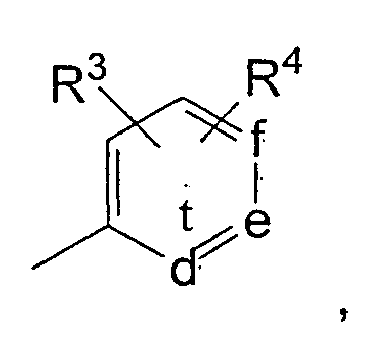


- US 5,432.175 discloses compounds which posess anti-allergic and antiinflammatory activity and are of the formula:

- AR1 represents

- AR2 represents


- T represents CH, C or N.
- Current therapies for the treatment of androgenic and estrogenic dependent diseases include the use of glucocorticoids to block adrenal secretions, and luteinizing hormone releasing hormone (LHRH) agonists which cause medical castration. Both therapies are associated with undesirable side effects. An improved therapy would include compounds that specifically inhibit type 3 17β-Hydroxysteroid dehydrogenase, while avoiding inhibition of other 17β-Hydroxysteroid dehydrogenases. Such an improvement is provided by this invention.
- The present invention provides novel compounds represented by Formula (I):

- R1 and R2 are the same or different and are independently selected from the group consisting of aryl, heteroaryl, arylalkyl, and heteroarylalkyl; optionally substituted with one to six groups selected from the following:
- a) halogen;
- b) -OCF3 or -OCHF2;
- c) -CF3;
- d) -CN;
- e) alkyl or R18-alkyl;
- f) heteroalkyl or R18-heteroalkyl;
- g) aryl or R18-aryl;
- h) heteroaryl or R18-heteroaryl;
- i) arylalkyl or R18-arylalkyl;
- j) heteroarylalkyl or R18-heteroarylalkyl;
- k) hydroxy;
- l) alkoxy;
- m) aryloxy;
- n) -SO2-alkyl;
- o) -NR11R12;
- p) -N(R11)C(O)R13,
- q) methylenedioxy;
- r) difluoromethylenedioxy;
- s) trifluoroalkoxy;
- t) -SCH3 or -SCF3; and
- u) -SO2CF3 or -NHSO2CF3;
- R3 is H, -OH, alkoxy or alkyl, provided that when X is N, R3 is not -OH or alkoxy;
- R4, R5, R7 and R8 are the same or different and are independently selected from the group consisting of: H, -OH, -OR14, -NR11R12, -N(R11)C(O)R13, alkyl, aryl, cycloalkyl, arylalkyl, heteroalkyl, heteroaryl, heteroarylalkyl, heterocycloalkyl,

- R6 is selected from the group consisting of C(O)R15 and SO2R15;
- R9 and R10 are the same or different and are independently selected from the group consisting of: H, F, -CF3, alkyl, cycloalkyl, arylalkyl, heteroalkyl, heteroarylalkyl, heterocycloalkyl, hydroxyl, alkoxy, aryloxy, -NR11R12, and
-N(R11)C(O)R13, provided that when Z is N, then R9 and R10 are each not F, hydroxy, alkoxy, aryloxy, -NR11R12 of -N(R11)C(O)R13; - R11 is selected from the group consisting of H, alkyl, aryl and heteroaryl;
- R12 is selected from the group consisting of H, alkyl, aryl and heteroaryl;
- R13 is selected from the group consisting of alkyl, alkoxy and aryloxy;
- R14 is selected from the group consisting of H, alkyl, aryl and heteroaryl;
- R15 is selected from the group consisting of: -NR16R17, -OR16, alkyl, cycloalkyl, heterocycloalkyl, aryl, arylalkyl and heteroarylalkyl, each optionally substituted with R18;
- R16 and R17 are the same or different and are independently selected from the following: H, alkyl, aryl, arylalkyl, heteroalkyl and heteroaryl, each optionally substituted with R18, provided that when R15 is -OR16, R16 is not H;
- R18 is one to four substituents each independently selected from the group consisting of: lower alkyl, halo, cyano, nitro, haloalkyl, hydroxy, alkoxy, alkoxy carbonyl, carboxy, carboxyalkyl, carboxamide, mercapto, amino, alkylamino, dialkylamino, sulfonyl, sulfonamido, cycloalkyl, heterocycloalkyl, heterocycloalkylalkyl, aryl and heteroaryl;
- X and Z are independently selected from the group consisting of C and N; and
wherein alkyl represents (C1-C20) alkyl. - One aspect of the present invention relates to a pharmaceutical composition comprising a compound of formula (I) in combination or association with a pharmaceutically acceptable carrier or diluent.
- Another aspect of the present invention relates to the use of the compound of formula (I),or a pharmaceutically acceptable salt or solvate thereof in the manufacture of a medicine for the use comprising the inhibition of 17β-hydroxysteroid dehydrogenase in a mammal, e.g. a human.
- In another aspect, the present invention provides the use of the compound of formula (I), or a pharmaceutically acceptable salt or solvate thereof in the manufacture of a medicine for the use comprising the treatment or prevention of an androgen- or estrogen-dependent disease.
- In yet another aspect, the present invention provides the use of a compound of formula (I) in the manufacture of a medicine for the use comprising the treatment or prevention of prostate cancer, and other androgen-dependent neoplasms, benign prostatic hyperplasia, prostatic intraepithelial neoplasia, androgenic alopecia (i.e. pattern baldness in both male and female patients), hirsutism, polycystic ovary syndrome and acne in a mammal, e.g. a human.
- Also, the present invention provides the use of the compound of formula (I) in the manufacture of a medicine, which in combination with at least one anti-androgenic agent (i.e. agents that decrease androgen synthesis or activity), is for the use comprising the treatment or prevention of an androgen-dependent disease.
- This invention also provides the use of the compound of formula (I) in the manufacture of a medicine, which in combination with at least one agent useful in the treatment or prevention of benign prostatic hyperplasia, is for the use comprising the treatment or prevention of benign prostatic hyperplasia.
- This invention further provides the use of the compound of formula (I) in the manufacture of a medicine, which in combination with at least one agent useful in the treatment or prevention of alopecia (e.g., potassium channel agonists or 5α-reductase inhibitors), is for the use comprising the treatment or prevention of hair loss.
- The present invention also provides the use of the compound of formula (I) in the manufacture of a medicine, which in combination with an effective amount of one or more of a chemotherapeutic agent, biological agent, surgery, (e.g., prostatectomy) or radiation therapy, is for the use comprising the treatment or prevention of proliferative diseases, especially cancers (tumors).
- For each of the above-mentioned uses of the inventive compounds, a mammal in need of treatment or prevention of one or more of the diseases/disorders described above would be administered a therapeutically effective amount of medicine comprising a compound of formula (I), or a pharmaceutically acceptable salt or solvate thereof, alone or in combination with therapeutically effective amounts of other agents or therapies described above.
- Unless where indicated otherwise, the following definitions apply throughout the present specification and claims. These definitions apply regardless of whether a term is used by itself or in combination with other terms. Hence the definition of "alkyl" applies to "alkyl" as well as to the "alkyl" portions of "alkoxy", etc.
- Unless otherwise known, stated or shown to be to the contrary, the point of attachment for a multiple term substituent (multiple terms that are combined to identify a single moiety) to a subject structure is through the last named term of the multiple term. For example, a cycloalkylalkyl substituent attaches to a targeted through the latter "alkyl" portion of the substituent (e.g., Structure-alkyl-cycloalkyl).
- When any variable (e.g., aryl, R2) occurs more than one time in any constituent, its definition on each occurrence is independent of its definition at every other occurrence. Also, combinations of substituents and/or variables are permissible only if such combinations result in stable compounds.
- Unless stated, shown or otherwise known to be the contrary, all atoms illustrated in chemical formulas for covalent compounds possess normal valencies. Thus, hydrogen atoms, double bonds, triple bonds and ring structures need not be expressly depicted in a general chemical formula.
- Double bonds, where appropriate, may be represented by the presence of parentheses around an atom in a chemical formula. For example, a carbonyl functionality, -CO-, may also be represented in a chemical formula by -C(O)- or -C(=O)-. Similarly, a double bond between a sulfur atom and an oxygen atom may be represented in a chemical formula by -SO-, -S(O)- or -S(=O)-. One skilled in the art will be able to determine the presence or absence of double (and triple bonds) in a covalently-bonded molecule. For instance, it is readily recognized that a carboxyl functionality may be represented by -COOH, -C(O)OH, -C(=O)OH or -CO2H.
- The term "substituted," as used herein, means the replacement of one or more atoms or radicals, usually hydrogen atoms, in a given structure with an atom or radical selected from a specified group. In the situations where more than one atom or radical may be replaced with a substituent selected from the same specified group, the substituents may be, unless otherwise specified, either the same or different at every position. Radicals of specified groups, such as alkyl, cycloalkyl, heterocycloalkyl, aryl and heteroaryl groups, independently of or together with one another, may be substituents on any of the specified groups, unless otherwise indicated.
- "Alkyl" represents a straight or branched saturated hydrocarbon chain having the designated number of carbon atoms. Preferrably the number of carbon atoms is 1 to 20, more preferrably 1 to 10, most preferrably the number of carbon atoms is 1 to 6. Where the number of carbon atoms is not specified, 1 to 20 carbons are intended. "Lower alkyl" represents a straight or branched hydrocarbon chain having 1 to 6 carbon atoms.
- The term "chemically-feasible" is usually applied to a ring structure present in a compound and means that the ring structure would be expected to be stable by a skilled artisan.
- The term "cycloalkyl" or "cycloalkane," as used herein, means an unsubstituted or substituted, saturated, stable, non-aromatic, chemically-feasible carbocyclic ring, having, preferably, from three to fifteen carbon atoms, more preferably, from three to eight carbon atoms. The cycloalkyl carbon ring radical is saturated and may be fused, for example, benzofused, with one to two cycloalkyl, aromatic, heterocyclic or heteroaromatic rings. The cycloalkyl may be attached at any endocyclic carbon atom that results in a stable structure. Preferred carbocyclic rings have from five to six carbons. Examples of cycloalkyl radicals include cyclopropyl, cyclobutyl, cyclopentyl, cyclohexyl, cycloheptyl, and the like.
- The term "heterocycloalkyl" refers to a cycloalkyl group which has at least one heteroatom.
- The term "halogen" or "Halo" (halogen) is intended to include fluorine, chlorine, bromine or iodine.
- The term "alkoxy," as used herein, means an oxygen atom bonded to a hydrocarbon chain, such as an alkyl group (-O-alkyl). Representative alkoxy groups include methoxy, ethoxy and isopropoxy groups.
- The term "aryloxy" as used herein, means an oxygen atom bonded to an aryl group (-O-aryl).
- The term "fluoroalkyl" represents a straight or branched saturated hydrocarbon chain having the designated number of carbon atoms, substituted with one or more fluorine atoms. Where the number of carbon atoms is not specified, 1 to 20 carbons are intended.
- "Aryl" refers to a mono- or bicyclic ring system having one or two aromatic rings including, but not limited to, phenyl, naphthyl, indenyl, tetrahydronaphthyl, indanyl, anthracenyl, fluorenyl and the like. The aryl group can be unsubstituted or substituted with one, two, or three substituents independently selected from lower alkyl, halo, cyano, nitro, haloalkyl, hydroxy, alkoxy, carboxy, carboxyalkyl, carboxamide, mercapto, sulfhydryl, amino, alkylamino, dialkylamino, sulfonyl, sulfonamido, aryl and heteroaryl.
- The term "arylakyl" refers to an aryl group bonded directly to a subject structure through an alkyl group.
- The term "heteroatom," as used herein, means a nitrogen, sulfur, or oxygen atom. Multiple heteroatoms in the same group may be the same or different.
- The term "heteroalkyl" refers to an alkyl group which has at least one heteroatom.
- The term "heterocycle" or "heterocyclic ring" is defined by all non-aromatic, heterocyclic rings of 3-7 atoms containing 1-3 heteroatoms selected from N, O and S, such as oxirane, oxetane, tetrahydrofuran, tetrahydropyran, pyrrolidine, piperidine, piperazine, tetrahydropyridine, tetrahydropyrimidine, tetrahydrothiophene, tetrahydrothiopyran, morpholine, hydantoin, valerolactam, pyrrolidinone, and the like.
- The term "heterocyclic acidic functional group" is intended to include groups such as, pyrrole, imidazole, triazole, tetrazole; and the like.
- "Heteroaryl" refers to 5- or 10-membered single or benzofused aromatic rings consisting of 1 to 3 heteroatoms independently selected from the group consisting of - O-, -S, and -N=, provided that the rings do not possess adjacent oxygen and/or sulfur atoms. The heteroaryl group can be unsubstituted or substituted with one, two, or three substituents independently selected from lower alkyl, halo, cyano, nitro, haloalkyl, hydroxy, alkoxy, carboxy, carboxyalkyl, carboxamide, sulfhydryl, amino, alkylamino and dialkylamino. Representative heteroaryl groups include thiazoyl, thienyl, pyridyl, benzothienyl and quinolyl.
- The term "heteroarylalkyl" refers to a heteroaryl group bonded directly to a subject structure through an alkyl group.
- N-oxides can form on a tertiary nitrogen present in an R substituent, or on =N-in a heteroaryl ring substituent and are included in the compounds of formula I.
- The term "prodrug," as used herein, represents compounds that are drug precursors which, following administration to a patient, release the drug in vivo via a chemical or physiological process (e.g., a prodrug on being brought to a physiological pH or through an enzyme action is converted to the desired drug form). A discussion of prodrugs is provided in T. Higuchi and V. Stella, Pro-drugs as Novel Delivery Systems, Vol. 14 of A.C.S. Symposium Series (1987), and in Bioreversible Carriers in Drug Design, E.B. Roche, ed., American Pharmaceutical Ass'n and Pergamon Press (1987), each of which is incorporated herein by reference in its entirety.
- As used herein, the term "composition" is intended to encompass a product comprising the specified ingredients in the specified amounts, as well as any product which results, directly or indirectly, from combination of the specified ingredients in the specified amounts.
- The phrase "effective amount," as used herein, means an amount of a compound or composition which is sufficient enough to significantly and positively modify the symptoms and/or conditions to be treated (e.g., provide a positive clinical response). The effective amount of an active ingredient for use in a pharmaceutical composition will vary with the particular condition being treated, the severity of the condition, the duration of the treatment, the nature of concurrent therapy, the particular active ingredient(s) being employed, the particular pharmaceutically-acceptable excipient(s) / carrier(s) utilized, and like factors within the knowledge and expertise of the attending physician.
- As used herein the term "disease" is intended to include any abnormal physical or mental condition, including disorders, as well as any symptoms which are subject evidence of a disease or disorder.
- The term "compound having the formula I", and the like as used herein, represents a compound having a chemical structure encompassed by formula I, and includes any and all isomers (e.g., enantiomers, stereoisomers, diastereomers, rotomers, tautomers) and prodrugs of the compound. These compounds can be neutral, acidic or alkaline, and further include their corresponding pharmaceutically-acceptable salts, solvates, esters, and the like.
- All isomers of the compounds of the instant invention are contemplated, either in admixture or in pure or substantially pure form. The definition of compounds according to the invention embraces all the possible isomers and their mixtures. It very particularly embraces the racemic forms and the isolated optical isomers having the specified activity. The racemic forms can be resolved by physical methods, such as, for example, fractional crystallization, separation or crystallization of diastereomeric derivatives or separation by chiral column chromatography. Unless noted otherwise, inventive compounds designated with a 1 or 2 above the formula correspond to the first and second isomers, respectively, to elute from a chiral chromatography column during separation from a diastereomeric mixture.
- The following are referred to herein by the abbreviations indicated: tetrahydrofuran (THF); ethanol (EtOH); methanol (MeOH); acetic acid (HOAc or AcOH); ethyl acetate (EtOAc); N,N-dimethylformamide (DMF); trifluoroacetic acid (TFA); trifluoroacetic anhydride (TFAA); 1-hydroxybenzotriazole (HOBT); m-chloroperbenzoic acid (MCPBA); triethylamine (Et3N); diethyl ether (Et2O); ethyl chloroformate (ClCO2Et); 1-(3-dimethylaminopropyl)-3-ethyl carbodiimide hydrochloride (DEC) ; t-butoxycarbonyl (BOC); phenyl group (Ph); trimethylsilyl isocyanate (TMSNCO); acetyl chloride (AcCl); acetonitrile (CH3CN); n-butyllithium (n-BuLi); triethylamine (TEA); methyl iodine (Mel); dimethyl sulfoxide (DMSO); diethylamine (DEA); isopropanol (IPA); N-methylmorpholine (NMM); acetic acid (AcOH); lithium aluminum hydride (LAH); di-tert-butyl dicarbonate (BOC)2O; diisubutyl aluminum hydride (DIBAL-H); methyl magnesium bromide (MeMgBr); and acetic anhydride (Ac2O).
- As used herein the following terms have the following meanings unless indicated otherwise:
- "At least one" means "one or more" preferrably 1 to 12, more preferrably 1 to 6, most preferrably 1, 2 or 3.
- Antineoplastic agent - means a chemotherapeutic agent effective against cancer;
- Concurrently - means (1) simultaneously in time; and
- Sequentially - means (1) administration of one component of the method ((a) compound of the invention, or (b) antineoplastic agent and/or radiation therapy) followed by administration of the other component; after adminsitration of one component, the second component can be administered substantially immediately after the first component, or the second component can be administered after an effective time period after the administration of the first component; the effective time period is the amount of time given for realization of maximum benefit from the administration of the first component.
- Classes of compounds that can be used as the chemotherapeutic agent (antineoplastic agent) include: alkylating agents, antimetabolites, natural products and their derivatives, hormones and steroids (including synthetic analogs), and synthetics. Examples of compounds within these classes are given below.
- Alkylating agents (including nitrogen mustards, ethylenimine derivatives, alkyl sulfonates, nitrosoureas and triazenes): Uracil mustard, Chlormethine, Cyclophosphamide (Cytoxan®), Ifosfamide, Melphalan, Chlorambucil, Pipobroman, Triethylenemelamine, Triethylenethiophosphoramine, Busulfan, Carmustine, Lomustine, Streptozocin, Dacarbazine, and Temozolomide.
- Antimetabolites (including folic acid antagonists, pyrimidine analogs, purine analogs and adenosine deaminase inhibitors): Methotrexate, 5-Fluorouracil, Floxuridine, Cytarabine, 6-Mercaptopurine, 6-Thioguanine, Fludarabine phosphate, Pentostatine, and Gemcitabine.
- Natural products and their derivatives (including vinca alkaloids, antitumor antibiotics, enzymes, lymphokines and epipodophyllotoxins): Vinblastine, Vincristine, Vindesine, Bleomycin, Dactinomycin, Daunorubicin, Doxorubicin, Epirubicin, Idarubicin, paclitaxel (paclitaxel is commercially available as Taxol® and is described in more detail below in the subsection entitled "Microtubule Affecting Agents"), Mithramycin, Deoxycoformycin, Mitomycin-C, L-Asparaginase, Interferons-α and β (especially IFN-α), Etoposide, and Teniposide.
- Hormonal agents and steroids (including synthetic analogs): 17α-Ethinylestradiol, Diethylstilbestrol, Testosterone, Prednisone, Fluoxymesterone, Dromostanolone propionate, Testolactone, Megestrolacetate, Tamoxifen, Methylprednisolone, Methyltestosterone, Prednisolone, Triamcinolone, Chlorotrianisene, Hydroxyprogesterone, Aminoglutethimide, Estramustine, Medroxyprogesteroneacetate, Leuprolide, Flutamide, Toremifene, goserelin and Zoladex.
- Synthetics (including inorganic complexes such as platinum coordination complexes): Cisplatin, Carboplatin, Hydroxyurea, Amsacrine, Procarbazine, Mitotane, Mitoxantrone, Levamisole, Navelbene, CPT-11, Anastrazole, Letrazole, Capecitabine, Ralozifine, Droloxifine and Hexamethylmelamine.
- Methods for the safe and effective administration of most of these chemotherapeutic agents are known to those skilled in the art. In addition, their administration is described in the standard literature. For example, the administration of many of the chemotherapeutic agents is described in the "Physicians' Desk Reference" (PDR), e.g., 1996 edition (Medical Economics Company, Montvale, NJ 07645-1742, USA); the disclosure of which is incorporated herein by reference thereto.
- Examples of biological agents useful in the methods of this invention include, but are not limited to, interferon-α, interferon-β and gene therapy.
- As used herein, a microtubule affecting agent is a compound that interferes with cellular mitosis, i.e., having an anti-mitotic effect, by affecting microtubule formation and/or action. Such agents can be, for instance, microtubule stabilizing agents, or agents which disrupt microtubule formation.
- Microtubule affecting agents useful in the invention are well known to those of skill in the art and include, but are not limited to allocolchicine (NSC 406042), Halichondrin B (NSC 609395), colchicine (NSC 757), colchicine derivatives (e.g., NSC 33410), dolastatin 10 (NSC 376128), maytansine (NSC 153858), rhizoxin (NSC 332598), paclitaxel (Taxol®, NSC 125973), Taxol® derivatives (e.g., derivatives (e.g., NSC 608832), thiocolchicine (NSC 361792), trityl cysteine (NSC 83265), vinblastine sulfate (NSC 49842), vincristine sulfate (NSC 67574), epothilone A, epothilone, and discodermolide (see Service, (1996) Science, 274:2009) estramustine, nocodazole, MAP4, and the like. Examples of such agents are also described in the scientific and patent literature, see, e.g., Bulinski (1997) J. Cell Sci. 110:3055-3064; Panda (1997) Proc. Natl. Acad. Sci. USA 94:10560-10564; Muhlradt (1997) Cancer Res. 57:3344-3346; Nicolaou (1997) Nature 387:268-272; Vasquez (1997) Mol. Biol. Cell. 8:973-985; Panda (1996) J. Biol. Chem. 271:29807-29812.
- Particularly preferred microtubule affecting agents are compounds with paclitaxel-like activity. These include, but are not limited to, paclitaxel and paclitaxel derivatives (paclitaxel-like compounds) and analogues. Paclitaxel and its derivatives are available commercially. In addition, methods of making paclitaxel and paclitaxel derivatives and analogues are well known to those of skill in the art (see, e.g., U.S. Patent Nos: 5,569,729; 5,565,478; 5,530,020; 5,527,924; 5,508,447; 5,489,589; 5,488,116; 5,484,809; 5,478,854; 5,478,736; 5,475,120; 5,468,769; 5,461,169; 5,440,057; 5,422,364; 5,411,984; 5,405,972; and 5,296,506).
- More specifically, the term "paclitaxel" as used herein refers to the drug commercially available as Taxol® (NSC number: 125973). Taxol® inhibits eukaryotic cell replication by enhancing polymerization of tubulin moieties into stabilized microtubule bundles that are unable to reorganize into the proper structures for mitosis. Of the many available chemotherapeutic drugs, paclitaxel has generated interest because of its efficacy in clinical trials against drug-refractory tumors, including ovarian and mammary gland tumors (Hawkins (1992) Oncology, 6: 17-23, Horwitz (1992) Trends Pharmacol. Sci. 13: 134-146, Rowinsky (1990) J. Natl. Canc. Inst. 82: 1247-1259).
- Additional microtubule affecting agents can be assessed using one of many such assays known in the art, e.g., a semiautomated assay which measures the tubulin-polymerizing activity of paclitaxel analogs in combination with a cellular assay to measure the potential of these compounds to block cells in mitosis (see Lopes (1997) Cancer Chemother. Pharmacol. 41:37-47).
- Generally, activity of a test compound is determined by contacting a cell with that compound and determining whether or not the cell cycle is disrupted, in particular, through the inhibition of a mitotic event. Such inhibition may be mediated by disruption of the mitotic apparatus, e.g., disruption of normal spindle formation. Cells in which mitosis is interrupted may be characterized by altered morphology (e.g., microtubule compaction, increased chromosome number, etc.).
- In a preferred embodiment, compounds with possible tubulin polymerization activity are screened in vitro. The compounds are screened against cultured WR21 cells (derived from line 69-2 wap-ras mice) for inhibition of proliferation and/or for altered cellular morphology, in particular for microtubule compaction. In vivo screening of positive-testing compounds can then be performed using nude mice bearing the WR21 tumor cells. Detailed protocols for this screening method are described by Porter (1995) Lab. Anim. Sci., 45(2):145-150.
- Other methods of screening compounds for desired activity are well known to those of skill in the art. Typically, these involve assays for inhibition of microtubule assembly and/or disassembly. Assays for microtubule assembly are described, for example, by Gaskin et al. (1974) J. Molec. Biol., 89: 737-758. U.S. Patent No. 5,569,720 also provides in vitro and in vivo assays for compounds with paclitaxel-like activity.
- Methods for the safe and effective administration of the above-mentioned microtubule affecting agents are known to those skilled in the art. In addition, their administration is described in the standard literature. For example, the administration of many of the chemotherapeutic agents is described in the "Physicians' Desk Reference" (PDR), e.g., 1996 edition (Medical Economics Company, Montvale, NJ 07645-1742, USA.
- The present invention provides the use of a compouond of the invention in the manufacture of a medicine, which in combination with at least one anti-androgenic agent (i.e. agents that decrease androgen synthesis or activity); is for the use comprising the treatment or prevention of an androgen-dependent disease.
- Examples of such anti-androgenic agents include but are not limited to: inhibitors of 5α-reductase type 1 and/or type 2, e.g. finasteride, SKF105,657, LY191,704 , LY320,236, dutasteride, Flutamide, nicalutamide, bicalutamide, LHRH agonists e.g. leuprolide and zoladex, LHRH antagonists, e.g. abarelix and cetrorelix, inhibitors of 17α-hydroxylase/C17-20 lyase, e.g. YM116, CB7630 and liarozole; inhibitors of 17β-Hydroxysterold dehydrogenase type 5 and/or other 17β-Hyroxysteroid dehydrogenase/17β-oxidoreductase isoenzymes, e.g. EM-1404.
- Types of androgen or estrogen dependent diseases include, but are not limited to, prostate cancer, benign prostatic hyperplasia, prostatic intraepithelial neoplasia, acne, seborrheas, hirsutism, androgenic alopecia, precocious puberty, adrenal hyperplasia, and polycystic ovarian syndrome, breast cancer, endometriosis and leiomyoma.
- This invention also provides the use of a compound of the invention in the manufacture of a medicine, which in combination with at least one agent useful in the treatment or prevention of benign prostatic hyperplasia, is for the use comprising the treatment or prevention of benign hyperplasia. Examples of such agents include, but are not limited to, alpha-1 adrenergic antagonists, e.g. tamsulosin and terazosin.
- This invention also provides the use of a compound of the invention in the manufacture of a medicine, which in combination with at least one potassium channel agonist e.g. minoxidil and KC-516, or 5α-reductase inhibitor, e.g., finasteride and dutasteride, is for the use comprising the treatment or prevention of hair loss.
- The present invention also provides the use of a compound of the invention in the manufacture of a medicine, which when administered to a mammal in combination with one or more of a chemotherapeutic agent, biological agent, surgery, or radiation therapy, is for the use comprising the treatment of prevention of proliferative diseases, especially cancers (tumors).
- The anti-cancer agent, and/or surgery and/or radiation therapy may be administered concurrently or sequentially with a compound of the invention.
- Examples of cancers (i.e. tumors) which may be inhibited or treated include, but are not limited to, lung cancer (e.g., lung adenocarcinoma), pancreatic cancers (e.g., pancreatic carcinoma such as, for example, exocrine pancreatic carcinoma), colon cancers (e.g., colorectal carcinomas, such as, for example, colon adenocarcinoma and colon adenoma), renal cancers, myeloid leukemias (for example, acute myelogenous leukemia (AML), thyroid follicular cancer, myelodysplastic syndrome (MDS), bladder carcinoma, epidermal carcinoma, melanoma, breast cancer and prostate cancer.
- Preferrably for compounds of the Formula (I),
- R1 and R2 are the same or different and are independently selected from the group consisting of aryl and heteroaryl, each optionally substituted with one to six groups selected from the group consisting of:
- a) halogen;
- b) -OCF3;
- c) -CF3;
- d) -CN;
- e) (C1-C20)alkyl or R18-(C1-C20) alkyl;
- f) heteroalkyl or R18-heteroalkyl;
- g) aryl or R18-aryl;
- h) heteroaryl or R18-heteroaryl;
- i) arylalkyl or R18-arylalkyl;
- j) heteroarylalkyl or R18-heteroarylalkyl;
- k) hydroxy;
- l) alkoxy;
- m) aryloxy;
- n) -SO2-alkyl;
- o) -NR11R12;
- p) -N(R11)C(O)R13;
- q) methylenedioxy;
- r) difluoromethylenedioxy;
- s) trifluoroalkoxy;
- t) -SCH3; and
- u) -SO2CF3;
- R4, R5, R7 and R8 are the same or different and are independently selected from the group consisting of H, alkyl, heteroalkyl, aryl, cycloalkyl, arylalkyl, heteroaryl, heteroarylalkyl, heterocycloalkyl, -OR14, -NR11R12 ,


- R11 is selected from the group consisting of H and alkyl.
- More preferrably for compounds of the Formula (I),
- R1 and R2 are the same or different and are independently selected from the group consisting of aryl and heteroaryl, each optionally substituted with one to six groups selected from the group consisting of:
- a) halogen;
- b) -OCF3;
- c) -CF3;
- d) trifluoroalkoxy;
- e) (C1-C6)alky or R18-(C1-C6)alkyl;
- f) heteroalkyl or R18-heteroalkyl;
- g) aryl or R18-aryl;
- h) arylalkyl or R18-arylalkyl;
- i) heteroarylalkyl or R18-heteroarylalkyl;
- j) alkoxy;
- k) -SO2-alkyl; and
- l) -SO2CF3;
- R4, R5, R7-änd R8are the same or different and are independently selected from the group consisting of H, alkyl, heteroalkyl, aryl, cycloalkyl, arylalkyl, heteroaryl, heteroarylalkyl, heterocycloalkyl, -OR14, -NR11R12,


- R11 is selected from the group consisting of H and alkyl; and
- Z is C.
- Even more preferrably for compounds of the Formula (I),
- R1 and R2 are the same or different and are independently selected from the group consisting of aryl and heteroaryl, each optionally substituted with one to six groups selected from the group consisting of:
- a) halogen;
- b) -OCF3;
- c) -CF3;
- d) alkoxy;
- e) trifluoralkoxy;
- f) (C1-C6)alkyl;
- g) -SO2-alkyl; and
- h) -SO2CF3;
- R3 is H or -OH, provided that when X is N, R3 is not -OH;
- R4 and R5 are the same or different and are each independently selected from the group consisting of H, (C1-C6)alkyl, heteroalkyl and

- R7 is selected from the group consisting of H, alkyl, -OR14 and -NR11R12, provided that when X is N, R7 is not -OR14 or -NR11R12;
- R8 is selected from the group consisting of H, alkyl, aryl and heteroaryl;
- R11 is selected from the group consisting of H and alkyl; and
- Z is C.
- Yet even more preferrably for compounds of the Formula (I),
- R1 and R2 are the same or different and are independently selected from the group consisting of aryl and heteroaryl, each optionally substituted with one to six groups selected from the group consisting of:
- a) halogen;
- b) -OCF3,
- c) alkoxy;
- d) trifluoroalkoxy;
- e) -CF3;
- f) -SO2-alkyl; and
- g) -SO2CF3;
- R3 is H;
- R4 and R5 are the same or different and are independently selected from the group consisting of H, (C1-C6)alkyl, heteroalkyl, and

- R6 is selected from the group consisting of -C(O)R15 and -SO2R15;
- R7 is selected from the group consisting of H, alkyl, -OR14 and -NR11R12, provided that when X is N, R7 is not -OR14 or -NR11R12 ;
- R8 is selected from the group consisting of H, alkyl, aryl and heteroaryl;
- R11 is H or alkyl; and
- Z is C.
- Still even more preferrably for compounds of the Formula (I),
- R1 and R2 are the same or different and are independently selected from the group consisting of phenyl and pyridyl, each optionally substituted with one to six groups selected from the group consisting of:
- a) Br, F or Cl;
- b) -OCF3;
- c) -CF3;
- d) methoxy;
- e) ethoxy;
- f) cyclopropylmethoxy;
- g) -OCH2CF3;
- h) -SO2-alkyl; and
- i) -SO2CF3
- R3 is H;
- R4 and R5 are the same or different and are independently selected from the group consisting of H, methyl, ethyl, isopropyl, t-butyl and heteroalkyl;
- R7 is selected from the group consisting of H, -OR11 and alkyl;
- R8, R9, R10, R11, R12 and R14 are each independently selected from the group consisting of H and alkyl;
- R13 is alkyl;
- R15 is selected from the group consisting of -NR16R17, -OR16 and alkyl;
- R16 and R17 are the same or different and are independently selected from the group consisting of H and alkyl, provided that when R15 is -OR16, R16 is not H; and
- Z is C.
- Illustrative compounds of Formula (I) are shown below in Table A where compound numbers S1, S2, etc. are independent of the numbering used in the Example section.


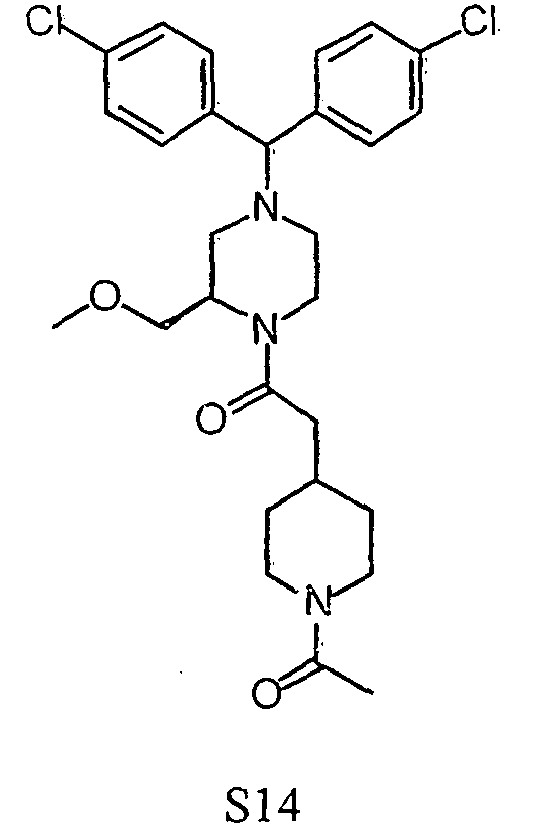


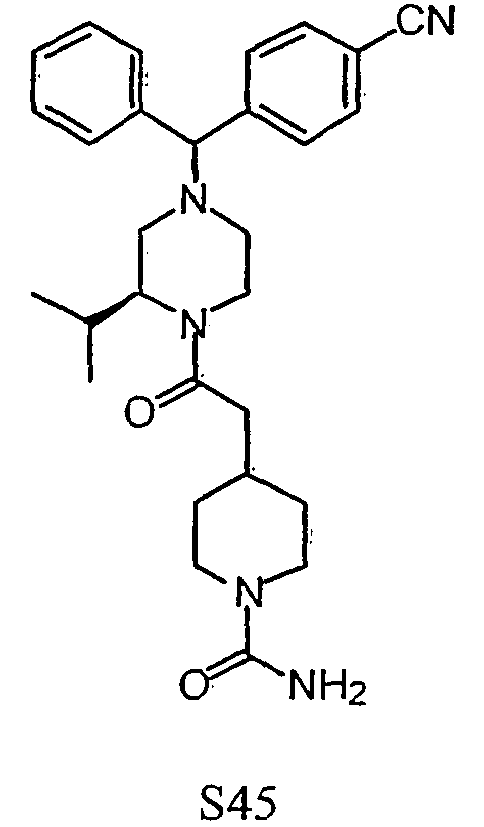


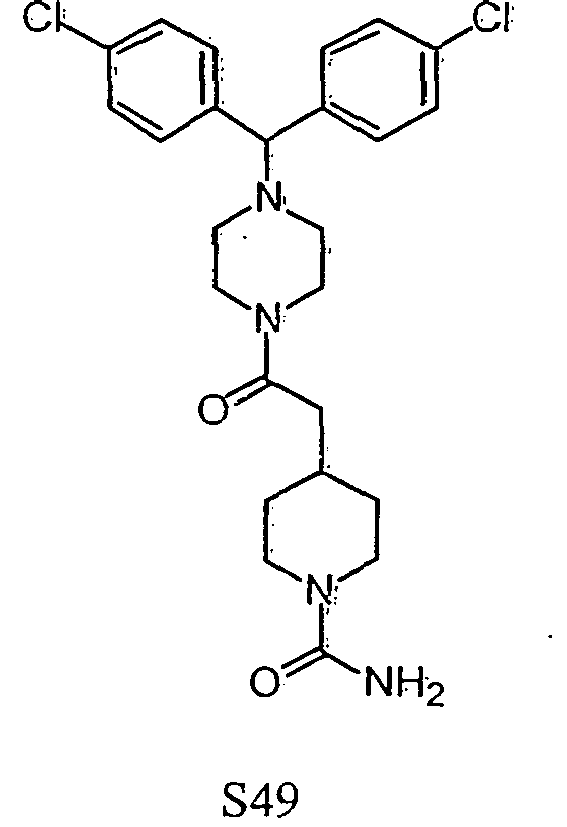
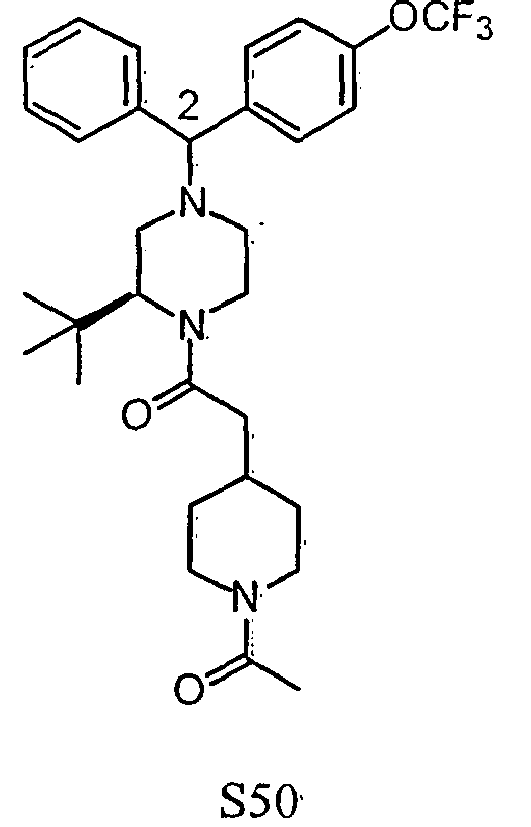


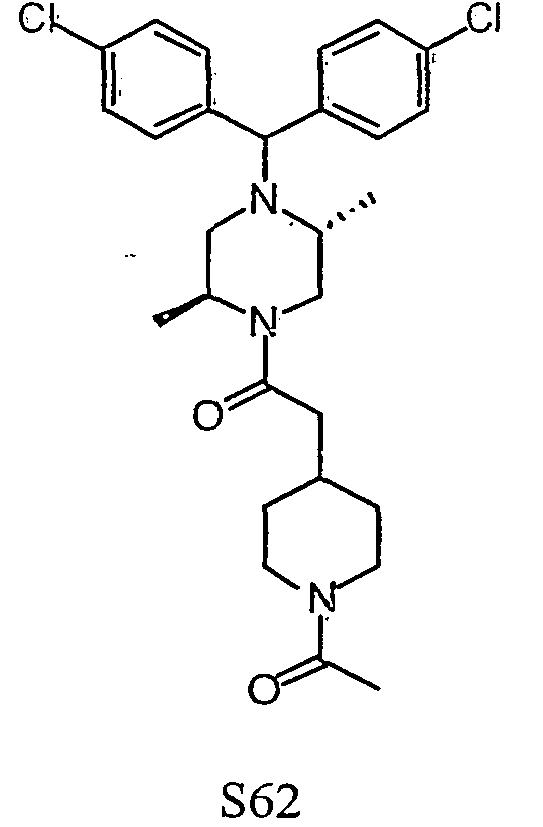


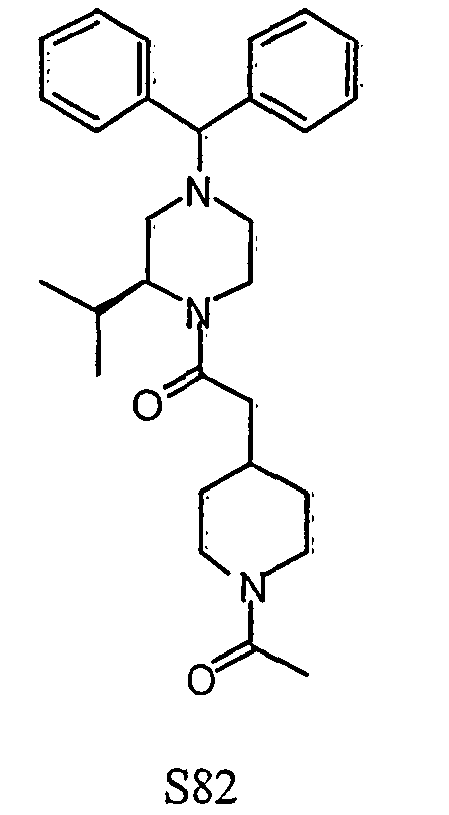
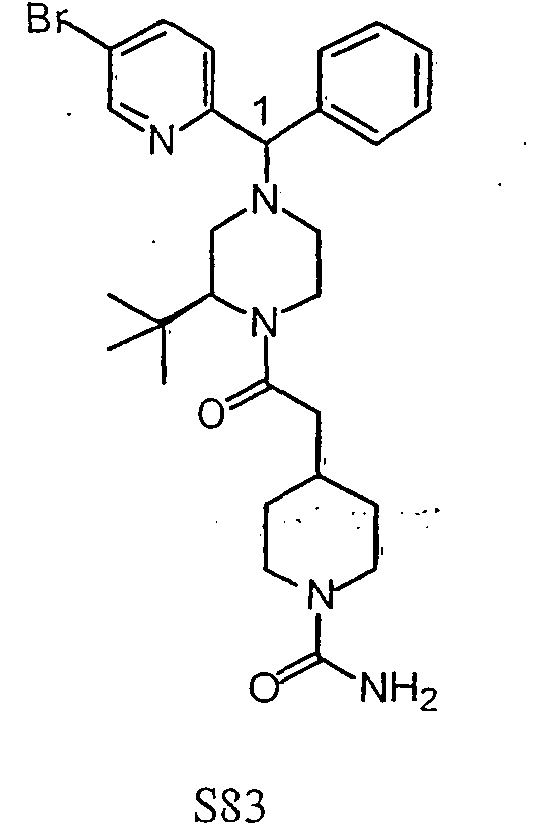

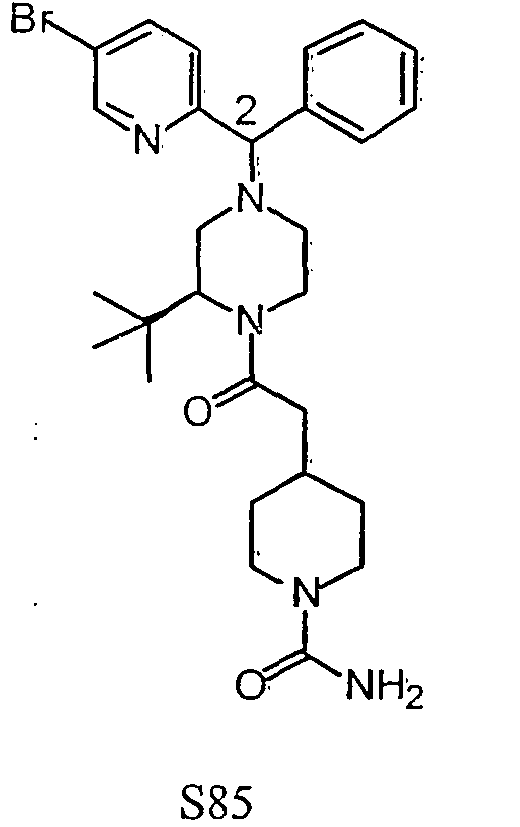


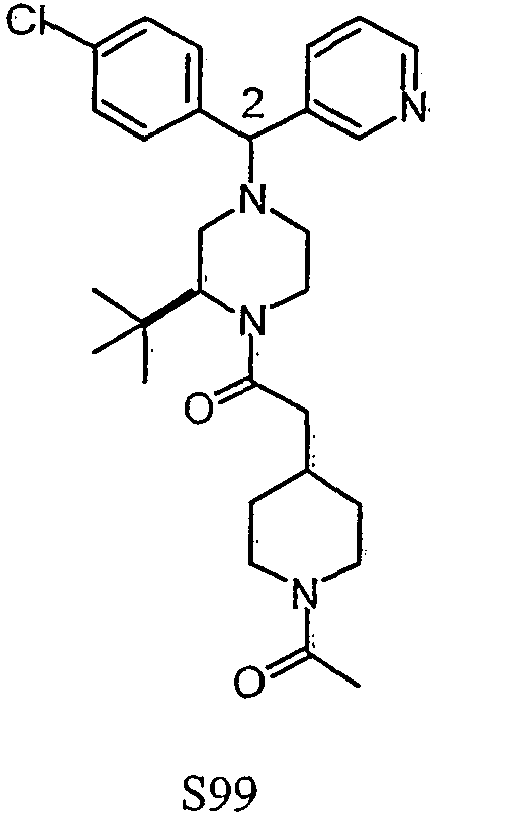


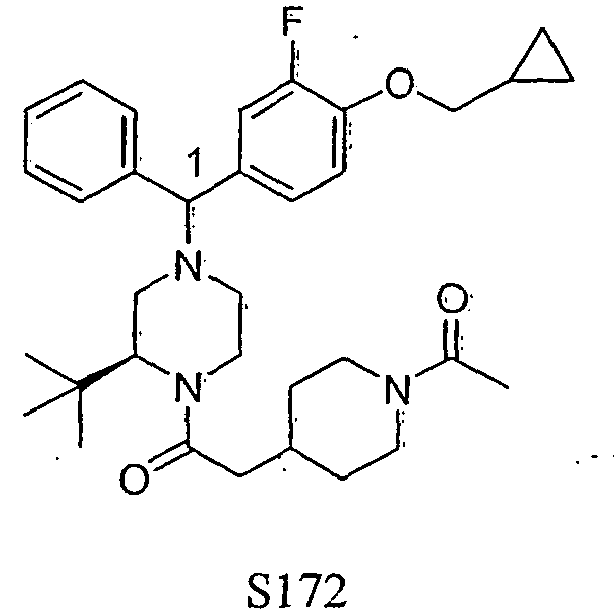


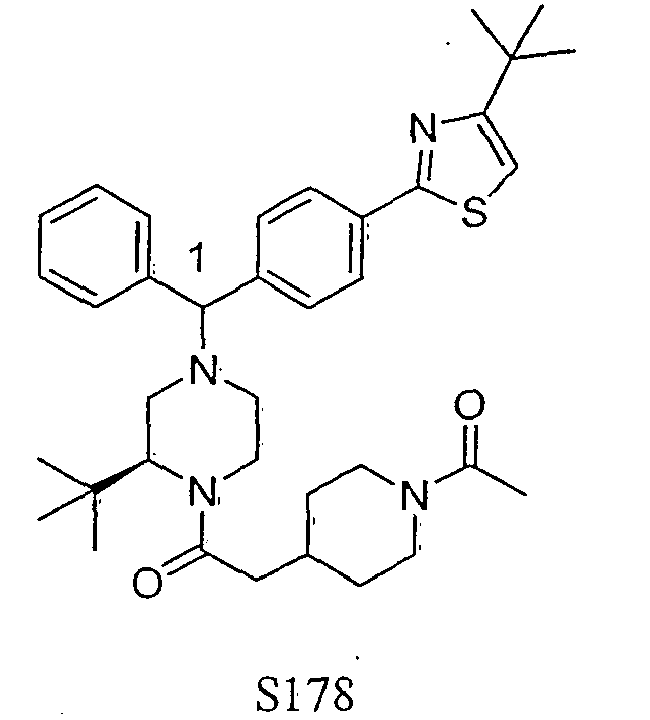


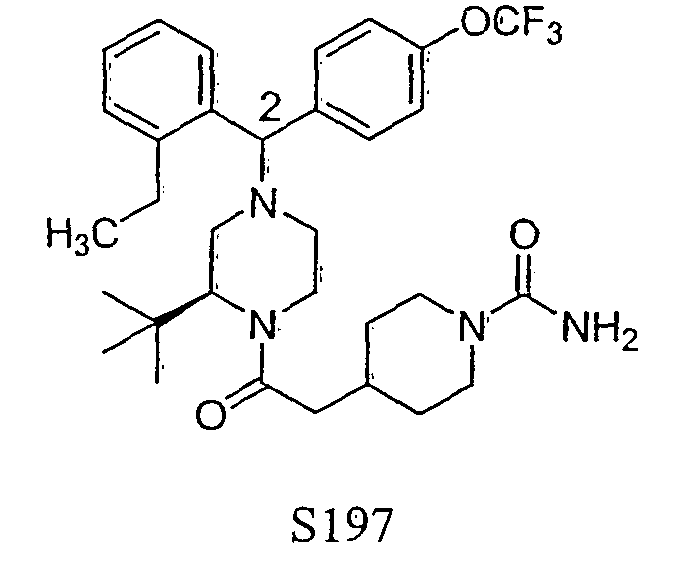


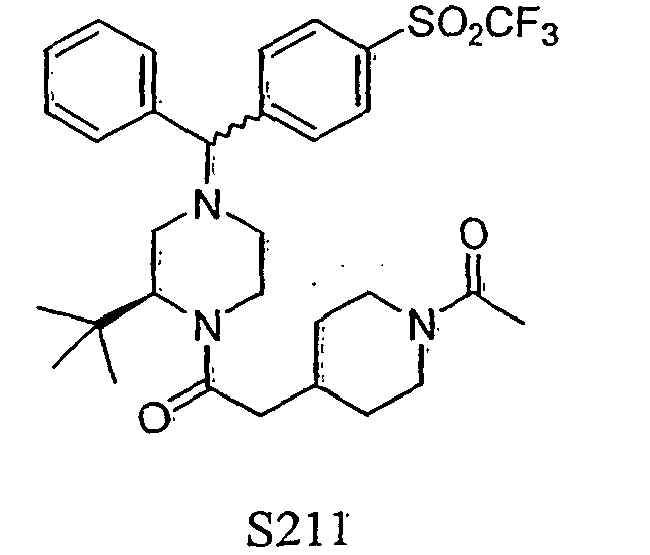


- Preferred are compounds represented by the following numbers from Table A above: S1-3, S5, S7-9, S11, S16, S18, S22, S26, S28, S30, S35, S37, S46, S48, S50, S52, S54-55, S57, S59, S61, S63, S65, S70, S85, S90, S92, S100-101, S105, S107-143, S145, S147-149, S156-164, S166, S168, S170, S172-175, S184, S186, and S204-240.
- More preferred are compounds represented by the following numbers from Table A above: S1, S8, S11, S26, S30, S37, S44, S46, S48, S50, S52, S54-55, S57, S59, S61, S63, S65, S70, S85, S90, S92, S101, S107-108, S116-118, S122, S126-131, S139, S141, S145, S147, S157-160, S168, S170, S172-175, and S219-229.
- Even more preferred, is a compound represented by the following numbes from Table A above: S1, S8, S11, S26, S30, S37, S48, S50, S54, S61, S65, S70, S85, S101, S107-108, S117, S126-128, S131, S157-160, S174-175, S219-220, and S225-228.
- Yet even more preferred compounds are represented by the following numbers in Table A above: S8, S48, S50, S54, S108, S160, S174, and S220.
- For compounds of the invention having at least one asymmetrical carbon atom, all isomers, including diastereomers, enantiomers and rotational isomers are contemplated as being part of this invention. The invention includes d and / isomers in both pure form and in admixture, including racemic mixtures. Isomers can be prepared using conventional techniques, or by separating isomers of a compound of formula I.
- Compounds of formula I can exist in unsolvated and solvated forms, including hydrated forms. In general, the solvated forms, with pharmaceutically acceptable solvents such as water, ethanol and the like, are equivalent to the unsolvated forms for purposes of this invention.
- A compound of formula I may form pharmaceutically acceptable salts with organic and inorganic acids or bases. Examples of suitable bases for salt formation include, but are not limited to, sodium hydroxide, lithium hydroxide, potassium hydroxide, and calcium hydroxide. Also contemplated are salts formed with pharmaceutically acceptable amines such as ammonia, alkyl amines, hydroxyalkylamines, N-methylglucamine and the like. Certain compounds will be acidic in nature, e.g. those compounds which possess a carboxyl or phenolic hydroxyl group. Salts of phenols can be made by heating acidic compounds with any of the above mentioned bases according to procedures well known to those skilled in the art. For purposes of the invention aluminum, gold and silver salts of the compounds are also contemplated. Examples of suitable acids for salt formation are hydrochloric, sulfuric, phosphoric, acetic, citric, malonic, salicylic, malic, fumaric, succinic, ascorbic, maleic, methanesulfonic and other mineral and carboxylic acids well known to those skilled in the art. The salts are prepared by contacting the free base forms with a sufficient amount of the desired acid to produce a salt in the conventional manner. The free base forms may be regenerated by treating the salt with a suitable dilute aqueous base solution, such as dilute aqueous sodium hydroxide; lithium hydroxide, potassium hydroxide, calcium hydroxide, potassium carbonate, ammonia or sodium bicarbonate.
- As described above, the invention provides the use of a compound of formula (I) in the manufacture of a medicine for treating proliferative diseases (cancer), including /treating (inhibiting) the abnormal growth of cells, including transformed cells, in a patient in need of such treatment (e.g., a mammal such as a human), by administering, concurrently or sequentially, an effective amount of a compound of this invention and an effective amount of a chemotherapeutic agent, biological agent, surgery (e.g. prostatectomy) and/or radiation (preferably γ-radiation). Abnormal growth of cells means cell growth independent of normal regulatory mechanisms (e.g., contact inhibition or apoptosis), including the abnormal growth of: (1) tumor cells (tumors) expressing an activated ras oncogene; (2), tumor cells in which the ras protein is activated as a result of oncogenic mutation in another gene; and (3) benign and malignant cells of other proliferative diseases.
- In preferred embodiments, the uses of the present invention include uses for treating or inhibiting tumor growth in a patient in need of such treatment (e.g., a mammal such as a human) by administering, concurrently or sequentially, (1) an effective amount of a compound of this invention and (2) an effective amount of an antineoplastic/microtubule agent; biological agent, and/or surgery (e.g. prostatectomy) and/or radiation therapy. Examples of tumors which may be treated include, but are not limited to, epithelial cancers, e.g., prostate cancer, lung cancer (e.g., lung adenocarcinoma), pancreatic cancers (e.g., pancreatic carcinoma such as, for example, exocrine pancreatic carcinoma), breast cancers, renal cancers, colon cancers (e.g., colorectal carcinomas, such as, for example, colon adenocarcinoma and colon adenoma), ovarian cancer, and bladder carcinoma. Other cancers that can be treated include melanoma, myeloid leukemias (for example, acute myelogenous leukemia), sarcomas, thyroid follicular cancer, and myelodysplastic syndrome.
- To prepare human recombinant type 3 17β-hydroxysteroid dehydrogenase enzyme (17β-HSD3), HEK-293 cells stably transfected with human 17β-HSD type 3 were cultured to confluency and harvested for enzyme. The cells were suspended in isolation buffer (20 mM KH2PO4, 1 mM EDTA, 0.25 M Sucrose, 1 mM PMSF, 5 µg/ml pepstatin A, 5 µg/ml antipain and 5 µg/ml leupeptin) to a concentration between 5.0 x 10⁶ and 1.0 x 10⁷ cells/ml. The cells were sonicated on ice using a micro-ultrasonic cell disrupter at an output setting of No. 40 for four 10 second bursts. The broken cells were then centrifuged at 100,000 x g for 60 min at 4°C, and the resulting pellet was resuspended, aliquoted into microfuge tubes, and stored at -80°C.
- To measure conversion of 14C-androstenedione to 14C-testosterone, which occurs primarily through the enzymatic action of 17β-HSD3, reaction buffer (12.5 mM KH2PO4, 1 mM EDTA), NADPH cofactor (1 mM final), test compound, 17β-HSD3 enzyme (30µg protein) and 14C-androstenedione substrate (100 nM; 2.7 nCi/tube) were added to 13 x 100 borosilicate glass tubes to a total volume of 0.5 mL/tube. The tubes were placed in a prewarmed 37°C water bath for 30 minutes. The reaction was then stopped by adding 1 ml of ethyl ether. The tubes were centrifuged for 20 minutes at 3000 rpm at 4°C in a table top centrifuge and then snap frozen in a dry ice-methanol bath. The ether layer was decanted into another glass tube, and then evaporated to dryness using compressed nitrogen gas. The samples were resuspended in chloroform (20 mL) and spotted onto silica G60 thin layer chromatography plates. 14C-Androstenedione substrate and 14C-testosterone product were separated by placing the plates in chloroform:ethyl acetate (3:1). The plates were dried, exposed overnight, scanned and quantitated on a FUJI FLA2000 phosphorimager.
- The percent inhibition of 17β-HSD3 activity is the difference between the percent of maximum specific binding ("MSB") and 100%. The percent of MSB is defined by the following equation, wherein "dpm" represents "disintegrations per minute":

- The concentration at which a compound having formula I produces 50% inhibition of binding is then used to determine an inhibition constant ("Ki") using the Chang-Prusoff equation.
- It will be recognized that the compounds having formula I can inhibit 17β-HSD3 to varying degrees. The compounds useful for practice of the invention exhibit potent affinities to bind 17β-HSD3 as measured by Ki values (in nM). The activities (potencies) for these compounds are determined by measuring their Ki values. The smaller the Ki value, the more active is a compound for inhibiting a particular NK enzyme.
- Compounds of this invention have a range of 17B-Hydroxysteroid dehydrogenase Type 3 binding activity from about 0.005 nM to about> 100 nM. Preferably, compounds of this invention have a binding activity in the range of about 0.005 nM to 100 nM, more preferably about 0.005 to 50 nM, and even more preferably about 0.005 nM to 10 nM. Yet even more preferred compounds have a binding activity in the range of about 0.005 nM to 0.050 nM.
- For preparing pharmaceutical compositions from the compounds described by this invention, inert, pharmaceutically acceptable carriers can be either solid or liquid. Solid form preparations include powders, tablets, dispersible granules, capsules, cachets and suppositories. The powders and tablets may be comprised of from about 5 to about 95 percent active ingredient. Suitable solid carriers are known in the art, e.g., magnesium carbonate, magnesium stearate, talc, sugar or lactose. Tablets, powders, cachets and capsules can be used as solid dosage forms suitable for oral administration. Examples of pharmaceutically acceptable carriers and methods of manufacture for various compositions may be found in A. Gennaro (ed.), Remington's Pharmaceutical Sciences, 18th Edition, (1990), Mack Publishing Co., Easton, Pennsylvania.
- Liquid form preparations include solutions, suspensions and emulsions. As an example may be mentioned water or water-propyfene glycol solutions for parenteral injection or addition of sweeteners and opacifiers for oral solutions, suspensions and emulsions. Liquid form preparations may also include solutions for intranasal administration.
- Aerosol preparations suitable for inhalation may include solutions and solids in powder form, which may be in combination with a pharmaceutically acceptable carrier, such as an inert compressed gas, e.g. nitrogen.
- Also included are solid form preparations which are intended to be converted, shortly before use, to liquid form preparations for either oral or parenteral administration. Such liquid forms include solutions, suspensions and emulsions.
- The compounds of the invention may also be deliverable transdermally. The transdermal composition can take the form of creams, lotions, aerosols and/or emulsions and can be included in a transdermal patch of the matrix or reservoir type as are conventional in the art for this purpose.
- Preferably, the compound is administered orally.
- Preferably, the pharmaceutical preparation is in a unit dosage form. In such form, the preparation is subdivided into suitably sized unit doses containing appropriate quantities of the active component, e.g., an effective amount to achieve the desired purpose.
- The quantity of active compound in a unit dose of preparation may be varied or adjusted from about 0.01 mg to about 1000 mg, preferably from about 0.01 mg to about 750 mg, more preferably from about 0.01 mg to about 500 mg, and most preferably from about 0.01 mg to about 250 mg, according to the particular application.
- The actual dosage employed may be varied depending upon the requirements of the patient and the severity of the condition being treated. Determination of the proper dosage regimen for a particular situation is within the skill of the art. For convenience, the total dosage may be divided and administered in portions during the day as required.
- The amount and frequency of administration of the compounds of formula (I) will be regulated according to the judgment of the attending clinician (physician) considering such factors as age, condition and size of the patient as well as severity of the disease being treated. A dosage regimen of the compound of formula (I) can be oral administration of from 10 mg to 2000 mg/day, preferably 10 to 1000 mg/day, more preferably 50 to 600 mg/day, in two to four (preferably two) divided doses. Intermittant therapy (e.g., one week out of three weeks or three out of four weeks) may also be used.
- The chemotherapeutic agent and/or radiation therapy can be administered in association with the compounds of the present invention according to the dosage and administration schedule listed in the product information sheet of the approved agents, in the Physicians Desk Reference (PDR) as well as therapeutic protocols well known in the art. Table 1.0 below gives ranges of dosage and dosage regimens of some exemplary chemotherapeutic agents useful in the methods of the present invention. It will be apparent to those skilled in the art that the administration of the chemotherapeutic agent and/or radiation therapy can be varied depending on the disease being treated and the known effects of the chemotherapeutic agent and/or radiation therapy on that disease. Also, in accordance with the knowledge of the skilled clinician, the therapeutic protocols (e.g., dosage amounts and times of administration) can be varied in view of the observed effects of the administered chemotherapeutic agents (i.e., antineoplastic agent or radiation) on the patient, and in view of the observed responses of the disease to the administered therapeutic agents.
TABLE 1.0 Exemplary Chemotherapeutic Agents Dosage and Dosage Regimens Cisplatin: 50 - 100 mg/m2 every 4 weeks (IV)* Carboplatin: 300 - 360 mg/m2 every 4 weeks (IV) Taxotere: 60 - 100 mg/m2 every 3 weeks (IV) Gemcitabine: 750 - 1350 mg/m2 every 3 weeks (IV) Taxol: 65 - 175 mg/m2 every 3 weeks (IV) *(IV)-intravenously - Anti-androgenic agents, anti-benign prostatic hyperplasia agents, potassium channel agonists and biological agents can be administered in association with the compounds of the present invention according to the dosage and administration schedule listed in the product information sheet of the approved agents, in the Physicians Desk Reference (PDR), as well as therapeutic protocols well known in the art. It will be apparent to those skilled in the art that the administration of the agents can be varied depending on the disease being treated and the known effects of the agents on that disease. Also, in accordance with the knowledge of the skilled clinician, the therapeutic protocols (e.g., dosage amounts and times of administration) can be varied in view of the observed effects of the administered agents on the patient, and in view of the observed responses of the disease to the administered therapeutic agents.
- Compounds of formula (I) may be produced by processes known to those skilled in the art in the following reaction schemes and in the preparations and examples below.
- The compounds of this invention can be prepared as illustrated by the representative examples below.


- As shown in Scheme 1, the piperazine-piperidine core may be added to an appropriate chloride. Deprotection and acylation gives the desired product.

- Alternatively, for those more sterically encumbered piperazines, direct coupling is successful in giving the regiochemically desired product, as shown in Scheme 2 above.


- The regiochemical analogs can be prepared through the sequential modification of protecting groups as shown in Scheme 3 above.

- The synthesis of desired chlorides can be accomplished by the addition of an appropriate organometallic to an appropriate aldehyde (see Scheme 4 above). The resulting alcohol is then converted to the requisite chloride under standard conditions.

- The substituted piperazines can be prepared through the reduction of commercially available diketopiperazines, or alternatively from the desired amino acids, as shown in Scheme 5 above.

- The N-BOC or N-acyl piperidine acetic acid can be prepared as described previously through the reduction of 4-pyridine acetic acid (see Scheme 6 above).
- The invention disclosed herein is exemplified by the following preparations and examples, which should not be construed to limit the scope of the disclosure. Alternative mechanistic pathways and analogous structures may be apparent to those skilled in the art.
-

- To a solution of DCC (43.2 mL, 1.0 M in CH2Cl2, 1.0 eq.) in CH2Cl2 (200 mL) at 0 °C was added N-t-BOC-L-leucine (10 g, 43.2 mmol). To the resulting slurry was added ethyl N-benzylglycinate (8.1 mL, 1.0 eq.) over 15 minutes. The resulting solution was stirred at 0 °C for 2 hours and room temperature 1 hour, filtered and the concentrated to give an oil (20.7g, LCMS: MH+ = 407). The intermediate was dissolved in CH2Cl2 (150 mL) through which HCl (g) was bubbled for 4 hours. The solution was purged with N2 and concentrated under reduced pressure. The residue was neutralized with saturated NaHCO3 and extracted with EtOAc (3 x 200 mL). The combined organics were washed with water, dried over Na2SO4, filtered and concentrated to give a solid which was used without further purification (11.3 g, 100 % yield). LCMS: MH+ = 261.
- By essentially the same procedure set forth in Preparative Example 1, using the appropriate amino acids listed in Column 2 of Table 1 below, the compounds listed in Column 3 of Table 1 (CMPD), were prepared.
TABLE 1 Prep. Ex. Column 2 Column 3 CMPD 2 
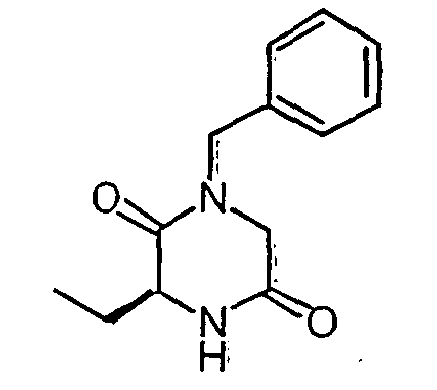
LCMS: MH+ = 233 3 

LCMS: MH+ = 261 4 
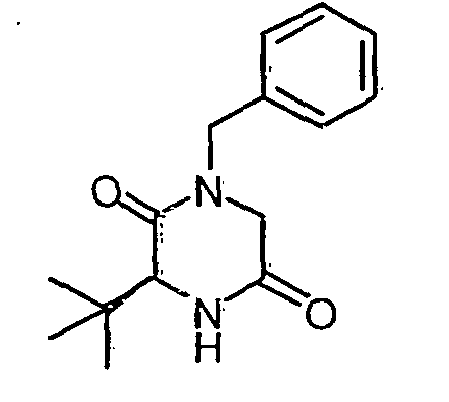
LCMS: MH+ = 261 5 

LCMS: MH+ = 249 5.10 

LCMS: MH+=281 -

- To a solution of (S)-3-isopropyl-2,5-piperazinedione (5.0 g, 32 mmol) in THF (100 mL) at 0°C was added LAH (137 mL, 1.0 M in THF, 4.3 eq.) dropwise. After the addition was complete, the resulting solution was heated to reflux overnight. The reaction mixture was cooled to room temperature and quenched by the slow, sequential addition of water (5.23 mL), 1N NaOH (5.23 mL), and water (5.23 mL). The resulting slurry was diluted with EtOAc and filtered through a plug of Celite. The residue was washed with EtOAc (4 X 100 mL) and the combined organics concentrated under reduced pressure. The crude product was purified by flash chromatography using a gradient of 5% MeOH, 10% MeOH, 5% (10% NH4OH) in MeOH, 10% (10% NH4OH) in MeOH, and 20% (10% NH4OH) in MeOH in CH2Cl2 to give a solid (3.03 g, 74% yield). LCMS: MH+ = 129.
- By essentially the same procedure set forth in Preparative Example 6, using the appropriate piperazinediones listed in Column 2 of Table 2 below, the compounds listed in Column 3 of Table 2 (CMPD) were prepared.
TABLE 2 Prep. Ex. Column 2 Column 3 CMPD 7 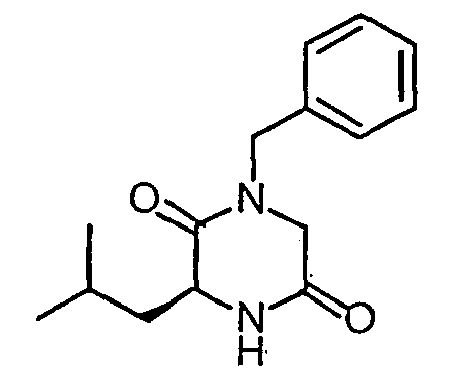

LCMS: MH+ = 233 8 

LCMS: MH+ = 205 9 

LCMS: MH+ = 233 10 

LCMS: MH+ = 233 11 

LCMS: MH+ = 221 12 

FABMS: MH+ = 235 13 

LCMS: MH+ = 143 13.1 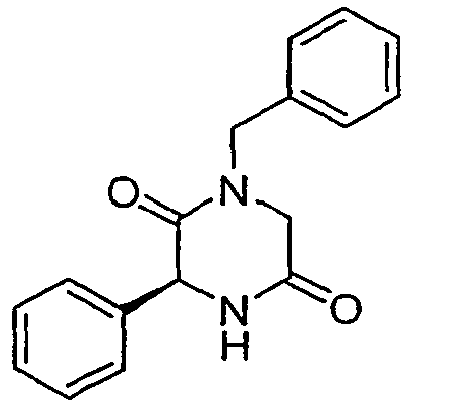
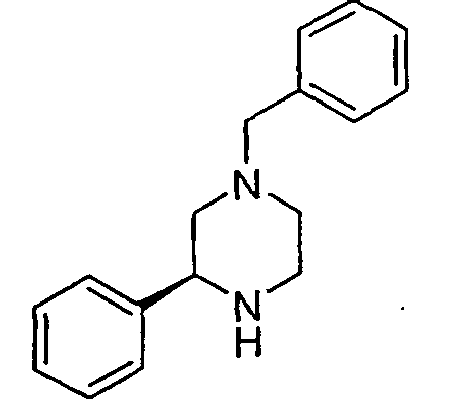
LCMS: MH+=253 -

- To a solution of the product from Preparative Example 9 (8.2g, 31.5 mmol) in CH2Cl2 (300 mL) was added (BOC)2O (7.5 g, 1.02 eq.). The resulting solution was stirred at room temperature overnight. The reaction was quenched by the addition of saturated NaHCO3 and separated. The organic layer was washed with brine,dried over Na2SO4, filtered, and concentrated under reduced pressure. The crude product was purified by flash chromatography using a 10% EtOAc in hexanes solution as eluent (10.6 g, 99% yield). LCMS: MH+ = 333.
- By essentially the same procedure set forth in Preparative Example 14, using the appropriate compound from Preparative Example 8 and Preparative Example 12 listed in Column 2 of Table 3 below, the compounds listed in Column 3 of Table 3 were prepared:
TABLE 3 Prep. Ex. Column 2 Column 3 CMPD 15 

LCMS: MH+ = 305 16 

LCMS: MH+ = 335 -

- To a solution of piperidine-4-acetic acid (10.0 g, 70.0 mmol) in EtOH (100 mL) was added concentrated HCl (2.68 mL, 2.2 eq.). The resulting solution was heated at reflux for 12 hours. The reaction mixture was concentrated under reduced pressure and used without further purification (10 g, 84% yield).
-

- To a solution of the product from Preparative Example 17, Step A (2.0 g, 9.6 mmol) in CH2Cl2 (30 mL) at 0 °C was added TMSNCO (6.3 mL, 5.0 eq.) followed by TEA (2.0 mL, 1.5 eq.). The resulting solution was stirred at 0°C for 3 hours and quenched by the addition water and diluted with saturated NaHCO3. The mixture was extracted with CH2Cl2 and the combined organics dried over Na2SO4, filtered, and concentrated. The crude product was purified by flash chromatography using an 8:92 (10%)NH4OH in MeOH:CH2Cl2 solution as eluent (1.2 g, 60% yield). FABMS: MH+ = 215.
-

- A solution of the product from Preparative Example 17, Step B (1.23 g, 5.7 mmol) and LiOH (0.33g, 2.4 eq.) in CH2Cl2 (29 mL), EtOH (29 mL) and water (14 mL) was heated at reflux 3 hours. The resulting solution was cooled to room temperature, neutralized by the addition of 1N HCl (16.1 mL, 2.98 eq.) and concentrated under reduced pressure. The reaction product was further dried by the azeotropic removal of water with toluene to yield a gum (1.1 g, quantitative yield). FABMS: MH+ = 187.
-

- To a solution of the product from Preparative Example 17, Step A (2.5 g, 12.0 mmol) and 5-chlorodibenzosuberane (3.4 g, 1.2 eq.) in CH2Cl2 (50 mL) was added TEA (8.4 mL, 5.0 eq.) and the resulting solution stirred overnight. The reaction mixture was quenched by the addition of 1 N NaOH and extracted with CH2Cl2. The combined organics were dried over Na2SO4, filtered and concentrated. The crude product was purified by flash chromatography using a 50 : 50 EtOAc : hexanes mix as eluent (3.45 g, 79% yield).
-

- A solution of the product from Preparative Example 18, Step A (3.45 g, 9.5 mL) was heated to reflux in MeOH (100 mL) and 1 N NaOH (30 mL, 3 eq.) for 4 hours. The reaction mixture was cooled to room temperature, concentrated under reduced pressure and extracted with Et2O. The aqueous layer was cooled at ~4 °C to effect crystallization. The resulting slurry was filtered and dried in vacuo to yield colorless crystals (1.9 g, 59% yield). FABMS: MH+ = 336.
-
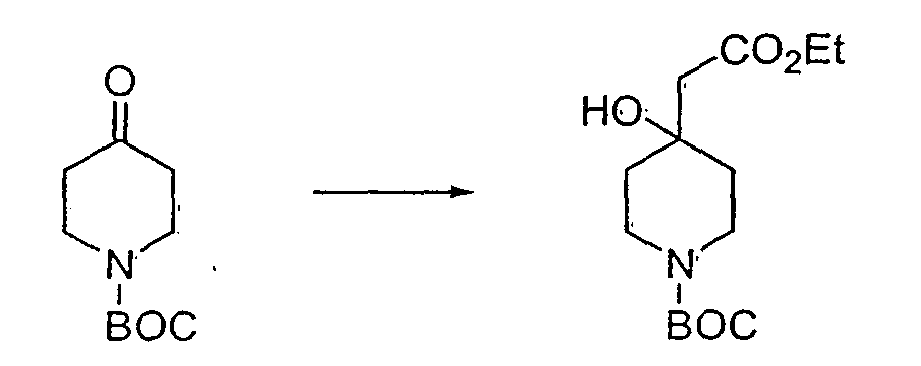
- EtOAc (5.68 mmol, 1.0 eq) was added to LDA (3.97 mL, 1.4 eq, 2.0 M in THF/heptane) at -78°C. The resulting solution was stirred 20 minutes before adding N-BOC-4-piperidone (1.13 g, 1.0 eq.) in THF (10 mL). The reaction mixture was warmed slowly to room temperature, stirred 2 hours and quenched by the addition of saturated NH4Cl. The resulting solution was diluted with H2O and extracted with EtOAC. The combined organics were washed with H2O and saturated NaCl, dried over Na2SO4, filtered, and concentrated under reduced pressure. The crude product was purified by flash chromatography using a 50 : 50 EtOAc mix as eluent (1.0 g, 61 % yield). LCMS: MH+=288.
-

- The compound prepared in Preparative Example 18.10 (0.24 g, 0.84 mmol) was stirred at room temperature in MeOH (3 mL) and NaOH (3 mL) overnight. The reaction mixture was concentrated under reduced pressure, diliuted with H2O, and extracted with EtOAc. The aqueous layer was neutralized with 5% citric acid and extracted with EtOAc. The combined organics were washed with H2O, saturated NaCl, dried over Na2SO4, filtered and concentrated. The crude compound was used without further purification (0.17 g, 77% yield).
-

- To a solution of N-Boc-4-piperidine acetic acid (described in US Pat. No. 5,874,442) (10.0 g, 41.1 mmol) and TEA (5.7 mL, 1.0 eq.) in toluene (50 mL) at 0 °C was added trimethylacetyl chloride (5.1 mL, 1.0 eq.). The resulting slurry was stirred at 0 °C for 1.5 hours before adding the product from Preparative Example 10 (10.0 g, 43 mmol, 1.05 eq.) in toluene (20 mL) and the resulting solution was warmed to room temperature and stirred overnight. The reaction mixture was neutralized by the addition of 1 N NaOH and extracted with EtOAc. The combined organics were dried over Na2SO4, filtered, and concentrated. The crude product was purified by flash chromatography using a 50 : 50 EtOAc : hexanes solution as eluent (11. 1g, 59% yield). LCMS: MH+ = 458.
-

- By essentially the same procedure set forth in Preparative Example 19, the above compound was prepared.
-

- By essentially the same procedure set forth in Preparative Example 19, using the product from Preparative Example 11 (0.49 g, 2.0 mmol), the above compound was prepared (0.85 g, 46% yield). LCMS: MH+ = 446.
-

- To a solution of 2(S)-methyl-4-t-butoxycarbonylpiperazine (0.22 g, 1.1 mmol) and the product from Preparative Example 18, Step B (0.44 g, 1.2 eq.) in CH2Cl2 (10 mL) was added HOBt (0.19 g, 1.3 eq.), NMM (0.30 mL, 2.5 eq.) and DEC (0.27 g, 1.3 eq.) and the resulting solution stirred at room temperature overnight. The reaction mixture was quenched by the addition of saturated NaHCO3 and extracted with CH2Cl2, dried over Na2SO4, filtered, and concentrated under reduced pressure. The crude product was purified by flash chromatography using a 2% MeOH in CH2Cl2 solution as eluent (0.54 g, 95% yield). FABMS: MH+ = 518.
-
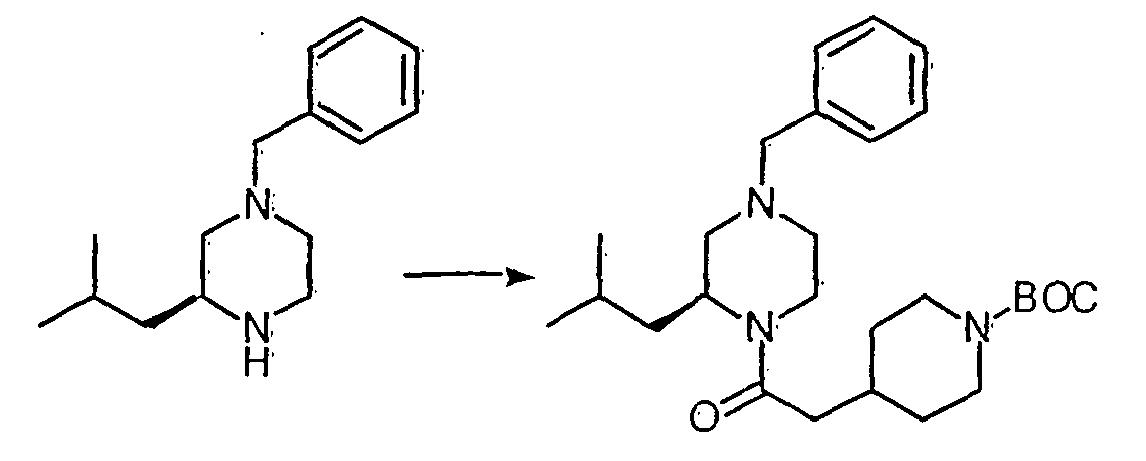
- By essentially the same procedure set forth in Preparative Example 21, using the product from Preparative Example 7 and N-Boc-piperidine acetic acid, the above compound was prepared. LCMS: MH+ = 458.
-

- A solution of the product from Preparative Example 14 (10.4 g, 31.3 mmol) and 10% Pd/C (1.95 g) in EtOH (130 mL) was hydrogenated on a Parr apparatus at 50 psi overnight. The reaction mixture was filtered through Celite and the filtrate concentrated in vacuo to give the product as an oil (6.93g, 91 % yield) which was used without further purification. LCMS: MH+ = 243.
- By essentially the same procedure set forth in Preparative Example 23, using the appropriate compounds from Preparative Examples 15, 16, 19, 19.1, 20, and 22 listed in Column 2 of Table 4, the compounds listed in Column 3 of Table 4 (CMPD) were prepared.
TABLE 4 Prep. Ex. Column 2 Column 3 CMPD 24 

LCMS: MH+ = 305 25 
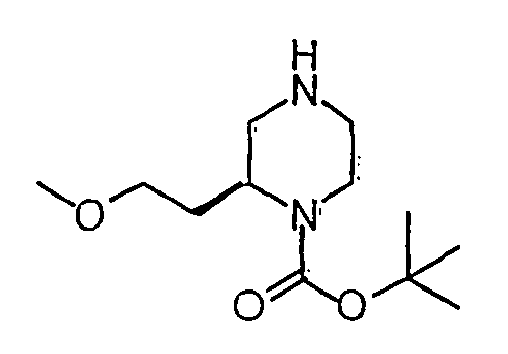
LCMS: MH+ = 245 26 

LCMS: MH+ = 368 27 
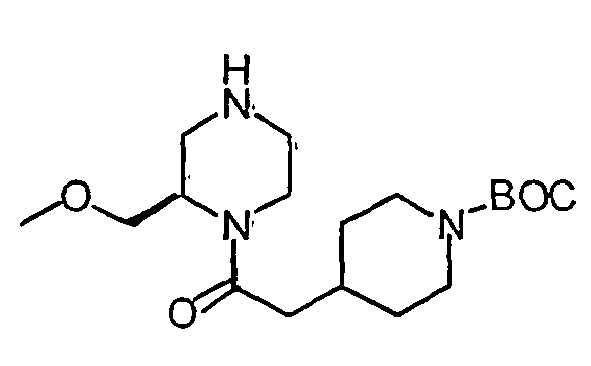
LCMS: MH+ = 356 28 

LCMS: MH+ = 368 28.10 

LCMS: MH+= -
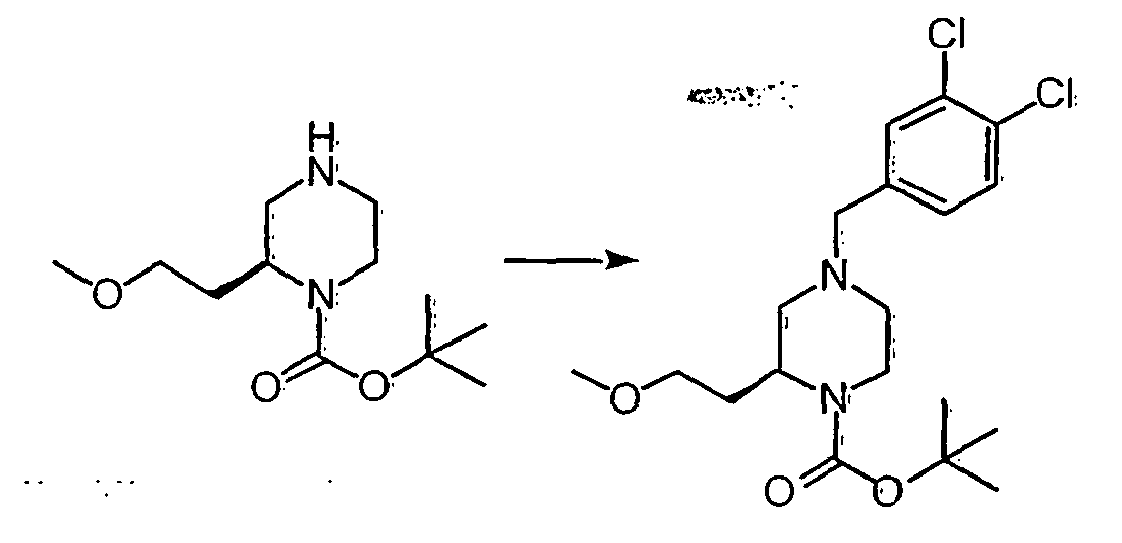
- To a solution of the product from Preparative Example 25 (0.25 g, 1.0 mmol) and 3, 4-dichlorobenzaldehyde (0.23 g, 1.3 eq.) in CH2Cl2 (5 mL) was added NaHB(OAc)3 (0.32 g, 1.5 eq.) and AcOH (0.14 mL, 2.4 eq.) and the resulting solution was stirred at room temperature 96 hours. The reaction mixture was quenched by the addition of saturated NaHCO3 and extracted with CH2Cl2. The combined organics were dried over Na2SO4, filtered and concentrated under reduced pressure. The crude product was purified by flash chromatography using a 10% EtOAc in CH2Cl2 solution as eluent (0.27 g, 66% yield). FABMS: MH+=403.
-

- By essentially the same procedure set forth in Preparative Example 29, using the product from Preparative Example 26, the above compound was prepared (0.33 g, 92% yield). LCMS: MH+ = 526.
-
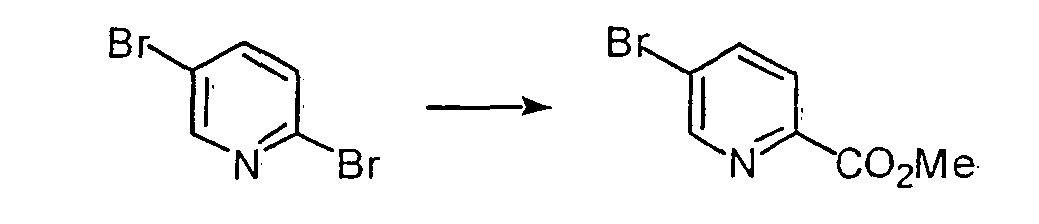
- A solution of 2, 5-dibromopyridine (10 g, 42.2 mmol), TEA (11.6 mL, 2.0 eq.), 1, 1-bis(diphenylphosphino)ferrocene (1.4 g, 6 mol%), and Pd(OAc)2 (0.28 g, 3 mol%) in MeOH (40 mL) and DMF (40 mL) was stirred under CO (40 psi) at 50 °C for 6 hours. The reaction mixture was cooled to room temperature, diluted with water, and extracted with EtOAc. The combined organics were dried over Na2SO4, filtered, and concentrated under reduced pressure. The crude product was purified by flash chromatography using a 50 : 50 EtOAc : hexanes mix as eluent to give the desired product (5.6 g, 61 % yield) and the bis-carbonylated product (1.0g). LCMS: MH+ = 216.
-

- To a solution of the product from Preparative Example 31 (1.0 g, 4.6 mmol) in CH2Cl2 (15 mL) was added DIBAL-H (10.2 mL, 1 M in toluene, 2.2 eq.) at -5 °C. The resulting solution was stirred 15 minutes before quenching with saturated Na2SO4. The residue was extracted with CH2Cl2 and the combined organics dried over Na2SO4, filtered, and concentrated under reduced pressure. The crude product was purified by flash chromatography using a 50 : 50 EtOAc : hexanes solution as eluent (0.55 g, 64% yield). LCMS: MH+ = 186.
-

- To a solution of 1-chloro-4-iodobenzene (1.07 g, 1.4 eq.) in THF (10 mL) at -40 °C was added isopropylmagnesium chloride (2.3 mL, 2.0 M in THF, 1.4 eq.) dropwise. The resulting solution was stirred at -40 °C for 2 hours before adding the product from Preparative Example 32 (0.56 g, 3.2 mmol) in THF (10 mL). The reaction mixture was warmed to room temperature and stirred 3 hours. The resulting solution was quenched by the addition of saturated NH4Cl an extracted with EtOAc. The combined organics were washed with water, brine, dried over Na2SO4, filtered, and concentrated under reduced pressure. The crude product was purified by flash chromatography using a 20% EtOAc in hexanes solution as eluent to give an oil (0.3 g, 34% yield). LCMS: MH+ = 299.
- By essentially the same procedure set forth in Preparative Example 33, using the aryl halides in Column 3 and the arylaldehydes in Column 2, the products given in Column 4 of Table 4.1 below were prepared:
TABLE 4.1 Prep. Ex. Column 2 Column 3 Column 4 33.1 


33.2 


- By essentially the same procedure set forth in Preparative Example 33, using the aryl halides in Table 4.1, Column 2 and the arylaldehydes in Table 4.2, Column 3, the products in Table 4.1, Column 4 were prepared:
TABLE 4.2 Prep. Ex. Column 2 Column 3 Column 4 34 


35 


36 


37 
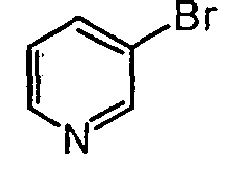

38 


39 


40 
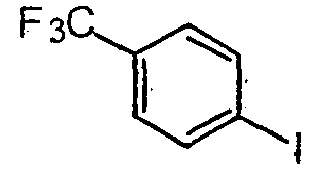

-

- 5-trifluoromethyl-2-furanecarboxylic acid ((500 mg, 2.78 mmol) was dissolved in anhydrous Et2O (3 mL) and LiAIH4 (1.0 M in Et2O, 2.2 mL, 2.2 mmol) was added' slowly. The mixture was refluxed for 2 hr, then stirred at rt 20 hr. 5 % aqueous KOH (0.15 mL) was added, the mixture was filtered, and the solvent was evaporated. 340 mg (74 %) of colorless oil was obtained.
- The oil (330 mg, 1.99 mmol) was dissolved in anhydrous 1,2-dichloroethane (10 mL), BaMnO4 (2.05 g, 8.0 mmol) was added, and the mixture was stirred and refluxed under N2 3 hr. CH2Cl2 (20 mL) was added, the mixture was filtered through Celite, and the solvent was evaporated. Crude product (110 mg) was directly used for the preparation of Preparative Example 41.6 below.
-

- 4-nitrobenzonitrile (2.96 g, 20 mmol) was mixed with (CH3)3CSNa (3.36 g, 30 mmol), anhydrous DMSO (40 mL) was added, and the mixture was stirred at rt for 20 hr. The mixture was poured into H2O (1 L) and extracted with Et2O (2 x 200 mL). The combined extracts were washed with H2O (3 x 300 mL),dried over Na2SO4, and filtered. The solvent was evaporated and the residue was purified by column chromatography on silicagel with CH2Cl2:hexane (1:1). White solid (2.38g, 62%) was obtained.
-

- 4-tert-butylthiobenzonitrile (960 mg, 5.0 mmol) was dissolved in anhydrous toluene (10 mL), the solution was cooled to 0°C, and DIBAL-H (20 % in toluene, 7.1 mL, 10 mmol) was added under N2. The mixture was stirred at 0°C for 2 hr, washed with 1 M HCl (2 x 100mL), brine (100 mL), and dried over Na2SO4. After the solvent had been evaporated, 850 mg of crude aldehyde (which was used directly for the preparation of Preparative Example 41.7) was obtained.
-

- To a solution of 4-trifluoromethoxybenzaldehyde (0.3 g, 1.6 mmol) in THF (3.0 mL) at -78 °C was added phenylmagnesium bromide (3.16 mL, 1 M in THF, 2.0 eq.) dropwise. The resulting solution was stirred at -78 °C for 1 hour and stored at -4 °C overnight. The reaction was quenched by the addition of saturated NH4Cl and extracted with CH2Cl2. The combined organics were dried over Na2SO4, filtered, and concentrated under reduced pressure. The crude product was purified by flash chromatography using a 10% EtOAc in hexanes solution as eluent (0.39 g, 93% yield).
- By essentially the same procedure set forth in Preparative Example 41, using the arylaldehydes in Column 2 of Table 4.3 and phenylmagnesium bromide, the products given in Column 3 of Table 4.3 were prepared:
Prep. Ex. Column 2 Column 3 41.1 

41.2 

41.3 

41.4 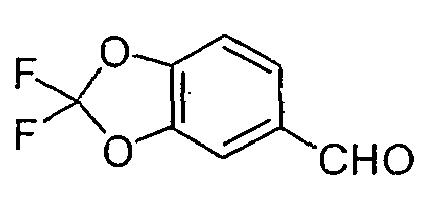

41.5 

41.6 

41.7 

41.8 

- By essentially the same procedure set forth in Preparative Example 41 only substituting the appropriate compound in column 2 of Table 4.4, the compounds found in column 3 of Table 4.4 were prepared:
TABLE 4.4 Prep. Ex. Column 2 Column 3 41.10 

41.12 

41.13 

41.14 
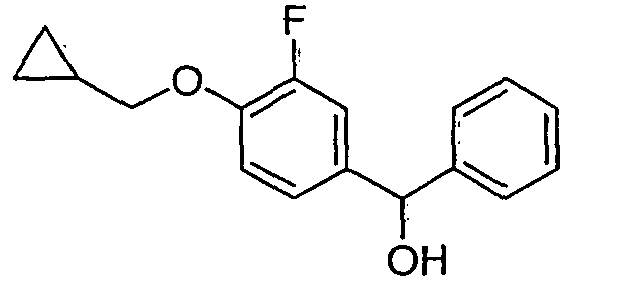
41.15 

41.16 

-

- By essentially the same procedure set forth in Preparative Example 41, using the 3-bromopyridine-2-carboxaldehyde prepared in Preparative Example 32, the above compound was prepared. LCMS: MH+= 264.
-

- n-BuLi (4.25 mL, 2.5 M in hexanes, 1,2 eq.) was added dropwise to 1-bromo-3, 4-dichlorobenzene (2.0 g, 8.9 mmol) in THF (20 mL) at -78 °C. The resulting orange solution was stirred 40 minutes before adding pyridine-2-carboxaldehyde (1.1. mL, 1.3 eq.) dropwise. The reaction mixture was stirred 2 hours at-78 °C and quenched by the addition of water. The resulting solution was extracted with CH2Cl2, dried over Na2SO4, filtered, and concentrated. The crude product was purified by flash chromatography using a 40% EtOAc solution in hexanes as eluent. This partially purified residue was repurified using a 3% MeOH in CH2Cl2 solution as eluent to give an oil (0.37g, 16% yield).
- By essentially the same procedure set forth in Preparative Example 43, using the aryl halides in Table 5, Column 2 and the arylaldehydes in Table 5, Column 3, the compounds in Table 5, Column 4 were prepared:
TABLE 5 Prep. Ex. Column 2 Column 3 Column 4 RR'CHOH 44 


45 


46 


47 


48 

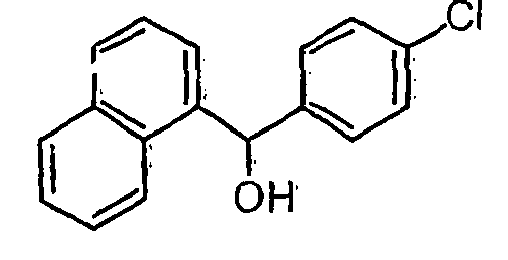
49 


50 


51 
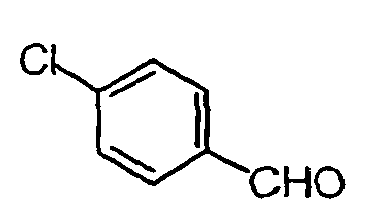

52 


53 


54 


54.1 


54.12 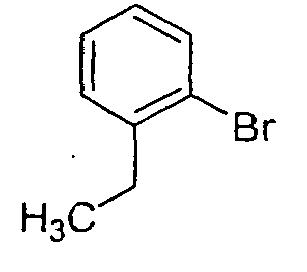
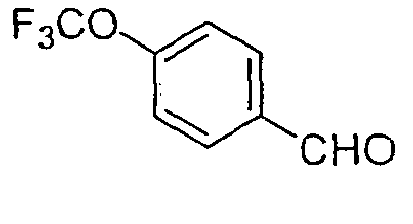

54.13 


54.14 


-

- Oxalyl chloride (0.27 mL, 1.2 eq.) was added dropwise to a solution of 2-trifluoromethyl-5-pyridinecarboxylic acid (0.50g, 2.62 mmol) and DMF (2 drops) in CH2Cl2 (20mL) and the resulting solution was heated to reflux. The reaction mixture was cooled and concentrated under reduced pressure. The residue was redissolved in CH2Cl2 (10 mL) and treated with diisopropylethylamine (0.7 mL, 2.3 eq.) and N, O-dimethylhydroxlamine (0.19g, 1.2 eq.). The resulting solution was stirred at room temperature 3 days, quenched by the addition of water (25 mL) and extracted with CH2Cl2. The combined organics were dried over Na2SO4, filtered, and concentrated under reduced pressure. The crude reaction was purified by flash chromatography using a 70 : 30 EtOAc : hexanes mix as eluent to give an oil (0.29 g, 70% yield). LCMS: MH+ = 235.
-

- Phenylmagnesium chloride (2.91 mL, 1.0 M in THF, 3.0 eq.) was added to the product from Preparative Example 55, Step A (0.23 g, 0.97 mmol) in THF (10 mL) at 0 °C. The resulting solution was warmed slowly to room temperature and stirred 6 hours. The reaction was quenched by the addition of water and extracted with CH2Cl2. The combined organics were dried over Na2SO4, filtered, and concentrated under reduced pressure. The crude product was purified by flash chromatography using a 50% EtOAc in hexanes solution as eluent (0.24 g, quantitative yield). LCMS; MH+ = 252.
-

- The product from Preparative Example 55, Step B (0.23 g, 0.93 mmol) in EtOH (3.0 mL) and toluene (3.0 mL) was stirred at room temperature with NaBH4 (0.053 g, 1.5 eq.) 5 hours. The resulting solution was quenched by the addition of water and extracted with EtOAc. The combined organics were dried over Na2SO4, filtered, and concentrated under reduced pressure. The crude product was purified by flash chromatography using a 30% EtOAc in hexanes solution as eluent (0.15 g, 66% yield). LCMS: MH+ = 254.
-

- To a solution of 4-hydroxybenzophenone (0.50g, 2.52 mmol) and K2CO3 (0.52g, 1.5 eq.) in DMF (6 mL) was added trifluromethansulfonic acid 2,2,2-trifluoroethyl ester and the resulting solution was heated to 50 °C for 2 hours. The reaction mixture was cooled to room temperature, diluted with EtOAc and water and extracted. The combined organics were dried over Na2SO4, filtered, and concentrated under reduced pressure. The crude product was purified by flash chromatography using an 80 : 20 hexanes : EtOAc mix as eluent (0.67g, 94% yield). LCMS: MH+=281.
-

- By essentially the same procedure set forth in Preparative Example 55, Step B only substituting 4-chlorophenylmagesium chloride, the above compound was prepared (% yield). LCMS: MH+=.
-

- A solution of 4-hydroxybenzophenone (1.0 g, 5.04 mmol), dimethylaminoethyl chloride hydrochloride (1.09 g, 1.5 eq.), and K2CO3 (3.48 g, 5.0 eq.) was heated at reflux 24 hours in acetone (50 mL). The resulting solution was cooled to room temperature and stirred an additional 32 hours. The reaction mixture was diluted with H2O and extracted with EtOAc. The combined organics were washed with 1 N HCl (3 x 25 mL) and the combined aqueous washings neutralized with 1 N NaOH and extracted with CH2Cl2. The combined organics were drie over Na2SO4, filtered and concentrated and used without further purification (1.36 g, 100% yield): LCMS MH+ = 270.
- By essentially the same procedure set forth in Preparative Example 55.11, only substituting the appropriate chloride in column 1 of Table 5.11, the title compounds in column 2 of Table 5.11 were prepared.
TABLE 5.11 Prep. Ex. Column 1 Column 2 55.12 

55.13 

55.14 
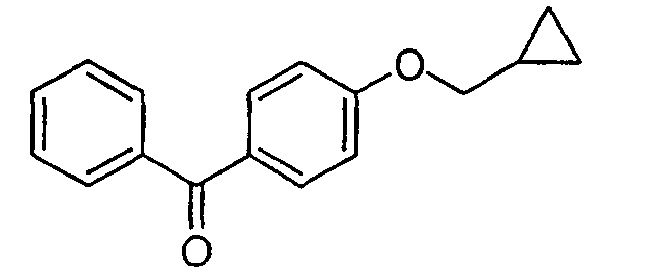
-

- A solution of 4-hydroxybenzophenone (1.0 g, 5.04 mmol), sodium chlorodifluoroacetate (0.77 g, 1.0 eq.), and NaOH (0.20 g, 1.0 eq.) in DMF (10 mL) and H2O (1.4 mL) was heated to 120-125 °C for 2.5 hours. The reaction mixture was cooled to room temperature, diluted with 1 N NaOH and extracted with EtOAc. The combined organics were washed with H2O, saturated NaCl, and dried over Na2SO4 and concentrated in vacuo. The crude product was purified by flash chromatography using a 15% EtOAc in hexanes solution as eluent (0.39 g, 31 % yield): LCMS MH+ = 249.
- By essentially the same procedure set forth in Preparative Example 15 only substituting the appropriate compounds in column 1 of Table 5.12, the compounds in column 2 of Table 5.12 were prepared.
TABLE 5.12 Prep. Ex. Column 1 Column 2 CMPD 55.16 

55.17 

LCMS: MH+=249 -

- A solution of 4-hydroxybenzophenone (2.0 g, 10.9 mmol), neopentyl bromide (3.05 g, 2 eq.), K2CO3 (2.79 g, 2.0 eq.), KI (2.85 g, 1.7 eq.), and Cul (38 mg, 2 mol %) in DMF (10 mL) was heated to 95°C for 48 hours. The reaction mixture was cooled to room temperature, diluted with saturated NaHCO3 (50 mL) and extracted with EtOAc (3 x 100 mL). The combined organics were washed with H2O and brine, dried over Na2SO4, filtered, and concentrated under reduced pressure. The crude product was purified by flash chromatography using a 30% EtOAc in hexanes solution as eluent (0.1 g, 4% yield).
-

- Trimethylacetyl chloride (0.75 mL, 1.2 eq.) was added to a solution of 4-aminobenzophenone (1.0 g, 5.07 mmol) and TEA (1.06 mL, 1.5 eq.) in CH2Cl2 (30 mL) at 0°C. The resulting solution was stirred 1.5 hours, warmed to room temperature and quenched by the addition of saturated NaHCO3. The resulting solution was extracted with CH2Cl2, the combined organics dried over Na2SO4, filtered and concentrated. The crude product was purified by flash chromatography using a 30% EtOAC in hexane solution as eluent (1.28 g, 90% yield). LCMS: MH+=282.
-

- By essentially the same procedure set forth in Preparative Example 55.19, only substituting trifluorosulfonic anhydride, the above compound was prepared.
-

- To a solution of the compound from Preparative Example 177 (0.25 g, 0.405 mmol) in THF (5 mL) at -78°C was added lithium hexamethyldisilazane (0.89 mL, 2.0M in hexanes, 2.2 eq.) dropwise. The resulting solution was stirred 5 minutes and Mel (0.2 mL, 8.0 eq.) was added. The resulting solution was warmed to room temperature and stirred overnight. The reaction mixture was diluted with H2O and extracted with CH2Cl2. The combined organics were dried over Na2SO4, filtered, and concetrated under reduced pressure. The crude product was purified by flash chromatography using a 75 : 25 hexanes : EtOAc solution as eluent (0.030 g, 12% yield). LCMS: MH+=632.
-

- By essentially the same procedure set forth in Preparative Example 55.1, only substituting 3-fluoro-4-hydroxybenzaldehyde, the above compound was prepared (0.70 g, 89% yield): LCMS MH+=223.
-

- By essentially the same procedure set forth in Preparative Example 55, Step C, using 4-chloro-4'-hydroxybenzophenone (2.0 g, 8.6 mmol) gave the above compound (0.77 g, 34% yield).
-

- By essentially the same procedure set forth in Preparative Example 55, Step C, using the product from Preparative Example 55.1, the above compound was prepared (0.63g, 97% yield) and used without further purification.
-

- 4-methylthiobenzhydrol (1.15 g, 5.0 mmol) was dissolved in acetic acid (25 mL) and H2O2 (35% in H2O, 5.0 mL) was added. The mixture was stirred at 40°C for 3 days and poured onto NaHCO3 (100 g). Water (800 mL) was added and the mixture was extracted with EtOAc (3 x 100 mL). The combined extracts were dried over Na2SO4, filtered, and the solvent was evaporated. The residue was purified by column chromatography on silica with CH2Cl2:EtOAc (5:1). White solid (1.21g, 92%) was obtained.
- 4-Trifluoromethylsulfonyl benzhydrol and 4-t-butylsulfonylbenzhydrol were prepared using a similar method to that described in Preparative Example 56.2.
- By essentially the same procedure set forth in Preparative Example 56, only substituting the appropriate compounds in Column 2 of Table 5.14, the compounds in Column 2 of Table 5.14 were prepared:
Table 5.14 Prep. Ex. Column 1 Column 2 56.10 

56.11 
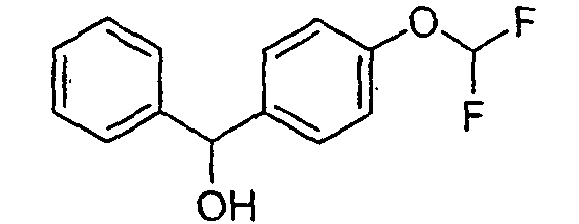
56.12 

56.13 
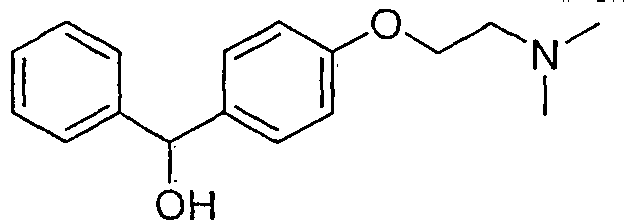
56.14 

56.15 

56.16 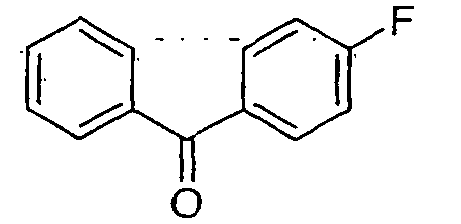

56.17 

56.18 

56.19 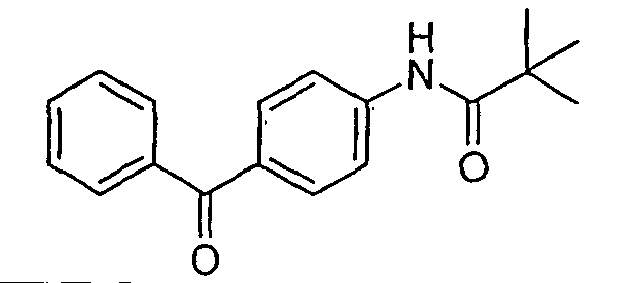

56.20 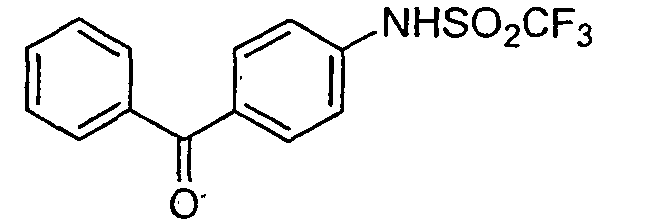

56.21 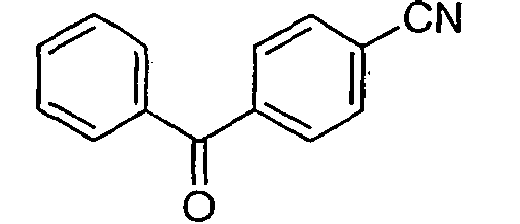

56.22 

56.23 

56.24 

-

- To a solution of 4,4'-dichlorobenzhydrol (1.0 g, 3.95 mmol) in toluene (10 mL) at 0 °C was added SOCl2 (0.52 mL, 1.7 eq.) dropwise. The resulting solution was stirred at 0 °C 1 hour and warmed to room temperature and stirred overnight. The crude reaction mixture was concentrated under reduced pressure to give the above compound which was used without further purification (1.02 g, 95% yield).
- By essentially the same procedure as set forth in Preparative Example 57, the compounds in Table 6, Column 3 were prepared from the corresponding alcohols in Table 6, Column 2:
TABLE 6 Prep. Ex. Column 2 Column 3 58 

59 

60 

61 

62 

63 

64 

65 

66 

67 

68 

69 

70 

71 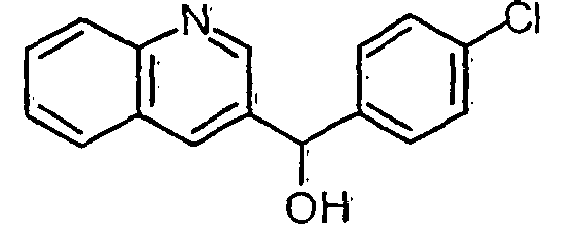

72 

73 

74 
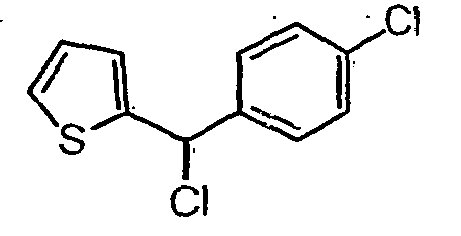
75 

76 

77 

78 

79 
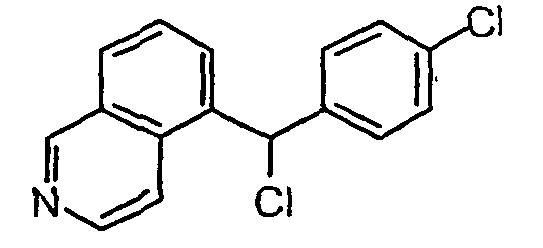
80 

81 

82 

82.1 

82.2 

82.3 

82.4 

82.5 

82.6 

82.7 

82.8 

82.9 
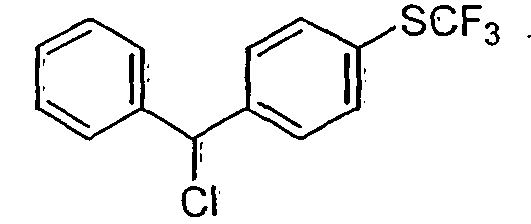
82.10 

82.11 

82.12 

82.30 

82.31 

82.32 

82.33 

82.34 

82.35 

82.36 

82.37 

82.38 

82.39 

82.40 

82.41 

82.42 

82.43 

-

- Ac2O (102 mg, 1.0 mmol) and TEA (303 mg, 3.0 mmol) were added under N2 to a stirred solution of bis(3-thienyl)methanol in anhydrous CH2Cl2 (5 mL). The mixture was stirred for 16 hrs, poured into saturated aqueous NaHCO3, and extracted with CH2Cl2 (3 x 10 mL). The extracts were dried over Na2SO4, filtered, and the solvent was evaporated. The residue was purified by flash chromatography using CH2Cl2 to give 70 mg (58 %) of a solid.
-

- By essentially the same procedure set forth in Preparative Example 83, using the bis(2-thienyl)methanol, the above compound was prepared.
-

- A solution of the product from Preparative Example 26 (0.35 g, 0.95 mmol), 4-chlorobenzhydryl chloride (0.27 mL, 1.2 eq.), K2CO3 (0.33 g, 2.5 eq.), and Kl (0.063 g, 40 mol %) in CH3CN (25 mL) was heated to reflux for 22 hours. The reaction mixture was cooled, diluted with water, and extracted with CH2Cl2. The combined organics were dried over Na2SO4, filtered, and concentrated. The crude product was purified by flash chromatography using a 60 : 40 hexanes : EtOAc mix as eluent (0.32 g, 59% yield). LCMS: MH+ = 568.
- By essentially the same procedure set forth in Preparative Example 85, using the amines listed in Column 2 and the chlorides listed in Column 3, of Table 7 below, the compounds in Table 7, Column 4 (CMPD) were prepared:
TABLE 7 Prep. Ex. Column 2 Column 3 Column 4 CMPD 86 


LCMS: MH+ = 312 87 


--- 88 


--- 89 

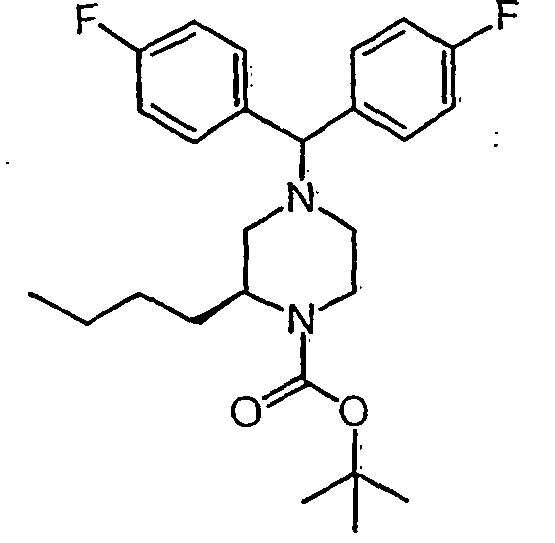
FAB MS: MH+ = 445 90 


LCMS: MH+ = 449 91 


FAB MS: MH+ = 479 92 


LCMS: MH+ = 569 93 


--- 94 


LCMS: MH+ = 618 95 


LCMS: MH+ = 602 96 


LCMS: MH+ = 602 97 


LCMS: MH+= 570 98 


LCMS: MH+ = 570 99 


LCMS: MH+ = 590 100 


LCMS: MH+ = 602 101 


LCMS: MH+ = 647 102 


LCMS: MH+ = 613 103 


LCMS: MH+ = 697 104 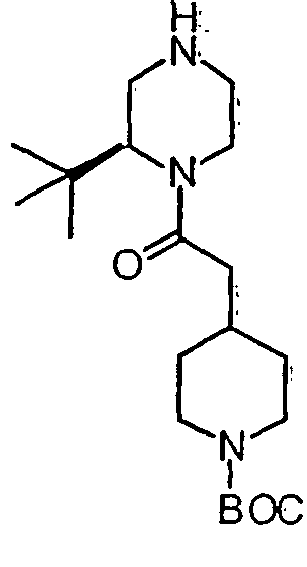


LCMS: MH+ = 681 105 

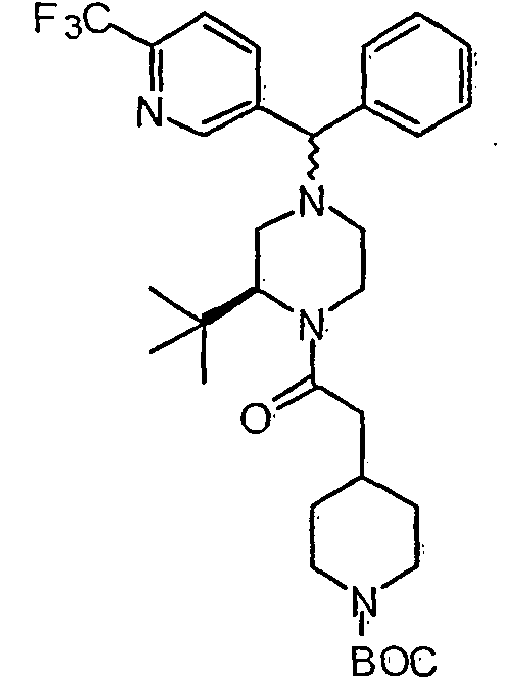
--- 105. 1 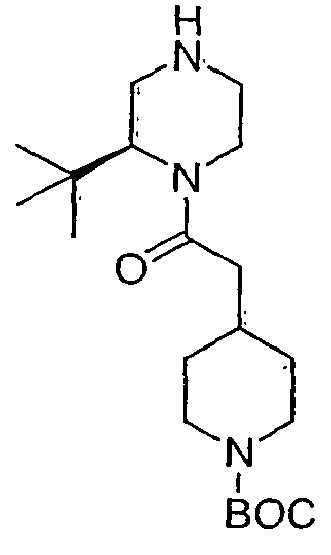


LCMS: MH+ = 702 105. 2 


LCMS: MH+ = 632 106 


LCMS: MH+ = 584 106. 1 
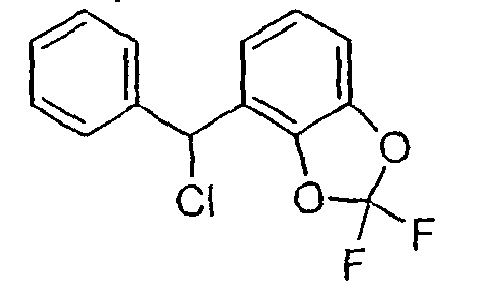
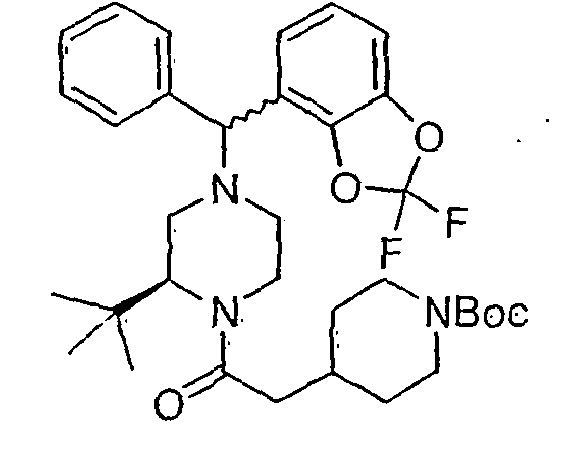
106. 2 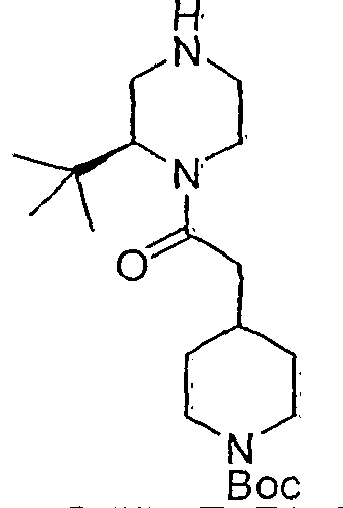

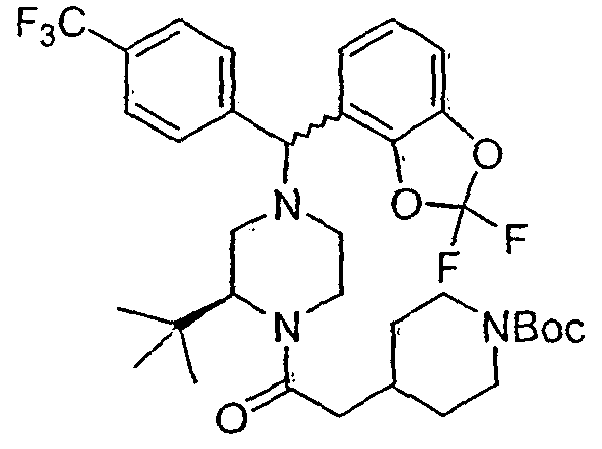
106. 3 


106. 4 


106. 5 


106. 6 


106. 7 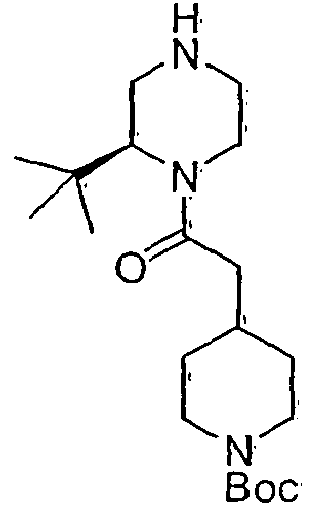


106. 8 


106. 9 


106. 10 


106. 11 


106. 12 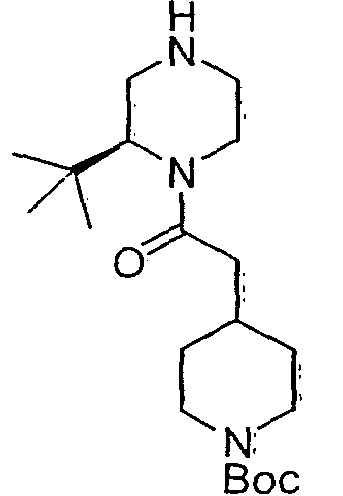


106. 13 


106. 14 


106. 15 


106. 16 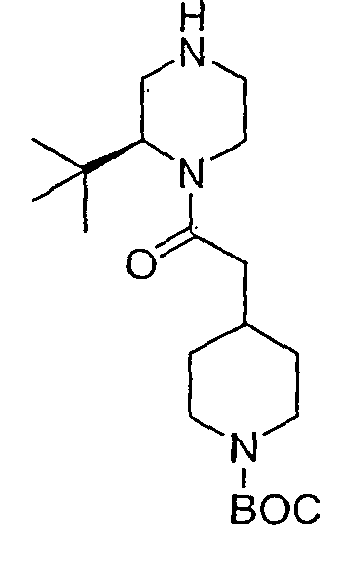


LCMS: MH+= 650 106. 17 


LCMS: MH+= 644 106. 18 


LCMS: MH+= 610 106. 19 


LCMS: MH+= 622 106. 20 


LCMS: MH+= 673 106. 21 


LCMS: MH+= 600 106. 22 


LCMS: MH+= 600 106. 23 


LCMS: MH+= 621 106. 24 


LCMS: MH+ = 661 106. 25 


LCMS: MH+= 636 106. 26 


LCMS: MH+= 552 106. 27 


LCMS: MH+= 620 106. 28 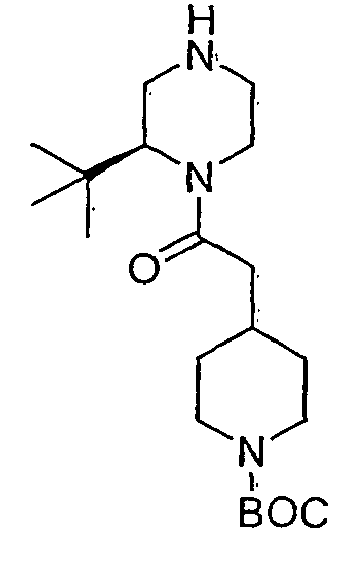

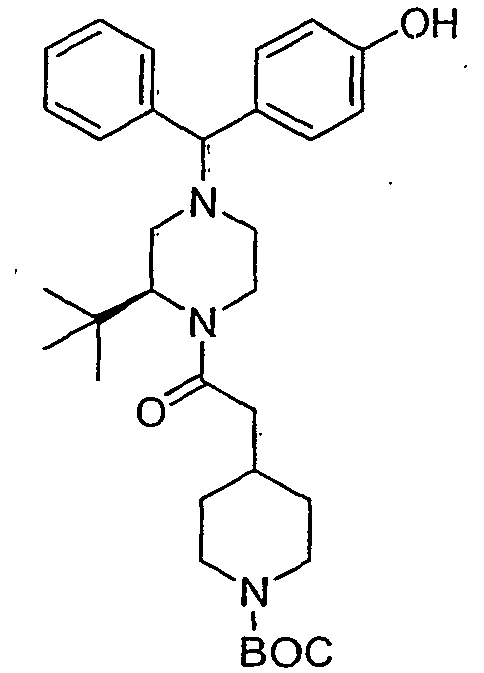
LCMS: MH+= 550 106. 28A 


LCMS: MH+= 633 106. 28B 

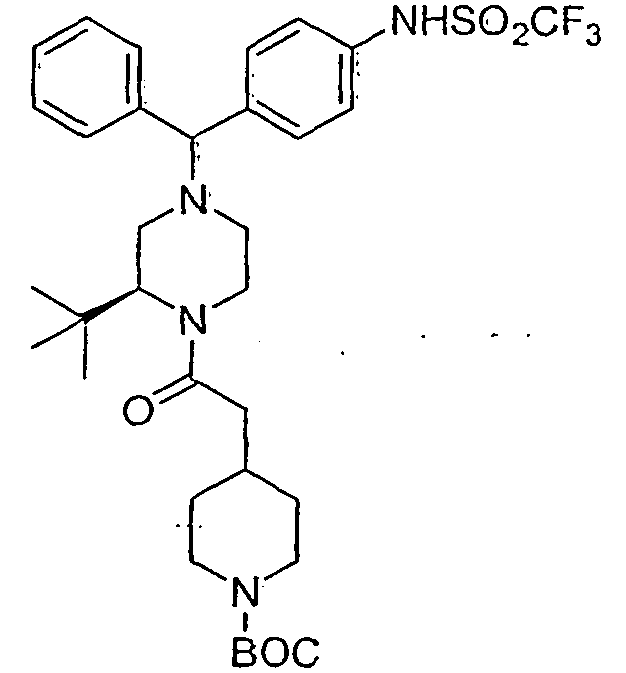
LCMS: MH+= 681 106. 28C 

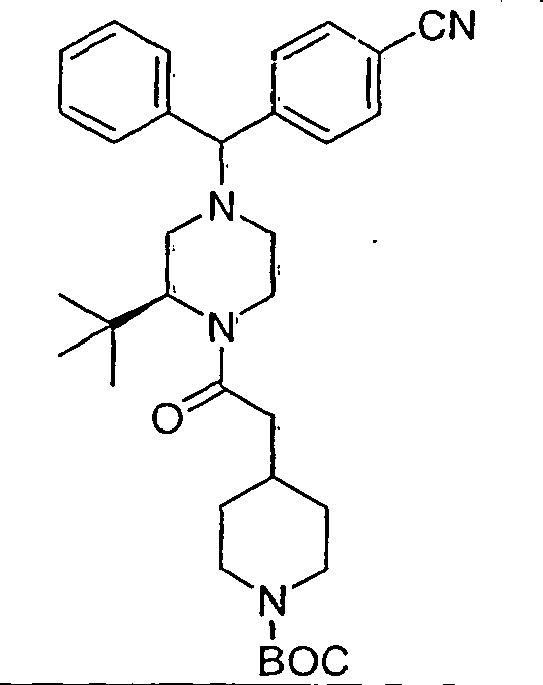
LCMS: MH+= 559 106. 28D 


LCMS: MH+= 584 106. 28E 


LCMS: MH+= 604 106. 28F 


LCMS: MH+ = 646 106. 28G 


LCMS: MH+= 662 106. 28H 


LCMS: MH+= 660 106. 281 


LCMS: MH+= 618 106. 28 


LCMS: MH+= 622 106. 28K 

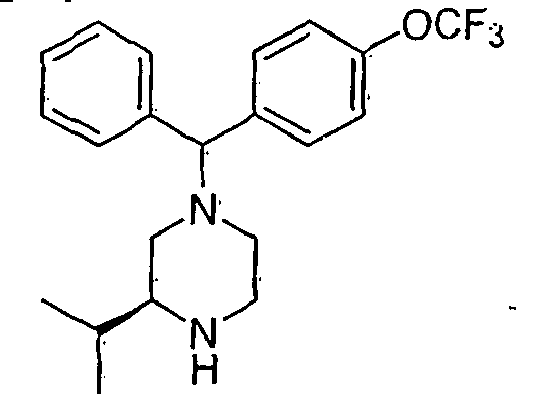
LCMS: MH+= 379 106. 28L 


LCMS: MH+= 637 -

- By essentially the same procedure set forth in Preparative Example 21, only substituting the product from Preparative Example 106.28K, the above compound was prepared (54% yield). LCMS: MH+=604.
- By essentially the same procedure set forth in Preparative Example 55.11, only substituting compound prepared in Preparative Example 106.23 and the iodide in Column 2 of Table 7.1, the compounds in Column 3 of Table 7.1 (CMPD) were prepared:
TABLE 7.1 Prep. Ex. Column 2 Column 3 CMPD 106.29 Ethyl iodide 
LCMS: MH+=578 106.30 Isopropyl iodide 
LCMS:MH+ =592 -

- The above compounds were prepared by the separation of the diastereomers of the product from Preparative Example 92:
- Preparative Example 107 (first eluting isomer-1): LCMS: MH+ = 569.
- Preparative Example 108 (second eluting isomer-2): LCMS: MH+ = 569.
-

- The above compounds were prepared by the separation of the diastereomers of the product from Preparative Example 93 by flash chromatography using a 10% hexanes in EtOAc solution as eluent:
- Preparative Example 109 (first eluting isomer-1): LCMS: MH+ = 603.
- Preparative Example 110 (second eluting isomer-2): LCMS: MH+ = 603.
-
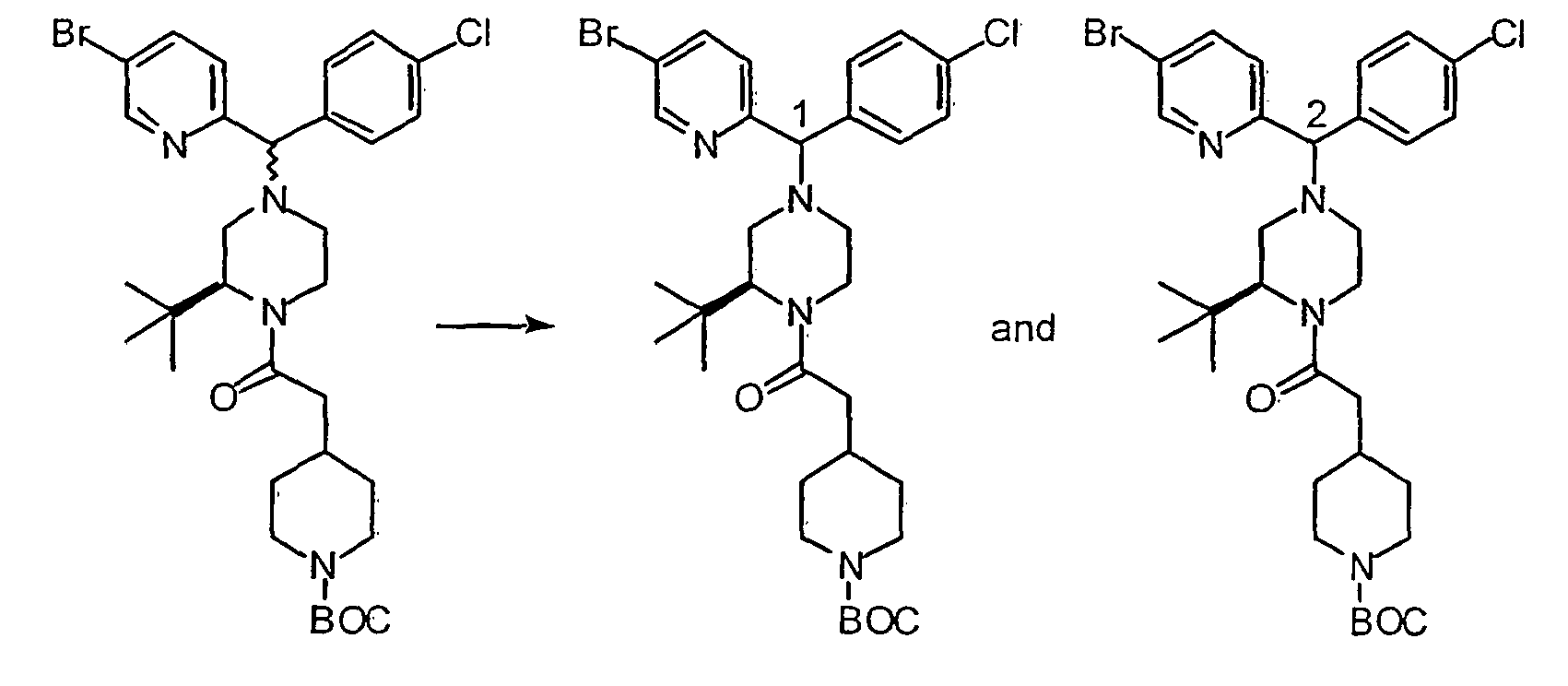
- The above compounds were prepared through the separation of diastereomers of the product from Preparative Example 101 using preparative HPLC with a CHIRALPAK AD column using a 95 : 5 hexanes : IPA with 0.2% DEA as eluent:
- Preparative Example 111 (first eluting isomer-1): LCMS: MH+ = 647.
- Preparative Example 112 (second eluting isomer-2): LCMS: MH+ = 647.
-

- The above compounds were prepared through the separation of diastereomers of the product from Preparative Example 102 by preparative HPLC with a CHIRALPAK AD column using a 95 : 5 hexanes : IPA with 0.2% DEA as eluent:
- Preparative Example 113 (first eluting isomer-1): LCMS: MH+ = 613.
- Preparative Example 114 (second eluting isomer-2): LCMS: MH+ = 613.
-

- The above compounds were prepared through the separation of diastereomers of the product from Preparative Example 103 by preparative HPLC with a CHIRALPAK AD column using a 95 : 5 hexanes : IPA with 0.2% DEA as eluent:
- Preparative Example 115 (first eluting isomer-1): LCMS: MH+ = 697.
- Preparative Example 116 (second eluting isomer-2): LCMS: MH+ = 697.
-

- The above compounds were prepared through the separation of diastereomers of the product from Preparative Example 104 by preparative HPLC with a CHIRALPAK AD column using a 95 : 5 hexanes : IPA with 0.2% DEA as eluent:
- Preparative Example 117 (first eluting isomer-1): LCMS: MH+ = 681.
- Preparative Example 118 (second eluting isomer-2): LCMS: MH+ = 681.
-

- The above compounds were prepared through the separation of diastereomers of the product from Preparative Example 105 by preparative HPLC with a CHIRALPAK AD column using a 95 : 5 hexanes : IPA with 0.2% DEA as eluent:
- Preparative Example 119 (first eluting isomer-1): LCMS: MH+ = 603.
- Preparative Example 120 (second eluting isomer-2): LCMS: MH+ = 603.
-

- The product from Preparative Example 91 (0.28 g, 0.58 mmol) was stirred at room temperature in 4M HCl in dioxane for 1 hour. The resulting solution was concentrated under reduced pressure and used without further purification.
- By essentially the same procedure set forth in Preparative Example 124, using the compounds shown in Table 9, Column 2, the compounds in Table 9, Column 3 were prepared:
TABLE 9 Prep. Ex. Column 2 Column 3 125 

126 

127 
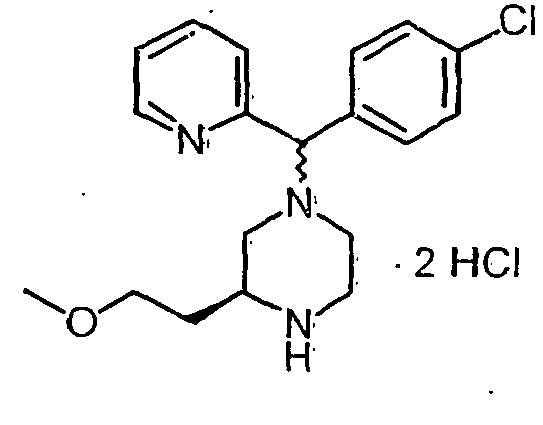
128 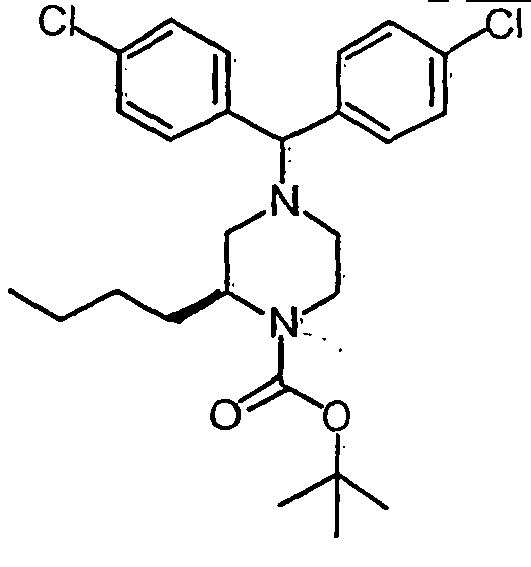

129 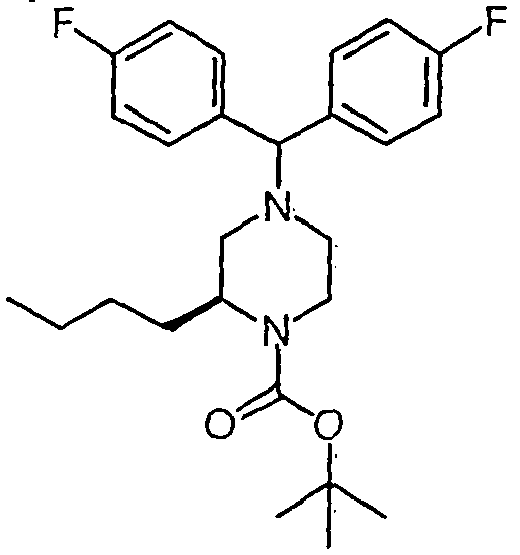
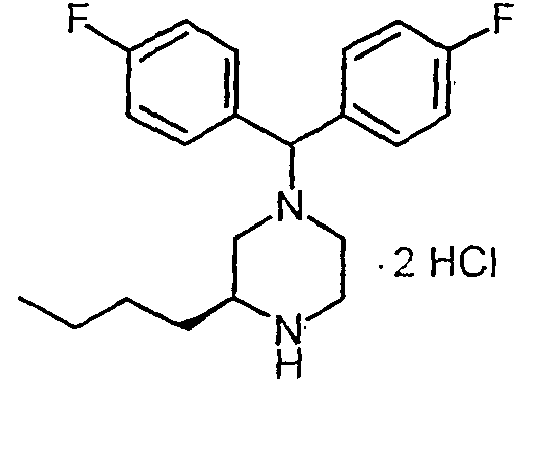
130 
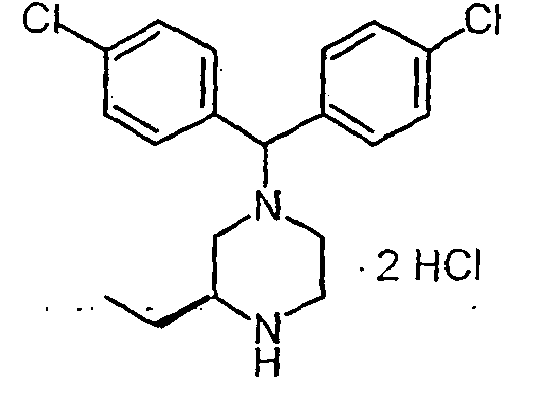
-

- A solution of the product from Preparative Example 57 (2.13 g, 3.52 mmol), the product from Preparative Example 6 (1.0 g, 3.52 mmol) and NaI (0.23 g, 20 mol%) in CH3CN (50 mL) was heated to reflux overnight. The reaction mixture was cooled to room temperature, quenched by the addition of saturated NaHCO3, and extracted with CH2Cl2. The combined organics were dried over Na2SO4, filtered, and concentrated. The crude product was purified by flash chromatography using a 5% (10% NH4OH) in MeOH in CH2Cl2 solution as eluent to afford a solid (1.8 g, 64% yield). LCMS: MH+ = 363.
- By essentially the same procedure set forth in Preparative Example 134, using the chlorides as shown in Column 2 of Table 10, and the amines as shown in column 3 of Table 10, the products in Column 4 of Table 10 (CMPD), were prepared:
TABLE 10 Prep. Ex. Column 2 Column 3 Column 4 CMPD 135 


136 


LCMS: MH+ = 320 137 


LCMS: MH+ = 331 138 


LCMS: MH+ = 330 139 


LCMS: MH+ = 408 140 


LCMS: MH+ = 349 141 


LCMS: MH+ = 349 142 

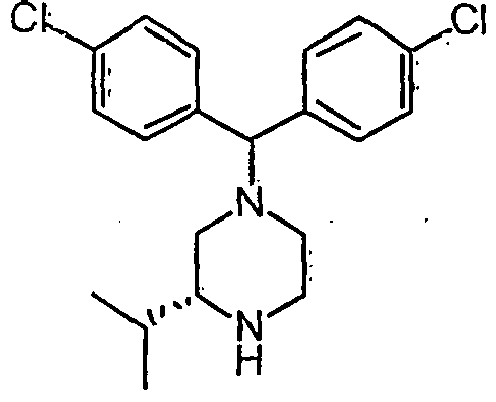
LCMS: MH+ = 363 143 


FABMS: MH+ = 321 144 


LCMS: MH+ = 295 144.10 

LCMS: MH+=377 -

- The products were prepared by separation of the mixture of diastereomers of the product from Preparative Example 138 by flash chromatography using a 5% (10% NH4OH in MeOH) in CH2Cl2 as eluent:
- Preparative Example 145 (first eluting isomer-1): LCMS: MH+ = 330.
- Preparative Example 146 (second eluting isomer-2): LCMS: MH+ = 330.
-

- To a solution of anhydride (1.5 g, 5.85 mmol) in THF (10 mL) at -10 °C was added MeMgBr (5.85 mL, 1.0 M in THF, 3.0 eq.). The resulting solution was stirred one hour at -10 °C, warmed to room temperature and stirred one hour. The reaction mixture was quenched by the addition of saturated NH4Cl and extracted with CH2Cl2. The combined organics were dried over Na2SO4, filtered, and concentrated under reduced pressure. The crude product was purified by flash chromatography using a 10% MeOH in CH2Cl2 solution as eluent (0.20 g, 14% yield). LCMS: MH+ = 245.
-

- The product from Preparative Example 149, Step A was stirred at room temperature in 4 M HCl in dioxane (4.0 mL) for 10 minutes and the reaction mixture was concentrated under reduced pressure. The residue was dissolved in CH3CN (10 mL) and the product from Preparative Example 30 (0.24 g, 1.2 eq.), K2CO3 (0.91 g, 8 eq.), and KI (0.054 g, 40 mol%) added. The resulting solution was heated to reflux overnight. The reaction mixture was cooled to room temperature, dilute with water and extracted with CH2Cl2. The combined organics were dried over Na2SO4, filtered, and concetrated under reduced pressure. The crude product was purified by flash chromatography uing a 10% (10% NH4OH in MeOH) in CH2Cl2 as eluent (0.20 g, 65% yield). LCMS: MH+ = 379.
-

- The product from Preparative Example 134 (0.5 g, 1.2 eq.), N-Boc-4-piperadineacetic acid (0.28 g, 1.14 mmol), DEC (0.28 g, 1.3 eq.), HOBt (0.20 g, 1.3 eq.), and NMM (90.31 mL, 2.5 eq.) were stirred at room temperature in CH2Cl2 for 3 days. The reaction mixture was poured into saturated NaHCO3 and extracted with CH2Cl2. The combined organics were dried over Na2SO4, filtered, and concetrated.
- The crude product was purified by flash chromatography using a 5% (10% NH4OH in MeOH) in CH2Cl2 as eluent to yield a solid (0.57 g, 85% yield). LCMS: MH+ = 588.
- By essentially the same procedure set forth in Preparative Example 150, using the compounds as shown in Column 2 of Table 11, the products in Column 3 of Table 11, were prepared:
TABLE 11 Prep. Ex. Column 2 Column 3 CMPD 151 

--- 152 

LCMS: MH+ = 537 153 

LCMS: MH+ = 571 154 

FABMS: MH+ = 602 155 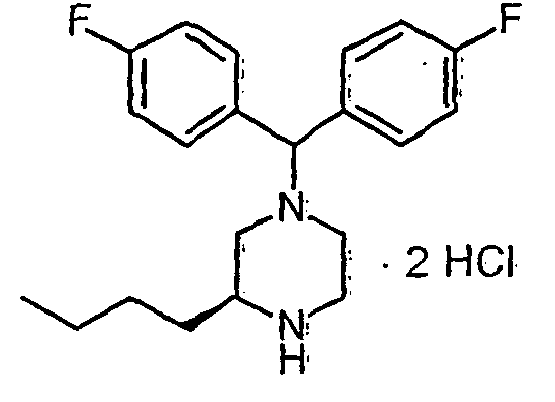

FABMS: MH+ = 570 156 

LCMS: MH+ = 574 157 

LCMS: MH+ = 554 158 

LCMS: MH+ = 545 159 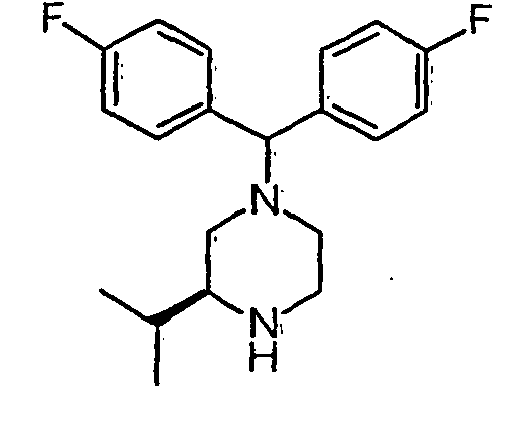

LCMS: MH+ = 556 160 

LCMS: MH+ = 633 161 

LCMS: MH+ = 588 162 

FABMS: MH+ = 493 163 

FABMS: MH+ = 546 164 

LCMS: MH+ = 555 165 

LCMS: MH+ = 555 171 

LCMS: MH+ = 604 172 

LCMS: MH+ = 520 -

- By essentially the same procedure set forth in Preparative Example 150, only substituting the compounds prepared in Preparative Example 144 (0.16 g, 0.55 mmol) and Preparative Example 18.11 (0.17 g, 1.2 eq.), the above compound was prepared (0.11 g, 31% yield). LCMS: MH+=536.
- By essentially the same procedure set forth in Preparative Example 19, using the compounds shown in Table 12, Column 2, the products shown in Table 12, Column 3 (CMPD) were prepared.
TABLE 12 Prep. Ex. Column 2 Column 3 CMPD 173 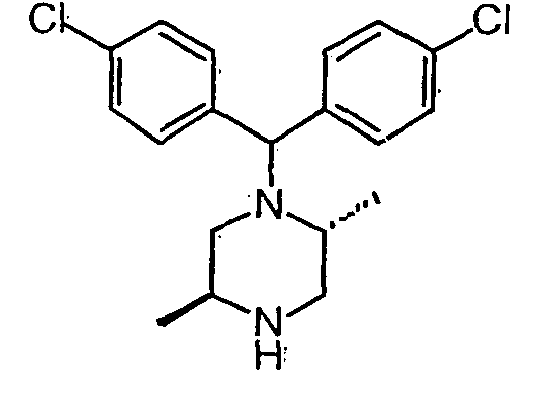
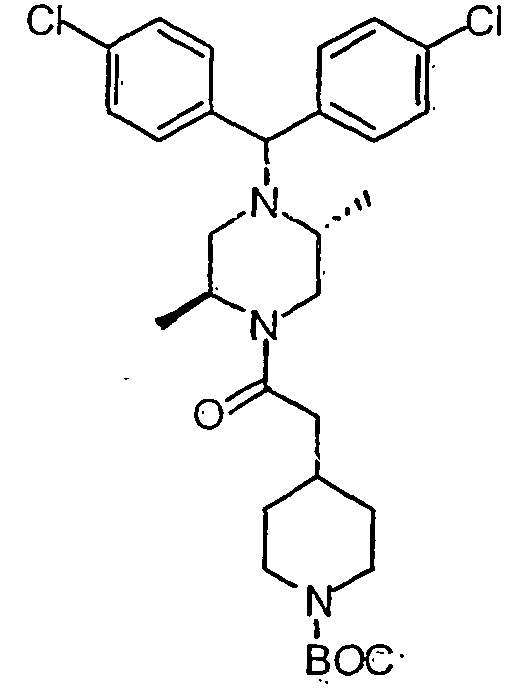
LCMS: MH+ = 574 174 

LCMS: MH+ = 574 -

- The product from Preparative Example 85 was separated into individual diastereomers by preparative HPLC with a ChiralPak AD column using a 95 : 5 hexanes: IPA mix with 0.2% DEA as eluent. Following elution of isomer 1, the eluent was adjusted to a 90 : 10 hexanes : IPA mix with 0.2% DEA for the elution of isomer 2.
- Preparative Example 175 (first eluting isomer-1): LCMS: MH+ = 568.
- Preparative Example 176 (second eluting isomer-2): LCMS: MH+ = 568.
-

- The product from Preparative Example 94 was separated into individual diastereomers using a ChiralPak AD column using a 95 : 5 hexanes : IPA mix with 0.2% DEA as eluent. Following elution of isomer 1, the eluent was adjusted to a 90 : 10 IPA mix with 0.2% DEA for the elution of isomer 2.
- Preparative Example 177 (first eluting isomer-1): LCMS: MH+ = 618.
- Preparative Example 178 (second eluting isomer-2): LCMS: MH+ = 618.
-

- The product from Preparative Example 95 was separated into individual diastereomers using a ChiralPak AD column using a 95 : 5 hexanes : IPA mix with 0.2% DEA as eluent:
- Preparative Example 179 (first eluting isomer): LCMS: MH+=603, mp=69-74°C.
- Preparative Example 180 (second eluting isomer):LCMS:MH+=603; mp=74-79°C.
-
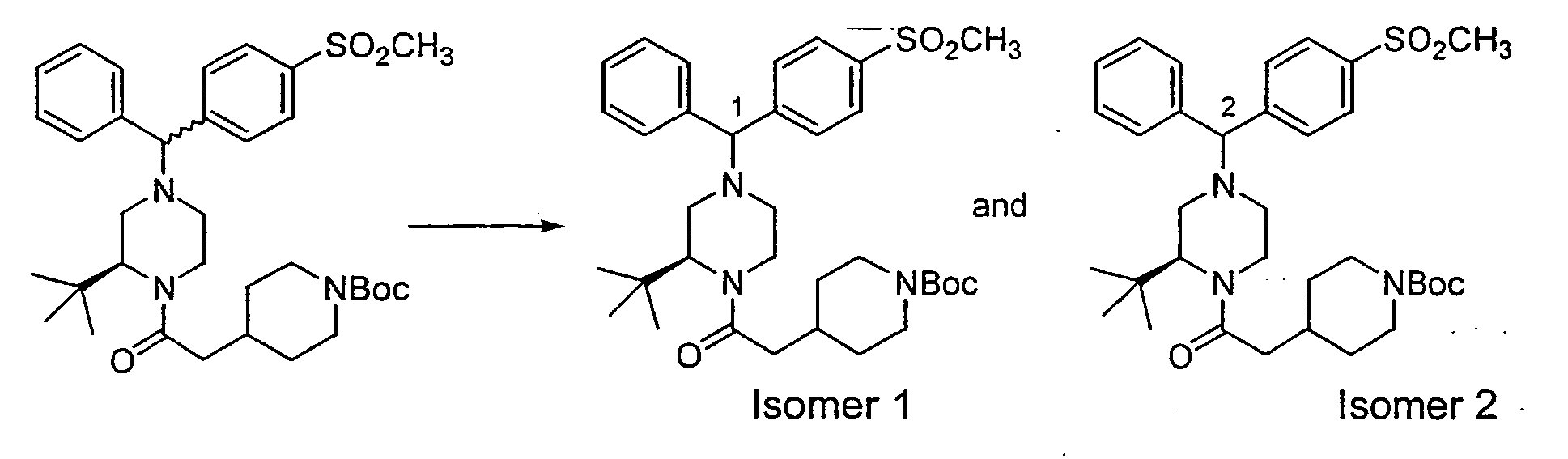
- The product from Preparative Example 106.6 was separated into the two individual diastereomers shown here. Chromatography on a Chiralpak AD column using a 95:5 hexanes:IPA mix with 0.2% DEA as eluent afforded Preparative Example 180.1 (first eluting isomer) as a white solid and Preparative Example 180.2 (second eluting isomer) as a white solid.
-

- The product from Preparative Example 106.1 was separated into the two individual diastereomers shown above. Chromatography on a Chiralpak AD column using a 98:2 hexanes:IPA mix with 0.2% DEA as eluent afforded Preparative Example 180.3 (first eluting isomer) = Isomer 1 and Preparative Example 180.4 (second eluting isomer) = Isomer 2.
-

- The product from Preparative Example 106.9 was separated into the two individual diastereomers shown above. Chromatography on a Chiralpak AD column using a 95:5 hexanes:IPA mix with 0.2% DEA as eluent afforded Preparative Example 180.5 (first eluting isomer) = Isomer 1 and Preparative Example 180.6 (second eluting isomer) = Isomer 2.
-

- The product from Preparative Example 106.8 was separated into the two individual diastereomers shown above. Chromotography on a Chiralpak AD column using a 90:10 hexanes:IPA mix with 0.2% DEA as eluent afforded Preparative Example 180.7 (first eluting isomer) = Isomer 1 and Preparative Example 180.8 (second eluting isomer) = Isomer 2.
-

- The product from Preparative Example 106.12 was separated into the two individual diastereomers shown above. Chromatography on a Chiralpak AD column using a 85:15 hexanes:IPA mix with 0.2% DEA as eluent afforded Preparative Example 180.9 (first eluting isomer) = Isomer 1, and Preparative Example 180.10 (second eluting isomer) = Isomer 2.
- By essentially the same procedure set forth in Preparative Example 180, only substituting the diastereomeric mixture from the Preparative Example indicated in Column 2 of Table 12.1 and substituting the eluting solvent in Column 3 of Table 12.1, the compounds in Column 4 of Table 12.1 (CMPD) were prepared:
TABLE 12.1 Prep. Ex. Column 2 Column 3 Column 4 CMPD 180.10 A 106.16 95:5 hex: IPA with 0.2% DEA 
LCMS: MH+=650 180.11 106.16 
LCMS: MH+=650 180.12 106.17 97 : 3 hex : IPA with 0.1% DEA 
LCMS: MH+=644 180.13 106.17 
LCMS: MH+=644 180.14 106.18 97 : 3 hex : IPA with 0.1% DEA 
LCMS: MH+=610 180.15 106.18 
LCMS: MH+=610 180.16 106.19 97 : 3 hex : IPA with 0.1% DEA 
LCMS: MH+=622 180.17 106.19 
LCMS: MH+=622 180.18 106.20 97:3 hex: IPA with 0.2% DEA 
LCMS: MH+=673 180.19 106.20 
LCMS: MH+=673 180.20 106.23 93.5:6.5 hex : IPA with 0.2% DEA 
LCMS: MH+=621 180.21 106.23 
LCMS: MH+=621 180.22 106.24 95 : 5 hex : IPA with 0.1% DEA 
LCMS: MH+=661 180.23 106.24 
LCMS: MH+=661 180.24 106.26 97 : 3 hex : IPA with 0.1% DEA 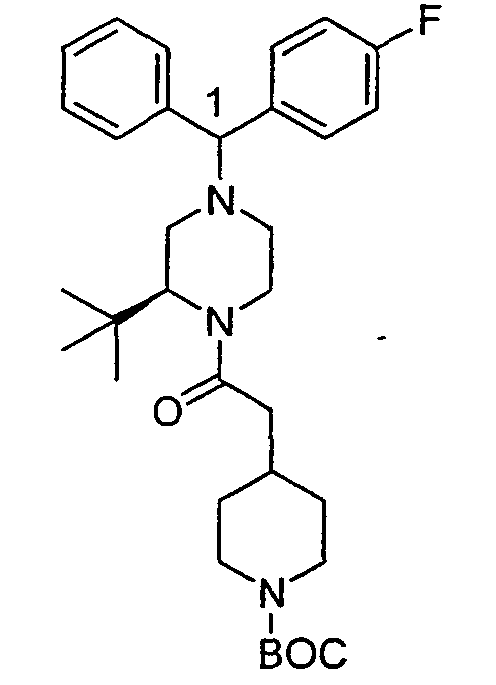
LCMS: MH+=552 180.25 106.26 
LCMS: MH+=552 180.26 106.27 98 :2 hex : IPA with 0.1% DEA 
LCMS: MH+=620 180.27 106.27 
LCMS: MH+=620 180.28 106.29 95 : 5 hex : IPA with 0.1% DEA 
LCMS: MH+=578 180.29 106.29 
LCMS: MH+=578 180.30 106.28E 
180.31 106.28E 95:5 hex : IPA with 0.1% DEA 
LCMS: MH+=604 180.32 106.28F 98 : 2 hex : IPA with 0.1% DEA 
LCMS: MH+=646 180.33 106.28F 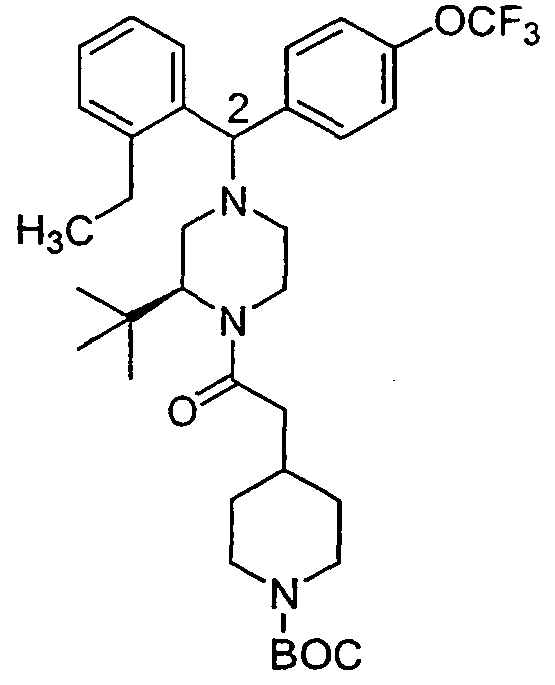
LCMS: MH+=646 180.34 106.28G 99: 1 hex : IPA with 0.1% DEA 
LCMS: MH+=662 180.35 106.28G 
LCMS: MH+=662 180.36 106.28L 93:7 hex : IPA with 0.2% DEA 
LCMS: MH+=637 180.37 106.28L 
LCMS: MH+=637 180.38 106.28M 95: 5 hex : I PA with 0.2% DEA 
LCMS: MH+=604 180.39 106.28M 
LCMS: MH+=604 -

- To the product from Preparative Example 10 (1.64g, 7.06 mmol) and NaHCO3 (1.19g, 2 eq.) in CH2Cl2 (30 mL) at 0 °C was added bromoacetyl bromide (0.68 mL, 1.1 eq.) dropwise. The resulting solution was warmed slowly to room temperature and stirred overnight. The reaction mixture was quenched by the addition of water and extracted with CH2Cl2. The combined organics were dried over Na2SO4, filtered, and concentrated under reduced pressure. The crude product (2.2 g, 92% yield) was used without further purification. LCMS: MH+ = 353.
-

- To the product from Preparative Example 181, Step A (2.2 g, 6.23 mmol) and K2CO3 (1.72 g, 2.0 eq.) in CH3CN (50 mL) was added N-BOC-piperazine (1.35 g, 1.2 eq.). The resulting solution was heated to reflux 2 hours, cooled, and diluted with water. The resulting solution was extracted with EtOAc and the combined organics dried over Na2SO4, filtered, and concentrated. The crude product was purified by flash chromatography using a 50 : 50 EtOAc : hexanes solution as eluent (0.77 g, 27% yield). LCMS: MH+ = 459.
-

- The product from Preparative Example 181, Step B (0.77 g, 1.68 mmol), ammonium formate (2.12 g, 20 eq.) and 10% Pd/C (1.48 g, 50% wet) in EtOH (20 mL) was heated to reflux 4 hours. The resulting solution was cooled, filtered through a plug of Celite and concentrated. The residue was taken up in CH2Cl2 and washed with water. The crude product was purified by flash chromatography using a 7% (10% NH4OH in MeOH in CH2Cl2 solution as eluent (0.57 g, 92% yield). LCMS: MH+ = 369.
-

- By essentially the same procedure set forth in Preparative Example 85, using the product from Preparative Example 181, Step C, the above compound was prepared (0.14 g, 16% yield). LCMS: MH+ = 603.
-
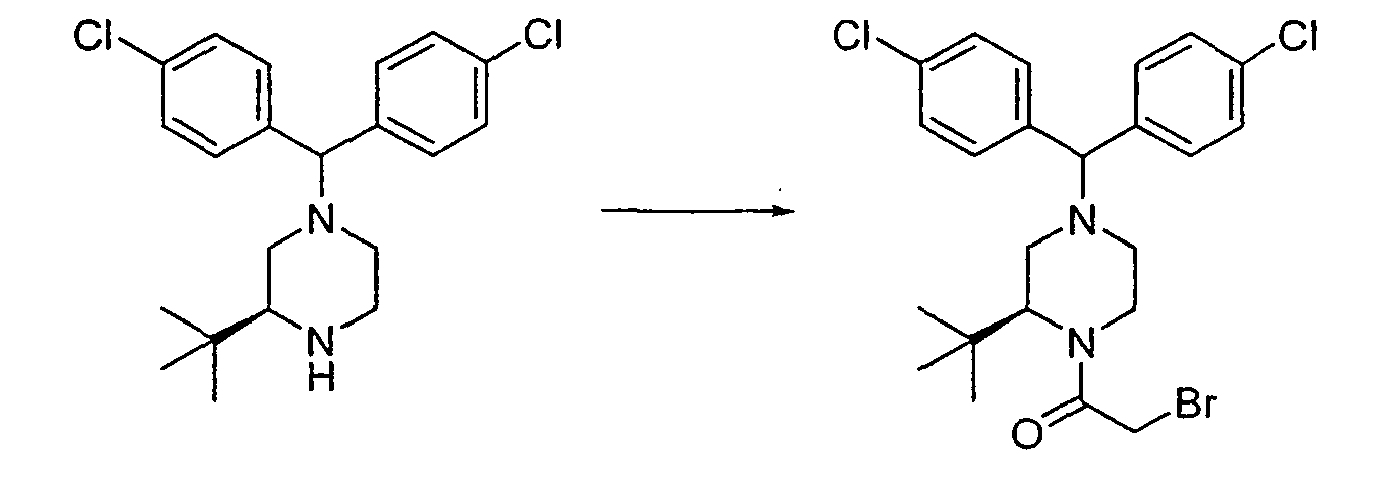
- By essentially the same procedure set forth in Preparative Example 181, Step A, only substituting the compound prepared in Preparative Example 144.10, the above compound was prepared. LCMS: MH+=497.
- By essentially the same procedure set forth in Preparative Example 181,Step B, only substituting the compounds in Column 2 of Table 12.1, the compounds in Column 3 of Table 12.1 (CMPD) were prepared:
Table 12.1 Prep. Ex. Column 2 Column 3 CMPD 181.12 

LCMS: MH+= 531 181.13 

LCMS: MH+= 531 -

- The product from Preparative Example 21 (0.53 g, 1.0 mmol) was stirred in 4M HCl/dioxane (8.0 mL) at room temperature 30 minutes and concentrated under reduced pressure. The crude product was diluted with CH3CN (10 mL) and by essentially the same procedure set forth in Preparative Example 134 the product was prepared (0.05 g, 25% yield). FaBMS: MH+ = 652.
-

- The product from Preparative Example 182, Step A (0.03 g, 0.05 mmol) in 1 : 1 CH2Cl2 : HCO2H was stirred at room temperature 5 hours then at reflux overnight. The reaction mixture was cooled to room temperature and concentrated under reduced pressure. The crude product was purified by flash chromatography using a gradient column from 1 % (10% NH4OH in MeOH) in CH2Cl2 to 20% (10 % NH4OH in MeOH) in CH2Cl2 (0.01 g, 48% yield). LCMS: MH+ = 460.
-
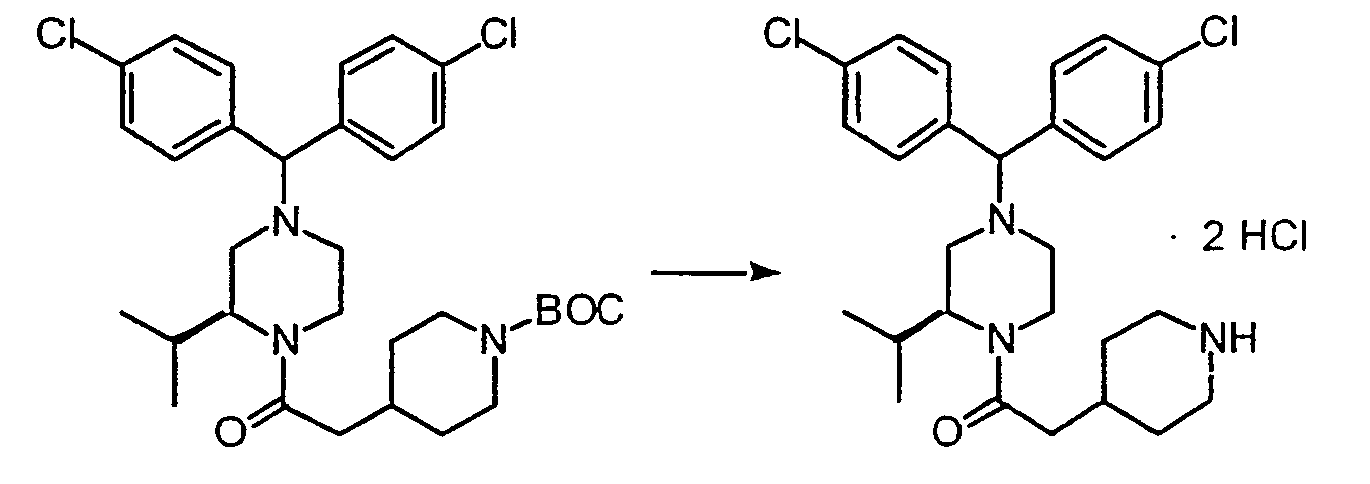
- A solution of the product from Preparative Example 150 (0.35 g, 0.59 mmol) was stirred at room temperature in 4 M HCl in dioxane (4 mL) for 30 minutes. The resulting solution was concentrated under reduced pressure. The residue was dissolved in CH2Cl2 and neutralized by the addition of 1 N NaOH, separated, and the organics dried over Na2SO4, filtered and concentrated to give a solid (0.31g, 94% yield) which was used without further purification. LCMS: MH+ = 488.
-

- A solution of the product from Example 611 (1.00 g, 2.20 mmol) below, and HCOONH4 (2.77 g, 44.0 mmol) in anhydrous MeOH (30 mL) was added under N2 to a suspension of 10 % Pd/C (1.17 g) in anhydrous MeOH (20 mL). The mixture was stirred for 16 hrs under N2, poured into 250 CH2Cl2 (250 mL), and filtered through Celite. The solvent was evaporated and the residue was purified by flash chromatography using 11 % MeOH (10% NH4OH) in CH2Cl2 to give 555 mg (87 %) of a solid.
-

- Using essentially the same procedure as described in Preparative Example 239 , 1.00 g (2.20 mmol) of the product from Example 612 below, was converted into 520 mg (81 %) of a solid.
-

- (-)-3(R)-isopropyl-2,5-piperazinedione (5g) (32mmoles) was dissolved in dry THF (167.5mL) and the solution was cooled to 0°C. A 1 M solution of LiAlH4 in THF (115.25mL) (115.25 mmoles) was added dropwise over 20 minutes. The mixture was heated under reflux at 65°C for 5h and then stirred at 25°C for 16h. Distilled water (37.5mL) was added dropwise to the stirred reaction mixture, followed by 1 N NaOH (21.25mL) and additional distilled water (37.5mL). The mixture was extracted with ethyl acetate (1.75L) and the latter was dried (MgSO4), filtered and evaporated to dryness. The residue was chromatographed on a silica gel column (40X6.5cm) using gradient elution with 3%, 4%, 6% and 9% (10% NH4OH in methanol)-dichloromethane as the eluant to give the product (2.4g; 58%): [α]D 25°C +3.7° (c=5.7mg/2mL MeOH).
-

- The product from Preparative Example 241 (555.2mg) (4.33mmoles) above, was dissolved in anhydrous DMF (16.7mL). 4-methylmorpholine (0.476mL) (4.33mmoles), 1-(3-dimethylaminopropyl)-3-ethylcarbodiimide hydrochloride (830mg) (4.33mmoles), 1-hydroxybenzotriazole (585.2mg) (4.33mmoles) and N-acetylpiperidine-4-acetic acid (802.3mg) (4.33mmoles) was added and the mixture was stirred under argon at 25°C for 41 h. The mixture was evaporated to dryness and the residue was taken up in dichloromethane and washed with saturated aqueous NaHCO3.
- The dichloromethane layer was dried(MgSO4), filtered and evaporated to dryness and the residue was chromatographed on a silica gel column (20X5cm) using 3% (10% NH4OH in methanol)-dichloromethane as the eluant to give the product (1.25g; 98%): [α]D 25°C +16.6° (c=5.6mg/2mL MeOH).
-

- To a solution of the product from Preparative Example 183 (0.15 g, 0.31 mmol) in CH2Cl2 (5 mL) at 0°C was added TEA (0.21 mL, 5 eq.) and TMSNCO (0.41 mL, 10 eq.). The reaction mixture was stirred until TLC showed consumption of starting material (30 minutes). The reaction was quenched by the addition of saturated NaHCO3 and extracted with CH2Cl2. The combined organics were dried over Na2SO4, filtered and concentrated. The crude product was purified by flash chromatography using a 5% (10% NH4OH in MeOH) in CH2Cl2 solution as eluent to yield a solid (0.10 g, 61% yield). LCMS: MH+ = 531; mp = 115-128°C.
- By essentially the same procedure set forth in Example 500, using the compounds shown in column 2 of Table 14, which were prepared in a similar manner to Preparative Example 183 or Example 611 from the corresponding N-BOC-protected amine, the products shown in column 3 of Table 14 (CMPD), were prepared:
TABLE 14 Ex. Column 2 Column 3 CMPD 501 

LCMS: MH+= 469; Mp = 80-85°C. 502 

LCMS: MH+ = 503; mp =103-109°C. 503 

LCMS: MH+ = 512; mp = 112-117°C 504 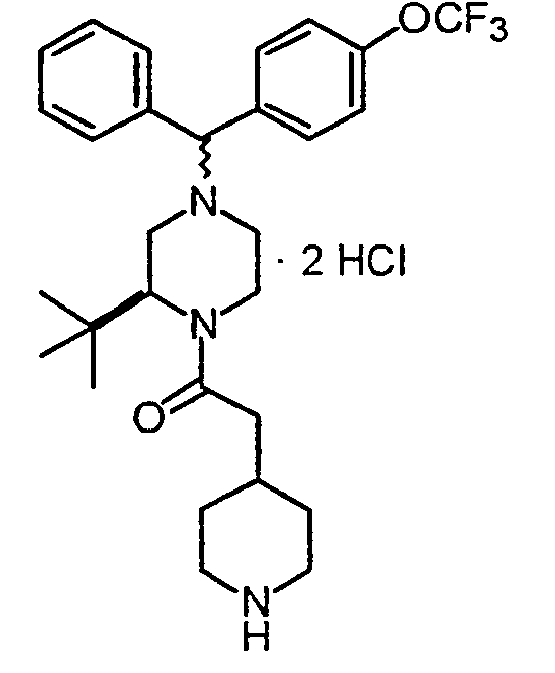

LCMS: MH+ = 561; mp = 101-105°C 505 

LCMS: MH+ = 545; mp = 106-111 °C 506 

LCMS: MH+ = 545; mp = 141-160°C 507 

LCMS: MH+ = 513; mp = 95-101°C 508 

LCMS: MH+ = 513; mp = 122-127°C 509 
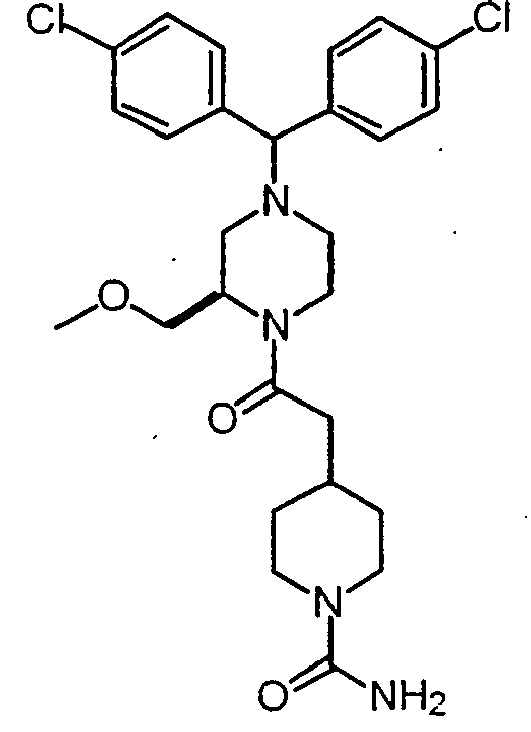
LCMS: MH+ = 533; mp = 97-101 °C 510 
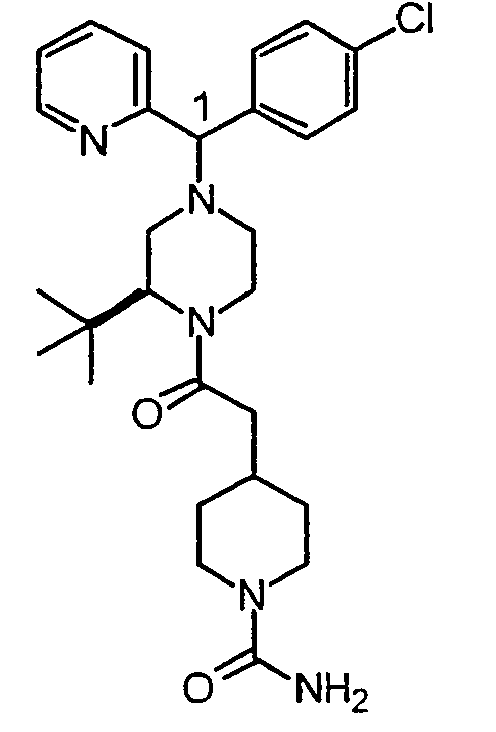
LCMS: MH+ = 512; mp = 90-117°C 511 

LCMS: MH+ = 512; mp = 82-93°C 512 

LCMS: MH+ = 546; mp = 113-117°C 513 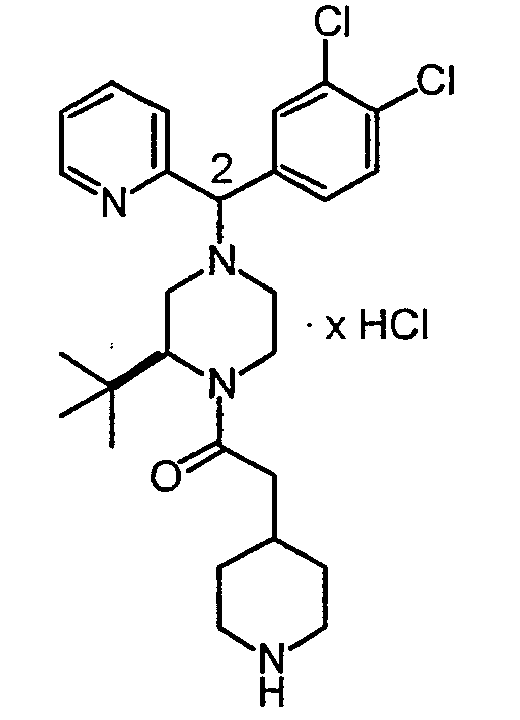

LCMS: MH+ = 546; mp = 107-111°C 514 

LCMS: MH+ = 590; mp = 92-97°C 515 

LCMS: MH+ = 590; mp = 81-87°C 516 

LCMS: MH+ = 556; mp = 115-120°C 518 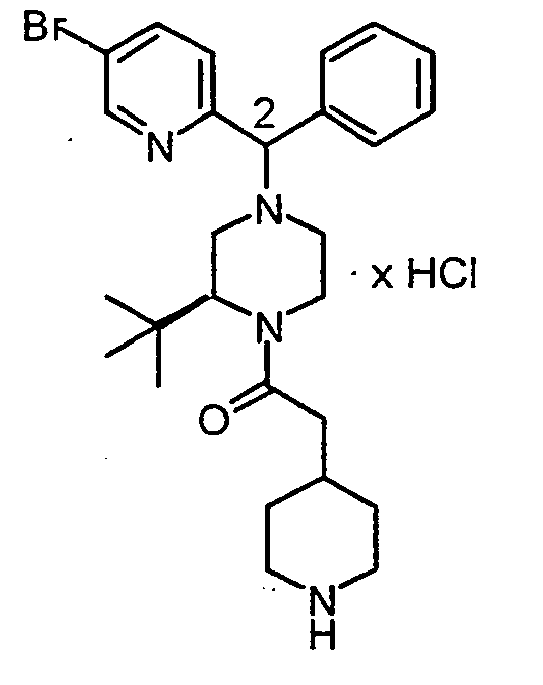

LCMS: MH+ = 556; mp = 110-115°C 519 

LCMS: MH+ = 640; mp=116-121°C 520 

LCMS: MH+ = 640; mp = 119-125°C 521 

LCMS: MH+ = 624; mp = 126-132°C 522 

LCMS: MH+ = 624; mp = 121-130°C 523 

LCMS: MH+ = 546; mp =102-106°C. 524 

LCMS: MH+ = 546; mp = 123-127°C. 525 

LCMS: MH+ = 480; mp = 87-119°C. 526 

LCMS: MH+ = 514; mp = 75-79°C 527 

LCMS: MH+= 547; mp = 105-109°C 528 

LCMS: MH+ = 545; mp = 103-107°C 529 

LCMS: MH+ = 513; mp=91-97°C 530 

LCMS: MH+ = 517; mp = 93-93°C 531 

LCMS: MH+ = 497; mp = 99-102°C 532 

LCMS: MH+ = 488; mp = 129-133°C 533 
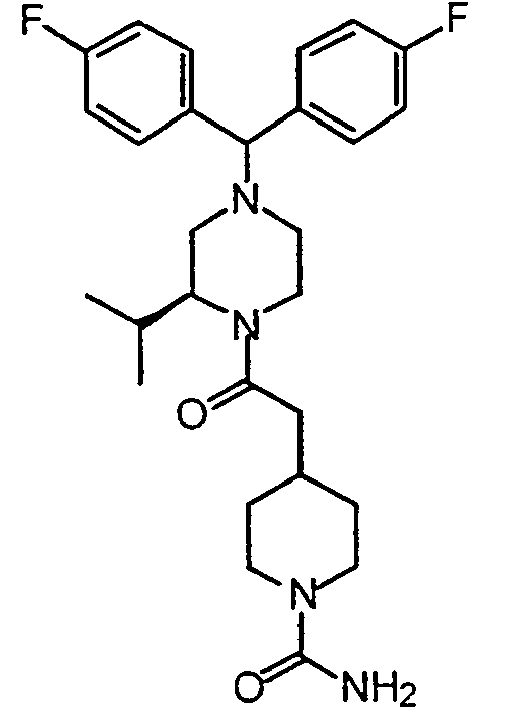
LCMS: MH+ = 499; mp = 108-111°C 534 

FABMS: MH+ = 489; mp = 126-130°C 535 

LCMS: MH+ = 497; mp = 75-83°C 536 

LCMS: MH+ = 498; mp = 85-89°C 542 

LCMS: MH+ = 511; mp = °C 543 

LCMS: MH+ = 511; mp =79-83°C 544 
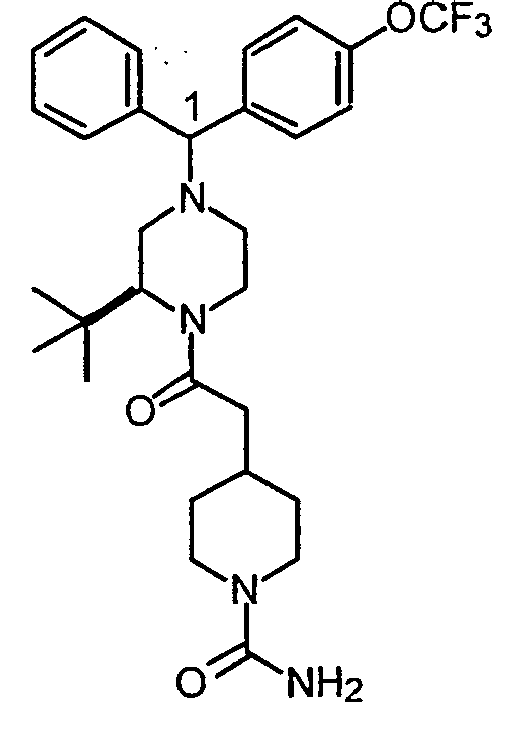
LCMS: MH+ = 561; mp = °C 545 

LCMS: MH+ = 561; mp = 51-65°C 546 

LCMS: MH+ = 545; mp =107-109°C 547 

LCMS: MH+ = 545; mp = 84-88°C 548 

LCMS: MH+ = 547; mp =110-114°C. 549 

LCMS: MH+ = 545; mp = 91-93°C 550 

LCMS: MH+ = 576; mp = 89-109°C. 551 

LCMS: MH+ = 517; mp =105-124°C. 552 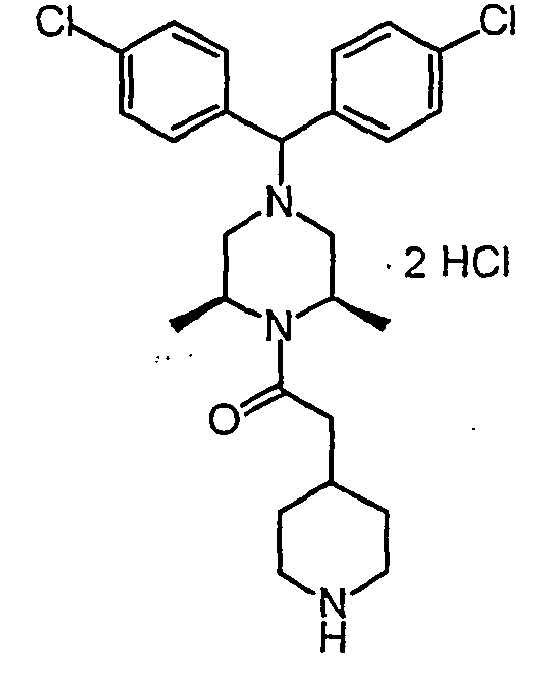

LCMS: MH+ = 517; mp =100-112°C. 553 

LCMS: MH+=531; mp = 99-108°C. 554 

LCMS: MH+ =436; mp = 106-112°C 555 

LCMS: MH+ =546; mp = 119-127°C 556 

LCMS: MH+ = 546; mp = 98-101°C 557 

LCMS: MH+ = 645; mp = 85-91°C 558 

558.10 

LCMS: MH+=547; mp=100-104°C 558.11 

LCMS: MH+=547; mp=65-68°C 558.12 

LCMS: MH+=589; mp=92-103°C 558.13 

LCMS: MH+=589; mp=95-190°C 558.14 

LCMS: MH+=605; mp=59-83°C 558.15 

LCMS: MH+=605; mp=87-99°C 558.16 

LCMS: MH+=547; mp=65-68°C 558.17 

LCMS: MH+=561; mp=95-101°C 558.18 

LCMS: MH+=624; mp=97-101°C 558.19 

LCMS: MH+=580; mp=123-127°C 558.20 

LCMS: MH+=580 mp=121-124°C 558.21 

LCMS: MH+=547; mp=100-103°C 558.22 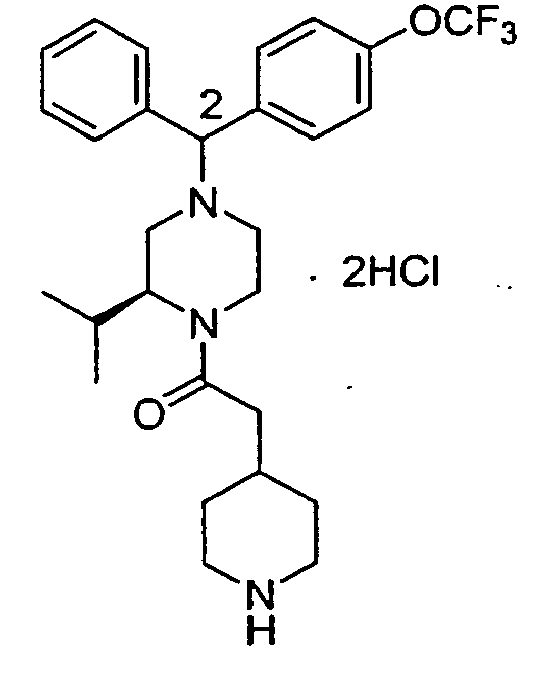

LCMS: MH+=547; mp=109-114°C - By essentially the same procedure set forth in Example 500, using the compounds shown in Column 2 of Table 14.1, the products shown in Column 3 of Table 14.1 (CMPD) were prepared.
TABLE 14.1 Ex. Column 2 Column 3 CMPD 558.23 

LCMS: MH+=574; mp=78-103 °C 558.24 
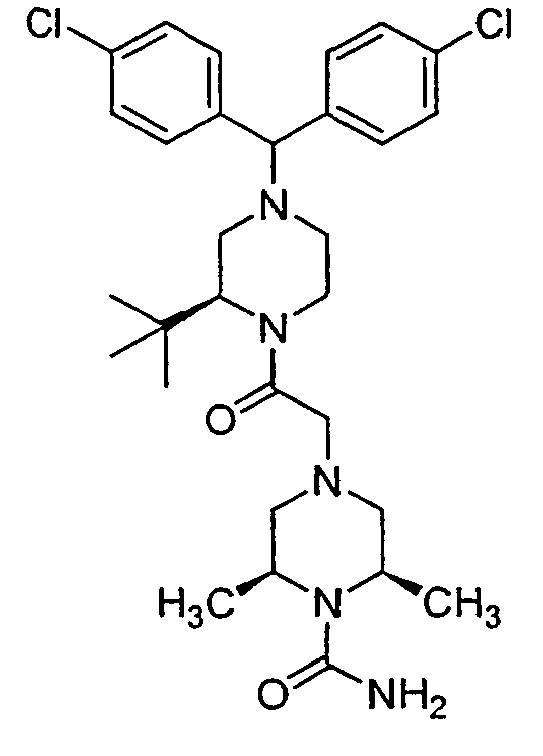
LCMS: MH+=574; mp=58-73 °C -

- To a solution of the product from Preparative Example 183 (0.15 g, 0.31 mmol) in CH2Cl2 (5 mL) at 0 °C was added TEA (0.21 mL, 5 eq.) and AcCl (0.03 mL, 1.2 eq.). The reaction mixture was warmed to room temperature and stirred until TLC showed consumption of starting material (20 minutes). The reaction was quenched by the addition of saturated NaHCO3 and extracted with CH2Cl2. The combined organics were dried over Na2SO4, filtered and concentrated. The crude product was purified by flash chromatography using a 5% (10% NH4OH in MeOH) in CH2Cl2 solution as eluent to yield a solid (0.12 g, 75% yield). LCMS: MH+ = 530; mp = 75-101°C.
- By essentially the same procedure set forth in Example 558, using the compounds shown in column 2 of Table 15, which were prepared in a similar manner to Preparative Example 183 or Example 611 from the corresponding N-BOC-protected amine, the products shown in column 3 of Table 15 (CMPD) were prepared:
TABLE 15 Ex. Column 2 Column 3 CMPD 560 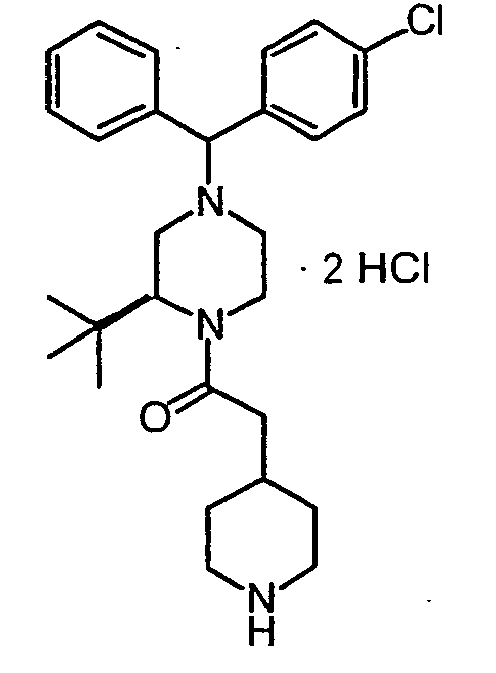

LCMS: MH+ = 510; mp=81-85°C 561 

LCMS: MH+ = 560; mp = 68-71 °C 562 

LCMS: MH+ = 544; mp = 86-88°C 563 

LCMS: MH+ = 544; mp = 125-145°C 564 

LCMS: MH+ = 512; mp = 69-75°C 565 

LCMS: MH+ = 512; mp = 79-92°C 566 

LCMS: MH+ = 532; mp = 70-73°C 567 

LCMS: MH+ = 511; mp = 68-79°C 568 

LCMS: MH+ = 511; mp = 74-87°C 569 

LCMS: MH+ = 545; mp = 93-98°C 570 

LCMS: MH+ = 545; mp = 95-98°C 571 

LCMS: MH+ = 589; mp = 81-86°C 572 

LCMS: MH+ = 589; mp = 69-76°C 573 

LCMS: MH+ = 555; mp = 68-97°C 574 

LCMS: MH+=555; mp = 63-81 °C 575 

LCMS: MH+ = 639; mp = 80-85°C 576 

LCMS: MH+ = 639; mp = 119-125°C 577 

LCMS: MH+ = 623; mp = 126-132°C 578 
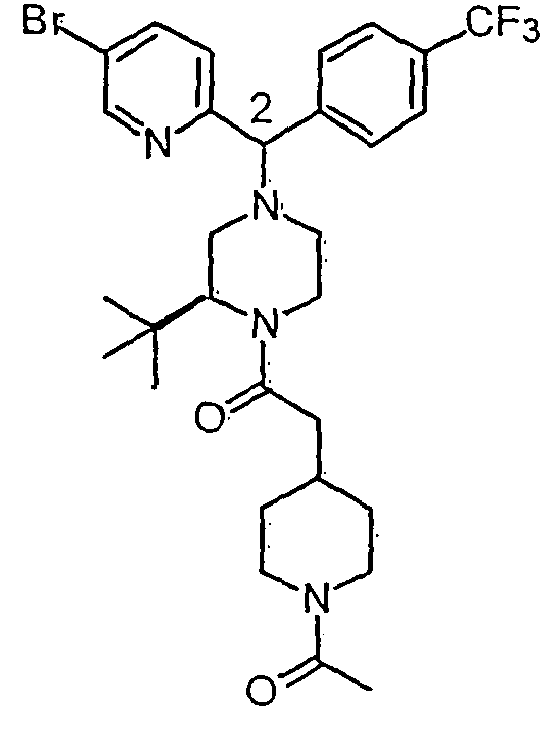
LCMS: MH+= 623; mp = 102-105°C 579 

LCMS: MH+ = 545; mp = 86-89°C. 580 

LCMS: MH+ = 545; mp = 71-75°C. 581 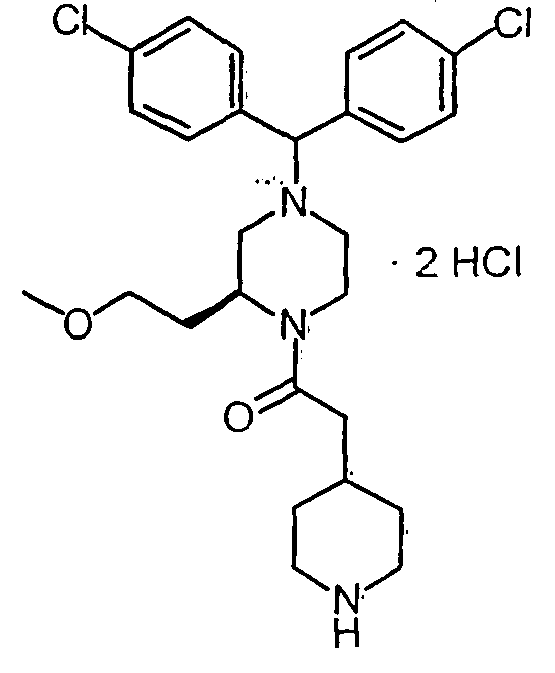

FABMS: MH+ = 546; mp = 81-84°C 582 

FABMS: MH+ = 544; mp = 75-79°C 583 

FABMS: MH+ = 512; mp = 59-62°C 584 

LCMS: MH+ = 516; mp = 60-66°C 585 

LCMS: MH+ = 498; mp = 68-71°C 586 

FABMS: MH+ = 488; mp=76-81°C 587 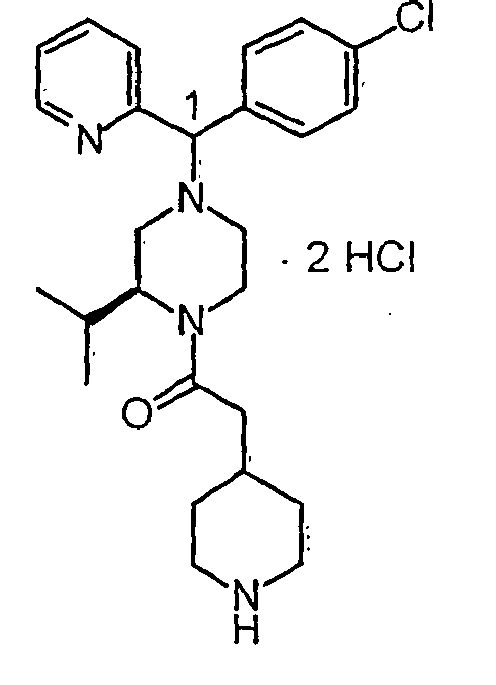

LCMS: MH+ = 497; mp = 75-83°C 588 

LCMS: MH+ = 497; mp = 74-79°C 594 

LCMS: MH+ = 510; mp = 69-72°C 595 

LCMS: MH+ = 510; mp = 56-62°C 596 

LCMS: MH+ = 560; mp = 62-75°C 597 

LCMS: MH+ = 560; mp = 59-71°C 598 

LCMS: MH+ = 544; mp = 83-88°C 599 

LCMS: MH+ = 544; mp = 77-80°C 600 

LCMS: MH+ = 546; mp = 89-95°C. 601 

LCMS: MH+ = 544; mp = 69-70°C. 602 

LCMS: MH+ = 575; mp = 73-91°C. 603 

LCMS: MH+ = 516; mp = 69-84°C. 604 

LCMS: MH+ = 516; mp = 62-81 °C. 605 

LCMS: MH+=530; mp = 75-82°C 606 

LCMS: MH+ = 435; mp = 76-79°C 607 

LCMS: MH+ = 545; mp = 97-101°C 608 

LCMS: MH+ = 545; mp = 65-68°C 608.1 

LCMS: MH+ = 645; mp = 66-72°C 608.2 

LCMS: MH+ = 574; mp = 87-92°C 608.21 

LCMS: MH+= 564; mp = 65-69°C 608.22 

LCMS: MH+= 586; mp = 73-77°C 608.23 

LCMS: MH+= 542; mp = 81-84°C 608.25 

LCMS: MH+= 592; mp = 85-91°C 608.26 

LCMS: MH+= 592; mp = 74-80°C 608.27 

LCMS: MH+= 586; mp = 82-85°C 608.28 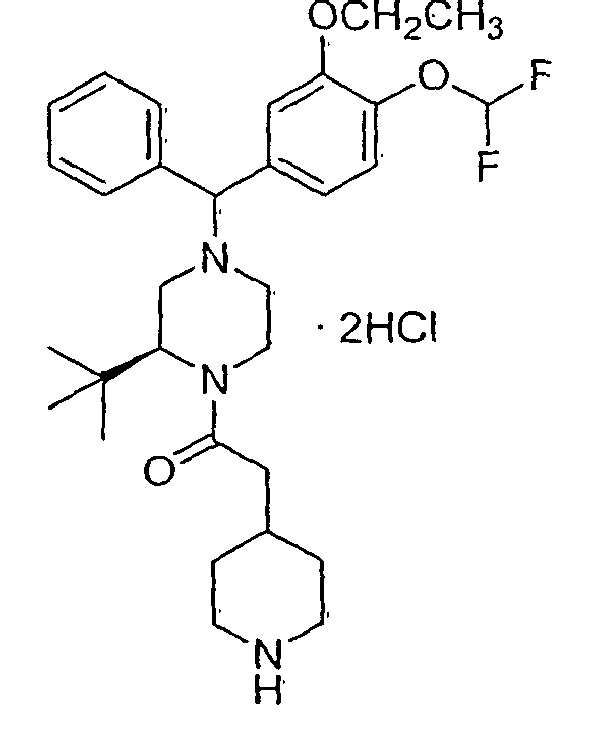

LCMS: MH+= 586; mp = 76-80°C 608.29 

LCMS: MH+= 586; mp = 48.7-49.8°C 608.30 

LCMS: MH+= 586; mp = 70-73°C 608.31 

LCMS: MH+ = 552; mp = 48-51°C 608.32 

LCMS: MH+= 552; mp = 75-79°C 608.33 

LCMS: MH+= 564; mp = 76-81°C 608.34 

LCMS: MH+= 564; mp = 75-78°C 608.35 

LCMS: MH+= 615; mp = 97-104°C 608.36 

LCMS: MH+= 615; mp = 105-110°C 608.37 

LCMS: MH+= 615; mp = 100-106°C 608.38 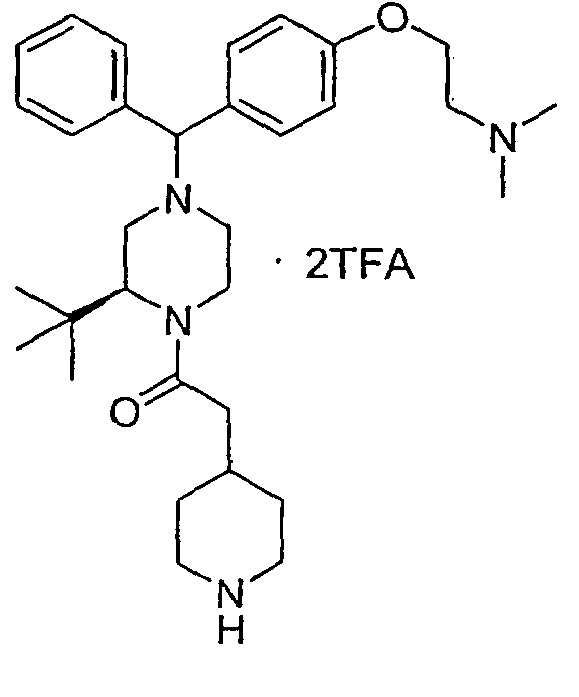

LCMS: MH+= 563; mp = 70-73°C 608.39 

LCMS: MH+= 563; mp = 64-66°C 608.40 

LCMS: MH+= 563; mp = 71-73°C 608.41 

LCMS: MH+= 603; mp = 58-63°C 608.42 

LCMS: MH+= 603; mp = 83-86°C 608.43 

LCMS: MH+= 494; mp = 64-67°C 608.44 

LCMS: MH+= 494; mp = 78-81°C 608.45 

LCMS: MH+= 562; mp = 57-60°C 608.46 

LCMS: MH+= 562; mp = 89-91 °C 608.47 

LCMS: MH+= 562; mp = 78-82°C 608.48 

LCMS: MH+= 520; mp = 50-52°C 608.49 

LCMS: MH+= 520; mp = 42-44°C 609.50 

LCMS: MH+=575; mp=131-135°C 609.51 

LCMS: MH+=623; mp=73-84°C 609.52 

LCMS: MH+=501; mp=88-90°C 609.53 

LCMS: MH+=526; mp=110-112°C 609.54 

LCMS: MH+=546 mp=100-104°C 609.55 

LCMS: MH+=546; mp=85-87°C 609.56 
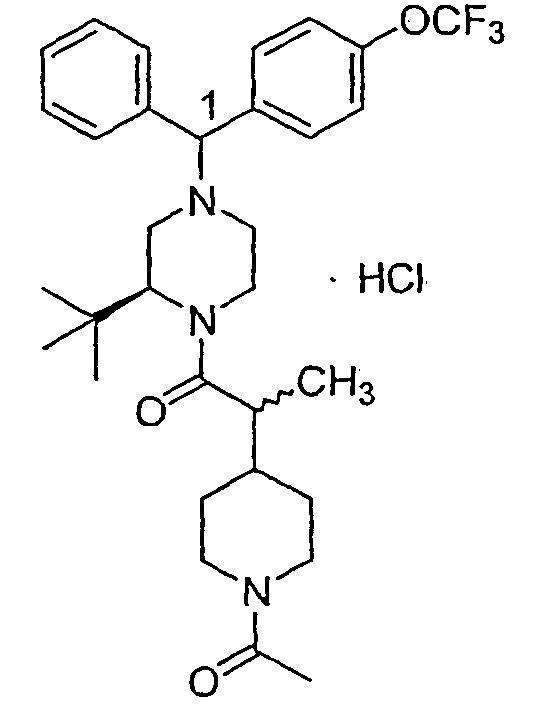
LCMS: MH+=574; mp=63-70°C 609.57 

LCMS: MH+=588; mp=67-75°C 609.58 

LCMS: MH+=588; mp=66-88°C 609.59 

LCMS: MH+=604; mp=53-71°C 609.60 

LCMS: MH+=604; mp=55-72°C 609.61 

LCMS: MH+=602 609.62 

LCMS: MH+=560; mp=65-68°C 609.63 

LCMS: MH+=565; mp=45-48°C 609.64 

LCMS: MH+=579; mp=101-104°C 609.65 

LCMS: MH+=579 mp=96-101°C 609.66 

LCMS: MH+=546; mp=69-74°C 609.67 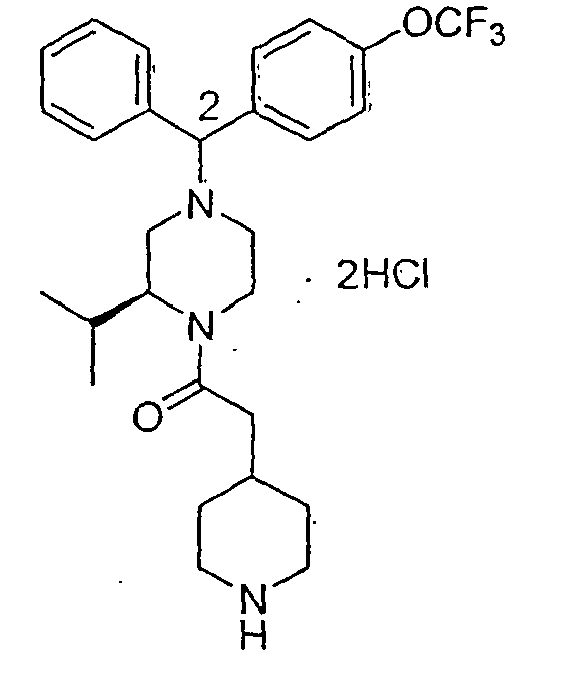

LCMS: MH+=546; mp=65-69°C 609.68 

LCMS: MH+=478; mp=63-68°C - By essentially the same procedure set forth in Example 559, using the compounds shown in Column 2 of Table 15.1, the products shown in Column 3 of Table 15.1 (CMPD) were prepared.
TABLE 15.1 Ex. Column 2 Column 3 CMPD 609.69 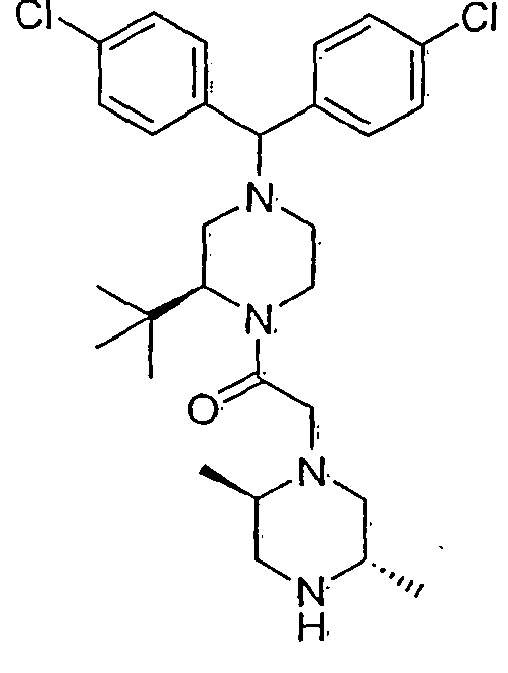

LCMS: MH+=573; mp=50-85 °C 609.70 

LCMS: MH+=573; mp=90-97 °C -

- The product from Preparative Example 238 (0.20 g, 0.41 mmol) in CH2Cl2 (4.0 mL) was treated with Ac2O (0.038 mL, 1.0 eq) and TEA (0.057 mL, 1.0 eq.) and the resulting solution stirred at room temperature 5 hours. The reaction was quenched by the addition of saturated NaHCO3 and extracted with CH2Cl2. The combine organics were purified by flash chromatography using a 2.5% to 5% (10% NH4OH in MeOH) in CH2Cl2 solution as eluent to give the diacetate (0.12 g, 50% yield). This product was dissolved in MeOH (5.0 mL) and treated with 1 N NaOH. The resulting solution was stirred at room temperature 5 hours. The reaction mixture was concentrated under reduced pressure and the crude residue purified by preparative thin layer chromatography (TLC) using a 5% (10% NH4OH in CH2Cl2 solution as eluent (0.053 g, 53% yield). LCMS: MH+ = 526; mp = 132-137°C.
-

- The above compounds were prepared through the separation of diastereomers of the compound from Example 609.60 using preparative HPLC with a CHIRALPAK AD column using a 95 : 5 hexanes : IPA mix with 0.1% DEA as eluent:
- Example 609.61 (first eluting isomer-1): LCMS: MH+=602.
- Example 609.62 (second eluting isomer-2): LCMS: MH+=602.
-

- The above compounds were prepared through the separation of diastereomers of the compound from Example 609.60 using preparative HPLC with a CHIRALPAK AD column using a 95 : 5 hexanes : IPA mix with 0.1% DEA as eluent:
- Example 609.63 (first eluting isomer-1): LCMS: MH+=603.
- Example 609.64 (second eluting isomer-2): LCMS: MH+=603.
-

- A solution of the compound from Example 608.21 (0.053 g, 0.09 mmol) was stirred in MeOH (1.0 mL) and 1 N NaOH (0.1 mL) at room temperature overnight. The reaction mixture was concentrated under reduced pressure. The crude product was dissolved in CH2Cl2 (1 mL) and HOBt (0.010 g), dimethylamine hydrochloride (0.015 g), DEC (0.015 g) and TEA (0.06 mL) were added and the resulting mixture stirred at room temperature overnight. The reaction mixture was quenched by the addition of saturated NaHCO3 and the resulting mixture was extracted with CH2Cl2. The combined organics were dired over Na2SO4, filtered, and concentrated under reduced pressure. The crude product was purified by flash chromatography using a 10% (10%NH4OH in MeOH solution) in CH2Cl2 as eluent (0.019 g, 54% yield): LCMS: MH+=577; mp=64-68°C.
- The product from Example 609 (0.05 g, 0.10 mmol) in acetone (2.0 mL) was treated with Mel (0.01 mL, 1.1 eq.) and K2CO3 (0.066 g, 5 eq.) and the resulting solution stirred at room temperature overnight. The reaction mixture was concentrated under reduced pressure and the crude product purified by flash chromatography using a 5% (10% NH4OH in MeOH) in CH2Cl2 solution as eluent (0.051 g, 94% yield).LCMS: MH+ = 541;
mp = 64-66°C. -

- TFA (4.0 mL) was added to a solution of the product from Preparative Example 172 (2.00 g, 3.86 mmol) in anhydrous CH2Cl2 (40 mL) at 0°C under N2. The mixture was stirred at 0°C for 15 min, then 16 mL of TFA was added and the stirring was continued for another 30 min at 0°C. The mixture was poured onto solid K2CO3 (50 g), H2O (200 mL) was added, and the mixture was extracted with CH2Cl2 (4 x 30 mL). The extracts were dried over Na2SO4, filtered, and the solvent was evaporated. The sticky solid was dissolved in anhydrous CH2Cl2 (30 mL), and Ac2O (0.79 g, 7.7 mmol) and TEA (1.95 g, 19.3 mmol) were added. The mixture was stirred under N2 for 24 hrs, poured into sat. NaHCO3 (50 mL), and extracted with CH2Cl2 (2 x 30 mL). The combined extracts were dried over Na2SO4 and filtered. The residue was purified by flash chromatography using 7 % MeOH (10% NH4OH) in CH2Cl2 to give 1.63 g (92 %) of a solid. LCMS: MH+= 462; mp = 65-71 °C.
- By essentially the same procedure set forth in Preparative Example 611, using the starting materials in column 2, the products given in column 3 were prepared:
Prep. Ex. Column 2 Column 3 CMPD 611.1 

LCMS: MH+ = 556 Mp = 78-85°C. 611.2 

LCMS: MH+ = 624 Mp = 80-85°C 611.3 

LCMS: MH+ = 522 Mp = 78-85°C 611.4 

LCMS: MH+ = 612 Mp = 70-76°C 611.5 

LCMS:MH+ = 556 Mp = 76-83°C 611.6 

LCMS: MH+ = 554 Mp = 90-104°C 611.7 

LCMS: MH+ = 576 Mp = 64-70°C 611.8 

LCMS: MH+ = 608 Mp = 84-89°C 611.9 

611.10 

LCMS:MH+= 534 Mp = 58-61°C 611.11 

LCMS: MH+ = Mp = 69-75°C 611.12 

LCMS: MH+ = 596 Mp = 108-117°C 611.13 

LCMS: MH+ = 556 Mp = 69-76°C 611.14 

LCMS: MH+ = 542 Mp = 82-88°C 611.15 

LCMS: MH+ = 564 Mp = 71-77°C 611.16 

LCMS: MH+ = 554 Mp = 95-98°C 611.17 

LCMS: MH+ = 554 Mp = 93-96°C 611.18 

LCMS: MH+ = 556 Mp = 65-67°C 611.18 

LCMS:MH+ = 556 Mp = 70-72°C 611.19 

LCMS: MH+ = 530 Mp = 73-76°C 611.20 

LCMS: MH+ = 530 Mp = 74-77°C 611.21 

LCMS: MH+ = 608 Mp = 84-87°C 611.22 

LCMS: MH+ = 608 Mp = 91-94°C 611.23 

LCMS: MH+ = 596 Mp = 92-96°C 611.24 

LCMS:MH+ = 596 Mp = 107-110°C -

- TFA (4.0 mL) was added to a solution of the product from Preparative Example 172 (2.00 g, 3.86 mmol) in anhydrous CH2Cl2 (40 mL) at 0°C under N2. The mixture was stirred at 0°C for 15 min, then 16 mL of TFA was added and the stirring was continued for another 30 min at 0°C. The mixture was poured onto solid K2CO3 (50 g), H2O (200 mL) was added and the mixture was extracted with CH2Cl2 (4 x 30 mL). The extracts were dried over Na2SO4, filtered, and the solvent was evaporated. The sticky solid was dissolved in anhydrous CH2Cl2 (30 mL), and TEA (1.95 g, 19.3 mmol) and TMSNCO (4.44 g, 38. 6 mmol) were added. The mixture was stirred under N2 for 3 hrs, poured into sat. NaHCO3 (200 mL), and extracted with CH2Cl2 (2 x 30 mL). The combined extracts were dried over Na2SO4, filtered, and the solvent was evaporated. The residue was purified by flash chromatography using 11 % MeOH (10% NH4OH) in CH2Cl2 to give 1.51 g (85 %) of a solid. LCMS: MH+ = 463; mp = 100-107°C.
- By essentially the same procedure set forth in Preparative Example 612, using the starting materials in column 2, the products given in column 3 were prepared:
Prep. Ex. Column 2 Column 3 CMPD 612.1 

LCMS: MH+ = 557 Mp = 108-114°C 612.2 

LCMS: MH+ = 625 Mp = 114-120°C 612.3 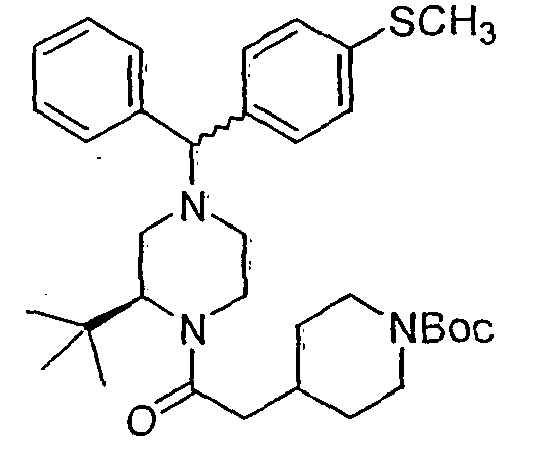

LCMS: MH+ = 523 Mp = 105-112°C 612.4 
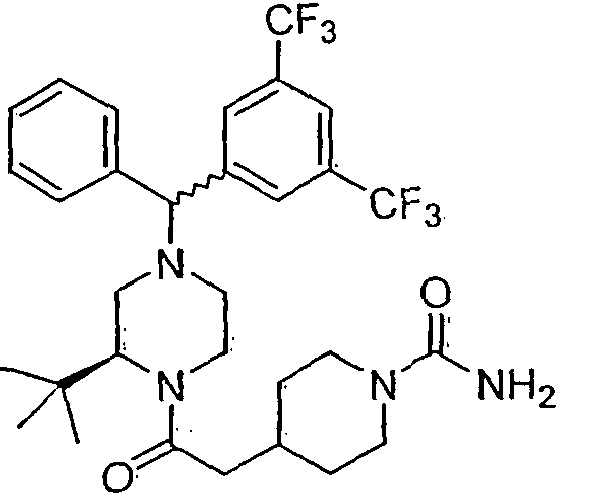
LCMS: MH+ = 613 Mp = 104-109°C 612.5 

LCMS: MH+ = 557 Mp = 107-113°C 612.6 

LCMS: MH+ = 555 Mp = 132-141°C 612.7 

LCMS: MH+ = 577 Mp = 98-105°C 612.8 
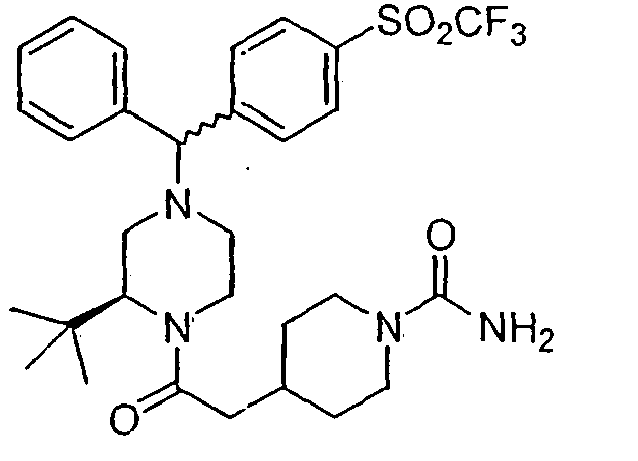
LCMS: MH+ = 609 Mp = 110-115°C -

- A mixture of the product from Preparative Example 239 (30 mg, 0.10 mmol), the product from Preparative Example 76 (30 mg, 0.11 mmol), Nal (15 mg, 0.10 mmol), and K2CO3 (60 mg, 0.45 mmol) in anhydrous CH3CN (1 mL) was stirred and refluxed under N2 for 24 hrs. The mixture was poured into 5 % K2CO3 (30 mL) and extracted with CH2Cl2 (3 x 10 mL). The combined extracts were dried over Na2SO4, the solvent was evaporated, and the residue was purified by flash chromatography using 3 % MeOH (10% NH4OH) in CH2Cl2 to give 36 mg (66 %) of a solid. LCMS: MH+ = 546; mp = 113-120°C.
- By essentially the same procedure set forth in Example 613, using the chlorides in Column 2 of Table 16, the products in Column 3, Table 16 (CMPD) were prepared.
TABLE 16 Ex. Column 2 Column 3 CMPD 614 

LCMS: MH+ = 497 615 

LCMS: MH+ = 546; mp = 110-115°C. 616 

LCMS: MH+ = 552; mp = 95-100°C. 617 

LCMS: MH+ = 598; mp = 95-100°C. 618 

LCMS: MH+ = 502. 619 

LCMS: MH+ = 503; mp = 82-87°C. 620 

LCMS: MH+ = 546; mp = 105-109°C. 621 
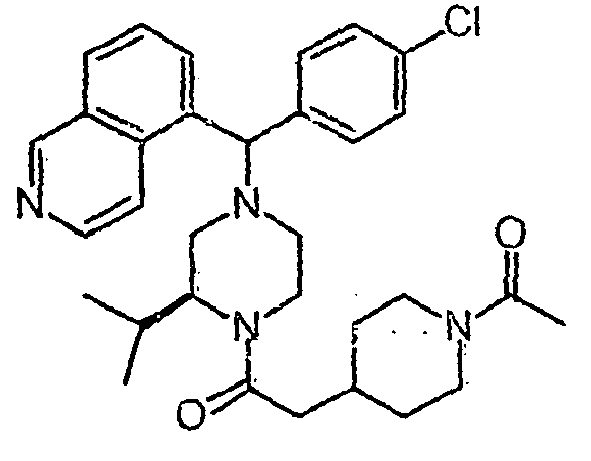
LCMS: MH+ = 547; mp = 115-121°C. 622 

LCMS: MH+ = 547; mp = 103-109°C. 623 

LCMS: MH+ = 547; mp = 111-117°C. 624 

LCMS: MH+ = 596; mp = 95-101°C. 625 

LCMS: MH+ = 547; mp = 116-122°C. 626 
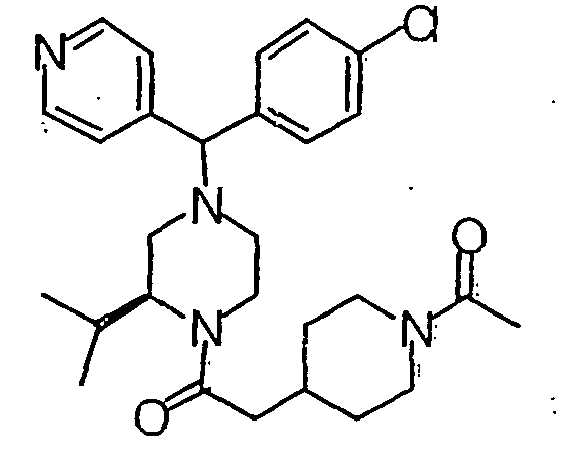
LCMS: MH+ = 497. 627 

LCMS: MH+ = 502; mp = 77-85°C. 628 

LCMS: MH+ = 474; mp = 50-56°C. -

- A mixture of the product from Preparative Example 240 (30 mg, 0.10 mmol), the product from Preparative Example 76 (30 mg, 0.11 mmol); Nal (15 mg, 0.10 mmol), and K2CO3 (60 mg, 0.45 mmol) in anhydrous CH3CN (1 mL) was stirred and refluxed under N2 for 24 hrs. The mixture was poured into 5% K2CO3 (30 mL) and extracted with CH2Cl2 (3 x 10 mL). The combined extracts were dried over Na2SO4, the solvent was evaporated, and the residue was purified by flash chromatography using 11 % MeOH (10% NH4OH) in CH2Cl2 to give 27 mg (49 %) of a solid. LCMS: MH+ = 547; mp = 128-138°C.
- By essentially the same procedure set forth in Example 629, using the chlorides in column 2 of Table 17, the products in column 3, Table 17 (CMPD) were prepared.
TABLE 17 Ex. Column 2 Column 3 CMPD 630 

LCMS: MH+ = 548; mp = 141-145°C. 631 

LCMS: MH+ = 548; mp = 127-135°C. 632 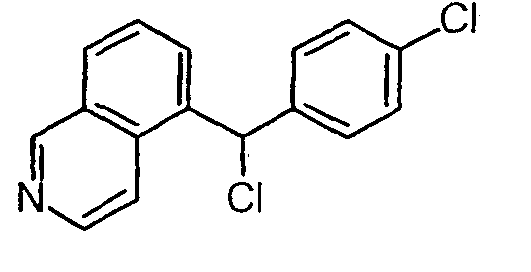

LCMS: MH+ = 548; mp = 143-147°C. 633 

LCMS: MH+ = 548; mp = 136-140°C. 634 

LCMS: MH+ = 548; mp=135-142°C. 635 

LCMS: MH+ = 597; mp = 122-128°C. -

- The product from Preparative Example 242 (1 g) (3.39 mmoles) was dissolved in anhydrous acetonitrile (30 mL). To the stirred solution under argon, was added bis-(4-chlorophenyl)methyl chloride (1.04 g (3.39 mmoles), anhydrous potassiun iodide (562mg) (3.39mmoles) and anhydrous potassium carbonate (468 mg) (3.39 mmoles) and the mixture was stirred at 25°C for 235h. The mixture was poured into dichloromethane (800 mL) and extracted with saturated aqueous NaHCO3. The aqueous phase was re-extracted with dichloromethane (300 mL) and the combined dichloromethane layers were dried (MgSO4), filtered and evaporated to dryness. The residue was chromatographed on a silica gel column (25X5cm) using 1.5% increasing to 6% (10% NH4OH in methanol)-dichloromethane as the eluant to give the product (271.8mg; 15%): HRFABMS: m/z 530.2329 (MH+), calcd for C29H38Cl2N3O2 m/z 530.2341; [α]D 25°C +33.0° (c=2.600mg/mL MeOH); δH (CDCl3) 0.89 (3H,d, CH3), 1.07 (3H, d, CH3), 2.08 (3H, s, CH3CON-), 5.22 (1 H, s, Ar2CH-) and 7.23-7.35ppm (8H, m, ArH); δC (CDCl3) CH3: 19.2/19.5, 20.1, 21.7; CH2: 32.2/33.0, 32.2/33.0, 39.2/39.4, 39.2/39.4, 37.8, 41.9/42.2, 43.1 /43.7; CH: 26.6/27.0, 33.2, 46.8, 60.0, 66.1, 129.1/129.4, 129.1/129.4, 129.1/129.4,129.1/129.4, 129.41129.8, 129.4/129.8, 129.4/129.8, 129.4/129.8; C: 133.2/133.4, 133.2/133.4, 139.4/140.6, 139.4/140.6, 169.0, 170.3/170.6.
-
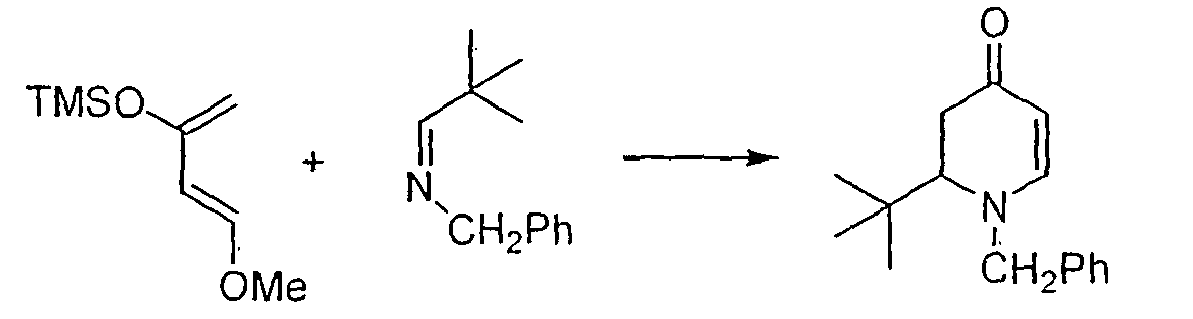
- Benzylimine of pivalaldehyde (5.08 g, 29 mmol) was dissolved in anhydrous THF (10 mL), Danishefsky's diene (5.00 g, 29 mmol), then ZnCl2 (0.5 M in THF, 58 mL, 29 mmol) were added under N2. The mixture was stirred at rt for 4 hrs, poured into H2O (500 mL), and extracted with EtOAc (4 x 50 mL). The combined extracts were washed with brine (100 mL), dried over Na2SO4, filtered, and the solvent was evaporated. Chromatography on silicagel with hexane: EtOAc (1:3) afforded pale yellow oil (2.68g, 38%).
-

- Solution of the product from Preparative Example 637 (2.50g, 10.3 mmol) in anhydrous THF (50 mL) was stirred under N2 at -78°C. L-Selectride (Aldrich), (1.0 M in THF, 10.3 mL, 10.3 mmol) was added slowly, the mixture was stirred at -78°C for 1 hr, then at room temperature (rt) for 1 hr after which it was poured into H2O (500mL) and extracted with CH2Cl2 (4 x 50 mL). The combined extracts were washed with brine (100 mL), dried over Na2SO4, filtered, and the solvent was evaporated. Chromatography on silicagel with hexane: EtOAc (4:1) afforded a pale yellow solid (1.31 g, 52%).
-

- Diethyl (dibromomethyl)phosphonate (1.27 g, 4.10 mol) was dissolved under N2 in anhydrous THF (10 mL) and the solution was cooled to -78°C. Lithium diisopropylamide (2.0 M in THF/heptane 1.70 mL, 3.4 mmol) was added and the solution was stirred at -78°C for 30 min. Solution of the product from Preparative Example 638 was in dry THF (6 mL) was added and the mixture was stirred at -78°C for 1 hr, then at rt for 6 days. The mixture was poured into H2O (250 mL) and extracted with CH2Cl2 (3 x 50 mL). The combined extracts were dried over Na2SO4, filtered and the solvent was evaporated. Chromatography on silicagel with hexane: EtOAc (30:1) afforded a colorless oil (388mg, 47%).
-

- Dimethoxyethane (15 mL) and H2O (3 mL) were added to a mixture of the product from Preparative Example 639 (388 mg, 0.97 mmol), phenylboronic acid (366 mg, 3.00 mmol), PdCl2(PPh3)2 (140 mg, 0.20 mmol), and Na2CO3 (1.06 g, 10.0 mmol) and the mixture was stirred and refluxed under N2 for 24 hr. The mixture was poured into H2O (300 mL) plus brine (30 mL) and extracted with CH2Cl2 (5 x 40 mL). The combined extracts were dried over Na2SO4, filtered and the solvent was evaporated. Chromatography on silicagel with hexane: EtOAc (30:1) afforded a pale yellow oil (208mg, 54%).
-

- A solution of the product from Preparative Example 640 (208 mg, 0.52 mmol) in anhydrous EtOH (8 mL) and a solution of ammonium formate (756 mg, 12.0 mmol) in anhydrous MeOH (8 mL) were added under N2 to 10% Pd/C (250 mg). The mixture was stirred at rt for 24 hr, then CH2Cl2 (100 mL) was added, the mixture was filtered through Celite, and the solvent was evaporated. Chromatography on silicagel with 20:1 CH2Cl2: MeOH/NH4OH (10/1) afforded 73 mg of a white solid (isomer 1 =Preparative Example 641, fast eluting) and 20 mg of a colorless wax (isomer 2= Preparative Example 642, slow eluting). Both diastereomers are racemic.
-

- The product shown in the reaction above was prepared using the isomer 1 product of Preparative Example 641 by the procedure that is essentially identical to that described in Preparative Example 19 and afforded a colorless wax.
-

- The product shown in the reaction above was prepared using the isomer 1 product from Preparative Example 643 by a procedure that is essentially identical to that described in Preparative Example 611 and afforded a colorless solid. LCMS: MH+ = 475; mp = 61-65°C.
-

- Acetylpiperidine acetic acid (85 mg, 0.50 mmol) was dissolved in anhydrous PhCH3 (1 mL) and TEA (0.06 mL). To the solution was added pivaloyl chloride (0.05 mL) under N2 at 0°C and the mixture was stirred at 0°C for 1 hr. A solution of the isomer 2 product from Preparative Example 642 (18 mg, 0.058 mmol) in anhydrous PhCH3 (0.5 mL) was added, followed by TEA (0.10 mL) and the mixture was stirred at rt for 4 days. The mixture was poured into saturated aqueous NaHCO3 (40 mL) and extracted with CH2Cl2 (4 x 15 mL). The combined extracts were dried over Na2SO4, filtered and the solvent was evaporated. Chromatography on silicagel with 50:1 CH2Cl2: MeOH/NH4OH (10/1) afforded 22 mg (79 %) of a colorless solid. LCMS: MH+ = 475; mp = 49-54°C.
-

- BuLi (2.5 M in hexanes, 3.5 mL, 8.75 mmol) was added under N2 to a solution of diphenylmethane (1.68 g, 10.0 mmol) in anhydrous Et2O (25 mL). The solution was refluxed for 16 hr, cooled to rt, then a solution of the product from Preparative Example 638 (490 mg, 2.0 mmol) in Et2O (5 mL) was added and the mixture was stirred at rt for 6 hr. The mixture was poured into H2O plus brine and extracted with CH2Cl2. The combined extracts were dried over Na2SO4, filtered and the solvent was evaporated. Chromatography on silicagel afforded two colorless solids: first (isomer 1= Preparative Example 646 177 mg, 21 %) eluted with 15:1 CH2Cl2:EtOAc, second (isomer 2 = Preparative Example 647, 250 mg, 30%) eluted with 3:1 CH2Cl2:EtOAc.
-

- Anhydrous EtOH (3 mL) was added under N2 to a mixture of the isomer 1 product from Preparative Example 646 (90 mg, 0.22 mmol), 10 % Pd/C (40 mg) and ammonium formate (200 mg, 3.2 mmol). The mixture was stirred and refluxed for 6 hr, then CH2Cl2 (30 mL) was added and the mixture was filtered through Celite. The solvent was evaporated and the residue was purified by chromatography on silicagel with 20:1 CH2Cl2: MeOH/NH4OH (10/1). A white solid was obtained in an amount of 48 mg (69%).
-

- The product shown in the reaction above was prepared using the isomer 2 product of Preparative Example 647 by a procedure that is essentially identical to that described in Preparative Example 648 and afforded a colorless wax.
-

- Acetylpiperidine acetic acid (85 mg, 0.50 mmol) was dissolved in anhydrous PhCH3 (1 mL) and TEA (0.10 mL). To the solution was added pivaloyl chloride (0.05 mL) under N2 at 0°C and the mixture was stirred at 0°C for 1 hr. A solution of the product from Preparative Example 648 (40 mg, 0.124 mmol) in anhydrous PhCH3 (1.0 mL) was added, followed by TEA (0.30 mL) and the mixture was stirred at rt for 3 days. The mixture was poured into saturated aqueous NaHCO3 (40 mL) and extracted with CH2Cl2 (4 x 15 mL). The combined extracts were dried over Na2SO4, filtered and the solvent was evaporated. The residue was dissolved in MeOH (5 mL), H2O (0.5 mL) was added, then KOH (250 mg) and the mixture was stirred at rt for 4 hr. The mixture was poured into saturated aqueous NaHCO3 (40 mL) and extracted with CH2Cl2 (4 x 15 mL). The combined extracts were dried over Na2SO4, filtered and the solvent was evaporated. Chromatography on silicagel with 30:1 CH2Cl2: MeOH/NH4OH (10/1) afforded 31 mg (51 %) of white solid. LCMS: MH+ = 491; mp = 100-106°C.
-

- The product shown in the reaction above was prepared using the isomer 2 product of Preparative Example 649 by the procedure that is essentially identical to that described in Example 650 above and afforded a white solid. LCMS: MH+ = 491; mp = 108-115°C.
Claims (30)
- A compound of the formula (I):
 R1 and R2 are the same or different and are independently selected from the group consisting of aryl, heteroaryl, arylalkyl and heteroarylalkyl, each optionally substituted with one to six groups selected from the group consisting of:a) halogen;b) -OCF3 or -OCHF2;c) -CF3;d) -CN;e) alkyl or R18-alkyl;f) heteroalkyl or R18-heteroalkyl;g) aryl or R18-aryl;h) heteroaryl or R18-heteroaryl;i) arylalkyl or R18-arylakyl;j) heteroarylalkyl or R18-heteroarylalkyl;k) hydroxy;l) alkoxy;m) aryloxy;n) -SO2-alkyl;o) -NR11R12;p) -N(R11)C(O)R13,q) methylenedioxy;r) difluoromethylenedioxy;s) trifluoroalkoxy;t) -SCH3 or -SCF3; andu) -SO2CF3 or -NHSO2CF3;R3 is H, -OH, alkoxy or alkyl, provided that when X is N, R3 is not -OH or alkoxy;R4, R5, R7 and R8 are the same or different and are independently selected from the group consisting of H, -OH, -OR14, -NR11R12, -N(R11)C(O)R13, alkyl, heteroalkyl, aryl, cycloalkyl, arylalkyl, heteroaryl, heteroarylalkyl, heterocycloalkyl,
 R6 is selected from the group consisting of -C(O)R15 and -SO2R15;R9 and R10 are the same or different and are independently selected from the group consisting of H, F, -CF3, alkyl, cycloalkyl, arylalkyl, heteroalkyl, heteroarylalkyl, heterocycloalkyl, hydroxy, alkoxy, aryloxy, -NR11R12 and -N(R11)C(O)R13, provided that when Z is N, then R9 and R10 are each not F, hydroxy, alkoxy, aryloxy, -NR11R12 or -N(R11)C(O)R13;R11 is selected from the group consisting of H, alkyl, aryl and heteroaryl;R12 is selected from the group consisting of H, alkyl, aryl and heteroaryl;R13 is selected from the group consisting of alkyl, alkoxy and aryloxy;R14 is selected from the group consisting of H, alkyl, aryl and heteroaryl;R15 is selected from the group consisting of -NR16R17, -OR16, alkyl, cycloalkyl, heterocycloalkyl, aryl, arylalkyl and heteroarylalkyl, each optionally substituted with R18;R16 and R17 are the same or different and are independently selected from the group consisting of H, alkyl, aryl, arylalkyl, heteroalkyl and heteroaryl, each optionally substituted with R18;R18 is one to four substituents selected from the group consisting of lower alkyl, halo, cyano, nitro, haloalkyl, hydroxy, alkoxy, alkoxy carbonyl, carboxy, carboxyalkyl, carboxamide, mercapto, amino, alkylamino, dialkylamino, sulfonyl, sulfonamido, cycloalkyl, heterocycloalkyl, heterocycloalkylalkyl, aryl and heteroaryl;X and Z are the same or different and are independently selected from the group consisting of C and N; and whereinalkyl represents (C1-C20) alkyl.
 - The compound of claim 1 wherein:R1 and R2 are the same or different and are independently selected from the group consisting of aryl and heteroaryl, each optionally substituted with one to six groups selected from the group consisting of:a) halogen;b) -OCF3;c) -CF3;d) -CN;e) (C1-C20)alkyl or R18-(C1-C20) alkyl;f) heteroalkyl or R18-heteroalkyl;g) aryl or R18-aryl;h) heteroaryl or R18-heteroaryl;i) arylalkyl or R18-arylalkyl;j) heteroarylalkyl or R18-heteroarylalkyl;k) hydroxy;l) alkoxy;m) aryloxy;n) -SO2-alkyl;o) -NR11R12;p) -N(R11)C(O)R13,q) methylenedioxy;r) difluoromethylenedioxy;s) trifluoroalkoxy;t) -SCH3; andu) -SO2CF3;R4, R5, R7 and R8 are the same or different and are independently selected from the group consisting of H, alkyl, heteroalkyl, aryl, cycloalkyl, arylalkyl, heteroaryl, heteroarylalkyl, heterocycloalkyl, -OR14, -NR11R12,

 R11 is selected from the group consisting of H and alkyl;
 - The compound of claim 1 wherein:R1 and R2 are the same or different and are independently selected from the group consisting of aryl and heteroaryl, each optionally substituted with one to six groups selected from the group consisting of:a) halogen;b) -OCF3;c) -CF3;d) trifluoroalkoxy;e) (C1-C6)alky or R18-(C1-C6)alkyl;f) heteroalkyl or R18-heteroalkyl;g) aryl or R18-aryl;h) arylalkyl or R18-arylalkyl;i) heteroarylalkyl or R18-heteroarylalkyl;j) alkoxy;k) -SO2-alkyl; andl) -SO2CF3;R4, R5, R7 and R8are the same or different and are independently selected from the group consisting of H, alkyl, heteroalkyl, aryl, cycloalkyl, arylalkyl, heteroaryl, heteroarylalkyl, heterocycloalkyl, -OR14, -NR11R12,

 R11 is selected from the group consisting of H and alkyl; andZisC.
 - The compound of claim 1 wherein,R1 and R2 are the same or different and are independently selected from the group consisting of aryl and heteroaryl; optionally substituted with one to six groups selected from the group consisting of:a) halogen;b) -OCF3;c) -CF3;d) alkoxy;e) trifluoralkoxy;f) (C1-C6)alkyl;g) -SO2-alkyl; andh) -SO2CF3;R3 is H or -OH, provided that when X is N, R3 is not -OH;R4 and R5 are the same or different and are each independently selected from the group consisting of H, (C1-C6)alkyl, heteroalkyl and
 R7 is selected from the group consisting of H, alkyl, -OR14 and -NR11R12, provided that when X is N, R7 is not -OR14 or -NR11R12;R8 is selected from the group consisting of H, alkyl, aryl and heteroaryl;R11 is selected from the group consisting of H and alkyl; andZ is C.
 - The compound of claim 1 wherein:R1 and R2 are the same or different and are independently selected from the group consisting of aryl and heteroaryl; optionally substituted with one to six groups selected from the group consisting of:a) halogen;b) -OCF3,c) alkoxy;d) trifluoroalkoxy;e) -CF3;f) -SO2-alkyl; andg) -SO2CF3;R3 is H;R4 and R5 are the same or different and are independently selected from the group consisting of H, (C1-C6)alkyl, heteroalkyl, and
 R6 is selected from the group consisting of -C(O)R15 and -SO2R15;R7 is selected from the group consisting of H, alkyl, -OR14 and -NR11R12, provided that when X is N, R7 is not -OR14 or -NR11R12 ;R8 is selected from the group consisting of H, alkyl, aryl and heteroaryl;R11 is H or alkyl; andZisC.
 - The compound of claim 1 wherein,R1 and R2 are the same or different and are independently selected from the group consisting of phenyl and pyridyl; optionally substituted with one to six groups selected from the group consisting of:a) Br, F or Cl;b) -OCF3;c) -CF3;d) methoxy;e) ethoxy;f) cyclopropylmethoxy;g) -OCH2CF3;h) -SO2-alkyl; andi) -SO2CF3R3 is H;R4 and R5 are the same or different and are independently selected from the group consisting of H, methyl, ethyl, isopropyl, t-butyl and heteroalkyl;R7 is selected from the group consisting of H, OR11 and alkyl;R8, R9, R10, R11, R12 and R14 are each independently selected from the group consisting of H and alkyl;R13 is alkyl;R15 is selected from the group consisting of -NR16R17,-OR16 and alkyl;R16 and R17 are the same or different and are independently selected from the group consisting of H and alkyl, provided that when R15 is -OR16, R16 is not H; andZ is C.
- The compound of claim 1, or a pharmaceutically acceptable salt or solvate thereof, selected from the group consisting of:


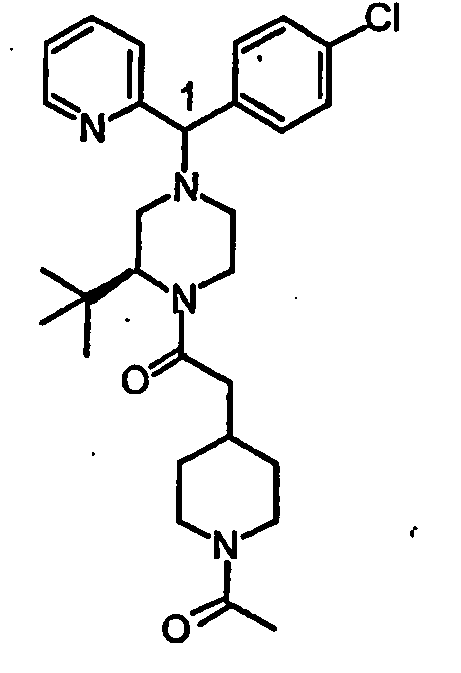


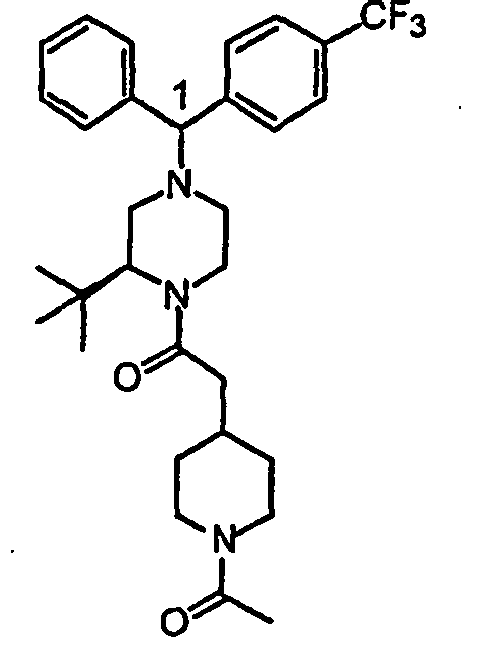


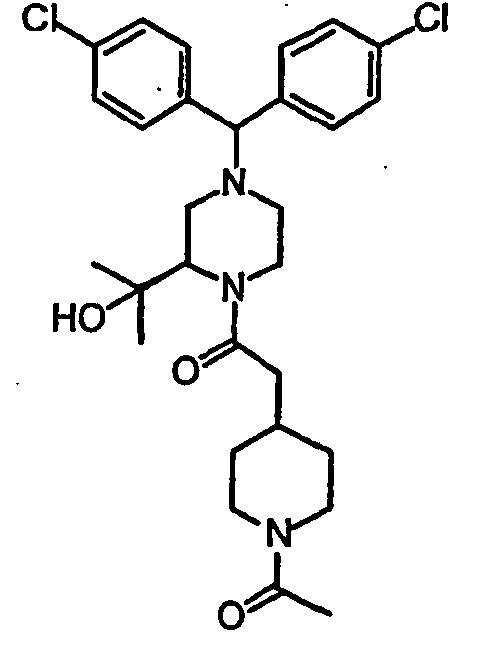


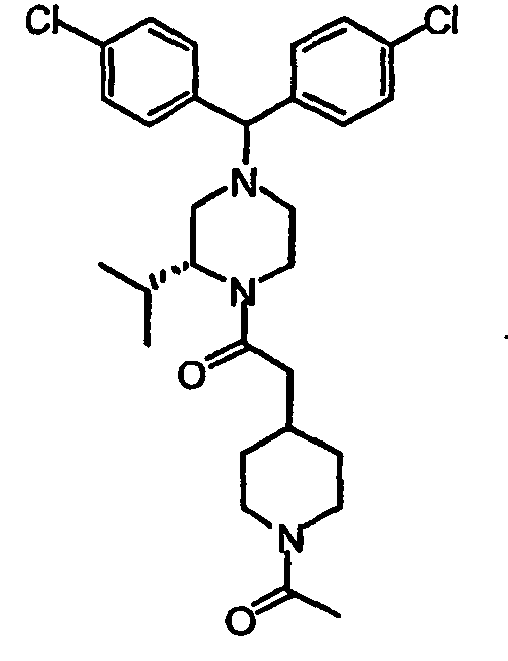


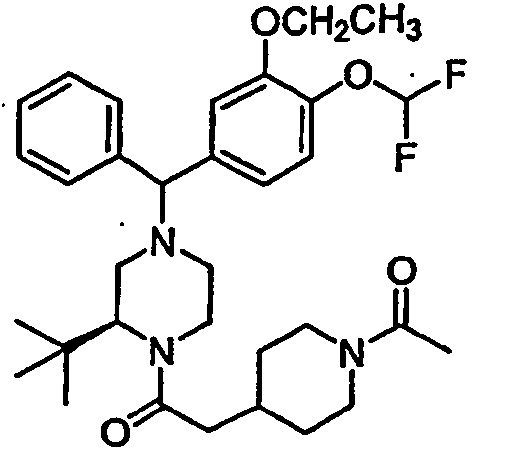


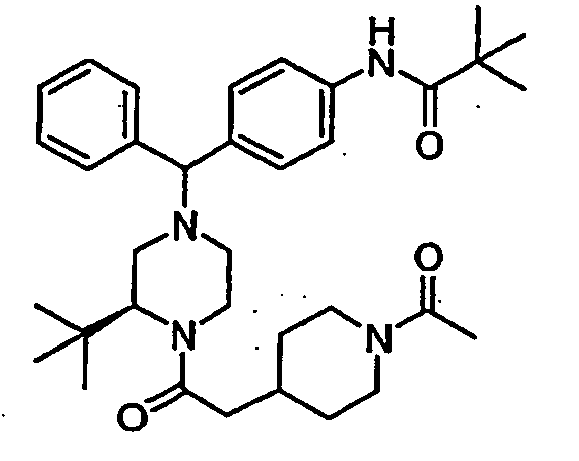


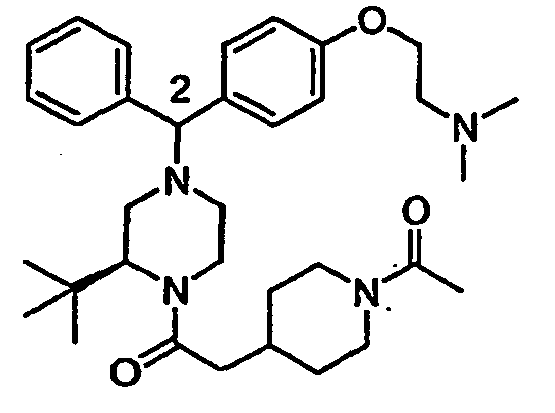


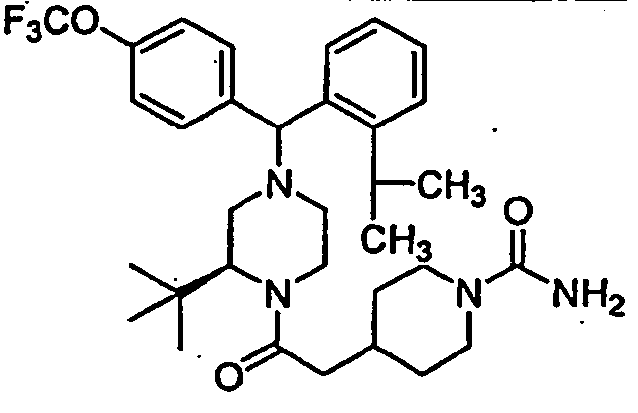


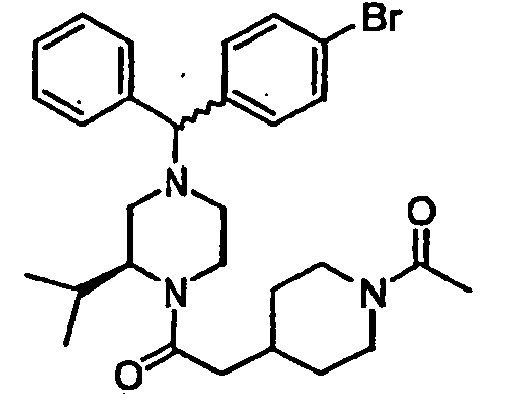


- The compound according to Claim 1,or a pharmaceutically acceptable salt or solvate thereof selected from the group consisting of:


- The compound according to claim 8, which is:

- The compound according to claim 8, which is:

- The compound according to claim 8, which is:

- The compound according to claim 8, which is:

- The compound according to claim 8, which is:

- The compound according to claim 8, which is:

- The compound according to claim 8, which is:

- The compound according to claim 8, which is:

- A pharmaceutical composition comprising the compound of Claim 1, or a pharmaceutically acceptable salt or solvate thereof, and a pharmaceutically acceptable carrier therefor.
- The use of the compound of claim 1, or a pharmaceutically acceptable salt or solvate thereof, in the manufacture of a medicine for the treatment or prevention of an androgen dependent disease.
- The use of claim 18, wherein the androgen dependent disease is selected from the group consisting of prostate cancer, benign prostatic hyperplasia, prostatic intraepithelial neoplasia, hirsutism, acne, androgenic alopecia, polycystic ovary syndrome and combinations thereof.
- The use of claim 19, wherein the androgen dependent disease is selected from the group consisting of prostate cancer, benign prostatic hyperplasia and prostatic intraepithelial neoplasia.
- The use of the compound of claim 1, or a pharmaceutically acceptable salt or solvate thereof, in the manufacture of a medicine for the inhibition of 17β-hydroxysteroid dehydrogenase.
- The use of the compound of claim 1, or a pharmaceutically acceptable salt or solvate thereof, in combination with at least one anti-androgenic agent in the manufacture of a medicine for the treatment or prevention of an androgen-dependent disease.
- The use of claim 22, wherein the anti-androgenic agent is selected from the group consisting of inhibitors of 5α-reductase type 1 and/or type 2, Flutamide, nicalutamide, bicalutamide, LHRH agonists, LHRH antagonists, inhibitors of 17α-hydroxylase/C17-20 lyase, inhibitors of 17β-Hydroxysteroid dehydrogenase/17β-oxidoreductase isoenzymes, and combinations thereof.
- A use of the compound of claim 1, or a pharmaceutically acceptable salt or solvate thereof, in combination with at least one agent useful in the treatment or prevention of benign prostatic hyperplasia in the manufacture of a medicine for the treatment or prevention of benign prostatic hyperplasia.
- The use claim 24, wherein the agent useful in the treatment or prevention of benign prostatic hyperplasia is an alpha-1 adrenergic antagonist.
- The use of the compound of claim 1, or a pharmaceutically acceptable salt or solvate thereof in combination with at least one anti-alopecia agent in the manufacture of a medicine for the treatment or prevention of hair loss.
- The use of claim 26, wherein the anti-alopecia agent is a potassium channel agonist or a 5α-reductase inhibitor.
- The use of the component of claim 1, or a pharmaceutically acceptable salt or solvate thereof in combination with an effective amount of one or more of the group consisting of chemotherapeutic agent, biological agent, surgery and radiation therapy in the manufacture of a medicine for the treatment or prevention of a proliferative disease.
- The use of claim 28, wherein the chemotherapeutic agent is:(a) an antineoplastic agent selected from the group consisting of Uracil mustard, Chlormethine, Cyclophosphamide, Ifosfamide, Melphalan, Chlorambucil, Pipobroman, Triethylenemelamine, Triethylenethiophosphoramine, Busulfan, Carmustine, Lomustine, Streptozocin, Dacarbazine, Temozolomide, Methotrexate, 5-Fluorouracil, Floxuridine, Cytarabine, 6-Mercaptopurine, 6-Thioguanine, Fludarabine phosphate, Pentostatine, Gemcitabine, Vinblastine, Vincristine, Vindesine, Bleomycin, Dactinomycin, Daunorubicin, Doxorubicin, Epirubicin, Idarubicin, Paclitaxel (Taxol), Mithramycin, Deoxycoformycin, Mitomycin-C, L-Asparaginase, Interferons, Etoposide, Teniposide 17α-Ethinylestradiol, Diethylstilbestrol, Testosterone, Prednisone, Fluoxymesterone, Dromostanolone propionate, Testolactone, Megestrolacetate, Tamoxifen, Methylprednisolone, Methyltestosterone, Prednisolone, Triamcinolone, Chlorotrianisene, Hydroxyprogesterone, Aminoglutethimide, Estramustine, Medroxyprogesteroneacetate, Leuprolide, Flutamide, Toremifene, goserelin, Cisplatin, Carboplatin, Hydroxyurea, Amsacrine, Procarbazine, Mitotane, Mitoxantrone, Levamisole, Navelbene, CPT-11, Anastrazole, Letrazole, Capecitabine, Raloxifine, Droloxifine, and Hexamethylmelamine; or(b) a microtubule affecting agent selected from allocolchicine, Halichondrin B, colchicine, colchicine derivatives, dolastatin 10, maytansine, rhizoxin, paclitaxel, paclitaxel derivatives, thiocolchicine, trityl cysteine, vinblastine sulfate, vincristine sulfate, epothilone A, epothilone, discodermolide estramustine, nocodazole and MAP4; and wherein the biological agent is selected from the group consisting of interferon-α, interferon-β and gene therapy; and wherein the proliferative disease is selected from the group consisting of lung cancer, pancreatic cancer, colon cancer, renal cancer, myeloid leukemia, thyroid follicular cancer, myelodysplastic syndrome (MDS), bladder carcinoma, epidermal carcinoma, melanoma; breast cancer, ovarian cancer, prostate cancer and combinations thereof.
- The use of claim 28, wherein the proliferative disease treated is selected from the group consisting of prostate cancer, pancreatic cancer, breast cancer, and ovarian cancer; the chemotherapeutic agent is selected from the group consisting of Cyclophosphamide, 5-Fluorouracil, Temozolomide, Vincristine, Cisplatin, Carboplatin, Gemcitabine, Taxotere, paclitaxel and/or a paclitaxel derivative; and the biological agent is interferon-α.
Priority Applications (1)
| Application Number | Priority Date | Filing Date | Title |
|---|---|---|---|
| SI200230475T SI1423381T1 (en) | 2001-09-06 | 2002-09-05 | 17beta-hydroxysteroid dehydrogenase type 3 inhibitors for the treatment of androgen dependent diseases |
Applications Claiming Priority (3)
| Application Number | Priority Date | Filing Date | Title |
|---|---|---|---|
| US31771501P | 2001-09-06 | 2001-09-06 | |
| US317715P | 2001-09-06 | ||
| PCT/US2002/028181 WO2003022835A1 (en) | 2001-09-06 | 2002-09-05 | 17beta-hydroxysteroid dehydrogenase type 3 inhibitors for the treatment of androgen dependent diseases |
Publications (2)
| Publication Number | Publication Date |
|---|---|
| EP1423381A1 EP1423381A1 (en) | 2004-06-02 |
| EP1423381B1 true EP1423381B1 (en) | 2007-01-03 |
Family
ID=23234950
Family Applications (1)
| Application Number | Title | Priority Date | Filing Date |
|---|---|---|---|
| EP02761567A Expired - Lifetime EP1423381B1 (en) | 2001-09-06 | 2002-09-05 | 17beta-hydroxysteroid dehydrogenase type 3 inhibitors for the treatment of androgen dependent diseases |
Country Status (29)
| Country | Link |
|---|---|
| US (3) | US6903102B2 (en) |
| EP (1) | EP1423381B1 (en) |
| JP (1) | JP4320252B2 (en) |
| KR (1) | KR100991616B1 (en) |
| CN (1) | CN1551878B (en) |
| AR (1) | AR036492A1 (en) |
| AT (1) | ATE350375T1 (en) |
| AU (1) | AU2002326823B2 (en) |
| BR (1) | BR0212378A (en) |
| CA (1) | CA2459311C (en) |
| CY (1) | CY1106521T1 (en) |
| DE (1) | DE60217363T2 (en) |
| DK (1) | DK1423381T3 (en) |
| EC (1) | ECSP045004A (en) |
| ES (1) | ES2276950T3 (en) |
| HU (1) | HUP0402629A3 (en) |
| IL (2) | IL160065A0 (en) |
| MX (1) | MXPA04002167A (en) |
| MY (1) | MY141661A (en) |
| NO (1) | NO327254B1 (en) |
| NZ (1) | NZ530810A (en) |
| PE (1) | PE20030703A1 (en) |
| PL (1) | PL369108A1 (en) |
| PT (1) | PT1423381E (en) |
| RU (1) | RU2315763C2 (en) |
| SI (1) | SI1423381T1 (en) |
| TW (1) | TWI329108B (en) |
| WO (1) | WO2003022835A1 (en) |
| ZA (1) | ZA200401456B (en) |
Families Citing this family (50)
| Publication number | Priority date | Publication date | Assignee | Title |
|---|---|---|---|---|
| US6242469B1 (en) * | 1996-12-03 | 2001-06-05 | Sloan-Kettering Institute For Cancer Research | Synthesis of epothilones, intermediates thereto, analogues and uses thereof |
| US7425565B2 (en) * | 2002-05-09 | 2008-09-16 | Cedars-Sinai Medical Center | Use of benzothiopenes to treat and prevent prostate cancer |
| PE20030705A1 (en) * | 2001-10-17 | 2003-08-21 | Schering Corp | 17BETA-HYDROXIESTEROID DEHYDROGENASE TYPE 3 INHIBITORS FOR THE TREATMENT OF ANDROGEN-DEPENDENT DISEASES |
| US6921769B2 (en) | 2002-08-23 | 2005-07-26 | Sloan-Kettering Institute For Cancer Research | Synthesis of epothilones, intermediates thereto and analogues thereof |
| WO2004018478A2 (en) | 2002-08-23 | 2004-03-04 | Sloan-Kettering Institute For Cancer Research | Synthesis of epothilones, intermediates thereto, analogues and uses thereof |
| US7649006B2 (en) | 2002-08-23 | 2010-01-19 | Sloan-Kettering Institute For Cancer Research | Synthesis of epothilones, intermediates thereto and analogues thereof |
| TW200504033A (en) * | 2002-10-23 | 2005-02-01 | Procter & Gamble | Melanocortin receptor ligands |
| CA2506290C (en) * | 2002-11-18 | 2012-04-24 | Schering Corporation | 17beta-hydroxysteroid dehydrogenase type 3 inhibitors for the treatment of androgen dependent diseases |
| AU2003293555A1 (en) | 2002-12-17 | 2004-07-29 | Schering Corporation | 17 beta-hydroxysteroid dehydrogenase type 3 inhibitors for the treatment of androgen dependent diseases |
| US7754709B2 (en) * | 2003-06-10 | 2010-07-13 | Solvay Pharmaceuticals Bv | Tetracyclic thiophenepyrimidinone compounds as inhibitors of 17β hydroxysteroid dehydrogenase compounds |
| US7524853B2 (en) | 2003-06-10 | 2009-04-28 | Solvay Pharmaceuticals B.V. | Compounds and their use in therapy |
| US7465739B2 (en) | 2003-06-10 | 2008-12-16 | Solvay Pharmaceuticals B.V. | Compounds and their use in therapy |
| US20050153976A1 (en) * | 2003-12-17 | 2005-07-14 | Schering Corporation | Pharmaceutical compositions |
| CA2551737C (en) | 2004-01-07 | 2009-11-10 | Endorecherche, Inc. | Helix 12 directed steroidal pharmaceutical products |
| US7138246B2 (en) * | 2004-03-01 | 2006-11-21 | Bristol-Myers Squibb Company | Methods for identifying or screening for agents that modulate 17β-HSD3 |
| US7417040B2 (en) | 2004-03-01 | 2008-08-26 | Bristol-Myers Squibb Company | Fused tricyclic compounds as inhibitors of 17β-hydroxysteroid dehydrogenase 3 |
| US20080125403A1 (en) | 2004-04-02 | 2008-05-29 | Merck & Co., Inc. | Method of Treating Men with Metabolic and Anthropometric Disorders |
| US7569725B2 (en) | 2004-10-21 | 2009-08-04 | Britsol-Myers Squibb Company | Anthranilic acid derivatives as inhibitors of 17β-hydroxysteroid dehydrogenase 3 |
| US7709516B2 (en) | 2005-06-17 | 2010-05-04 | Endorecherche, Inc. | Helix 12 directed non-steroidal antiandrogens |
| GB0513702D0 (en) | 2005-07-04 | 2005-08-10 | Sterix Ltd | Compound |
| US7601844B2 (en) | 2006-01-27 | 2009-10-13 | Bristol-Myers Squibb Company | Piperidinyl derivatives as modulators of chemokine receptor activity |
| US7615556B2 (en) | 2006-01-27 | 2009-11-10 | Bristol-Myers Squibb Company | Piperazinyl derivatives as modulators of chemokine receptor activity |
| US8884061B2 (en) * | 2006-03-03 | 2014-11-11 | Colorado State University Research Foundation | Compositions and methods of use of electron transport system inhibitors |
| AU2007244960B2 (en) * | 2006-04-24 | 2012-03-01 | Eli Lilly And Company | Substituted pyrrolidinones as inhibitors of 11-beta-hydroxysteroid dehydrogenase 1 |
| EA016415B1 (en) * | 2006-04-24 | 2012-04-30 | Эли Лилли Энд Компани | Inhibitors of 11-beta-hydroxysteroid dehydrogenase 1 |
| SG172685A1 (en) * | 2006-06-28 | 2011-07-28 | Amgen Inc | Glycine transporter-1 inhibitors |
| US20080051380A1 (en) | 2006-08-25 | 2008-02-28 | Auerbach Alan H | Methods and compositions for treating cancer |
| US8080540B2 (en) * | 2006-09-19 | 2011-12-20 | Abbott Products Gmbh | Therapeutically active triazoles and their use |
| US8288367B2 (en) | 2006-11-30 | 2012-10-16 | Solvay Pharmaceuticals Gmbh | Substituted estratriene derivatives as 17BETA HSD inhibitors |
| JP5438976B2 (en) | 2007-02-09 | 2014-03-12 | 株式会社カネカ | Process for producing optically active 2-arylpiperazine derivatives |
| TWI433838B (en) | 2008-06-25 | 2014-04-11 | 必治妥美雅史谷比公司 | Piperidinyl derivative as a modulator of chemokine receptor activity |
| US8501940B2 (en) * | 2008-07-15 | 2013-08-06 | Hoffmann-La Roche Inc. | Tetrahydrocinnoline derivatives |
| US8642622B2 (en) | 2010-06-16 | 2014-02-04 | Bristol-Myers Squibb Company | Piperidinyl compound as a modulator of chemokine receptor activity |
| JP6105585B2 (en) | 2011-08-16 | 2017-03-29 | アイカーン スクール オブ メディスン アット マウント サイナイIcahn School of Medicine at Mt. Sinai | Tricyclic compounds as antitumor agents |
| US20160000787A1 (en) * | 2013-02-26 | 2016-01-07 | Senex Biotechnology, Inc. | Inhibitors of cdk8/19 for use in treating estrogen receptor positive breast cancer |
| CN105518017B (en) | 2013-06-25 | 2020-07-14 | 佛恩多制药有限公司 | Therapeutically active estratriene thiazole derivatives as inhibitors of 17 β -hydroxysteroid dehydrogenase type 1 |
| MX2015017879A (en) | 2013-06-25 | 2017-03-01 | Forendo Pharma Ltd | Therapeutically active 17-nitrogen substituted estratrienthiazole derivatives as inhibitors of 17.beta.-hydroxysteroid dehydrogenase. |
| AR096728A1 (en) | 2013-06-25 | 2016-01-27 | Forendo Pharma Ltd | THERAPEUTICALLY ACTIVE STRATRIEN-TIAZOL DERIVATIVES |
| BR112016004118A2 (en) * | 2013-09-12 | 2017-10-17 | Pfizer | use of acetyl-coa carboxylase inhibitors for acne vulgaris treatment |
| CN103755626A (en) * | 2014-01-23 | 2014-04-30 | 安徽安腾药业有限责任公司 | Synthetic method of bepotastine key intermediate |
| FR3017868A1 (en) * | 2014-02-21 | 2015-08-28 | Servier Lab | ISOQUINOLINE DERIVATIVES, PROCESS FOR PREPARING THEM AND PHARMACEUTICAL COMPOSITIONS CONTAINING SAME |
| US10413557B2 (en) | 2014-12-23 | 2019-09-17 | Forendo Pharma Ltd. | Prodrugs of 17.BETA.-HSD1-inhibitors |
| CN107207562B (en) | 2014-12-23 | 2020-03-06 | 佛恩多制药有限公司 | Prodrugs of 17β-HSD1 Inhibitors |
| CN119606965A (en) | 2016-07-29 | 2025-03-14 | 詹森药业有限公司 | Treatments for prostate cancer |
| WO2018202487A1 (en) | 2017-05-04 | 2018-11-08 | Basf Se | Substituted 5-(haloalkyl)-5-hydroxy-isoxazoles for combating phytopathogenic fungi |
| WO2018224736A2 (en) | 2017-06-08 | 2018-12-13 | Forendo Pharma Ltd | Therapeutically active steroidal derivatives |
| MX2021006452A (en) | 2018-12-05 | 2021-09-28 | Forendo Pharma Ltd | Estra-1,3,5(10)-triene compounds condensed in position 16(17) with a pyrazole ring as inhibitors of 17-hsd1. |
| US11957687B2 (en) | 2019-07-02 | 2024-04-16 | Regeneron Pharmaceuticals, Inc. | Modulators of HSD17B13 and methods of use thereof |
| MX2022002282A (en) | 2019-08-28 | 2022-03-25 | Unilever Ip Holdings B V | Novel compounds for skin lightening. |
| CN119143715B (en) * | 2024-11-12 | 2025-03-14 | 天津匠新致成科技有限公司 | Diaryl methylpiperazine compound and preparation method, pharmaceutical composition and application thereof |
Family Cites Families (30)
| Publication number | Priority date | Publication date | Assignee | Title |
|---|---|---|---|---|
| DE3586053D1 (en) | 1984-08-02 | 1992-06-17 | Labrie | PHARMACEUTICAL COMPOSITION FOR THE COMBINATION THERAPY OF HORMONE-DEPENDENT CANCER. |
| EP0462189B1 (en) | 1989-03-10 | 1995-09-27 | Endorecherche Inc. | Combination therapy for treatment of estrogen sensitive diseases |
| ES2189784T3 (en) | 1989-07-07 | 2003-07-16 | Endorech Inc | PROCEDURE FOR THE TREATMENT OF DISEASES RELATED TO ADROGENS. |
| EP0943328B1 (en) | 1989-07-07 | 2004-06-16 | Endorecherche Inc. | Combination therapy for prophylaxis and/or treatment of benign prostatic hyperplasia |
| JP2651043B2 (en) * | 1990-07-10 | 1997-09-10 | 麒麟麦酒株式会社 | Diphenylmethylpiperazine derivative |
| IL99320A (en) | 1990-09-05 | 1995-07-31 | Sanofi Sa | Arylalkylamines, their preparation and pharmaceutical compositions containing them |
| PH31566A (en) * | 1990-10-10 | 1998-11-03 | Schering Corp | Pyridine and pyridine n-oxide derivatives for diaryl methyl piperidines or piperazines and compositions and methods of use thereof. |
| US6060503A (en) | 1991-12-02 | 2000-05-09 | Endorecherche, Inc. | Benzopyran-containing compounds and method for their use |
| CA2132848A1 (en) | 1992-03-27 | 1993-10-14 | Richard Friary | Unabridged bis-aryl carbinol derivatives, compositions and methods of use |
| CA2146767A1 (en) | 1992-10-28 | 1994-05-11 | Timothy Harrison | 4-arylmethyloxymethyl piperidines as tachykinin antagonists |
| EP0673367A1 (en) | 1992-12-14 | 1995-09-27 | MERCK SHARP & DOHME LTD. | 4-aminomethyl/thiomethyl/sulfonylmethyl-4-phenylpiperidines as tachykinin receptor antagonists |
| PL307333A1 (en) | 1993-05-17 | 1995-05-15 | Endorecherche Inc | Improved antiandrogens |
| AU680020B2 (en) | 1993-06-07 | 1997-07-17 | Merck & Co., Inc. | Spiro-substituted azacycles as neurokinin antagonists |
| JPH09507500A (en) | 1994-01-13 | 1997-07-29 | メルク シヤープ エンド ドーム リミテツド | gem di-substituted azacyclo tachykinin antagonist |
| US5688960A (en) | 1995-05-02 | 1997-11-18 | Schering Corporation | Substituted oximes, hydrazones and olefins useful as neurokinin antagonists |
| US5719156A (en) | 1995-05-02 | 1998-02-17 | Schering Corporation | Piperazino derivatives as neurokinin antagonists |
| US5696267A (en) | 1995-05-02 | 1997-12-09 | Schering Corporation | Substituted oximes, hydrazones and olefins as neurokinin antagonists |
| US5654316A (en) | 1995-06-06 | 1997-08-05 | Schering Corporation | Piperidine derivatives as neurokinin antagonists |
| US6124115A (en) | 1995-09-22 | 2000-09-26 | Endorecherche Inc. | Production and use of isolated type 5 17β-hydroxysteroid dehydrogenase |
| US5691362A (en) | 1996-06-05 | 1997-11-25 | Schering-Plough Corporation | Substituted benzene-fused hetero- and carbocyclics as nuerokinin antagonists |
| US5789422A (en) | 1996-10-28 | 1998-08-04 | Schering Corporation | Substituted arylalkylamines as neurokinin antagonists |
| US5968929A (en) | 1996-10-30 | 1999-10-19 | Schering Corporation | Piperazino derivatives as neurokinin antagonists |
| US5945428A (en) | 1996-11-01 | 1999-08-31 | Schering Corporation | Substituted oximes, hydrazones and olefins as neurokinin antagonists |
| US5783579A (en) | 1996-12-20 | 1998-07-21 | Schering Corporation | Spiro-substituted azacyclic-substituted piperazino derivatives as neurokinin antagonists |
| PL346795A1 (en) * | 1998-09-22 | 2002-02-25 | Yamanouchi Pharma Co Ltd | Cyanophenyl derivatives |
| US6063926A (en) | 1998-11-18 | 2000-05-16 | Schering Corporation | Substituted oximes as neurokinin antagonists |
| US6204265B1 (en) | 1998-12-23 | 2001-03-20 | Schering Corporation | Substituted oximes and hydrazones as neurokinin antagonists |
| DE60018707T2 (en) | 1999-01-25 | 2006-02-09 | Smithkline Beecham Corp. | ANTI-ANDROGENES AND METHOD FOR THE TREATMENT OF DISEASES |
| US6391865B1 (en) * | 1999-05-04 | 2002-05-21 | Schering Corporation | Piperazine derivatives useful as CCR5 antagonists |
| HRP20020737A2 (en) | 2000-02-11 | 2005-10-31 | Vertex Pharmaceuticals Incorporated | Piperazine and piperidine derivatives for treatment or prevention of nruronal damage |
-
2002
- 2002-09-05 US US10/235,627 patent/US6903102B2/en not_active Expired - Fee Related
- 2002-09-05 KR KR1020047003247A patent/KR100991616B1/en not_active Expired - Fee Related
- 2002-09-05 PL PL02369108A patent/PL369108A1/en not_active Application Discontinuation
- 2002-09-05 EP EP02761567A patent/EP1423381B1/en not_active Expired - Lifetime
- 2002-09-05 WO PCT/US2002/028181 patent/WO2003022835A1/en not_active Ceased
- 2002-09-05 RU RU2004110410/04A patent/RU2315763C2/en not_active IP Right Cessation
- 2002-09-05 SI SI200230475T patent/SI1423381T1/en unknown
- 2002-09-05 BR BR0212378-9A patent/BR0212378A/en not_active IP Right Cessation
- 2002-09-05 CA CA2459311A patent/CA2459311C/en not_active Expired - Fee Related
- 2002-09-05 AT AT02761567T patent/ATE350375T1/en active
- 2002-09-05 ES ES02761567T patent/ES2276950T3/en not_active Expired - Lifetime
- 2002-09-05 AU AU2002326823A patent/AU2002326823B2/en not_active Ceased
- 2002-09-05 AR ARP020103351A patent/AR036492A1/en unknown
- 2002-09-05 HU HU0402629A patent/HUP0402629A3/en unknown
- 2002-09-05 NZ NZ530810A patent/NZ530810A/en not_active IP Right Cessation
- 2002-09-05 PE PE2002000878A patent/PE20030703A1/en not_active Application Discontinuation
- 2002-09-05 PT PT02761567T patent/PT1423381E/en unknown
- 2002-09-05 CN CN028172507A patent/CN1551878B/en not_active Expired - Fee Related
- 2002-09-05 DE DE60217363T patent/DE60217363T2/en not_active Expired - Lifetime
- 2002-09-05 DK DK02761567T patent/DK1423381T3/en active
- 2002-09-05 MX MXPA04002167A patent/MXPA04002167A/en active IP Right Grant
- 2002-09-05 MY MYPI20023327A patent/MY141661A/en unknown
- 2002-09-05 JP JP2003526910A patent/JP4320252B2/en not_active Expired - Fee Related
- 2002-09-05 IL IL16006502A patent/IL160065A0/en unknown
- 2002-09-05 TW TW091120285A patent/TWI329108B/en active
-
2004
- 2004-01-26 IL IL160065A patent/IL160065A/en not_active IP Right Cessation
- 2004-02-23 ZA ZA200401456A patent/ZA200401456B/en unknown
- 2004-03-04 EC EC2004005004A patent/ECSP045004A/en unknown
- 2004-04-05 NO NO20041452A patent/NO327254B1/en not_active IP Right Cessation
-
2005
- 2005-01-28 US US11/045,967 patent/US7138396B2/en not_active Expired - Fee Related
- 2005-11-14 US US11/273,712 patent/US7432268B2/en not_active Expired - Fee Related
-
2007
- 2007-03-16 CY CY20071100371T patent/CY1106521T1/en unknown
Also Published As
Similar Documents
| Publication | Publication Date | Title |
|---|---|---|
| US7432268B2 (en) | 17β-hydroxysteroid dehydrogenase type 3 inhibitors for the treatment of androgen dependent diseases | |
| AU2002326823A1 (en) | 17beta-Hydroxysteroid Dehydrogenase Type 3 inhibitors for the treatment of androgen dependent diseases | |
| EP1436281B1 (en) | Piperidine- and piperazineacetamides as 17beta hydroxysteroid dehydrogenase type 3 inhibitors for the treatment of androgen dependent diseases | |
| EP1289972B1 (en) | Serine protease inhibitors | |
| EP1286967B1 (en) | Cyclohexane derivatives and their use as therapeutic agents | |
| US7053091B2 (en) | 17 β-hydroxysteroid dehydrogenase type 3 inhibitors for the treatment of androgen dependent diseases | |
| CZ20014262A3 (en) | Metalloprotease inhibitors | |
| EP1513814B1 (en) | Novel piperidine compound | |
| HK1062677B (en) | 17beta-hydroxysteroid dehydrogenase type 3 inhibitors for the treatment of androgen dependent diseases | |
| HK1074592B (en) | 17 beta-hydroxysteroid dehydrogenase type 3 inhibitors for the treatment of androgen dependent diseases |
Legal Events
| Date | Code | Title | Description |
|---|---|---|---|
| PUAI | Public reference made under article 153(3) epc to a published international application that has entered the european phase |
Free format text: ORIGINAL CODE: 0009012 |
|
| 17P | Request for examination filed |
Effective date: 20040309 |
|
| AK | Designated contracting states |
Kind code of ref document: A1 Designated state(s): AT BE BG CH CY CZ DE DK EE ES FI FR GB GR IE IT LI LU MC NL PT SE SK TR |
|
| AX | Request for extension of the european patent |
Extension state: AL LT LV MK RO SI |
|
| RIN1 | Information on inventor provided before grant (corrected) |
Inventor name: SAKSENA, ANIL, K. Inventor name: DOLL, RONALD, J. Inventor name: GUZI, TIMOTHY J. Inventor name: MALLAMS, ALAN K. Inventor name: PARUCH, KAMIL Inventor name: RIVERA, JOCELYN, D. Inventor name: LIU, YI-TSUNG Inventor name: PACHTER, JONATHAN Inventor name: GIRIJAVALLABHAN, VIYYOOR, M. |
|
| REG | Reference to a national code |
Ref country code: HK Ref legal event code: DE Ref document number: 1062677 Country of ref document: HK |
|
| GRAP | Despatch of communication of intention to grant a patent |
Free format text: ORIGINAL CODE: EPIDOSNIGR1 |
|
| GRAS | Grant fee paid |
Free format text: ORIGINAL CODE: EPIDOSNIGR3 |
|
| GRAA | (expected) grant |
Free format text: ORIGINAL CODE: 0009210 |
|
| AK | Designated contracting states |
Kind code of ref document: B1 Designated state(s): AT BE BG CH CY CZ DE DK EE ES FI FR GB GR IE IT LI LU MC NL PT SE SK TR |
|
| AX | Request for extension of the european patent |
Extension state: AL LT LV MK RO SI |
|
| REG | Reference to a national code |
Ref country code: GB Ref legal event code: FG4D |
|
| REF | Corresponds to: |
Ref document number: 60217363 Country of ref document: DE Date of ref document: 20070215 Kind code of ref document: P |
|
| REG | Reference to a national code |
Ref country code: IE Ref legal event code: FG4D |
|
| REG | Reference to a national code |
Ref country code: HK Ref legal event code: GR Ref document number: 1062677 Country of ref document: HK |
|
| REG | Reference to a national code |
Ref country code: GR Ref legal event code: EP Ref document number: 20070400613 Country of ref document: GR |
|
| REG | Reference to a national code |
Ref country code: SE Ref legal event code: TRGR |
|
| REG | Reference to a national code |
Ref country code: CH Ref legal event code: NV Representative=s name: E. BLUM & CO. AG PATENT- UND MARKENANWAELTE VSP Ref country code: PT Ref legal event code: SC4A Free format text: AVAILABILITY OF NATIONAL TRANSLATION Effective date: 20070314 |
|
| REG | Reference to a national code |
Ref country code: DK Ref legal event code: T3 |
|
| ET | Fr: translation filed | ||
| REG | Reference to a national code |
Ref country code: EE Ref legal event code: FG4A Ref document number: E001076 Country of ref document: EE Effective date: 20070314 |
|
| REG | Reference to a national code |
Ref country code: ES Ref legal event code: FG2A Ref document number: 2276950 Country of ref document: ES Kind code of ref document: T3 |
|
| PLBE | No opposition filed within time limit |
Free format text: ORIGINAL CODE: 0009261 |
|
| STAA | Information on the status of an ep patent application or granted ep patent |
Free format text: STATUS: NO OPPOSITION FILED WITHIN TIME LIMIT |
|
| 26N | No opposition filed |
Effective date: 20071005 |
|
| PGFP | Annual fee paid to national office [announced via postgrant information from national office to epo] |
Ref country code: CY Payment date: 20090803 Year of fee payment: 8 |
|
| PGFP | Annual fee paid to national office [announced via postgrant information from national office to epo] |
Ref country code: BG Payment date: 20100625 Year of fee payment: 9 |
|
| PGFP | Annual fee paid to national office [announced via postgrant information from national office to epo] |
Ref country code: ES Payment date: 20100922 Year of fee payment: 9 Ref country code: IE Payment date: 20100816 Year of fee payment: 9 Ref country code: MC Payment date: 20100813 Year of fee payment: 9 |
|
| PGFP | Annual fee paid to national office [announced via postgrant information from national office to epo] |
Ref country code: AT Payment date: 20100809 Year of fee payment: 9 Ref country code: CZ Payment date: 20100820 Year of fee payment: 9 Ref country code: EE Payment date: 20100810 Year of fee payment: 9 Ref country code: IT Payment date: 20100918 Year of fee payment: 9 Ref country code: LU Payment date: 20100922 Year of fee payment: 9 Ref country code: SE Payment date: 20100907 Year of fee payment: 9 Ref country code: SK Payment date: 20100818 Year of fee payment: 9 Ref country code: TR Payment date: 20100811 Year of fee payment: 9 |
|
| PGFP | Annual fee paid to national office [announced via postgrant information from national office to epo] |
Ref country code: GR Payment date: 20100827 Year of fee payment: 9 |
|
| PGFP | Annual fee paid to national office [announced via postgrant information from national office to epo] |
Ref country code: DK Payment date: 20100809 Year of fee payment: 9 Ref country code: PT Payment date: 20100816 Year of fee payment: 9 |
|
| PGFP | Annual fee paid to national office [announced via postgrant information from national office to epo] |
Ref country code: BE Payment date: 20101012 Year of fee payment: 9 |
|
| PGFP | Annual fee paid to national office [announced via postgrant information from national office to epo] |
Ref country code: FI Payment date: 20110906 Year of fee payment: 10 |
|
| PG25 | Lapsed in a contracting state [announced via postgrant information from national office to epo] |
Ref country code: CY Free format text: LAPSE BECAUSE OF NON-PAYMENT OF DUE FEES Effective date: 20100905 |
|
| REG | Reference to a national code |
Ref country code: PT Ref legal event code: MM4A Free format text: LAPSE DUE TO NON-PAYMENT OF FEES Effective date: 20120305 |
|
| BERE | Be: lapsed |
Owner name: SCHERING CORP. Effective date: 20110930 |
|
| LTLA | Lt: lapse of european patent or patent extension |
Effective date: 20110905 |
|
| PG25 | Lapsed in a contracting state [announced via postgrant information from national office to epo] |
Ref country code: MC Free format text: LAPSE BECAUSE OF NON-PAYMENT OF DUE FEES Effective date: 20110930 Ref country code: CZ Free format text: LAPSE BECAUSE OF NON-PAYMENT OF DUE FEES Effective date: 20110905 |
|
| REG | Reference to a national code |
Ref country code: DK Ref legal event code: EBP |
|
| REG | Reference to a national code |
Ref country code: GR Ref legal event code: ML Ref document number: 20070400613 Country of ref document: GR Effective date: 20120403 |
|
| PG25 | Lapsed in a contracting state [announced via postgrant information from national office to epo] |
Ref country code: IT Free format text: LAPSE BECAUSE OF NON-PAYMENT OF DUE FEES Effective date: 20110905 Ref country code: PT Free format text: LAPSE BECAUSE OF NON-PAYMENT OF DUE FEES Effective date: 20120305 |
|
| REG | Reference to a national code |
Ref country code: SI Ref legal event code: KO00 Effective date: 20120410 |
|
| REG | Reference to a national code |
Ref country code: SK Ref legal event code: MM4A Ref document number: E 1865 Country of ref document: SK Effective date: 20110905 |
|
| REG | Reference to a national code |
Ref country code: EE Ref legal event code: MM4A Ref document number: E001076 Country of ref document: EE Effective date: 20110930 |
|
| PG25 | Lapsed in a contracting state [announced via postgrant information from national office to epo] |
Ref country code: BE Free format text: LAPSE BECAUSE OF NON-PAYMENT OF DUE FEES Effective date: 20110930 |
|
| REG | Reference to a national code |
Ref country code: SE Ref legal event code: EUG |
|
| REG | Reference to a national code |
Ref country code: CH Ref legal event code: PFA Owner name: MERCK SHARP & DOHME CORP. Free format text: SCHERING CORPORATION#PATENT DEPARTMENT - K-6-1 1990, 2000 GALLOPING HILL ROAD#KENILWORTH, NJ 07033-0530 (US) -TRANSFER TO- MERCK SHARP & DOHME CORP.#126 EAST LINCOLN AVENUE#RAHWAY, NEW JERSEY 07065 (US) |
|
| PG25 | Lapsed in a contracting state [announced via postgrant information from national office to epo] |
Ref country code: IE Free format text: LAPSE BECAUSE OF NON-PAYMENT OF DUE FEES Effective date: 20110905 Ref country code: EE Free format text: LAPSE BECAUSE OF NON-PAYMENT OF DUE FEES Effective date: 20110930 Ref country code: SK Free format text: LAPSE BECAUSE OF NON-PAYMENT OF DUE FEES Effective date: 20110905 |
|
| PG25 | Lapsed in a contracting state [announced via postgrant information from national office to epo] |
Ref country code: GR Free format text: LAPSE BECAUSE OF NON-PAYMENT OF DUE FEES Effective date: 20120403 |
|
| REG | Reference to a national code |
Ref country code: NL Ref legal event code: TD Effective date: 20120924 |
|
| PG25 | Lapsed in a contracting state [announced via postgrant information from national office to epo] |
Ref country code: DK Free format text: LAPSE BECAUSE OF NON-PAYMENT OF DUE FEES Effective date: 20110930 |
|
| REG | Reference to a national code |
Ref country code: AT Ref legal event code: MM01 Ref document number: 350375 Country of ref document: AT Kind code of ref document: T Effective date: 20110905 |
|
| PG25 | Lapsed in a contracting state [announced via postgrant information from national office to epo] |
Ref country code: AT Free format text: LAPSE BECAUSE OF NON-PAYMENT OF DUE FEES Effective date: 20110905 |
|
| REG | Reference to a national code |
Ref country code: FR Ref legal event code: CD Owner name: SCHERING CORPORATION, US Effective date: 20130319 |
|
| PG25 | Lapsed in a contracting state [announced via postgrant information from national office to epo] |
Ref country code: SE Free format text: LAPSE BECAUSE OF NON-PAYMENT OF DUE FEES Effective date: 20110906 Ref country code: FI Free format text: LAPSE BECAUSE OF NON-PAYMENT OF DUE FEES Effective date: 20120905 |
|
| PG25 | Lapsed in a contracting state [announced via postgrant information from national office to epo] |
Ref country code: LU Free format text: LAPSE BECAUSE OF NON-PAYMENT OF DUE FEES Effective date: 20110905 |
|
| REG | Reference to a national code |
Ref country code: DE Ref legal event code: R082 Ref document number: 60217363 Country of ref document: DE Representative=s name: UEXKUELL & STOLBERG, DE Effective date: 20130516 Ref country code: DE Ref legal event code: R081 Ref document number: 60217363 Country of ref document: DE Owner name: MERCK SHARP & DOHME CORP., US Free format text: FORMER OWNER: SCHERING CORP., 07033-0530 KENILWORTH, US Effective date: 20130516 Ref country code: DE Ref legal event code: R081 Ref document number: 60217363 Country of ref document: DE Owner name: MERCK SHARP & DOHME CORP., RAHWAY, US Free format text: FORMER OWNER: SCHERING CORP., 07033-0530 KENILWORTH, NEW JERSEY, US Effective date: 20130516 |
|
| PG25 | Lapsed in a contracting state [announced via postgrant information from national office to epo] |
Ref country code: BG Free format text: LAPSE BECAUSE OF NON-PAYMENT OF DUE FEES Effective date: 20120630 |
|
| REG | Reference to a national code |
Ref country code: ES Ref legal event code: FD2A Effective date: 20131029 |
|
| PG25 | Lapsed in a contracting state [announced via postgrant information from national office to epo] |
Ref country code: ES Free format text: LAPSE BECAUSE OF NON-PAYMENT OF DUE FEES Effective date: 20110906 Ref country code: TR Free format text: LAPSE BECAUSE OF NON-PAYMENT OF DUE FEES Effective date: 20110905 |
|
| PGFP | Annual fee paid to national office [announced via postgrant information from national office to epo] |
Ref country code: NL Payment date: 20130912 Year of fee payment: 12 Ref country code: CH Payment date: 20130806 Year of fee payment: 12 |
|
| PGFP | Annual fee paid to national office [announced via postgrant information from national office to epo] |
Ref country code: GB Payment date: 20130827 Year of fee payment: 12 Ref country code: FR Payment date: 20130826 Year of fee payment: 12 |
|
| PGFP | Annual fee paid to national office [announced via postgrant information from national office to epo] |
Ref country code: DE Payment date: 20130930 Year of fee payment: 12 |
|
| REG | Reference to a national code |
Ref country code: DE Ref legal event code: R119 Ref document number: 60217363 Country of ref document: DE |
|
| REG | Reference to a national code |
Ref country code: CH Ref legal event code: PL |
|
| GBPC | Gb: european patent ceased through non-payment of renewal fee |
Effective date: 20140905 |
|
| REG | Reference to a national code |
Ref country code: DE Ref legal event code: R119 Ref document number: 60217363 Country of ref document: DE Effective date: 20150401 |
|
| REG | Reference to a national code |
Ref country code: FR Ref legal event code: ST Effective date: 20150529 |
|
| PG25 | Lapsed in a contracting state [announced via postgrant information from national office to epo] |
Ref country code: NL Free format text: LAPSE BECAUSE OF NON-PAYMENT OF DUE FEES Effective date: 20150401 |
|
| PG25 | Lapsed in a contracting state [announced via postgrant information from national office to epo] |
Ref country code: CH Free format text: LAPSE BECAUSE OF NON-PAYMENT OF DUE FEES Effective date: 20140930 Ref country code: DE Free format text: LAPSE BECAUSE OF NON-PAYMENT OF DUE FEES Effective date: 20150401 Ref country code: LI Free format text: LAPSE BECAUSE OF NON-PAYMENT OF DUE FEES Effective date: 20140930 Ref country code: GB Free format text: LAPSE BECAUSE OF NON-PAYMENT OF DUE FEES Effective date: 20140905 |
|
| PG25 | Lapsed in a contracting state [announced via postgrant information from national office to epo] |
Ref country code: FR Free format text: LAPSE BECAUSE OF NON-PAYMENT OF DUE FEES Effective date: 20140930 |